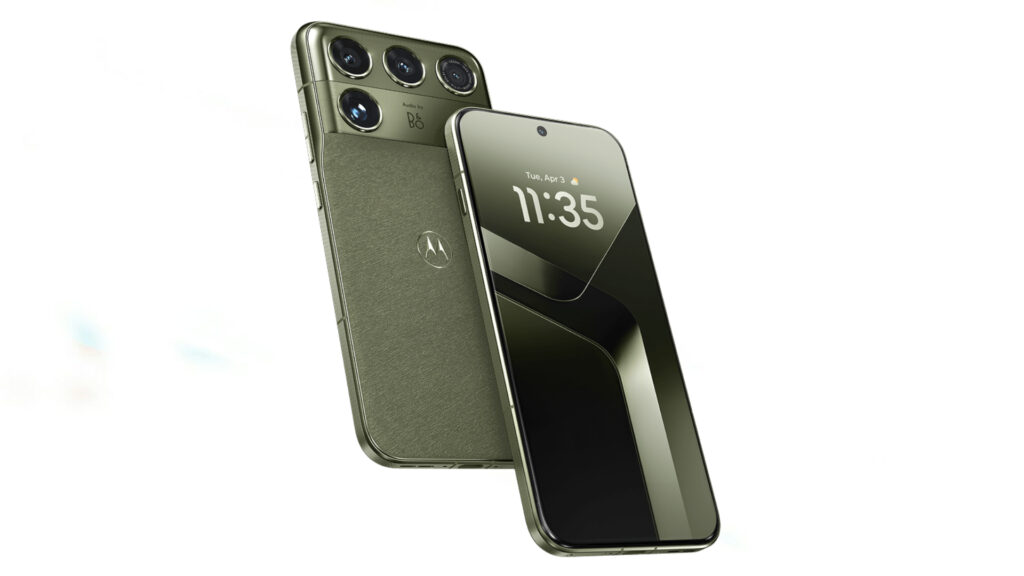
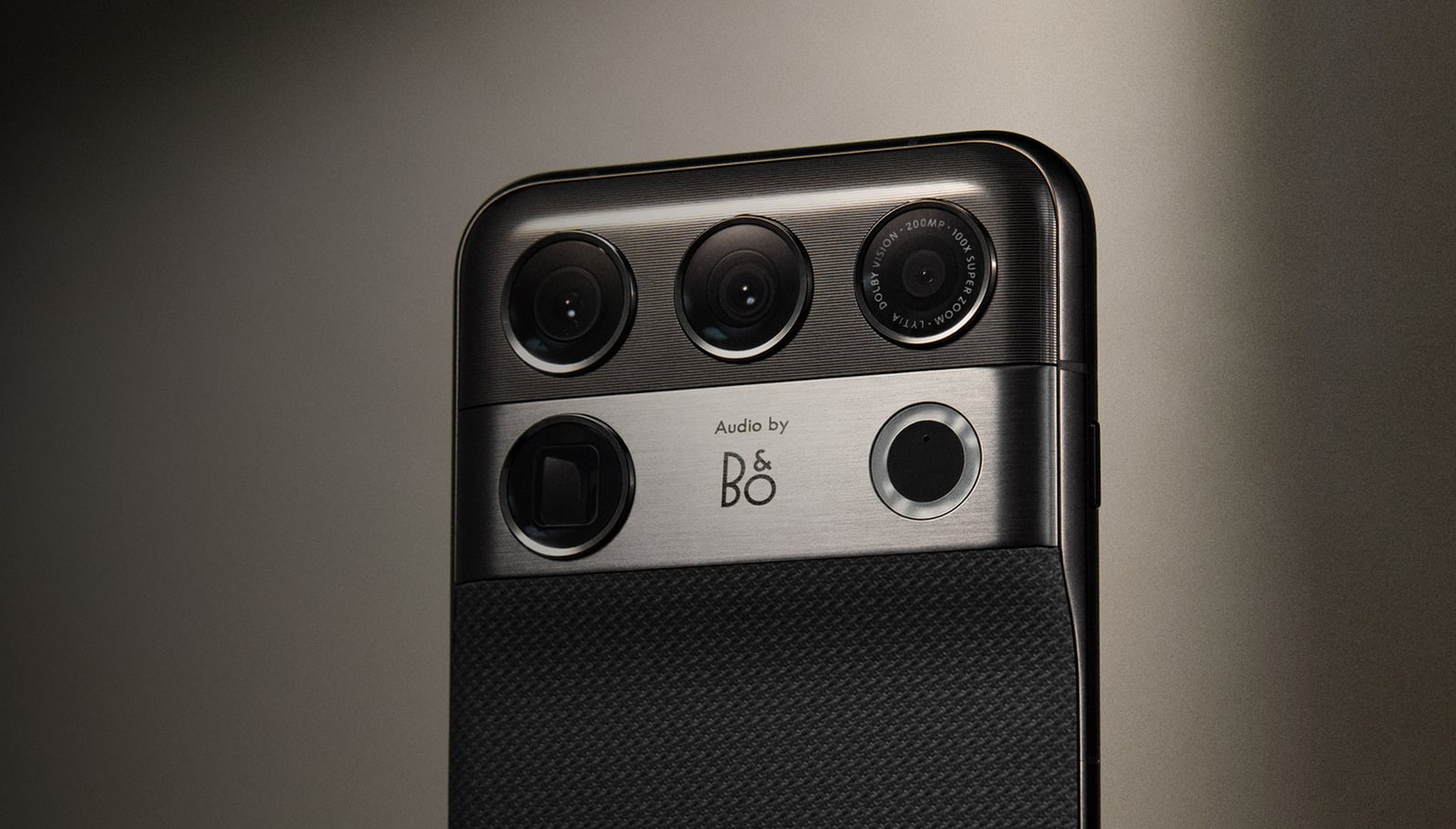
Motorola’s new flagship is already available for pre-order across Europe, but the price tags differ sharply depending on which country’s official store you visit. The gap is large enough that many buyers are now weighing cross-border purchases inside the EU.
On Motorola Germany the Signature 27 (12 GB/512 GB) is listed at €1,899 with no pre-order bonus. Austria matches that price but at least includes a free Moto Sound Flow Bluetooth speaker. The speaker is officially valued at €199, though it already sells for around €70 on Amazon Germany.
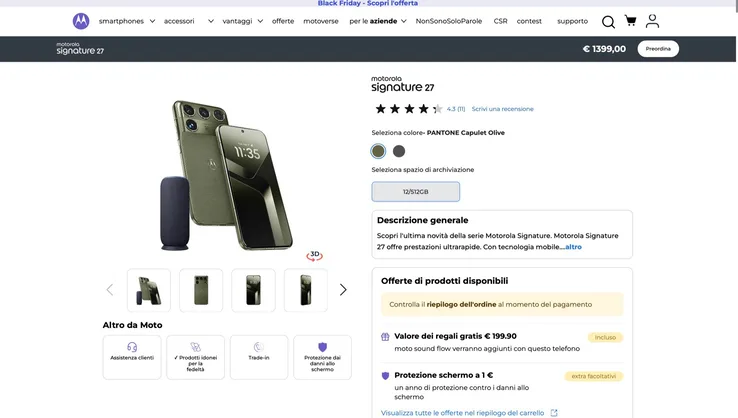
Italy undercuts both markets significantly: the same storage configuration costs €1,399 and still comes with the free speaker. Belgium and Ireland also list the phone at €1,399. Italy’s 22 % VAT is actually three percentage points higher than Germany’s, so the difference cannot be explained by tax rates alone.
German online retailers have already dropped the phone to around €1,649, yet that is still €250 above the official price in several other EU countries. Adding to the calculation is the lingering question of battery capacity. While the Signature 27 is widely specified with a 7,000 mAh cell, reports have indicated that German units may ship with a smaller 5,500 mAh battery. Direct imports from Italy or Belgium remain straightforward within the single market, as no customs duties apply, though shipping costs can vary.
The launch strategy has left many observers puzzled. Motorola is asking customers in Germany and Austria to pay roughly 36 % more for the identical storage configuration of the same smartphone. Pre-orders are now open in most markets, with shipments expected to begin in early December. For buyers willing to order from a lower-priced EU store, the savings might be substantial enough to make the extra logistics worthwhile.
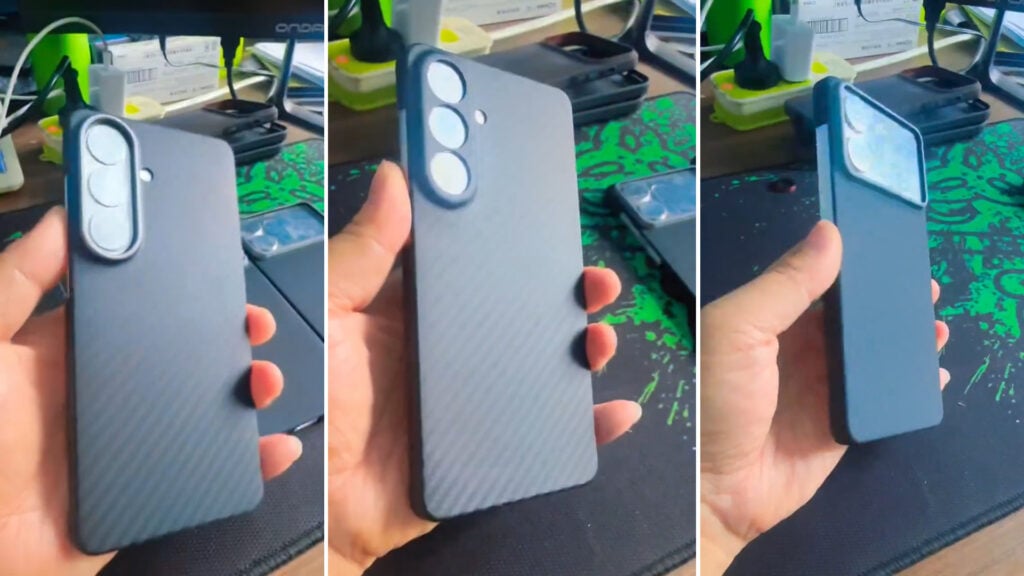
Samsung’s next flagship phones are still months from launch, yet accessory makers are already preparing cases based on early prototypes. Fresh video footage from case maker Thinborne offers one of the clearest looks yet at how the entire Galaxy S27 series may appear.
The clip shows dummy units of all four expected models, the Galaxy S27, S27+, S27 Pro, and S27 Ultra, while the company tests its protective cases. The standard S27 and S27+ largely retain the familiar design language of recent Galaxy phones.
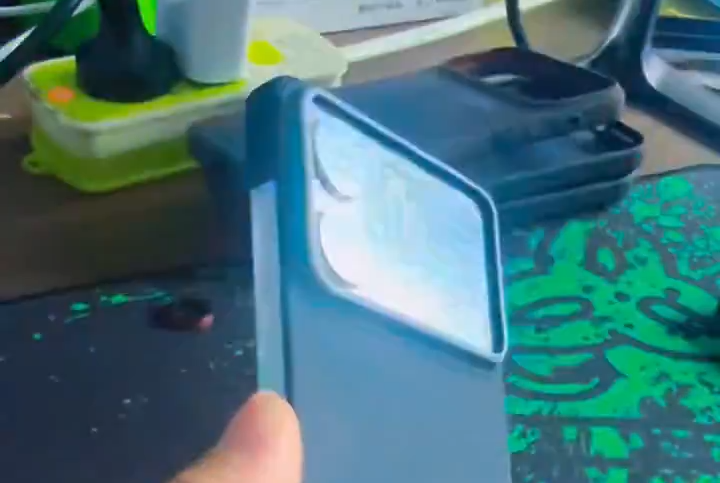
In contrast, the higher-end S27 Pro and S27 Ultra feature a noticeably wider camera area on the rear. This broader island appears intended to give the premium models a more distinct visual identity from the base versions.
The Pro and Ultra share a broadly similar overall design, though differences in size and features are expected. One key distinction involves the S Pen. The Ultra is anticipated to retain a built-in stylus slot, and Thinborne’s corresponding case includes a dedicated cutout for it. The Pro model, by contrast, is not expected to support a built-in S Pen.
These dummy units and cases provide useful early signals about Samsung’s design direction, but they are not final production hardware. Case manufacturers often work from preliminary dimensions and camera layouts that can still change before official announcement. Samsung has not confirmed any of the details, and further refinements remain possible in the coming months.
The Galaxy S27 series is widely expected to arrive in early 2027, continuing Samsung’s usual January-to-February launch window for its flagship lineup. Additional leaks, regulatory filings, and official teaser material will likely refine the picture further as the release approaches.
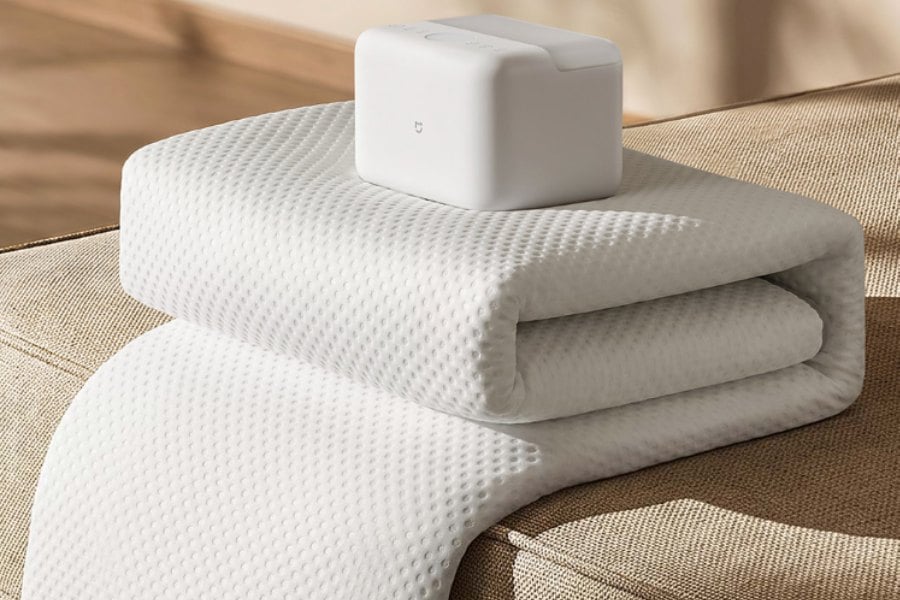
Xiaomi’s Mijia water-heated blankets are getting a more expensive upgrade. The new Mijia Smart Water-Heated Blanket Pro has opened for crowdfunding on Youpin at 799 yuan (~ $120), while its suggested retail price is 1,099 yuan (~ $165).
For comparison, the original Mijia Smart Plumbing Blanket launched in 2023 for 399 yuan (~ $60). The higher price brings more than a small heating upgrade.
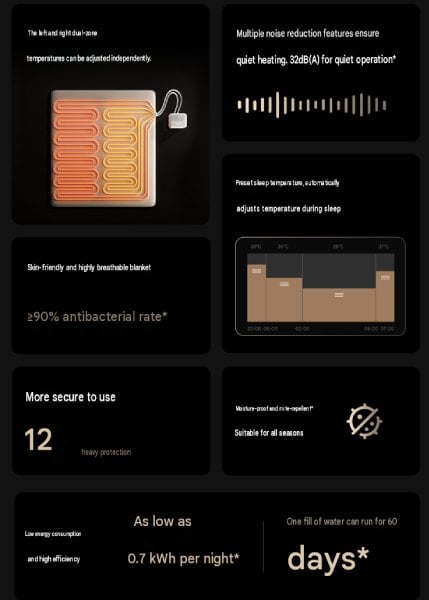
Xiaomi has added independent temperature control for both sides of the bed, along with separate water circulation systems, making the Pro a better option for couples who prefer different sleeping temperatures.
Dual-zone heating and smarter temperature control
The two sides of the blanket have their own water tanks and heating systems, with physically separated water paths. Xiaomi uses two water outlets, two return outlets, and four high-precision temperature sensors to manage the heating. Users can adjust the temperature between 25°C and 55°C on either side.
Xiaomi has tried this arrangement before with the Mijia Smart Temperature-Controlled Plumbing Blanket, which also featured separate A/B water tanks. The Pro uses a denser arrangement of pipes around the leg area, where temperatures are reportedly 3°C to 5°C higher than elsewhere on the blanket. The internal PVC hose measures about 43 meters in total.
Heating comes from a 450W PTC ceramic element with double-sided heating, compared with the 400W ceramic core in the older model. The blanket also supports Xiaomi’s Surge Smart Connect, allowing users to control it through the Mi Home app, set timers, and adjust the temperature remotely. There is a separate temperature preset for sleep mode, while operating noise is rated at 32dB(A).
Antibacterial fabric and 12 safety protections
The blanket uses micro-elastic combed fiber fabric treated with a silver-ion antibacterial agent. Xiaomi claims an antibacterial rate of at least 90%. It also has a five-layer construction, with a non-slip drip-molded fabric layer at the bottom to help keep it in place.
A one-button mite removal mode runs the blanket at a high temperature for two hours to help dry moisture trapped in the bedding. Xiaomi also says it can be used throughout the year, rather than being limited to colder months.
Inside, the water tank holds around 1,000mL. A single fill is rated to last approximately 60 days with eight hours of daily use. Xiaomi’s power consumption test recorded around 0.7kWh per night, with the room temperature at 20±5°C, water temperature at 15±5°C, and the blanket set to 37°C for eight hours.
Safety is another area Xiaomi has addressed, with 12 layers of protection. These include automatic shutdown after 15 hours of inactivity, separation of water and electricity, a child lock, and power-off protection if the blanket tips over. The circuit board uses flame-retardant materials, while additional safeguards cover overheating, dry burning, water leaks, freezing, and cracking at low temperatures.
The blanket also performs self-checks while running. If the water level gets too low, it sends an alert and automatically shuts down.
The new blanket joins a growing list of Mijia products appearing on Youpin this month. Xiaomi recently opened crowdfunding for its Mijia Floor Lamp, which comes with RGB and WRGB lighting and 18 lighting effects.
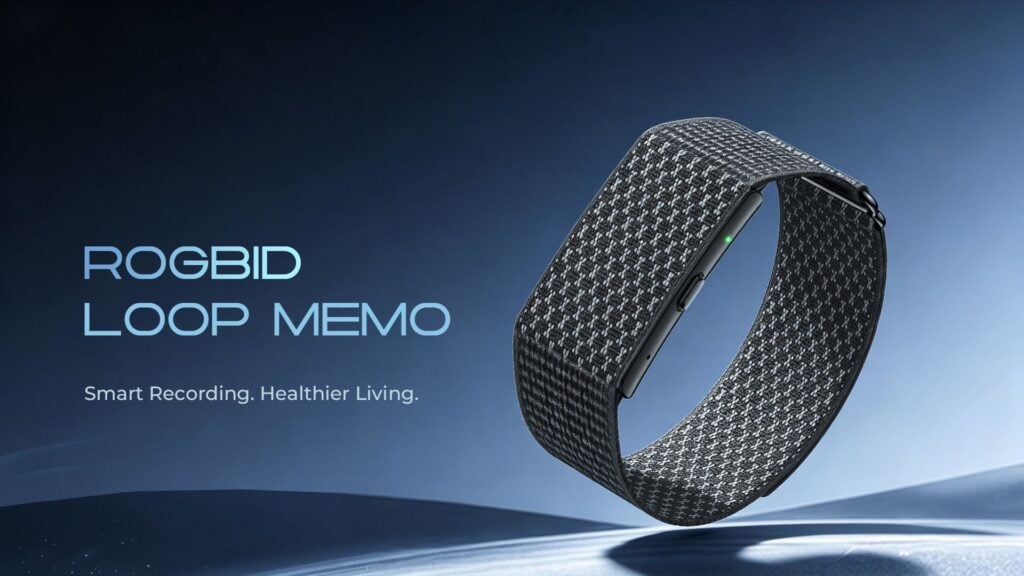
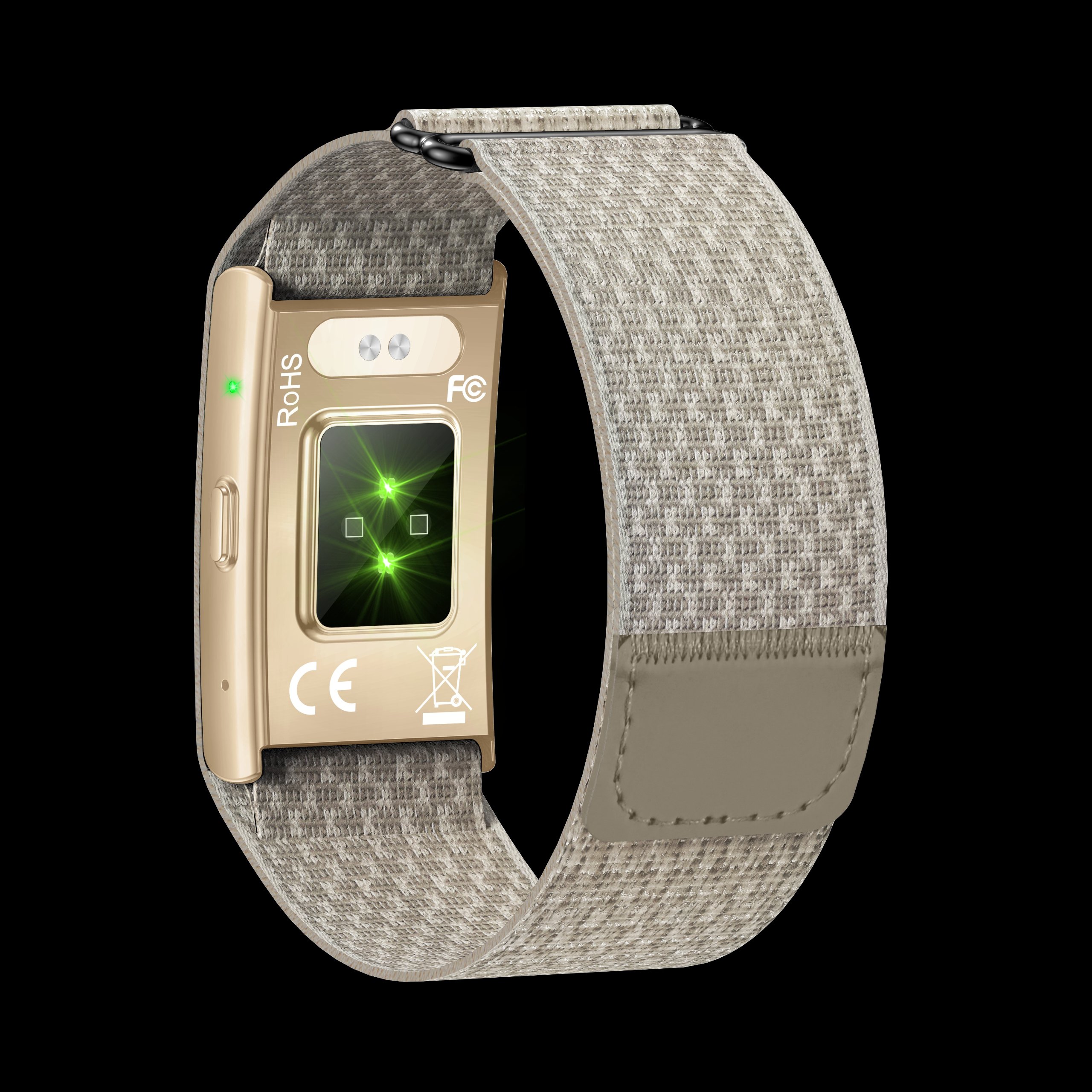
Most smart bands focus entirely on health metrics and mirroring your phone’s notifications. Rogbid is trying something a bit different with its new Loop Memo. It looks like a standard fitness tracker, but its main selling point is actually a built-in microphone designed for recording meetings and voice memos.
Rogbid Loop Memo Specifications
The idea is pretty straightforward. Instead of pulling out your phone or a dedicated dictaphone to record a lecture or a meeting, you just tap the band on your wrist. The device has 1GB of local storage, which Rogbid says holds about 10 hours of audio. Because the storage is built directly into the hardware, you don’t need to be connected to your phone or a Wi-Fi network to capture the audio.
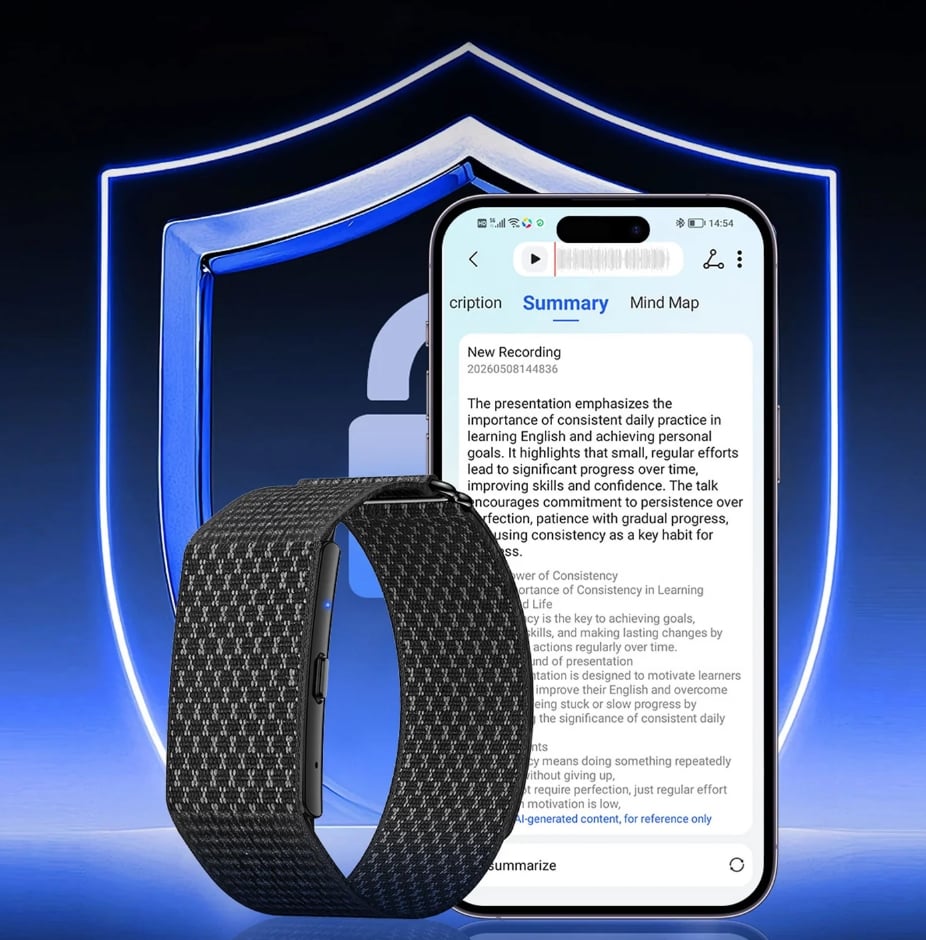
Once you sync the band with its companion app, the software takes over. The app uses AI models to transcribe the recordings and generate text summaries, to-do lists, and visual mind maps. You can then export these notes as standard text, PDF, or Word files. Rogbid offers its AI transcription and summary tools for free, with no subscription required to access the companion software.
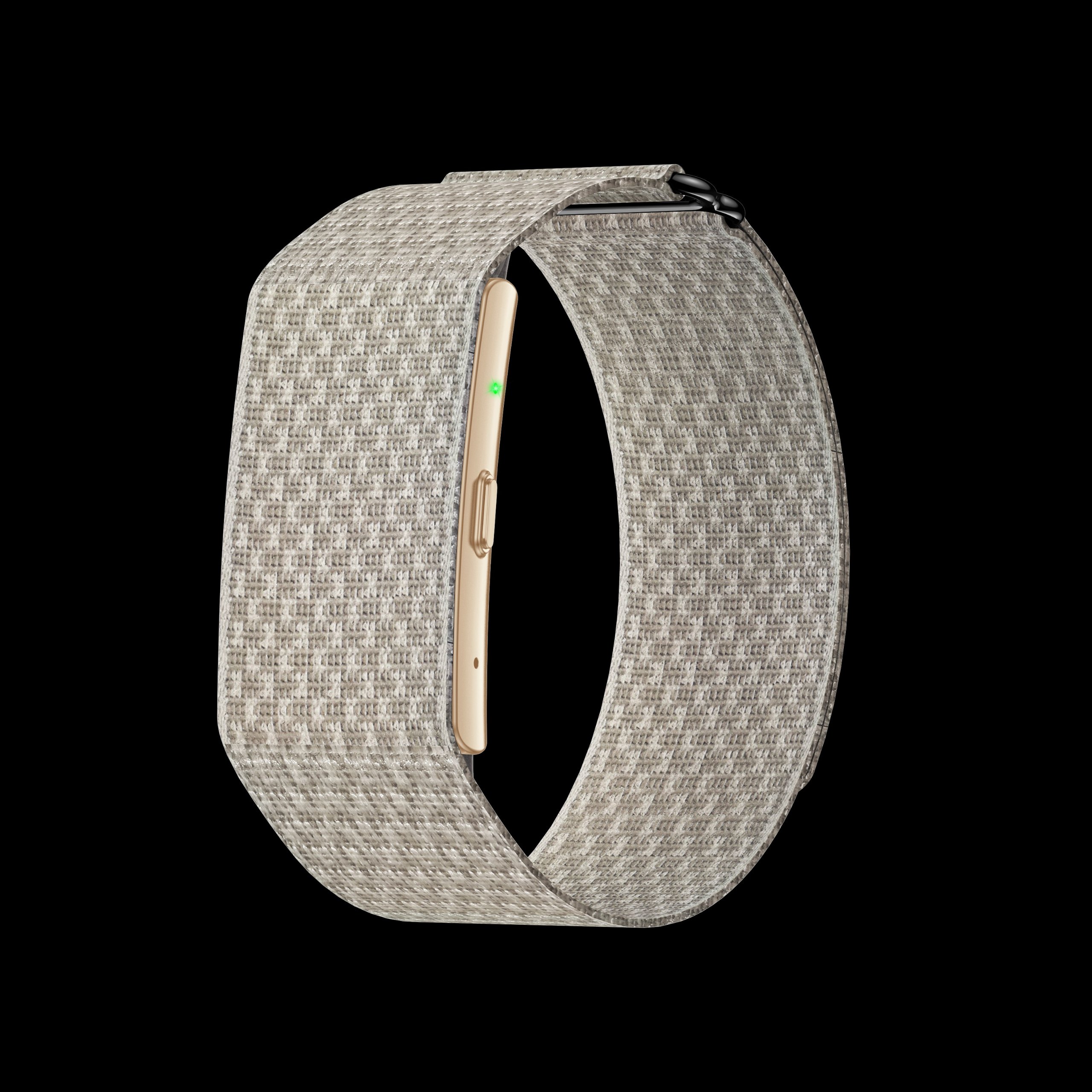
As a wearable, the Loop Memo is very light, weighing in at just 22 grams. Aside from the audio features, it functions exactly like a typical budget fitness tracker. It monitors heart rate, blood oxygen levels, stress, and sleep stages. It also includes the standard array of workout modes, over 100 of them, and carries an IP67 water resistance rating, meaning it can handle splashes and sweat.
Inside, the band runs on an ATS 3085L processor and a 220mAh battery. The company claims the device can last up to 50 days on standby, though actual battery life will obviously drop depending on how often you use the microphone and continuous health sensors. It charges via a magnetic cable in about an hour and twenty minutes, and it supports pass-through charging so you can keep recording audio while it’s plugged in.
The Rogbid Loop Memo is available now in black for $79.99. You can purchase this from the official Rogbid store.
In related news, Rogbid has recently launched its new VitalRing featuring ECG, SpO2 tracking, and a titanium alloy build, alongside the Model R5 Android smartwatch with a 2.4-inch display, 4G LTE connectivity, and a rotating camera.
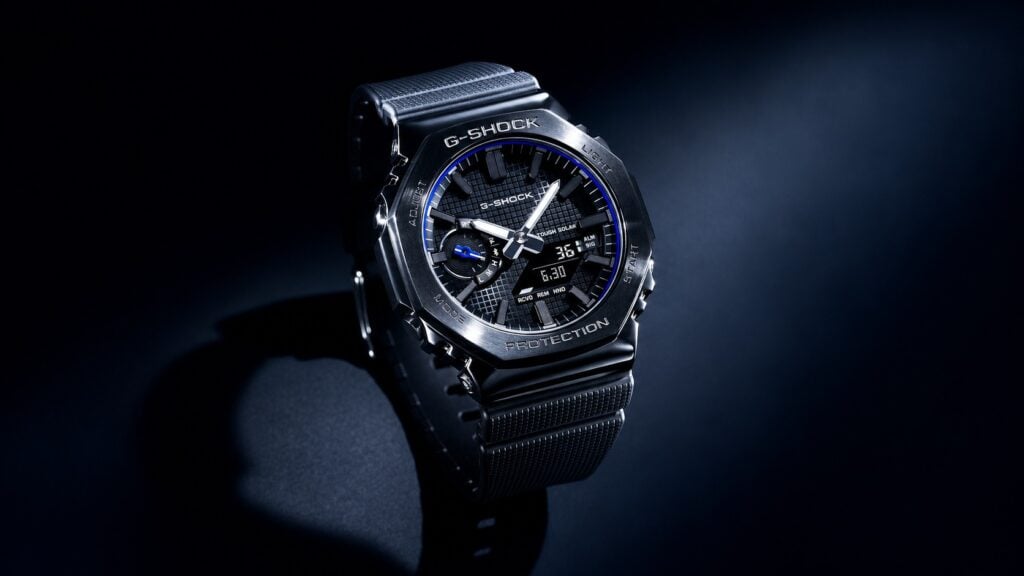
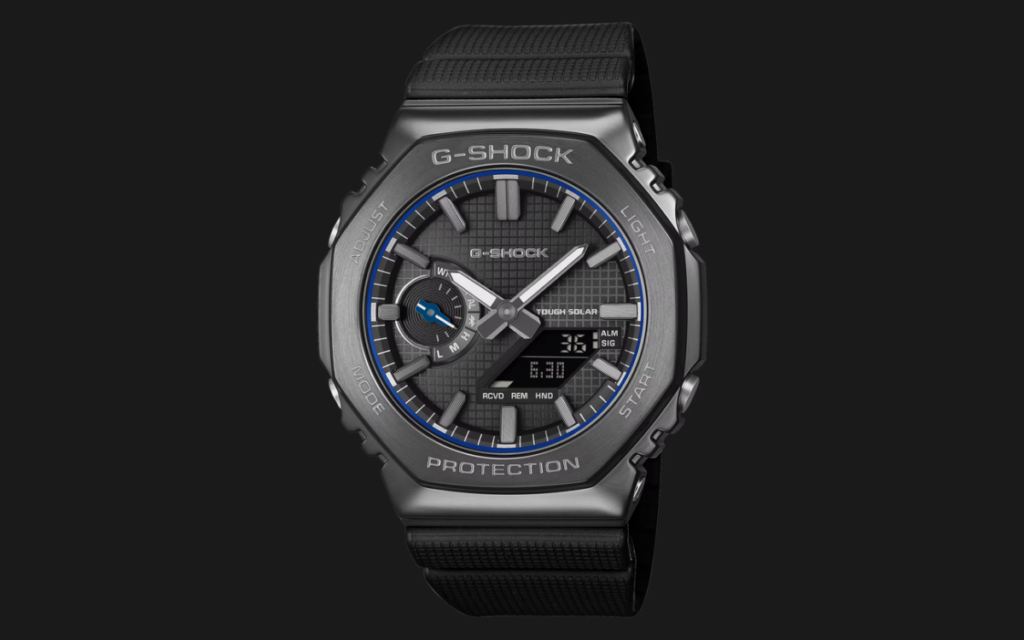
Casio has officially made the G-Shock GBM2100LXB-1A2 available in the US market. The watch, which initially launched in Japan earlier in November, is priced at $310. It is the latest addition to the G-Steel 2100 series, combining the familiar octagonal case design with a black stainless-steel bezel, solar charging, and Bluetooth connectivity.
Design Details
Comparison
The Apple Watch Ultra 3 keeps its titanium case, now in a black finish as well as natural titanium.
Marketed as a Luxe Black model, the design focuses heavily on a dark, monochromatic color palette. The stainless-steel bezel features a black ion-plated finish for a matte metallic look. To add some contrast to the black hardware, Casio applied a blue vapor deposition to the outer edge of the mineral glass and a gunmetal-gray finish to the dial indexes.
The dial itself has a grid pattern that matches the subtle square-dot texture of the urethane band. Both the band and parts of the case are constructed from bio-based resin.
In terms of size, the watch measures 49.3 x 44.4 x 11.9 mm and weighs 72 grams. It maintains standard G-Shock durability specifications, including shock resistance and water resistance up to 200 meters. The display uses a hybrid analog-digital layout, which is illuminated by a double LED light system to keep both the hands and the digital sub-display visible in low-light conditions.
The GBM2100LXB-1A2 includes two highly practical hardware features: Tough Solar and Smartphone Link. The Tough Solar system charges the internal battery using both natural and artificial light. On a full charge, the watch can run for about seven months under normal use, or up to 18 months if stored in the dark with the power-saving feature turned on.
The Smartphone Link functionality uses Bluetooth to connect the watch to the Casio Watches app on iOS and Android. This connection automatically syncs the time to keep the watch accurate without manual adjustments. The app also allows you to configure world time settings for over 300 cities, set alarms, log time and location data, and trigger a phone finder tool.
Aside from the connected features, it functions as a standard digital timepiece. Built-in tools include a 1/100-second stopwatch, a 60-minute countdown timer, five daily alarms, and a hand-shift feature that temporarily moves the analog hands out of the way so you can read the digital display.
Motorola‘s US store now lists an expected delivery date of December 8, 2026, for the Signature 27, after pre-orders opened on November 19 ahead of a November 26 retail launch. Motorola says demand has exceeded its initial expectations, and that some orders may see updated shipping timelines. New buyers may have to wait past the launch date to get the $1,599.99 flagship.
In a statement, Motorola said it is excited by the strong consumer response, with demand exceeding its initial expectations. It added that its teams are working to meet that demand and get devices to customers as quickly as possible. The official US product page still lets shoppers pre-order, but it now shows a December 8 expected delivery date. Checks reported by 9to5Google and Android Authority found Best Buy listings that vary by location, with some showing a December 11 ship date and no in-store pickup, and others replacing the pre-order button with a notify option. Some early pre-orders may still arrive around the November 26 launch.
The US store lists one unlocked configuration at $1,599.99, with 12GB of RAM, 512GB of UFS 4.1 storage, and two finishes: Pantone Coal Smoke and Pantone Capulet Olive. That is the same price point as a high-end Galaxy or Pixel, not a value Motorola. The Signature 27 arrives with a Snapdragon 8 Elite Extreme Gen 6 chip, a 7,000mAh battery, 90W wired and 50W wireless charging, and a 200MP 3x periscope camera, plus a promise of seven major Android updates.
European sales began on November 16. Motorola has also set a December 9 launch in India, adding another market just as US fulfillment is slipping. For years, Motorola’s problem in the US flagship aisle was giving people a reason to skip Samsung, Google, or Apple. At $1,600, the Signature 27’s more immediate problem appears to be having enough phones to ship, even as it goes up against phones like the Galaxy S26 Ultra.
Update (November 25): Motorola has opened Signature 27 pre-orders across Europe. The single 12GB/512GB model is listed at €1,899 in Austria, Germany, Spain, Portugal and France, and at €1,399 in Italy, Belgium and Ireland, in Pantone Capulet Olive and Coal Smoke colors. Pre-orders run until December 2 and include a free Moto Sound Flow Bluetooth speaker everywhere except Germany, with shipments expected to start on December 3.
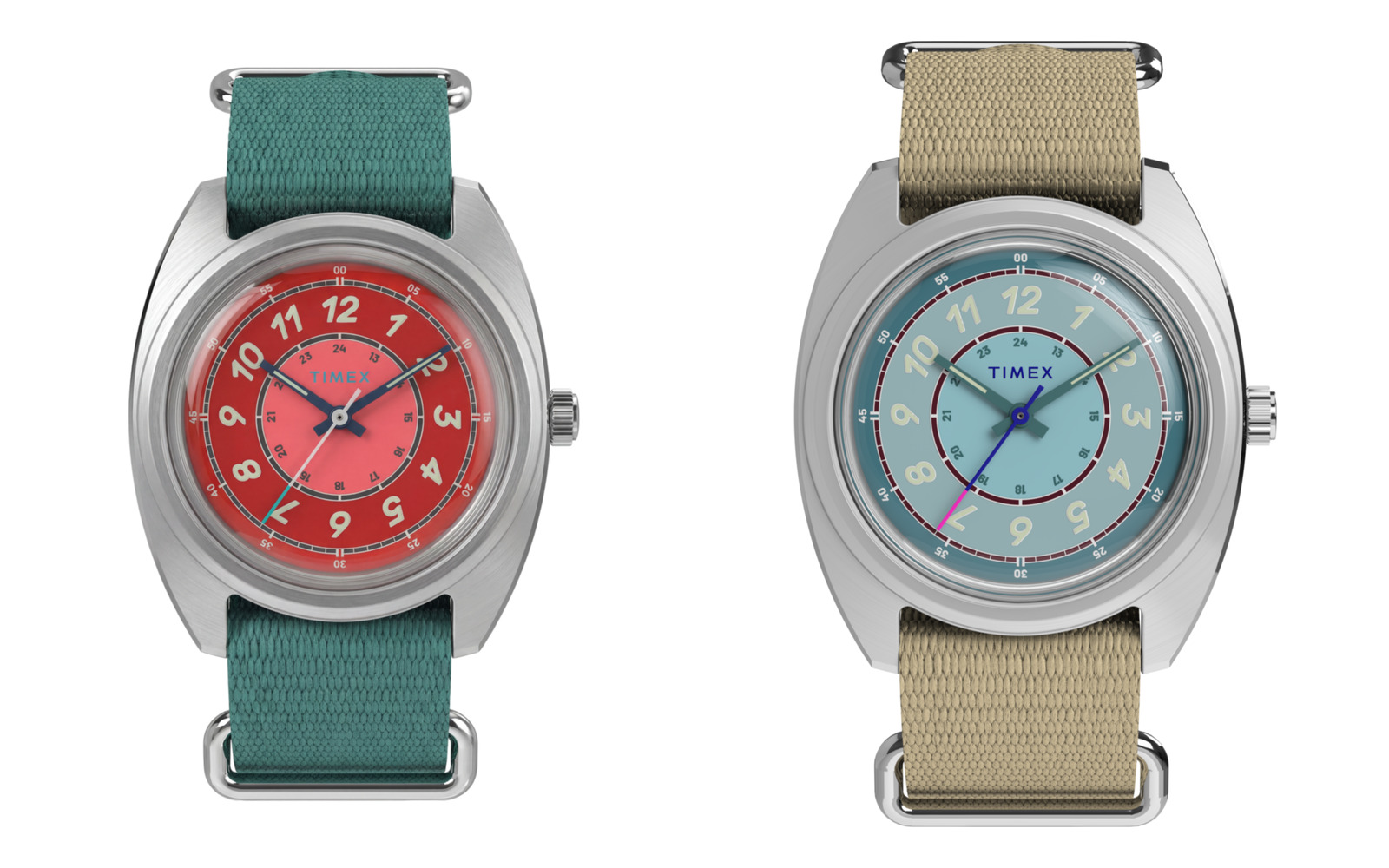
Timex has brought back its collaboration field watch with Worn & Wound in two new limited colorways, Sunburst and Mist. Both are on sale now on the Timex US site for $299, with 578 individually numbered pieces in each color. The hardware matches last year’s Field Watch with a Twist. Only the dial and strap colors are new.
Sunburst and Mist bring new color to a familiar 37mm field watch
Worn & Wound x Timex Field Watch in Sunburst (left) and Mist (right)
Sunburst pairs a warm, red-toned sector dial with a teal double-layered fabric strap. Mist uses a cooler blue-green dial and a tan strap. Both sit in the same 37mm stainless steel case with a brushed and polished finish, a 43mm lug-to-lug, a 12mm height, and a vintage-style barrel shape under a domed acrylic crystal. A 20mm slip-thru fabric strap fits wrists from 5.9 to 8.1 inches. Water resistance is 50 meters, enough for a shower or a light swim, but not snorkeling or diving.
The unorthodox part is still the dial. A 13-to-24 hour track sits at the center, italic 1-to-12 numerals occupy the middle ring, and a minute track runs around the edge, separated by railroad markings. Hands and numerals are filled with C3 lume. Inside is a hand-wound Sea-Gull TY6 movement, so the watch has to be wound at the crown each day instead of running on a battery or an automatic rotor. Acrylic can be buffed if it picks up scuffs, a vintage field-watch tradeoff versus the sapphire used on pricier Timex models.
At $299, it costs more than Timex’s $149 quartz Expedition Sierra field watches and sits close to the $309 MK1 Automatic, while undercutting the company’s $429 titanium automatic and Pioneer Automatic, which add sapphire crystals and 200 meters of water resistance. The 37mm case is also more compact than those 40mm and 41mm models, and the earlier MK1 Chronograph stays in a lower price band. A 578-piece cap per color means this is a short run, not an open catalog model, and it is also listed at Worn & Wound’s Windup Watch Shop.
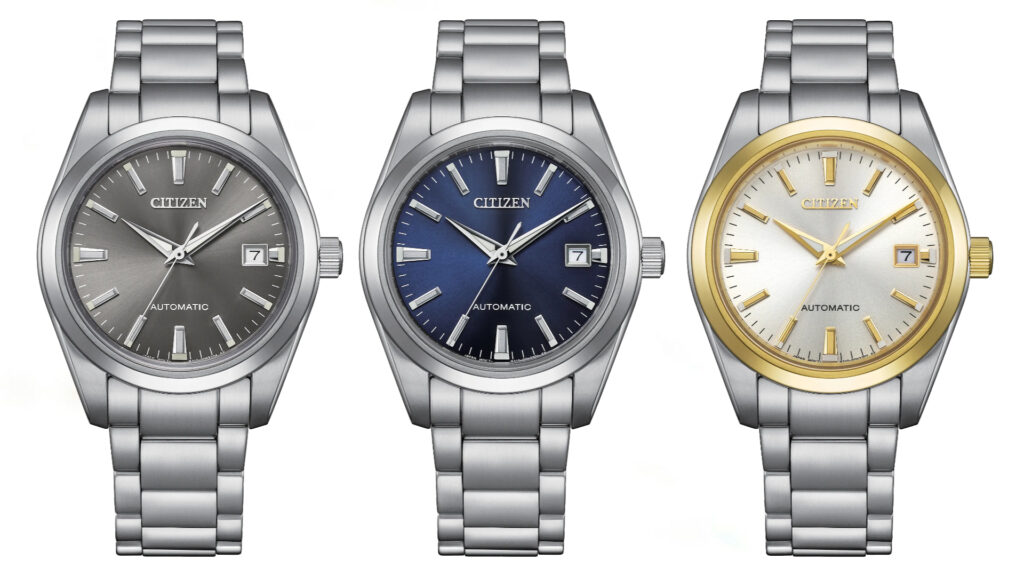
Citizen has quietly brought a fresh set of Japanese automatic watches to the American market, but the price tags may give buyers pause. Three models from the Kei lineup are now available on the brand’s US store, listed simply as “Automatic” rather than under the Kei name that appears elsewhere.
The grey NK0051-51J and blue NK0051-51M are priced at $575, while the two-tone NK0055-51Q with a gold-tone bezel costs $595. Those figures sit well above equivalent listings in Europe and Japan. Citizen Spain sells the steel versions for €329 and the two-tone for €349. After removing Spain’s 21% VAT, the net prices convert to roughly $304 and $322. US prices exclude sales tax, leaving American shoppers paying close to 90% more. Japan’s domestic NK0050 models, which carry “Made in Japan” on the dial, retail for about $390 and $402 before tax.
The US pricing is consistent with the rest of Citizen’s American range. The 37 mm Tsuyosa 60, which uses the same movement, sells for $595 there, meaning the larger-cased steel Kei models actually come in slightly cheaper.
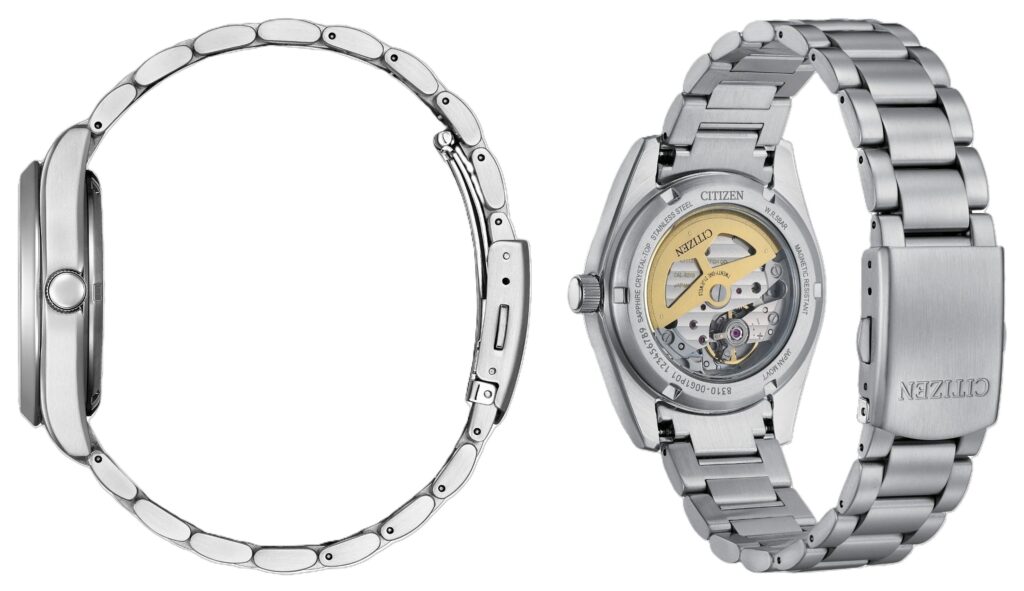
Hardware is identical to the versions sold in Europe and Japan. Each watch features a 38 mm stainless-steel case that measures 10.9 mm thick, finished with a mix of brushed surfaces, a polished bezel, and chamfered edges. A flat sapphire crystal protects the dial, and an exhibition caseback marked “Japan Movt” reveals the caliber 8310 automatic movement. The movement runs at 21,600 vibrations per hour, includes a hacking function, and delivers a 60-hour power reserve. Water resistance is rated at 5 bar (50 meters). A 19 mm stainless-steel bracelet closes with a three-fold push-button clasp, and both the hands and indexes are luminous.
For now the US receives only half of the six-model range. The white NK0051-51B, black NK0051-51F, and green NK0051-51W have not appeared yet, nor has the pink NK0051-60Y limited edition available on some European sites. Citizen has not indicated when, or whether, the remaining colors will reach American buyers.
The Kei watches offer a compact, everyday automatic package with a modern power reserve, but the regional price gap remains the most striking detail of their US debut.
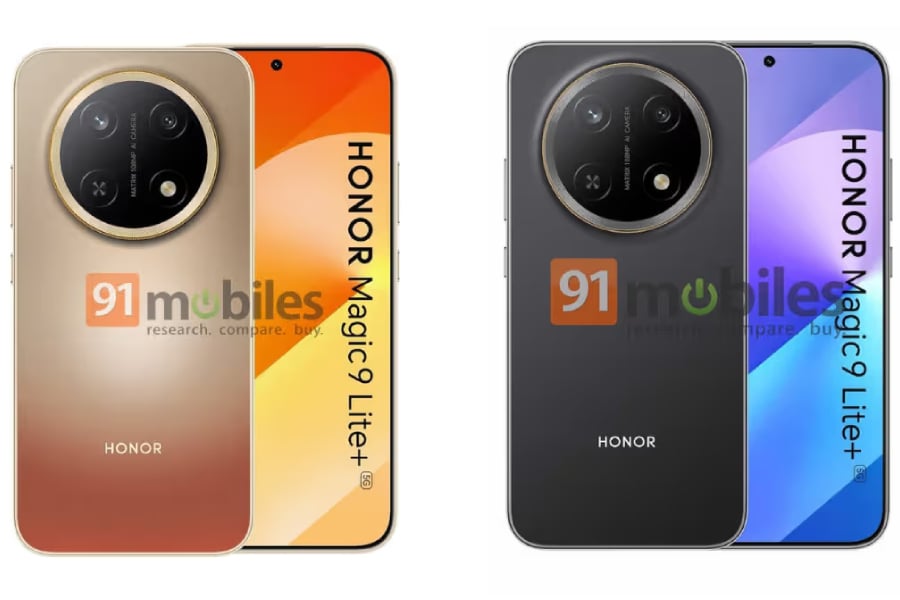
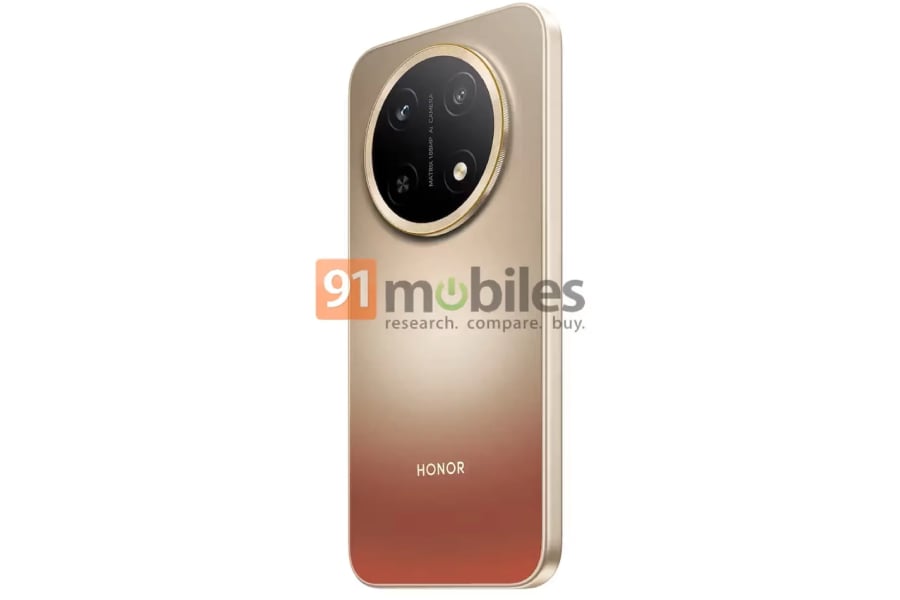
Honor may be preparing to add a new Magic 9 phone to the global portfolio. Renders of the European Magic 9 Lite+ 5G have surfaced via91Mobiles, showing a 9,530mAh battery, 80W wired charging, and a few other details ahead of launch.
Here is everything revealed about the phone so far.
Honor Magic 9 Lite+ 5G specifications and design
The leaked renders show a 6.8-inch AMOLED display with a 2788 x 1280 resolution and a 120Hz refresh rate. The device is powered by a Snapdragon 6 Gen 5 chip with four Cortex-A78 cores alongside four Cortex-A55 cores.
The camera setup includes a 108MP main sensor and a 5MP ultra-wide camera on the back, along with a 16MP front camera. The rear cameras sit inside a large circular module with a surrounding ring.
The renders show two finishes: dark gray and beige with orange accents. Honor could introduce additional colors later. The phone reportedly measures 8.08mm thick and weighs around 209 grams.
Other reported features include IP68 dust and water resistance, NFC, and dual SIM support. The Magic 9 Lite+ 5G has also appeared on the Google Play Console under the model number BSN-NX1.
Honor has not revealed a launch date or pricing yet. For now, the battery is the headline feature. A capacity approaching 10,000mAh would be unusual for a phone of this size, although the Snapdragon 6 Gen 5 suggests Honor is not trying to turn it into a performance-focused device.
Samsung appears to be preparing a new smartwatch even as industry reports suggest the company may skip an entire year of Galaxy Watch launches. The conflicting signals have left analysts wondering whether development continues behind the scenes or whether plans have already shifted.
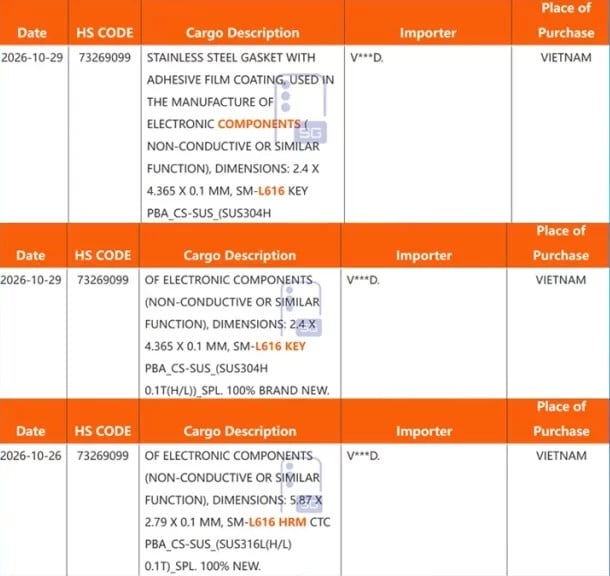
A previously unseen model number, SM-L616, recently surfaced in the GSMA IMEI database in mid-November and in trade records showing related component shipments from late October. Those parts reportedly include a button circuit board and heart-rate monitoring hardware. The listing itself does not confirm a finished product or any release date, but it indicates that hardware work on a new watch had already begun.
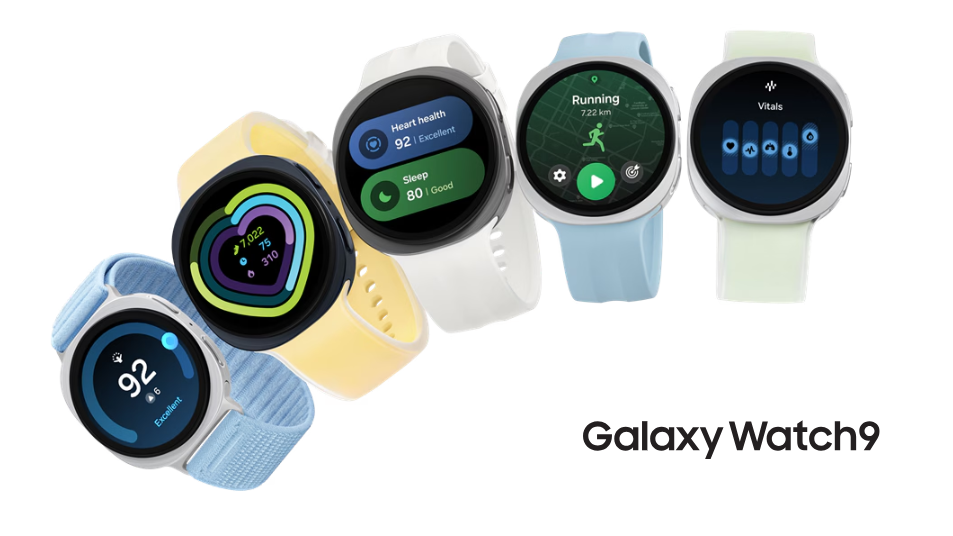
Around the same time, South Korean outlet ETNews reported that Samsung intends to skip a Galaxy Watch launch in 2027 and move to a two-year release cycle. That would end the annual cadence the company has maintained since the original Galaxy Watch arrived in 2018. According to the report, the Galaxy Watch 9 and Galaxy Watch Ultra 2, both unveiled in July 2026, would remain on sale without direct successors next year. Samsung has not publicly commented on the claim.
Leak
Leaked assets show the Galaxy Fit 4 may get a 258 x 428 display, up from 256 x 402 on the Fit 3.
The two developments are not necessarily contradictory. Component shipments and early IMEI registrations often appear many months before a product reaches shelves, and some registered models never ship under the listed designation. A design that started life as a 2027 model could simply have been delayed, redirected, or shelved after internal reviews. ETNews linked the reported pause to cost-cutting inside Samsung’s Mobile eXperience division, rising component prices, and softer-than-expected market response to the Galaxy Watch 9.
The exact identity of SM-L616 remains unclear. It sits between the numbering used by recent Classic and Ultra models, prompting speculation that it could be a Galaxy Watch 10 Classic or another variant. Some observers have also noted that the final digit sometimes signals cellular capability, though any claim of 5G support remains unconfirmed.
In the meantime, Samsung is expected to lean on software updates and new health features for its existing watches. A new Galaxy Fit fitness band is also positioned to serve as an entry-level wearable option, with reports pointing to a Galaxy Fit 4 arrival in the first half of 2027.
Honor 700 Pro is now available at Giztop, giving buyers another interesting option in the premium smartphone segment. Starting at $799, the phone combines Qualcomm’s Snapdragon 8 Gen 5 processor, a high-resolution AMOLED primary display, a secondary rear display, a 200MP camera system, and an unusually large 9000mAh battery. With support for fast wired and wireless charging, it also puts a strong focus on battery life.
Price and Availability
The Honor 700 Pro is now available at Giztop with a starting price of $799. Buyers can choose between 12GB and 16GB RAM configurations, paired with 256GB or 512GB of internal storage. International and express shipping options are also available, making it easier for buyers worldwide to order the phone.
Snapdragon 8 Gen 5 Performance
At its core, the Honor 700 Pro runs on Qualcomm’s Snapdragon 8 Gen 5 octa-core processor, paired with the Adreno 829 GPU. It comes with up to 16GB of RAM, providing plenty of memory for multitasking, demanding applications, and mobile gaming. Storage options go up to 512GB, although there is no microSD card expansion.
Honor 700 Pro features a 6.57-inch AMOLED display with a 2728 × 1264 resolution. It supports a 120Hz refresh rate, 1.07 billion colours, and a 100% DCI-P3 colour gamut. The panel also reaches a peak HDR brightness of 5,000 nits, making it suitable for watching videos, browsing, and gaming. Another interesting feature is its 1.59-inch secondary rear display, integrated into the camera module. It can show notifications, clock widgets, and other useful information, while also serving as a live preview screen for taking selfies with the rear cameras.
200MP Triple Camera System
Photography is another major highlight. The rear camera setup includes a 200MP primary sensor with gimbal OIS, a 50MP telephoto camera with 3x optical zoom and dual OIS, and a 12MP ultra-wide camera with a 112-degree field of view. The main and telephoto cameras also benefit from advanced stabilisation. On the front, there is a 50MP camera for selfies and video calls.
9,000mAh Battery and Charging
One of the phone’s biggest attractions is its 9,000mAh battery. It supports 80W wired charging, 50W wireless charging, and 27W reverse charging, offering plenty of flexibility for everyday use.
The Honor 700 Pro runs MagicOS 11 based on Android 17 and includes an under-display fingerprint sensor that supports unlocking with wet hands.
At DTC2026 in Wuhan, TCL CSOT did something unusual for a display company: it put a yield figure on the slide. Inkjet-printed OLED is no longer a laboratory claim — it is inside laptops and monitors from Lenovo and MSI, running at roughly 70 percent yield, with an 8.6-generation line being fitted out. Gizmochina toured the showroom and the fab.
WUHAN, China — The most consequential number at TCL CSOT’s Global Display Tech-Ecosystem Conference was not 16K. It was not 500Hz, and it was not 1.3 million nits.
It was 70 percent.
That is the yield, as of November, on the company’s 5.5-generation inkjet-printed OLED (IJP OLED) line in Wuhan — up from single digits when the first product entered volume ramp in April 2026.
Over the same six months, monthly capacity on the line, known internally as t12, rose from 3,000 large substrates to 9,000. Two panel programs are already shipping, and they are not prototypes: Lenovo’s Legion R9000P uses a 16-inch IJP OLED panel at 240Hz; MSI’s PRO MAX OLED 271UPJW12 is built around a 27-inch IJP OLED panel at 4K 120Hz.
Shipping evidence, not a roadmap slide: an MSI OLED monitor at DTC2026, where partner products built on TCL CSOT panels were on show. The PRO MAX OLED 271UPJW12 uses a 27-inch printed panel.
For an industry told for a decade that IJP OLED would eventually undercut vacuum deposition, a yield number is the first falsifiable piece of evidence. It is also where the argument stops being about physics and starts being about money.
TCL CSOT is making two bets on the future of the pixel, and they point in opposite directions. The first is the one you can already buy. The second is years from a store shelf — but it explains why a panel maker from Wuhan is taken seriously in XR at all. Let’s start with that one—Micro LED.
Micro LED: the screen you wear
“Micro LED is widely regarded as the most competitive technology route for the next generation of XR, AR in particular,” said Zhifu Li, VP of TCL CSOT, GM of Technology Innovation Center. Three thresholds stand between the technology and a mainstream consumer market.
Zhifu Li, VP of TCL CSOT, GM of Technology Innovation Center, on the sidelines of DTC2026. Photo: Gizmochina
Monolithic full color at micron scale. Monochrome silicon-based Micro LED has already reached commercial production; full color has not. Near-eye displays need pixels of 5 microns or less, and shrinking the die accelerates the fall in light efficiency — with red the hardest case.
Full color on a single silicon die depends on wafer-level hybrid bonding, color conversion and micro-optical fabrication precision, and the hard part is holding wavelength and brightness consistency across three colors while lifting combined yield into a production range.
Brightness against power and volume. AR glasses have to be readable outdoors, but the waveguide that carries the image into the eye loses a large share of the light, and the frame leaves almost no room for a battery or a heatsink. The panel has to deliver millions of nits while consuming milliwatts.
Cost at scale. Silicon-based Micro LED spans CMOS backplanes, compound semiconductor epitaxy and wafer-level nanofabrication. Getting the light engine to a price mainstream devices can absorb means shrinking die area, maturing the process and pulling the supply chain along.
TCL CSOT’s answer to the first threshold is a proprietary architecture it calls T-Pixel. The company says it has connected the full process chain — two rounds of wafer-level hybrid bonding, quantum-dot color conversion, Bragg reflector structures and microlens integration — and demonstrated active-matrix full-color operation.
At DTC2026, it showed a 0.1-inch monolithic full-color panel measured at over 1.3 million nits, which it claims is the highest brightness achieved by any such display, with a roadmap to 2 million and then 3 million nits.
Alongside it sat a 2.24-inch glass-based OLED panel at 2100 PPI for high-immersion VR and MR — the two covering both ends of the near-eye market.
Li is careful about timing and about boundaries. The commercial sequence, he said, runs from monochrome information-display glasses first, then to high-brightness full color to supply the main terminal category. “We don’t build the finished device,” he said. “We focus on getting the core microdisplay panel and the matching light engine right,” working with optical and terminal partners whose schedules set the pace.
He is also candid that his argument is about trade-offs rather than outright superiority. “Some competing technologies can’t reach the brightness and lifetime needed for outdoor use,” he said. “Others have excellent specifications but real obstacles to volume manufacturing. We believe we have found the best balance between performance, manufacturability and controllable cost.” Quantum-dot materials in particular, he added, still need co-development with suppliers.
All of that is a roadmap, not a shipping product: Li puts full color in consumer devices at 2028 or 2029. The bet TCL CSOT can already fill orders against is the other one — the line in Wuhan that prints OLED. It is also where the numbers stop being projections.
IJP OLED: Different way to build a pixel
The distinction between the routes is easy to state and hard to overstate. Conventional OLED is deposited: inside a vacuum chamber, a fine metal mask (FMM) with millions of apertures is aligned over the glass, and organic material is evaporated through it. IJP OLED is printed: the same emissive materials are formulated into an ink, jetted onto the substrate by a print head, then vacuum-dried into a uniform film.
On the sidelines of DTC2026, where Gizmochina sat down with Baixiang Han, TCL CSOT IJP OLED R&D Director
“Evaporation is deposition; printing is printing,” said Baixiang Han, Director of IJP OLED R&D at TCL CSOT. “The backplane and the driver circuitry are identical. The difference is mainly in how the light-emitting layer is patterned.”
Three consequences follow.
The first is material utilization. In evaporation, the mask blocks the two colors not currently being deposited, so roughly two-thirds of the material lands on the mask and the chamber walls rather than the glass. Utilization sits at around 30 percent.
Printing only ejects ink where ink is needed, which pushes utilization above 90 percent. Since emissive materials are among the most expensive inputs in an OLED fab, that ratio is not a rounding error — it is the entire cost thesis.
The second is scalability across substrate generations. Evaporation is mature at 6G, and Samsung and BOE now run it at 8.6G. But the mask has to grow with the substrate, and mask sag, alignment and thermal drift get harder as it does. “The mask scales proportionally, so both technical difficulty and cost rise exponentially,” Han said. Printing has no equivalent constraint: “When the glass gets bigger, you lengthen the print-head module and make sure the stage still moves precisely.”
The equipment hall of the IJP OLED line in Wuhan, seen during the media tour.
The third is the shape of the pixel. IJP OLED uses a Real Stripe RGB arrangement — three vertical stripes per pixel, the same geometry as an LCD. Evaporation currently relies on diamond (pentile) or other sub-pixel geometries that borrow resolution from neighboring pixels.
On a desktop monitor full of text, that difference is visible. “Our arrangement is identical to LCD, so you don’t get color fringing along edges,” Han said. “That is the single biggest advantage of printing for image quality.”
It is also, for now, the limit. Evaporation still leads on power consumption and lifetime, because its materials can be engineered in ways solution-processed inks cannot yet match. Han puts the efficiency gap at 15 to 20 percent today, with a plan to halve it next year and reach parity within about three years. That gap explains the sequence: monitors and notebooks first, mobile later.
“The mask scales proportionally, so both technical difficulty and cost rise exponentially. Printing doesn’t care about the generation.”
BAIXIANG HAN, TCL CSOT IJP-OLED R&D DIRECTOR
The yield curve is the product
The t12 line is the reason the conversation has shifted. It has been the company’s bridge from research to manufacturing: medical displays reached mass production in November 2024, IT products followed in the third quarter of 2026. The April ramp that took yield from single digits to roughly 70 percent in half a year is, by the standards of a new display technology, fast.
Metric
Detail
Generation
5.5G, Wuhan
First mass production
Medical displays, November 2024
IT products in mass production
Q3 2026
Yield, first product, six months in
~70%, from single digits
Monthly capacity
9,000 large substrates (from 3,000)
Next yield target
Above 85%
THE t12 production line, BY THE NUMBERS
TCL CSOT staff shows a printing component during the Wuhan factory tour.
SVP of TCL Technology, CEO of TCL CSOT Jun Zhao framed the milestone carefully, and the caution is worth preserving: several printed products are now simultaneously in production, two of them shipping in volume since roughly September.
But as Weiran Cao, general manager of the company’s IJP OLED platform, put it to Chinese reporters at the show: “A single product in mass production only proves the road exists. It proves manufacturing feasibility has arrived. To call it commercialization, there is still a lot of road to walk.”
Jun Zhao, SVP of TCL Technology, CEO of TCL CSOT, speech at DTC2026. Photo from TCL CSOT
Zhao’s own version is blunter. “Making something in the laboratory and making it on a production line are two different concepts.” The next stated milestone is 85 percent, which Cao framed as reaching parity with established OLED lines within a year to eighteen months.
That caution is the correct read on DTC2026. The headline most outlets took away — what the company calls a new phase of small-scale commercial use — is accurate, but the qualifiers carry the meaning. This is not yet a technology that has displaced evaporation anywhere. It has proven it can be manufactured at a rate a customer will accept, on one mid-sized line, at a yield that remains slightly below the target level.
What was actually on the stand
The showroom made the strategy legible. IJP OLED did not appear as a single hero demo but as a portfolio aimed at the desktop, the lap and the wall.
The flagship was a 27-inch IJP OLED gaming monitor with QHD resolution and a 500Hz refresh rate. Its significance is not the refresh rate but how it is achieved: an oxide backplane paired with what the company calls the world’s first high-refresh-rate in-panel compensation system.
IJP OLED Oxide Internal Compensation QHD 500Hz Gaming Display 27” on the stand
Conventional OLED monitors interrupt use with periodic compensation cycles — the brief blackout early OLED owners know well — because driving circuits drift as they age. Running compensation continuously in the panel removes those interruptions, and CSOT says the combination holds uniformity at 500Hz with a sub-1ms response time. The panel is not on sale, and no partner or price has been named.
Around it sat the rest of the range: a 14-inch printed notebook panel under 0.66mm thick and under 66 grams — about half the weight of a conventional panel — with reflectance below 1 percent; and a 16-inch printed notebook panel with ultra-narrow bezels.
The 16-inch IJP OLED notebook display with narrowest bezels, running a colour test pattern on the DTC2026 stand. Photo: Gizmochina
Two panels had nothing to do with printing, and both matter. The 115-inch 16K 2D/3D-compatible light-field TV delivers glasses-free 3D with a viewing angle of at least 90 degrees and a 3D resolution of up to 8K, switching to native 16K 2D without the resolution penalty such displays usually carry.
World’s Highest Image Quality 16K 2D/3D Compatible Light Field TV Display 115”
And a 6.36-inch mobile panel is the first to use a blue phosphorescent emitter system, which the company says raises luminous efficiency by about 40 percent and cuts power draw by roughly 20 percent at the same brightness. Blue phosphorescence is the missing piece that would let OLED shed the efficiency penalty it has carried since launch.
The 8.6-generation question
The number that will decide whether printing matters at industrial scale is not a yield figure at all. It is a date: October 31, 2026, when TCL CSOT began moving equipment into its next-generation IJP OLED line — t8, in Guangzhou. Mass production and shipments are scheduled for the fourth quarter of 2027.
That line is 8.6-generation, and it is where Han’s argument gets tested in public. If printing really does scale by lengthening a print head rather than by growing a mask, then the capex per square meter of OLED should fall sharply at 8.6G — precisely where evaporation becomes exponentially harder. That is the mechanism by which IJP OLED could undercut not just white-OLED TVs but the mid-size panels that currently carry the industry’s margins.
The comparison that matters is structural. Of the four 8.6-generation OLED lines now in play, three — Samsung Display’s A6 in Asan, BOE’s B16 in Chengdu and Visionox’s V5 in Hefei — pattern their pixels with a fine metal mask or with photolithography. Only t8 prints them. Samsung’s line entered mass production this year and is supplying Apple’s MacBook Pro at yields above 90 percent, which is the bar t8 will be measured against.
A scale model of the Wuhan campus in the company’s visitor centre, where t12 runs inside a complex of fabs. The 8.6-generation printed line, t8, is being built at a separate site in Guangzhou. Photo: TCL CSOT
The precision roadmap for that line is specific. The t12 print heads deliver 4-picoliter droplets; the new line moves to 2 picoliters and potentially 1. At the same time, drop-placement accuracy improves, and the algorithms that decide where each droplet lands get better. The result, Han said, should be a jump from 240 pixels per inch on t12 to 350, “possibly 400.” 400 PPI is the entry ticket to smartphones.
There is a twist that says a lot about how display roadmaps actually get made. When TCL CSOT began work on IJP OLED around 2013, the target product was television. Printing was, and remains, a promising approach for the future development of large-format OLED displays. But the company ran the numbers and changed course. “We did the full profitability model,” Han said.
“The TV industry is extremely competitive,” Han said. “The profit model in large-OLED TV has been very difficult for everyone who has tried it.” The first printed product was therefore a 24-inch medical display, followed by notebooks and monitors, with TV deferred until costs fall.
How far? Han is concrete: “I believe it would spread quickly.” That is a demanding target, and it is not a 2027 target. It is why the company calls TV the destination rather than the next stop.
The Role of Global Supply Chain Collaboration
A new process cannot buy its way to maturity in materials and equipment. That is where TCL CSOT’s advantage and its exposure both sit.
On materials, the company has been quietly clever. Rather than building a supply chain from scratch, it borrows from the evaporation ecosystem: it screens existing OLED material vendors, takes their materials, and applies solubilization and molecular modification to make them printable. “Our material pool is shared with the evaporation ecosystem,” Han said. “That lets us break through the material barriers.”
It has already paid off: at t12’s start white efficiency was poor; a year of iterating on a domestic small-molecule system has roughly doubled it, enough to meet customer qualification. Summer Sprout, a Chinese materials firm, showed its small-molecule red ink for IJP OLED at the show — a small exhibit with large implications for where the ink will eventually come from.
The commercialization of IJP OLED depends on continued collaboration across materials, equipment, and manufacturing processes. TCL CSOT is working with industry partners to advance material performance, process maturity, and the broader application of printing technologies.
That dependency is one of the bottlenecks the company’s own leadership has flagged: CEO Jun Zhao lists intellectual property, critical materials, critical equipment and industry standards as the four gaps display makers still have to close. On the show floor, Merck’s proof-of-concept coated planar lens for near-eye imaging and 3M’s full-color diffractive waveguide for AR glasses pointed the same way — a partner network around the panel layer rather than vertical integration.
The frame around the story
DTC2026 was, formally, a conference about AI — “True Vision, AI in Motion.” TCL founder and chairman Li Dongsheng, in a video message, called AI “a major force driving industrial transformation.” TCL Technology CEO Kevin Wang framed the group’s slogan, “AI For Real,” as taking AI beyond the lab. TCL CSOT splits its own answer in two: “AI for Display,” which applies AI to R&D and manufacturing, and “Display for AI,” which builds screens for AI devices. APEX, its technology brand, rests on four pillars — display experience, eye health, eco-friendly build and use, and imaginative form factors. IJP OLED is what the company actually has to prove.
What to watch
Three things will decide whether this becomes a real shift or a well-executed niche. The first is yield: t12 runs near 70 percent against a stated target above 85, and the last fifteen points are the hard ones — what remains at that stage are the defects only volume exposes.
The second is the 8.6-generation line. If the Q4 2027 schedule holds and yields ramp faster than t12 did, IJP OLED will have demonstrated the one property that matters strategically: cost that falls faster with substrate size than evaporation’s does. That is the difference between a second source for mid-size OLED and a genuine challenge to the incumbents’ capex model.
The third question is not whether printing can reach phones. It is whether it can reach tablets. An 11-inch iPad Pro sits at 264 PPI and an iPad mini at 326; t12’s 240 PPI already approaches that range, and the 8.6-generation line’s 350 to 400 clears it with room to spare. What t12 cannot do is cut a tablet economically from a 5.5G sheet — which is precisely why t8 exists, its 2,290 x 2,620mm substrate specified for tablets, notebooks and monitors. Phones, at 450 PPI and up, remain hard to reach; televisions remain out of reach on price. If printing displaces anything in this decade, the first place it happens is the middle of the market, and 2027 is when the first real evidence arrives.
The honest summary is that TCL CSOT has done the hardest engineering and has not yet done the hardest business. Thirteen years of work has produced a process that runs, a line that ships, and customers who will take the panels. It has not yet produced a cost structure that wins on its own. The 8.6-generation line is the test, and 2027 is when we find out.
The other bet runs on a later clock. Li’s 2028-2029 window will be decided by the same question that decides printing’s: cost at scale.
Gizmochina attended DTC2026 and the Wuhan factory tour at TCL CSOT’s invitation. The company provided travel and accommodation; editorial content remains independent.
Labels: Confirmed = official or a certification · Leak = supply chain, renders, dummy units or a tipster · Rumour = a single unconfirmed report
At a glance
iPhone Air 2
What it is
The second iPhone Air, codename V62 (Leak). Apple has not announced it
Expected launch
Spring 2027, likely March or April, with the iPhone 18 and 18e (Leak)
Expected price
No leak yet. The iPhone Air costs $1,099 in the US now. It launched at $999
Display
6.55-inch 1.5K LTPO OLED, 120Hz (Leak) · a November report says the 6.5-inch panel stays: see below
Chip
A20 Pro, 2nm (Leak)
Rear cameras
48MP main + 48MP ultrawide (Leak). The iPhone Air has one camera
Battery
About 3,500mAh (Leak). The iPhone Air has 3,149mAh
Thickness
About 5.2mm (Leak). The iPhone Air is 5.6mm
Frame
Titanium, as on the iPhone Air (Leak)
Modem and wireless
Apple C2 modem and N2 wireless chip (Leak)
What changed recently
21 Nov: a report says the Air 2 reuses the current Airs OLED panel to clear stock after the first Air sold below hopes. Samsung Display becomes the only panel supplier. Panel production starts by January, whch points to a March launch. Story
11 Nov: dummy models show a raised camera section, like the iPhone Air, but with two camera cut-outs and a flash. Story
3 Nov: a tipster repeats the main specs: 6.55-inch 1.5K screen, dual 48MP cameras, 5.2mm, A20 Pro, N2 and C2. Story
What are the leaked upgrades?
The leaks target the two common complaints about the iPhone Air: battery life and the single camera.
A second rear camera: a 48MP ultrawide next to the 48MP main camera (Leak, repeated since June).
A bigger battery: around 3,500mAh, up from 3,149mAh. That is about 11% more (Leak). Our 29 Oct story
A newer chip: the 2nm A20 Pro, the chip in the iPhone 18 Pro (Leak).
A thinner body: about 5.2mm, 0.4mm thinner than the Air (Leak, two tipsters). Our 9 Oct story
Apple’s own modem and wireless chip: C2 and N2 (Leak).
Specs
iPhone Air 2 (leaked)
Label
Display
6.55-inch LTPO OLED, 1.5K, 120Hz, flat
Leak (conflict, see below)
Chip
A20 Pro, 2nm
Leak
Rear cameras
48MP main + 48MP ultrawide
Leak
Battery
About 3,500mAh
Leak
Thickness
About 5.2mm
Leak
Frame
Titanium
Leak
Unlock
Face ID
Leak
Modem
Apple C2
Leak
Wireless chip
Apple N2
Leak
Battery
About 3,500mAh, against 3,149mAh in the iPhone Air (Leaked, July and October). A tipster says that Apple uses higher-density cells, so the battery grows even in a thinner body. How much longer it lasts depends on how Apple tunes the phone.
Screen size: the leaks disagree
6.55 inches, 1.5K, LTPO, 120Hz: a tipster has said this since January, most recently on 3 Nov (Leak).
6.5 inches, 2736 × 1260, 120Hz, 3,000 nits peak HDR: a 21 Nov report says Apple reuses the current Air’s panel (Rumour). That is the iPhone Air’s screen.
Thinner display stack: a July leak said Apple uses Samsung’s CoE (color filter on encapsulation) OLED to make the screen thinner. That would not fit with a reused panel.
We show 6.55 inches in the table above because more leaks repeat it. Treat the size as open.
Design and cameras
Rear: a dummy model show a raised camera section with two camera cut-outs and a smaller cut-out, likely for the flash (Leak, 11 Nov).
Front: a tipster says the Air 2 gets the smaller Dynamic Island of the iPhone 18 Pro (Rumour).
Frame: titanium, as on the first Air (Leak).
Release date
Expected: spring 2027, likely March or April (Leak). The iPhone 18 and iPhone 18e are tipped for the same window. Our iPhone 18 and 18e roundup
Panels: production starts in late December or January, which points to March (report, 21 Nov).
The only ultra-thin flagship of 2027: a report says no other ultra-thin flagship phone is due next year (Rumour).
Price
No price leak so far.
For reference: the iPhone Air launched at $999 in the US in September 2025. Apple raised it to $1,099 on 9 Sep 2026. In India it costs ₹1,49,900. Our 11 Sep story
Our view: a bigger battery, a second camera and rising memory costs suggest no price cut.
What are the leaked upgrades for the iPhone Air 2? A second 48MP rear camera (ultrawide), a battery of about 3,500mAh, the A20 Pro chip and a body of about 5.2mm. Apple’s C2 modem and N2 wireless chip are also tipped.
When is the iPhone Air 2 coming out? Leaks point to spring 2027, likely March or April. Apple has not confirmed a date.
How big is the iPhone Air 2’s battery? About 3,500mAh, as leaked. The iPhone Air has 3,149mAh.
What is the iPhone Air 2’s screen size? Leaks disagree: 6.55 inches, or the same 6.5-inch panel as the iPhone Air.
How much will the iPhone Air 2 cost? No price has leaked. The iPhone Air costs $1,099 in the US today.
Will the iPhone Air 2 have two cameras? Yes, as per leak: a 48MP main camera and a 48MP ultrawide. Dummy models show two camera cut-outs.
The latest OPPO Reno 17 Pro is now available to purchase through Giztop, with price starting at $749. Giztop offers global and express shipping, making the smartphone accessible to buyers in different markets. With a 200MP main camera, a powerful MediaTek chipset and a large 7,250mAh battery, the Reno 17 Pro brings several notable features to OPPO’s premium smartphone lineup.
Display and Design
The OPPO Reno 17 Pro features a 6.32-inch AMOLED display with a 2772 × 1272 resolution, offering a sharp viewing experience at 450 PPI. The screen supports a 120Hz refresh rate, HDR10+, and 2160Hz PWM dimming. It also offers a 240Hz touch sampling rate and up to 1,800 nits of local peak brightness. A centered punch-hole cutout houses the front camera.
Comparison
The Reno 16 Pro gets a 144Hz display, up from 120Hz on the Reno 16, at the same 6.32-inch size.
Powering the Reno 17 Pro is the MediaTek Dimensity 8550 Super octa-core processor with integrated 5G connectivity. It is paired with LPDDR5X RAM and UFS 3.1 storage, with memory configurations going up to 16GB of RAM and 512GB of storage. These specifications should provide a smooth experience when multitasking, running demanding applications and switching between different tasks.
200MP Triple Rear Camera System
Photography is another major highlight. The Reno 17 Pro features a triple rear camera setup consisting of a 200MP primary camera with OIS, a 50MP periscope telephoto camera with 3.5x optical zoom, and a 50MP ultra-wide camera. For selfies and video calls, the phone includes a 50MP front-facing camera.
7,250mAh Battery and Charging
The smartphone packs a 7,250mAh battery, supported by 80W wired fast charging and 50W wireless charging. This combination offers a large battery capacity alongside convenient charging options.
The OPPO Reno 17 Pro runs ColorOS 16 based on Android 16 and includes an in-screen fingerprint reader for secure unlocking. It also supports multiple languages and Asia, Europe and Australia 5G/LTE bands, making it an option for international buyers.
Price and Availability
The OPPO Reno 17 Pro is available at Giztop with a starting price of $749. Global and express shipping options are also available for customers looking to purchase the smartphone internationally.
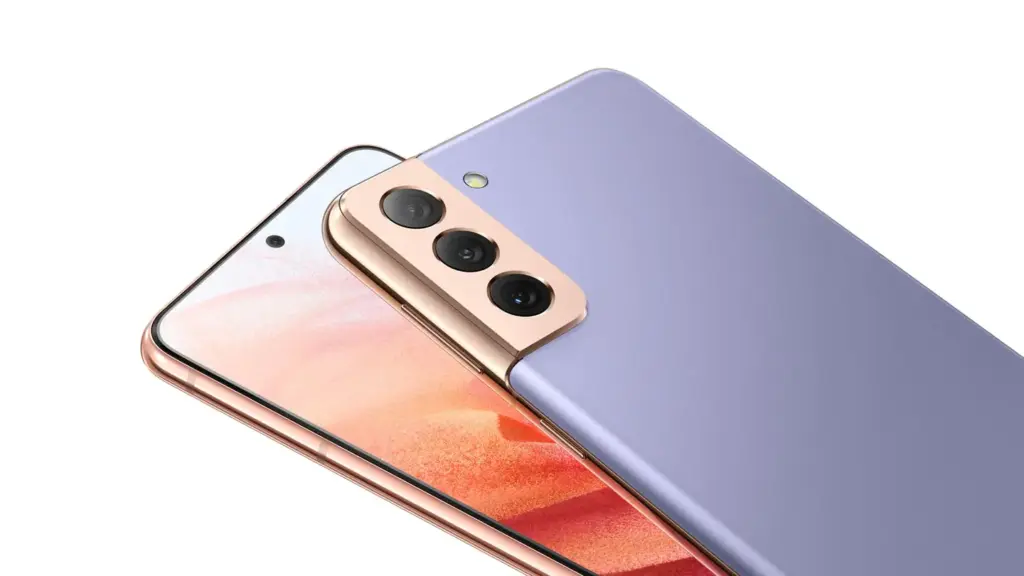
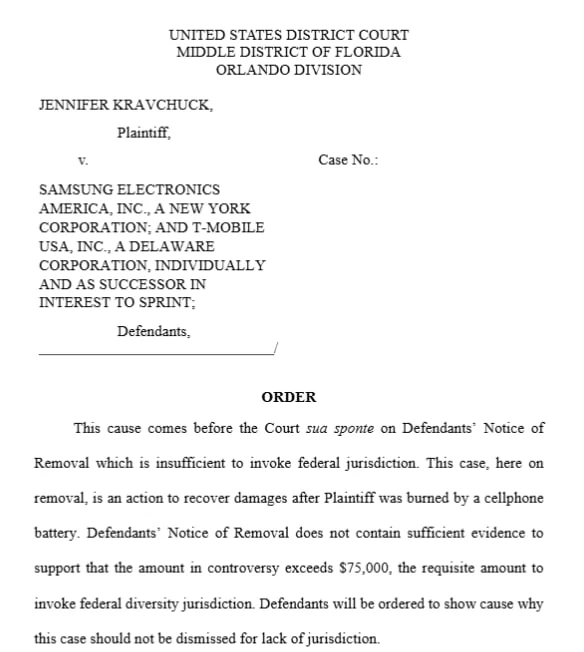
A Florida woman is taking Samsung and T-Mobile to court over claims that her Galaxy S21 5G spontaneously caught fire, leaving her with permanent scars. The case has drawn attention for both the alleged injury and the company’s reported settlement offer of just $800.
According to reports citing The Biz, Jennifer Kravchuck purchased the unlocked Galaxy S21 5G from a carrier store in DeLand, Florida, in March 2022. Nearly two years later, on March 21, 2024, the phone allegedly experienced a thermal runaway event during normal, unmodified use. The device is said to have burned her left side, requiring emergency medical treatment and resulting in permanent scarring.
Kravchuck filed a product liability lawsuit against Samsung Electronics and T-Mobile on September 20, seeking $200,000 in damages. Samsung contacted her in November 2024 to investigate. The company asked her not to factory-reset the phone and provided specialized packaging so the device could be sent to its engineering facility in Plano, Texas, for analysis.
About a month later, Samsung reportedly offered $800 for the phone on the condition that Kravchuck sign a legal waiver. She rejected the offer and requested the return of the device, citing personal medical records stored on it. The phone has not been returned, and the results of Samsung’s investigation have not been publicly disclosed.
Samsung and T-Mobile have sought to move the case from state court to federal court. A federal judge has asked the companies to first demonstrate that the matter meets the requirements for federal jurisdiction. The lawsuit remains ongoing, and the allegations have not been proven in court.
Incidents involving smartphone batteries overheating or catching fire are rare but not unheard of across the industry. Lithium-ion batteries can experience thermal runaway under certain conditions, though manufacturers design multiple safeguards to prevent it. In this instance, the claims center on whether a defect existed and how the companies handled the aftermath.
The tablet market is getting more interesting, and iQOO is bringing some serious hardware to the compact category with its new iQOO Pad Pro. The tablet combines an 8.8-inch OLED display, a flagship Snapdragon processor, and a large battery in a relatively small form factor. It is designed for users who want a powerful device for gaming, entertainment, and productivity without carrying a full-sized tablet.
8.8-Inch OLED Display With 165Hz Refresh Rate
The iQOO Pad Pro features an 8.8-inch OLED display with a 2.3K resolution (2304 × 1440 pixels) and a 3:2 aspect ratio. It supports a refresh rate of up to 165Hz in supported scenarios, along with a 240Hz touch sampling rate, 10-bit colours, and a claimed peak brightness of 4,500 nits. The high refresh rate should make supported games and everyday navigation feel smoother, while the OLED panel offers vibrant colours for entertainment.
Snapdragon 8 Elite Gen 5 Powers the Tablet
Under the hood, the iQOO Pad Pro is powered by Qualcomm’s Snapdragon 8 Elite Gen 5 processor. It comes with up to 16GB of LPDDR5X Ultra RAM and 512GB of UFS 4.1 storage. To manage heat during demanding tasks, iQOO has included a 3D VC cooling system with a 37,000mm² heat dissipation area.
Comparison
The iPad Mini 8 weighs 255g and is just 5.4mm thick, with an OLED display and Apple’s 2nm A20 Pro chip.
The tablet runs OriginOS 7 based on Android 17 and supports features such as split-screen multitasking, parallel windows, and multi-device cross-screen collaboration.
Eight Speakers and a 9,020mAh Battery
The iQOO Pad Pro packs a 9,020mAh battery with 66W fast charging support. Its audio setup includes eight speakers with Hi-Res Audio certification. For cameras, there is a 13MP rear sensor and an 8MP front camera with a 105-degree wide-angle view.
Other connectivity options include Wi-Fi 7, Bluetooth 5.4, and USB 3.2 Gen 2. The USB Type-C port also handles wired audio.
Price and Availability
The iQOO Pad Pro is available to international buyers through Giztop, with a starting price of $749. Giztop offers global and express shipping options, allowing customers outside its primary launch market to order the tablet.
With its compact OLED screen, flagship chipset, high-refresh-rate display, and eight-speaker setup, the iQOO Pad Pro could be an interesting choice for users looking for a powerful, gaming-friendly Android tablet.
Xiaomi’s latest flagship is bringing some serious hardware to the table. The Xiaomi 18 Pro Max Global Version combines a large 2K AMOLED display, dual 200MP Leica cameras, Qualcomm’s latest flagship chipset and a massive battery. For international buyers interested in getting their hands on the phone, it is now available through Giztop, with prices starting at $1,599.
Display and Performance
The Xiaomi 18 Pro Max features a 6.9-inch 2K LTPO AMOLED display with an adaptive 1–120Hz refresh rate, 4,000-nit peak brightness, 12-bit colours and Dolby Vision support. It also includes a 2.9-inch OLED rear display with a 120Hz refresh rate, adding another way to preview photos and take selfies using the rear cameras.
Comparison
The Xiaomi 18 Pro Max packs dual 200MP cameras and a secondary rear display.
Under the hood, the phone is powered by the 2nm Qualcomm Snapdragon 8 Elite Extreme Gen 6 processor, paired with up to 16GB LPDDR6 RAM and 1TB of storage. It runs Xiaomi HyperOS 4 based on Android.
Dual 200MP Leica Cameras
Photography is another major highlight. The rear camera system includes a 200MP Leica main camera with a Light Hunter 960L sensor and optical image stabilisation, alongside a 200MP periscope telephoto camera with 3.2x optical zoom and a 50MP ultra-wide camera.
The phone also features a 50MP autofocus front camera. Video recording goes up to 8K at 30fps, while 4K recording supports up to 120fps. The rear display also enables rear-camera selfies and photo previews.
The Xiaomi 18 Pro Max packs a 7,050mAh Xiaomi Jinshajiang battery. It supports 100W wired charging, 50W wireless charging and 27W wired reverse charging. Other features include an in-display fingerprint scanner, 5G and Wi-Fi 7.
Price and Availability
The Xiaomi 18 Pro Max Global Version is now available from Giztop, with a starting price of $1,599. International customers can choose between Global Shipping and Express Shipping options.
Since this is the Global Version, it offers an option for buyers outside China who want the phone with its global software experience. Interested buyers can check Giztop for available configurations, pricing, and shipping details before placing an order.
iQOO has officially confirmed a Malaysia launch for the iQOO 16 and iQOO 16s on Tuesday, December 8, 2026. iQOO Malaysia’s Instagram teaser for the iQOO 16 Series names that date but does not list a clock time. The iQOO 16 already went on sale in China in September, while the 16s is making its first official appearance. Other markets, including India, have not been given the same official date.
iQOO 16 and iQOO 16s Malaysia pre-book details
iQOO 16
Official product pages on the vivo Malaysia e-store list the iQOO 16 in Matrix and Alpha, in 12GB+256GB, 12GB+512GB, and 16GB+512GB. The iQOO 16s is listed in Vector Grey and Shadow Black, in 8GB+256GB and 12GB+256GB. An RM1 pre-book is open from November 24 to December 7, 2026, with early-bird benefits and a lucky draw for prizes said to be worth up to RM16,000. The reservation is not a phone purchase, is limited to one entry per user, and does not ship a handset. Retail prices have not been clearly announced.
iQOO Malaysia’s teaser uses a Snapdragon 8 Elite Extreme Gen 6 hashtag, matching the chip on the China iQOO 16, which launched on September 29 with an 8,400mAh battery, 100W wired charging, and a 2K 165Hz AMOLED display. Malaysian pages do not yet spell out a full spec sheet. The 16s has already been certified in Malaysia under model number I2606. A Geekbench listing has linked that hardware to a Snapdragon 8s Gen 4 chip, 12GB of RAM, and Android 17, but iQOO has not confirmed those specifications. In other markets, including India, the same model number has appeared as the iQOO 16R.
The December 8 date is a Malaysia confirmation, with no start time published in Malaysia Time (MYT, UTC+8), which runs 2 hours 30 minutes ahead of IST. iQOO has said the 16 is coming to India without naming a day, and a brief Amazon India listing has since been taken down. Tipsters have pointed to a later India window, including January, which remains unofficial.
Nothing has posted a new official teaser for December 8, 2026, with the line “Productivity is brutal” and a studio photo of a compact gray case. The image shows a TALK button, a record control, red and green status lights, and two circular wells that look like earbud housings. The company has not named the product in the post itself.
Official December 8 teaser points to a productivity earbud case
The official photo shows a split, screen-free slab in a dark gray finish, with a USB-C-style port on the lower edge and two recessed circles on the opposite face. That reading lines up with earlier unofficial looks at the same Talk and Record layout, which had left open the possibility of a standalone recorder. Nothing had already locked the date in prior teasers, including one that said, “Be present. It’s noted,” and founder Carl Pei has described the product as a screenless, AI-native tool that “couldn’t have been an app.”
According to a Bloomberg report from Mark Gurman, the December 8 device is the Ear (note), a pair of wireless earbuds whose charging case can record in-person meetings while the buds record phone calls, then turn the audio into transcripts and summaries in a companion app. Gurman also said the earbuds will work with more than one AI agent, including a voice assistant built by Nothing. The company quoted that report on X with the line “Circling back on December 8,” but it has not officially confirmed the name or those features in its own captions.
This would not be the brand’s first recording case. The Ear (3) already put a dual-microphone Super Mic and a Talk control on the charging case for voice notes, and the Ear (3a) later added call recording. Pei told Gurman he does not see “any iPhone moment for consumer AI anytime soon,” and called recording “a very sensitive space,” citing legal advice, privacy certifications, and a new London data-security team. A price, battery figures, colors, and day-one markets have not been disclosed, and no start time has been published for December 8. Local consent rules for recording would still apply.
Finding a dead battery in a watch you haven’t worn in a while is a specific kind of frustration, especially when you’re rushing out the door. Solar-powered watches, like Citizen‘s long-running Eco-Drive line, offer a practical solution by absorbing light from almost any source: the sun, a desk lamp, or a cloudy sky, to keep the movement running indefinitely without ever needing a battery change.
When you combine that low-maintenance solar technology with Citizen’s Super Titanium, you get a highly durable everyday watch. This proprietary material is lighter than stainless steel, highly scratch-resistant, hypoallergenic, and comfortable to wear year-round.
If you want a reliable timepiece you rarely have to fuss over, here are seven solid titanium Eco-Drive options that sit right around the $600 mark.
We are starting slightly over the $600 budget here, but the Tsuki-Yomi A-T offers a lot of functionality that makes the extra twenty-six dollars worth considering. This is a 30th-anniversary model that combines a moonphase complication with atomic timekeeping.
Essentially, the watch receives radio signals to automatically sync with atomic clocks across 24 time zones. You don’t have to set the time, the date, or even adjust for leap years thanks to the perpetual calendar. The watch has a 43mm silver-tone titanium case with faceted edges and a green dial textured to look like the lunar surface.
The moon phase is displayed in a window at 6 o’clock. It’s a busy dial, but the black accents and silver-tone hands keep it legible. It also features a scratch-resistant sapphire crystal and 100 meters of water resistance, running on the Caliber H874 movement.
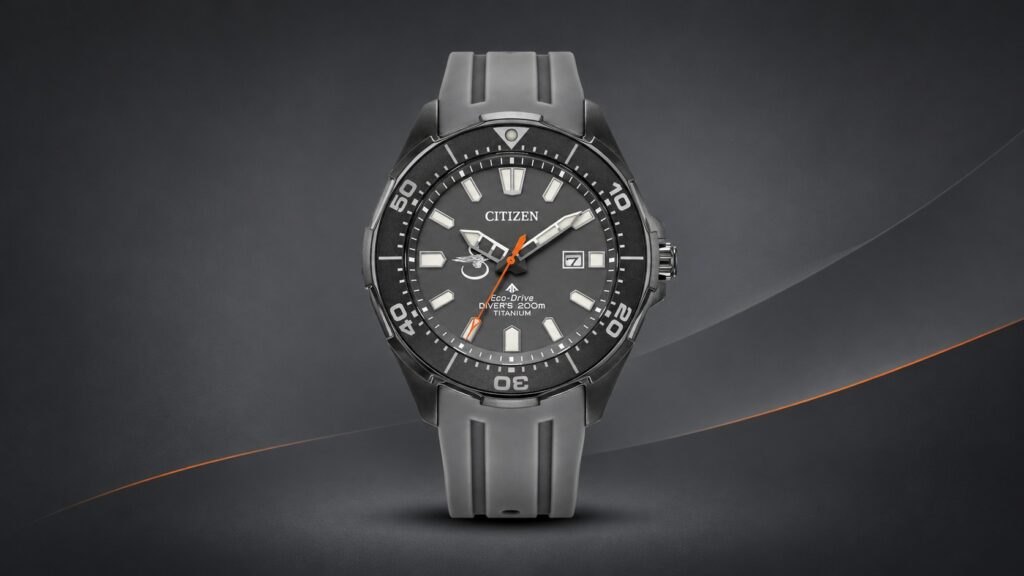
If you prefer a watch with a more utilitarian, outdoor-focused design, the Promaster Sikorsky is a good option. Citizen partnered with the aircraft manufacturer Sikorsky to design this special edition, pulling inspiration from the MH-60R helicopter.
It has a 43.5mm case made from gray Super Titanium, which gives it a muted, matte look. The dial matches the case, keeping things mostly monochromatic except for a bright orange seconds hand that makes it easy to read at a glance.
Instead of a metal bracelet, it comes on a gray polyurethane strap, which is practical if you plan to use it in the water. Speaking of water, it is ISO-certified with 200 meters of water resistance. It comes in a gray Promaster tackle box and runs on the reliable E168 Eco-Drive movement.
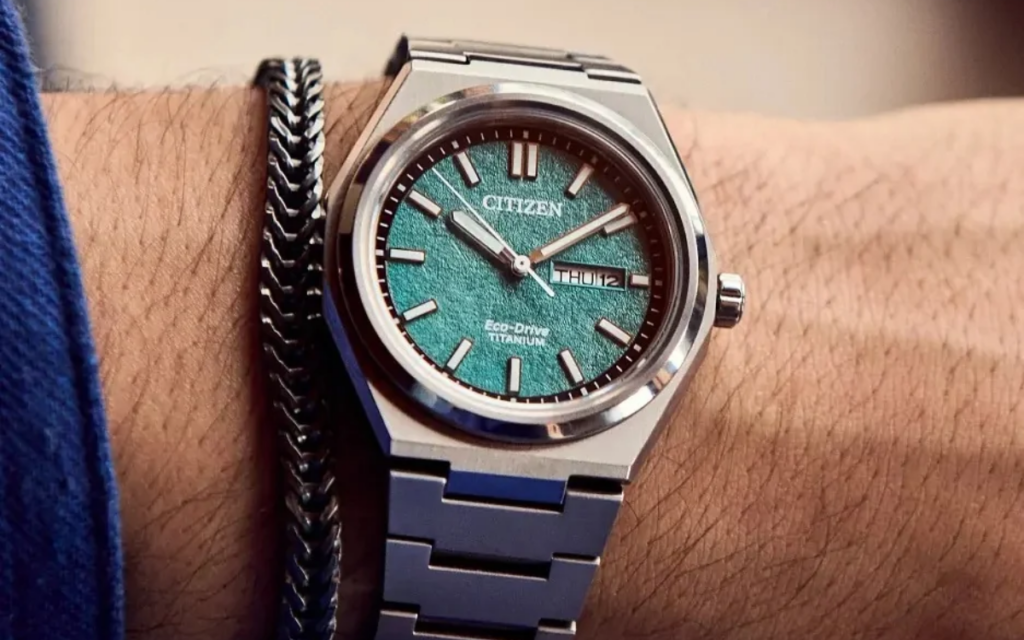
The Zenshin Three-Hand taps into the current trend of watches with integrated bracelets, where the case and the band flow together as a single cohesive design. It’s a versatile look that works just as well with a t-shirt as it does in an office setting.
At 39mm, the case size is very approachable for a variety of wrist sizes. The silver-tone titanium is finished with a mix of brushed and polished surfaces. The dial is a textured green, framed by a black minute track with luminous hands and markers for visibility in the dark.
There is a day-date window at 3 o’clock, which is a helpful feature for a daily wearer. Powered by the Caliber J800, it also includes a sapphire crystal and 100 meters of water resistance. At under $400, it’s a very reasonably priced everyday watch.
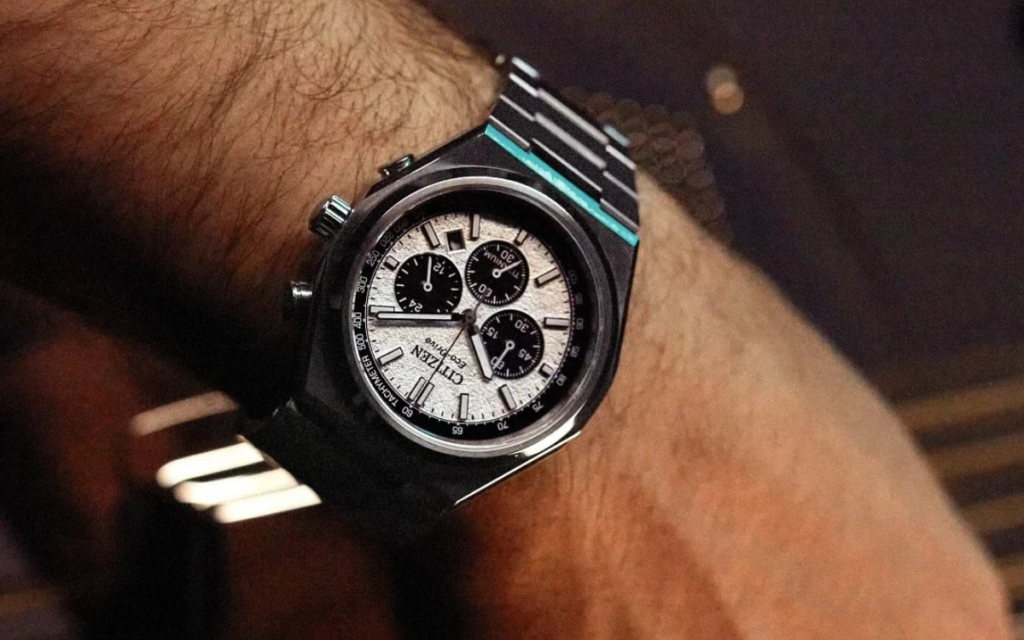
If you like the integrated bracelet design of the Zenshin but want something a bit sportier, the Zenshin Chrono adds stopwatch functionality. To accommodate the extra features, the case is bumped up to 42.5mm.
This model features a textured white-silver dial with three black sub-dials, giving it a classic panda look. The outer edge of the dial has a black tachymeter scale, which can be used to measure speed over a known distance.
The chronograph can measure up to 60 minutes in 1/5-second increments, and there is also a 12/24-hour time indicator and a date window. Like the three-hand version, it uses a sapphire crystal and is water-resistant to 100 meters. It runs on the Caliber B620 movement.
The Brycen is a straightforward, casual sports watch. It doesn’t have the complex features of the Tsuki-Yomi or the integrated design of the Zenshin; it just focuses on being a legible, durable timekeeper.
The case measures 41mm and features a brushed silver-tone finish. It has a bi-directional rotating bezel and comes on a standard triple-link titanium bracelet with a fold-over clasp. The dial is black with a subtle sunray texture, providing good contrast for the silver-tone hands and markers.
There is a simple date window at 3 o’clock. It is equipped with a sapphire crystal, 100 meters of water resistance, and runs on the Caliber J810 movement. It’s a very traditional design that won’t look out of place anywhere.
This is the second watch on the list that sits slightly above the $600 mark, but as a limited edition, it has a few unique details. Produced to mark the 20th anniversary of the lifestyle publication Hypebeast and the 50th anniversary of Eco-Drive, only 600 pieces were made.
It uses the same 39.5mm integrated case as the standard Zenshin, but the titanium is treated with Duratect Platinum, giving it a brighter, more metallic silver finish. The dial is also silver-tone, creating a completely monochromatic look.
The hands are skeletonized, and the standard 4 o’clock marker has been replaced with an Arabic numeral 20 to nod to the anniversary. It has a day-date display, a sapphire crystal, and 100 meters of water resistance. It comes in custom packaging with an individually numbered caseback.
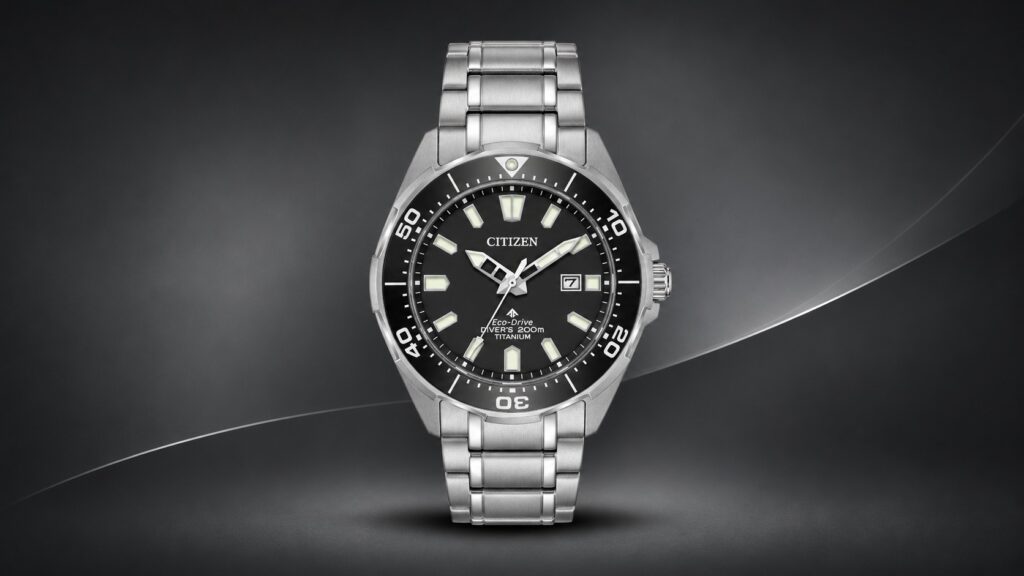
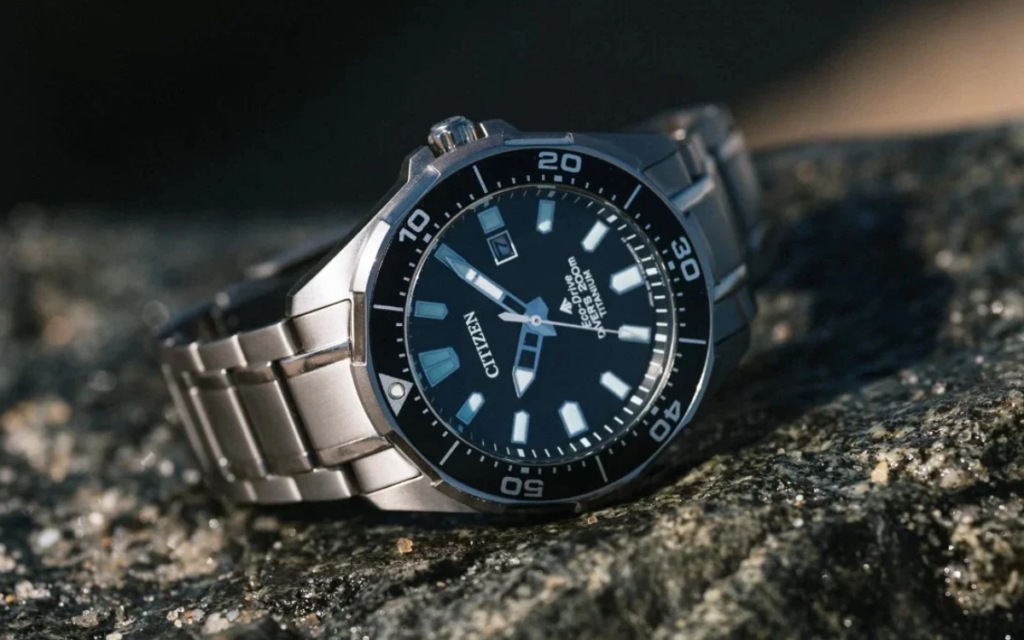
Having a dive watch is a staple in most watch collections, and the Promaster Dive is a very practical take on the category. One of the main benefits of having a solar-powered dive watch is that you don’t have to open the caseback every few years to change a battery. Every time a caseback is opened, the water-resistance seals can be compromised, so leaving it sealed ensures it stays water-tight.
This model has a 44mm titanium case and a matching bracelet. It features a standard black dial with large, luminous hands and markers for underwater visibility, along with a black aluminum one-way rotating bezel to track elapsed time.
It is ISO-compliant for scuba diving with 200 meters of water resistance. It runs on the Caliber E168 movement and uses a mineral crystal, which is standard for many dive watches as it is more shatter-resistant than sapphire.
We use cookies on our website to give you the most relevant experience by remembering your preferences and repeat visits. By clicking “Accept”, you consent to the use of ALL the cookies.
This website uses cookies to improve your experience while you navigate through the website. Out of these, the cookies that are categorized as necessary are stored on your browser as they are essential for the working of basic functionalities of the website. We also use third-party cookies that help us analyze and understand how you use this website. These cookies will be stored in your browser only with your consent. You also have the option to opt-out of these cookies. But opting out of some of these cookies may affect your browsing experience.
Necessary cookies are absolutely essential for the website to function properly. This category only includes cookies that ensures basic functionalities and security features of the website. These cookies do not store any personal information.
Any cookies that may not be particularly necessary for the website to function and is used specifically to collect user personal data via analytics, ads, other embedded contents are termed as non-necessary cookies. It is mandatory to procure user consent prior to running these cookies on your website.