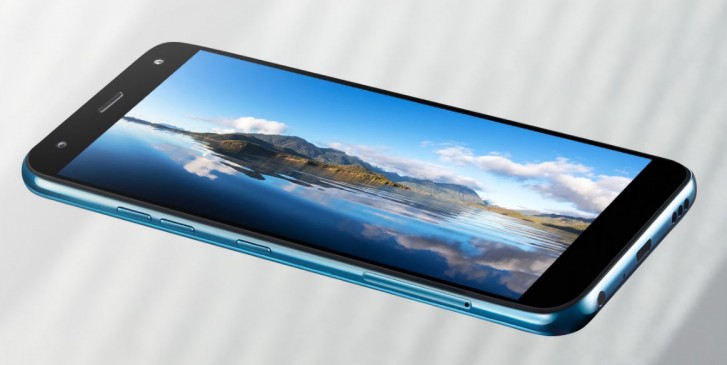
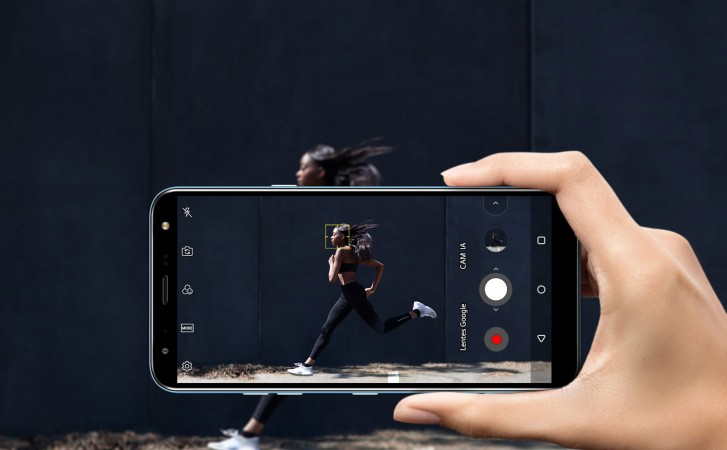
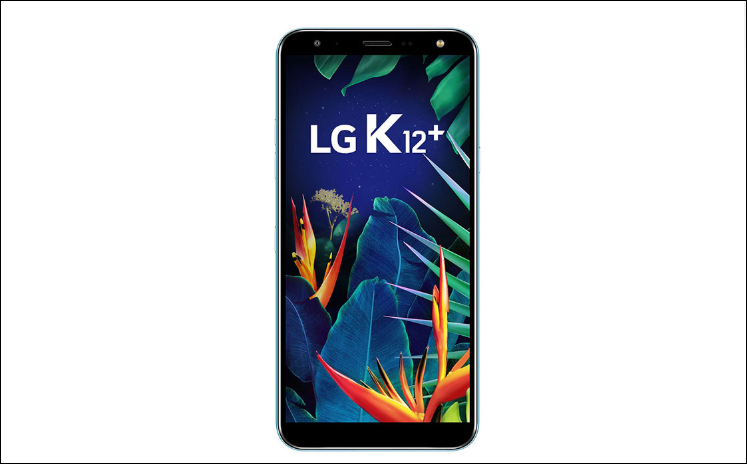
LG has launched a new entry-level model dubbed K12+ in Brazil and it is basically the K40 by another name. The launch was without any fanfare but that doesn’t mean the device doesn’t tick most of the boxes to be regarded as a decent device even though it is an entry-level model. LG K12+ offers users a number of spectacular features ordinarily you can get only on the more expensive LG models. Some of these features include powerful audio and AI-enhanced software.
On the specifications, the K12+ features a 5.7-inch HD+ screen which uses the traditional 16:9 aspect ratio meaning there is no notch. The device is powered by an Octa-core Helio P22 SoC paired up with 2GB of RAM. There is only a 32GB storage option available which can be expanded. For photography, the device packs an 8MP selfie shooter which also has a LED flash.
The back panel is made from plastic and at the middle sits a single 16MP camera with an LED flash. There is equally a fingerprint sensor in the middle. Providing the interface is the Android 8.1 Oreo-based OneUI. The device packs the power button on the right side of the screen while the left side has the volume rockers and a dedicated Google Assistant button below the volume controls.
In other aspects, the K12 Plus packs a 3000 mAh battery which can be topped up using the micro USB port it packs. The device also comes with DTS:X 3D Surround Sound support when plugging the headphones in the device’s 3.5mm jack. You also get the MIL-STD 810G certification which shows the frame is of military grade.
For an entry-level model, the K12+ presents with a R$ 1,199 ($308) price tag which we consider way too expensive. There are better options at that price point. Nevertheless, the device comes in Moroccan Blue, Platinum Gray, and Black colour options.
Important smartphones manufacturers are releasing a lot of midrange phones nowadays. And many of them end up being just variants of the previous ones or renamed devices for different markets. For example, Vivo S1 shares many things in common with the recent Vivo V15, while the Huawei P30 Lite is just the older Nova 4e renamed for the global market. While several people skip such devices, this does not mean they are not interesting smartphones or outdated handsets; that is just marketing. Indeed, they represent two of the most interesting mid-rangers out there in the €300 price range, just like the Samsung Galaxy A70. But which one should you go for? This comparison will clear your ideas.
Samsung Galaxy A70 vs Huawei P30 Lite vs Vivo S1
Samsung Galaxy A70
Huawei P30 Lite
Vivo S1
DIMENSIONS AND WEIGHT
164.2 x 76.7 x 7.9 mm
152.9 x 72.7 x 7.4 mm, 159 grams
162 x 76 x 8.5 mm, 189 grams
DISPLAY
6.7 inches, 1080 x 2340p (Full HD+), 385 ppi, Super AMOLED
Triple 32 + 8 + 5 MP f/1.7 and f/2.2 and f/2.2
32 MP f/2.0 front camera
Triple 24 + 8 + 2 MP f/1.8 and f/2.4
32 MP f/2.0 front camera
Triple 12 + 8 + 5 MP f/1.7, f/2.2 and f/2.4
25 MP f/2.0 front camera
BATTERY
4500 mAh, fast charging 25W
3340 mAh, fast charging 18W
3940 mAh, Fast Charging 18W
ADDITIONAL FEATURES
Dual SIM slot
Hybrid Dual SIM slot
Hybrid Dual SIM slot
Design
If you want the most stunning and futuristic design, do not hesitate and go for the Vivo S1. Despite it does not have a notch or a punch-hole display, this handset rocks an incredibly screen-to-body ratio, thanks to the selfie pop-up camera which is placed on a motorized mechanism. That is mainly what makes this phone incredibly innovative and flagship-like. Huawei P30 Lite and Samsung Galaxy A70 come with standard midrange-class designs consisting of a traditional waterdrop display and gradient colors.
Display
Samsung Galaxy A70 is one step forward when it comes to the display quality thanks to its Super AMOLED display. The display has always been an advantage for Samsung as the Korean giant produces AMOLED panels and it can integrate them on most of its devices without bearing high costs. Further, the Samsung Galaxy A70 comes with a taller 20:9 aspect ratio and a larger 6.7-inch diagonal, so it more suitable for multimedia uses. The second place goes to the great borderless display of the Vivo S1 which has narrow bezels but gets rid of notches thanks to the pop-up camera. And it comes with a satisfying 6.53-inch diagonal. Huawei P30 Lite is the most compact device of the trio but it also comes with the smallest display.
Specs & Software
If you had all of these devices, you would not find significative differences between their speed and performance. Even though they boast different chipsets, all of them are at the same level. I would go for the Samsung Galaxy A70 for a simple reason: it comes in a variant with more RAM: up to 8 GB. Further, it has a micro SD dedicated slot allowing to expand the internal storage without renouncing to the dual SIM slot. All the phones are based on Android Pie with a highly customized fork.
Camera
Even when it comes to the camera department, Samsung Galaxy A70 is a winner, at least on the paper. It sports an amazing 32 MP main sensor with a bright f/1.7 aperture, an 8 MP ultrawide lens and even a 5 MP depth sensor. Just in case it is not enough, on the back, there is a stunning 32 MP camera for selfies. You can find a front camera with the same resolution on the Huawei P30 Lite as well as a triple camera setup, but the main sensor and the depth sensor come with lower resolutions and less bright focal apertures.
Battery
The mammoth battery of the Samsung Galaxy A70 makes it a king even when it comes to battery life. The device rocks a huge 4500 mAh battery which is able to last more than two working days even with intensive use. Further, it has the fastest charging technology with a power of 25W.
Price
We still do not know how much Samsung Galaxy A70 will cost, while Huawei P30 Lite and Vivo S1 hitten the shelves with price tags of about €290 and €300 respectively. Coming to an end, Samsung Galaxy A70 looks like a definitely better device thanks to its great cameras and bigger battery, as well as a satisfying display and a better memory configuration.
It is often difficult from our end reporting on a new Xiaomi product launch, especially the smart home or ecological chain products. That is because they are just so cool but are hardly available to buy outside China. Since the company went public on the Hong Kong stock exchange, there have been conscious efforts to ensure a global spread of its products. But while we wait for that to fully materialize we just have to endure seeing the Chinese tech giant release cool gadgets. The mother of all releases is apparently coming, going by a recent disclosure by Xiaomi. The company, in a Weibo post, says it would be releasing a massive 20 products in one fell swoop on Monday, April 1.
When Xiaomi launched the Redmi 7, Note 7 and Note 7 Pro alongside the Redmi AirDots TWS headset and Redmi Automatic Washing machine 1A on March 18, Redmi’s VP Lu Weibing hinted that a conference would be held on April 1 where the firm would roll out its plans for the Mi Fan Festival commencing on April 9. The products that would be unveiled are believed to be gadgets that would be sold during the fan fest. Xiaomi did not list the products but shared a poster containing several gadgets. From the pre-launch poster, we can make out the Mi Walkie-Talkie, Mi Notebook laptop, VR headset, sunglasses, swimming glass, weighing scale, thermometer, helmet and several others. It even has the inscription ROY which confirms that the Mi 9 Roy Wang custom edition will be released as well. Interestingly, the event will be hosted by Xiaomi’s president Wang Yuan.
It should be noted that a large number of the products have been launched already, some over a year back. So, it seems Xiaomi is just going to release them again into the market, perhaps at crazy prices, so that Mi fans can have a bountiful festival. We do hope this isn’t April fool.
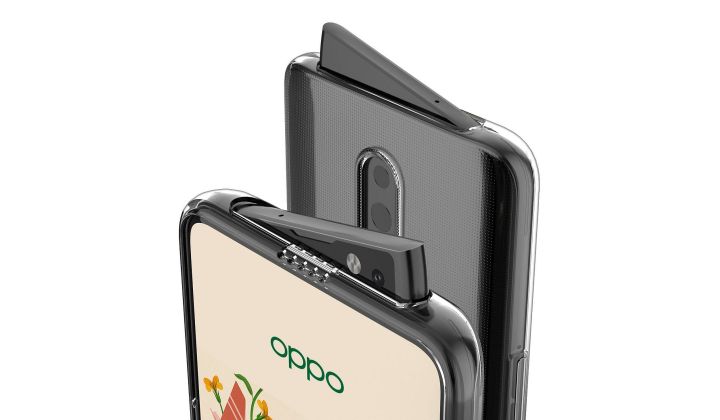
We can predict that OPPO will hit it big with the flagship Reno which is expected to be launched in April, going by the details we have seen so far. While the periscope camera with 10X lossless zoom is the main highlight, the device also packs several features that set it apart from the pack. The selfie camera design, for instance, is the first of such in the industry. But the camera is definitely what makes the Reno tickle. In case you are wondering how the sensors are designed inside the rear cover, OPPO may have just given us our first look at the rear camera detached from the smartphone in a short disassembly video.
The rear camera sensors were taken apart in order to clearly see the periscope lens which completes the triple camera setup and which is responsible for the 10X zoom. The main sensor on the device is a 48MP main camera teaming up with a wide-angle camera, both with OIS. The third lens is a prism, hence the shape is not round like the others and it is detachable from the duo. How it works is that light travels through the prism where it meets about five lenses before hitting the image sensor. The camera interface comes with a slider which changes the zoom level as it slides up. There is also optical image stabilisation and this is provided by a magnetic coil which moves the prism.
OPPO Reno is expected to be powered by a Snapdragon 855 chipset but there will be a model with Snapdragon 710 going by benchmark app appearance. The screen has a high screen to body ratio, thanks to the pop-up camera design. The design of the pop-up camera elicits our curiosity to want to find out how it is arranged. Perhaps, OPPO may also release a disassembly video of the pop-up camera before the launch. Let’s keep our fingers crossed.
Various reports have revealed that Google is working on a Chromebook that is codenamed as Atlas. Two leaked videos of the same device that is believed to arrive as the successor of Pixelbook have been revealed by About Chromebooks. The appearance of the two videos suggest that the arrival of the device could be near as the company seems to be internally testing it.
The first video reveals that the appearance of the Atlas device is quite different from Pixelbook. The reason behind it is that the Pixelbook is a 2-in-1 laptop-tablet hybrid whereas the placement of the hinge in the device shown in the leaked video suggests that it does not feature a convertible design. It appears more a like conventional clamshell style Chromebook.
The Atlas device seems to be equipped with a display of around 12 to 13 inches. Also, it appears to be sporting a wider display than the existing Pixelbook and Pixel Slate. There is a possibility that the display of Atlas may support 4K resolution. There are speakers on the either sides of the keyboard. The “ProductName” text that can be seen above the keyboard could be replaced by G logo on the final device. The hamburger key appears to be replaced by a Power key.
The second video does not show anything new. However, it reveals that its top and bottom bezel are quite large. The Atlas device has a black housing with contrast brownish-gray colored keys. It remains to be seen whether the above shown Atlas device arrives as a successor of the Pixelbook or it could be a product built by a different manufacturer.
Xiaomi‘s latest flagship Mi 9 series has been plagued by inadequate stock since the phone was launched last month. That has necessitated the company to ramp up its production, with Lei Jun even promising to handle a screwdriver in order to speed up the production process. Looks like the Mi 9 is back in stock as Xiaomi has scheduled another round of flash sale for tomorrow (March 30).
We expect the sales to wrap up as soon as it begins. It could take up to a month before the device will become available on open sales in China. But for now, Xiaomi is plagued with a shortage of stock on all models of the Mi 9. We do hope that the company find a way to ramp up its production in order for the models to be available in large quantity soon after launch.
As a reminder, Xiaomi Mi 9 sports a 6.39-inch 2340 x 1080 AMOLED display with a waterdrop notch that houses the selfie camera. The display panel is supplied by Samsung and is protected by a layer of Gorilla Glass 6. Under the hood, it runs Snapdragon 855 processor and is paired with 6GB of RAM and 128GB of storage. There is equally an 8GB RAM variant with 128GB of storage too. The Mi 9 is Xiaomi’s first triple camera phone. The first camera with the holographic ring around it is actually the telephoto lens – a 12MP Samsung ISOCELL S5K3M5 sensor with an f/2.2 aperture and 2x optical zoom. The main sensor is a 48MP Sony IMX586 f/1.75 sensor with a 6P lens. There is also a 16MP Sony IMX481 f/2.2 sensor for taking wide-angle photos and macro shots. The selfie camera is a 20MP sensor and comes with a bunch of modes including AR avatars and an integration with TicTok. Other features include an in-display fingerprint scanner, NFC, a dedicated AI button, Bluetooth 5.0 dual-frequency GPS for better positioning, an infrared port, and a USB Type-C port.
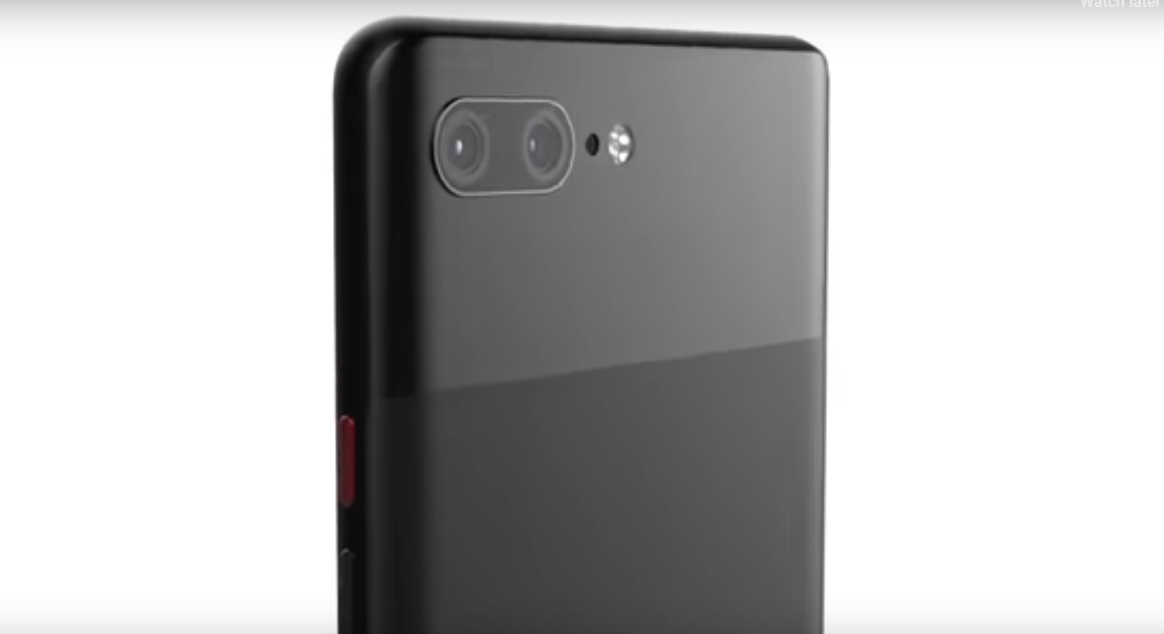
Google is expected to unleash the Pixel 4 and Pixel 4 XL smartphones by October this year. Concept Creator has shared a new concept video on YouTube to showcase the design of the Pixel 4 and Pixel 4 XL smartphones. It claims that the Pixel 4 and 4 XL concept has been designed based on the leaks surrounding it.
The Pixel 4 series concept video shows that it will be borrowing the rear design from the Pixel 3 series. The concept models show that they are equipped with two-tone design. The upper portion is made out of glass whereas the other part seems to be of metal.
The Pixel 4 concept device features a single camera on its rear whereas the Pixel 4 XL may come with dual rear cameras. The rear cameras along with LED flash are placed on the top-left corner on the rear shells of these devices.
The Pixel 4 XL concept model sports a better-looking display notch compared to the Pixel 3 XL. The notch houses the dual selfie snappers. The Pixel 4 model also sports the same design. The bezels surrounding the display including the chin are extremely thin. Both phones are equipped with different colored power keys, a volume rocker and a dedicated camera button on their left edge.
The bottom edge on both devices feature a 3.5mm audio jack, a microphone, a SIM tray and a USB-C port. Both phones are equipped with dual front-firing speakers. The first speaker is placed on the top edge of the device whereas the other is present on the super-slim chin. There is no fingerprint scanner on the backside of these phones since they are equipped with in-display fingerprint reader.
As far as specs and features are concerned, the Pixel 4 series concept models are equipped with Snapdragon 855 mobile platform, 8 GB of RAM, 3,950mAh battery, dual cameras, microSD card slot, 3.5mm audio jack, wide-angle selfies, 4K video shooting at 60 fps, super slow-motion, night sight mode, Wi-Fi 6, 5G ready, dual speakers, noise reducing mic, improved cameras, two-day battery life, S-AMOLED display, 6.3-inch 1440p screen (Pixel 4 XL), 5.5-inch screen (Pixel 4), reduced notch, IP68 rated body, in-display fingerprint scanner, unlimited storage on Google Photos and 25W quick charge.
The rumor mill is yet to leak the information on the forthcoming flagship Pixel phones. Its been nearly six months since the launch of Pixel 3 and Pixel 3 XL smartphones. Hence, the actual Pixel 4 and Pixel 4 XL may not look like as the concept models shown above. The Pixel 4 series are unlikely to feature 3.5mm audio jack since they have been already axed in the predecessor models. Also, the upcoming Pixel phones may not feature a dedicated camera key.
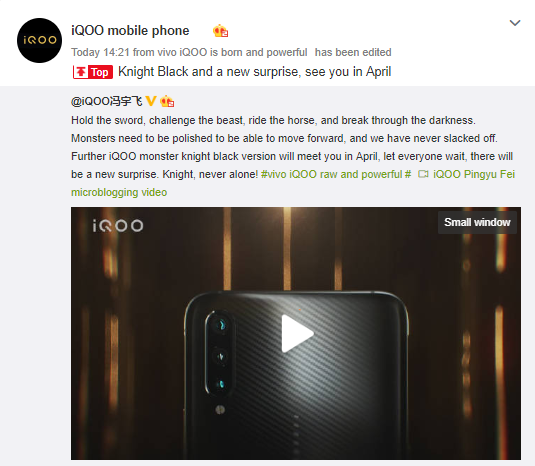
During the unveil event of the Vivo iQOO gaming phone, the company had confirmed that it will be releasing in four variants such as 6 GB RAM + 128 GB storage, 8 GB RAM + 128 GB storage, 8 GB RAM + 256 GB storage and 12 GB RAM + 256 GB storage. Except for the 12 GB RAM variant that was dubbed as monster version, all the other variants of the iQOO gaming phone have been available for purchase. Today, iQOO brand Vice President Feng Yufei has confirmed through his Weibo account that the company will be releasing iQOO Monster Knight Black version in April.
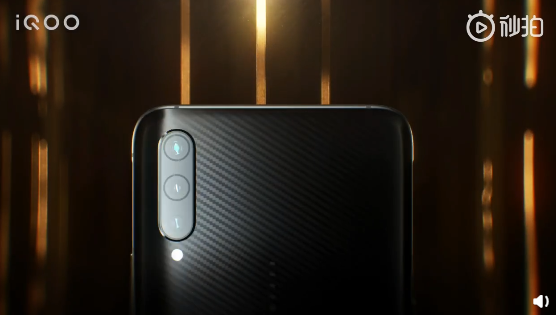
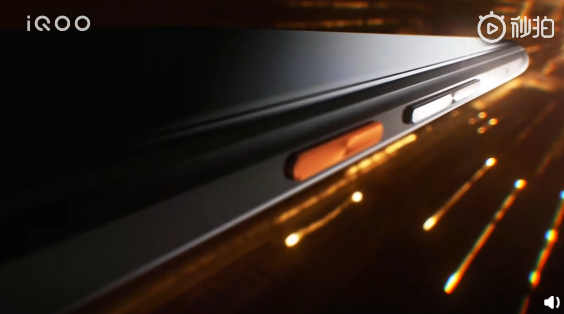
The 6 GB and 8 GB RAM editions of the Vivo iQOO are available in colors like Electro-optic Blue and Lava Orange. The iQOO Knight Black edition sports a matte glass body with carbon fiber texture overlay. Also, the phone is equipped with a bright colored power key. The very look at the device suggests that it has been designed to deliver topnotch gaming experience.
As far as specs are concerned, the iQOO Monster Knight Black Edition features a 6.41-inch AMOLED display with waterdrop notch. It carries support for full HD+ resolution. It comes with sixth generation in-display fingerprint reader. The Snapdragon 855 mobile platform that fuels the smartphone is coupled with 12 GB of RAM and it features an internal storage of 256 GB. The smartphone features professional grade haptics and surround sound output for immersive gaming experience.
The 4,000mAh battery of the iQOO Monster Knight Black Edition carries support for 44W ultrafast flash charging which can charge to 50 percent capacity in just 15 minutes. The handset features a multi-layer heat dissipation system. The rear shell of the phone is fitted with a triple camera system that feature a Sony IMX363 12-megapixel primary sensor, a 13-megapixel wide-angle lens and a 2-megapixel depth sensor. On the front is a 12-megapixel selfie shooter. The monster edition carries a price tag of 4,298 Yuan (~$640).
The official Weibo account of iQOO has reshared Yufei’s post to confirm that apart from launching Monster Knight Black Edition, it has a new surprise for the audience. A recent report had revealed that the Chinese manufacturer will be launching the iQOO gaming phone in India in late May or April. The report had also revealed that the company will be launching a new gaming phone in India later this year. Before the second gaming phone from iQOO arrives in India, the company may launch it first in China. Hence, there is a possibility that the Chinese manufacture may introduce another gaming phone in the next month. However, it is advisable to wait for further reports to confirm on the arrival of new gaming phone.
It’s a matter of time, whenever we talk about technological advancements. Huawei also believes in the same as the Yang Chaobin, president of Huawei’s 5G product line, claims 6G won’t arrive until 2030. The industry is actively participating in 5G infrastructure development, and it will take 10-20 years before 6G becomes reality.
The next wave of telecom revolution – 6G by 2030 is only possible if industry timely transforms its existing networks to the 5G networks within the next few years, otherwise, some delay is possible. While ascending towards the newer networks, security will remain the top priority among the 5G operators.
Speaking at Boao Forum for Asia 2019 Annual Meeting, Yang Chaobin further talked about the different perspectives of the 5G network. He urged on the need to streamline these different paths and further paving way for the formulation of 5G standards. The next decade will be the decade of 5G in the telecom industry.
In advancement, the US Federal Communications Commission (FCC) started working on the research and development of the 6G. They have voted to open “THZ Wave” frequency for 6G services. The frequency is in the range of 95GHz to 3 terahertz (THz) helping to attain higher transfer speeds per unit time. Unlike 5G technology, the US is doing its part to become the world’s first nation in developing the next generation communication technology. Even, Donald Trump, the US president also want 6G network very soon. Currently, Chinese companies – Huawei, ZTE and others are actively participating in the 5G development process.
Huawei recently was given clearance to run the 5G trials in India, Thailand and some other countries, irrespective of the ban from the US. Since last year, Huawei has been restricted from participating in 5G tests across the US, UK, Australia, New Zealand, etc after company violated the US sanctions on Iran.
Presently, major telecom operators and smartphone manufacturers are developing the 5G infrastruce around the globe. A large amount of capital and technology is paving its way for initialising the commercial operation of 5G. The 6G standard is hardly even at initial stages of research and development.
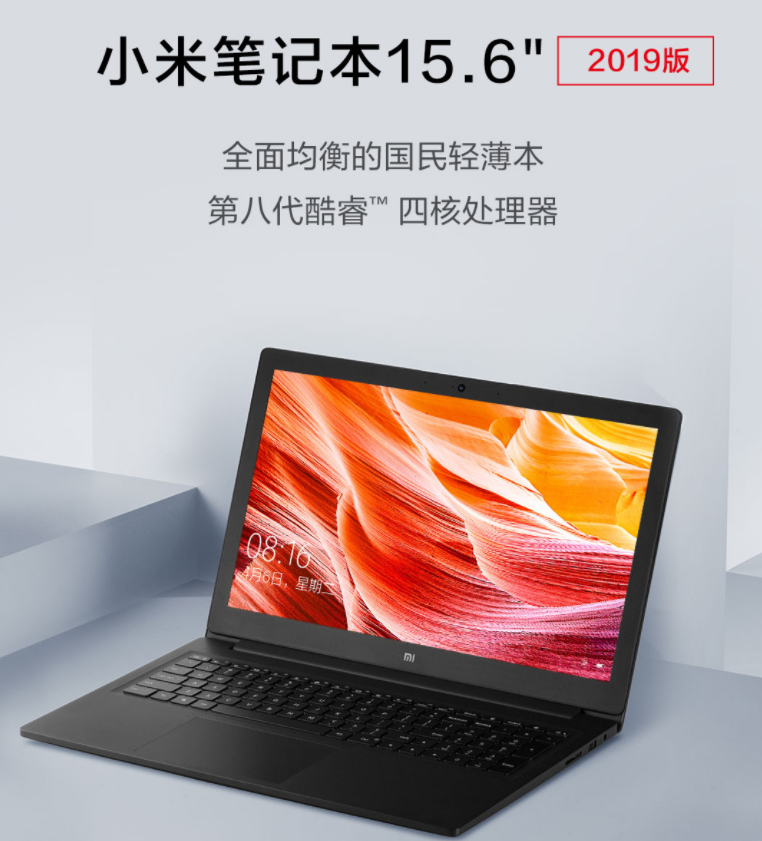
After launching the updated Mi Notebook Air 12.5 (2019) at an event, Xiaomi has now silently launched the new Mi Notebook Pro 15.6 (2019) in China. In terms of design, it is similar to its predecessor, featuring a minimalistic design and a logo at the front.
It comes with a dark grey finish on a metal body and the device measures 19.9mm in thickness. The Mi Notebook Pro (2019) also comes with a dual fan cooling system and heat pipes for excellent temperature management.
Coming to the specifications, the Mi Notebook Pro (2019) features a 1080p Full HD display with thin bezels on all sides. Under the chassis, the device is powered by Intel’s 8th-gen Core i5 chipset, which is coupled with DDR4 2400MHz expandable dual memory slot supporting up to 32GB.
As for the storage support, it comes in two options — 256GB and 512GB with SSD expandability options. There’s also a maxed out model with 12GB of RAM and 1TB of storage. Taking care of the audio requirements is dual 3W large cavity speakers.
For connectivity, it comes with two USB 3.0, one USB 2.0, Gigabit Ethernet port, HDMI interface, and a headset jack along with a 3-in-1 card reader as well. The laptop is running Microsoft Windows 10 operating system out-of-the-box.
In terms of pricing, the 8GB RAM + 256GB storage model is priced at 4,299 Yuan (approximately $640) while the 512GB storage version costs 4,899 Yuan (approximately $730). The pricing and availability details of the top-end model with 12GB RAM is not yet revealed. The 8GB RAM model will go on sale from 9th April on Xiaomi Mall and JD.com.
Compared to the 2018 version of the Mi Notebook Pro, this one comes with marginal improvements, mainly in processor upgrade on the new version along with the storage options. This was also the case with the Mi Notebook Air 2019 launched a couple of days ago.
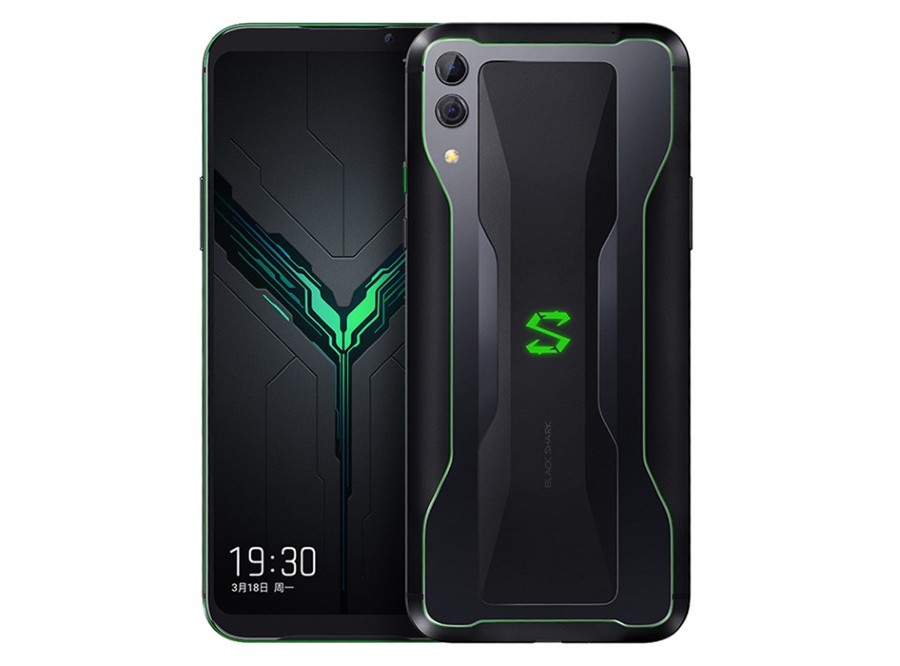
After its original launch in China, the gaming smartphone is up for grabs in Europe. The phone is available across European countries at the starting price of €549 for the 8GB/12GB internal storage variant, whereas the one with 12GB RAM and 256 GB internal storage is available for €649.
Interested users can order the Black Shark 2 from its official website. It will start shipping from April 1 in Austria, Belgium, Bulgaria, Croatia, Republic of Cyprus, Czech Republic, Denmark, Estonia, Finland, France, Germany, Greece and other European nations. Speaking on the occasion David Li, VP of Black Shark Global says this device will provide “an unmatched experience for European gamers”.
Black Shark launch in Europe is potentially inspired by increasing mobile gaming demand. It is now generating more consumers than traditional gaming equipment such as Xbox, PlayStations, etc in Europe.
The gaming smartphone features powerful hardware, hyper-responsive display and optical controller integration. Moreover, the device comes with a 6.39-inch AMOLED 1080×2340 HDR display featuring a pressure-sensitive system for mapping the buttons on its sides. It embeds a 4,000mAh battery with 27W fast charging, in-screen fingerprint sensor, Bluetooth 5.0 and Android 9.0 Pie onboard. The device is powered by a Qualcomm Snapdragon 855 Soc, 8/12GB RAM and a vapour chamber cooling system for keeping its temperature low while in gaming mode.
In the camera department, Black Shark 2 hosts a dual camera module comprising a 48 MP primary camera and a 12 MP telephoto lens. On the front side, it comes with a single 20 MP camera with f2.2 aperture. Fingerprint (under display), accelerometer, gyro, proximity, and compass sensors are present on the Black Shark 2.
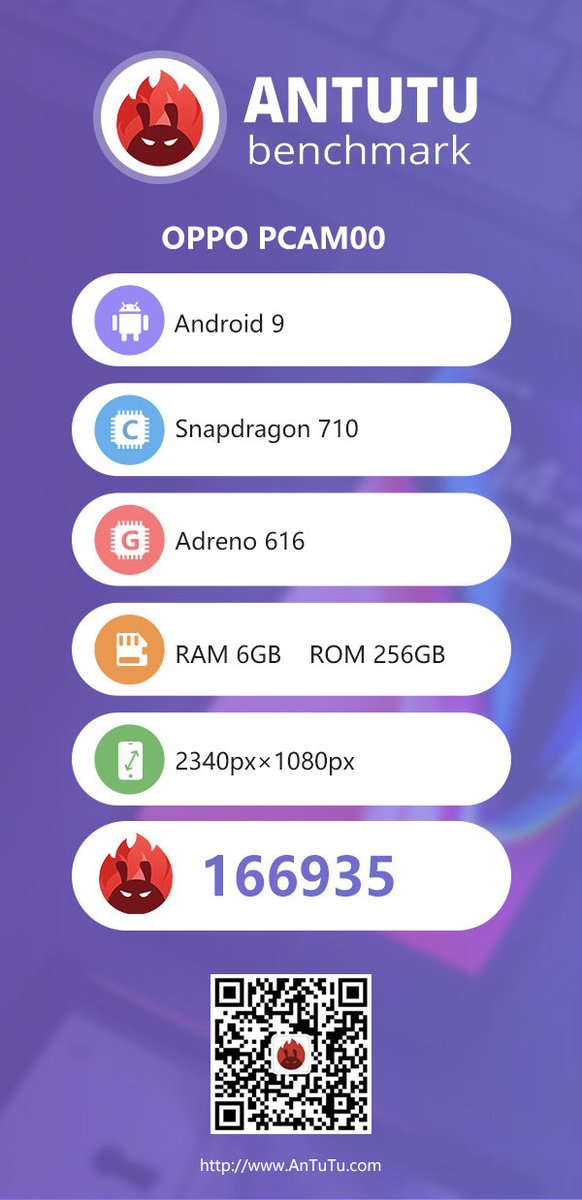
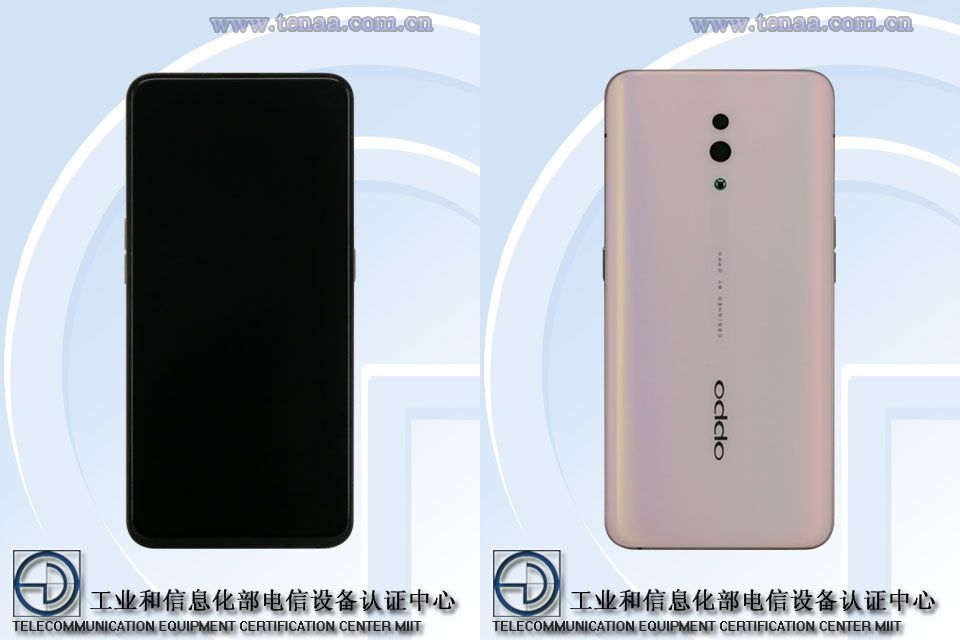
Few hours ago, the OPPO Reno Snapdragon 710 that is believed to hit the market as OPPO Reno Lite had appeared on TENAA with full specifications. On TENAA, the smartphone is listed in PACT00 and PACM00 network variants. AnTuTu benchmarking platform the benchmarking scores of the PCAM00 Oppo Reno Lite smartphone.
The OPPO Reno Lite AnTuTu benchmarks reveal that its display carries support for full HD+ resolution of 1080 x 2340 pixels. The Snapdragon 710 chipset that includes 2.2 GHz octa-core processor and Adreno 616 graphics is present under the hood of the device. The SoC is supported by 6 GB of RAM and it features an internal storage of 256 GB. The smartphone is running on the latest Android 9 Pie OS. The handset has recorded an average benchmarking score of 166,935. Even other Snapdragon 710 driven phones usually score around 170k on AnTuTu benchmarks.
The TENAA listing of the OPPO Reno Lite has revealed that it will be featuring an in-display fingerprint reader and it will be also available in 8 GB RAM option. For photography, it features a 48-megapixel + 5-megapixel dual camera setup and an LED flash assisted 16-megapixel selfie camera. The case renders of the OPPO Reno Lite have revealed that it will be featuring an unusual triangle-shaped pop-out selfie camera module that will house the LED flash as well as the front-facing camera. The handset includes a 3,680mAh minimum capacity battery that will carry support for VOOC 3.0 flash charging. The smartphone measures 156.6 x 74.3 x 9mm and it weighs 185 grams. The TENAA listing claims that the phone will be releasing in Pink Gold color in China. However, there is a possibility that the company may make it available in multiple colors.
OPPO will be also selling the Snapdragon 855 version of the OPPO Reno. The SD855 will be sold in non-5G and 5G-ready options. There is no information available on the pricing of SD710 and SD855 editions of OPPO Reno.
Xiaomi is making a comeback in Brazil according to its official Twitter account. After ceasing its operations in Brazil, Xiaomi left the country in 2016 due to the underwhelming economic environment. Xiaomi’s return in Brazil is teased via a small video teaser captioned as “innovation for everyone.”
Last week, Xiaomi Brazil’s Twitter account came back to life after 3 years of silence. The recent tweet came with the announcement of its return to Brazil again.
Despite official unavailability, Xiaomi’s popularity ascended by many folds due to affordable devices carrying high-end specs. Currently, it holds 1.88 per cent of the total Brazilian smartphone market, while Samsung is leading with 41.24% share and Motorola is following with a 26.5% share. Moreover, thanks to third-party retailers who sold the devices via unofficial channels in the South American country. The continuous growth and great enthusiasm among the Brazilian Mi Fans led Xiaomi to reverse its decision.
Xiaomi’s Brazil launch in 2015 was led by its former VP, Hugo Barra, where he unveiled Redmi 2 and Redmi 2 Pro. Later, increasing taxes and other economic constraints led the company to cease its operations in Brazil back in 2016.
Xiaomi’s comeback decision might have been the reason behind certification of Redmi Note 7 and Redmi GO at the Brazilian Telcom Regulatory agency – Anatel. It appears that Mi Brazil fans could officially start getting the newly launched Redmi Note 7 series in Brazil.
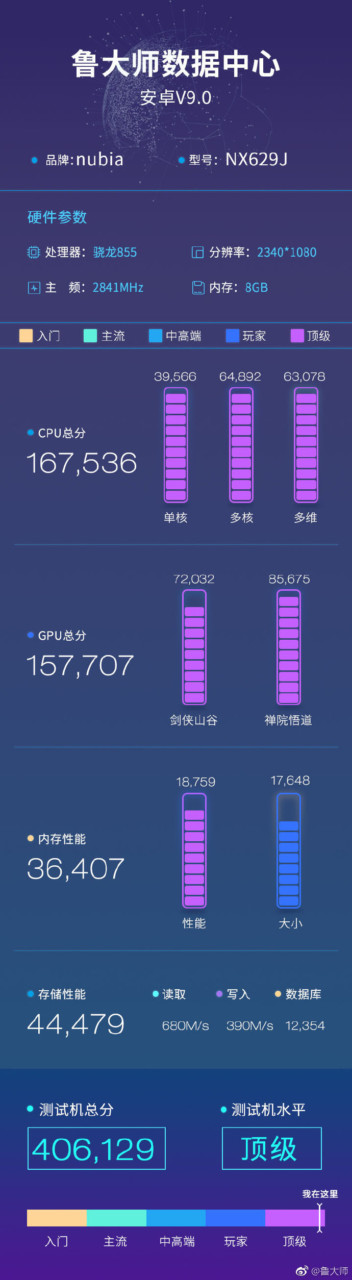
Nubia is expected to announce the Nubia Red Magic 3 smartphone as early as next month. It is believed that the NX629J phone that was approved by China’s 3C body could be the upcoming Red Magic 3 smartphone. The same model number has appeared on Master Lu to reveal its key specs and performance prowess.
According to Master Lu benchmarks, the Nubia NX629J is powered by Snapdragon 855 mobile platform and 8 GB of RAM. It features full HD+ 1080 x 2340 pixels resolution supporting screen and an inbuilt storage of 128 GB. The handset has recorded an extraordinary benchmarking score of 406,129 on Master Lu. The benchmarking platform has claimed that benchmarked device is an engineer unit. Hence, the performance of the commercial device could be different.
Nubia CEO Ni Fei had recently hinted that the Nubia’s next gaming phone will be equipped with a battery that starts with “5”. Hence, it is being speculated that the smartphone could be arriving with 5,000mAh or higher capacity battery. The 3C certification of Nubia NX629J has revealed that it will be arriving with support for 30W rapid charging. He had also hinted earlier in this month that the smartphone will be also made available in 12 GB RAM variant. Probably, this model could be coming with 256 GB of native storage.
A comprehensive cooling system comprising of air cooling, liquid cooling and a turbo fan will be available inside the Red Magic 3 to control its internal temperature. The handset is expected to support a higher refresh rate. Also, it will be featuring a 4D vibration system for enhanced gaming experience through advanced haptic feedback.
The Red Magic 3 will be arriving as a major rival for the recently launched Black Shark 2 gaming phone. The Xiaomi phone is available with an attractive price tag of 3,199 (~$475) for the base model. The Red Magic 3 could be also hitting the Chinese markets with similar pricing.
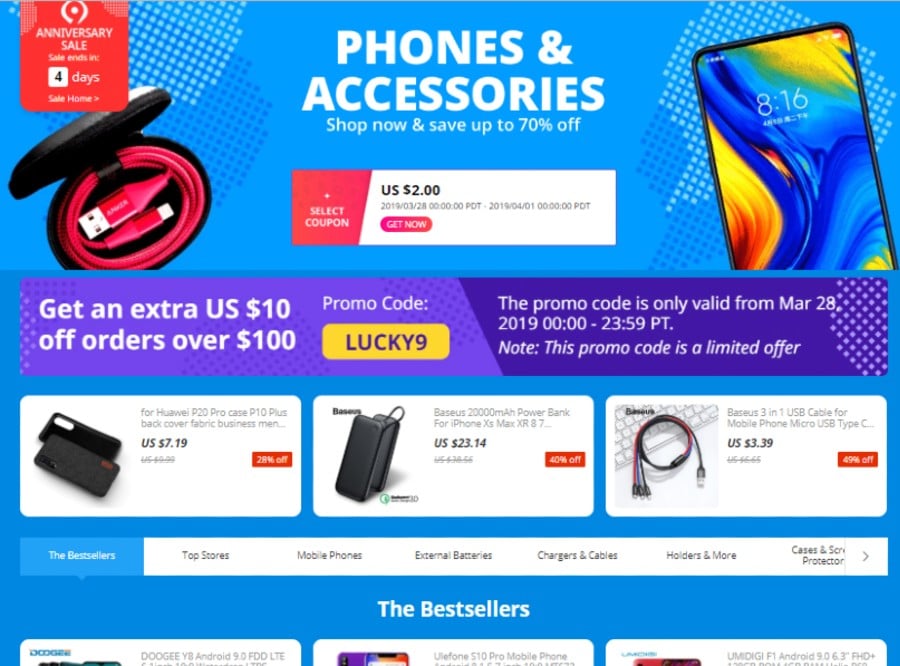
AliExpress recently launched its Anniversary Sale, offering its loyal users a chance to grab unmissable deals, great discounts and lots more to cheer about.
For instance, AliExpress users can use a $2 off coupon in order to avail an additional discount. The aforesaid coupon will expire at 00:00:00 PDT on April 1st. Aside from that, new users can take full advantage of the New User Special coupon and save more during the check out process.
As part of the recently kicked-off sale, the Alibaba-owned online retail service will be doling out up to a whopping 70 percent off on featured brands. While the promotion page is jam-packed with well-received products, we’ll be taking a gander at the discounts you can avail on Phones & Accessories.
Those spending more than $100 on the ‘Phones & Accessories’ event page will be eligible for a $10 off. Users can apply coupon code LUCKY9 in order to get their extra discount at checkout. It is worth noting that this is a limited offer and the coupon is slated to expire soon. A myriad of top-branded mobile phones and top-end accessories have been split into multiple categories in a bid to simplify and expedite the search process.
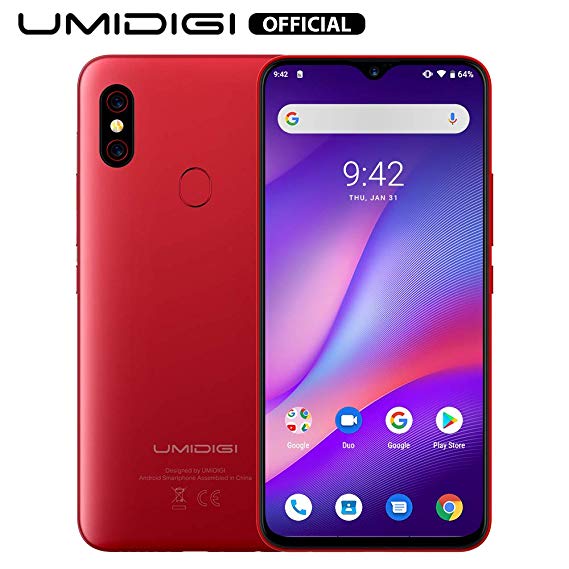
For the sake of an instance, the ‘The Bestsellers’ section features heavily discounted mobile phones such as the DOOGEE Y8, Ulefone S10 Pro and UMIDIGI F1 along with USB cables and a Xiaomi-branded power bank that you can buy at lowered prices.
Online stores for leading brands on AlExpress including Cubot, UMIDIGI, LEAGOO, Huawei, etc. have been assigned specific coupons that can be used to get extra discounts. For example, you can visit the official UMIDIGI online store and use a $20 off coupon to save more money.
Likewise, you can head straight to the ‘Mobile Phones’ section and get your hands on the DOOGEE X70, Ulefone S10 Pro, and various variants of the DOOGEE Y8 smartphones at unbelievable prices. Keeping in line with that, the DOOGEE S70, which usually retails for $91.99 can now be yours for a dropped price of just $64.39.
You can get noteworthy discounts on the rest of the products that have been added to the other categories including External Batteries, Chargers & Cables, Holders & More and Cases & Screen Pro. In order to check them out, all you need to do is to follow this link and visit the promotion page without wasting time.
Xiaomi recently teased that it will be launching its new handheld wireless vacuum cleaner in China. Today, keeping its promise, the company has officially announced the Mi Handheld Wireless Vacuum Cleaner, which as the name suggests, is optimized for one-hand usage and has a lightweight design.
The wireless vacuum cleaner is priced at 1,299 Yuan (approximately $193) but will be available at a discounted price of 1,199 Yuan (~$178) during the Mi Festival offers. The device will go on sale on 9th April from 10:00 AM China time.
From what we know so far looking at the poster, the Mi Handheld Wireless Vacuum Cleaner uses a high-end 9-cone fan with cyclone design and 9 small fans responding to micron-sized particles to maintain constant suction. It also adopts a large suction force of 100AW and is equipped with a 100,000-rpm brushless variable frequency DC motor and a high standard static pressure of 23 kPa.
The vacuum cleaner comes with a 5-fold filter dust-removing system and pure purifier level discharge, which the company claims locks 99.97% of dust to avoid secondary pollution. Further, it is equipped with four brush heads, which can absorb dust from the ground, bed mattress, car interior, keyboard, among others.
Given that this handheld vacuum cleaner is wireless, it comes with a battery built-in but the capacity is not yet known. The company says that it can provide up to 30 minutes of battery life and at fully charged, it can clean a larger apartment of around 60 sq. m. Also, the company says that the motor and electric brush head are also washable.
Using a protective cover for mobile phones is becoming popular. Given that mobile phones are now an inseparable part of our lifestyle, it is imperative for you to use a good mobile cover. A phone case not only protects your steeply-priced handset but can also enhances its overall appearance. Keeping in line with that, here are top five online stores where you can buy a high-end protective case for your Huawei P30 smartphone.
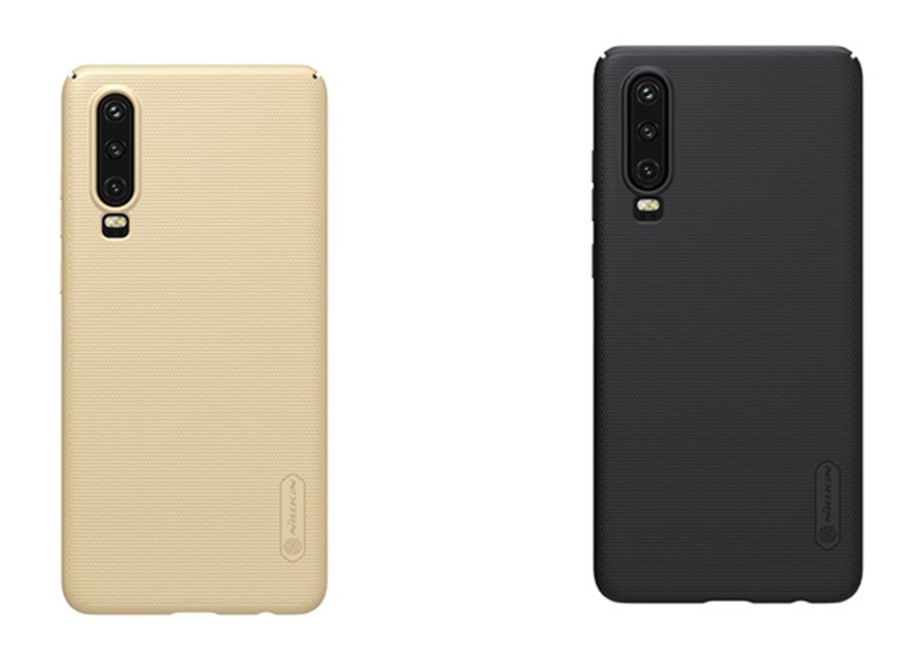
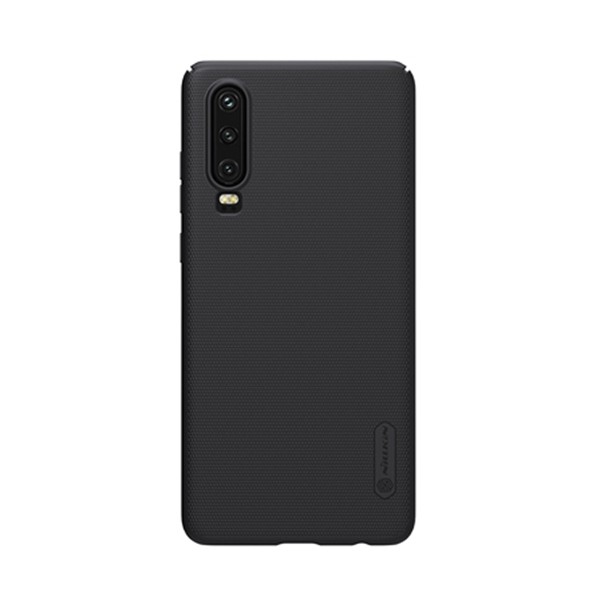
Nillkin Protective Hard PC Case for Huawei P30 – Giztop
This hard PC case is designed to offer much-needed protection to your P30 smartphone. The case comes in black, gold, red and white color versions and carries a $6.99 price tag.
The Nillkin Protective Hard PC Case is made using imported environmental PC materials. It is anti-shock and sports an eye-catching frosted surface looks. A high temperature, highly precise injection molding machine is used to make this reliable PC case. Note that if you buy two pieces, you get an 11 percent discount. In other words, each piece would set you back $6.29. Likewise, if you buy 10 pieces, you’d be eligible for a 22 percent off and can buy each unit for only $5.49.
Those who buy 100 pieces will end up paying just $4.39 for each piece. This is a 38 percent drop in the item’s original asking price. You can visit this link to check out more details about the Nillkin Protective Hard PC Case.
Armour Case for Huawei P30 Shockproof Protection Cover – Gearbest
The cadet blue color version of the Armour Case for the P30 smartphone has gone up or sale carrying a $4.50 price tag on Gearbest. As part of its promo, Gearbest will be offering its users a chance to save 20 percent if they order 3 pieces and get a 10 percent off if they order 2 pieces before March 31st.
Moreover, new customers can avail an extra PayPal discount, wherein they can get $3 off if their cart total is $50. Note that the offer is limited only to the first 4000 orders daily. You can follow this link to buy the Armour Case for Huawei P30, which is also available in black and red color versions.
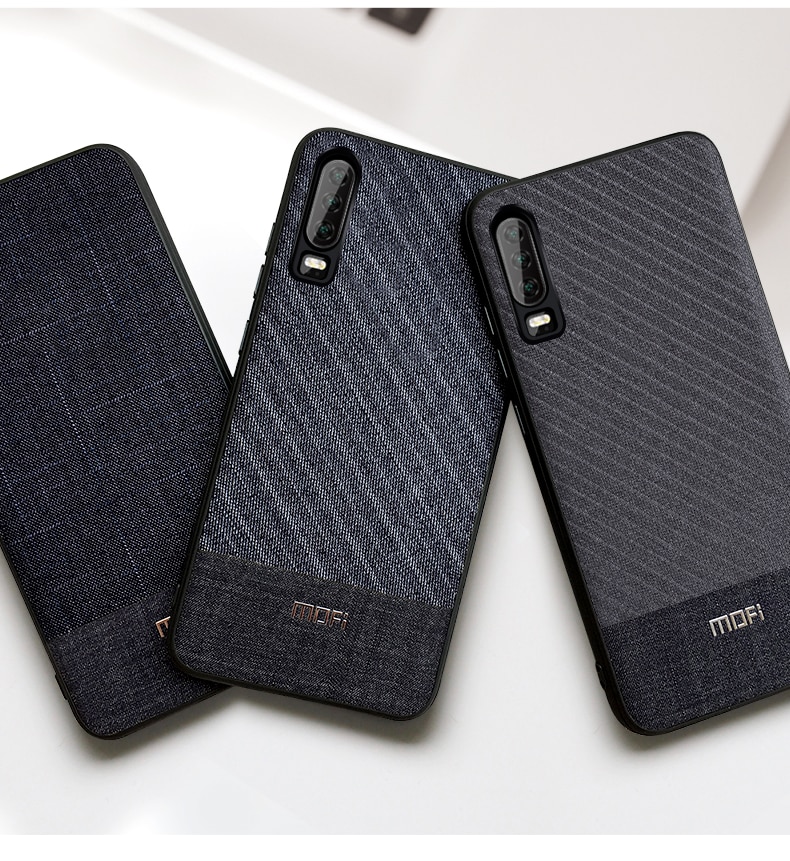
Mofi Huawei P30 Case – AliExpress
Alibaba-owned online retail service AliExpress is offering Mofi-branded cases for the Huawei P30 at a lowered price of just $7.74. It is worth mentioning that this is a 36 percent reduction in the device’s original asking price of $12.10.
The aforesaid case is also ideal for other smartphones in the Huawei P30, P20, and P10 series. In other words, you can use the Mofi case to protect your P30 Pro, P30 Lite, P20, P20 Pro, P20 Lite, P10, and P10 Plus smartphones.
Those who place their order using AliExpress app will be eligible for exclusive prices on these cases. You can follow this link and get the discount before the promo comes to an end.
Litchi Texture TPU Shockproof Case for Huawei P30 – Sunsky
Sporting a simplistic, yet durable design the Litchi Texture TPU Shockproof Case is a great choice for your P30 smartphone. It fits your phone well and ensures superior protection from scratches, shock, accidental slips, etc.
It comes with accessible buttons and ports and is built to work for a long time. Despite offering a slew of useful features, the Litchi Texture TPU Shockproof Case is easy on your pocketbook. A single unit of the case retails for $2.07 on Sunsky.
If you go for 2 units, you’d end up paying only $2.05 per piece, and $2.03 for each unit if you order 1/4 case. Purchasing more units considerably reduces the retail price of the Litchi Texture TPU Shockproof Case. You can head straight to this link and place your order without wasting time.
Litchi Texture Wallet Stand Leather Protection Case for Huawei P30 – TVC Mall
Equipped with a cash pocket and two built-in card slots, the Litchi Texture Wallet Stand Leather Protection Case offers Huawei P30 an amazing hands-free experience. It has a magnetic clasp for the case closure, ensuring full body protection against damages such as scratches. The Litchi Texture Wallet Stand Leather Protection Case for Huawei P30 is currently up for grabs carrying a $3.49 price tag on TVC Mall. You can choose between multiple color options including black, red, white, blue, rose and purple. In order to check out more details and purchase your favorite color version, all you need to do is to follow this link.
Last year, Huawei introduced GPU Turbo technology, a software-based feature which energizes gaming performance on several Huawei and Honor smartphones. It offers a smoother gaming experience and improved battery performance while gaming.
Since its launch in June last year, the feature has been updated a couple of times for performance improvements and the inclusion of more titles. And now, the company has announced the third iteration of the GPU Turbo mode with support for 19 Android games.
The third generation of GPU Turbo comes as part of Huawei’s latest firmware version i.e. EMUI 9.1 which is based on Android 9 Pie operating system and was released with the company’s latest flagship smartphones — Huawei P30 and P30 Pro.
The company claims that GPU Turbo 3.0 cuts down on SoC power consumption by 10 percent and optimizes “the underlying system performance to provide a continuous gaming experience.” Currently, the GPU Turbo 3.0 is exclusively available on the P30 and P30 Pro smartphones, it will be rolling out to other Huawei as well as Honor smartphones with the EMUI 9.1 update soon.
Along with system optimization, it also comes with a number of Android game titles which can utilize GPU Turbo. The list of supports games have now been increased from 6 to 25, which includes Fortnite, Knives Out, Battle Bay, Crazy Taxi, Real Racing 3, Into the Dead 2, NBA 2K19, Dragon Nest M, Duel Links, PES2019, DRAGON BALL LEGENDS, FIFA Mobile, Free Fire, Minecraft, Helix, Plants vs. Zombie Heroes, Subway Surfers, Brawl Stars, Speed Drifters.
One of the interesting thing about the GPU Turbo from Huawei is that the company has not limited it to just flagship smartphones and is also pushing it to budget devices such as Honor 7X and Honor 9 Lite for a better gaming experience.
On Wednesday, Xiaomi India Managing Director and Global Vice President, Manu Kumar Jain took to Twitter to proclaim that a recent Q4 2018 IDC survey has revealed that Poco F1 is India’s no. 1 smartphone in online smartphone market of Rs. 15,000 (~$216) and above. The Poco F1 has overtaken OnePlus 6 phone to grab the numero uno position.
Now it's settled! As per @IDC, #POCOF1 is India's #1 Smartphone in online smartphone market of ₹15k & above.
The Champion of Speed doesn't settle for 2nd place. Nor should you!
The tweet includes an image which shows that the OnePlus 6 has a market share of 17.9 percent whereas the Poco F1 has a market share of 22.5 percent. Currently, the Poco F1 is available as the most affordable Snapdragon 845 chipset powered in India. The SD845 SoC all the Android flagship phones that were released last year.
The Galaxy Note 9 that is powered by the same SoC is selling for Rs. 67,900 (~$981) in India. The OnePlus 6 that is powered by the same has Rs. 34,999 (~$506) price tag for its base model. However, the 6 GB RAM + 64 GB storage base model of the Poco F1 is selling for Rs. 19,999 (~$289). The 6 GB RAM + 128 GB storage and 8 GB RAM + 256 GB storage editions of the Poco F1 are respectively priced at Rs. 22,999 (~$332) and Rs. 27,999 (~$405). It comes in colors like Graphite Black, Rosso Red and Steel Blue color options. The Kevlar-bodied Poco F1 Armoured Edition with 8 GB RAM + 256 GB storage is priced at Rs. 28,999 (~$419).
The Xiaomi Poco F1 features a polycarbonate body and it houses a 6.18-inch notched IPS LCD display that offers full HD+ resolution. The notch is the home for its 20-megapixel selfie camera and IR sensor for face recognition in darker conditions. The 12-megapixel + 5-megapixel dual camera setup along with a fingerprint reader resides on its rear. Its packed with a 4,000mAh battery that is equipped with support for Quick Charge 3.0. The Android 9 Pie based MIUI 10 OS comes preinstalled on the Poco F1.
Huawei, the world’s largest telecom equipment supplier may have been a part of many controversies last year but it seems that the company’s financials haven’t taken a hit. The company has reported a 19.5 percent jump in annual revenue to 721.2 billion yuan ($107.1 billion) in 2018.
The company also revealed that its consumer business group became the biggest contributor to this record revenue for the first time. This reflects the gains that Chinese smartphone brands have made both at home and abroad amid flat sales at its network equipment business.
Huawei’s revenue of the carrier business reached 294 billion yuan, which is roughly the same as the previous year, but the company’s revenue at its consumer business surged 45 percent to 348.9 billion yuan. On the other hand, revenue at Huawei’s enterprise business rose almost 24 percent to 74.4 billion yuan.
The Group revenue growth last year was faster than the 15.7 percent in 2017. The company’s net profit hit 59.3 billion yuan, up 25.1 percent year-on-year. The company also said that it invested 101.5 billion yuan in research and development in 2018, roughly percent of its revenue.
At a media briefing, Guo Ping, Huawei’s rotating chairman, said: “Flat sales in the carrier business were due to 4G rollout while 5G is just starting. We expect more large-scale deployment of 5G in 2019 … 5G will enable broader connectivity, not just among people but also between people and things and among things. That will create huge opportunities.”
With this latest financial postings, Shenzhen-based Huawei has now joined the ranks of multinational technology companies in the $100 billion club, which includes the likes of Apple and Google’s parent Alphabet.
However, the road ahead for Huawei seems complicated as it has been in the center of the US-China trade war. The United States is making efforts to block the international deployment of Huawei’s 5G equipment because of security concerns.
We use cookies on our website to give you the most relevant experience by remembering your preferences and repeat visits. By clicking “Accept”, you consent to the use of ALL the cookies.
This website uses cookies to improve your experience while you navigate through the website. Out of these, the cookies that are categorized as necessary are stored on your browser as they are essential for the working of basic functionalities of the website. We also use third-party cookies that help us analyze and understand how you use this website. These cookies will be stored in your browser only with your consent. You also have the option to opt-out of these cookies. But opting out of some of these cookies may affect your browsing experience.
Necessary cookies are absolutely essential for the website to function properly. This category only includes cookies that ensures basic functionalities and security features of the website. These cookies do not store any personal information.
Any cookies that may not be particularly necessary for the website to function and is used specifically to collect user personal data via analytics, ads, other embedded contents are termed as non-necessary cookies. It is mandatory to procure user consent prior to running these cookies on your website.








 A myriad of top-branded mobile phones and top-end accessories have been split into multiple categories in a bid to simplify and expedite the search process.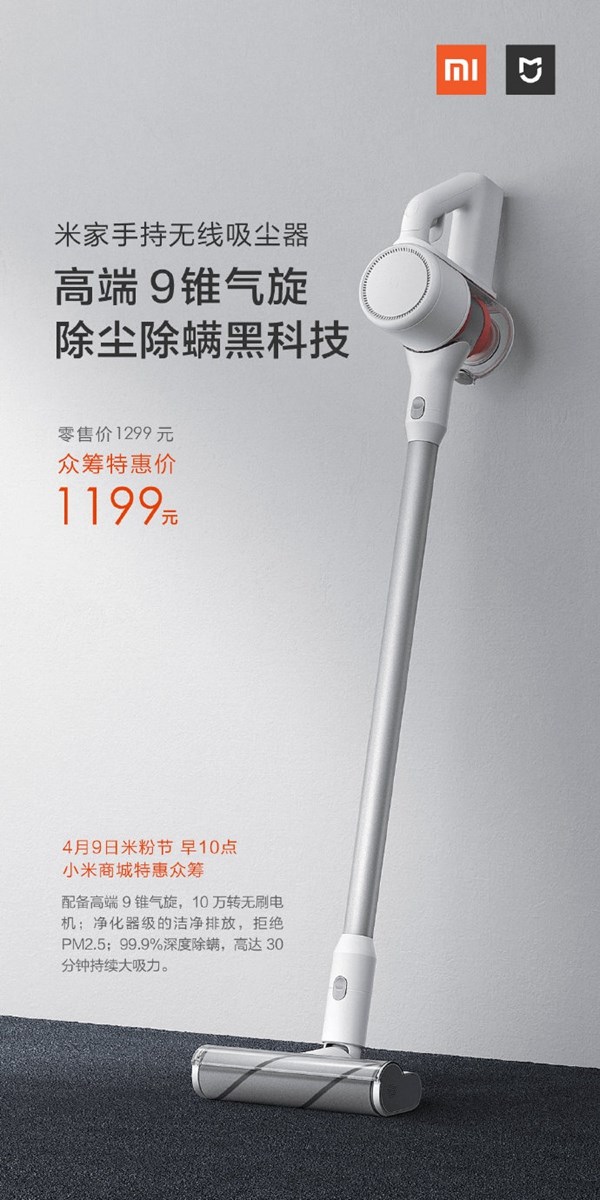
 Keeping in line with that, here are top five online stores where you can buy a high-end protective case for your Huawei P30 smartphone.
 Note that if you buy two pieces, you get an 11 percent discount. In other words, each piece would set you back $6.29. Likewise, if you buy 10 pieces, you’d be eligible for a 22 percent off and can buy each unit for only $5.49.
 Those who place their order using AliExpress app will be eligible for exclusive prices on these cases. You can follow
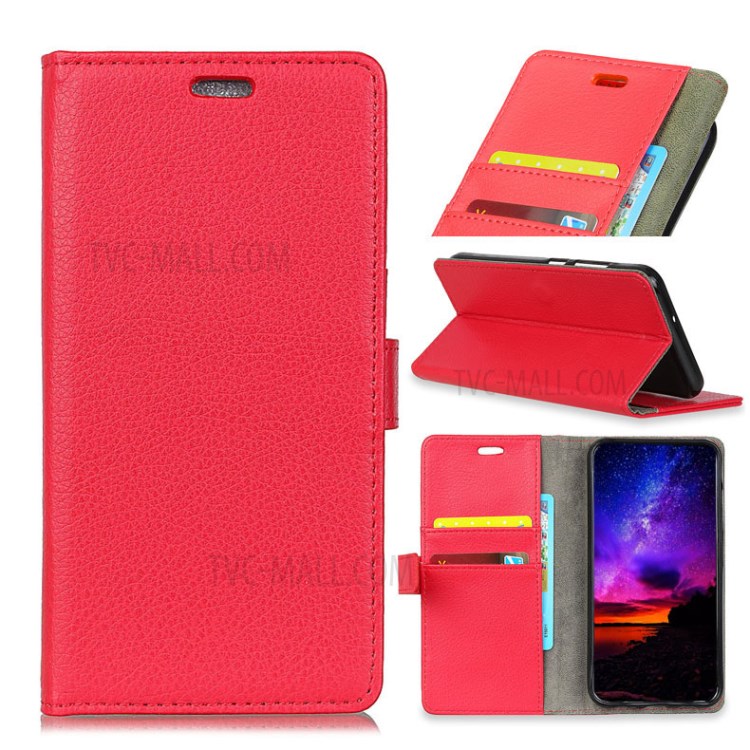 The Litchi Texture Wallet Stand Leather Protection Case for Huawei P30 is currently up for grabs carrying a $3.49 price tag on TVC Mall. You can choose between multiple color options including black, red, white, blue, rose and purple. In order to check out more details and purchase your favorite color version, all you need to do is to follow