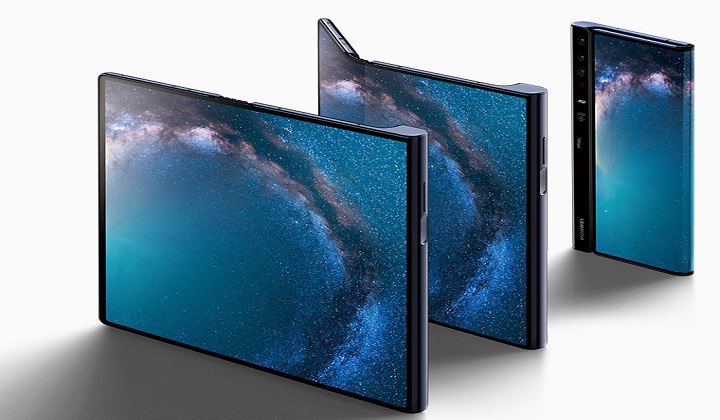
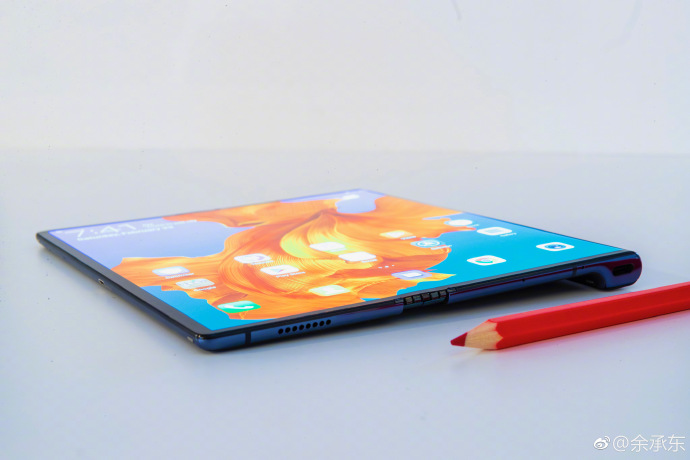
At MWC 2019 in Barcelona, Spain, Huawei had announced its Huawei Mate X smartphone, making it the world’s first foldable 5G device. Now, the company has confirmed that the Mate X will be launched in India later this year.
While the smartphone was announced last month, the phone is not yet available for purchase. The company had said at the time of unveiling that the handset will be available for purchase in mid-2019 for a price of €2,299.
India is an important market for Huawei and for any other smartphone brand as it is one of the world’s largest smartphone market. And it makes sense for the company to launch its top-of-the-line device in India as well. However, when launched, it could be one of the most expensive smartphones in India.
The Huawei Mate X features a large 8-inch screen with a 2480 x 2200 pixels screen resolution and an 8:7.1 aspect ratio when unfolded with pretty thin bezels. When folded, it transforms into a dual display phone – one side is a 6.6-inch (2480 x 1148 pixels) 19.5:9 display while the other is a 6.38-inch (2480 x 892 pixels) 25:9 display.
The phone is powered by the company’s own Kirin 980 chipset, paired with 8GB of RAM and 512GB of storage. It has dual SIM support (nano only) but only SIM 1 supports 5G. You can also swap out the second SIM card for Huawei’s NM card (256GB max.). It comes with the 7nm Balong 5000 modem which brings 5G support to the device.
It features three cameras on the back, which also double as the selfie cameras. The cameras were co-developed with Leica and are made up of a 40MP wide-angle lens, a 16MP ultra-wide angle lens, and an 8MP telephoto lens.
The phone runs the EMUI 9.1.1 custom interface, which is based on Android 9 Pie operating system out-of-the-box. As for the connectivity options, the device supports NFC, dual-frequency GPS, Bluetooth 5.0, Wi-Fi 802.11 b/g/n/ac, and USB Type-C port.
The Huawei Mate X has two built-in batteries, which offers a total capacity of 4,500mAh. Huawei has also debuted its new SupercCharge fast charging technology which supports up to 55W. The company claims that the new SuperCharge allows users to charge the device from empty to 85% in just 30 minutes!
Ever since Honor became the independent sub-brand of Huawei, it has carved out its own style. Honor 10 had several variants last year, such as Honor 10, Honor 10 GT and Honor 10 Lite. Now, there is a new variant incoming called the Honor 10i. And we have got a few images of the new handset.
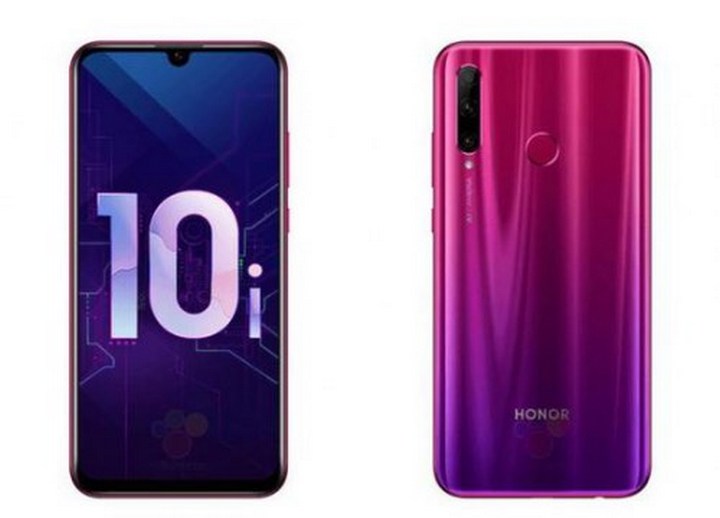
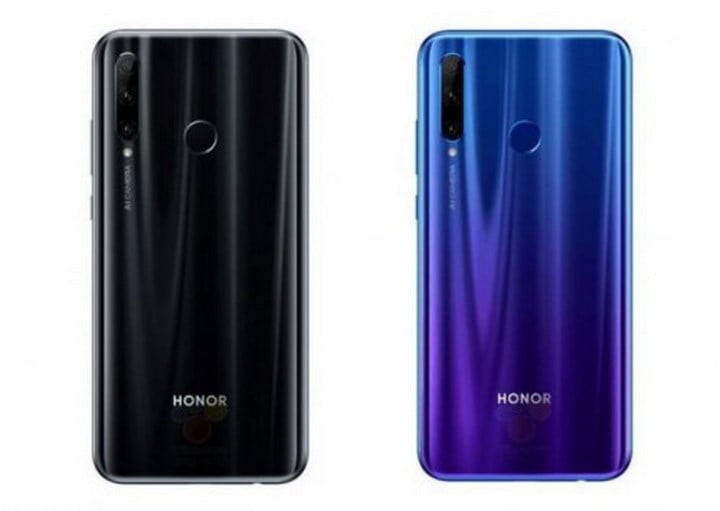
Looking at the images, Honor 10i will adopt a water-drop notch design that has become quite common among smartphones. Obviously, the screen-to-body ratio will be high up to at least 91%. At the rear back side, Honor 10i still keeps the gradient color design. It may offer three gradient colors for customers to pick, which are red to purple gradient, blue to purple gradient and a plain black.
Honor 10i should be powered by Kirin 710 processor, coming in with 6.21-inch display having the resolution of 2340 x 1080 pixels. In the camera department, there should be 24MP+8MP+2MP rear triple cameras and a 32MP front-facing camera. It will be fueled by 3400mAh battery, with a rear fingerprint sensor. What’s more, the Honor 10i should run on Android 9.0.
Those who like keeping the surrounding clean and free from all sorts of impurities usually end up spending a lot of money on top-end vacuum cleaners. Much to the chagrin of cost-conscious buyers, there are limited options available in the market today.
If you are looking for an efficient vacuum cleaner that doesn’t cost a bomb, Banggood’s got your back!
Banggood has launched a new promotion called ‘$49.99 Grab BW Cordless Vacuums Everyday,’ wherein the Chinese online store that guarantees the best bang for your buck is offering a wide selection of high-end vacuum cleaners at lowered prices.
In addition to doling out noteworthy discounts on a slew of high-end vacuum cleaners, Banggood is offering its loyal users an unmissable chance to buy the BlitzWolf BW-AR182 2-in-1 Cordless Handheld Vacuum Cleaner for $86.99. But that’s not all.
Banggood will be offering a huge discount on a daily basis for three lucky customers who’d fancy not spending that kind of money on a vacuum cleaner. This ‘Lucky 7 Days’ event kicks off at 0:00 am (UTC+8) every day. It is worth noting that the activity will come to an end on March 23rd.
While it usually sells for $86.99, the BlitzWolf BW-AR182 2-in-1 Cordless Handheld Vacuum Cleaner can now be yours for just $49.99, as part of the aforesaid activity.
The BW-AR182 is quite an irresistible 2-in-1 cordless handheld vacuum cleaner that delivers a high suction of 9KPa. While it efficiently sucks up dust, hair and other impurities, the BW-AR182 operates quietly at ≤70dB.
Sporting a streamlined design, the BW-AR182 is made using high-quality material and is relatively lighter than a slew of other vacuum cleaners offering comparable features. Moreover, you can easily hang it on your wall for easy access and storage.
If you are interested in buying other BlitzWolf-branded items at heavily discounted prices, you can head straight to the ‘More Blitzwolf’ category. You can get your hands on your favorite product from BlitzWolf without burning a hole in your pocket under this section.
You can click here to visit the promotion page and check out all the product and buy the BW-AR182 vacuum cleaner at a considerably reduced price before the activity period comes to an end.
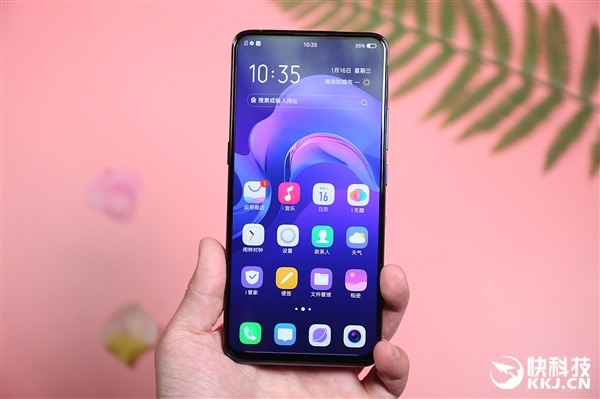
Vivo recently unveiled the Vivo X27 and X27 Pro in China. The models see Vivo bring the fullscreen pop-up selfie camera design to the mid-range lineup. Check out the Vivo X27 hands on pictures published by Chinese blog MyDrivers.
The X27 features a 6.39-inch full-screen Super AMOLED display with a resolution 2340×1080 pixels and a 19.5:9 aspect ratio. As you already know, the device doesn’t have a selfie camera at the front, neither does it have a notch. This ensures the bezels are trimmed down, giving the device a 91.6% screen ratio. The bezel at the top edge is thinner than that at the chin. The X27 also has an HD onscreen fingerprint technology integrated on the display.
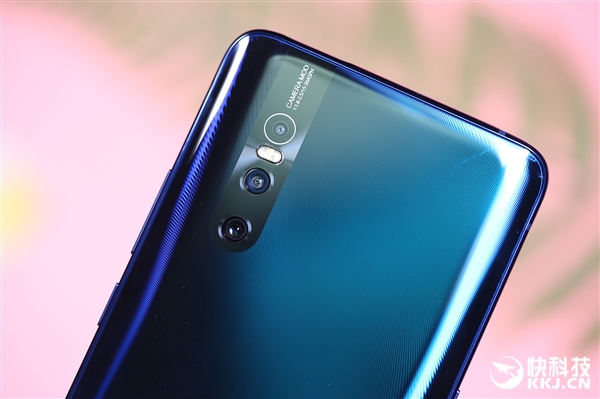
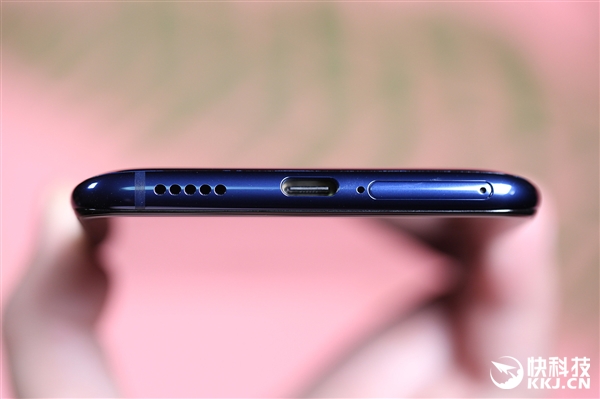
At the back, the device packs three camera sensors with the main camera being a 48MP Sony IMX586 sensor. The second sensor is a 13MP sensor while the third sensor is a 5MP depth of field sensor. The cameras are arranged vertically at the top left corner with the LED flash lying between the first and second sensors. The selfie camera is a 16MP sensor tucked into the top edge of the phone with a pop-up design. At the bottom edge, there is a USB-C connector as well as speaker grill and the SIM card tray. The device has a dedicated button on the left side of the screen, apparently to trigger the Jovi smart assistant while the power button and volume rockers sit at the right side.
The X27 comes in two versions, one powered by the Snapdragon 675 with 8GB of RAM and 128GB of storage while the other is powered by the Snapdragon 710 processor with 8GB of RAM and 256GB of storage. The 8GB+128GB version will go on sale in China on March 30 for 3198 yuan ($478), while the 8GB+256GB version will be available for 3598 yuan ($538) on March 23. Vivo is yet to release the launch itinerary for the global market. Find more hands-on pictures below.
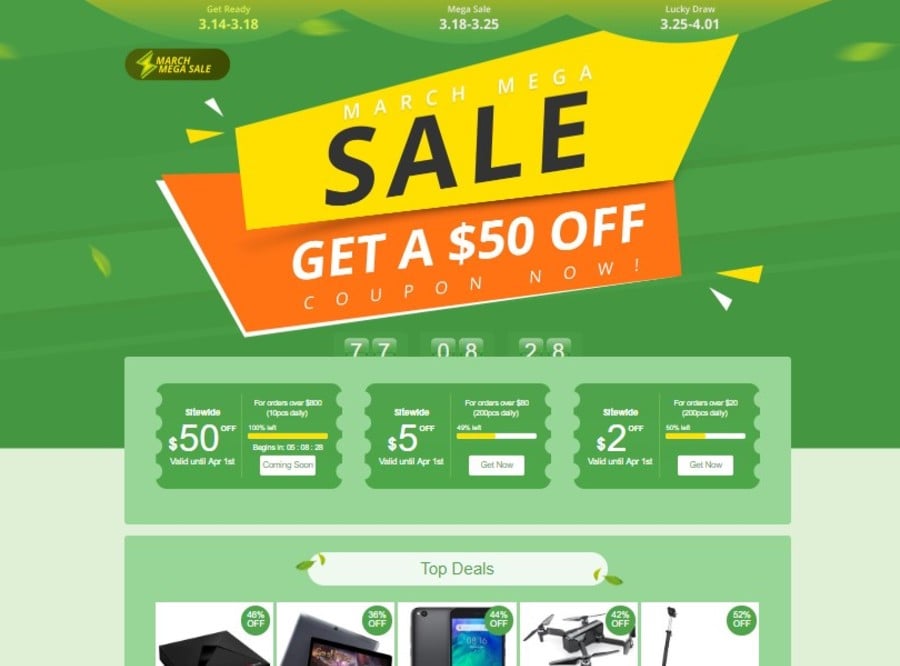
In a bid to give its loyal customers something to cheer about, GeekBuying rolls out great promotional and discount events from time to time. Keeping in line with that, the Chinese online store has launched its ‘March Mega Sale.’
Aside from offering a slew of unmissable deals, the recently launched promotion features a $50 off coupon, great discounts and lots more. The products included in this well-organized promo have been split into multiple categories so that users can find exactly what they’re looking for without breaking a sweat.
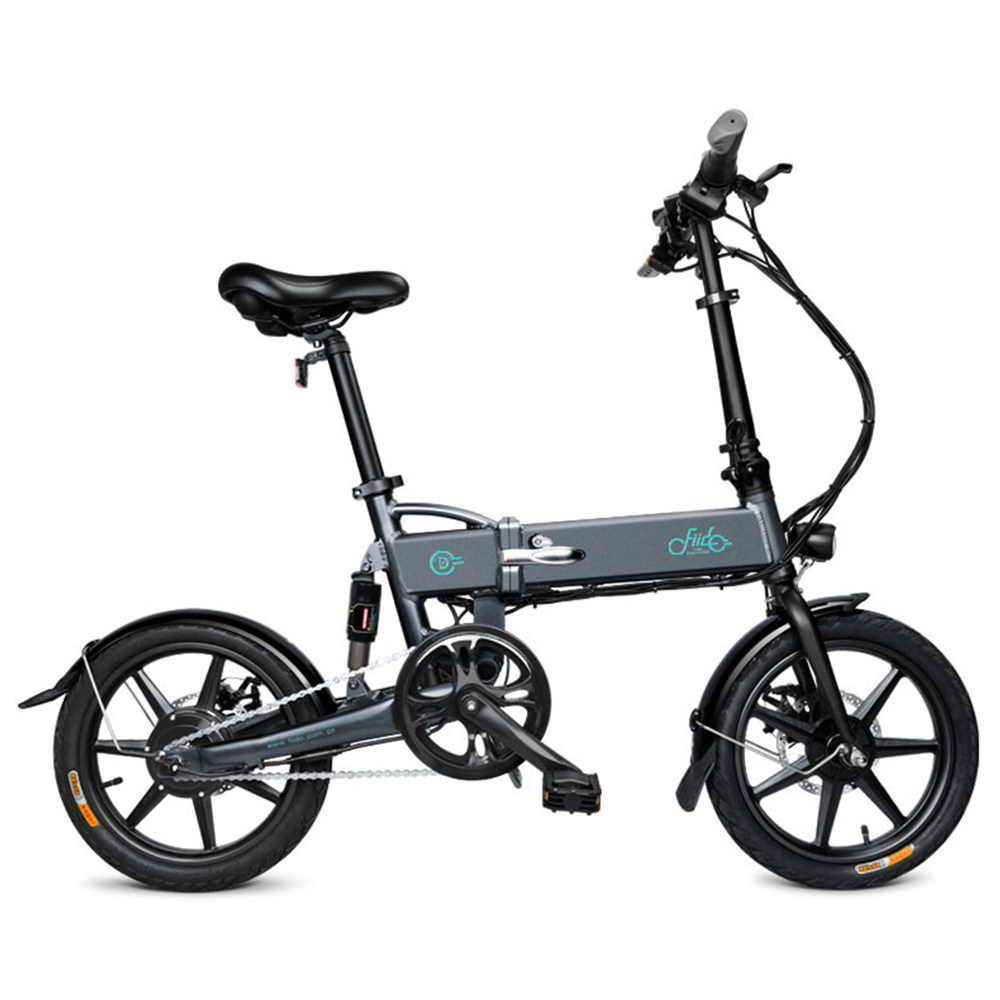
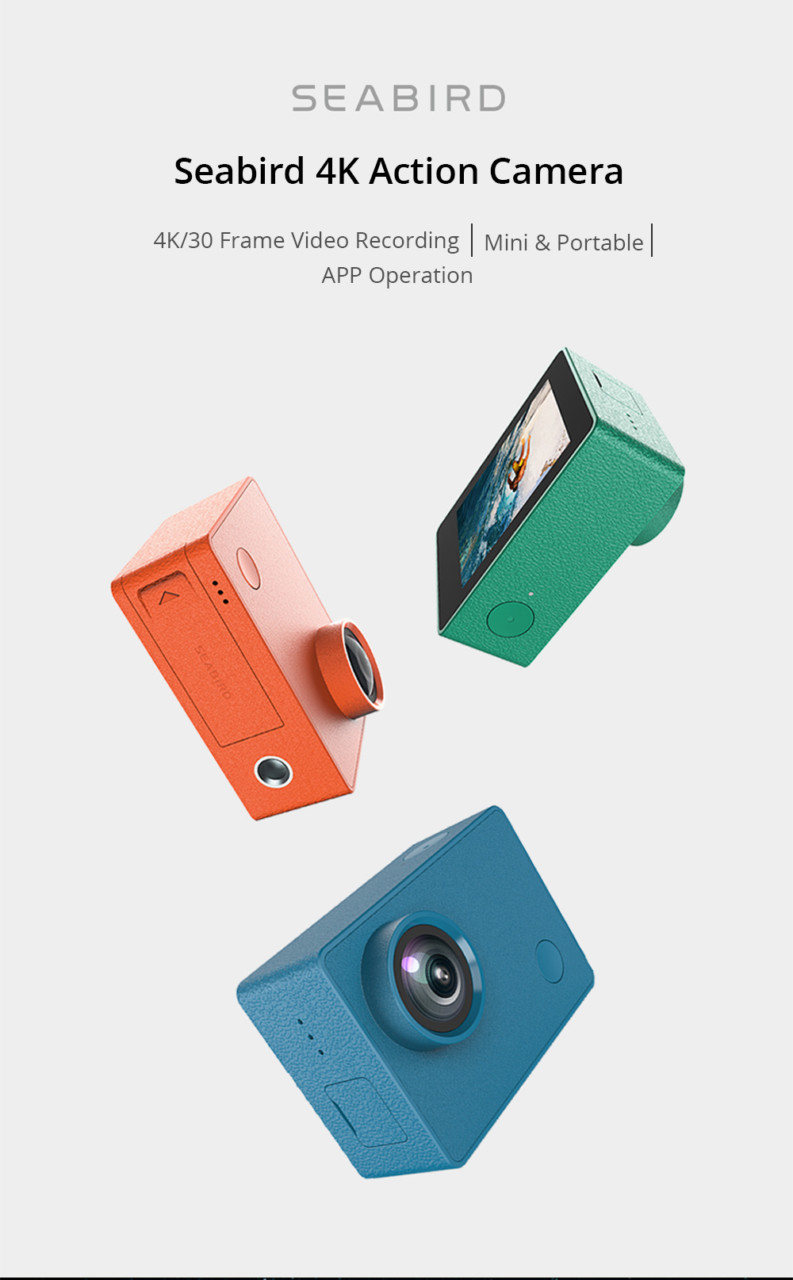
Staying true to its reputation for offering China’s best electronic items at unbeatable prices, GeekBuying is now doling out noteworthy discounts on the FIIDO D2 Folding Electric Moped Bike and Xiaomi Mijia Seabird 4K Sport Camera. On top of that, we’ll show how you can reduce the already lowered prices of the aforesaid products at checkout.
FIIDO D2 Folding Electric Moped Bike
Equipped with a 12-tooth flywheel and a 52-tooth large chain, the FIIDO D2 is designed to offer a comfortable ride on various road conditions. The bike is housed in a simplistic, yet durable frame which is further adorned with eye-catching lines.
Moreover, the FIIDO D2 is backed by a built-in large-capacity battery and comes with a USB phone holder. the e-bike can be easily folded in half, making it highly portable and easy-to-carry.
Just like a slew of other electric bikes available in the market, the FIIDO D2 would normally set you back a pretty penny but you can now buy it for just $579.99 on GeekBuying. Furthermore, you can extend this 28 percent discount by applying coupon code GIZ_GKBMEGA15.
The aforesaid coupon helps you save an extra $15 by reducing the retail price of the FIIDO D2 electric moped bike to only $564.99 before you place your order. You can visit this link to grab the discount, which will be valid for both black and white color versions of the e-bike. Note that the promo is slated to end shortly.
The Mijia Seabird 4K Sport Camera sports a crystal clear 2-inch IPS HD touchscreen for a more immersive and comfortable operation. This highly durable sport camera can deliver 4K video shooting for an impressive 90 minutes, making it your personal, portable photographer.
The device offers multiple shooting modes including a continuous shooting mode, slow-motion photography mode, time-lapse photography mode, and timed photo. It adopts an intelligent algorithm to adjust distortion. On top of that, it supports all 30 frames/60 frames of anti-shake for a stable picture every time.
The Xiaomi Mijia Seabird 4K Sport Camera usually retails for $109.99, but you can now buy it for a reduced price of just $79.99 on GeekBuying. This is a 27 percent drop in the device’s original asking price.
Aside from taking advantage of the discount, you also qualify to receive the AutoBot U Car Phone Holder Magnetic Phone Holder Air Outlet Bracket 360 Degrees Rotation Anti-oxidation Anti-corrosion as a free gift with your order.
You can visit this link to avail the discount which is valid for the blue color version of the sports camera. Alternatively, you can get a 25 percent off on the orange color version of the Xiaomi Mijia Seabird 4K Sport Camera. Regrettably, the promo will be valid for a limited period of time.
Huawei P series has made its name for its amazing camera smartphones. An update to the lineup is just around the corner as the P30 Pro is set to launch on March 26. However, just before its launch, it looks like we have got a glimpse of the camera prowess of the phone, courtesy of Parker Walbeck.
A couple of days back, Parker posted a 3-minute video captured by an unreleased smartphone. While he didn’t mention the name of the phone, from the quality of photos and its hybrid zoom capability, there’s hardly any doubt that it was captured from the upcoming Huawei P30 Pro.
In the video, Parker talks about the phone’s amazing zoom and low-light capabilities. He showed a few instances where the zoomed images came out clear and crisp, unlike your regular smartphones. To be honest, the zoomed in samples were really impressive. The edges were sharp and colors were retained. Further, the software also helps in improving the phone’s digital zoom.
He further mentions that the phone had one of the best low light capabilities and it’s ‘DSLR-like quality’. There were multiple clips in the video that showed off the phone’s low-light prowess, and if you consider the amount of light available in each scene, they came out really good. Further, he confirmed that the phone had a handheld night mode and the onboard stabilization was good enough to churn out blur-free images and videos.
Overall, Parker had high praises for the phone’s camera quality. He confirmed that he would reveal more features of the phone in his upcoming videos.
The Huawei P30 Pro will be officially announced on March 26. Pre-sale will start from March 27.
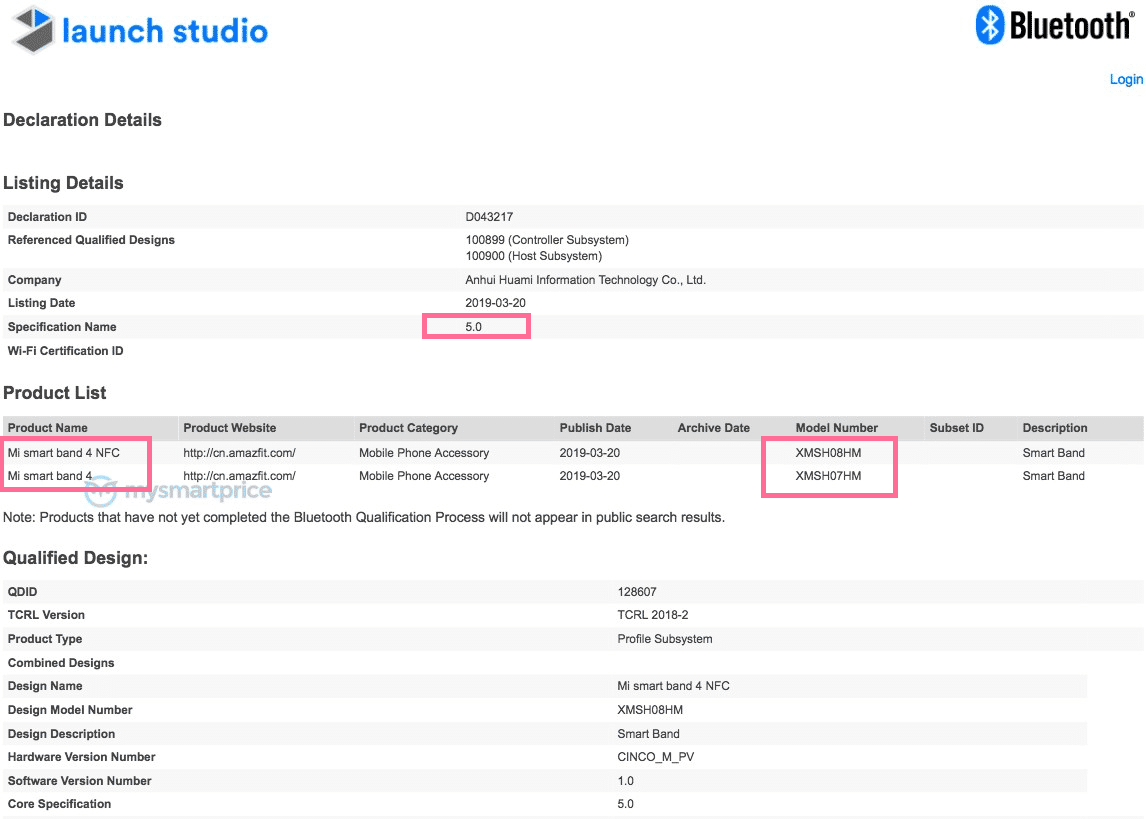
Yesterday we reported that the Mi Band 3 will get a successor this year called the Mi Band 4. Now two variants of the upcoming smart band have been spotted on the Bluetooth SIG website.
The two variants of the Mi Band 4 were listed yesterday. One is the NFC variant which has the product name “Mi Smart Band 4 NFC” and model number “XMSH08HM” while the other is the non-NFC model with the product name “Mi Smart Band 4” and model number “XMSH07HM”.
Both bands will connect via Bluetooth 5.0, an upgrade over the Mi Band 3 which connects via Bluetooth 4.2. Bluetooth 5.0 brings a stronger connection and a greater range compared to previous generations. It is also faster when sending data between devices. The Bluetooth listing confirms the Mi Band 4 is manufactured by Anhui Huami Information Technology Co. Ltd., who own the Amazfit brand.
Huawei’s last-generation midrange family is one of the biggest ones in the smartphones market not only because of the high number of Huawei devices released, but also thanks to the ones from its sub-brand Honor. The latest Huawei mid-rangers announced are the Nova 4e that will soon head to Europe under the P30 Lite moniker, the Honor 10i that is essentially a better version of the Honor 10 Lite, and the Huawei P Smart+ 2019 which recently hitten the global market with a great quality-price ratio. If you want to know which Huawei mid-ranger you should buy in the upcoming future, go ahead with this comparison and discover it.
Huawei Nova 4e vs Huawei Honor 10i vs Huawei P Smart+ 2019
Huawei Nova 4e
Huawei Honor 10i
Huawei P Smart 2019
DIMENSIONS AND WEIGHT
152.9 x 72.7 x 7.4 mm, 159 g
154.8 x 73.6 x 8 mm, 164 g
155.2 x 73.4 x 8 mm, 160 g
DISPLAY
6.15 inches, 1080 x 2312p (Full HD+), IPS LCD
6.21 inches, 1080 x 2340p (Full HD+), IPS LCD
6.21 inches, 1080 x 2340p (Full HD+), LTPS IPS LCD
Triple 24 + 8 + 2 MP, f/1.8 and f/2.4
32 MP f/2.0 front camera
Triple 24 + 8 + 2 MP, f/1.8 and f/2.4
32 MP f/2.0 front camera
Triple 24 + 16 + 2 MP
8 MP front camera
BATTERY
3340 mAh, fast charging 18W
3400 mAh, fast charging 10W
3400 mAh, fast charging 10W
ADDITIONAL FEATURES
Hybrid Dual SIM slot
Hybrid Dual SIM slot
Hybrid Dual SIM slot
Design
There are no huge differences in the aesthetics of these three handsets. All come with a stunning gradient back and a very high screen-to-body ratio thanks to narrow bezels and a small U-shaped waterdrop notch. Some may prefer the Honor 10i due to its more catchy light waves on the rear side, but I would personally go for the Huawei Nova 4e because it comes with a way thinner body. However, Huawei P Smart+ 2019 is far from being bad, especially because of its cleaner back cover thanks to the third module of the triple camera that is separated from the rest of the camera department, just like the Huawei P20 Pro.
Display
Given that Huawei P Smart+ 2019 is the only device to feature an LTPS panel, it should guarantee a slightly better display performance. However, it will be just a marginal difference. Huawei Nova 4e and Honor 10i should have exactly the same viewing quality. In each case, we are talking about more than sufficient panels. We do not suggest you base your choice on the display as the differences between the panel will never be so noticeable.
Hardware/Software
All of these devices are powered by the same SoC: the midrange-class Kirin 710 running at a max frequency of 2.2 GHz, that is more or less at the same level as the Snapdragon 660 by Qualcomm. So a very nice midrange chipset, but nothing more than that. Huawei Nova 4e wins the hardware comparison because it comes in a more powerful configuration with 6 GB of RAM and 128 GB of internal storage. Honor 10i comes right after with its 4/128 GB configuration, while Huawei P Smart+ 2019 takes the last place as it is equipped with just 3 GB of RAM and 64 GB of internal storage.
Camera
The Honor 10i seems to boast the most performing camera department, but we will have to test it thoroughly in order to establish if it will really click better photos than the Huawei Nova 4e. It has a main 24 MP sensor, an ultrawide lens with an 8 MP resolution and a 2 MP depth sensor. It is able to record Full HD videos at 60 fps and it even comes with an amazing 32 MP selfie camera. Huawei Nova 4e does not differ so much: it has a lower resolution for the ultrawide lens, but it comes with gyro-EIS. Despite coming with the highest resolutions for the rear cameras, Huawei P Smart 2019 loses the camera comparison for its inferior 8 MP selfie camera.
Battery
There are minimal differences even in the battery capacity of these devices: 3340 mAh for the Huawei Nova 4e and 3400 mAh for Honor 10i and Huawei P Smart 2019. The software optimization will be decisive and we will know which phone is optimized in the best way only after testing all of them. For now, I would choose the Huawei Nova 4e despite its smaller capacity because it comes with a faster charging technology (18W).
Price
Huawei Nova 4e costs €270/$308 in China, Huawei P Smart 2019 costs €350/$400 in the global market, still no word on the pricing of the Honor 10i. At the end of the day, Huawei Nova 4e wins the comparison for its slightly better hardware, amazing cameras, thinner body, and a faster charging technology.
Vivo announced its latest smartphones Vivo X27 and X27 Pro in China on March 19. During the product launch, the BBK subsidiary also announced a new brand-level strategy which is the opening of a new concept store dubbed Vivo Lab. The first of its kind will be opened in Shenzhen, the hub for innovative startups in China, on March 22.
Now, we know of brand stores and in some cases, flagship stores with a wide range of branded products like Xiaomi’s flagship Mi Store in Shenzhen which has in stock the company’s smartphones and a slew of smart home products. But this one seems to b different from the regular retail stores we are used to. The company shared a couple of pictures showing its design of the concept store located at Shenzhen’s Sea World Plaza. The store utilises a spacecraft design with a futuristic and technological outlook. The concept store is a two-floor structure. The upper structure is a closed building shaped like a “spaceship”. The lower floor has glass curtain walls which allow passersby to see what is on display inside the building. The interior is also well-designed with spaces to display the company’s products, There is also special experience areas devoted to core functions related to products such as music, games, photos and so on.
The second floor seems to be designed to give visitors a more immersive product experience. We’ll have to wait until the store is officially opened to the public to find out what makes the Vivo Lab concept store different from the flagship stores of other brands.
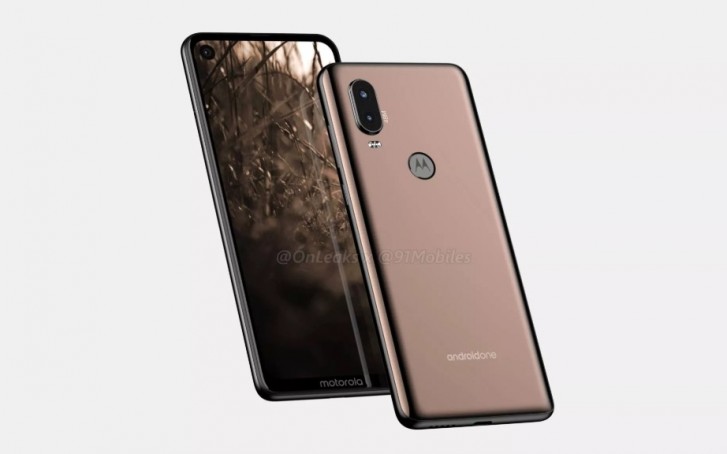
More details of the Motorola One Vision have surfaced. The phone which was spotted on Geekbench earlier this week is said to be the global version of the Motorola P40. These new details which were first reported by XDA-Developers reveal more of the phone’s specifications.
The Motorola One Vision is said to be codenamed “Robusta2” which confirms it is a successor to the Motorola One and Motorola One Power which are codenamed “RobustaS” and “RobustaNote” respectively. It will be powered by the 10nm Exynos 9610 as revealed by Geekbench and come in 3GB RAM and 4GB RAM variants with 32GB, 64GB, or 128GB of storage.
The phone will have a screen resolution of 2520 x 1080 and an aspect ratio of 21:9. There is no confirmation of the screen size but previous leaks have said the Motorola P40 has a 6.2-inch screen.
The phone will have a 48MP primary camera that shoots 12MP by default. There is no info on the secondary cameras but Motorola is said to be working on two camera features called “Video 3D HDR” and “Long Exposure”. The latter is supposed to be for better low-light images where the sensors can take in more light.
The Motorola One Vision will launch with Android 9 Pie out of the box with Digital Wellbeing and ARCore support. It will also come with Motorola features like Moto Actions, Moto Display, and Face Unlock. The phone will also have Dolby audio.
The phone’s model numbers are as follows – XT1970-1, XT1970-2. and XT1970-3. There is no confirmation yet but the aforementioned models might include Brazillian and Indian variants of the Motorola One Vision. The phone will come in Blue and Gold but there might be other colors at launch.
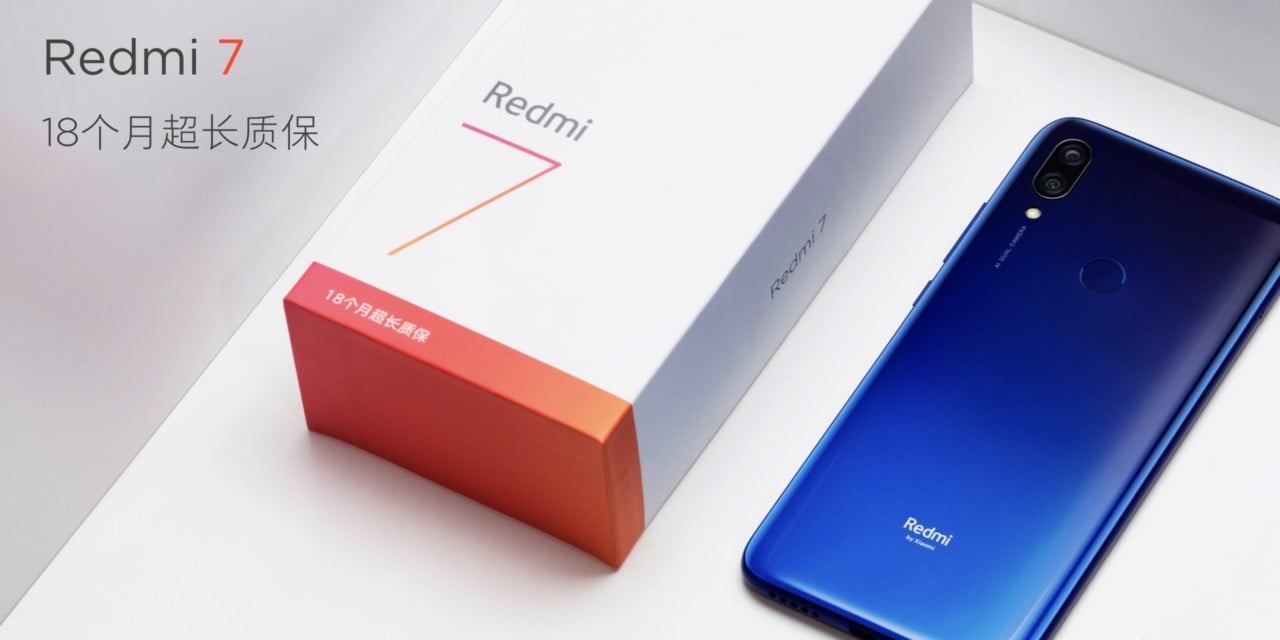
Just days after the launch of the Redmi 7 in China, the device has now started its global journey with a launch in Ukraine. The Redmi 7 was first launched in China on Monday and today, Xiaomi Ukraine’s official Facebook page has announced that the device is now available for online pre-order at partner retailers. The Facebook post also reveals that the device is available for offline purchase at the official Mi Store. Xiaomi has over 60 stores in Ukraine. The budget device comes with a price tag of UAH3,999 or $147/€130 for the base model with 2GB RAM and 16GB storage.
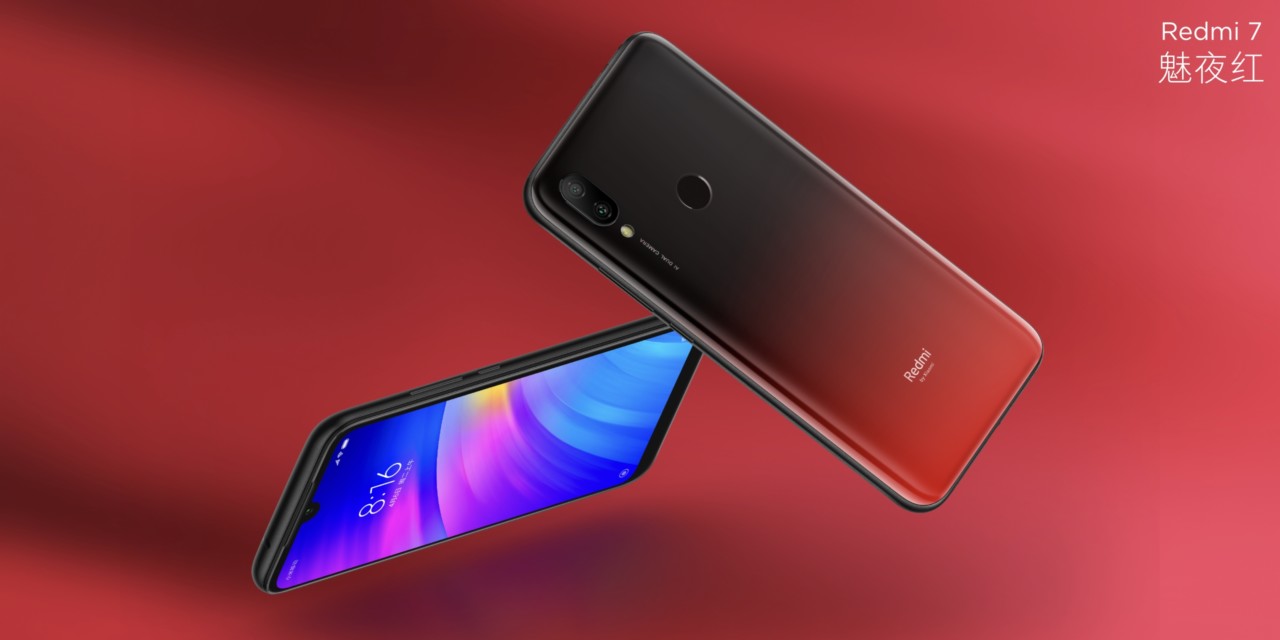
As for the specification, the Redmi 7 deviates from the compact size of its predecessors and even has a gradient finish. It features a 6.26” HD+ screen with a resolution of 1520 x 720 pixels. It offers 19:9 aspect ratio and carries support for 84 percent NTSC colors. Since it is a TUV Rheinland display, the Redmi 7 users won’t experience eye fatigue since it effectively reduces the emission of harmful blue rays. The device also comes with a Corning Gorilla Glass 5 panel on top the display. The budget phone also comes with P2i splash-resistant coating.
The Redmi 7 is powered by a Snapdragon 632 SoC paired with 2GB, 3GB and 4 GB of RAM on different variants. The device also packs 16GB, 32GB and 64GB storage options. For photography, the device packs a 12MP + 2MP dual camera setup at the rear. While for selfies, there is an 8MP sensor with features such as AI Beauty and AI Face Unlock. It gets its interface from Android 9-based MIUI 10 while a 4000mAh battery keeps the lights on. You also get features such as dual 4G VoLTE, Wi-Fi, Bluetooth, GPS, Infrared remote control, microUSB 2.0 and 3.5mm audio jack.
In the face of a saturated smartphone market, OEMs are looking at revamping their business so as to increase revenue. Japanese tech giant Sony is no exception as it is striving to reorganise its ailing smartphone division. One way it is doing so is by redesigning its product offerings. The Xperia 1 and Xperia 10 that were launched recently speak volume of the firm’s plans. The models deviated entirely from Sony’s traditional design to feature a full-screen 21:9 aspect ratio design. There are rumours that the Compact lineup will be pushed closer to the mid-range instead of having flagship specs and may also be renamed.
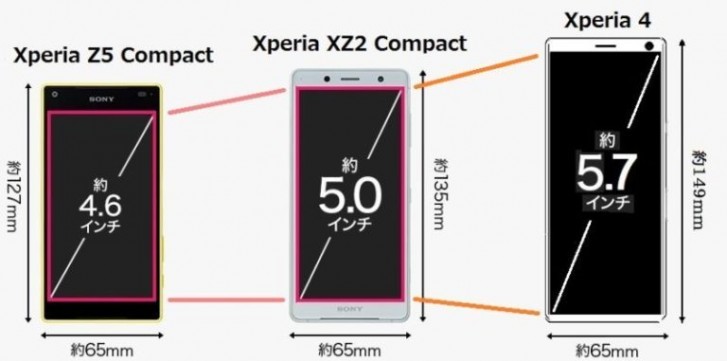
A recently shared image on the Esato forums tends to compare the two older Compact models, the Xperia Z5 Compact and XZ2 Compact with the Xperia 4 which is said to be in the works. The upcoming Xperia 4 retains the 65mm width of the older Compact models but the screen aspect ratio jumps to 21:9 from the usual 16:9 on older models. The Xperia XZ2 Compact featured an 18:9 aspect ratio, though.
The Xperia 4 is also rumoured to pack a Snapdragon 710 chipset which places it in the premium mid-range category. This will be different from the previous Compact lineup that usually features flagship specs and SoC on a compact body. The new Xperia 4 is also said to pack a thinner frame at just 8.3mm, which is slimmer than the 12.1mm-thick Xperia XZ2 Compact. The 3.5mm audio jack is said to have been sacrificed for that purpose. The source hints the Xperia 4 will be sold exclusively by popular carrier NTT DoCoMo in Japan. We believe the model will be available in the global market.
Redmi announced the Redmi 7 yesterday, to take on the other budget smartphones out there. It turns out, it is one of the best value for money devices in its segment, which is something that the Redmi series is known for. However, the Redmi 7 faces stiff competition from a number of different manufacturers like Asus, Realme, and surprisingly, even from Samsung!
We currently don’t have a Redmi 7A model yet in the market unlike the sixth generation Redmi series which has a lower-end Redmi 6A model. So, at present, the cheapest current generation Redmi model that you can buy is the 2+16GB Redmi 7.
If you are looking at the 2GB RAM version, then the Redmi 7 hardly has any solid competitors. Priced just over $100, the phone is definitely a steal, given its beautiful design, decent SD632 processor and a large 4000mAh battery. But if you are looking to get yourself the 3GB RAM model, the competition gets stiff.
In China, the Redmi 7’s MSRP is roughly $120 after conversion for the 3GB + 32GB model. That’s a pretty aggressive price tag considering its specs, but if you look around, there are a few alternatives available, especially if you consider a competitive market like India.
For example, you have the Asus Zenfone Max Pro M2 with the same Snapdragon 632 processor as the Redmi 7 and there’s the Galaxy M10 with an Exynos 7870 SoC. These two models are priced very close to the Redmi 7. There is also the Realme C1 (powered by SD450) and even its elder sibling, the Realme 3, which is just about $10 more expensive but offers better camera features and a better processor.
So let’s take a closer look at each of these models that compete in the same segment as the Redmi 7.
First, let’s take a look at the best and cheapest 2GB RAM smartphones we have got right now.
The three phones mentioned above are some of the best budget smartphones that you can purchase at around $100. Redmi 7 does take things up a notch by bringing Snapdragon 632 into the equation. Not to mention that 10W charger that comes bundled with the phone right out of the box.
Personally, if my budget was under $110, I would definitely go for the 2+16GB model of the Redmi 7. While I agree 16GB is really small for a smartphone in this age, there’s a dedicated MicroSD card slot on board, which does make things better.
Camera quality won’t be too different among the above three models, so I won’t comment on that. Even the display quality should be quite similar.
However, that 10W charger with the Redmi 7 changes the equation. Given that the other two models come with a 5W stock charger, the Redmi model has a definite advantage in this regard. The other two phones are going to be painfully slow while charging.
In terms of design, all three phones are well built. Realme C1 and Redmi 7 brings a few fancy options as well. However, I am a fan of that Nebula Red color of the new Redmi model. Also, that blue gradient option looks pretty slick for a $100 phone!
I wouldn’t personally pick Galaxy M10 because it skips on Gorilla Glass for its screen protection and doesn’t even have a fingerprint sensor.
But if I were to pick the Realme C1 instead of the Redmi 7 in this price segment, it would only be because I want 32GB storage. Plus, its lighter than Redmi 7.
But overall, at $100, I personally believe, the Redmi 7 shines among its 2GB RAM competitors.
Flashy design, night mode photography, powerful SoC
PRICE (IND MARKET)
3+32GB = ~$120
3+32GB = ~$123
3+32GB = ~$130
If you are looking at the cheapest 3+32GB smartphones in the market, then the ones mentioned above are some of the best options available. The new Redmi 7 makes things even more exciting in this price segment (~$130).
Among the phones mentioned above, Realme 3 is slightly more expensive. In fact, often you would compare the Realme 3 to the Redmi Note 7 model. But personally, I believe, Realme’s 3GB RAM model can take on the Redmi 7 in the same memory configuration. If you are looking for something with 3GB RAM on board, and if you can spend a few dollars more, then do it and get the Realme 3. For a few bucks more, it offers a more powerful processor with a slightly larger battery, as well as a feature-packed camera with a night mode as well (nightscape). For around $130, you can’t really go wrong with the Realme 3’s 3GB RAM model.
But if you can’t spare a few bucks more, Redmi 7 is your best bet. Personally, I wouldn’t pick the Zenfone Max M2. I find Redmi 7’s design modern and lively. Also, you have Gorilla Glass 5 protecting that 6.26-inch HD+ screen. I also prefer MIUI over ASUS’ UI any day as the latter is still far from perfect.
The only reason why I would go for the Zenfone model is because I would want something that’s lightweight. The Asus model is nearly 20 grams lighter than the Redmi 7, with the same battery capacity on board. So, if you are looking for something thinner and lighter at this price, the Zenfone Max M2 is your friend.
In conclusion, the Redmi 7 is the best choice if you are looking for a 2GB RAM phone priced at around $100.
But if I want something with more storage and RAM, like 3+32GB, I would go for the Realme 3. For $10 more, I get a more powerful chipset and a bigger battery than the 3GB model of the Redmi 7. If you don’t care for more processing power, the Redmi 7 is the next best device. I won’t be surprised if it also gets a Night Scene mode via a future update.
What are your thoughts? Which one will you pick among these models and why? Also, did we miss out on a good model in this price segment?
Huawei has revealed it has an event scheduled for March 25. Rather than let us guess what it will be launching, the Chinese giant has released posters which reveal the new products are the the Enjoy 9S, the Enjoy 9e, and a new MediaPad M5 Youth Edition. The posters also reveal some of their key features.
[envira-gallery id=”241993″]
The Enjoy 9S will come with triple rear cameras which include a 24MP primary camera and a 16MP ultra-wide angle camera. The three cameras are arranged vertically on the left of the phone with two of them sharing the same housing. The poster also reveals the Enjoy 9S will have a rear-mounted fingerprint scanner, run EMUI 9.0, have 128GB of storage and AI features.
The Enjoy 9e will also tag along. This is a more affordable model with a single 13MP camera on its back. There is no fingerprint scanner visible but there is a possibility it is on the front of the phone. The poster also reveals the Enjoy 9e will have FM Radio, Huawei SuperSound technology, and 64GB of storage.
Last but not least is the MediaPad M5 Youth Edition or MediaPad M5 Lite. We feel there should be “2019” in the name to distinguish it from the MediaPad M5 Lite which was announced back in October. First, this version is a smaller but more powerful model.
A new Motorola smartphone with a model number XT1980-3 has received certification from the Federal Communications Commission (FCC) in the U.S. The FCC documents of the smartphone contains few information on its specifications and dimensions.
The FCC filings of the Motorola XT1980-3 have revealed that it measures 157 x 75mm. The Moto G7 Plus smartphone that was announced in February also measures 157 x 75mm. Hence, it appears that the XT1980-3 will be equipped with a 6.2-inch full HD+ display like the Moto G7 Plus.
Through FCC it has been known that the XT1980-3 is packed with a 3,600mAh battery that carries support for 18W fast charging. When it comes to connectivity, the handset is equipped with features like Wi-Fi 802.11ac, Bluetooth LE, GPS, GLONASS, NFC and FM radio. There is no information available on the other specs of the phone.
There is no concrete evidence to prove that the XT1980-3 phone is indeed the Moto Z4 Play. Last year, Motorola had launched the Moto Z3 Play in June. Hence, it is likely that that the Lenovo-owned company could be planning to launch its successor around the same time this year. Previous leaks have claimed that the Moto Z4 Play could be equipped with a 3,600mAh battery.
Rumor surrounding the Moto Z4 Play have revealed that it will be equipped with a 6.2-inch S-AMOLED display with waterdrop notch. It is expected to come equipped with in-display fingerprint reader. The Snapdragon 675 chipset is expected to power the smartphone with 6 GB of RAM. It come with an inbuilt storage of 128 GB. The presence of magnetic connector for attaching Moto Mods will set this phone apart from other mid-range phones. The handset will come loaded with Android 9.0 Pie OS that will deliver near stock experience.
The Motorola Moto Z4 Play smartphone is rumored to be fitted with 48-megapixel S5KGM1SP sensor by Q Technology. It is expected to release in models like 4 GB RAM + 64 GB storage and 6 GB RAM + 128 GB storage. There is no word on the pricing of the Z4 Play.
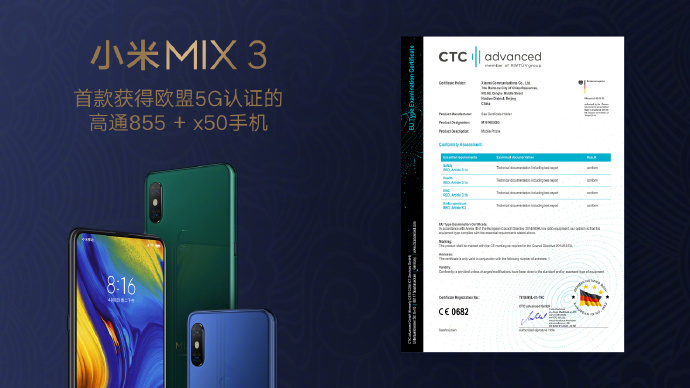
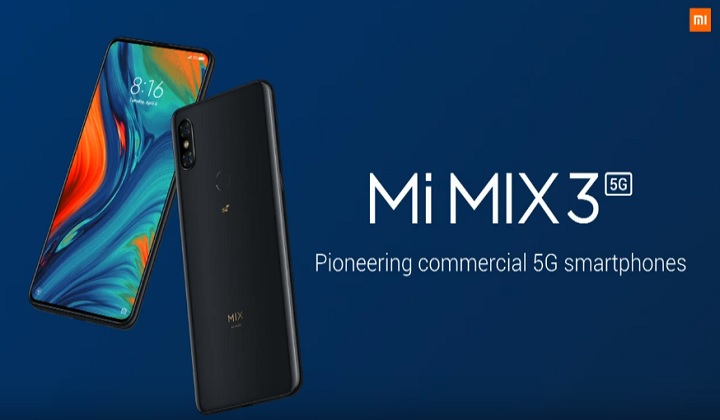
Xiaomi President Lin Bin has confirmed through Weibo that the Xiaomi Mi MIX 3 5G edition has bagged the 5G CE certification. By this it become the first smartphone powered by Snapdragon 855 chipset and X50 5G modem to achieve such a certification.
According to Bin, the Mi MIX 3 5G version has recently passed rigorous inspection tests of Sporton, a professional third-party mobile communication laboratory andCE certification of European Union. During the launch event of the Xiaomi Mi MIX 3 5G, Xiaomi had confirmed that the smartphone will be heading to the European markets in May. It is reported that CE is one of the important quality assessments for the import and sale of products by the European. Hence, the CE approval of the Mi MIX 3 5G is line with its release in the European markets.
In Europe, the Mi MIX 3 5G will be carrying a price tag of 599 euros for the starting variant. It comes with a 6.39-inch Super AMOLED notch-less display with slider design. The slider is equipped with 24-megapixel + 2-megapixel dual front-facing cameras and there a pair of 12-megapixelsensors are available on its backside. The MIUI 10 based Android 9 Pie is loaded on the device. There is no external storage on the phone. The handset features a dedicated hardware button for accessing Google Assistant.
The smartphone features a 3,800mAh battery that is coupled with Quick Charge 4+ and 10W wireless charging technology. The Snapdragon 855 mobile platform present inside the phone is assisted by 6 GB of RAM. The handset comes in two storage choices of 64 GB and 128 GB. It will be available in Onyx Black and Blue Sapphire colors.
The Xiaomi Mi MIX 3 5G edition will be also releasing in China. As of this writing, there is no information available on its release timeframe for the home market.
Xiaomi is planning to introduce more partnerships with offline retailers across India. In a bid to suppress competition from Samsung, the Chinese smartphone maker is keen to invest in India’s offline market. The company’s expansion plans are aimed to boost sales of products beyond smartphones, such as televisions, Bluetooth accessories, smart home products and other accessories.
“Our biggest success story has been our offline journey, including setting up more preferred partners, more Mi Home stores,” said Manu Kumar Jain, Vice President, Xiaomi and Managing Director, Xiaomi India, at an event.
Xiaomi will set up new Mi experience stores, and will also increase offline reach via third-party retailers. Currently, Xiaomi owns 50 Mi Home stores, 500 Mi Stores, and 4000 preferred partners stores across the country. Apart from increasing to 100 Mi Home stores in cities, Xiaomi also plans 5000 small Mi Stores in Rural India, helping the company to reach out to every potential customer. According to Economic Times, the company wants to increase its presence in the multi-brand retail segment also.
“2019 will also witness more ambitious retail expansion of our offline channel to extend support for newer categories such as Mi LED TVs. In smartphones, Xiaomi is the second largest brand in the offline market with nearly 18% market share as of January GFK smartphone tracker,” the spokesperson told ET.
Xiaomi is the largest smartphone manufacturer in India, while Samsung is following it up at the second place. Xiaomi is now looking to dethrone the Korean giant, currently leading the offline market in the country. “For the entire CY 2018, according to IDC numbers, we were almost 30 percent bigger than the second largest brand. In Q4, we were 50 percent bigger than the second biggest brand,” Jain added.
On the other hand, Samsung is now actively working to capture most of the mid-range smartphone market. They have already announced the new mid-range devices under its Galaxy A-series and M-series.
Xiaomi’s online portal Mi.com is India’s third largest e-commerce platform. To further scale up the company’s presence, Xiaomi is launching new products in the next few months. “We’re also launching new categories. Overall, the company is doing exceptionally well in India. From a smartphone business perspective we are now the No. 1 brand for six consecutive quarters by a huge margin.” said Jain.
Xiaomi manufactures every smartphone sold in India within the country. Xiaomi has exceptionally increased its manufacturing capacity to 3 smartphones per second during operating hours. To expand the brand’s overall presence, Xiaomi is further looking for options to invest in India.
Xiaomi hopes to take on Samsung amid increased competition in both online and offline segments.
Xiaomi had launched its flagship smartphone — Mi 9 last month in China. Following that, the phone was launched globally during the Mobile World Congress 2019 in Barcelona, Spain.
While the smartphone has been available for sale in China through the flash sale model, it’s not easy to get hands on the device because the company hasn’t been able to match the demand. The phone went on sale in China on 26th February and its pricing starts at ¥2999 (~$447).
Now, the company has officially released the financial report for the year 2018. Additionally, the company has also revealed regular revenue figures and the report mentions the Xiaomi Mi 9 and its production capacity. It says that the supply of Mi 9 will certainly exceed 1.5 million units by the end of this month.
The Mi 9 packs a 6.39-inch 2340 x 1080 AMOLED display with a waterdrop notch that houses the selfie camera. The display panel is supplied by Samsung and is protected by a layer of Gorilla Glass 6. Under the hood, it runs Snapdragon 855 processor and is paired with 6GB of RAM and 128GB of storage.
There is also an 8GB RAM variant with 128GB of storage too. The Mi 9 is Xiaomi’s first triple camera phone. The first camera with the holographic ring around it is actually the telephoto lens – a 12MP Samsung ISOCELL S5K3M5 sensor with an f/2.2 aperture and 2x optical zoom.
The next sensor is the primary camera – a 48MP Sony IMX586 f/1.75 sensor with a 6P lens. There is also a 16MP Sony IMX481 f/2.2 sensor for taking wide-angle photos and macro shots. The selfie camera is a 20MP sensor and comes with a bunch of modes including AR avatars and an integration with TicTok.
It comes with an in-display fingerprint scanner which is 25% faster than the previous generation. It has NFC with NXP’s new SN100T chip for faster transaction speeds, a dedicated AI button, Bluetooth 5.0 dual-frequency GPS for better positioning, an infrared port, and a USB Type-C port.
The phone runs Android 9 Pie-based MIUI 10 out-of-the-box and is powered by a 3,300mAh battery. It comes with support for 27W fast-charging which allows you to charge the phone from empty to 70% in just 30 minutes.
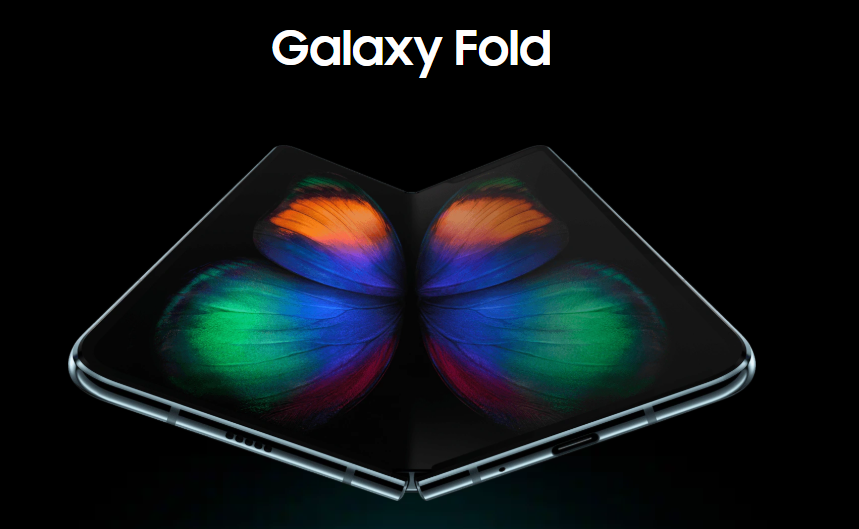
Looks like Samsung fans that have restlessly been waiting to get their tech greedy hands on the South Korean handset’s makers first foldable phone are in for a treat.
While the Galaxy Fold isn’t slated to hit the store shelves anytime soon, the rumor mill hasn’t ceased churning out all sorts of speculations around the hotly-anticipated smartphone. Aside from that, the Galaxy Fold has made several appearances online in the form of leaked renders.
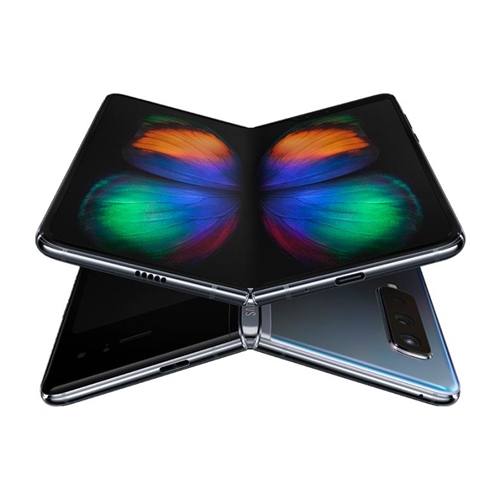
Keeping in line with that, the Galaxy Fold was recently spotted in a new hands-on video that was shared on YouTube. The aforesaid footage was posted on a YouTube channel called phoneoftime, and it gives us a glimpse of an AT&T model of the imminent handset. We even get a chance to check out its display crease.
If recently surfaced reports are anything to go by, the video hails from Vietnam, where Samsung’s major production hubs are located. A person booting up the phone and testing its foldable screen can be seen in the video. It seems safe to say that the person handling the phone is promoting their unlocking services. The Galaxy Fold shows awe-inspiring responsiveness; however, the crease along the device’s central folding line is likely to pose an issue for the user. The crease is clearly visible when the phone is unfolded.
The purported Galaxy Fold seen in the video has not been confirmed as a final production unit, and chances are it might be a completely different handset. Despite the convincing footage, the final consumer device may not have any sort of fallibility since the officially unveiled Galaxy Fold did not seem flawless, unlike the handset seen in the video.
If continued use is likely to create a dent in the screen, this will significantly damage a user’s overall experience. Those willing to shell out a whopping $2000 on the Galaxy Fold are likely interested in taking full advantage of the phone’s extra large, inward-facing screen, probably for playing games or watching their favorite videos.
Delving into their favorite activity with a visible incision across the content might leave them feeling cheated. As if that weren’t enough, there’s hearsay that the phone isn’t reliable as far as long-term durability is concerned.
The Galaxy Fold will be made available in the American market on April 26th so we still expect more shreds of information regarding the device to surface online. Stay tuned in here for more news and updates about the Samsung Galaxy Fold.
Much to the delight of Xiaomi, its fourth-quarter net profit has skyrocketed to a whopping CNY 1.85 billion, which roughly converts to about $275.59 million. The Chinese tech behemoth made the revelation on Tuesday.
The aforesaid profit surpasses the average estimate of ten analysts by exceeding CNY 1.7 billion, Refinitiv data revealed. During this period, the revenue upheaved an impressive 27 percent to CNY 44.4 billion.
According to Refinitiv data, this figure is lower than CNY 47.4 billion, which is the amount estimated by thirteen analysts. If the results are anything to go by, Xiaomi is rising above the decelerated Chinese market by leaving no stone unturned in a bid to have a firm grip in the Indian and European markets.
Xiaomi accumulated earnings of CNY 174.9 billion for the entire 2018 calendar year. The company’s net profit came up to CNY 8.6 billion. Since its Initial public offering (IPO) in Hong Kong, this is the third set of financial results for the renowned handset maker.
Xiaomi’s shares have surged about 30 percent after experiencing a dip earlier this year. Regrettably, they still haven’t reached their July listing price.
Xiaomi’s increasing focus in the European market can be attributed to its declining performance in China. Since its debut back in 2018, the company has managed to grab the fourth spot as the largest phone vendor in the continent.
Sales from outside the home market comprised 40 percent of Xiaomi’s earnings in the fourth quarter last year, Xiaomi CFO Shou Zi Chew told reporters while speaking on a call. He also pointed out that the company would be focusing more on global expansion in 2019.
“We will continue to explore the global markets and replicate the success in India in other key markets such as Indonesia and Western Europe,” Shou Zi Chew confirmed. He also revealed that they intend to capture unexplored international markets this year.
In order to boost its profit margins, Xiaomi introduced a slew of steeply-priced devices. Keeping in line with that, Xiaomi fans now have to pay 17 percent more to buy the company’s phone in China. The earnings report also shows that Xiaomi has increased the overseas selling price of their phones by a considerable 10 percent.
During the Mi 9 launch event, Xiaomi’s founder Lei Jun noted that the company will no longer manufacture handsets carrying price tags under CNY 3,000. In the fourth quarter, smartphone sales provided 65.1 percent of the company’s overall revenue. Cash flow from a slew of other hardware generated 25.1 percent and internet services made up 9.1 percent.
Xiaomi played its ace card i.e. the latter segment while pitching to investors in the initiation to its IPO. Dubbed as a “triathlon business model,” the pitch enabled those who purchased smartphones to use revenue-generating apps and services that either supported advertisements or micropayments.
We use cookies on our website to give you the most relevant experience by remembering your preferences and repeat visits. By clicking “Accept”, you consent to the use of ALL the cookies.
This website uses cookies to improve your experience while you navigate through the website. Out of these, the cookies that are categorized as necessary are stored on your browser as they are essential for the working of basic functionalities of the website. We also use third-party cookies that help us analyze and understand how you use this website. These cookies will be stored in your browser only with your consent. You also have the option to opt-out of these cookies. But opting out of some of these cookies may affect your browsing experience.
Necessary cookies are absolutely essential for the website to function properly. This category only includes cookies that ensures basic functionalities and security features of the website. These cookies do not store any personal information.
Any cookies that may not be particularly necessary for the website to function and is used specifically to collect user personal data via analytics, ads, other embedded contents are termed as non-necessary cookies. It is mandatory to procure user consent prior to running these cookies on your website.









 The Galaxy Fold shows awe-inspiring responsiveness; however, the crease along the device’s central folding line is likely to pose an issue for the user. The crease is clearly visible when the phone is unfolded.