Samsung has started pre-orders in the US for the 115-inch Micro RGB Vision AI Smart TV, model MR95F. The TV, first shown earlier this year, is Samsung’s first to feature micro-scale RGB LED backlighting.
The Micro RGB technology improves color accuracy and contrast by using individual micro LEDs instead of a standard backlight. This allows precise brightness control and local dimming for deeper blacks and sharper detail. The screen covers 100% of the BT.2020 color space and has received “Micro RGB Precision Color” certification from German testing agency VDE.
Samsung has added the new Micro RGB AI Engine, which processes every frame to improve picture quality. Features include AI Upscaling Pro to sharpen low-resolution video, AI Motion Enhancer Pro to reduce blur, Micro RGB Color Booster Pro to boost vibrancy, and Micro RGB HDR+ to maintain detail in high-contrast scenes.
For daytime use, the TV includes Glare Free technology certified by UL, which reduces reflections from ambient light. It runs on Tizen OS and supports Bixby with generative AI. The assistant allows users to ask questions like “Summarize the movie I’m watching” or “Which movies had over 10 million viewers?” without leaving the content. The TV also includes Samsung Knox security and will receive seven years of free Tizen OS updates.
The design features a unibody metal frame. It supports up to 144Hz refresh rate, Variable Refresh Rate (VRR), Auto Low Latency Mode (ALLM), and FreeSync Premium Pro. Audio comes from a 70W 4.2.2-channel Dolby Atmos system with Q-Symphony support.
Connectivity options include Wi-Fi 5, Bluetooth 5.3, Apple AirPlay 2, four HDMI 2.0 ports (one with eARC), two USB Type-A ports, Ethernet, and optical audio out.
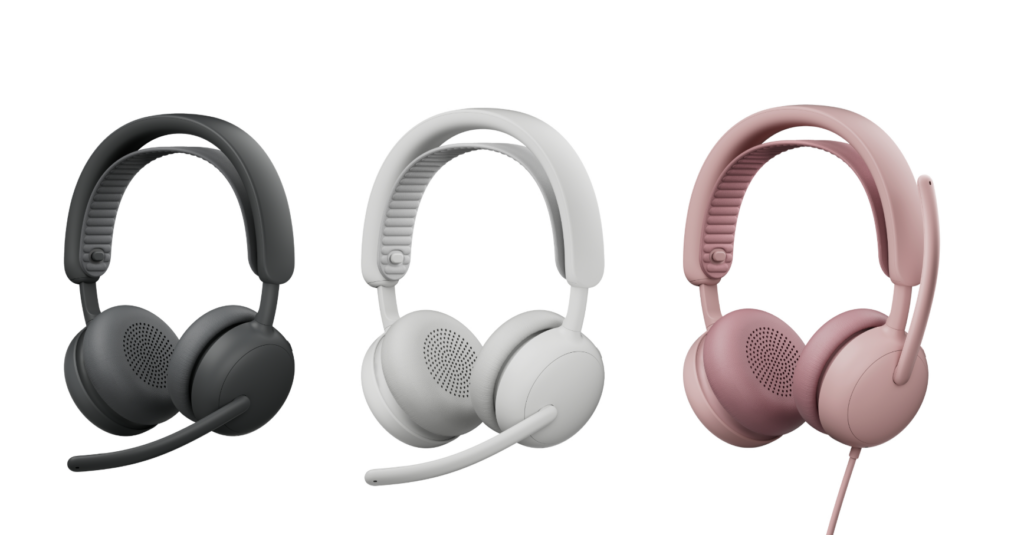
Logitech has launched the Zone Wireless 2 ES and Zone Wired 2 headsets, built to reduce distractions in noisy office spaces. Both models feature AI-powered noise-canceling microphones and adaptive hybrid active noise cancellation (ANC) that automatically adjusts to block background noise. The design is based on gaming headsets, with a headstrap made for long hours of wear.
Open offices encourage collaboration but are known for constant interruptions. Studies estimate that companies lose $468 billion each year due to workplace distractions. “Uninterrupted focus is the new currency of work. With more employees returning to the office, it’s more critical than ever to protect their concentration,” said Hanneke Faber, CEO of Logitech.
The Zone Wireless 2 ES is certified for Zoom, Microsoft Teams, and Google Meet. It supports native Bluetooth call control for Teams and Meet, which means it can be used with or without a dongle. When used with a dongle, the headset’s smart enumeration hides the device from meeting apps when it is powered off, so users are not left guessing about their active audio source. Zone Wired 2 offers the same features and certifications in a USB plug-and-play version, removing the need to charge or worry about wireless connectivity in crowded networks.
IT teams can manage both headsets remotely with Logitech Sync, which allows silent firmware updates without help desk requests or interruptions. Both models come with rotating earcups, a reversible mic boom, and an adjustable headband. Zone Wireless 2 ES delivers up to 20 hours of talk time and 25 hours of listening time with ANC on.
Employees can customize audio, ANC, and charging settings in the Logi Tune app. The headsets are available in rose, off-white, and graphite. Sustainability is a key focus, with replaceable parts and recycled materials used across plastics, magnets, cobalt batteries, and travel bags.
Pricing & availability
Zone Wireless 2 ES will be available globally in November at $159.99 for the Bluetooth version and $179.99 with receiver. Zone Wired 2 will be available in December at $129.99.
For more daily updates, please visit our News Section.
OnePlus has announced a new budget truly wireless earbuds in its home market of China. Back in August 2025, the company unveiled the OnePlus Buds 3R as its latest pair of affordable hearables, now, the company is rebranding it as the Buds 3V.
OnePlus Buds 3V Launch with 54-Hour Battery Life & Familiar Design
Apart from the name, the features remain the same across the two budget earbuds. So you still get the 12.4mm dynamic drivers that are tuned for high quality audio and balanced bass. Users can customize the audio with Sound Master EQ, which brings three presets. These connect via Bluetooth 5.4 while also bringing support for Google Fast Pair, 47ms Low Latency Mode, and dual device connection. It offers AI noise cancellation and wind resistance thanks to its dual mic setup.
OnePlus Buds 3V
You also get 3D Spatial Audio for 360 degree sound stage. One of the big highlights of the OnePlus Buds 3V is its impressive battery life. On a single full charge, these earbuds can last for up to 12 hours, which can be bumped up to 54 hours with the charging case. Other notable features include an IP55 rating for water and dust resistance and Aqua Touch for smoother touch controls.
The Chinese brand just announced the OnePlus Buds 3V for 119 Yuan, which is roughly about 28 US Dollars. In comparison, the OnePlus Buds 3R debuted in India for just 20 US Dollars. So it is surprisingly more expensive in the Chinese market. The earbuds are listed in two color options, which include Black and Blue variants.
For more daily updates, please visit our News Section.
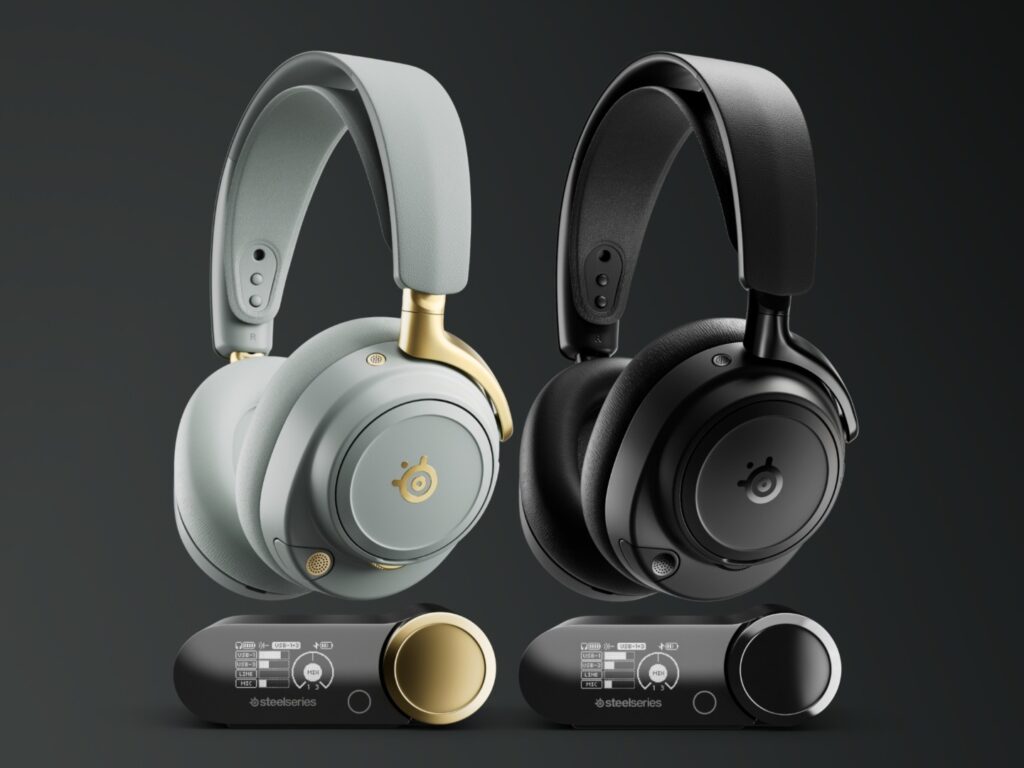
SteelSeries has launched its new flagship headset, the Arctis Nova Elite, setting a new standard in gaming audio as the first Hi-Res Wireless Certified gaming headphones. Built for gaming, music, and everyday use, it combines high-quality sound, strong connectivity, and advanced features.
“
The Nova Elite uses custom 40mm Carbon Fiber Speaker Drivers that reproduce frequencies from 10Hz to 40kHz. With 24-bit/96kHz transmission over 2.4GHz wireless and Bluetooth, powered by the new GameHub and LC3+ codec, the headset delivers audiophile-grade clarity. A brass ring reinforces the drivers for better rigidity and performance, creating lifelike soundscapes.
A key feature is OmniPlay, which lets users connect and mix audio from up to four sources at the same time, including PC, PlayStation, Xbox, Bluetooth, and Aux. This allows players to stay in a game lobby, chat on Discord, and stream content without interruptions. The headset also includes Triple USB-C inputs for connecting multiple systems easily.
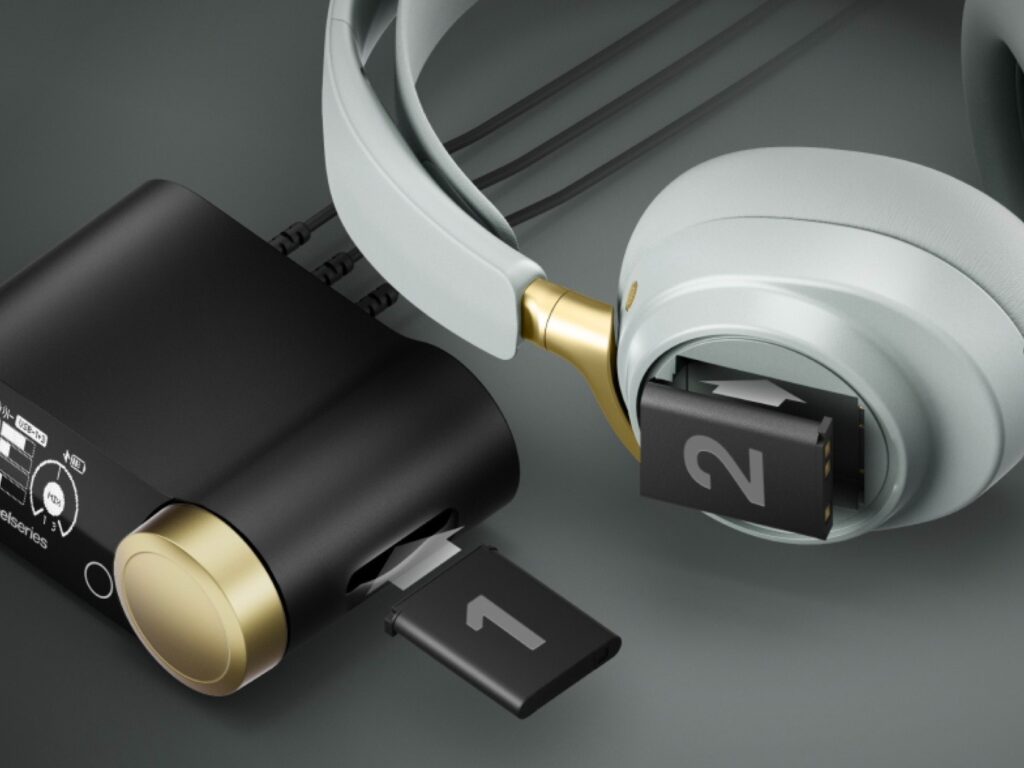
The AI-powered microphone system blocks up to 97% of background noise and supports auto-switching at 32kHz/16-bit. SteelSeries says the Nova Elite offers the best Active Noise Cancellation in gaming, and its Infinite Power System uses dual batteries for nonstop play by swapping them out when needed.
Through the Arctis App, users can choose from more than 200 game-specific audio presets and switch them in real time. The headset has been co-designed with Jacob Wagner, combining a Danish-inspired design with functional comfort. It includes an all-metal frame, metal control wheel, and memory foam earcups for durability and ease of use.
Pricing & availability
The SteelSeries Arctis Nova Elite is available worldwide starting September 30, 2025, priced at $599.99 in North America, £599.99 in the UK, €649.99 in EMEA, and $649.99 in APAC through SteelSeries.com and select retailers.
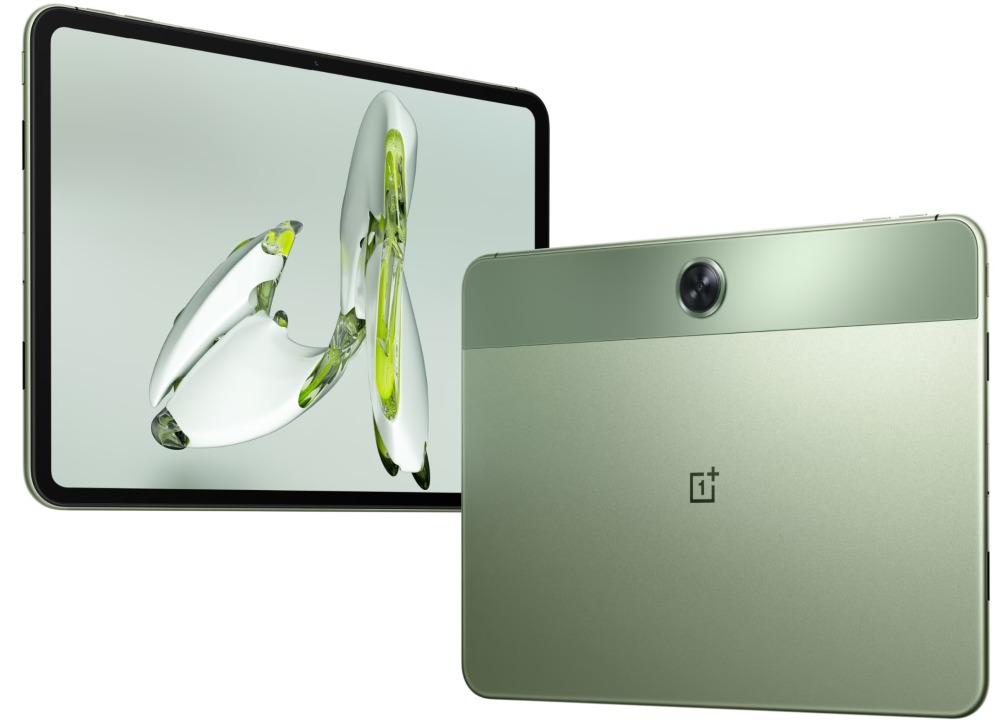
Tablets are now becoming a popular and essential part of daily life. Reading documents, watching movies or YouTube videos, meetings, sketching, and the list goes on. If you are planning to get one, then the OnePlus Pad Go is now available at Rs 13,999(effectively). This is the best tablet around Rs. 15K (*if you are ready to stretch the budget a little).
OnePlus Pad Go Deal Details
This is the easily recommendable budget tablet whose base variant (8GB RAM and 128GB Storage) starts for Rs. 16999 and goes all the way up to Rs. 19999 for the max variants (8GB RAM and 256GB storage). You can get up to Rs. 2000 off on SBI Credit Cards and apply a Rs. 1000 Coupon. Which makes the effective price of OnePlus Pad Go just Rs. 13,999.
Please Note: When you buy something using the links in our articles, we may earn a small commission at no cost to you.
OnePlus Pad Go Features and Specifications.
It comes with a massive 11.35-inch (28.85cm) and 2.4K (2408 x 1720 Pixels resolution) LCD with Redlift Eye Care feature. The base variants of the tablet have only Wifi support, and the rest of the tablet in this lineup comes with both LTE and Wifi support. The OnePlus Pad Go comes with a Quad Speaker with Dolby Atmos support, and the device storage can be extended up to 1 TB.
The device comes with Android Oxygen OS 13.2 out of the box. It is powered by the MediaTek Helio G99 processor. Talking about the battery, the device has an 8000 mAh battery and gives 514 hours of standby. The OnePlus Pad Go has TÃ V Rheinland certification for blue light, which means no eye strain. In addition, the device also comes with intelligent brightness, DC dimming, and bedtime mode, making it a perfect device for those who read.
With the iPhone 17, Apple has turned up the charging game: wired speeds now go up to 40W via USB-C, while wireless charging via Qi2.2 reaches 25W. Whether you need power on the go or just a convenient charging station, having the right charger (or power bank) makes all the difference. Here are five standout chargers for the iPhone 17 lineup.
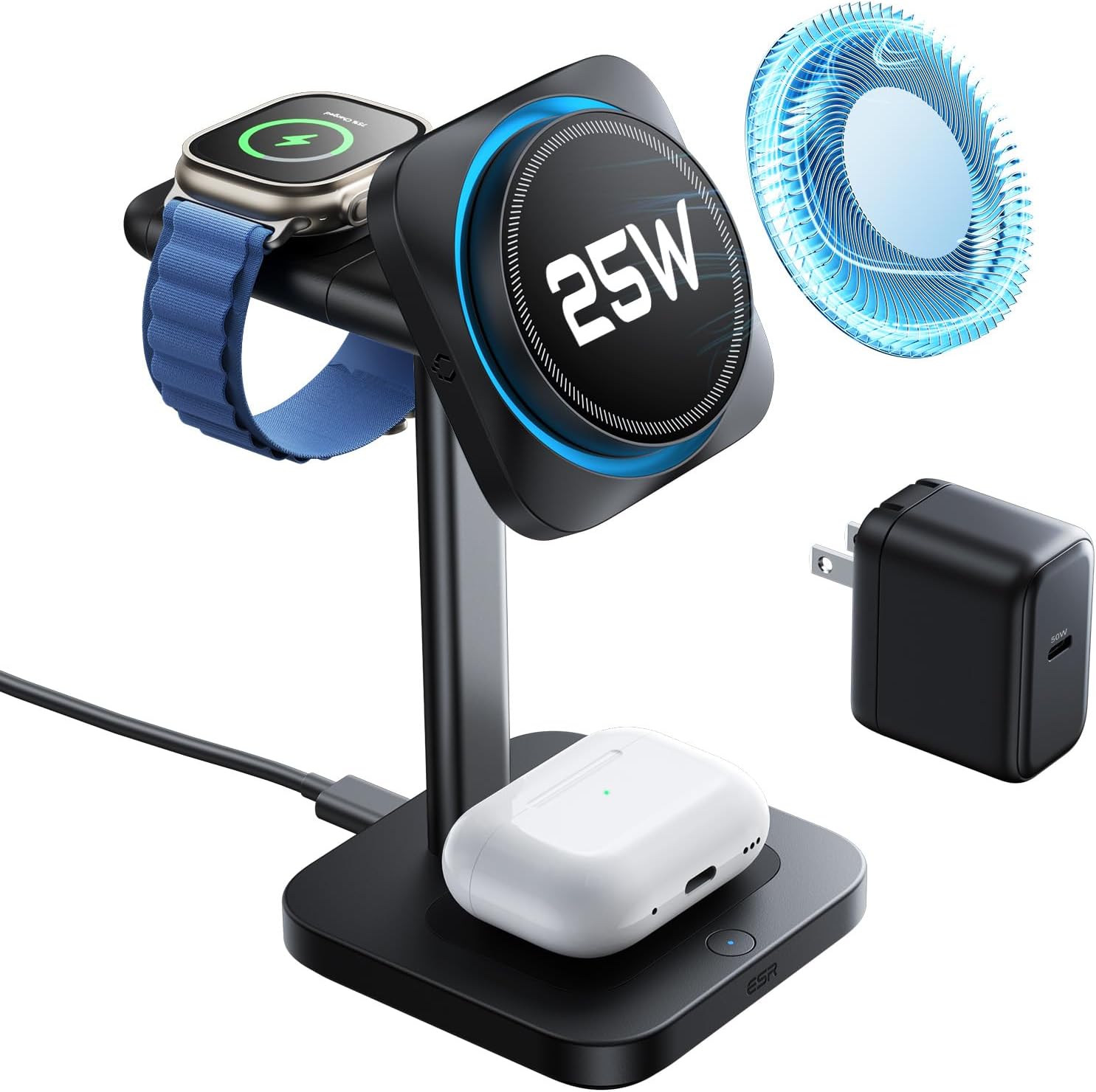
First on our list is a 3-in-1 charging station from ESR. This model is special as it allows users to charge up to three of their Apple products at the same time. So apart from the new iPhone 17 series, one can even power up their Apple Watch and AirPods. It supports 25W magnetic charging for the latest iPhones, taking advantage of the Qi2.2 standard. The magnetic force is strong enough to withstand 1200 grams of force.
2. Anker Prime Wireless Charging Station
Anker Prime Wireless Charging Station
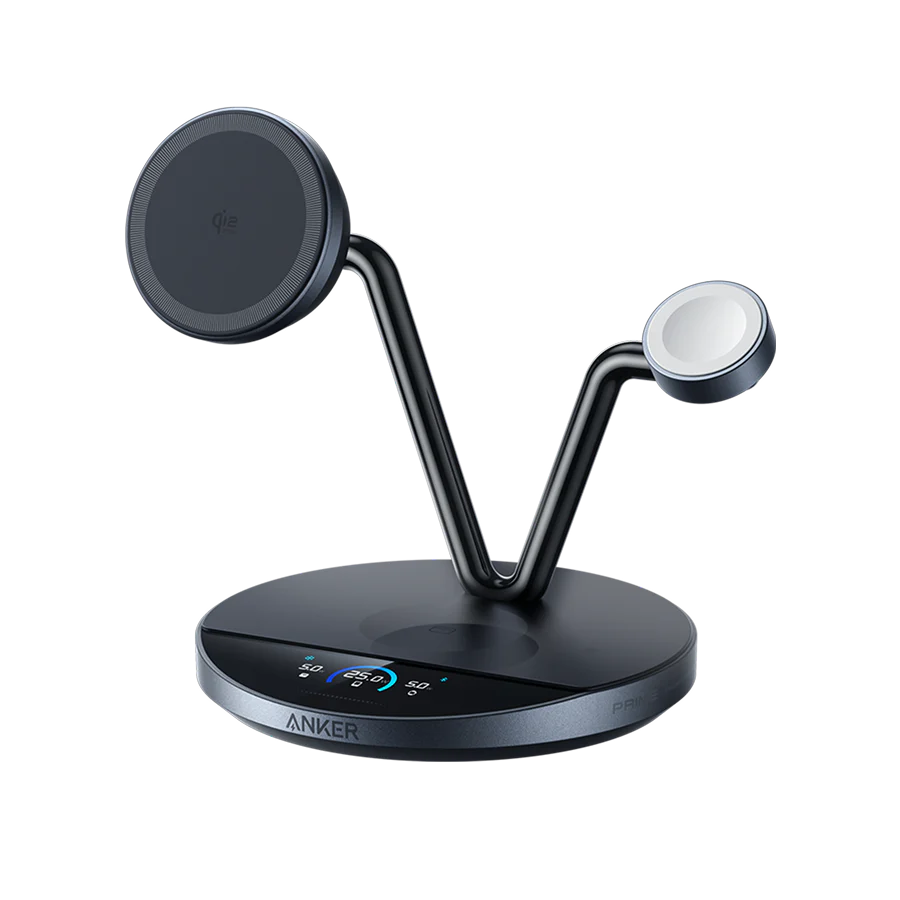
Similar to the ESR, we have the Prime Wireless Charging Station from Anker. Just like the previous charging station, it can also power up an iPhone, AirPods, and Apple Watch. This model is one of the brand’s latest announcements, with Anker promising 50% charge on the iPhone 17 Pro in just 22 minutes. Another notable aspect of this device is the TEC Active Cooling feature, which it calls the AirCool tech. You even get a tiny 1.65-inch touch display that shows the relevant details as well.
3. Apple 70W USB-C Power Adapter
Apple 70W USB-C Power Adapter
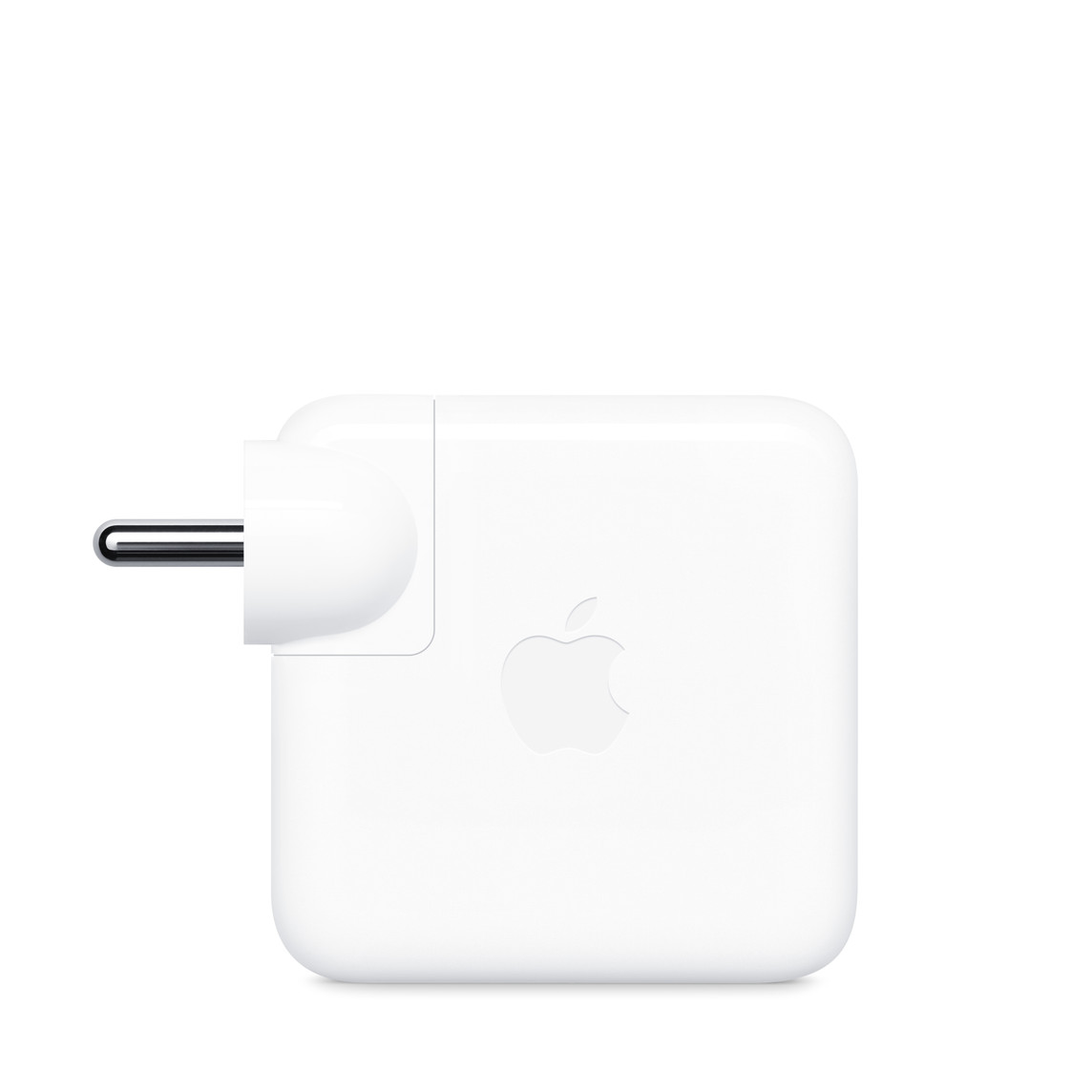
If you want to futureproof your charging setup, the 70W option is overkill for just a phone. But it also brings versatility. It fully supports the iPhone 17’s fast-charging headroom while handling tablets or laptops in your kit. PD compatibility ensures the iPhone draws only what it needs. It is the best wireless one stop solution for your Apple devices, like the iPad, MacBooks, and iPhones.
4. iPhone Air MagSafe Battery
iPhone Air MagSafe Battery
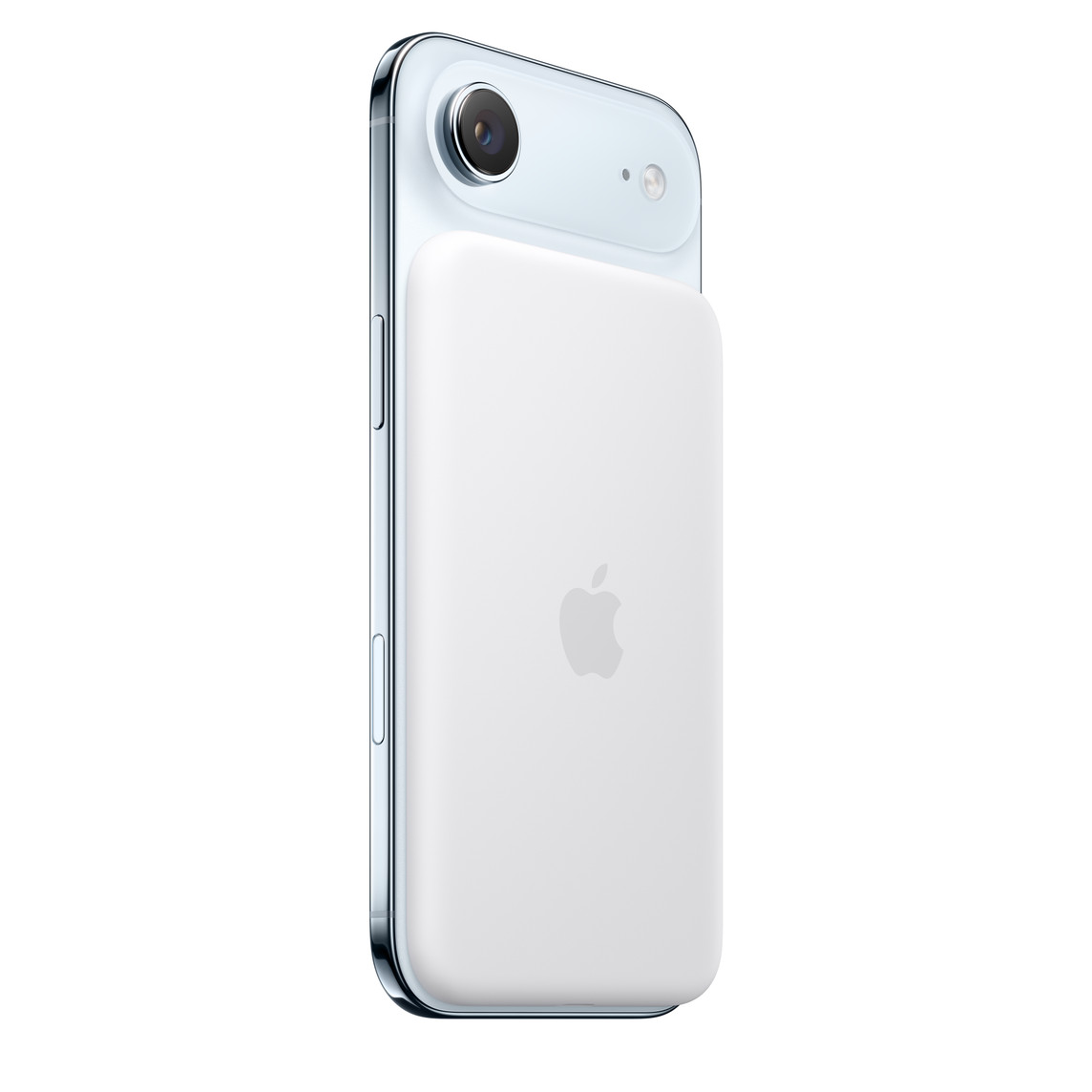
Apple just released its thinnest-ever smartphone along with the iPhone 17 lineup. While its not officially named as an iPhone 17, the iPhone Air is undoubtedly a part of the latest generation of iPhones. But owing to its impressively thin design, battery capacity takes a notable hit. Apple’s solution? Make a dedicated MagSafe power bank that only works with the iPhone Air. While the pricey powerbank is hard to recommend, if you’re spending nearly $1,000, the iPhone Air MagSafe Battery is the most convenient solution. It is sleek enough not to be too cumbersome to carry around when it is slapped onto the back for wireless charging.
5. Anker Nano Power Bank 5K
Anker Nano Power Bank 5K
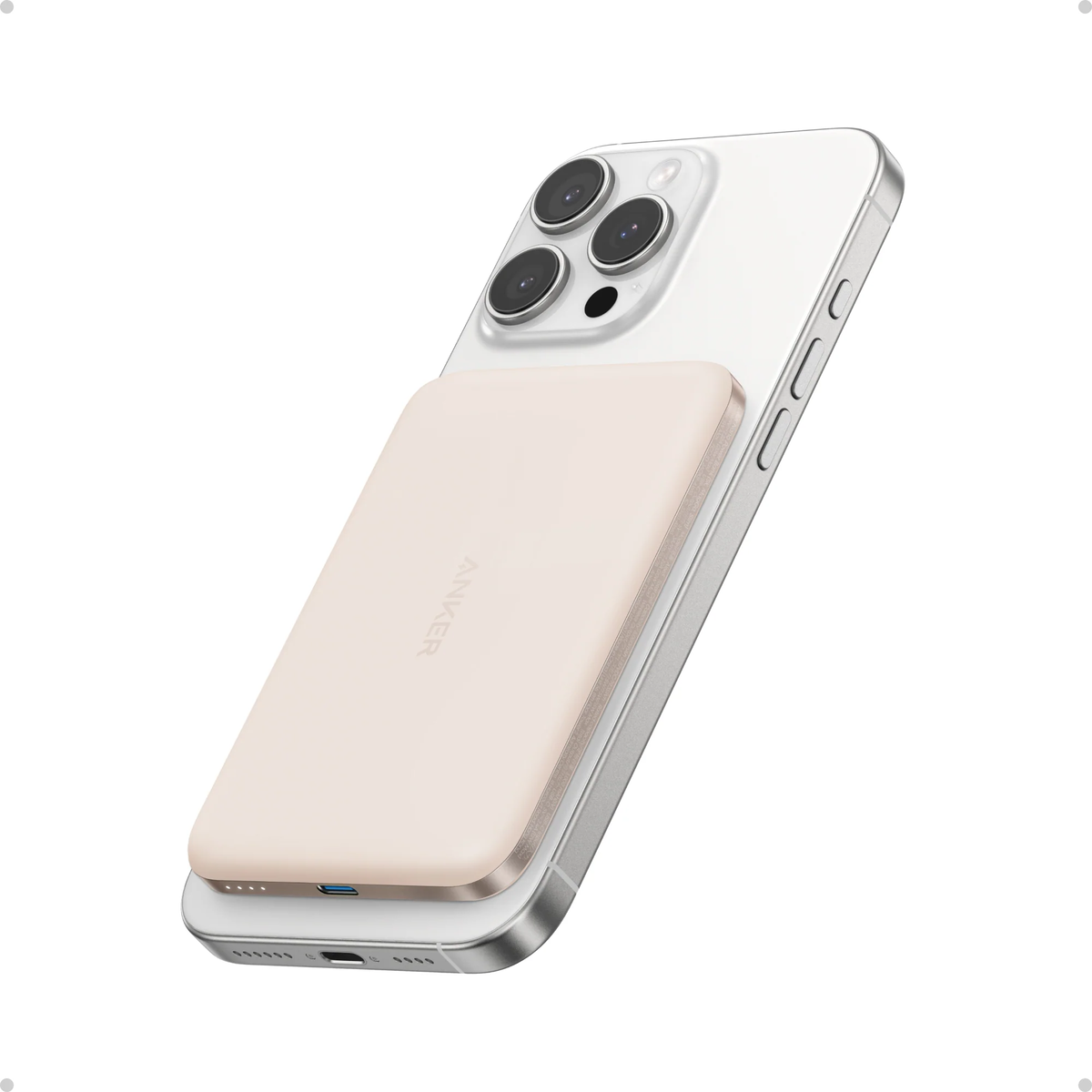
If you’re looking for another slim power bank for the iPhone 17 series, Anker has another option for you. The Anker Nano Power Bank 5K is a magnetic powerbank that measures just 8.6mm thick, despite packing a 5,000mAh battery pack. So you can nearly fully charge any iPhone 17 series model on a single full charge. Its compact nature makes it great for use with every model.
For more daily updates, please visit our News Section.
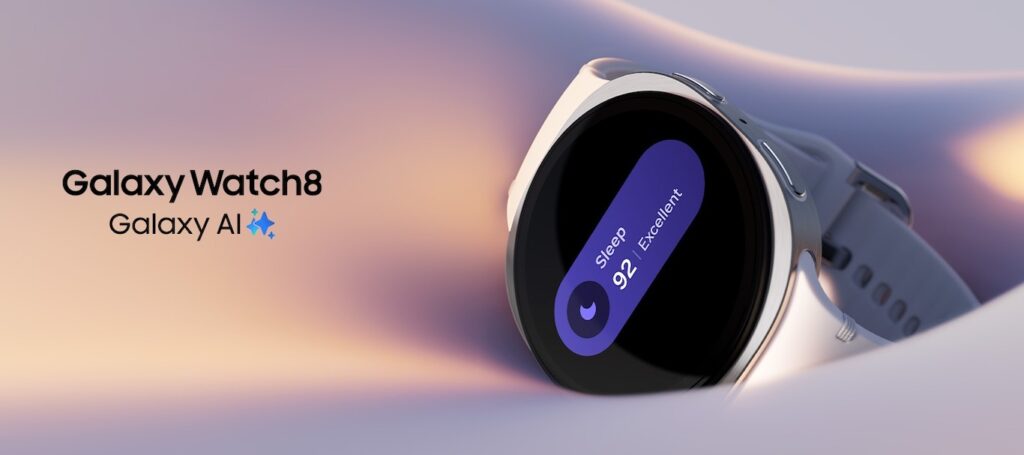
In the Amazon Great Indian festival sale, the company gives a massive discount on the latest Samsung smartwatch, the Galaxy Watch 8 44mm. With an effective price of ₹26,999, the watch is now at its lowest price ever since its launch in India.
Samsung Galaxy Watch 8 Priced originally at ₹38,999, the Galaxy Watch 8 has a ton of features, making it a steal deal for the offer price. The headline of the deal is a flat ₹12,000 instant off, applicable across all bank cards from major players like HDFC, ICICI, SBI, and more. Making the offer inclusive for almost all the online shoppers.
For those looking to have additional savings, Amazon’s exchange program is also supported during this festive deal. Trade in your old smartwatch or compatible device; values can hit up to ₹5,000 or more, depending on the model’s condition and make. Use Amazon’s quick trade-in estimator on the product page to preview your potential exchange price before committing. It’s seamless and takes your effective price even lower, potentially lowering it under ₹22,000 for eligible exchanges. Amazon is also offering no-cost EMI plans of 6 to 24 months with payments starting at just ₹1,125 per month.
Please Note: When you buy something using the links in our articles, we may earn a small commission at no cost to you.
Galaxy Watch 8 Features and Specifications
The Galaxy Watch 8 strikes a perfect balance between style and strength with its slim 8.6mm profile, crafted from durable Armor Aluminum and protected by Sapphire glass. It features a 1.3-inch vivid Super AMOLED display that shines bright with up to 3000 nits, making it easy to read even in direct sunlight. The smartwatch packs a powerful 3nm processor that’s three times faster, delivering smoother performance while helping extend battery life. With Dual GPS for accurate location tracking and an upgraded BioActive Sensor, it ensures precise health and fitness monitoring every day.
When it comes to wellness, the Galaxy Watch 8 includes a complete Heart Health Package, allowing you to track blood pressure, ECG, irregular heart rate, and vascular load with ease. Samsung’s AI-powered tools like Energy Score, Booster Card, and personalized HR & FTP push your fitness to the next level by adapting to your daily condition. And for the first time, GEMINI AI arrives on your wrist, helping you search, stay productive, and multitask effortlessly without reaching for your phone. Put together, these features make the Galaxy Watch 8 more than just a smartwatch—it’s a smart companion for both your health and everyday life.
With competitors like Apple and Google watches hovering at premium tags, Samsung’s aggressive pricing undercuts the market, making the Watch8 a great deal for entry into Wear OS luxury. Hence, don’t forget to hit the Amazon listing to check this out and if interested, grab the deal!
Beats has officially launched the Powerbeats Fit in India, bringing its latest premium wireless earbuds to the region. This pair of truly wireless earbuds offers all the high end features and winged eartips for a more secure fit for the physically active users. So here’s everything you need to know.
Powerbeats Fit: What does it offer?
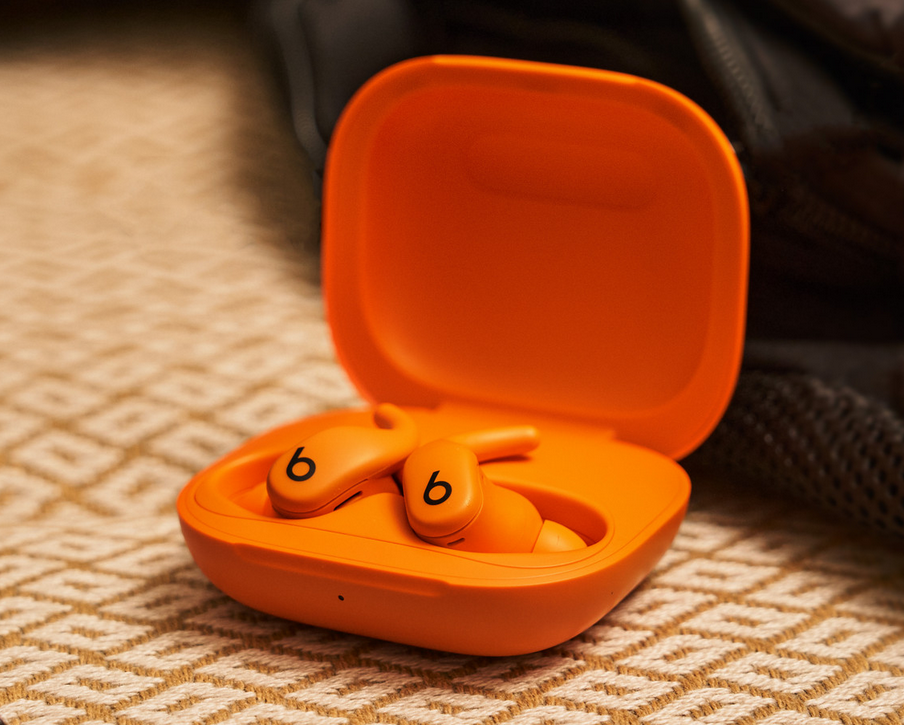
Designed with fitness enthusiasts in mind, the Powerbeats Fit promises a snug fit thanks to its winged eartip design. This secures the wireless earbuds to the users’ ears. Since the Powerbeats Fit was built for fitness enthusiasts, this makes it perfect for those who lead an active lifestyle. The TWS earbuds also come with an IPX4 rating for sweat resistance.
Powerbeats Fit
Beats packs the Powerbeats fit with a custom acoustic platform with proprietary drivers for balanced sound. If you’re looking for more control or to adjust the sound to your liking, the partner Beats App brings EQ support and Find My functionality as well. On a single full charge, the hearables can last for up to 7 hours, which can be bumped to 30 hours with the charging case.
The Powerbeats Fit features Active Noise Cancellation (ANC) and a Transparency Mode. Along with this, you also get personalized Spatial Audio that also supports head tracking. Under the hood, Apple’s H1 chip helps in automating switching and enables hands free Siri. Other notable features include a dual mic setup, multiple eartip sizes, and a lightweight design. You can purchase the latest Beats TWS from Apple.com for 24,900 INR. It is listed in multiple color options, namely Jet Black, Gravel Gray, Spark Orange, and Power Pink
For more daily updates, please visit our News Section.
Nothing’s smartphone lineup may be expanding once again. The brand announced the flagship Nothing Phone (3) model a couple of months ago, and now, it appears that new mid range models are also in the works. So here’s what we know.
Did the Nothing Phone (4a) Pro Just Get Confirmed?
A new smartphone from Nothing was just spotted on the IMEI database carrying the A069P model number. While the official moniker of this device wasn’t revealed, this is likely the Nothing Phone (4a) Pro. Unfortunately, the listing did not reveal any finer details regarding this mid range phone, like its specs, features, design, pricing, or others. However, it does confirm that the brand has started work on the Phone (3a) series successors, which will likely include a base Phone (4a) model as well.
Nothing Phone (3a) Series
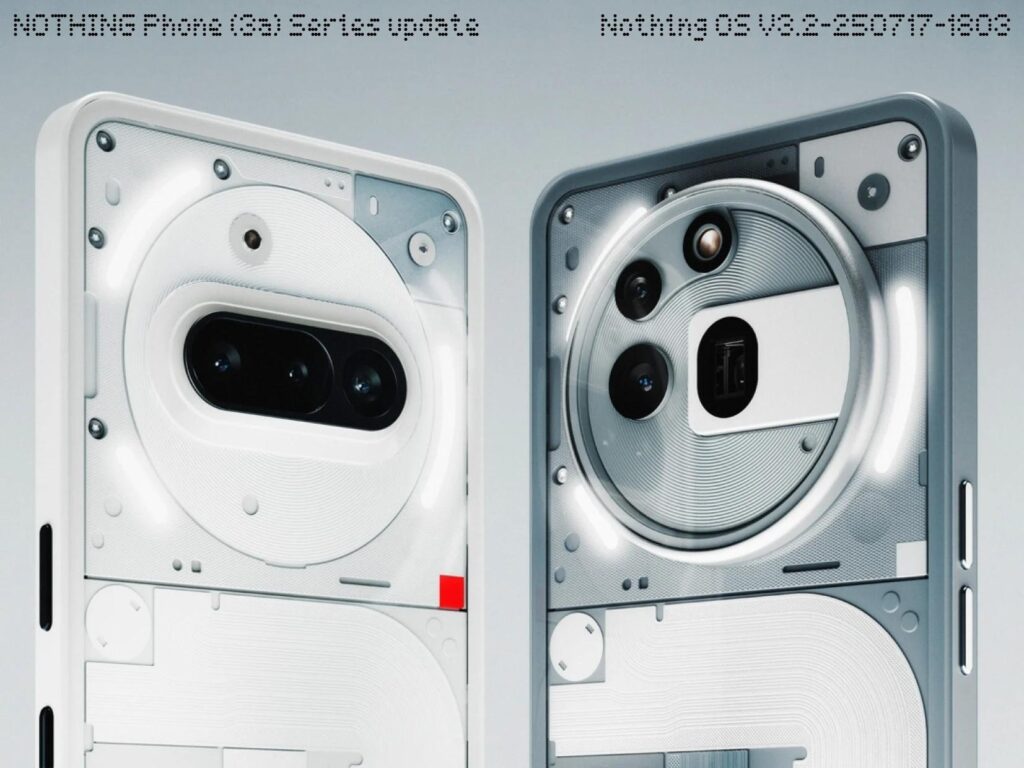
To recall, the Nothing Phone (3a) and Phone (3a) Pro were previously spotted with the A059 and A059P model numbers, respectively. So the device spotted on the IMEI Database is likely the successor to these smartphones. The company will likely retain its iconic transparent design, which has been featured on every one of its smartphone models to date.
Just like its predecessors, the newer models might replace the metallic panel with a plastic one. The Glyph LED matrix could likely make a return, although this is still just speculation. Apart from this, we can expect upgrades to the battery size and charging speeds along with improvements in performance thanks to newer chips. The display and camera were already pretty competent on the Phone (3a) series, so Nothing should make incremental updates to those.
For more daily updates, please visit our News Section.
With September ending, OnePlus has released the latest OxygenOS FAQ addressing common issues and updates. The thread covers bugs, usage guidelines, product improvements, and rollout details for the newest build.
One of the top questions raised concerns the greyed-out wallet button in the notification bar. OnePlus clarified that the feature is temporarily unavailable while Google updates its services to meet Indian regulations.
Users also reported being unable to open PDF files received through WhatsApp. OnePlus confirmed the bug has been reported to WhatsApp and is awaiting an update.
Gamers facing frame locks and drops in BGMI can expect improvements soon. Feedback has been escalated to the internal team, and optimizations will be prioritized in upcoming updates.
A more serious issue involves error messages appearing even when the correct phone password is entered. OnePlus marked this as an emergency and is working on a fix. Affected users can submit feedback by dialing *#800# on their devices.
The FAQ also confirmed details about the V110P04 version rollout, which began on September 15 and will finish by October 9. The update introduces several practical features, including the ability to track daily and weekly phone usage, change the privacy password at any time, improved controls for infrared remote applications, and new ways to visualize travel memories.
For privacy management, OnePlus explained how users can now update their privacy password directly through the settings menu. Users can access it through Settings > Security and privacy > Private Safe, verify their current password, and select the option to change it. For unlocking private photos and videos, users must navigate to Photos > Albums > Private, select the file, and choose “Unlock.” Once unlocked, the content is restored to its original location along with its details, such as the date it was taken.
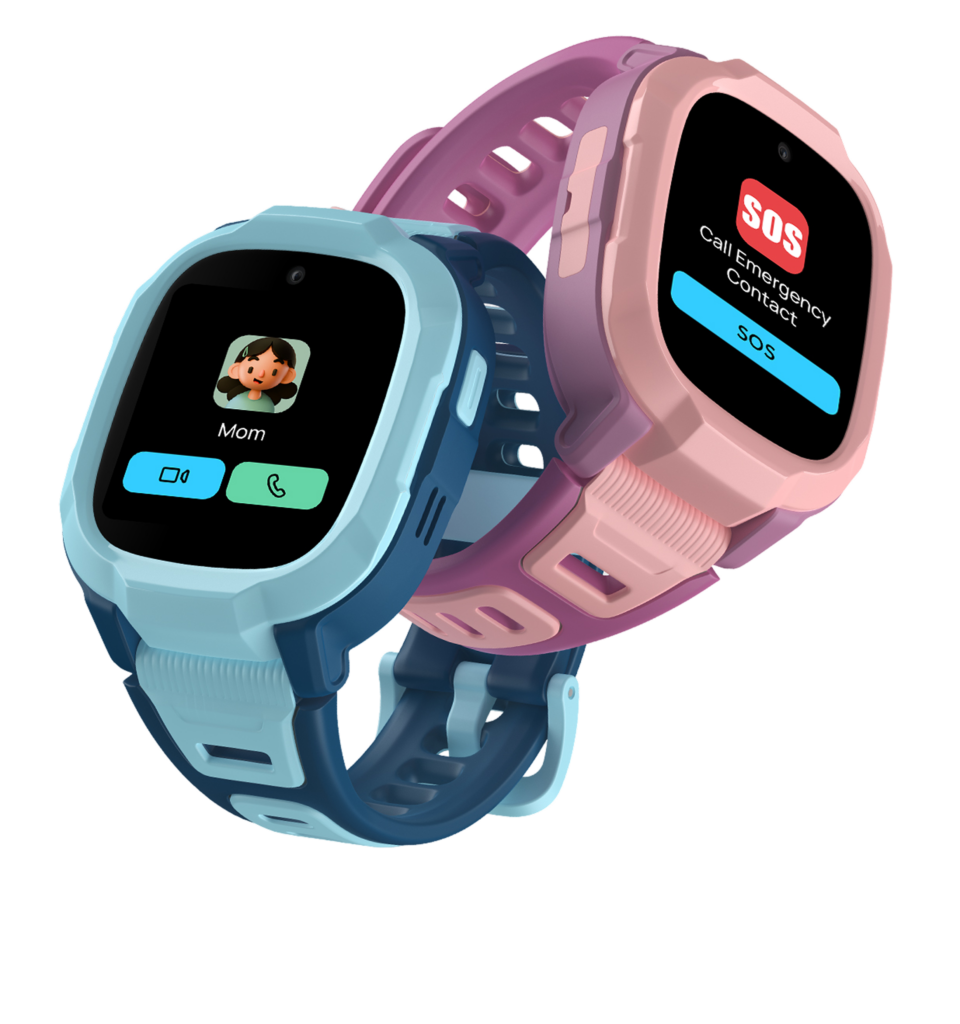
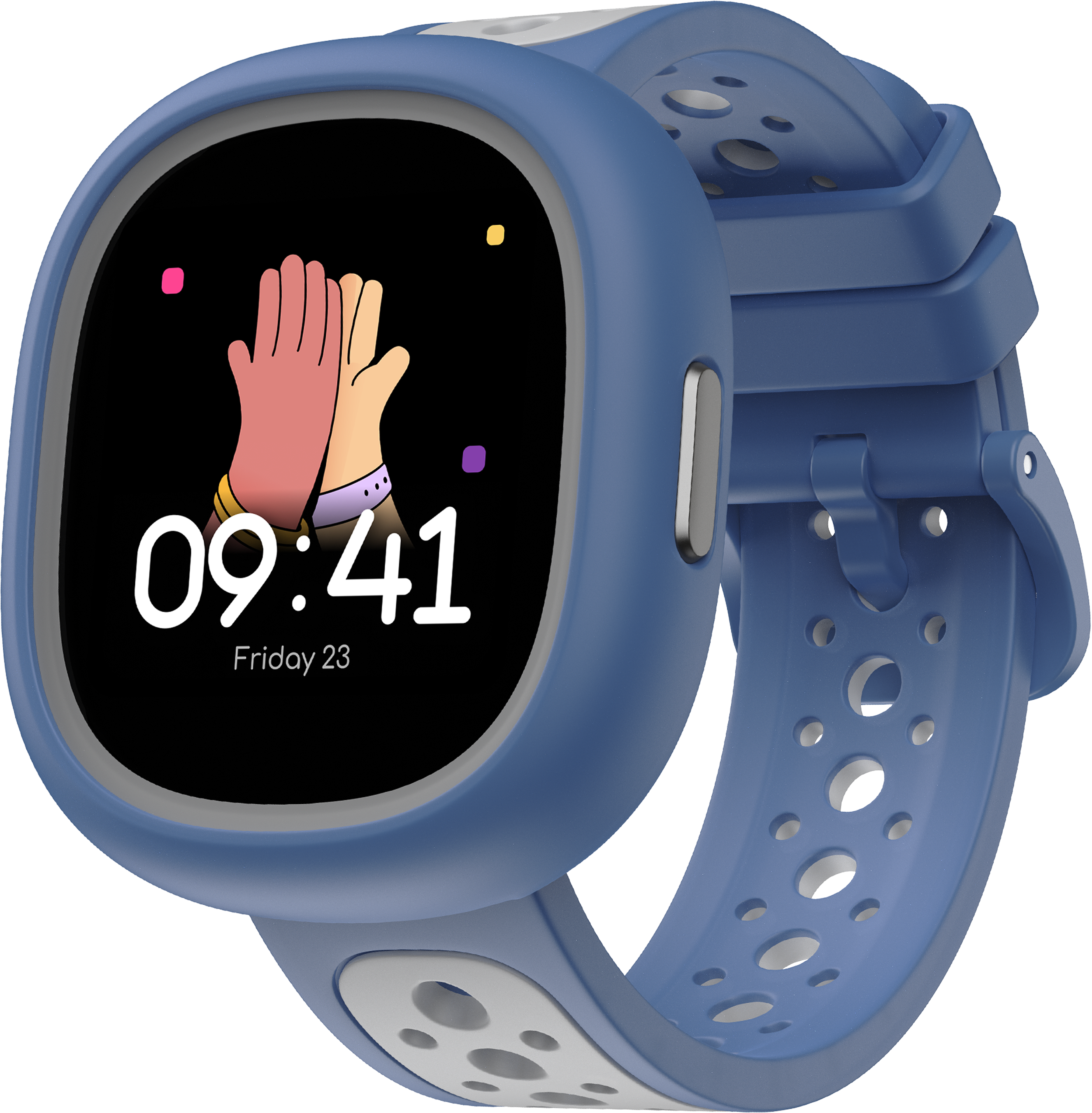
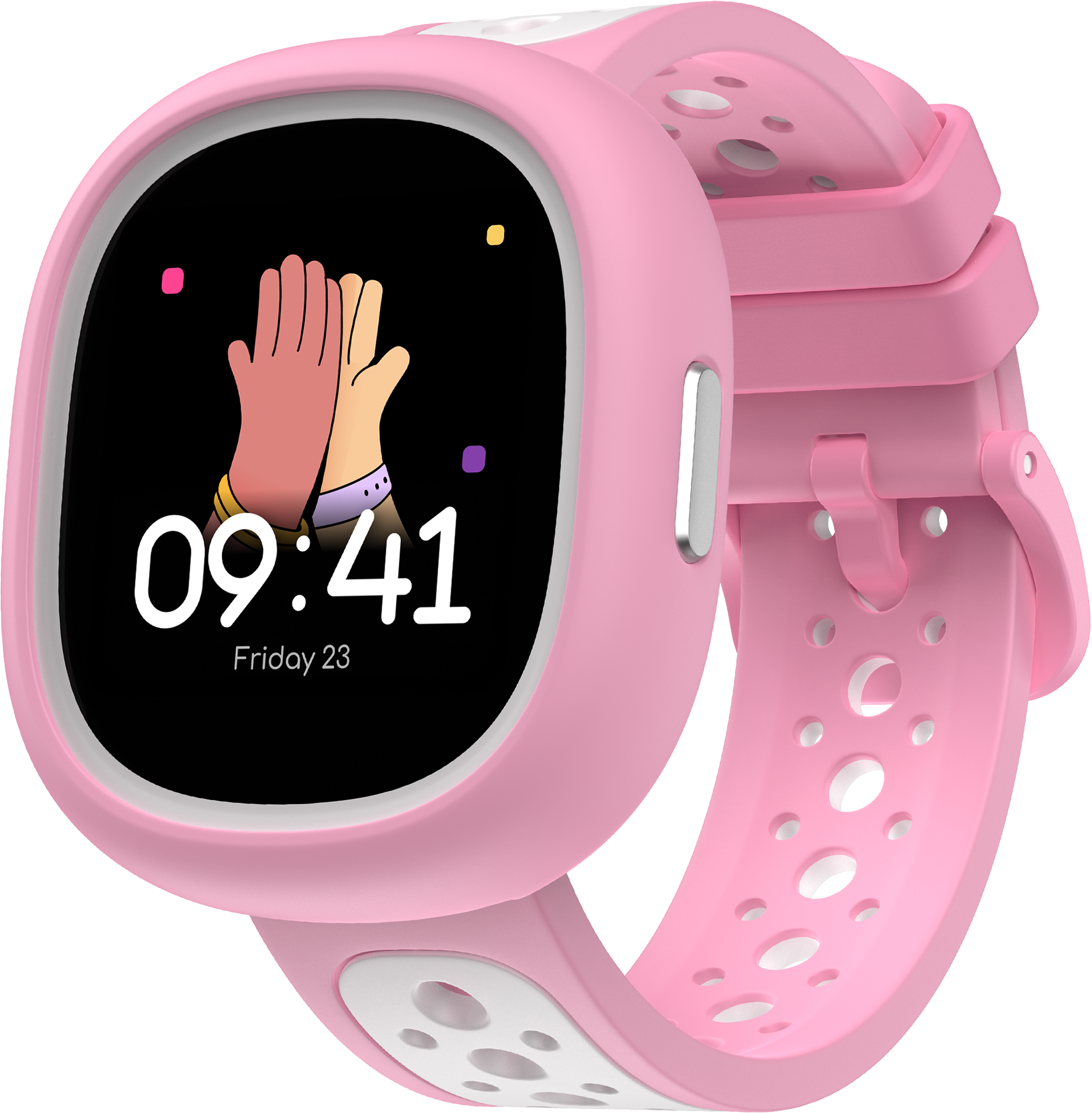
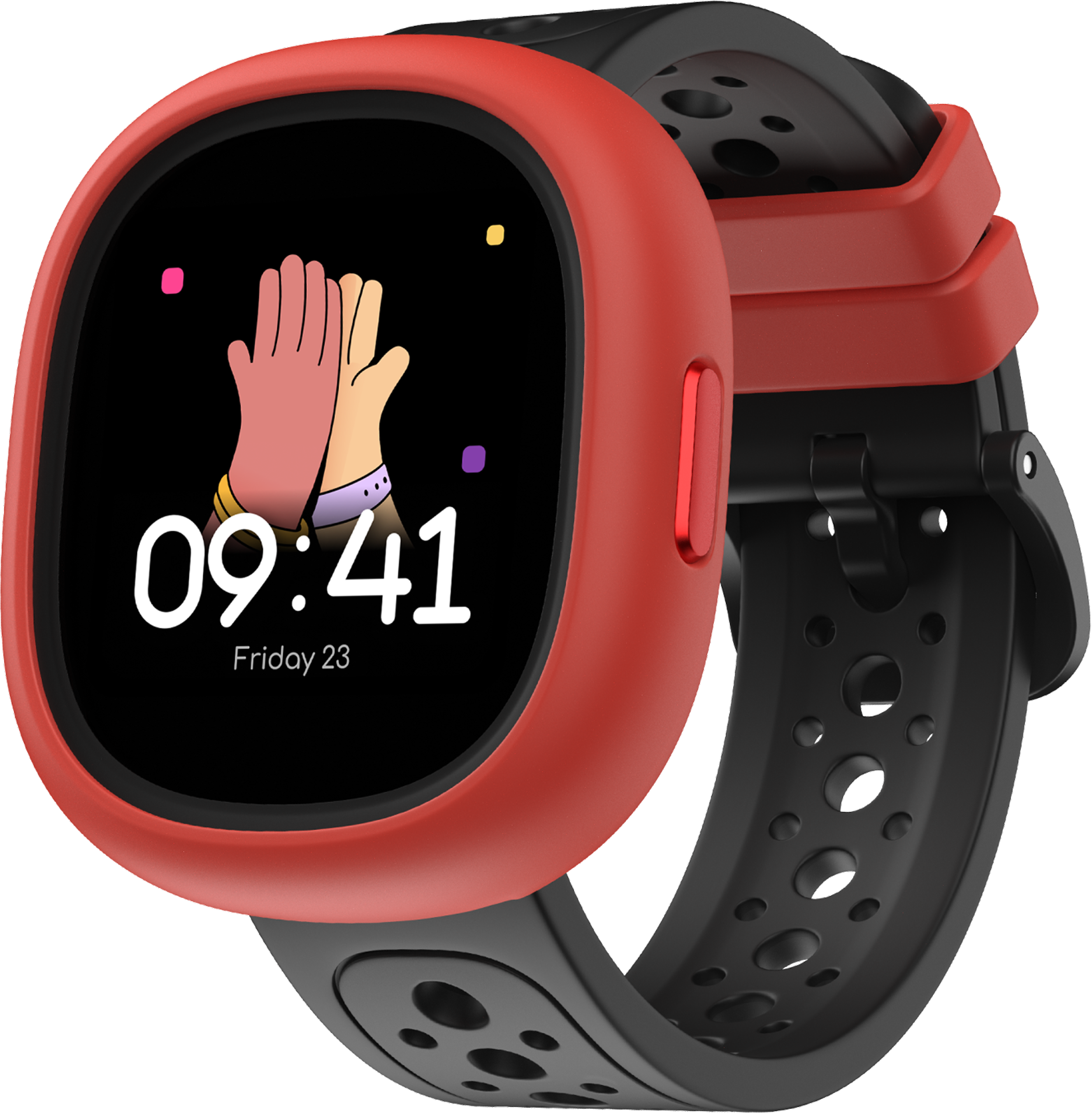
Noise has added two new smartwatches to its Noise Junior lineup in India, the Noise Junior Explorer 2 and the Noise Junior Champ 3. Both models are designed for children and combine safety, communication, and learning features.
Noise Junior Explorer 2 features
The Noise Junior Explorer 2 is focused on location tracking and child safety. It comes with real-time GPS tracking powered by the UNISOC chipset and supported by Google Maps, giving parents an accurate view of their child’s whereabouts. The watch allows parents to set geo-fenced safe zones and includes SOS emergency calling and automatic call pickup from trusted contacts. The model supports 4G LTE connectivity, which enables two-way HD video and voice calling. Noise has also included call whitelisting, end-to-end encrypted video calls, and a dedicated family chat hub. To make social interaction safe and child-friendly, the watch includes a gesture called bump to add a friend that allows supervised connections. The Explorer 2 features a 1.4-inch TFT display, a 950mAh battery, and IP68 water resistance, making it suitable for daily use.
Noise Junior Champ 3 features
The Noise Junior Champ 3 is designed around learning and daily management. It comes with a built-in learning hub that provides educational games, flashcards, quizzes, and interactive challenges. A smart scheduler helps children manage tasks independently while exam mode allows distraction-free study time. Parents can control the watch through a dedicated app, giving them oversight of usage and content. The Champ 3 also supports activity and wellness tracking, encouraging healthy habits related to movement and rest. The watch has a squircle dial that is designed for comfort, comes with two additional color bumpers, and supports DIY bumper customization for personalization. It has 1 ATM water resistance which protects it from minor splashes.
In terms of specifications, the Noise Junior Explorer 2 includes a 1.4-inch TFT display, 4G LTE support, HD video and voice calling, real-time GPS tracking, safe zone alerts, SOS emergency features, a 950mAh battery, IP68 water resistance, a family chat hub, call whitelisting, and bump to add a friend functionality.
Pricing & availability
The Noise Junior Explorer 2 will be available in Pixel Pop and Arctic Frost colors at a price of 5,999 rupees ($68). The Noise Junior Champ 3 will be offered in Black Blaze, Astro Orbit, Cotton Cloud, and Arctic Storm color options with customizable poppy bumpers at a price of 2,999 rupees ($34). Both watches will be available on noisejunior.com, Amazon.in, and Flipkart.com.
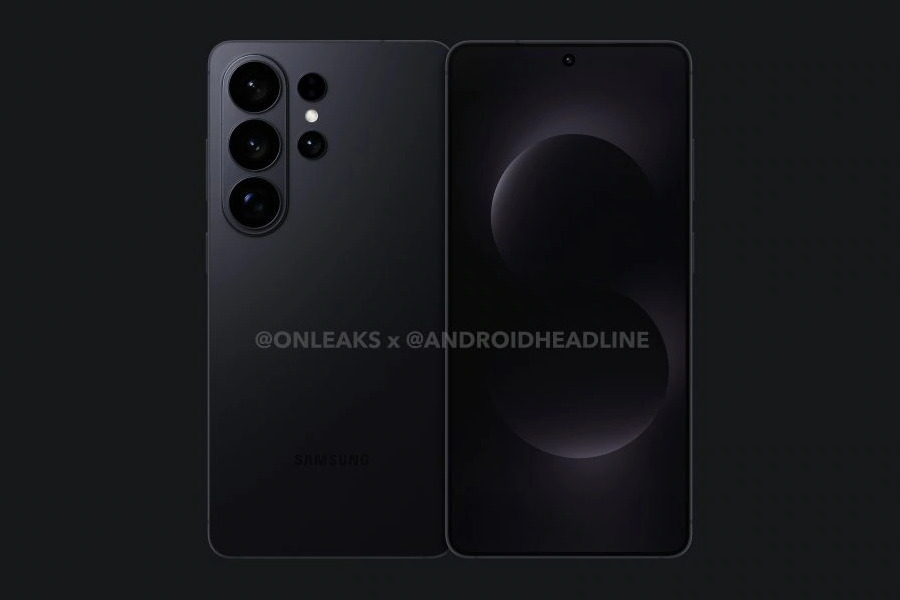
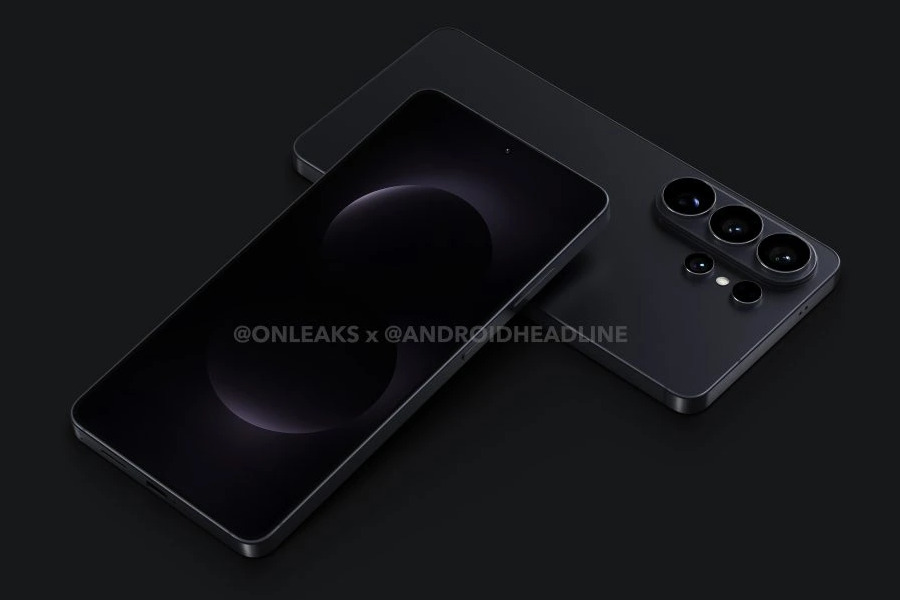
The first renders of Samsung’s upcoming Galaxy S26 Ultra have surfaced, courtesy of Android Headlines in partnership with OnLeaks.
From the front, the Galaxy S26 Ultra looks familiar. It keeps the flat display introduced with its predecessor, along with slim, uniform bezels and a centered punch-hole camera.
The corners appear slightly softened, which should make the device feel less sharp in the hand. It’s not a dramatic change, but it’s noticeable nonetheless.
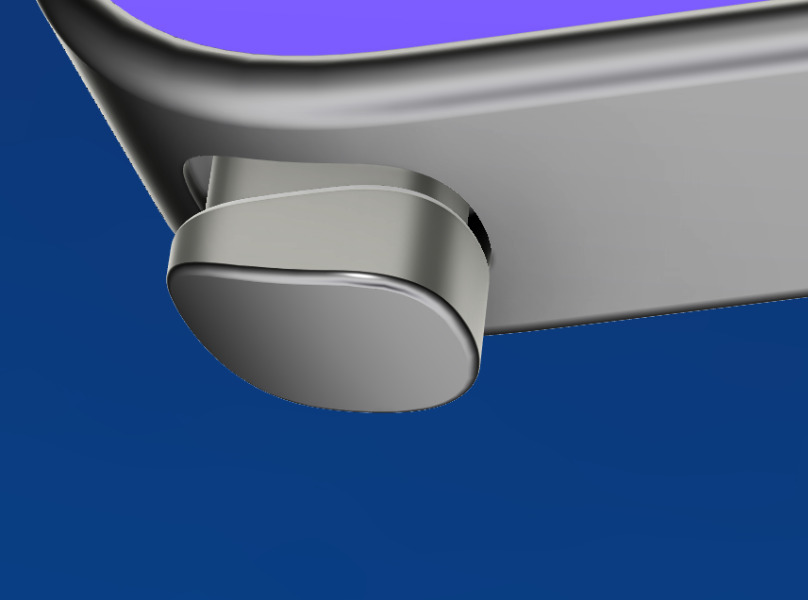
On the right side, you’ll find a power button below the volume rocker. The left side is clean, while the bottom houses the SIM tray, USB-C port, speaker, and the S Pen. The stylus is still tucked into the bottom-left corner.
The big changes
An interesting detail missing from the Android Headlines report is the change in the stylus’s shape. According to reliable tipster Ice Universe, the S26 Ultra’s S Pen will adopt a curved design, unlike the sharp and boxy silhouette still reminiscent of the Galaxy Note phones.
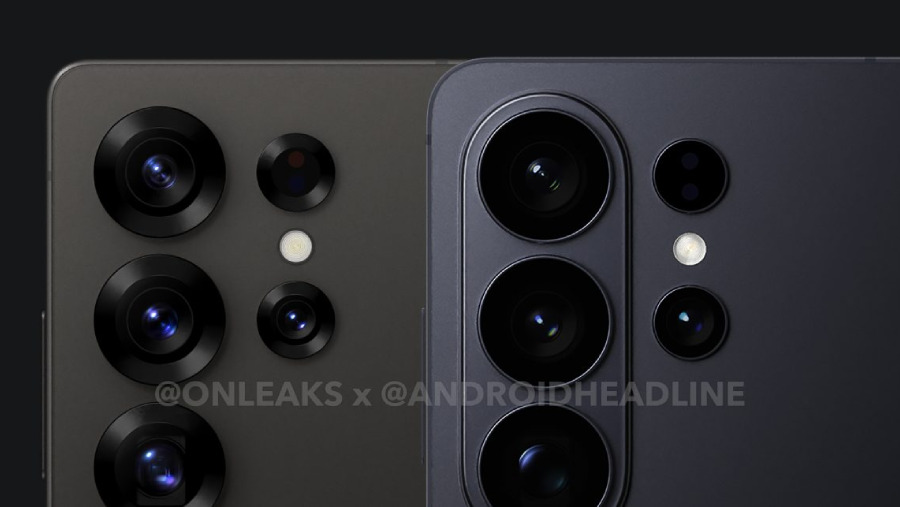
Visually, the biggest changes appear on the back. The S26 Ultra will carry four rear cameras, though the design looks more layered this time. Three cameras are vertically aligned on a pill-shaped island, which reportedly protrudes about 4.5mm. Next to the middle lens sits the fourth camera, but instead of joining the island, it juts out directly from the backplate. The LED flash and an additional sensor cutout are positioned above it.
As for measurements, the phone will reportedly be around 7.9mm thick, excluding the camera bump. The backplate itself looks completely flat, while the metal frame has subtle curves at the edges to improve grip.
All in all, the Galaxy S26 Ultra doesn’t bring a major design overhaul. Still, there seem to be some small generational refinements throughout.
For more daily updates, please visit our News Section.
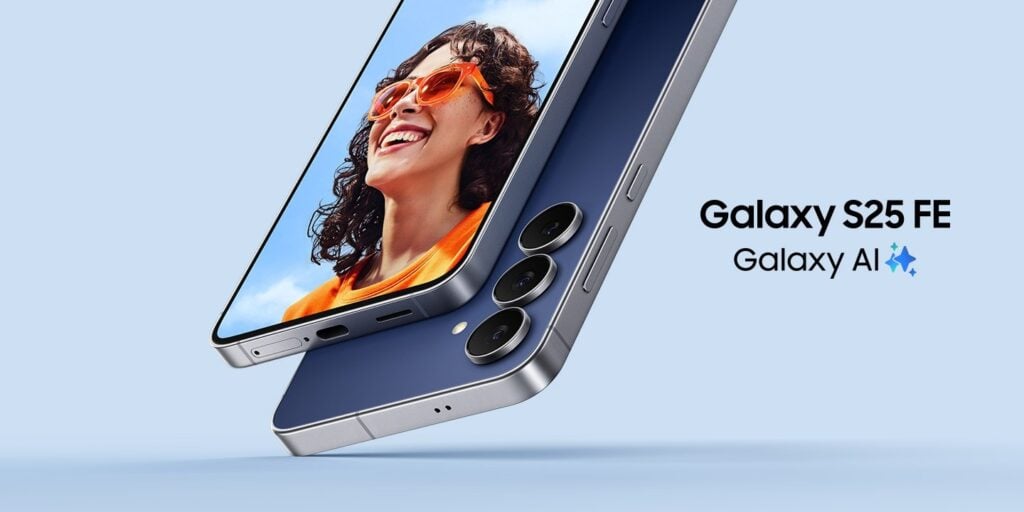
Samsung has brought the Galaxy S25 FE to India, expanding its mid-range S series lineup. The phone, unveiled earlier this month, is now available for purchase across online and offline platforms.
Price, Availability & Launch Offers
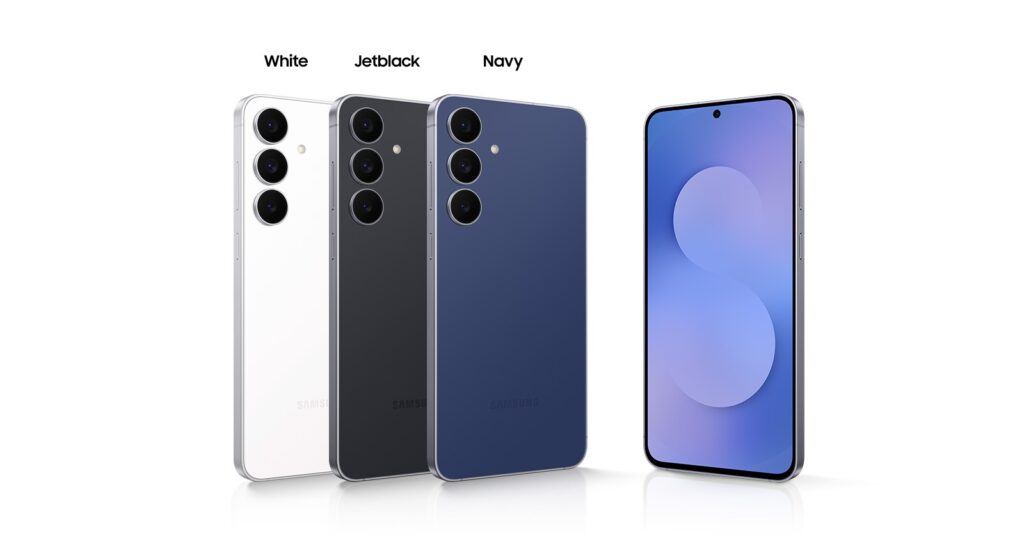
The Galaxy S25 FE is priced at ₹59,999 for the 8GB + 128GB model, ₹65,999 for the 8GB + 256GB version, and ₹77,999 for the 8GB + 512GB option. It is available in Navy, Jet-black, and White. Buyers can purchase it from Samsung.com, Samsung Exclusive Stores, authorized retail stores, and leading online retailers.
Samsung is providing a ₹12,000 storage upgrade where customers paying for the 256GB model receive the 512GB version. Other offers include ₹4,000 off on Galaxy Buds3 FE, two years of screen protection starting at ₹4,199, ₹5,000 bank cashback, and up to 24 months of no-cost EMI.
Galaxy S25 FE Specifications
The Galaxy S25 FE features a 6.7-inch AMOLED display with FHD+ resolution, a 120Hz refresh rate, and 1,900 nits peak brightness. The display is protected by Corning Gorilla Glass Victus+. The phone has a slim 7.4mm design, weighs 190 grams, uses a glass back, and comes with an upgraded Armor Aluminum frame. It also carries an IP68 rating, making it resistant to dust and water for up to 30 minutes at a depth of one meter.
The device runs on the Exynos 2400 chipset with 8GB of RAM and up to 512GB of storage. It is powered by a 4,900mAh battery that supports 45W wired fast charging, 15W wireless charging, and reverse wireless charging.
It ships with Android 16 and One UI 8. Galaxy AI features such as Gemini Live, Now Bar, Circle to Search, and Generative Edit are included. Samsung is offering seven years of Android OS and security updates.
The rear camera setup has a 50MP main sensor, a 12MP ultrawide lens, and an 8MP telephoto lens with 3x zoom. The front camera has been upgraded to 12MP. Connectivity options include Bluetooth 5.4, Wi-Fi 6E, NFC, and USB Type-C 3.2 Gen 1.
For more daily updates, please visit our News Section.
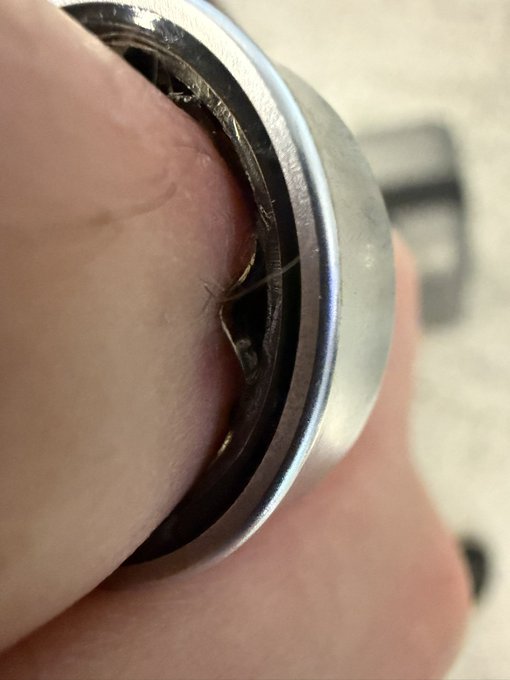
One of Samsung’s Galaxy Ring has just caused a big safety risk for a user. The brand’s tiny smart wearable gadget is under the spotlight after a Ring owner was rushed to a hospital due to a swollen battery issue. What’s worrying is that this might not be just an isolated incident.
Galaxy Ring Battery Issue Reportedly Leads to an Emergency Room Visit
Over the last couple of months, the Samsung Galaxy Ring users have reported on battery related issues they’ve been facing. Many of the complaints were related to the battery life of the South Korean tech giant’s first smart ring. But now, the battery issue has even led to a big safety risk. Daniel from Zone of Tech took to X (formerly Twitter) to talk about his unfortunate ordeal with the Galaxy Ring.
Samsung Galaxy Smart Ring with Swollen Battery
Right before he was going to board a flight, his Galaxy Ring had its battery start swelling up. Due to this, he was forced to cancel his flight. However, because of the swollen cell in the ring, Daniel was unable to remove it. While a typical ring can be cut out, you can’t do the same for a smart ring since it houses a battery cell. These can quickly catch fire if the battery wall is breached. So he promptly went to the emergency room in the hospital to find a solution that doesn’t involve cutting.
Daniel stated that the swollen ring stuck on his finger was quite painful, and the bulge made it hard to remove. Such an incident could lead to big health risks, so Samsung should have some form of fail safe or an easier method of removing the ring in such situations.
For more daily updates, please visit our News Section.
Samsung’s S Ultra phones—like the Galaxy S25 Ultra—are still regarded as some of the best camera phones on the market. But Chinese smartphone makers have been striving to improve their imaging prowess too, both by integrating larger optical hardware and by refining image processing. Apple, meanwhile, has moved from 12MP to a fairly large (1/1.28″) 48MP sensor—the same size used on the vivo X200 Ultra.
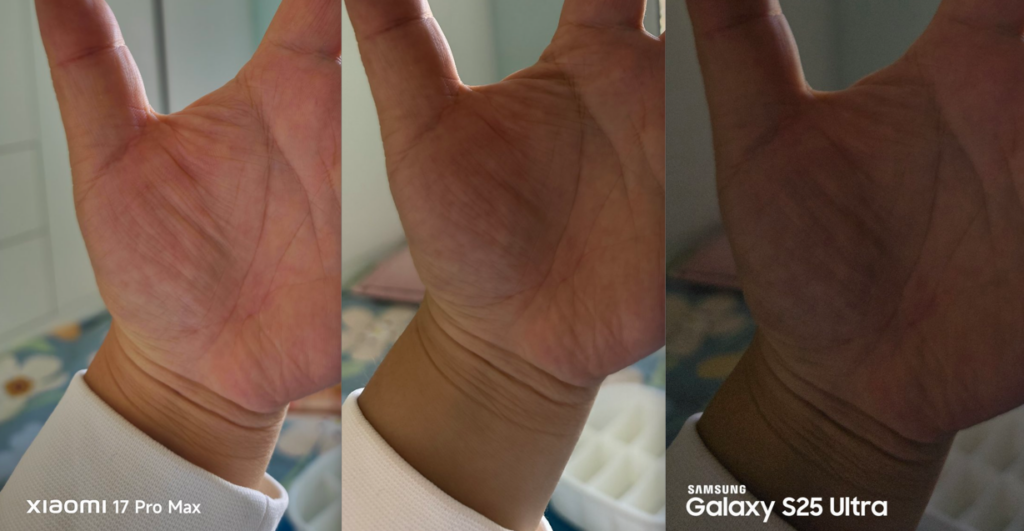
So how do they stack up in real-world tests? Thanks to Ice Universe, we now have sample images from the iPhone 17 Pro Max, Xiaomi 17 Pro Max, and the Galaxy S25 Ultra taken in different lighting conditions and at various zoom levels.
Xiaomi 17 pro max | iPhone 17 Pro max | Galaxy S25 Ultra (main camera)
Starting with the close-up shot against a bright window, two things stand out: the subject in the Galaxy S25 Ultra’s shot appears the darkest, and Xiaomi’s claims about improved dynamic range extend beyond marketing. Apple lands somewhere in the middle. On closer inspection, the S25 Ultra’s sample also shows the most noise—even though this was a daytime shot.
The trend holds in the outdoor daytime photo. The tree appears completely dark in the S25 Ultra’s sample once again, while Xiaomi’s image keeps detail visible.
In well-lit conditions—the easiest scenario—the Xiaomi and Samsung samples look equally detailed, while the iPhone’s appears a bit softer. This is likely because both Android phones applied artificial sharpening (which can sometimes worsen image quality), while the iPhone left textures more natural. The zoomed-in view of the tree on the right highlights this difference.
Xiaomi 17 Pro Max | iPhone 17 Pro Max | Galaxy S25 Ultra
The S23 Ultra made a big splash with its 200MP headline figure, and Samsung’s image processing was notably better than many early adopters of a 200MP sensor, but rivals have since caught up. As Chinese brands refined image processing while Samsung stuck with the same hardware, the S Ultra line has started to fall behind. More concerning is that the upcoming Galaxy S26 Ultra, set for January 2026, is expected to keep most of the S25 Ultra’s camera hardware. Samsung may instead try to push AI-driven enhancements while keeping its bill of materials (BoM) flat—or lower.
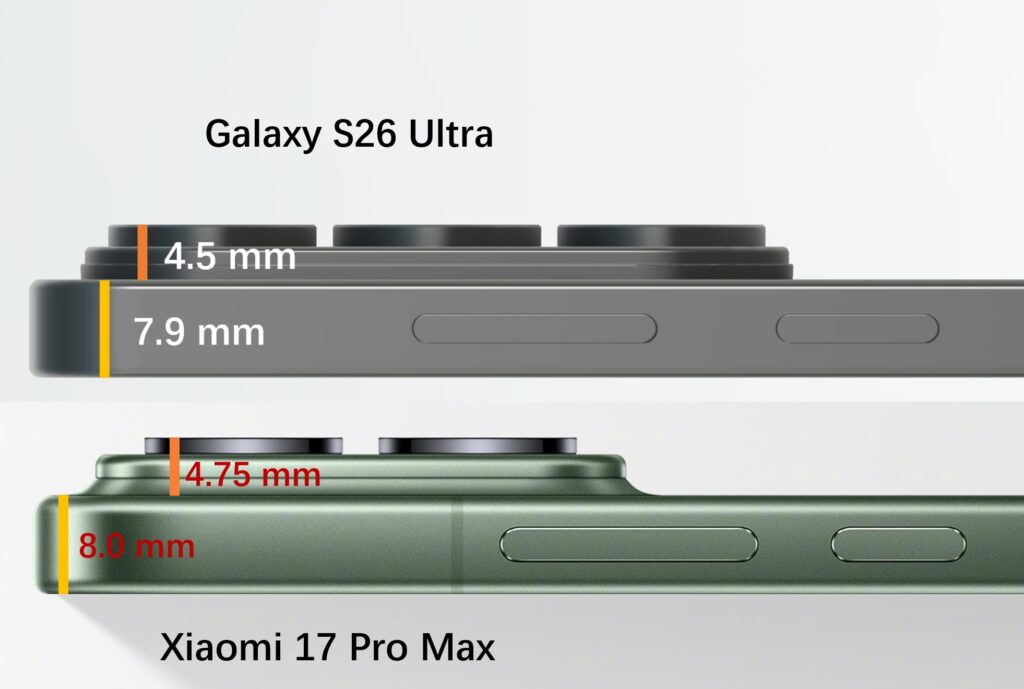
Galaxy S26 Ultra vs Xiaomi 17 Pro Max camera protrusion compared
Samsung’s goal has clearly been to prioritize design aesthetics over the largest possible camera hardware. But as Ice Universe shows, the protrusion of the S26 Ultra’s camera island is already close to that of the Xiaomi 17 Pro Max. That means Samsung could have room to redesign the internals for more ambitious upgrades. “Samsung’s ultra-wide camera is underwhelming in specs yet occupies an excessive amount of space within the bump, which is a waste. Meanwhile, Xiaomi cleverly integrates its ultra-wide lens inside the body,” the tipster noted.
The Redmi K90 has just been spotted on a popular benchmarking platform, and it looks like Xiaomi is preparing a serious performance beast. The upcoming smartphone has just surfaced on GeekBench, with a major performance upgrade over its predecessor.
Redmi K90 with Snapdragon 8 Elite Gen 5 Might Be a Flagship Killer?
Redmi K80 and Redmi K80 Pro
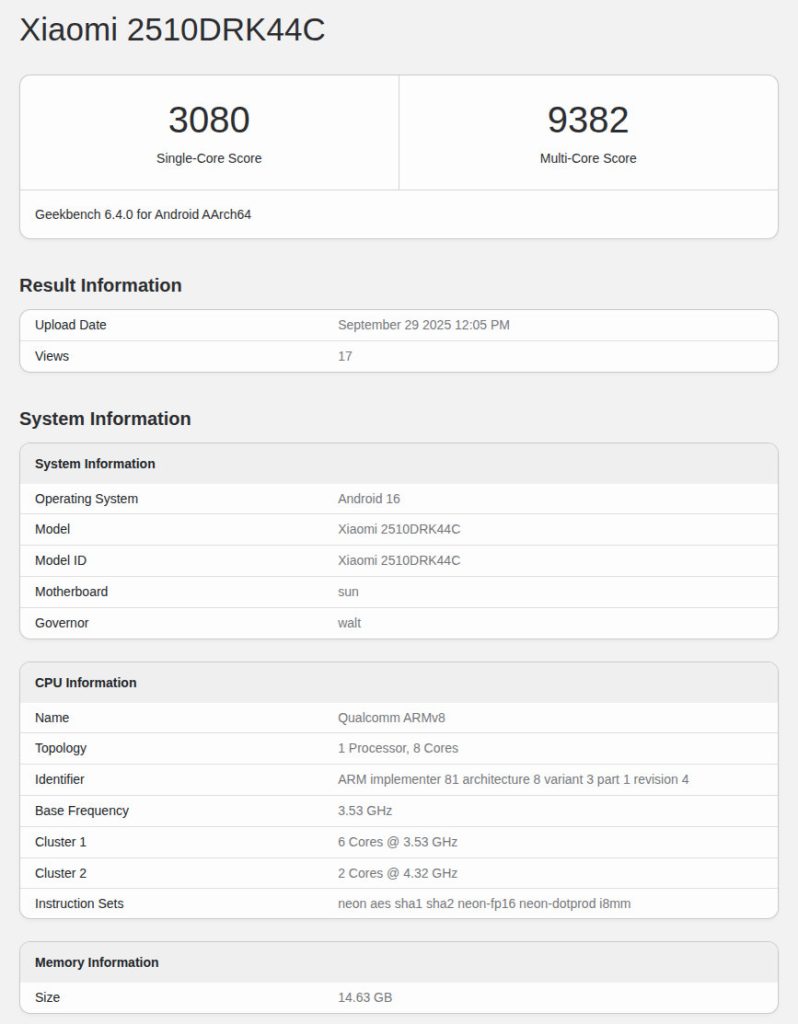
Xiaomi’s new Redmi K90 was just spotted on the GeekBench platform carrying the 2510DRK44C model number. Looking at the certification listing, the Redmi K90 managed to achieve a great score of 3080 points in the single core test and 9382 points in the multi core test. It received this score with Qualcomm’s latest and greatest Snapdragon 8 Elite Gen 5 SoC, which is paired with 16GB of RAM.
Xiaomi’s Redmi K90 also runs on the Android 16 OS out of the box, which likely includes the HyperOS 3 custom skin. The Redmi K90 with the Snapdragon 8 Elite Gen 5 is getting a surprising upgrade, considering the Redmi K880 packed the Snapdragon 8 Gen 3. To recall, only the higher end Redmi K80 Pro got the latest Snapdragon 8 Elite last year. So this is a major performance bump compared to its predecessor.
Based on what we know so far, the Redmi K90 might support 100W wired fast charging and a massive 7,100mAh battery pack. It may feature a 6.59-inch flat RGB OLED LTPS display with 2K resolution, a 120Hz refresh rate, and a 3D ultrasonic fingerprint scanner for security. Other expected features include dual stereo speakers, a premium metal frame, and an x-axis linear motor. Xiaomi announced the K80 series back in November 2024, so the K90 lineup could see a similar launch timeline.
For more daily updates, please visit our News Section.
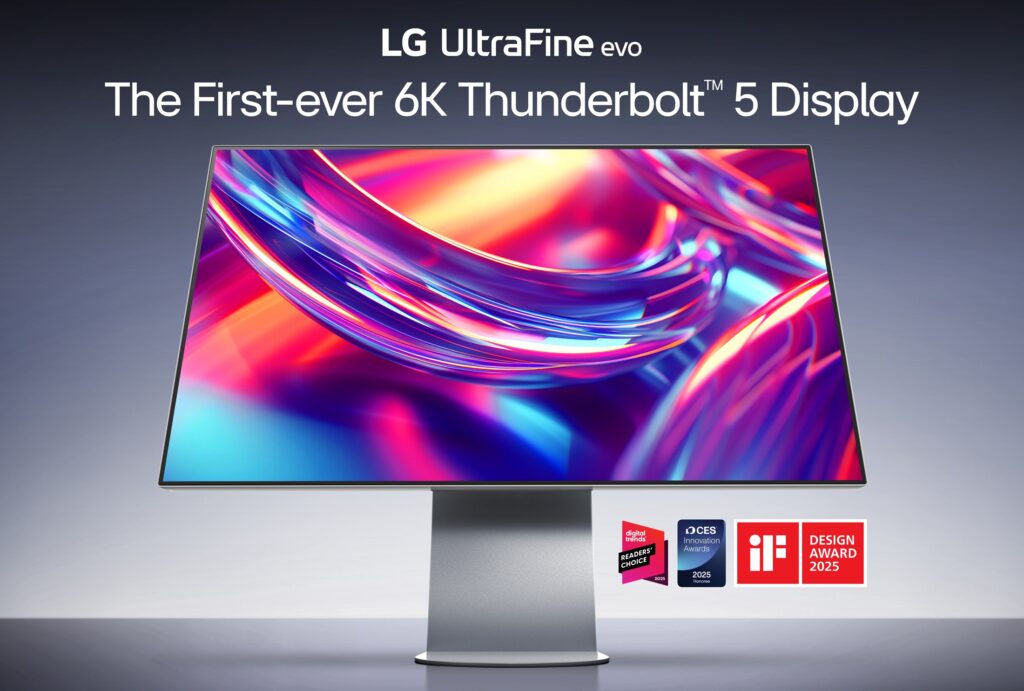
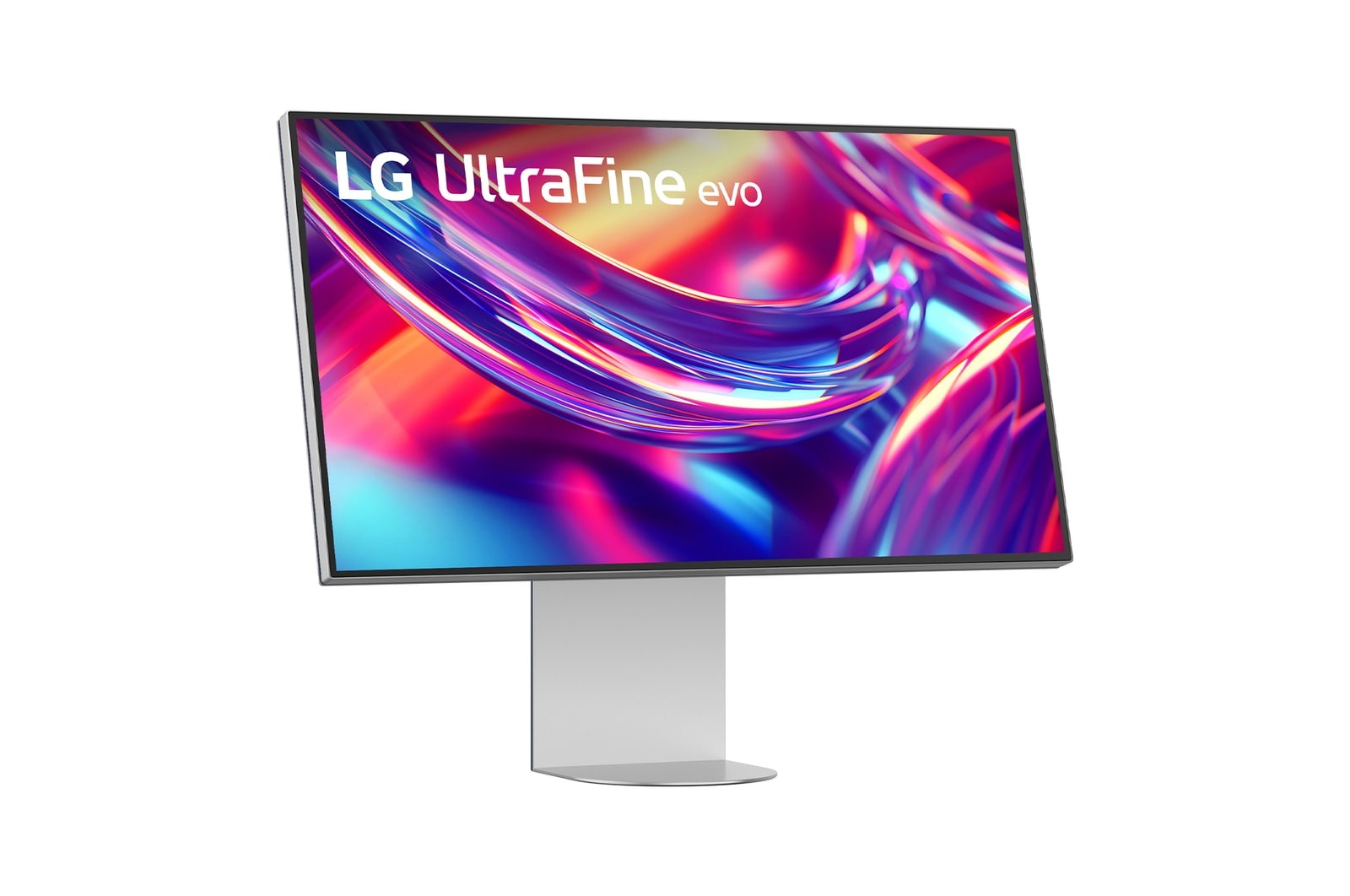
LG Electronics has launched the UltraFine evo 6K (model 32U990A), the first 6K monitor with Thunderbolt 5 support. It is part of the new UltraFine evo lineup, designed for professional video editors, graphic designers, and creators who work with high-resolution, data-heavy projects.
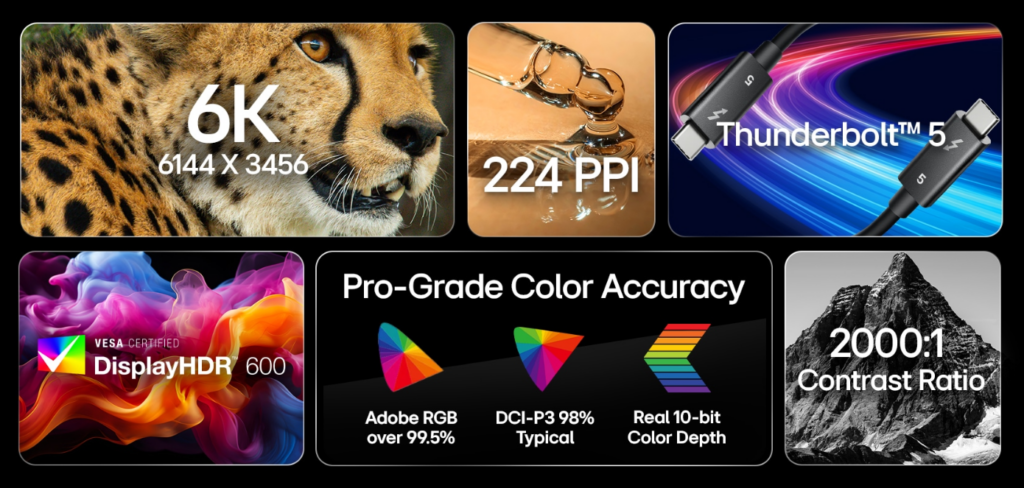
The 32U990A has a 32-inch display with a 6,144 x 3,456 resolution and a pixel density of 224 PPI. It covers 98 percent of the DCI-P3 color gamut and 99.5 percent of Adobe RGB. It is also VESA DisplayHDR 600 certified and factory-calibrated for macOS to ensure accurate brightness and colors. LG will also add a Studio Mode feature with three color presets for Mac devices.
This monitor delivers 2.56 times more pixels than a 4K UHD monitor. When two UltraFine evo 6K monitors are used together, users get nearly five times the screen space of a single 4K display. Thunderbolt 5 daisy-chaining makes this setup simple and efficient.
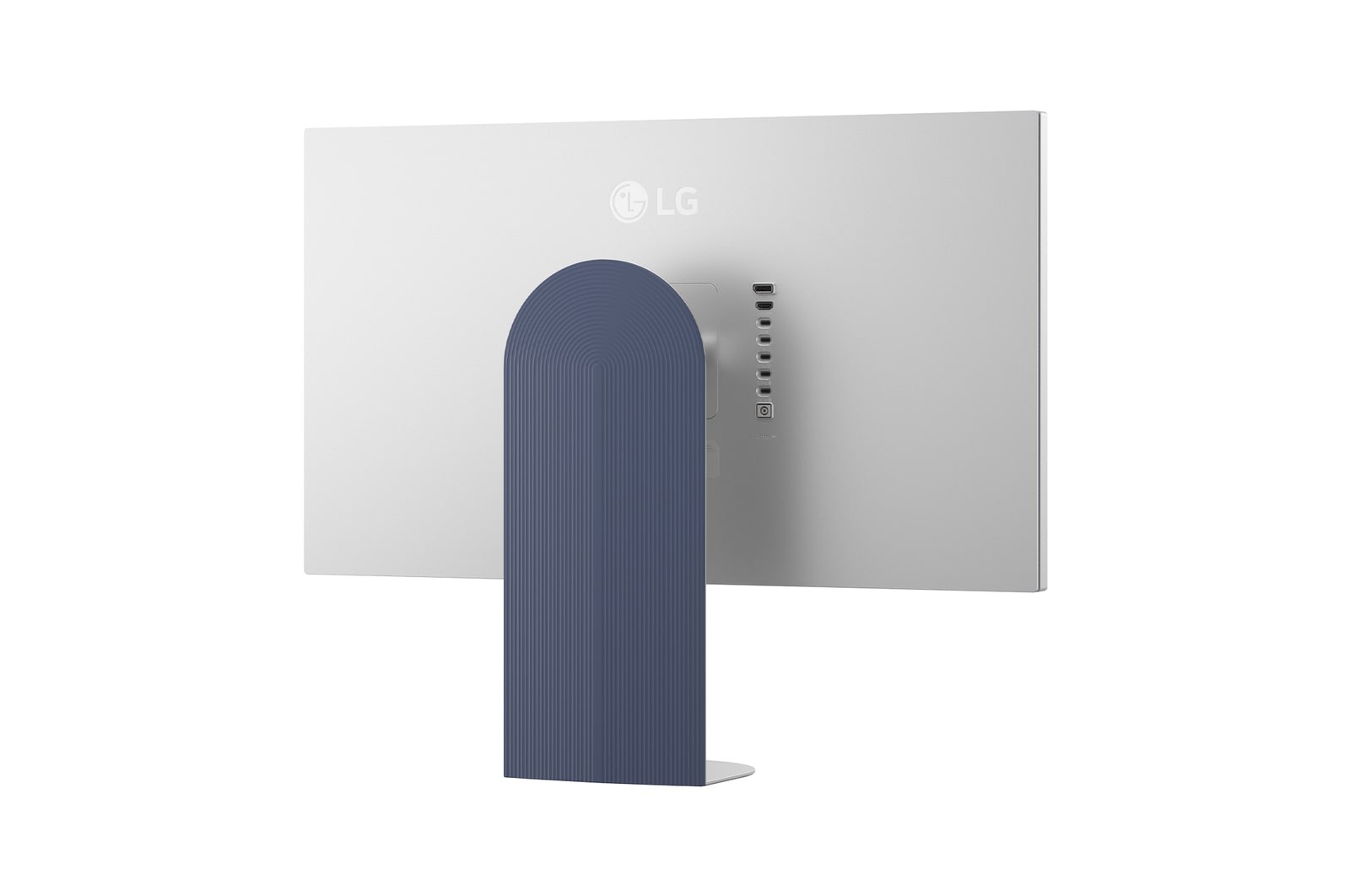
The 32U990A also works as a hub with KVM switching and multiple ports. It supports both Mac and Windows systems and allows easy connection of SSDs, eGPUs, and other peripherals. With Thunderbolt 5 offering up to 120Gbps unidirectional bandwidth, it enables real-time 4K rendering and fast transfer of 8K RAW video files. This makes it suitable for AI-powered video editing and upscaling tasks.
The design includes a four-side virtually borderless frame with tilt and pivot adjustments. It is built for long editing sessions and works well for vertical-format content like YouTube Shorts and Instagram Reels. Thunderbolt 5 also helps cut down on cable clutter while supporting flexible multi-monitor setups.
Please Note: When you buy something using the links in our articles, we may earn a small commission at no cost to you.
Pricing & availability
The UltraFine evo 6K has won a CES 2025 Innovation Award and the iF Design Award 2025. It is priced at 3,001,000 won (~USD 2,140) and is now available in South Korea and Japan. A U.S. and European launch is planned for October.
For more daily updates, please visit our News Section.
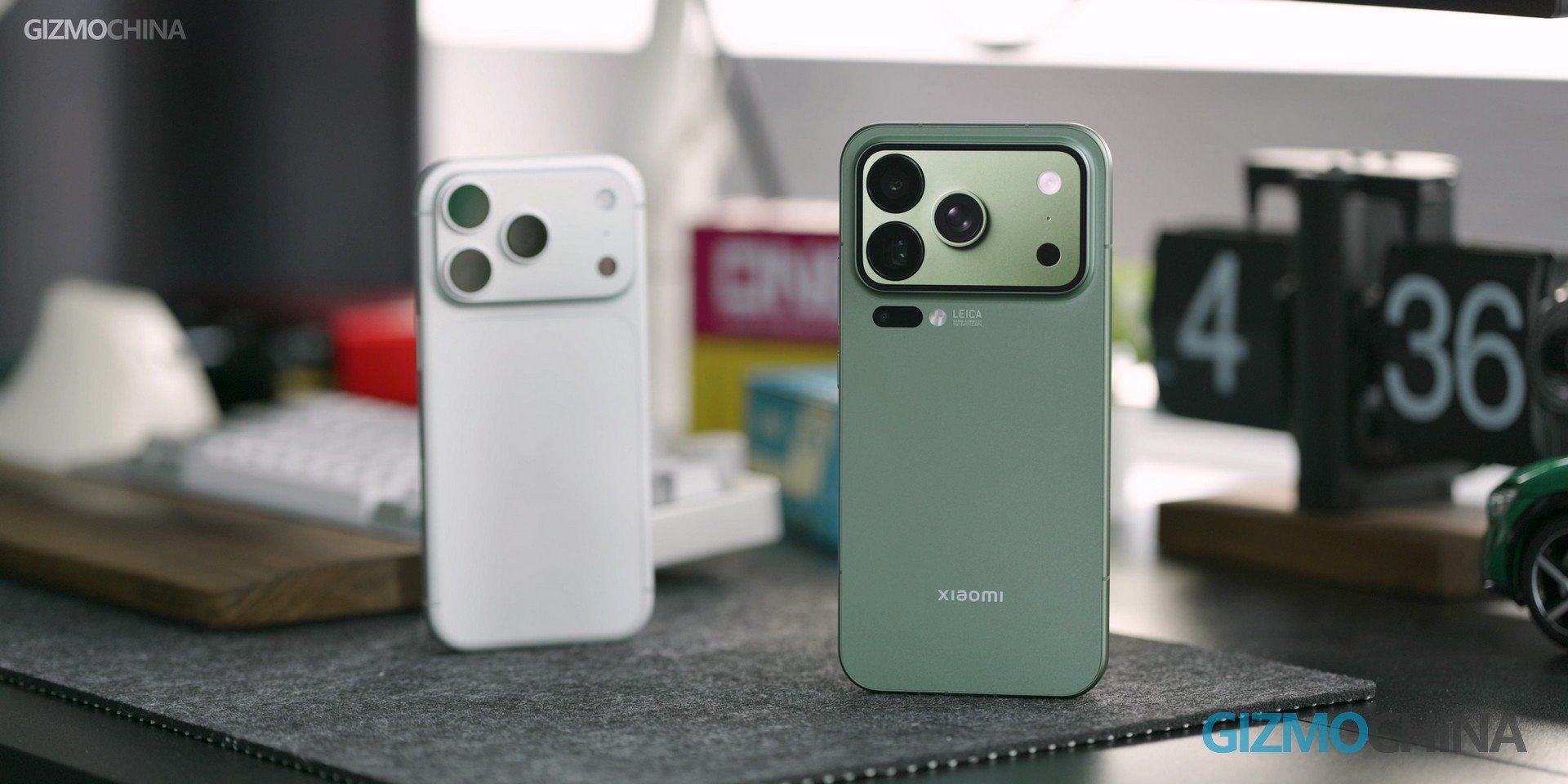
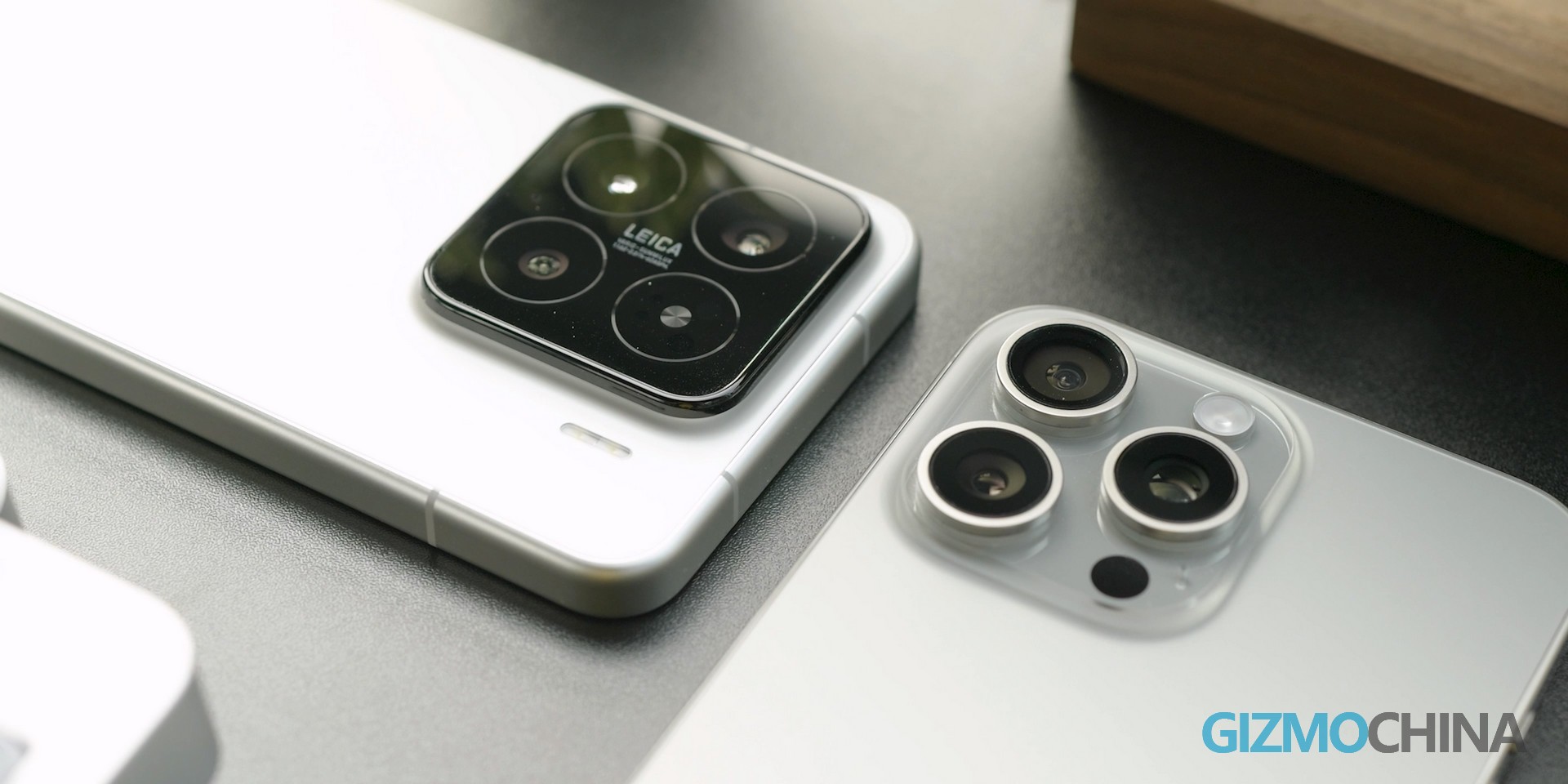
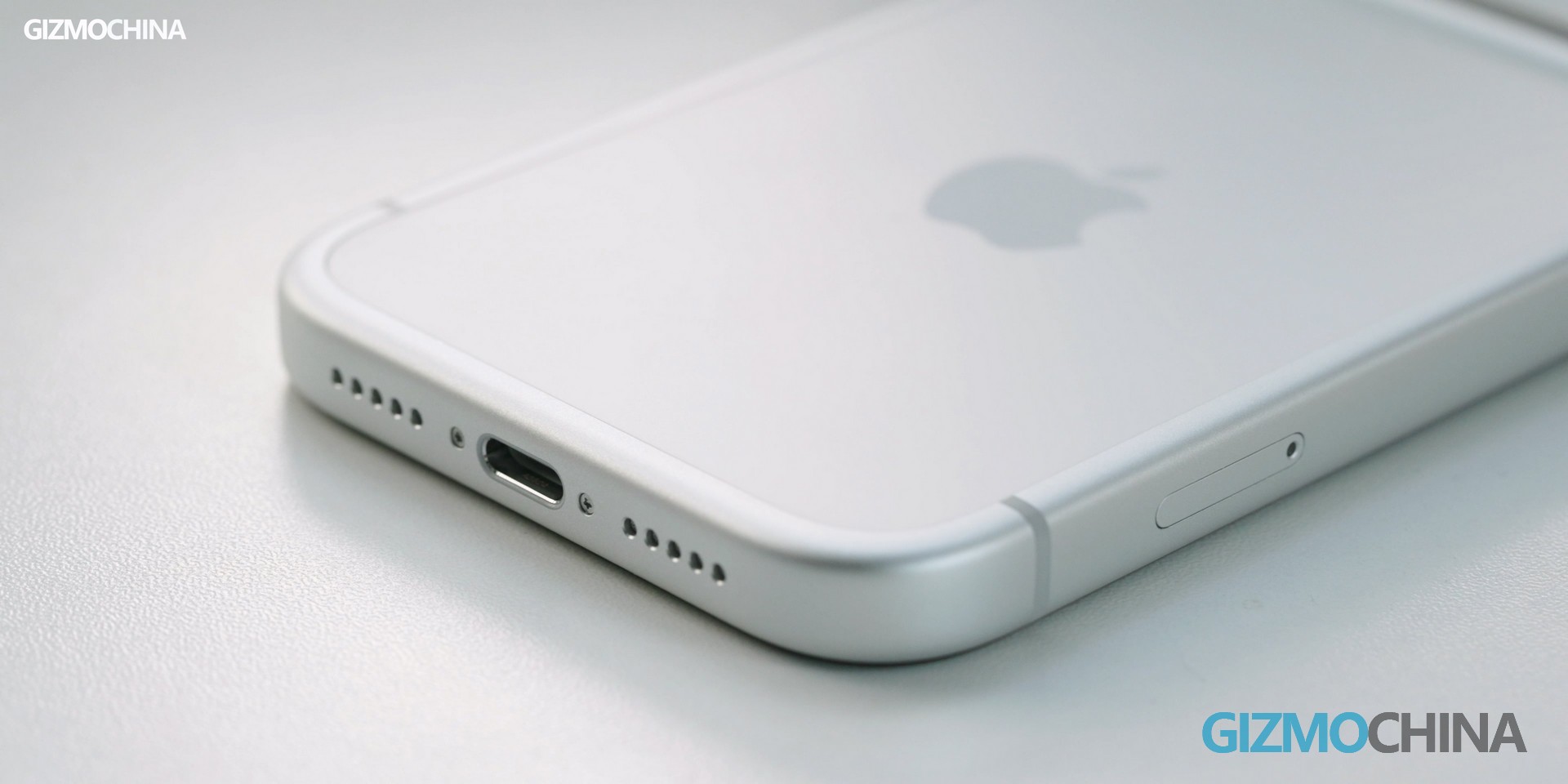
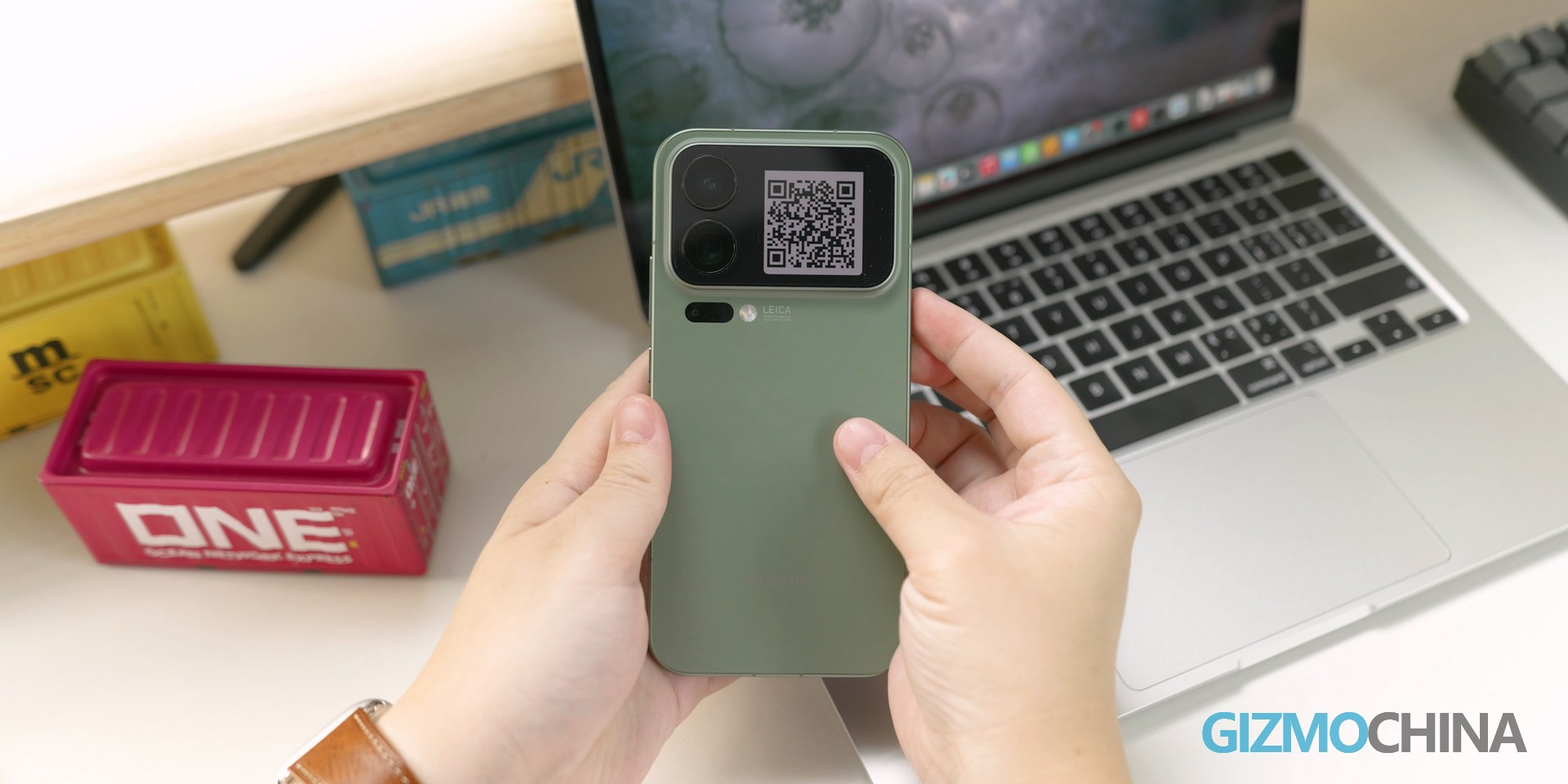
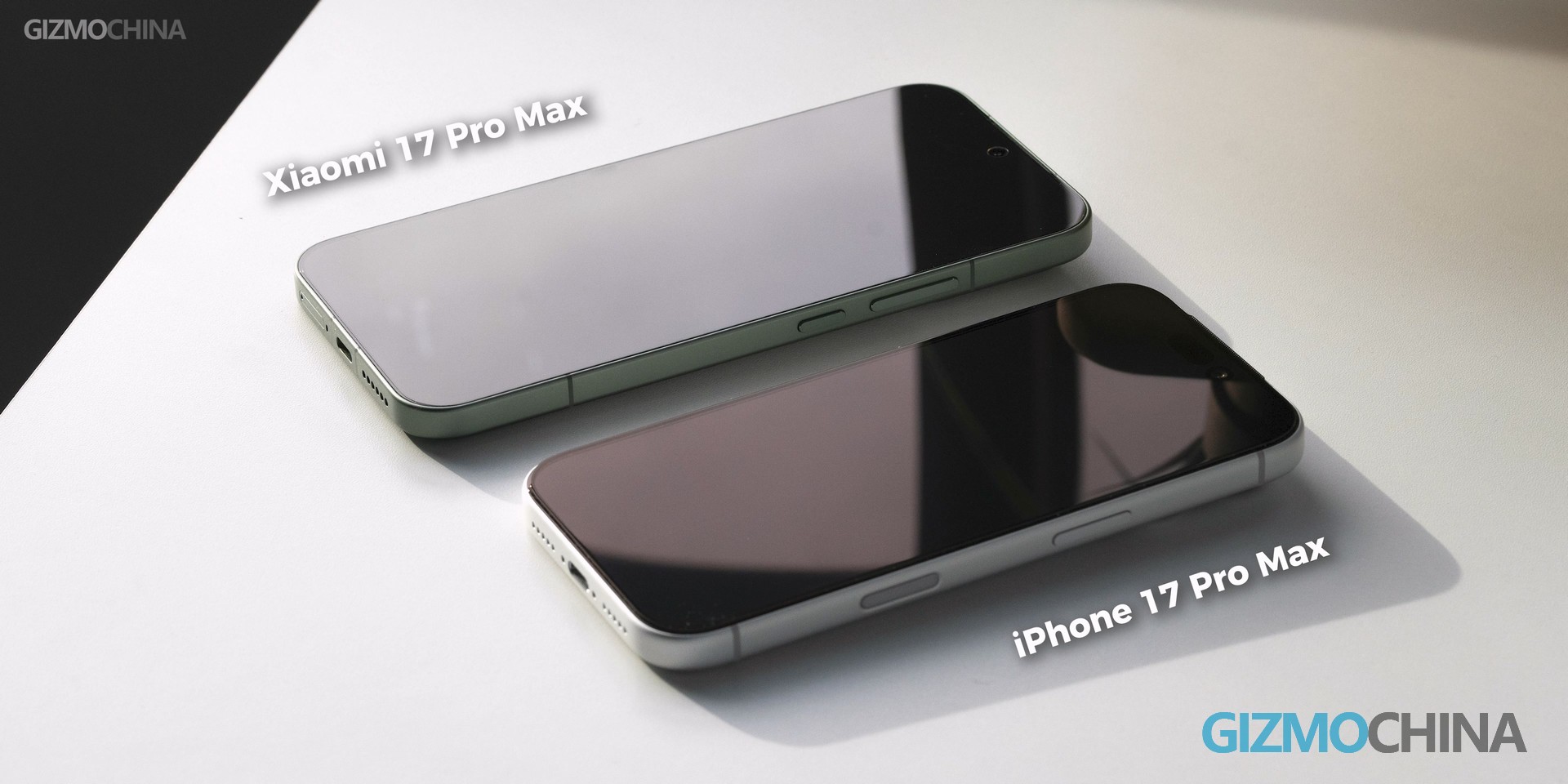
This year’s 17 Pro Max has arrived with full force. Not only does it feature the most powerful mobile processor, but its bezels have gotten narrower, charging speed has increased, and the camera module has been reshaped into a massive, rounded rectangle. You think I’m talking about the iPhone? Nope—I’m talking about Xiaomi’s 17 Pro Max.
As a former Xiaomi fan, I remember the last time a model looked this similar to an iPhone in both name and appearance—it was the Mi 8. Back then, although everyone criticized its huge chin and the notch without structured light, sales still surged significantly, and Xiaomi got a taste of that success. What I didn’t expect was that seven years later, Xiaomi, as a Fortune Global 500 company, would still be revisiting the same playbook. The good news is, the gap between the two 17 Pro Max models this time isn’t nearly as big as it was seven years ago. Xiaomi’s 17 Pro Max has also achieved stellar first-sale performance, just as they had hoped. Maybe this time, defeating Apple isn’t just a dream.
Before I complain about the rear display, I need to first complain about the frame design. Last year, I praised the Xiaomi 15 for extending its frame seamlessly into the back panel—it not only looked great but also felt incredibly smooth to the touch. Who knows, maybe Apple’s iPhone 17 Pro took inspiration from that very design. But this year, Xiaomi inexplicably abandoned the design I liked so much. So if next year’s Xiaomi 18 Pro ditches the rear screen, don’t be surprised—Xiaomi has always been like this.
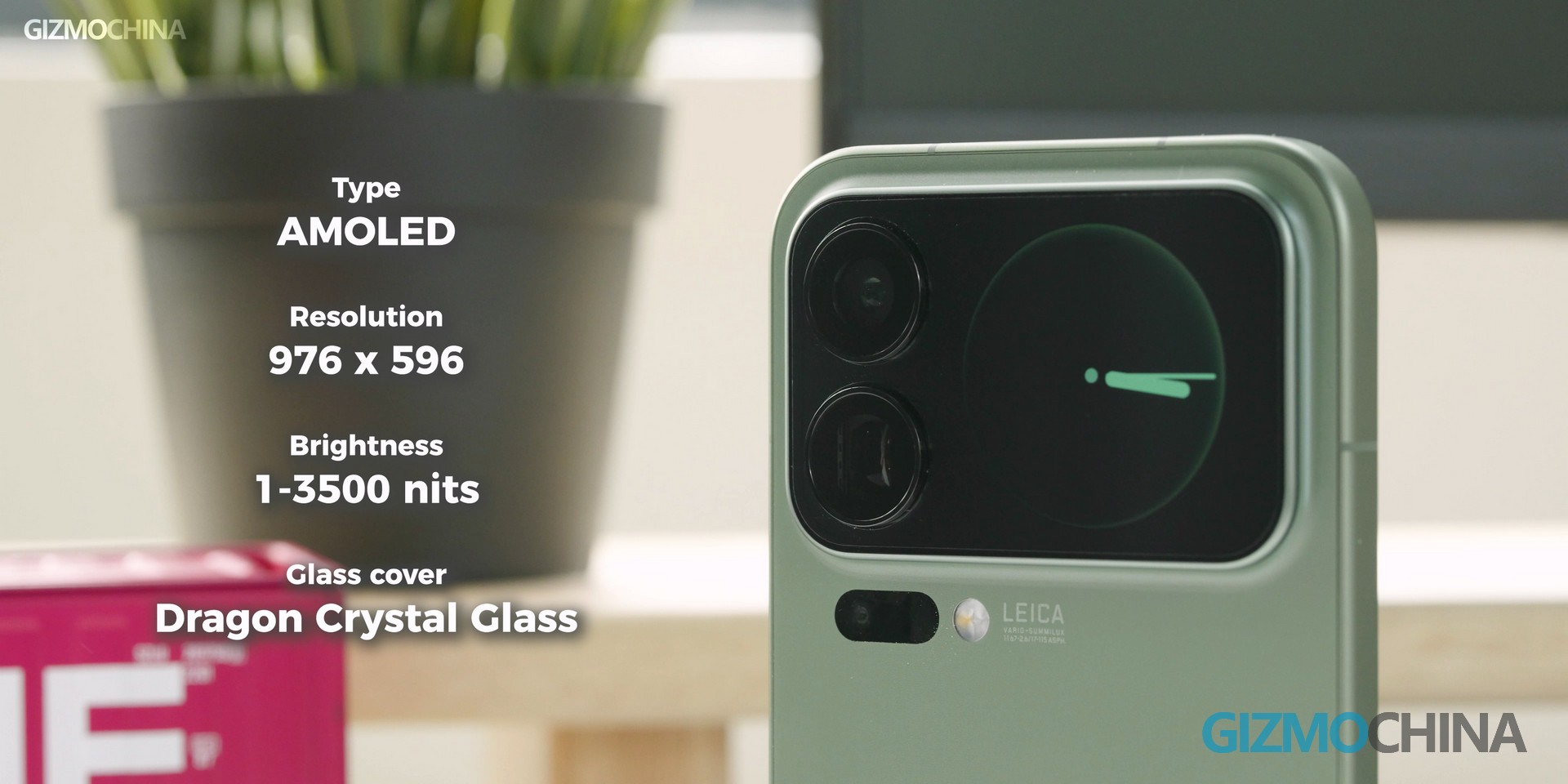
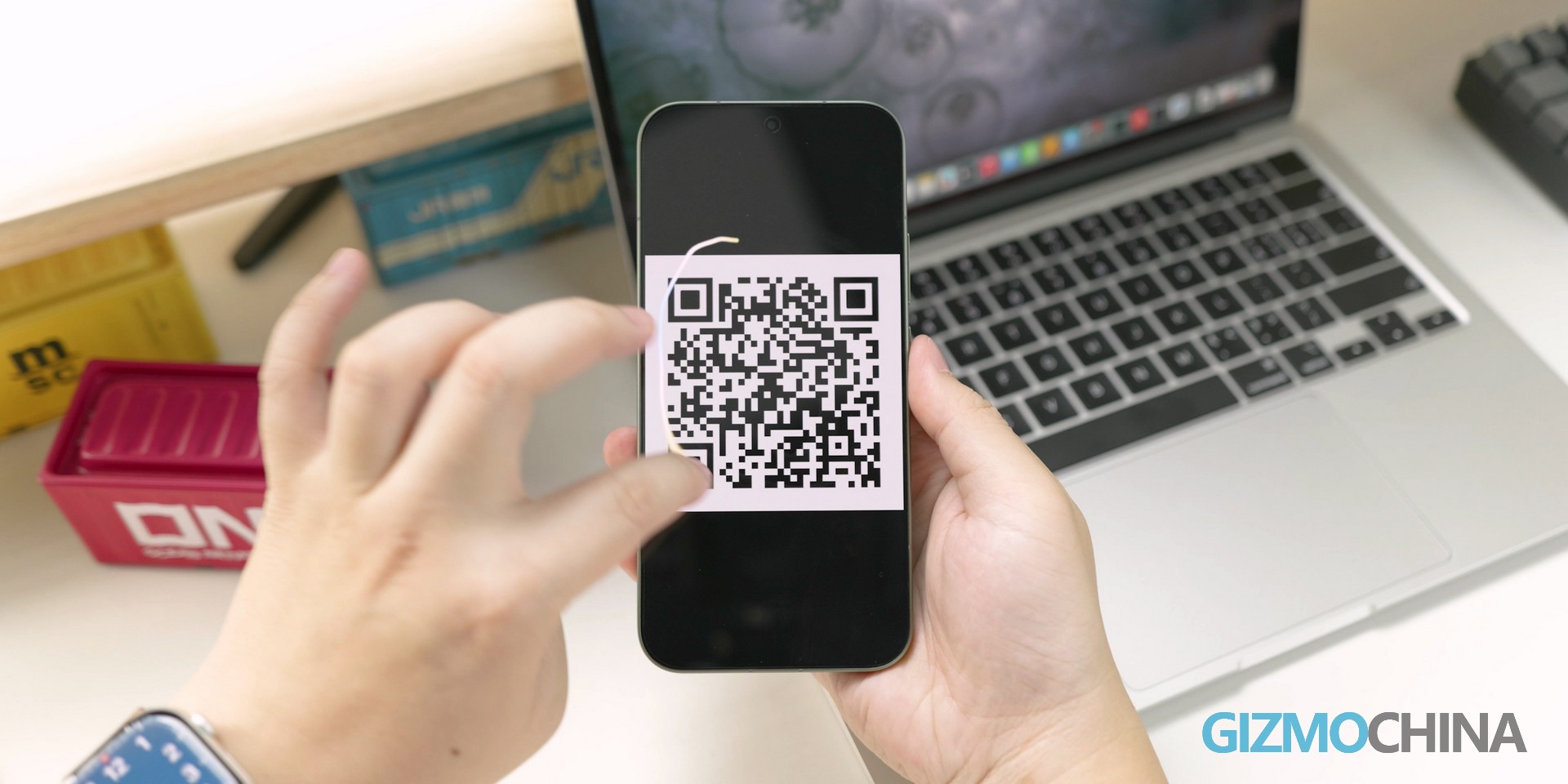
Now, before I explain what this rear display can do, let’s look at its specs. The most important one: a minimum brightness of just 1 nit. Since this display supports AOD, its first function is personalization.
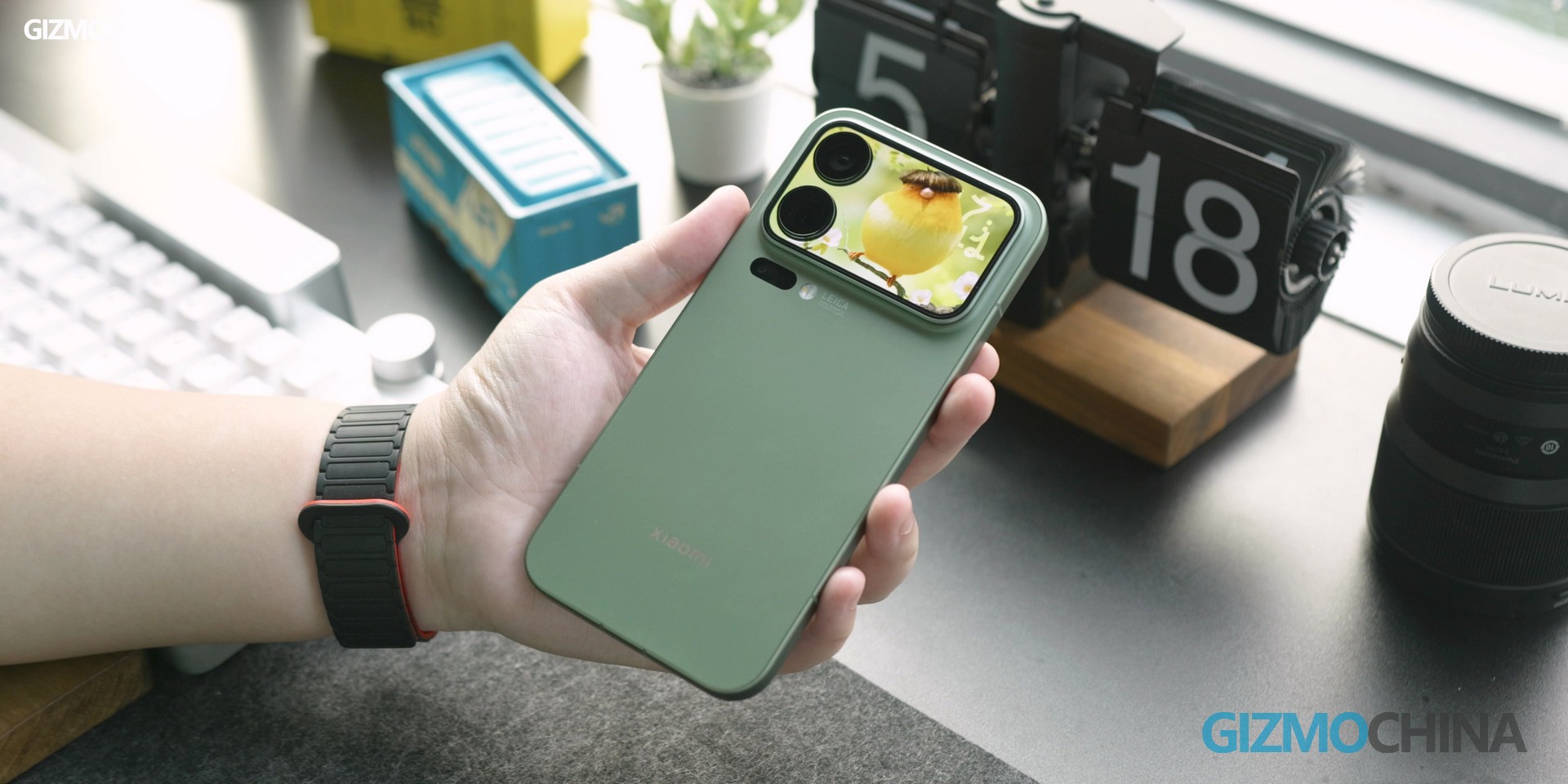
You can put a clock widget on it, or customize it with your own images. Using AI, you can even generate animated versions of your photos in different styles. Most of the time, you won’t be looking at this display—but others can see it, and it can show them what kind of person you are.
Xiaomi also lets you draw a circle to quickly pin content onto the rear screen. That means you can keep reminders or tricky-to-find information right on the back. That’s its second function.
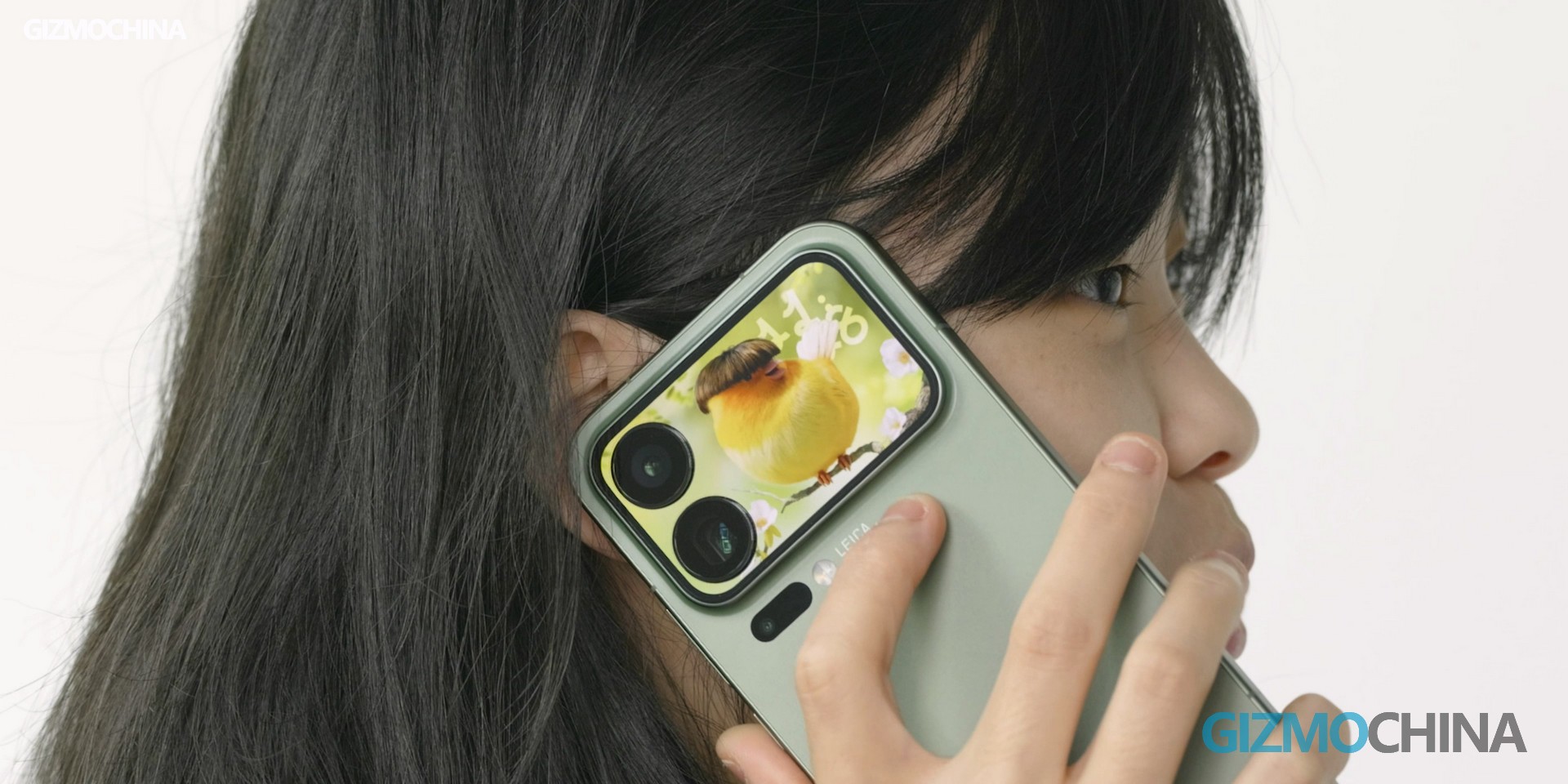
The third function is obvious: selfies. Just like with the MIX Flip series, this rear display lets you use the main camera for selfies. Thanks to the powerful main camera, this makes the 17 Pro Max Xiaomi’s best selfie phone ever.
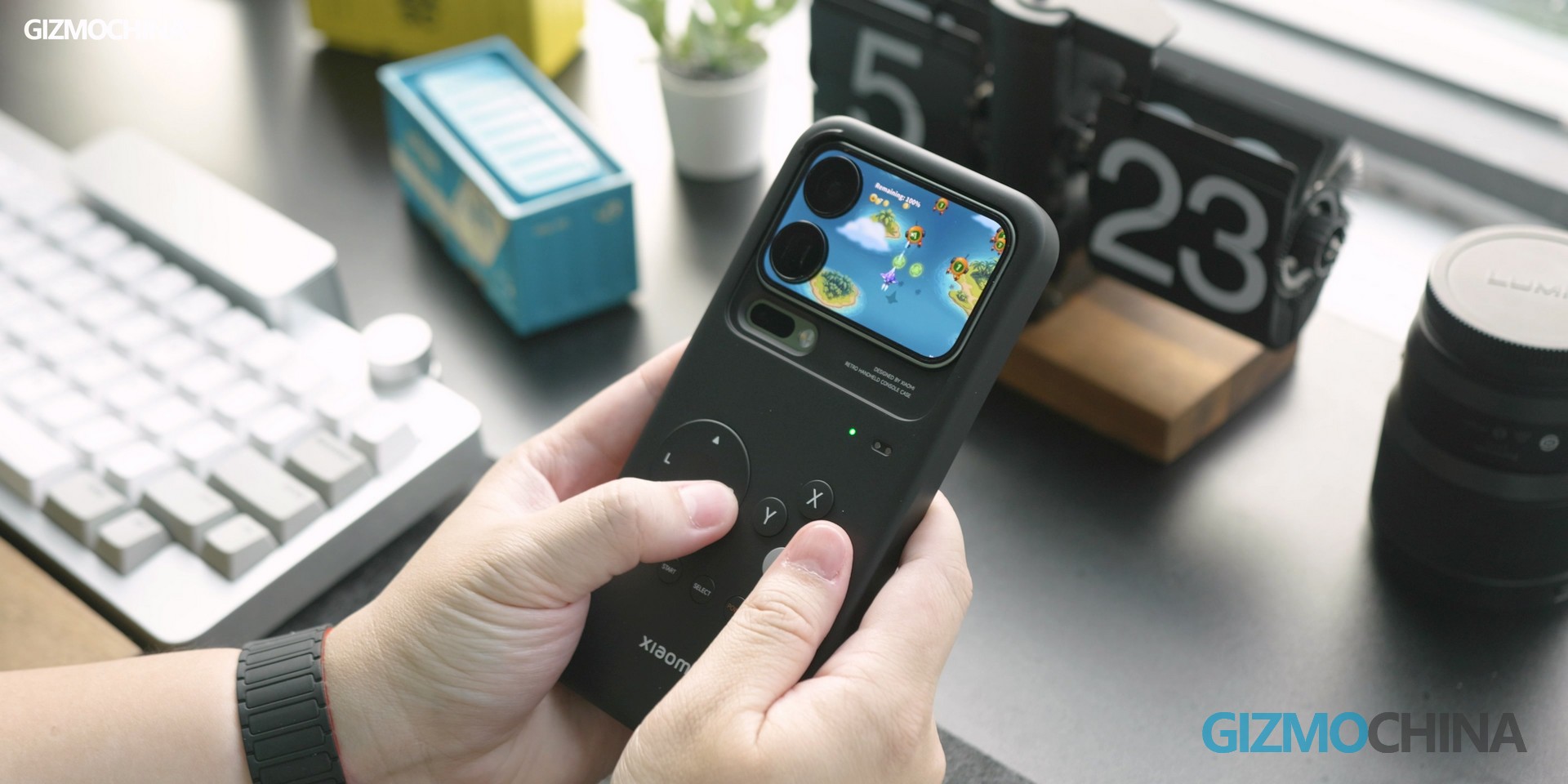
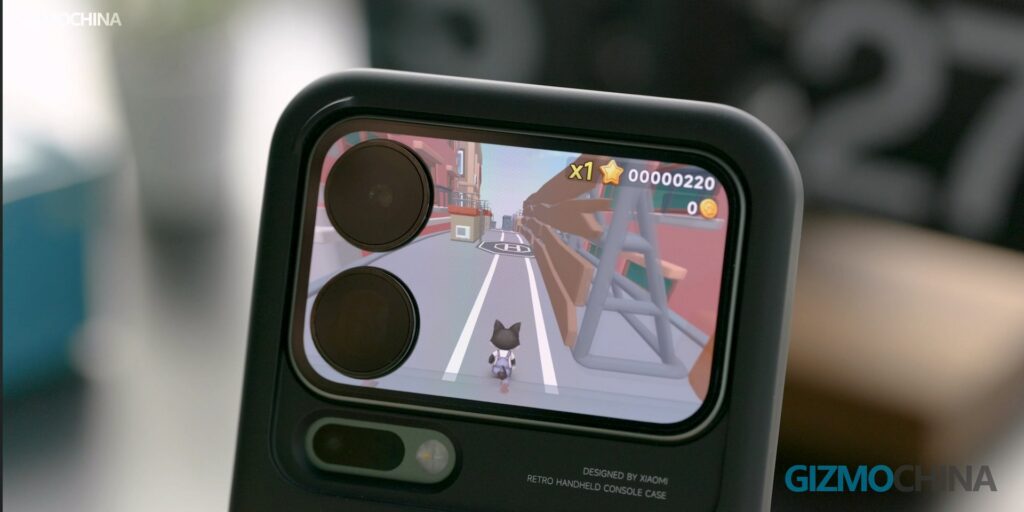
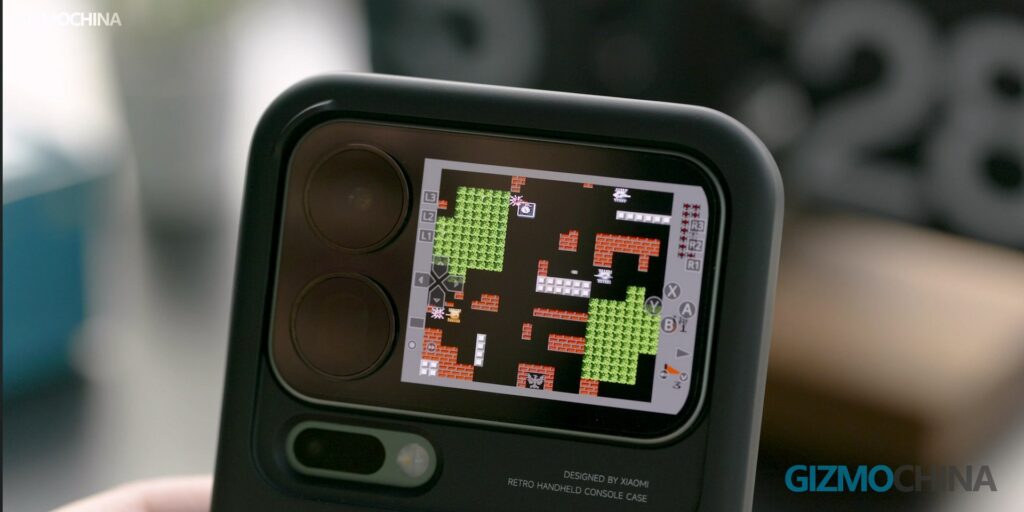
Of course, no one’s going to play games on a sub-3-inch display, so Xiaomi came up with a workaround. By using a special $42 case, you can play some classic games on the rear screen.
These games all feel strangely familiar; some companies probably want to sue Xiaomi after watching this video. There are only four games available, and once you get bored with them? Xiaomi allows third-party emulators to run on the rear display, which means theoretically hundreds or even thousands of games can be played. Not a bad way to kill time on a flight.
Oh, and don’t worry about privacy—the rear display will never show SMS messages. Currently, only a handful of apps support notifications here, though the global version might differ.
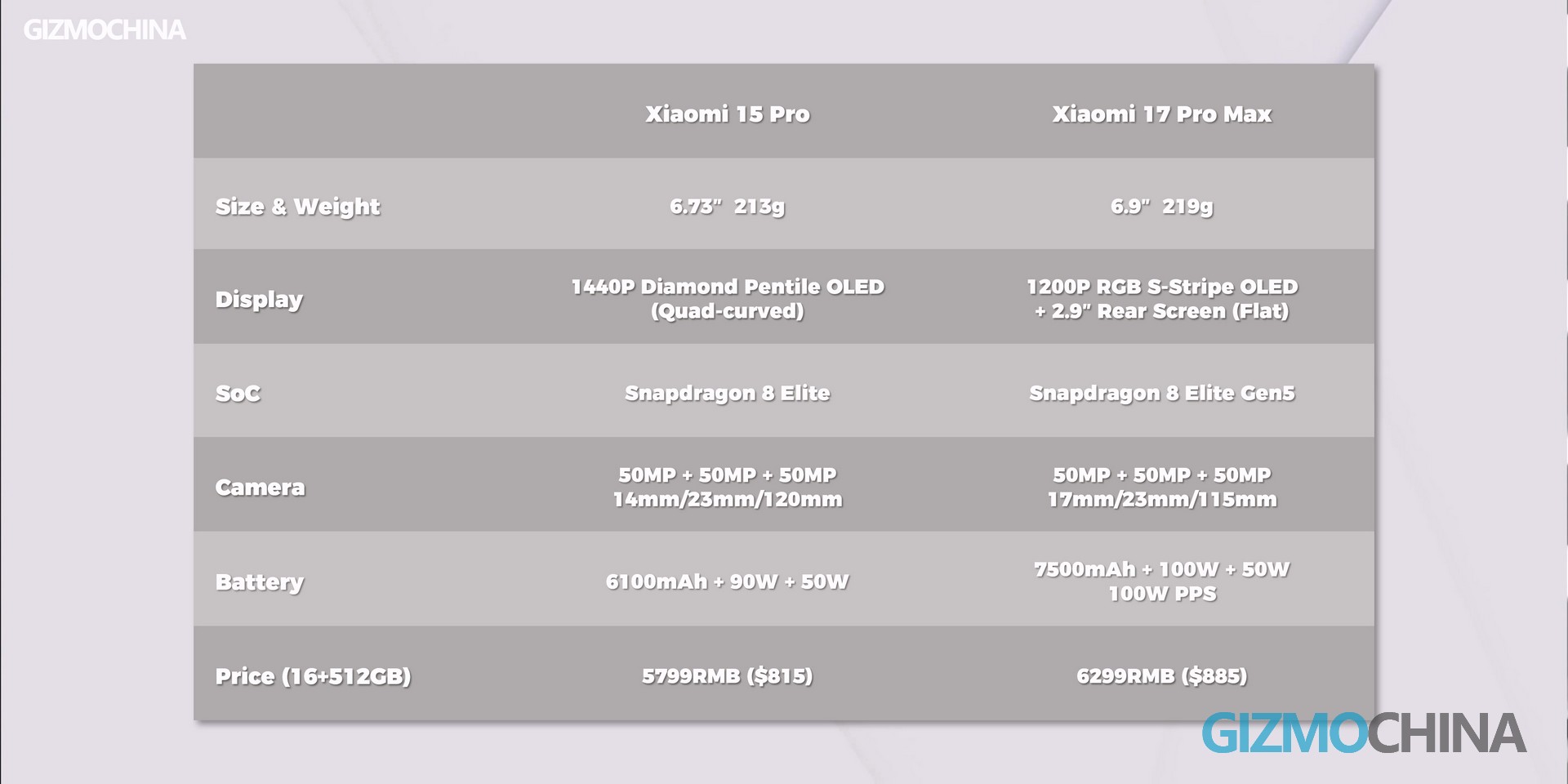
Yes, those are all the functions of the rear display. If you can live with a heavier phone, an entry-level vibration motor, downgraded USB transfer speed from 10Gbps to 5Gbps, a worse ultra-wide camera, no anti-reflective coating, neither display nor pre-applied film, then the Xiaomi 17 Pro Max is a good phone for you.
Performance
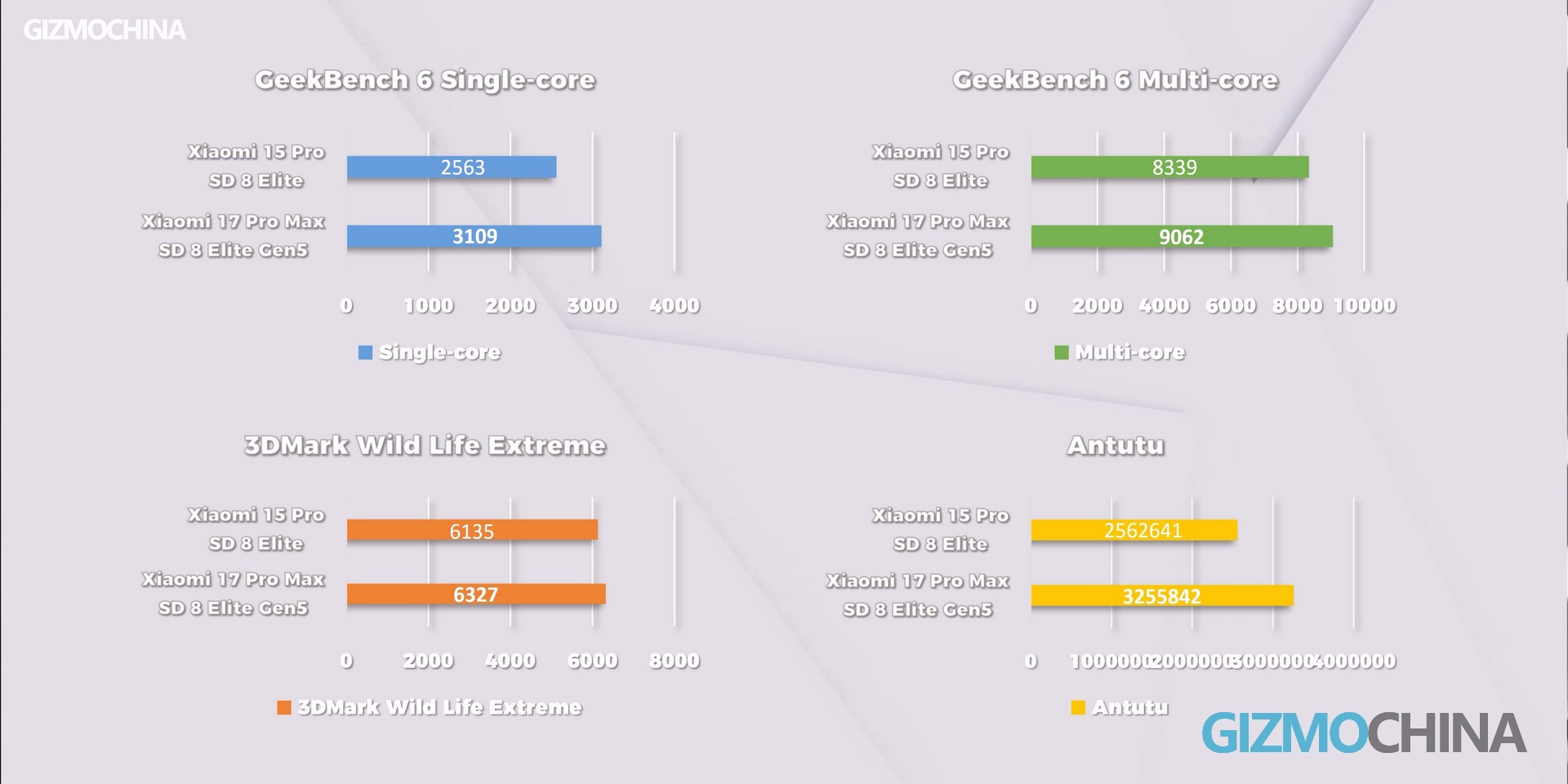
As the first flagship smartphone powered by the Snapdragon 8 Elite Gen5, there is no doubt that the Xiaomi 17 Pro Max has climbed to the top of the Android performance charts. While we don’t yet know how it will compare to upcoming flagships with the Dimensity 9500 in two weeks, current benchmark scores suggest that the improvements aren’t as dramatic as some might have expected. We all know benchmarks are just for reference—high scores don’t necessarily translate to great real-world performance. To truly test a processor, you need to play games.
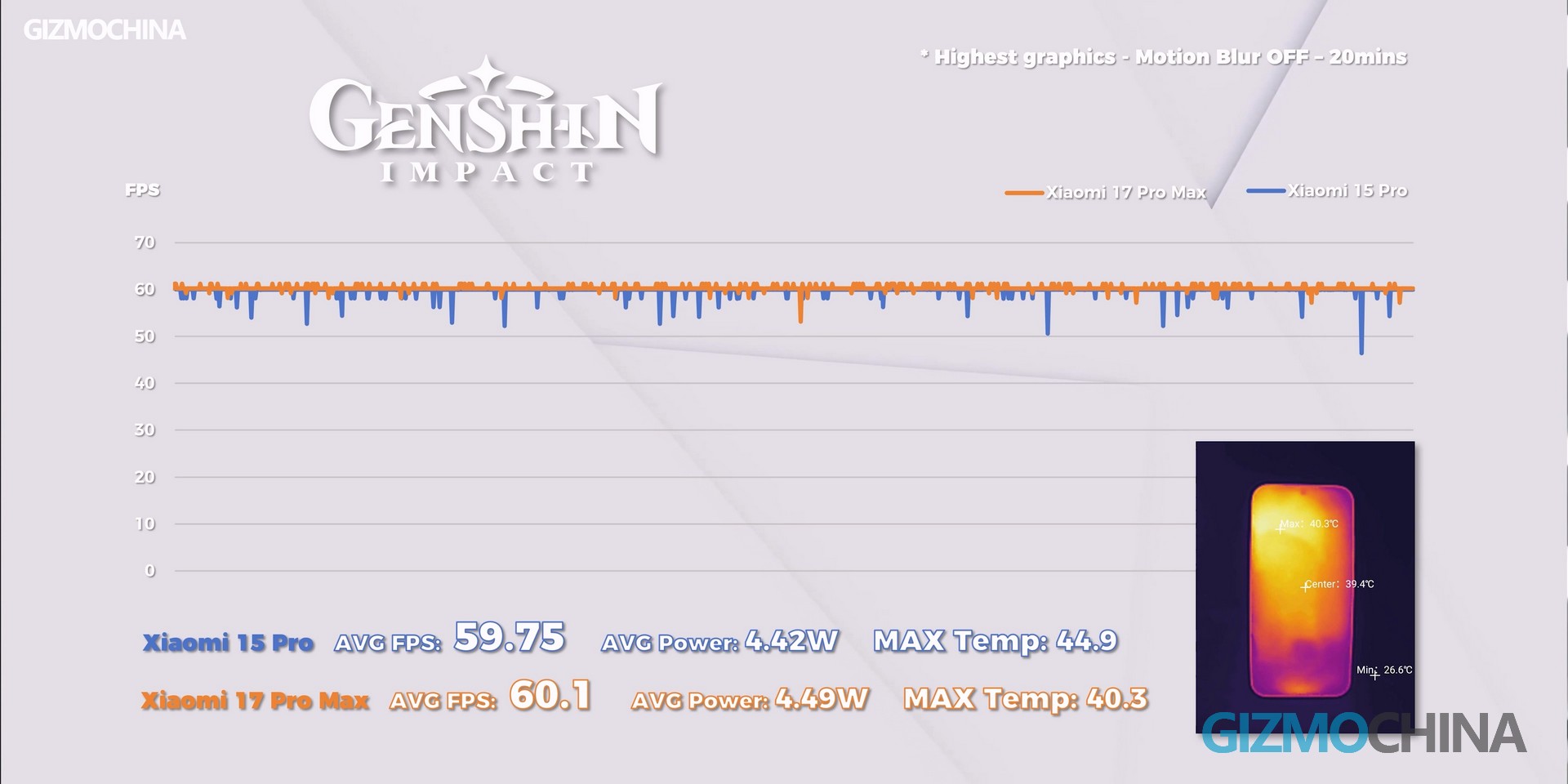
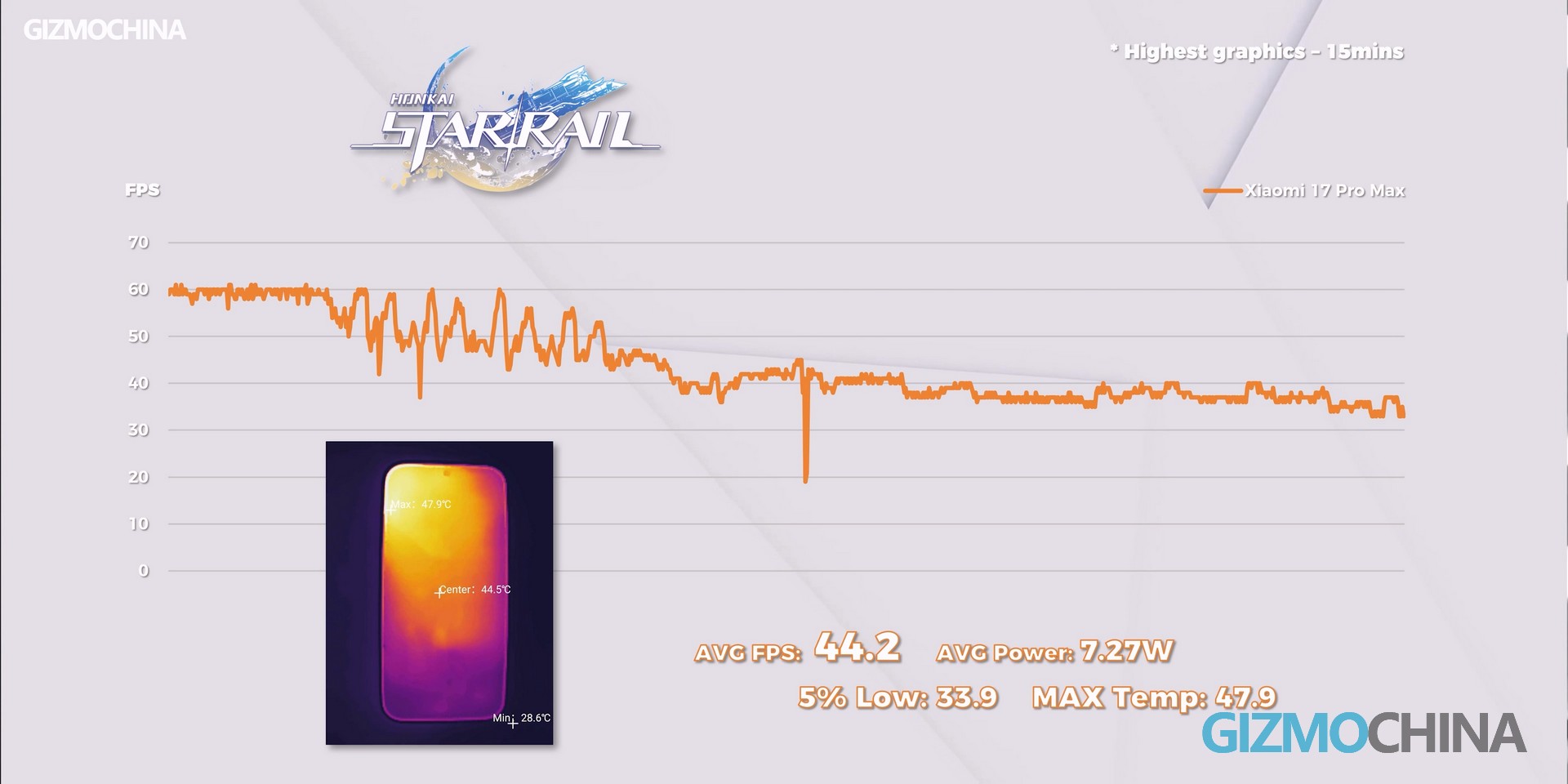
At max settings, Genshin Impact’s 20-minute frame rate curve looks like this. Five years ago, this game was a huge burden for mobile processors, but today’s chips handle it with ease. The Xiaomi 17 Pro Max performs well, but compared to last year’s 15 Pro, the difference isn’t huge. The only noticeable improvement is slightly lower temperatures. So let’s move to Honkai: Star Rail, which quickly exposes the 17 Pro Max’s limits.
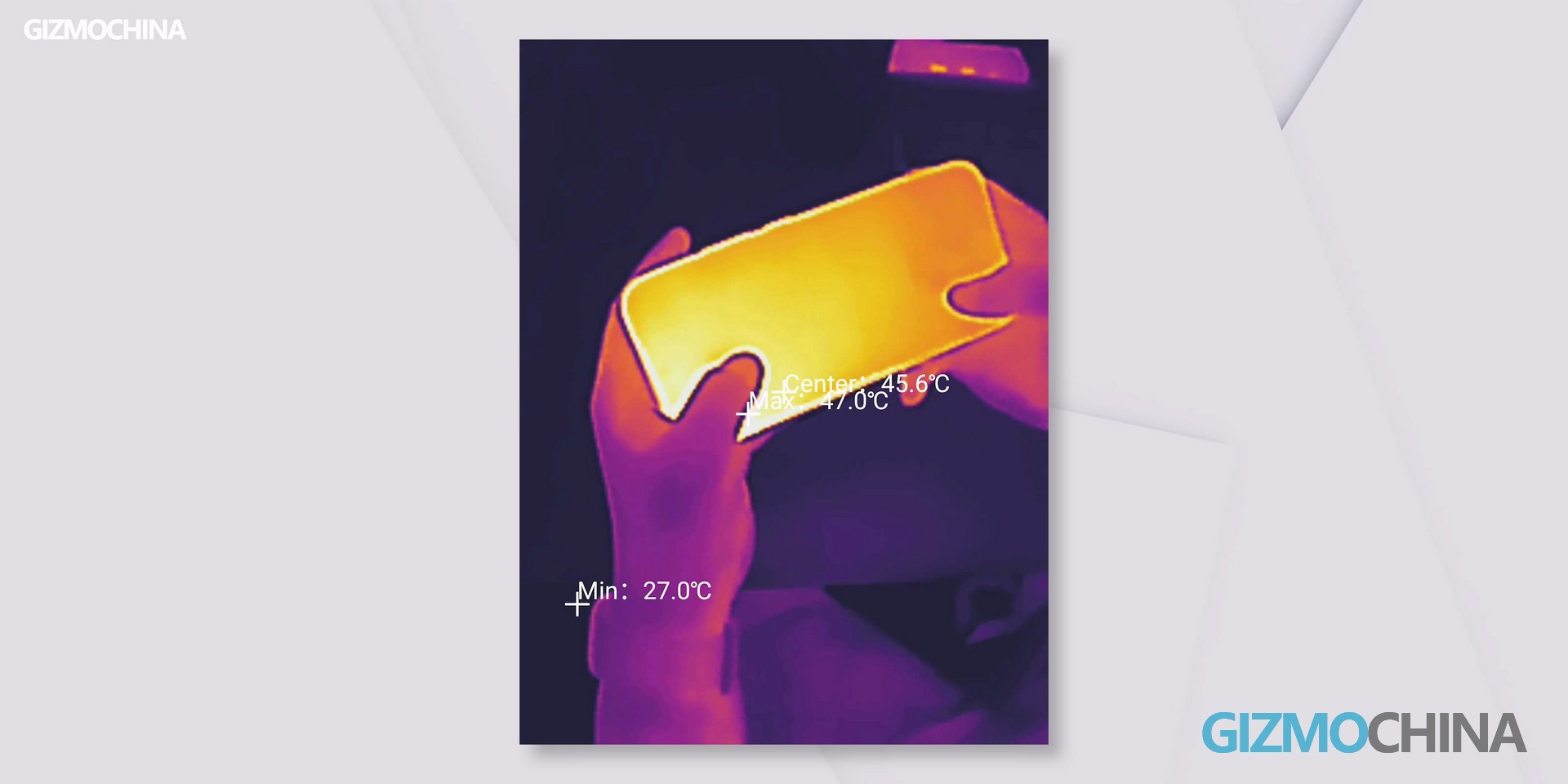
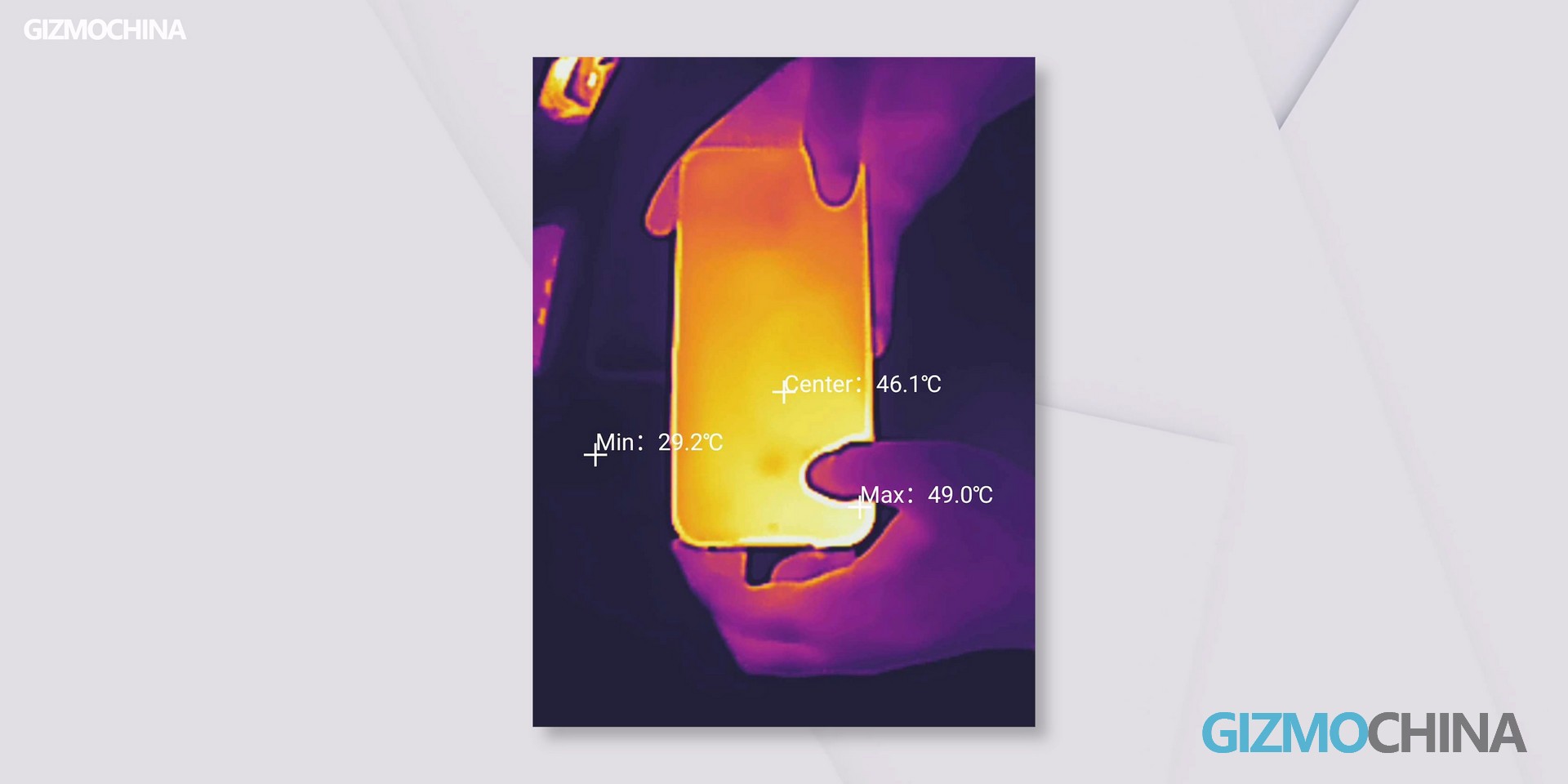
Throttling kicks in within three minutes, with frame rates hovering around 37fps most of the time. The phone also gets uncomfortably hot. Even worse, during our first Genshin test, a bug caused the CPU frequency to suddenly spike, with temperatures nearing 50°C. So honestly, I don’t recommend this phone for heavy gamers—at least not with the current system version, which left me unsatisfied.
Display
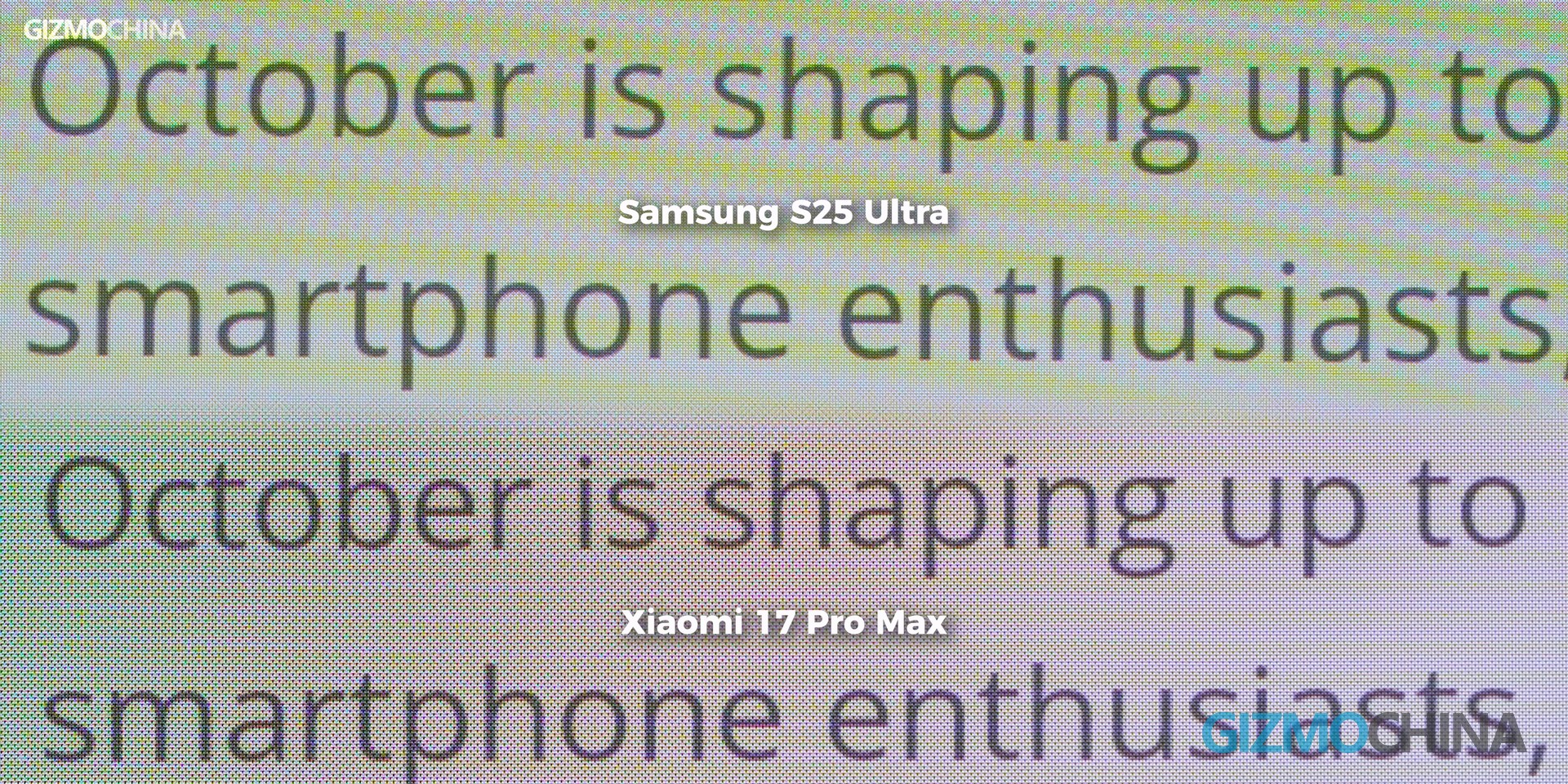
This year, the Xiaomi 17 Pro Max’s display received a major upgrade. I’m not talking about the 3,000–4,000 nit peak brightness numbers that are nearly impossible to measure—I mean clarity.
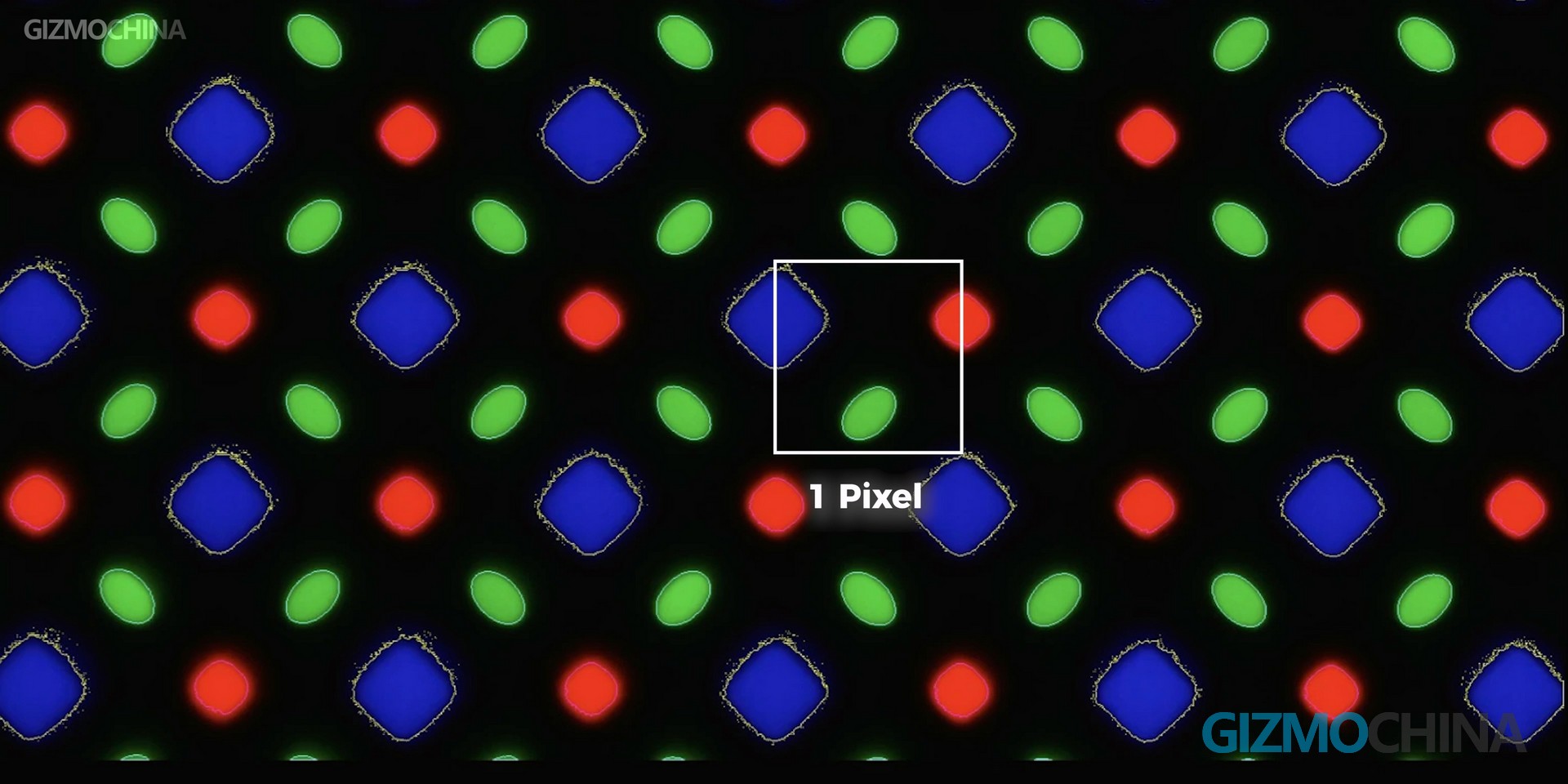
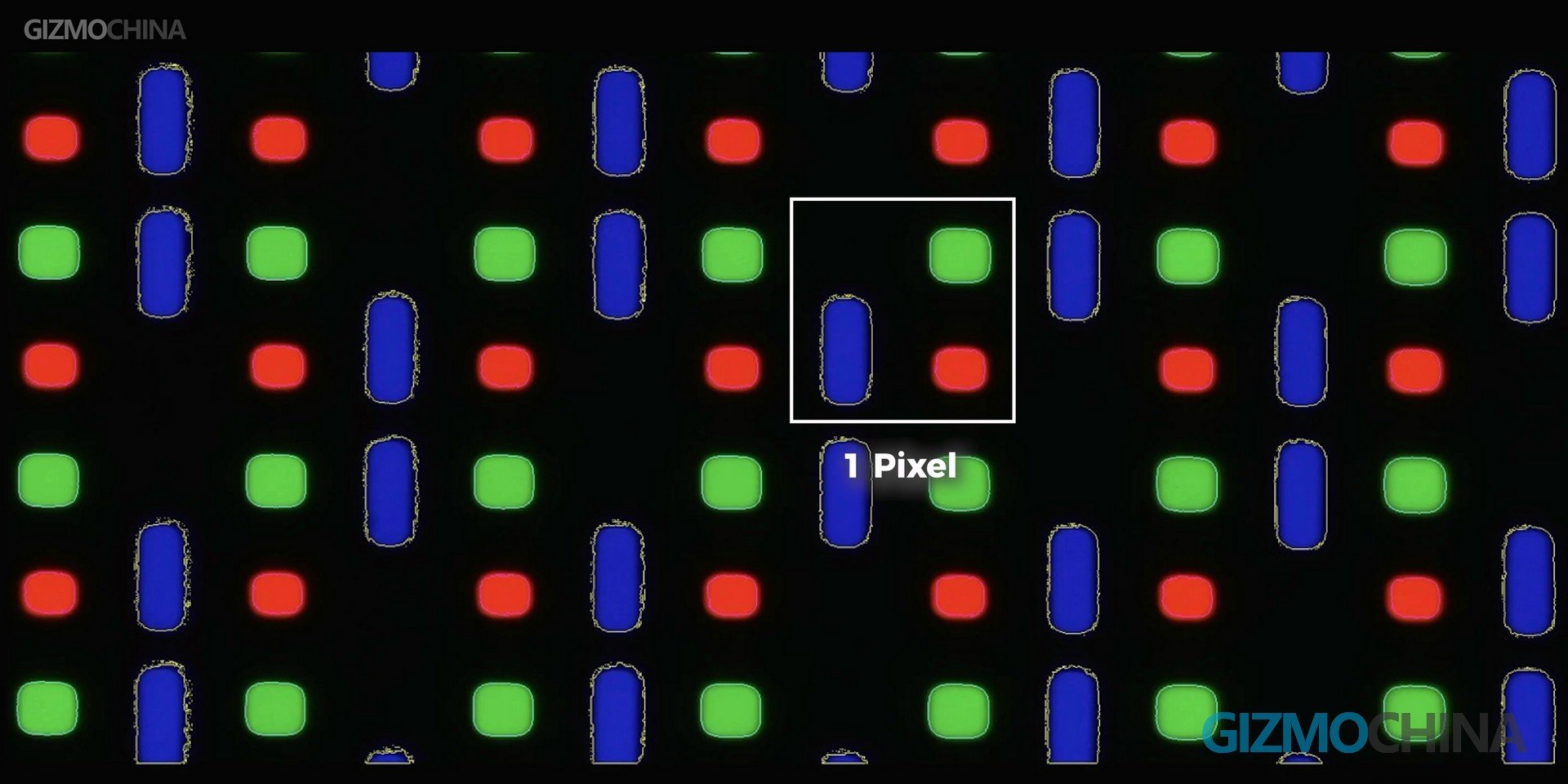
Most smartphones today use Diamond Pentile pixel arrangement, which has a drawback: red and blue subpixels share neighbors, reducing effective PPI. That’s why 2K resolution became necessary in the OLED era.
Diamond Pentile
If you’ve followed tablets, you’ll know that many now use RGB S-Stripe arrangements. This layout gives each pixel its own complete RGB subpixels, so PPI is uncompromised while also saving power.
RGB S-Stripe
That’s why, even though the Xiaomi 17 Pro Max has a lower resolution than its predecessor, clarity hasn’t dropped noticeably. Unfortunately, this new pixel arrangement is only on the Pro Max version for now. The good news is, Xiaomi doesn’t own the exclusive rights, so more smartphones will adopt this in the future. If you don’t want a Xiaomi, just wait for other flagships to catch up.
Cameras
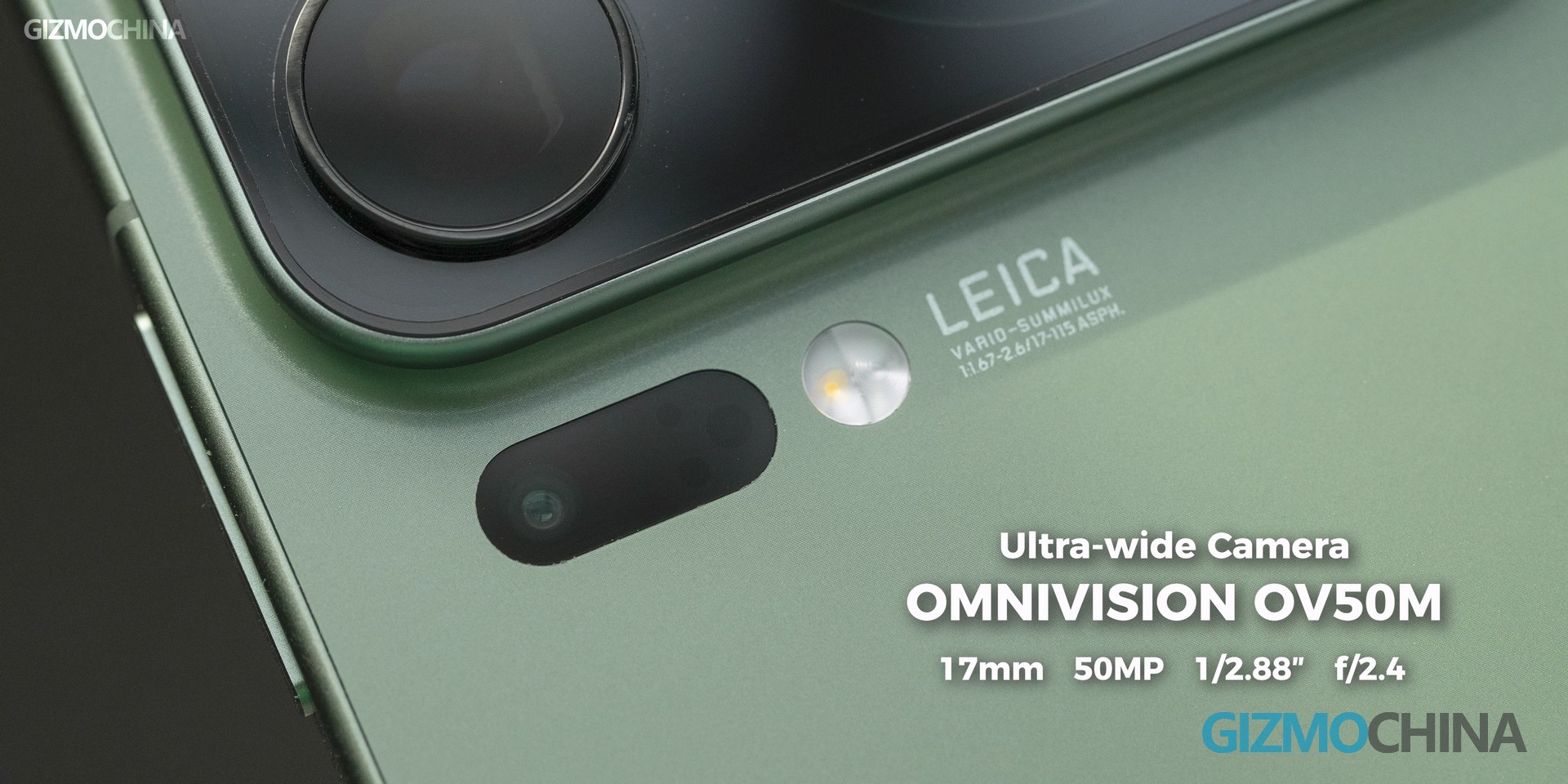
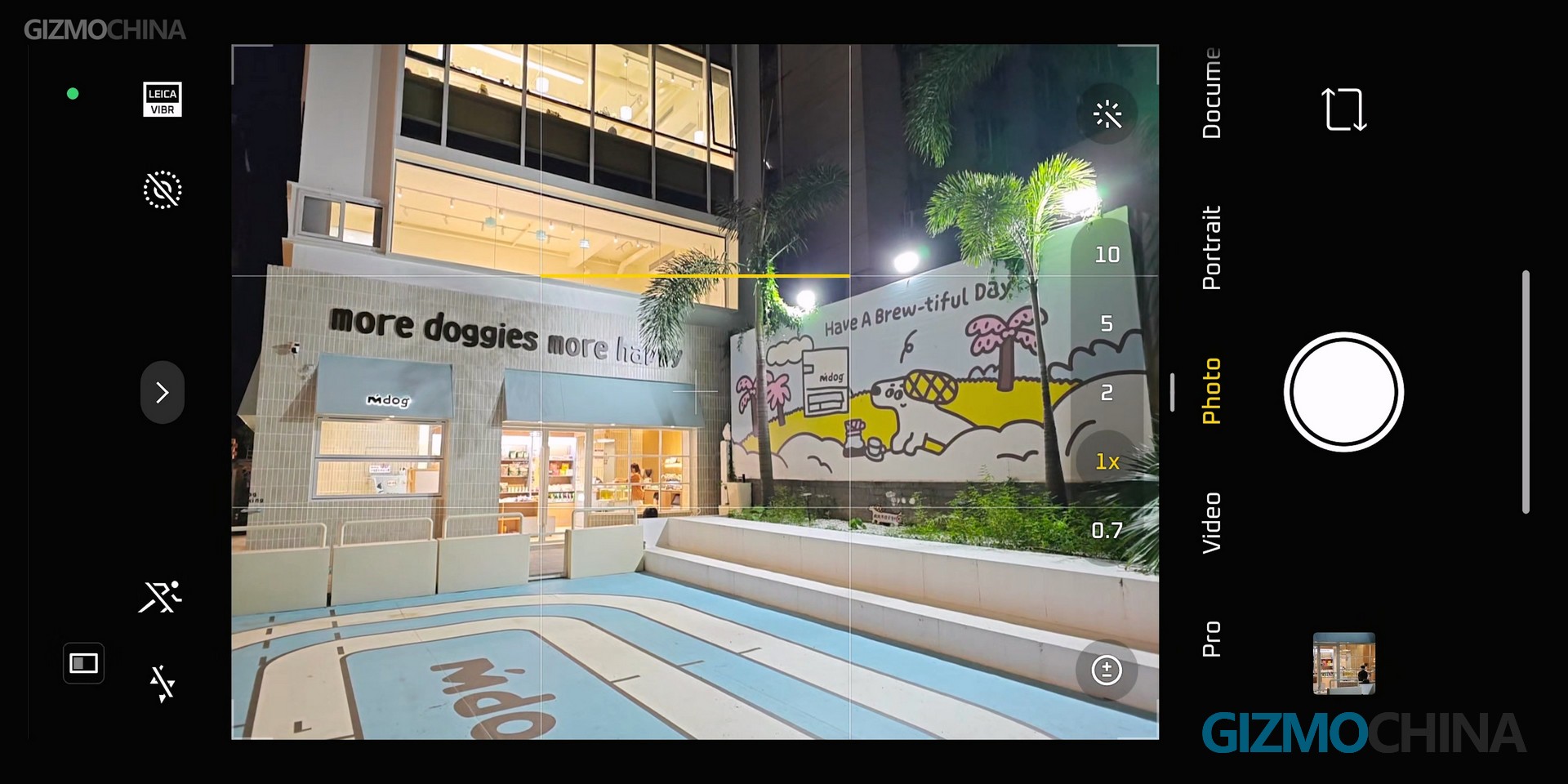
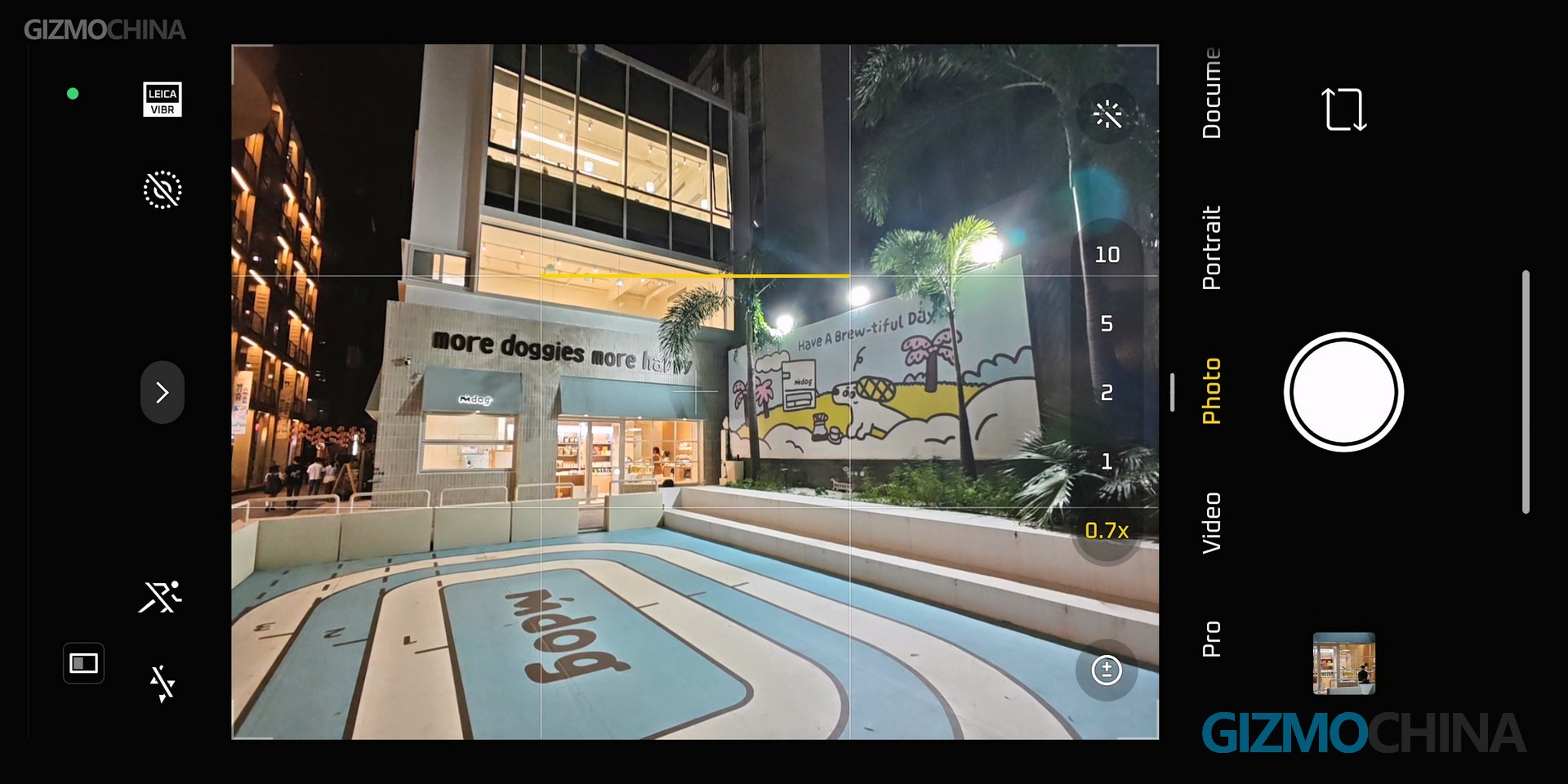
To make room for the rear display, the triple-camera layout has changed. The ultra-wide camera was pushed down near the battery, and unsurprisingly, it’s been downgraded. I can accept the smaller sensor—it shrank by less than 5%, and the ultra-wide isn’t used that often. What bothers me is that its focal length increased from 14mm to 17mm. The field of view is significantly narrower. When switching from the main camera to the ultra-wide, your first reaction will be: “Does Xiaomi even know what “ultra-wide” means?”
At 17mm, the FOV is ridiculously tight. Even the iPhone’s front-facing video recording offers a similar field of view—sometimes with better quality. WTF.
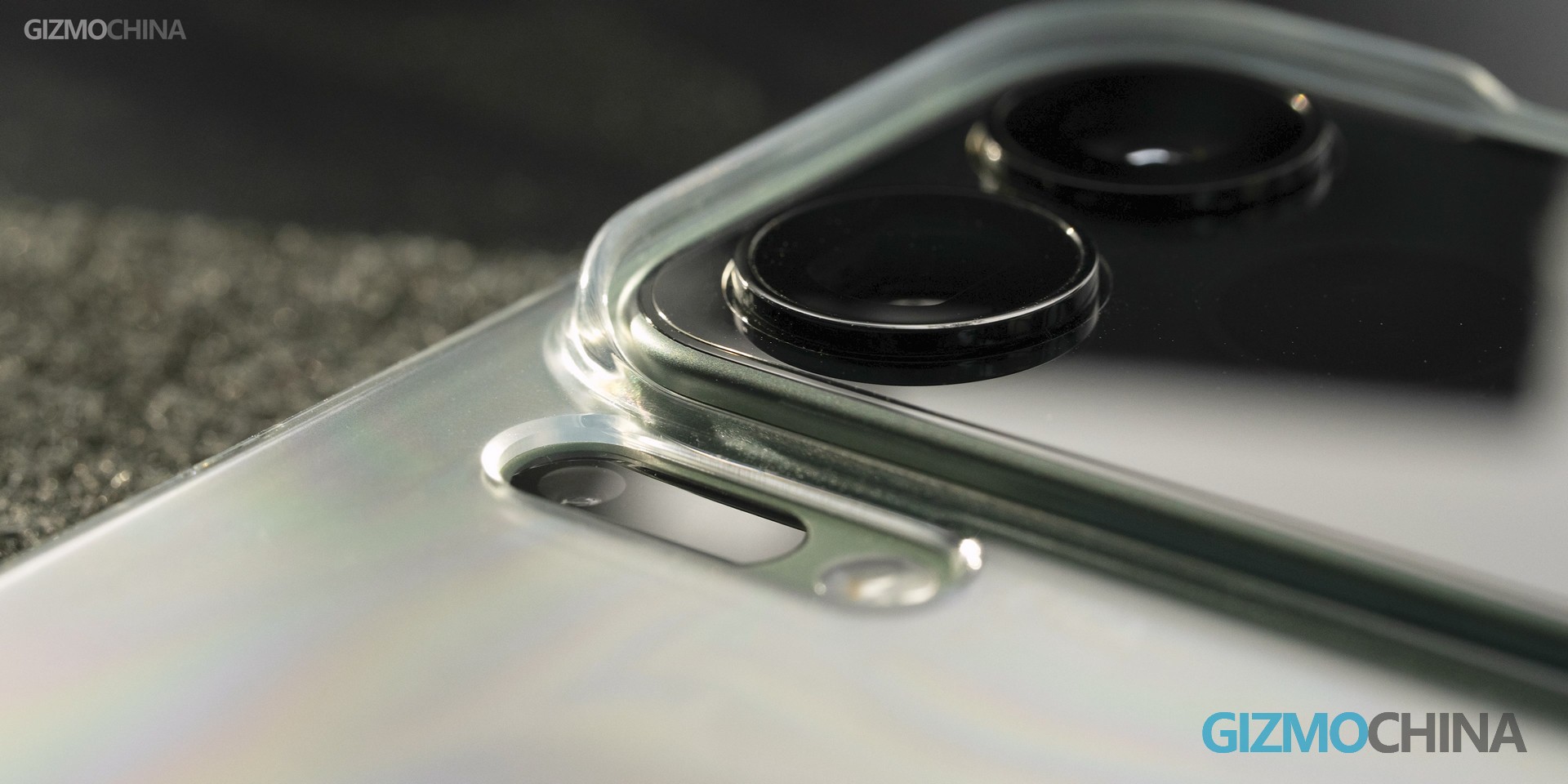
After thinking it through, I suspect this was done to prevent the rear display from intruding into the ultra-wide’s field of view. Supporting this theory, neither the included case nor the Gameboy case extends around the bottom edge of the rear display. This is why I call it Xiaomi’s best selfie phone—not its best vlogging phone.
The main camera delivers excellent quality, but the FOV isn’t wide enough. The ultra-wide is wider, but still doesn’t beat a selfie cam and suffers from worse image quality. For vlogging, I’d actually recommend the front camera: bigger screen, similar image quality.
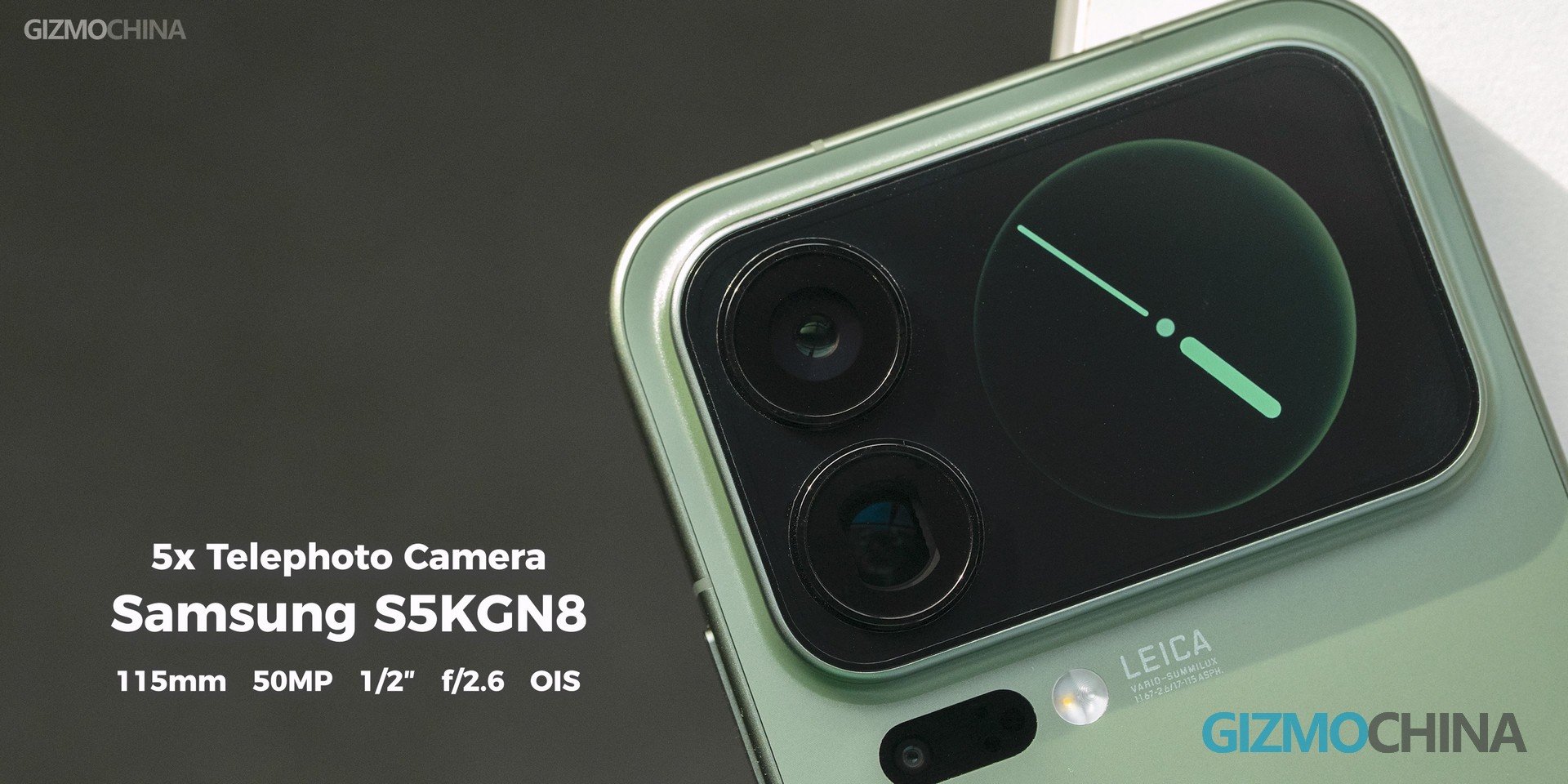
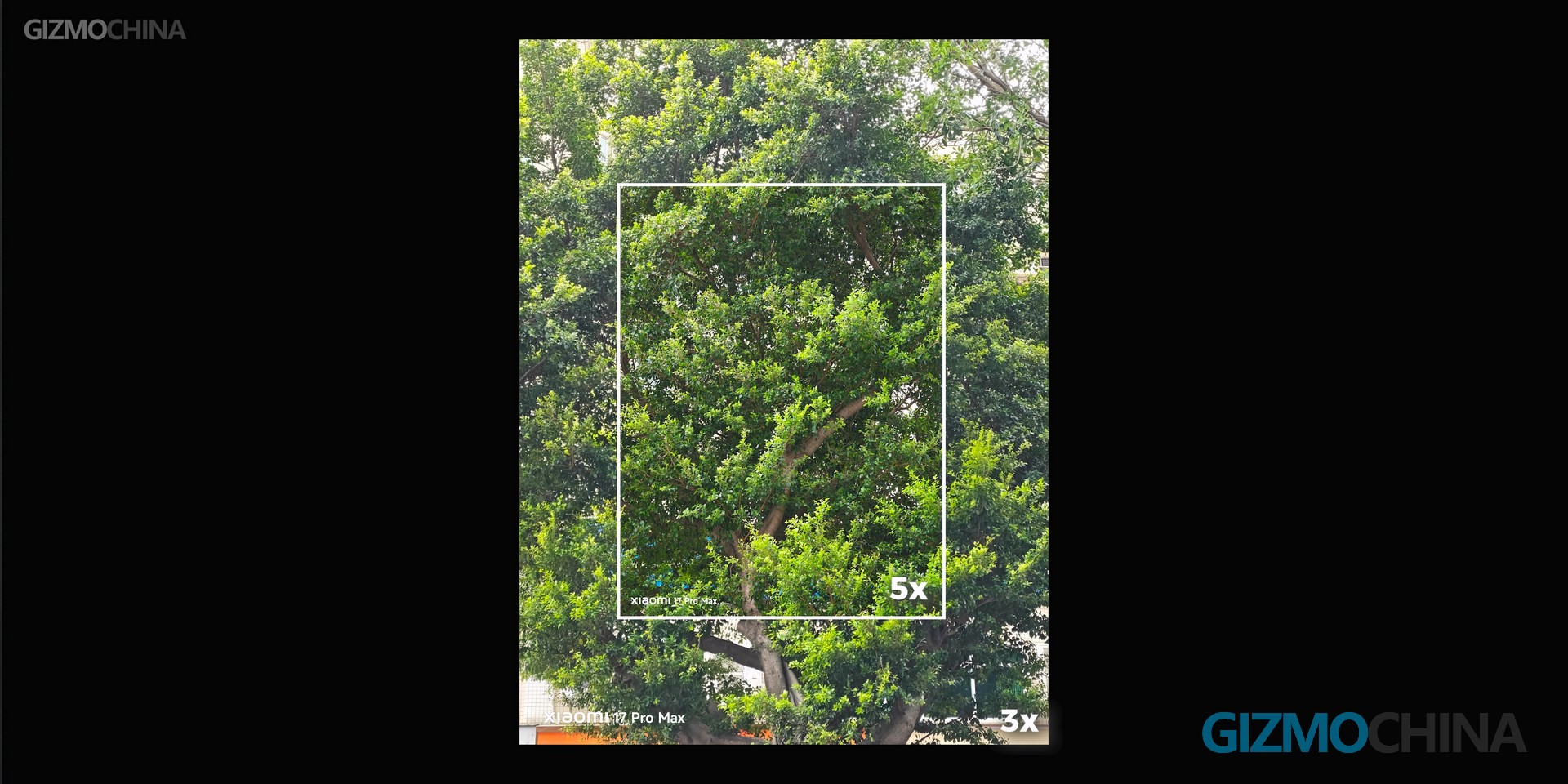
The telephoto camera, on the other hand, received a major upgrade. Zoom to 5x, and you always get great shots. But the 115mm focal length is too long. Even Tim Cook knew that 5x zoom was impractical for everyday use, so Apple shortened it to 100mm this year. Xiaomi sticking with 115mm feels inconvenient. Meanwhile, common focal lengths like 70mm or 85mm can only be achieved through cropping from the main sensor.
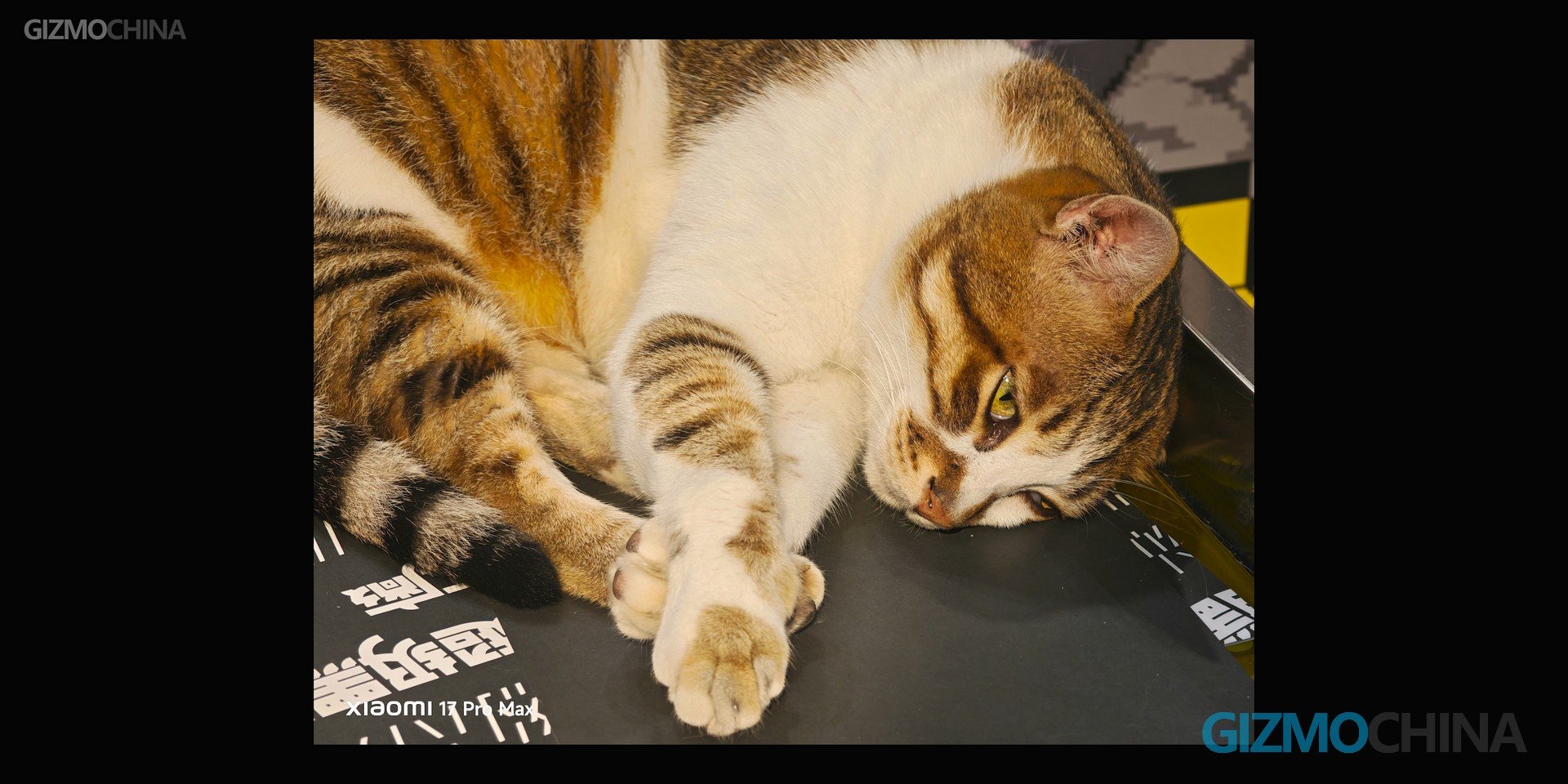
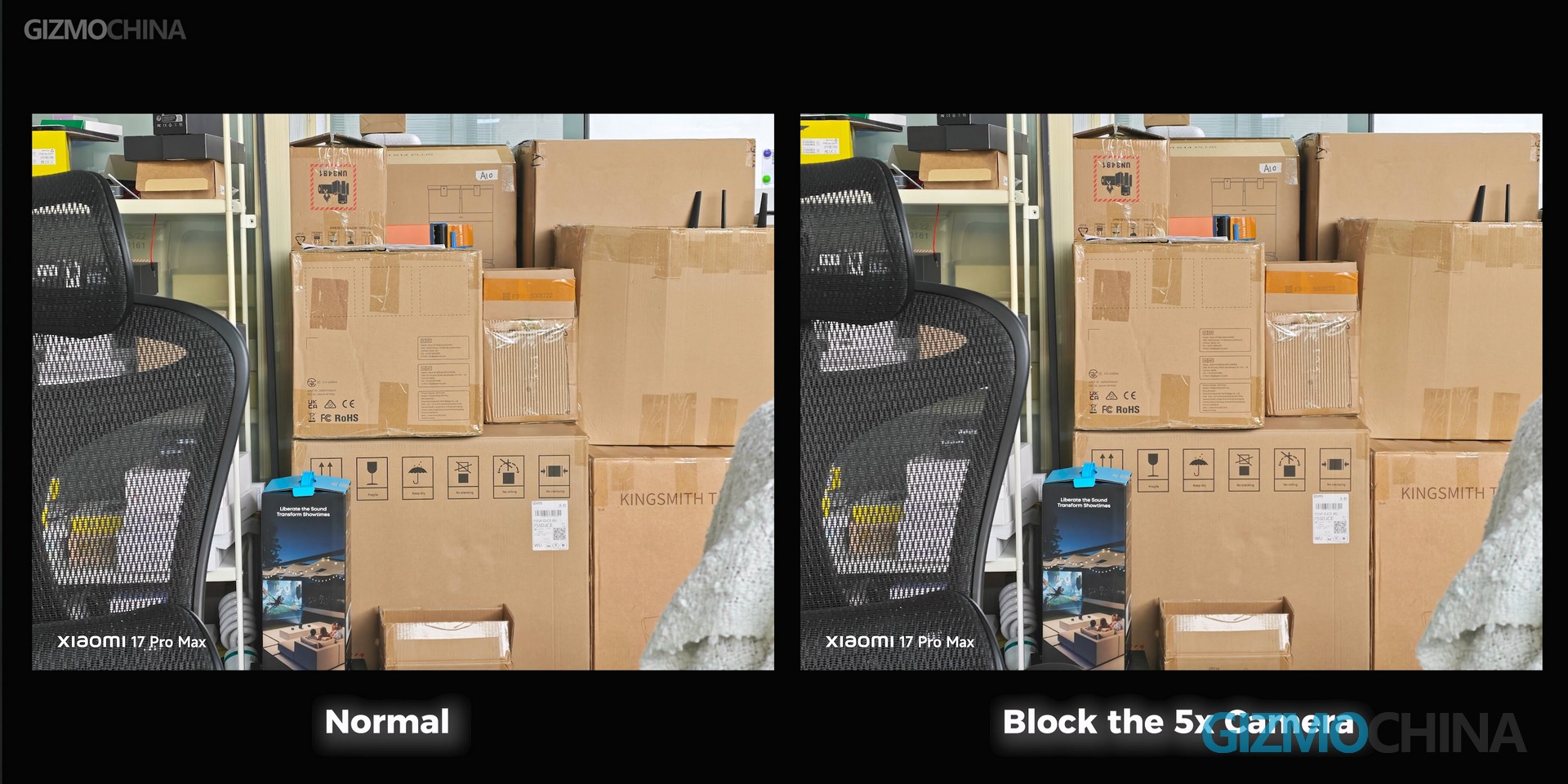
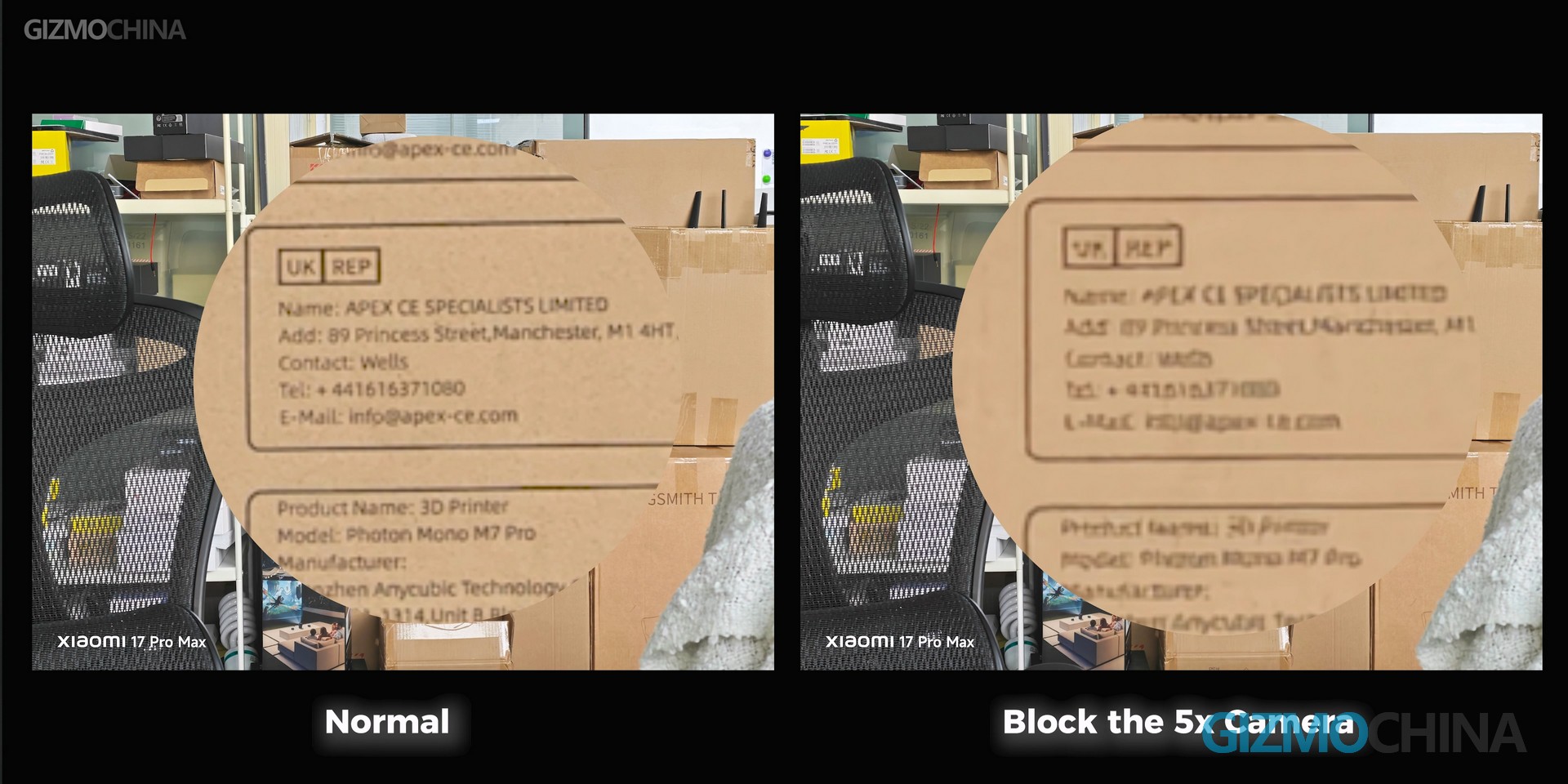
Naturally, I worried whether cropped 70mm shots would look blurry. Surprisingly, they turned out impressively sharp—even scarily so. Compared with the iPhone 17 Pro, the difference becomes obvious. Are these really just cropped shots? Yes—and no.
What actually happens is that the 5x telephoto captures the center portion, which is then blended with the cropped main sensor shot. That’s why the middle looks super sharp, but the edges don’t. You can test this yourself: take two 3x shots, one normally, and one with the 5x lens blocked. When I Zoom in, you’ll see what I mean.
Of course, if you’re too close for the 5x telephoto to lock focus, or if the lighting’s too weak and the image quality difference between the main and telephoto gets too big, the algorithm simply won’t kick in. All in all, the 23–115mm focal range gap isn’t as disastrous as it sounds. Xiaomi actually handled it surprisingly well.
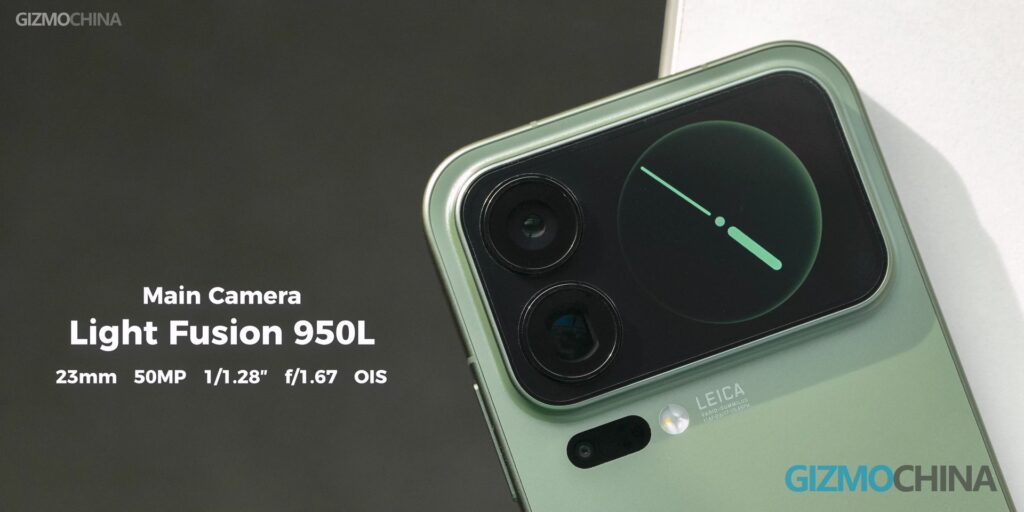
The main camera’s biggest upgrade is dynamic range. Its sensor, using third-gen LOFIC technology, reaches up to 16.5EV. In simpler terms, backlit scenes are exposed more evenly. Comparing it against the iPhone 17 Pro shows a clear difference—Xiaomi pulls ahead in high-contrast situations.
LOFIC theoretically benefits video even more. HDR video looks great, though Xiaomi still trails the iPhone overall. Want to know which phone truly has the stronger camera system—the iPhone 17 Pro or the Xiaomi 17 Pro Max? Stay tuned, because we’ll have a full comparison video soon.
Battery Life
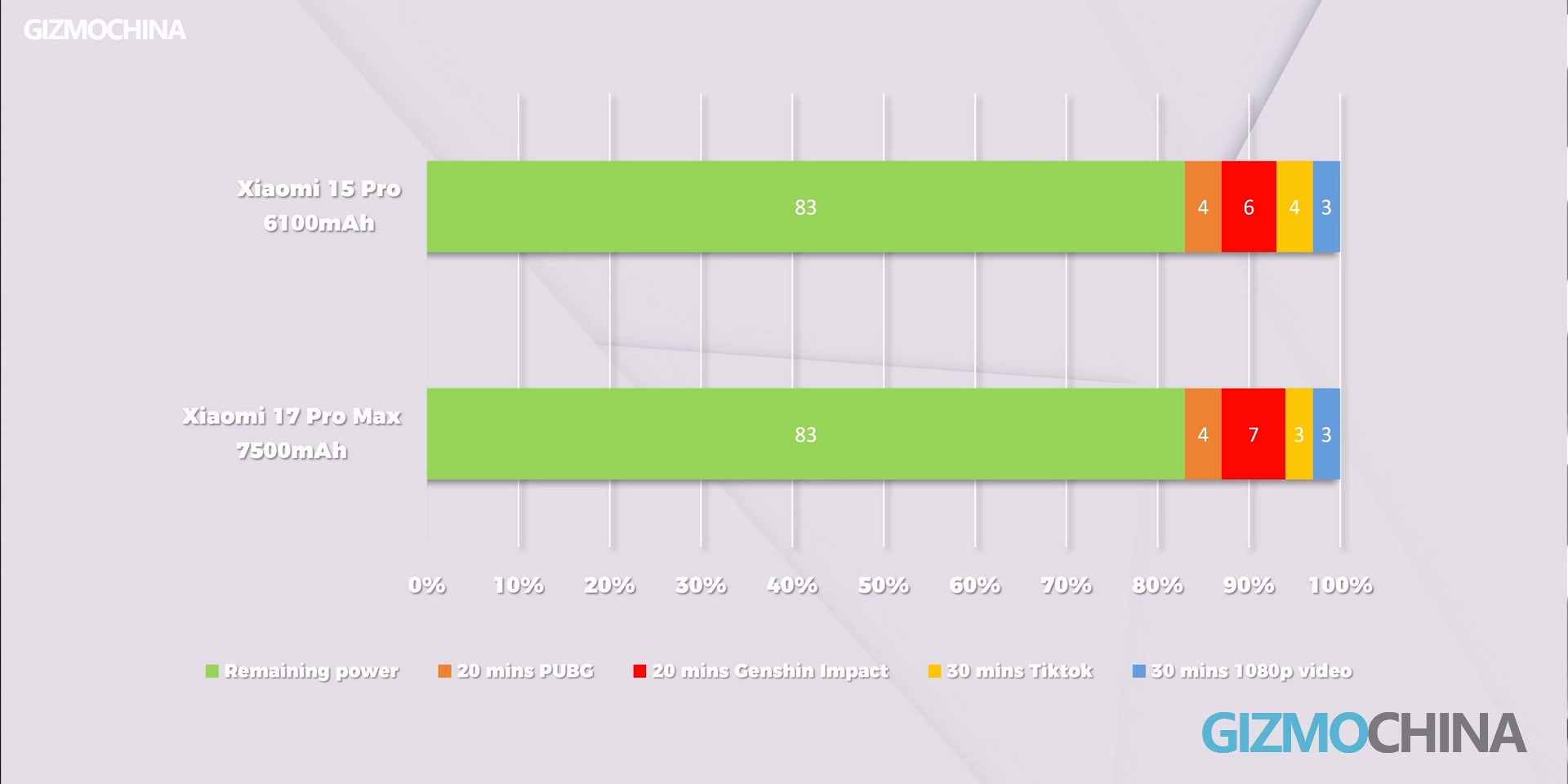
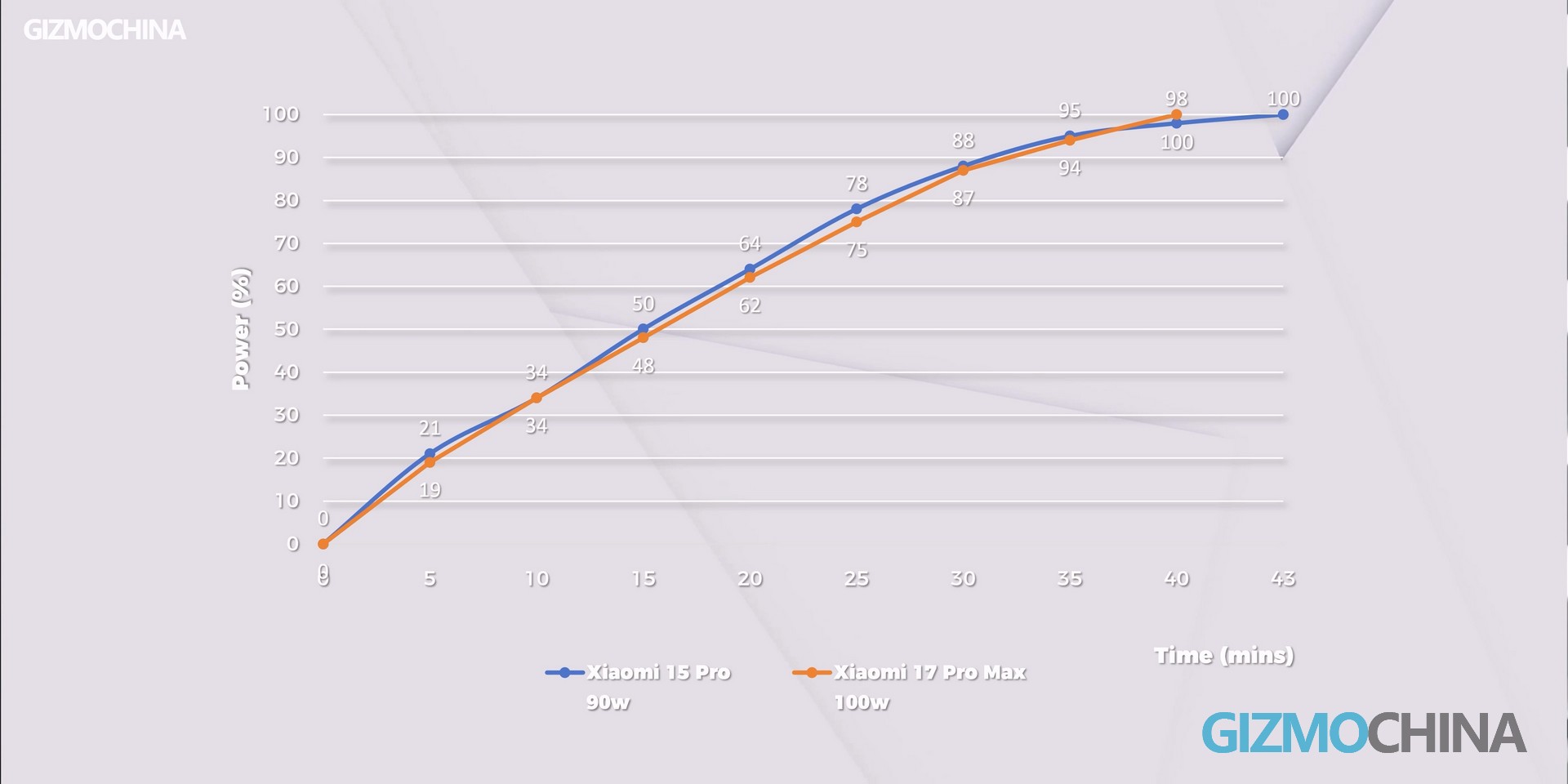
Now let’s talk batteries. The Pro Max packs a 7,500mAh cell—the largest among phones priced above $800. Still, endurance gains weren’t as big as we expected. However, charging is the real surprise. 100W wired charging is a nice upgrade, filling the battery in 40 minutes.
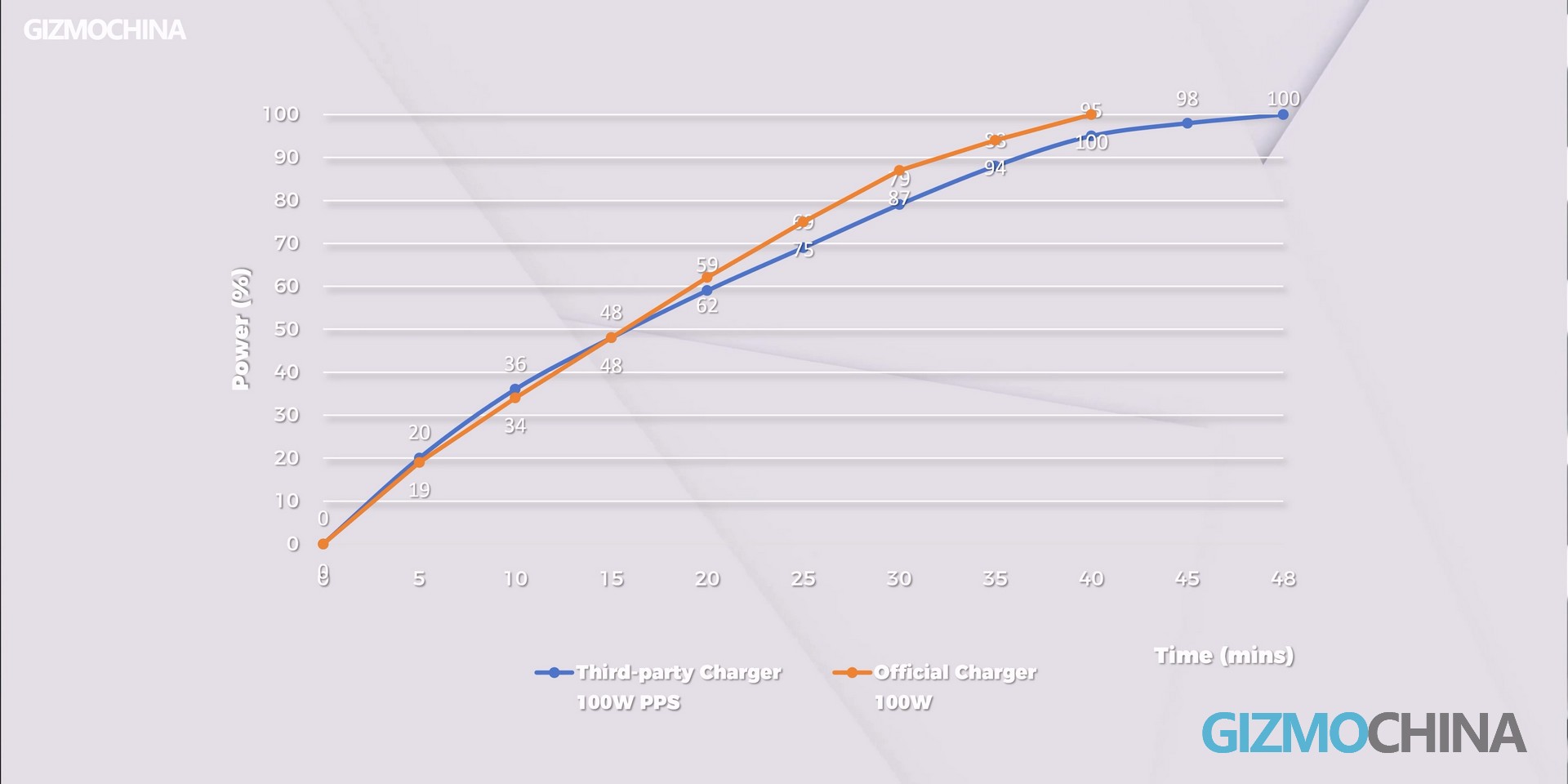
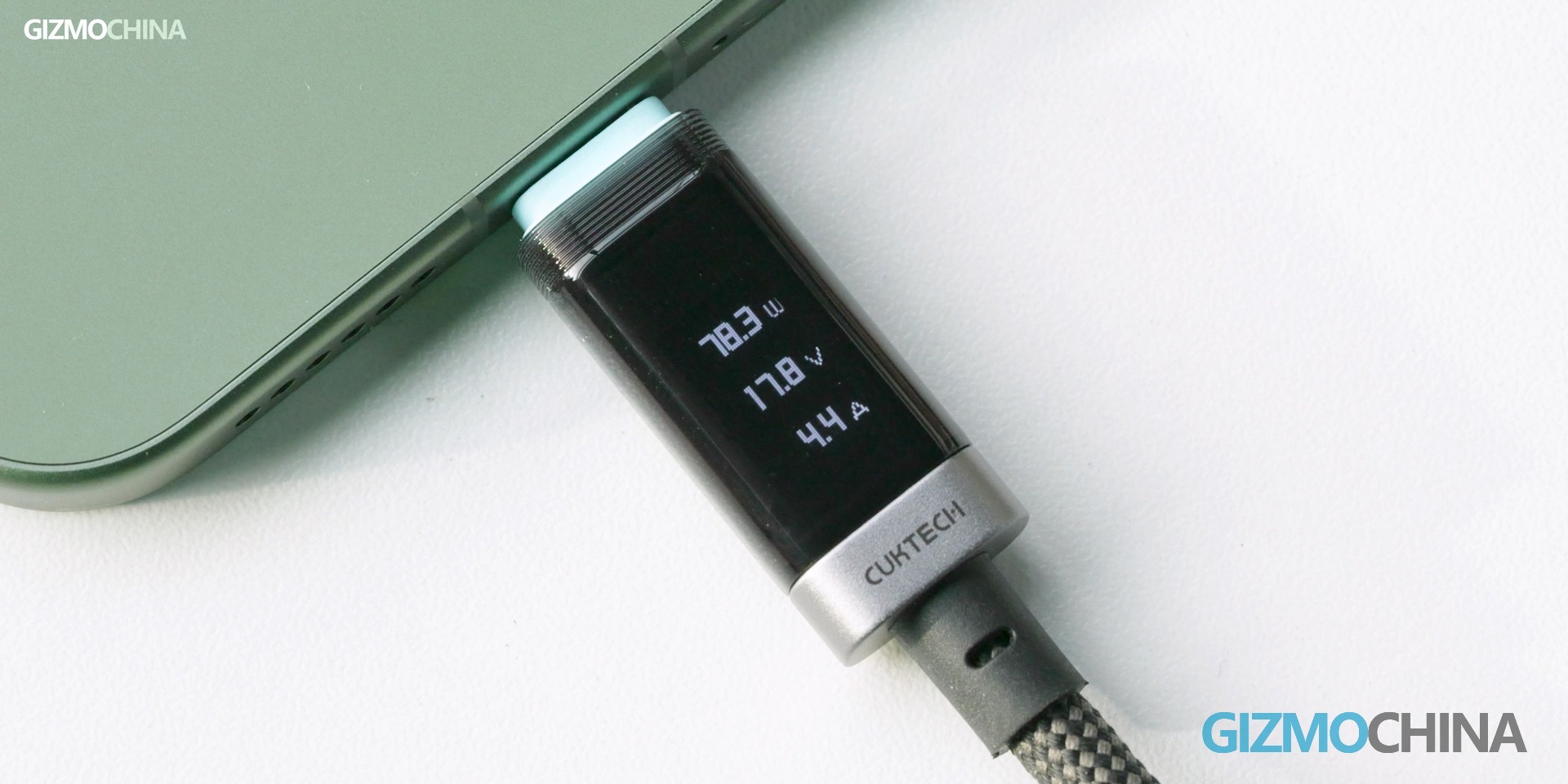
But the real highlight is this: the Xiaomi 17 series now supports 100W PPS charging. That means even a random Amazon charger can fast-charge the 17 Pro Max. In tests, third-party PD chargers charged nearly as fast as the stock one up to 50%, peaking around 80W and sustaining 40W for long periods.
Another good news: Xiaomi will soon open-source its private charging protocol. In the future, third-party chargers will unlock full 100W charging without needing official accessories. And don’t forget—there’s also 22.5W reverse charging. Combined with its 7,500mAh capacity, this phone doubles as a power bank. Without question, this is Xiaomi’s most powerful charging system ever.
My only concern is the global version’s battery size. If the global 17 Pro Max doesn’t meet your endurance needs, you know where to get the Chinese version.
Finally, let’s talk pricing. The standard version stayed the same as last year, but the Pro series saw price hikes across the board. By now, you probably already know whether it’s worth buying.
Yes, it brings a new design, a new display, a new processor, and stronger charging compatibility. But there are also hidden downgrades: a weaker ultra-wide camera, slower USB transfer speeds, and the gaming performance is not that good. Whether the Xiaomi 17 Pro Max is good or bad depends on whether you care about those cons. At the very least, you can’t deny it’s a phone with strong character. Its hot sales in China prove people love it.
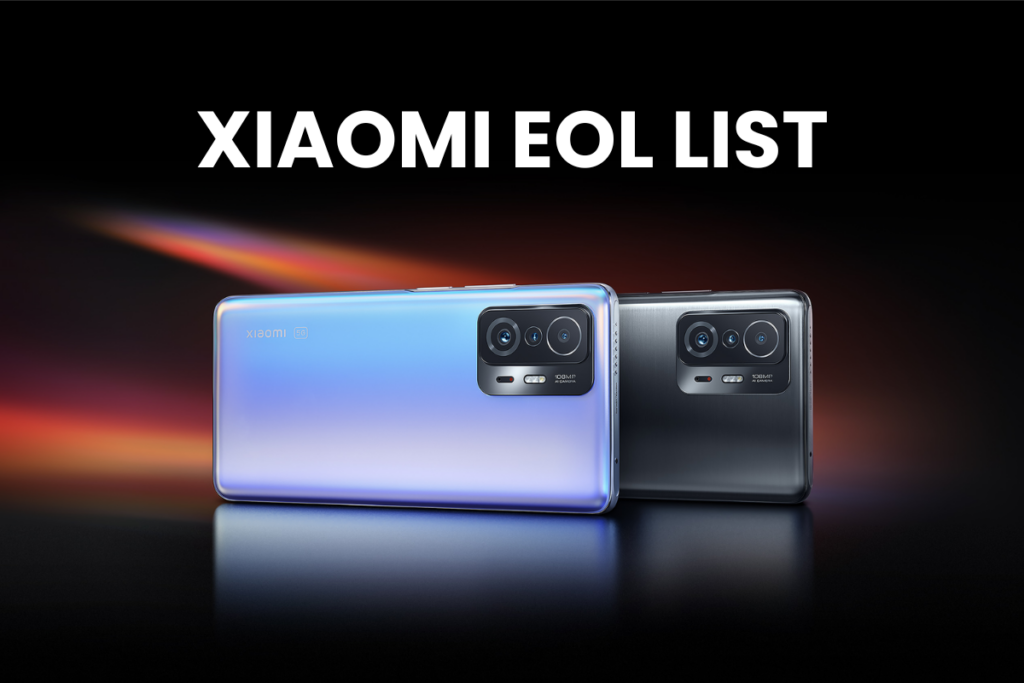
A huge list of Xiaomi devices is going to stop receiving software updates from next year. This means no major Android upgrades, HyperOS updates, or even security updates. Most of those devices won’t be upgraded to HyperOS 3, and some haven’t even received the Android 14-based HyperOS 2 update.
The folks at Xiaomi Time have prepared an extensive list of devices that will not receive software updates beyond 2025. Review it below to find out if yours is nearing the end of life (EOL) and if you’ll need an upgrade to continue receiving the latest features and security enhancements.
List of devices not getting HyperOS 3 before reaching EOL
Xiaomi devices
Xiaomi Mi 11
Xiaomi Mi 11 Lite
Xiaomi Mi 11 Lite 5G
Xiaomi Mi 11 pro
Xiaomi Mi 11 Ultra
Xiaomi Mi 11i
Xiaomi Mi 11X
Xiaomi Mi 11X Pro
Xiaomi Mi 11 LE
Xiaomi 11T
Xiaomi 11T Pro
Xiaomi 11 Lite 5G NE
Xiaomi 11i
Xiaomi 11i HyperCharge
Xiaomi 12 Lite
Xiaomi 12X
Xiaomi Civi
Xiaomi Mix 4
Xiaomi Mi MIX Fold
Xiaomi Pad 5
Xiaomi Pad 5 Pro 5G
Xiaomi Pad 5 Pro Wi-Fi
Redmi devices
Redmi Note 13 4G
Redmi Note 13 4G (NFC)
Redmi Note 12
Redmi Note 12 4G
Redmi Note 12 4G (NFC)
Redmi Note 12 Pro
Redmi Note 12 Pro 4G
Redmi Note 12 Pro+
Redmi Note 12 Pro Speed Edition
Redmi Note 12 Explorer (Discovery)
Redmi Note 12 Turbo
Redmi Note 12S
Redmi Note 12R
Redmi Note 12R Pro
Redmi 12
Redmi 12 5G
Redmi 12C
Redmi A2
Redmi A2+
Redmi Pad SE
Poco devices
Poco F5 5G
Poco F4
Poco F4 Pro
Poco F4 GT
Poco X5 5G
Poco X5 Pro 5G
Poco X4 GT
Poco X4 GT Pro
Poco M6 Plus 5G
Poco M6 Pro
Poco M6 Pro 4G
Poco M5
Poco M5s
Poco M4 5G
Poco C75 5G
Poco C71
Poco C65
Poco C55
Poco C51
List of devices not getting HyperOS 2 before reaching EOL
Most of these devices stopped receiving major updates months ago, and soon they will also run out of security updates. Therefore, they won’t receive any updates at all from next year, unless a major vulnerability is discovered that also affects these devices. In that case, a minor update may be released.
If your Xiaomi device is on the above list, it may have already reached its end of life, or will reach there very soon. That means it won’t get security updates, which could expose your device to many security vulnerabilities.
While you can continue to use your existing device, it’s recommended that you upgrade to a newer model, especially if the device has critical data stored on it. Check out this list of Xiaomi devices that offer six years of software updates to find one that stays relevant for years to come.
Huawei is reportedly preparing to introduce its next smartwatch in India. According to recent leaks, the upcoming wearable may include advanced health tracking features not commonly seen on wrist devices. The teaser suggests that the company could be bringing a model already available in global markets, with the announcement expected in the near future.
Huawei’s smartwatch with blood pressure monitoringincoming
Huawei watch with bloood pressure monitoring coming soon to India
The online teaser shows a silhouette of a smartwatch against a red ECG-like pulse line, alongside the caption highlighting wrist-based blood pressure monitoring. This points to Huawei’s efforts to bring more advanced health monitoring to Indian users. Globally, the brand unveiled the Huawei Watch D2 in September 2024, which was certified for continuous blood pressure measurement. It is likely that this model could be introduced in India soon.
Unlike regular smartwatches that only track heart rate or SpO₂, the Watch D2 adds ambulatory blood pressure monitoring (ABPM) through an ultra-narrow physical airbag that inflates discreetly to provide accurate readings. It can measure blood pressure at set intervals, during sleep, or in different body positions, making it one of the most comprehensive wrist-based solutions.
Huawei Watch D2
The Huawei Watch D2 also includes ECG analysis, vascular elasticity checks, respiratory health insights, and stress monitoring. It can measure up to nine indicators in one tap and generate a detailed health overview report. With over 80 workout modes, GPS, NFC, and compatibility with both Android and iOS, it also doubles as a full fitness companion.
The watch features a 1.82-inch AMOLED screen, IP68 water resistance, multiple sensors, and up to 6 days of battery life under normal usage. With ABPM enabled, it lasts about a day.
For more daily updates, please visit our News Section.
We use cookies on our website to give you the most relevant experience by remembering your preferences and repeat visits. By clicking “Accept”, you consent to the use of ALL the cookies.
This website uses cookies to improve your experience while you navigate through the website. Out of these, the cookies that are categorized as necessary are stored on your browser as they are essential for the working of basic functionalities of the website. We also use third-party cookies that help us analyze and understand how you use this website. These cookies will be stored in your browser only with your consent. You also have the option to opt-out of these cookies. But opting out of some of these cookies may affect your browsing experience.
Necessary cookies are absolutely essential for the website to function properly. This category only includes cookies that ensures basic functionalities and security features of the website. These cookies do not store any personal information.
Any cookies that may not be particularly necessary for the website to function and is used specifically to collect user personal data via analytics, ads, other embedded contents are termed as non-necessary cookies. It is mandatory to procure user consent prior to running these cookies on your website.