Honor launched the Watch 6 in global markets in June, after the Watch 6 Plus first arrived in China. The Watch 6 Pro then debuted in China in late September as a more premium follow-up to last year’s Watch 5 Pro. Honor has now taken the Watch 6 Pro global, with pre-orders opening in Europe and the UK.
The Honor Watch 6 Pro measures 46.3 x 46.3 x 11.6mm, weighs 50.9g without the strap, and uses a 316L stainless steel front case with a nanocrystalline ceramic bezel. The 1.5-inch dual-layer OLED, or Ultra-Bright Tandem Display, has a 466 x 466 resolution and a peak brightness of 5,500 nits, up from 3,000 nits on the Watch 5 Pro.
Honor’s Intelligent Sense System can run a Quick Health Scan of heart rate, blood oxygen, and stress, plus a Healthy Morning Report for sleep, Body Energy, and HRV. There are more than 120 sports modes, including an AI running coach, trail running with route-back navigation, and football and badminton tracking, with AccuTrack dual-band L1+L5 GNSS.
Honor Watch 6 Pro
A 515mAh battery is rated at up to 18 days in Ultra-Long Battery Mode, 10 days in typical use, and seven days with always-on display. The watch is rated 5ATM, IP68, IP69, and IP69K, supports NFC payments through Fidesmo, and works with Android 9.0 or later and iOS 15.1 or later, including dual-phone notifications from an Honor phone and an iPhone. Honor’s global materials do not list the cardiac arrest detection featured at the China launch.
Pre-orders opened November 19 in Europe and the UK, in black with a fluoroelastomer strap and silver with a steel strap. The black model is €379.90 / £329.99, and the silver model is €429.90 / £379.99, or €279.90 / £229.99 and €329.90 / £279.99 with a €100 / £100 early-bird discount. That offer runs through December 31 in Germany and Italy, and through December 7 in France.
Shipping starts from November 25 in France, November 26 in the UK, and November 27 in Italy and Spain. Early-buyer extras can include Honor Choice clip-on earphones, an extra 22mm leather strap, and a 12-month care package.
Smartphone prices have gone up significantly in 2026, and Samsung is no exception. Several of its latest Galaxy A and S series models launched at higher prices than their predecessors and have seen further price hikes in the months since. So, if you’re looking for a still-affordable Galaxy phone this year, here are the best options you can get in the US for under $500.
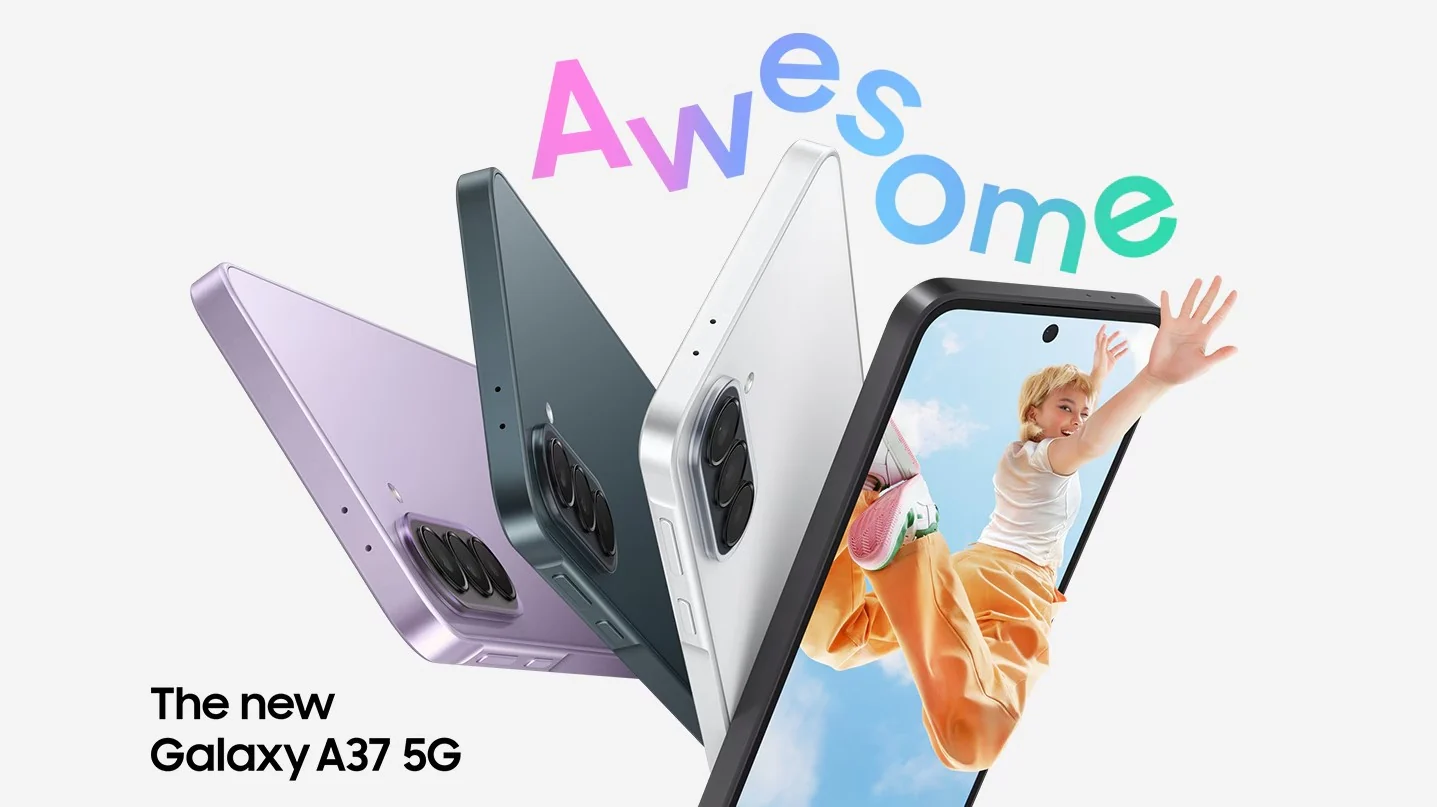
The Galaxy A37‘s launch price was $449 in April, but it went up to $489 in October. Discounts during sales events may bring it down a bit, though. It’s listed for $390 on the Samsung US store as part of the early Black Friday sale as of writing.
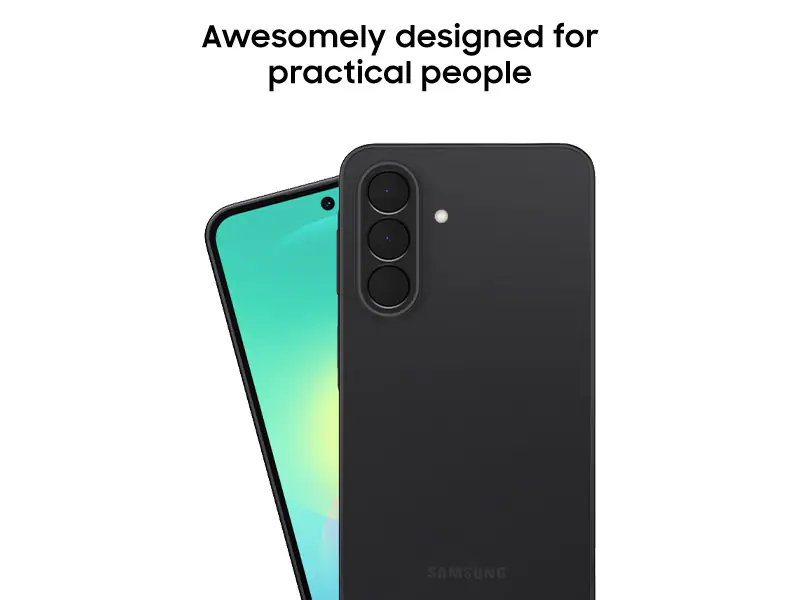
For less than $500, the phone offers a clean rear design with a pill-shaped camera island and a punch-hole selfie. It also features a nice 6.7-inch AMOLED display with Full HD+ resolution, a 120Hz refresh rate, and 1,200 nits of global peak brightness.
The A37 is powered by the Exynos 1480 chipset, and Samsung promises up to six major OS updates. On the back, there’s a 50MP main camera with a 1/1.56” sensor, paired with an 8MP ultrawide and a 5MP macro camera. The front camera is a 12MP unit.
The phone packs a 5,000mAh battery, which is pretty standard for Samsung phones in 2026, and supports 45W fast charging.
2. Galaxy A27
Comparison
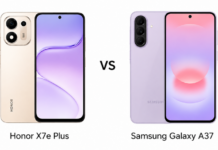
The Galaxy A37 has a 6.7-inch 120Hz Super AMOLED at FHD+. The Honor X7e Plus has a 6.87-inch 120Hz TFT LCD at HD+.
A slightly cheaper alternative that looks almost identical to the Galaxy A37 is the Galaxy A27. It also features a vertical, pill-shaped camera island on the back and a punch-hole cutout for the selfie camera.
It packs a 6.7-inch Full HD+ AMOLED display with a 120Hz refresh rate. Under the hood, it runs on the Snapdragon 6 Gen 3 processor, and Samsung promises six major OS updates.
The main camera is still a 50MP unit, but it uses a physically smaller main sensor: 1/2.76” as compared to the A37’s 1/1.56”. This could result in slightly weaker low-light performance, which is expected given the phone’s lower positioning. The main camera is accompanied by a 5MP ultrawide and a 2MP macro camera. Both have lower resolutions than their counterparts on the A37. The selfie camera remains a 12MP unit.
The battery capacity is unchanged at 5,000mAh, but charging is slower at 25W compared to the A37’s 45W support.
The Galaxy A27 is listed on Samsung’s US store at $379.
3. Galaxy A57
The Galaxy A57 can be found for less than $500 during sales. As of writing, it’s listed at $499 on Samsung’s US store as part of the company’s Black Friday deal.
The phone packs a more capable and efficient Exynos 1680 chipset and comes with a promise of six major OS updates. The rear design remains largely unchanged, with a vertical pill-shaped camera island housing three lenses. The main and macro cameras are the same as those on the A37, but the ultrawide gets an upgrade to 12MP, up from 8MP on the A37.
The A57 also features an aluminum middle frame, giving it a more premium feel in hand and making it more durable than the cheaper options in the lineup.
4. Galaxy A17
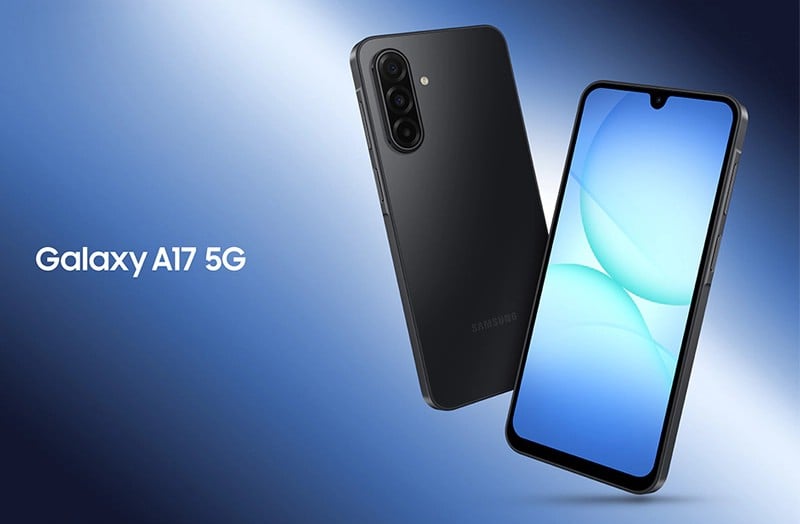
If you’re looking for a more affordable handset, the Galaxy A17 gets the job done with its Exynos 1330 chipset and a promise of six major OS updates. It still features a 6.7-inch Full HD+ AMOLED display, but with a 90Hz refresh rate and a global peak brightness of 800 nits. That’s a bit lower than what the more expensive options offer, but should still be adequate for everyday use.
The phone has a 50MP main camera, like the Galaxy A27, paired with a 5MP ultrawide and a 2MP macro camera. There’s a 13MP selfie camera on the front. It packs the same 5,000mAh battery as the more expensive models and supports 25W wired charging.
The real difference, however, lies in the design. Unlike the punch-hole cutout on the Galaxy A57, A37, and A27, the A17 has a U-shaped notch for its front camera. That said, the rear design remains very similar to the more expensive models.
The Galaxy A17 has an official list price of $269 in the US, although discounts can bring it down a little further.
5. Galaxy S25 FE Certified Re-Newed
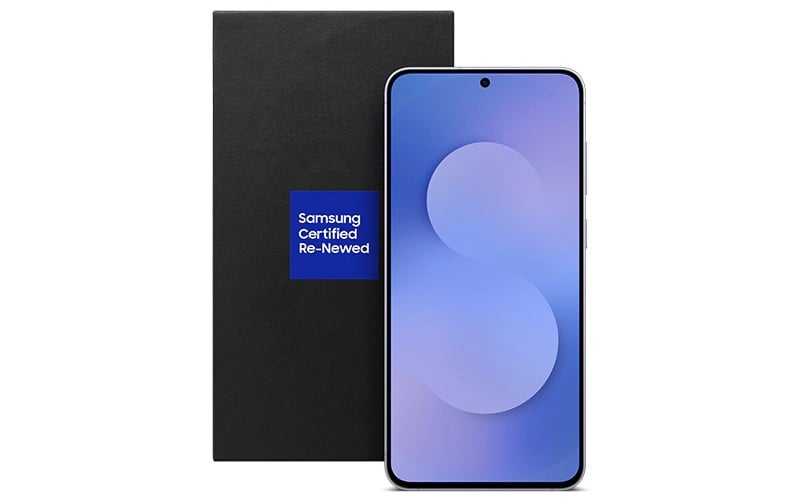
Customer feedback on Samsung Certified Re-Newed products is largely positive when it comes to hardware quality. The company also says it replaces the battery in its certified renewed devices with a new, genuine one.
If you’re comfortable buying a renewed phone from Samsung, the Galaxy S25 FE Certified Re-Newed is a good option. It’s listed at $479 on the brand’s official US store, making it cheaper than the regular list price of the Galaxy A57.
As part of Samsung’s S series, the phone packs the flagship Exynos 2400 chipset, paired with faster UFS 4.0 storage. Its camera setup includes a 50MP main camera with a 1/1.57” sensor, an 8MP telephoto camera with 3x optical zoom, and a 12MP ultrawide.
The battery is slightly smaller at 4,900mAh, but it supports the same 45W wired charging as the A57. It also supports 15W wireless charging and is Qi2 compatible.
OnePlus recently launched the OnePlus 16 in China with a 185Hz BOE display, and leaks about its next flagship have already started trickling in. Tipster Digital Chat Station had earlier floated a 2K panel with a 240Hz refresh rate for a future OnePlus phone. Now, the same tipster has revealed a new BOE screen that could end up on an upcoming OnePlus flagship.
OnePlus 17’s display specs may have leaked
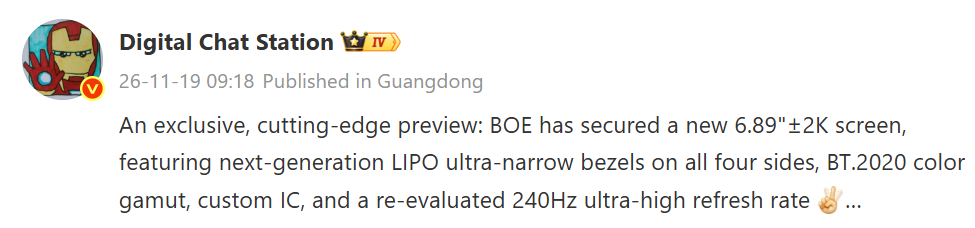
According to the tipster, BOE has secured a new 6.89-inch 2K screen with next-generation LIPO ultra-narrow bezels on all four sides, BT.2020 color gamut, a custom IC, and a re-evaluated 240Hz ultra-high refresh rate. He did not name a model.
The 2K and 240Hz combination lines up with his June claim that OnePlus could push refresh rates toward 240Hz and return to 2K once such panels arrive without big trade-offs. For context, the OnePlus 16 uses a 6.78-inch BOE X4 OLED with 1.5K resolution, system-wide 165Hz, and up to 185Hz in supported games, so this new panel would be a clear step up.
Comparison
The OnePlus 16 has a 9,000mAh battery and a 200MP main camera. Wired charging drops from 120W to 100W.
The OnePlus 17 is the obvious candidate, but it is not a clean match. Recent leaks suggest a wide-screen design for the OnePlus 17, with Smart Pikachu tagging it as one of 2027’s top-performing wide-screen phones. Digital Chat Station had also said OnePlus may skip a successor to the compact OnePlus 15T in favor of a wide-screen phone. However, it cannot be ruled out yet. The OnePlus 17 is expected to break cover around October 2027, just as the OnePlus 16 debuted this year, so its display plans could still change.
For global buyers, the bigger question is whether a 240Hz 2K panel will be useful beyond a handful of games. The OnePlus 15 advertised 165Hz but generally ran at up to 120Hz outside a few titles. The OnePlus 16 fixes that with a true system-wide 165Hz mode, and a global and India variant is already under testing. A 2K 240Hz successor would go even further, well above the 120Hz rates common on iPhone and Galaxy flagships.
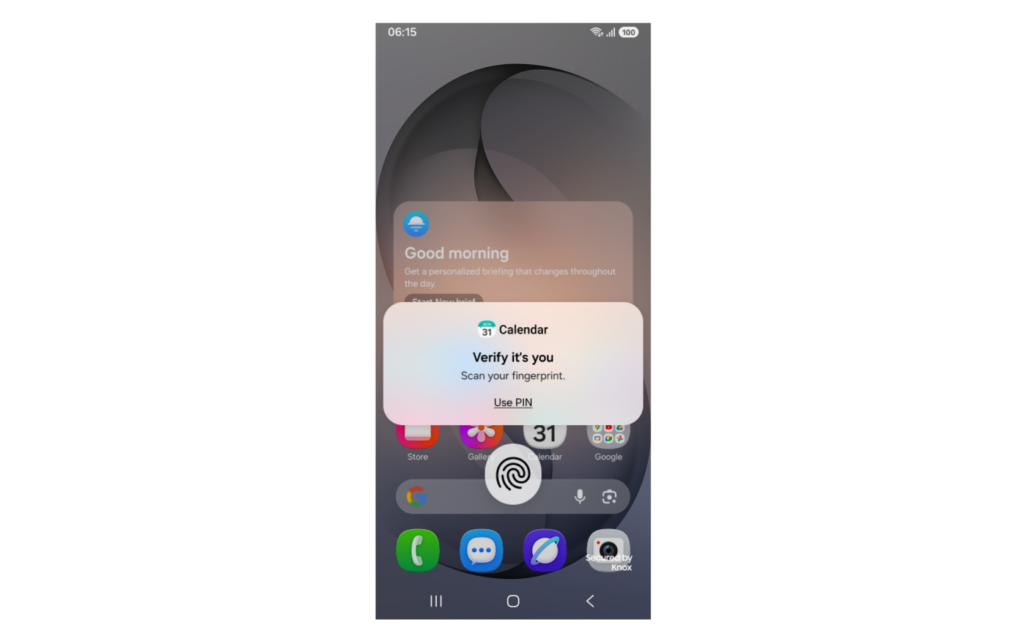
Samsung is rolling out One UI 9.5 beta earlier than last year’s One UI 8.5 beta, as we suggested previously. Based on Android 17, this upgrade brings some major changes, such as Mindful notes, enhanced camera controls, and Live effect for wallpaper. Samsung has also integrated the much-requested app lock feature — finally.
Samsung One UI 9.5 beta: Supported devices and regions
Samsung launched the One UI 9.5 beta program on November 18, and to no one’s surprise, the Galaxy S26 phones were the first recipients.
Unfortunately, the list doesn’t include the Galaxy Z Fold 8 and Galaxy Z Fold 8 Ultra, which are among the best phones Samsung has to offer. However, they will eventually receive the beta when Samsung opens it to more devices. There’s no official timeline yet, though it will likely happen early next year.
Samsung also puts restrictions on regions, as the One UI 9.5 beta is only open to users in India, Germany, Korea, Poland, the UK, and the US. Outside of those regions, users won’t be able to download the beta.
One thing about the rollout is worth praising, though: Samsung has released One UI 9.5 beta in all eligible regions on the same day. Typically, India and Poland receive the beta update around 1–2 weeks later than other eligible regions, but the gap is no longer there this time.
How to install the One UI 9.5 beta on your Galaxy device?
You must sign up for the beta program before you can actually install the One UI 9.5 beta. Here are all the steps to perform:
Open the Samsung Members app on your Galaxy device.
Scroll down until you see the One UI Beta banner and tap on it.
Tap One UI 9.5 Beta and click Join.
Tap again to confirm.
Now, go to Settings > Software updates and tap Download and install.
Download the update and install it.
Your device should reboot itself to apply required changes.
Since it’s a beta update, you shouldn’t expect the software to be fully polished. There may be some bugs or broken features. You can always revert back to a stable update if you want, though it may require a factory reset.
You can read more about the changes in One UI 9.5 beta on this page.
Open-ear clip-on earbuds are gaining attention as an alternative to traditional in-ear designs, offering a way to enjoy music and take calls without blocking the ear canal. The Vivo Buds Clip and Huawei FreeClip 2 follow this approach, combining lightweight construction with flexible ear hooks and open-ear audio. However, there are some notable differences between them. Vivo focuses on a larger driver, longer battery life and multi-device connectivity, while Huawei brings a dual-diaphragm driver, adaptive volume and stronger water resistance. Their prices also put them in different segments, making this comparison particularly interesting for buyers deciding how much to spend on a pair of clip-on earbuds.
Disclaimer: Specs are based on available data. Actual performance may vary. Verify details from official sources before buying.
2. Design and Comfort
Build & Fit
Both the Vivo Buds Clip and Huawei FreeClip 2 feature an open-ear clip-on design that rests around the ear without entering the ear canal. This construction allows users to listen to music while remaining aware of their surroundings.
Vivo uses a memory titanium alloy connector designed to provide flexibility and a secure fit. Huawei also follows a lightweight clip-on construction, with each FreeClip 2 earbud weighing just 5.1g. The design focuses on maintaining a comfortable fit during extended listening sessions.
Durability is another difference. The Vivo Buds Clip carries an IP55 rating, while Huawei offers IP57 protection for its earbuds, giving the FreeClip 2 better resistance against water and dust.
Controls & Usability
Vivo supports tap, press and swipe gestures, alongside wear detection and remote camera control. Huawei offers double-tap, triple-tap and swipe controls, with infrared-based wear detection.
Verdict
Both offer practical designs, but Huawei has an advantage in water resistance, while Vivo provides more varied controls and remote camera functionality.
3. Sound Quality
Driver Performance, Bass, Mids and Highs
The Vivo Buds Clip features a 12mm driver, while the Huawei FreeClip 2 uses a 10.8mm dual-diaphragm driver. Vivo’s larger driver gives it an advantage in size, while Huawei uses its dual-diaphragm arrangement to deliver its open-ear audio experience.
Vivo also offers four spatial audio modes and a 10-band custom EQ, allowing users to adjust the sound according to their preferences. These options provide greater flexibility when switching between different listening styles.
Huawei counters with multi-EQ sound effects and custom EQ support, along with adaptive volume that adjusts playback levels according to the surrounding environment. This is particularly useful for open-ear earbuds, where external sounds remain audible during music playback.
Codec Support & Audio Features
Vivo’s supplied specifications do not include confirmed codec information, so no codec advantage is assigned to either product. Both offer audio customisation, although Vivo provides more detailed spatial audio options through its four modes.
Verdict
Vivo has the advantage with its larger 12mm driver, four spatial audio modes and 10-band EQ. Huawei’s dual-diaphragm driver and adaptive volume make it a strong alternative, particularly for users who frequently listen in changing environments.
4. ANC and Transparency Modes
Noise Cancellation Quality
Neither product is positioned as a conventional ANC-focused pair of earbuds. Their open-ear clip-on construction allows users to remain aware of surrounding sounds instead of relying on sealed ear tips to block external noise.
The Vivo Buds Clip does not support ANC, focusing instead on call noise cancellation through its dual microphones and VPU bone-conduction microphone. This combination uses AI processing to reduce background noise during calls.
Comparison
Both the Vivo Buds Clip and the CMF Clip Pro give up to 10 hours of battery life on a single charge.
Huawei also includes call noise cancellation on the FreeClip 2, helping improve voice clarity during conversations. Its open-ear construction provides natural environmental awareness without requiring a dedicated transparency mode.
Ambient & Call Performance
For everyday calls, Vivo’s dual-microphone and VPU setup is an interesting feature, particularly for conversations in noisier environments. Huawei offers call noise cancellation alongside its additional bone acoustic sensor, giving it a more extensive sensor arrangement.
Neither model offers the traditional ANC and transparency switching experience found on conventional in-ear earbuds.
Verdict
Both prioritise environmental awareness and clearer calls over traditional noise isolation. Vivo has a more specifically detailed microphone configuration, while Huawei brings additional sensor technology.
5. Battery and Connectivity
Battery Life & Fast Charging
The Vivo Buds Clip offers up to 10 hours of playback on a single charge, extending to 42 hours with its charging case. Huawei FreeClip 2 provides up to 9 hours from the earbuds and 38 hours with the case.
Vivo therefore takes the lead in both standalone and combined battery life. Its fast-charging support is another advantage, providing up to three hours of playback from just 10 minutes of charging.
Huawei offers a more comprehensive charging setup, supporting USB Type-C wired charging and wireless charging at up to 3W. The charging case takes approximately 50 minutes to recharge through a wired connection.
Bluetooth Stability and Multipoint
Vivo uses Bluetooth 5.4 and supports simultaneous connections to three devices, while Huawei upgrades to Bluetooth 6.0 with dual-device connectivity. Vivo is more convenient for users switching between a phone, tablet and laptop, whereas Huawei offers the newer Bluetooth standard.
Verdict
Vivo wins on battery endurance, fast charging and multi-device connectivity. Huawei’s wireless charging and Bluetooth 6.0 support remain useful advantages.
6. Pricing
The price difference between these two open-ear earbuds is substantial. The Vivo Buds Clip costs approximately $90 (₹8,300), while the Huawei FreeClip 2 comes in at around $200 (₹18,000).
Vivo is considerably more affordable despite offering a larger 12mm driver, longer battery life, fast charging, three-device connectivity and four spatial audio modes. It also includes a 10-band EQ, remote camera control and a memory titanium alloy connector.
Huawei justifies its higher price with features such as Bluetooth 6.0, IP57-rated earbuds, adaptive volume, a dual-diaphragm driver and wireless charging up to 3W. Its additional sensors and customisable audio features also contribute to its premium positioning.
However, the price difference is difficult to overlook. Vivo delivers a strong combination of everyday features without requiring buyers to spend nearly twice as much.
Verdict: Vivo Buds Clip is the clear value winner, while Huawei FreeClip 2 is better suited to buyers willing to pay extra for its additional refinements.
7. Conclusion
The Vivo Buds Clip stands out with its 12mm driver, memory titanium alloy connector, four spatial audio modes, 10-band EQ and VPU-based call noise cancellation. Its 42-hour total battery life, 10-minute fast charging and three-device connectivity make it particularly practical for everyday use. Remote camera control is another useful addition.
Huawei FreeClip 2 brings a different set of strengths, including its 10.8mm dual-diaphragm driver, Bluetooth 6.0, adaptive volume, IP57 water resistance and wireless charging. Its lightweight 5.1g construction and extensive sensor arrangement further contribute to its appeal.
Verdict
The Vivo Buds Clip emerges as the more compelling overall package, particularly when its features are considered alongside its considerably lower price. It offers longer battery life, more flexible device connectivity and additional audio customisation.
Huawei FreeClip 2 remains a worthwhile premium alternative, especially for buyers who prioritise water resistance, adaptive volume and wireless charging.
Ultimately, Vivo Buds Clip offers better value for money, while Huawei FreeClip 2 brings a more premium feature set. The choice comes down to whether those additional refinements justify the considerable price difference.
Huawei has confirmed that it will hold a launch event on November 24 to unveil the Mate X8 foldable, alongside the Mate 90 Air and the Watch Air. Earlier this week, a leaked poster gave us an early look at the watch’s slim titanium design. Now, the company has officially teased the wearable, while a well-known tipster has filled in most of the remaining specifications.
Huawei Watch Air official design and colors
Huawei Watch Air
Huawei’s official teaser confirms that the Watch Air measures just 6.9mm thick, making it the company’s thinnest smartwatch yet. It features a square display with 1.4mm bezels on all four sides, protected by sapphire glass, and a glossy titanium unibody.
Our picks
The Xiaomi 15 Ultra is one of our Best Smartphone picks from MWC 2025. The list also has a special AI category.
The teaser also confirms three body colors. Renders show the watch in silver, light gold, and black titanium finishes, paired with sport silicone, woven, and Milanese metal straps. Huawei has not revealed pricing yet, and those details should arrive at the launch event.
Huawei Watch Air specifications (rumored)
Huawei Watch Air
According to tipster Digital Chat Station, the Watch Air packs a 1.92-inch AMOLED display with an 86 percent screen-to-body ratio, 3,500 nits of peak brightness, and LTPO 2.0 technology. He claims the watch weighs 27 grams and offers about a week of battery life per charge, thanks to a high-silicon stacked battery. That differs from an earlier claim of around five days, so the official figure remains to be seen. The tipster adds that its health features will match the Watch 6, while its sports features will mirror the Watch GT 7 Pro.
If accurate, the Watch Air will be noticeably slimmer than its main rivals. The Apple Watch Series 12 measures 9.7mm thick, with the 42mm aluminum model weighing 32.2 grams, while the Galaxy Watch 9 is 8.6mm thick and weighs 31.5 grams in its 40mm size. Its rumored 3,500-nit peak brightness would also top the Series 12’s 2,000 nits and the Galaxy Watch 9’s 3,000 nits.
Huawei will hold a launch event on November 24 to unveil the Huawei Mate X8 foldable phone. This will not be the only device, as the brand has confirmed that it will also announce the Mate 90 Air and Watch Air. It is officially billed as the thinnest Mate bar phone yet. Here’s a look at the first details of the Mate 90 Air.
Huawei Mate 90 Air design, colors and configurations
Pitched as a “light and thin flagship,” the Mate 90 Air follows the Mate 90 series design language, with a spliced rear panel and a large circular camera island that houses three cameras and a Red Maple color sensor. Both the front and back glass are curved and flow into a rounded frame, a rare choice now that most flagships have gone flat.
Huawei Mate 90 Air
The phone is already listed on Huawei’s Vmall store in three colors: Rose Gold (玫瑰金), Moon Silver (皓月银), and Obsidian Black (曜石黑). Earlier leaks also pointed to a green option, but it is not listed yet. Each color comes in 12GB+256GB and 12GB+512GB versions. Prices are not listed yet, and the leaked 16GB versions are absent so far.
Comparison
On display, Huawei wins on brightness and water resistance. Xiaomi answers with richer HDR support and a second screen on the back.
The Mate 90 Air is tipped to feature a 7-inch-class 1.5K quad-curved display and a Kirin 9030 series chip, with 12GB models reportedly getting the Kirin 9030 and 16GB versions stepping up to the Kirin 9035. It is also said to pack a roughly 6,800mAh battery with 66W wired and 50W wireless charging, and run HarmonyOS 7.
Huawei Mate 90 Air
For context, the Mate 70 Air measured 6.6mm and packed a 7-inch OLED screen with a 6,500mAh battery, starting at 4,199 yuan. The new model appears slimmer still, yet its rumored battery dwarfs those of the iPhone Air and Galaxy S25 Edge, which sit under 4,000mAh. That battery lead was the Mate 70 Air’s biggest advantage over them. With the Mate 90 starting at 5,999 yuan, expect a price increase over the predecessor.
Before the Mate X8 event, Huawei’s new OSTA sub-brand will launch the OSTA O1 Pro on November 20, with pre-orders already open on Vmall. The wide-screen phone comes in Starry Black, Nebula White, and Starburst Purple, while leaks point to a Kirin 9030S chip, a 200-megapixel main camera, and a 7,000mAh battery.
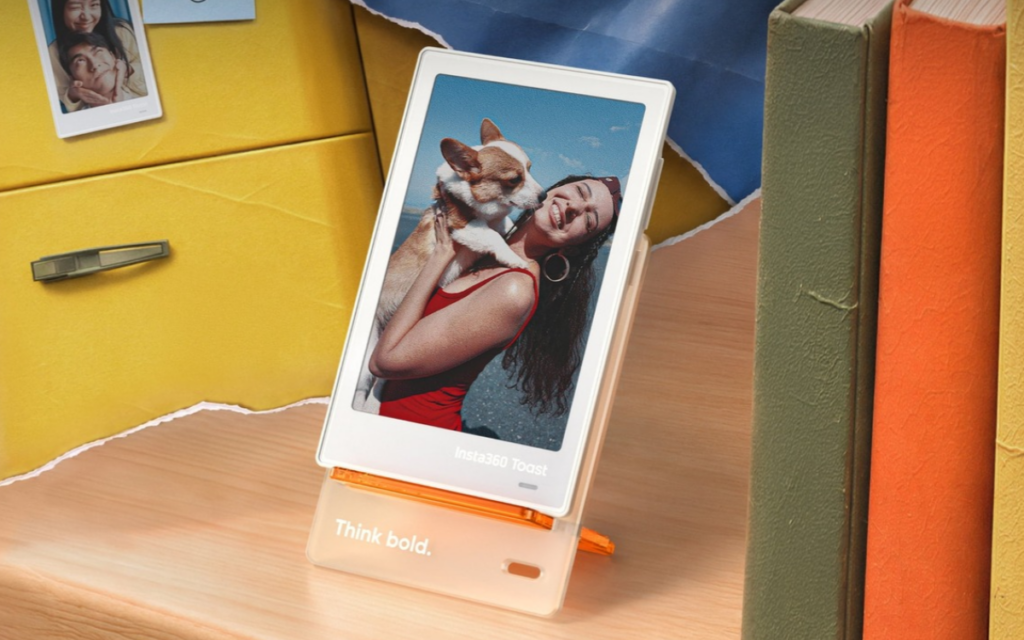
Insta360 has recently launched a compact E-Ink photo display called the Toast. It is priced at 429 yuan ($64) for a single unit or 815 yuan ($122) for a two-pack. The device essentially functions as a pocket-sized digital photo frame that users can attach to a refrigerator, place on a desk, or hang from a bag.
Insta360 Toast Specifications
Instead of a standard LCD or OLED screen, the Toast uses a 3.7-inch E Ink Spectra 6 panel. Most color E-Ink screens use four ink colors, but this one uses six: red, yellow, blue, green, black, and white. The resolution is 720 x 480. Because it is an E-Ink display, it doesn’t have a backlight. It relies on the ambient light in the room, which gives the images a matte, physical look rather than the glow of a typical screen.
The main benefit of using E-Ink is battery life. The screen only draws power when the image is actively changing. Insta360 says the 400mAh battery can last up to 195 days, assuming you only update the photo once a day. If you forget to charge it and the battery completely dies, the screen won’t go blank; it will just permanently display whatever the last photo was.
You manage the photos through the Insta360 app or a WeChat Mini Program. The device connects via Wi-Fi and Bluetooth, allowing you to send photos to it from your phone, even remotely. It stores up to 30 photos locally, and you can access up to 200 through cloud storage. If you use Insta360 cameras, you can set it up to sync directly from your cloud account.
Using the device is a bit slower than what you might be used to with a smartphone. To change the picture, you press a physical button to cycle through your gallery. Pressing the button gives you a quick, low-quality preview of the next image in about a second.
Once you stop pressing and settle on a photo, the screen takes about 30 seconds to do a full-color refresh. The screen flashes yellow while the ink particles arrange themselves, which is normal for this kind of display but requires a little patience.
The Toast is quite compact, weighing 43 grams and measuring about 5.25mm thick. It comes with a few basic accessories in the box, including a desktop stand, a magnetic plate, a lanyard, and a leather case. It is designed strictly for static images, so it won’t play videos or Live Photos.
Casio is releasing a new G-Shock model in the US, the GD350S-1. The watch is currently available for pre-order for $60, which is a 50% discount from its standard $120 price. It is scheduled to officially go on sale later this month.
Design Details
Our picks
Casio’s 2026 budget watches add Bluetooth and step tracking without breaking the $100 barrier.
The GD350S-1 is a digital watch designed with practical features, particularly its alert system. Unlike conventional digital watches that rely solely on audible beeps, it features a built-in vibration motor for silent alerts. You can set the watch to vibrate when a countdown timer finishes or when one of the five daily alarms goes off.
There is also an option for a flashing LED alert. The vibration feature is particularly useful if you work in a noisy environment where you might not hear a standard watch alarm, or in quiet settings where a loud beep would be distracting.
Design-wise, it looks like a traditional G-Shock. It has a black resin case and band with a few red text accents on the face. It is a large watch, measuring 53.4 x 50.8 x 18 mm and weighing 75 grams. To protect the internal components, Casio has added shock absorbers to the back of the case.
The screen is covered by mineral glass, and the watch is water-resistant up to 200 meters. One specific design detail on the face is a circular indicator in the upper right corner, which is styled to look like a submarine radar scope.
The rest of the specifications are standard for Casio’s digital lineup. It includes a 1/100-second stopwatch, a countdown timer that can be started directly from the main timekeeping screen, and a world time function that covers 35 time zones across 100 cities.
The display is lit by a white LED backlight, which can be set to turn on automatically when you tilt your wrist, and you can choose whether the light stays on for 1.5 or 3 seconds.
The watch is powered by a standard CR2032 coin battery. Casio estimates the battery will last about five years, though that will vary depending on how often you use the vibration motor and the backlight. The display also includes a low battery indicator that notifies you when the battery needs to be replaced.
Caviar, the customization brand known for modifying standard consumer electronics with precious metals and unusual materials, has released a new collection of devices ahead of the launch of Grand Theft Auto VI. The Most Wanted lineup includes cosmetically altered versions of the iPhone 18 Pro, the foldable iPhone Duo, the Samsung Galaxy Z Fold 8 Ultra, and Ray-Ban smart glasses.
Design Details
The collection is based heavily on the Miami and Vice City aesthetics associated with the upcoming game. The highest-priced item in the catalog is a modified iPhone Duo, Apple‘s current foldable, called the Pink Alligator.
Priced at $13,130, this version replaces the standard exterior with pink crocodile leather and an aerospace-grade titanium frame. It also features a six-star emblem on the rear, directly referencing the game’s wanted level mechanic.
For Android buyers, Caviar is offering a customized Samsung Galaxy Z Fold 8 Ultra named Ocean Drive. This model costs $11,560 and features a titanium chassis treated with 24K gold plating. The design uses geometric patterns meant to resemble the Art Deco architecture found in Miami’s South Beach neighborhood.
Our picks
The iPhone Duo has a 7.6-inch inner screen. Five foldables from Samsung, Huawei, Xiaomi, Oppo and Honor compete with it.
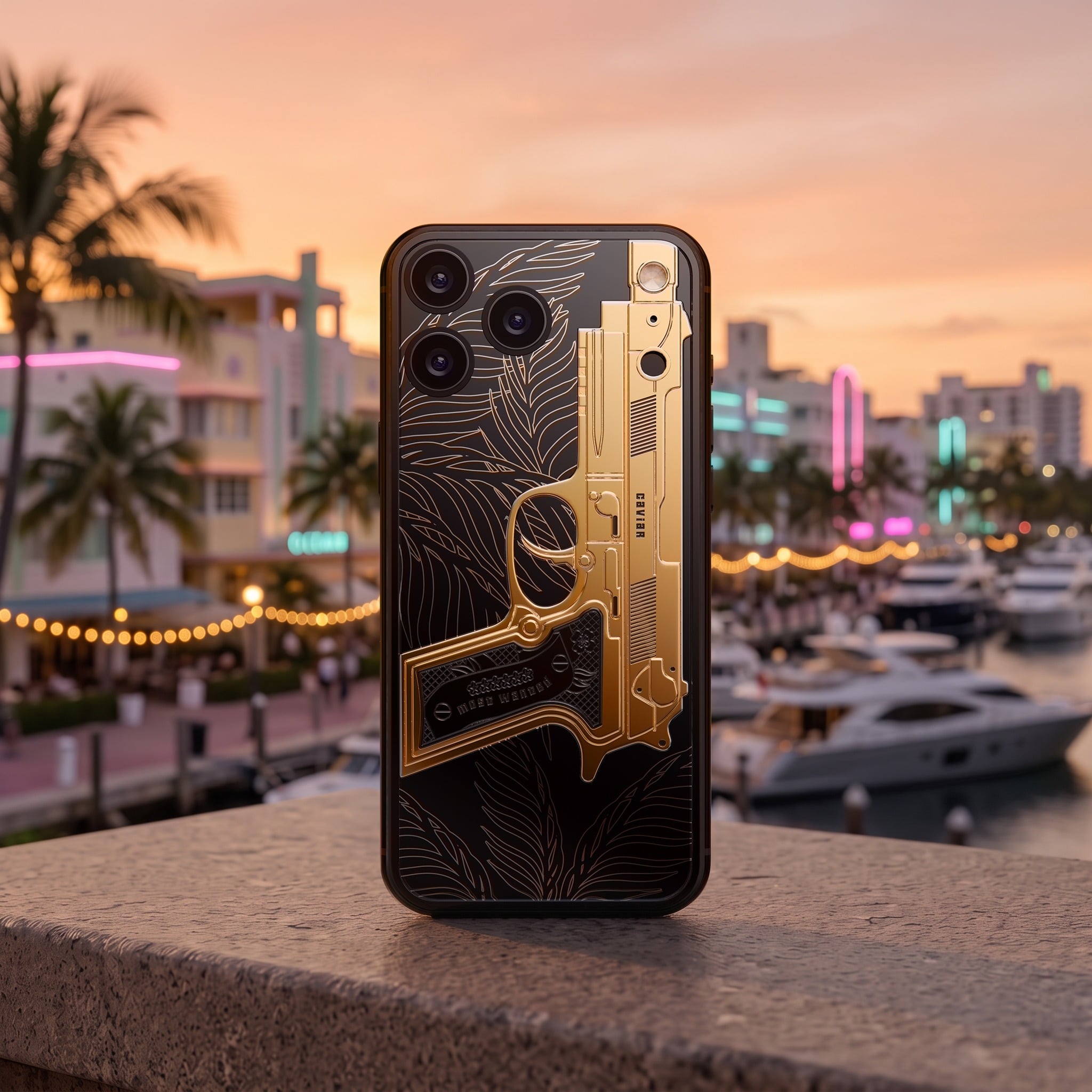
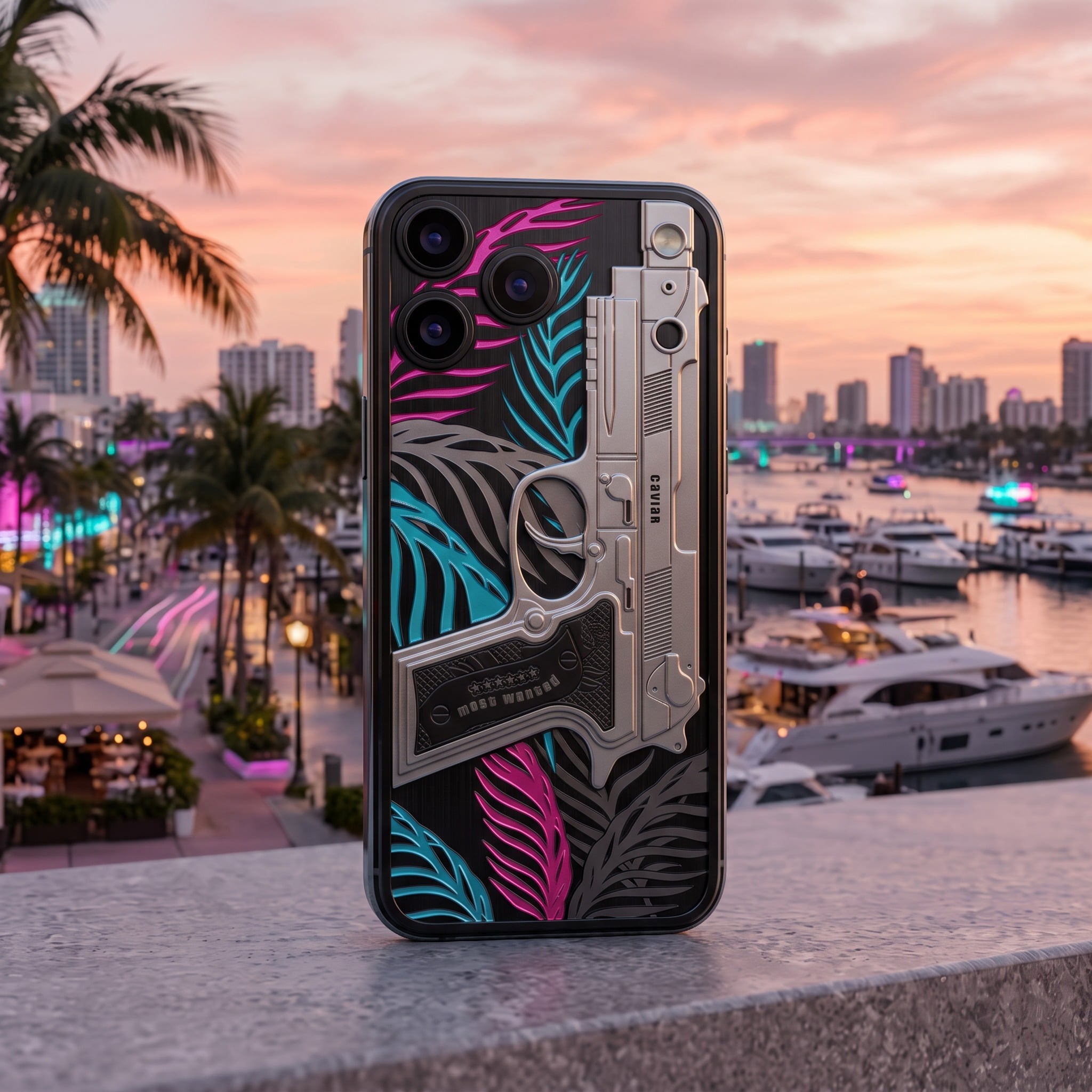
The company is also selling two modified versions of the standard iPhone 18 Pro and Pro Max. The Neon Vice ($11,130) and Gangster ($11,700) models both feature a physical bas-relief sculpture of a Beretta 92FS handgun attached directly to the back of the phone.
The Neon Vice model surrounds the titanium pistol sculpture with magenta and turquoise enamel, while the Gangster version uses 24K gold plating and palm leaf engravings. Given the thick metal protrusions on the back panels, buyers should expect that standard wireless charging and MagSafe accessories will not function normally.
The lineup also includes two customized pairs of Ray-Ban Wayfarer Gen 2 smart glasses. The Sunset variant has a rhodium-plated bronze frame with pink and turquoise enamel, and the Gold Rush model adds gold detailing to the temples. The internal hardware for the cameras and Bluetooth audio remains entirely stock.
Caviar is limiting production to 19 units per design. As with all of the company’s releases, the internal specifications of the phones are identical to the standard retail models you can buy in a store. The premium pricing is entirely for the custom exterior materials and labor. The devices are available to order now from the official Caviar website.
Ukrainian luxury smartphone brand LISCHYNA has introduced the iPhone Duo GTA VI Edition, a custom-designed version of the foldable iPhone Duo inspired by Grand Theft Auto VI. The smartphone features an extensively redesigned exterior with gold reliefs depicting the game’s main characters, Jason and Lucia, alongside carbon fiber detailing, decorative gemstones, and the colorful GTA VI logo.
The design draws inspiration from Vice City, the fictional setting of Grand Theft Auto VI, incorporating several elements associated with the game’s world. Unlike conventional themed smartphone editions that typically rely on printed graphics or decorative cases, LISCHYNA has reworked the device’s exterior with a detailed three-dimensional composition. The GTA VI Edition is available to order for $14,000.
Detailed Gold Relief of Jason and Lucia
The most prominent feature of the GTA VI Edition is its redesigned back panel, which features a three-dimensional composition depicting Jason and Lucia, the two main protagonists of Grand Theft Auto VI.
The characters occupy the central portion of the artwork and are surrounded by several elements inspired by Vice City, including palm trees, a helicopter, sports cars, and urban architecture. These details recreate the visual atmosphere of the game’s fictional city, which draws inspiration from Miami and is associated with sunny beaches, neon-lit streets, luxury properties, and nightlife.
LISCHYNA uses layered gold reliefs to create the composition rather than relying on a flat printed image. The artwork incorporates detailed facial features, clothing, and surrounding objects, with raised decorative elements giving the characters and scenery a sculpted appearance. Smaller details, including palm leaves and architectural features, are also incorporated into the design.
The gold composition is set against a dark carbon fiber background. Its textured surface provides a contrasting finish to the raised metallic elements while maintaining the smartphone’s overall black-and-gold color scheme.
Gemstone Frame, Custom Camera Surround, and GTA VI Logo
The decorative detailing extends beyond the central artwork. A frame running along the smartphone’s edges is adorned with small sparkling gemstones, adding another layer of jewelry-inspired customization.
The camera module also features a redesigned surround. Its light-colored metallic finish incorporates a fine geometric pattern reminiscent of traditional jewelry engraving techniques. This treatment gives the camera area a different appearance from the dark carbon fiber and gold detailing covering the rest of the back panel.
Another recognizable design element is the Grand Theft Auto VI logo positioned near the bottom of the smartphone. Unlike the predominantly gold composition, the logo uses the game’s signature combination of pink, purple, and orange.
LISCHYNA uses jewelry enamel to reproduce these colors, allowing the logo to stand out against the surrounding metallic detailing. The combination of gold reliefs, carbon fiber, gemstones, and colorful enamel forms the main visual theme of the GTA VI Edition.
How LISCHYNA Adapts the Design to a Foldable Smartphone
Applying an elaborate jewelry-inspired design to a foldable smartphone requires careful consideration of the available surface area and the device’s construction. Unlike conventional smartphones, foldable models have a more complex exterior layout, leaving less room for decorative elements.
For the GTA VI Edition, LISCHYNA has incorporated both main characters, the surrounding Vice City scenery, and the game’s branding into a single back-panel composition. The placement and proportions of these elements allow the individual details to remain recognizable without overwhelming the overall design.
The customization focuses on the smartphone’s exterior while retaining the original foldable construction of the iPhone Duo. This allows the device to maintain its original form while receiving a substantially redesigned appearance through the use of decorative materials and jewelry-inspired techniques.
LISCHYNA Offers Custom Smartphone Designs and Materials
LISCHYNA is a Ukrainian brand specializing in luxury smartphones and bespoke mobile device customization. Its work involves materials and techniques commonly associated with jewelry production, including gold, platinum, carbon fiber, genuine leather, hand engraving, and jewelry enamel.
The company also offers customization beyond its existing smartphone collections. Customers can request designs inspired by their favorite video games, personal symbols, or entirely original concepts. This allows the exterior of a smartphone to be developed around a particular theme rather than being limited to predefined designs.
LISCHYNA also provides an interactive configurator on its official website. It allows customers to explore different material combinations and finishes, including metallic surfaces, leather types, carbon fiber, and decorative coatings.
Through these customization options, buyers can select different exterior treatments and create a smartphone design based on their individual preferences. The GTA VI Edition is one example of the company’s approach to incorporating gaming-related artwork into luxury smartphone customization.
LISCHYNA GTA VI Edition Price and Availability
The LISCHYNA GTA VI Edition is priced at $14,000 and is available to order through the company’s official website.
Interested customers can explore the smartphone’s design, view additional product images, and place an order through the official GTA VI Edition product page.
The model combines a foldable smartphone design with gold relief artwork, carbon fiber, gemstone detailing, and GTA VI-inspired decorative elements. Its customization also reflects LISCHYNA’s wider range of services, which allows customers to commission luxury smartphone designs using different materials, finishes, and themes.
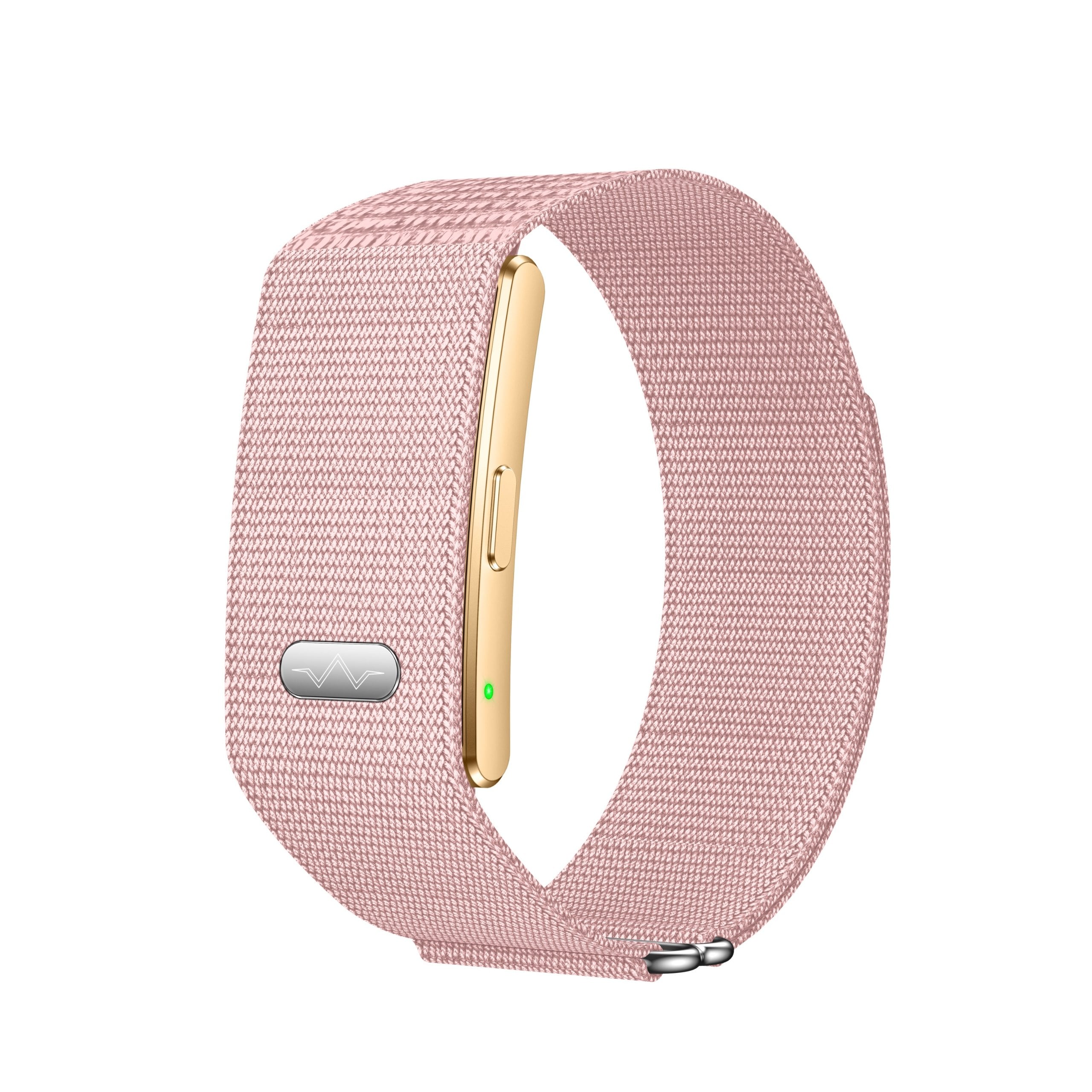
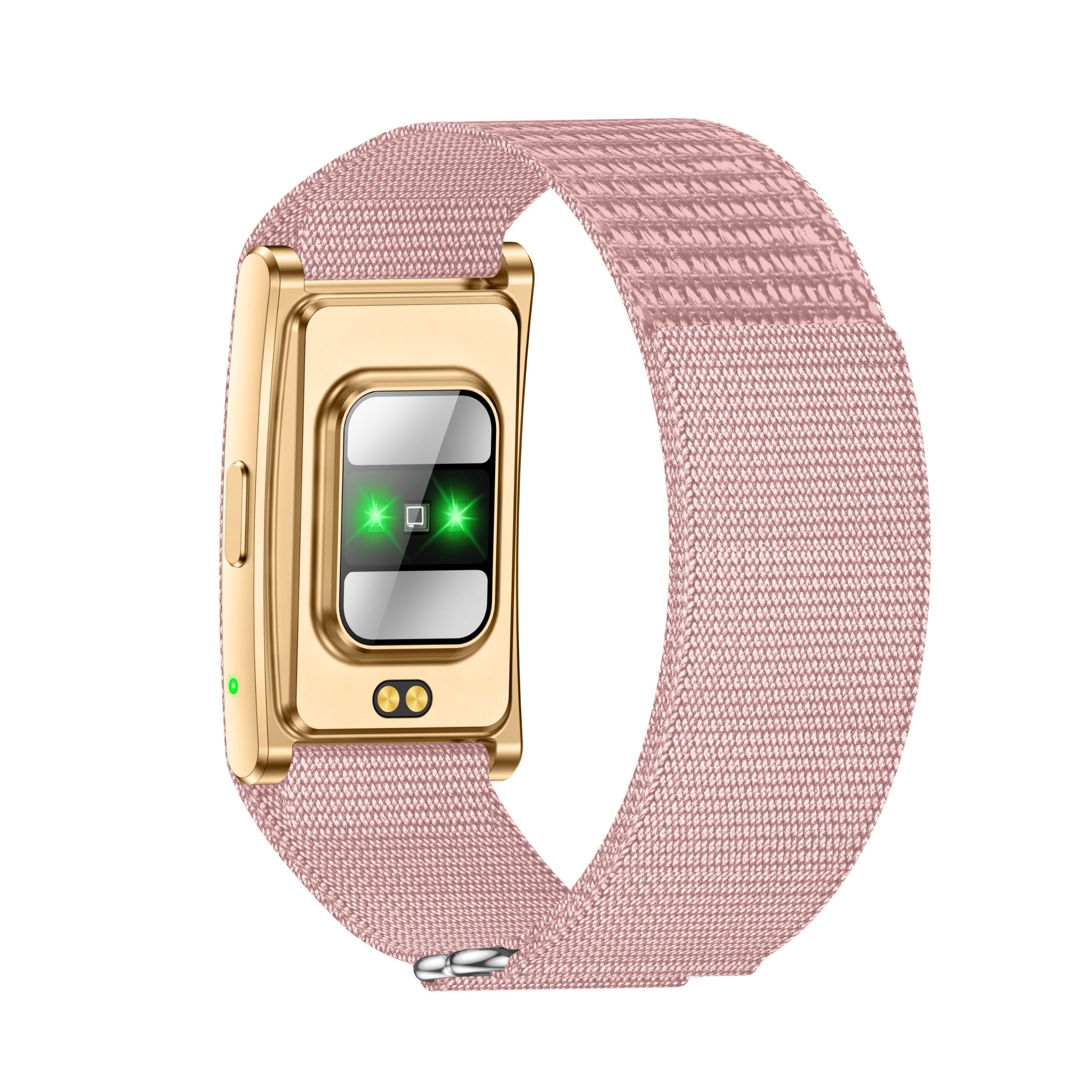
Screenless health bands are gaining popularity as more users look for distraction-free health tracking. Rollme has now entered this growing segment with the launch of the PulseFit, its first screen-free smart health band. The device takes a minimalist approach by eliminating the display entirely and focusing on passive health monitoring without the distractions of a traditional smartwatch.
Rollme PulseFit Specifications
The hardware design of the PulseFit is straightforward. It features an aerospace-grade aluminum unibody machined via CNC, paired with a high-density woven nylon strap. By omitting a screen, the device eliminates visual notifications and digital clutter, relying exclusively on a vibration motor for basic alerts and reminders. The band is rated for 5ATM water resistance, making it durable enough for swimming and general shallow-water activities.
Our picks
Five fitness bands under $100 made our 2026 list, from Xiaomi, Amazfit, Fitbit and Garmin.
Internally, the PulseFit is powered by a JL 7013A chip and features a Goodix 3228T sensor for health tracking. It also comes with a front-facing ECG touch area, which Rollme claims is easier to access than traditional side-mounted electrodes. The band supports real-time Heart Rate Variability (HRV) monitoring, while its companion app uses Lorenz scatter plot analysis to provide insights into cardiovascular health and autonomic nervous system activity.
The PulseFit offers 24/7 health tracking, including heart rate, blood oxygen (SpO2), and sleep monitoring. Rollme also claims support for blood pressure and body composition measurements, including BMI, body fat, and muscle mass. The company further advertises blood glucose, uric acid, and blood lipid tracking.
For battery life, the PulseFit packs a 200mAh battery that offers up to 15 days of regular use and over 30 days of standby time. It supports magnetic charging and Bluetooth 5.3 for syncing health data with a smartphone. The companion app also allows you to securely share health metrics with authorized family members through a remote care feature.
Pricing and Availability
The Rollme PulseFit is priced at $59.99 and is available for purchase through the company’s official online store. It comes in three color options: Phantom Black, Titanium Gray, and Rose Quartz. As part of its 11.11 promotional offer, Rollme is also including an extra woven nylon strap with the band.
In related news, Rollme has recently launched the Hero K1 rugged smartwatch with offline GPS maps, an LED flashlight, and up to 40 days of battery life, alongside the Matrix smartwatch with 4G connectivity, GPS, an AMOLED display, and a pop-up camera.
Samsung One UI 9.5 Pro and Pro Video camera control
The One UI 9.5 beta brings meaningful upgrades across camera controls, health tracking, accessibility, and privacy. In the camera app, key settings and a zoom bar now sit on a single screen for faster adjustments, while enhanced Pro and Pro Video modes add customizable controls and presets on supported devices (excluding Pro Lite and Pro Video Lite models).
Samsung Health gains Mindful Note for guided or freeform journaling – though it is not supported on Galaxy Watch – alongside an expanded Medications feature for tracking prescriptions, supplements, and reminders across more markets. Accessibility also improves with a floating shortcut for frequent controls and notification-panel adjustments for hearing aid volume and sound routing. Perhaps the biggest everyday addition for privacy-conscious buyers is native App Lock, which secures individual apps via biometrics or screen lock while hiding their notification content and widgets without relying on Secure Folder.
One UI 9.5 beta availability and how to join
Samsung One UI 9.5 App Lock and Mindful Note
The One UI 9.5 beta program is live starting today for Galaxy S26, Galaxy S26+, and Galaxy S26 Ultra owners in Germany, India, South Korea, Poland, the UK, and the US. Eligible users can enroll directly through the Samsung Members app, then download the test build via Settings > Software update. For users who prefer to wait for a stable release, One UI 9.5 is expected to debut officially alongside Samsung’s next flagship generation early next year, giving Galaxy S26 owners an early preview of the refinements first.
Motorola recently started teasing the arrival of a Neo-branded phone on Flipkart, following earlier Geekbench sightings and leaked design renders. The page is now updated to reveal that the Edge 70 Neo will be unveiled on November 24 in India, confirming key hardware details ahead of next week’s debut.
Motorola Edge 70 Neo specifications
Motorola Edge 70 Neo
The Edge 70 Neo features a 6.8-inch Extreme AMOLED 1.5K display with a 144Hz refresh rate, 5,200 nits peak brightness, Pantone validation, and Corning Gorilla Glass 7i protection. Under the hood, it runs on Qualcomm’s Snapdragon 7s Gen 3 chipset paired with a 4466mm² vapor chamber and up to 8GB of LPDDR5X RAM.
Motorola Edge 70 Neo
For photography, the phone carries a 50-megapixel Sony LYTIA 710 main sensor with OIS, a macro lens, 10x Super Zoom, and 4K video recording on both front and rear cameras. Powering the device is a 7,000mAh battery rated for up to 53 hours of use, supported by 45W TurboPower wired charging and 7.5W wired reverse charging. Other highlights include Dolby Atmos audio, an IP64 water-resistant rating, and MIL-STD-810H military-grade durability, making it notably larger-screened and longer-lasting than the Motorola Edge 60 Neo.
Motorola has not revealed storage options or official pricing yet, only confirming up to 8GB of RAM and four Pantone-curated finishes: Mountain View, Gray Lilac, Milky Blue, and Sage. For context, the standard Motorola Edge 70 debuted in India at Rs 28,999 (~$310), while the Motorola Edge 70 Pro starts at Rs 38,999 (~$417).
Given its Snapdragon 7s Gen 3 chip, IP64 build, and mid-range positioning below the Edge 70, the Edge 70 Neo is expected to launch around Rs 24,999 (~$268) to Rs 27,999 (~$300). That pricing would give buyers a compelling big-battery alternative to slim mid-rangers if it maintains aggressive launch offers. It appears that this device could be a rebranded version of the Motorola Edge 70 Plus, which debuted a couple of weeks ago globally.
Asus has been steadily broadening its gaming hardware portfolio in 2026 across both TUF Gaming laptops and gaming desktops. Following its previous ROG and TUF Gaming India refresh, the company has now expanded its TUF Gaming lineup in India with three new devices aimed at students, multitaskers, and desktop gamers.
Designed for users balancing coursework and gaming, the TUF Gaming F16 pairs MIL-STD-810H durability with Intel Core 5 205H and Core 7 230H processor options. Its standout advantage over typical mid-range rivals is expandability, supporting up to 64GB RAM and 4TB SSD storage alongside dual-fan cooling with thin blades. Connectivity includes a LAN port, HDMI 2.1, and USB-C with Power Delivery for flexible desk setups.
The TUF Gaming F16 starts at Rs 1,39,990 (~$1,498) for the FX607VJG-TU406WS and Rs 1,54,990 (~$1,659) for the FX607VJG-TU407WS, with EMI options from Rs 7,777 (~$83). It will be available from November 18 via Asus Exclusive Stores, Reliance Digital, Croma, Vijay Sales, Flipkart, Amazon, and the Asus Eshop.
Expanding local production, the Made in India TUF Gaming A15 (FA506NCG) combines an AMD Ryzen 7 155 processor with Nvidia GeForce RTX 3050 graphics. While the RTX 3050 targets entry-level 1080p gaming rather than flagship ray tracing, the laptop keeps MIL-STD-810H toughness, dual-fan cooling with large rear exhausts, dual USB Type-C ports, HDMI 2.1, and upgrade support for up to 64GB RAM and a 2TB SSD.
The TUF Gaming A15 starts at Rs 1,32,990 (~$1,423) and will be available from December 1 via Asus Exclusive Stores, Reliance Digital, Croma, Vijay Sales, Flipkart, Amazon, and the Asus Eshop.
For compact desktop gaming, the TUF Gaming T700 Mini brings an anime-inspired chassis with tool-less access for straightforward upgrades up to 64GB DDR5 RAM and a 2TB SSD. It pairs Intel Core Ultra 5 processor options with up to Nvidia GeForce RTX 5060 8GB graphics, an enterprise-grade Asus motherboard with solid capacitors, an 80 PLUS Platinum power supply, nine USB ports, USB-C, multi-display support, and MIL-STD-810H durability.
The TUF desktop is priced at Rs 1,84,990 (~$1,980) and Rs 2,09,990 (~$2,247). Starting December 1, it will be availabe via Asus Exclusive Stores, Flipkart, Amazon, and the Asus Eshop.
The 18-second clip, shared by a Weibo user, shows a light purple Mate X8 unfolded outdoors and tilted at different angles under daylight. The inner screen has a glossy finish that picks up reflections, yet the fold area shows almost no visible dip, even at steep angles where creases usually stand out.
Huawei Mate X8 crease video
That lines up with Huawei’s own marketing. Its offline posters in China are built around three words, “Large, Bright and Flat,” and tipster FixedFocus previously claimed the phone uses a new magnetic hinge with an improved inner panel.
If it holds up, the Mate X8 would put pressure on its Western rivals. The Galaxy Z Fold 8 looked nearly creaseless at launch, but its crease became noticeably more visible after a week of use. The iPhone Duo hides its crease well at rest, but hands-on videos showed a dip you can feel and an unusually soft surface over the hinge. The leaked video shows a fresh unit, so long-term durability remains the real test.
Huawei Mate X8 specifications (rumored)
The Mate X8 is tipped to feature a 6.5-inch cover screen and an 8.15-inch inner display with ultra-thin glass, up from 6.49 and 8 inches on the Mate X7. It could run the Kirin 9050 Pro and pack a battery of more than 6,000mAh. The rear camera system reportedly pairs a 50-megapixel main sensor with a variable aperture and a 50-megapixel RYYB periscope telephoto.
Huawei’s store lists 12GB+256GB and 12GB+512GB versions, plus 16GB+512GB and 16GB+1TB Collector’s Editions. The phone debuts in China on November 24, and Huawei hasn’t announced global availability yet. The Mate X7 reached international markets a few weeks after its China launch, so a similar rollout is possible.
iPad Mini 8 and RedMagic Astra 2 bring flagship-level hardware to the compact tablet segment, but they cater to different priorities. Apple’s tablet focuses on portability, productivity and its premium ecosystem, while RedMagic puts gaming performance, a high-refresh-rate display and battery capacity first. Both cost around $700 internationally, but their pricing in India makes this comparison particularly interesting.
Dual USB Type-C 3.2 Gen 2 and USB Type-C 2.0, DisplayPort
RedMagic – Dual USB-C connectivity
GPS
Yes (Cellular model only)
No
Apple – GPS support
Fingerprint Sensor
Top-mounted
Side-mounted
Tie – Both offer fingerprint recognition
Battery
4900mAh
8300mAh
RedMagic – Larger battery capacity
Charging
50% in 30 minutes
75W wired
RedMagic – Faster charging support
Bypass Charging
–
Yes
RedMagic – Dedicated bypass charging
Stylus Support
Yes
Not specified
Apple – Stylus support
RGB Lighting
–
Yes
RedMagic – Customisable gaming aesthetic
Price
Approx. $700 / ₹83,000
Approx. $700 / ₹1,00,000+ (imported in India)
Apple – More affordable in India
Disclaimer: Specs are based on available data. Actual performance may vary. Verify details from official sources before buying.
2. Design and Display
Build Quality
The iPad Mini 8 is considerably easier to carry, measuring 195.3 x 132.6 x 5.4mm and weighing just 255g for the Wi-Fi model. Its glass front, aluminium back and aluminium frame give it a premium finish, while IP67 protection provides resistance against dust and water immersion up to 1 metre for 30 minutes. The RedMagic Astra 2, measuring 207.1 x 134.2 x 6.9mm and weighing 363g, is noticeably heavier. However, its aluminium construction, aviation-grade frame and RGB lighting give it a distinctive gaming aesthetic. Its IP54 rating provides basic dust and splash protection.
Display & Multimedia
The RedMagic Astra 2 features a larger 9.06-inch OLED display with a 185Hz refresh rate, HDR support and up to 1600 nits peak brightness. It is particularly appealing for gaming, where the higher refresh rate can deliver smoother visuals. The iPad Mini 8 features an 8.5-inch Super Retina XDR OLED panel with a 120Hz refresh rate and up to 1200 nits HBM brightness. Its anti-reflective coating and 3:2 aspect ratio make it well-suited to reading, browsing and productivity.
Verdict
The Astra 2 offers a more gaming-oriented display with a higher refresh rate and larger viewing area. However, the iPad Mini 8 is the better everyday companion thanks to its lighter construction, slimmer body and superior IP rating.
3. Performance and Software
Processor & UI Smoothness
The iPad Mini 8 runs on Apple’s A20 Pro chipset, built on a 2nm process. It features a penta-core CPU on the 128GB and 256GB variants, while the 512GB model gets a hexa-core configuration. Its Apple GPU with seven graphics cores provides the hardware foundation for demanding applications and games. On the other hand, the RedMagic Astra 2 is powered by Qualcomm’s Snapdragon 8 Elite Gen 5, manufactured on a 3nm process. Its octa-core CPU and Adreno 840 GPU are designed to handle demanding gaming workloads. Both tablets offer flagship-class hardware, although their real-world performance will depend on application optimisation and workload.
Productivity & Multitasking
The RedMagic Astra 2 comes with 12GB RAM in its 256GB variant and 16GB RAM in its 512GB and 1TB configurations. The iPad Mini 8 offers 12GB RAM across all storage variants. RedMagic uses Android 16 with RedMagic OS 11.5, while Apple runs iPadOS 27.2. The Astra 2 also benefits from UFS 4.1 Pro storage, whereas the iPad Mini 8 offers a more established tablet application ecosystem. Both lack microSD card expansion.
Verdict
The Astra 2 is the more specialised option for gaming enthusiasts, particularly with its Adreno 840 GPU, higher RAM configurations and gaming-focused software. However, the iPad Mini 8 offers a more mature tablet experience for productivity, creative applications and everyday multitasking.
4. Battery and Accessories
Battery Life
The RedMagic Astra 2 has a significant advantage in battery capacity, featuring an 8300mAh battery compared with the iPad Mini 8’s 4900mAh unit. This gives RedMagic more battery capacity to work with during extended gaming and entertainment sessions. It also supports 75W wired charging, considerably faster than Apple’s charging arrangement, which can reach 50% in 30 minutes. Another useful addition is bypass charging, allowing users to power the tablet directly during extended gaming sessions without relying entirely on the battery. Actual battery life will still depend on usage, especially considering the Astra 2’s 185Hz display.
The iPad Mini 8 supports stylus input, making it a more practical choice for handwritten notes, drawing and annotations. Apple’s accessory ecosystem also gives it an advantage for users already invested in its products. The RedMagic Astra 2 takes a different approach, offering magnetic connector pins and bypass charging that suit gaming setups. However, its available specifications do not establish comparable dedicated stylus and keyboard support.
The RedMagic Astra 2 wins comfortably in battery capacity, charging speed and gaming-oriented power management. The iPad Mini 8, however, is better suited to users who want stylus-based productivity and a more established accessory ecosystem.
5. Camera & Media
Rear and Front Camera
The iPad Mini 8 features a 12MP rear camera with an f/1.8 aperture and autofocus. It supports HDR, panorama and 4K video recording at up to 60fps. Its front camera is another 12MP sensor with an f/2.0 aperture and a 122-degree ultrawide field of view, making it particularly useful for video calls and group conversations.
The RedMagic Astra 2 features a 13MP rear camera with an f/2.2 aperture and PDAF, accompanied by an LED flash. It supports 4K video recording at 30fps. On the front, it has a 9MP camera with 1080p video recording. Although the Astra 2 has a higher-resolution rear camera, the iPad Mini 8 offers a more versatile camera configuration, particularly for front-facing use.
Video & Audio Quality
Apple’s tablet has an advantage in video recording flexibility, supporting 4K at 60fps and 1080p recording at up to 240fps. The Astra 2 supports 4K at 30fps. For audio, the RedMagic tablet features stereo speakers and Snapdragon Sound, while the iPad Mini 8 uses stereo audio through Acoustic Display technology.
Verdict
The iPad Mini 8 is the better choice for video calls, front-camera use and recording flexibility. The Astra 2 remains capable of handling everyday photography and entertainment, but Apple’s more versatile camera hardware gives it the advantage.
6. Pricing
Both tablets have an approximate international price of $700, making them direct competitors in terms of their global positioning. However, the situation is quite different in India. The iPad Mini 8 costs approximately ₹83,000, offering buyers a more straightforward purchasing option through Apple’s retail channels.
The RedMagic Astra 2 is not officially available in India. Buyers looking to import it through third-party sellers may have to spend ₹1,00,000 or more after accounting for import duties, GST and other applicable taxes. This creates a substantial price difference between the two tablets, despite their similar international pricing.
At around ₹83,000, the iPad Mini 8 is already a premium purchase, but the Astra 2’s imported pricing makes it considerably harder to justify. Its gaming hardware is impressive, although paying over ₹1 lakh for a tablet without official Indian availability may not appeal to most buyers.
Verdict: The iPad Mini 8 is the more sensible purchase in India. The Astra 2 offers attractive hardware at its international price, but its import costs significantly reduce its value.
Disclaimer: Prices are approximate and may vary based on country, region, launch timing, and applicable taxes. Always check whether the listed price is for a China unit or a global/international variant when purchasing.
7. Conclusion
The iPad Mini 8 and RedMagic Astra 2 each have distinct advantages that make them appealing to different audiences. Apple’s tablet combines a 2nm A20 Pro chipset, Super Retina XDR OLED display, IP67 protection, stylus support and a lightweight design. It is a well-rounded compact tablet for entertainment, productivity and creative work.
The RedMagic Astra 2, meanwhile, is built around gaming. Its Snapdragon 8 Elite Gen 5 processor, Adreno 840 GPU, 185Hz OLED display, up to 16GB RAM and 8300mAh battery give it a more specialised hardware package. RGB lighting and bypass charging further strengthen its appeal to gaming enthusiasts.
Verdict
The iPad Mini 8 is the better all-round compact tablet, particularly for Indian buyers. Its portability, display quality, software ecosystem and more accessible pricing make it easier to recommend for everyday use. The RedMagic Astra 2 is the more exciting choice for dedicated gamers who want a larger high-refresh-rate display, powerful Android hardware and a bigger battery.
However, its unofficial availability and ₹1 lakh-plus imported price are significant drawbacks. Unless gaming is the primary reason for buying a tablet, the iPad Mini 8 offers the more balanced overall package.
Disclaimer: Prices, specifications, and availability may vary by region and retailer. Recommendations in this article are based on editorial opinion, feature-based value, and market positioning at the time of writing. Readers are advised to do their own research before making a purchase.
Samsung could be preparing a major design change for its future Galaxy smartphones as the industry looks towards an almost bezel-free display. Apple is also reportedly exploring a new screen for its 20th anniversary iPhone, expected in 2027. Neither company has confirmed its plans, but recent supply chain reports suggest the race to eliminate bezels is heating up.
Samsung reportedly developing a bezel-less Galaxy display
Samsung Galaxy S26 Ultra
According to a South Korean Naver post, Samsung is considering an “extremely bezel-less” display for some upcoming Galaxy flagships. Tipster Lanzuk, citing a Samsung supplier, says the display would be almost on par with the one a “certain company” is preparing. That company is not named, but it is widely believed to be Apple, which relies on Samsung Display as a main OLED panel supplier.
The report does not say whether Samsung would use quad-curved glass similar to what is rumored for the anniversary iPhone, or a flat panel with extremely thin borders. For context, the Galaxy S27 Ultra was recently tipped to have 1.28mm bezels.
The report says development of the display itself is progressing without major issues, with remaining problems limited to “other technical parts.” It carries an accuracy rating of around 50 percent, so it should be treated as a rumor.
If Samsung brings the new display to a Galaxy flagship before the anniversary iPhone arrives, it could take an early lead. The Galaxy S27 series, expected in early 2027, is one possible candidate, with the S27 Ultra and S27 Pro the likeliest options, although the report names no specific phone or timeline.
A near-bezel-free design could look more immersive, but accidental touches, screen protection and durability remain concerns.
Motorolarecently launched the Signature 27 as its latest premium smartphone, alongside the Moto Buds Ultra 27 and Watch Fit 27. One of its biggest highlights is a 7,000mAh battery, which gives it an advantage over several competing flagship phones. However, an earlier regulatory filing raised questions about whether all markets would receive the same battery configuration. Motorola has now confirmed the regional difference and explained the reason behind it.
Motorola Signature 27 battery downgrade confirmed
Comparison
The iPhone 18 Pro Max is $100 cheaper than the Motorola Signature 27 at 512GB.
Motorola has confirmed that the Signature 27 sold in Germany will feature a different battery configuration, packing a 5,500mAh unit instead of the 7,000mAh battery available in other markets. The company attributed the difference to local regulatory requirements concerning lithium batteries, particularly their transportation and logistics.
The change represents a 1,500mAh reduction, meaning German buyers will miss out on approximately 21.4 percent of the battery capacity offered by the standard variant. That’s despite paying the full €1,899 price for the phone’s only German configuration, which pairs 12GB of RAM with 512GB of storage.
The confirmation follows the discovery of two Signature 27 variants in the European Product Registry for Energy Labelling (EPREL) database. The XT2701-1 model has a rated battery capacity of 6,790mAh, corresponding to 7,000mAh typical capacity. Meanwhile, the XT2701-5 variant has a rated capacity of 5,350mAh, translating to 5,500mAh typical capacity.
Motorola Signature 27 battery life and regional availability
Motorola Signature 27
The difference also shows up in the EU energy label’s endurance ratings. The 7,000mAh version is rated for 77 hours and 45 minutes per charge, while the 5,500mAh configuration is rated for 61 hours and 29 minutes. That’s a gap of more than 16 hours in standardized testing. On the bright side, both variants support the same 90W wired charging, so the smaller cell should fill up faster.
Adding to the confusion, Motorola updated its German product page last week to list a 7,000mAh battery, and the page still shows that figure. Its UK page previously mentioned the 5,500mAh capacity before being updated to show 7,000mAh as well. Since the statement only identifies Germany, other markets should get the larger battery, though Motorola hasn’t explicitly ruled it out.
The development is an unusual compromise for a premium smartphone, particularly when battery endurance is one of the Signature 27’s major selling points against rivals like the Galaxy S26 Ultra. While 5,500mAh is still larger than the original Signature’s 5,200mAh cell, buyers expecting the advertised 7,000mAh battery should check the specifications of their regional variant before purchasing.
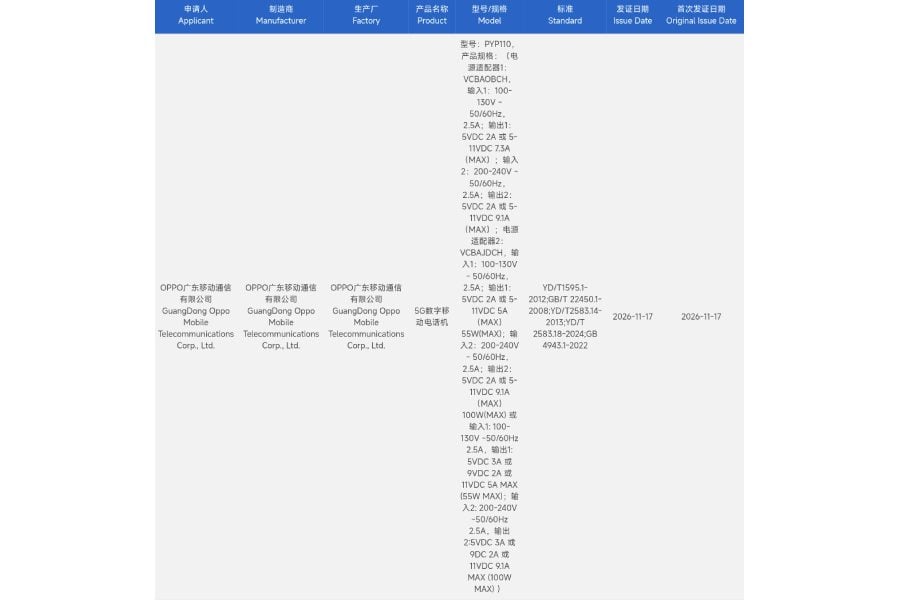
The upcoming OnePlus Turbo 7 Pro has passed China’s 3C certification with the model number PYP110, and it all but confirms 100W wired charging.
The certification follows an earlier specification leak which claims the phone would pack a battery of at least 9,000mAh. Reportedly, the engineering sample even has a 10,000mAh cell.
Moreover, the handset is tipped to feature a 6.78-inch flat display with a 1.5K resolution and a 185Hz refresh rate. Under the hood, it’s been reported to use Qualcomm’s 3nm SM8845 Pro. The chipset has been linked to the unconfirmed or leaked Snapdragon 8 Gen 5 Pro. Its rear camera setup could include a 200MP primary sensor with a large sensor format.
Comparison
The OnePlus Turbo 6V and Turbo 6 have the same size, a massive battery and a similar camera setup. The chip and the screen differ.
The OnePlus Turbo 6 launched in January with 80W charging and a 9,000mAh battery. Moving to 100W would be a clear upgrade. It would also bring the phone in line with the OnePlus Ace 7 series, which comes with 9,000mAh batteries and 100W SuperVOOC charging.
Paired with a battery close to 9,000mAh, 100W charging could help reduce charging times. However, the listing does not reveal the battery capacity of the OnePlus Turbo 7 Pro.
OnePlus has not confirmed the name, specifications, price, or launch date of the Turbo 7 Pro. The earlier report described it as a phone aimed at gamers and people who want long battery life. It is expected to join the Turbo lineup in China. Phones often appear on 3C ahead of their launch, so more details could surface soon.
We use cookies on our website to give you the most relevant experience by remembering your preferences and repeat visits. By clicking “Accept”, you consent to the use of ALL the cookies.
This website uses cookies to improve your experience while you navigate through the website. Out of these, the cookies that are categorized as necessary are stored on your browser as they are essential for the working of basic functionalities of the website. We also use third-party cookies that help us analyze and understand how you use this website. These cookies will be stored in your browser only with your consent. You also have the option to opt-out of these cookies. But opting out of some of these cookies may affect your browsing experience.
Necessary cookies are absolutely essential for the website to function properly. This category only includes cookies that ensures basic functionalities and security features of the website. These cookies do not store any personal information.
Any cookies that may not be particularly necessary for the website to function and is used specifically to collect user personal data via analytics, ads, other embedded contents are termed as non-necessary cookies. It is mandatory to procure user consent prior to running these cookies on your website.






















![Samsung One UI 9.5 Pro and Pro Video camera controls]](https://www.gizmochina.com/wp-content/uploads/2026/11/image-74-1024x505.png?x91975)