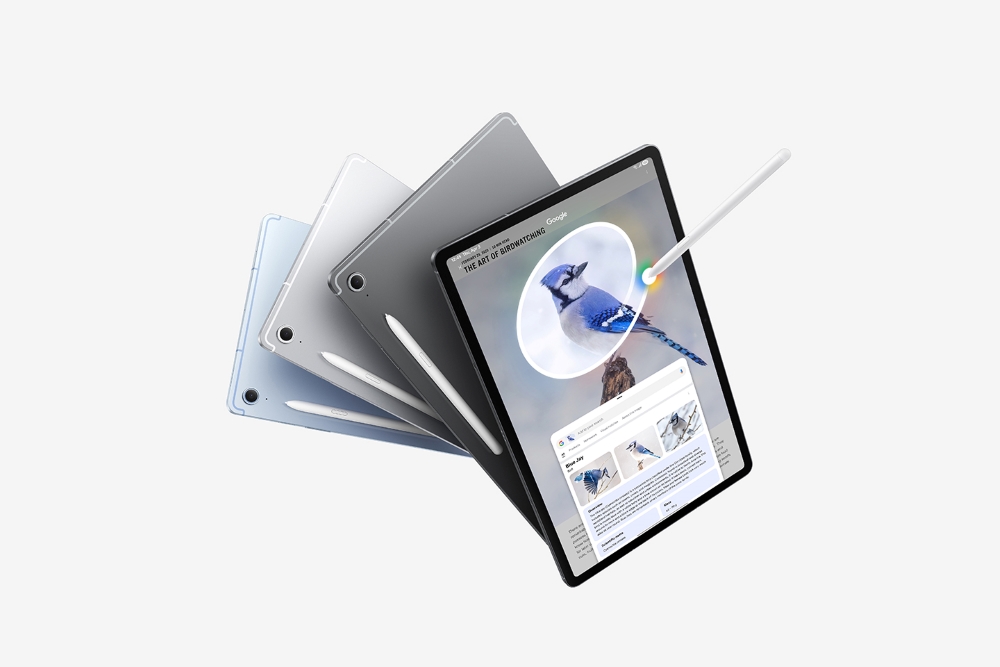
Samsung’s upcoming affordable S10-series tablet might be closer to launch than expected. As per new reports, both Wi-Fi and 5G versions of the Galaxy Tab S10 Lite have received FCC certification. The listings confirm a few hardware details, hinting at a nearing global debut.
Samsung Galaxy Tab S10 Lite FCC certified, details revealed
Samsung Galaxy Tab S10 FE series
The FCC database includes two model numbers—SM-X400 and SM-X406B—representing the Wi-Fi and 5G variants of the Galaxy Tab S10 Lite, respectively. At the same time, the Wi-Fi version has also appeared on China’s 3C platform. As per the FCC, the tablet supports 45W fast charging (10V/4.5A) and will be compatible with S-Pen and keyboard accessories, just like its predecessors in the Tab S series.
One key detail is the battery—both variants are expected to ship with an 8,000mAh unit, the same one used in the Galaxy Tab S10 FE. Connectivity features mentioned in the documents include Wi-Fi 6 (802.11ax), 5G bands across multiple frequencies, Bluetooth, GNSS, a pogo pin interface, and a microSD card slot.
On the performance side, the previously seen Geekbench listing of the tablet has revealed that it is equipped with the Exynos 1380 chipset, paired with 6GB RAM and Android 15-based One UI 7.0. This is the same chip found in recent mid-range Samsung phones like the Galaxy A54 and Galaxy M36.
Unfortunately, the other specs of the Tab S10 Lite are not known yet. With FCC approval secured, Samsung is likely to announce the tablet either by the end of this month or in August.
For more daily updates, please visit our News Section.
itel has expanded its wearables lineup with the launch of two new smartwatches in India – the Alpha Edge and Alpha Style. The standout feature across both models is their snap-on protective case, allowing wearers to switch between a sleek daily design and a tougher, adventure-ready exterior, a first-of-its-kind offering in India’s smartwatch segment.
itel Alpha Edge specifications and price
itel Alpha Edge
The Alpha Edge features a large 2.0-inch HD display with up to 500 nits brightness, making it easy to read outdoors. It carries an IP68 rating, making it water and dust-resistant, ideal for fitness, travel, and casual use. The watch supports Bluetooth calling, message alerts, and includes 100+ sports modes, 150+ watch faces, and core health tracking features like heart-rate monitoring, sleep tracking, and SpO₂ measurement.
With a 300mAh battery, the Alpha Edge can last up to 15 days on standby. It also includes practical functions such as a stopwatch, music control, built-in games, calculator, and weather updates. The watch is available in Lurex Black and Midnight Blue for Rs 1,499 (~$17), and is now on sale via offline retail stores across India.
itel Alpha Style specifications and price
itel Alpha Style
For users who prefer a round dial, the Alpha Style offers a 1.43-inch AMOLED screen with 700 nits brightness, 466 × 466 resolution, and Always-On Display. It is powered by a Bluetooth 5.3 chip, enhancing battery efficiency and calling clarity. It shares the same health and sports tracking features as the Alpha Edge, along with identical battery capacity and standby time.
Available colours include Midnight Blue, Lurex Black, Rose Gold, and Champagne Gold. The Alpha Style is priced at Rs 1,799 (~$21) and is also available via offline retail stores across the country.
For more daily updates, please visit our News Section.
Lava may soon refresh its Agni smartphone line in India, and early signs suggest a new design direction for the upcoming Lava Agni 4. 91mobiles Hindi, in collaboration with tipster Yogesh Brar, has shared a render of the device to give a first look at its design. The leak hints at a simpler and more refined look and bids goodbye to the secondary rear display, which was seen on the Agni 3.
Lava Agni 4 design revealed
Lava Agni 4 leaked render by 91mobiles
As per the report, the Lava Agni 4 will feature a horizontal camera module similar to the Google Pixel phones. It includes dual camera sensors placed vertically on either side of an LED flash. A metal frame surrounds the module, which appears slightly raised.
The back panel shown in the render appears white, with a uniform tone matching the frame. Unlike the Agni 3’s curved display, the Agni 4 seems to adopt a flat display design. Also, it does not seem to feature the customizable Action Key button that was seen on the previous generation.
Lava Agni 4 specifications (rumored)
On the display front, the device is expected to house a 6.7-inch FHD+ panel with 120Hz refresh rate, similar to its predecessor. Powering the phone could be the MediaTek Dimensity 8350 chipset. This would mark a significant jump from the Dimensity 7300X used in the Agni 3. The new chip also supports UFS 4.0 storage for faster performance.
The camera setup might include a 50-megapixel dual-camera system, which could be seen as a step down from the Agni 3’s triple-camera setup with telephoto and ultra-wide sensors.
A major highlight of the Lava Agni 4 could be that it may pack a 7,000mAh+ unit, making it one of the largest in the segment. If true, it would outdo the 5,000mAh battery found in the Agni 3. Considering these specifications, the Lava Agni 4 may launch in India under Rs 25,000. The Agni 3 was announced in October 2024 in India. Therefore, the arrival of the Agni 4 could be a few months away.
For more daily updates, please visit our News Section.
Vivo appears to be expanding its Y-series lineup in India with a new Y400-series device. As per information shared by 91mobiles Hindi, the company is preparing to launch the Vivo Y400 5G, which will follow last month’s release of the Y400 Pro 5G. The report has revealed key details ahead of its official debut.
Vivo Y400 5G launch timeline, key specifications (rumored)
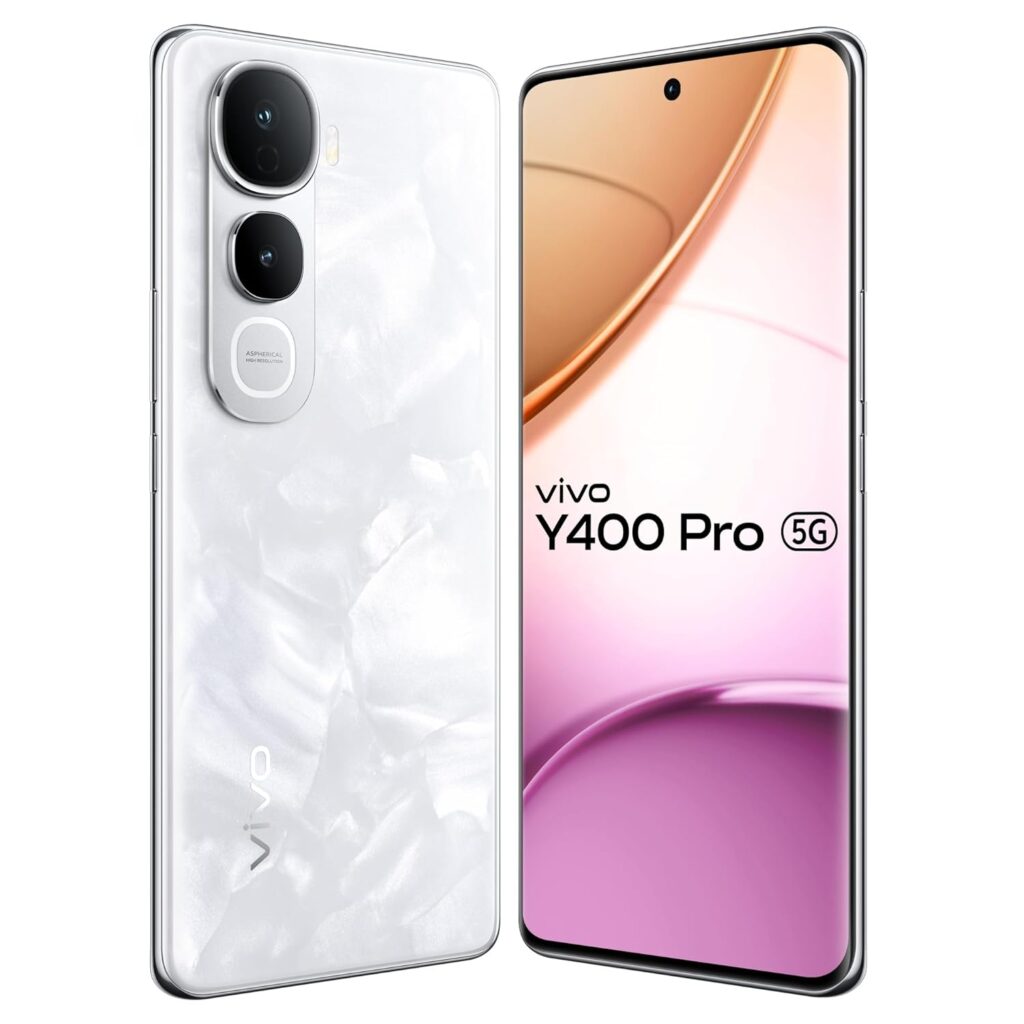
Vivo Y400 Pro
According to the publication, the Vivo Y400 5G is scheduled to arrive in India by early August. It will be introduced as a more affordable variant of the Y400 Pro. The phone is expected to be available in two colors — Olive Green and Glam White — aimed at mid-range smartphone buyers. Likely, it will be priced at under Rs 25,000 (~$290) in the country.
The Y400 5G will reportedly feature a punch-hole AMOLED display with a 120Hz refresh rate, although the exact screen size is yet to be confirmed. The display is said to offer an immersive viewing experience with a smooth touch response. The other details of the device are yet to be revealed.
Vivo Y400 Pro 5G
Launched recently in India, the Vivo Y400 Pro 5G comes with a 6.77-inch curved AMOLED display offering a 1.5K resolution, a 120Hz refresh rate, and 4500 nits peak brightness. It is powered by the MediaTek Dimensity 7300 chipset, paired with 8GB RAM and 256GB storage.
The device supports 90W fast charging for its 5,500mAh battery and includes a 32-megapixel selfie camera. On the rear, it houses a 50-megapixel Sony IMX882 primary sensor along with a 2-megapixel bokeh lens. It is available with a starting price of Rs 24,999 in the country.
For more daily updates, please visit our News Section.
Vivo offers its smartphones with Android-based skins such as OriginOS or FunTouch OS, depending on the market. OriginOS, exclusive to China, is known for its feature-rich, visually appealing interface with lively animations, a customizable grid system, and unique features like atomic components and behavioural wallpapers. FunTouch OS, designed for global markets, is reliable and customizable but often criticised for outdated visuals compared to OriginOS. There have been reports that Vivo could be planning to bring OriginOS to its global devices. A new leak, courtesy of tipster Abhishek Yadav, reveals that it may get introduced next month alongside the upcoming Vivo V60.
Vivo V60 India launch date leaked
Vivo-S30
According to the tipster, the Vivo V60 will debut on Aug. 19 in India. The tipster claims that their source has stated the OriginOS based on Android 16 will also debut alongside the V60. As per other ongoing rumours, the FunTouch OS platform will get a major upgrade soon, offering an experience similar to OriginOS.
As per a recent report, the upcoming Vivo V60 with model number V2511 has received approval from certification platforms like EEC (Europe), Malaysia (SIRIM), and TUV. Among these, the TUV listing revealed that the device will support 90W rapid charging.
Vivo V60 specifications (rumored)
Likely, the Vivo V60 could be a rebadged version of the Vivo S30, which is exclusively available in the Chinese market. The S30 has a 6.67-inch OLED panel that supports a 1.5K resolution and a 120Hz refresh rate. The Snapdragon 7 Gen 4-powered device is available in China with up to 16GB of LPDDR4x RAM and 512GB of UFS 2.2 storage.
The S30 is equipped with a 6,000mAh battery with 90W fast charging support. It has a 50-megapixel main camera with OIS support, an 8-megapixel ultra-wide lens, and a 50-megapixel 3x periscope telephoto camera. For selfies, it has a 50-megapixel front camera with autofocus support.
For more daily updates, please visit our News Section.
This year, Samsung has made significant upgrades to its foldables rather than incremental changes like it did last year with the Galaxy Z Fold 6. The newly announced Galaxy Z Fold 7 is a big step forward from its predecessor and easily one of the best book-style foldable phones you can buy right now. Here are the four biggest upgrades that make it a great choice.
1. Lighter, slimmer, and more durable
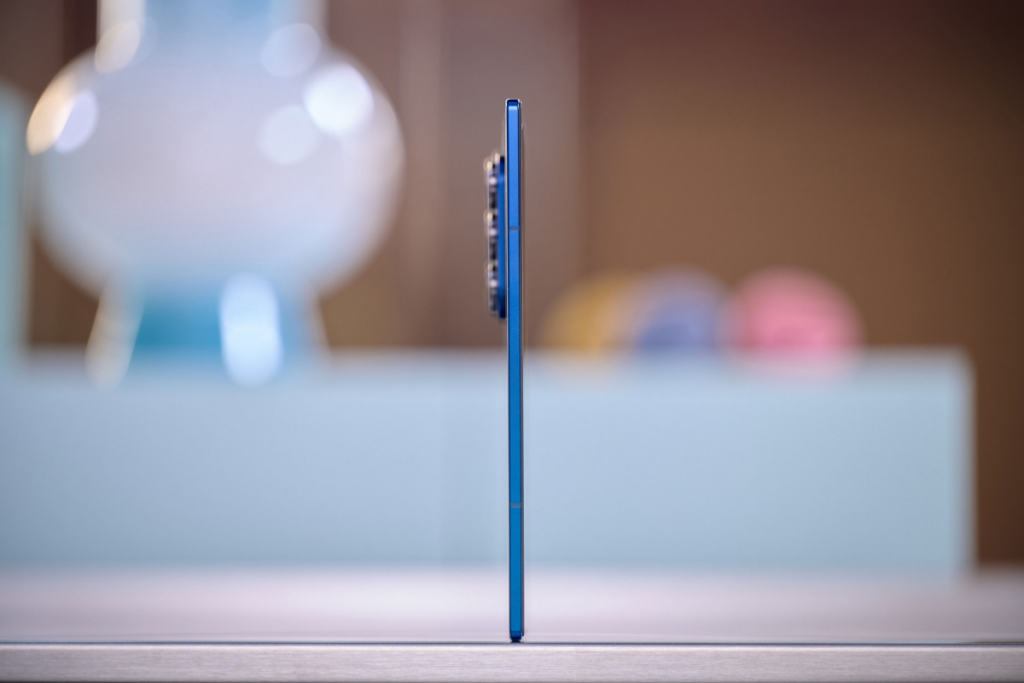
The Galaxy Z Fold 7, when folded, is only 8.9mm thick, that’s around 26% slimmer than the Galaxy Z Fold 6’s 12.1mm (folded). When unfolded, it’s just 4.2mm thick — again, a 25% reduction, which is a big thing for foldables.
Not only slimmer, the Galaxy Z Fold 7 is also lighter at 215g (versus Fold 6’s 239g). It’s lighter than the Galaxy S25 Ultra, too. The Fold 7 is also more durable, thanks to an advanced Armor Aluminium frame, which is about 10% stronger and harder than Fold 6’s Armor Aluminium frame. It uses a restructed hinge branded Armor FlexHinge, which is both 23% thinner and 43% lighter. The front screen is now more powerful with Gorilla Glass Victus Ceramic 2 protection.
2. Bigger and better screens
The primary screen has gone up from 7.6 inches to 8 inches, making it more usable than ever before. The cover screen now measures 6.62 inches, up from 6.3 inches. This puts Fold 7 in a much competitive spot against its Chinese rivals, such as Oppo Find N5 and Honor Magic V5, which have been eating up Samsung’s dominance in the foldable phone market.
Samsung has implemented a titanium plate layer in the main display, making it thinner, lighter, and stronger. The display specifications remain unchanged, except for a slight increase in resolution. The cover display now uses a more standard 21:9 aspect ratio, enhancing typing and one-handed experience. This also improves the visual experience as most apps and media content are optimized for this aspect ratio.
3. A more powerful chipset
The Galaxy Z Fold 7 is equipped with the Snapdragon 8 Elite chipset. It’s the most powerful chipset for Android devices, promising to be about 45% faster and more power-efficient than the Snapdragon 8 Gen 3, which powers the Fold 6. This means you’ll have a significantly better experience with resource-intensive tasks, such as gaming, multitasking, or video editing, on the newer book-style foldable, while also enjoying excellent battery efficiency.
4. Impressive camera upgrades
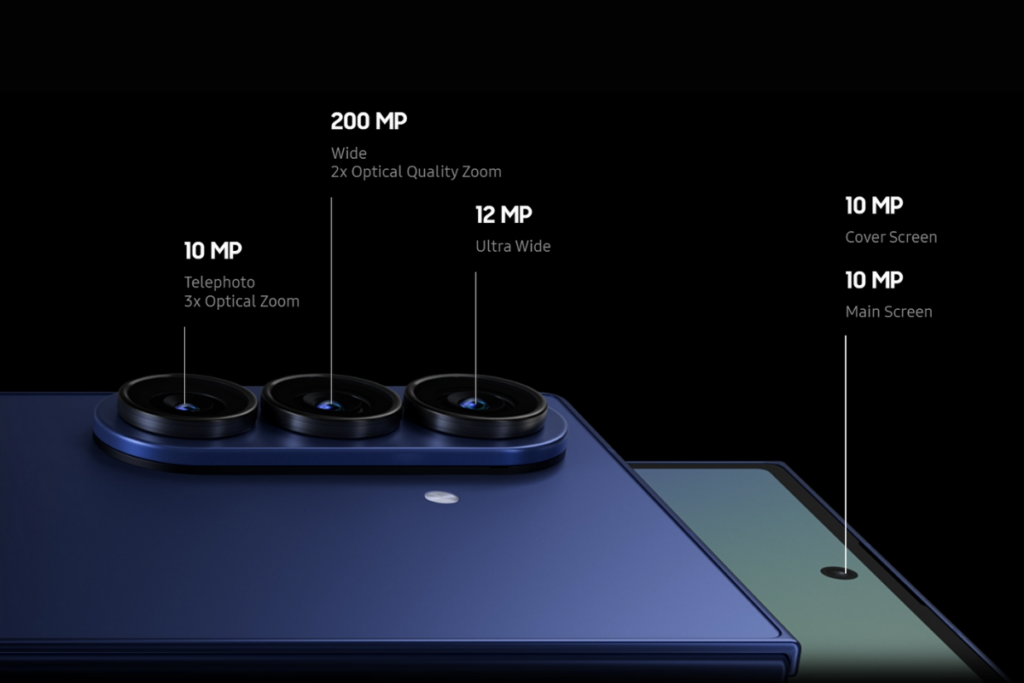
The Fold 7 comes with a significantly better camera setup. It uses a 200MP main camera — the same one used in the Galaxy S25 Ultra. It’s paired with a 12MP ultrawide camera and a 10MP telephoto camera with 3x optical zoom. Samsung has skipped the under-display camera this time and opted for a punch-hole style with a 10MP resolution. There’s also a 10MP sensor for the cover display. All of its cameras can record up to 4K videos, while the main camera can record up to 8K videos.
The Galaxy Z Fold 6, on the other hand, features a 50MP primary camera, paired with two 10MP sensors (ultrawide and telephoto). It also has a 10MP camera on the cover display, but only a 4MP camera (under the display) on the inner display, which doesn’t add much value to the overall camera setup.
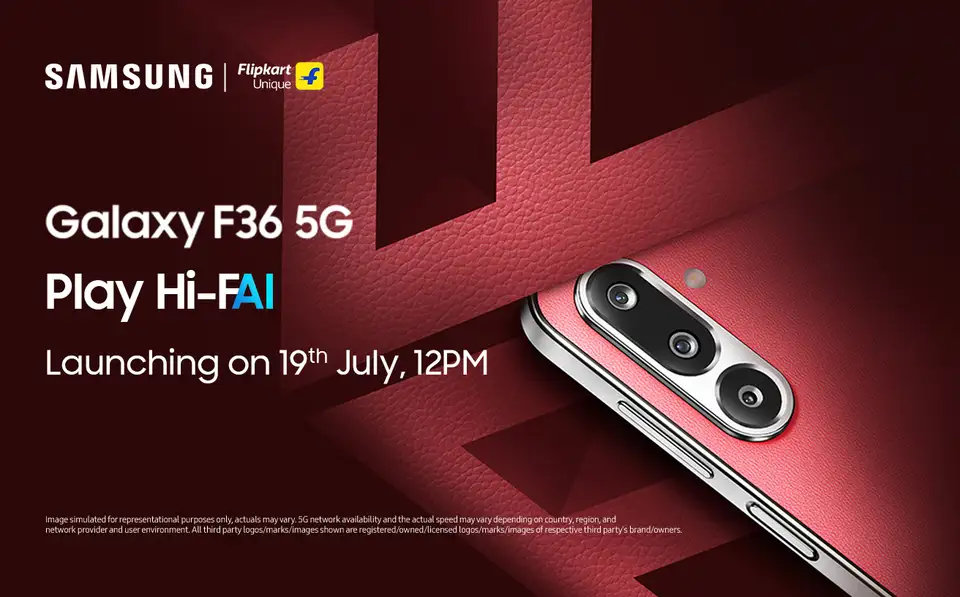
Samsung has confirmed the launch of its Galaxy F36 5G smartphone in India on July 19. The phone will feature a vegan leather back and a slim 7.7mm design.
The Galaxy F36 5G will come with a 50MP main rear camera with Optical Image Stabilization (OIS), accompanied by an 8MP ultra-wide lens and a 2MP macro sensor. It will also support 10-bit HDR video recording on both front and rear cameras.
The device recently appeared on the Google Play Console, confirming it will run on the Exynos 1380 processor, with 6GB of RAM and Android 15 out of the box. It is expected to get up to 6 generations of OS updates and 6 years of security patches, aligning with Samsung’s recent long-term software support commitment.
The phone is expected to feature a 6.7-inch FHD+ Super AMOLED Infinity-U display with a 120Hz refresh rate. Corning Gorilla Glass Victus+ will provide additional durability. The F36 5G will be powered by a 5000mAh battery and support 25W fast charging.
Its predecessor, the Galaxy F34 5G, which launched back in August 2023, had a starting price of ₹18,999. Its successor is also expected to keep its starting price below ₹20,000.
Realme is all set to unveil the Realme 15 5G and Realme 15 Pro 5G on July 24 in India. The landing pages of both smartphones, revealing their key specifications, are live on Realme India’s website. While recent reports have focused on the Pro variant, this post is all about the Realme 15 5G’s details that have been officially confirmed by the brand.
Realme 15 5G key details officially revealed
Realme 15 5G’s display
As per the official page, the Realme 15 5G has a curved display that supports a 144Hz refresh rate. It also offers 6,500 nits of peak brightness, 2,500Hz touch response, 94 percent screen-to-body ratio, and Gorilla Glass protection.
In terms of durability, the Realme 15 5G will arrive with IP69-level dust and water resistance. Despite featuring a huge battery, the device will measure only 7.66mm in thickness. It will be available in three shades: Silk Pink, Velvet Green, and Flowing Silver.
Realme 15 5G’s battery and thickness
Under the hood, the Realme 15 5G will feature the MediaTek Dimensity 7300 Plus chipset. It is unclear how different the Plus edition is from the regular D7300. It will be powered by a massive 7,000mAh battery with 80W charging support.
Realme 15 5G’s chipset
The Realme 15 5G will come equipped with dual 50-megapixel cameras and Plus Light, a glowing RGB LED flash. It will also come with AI-driven photography features like AI Edit Genie, AI Party Mode, and AI Magic Glow 2.0, which will also be available on the Pro version.
In related news, Realme has just launched an entry-level 4G phone dubbed the Realme C71 in India. Powered by the Unisoc T7250 chip, the C71 features a MIL-STD-810H rated body with a huge 6,300mAh battery inside and Pulse Light RGB LED. It is available with a starting price of Rs 7,699 (~$90).
For more daily updates, please visit our News Section.
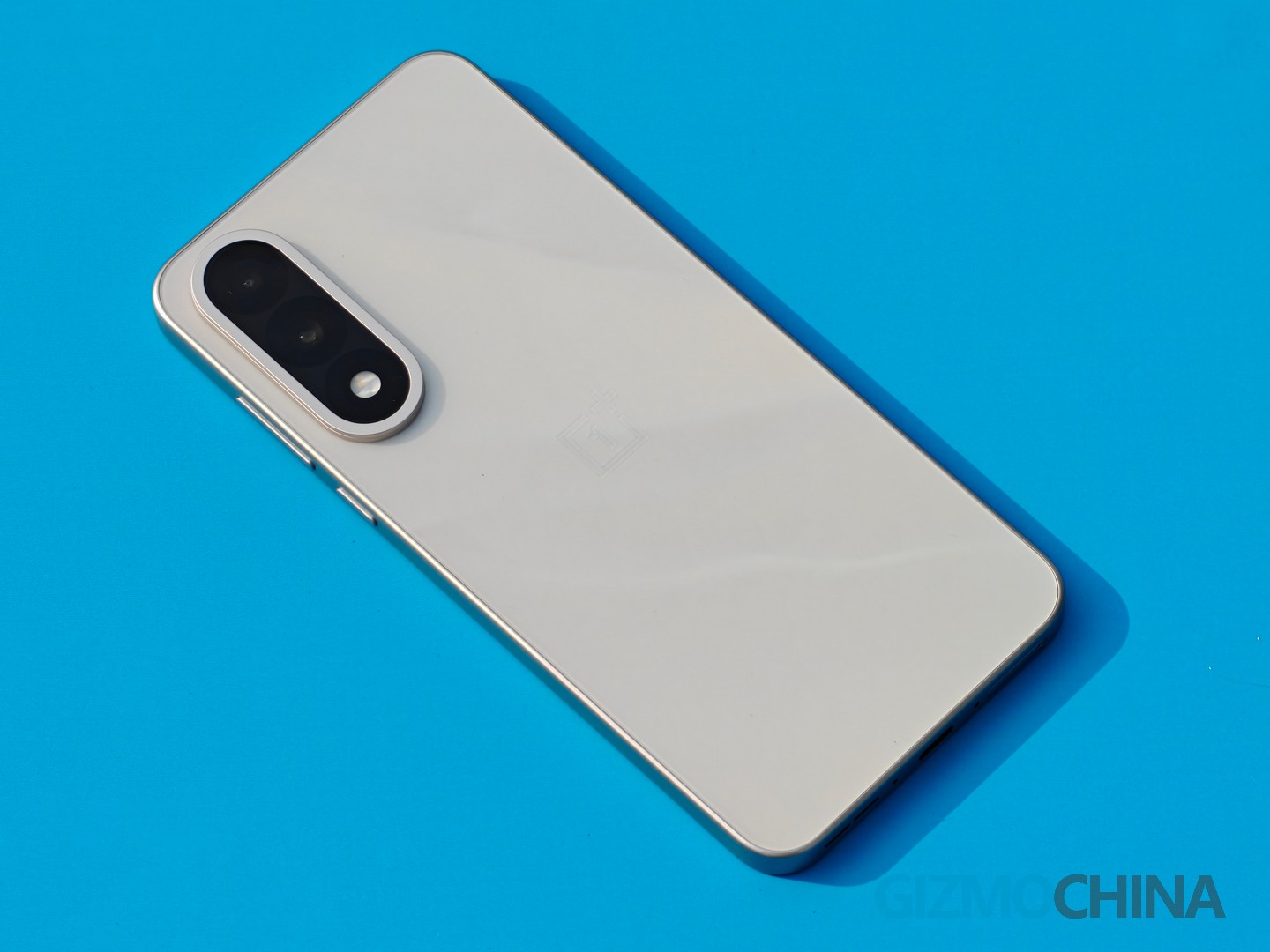
The latest phone in the series gets a complete overhaul. It looks entirely different from the OnePlus Nord 4 and features updated specs for about the same price.
So if you are in the market for a smartphone under ₹35,000 or €500, should you buy the OnePlus Nord 5? Who is this product targeted at? Let’s find out in our review.
Disclosure: OnePlus India sent us a unit of the Nord 5 for review. As usual, the opinions stated here are the author’s alone. The brand had no editorial input or early access to this article.
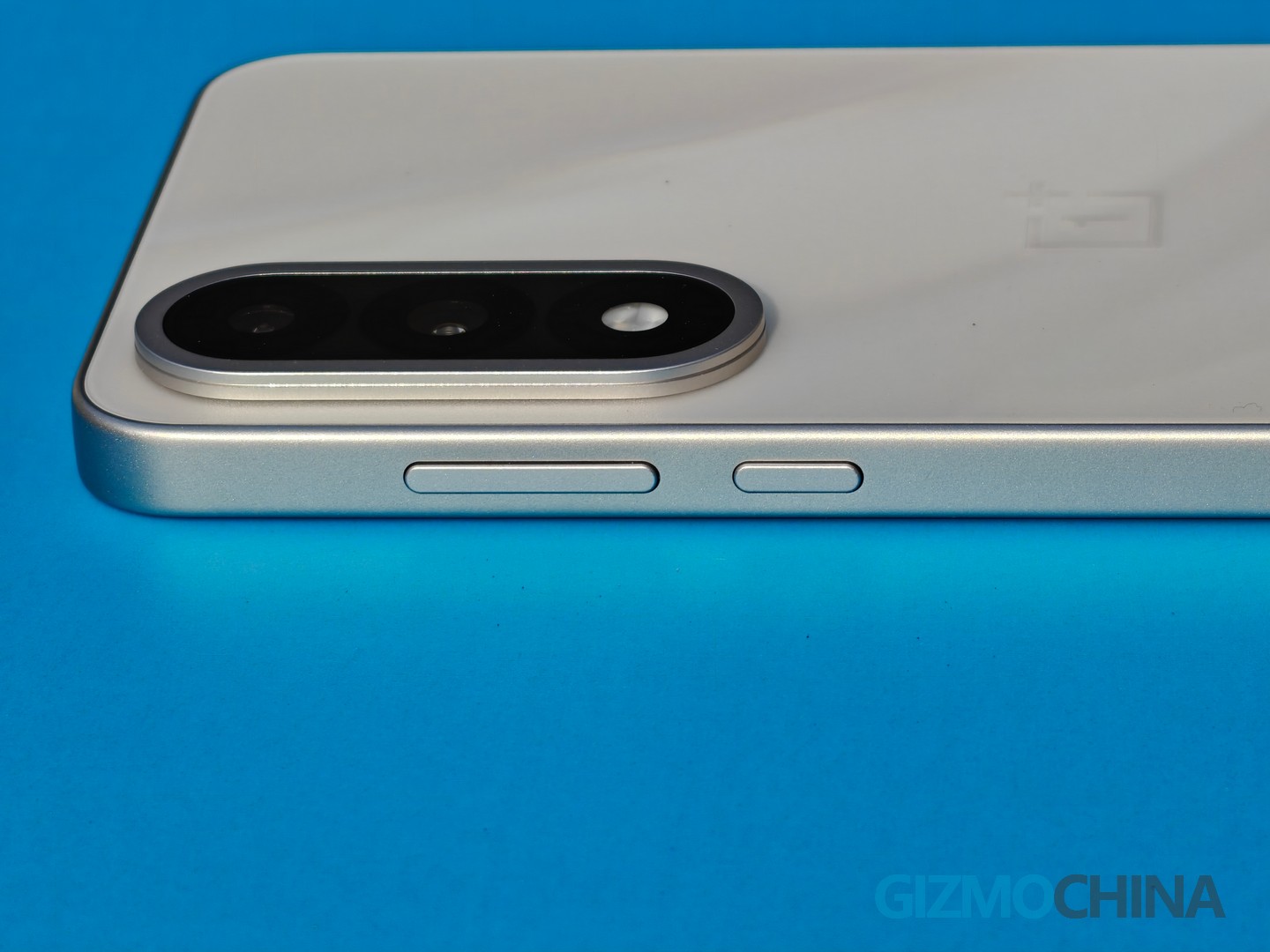
The OnePlus Nord 4 was one of the more unique-looking smartphones ever released. To date, it is the only 5G phone with a metal unibody construction. It also featured a distinctive glass window, reminiscent of early-generation Google Pixel devices.
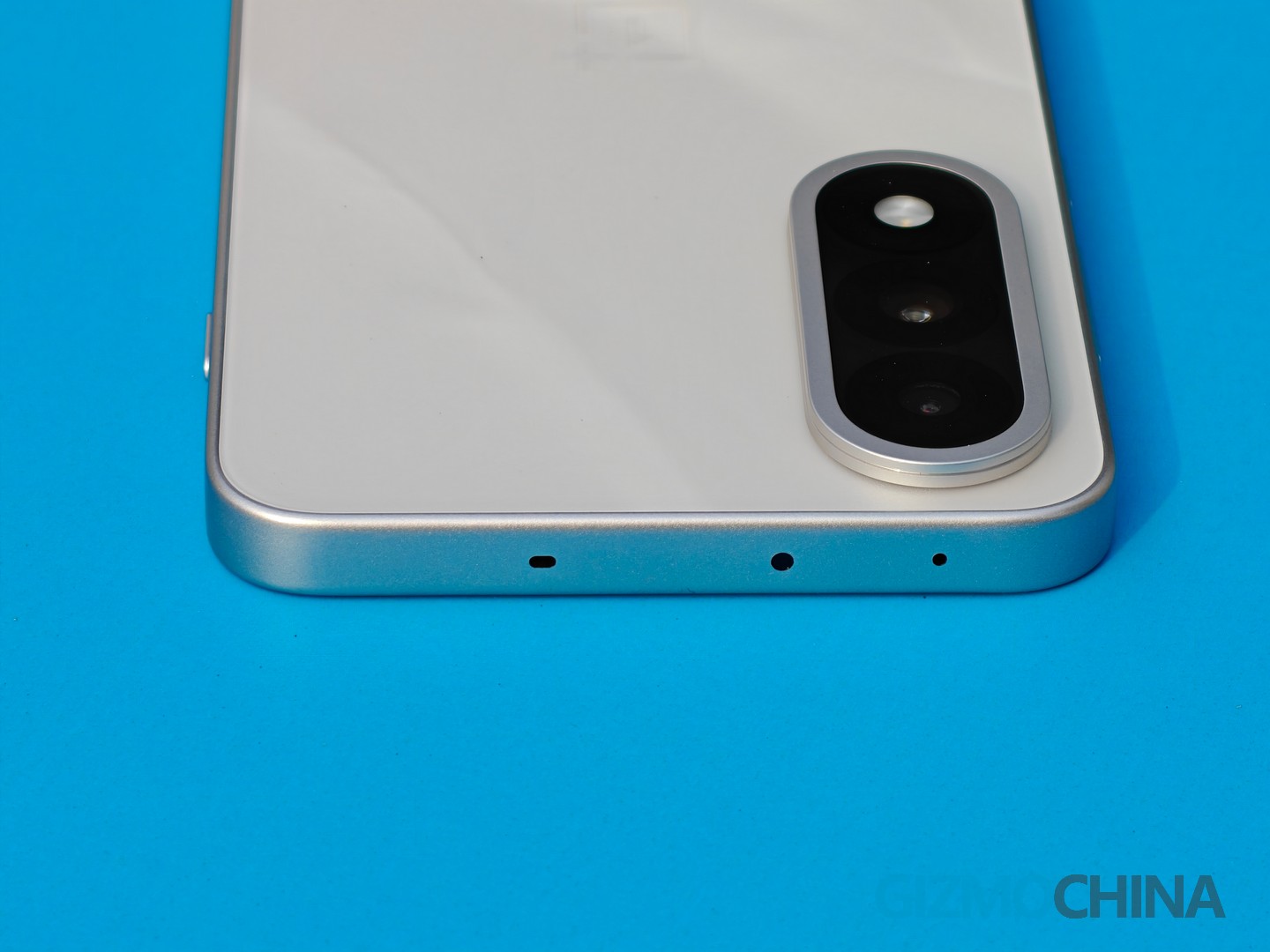
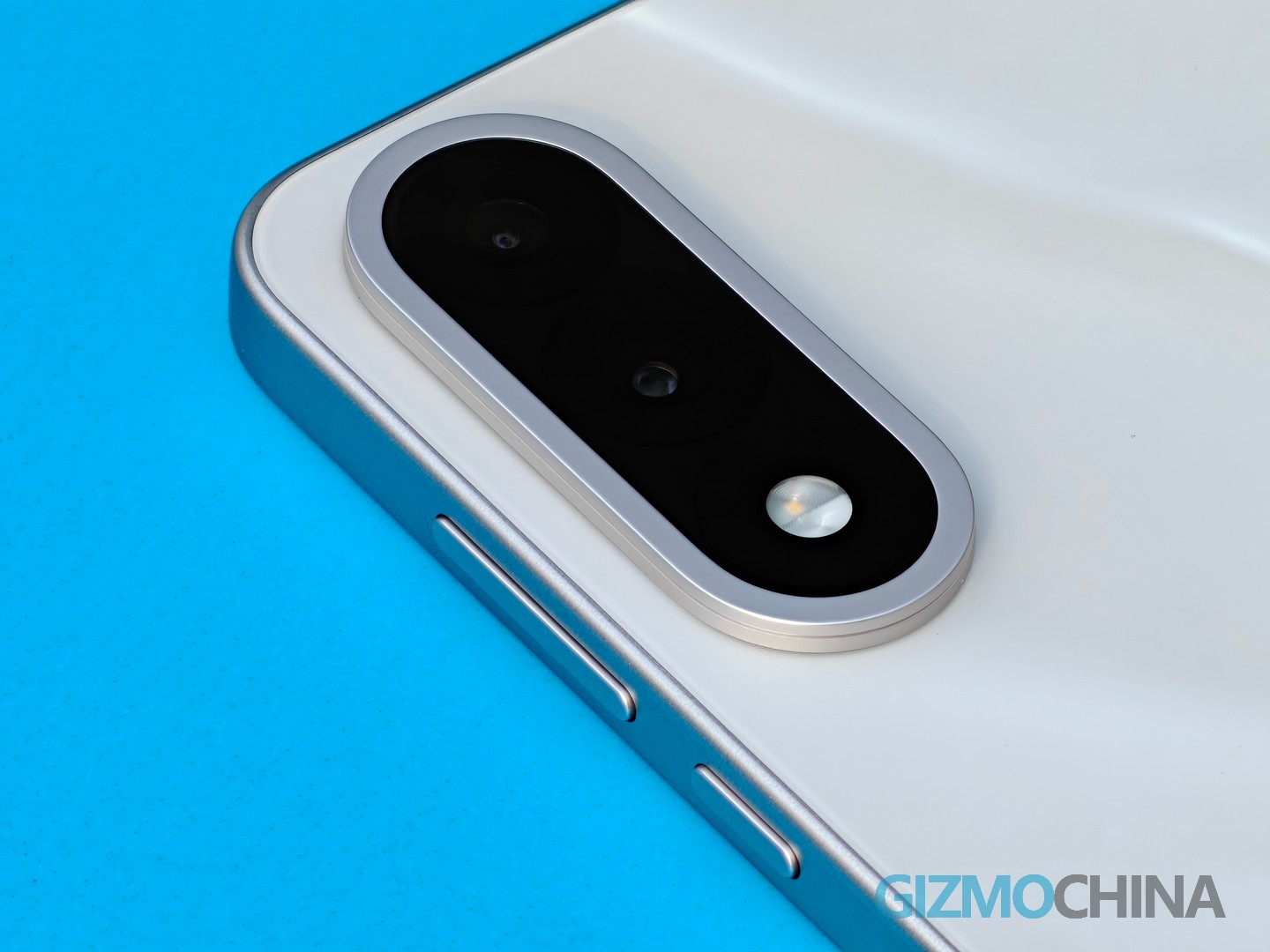
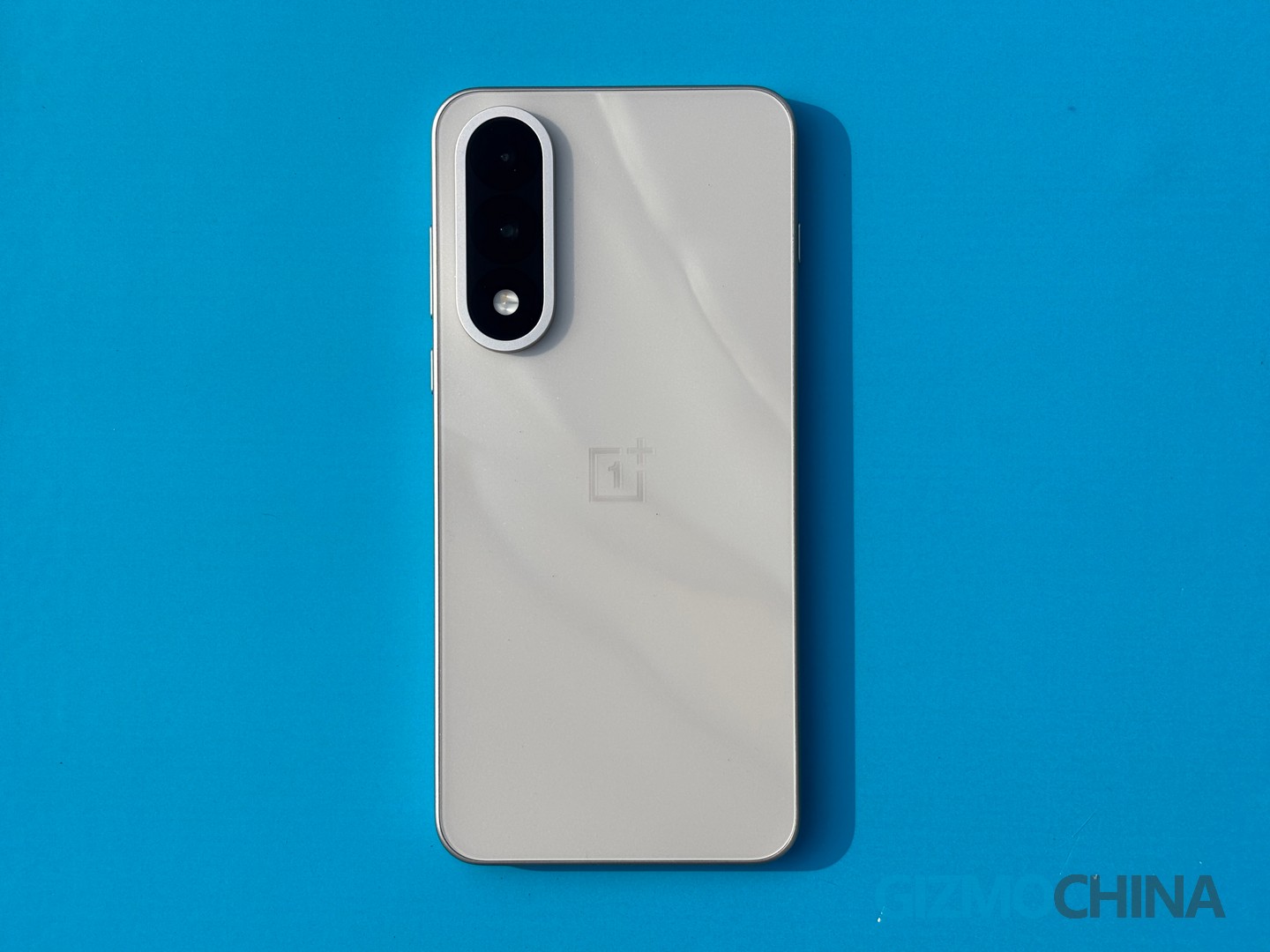
The latest Nord 5, on the other hand, is the polar opposite. It adopts a more conventional design, with the cameras now aligned vertically, similar to older Nord models.
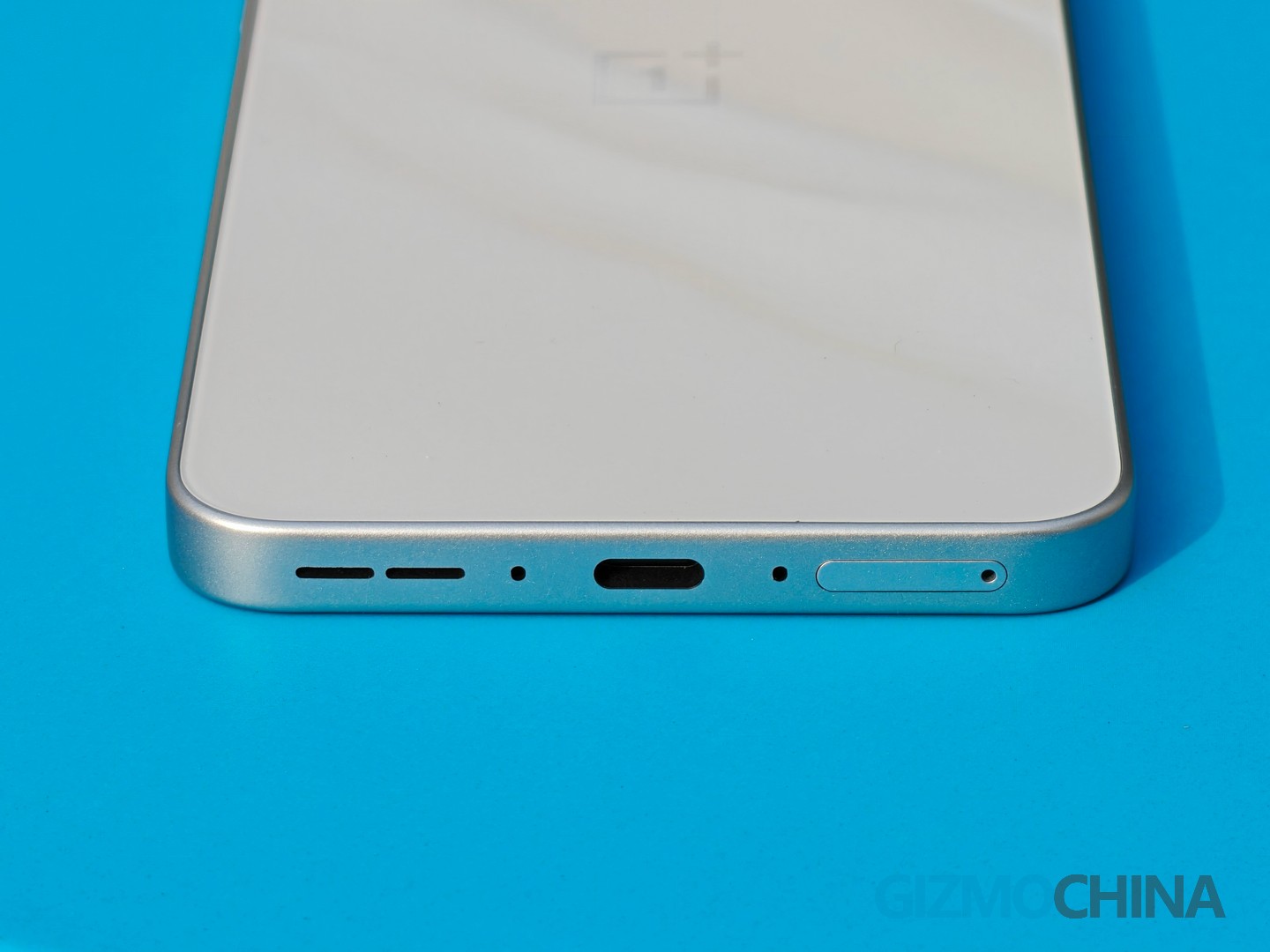
The frame is now plastic; however, the front and back are protected by glass. The rear panel of the “Marble Sands” variant looks stunning and adds significant character. In comparison, while the “Dry Ice” and “Phantom Grey” colors are good, they feel more ordinary.
This design change is a clear indication that OnePlus is targeting a wider, more mainstream audience with the Nord 5.
Please Note: When you buy something using the links in our articles, we may earn a small commission at no cost to you.
2. A bit faster, but is it better?
The OnePlus Nord 4 was already a fast device, so it appears the brand decided not to upgrade much in this regard. The Nord 5 is powered by a Qualcomm Snapdragon 8s Gen 3 SoC, which is essentially an overclocked version of the Snapdragon 7 Plus Gen 3 found in the Nord 4.
The display, however, is now larger, brighter, and faster. The Nord 5 flaunts a 6.83-inch 1.5K (2800 x 1272 pixels) OLED screen with a peak brightness of 1400 nits (in auto-brightness mode) and a 144Hz refresh rate. The increased brightness under direct sunlight is a visible differentiator between the two phones.
There’s a catch, though. The handset’s panel operates at 120Hz for the most part. It can achieve 144Hz in only three games (BGMI, CoD: Mobile, and Free Fire Max) at the time of this review.
OnePlus advertises the device for gaming, highlighting its 7300mm² cooling system. While it performs well in games, there are better options in this price range, such as the Poco F7 and iQOO Neo 10. Both of these smartphones are significantly more powerful, equipped with the latest Qualcomm Snapdragon 8s Gen 4 chip and UFS 4.1 storage.
So, if your priority is purely gaming, the other two phones may offer a better experience. That said, this doesn’t make the Nord 5 a bad choice, as it is still a very capable device.
3. Upgraded cameras deliver
The OnePlus Nord 5 comes with upgraded primary and selfie cameras. The main sensor is a 50MP Sony Lytia LYT-700, while the front-facing unit is a 50MP Samsung ISOCELL JN5 with autofocus. Both of these cameras produce noticeably better pictures and videos than those on the Nord 4.
Photos from the main camera are detailed and offer good dynamic range. It performs well even in low light, considering the phone’s price. Similarly, the autofocus-enabled selfie camera delivers pleasing results. Both of these cameras are also capable of recording video in 4K at 60fps.
Unfortunately, the 8MP ultrawide unit is less impressive. It is merely average in daylight and struggles in low-light conditions. Video recording on this sensor is also limited to 1080p at 30fps. On a positive note, its autofocus does allow it to capture macro shots.
A notable omission, however, is a dedicated telephoto camera, a feature found on competitors like the Motorola Edge 60 Pro.
4. The daily experience
The OnePlus Nord 5 is equipped with a 6,800mAh battery. However, its endurance is only marginally better than that of the Nord 4, which has a smaller 5,500mAh battery.
Surprisingly, OnePlus has reduced the charging speed from 100W to 80W on the latest model. This change, combined with the larger single-cell battery, means the Nord 5 takes about an hour to achieve a full charge. In contrast, the Nord 4 accomplishes this in under 30 minutes.
On a more positive note, the dual stereo speakers now distort less at higher volumes. The phone also retains the snappy under-display fingerprint sensor and the handy IR blaster. However, the vibration motor is a noticeable downgrade.
The software experience is excellent. OxygenOS 15 remains one of the best Android skins, which I would personally rank second only to Samsung’s One UI 7. The new AI features, however, deliver mixed results.
Finally, the newly introduced “Plus Key” is a constant annoyance as it is highly prone to accidental clicks. The brand should have retained the classic alert slider.
5. Verdict: Who should buy it?
In my OnePlus Nord 4 review, I mentioned that the device made sense for most people in India. I cannot say the same with as much confidence for the OnePlus Nord 5, as the competition has caught up.
The switch to a mainstream design indicates that the brand is targeting a wider, more general audience. Furthermore, in press briefings, OnePlus clearly positioned the Nord 5 as an answer to Samsung’s Galaxy A56 rather than to devices from fellow Chinese brands.
In that context, the Nord 5 offers more value than the Galaxy A56, which is not only costlier but also falls behind in many aspects. Therefore, the handset remains a strong recommendation for consumers in Europe.
In India, however, the market is flooded with numerous compelling options, as we’ve discussed. The decision, therefore, boils down to personal preference.
The OnePlus Nord 5 is a good phone with noticeable upgrades over its predecessor. It is a well-rounded product catering to consumers who simply want a reliable, no-fuss smartphone in the sub-₹35,000 price range.
Vivo is now gearing up to unveil a new T-series phone in India. The upcoming T4R handset will be the fourth T4-branded device to hit the country after the Vivo T4, Vivo T4 Lite, and Vivo T4 Ultra. The first teaser reveals that the T4R will be India’s slimmest quad-curved display phone in its price segment.
Vivo T4R’s first teaser out
Vivo T4R teaser
Vivo has confirmed that the Vivo T4R has a thickness of 7.39mm. However, the rest of its details are under wraps.
Speculations surrounding the T4R reveal that it will be a rebranded version of the iQOO Z10R, which is set to launch on July 24 in India. According to tipster Paras Guglani, the only noticeable differences between the Z10R and T4R would be in departments like memory configurations and colour options.
The Geekbench listing of the iQOO Z10R revealed that it will feature the Dimensity 7400 chipset. Being a rebadged version, the T4R is also expected to feature the same chip. The Z10R’s Geekbench listing revealed that it will be available in a 12GB RAM variant. Probably, the T4R will arrive with 8GB of RAM.
The iQOO Z10R is confirmed to arrive in blue and white shades. The tipster claims that the T4R will be available in a green shade instead of blue.
The T4R is expected to arrive with a 32-megapixel front-facing camera with 4K video recording support. On the back, it may feature a Sony IMX882 50-megapixel primary camera.
The Vivo T4R is expected to be priced lower than the Vivo T4, which was announced with a starting price of Rs 21,999 earlier this year. Therefore, the T4R is likely to debut with a sub-Rs 20,000 price tag.
For more daily updates, please visit our News Section.
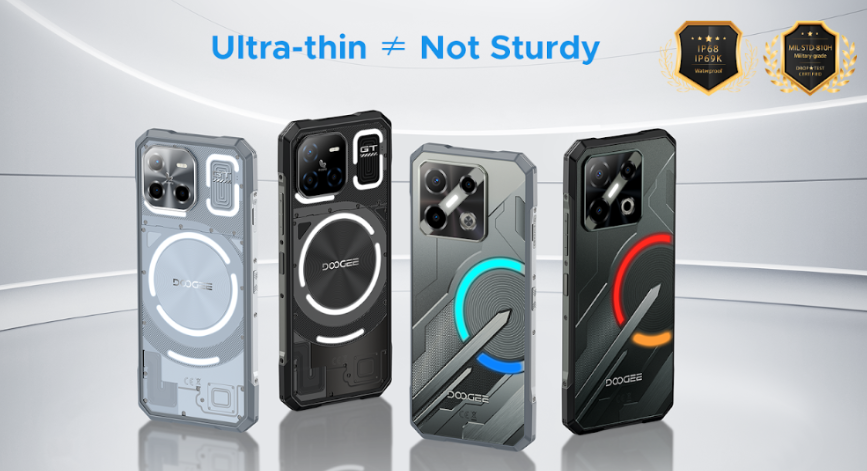
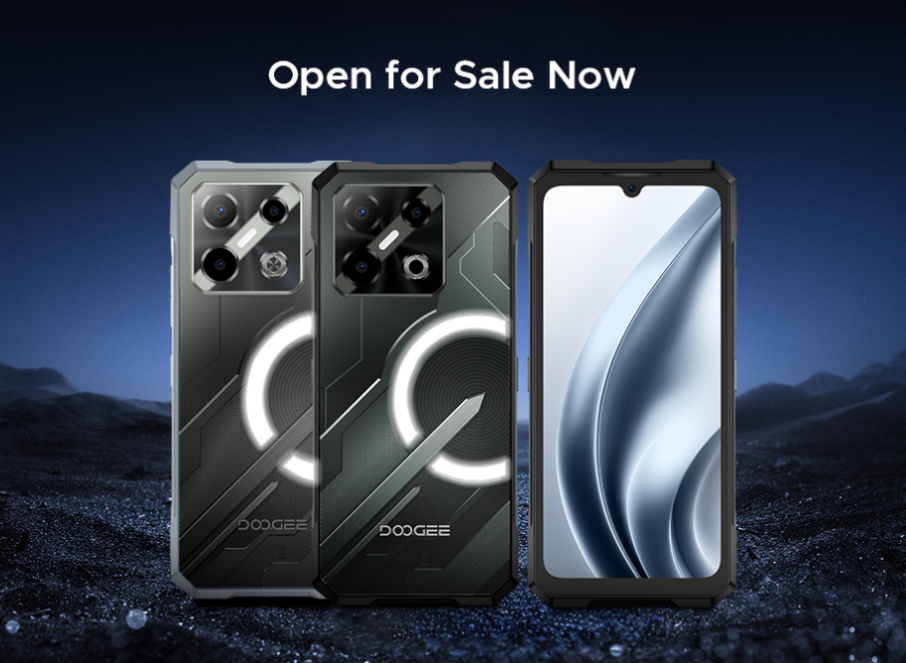
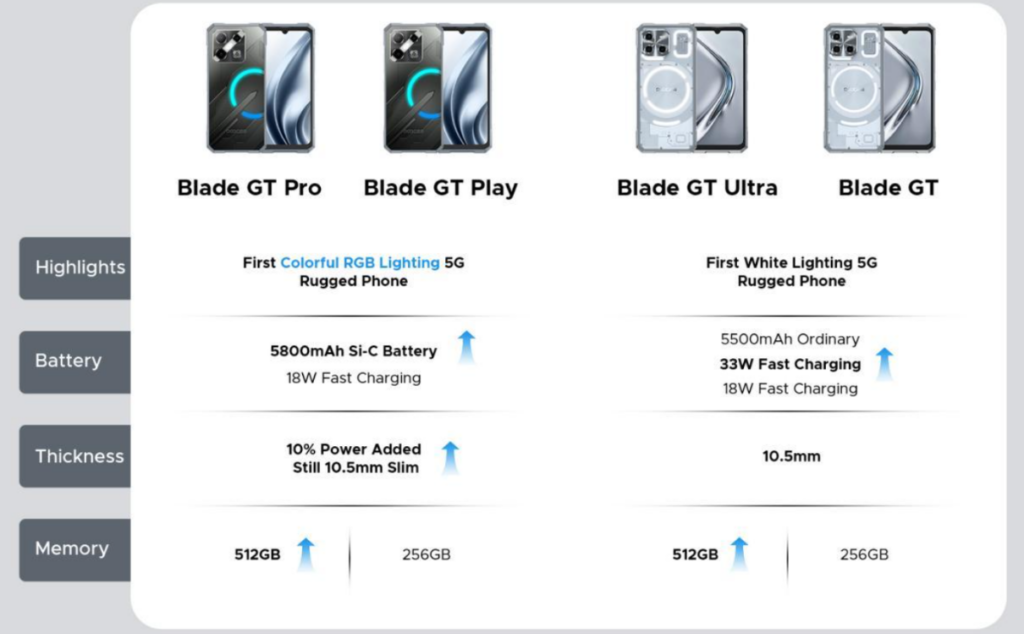
DOOGEE has redefined the rugged smartphone category with its new Blade GT Series, combining durability with dynamic style. With four flagship models, Blade GT, Blade GT Ultra, Blade GT Play, and Blade GT Pro, this series marks the world’s first ultra-thin rugged phones to feature smart RGB lighting systems. Designed for tech-savvy adventurers and gamers, these phones not only withstand tough environments but also bring a customizable lighting experience.
Design and Lighting Innovation
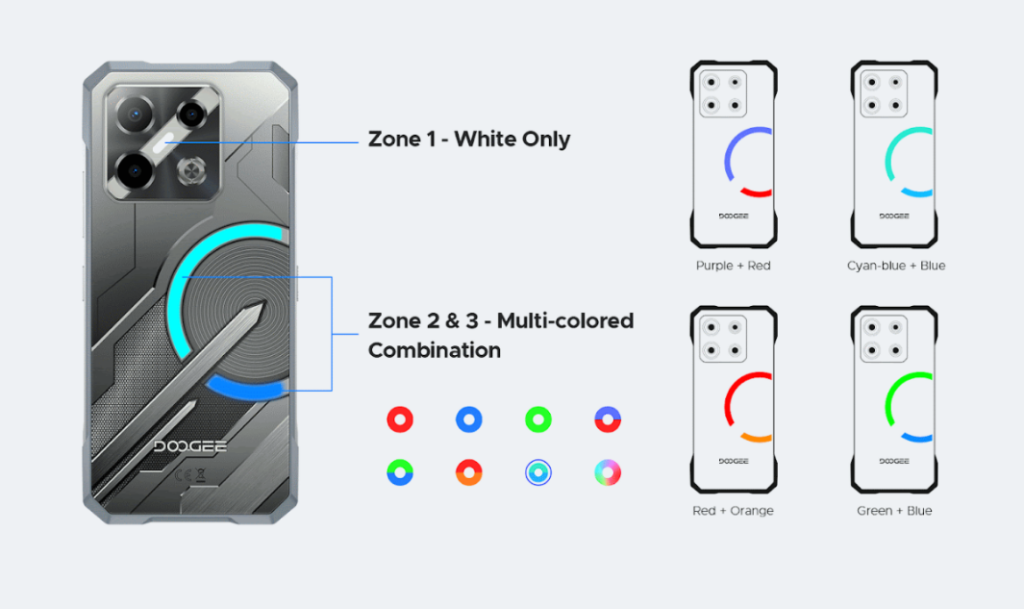
The Blade GT and Blade GT Ultra feature a clean, futuristic design with sleek white lighting known as the “Lighting Elf” system. This offers a refined and minimalistic aesthetic for users who prefer subtle illumination. On the other hand, the Blade GT Play and GT Pro step up the game with DOOGEE’s latest Cyber Aura Lighting 2.0 system.
This system introduces RGB lighting effects that can be customized to suit your style. Whether you want a cool blue glow or a multicolor gradient, you can change the look of your device with just a tap. The Cyber Aura icon and Quick Access Panel allow users to instantly trigger lighting effects, making the customization experience seamless and fun.
Dynamic Lighting Effects for Music & Games
The Blade GT Play and GT Pro aren’t just about looks; they interact with your media too. The lighting system includes dynamic modes such as Breathing, Flowing Water, and Flashing. Users can choose from single colors like red, green, or blue, or mix them into combinations like red-orange or cyan-blue.
Two standout modes, Music Mode and Gaming Mode, add real-time interactivity. Music Mode syncs lighting with your tunes, making the phone pulse with rhythm. Gaming Mode auto-activates light effects when you launch a game, enhancing the immersive experience. While Music Mode doesn’t support custom colors, it brings an energetic vibe to your playlist.
Powerful Si-C Battery with Long Life
All four models come equipped with DOOGEE’s new Silicon-Carbon (Si-C) battery technology. The battery has a large 5800mAh capacity, 20% more than the original Blade GT, while maintaining an ultra-thin 10.5mm body profile. With an energy density of 747Wh/L, it ensures efficient performance and long-lasting usage.
This battery technology also promises durability over time, retaining at least 80% health after 1,000 charge cycles. DOOGEE guarantees a battery lifespan of up to 3 years, making these phones a reliable companion for both work and play.
Anniversary Sale Offers
As part of DOOGEE’s brand anniversary celebration, the Blade GT Series comes with exclusive promotional offers. Until July 31st, customers who spend over $499.99 will receive free accessories. Additionally, special bundle deals under the “Buy More, Save More” campaign make this a great time to upgrade.
The DOOGEE Blade GT Series is available now with special discounts. On the official store, use code KOLGT80 to get $80 off, bringing the Blade GT Pro to $389.99 and the Blade GT Play to $289.99. These purchases also include a 1+1-year warranty.
On Amazon, the Blade GT Pro is 30% off with code Y6QXFH5T ($391.99), and the Blade GT Play is 20% off with code HVXST253 ($299.99). These limited-time deals offer great value across both platforms.
The DOOGEE Blade GT Series is a bold step forward in rugged smartphone design. By merging RGB lighting with powerful battery tech in a thin, durable body, DOOGEE has created a series that stands out for both function and flair.
Sony has announced the RX1R III, the third camera in its RX1R series. It features a 61-megapixel full-frame Exmor R CMOS sensor, the latest BIONZ XR image processor, and a fixed ZEISS Sonnar T* 35 mm F2 lens. The RX1R III is built for users who want high image quality in a compact camera, whether for street, travel, or professional use.
The new sensor delivers sharp, detailed images with low noise and a wide dynamic range. It has an anti-reflective coating and no optical low-pass filter, which improves clarity. The lens is the same 35 mm F2 unit from previous RX1 models, offering familiar color and tone. The lens and sensor are aligned with high precision to ensure top performance in a small body.
Autofocus uses an AI processing unit to detect and track subjects accurately. It recognizes eyes, faces, heads, and bodies, even if the face is not visible. The camera has 693 phase-detection AF points covering 78 percent of the sensor area. This works for both photos and video.
The RX1R III also includes a Step Crop Shooting function. This lets users switch between 35 mm, 50 mm, and 70 mm focal lengths using buttons or dials. If shooting in RAW, the focal length can be changed later during editing. The macro ring on the lens allows focusing as close as 20 cm with up to 0.26x magnification.
Twelve Creative Look profiles are built in, including two new ones. FL2 gives a nostalgic look with soft colors. FL3 produces more vibrant images. These can be used for both stills and video.
The camera body is made of magnesium alloy and has a new rubberized grip. The controls and hot shoe are flush with the top plate. It includes a 2.36 million-dot OLED viewfinder with 0.70x magnification. The NP-FW50 battery supports up to 300 shots per charge. A USB-C port allows fast charging and use with external power sources.
Sony says the RX1R III is produced using 100 percent renewable energy and comes in eco-friendly packaging. Accessibility features include screen reader support and display magnification.
The RX1R III will be available in July 2025 for about 4,900 euros or 4,200 pounds. Optional accessories will follow in September. These include the TG-2 thumb grip at 280 euros, the LCS-RXL body case at 180 euros, and the LHP-1 lens hood.
For more daily updates, please visit our News Section.
The year 2025 has been an eventful for foldable phones, especially the book-style category. Once an experimental niche, foldables now stand toe-to-toe with premium slabs, offering not just larger screens in your pocket, but better hardware, meaningful software experiences, and surprisingly slim, durable designs.
Samsung, Honor, Oppo, and Vivo have all pushed the boundaries this year, each carving out their own approach to what a book-style foldable should be. Here’s a breakdown of the top options worth your money right now.
Samsung has introduced the Galaxy Z Fold 7 with a focus on lighter design and improved usability. The phone weighs just 215 grams and measures 4.2mm when unfolded. It features a larger 8-inch QXGA+ AMOLED 2X display with up to 2600 nits of peak brightness, replacing the under-display camera with a 10MP shooter for clearer results.
Samsung has upgraded the processor to the Snapdragon 8 Elite for Galaxy and added a 200MP main sensor to the rear camera setup. It keeps the 12MP ultra-wide and 10MP 3x telephoto modules. One UI 8, based on Android 16, brings new AI tools like Photo Assist and Gemini Live, along with multitasking-focused enhancements for the large screen.
It retains the 4400mAh battery with 25W wired, 15W wireless, and reverse charging support. IP48 water and dust resistance is still present. Pricing starts at $1,999.99, and the device will go on sale starting July 25 in select countries.
Please Note: When you buy something using the links in our articles, we may earn a small commission at no cost to you.
2. Honor Magic V5
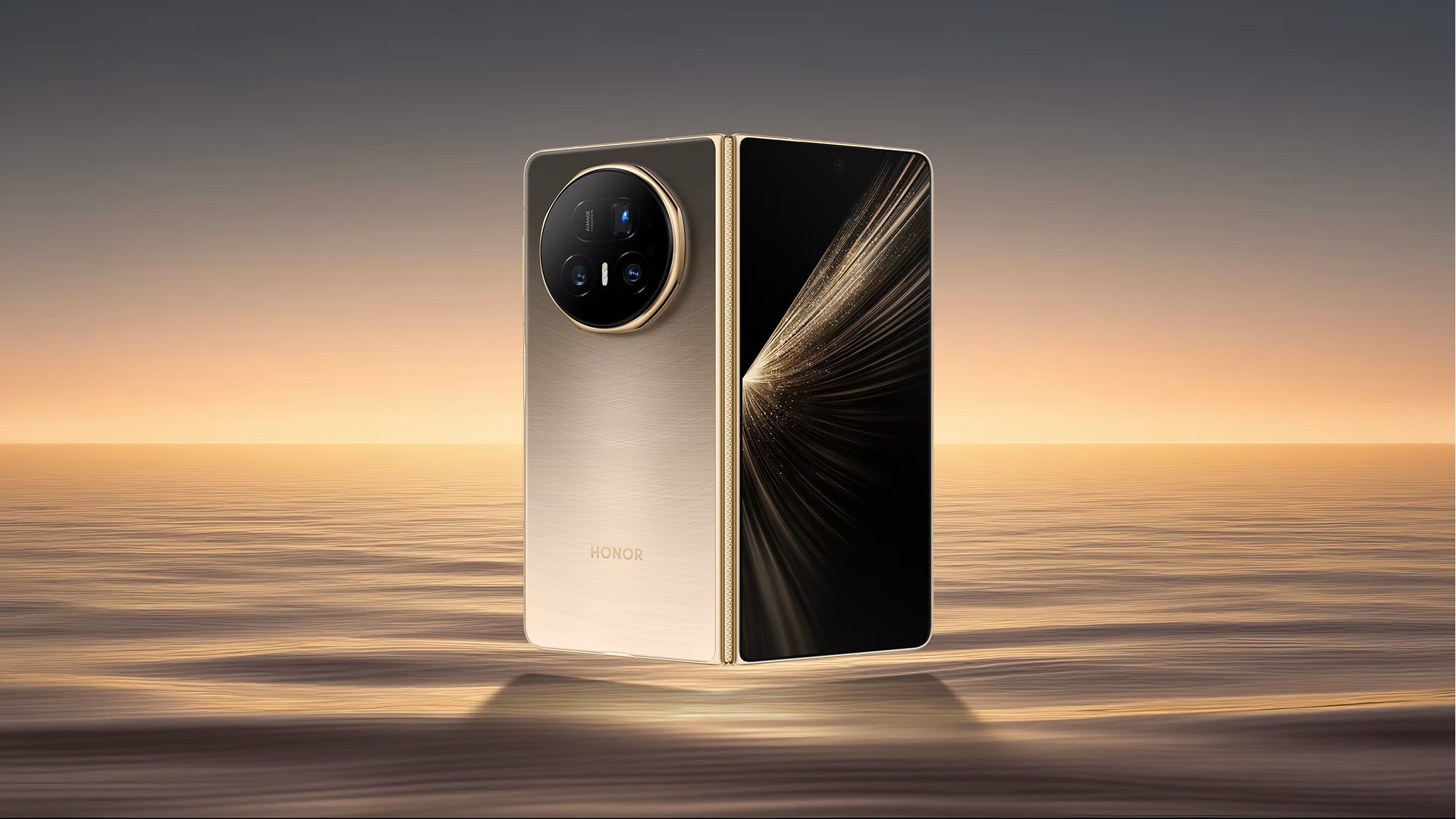
Honor has launched the Magic V5 in China as the world’s thinnest foldable. The Ivory White variant measures 8.8mm when folded and 4.1mm when unfolded, weighing 217 grams. The phone uses a Luban Suspension Hinge tested for 500,000 folds and includes King Kong Giant Rhino Glass for protection.
The 7.95-inch inner and 6.43-inch outer OLED displays both support 120Hz refresh rates and peak brightness up to 5000 nits. The phone is rated IP58 for dust and IP59 for water resistance. The rear camera system includes a 50MP wide, 50MP ultra-wide, and 64MP 3x telephoto with up to 100x digital zoom. It uses the Snapdragon 8 Elite chip and offers up to 16GB RAM and 1TB storage.
The top-end 1TB variant comes with a 6100mAh silicon-carbon battery, while the other models use a 5820mAh battery. The device supports 66W wired and 50W wireless charging. Prices begin at 8,999 yuan (approximately $1,254), and it is already on sale in China.
3. Oppo Find N5
Oppo Find N5 features an 8.12-inch 2K AMOLED LTPO inner display and a 6.62-inch FHD+ AMOLED outer screen. Both panels support 1-120Hz refresh rate, high-frequency 2160Hz PWM dimming, and stylus input. The crease is now 30% shallower.
The Find N5 features a titanium Flexion Hinge that is 26% slimmer and 36% more rigid than before. It is powered by the Snapdragon 8 Elite processor, paired with 16GB of LPDDR5X RAM and 512GB of UFS 4.0 storage. The device runs ColorOS 15 based on Android 15, introducing new AI capabilities, improved multitasking, and seamless Mac integration through O+ Connect.
The foldable comes with a versatile camera setup featuring a 50MP main sensor, an 8MP ultra-wide lens, and a 50MP periscope telephoto camera that supports 6x optical zoom and includes Hasselblad enhancements. It is backed by a 5600mAh battery that supports 80W wired and 50W wireless charging. Globally, it is available at approximately $1,944.
4. Vivo X Fold 5
Vivo has launched the X Fold 5 in India with an 8.03-inch 2K+ AMOLED LTPO display and a 6.53-inch FHD+ AMOLED cover screen, both supporting up to 4500 nits brightness and 120Hz refresh rates. The phone is powered by the Snapdragon 8 Gen 3 chip with 16GB RAM and 512GB storage.
The foldable uses a Carbon Fiber Support Hinge tested for 600,000 folds and offers IPX8, IPX9, and IP5X ratings along with freeze resistance. It includes a triple 50MP rear camera setup using Sony and Samsung sensors and two 20MP front cameras.
The X Fold 5 debuts with a 6000mAh Blue Volt battery featuring fourth-generation silicon anode and semi-solid-state technology. It supports 80W wired and 40W wireless charging. The phone is already available in China and will go on sale in India starting July 30.
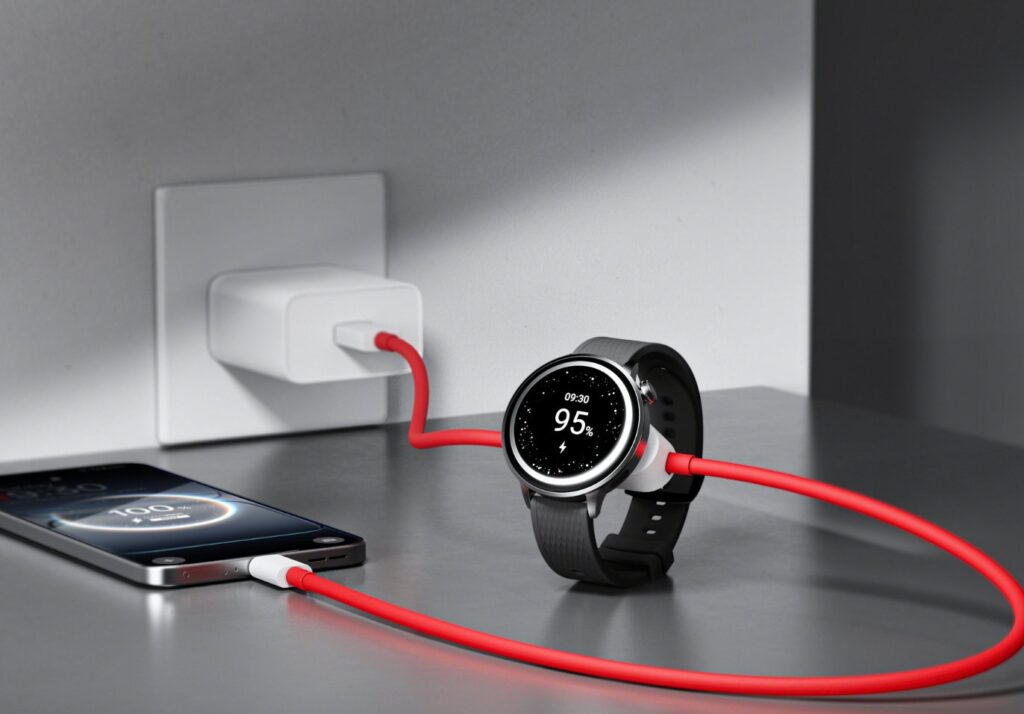
OnePlus has launched a new charging accessory aimed at users who want to charge both their smartphone and smartwatch with a single cable. The new 2-in-1 SUPERVOOC Cable (8A, 1.2M) is priced at $29.99 and is now available for purchase through official channels.
OnePlus 2-in-1 SUPERVOOC Cable Specifications
The cable measures 120cm in length and supports up to 80W SUPERVOOC fast charging when used to charge a phone alone. When used for simultaneous charging, the cable can deliver 67W to a smartphone and 10W to a smartwatch, allowing users to power up both devices at the same time without compromising significantly on speed.
One end of the cable features a standard USB-A connector, while the other end splits into two outputs, a USB-C plug for phones and a magnetic POGO pin connector designed specifically for OnePlus smartwatches. The magnetic connector attaches securely to the back of the watch with two gold charging pins and eliminates the need to carry a separate watch charger during travel.
OnePlus has included an E-marker smart chip inside the cable to provide protection against overloading and ensure stable power delivery. The cable also uses thickened pure copper cores to enhance both charging speed and safety. Its cable design is coated in bright red, while the white connector housings maintain the signature OnePlus aesthetic.
The 2-in-1 SUPERVOOC Cable is compatible with select OnePlus devices and is tailored for users who already use both a OnePlus smartphone and a OnePlus smartwatch. It is not designed to work with wearables from other brands.
TCL has launched its new C72K QD-Mini LED TV series in India. The lineup includes screen sizes ranging from 55 inches to 98 inches and features high-end specifications such as 4K resolution and 144Hz refresh rate. The C72K series is now available for purchase starting at Rs. 84,990 ($988) through major offline and online retailers including Amazon, Flipkart, Croma, and Reliance Digital.
TCL C72K QD-Mini LED TV Specifications
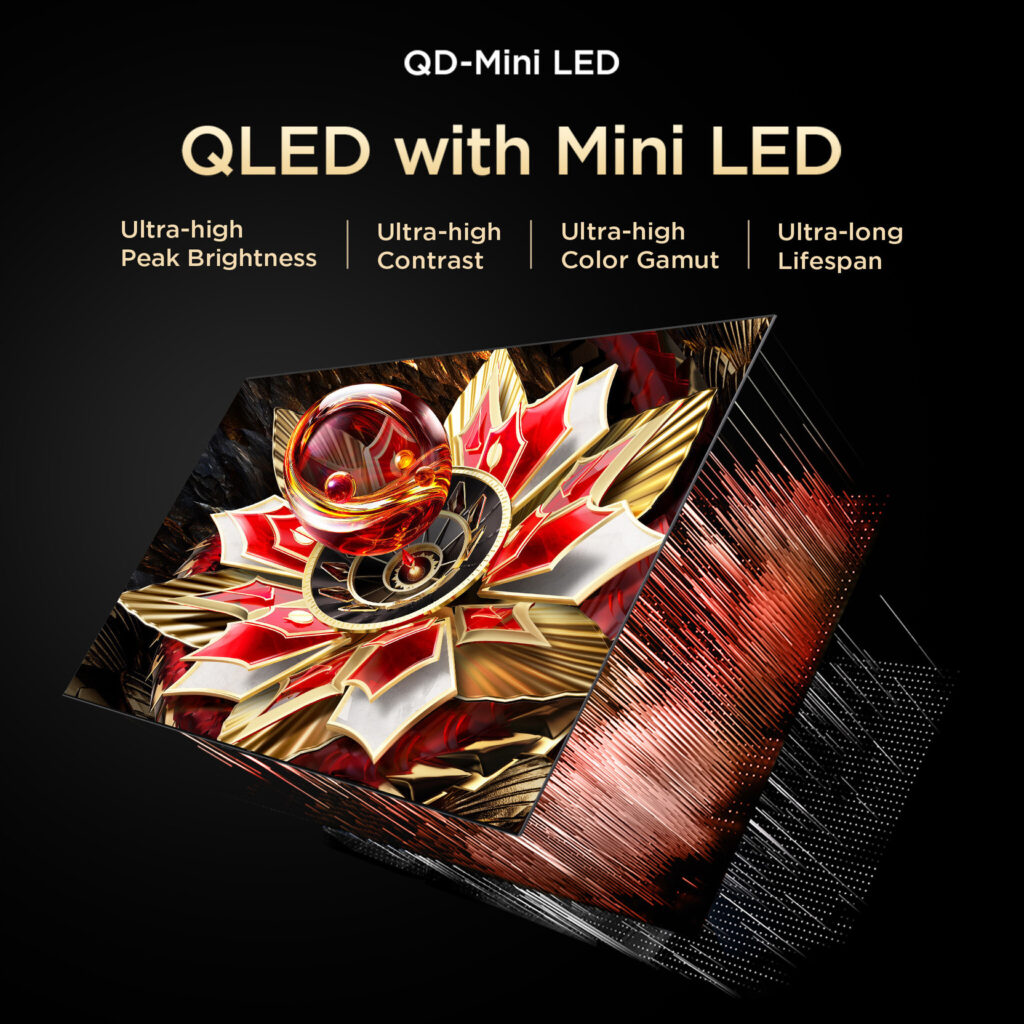
The C72K TV features TCL’s QD-Mini LED technology paired with a CrystGlow HVA panel and precise dimming zones, which enhance brightness, contrast, and image accuracy. It reaches up to 2600 nits peak brightness and supports Dolby Vision IQ, HDR10+, HDR10, and HLG for high dynamic range content. The display also supports TCL’s proprietary All-Domain Halo Control system, which minimizes blooming and improves black level performance.
The TV features a premium ultra-slim design with a metallic body and an edgeless display. TCL has equipped the TV with its AiPQ Pro processor that uses AI algorithms to enhance image clarity, color, motion, and contrast based on scene detection. It supports native 4K 144Hz refresh rate with Variable Refresh Rate (VRR) up to 288Hz and FreeSync Premium Pro for smoother visuals in gaming and fast-moving content.
In terms of audio, the C72K series is powered by a built-in Onkyo 2.1 channel sound system. It supports Dolby Atmos, DTS:X, and DTS Virtual:X to deliver immersive spatial audio. The speaker system is designed to provide strong low-frequency output with an independent subwoofer.
The TVs run on Google TV OS and support Google Assistant, Chromecast, Kids Profile, and content recommendations based on user preferences. Connectivity options include four HDMI 2.1 ports, one USB port, Wi-Fi, LAN, and Bluetooth 5.4. TCL also includes features such as Game Master Mode, Art Gallery mode, AI Picture and HDR enhancements, and multiple eye care technologies certified by TÜV Rheinland.
The C72K series is available in five screen sizes: 55-inch, 65-inch, 75-inch, 85-inch, and 98-inch. TCL has confirmed that all models are available across online and offline channels starting July 15, 2025.
With every new iPhone launch, Apple fans are faced with the same question: upgrade now or wait? If you’re on the fence about buying any of the recent iPhones, like the iPhone 15 or iPhone 16, you might want to hold out until Apple launches the iPhone 17 series later this month. Based on early reports and reliable leaks, the iPhone 17 line could bring some notable changes and upgrades in years.
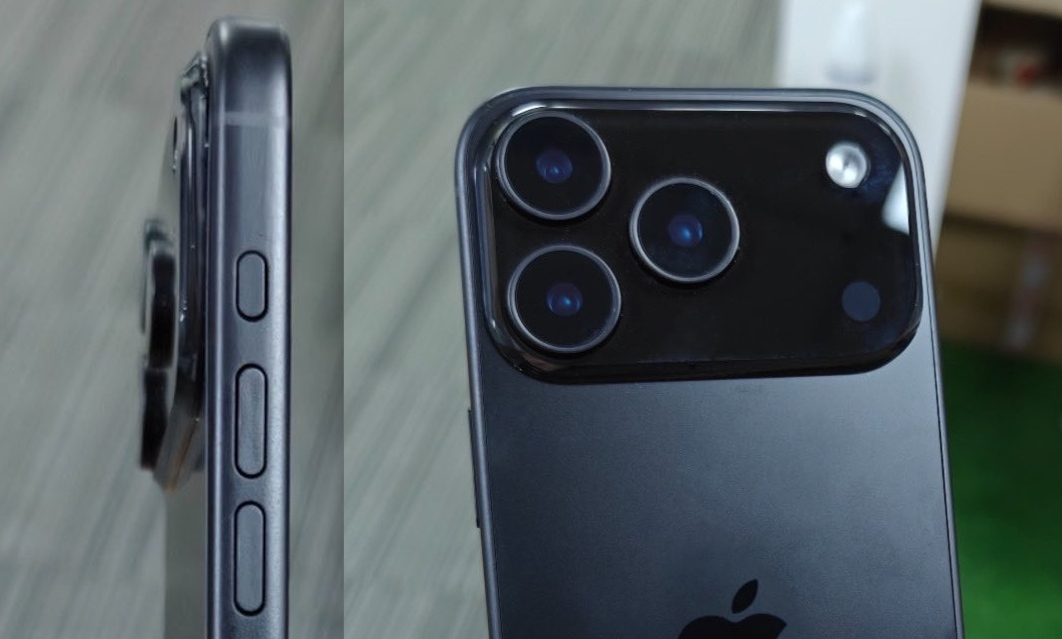
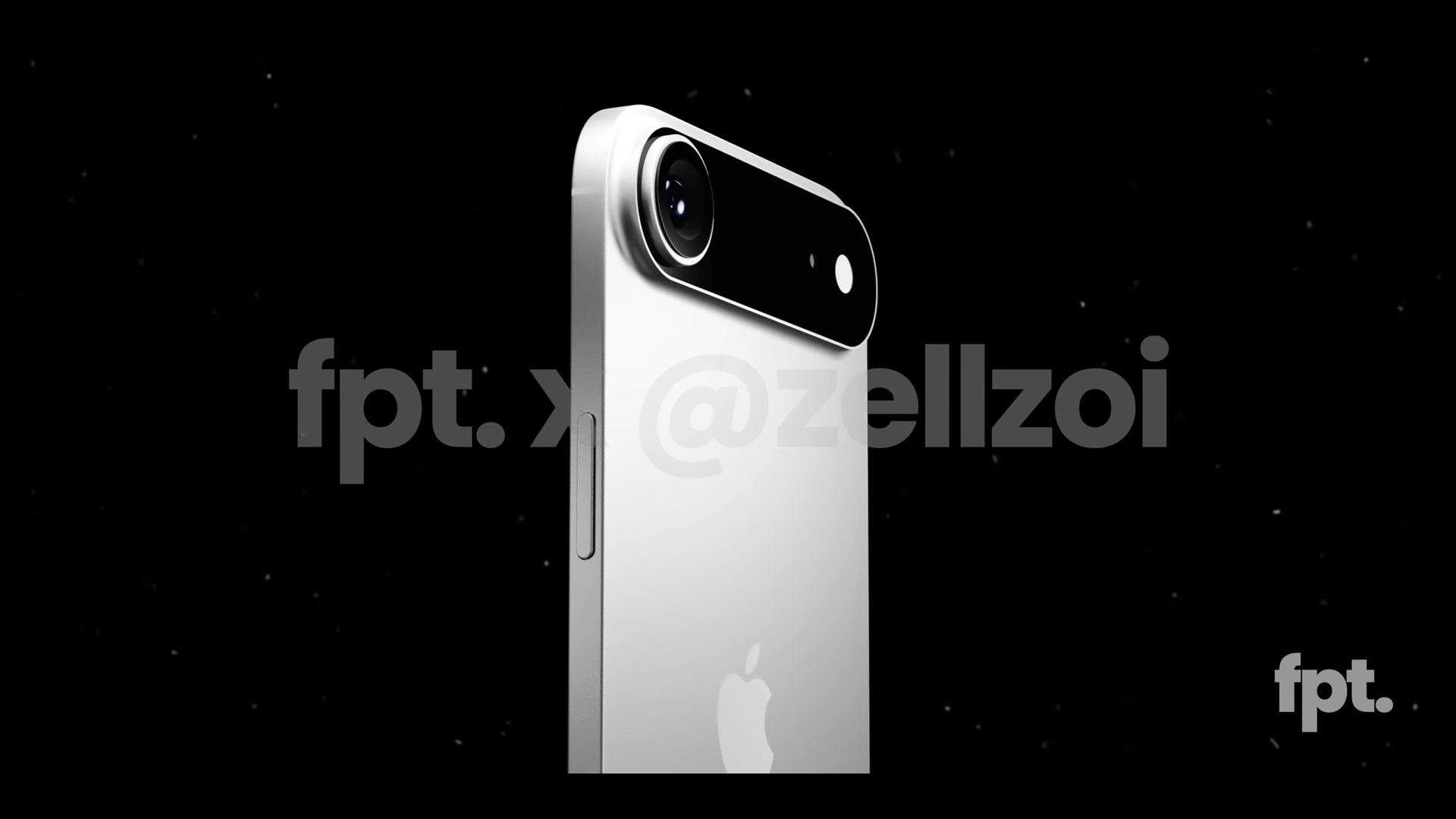
The iPhone 17 series is expected to feature a refreshed design. Recent reports revealed the design of the iPhone 17 Pro in leaked hands-on images. Apple is getting rid of the flat frame in favor of more rounded corners (similar to older iPhones), with the module on the rear becoming a large rectangular camera island.
It is unclear if this design language is standard across the series, but leaks have hinted at a smaller pill shaped cutouts on the front, thinner bezels, and a lighter chassis as well. Interestingly, Apple is moving back to aluminum for all devices for the frame as well as the horizontal bar on the back. The standard iPhone 17 could retain the simpler and smaller camera modules.
2. Introducing the iPhone 17 Air?
Apple iPhone 17 Air
Apple offers four models in its annual flagship lineup that included the standard, Plus, Pro, and Pro Max. But it might shake things up this year with a new iPhone 17 Air. The base iPhone 17 is still a standard model, with the iPhone 17 Air replacing the iPhone 16 Plus with a 6.5-inch display and a super slim 5.4mm body. Meanwhile,, the iPhone 17 Pro and 17 Pro Max are the flagship grade models.
3. 120Hz Displays All Around
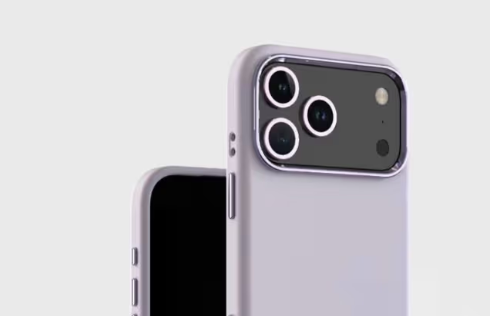
iPhone 17 Pro Case Leak
Last year’s iPhone 16 and iPhone 16 Plus with 60Hz displays were absolutely disappointing, especially considering their premium price tags. Apple is expected to finally rumored to bring a 120Hz refresh rate on the iPhone 17 and iPhone 17 Air, giving all four models a smoother refresh rate. Rumors have also hinted at a new anti-reflective, scratch-resistant coating for all iPhone 17 displays.
4. Better Cameras
While the non-Pro models are getting a higher refresh rate panel, the major upgrade for the iPhone 17 Pro and iPhone 17 Pro Max is expected to be their cameras. Both models might get an improved 48MP telephoto lens with a 3.5x zoom (down from 5x on its predecessor). While this could appear like a downgrade, Apple might have the right idea, as these could enable the telephoto shooter to be more practical for portrait shots. Another upgrade that is universal to all four models is a new 24MP selfie shooter.
For more daily updates, please visit our News Section.
Samsung’s Galaxy S26 series is expected to launch in January 2026 — but the question of which chip will power the new flagships remains open. With Samsung pushing its in-house Exynos chips for more devices, a recent comment from a key executive has stirred fresh speculation about the Galaxy S26’s processor lineup.
At the NAEK Young Festival in Seoul, Park Yong-in, President of Samsung System LSI, spoke about the development of the Exynos 2600. While he sounded confident about the chip’s progress, Park stopped short of confirming whether it would be used in the Galaxy S26 series.
Earlier this year, Samsung MX — the mobile division — surprised many by using the Exynos 2500 in the Galaxy Z Flip7 and the Exynos 2400 in the Z Flip7 FE, breaking from its usual reliance on Qualcomm’s Snapdragon processors. Park said the Exynos 2600 was “progressing well” and hinted at “good results” ahead, but made it clear that MX will make the final call on whether the chip makes it into the S26 lineup.
The fact that the multitasking-focused Z Fold7 still relies on a Snapdragon flagship suggests the Exynos 2500 fell short of Samsung’s performance or efficiency expectations. So far, there’s been little convincing evidence of significant gains with the Exynos 2600 either — likely a key reason why the mobile division has yet to lock in a deal with System LSI, Samsung’s chipmaking arm.
Samsung had originally planned to use the Exynos 2500 for the Galaxy S25 series, only to scrap it in favor of the Snapdragon 8 Elite due to yield problems. The Exynos 2600 is reportedly facing similar yield concerns, with production rates still falling short of the 70% mark needed for mass production.
Meanwhile, Samsung MX is increasingly sourcing key components from external suppliers. The Galaxy S25, for example, used Micron memory chips instead of Samsung’s own — a trend that may continue with the S26 series. If production challenges persist, Samsung may once again turn to Qualcomm (Snapdragon 8 Elite Gen 2) for the Galaxy S26, S26 Edge, and S26 Ultra — good news for users prioritizing performance and battery life.
Boat has launched a new limited-edition Naruto Series in India, featuring anime-inspired versions of its Rockerz 460 wireless headphones and Stone 350 Pro Bluetooth speaker. The new products celebrate characters from the popular anime Naruto, including Naruto Uzumaki, Kakashi Hatake, and Itachi Uchiha.
This collaboration marks the first official partnership between an anime franchise and a lifestyle audio brand in India. Boat aims to connect with the country’s growing Gen-Z anime fanbase through themed products and offline events.
Specifications
The Stone 350 Pro Naruto Edition is a 14W Bluetooth speaker that supports Boat Signature Sound and dynamic RGB lighting that reacts to audio playback. It features Bluetooth v5.3, support for Aux and TF cards, and a built-in microphone for hands-free calls. The speaker has a 3600mAh battery that lasts up to 12 hours and an IPX5 rating for water and sweat resistance. It also supports TWS pairing for stereo playback using two units.
The Rockerz 460 Naruto Edition features 40mm drivers and supports Boat Signature Sound and Beast Mode, which reduces latency to 65ms. It includes ENx technology for enhanced call clarity and supports Dual Pairing for switching between two devices. The headphones offer up to 30 hours of battery life on a single charge via USB Type-C. The design includes sweat-resistant memory foam ear cushions and an adjustable headband for comfort during extended use.
Boat is also running anime-themed campaigns and activations across India to promote the launch. The company has organized events like a Ramen Rave at Kuuraku in Mumbai and a Naruto Run with Bombay on Foot. It has also partnered with anime influencers and creators to expand the campaign’s reach on social media platforms.
Pricing and Availability
The Boat Rockerz 460 Naruto Edition and Stone 350 Pro Naruto Edition are both priced at Rs. 1,799 ($20). They are available through Boat’s official website and Blinkit in select cities.
In related news, Boat recently launched the Valour Watch 1 GPS smartwatch in India, featuring an AMOLED display, built-in GPS tracking, and a suite of wellness-focused features. Alongside it, the company has also introduced the Ivy Pro and Zenith Pro true wireless earbuds, both equipped with Dolby Audio support and adaptive active noise cancellation (ANC).
For more daily updates, please visit ourNews Section.
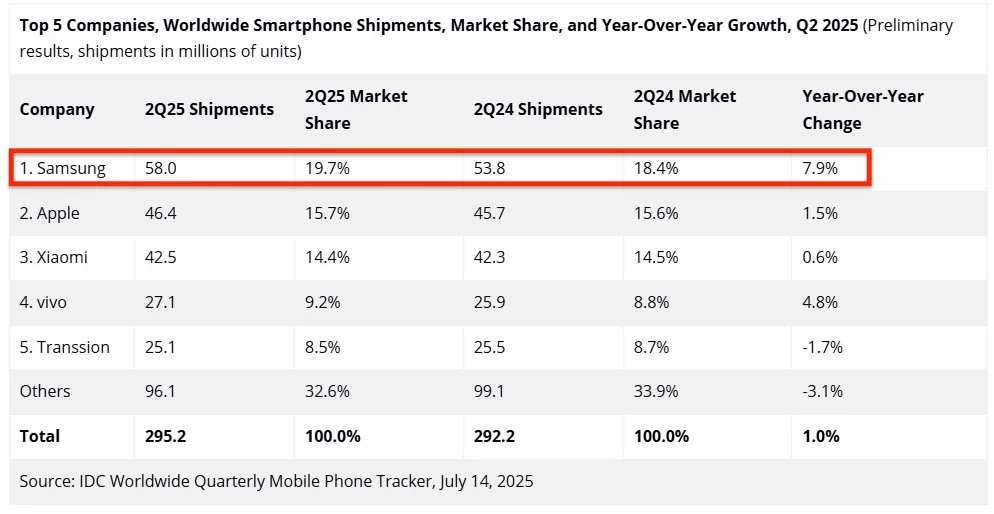
Samsung has retaken the lead in the global smartphone market for Q2 2025, edging out rivals in a fiercely contested space, according to IDC’s latest report. The South Korean tech giant shipped 58 million smartphones in the quarter, claiming a 19.7% market share — a 7.9% increase over the same period last year when it moved 53.8 million units.
Apple followed in second place with 46.4 million shipments, securing a 15.7% share. While that’s up slightly from last year, it’s a noticeable drop from Q1 2025 — likely a result of buyers holding off for the upcoming iPhone 17 series launch this September.
Samsung’s mid-range Galaxy A36 and A56 models reportedly played a key role in this growth, thanks to AI-powered features offered at competitive prices, per IDC. However, the company’s Q2 figures were slightly down from Q1 2025’s 60.6 million shipments, when the Galaxy S25 series saw strong early demand.
Xiaomi secured third place with 42.5 million units shipped (14.4% market share), while Vivo and Transsion (which owns Infinix, Itel, and Tecno) rounded out the top five with 27.1 million and 25.1 million units shipped, respectively — both holding a 9.2% share.
Overall, the global smartphone market grew by 1% year-over-year to 295.2 million units in Q2, marking the eighth straight quarter of growth despite lingering economic concerns. Samsung’s latest flagship and foldable launches — including the Galaxy S25 Edge, Z Flip7, Z Flip7 FE, and Z Fold7 — are aimed at strengthening its premium segment, though it remains to be seen how much impact they’ll have.
Samsung’s ability to balance competitive mid-range offerings with flagship innovation helped it reclaim the top spot in Q2 2025. Whether it can hold on as rivals step up their game will be one to watch in the coming months.
Alongside the debut of its new X70 smartphone, Honor also rolled out a new pair of wireless earbuds tonight, the Honor Earbuds A Pro. These are an affordable set of wireless buds that focus on delivering the essentials rather than anything extra.
Honor Earbuds A Pro Specifications
The Earbuds A Pro offer 49dB active noise cancellation, which is deeper than what’s found on most budget wireless earbuds. Honor claims that the earbuds utilize AI-assisted noise reduction to enhance call clarity by intelligently filtering out background sound.
For audio, each earbuds are fitted with a 12.4mm dynamic driver, which Honor says is tuned for “surging sound” and “pure original audio.” Surprisingly, they also have spatial audio support, though it’s not clear whether this is hardware-based or simply a software-driven effect.
Battery life is where Honor seems to be trying to win over users. The company says you’ll get 9 hours of use on a single charge, and up to 42 hours with the charging case. A quick 10-minute top-up reportedly delivers 3 hours of listening time, which is fairly typical for modern earbuds.
The earbuds weigh 5.3 grams each, while the charging case adds 37.2 grams to the overall heft. Other features include IP54 dust and splash resistance, support for tap controls (double-tap, triple-tap, long-press, etc.), and a software companion app for locating lost earbuds.
They use Bluetooth 5.3 for pairing, and users with Honor devices will also benefit from fast pairing via a smart pop-up window and cloud-synced connection records that help skip re-pairing when switching phones.
Price and Availability
Priced at 149 yuan (around $20), the Honor Earbuds A Pro are now officially available for purchase in China from the company’s official site. They come in three color options: white, purple, and green.
For more daily updates, please visit our News Section.
We use cookies on our website to give you the most relevant experience by remembering your preferences and repeat visits. By clicking “Accept”, you consent to the use of ALL the cookies.
This website uses cookies to improve your experience while you navigate through the website. Out of these, the cookies that are categorized as necessary are stored on your browser as they are essential for the working of basic functionalities of the website. We also use third-party cookies that help us analyze and understand how you use this website. These cookies will be stored in your browser only with your consent. You also have the option to opt-out of these cookies. But opting out of some of these cookies may affect your browsing experience.
Necessary cookies are absolutely essential for the website to function properly. This category only includes cookies that ensures basic functionalities and security features of the website. These cookies do not store any personal information.
Any cookies that may not be particularly necessary for the website to function and is used specifically to collect user personal data via analytics, ads, other embedded contents are termed as non-necessary cookies. It is mandatory to procure user consent prior to running these cookies on your website.