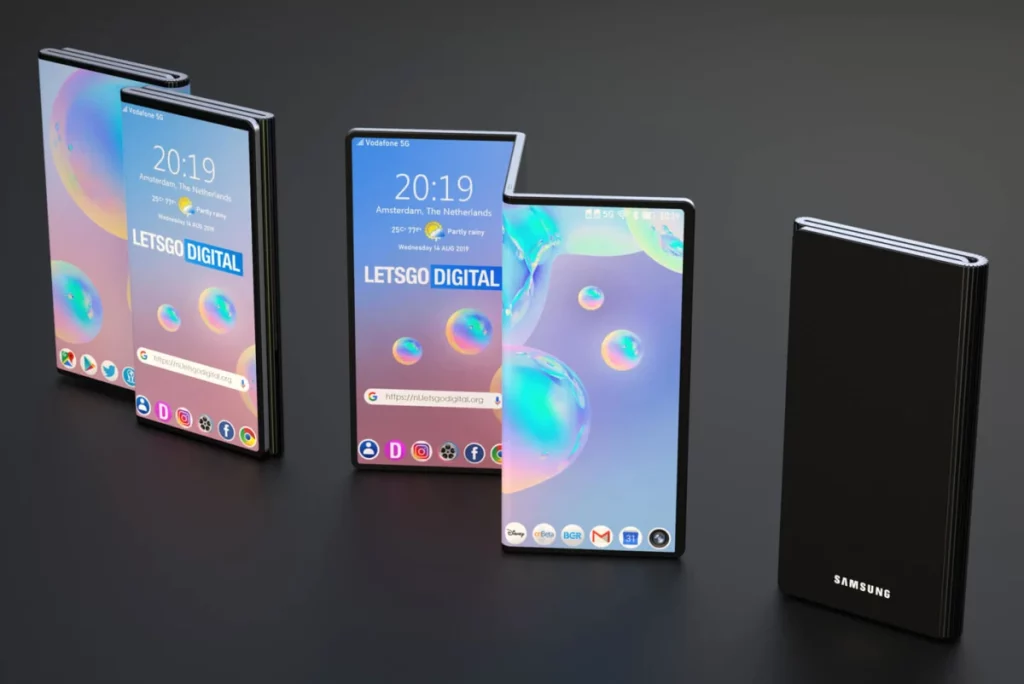
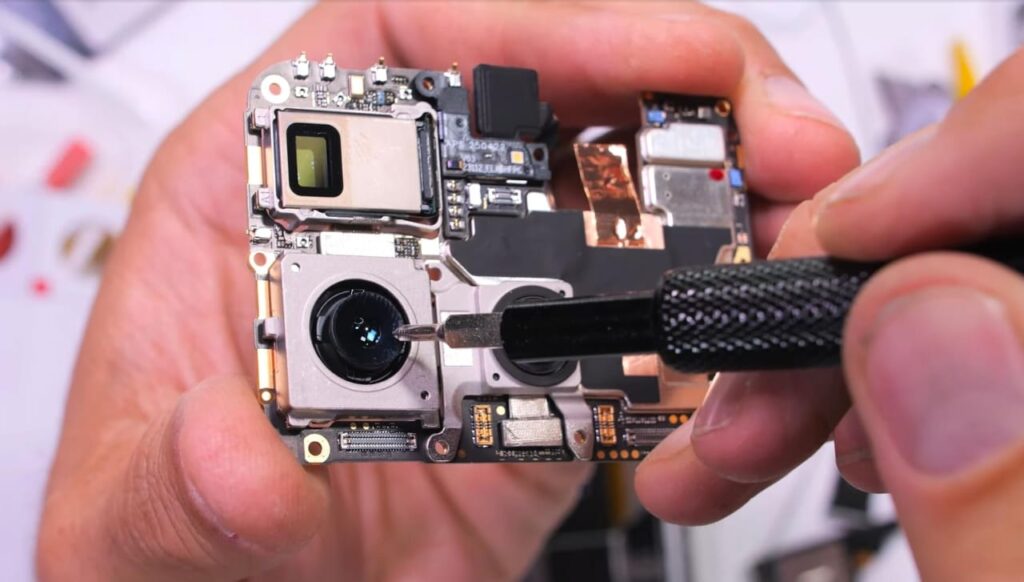
Huawei’s second-generation triple-folding phone appears to be nearing its public debut. Ahead of the launch, the phone has started surfacing on certification sites, and it has just appeared on one of them.
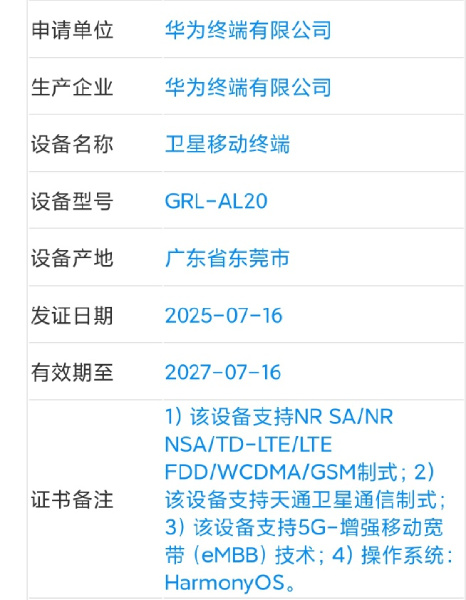
A new Huawei phone with the model number GRL-AL20 has been spotted on China’s MIIT certification database. It likely belongs to the Mate XT 2, or whatever Huawei ends up naming its second triple-foldable, as the original Mate XT carries the model number GRL-AL10.
Huawei’s second triple-folding will have 5G
Regardless, the listing confirms support for 5G connectivity and satellite communication features. The device may offer Tiantong satellite calling functionality, similar to what we saw in the Mate X5 and Mate XT lines.
Huawei previously used a specialized antenna layout that enabled satellite features only when the phone was fully unfolded. It remains to be seen whether this second-generation model will allow users to initiate satellite communication in a partially folded or closed state.
According to early reports, the Mate XT 2 is expected to retain the 10.2-inch triple-fold display from the previous generation. Underneath, it could pack Huawei’s in-house “Tian Gong” hinge for a slimmer yet durable construction.
Performance-wise, the device may be powered by the rumored Kirin 9020 chipset. It’s said to use a 1+3+4 CPU layout, with a 2.5GHz prime Taishan core, three 2.15GHz mid cores, and four 1.6GHz efficiency cores. On the graphics front, there’s reportedly a Maleoon 920 GPU, clocked at 840MHz.
Huawei might also introduce eSIM functionality with the Mate XT 2, eliminating the need for a physical card entirely.
The foldable is expected to launch sometime around September, just as Apple gears up to announce the iPhone 17 series and Samsung reportedly prepares its own entry into the tri-fold segment.
For more daily updates, please visit our News Section.
Samsung’s Galaxy Z Fold7 may look sleeker than last year’s model, but under the hood, it sticks to familiar specs — a 4,400mAh battery and 25W charging, just like the Galaxy Z Fold6. So, how does it actually perform when plugged in? A recent charging test puts both foldables head-to-head, and the results offer some interesting insights.
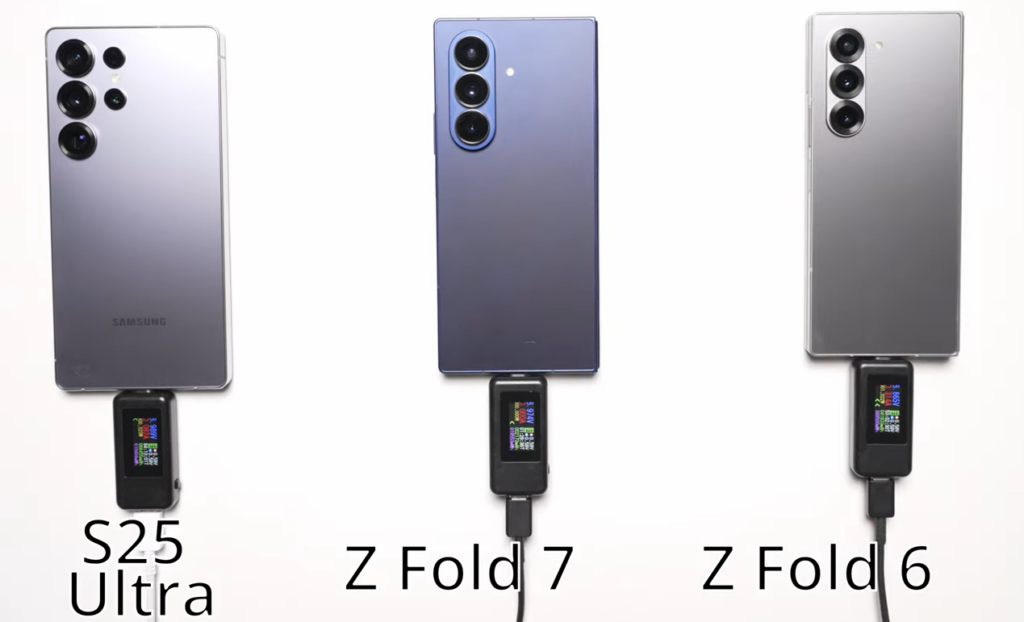
Tech YouTuber Ben from Lover of Tech put the Z Fold7, Z Fold6, and Galaxy S25 Ultra through a side-by-side charging test, using official Samsung chargers — 25W for the Folds and 45W for the Ultra. To keep things fair, all devices had batteries rated at 100% health. The test, shared on July 17, shows the Z Fold7 consistently edging ahead of its predecessor, though by small margins.
At the 15- and 30-minute marks, both Fold models were neck and neck — 29% and 54% respectively. But after 45 minutes, the Z Fold7 pulled slightly ahead at 74%, compared to the Fold6’s 70%, and maintained that lead through the end. The Fold7 reached 100% in 1 hour 26 minutes, finishing just four minutes faster than the Fold6.
But more notably, the Z Fold7 also ran cooler during charging, averaging around 2°C lower than the Fold6. This cooler performance likely comes down to Samsung’s improved heat management — possibly aided by the Fold7’s slimmer design and updated thermal system. While this lower temperature might seem like a minor upgrade, it can have a meaningful impact on long-term battery health.
As for the Galaxy S25 Ultra, with its larger 5,000mAh battery, took 1 hour 17 minutes to fully charge.
While Samsung hasn’t changed the charging hardware, subtle software tweaks — possibly tied to One UI 8 — seem to have given the Z Fold7 a slight edge over the Fold6 in both speed and temperature.
Are these few minutes’ difference and cooler operation enough to justify its $1,999 price tag? That’s up to buyers. But it’s clear Samsung’s latest foldable brings more to the table than just a design refresh.
Following Samsung’s Galaxy Z Fold 7 launch, the Pixel 10 Pro Fold from Google is gearing up to be the next contender in the ultra premium foldable segment. It will be announced alongside the flagship Pixel 10 series and is expected to bring various upgrades and refinements over its predecessor. So here’s a detailed breakdown of everything we know so far.
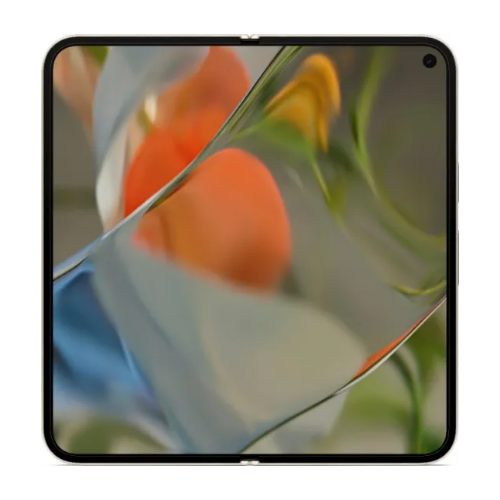
In terms of design, Google isn’t bringing a major facelift, so its body appears similar to the Pixel 9 Pro Fold. Although, one of the earlier reports did suggest that the brand would make its next-gen foldable slimmer and more durable this year. The hinge mechanism is reportedly getting thinner, with perhaps the biggest upgrade being an IP68 rating. This is a big deal for foldable since the Pixel 10 Pro Fold would be the first of its kind to offer the high Ingress protection. In comparison, the Galaxy Z Fold 7 offers an IP48 rating.
The cover screen is getting slightly larger, measuring 6.4 inches, while the primary panel retains its 8-inch size. While finer details for these displays are still at large, the peak brightness is getting a bump from 2700 nits to 3000 nits. But both screens likely offer a 120Hz refresh rate and HDR support.
2. Performance
Similar to the rest of the Pixel 10 lineup, the Search Engine giant’s premium foldable is also getting the latest Tensor G5 SoC. This is a 3nm chipset that is based on TSMC’s advanced N3E process, which marks a shift away from Samsung Foundry. Overall, this chip is faster and more power efficient than the Tensor G4, while also offering improved AI performance that allows for on-device machine learning.
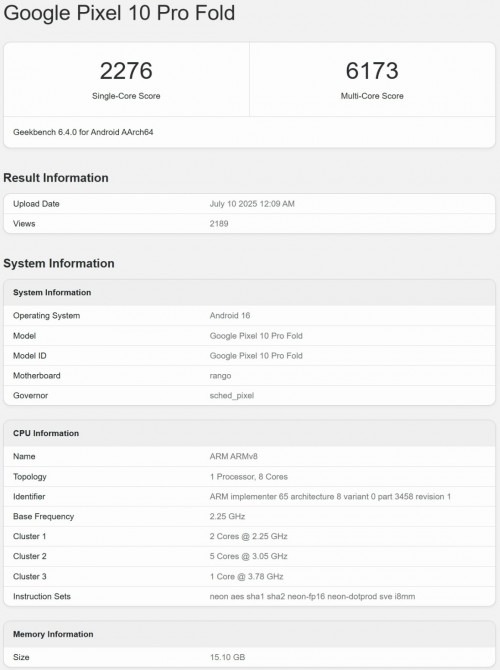
A GeekBench listing also showed this chip alongside 16GB of RAM and Android 16. Even the battery size is getting bigger with the Pixel 10 Pro Fold rumored to house a 5,015mAh cell. To recall, the Pixel 9 Pro Fold housed a 4,650mAh battery pack.
3. Camera
For photography, Google’s flagship foldable may offer a 50MP (main) + 12mp (telephoto, 5x optical zoom) + 12MP (ultra wide) on the rear, while the front could be a 10MP shooter on both screens. Notably, this is the same large Samsung GN8 sensor on the primary camera, while the ultra wide and telephoto are identical to the base Pixel 10.
4. Pricing, Color, & Launch Date
The Pixel 10 Pro Fold will debut alongside the rest of the Pixel 10 next month, possibly on August 20. It may arrive in two color options, namely Moonstone and Jade. There are rumors of three storage configurations that could include 256GB, 512GB, and 1TB variants. The 256GB version may cost €1,899, while the 512GB and 1TB options carry €2,029 and €2,289 price tags, respectively.
For more daily updates, please visit our News Section.
Samsung‘s long-rumored tri-folding smartphone seems closer to launch, but it likely won’t bear the “Galaxy G Fold” name some had expected. Instead, a recent trademark filing suggests it may stick with Samsung’s familiar Galaxy Z branding.
First teased at the January 2025 Galaxy Unpacked event, the tri-fold device is confirmed to hit the market by December this year. While Samsung unveiled the Galaxy Z Fold7 and Z Flip7 earlier this month, the tri-fold phone was noticeably absent. However, a trademark for “Galaxy Z TriFold”, filed in South Korea and spotted by GalaxyClub, has sparked fresh speculation about its branding.
Internally codenamed Q7M, the device is said to feature a 10-inch inner display when fully unfolded and a 6.49-inch cover screen — powered by Qualcomm’s Snapdragon 8 Elite chipset. Its launch is expected to be limited initially to South Korea and China.
That said, the name itself remains up for debate. Both GalaxyClub and SamMobile have pointed out that “Galaxy Z TriFold” doesn’t quite have the ring of a flagship device name — raising the possibility that it could refer to a series rather than a specific model. Earlier reports had hinted at “Galaxy G Fold”, a nod to the “Flex G” prototype Samsung showcased at MWC 2025. Yet with the new filing leaning toward the Z series, Samsung may simply be covering its bases by securing multiple trademarks — a common strategy for tech giants.
If Samsung sticks to its plan, the tri-fold will debut later this year, entering a market that currently only sees competition from Huawei’s Mate XT. Whether it will redefine foldables or serve a niche audience remains to be seen.
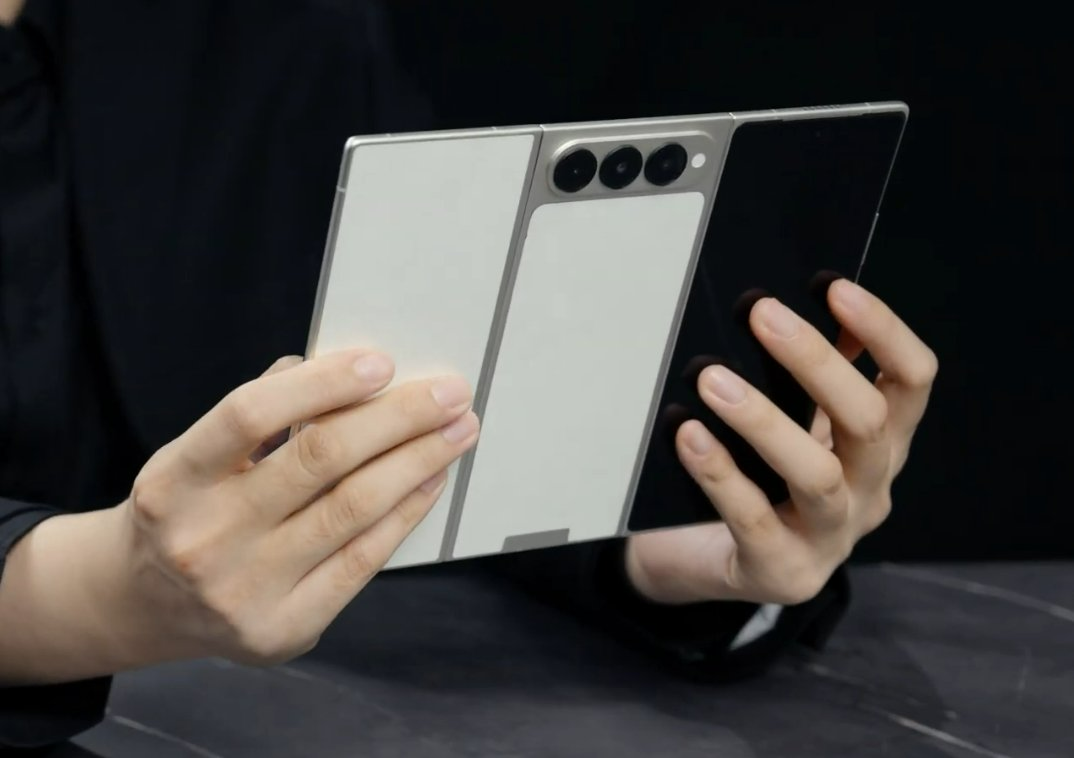
Huawei launched the world’s first tri-foldable phone – the Huawei Mate XT, featuring a folded thickness of 12.8mm and 3.6mm when unfolded. While Huawei is expected to unveil the Mate XT 2 in China this September, Samsung is also reportedly developing its first tri-foldable, possibly called the Galaxy Z TriFold. In a surprise move, Tecno has announced its own tri-foldable concept called the Tecno Phantom Ultimate G Fold. The device follows up on the Phantom Ultimate 2, a concept phone first showcased at IFA 2024. Read on for the full details of Tecno’s ambitious foldable innovation.
Tecno Phantom Ultimate G Fold: Everything you need to know
Tecno Phantom Ultimate G FoldTecno Phantom Ultimate G Fold
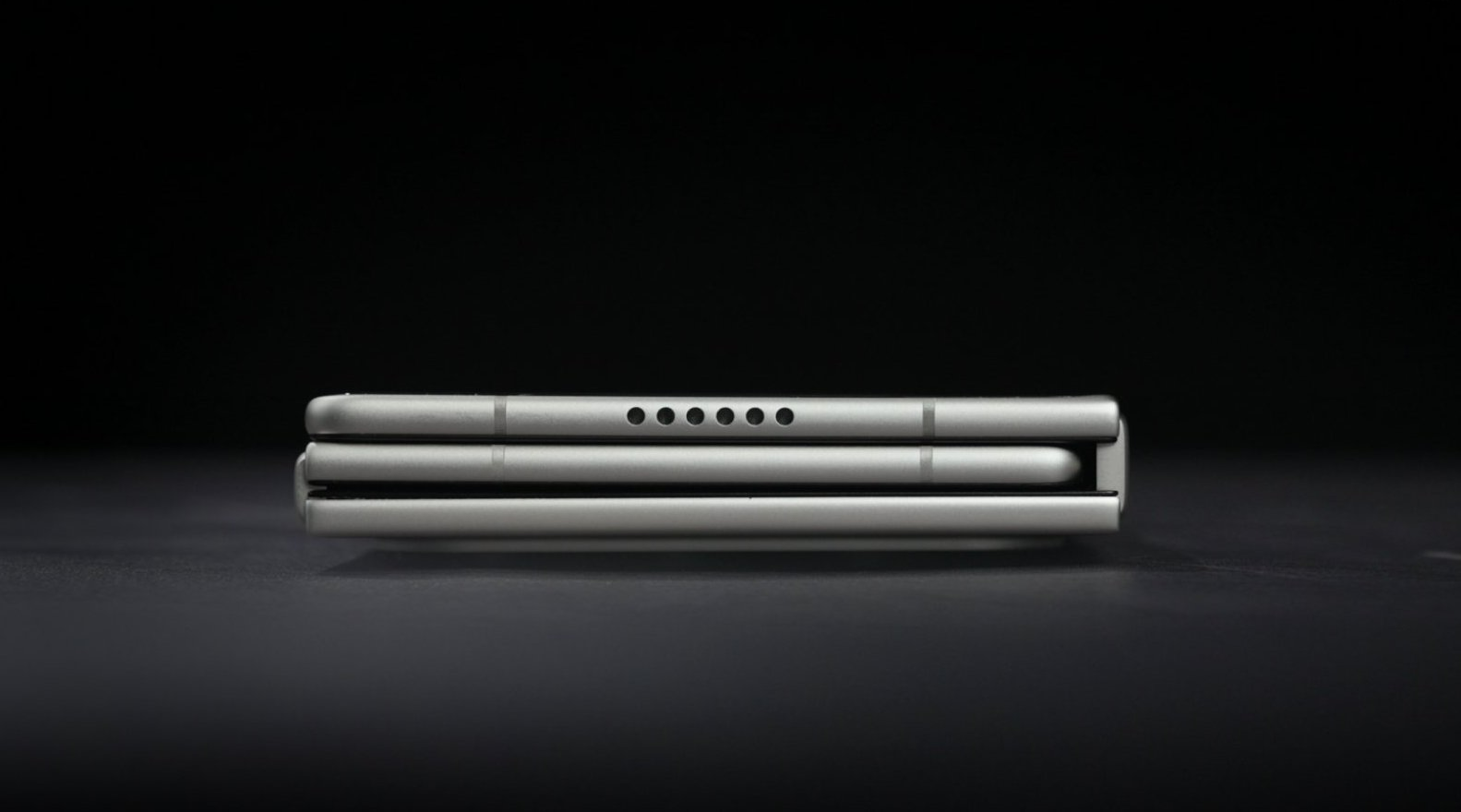
The Phantom Ultimate G Fold introduces a unique inward-folding tri-fold design that hides its large display when not in use. Unlike outward-folding counterparts, this layout protects the screen from scratches and impact damage. It features a 9.94-inch display that folds inward in two sections, supported by a dual-hinge setup comprising of a waterdrop hinge for the right side and a larger hinge that folds over the top.
This enables gapless folding and a secure, compact closure. A cover display supports regular smartphone use without needing to unfold the entire device. The hinge system also allows multi-angle hovering, turning the phone into a compact workstation.
Tecno Phantom Ultimate G FoldTecno Phantom Ultimate G Fold
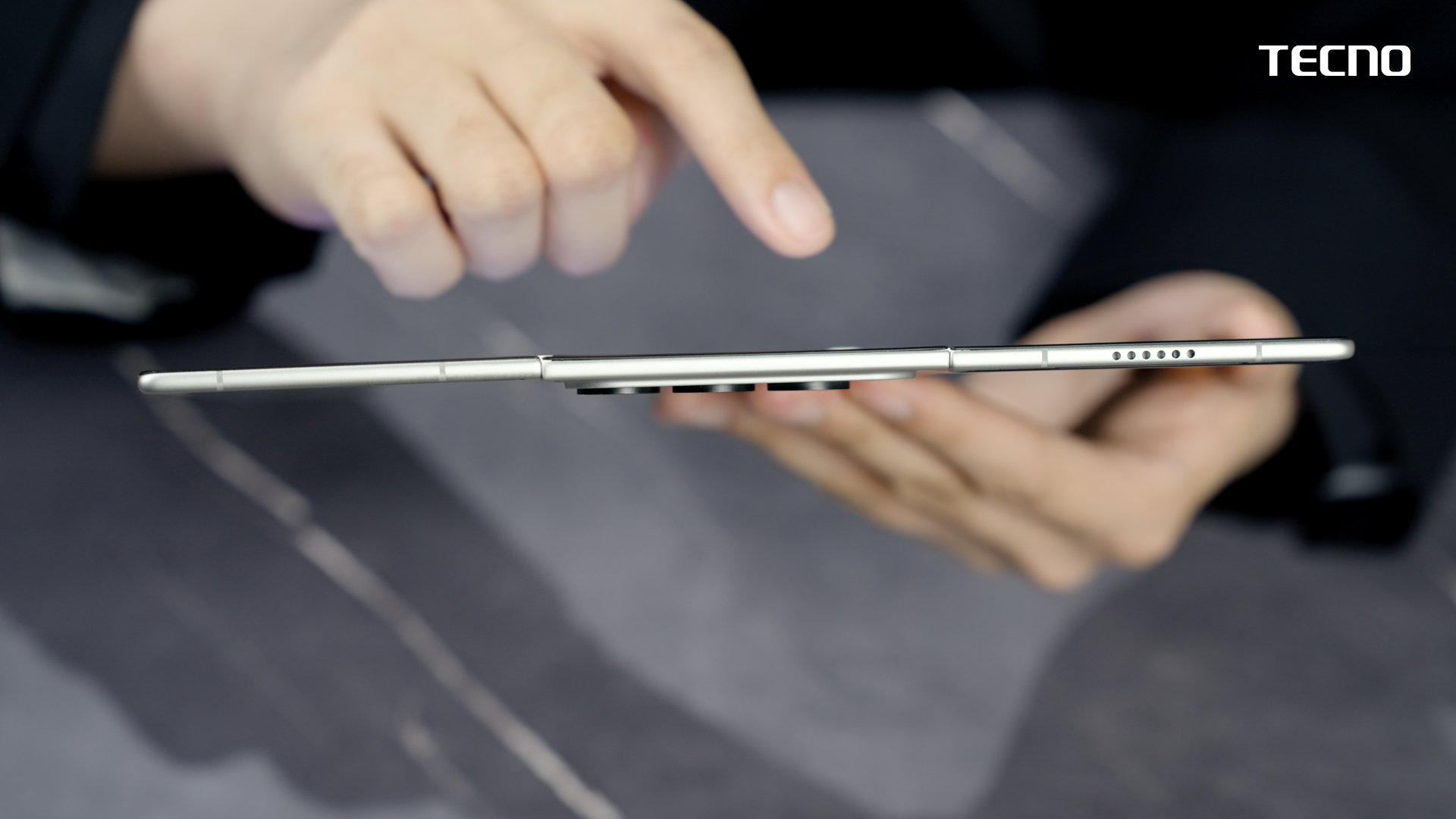
Tecno claims the Phantom Ultimate G Fold is the thinnest tri-fold smartphone to date, measuring 11.49mm when folded and just 3.49mm when unfolded. These dimensions outperform existing tri-folds, thanks to innovations in materials and engineering. The hinge uses 2000MPa ultra-high-strength steel, while the back panel is crafted from 0.3mm titan fibre. Despite its compact size, the concept includes a high-end chipset, a triple-camera setup, and a battery exceeding 5,000mAh.
A concept phone is an experimental prototype designed to highlight futuristic technologies or design innovations that are not yet found in regular smartphones. These devices are primarily developed to showcase what’s possible down the line, and they are usually not meant for commercial sale, meaning most of them won’t be available for public purchase. However, Tecno has confirmed that the Phantom Ultimate G Fold will be showcased at the MWC 2026.
For more daily updates, please visit our News Section.
Samsung’s Galaxy S26 Ultra could offer a subtle yet meaningful upgrade when it arrives in January 2026 — a slightly larger screen packed into the same footprint. A new leak points to design tweaks and display improvements that could sharpen Samsung’s edge in the flagship race.
Samsung Galaxy S26 Ultra mockup (modified image of S25 Ultra)
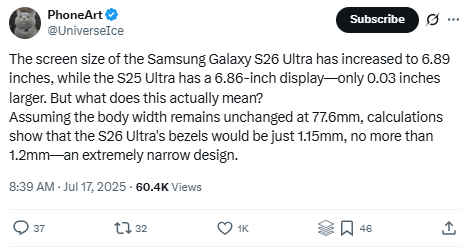
On July 17, 2025, tipster @UniverseIce shared on X that the Galaxy S26 Ultra will feature a 6.89-inch AMOLED display — just a touch bigger than the S25 Ultra’s 6.86-inch panel. Samsung is reportedly squeezing this increase out by slimming the bezels to just 1.15mm, down from 1.2mm on the current model, all without making the phone any wider than its 77.6mm frame. The result is a display that feels even more immersive.
The screen itself will reportedly use Samsung’s Color Filter on Encapsulation (CoE) OLED tech — the same approach found on the Galaxy Z Fold7. By ditching the polarizer and opting for a color filter and black pixel definition layer, the panel can be brighter, thinner, and more power-efficient. That could help stretch battery life further, even without a battery size bump.
Samsung seems to be sticking with its recent strategy of chasing a sleek profile over headline-grabbing battery or camera specs — a move seen with the slim 7.6mm Galaxy S25 Edge and Z Fold7. While Chinese brands push ahead with massive 1-inch camera sensors and 6000mAh+ silicon-carbon batteries, Samsung is expected to keep most of the internal specifications unchanged.
According to a recent leak, Samsung is testing a new 200MP 1/1.1-inch Sony sensor, speculated to debut with the Galaxy S27 Ultra. The S26 Ultra, meanwhile, is expected to focus on iterative improvements to lenses and image processing. For now, it appears the next Ultra will retain the S25 Ultra’s design. Concept renders — and possibly even real-world prototype shots — are likely to surface as the launch approaches, so stay tuned.
The hype behind the Pixel 10 series is building as we get closer to the launch of Google‘s latest flagship smartphones. These devices are expected to hit the market sometime next month, so here’s a detailed breakdown of what you can expect from each model from the lineup that includes the base Pixel 10, Pixel 10 Pro, and Pixel 10 Pro XL.
Google isn’t planning a major redesign with its upcoming Pixel 10 lineup. Many liked the flat iPhone-like design, which returning along with the visor camera module. While the Pixel 10 Pro and Pixel 10 Pro XL are expected to receive an vapor chamber for cooling, rumors have hinted that Google could skip the vapor chamber for thermal management on the base model once again.
The standard Pixel 10 might arrive in multiple color options, namely Obsidian, Frost, Lemongrass, Indigo, Lemongrass, and Indigo. Meanwhile, the Pixel 10 Pro series is rumored to come in Obsidian, Porcelain, Moonstone, and Jade. So now let’s have a look at the display:
Pixel 10: The base model sports a 6.3-inch FHD+ OLED screen with a 120Hz refresh rate, 3000 nits of peak brightness, and Corning Gorilla Glass Victus 2 for protection.
Pixel 10 Pro & 10 Pro XL: Google is still offering a compact flagship with a 6.3-inch LTPO OLED display with a 1.5K resolution, Corning Gorilla Glass Victus 2, a 120Hz refresh rate, and up to 3000 nits of peak brightness. Meanwhile, the Pro XL variant gets a taller 6.8-inch panel with specs.
2. Performance
Google Pixel 10 Pro
Google is set to equip the entire Pixel 10 lineup with its latest Tensor G5 chipset. It is expected to bring various upgrades in performance, power efficiency, and even AI workloads. This chip also marks a big shift for Google as it changes its chip making partner from Samsung to TSMC, using TSMC’s N3E advanced 3nm process node. The custom TPU in this processor might allow allow for on-device machine learning as well.
3. Battery & Charging
Google Pixel 10
Reports have hinted that the battery size is getting an upgrade across the new series. The base Pixel 10 may house a 4,970mAh battery pack, which could support 29W wired fast charging and 15W wireless Qi2 wireless charging. Meanwhile, the Pixel 10 Pro has identical charging specs but a slightly smaller 4,870mAh cell. Lastly, the Pixel 10 Pro XL packs the largest 5,200mAh battery with 39W wired fast charging and the same wireless charging speeds.
4. Camera
Base Pixel 10 Cameras
In a surprising turn of events, the base Pixel is getting both an upgrade and a downgrade at the same time this year. Its main camera is losing the same main sensor as the more expensive Pro series, exchanging it with the Pixel 9a’s 1/2.0-inch 48MP shooter. Even the ultra wide angle lens is expected to get downgraded to a 13MP shooter (down from 48MP). But the base model finally gains a 10.8MP telephoto shooter (5x optical zoom).
On the other hand, the Pixel 10 Pro and Pixel 10 Pro XL are set to retain the same rear cameras setup as their predecessors, which consists of a 50MP (main), a 48MP (ultra wide), and a 48MP (periscope telephoto) with 5x optical zoom. While this may appear identical to the Pixel 9 Pros, it includes a new Samsung GN8 main camera. For selfies and video calls, the front has a 42MP shooter with autofocus on the Pro models and a 10.5MP camera on the base Pixel 10.
5. Pricing & Launch Date
The premium new Pixel phones are likely being announced next month on August 20th, with first sales kicking off around the 28th. A recent pricing leak even hinted that the price will remain the same over the Pixel 9 models, at least in Europe:
Pixel 10
128GB – €899
256GB – €999
Pixel 10 Pro
128GB – €1,099
Up to 1TB – €1,589
Pixel 10 Pro XL
256GB – €1,299
512GB – €1,429
1TB – €1,689
For more daily updates, please visit our News Section.
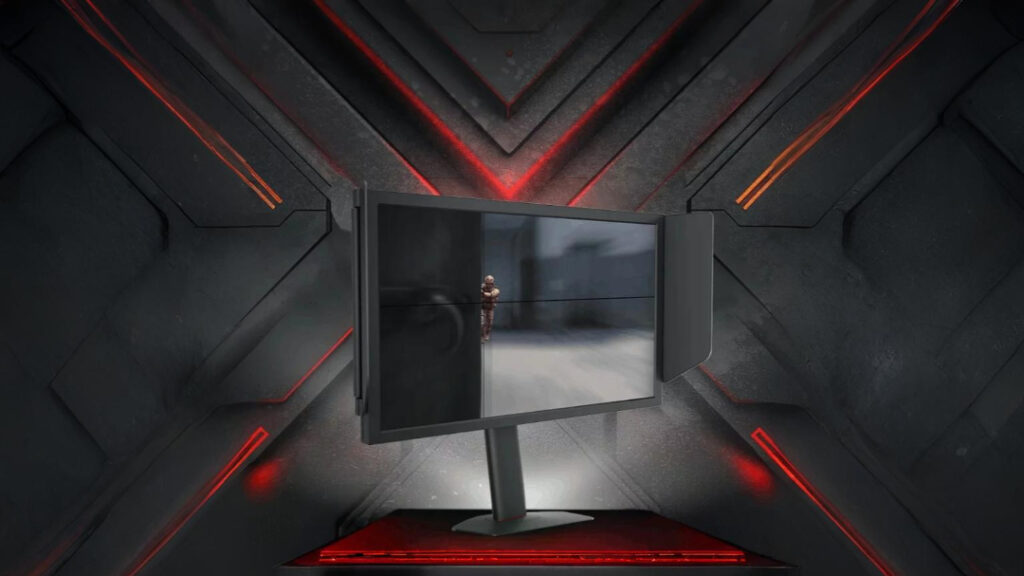
BenQ has officially launched the Zowie XL2586X+ gaming monitor in India. Priced at Rs. 94,990 ($1104), the monitor is now available through Amazon.in, Zowie India’s online store and select authorized gaming retailers. This 24.1-inch Full HD display is aimed squarely at professional and competitive FPS players, with a strong focus on motion clarity and responsiveness.
BenQ Zowie XL2586X+ Specifications
The XL2586X+ uses a Fast TN panel with a native resolution of 1920×1080 pixels. The panel supports a 600Hz refresh rate for PCs via HDMI 2.1 or DisplayPort 1.4, and up to 120Hz for consoles like the PS5 and Xbox Series X/S.
It features Dynamic Accuracy 2 (DyAc 2) technology, a dual backlight system that significantly reduces motion blur while maintaining soft lighting to ease eye strain. The panel’s improved electrical conductivity helps reduce overshoot, improving clarity during rapid in-game movements.
BenQ has equipped the monitor with a new vivid color film that enhances color performance by up to 35% compared to regular TN panels. This improvement makes it easier for players to distinguish enemies from the background, particularly in fast-paced titles like CS2 and Valorant. Despite being a TN panel, the display achieves better sharpness and color distinction at esports-standard resolutions such as 1280×960 and 1920×1080.
In terms of certifications, the XL2586X+ includes flicker-free support (when DyAc 2 is turned off) and low blue light mode, improving viewing comfort over long sessions. The monitor does not carry an HDR rating but focuses purely on esports-oriented visual enhancements.
For gamers, the monitor includes a full set of features like Black eQualizer, Color Vibrance, Auto Game Mode, and XL Setting to Share, which allows users to share and apply optimal display settings across different titles. It also includes a 5-way S Switch for quick navigation and a shielding hood for distraction-free gameplay.
The monitor stand features an industrial-grade bearing system that enables smooth and accurate height adjustments. It offers a height range of up to 155mm, tilt adjustment from -5° to 35°, and swivel support of ±45°. Additionally, it supports 100×100mm VESA wall mounting for flexible installation options.
In terms of connectivity, the XL2586X+ offers three HDMI 2.1 ports, one DisplayPort 1.4, and a headphone jack. It has a built-in power supply rated at under 65W, and the total unit weighs 5.9kg (net) and 11.6kg (gross).
To run the monitor at 600Hz, users must be on Windows 11 (post-November 2023 build) and use a modern GPU such as the Nvidia RTX 40-series or AMD RX 7000-series, paired with an Intel 14th-gen or AMD Ryzen 7000-series CPU.
BenQ has also confirmed that the Zowie XL2586X+ is the official monitor of IEM Katowice 2025, reinforcing its positioning as a premium esports-grade display.
In related news, Philips recently launched the Evnia 24M2N5200X gaming monitor featuring a 610Hz refresh rate and 0.1ms response time, while LG has introduced a 31.5-inch 4K monitor with a 60Hz refresh rate, Ergo stand, dual speakers, and 60W USB-C PD support.
For more daily updates, please visit ourNews Section.
The Nothing Phone 3‘s unconventional “transparent” design has been making headlines since the official unveiling. Now, a teardown by YouTuber JerryRigEverything offers a closer look at the actual inside of this $799 phone and how it holds up in terms of durability and repairability.
The phone, powered by a Snapdragon 8s Gen 4 with a 6.67-inch 1.5K 120Hz AMOLED display, features Gorilla Glass 7i on the front. As expected, it shrugged off scratches from keys and coins (Mohs level 5), started showing marks at level 6, and developed deeper grooves at level 7 — typical for modern flagships.
Its aluminum frame passed the bend test with no flex, despite the presence of some oddly placed antenna lines. In the burn test, the screen showed some temporary damage but recovered.
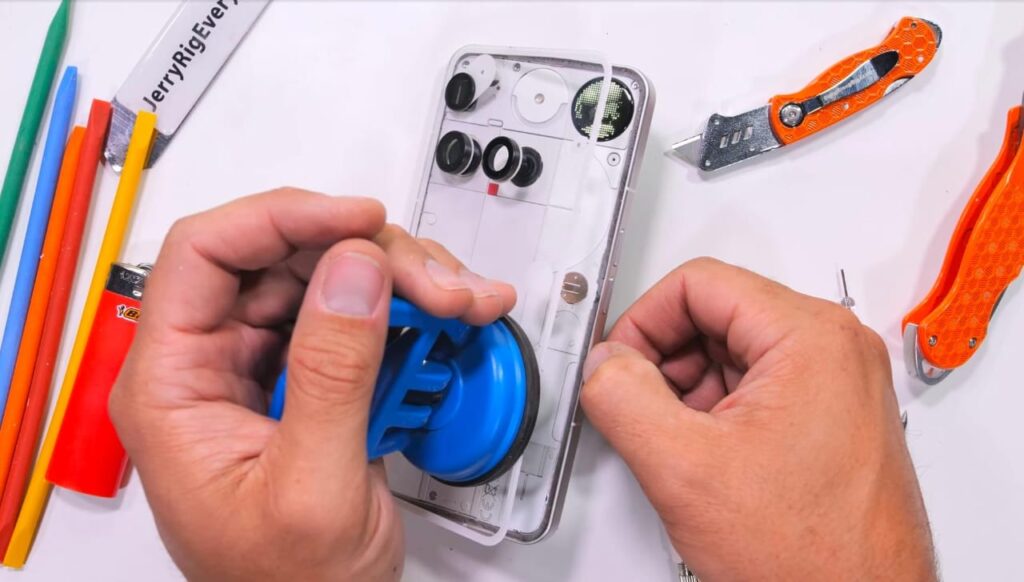
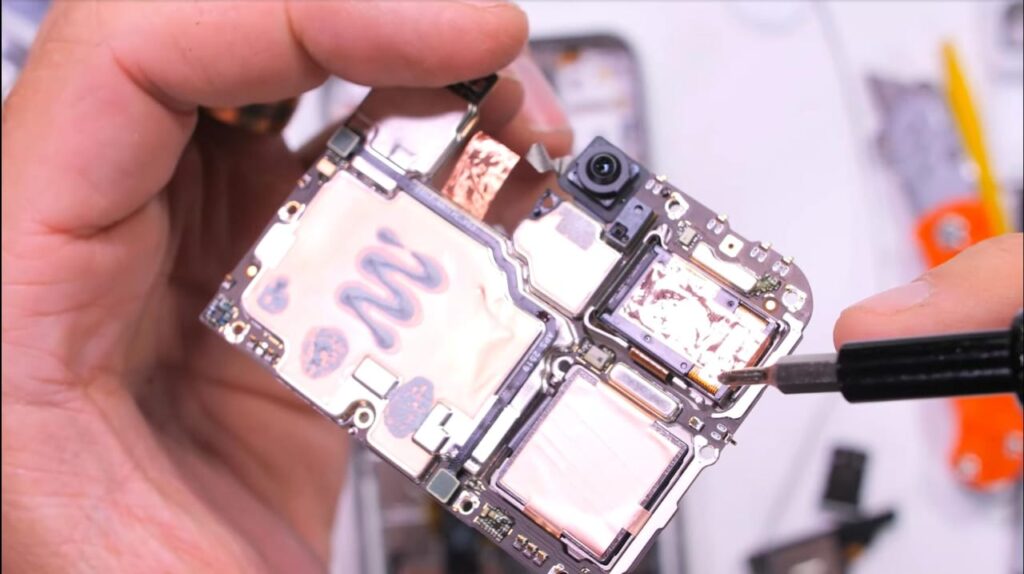
Getting inside the phone took some effort, thanks to strong adhesive holding down the rear glass that houses the new Glyph Matrix — a 489-pixel circular light display. The camera rings stayed put during the teardown. Inside, Nelson found a clean internal layout, a modular design, and an easily detachable 5,150mAh silicon-carbon battery, which helped the Phone 3 earn a middling EU repairability rating of C.
Phone 3’s “punch-through” PCB design for cameras
While the teardown confirmed that reassembly was fairly straightforward, Nelson pointed out that the phone’s numerous screws and decorative elements could complicate DIY repairs.
However, one downside stood out — the inclusion of a USB-C 2.0 port, which limits data transfer speeds on what’s supposed to be a premium device, as Nelson noted in his video.
The verdict? The Nothing Phone 3 seems well-built and fairly repairable, even with its unconventional design and a few quirks. Whether its bold looks and $799 price tag will convince buyers is a different question. You can check out the full teardown on JerryRigEverything’s YouTube channel.
The Snapdragon 8 series packs some of the most powerful smartphone chipsets on the market, offering impressive performance and energy efficiency. But with multiple generations out there, picking the right one isn’t always straightforward.
Sure, newer chips are expected to be faster — but just how much faster are they? Are we looking at true generational leaps, or are these upgrades more incremental than they seem? In this comparison, we’ll dive into benchmarks and real-world differences between the Snapdragon 8 Gen 3, Gen 2, and Gen 1 to find out the answer.
Here’s the spec sheet:
SD 8 Gen 3
SD 8 Gen 2
SD 8 Gen 1
Announced
October 2023
November 2022
December 2021
Manufacturing
4nm (TSMC)
4nm (TSMC)
4nm (Samsung)
CPU
1 x 3.3 GHz — Cortex-X3 3 x 3.15 GHz — Cortex-A720 2 x 2.96 GHz — Cortex-A720 2 x 2.27GHz — Cortex-A520
1 x 3.2 GHz — Cortex-X3 2 x 2.8 GHz — Cortex-A715 2 x 2.8 GHz — Cortex-A710 3 x 2.0 GHz — Cortex-A510
1 x 3.0 GHz — Cortex-X2 3 x 2.5 GHz — Cortex-A710 4 x 1.8 GHz — Cortex-A510
GPU
Adreno 750 GPU Ray tracing support Snapdragon Elite Gaming features
Adreno 740 GPU Ray tracing support Snapdragon Elite Gaming features
Adreno 730 GPU Snapdragon Elite Gaming features
NPU
Qualcomm Hexagon NPU
Qualcomm Hexagon NPU
Qualcomm Hexagon NPU
Storage/Memory
UFS 4.0 LPDDR5x, up to 4.8GHz
UFS 4.0 LPDDR5X, up to 4.2GHz
UFS 3.1 LPDDR5, up to 3.2GHz
Camera
Spectra Cognitive triple 18-bit ISP Up to 200MP single camera Real-time semantic segmentation Up to 8K/30fps video recording
Spectra Cognitive triple 18-bit ISP Up to 200MP single camera Real-time semantic segmentation Up to 8K/30fps video recording
Spectra triple 18-bit ISP Up to 200MP single camera Real-time semantic segmentation Up to 8K/30fps video recording
Snapdragon X65 5G modem Download: 10Gbps (peak) Upload: 3.6Gbps (peak) Wi-Fi 6E (peak speed: 3.6Gbps) Bluetooth 5.2
Display
4K Ultra HD @ 60Hz, QHD+ @ 144Hz 10-bit color depth HDR10, HDR10+, HDR Vivid
4K Ultra HD @ 60Hz, QHD+ @ 144Hz 10-bit color depth HDR10, HDR10+
4K Ultra HD @ 60Hz, QHD+ @ 144Hz 10-bit color depth HDR10, HDR10+
Snapdragon 8 Gen 3 vs 8 Gen 2 vs 8 Gen 1: Benchmark comparison
Note: The following benchmark tests were conducted on the Xiaomi 14 Ultra (Snapdragon 8 Gen 3), iQOO Neo 9 Pro (Snapdragon 8 Gen 2), and Galaxy S22 Ultra (Snapdragon 8 Gen 1).
AnTuTu performance
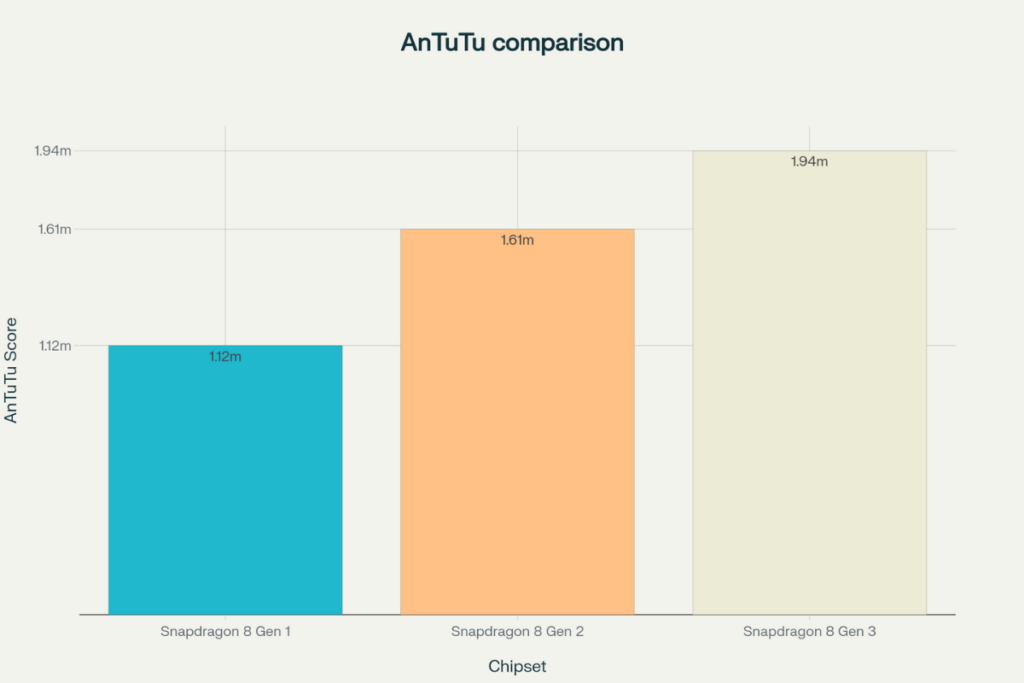
The AnTuTu benchmark (v10) shows a clear and consistent generational leap from the Snapdragon 8 Gen 1 to the 8 Gen 2, and then to the latest 8 Gen 3. The Snapdragon 8 Gen 3 leads the pack with a total score of 1,937,417, followed by the 8 Gen 2 at 1,609,763, and the 8 Gen 1 trailing at 1,123,750.
The biggest improvements can be seen in the GPU scores. The 8 Gen 3 posts a massive 829,698, showing how Qualcomm has significantly ramped up graphics performance — more than 2x the GPU score of the 8 Gen 1 (409,725), and about 35% higher than the 8 Gen 2 (612,954). This kind of jump translates directly to smoother gaming, faster rendering, and better thermal performance under load.
CPU performance has also steadily improved across generations. The 8 Gen 3 leads with 419,604, followed by the 8 Gen 2 at 387,038, and the 8 Gen 1 at 289,636 — showing a clear trajectory of enhanced processing power and efficiency.
Memory and UX scores also scale up with each generation, but the gains here are more modest. Still, the 8 Gen 3 shows notable improvements with 382,043 in memory and 306,072 in UX, which contribute to faster app load times, smoother UI transitions, and better multitasking.
SD 8 Gen 3
SD 8 Gen 2
SD 8 Gen 1
AnTuTu score
1,937,417
1,609,763
1,123,750
CPU
419,604
387,038
289,636
GPU
829,698
612,954
409,725
Memory
382,043
306,124
202,994
UX
306,072
303,647
221,402
Geekbench performance
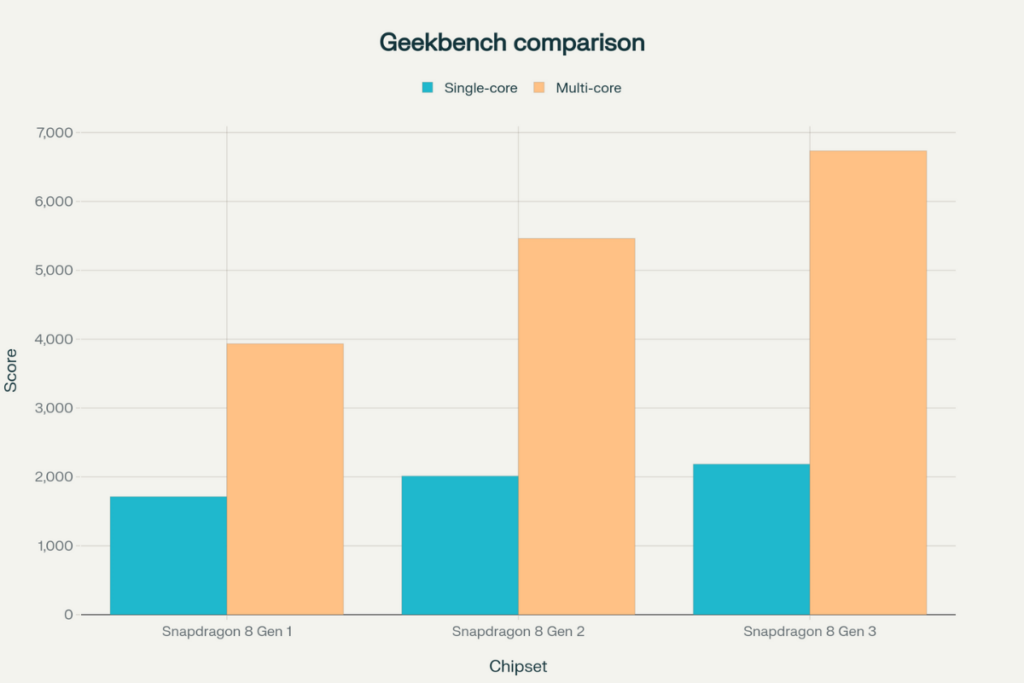
On Geekbench (v10), we again see a clear generational progression, especially in multi-core workloads. The Snapdragon 8 Gen 3 takes the lead with a single-core score of 2,185 and a multi-core score of 6,735, marking it as the most capable CPU performer in this lineup.
Compared to its predecessor, the 8 Gen 2, which scores 2,012 (single-core) and 5,461 (multi-core), the Gen 3 brings a roughly 8.5% boost in single-core and over 23% in multi-core performance. These gains are particularly meaningful for demanding tasks such as video editing and multitasking.
The Snapdragon 8 Gen 1, while still decent, shows its age with 1,713 (single-core) and 3,933 (multi-core). That’s nearly 27% lower in single-core and over 40% behind in multi-core performance compared to the Gen 3.
SD 8 Gen 3
SD 8 Gen 2
SD 8 Gen 1
Single core
2,185
2,012
1,713
Multi core
6,735
5,461
3,933
While benchmark scores are helpful, they don’t give the complete picture. Let’s dive into the real-world differences that separate these chips.
Snapdragon 8 Gen 3 vs 8 Gen 2 vs 8 Gen 1: Key differences you should know
Performance
The Snapdragon 8 Gen 3 and 8 Gen 2 are fabricated using TSMC’s 4nm process, while the 8 Gen 1 uses Samsung’s 4nm. The former has more cutting-edge technology, resulting in more efficient chip production. They also have different sets of CPU cores, with the 8 Gen 3 obviously having the most powerful of the three. Here’s what that looks like:
SD 8 Gen 3: 1 x Cortex-X4, 5 x Cortex-A720, 2 x Cortex-A520
SD 8 Gen 2: 1 x Cortex-X3, 2 x Cortex-A715, 2 x Cortex-A710, 3 x Cortex-A510
SD 8 Gen 1: 1 x Cortex-X2, 3 x Cortex-A710, 4 x Cortex-A510
Not only does the 8 Gen 3 feature powerful CPU cores, but it also boasts a larger cache size, higher CPU speed, and increased memory speed, giving it a performance edge.
For visual rendering, the 8 Gen 3 features an Adreno 750 GPU, the 8 Gen 2 has an Adreno 740 GPU, and the 8 Gen 1 has an Adreno 730 GPU. The Adreno 750 is the most powerful of the three, featuring a higher peak frequency, more shading units, and higher FLOPS. In short, the 8 Gen 3 has received better GPU upgrades than the 8 Gen 2.
All three Qualcomm chips have a hexagon NPU, although their capabilities differ. The 8 Gen 3 has 98% faster hexagon NPU than 8 Gen 2, while the latter is 4.35x faster than 8 Gen 1. These NPUs enable support for generative AI, AI voice recognition, and various large language models (LLMs). The chip also uses AI for photo enhancements.
Camera
All three Snapdragon 8-series chips come with an 18-bit Qualcomm Spectra ISP, supporting up to 200MP cameras and 8K video recording. They also support real-time semantic segmentation that allows the device to refine images and videos at a granular level. Notably, the 8 Gen 1 doesn’t have a Cognitive ISP, while the other two do, resulting in better photos and videos. The Gen 3 chip has a more sophisticated set of camera features than earlier chips.
Connectivity
The Snapdragon 8 Gen 3 features the newer X75 modem, allowing up to 10Gbps download speed and up to 3.5Gbps upload speed. The 8 Gen 2 and 8 Gen 1, despite featuring relatively older modems, also support 10Gbps download speed. The maximum upload speed remains largely unchanged, at 3.5 Gbps on 8 Gen 2 and 3.6 Gbps on 8 Gen 1.
Over a Wi-Fi connection, the 8 Gen 1 can download at up to 3.6Gbps, while the other two support a higher peak speed of 5.8Gbps. One key difference here is that the 8 Gen 3 and 8 Gen 2 support the latest Wi-Fi 7, but the 8 Gen 1 supports Wi-Fi 6E.
The Snapdragon 8 Gen 3 benefits from a newer Bluetooth standard for reliable connection and a triple-band GNSS for improved location accuracy. It also brings a robust set of connectivity features for signal boosting and improved power efficiency.
Snapdragon 8 Gen 3 vs 8 Gen 2 vs 8 Gen 1: Conclusion
If you’re after the best performance, the Snapdragon 8 Gen 3 is clearly in a league of its own. It delivers massive gains across the board — CPU, GPU, AI, and connectivity — making it a top choice for power users and gamers.
The 8 Gen 2 still holds its own with excellent performance and efficiency, making it a great pick for high-end phones without the hefty price tag.
Meanwhile, the Snapdragon 8 Gen 1, while still capable, is starting to show its age, especially in GPU and multi-core workloads. It’s still fine for everyday use, but not suited for future-proof performance.
Overall, each generation brings more than just minor upgrades — they deliver tangible improvements you’ll notice in real-world use.
In a remarkable turnaround, Huawei has reclaimed the top spot in the Chinese smartphone market, overtaking major rivals including Apple, which has now dropped to fifth place. This marks a major comeback for the brand after the various hurdles it faced following the US trade restrictions.
Huawei Retakes Throne in China After Years of Struggle
According to an IDC report, Huawei has managed to secure the top spot in the Chinese smartphone market in the second quarter of this year. It managed to retake the throne after about four years, while beating other local OEMs and even Apple. In Q2 2025, Huawei accounted for 18 percent of Chinese smartphone sales. Meanwhile, the Chinese smartphone overall saw a decline of 4 percent year on year, with units shipped falling to 69 million.
Huawei Pura 80 Ultra
Other major Chinese brands like Oppo and Vivo also saw a slight decline during this time. While Huawei reclaimed its top spot in China, the Cupertino based giant fell to the fifth position in the market. Huawei shipped over 12 million units in Q2 2025, which also includes its latest photography flagships, the Pura 80 series.
Vivo saw one of the biggest slumps in sales, falling by 10.1 percent, which caused it to drop to the second spot. Oppo ranked third and Xiaomi achieved the fourth spot in the Chinese smartphone market. It remains to be seen if the brand retains the lead, as the other companies are gearing up for their next flagship launches later in the year. In related news, Huawei aims to unveil four flagship chips in late 2025.
For more daily updates, please visit our News Section.
Philips has launched its new high-speed gaming monitor, the Evnia 24M2N5200X, in the Chinese market. It is priced at 5999 yuan (approximately $835) and is now available on JD.com. The Evnia 24M2N5200X is one of the fastest consumer monitors available, packing specialized features to reduce latency and motion blur during intense gaming sessions.
Philips Evnia 24M2N5200X Specifications
The Evnia 24M2N5200X is equipped with a 24.1-inch Full HD (1920×1080) Fast TN panel and supports an ultra-high refresh rate of up to 610Hz via HDMI or DisplayPort overclocking. It features a standard GtG response time of 0.3ms, which can go as low as 0.1ms under optimal conditions.
Philips integrates its proprietary “Zero Sense Sync Acceleration” technology that uses dual IC signal processing to significantly reduce input lag, potentially dropping it below 5ms for near-instant responsiveness. The monitor also supports Adaptive Sync to minimize screen tearing and stuttering.
Despite using a TN panel, the display achieves strong color performance with 99.8% sRGB and 93.6% DCI-P3 gamut coverage. It also offers 89.4% AdobeRGB based on CIE 1976 standards and maintains Delta E<2 accuracy in the sRGB color space. The panel supports 8-bit color depth and covers up to 16.7 million colors.
The monitor holds VESA DisplayHDR 400 certification. It reaches a peak brightness of 500 nits and a typical brightness of 350 nits, allowing for improved contrast and detail in both dark and bright scenes.
For gamers, the Evnia 24M2N5200X includes features such as SmartImage Game modes for genre-specific optimizations, a crosshair overlay for aiming assistance, and a dark boost option for better visibility in shadowy areas. It also includes flicker-free technology and a low blue light mode to reduce eye fatigue.
Philips has equipped the monitor with a flexible stand that supports 250mm height adjustment, -15° to +75° tilt, 180° pivot, and full 360° rotation. The stand supports both clamp and through-desk mounting. The monitor is also compatible with 75x75mm and 100x100mm VESA standards.
In terms of connectivity, it includes two HDMI 2.1 ports, one DisplayPort 1.4, one USB-B 5Gbps upstream, two USB-A 5Gbps downstream ports (one with BC1.2 fast charging), and a 3.5mm headphone jack.
In related news, LG recently launched a 31.5-inch 4K 60Hz monitor featuring an Ergo stand, dual speakers, and 60W USB-C PD. Meanwhile, ViewSonic has introduced a new 4K 240Hz QD-OLED gaming monitor with 100W USB-C PD support
For more daily updates, please visit ourNews Section.
While we’re still months away from the next-generation of Chinese flagship devices, new rumors and reports are revealing more interesting details every day. Xiaomi is bringing new models to its flagship lineup with the Xiaomi 16 series expected to include the base, Pro, Ultra, and even a Pro Max variant. Now, a fresh leak has revealed the impressive battery size of this new Xiaomi 16 Pro Max model, so here’s what we know.
Xiaomi 16 Pro Max Might Pack the Series’ Largest Battery Yet
Rounding off the impressive specs and features is a massive battery pack, which the tipster claims will outshine even the Xiaomi 16 Ultra (top-of-the-line model). DCS states that the Xiaomi 16 Pro Max will be powered by a huge 7,290mAh cell, which could be marketed as a 7,500mAh battery. The brand would likely put the best specs on the 16 Ultra model, but owing to its large and complex camera setup, it might lag behind in terms of battery.
The tipster believes that the 16 Ultra could be restricted to a 7,000mAh battery, making the Xiaomi 16 Pro Max the battery king in the upcoming series. This would also have it be in line with competitors like the Vivo X300 series and Oppo Find X9 series, which are also expected to house large battery sizes that could also cross the 7,000mAh mark.
For more daily updates, please visit our News Section.
Dreame Technology is taking a big step into India’s physical retail market through a newly announced partnership with electronics retailer Croma. The company, which has had an active online presence through Amazon, is now aiming to bring its smart home solutions directly to customers in over 20 cities, expanding its reach and accessibility across the country.
Croma stores to feature Dreame Zones
Dreame X Croma alliance
As part of this retail move, Dreame has introduced “Dreame Zones” in select Croma stores, where customers can explore its full product lineup, including robotic vacuums, cordless stick vacuums, wet-and-dry models, and personal grooming devices. These spaces are designed to offer a touch-and-try experience, helping consumers make informed choices based on real-time interaction with Dreame’s design-led, intelligent devices.
Dreame Zone at Croma
From July 15 to 20, Dreame is offering introductory deals, including up to 10 percent extra discount on select credit card purchases (IDFC Bank, Amex, HSBC, and Bank of Baroda), along with No Cost EMI options on select models.
To support this offline expansion, Dreame has launched a full-scale after-sales service network with a toll-free helpline, pick-up and drop support, on-site installation, and warranty coverage (two years on grooming devices, one year on cleaning products). Backed by brand ambassador Kriti Sanon and a growing demand for premium, smart home appliances, Dreame’s offline foray reflects a long-term commitment to India.
For more daily updates, please visit our News Section.
At an event held in Gothenburg, Sweden, Oppo confirmed it is extending its long-term partnership with Hasselblad. As revealed by the company’s senior leadership, the two brands are working on a new mobile imaging system. Their shared focus on quality and innovation in photography forms the backbone of this collaboration, which started four years ago and continues to shape Oppo’s premium smartphones.
Olivella Liu, Overseas CMO, OPPO and Bronius Rudnickas, Global Marketing Manager, Hasselblad
Since the beginning of their alliance, Oppo and Hasselblad have worked jointly on imaging features that enhance smartphone photography. Previous results of this partnership include Natural Color tuning, a dedicated Portrait Mode that simulates classic lens effects, and XPAN Mode for cinematic wide-angle captures. These tools were tailored specifically for Oppo’s Find series devices.
The next step in their collaboration involves co-developing a new generation mobile imaging system. While full technical details remain under wraps, the brand’s aim is to blend Hasselblad’s color science and image character with Oppo’s advancements in AI and sensor technology. This system is expected to appear in upcoming Find (X9) series flagships, setting new standards in image clarity and creative control for mobile users.
Oppo Find X8 series
Oppo also used the event to highlight its 17-year journey in mobile imaging. From launching stacked CMOS sensors and periscope zoom lenses to the Find X8 Ultra’s AI Bokeh Engine and Penta Camera setup, the brand has consistently improved hardware and software for photographers.
To encourage global creativity, Oppo announced the Oppo Photography Awards 2025 with a theme of ‘Super Every Moment’. The competition offers prizes worth over $100,000 and is open for submissions until November 20, 2025.
For more daily updates, please visit our News Section.
With iOS 26, Apple unveiled the new Liquid Glass design language for its next-gen software. Now, it seems like the brand is doubling down on this further to blend software and hardware with the iPhone 17 Pro. Liquid Glass could be an exclusive new color for the high-end iPhones of this year, so here’s what we know.
iPhone 17 Pro Arriving in Special Liquid Glass Color?
The latest rumor was shared by a Weibo tipster, who claimed that Apple is working on a brand new color option for the iPhone 17 Pro. This new variant is reportedly inspired by the company’s latest Liquid Glass design for its iOS 26’s UI, and could mimic its look across the body. The tipster believes that the color will have a white base, but will reflect different colors based on the angle the light hits the iPhone.
iPhone 17 Pro hands-on image
If this is true, then Apple is clearly taking a bold step in its design since it’s typically only offered either vibrant or sober colors, none of which with any unique characteristics. The Cupertino based giant could intend this to be a special color variant to offer a unique look to its 2025 flagship iPhone. On the software side, Liquid Glass faced mixed reception since the UI didn’t fare well across different configurations, but the company could be planning a redemption on the hardware front.
Not to sound like a broken record here, but similar designs have already been seen in Android devices for years now. A few mid range models still feature such a design, with the Oppo Reno 14 Pro being a great example. But this could still be the breath of fresh air for fans of Apple iPhones. Back in 2017, Apple patented Liquid Metal (Metallic Glass) back panels for its devices, so this might be an evolution of that original design.
For more daily updates, please visit our News Section.
TCL CSOT is reportedly preparing to mass-produce its first standard OLED monitor panel, marking a significant step in its display technology roadmap. According to industry source VisionTalk, the panel will feature a 27-inch size, 4K UHD resolution (3840×2160), and support for 120Hz or 144Hz refresh rates. Unlike OLED gaming monitors, this model is targeted primarily at office and professional use.
VisionTalk reports that TCL CSOT has already finalized internal plans for OLED panel mass production. Based on the current timeline, production is expected to begin by the end of the third quarter of 2026. The company has also started discussions with multiple monitor brands to explore potential collaboration and integration.
The specifications closely resemble a prototype that TCL CSOT showcased at the SID 2025 exhibition. That model used inkjet printing (IJP) technology for OLED deposition and featured the same size and refresh rate configuration. It served as an early indicator of TCL CSOT’s intent to move beyond R&D and enter commercial production.
Although 120Hz and 144Hz refresh rates are typically associated with gaming monitors, TCL CSOT appears to be positioning this panel for general productivity and creative tasks. OLED displays offer deep contrast, true blacks, and wide viewing angles, which can enhance workflows for professionals working with visual content or multitasking across large screens.
The use of IJP OLED technology could allow TCL CSOT to keep production costs lower than those of traditional WOLED or QD-OLED panels. This approach may also support more scalable manufacturing, which is critical as the company looks to expand its presence in the OLED monitor segment.
TCL CSOT has not publicly confirmed the report, but VisionTalk suggests that early-stage talks with display brands are already underway. If the production schedule holds, the first commercial monitors based on this 27-inch 4K OLED panel could arrive in late 2026 or early 2027.
In related news, TCL recently launched its C72K QD-Mini LED TVs in India, featuring 4K 144Hz panels and Dolby Atmos support, while the Nxtpaper 11 Plus tablet has debuted in the US with a 120Hz paper-like display.
For more daily updates, please visit ourNews Section.
DJI, the popular drone maker, has just announced a new drone that strays away from its typical consumer market to focus on the agricultural sector. The Agras T100 is a large powerful agricultural drone designed for modern farming, so here’s everything you need to know.
DJI Agras T100: What makes it special?
DJI Agras T100 Agricultural Drone
Similar to its quadcopters that are known among photographers and videographers, the new Agras T100 takes flight from its four rotors. But rather than taking pictures or videos, it specializes in carrying heavy payloads for farmers or liquids, which can even be sprayed. In its video showcase, the Agras T100 can be seen spraying up to 170 lbs of liquid from its four nozzles.
It is powered by two batteries and can carry a total payload of up to 100 kilograms. DJI built this drone to help reach difficult areas. For example, the nozzles on the Agras T100 can spray a lush field of crop with herbicides and can even reach solar panels placed high up to spray and clean them. This is a large drone from DJI, which measures 35.4 x 32.3 x 36.2 inches, with support for key features like LiDAR, GPS, and more.
All of this clearly showcases that the Agras T100 is aimed at professionals in the agricultural sector to help farming needs with modern tech solutions. However, the product comes at an exceptional cost, which could be over 10,000 US Dollars. But this does go to show the versatility of modern drones. This announcement also arrives after DJI unveiled the FlyCart 100, which is a cargo drone that can carry 80kg payloads.
For more daily updates, please visit our News Section.
The Vivo V60 appears to be nearing its launch in India. A leak from yesterday claimed that the device will debut in the country on August 19. Now, a fresh leak from a new source has revealed the phone’s design and color options.
The latest information comes from tipster Yogesh Brar on X, who shared photos of the Vivo V60 in two color variants. Judging by the images, they seem to be the Auspicious Gold (right) and Moonlight Blue (left) shades. Additionally, Brar claims that the phone will also be available in a Mist Grey color.
Vivo V60 render from Yogesh Brar
Vivo S30 features a familiar design
As for the design, the phone features a pill-shaped camera module on the back housing two sensors, while the third lens and LED flash sit outside the module.
We can also spot the Zeiss branding, confirming that the V-series will continue to benefit from this imaging partnership.
Now, let’s talk about the expected specs. To recap, the Vivo V60 is expected to be a rebranded version of the China-exclusive Vivo S30.
Vivo S30 in Blue
The S30 flaunts a 6.67-inch OLED display with a 1.5K resolution and a 120Hz refresh rate. It is powered by the Snapdragon 7 Gen 4 chipset and Vivo pairs it with up to 16GB of LPDDR4x RAM and 512GB of UFS 2.2 storage.
Camera-wise, you get a 50-megapixel main sensor with OIS, an 8-megapixel ultra-wide lens, and a 50-megapixel 3x periscope telephoto camera. For selfies, there’s a 50-megapixel front-facing camera with autofocus support.
Keeping everything powered is a 6000mAh battery with support for 90W fast charging. Unfortunately, there’s no wireless charging, but it gets bypass charging support.
The Vivo V60 will likely get similar set of features, except a few regional changes in India. We will keep you in loop if more detail surfaces on the web.
ASUS has officially launched its NUC 15 Pro mini PC in India, expanding its lineup of compact computing devices with powerful internals. Despite its space-saving design, the new tiny computers pack Intel’s latest Core Ultra Series 2 processors. These CPUs have enough horsepower for professionals, creators, and even casual gamers looking for a minimalist desktop setup. So here’s everything we know.
ASUS NUC 15 Pro: What does the mini PC offer?
The ASUS NUC 15 Pro from ASUS are its newest mini PCs, which pack powerful specs in a small chassis. Its 0.48 liter body is also built with upgrability in mind, with a spring loaded hinge level action design. Under the hood, the NUC 15 Pro is equipped with the Intel Core Ultra Series 2 H-series processors. These are high power CPUs that are typically found in gaming, creative, or other laptops that run intensive workloads.
ASUS NUC 15 Pro
ASUS first unveiled the mini PC earlier this year. The top-end model packs the Intel Core Ultra 7 255H, which is paired with DDR5 RAM and Intel Arc iGPU. So, users can even run casual games thanks to the powerful integrated graphics. Other notable features include WiFi 7, up to 99 TOPS of AI performance, Bluetooth 5.4, and support for four 4K external displays through two HDMI 2.1 ports and Thunderbolt 4 ports.
The company just announced the ASUS NUC 15 Pro mini PC in the Indian market with a starting price tag of 109,000 INR. It is currently listed for purchase at major IT component stores and other online retailers.
For more daily updates, please visit our News Section.
We use cookies on our website to give you the most relevant experience by remembering your preferences and repeat visits. By clicking “Accept”, you consent to the use of ALL the cookies.
This website uses cookies to improve your experience while you navigate through the website. Out of these, the cookies that are categorized as necessary are stored on your browser as they are essential for the working of basic functionalities of the website. We also use third-party cookies that help us analyze and understand how you use this website. These cookies will be stored in your browser only with your consent. You also have the option to opt-out of these cookies. But opting out of some of these cookies may affect your browsing experience.
Necessary cookies are absolutely essential for the website to function properly. This category only includes cookies that ensures basic functionalities and security features of the website. These cookies do not store any personal information.
Any cookies that may not be particularly necessary for the website to function and is used specifically to collect user personal data via analytics, ads, other embedded contents are termed as non-necessary cookies. It is mandatory to procure user consent prior to running these cookies on your website.