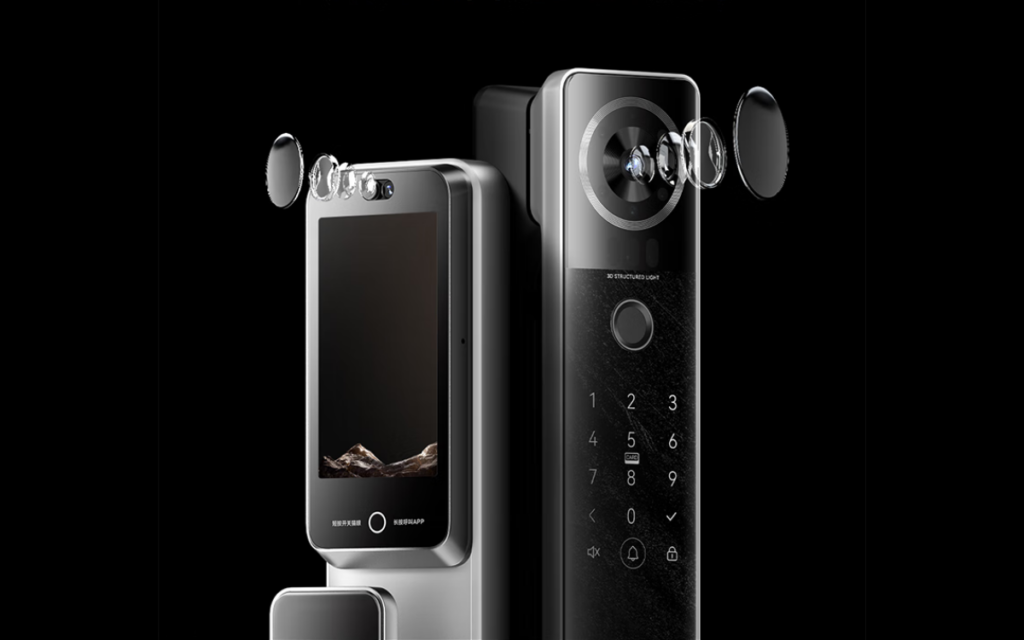
TCL is expanding its lineup of smart home devices in China with the launch of the K7G Max smart door lock. Priced at 2,349 yuan ($324) and now available on JD.com, the K7G Max blends security tech with a sleek, connected design. And yes, it has a giant display on your door. The company had also introduced the K7G Plus variant earlier this year, but the Max steps things up with even more advanced features.
TCL K7G Max Specifications
The headline feature here is 3D facial recognition, powered by structured light tech similar to what you’ll find in Apple’s Face ID. TCL claims the system is smart enough to adapt to changes in lighting and appearance, thanks to continuous AI learning and eight different recognition algorithms working in the background. It supports up to 20 stored faces, along with multiple unlock methods including fingerprint, password, NFC, mechanical keys, and even remote unlocking from your phone.
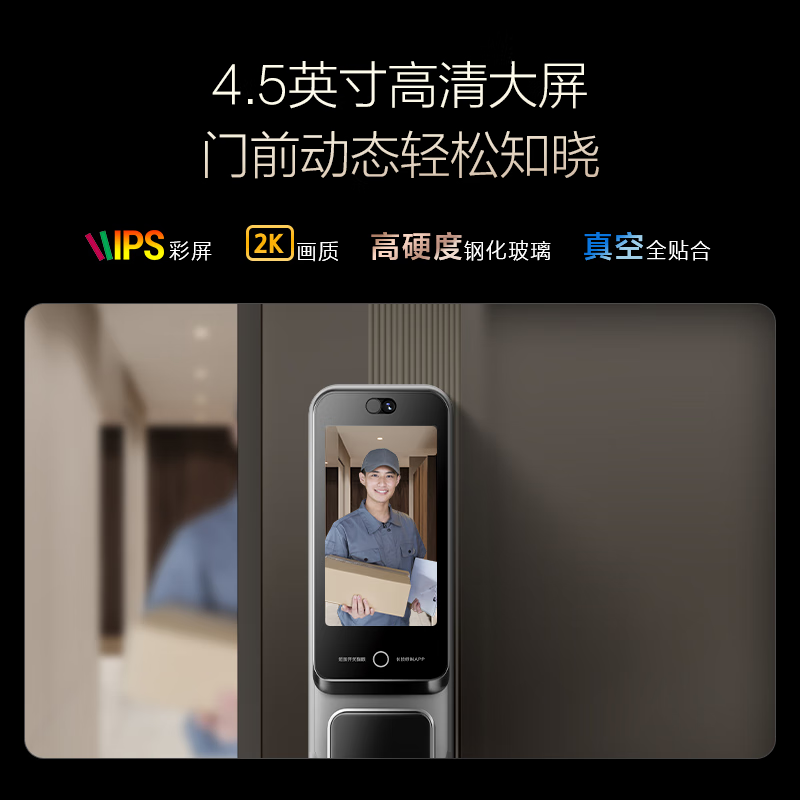
The door lock doesn’t just scan faces. It also keeps an eye on what’s happening outside. The dual-camera setup pairs a 2MP front camera with a 160-degree field of view and a 1MP rear camera with a 120-degree wide-angle lens, giving you full coverage around your doorway. Video feeds can be viewed on a built-in 4.5-inch IPS touchscreen, which TCL calls a “cat-eye” display. That screen also ties into the company’s smart ecosystem, connecting with phones, TVs, and other displays for remote monitoring.
Powering all of this is a 6000mAh battery, which TCL says can last up to eight months on standby with the help of its T-Power energy management system. You’ll get low-battery warnings and visual indicators to avoid surprises, plus energy-saving modes if you want to stretch things further.
The K7G Max is wrapped in aluminum alloy and basalt glass, giving it a premium feel. It also pays attention to the little things. There’s noise reduction tech to keep things quiet when locking or closing the door.
Earlier this year, TCL expanded its TV lineup in Europe with the launch of the Q6C QD-Mini LED TV, offering a 144Hz refresh rate, Dolby Vision support, and mid-range pricing. The company also introduced the QM7K Mini LED TVs, featuring 2,800 dimming zones and a range of gaming-focused features.
For more daily updates, please visit our News Section.
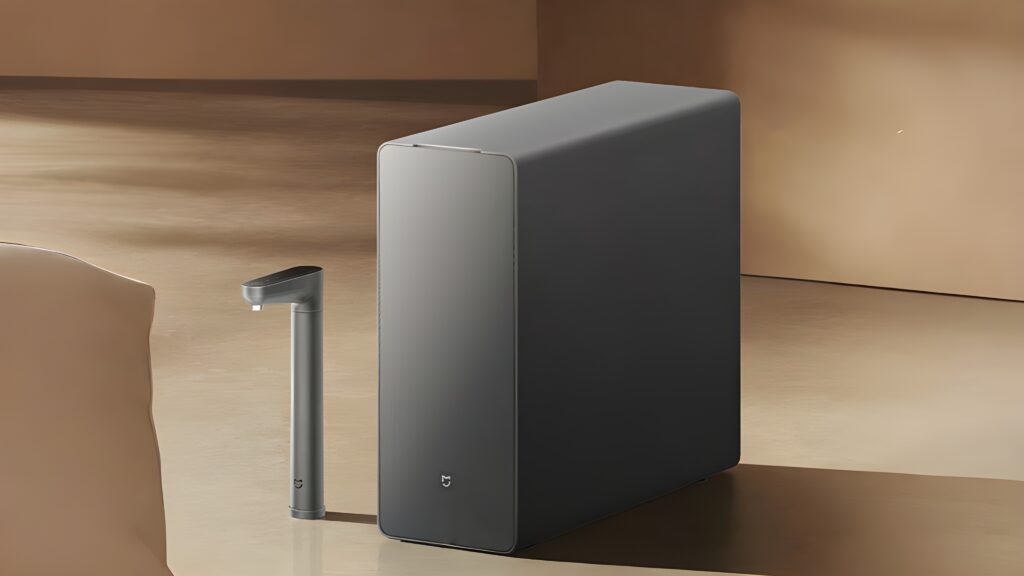
Xiaomi has just rolled out its latest smart home appliance in China. The Mijia Mineral-Rich Water Purifier 1200G is now available on JD.com for 3,399 yuan (around $470), and it’s packed with features aimed at making clean, mineral-enhanced drinking water more accessible and convenient for everyday use.
Xiaomi Mijia Water Purifier 1200G Specifications
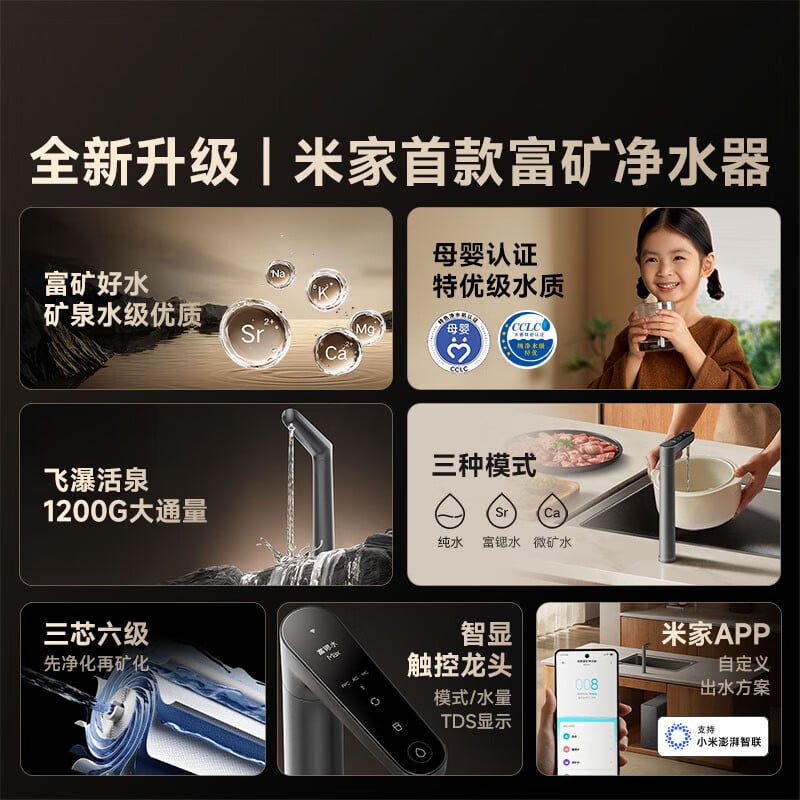
At the heart of the purifier is a six-stage filtration system with RO (reverse osmosis) tech capable of filtering particles as tiny as 0.0001 microns. That means it can handle everything from heavy metals and bacteria to viruses and chlorine, all the stuff you definitely don’t want in your glass.
But Xiaomi isn’t stopping at just clean water. The purifier also reintroduces essential minerals into the water, thanks to patented mineralization tech developed alongside the China University of Geosciences.
You’re not just getting random minerals either. Xiaomi says the purifier enriches water with strontium, calcium, magnesium, sodium, and potassium, all measured to meet mineral water-grade standards.
In particular, strontium is kept at a stable concentration of at least 0.2mg/L, and the minerals are sourced from rock fractures in the pristine Nianqing Tanggula Mountains. In other words, it’s trying to give your tap water that fresh mountain-spring feel.
The hardware itself is designed for speed and flexibility. The 1200G capacity supports a flow rate of nearly 4 liters per minute. Xiaomi says it can fill a 150ml glass in about three seconds. You also get three different water modes: pure water, strontium-rich water, and micro-mineral water, each suited for different uses like drinking, cooking, or brewing tea and coffee.
And of course, it wouldn’t be a Xiaomi product without some smart features baked in. The purifier comes with an OLED touch display faucet that shows water quality (TDS values) and filter health in real-time. It also integrates with Xiaomi’s HyperOS Connect and the Mi Home app, where you can monitor water usage and track filter life.
The system features automatic membrane flushing for freshness and a five-chamber pump to reduce noise. Its RO filter boasts a lifespan of up to five years, reducing maintenance and long-term expenses.
In related news, Xiaomi recently introduced a high-speed hair dryer that can dry hair in just one minute. The company also unveiled a desktop fan capable of running for 26 hours when powered by a power bank.
For more daily updates, please visit our News Section.
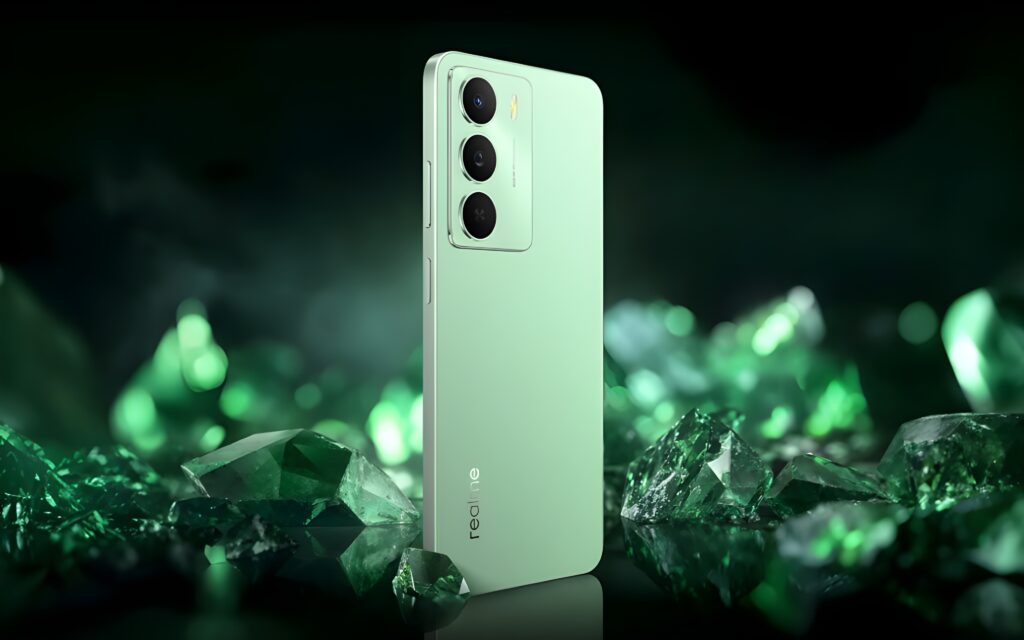
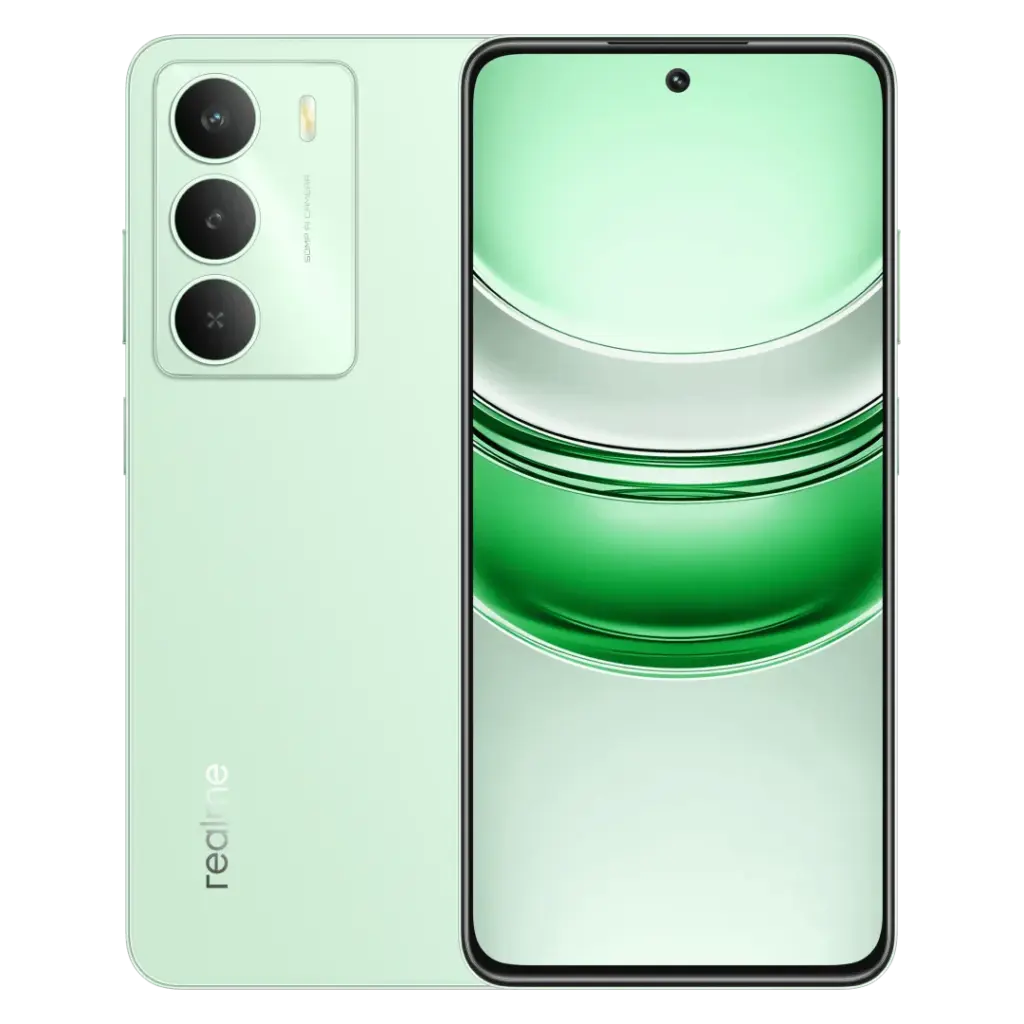
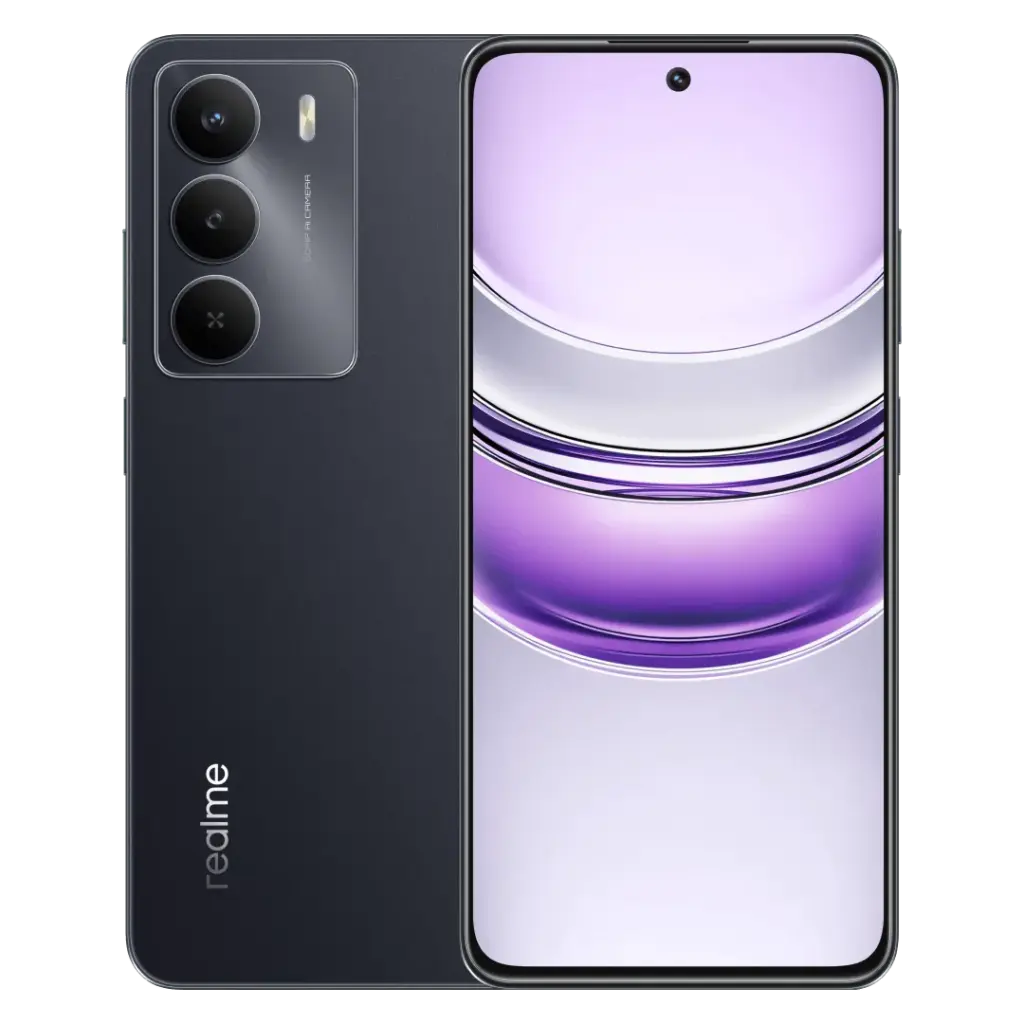
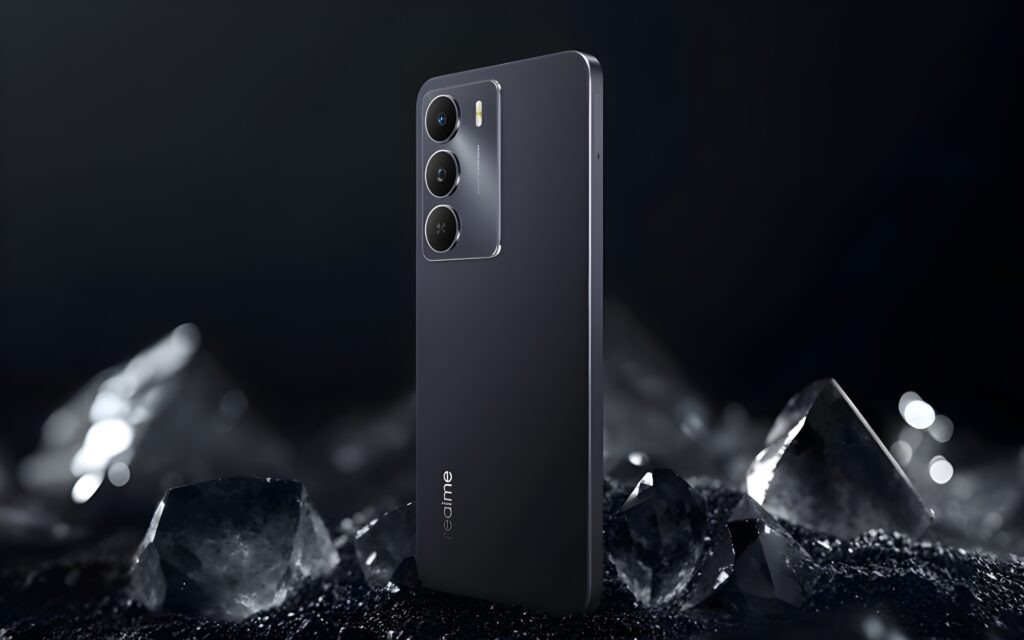
Realme has introduced two new budget-friendly smartphones in China — the Realme V70 and Realme V70s. Both models focus on durability, performance, and daily practicality, wrapped in a slim and stylish design. These devices are now listed on the company’s official website (full specs sheet not live yet), targeting users who seek reliable 5G connectivity, long battery life, and solid build quality without breaking the bank.
Realme V70 and V70s Specifications
The Realme V70 and V70s feature large 6.72-inch displays with a 120Hz high refresh rate for smooth scrolling and better responsiveness. Both phones also offer full DC dimming to reduce flicker and protect the eyes during prolonged use. The displays come with adaptive color temperature controls and multiple eye-care modes, making them comfortable for gaming, reading, or video streaming.
Realme V70sRealme V70
Under the hood, the Realme V70 is powered by the MediaTek Dimensity 6300 5G processor built on a 6nm process. This chipset ensures smooth multitasking with low power consumption. The Realme V70s, on the other hand, comes with the MediaTek Dimensity 6100+ 5G processor, also built on the 6nm process. Both phones support dynamic RAM expansion, offering up to 16GB RAM (8GB physical + 8GB virtual), along with 256GB of internal storage. They run on Realme UI 6.0 based on Android, offering a redesigned interface and updated notification management.
Both the Realme V70 and V70s feature a primary 50MP AI camera, with other details yet to be revealed. They also include Magic Depth AI for more natural portraits and enhanced layered shots.
Both these phones are equipped with a large 5000mAh battery. The company claims up to 10 hours of continuous video playback, 38 hours of talk time, and around 80 hours of music playback.
Both the Realme V70 and V70s feature 300% ultra-loud speakers for clear sound in noisy environments. They are built for durability with military-grade drop resistance, reinforced corners, and a pressure-cast aluminum frame, surviving drops from up to 2 meters. IP64 certification adds dust and water resistance, and both support touch controls with wet or oily hands. The phones are slim at 7.94mm, weigh around 190 grams, and come in Xuanwu Black and Cangshan Green colors.
Pricing & Availability
The Realme V70 starts at 1,199 yuan (around $166) for the 6GB+128GB variant and 1,499 yuan (around $208) for the 8GB+256GB variant. The Realme V70s is priced at 1,499 yuan (around $208) for the 6GB+128GB version and 1,899 yuan (around $263) for the 8GB+256GB variant.
Both smartphones are now listed on the official Realme website in China, though details regarding the sale and availability have not yet been announced.
For more daily updates, please visit our News Section.
The last thing we want from the brand is to confirm the device’s eligibility before actually waiting for the upgrade to ensure that the patience will pay off sometime. Samsung has already confirmed One UI 7 eligibility for newer models such as the Galaxy S24 series, S23 series, Z Fold 5, Z Flip 5, and a few more. Now, the list has grown even bigger following a recent announcement confirming the update for more devices.
Samsung Singapore (via a press release) has listed several Galaxy devices that will receive the One UI 7 update. So, we’ve prepared a list of Galaxy devices that are officially confirmed to receive the upgrade:
One UI 7 eligible devices (officially confirmed)
Galaxy S series:
Galaxy S24, S24+, S24 Ultra
Galaxy S24 FE
Galaxy S23, S23+, S23 Ultra
Galaxy S23 FE
Galaxy S21, S21+, S21 Ultra
Galaxy S21 FE
Galaxy Z series:
Galaxy Z Fold 6, Z Flip 6
Galaxy Z Fold 5, Z Flip 5
Galaxy Z Fold 4, Z Flip 4
Galaxy Z Fold 3, Z Flip 3
Galaxy Tab series:
Galaxy Tab S10+, Tab S10 Ultra
Galaxy Tab S9, Tab S9+, Tab S9 Ultra
Galaxy Tab S9 FE, Tab S9 FE+
Galaxy Tab S8, Tab S8+, Tab S8 Ultra
Galaxy Tab S6 Lite
You’ll quickly notice that many Galaxy devices are missing from the list, particularly budget models from the Galaxy A, M, and F series. However, this list is not complete — the One UI 7 update will reach many more devices. The ones listed above will receive the update in the initial rollout wave. By the way, we’ve prepared a complete list of One UI 7 eligible devices. You can have a look at it here.
There’s also the Galaxy Tab S6 Lite on the list, but Samsung hasn’t specified which year’s model will receive the update. The 2020 version has already reached the end of its OS update cycle. The 2022 model has received two OS updates and might get another. This means, One UI 7 is guaranteed for the Galaxy Tab S6 Lite (2024), while the 2022 model is uncertain for now.
Samsung recently announced when the One UI 7 update will start rolling out. However, the dates vary by region.
The stable One UI 7 rollout will begin on April 7 in several regions, including India, Korea, Mexico, New Zealand, the UAE, and more. Canada will start receiving the update from April 10, while Mexico and Singapore will get it from April 14.
Samsung has confirmed that the rollout will start with the Galaxy S24 series, Galaxy Z Fold 6, and Galaxy Z Flip 6. After that, the update will expand to more Galaxy devices, including the Galaxy S24 FE, Galaxy S23 series, Galaxy Z Fold 5/Flip 5, Galaxy Tab S10 series, and Galaxy Tab S9 series in the following weeks.
Which Galaxy device do you own? Is it eligible for the One UI 7 upgrade? Let us know in the comments below!
Oppo’s Find X8 lineup is getting three new members next month. While the Find X8s and Find X8 Ultra were already on the rumor radar, new leaks from China suggest there’s another model in the mix—the Find X8S+.
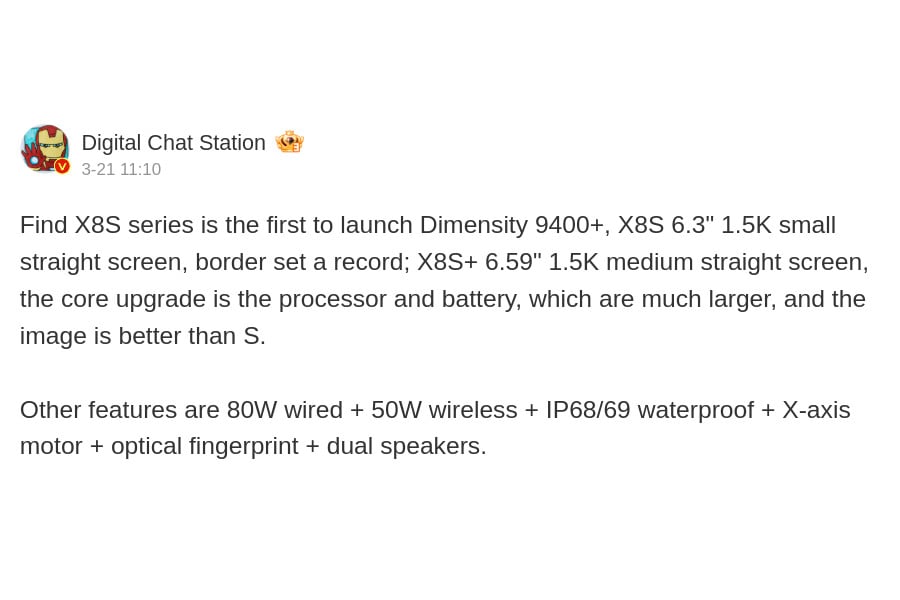
And recently, reliable tipster Digital Chat Station has shared some key specs of the Find X8s duo in his Weibo account.
Oppo Find X8s, Find X8S+ Specifications
According to the tipster, the Find X8S will feature a 6.3-inch “1.5K” display, while the X8S+ will come with a 6.59-inch flat panel. Both phones are expected to support 80W wired and 50W wireless charging, along with IP68 and IP69 ratings for dust and water resistance. Other shared features include an X-axis vibration motor and an optical in-display fingerprint sensor.
The Find X8s duo are also said to have a core upgrade in terms of battery. DCS mentions in comments that the Find X8S+ will pack a 5,860mAh battery, however, details on the vanilla X8S’s battery remain unclear. The latter will only weigh 179 grams, according to the tipster.
The Find X8S has been previously rumored to pack a battery larger than 5,700mAh, housed in a slim chassis just over 7mm thick. Its flat display will also feature impressively narrow bezels, reportedly measuring less than 1.38mm.
Another core upgrade will be in the form of the processor. While the tipster hasn’t explicitly named it, an Oppo official has already confirmed that both phones will be powered by the Dimensity 9400+. The chip is set to launch on April 11.
Find X8 Ultra
As for the third member of the lineup, the Find X8 Ultra, Oppo has officially confirmed some of its key specs. The flagship will feature a 2K flat display with ultra-narrow symmetrical bezels, an ultrasonic fingerprint scanner, and two periscope telephoto cameras—one with 3x zoom and another with 6x zoom.
The phone will also have a sleek 8.xx mm profile, a faux leather finish, and a custom vibration motor. Powering it all will be a battery larger than 6,000mAh.
For more daily updates, please visit our News Section.
Huawei is apparently planning on launching a brand new smartwatch in the Indian market soon. The company first unveiled the Huawei Watch Fit 3 last year, with its Indian release reportedly being right around the corner. So here’s everything we know so far.
Huawei Watch Fit 3 India Launch
The Chinese tech giant is apparently planning on launching the Huawei Watch Fit 3 in India, as per sources close to the matter who shared the details with 91Mobiles. This is the direct successor to the Huawei Watch Fit 2, which debuted in India back in August 2024. Now, its successor is expected to launch in India soon with various improvements and a higher price tag. The report claims that the Watch Fit 3 could be priced at around 20,000 INR, which is double the price of the Watch Fit 2 (9998 INR on launch).
Huawei Watch Fit 3
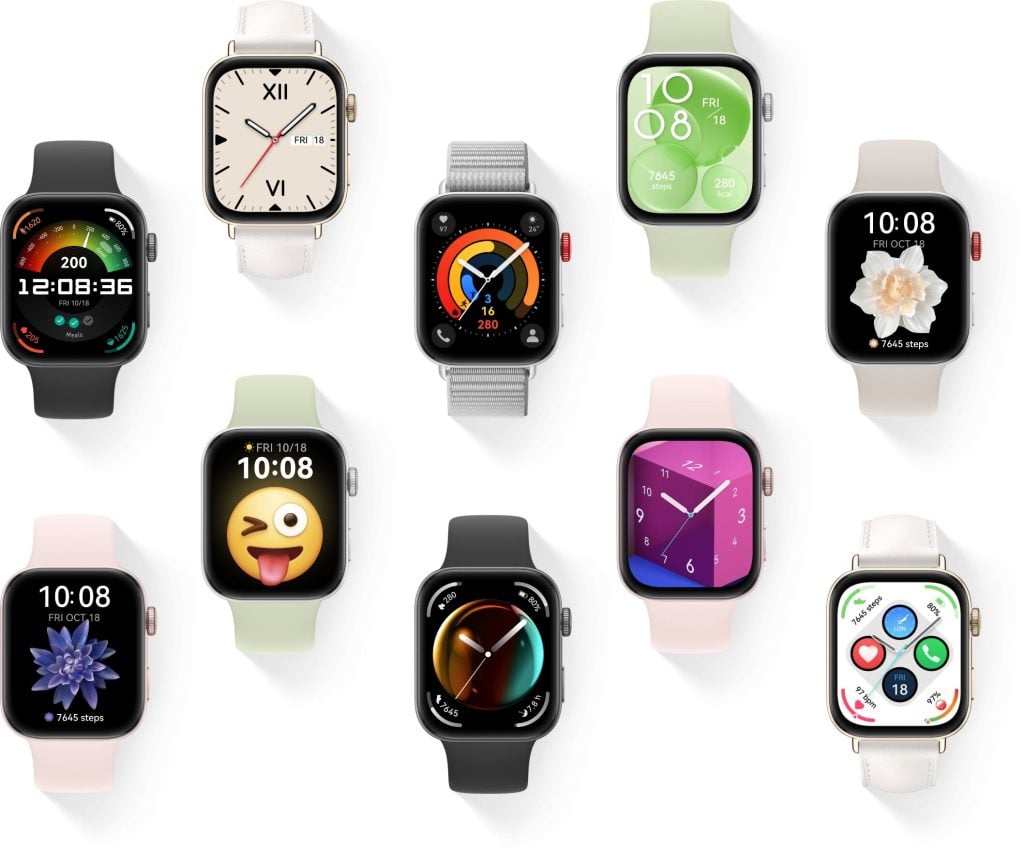
To recall, the Huawei Watch Fit 3 arrives in six color options, namely White, Gray, Black, Green, Pink, and a white leather strap variant. It sports a tall 1.82-inch AMOLED display with a 480 x 480 resolution and 1500 nits of peak brightness. The smartwatch has an aluminum alloy body along with a rotating crown along and a dedicated function button. A 400mAh battery pack powers this device, which promises to offer up to 10 days of battery life.
It also features various health related trackers for heart rate monitoring, SpO2 blood oxygen mapping, menstrual cycle tracking, atrial fibrillation alerts, sleep monitoring, and more. There is also support for over 100 workout modes and sports modes as well. Other notable features include NFC, built in GPS, Bluetooth 5.2, and 5ATM water resistance. You can also click here to check out our review for this wearable.
For more daily updates, please visit our News Section.
Just when I started feeling confident about Samsung’s One UI 7 rollout execution, the brand made another disappointing move. Samsung recently announced the exact rollout dates for multiple regions via a post on Samsung Newsroom. The update was scheduled to go live in the US starting April 10, but now that seems off the track.
Samsung has removed the post from the US Newsroom that initially revealed the One UI 7 rollout date. The website now displays a One UI 7 banner that reads, “The official rollout beginning this April.” Tapping on it redirects to the homepage, instead of opening a post with One UI 7 rollout details.
This quiet removal of the rollout date from the US Newsroom suggests a possible delay for the One UI 7 update rollout in the US. But it’s not just the US — Galaxy users in Australia might also have to wait longer for the One UI 7 update.
Yesterday, Samsung published a new post on its Australian Newsroom website that says, “the official rollout of One UI 7 will start from April” without providing a specific date. While this doesn’t necessarily mean that the US and Australia will receive the update on the same date, it does hint at a potential delay in both regions.
Meanwhile, the stable One UI 7 rollout is set to begin on April 7 in several regions, including India, Indonesia, Mexico, New Zealand, and more. Canadian users will start receiving the update from April 10, while Malaysia and Singapore will see the rollout from April 14. Hopefully, there won’t be any further delays.
Recently, Samsung announced the Galaxy S, Z, and Tab series models that will receive the One UI 7 update. The confirmed list includes:
Galaxy S series:
Galaxy S24 series
Galaxy S24 FE
Galaxy S23 series
Galaxy S23 FE
Galaxy S22 series
Galaxy S21 series
Galaxy S21 FE
Galaxy Z series:
Galaxy Z Fold 6, Flip 6
Galaxy Z Fold 5, Flip 5
Galaxy Z Fold 4, Flip 4
Galaxy Z Fold 3, Flip 3
Galaxy Tab series:
Galaxy Tab S10 series
Galaxy Tab S9 series
Galaxy Tab S9 FE series
Galaxy Tab S8 series
Galaxy Tab S6 Lite
Samsung has yet to confirm One UI 7 eligibility for budget-friendly models. However, we’ve already compiled a complete list based on Samsung’s existing software update policy. You can check the full list of One UI 7 eligible devices here.
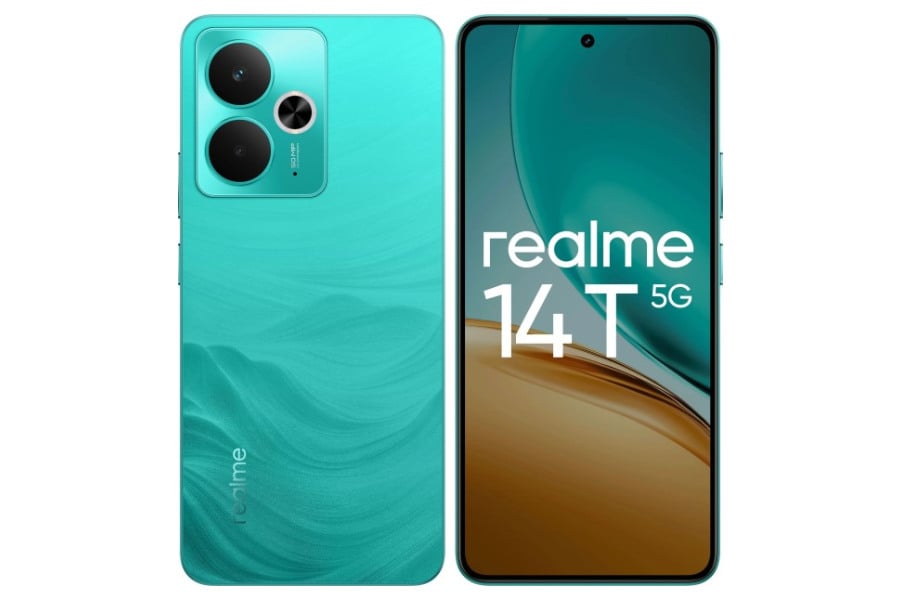
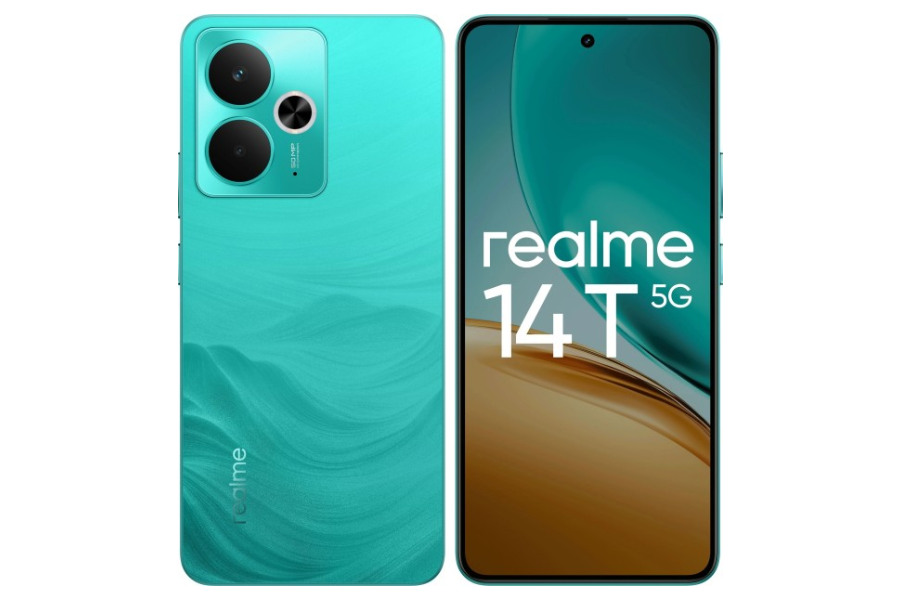
Realme’s next mid-range smartphone, the Realme 14T, appears to be close to launch. The device first surfaced in January, and now, a user on X has shared high-quality renders along with its complete specifications.
Realme 14T Specifications (Rumored)
According to the leak, the Realme 14T will feature a 6.67-inch AMOLED display with a Full HD+ resolution and a 120Hz refresh rate, keeping it in line with other phones in the Realme 14 series.
Under the hood, it runs on MediaTek’s Dimensity 6300 chipset, paired with LPDDR4x RAM and UFS 2.2 storage. It will be available in 8GB+128GB and 8GB+256GB variants.
The standout feature is its big 6,000mAh battery. Realme pairs it with fast 45W charging, which should make refueling relatively quick despite the large battery.
For photography, the Realme 14T is rumored to have a 50MP OmniVision OV50D primary sensor, accompanied by a 2MP secondary camera, likely for depth or macro shots. The front will have a 16MP Sony IMX480 sensor for selfies and video calls.
On the software side, the device is said to run Android 15 with Realme UI 6.0. Other notable features will include an in-display fingerprint sensor, NFC support, and an IP69 rating.
With a 7.9mm thickness and weighing 196 grams, the Realme 14T also manages to keep a relatively slim profile despite its large battery. The back panel features a subtle wavy texture, adding some visual flair, while the flat-edged frame keeps things modern.
The camera module sits neatly on the left and the 14T will be available in three color options—Pink, Green, and Black.
While the launch date is still unknown, this leak suggests Realme might make an announcement soon. We will keep you updated on that.
For more daily updates, please visit our News Section.
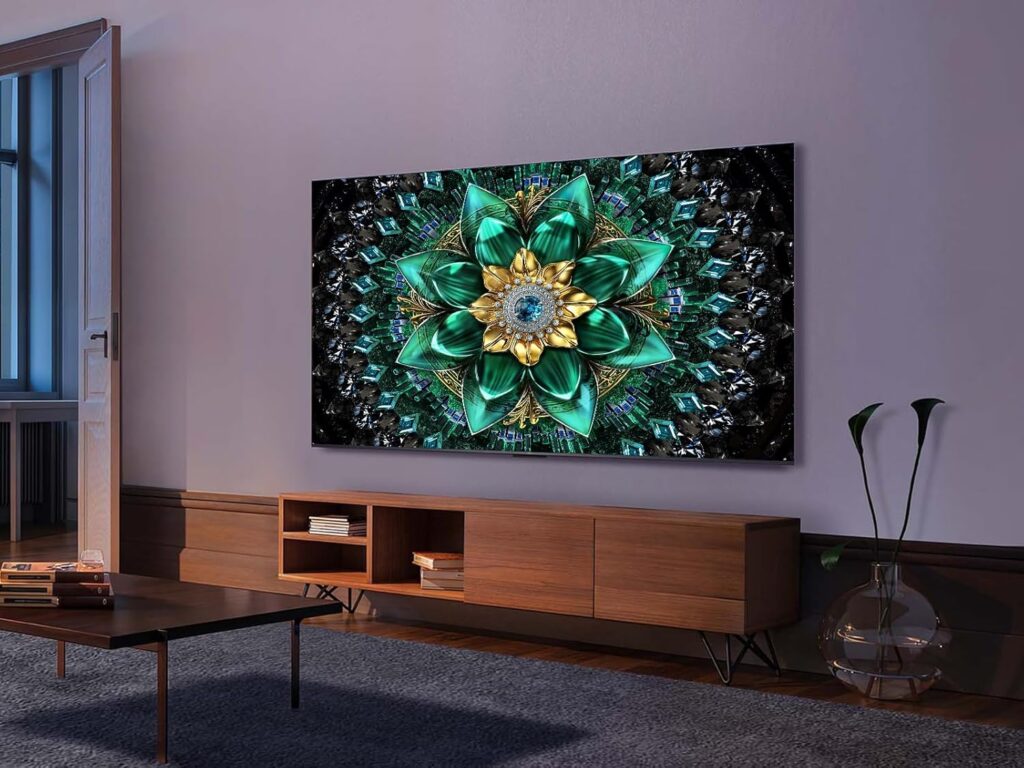
TCL has released its 2025 Q6C QD-Mini LED TV series in Europe, offering a range of sizes and features for both gamers and movie watchers. You can find it in screen sizes from 55 to 98 inches, with prices starting at £679 (€599) and going up to £2,599 (€2,199).
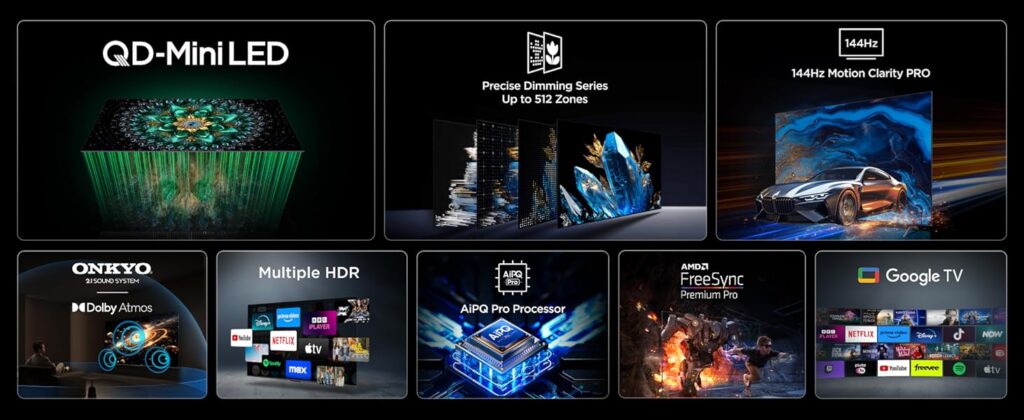
The Q6C uses a matte HVA panel with a 5,000:1 contrast ratio and a 144Hz native refresh rate. The largest 98-inch model includes 512 local dimming zones, a peak brightness of 1,000 nits, and Dolby Vision IQ, which adjusts HDR for different room lighting. TCL’s Halo Control helps reduce backlight glow, and the QD-Mini LED technology delivers 98% DCI-P3 color coverage for vibrant colors.
For gaming, the Q6C offers Game Master mode, a 288Hz motion-interpolated refresh rate, AMD FreeSync Premium Pro, HDMI 2.1, VRR, and ALLM, keeping input lag under 10ms. It’s ready for newer game consoles and supports cloud gaming through Google TV, which also gives you access to apps like Netflix and Disney+.
Sound-wise, the Q6C has a built-in Onkyo 2.1-channel sound system with Dolby Atmos for more immersive audio. You can buy the series from retailers like Amazon and AO.com in the UK, Germany, Portugal, and other European countries.
Pricing (UK/€):
55-inch: £679 / €599
65-inch: £849 / €799
75-inch: £1,249 / €1,149
85-inch: £1,549 / €1,499
98-inch: £2,599 / €2,199
In other news, TCL has launched the QM7K Precise Dimming Series, the second generation of its Mini LED TVs, featuring the Halo Control System for improved brightness, contrast, and HDR performance. It offers HDR3000 brightness, LD2800 dimming zones, a 144Hz refresh rate, and Game Accelerator 288 for 288Hz VRR.
For more daily updates, please visit our News Section.
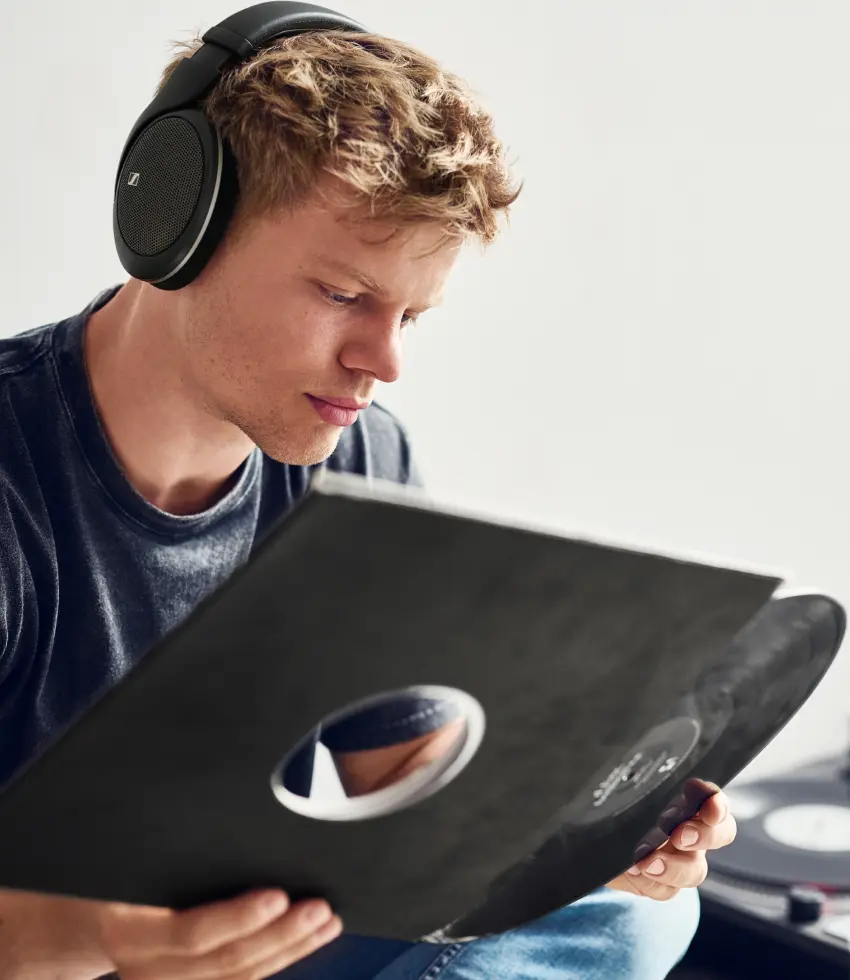
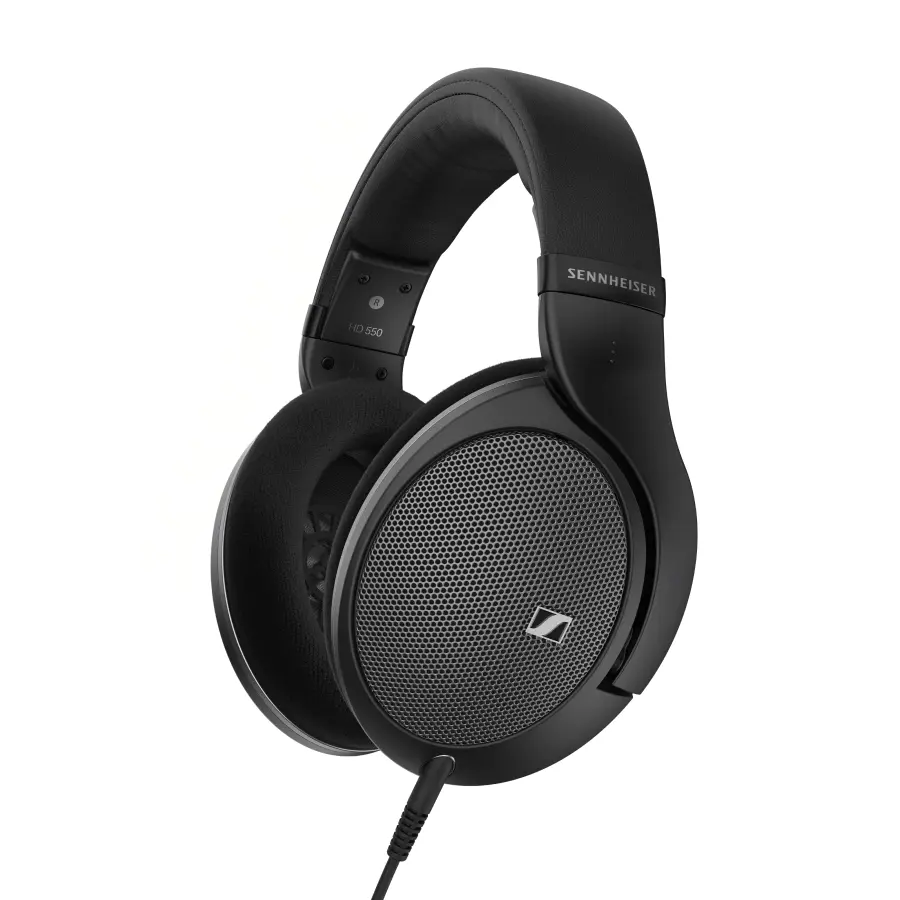
Sennheiser has introduced the HD 550, an open-back headphone designed for audiophiles and gamers who prioritize clarity, comfort, and an immersive listening experience.
The HD 550 is built with a custom 38mm transducer engineered at Sennheiser’s Ireland facility, offering a frequency range of 6 Hz to 39.5 kHz with less than 0.2% total harmonic distortion. With a 150-ohm impedance, it is compatible with various audio equipment, including Sennheiser’s HDV 820 amplifier. The open-back design, combined with an acoustic mesh, improves airflow and enhances the soundstage, while angled drivers are designed to create a more natural listening position.
Klaus Hanselmann, Sennheiser’s Audiophile Product Manager, describes the model as a balance of detail and comfort: “The HD 550 delivers accurate sound, deep bass, and a lightweight fit—suitable for long listening sessions.”
Weighing 237 grams (8.4 oz), the headphones have a low clamp force, ventilated metal mesh earcups, and a textured headband for durability. Gamers benefit from clear spatial audio, while music listeners can expect neutral mids and precise transients.
The modular design allows users to replace cables and earpads. The package includes a 1.8-meter cable with 3.5mm and 6.35mm adapters, with optional balanced or microphone-compatible cables available separately.
Pricing & availability
The HD 550 is available for pre-order now and will begin shipping in the first week of April. Pricing starts at $299.95 USD ($399.95 CAD).
Last month, the brand also launched the HD 505 open-back headphones. These headphones feature a 120-ohm transducer, a 12–38,500 Hz frequency range, and an expansive soundstage. They are priced at EUR 279.90 / USD 249.95 and are available to buy through Amazon and Sennheiser’s website.
For more daily updates, please visit our News Section.
Samsung’s highly anticipated Galaxy S25 Edge has made another appearance on Geekbench, which reveals a significant improvement in both single and multi-core scores. Following the European variant, which was spotted on the platform earlier this year, the South Korean variant has now surfaced. It’s identified by the model number SM-S937N.
It’s the same 8-core Snapdragon 8 Elite as other S25 models
The Geekbench listing shows that the South Korean variant of the Galaxy S25 Edge scored 2,969 points in single-core and 9,486 points in multi-core tests. The device is powered by the 8-core Qualcomm Snapdragon 8 Elite Made for Galaxy SoC, paired with up to 12GB of RAM, ensuring top-tier performance. It will also run Android 15 out of the box, offering the latest software experience. For those wondering, the previous listing includes single and multi-core scores of 2806 and 8416, respectively.
The Galaxy S25 Edge is expected to launch globally in April, including in markets like India. It will be available in two storage configurations: 12GB + 256GB and 12GB + 512GB. The device will come in three color options: Titanium Icyblue, Titanium Silver, and Titanium Jetblack. Other notable features include a 6.55-inch 120Hz AMOLED display, a 200MP main camera (expected to be the same as the S25 Ultra), an ultra-slim 5.82mm design, a 3900mAh battery, and 25W fast charging.
With the combination of a cutting-edge chipset and a refreshed design, the Galaxy S25 Edge is poised to be a strong contender in the flagship smartphone market. There have also been rumors about a ceramic back panel and a titanium middle frame, although, nothing is concrete at this point.
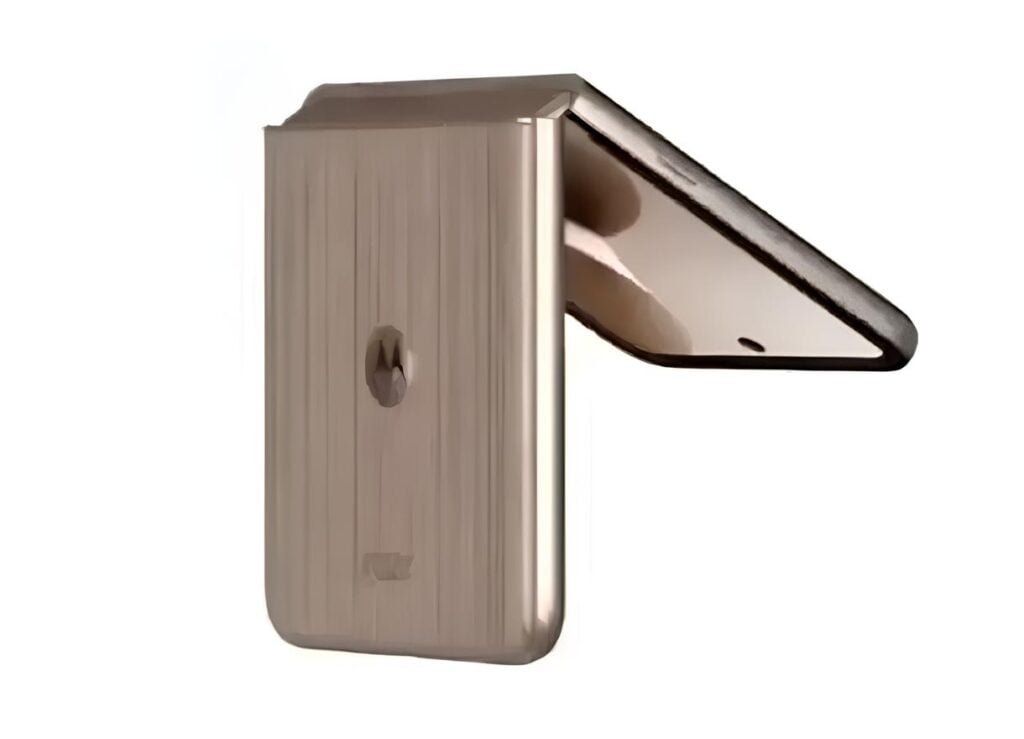
Motorola is set to shake up the smartphone market once again with its upcoming Razr 60 Ultra. According to the latest news, Motorola will release a wooden back version of this phone. This design choice harks back to Motorola’s earlier experiments with wood finishes and is expected to offer a refreshing departure from the metal and glass structure.
Moto Razr 60 Ultra wooden back version (render)
Razr 60 Ultra’s wooden back version has been leaked in a 360-degree video
The Razr 60 Ultra, also referred to as the Razr+ 2025, has been leaked in a 360-degree video by renowned tipster @evleaks. The video showcases the foldable device opening and closing, with a clear view of its wood-grained rear panel.
However, while the render highlights a distinct wood texture, it remains unclear whether the material is real wood or a high-quality imitation. The glossy finish seen in the leak suggests it may not be genuine wood, but it still adds a touch of elegance and nostalgia to the device. And in a world where most smartphone makers believe they are doing good to the planet by making the boxes slimmer, it won’t be ideal to chop more trees for some elegant-looking special edition handsets.
Even so, Motorola is no stranger to wooden finishes. The company previously offered customizable wood back panels for its Moto X smartphone through the Moto Maker program. This feature was a hit among consumers, who appreciated the unique and premium aesthetic it brought to the device. By reintroducing a wooden variant (or one that resembles wood), Motorola is tapping into that same appeal, targeting users who crave individuality in a market saturated with similar designs.
The wooden back panel is likely to be a premium option. But pricing and availability details remain under wraps. With its blend of cutting-edge foldable technology and a classic wooden finish, the device is expected to stand out in a competitive market.
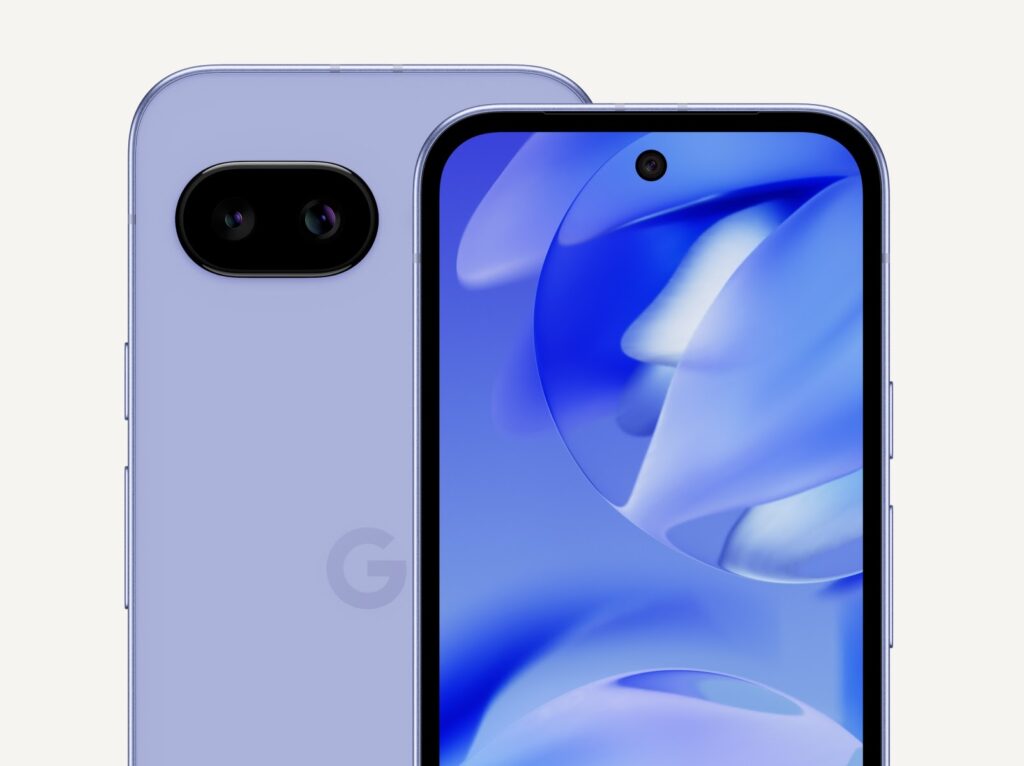
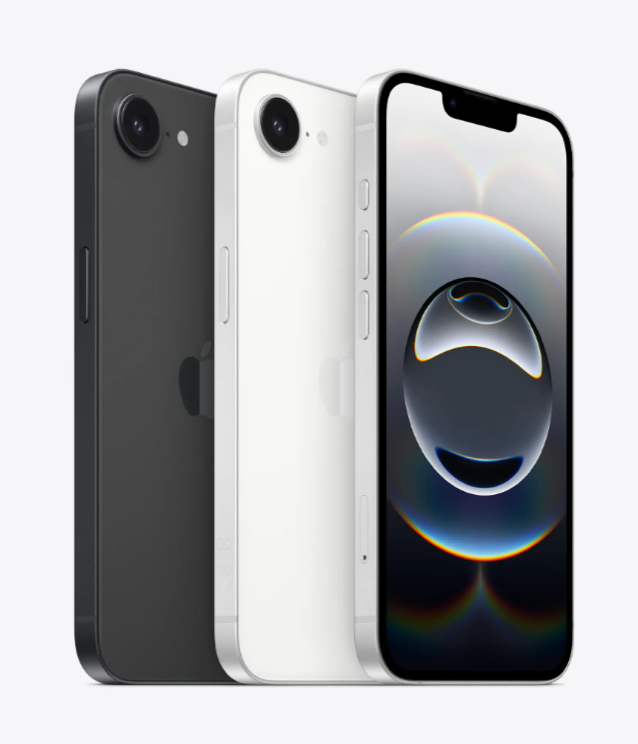
Google’s latest announcement of the Pixel 9a arrives just days after Apple unveiled the iPhone 16e. Both of these are the latest mid range phones that features some of the premium features from their more expensive siblings but carry a more affordable price tag. So now, let’s see which one offers better value.
Pixel 9a vs iPhone 16e: Design and Display
Apple is a well known premium brand that is known for its sleek iPhones. The iPhone 16e is the cheapest new smartphone from the brand but it still offers an aluminum frame and glass back. The metallic frame can also be found on the Pixel 9a, but Google cut corners with a plastic back panel on this model.
Google Pixel 9a
However, the Pixel 9a swings back with a better display overall. It sports a taller 6.3-inch pOLED display that offers FHD+ resolution, HDR, a 120Hz refresh rate, and 2700 nits of peak brightness. In comparison, the iPhone 16e has a smaller 6.1-inch OLED display that supports HDR, but only offers a 60Hz refresh rate, 1200 nits of peak brightness, and 1.5K resolution. High refresh rates have become the norm and it is still disappointing that Apple is still behind on this trend.
Please Note: When you buy something using the links in our articles, we may earn a small commission at no cost to you.
Performance
In terms of raw performance, Apple has an edge since the iPhone 16e packs the latest Apple A18 chipset. This is the same processor that powers the iPhone 16, offering impressive performance which makes it better for gaming and other intensive tasks. Google’s Tensor series of chips isn’t known for its horsepower, although the Pixel 9a also features the Pixel 9 Pro’s Tensor G4 chip.
Apple iPhone 16e
For most scenarios, this processor will be sufficient for most use cases. But one area that Google improved upon is the battery size. The latest A series Pixel is powered by a large 5,100mAh battery pack, but it only supports 23W wired and 7.5W wireless charging. We don’t have any official numbers for the iPhone 16e, but it is expected to be a smaller cell. Apple does claim up to 21 hours of battery life, however, you’re missing out on MagSafe wireless charging with this model.
Camera
Both iPhones and Pixels are known for their capable and consistent photography experience. Google’s Pixel 9a brings a more versatile experience thanks to its 40MP (Main) + 13MP (Ultra Wide) dual camera setup on the rear. Apple only offers a single 48MP camera at the back with supposed 2x lossless zoom, but an ultra wide is a better option between the two. You’re getting a 13MP selfie shooter on the Pixel 9a, while the iPhone brings a 12MP sensor along with the Face ID suit of sensors as well.
Pricing and Verdict
The Google Pixel 9a starts from 499 US Dollars for the 128GB model with its 256GB option costing 599 US Dollars. For the same price as the higher end option, you get the 128GB iPhone 16e for 599 US Dollars. So the Pixel 9a is easily the better value in most cases. But for those who are already in the Apple ecosystem or always wanted to try an iPhone, the iPhone 16e is the most cost effective option right now. Keep in mind that the older iPhone 15 is currently selling for the same price and is easily recommendable over the 16e.
For more daily updates, please visit our News Section.
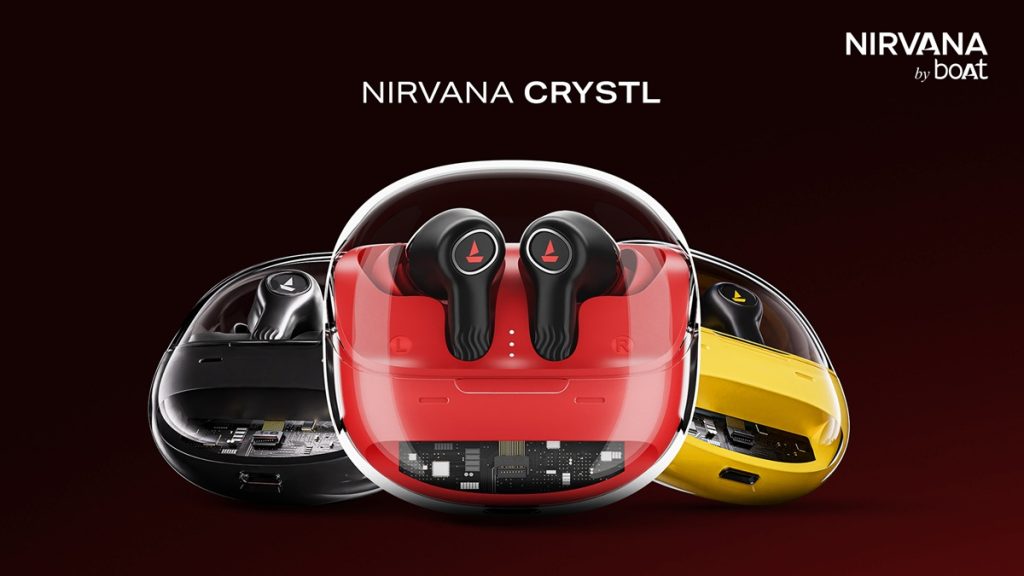
boAt‘s Nirvana lineup is getting a brand new entry with the latest Nirvana Crystl, which was first unveiled earlier this month. These are a pair of truly wireless earbuds that feature an eye catching design and premium features. So let’s look at its pricing, specifications, and other details.
boAt Nirvana Crystl: What makes it special?
The company’s Nirvana Crystl arrives with a unique transparent charging case, which the company calls Clear Case Tech. It promises to deliver immersive sound with Spatial Audio with 10mm drivers. You also get 32dB ANC (Active Noise Cancellation) and even ENx tech for clearer calls thanks to its 4 microphone setup. The Nirvana Crystl features multipoint connectivity as well, allowing for seamless switching between devices.
boAt Nirvana Crystl
On a single full charge, the new TWS earbuds can last for up to 100 hours with just 10 minutes of charging offering 220 minutes of audio playback. It even has a dedicated mode for gamers that lowers the latency to just 60ms. Other notable features include Google Fair Pair support, IPX4 water resistance, in ear detection, Spatial Sound, and boAt Hearables app support.
Pricing and Availability
The boAt Nirvana Crystl was just announced for a launch price of 2,499 INR. It is available in three color options, namely Yellow Pop, Quantum Black, and Blazing Red. You can find these earbuds on the brand’s official website, Blinkit, Flipkart, and Amazon India starting today. Buyers are also getting 1 year warranty as well.
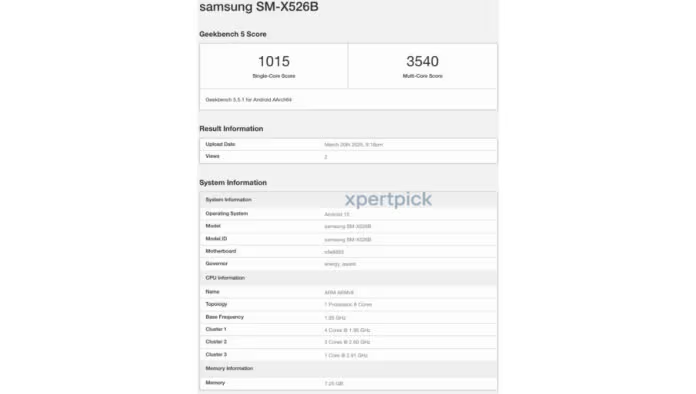
Samsung’s Galaxy Tab S10 FE has just surfaced on GeekBench once again. The upcoming budget flagship tablet just surfaced on the popular benchmarking platform for the second time with a different model number and different performance figures. So let’s check it out.
Samsung Galaxy Tab S10 FE’s second run in on GeekBench
To recall, the South Korean tech giant’s upcoming tablet is a Fan Edition model of the premium Tab S10 series. So you’re getting some premium features for mid range pricing. Earlier this month, the Samsung Galaxy Tab S10 FE was spotted on GeekBench carrying the SM-X520 model number. It managed to achieve a score of 1349 points in the single core test and 3882 points in the multi core test thanks to the Exynos 1580 SoC and 8GB of RAM.
But in the latest sighting, the Galaxy Tab S10 FE spotted by Xpertpick carries the SM-X526B model number. So this could be a different regional version. While it still featured the same Exynos 1580 chipset and 8GB of RAM, this version only achieved 1,015 points in the single core test and 3,540 points in the multi core test. Synthetic performance varies and there are some differences in GeekBench.
Samsung Galaxy Tab S10 FE
Apart from this, the listing confirms that the tablet runs on the Android 15 OS out of the box. A leak from earlier this week also shared renders of the Galaxy Tab S10 FE and Galaxy Tab S10 FE+ along with their key specs. The upcoming tablet could sport a 10.9-inch IPS LCD panel with 2K+ resolution and 90Hz refresh rate. A massive 8,000mAh battery pack could power this device, which supports 45W wired fast charging. For optics, the rear features include a 13MP camera while the front has a 12MP selfie shooter.
For more daily updates, please visit our News Section.
Samsung‘s upcoming ultra slim flagship has been spotted in yet another leak. Ahead of any official announcement, a new report has confirmed the launch timeline for the new Galaxy S25 Edge once again. But this time around we have details regarding the Indian release. So here’s everything we know so far.
Samsung Galaxy S25 Edge India Launch
In one of our previous reports, it was rumored that the South Korean tech giant’s Galaxy S25 Edge will debut in the global market in April. Now, known tipster Abhishek Yadav has claimed that the brand plans to launch this ultra slim flagship in India next month as well. So the regional and global release might be on the same date. This leak also arrives after the Galaxy S25 Edge was spotted on BIS, which is an Indian certification.
Samsung Galaxy S25 Edge
Just earlier this week, the Galaxy S25 Edge had its color, storage, and European pricing leaked. The device is expected to arrive in three color options, namely Titanium Icyblue, Titanium Silver, and Titanium Jetblack. It may also launch in two storage configurations that include 256GB and 512GB options. Both variants are likely paired with 12GB of RAM. Since it is a flagship grade model from the Galaxy S25 series, the S25 Edge is likely equipped with the Snapdragon 8 Elite For Galaxy SoC.
Samsung’s Galaxy S25 Edge may sport a 6.6-inch Dynamic AMOLED display with a 1.5K resolution and a 120Hz refresh rate. But one of the most notable aspects of this smartphone is its thin 5.84mm body that weighs just 162 grams. Other notable features include a 3,900mAh battery pack with 25W wired fast charging, IP68 rating, and 200MP + 50MP dual rear cameras.
For more daily updates, please visit our News Section.
iQOO has just teased the launch of an upcoming Z series smartphone. The iQOO Z10 is set to launch next month, with the latest promo image poster confirming its massive battery capacity. So here’s everything we know about this mid range device.
iQOO Z10 India Launch Teased
As the name suggests, the Chinese brand’s iQOO Z10 model is the direct successor to the iQOO Z9. To recall, the iQOO Z9 launched with a sizeable 5,000mAh battery pack. However, the Z10 is taking things a step further with an absolutely gigantic 7,300mAh cell. This is by far the biggest battery on a smartphone that is commercially available in the Indian market. In the official teaser poster, iQOO confirmed that this model will make its debut in the region on 11th April 2025.
iQOO Z10 India Launch Teased
While no other finer details were revealed in the teaser, we recently covered a leak that confirmed all of its key specs. The iQOO Z10 is expected to sport a 6.67-inch quad curved AMOLED display with a FHD+ resolution and a 120Hz refresh rate. Under the hood, rumors have hinted at the smartphone packing either the Snapdragn 7 Gen 4 or possibly the Snapdragon 7s Gen 3 chipset. This processor could be paired with either 8GB or 12GB of RAM and 128GB or 256GB of internal storage.
The front is also expected to house a 32MP sensor for selfies and video calls. Despite its massive battery, the iQOO Z10 could measure just 8.1mm in thickness and offer 90W wired fast charging as well as an IR blaster. This is a mid range smartphone so it would likely be announced between the 20,000 to 30,000 INR price range. So stick around for more as we will be covering its unveiling next month.
For more daily updates, please visit our News Section.
Google has postponed the release of the Pixel 9A to address a component quality issue affecting “a small number of Pixel 9A devices”. The Pixel 9a is now expected to start shipping in April instead of March, and even preorders have yet to open on the Google Store. This delay marks a departure from Google’s usual practice of launching products immediately after the announcement.
The delay is due to ongoing checks on a component issue
In a statement to The Verge, Google spokesperson Matt Flegal confirmed that the delay is due to ongoing checks on a component issue. The embargo for this device does not allow creators to reveal specific features or capabilities of this device. “They are not allowing us to show any software at all like I usually do”, said famous YouTube creator Marques Brownlee.
While testing a Pixel with benchmarks has barely turned out to be helpful to the sales of a Tensor-powered Pixel device in the past, the new embargo indicates the seriousness of the current situation. That said, Google has not specified which component is under scrutiny.
The Pixel lineup has generally been well-regarded for its reliability, but it has faced occasional issues. For instance, Google released an urgent firmware update for the Pixel 4A earlier this year to address battery overheating concerns. The Pixel 8 also saw extended warranty coverage for display defects, and the Pixel 4A 5G experienced touchscreen problems after a 2021 software update.
The Pixel 9A features the largest battery (5,100mAh) in any Google phone to date, and it’s expected to deliver strong performance and battery life. Unlike the Pixel 8a, the Pixel 9a is positioned well, and the Pixel 9 doesn’t seem like a significantly better deal for most people as the Pixel 8 did last year. The Pixel 9a also stands out as a unique device with its completely flushed camera island. It’s just the people waiting for the latest affordable Pixel will have to wait about a month longer.
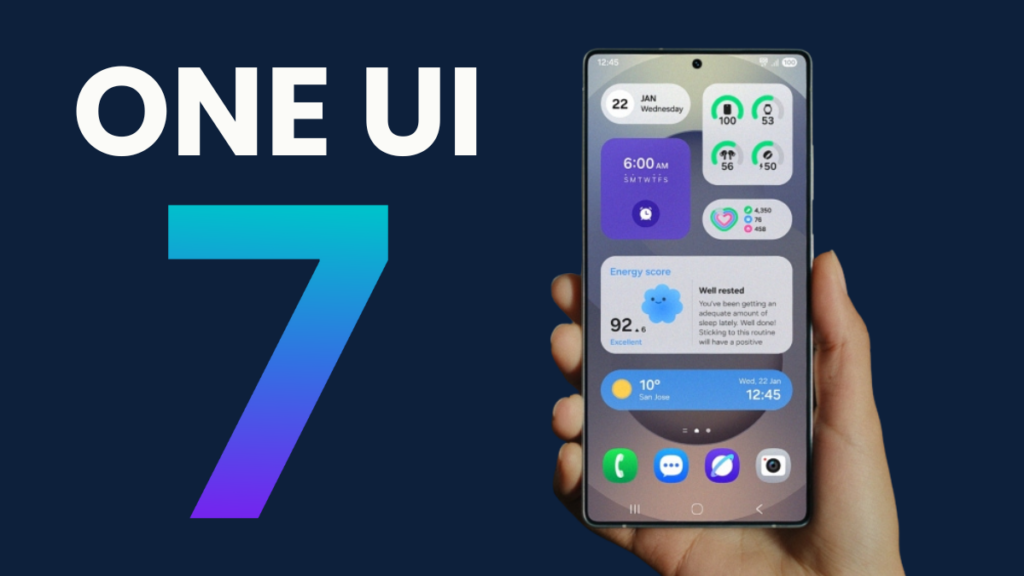
While every major software upgrade is exciting, One UI 7 is a step up from most upgrades as it packs significant visual upgrades we haven’t seen in years. It also brings a host of new features, improvements, and AI upgrades that are making people impatient for this massive upgrade.
Samsung will soon start rolling out the stable One UI 7 update, which millions of Galaxy users have been waiting for months. In addition to the rollout plan, the brand has announced which Galaxy devices will get the update. So, if you’re also waiting for the One UI 7 update, stick to the end, as we’ll walk you through all the essential information about this major release.
Samsung One UI 7 rollout timeline
After a long wait, Samsung recently announced that it will start rolling out the One UI 7 update from April 7. However, that’s not when every region will start getting the update. Here’s the region-wise One UI 7 rollout date:
April 7: India, Europe, Indonesia, the Philippines, Thailand, Vietnam, Mexico, New Zealand, Algeria, Egypt, Iraq, Jordan, Kuwait, Morocco, Saudi Arabia, Tunisia, UAE, and more
April 10: USA, Canada
April 14: Malaysia, Singapore
One UI 7 rollout will initially arrive for the Galaxy S24 series, Galaxy Z Fold 6, and Galaxy Z Flip 6. Samsung will then expand the update to more Galaxy devices in the following week. These devices include:
Galaxy S24 FE
Galaxy S23
Galaxy S23+
Galaxy S23 Ultra
Galaxy Z Fold 5
Galaxy Z Flip 5
Galaxy Tab S10+
Galaxy Tab S10 Ultra
Galaxy Tab S9
Galaxy Tab S9+
Galaxy Tab S9 Ultra
As always, the update will first reach premium models and then expand to affordable lineups such as the Galaxy A, M, and F series. Samsung hasn’t provided a rollout timeline for these devices, but it appears they will start receiving the update in May. We’ll update you on the same in our One UI 7 section.
Which Galaxy devices will get the One UI 7 update?
Samsung has officially confirmed One UI 7 eligibility for these Galaxy devices:
Galaxy S series
Galaxy S24 series
Galaxy S24 FE
Galaxy S23 series
Galaxy S23 FE
Galaxy S22 series
Galaxy S21 series
Galaxy S21 FE
Galaxy Z series
Galaxy Z Fold 6, Flip 6
Galaxy Z Fold 5, Flip 5
Galaxy Z Fold 4, Flip 4
Galaxy Z Fold 3, Flip 3
Galaxy Tab series
Galaxy Tab S10 series
Galaxy Tab S9 series
Galaxy Tab S9 FE series
Galaxy Tab S8 series
Galaxy Tab S6 Lite
One thing to note here is that Samsung hasn’t revealed which Galaxy Tab S6 Lite model will get the update. The original 2020 model has already reached the end of its update cycle; the 2022 model has received two OS updates and might get another. So, only the 2024 model is guaranteed to receive One UI 7 update, while the status of the 2022 model remains uncertain.
Samsung hasn’t announced the One UI 7 availability for affordable lineups, including Galaxy A, M, and F series. However, we managed to create a list based on the existing software update policy. So, here are other Galaxy devices that will also get the One UI 7 update:
Galaxy A series
Galaxy A73
Galaxy A55, A54
Galaxy A35, A34, A33
Galaxy A25, A24, A23
Galaxy A16 (LTE/5G), A15 (LTE/5G), A14 (LTE/5G)
Galaxy A06
Galaxy A05s
Galaxy M series
Galaxy M55, M55s, M54, M53
Galaxy M35, M34, M33
Galaxy M15, M14 (LTE/5G)
Galaxy M05
Galaxy F series
Galaxy F55, F54
Galaxy F34
Galaxy F15
Galaxy F05
Other Galaxy devices:
Galaxy XCover 7
Galaxy XCover 6 Pro
Galaxy C55
Which Galaxy device do you have? Is it getting the One UI 7 update? Let’s discuss in the comments below.
One UI 7: new features and major changes
The animations have gotten better, leading to a smoother experience when opening and switching apps and navigating the UI — and we finally have a vertical app drawer. Most Galaxy users would appreciate it even though it’s a small change.
Perhaps the biggest visual upgrade is the new Now Bar. It’s an interactive pill-shared UI element that sticks to the bottom of the lock screen and provides quick access to ongoing activities, real-time updates from Google Maps, live sports scores, charging status, and more. Most stock apps have got new icons with a more colorful appearance.
One UI 7 adds new interactive widgets and lets you freely place them on the home screen. The widget section has also been updated to look modern and visually appealing. The update also brings new charging animations.
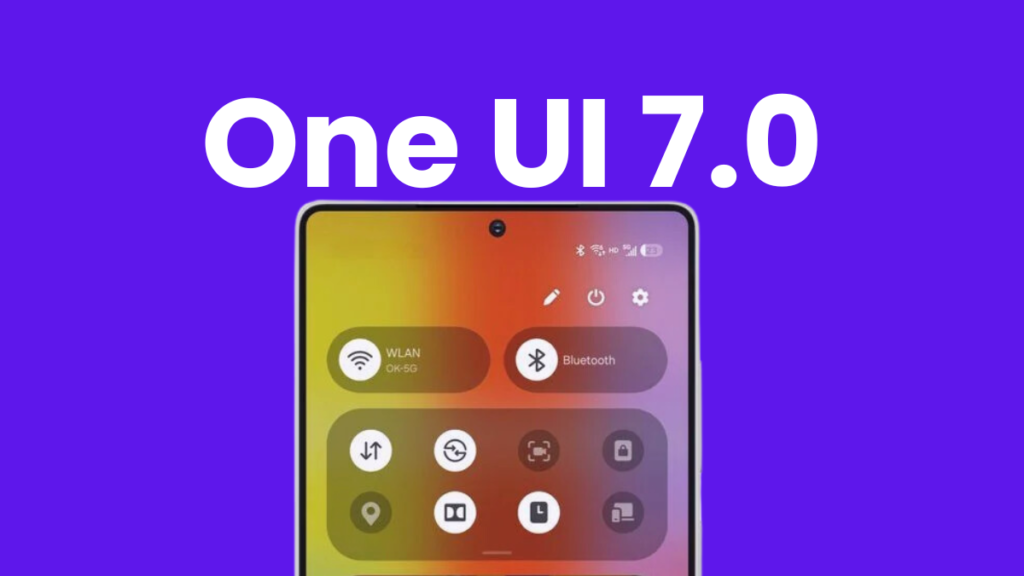
Samsung has improved the Quick Settings panel by offering more customizations and separating the Quick Settings and notification panel for easier access. You can now rearrange sections by dragging and dropping them. The home screen is also more customizable than ever before. The lock screen, too, is getting a host of new customizations to make it more personal.
Galaxy AI has been improved to be more helpful, while also offering new features. The Writing Assist now works across the UI with any keyboard (previously restricted to Samsung Keyboard). The call transcript feature can automatically transcribe recorded calls in up to 20 languages.
One UI 7 on the Galaxy S25 series also brings Now Brief to present relevant information based on time and user habits. Since this feature requires a lot of on-device processing, it won’t come to most Galaxy devices (more on this here). The update also brings AI-powered audio eraser (for removing unwanted sound from videos) and object eraser features (for removing unwanted objects from video frames).
Which One UI 7 feature(s) are you excited about the most? Share your thoughts in the comments below. Also, don’t forget to regularly visit our One UI 7 section for the latest news and updates.
All parents want to know that their child is healthy, active, and most importantly, safe. But staying informed about your child’s well-being throughout the day can be challenging. You might often wonder: Are they getting enough sleep? Are they moving enough? Are they safe on the way to school or playing outside?
This is where smartwatches designed for kids can help. These devices combine safety features, communication tools, and health tracking in one convenient gadget. But not all smartwatches are worth buying. Before buying one, consider whether it’s practical, age-appropriate, and reliable.
Key Features to Look For
When choosing a smartwatch for your child, here are the most important features to consider:
GPS tracking – Helps parents see where their child is in real-time.
Two-way calling and messaging – Let kids communicate with pre-approved contacts.
SOS button – Allows kids to quickly send an alert if they’re in trouble.
Geofencing – Sends a notification when a child enters or leaves a designated area (like home or school).
Simple interface – Younger kids don’t need dozens of apps or complicated menus.
Now, let’s take a look at some of the best smartwatches available for kids in 2025.
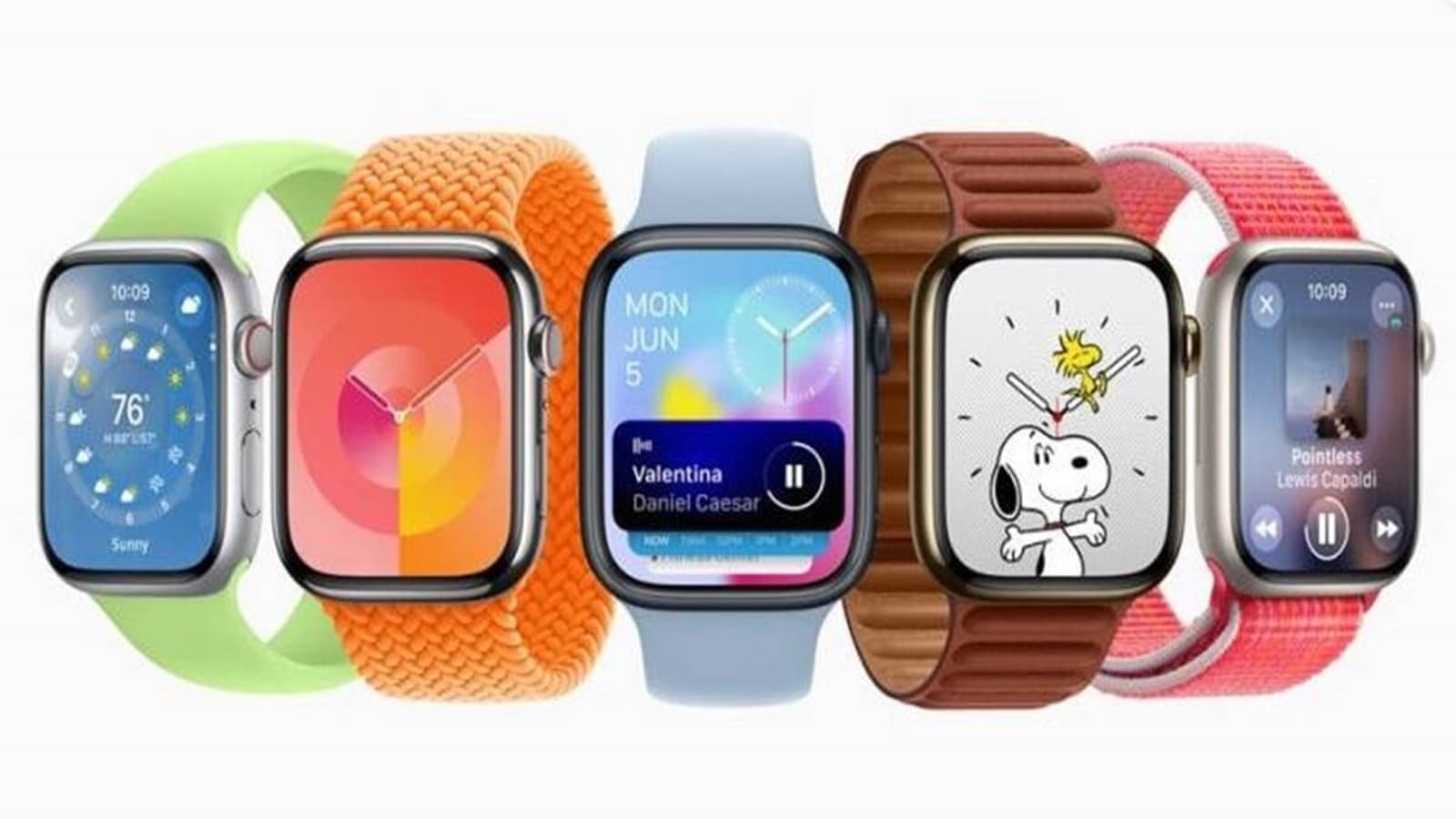
Apple doesn’t have a dedicated smartwatch for kids but it sells a service called Apple Watch for Your Kids (formerly Family Setup) that lets parents turn a cellular Apple Watch into a kid-friendly smartwatch. It allows them to manage app and service access, control who their child can call or message, and track their location via GPS.
On the surface, the kid’s mode has a very similar experience to a regular Apple Watch. It lets your child keep the same watch faces as yours or use apps like iMessage, Apple Music, and Siri. But its biggest perk is GPS tracking.
The service also integrates seamlessly with Apple’s Find My app, so parents can see their child’s location in real time. And you can set up notifications for when your child reaches school or arrive home.
There’s also Schooltime mode, which locks the watch to a simple clock face. You can schedule it to activate during class hours and if the child disables it, you’ll be notified of it.
But an Apple Watch for kids isn’t exactly cheap. It’s an option if you’re already in the Apple ecosystem and want a connected smartwatch for your child. In this case, any Apple Watch with cellular support will do the job.
But if you’re looking for a new one, the best option is the Apple Watch SE (2nd Gen) because it’s the most affordable model available.
Please Note: When you buy something using the links in our articles, we may earn a small commission at no cost to you.
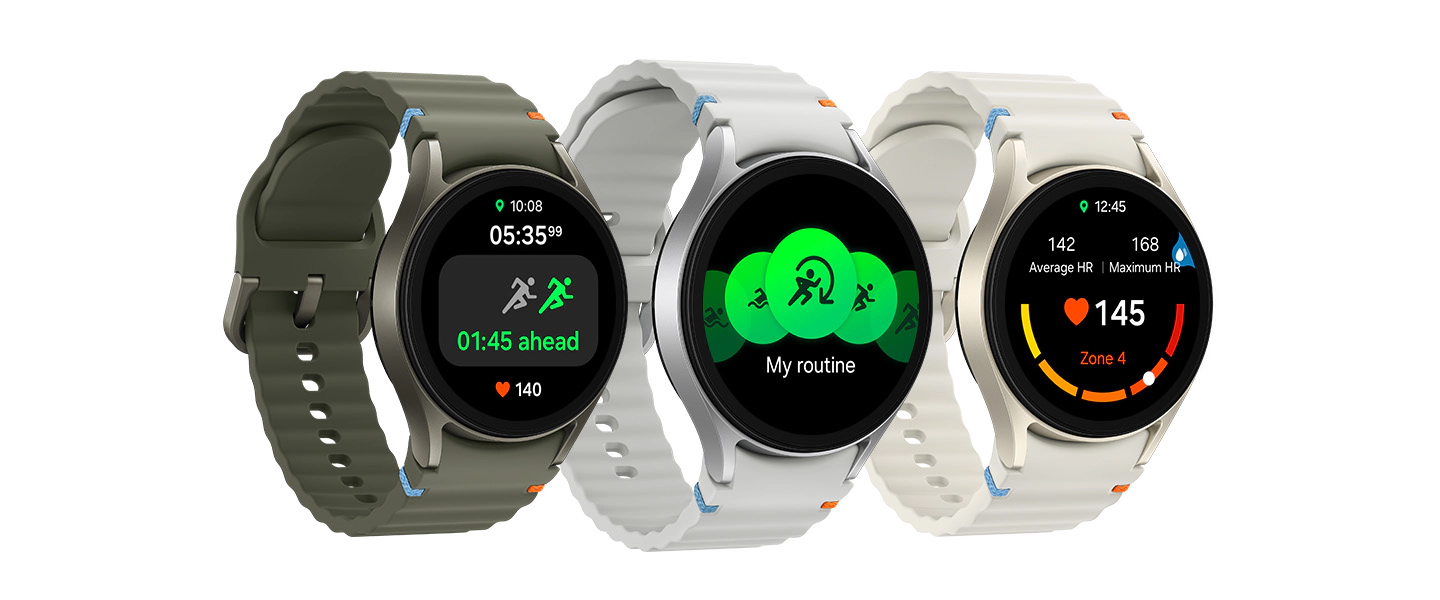
2. Samsung Galaxy Watch 7
Like Apple, Samsung doesn’t offer a kid-specific smartwatch. Instead, it provides a dedicated mode for its Galaxy Watch that works similarly to Apple’s solution — but for Android phones.
To set up the smartwatch for your child, you’ll need to use the Google Family Link app. This lets you establish guardrails, such as trusted contacts for calls and texts or GPS tracking. And since it’s a full-fledged smartwatch just with a kid mode, you can access all the apps available on the Play Store.
Of course, parents have control over what their kids can use, and there’s a School Time mode — similar to Apple Watch — that limits functionality during school hours to help kids stay focused. In an emergency, kids can also activate the SOS feature by pressing the side button five times.
As mentioned earlier, there’s no dedicated Samsung watch for kids. However, the Galaxy Watch for Kids mode is currently available only on the Galaxy Watch 7 LTE model in the US, supported by AT&T, T-Mobile, and Verizon networks. The feature is relatively new, having launched just in January this year, so it’s likely to roll out to older Galaxy Watch models in the future.
That said, like Apple’s solution, this isn’t the most budget-friendly way to keep track of your kids. If you’re looking for something more affordable, we’ve got a few options below.
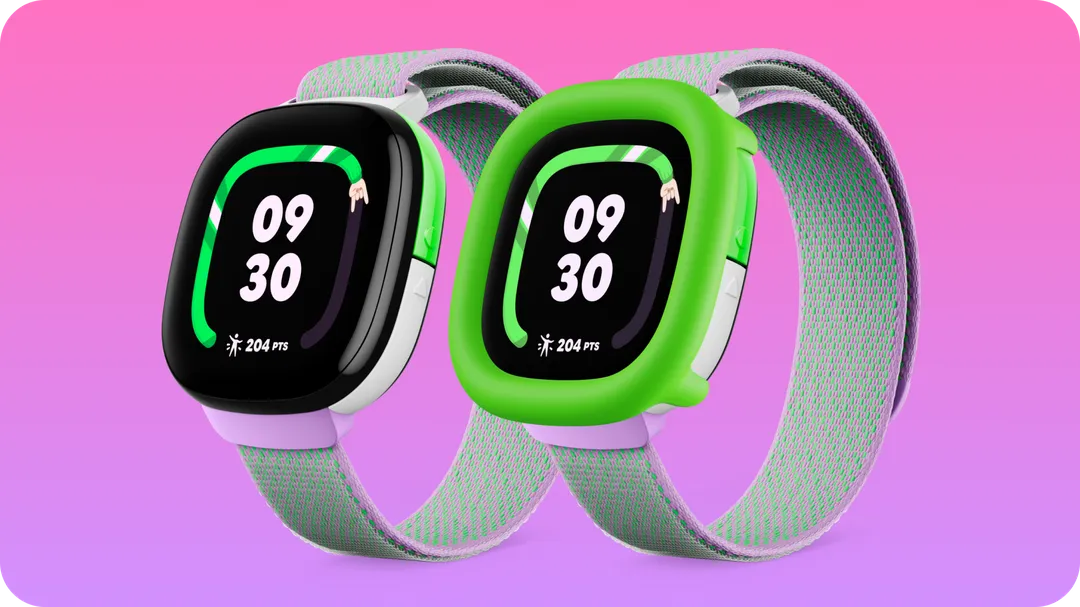
3. Fitbit Ace LTE
Launched in August 2024, the Fitbit Ace LTE is designed specifically for kids, with games, activity tracking, location sharing, and built-in LTE for calls and messaging.
To access calling, texting, and location sharing, you’ll need the Ace Pass, a $9.99-per-month subscription that enables LTE connectivity. While the watch can still be used without a subscription, its capabilities are limited to just basic movement and step tracking.
Unlike the Apple Watch or Samsung Galaxy Watch, the Ace LTE doesn’t support third-party app downloads. Instead, it comes preloaded with games designed to keep kids entertained.
The Ace LTE works as a standalone device and is cross-platform. Parents can set it up through the Fitbit Ace app on Android or iOS, where they can manage contacts (who also need the Ace app), and enable school hours which disables games and calls. You can also, of course, track your child’s location which also syncs with Google Maps.
A notable safety feature of the Fitbit Ace is the “Call for Help” feature. The child can press and hold the top-side button to activate it which will begin a five-second countdown. If canceled in time, nothing happens. But if it reaches zero, the watch automatically dials emergency contacts, starting with the primary parent.
It’s a kid-friendly smartwatch with solid safety features—but like most connected wearables, you’ll need to pay extra to unlock its full potential.
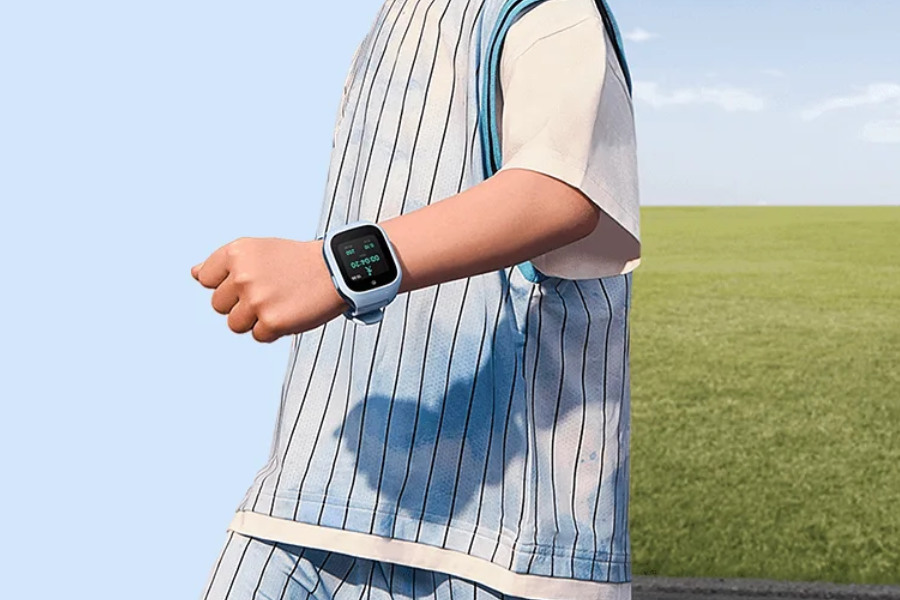
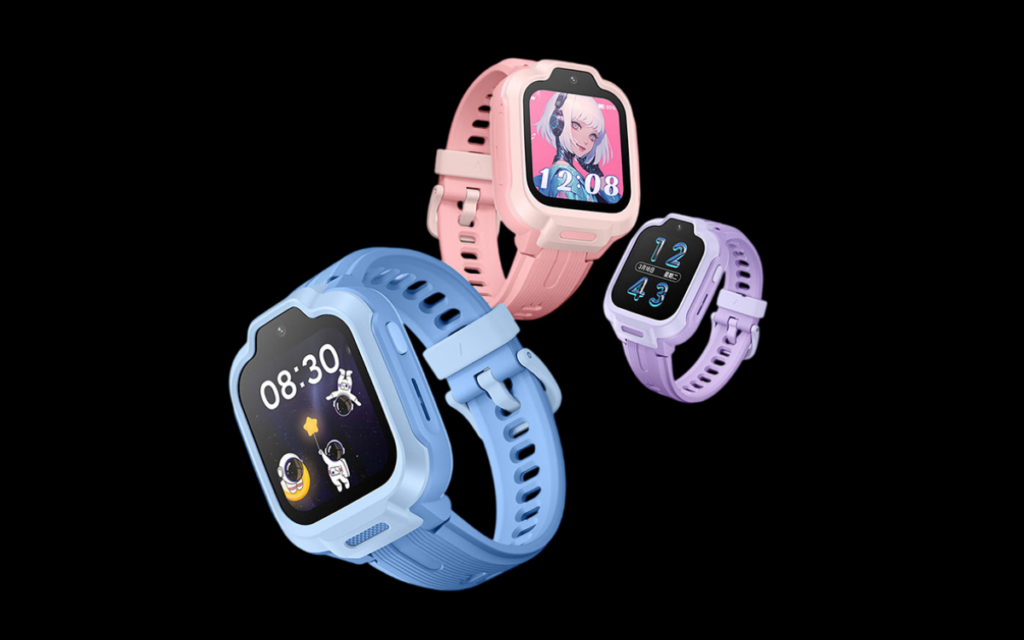
4. Xiaomi Smart Kids Watch
Xiaomi’s Smart Kids Watch is one of the most affordable options out there with built-in GPS tracking. It features two-way calling, and GPS making it a solid pick for parents looking for a safety-focused smartwatch for their kids. The battery life? Better than many competitors.
The standout feature here is video calling. Yes, the watch has a tiny camera built into the top bezel, letting parents not only talk to their kids but also get a quick look at their surroundings. Unlike pricier LTE-enabled wearables, Xiaomi’s watch relies on Wi-Fi for video calls. It also supports voice messages of up to 15 seconds, so kids can send quick updates without hopping on a call.
There’s also a Do Not Disturb mode, which mutes calls and messages during set periods—perfect for school hours or bedtime. It also has an SOS button that instantly alerts designated emergency contacts, ensuring quick assistance in case of an emergency.
On the fitness side, the watch includes exercise modes like skipping, outdoor running, and cycling. Parents can track their child’s activity, including time spent exercising, calories burned, and steps, through the Xiaomi Kids app.
For the price, it’s a compelling choice—especially if staying connected (without handing your kid a smartphone) is the goal.
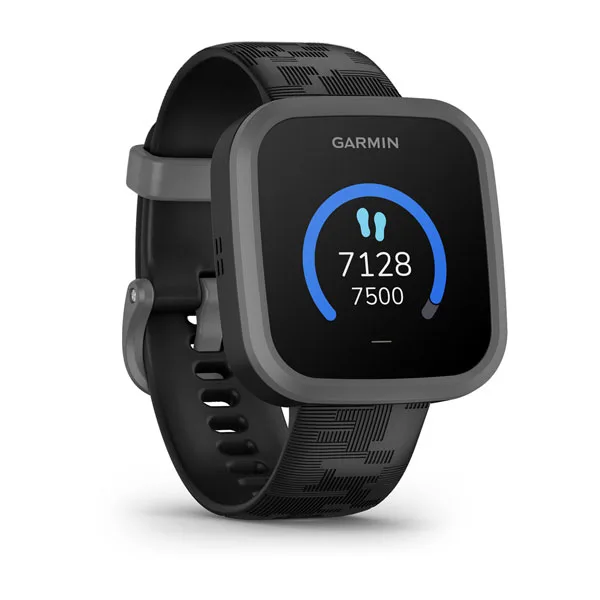
5. Garmin Bounce
The Garmin Bounce is a feature-packed kids’ smartwatch with LTE connectivity, live GPS tracking, and fitness tracking. It offers two-way texting and voice messaging through the Garmin Jr app, and as expected, contacts are limited to approved users. Parents can set step goals, safety boundaries, and Do Not Disturb schedules for school or bedtime.
The Bounce tracks walking, running, swimming, and biking, with GPS-enabled distance tracking and includes sleep tracking, alarms, and chore reminders. It also has a built-in adventure feature that encourages kids to stay active with virtual rewards, though much of it happens in the companion app rather than on the watch itself.
The Bounce offers an incredible battery life of about 35–50 hours depending on GPS use. However, LTE features require a $10/month subscription, and the watch’s location boundaries are limited to fixed-radius circles, making precise tracking tricky. Despite some quirks, the Garmin Bounce is a solid option for parents looking for a connected, safety-focused smartwatch for their kids.
We use cookies on our website to give you the most relevant experience by remembering your preferences and repeat visits. By clicking “Accept”, you consent to the use of ALL the cookies.
This website uses cookies to improve your experience while you navigate through the website. Out of these, the cookies that are categorized as necessary are stored on your browser as they are essential for the working of basic functionalities of the website. We also use third-party cookies that help us analyze and understand how you use this website. These cookies will be stored in your browser only with your consent. You also have the option to opt-out of these cookies. But opting out of some of these cookies may affect your browsing experience.
Necessary cookies are absolutely essential for the website to function properly. This category only includes cookies that ensures basic functionalities and security features of the website. These cookies do not store any personal information.
Any cookies that may not be particularly necessary for the website to function and is used specifically to collect user personal data via analytics, ads, other embedded contents are termed as non-necessary cookies. It is mandatory to procure user consent prior to running these cookies on your website.









![Apple Watch SE (2nd Gen, 2023) [GPS 44mm] Smartwatch with Midnight Aluminum Case with Midnight Sport Band. Fitness & Sleep Tracker, Crash Detection, Heart Rate Monitor, Retina Display](https://www.gizmochina.com/wp-content/plugins/aawp/public/image.php?url=YUhSMGNITTZMeTl0TG0xbFpHbGhMV0Z0WVhwdmJpNWpiMjB2YVcxaFoyVnpMMGt2TXpFNFIyTmhUa1pwZUV3dVgxTk1NVFl3WHk1cWNHYz18MTc4MTM4MzE0Nw=)