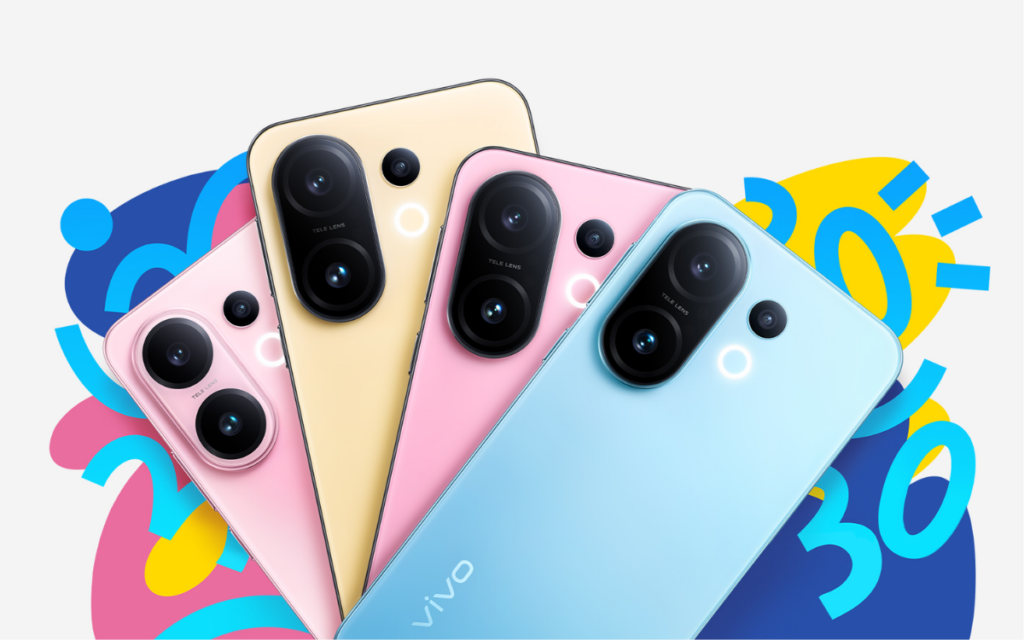
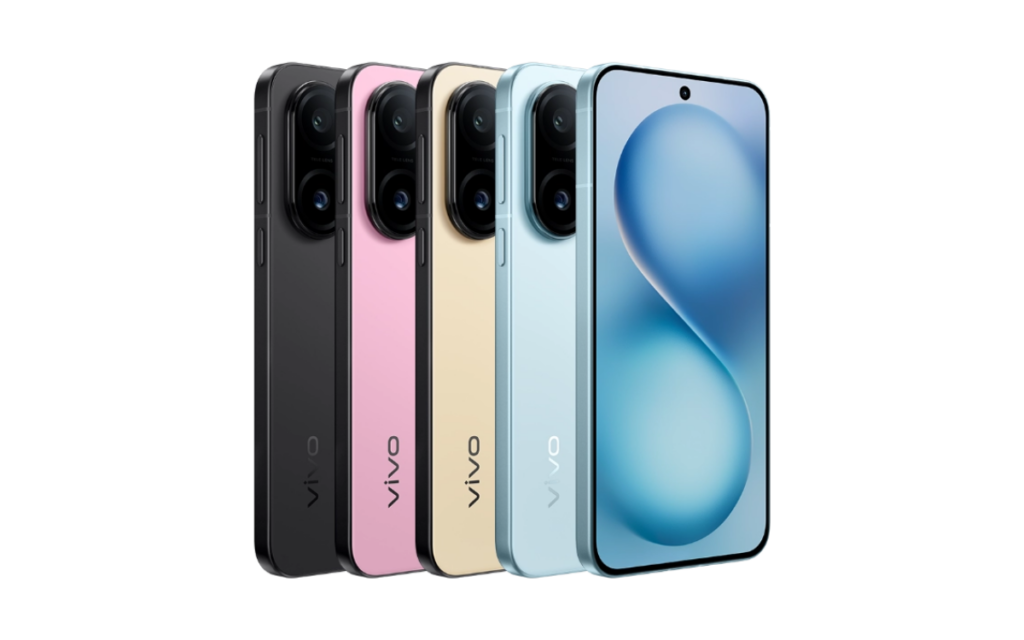
Vivo has officially unveiled the S30 series in China, introducing two new smartphones, the standard Vivo S30 and the compact S30 Pro Mini. Both models focus on design, camera creativity, and long-lasting battery life, while offering flagship-level performance at midrange prices. The S30 series continues Vivo’s trend of combining vibrant aesthetics with capable hardware, now enhanced with cinematic zoom features and triple-proof durability.
Vivo S30 and Vivo S30 Pro Mini Specifications
The Vivo S30 sports a 6.67-inch 1.5K AMOLED display with a 120Hz refresh rate, HDR10+ certification, and ultra-high 3840Hz PWM dimming. It delivers up to 5000 nits of peak brightness and uses BOE’s Q10 panel technology for vivid visuals. The S30 Pro Mini opts for a slightly smaller 6.31-inch 1.5K LTPO AMOLED panel with the same refresh rate and peak brightness, but adds 4320Hz PWM dimming for improved eye comfort.
Under the hood, the S30 is powered by Qualcomm’s Snapdragon 7 Gen 4 chipset built on a 4nm process, paired with the Adreno 722 GPU. It delivers solid performance for daily multitasking and gaming. The S30 Pro Mini steps things up with the flagship-class MediaTek Dimensity 9300+ processor, also built on 4nm, with clock speeds up to 3.4GHz and the Immortalis-G720 GPU. Vivo claims the phone can maintain 119.8fps in high-quality mode in games like Honor of Kings.
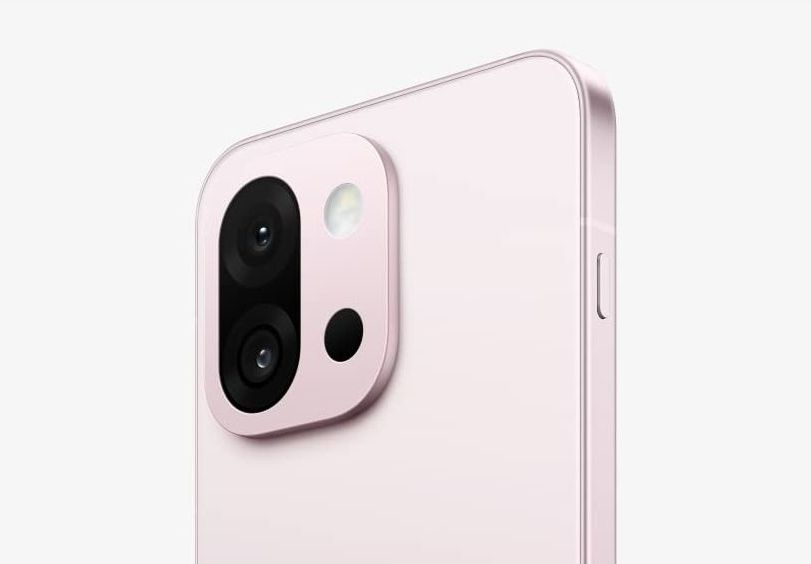
Vivo S30 Pro Mini
Both models run on Android 15 with OriginOS 5 skin on top. The software experience is enhanced with features like “One Tap Transfer,” device syncing with Mac, AirPods locator support, and the new Flash Sale Engine to improve booking speeds for tickets and events.
Both phones feature the same triple rear camera setup, led by a 50MP Sony main sensor—LYT700V on the S30 and IMX921 on the Pro Mini. This is paired with a 50MP IMX882 periscope telephoto lens offering 3x optical zoom at f/2.65, along with an 8MP ultra-wide camera. On the front, there’s a 50MP autofocus selfie camera with soft lighting and distortion correction.
The Pro Mini adds a “Clear Portrait Texture” algorithm that enhances facial details for a more natural look. Both models support Vivo’s new cinematic features, including “Classic Negative” and “Hitchcock Zoom Live,” which records a 3-second shot with dynamic background movement while keeping the subject locked in the center.
Vivo S30
Each phone houses a massive 6500mAh battery and supports 90W fast charging. The S30 features a plastic frame, while the S30 Pro Mini uses an aerospace-grade aluminum body with Gorilla Glass and is certified IP68 and IP69 for dust and water resistance.
The S30 Pro Mini also becomes the first smartphone globally to secure SGS triple-proof certification. Connectivity features include Wi-Fi 6 on the S30 and Wi-Fi 7 on the Pro Mini, along with Bluetooth 5.4, NFC, infrared remote control, and dual stereo speakers with Hi-Res audio support.
Vivo is also offering a limited-edition Sanrio-themed gift box with the S30 series. It includes Sanrio merchandise, a photo frame voucher, a perforated case, a phone pouch, a lanyard, and a phone stand.
Pricing and Availability
The Vivo S30 is priced at 2699 yuan (approximately $370) for the 12GB+256GB model, 2999 yuan (around $410) for 12GB+512GB, and 3299 yuan (about $450) for the 16GB+512GB variant.
The S30 Pro Mini starts at 3499 yuan (roughly $480) for 12GB+256GB, goes up to 3799 yuan (about $520) for 12GB+512GB, and tops out at 3999 yuan (around $545) for the 16GB+512GB version.
Buyers can take advantage of pre-sale offers such as trade-in bonuses, extended warranty coverage, and limited-edition accessories. Pre-orders are now open in China, with official sales beginning on June 6.
For more daily updates, please visit ourNews Section.
Android 16 release is on the horizon — it’s set to release in June for Google Pixels. Shortly after, Xiaomi will also start rolling it out to its devices. Unfortunately, a handful of Xiaomi, Redmi, and Poco devices won’t be upgraded to Android 16, as they have already reached the end of their life in terms of OS updates.
We have prepared a list of Xiaomi devices that won’t be upgraded to Android 16. Review the list to find out if yours is going to miss out on this major upgrade.
No Android 16 for these Xiaomi, Redmi, and Poco devices
Xiaomi hasn’t announced which devices will get the Android 16 update and which won’t. So, we had to rely on the existing software update policy and a little bit of guesswork to prepare the following list.
Xiaomi devices
Xiaomi flagship series
Xiaomi 12
Xiaomi 12 Pro
Xiaomi 12T
Xiaomi 12T Pro
Xiaomi 12 Lite
Xiaomi 12S
Xiaomi 12S Pro
Xiaomi 12S Ultra
Xiaomi 12X
Older models
Xiaomi Civi series
Xiaomi Civi 2
Xiaomi Civi 1S
Xiaomi Civi
Xiaomi Pad series
Xiaomi Pad 6
Xiaomi Pad 5
Xiaomi Pad 5 Pro
Older Xiaomi Pad models
Redmi devices
Redmi Note series
Redmi Note 12 (LTE/5G)
Redmi Note 12 Pro (LTE/5G)
Redmi Note 12 Pro+
Redmi Note 12 Turbo
Redmi Note 12R
Redmi Note 12R Pro
Redmi Note 12T Pro
Redmi Note 12 Pro Speed
Redmi Note 12S
Older Redmi Note models
Redmi K series
Redmi K50
Redmi K50 Pro
Redmi K50 Ultra
Redmi K50i
Redmi K50 Gaming
Older Redmi K models
Redmi number series
Redmi 12 (LTE/5G)
Redmi 12C
Older models
Redmi A series
Redmi A2
Redmi A2+
Older Redmi A models
Poco devices
Poco F series
Poco F5
Poco F5 Pro
Older Poco F models
Poco X series
Poco X5
Poco X5 Pro
Older Poco X models
Poco M series
Poco M5
Poco M5s
Older Poco M models
Poco C series
Poco C65
Poco C55
Poco C51
Older Poco C models
If your Xiaomi, Redmi, or Poco device is on the list, it’s unlikely to receive the Android 16 update. I prefer to say “unlikely” because the update policy for several devices is unclear. That’s why I recommend waiting until the official list is released, even if your device is on the list above.
Even if your device doesn’t receive Android 16, it might still get a few minor HyperOS releases and security patches for a while.
Xiaomi’s software update policy has improved — but still a lot behind
Xiaomi has worked on its update policy for phones to make it more competitive with its rivals. It has long offered up to 3 Android OS updates to its high-end phones, which increased to four with the Xiaomi 14 series. Surprisingly, the mid-range Redmi Note 14 4G has also been promised four generations of OS updates. However, its 5G variant will only get two — only Xiaomi knows why.
The latest Poco F-series phones, the Poco F7 Pro and F7 Ultra, have also been prompted to four OS updates. Other mid-range phones typically get a maximum of three OS updates, with budget phones maxing out at just two.
While Xiaomi has definitely improved its software update policy, it’s still far from the best. Samsung and Google are at the top with seven years of Android updates. Of course, that is reserved for high-end phones, but even mid-range phones from Samsung come with a promise of up to six OS updates.
The OnePlus 13s is a highly anticipated compact flagship phone that is set to make its global debut soon. OnePlus released this model as the OnePlus 13T in the Chinese market, so we already have an idea regarding its specs and features. But now, a fresh report has confirmed its price range as well for India. So here’s what we know.
OnePlus 13s India Pricing Revealed?
The news arrives from known tipster Yogesh Brar, who shared the information with 91Mobiles. Reportedly, the Chinese company plans on releasing the OnePlus 13s in the Indian market for around Rs 55,000 or roughly about 643 US Dollars. Keep in mind that this is a general pricing range, so the RAM and storage configuration are still unclear. At the moment, the only official detail regarding its availability is that it will be sold via Amazon India.
OnePlus 13s
The price range does make sense as the OnePlus 13s should be positioned between the flagship OnePlus 13 (Rs 69,999) and the OnePlus 13R (Rs 42,999). Apart from this, the tipster also stated that the OnePlus 13s will launch with a suite of OnePlus AI features and the customizable Plus Key (replacing the fan favorite Alert Slider). In China, the OnePlus 13T was released for a starting price tag of around 3,399 Yuan or about Rs 40,000. But depending on the regional taxes and storage tiers, the pricing in the global market varies.
However, the specifications should be in line with the Chinese variant. So, the OnePlus 13s sports a 6.32-inch LTPO AMOLED display with a 1.5K resolution and a 120Hz refresh rate. Under the hood, it is equipped with the Snapdragon 8 Elite SoC and a massive 6,260mAh battery pack with 80W wired fast charging. The rear has a 50MP dual camera setup, while the front has a 32MP selfie shooter (16MP on the OnePlus 13T). Other notable features include an in-display fingerprint scanner, WiFi 7, Bluetooth 5.4, Android 15 OS, IR Blaster, and more.
For more daily updates, please visit our News Section.
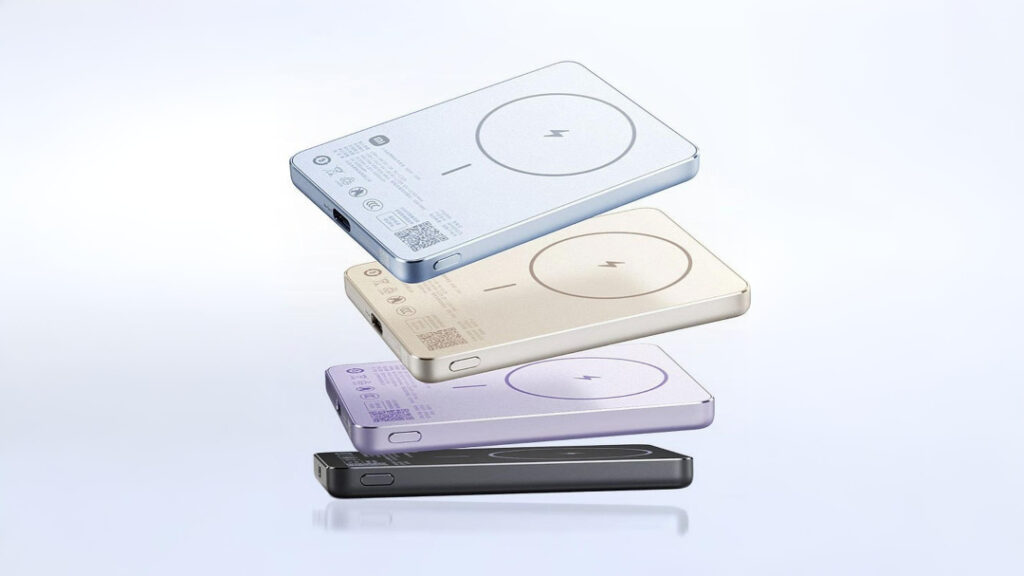
Xiaomi has launched a new 5000mAh Magnetic Ultra-Slim Power Bank (model: WPB0507S) with support for 7.5W wireless charging. The power bank is now available in China on JD.com and other platforms. It is priced at 169 yuan ($23).
Xiaomi 5000mAh Magnetic Power Bank Specs
The power bank features a slim profile measuring just 8.7mm in thickness. Xiaomi has used a high-density lithium cobalt oxide battery to reduce the size without compromising on capacity. The battery achieves an energy density of approximately 734Wh/L, which is 12.9% higher than the previous generation. According to Xiaomi, the battery retains more than 80% of its original capacity even after 300 charge cycles.
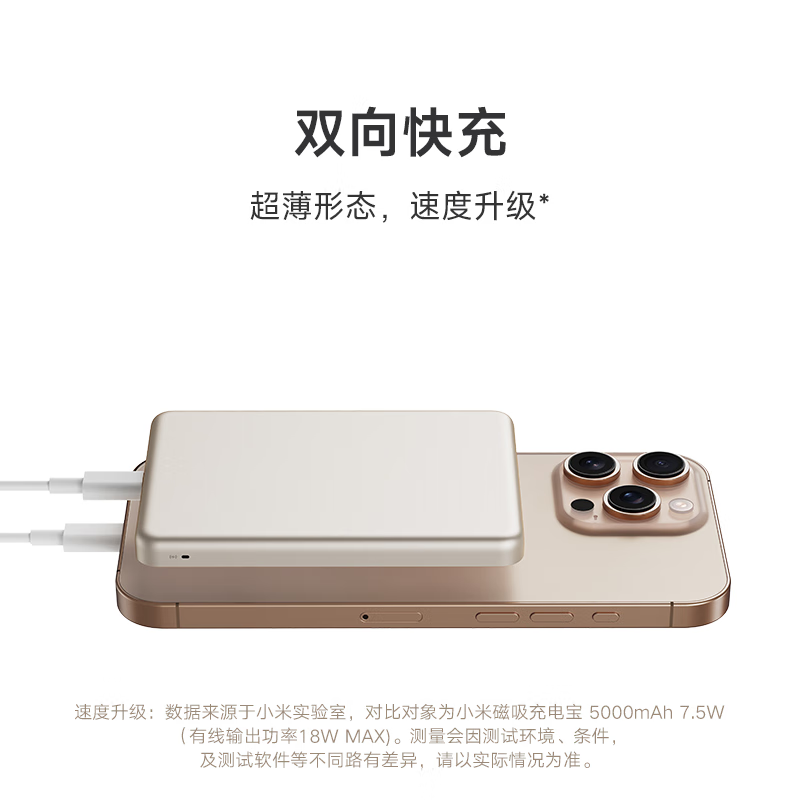
The device supports both wired and wireless charging. The USB-C port delivers up to 22.5W wired output, while wireless charging supports multiple power levels, including 5W, 7.5W, 10W, and 15W.
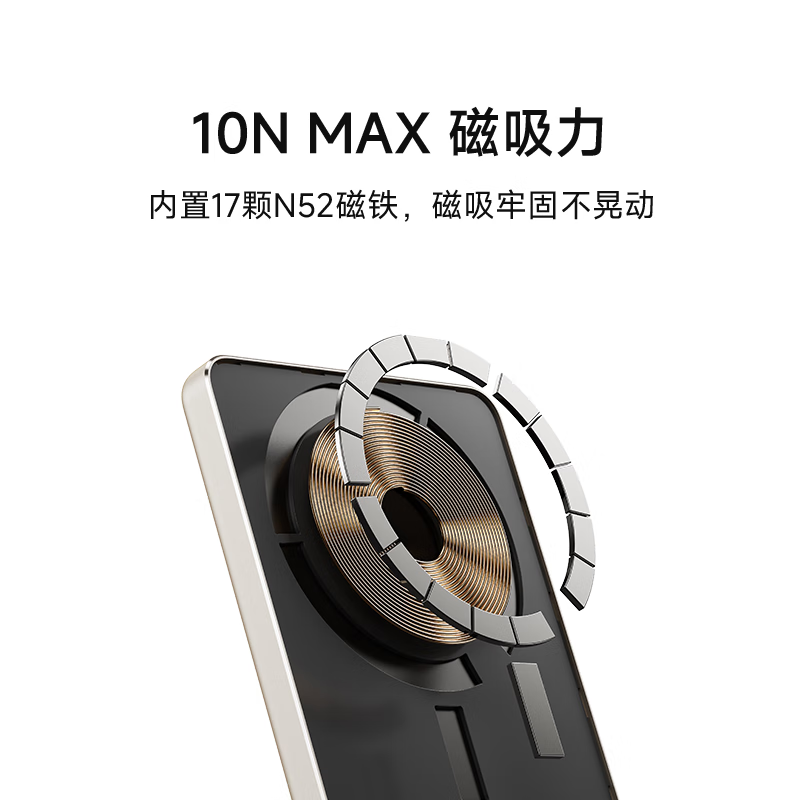
The power bank can charge two devices simultaneously, one via the wired USB-C port and another through wireless charging. Xiaomi has included 17 N52-grade neodymium magnets inside the unit, generating a magnetic force of up to 10N. This ensures a strong and stable connection to MagSafe-compatible iPhones and other supported devices.
Xiaomi has used aluminum alloy for the chassis, manufactured with a combination of sandblasting and high-gloss diamond cutting. The magnetic side features a durable fiberglass panel with a vacuum-imprinted texture. The design also includes G3 curved edges and discreet laser-etched LED indicators.
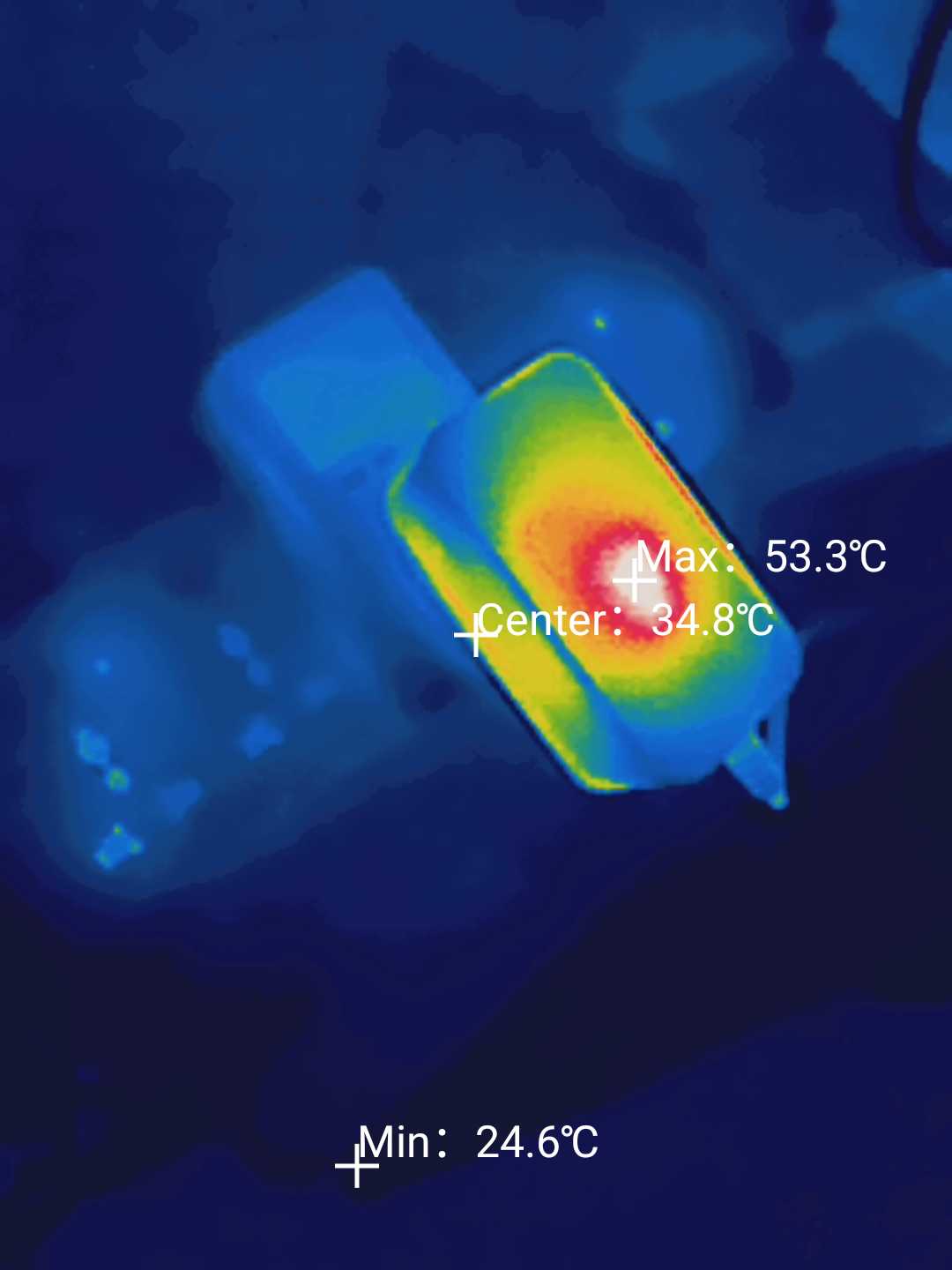
The power bank includes a dual NTC thermal sensor system that monitors temperature 12,000 times per minute. It also features an 826mm² graphene heat spreader to enhance heat dissipation. Xiaomi has added nine safety protections, including safeguards against overvoltage, overheating, short circuits, and overcharging.
The device measures 102mm in length, 69.6mm in width, and 8.7mm in thickness. The rated energy is 19.35Wh, which makes it compliant with international flight safety standards.
Xiaomi offers the power bank in four color options: Blue, Black, Purple, and Gold.
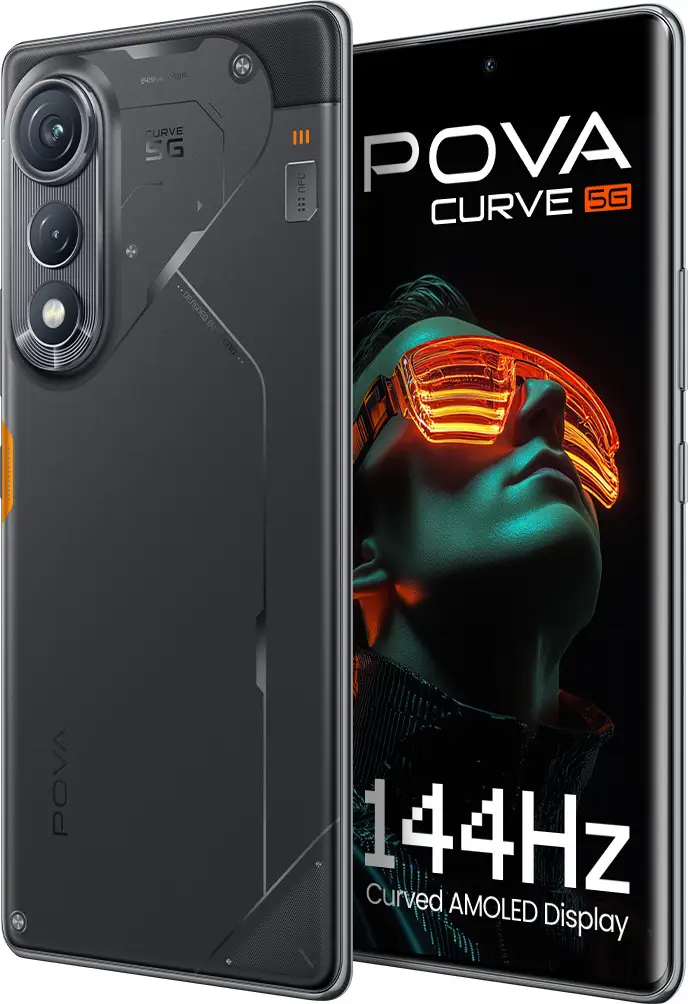
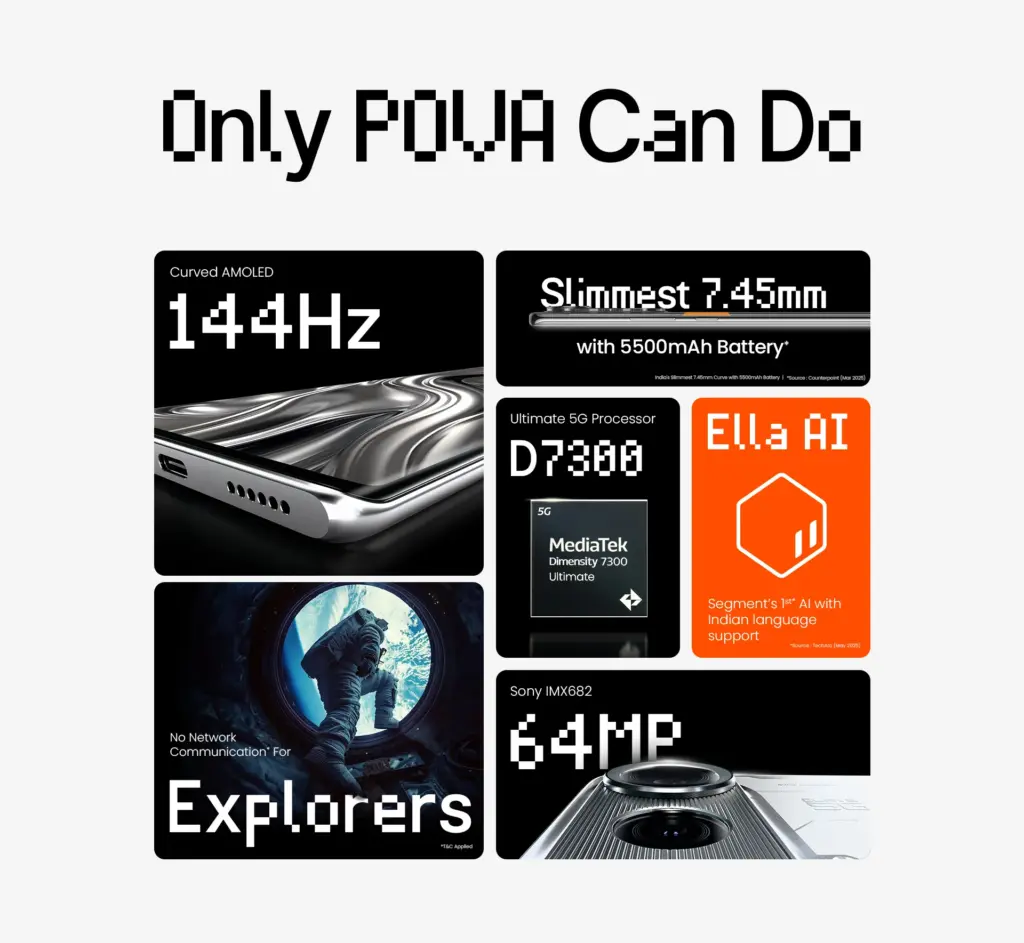
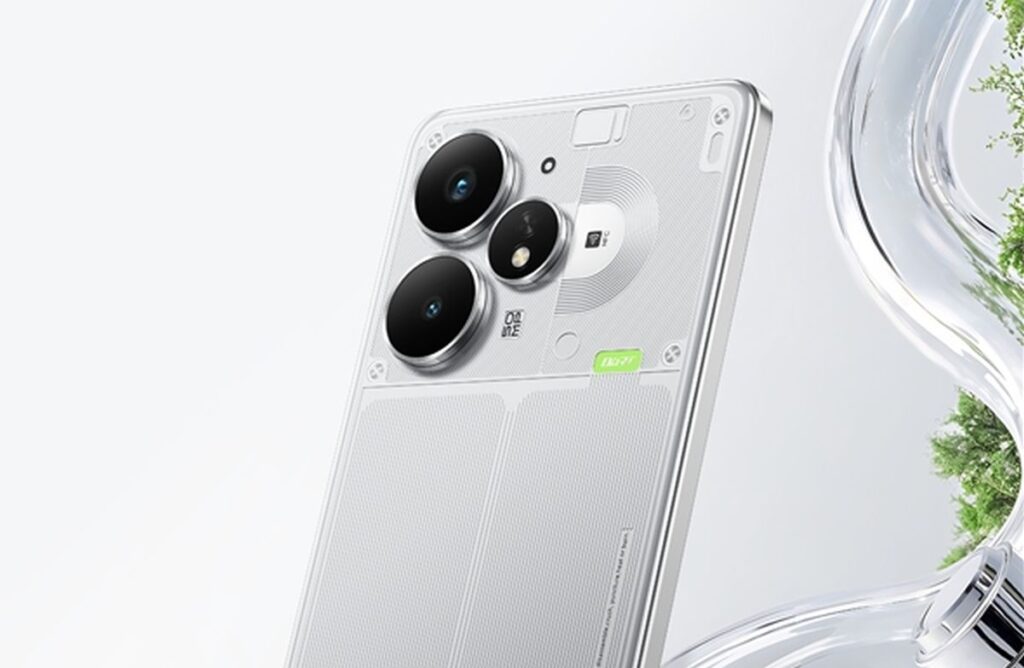
TECNO has launched the POVA Curve 5G in India. This is the company’s first phone in the new Curve series and features a curved AMOLED display, 5G connectivity, and 4K video recording. It will be available starting June 5.
Tecno POVA Curve 5G features
It features a 6.78-inch FHD+ 3D curved AMOLED display with a 144Hz refresh rate, 1300 nits peak brightness, 2304Hz PWM dimming, and Gorilla Glass 5 protection.
The phone is powered by the MediaTek Dimensity 7300 Ultimate 4nm processor with Mali-G615 MC2 GPU. It comes with 6GB or 8GB RAM, 128GB UFS 2.2 storage, and up to 8GB virtual RAM. It runs HiOS 15 based on Android 15, and the company has promised an Android 16 update along with 2 years of security updates.
It includes TECNO’s Ella AI features such as AI Call Assistant, AI Auto Answer, multilingual support, and AI Voiceprint Noise Suppression. Connectivity options include 5G++, VoWiFi Dual Pass, and an Intelligent Signal Hub System.
The phone has a 64MP main rear camera with a Sony IMX682 sensor and f/1.7 aperture, a 2MP portrait camera with f/2.4 aperture, and an LED flash. It supports 4K 30fps video recording on both front and rear. The front camera is 13MP with f/2.2 aperture.
It has stereo speakers with Dolby Atmos, dual microphones, an in-display fingerprint sensor, an IR sensor, and IP64 rating for dust and splash resistance. The phone measures 164.3 x 74.6 x 7.45mm and weighs 188.5 grams.
The 5500mAh battery supports 45W fast charging and comes with a charger in the box. The company claims it can be fully charged in 45 minutes. Bypass charging is also supported.
Connectivity features include 5G SA/NSA (n1, n3, n5, n8, n28B, n38, n40, n41, n77, n78), dual 4G VoLTE, dual-band Wi-Fi (2.4GHz + 5GHz), Bluetooth 5.4, GPS, GLONASS, Beidou, USB Type-C, and NFC.
Pricing & availability
The TECNO POVA Curve 5G is priced at Rs. 15,999 ($187) for the 6GB + 128GB model and Rs. 16,999 ($199) for the 8GB + 128GB variant. It will be available on Flipkart starting June 5. The 8GB variant will also be sold through offline stores.
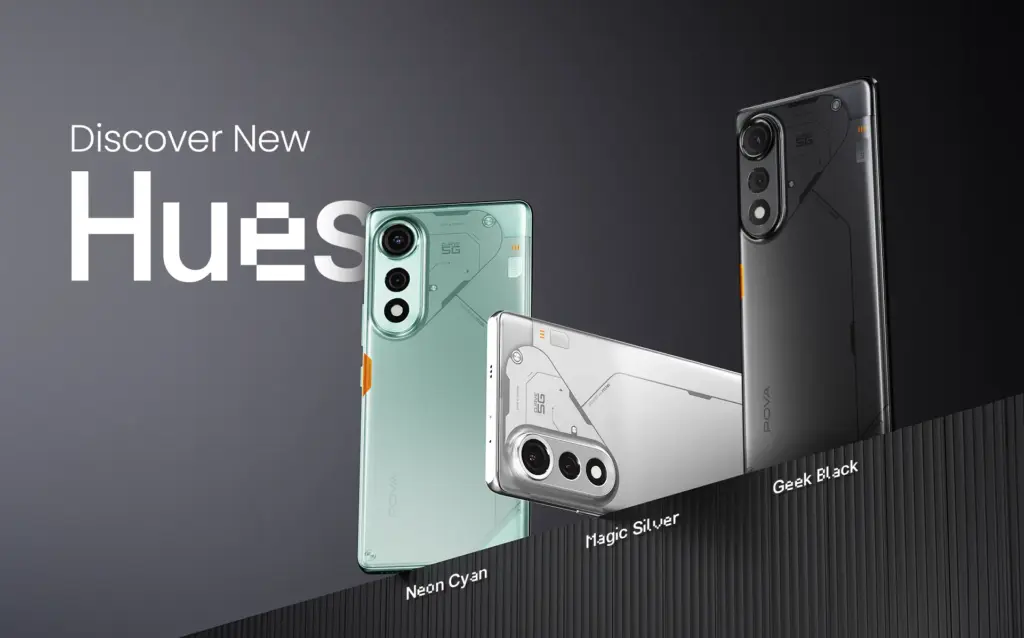
Launch offers include gifts, extended warranty, free screen replacement, and a chance to win a Royal Enfield or a scooter. Offline buyers can get No Cost EMI for up to 10 months, starting at Rs. 57 per day. The phone is available in Magic Silver, Neon Cyan, and Geek Black.
For more daily updates, please visit our News Section.
Realme is shaking things up in the budget segment with the launch of the Neo 7 Turbo. Packed with MediaTek’s Dimensity 9400e chipset and a futuristic transparent design, the device is priced under $300, which makes it one of the most striking and affordable options in its class. So here’s everything you need to know.
Realme Neo 7 Turbo: Specs & Features
The Chinese smartphone maker officially announced the Realme Neo 7 Turbo with a tall 6.8-inch OLED display with a 1.5K resolution, a 144Hz refresh rate, 6500 nits of peak brightness, and 4608Hz PWM dimming. Under the hood, this model is equipped with the Dimensity 9400e, which is an underclocked version of the flagship Dimensity 9400. The chipset is paired with up to 16GB of LPDDR5X RAM and 512GB of UFS 4.0 storage. But one of its most notable aspect is the transparent design that brings a futuristic aesthetic. So you get a view of the NFC coil, crystal engraved texture, and Flash DART logo.
Realme Neo 7 Turbo in Transparent Gray
Realme announced the Neo 7 Turbo arrives with an Android 15 OS based Realme UI 6 custom skin out of the box. A massive 7,200mAh battery pack powers this device, which supports 100W wired fast charging. For photography, the rear packs a 50MP Sony IMX882 primary sensor along with an 8MP ultra wide angle lens. Meanwhile, the front houses a 16MP selfie shooter. Other notable features include stereo speakers, an IP66+IP68+IP69 rating for water and dust resistance, an in-display fingerprint scanner, WiFi 7, Bluetooth 5.4, and an Infrared sensor.
Pricing and Availability
Realme announced the Neo Turbo 7 in multiple storage configurations, so here are the pricing details:
12GB + 256GB – 1999 yuan (~277 US Dollars)
16GB + 256GB – 2299 yuan (~319 US Dollars)
12GB + 512GB – 2499 yuan (~346 US Dollars)
16GB + 512GB – 2699 yuan (~374 US Dollars)
This smartphone is currently available for pre-orders right now, with first sale kicking off on 31st May 2025.
For more daily updates, please visit our News Section.
Honor 400 and Honor 400 Pro are two closely related devices launched together, yet they cater to different types of users. With overlapping features but significant differences in performance, camera, and charging, choosing the right one isn’t straightforward. This comparison is important because it highlights whether the Pro model’s higher price brings meaningful advantages, or if the standard Honor 400 is already good enough for most users.
Build and Feel: Honor 400 offers a slim profile with a refined body and IP65/IP66 protection depending on the region, making it resistant to dust and water sprays. In contrast, the Honor 400 Pro is more robust with IP68/IP69 certification, ensuring protection even against submersion and high-pressure water jets. The Pro’s slightly thicker build adds durability but also makes it heavier. Users prioritizing sleekness and lightness may prefer the standard 400, but for rugged use or better ingress protection, the 400 Pro leads. The added water resistance in the Pro version makes it more suitable for harsh environments or outdoor use.
Display Quality: Both models use a 120Hz AMOLED panel with 1B colors and an impressive 5000 nits peak brightness, ensuring vivid colors and excellent readability under sunlight. The Honor 400 Pro steps up with a slightly larger 6.7-inch panel and higher resolution (1280 x 2800) compared to the 6.55-inch 1264 x 2736 screen on the Honor 400. Moreover, the Pro supports HDR Vivid, a more advanced high-dynamic range standard, enhancing contrast and color depth during media playback. The Pro offers a more immersive viewing experience with richer visuals, especially suited for multimedia enthusiasts.
Verdict: Honor 400 Pro wins in build quality and display due to superior water resistance and enhanced HDR visuals, though the Honor 400 remains a good choice for users wanting a lighter and more compact device.
2. Specifications
Honor 400 Pro
Performance: Honor 400 is powered by the Snapdragon 7 Gen 3, a capable upper-midrange chipset suitable for daily tasks and light gaming. However, the Honor 400 Pro features the Snapdragon 8 Gen 3, a flagship SoC with significant gains in CPU and GPU performance. It brings faster app launches, better multitasking, and superior gaming capabilities. The Pro is ideal for power users and gamers, offering performance levels closer to top-tier flagship phones. Its edge in AI processing and thermal efficiency also future-proofs the device better for intensive apps and long-term usage.
Battery and Charging: Both phones offer two battery configurations: 5300 mAh for Europe and 6000 mAh for other regions. However, charging speeds differ dramatically. The Honor 400 tops at 80W wired, while the 400 Pro supports up to 100W wired charging, reaching 100% in just 39 minutes. It also adds 50W wireless charging and reverse wireless charging, features entirely missing in the base model. The Honor 400 Pro offers significantly more versatility in how users charge their devices, especially for those who value wireless convenience and quicker top-ups.
Verdict: Honor 400 Pro clearly leads in both performance and battery technology, offering flagship-grade processing and charging speeds, making it a better choice for demanding users.
3. Camera
Honor 400 Pro
Main and Secondary Lenses: Both phones feature a 200MP primary sensor with OIS and a 12MP ultrawide, ensuring sharp detail and good field coverage. However, the Pro introduces a third sensor, a 50MP telephoto lens with 3x optical zoom and OIS. This drastically improves portrait and zoom photography, providing more flexibility in capturing distant subjects with clarity. The extra lens on the Pro model adds true flagship versatility, making it more suitable for mobile photography enthusiasts who value zoom capabilities.
Selfie Camera: Honor 400 offers a 50MP front camera capable of detailed selfies and 4K video. The 400 Pro upgrades this setup with an additional 2MP depth sensor, allowing for improved edge detection in portrait mode. While the sensor itself is modest, it enhances the overall selfie experience, particularly for users who frequently use portrait effects in social media. Both phones support 4K selfie video, but the Pro’s dual-lens setup slightly edges out in quality and refinement.
Verdict: Honor 400 Pro takes the lead with a superior triple-lens rear camera system and an enhanced selfie setup, offering more shooting flexibility and refined results for photos and video.
4. Pricing
Honor 400
Honor 400 is priced around $830, offering strong performance and high-end cameras in the upper-midrange category. The Honor 400 Pro is priced at approximately $1230, a significant $400 increase. However, this premium includes flagship performance, a third telephoto camera, wireless charging, and higher water resistance. The price jump may feel steep for casual users, but those seeking a full-featured premium phone will find the Pro’s added capabilities justify the extra cost. For budget-conscious users, the Honor 400 still delivers excellent value without many major sacrifices.
5. Conclusion
Honor 400 Pro
Honor 400 Pro distinguishes itself with wireless and reverse wireless charging, flagship Snapdragon 8 Gen 3 performance, and IP69 water resistance, features typically reserved for ultra-premium models. The addition of a telephoto lens also enhances its camera system. In contrast, the standard Honor 400 is more about offering high-tier essentials, an excellent main camera, solid display, and dependable battery life, without pushing into flagship territory.
Verdict: Honor 400 is ideal for users who want flagship-like features at a more accessible price. Honor 400 Pro, while considerably more expensive, justifies its premium with truly top-tier hardware, advanced camera versatility, and full charging options. Choose the Pro if performance, photography, and durability are top priorities; otherwise, the base Honor 400 offers great value for everyday use.
Apple is gearing up for a big change in how it names its operating systems. A new report hints that the tech giant is moving away from its traditional numbering scheme for iOS, iPadOS, macOS, and more, opting for a year-based approach that could make things a lot clearer for users. With a massive visual refresh also in the works, Apple’s next big reveal at WWDC 2025 is shaping up to be a game-changer. Here’s what we know so far.
A revised OS naming scheme
According to Bloomberg News (paywalled), Apple plans to name its next operating systems after the year following their release, meaning this fall we could see iOS 26 instead of iOS 19. The shift, expected to be confirmed at the Apple Worldwide Developers Conference (WWDC) on June 9, will apply across the board to iPadOS, macOS, watchOS, tvOS, and visionOS. The idea is to streamline things, making it easier for users and developers to keep track of updates, much like how some car models are named for the upcoming year. So, expect iPadOS 26, macOS 26, and so on, all launching with a consistent naming vibe.
But it’s not just about names—Apple’s cooking up a major design overhaul, codenamed Solarium, that’ll hit all its operating systems. Word is, this could be the biggest visual shake-up since iOS 7 in 2013, bringing a fresh look to everything from your iPhone to your Apple Vision Pro.
For iOS 26, rumors point to new tricks like external display support and a redesigned Camera app. “iPadOS 26” is expected to borrow a page from macOS with a new menu bar, boosting productivity for tablet users. While details on watchOS, tvOS, and visionOS are still scarce, the Solarium overhaul promises a cohesive, modern style across Apple’s ecosystem.
With WWDC just weeks away—scheduled to take place from June 9 to June 13—the excitement is building for Apple’s bold new direction. Will iOS 26 and its siblings live up to the hype? We’ll find out soon, but for now, it seems Apple is focused on making its software as fresh and user-friendly as possible.
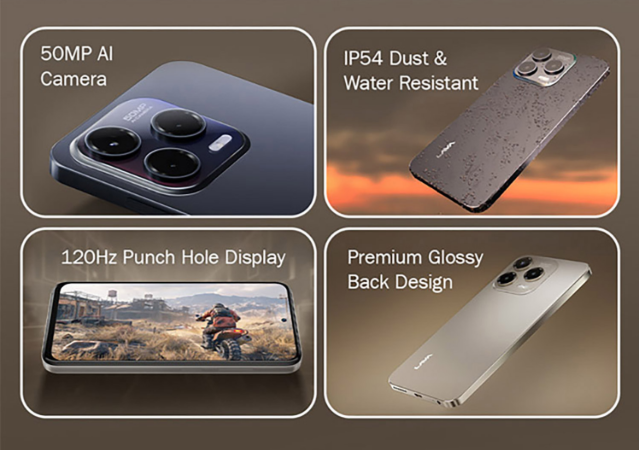
Lava has launched two new smartphones in India under its Bold Series. The Bold N1 and Bold N1 Pro target users who want good performance at budget prices. Both phones have an IP54 rating for dust and water protection and will only be sold on Amazon.in.
Bold N1 Specifications
The Bold N1 has a 6.75-inch HD+ display with 90Hz refresh rate. It runs on a UNISOC octa-core processor with 4GB LPDDR4X RAM plus 4GB virtual RAM. Internal storage is 64GB.
The phone has a 13MP AI dual rear camera and 5MP front camera. It comes with a 5000mAh battery that supports 10W Type-C charging. The device runs Android 14 Go edition.
You can get it in Radiant Black and Sparkling Ivory colors. It has a glossy back design with a side-mounted fingerprint sensor and Face Unlock for security.
Bold N1 Pro Specifications
The Bold N1 Pro gets a 6.67-inch HD+ punch-hole display with 120Hz refresh rate. The screen resolution is 720 x 1612 pixels with 269 PPI. It uses the UNISOC T606 octa-core processor.
RAM is 4GB LPDDR4X with 4GB virtual RAM support. Storage is 128GB and can be expanded up to 256GB with a microSD card.
Camera setup includes a 50MP AI triple rear camera with LED flash and 8MP front camera with screen flash. The battery is 5000mAh with 18W fast charging support, but Lava only includes a 10W charger in the box.
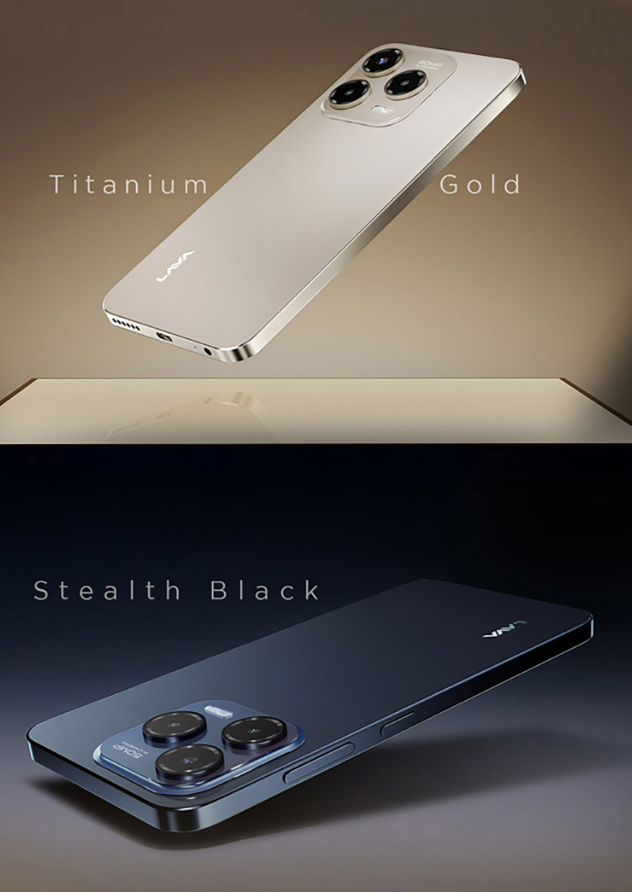
The phone comes in Titanium Gold and Stealth Black colors. Like the Bold N1, it has a glossy back, side-mounted fingerprint sensor, Face Unlock, and IP54 rating. It runs full Android 14.
Pricing and Availability
The Bold N1 costs Rs. 5,999 and goes on sale June 4, 2025, at 12 PM. The Bold N1 Pro is priced at Rs. 6,799 but has a launch offer price of Rs. 6,699. You can also use a coupon code at checkout for an extra Rs. 100 off on any payment method. The Bold N1 Pro goes on sale June 2, 2025, at 12 PM. Both phones will be sold only on Amazon.in as part of the Amazon Specials program. They come with Free Service at Home and one-year warranty.
For more daily updates, please visit our News Section.
Samsung’s One UI 8 Beta is here, giving Galaxy users a sneak peek at what’s coming with Android 16. Packed with fresh features and user-friendly tweaks, it’s an exciting step forward—but there’s a catch. Some of the popular Good Lock plugins that let you customize your phone are running into trouble on this beta. If you’re a fan of tweaking your Galaxy’s interface, you’ll want to know what’s up before diving in.
Issues with Good Lock on One UI 8 beta:
The feature lets users mess with everything from the lock screen to multitasking features, even unlocking experimental options Android normally blocks. Unfortunately, the beta breaks or limits several key plugins, including QuickStar, NavStar, MultiStar, and NotiStar, with others like LockStar, Home Up, ClockFace, and Edge Lighting+ also facing issues.
Here’s the rundown: LockStar struggles with lock screen tweaks, Home Up has trouble with home screen customizations, and NavStar’s navigation bar options aren’t fully working. QuickStar’s quick settings panel is glitchy, NotiStar’s notification tweaks are off, and MultiStar’s multi-window and multitasking features are taking a hit. ClockFace isn’t playing nice with lock screen clock designs, and Edge Lighting+ has compatibility issues.
These hiccups aren’t totally unexpected—Samsung often dials back Good Lock features during beta phases to avoid severe issues, especially since One UI 8 is built on the still-in-progress Android 16.
For now, some apps might crash or just not work right, but there’s light at the end of the tunnel. As Samsung polishes One UI 8 through beta testing, they’ll likely update Good Lock to play nice with the new OS. If you’re testing the beta, you might need to hold off on heavy customization for now.
Samsung’s 7th-generation foldables — the Galaxy Z Fold 7, Flip 7, and possibly the rumored Flip 7 FE — are set to debut this summer, and will be the first to bring the stable One UI 8 update to Galaxy fans.
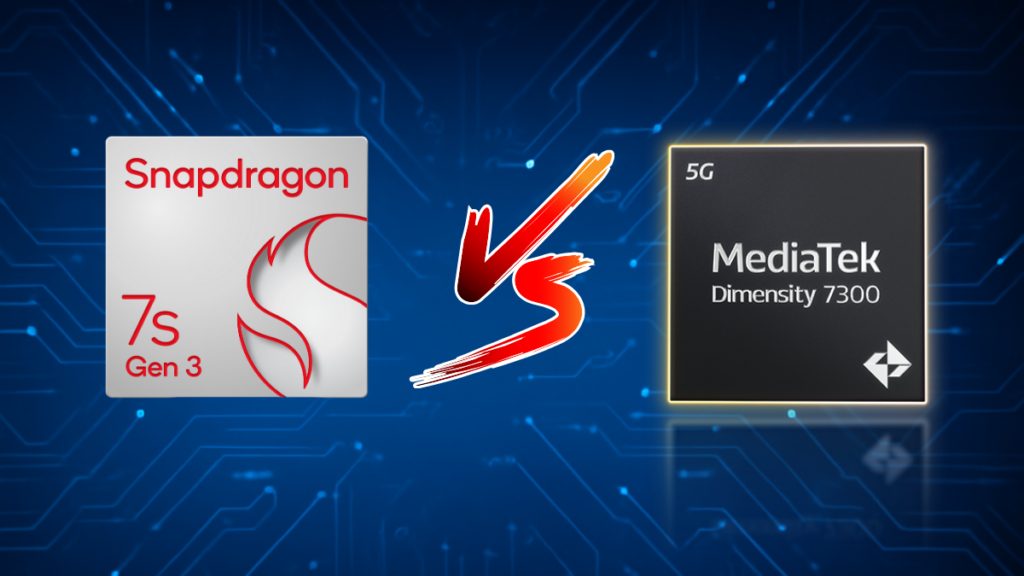
Announced in the summer of 2024, the Snapdragon 7s Gen 3 and Dimensity 7300 have quickly become a popular choice for mid-range smartphones. The chipsets feature high-performance CPU and GPU, ensuring a lag-free experience. Plus, TSMC’s 4nm advanced manufacturing ensures high power efficiency. However, there are several crucial differences between the two that could make a difference to your decision.
Here, we’ll look at the benchmark scores and key differences in CPU, GPU, connectivity, camera, and other important aspects to find out the better one that suits your needs.
Let’s begin with a spec sheet:
Snapdragon 7s Gen 3
Dimensity 7300
Announced
August 2024
June 2024
Manufacturing
4nm (TSMC)
4nm (TSMC)
CPU
1 x 2.5 GHz — Cortex-A720 3 x 2.4 GHz — Cortex-A720 4 x 1.8 GHz — Cortex-A520
4 x 2.5GHz — Cortex-A78 4 x 2GHz — Cortex-A55
GPU
Adreno 810 Snapdragon Elite Gaming features
Mali-G615 MP2 MediaTek HyperEngine optimizations
NPU
Qualcomm Hexagon NPU
MediaTek NPU 655
Memory
LPDDR5, up to 3.2GHz
LPDDR5, up to 3.2GHz
Storage
UFS 3.1
UFS 3.1
Camera
Spectra 12-bit triple ISP Up to 200MP single camera Up to 4K/30fps video recording
Imagiq 950 12-bit ISP Up to 200MP single camera Up to 4K/30fps video recording
Connectivity
Snapdragon 5G modem Wi-Fi 6E Bluetooth 5.4 Download speed: 2.9Gbps (peak)
MediaTek 5G modem Wi-Fi 6E Bluetooth 5.4 Download speed: 3.27Gbps (peak)
Snapdragon 7s Gen 3 vs Dimensity 7300: Benchmark comparison
Note: The tests were conducted on the Nothing Phone 3a Pro (Snapdragon 7s Gen 3) and Nothing CMF Phone 1 (MediaTek Dimensity 7300).
AnTuTu score
SD 7s Gen 3
Dimensity 7300
AnTuTu score
815,716
641,755
CPU
275,699
184,894
GPU
200,564
146,819
Memory
174,454
145,073
UX
164,998
164,969
The Snapdragon 7s Gen 3 pulls ahead with a solid 27% lead in total AnTuTu score compared to the Dimensity 7300. Most of this gain comes from the CPU and GPU departments. The 7s Gen 3 delivers a 49% boost in CPU performance, making it much better suited for demanding tasks and multitasking. The GPU score is also up by 37%.
Memory performance is also stronger on the Snapdragon chip, with a 20% improvement over the Dimensity 7300. The UX score, however, is almost the same.
Geekbench score
SD 7s Gen 3
Dimensity 7300
Single core
1,189
1,023
Multi core
3,356
2,926
In Geekbench tests, the Snapdragon 7s Gen 3 outperforms the Dimensity 7300 across the board, though the gap isn’t massive. While both chips are solid mid-range performers, the Snapdragon 7s Gen 3 offers a bit more headroom for heavier tasks and multitasking efficiency.
Now that we know the raw performance of these chips, let’s dig deeper into the differences.
Snapdragon 7s Gen 3 vs Dimensity 7300: Key differences that matter!
CPU, GPU, and NPU
While both chips have octa-core CPUs built using the same TSMC’s 4nm process node, they have different core structures and instruction sets. The Snapdragon 7s Gen 3, for example, utilizes an ARMv9.2-A instruction set and features a 1+3+4 core configuration comprising one Cortex-A720 high-performance core, three Cortex-A720 performance cores, and four Cortex-A520 cores.
On the other hand, the Dimensity 7300 utilizes an older ARMv8.2-A instruction set with a 4+4 core configuration, comprising four Cortex-A78 performance cores and four Cortex-A55 efficiency cores.
As for the GPU, the Snapdragon chip features an Adreno 810 with almost the same frequency, FLOPS, shading units, and pipelines as the Dimensity 7300’s Mali-G615 GPU. They also bring a set of gaming enhancements to enhance the gaming experience. Despite that, the Snapdragon 7s Gen 3’s GPU shows a noticeable improvement in benchmarks.
The Snapdragon 7s Gen 3’s Adreno 810 GPU outperforms the Dimensity 7300’s Mali-G615 GPU in both benchmarks and real-world gaming scenarios. The latter also delivers stable performance but is less suitable for demanding games compared to 7s Gen 3.
For on-device AI tasks, the Snapdragon chip has a hexagon NPU with on-device generative AI capabilities. It also works with photo editing and immersive audio. On the Dimensity 7300, AI tasks are handled by the MediaTek NPU 655.
Camera and Imaging
Both chips carry 12-bit ISP with support for up to 200MP resolution. The Snapdragon chips support noise reduction and zero shutter lag with multiple camera setups: 64MP (single camera), 32+21MP (dual cameras), and 21+21+21MP (triple cameras), while no such thing has been mentioned on the Dimensity 7300’s official page.
Both chips have a range of camera features to improve the output. The Snapdragon chip offers Multi-Frame Noise Reduction, AI-Based De-Noising Engine (AIDE), Deep-Learning Face Detection, and more. The Dimensity chip offers dual simultaneous video capture, all-pixel autofocus, AI-based auto-exposure, auto white balance, and auto-focus.
Connectivity
The Snapdragon 7s Gen 3 offers a peak download speed of 2.9Gbps over mobile data and Wi-Fi connections, slightly lower than the Dimensity 7300’s 3.27Gbps. There are no other major connectivity differences, as both have 5G, Wi-Fi 6E, and Bluetooth 5.4.
Snapdragon 7s Gen 3 vs Dimensity 7300: Conclusion
Both the Snapdragon 7s Gen 3 and Dimensity 7300 are powerful mid-range chips built on the same efficient 4nm process, but the Snapdragon 7s Gen 3 consistently pulls ahead where it matters most. Whether it’s raw CPU and GPU performance, AI capabilities, or camera versatility, Qualcomm’s chipset delivers noticeable improvements across the board. In benchmarks alone, it offers up to 49% better CPU and 37% better GPU scores, giving it an edge in multitasking and gaming scenarios.
That said, the Dimensity 7300 is no slouch. It still delivers excellent efficiency and real-world performance, especially for casual users who aren’t pushing their phones to the limit. But if you’re looking for that extra horsepower and better overall performance, the Snapdragon 7s Gen 3 is the clear winner in this head-to-head.
The Xiaomi 16 is still a few months away from going official, but fresh leaks from China are filling in the blanks. Following up on the first renders that surfaced last week, a new report from Weibo tipster Digital Chat Station has now revealed some of the key specs of the Xiaomi 16.
Xiaomi 16 Specs (Expected)
According to the leak, the Xiaomi 16 will be powered by the yet-to-be-announced Snapdragon 8 Elite 2. Qualcomm is set to unveil its next flagship chipset in September, and Xiaomi will likely be the first to launch it in a phone.
On the camera front, the Xiaomi 16 is said to feature a trio of 50-megapixel sensors: a 1/1.3-inch main camera, an ultra-wide, and a telephoto with macro support.
Xiaomi 16 render
The battery also looks unusually large for a non-Pro model. The leak claims a capacity of over 6,500mAh, which would be a noticeable bump from the 5,400mAh of the Xiaomi 15.
As for the display, it is expected to have a 6.3-inch flat OLED display with very thin bezels on all four sides. It will run Android 16 with Xiaomi’s upcoming HyperOS 3.0.
Another detail worth noting is the design. The leaked renders show a dual-tone back panel for the Xiaomi 16, much like what’s expected for iPhone 17s. The overall design, though, doesn’t look that different.
Xiaomi might launch the 16 series in Q4 2024 after Qualcomm announces the Snapdragon 8 Elite 2. The vanilla model will be a China and global model, while the Xiaomi 16 Pro will skip the international market entirely, according to this report.
For more daily updates, please visit our News Section.
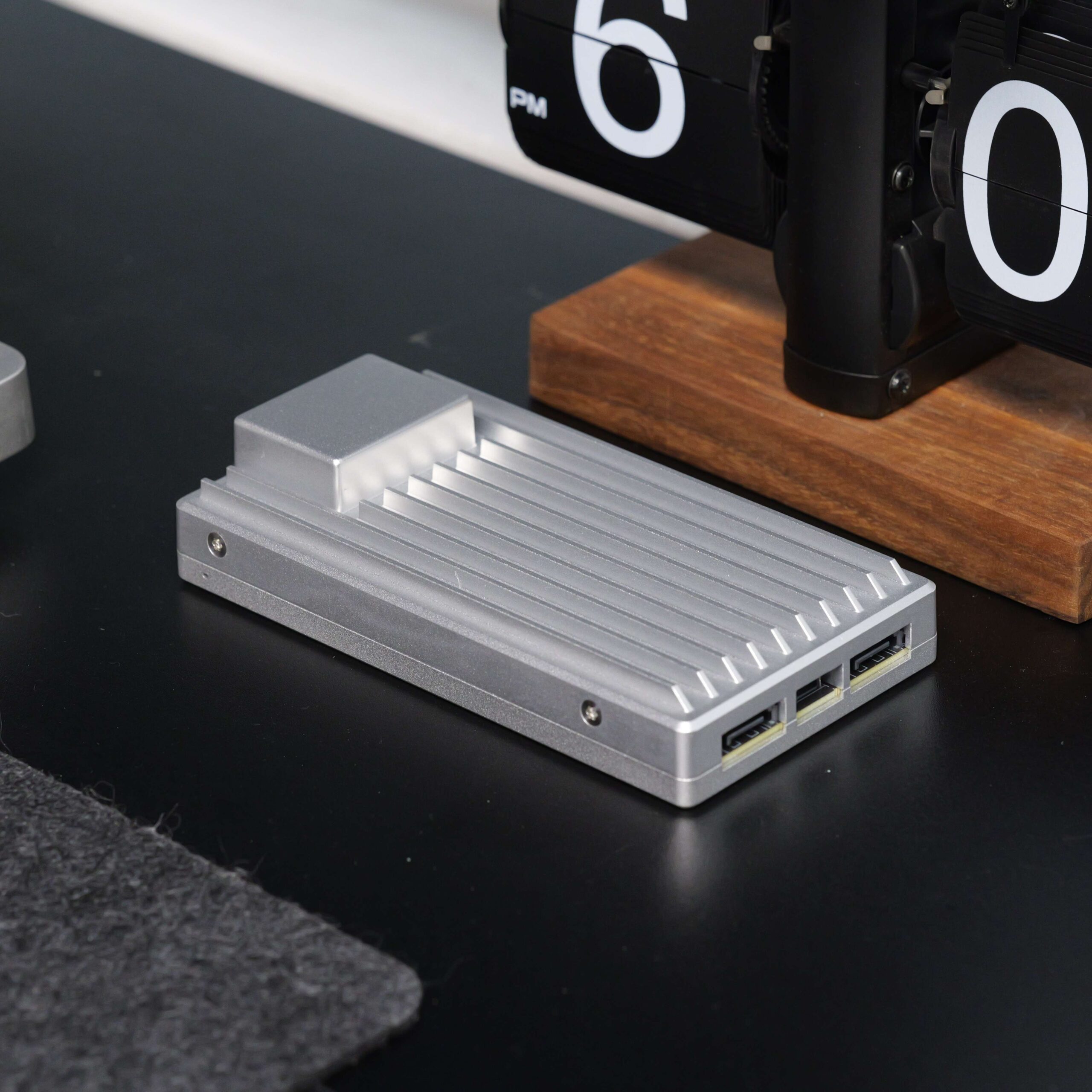
We recently received an update from Zima Space. The ZimaBoard, which we’ve used and reviewed before, is still using a 14nm embedded CPU. This time, it upgraded its processor to Intel’s 7-process N150, which is Intel’s latest low-power embedded CPU. They also updated the exterior design this time, making the ZimaBoard 2 more geeky. In this post, we will be reviewing the ZimaBoard 2.
Unboxing\Design
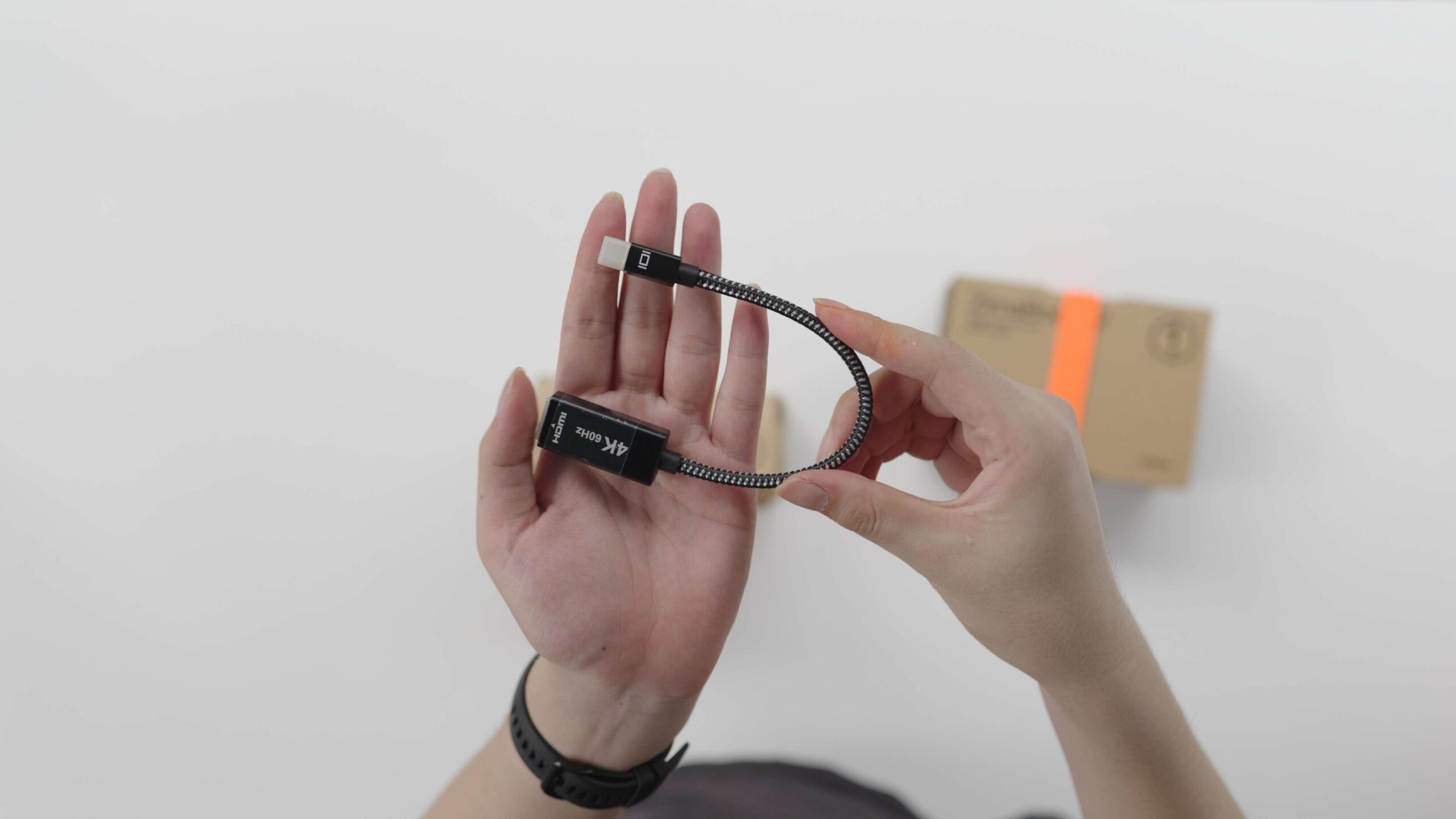
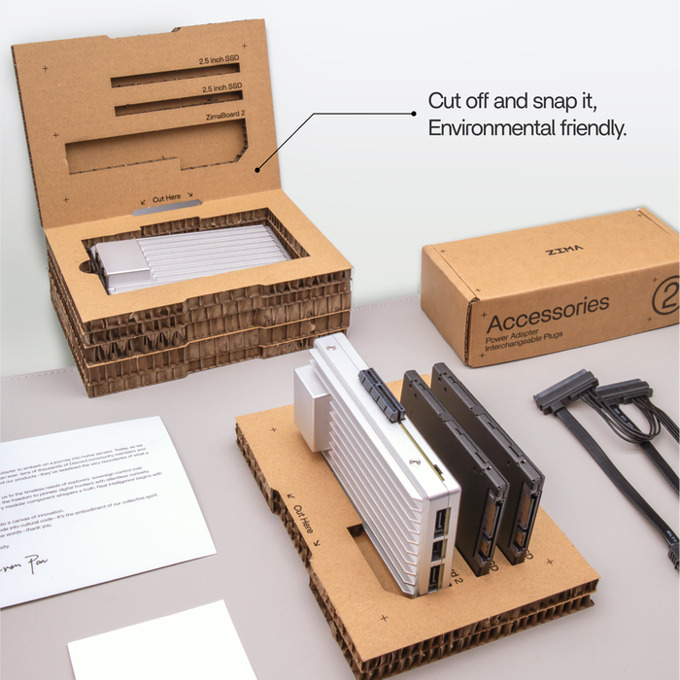
The package of ZimaBoard 2 doesn’t include many accessories inside, it is mainly divided into ZimaBoard 2 and a handful of important Accessories. Inside the Accessory box, there is, first of all, a miniDP-to-HDMI cable, supporting 4K 60Hz.
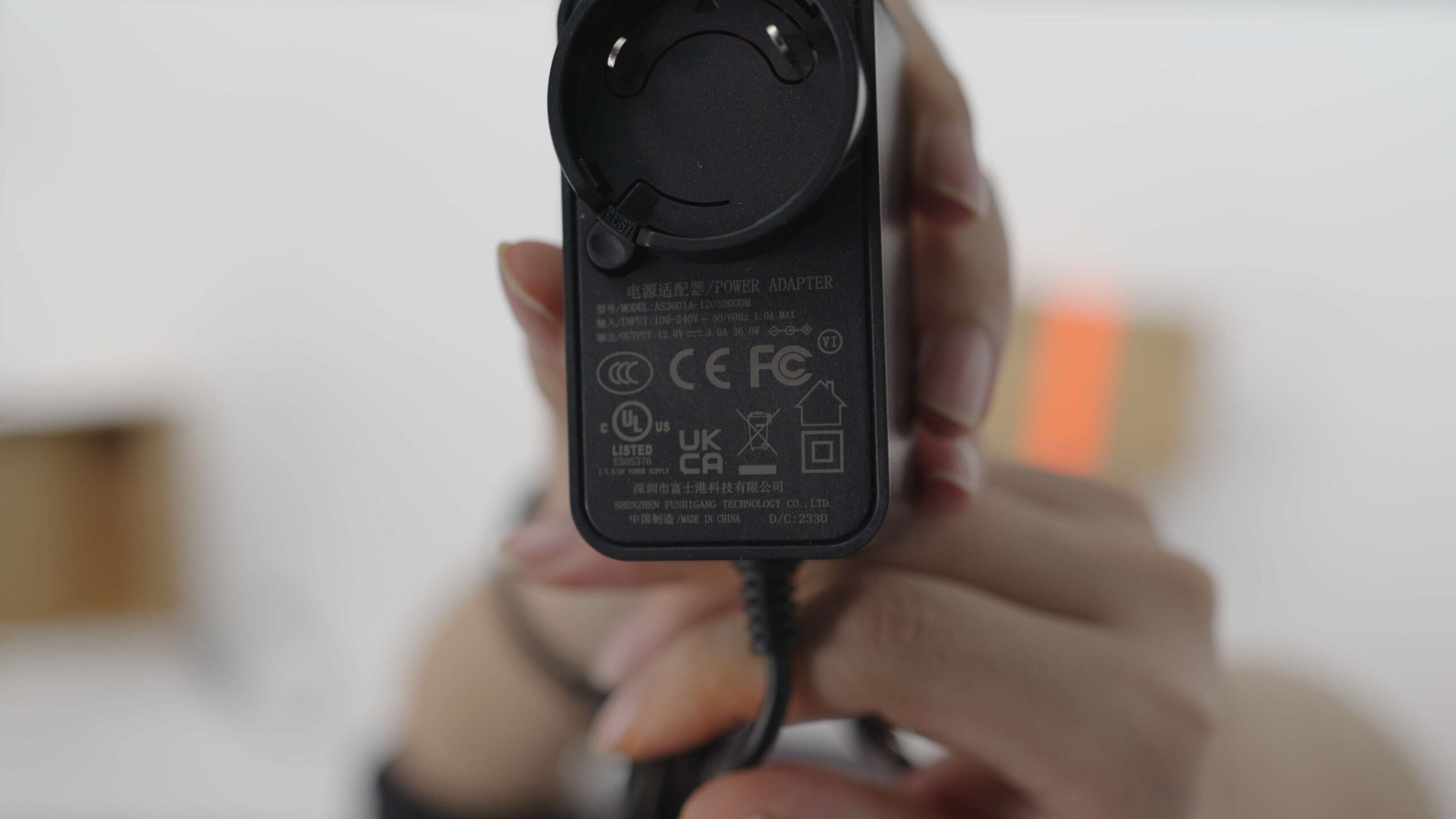
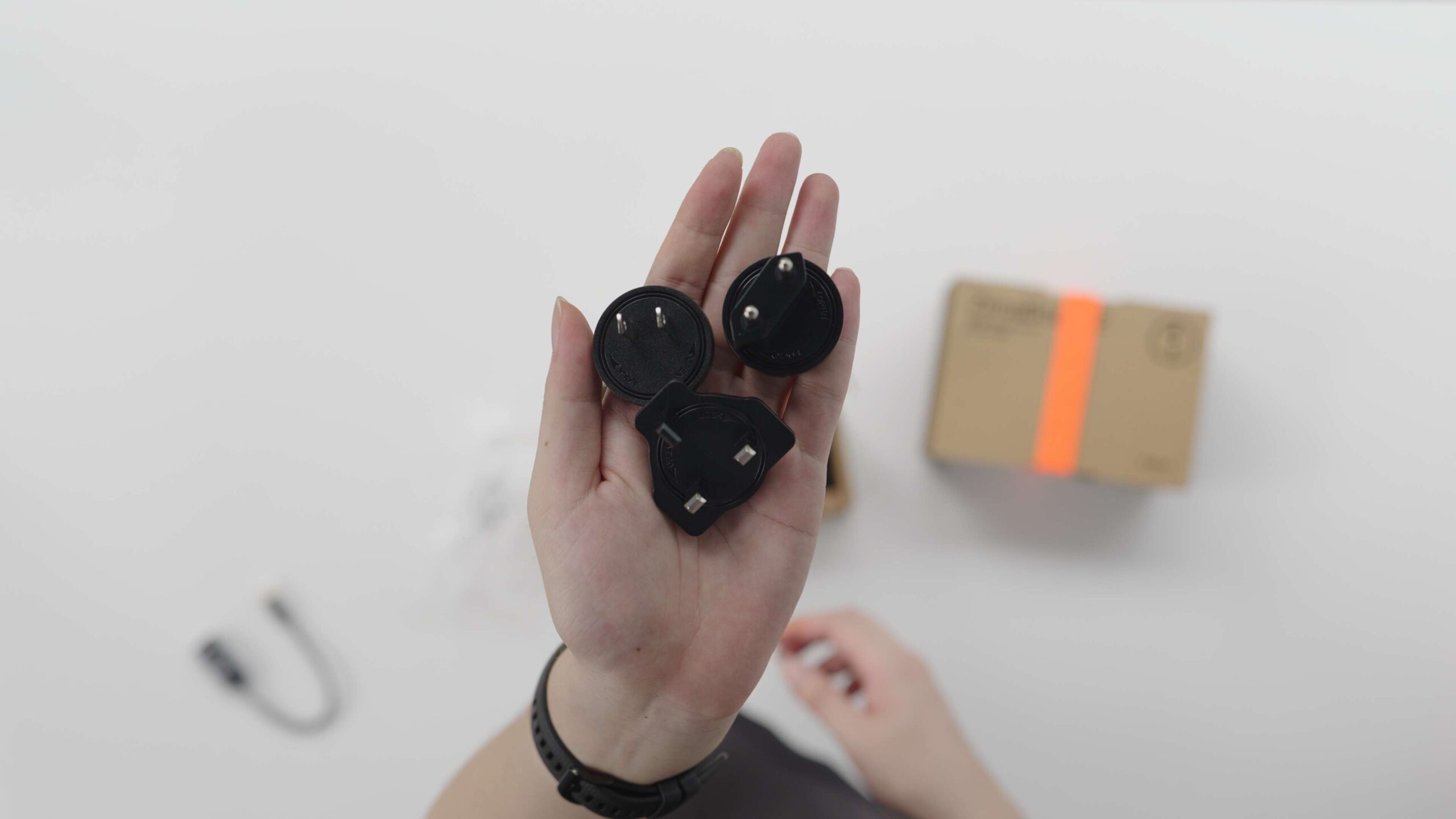
There is an AC-DC power supply that supports a wide voltage input of 100- 240V with an output at 12V 3A, and great news is that it comes with 3 different standard AC plugs.
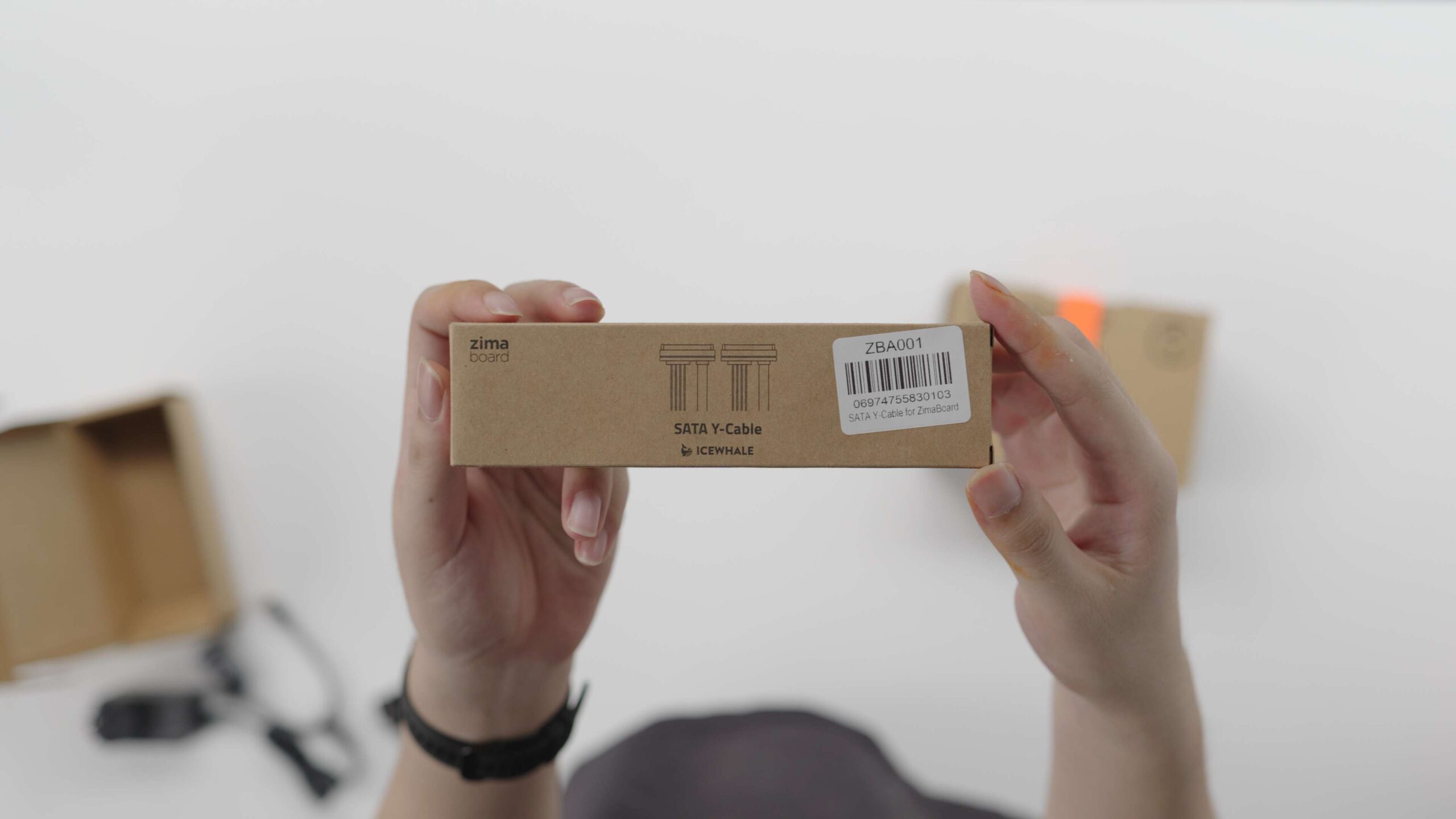
In addition, this small box is equipped with a SATA Y-Cable inside, which can connect two SATA disks to the ZimaBoard 2 at the same time.
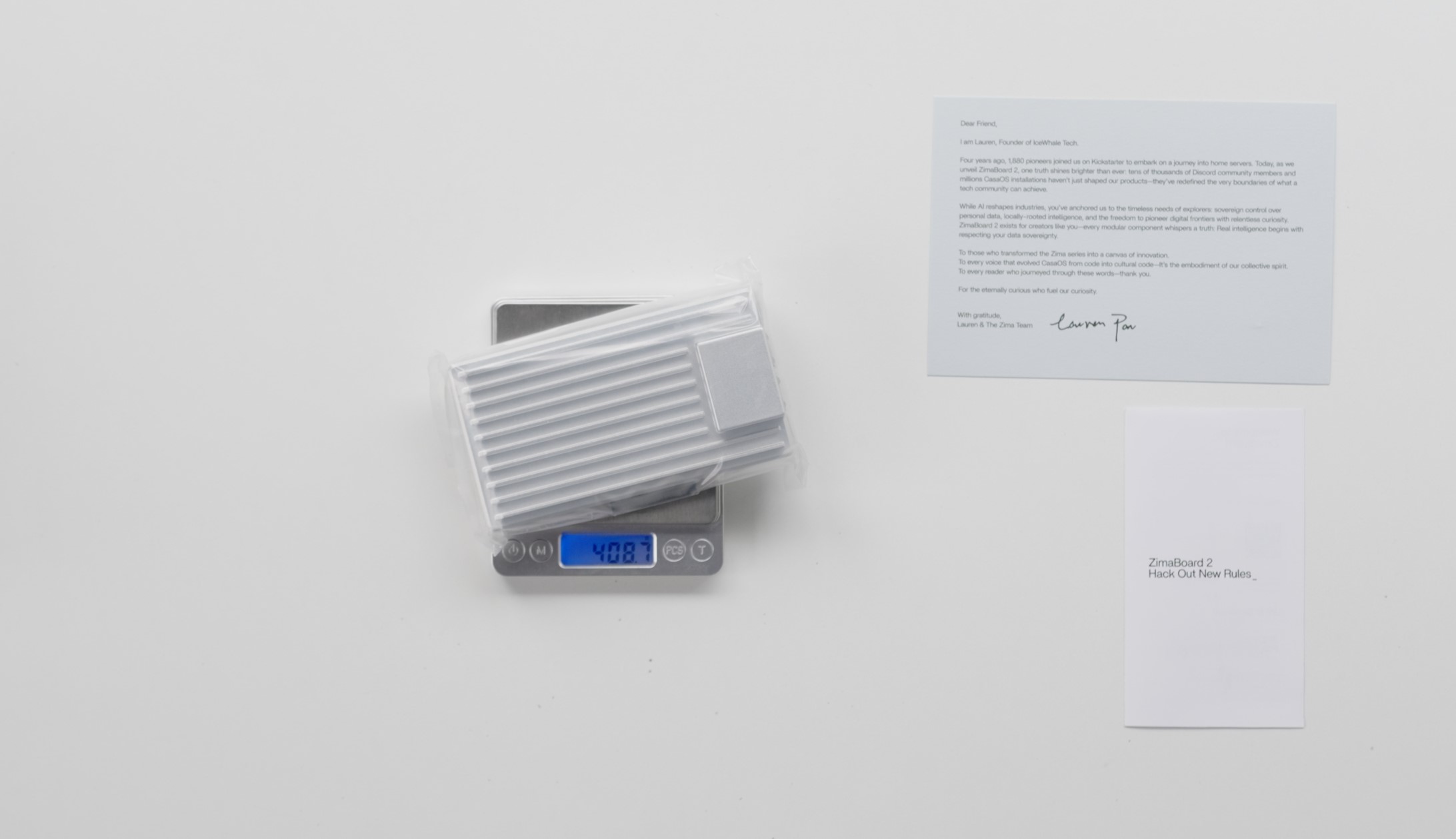
When you open the main box of the ZimaBoard 2, there is a thank-you letter as well as a quick guide inside, in addition to the ZimaBoard 2 itself. what’s interesting is that Zima developed the box into a chassis stand that gives zimaboard firmly supports with 2 extra disks.
Expandability\Performance
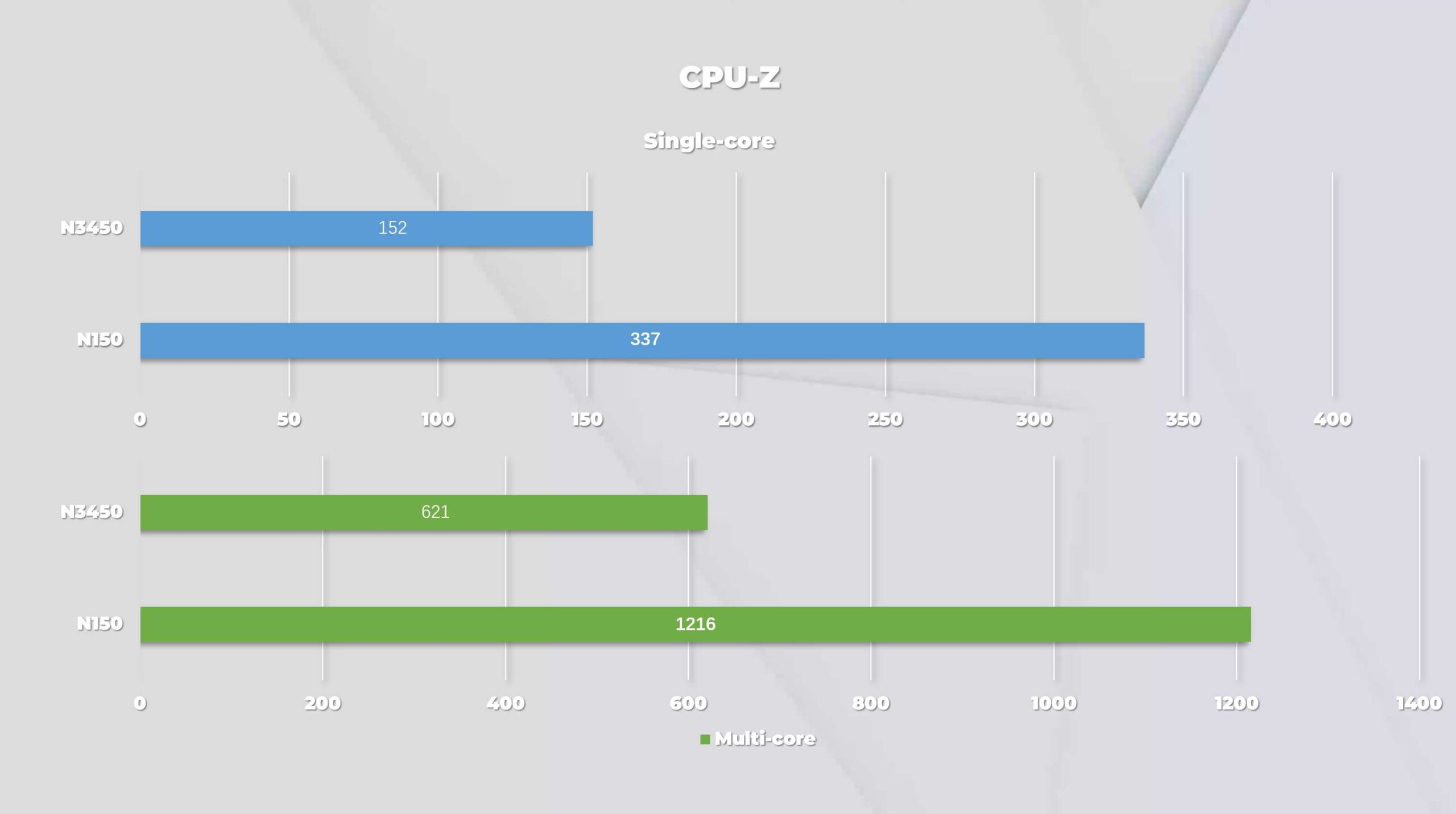
The N150 chip used in the ZimaBoard 2 is a 4-core, 4-thread Alder Lake-N architecture processor with a maximum Core frequency of 3.6 GHz. Compared to the previous N3450 with Goldmont architecture, the performance is a huge improvement (CPU-Z single-core 1216/multi-core 337, single-core 621/multi-core 152; R15 single-core 458/multi-core 154, single-core 140/multi-core 45). It’s equal to the same 4-core, 4-thread Intel Core I3 8100 on the desktop side, but the N150’s TDP is just 6W.
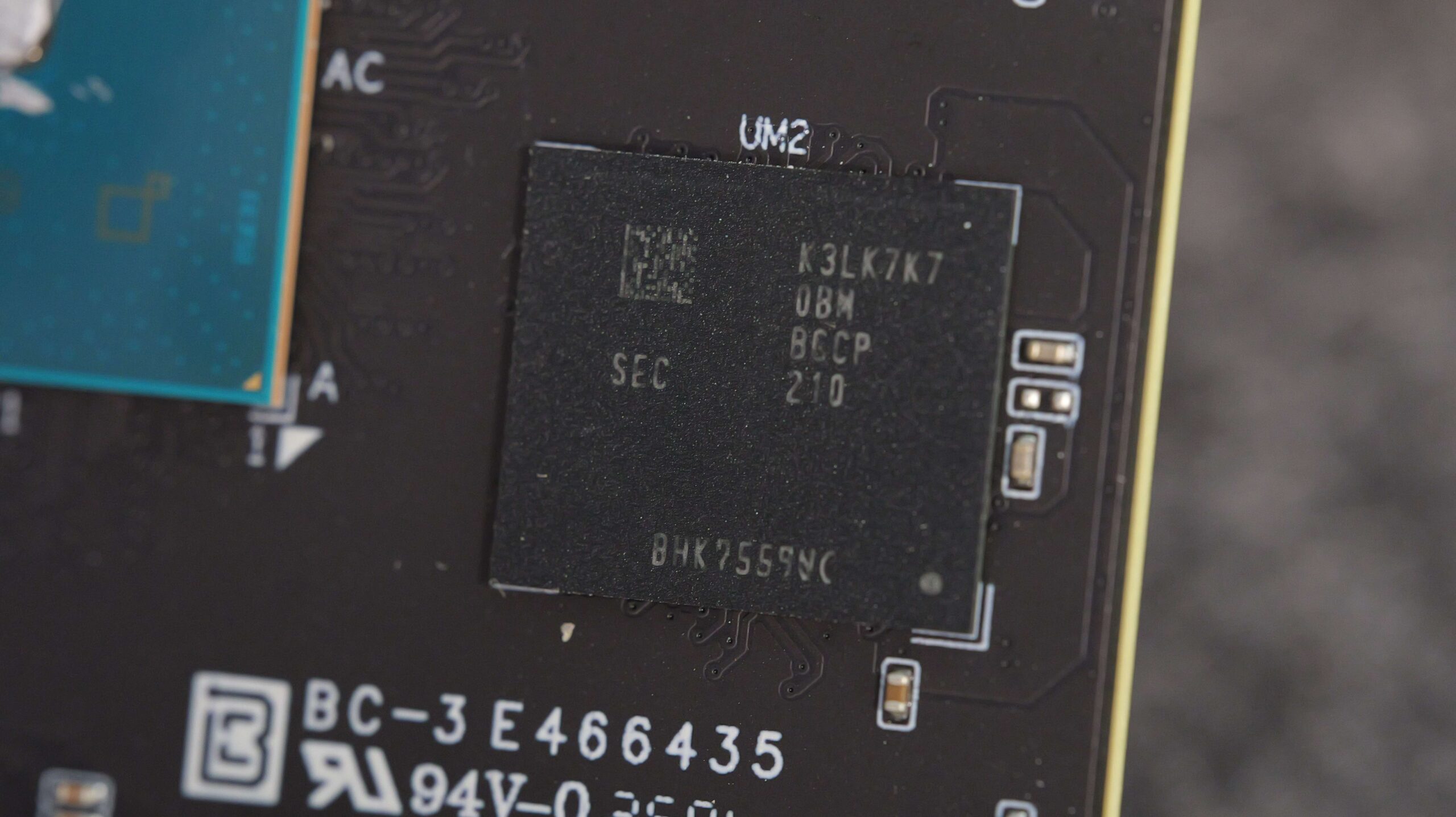
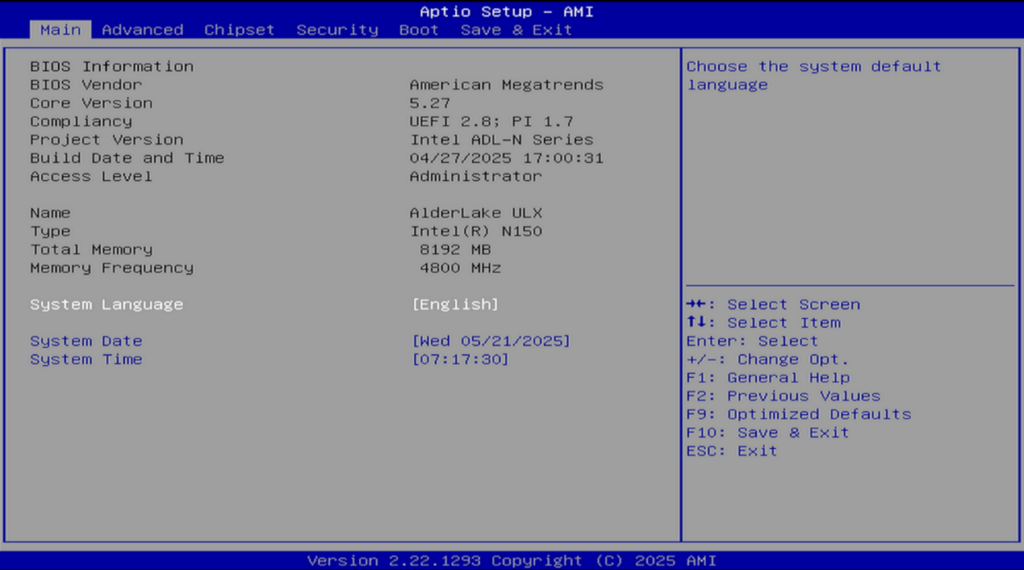
Upon disassembling the ZimaBoard 2, we discovered that it utilizes a Samsung K3LK7K70BM-BGCP memory chip, which is an 8GB 6400MHz LPDDR5 memory module. However, when we checked the memory in the BIOS, we found that it operates at a speed of only 4800 MHz. This limitation is due to the processor’s memory controller, which only supports a maximum speed of 4800 MHz. Moreover, since the memory is installed using a BGA (Ball Grid Array) method, it cannot be upgraded or expanded. As a result, if you plan to run virtual machines or a large number of Docker services, the 8GB memory capacity may significantly restrict your performance.
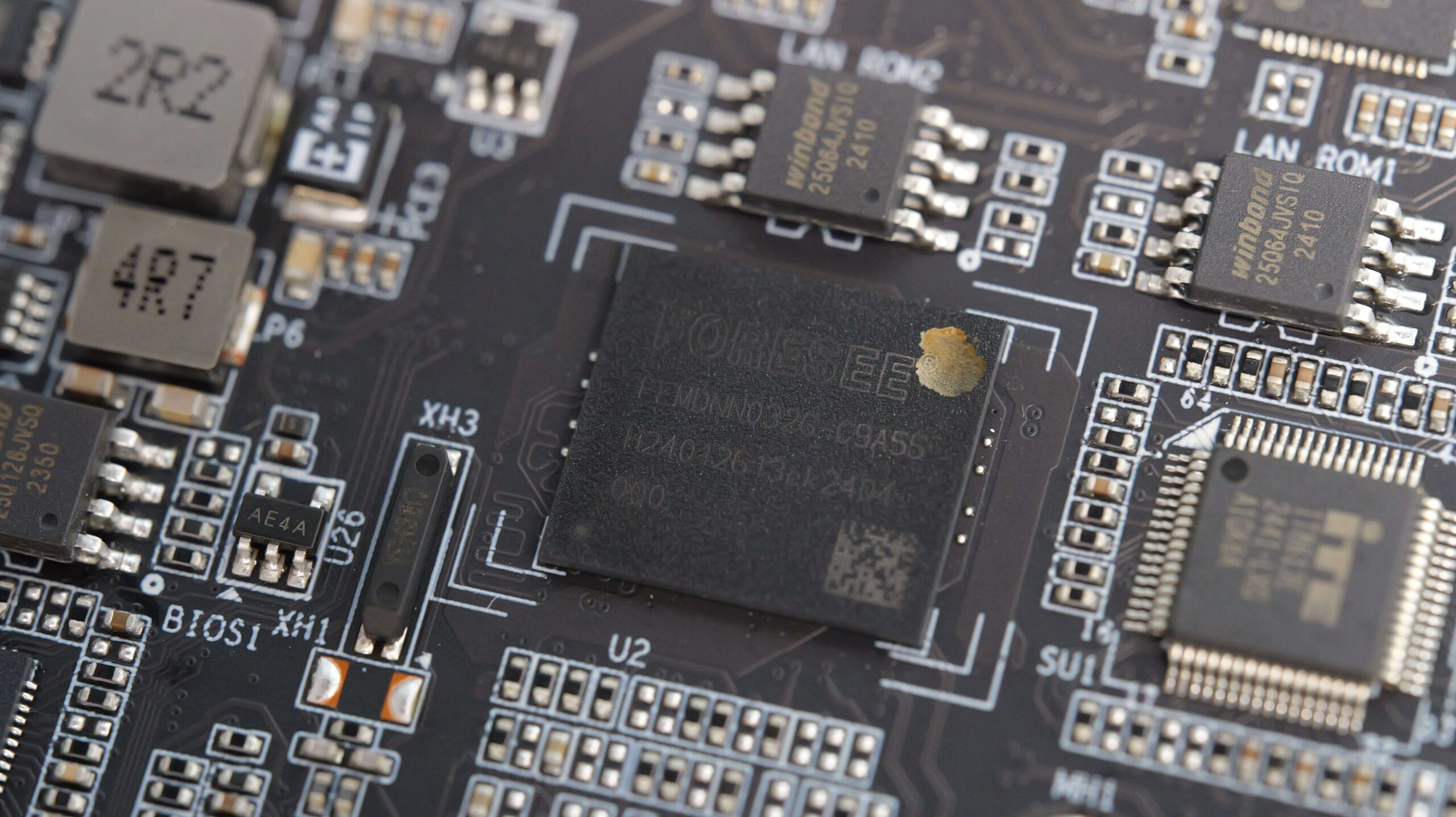
There is 32 GB of eMMC flash memory built into the body. Based on our teardown, we can see that it’s a FORESEE EMMC 5.1 chip, with sequential reads and writes at 346/217 MB/s. Unfortunately, your FORESEE doesn’t mention whether it’s an MLC chip or a TLC chip in the datasheet.
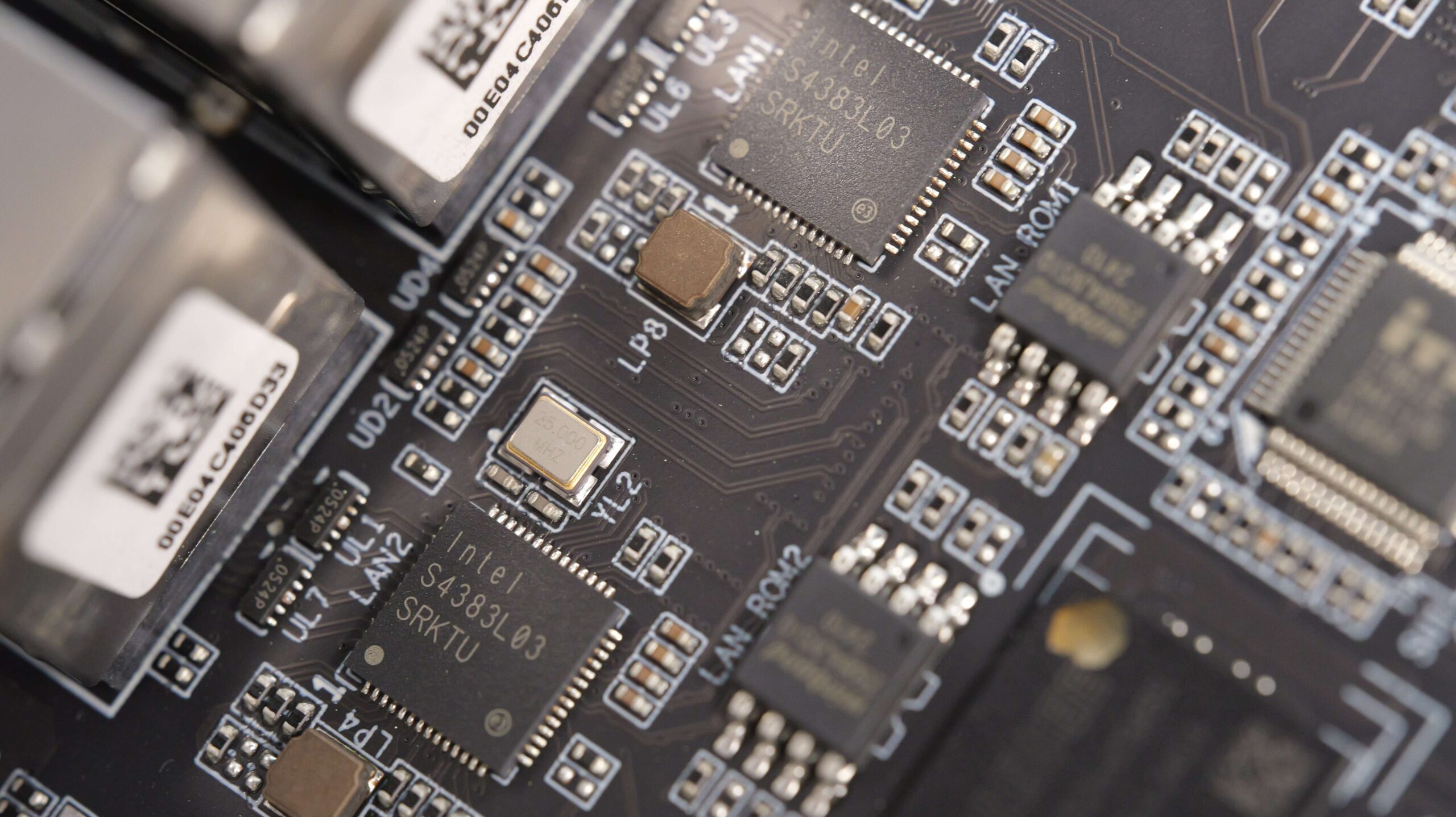
Next to the CPU are two Ethernet controllers from Intel. Here we get the exact model number of this chip with the lspci command, which is Intel Corporation Ethernet Controller I226-V (rev 04). It’s a 28nm nanometer network controller, and while it sounds like a backwards process, it only has a TDP of 1.3W, and it fixes a hardware bug that breaks the flow of traffic compared to the more familiar 225-V. This allows the ZimaBoard 2 to be more stable when transferring files.
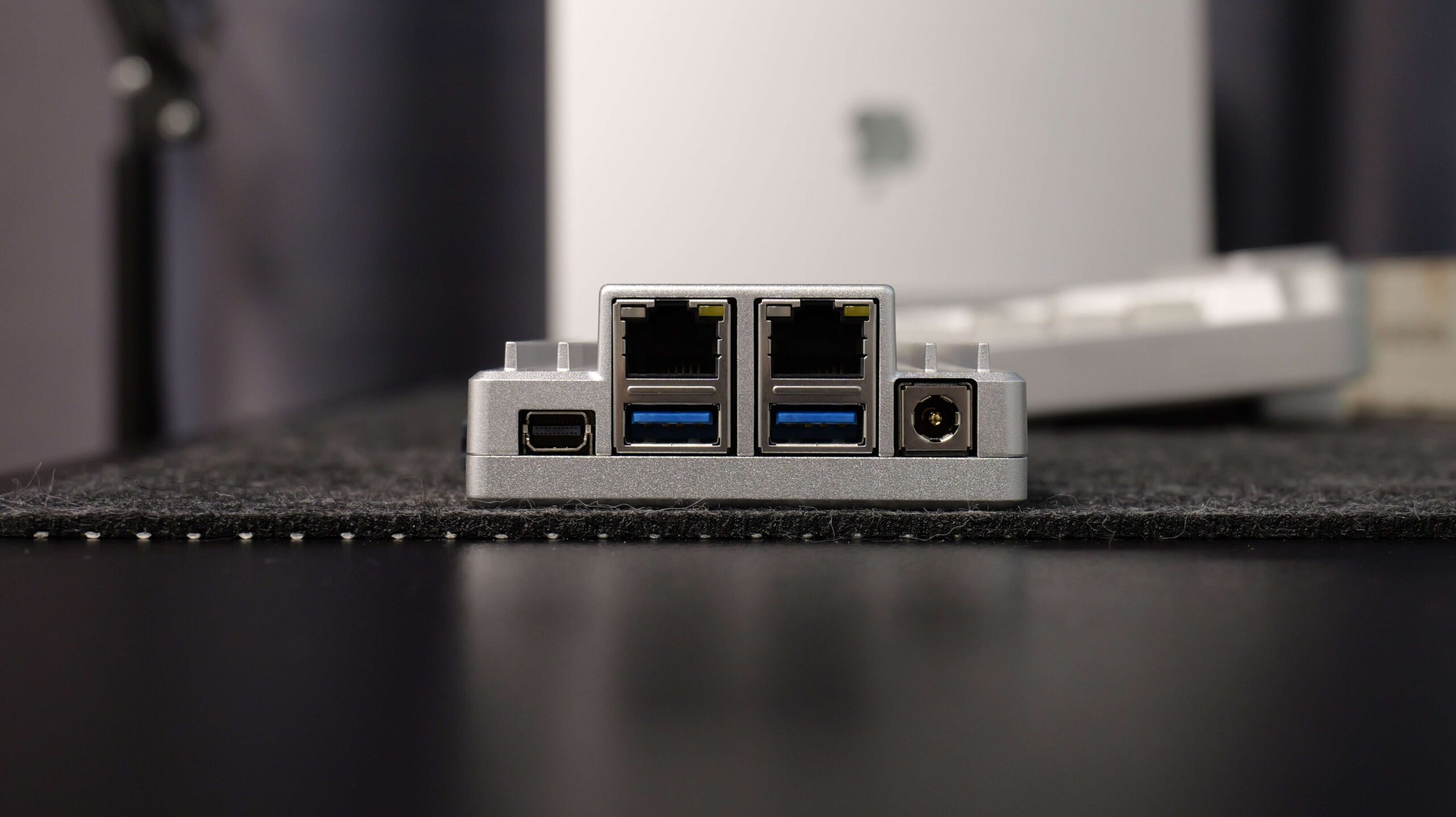
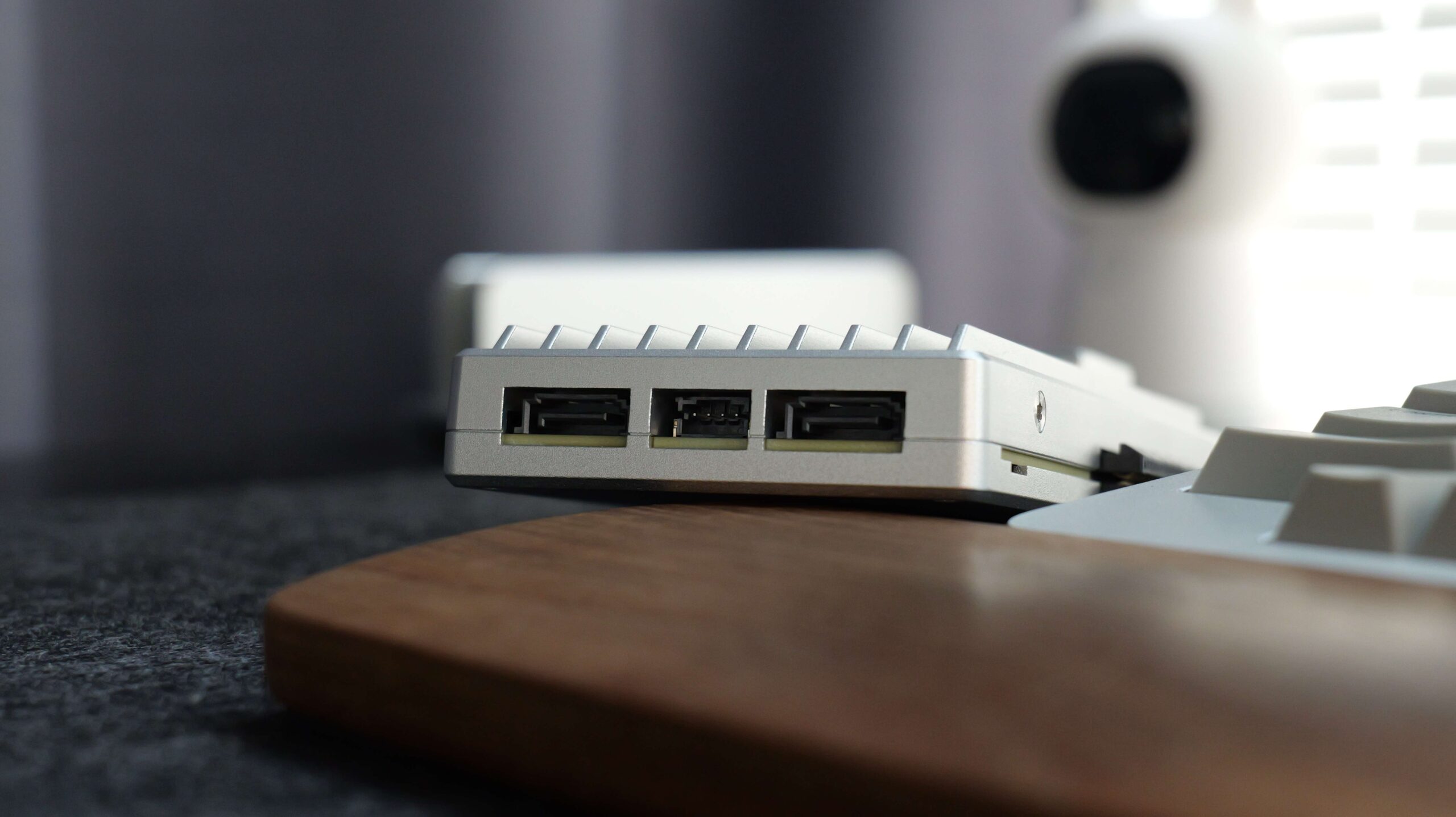
There are also two 5 Gbps USB-A ports and a miniDP port that can output 4K 60Hz. Also, this new set of molds is the same size as the previous ZimaBoard with the N3450. So there are some conflicts when you are plugging in a network card, graphics card, or other expansion card with a PCI-E bezel.
On the other side, it comes with two 6Gb/s rate SATA protocol ports, and both are native to the CPU. The center socket provides a 5V or 12V power output for SATA drives.
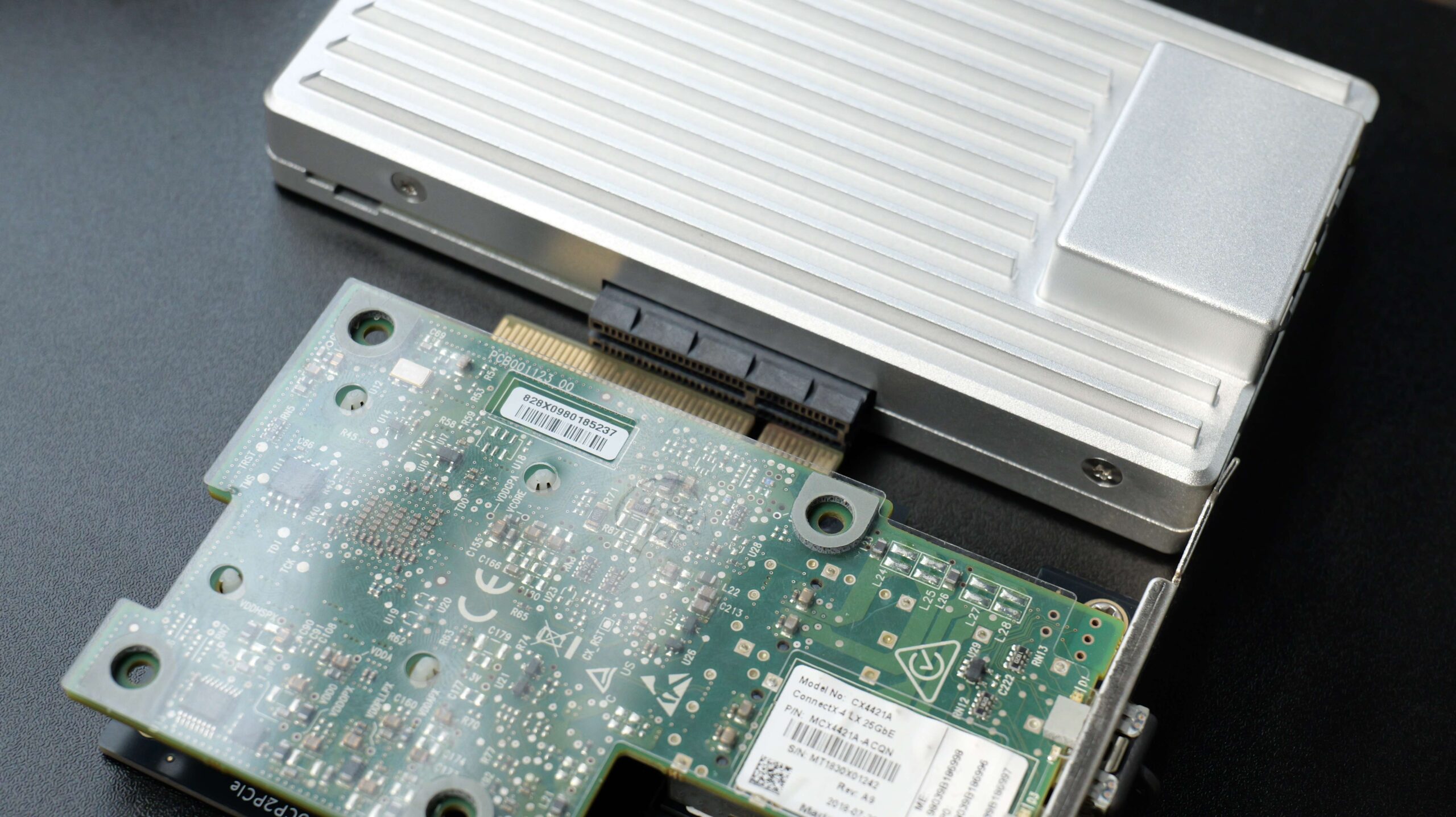
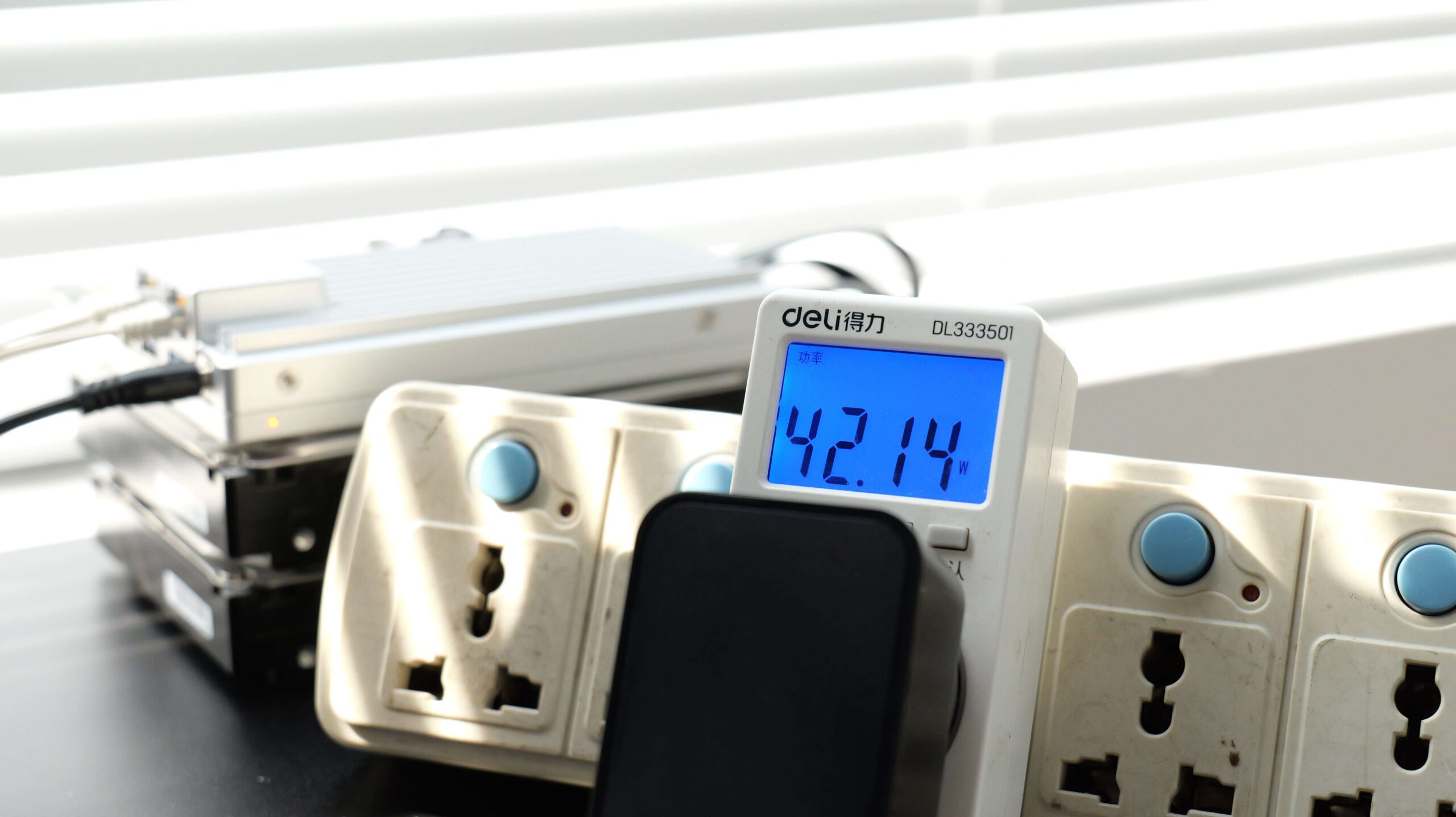
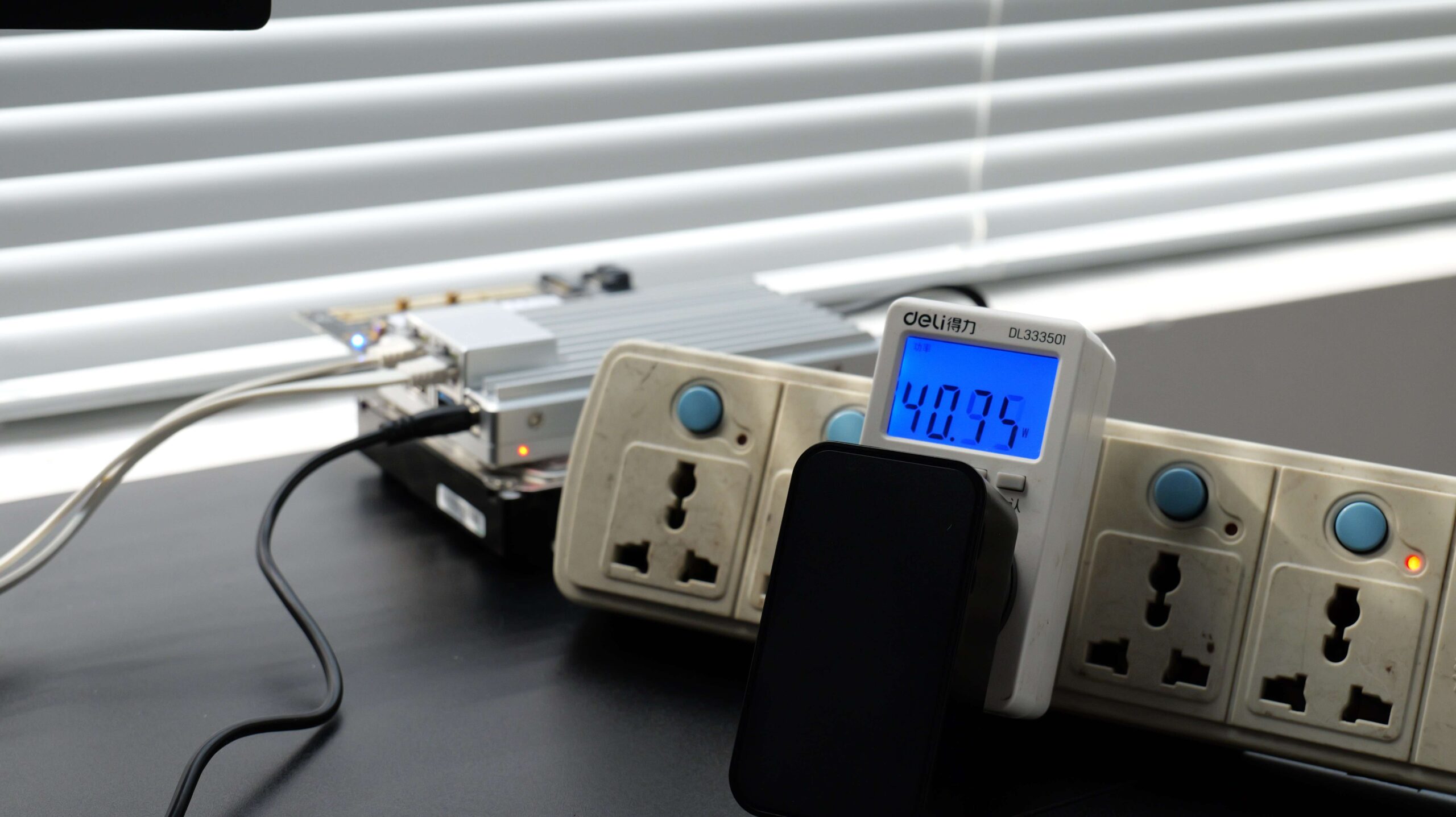
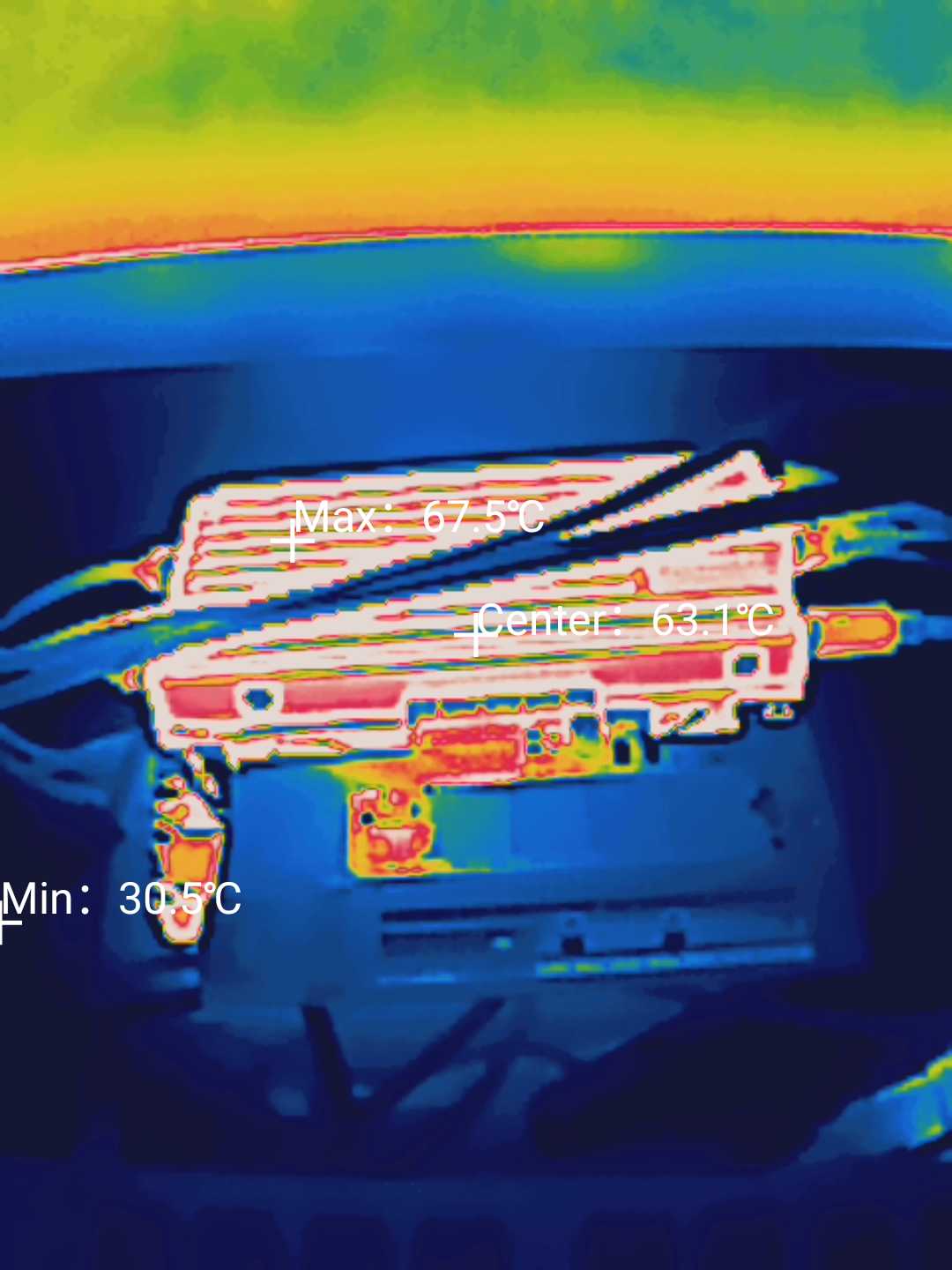
To do this, we connected two 3T 7200 HDDs from Seagate using the included SATA cables, as well as a 1TB NVMe SSD using the PCI-E 3.0 X4 connector on the side, but after we finished installing it and powering it up, something weird happened. We noticed that the ZimaBoard 2 was constantly rebooting. After our inspection, we realized that the cause of this problem was that the power consumption of the two HDDs exceeded the upper limit of the power supply (36W) while booting. So the power adapter activated the overcurrent protection, causing this problem.
Since I don’t have a power supply with the same connector and more power around, I removed one HDD for testing here. But even if only one HDD was activated, the power required in the process was still beyond the range of the power adapter. It didn’t trigger the overcurrent protection, but that’s still not a good sign. So while you’re using this machine to deploy servers, I’d recommend replacing the stock adapter with a higher specification one. But if you’re using a lower power 2.5″ HDD or SSD, then this system won’t run into this problem when booting both drives at the same time.
System Support
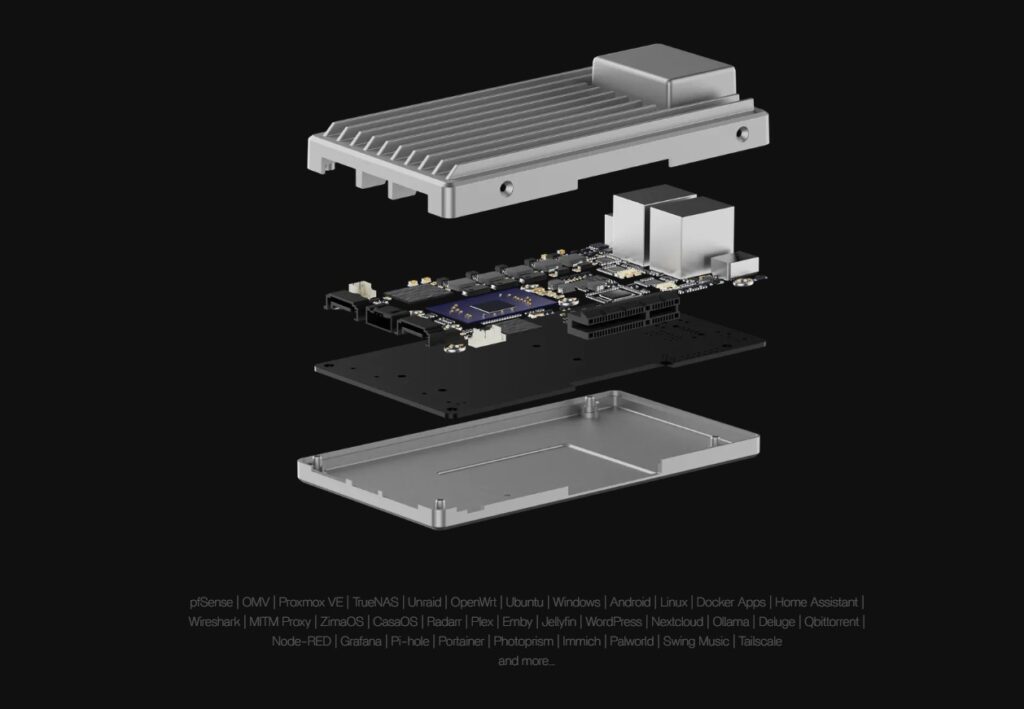
ZimaBoard 2 supports unRAID, PVE, OMV, ZimaOS, TrueNAS, Debian, Windows, OpenWRT, and more. However, we would like to deploy a system that is not supported by ZimaBoard 2: fnOS.
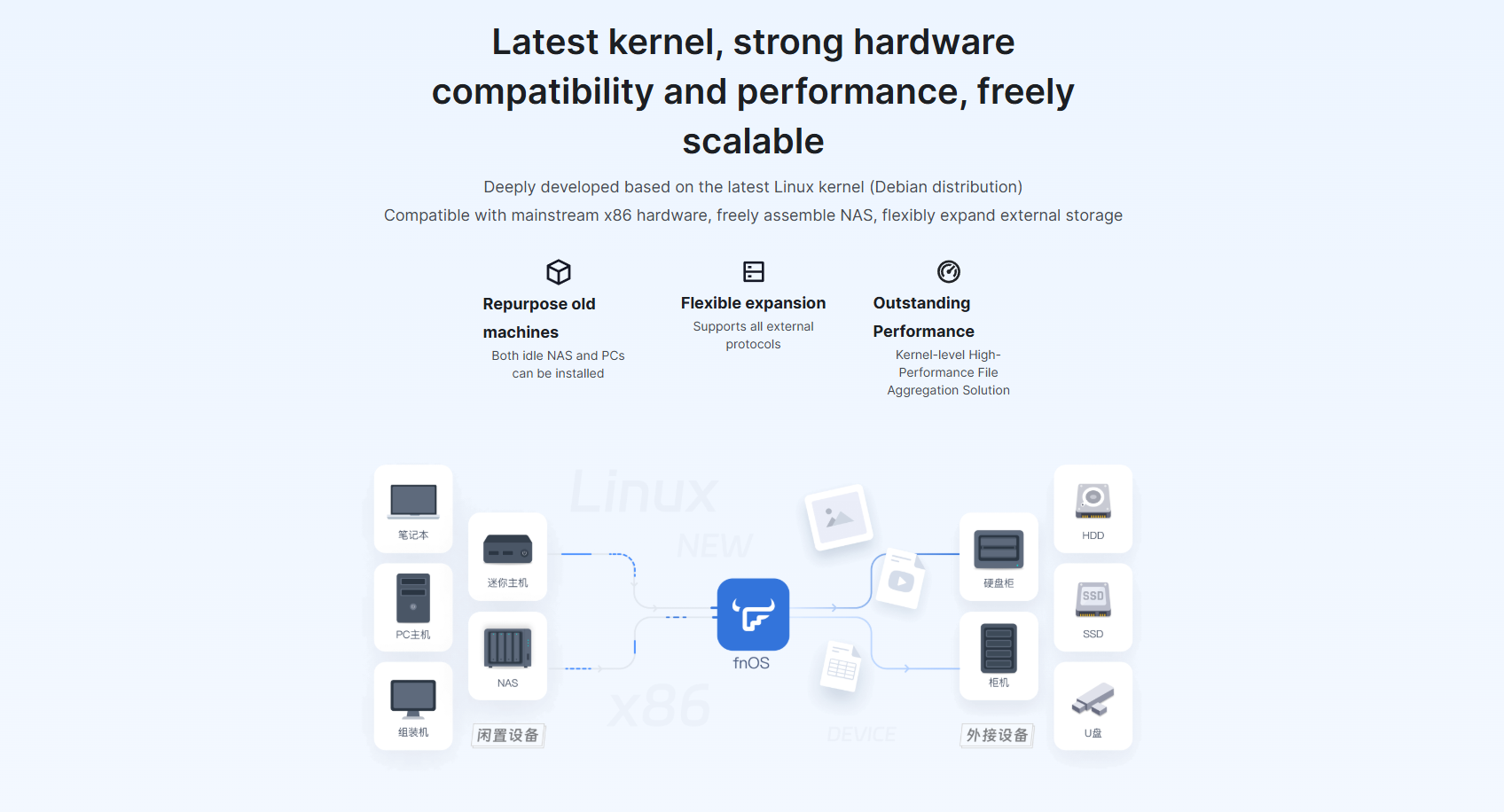
It is a NAS system developed by a Chinese company based on Debian and compatible with mainstream x86 hardware. It has been featured on the Chinese version of YouTube, Bilibili, with many video testimonials and demos. From the information we have received so far, this system will be a strong competitor to other NAS systems in the future. I say “future” because they are in public beta right now, and there is no English version. That didn’t stop me from trying it out, though.
Deployments
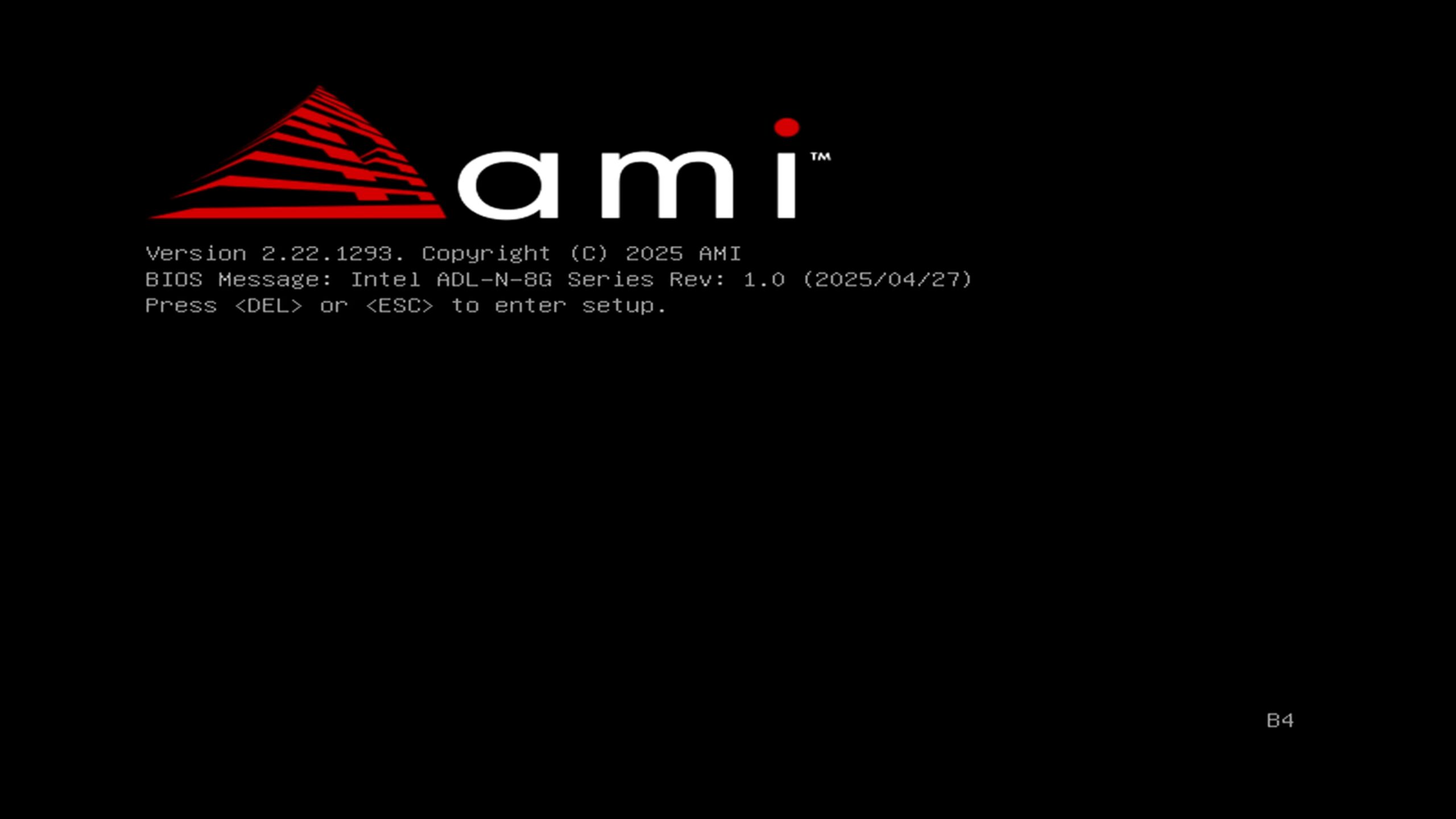
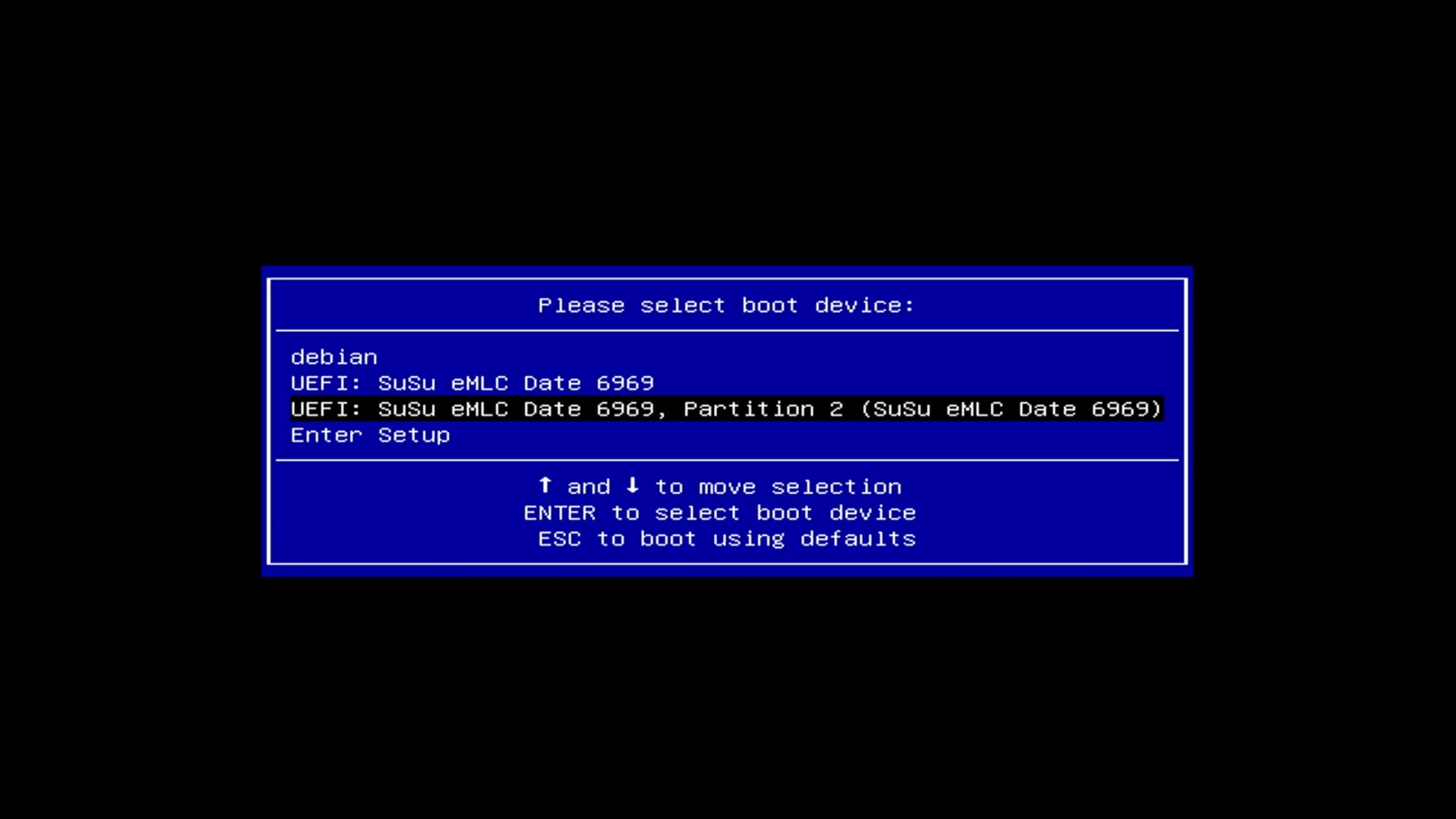
First, when we turn on the computer, we press DEL according to the on-screen prompts, enter the BIOS, and select the USB flash drive.
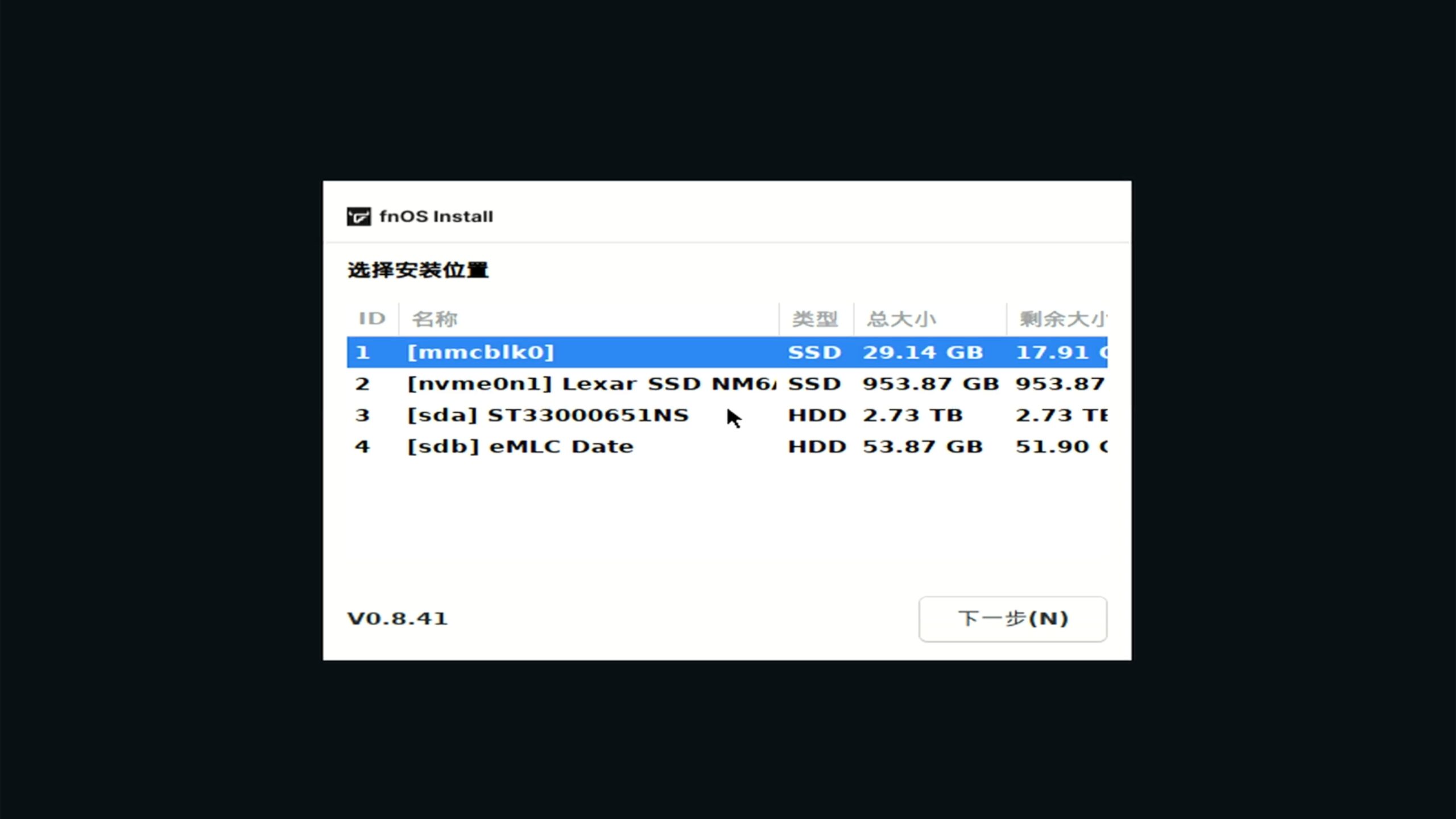
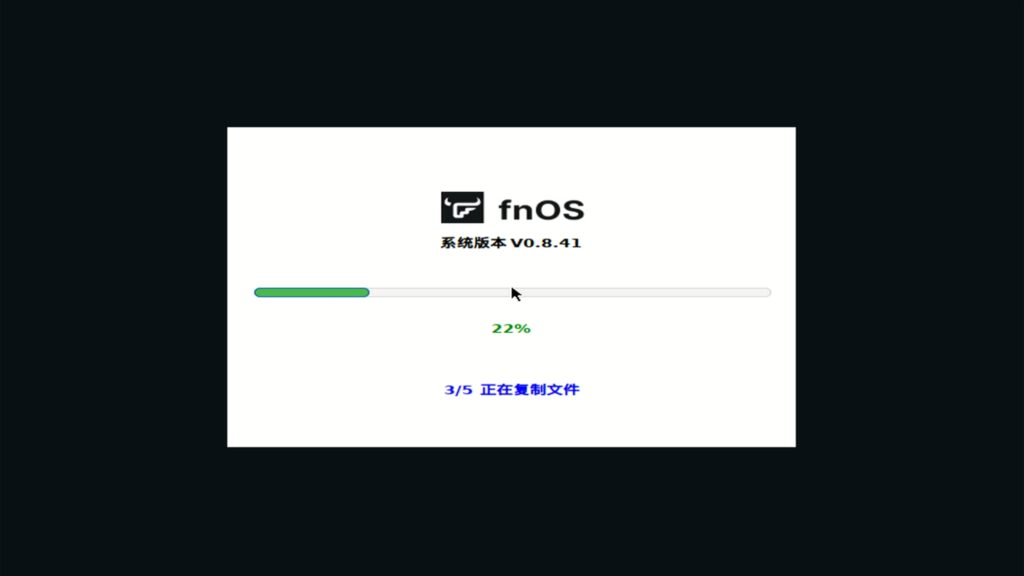
We can then follow the prompts to install the system directly onto the motherboard’s built-in eMMC flash memory.
After that, we can proceed with the boot system installation. After setting the management IP address, open the browser on the computer and enter the IP address displayed on the screen to access the WEBUI management interface.
Then, follow the prompts to set the device name, super administrator account, and password. Finally, enter the system.
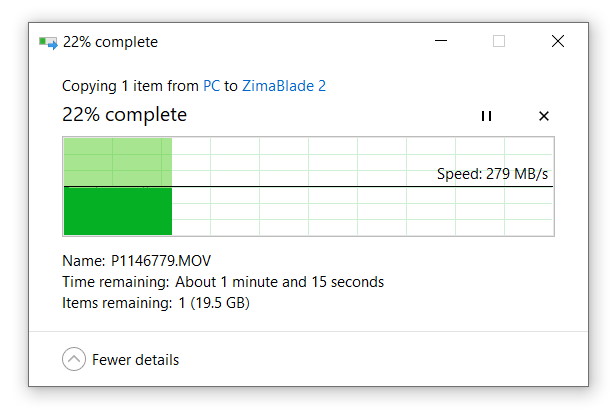
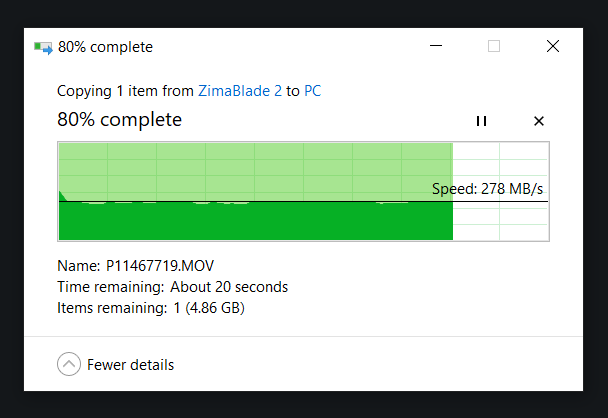
Next, we copied a 25 GB video file from the PC to the ZimaBoard 2. The speed was steady at over 270 MB/s and as fast as 500 MB/s.
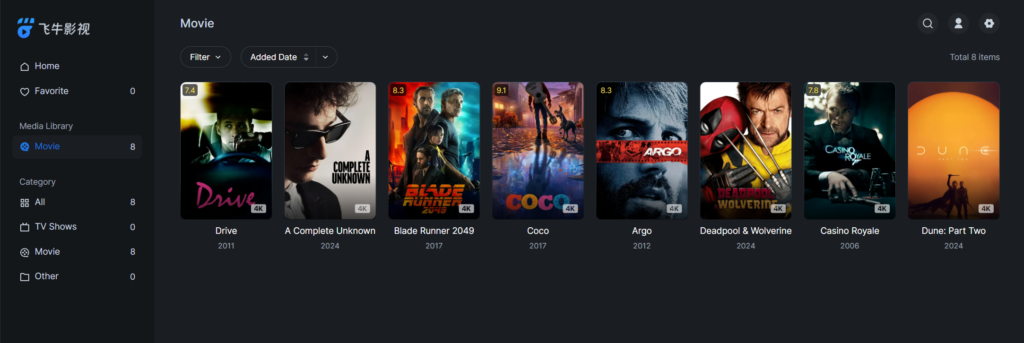
Now, let’s try out FNOS’s movie and TV features. Of the eight movies I copied for testing, FNOS recognized the movie titles perfectly and automatically matched them to the metadata.
The cast list is quite complete and provides an IMDb link for further information about the movies.
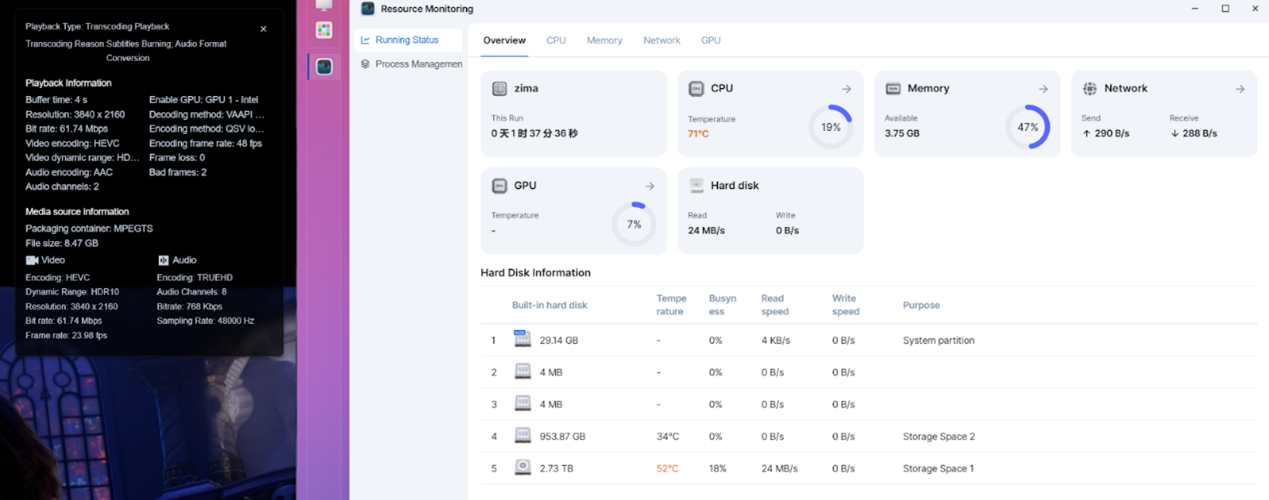
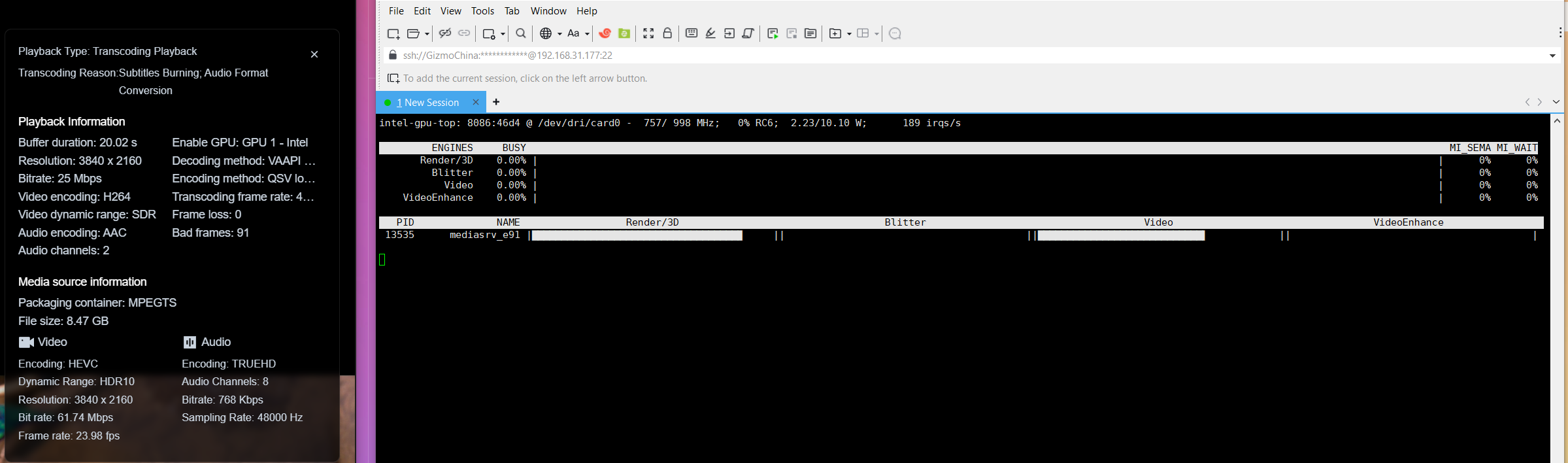
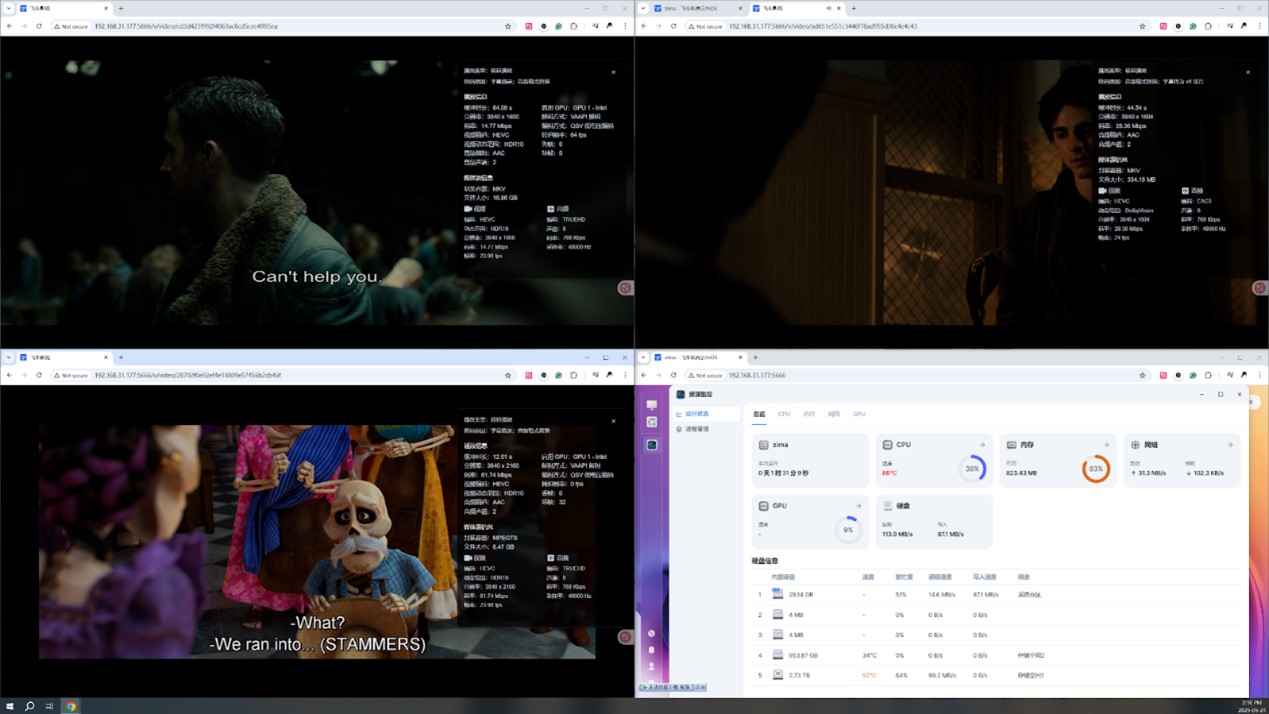
During playback, the ZimaBoard 2 quickly converted the HDR movie to SDR. We can also see in FNOS Explorer that it’s using the N150’s GPU for transcoding. However, when we turned on the third transcoded 4K HDR video, we encountered some performance issues.
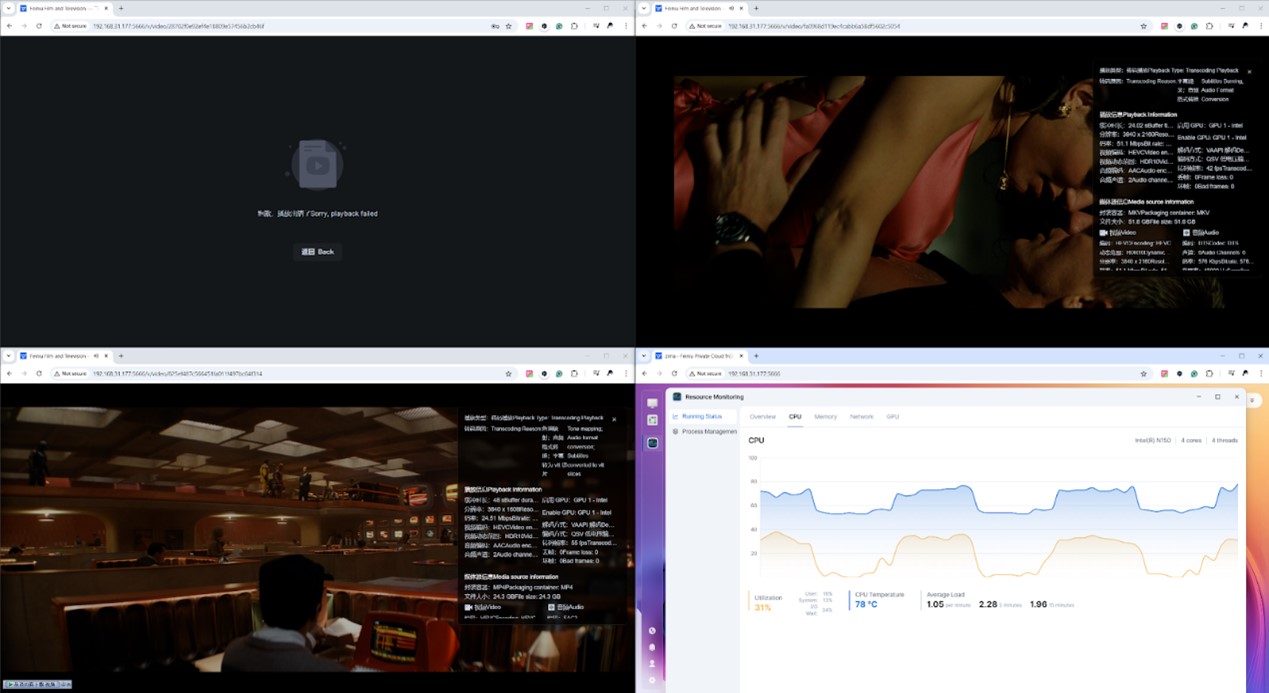
A look through Explorer reveals that the performance bottleneck occurs in RAM at this point. The RAM is full, so the system starts to use SWAP, while the CPU and GPU appear to be free-loaded.
While the third transcode works fine at first, if you let it run a little longer. It will start crashing, meanwhile, the CPU temperature of the ZimaBoard 2 is a bit lower compared to the beginning, but the case temperature is not.
Summary:
The ZimaBoard 2 boasts significantly improved performance thanks to its upgraded processor and sleek exterior design. Its memory is high-performance and energy-efficient, but it is not expandable, which may limit application scenarios that require a lot of memory. The built-in eMMC flash memory performs decently, but the chip type is unknown. In terms of networking, the Ethernet controller is stable and has low power consumption. The network interface rate performance is in line with expectations, but the link aggregation effect is poor. There are abundant expansion interfaces, but some expansion cards are incompatible, and the original power adapter may be underpowered when connecting multiple hard disks. Taking FnOS as an example, the system supports fnOS deployments well and has impressive movie and TV features. However, memory tends to become a bottleneck when multitasking with transcoding. Overall, the ZimaBoard 2 is an excellent, feature-rich device. But, a note for pro-users here – it might leave something to be desired in terms of memory expandability and power adapter power.
The zimaboard 2 clearly has many more applications to enjoy in the hands of professional users. Perhaps you’ll give it even more creative and productive application scenarios, so click here to check it out on Kickstarter and become an early adopter.
Oppo Find X8s+ and OnePlus 13 are two flagship smartphones that reflect the best of Android innovation in 2025. With top-tier chipsets, advanced cameras, and premium designs, both cater to users seeking cutting-edge performance and features. This comparison is important because it pits MediaTek’s latest Dimensity chip against Qualcomm’s Snapdragon Elite, while also revealing how brands differentiate through display tech, software, and user experience at different price points.
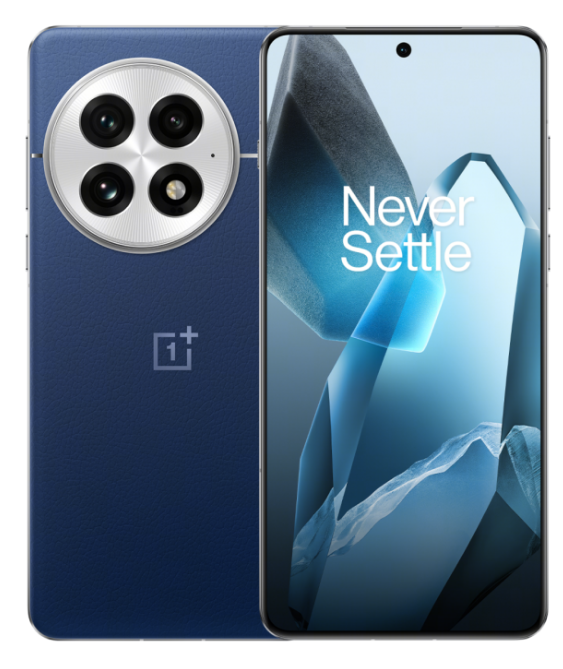
Build and Feel: Both smartphones offer premium build quality, featuring glass and aluminum frames with IP68/IP69 dust and water resistance. The Oppo Find X8s+ sticks to a standard glass back design, while the OnePlus 13 adds variety with eco-leather and Ceramic Guard options, giving users a more tactile and durable back panel. The OnePlus 13 feels slightly bulkier but also more robust due to its barometer and ceramic protection. In terms of build versatility and grip, OnePlus offers more user-centric customization.
OnePlus 13 edges ahead with more material choices and added ruggedness.
Display Quality: Oppo Find X8s+ uses a 6.59″ AMOLED panel with HDR10+, Dolby Vision, and 1600 nits HBM brightness. However, the OnePlus 13 steps up with a larger 6.82″ LTPO 4.1 AMOLED panel, higher resolution (1440 x 3168), and a peak brightness of 4500 nits, making it far superior under sunlight and HDR playback. The LTPO tech ensures better battery efficiency during dynamic refresh rate shifts.
OnePlus 13 clearly leads with a brighter, sharper, and more advanced display panel.
Verdict: While the Oppo Find X8s+ offers a balanced and sleek design, the OnePlus 13 stands out in both durability and display excellence. The higher peak brightness, sharper resolution, and material versatility make the OnePlus 13 the better-designed flagship overall.
2. Specifications
OnePlus 13
Performance: Oppo Find X8s+ runs on the Dimensity 9400+ (3nm) chipset with a powerful Cortex-X925 core and Immortalis-G925 GPU. It is efficient and fast, suitable for heavy multitasking. However, the OnePlus 13 features the Snapdragon 8 Elite chip with dual high-performance Oryon V2 Phoenix L cores, offering better peak performance and thermals, especially in gaming or sustained loads. With faster clock speeds and a stronger Adreno 830 GPU, the OnePlus 13 delivers smoother frame rates and better AI performance.
OnePlus 13 wins on sheer performance and future-proofing.
Battery and Charging: Both phones feature a large 6000 mAh Si/C battery, which ensures solid endurance. Oppo offers 80W wired, 50W wireless, and 10W reverse wireless charging. OnePlus pushes ahead with 100W wired charging that hits 50% in just 13 minutes and includes 5W reverse wired in addition to 50W wireless. The OnePlus 13’s USB 3.2 port also adds faster data transfers.
OnePlus 13 outpaces Oppo with faster charging and better port technology.
Verdict: While the Oppo Find X8s+ is no slouch in terms of battery and processing, the OnePlus 13 delivers faster performance, smarter thermal management, and quicker charging. For power users and gamers, the OnePlus 13 is the superior choice.
3. Camera
OnePlus 13
Main and Secondary Lenses: Both phones feature a 50MP triple-camera setup, including a periscope telephoto and ultrawide sensor. The OnePlus 13 offers a slightly larger primary sensor (1/1.43″) compared to Oppo’s 1/1.56″, allowing for better light intake and detail. Both phones support Hasselblad tuning, OIS, laser focus, and color spectrum sensors. However, the OnePlus 13 adds 8K video and a broader frame rate range, giving creators more flexibility.
OnePlus 13 gains a lead with better sensor size and advanced video features.
Selfie Camera: Both use a 32MP sensor with HDR, gyro-EIS, and 4K video support. The sensors are identical in size and aperture, offering similar performance. The Oppo model includes autofocus, which helps with sharper selfies and group shots, giving it a slight edge in front-camera usability.
Oppo Find X8s+ narrowly wins in the selfie category due to autofocus support.
Verdict: OnePlus 13 outperforms in rear camera quality and video versatility, especially for prosumers. Oppo does better with selfie sharpness thanks to autofocus. However, the OnePlus 13 remains the more complete camera package overall.
4. Pricing
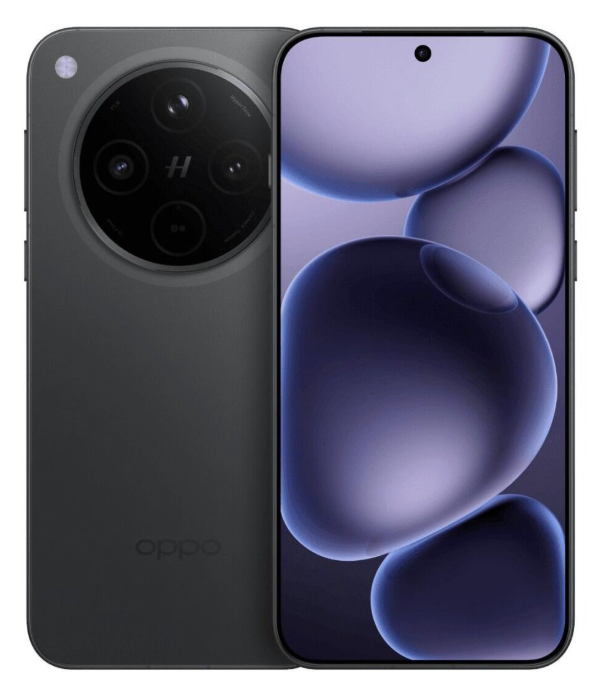
OPPO Find 8XS Plus
Oppo Find X8s+ is priced around $750, while the OnePlus 13 comes in at approximately $950. The $200 difference reflects OnePlus’s advantage in display, performance, and camera versatility. For users who want a flagship with cutting-edge specs, OnePlus 13 justifies the premium. However, the Oppo Find X8s+ delivers excellent value for its price, especially considering its matching battery capacity and versatile camera system.
Verdict: Oppo Find X8s+ offers better value, OnePlus 13 is worth it only for those needing top-tier performance.
Disclaimer: Prices are approximate and may vary based on country, region, and applicable taxes.
5. Conclusion
OnePlus 13
Both phones include high-end features like 50W wireless charging, Circle to Search, and ultra-accurate GPS. OnePlus 13 stands out with its LTPO 4.1 display, Snapdragon 8 Elite chip, ultrasonic fingerprint sensor, barometer, and faster USB 3.2 connectivity. It also features 5W reverse wired charging, a rarity even among flagships. Oppo counters with a slimmer, lighter build and autofocus front camera, which some users will appreciate for portability and selfies.
Verdict: OnePlus 13 is worth the extra $200 if you prioritize top-tier performance, display brightness, and advanced camera features in a flagship experience. Go for the Oppo Find X8s+ if you prefer a lighter, slightly more affordable phone with solid all-around capabilities and excellent selfie support.
Anker has released the Soundcore P41i, a new set of wireless earbuds designed for everyday use with strong battery life and added utility. It sits in the mid-range segment and follows the premium Liberty 5, but offers a different approach focused on convenience.
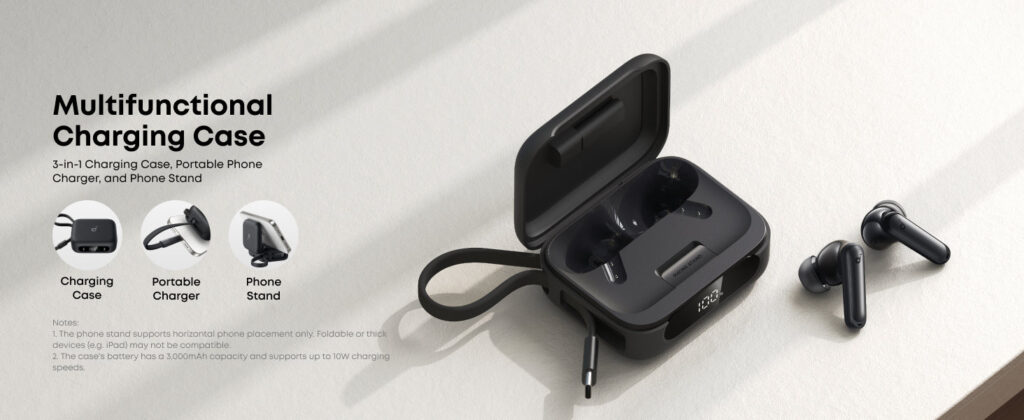
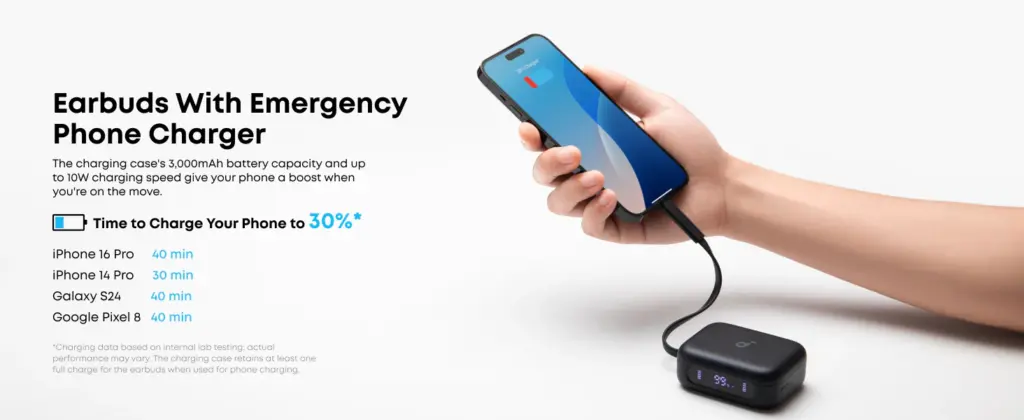
The standout feature is the 3-in-1 charging case. It holds a 3,000 mAh battery and works as a portable phone charger and stand. The case provides a 10W output using a built-in USB-C cable. According to Anker, it can charge an iPhone 16 Pro to 30 percent in 40 minutes, the Galaxy S24 in the same time, and the iPhone 14 Pro in 30 minutes. The case also doubles as a phone stand for horizontal viewing.
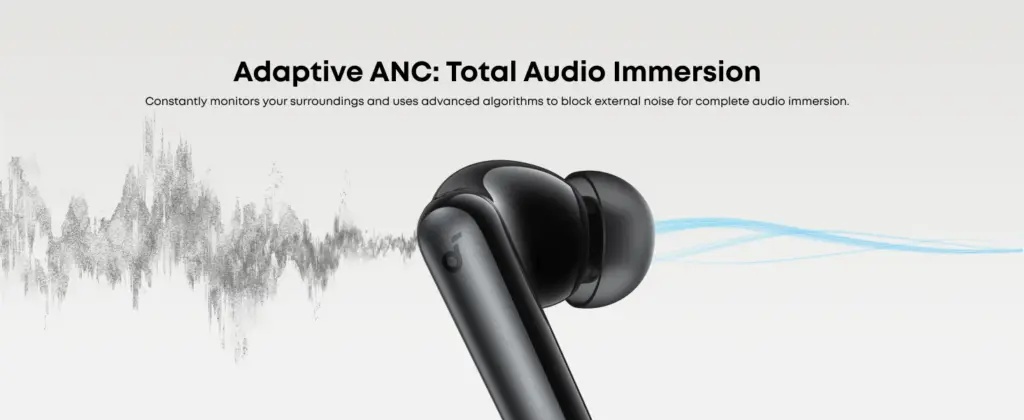
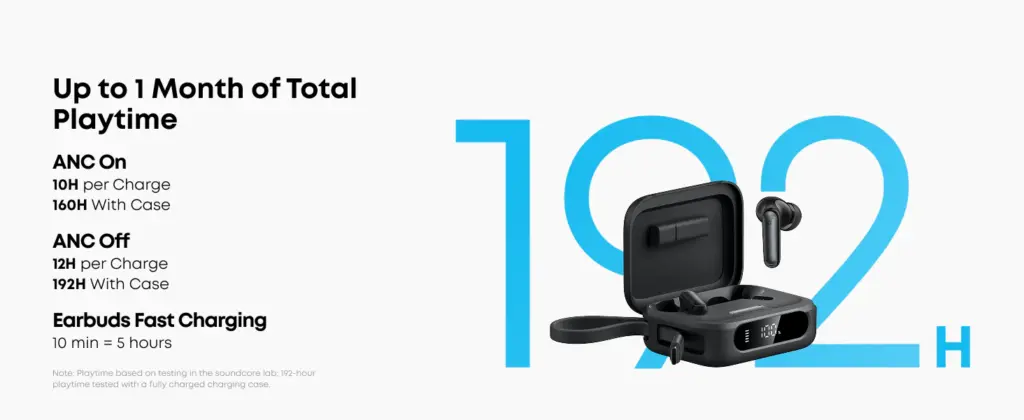
The earbuds offer 12 hours of battery life with ANC off and 10 hours with ANC on. With the case, playback time reaches up to 192 hours. A 10-minute charge gives up to 5 hours of playtime. Active noise cancellation is adjustable through five levels and three modes: Adaptive, Manual, and Multi-Scene (Indoor, Outdoor, and Transport). The Soundcore app allows users to fine-tune settings, including ANC personalized to the ear canal.
Each earbud includes six microphones with AI noise reduction for clearer calls. The drivers are 11 mm dynamic units. The earbuds use Bluetooth 5.3 and support multi-point connection and fast pairing. They are rated IPX5 for water resistance. The charging case features a built-in display showing battery levels for each earbud and the case, Bluetooth connection status, and whether it is charging another device.
The total dimensions of the case are 75.4 mm long, 59.4 mm wide, and 29.6 mm high. The combined weight of the earbuds and case is 115.7 grams.
Pricing & availability
The Soundcore P41i is listed on the UK Soundcore website for £89.99 and is expected to launch in the US at $89.99. A broader rollout in other markets is expected.
In other news, Anker has introduced the Soundcore Sleep A30 earbuds, specifically designed for side sleepers. They feature 3-way noise cancellation, snore masking, and AI Brainwave Audio. Battery life is rated at 9 hours per charge, extending to 45 hours with the charging case.
For more daily updates, please visit our News Section.
Smartphones in 2025 are no longer just about speed, battery life, or camera prowess; they’re about feel. And weight is quietly becoming a spec that matters again. As phone screens grow larger and batteries swell past the 5000mAh mark, some manufacturers are pushing back against the gravity of modern slabs with smarter design, lighter materials, and tighter engineering. The result: a new wave of devices that somehow manage to pack flagship power or serious utility into bodies that weigh less than ever.
Here are seven of the lightest smartphones launched in 2025, across flagship, midrange, foldable, and even budget segments, that prove you don’t need to feel the heft to get high-end function.
Samsung kicked off the year strong with the Galaxy S25, a phone that returns to basics in the best possible way. At just 162 grams, it’s one of the lightest premium smartphones in recent memory, all without cutting the muscle. It runs on the 3nm Snapdragon 8 Elite chipset, co-engineered with Qualcomm, paired with a 4000mAh battery and a triple-camera system that includes a 50MP main sensor.
It’s rare for a flagship with a glass-and-metal build to drop below 170g, but Samsung managed to shave off weight from last year’s S24 (~167g) by refining materials and internal layouts. The 6.2-inch AMOLED screen, IP68 rating, and Gorilla Glass Victus 2 finish make it feel anything but stripped down. The Galaxy S25 is a reminder that premium doesn’t have to be heavy.
Please Note: When you buy something using the links in our articles, we may earn a small commission at no cost to you.
2. Samsung Galaxy S25 Edge (163g)
If the S25 is compact elegance, the S25 Edge is its futuristic twin, sleek, long, and impressively thin. At just 5.8mm thick and 163 grams, this 6.7-inch phone is lighter than many smaller devices. Samsung gave it the same Snapdragon 8 Elite processor and 12GB of RAM, but it sacrifices the telephoto lens and drops the battery slightly to 3900mAh to maintain that razor-thin profile.
It’s less about being the most powerful device on paper and more about showing what’s possible when you prioritize design. Samsung calls it the lightest “phablet-class” flagship of 2025, and it holds up in hand: light, sturdy, and surprisingly ergonomic for its size.
Please Note: When you buy something using the links in our articles, we may earn a small commission at no cost to you.
3. Xiaomi 15 (189–191g)
At first glance, Xiaomi’s latest flagship might seem like a typical premium phone. But at under 191 grams with a 5240mAh battery, the Xiaomi 15 is anything but average. It achieves the rare feat of combining longevity and lightness in a compact chassis. The 6.36-inch AMOLED display, 120Hz refresh rate, Snapdragon 8 Elite chip, and Leica-tuned triple 50MP camera system round out the package.
With 90W wired charging and a slim 8.1mm profile, Xiaomi shows how to maximize without overstuffing. In a market where most flagships with 5000mAh+ batteries weigh well over 210g, the Xiaomi 15 stands out as a clever exercise in balancing form and function.
Please Note: When you buy something using the links in our articles, we may earn a small commission at no cost to you.
4. Google Pixel 9a (186g)
Google’s Pixel 9a hits that sweet spot of size, weight, and simplicity. At 185.9g, it’s the lightest phone in Google’s 2025 lineup, even lighter than the flagship Pixel 9. You still get a 6.3-inch OLED screen, the latest Tensor G4 chip, and a generous 5100mAh battery.
The design is clean and practical, with a plastic-aluminum frame that keeps weight down without feeling cheap. It includes wireless charging, IP67 water resistance, and a dual-camera setup (48MP main + 13MP ultrawide). While it’s not featherlight by absolute standards, for a midrange 5G phone with real stamina, the Pixel 9a feels refreshingly light in the hand.
Please Note: When you buy something using the links in our articles, we may earn a small commission at no cost to you.
5. Vivo V50 (189g)
Vivo has quietly built a reputation for making well-balanced midrange phones, and the V50 continues that streak. With a 6.7-inch AMOLED screen and a 5000mAh battery, it should feel hefty, but it doesn’t. At 189 grams, the Satin Black edition of the V50 feels unexpectedly light, especially compared to similar phones that tip the scale past 200g.
It’s powered by a Snapdragon 7 Gen 3 chip with up to 12GB RAM, supports 90W fast charging, and includes dual 50MP cameras. Its 7.4mm thin body makes it easier to grip and pocket, while the polished design keeps it stylish. Vivo didn’t compromise on screen size or endurance, it simply engineered smarter.
Please Note: When you buy something using the links in our articles, we may earn a small commission at no cost to you.
6. Motorola Razr Ultra 2025 (199g)
Foldables are notorious for bulk, but Motorola’s 2025 Razr Ultra proves they don’t have to be. Despite a 7-inch inner screen, 4-inch outer display, and a huge 4700mAh battery, the Razr Ultra weighs just 199 grams. That’s practically unheard of in the foldable space.
The Snapdragon 8 Elite and 16GB of RAM make it a powerhouse, but it’s the titanium hinge and efficient component layout that really deserve credit. For comparison, Samsung’s Z Flip 6 (2024) comes in at around 188g with a far smaller battery. Motorola traded a few extra grams for all-day battery life, and it’s a fair deal.
Please Note: When you buy something using the links in our articles, we may earn a small commission at no cost to you.
7. Tecno Spark Slim (166g)
Tecno shocked the tech world at MWC 2025 with the Spark Slim, a concept phone that feels like it belongs in a sci-fi flick. Measuring just 5.75mm thick and weighing 166 grams, it’s the thinnest phone ever revealed, yet it houses a 5200mAh battery. Yes, really.
This phone is more proof-of-concept than daily driver, with modest specs and limited availability, but it makes a point: thin and light is possible, even in the budget segment. Whether or not the Spark Slim makes it to mass market, it sets a new benchmark.
For more daily updates, please visit ourNews Section.
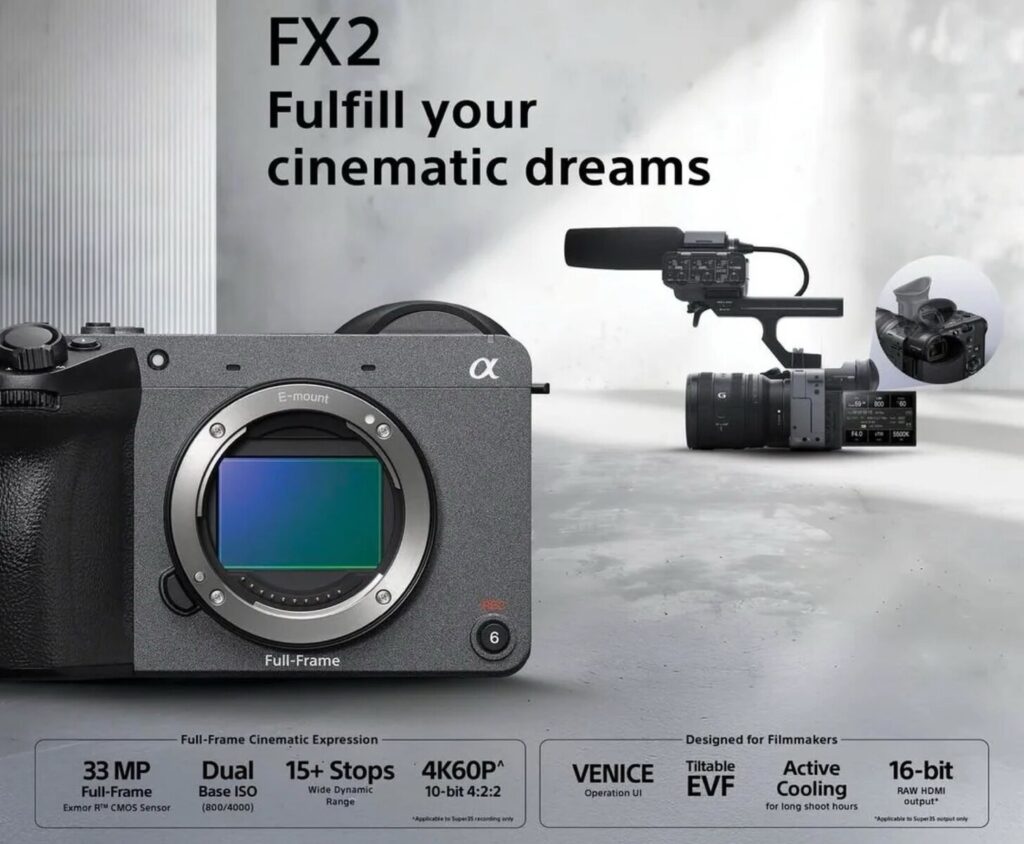
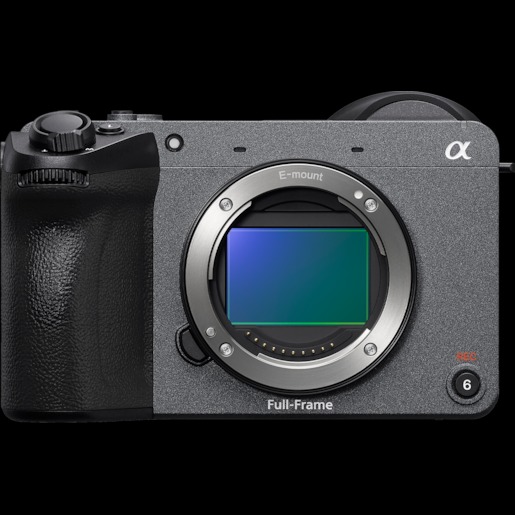
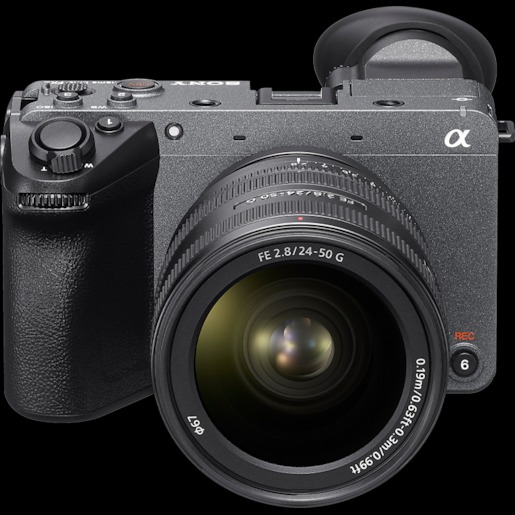
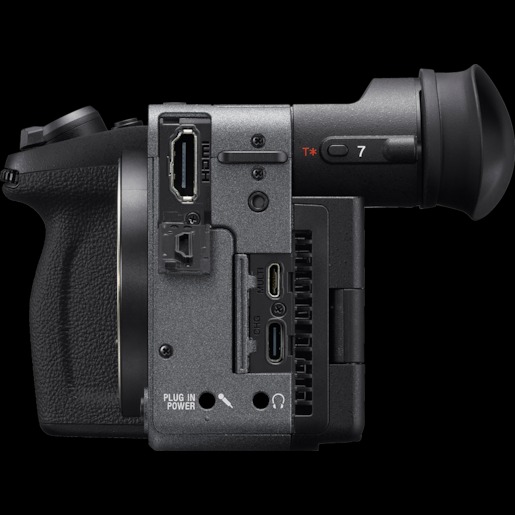
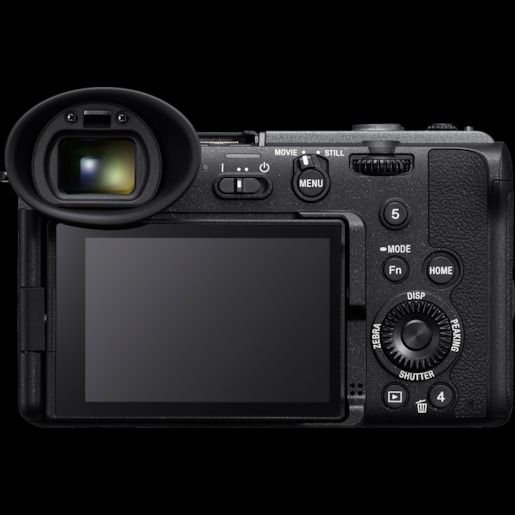
Sony has launched the FX2 (model ILME-FX2), the latest full-frame camera in its Cinema Line. It’s aimed at independent filmmakers and small crews looking for professional video tools in a compact body. The FX2 shares the same design as the FX3 and FX30 but adds key upgrades based on user feedback.
Full-Frame Sensor and Recording
The FX2 uses a 33MP back-illuminated Exmor R full-frame sensor. It supports up to 15+ stops of dynamic range with S-Log3 and has dual base ISO settings of 800 and 4000. It can go up to ISO 102400 for low-light recording.
It records in 4:2:2 10-bit All-Intra and supports formats like XAVC SI DCI 4K at 24p. It can record 4K at up to 60fps and Full HD at up to 120fps for slow-motion. You can load up to 16 custom LUTs for preview and use modes like Cine EI, Cine EI Quick, and Flexible ISO for log shooting.
The camera includes built-in S-Cinetone and several Creative Look profiles. It supports 1.3x and 2.0x desqueeze for anamorphic lenses.
Design and Build
The FX2 is compact and lightweight, measuring 129.7 x 77.8 x 103.7 mm and weighing about 679g. It has three built-in mounting points and an optional top handle. It includes an internal fan and heat dissipation system, allowing up to 13 hours of continuous 4K 60p recording.
Autofocus and Stabilization
It includes Real-Time Autofocus that tracks people, animals, birds, vehicles, and insects. It also features AF Assist, focus breathing compensation, and adjustable transition speed and sensitivity. Active and Dynamic Active Modes offer stable handheld shooting. Auto Framing and Framing Stabilizer features help when the camera is mounted on a tripod.
Display and Controls
The FX2 has a new 3.68-million-dot tilting electronic viewfinder and a 3.0-inch touchscreen LCD with a variable angle. The control layout includes a customizable BIG6 screen that shows FPS, ISO, shutter speed, white balance, look, and aperture. The camera interface rotates automatically for vertical shooting.
Stills and Modes
It includes a “Log Shooting” mode for high-resolution 33MP still photos. A MOVIE/STILL mode lever allows quick switching, and a long press on the Fn button brings up shooting mode options. Menus adjust automatically based on the selected mode.
Audio and Connections
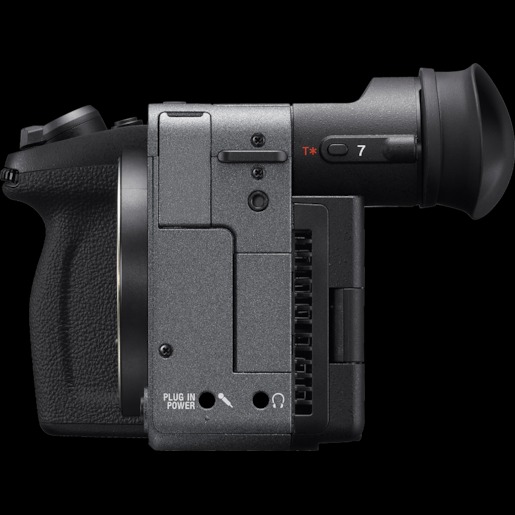
The kit version includes a handle with two XLR/TRS ports and a 3.5mm mic input, supporting 4-channel 24-bit audio. It outputs video through HDMI Type-A (4K 60p, 4:2:2 10-bit, and 16-bit RAW). It has dual-band Wi-Fi, USB-C (10 Gbps with Power Delivery), and LAN support via adapter. It supports USB and network streaming.
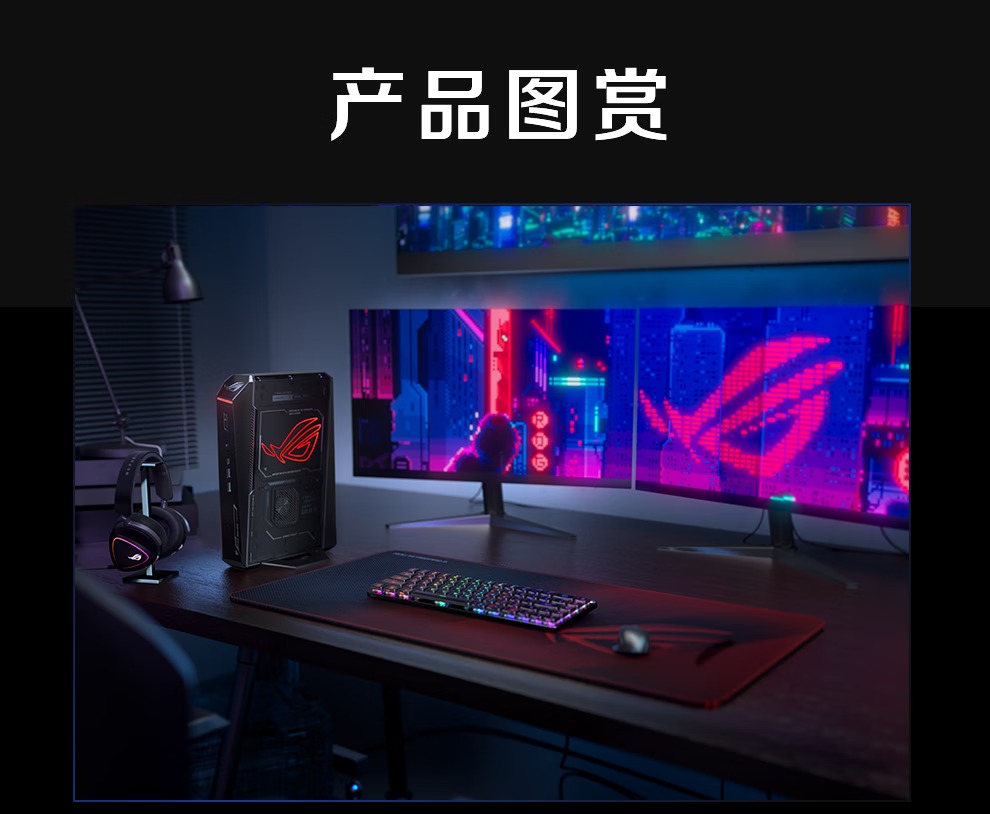
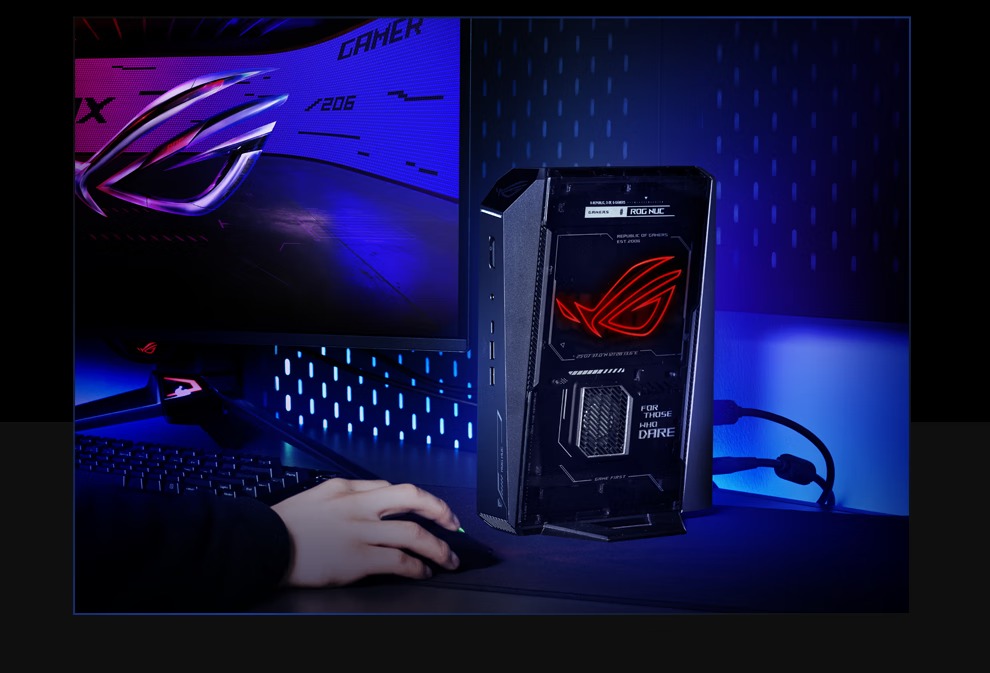
ASUS has released the 2025 ROG NUC mini PC on JD.com. It features an Intel Core Ultra 9-275HX processor, NVIDIA RTX 5080 Laptop GPU, 32GB DDR5 RAM, and 2TB SSD. The system is priced at 24,999 yuan (~$3,470).
The NUC has a compact size of 282.4 x 187.7 x 56.5 mm, with a total volume of 3 liters. It keeps the 2024 design and adds RGB lighting effects. The casing includes airflow patterns and lighting synced to different games.
The CPU is a 24-core, 24-thread chip with a max clock speed of 5.4GHz, 76MB cache, and built-in NPU. The RTX 5080 GPU runs at 175W and supports DLSS 4, Smooth Motion, and NVIDIA Studio features. The full system can use up to 250W of power across the CPU and the GPU.
For cooling, it uses three fans and dual vapor chamber heat plates. There’s a separate airflow for the memory and SSD to keep temperatures under control. This helps maintain performance during heavy use.
On the front, the NUC has one 3.5mm headphone jack, one USB-C 3.2 Gen 2 port, and two USB-A 3.2 ports. On the back, it offers four USB-A 3.2 Gen 2 ports, one Thunderbolt 4 port, one 2.5G LAN port, two HDMI 2.1 ports, and two DisplayPort 2.1 outputs. It supports four 4K monitors at once.
Connectivity includes Wi-Fi 7 and Bluetooth 5.4. The system runs Windows 11 and includes ROG BIOS for manual tuning. Users can adjust voltage, memory, and fan speeds. Armoury Crate software provides real-time system monitoring and control.
The NUC meets MIL-STD-810H durability standards and supports tool-free upgrades. It’s built for users who want strong performance in a small desktop without skipping on ports, cooling, or custom settings.
For more daily updates, please visit our News Section.
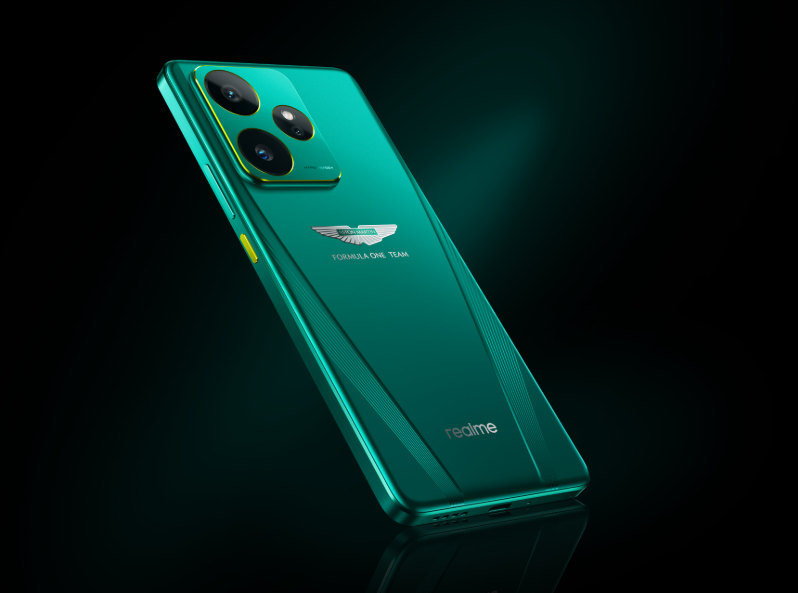
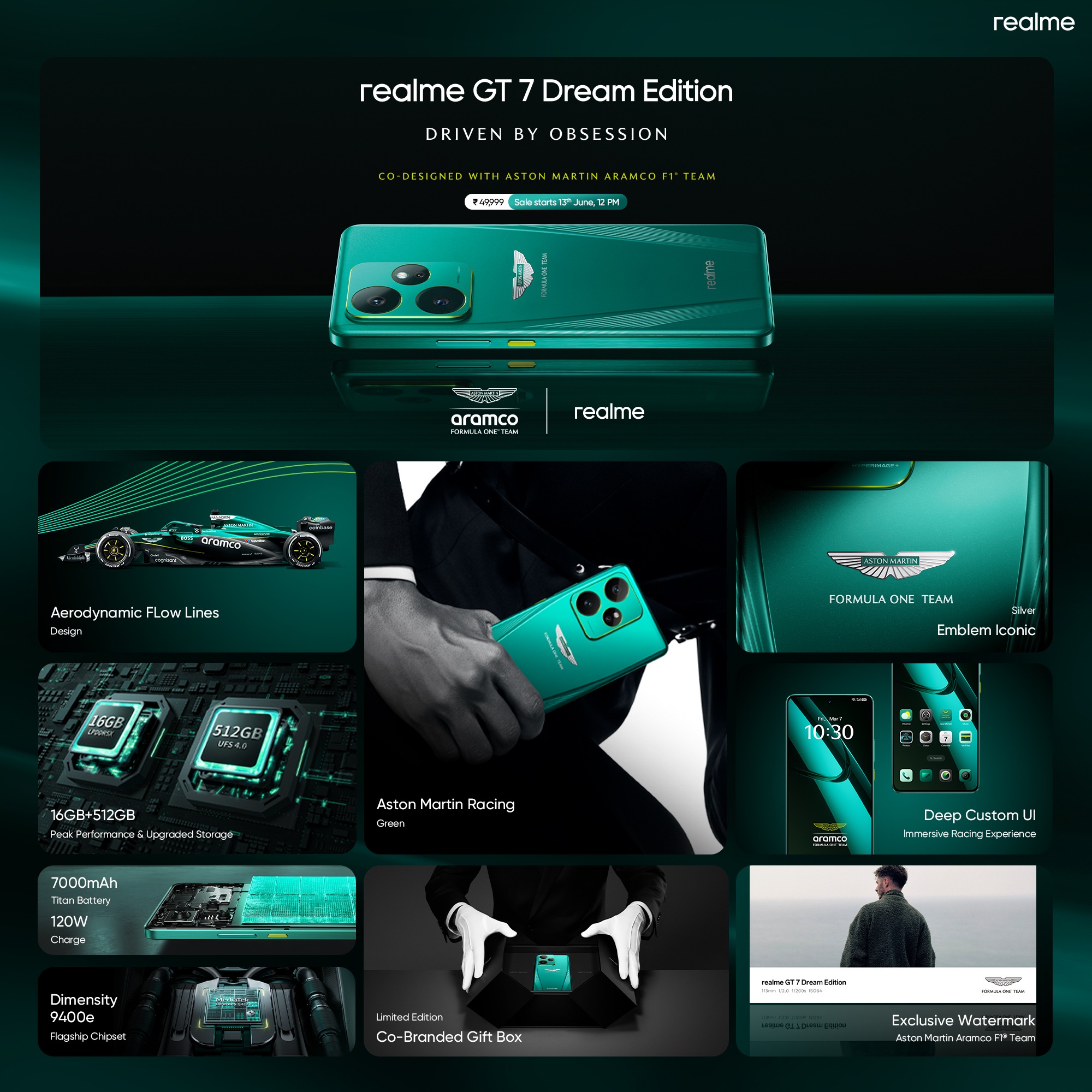
The Realme GT 7 Dream Edition, which recently launched alongside the Realme GT 7 and GT 7T, is a limited-edition smartphone created in partnership with the Aston Martin Aramco Formula 1 Team. It brings unique design changes, exclusive software, and special packaging that set it apart from the standard model.
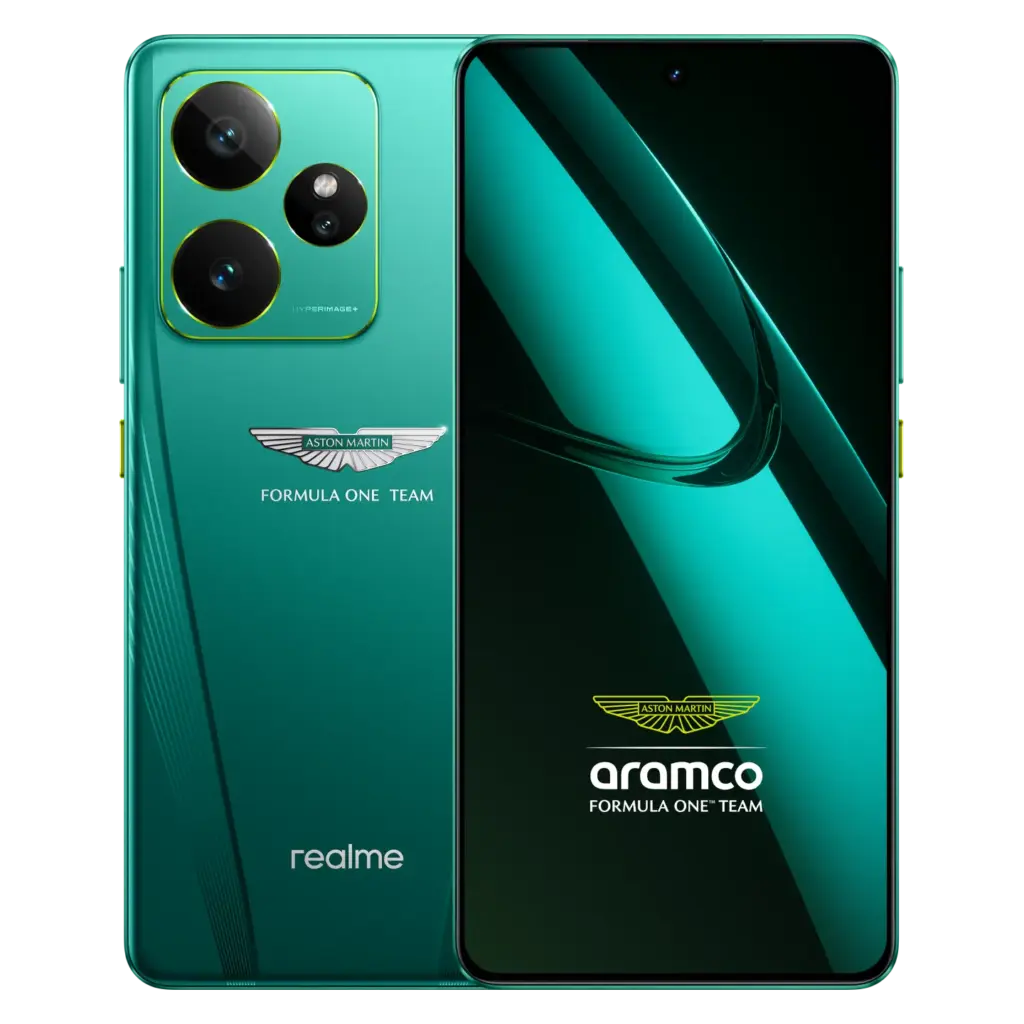
The phone comes in Aston Martin’s Racing Green color, with silver-etched logos of both Realme and Aston Martin on the back. The rear also features aerodynamic flow lines inspired by Aston Martin’s F1 cars. The power button is yellow instead of the usual red or gold, and yellow accents are used around the camera island and lenses. The camera module itself is slightly smaller than the one on the regular GT 7.
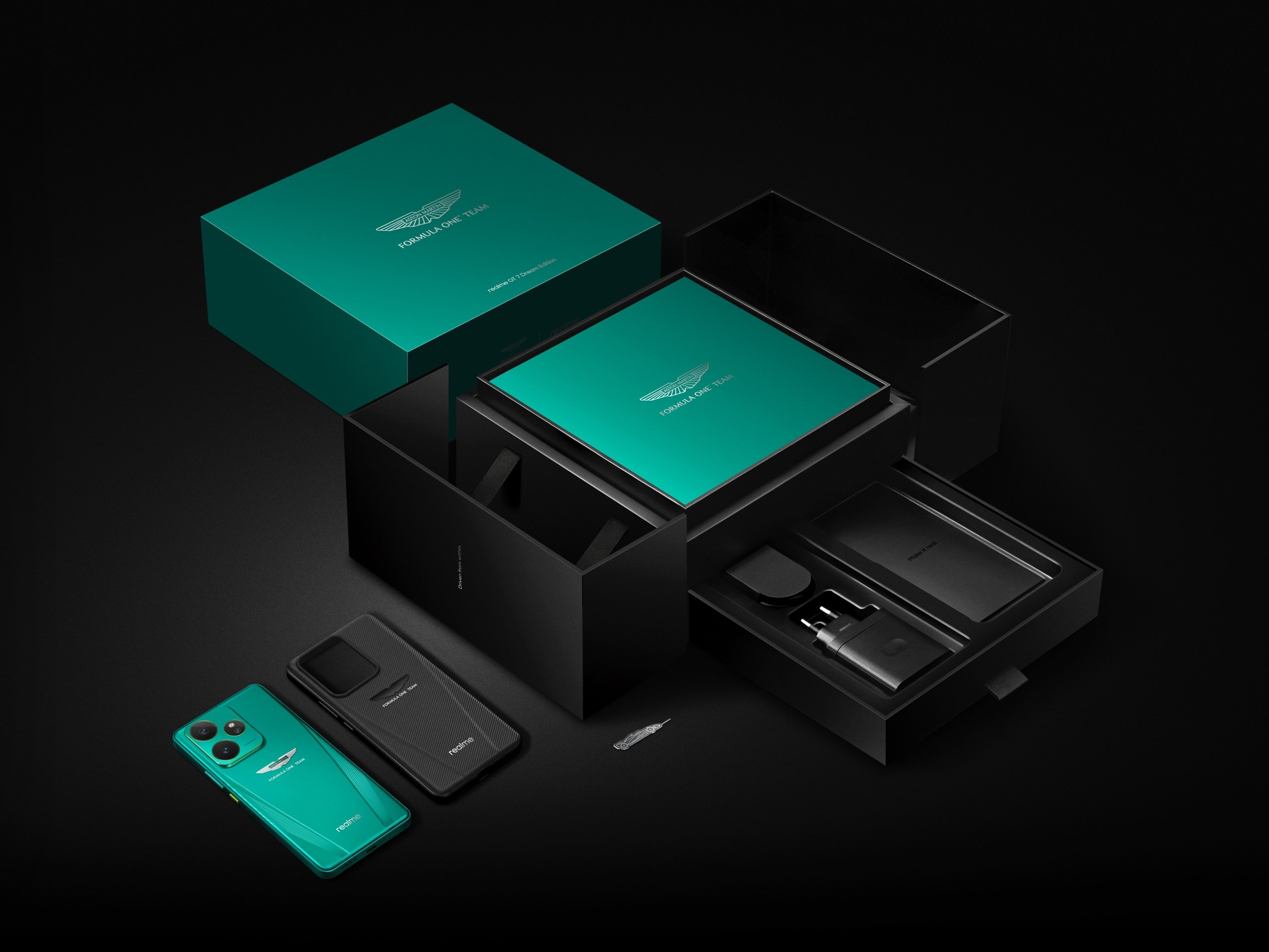
The software includes an Aston Martin boot screen, custom app icons, exclusive wallpapers, and a special charging animation. These changes are built into the phone and are not available on other versions. The phone comes in a green collector’s box. Inside, it includes a black grip case with a cutout that shows the Aston Martin logo and a SIM ejector tool shaped like a Formula 1 car.
The Dream Edition is only available in one configuration: 16GB RAM and 512GB storage. The hardware specs remain the same as the regular GT 7, but this version is designed to give a premium experience through its design and branding.
Pricing & availability
The Realme GT 7 Dream Edition is priced at ₹49,999 in India and €900 in Europe. It is available for pre-order and targets users who want more than just performance from their smartphone.
For more daily updates, please visit our News Section.
Samsung’s upcoming foldables, the Galaxy Z Fold 7 and Z Flip 7, are set to launch this summer, and they’re bringing something special: the stable version of One UI 8, likely running on Android 16 right out of the box. The company just kicked off its One UI 8 beta program and dropped some exciting hints about these devices, confirming their launch window and a fresh software experience. Here’s what’s coming.
Samsung announced its One U 8 beta program yesterday
In its announcement for the One UI 8 beta program, Samsung revealed that its “newest foldables” will hit the market this summer, likely in early July based on earlier rumors. The Galaxy Z Fold 7, Flip 7, and possibly the Flip 7 FE will be the first to ship with the stable One UI 8 update, making them some of the earliest devices to run Android 16.
One UI 8 enhances everyday convenience
This marks a major shift in Samsung’s Android OS rollout strategy. Until now, new One UI versions based on the latest Android release have typically debuted with the Galaxy S series. This year, however, the foldables are taking the lead—a change reportedly aligned with Google’s updated Android 16 timeline.
Samsung is calling One UI 8 a major step forward, packed with user experience (UX) improvements and AI-driven features to make daily tasks smoother and more personalized. The company’s tight collaboration with Google means this software will blend seamlessly with its foldable hardware, offering productivity-focused experience tailored for Galaxy users.
The One UI 8 beta is already rolling out for Galaxy S25 users in Korea, Germany, the UK, and the US, giving them a sneak peek at what’s to come. Other Galaxy devices and regions will get access later, but the Fold 7 and Flip 7 will lead the pack with the stable version pre-installed. Samsung says One UI 8 marks a new rhythm for its software updates, with big upgrades in interface design and AI capabilities that should make everything from multitasking to notifications feel more intuitive.
We use cookies on our website to give you the most relevant experience by remembering your preferences and repeat visits. By clicking “Accept”, you consent to the use of ALL the cookies.
This website uses cookies to improve your experience while you navigate through the website. Out of these, the cookies that are categorized as necessary are stored on your browser as they are essential for the working of basic functionalities of the website. We also use third-party cookies that help us analyze and understand how you use this website. These cookies will be stored in your browser only with your consent. You also have the option to opt-out of these cookies. But opting out of some of these cookies may affect your browsing experience.
Necessary cookies are absolutely essential for the website to function properly. This category only includes cookies that ensures basic functionalities and security features of the website. These cookies do not store any personal information.
Any cookies that may not be particularly necessary for the website to function and is used specifically to collect user personal data via analytics, ads, other embedded contents are termed as non-necessary cookies. It is mandatory to procure user consent prior to running these cookies on your website.