Nubia recently confirmed that it will announce the Red Magic 10S Pro series on May 26 in China. While there are many phones with the Snapdragon 8 Elite chip in the market, the upcoming Nubia gaming phone features the Snapdragon 8 Elite Leading Version, an overclocked edition of the regular variant. Ahead of the launch, the topmost variant of the phone, dubbed the Red Magic 10S Pro+, has emerged in AnTuTu’s database with a remarkable score of 3,157,833. At the same time, the brand has confirmed several details about the smartphone.
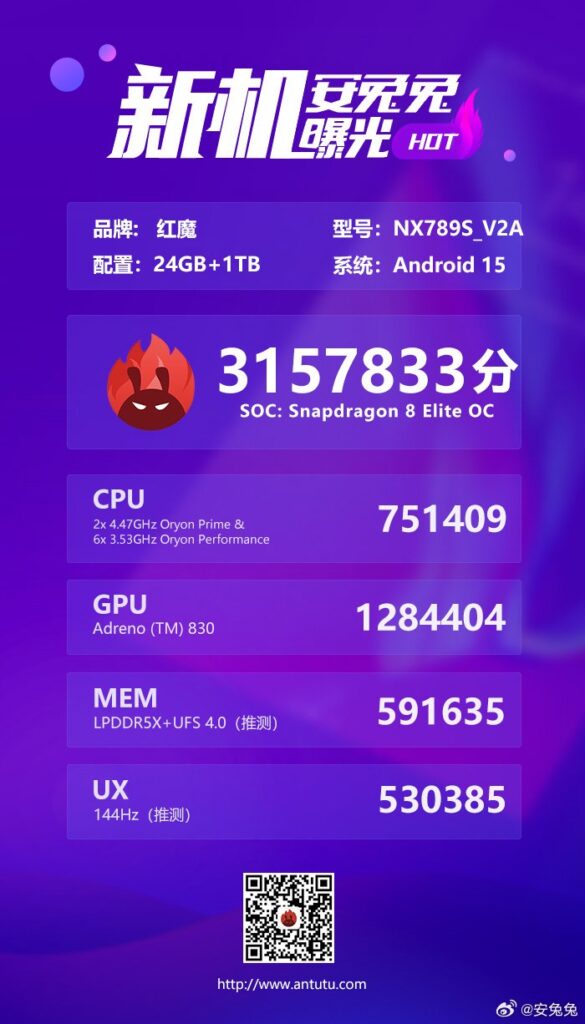
Red Magic 10S Pro+ AnTuTu listing
Red Magic 10S Pro+ AnTuTu listing
According to AnTuTu, the Nubia smartphone with model number NX789S_V2A, which has emerged in its database, is the upcoming Red Magic 10S Pro+. The above-mentioned AnTuTu score is a total of 751,409 (CPU test), 1,284,404 (GPU test), 591,635 (memory test), and 530,385 (UX test).
The AnTuTu listing confirms that the Red Magic 10S Pro+ is powered by the Snapdragon 8 Elite Leading Version, which works at 4.47GHz. It is paired with 24GB of LPDDR5X RAM and 1TB of UFS 4.0 storage. The device is also equipped with a 144Hz display and Android 15.
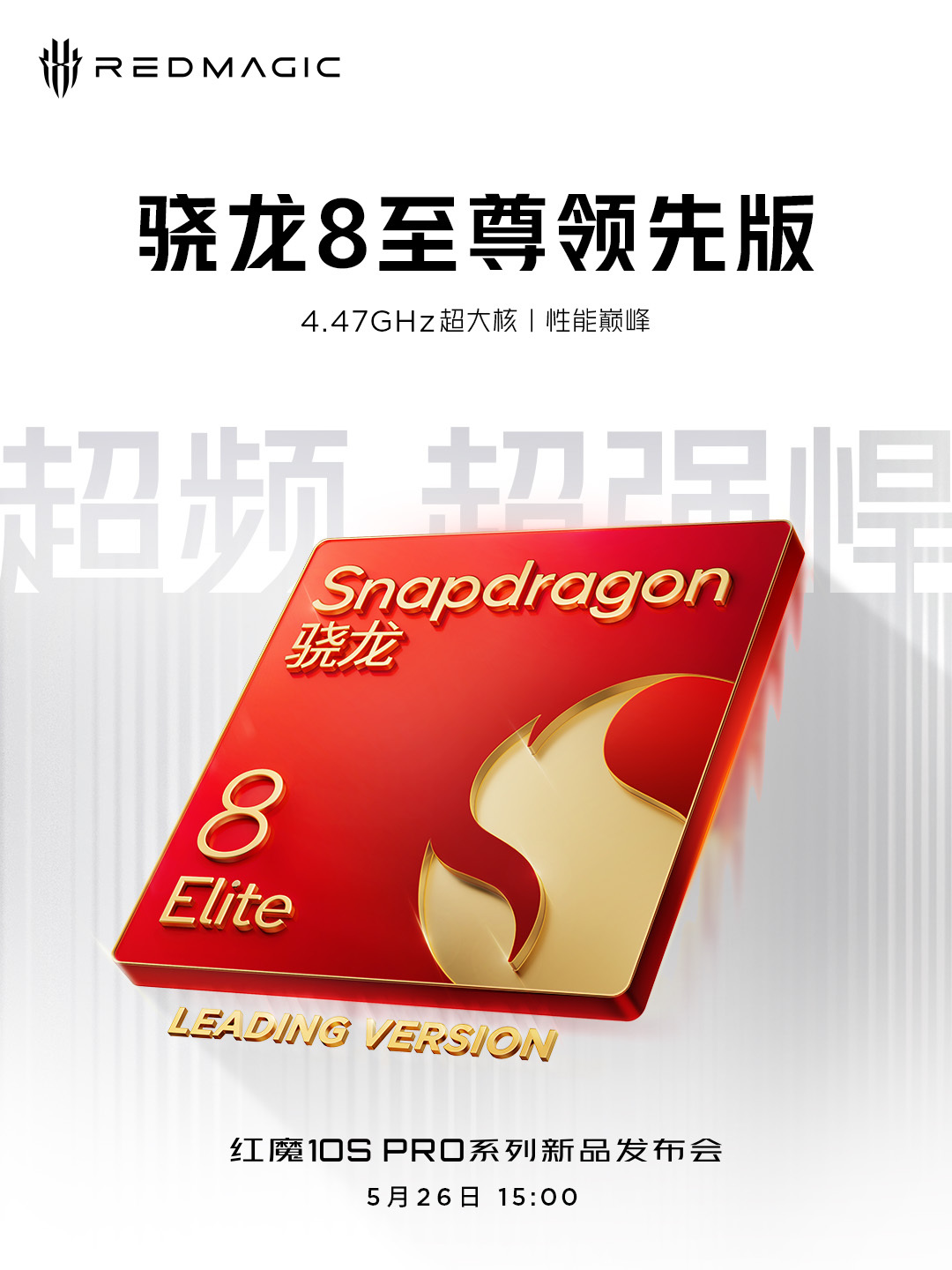
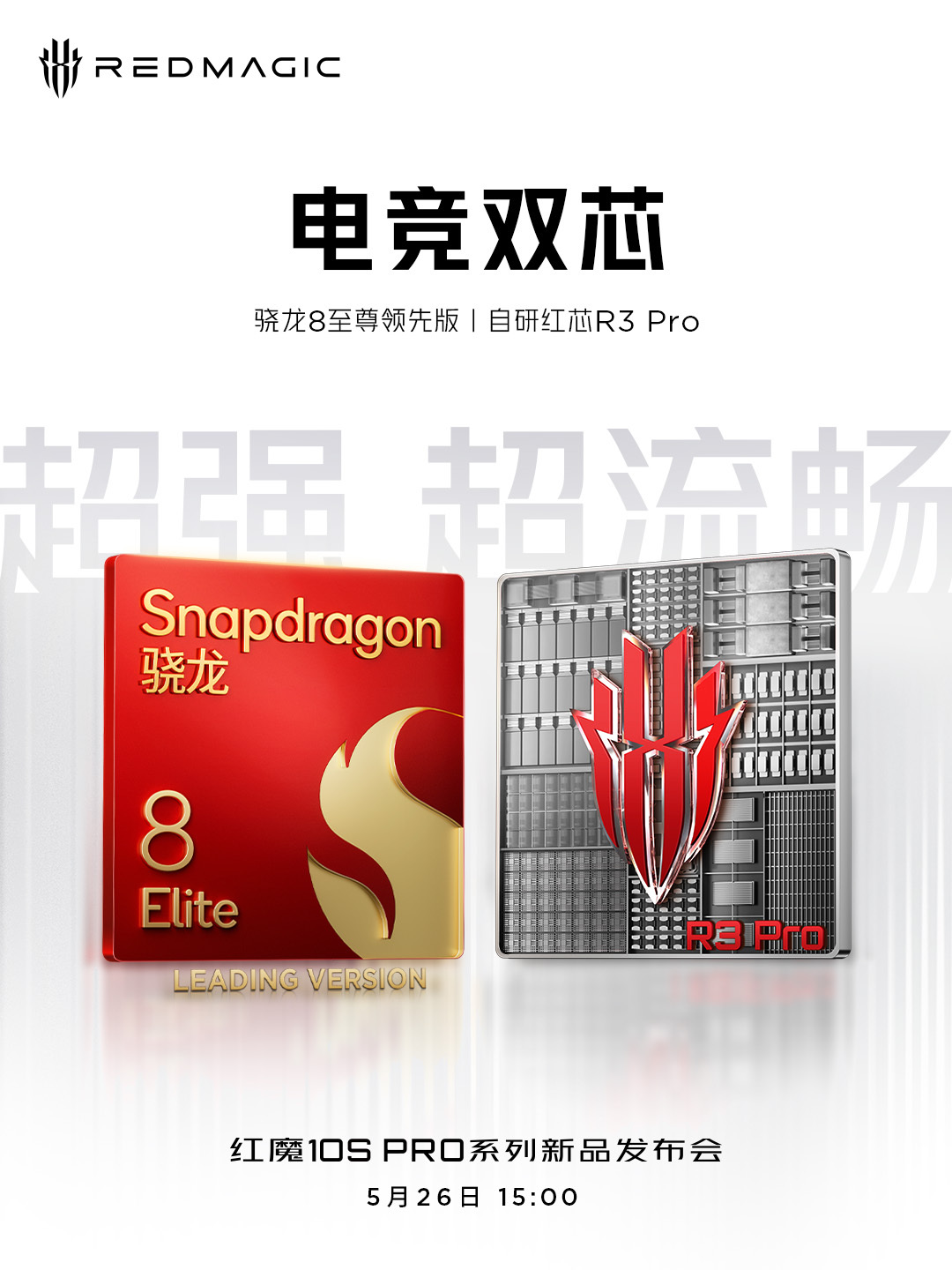
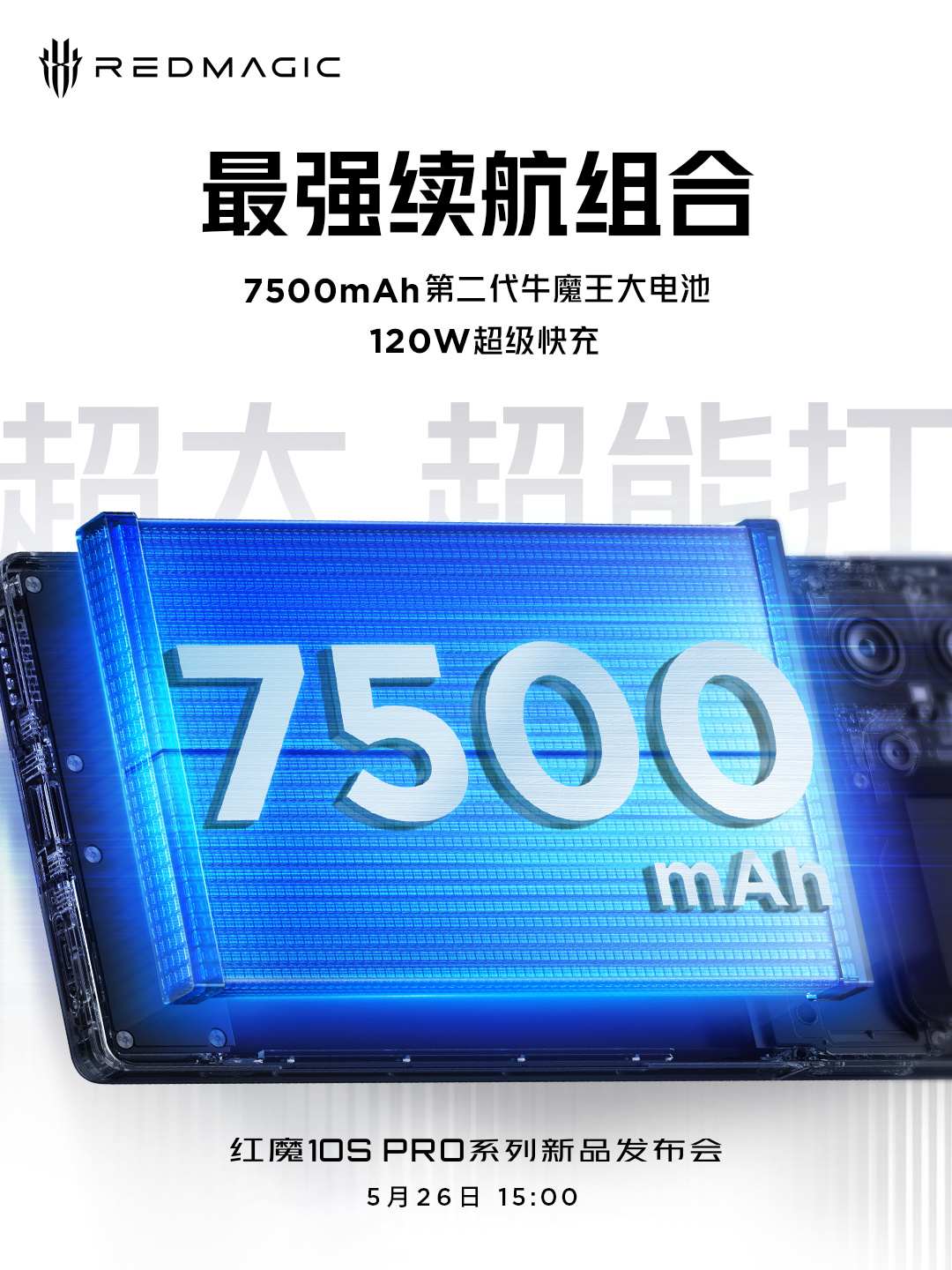
Red Magic 10S Pro – Snapdragon 8 Elite Leading VersionRed Magic 10S Pro – Snapdragon 8 Elite Leading Version, Red Core R3 Pro chipRed Magic 10S Pro – 7,500mAh batteryRed Magic 10S Pro – 120W charging
The official posters released by the brand confirm that the Snapdragon 8 Elite Leading Version will also be joined by the Red Core R3 gaming chip for an enhanced gaming experience. The device will pack a massive 7,500mAh battery with 120W fast charging and bypass charging support.
To say again, it appears that the 24GB+1TB variant will be dubbed as the Red Magic 10 Pro+, while the other memory configuration may carry the Red Magic 10 Pro branding. Overall, the Red Magic 10S Pro series is expected to be an incremental upgrade over the Red Magic 10 series that debuted in Q4 2024 in China.
For more daily updates, please visit our News Section.
Realme is preparing to unveil a new performance-focused smartphone. According to official teasers and announcements from Realme’s China president Xu Qi, the upcoming Neo 7 Turbo will be launched on May 29. Ahead of the launch, the brand has released the following posters to reveal its chipset and tease its semi-transparent design.
Realme Neo 7 Turbo to feature Dimensity 9400e chip
The Realme Neo 7 Turbo is confirmed to be one of the first devices powered by MediaTek’s latest flagship processor — the Dimensity 9400e. This chip is manufactured on TSMC’s advanced 4nm process and features an all-big-core CPU layout consisting of a 3.4GHz Cortex-X4, three 2.85GHz Cortex-X4 cores, and four 2.0GHz Cortex-A720 cores. It also features the Immortalis-G720 MC12 GPU and NPU 790 AI engine. Realme claims benchmark scores have reached an impressive 2.45 million points, making it one of the most powerful phones in the 2,500 Yuan (~$350) and 3,000 Yuan (~$415) price range.
Realme Neo 7 Turbo to sport a semi-transparent design
Another highlight is that the Neo 7 Turbo will feature a semi-transparent back panel. The above post gives a glimpse of the transparent look the device will sport. As per reports, the Neo 7 Turbo will feature a 1.5K flat display and a 7,000mAh battery with 100W fast charging support.
On the memory side, the phone may feature LPDDR5X RAM and UFS 4.0 storage, with configurations going up to 16GB RAM and 1TB storage. The camera setup includes a 50-megapixel Sony IMX882 primary sensor with OIS, paired with an 8-megapixel ultra-wide lens, and a 50-megapixel telephoto camera. Likely, it will be a rebranded version of the Realme GT 7’s global version, which is scheduled to launch next week.
For more daily updates, please visit our News Section.
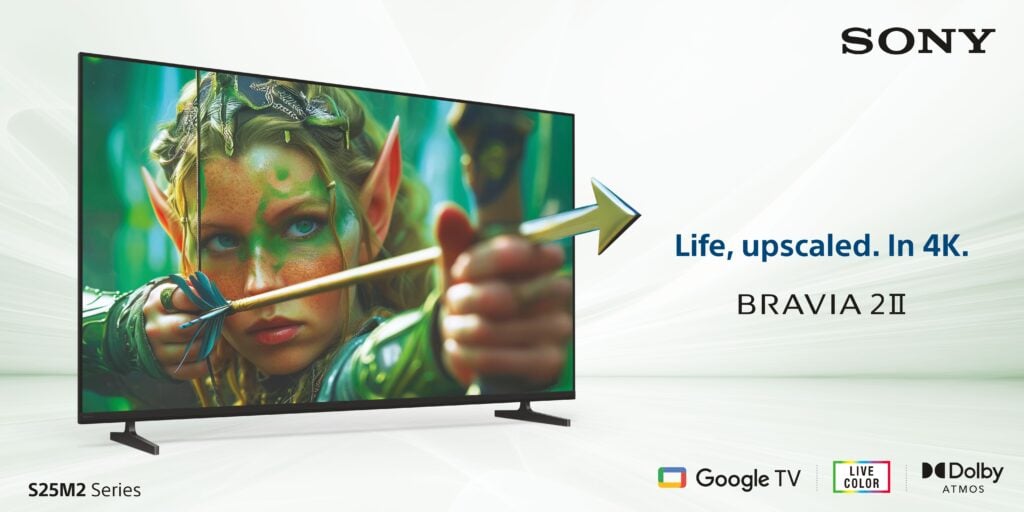
Sony has launched its new Bravia 2 II series in India, offering 4K resolution, enhanced audio, and smart features across multiple screen sizes. The TVs are available in 43-inch, 50-inch, 55-inch, 65-inch, and 75-inch options. All models run on the Sony X1 Picture Processor, which uses advanced algorithms to reduce noise and sharpen details. The built-in 4K X-Reality PRO upscales Full HD and 2K content close to 4K. Motionflow XR technology adds extra frames to deliver smooth visuals in fast-paced scenes.
The series has 20W open baffle down-firing twin speakers, backed by Dolby Atmos and DTS:X. Clear Phase technology adjusts audio frequencies for balanced sound. For smart features, the TVs run on Google TV, which pulls content from multiple apps and subscriptions and arranges it in one place. Users can search using voice commands with Google Assistant. Watchlists can be managed across devices, including phones and laptops. The TVs also support Apple AirPlay and HomeKit for streaming from iPhones and iPads.
The Bravia 2 II series is designed with ultra-slim bezels and a minimalist look. For gaming, it includes Auto Low Latency Mode (ALLM) via HDMI 2.1, which kicks in when a gaming console is turned on. With a PlayStation 5, Auto HDR Tone Mapping optimizes visuals during setup, and the TV automatically switches between Game Mode and Standard Mode based on the content.
The TVs come with access to Sony Pictures Core, offering five movie credits and up to 12 months of access to 100 rotating Sony Pictures titles. Pure Stream enables HDR streaming at up to 80 Mbps, close to 4K UHD Blu-ray quality. A voice-enabled remote is included, and the TVs feature X-Protection PRO for added durability.
Pricing and Availability:
K-75S25M2 (75-inch) – Rs 1,45,990 ($1,707) – Available now
K-65S25M2 (65-inch) – Rs 97,990 ($1,146) – Available now
K-55S25M2 (55-inch) – Rs 75,990 ($888) – Available now
K-43S25M2 (43-inch) – Rs 50,990 ($596) – Available now
K-50S25M2 – Price and sale date to be announced
K-50S22M2 – Price and sale date to be announced
K-43S22M2 – Price and sale date to be announced
Buyers can get up to Rs 5,000 cashback and EMI options starting at Rs 1,849 for the 43-inch model and Rs 2,995 for 55-inch and above. The TVs are available at Sony Centers, major electronics retailers, and online platforms across India.
A new leaked CAD render has revealed the design of the upcoming Xiaomi 16. The image, shared by tipster Majin Bu, shows that the phone will keep the Xiaomi 15’s triple camera layout and squircle-shaped camera housing. However, the fake fourth lens seen on the Xiaomi 15 has been removed. The Leica branding has been moved to the bottom-right of the camera module. The LED flash stays on the right side of the rear camera area.
The render also shows a dual-tone back. The darker part may be a cut-out for a wireless charging coil, though this will likely be covered in the retail model. Xiaomi is expected to launch the phone around late September. The Xiaomi 16 and 16 Pro are likely to be among the first phones powered by Qualcomm’s new Snapdragon 8 Elite 2 chip.
Earlier leaks had already revealed some major specs. The Xiaomi 16 is expected to feature a 6.3-inch flat OLED display with very thin bezels on all four sides. It will run Android 16 with Xiaomi’s upcoming HyperOS 3.0. The phone will have a 6,800mAh battery with 100W charging. In comparison, the Xiaomi 15 had a 5,400mAh battery with 90W charging.
The Xiaomi 16’s battery is larger than others in its category. The OnePlus 13T has a 6,260mAh battery with 80W charging, while the Vivo X200 FE is expected to offer 6,500mAh with 90W charging. Despite the large battery, the Xiaomi 16 is said to keep a slim and light build.
It will include a 50MP triple camera system with a periscope telephoto lens. The Xiaomi 16 Ultra is expected to launch separately in early 2026.
For more daily updates, please visit our News Section.
At Computex 2025, the tech industry’s biggest players put forward their boldest visions for the future of artificial intelligence, both at the cloud and at the edge.
But it wasn’t just the usual suspects like Nvidia and Intel grabbing attention. From MediaTek’s AI ambitions to a neuromorphic chip developed by German researchers, this year’s event revealed a diverse and evolving AI silicon landscape.
Here’s a closer look at the most compelling AI chips and architectures introduced at the show.
1. Nvidia Unveils Grace Blackwell and NVLink Fusion
Nvidia introduced its Grace Blackwell NVL72 architecture at Computex 2025, positioning it as a new standard for high-performance AI computing. The hybrid architecture combines GPUs and CPUs in a tightly fused package and is capable of running trillion-parameter models, real-time inference, and large-scale scientific workloads.
The company also launched NVLink Fusion, a next-generation interconnect designed to enable high-speed chip-to-chip communication. Nvidia confirmed that companies like MediaTek, Qualcomm, and Marvell will adopt NVLink Fusion for building semi-custom AI compute solutions. The move opens Nvidia’s ecosystem to external partners and expands the reach of its AI infrastructure technology.
2. MediaTek’s Custom AI Ambitions and 2nm Leap
MediaTek announced its plan to tape out its first 2nm chip with TSMC in September 2025. According to the company, the new chip will offer up to 15% better performance and 25% greater power efficiency than current 3nm chips. MediaTek aims to use the new node for both mobile devices and high-performance AI applications.
The company also highlighted its collaboration with Nvidia on the DGX Spark, a compact AI supercomputer for developers. MediaTek contributed a custom 20-core CPU architecture to the system and is using its ASIC expertise to design chips tailored for AI model training and inference. MediaTek’s IP in high-speed I/O, SerDes, and optical interfaces supports this initiative.
3. Intel Expands AI and GPU Lineup with Arc Pro and Gaudi 3
Intel introduced the Arc Pro B50 and B60 GPUs, designed for AI inference and workstation-grade computing. The B60 GPU includes 24GB of memory, while the B50 version ships with 16GB. Both models support multi-GPU scaling and are optimized for applications in architecture, engineering, and design.
Intel also showcased Project Battlematrix, a workstation-class platform supporting up to eight Arc Pro B60 GPUs and capable of running AI models with up to 150 billion parameters. The platform is based on Intel Xeon processors and targets AI developers and researchers.
In addition, Intel rolled out new deployment options for its Gaudi 3 AI accelerators. The Gaudi 3 PCIe cards support scalable inference in existing data centers, while rack-scale configurations support up to 64 accelerators per rack and 8.2TB of high-bandwidth memory.
4. TUM Introduces Cloud-Free AI Chip Inspired by the Human Brain
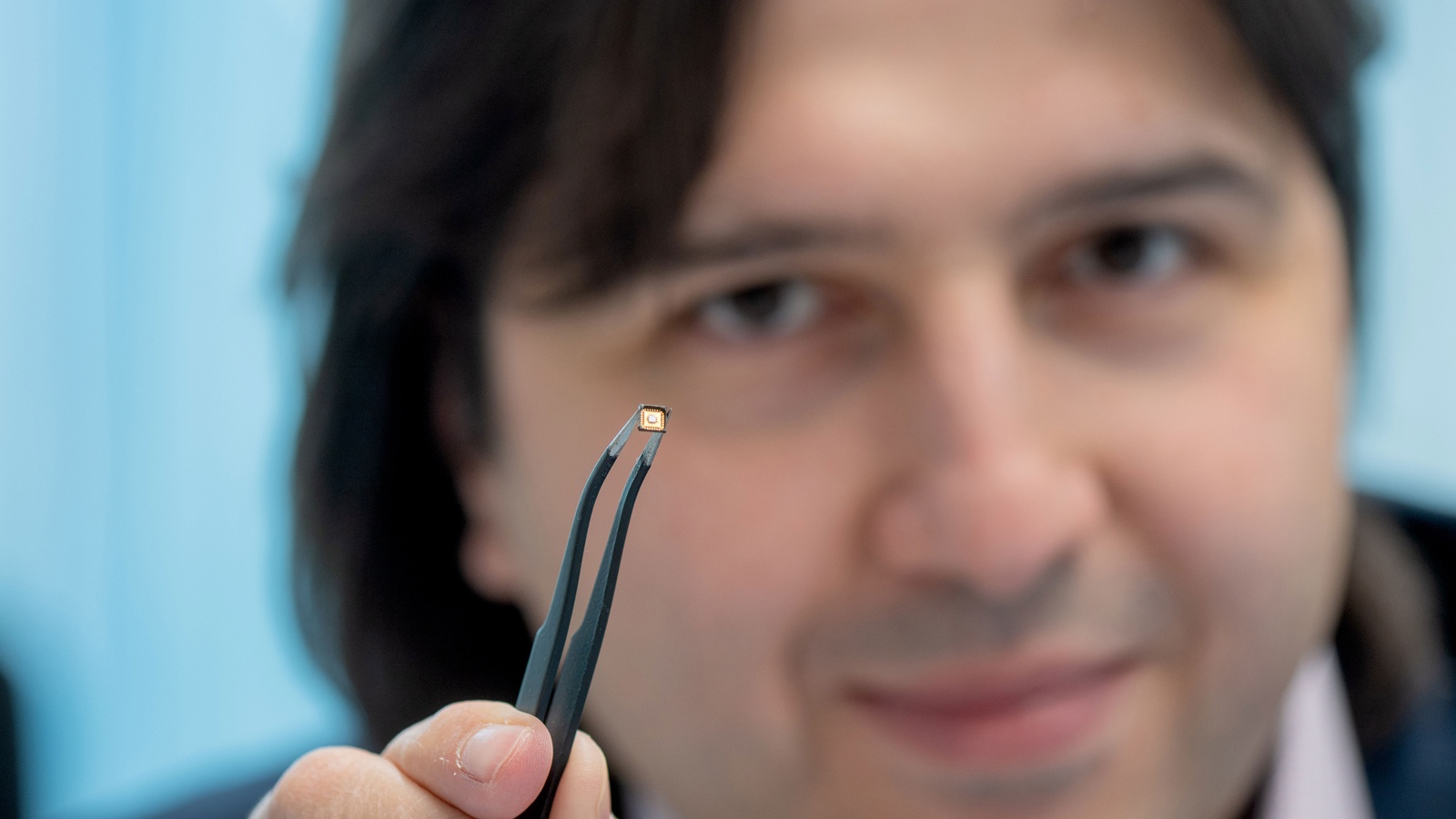
Researchers from the Technical University of Munich (TUM) revealed the AI Pro chip, a neuromorphic processor that does not require cloud connectivity or internet access. The chip performs real-time, on-device inference using a memory-compute integrated architecture. It employs hyperdimensional computing, allowing it to recognize patterns using limited training data.
Professor Hussam Amrouch led the development of the chip, which consumes only 24 microjoules per task, significantly less than conventional AI processors. The AI Pro chip targets specific applications in healthcare, robotics, and autonomous navigation where local processing and data security are essential.
5. Qualcomm Previews Snapdragon X2 and Teases September Launch
Qualcomm did not launch new chips at Computex but used the stage to confirm the dates for its next major event. The company announced that the annual Snapdragon Summit will take place from September 23 to 25 in Hawaii. Qualcomm is expected to launch the Snapdragon 8 Elite 2 for smartphones and possibly introduce the Snapdragon X2 Elite for Windows laptops.
CEO Cristiano Amon said Qualcomm plans to expand its presence in the PC market, aiming for more than 100 Snapdragon-powered laptop models by next year. He also highlighted the growth of native Arm-compatible apps, claiming that over 1,400 games now run on Snapdragon devices.
6. The AI Chip Race Isn’t Slowing Down
Between Nvidia’s rack-scale ambition, MediaTek’s 2nm plan, Intel’s workhorse GPUs, and TUM’s sci-fi-like brain chip, Computex 2025 made one thing abundantly clear: the AI chip market isn’t just booming — it’s evolving. Fast.
And the conversation is no longer about which chip is faster. It’s about where those chips live, how they connect, and what new kinds of intelligence they can unlock.
For more daily updates, please visit our News Section.
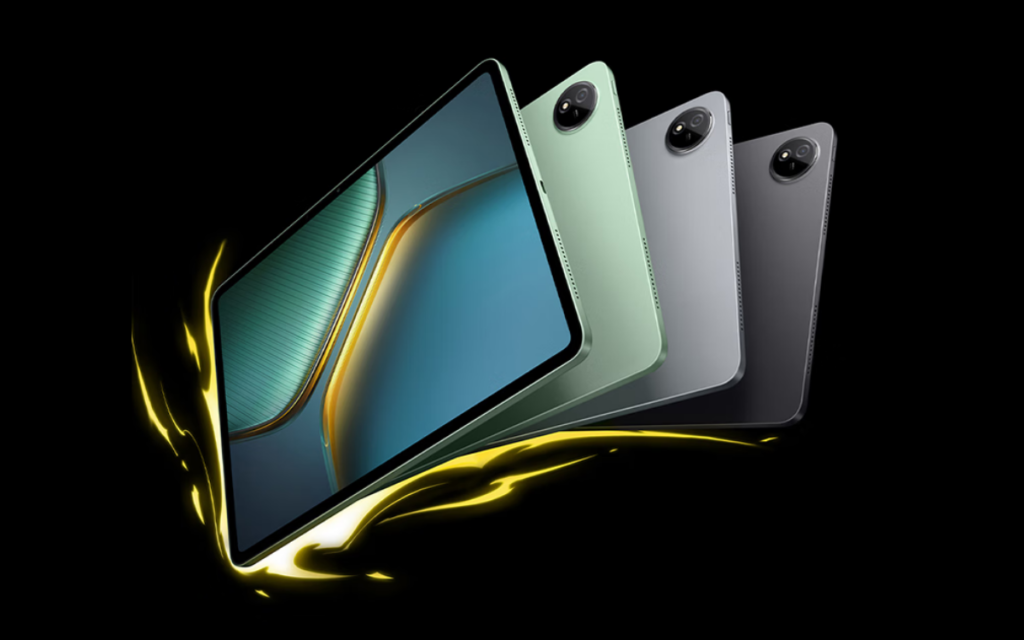
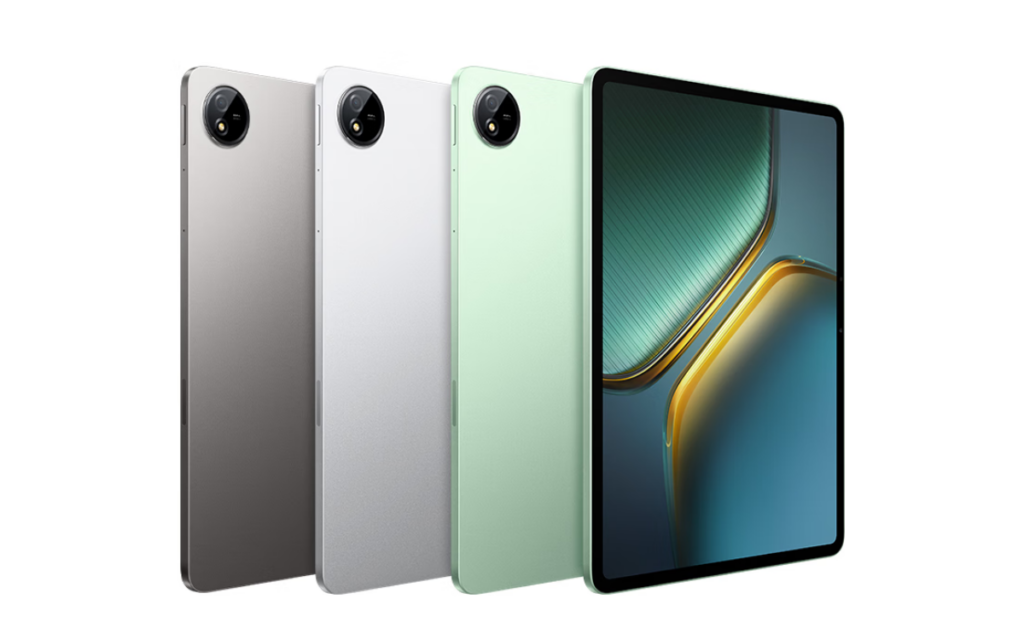
iQOO has launched the Pad 5 and Pad 5 Pro tablets in China, expanding its presence in the high-performance Android tablet space. The new models come with MediaTek’s latest flagship chipsets, high refresh rate displays, and large batteries. iQOO is positioning both tablets as versatile devices for entertainment, gaming, and productivity.
iQOO Pad 5 and Pad 5 Pro Specifications
The Pad 5 Pro features a 13.2-inch LCD display with a 3.1K resolution (3096×2064), a 144Hz refresh rate, and up to 1200 nits of peak brightness. The display supports HDR10 and the P3 wide color gamut, and maintains professional-grade color accuracy with Delta E ≈ 0.8.
The standard Pad 5 uses a 12.1-inch 2.8K display (2800×1968) with the same refresh rate but a lower peak brightness of 900 nits. Both panels include hardware-level low blue light filtering, DC dimming, and a paper-like reading mode.
The Pad 5 Pro runs on the Dimensity 9400+ chipset, built on TSMC’s second-generation 3nm process. It features a 3.73GHz ultra-large core and a 12-core Immortalis-G925 GPU. The Pad 5 uses the Dimensity 9300+ chipset with the Immortalis-G720 GPU. Both chipsets are developed using the Blue Crystal chip stack, which improves performance and efficiency. The Pro model achieves AnTuTu scores above 2.94 million.
Both tablets run Android 15 with OriginOS 5D. They feature floating windows, remote PC control, and cross-device collaboration through the Connection Center. The system supports WPS Office, CAJViewer, document editing, and screen extension for a desktop-like work experience. They also include AI-powered tools like voice transcription, smart meeting summaries, and presentation generation powered by the DeepSeek-R1 engine.
The Pad 5 Pro includes a 13MP rear camera and an 8MP front-facing camera. The Pad 5 has an 8MP rear camera and a 5MP front camera. Both setups cover basic photography and video conferencing needs.
The Pad 5 Pro comes with a 12,050mAh battery and supports 66W fast charging. iQOO claims it can deliver up to 18 hours of offline video playback and 65 days of standby time. The Pad 5 has a 10,000mAh battery with 44W charging. Both tablets use intelligent battery management systems and multiple energy-saving features to extend usage and preserve battery health.
The Pad 5 Pro weighs 635 grams and is 6.07mm thick. It includes an 8-speaker sound system with high-low frequency separation and Super Audio 6.0 tuning. The Pad 5 is slightly thicker at 6.62mm and weighs 590 grams. It has a 6-speaker setup. Both models support Wi-Fi 7, Bluetooth 5.4, and USB Type-C (USB 3.2 Gen 1).
iQOO uses a 40,600mm² heat dissipation structure in the Pad 5 Pro and a 34,200mm² system in the Pad 5. Both devices support accessories like the Smart Touch Keyboard and Pencil 3, which include magnetic charging and low-latency input.
Pricing and Availability
The Pad 5 is available in four variants: 8GB+128GB for 2,499 yuan (approx. $345), 8GB+256GB for 2,799 yuan (approx. $385), 12GB+256GB for 3,099 yuan (approx. $425), and 16GB+512GB for 3,499 yuan (approx. $480).
The Pad 5 Pro comes in four configurations: 8GB+256GB for 3,199 yuan (approx. $440), 12GB+256GB for 3,499 yuan (approx. $480), 12GB+512GB for 3,799 yuan (approx. $520), and 16GB+512GB for 3,999 yuan (approx. $545).
Both tablets are now available in China through Vivo’s official eStore and retail channels.
For more daily updates, please visit our News Section.
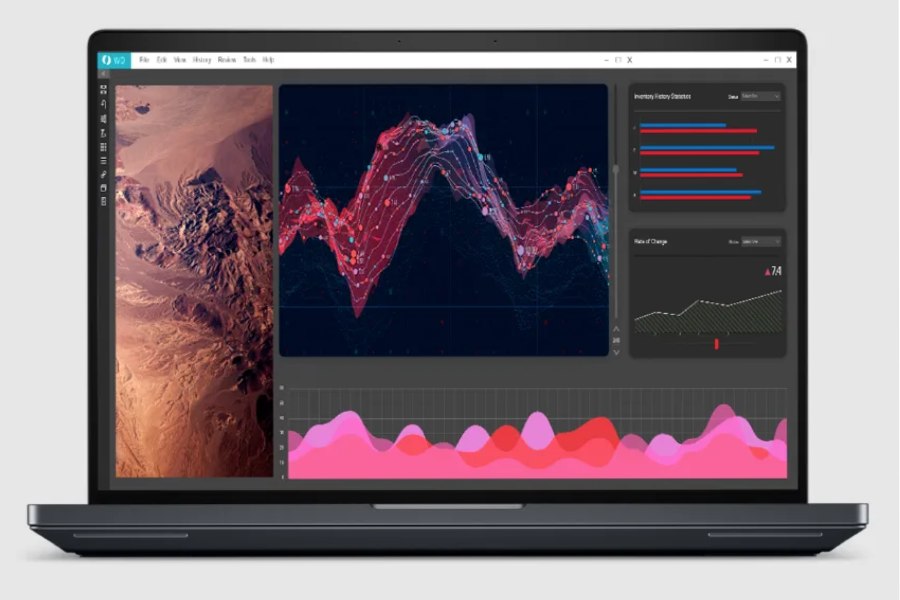
Dell has officially joined the enterprise AI arms race with its latest mobile workstation, the Pro Max Plus. The standout feature—and really the only one the company is talking about—is its use of a discrete enterprise-grade NPU, a first in the category. That makes this laptop more about AI than anything else.
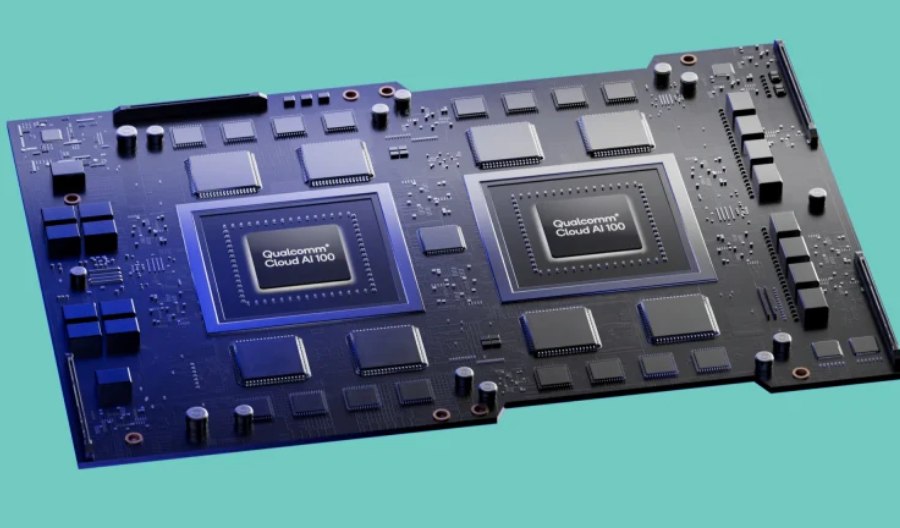
At the heart of the Pro Max Plus is the Qualcomm AI 100 PC Inference Card. Dell claims this makes it the “world’s first mobile workstation with an enterprise-grade discrete NPU.”
Dell Pro Max Plus is all about AI
The card carries 32 dedicated AI cores and 64GB of memory specifically allocated for AI workloads. The workstation probably has separate shared memory for other tasks. So, it’s the kind of configuration we’d normally see on server racks.
According to Dell, the Pro Max Plus can support large language models with up to 109 billion parameters. It’s clearly a device for AI enthusiasts and data scientists rather than general users. This probably explains why Dell hasn’t provided a price tag or full spec sheet yet.
Aside from the AI hardware, details are pretty scarce at the moment. There’s no word on the CPU, GPU, storage, or display. We will learn learn more when Dell launches the machine later this year.
Laptops with some form of discrete AI processing aren’t totally new. Microsoft launched the Surface Laptop Studio 2 with Intel’s Movidius VPU. But Dell’s approach is much more aggressive here, both in terms of hardware capability and intended use case.
There will be more Pro Max Plus models in the future, but Dell says not all of them will emphasize AI to this extent. This initial version seems to be the flagship for the AI-focused crowd.
No release date has been confirmed, and there’s no indication of how much it will cost. We will keep you posted with any new updates.
For more daily updates, please visit our News Section.
Xiaomi has introduced the Mijia Washing Machine Pro Blue Oxygen 10kg series in China. The new lineup includes a standard front-load washer priced at 1899 yuan (approximately $262) and a washer-dryer combo priced at 2399 yuan (around $331). Both models aim to provide advanced fabric care, smart features, and energy-efficient performance in a compact design.
Mijia Washing Machine Pro Blue Oxygen Specifications
The washer-dryer combo model supports a 10kg washing capacity and a 7kg drying capacity. It features a DD (Direct Drive) inverter motor, which helps reduce noise and vibration while improving drum control and long-term durability. Xiaomi has designed the appliance with a slim 542mm depth, allowing for easier installation in modern cabinetry and tighter spaces.
The washer-dryer carries a Level 1 energy efficiency rating under Chinese standards. It consumes up to 1800W during wash cycles and 1500W during drying. The spin speed reaches up to 1200 RPM. Xiaomi claims the machine can remove more water during spinning, reducing drying time and energy consumption.
Xiaomi uses a large-diameter drum that helps improve tumbling action and reduce fabric wrinkling. The appliance supports intelligent low-temperature drying with a temperature range between 55°C and 65°C. Internal sensors monitor inlet and outlet temperatures to protect delicate garments such as wool, silk, and down jackets.
The machine supports 30 built-in wash and dry programs. These include cycles for wool, silk, outdoor wear, sports clothing, and quick wash modes. Xiaomi has also added a dedicated “Pet Hair Removal” program that uses high-pressure water to remove up to 90% of pet hair from clothing.
The appliance supports Xiaomi’s HyperOS Connect, allowing remote control via the Mi Home app or Xiao Ai voice assistant. It features automatic detergent dosing, water level detection, humidity-based drying, and AI-driven wash suggestions.
For hygiene, Xiaomi equips the appliance with dual sterilization using high-temperature steam and Blue Oxygen technology. The company claims the system eliminates 99.999% of bacteria, viruses, and mites. Additionally, it features a triple-layer noise and vibration control system, a sealed antibacterial door gasket, and a 10-year warranty on the motor.
Earlier this month, Xiaomi introduced a more premium washing machine featuring dual drums, Blue Oxygen washing technology, AI-powered wash cycles, and HyperOS support.
For more daily updates, please visit our News Section.
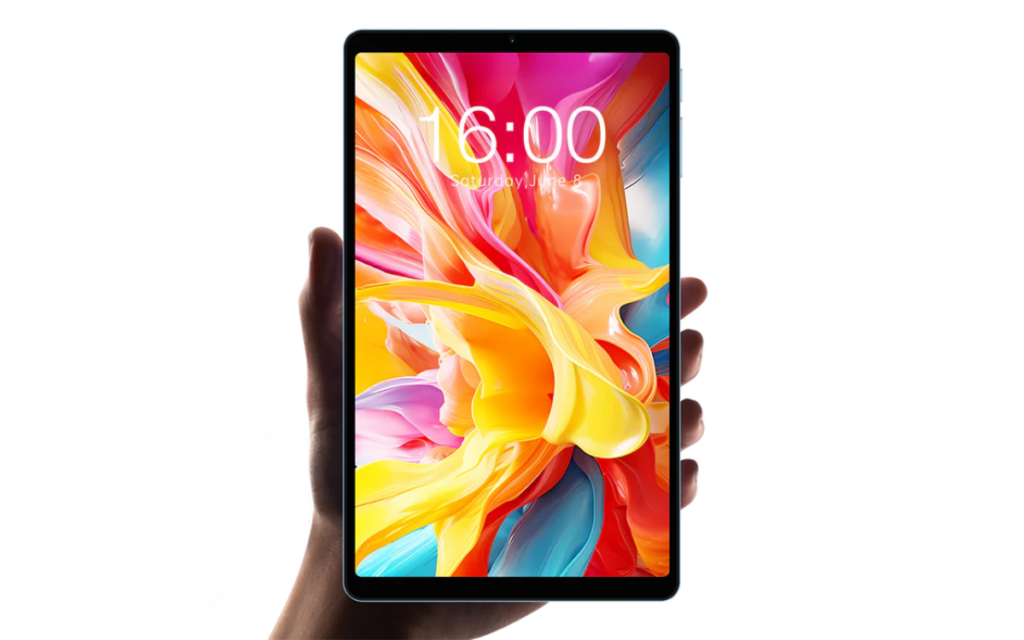
Teclast has launched the T50 Mini, a compact Android tablet designed for everyday use and mobile productivity. It features a lightweight build, high-refresh-rate display, and essential connectivity, targeting users seeking portable entertainment at an affordable price.
Teclast T50 Mini Specifications
The T50 Mini features an 8.7-inch IPS LCD display with a resolution of 1340 × 800 pixels. It supports a 120Hz AdaptiveSync refresh rate that adjusts automatically based on content to improve battery life and ensure smoother visuals. The tablet measures 125mm in width and 8.2mm in thickness, making it easy to use with one hand.
Powering the device is the MediaTek Helio G99 octa-core processor built on a 6nm process, with a peak clock speed of 2.2GHz. Teclast claims the tablet scores over 400,000 on AnTuTu, positioning it as a capable option for casual gaming and multitasking. It comes with 8GB of LPDDR4 RAM and supports up to 12GB of virtual memory expansion, allowing users to push total available memory to 20GB. Internal storage stands at 128GB UFS, expandable via a microSD card.
The tablet runs Android 15 out of the box, giving users access to the latest privacy features, improved multitasking, and future app compatibility. It sports a 13MP AI-assisted dual rear camera setup for general photography and document scanning. For selfies and video calls, it comes with a 5MP lens.
Coming to the battery life, it features a 5000mAh battery, which should be sufficient for a full day of moderate usage. The tablet includes stereo speakers powered by a smart digital amplifier for enhanced audio output.
Connectivity features include dual 4G with VoLTE on both TDD and FDD bands, dual-band Wi-Fi (2.4GHz and 5GHz), and Bluetooth 5.2 with LDAC support for high-resolution wireless audio. It also supports A-GPS and four-satellite navigation systems for accurate positioning. The hybrid SIM slot accepts either two SIM cards or one SIM and one microSD card.
The T50 Mini comes in an Ice Blue metal unibody design and weighs 368 grams.
Pricing and Availability
The Teclast T50 Mini is priced at 799 yuan (around $110), but will be available at an introductory price of 699 yuan (roughly $96) when sales begin on May 24 via JD.com. In the global market, the tablet is currently listed on AliExpress for $219.98. It is also expected to be available on Amazon soon.
In related news, Acer has unveiled the Iconia V12 and V11 budget tablets featuring tall 2K displays and large batteries. Lenovo has also introduced the Xiaoxin Pad 11 (2025), powered by the Dimensity 6300 chip, with a 2.5K 90Hz display and a 7040mAh battery.
For more daily updates, please visit ourNews Section.
Direct-to-Film (DTF) printing has emerged as a flexible and cost-effective solution for those producing custom apparel and accessories. For home-based entrepreneurs, artists, and small businesses, the ability to print vivid, durable designs in-house offers a major operational advantage.
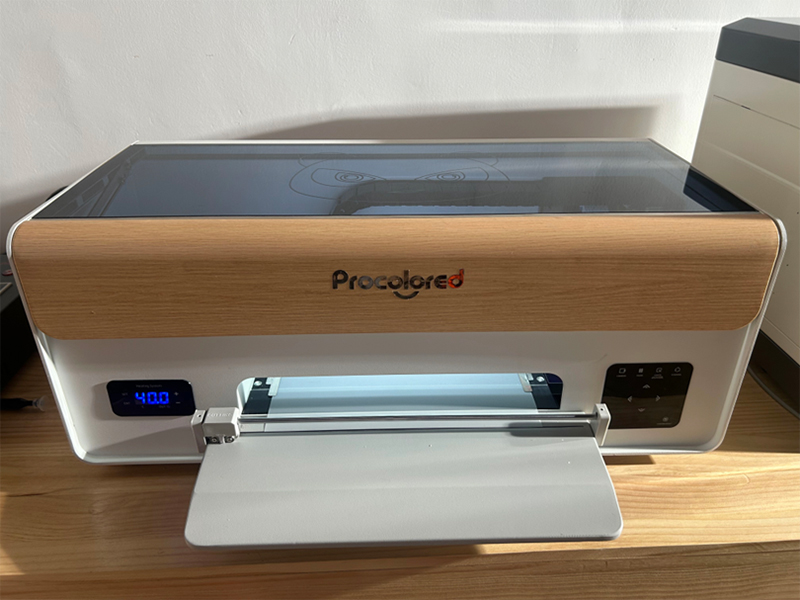
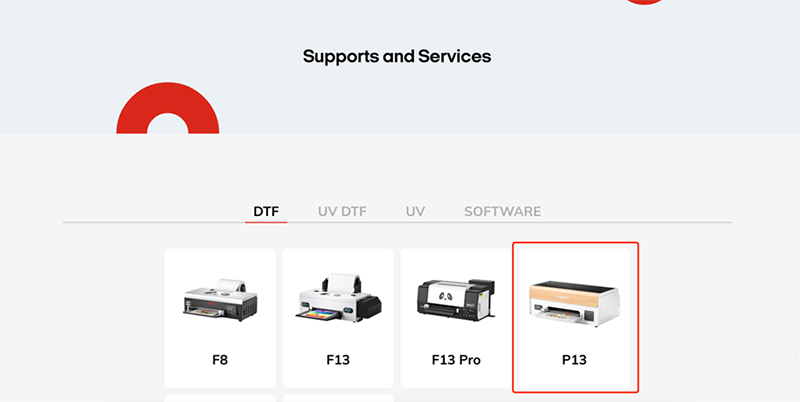
The Procolored P13 is positioned as a compact DTF printer that brings professional-grade output to personal workspaces. With features such as automatic white ink circulation, a built-in heating system, and a clean hardware design, the P13 is marketed as a strong choice for creators looking to streamline production from home. In light of recent media attention around Procolored’s software, we conducted a full evaluation of both hardware and software to determine how well the product holds up in real-world conditions.
Unboxing and First Impressions
The P13 arrives well-packaged and secure, clearly designed to handle international shipment. Inside the box, users receive:
The Procolored P13 printer
CMYK + white ink set
Ink tubes and dampers
PET film roll holder
Waste ink container
Power and USB cables
Access to RIP software and setup guide
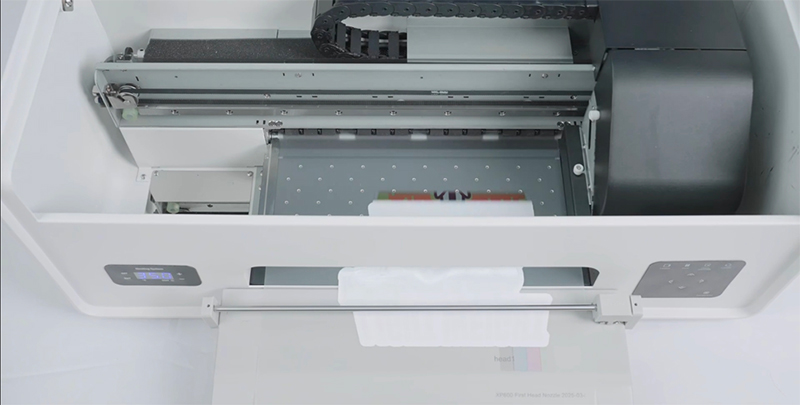
Despite its functionality, the P13 maintains a relatively compact footprint—suitable for a workbench, desk, or small home studio. The build feels sturdy, and the control panel is minimalistic and easy to navigate. Notably, the dual-roll holder adds convenience for users who regularly switch between media types.
Hardware Performance
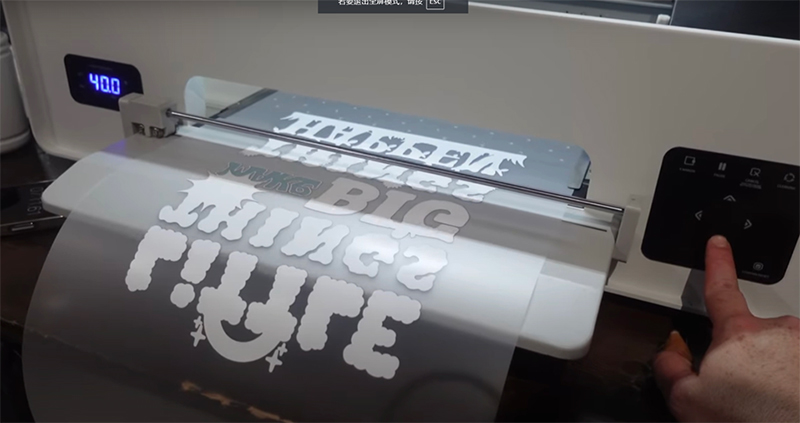
Print Quality: The P13 delivers crisp, vibrant results with sharp lines and strong color density. The white underbase is consistent, making designs stand out even on darker fabrics.
Print Speed and Reliability: The printer maintains a steady pace without sacrificing print clarity. During our testing, multiple jobs were completed with minimal need for manual cleaning or adjustments. Automatic white ink circulation and integrated preheating help stabilize output across print sessions.
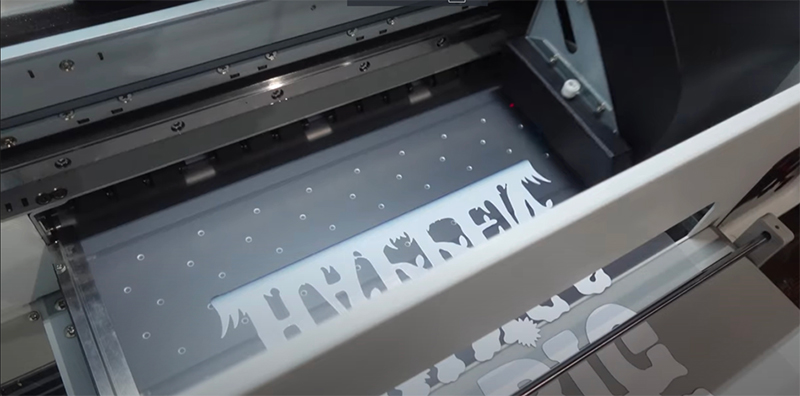
Material Handling: Film feeding is smooth and rarely misaligned. Ink consumption appears to be economical, and the contained waste ink system supports cleaner operation and simpler maintenance.
Ease of Use for Beginners
The P13 is notably accessible for users new to DTF technology. Setup is aided by visual guides, video tutorials, and clearly labeled components. Key beginner-friendly features include:
Automatic white ink circulation to reduce clogging
Built-in preheating to improve ink transfer
A straightforward RIP software interface
Compact design that fits well in home or studio environments
Most users, even without prior DTF experience, can expect to begin printing within an hour of unboxing.
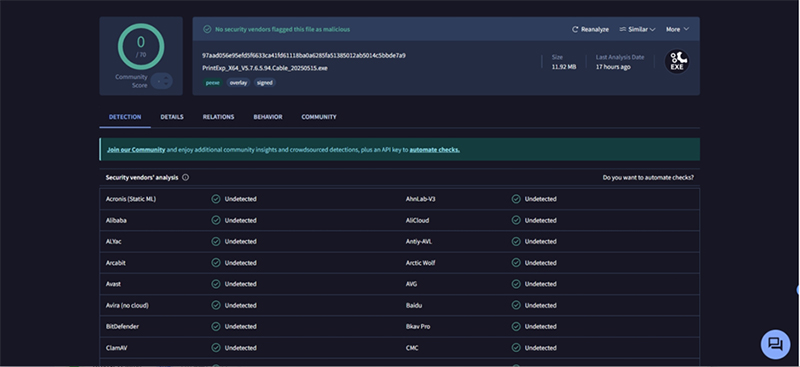
Software Evaluation: Security and Performance Amid reports surrounding the safety of Procolored’s software, we ran the latest version through VirusTotal and similar scanning tools. No security threats were detected.
Additionally, some media outlets have speculated on a link between the software and cryptocurrency-related malware. Our research found no evidence of any direct connection. The concern appears to be based on older malware (referred to as “XRed”) that is unrelated to the current software version available on Procolored’s official site. The company has since updated all software packages, and all tested files were confirmed clean and operational.
Built-In Safety That Adapts to Home Environments
During hands-on testing in a home studio, the printer unexpectedly paused when a hand moved close to the film area. What first appeared to be a malfunction was later confirmed by the support team to be a safety feature: the built-in photoelectric detection system. Originally designed to detect media errors, this system also acts as a smart emergency stop.
This functionality adds an additional layer of protection in home environments—particularly useful in shared spaces where children or pets may be present. By immediately halting print operations when unexpected contact is detected, the P13 offers practical safeguards aligned with real-world home use.
Return on Investment for Small Businesses
For creators seeking to monetize their designs, the P13 offers an appealing balance of performance and cost-efficiency:
Low per-print costs due to efficient ink usage
Minimal maintenance needs with automatic systems
Faster turnaround with in-house production
High enough quality to justify premium pricing
Whether the goal is to fulfill orders via Etsy, run a Shopify storefront, or serve local customers, the P13 provides a viable return on investment in a relatively short timeframe.
Customer Support and User Community
Support resources include setup documentation, video walkthroughs, and direct assistance via email and WhatsApp. Additional insights are readily available through user communities on Facebook and Reddit, where tips and troubleshooting help are frequently shared.
Procolored also offers a one-year warranty and dedicated technical support, providing peace of mind for new adopters and small studio owners alike.
Verdict
The Procolored P13 DTF Printer presents a strong option for individuals and small businesses seeking to establish or grow a custom printing operation.
Strengths:
Vibrant, detailed print quality
Compact and beginner-friendly design
Smooth hardware and software integration
Verified safe software with recent improvements
Built-in safety features for home use
Points to Consider:
Some learning curve remains for first-time users
Optimal performance depends on using compatible inks and powders
Overall, the P13 stands out as a reliable and thoughtfully designed machine suited for creative professionals, home-based businesses, and hobbyists alike. With proper setup and use, it offers a safe, high-quality, and cost-effective printing solution for today’s independent creators.
After the Nothing Phone (3a) series and the CMF Phone 2 Pro, Nothing is gearing up to unveil the Phone (3). This is the successor to its last flagship, bringing various improvements over its predecessors. Recent teasers have confirmed a bunch of its details, so here’s everything you need to know.
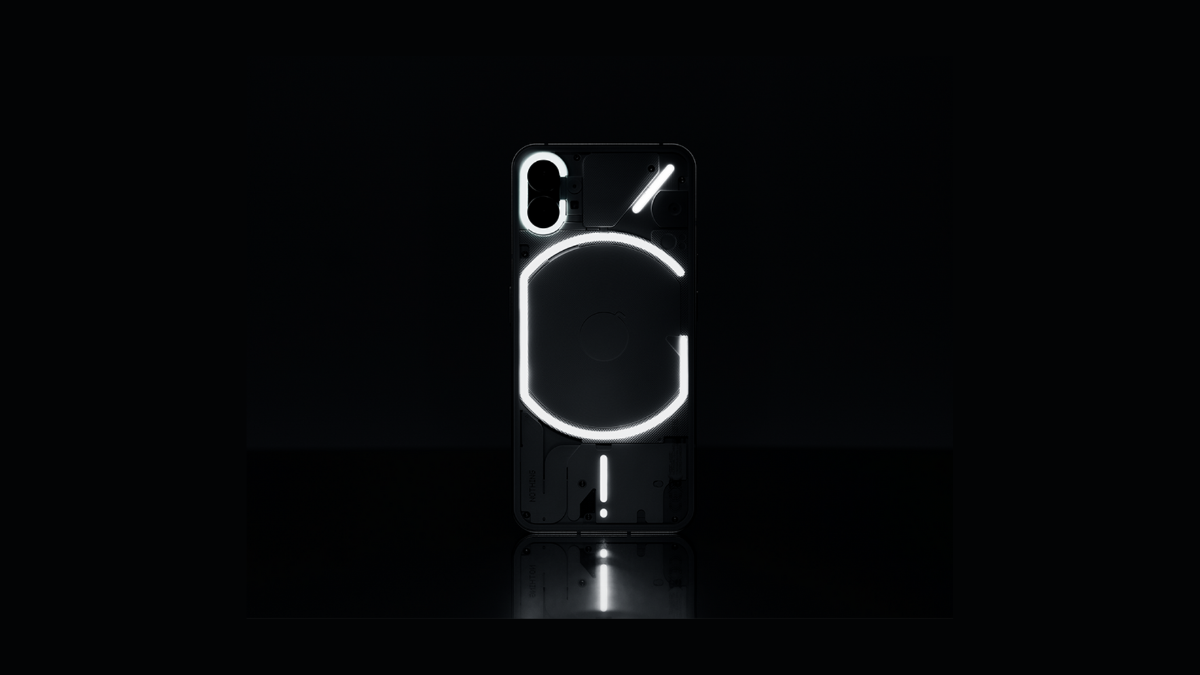
Carl Pei, the CEO and founder of Nothing, revealed a bunch of details regarding the Nothing Phone (3), particularly its design. The senior official stated that the Phone (3) will be a flagship smartphone that will employ “premium materials,” which might be hinting at either an advanced glass or a titanium frame. We can also expect it to continue the brand’s transparent design language that blends with the Glyph LED interface. Similar to the Nothing Phone (3a) Pro, the upcoming premium model could include a customizable Action button, which is clearly inspired by the newer iPhones.
On the front, the Nothing Phone (3) may sport a 6.5-inch AMOLED display. It is unclear whether there is a Phone (3) Pro model, but rumors have hinted at a taller 6.7-inch OLED panel. Unfortunately, finer details are still at large but we can expect it to offer 1.5K resolution, HDR support, and a high 120Hz refresh rate.
2. Hardware
Nothing Phone (1)
Apart from just the design, Carl Pei also talked about how there are “major performance upgrades” on the upcoming Nothing Phone (3). To recall, the last gen Phone (2) model launched with the Snapdragon 8+ Gen 1 SoC, which was a generation behind what other flagship phones offered at the time.
However, the brand plans on bringing cutting edge hardware, which could be either a Snapdragon 8 Elite, Dimensity 9400, or Dimensity 9400+ SoC. A recent report had claimed that the device will be powered by a flagship grade Snapdragon chipset. So it could also offer the Snapdragon 8 Elite or Snapdragon 8s Gen 4 chipset. Battery details are still sketchy, but the 5,000mAh battery might be making a return once again.
For photography, the report also claimed that the rear camera system includes a “large primary sensor,” which is paired with a periscope telephoto shooter. Like its predecessor, we can also expect an ultra wide angle lens. This would make it in line with the Nothing Phone (3a) series, which also features a triple camera setup at the back.
3. Launch timeline and Pricing
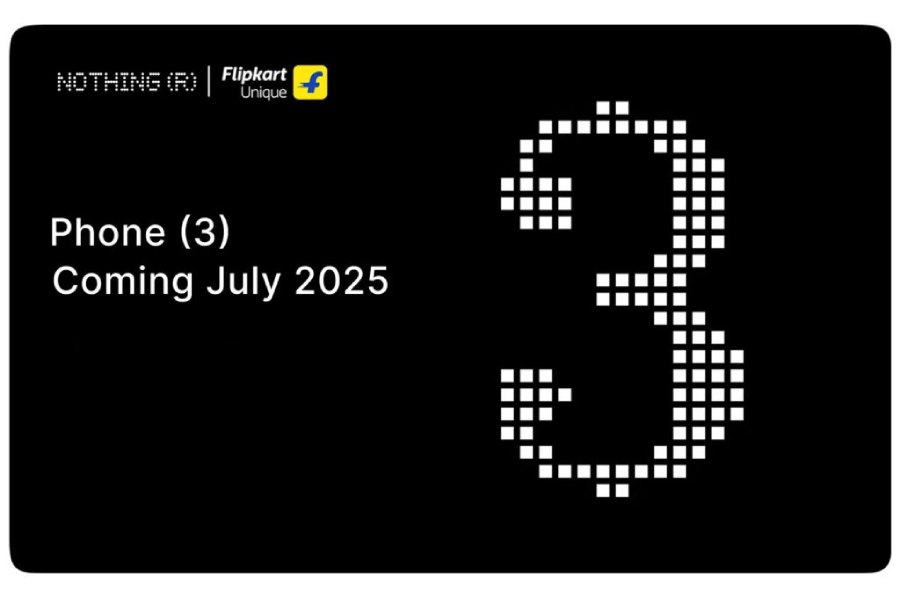
An official launch date for the Nothing Phone (3)/ Phone (3) Pro is still unknown. But an official teaser has confirmed that the device is debuting sometime in July 2025. Carl Pei has also confirmed the US availability at the start of this month. However, one notable detail he confirmed is the pricing. The Nothing Phone (3) will be released for around 800 GBP, which translates to about 1,063 USD or 91,000 INR. This is a massive jump over the Phone (2), which was released for around half this price tag.
For more daily updates, please visit our News Section.
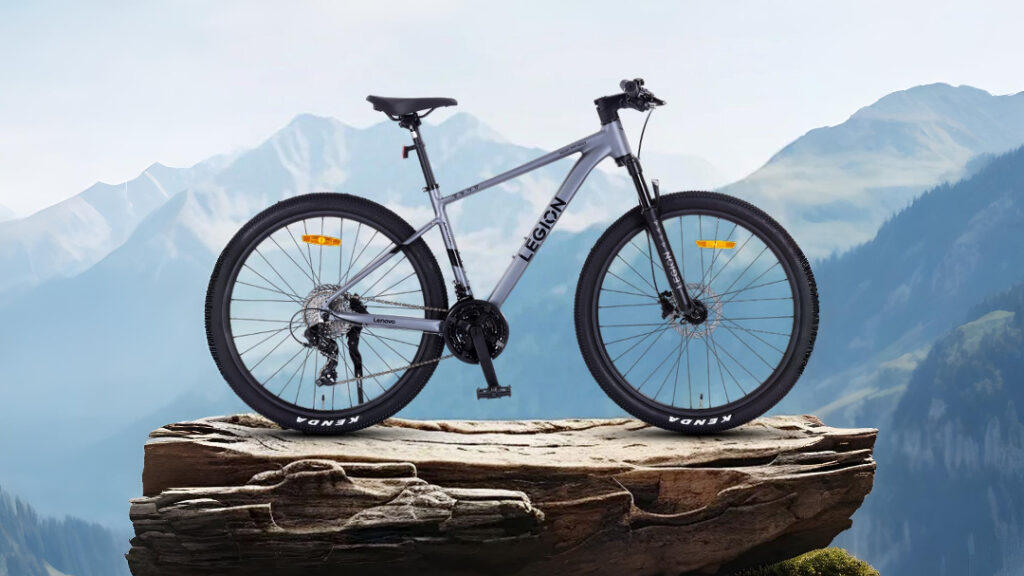
Lenovo has officially launched the Legion M5000 mountain bike in China. The bike is priced at 2,099 yuan (approx. $290), but a limited-time launch offer lowers it to 1,899 yuan (approx. $262). Students can further reduce the price to 999 yuan (approx. $138) through an education discount. Sales begin tonight at 7:00 PM local time.
Lenovo Legion M5000 Specifications
The Legion M5000 features a 27.5-inch internal routing frame made from 6061-grade aluminum alloy. Lenovo has used a seamless filler process to improve surface finish and structural durability. The frame supports a clean design with hidden cable layout, giving the bike a streamlined and sporty look. The finishing process includes multiple stages, such as grinding, filler application, drying, re-polishing, and painting.
Lenovo equips the bike with an aluminum shoulder suspension front fork. The fork supports a mechanical lockout feature that allows users to switch between rigid and suspension modes depending on the terrain. This setup improves comfort on rough roads while maintaining control on smoother surfaces.
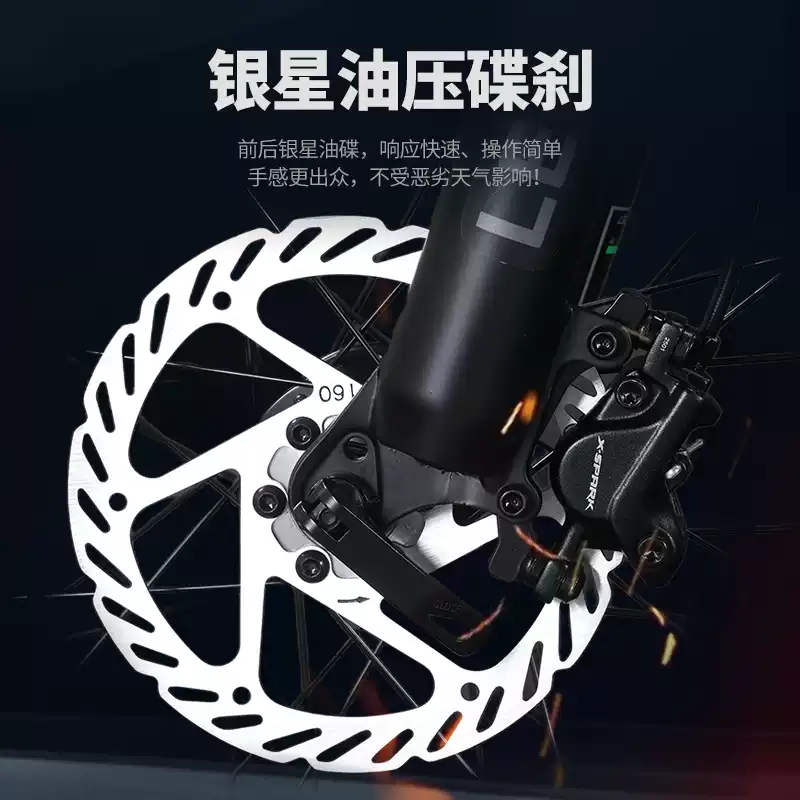
The M5000 uses 27.5 x 2.10-inch Kenda tires with anti-slip tread patterns. These tires are paired with double-layer aluminum alloy rims to provide better impact resistance and improve overall stability. For braking, Lenovo has included Silver Star hydraulic disc brakes on both the front and rear wheels. This setup ensures responsive and weather-resistant braking performance.
In terms of gearing, the bike features a 24-speed drivetrain. It includes a Shimano FD-TZ500 front derailleur, a Shimano RD-TY300 rear derailleur, and an 8-speed indexed freewheel. Gear shifting is managed by L-TWOO A3 thumb shifters. The system also includes a triple chainring crankset and a high-precision DG51 chain.
Other hardware includes a 31.8mm aluminum handlebar with a 9-degree rise, an aluminum alloy stem, and an aluminum seat post. The saddle is a Marvi mountain-style unit designed for long-distance comfort. Lenovo uses a sealed bottom bracket to improve drivetrain efficiency and reduce long-term maintenance.
The Legion M5000 is available in Ice White and Carbon Black color variants. Lenovo has not confirmed international availability at this time.
In related news, a new self-developed Lenovo chip has appeared on Geekbench featuring a 10-core CPU and Immortalis GPU. Meanwhile, Lenovo has introduced the Xiaoxin Pad 11 (2025) with a Dimensity 6300 processor, a 2.5K 90Hz display, and a 7040mAh battery.
For more daily updates, please visit our News Section.
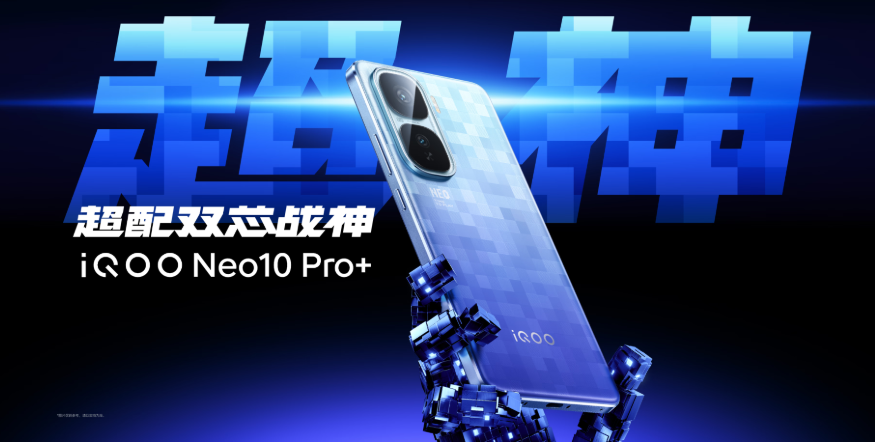
iQOO just unveiled the Neo10 Pro+ in China today (May 20, 2025), boasting a Snapdragon 8 Elite processor, a 2K “Q10 Everest” display, and a first sale price starting at CNY 2,799 (~₹33,500). Aimed at gamers and performance enthusiasts, it features advanced cooling, AI enhancements, and a 6,800mAh battery.
Specifications
Design: The Neo10 Pro+ sports a vertical camera layout, continuing iQOO’s family aesthetic. A BMW M Motorsport collaboration introduces the “Super Pixel” color, shifting hues with light, alongside Light White and Shadow Black.
Performance: Powered by the Snapdragon 8 Elite, paired with LPDDR5X Ultra RAM and UFS 4.1 storage, it scores 3.31 million on AnTuTu. The Q2 gaming chip enables 2K+144FPS super-resolution and super-frame concurrency, with a frame rate perception engine for precise CPU scheduling.
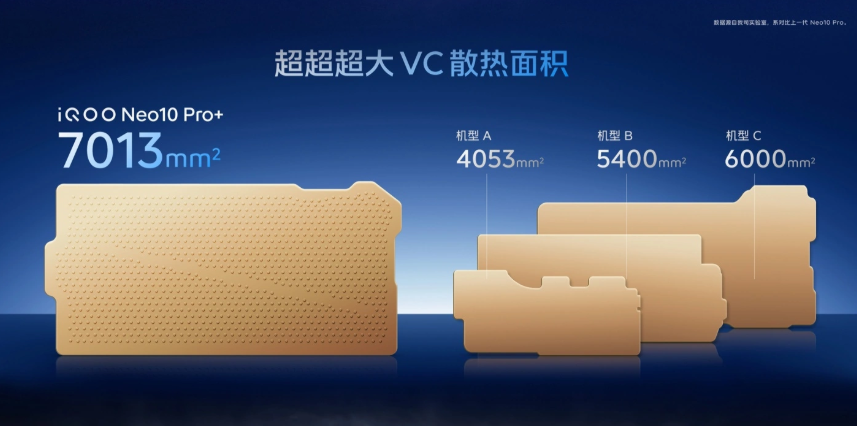
For cooling, it packs a 7K ultra-large single-layer VC cooling system, with superconducting capillary channels and nano-graphene oxide. It reportedly boosts heat dissipation by 15%, ensuring stable 60FPS in Genshin Impact on a 2K screen, which is impressive for a mid-range phone.
Display: The 2K Q10 Everest LTPO OLED screen hits 4,500-nit peak brightness and is tuned for eye comfort. With 2592Hz PWM dimming, SVM of 0.03, and 30.4ms touch latency, it’s optimized for gaming as well.
Battery: A 6,800mAh battery with 120W charging reaches 70% in 25 minutes, offering 10.2 hours of MOBA (Multiplayer Online Battle Arena) gaming.
Camera and other features: A dual rear setup – 50MP main (with OIS) + an 8MP ultrawide. This is paired with a 16MP selfie camera. Unfortunately, the Neo series still lacks a telephoto. However, the camera system benefits from iQOO’s “flagship algorithms” and supports AI photo retouching. OriginOS 5, with Blue Heart Xiao V AI, ensures a 60-month smooth performance. The display panel hides a 3D ultrasonic fingerprint scanner for fast and reliable unlocking.
Pricing and availability:
The phone is already available for sale through the company’s official site and other authorized retailers in the home country. The prices are listed below:
12GB+256GB: CNY 2,799 (subsidy: CNY 2,379.15)
16GB+256GB: CNY 3,099 (subsidy: CNY 2,634.15)
12GB+512GB: CNY 3,299 (subsidy: CNY 2,804.15)
16GB+512GB: CNY 3,499 (subsidy: CNY 2,999)
16GB+1TB: CNY 3,999 (subsidy: CNY 3,499)
Unfortunately, there are no immediate plans for an international release.
The Nintendo Switch 2 is nearing its release, but the competition is getting tougher. MSI has just announced the new Claw A8 handheld gaming console that features AMD’s latest Ryzen APUs for improved gaming performance. So here’s everything you need to know.
MSI Claw A8: What’s new?
MSI announced the Claw A8 and a new Claw 8 AI+ Polar Tempest Edition during the ongoing Computex 2025. To recall, the Claw 8 AI+ was previously announced with the Intel Core Ultra 7 258V processor. Meanwhile, the Claw A8 arrives with AMD’s newest Ryzen Z2 Extreme APU (with Radeon graphics). This processor is paired with up to 24GB of LPDDR5X 8000MHz RAM and 1TB of PCIe NVMe SSD storage.
MSI Claw A8
On the front, you get an 8-inch IPS LCD display with a 120Hz refresh rate, FHD+ resolution, 16:10 aspect ratio, touchscreen support, variable refresh rate, 500 nits of peak brightness, and 100 percent sRGB color gamut. For audio, there is a twin 2W speaker setup. A large 6-cell 80Whr battery pack powers this model. Other notable features include Bluetooth 5.3, WiFi 6E, Windows 11 OS, a 3.5mm audio jack, a microSD card reader, and a 765g body.
On the other hand, Claw 8 AI+ Polar Tempest Edition is basically a new variant of the existing Claw 8 AI+, but in a new white design that features a glossy UV coating. Unfortunately, MSI has yet to announce the official pricing and availability details of the Polar Tempest Claw 8 AI+ or the Claw A8. But the Claw A8 might be positioned below the Claw 8 AI+ as the latter has the newer Intel WiFi 7 and Bluetooth 5.4 chips.
For more daily updates, please visit our News Section.
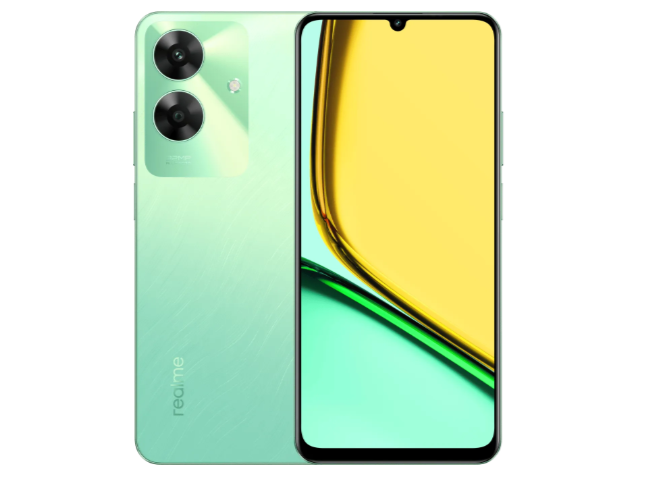
Realme’s budget-friendly C71, set to succeed the C61, has surfaced on Geekbench with the Unisoc T7250 SoC, 6GB RAM, and Android 15 with Realme UI. Certified by Malaysia’s SIRIM with 45W charging, it’s a modest upgrade targeting the same price range.
Realme C61
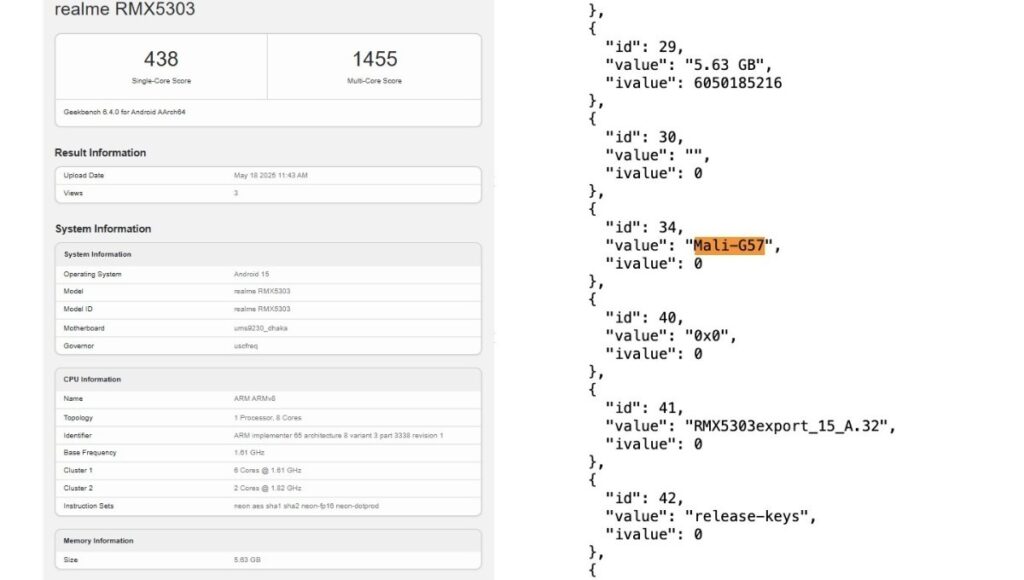
Spotted on Geekbench under model RMX5303, the C71 is powered by the Unisoc T7250 SoC (previously T615), a 4G-only octa-core chip with two 1.82GHz Cortex-A75 and six 1.61GHz Cortex-A55 cores. Scoring 438 single-core and 1455 multi-core, its performance aligns with the C61’s Unisoc T612, suggesting minimal gains. The T612 averages 422 in single-core and 1509 in multi-core tests, per NanoReview, making the C71’s performance roughly comparable overall.
The C71 packs 6GB RAM, matching its predecessor, and runs Android 15, a step up from the C61’s Android 14. Malaysia’s SIRIM certification confirms the RMX5303 model and 45W fast charging, a significant jump from the C61’s 15W, though it likely retains a 5,000mAh battery. Additional listings on NBTC and TDRA hint at a broader Southeast Asian and Middle Eastern release.
Expected to mirror the C61’s HD+ 90Hz IPS LCD, 32MP main sensor, and 5MP, selfie shooter, the C71 may offer 4GB/8GB RAM variants and 64GB/128GB storage. Although the predecessor looks modern with a flat design and two cutouts inside the rectangular camera housing for lenses, the front sticks to a waterdrop-style notch rather than a punch-hole cutout for the selfie camera. The C71’s design remains under wraps for now, so stay tuned for more details.
The C71 targets budget buyers in markets like India. Will the C71’s faster charging and Android 15 make it a compelling upgrade, or does its dated chip hold it back? More details should emerge soon as Realme finalizes its launch, likely by mid-2025.
Nothing has been steadily trickling out details about its upcoming Phone (3), and today it dropped another one: a launch window. The company has officially confirmed that the Phone (3) will arrive in July, though it’s still keeping the exact date under wraps.
The news comes just days after Nothing CEO Carl Pei confirmed the phone’s expected price of around £800. That’s a significant jump from the Phone (2)’s £579 launch price in the UK and Rs 44,999 in India.
But given everything we’ve seen (or heard) so far, it’s almost certain that the Phone (3) will be a flagship offering. Whereas the Phone (2) is more of a mid-range offering. The £800 price tag for the upcoming model translates to around Rs 90,000 in India.
Carl Pei, Nothing’s CEO, has also confirmed that the new phone will feature “premium materials,” a “major performance upgrade,” and “software that really levels things up.”
We’ll likely hear more in the weeks leading up to July, but for now, let’s go through everything we know about it.
What to expect?
According to a recent leak, the Phone (3) may not be the only device on stage at Nothing’s upcoming launch event. There’s reportedly a Pro model in the pipeline as well.
The higher-end variant is expected to feature a 6.7-inch display, while the standard Phone (3) might settle for a slightly smaller 6.5-inch screen.
Moreover, a report from SmartPrixsuggests the phone will be powered by a “flagship Snapdragon chipset” and will have a triple-lens setup on the back.
One of them is said to be a “large primary sensor,” and there’s also mention of a periscope-style telephoto lens, possibly even larger than the main lens. The same report states around a 5000mAh cell for the phone.
For more daily updates, please visit our News Section.
During the ongoing Computex 2025 event, ASUS announced a bunch of new cutting edge PCs like the creative workhorse, ProArt A16. But one of its notable announcements includes the ROG Zephyrus G16 and Zephyrus G14. These are some of the most powerful gaming laptops from the brand, so here are all the details.
ASUS ROG Zephyrus G16, G14: What do they offer?
The Taiwanese PC maker announced the ROG Zephyrus duo with the latest high end hardware in the market right now. As the name suggests, the Zephyrus G16 sports a taller 16-inch display, whilke the G14 has a more compact 14-inch screen. The display on both models boasts 3K resolution, a 120Hz refresh rate, 500 nits of peak brightness, and Dolby Vision.
ASUS ROG Zephyrus G14 and ROG Zephyrus G16
ASUS also packs the new ROG Zephyrus laptops with CNC aluminum unibody that adds a premium touch to a durable body. Under the hood, ASUS packs the new Zephyrus G14 with the AMD Ryzen AI 9 HX 370, which also has a AMD XDNA NPU with up to 50 TOPS. The 12 core CPU is paired with the Nvidia GeForce RTX 5080 graphics card. So you are getting top tier performance. Other notable specs include up to 64GB of RAM and up to 2TB of SSD storage.
The ROG Zephyrus G16 has a higher 240Hz refresh rate, packs the new Intel Core Ultra 9 procsesor, and up to an Nvidia RTX 5070. For audio, there is even a six speaker system. You can purchase both models in a Eclipse Gray and Platinum White. The G14 has a starting price tag of 1,800 US Dollars while ethe G16 starts from 2,150 US Dollars. The base model of both variants go on sale on 25th June 2025. Meanwhile, the other versions are already listed for sale right now.
For more daily updates, please visit our News Section.
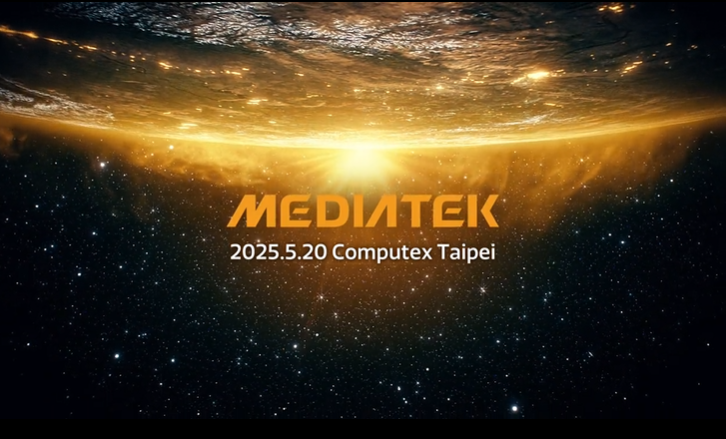
MediaTek has officially confirmed that it’s working on a 2 nm chip, expected to tape-out later this year. The announcement, made during the company’s keynote at Computex 2025, positions the Taiwanese chipmaker as a serious contender in the next big semiconductor transition after 3 nm.
With several smartphone chips already using 3 nm nodes, attention is now turning to the next leap in performance and efficiency. Apple is typically first to adopt leading-edge nodes from TSMC, but uncertainty surrounds its plans to adopt the 2nm node for upcoming iPhones. If Apple sticks with the refined 3 nm N3P node for its A20 chip due to production timing or cost concerns, MediaTek could become the first to bring a 2 nm smartphone SoC to market.
MediaTek confirms it’s 2 nm chip will tape-out in September 2025
At Computex, MediaTek said its 2 nm chip will tape-out in September 2025. In semiconductor development, tape-out refers to the final design being sent for manufacturing preparation. This timeline aligns with TSMC’s own plans — the foundry is expected to begin high-volume manufacturing for its N2 process in the second half of 2026.
While MediaTek didn’t confirm the name of the chip, it’s expected to be the Dimensity 9600 — the company’s next-gen flagship processor. There are no official details about the SoC yet, and it will likely remain under wraps for a while, given that it’s still over a year away from mass production.
Historically, MediaTek’s chips have been seen as cost-effective alternatives to Qualcomm’s flagship offerings. However, that may change with the Dimensity 9600. According to reports, TSMC’s N2 wafers are notoriously expensive. A rumored 10% price hike could push production costs even higher — potentially making the Dimensity 9600 one of MediaTek’s most premium and expensive offerings to date.
If all goes to plan, MediaTek’s 2 nm chip could arrive in late 2026, ushering in a new generation of high-performance Android smartphones.
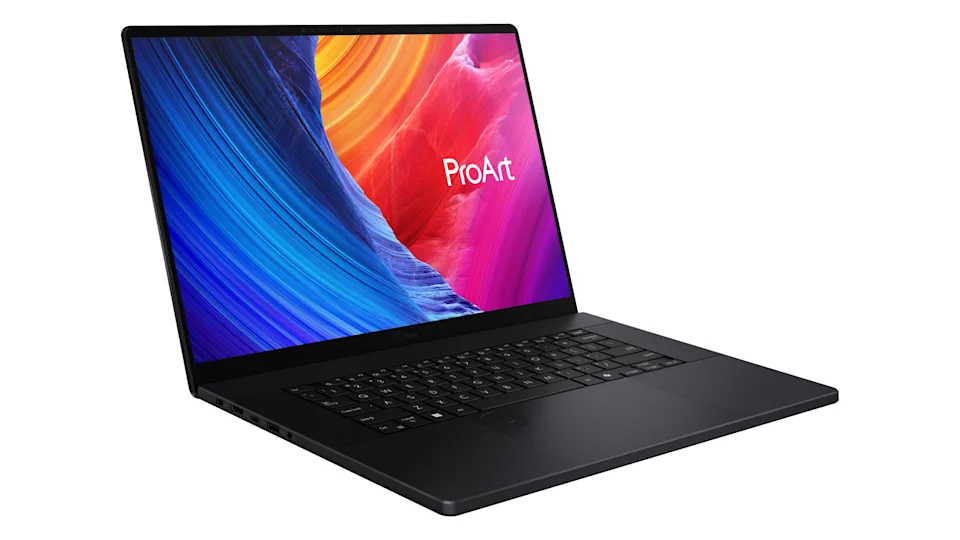
ASUS‘ ProArt lineup has built a reputation for making creator-focused laptops, and the new ProArt A16 might just be its most compelling offering yet. Designed with creative professionals in mind, this sleek machine combines powerful internals, color-accurate visuals, and smart cooling in a portable 16-inch package. So here’s everything you need to know.
What makes the ASUS ProArt A16 a creative workhorse?
The Taiwanese tech giant has just updated its ProArt series with the ProArt 16 laptop. It arrives with cutting edge specs and features and a premium design. The ProArt A16 has a chassis made of a black aluminum body, a “stealth” hinge, and a smudge resistance body. Under the hood, it is equipped with the AMD Ryzen AI 9 HX 370, which is one of the fastest mobile processors under AMD’s belt.
ASUS ProArt A16
This is paired with the Nvidia GeForce RTX 5070 mobile GPU, which brings enough horsepower for high end workloads like 3D modelling and even gaming. Pairing the two, you get a CoPilot+ enabled PC. So you get access to the various AI features from Windows. On the front, the ASUS ProArt A16 sports a tall 16-inch OLED display with 4K resolution. This makes it a great package overall for creative professionals.
ASUS has officially announced the ProArt A16 with a starting price tag of around 2,500 US Dollars. This is quite hefty, but you are paying for cutting edge hardware. The new laptop is set to go on sale from the brand’s official website and Best Buy. In related news, you can also click here to see whether the ASUS Vivobook 16 (2025) is your next productivity workhorse.
For more daily updates, please visit our News Section.
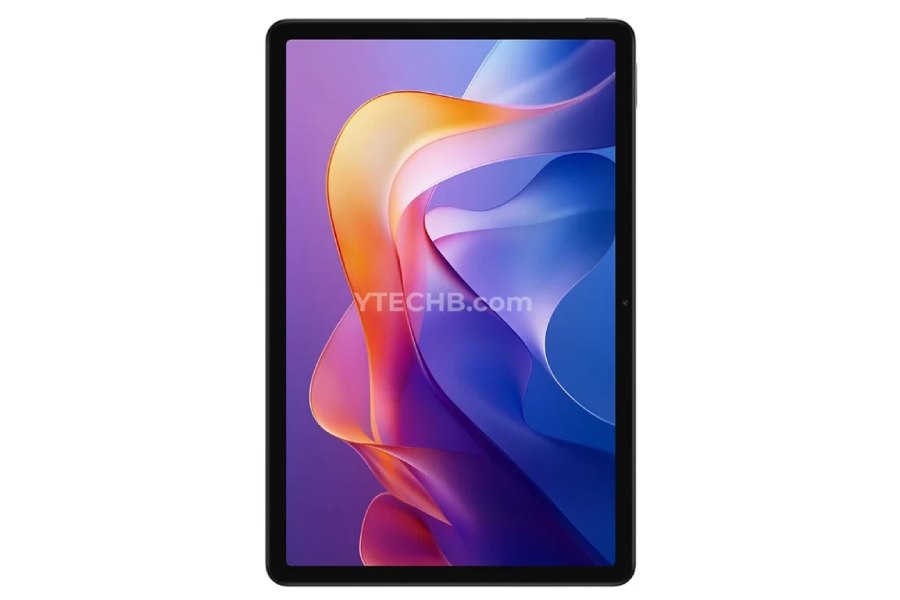
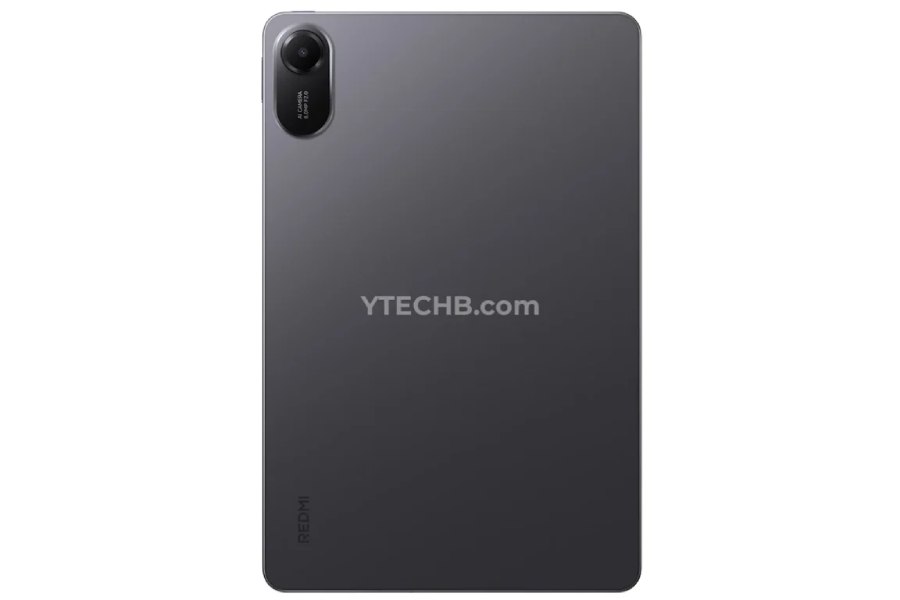
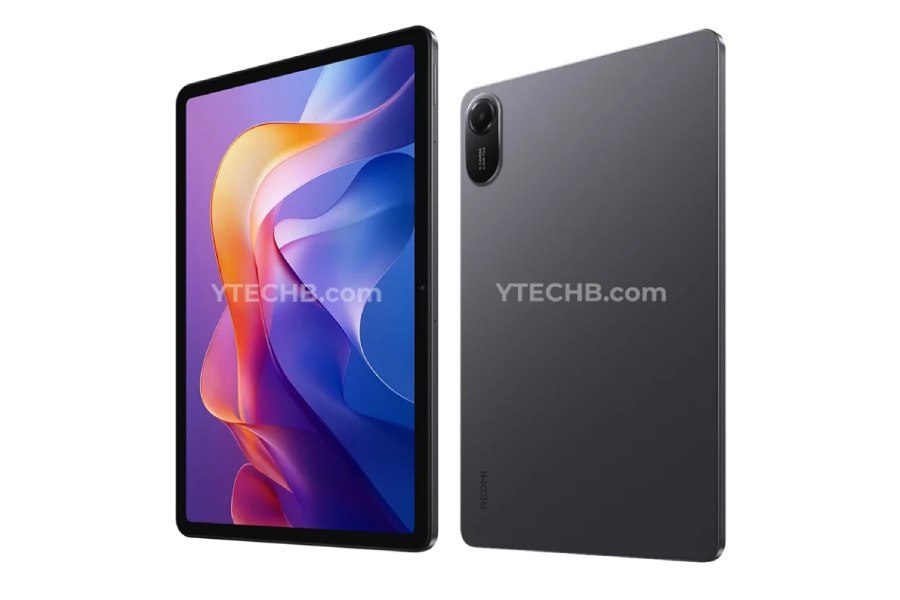
Xiaomi’s next budget tablet, the Redmi Pad 2, has surfaced in a set of high-quality renders, courtesy of a report from YTechB. It’s the follow-up to the original Redmi Pad from 2022, making this a long-overdue refresh.
The design language hasn’t changed drastically, but there are a few noticeable tweaks. On the back, there’s now a pill-shaped camera module.
The tablet retains flat edges with squared corners, while the front still shows off relatively thick bezels, a familiar trait for budget Android tablets. The power button sits up top on the right corner, and the volume rocker sits on the right edge.
Redmi Pad 2 Specifications (Rumored)
Specs-wise, the leak points to an 11-inch LCD with a 2.5K resolution (1600 x 2500 pixels) and a 90Hz refresh rate, which should make scrolling feel smoother than on most entry-level slates.
Under the hood, it’s said to run on MediaTek’s Helio G100 Ultra chip, paired with Xiaomi’s HyperOS 2.1 skin. The chip should work adequately for everyday tasks, but don’t expect anything extra.
The rear camera is an 8MP single-lens shooter with an f/2.0 aperture, while a 5MP front-facing camera handles selfies and video calls. For audio, the Pad 2 is expected to pack four speakers with Dolby Atmos support.
Powering everything will be a 9,000mAh battery with support for 18W charging. Not the fastest, but acceptable given the segment. There’s also a 3.5mm headphone jack, which continues to be a rare but welcome inclusion in 2025.
The leak also spills the details on pricing. The base model with 4GB of RAM and 128GB of storage is expected to launch at €229. A more capable variant with 8GB of RAM and 256GB of storage will reportedly be priced at €279.
For more daily updates, please visit our News Section.
We use cookies on our website to give you the most relevant experience by remembering your preferences and repeat visits. By clicking “Accept”, you consent to the use of ALL the cookies.
This website uses cookies to improve your experience while you navigate through the website. Out of these, the cookies that are categorized as necessary are stored on your browser as they are essential for the working of basic functionalities of the website. We also use third-party cookies that help us analyze and understand how you use this website. These cookies will be stored in your browser only with your consent. You also have the option to opt-out of these cookies. But opting out of some of these cookies may affect your browsing experience.
Necessary cookies are absolutely essential for the website to function properly. This category only includes cookies that ensures basic functionalities and security features of the website. These cookies do not store any personal information.
Any cookies that may not be particularly necessary for the website to function and is used specifically to collect user personal data via analytics, ads, other embedded contents are termed as non-necessary cookies. It is mandatory to procure user consent prior to running these cookies on your website.