Redmi recently unveiled the Redmi 17 5G in China with the Unisoc T8300 chipset. Now, out of nowhere, the brand has introduced the global Redmi 17 5G and Redmi 17 4G, and both models arrive with significantly different hardware from their Chinese counterpart. Here’s a look at what the global Redmi 17 5G and Redmi 17 4G bring to the table.
Redmi 17 5G, Redmi 17 4G specifications and features
Redmi 17 5G
The Redmi 17 5G is powered by the Snapdragon 4 Gen 5 chipset built on a 4nm process, paired with LPDDR4X RAM and UFS 2.2 storage. It supports 5G connectivity, NFC, and Bluetooth 5.1. On the other hand, the Redmi 17 (4G) has the Helio G91-Ultra chip, LPDDR4x RAM, eMMC 5.1 storage, and Bluetooth 5.4.
Apart from these differences, both smartphones share nearly identical hardware. They feature a 6.9-inch HD+ LCD display with a 120Hz adaptive refresh rate, up to 825 nits of high brightness mode, Corning Gorilla Glass 7i protection, and TÜV Rheinland certifications for low blue light, flicker-free viewing, and circadian-friendly operation.
Both devices pack a 7,500mAh battery with 45W fast charging and 22.5W wired reverse charging, while photography is handled by a 50-megapixel AI dual rear camera and an 8-megapixel front-facing camera.
Redmi 17 4G
They also run HyperOS 3-based Android 16, feature dual stereo speakers with up to 300% volume boost, an IP64-rated chassis, a side-mounted fingerprint scanner, a 3.5mm headphone jack, dual SIM support, a microSD card slot, and memory expansion of up to 12GB RAM.
The Redmi 17 5G is already available in Malaysia, where the 4GB+128GB model costs MYR 769 (~$190) and the 4GB+256GB edition is priced at MYR 869 (~$210). Globally, the phone starts at $249, with additional 6GB+128GB and 6GB+256GB variants also listed. It is offered in Black, Deep Blue, and Vivid Orange color options.
Meanwhile, the Redmi 17 4G is listed globally in 4GB+128GB, 4GB+256GB, 6GB+128GB, and 6GB+256GB configurations. It comes in White, Red, and Green shades. Xiaomi has yet to confirm regional rollout dates, but both smartphones are expected to reach more markets soon.
Xiaomi skipped a direct follow-up to the Mix Fold 4 in 2025, so the Mix Fold 5 has been building up as the brand’s next big foldable release. The upcoming foldable is said to have a wider, more compact design compared to earlier Mix Fold models, and today’s leak is giving us our first look at the front of the device.
In a now-deleted post, Weibo tipster Panda is Bald shared images of the phone’s inner panel today, which show large rounded corners rather than the sharper edges seen on past models.
The front camera sits in the upper right, in a small cutout. Along with the design, the images also show the phone running on HyperOS 4 with a liquid glass visual style.
Speaking of which, promotional images for HyperOS 4 are also making rounds on the web. It teases liquid glass design, Super Xiao Ai expert mode, and a new integrated device center for managing connected gadgets in one place.
Moreover, there are a couple of new under-the-hood changes. Xiaomi’s own kernel is said to pick up load calculation and memory preloading, both meant to help the system handle background tasks more efficiently. There’s also mention of a soft-light glass material built to mimic the optical behavior of real glass in the interface.
Beyond the software, the phone itself has been picking up its own trail of leaks. The model number 2608BPX34C already turned up in an online certification listing, and the tipster behind today’s images described it as Xiaomi’s top-end release for the year.
Earlier reports also tipped it to feature a 7.5 to 7.6-inch display with reduced crease, a 200-megapixel main camera, a 6,000mAh battery with wireless charging, and Xiaomi’s own Xring O3 chip in place of a Qualcomm processor.
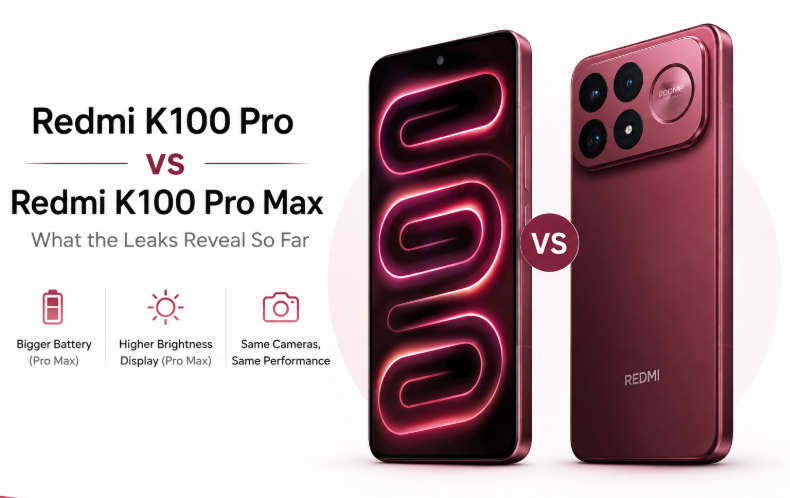
Redmi K100 Pro and Redmi K100 Pro Max are yet to be officially unveiled, but recent leaks have already outlined much of their expected hardware. Interestingly, the two devices appear far more similar than different. Rather than separating them with different chipsets, cameras, or software experiences, Xiaomi seems to be reserving just a handful of upgrades for the Pro Max.
If the current leaks prove accurate, the K100 series could represent one of the smallest hardware gaps between two Redmi flagship models in recent years. Here’s what stands out from everything that has surfaced so far.
Wi-Fi 7, Bluetooth 5.4, USB-C 3.2, NFC, IR Blaster
Wi-Fi 7, Bluetooth 5.4, USB-C 3.2, NFC, IR Blaster
No change
Audio
Stereo speakers, Bose tuning, Hi-Res Audio
Stereo speakers, Bose tuning, Hi-Res Audio
No change
Build & Protection
Dragon Crystal Glass, IP68/IP69
Dragon Crystal Glass, IP68/IP69
No change
Xiaomi Isn’t Splitting the Core Flagship Experience
Perhaps the biggest takeaway from the leaks is that Xiaomi isn’t creating two different levels of flagship performance.
Both the Redmi K100 Pro and K100 Pro Max are expected to feature Qualcomm’s Snapdragon 8 Elite Gen 5 chipset paired with HyperOS 3 based on Android 16. Memory configurations, storage options, connectivity features, ultrasonic fingerprint sensor, stereo speakers, Wi-Fi 7, Bluetooth 5.4, USB 3.2, NFC, and even the camera hardware all appear identical.
This suggests Xiaomi wants both phones to deliver the same flagship experience instead of reserving performance features for the higher-end model. That marks a different approach from some competing flagship lineups, where the premium variant often receives exclusive hardware.
At least based on current leaks, the Pro Max is not shaping up to be a “faster” phone.
The Biggest Upgrade Appears to Be Battery Capacity
Among all the leaked specifications, battery capacity is the clearest distinction.
The Redmi K100 Pro is expected to feature an 8,560mAh silicon-carbon battery, while the K100 Pro Max could increase that figure to 9,070mAh. Those are exceptionally large capacities for flagship smartphones and continue Xiaomi’s apparent shift toward silicon-carbon battery technology.
Interestingly, charging technology doesn’t appear to change alongside the larger battery. Both models are expected to support 100W wired charging, 50W wireless charging, wired reverse charging, and wireless reverse charging.
Rather than making charging faster, Xiaomi seems to be prioritising longer endurance. If these figures are accurate, the Pro Max could simply spend more time away from the charger while maintaining the same charging experience as the standard model.
Display Differences Look Incremental, Not Transformational
The displays also tell a similar story.
Current leaks suggest both smartphones will use the same 6.9-inch AMOLED panel with Dolby Vision, HDR10+, HDR Vivid, 2560Hz PWM dimming, and a 185Hz refresh rate. Resolution also remains unchanged.
The only reported difference is peak brightness. The Redmi K100 Pro Max is tipped to reach 4,500 nits, while no comparable figure has surfaced for the standard Pro.
Although higher peak brightness can improve HDR playback and outdoor visibility, it doesn’t fundamentally change the display itself. Unless Xiaomi announces additional display technologies during launch, this currently looks like a refinement rather than a major upgrade.
Surprisingly, Cameras Don’t Separate the Two Models
Camera hardware usually provides one of the biggest differences between flagship variants, but that isn’t what current leaks suggest.
Both smartphones are expected to feature a 200MP primary sensor, a 50MP 5x periscope telephoto camera, a 50MP ultrawide camera, and a 32MP selfie camera. Video capabilities are also expected to remain identical, including support for 8K recording.
That’s notable because many manufacturers reserve improved zoom cameras or larger image sensors for their premium models. Xiaomi doesn’t appear to be taking that route this time.
Of course, specification sheets don’t always tell the whole story. Camera software, image processing, and AI photography features often remain unknown until launch, so it’s still possible that additional differences could emerge later.
What Hasn’t Leaked May Be Just as Important
One interesting aspect of the current leaks is how little separates the two devices.
Beyond the larger battery and brighter display, there are no reported differences in chipset, memory, storage, software, charging speeds, cameras, audio hardware, or connectivity.
The first is that Xiaomi genuinely intends to keep the two phones extremely close, allowing buyers to choose primarily between battery capacity and display brightness.
The second is that some Pro Max-exclusive features simply haven’t appeared in leaks yet. Software capabilities, AI features, thermal improvements, or camera tuning are often revealed much closer to launch than core hardware specifications.
For now, the story isn’t about dramatic hardware differences; it’s about how restrained Xiaomi’s strategy appears to be. Whether that remains true will depend on what the company reveals during the official launch, particularly if software features or AI capabilities become key points of differentiation.
OPPO Reno 16 and OnePlus 15 target premium Android buyers but take very different approaches. One focuses on value with flagship-inspired features, while the other delivers uncompromising flagship performance. Here’s how they compare in design, display, performance, cameras, battery life, and overall value to help you decide which one deserves your money.
The OPPO Reno 16 focuses on a compact premium design with an aluminum frame, glass construction, and IP68/IP69 protection. It also supports eSIM and features Crystal Guard protection, making it feel modern without sacrificing durability. The smaller form factor is likely to appeal to users who prefer one-handed usability over a larger flagship experience.
The OnePlus 15 follows a more premium flagship approach with Gorilla Glass Victus 2 protection, an aluminum frame, enhanced glass options, and the same IP68/IP69 certification. Its ultrasonic fingerprint scanner and higher-grade materials make it feel more refined. While both phones are well built, the OnePlus delivers a slightly more premium overall experience.
OPPO equips the Reno 16 with a 6.32-inch AMOLED panel featuring a 120Hz refresh rate, HDR10+, 3,840Hz PWM dimming, and an impressive 3,600 nits peak brightness. The display is vibrant, sharp, and comfortable during extended viewing sessions.
The OnePlus 15 steps ahead with a larger LTPO AMOLED display offering a 165Hz refresh rate, Dolby Vision, Ultra HDR support, and adaptive refresh technology. Although its peak brightness is lower on paper, the combination of LTPO technology and Dolby Vision creates a more premium multimedia experience.
Verdict
The OPPO Reno 16 excels with its compact design and excellent AMOLED display, but the OnePlus 15 offers superior materials, LTPO technology, Dolby Vision support, and a smoother 165Hz panel. For display enthusiasts and premium build quality, OnePlus takes the lead.
2. Specifications Including Battery
Performance
The OPPO Reno 16 runs on Qualcomm’s Snapdragon 7 Gen 4 paired with up to 12GB RAM and UFS 3.1 storage. Daily performance is smooth, multitasking is reliable, and gaming remains enjoyable. However, it is clearly positioned as an upper mid-range chipset rather than a true flagship processor.
The OnePlus 15 is powered by the Snapdragon 8 Elite Gen 5 with up to 16GB RAM and significantly faster UFS 4.1 storage. Heavy gaming, AI workloads, video editing, and demanding multitasking are handled effortlessly. The additional performance headroom also makes the device more future-proof for long-term use.
Battery and Charging
The Reno 16 packs a large 6,700mAh battery (6,000mAh in Europe) supported by 80W wired charging and reverse wired charging. Battery endurance should comfortably last a full day, while charging speeds remain highly competitive.
OnePlus raises the bar with a massive 7,300mAh battery, ultra-fast 120W wired charging, 50W wireless charging, reverse wireless charging, bypass charging, and broader fast-charging compatibility. The overall charging package feels considerably more complete.
Verdict
For everyday users, the OPPO Reno 16 delivers dependable performance and excellent battery life. However, the OnePlus 15 dominates with flagship-class processing power, faster storage, a larger battery, wireless charging, and one of the most comprehensive charging systems available.
3. Camera
Main and Secondary Lenses
The OPPO Reno 16 features a versatile triple 50MP camera setup consisting of a stabilized main sensor, a 3.5x telephoto lens with OIS, and an autofocus ultrawide camera. Image quality should remain consistently strong across different focal lengths, making it a reliable option for travel and everyday photography.
The OnePlus 15 also uses three 50MP cameras but upgrades the primary sensor size and introduces advanced features such as Laser Autofocus, LUT preview, Dolby Vision recording, and 8K video capture. Its larger sensor and stronger video capabilities provide greater flexibility for enthusiasts and content creators.
Selfie Camera
OPPO stands out with a high-resolution 50MP autofocus ultrawide selfie camera capable of recording 4K at 60fps. It is particularly useful for group selfies and high-quality video calls.
The OnePlus 15 uses a 32MP autofocus front camera with 4K60 recording. It produces excellent selfies, although it lacks the wider field of view and higher resolution offered by OPPO.
Verdict
The OPPO Reno 16 wins for selfie photography thanks to its outstanding 50MP ultrawide front camera. For rear photography and professional-grade video recording, however, the OnePlus 15 offers the stronger overall camera system and greater creative flexibility.
4. Pricing
The OPPO Reno 16 is priced around $600 (approximately ₹62,000), placing it firmly in the premium upper mid-range segment. Considering its premium design, capable triple-camera setup, excellent AMOLED display, and large battery, the pricing feels justified. It offers solid value for users seeking flagship-inspired features without paying flagship prices.
The OnePlus 15 is priced around $800 (approximately ₹73,000), reflecting its true flagship positioning. The additional cost brings a Snapdragon 8 Elite Gen 5 processor, LTPO 165Hz display, UFS 4.1 storage, wireless charging, larger battery, and significantly stronger overall performance. The price premium is noticeable, but the hardware improvements are equally substantial.
The OPPO Reno 16 offers stronger value for buyers with a tighter budget, while the OnePlus 15 justifies its higher price through meaningful flagship upgrades. Users prioritizing long-term performance and premium features will find the OnePlus worth the additional investment.
Disclaimer: Prices are approximate and may vary based on country, region, launch timing, and applicable taxes. Always check whether the listed price is for a China unit or a global/international variant when purchasing.
5. Conclusion
The OPPO Reno 16 differentiates itself with a compact premium design, 50MP autofocus ultrawide selfie camera, high-frequency PWM display, and an attractive balance between price and features. It is an excellent choice for users who value portability without compromising on camera versatility.
The OnePlus 15 focuses on delivering a complete flagship package. Snapdragon 8 Elite Gen 5, a 165Hz LTPO AMOLED display, UFS 4.1 storage, 8K video recording, a 7,300mAh battery, 120W wired charging, 50W wireless charging, bypass charging, and premium multimedia capabilities make it one of the most capable Android smartphones in its class.
Verdict
The OPPO Reno 16 is the smarter choice for buyers wanting premium features at a lower price. The OnePlus 15 is the better overall smartphone, offering flagship performance, superior display technology, stronger cameras, and a more complete charging ecosystem that justifies its higher asking price.
6. FAQs
1. Which phone is better for gaming? The OnePlus 15 delivers significantly better gaming performance thanks to its Snapdragon 8 Elite Gen 5 chipset and faster UFS 4.1 storage.
2. Does the OPPO Reno 16 have a better selfie camera? Yes. Its 50MP autofocus ultrawide selfie camera offers higher resolution and a wider field of view than the OnePlus 15.
3. Which phone charges faster? The OnePlus 15 charges faster with 120W wired charging and also supports 50W wireless charging.
4. Which phone offers better value for money? The OPPO Reno 16 offers better value if flagship-level performance isn’t your top priority.
5. Should I buy the OPPO Reno 16 or OnePlus 15? Choose the OPPO Reno 16 for value and portability, or the OnePlus 15 for flagship performance and premium features.
Disclaimer: Prices, specifications, and availability may vary by region and retailer. Recommendations in this article are based on editorial opinion, feature-based value, and market positioning at the time of writing. Readers are advised to do their own research before making a purchase.
Vivo X300 E and OnePlus 15 target flagship buyers with powerful Snapdragon chipsets, massive batteries, and premium AMOLED displays. While Vivo focuses on value, battery life, and Zeiss-tuned cameras, OnePlus aims to deliver a no-compromise flagship experience with stronger performance, faster charging, and a more versatile camera system. Here’s how the two premium smartphones compare across every important category.
Major Features:
Category
Vivo X300 E
OnePlus 15
Winner
Design & Build
Glass front and back, aluminum frame, IP68/IP69
Gorilla Glass Victus 2, aluminum frame, IP68/IP69K, eSIM
OnePlus – Better durability
Display
6.59-inch AMOLED, 144Hz, 5,000 nits peak
6.78-inch LTPO AMOLED, 165Hz, Dolby Vision
OnePlus – More advanced display
Processor
Snapdragon 8 Gen 5
Snapdragon 8 Elite Gen 5
OnePlus – Faster chipset
RAM & Storage
Up to 12GB RAM, 512GB UFS 4.1
Up to 16GB RAM, 1TB UFS 4.1
OnePlus – More configurations
Rear Camera
50MP + 50MP 3x + 8MP ultrawide
50MP + 50MP 3.5x + 50MP ultrawide
OnePlus – Better versatility
Selfie Camera
50MP AF, 4K
32MP AF, 4K60
Vivo – Higher-resolution selfies
Video Recording
Up to 4K
Up to 8K, Dolby Vision
OnePlus – Superior video
Battery
7,200mAh
7,300mAh
OnePlus – Slightly larger battery
Charging
90W wired
120W wired, 50W wireless, reverse charging
OnePlus – More complete charging
Connectivity
Wi-Fi 7, Bluetooth 5.4, USB 2.0
Wi-Fi 7, Bluetooth 6.0, USB 3.2
OnePlus – Newer connectivity
Software
Android 16, OriginOS 6
Android 16, OxygenOS 16
OnePlus – Better global software experience
Price/Value
Priced around $700 / ₹68,200
Priced around $800 / ₹73,000
Vivo – Better value
Disclaimer: Specs are based on available data. Actual performance may vary. Verify details from official sources before buying.
The Vivo X300 E adopts a premium glass-and-aluminum construction with IP68/IP69 protection, delivering a refined flagship feel while maintaining a clean, minimalist design. Zeiss branding also adds a premium touch for photography enthusiasts. The phone feels modern without focusing on flashy styling, making it suitable for users who prefer understated aesthetics.
The OnePlus 15 also features an aluminum frame with Gorilla Glass Victus 2 protection and IP68/IP69K certification. Its stronger display protection, optional Crystal Shield finish, and eSIM support make it slightly more versatile. The overall design feels more rugged and premium, especially for users looking for extra durability alongside flagship styling.
Display Quality
Vivo equips the X300 E with a 6.59-inch AMOLED panel featuring a 144Hz refresh rate, HDR support, and an impressive 5,000-nit peak brightness. The display delivers excellent outdoor visibility, vibrant colors, and sharp detail while remaining compact enough for comfortable one-handed use.
The OnePlus 15 counters with a larger 6.78-inch LTPO AMOLED display offering a faster 165Hz refresh rate, Dolby Vision, HDR10+, Ultra HDR support, and adaptive refresh technology. Although its peak brightness rating is lower on paper, the richer HDR ecosystem and LTPO technology make the experience more polished for multimedia consumption.
Verdict
The Vivo X300 E excels with exceptional brightness and a more compact display, while the OnePlus 15 delivers the more complete flagship screen thanks to LTPO technology, Dolby Vision, stronger protection, and a higher refresh rate. Display enthusiasts will likely prefer the OnePlus 15.
2. Specifications Including Battery
Performance
Both smartphones are built around Qualcomm’s latest 3nm flagship processors and offer UFS 4.1 storage for extremely fast app launches and file transfers. The Vivo X300 E uses the Snapdragon 8 Gen 5, delivering flagship-grade speed suitable for demanding games, AI workloads, and heavy multitasking without compromise.
The OnePlus 15 raises performance further with the Snapdragon 8 Elite Gen 5, featuring higher CPU frequencies and additional RAM configurations reaching 16GB and 1TB storage. Combined with OxygenOS 16, it offers greater long-term flexibility for power users. The extra performance headroom makes it feel slightly more future-ready.
Battery and Charging
Battery life is outstanding on both devices. Vivo packs a massive 7,200mAh battery with 90W wired charging, comfortably lasting beyond a full day of intensive use. Its focus leans toward endurance rather than charging versatility.
The OnePlus 15 includes an even larger 7,300mAh battery with 120W wired charging, 50W wireless charging, reverse wireless charging, bypass charging, and support for multiple charging standards. It offers one of the most complete charging packages currently available in a flagship smartphone.
Verdict
Performance differences are relatively small for everyday use, but the OnePlus 15 delivers stronger processing power, more storage options, faster wired charging, wireless charging, and broader charging features. Users seeking the most complete hardware package will find the OnePlus 15 more compelling.
3. Camera
Main and Secondary Lenses
The Vivo X300 E features a Zeiss-backed triple camera system consisting of a 50MP primary camera, a 50MP 3x periscope telephoto lens, and an 8MP ultrawide sensor. Zeiss optics and image tuning should deliver attractive colors and portraits, while the large telephoto sensor enhances zoom quality. The setup emphasizes photography consistency rather than headline specifications.
The OnePlus 15 offers three 50MP cameras, including a main sensor, a 3.5x periscope telephoto lens, and a high-resolution ultrawide camera. Video capabilities extend to 8K recording, Dolby Vision, LUT support, and advanced autofocus features. The more balanced hardware makes it better suited for both photography and professional-grade videography.
Selfie Camera
Vivo impresses with a high-resolution 50MP autofocus selfie camera capable of 4K recording, offering excellent flexibility for selfies and video calls. The autofocus system should help maintain sharpness in varying shooting conditions.
OnePlus includes a 32MP autofocus front camera with 4K 60fps recording and HDR support. While its resolution is lower, the smoother frame rate benefits creators recording higher-quality front-facing videos.
Verdict
The Vivo X300 E has the stronger selfie hardware and capable Zeiss imaging, but the OnePlus 15 offers the more versatile flagship camera experience with triple 50MP sensors, superior ultrawide performance, richer video features, and better overall shooting flexibility.
4. Pricing
The Vivo X300 E is priced around $700 (approximately ₹68,200), positioning it as an affordable premium flagship. Considering its Snapdragon 8 Gen 5 chipset, Zeiss cameras, 144Hz AMOLED display, and enormous 7,200mAh battery, the pricing feels highly competitive. It delivers flagship essentials without pushing into ultra-premium territory, making it particularly attractive for buyers prioritizing value.
The OnePlus 15 is priced around $800 (approximately ₹73,000), placing it roughly $100 higher. The premium brings meaningful upgrades, including the Snapdragon 8 Elite Gen 5, LTPO AMOLED display, faster 120W charging, wireless charging, 8K video recording, and more advanced connectivity. The additional cost feels justified for users seeking the most complete flagship experience rather than simply strong specifications.
The Vivo X300 E delivers better overall value for money and offers flagship hardware at a lower price. The OnePlus 15 justifies its premium through meaningful upgrades, making it worthwhile for buyers wanting every modern flagship feature.
Disclaimer: Prices are approximate and may vary based on country, region, launch timing, and applicable taxes. Always check whether the listed price is for a China unit or a global/international variant when purchasing.
5. Conclusion
The Vivo X300 E stands out with its incredibly bright AMOLED display, Zeiss camera partnership, high-resolution autofocus selfie camera, and exceptional battery capacity at a lower price point. It balances flagship performance with excellent value, making it an appealing choice for users focused on endurance and photography.
The OnePlus 15 distinguishes itself through the Snapdragon 8 Elite Gen 5 processor, LTPO AMOLED display, Gorilla Glass Victus 2 protection, comprehensive charging ecosystem including wireless charging, triple 50MP camera system, and advanced video recording capabilities. It feels like a flagship built with very few compromises, offering premium features across every major category.
Choose the Vivo X300 E for outstanding value, impressive battery life, Zeiss imaging, and an excellent display without spending flagship-level money. Choose the OnePlus 15 for superior performance, richer multimedia capabilities, faster charging, better camera versatility, and a more complete premium smartphone experience.
FAQs
1. Which phone has the better camera system? The OnePlus 15 offers a more versatile triple 50MP setup with stronger ultrawide performance and advanced video features.
2. Is the Vivo X300 E faster than the OnePlus 15? No. The OnePlus 15 delivers higher peak performance with the Snapdragon 8 Elite Gen 5 chipset.
3. Which phone charges faster? The OnePlus 15 supports faster 120W wired charging and also includes 50W wireless charging.
4. Which phone offers better value for money? The Vivo X300 E delivers flagship features at a lower price, making it the stronger value choice.
5. Which smartphone is better for long-term use? The OnePlus 15 offers more future-proof hardware, versatile cameras, and premium charging features for long-term ownership.
Disclaimer: Prices, specifications, and availability may vary by region and retailer. Recommendations in this article are based on editorial opinion, feature-based value, and market positioning at the time of writing. Readers are advised to do their own research before making a purchase.
Appliances are where the Freedom Sale numbers get large and where a percentage tells you the least. A washing machine you keep for eight years costs you the the sticker price plus whatever it draws from the wall every week and the second number does not appear anywhere on the listing.
Here are the deals Amazon is running sorted so you can see which are worth the money.
Washing machines
Model
Listed at
Sale price
Off
Haier 8 kg, 5 star
₹53,000
₹25,440
52%
Bosch 9 kg, 5 star
₹59,990
₹30,890
49%
Samsung 10 kg, 5 star
₹46,990
₹30,390
35%
Bosch 12 kg, 5 star
₹85,990
₹46,990
45%
Samsung 9 kg, 5 star
₹50,990
₹33,690
34%
The Haier 8 kg at ₹25,440 is the standout. Half off a 5 star front load, and 8 kg suits a family of four without the bulk of the bigger drums.
Haier service is the thing to think about here. Coverage is patchy outside the metros, and a front load that needs a part is a longer wait than a Bosch or a Samsung. Check your pincode before you decide.
If you want the safer brand, the Bosch 9kg at ₹30890 is ₹5450 more and comes with a service network that actually turns up. Bosch front loads also tend to outlast the warranty by a comfortable margin.
Skip the Bosch 12 kg unless you genuinely wash for six or more people. It is ₹16100 more than the 9kg for capacity most households never fill, and a half empty 12kg drum wastes water on every cycle.
Refrigerators
Model
Listed at
Sale price
Off
Haier 598 L, 3 star
₹1,40,890
₹79,790
43%
Haier 520 L, 3 star
₹1,55,090
₹81,990
47%
Samsung 653 L, 3 star
₹1,21,000
₹81,990
32%
LG 790 L, 3 star
₹1,77,990
₹1,29,990
27%
Haier 325 L, 3 star
₹61,790
₹39,990
35%
Godrej 415 L, 1 star
₹65,790
₹45,090
31%
One thing to watch in that table. The Godrej 415 L is a 1 star model, and the star rating is the running cost. Look at the annual units figure on the energy label before you buy it, because the gap between a 1 star and a 3 star fridge of that size runs to more than a hundred units a year. Over a decade that eats the discount and then some.
The Haier 598 L at ₹79790 is the pick if you have the floor space. Side by side, 3 star, and ₹61,100 off the list price is the biggest absolute saving in this sale.
For most flats the Haier 325 L at ₹39,990 makes more sense. Two people do not need 600 litres, and the bigger box costs you every month in electricity whether it is full or not.
The TCL 1.5 ton is listed at ₹31,990 down to ₹31,640. That is ₹350, which is not really a sale price.
The Helium 0.8 ton at ₹21,990 is a genuine 45% cut, but 0.8 ton only cools a small bedroom and Helium is not a brand with much of a service footprint.
Honestly, August is not the best month for an air conditioner. The good discounts land in January and February when nobody wants one, and installation slots in peak season are a fortnight out. If yours has not died or if its not urgent, probably wait.
Microwave
Model
Listed at
Sale price
Off
IFB 30 L convection microwave
₹19,390
₹15,690
19%
19% off a 30 L convection IFB is modest, but convection ovens rarely go much cheaper and 30 L is the size that fits a large container or a cake tin. Reasonable buy if you have been meaning to replace a solo microwave..
Of everything Amazon is discounting this week, this is the largest cut we have found that holds up.
A Haier 8 kg 5 star front load washing machine at ₹25,440, down from a ₹53,000 list price.
Front loads at 8 kg usually start around ₹30,000 and climb quickly. Getting a 5 star one under ₹26,000 is unusual outside a sale nd 8 kg is the size that suits a family of four without the bulk of the bigger drums.
Why the 5 star rating matters more than the discount
A washing machine is a ten year purchase and the sticker price is only part of what it costs. The star rating is the rest. On a machine you run four or five times a week, the gap between a 3 star and a 5 star adds up to real money across a decade, which is why buying a cheaper low rated machine usually is not cheaper.
This one is already at the top of the scale. That is the part of the deal that keeps paying.
The catch
Check your pincode on Haier service network before you order. If it looks thin, the Bosch 9 kg at ₹30,890 is ₹5,450 more and comes with a service operation that turns up.
If you are in a serviced area and replacing an old top loader, yes. Front loads use less water, wash better and are gentler on clothes, and at ₹25,440 this is the cheapest route into a good one this year.
Add the 10% HDFC card discount and no cost EMI and the monthly number gets small. Deal ends 15 August.
Amazon has three smartwatches in its own Freedom Sale discount lineup, all Indian brands, all between ₹5,499 and ₹7,999. At this end of the market the spec sheets look similar and the real differences are the screen the GPS and how long the thing lasts between charges (battery).
Watch
Sale price
What stands out
Noise Pro 6R
₹7,999
1.46 inch AMOLED
boAt Valour Watch 1
₹6,499
Built-in GPS
Noise Endeavour 2
₹5,499
Rugged build
Noise Pro 6R at ₹7,999
The AMOLED is what you are paying for. A 1.46 inch AMOLED at this price looks considerably better than the LCDs the tier below use, and on a watch you glance at forty times a day that matters more than any feature.
The trade-off is battery. AMOLED always-on displays drain faster, so expect to charge this more often than the Endeavour.
The one to buy if you run or cycle. Built-in GPS means the watch tracks your route without your phone in a pocket, and that is the single feature that separates a fitness watch from a notification screen.
boAt software is the weak point. The app is serviceable rather than good, and if you already use Strava or Google Fit expect some friction getting data across.
Rugged casing, longer battery, cheaper. If you want a watch that survives being knocked about and does not need charging every other day, this is the sensible one.
You give up the AMOLED and the standalone GPS. For most people who mainly want step counts, sleep tracking and notifications on their wrist, neither is missed.
Running or cycling regularly, the boAt at ₹6,499 for the GPS.
Want it to look good, the Noise Pro 6R at ₹7,999.
Just want notifications and step counts without thinking about it, save the money and take the Endeavour 2 at ₹5,499.
One thing worth saying plainly. None of these will match an Apple Watch or a Galaxy Watch for accuracy on heart rate or sleep, and the health data should be treated as a rough guide. At ₹5,000 to ₹8,000 that is the deal you are making, and for most people it is a reasonable one..
Laptop deals are hard to read during a sale because there are three numbers involved, and the one on the listing is often rarely the one you pay. There is the list price, the sale price, and then the effective price once the card discount come off.
That gap is the whole story here. The HP 14 looks like a ₹2576 saving until you get to checkout, where it is closer to ₹11,500. Here is what the six main laptop deals actually come to.
Effective price is what you pay after the bank and coupon offers stack. Prices as shared by Amazon on 7 August 2026.
A word on the list prices in that first column. Laptop MRPs run high and most of these devices have not sold anywhere near those numbers for months, so treat the last column as the max discount available.
Best chip-per-rupee of the six. A Core Ultra 9 185H in a 16-inch body under ₹90,000 is a lot of compute for the money, and the bigger screen suits the sort of work that actually needs that processor.
It is a ThinkBook, not a ThinkPad. You get the business-grade internals without the keyboard and build that people buy ThinkPads for. Note that its also heavy, if you carry a laptop daily.
The one to buy if you want a thin 14-inch that does not feel compromised. 16GB and 512GB is the right configuration at this price, and the effective saving of nearly ₹38,000 is the second largest here.
Acer build quality at this price is fine rather than lovely.
A terabyte of storage at this price is unusual, and worth it if you keep large files locally rather than in a drive somewhere.
The sale itself only takes ₹6,236 off. Almost all of the value here comes from the bank offer, so check your card qualifies before you count on the number.
ASUS Zenbook 14, Ultra 5 Series 2 – ₹1,09,990 effective
Sits awkwardly. It costs ₹39,000 more than the Acer for a similar class of machine, and ₹22,000 more than the ThinkBook with a slower chip. Buy it if you want the Zenbook chassis specifically, its a good find.
Nearly identical effective price to the Acer Swift Go, with a slightly older chip. The Acer might be the better buy at the same money unless you want to get into the HP ecosystem.
Most people, the Acer Swift Go 14 at ₹70,990. It is the point on this list where the price and the machine line up.
If you need the horsepower, the ThinkBook 16 at ₹87,990 is the outlier deal of the six.
Before you buy any of them do check the effective price applies to you. These numbers assume the HDFC card discount and the listed coupons (mentioned by Amazon), and if you are paying another way the sale price in column three is the one you get.
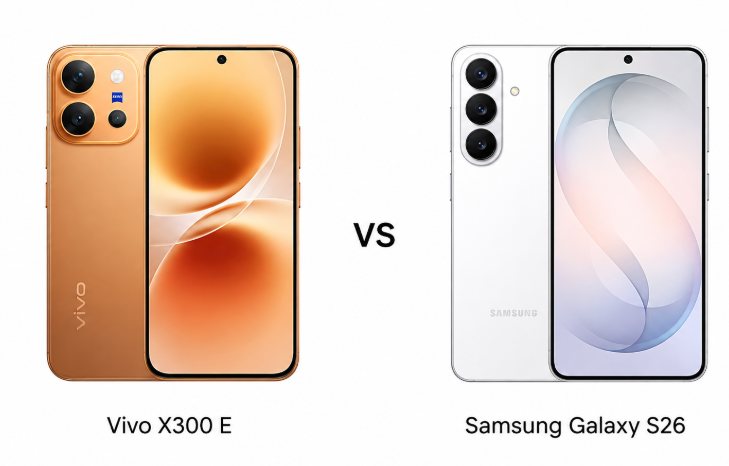
Vivo X300 E and Samsung Galaxy S26 take two very different approaches to the flagship experience. Vivo focuses on powerful hardware with a massive battery, ultra-bright display, and competitive pricing, while Samsung emphasizes premium software support, ecosystem features, and refined performance. Here’s how they compare across design, performance, cameras, battery life, and overall value.
The Vivo X300 E and Samsung Galaxy S26 both offer premium glass-and-metal designs with IP68 water and dust resistance. Vivo adds IP69 protection and an infrared blaster, while Samsung features Gorilla Glass Victus 2, an Armor Aluminum 2 frame, wider eSIM support, and Samsung DeX. Both feel premium, but Samsung emphasizes durability while Vivo focuses on extra practicality.
Vivo features a 6.59-inch AMOLED display with a 144Hz refresh rate, 1.5K resolution, HDR, and up to 5,000 nits peak brightness. Samsung offers a 6.3-inch Dynamic LTPO AMOLED 2X panel with an adaptive 120Hz refresh rate and 2,600 nits peak brightness. Vivo provides a sharper and brighter viewing experience, while Samsung benefits from better power efficiency.
Verdict
The Vivo X300 E delivers a stronger display with higher brightness, resolution, and refresh rate. Samsung remains appealing for users who value durability, adaptive display technology, and its polished software ecosystem.
2. Specifications Including Battery
Performance
The Vivo X300 E runs on the Snapdragon 8 Gen 5 with UFS 4.1 storage, delivering flagship-level speed for gaming and multitasking. The Galaxy S26 uses either the Snapdragon 8 Elite Gen 5 or Exynos 2600, depending on the region, and promises seven major Android updates. Vivo leads in hardware value, while Samsung focuses on long-term software support.
Battery and Charging
Vivo packs a massive 7,200mAh silicon-carbon battery with 90W wired charging and reverse wired charging. Samsung includes a 4,300mAh battery with 25W wired, 15W wireless, and reverse wireless charging. Vivo offers significantly longer battery life, whereas Samsung adds the convenience of wireless charging.
The Vivo X300 E stands out with its huge battery and much faster charging. Samsung is the better choice for buyers who prioritize software longevity, wireless charging, and a mature ecosystem.
3. Camera
Main and Secondary Lenses
Both phones feature a 50MP main camera with OIS. Vivo pairs it with a 50MP 3x periscope telephoto and an 8MP ultrawide camera with Zeiss optics. Samsung combines a 10MP telephoto and a 12MP ultrawide while offering 8K video and advanced computational photography. Vivo has stronger zoom hardware, while Samsung excels in video recording.
Selfie Camera
The Vivo X300 E includes a 50MP autofocus selfie camera capable of 4K recording. Samsung uses a 12MP Dual Pixel autofocus camera with 4K HDR video. Vivo captures more detail, while Samsung delivers consistently natural selfies and dependable autofocus.
Verdict
The Vivo X300 E is better for high-resolution selfies and zoom photography. The Galaxy S26 is the stronger option for users who value refined image processing and class-leading video features.
4. Pricing
The Vivo X300 E is priced around $700 (approximately ₹68,200), while the Samsung Galaxy S26 is priced around $900 (approximately ₹88,000). Vivo offers flagship hardware, a premium display, a massive battery, and fast charging at a considerably lower price. Samsung’s premium mainly covers longer software support, wireless charging, DeX, and ecosystem advantages, making its higher price reasonable for those features.
The Vivo X300 E offers better value for money with stronger hardware at a lower price. The Galaxy S26 justifies its premium through software support, ecosystem integration, and productivity features.
Disclaimer: Prices are approximate and may vary based on country, region, launch timing, and applicable taxes. Always check whether the listed price is for a China unit or a global/international variant when purchasing.
5. Conclusion
The Vivo X300 E impresses with its 144Hz 1.5K AMOLED display, 7,200mAh battery, 90W charging, Zeiss cameras, and aggressive pricing. The Galaxy S26 stands out with seven years of Android updates, Samsung DeX, wireless charging, durable construction, and advanced video capabilities. Each phone excels in different areas depending on buyer priorities.
The Vivo X300 E is the better choice for buyers seeking flagship hardware, outstanding battery life, and excellent value. The Galaxy S26 is ideal for users who prioritize long-term software support, ecosystem features, and a refined flagship experience.
FAQs:
Which phone is better for gaming? The Vivo X300 E is better suited for gaming thanks to its 144Hz display, larger battery, and flagship Snapdragon chipset.
Does the Galaxy S26 have a better camera? The Galaxy S26 offers stronger video recording, while the Vivo X300 E has an advantage in zoom photography and selfie resolution.
Which phone charges faster? The Vivo X300 E supports 90W wired charging, making it significantly faster than the Galaxy S26’s 25W charging.
Which phone offers better value for money? The Vivo X300 E delivers more flagship hardware for a lower price, making it a stronger value-focused option.
Which phone should most buyers choose? Choose the Vivo X300 E for hardware and battery, or the Galaxy S26 for software support and ecosystem features.
Disclaimer: Prices, specifications, and availability may vary by region and retailer. Recommendations in this article are based on editorial opinion, feature-based value, and market positioning at the time of writing. Readers are advised to do their own research before making a purchase.
Amazon is running power banks at up to 65% off during the Great Freedom Sale. We have also got some good deals this year and we have tried to pull together the regular selling price for the main ones, so you can see which cuts are worth acting on and which are about what these cost anyway.
One thing about the capacity numbers first. You never get the full rated figure out of a power bank. Converting cells to USB output costs you roughly a third,, so a 10,000mAh brick puts about 6500mAh into your phone. That is one and a half charges on a typical 5,000mAh handset, not two. Output wattage matters more than most people expect, because a big battery at 10W is something you stop bothering to carry.
Power bank
Sale price
Usually around
Lowest seen
Verdict
Xiaomi Power Bank 4i 20000mAh 33W
₹1,999
₹2,060
₹1,579 (Oct 2025)
Genuine drop
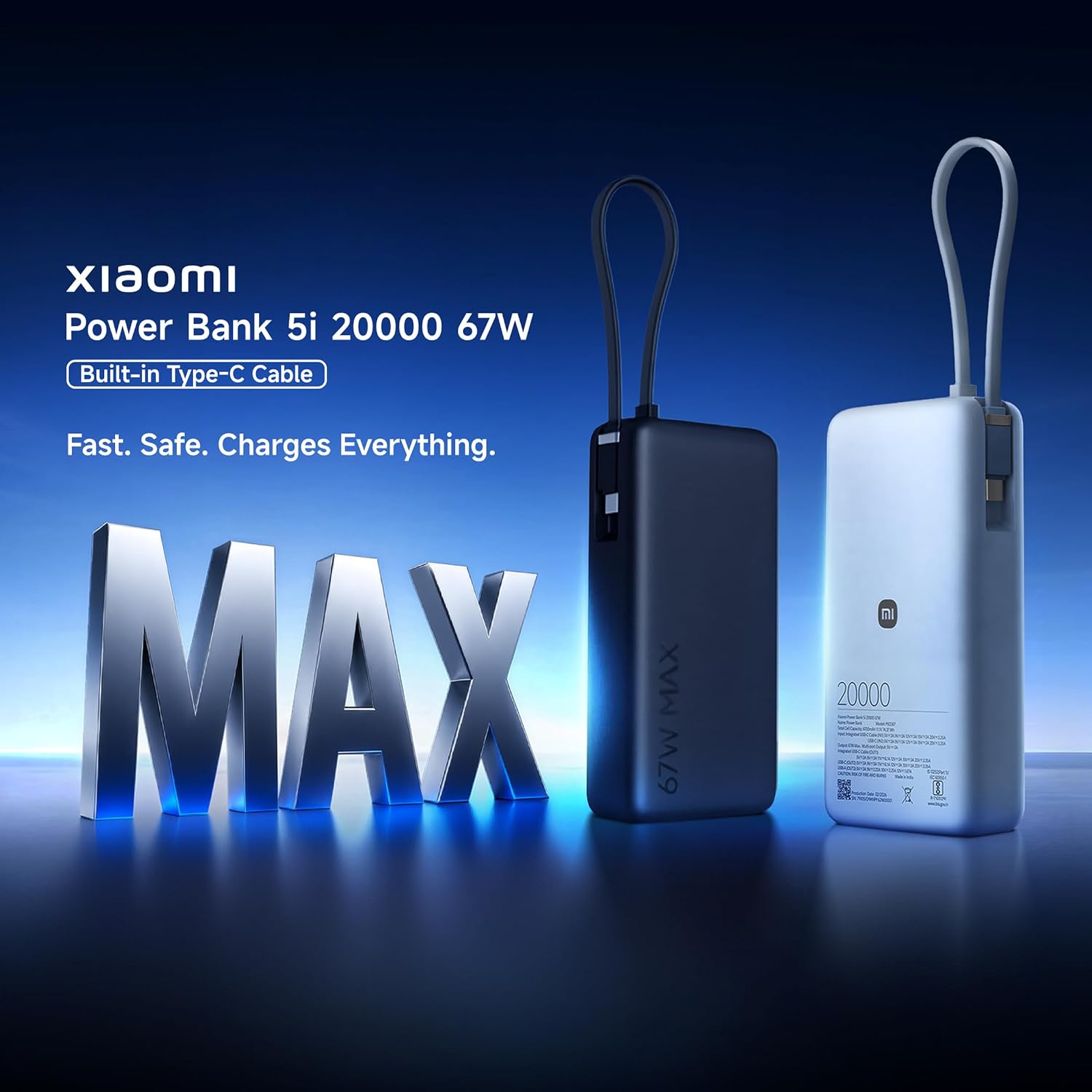
Xiaomi Power Bank 5i 20000mAh 67W
₹3,299
₹3,299
—
No discount
boAt EnergyShroom 10000mAh MagSafe
₹1,399
₹1,498
₹1,049 (Sep 2025)
Small drop
URBN 10000mAh MagSafe
₹1,399
₹1,389
₹999
About normal
boAt EnergyShroom PB100 10000mAh
₹699
₹699
—
Not in the sale
Xiaomi Power Bank 4i 20000mAh 33W – ₹1,999
The pick of this lot. It usually sits around ₹2,060, dipped to ₹1,579 last October, and has spent most of the past year between ₹1,900 and ₹2,300. At ₹1,999 you are buying slightly under the running price rather than at some once-a-year floor, but 20,000mAh at 33W for under two thousand is a fair deal on any day.
The catch is weight. This is a bag power bank. If you were hoping to pocket it, look at a 10000mAh instead.
No major discount on this one. It launched on 28 July at ₹3,299 as an introductory price against a ₹3,499 regular price, and the sale has not moved it. Still a good buy if you need what it does, and the bank offers are where your saving comes from here.
It is the one to get if you are keeping a laptop alive. 67W covers most thin and light notebooks, there is a cable built in, and 20,000mAh will do a phone three times over.
Down from ₹1,699 this morning. Its six-month average is ₹1,498, and it went as low as ₹1,049 last September, so ₹1,399 is fine rather than exciting.
Honestly, the magnetic snap is more useful than it sounds once you have used one on a train. On an Android without a magnetic case you are paying for hardware you cannot use, and there are better options further down.
Same price, same story. This one averages ₹1,389, so no major discount here either. It is a solid pocket power bank and the card offer does the work on the final number.
boAt plain 10,000mAh models, the PB100 and PB150, sit at ₹699 and ₹799 without any sale attached. No wireless charging, no magnets, no 65W. For a spare that lives in a bag and gets used twice a month, they do the job for half the price of anything above.
Worth checking those before you buy a discounted one.
Upgrading from nothing and want one power bank that covers most situations, the Xiaomi 4i at ₹1,999.
Carrying a laptop, the 5i at ₹3,299, sale or no sale.
Just want a backup in a bag, a ₹699 PB100, and skip the sale entirely.
The 10% HDFC card discount stacks on all of these, which is the saving that does move the final number. Prices move around during a sale, so check the listing before you tap buy.
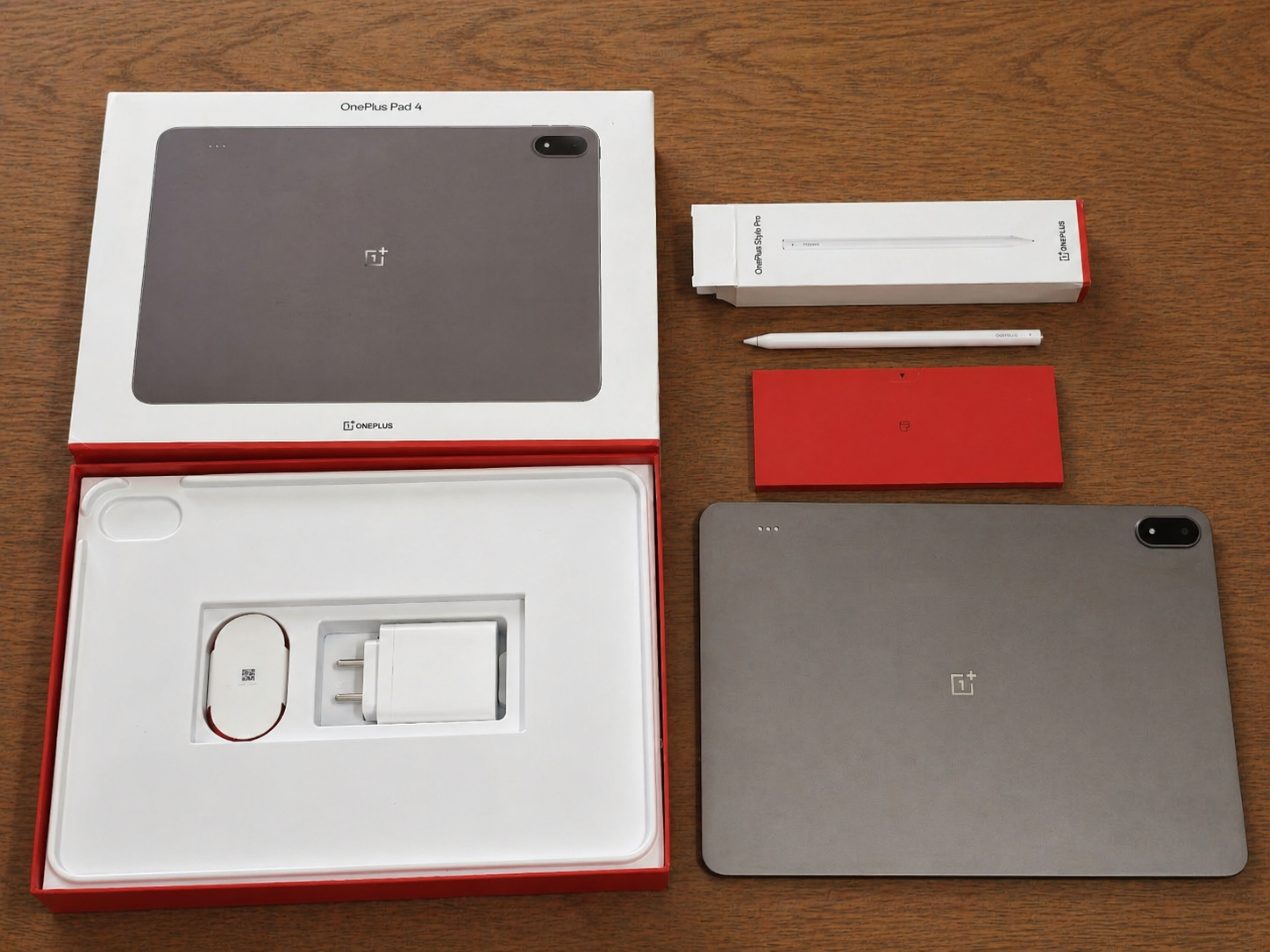
The premium Android tablet market has become more competitive, with brands now focusing on flagship performance, productivity features, and ecosystem integration. The OnePlus Pad 4 is the company’s most ambitious tablet yet, bringing top-tier hardware, a large high-refresh-rate display, powerful speakers, and software features designed to make it more than just a content consumption device.
Originally priced at Rs. 59,999, the OnePlus Pad 4 becomes an even more attractive proposition during the Independence Day Sale 2026, where the tablet is now available for Rs. 56,499. After spending time with the Dune Glow variant and the Stylo Pro, I put it through daily use to find out whether this premium Android tablet is worth buying at this price and if it can truly serve as a laptop replacement.
8Verdict: One of the best Android tablets available today
OnePlus Pad 4
The OnePlus Pad 4 is the most complete tablet OnePlus has made so far. It combines flagship performance, an excellent display, impressive speakers, long battery life, and software features that finally make Android tablets feel productive.
The Snapdragon 8 Elite Gen 5 ensures that performance will not be a concern for years, while OxygenOS 16 brings meaningful improvements for multitasking and everyday workflows.
It is not perfect. The missing fingerprint scanner, lack of cellular connectivity, and LCD panel limitations keep it from being flawless.
However, if you are looking for a premium Android tablet for entertainment, productivity, gaming, or creativity, the OnePlus Pad 4 is one of the strongest options available right now.
It does not just feel like a bigger smartphone. With the right accessories, it genuinely feels like a compact laptop replacement.
For more daily updates, please visit our News Section.
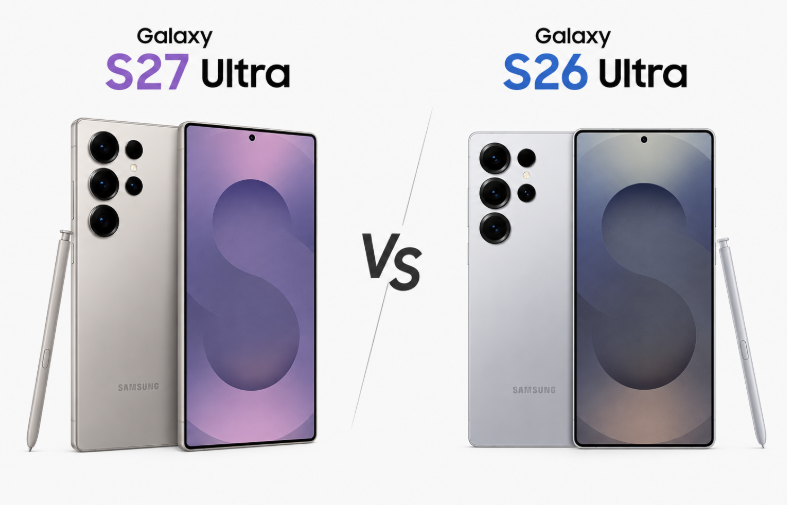
Samsung is expected to launch the Galaxy S27 Ultra in early 2027, and early leaks suggest the company is focusing on refining its flagship rather than completely redesigning it. While the Galaxy S26 Ultra already delivers top-tier performance, cameras, and display quality, the rumored successor is expected to introduce a next-generation 2nm Snapdragon chipset, faster memory, and improved efficiency. Here’s a detailed comparison of the rumored Galaxy S27 Ultra and the Galaxy S26 Ultra to see what could change, what may stay the same, and whether the expected upgrades are worth waiting for.
AI- generated image for representation only
10 Biggest Rumored Galaxy S27 Ultra Upgrades:
2nm Snapdragon 8 Elite Gen 6 Pro – Faster and more efficient chipset.
LPDDR6 RAM – Quicker multitasking and improved efficiency.
UFS 5.0 Storage – Faster app launches and file transfers.
Android 17 – Latest software and AI features out of the box.
Better AI Performance – More powerful on-device AI processing.
Improved Camera Processing – Better HDR and low-light photography.
Longer Battery Life – Higher efficiency despite similar battery hardware.
Smoother Gaming – Better graphics performance and sustained speeds.
Faster Everyday Experience – Improved responsiveness across apps and multitasking.
More Future-Proof – Next-generation hardware built for years of updates.
Samsung is expected to keep the familiar Ultra design for the Galaxy S27 Ultra. Current leaks suggest it will retain the premium glass-and-aluminum build, Gorilla Glass Armor 2 protection, IP68 water and dust resistance, integrated S Pen, and ultrasonic fingerprint scanner found on the Galaxy S26 Ultra. The overall look is likely to remain very similar, making this more of a refinement than a redesign. Existing Ultra users will feel right at home, while those expecting a bold new appearance may be disappointed.
Display Quality
The rumored Galaxy S27 Ultra is expected to feature the same 6.9-inch Dynamic AMOLED display with a 120Hz refresh rate, HDR10+ support, and up to 2,600 nits peak brightness. Unless Samsung introduces last-minute panel improvements, viewing quality should remain almost identical. Any noticeable differences are likely to come from software optimization and better power efficiency.
Display and design upgrades appear minimal. The Galaxy S26 Ultra already delivers an excellent viewing experience, so the S27 Ultra focuses on refining an already proven formula.
2. Specifications Including Battery
Performance
The biggest rumored upgrade is the Snapdragon 8 Elite Gen 6 Pro for Galaxy S27 Ultra, built on a 2nm process, replacing the Snapdragon 8 Elite Gen 5 (3nm) in the Galaxy S26 Ultra. The newer chip, combined with LPDDR6 RAM and UFS 5.0 storage, should deliver faster performance, improved AI features, and better efficiency. The S27 Ultra is also expected to launch with Android 17, while the S26 Ultra ships with Android 16.
Battery and Charging
Battery details remain unconfirmed, but charging features are expected to stay similar with fast wired, Qi2 wireless, and reverse wireless charging. Improved processor efficiency could translate into longer battery life despite similar battery hardware.
Verdict
Performance is expected to be the S27 Ultra’s biggest advantage. Users upgrading from older Galaxy models should notice faster speeds and better efficiency, while S26 Ultra owners may see more modest gains.
3. Camera
Main and Secondary Lenses
Current leaks suggest the Galaxy S27 Ultra will keep the same 200MP main camera, 50MP ultrawide, 10MP 3x telephoto, and 50MP 5x periscope setup as the Galaxy S26 Ultra. Rather than introducing new sensors, Samsung is expected to improve image quality through better AI processing and computational photography powered by the new chipset.
Selfie Camera
The rumored phone is also expected to retain the same 12MP autofocus selfie camera. Improvements, if any, will likely come through software, offering better HDR, portraits, and video processing.
Verdict
Camera hardware may remain unchanged, but software enhancements could still improve consistency and low-light photography. Casual users may notice only subtle differences.
4. Pricing
The Samsung Galaxy S27 Ultra is rumored to be priced around $1,300 (approximately ₹130,000), although prices could increase due to the cost of newer 2nm chips and LPDDR6 memory. The Galaxy S26 Ultra is priced around $1,300 (approximately ₹140,000) depending on the market. If Samsung maintains similar pricing, buyers will receive newer hardware without a major price jump.
The rumored upgrades focus more on performance than major hardware changes, making the value proposition depend largely on launch pricing.
Verdict
If pricing remains similar, the Galaxy S27 Ultra could offer better long-term value. However, discounted Galaxy S26 Ultra models may continue to be the smarter buy for budget-conscious buyers.
Disclaimer: Prices are approximate and may vary based on country, region, launch timing, and applicable taxes. Always check whether the listed price is for a China unit or a global/international variant when purchasing.
5. Conclusion
The Galaxy S27 Ultra appears to be an evolutionary upgrade focused on performance rather than design. The rumored Snapdragon 8 Elite Gen 6 Pro processor, LPDDR6 RAM, UFS 5.0 storage, and Android 17 are expected to deliver a faster and more efficient experience, while the display, cameras, and premium design remain largely unchanged.
Based on current leaks, the Galaxy S27 Ultra is shaping up to be the better long-term choice for users wanting Samsung’s latest technology. However, since the specifications are still unofficial, the Galaxy S26 Ultra remains an excellent flagship and a compelling option, especially if it becomes available at a lower price after the S27 Ultra launches.
Disclaimer: The Samsung Galaxy S27 Ultra has not been officially announced. All Galaxy S27 Ultra specifications, features, pricing, and launch details mentioned in this article are based on current leaks, rumors, and industry reports, and may change before the official launch.
Samsung Galaxy Z Fold 8 and Galaxy Z Flip 8 pre-orders surge 30% globally after launch
Samsung’s latest foldable lineup appears to have received a strong response from consumers worldwide. The company has revealed that the Galaxy Z Fold 8 Ultra, Galaxy Z Fold 8 and Galaxy Z Flip 8 have achieved higher pre-order numbers compared to their predecessors, with India also setting a new milestone.
Galaxy Z Fold 8 Ultra, Galaxy Z Fold 8 and Galaxy Z Flip 8 see strong demand
Samsung has confirmed that global pre-orders for the new Galaxy Z series are 30% higher than the previous generation. The company says the latest foldables have attracted interest with their updated designs, Galaxy AI features and improved productivity experiences.
In India, the response has been even stronger, with the Galaxy Z Fold 8 Ultra, Galaxy Z Fold 8, and Galaxy Z Flip 8 receiving more than 271,000 pre-orders within 72 hours of launch. Last year, Samsung took 15 days to reach a similar pre-order figure for the Galaxy Z Fold 7 and Galaxy Z Flip 7.
Samsung Galaxy Z Fold 8 series, Z Flip 8 pricing
The Galaxy Z Fold 8 Ultra starts at Rs 1,99,999 (~$2,100), while the Galaxy Z Fold 8 starts at Rs 1,79,999 (~$1,890). The Galaxy Z Flip 8 starts at Rs 1,24,999 (~$1,315). All three models are available in multiple colour options through online and offline retail stores.
Samsung has also introduced a 30-month no-cost EMI option for the Galaxy Z Fold 8 Ultra, Galaxy Z Fold 8 and Galaxy Z Flip 8 in India. The financing option is available through Samsung’s official channels and participating retailers, allowing buyers to reduce monthly payments without a down payment.
The Galaxy Z Fold 8 brings a refreshed design focused on a wider range of use cases, including browsing, gaming, reading and multitasking. It weighs 201g, making it Samsung’s lightest Galaxy Z Fold model yet.
The Galaxy Z Fold 8 Ultra targets users looking for a larger workspace with an 8-inch inner display, a 200-megapixel main camera with HDR support, a 50-megapixel ultra-wide camera, a 5,000mAh battery and 45W fast charging.
The Galaxy Z Flip 8 focuses on portability with a redesigned FlexWindow experience, allowing users to access apps, AI features and personalised information directly from the cover display. It comes with a 50-megapixel camera system and FlexCam features for easier hands-free photography.
For more daily updates, please visit our News Section.
Back in May, MediaTek unveiled the Dimensity 7500, a 4nm chipset designed for mainstream smartphones. Currently, the Vivo S60 Vitality, which is exclusive to China, is the only phone equipped with this processor. iQOO has been teasing the arrival of the iQOO Z11 in India for the past week, and the brand has now confirmed that the device will debut as India’s first phone featuring the Dimensity 7500 Turbo.
The iQOO Z11 will be powered by the Dimensity 7500 Turbo, which could be a customized version of the existing chipset while retaining its core specifications. Another teaser from the brand claims that the new processor can achieve a score of 1.2 million on AnTuTu benchmarks. The device was also spotted on Geekbench AI last month, revealing details such as 12GB of RAM and Android 16.
For reference, the Dimensity 7500 features an octa-core Armv9.3-A CPU with clock speeds of up to 2.6GHz, along with the NPU 850 for improved on-device AI processing. It also supports MediaTek HyperEngine for smoother gaming, displays with up to 144Hz refresh rates, and camera sensors up to 200-megapixel.
The chipset also delivers improved power efficiency, faster app response times, and enhanced AI capabilities for tasks such as voice recognition, smart replies, and on-device language processing. Connectivity features include Wi-Fi 6E, Bluetooth 5.4, and a 3GPP Release 17 5G modem with download speeds of up to 5.2Gbps.
iQOO Z11 – Celestial BlueiQOO Z11 – Aurora Green
Apart from revealing the processor, iQOO has confirmed that the Z11 will be available in a Celestial Blue shade weighing 199 grams and an Aurora Green variant with a monochrome liquid crystal finish. The phone will also be available in a white color option and feature a 3D curved AMOLED display.
One UI 9.0, based on Android 17, has already debuted on the latest Galaxy foldables, and it will soon start rolling out to older devices. There’s a long list of devices in line to receive this major Android OS upgrade, but for 19 of them, this will be the end of the road for OS updates.
Samsung is the best in the business at offering longer update cycles, but even that has to come to an end at some point. Soon, over a dozen Galaxy devices, including many high-end phones and tablets, will stop receiving OS updates after upgrading to Android 17.
Review the list of such devices below to find out if you will need a hardware upgrade soon.
These Galaxy devices won’t receive OS updates beyond Android 17
Galaxy S series
Galaxy S23
Galaxy S23+
Galaxy S23 Ultra
Galaxy S23 FE
Galaxy Z Fold 5
Galaxy Z Flip 5
Galaxy A, M, F series
Galaxy A54 5G
Galaxy A34 5G
Galaxy A24 4G
Galaxy M54 5G
Galaxy M34 5G
Galaxy F54 5G
Galaxy F34 5G
Galaxy Tab series
Galaxy Tab S9
Galaxy Tab S9+
Galaxy Tab S9 Ultra
Galaxy Tab S9 FE
Galaxy Tab S9 FE+
Galaxy Tab S6 Lite (2024)
The list has been prepared after carefully reviewing the software update policy for every Galaxy device, and so it must be accurate.
All the Galaxy devices on the list are guaranteed to receive the upcoming One UI 9.0 update, based on Android 17. However, this won’t just be the end of software updates for them.
The devices will still continue to receive security updates for at least a year. Many of them are likely to receive the One UI 9.5 update sometime next year, since it will also be based on Android 17. After that, Samsung won’t release any new feature upgrades for these devices.
If your Samsung device is on the list above, there’s still time to plan your next hardware upgrade. Meanwhile, you can review the list of Galaxy devices that offer 7 major Android OS upgrades to find your potential upgrade options.
The smartwatch segment is seeing a growing focus on artificial intelligence, and Rollme has unveiled its new AI Watch series with smart features aimed at everyday users. The lineup includes two models, the AI Watch 2 and AI Watch 3, offering different designs along with connected features. Here’s more information about both models.
Rollme AI Watch 2 and AI Watch 3 specifications and features
Rollme AI Watch 3 (left) and AI Watch 2 (right)
The Rollme AI Watch series includes a square-shaped AI Watch 2 with a 1.99-inch high-definition display and a round AI Watch 3 featuring a 1.45-inch screen. Both models are built using aerospace-grade aluminium alloy and come with high-brightness displays designed for clear visibility in different lighting conditions.
The smartwatches support both Android and iOS devices, allowing users to manage calls and send quick replies on platforms such as WhatsApp and Telegram. The watches also integrate AI assistants powered by multiple large language models, including ChatGPT, DeepSeek and Grok. Users can ask questions, interact with AI tools and generate personalised watch faces using text prompts.
WhatsApp, Telegram replies supportChatGPT, Grok, DeepSeek AI assistant support
For health and fitness tracking, the Rollme AI Watch lineup includes sensors for monitoring heart rate, blood oxygen levels, sleep patterns and female health metrics. The watches support multiple workout modes, including running, cycling and hiking, while offering real-time tracking for calories and heart rate. They also feature 3ATM water resistance with swimming support.
The AI Watch series is powered by a battery designed to deliver up to 14 days of standby time on a single charge. This allows users to stay connected and monitor fitness activities without frequent charging.
Rollme has launched the AI Watch 2 and AI Watch 3 through its official website in multiple colour options. The series starts at $39.99, making it one of the more affordable smartwatches with integrated AI features. The company has positioned the lineup for users looking for a combination of communication tools, wellness monitoring and AI-powered features in a compact wearable.
The Redmi Note 17 series continues to expand following the recent launch of the Redmi Note 17 5G in India. The company is also expected to introduce the Redmi Note 17 Pro globally after its China debut, while reports indicate that the Redmi Note 17 Pro Max is also in development for both China and international markets. Ahead of its anticipated announcement, the global variant has now surfaced on Geekbench, revealing some of its core hardware.
Redmi Note 17 Pro Max appears on Geekbench
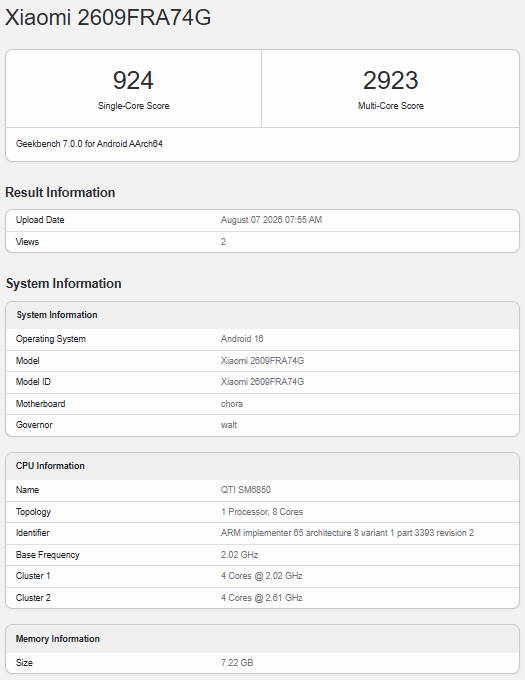
The upcoming handset carries the model number 2609FRA74G, where the “G” suffix indicates that it is the global version. The same model was recently certified by Thailand’s NBTC authority, confirming the Redmi Note 17 Pro Max branding. It has now appeared on the Geekbench 7 benchmarking platform, suggesting that the device is progressing toward launch.
According to the benchmark listing, the Redmi Note 17 Pro Max is powered by Qualcomm’s Snapdragon 6 Gen 5 chipset, identified by the SM6850 part number. The CPU features four performance cores clocked at 2.61GHz and four efficiency cores running at 2.02GHz.
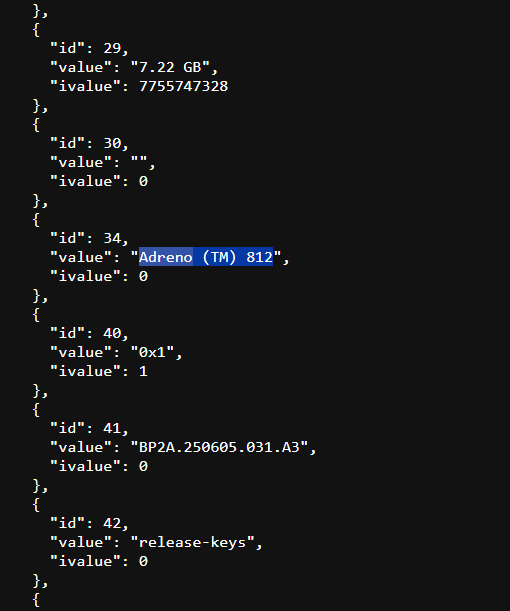
The listing also confirms an Adreno 812 GPU, 8GB of RAM, and Android 16. In Geekbench 7, the device achieved 924 points in the single-core test and 2,923 points in the multi-core test.
Redmi Note 17 Pro Max specifications (rumored)
Redmi Note 17 Pro Max
Recent leaks suggest that the Redmi Note 17 Pro Max could feature a 6.83-inch AMOLED 1.5K display with a 120Hz refresh rate, 3,500 nits peak brightness, and Corning Gorilla Glass Victus 2 protection. It will arrive with 8GB / 12GB of LPDDR5x RAM, 128GB (UFS 2.1) / 256GB of UFS 4.0 storage, and a 9,200mAh battery with 100W fast charging
The Note 17 Pro Max is also expected to feature an OIS-enabled 50-megapixel main camera along with an 8-megapixel ultra-wide camera on the back, a 32-megapixel front camera, an in-display fingerprint scanner, IP68/69K-rated dust and water resistance, eSIM support, and Xiaomi HyperOS 3 based on Android 16. It is speculated that the Chinese edition of the device may pack different specs, such as a Dimensity 7500 chip, a 200-megapixel main camera, and a bigger 10,000mAh battery.
While Redmi has yet to confirm the Redmi Note 17 Pro Max, its recent certification and Geekbench appearance suggest that an official announcement may not be far away. What feature are you most excited to see on the Redmi Note 17 Pro Max? Let us know in the comments.
For more daily updates, please visit our News Section.
Nothing Phone (4a) and Vivo Y500 target very different buyers despite running Android 16. One focuses on premium performance, advanced cameras, and a unique design, while the other prioritizes massive battery life, durability, and affordability. Here’s a detailed comparison to find out which smartphone delivers the better overall value for your needs.
Major Features:
Category
Nothing Phone (4a)
Vivo Y500
Winner
Design & Build
Glass front & back, Gorilla Glass 7i, Glyph LED, IP64
The Nothing Phone (4a) follows the brand’s distinctive transparent-inspired design with a glass front and back, Gorilla Glass 7i protection, and its signature rear notification LED, giving it a premium and recognizable appearance. It carries an IP64 rating, which protects against dust and light water splashes. The Vivo Y500 adopts a more conventional design with a glass front, plastic back, and plastic frame, but significantly improves durability with IP68/IP69 water and dust resistance along with MIL-STD-810H certification. Those who prioritize ruggedness and outdoor use may appreciate Vivo’s stronger protection, while users seeking a more premium visual identity may prefer Nothing’s cleaner design language.
Display Quality
Nothing equips the Phone (4a) with a 6.78-inch AMOLED display supporting 1 billion colors, HDR10+, Ultra HDR images, and 120Hz refresh rate. Vivo counters with a slightly larger 6.83-inch AMOLED panel featuring HDR support, 120Hz refresh rate, higher peak brightness, and marginally sharper resolution. Both displays are excellent, but Nothing offers richer HDR standards and superior display technology for multimedia enthusiasts.
Verdict
The Nothing Phone (4a) feels more premium thanks to its materials and feature-rich display, while the Vivo Y500 stands out for durability. Users focused on entertainment and display quality will likely find the Nothing experience more refined.
Performance is where the two phones clearly separate. The Nothing Phone (4a) runs on Qualcomm’s Snapdragon 7s Gen 4 chipset built on a 4nm process, paired with faster UFS 3.1 storage and up to 12GB RAM. It comfortably handles demanding games, multitasking, and long-term software usage. The Vivo Y500 relies on the Unisoc T7300 processor with UFS 2.2 storage, making it more suitable for everyday applications, social media, streaming, and casual gaming. Android 16 powers both devices, but Nothing promises up to three major Android upgrades, giving it a stronger long-term advantage.
Battery and Charging
Battery life is Vivo’s biggest strength. Its massive 8100mAh silicon-carbon battery easily outlasts most smartphones in this segment and supports 44W charging with bypass charging and reverse wired charging. The Nothing Phone (4a) offers a 5080mAh global battery or a 5400mAh Indian version with faster 50W charging and impressive charging speeds. Users wanting maximum endurance will appreciate Vivo, while faster top-ups favor Nothing.
Verdict
The Nothing Phone (4a) delivers significantly stronger overall performance and longer software support. However, the Vivo Y500 is an excellent choice for users whose highest priority is exceptional battery life over raw processing power.
3. Camera
Main and Secondary Lenses
Photography is another major advantage for the Nothing Phone (4a). It features a versatile triple-camera setup consisting of a 50MP primary camera with OIS, a 50MP periscope telephoto lens offering 3.5x optical zoom, and an 8MP ultrawide camera. It also supports 4K video recording, Dolby Vision HDR, gyro-EIS, and optical stabilization. The Vivo Y500 keeps things simple with a 50MP primary camera and an auxiliary sensor, limited to 1080p video recording. While its primary camera can capture good daylight images, it lacks the flexibility offered by dedicated zoom and ultrawide cameras.
Selfie Camera
Both smartphones include a 32MP front-facing camera capable of recording 1080p videos. Selfie quality should be comparable for social media and video calls, although Nothing’s overall image processing and HDR support provide a slight edge in more challenging lighting conditions.
Verdict
The Nothing Phone (4a) offers a substantially more capable camera system with greater versatility, stronger video features, and optical zoom. Vivo’s camera is suitable for everyday photography, but Nothing is the better choice for users who frequently capture photos and videos.
4. Pricing
The Nothing Phone (4a) is priced around $450 (₹32,000), placing it in the upper mid-range category. At this price, buyers receive a premium AMOLED display, Snapdragon 7s Gen 4 processor, triple-camera system with periscope zoom, faster UFS 3.1 storage, and guaranteed software updates. The Vivo Y500 is priced around $250 (₹22,000), making it considerably more affordable. Despite its lower price, it offers an AMOLED display, huge 8100mAh battery, stereo speakers, and excellent durability with IP68/IP69 protection.
The price difference reflects two very different priorities. Nothing focuses on delivering flagship-inspired features and long-term usability, whereas Vivo emphasizes battery life and affordability. Both phones provide good value within their respective segments, but they appeal to different buyers.
Verdict
The Nothing Phone (4a) justifies its premium pricing through better performance, cameras, and software support. The Vivo Y500 offers outstanding value for budget-conscious users who mainly want long battery life and reliable everyday performance.
Disclaimer: Prices are approximate and may vary based on country, region, launch timing, and applicable taxes. Always check whether the listed price is for a China unit or a global/international variant when purchasing.
5. Conclusion
The Nothing Phone (4a) distinguishes itself with its signature Glyph-style notification lighting, Gorilla Glass 7i protection, Snapdragon 7s Gen 4 processor, periscope telephoto camera, HDR10+ display, Dolby Vision video recording, and three promised Android upgrades. These features make it feel like a complete premium mid-range smartphone. The Vivo Y500 answers with its enormous 8100mAh silicon-carbon battery, IP68/IP69 certification, MIL-STD-810H compliance, and attractive pricing. It is designed for users who value endurance, durability, and dependable everyday usage more than advanced photography or gaming.
Verdict
Nothing Phone (4a) is the stronger all-around smartphone. It delivers noticeably better performance, a far more versatile camera system, faster storage, richer display technology, and better software longevity. Vivo Y500 remains an excellent budget alternative thanks to its exceptional battery life and rugged build, making it ideal for users who prioritize endurance over flagship-style features.
For most buyers seeking the best overall smartphone experience, the Nothing Phone (4a) is the better choice, while the Vivo Y500 stands out as the smarter pick for maximum battery value at a lower price.
FAQs
1. Which phone has the better camera? The Nothing Phone (4a) offers a more versatile camera system with telephoto zoom and ultrawide photography.
2. Which phone performs better for gaming? The Nothing Phone (4a) delivers smoother gaming thanks to its Snapdragon 7s Gen 4 chipset.
3. Which phone has better battery life? The Vivo Y500 lasts significantly longer with its massive 8100mAh battery.
4. Which phone offers better value for money? The Vivo Y500 provides excellent value, while the Nothing Phone (4a) offers more premium features.
5. Which phone should most buyers choose? Choose the Nothing Phone (4a) for all-round performance, or the Vivo Y500 for battery-focused everyday use.
Disclaimer: Prices, specifications, and availability may vary by region and retailer. Recommendations in this article are based on editorial opinion, feature-based value, and market positioning at the time of writing. Readers are advised to do their own research before making a purchase.
Honor has launched the MagicOS 11 closed beta program, which allows select users to test new features and changes ahead of the public release. The company has begun accepting applications for the first batch of devices, which includes a total of 17 devices.
Along with the list of eligible devices in the first batch, the company has also shared its beta rollout plans.
MagicOS 11 closed beta program: List of devices in the first batch
Smartphone
Honor Magic V6
Honor Magic V5
Honor Magic 8 RSR Porsche Design
Honor Magic 8 Pro
Honor Magic 8 Pro Air
Honor Magic 8
Honor Magic 7 RSR Porsche Design
Honor Magic 7 Pro
Honor Magic 7
Honor WIN
Honor WIN RT
Honor GT Pro
Honor 600 Pro
Honor 600 Super Edition
Honor 600 Vitality Edition
Tablets
Honor MagicPad 3 Pro
Honor MagicPad 3 Pro 12.2
Eligible Honor smartphone users can apply for the beta testing until August 11, while tablet owners can submit their entry until August 21. It’s important to note that Honor is recruiting only 2,000 users per model. So, if you want to be a part of it, submit your participation at the earliest possible.
For smartphone users, Honor will begin reviewing applications from August 12 to August 14, and start pushing beta updates on or before August 18.
For tablet users, the review period will be August 24 to August 25, and the beta updates will start rolling out from on or before August 28.
How to register for Honor MagicOS 11 beta program?
Honor recommends upgrading the firmware version to 10.0.0.170 to be eligible for the beta program.
Follow the steps to register your application:
Open the “My Honor” app on your device.
Go to the “Club” section.
Tap on the available MagicOS testing opportunity.
Submit your application.
Once a beta update starts rolling out to your device, you can install it from the Software update section in Settings > System and Updates.
We use cookies on our website to give you the most relevant experience by remembering your preferences and repeat visits. By clicking “Accept”, you consent to the use of ALL the cookies.
This website uses cookies to improve your experience while you navigate through the website. Out of these, the cookies that are categorized as necessary are stored on your browser as they are essential for the working of basic functionalities of the website. We also use third-party cookies that help us analyze and understand how you use this website. These cookies will be stored in your browser only with your consent. You also have the option to opt-out of these cookies. But opting out of some of these cookies may affect your browsing experience.
Necessary cookies are absolutely essential for the website to function properly. This category only includes cookies that ensures basic functionalities and security features of the website. These cookies do not store any personal information.
Any cookies that may not be particularly necessary for the website to function and is used specifically to collect user personal data via analytics, ads, other embedded contents are termed as non-necessary cookies. It is mandatory to procure user consent prior to running these cookies on your website.