Advertisement

Oppo Find N5’s new images give glimpse of front display, reduced camera bulge

The Oppo Find N5 is slated to debut in February in China. Official teasers released by the brand have already provided a good idea of what to expect from the N5’s design. Now, a fresh set of images has appeared on Weibo, offering a glimpse of its front display and rear camera module.

Oppo Find N5’s new images reveal more details about its design

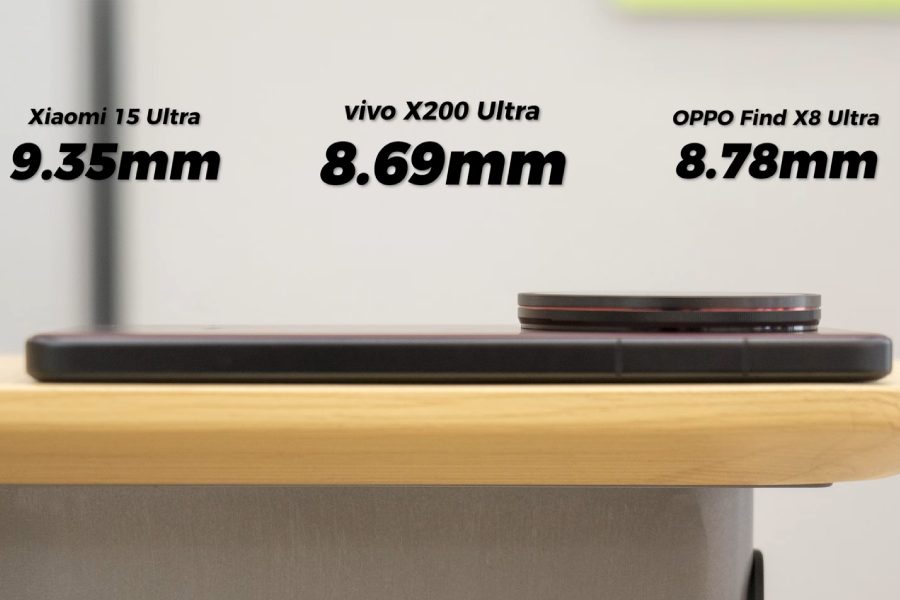
The new images showcase the thickness of the Oppo Find N5 in its folded state, which is said to be around 9.2mm. The company is touting it as the world’s slimmest foldable phone.

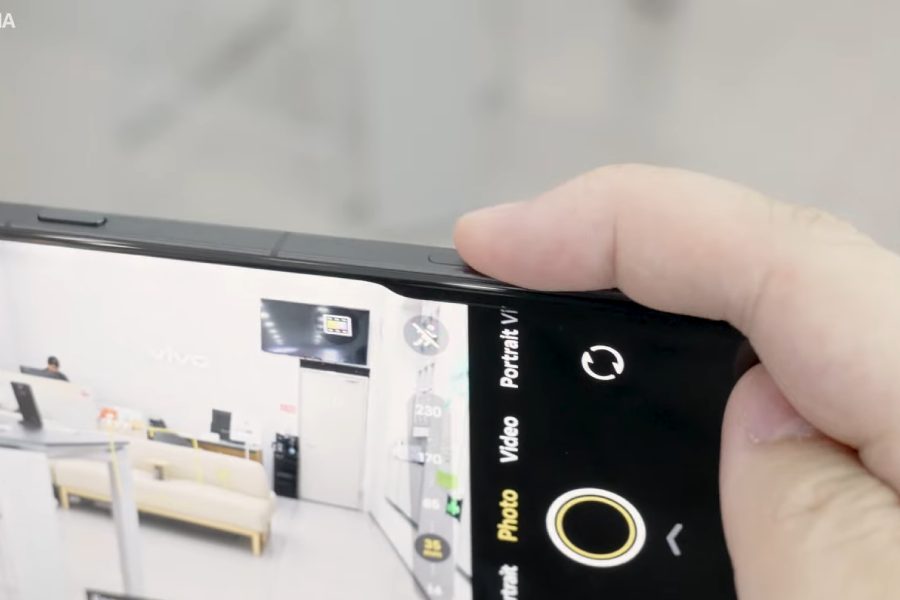
One of the images shows that the company has significantly reduced the camera bulge on the Find N5. The frosted right-angle middle frame has a pleasant texture. The side view image also reveals an alert slider on the left edge, while the right side features a volume rocker, and a power key integrated with a fingerprint sensor. On the front, it boasts a flat OLED panel.

There are two speakers on the top and bottom for stereo output. A microphone is seen on the bottom alongside the speaker, while the other half on the bottom has a USB-C port and a SIM slot, which is not visible because of the thumb placed on it.

The images of the OPPO Find N5 were leaked by automotive influencer Chen Zhen, who has a massive following of 9.638 million followers. He had previously leaked a video related to the Lynk & Co 900. Zhen was fined 5 million yuan for the leak ahead of the car’s official release. Although he has since deleted the Find N5 images he shared on Weibo, the leak caused a stir online. Some believe the images may have been borrowed from another blogger who had received a test unit under a confidentiality agreement, leading to the accidental leak.

There has been criticism of Zhen’s actions, with some arguing that it violates the confidentiality agreement, and calls for Oppo to enforce penalties as per the signed agreements. Some Weibo users have speculated that the leak could be a strategy to build hype, with suggestions that Oppo may have secretly collaborated with the influencer because of his huge fan base. Reports indicate that Oppo may have provided Zhen with the Find N5 device after the incident. Both Chen Zhen and OPPO have yet to comment on the matter.

For more daily updates, please visit our News Section.

Stay ahead in tech! Join our Telegram community and sign up for our daily newsletter of top stories! 💡

(source)

Nvidia responds to concerns about RTX 5090 melting power connectors

Conversations around the Nvidia GeForce RTX 5090 are not only exciting but also fairly positive for the most part. But there’s at least one major concern floating around: the fear of power connectors melting, just like we saw with the RTX 4090. And given the $1,999 price tag, nobody wants to deal with a potential hardware failure again.

But Nvidia’s on it, reassuring fans that they’re doing everything they can to avoid a repeat of the issues from the 4090.

A quick recap: what went down with the RTX 4090

When the RTX 4090 hit the market in October 2022, some users started reporting overheating and even melting power connectors. At first, Nvidia pointed to user error, claiming that people were plugging the connectors in wrong. However, the experienced PC community couldn’t accept it so easily. So Nvidia took a closer look and made some changes.

GIGABYTE’s custom GeForce RTX 4090
Read more: https://www.tweaktown.com/news/89110/multiple-geforce-rtx-4090-cards-dead-melted-16-pin-power-connectors/index.html

They ended up redesigning the 12V-2×6 16-pin cable, making it more durable and adding shorter, more conductive pins to help with heat management. This fix definitely reduced the number of overheating incidents, but some 4090s still had issues, especially those with older cables. The original cables, designed for a 600-watt power draw, just weren’t cutting it for the demanding GPU.

But what about the RTX 5090?

Now, the RTX 5090 is about to drop on January 30, 2025, and it’s actually pulling even more power than the 4090—575 watts up from 450 watts of the previous generation. But Nvidia’s confident that the updated 12V-2×6 connector will be able to handle it. At a recent event, the company assured everyone that the new design is built to withstand the added power demand, so the risk of melting connectors should be a lot lower.

Some manufacturers aren’t just relying on Nvidia’s new connector, though. MSI, for example, has added yellow-tipped power adapters to their builds, which lets users see if the connector is securely plugged in—something that could help prevent the user errors that Nvidia has previously pointed to as the cause of connector issues.

While Nvidia’s tweaks and their partners’ innovations suggest they are taking the right steps to keep things safe, users may still consider upgrading their power supply before replacing their existing card with the RTX 5090.

Stay ahead in tech! Join our Telegram community and sign up for our daily newsletter of top stories!
Source: Quasar Zone

Nvidia GeForce RTX 5090 leak reveals up to 46% performance improvement

Nvidia’s upcoming GeForce RTX 5090 has been on the conversation for quite a while, and for good reason. A recent leak has given us a sneak peek at its performance, and it’s looking like a major upgrade over the RTX 4090. With up to 46% more power in synthetic benchmarks, this flagship GPU has already grabbed the attention.

geforce-rtx-5090

So, what do the benchmarks say?

Some 3D Mark scores for the RTX 5090 have spotted online, with quite impressive numbers. Check out the results:

  • 3D Mark Speed Way (1440p): 14,383
  • 3D Mark Steel Nomad (4K): 14,133
  • 3D Mark Port Royal (1440p): 36,673
  • 3D Mark Time Spy (1440p): 48,732
  • 3D Mark Time Spy Extreme (4K): 25,485
  • 3D Mark Fire Strike (1080p): 101,767
  • 3D Mark Fire Strike Extreme (1440p): 60,778
  • 3D Mark Fire Strike Ultra (4K): 33,114

These scores show that the RTX 5090 is roughly 30-46% faster than the RTX 4090, depending on the benchmark. Nvidia’s own gaming tests back this up, suggesting a 30% performance boost in raw gaming power. For instance, in Cyberpunk 2077—a notoriously demanding game—the RTX 5090 needs DLSS to hit playable frame rates with Path Tracing enabled. This means we’re looking at some serious muscle under the hood.

As far as these benchmarks are concerned, the RTX 5090 is going to be a beast. Sure, synthetic benchmarks don’t always tell the full story, as performance can vary depending on your CPU, RAM, and game optimizations. But one thing is for sure—this card is set to be the king of desktop GPUs for quite a while.

And don’t expect AMD or Intel to dethrone it anytime soon. AMD’s Radeon RX 9070 XT and even its upcoming RDNA-based GPUs are unlikely to match the sheer power of Nvidia’s Blackwell flagship. Intel’s Battlemage and Celestial series? Same story.

Should you care?

Absolutely. The RTX 5090 will easily be the fastest graphics card money can buy for the foreseeable future. Of course, we’ll have to wait for real-world testing to see how it handles in different games and workloads, but if the leaks are accurate, this GPU is going to set new standards. For users looking for nothing but the best, it’s hard to imagine a better choice. For more daily updates, please visit our News Section.

Don’t miss a thing! Join our Telegram community for instant updates and grab our free daily newsletter for the best tech stories!

(Source)

Vivo’s Galaxy S25 Edge lookalike spotted on certification site with 5380mAh battery

Vivo launched the budget-oriented  Y03 smartphone in March 2024, so it’s about time to expect a successor. In line with this, the upcoming smartphone has been spotted on multiple certification sites, including TRDA, CQC, and NCC, revealing real-life images of the device along with some specifications.

Vivo Y04 TRDA and CQC certification

The Vivo Y04 has been listed on the TDRA certification website under the model number V2430. While the listing itself doesn’t reveal much in terms of features, it does confirm the phone’s moniker and suggests a launch in the UAE.

Another certification website, CQC, sheds some light on the Y04’s charging capabilities. The listing reveals support for 15W fast charging, in line with what we can expect in a budget smartphone. 

Vivo Y04 NCC certification

The most revealing certification listing comes from NCC. Here, we get a glimpse of the Vivo Y04’s design in real-life images. The phone can be seen in two color options — a dark green variant with a matte finish and a purple variant sporting a glass back.

The camera department seems fairly basic, with a pill-shaped module housing two sensors and an accompanying ring light. Interestingly, the design looks eerily similar to Samsung’s upcoming Galaxy S25 Edge, which we got a sneak peek of just earlier this week. The volume and power buttons reside on the side of the phone.

The bottom of the phone houses a USB Type-C port alongside a headphone jack, while the top features a speaker grille. The SIM tray finds its spot on the left side. Up front, the Y04 boasts a flat display with a waterdrop notch for the selfie camera. Based on the NCC images, the phone’s width is around 80mm, and its length is roughly 170mm.

The NCC database also shows us the phone’s battery. It’s a Li-ion cell (model number BA61) with a rated capacity of 5380mAh and a typical capacity of 5500mAh.  

The database also includes a power adapter (model number V1530L0B0-US) that supports 15W wired fast charging.


For more daily updates, please visit our News Section.

Don’t miss a thing! Join our Telegram community for instant updates and grab our free daily newsletter for the best tech stories!

Galaxy S25 Ultra Camera Upgrades: Virtual Aperture, RAW Editing, and Advanced AI Features

Samsung has introduced the Galaxy S25 Ultra, alongside the S25 and S25+, focusing on advancing photography and video creation tools. Samsung has recently shared details of all the improvements it has made with the camera system and software of the Galaxy S25 Ultra and other devices in the series in a blog post.

Samsung Galaxy S25 Ultra

Upgraded Camera System

The Galaxy S25 Ultra now features a 50MP ultra-wide sensor that’s four times bigger than before. This means you can capture fine details in close-up shots and get clear images of subjects far away. It’s also designed to handle fast-moving objects, so even quick moments come out sharp.

When it comes to video, the Galaxy S25 supports 8K resolution at 30fps and includes a 0.6x ultra-wide angle option. Switching between zoom levels is now much smoother thanks to an instant slow-motion engine, and the Pro Video Mode’s new Zoom Rocker UI lets you adjust zoom speed with ease.

Improved Video Features

Log Video

The camera now comes with six new film-style filters to help you create visuals that feel like they came straight out of an old-school film camera. You can also tweak contrast, saturation, and color temperature to suit your style. For more serious video creators, the Log Video feature provides a wider dynamic range for editing. You can even download LUTs (Look-Up Tables) from Samsung to work on your footage in software like DaVinci Resolve or Adobe Premiere Pro.

The 10-bit HDR feature is now standard, which helps produce videos with richer colors and more depth. You can also grab snapshots from HDR videos, and the photos are processed for better color and detail accuracy.

Creative Photo and Depth Control

The Expert RAW app introduces a virtual aperture feature that lets you control how much of your photo is in focus. You can adjust it from F1.4 to F16, giving you DSLR-like control over depth of field. Digital ND filters are also included, making it possible to take long exposure shots even in bright daylight.

Motion Photo has been updated to capture 1.5 seconds of video before and after you take a picture, with an option to extend it to three seconds. You can stitch these clips together into a video, and the AI can optimize faces for better results when multiple people are in the frame.

Smarter Gallery and Editing Tools

The Gallery app has been redesigned to make finding photos easier. Thanks to better natural language processing and broader recognition categories, you can quickly search for pictures of objects, events, people, or pets.

Photo Remaster

Photo editing is more user-friendly, too. The Photo Remaster feature uses AI to sharpen blurry pictures, brighten dark areas, and clean up noise for clearer images. For videos, the new audio eraser tool can remove unwanted sounds like wind or background noise. The auto-trim tool picks out the key parts of your video, making editing quicker.

Advanced generative AI editing has been added as well, offering tools to remove shadows from objects and make them blend naturally with the background. The sketch conversion feature allows you to create multiple sketch variations from a single photo.

RAW Editing for Professionals

If you like working with RAW photos, the Galaxy S25’s RAW Image Editor has been expanded to include eight adjustment options for precise edits. It keeps all the details from the original file, so you have plenty of flexibility. Once you’re done with RAW edits, you can switch to the standard photo editor for further tweaks.

For more daily updates, please visit our News Section.

Stay ahead in tech! Join our Telegram community and sign up for our daily newsletter of top stories!

(Source)

Samsung Galaxy S25 Ultra with 16GB RAM: Where is it available, and what is its price?

The Galaxy S25 Ultra is Samsung’s first phone to feature 16 GB of RAM. The 12 GB version of the device is available in most markets, while only three markets carry the 16 GB RAM edition. Here’s a look at its price and availability.

Samsung Galaxy S25 Ultra 16GB+1TB variant’s price and availability

The 16GB Galaxy S25 Ultra, which comes with 1 TB of storage, is confined to three markets: South Korea, China, and Taiwan. Why are these three markets exclusive? Well, Samsung is yet to release an official statement on it.

The price of the S25U’s 16GB+1TB variant in Taiwan is 56,900 TWD, which is approximately $1,740. It can be purchased in Titanium Black and Titanium Silver Blue shades. 

In China, the Galaxy S25 Ultra with a 1GB + 1TB configuration is priced at 13,699 CNY (~$1,890) and users have a wide range of color options to choose from. During the ongoing pre-order period, it is available for a lower price of 2,041,700 KRW (~$1,425). Apart from the regular Titanium Silver Blue, Titanium Mist Gray, Titanium Shadow Black, and Titanium Silver, it also comes in exclusive colors via Samsung.com, such as Titanium Black, Titanium Jade Green, and Titanium Soft.

In South Korea, the Galaxy S25 Ultra’s 1TB version comes in 12 GB and 16 GB RAM versions. The latter is priced at 2,249,500 KRW (~$1,570). Only the Titanium Jet Black color is available for purchase.

Please Note: When you buy something using the links in our articles, we may earn a small commission at no cost to you.

Speaking of South Korea, Samsung has introduced the Galaxy AI subscription club, which comes with a fee of 5,900 KRW (~$4) per month. Buyers can choose 12 months or 24 months or simply opt-out from availing themselves of this service. Subscribers can take advantage of various perks, including a 50 percent credit after 12 months or a 40 percent credit after 24 months, when they return their Galaxy S25 series devices. These credits can then be applied to the next Galaxy S-series device. Subscribers also get free “Samsung Care+ Smartphone Damage+” protection and discounts on accessories like cases and battery packs.

 For more daily updates, please visit our News Section.

Stay ahead in tech! Join our Telegram community and sign up for our daily newsletter of top stories! 💡
Google releases Android 16’s first public beta: Here’s how to download it

Google today officially released Android 16 Beta 1 for Pixel smartphones, two months after the developer preview was released in November. This means that if you have a Pixel phone ranging from the Pixel 6 to the Pixel 9 series (and even the Pixel Fold and Pixel Tablet!), you can now sign up for the beta program and get an early look at the features that will be coming to the next major version of Android.

Android 16 Beta 1 Update

There are a bunch of new features Google introduced within the first Android 16 beta. Let’s go through them here. 

What’s new in Android 16 Beta 1

1. Android 16 makes apps more adaptable to any screen

It’s no surprise that Google is focusing on screen adaptability in Android 16, especially as foldable phones gain traction and Android tablets see a partial resurgence. The latest update introduces major optimizations to improve how apps scale across large-format screens.

Google acknowledges that many developers cut corners by releasing apps without optimizing them for tablets, often leading to an inconsistent and even frustrating experience. To address this, Android 16 will phase out an app’s ability to lock screen orientation between portrait and landscape, as well as restrictions on aspect ratios when resizing on larger displays.

Samsung and other manufacturers have been ahead of the curve for years, with their custom Android versions allowing apps to run in any window size. Still, Google is urging developers to test their interfaces across different screen sizes and implement responsive layouts where possible. The only exception is games, which will retain the ability to define aspect ratios based on the developer’s preferences.

2. Live Updates bring iOS-style persistent notifications to Android

Another major addition in Android 16 Beta 1 is Live Updates, a feature similar to Apple’s Live Activities on iOS. These high-priority notifications stay visible on the lock screen, ensuring users don’t miss important updates like upcoming flights, food deliveries, or navigation directions.

The goal is to cut through the clutter of endless notifications—an area where Apple has historically done better than Android. Some manufacturers, like Samsung with its Now Bar and OnePlus with Live Alerts, have already introduced similar features, but Android 16 now bakes it in at the system level.

Developers will be able to integrate Live Updates more easily using a standardized template that supports custom colors, icons, and real-time progress tracking.

3. Android 16 natively supports Samsung’s Advanced Professional Video (APV) codec

Google and Samsung’s deep collaboration continues with Android 16’s native support for Advanced Professional Video (APV), a high-end video codec originally developed by Samsung.

The APV 422-10 profile in Android 16 brings YUV 4:2:2 color sampling, 10-bit encoding, and a target bit rate of up to 2 Gbps, enabling professional-grade video recording and editing. Samsung first introduced this at its 2024 annual conference, and now Google is integrating it directly into Android.

4. Predictive animations now extend to apps

Predictive animations were introduced in Android 15, but they only applied to system navigation. Now, in Android 16, these fluid animations extend across all apps. This should improve transitions when returning to the home screen, switching to multitasking, or using multi-window mode.

5. Smarter 3-button navigation with previews

For those who prefer 3-button navigation over gestures, Android 16 Beta 1 brings a new preview system that shows where each button will take you before the action is completed. For example, long-pressing the Back button will display a preview of the screen you’re about to return to.

6. More Gemini AI integrations coming

Google is also expanding Gemini AI extensions, which were first announced alongside Samsung’s Galaxy S25. While Gemini already integrates with some Samsung apps, Google now says it’s working on broader compatibility with more manufacturers and deeper app-level integrations.

It’s likely that Android 16 will introduce new APIs that allow Gemini to interact more seamlessly with apps, but details on this are still scarce.


How to install Android 16 beta 1

The Android 16 public beta is now available for all Google Pixel devices, with the stable release expected in Q2 of this year.

If you own a Pixel phone or tablet, you can enroll in the Android Beta Program by visiting Google’s official website and checking your account for an eligible device.

Compatible Pixel Phones:

For more daily updates, please visit our News Section.

Don’t miss a thing! Join our Telegram community for instant updates and grab our free daily newsletter for the best tech stories!

Nothing teases the back design of its upcoming phone: possibly refers to a transparent design

Just a couple of days ago, Nothing shared a pixelated image of the fire-type Pokemon Arcanine, and twitted “first tweet from new device”. This is expected to be the “landmark” codenamed phone, which was mentioned in the leaked email from the CEO to his employees. Now Nothing has posted a design sketch related to the phone.

A transparent back design

This sketch appears to be about the transparent back panel of the phone, which includes screws and other internal components. Although, it doesn’t show the entire rear panel but only certain elements. So, we cannot be sure if it will include the company’s signature Glyph lights on the back.

While we are not completely sure which device this teaser represents, two devices recently received green flag in India: Nothing Phone (3a) and Phone (3a) Plus. Notably, a new CMF-branded phone (speculated to be the CMF Phone 2) was also recently spotted on GSMA’s IMEI database. Another upcoming Nothing device (with model number 24111) was recently spotted on FCC.

The sketch above likely represents one of these devices. While we aren’t sure which one it’s going to be and how it’s exactly going to look like, Nothing co-founder, Akis Evangelidis confirmed the new product is launching soon. “About time – launching soon.”

Is it Nothing Phone (3)?

Significant in the context, the previously leaked email confirms that the Nothing Phone (3) will launch this year with “breakthrough innovations” in the UI. It could also be the company’s first step towards the AI-powered user interface. It will be interesting to see how the UI stands out in intelligence from those its competitors offer.

While I have mentioned a number of devices above, Nothing CEO has already confirmed that the “landmark” with be their first phone of 2025 and it will launch as soon as in Q1. So expect complete details within March this year. According to previous reports, the “landmark” could represent the much-anticipated Nothing Phone (3). Just take it with a pinch of salt for now, as nothing is concrete about “landmark” yet.

For more daily updates, please visit our News Section.

Don’t miss a thing! Join our Telegram community for instant updates and grab our free daily newsletter for the best tech stories!

The Best AI Smartphones of 2024

Artificial intelligence (AI) has become a defining feature of modern smartphones, evolving the way we interact with our devices. In 2024, the competition is fierce, but three models stood out for their advanced AI functionalities. We have the Oppo Find X8 Pro, Samsung Galaxy S24 Ultra, and Google Pixel 9 Pro XL.

These flagship phones leverage AI in distinct ways to enhance user experience. The Oppo Find X8 Pro uses AI for real-time language AI summary, AI Speak, and AI Writer. Samsung’s Galaxy S24 Ultra implements generative AI for text summarization and image manipulation directly on the device. While the Pixel 9 Pro XL stands out with its custom Tensor G4 chip, enabling advanced computational photography and predictive app launching based on user behavior.

Let’s take a closer look at how these smartphone use AI to enhance user experience.

1. Oppo Find X8 Pro

Oppo-Find-X8-Pro-1
Oppo Find X8 Pro

Chinese brands have typically led industry innovations in many ways, and also keep up with the latest in tech. This is no different with AI and the Oppo Find X8 Pro is one of the best examples. Many were quite impressed by the stunning camera performance on Oppo’s latest flagship, but its AI integration in the OS did not disappoint either. The brand has leaned heavily into AI powered features with useful functions like the AI Toolbox.

This basically enhances your productivity with features like AI Summary, AI Speak, and AI Writer. All of these help summarize, bring forth key information, and record the details you might need later on while also offering alternative suggestions. But since photography is a key part of the Find X8 Pro, the AI Photo Remaster suite takes camera performance to the next level. The integration of AI allows for the unblurring of pictures, higher resolution, and removal of reflections. Meanwhile, Google’s Gemini Assistant is also bundled with the OS for responsive voice commands.

Please Note: When you buy something using the links in our articles, we may earn a small commission at no cost to you.

2. Samsung Galaxy S24 Ultra

Samsung Galaxy S24 Ultra

Samsung debuted the Galaxy AI alongside its flagship Galaxy S24 series. The Galaxy S24 Ultra brings the brand’s own vision of artificial intelligence, featuring new smart functions that are possible thanks to the Snapdragon 8 Gen 3 SoC. AI was now integrated into the One UI custom skin, which even took advantage of the 200MP quad camera setup on the Galaxy S24 Ultra. You get various features like Live Translate, Interpreter, and Chat Assist, along with the existing Circle to Search functionality.

Generative AI also made its debut, allowing users to get generative AI powered overviews to help offer them useful information from across the web. Galaxy AI editing tools also make the simply edits like erase and re-compose a lot more intuitive thanks to Edit Suggestion and Generative Edit. Apart from such features, AI is also used to perform photography, power, and efficiency optimizations behind the scenes.

Please Note: When you buy something using the links in our articles, we may earn a small commission at no cost to you.

3. Google Pixel 9 Pro XL

Google Pixel 9 Pro XL

We can’t have a list of the best AI-powered smartphones without including Google’s very own flagship, the Pixel 9 Pro XL. The search engine giant prioritizes AI and other smart features over simple raw performance. Built around the proprietary Tensor G4 processor, the Pixel 9 Pro XL is designed to take full advantage of Google’s AI experience. The Gemini Assistant sits at the center of it all, boasting many intuitive new features.

You can enhance the pictures you take with smart editing tools that let you remove or add aspects to your picture. Magic Editor includes Add Me so that you never miss a group photo or even reimagine your pictures using generative AI. Pixel Studio is also the first of its kind image generator that is powered by an on-device diffusion model. This allows users to bring their ideas to life with simple prompts.

That’s not all, Pixel Screenshots saves, organizes, and quick recalls information from the screenshots you take, while Call Notes can save a private summary of your conversations on phone calls. As of right now, the Google Pixel 9 Pro XL is easily one of the best phones with AI functionality.

Stay ahead in tech! Join our Telegram community and sign up for our daily newsletter of top stories!

Samsung Galaxy S25 Edge could be launching soon as it is 3C certified in China  

Now that Samsung has teased the Galaxy S25 Edge at the recently held Galaxy S25 series launch event, fans are eagerly waiting for its arrival. Unfortunately, the South Korean tech giant hasn’t revealed its launch timeframe or any of its specifications. It seems that its arrival is not far away, as it has secured 3C certification in China.

Samsung Galaxy S25 Edge 3C certified

Samsung Galaxy S25 Edge receives 3C certificatoin in China

The model numbers of the existing Galaxy S25 series models are as follows: Galaxy S25 (SM-S931), Galaxy S25+ (SM-S936), and Galaxy S25 Ultra (SM-S938). There’s another phone from the same series with model number SM-S937 that is yet to go official. The said device, which is believed to be the Galaxy S25 Edge, has emerged in the database of China’s 3C certification platform. It reveals that the device will support 25W rapid charging, but the charger won’t be included in the retail box, which is hardly a surprise now when it comes to Samsung flagships.

The Galaxy S25 Edge’s Chinese version with model number SM-9370 has been approved by the 3C authority, indicating that it will be launching in a couple of months. To recall, the Galaxy S25, S25+, and S25 Ultra were approved by the 3C authority four months before their launch. Therefore, it may take around four months for the S25 Edge to go official.  

This aligns with a previous report that claimed that the Galaxy S25 Edge (previously known as the Galaxy S25 Slim) would debut in May. According to a report by 9to5Google, a Samsung representative has revealed that it will go official around April.

As far as specs are concerned, reports claim that the Galaxy S25 Edge will be an ultra-thin phone measuring around 6.4mm in thickness. It is said to pack a 3,900mAh battery, a Snapdragon 8 Elite for Galaxy chip, and a 6.7-inch AMOLED display.

For more daily updates, please visit our News Section.

Stay ahead in tech! Join our Telegram community and sign up for our daily newsletter of top stories! 💡

Huawei Unveils Pura 70 Ultra Red and Black Editions for Chinese New Year

Huawei has introduced a special Red Edition to celebrate the Year of the Snake for the Chinese New Year. Alongside this, a new Black Edition has also been launched. Both versions feature a checkered leather finish on the back. The red variant showcases a glossy red finish on the camera module, highlighted by a bold golden outline, while the black variant features an all-metallic blacked-out finish for a sleek look.

First Sale Offers and Availability

The new Pura 70 Ultra color variants are now available for purchase via Huawei’s official Weibo announcement and the online VMall store. As part of a promotional offer, the first 30 buyers will receive FreeBuds 5i, valued at 599 yuan, along with a Pura 70 Fashion Handbag. These variants only differ in color and design, retaining the specifications of the original Pura 70 Ultra.

Specifications

The Pura 70 Ultra features a 6.8-inch quad-curved OLED screen with FHD+ resolution (2844 x 1260 pixels), a P3 wide color gamut, a 120Hz refresh rate, 1440Hz high-frequency PWM dimming, and 460 PPI. It runs on HarmonyOS 4.2, with an upgrade to HarmonyOS NEXT available post-purchase.

Camera capabilities include a triple-lens rear setup: a 50MP main sensor, a 40MP ultrawide-angle lens, and a 50MP macro telephoto lens. The front camera is a 13MP ultrawide sensor with multiple shooting modes. The device also supports satellite communication, smart payment features, and AI photo-editing tools.

The Pura 70 Ultra is powered by a 5200mAh battery, supporting 100W wired charging, 80W wireless charging, 18W wired reverse charging, and 20W wireless reverse charging. It carries an IP68 rating and includes a USB Type-C port.

In other news, Huawei is set to launch the Pocket 3 foldable phone during China’s Spring Festival (Jan 29–Feb 12). Other brands, including Xiaomi, Oppo, and Realme, are also releasing flagship devices like the Xiaomi 15 Ultra and Oppo Find X8 Ultra in February 2025, making it a competitive month for new smartphones.

How Smartphone Chips Are Driving the On-Device AI Revolution

The on-device AI revolution is rapidly transforming smartphones into powerful hubs for artificial intelligence (AI) applications. With advancements in chip design, manufacturers are optimizing processors to handle AI tasks locally, paving the way for faster, more secure, and more efficient experiences.

Here, we delve into the technical advancements shaping this revolution and how phone chips are being engineered to meet the demands of on-device AI.

Snapdragon 8 Elite

1. Specialized AI Chips for Smarter Devices

On-device AI advancements are being driven mostly by the integration of AI-focused chips in smartphones. Leading chipmakers such as Qualcomm, MediaTek, Samsung, and Apple are embedding Neural Processing Units (NPUs) in their System-on-Chips (SoCs). NPUs are purpose-built to accelerate machine learning tasks while consuming less power compared to traditional CPUs or GPUs.

For instance, Qualcomm’s Snapdragon 8 Elite and MediaTek’s Dimensity 9400 feature advanced NPUs capable of performing trillions of operations per second (TOPS). These processors enable real-time AI applications, such as generative AI for text, images, and videos, while maintaining optimal energy efficiency.

By using low-precision arithmetic and other techniques, these chips significantly reduce power consumption, a critical factor for mobile devices where battery life is paramount.

2. Enhancing Performance Metrics

Modern AI chipsets are designed with performance at the forefront. For example, next-generation devices now feature NPUs capable of executing over 30 TOPS, enabling rapid processing of complex AI tasks such as computational photography, natural language processing, and real-time translation.

The Snapdragon 8 Elite platform, for instance, integrates AI directly into image and video processing pipelines, providing advanced features like limitless segmentation for analyzing and optimizing multiple layers within an image.

Moreover, MediaTek’s Dimensity 9400 which offers an impressive 50 TOPS introduces the Agentic AI Engine, which supports on-device training and autonomous AI applications. This engine allows devices to act independently, learning and adapting to user behavior without needing constant cloud interaction.

3. Energy Efficiency and Thermal Management

Energy efficiency is a cornerstone of on-device AI, with chipmakers employing innovative designs to optimize power consumption. Low-precision computations, dynamic voltage scaling, and efficient memory architectures are common techniques employed to reduce energy use.

For instance, Samsung’s LPDDR5X DRAM, the industry’s thinnest memory chip at 0.65mm, improves thermal management and provides a 25% boost in power efficiency, ensuring that high-performance AI tasks do not compromise battery life. The companies are also implementing larger vapor chambers in smartphones to control the overall heat generated by these chips.

4. Privacy and Security Through Localized Processing

On-device AI chips enable sensitive data to be processed locally, eliminating the need to transmit information to the cloud. This enhances privacy and security, making smartphones more reliable for applications that handle personal data. Samsung’s Personal Data Engine, for example, uses AI to collect and process user data entirely on-device, offering a personalized experience without compromising privacy.

Additionally, chips like the Dimensity 9400 feature Low-rank Adaptation (LoRA), which allows AI models to be fine-tuned on-device without retaining sensitive data. Such innovations underline the shift toward localized, secure AI.

5. Future Trends in On-Device AI Chips

The future of on-device AI lies in advancing multimodal and generative AI capabilities. Chips are increasingly supporting complex tasks like real-time video editing, augmented reality, and autonomous decision-making. Qualcomm’s Oryon CPU and MediaTek’s advancements in ray tracing for gaming are pushing the boundaries of what smartphones can achieve.

Furthermore, the integration of transformers and large multimodal models (LMMs) into edge devices is enabling applications that span automotive, healthcare, and IoT. These models, optimized for energy efficiency and on-device functionality, promise enhanced latency, privacy, and scalability.

6. Final Thoughts

Phone chips are at the forefront of the on-device AI revolution, combining specialized hardware, advanced memory solutions, and innovative AI model optimizations to deliver smarter, more capable devices.

As these technologies mature, smartphones will continue to redefine user experiences, offering faster, more secure, and versatile AI-driven features. With leading manufacturers like Qualcomm, MediaTek, Samsung, and Apple spearheading this evolution, the future of mobile AI looks poised for remarkable breakthroughs.

With the recent launch of the Galaxy S25 series, don’t miss our latest article on 5 hidden features in Samsung Galaxy phones you didn’t know about.

For more daily updates, please visit our News Section.

Stay ahead in tech! Join our Telegram community and sign up for our daily newsletter of top stories! 💡
G-SHOCK Brings Storm Chaser MTG-B2000YST-1A to Indian Watch Enthusiasts

Casio has introduced the G-SHOCK MTG-B2000YST-1A, a limited edition watch in the MT-G series, featuring a “Storm Chaser” aesthetic to the Indian market. The watch was launched in the US and European markets back in November 2024.

G-Shock MTG-B2000YST-1A

G-Shock MTG-B2000YST-1A features

The MTG-B2000YST-1A features a rainbow ion-plated bezel, a carbon frame, and a mixed-color resin band designed to reflect stormy skies. The bezel combines blue and silver ion plating to represent changing weather conditions, while its layered carbon and glass fiber construction is designed to resemble lightning streaks. A phosphorescent layer adds a glow-in-the-dark effect to further mimic flashes of lightning.

The watch includes scratch-resistant sapphire crystal glass with an anti-reflective coating for better visibility. It is water-resistant up to 200 meters, making it suitable for swimming and other water-related activities. Key features include a battery level indicator, countdown timer, and a 24-hour stopwatch, all within a lightweight 104-gram design.

Casio G-SHOCK MTG-B2000YST-1AER

The MTG-B2000YST-1A utilizes solar energy to minimize battery replacements. It also features Bluetooth connectivity, allowing users to sync the watch with the CASIO WATCHES app for automatic time updates, world time displays, and additional functionalities.

Pricing & availability

The MTG-B2000YST-1A is priced at ₹94,995 (US$1,099) and is available at Casio and G-SHOCK retail stores across India. It is also sold online through Casio’s official website and on Amazon. In the US, the watch costs $1,450.

In other news, Casio Japan has launched the Fine Metallic Series for its G-Shock lineup, featuring the GM-5600 and GM-2100 models. These watches combine stainless-steel bezels with silicone bands. The bezels have polished finishes, and the silicone bands are reinforced for flexibility and resistance to wear.

Please Note: When you buy something using the links in our articles, we may earn a small commission at no cost to you.

Tech enthusiast? Get the latest news first! Follow our Telegram channel and subscribe to our free newsletter for your daily tech fix! For more daily updates, please visit our News Section.

Huawei Pocket 3 Could debut during the Chinese Spring Festival

With the Spring Festival fast approaching in China, many brands are working on special editions of their existing phones (Xiaomi 15, Nubia Z70 Ultra) just in time for the Chinese New Year. On the other hand, Huawei is apparently planning to debut an entirely new foldable phone called the Huawei Pocket 3.

Huawei Pocket 2
Huawei Pocket 2

Tipster Digital Chat Station on Weibo has shared information regarding the launch timeline of the Pocket 3 smartphone. As per the Huawei Pocket 3 will be launching at the Spring Festival, which will be celebrated from January 29 to February 12.

The tipster also added that devices like the Xiaomi 15 Ultra, Oppo Find X8 Ultra, and Realme Neo 7 SE, alongside others, will also be launching in February 2025, so it will be an interesting month for customers and tech enthusiasts alike.

Huawei Pocket 2
Huawei Pocket 2

Coming back to the Huawei Pocket 3, previous leaks have claimed that the Pocket 3 will be thinner, lighter, and smaller than the Pocket 2, but details about its core specifications are not yet available. It is expected to continue the use of premium features such as high-quality OLED displays and a high-end camera setup. The device will compete against the likes of the Xiaomi Mix Flip 2, Honor Magic V Flip 2, and Samsung Galaxy Z Flip 7.

Huawei Pocket 2
Huawei Pocket 2

Taking a look at its predecessor, the Huawei Pocket 2 debuted with a 6.94-inch OLED LTPO foldable screen with a 1.5K resolution and 120Hz refresh rate. It also has a 1.15-inch OLED LTPO outer display. For photography, it includes a 10.7-megapixel front camera and a rear setup with a 50-megapixel main, 12-megapixel ultra-wide, 8-megapixel telephoto, and 2-megapixel spectral camera.

Powered by a Kirin chipset, the device packs a 4,520mAh battery, supports 66W wired and 40W wireless charging, and offers up to 16 GB of RAM and 1 TB of storage. It includes a side-mounted fingerprint sensor and satellite messaging capabilities.

(Source)

LG Launches S95TR and S90TY Soundbars in India with Dolby Atmos and Advanced Features

LG Electronics has launched two new soundbars in India, the S95TR and S90TY, offering advanced audio options for home entertainment.

LG S95TR Soundbar: High-Performance Audio

The LG S95TR soundbar comes with a 9.1.5 channel setup and 17 speakers delivering 810W output. It includes five up-firing speakers, upgraded tweeters, and passive radiators for deep bass and clear high frequencies. With support for Dolby Atmos and DTS:X technology, the soundbar delivers an immersive surround sound experience.

WOWCAST connectivity eliminates visible wires between the soundbar and LG TVs. Users can control both devices using one remote, allowing adjustments to volume, sound modes, and connection status.

Key Features:

  • Channels & Output: 9.1.5, 810W
  • Connectivity: HDMI, Bluetooth 5.1, Wi-Fi, USB, Alexa, AirPlay 2, Chromecast, Google Home
  • Audio Formats: Dolby Atmos, DTS:X, Dolby Digital
  • Dimensions & Weight: Main unit: 1250x63x135 mm; Weight: 5.65 kg

The S95TR is priced at ₹84,990, with a limited-time offer of ₹79,988 on Amazon.in.

LG S90TY Soundbar: Compact and Capable

The LG S90TY soundbar features a 5.1.3 channel setup with 11 speakers and 570W output. While it does not include wireless rear speakers, it includes a center up-firing speaker for more precise sound reproduction. It also supports Dolby Atmos and DTS:X for a detailed audio experience.

LG S90TY Soundbar

Key Features:

  • Channels & Output: 5.1.3, 570W
  • Connectivity: HDMI, Bluetooth 5.1, Wi-Fi, USB, Alexa, AirPlay 2, Chromecast, Google Home
  • Dimensions & Weight: Main unit: 1250x63x135 mm; Weight: 5.65 kg

The S90TY is priced at ₹69,990, with a discounted price of ₹64,990 on Flipkart.com.

Availability

Both soundbars can be purchased through retail outlets, LG.com, and major online platforms.

Don’t miss a thing! Join our Telegram community for instant updates and grab our free daily newsletter for the best tech stories!

Fujitsu FMV Note U AI laptop launched: Intel Lunar Lake Core Ultra 7 processor, weighs 848 grams

Japanese electronics brand Fujitsu, best known to customers for their rugged and lightweight laptops has just launched the new Fujitsu FMV Note U laptop, which weighs just 848 grams (about 1.87 pounds).

Fujitsu FMV Note U AI laptop

The FMV Note U is powered by Intel’s Lunar Lake processors, with configurations supporting up to an Intel Core Ultra 7 258V (4 x performance cores & 4 x efficiency cores), 32GB of LPDDR5x-8533 RAM, and Intel Arc 140V integrated graphics. The entry-level model includes an Intel Core Ultra 7 256V, 16GB of RAM, and 256GB of storage, with options to upgrade memory and storage at an additional cost. The laptop measures 308.8 x 209 x 17.3mm and features a 64Wh battery.

Fujitsu FMV Note U AI laptop

The display uses an IPS panel that measures 14 inches, offering a resolution of 1920 x 1200 pixels with a 16:10 aspect ratio. It offers two Thunderbolt 4 ports, two USB 3.2 Gen 1 Type-A ports, HDMI, Ethernet, a 3.5mm audio jack, and a microSD card reader. Additional features include a backlit keyboard, a 2MP IR camera with Windows Hello, a fingerprint sensor, stereo speakers, WiFi 7, and Bluetooth.

Additional features include a backlit keyboard, a 2MP IR camera with Windows Hello support, a fingerprint sensor in the power button, an ambient light sensor, stereo speakers, and support for WiFi 7 and Bluetooth.

Pricing and Availability

The FMV Note U is available in Japan starting at ¥214,000 (approximately $1,375). Higher-end configurations with additional memory or storage will cost more. Global availability remains uncertain.

Don’t miss a thing! Join our Telegram community for instant updates and grab our free daily newsletter for the best tech stories! For more daily updates, please visit our News Section.

After chip and software, Huawei is developing custom image sensors for Pura 80 Ultra

Huawei‘s dominance in the Chinese smartphone market shows no signs of slowing. The company has surpassed Apple and domestic competitors like Xiaomi to claim the top spot in the country’s smartphone market. And it’s also the number one foldable brand in China

The success can be attributed in part to Huawei’s strategy of self-reliance in hardware and software, mitigating the impact of the U.S. ban on its domestic business. The company’s next flagship will be the Huawei Pura 80 Ultra, and it looks like the phone will make an even greater impact.

Huawei Pura 80 Ultra to feature self-developed cameras

According to Weibo tipster Smart Pikachu, the device will feature a “self-developed” triple-camera system on the rear. This will include a massive 1-inch sensor for the main camera, a 50-megapixel ultrawide sensor, and a “super-large” periscope zoom lens with a 1/1.3-inch sensor. For context, the Pura 70 series uses OmniVision sensors. 

Huawei Pura 80 Ultra self developed image sensors

Huawei is also rumored to be working on a new Kirin 5G chip for the Pura 80 series. The chip is reportedly called Kirin 9020, and it should provide even more power and performance for photography tasks. 

The company is also likely to enhance its AI capabilities with the next Pura line, which could lead to further improvements in image processing.

The Huawei Pura 80 series is expected to launch in Q2 2025, likely around April, in line with the Pura 70 series’ release schedule. However, Huawei has yet to confirm these details. The official specs and features of the upcoming flagship smartphones may be revealed directly at the official unveiling.

For more daily updates, please visit our News Section.

Don’t miss a thing! Join our Telegram community for instant updates and grab our free daily newsletter for the best tech stories! 🚀

PS6 Details Leak: Zen 5 CPU, UDNA GPU, and 8K Gaming Tipped

Leaked details suggest Sony’s PlayStation 6 (PS6) is further along in development than anticipated. According to leaker Kepler_L2 on the NeoGAF forums, the console’s system-on-chip (SoC) design is complete and in the pre-silicon validation phase, with the A0 tapeout scheduled for later this year. Simply put, this means Sony has finished designing the core processing chip and is now rigorously testing it virtually. Later this year, they plan to produce the first batch of these chips to see how they perform in real-world conditions.

Playstation 5

Hardware Advancements

As per the leak, the PS6 is set to feature a semi-custom APU from AMD, manufactured by TSMC. This chip combines a Zen 5 CPU and UDNA GPU, both built on cutting-edge process nodes. Intel reportedly lost the bid to produce the PS6 processor to AMD in 2022. The Zen 5 CPU is expected to feature 8 cores and 16 threads, delivering significant performance gains over the Zen 2-based CPU in the PS5.

The UDNA GPU, previously referred to as RDNA 5, will utilize TSMC’s N3E process node. It is rumored to support advanced features like X3D cache technology, similar to AMD’s Ryzen 7 9800X3D desktop processor, offering enhanced performance for gaming and computational tasks.

Gaming Capabilities

The PS6 is expected to improve the gaming experience with support for 4K at 120FPS and 8K at 60FPS, powered by a Zen 5 CPU and UDNA GPU. The PS5 marked a significant performance jump over the PS4, boosting computing power from 1.84 teraflops to 10.3 teraflops. While the exact performance increase for the PS6 remains unclear, and native 4K resolution is not guaranteed, the console will likely utilize AI-based upscaling technologies to deliver high-quality visuals. Sony’s PlayStation Spectral Super Resolution (PSSR) is set for major upgrades, along with AMD’s upcoming FidelityFX Super Resolution 5 (FSR 5).

The PS5 launched in November 2020 and rumors suggest that the PS6 release is expected to happen in 2027.

Tech enthusiast? Get the latest news first! Follow our Telegram channel and subscribe to our free newsletter for your daily tech fix!

(Source 1, 2, via)

Apple sued over “forever chemicals” found in watch bands

Apple is under fire for allegedly selling Apple Watch bands containing high levels of harmful “forever chemicals,” known as PFAS (per- and polyfluoroalkyl substances).

According to the Register, a newly filed class-action lawsuit in the Northern District of California accuses the tech giant of failing to disclose the presence of hazardous substances in three types of bands: the Sport Band, Ocean Band, and Nike Sport Band.

Apple Watch Nike Band

Lawsuit Highlights Health Risks of PFAS in Wearable Tech

PFAS, commonly found in consumer products like nonstick cookware and apparel, are prized for their durability and resistance to sweat and oils. However, they are linked to severe health risks, including cancer, immune suppression, and developmental harm in unborn children. Known for their persistence in the environment, PFAS can also accumulate in the human body over time, earning them the “forever chemicals” label.

The lawsuit cites a 2024 study by the University of Notre Dame, which found elevated PFAS levels in multiple smartwatch bands, including those from Apple. Researchers detected high concentrations of perfluorohexanoic acid (PFHxA) in certain bands using advanced testing methods.

While the study did not specify which bands were tested, it shows the risks associated with prolonged skin contact during activities like exercise, when sweat and open pores may facilitate chemical absorption.

The lawsuit alleges that Apple knowingly sold these bands despite its 2022 commitment to eliminate PFAS from its products. It accuses the company of fraud, negligence, and violating California consumer protection laws. The plaintiffs are seeking class-action status, financial compensation, and a court order to halt the sale of the affected bands.

As concerns about PFAS grow, consumers are urged to opt for safer alternatives, like silicone or PFAS-free bands, while awaiting clearer regulations and manufacturer accountability. Apple has yet to comment on the lawsuit.

For more daily updates, please visit our News Section.

Don’t miss a thing! Join our Telegram community for instant updates and grab our free daily newsletter for the best tech stories! 🚀
(Via)

Samsung Galaxy S25 series Ultra Clear Magnet Case & 3-in-1 Magnetic Wireless Charger launched

Samsung just debuted its flagship Galaxy S25 series. These models pack the world’s fastest Snapdragon 8 Elite For Galaxy SoC along with advanced Gemini AI tools. To take advantage of another new feature, which is the Qi2 wireless charging, the company also unveiled magnetic charging accessories. So let’s check them out.

Samsung Galaxy S25 Series Ultra Clear Magnet Case

The South Korean tech giant’s latest flagship isn’t seeing a bump in wireless charging rates but does support Qi2 wireless charging. But to take advantage of this, one requires a magnetic attachment. So Samsung announced the Ultra Clear Magnet Case for the Galaxy S25, Galaxy S25+, and Galaxy S25 Ultra. These have just been announced globally and carry a 14.99 US Dollar price tag.

Samsung Galaxy S25 with the Ultra Clear Magnet Case

Samsung Magnetic Wireless Charger

Samsung Galaxy S25 Magnetic Case
Samsung Magnetic Wireless Charger

The first charging accessory that takes advantage of the Ultra Clear Magnet Case is Samsung’s Magnetic Wireless Charger and the Magnetic Car Mount Wireless Charger. Both of these function like the Apple MagSafe wireless chargers and magnetically attach a small wireless charging pad on the back of the premium phones. The Magnetic Wireless Charger costs 29.99 US Dollars, while the Magnetic Car Mount Wireless Charger is listed for 69.99 US Dollars.

Samsung 3-in-1 Magnetic Wireless Charger

Samsung Galaxy S25 Magnetic Case
Samsung 3-in-1 Wireless Charger

The third new accessory is the 3-in-1 Magnetic Wireless Charger. As the name suggests, it can charge up to 3 devices wireless simultaneously. So you can mount your Galaxy S25 series model along with a compatible Galaxy Watch, and Galaxy Buds models. Notably, even power banks with Qi2 support should now work with the Galaxy S25 lineup.

For more daily updates, please visit our News Section.

Don’t miss a thing! Join our Telegram community for instant updates and grab our free daily newsletter for the best tech stories!