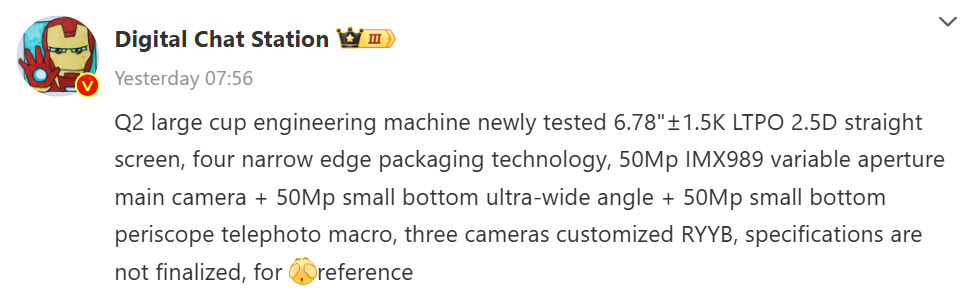
Several reports have claimed that Huawei is working on the Pura 80 series of flagship phones for the Chinese market. Recently, reliable tipster Digital Chat Station shared details of an engineering prototype, which is believed to be the Huawei Pura 80 Pro. The leak reveals that it will feature a flat display and an advanced camera system.
Huawei Pura 80 Pro specifications (rumored)
Huawei Pura 80 Pro specs leak by DCS
As per the leak, the Huawei Pura 80 Pro is being tested with a 6.78-inch 1.5K LTPO OLED display, featuring a 2.5D flat design and ultra-thin bezels. This marks a shift from curved screens in the previous generation. The device is expected to ship with HarmonyOS Next.
The leaker further states that the Pura 80 Pro will feature a 50-megapixel 1-inch Sony IMX989 main sensor with a variable aperture. If true, this would make the Pura 80 Pro one of the few Pro-tier devices to retain a 1-inch sensor, as most brands reserve such features for Ultra models.
The main snapper will be accompanied by a 50-megapixel ultra-wide lens and a 50-megapixel periscope telephoto macro camera. All three sensors will reportedly use a custom RYYB color filter, which enhances low-light performance by increasing light intake by up to 40 percent.
DCS revealed that the Huawei Pura 80 series could launch in the second quarter of this year. While he mentioned the specs of the Pura 80 Pro’s engineering prototype, he also stated that they have not been finalized.
In related news, Huawei will hold a launch event today (March 20) to unveil a new foldable phone with an unconventional screen aspect ratio of 16:10. While the device’s name is under wraps, it is expected to be the first device to come preloaded with the HarmonyOS Next.
For more daily updates, please visit our News Section.
In April, Vivo is expected to host a major launch event in China, unveiling multiple new devices, including the Vivo X200 Ultra, X200S, Pad 4 Pro tablet, and Watch 5. Ahead of the anticipated launch, Vivo’s product manager, Han Boxiao, has shared an image of the Vivo X200S, offering a first look at its design.
Vivo X200S front design revealed
Vivo X200S
The image shared by Boxiao confirms that the Vivo X200S will feature a flat display, unlike the micro-quad-curved screen found on the existing X200. The device is placed inside a car for charging, suggesting it will support wireless charging—an upgrade over the X200, which lacks this feature. Another key highlight is the ultrasonic fingerprint sensor, positioned higher on the display, as seen in the image.
Vivo X200S specifications (rumored)
According to reports, the Vivo X200S will sport a 6.67-inch OLED LTPS display with a 1.5K resolution and a 120Hz refresh rate. It is expected to be powered by the upcoming Dimensity 9400 Plus chipset, paired with up to 16GB of RAM and 1TB of internal storage. A 6,000mAh battery with 90W fast charging and 50W wireless charging support will keep the device running.
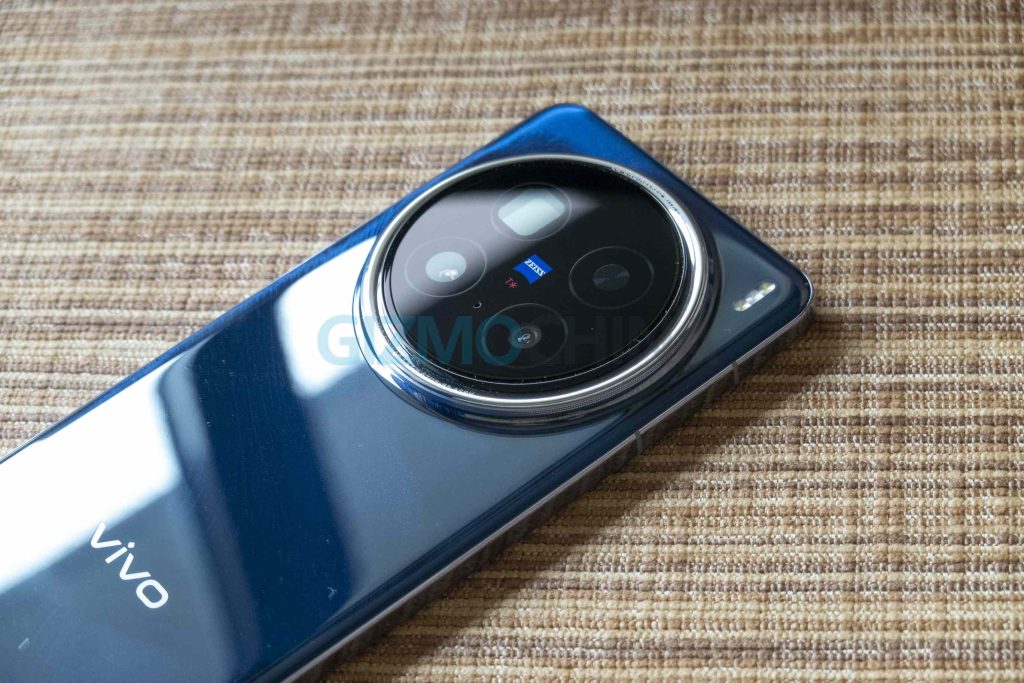
On the back, the Vivo X200S is said to house a redesigned Zeiss-branded triple-camera setup within a circular camera module. The configuration will include a 50-megapixel Sony IMX921 primary sensor, a 50-megapixel Samsung JN1 ultra-wide lens, and a 50-megapixel LYT-600 3x periscope telephoto camera.
The X200S will continue to feature an IP68/69-rated chassis and a metal middle frame. It is expected to arrive in black and silver shades.
For more daily updates, please visit our News Section.
Projectors have come a long way from bulky home theater accessories to compact, smart devices you can take anywhere. Whether you’re creating a cozy movie night, streaming content in a dorm room, or setting up a portable presentation on the go, the latest generation of budget-friendly projectors can deliver surprisingly good visuals without burning a hole in your wallet.
Here’s a look at some of the best budget projectors you can buy globally in 2025, featuring models that punch above their price with innovative design, solid specs, and practical usability.
Xgimi MoGo 3 Pro
The Xgimi MoGo 3 Pro (our full review) might just be the most versatile option under $500. It comes with Google TV and licensed Netflix built-in, so streaming is effortless. The 1080p resolution with 450 ISO lumens brightness delivers vibrant visuals that hold up well in dimly lit rooms. Color accuracy is solid too, thanks to a 90% DCI-P3 color gamut, and it projects up to 120 inches.
Where MoGo 3 Pro really shines is usability: ISA 2.0 technology handles auto keystone correction, autofocus, and obstacle avoidance, meaning the setup takes care of itself. It also comes with dual Harman Kardon 5W speakers, which are more than capable of filling a small room with crisp audio. The Type-C power input makes it compatible with power banks, and Android/iOS connectivity is seamless. It’s ultra-portable, stable, and designed with smart touches like a lens cover mechanism integrated into its metal stand.
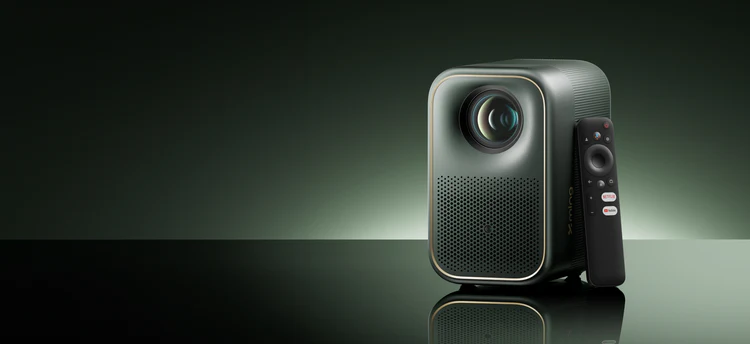
Formovie Xming Page One
If you’re after brightness on a budget, the Formovie Xming Page One deserves attention. At just $329, it delivers 500 CVIA lumens of brightness — noticeably brighter than most in this price segment. Native 1080p resolution, a 2000:1 contrast ratio, and HDR10 decoding create visuals with deep blacks and punchy colors, whether you’re watching on a 40-inch or a maxed-out 120-inch screen.
Audio isn’t an afterthought either: two 5W speakers tuned by Boston Acoustics bring full-bodied sound. Auto keystone correction and autofocus come standard, along with intelligent screen alignment and obstacle avoidance. The projector runs on Google TV with certified Netflix, and connectivity includes dual-band Wi-Fi and Bluetooth 5.0. In short, it’s a projector that feels premium in use, with a price that makes it an easy recommendation.
Please Note: When you buy something using the links in our articles, we may earn a small commission at no cost to you.
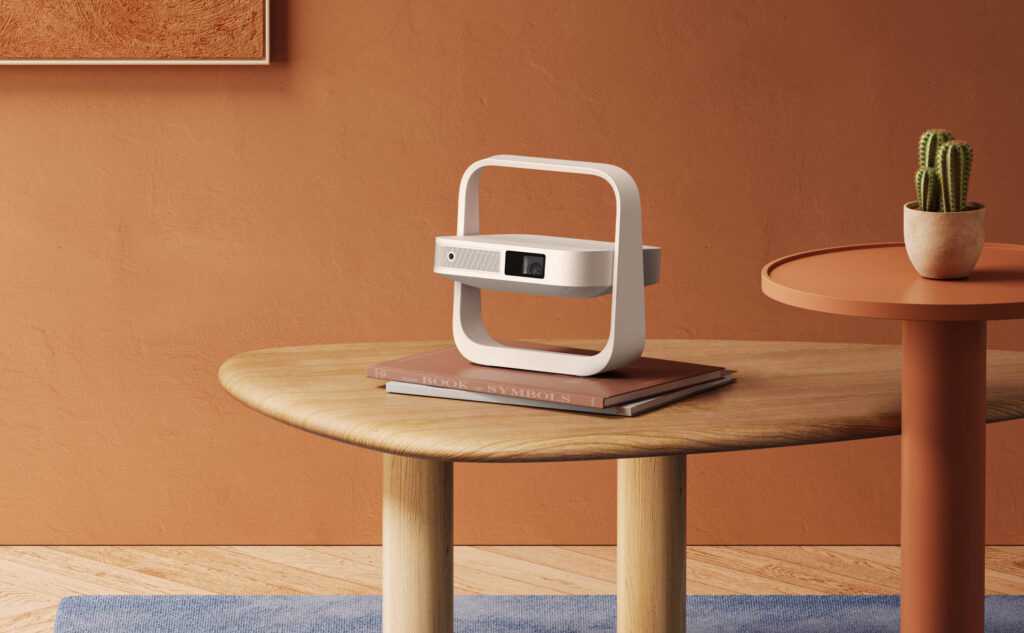
Xgimi Elfin Flip
Xgimi’s Elfin Flip takes a slightly different approach, designed for those who value portability above all else. This ultra-compact, book-sized projector weighs very little yet manages to produce a 150-inch image with 400 ISO lumens brightness. The design includes a clever 150° rotating stand and handle, making it easy to project from almost any angle or carry it on the go.
While it uses Xgimi’s custom OS instead of full Google TV, streaming is still smooth with support for DLNA and Miracast. Dual 3W speakers and Dolby Audio support handle sound duties well for its size. And, of course, it benefits from Xgimi’s signature ISA technology for automatic focus, keystone correction, and obstacle detection. If you want something ultra-portable for casual movie nights or travel, the Elfin Flip is a stylish, lightweight pick.
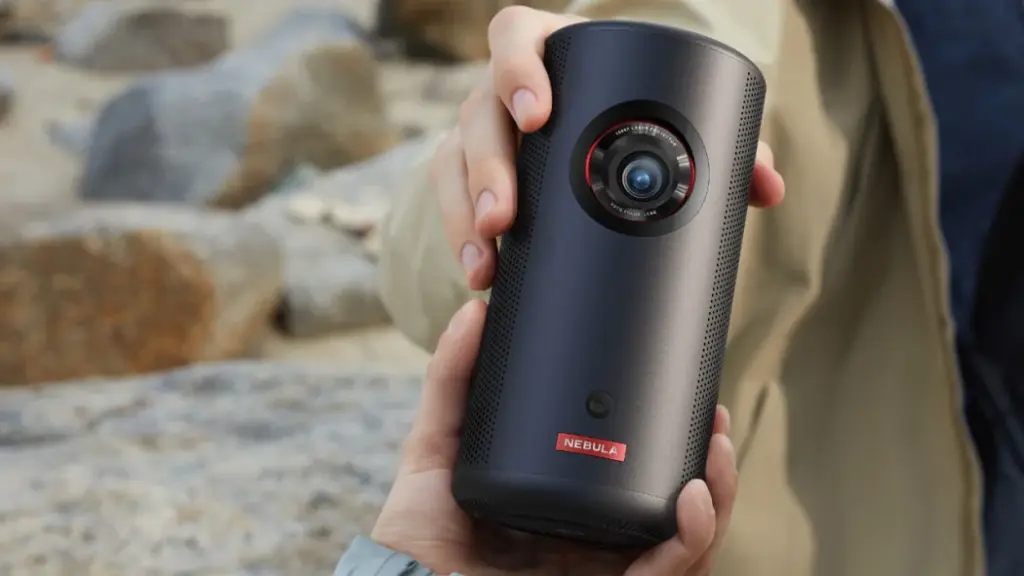
Anker’s Nebula Capsule 3 Laser, meanwhile, takes brightness and battery life seriously. At $749, it’s the most expensive of the bunch, but its laser light source with 300 ANSI lumens stands out for vibrant clarity, even in moderate lighting conditions.
It weighs just over two pounds and is roughly the size of a soda can, yet packs in Google TV, licensed Netflix, Chromecast support, and a 52Wh battery capable of powering 2.5 hours of movie playback or eight hours of music. Setup is painless with near-instant autofocus and auto keystone correction. The standout feature here is the audio: an 8W Dolby Digital speaker that delivers surprising punch for a projector this size. If portability, laser sharpness, and battery life are at the top of your list, the Capsule 3 Laser is a strong contender.
Please Note: When you buy something using the links in our articles, we may earn a small commission at no cost to you.
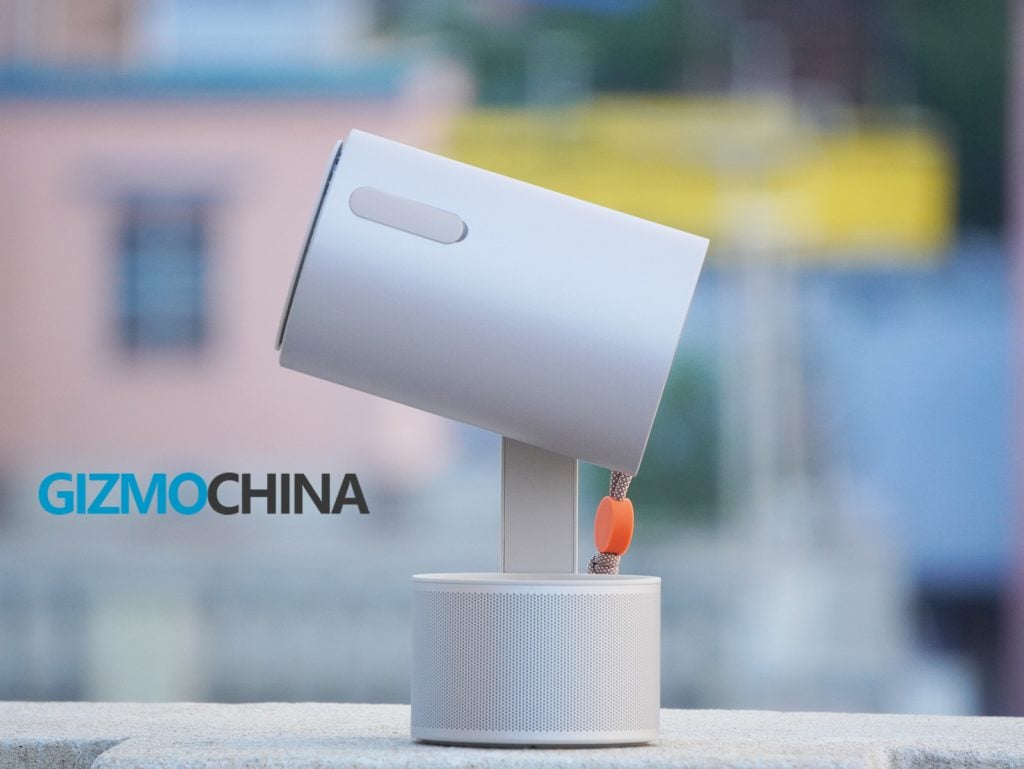
JMGO Picoflix
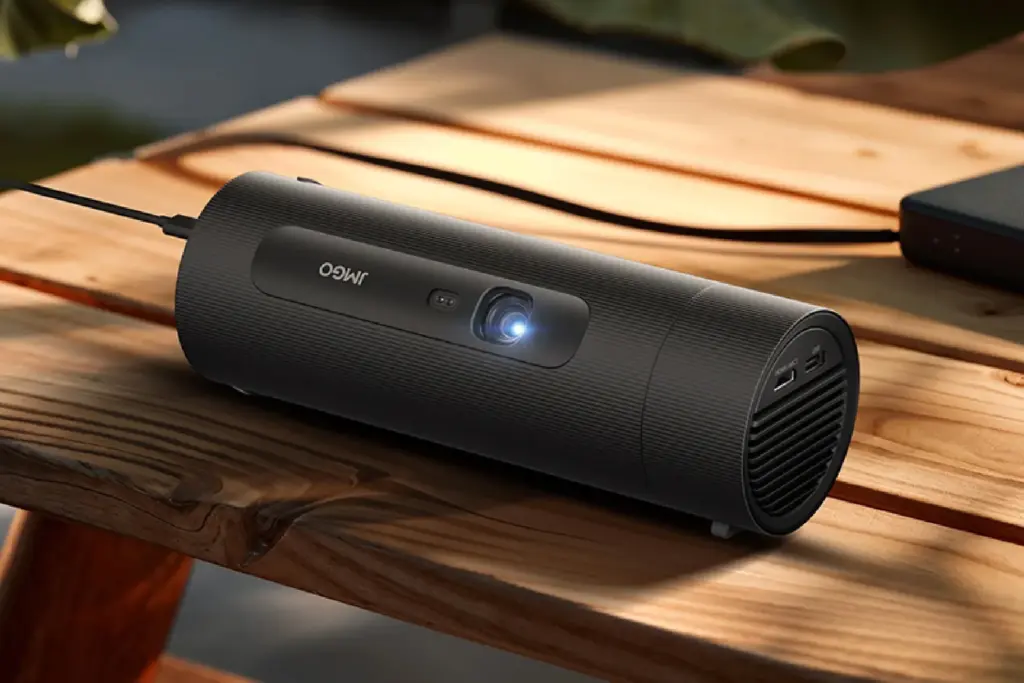
Finally, there’s the JMGO Picoflix, a unique projector that blends portability with innovative design. Priced at $499, it offers 420 ISO lumens of brightness and 1080p resolution, with support for HDR10. The standout feature is its 45-degree gimbal rotation design, allowing it to project on ceilings or walls without complicated setups.
It’s also powered by a 10,000mAh battery, offering up to 4.5 hours of movie playback in power-saving mode. The 10W speaker is surprisingly powerful, and the device includes auto keystone, autofocus, and smart eye protection features. Connectivity is generous with HDMI 2.1 (with eARC), dual USB-A ports, and Type-C input. Plus, it runs Google TV with native Netflix support and even supports 3D playback.
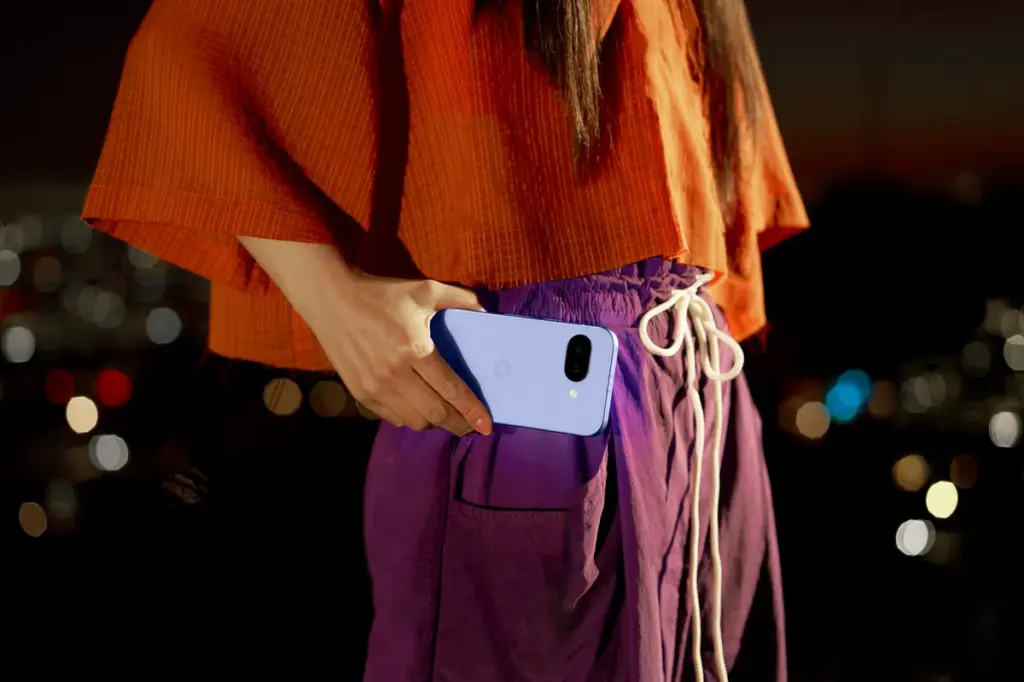
Google has launched the Pixel 9a in India and globally. This latest mid-range smartphone features improved cameras, enhanced AI capabilities, and long-term software support.
The Pixel 9a includes a 6.3-inch FHD+ OLED display with a 120Hz adaptive refresh rate and 2700 nits peak brightness, up 35% from the Pixel 8a. It uses Corning Gorilla Glass 3 and supports HDR. The device runs on Google’s Tensor G4 chip with a Titan M2 security coprocessor, paired with 8GB LPDDR5X RAM and 256GB UFS 3.1 storage in India. It ships with Android 15 and guarantees seven years of OS updates, security patches, and Feature Drops.
2. Camera Details
The rear camera system comprises a 48MP main sensor (Samsung GN8, OIS) and a 13MP ultrawide lens (Sony IMX712). The front camera uses a 13MP Sony IMX712 sensor. Both support 4K video recording. New AI features include Add Me (combines group photos to include the photographer), Best Take (merges expressions from multiple shots), and Magic Editor (AI-based photo editing). The phone also introduces Macro Focus for close-up shots, a first for the A-series.
3. Design and Durability
The Pixel 9a measures 8.9mm thick, weighs 185.9g, and features a matte back, polished aluminum frame, and flat edges. It has an IP68 rating for dust and water resistance (1.5m depth for 30 minutes). Indian color options are Iris (new), Obsidian, and Porcelain. The global Peony variant is unavailable in India.
4. Battery and Connectivity
A 5100mAh battery supports 23W wired charging (50% in 30 minutes) and 7.5W wireless charging. Google claims over 30 hours of regular use and 100+ hours with Extreme Battery Saver mode. Connectivity includes 5G, Wi-Fi 6E, Bluetooth 6, NFC, and USB-C 3.2.
5. AI and Software
The phone integrates Gemini Nano for on-device AI tasks like Circle to Search (visual search without app switching) and Pixel Studio (AI-generated images). Gemini Live enables voice interactions, with future support for video/screen-sharing for Gemini Advanced subscribers. Productivity tools include Hold For Me and Call Screen.
6. Security and Parental Controls
Pixel 9a includes the same security features as the Pixel 9 and 9 Pro, such as Theft Protection, Car Crash Detection, and a built-in VPN by Google. The Find My Device feature allows users to share their live location with family and friends.
For families, the Pixel 9a supports Google Family Link, which enables parents to manage screen time, app usage, and privacy settings. School Time mode reduces distractions during class hours by silencing notifications and limiting app access. Google Wallet for kids is rolling out in select countries, allowing children to make safer digital payments under parental supervision.
Pricing, Offers, and Availability
The Pixel 9a is priced at ₹49,999 in India for the 256GB variant, available exclusively on Flipkart starting in April. A limited-period ₹3,000 cashback and 24-month no-cost EMI options are offered through HDFC Bank, IDFC Bank, and Bajaj Finserv.
Globally, the phone starts at $US499 / CAD $679 / €549 /£499 for the 128GB model, and the 256GB model costs US$599 / £599. Sales will begin in April via the Google Store and retailers.
Samsung has been using its 200MP ISOCELL sensors in the main camera of its flagship Galaxy S Ultra phones. According to a recent rumor, the Galaxy Z Fold 7 will also pack the S25 Ultra’s 200MP sensor. On the other hand, the Chinese OEMs are still using the 50MP sensors for the main camera, because the 200MP ISOCELL sensors have their own limitation.
Snapdragon 8 Elite 2 flagships to pack 100MP main camera
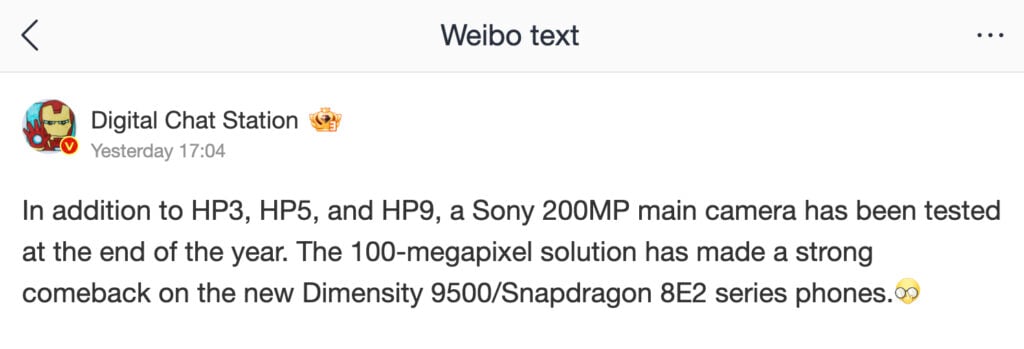
However, it could change soon, as Sony is also working on 200MP and 100MP smartphone sensors. According to Weibo tipster Digital Chat Station, the 100MP sensor will be adopted by many Chinese OEMS for their Snapdragon 8 Elite 2 or Dimensity 9500-powered flagships, which suggests we could see this change with the flagships set to launch towards the end of this year.
As for the 200MP sensor, Sony is expected to use it in one of its upcoming smartphones and is also expected to sell it to other Chinese OEMs. According to Sammobile, this 200MP Sony sensor will be larger than the 200MP ISOCELL sensors that are used by the vivo X200 Pro (as telephoto) or the S25 Ultra (as main camera).
Judging from the attention the vivo X200 Pro has received due to its 200MP periscope telephoto, it won’t be surprising if most (if not all) the Chinese OEMs switch to the 100MP and 200MP Sony sensors as soon as they can. And not to mention, it will likely offer a reasonable improvement in the details or the overall imaging performance as well.
For a while now, there’s been little to no distinction between the main sensor resolution of an entry-level phone and an ‘Ultra’ phone. Many of the Pro and Ultra phones have been using sensors, and it feels like just the right time for a bump in resolution as well. It will be interesting to see how much improvement the 100MP sensors can bring to the next generation of flagships from China.
Almost all the Pro and Ultra phones from China have been using the large 50MP sensors for a while, and it feels like the right time for a resolution bump. That said, it will be interesting to see how much improvement the 100MP sensors can bring to the next generation of Chinese flagships.
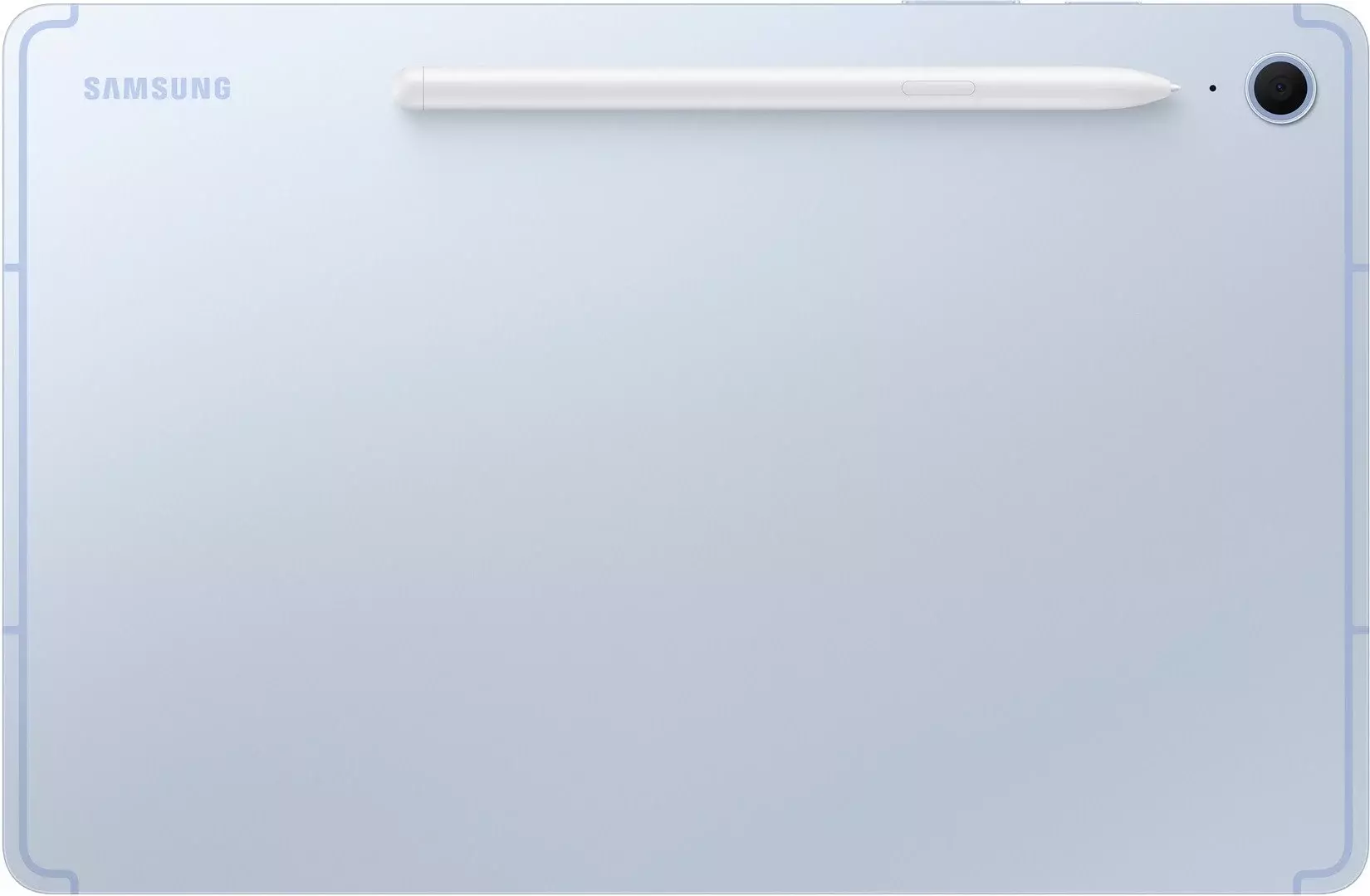
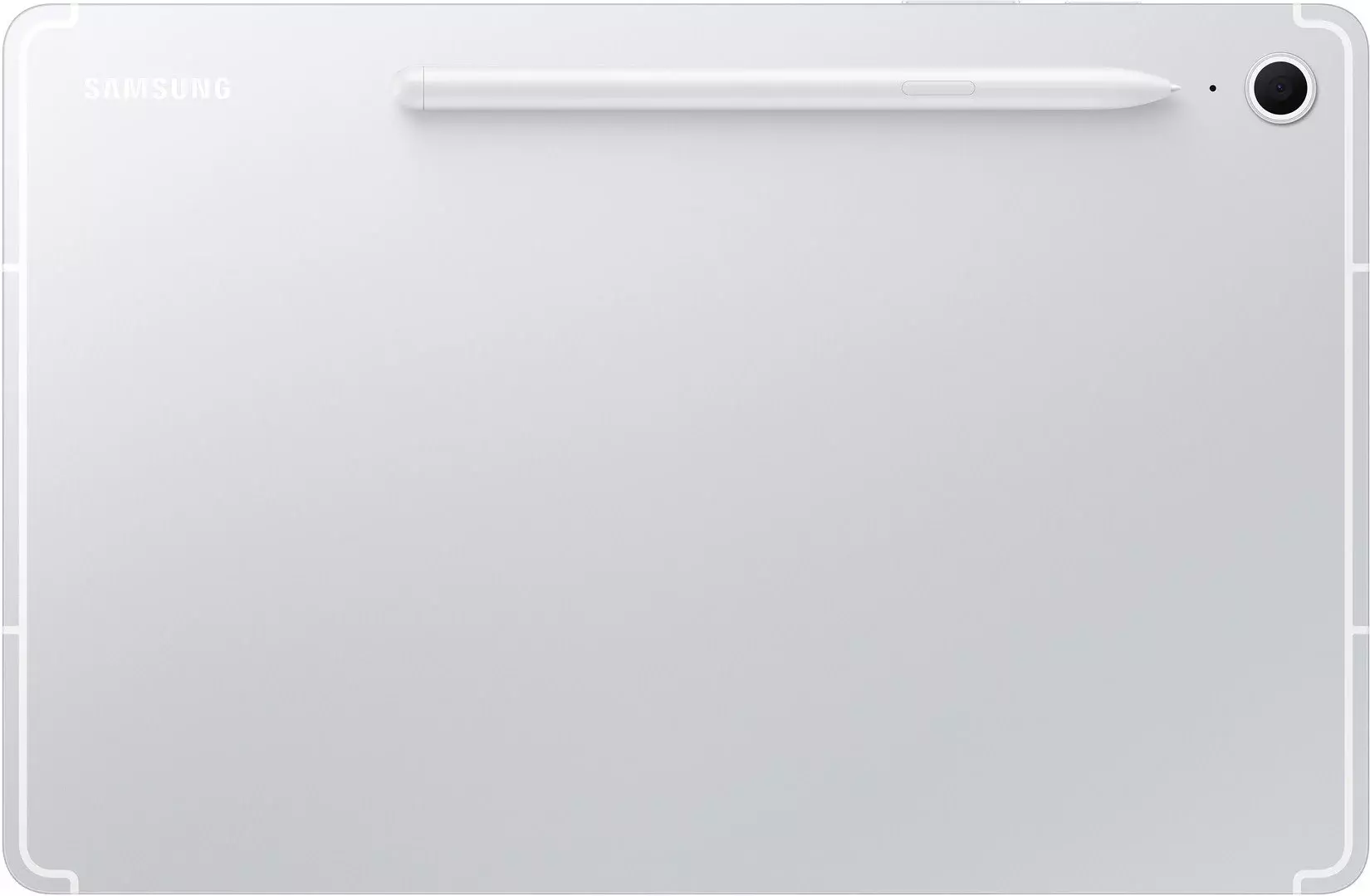
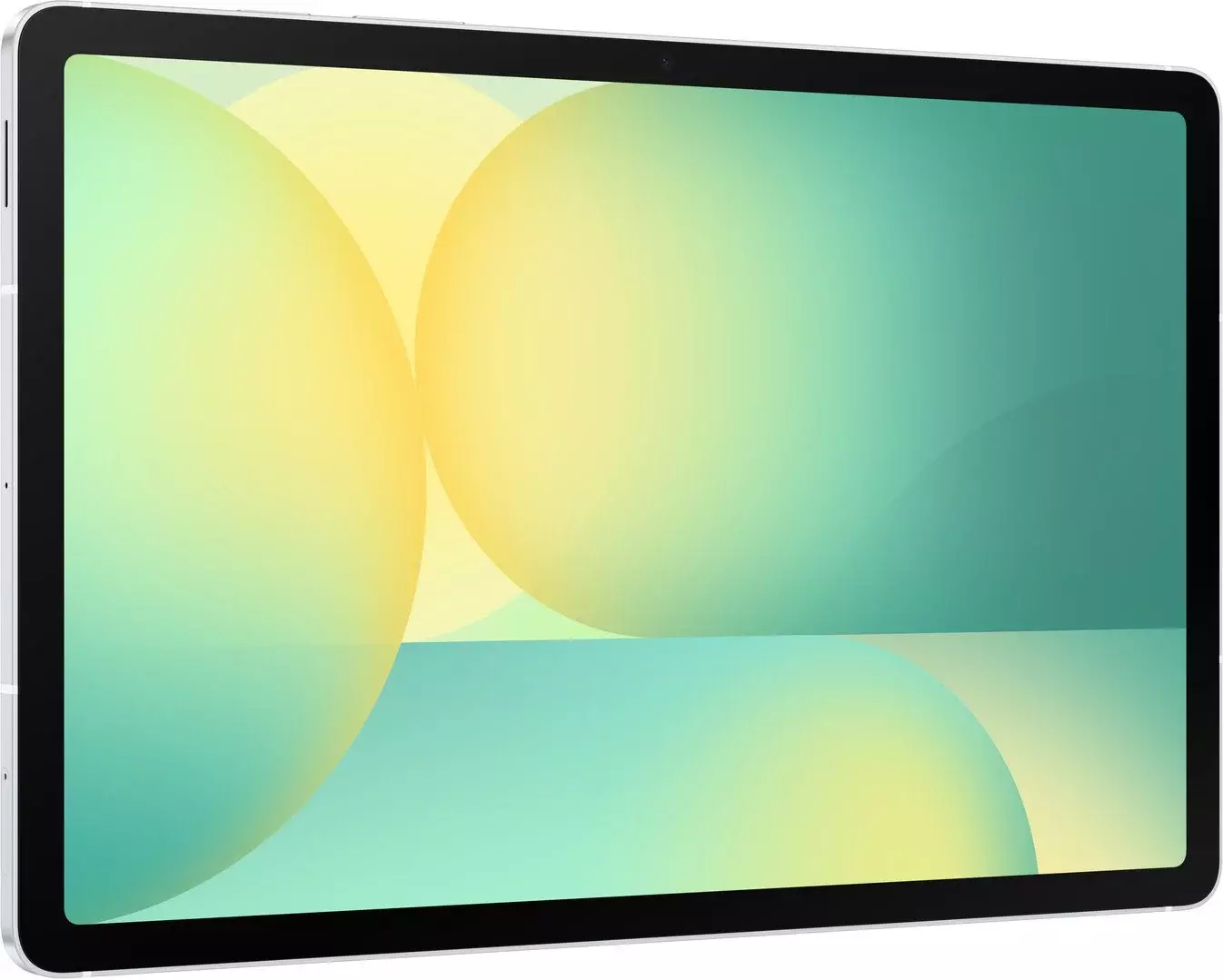
Samsung is reportedly preparing to launch its new Galaxy Tab S10 FE and Galaxy Tab S10 FE+ tablets, both of which are expected to go on sale within the next two weeks. Leaked renders and specifications, courtesy of WinFuture, now provide a detailed look at what to expect from these upcoming FE-branded tablets.
Leaked specs and renders
Both the Galaxy Tab S10 FE and S10 FE+ feature aluminum bodies with IP68 dust and water resistance. They are powered by the Exynos 1580 chipset, which is the same processor found in the Galaxy A56. Both devices are also expected to support expandable storage, Wi-Fi 6E, NFC, Bluetooth 5.3, and optional 5G connectivity. Memory options include 8GB or 12GB of RAM and 128GB or 256GB of storage.
The Galaxy Tab S10 FE sports a 10.9-inch IPS LCD display with a resolution of 2304 x 1440 pixels and S Pen support. While the refresh rate isn’t confirmed, it’s expected to cap at 90Hz, similar to the predecessor. It reportedly houses an 8,000mAh battery and supports 45W fast charging. As for the imaging, it features a 13MP rear camera (up from 8MP) and a 12MP selfie camera.
Tab S10 FE+
The Galaxy Tab S10 FE+ on the other hand, boasts a larger 13.1-inch IPS LCD display (up from 12.4 inches) with a resolution of 2880 x 1800 pixels and likely a 90Hz refresh rate. It also supports the S Pen and includes a 10,090mAh battery with 45W charging. Surprisingly, it features a single 13MP rear camera, ditching the ultrawide lens found in the Tab S9 FE+. On the front, it packs a 12MP shooter for video calling.
With the Exynos 1580 chip (an upgrade over the Exynos 1380 of the S9 FE series) the raw performance and efficiency improvement could be one of the biggest selling points of the FE tablets.
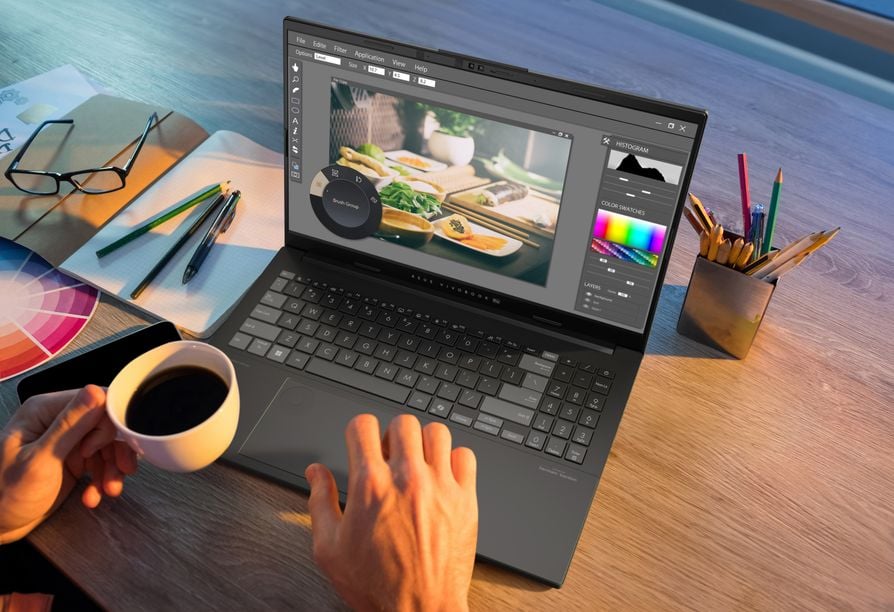
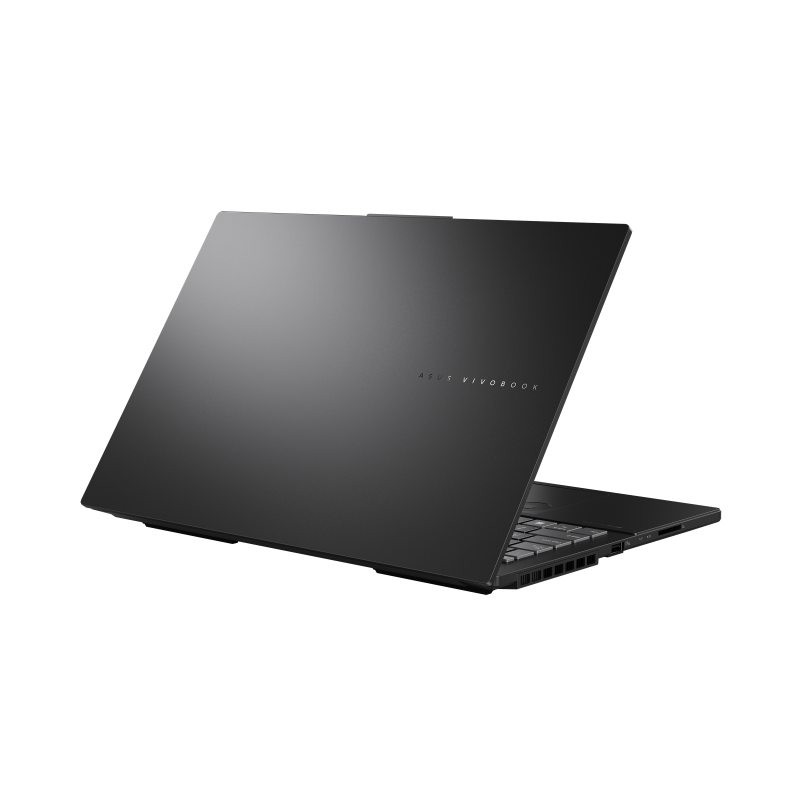
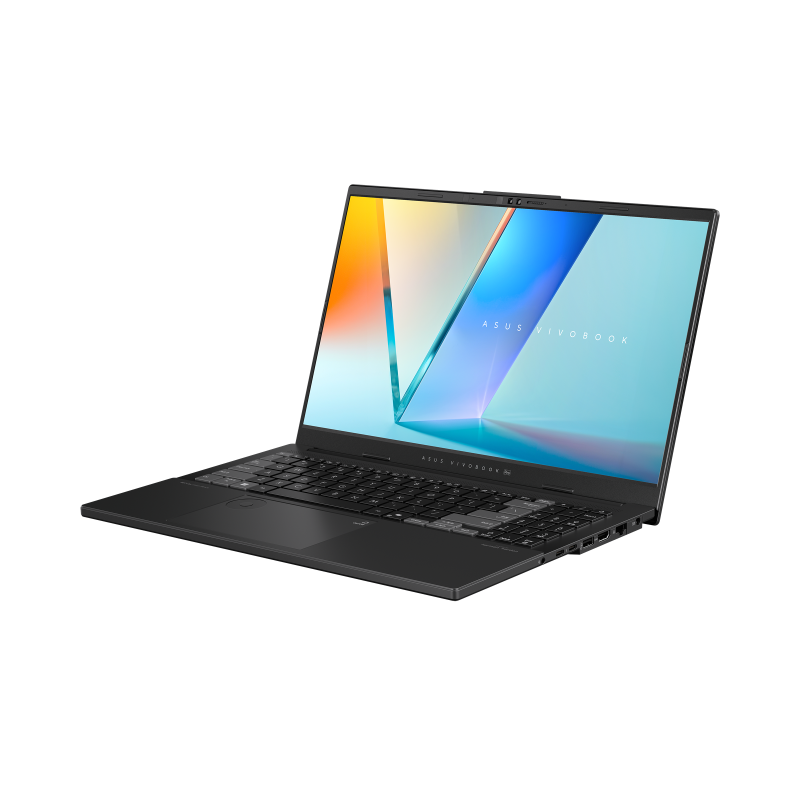
ASUS has released the Vivobook Pro 15 (N6506CU), a 15.6-inch laptop aimed at creators and gamers. The laptop is now available to purchase, offering an Intel Core Ultra 9 processor, NVIDIA RTX 4050 GPU, and a high-refresh OLED display for $1500.
Vivobook Pro 15 features
Hardware Overview The laptop features Intel’s Core Ultra 9 285H CPU with a 13 TOPS NPU for offline AI tasks and NVIDIA’s RTX 4050 GPU (6GB VRAM), supporting ray tracing and DLSS 3. A MUX switch allows users to prioritize GPU performance or battery life. It includes up to 24GB LPDDR5x RAM, a 2TB PCIe 4.0 SSD, and Wi-Fi 6E connectivity.
Cooling and Performance ASUS IceCool Pro cooling uses dual fans, five heat pipes, and triple vents to manage a 125W combined TDP. The system supports sustained performance for tasks like 3D rendering or gaming.
Display Specifications The 15.6-inch 3K (2880 x 1620) OLED panel has a 120Hz refresh rate, 0.2ms response time, and 500 nits peak brightness. It covers 100% DCI-P3 color gamut, with certifications for Dolby Vision, Pantone Validation, and VESA DisplayHDR True Black 600. TÜV Rheinland certification reduces blue-light emissions.
User Features
ASUS DialPad: A touchpad-integrated rotary control for adjusting settings in apps like Photoshop.
Copilot Key: Direct access to Windows 11’s AI tools.
5MP IR Camera: Supports Windows Hello login, background blur, and noise cancellation for calls.
Ports: Thunderbolt 4, HDMI 2.1, USB 3.2 Gen 2 Type-C, SD card reader, and RJ-45 Ethernet.
Audio and Battery Harman Kardon-tuned speakers with Dolby Atmos and a 75Wh battery (50% charge in 30 minutes) are included. The laptop weighs 1.8kg and measures 19.95mm thick.
Pricing & availability
The Vivobook Pro 15 is now available via retailers like B&H, with configurations starting at $1,500.
For more daily updates, please visit our News Section.
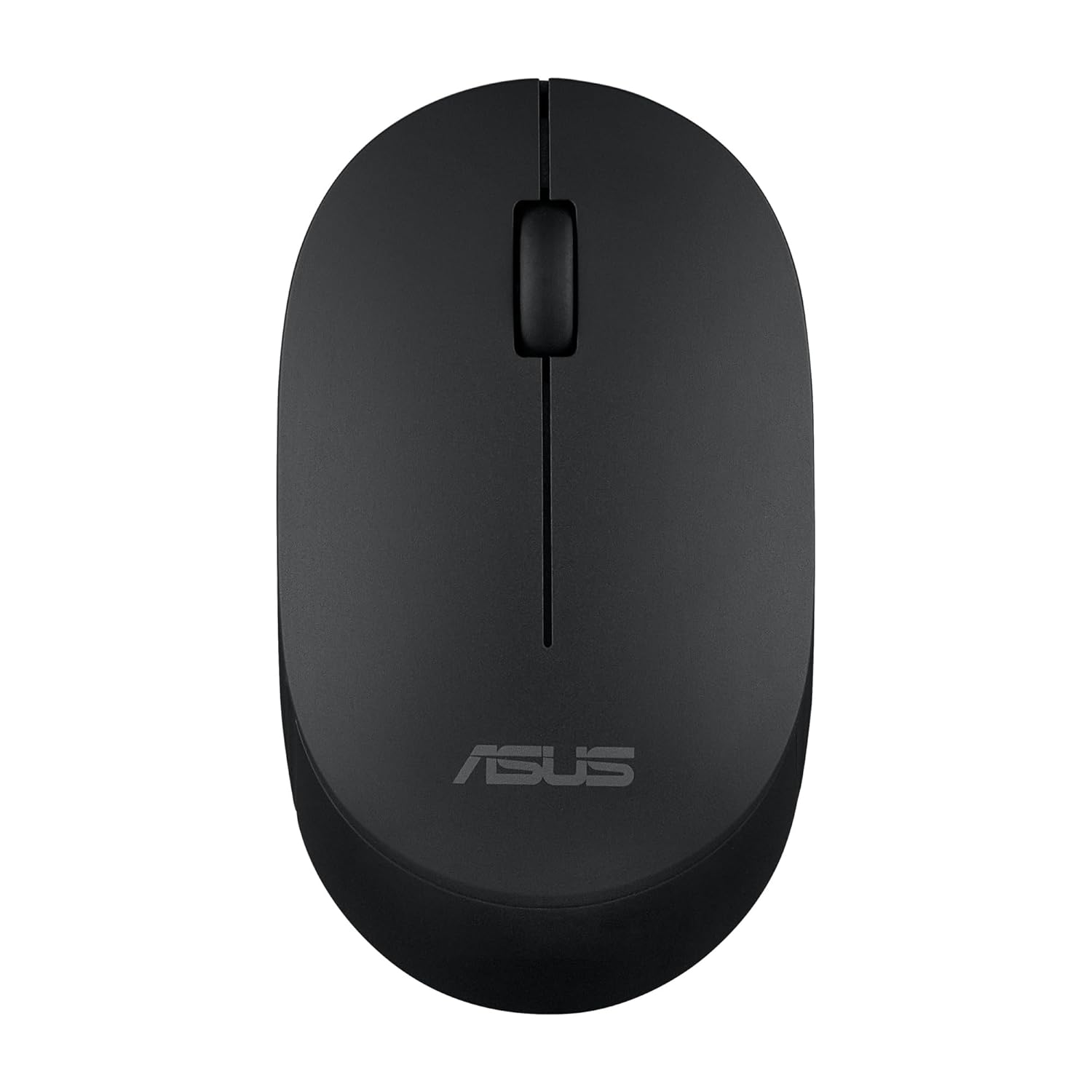
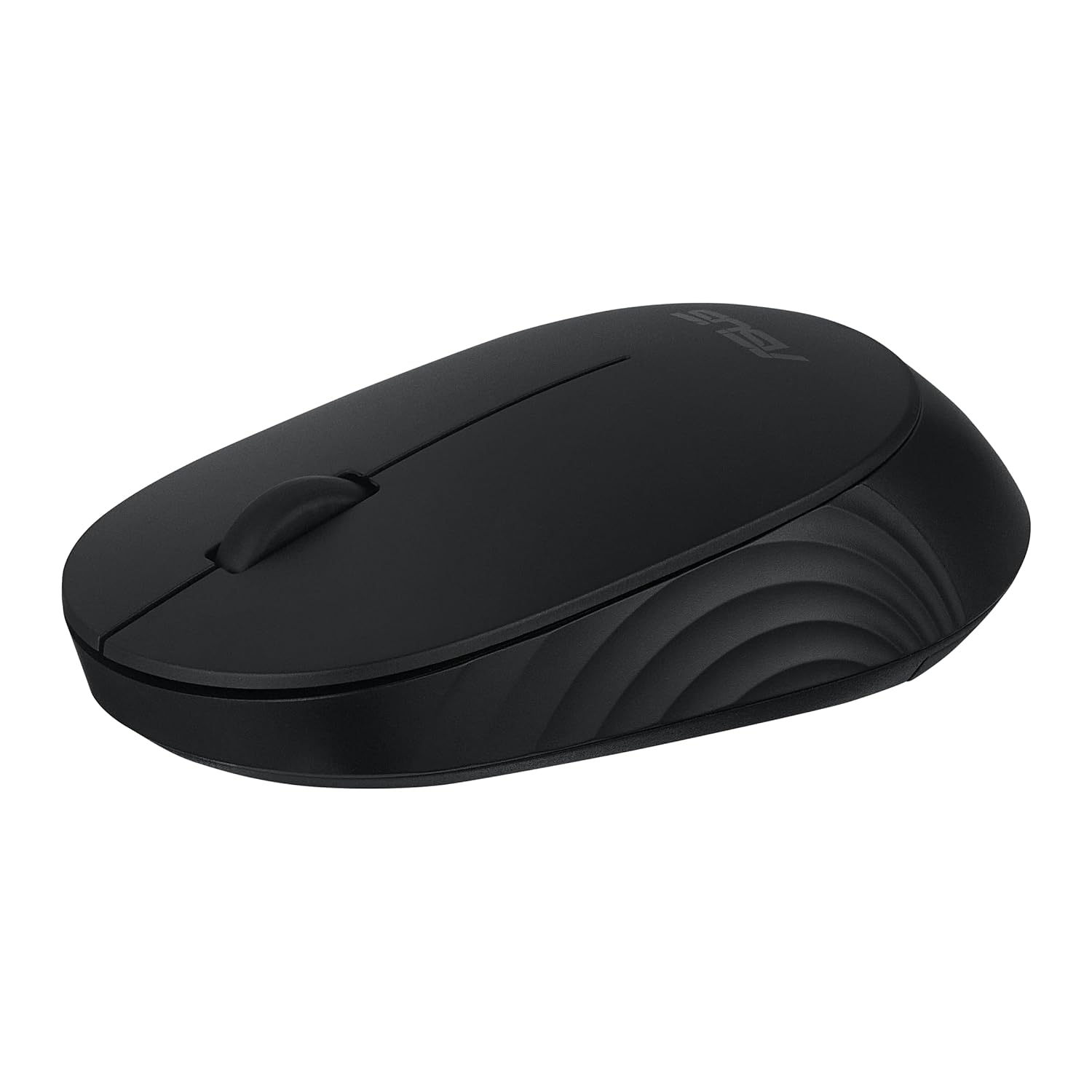
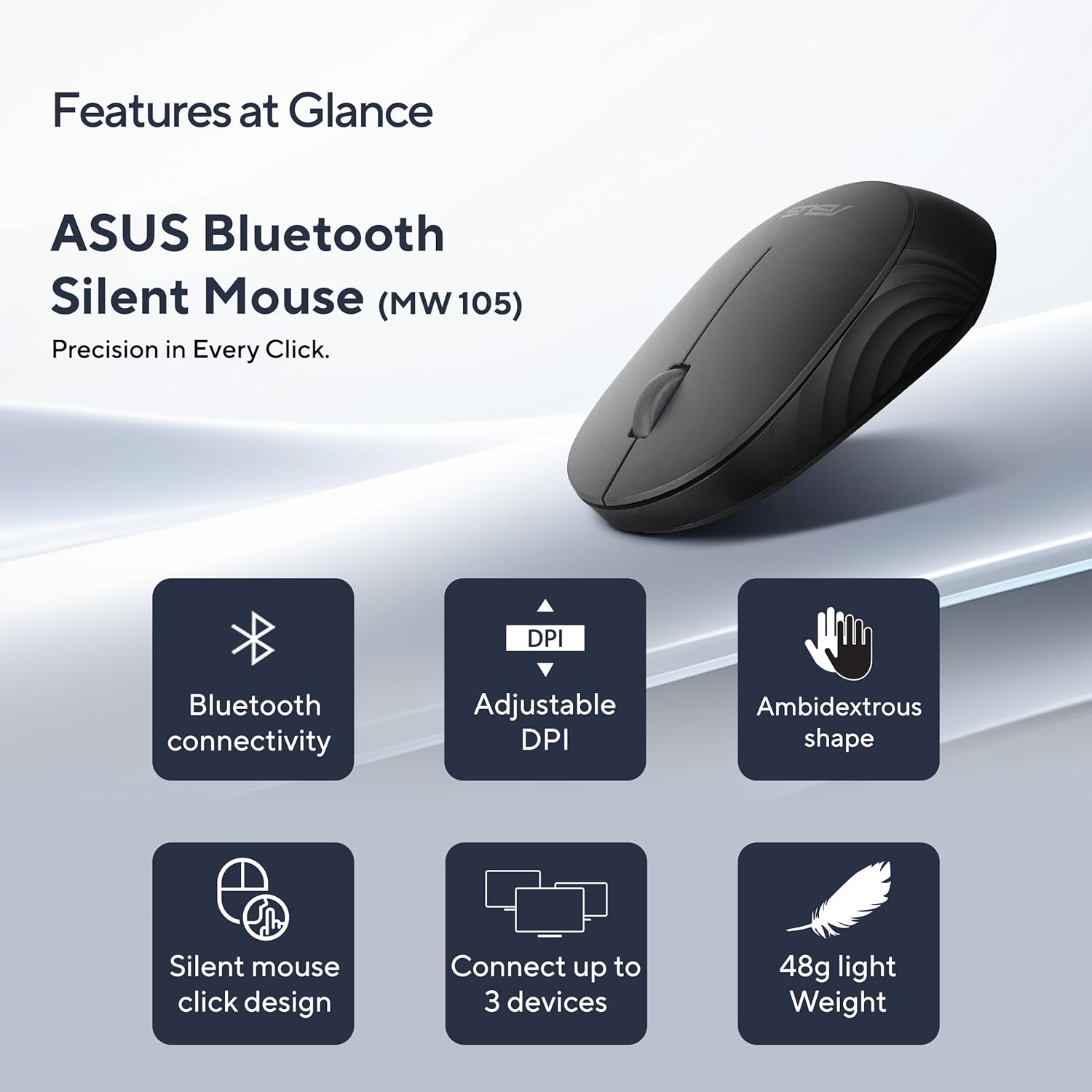
ASUS India has expanded its accessory lineup with the MW105 Bluetooth Silent Mouse. Weighing 48g, the mouse features a compact, ambidextrous design with symmetrical contours, making it comfortable for both left- and right-handed users.
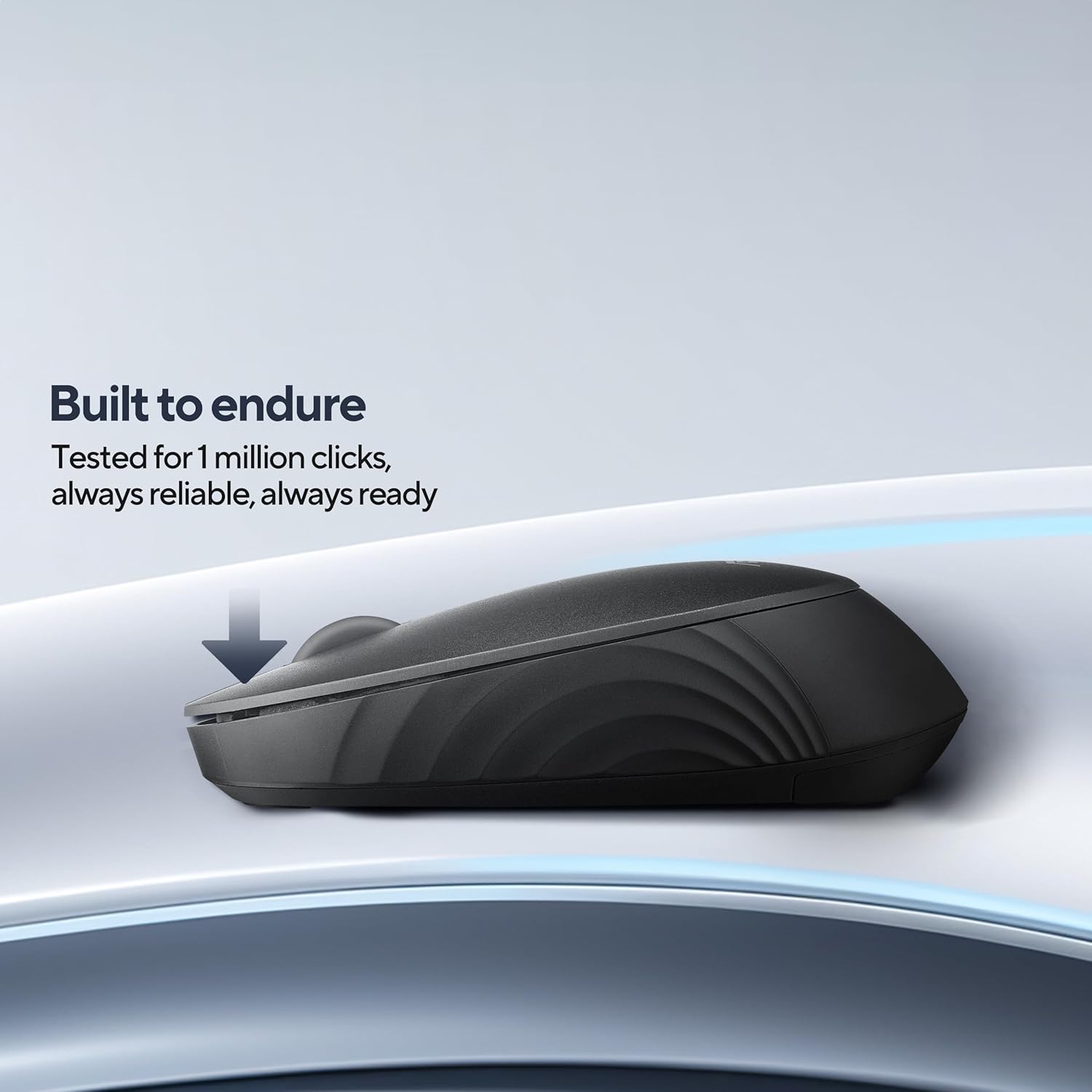
The MW105 is designed for quiet environments and uses low-noise switches to minimize clicking sounds. ASUS states that this makes it a practical choice for offices, libraries, classrooms, and home use, where reducing noise is essential.
The mouse offers three adjustable DPI settings—800, 1200, and 1600—that can be switched using a button on the bottom. According to ASUS, this ensures smooth tracking and responsiveness for a range of tasks, including browsing, designing, and general multitasking.
With Bluetooth 5.0, the MW105 delivers low-latency performance and supports simultaneous connections with up to three devices. It does not require additional drivers or software, making it compatible with laptops, tablets, and desktops without extra setup.
Powered by a single AA battery, the mouse is ready to use out of the box. It has an optical tracking system and features three buttons with a vertical scroll wheel. The dimensions of the device are 105.9 mm in length, 60.7 mm in width, and 32.0 mm in height. It comes in black and is supported on Windows 10 or later. ASUS offers a three-year warranty on the product.
Pricing & availability
The ASUS MW105 Bluetooth Silent Mouse is priced at ₹899 and is available for purchase starting today. Customers can buy it through Amazon.in, offline retailers, quick commerce platforms, and the ASUS e-shop.
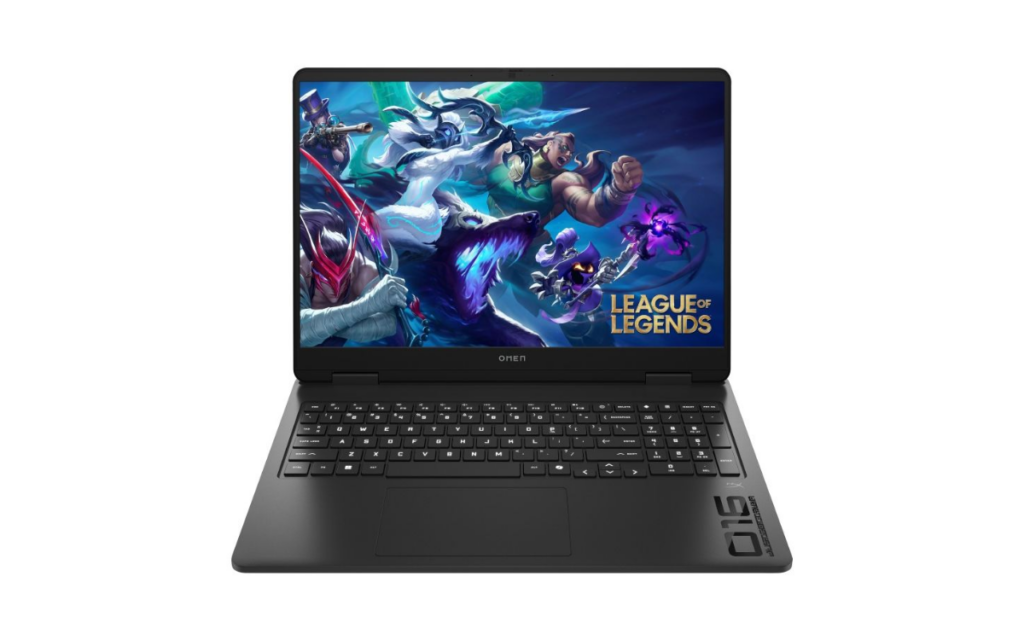
HP has unveiled its latest additions to the gaming laptop lineup with the introduction of the Omen 16 Slim and the refreshed Omen Transcend 14, both featuring cutting-edge Intel Arrow Lake processors and Nvidia’s new RTX 50-series GPUs. These models are designed to appeal to gamers looking for powerful yet portable machines with premium features.
The Omen 16 Slim stands out with its thinner design — 16% slimmer than the standard Omen 16 — making it more travel-friendly without compromising on performance. Users can configure the laptop with up to an Intel Core Ultra 9 285H processor and an Nvidia GeForce RTX 5070 GPU. The laptop features a 16-inch IPS display with resolutions up to 2560 x 1600, a fast 240Hz refresh rate, and 3ms response time, ensuring a smooth gaming experience. Memory options range from 16GB to 32GB DDR5, paired with up to 1TB PCIe Gen4 SSD storage.
Connectivity is solid, with a USB-C port supporting Power Delivery, three USB-A ports, HDMI 2.1, an Ethernet jack, and a 3.5mm audio combo jack. The Omen 16 Slim also includes Wi-Fi 6E and Bluetooth 5.4, although Wi-Fi 7 is absent. HP’s advanced cooling solution, combined with its “Unleashed Mode,” allows the system to push up to 105W TPP, keeping performance stable while maintaining noise levels as low as 46 decibels.
On the other hand, the Omen Transcend 14 refresh continues to deliver powerful hardware in a compact chassis. Weighing just 1.675 kg, it now comes with up to an Intel Core Ultra 9 285H processor and an Nvidia GeForce RTX 5070 GPU with 8GB GDDR7 memory. The laptop features a vibrant 14-inch 3K OLED display (2880 x 1800 resolution) with a 120Hz refresh rate and ultra-fast 0.2ms response time. HP offers memory configurations going up to a massive 64GB of LPDDR5X RAM and storage options of up to 2TB PCIe Gen4 NVMe SSD.
Additionally, the Omen Transcend 14 supports Wi-Fi 7 and Bluetooth 5.4, alongside a robust port selection that includes Thunderbolt 4. Both laptops ship with HP’s Omen AI, an intelligent feature that fine-tunes settings for optimal gaming performance.
While HP has not yet announced pricing or availability, these new models are expected to hit markets later this spring.
In related news, HP introduced the Victus 15 AI gaming laptop in India earlier this year, featuring the Ryzen 9 8945HS processor, a dedicated NPU, and Nvidia RTX 4060 graphics.
For more daily updates, please visit our News Section.
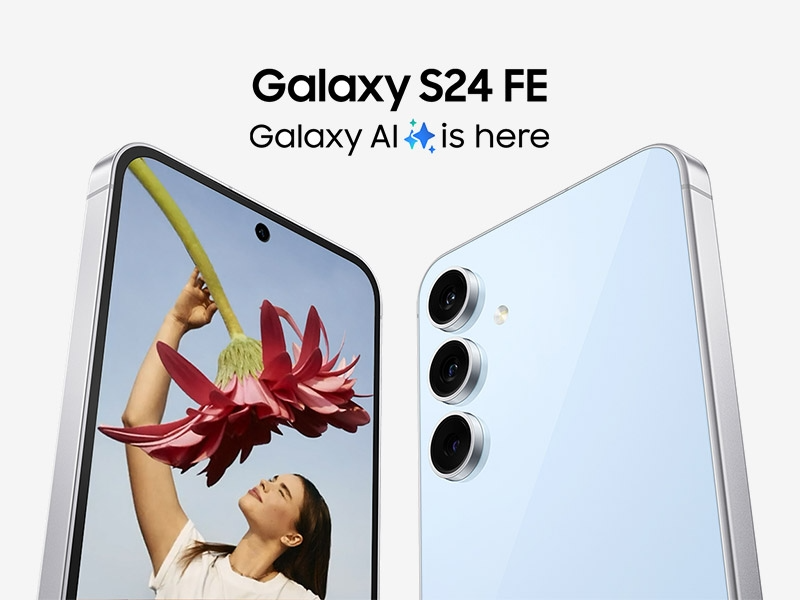
Samsung has begun rolling out the March 2025 security update to its latest Fan Edition device, the Galaxy S24 FE. This update addresses 58 security vulnerabilities, enhancing the device’s safety and performance. It arrives just ahead of the highly anticipated Android 15-based One UI 7.0 update, which is scheduled to launch on April 7, 2025.
Already available for the international variant of the Galaxy S24 FE
The update is currently available for the international variant of the Galaxy S24 FE, identified by the model number SM-S721B, and is live in Europe. The firmware version of the update is S721BXXS3AYB3, and the rollout should be expanded to other regions in the coming days.
Samsung Galaxy S24 FE
Users can install the update in two ways: by tapping on the notification if received, navigating to Settings » Software update » Download and install, or manually downloading the update from Samsung’s firmware database and installing it using Odin.
For those waiting for the One UI 7.0 update, it promises to bring significant improvements to the Galaxy S24 FE, including a redesigned user interface, new features, and smoother animations. One standout feature is the Audio Eraser, which allows users to remove unwanted background noises from video clips, enhancing content creation capabilities.
With the One UI 7.0 update on the horizon, Galaxy S24 FE owners have even more to look forward to, as Samsung continues to refine and enhance the user experience on One UI 7 for the already released devices.
Galaxy Watch Ultra is now available at a 35% discount in the US, which makes it more affordable than ever. It was originally launched at $649, and it is currently priced at only $419, a significant $230 reduction. And what’s more interesting, is that it doesn’t even require you to trade now of your existing device. This limited-time offer provides an excellent opportunity for smartwatch enthusiasts to grab Samsung’s most advanced wearable at a fraction of its original cost.
The Galaxy Watch Ultra marked a bold move for Samsung
This watch is positioned as a more durable and feature-packed smartwatch with a higher price tag than its predecessors. Despite the premium pricing, the device has attracted attention for its rugged design, and enhanced battery life. It also features an upgraded BioMetric sensor, which reportedly offers improved performance and energy efficiency compared to earlier models.
With a 47mm form factor and LTE connectivity as standard, the Galaxy Watch Ultra now costs less than the 47mm Wi-Fi-only Galaxy Watch 6 Classic, which retails at $429. While the Ultra lacks the physical rotating bezel found on the Watch 6 Classic, it compensates with its durability, advanced health tracking capabilities, and sleek design.
Notably, this discount comes at a time when the smartwatch market is experiencing a decline. Samsung has not specified how long the $230 discount will last, but it has been available for a few weeks, which suggests it may not be around for much longer.
For anyone considering the Galaxy Watch Ultra, this deal offers a rare chance to own Samsung’s most rugged and feature-rich smartwatch at a significantly reduced price. So check out the product page on the company’s website if you’re interested.
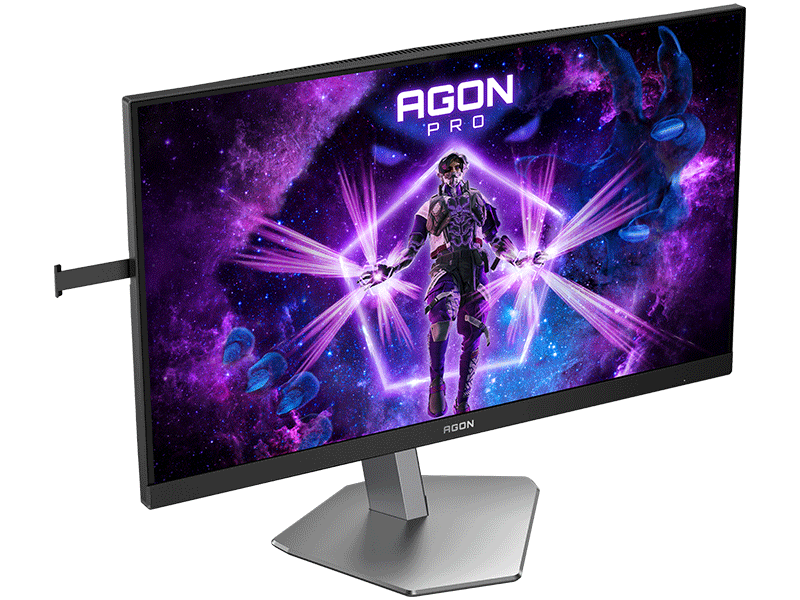
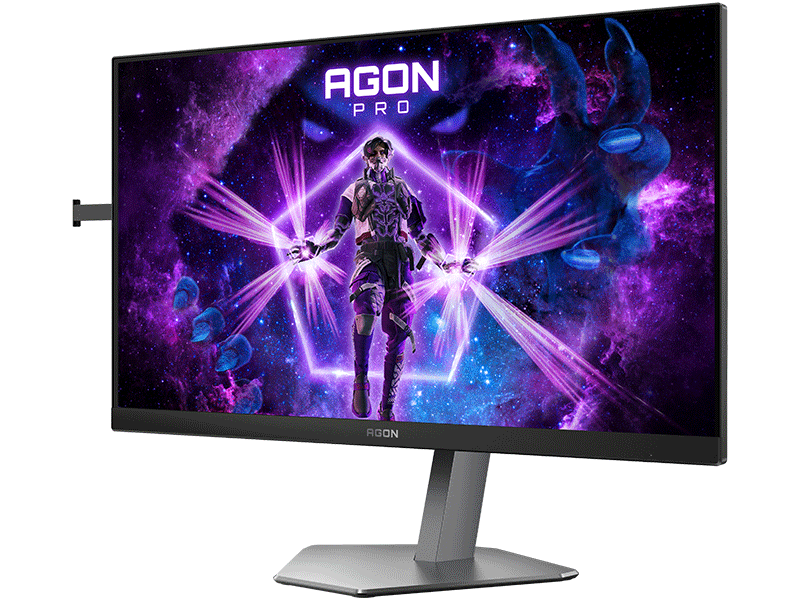
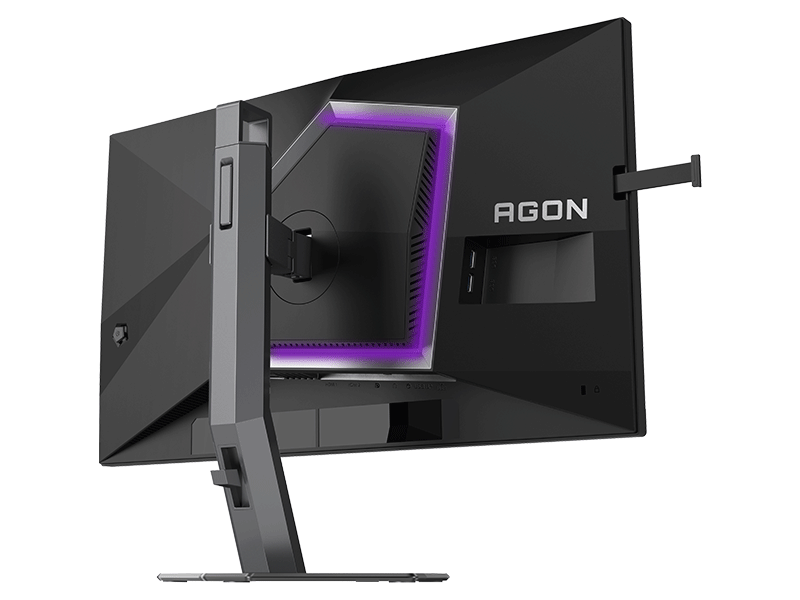
AOC has unveiled the AGON Pro AG246FK6 gaming monitor in China, a 24.1-inch Fast TN panel designed for competitive esports. The monitor’s standout feature is its native 600Hz refresh rate—the highest in its class—paired with a 0.3ms MPRT/0.5ms GtG response time.
Key Specs for Gamers
The AG246FK6 supports 1920 x 1080 pixels resolution via HDMI 2.1 and DisplayPort 1.4 (with DSC), delivering its 600Hz peak for titles like Counter-Strike 2 or Valorant. Adaptive-Sync (FreeSync) combats screen tearing, while VESA DisplayHDR 400 certification ensures 500cd/m² peak brightness and enhanced contrast (80M:1 dynamic). Color accuracy targets ΔE<2 (factory-calibrated), covering 99% sRGB and 90% DCI-P3 gamuts.
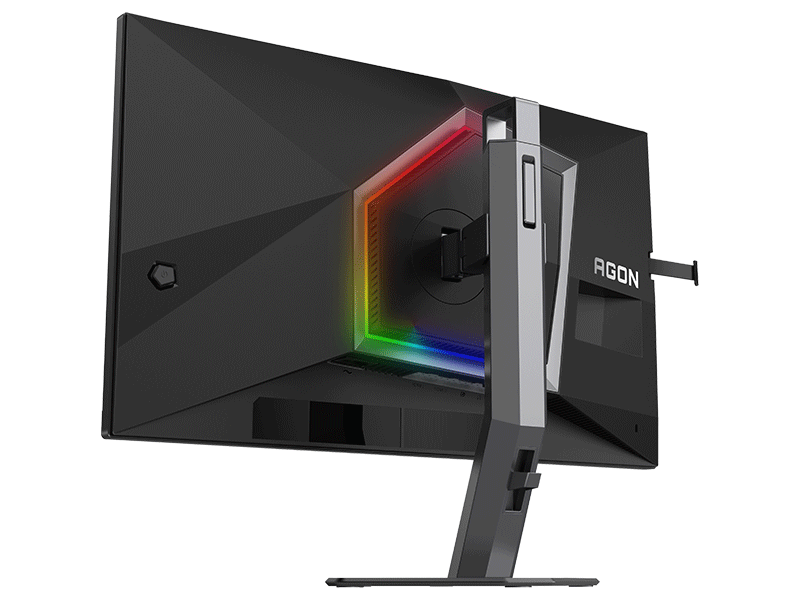
The monitor includes tools such as dynamic crosshairs, dark field control for improved visibility in shadows, and MBR+ motion blur reduction. The “Aigong Esports” menu provides software-based customization, while low input lag and a “human-machine controller” enable quick mode switching. Its 1.5mm micro-frame design maximizes screen space, and the asymmetrical base—winner of a Red Dot Design Award—features RGB lighting with 14 effects and over 100,000 color options. It also has Flicker-free technology and low blue light modes to help reduce eye strain during extended gaming sessions.
The monitor stand allows for 130mm height adjustment, -90° to 90° pivot, -5° to 23° tilt, and -30° to 30° swivel, with quick-release VESA mounting support. The monitor also offers four USB 3.2 Gen1 ports, including one fast-charging option, and a retractable headphone hook. The monitor also has PIP (Picture-in-Picture) and PBP (Picture-by-Picture) modes that enable multitasking with multiple input sources. The monitor is not yet available for purchase in China, and the brand has not provided any details about its global launch.
For more daily updates, please visit our News Section.
AppleCare is Apple’s extended warranty and support program designed to protect your devices beyond the standard warranty period. This covers various Apple branded products like MacBooks, iPhones, iPads, and Apple Watches. But is it worth the extra cost? Let’s find out.
A basic AppleCare subscription basically prolongs the manufacturer’s warranty, which means you get better customer support for devices beyond the typical one-year warranty. But with AppleCare+, the company now covers accidental damages as well. Depending on the region, you also get a more affordable price for repairs as well.
For example, AppleCare+ in India lowers the cost of screen replacement from over 25,000 INR to under 3,000 INR. The service also includes the extended warranty coverage, so a MacBook has a longer three year warranty which is two years longer than the typical one.
AppleCare+ subscribers are also getting priority access to Apple service. Be it repairs or for other support, you can get faster service than those without the plan. In other words, there is less downtime as resolutions are quicker. All of this makes it a lot more convenient to have for owners of iPhones, iPads, MacBooks, and Apple Watches.
2. So who is this for?
There are plenty of people that need such a service to ensure the longevity of their products. It is especially great for clumsy users who frequently drop or damage their devices. A small mistake can cost hundreds of dollars and the subscription to AppleCare basically makes it a lot more affordable. Frequent travellers who need to go abroad also benefit from this since AppleCare+ offers global repair coverage. It is worth noting that you might not get the full range of coverage, but this is a lot better than what most brands offer.
3. Verdict: Should you buy it?
Based on all the services AppleCare provides, it seems well worth it to spend a little extra for your iPhone, Macs, or other Apple products. The Cupertino based giant is known for its premium gadgets that carry a hefty price tag, especially in regions like India where Apple devices cost more than their US counterparts.
The service also suits those who tend to stick with their device for years. This might not be a priority for people that don’t drop their rarely ever drop their gadgets or upgrade frequently. But for the rest of the crown, AppleCare+ is a great option for users who want protection against costly repairs.
For more daily updates, please visit our News Section.
OPPO India will launch the OPPO F29 series, called the Durable Champion, on March 20, 2025. The F29 Series is designed for durability, reliability, and performance, creating smartphones that meet the needs of India’s gig economy, including drivers, delivery partners, shopkeepers, and business owners.
Made in OPPO’s Greater Noida factory, the lightweight F29 Series (just 180g) packs serious durability. It’s officially rated IP66 (resists heavy rain or a rogue water hose), IP68 (survives 30 minutes in a flooded pothole or sink), and IP69 (handles high-pressure, hot water jets—think factory floors or Chennai summers). The “Armour Body” design includes shock-absorbing edges, reinforced corners, and a camera ring lifted to avoid scratches. Even the internal frame uses aerospace-grade metal, making it 10% sturdier than older models.
OPPO has put the F29 through 14 military-grade tests, from -40°C freezes to desert-like dust storms. The brand, already India’s top pick for water-resistant phones (per Counterpoint Research), says these devices won’t flinch during monsoons, dusty commutes, or accidental drops.
The phones also have a new “Hunter Antenna” that claims to boost signal strength by 300%, helping riders stay connected in elevators, remote areas, or cramped warehouses.
Over the past six months, OPPO has reported a 30% increase in sales for its F Series. The F29 Pro will be available in Marble White and Granite Black, while the F29 will come in Solid Purple and Glacier Blue. All the details will be confirmed at tomorrow’s launch. In the meantime, you can check out our previous coverage to learn more about these upcoming smartphones.
For more daily updates, please visit our News Section.
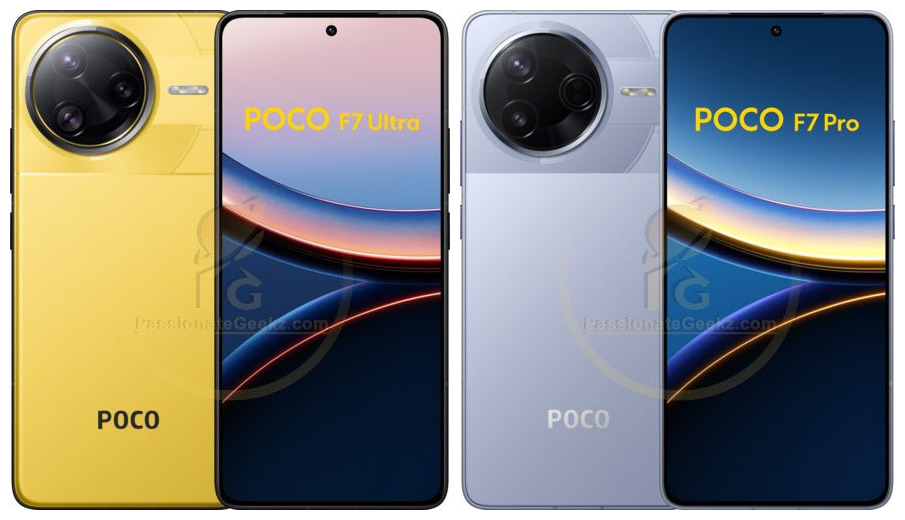
Xiaomi could be planning on launching the POCO F7 series in the Indian market soon. A fresh leak has hinted that the POCO F7 could be released in the region along with another higher end model from the F7 lineup. So here’s what we know.
POCO F7 Series India Launch Rumored
The news arrives from a known tipster Sudhanshu Ambhore on X (formerly Twitter). In his tweet, he shared a couple of tweets from the CEO of POCO India, Himanshu Tandon, and also stated that the POCO F7 series will be launching in India soon. It is unclear whether the POCO F7 Pro or F7 Ultra will launch in India, although previous rumors have pointed at only the base model arriving in the Indian market.
POCO F7 Ultra and POCO F7 Pro
The tweets from POCO India’s CEO also hinted that the POCO F7 in India might be carrying a larger battery pack compared to its global variant. He stated that POCO aims to offer bigger batteries when launching smartphones in India, with the POCO X7 Pro being a great example since it had a massive 6,000mAh battery pack. This was 500mAh larger than the global variant. Similarly, the Chinese brand could be planning on releasing the POCO F7 series with a bigger cell in India.
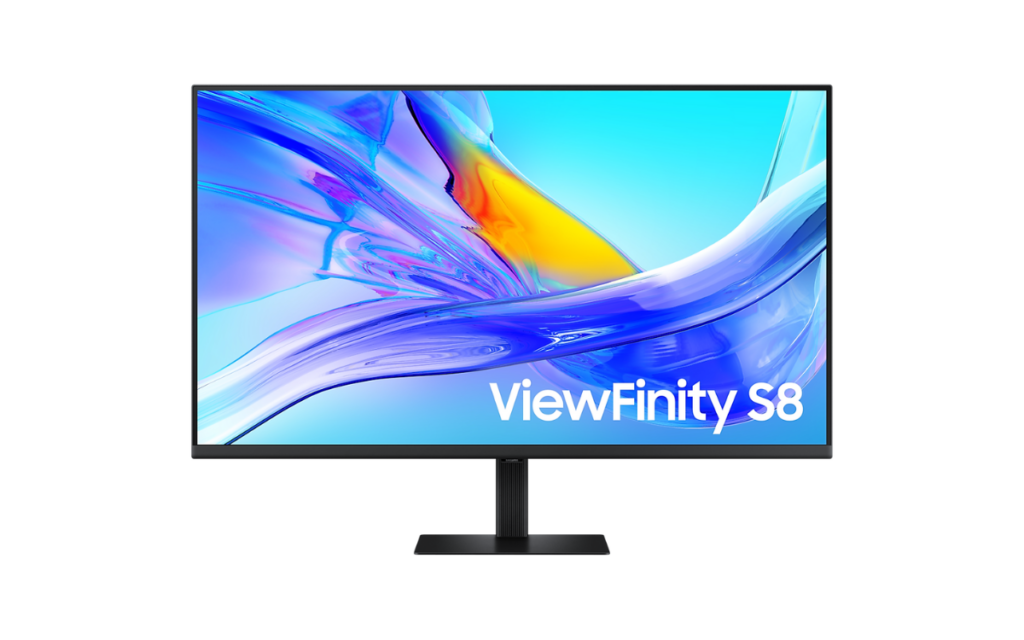
Samsung has officially launched its latest productivity powerhouse in China — the ViewFinity S80UD (2025) 37-inch 4K monitor, model LS37D802UACXXF, now available on JD.com for 3,999 yuan (~$555). This ultra-large display is aimed squarely at professionals who need more room to think, create, and multitask without compromise.
Samsung ViewFinity S80UD Specifications
The ViewFinity S80UD features a 37-inch UHD display with a 3840 x 2160 resolution and 16:9 aspect ratio, delivering sharp clarity for detailed tasks. It comes with HDR10 support for richer colors and deeper contrast, while its wide 178-degree viewing angle ensures consistent image quality from any angle.
The display uses a VA panel with a 60Hz refresh rate, 5ms GtG response time, 350 nits of brightness, and a 3000:1 contrast ratio, supporting 10-bit color for smooth and accurate gradients.
In terms of color accuracy, the ViewFinity S80UD supports 100% sRGB coverage for precise, true-to-life visuals. It also comes with TÜV Rheinland-certified eye care features, including reduced blue light and flicker-free technology, while an ambient light sensor automatically adjusts brightness and color temperature for comfortable viewing in any environment.
The monitor comes with multiple connectivity options, including a 90W USB Type-C port, HDMI, DisplayPort, LAN port, and three USB-A ports, allowing easy connection to various devices.
It also features a built-in KVM switch, letting you control two different devices with a single keyboard and mouse, making multitasking seamless. The monitor supports both picture-in-picture (PIP) and picture-by-picture (PBP) modes for more flexible and efficient multitasking.
The S80UD sports an ergonomic stand with height adjustment, tilt, and swivel functions, allowing you to set the display at the most comfortable viewing angle. The design is minimalist and clean, with a slim bezel and a sleek metal base that adds a premium touch to any workspace. The monitor also supports tool-free installation and disassembly, making setup easy and convenient.
The author has always had a preference for physical-paper books, and handwritten notes. I rarely use any digital devices like smartphones or tablets in the studio for daily note-taking, even though there’re quite a lot of tablets with paper-like screens in the office. I know my experience doesn’t apply to most people, as I just simply couldn’t read e-books on screens for a long-lasting time. However, in such a digital era, it’s inevitable that from time to time I’ll need to do my work through a screen. Fighting it somehow, I’m still sticking with handwriting to meet my miss of physical page flipping. But the team recently noticed my notebooks had been replaced by something new—the XPPen Magic Note Pad. Well, this is the best paper-like tablet I could find for fitting my reading and writing.
Appearance
As the other reviewers got to try this particular tablet, at the beginning, the XPPen Magic Note Pad looks much like a regular smart tablet. But I really see it differently. The review story is also about how I convinced them.
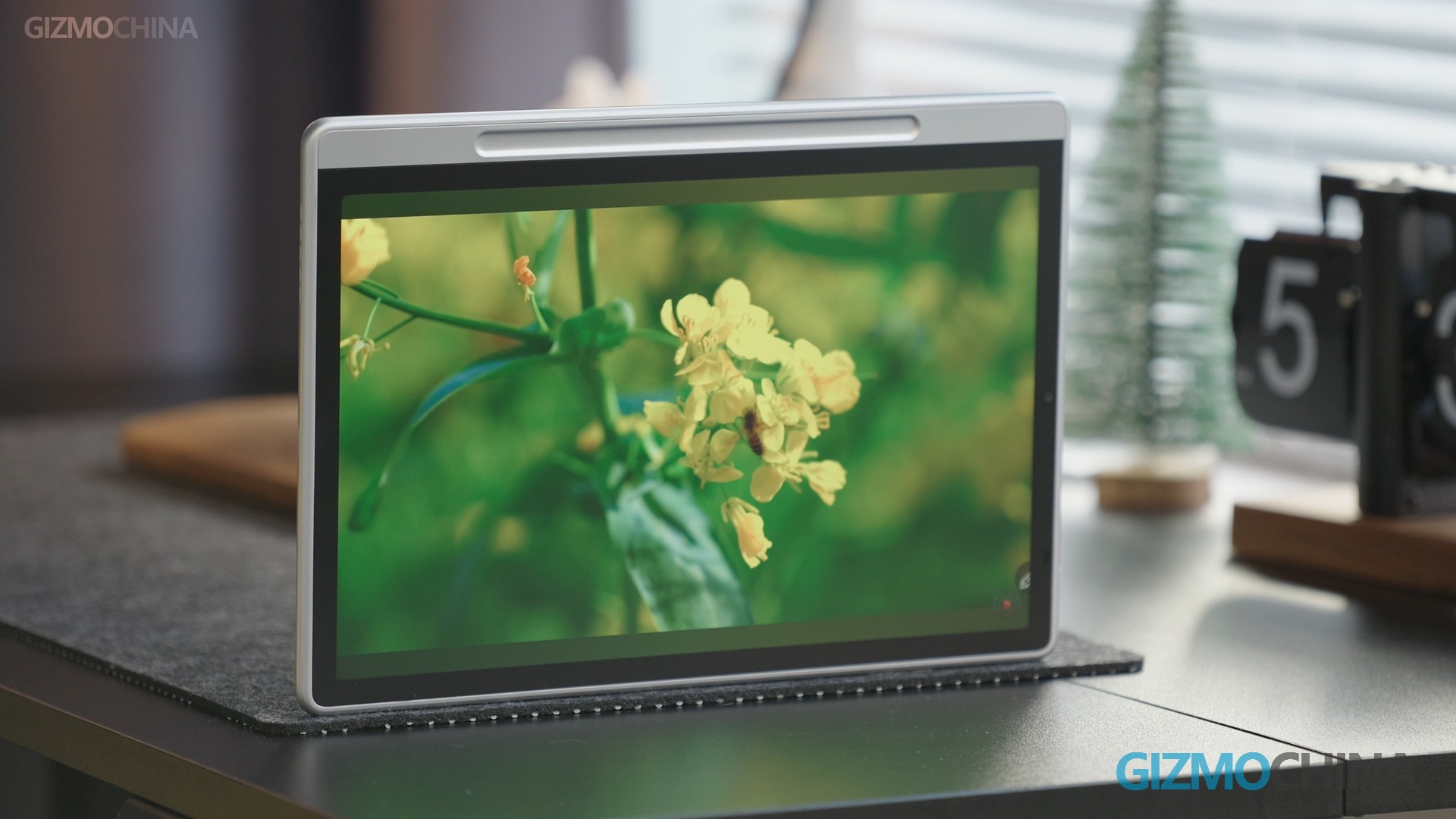
At first glance, it is like a drawing tablet widely used in the design industry, rather than a common tablet. It features a silver bezel and about an 11-inch display, which is how it could be so special as a note-taking device. I will talk more about the magic display later.
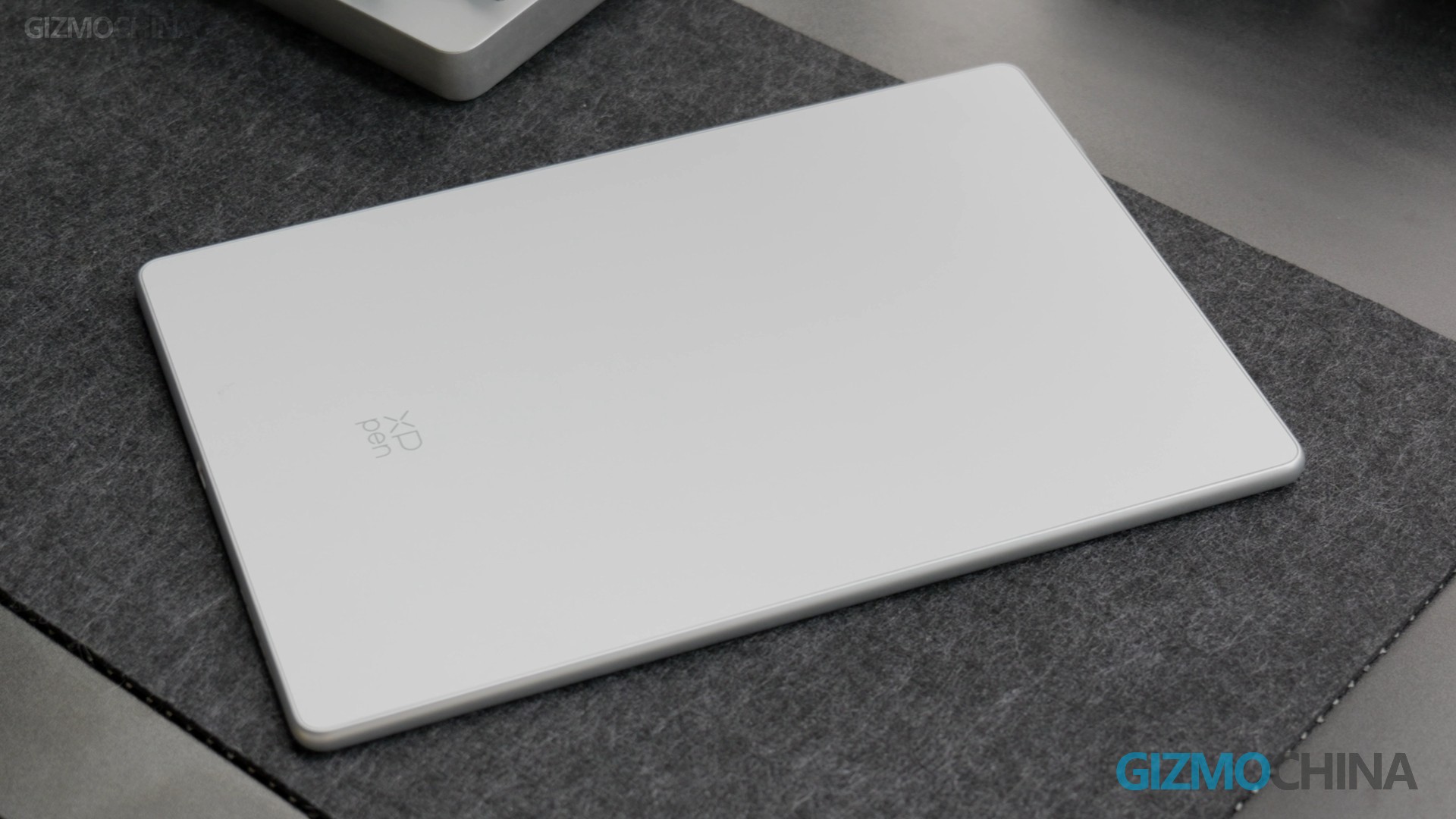
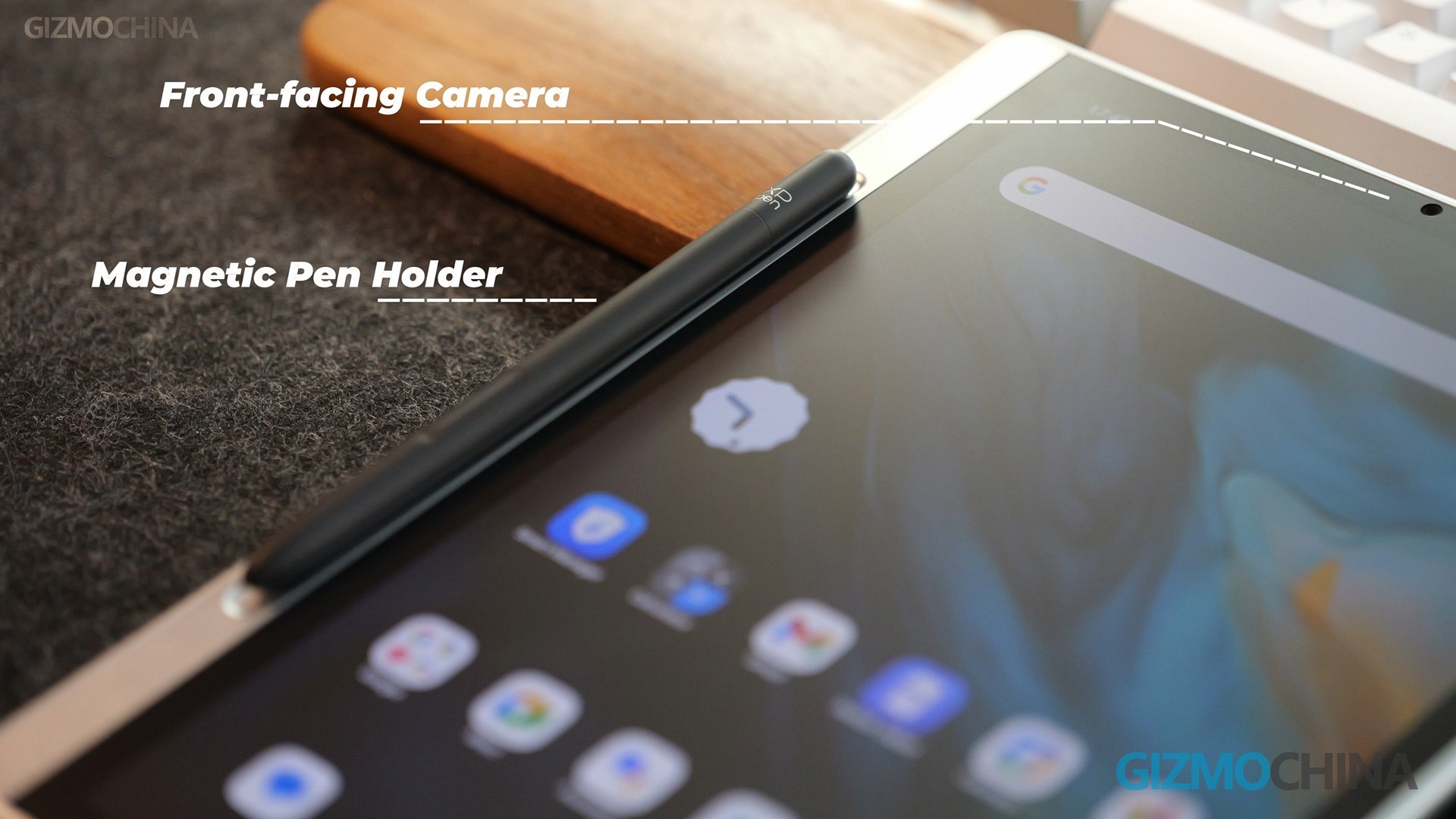
The backcover is in pure white with a light elegant logo printed, with a slightly matt finish. Similar to a smart tablet, the front face features a front camera on the top for facial recognition and video-meeting uses. On the left side, there’s a dedicated slot as a magnetic pen holder. The accompanied pencil can be firmly attached on the slot position.
Screen
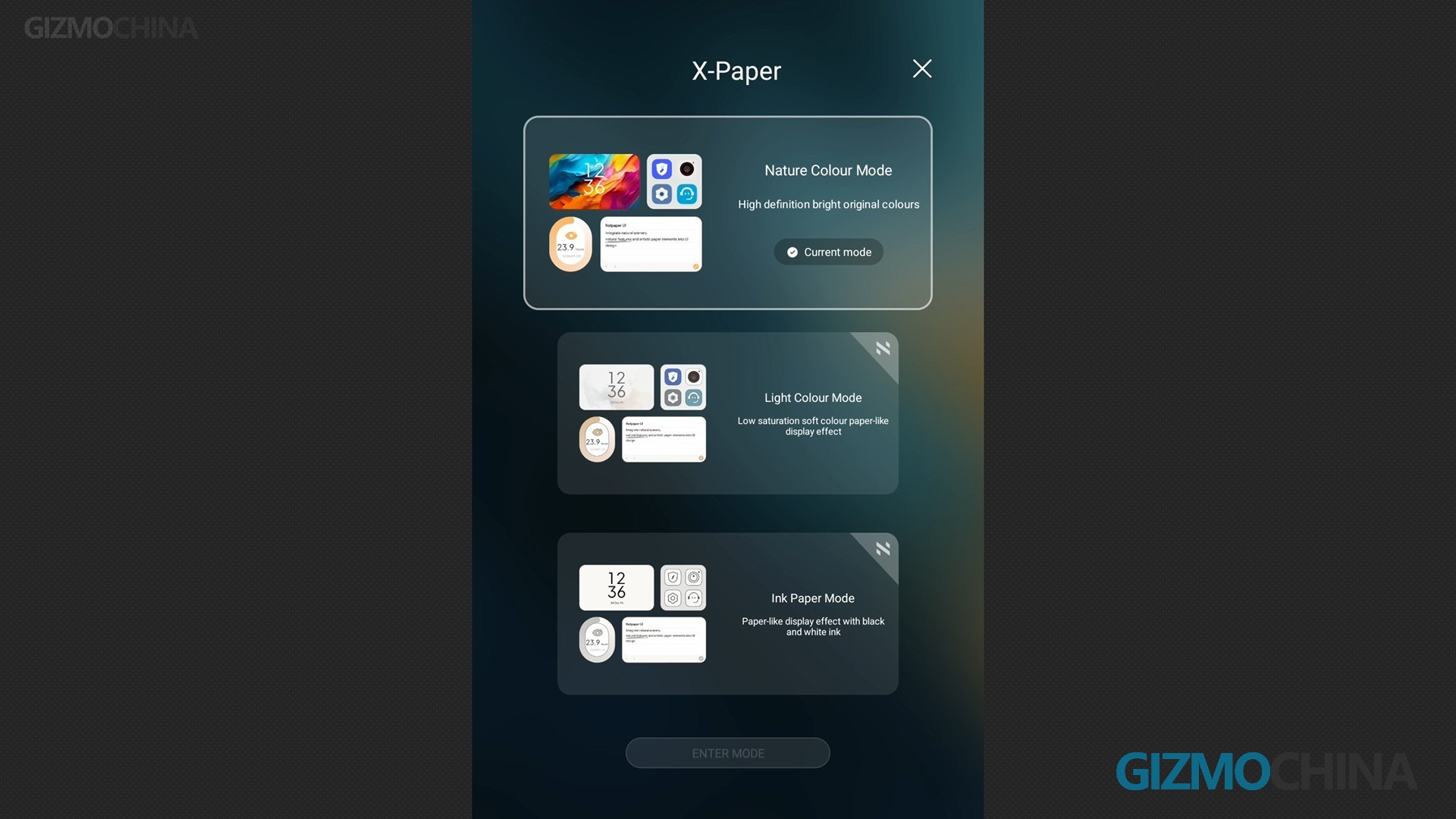
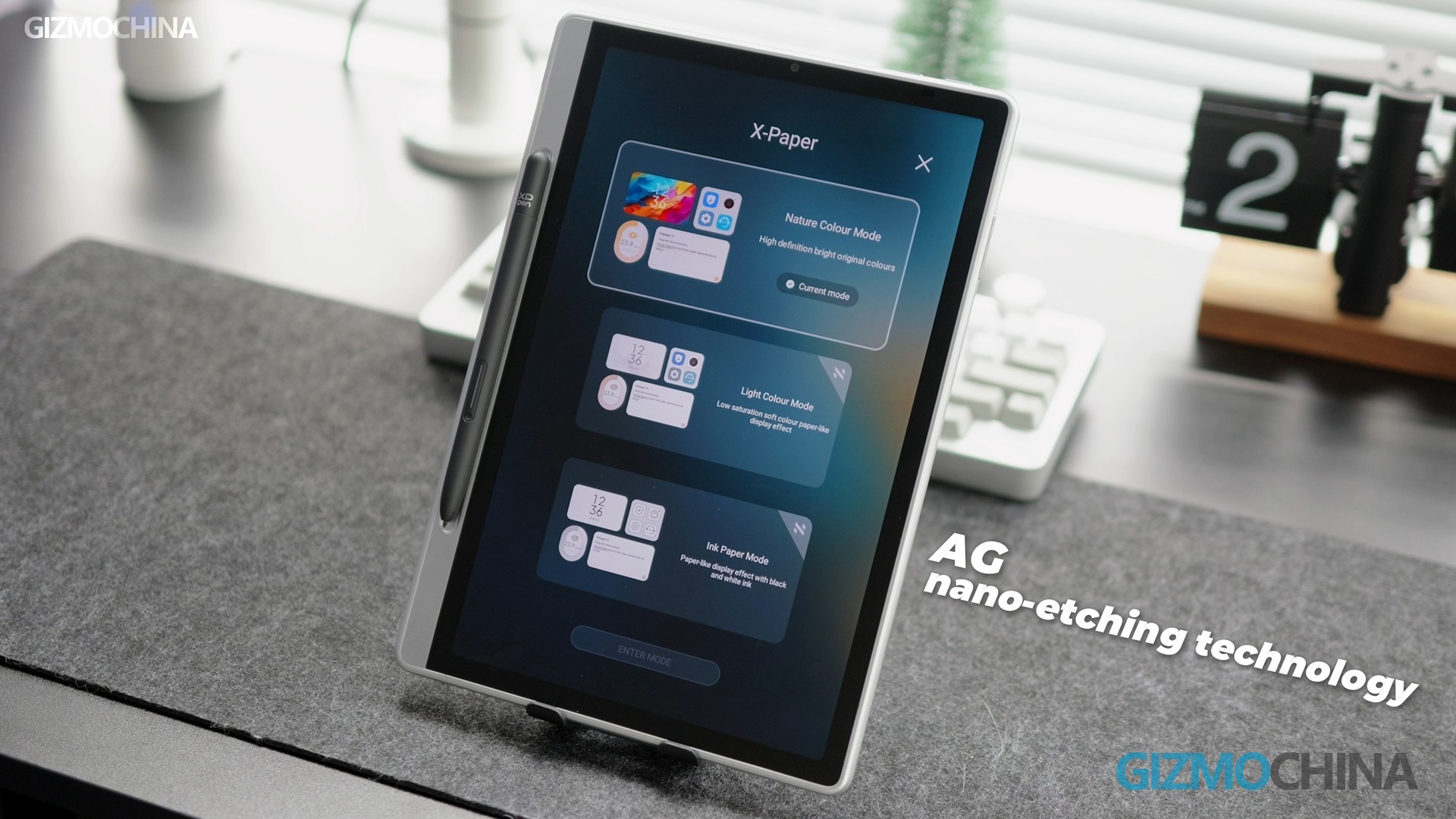
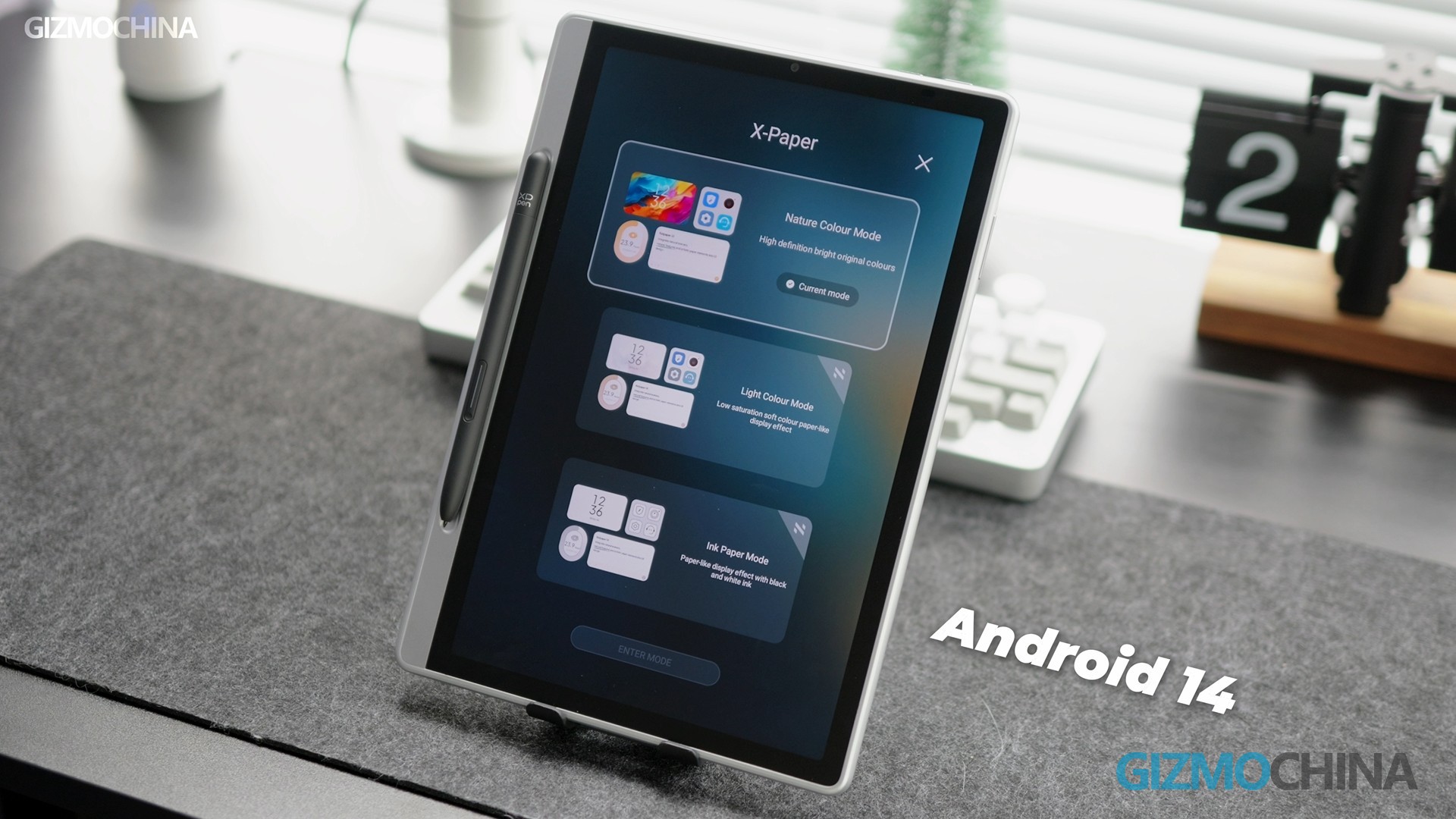
As mentioned, one of the primary reasons I chose this Pad is the screen with a fine matt finish. It claims to be the world’s first 3-in-1 Color Note Pad. Unlike other e-ink screens, the Magic Note Pad offers up to three intelligent color modes, including Nature Colour Mode, Light Colour Mode and an special Ink Paper Mode.
With Ink Paper Mode on, the grayscale (black&white) display is sharp and clear, making text extremely comfortable to read, similar to those fine e-ink screens, without causing eye fatigue during long reading sessions. But obviously, it’s not the traditional E-ink pannel with a limited refresh rate. However, its visual effect is still very close to the texture of a paper page, while the whole UI has been accordingly optimized and beautified similarly to those E-ink devices, brief but informative. It’s truly enjoyable to have such a great reading experience with books, line drawings and comics here.
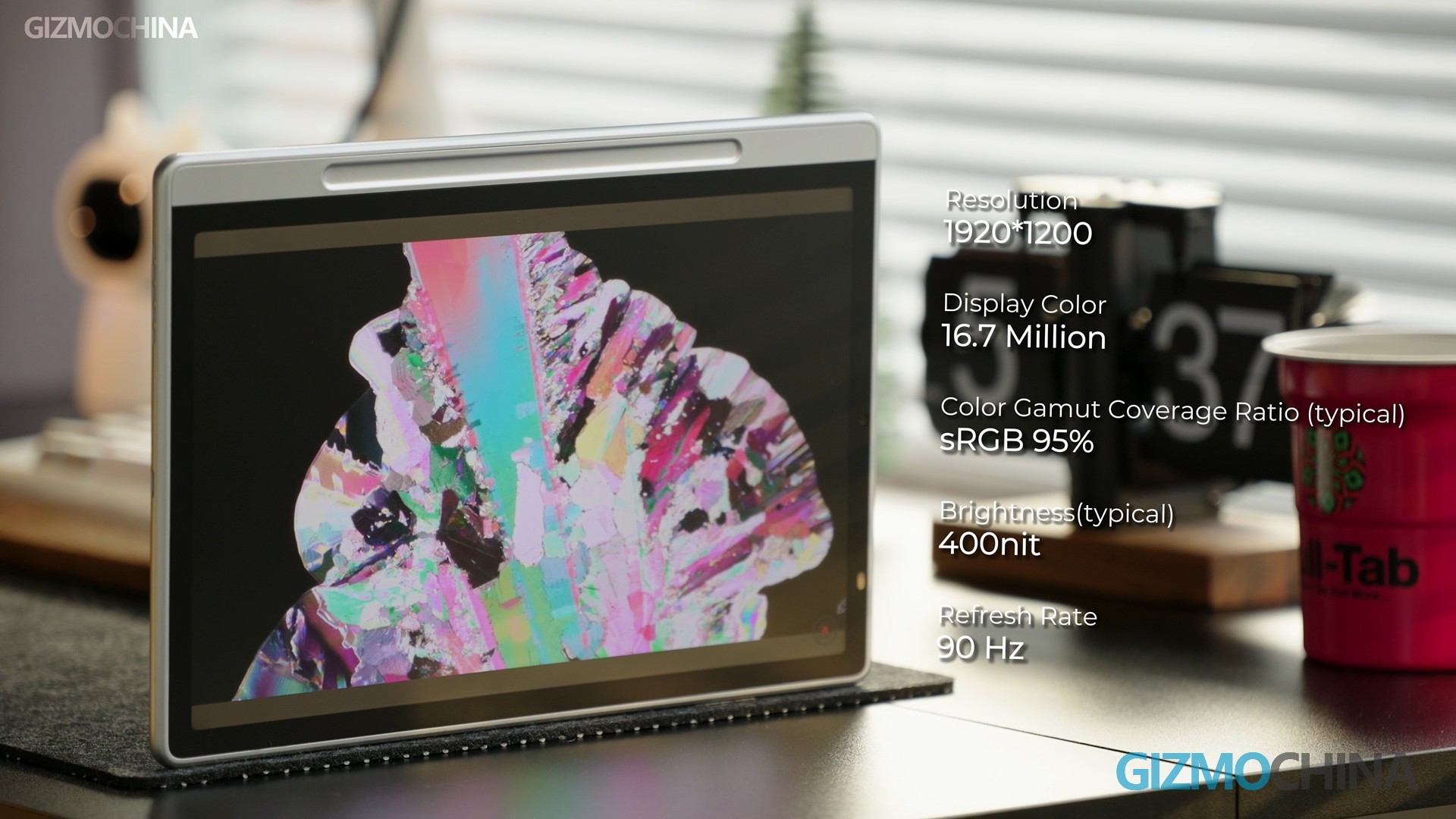
The Light Color mode is designed for various lighting conditions, with low-saturation colors that are gentle on the eyes, which is more about to simulate a color-e-ink effect. But since it has a high resolution (1920×1200) and up to 90Hz refresh rate, it can provide more detailed images and smoother animations.
The Natural Color mode, on the other hand, accurately reproduces colors, delivering a sense of depth and realism. When viewing comics or artworks, it feels like you’re having a fine printed coated paper book rather than a cold electronic device.
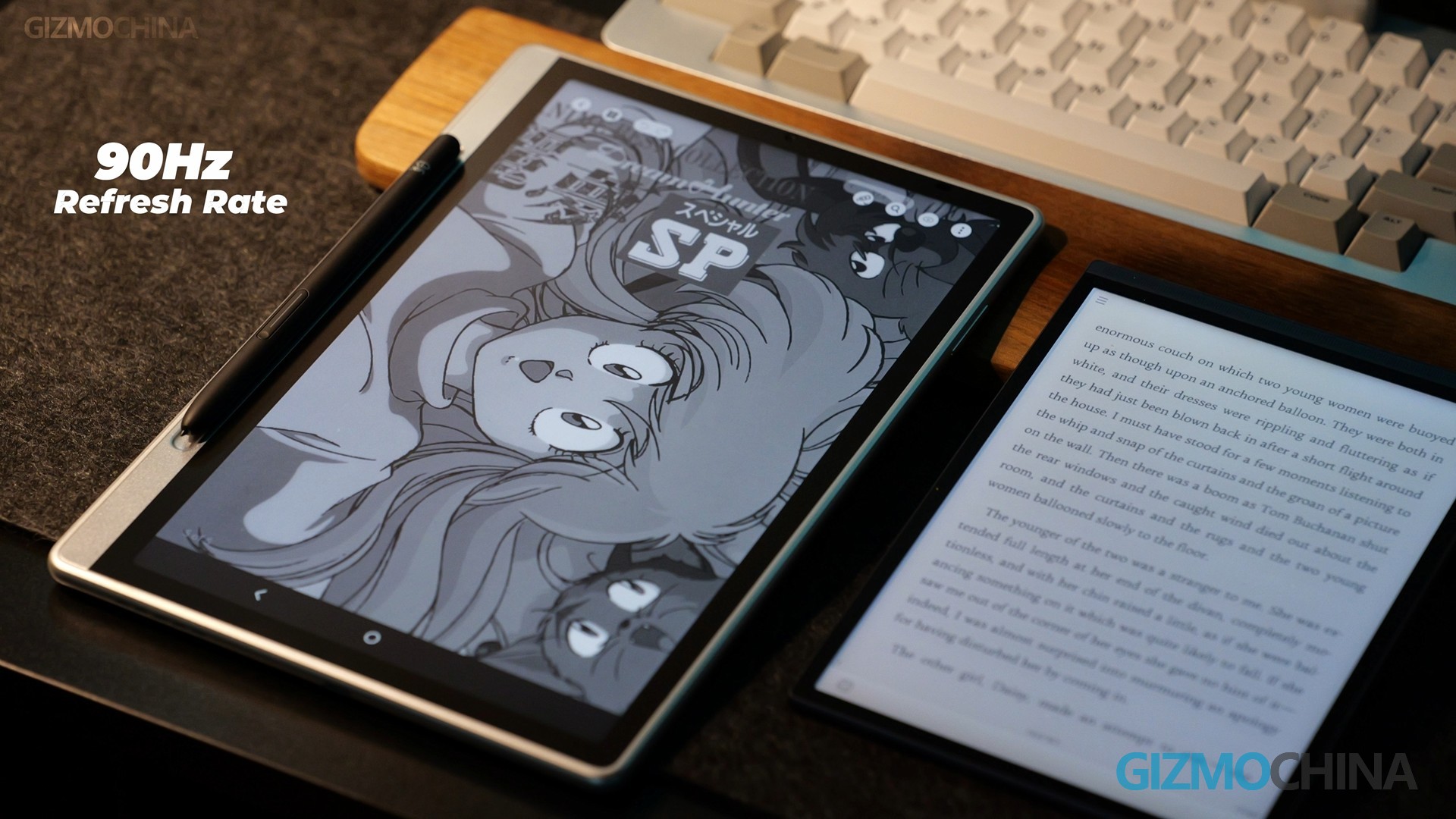
Compared to most E-ink displays, the most notable feature is its 90Hz refresh rate. If you’ve ever used a traditional e-ink reader, you’ll understand the patience required for even simple page-turning. I have to emphasize again, the Magic Note Pad excels in this part, offering a smooth experience that traditional e-ink screens cannot match.
Whether writing, drawing, or scrolling, the screen is virtually lag-free, with no noticeable ghosting. Once you’ve experienced this level of fluidity, it’s hard to find an excuse to go back with most E-ink devices, unless you are fine with the E-ink’s compromise in smoothness and image quality. The difference is impressive, by comparing it to the regular e-ink screen.
When it comes to eye protection, which is crucial, given the long hours we spend in front of screens, the screen on this pad is certified by TÜV SÜD for low blue light and paper-like display.
This is not an exaggeration; The ink-like screens genuinely reduce harmful blue light and eliminate screen flicker, preventing eye strain and fatigue.
The screen also features AG nano-etching technology, which minimizes glare and reflection while providing a natural writing resistance, enhancing the authenticity of the writing experience. This is another professional advantage coming from the brand: XPPen truly brings their powerful handwriting&drawing pen experience to the new tablet.
Pen
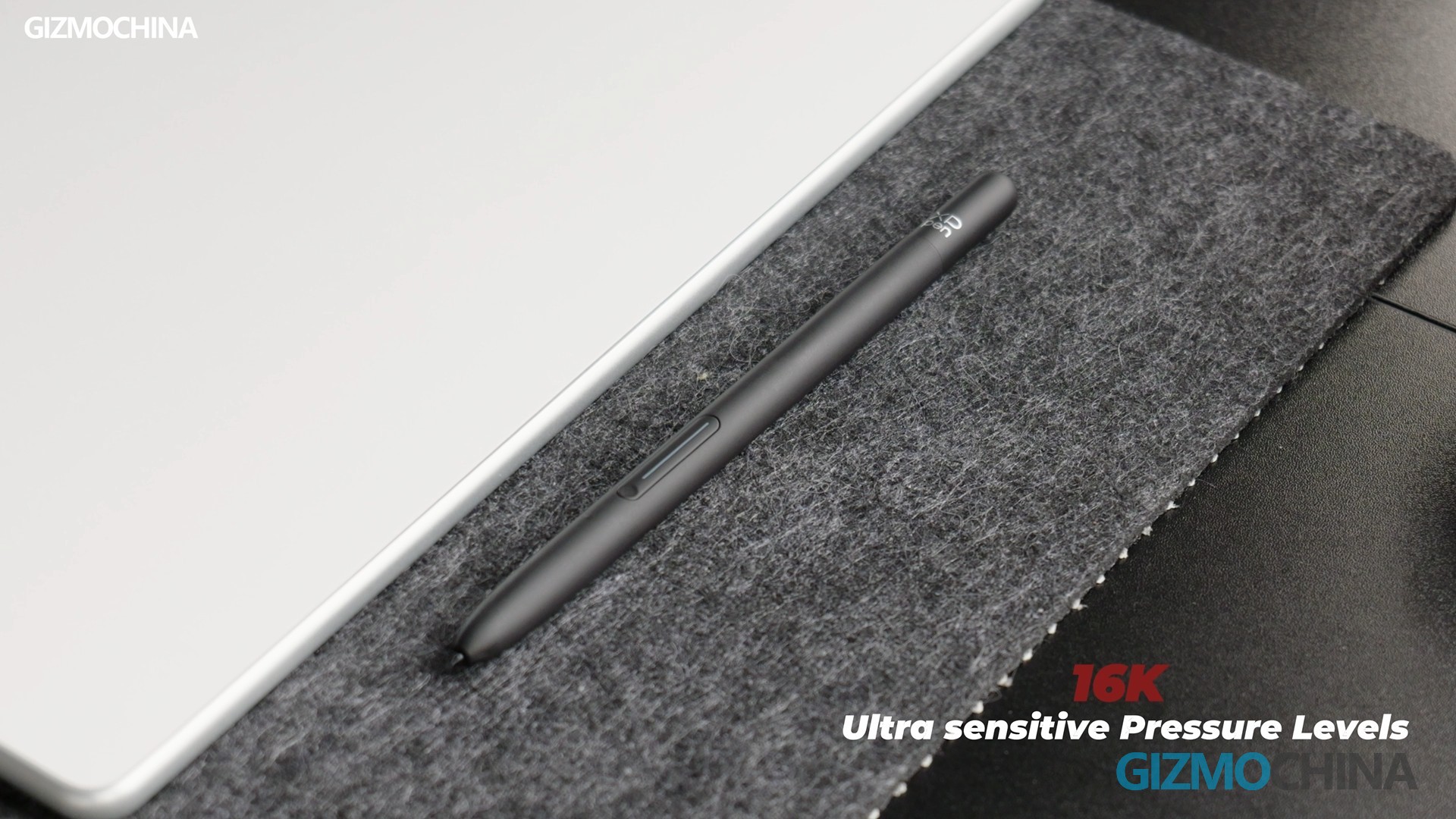
The writing experience with the XPPen Magic Note Pad is exceptional. It comes with the X3 Pro Pencil 2, which offers 16K ultra-sensitive pressure levels. This is significantly better than the 4096 or 8192 levels found in other brands.
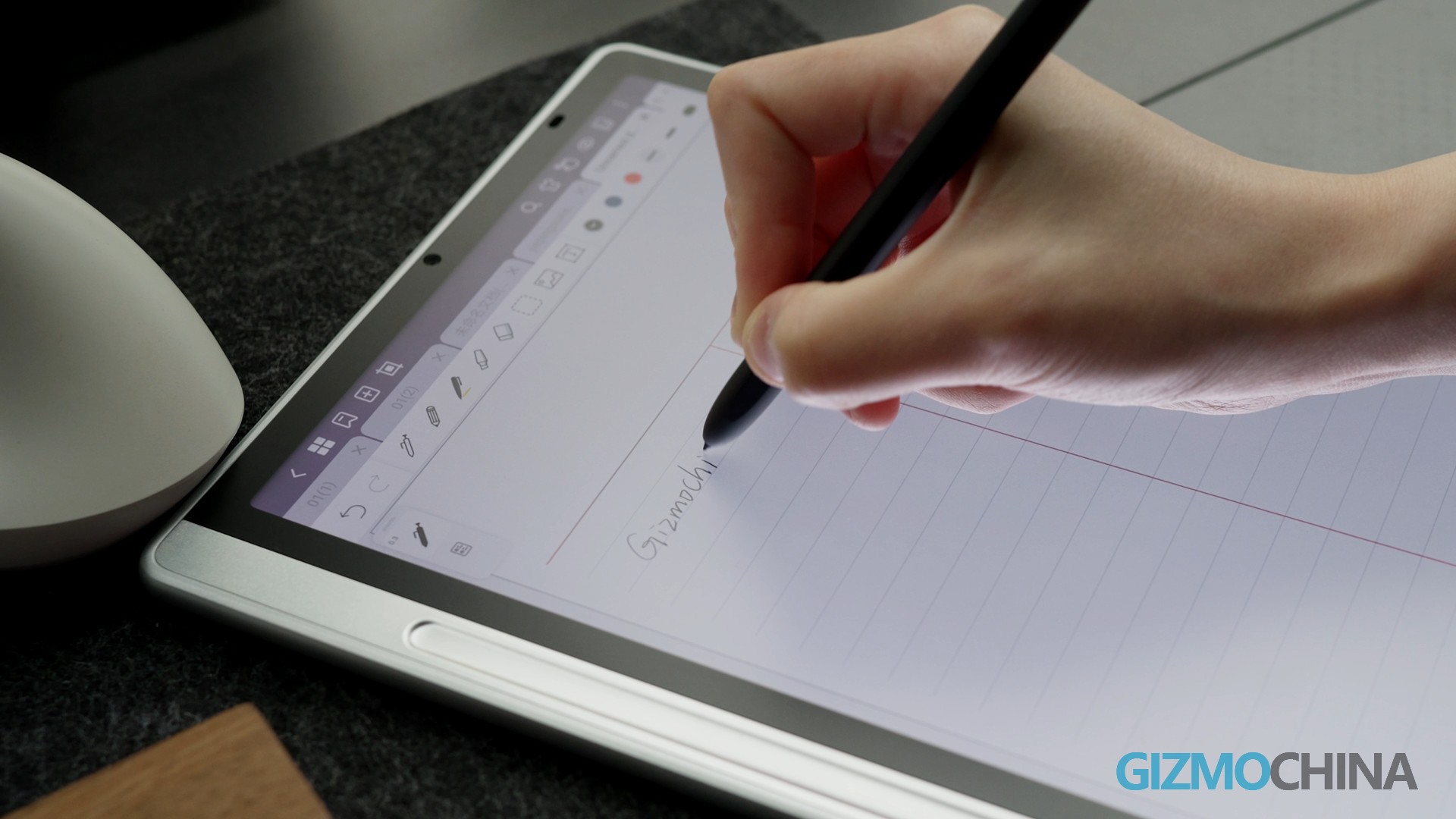
The pen captures every ounce of pressure applied, and the lines it creates are very natural and fluid. The soft tip design ensures smooth gliding on the screen, avoiding the harsh feel of writing on glass. It feels almost identical to writing on paper.
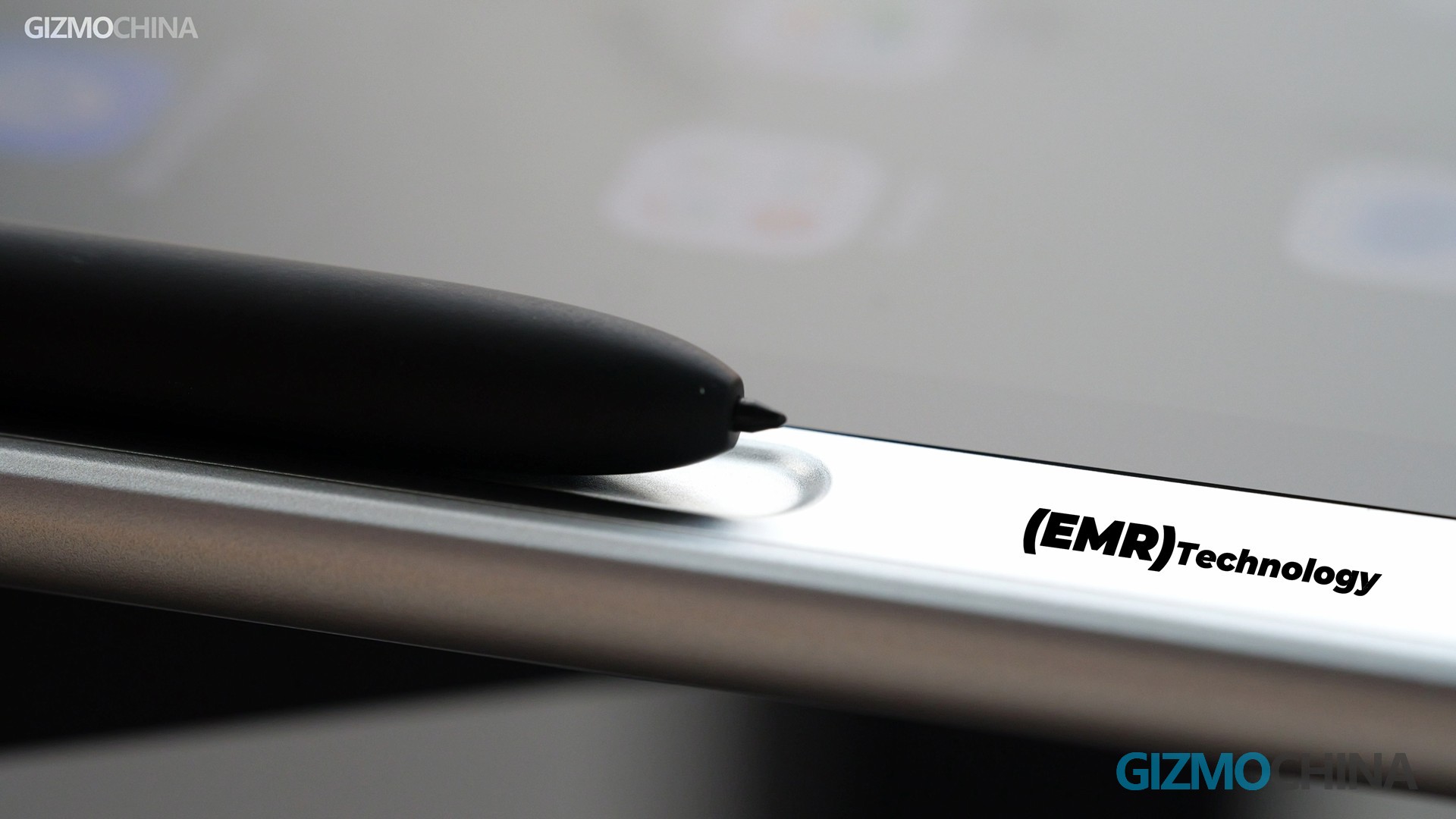
The pencil operates via electromagnetic resonance (EMR) technology, with no need for charging or Bluetooth pairing.
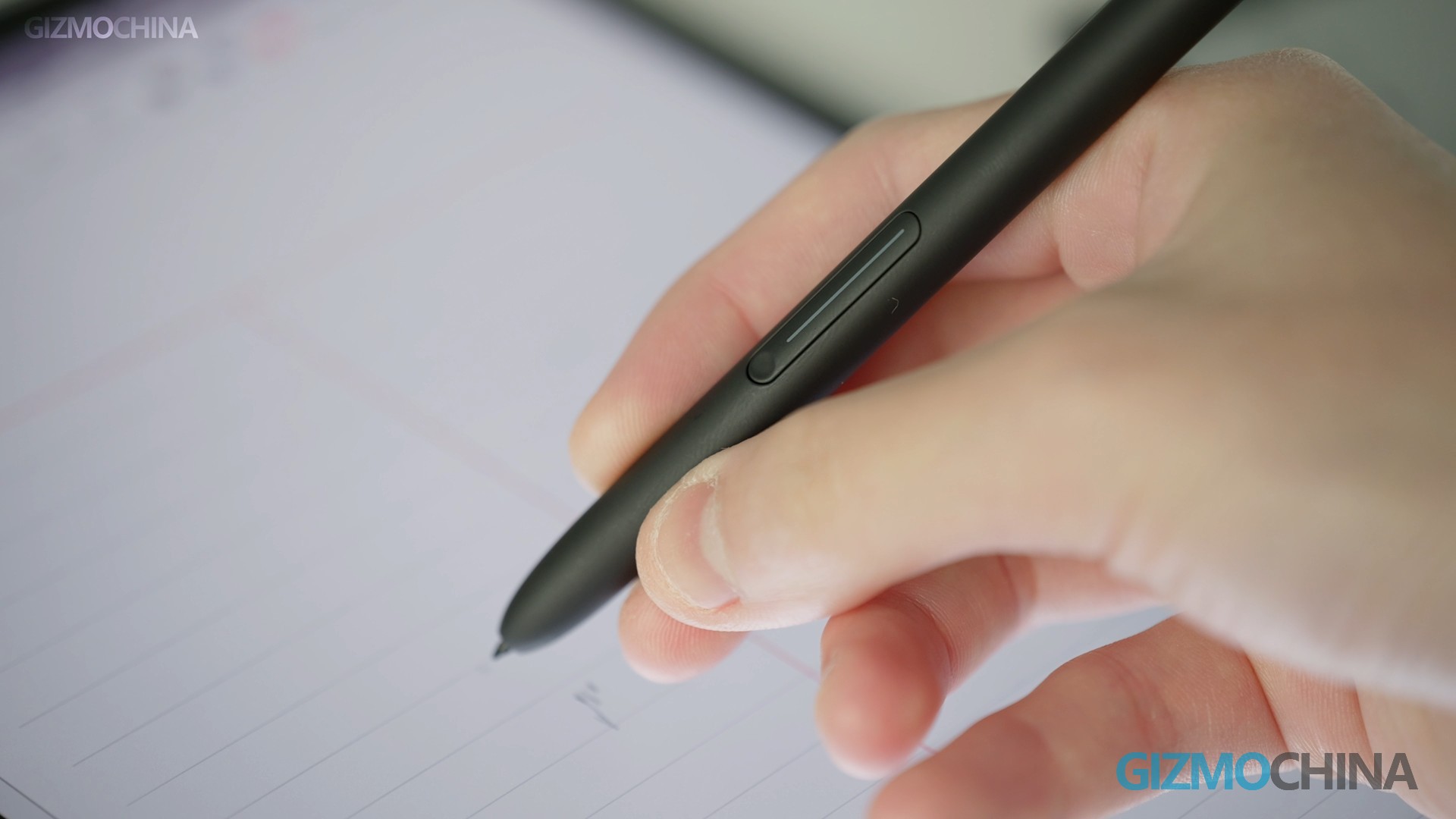
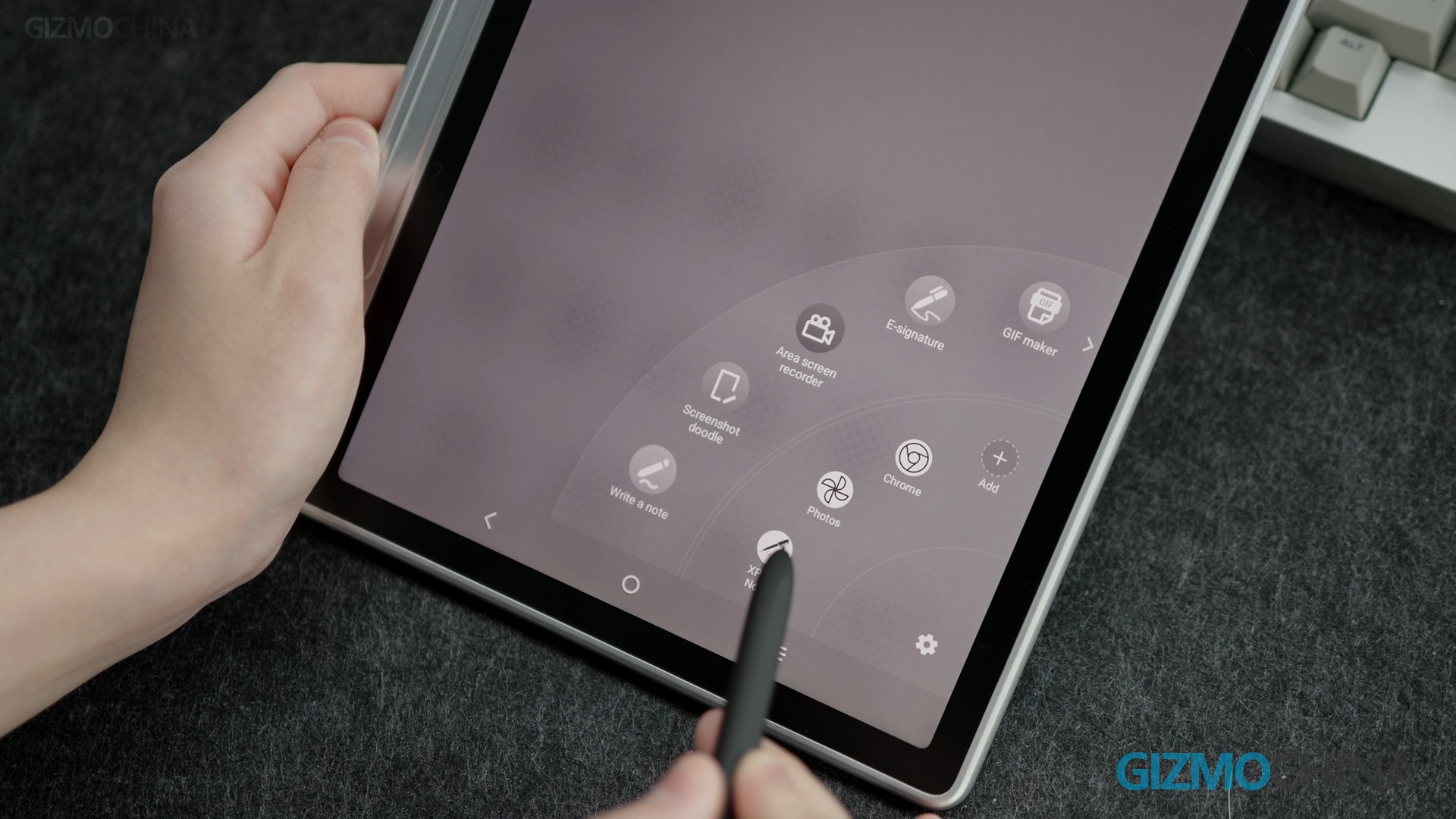
Additionally, the pen features a convenient shortcut button that enhances workflow efficiency, by providing quick access to eraser and customizable controls. The placement of the feature is particularly well-thought-out.
However, we did notice one minor issue: when the pen cursor is activated, it can sometimes interfere with the writing experience. But at the same time, for fine painting, and it could help with the positioning of the brushstrokes. If you can get used to it, the drawing experience on the Note Pad will be vastly boosted.
XPPen Notes
The stock App, the XPPen Notes, is another standout feature. If you’re looking for a digital note-taking app that matches your imagination and your schedule, XPPen Notes is probably the perfect solution.
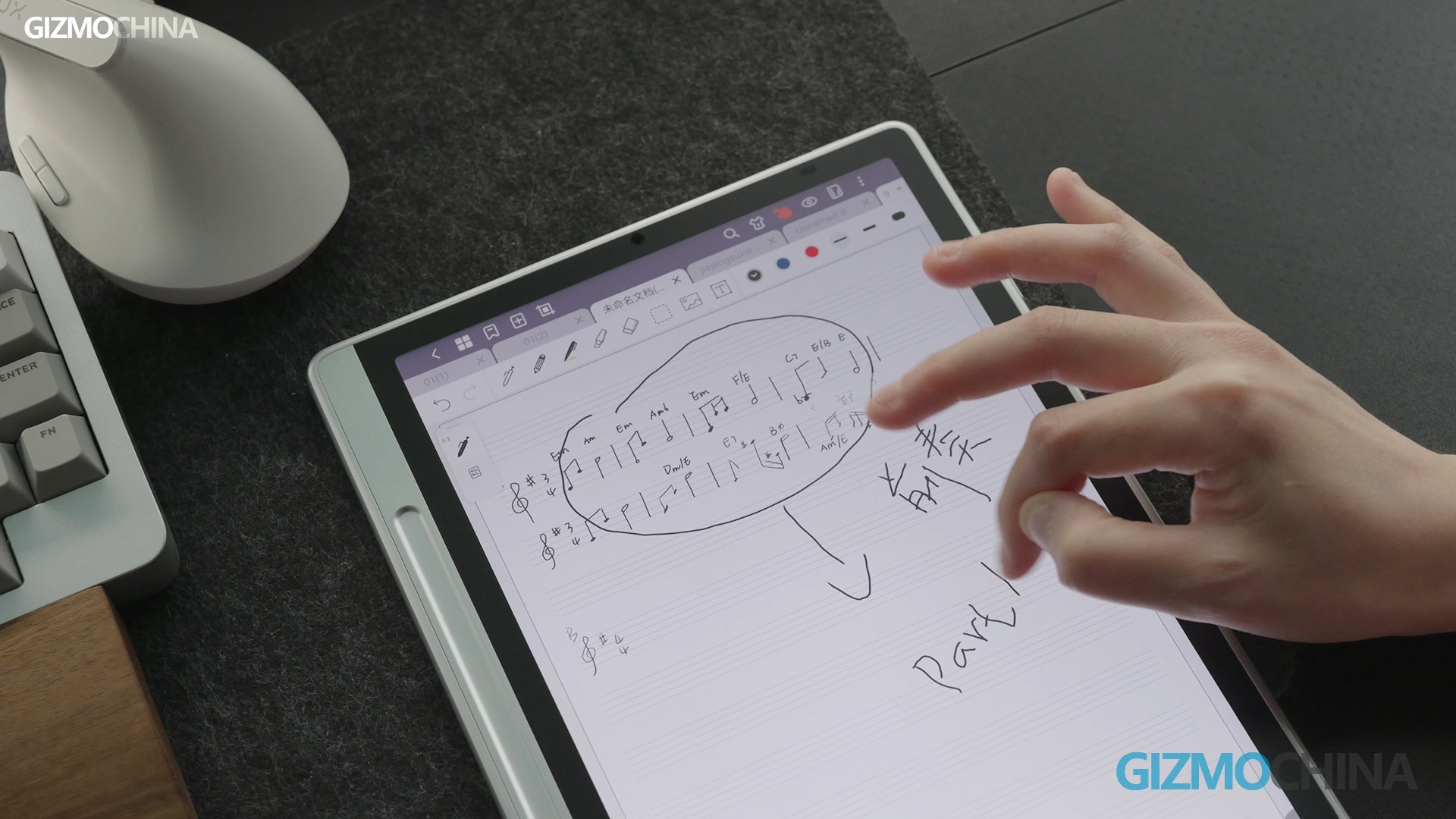
First of all, creating notes has never been easier. With just one click on the desktop, you can quickly generate a note in seconds. Need to import lecture slides or project files? No problem with just one step. And XPPen Notes also supports PDF import, then allowing you to gather all important files in one place.
With pen mode, your X3 Pro Pencil 2 is like an extension of your hand, providing a precise writing and drawing experience, just as natural as using physical paper and pen. It’s not often we see such a combo on other brands’ devices. Either the writing experience needs to be optimized, or it’s diifficult to provide wider features beyond writing experience.
Switch to touch mode, you can use your fingers to record ideas or outline plans at any time, perfect for those moments of inspiration. But trust me – you probably rarely write with your finger out of sheer love for this pen.
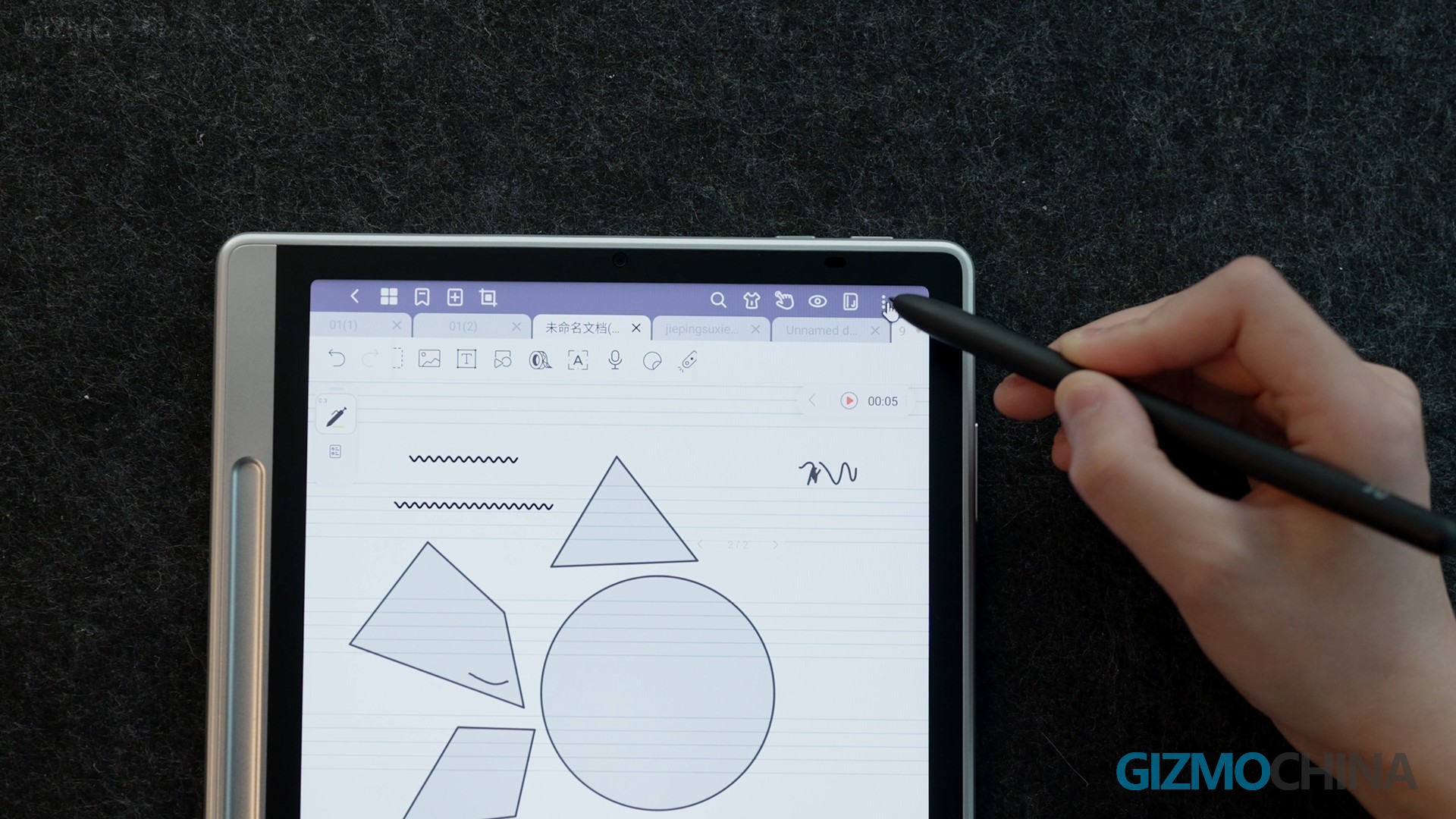
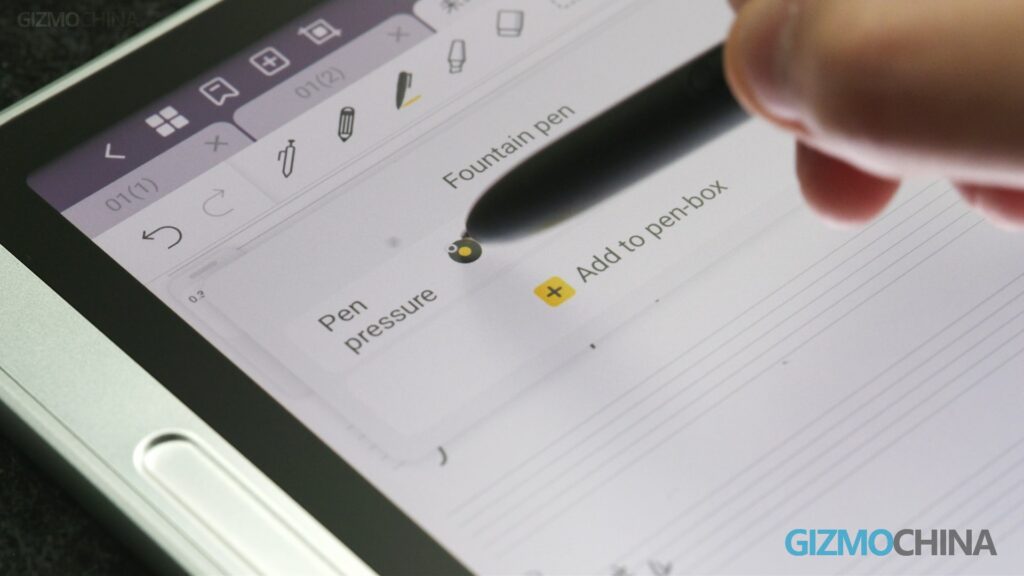
Back to writing, we can choose from a variety of writing modes, pen, pencil, fountain pen, laser pointer, and highlighter. Each mode has its unique functions.
For example, the fountain pen is perfect for practicing calligraphy or detailed notes, with the great supports adjusting pressure sensitivity and line thickness.
The fountain pen provides even and consistent strokes, while the highlighter makes it easy to highlight the key points. And the laser pointer? It’s like a mini tutor in your hand, with lines and dots that automatically disappear after a while, so you never have to worry about erasing again!
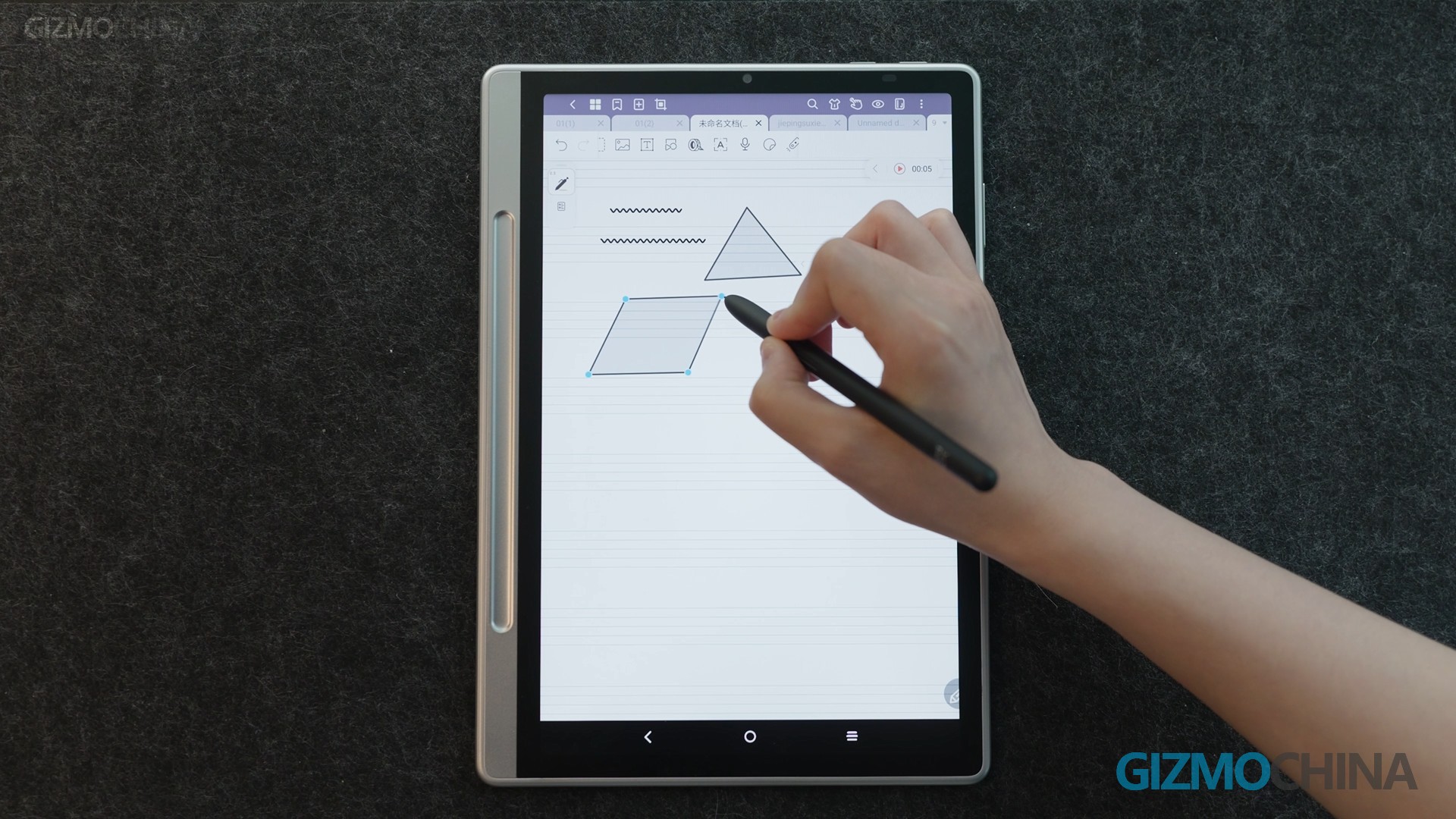
There’s also a single-stroke shaping tool, so you can draw perfect lines, geometric shapes, and even 3D coordinates with a few clicks.
Reading is also enjoyable and convenient. Switch to reading mode and the toolbar disappears, giving you a clean, distraction-free view. But don’t worry, you can still use the underline, annotation, translation, and hyperlink features.
Speaking of translation, XPPen Notes supports 12 languages, allowing you to conquer foreign texts with confidence. And the Text Box Input Tool? It’s like typing on a digital canvas, with support for custom fonts, weights, colors, and spacing. Your notes will be as sophisticated as your style!
Another impressive bonus comes with audio recording. Whether you are in a lecture or a meeting, XPPen Notes instantly turns into a recorder. Record in segments and export as MP4 files so that you won’t miss a word.
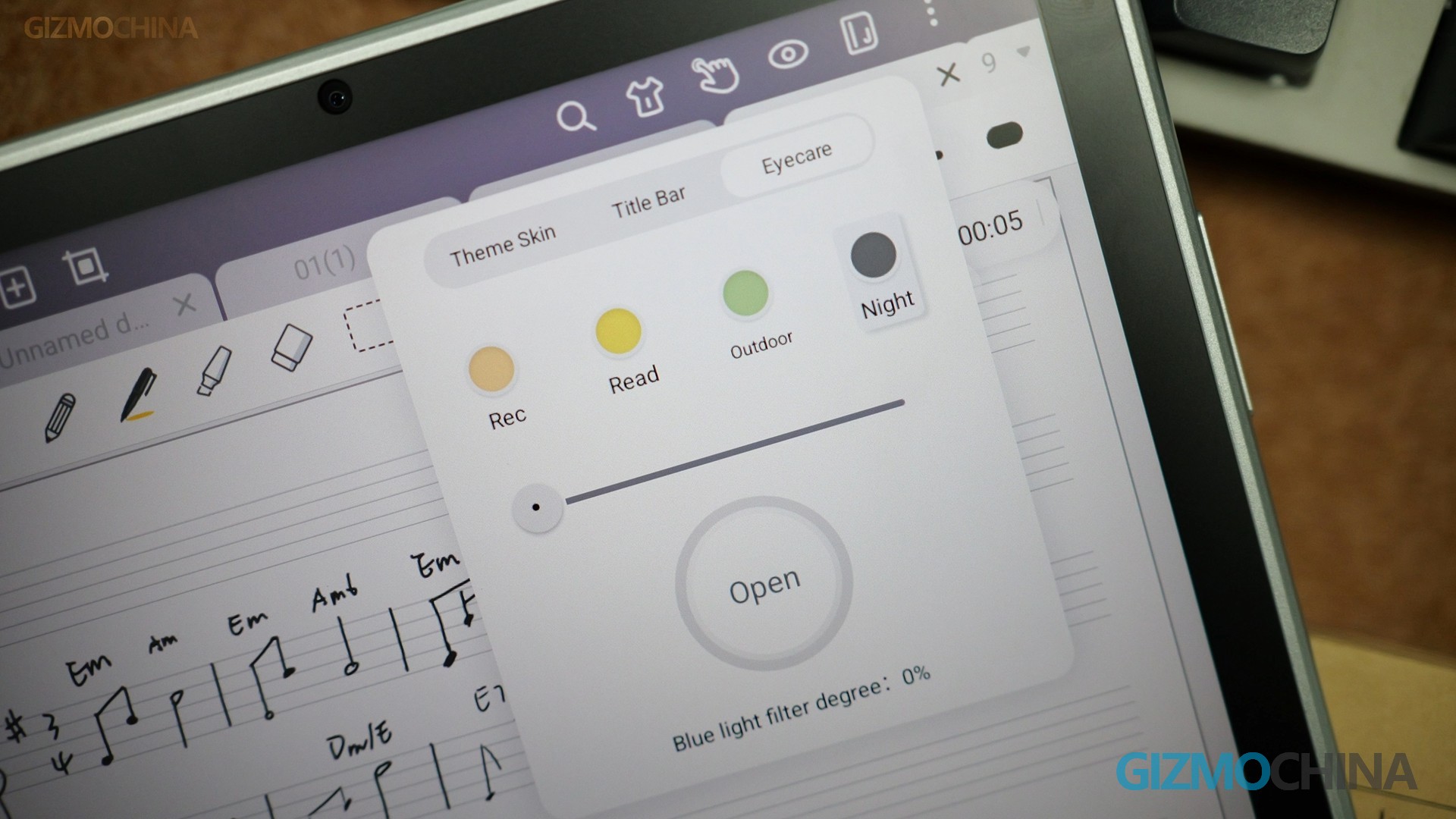
In addition to these, the XPPen Note provides four smart eye protection modes. Seamless storage, access anytime, anywhere. Once you finish taking notes on the app, your notes are automatically saved on the device and can be uploaded to OneDrive or Google Drive for cross-device editing and backup.
Android System and Performance
The tablet runs on Android 14, and with the full power of the Google Play Store’s extensive app ecosystem, you can install apps based on your needs and workflow, just as I do.
Conclusion
Overall, while the XPPen Magic Note Pad is not perfect. To be honest, it lacks a built-in book source and library, and its processor doesn’t support more advanced operations. But luckily it runs an Android and you have plenty of third-party options. And its more expanded features will depend on how you utilize external apps to round out your library.
Still, eye protection and writing experience are really good. Whether for a long time learning, working, or creating, it is comfortable for both the eyes and the hand. I’m very happy to see the launch of such a special and powerful tablet. The friendly exeprience also gives me the confidence to recommend it to the audiences. But I must admit there are a lot of details worth exploring on the tablet outside of my review. If any of you are interested in it, it’s a good chance to find out more about the XPPen Magic Note Pad from the link here.
Apple has long been rumored to be working on a foldable iPhone, which is also expected to carry a hefty price tag. Now industry analyst Tim Long speculates a $2,300 price tag for the device in the US.
This estimate reportedly follows a trip to Asia where Long’s team met with suppliers, who indicated a likely launch window of late 2026 to early 2027. For context, this is nearly double the starting price of the iPhone 16 Pro Max – $1,199.
It’s in line with earlier predictions
Earlier this month, renowned Apple analyst Ming-Chi Kuo also predicted a price range of $2,000 to $2,500, further narrowing expectations. Kuo provided additional details about the device. He suggests it will feature a 7.8-inch folding screen, a 5.5-inch cover display, two rear cameras, a Touch ID power button, and a high-density battery.
When unfolded, the device is expected to be 4.5mm thin, thickening to 9mm to 9.5mm when folded. The frame will reportedly use titanium, with the hinge combining titanium and stainless steel for durability.
While expectations are high about the foldable iPhone, you should also keep in mind that this is going to be the brand’s first phone with a foldable display and a hinge. There were several issues with the early generations of book-style Galaxy foldables, and the company has yet to solve the crease problem. The high price tag is also expected to limit the sales volume, somewhat like what we have seen with the Apple Vision Pro.
Apple does have a track record of perfecting the technology before building a consumer product with it, and it will be interesting to see how many of the challenges they have managed to fix.
Realme has introduced the Buds T200 Lite in India, expanding its TWS lineup alongside the Buds Air 7. The Buds T200 Lite are designed for users who want powerful sound, long battery life, and modern connectivity features at an affordable price point.
Realme Buds T200 Lite Specifications
The Buds T200 Lite come equipped with a 12.4mm Dynamic Bass Driver, which is 24% larger than the previous generation. Realme promises deeper bass, higher sound pressure, and an overall more dynamic listening experience. The larger driver aims to deliver punchy beats and clear vocals, making the earbuds well-suited for music lovers.
The earbuds are powered by Bluetooth 5.4, offering faster and more reliable connectivity. They support both SBC and AAC audio codecs for better audio quality across different devices. Realme also highlights ultra-low latency, making them suitable for gaming or video streaming with minimal delay.
The earbuds feature dual-mic AI deep call noise cancellation with DNN voice recognition for clearer calls in noisy surroundings. They also come with an ultra-low latency mode for smooth audio during gaming and support dual-device connection for easy switching between devices.
The Realme Buds T200 Lite comes with IPX4 water resistance, offering protection against sweat and light rain. This makes them suitable for workouts and outdoor use. Realme also emphasizes the product’s durability, claiming the charging case can sustain up to 500 charge cycles while maintaining battery health for up to five years. The earbuds come in three color options: Aurora Purple, Volt Black, and Storm Grey.
In terms of battery life, the Realme Buds T200 Lite offers up to 48 hours of total playback with the charging case at 50% volume using AAC audio. The earbuds alone can deliver up to 7 hours of playback under the same settings. For those in a hurry, a 10-minute quick charge provides up to 5 hours of usage. The USB Type-C charging case is capable of fully charging the earbuds six times (takes 120 minutes per full charge) from a single full charge, ensuring extended usage without frequent recharges.
Please Note: When you buy something using the links in our articles, we may earn a small commission at no cost to you.
Pricing and Availability
Realme Buds T200 Lite is priced at Rs. 1,399 (around $17), with a special launch offer bringing the price down to Rs. 1,199 (around $15). This offer is valid until March 20, 2025. The earbuds are available on realme.com, Flipkart, Amazon India, and at offline stores across the country.
Alongside these earbuds, the company has also introduced the P3 5G and P3 Ultra smartphones.
For more daily updates, please visit our News Section.
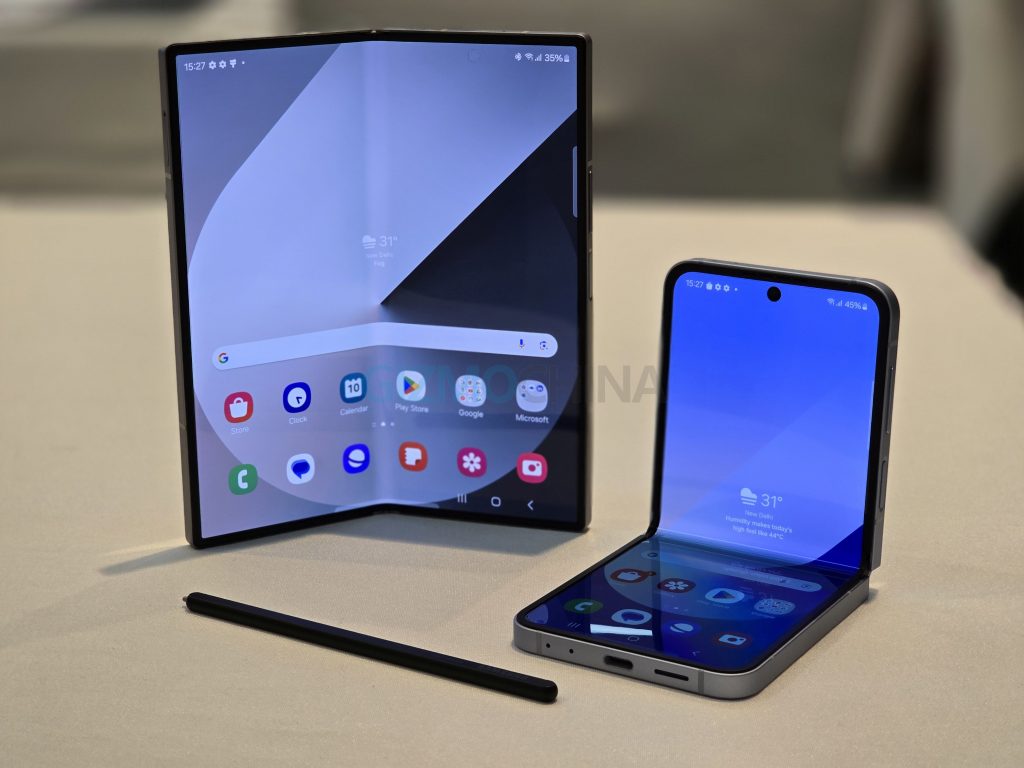
Samsung’s upcoming foldable smartphones, the Galaxy Z Flip 7 and Galaxy Z Fold 7, are expected to bring a couple of minor improvements including a redesigned hinge, a slightly larger battery (for the Flip), and a 200MP camera for the book-style foldable. However, China’s 3C certification platform reveals some disappointing information as well: the charging speed.
Samsung Galaxy Z Fold 6 and Galaxy Z Flip 6
While we have seen some battery life improvements over the years (mostly thanks to the more efficient chips), we are yet to see an improvement in the charging seed that’s worth mentioning. The Galaxy Z Fold 2 (from 2020) and Z Flip 4 (from 2022) were the first Galaxy foldable phones to support 25W wired charging. It has been years this aspect has seen an upgrade.
China’s 3C reveals the charging speed of the upcoming foldables
Recent certifications from the China Compulsory Certification (CCC or 3C) reveal that two new Samsung devices, bearing model numbers SM-F7660 and SM-F9660, were tested with the EP-TA800 charger. It supports a maximum output of 25W (9V/2.77A).
Judging from the pattern of the model numbers, the two phones are believed to be the Galaxy Z Flip 7 and Galaxy Z Fold 7. While this doesn’t confirm that 25W is the maximum charging speed, one of the primary purposes of certification testing for phones is to ensure safety. So it’s likely that the phones will be tested with the maximum supported charging speed with an official charger.
As for the rumored specifications, the Galaxy Z Flip 7 is rumored to feature a 4,300mAh battery (up from 4,000 mAh), while the Galaxy Z Fold 7 could retain its 4,400mAh battery. Both devices will reportedly pack larger displays, with the Z Flip 7 reportedly sporting a 6.85-inch foldable screen and a 4-inch cover screen, and the Z Fold 7 expected to have a 6.5-inch cover screen and an 8.2-inch foldable screen.
We use cookies on our website to give you the most relevant experience by remembering your preferences and repeat visits. By clicking “Accept”, you consent to the use of ALL the cookies.
This website uses cookies to improve your experience while you navigate through the website. Out of these, the cookies that are categorized as necessary are stored on your browser as they are essential for the working of basic functionalities of the website. We also use third-party cookies that help us analyze and understand how you use this website. These cookies will be stored in your browser only with your consent. You also have the option to opt-out of these cookies. But opting out of some of these cookies may affect your browsing experience.
Necessary cookies are absolutely essential for the website to function properly. This category only includes cookies that ensures basic functionalities and security features of the website. These cookies do not store any personal information.
Any cookies that may not be particularly necessary for the website to function and is used specifically to collect user personal data via analytics, ads, other embedded contents are termed as non-necessary cookies. It is mandatory to procure user consent prior to running these cookies on your website.