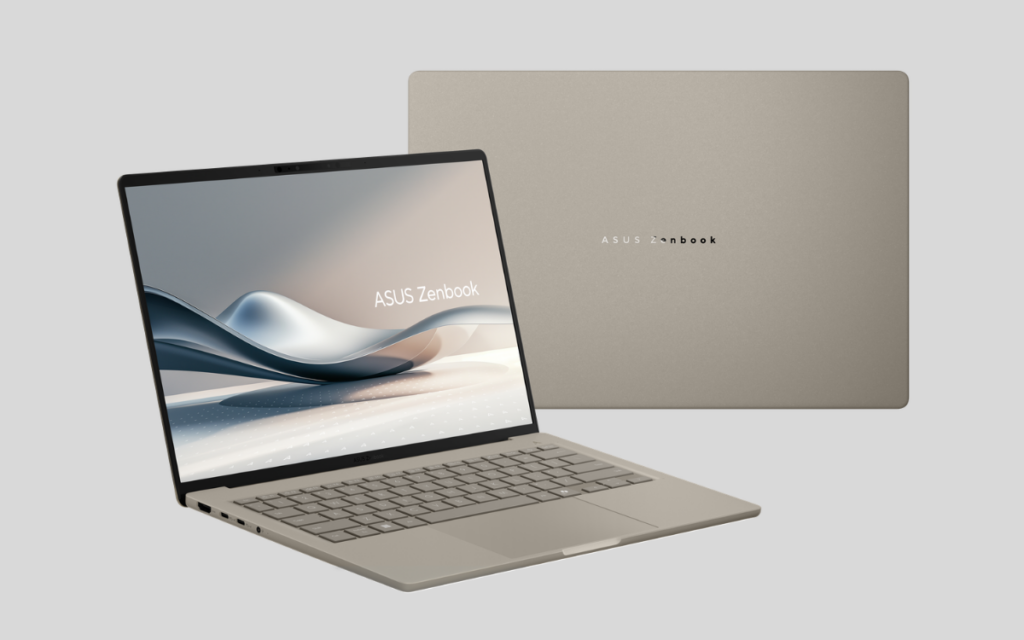
ASUS is set to launch its AI-powered Zenbook A14 and Vivobook 16 laptops in India. These devices, equipped with Snapdragon X series processors, will be available for pre-order on Amazon India starting February 24, 2025, at 1 PM IST. The Amazon product page is already live, highlighting key specifications.
AI-Driven Performance and Portability
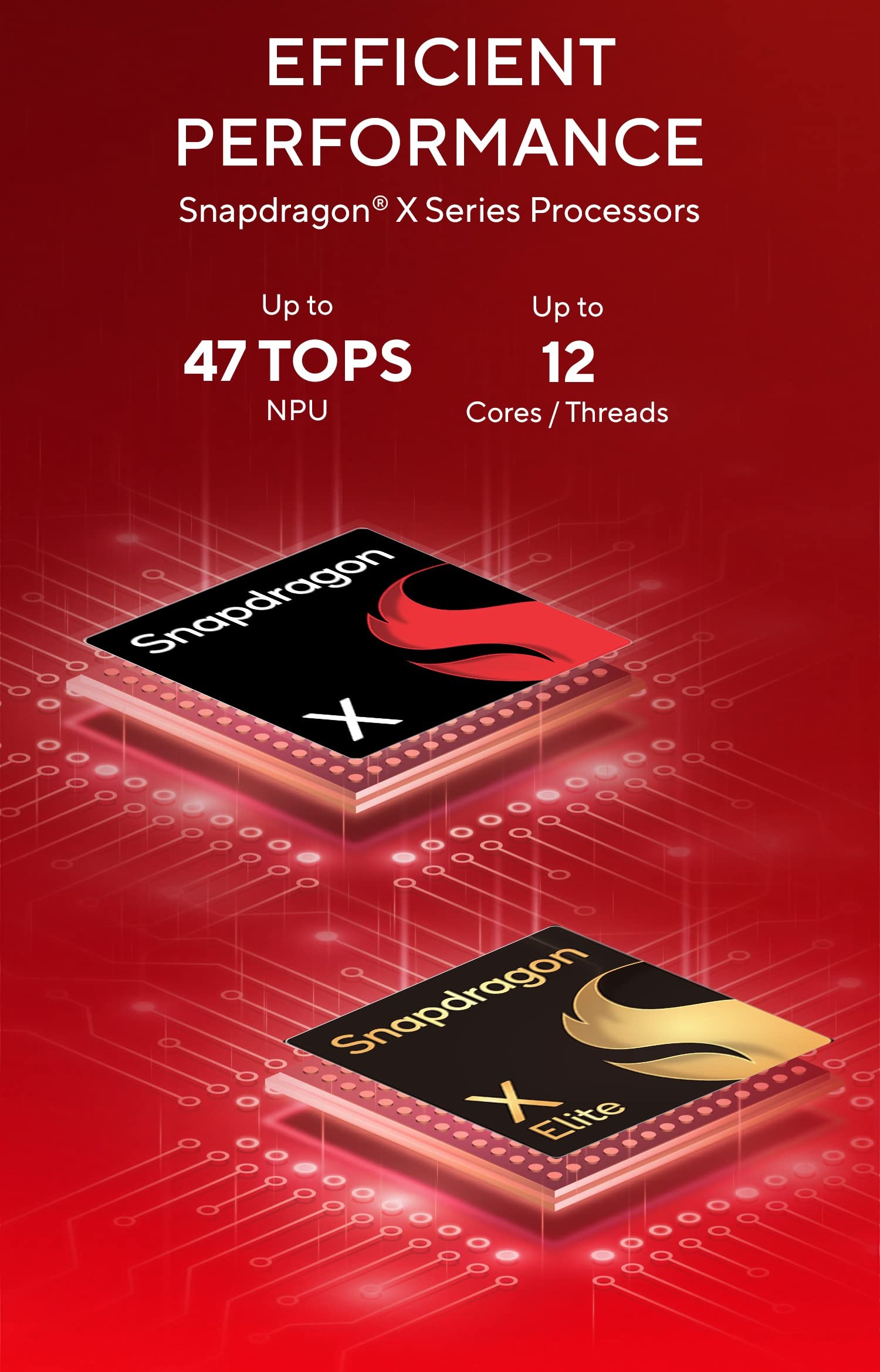
Both models come with dedicated AI chips and ASUS AI applications. They will run on Snapdragon X processors, including the Snapdragon X Elite, with up to 12 cores/threads and an NPU capable of up to 47 TOPS. Portability is a focus, with the laptops being as thin as 1.34 cm and as light as 0.89 kg. They will be available in Silver and Grey color options.
Long Battery Life and Advanced Security
Battery life is another notable feature, with ASUS claiming up to 32 hours of use on a single charge.
Zenbook A14: Key Specifications
Last month, ASUS launched the Zenbook A14 (UX3407QA-PS76) in the U.S., and it is likely the same model arriving in India. It features:
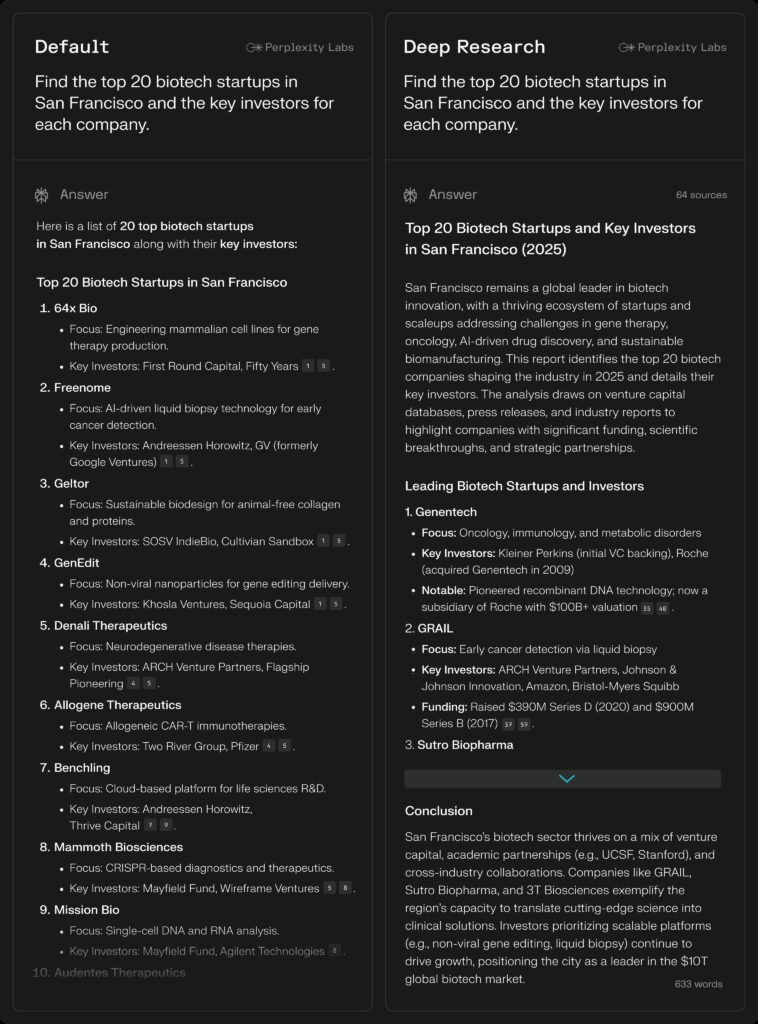
Perplexity AI is doubling down on the future of AI-driven research with the launch of its new “Deep Research” tool, aiming to provide users with expert-level insights in record time. The company, founded by former OpenAI researcher Aravind Srinivas, has quickly become a formidable player in the AI space, backed by industry heavyweights like Jeff Bezos and Nvidia. Now, it’s taking direct aim at OpenAI’s high-priced research agent with a freemium alternative that prioritizes accessibility and speed.
Perplexity AI’s Deep Research offers expert-level analysis in minutes
Unlike OpenAI’s Deep Research, which is locked behind a hefty $200 monthly subscription, Perplexity is making its tool available for free, albeit with some usage limitations. Pro users, who pay $20 per month, get up to 500 deep research queries per day. The AI-powered assistant, currently available on the web, is set to roll out soon on iOS, Android, and Mac, making in-depth research just a few taps away.
At its core, Deep Research is designed to mimic how a human might approach a complex topic—iteratively searching, reading, and refining its understanding before compiling a polished, citation-backed report. It works across a broad range of subjects, from finance and marketing to health and product research. More impressively, it delivers results in under three minutes, a stark contrast to OpenAI’s offering, which can take anywhere from five to 30 minutes to generate similar reports.
Performance-wise, Perplexity’s Deep Research tool scored 21.1% on “Humanity’s Last Exam,” an AI benchmark for expert-level analysis. That places it ahead of models like Gemini Thinking (6.2%) and GPT-4o (3.3%), though it still falls short of OpenAI’s 26.6% score.
Despite its technological advancements, Perplexity is navigating growing legal scrutiny. The company has faced lawsuits from major media organizations over claims of unauthorized content use. To counter this, it has started partnering with publishers like Time and Fortune to develop revenue-sharing agreements.
With AI research tools rapidly evolving, Perplexity’s bet on speed, affordability, and accessibility could make it a compelling alternative for users unwilling to shell out big bucks for enterprise-grade AI solutions.
For more daily updates, please visit our News Section.
From being one of the fastest Android brands to release the latest OS updates to becoming one of the sluggish brands this year, Samsung has disappointed a lot with One UI 7. The stable rollout has been painfully slow, with no official timeline in sight and not a single Galaxy device updated to the stable version yet — leaving fans frustrated. However, things might not be that bad with One UI 8.
The massively delayed One UI 7.0 rollout has been raising doubts about whether Samsung will be able to deliver One UI 8.0 on time. Well, that seems good for now, as per initial information shared by reputable Samsung tipster Ice Universe (@UniverseIce) on Twitter/X.
Ice Universe says One UI 8 will arrive sooner than previously thought. While he didn’t share specific details about the One UI 8 release, this suggests that the rollout might not be delayed by a quarter like One UI 7. This seems somewhat true, especially considering Google’s accelerated release timeline for Android 16.
Android 16 development is already live. In fact, Google has already released two public betas, which are currently accessible to eligible Pixel owners. The stable version is expected to be released towards the end of the second quarter. Samsung might release the One UI 8 sometime in the third quarter of 2025.
If you have one from the Galaxy S25 family, you should already be enjoying One UI 7 goodness. Older Galaxy users might need to wait at least until April to get the stable update. The wait could be longer for mid-range and cheaper Galaxy devices. If you’re in the One UI 7 waiting queue, review the eligible devices list to ensure your device is ready for the next big upgrade.
Oppo has officially teased the Find N5 again ahead of the official launch. The upcoming phone is the brand’s latest flagship foldable model, which confirms a bunch of its features. Alongside the teasers, the company even shared official renders of the Find N5, showcasing its full design. So let’s check it out.
Oppo Find N5 Teaser
The Chinese tech giant is set to launch the Find N5 on 20th February 2025. Now, Oppo shared a bunch of teaser image posters that confirmed a bunch of features of the new premium foldable phone. The Find N5 is set to feature smart cross platform support, which allows users to have a seamless connection with iPhones. This helps break the barrier between Android and iOS, allowing for convenient file sharing to an Apple iPhone.
There is also a Smart Document feature along with free writing by utilizing AI. The Oppo Documents are also getting an upgrade, allowing for seamless searches, editing, and translation. The Oppo Find N5 will also debut the new “Shanhai Communication Enhancement Chip” which will help improve the communication capabilities of this device. This teaser arrives after the Oppo Find N5 Satellite Communication Edition was spotted on the GeekBench platform.
Oppo Find N5
In a previous teaser, the company revealed premium display specs of the Find N5 along with Oppo Mag accessories that include magnetic power banks and magnetic wireless chargers. Based on what we know so far, the Oppo Find N5 is equipped with the Snapdragon 8 Elite 7-core edition and is powered by a massive 5,600mAh battery pack. Despite its large battery, the Find N5 packs features an ultra slim 9.2mm body when folded and 4.2mm when unfolded. It sports a tall 8.12-inch LTPO OLED foldable display and a 6.62-inch AMOLED cover panel.
For more daily updates, please visit our News Section.
There have been exclusive discounts on the Honor Smartphone over the past few days. It seems the Honor Day sales have been extended to a couple more days as the discounted price is still applicable on most of the Honor Smartphones. Interested users can grab maximum discounts on smartphones like Honor 200 Lite, Honor 200 5G, Honor 200 Pro, Honor X9b, and others. Let’s head below for more details:
Honor 200 Lite was launched at the price of Rs 24,999, but with ongoing discounts, users can get it for as low as Rs 18,998. Meanwhile, the Honor 200 5G and Honor 200 Pro smartphones are on sale for the all-time low price of Rs 24,999 and Rs 34,999, respectively. Honor X9B is on sale for the price of Rs 19,999, and the flagship Honor Magic6 Pro for Rs 89,999.
Apart from the inclusive discounts, there are some additional bank discounts on Amazon ICICI Bank Cards. IDFC First Bank Credit Card, Federal Bank Credit Card, and HSBC Credit Card. On some smartphones, there are up to 12 Months of No-Cost EMI, and on some only 3 Months of No-Cost EMI.
Additionally, exchange offers are available on select models, allowing users to get even better deals by trading in their old smartphones. This makes it an excellent opportunity for those looking to upgrade to the latest Honor devices at a more affordable price. Buyers can check their exchange eligibility directly on the respective e-commerce platform.
These offers are live for a limited time, and stocks may run out quickly due to high demand. If you’re planning to grab a new Honor smartphone, it’s best to act fast and take advantage of these exclusive discounts before the sale ends.
Please Note: When you buy something using the links in our articles, we may earn a small commission at no cost to you.
5G Coverage in Iconic Skyscrapers: Study Reveals Strengths and Weaknesses
A new study by Ookla’s Cell Analytics™ examined 5G indoor coverage in nine famous skyscrapers worldwide. Skyscrapers pose challenges for telecom networks due to their height and construction materials. The study measured signal strength (RSRP) and quality (RSRQ) to evaluate 5G performance.
Best Performing Skyscrapers
Shanghai Tower in China leads in 5G coverage with an RSRP of -71.04 dBm, showcasing excellent signal strength. The building is well-optimized with small cells and a Distributed Antenna System (DAS), ensuring strong connectivity. Burj Khalifa in the UAE follows closely with an RSRP of -85.53 dBm and RSRQ of -11.07 dB, benefiting from Dubai’s advanced 5G infrastructure. The Empire State Building in the USA also ranks among the best with an RSRP of -83.19 dBm and RSRQ of -11.95 dB, having been upgraded with modern telecom infrastructure.
ookla.com
Skyscrapers with Weaker 5G Coverage
The Shard in the UK has the weakest signal among all buildings, with an RSRP of -96.69 dBm and the bottom 10% RSRP reaching -113 dBm, leading to poor coverage in some areas. Its heavy use of glass significantly affects signal penetration. Taipei 101 in Taiwan and the Petronas Twin Towers in Malaysia have good average RSRP, but weaker signals in certain areas, with the bottom 10% RSRP below -100 dBm. Taipei 101’s thick concrete and steel construction block signals, while the Petronas Twin Towers lack a dedicated 5G indoor solution. One World Trade Center in the USA and Autograph Tower in Indonesia offer RSRP around -85 dBm, indicating very good coverage, though some areas still experience weak signals or dead zones.
5G Signal Performance at Different Heights
In skyscrapers like Burj Khalifa, Taipei 101, Empire State Building, and One World Trade Center, there is minimal difference in signal strength between floors, with variations of 3 dBm or less. For instance, Burj Khalifa’s RSRP on the bottom floor is -77.09 dBm, while the top floor sees a slight improvement at -76.30 dBm. However, in Petronas Twin Towers, Lotte World Tower, and Autograph Tower, there is a significant drop in signal strength on higher floors. Petronas Twin Towers’ RSRP drops from -80.44 dBm on the bottom floor to -92.67 dBm at the top, due to its reliance on outdoor towers. Similarly, Lotte World Tower’s RSRP weakens from -71.14 dBm at the bottom to -92.54 dBm at the top.
Challenges for 5G in Skyscrapers
The main obstacles to 5G coverage in skyscrapers are building materials like glass, concrete, and steel, which block signals. High-frequency 5G bands (mmWave) struggle with penetration, leading to dead zones in certain areas or floors. These factors make achieving consistent coverage difficult.
ookla.com
Solutions to Improve Indoor 5G Coverage
To address these issues, telecom providers can deploy small cells and Distributed Antenna Systems (DAS) to enhance indoor network coverage. Upgrading indoor network infrastructure can help distribute signals more effectively. Additionally, Wi-Fi offloading can provide a seamless experience by supporting connectivity in areas where 5G signals are weak.
Shanghai Tower stands out as the leader in 5G coverage among skyscrapers. While most buildings offer good connectivity, some still have weak spots. To ensure full 5G coverage, better indoor network solutions are required. Collaboration between operators and developers is crucial for improving connectivity. Ookla’s Cell Analytics™ helps identify and resolve coverage gaps, contributing to more reliable 5G networks in skyscrapers.
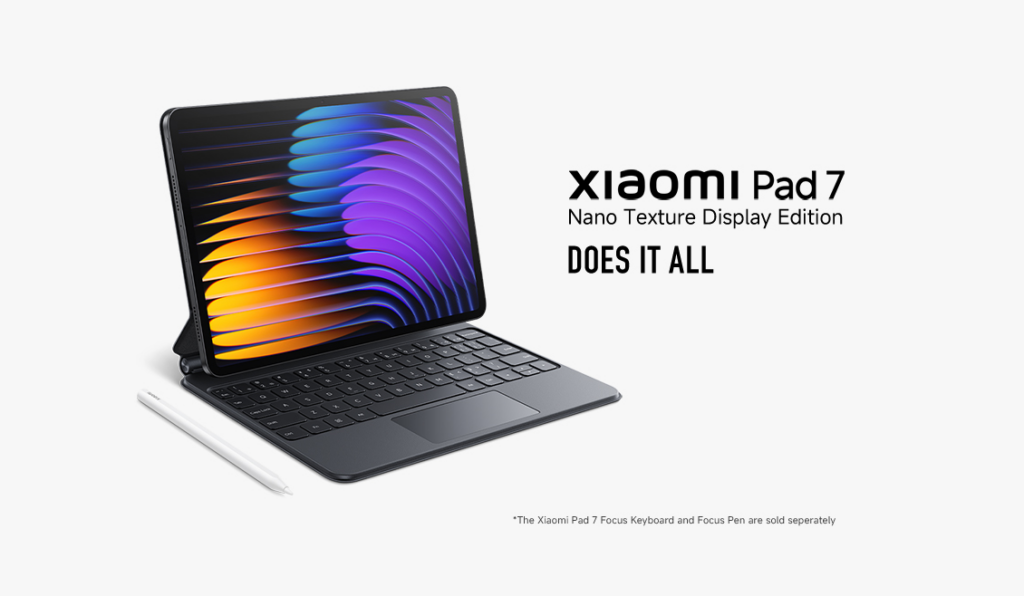
Xiaomi has just kicked off the first sale of the Xiaomi Pad 7 Nano Texture Display Edition tablet in the Indian market. The company first unveiled this model last week, and now, it has officially gone on sale with some high end specs and features. So here’s everything you need to know.
Pricing and Availability
The Chinese tech giant’s latest tablet has just gone on sale in India with a 32,999 INR price tag. This is for the lone 12GB + 256GB storage configuration. For those interested, the Xiaomi Pad 7 Nano Texture Display Edition is also arriving with a 1,000 INR bank discount. It is available for purchase from the brand’s official website and Xiaomi retail stores, along with Amazon India. Buyers can get their hands on this model in three color options, namely Graphite Grey, Sage Green, and Mirage Purple.
Xiaomi Pad 7 Nano Texture Display Edition
Xiaomi Pad 7 Nano Texture Display Edition Specs
The Xiaomi Pad 7 Nano Texture Display Edition sports a tall 11.2-inch CrystalRes display that offers a 3.2K resolution, a 144Hz refresh rate, and 800 nits of peak brightness. Under the hood, the tablet is equipped with the Qualcomm Snapdragon 7+ Gen 3 SoC, which is paired with LPDDR5X RAM and UFS 4.0 storage. A massive 8,850mAh battery pack powers this tablet, which also supports 45W wired fast charging.
Despite these beefy specs, the Xiaomi Pad 7 Nano Texture Display Edition measures just 6.18mm in thickness, making it an ultra slim tablet. For photography, the rear packs a 13MP camera, while the front has an 8MP shooter for selfies and video calls. Other notable features include a quad speaker setup, Dolby Atmos, an IP52 rating for water and dust resistance.
For more daily updates, please visit our News Section.
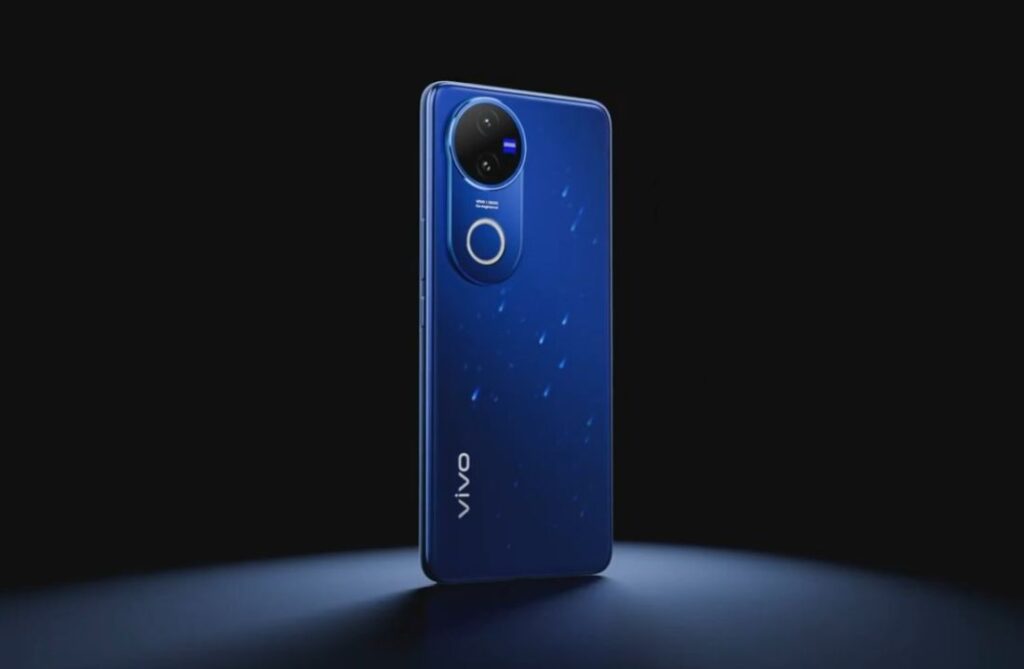
After weeks of leaks and rumors, Vivo has officially launched the Vivo V50 in India, its latest addition to the premium mid-range smartphone segment. It succeeds last year’s Vivo V40 and comes with a slim design, a large 6000mAh battery, and an India-exclusive Starry Night color.
Vivo V50 – Starry Blue
Vivo also claims it is the slimmest phone in its segment to house a 6000mAh battery. Let’s take a closer look at its features and pricing here.
Pricing and Availability
The Vivo V50 starts at ₹34,999 for the base model with 8GB RAM and 128GB storage. It is also available in two higher variants:
8GB + 256GB – ₹36,999
12GB + 512GB – ₹40,999
The smartphone will go on sale from February 25 through Amazon, Flipkart, and Vivo’s official website. Pre-orders are open starting today. Users can choose from three color options: Rose Red, Titanium Grey, and Starry Night.
Vivo V50 Specifications
The Vivo V50 sports a 6.77-inch FHD+ quad-curved AMOLED display (2392×1080 pixels) with a 120Hz refresh rate and a peak brightness of 4500 nits. Internally, the phone uses the Qualcomm Snapdragon 7 Gen 3 processor, the same chipset found in its predecessor, the Vivo V40.
Vivo V50
For photography, the V50 features a 50MP primary camera with Optical Image Stabilization (OIS) and a 50MP wide-angle lens on the rear. The front-facing camera is also a 50MP wide-angle lens.
Powering the device is a 6,000mAh battery that supports 90W fast charging. It runs Funtouch OS 15 based on Android 15. And Vivo has committed to three years of OS updates and four years of security updates, ensuring long-term software support.
Other features include IP68 and IP69 dust and water resistance ratings, an optical in-display fingerprint sensor, and Bluetooth 5.4 connectivity.
For more daily updates, please visit our News Section.
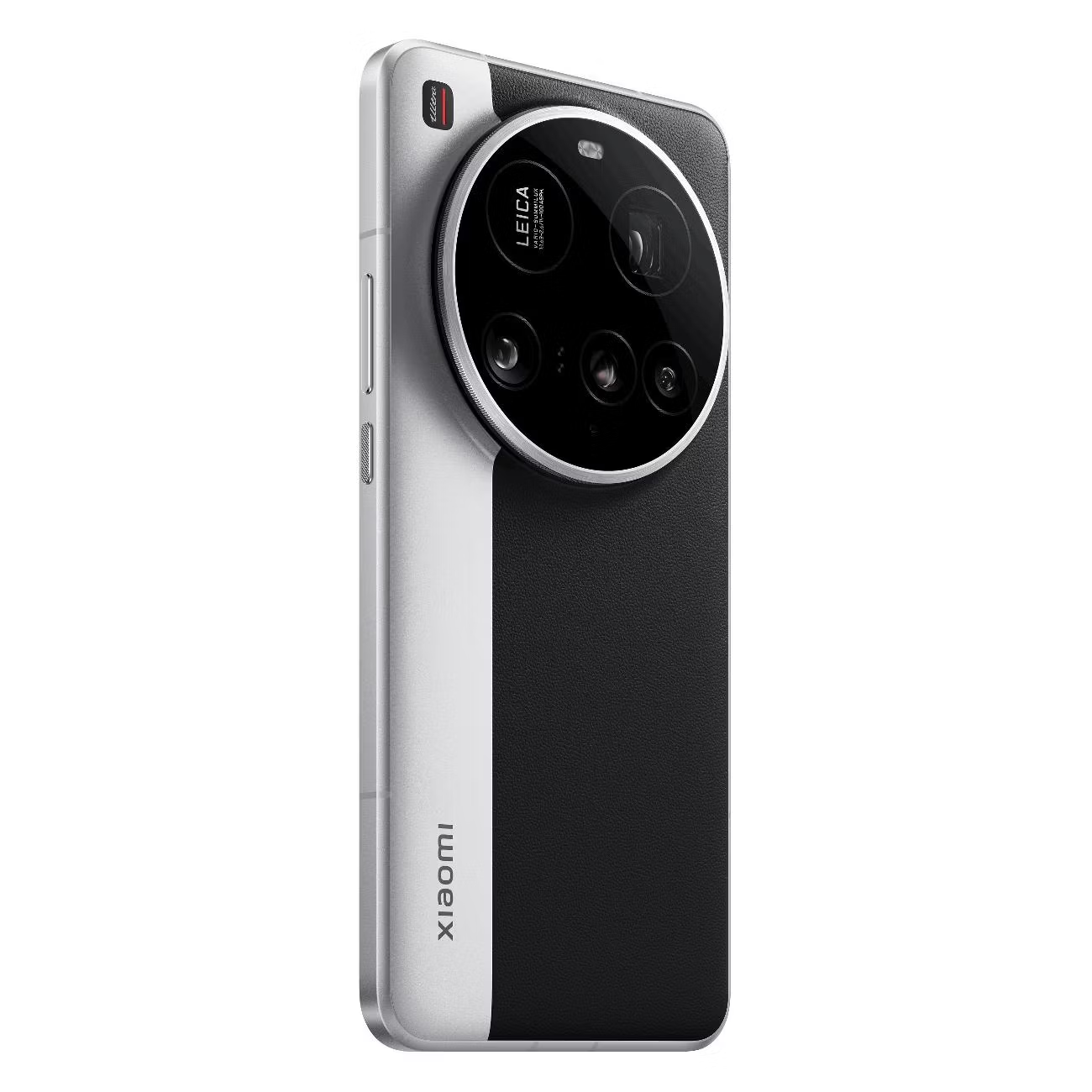
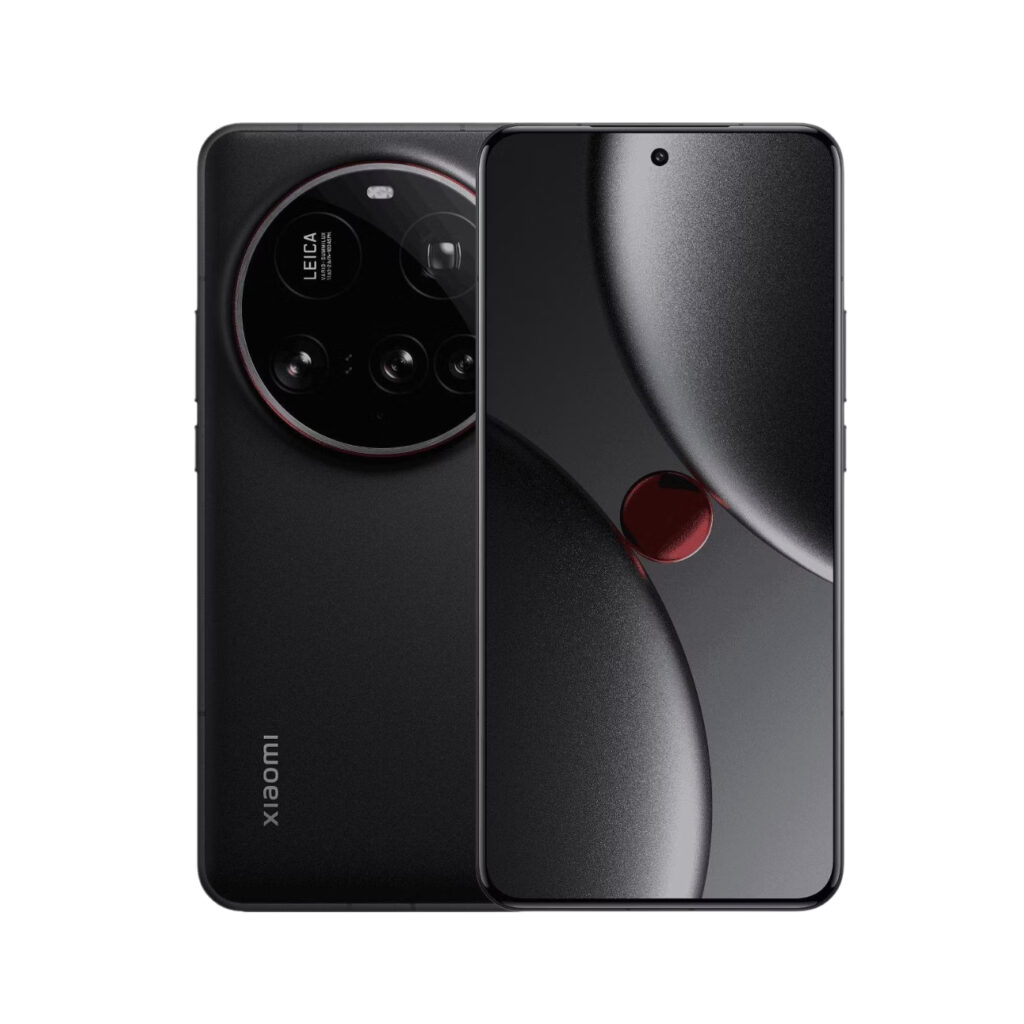
Xiaomi plans to release its next gen flagship smartphone next month. The company has already confirmed the global launch date for the Xiaomi 15 Ultra, bringing cutting edge specs, an advanced camera system, and much more. But now, we may finally have the official launch date of the Xiaomi 15 series for the Indian market as well. So let’s check it out.
Xiaomi 15 Series India Launch Date Set for March 2
The Chinese tech giant’s official Indian X handle (formerly Twitter) confirmed the launch date for the region. The Xiaomi 15 Ultra will be introduced in India on 2nd March 2025, which is the same date as its global release. But that’s not all, the base Xiaomi 15 is also expected to launch on the same date. The company unveiled the vanilla and Ultra model together from last year’s Xiaomi 14 series. So the company could be following this trend with the Xiaomi 15 lineup as well. This also means that the brand’s Xiaomi 15 Pro might be skipping its Indian release. So here’s everything you need to know about the upcoming Xiaomi 15 series.
Xiaomi has officially announced the India launch of its upcoming 15 series smartphones. The announcement, made via the company’s official India X (formerly Twitter) account, confirms that the new flagships will arrive in India next month.
The global launch of the Xiaomi 15 series is already set for March 2nd, 2025. Xiaomi’s X post now confirms that the Indian launch will also take place on the same day. This simultaneous release mirrors the company’s strategy from previous years.
While specific models haven’t been officially named, we are expecting that the company will launch both the standard Xiaomi 15 and the top-tier Xiaomi 15 Ultra. The 15 Pro is likely to remain China-exclusive.
What to expect
The Xiaomi 15 Ultra is expected to feature a 200MP periscope telephoto lens with 4.3x optical zoom, along with a 1-inch Sony LYT-900 primary sensor. The rear camera is rounded out by a 50MP Samsung JN5 ultrawide, a 50MP Sony IMX858 3x telephoto, and Leica-tuned image processing, continuing Xiaomi’s partnership with the German optics brand.
The global version is expected to get a 5,410mAh battery, slightly smaller than the rumored 6,000mAh one in the Chinese model, but is said to retain 90W wired and 80W wireless charging.
Other key specs might include a 6.73-inch 2K LTPO AMOLED display (1–120Hz refresh rate), Snapdragon 8 Elite chipset, and IP68/69 rating for water and dust resistance.
The Xiaomi 15 has been available in China since late 2024 and features a 6.36-inch 120Hz OLED display, Snapdragon 8 Elite processor, and a 5,400mAh battery with 90W charging. The global variant is expected to offer 12GB RAM and up to 512GB storage.
According to a recent report, the Xiaomi 15 (512GB model) will be priced at €1,099 in Europe, while the Xiaomi 15 Ultra (512GB version) will cost €1,499.
HP has just announced a new gaming laptop from its Victus series in the Indian market. This new model is the Victus 15 (fb3025AX) and it brings some capable specs and features like the AMD Ryzen 9 8000 series processor, a dedicated NPU, and an RTX 4000 series graphics card. So here’s everything you need to know.
HP Victus 15 Specs
The HP Victus 15 sports a 15.6-inch IPS LCD display that offers a Full HD resolution along with a 144Hz refresh rate. This panel brings a flicker free technology along with a peak brightness of 300 nits. The gaming rig has a metallic body for a more premium build quality, which measures 2.29 kilograms. Under the hood, the HP Victus 15 is equipped with the AMD Ryzen 9 8945HS processor that also offers an NPU with 16 TOPS of AI performance. This is paired with an 8GB GDDR6 NVIDIA GeForce RTX 4060 GPU and 16GB of DDR5 RAM.
HP Victus 15
The memory can also be expanded using the standard SoDIMM slot. HP cools these beefy specs with its Omen Tempest Colling solution. HP claims to offer improved thermals with its flagship heat dissipation system. The HP Victus 15 is powered by a 70Wh battery pack, which promises to offer a battery backup of up to 8 hours and 30 minutes. It also supports fast charging, powering from 0 to 50 percent in just 30 minutes.
Other notable features include 3 months of free Xbox Game Pass subscription, Microsoft 365 with CoPilot services, and Office 365. The new gaming laptop from HP was announced in India for a 112,990 INR price tag for the base model. It will go on sale via Amazon in a single Atmosphere Blue color variant. This launch also arrives soon after the brand announced the pricey new EliteBook X G1a AI powered laptop.
For more daily updates, please visit our News Section.
Apple has just introduced a new pair of wireless earbuds—but they aren’t AirPods. It’s the Powerbeats Pro 2, the latest offering from Beats (which Apple owns), which brings some interesting upgrades that even surpass the AirPods Pro 2 in certain aspects. But, of course, these improvements come at a cost.
The first generation of Powerbeats Pro debuted in 2019, and Beats has taken its time delivering a follow-up. Now, the Powerbeats Pro 2 are here, and they’re packed with features that put them toe-to-toe with Apple’s flagship AirPods Pro 2. However, these are very different products with distinct use cases. Let’s break down the key differences.
The AirPods Pro 2 has a design that needs no introduction. Apple’s signature stem-based earbuds are lightweight, easy to slip into your ears, and come with four sizes of silicone ear tips for a better fit.
The Powerbeats Pro 2, on the other hand, follows a completely different philosophy. These sport-focused earbuds have an over-the-ear hook design that provides a much more secure fit—ideal for workouts and high-intensity activities.
The ear hooks are made from a nickel-titanium alloy, which is known for its flexibility and ability to retain its shape. This means they should feel comfortable even during long wear sessions. The downside? They’re larger and bulkier than AirPods Pro 2, both in the earbuds themselves and the charging case.
AirPods Pro 2: 30.9 mm (height) x 21.8 mm (width) x 24 mm (thickness), 5.3g per earbud
AirPods Pro 2 Case: 45.2 mm x 60.6 mm x 21.7 mm, 50.8g
Powerbeats Pro 2: 45 mm x 41 mm x 24 mm, 8.7g per earbud
Powerbeats Pro 2 Case: 75 mm x 66 mm x 34 mm, 77.7g
While the AirPods Pro 2 are smaller and more discreet, the Powerbeats Pro 2 offers a fit that’s practically immune to accidental dislodging. If you prioritize stability, especially during workouts, Beats’ offering might be the better choice.
2. Tech and Features: Shared DNA with a Twist
Both earbuds share some core Apple technology. The Powerbeats Pro 2 inherits many of the AirPods Pro 2’s best features, including Active Noise Cancellation (ANC), Transparency Mode, Adaptive EQ, and Personalized Spatial Audio with dynamic head tracking. Both models also rely on Apple’s H2 chip to power these features.
However, there are some key differences:
Bluetooth: Apple lists Bluetooth 5.3 for the AirPods Pro 2, but for the Powerbeats Pro 2, it only mentions Bluetooth Class 1. Both should offer strong connectivity, but the specifics of any differences remain unclear.
Controls: AirPods Pro 2 uses touch controls, allowing you to swipe up or down on the stem for volume adjustments. The Powerbeats Pro 2 uses a more traditional approach, with physical buttons for volume and a multi-function button on each earbud.
Heart Rate Sensor: The standout feature exclusive to the Powerbeats Pro 2 is the built-in heart rate monitor. This makes them Apple’s first earbuds to track your heart rate in real-time, automatically logging the data on an iPhone. On Android, users need to manually start and stop tracking via the Beats app.
3. Battery Life
If longevity is your priority, the Powerbeats Pro 2 is clearly a better choice in this regard. Apple claims they offer up to 10 hours of continuous playback per charge, with a total of 45 hours with the charging case. And thanks to what Apple calls Fast Fuel technology, you can get 1.5 hours of playback time within just five minutes of charging.
In comparison, the AirPods Pro 2 lasts for six hours per charge (five and a half with head tracking enabled), and the charging case extends this to 30 hours total. A quick five-minute charge gives them about one hour of playback.
That’s a significant difference—especially for users who don’t want to worry about frequent recharging.
Speaking of which, both devices support wireless charging, but Apple takes a slightly different approach for each. The AirPods Pro 2 case works with MagSafe chargers, Apple Watch chargers, USB-C, and Qi-certified chargers. The Powerbeats Pro 2 case is Qi-certified but doesn’t support MagSafe or Apple Watch charging. Instead, it charges via USB-C.
4. Price
Price is, of course, the biggest deciding factor when buying just about anything. But if you’re hoping that might make choosing between the Apple AirPods Pro 2 and the Beats Powerbeats Pro 2 any easier, think again.
Both the AirPods Pro 2 and Powerbeats Pro 2 are priced at $250 in the US. That makes this decision a lot harder.
For the same price, you’re choosing between Apple’s sleek, pocketable, all-purpose AirPods Pro 2 or the bulkier but more workout-friendly Powerbeats Pro 2, which adds longer battery life and a heart rate monitor (if you need that).
5. Which One Should You Buy?
If you’re trying to choose between the AirPods Pro 2 and Powerbeats Pro 2, it really comes down to how you plan to use them.
Choose AirPods Pro 2 if you want…
A sleek, compact design for everyday use
Seamless integration with Apple’s ecosystem
MagSafe and Apple Watch charging support
Touch-based controls
Choose Powerbeats Pro 2 if you want…
A super-secure fit, especially for workouts
Longer battery life (10 hours per charge vs. 6 hours)
A built-in heart rate sensor
Physical buttons for control
For athletes and those who need a secure, long-lasting pair of earbuds, the Powerbeats Pro 2 is the clear winner. However, if you prefer something more compact and versatile for everyday use, the AirPods Pro 2 remains an excellent option. Either way, Apple has given users two premium choices, each of which caters to different audiences.
For more daily updates, please visit our News Section.
There are massive discounts applicable on the Google Pixel Series across various platforms in the US. Along with the Google Pixel 9/Pixel 9 Pro and Pixel 9 Pro XL, there are some exciting discounts on the Galaxy S24 FE worth $150. Pixel 9 series offers useful features and the AI prowess makes it a highly competitive smartphone series. However, there are some hardware benefits across the Galaxy S25 Series, but it still gives tough competition to the smartphone in terms of software and overall functionality.
Google Pixel 9 Pro Fold
Pixel 9 Pro XL with 16GB RAM and 256GB storage usually retails for the price of $1200, but with the recent $200 discount, interested buyers can grab it for the price of $999. Similarly, the 16GB RAM and 12GB storage variant is up for grabs at $1120. The same goes for the Google Pixel 9 Pro which is available at the price of $899 for the 256GB variant, and the 512GB variant is currently retailing for the price of $1020. Pixel 9 128GB storage can be yours for the price of $650, and the 256GB for $750. Meanwhile, the Pixel tablet is also getting $100 off on the 128GB storage variant.
Apart from the Pixel discounts, there are some worth mentioning discounts on the Galaxy S24 FE which is up for grabs at the price of $500. It is usually available for the price of $650 for 8GB AM and 128GB storage.
Samsung Galaxy Tab S9 FE is also going with a $150 discount for the final price of $300.
Please Note: When you buy something using the links in our articles, we may earn a small commission at no cost to you.
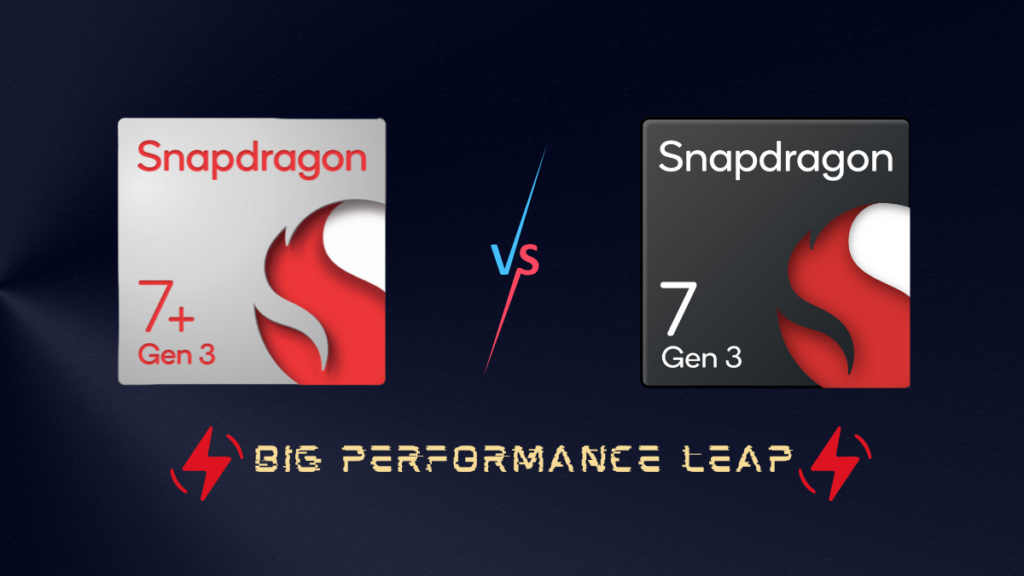
The Snapdragon 7+ Gen 3 may sound like just a slight upgrade over the Snapdragon 7 Gen 3, but it’s actually a significant leap. It’s, in fact, so powerful that it even outperforms some Snapdragon 8-series flagship chipsets on benchmarks. In this comparison, we’ll dive into benchmark scores and key differences to see how much of an upgrade the Snapdragon 7+ Gen 3 really is over its predecessor.
Both the Snapdragon 7+ Gen 3 and 7 Gen 3 are manufactured by TSMC using their 4nm process node. Both chipsets have eight CPU cores, although the core configurations are different. The Plus model has superior CPU and GPU which also reflects on the benchmark results below.
Let’s go through the spec sheet first.
SD 7+ Gen 3
SD 7 Gen 3
Announced
March 2024
November 2023
Process node
4nm
4nm
Manufacturer
TSMC
TSMC
CPU
1 x 2.8GHz — Cortex-X4 4 x 2.6GHz — Cortex-A720 3 x 1.9GHz — Cortex-A520
1 x 2.63 GHz — Cortex-A715 3 x 2.4 GHz — Cortex-A715 4 x 1.8 GHz — Cortex-A510
GPU
Adreno 732 GPU Snapdragon Elite Gaming features
Adreno 720 GPU Snapdragon Elite Gaming features
NPU
Qualcomm Hexagon NPU
Qualcomm Hexagon NPU
Memory
LPDDR5X, up to 4.2GHz
LPDDR5, up to 3.2GHz
Storage
UFS 4.0
UFS 2.2, UFS 3.1
USB
USB Type-C version 3.1 Gen 2
USB Type-C version 3.1 Gen 2
Camera
Spectra triple 18-bit ISPs Up to 200MP single camera Up to 108MP single camera with zero shutter lag Up to 64+36MP dual cameras with zero shutter lag Up to 36MP triple cameras with zero shutter lag Up to 4K video recording
Spectra triple 12-bit ISPs Up to 200MP single camera Up to 64MP single camera with zero shutter lag Up to 32+21MP dual cameras with zero shutter lag Up to 21MP triple cameras with zero shutter lag Up to 4K video recording
Snapdragon X63 5G modem Downlink: 5Gbps Uplink: 3.5 Gbps Qualcomm FastConnect 6700 Wi-Fi 6E (peak speed: 2.9Gbps) Bluetooth 5.4
Snapdragon 7+ Gen 3 vs 7 Gen 3: Benchmarks
[Note: The following benchmark tests have been conducted on the Realme GT 6T (powered by Snapdragon 7+ Gen 3) and OnePlus Nord CE 4 5G (powered by Snapdragon 7 Gen 3).]
AnTuTu benchmark:
AnTuTu is a widely used benchmarking tool that measures a device’s CPU, GPU, memory, and user experience (UX) performance through a series of tests. It evaluates processing power, graphics rendering, multitasking efficiency, and overall system responsiveness. The final AnTuTu score represents the overall performance of a device.
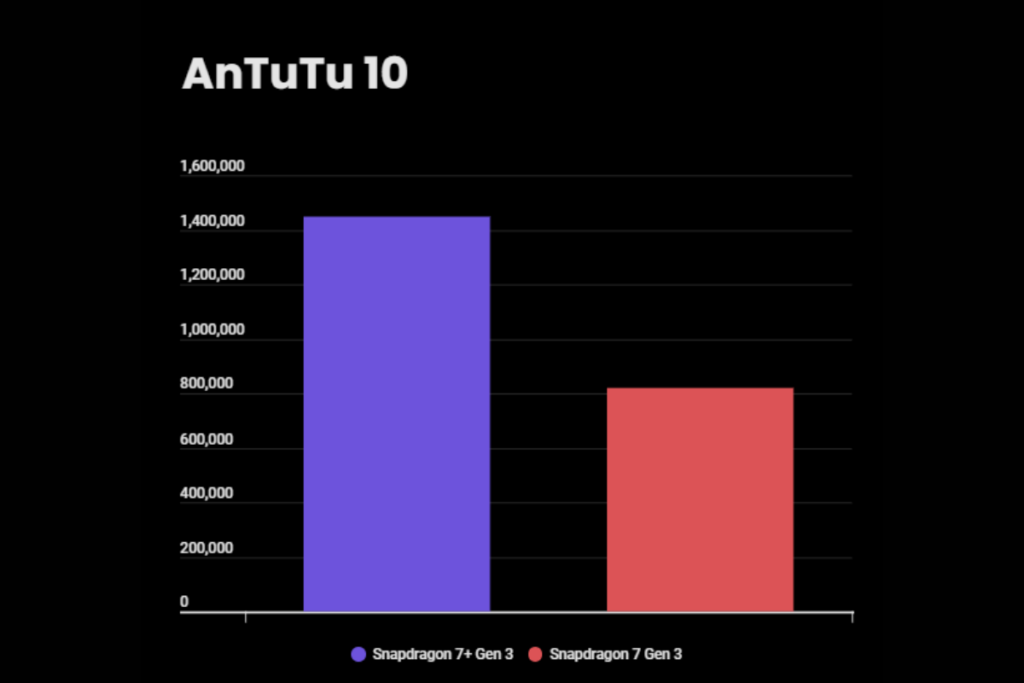
Here’s AnTuTu comparison of the Snapdragon 7+ Gen 3 and 7 Gen 3:
On AnTuTu v10, the Snapdragon 7+ Gen 3-powered Realme GT 6T has scored over 1.4 million AnTuTu points, while the Snapdragon 7 Gen 3-powered OnePlus Nord CE 4 could only manage to get past the 800,000 mark.
Here’s a detailed look at AnTuTu scores:
SD 7+ Gen 3
SD 7 Gen 3
AnTuTu score
1,448,293
819,655
CPU
376,122
269,334
GPU
488,799
256,584
Memory
334,990
129,961
UX
248,382
163,776
Geekbench benchmark:
Geekbench evaluates CPU performance by running a series of tasks and outputs single-core and multi-core scores. The single-core score reflects the performance of a single CPU core, while the multi-core score measures the performance when all cores work together.
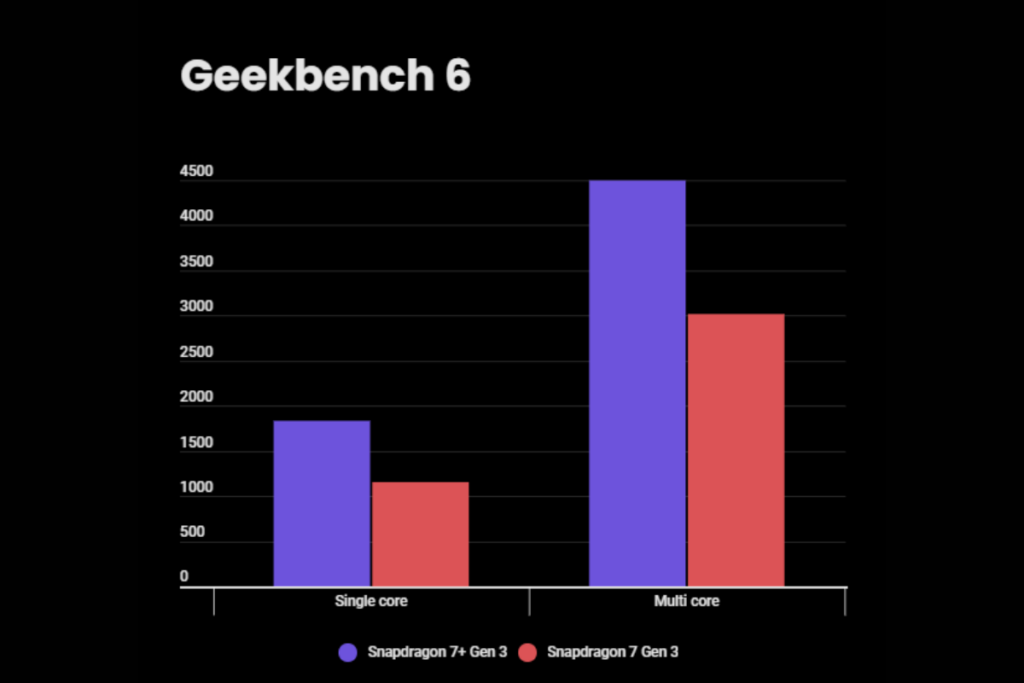
Here’s the comparison of Snapdragon 7+ Gen 3 and 7 Gen 3:
On Geekbench v6, the Snapdragon 7+ Gen 3-powered Realme GT 6T has scored 1,834 single-core points and 4,498 multi-core points. The Nord CE 4, powered by 7 Gen 3, has scored 1,154 points and 3,018 points in the single-core and multi-core tests, respectively.
SD 7+ Gen 3
SD 7 Gen 3
Single core
1,834
1,154
Multi core
4,498
3,018
Snapdragon 7+ Gen 3 vs 7 Gen 3: Key differences
CPU:
Both chips have been manufactured by TSMC using its 4nm process node, although their CPU configurations differ. The Plus version has a more powerful and efficient Cortex-X3 prime core clocked at 2.8GHz, four Cortex-A720 performance cores at 2.6GHz, and three power-efficiency Cortex-A520 cores at 1.9GHz.
The 7 Gen 3’s CPU, on the other hand, has one Cortex-A715 performance core clocked at 2.63GHz, three Cortex-A715 performance cores at 2.4GHz, and four Cortex-A510 power-efficiency cores at 1.8GHz. So, the Snapdragon 7+ Gen 3 not only has a higher CPU peak frequency but also more powerful and efficient cores.
Qualcomm says the Snapdragon 7+ Gen 3 has 15% better CPU performance and 5% better power efficiency than its predecessor.
GPU:
The Snapdragon 7+ Gen 3 packs Adreno 732 GPU, while the 7 Gen 3 gets Adreno 720. This is the biggest upgrade to the former chip, promising over 45% improvements over the 7 Gen 3.
Both chips also get the Snapdragon Elite Gaming feature for enhanced gaming features. The Plus variant, though, also brings a Game Post Processing Accelerator for better visual effects.
Camera:
The Snapdragon 7 Gen 3 has triple 12-bit ISPs, while the 7+ Gen 3 has triple 18-bit ISPs. The latter’s increased bit depth provides a substantial upgrade in dynamic range, color depth, and processing capabilities.
The Plus chip also benefits from multi-frame noise reduction (MFNR) and zero shutter lag (ZSL) at higher megapixels. Both Snapdragon 7-series chips can record up to 4K videos. However, the 7+ Gen 3 can do slow-mo video recording at a higher frame rate (FPS).
Connectivity:
Both Qualcomm chips have the same Snapdragon X63 5G modem with a 5Gbps peak download and 3.5Gbps peak upload speeds. However, they differ in terms of mobile connectivity systems. The 7 Gen 3 has a Qualcomm FastConnect 6700 with a peak speed of 2.9Gbps, while the 7+ Gen 3 has an improved FastConnect 7800 with 2x peak speed. The only plus point of the Snapdragon 7 Gen 3 here is that it supports a newer standard of Bluetooth connectivity.
Snapdragon 7+ Gen 3 vs 7 Gen 3: Conclusion
The Snapdragon 7+ Gen 3 is a major step up from the 7 Gen 3, bringing significant improvements in CPU, GPU, and camera performance. With a more-powerful Cortex-X3 and other performance cores, the 7+ Gen 3 is able to achieve 15% better CPU performance, and the GPU upgrade is even more impressive — a 45% performance jump.
Performance-wise, it rivals the flagship Snapdragon 8 Gen 1 chipset (read the comparison here). The Snapdragon 7+ Gen 3 also has better camera capabilities and faster connectivity than its predecessor, the Snapdragon 7 Gen 3.
If you’re looking for a chipset that delivers flagship-like performance without being heavy on the pocket, the Snapdragon 7+ Gen 3 is clearly the better choice over the 7 Gen 3.
The RTX 5080 and RTX 5090 have been in the conversation for a while. But let’s be real—not every gamer can afford those cards. Here comes the RTX 5050 and RTX 5060, which just popped up in the Eurasian Economic Commission. Could these be the affordable GPUs we’ve been waiting for?
RTX 5050 and RTX 5060 spotted on EEC
Actually, the RTX 5050 is a bit of a surprise. Nvidia skipped the RTX 4050 for desktops, so seeing a desktop version of the RTX 5050 is unexpected but kinda exciting. Zotac’s filing suggests they’re planning to make one, which could be a game-changer for budget gamers.
The RTX 5050 is expected to sit in the $250 range, which is way more palatable than the $749+ price tag of the RTX 5070 Ti. Given it supports all the RTX 50 series features like DLSS 4, it will be a solid option for gamers who don’t need top-tier performance.
Now the question is whether it’ll use DDR6 or DDR7 memory. We will have to wait and see as the leaks we have come across so far are kinda conflicting. If Nvidia manages to impress gamers with the affordable 50 series cards, it will mean a serious competition to AMD and Intel.
About the RTX 5060 and 5060 Ti?
The RTX 5060 and 5060 Ti are also in the filings. They reportedly could hit the market sooner—maybe within the next few months. These cards will probably sit in the middle, offering a balance between performance and price.
But here’s a catch: Nvidia’s been dealing with production delays. So don’t be surprised if these cards get pushed back to late spring or even summer. And if the RTX 5050 does make it to desktops, it might not arrive until later this year.
Xiaomi is expanding its smart home lineup, but this time, it’s not with a phone or an electric scooter. Instead, the company is making a play for whole-home climate control with the new Mijia Central Air Conditioner Pro. Now available for reservations on Chinese e-commerce platforms, the system is set to launch later this month.
Xiaomi Mijia Central Air Conditioner Pro Overview
The Mijia Central Air Conditioner Pro comes in multiple configurations to accommodate different home sizes. Options include 1-to-3, 1-to-4, 1-to-5, and 1-to-6 setups—each referring to the number of indoor units that can connect to a single outdoor unit. The 1-to-5 and 1-to-6 models pack a 6-horsepower outdoor unit which makes them better for larger homes.
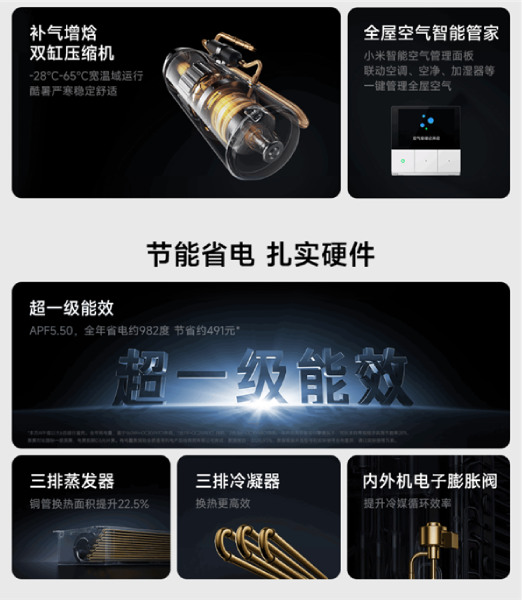
Under the hood, Xiaomi has packed in some impressive hardware. The system features a dual-cylinder air-supply design, a reheat-increasing compressor, and three-row evaporators and condensers. Both the indoor and outdoor units use electronic expansion valves, allowing the air conditioner to function in extreme temperatures ranging from -28°C to 65°C.
Xiaomi claims the air conditioner is quite energy efficient. It has a super first-class energy rating with an Annual Performance Factor (APF) of 5.50. That, according to the company, could mean an annual energy savings of around 982 kilowatt-hours—equivalent to roughly 491 yuan in electricity costs. Noise levels are also impressively low, reportedly reaching just 18dB(A).
Beyond heating and cooling, the Mijia Central Air Conditioner Pro is packed with smart features. It is equipped with a 3D air outlet panel that optimizes airflow, and dual millimeter-wave radar sensors to detect human presence to adjust settings automatically. There’s also a built-in air filter designed to remove over 99% of formaldehyde.
The system runs on Xiaomi’s Mi Lingyun intelligent control engine and features a five-layer self-cleaning mechanism. It supports Xiaomi’s Pengpai Zhilian ecosystem, full-link OTA updates, and seamless integration with a dedicated smart air management panel for fine-tuned control.
For more daily updates, please visit our News Section.
Last week, Realme unveiled the Realme GT 7 Pro Racing Edition in China. However, even before its arrival, the company had confirmed that it would launch the Realme Neo 7 SE in February in its home market. Today, the brand has released a new poster revealing its price range, suggesting that it will arrive as a rival to the Redmi Turbo 4.
Realme Neo 7 SE price range confirmed
Reakne Neo 7 SE teaser
The Redmi Turbo 4, available in China, is equipped with the Dimensity 8400-Ultra chip and has a starting price of 1,999 Yuan (~$275). This pricing applies to the base variant, which offers 12 GB of RAM and 256 GB of built-in storage.
As seen in the official teaser, Realme has confirmed that the Realme Neo 7 SE will launch with a sub-2,000 Yuan price tag. The phone features the Dimensity 8400-Max chip. While the Redmi model’s chip carries the “Ultra” branding and Realme’s version is labelled “Max,” they are the same chipset. If Realme introduces an 8 GB RAM variant of the Neo 7 SE, it could undercut the Redmi Turbo 4 to become the most affordable Dimensity 8400-powered phone,
Realme Neo 7 SE specifications (rumored)
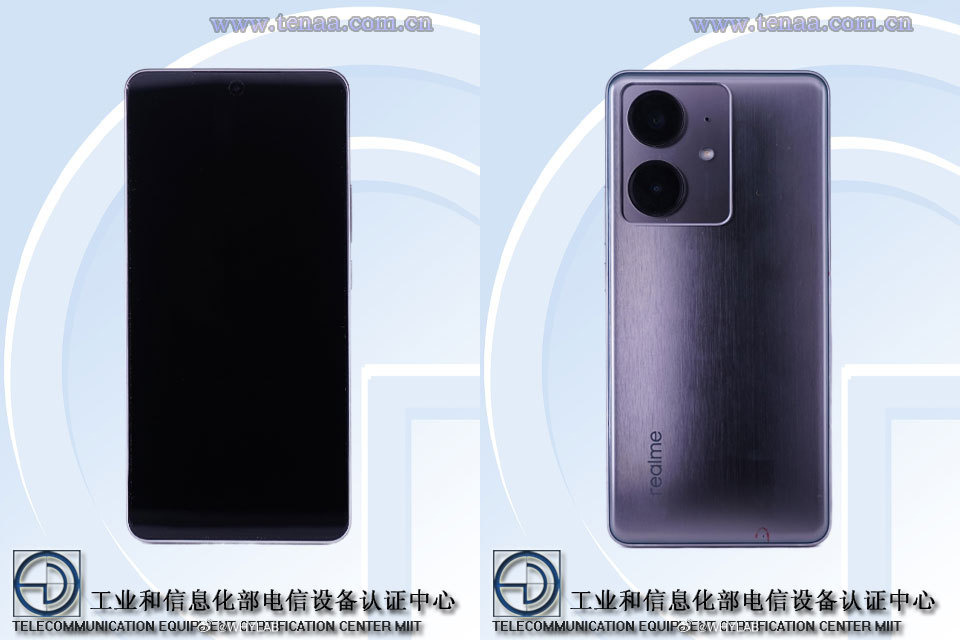
Realme Neo 7 SE TENAA images
Realme has only confirmed the chipset of the Neo 7 SE, but its TENAA listing that surfaced last month has revealed almost everything about it. The device is expected to feature a 6.78-inch flat AMOLED panel that offers a 1.5K resolution and a 120Hz refresh rate. It may ship with up to 24 GB of RAM and up to 1 TB of storage.
The Neo 7 SE will pack a 7,000mAh battery with 80W fast charging support. For photography, it will have a 16-megapixel selfie camera and a 50-megapixel + 8-megapixel dual-camera system. It will offer other features, such as Realme UI 6-based Android 16, an in-screen fingerprint scanner, and an IR blaster.
For more daily updates, please visit our News Section.
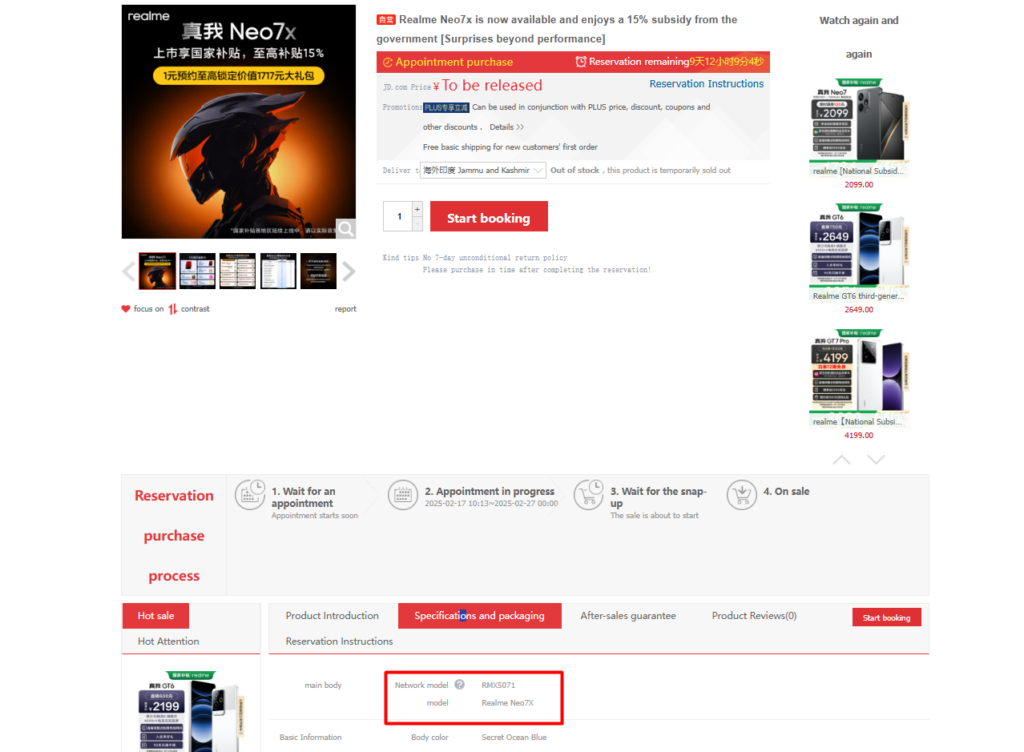
A new Realme smartphone, the Neo 7x 5G, has been listed for pre-orders on JD.com. The listing confirms its model number as RMX5071, which was recently spotted on TENAA. With Realme set to unveil the Neo 7 SE later this month in China, there is speculation that the Neo 7x may debut alongside it. Additionally, it appears that the 7x could be rebranded as the Realme 14 5G for the global market.
Realme Neo 7x 5G pre-orders begin on JD.com
Realme Neo 7x 5G specifications (rumored)
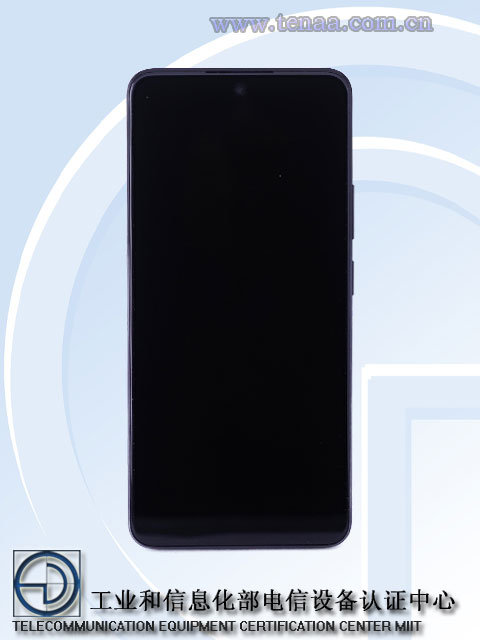
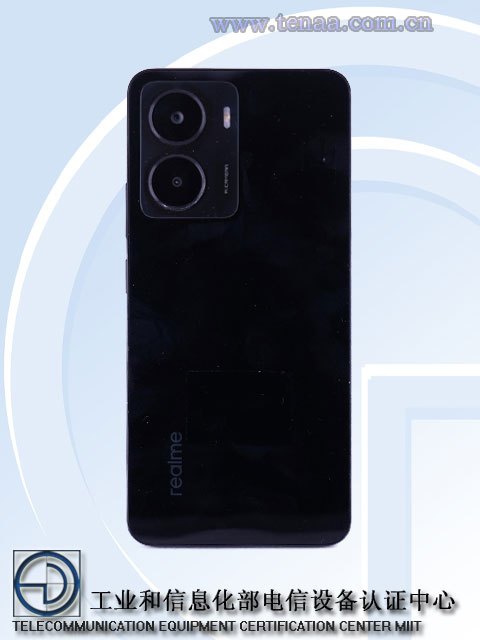
As per the TENAA listing, the Realme Neo 7x 5G (RMX5071) is expected to feature a 6.67-inch OLED display with a 2400 x 1080 pixels resolution. Under the hood, it may house a 2.3GHz processor, which appears to be the Snapdragon 6 Gen 4 chipset.
The phone is likely to be available in multiple RAM options, including 6 GB, 8 GB, 12 GB, and 16 GB, along with storage choices such as 128 GB, 256 GB, 512 GB, and 1 TB. For power, the device is equipped with a 5,860mAh rated battery, with the typical capacity likely reaching 6,000mAh. It is expected to support 45W fast charging.
On the camera front, the handset will feature a 16-megapixel selfie shooter, while the rear setup will consist of a 50-megapixel primary sensor paired with a 2-megapixel secondary lens. Other notable features include an in-display fingerprint scanner, a microSD card slot, and Realme UI 6 based on Android 14. The phone measures 163.15 x 75.65 x 7.97mm and weighs 194 grams.
The pre-order listing suggests that the Neo 7 SE may launch on Feb. 27 in China.
Possible rebranding as Realme 14 5G
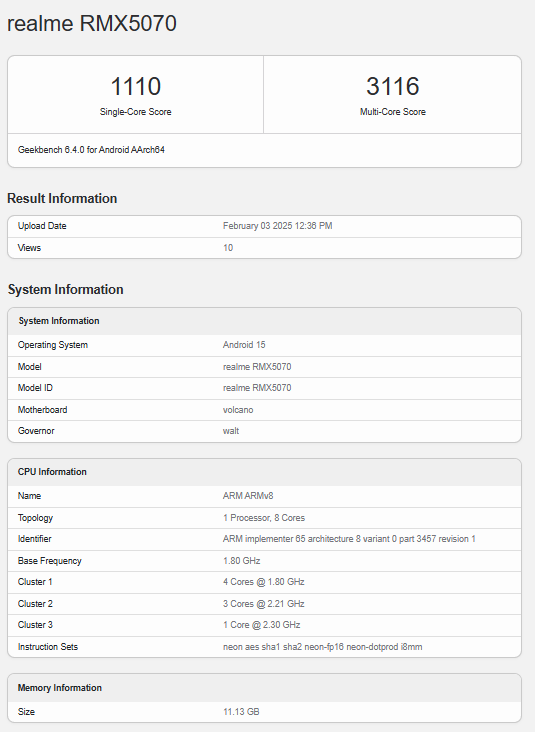
Realme 14 GeekBench
A Realme device with model number RMX5070 was recently spotted in Geekbench and UAE’s TDRA certification database, which confirmed its name as Realme 14 5G. Given its similarity to the RMX5071 model number of the Neo 7x, it is likely that the Realme 14 5G will be a global rebranded version of the Neo 7x, retaining the Snapdragon 6 Gen 4 chipset. More details about its pricing and availability are expected in the coming weeks.
For more daily updates, please visit our News Section.
Xiaomi recently confirmed that it will hold a launch event on March 2 to unveil the Xiaomi 15 series for the global market. While the brand is gearing up for the 15 series’ global launch, the rumor mill has already started leaking details about the Xiaomi 16 series. A new leak by tipster Digital Chat Station talks about the Xiaomi 16 Pro’s display design and specifications.
Xiaomi 16 Pro may feature a cutting-edge display
While the tipster has not explicitly revealed the phone’s name in the above leak, the Chinese media is speculating that he could be talking about the Xiaomi 16 Pro. As per the leak, the 16 Pro will sport a flat-screen design with ultra-thin, uniform bezels. It will be a massive 6.85-inch LTPO OLED panel that offers a 2K resolution and a 120Hz refresh rate.
He added that the display will incorporate LIPO technology, ensuring a symmetrical, narrow-border look. This advancement is expected to surpass the bezel control of Apple’s iPhone 16 Pro models, which currently have side bezels measuring 1.44mm and top and bottom bezels at 1.41mm.
In the past, Xiaomi has consistently offered similar displays on its Pro and Ultra flagship models. For instance, the Xiaomi 12 Pro and 12S Ultra, 13 Pro and 13 Ultra, and 14 Pro and 14 Ultra all shared the same screen sizes. The upcoming Xiaomi 15 Ultra is also expected to feature a 6.73-inch display, matching the 15 Pro.
Given this pattern, it is likely that the Xiaomi 16 Ultra will also come with a 6.85-inch screen, considering that the Xiaomi 16 Pro is rumored to feature a 6.85-inch display. DCS has previously claimed that 2025 flagship phones will adopt a completely flat-screen design. In a recent leak, he revealed that the entire Oppo Find X9 series, which is said to include four models, will sport a flat-screen design. Therefore, the 16 Ultra is also expected to feature a flat panel.
The Xiaomi 16 Pro is expected to debut with the Snapdragon 8 Elite 2 in October of this year. The Ultra model, on the other hand, is expected to launch with the same chip in the first half of 2026.
For more daily updates, please visit our News Section.
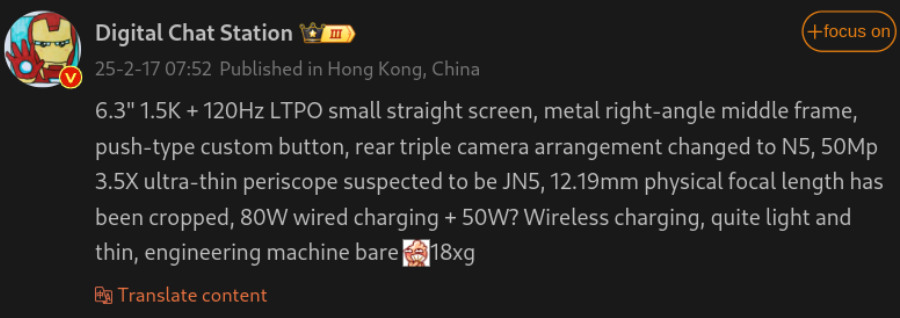
Oppo is gearing up to launch the Find X8 mini in March, alongside the flagship X8 Ultra. This new compact addition to the Find X series has already surfaced in leaks, revealing that it will feature a new alert button, a 6.3-inch LTPO flat OLED display with a 1.5K resolution, and ultra-thin bezels on all sides.
A fresh leak from Digital Chat Station largely reaffirms those specs while confirming that the phone’s side frame will be made of metal. Previously, the same source revealed that the X8 mini would pack a 50-megapixel primary camera, a 50-megapixel ultra-wide lens, and a 50-megapixel periscope telephoto camera with 3.5x optical zoom.
Oppo Find X8 mini will borrow Find N5’s camera setup
Now, though, the tipster claims that the Find X8 Mini’s camera setup will resemble the Find N5—which would actually be a downgrade from earlier leaks. While the Find N5 also features a 50MP main sensor, it swaps the ultra-wide for a lower-resolution 8MP shooter and includes a 50MP periscope telephoto lens with 3x zoom.
Beyond the cameras, the Find X8 mini is expected to support 80W wired and 50W wireless charging. The leak also notes that the device’s engineering unit is notably slim and lightweight, tipping the scales at just around 180 grams.
Under the hood, previous leaks suggest the phone will be powered by MediaTek’s Dimensity 9400 chipset, promising performance on par with higher-end models in the X8 series.
Other highlights include full NFC support, an infrared remote control, dual speakers, an X-axis linear haptic motor, and ColorOS 15 running on Android 15.
Of course, it’s all speculation for now, so take this report with a pinch of salt—and stay tuned for more.
For more daily updates, please visit our News Section.
We use cookies on our website to give you the most relevant experience by remembering your preferences and repeat visits. By clicking “Accept”, you consent to the use of ALL the cookies.
This website uses cookies to improve your experience while you navigate through the website. Out of these, the cookies that are categorized as necessary are stored on your browser as they are essential for the working of basic functionalities of the website. We also use third-party cookies that help us analyze and understand how you use this website. These cookies will be stored in your browser only with your consent. You also have the option to opt-out of these cookies. But opting out of some of these cookies may affect your browsing experience.
Necessary cookies are absolutely essential for the website to function properly. This category only includes cookies that ensures basic functionalities and security features of the website. These cookies do not store any personal information.
Any cookies that may not be particularly necessary for the website to function and is used specifically to collect user personal data via analytics, ads, other embedded contents are termed as non-necessary cookies. It is mandatory to procure user consent prior to running these cookies on your website.