Honor has officially unveiled the Honor Band 11 series in China, introducing both standard and Pro models with several upgrades over the previous generation. The latest lineup focuses on improved battery capacity, enhanced displays, expanded sports tracking, and additional features for users looking for a more capable fitness wearable.
Honor Band 11 specifications and features
Honor Band 11
The standard Honor Band 11 features a 1.57-inch OLED display with a 60Hz refresh rate, 256 × 402 resolution, and a new 2.5D curved glass design. Compared to its predecessor, the wearable increases its sports modes from 96 to 113 and extends the rated battery life from 14 days to 18 days with its 250mAh battery.
It measures 8.99mm thick, weighs 15.3 grams, has a reinforced polymer fibre body, and supports 5ATM water resistance. It also includes professional badminton mode, sleep tracking, heart rate monitoring, SpO₂ tracking, body energy assessment, stress monitoring, female health tracking, and the company’s sudden cardiac death research feature.
Honor Band 11 Pro specifications and features
Honor Band 11 Pro
The Honor Band 11 Pro upgrades to a 1.61-inch 60Hz OLED display with 700 nits of typical brightness and a peak brightness of 2,000 nits. It features an aluminium alloy body and a 400mAh silicon-carbon battery rated for up to 26 days of usage.
Like the standard model, it supports 113 sports modes and the same suite of health tracking features, while adding Bluetooth calling, NFC, and an optional standalone GPS version. Other smart features include music controls, camera shutter control, weather updates, message notifications, Find Phone, alarms, timers, and a wider selection of watch faces.
Honor Band 11 series: Price and availability
The Honor Band 11 is priced at 229 Yuan (~$34) and is available in Sea Salt White, Taro Purple, and Caviar Black. The Honor Band 11 Pro NFC version costs 299 Yuan (~$44) and comes in Almond White, Cocoa Black, and Avocado Green.
The Honor Band 11 Pro GPS version is priced at 349 Yuan (~$52) and is additionally offered in Honey Brown. The new series is currently available in China, with no details yet on an international launch.
Oppo Reno 15A and Vivo Y500 take two very different approaches to the mid-range smartphone market. The Reno 15A focuses on premium features like a Snapdragon chipset, wireless charging, and advanced cameras, while the Vivo Y500 prioritizes exceptional battery life and affordability. Here’s a detailed comparison to see which smartphone delivers the better overall value for your money.
The Oppo Reno 15A and Vivo Y500 both target users looking for premium-looking smartphones with strong durability. Both devices feature IP68 and IP69 dust and water resistance, making them suitable for everyday outdoor use. The Reno 15A adds Corning Gorilla Glass protection, giving the display extra resistance against scratches and accidental drops. Vivo, on the other hand, includes MIL-STD-810H certification, which adds another layer of confidence for users who prioritize durability. Both phones feature modern in-display fingerprint scanners and clean designs, although the Reno 15A feels slightly more premium because of its stronger glass protection and flagship-inspired finish.
The Oppo Reno 15A offers a 6.6-inch Full HD+ AMOLED display with a 120Hz refresh rate, 10-bit colors, 100% DCI-P3 color gamut, and 1,400 nits peak brightness. The Vivo Y500 steps ahead with a larger 6.83-inch AMOLED panel featuring a sharper 1260 × 2800 resolution, HDR support, 120Hz refresh rate, and an impressive 5,000 nits peak brightness. The higher resolution and significantly brighter panel make multimedia and outdoor visibility noticeably better.
Verdict
While both displays are excellent for daily use, the Vivo Y500 delivers a superior viewing experience thanks to its sharper resolution, HDR capability, and exceptionally high brightness. The Oppo Reno 15A remains appealing for users who value color accuracy and Gorilla Glass protection, but Vivo takes this category overall.
2. Specifications Including Battery
Performance
The Oppo Reno 15A is powered by Qualcomm’s Snapdragon 6 Gen 1 processor paired with LPDDR4X RAM and faster UFS 3.1 storage. This combination provides smoother multitasking, faster app loading, and better long-term performance. The Vivo Y500 uses the Unisoc T7300 chipset with UFS 2.2 storage. While it handles everyday tasks comfortably, demanding games and heavier workloads are better suited to the Snapdragon platform. Faster storage also gives the Reno 15A an advantage during software updates and file transfers, making the device feel more responsive over time.
Battery and Charging
Battery life is where the Vivo Y500 stands out with its massive 8,100mAh silicon-carbon battery, offering exceptional endurance. It supports 44W wired charging, reverse wired charging, and bypass charging. The Oppo Reno 15A counters with a 7,000mAh battery, much faster 80W SUPERVOOC wired charging, and 50W wireless charging. Although the battery is slightly smaller, charging speeds are significantly quicker, making daily top-ups much more convenient.
Verdict
The Oppo Reno 15A delivers stronger overall performance and much faster charging, while the Vivo Y500 is the better choice for users who prioritize maximum battery life above everything else. Overall, the Reno 15A offers a more balanced hardware package.
The Oppo Reno 15A features a versatile triple-camera setup consisting of a 50MP primary camera with Optical Image Stabilization, an 8MP ultra-wide camera, and a 2MP macro sensor. OIS helps capture sharper images in low light, while the ultra-wide camera adds flexibility for landscapes and group shots. The Vivo Y500 uses a simpler dual-camera system with a 50MP main camera and an auxiliary lens. It performs well for everyday photography but lacks both an ultra-wide camera and optical stabilization. Video recording is another major difference, with the Reno 15A supporting 4K recording while the Vivo Y500 is limited to 1080p.
Selfie Camera
For selfies, the Reno 15A includes a high-resolution 50MP front camera capable of capturing detailed images and recording 4K video. The Vivo Y500 offers a respectable 32MP selfie camera with 1080p recording, which is sufficient for video calls and social media but falls behind in overall detail and recording quality.
Verdict
The Oppo Reno 15A clearly provides a stronger camera experience. Better stabilization, additional shooting flexibility, higher-quality selfies, and 4K recording make it a more capable smartphone for photography enthusiasts and content creators.
4. Pricing
The Oppo Reno 15A is priced around $415 (approximately ₹38,000), positioning it in the upper mid-range segment. The Vivo Y500 is priced around $196 (approximately ₹17,300), making it significantly more affordable. The Reno 15A justifies its higher price with a Snapdragon processor, faster UFS 3.1 storage, a premium AMOLED display, wireless charging, faster 80W charging, Gorilla Glass protection, and a much more capable camera system. Meanwhile, the Vivo Y500 focuses on offering a large AMOLED display and an outstanding 8,100mAh battery at a budget-friendly price, making it highly attractive for value-conscious buyers.
Verdict
Both phones justify their pricing within their respective segments. The Vivo Y500 offers exceptional value for users with a tighter budget, while the Oppo Reno 15A provides a far richer feature set that supports its premium price. The better choice depends on whether affordability or overall capability is the priority.
Disclaimer: Prices are approximate and may vary based on country, region, launch timing, and applicable taxes. Always check whether the listed price is for a China unit or a global/international variant when purchasing.
5. Conclusion
Oppo Reno 15A distinguishes itself with Snapdragon 6 Gen 1 performance, UFS 3.1 storage, a versatile OIS-equipped triple-camera system, 50MP selfie camera, 4K video recording, 80W wired charging, 50W wireless charging, Gorilla Glass protection, and Android 16 with ColorOS 16. These features make it feel closer to a premium smartphone than a conventional mid-range device.
Vivo Y500, however, impresses with its massive 8,100mAh silicon-carbon battery, extremely bright HDR AMOLED display, bypass charging, reverse wired charging, and aggressive pricing. It prioritizes endurance and affordability over flagship-style hardware, making it a compelling option for users who mainly need long battery life and a quality display.
Oppo Reno 15A is the better overall smartphone thanks to its stronger processor, faster storage, superior cameras, quicker charging, wireless charging support, and more premium feature set. Vivo Y500 remains an excellent value-oriented alternative with exceptional battery life and a superb display, but it cannot match the Reno 15A’s overall balance and versatility.
Users seeking the most complete smartphone experience should choose the Oppo Reno 15A, while those focused on affordability and endurance will find the Vivo Y500 to be a smart purchase.
Disclaimer: This comparison is based on the specifications provided and is intended for general informational purposes. Actual performance, camera results, battery life, and overall experience may vary depending on real-world usage, software updates, and individual preferences.
iQOO is all set to launch the iQOO Z11 in India. Its landing page has just gone live on the company’s regional website, which not only confirms its moniker for the first time but also reveals its design. iQOO already offers the Z11 with different specifications in Malaysia and China, but the upcoming Indian edition sports a different design and specifications.
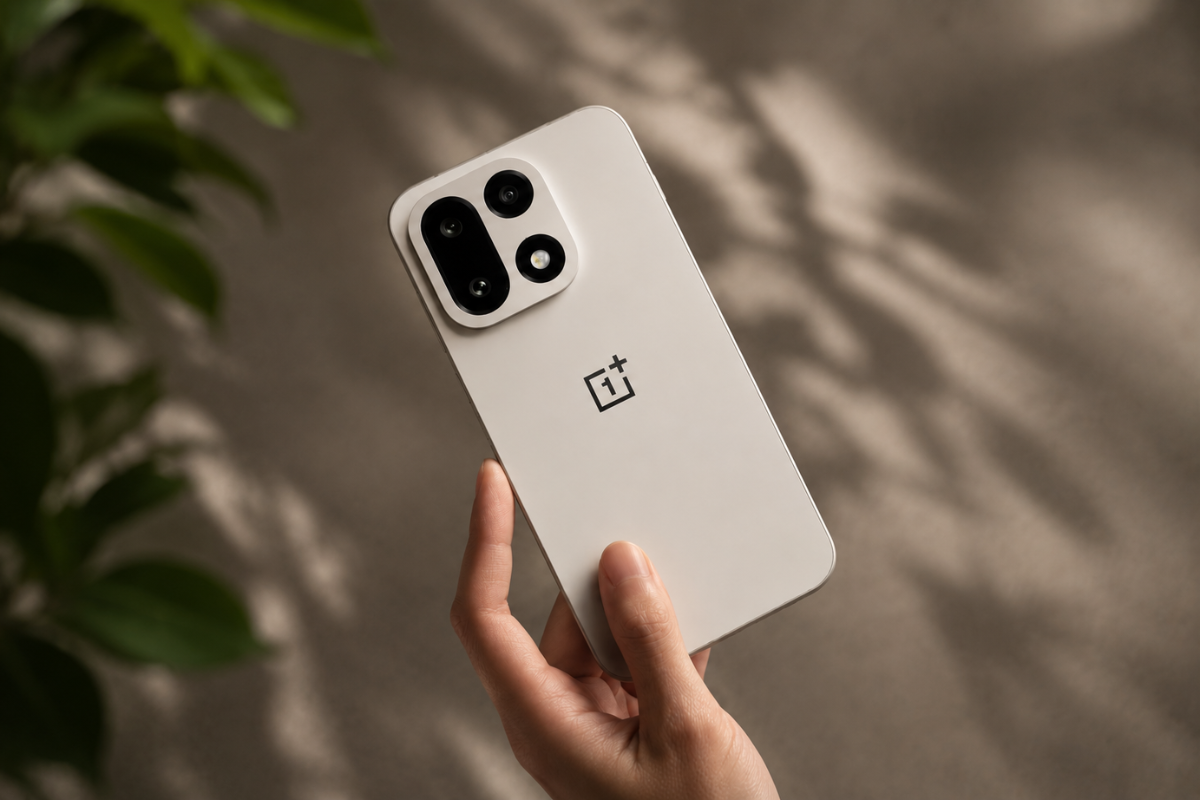
iQOO Z11 design revealed
The images above show that the iQOO Z11 will feature a horizontal camera module housing dual cameras and a ring LED flash. The handset has curved edges on both the front and the back. It is also confirmed to arrive in multiple colors, including green, white, and blue.
With the landing page now live, it appears that the brand will update it with more specification details in the coming days. As per a recent Geekbench AI listing, the device is expected to feature the Dimensity 7500 chipset, 12GB of RAM, and Android 16 with OriginOS 6 on top.
This will be the third Z11-branded phone to launch in the Indian market after the Z11 Lite 44W and Z11x. The base variants of these phones are priced at Rs 19,499 and Rs 24,999, respectively. Therefore, the Z11, which is expected to offer better specifications than the Z11 Lite 44W and Z11x, may carry a price tag of around Rs 30,000.
What do you think about the iQOO Z11’s design? Let us know in the comments.
If you are still using a traditional vacuum cleaner to get rid of dust and debris, it’s time to invest in a robot vacuum cleaner. Not only does it save you the effort of vacuuming every day, but it also automates much of the cleaning process. The latest models can vacuum, mop floors, avoid obstacles, and even empty their own dustbins automatically after every cleaning session. And the best part is they don’t cost as much as a few years back.
The only problem is that there are now plenty of options available, making it difficult to choose the right one. But fret not, as we have rounded up some of the top options across budgets.
How to choose a robot vacuum
The first thing to check is the suction power. If your home has pets, carpets, or tends to collect a lot of dust, look for a model with at least 4,000Pa+ suction. If you want more power, check out the premium robot vacuums cleaners that offer well over 10,000Pa suction, making them better at picking up fine dust, pet hair, and larger debris.
Next, pay attention to the navigation system. LiDAR-based navigation is generally more accurate than basic gyroscope systems, letting the robot to map your home and clean rooms efficiently. Many premium models also use AI-powered obstacle avoidance to detect objects like slippers, charging cables, toys, and pet bowls.
If you also want the robot to mop, check how the mopping system works. Models with rotating mop pads usually clean dried stains more effectively than standard drag mops, while automatic mop lifting prevents carpets from getting wet during cleaning.
Finally, consider the docking station. Entry-level models require you to empty the dustbin manually every few cleaning cycles, whereas premium options can empty the dustbin, refill the water tank, wash the mop pads, and dry them automatically. While these features add to the cost, they also make daily maintenance almost effortless.
25,000Pa suction, built-in water tank, auto-empty dock, auto hot air drying
Rs 64,999
MOVA E10
If you are buying your first robot vacuum, the MOVA E10 is a solid budget option to pick. It offers up to 4,500Pa suction, making it capable of picking up dust and hair from hard floors and low-pile carpets. It also doubles as a vacuum and mop, while its LDS LiDAR navigation maps your home accurately for systematic cleaning.
The MOVA E10 also packs in features usually seen on more expensive models. It comes with Dual-Fusion obstacle avoidance, app control, scheduled cleaning, and a slim 7.6cm design that helps it clean under beds and sofas with ease. While it doesn’t include a self-emptying dock, it’s still a solid value-for-money option for anyone looking to automate daily floor cleaning.
The ILIFE A30 is another great option that offers powerful suction and premium navigation system on a budget. It has up to 13,000Pa suction, which is on par with premium robot vacuum cleaners, making it capable of picking up fine dust, pet hair, and even larger debris from hard floors and carpets. It also uses LiDAR navigation to create accurate maps of your home, ensuring systematic cleaning instead of random movements.
Apart from vacuuming, the ILIFE A30 also supports mopping, which makes it suitable for regular floor maintenance. You also get app control, customised cleaning schedules, and multi-floor mapping, giving you greater control over how and where the robot cleans.
The Indian brand Eureka Forbes, which has been making vacuum cleaners for decades, is now also in the robot vacuum space. It’s SmartClean vacuum cleaner is one of the top-selling options on Amazon, as it offers 7,000Pa suction, LiDAR navigation, and vacuuming and mopping. It also ships with an auto-empty dock that reduces the need for frequent maintenance.
You also get features like AI-powered obstacle avoidance, multi-floor mapping, and app control. It packs a battery that supports three hours of uninterrupted cleaning, which means it can clean your entire home in one go, depending on the size of your room.
The ECOVACS DEEBOT N30 Plus is a great option if you want flagship features without paying flagship prices. It offers up to 10,000Pa suction and comes with a bagless auto-empty station, so you don’t have to keep replacing disposable dust bags. It also supports vacuuming and mopping, making it suitable for everyday floor cleaning.
One of its biggest highlights is TrueMapping technology, which can map an area of up to 1,076 sq. ft. in just six minutes, which means it can plan efficient cleaning routes right from the first run. Other features include intelligent obstacle avoidance, app control, and a runtime of up to 320 minutes, making it a solid choice for medium and large homes alike.
The ECOVACS DEEBOT N50 Pro is a step up from the N30 Plus, offering 15,000Pa suction for better dust and dirt pickup. It also uses TrueMapping navigation to quickly create a map of your home and clean each room in a systematic manner instead of moving around randomly.
Another useful feature is ZeroTangle 2.0, which helps prevent hair from getting wrapped around the main brush, making it a good choice for homes with pets. You also get an auto-empty station, vacuum and mop support, app control, and obstacle avoidance, so you don’t have to worry much about day-to-day cleaning.
If budget isn’t a concern, the Dreame L50 Ultra CE is one of the best robot vacuums you can buy right now. It delivers a massive 25,000Pa suction, making light work of dust, pet hair, and larger debris on both hard floors and carpets. It also cleans along edges and corners better than most robot vacuums thanks to its extendable side brush.
The docking station does almost all the maintenance for you. It empties the dustbin, washes the mop pads with 80°C hot water, dries them, and even refills the water tank automatically.
The ILIFE A30 Pro is the best budget robot vacuum, as it has 10,000Pa suction power, LiDAR navigation, and a self-emptying dock.
What is the best overall vacuum cleaner?
The Dreame L50 Ultra CE is the best overall robot vacuum, thanks to its powerful 25,000Pa suction power, self-cleaning dock, and automatic mop washing, drying, and water refilling.
How long do robot vacuums last?
Most robot vacuums last between four and six years, provided you clean the brushes regularly and replace parts like filters and mop pads when needed.
Can a robot vacuum replace a regular vacuum cleaner?
A robot vacuum cleaner is great for everyday hands-free cleaning, but a traditional vacuum cleaner is still better for deep cleaning and cleaning more than just your floors.
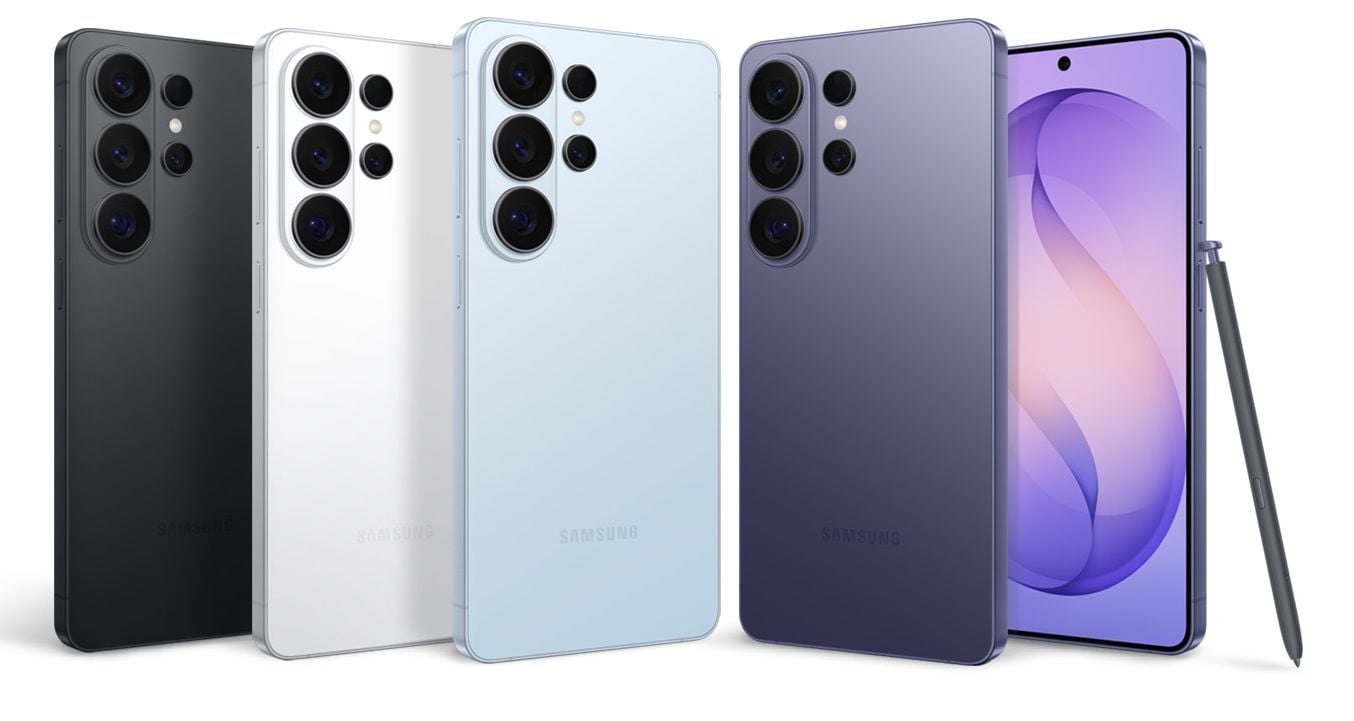
Leaks suggest Samsung is adding a Pro model to the Galaxy S27 series while also removing one camera from its top-of-the-line flagship. Naturally, this raises questions about the camera capabilities and overall positioning of the Pro and Ultra models. A new report from South Korean outlet ETNews clarifies the situation to some extent.
Firstly, the report reaffirms the absence of a dedicated 3x telephoto camera on the Galaxy S27 Ultra. It cites detailed lens designs for the S27 series that Samsung has reportedly shared with its camera suppliers, reinforcing earlier claims.
The more interesting question is how Samsung plans to position the Galaxy S27 Pro. According to the report, it will feature a 200MP primary camera, a 50MP ultrawide, and a 12MP 3x telephoto.
Rather than being a straightforward cost-cutting measure, the decision appears to be aimed at creating clearer differentiation between the Pro and Ultra. Had both models shared the same 3x telephoto camera, their camera systems would have overlapped significantly. By taking different approaches, Samsung can give each device a more distinct identity.
That said, the inclusion of a 12MP 3x telephoto on the Galaxy S27 Pro may disappoint Galaxy fans hoping for a compact yet capable flagship. Meanwhile, the Galaxy S27 Ultra is expected to rely on sensor cropping from its primary camera to cover the 1x to 5x zoom range. AI-powered improvements to the image processing pipeline will certainly help enhance image clarity in post-processing, but their real-world impact will be worth watching rather than taking for granted.
Notably, both the S27 Pro and S27 Ultra are expected to use Samsung’s new 200MP ISOCELL HP6 sensor. For context, the ISOCELL HP2 used in the last four generations of S Ultra phones measures 1/1.3″. Samsung has consistently pursued smaller sensor designs in its high-resolution lineup, with the ISOCELL HP3 measuring 1/1.4 inches and the ISOCELL HP5 shrinking further to 1/1.56 inches. The latter is nearly the same size as the 50MP ISOCELL GN3, which has served as the primary sensor in Samsung’s standard Galaxy S models since the Galaxy S23.
With the S27 Ultra reportedly relying on a single sensor for everything from standard 1x shots to around 5x zoom through a combination of digital zoom and AI, its zoom performance will be worth watching for.
For the past few days, Vivo has been teasing the arrival of the Vivo S2 in India but has not confirmed any of its specs. Today, the brand has not only revealed its color options but also several key details about its specifications. Here’s a look at everything that has been revealed so far.
Vivo S2 key specifications confirmed
The Vivo S2 features a 7.99mm slim profile with what the company calls an Iconic Camera Design. It sports a 6.83-inch 3D curved AMOLED display with a 1.5K resolution, a 120Hz refresh rate, and up to 3,000 nits of peak brightness. The phone will be available in Silk White, Sapphire Blue, and Regal Bronze colour options.
For photography, the device is equipped with a 50-megapixel Sony IMX852 primary camera and a 32-megapixel front-facing camera. Vivo has confirmed support for 4K video recording on both the front and rear cameras, making it suitable for users who frequently create video content. Other camera features include Aura Light Portrait and Dual View Video for capturing footage from both cameras simultaneously.
The Vivo S2 is powered by the MediaTek Dimensity 7360-Turbo chipset, which is claimed to achieve an AnTuTu score of around 970,000. A 7,050mAh battery is expected to keep the phone running through extended gaming, video streaming, and everyday use.
The smartphone runs OriginOS 6 and introduces several AI-powered features, including AI Creation, AI Transcript Assist, and Vivo Office Kit. Circle to Search 2.0 is also included, allowing users to search for on-screen content with a simple gesture. Another notable addition is Shake and Share, which enables quick transfer of photos and 4K videos between compatible devices without relying on mobile data.
The Vivo S2 will be officially unveiled on Aug. 6, when the company is expected to reveal its pricing and complete specifications.
Samsung has only just begun rolling out One UI 9, but signs of its next software update have already emerged. A new firmware build has surfaced on Samsung’s internal test servers, suggesting that early development of One UI 9.5 is underway, with the unreleased Galaxy S27 Ultra appearing to be the first device associated with it.
Exclusive: First Build of One UI 9.5 Spotted on the US Galaxy S27 Ultra
Seeing next-gen software active on US hardware this early points to an accelerated development timeline. Samsung is setting the stage for a massive release.
According to information shared by tipster Fahad Ali Javed, the first known One UI 9.5 firmware carries the build number S958USQU0AZH3. The build is believed to belong to the US variant of the Galaxy S27 Ultra, as the “S958U” model designation follows Samsung’s numbering pattern. For comparison, the current Galaxy S26 Ultra carries the SM-S948U model number.
This is not the first time One UI 9.5 has appeared. References to the software were previously discovered in One UI code earlier this year, alongside mentions of the Galaxy S27 series.
The appearance of an actual firmware build now suggests Samsung has moved beyond internal references and into early software testing. While no screenshots or feature details have surfaced, the timeline aligns with previous development cycles. One UI 8.5, for example, was first spotted on Samsung’s servers several months before debuting with the Galaxy S26 lineup.
What to expect from One UI 9.5
Although development appears to be progressing, One UI 9.5 is still a long way from reaching users. The stable version of One UI 9 has only begun shipping with the Galaxy Z Fold 8, Galaxy Z Fold 8 Ultra, and Galaxy Z Flip 8, while the Galaxy S26 series remains on the beta programme. Based on Samsung’s recent release strategy, One UI 9.5 is expected to debut with the Galaxy S27 series in early 2027 before expanding to older flagship devices through a public rollout.
At this stage, there is no information about new features or interface changes in One UI 9.5. More details are likely to emerge as additional test builds appear in the coming months.
Samsung has unveiled the Galaxy F70 Pro 5G, bringing a balanced mix of hardware, software support and AI-powered features to the mid-range segment. The smartphone combines a Snapdragon chipset, AMOLED display, long-term software updates and a large battery while keeping its launch pricing under Rs 24,000.
Samsung Galaxy F70 Pro 5G specifications and features
Samsung Galaxy F70 Pro 5G
The Galaxy F70 Pro 5G features a 6.7-inch Full HD+ Super AMOLED display with a 120Hz refresh rate and Corning Gorilla Glass Victus+ protection. Running Android 16 with One UI 8.5, Samsung has also promised six Android OS upgrades and six years of security updates. The device includes Galaxy AI features such as Circle to Search with Google, AI voice transcription, Direct Voicemail and Samsung Knox security.
At its core is the Snapdragon 6 Gen 3 processor paired with the Adreno 710 GPU. While Samsung highlights LPDDR5X memory, the available retail configuration comes with LPDDR5 RAM, meaning users should not expect a noticeable performance difference between LPDDR5X and LPDDR5 on this chipset.
The phone is offered with up to 8GB RAM and 256GB storage, along with a hybrid microSD card slot. A 6000mAh battery keeps the device running and supports fast charging. Connectivity options include dual SIM 5G, Wi-Fi ac, Bluetooth, USB Type-C, OTG and NFC through Samsung Wallet.
The Galaxy F70 Pro 5G’s rear setup features a 50-megapixel primary camera with OIS, accompanied by a 5-megapixel ultra-wide camera. On the front, it has a 12-megapixel HDR selfie camera. The camera app includes Night, Portrait, Pro, Pro Video, Hyperlapse, Slow Motion, Super Slow Motion, Single Take and several other shooting modes. It can also record 4K videos with Samsung’s No Shake Cam feature. Finally, it measures 162.4 x 78.2 x 8.1mm, weighs 202 grams
Samsung Galaxy F70 Pro 5G price and availability
The Samsung Galaxy F70 Pro 5G comes in 6GB+128GB, 8GB+128GB and 8GB+256GB variants. Their regular prices are Rs 25,999, Rs 29,999 and Rs 34,999, respectively. As part of the launch offer, these are available for Rs 23,999, Rs 27,999 and Rs 32,999. The handset is available in Aura Green and Alpha Black colour options.
Over a dozen Motorola devices have already been a part of the Android 17 beta program, and now the list has just gotten bigger. The company has opened the beta registration for more devices, including popular Edge 70 series models, Razr models, and some affordable Moto G-series phones.
The announcement was made via multiple posts on the official community forum, along with details of the registration process and requirements. As always, Motorola accepts a limited number of users for the beta program, so you must submit your participation as soon as possible.
Here’s a fresh batch of Motorola devices that can now participate in the Android 17 beta program:
If you want to be a part of the beta program, you must opt in for MFN/beta testing for your Motorola device and then apply for an available testing opportunity. We have a detailed step-by-step guide you can follow.
It’s worth noting that beta builds are prone to having bugs and instability. If you still want to proceed, at least have a complete backup of your important data. Also, charge your device to at least 50% before hitting the install button.
After upgrading to Android 17 beta, you’ll have an updated notification panel and control center, new lock screen clock faces, and an updated Settings page. The update also introduces a new volume mixer and upgraded Live Activities that now also work with calls, music, and torch. We’ll know about all the new features and changes once Motorola publishes the complete changelog.
Xiaomi has added another practical gadget to its personal care lineup with a new portable electric shaver aimed at everyday convenience and solid long-term use. The Mijia Portable Electric Shaver Pro is now listed on Xiaomi’s Youpin platform. It brings a clean design and some useful upgrades for people who want something compact that still gets the job done.
The shaver uses a unibody alloy build and comes in three finishes: satin gold, silver, and midnight gray. It’s small enough for travel or daily carry, and the full-metal body gives it a nicer, more premium feel than a typical plastic shaver.
One of the main features is the wraparound shaving lock structure, combined with a double-ring corrugated foil and stainless steel blades. Xiaomi says this setup helps catch more hairs and reduces jamming, which should make for a smoother, more comfortable shave. It’s also rated IPX8 waterproof, so you can rinse it thoroughly under water or use it in wet conditions without worry.
There’s a built-in sensor switch that automatically starts the blades when it touches your skin and turns them off when you lift it away. That contact-based operation makes it pretty straightforward to use and helps save battery.
On the power side, the battery is claimed to last up to 60 days on a single charge. You can also charge and use it at the same time if needed.
Price and availability:
The Mijia Portable Electric Shaver Pro carries a regular price of 349 yuan, but it’s launching at an introductory price of 296.65 yuan. Pre-orders open tomorrow in the home country. It fits Xiaomi’s usual approach of offering functional, well-designed accessories at reasonable prices through the Youpin ecosystem.
With its solid materials, smart activation, strong waterproofing, and long battery life, it’s aimed at anyone looking for a reliable secondary or travel-friendly shaver. Full details and buying options are up on the official Xiaomi Youpin store.
If you bought a Galaxy S23 back in 2023, you got a genuinely great phone. But three years is a long stretch in smartphone years, and you’ve probably started noticing the cracks. Maybe the battery doesn’t make it to bedtime anymore, apps take a beat longer to open, or you’ve just scrolled past one too many camera comparisons and started wondering what you’re missing out on.
If that’s you, 2026 is genuinely the best year to make the jump. Part of that is the usual story — three years of upgrades stack up into a phone that feels like a real leap, not just a refresh. But there’s a more urgent reason.
Phones are getting more expensive each passing day. Memory prices have been climbing all year, and Qualcomm just confirmed its own chips are getting a double-digit price hike starting September 1. That cost gets passed straight down to whatever flagship you buy next, so waiting any longer isn’t going to save you money.
Fortunately, the 2026 flagship crop is the strongest in years, whether you stay loyal to Samsung, jump to Apple, go all-in on Google’s AI pitch, or chase raw power for less money. Here is the list of options if you’re upgrading from the Samsung Galaxy S23 in 2026.
For the full picture of what 2026’s strongest handsets look like, our flagship phone rankings lay out the top six.
If you liked your S23 and just want more of the same, done better, the Galaxy S26 Ultra is the obvious pick. You’re getting a 6.9-inch display that’s brighter and sharper, a better Snapdragon 8 Elite Gen 5 chip, and a camera system that’s had two full generations to mature. The standard, Plus, and Ultra models split along fairly predictable lines, so if you’re deciding between them, the Ultra is the one built around the S Pen and the biggest camera array.
The headline feature this year is a built-in Privacy Display that can black out your screen from anyone sitting next to you, which sounds gimmicky until you’re the one hiding a text on a crowded train. It’s not a reason to upgrade on its own, but it’s a nice touch on top of an already polished package. Against rivals like the iQOO 15 Ultra, the Ultra trades a smaller battery for a more refined, ecosystem-friendly experience.
The pricing starts at $1,299 for 256GB, climbing to $1,799 for 1TB. If you’re coming from an S23 or S23 Ultra, this upgrade will feel substantial. If you already have an S25 Ultra, you can probably sit this one out.
If you want to jump ship entirely, then the iPhone 17 Pro Max is one best option. You get an A19 Pro chip that benchmarks well ahead of anything Apple’s shipped before, a redesigned triple 48MP camera system, and a new vapor chamber that keeps the phone cooler under pressure than past Pro Max models. Apple also finally gave this generation a bigger battery.
Coming from an S23, the switch means relearning some habits — iOS handles things differently than One UI, and you’ll be starting your app library over if you’ve built up a Google Play history. But if camera consistency and long-term software support matter more to you than customization, that trade-off tends to pay off.
The iPhone 17 Pro Max starts around $1,199 for 256GB. It’s not cheap, but Apple tends to support these phones with updates for longer than most Android makers manage.
If what you actually want out of an upgrade is smarter software rather than flashier hardware, look at the Pixel 10 Pro XL. Powered by Google’s Tensor G5 chip, it won’t top benchmark charts against Snapdragon-powered rivals. However, that has never been the point of owning a Pixel. It’s AI, instead.
The Pixel 10 Pro XL arguably has the best AI tools in a phone, from call screening to editing photos with a few taps.
Its 6.8-inch display is also excellent with 3300 nits peak brightness, and the camera continues Google’s reputation for producing natural, reliable shots without you having to think about settings.
Starting at $1,199 for 256GB, it isn’t the cheapest option either. Even on Android, it’s the one that will feel different from your S23 in daily use, and mostly in good ways.
If price is your main concern, the OnePlus 15 deserves a serious look. It starts at $899 for 256GB — hundreds less than the other three phones here — and still packs a Snapdragon 8 Elite Gen 5 chip, a massive 7,300mAh battery, and 120W charging that will have you topping up in well under half an hour. The 165Hz display refresh rate is the highest on this list, which matters if you game or just like things feeling snappy.
What you give up is polish in a few corners: the camera output is not as strong as others in the list, and software support doesn’t stretch quite as far as Apple’s or Google’s promises. But for buyers coming from an S23 who just want more speed and battery for less money, that’s an easy compromise to make.
5. Bought your S23 for the compact size? Here’s where to look instead
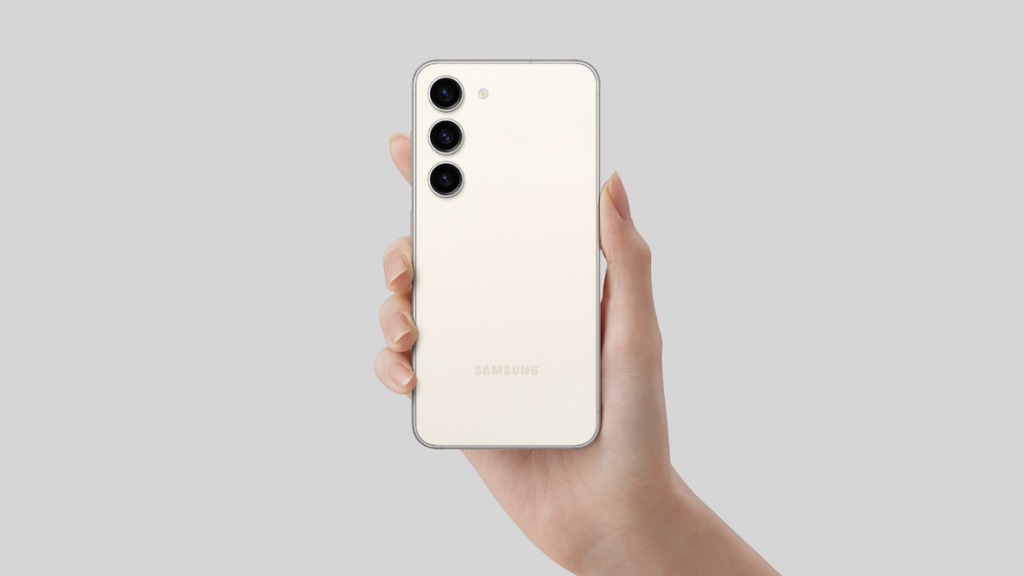
Galaxy S23
Plenty of people picked the standard Galaxy S23 over the Plus or Ultra precisely because it was one of the last true flagships that still fit comfortably in one hand. If that’s you, the good news is that “compact” hasn’t disappeared in 2026. It’s just been around the 6.3-inch mark instead of 6.1 inches, and the three biggest names all have an entry that fits.
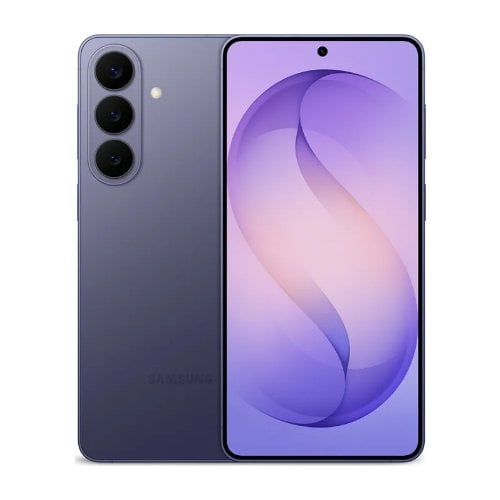
Galaxy S26 is the closest thing to a direct successor to your S23’s footprint. It’s the lightest and thinnest of the three base-model flagships this year, built around the same Snapdragon 8 Elite Gen 5 chip that powers the Ultra, and it still gets Samsung’s full seven years of promised software updates. The trade-off is battery life, which is the weak point of the compact model even against pricier rivals.
Pixel 10 rounds out the trio, and it’s the one to get if AI features and camera reliability matter more to you than shaving off every last gram. It’s the heaviest of the three compact options, so it won’t feel quite as pocketable as your old S23, but it makes up for that with Google’s Gemini-powered tools and a camera system that consistently punches above its price. Against the Galaxy S26, it trades some ecosystem polish and display refinement for a noticeably lower price and a stronger camera.
If you loved your S23 and just want a faster, shinier version of it, get the Galaxy S26 Ultra. The Pixel 10 Pro XL is the best choice if you want to stay ahead in the AI race. OnePlus 15 is the choice if your pockets aren’t deep. And if you want to switch ecosystems, the iPhone 17 Pro Max is your best bet.
However, if the size of your S23 was the whole appeal in the first place, the Galaxy S26, iPhone 17, or Pixel 10 will all keep you in one-handed territory without giving up flagship performance.
Whichever you choose, all four will offer a leap over a three-year-old flagship. But as usual, the choice depends entirely on you and your preferences.
For more daily updates, please visit our News Section.
Xiaomi’s latest smart home camera is now available for purchase in China after making its crowdfunding debut earlier this year. The all-new Xiaomi Smart Camera 4 Max AI Zoom Edition comes equipped with dual cameras, AI-powered monitoring, and a high-performance processing chip, making it one of the company’s most feature-packed indoor security cameras to date.
Dual cameras, AI monitoring, and flagship-grade hardware
Xiaomi Smart Camera 4 Max AI Zoom Edition
The Xiaomi Smart Camera 4 Max AI Zoom Edition is priced at 799 Yuan (~$120), the same price it carried during its crowdfunding campaign. It features a silver-grey finish with a fabric-covered base that also houses an upgraded speaker system.
The camera features a 12-megapixel telephoto camera and an 8-megapixel ultra-wide camera, both with f/1.6 apertures and 6P lenses. It supports 4K recording, 3x lossless zoom, 12x hybrid zoom, autofocus, and full-color night vision in low-light conditions with the help of 10 infrared fill lights.
A dedicated photography mode also allows users to capture everyday moments in addition to home surveillance. The dual-motor gimbal supports 360-degree horizontal and 180-degree vertical movement, while the motors are said to be 30 percent faster than those on the Xiaomi C700 for quicker subject tracking.
One of the biggest highlights is Xiaomi’s first AI Care large language model, designed for monitoring children, elderly family members, and pets. It can recognise activities such as study time, falls, prolonged inactivity, and pet behaviour, while automatically generating daily monitoring reports and allowing text-based video searches.
The camera is powered by a 3T quad-core chip, delivering three times the computing performance of the Xiaomi C700 for faster AI processing. Additional features include person recognition with improved accuracy, gesture-based two-way calling, dual-band Wi-Fi 6, Bluetooth 5.3, support for microSD cards up to 256GB, and an EAL5+ certified Mi Home security chip for encrypted data transmission and privacy protection.
The Galaxy Tab S12 series has been in the news for a while and is expected to launch around September this year, assuming Samsung follows its usual release cycle. There have been rumors that the Ultra model would feature a hole-punch selfie camera. However, more recent leaks suggest that may not happen this year.
Fortunately, there is some good news when it comes to performance. The Ultra model has appeared on Geekbench, revealing improved performance as compared to last year’s Tab S11 Ultra.
Although the listing does not confirm the model name, the model number SM-X946B closely resembles that of the Tab S11 Ultra, which was SM-X936B, confirming that this is the Galaxy Tab S12 Ultra.
The listing reveals the core cluster of the upcoming tablet: one prime core, three performance cores, and four efficiency cores. It rules out the last two generations of the Snapdragon flagships. It also shows a peak clock speed of 4.21 GHz and 2.7 GHz for the efficiency cores, confirming this is the Dimensity 9500.
As for performance, the chipset scores 2,424 in the single-core test and 8,446 in the multi-core test. This is a slight improvement in performance over the Galaxy Tab S11 Ultra.
The test unit packs 12GB RAM, matching the starting configuration of last year’s model. There will likely be a 16GB variant as well.
According to previous rumors, the Tab S12 Ultra is expected to retain many of the specifications from last year’s model, including a 14.6-inch Dynamic AMOLED 2X display, an 11,600mAh battery, and 45W charging.
As for the cameras, users can expect a 13MP primary, an 8MP ultra-wide, and a 12MP front-facing shooter. This hardware will run One UI 9 based on Android 17 and, following Samsung’s flagship software policy, is expected to receive seven major Android OS updates and seven years of security patches.
The iQOO Neo11S appears to be getting closer to its debut, with multiple details about the upcoming performance-focused smartphone surfacing online. The latest information points to notable hardware upgrades that could help the device stand apart from other phones in its segment, particularly in terms of display, chipset and battery capacity.
iQOO Neo 11S key specifications tipped
According to tipster Digital Chat Station, the iQOO Neo11S (tentative name) will debut with a deeply customized version of MediaTek’s Dimensity 9500 chipset. The processor is said to run at slightly lower clock speeds than the standard variant while receiving software-level tuning from iQOO for improved performance, gaming stability and power efficiency. To recall, the iQOO Neo 11, which debuted last year, came equipped with the Snapdragon 8 Elite chip onboard.
The leak also suggests that the iQOO Neo11S will feature a 2K flat display built using a new domestic display manufacturing process, making it the only device in its price segment to combine a 2K panel with the Dimensity 9500 chipset. It is also tipped to pack a battery exceeding 9,000mAh, making it significantly larger than its predecessor.
The same source previously revealed that the Neo 11S will be available in multiple configurations, such as 12GB+256GB, 12GB+512GB, 16GB+256GB, and 16GB+512GB. He also claimed that the device will be colors like Light White, Shadow Black, and Wind Chaser. Its massive battery is said to support 100W charging, but there may not be wireless charging support.
Other expected features include a 3D ultrasonic fingerprint scanner and IP68 plus IP69 ratings for dust and water resistance. A Geekbench listing for the alleged device, carrying model number V2545A, showed 16GB of RAM, Android 16, and benchmark scores of 3,395 in single-core and 10,312 in multi-core tests. While iQOO has not officially confirmed these specifications, the Neo11S is shaping up to be a compelling option for gamers and power users.
Redmi has officially lifted the curtain on one of the biggest highlights of the upcoming Redmi K100 Pro series ahead of its August 11 launch in China. The company has confirmed a new display technology that focuses on delivering sharper visuals without increasing power consumption, while also revealing several key screen specifications for the lineup.
M11 OLED and Super Pixel technology take centre stage
According to Redmi, the K100 Pro series debuts its new M11 OLED light-emitting material alongside a next-generation Super Pixel architecture. Xiaomi Group President Lu Weibing said the company began working on improving display efficiency several years ago by focusing on both the OLED material and the pixel arrangement instead of relying only on higher resolutions.
The M11 OLED material is based on fourth-generation pTSF technology and delivers a 20 percent improvement in green pixel efficiency. It also covers 90 percent of the BT.2020 colour gamut while increasing panel lifespan by 5.2 percent.
Redmi says the new Super Pixel technology adopts a full RGB layout, giving every pixel dedicated red, green and blue sub-pixels. On the Redmi K100 Pro Max’s 6.9-inch display, this results in 9.389 million sub-pixels, exceeding the count found on similarly sized 2K diamond-pixel OLED panels.
The company claims the screen can offer image quality comparable to premium 2K displays while consuming even less power than conventional 1.5K panels.
Redmi K100 Pro Max specifications confirmed so far
Redmi has also confirmed several specifications of the K100 Pro Max ahead of launch. The phone features a 6.9-inch flat display with ultra-slim bezels, a peak local brightness of 4,500 nits, a 185Hz refresh rate, and a 4,800Hz instant touch sampling rate. It is powered by the Snapdragon 8 Elite Gen 5 chipset alongside the AI D2 graphics chip, enabling simultaneous frame interpolation and super resolution during gaming. Other confirmed features include a dedicated touch chip, gaming antenna design, and Bose-tuned audio.
It has been also revealed that the K100 Pro Max has a 9,070mAh battery with support for up to 100W wired charging and 50W wireless charging. For photography, it may feature a 200-megapixel main camera, a 50-megapixel ultra-wide lens, and a 50-megapixel periscope telephoto camera. The Redmi K100 Pro series is scheduled to launch in China on Aug. 11.
On Aug. 4, Poco will unveil the Poco M8 Power in India. The phone’s microsite, which has been available on Flipkart for quite a few days, has now been updated to reveal almost everything about it. Here’s a look at what to expect from the next Poco phone.
As per the Flipkart page, the Poco M8 Power has a 6.9-inch AMOLED panel that offers an FHD+ resolution, a 120Hz refresh rate, and an in-screen fingerprint sensor. It also offers a 240Hz touch sampling rate, 1,800 nits of peak brightness, and 1,200 nits in HBM mode.
The phone will ship with HyperOS 3-based Android 16. The microsite confirms that the phone will receive four years of Android OS upgrades and six years of security updates.
The M8 Power draws power from a massive 8,000mAh battery and the Snapdragon 4 Gen 4 chipset, which is paired with LPDDR4x RAM and UFS 2.2 storage. The phone supports 45W charging and 22.5W reverse charging.
For photography, the M8 Power has a 50-megapixel OmniVision Light Fusion 400 sensor on the back and an 8-megapixel front camera. When it comes to durability, the phone features Gorilla Glass 7i protection on the front and carries an IP65 rating for dust and water resistance. Despite featuring a big battery, the phone measures only 8.45mm in thickness.
As for the box contents, the Poco M8 Power package includes the phone, a protective case, a 45W charger, a USB cable, a SIM ejector tool, and a Quick Start Guide. Apart from the Blaze Orange edition, the phone will also be available in Green and Black. At present, there is no information about the price, but it is likely to cost around Rs 25,000 (~$290).
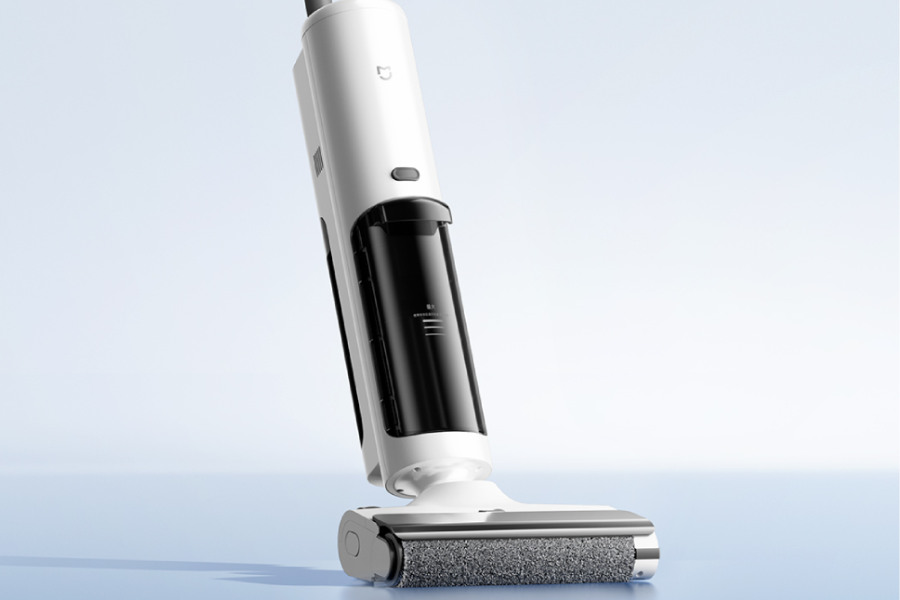
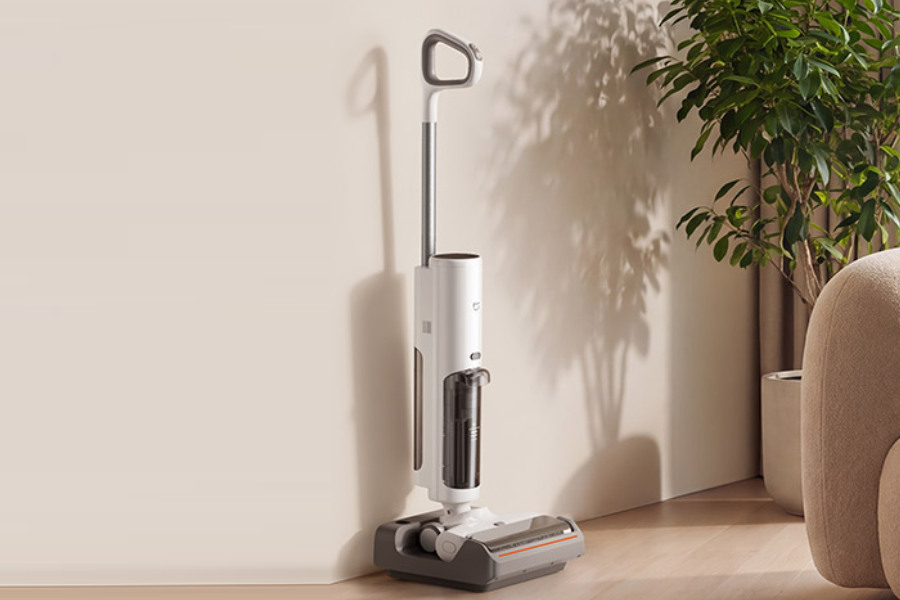
Xiaomi has updated its cordless floor scrubber lineup again, and the changes here are mostly about suction and runtime. The company today released the Mijia Wireless Floor Cleaner 5C in China, and it’s a wet-and-dry cleaner that can clean a large home in a single session.
The 5C follows last year’s 4C model, where Xiaomi has raised suction from 15,000Pa to 18,000Pa. That matches the figure on the standard Floor Scrubber 4 launched last year, and this suction level is meant to lift crumbs, dust, and pet hair in a single pass rather than requiring repeat swipes.
Hair tangling is a common complaint with these machines. As such, the 5C uses triple anti-tangle technology on its roller brush and has passed Germany’s TÜV SÜD anti-winding test.
There’s also a 60°C hot airflow system that dries and deodorizes the roller after each use, so it doesn’t sit damp between cleanings. Xiaomi paired that with 50dB(A) operation, which stays quiet enough to run without disrupting a call or conversation in the next room.
The Xiaomi Mijia Wireless Floor Cleaner 5C is rated at 45 minutes, which Xiaomi says covers a 341-square-meter apartment in one go. It has a 780mL clean water tank and a 550mL dirty water tank to support that runtime, and the unit uses a forward-traction design meant to keep it light enough to steer with one hand.
The 5C also uses a real-time running water system for mopping.
Pricing and Availability
The Mijia Wireless Floor Cleaner 5C carries a modest price increase over the 4C in exchange for higher suction, longer runtime, and better hygiene features.
The Mijia Wireless Floor Cleaner 5C is priced at 1,175 yuan, which converts to roughly $174. You can purchase it from Xiaomi’s Youpin platform.
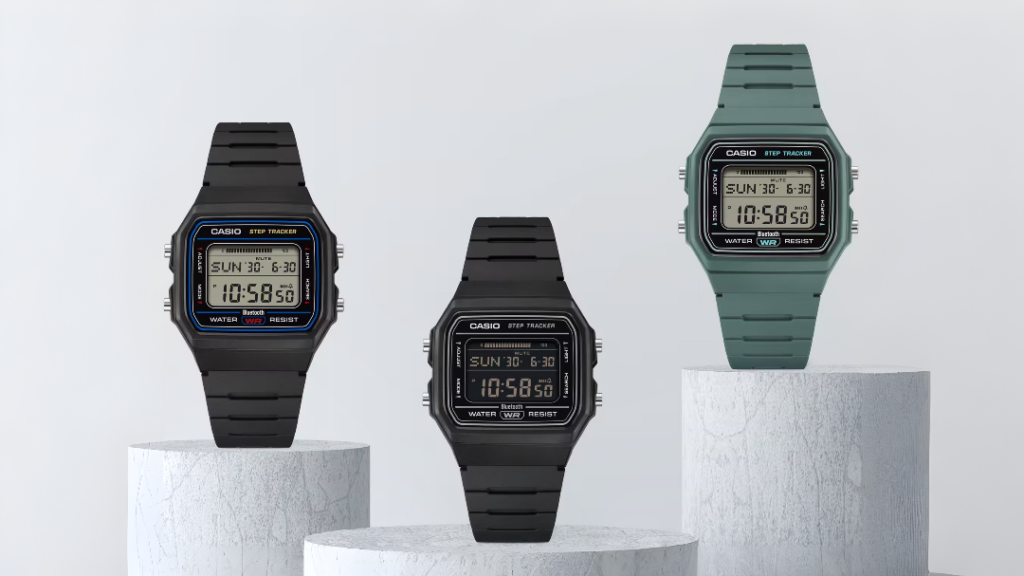
Casio has announced a new line of digital watches in Japan, the F-B100W series, which integrates basic fitness tracking and smartphone connectivity into a standard retro casing. The watches are now available and are priced at ¥8,800 ($56). While they are currently listed on Casio’s Japanese website, initial inventory is already out of stock.
Design Details
The appeal of the F-B100W is straightforward: it looks and operates like a standard 1980s Casio digital watch, but it includes an accelerometer and a Bluetooth module. The watch measures 8.8mm thick and weighs 26 grams. The strap is made from biomass plastic and features ventilation slits to improve comfort during continuous wear.
Casio is offering three variations of the watch. The F-B100W-1A has a black case with a standard positive LCD and retro blue, red, and yellow dial accents. The F-B100W-1B is an all-black version with a negative LCD and gray text. The F-B100W-3A comes in a muted green with turquoise accents.
For activity tracking, the built-in sensor counts steps and displays the daily total, a step graph, and goal progress directly on the watch screen. It also includes an optional inactivity alert that beeps and shows an icon if you haven’t moved in a while. For more specific exercise tracking, the stopwatch function can store up to 200 lap and split times, including the date and time of the recording.
The Bluetooth functionality connects the watch to the Casio Watches mobile app. This connection is used to automatically sync the time, transfer step data to a daily log on your phone, and adjust watch settings like alarms or the dual-time display. It also includes a basic phone finder feature.
Because it uses a standard watch battery rather than a rechargeable cell, the F-B100W has an estimated battery life of two years. It also retains standard digital watch features, including daily water resistance, five daily alarms, an hourly time signal, and an amber LED backlight with an adjustable afterglow.
The AI PC era is gathering pace, with Microsoft pushing Copilot+ experiences across Windows and manufacturers responding with a new wave of AI-ready laptops. Asus has been quick to embrace this shift, refreshing its Vivobook lineup with Intel’s latest Core Ultra processors and dedicated NPUs.
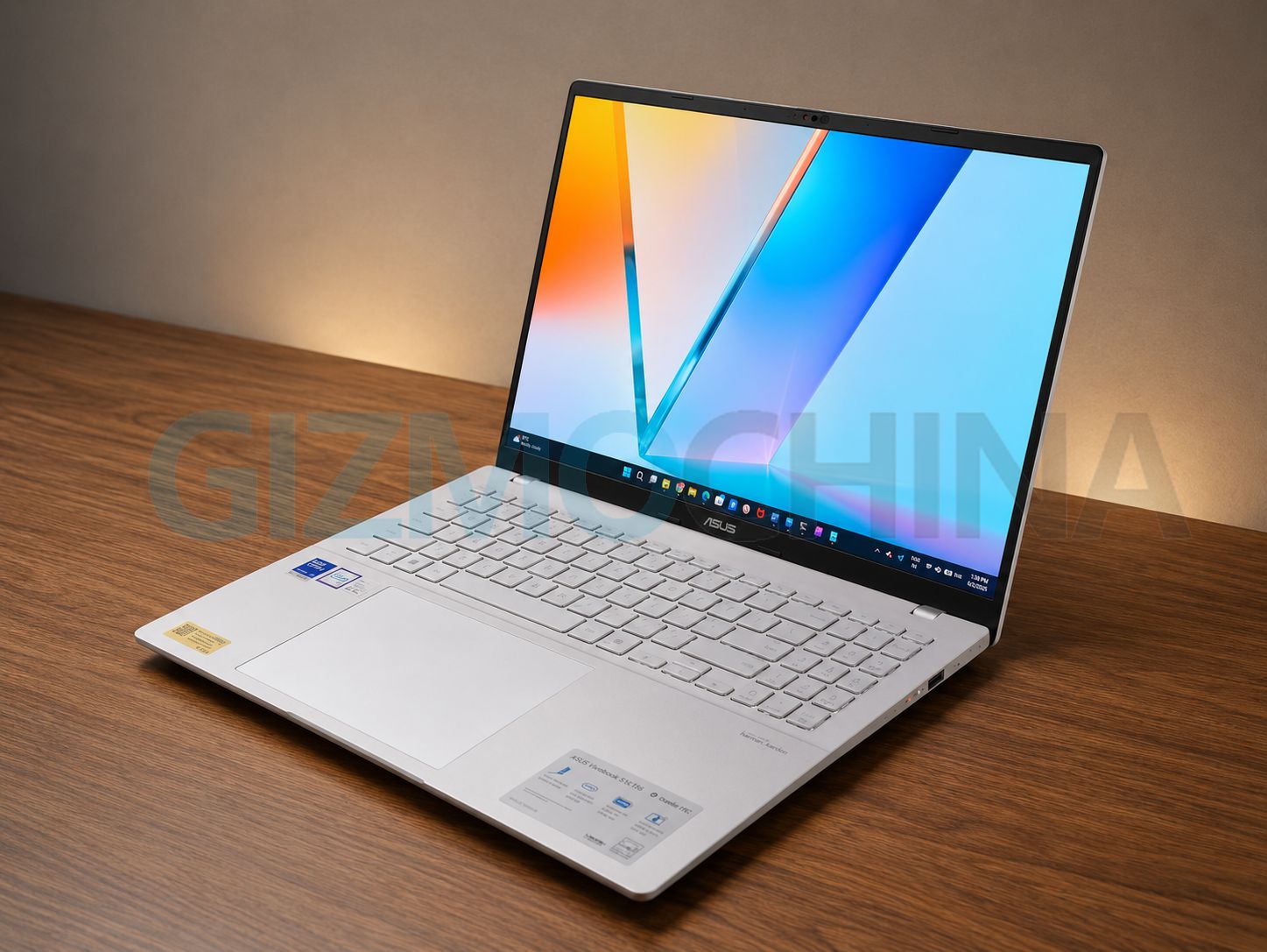
Priced at Rs 1,22,990 (~$1,290) in India, the Asus Vivobook S16 (S3607AA-SH087WS) competes with premium productivity laptops from Lenovo, Dell, HP, and Acer, while inevitably drawing comparisons with Apple’s MacBook Air. After spending time with the laptop and running multiple benchmarks, here’s what the Vivobook S16 has to offer.
The Asus Vivobook S16 doesn’t aim to be the most powerful laptop in its segment. Instead, it focuses on getting the fundamentals right with a vibrant OLED display, dependable everyday performance, practical AI capabilities, and excellent usability.
The display is easily the biggest attraction, while Intel’s Core Ultra 5 processor delivers enough performance for office work, multitasking, coding, and content consumption. Copilot+ support, a comfortable keyboard, upgradeable memory, a fast SSD, generous connectivity, and solid battery life further strengthen the package.
Its biggest limitations are the 60Hz refresh rate and integrated graphics, making it less appealing for gamers or users with demanding creative workflows.
For professionals, students, and remote workers looking for a premium Windows productivity laptop with a large OLED display and future-ready AI features, the Asus Vivobook S16 is a well-rounded choice that successfully delivers on its promises.
For more daily updates, please visit our News Section.
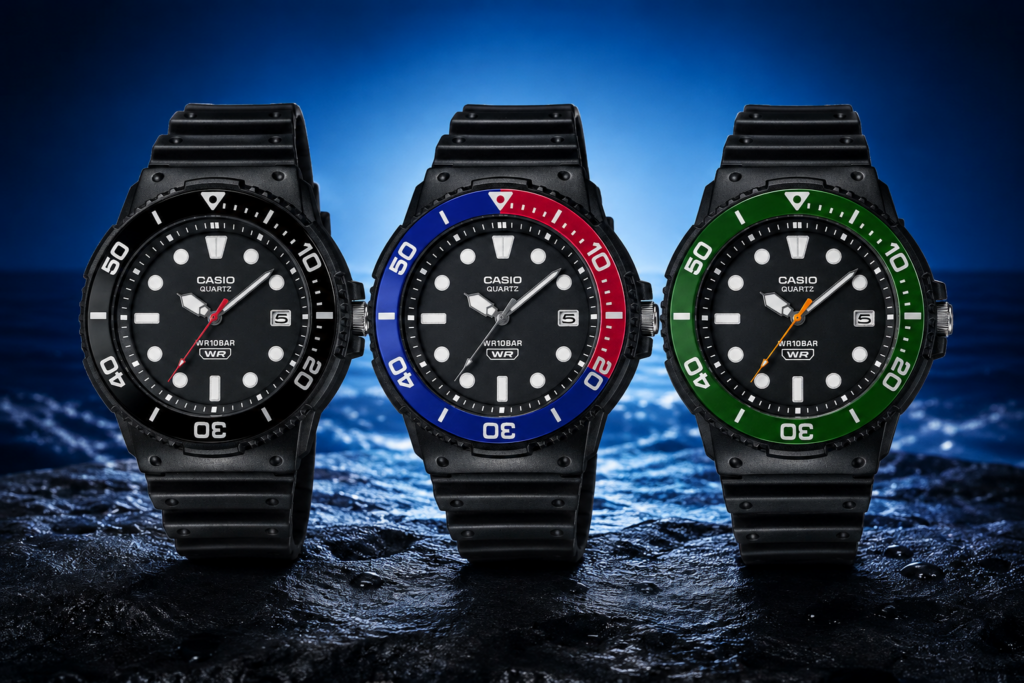
Casio has introduced a new line of analog watches in Japan, adding the MRW-240H series to its Standard Collection. The release includes three models that share the exact same physical dimensions and hardware specifications, differing only in their specific color combinations.
Design Details
The MRW-240H series is designed to look like traditional dive watches, but they are built primarily from resin to keep the weight and manufacturing costs low. The three available variants are the MRW-240H-1E1, MRW-240H-1E2, and MRW-240H-1E3.
The 1E1 model has a black bezel insert and a red seconds hand. The 1E2 model uses a blue and red bezel insert with a silver seconds hand. The 1E3 model features a green bezel insert and an orange seconds hand. On all three models, the rotating timing bezel includes an aluminum ring on the top surface, which can be used to measure elapsed time.
In terms of size, the watches measure 47.9 mm in length, 44.6 mm in width, and 12.3 mm in thickness. Because the case, the adjustable band, and the glass covering the dial are all made of resin, the total weight of the watch is 39 grams. The included resin band is designed to fit wrist sizes ranging from 145 mm to 215 mm.
For daily use, the watches feature 100-meter (10 ATM) water resistance, which means they can be worn while swimming or washing hands. The dial includes a standard date display. The watches run on a standard battery that has an estimated life of three years, and the internal quartz movement has an accuracy rating of ±20 seconds per month.
Pricing and Availability
All three MRW-240H variants will launch in Japan this August for ¥6,050 ($38) and are already available for pre-order through Casio’s online store.
We use cookies on our website to give you the most relevant experience by remembering your preferences and repeat visits. By clicking “Accept”, you consent to the use of ALL the cookies.
This website uses cookies to improve your experience while you navigate through the website. Out of these, the cookies that are categorized as necessary are stored on your browser as they are essential for the working of basic functionalities of the website. We also use third-party cookies that help us analyze and understand how you use this website. These cookies will be stored in your browser only with your consent. You also have the option to opt-out of these cookies. But opting out of some of these cookies may affect your browsing experience.
Necessary cookies are absolutely essential for the website to function properly. This category only includes cookies that ensures basic functionalities and security features of the website. These cookies do not store any personal information.
Any cookies that may not be particularly necessary for the website to function and is used specifically to collect user personal data via analytics, ads, other embedded contents are termed as non-necessary cookies. It is mandatory to procure user consent prior to running these cookies on your website.