Advertisement

Oppo Pad Mini leaks again: 8.8″ 144Hz LTPO OLED, 8000mAh battery within 279g build

Oppo is seemingly getting ready to step into the compact tablet space with a new device called the Oppo Pad Mini. The leaks revealed so far point to a smaller tablet that still aims fairly high in terms of specs.

Oppo Pad 5 Mini Specs and Design leak

The latest info comes from @DigitalChatStation on Weibo, who shared a set of key details earlier today. According to the leak, the tablet will feature an 8.8-inch OLED display with a 3:2 aspect ratio, which is a bit different from the usual media-focused layouts. It should make more sense for reading and general use.

The panel itself sounds quite strong. It’s said to have a 2880×1920 resolution, along with a 144Hz refresh rate that can scale down to 1Hz thanks to LTPO tech. Peak brightness is reportedly 1800 nits, and it covers the full DCI-P3 color gamut, so on paper at least, it’s aiming for a premium display experience.

Performance is expected to come from Qualcomm’s Snapdragon 8 Gen 5, which would put it in flagship territory. The design seems to be another highlight. The tablet is tipped to use a unibody metal build, measuring around 5.39mm thick and weighing about 279 grams. That’s quite thin and light, even for a compact tablet. Color options are said to include dark gray, purple, and cyan. Lenovo’s 8.8-inch Legion Tab Gen 5, for instance, weighs 360 grams.

On the back of the Oppo Pad Mini, there’s a 13MP camera in a capsule-style module. Not a major focus, but standard for tablets.

Battery capacity is listed at 8000mAh, with support for 67W fast charging. There’s also mention of eSIM support, which could make it more useful as a standalone device without relying on Wi-Fi. Based on what’s out so far, Oppo seems to be aiming for something more than just a “mini” in name.

If the leaks hold up, this could end up being one of the more interesting compact Android tablets to watch this year.

Don’t miss a thing! Join our Telegram community for instant updates and grab our free daily newsletter for the best tech stories!

For more daily updates, please visit our News Section.

(Source: DCS on Weibo)

Infinix Note 60 Pro launching in India soon with rear display, Snapdragon 7s Gen 4 chip

Infinix looks set to bring the Note 60 Pro to India soon, and it’s already starting to tease some of the phone’s more unusual features. The device was announced globally earlier this year.

The company has begun its local campaign by highlighting what it calls the Active Matrix Display on the back. It’s essentially a set of LEDs built into the camera module, somewhat similar in concept to Nothing’s Glyph interface. It can show notifications, battery status, incoming calls, and even simple animations without needing to flip the phone. It’s more of a visual feature than a practical one, but it does help the phone stand out a bit.

Infinix has also confirmed that another feature will be revealed on April 4 at 12 PM, though most of the core specs are already out there from the global launch.

Up front, the phone uses a 6.78-inch AMOLED display with a 1.5K resolution and a 144Hz refresh rate. Local peak brightness is claimed to be 4,500 nits, which sounds impressive, though global peak or full-screen brightness will matter more for outdoor visibility.

Performance is handled by the Snapdragon 7s Gen 4, paired with 8GB or 12GB of RAM and 256GB storage. That should be enough for everyday tasks like browsing, social media, and some casual gaming.

The camera setup includes a 50MP main sensor with OIS, along with an 8MP ultrawide. On the front, there’s a 13MP camera for selfies and video calls.

Battery is one of the stronger points of this phone. It packs a 6,500mAh cell, with support for 90W wired charging and 30W wireless charging, along with reverse charging options. It runs Android 16 with XOS 16, and carries an IP64 rating for basic dust and splash resistance.

Reports point to a mid-April timeline in India, with April 13 being mentioned in a few listings. Pricing hasn’t been confirmed yet, but more details should show up as the teasers continue.

Overall, the Note 60 Pro doesn’t look radically different on paper, but the rear LED system and large battery could give it a bit of an edge in a crowded mid-range market.

Don’t miss a thing! Join our Telegram community for instant updates and grab our free daily newsletter for the best tech stories!

For more daily updates, please visit our News Section.

(Source)

Xiaomi’s new robot vacuum and mop packs 10,000Pa suction, 180-min runtime at an affordable price

Xiaomi is adding another option to its Mijia robot vacuum lineup, with a model that focuses on strong suction without pushing the price too high. The new Mijia Robot Vacuum and Mop 4 has now been listed in China.

One of the headline features here is the 10,000Pa suction power, which puts it in the higher range for robot vacuums at this price point. Average suction power for modern robot vacuum mops typically ranges between 2,500 Pa and 6,000 Pa. 10,000Pa should be more than enough for everyday dust, pet hair, and even slightly heavier debris

Xiaomi is also sticking with LDS laser navigation, which helps the robot map out rooms and move in a more structured way rather than randomly bouncing around.

The design remains familiar: simple, white, and minimal. For cleaning, there’s a dual-claw anti-tangle brush setup, aimed at reducing hair buildup, especially useful in homes with pets.

It’s a 2-in-1 unit, so it can vacuum and mop at the same time. The dustbin is rated at 520ml, while the water tank comes in at 270ml. Xiaomi says it can cover up to 300 square meters in open areas, though real-world usage will likely vary depending on layout.

There are a few practical touches as well. The robot can climb thresholds up to 20mm, which should help it move between rooms more easily. It runs on a 5,200mAh battery, with a claimed runtime of up to 180 minutes.

Nothing here feels overly experimental, but that’s not really the goal. Xiaomi seems to be focusing on getting the basics right: strong suction, decent navigation, and usable battery life.

Pricing and availability:

The device is priced at 1,443 yuan (roughly $200), and in some regions, subsidies can even bring it down to around 1,299 yuan. Sales are set to begin on April 7.

For users looking for a simple, capable robot vacuum without spending too much, this one could be worth a look once it goes on sale.

Don’t miss a thing! Join our Telegram community for instant updates and grab our free daily newsletter for the best tech stories!

For more daily updates, please visit our News Section.

(Via)

OxygenOS March 2026 FAQ: Gboard Bug, Power Issues, and New Features Detailed

OxygenOS has published its March 2026 FAQ update, listing known issues, feature changes, and rollout details based on user feedback.

One issue reported by users is the Gboard keyboard overlapping with the navigation bar. The company said this is caused by a third-party app. The issue has been reported to the relevant team, and a fix will be released in a future update.

Another question relates to downgrade packages not working on some devices. The company confirmed that the affected downgrade versions have known stability issues that may cause system malfunctions. Because of this, downgrade to these versions is currently not supported.

Some users also reported that their devices are not turning on. The company said this issue is under investigation. Users facing this problem are advised to visit an authorized service center for assistance while a fix is being worked on.

The update also introduces a new feature called “Automatically open received files.” This lets users choose whether files received through file transfer should open automatically. The setting can be found under Settings > Device Connect > Share with iPhone or PC > Automatically open received files.

Another addition allows users to run multiple timers at the same time. This can be done by going to Clock > Timer, starting a timer using the play icon, and then adding more timers.

The company also shared rollout details for the B50P01 version. The rollout started on March 16, 2026 and is expected to be completed by March 31, 2026. This version includes the new file opening feature, support for multiple timers, and general improvements focused on usability and system stability.

For more daily updates, please visit our News Section.

Don’t miss a thing! Join our Telegram community for instant updates and grab our free daily newsletter for the best tech stories!

(Source)

Honor WIN gaming mouse appears in live photo, sensor revealed

Honor is slowly building out its WIN gaming ecosystem, and it’s not stopping at laptops. Ahead of its upcoming gaming laptop launch in April, the company has now teased a new wireless gaming mouse that seems clearly aimed at competitive players.

The first look comes from Lin Lin, Minister of Smart Life Business at Honor China, who shared images of the device on Weibo. He described it as “GPW like +1,” which is an obvious reference to Logitech’s G Pro Wireless, a mouse that’s already pretty popular in esports circles. The wording suggests Honor is going for a similar formula, but with some tweaks.

Design-wise, the mouse sticks to a safe, familiar shape. It’s symmetrical and fairly minimal. There are two side buttons on the left, and the Honor WIN branding sits toward the rear. Nothing flashy here, which is probably intentional.

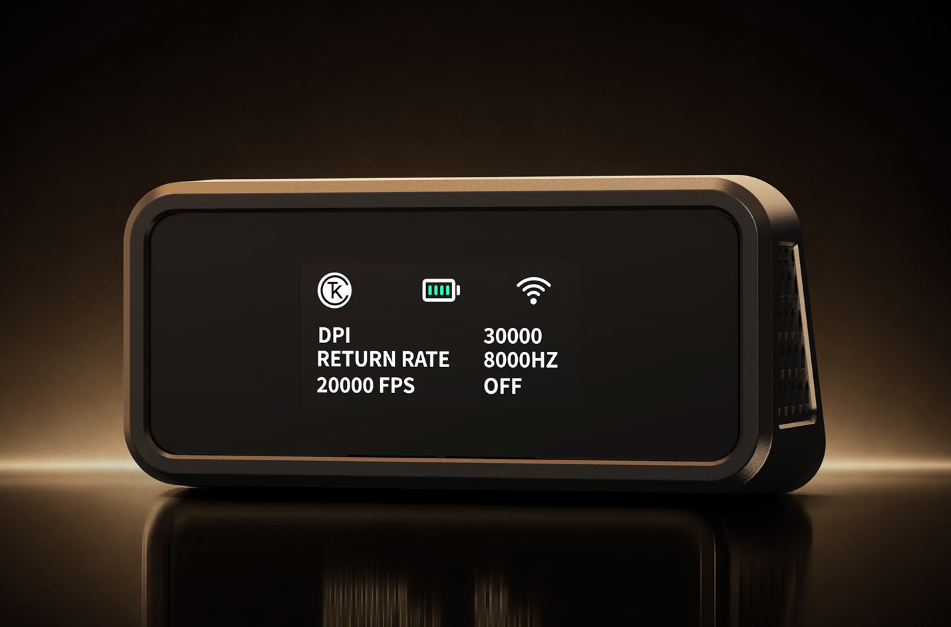
The more interesting part is the sensor. Honor is using the PAW3395, which is already found in a lot of high-end wireless mice. It supports up to 26,000 DPI, along with 650 IPS tracking speed and 50G acceleration. The polling rate goes up to 4,000Hz, and with the right receiver, it could potentially go higher. For fast-paced games, that kind of responsiveness does matter.

What’s still unclear is where the “+1” comes in. It could be better battery life, lower weight, or maybe improved switches, but Honor hasn’t shared those details yet. For now, it seems like the company is focusing on getting the fundamentals right first.

This launch also lines up with the Honor WIN gaming laptop expected in April, so it looks like Honor is trying to build a more complete gaming lineup rather than just releasing standalone products.

There’s still quite a bit we don’t know: pricing, weight, battery performance. However, the early details suggest this won’t be an entry-level accessory. If anything, it’s shaping up to compete somewhere in the mid-to-high-end range, which could make things interesting if Honor manages to price it aggressively.

Don’t miss a thing! Join our Telegram community for instant updates and grab our free daily newsletter for the best tech stories!

For more daily updates, please visit our News Section.

(Source)

Honor Watch X5i debuts in China with 3-week battery life, health tracking, and 100+ sports modes

Honor has quietly introduced a new budget smartwatch, and it’s clearly going after a very specific audience. The Watch X5i keeps things simple, keeps things cheap, and leans a lot on design.

At first glance, it looks very familiar. The rectangular shape, curved edges, overall layout, it’s hard not to think of the Apple Watch. But under the surface, this is a much more basic device.

Instead of a full smartwatch platform, the X5i runs on a lightweight RTOS, which means fewer apps and less complexity. That trade-off, though, helps quite a bit with battery life. Honor is claiming up to three weeks on a single charge in typical use, or around six days with always-on display enabled, which is honestly where this kind of watch makes more sense.

The display itself is an AMOLED panel with a 450 x 390 resolution and a 60Hz refresh rate. Nothing cutting-edge, but more than fine for notifications and basic use. There are also over 180 watch faces, so at least there’s some room for customization.

On the health side, it covers the usual basics. Heart rate tracking, SpO2, stress monitoring, plus sleep tracking and menstrual cycle tracking. There are also 109 sports modes to accompany users through their workouts and track progress. It sounds like a lot, though in practice most people will probably stick to a handful.

One slightly unexpected addition is two-way Bluetooth calling support. The watch includes a speaker and microphone, so you can take calls directly from your wrist when it’s connected to your phone, and even make calls when it’s more convenient than reaching for your phone.

Build-wise, it’s fairly lightweight, with a plastic body and IP68 rating for dust and water resistance. That should be fine for everyday use, but it’s not really meant for swimming or anything beyond light exposure.

The Watch X5i works with both Android and iOS, which helps widen its appeal a bit.

At 229 yuan (roughly $33), it’s clearly not trying to compete with premium smartwatches. It’s more about offering the basics in a design that looks more expensive than it is. And for that kind of price, the battery life alone might be enough for a lot of people.

No word yet on when it might launch outside China, but it wouldn’t be surprising to see it show up in more markets soon.

(Source: Honor)

iPhone 17e vs 16e: Same Phone or Worth the Upgrade?

A new “e” generation from Apple usually signals refinement rather than reinvention, and that’s exactly what makes this comparison interesting. The iPhone 17e arrives with subtle but meaningful upgrades over the iPhone 16e, focusing on performance, durability, and everyday convenience rather than dramatic changes. On paper, both phones look nearly identical, but the real story lies in the small improvements that shape long-term usage. This comparison breaks down whether those upgrades actually matter, or if the older model still holds its ground.

Please Note: When you buy something using the links in our articles, we may earn a small commission at no cost to you.

Major Features:

FeatureiPhone 17eiPhone 16eUpgrade
Build ProtectionCeramic Shield 2 (Mohs 5)Ceramic Shield (Mohs 4)17e – stronger, better scratch resistance
ChipsetApple A19 (3nm)Apple A18 (3nm)17e – faster + more efficient
CPU SpeedUp to 4.26 GHzUp to 4.04 GHz17e – noticeable performance bump
GPUSame 4-core GPUSameSame – no change
RAM & Storage8GB + 256GB/512GB8GB + 128GB/256GB/512GB16e – has cheaper base variant
DisplaySame OLED + anti-reflective coatingSame OLED17e (minor) – slightly better outdoor visibility
Main Camera48 MP (improved processing)48 MP17e – better HDR & consistency
Selfie Camera12 MP + improved HDR video12 MP17e – better video processing
Wireless Charging15W MagSafe / Qi27.5W Qi17e – 2x faster wireless charging
Wired ChargingSameSameNo change
Battery4005 mAh4005 mAhNo change
OS Out of BoxiOS 26iOS 18 (upgradable)17e – newer out of box
ConnectivitySameSameNo change
Price₹65,000₹60,00016e – cheaper
Disclaimer: Specs are based on available data. Actual performance may vary. Verify details from official sources before buying.

Please Note: When you buy something using the links in our articles, we may earn a small commission at no cost to you.

1. Design and Display

Build and Feel

The iPhone 17e doesn’t reinvent the design but focuses on refinement. The biggest upgrade is the shift to Ceramic Shield 2, which improves scratch resistance and durability over the older Ceramic Shield on the iPhone 16e. Everything else remains largely unchanged, same premium glass-aluminum build and IP68 rating, but the 17e feels like a more polished, slightly tougher evolution rather than a redesign. It’s a subtle upgrade that matters more over long-term use than on day one.

Display Quality

On paper, there’s almost no change. Both devices carry the same OLED panel, resolution, and brightness levels. The only real upgrade is the improved anti-reflective coating on the 17e, which helps reduce glare slightly in outdoor conditions. It’s not a dramatic shift, but side-by-side, the newer model can feel a bit cleaner and easier to view under harsh lighting.

Verdict

Minimal visual upgrades, but the durability improvements and subtle display refinement give the iPhone 17e a small but meaningful edge.

2. Specifications Including Battery

Performance

This is where the biggest upgrade happens. The iPhone 17e moves to the A19 chip, improving both raw performance and efficiency over the A18 in the iPhone 16e. While everyday usage feels similar, the gains show up in sustained performance, gaming, and future iOS updates. The jump isn’t revolutionary, but it’s the kind of upgrade that keeps the phone feeling fast for longer.

Battery and Charging

Battery capacity remains unchanged, so endurance is nearly identical. The real upgrade is in wireless charging, 15W MagSafe/Qi2 on the 17e versus 7.5W on the 16e. This effectively doubles wireless charging speed, making a noticeable difference in daily convenience. Wired charging stays the same, so the focus here is clearly on improving the wireless experience.

Verdict

The iPhone 17e clearly wins with a newer chip and significantly improved wireless charging, practical upgrades that enhance long-term usability.

3. Camera

Main and Secondary Lenses

There’s no hardware change in the main camera, as both use the same 48 MP sensor. The upgrade comes from processing. The iPhone 17e benefits from the A19 chip’s improved image pipeline, delivering slightly better HDR balance, more consistent colors, and improved detail in complex scenes. It’s not instantly obvious, but repeated shots show better reliability.

Selfie Camera

Again, hardware stays the same, but processing improves. The 17e handles Dolby Vision HDR more consistently and produces slightly cleaner skin tones in both photos and videos. The difference feels more noticeable in video recording than in still shots.

Verdict

No major camera hardware upgrades, but smarter processing gives the iPhone 17e a slight edge in real-world results.

4. Pricing

The iPhone 17e comes in at around $600 (₹65,000), while the iPhone 16e sits closer to ₹60,000 depending on deals. The price increase is relatively small, especially considering this is a generational update.

Is the Price Justified?

The upgrades in the 17e are focused rather than flashy, with better durability, improved performance, and faster wireless charging. These aren’t headline-grabbing changes, but they improve the experience over time. The 16e still delivers nearly the same core experience, making it feel like a value-focused option, especially if priced lower through discounts.

Verdict

The 16e is the better short-term value, but the 17e justifies its price with practical, longevity-focused upgrades.

Disclaimer:
Prices are approximate and may vary based on country, region, and applicable taxes.

5. Conclusion

The iPhone 17e stands out by refining key areas rather than changing everything. The A19 chip, Ceramic Shield 2, and faster wireless charging are the main upgrades, all aimed at improving durability, efficiency, and daily convenience. The iPhone 16e, however, remains almost identical in core experience, which highlights how incremental this generation really is.

Verdict

The iPhone 17e is a classic “refinement upgrade”, not essential for 16e users, but clearly the better choice for new buyers. The improvements may seem small individually, but together they create a more future-proof and polished device.

Upgrade Summary:

  • Major Upgrades: Chipset (A19), Wireless Charging
  • Minor Upgrades: Durability, Camera processing, Display coating
  • No Change: Display panel, battery, core camera hardware

Disclaimer: This comparison is based on the specifications provided and is intended for general informational purposes. Actual performance, camera results, battery life, and overall experience may vary depending on real-world usage, software updates, and individual preferences.

Read More:

Motorola Edge 70 Fusion vs Nothing Phone (4a): Best Mid-Range Phone 2026?

Motorola Edge 70 Fusion and Nothing Phone (4a) target the same mid-range space but take completely different approaches. One leans toward durability and value, while the other focuses on design and innovation. This comparison breaks down which device actually delivers a better everyday experience for different types of users.

Please Note: When you buy something using the links in our articles, we may earn a small commission at no cost to you.

Major Features:

FeatureMotorola Edge 70 FusionNothing Phone (4a)Winner
Display6.78″ AMOLED, 144Hz, 5200 nits6.78″ AMOLED, 120Hz, 4500 nits peakMotorola – Smoother & brighter
ProcessorSnapdragon 7s Gen 3 / Gen 4Snapdragon 7s Gen 4Nothing – More consistent
RAM & StorageUp to 12GB + 256GBUp to 12GB + 256GBTie – Same setup
Rear Camera50MP + 13MP50MP + 50MP + 8MPNothing – More versatile
Telephoto❌ No✅ 3.5x optical zoomNothing – Dedicated zoom
Selfie32MP (4K video)32MP (1080p)Motorola – Better video
Battery5200mAh / 7000mAh5080mAh / 5400mAhMotorola – Bigger battery
Charging68W wired50W + reverseMotorola – Faster
BuildIP68/IP69, ruggedIP64, glass backMotorola – More durable
SoftwareAndroid 16 (near-stock)Nothing OS 4.1Nothing – Cleaner UI
Price₹27,000 (~$250)₹32,000 (~$450)Motorola – Better value
Disclaimer: Specs are based on available data. Actual performance may vary. Verify details from official sources before buying.

Please Note: When you buy something using the links in our articles, we may earn a small commission at no cost to you.

1. Design and Display

Build and Feel

The Motorola Edge 70 Fusion focuses on durability with IP68/IP69 protection and a tough, practical build that feels more “ready-for-anything.” It leans toward reliability over flair. Meanwhile, the Nothing Phone (4a) stands out instantly with its transparent back and Glyph lighting system, offering a more expressive and modern aesthetic. It feels more lifestyle-oriented, while Motorola feels more functional and rugged.

Display Quality

Motorola pushes ahead with a 144Hz AMOLED panel and an extremely high peak brightness, making it excellent for outdoor visibility and ultra-smooth scrolling. Nothing counters with a 120Hz AMOLED display featuring better PWM dimming and HDR tuning, which can feel easier on the eyes during long usage. While Motorola is technically brighter and faster, Nothing’s display feels more balanced and refined for daily comfort.

Verdict

Motorola wins for durability and raw display brightness, but Nothing offers a more distinctive design and eye-friendly screen. Choice depends on whether practicality or personality matters more.

2. Specifications Including Battery

Performance

Both phones run on Snapdragon 7s-series chips, but the Nothing Phone (4a) uses the newer Snapdragon 7s Gen 4 globally, giving it a slight edge in efficiency and sustained performance. The Motorola Edge 70 Fusion varies by region, which makes its performance slightly less consistent. In real-world use, Nothing feels a bit more stable during heavy multitasking and gaming sessions.

Battery and Charging

Motorola clearly dominates battery flexibility with options going up to a massive 7000mAh, paired with fast 68W charging. It is built for endurance users who prioritize longevity. Nothing, however, delivers a more balanced setup with around 5400mAh and 50W charging, plus reverse wired charging, adding convenience. Motorola lasts longer, but Nothing feels more versatile.

Verdict

Motorola is the better pick for battery life and fast charging, while Nothing edges ahead in consistent performance and practical charging features.

3. Camera

Main and Secondary Lenses

Nothing Phone (4a) takes a clear lead with a versatile triple-camera setup, including a periscope telephoto lens with 3.5x optical zoom. This adds real flagship-like flexibility for portraits and zoom shots. Motorola sticks to a simpler dual-camera system, delivering solid primary shots but lacking depth in versatility. Nothing’s camera system feels more complete and creative.

Selfie Camera

Both phones feature 32MP selfie cameras, but Motorola allows 4K video recording, giving it an advantage for content creators. Nothing limits selfie video to 1080p, but it maintains good color consistency and HDR.

Verdict

Nothing wins overall due to its telephoto lens and advanced video features like Dolby Vision. Motorola is reliable, but Nothing clearly offers more creative freedom.

4. Pricing

The Motorola Edge 70 Fusion is priced at around ₹27,000 ($250), while the Nothing Phone (4a) sits higher at approximately ₹32,000 ($450). This creates a noticeable gap, positioning Motorola as a value-focused option and Nothing as a mid-premium offering.

Is the Price Justified

Motorola delivers exceptional value with strong durability, a brighter display, and huge battery options at a lower price. It feels like a practical deal for users who want maximum hardware for less money. Nothing justifies its higher price with better cameras, a refined software experience, and a unique design that stands out in a crowded market.

Verdict

Motorola offers better value for money, while Nothing justifies its premium with features that feel more polished and distinctive.

Disclaimer:
Prices are approximate and may vary based on country, region, and applicable taxes.

5. Conclusion

Motorola Edge 70 Fusion stands out with its rugged durability, brighter 144Hz display, and massive battery options, making it ideal for heavy users and long-term reliability. Nothing Phone (4a), on the other hand, shines with its Glyph interface, periscope camera, and cleaner Nothing OS experience, offering a more premium and modern smartphone feel.

Verdict

Motorola is the smarter buy for budget-conscious users who want durability and battery life. Nothing is a better choice for those who value design, camera versatility, and a more refined overall experience.

Final Winner: Motorola Edge 70 Fusion – Best for value, battery, and durability
Alternative Pick: Nothing Phone (4a) – Better for camera, design, and UI

Disclaimer: This comparison is based on the specifications provided and is intended for general informational purposes. Actual performance, camera results, battery life, and overall experience may vary depending on real-world usage, software updates, and individual preferences.

Read More:

Oppo F33 and F33 Pro to launch in India this month

Oppo seems to be getting ready to refresh its F-series in India again. This time with the F33 and F33 Pro, which, according to a recent report from 91mobiles, could show up in the third week of April.

The Oppo F31 series from last year came with 7,000mAh batteries and 80W charging, which is still on the higher side for this segment. They were also certified with IP66, IP68, and IP69 ratings for ingress protection. Oppo was clearly targeting people who just want a phone that lasts and doesn’t need to be handled too carefully.

The rest of the specs were fairly standard. AMOLED displays, mid-range chips, and a 50MP main camera with OIS. Nothing particularly flashy, but that wasn’t really the point.

With the F33 and F33 Pro, it looks like Oppo will stick to the same idea. Probably some upgrades, newer chips, larger batteries, and maybe a few improvements to the camera. But it doesn’t seem like a major shift. Also not clear yet if a Pro+ variant is part of the plan this time.

Pricing is expected to fall somewhere between ₹25,000 and ₹35,000, which is where things get a bit tricky. That segment is already packed, with options from Motorola, Redmi, and Nothing all doing different things.

Still, Oppo’s angle here is slightly different. It’s not really trying to win on specs alone. It’s more about offering something reliable, something that lasts a bit longer.

Launch is only a few weeks away, so more details should come out soon. Right now, it just looks like a continuation of what Oppo has been doing, with a few updates on top.

Don’t miss a thing! Join our Telegram community for instant updates and grab our free daily newsletter for the best tech stories!

For more daily updates, please visit our News Section.

(Source)

Samsung Galaxy S26 FE visits Geekbench with Android 17, Exynos 2500

A few weeks ago, Samsung unveiled the Galaxy S26 trio, which includes the S26, S26+, and S26 Ultra. At present, there is no clarity on whether there will be a successor to the Galaxy S25 Edge this year, but it appears that the brand could be working on the Galaxy S26 FE. The said device has seemingly appeared on the Geekbench benchmarking platform, hinting at its development.

Samsung Galaxy S26 FE Geekbench listing

A device believed to be the Galaxy S26 FE, carrying the model number SM-S741, has appeared on Geekbench. The listing indicates a deca-core processor configuration with clock speeds reaching up to 3.30GHz, supported by multiple performance and efficiency cores. Details from the source code also point towards the presence of the Xclipse 950 GPU, suggesting that the phone could be powered by Samsung’s Exynos 2500 chipset.

The benchmark entry further reveals that the device is running Android 17 and is paired with around 8GB of RAM. In terms of scores, it has recorded a single-core result of 2,426 and a multi-core score of 8,004, showing a noticeable improvement over the previous generation, especially in multi-core performance.

The appearance of Android 17 on the test unit suggests that the Galaxy S26 FE could be among the early devices to launch with the next version of Android out of the box. At the same time, the use of the Exynos 2500 aligns with Samsung’s approach of positioning the FE model slightly below its flagship counterparts in terms of raw performance.

Earlier expectations hinted at a possible shift to a newer chipset, but this listing indicates that Samsung may continue with a more balanced hardware strategy. It is also worth noting that benchmark results can vary depending on software versions, and this test was conducted on an older Geekbench build, which may influence the scores.

For more daily updates, please visit our News Section.

Stay ahead in tech! Join our Telegram community and sign up for our daily newsletter of top stories! 💡

(via)

Vivo T5 Pro teasers begin, reveals 9,020mAh battery, an extender kit, under Rs 20,000 price

Vivo has started teasing its next T series smartphone for India, the Vivo T5 Pro 5G, hinting at a launch in the coming days. While the exact date is still under wraps, early details have surfaced through official teasers and reports, giving a fair idea of what to expect.

Vivo T5 Pro Flipkart listing confirms key highlights

The Vivo T5 Pro 5G has appeared on Flipkart via a dedicated microsite, confirming its availability on the platform once it launches. The teaser highlights a large 9,020mAh battery, with Vivo claiming it could be the slimmest phone in its segment to carry such a capacity. The device is also expected to support up to 120FPS gaming, indicating a focus on performance alongside endurance.

In terms of design, the phone is shown with a dual rear camera setup placed in a pill-shaped module. The button placement appears slightly different, with the power and volume keys positioned on the left side, while the right side remains clean. At the bottom, it includes a USB Type-C port, speaker grille, and SIM tray.

Vivo T5 Pro teaser

The fine print of the Flipkart listing reveals that it will be priced between Rs 10,000 and Rs 20,000. It also mentions an extender kit that will be sold separately, which could be a game-changer in this segment, as phones under Rs 20,000 rarely offer expandable or accessory-based camera enhancements. If this builds on the idea seen with the Vivo T4 Pro’s periscope-style zoom approach, it could bring more versatile photography to a price range that typically sticks to basic camera hardware.

The handset is tipped to feature a 6.8-inch AMOLED display with 1.5K resolution and a 144Hz refresh rate. It could be powered by the Snapdragon 7s Gen 4 chipset and may run on Android 16-based OriginOS 6. Fast charging support of up to 90W is also expected, along with IP68 and IP69 ratings for dust and water resistance.

For more daily updates, please visit our News Section.

Stay ahead in tech! Join our Telegram community and sign up for our daily newsletter of top stories! 💡

Xiaomi 18 Pro and 18 Pro Max tipped to retain rear display, launch in September

Xiaomi’s next flagship lineup, likely called the Xiaomi 18 series, has started appearing in leaks ahead of its expected September 2026 debut. Early details suggest that the brand is sticking with a familiar design direction while adding deeper AI-driven enhancements to the experience.

Xiaomi 18 Pro series: Rear display to be more powerful than before

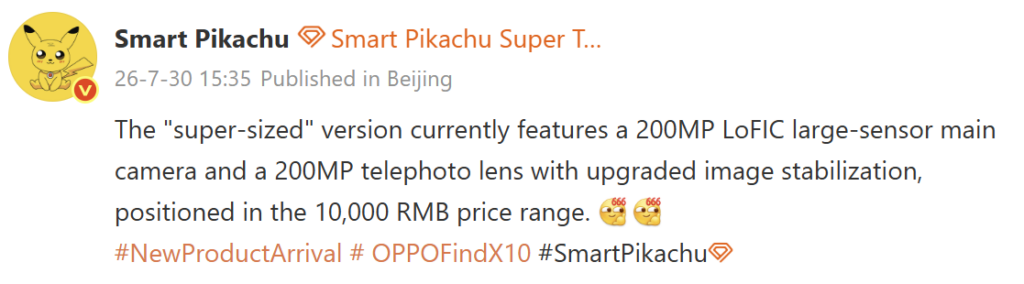
According to tipster Smart Pikachu, the Xiaomi 18 Pro and Xiaomi 18 Pro Max are expected to continue with the rear display concept seen in the previous generation. This secondary screen is said to evolve into an AI-powered smart window, enabling more dynamic and context-aware interactions instead of functioning as a simple auxiliary display.

The tipster has also indicated that the Xiaomi 18 series is likely to be unveiled in September, aligning with Xiaomi’s typical flagship launch cycle. Earlier statements from company leadership had already confirmed continued investment in rear display technology, with a focus on improving usability through frequent feature updates.

Existing features such as live translation, video teleprompter tools, and interactive elements are expected to be further refined with stronger AI integration, making the rear panel a more functional part of the device.

On the imaging side, the Pro model is reportedly being tested with a dual 200-megapixel camera setup, covering both the main and telephoto sensors. This could significantly enhance light capture and detail, particularly for zoom photography. Meanwhile, the standard Xiaomi 18 is expected to introduce a periscope telephoto camera, marking a notable upgrade for the base variant.

Performance improvements are also anticipated across the lineup. The Xiaomi 18 series is expected to debut with the Snapdragon 8 Elite Gen 6 chipset, built on a 2nm process. The Pro and Pro Max versions could feature a more powerful variant of the same chip, along with upgrades to haptics and speaker quality.

In addition, Xiaomi is reportedly testing external optical accessories such as magnetic lenses and clip-on zoom modules, which may further expand the camera capabilities beyond the built-in hardware.

For more daily updates, please visit our News Section.

Stay ahead in tech! Join our Telegram community and sign up for our daily newsletter of top stories! 💡

Upcoming Redmi Note 17 Pro Max could pack a 7-inch display, 10,000mAh battery

Redmi is expected to unveil the Redmi Note 17 series in the third quarter of this year in China. Months ahead of the launch, tipster Digital Chat Station has seemingly revealed key details about what appears to be the Redmi Note 17 Pro Max.

Redmi Note 17 Pro Max key details seemingly revealed

The above leak by DCS suggests that Redmi is evaluating a phone featuring a 7-inch flat display and a battery of around 10,000mAh. While he did not specify the name of the device, some have speculated in the comments that he could be referring to the Redmi Note 17 Pro Max.

A previous leak claimed that this 10,000mAh Redmi phone may support 100W charging and could feature a 200-megapixel primary camera. At present, there is no information available about the other specifications of this phone.

What happened to the Redmi Note 16 series?

Since Redmi unveiled the Redmi Note 15 series in August 2025 in China, the next-generation series was expected to be called the Note 16. However, a report by XiaomiTime revealed that IMEI database listings indicate the next lineup will be called the Note 17. Readers are advised to wait for more reports to confirm whether the company has finalized the Note 17 branding for its next Note series.

This generational skip aligns with Xiaomi’s decision to skip the Xiaomi 16 and jump directly to Xiaomi 17 this year after launching the Xiaomi 15 series last year.

For more daily updates, please visit our News Section.

Stay ahead in tech! Join our Telegram community and sign up for our daily newsletter of top stories! 💡

Galaxy S26 Plus vs iPhone 17: Value vs Power – Which Should You Pick?

The flagship battle in 2026 feels more divided than ever, and the Samsung Galaxy S26 Plus and iPhone 17 sit right at the center of it. Samsung leans into raw hardware, bigger displays, and feature-packed versatility, while Apple focuses on refinement, efficiency, and seamless ecosystem integration. Both aim to deliver a premium experience, but they approach it in completely different ways. For buyers in this segment, understanding these differences matters more than ever, because the better phone isn’t just about specs, it’s about which experience fits everyday use more naturally.

Major Features:

FeatureGalaxy S26 PlusiPhone 17Winner
Build & ProtectionGorilla Glass Victus 2, Armor Aluminum, IP68Ceramic Shield 2, Aluminum, IP68 (deeper rating)iPhone – stronger water resistance
Display6.7″ LTPO AMOLED, 1440p, 2600 nits6.3″ OLED, 120Hz, 3000 nits peakSamsung – sharper & bigger
ProcessorSnapdragon 8 Elite Gen 5 / Exynos 2600Apple A19iPhone – better optimization
RAM12GB8GBSamsung – more headroom
Storage TypeUFS 4.XNVMeiPhone – faster storage tech
Rear Camera50MP + 10MP telephoto + 12MP ultrawide48MP + 48MP ultrawideSamsung – has optical zoom
Video8K, HDR10+4K Dolby VisioniPhone – superior video quality
Selfie Camera12MP18MP + depthiPhone – more advanced
Battery4900mAh3692mAhSamsung – larger battery
Charging (Wired)45W~27W (50% in 20 min)Samsung – faster charging
Wireless Charging20W + reverse25W MagSafeiPhone – faster wireless
Special FeaturesDeX, UWBFace ID, Satellite SOS, UWBTie – depends on usage
Price₹1,20,000 (~$1100)₹83,000 (~$800)iPhone – much better value
Disclaimer: Specs are based on available data. Actual performance may vary. Verify details from official sources before buying.

1. Design and Display

Build and Feel

The Samsung Galaxy S26 Plus brings a premium glass-and-aluminum build with Gorilla Glass Victus 2 on both sides and Samsung’s Armor Aluminum frame, delivering a sturdy yet refined feel. The flat design and symmetrical finish lean toward a modern flagship aesthetic. On the other hand, the iPhone 17 keeps Apple’s signature minimalism with Ceramic Shield 2 and a polished aluminum frame. It feels slightly more compact and easier to handle, with Apple’s finishing often perceived as more “tight” and polished in hand.

Display Quality

Samsung leads with a 6.7-inch Dynamic LTPO AMOLED panel featuring 1440p resolution and strong brightness levels. It feels sharper and more immersive, especially for media consumption. The iPhone 17 counters with a 6.3-inch Super Retina XDR OLED panel, offering excellent color accuracy and higher peak brightness, making it slightly better outdoors.

Verdict

Samsung offers a bigger, sharper, and more immersive display, while Apple delivers better brightness control and color tuning. For entertainment, Samsung feels more satisfying; for consistency, Apple still holds strong.

2. Specifications Including Battery

Performance

The Galaxy S26 Plus runs on Snapdragon 8 Elite Gen 5 or Exynos 2600, depending on region, paired with 12GB RAM. It delivers strong multitasking and gaming performance, especially with higher RAM headroom. The iPhone 17, powered by the A19 chip, continues Apple’s trend of superior efficiency and optimization. Despite having 8GB RAM, it often feels faster in real-world usage due to tighter software integration.

Battery and Charging

Samsung packs a larger 4900mAh battery with faster 45W wired charging and reverse wireless support. It feels more versatile for heavy users. The iPhone 17 has a smaller battery but compensates with excellent optimization and improved wireless charging speeds, including MagSafe.

Verdict

Samsung wins on raw specs, battery size, and charging flexibility. However, Apple’s efficiency keeps it competitive. For power users, Samsung feels more future-proof; for balanced performance, Apple remains reliable.

3. Camera

Main and Secondary Lenses

The Galaxy S26 Plus features a triple-camera setup with a dedicated telephoto lens, enabling true optical zoom. This adds versatility for portraits and long-range shots. The iPhone 17 sticks to a dual-camera system but upgrades both sensors to 48MP, producing highly detailed and consistent images. Apple’s processing still feels more natural and predictable in most conditions.

Selfie Camera

Samsung offers a capable 12MP front camera with strong HDR and 4K recording. The iPhone 17 steps ahead with an 18MP ultrawide selfie camera, enhanced by depth sensing and spatial video features, making it more versatile for content creation.

Verdict

Samsung provides more flexibility with zoom and features, while Apple delivers better consistency and video quality. For versatility, Samsung stands out; for reliability and video, Apple still feels more refined.

4. Pricing

The Galaxy S26 Plus is priced around ₹1,20,000, positioning it firmly in the premium flagship segment. The iPhone 17 comes in at approximately ₹83,000, making it significantly more accessible.

Is the price justified?

Samsung justifies its higher price with a sharper display, larger battery, more RAM, and additional camera hardware. It feels like a “complete flagship package.” However, the iPhone 17 delivers excellent performance, strong cameras, and long-term software support at a much lower cost, making it feel like a smarter buy for most users.

Verdict

The iPhone 17 clearly wins on value for money. Samsung offers more hardware, but Apple delivers a better price-to-performance balance.

Disclaimer:
Prices are approximate and may vary based on country, region, and applicable taxes.

5. Conclusion

The Galaxy S26 Plus stands out with features like Samsung DeX, higher RAM, a telephoto lens, and a sharper display. It is built for users who want maximum hardware and productivity features. The iPhone 17 focuses on ecosystem strength, satellite connectivity, smoother optimization, and consistent camera performance, making it more lifestyle-oriented.

Verdict

The Galaxy S26 Plus is ideal for power users who want top-tier specs and flexibility. The iPhone 17, however, feels like the more balanced and practical choice for most buyers, offering strong performance, reliability, and better overall value without stretching the budget.

iPhone 17 – better value, performance efficiency, and camera consistency
Samsung Galaxy S26 Plus – better for power users needing display, battery, and versatility


Disclaimer: This comparison is based on the specifications provided and is intended for general informational purposes. Actual performance, camera results, battery life, and overall experience may vary depending on real-world usage, software updates, and individual preferences.

Read More:

Samsung may soon release One UI 8.5 beta for these Galaxy devices

One UI 8.5 beta expansion

The One UI 8.5 beta program was limited to the Galaxy S25 series for months, and just when users were expecting the stable rollout to begin, Samsung started expanding the beta program to more Galaxy devices.

In early March 2026, the Galaxy Z Fold 7 and Galaxy Z Flip 7 joined the One UI 8.5 beta program, and later that month, the beta expanded to the Galaxy S24 series, Galaxy S25 FE, Galaxy S24 FE, Galaxy Tab S11 series, Galaxy Z Fold 6, and Galaxy Z Flip 6. The list may still be incomplete as more Galaxy devices could get the One UI 8.5 beta in the coming weeks.

These Galaxy devices may receive One UI 8.5 beta soon

  • Galaxy S23
  • Galaxy S23+
  • Galaxy S23 Ultra
  • Galaxy Z Fold 5
  • Galaxy Z Flip 5

Earlier this week, the first One UI 8.5 beta build for these Galaxy smartphones was spotted (1, 2) on Samsung’s servers, suggesting that the brand could open the One UI 8.5 beta program for them soon.

While opening the beta program would allow more Samsung users to gain early access to the upcoming features and upgrades, it could also result in some delay to the stable rollout.

One UI 8.5 is still based on Android 16, but it uses a newer QPR2 build that brings extra features and enhancements from Google. Plus, the update includes a host of new features and changes from the One UI team, including a fully customizable Quick Settings, allowing you to resize, rearrange, and organize toggles and sliders.

The update also includes updated app icons, featuring a bit of 3D effect, for the first-party apps at least. Further, the lock screen has been updated to automatically adjust the clock and date. It can now show weather visuals based on the current conditions.

A key upgrade in One UI 8.5 is the adoption of a modern floating tab bar UI, a pill-shaped UI element with a frosted color scheme, replacing the traditional plain tab bar at the bottom. The new software introduces “Now Nudge” to proactively suggest actions and information based on the content on the screen. It also introduces some important features, including Partial screen recording, Audio broadcast, Storage share, Failed authentication lock, and Theft protection. You can read more about One UI 8.5 on this page.

Remember to visit the Samsung section on this website regularly for fresh information. If you prefer to receive news as they happen, join our Telegram channel.

Redmi K Pad 2, Intel Core Ultra X7 358H-powered laptops to debut with Redmi K90 Ultra this month

Redmi is expected to hold a major launch event this month in China, which will see the arrival of the Redmi K90 Ultra. Apart from unveiling this performance-focused phone, the brand will also take the covers off a new tablet and Intel CPU-powered notebooks. Here’s a look at the new laptops that are expected to launch with the K90 Ultra.

New Redmi notebooks incoming

According to a tipster, the upcoming Redmi notebooks will be powered by the Intel Core Ultra X7 358H CPU, paired with 32GB of RAM and 1TB of storage. They will be available in 14-inch and 16-inch screen size options.

While the official monikers are not known yet, these could be dubbed the Redmi Book Pro 14 (2026) and Book Pro 16 (2026). These devices are expected to succeed the 2025 Redmi Book Pro 14 and Book Pro 16, which were powered by Intel Ultra 5 225 / 7 225H processors.

Redmi K Pad 2 and Redmi K90 Ultra: What’s known so far

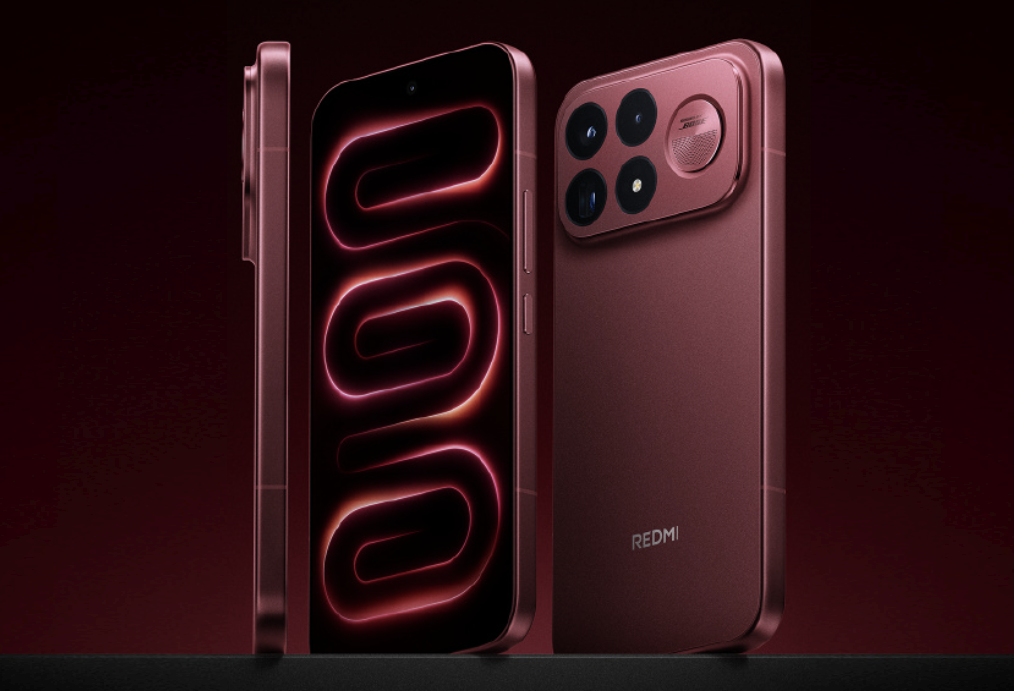
As per reports, the Redmi K Pad 2 will have an 8.8-inch LCD 3K screen offering a 165Hz refresh rate. It will come with other features such as a 9,000mAh battery, a flagship-level processor, dual X-axis motors for enhanced haptics, and triple speakers with Bose tuning.

The Redmi K90 Ultra will be a performance-focused offering, equipped with a Dimensity 9500. It will feature a 6.83-inch OLED 1.5K 165Hz screen, an 8,500mAh battery with 100W charging, a built-in cooling fan, and a Bose-tuned triple speaker system.

For more daily updates, please visit our News Section.

Stay ahead in tech! Join our Telegram community and sign up for our daily newsletter of top stories! 💡

Here’s your first look at Infinix GT 50 Pro’s design; new gaming triggers, thermal upgrades incoming

This year, Infinix launched a couple of smartphones, such as the Infinix Note Edge, Note 60, Note 60 Pro, and Note 60 Ultra. Now, it is gearing up to unveil the gaming-focused Infinix GT 50 Pro for the global market. Ahead of its launch, we bring you the first look at the Infinix GT 50 Pro’s design.

Infinix GT 50 Pro design revealed

Infinix GT 50 Pro design sketch

The Infinix GT 50 Pro appears to carry forward the brand’s hypercar-inspired design language, but with a cleaner and more refined execution. The device introduces a Kevlar-like texture along with sharper, aerodynamic lines that give it a more premium in-hand feel.

One of the standout design elements is a transparent, colored “pipeline window” that highlights the internal cooling system. It gives the impression of active, moving components, almost as if the phone is “breathing” while coolant flows through its channels in real time, adding a dynamic and mechanical aesthetic to the rear panel.

Another key highlight is the introduction of the industry’s first dual-pressure shoulder triggers. These triggers introduce an advanced dual-pressure mapping system combined with a sliding switch mechanism, allowing multiple actions to be executed using a single finger. Designed for durability, they are rated for over 3 million presses and deliver ultra-fast response times of under 20ms for near-instant feedback. The setup supports up to eight customizable mapping points along with ten levels of pressure sensitivity, and comes pre-tuned for popular mobile games to make adoption easier. Beyond gaming, the triggers also enable features like sliding zoom in the camera and quick-access shortcuts across the interface, adding practical utility to everyday use.

The GT 50 Pro will feature the industry’s biggest micro-pump liquid cooling setup with a 6,437mm² diaphragm area, intended to improve heat dissipation during extended gaming sessions. The improved thermal system ensures full coverage of core heat zones, helping maintain stable performance under load.

Additionally, a new magnetic cooling accessory dubbed MagCharge 2.0 with wireless bypass charging is expected. This system directly powers the device while reducing battery heat, combining active cooling with wireless charging support. The aim is to sustain performance without the usual thermal throttling seen in gaming smartphones. It will support 15W wireless power and 12W active TEC refrigeration.

For more daily updates, please visit our News Section.

Stay ahead in tech! Join our Telegram community and sign up for our daily newsletter of top stories! 💡

Vivo X300 Ultra European pricing and color options tipped ahead of launch

With just days to go before its European debut, the Vivo X300 Ultra has leaked with pricing and color options for the region.

Earlier leaks, including what looked like listings from Vivo Austria’s own store, suggested the top-end model (16GB RAM, 1TB storage) could land at around €1,999. That immediately raised eyebrows. At that level, it’s brushing up against phones like Apple’s highest-end iPhone.

Now there’s a slight change. According to tipster Roland Quandt, a newer retail source points to a launch price of €1,900 for the 16GB+1TB configuration. There’s also mention of a bundled version that includes the 400mm G2 Ultra teleconverter, essentially an add-on aimed at getting more out of the camera system. That package is said to be priced at around €2,300, so quite a jump if you want the full setup.

Even at €1,900, though, this is firmly in ultra-premium territory. Especially considering the same phone is already available in China at noticeably lower prices if you go the import route. That gap is something buyers in Europe have been pointing out more often lately.

Vivo does seem to be trying to soften the blow a bit. Pre-order offers, at least in some regions, are expected to bundle in accessories or discounts. At the end of the day, it’s a phone that’s leaning heavily on professional photography and videography. The Zeiss collaboration, the hardware, the optional teleconverter, it’s all clearly aimed at photography first.

The official pricing is expected to be confirmed on April 16, so there’s still a small chance things shift again. But even if it does settle around €1,900, the bigger question is whether buyers see enough value there to justify it. As one commenter noted, a Lumix S5D with a zoom lens goes for around €790.

The phone is expected to come in Green and Black in Europe.

Don’t miss a thing! Join our Telegram community for instant updates and grab our free daily newsletter for the best tech stories!

For more daily updates, please visit our News Section.

(Source)

Casio G-Shock 5000 Series Gets Rainbow Metal Design with Solar and Bluetooth

Casio has introduced the Casio G-Shock GMW-BZ5000RC-1 in Japan, adding a new design direction to its 5000 series. The model had surfaced in leaks earlier this year and is now listed on the company’s official store with a price of ¥121,000. A wider global release is expected, though timelines and regional pricing have not been confirmed.

The watch features a full-metal construction with a stainless steel case, bezel, and band. Its standout element is the center case, which uses a gradient rainbow ion-plated finish. This effect extends across the dial and is complemented by rainbow vapor deposition on the glass. Gold-colored ion-plated screws add contrast, while a mix of hairline and mirror finishes across components highlights the metal texture.

The structure combines the bezel and center case at the top and bottom, leaving the center case partially exposed. This design is supported by a resin internal protector that deforms under impact to absorb shocks. A screw-lock case back ensures a tight seal, maintaining G-Shock durability standards. The watch is also water-resistant up to 200 meters.

Casio says artificial intelligence was used alongside decades of shock-resistance data to refine the design and optimize component structure. The manufacturing process involves repeated forging, cutting, and polishing to achieve the final form. Production takes place at Yamagata Casio in Japan, the same facility that produced the original G-Shock.

The watch uses a high-definition MIP LCD with a negative display for improved clarity. Users can switch between multiple time display layouts and choose between STANDARD and CLASSIC font styles through a companion app. Bluetooth connectivity enables automatic time adjustment, while Multiband 6 radio control ensures accuracy.

Additional features include dual world time, a 1/100-second stopwatch, a countdown timer, and five daily alarms. The Tough Solar system supports continuous operation through light-based charging.

You must also check out our best of CES 2025 for all the coolest tech announcements.

Stay ahead in tech! Join our Telegram community and sign up for our daily newsletter of top stories!

(Source, via)

Oppo Find X9s Pro compact phone’s massive battery, charging capabilities revealed

Oppo will announce the Find X9 Ultra on April 21 in China. Alongside it, the brand will take the covers off the Find X9s Pro, which will be a compact offering and the smallest phone in the X9 series. The brand recently confirmed that this device will come equipped with dual 200-megapixel cameras. Now, a new leak has revealed several key details about this phone.

Oppo Find X9s Pro key details tipped

According to reliable tipster Digital Chat Station, the Oppo Find X9s Pro will house a 6.32-inch OLED panel offering a 1.5K resolution and a 144Hz refresh rate. As the brand has already confirmed, the device will be equipped with Tianma’s U9 Pro display panel, which will be surrounded by ultra-thin bezels on all four sides.

On the back, the device will feature a large horizontal camera module, which will have a pair of 200-megapixel sensors for the primary and periscope telephoto cameras, along with a 50-megapixel ultra-wide lens. Previous reports suggested that the device will have a pair of Samsung HP5 camera sensors powering its primary and periscope telephoto cameras. However, the new leak suggests that it may feature a different primary camera, the details of which are not yet known.

Previous reports have already revealed that the Dimensity 9500 chip will power the Find X9s Pro. Despite having a compact body, the device will feature a massive 7,025mAh battery, which is the same as the larger Find X9 that features a 6.59-inch screen.

The Find X9s Pro will support 80W wired and 50W wireless charging. It will come preloaded with ColorOS 16 based on Android 16. Likely, this phone may remain exclusive to the Chinese market. It will come in multiple choices, such as 12GB+256GB, 12GB+512GB, 16GB+512GB, and 16GB+1TB, and buyers will be able to choose from colors, such as Titanium, White, Cyan, and Orange.

For more daily updates, please visit our News Section.

Stay ahead in tech! Join our Telegram community and sign up for our daily newsletter of top stories! 💡