Samsung is gearing up for the launch of its Galaxy S25 series, expected to debut sometime in January 2025. Among the upcoming models, the base Galaxy S25 has recently made an appearance on Geekbench, revealing some intriguing details about its hardware and performance.
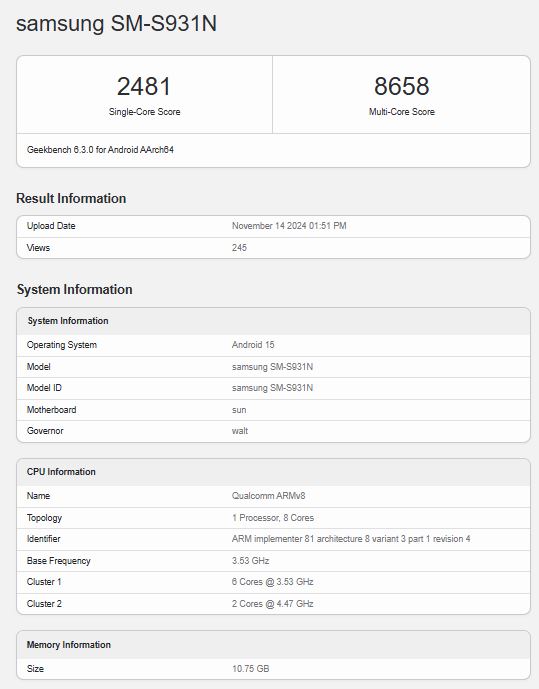
Galaxy S25 Geekbench listing details
The Geekbench listing features the Galaxy S25 with the model number “SM-S931N,” likely for the Korean market. It is powered by the customized “Snapdragon 8 Elite for Galaxy” chipset, confirmed by its higher clock speed of 4.47 GHz, compared to the standard Snapdragon 8 Elite‘s 4.32 GHz. This specialized version of the chipset has previously been seen exclusively in Samsung flagships. The tested device packs 12 GB of RAM.
However, the performance scores are somewhat disappointing. The Galaxy S25 scores 2481 in single-core and 8658 in multi-core tests, significantly lower than most of the Snapdragon 8 Elite devices released or listed on the platform so far. For context, the OnePlus 13 and iQOO 13 routinely score over 3100 and 10,000 on the same tests, showcasing the disappointing performance of Samsung’s custom-tuned chip, at least on the test.
Potential reasons for the underwhelming performance
Could the underwhelming performance be attributed to a smaller cooling system on the base Galaxy S25 compared to the larger, performance-centric flagships? Or is Samsung simply adopting a more conservative approach to performance?
At this stage, there isn’t enough information to draw firm conclusions. However, it’s worth noting that Samsung’s ‘For Galaxy’ chipsets have historically scored lower than their standard Snapdragon 8-series counterparts. This difference may stem from Samsung’s focus on prioritizing efficiency over raw performance.
While the listing suggests the adoption of the Snapdragon 8 Elite for the Korean market, there’s good news for users in Europe and India as well. Prolific leaker Ice Universe has reiterated that Samsung plans to use the Snapdragon chipset across the entire Galaxy S25 series in all markets, similar to the Galaxy S23 series. Although this is still a rumor, there is a compelling reason why it seems plausible.
Samsung‘s Galaxy S series has long been part of Samsung’s dial-sourcing strategy, featuring both Snapdragon and Exynos chipsets, depending on regional markets.
However, a new tip suggests that the Galaxy S25 series might break this tradition once again after the Galaxy S23 series. Renowned tipster Ice Universe reiterates his previous claim saying that Samsung will power all models of the Galaxy S25 lineup with Qualcomm’s Snapdragon 8 Elite chipset, abandoning the Exynos 2500 for this generation.
This isn’t the first speculation about Samsung’s chip-sourcing strategy for its upcoming flagship. Earlier rumors hinted at Samsung using a mix of Snapdragon and Exynos chipsets or even adopting MediaTek flagship for select models. However, Ice Universe’s claim reinforces the possibility of an all-Snapdragon lineup, marking a significant shift for Samsung’s flagship series.
Snapdragon 8 Elite over Exynos 2500
Samsung Foundry’s 3nm process, which the Exynos 2500 (intended to power the Galaxy S25 and S25+) relies on, currently has a yield rate of around 20%. For context, the semiconductor yield represents the percentage of chips successfully produced relative to the maximum chip count on a wafer; it inversely correlates with the defective rate. To make the fabrication process economically viable, a yield rate of at least 70% is typically required. In comparison, TSMC’s 3nm process, used for the Snapdragon 8 Elite, reportedly achieves a yield rate exceeding 80%.
Such low yields make production costly and unsustainable, possibly influencing Samsung’s decision to go all-in with Snapdragon for the Galaxy S25 series. Significant in context, Samsung is also exploring possibilities to outsource Exynos’s production to TSMC, like most of the fabless manufacturers including Qualcomm and MediaTek.
While nothing is confirmed until the Galaxy S25 lineup officially launches, this rumored strategy could enhance user confidence in Samsung’s flagship devices. The series is expected to debut in January 2025, likely in the early weeks of the month.
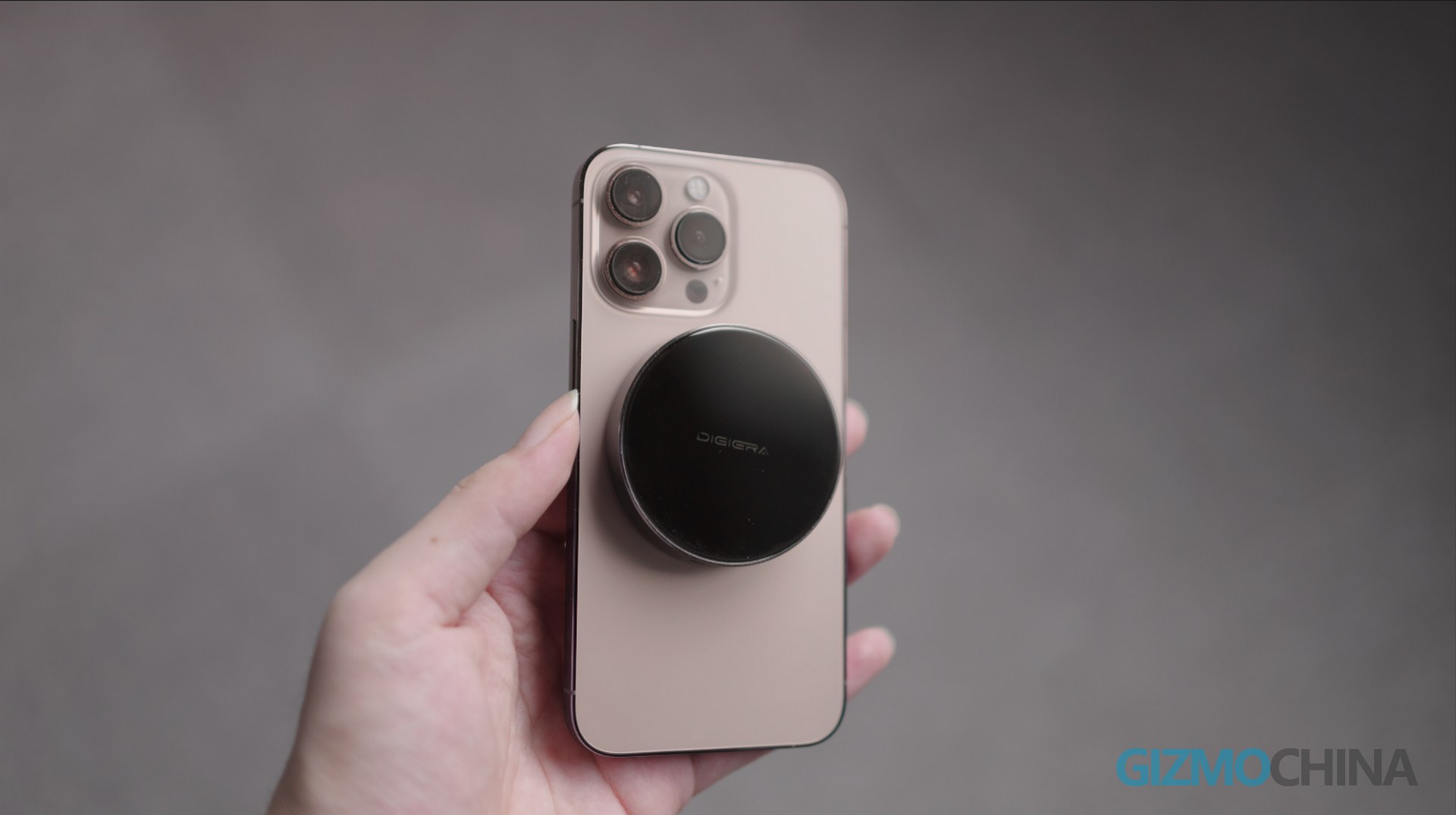
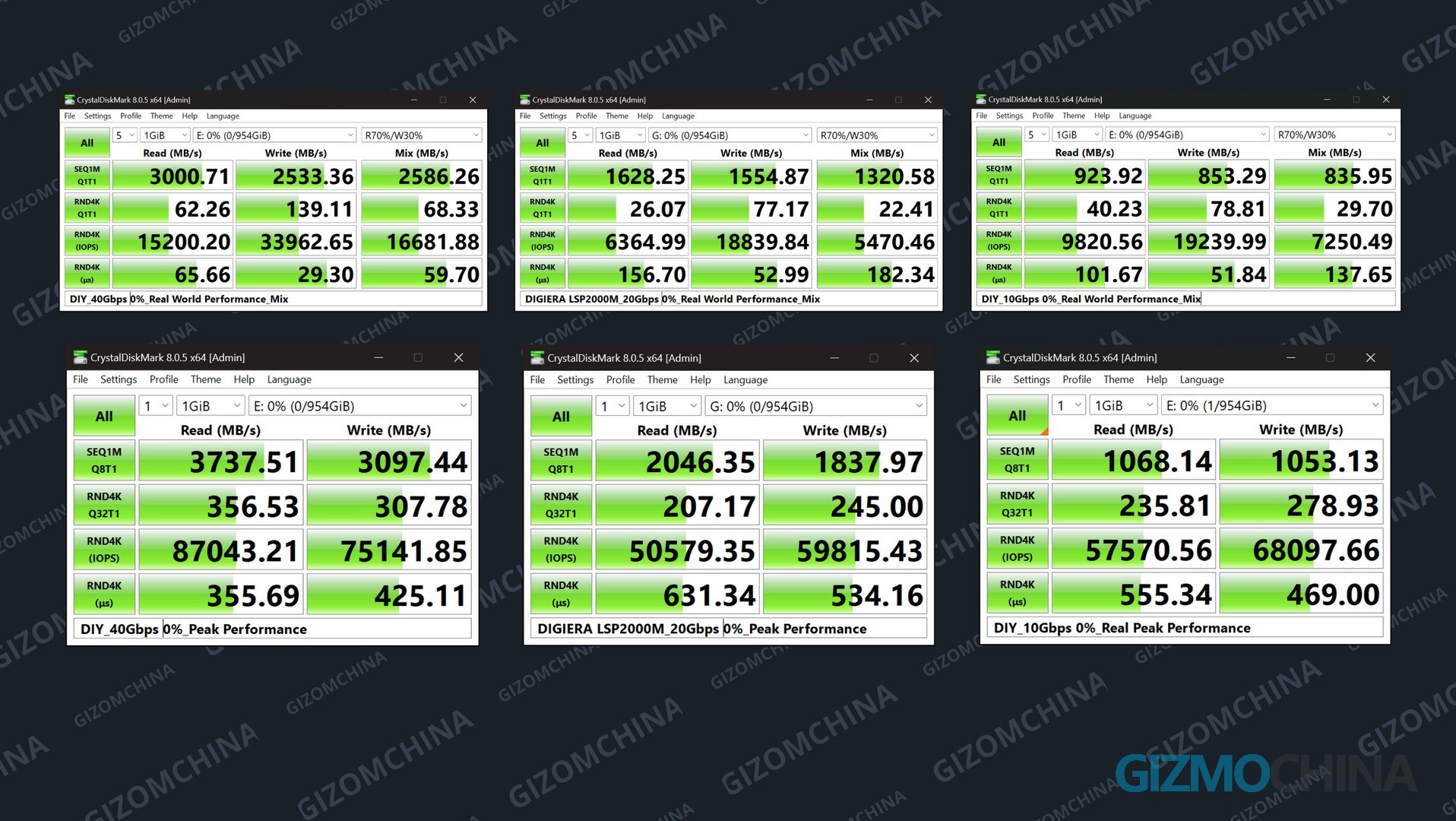
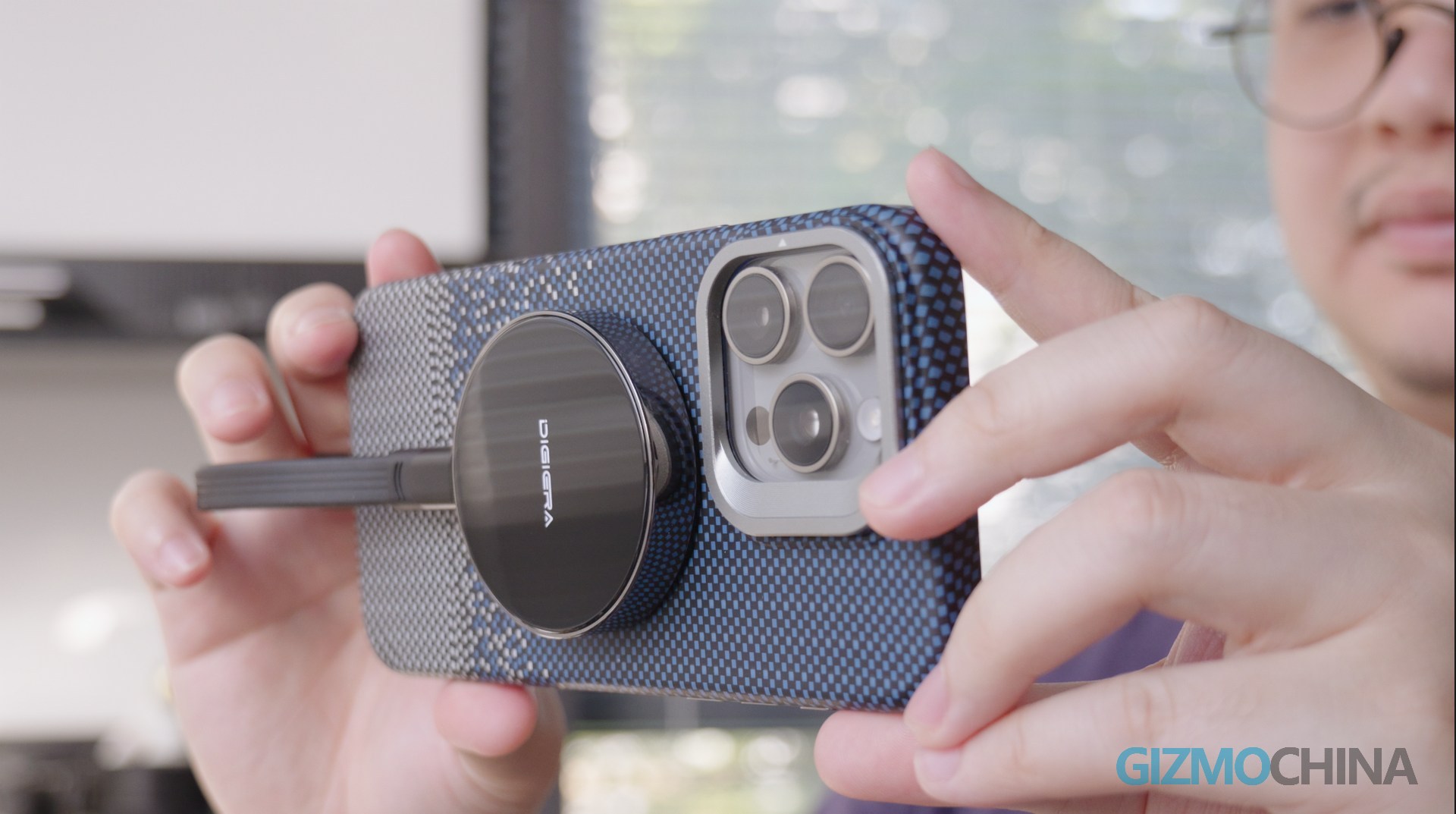
This might be the most elegant solution for creative work on an iPhone. (Picking up the phone, showing the SSD) But is it suitable for use exclusively as an iPhone’s external storage? What advantages does it have compared to conventional USB drives or portable SSDs? So, in the upcoming tests, I will compare this DIGIERA with my DIY solution.
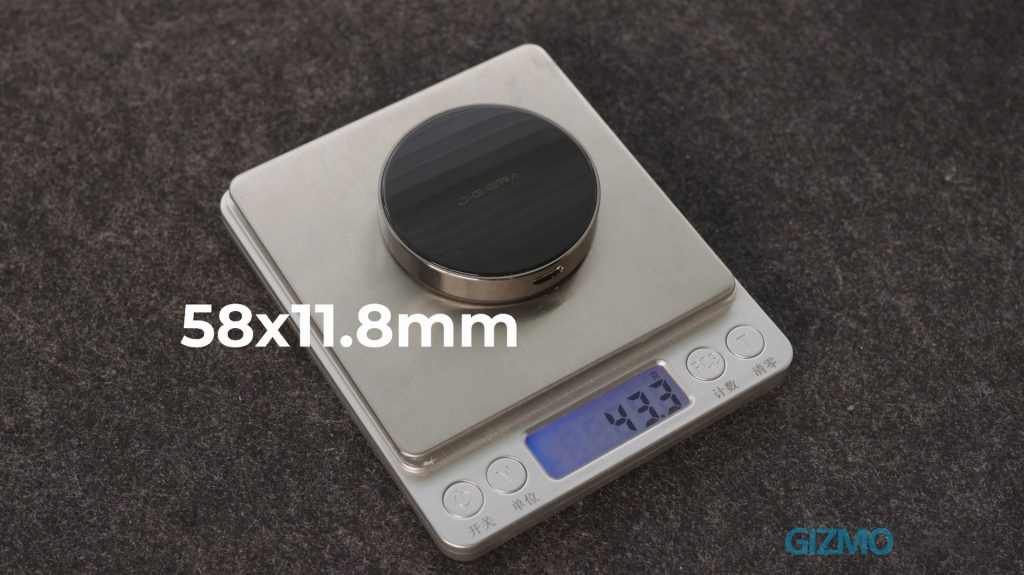
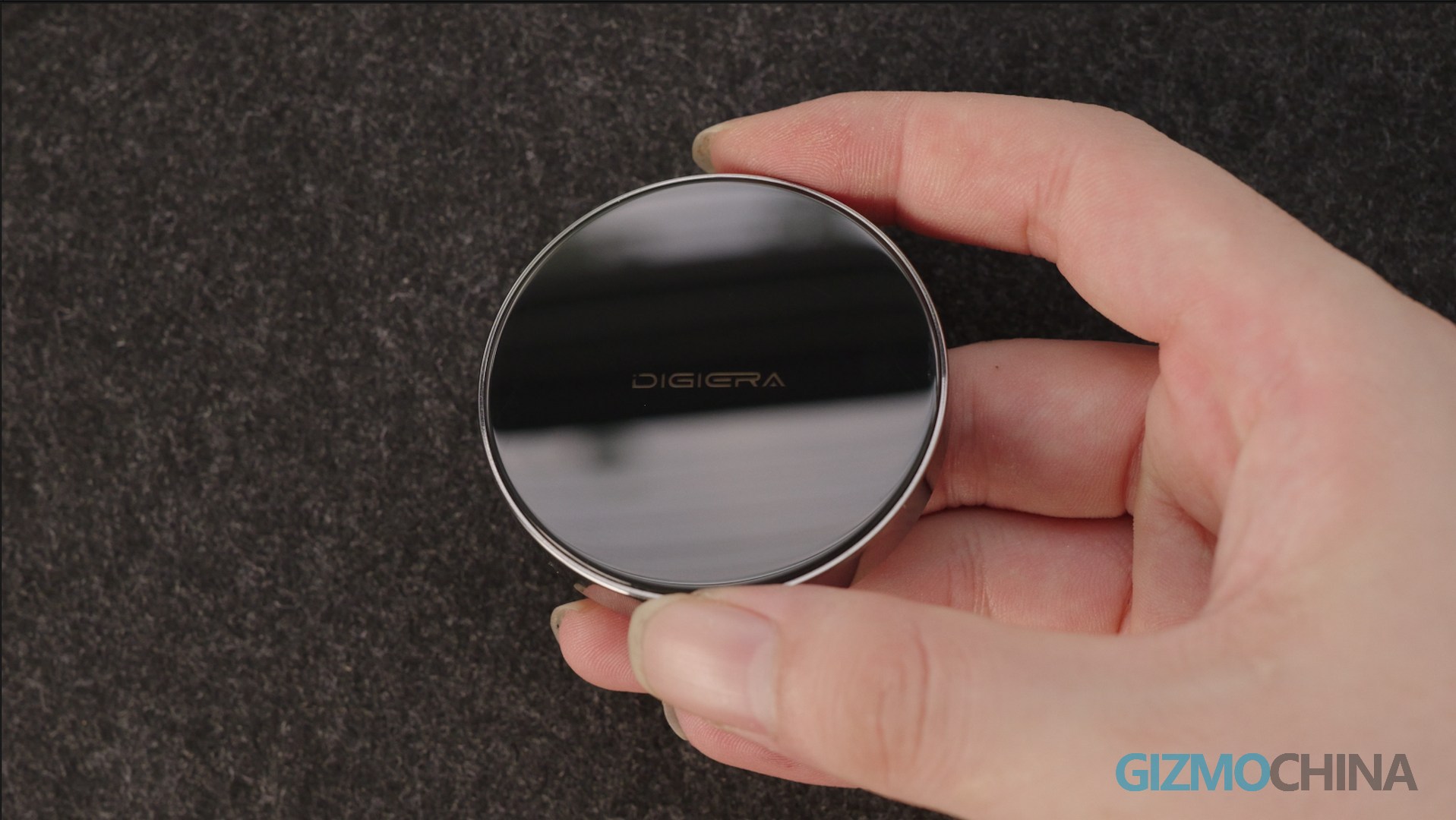
Compared to regular portable SSDs, the LSP2000M is very small. It’s also very light.
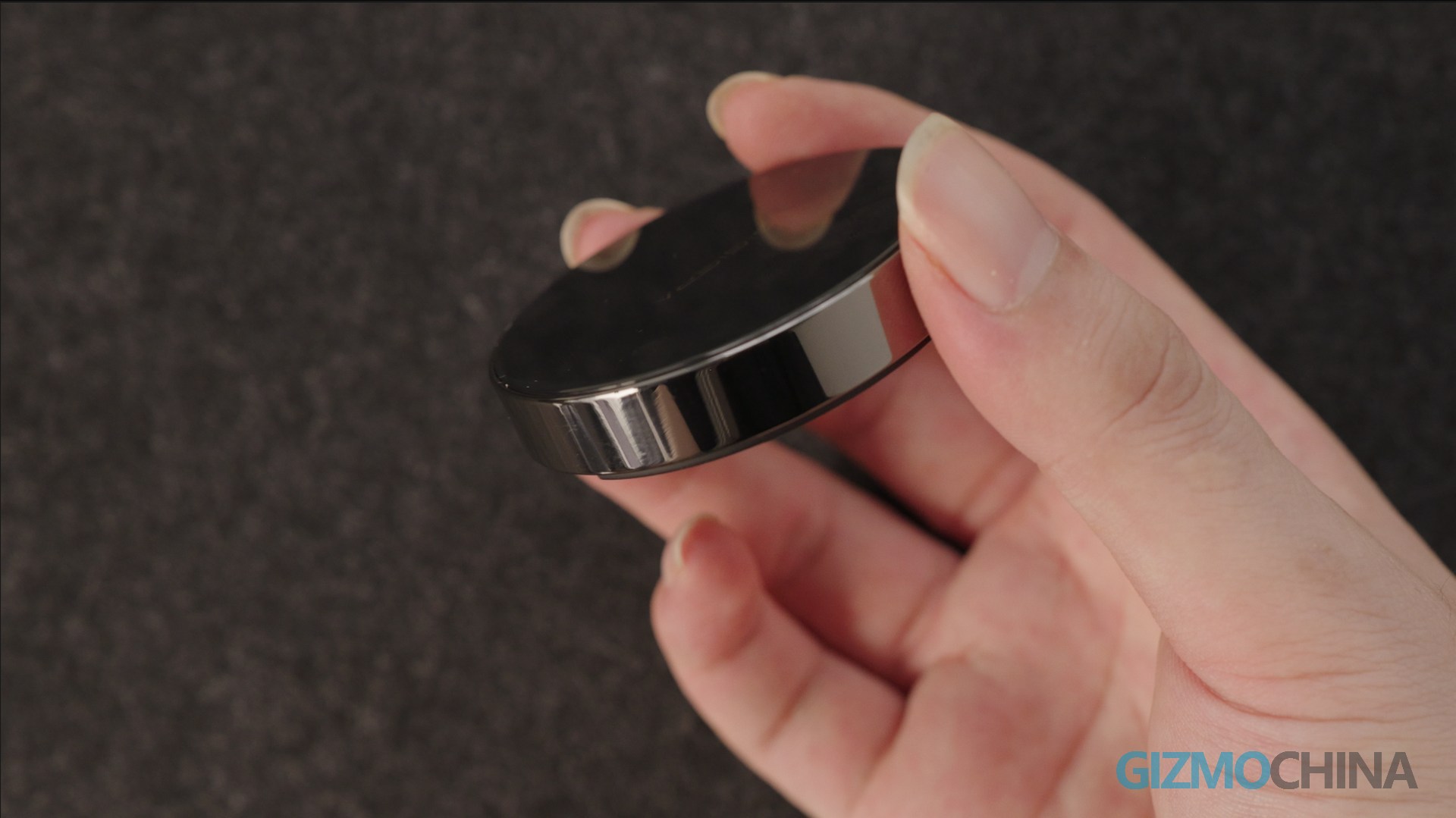
The material of glass and stainless steel frame makes it look more like a watch.
However, it would be cooler if it could display the remaining storage space. The bottom is labeled with the model and capacity. If you think 1TB is too small, DIGIERA also offers options up to 4TB, all using TLC NAND chips.
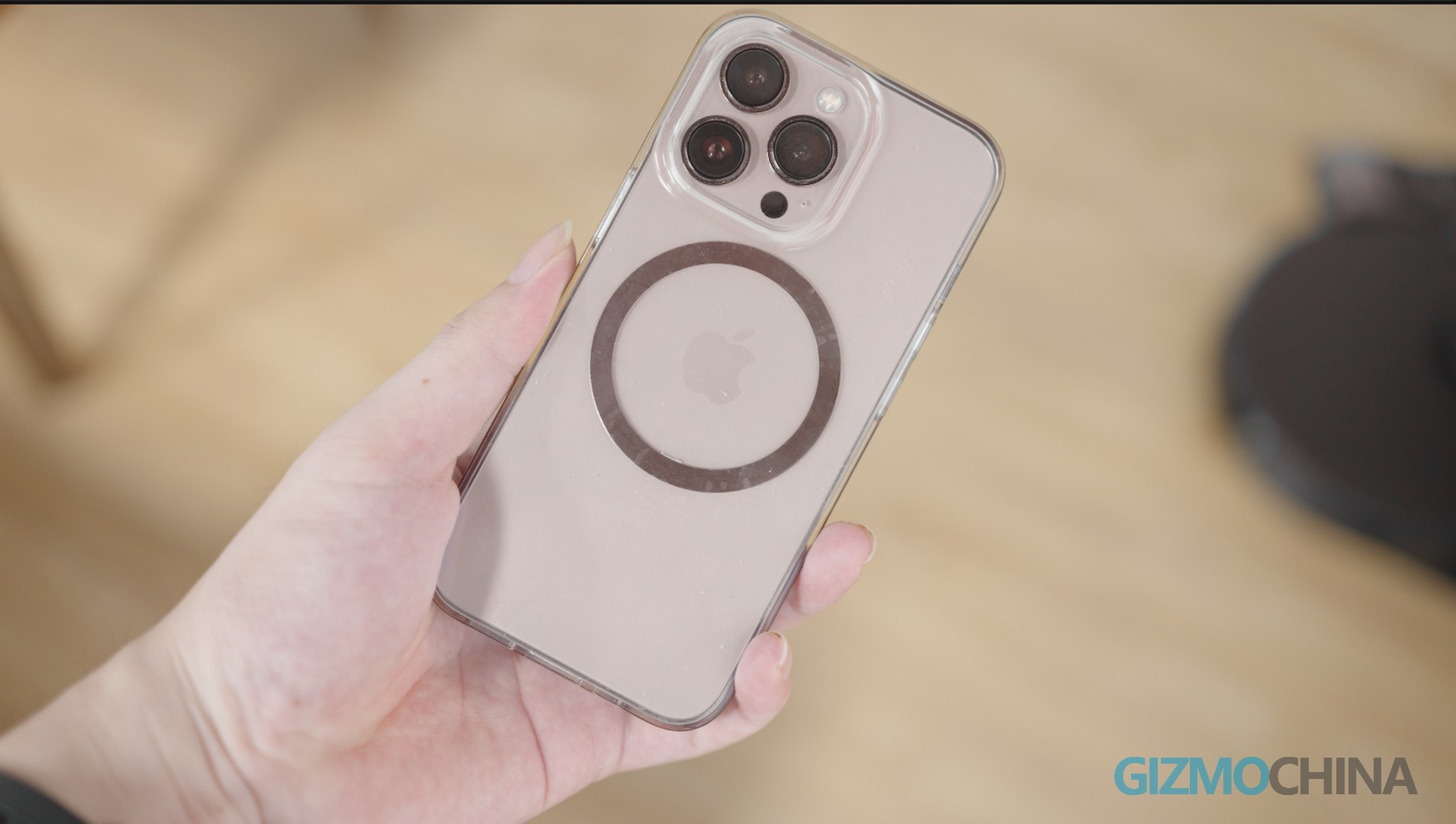
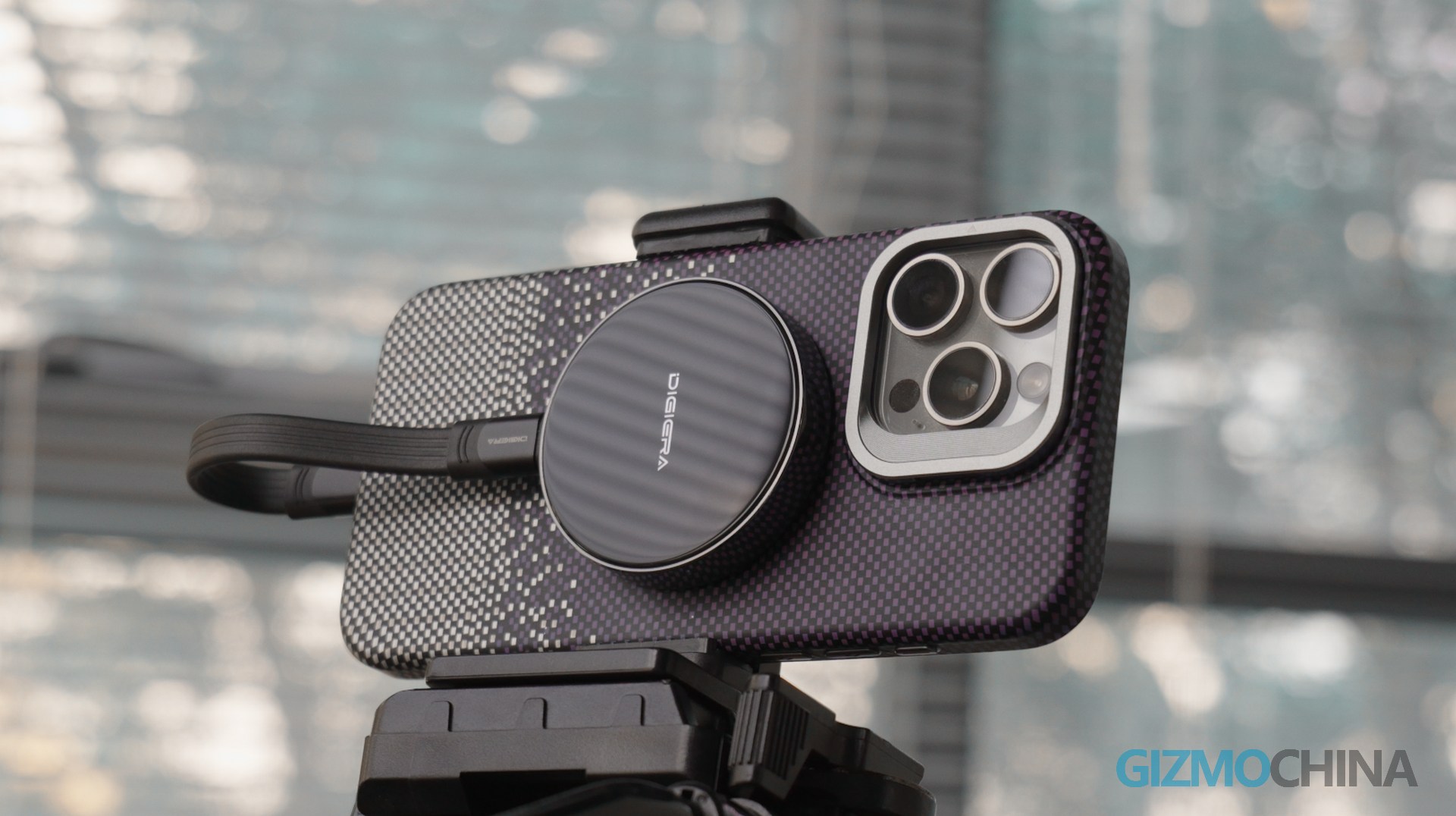
It can also be installed via magnetic if your phone case supports MagSafe. You can directly attach it and connect it to your phone. But if your phone case doesn’t support that, you can use the small kit included to achieve that.
Configuration
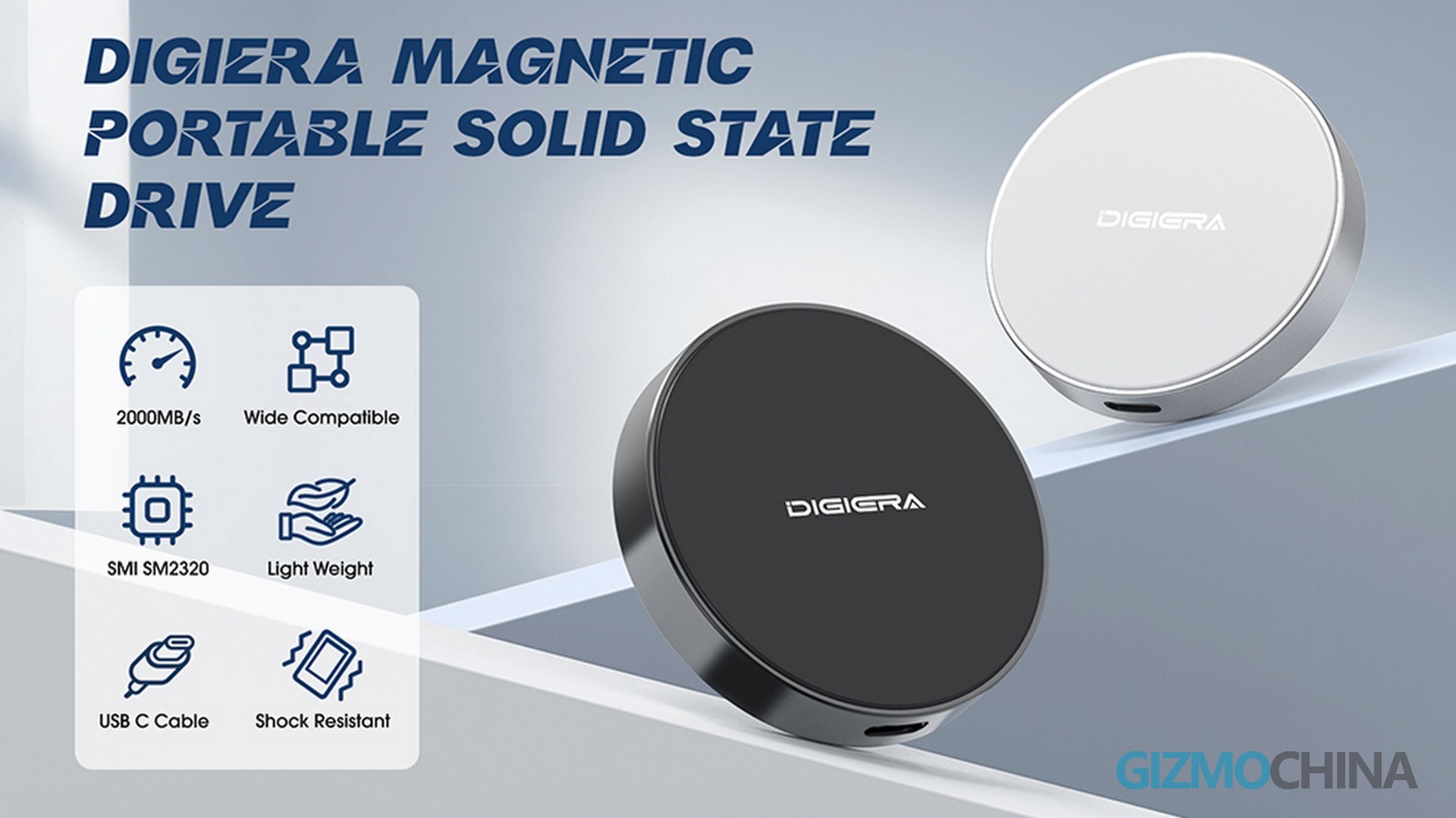
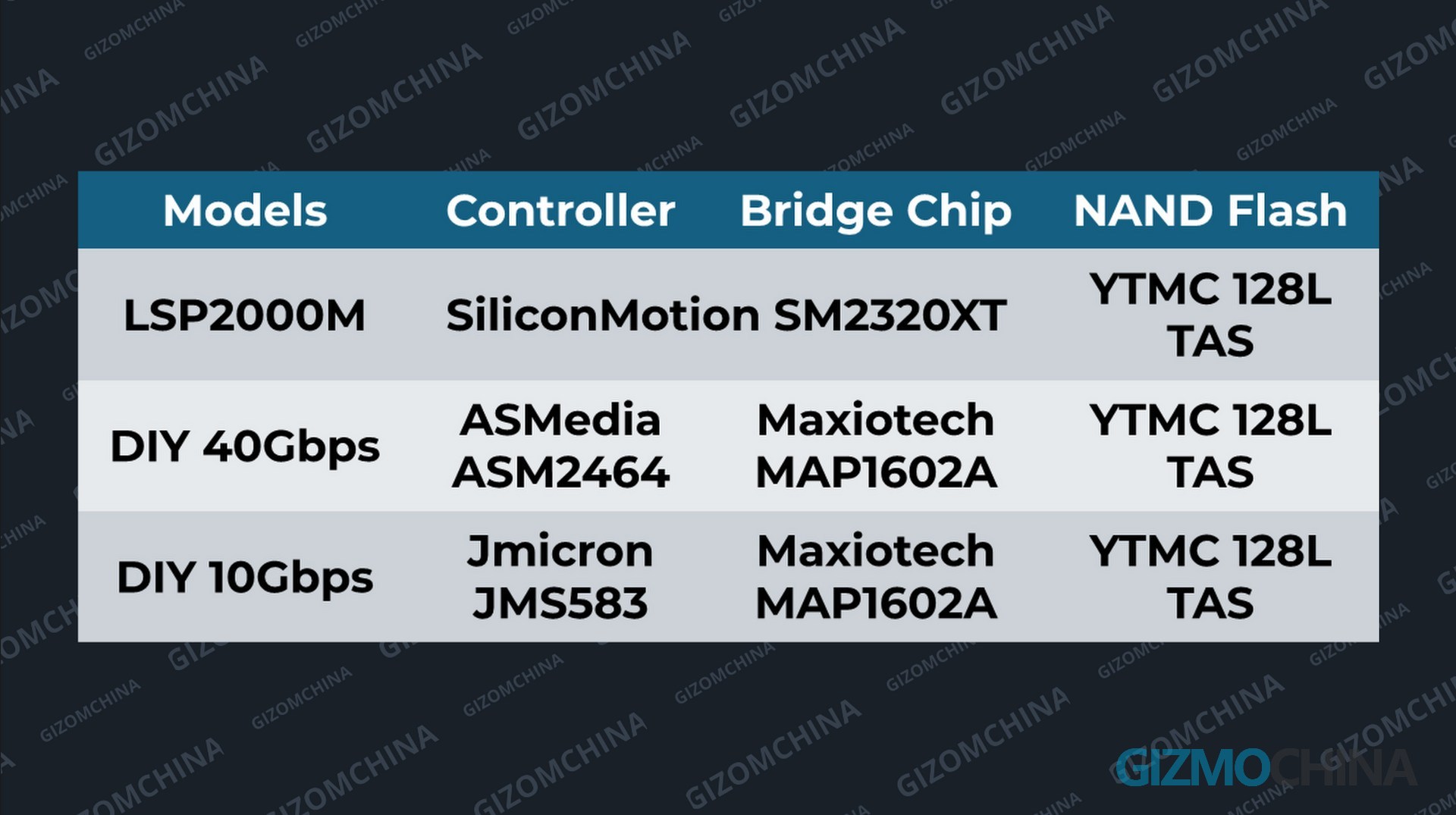
Before we get to the tests, let’s look at its configuration. It claims that this portable SSD uses Silicon Motion’s SM2320, a USB 3.2 Gen 2 Dual-Lane Portable SSD Controller Solution without a DRAM cache.
Compared to the conventional bridge chip + SSD controller solution, it is theoretically more power-efficient and can make the entire SSD smaller. This makes it more suitable for recording ProRes on the iPhone.
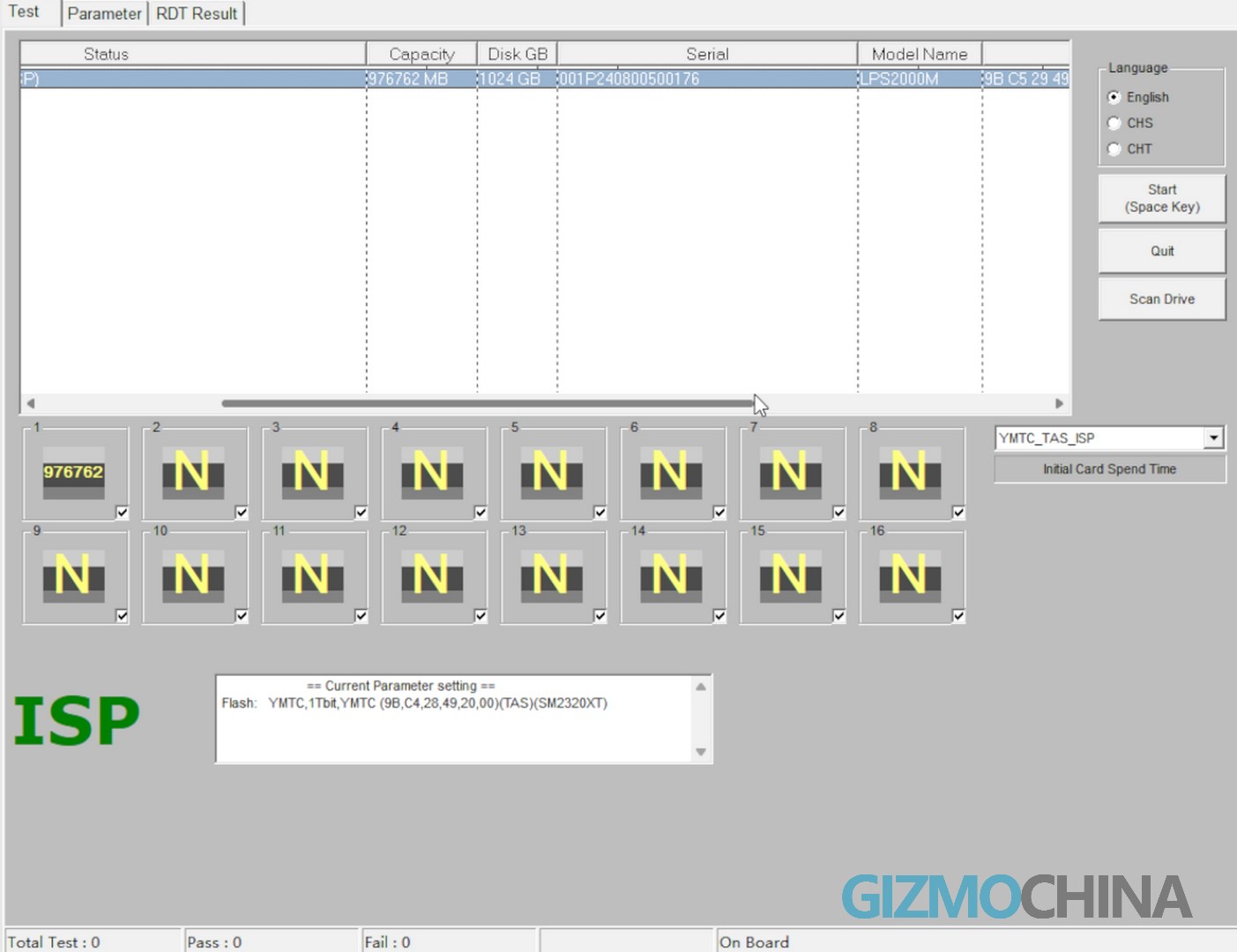
The NAND, according to the FLASH ID provided by MPTool, is a 128-layer NAND chip produced by YMTC.
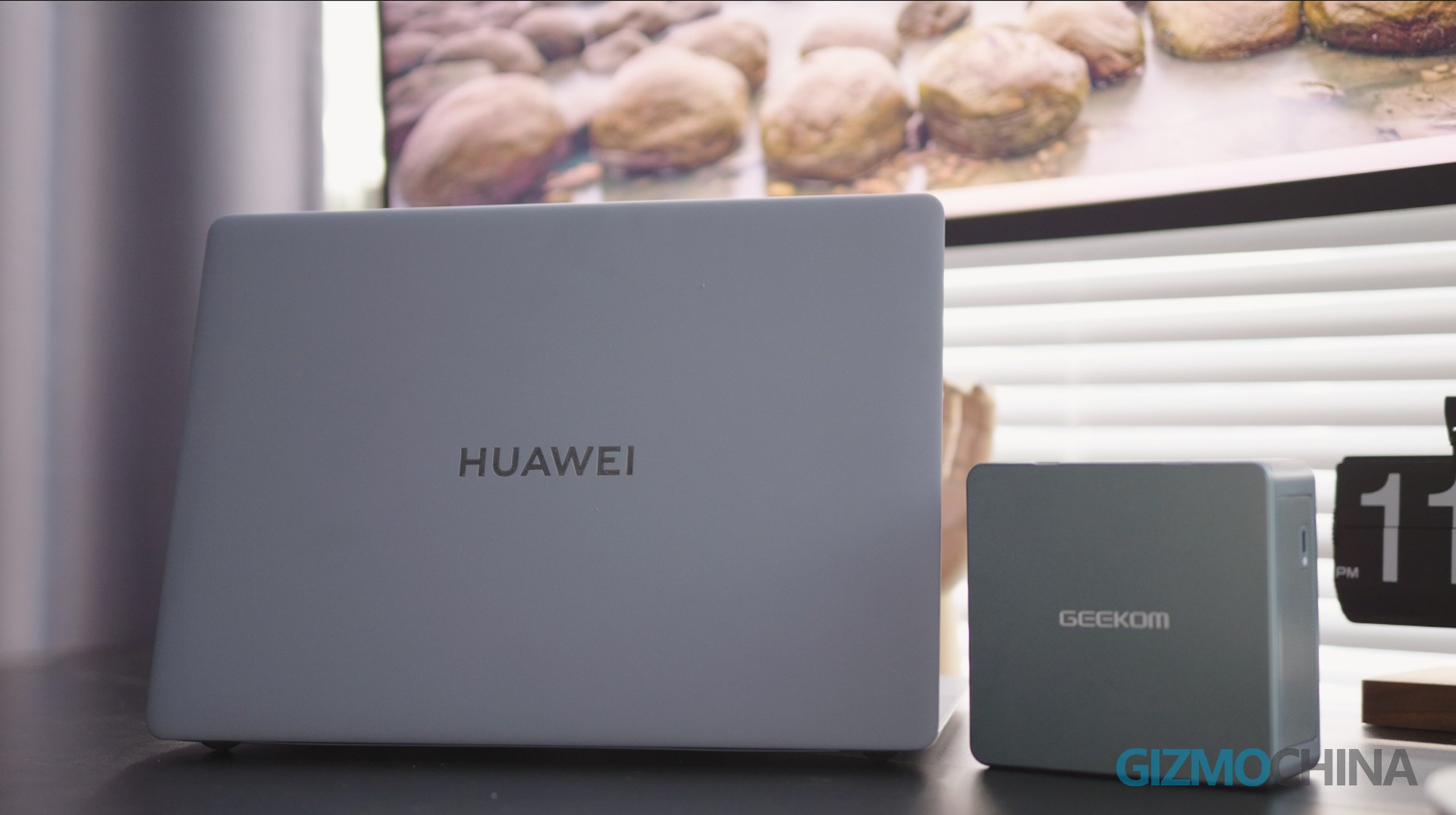
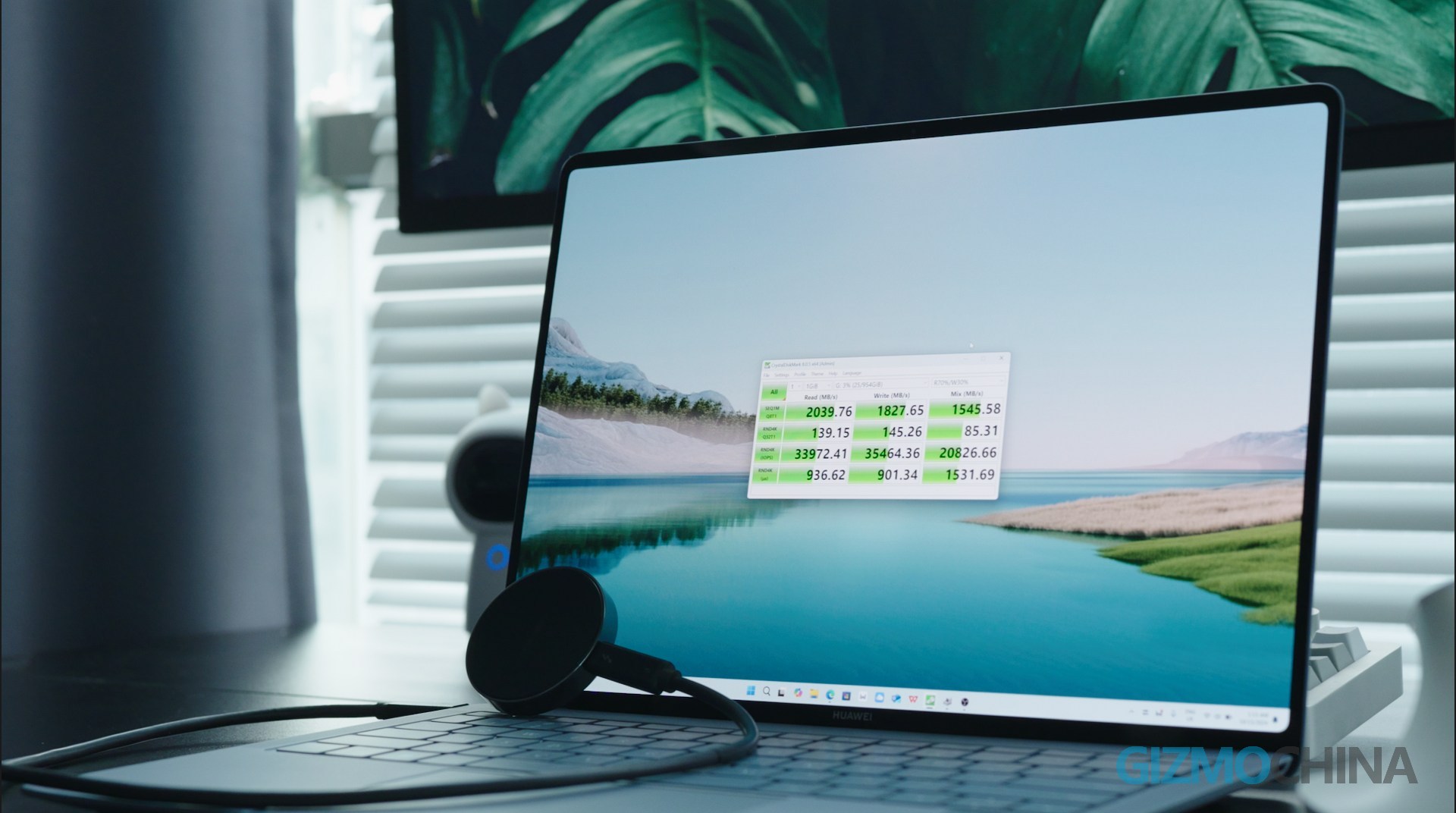
Later we will use this Huawei MateBook X Pro and GEEKOM for testing.
To test the highest performance, I will also enable the write cache function in Windows. I will use the same cacheless SSD with 40Gbps and 10Gbps rate hard drive boxes for comparison.
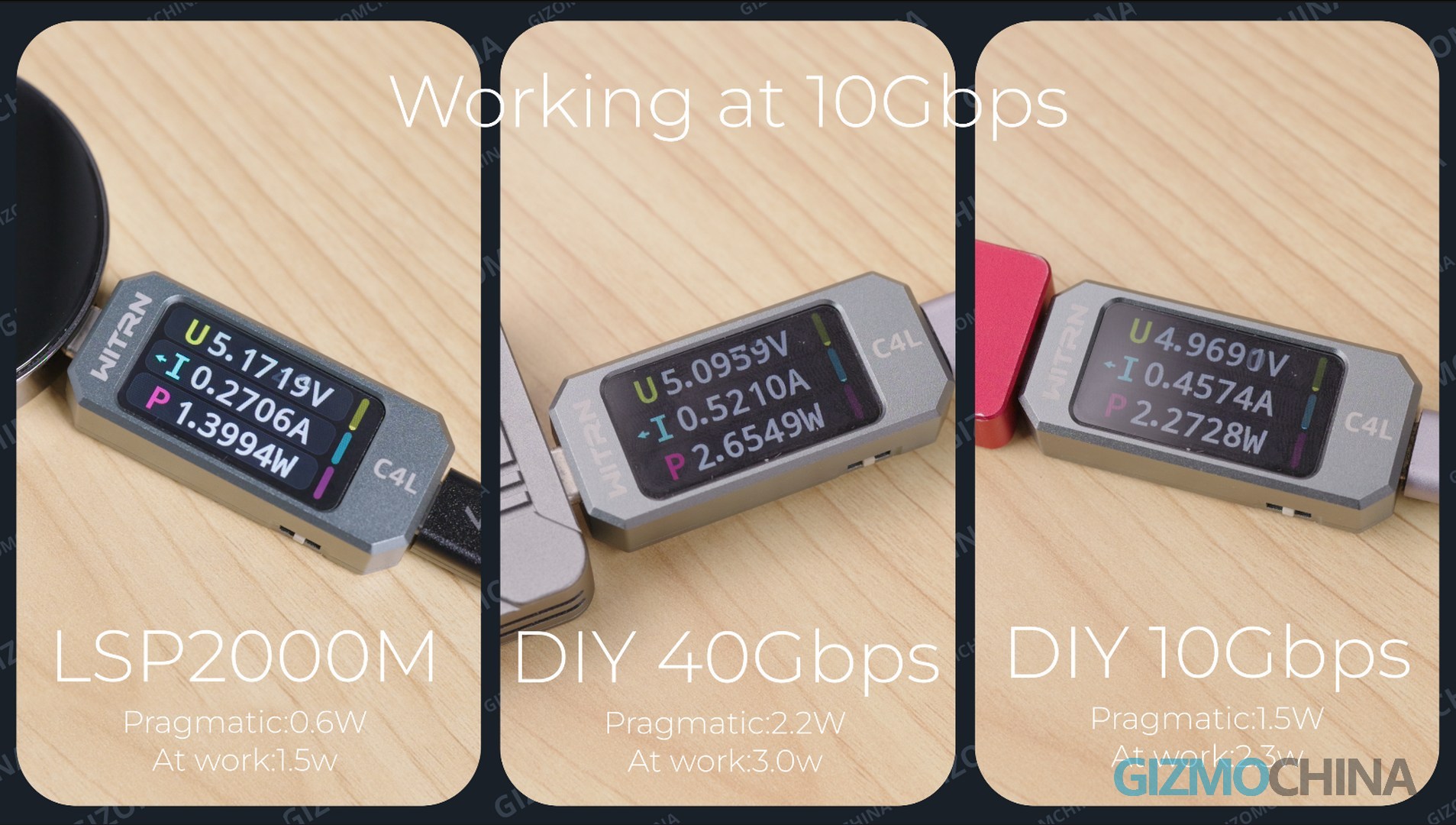
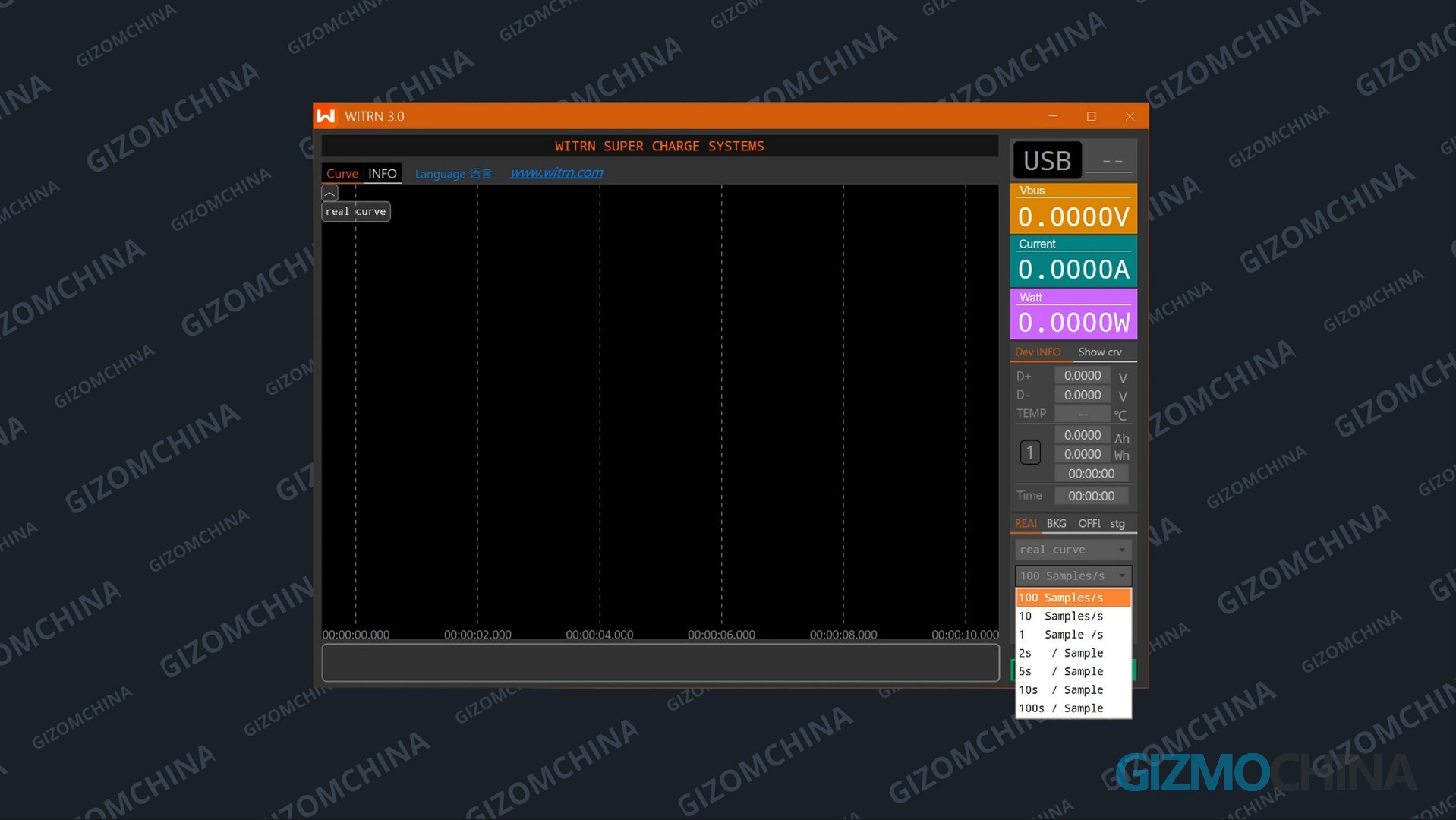
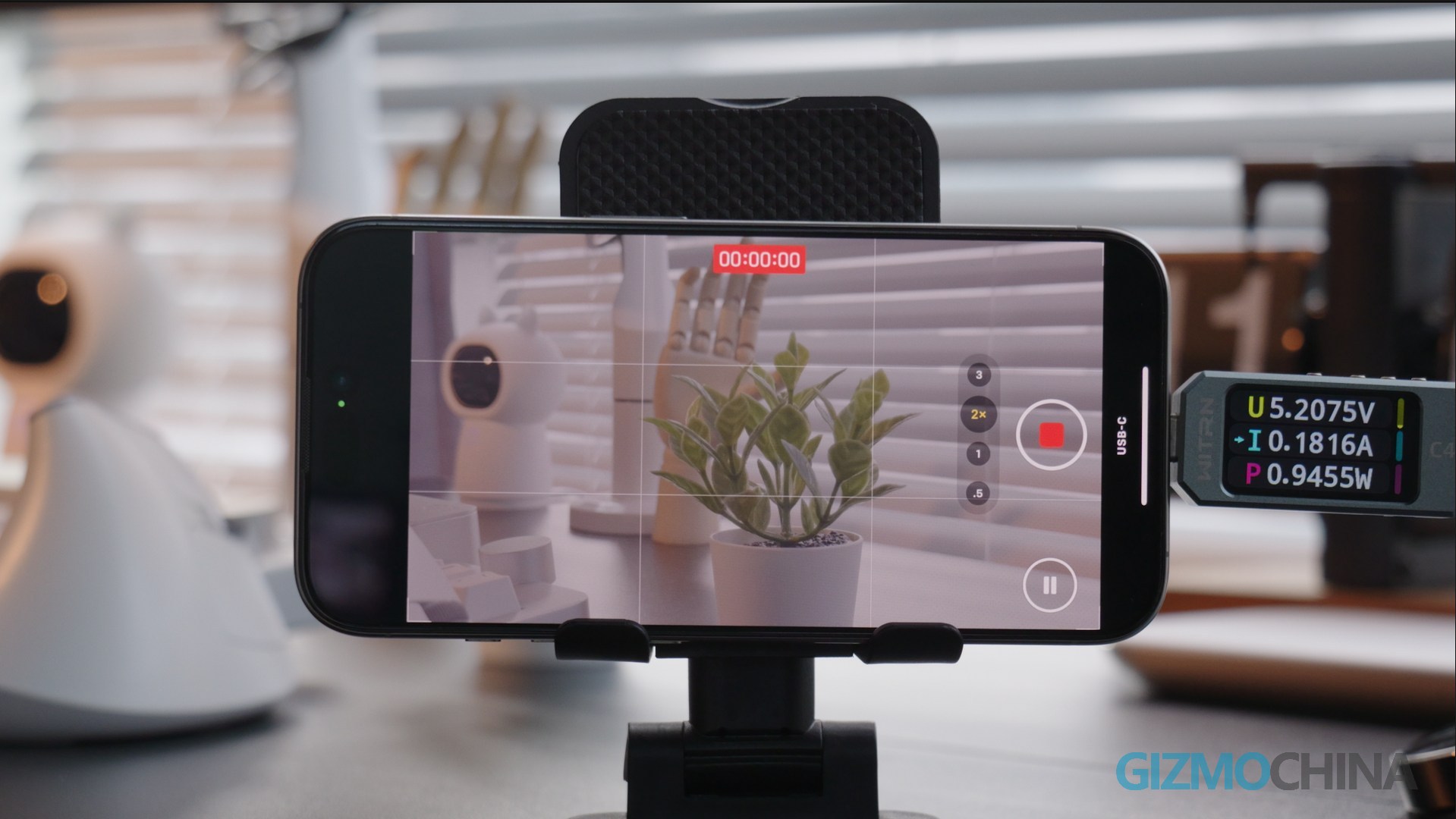
We first tested the power consumption of these portable SSDs on the highest rate interfaces they support, followed by the more conventional 10Gbps and 5Gbps. Then we ran CrystalDiskMark to simulate high load power consumption.
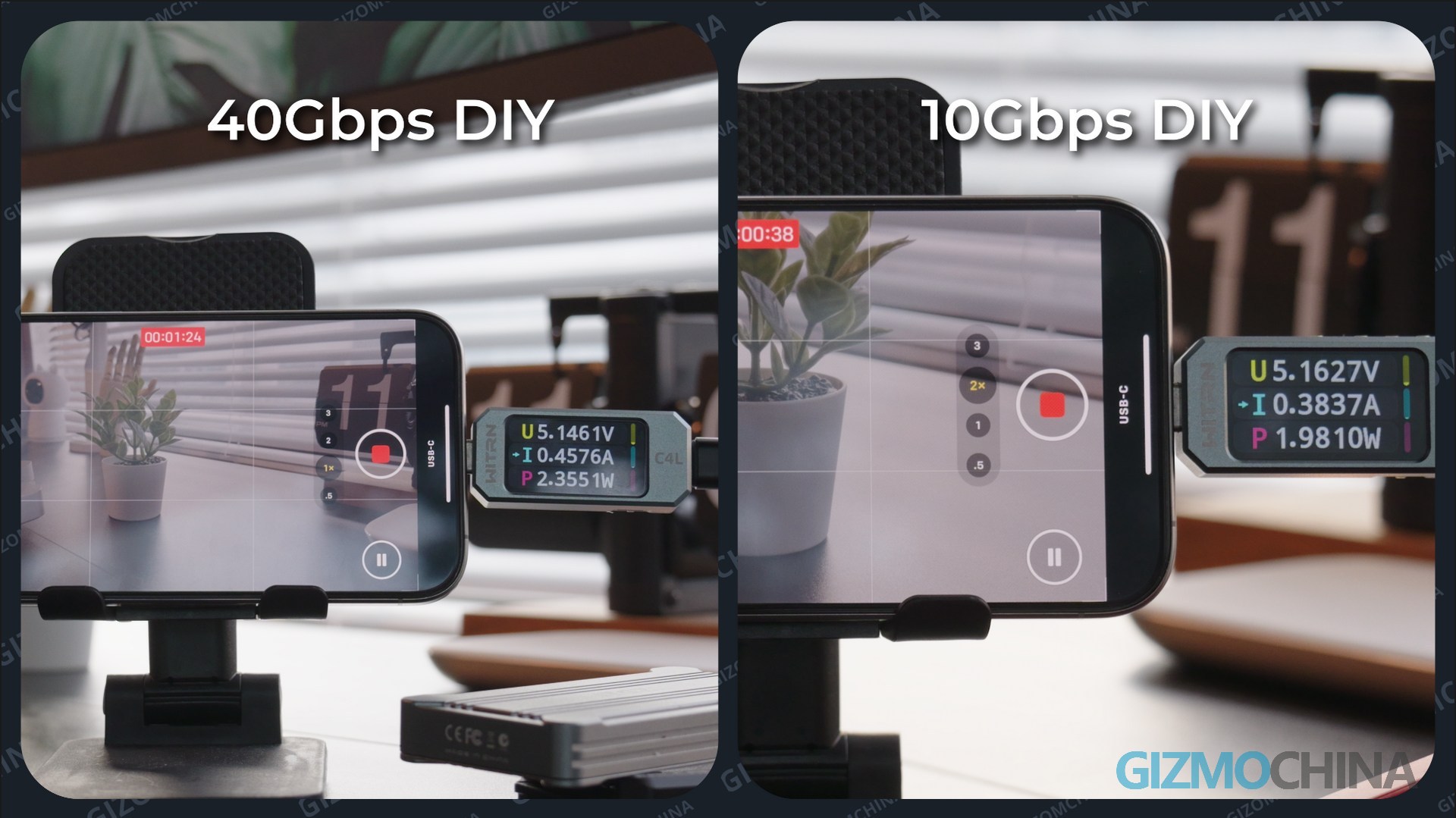
You can see that DIGIERA’s single-chip solution has an excellent power consumption performance. If working on a common 5Gbps interface, the idle power consumption is less than 1W. When running CrystalDiskMark for performance testing, it fluctuates around 1.2W. On 10Gbps and 20Gbps interfaces, the idle power consumption is also low, and the power consumption during performance testing is slightly higher than 5Gbps, but it does not exceed 2W. However, the DIY solution we compared is not as environmentally friendly, among which the USB4 DIY solution in idle is higher than the DIGIERA in working, and the power consumption when measuring the speed on the 40Gbps interface is close to 7W.
Fortunately, for all the portable SSDs we compared, whether in idle or high load state, the power supply demand did not exceed the upper limit recommended by Apple.
But there is one thing to note, the current meter we used is not very accurate. If these portable SSDs have shorter peak power consumption, we will not be able to detect it.
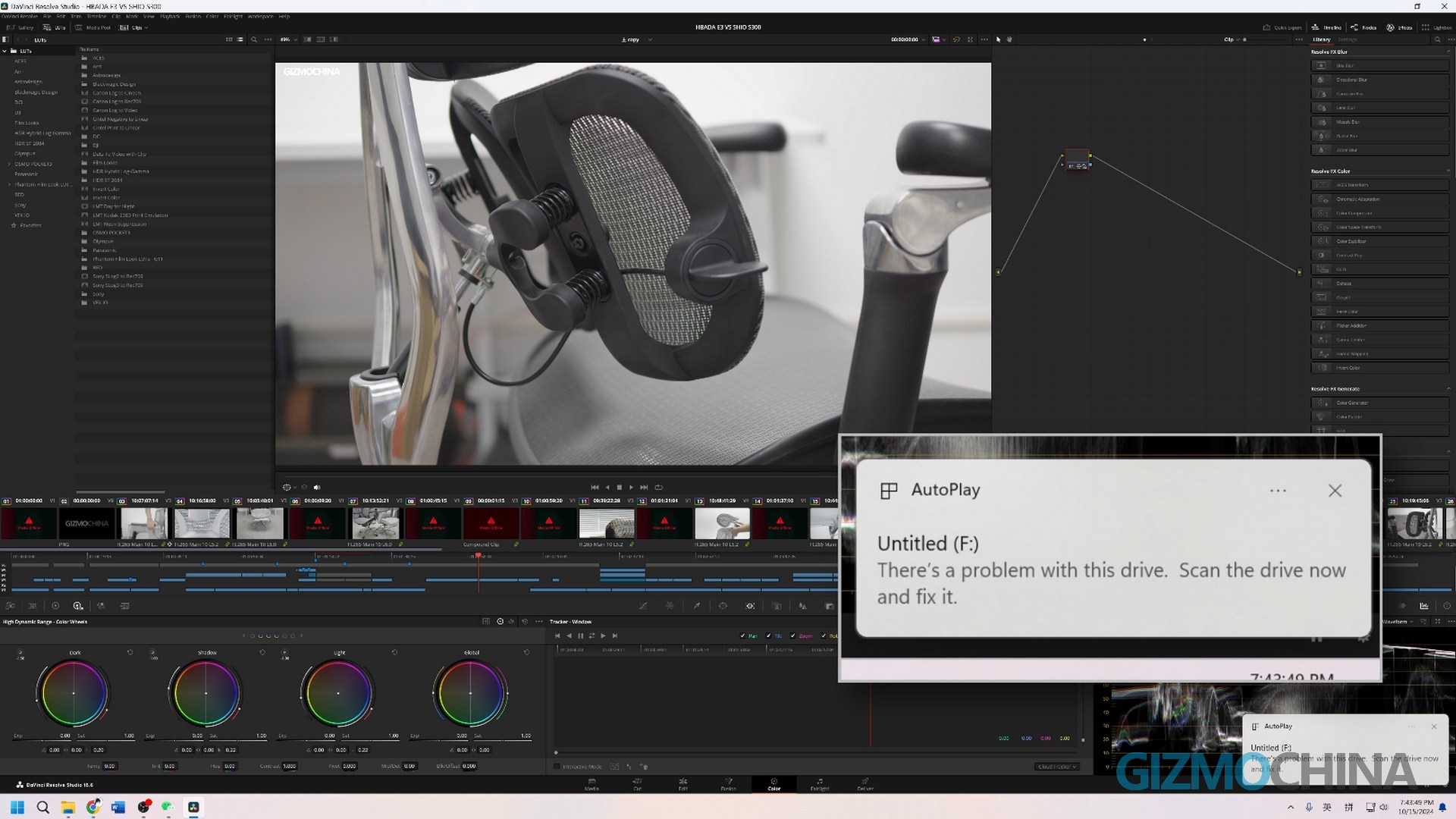
Then in use, it is possible to see dropping or SSD not being recognized.
Performance
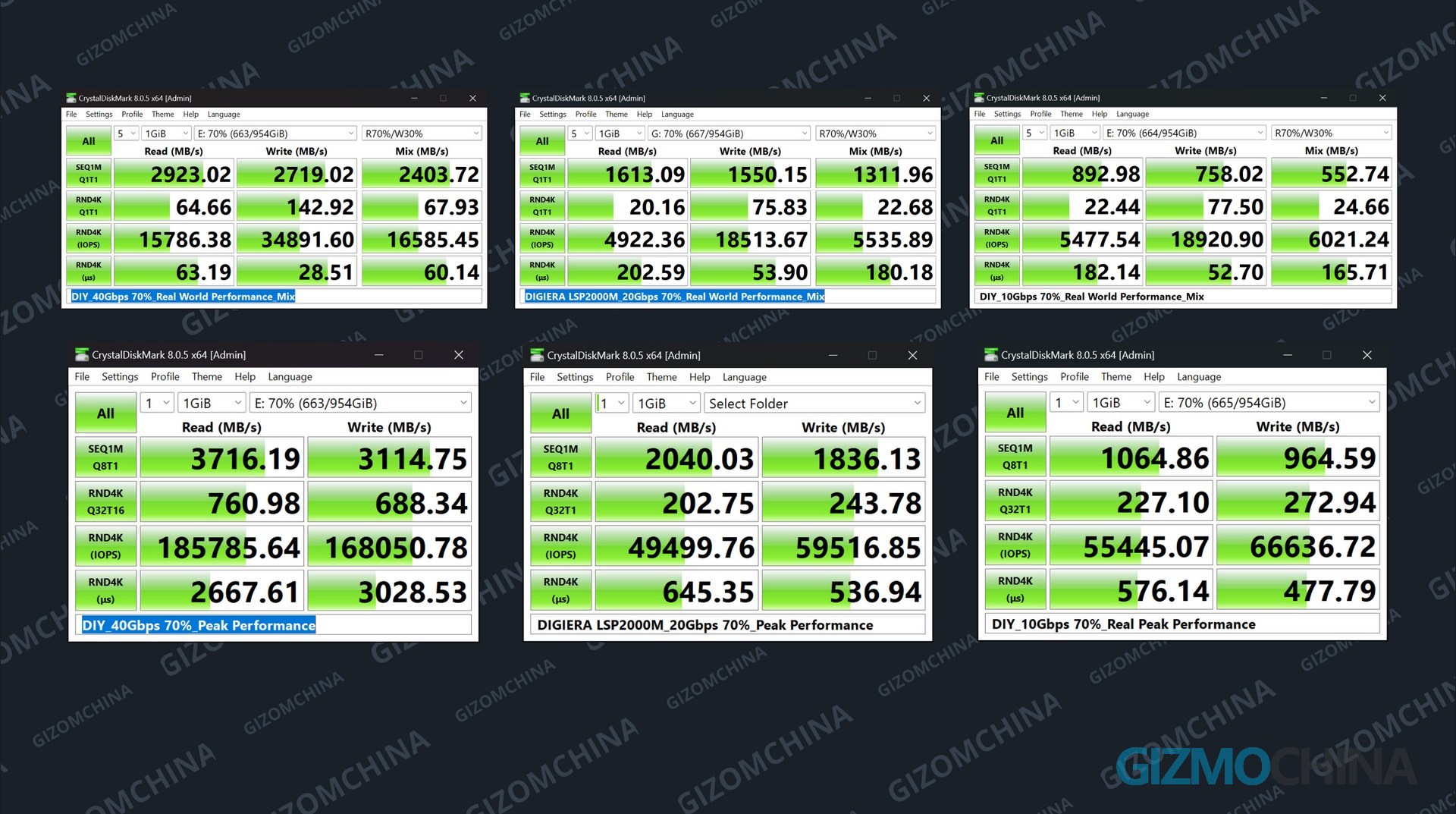
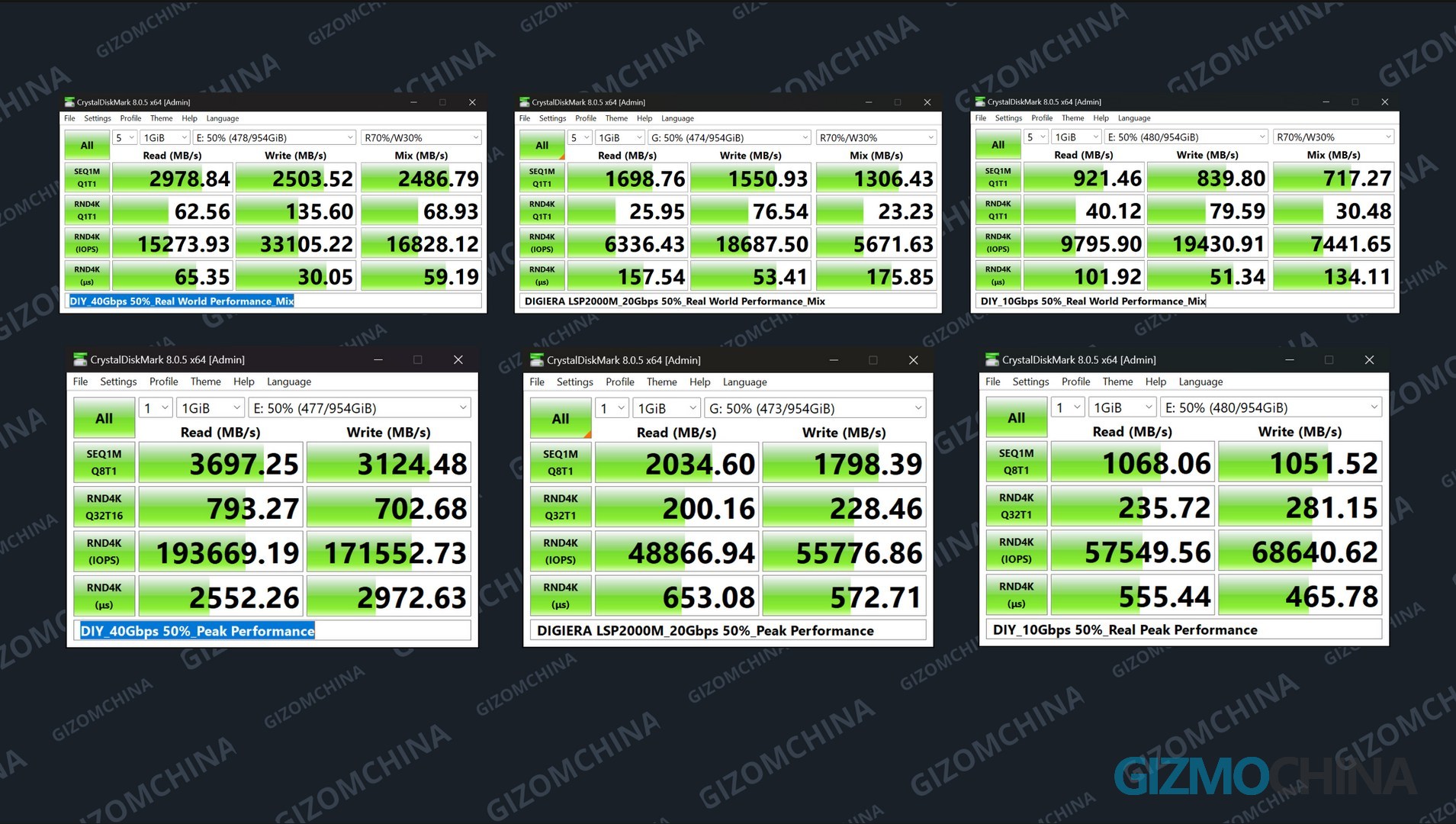
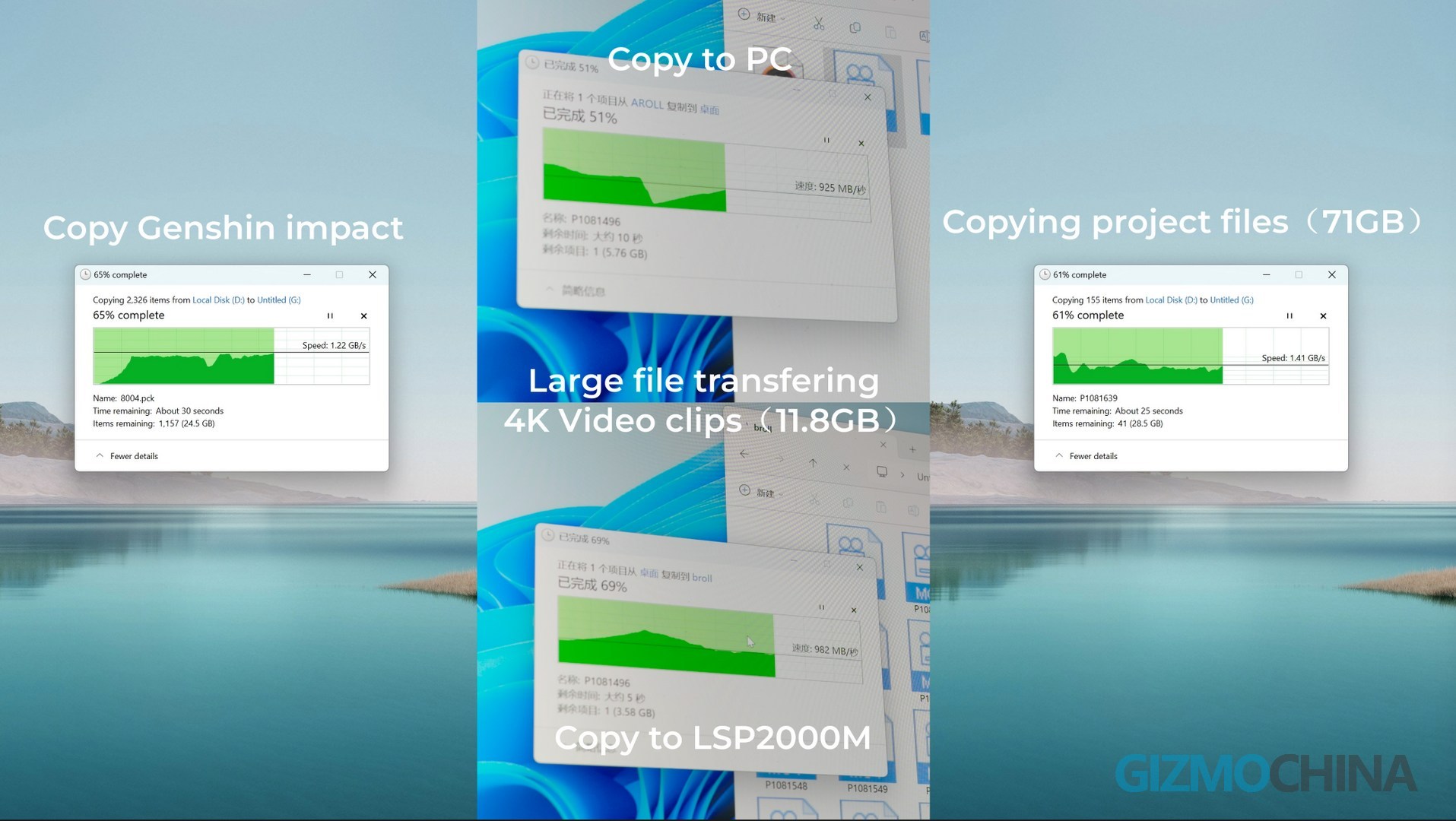
Here we used CrystalDiskMark to test the peak performance under three usage rates (0%, 50%, 70%) and mixed read and write that represents real use. In the tests, everyone performed very well, basically running at the upper limit of the interface. And LSP2000M also reached the performance they claimed.
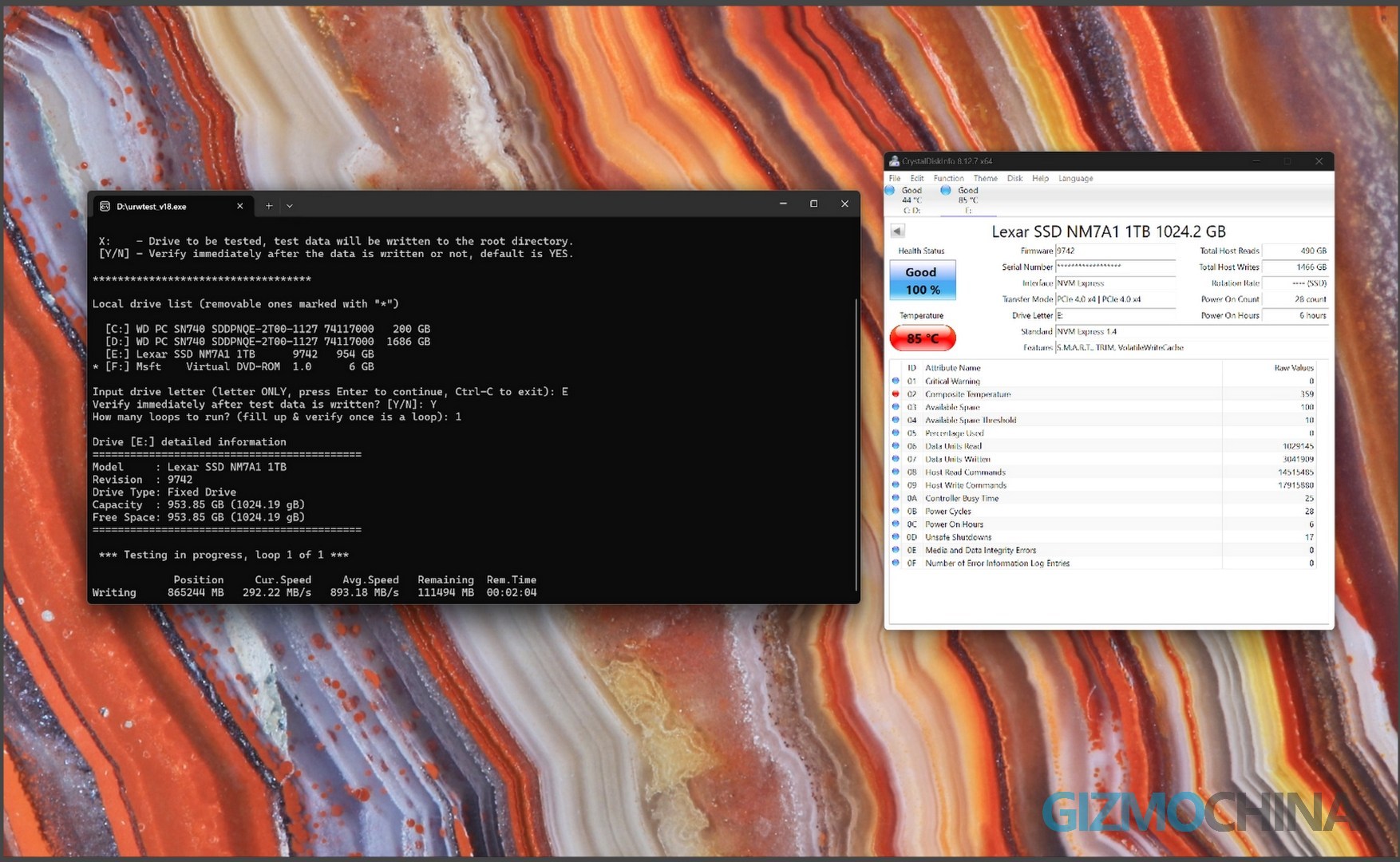
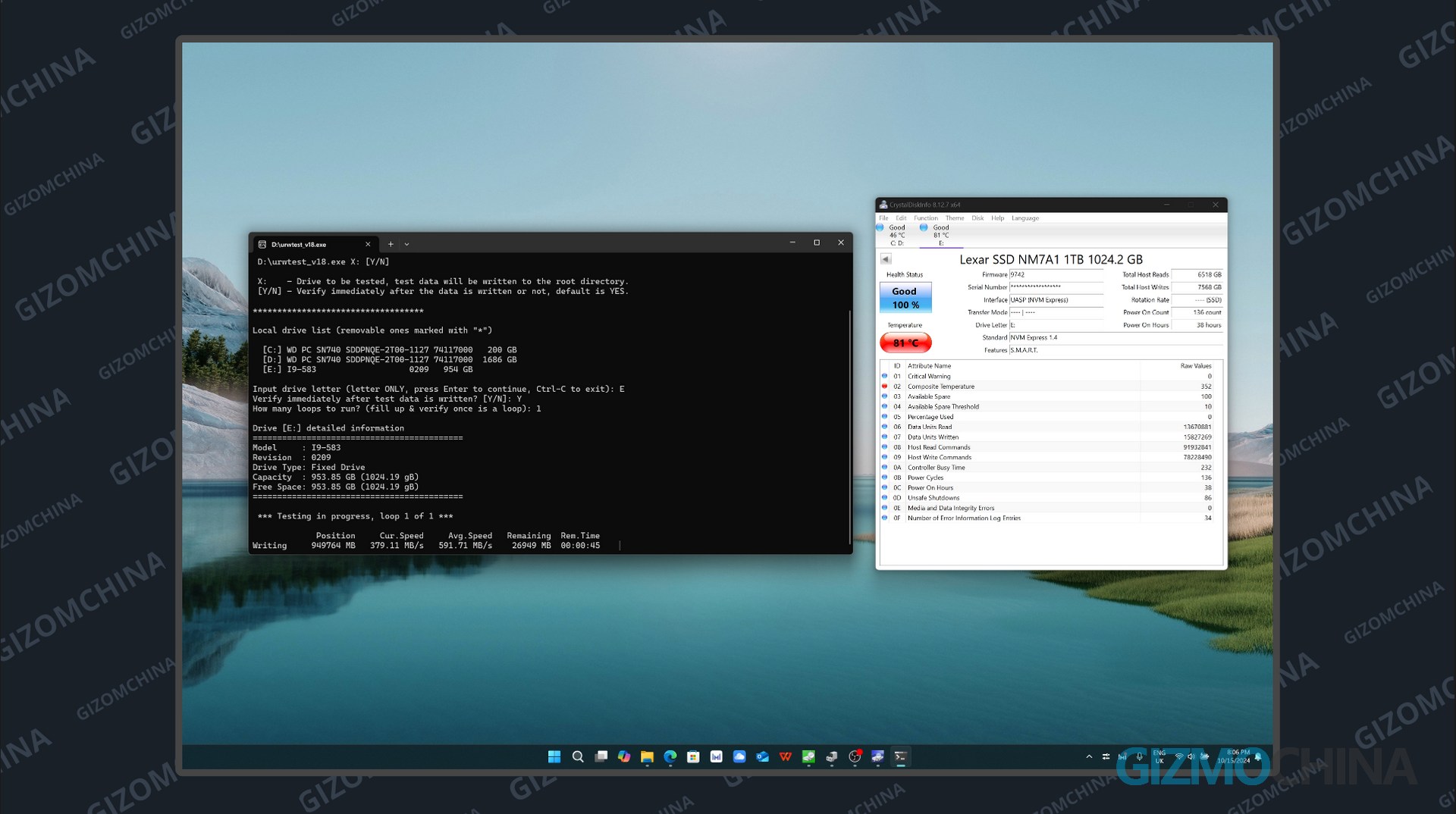
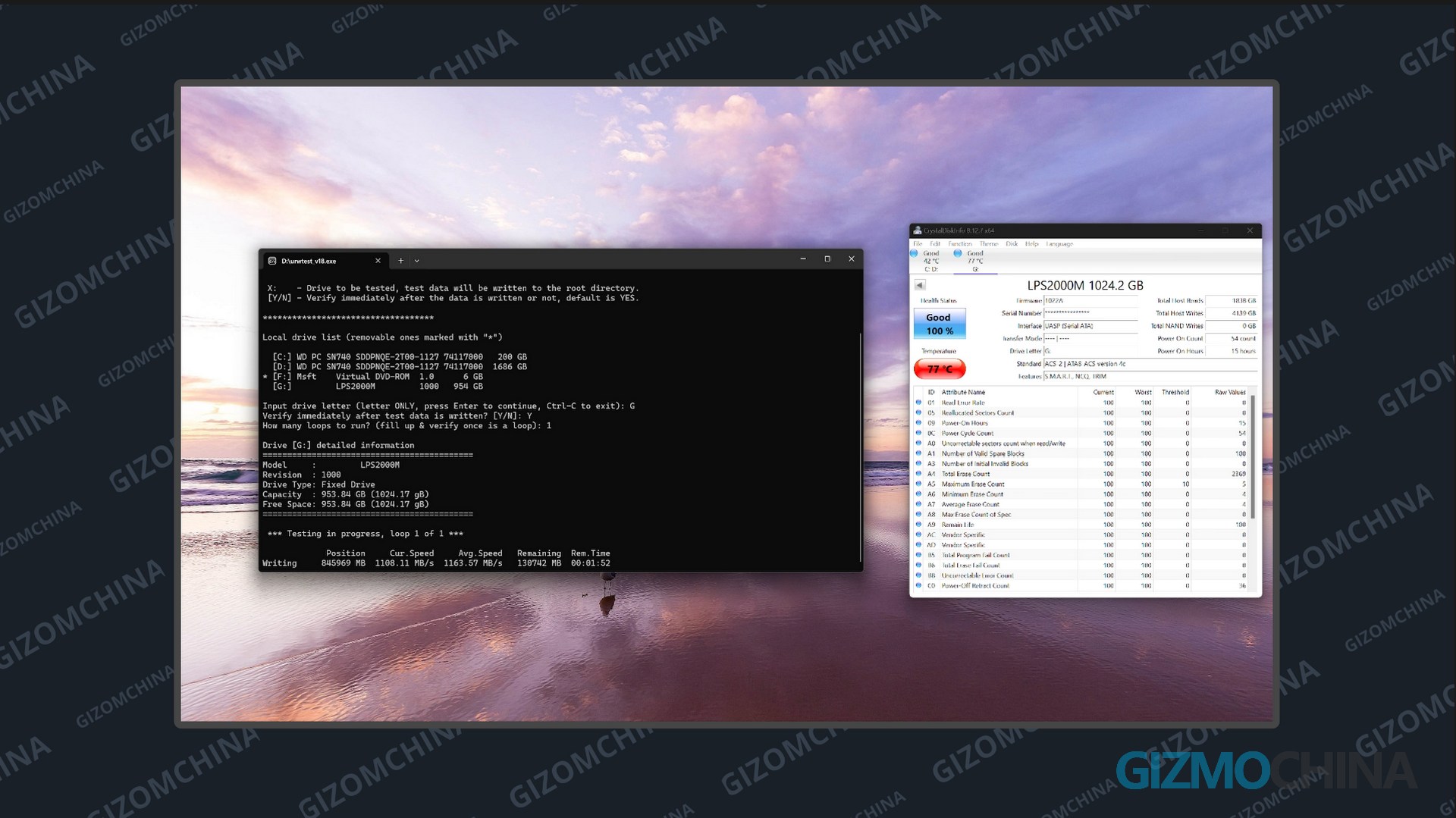
Now, it’s time to make it a bit more difficult. In this test, we will use HD True for full disk write to test whether these two devices can hold long-term continuous writing.
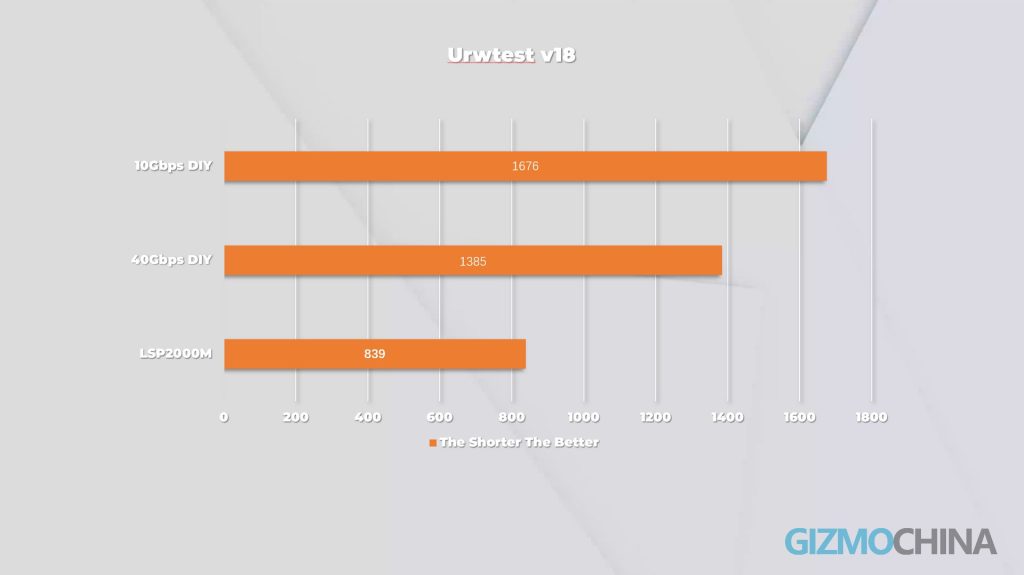
In the test, the full disk write performance of LSP2000M was unexpectedly good. It took 14 minutes to fill the entire SSD, and the speed was very stable throughout the process. The test on the 10gbps port was also very stable. Even if the iPhone 17 pro that will be released next year supports 8k 60 ProRes recording, this little guy can easily handle it.
The 40gbps plan was very eye-catching at the beginning, but after writing a large amount of data, the speed suddenly dropped to 300 to 400, and then even dropped to 200. This performance is obviously a bit behind LSP. And the temperature detected by CrystalDiskInfo makes me worry whether it can survive in this test.The performance of the 10gbps plan is very conventional, but like the 40Gbps plan, it will slow down after writing a certain amount of data.
Although I used an infrared camera to check the temperature during the test, the two portable SSDs had abnormal results due to the reflectivity of the material. Also, this test will write a large amount of data in a very short time, which most consumers will never do. The following are the real application scenarios.
Shooting ProRes
Now let’s go back to the real use, using the iPhone to record ProRes video. DIGIERA can be recognized in the file app, and you can watch the recorded video in the file, and there is no tearing or loss. The idle power consumption is similar to what we tested on the PC, and the power consumption in recording is lower than the previous test.
The 40GBPS and 10GBPS DIY solutions are the same as the DIGIERA era in terms of usage, The DIY plan can be recognized and can preview the clips. The power consumption is a bit higher. But it can’t be attached on the iPhone like DIGIERA.
Disadvantages
Finally, we have to face a problem, that is the compatibility problem that these USB3.2 Gen2 X2 products have. If your host has a USB 3.2 Gen2 X2 interface, then you are lucky. Your host can make DIGIERA run at the best state. If it only has a USB4 interface, it depends on the OEM. Because in the USB4 protocol, the USB3.2 Gen2 X2 protocol is optional.
After testing on the Mac Mini M1 and three other PCs, only this MateBook X Pro can run at 20Gbps. Other devices can only run at 10Gbps.
Summary
Now these are the tests we have done on the DIGIERA Meganetic Portable SSD.
Surprisingly, the Digiera SSD was decently stable for various scenario tests, and it can complete a large amount of data writing at the fastest speed throughout the process. And the ultra-high power efficiency can also make it better compatible with mobile devices. So if you are recording videos on iPhones, or need a powerful and stable portable SSD across devices and platforms, the Digiera Portable SSD will be one of the most convenient and portable choise.
Although Oppo has started teasing the release, it has kept the phone designs under wraps. So far, only a few comparisons between the Reno 13 series and iPhones have surfaced, revealing parts of the design.
But an X user has now posted real-life images of both the Reno 13 and Reno 13 Pro smartphones.
The two devices feature similar camera islands with cold-craved glass that clearly draws inspiration from the iPhone’s design. Additionally, both phones have chamfered edges. Posts on Weibo also reveal the front design of the phones, revealing slim bezels all around.
Oppo Reno 13 Series Specifications
The standard Reno 13 is expected to feature a 6.59-inch 1.5K display with a 120Hz refresh rate. It will likely be powered by a MediaTek Dimensity chipset, though the exact model is still unclear.
The front will house a 50-megapixel selfie camera, while the rear will feature a triple-lens setup, led by a 50-megapixel primary sensor. And the device is expected to be powered by a large 5,600mAh battery.
Details on the Pro variant are less clear, but rumors suggest a similar flat design with a metal frame. The display is expected to be a larger 6.83-inch micro-quad-curved panel, offering the same 1.5K resolution and 120Hz refresh rate.
Under the hood, the Reno 13 Pro is rumored to feature the more powerful MediaTek Dimensity 8350 SoC. The battery is also likely to be slightly larger at 5,900mAh, also supporting wired and wireless charging.
The Pro variant’s camera system is rumored to include a 50-megapixel main sensor with OIS (Optical Image Stabilization), a 50-megapixel periscope telephoto lens for zoomed shots, and an 8-megapixel ultra-wide sensor.
Both the Reno 13 and Reno 13 Pro are expected to run on ColorOS 15 and will offer improved durability with dust and water resistance.
Qubo, a leading brand in smart home devices from the Hero Group, has introduced two new air purifiers, the Q600 and Q1000, specifically designed to address air quality concerns in larger homes. These devices are equipped with advanced features such as a 4-layer filtration system, long-lasting filters, and QSensAI technology for automatic adjustments.
Qubo Q1000 and Q600
Targeting Larger Spaces
The Q600 and Q1000 are designed to purify areas up to 600 sq. ft. and 1000 sq. ft., respectively, making them ideal for spacious living rooms, galleries, and foyers. This addresses a common challenge in larger homes, where multiple air purifiers are often required to maintain clean air.
Key Features and Benefits
4-Layer Filtration System: The advanced filtration system effectively removes 99.99% of harmful particles, including PM2.5, PM10, pet dander, pollen, and even ultra-fine particles as small as PM0.1.
Long-Lasting Filters: The filters are designed to last up to 15,000 hours, reducing the need for frequent replacements and minimizing maintenance costs.
QSensAI Technology: This intelligent feature automatically adjusts fan speed and filtration intensity based on real-time air quality readings, optimizing performance and energy efficiency.
Smart App Control: The Qubo app allows users to monitor air quality, receive filter replacement notifications, and control the devices remotely.
Voice Assistant Compatibility: The devices are compatible with popular voice assistants like Alexa and Google Assistant, enabling hands-free control.
Pricing and Availability
The Qubo Q600 and Q1000 are priced competitively at Rs. 24,990 and Rs. 29,990, respectively. However, the brand is currently selling them for just Rs. 13,990 and Rs. 18,990, respectively. They are available for purchase on the Qubo website and popular online marketplaces like Amazon, Flipkart, Blinkit, and Zepto.
Chinese smartphone brands like Xiaomi, Oppo, and OnePlus have been dominating the smartphone market in India. These aren’t restricted to just affordable models, but even the higher end flagship phones as well. They often come packed with high-end features at competitive prices, giving stiff competition to veteran brands like Apple and Samsung. But are these Chinese flagship smartphones really worth buying in India? Here are all the Pros and Cons.
One of the biggest advantages of Chinese flagship smartphones is their competitive pricing. Brands like Xiaomi and OnePlus are the best examples of this. From their entry into the Indian market, they have consistently offset the flagship pricing expectations. While they aren’t as aggressively affordable as before, these still offer impressive value.
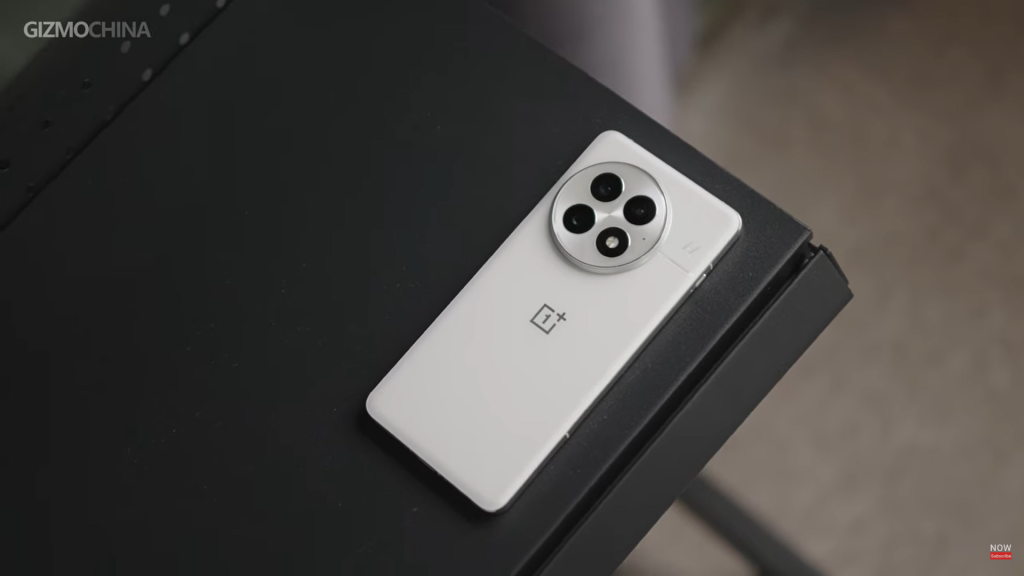
The OnePlus 13 starts in China for under $700 but offers cutting edge hardware. The front has a tall 2K+ OLED display with a 120Hz refresh rate and 4500 nits of peak brightness. It is equipped with Qualcomm’s latest and greatest Snapdragon 8 Elite and features three 50MP flagship grade cameras on the back with Hasselblad tuning. You also get a massive 6,000mAh battery pack with 100W wired and 50W wireless fast charging. So it’s a complete package of top notch specs and features, despite costing less than even an iPhone 16 or Galaxy S24.
2. Cutting-Edge Features and Innovations
Chinese brands are known to be the first to adopt new technology, which are not proven in the market. These companies also push the envelope in features as well. Smartphones from China innovated in fast charging, advanced camera setups, high refresh rate displays, and more. Samsung is seen as one of the leaders for a premium Android experience but it still lags behind in charging speeds. This is something even Apple refuses to improve upon, and it gets worse considering how their latest $800 iPhone 16 still offers a 60Hz refresh rate.
3. Software Experience
Flagship smartphones from China are often feature packed not just in hardware, but also in the software side. However, the overall software experience can be a mixed bag. Every brand has their own spin on Android with unique custom skins which are heavily modified. In recent years, Oppo with its ColorOS has made massive improvements in its UI. But the stigma of Chinese Android UI’s being packed with bloatware still holds some ground.
Unlike Apple, Android users don’t get seamless continuity between different brands. So switching from Samsung’s One UI to Xiaomi’s MIUI can be more jarring than one would think, despite both platforms being on Android. One may prefer the former but might not like the look of the latter.
4. Privacy and Data Concerns
Another notable con is privacy concerns. Indian consumers hesitate to buy Chinese smartphones due to data privacy with the Indian government being wary of these brands as well. Military personnel were outright banned from using these devices as well in the past. There are constant reports and controversies regarding data collection, potential security risks, and much more. Finding concrete proof for any particular Chinese company isn’t easy, but this factor could be a deal breaker for privacy-conscious buyers.
Huawei has finally confirmed the launch date for its upcoming flagship Mate 70 series. In a surprise announcement during an interview at the 2024 Guangzhou Auto Show, Richard Yu, CEO of Huawei’s Consumer Business Group (CBG), revealed that the new phones will be unveiled on November 26th.
Interestingly, Huawei Mobile’s social media channels have not yet shared this date. However, with the CEO himself confirming it, there’s little room for doubt.
We are expecting the launch of at least four phones in the lineup – the base Mate 70, Mate 70 Pro, Mate 70 Pro+, and the high-end Mate 70 RS Ultimate.
The hardware powering these devices is shrouded in some mystery. Reports suggest the smartphone will be powered by a new HiSilicon Kirin chip, tentatively named the Kirin 9100.
The chip is believed to be manufactured by SMIC on a 6nm process node and could offer performance comparable to the Qualcomm Snapdragon 8+ Gen 1.
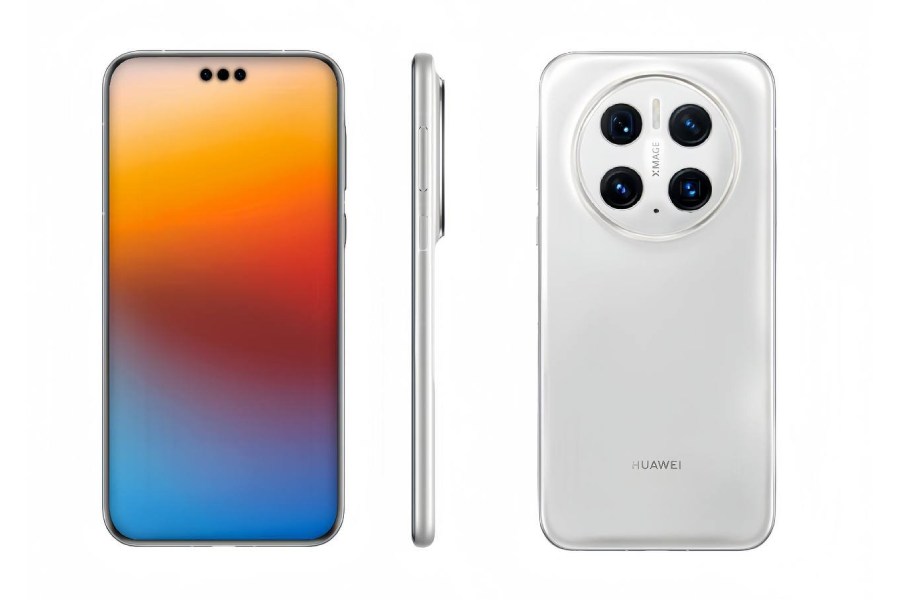
The Mate 70 series is expected to retain the iconic circular camera module, housing four camera sensors arranged in a square formation. However, the module might be integrated into a circular or elliptical island, adding a unique visual element. A render of the phone also surfaced online, although we are unsure about the leak’s accuracy.
Following the trend of silicon-carbon batteries offering higher capacities, Huawei may adopt similar technology. Except for the standard model, the Mate 60 series included 6,000mAh batteries with 88W fast charging.
The Mate 70 series could feature even larger batteries while maintaining 88W charging. The lineup is also expected to support 50W wireless charging and up to 20W reverse wireless charging.
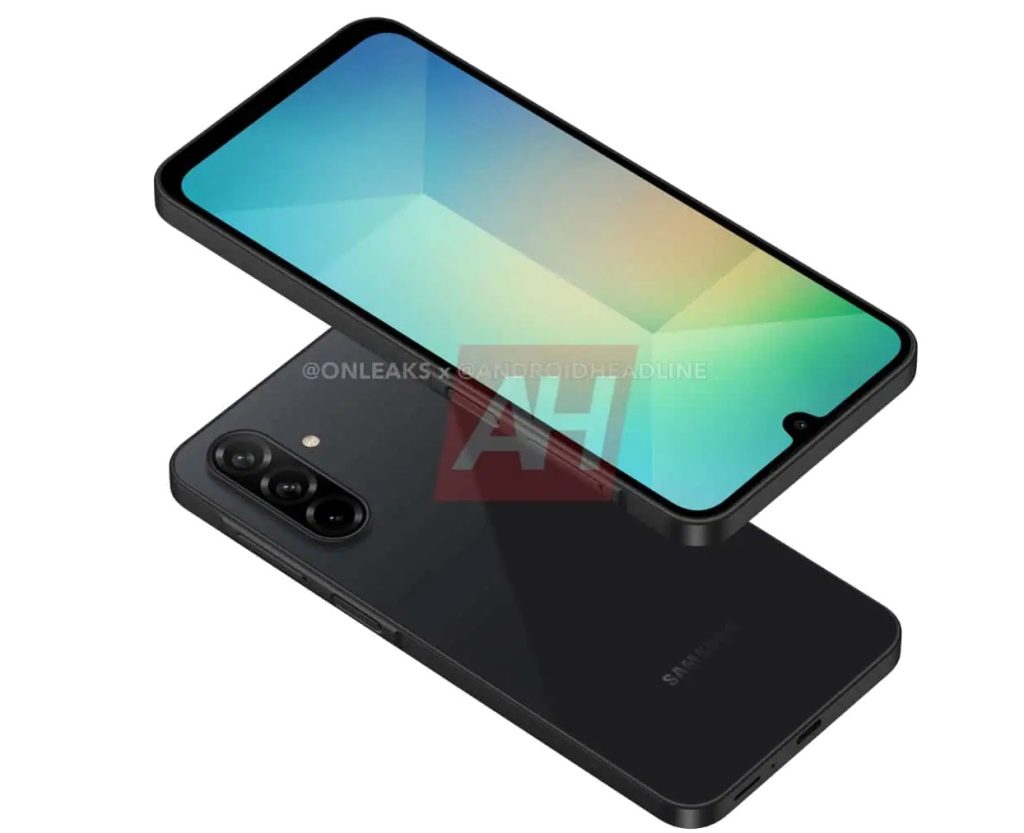
An upcoming mid range Samsung smartphone has just been spotted in a fresh leak. A new set of CAD renders recently surfaced of the Galaxy A26, revealing its complete design from the front and back. So let’s have a look.
Samsung Galaxy A26 Renders
The South Korean tech giant’s Galaxy A26 was previously spotted on GeekBench with an Exynos 1280 processor. But now, the new mid range smartphone has its entire design revealed (Via AndroidHeadlines). The front has noticeable bezels and an Infinity-U screen. Meanwhile, the rear has a triple camera setup in an oval shaped module. The Galaxy A26 measures 164 x 77.5 x 7.7mm in dimensions, which makes it thinner than its predecessor. To recall, the Galaxy A25 was announced with a 161 x 76.5 x 8.3mm body.
Samsung Galaxy A26
Unfortunately, this was all the information that was shared in these leaked CAD renders. In the previous benchmark listing, the Samsung Galaxy A26 was spotted with 6GB of RAM, but there’s a chance that there might be an 8GB variant as well. The Galaxy A26 will run on the Android 15 OS based One UI 7 custom skin out of the box. While it’s still unclear, the Galaxy A26 could also arrive with 6 years of OS updates and 6 years of security updates.
The company has yet to make an official announcement regarding its launch. But rumours have hinted that the Galaxy A26 is expected to be introduced sometime in December 2024 or January 2025. It will likely have a similar price tag as the Galaxy A25 5G. Camera specifications are still at large, but the new phone could bring back the 50MP primary camera and an 8MP ultra wide angle lens on the rear. A large 5,000mAh battery should power this model as well, which could support 25W wired fast charging.
Motorola has not officially announced a list of devices that will be upgraded to Android 15. However, it is constantly updating the support pages of its devices to include details about the next major software update.
When we published a similar story last month, 22 devices were confirmed to receive the Android 15 upgrade. Since then, Motorola has updated the support pages for many devices, confirming their Android 15 eligibility.
So, here’s an updated list of Motorola devices that are confirmed to receive Android 15 update:
Motorola Razr phones:
Motorola Razr+ (2024) / Razr 50 Ultra
Motorola Razr (2024) / Razr 50
Motorola Razr 50s
Motorola Razr+ (2023) / Razr 40 Ultra
Motorola Razr (2023) / Razr 40
Motorola Razr 40s
Motorola Edge phones:
Motorola Edge (2024)
Motorola Edge (2023)
Motorola Edge+ (2023)
Motorola Edge 50 Ultra
Motorola Edge 50 Pro
Motorola Edge 50 Neo
Motorola Edge 50 Fusion
Motorola Edge 50
Motorola Edge 40
Motorola Edge 40 Neo
Motorola Edge 40 Pro
Motorola Edge 30 Ultra
Motorola Moto G series phones:
Motorola Moto G Power 5G (2024)
Motorola Moto G Stylus 5G (2024)
Motorola Moto G 5G (2024)
Motorola Moto G85
Motorola Moto G75
Motorola Moto G55
Motorola Moto G45
Motorola Moto G35
Motorola Moto G34 5G
Other Motorola phones:
ThinkPhone by Motorola
ThinkPhone 25
You’ll quickly note that many Motorola devices that should be on the list are missing. The most notable omissions are the Moto G64 and Moto G (2024). Both were released this year and were supposed to get the Android 15 update.
The above list isn’t final, as it has been curated based on the devices’ support pages. More devices will be added to the list later. So, if your Motorola phone isn’t on the list, wait for the final list for better clarity.
Motorola is already making the beta version available on many devices, including the Edge 50 Fusion. You can join Motorola’s beta program to have a chance of getting early access to the latest software.
What’s new in Android 15?
1. Private space
Android 15 introduces private space, a separate space for keeping important apps under an additional layer of security. It’s hidden from recent apps, settings, and the rest of the device, thus being the safest place to hide your finance or dating apps.
2. App archiving
Android phones already support app archiving, which lets users uninstall an app while keeping the user data. However, this feature was restricted to apps installed via the Google Play Store. The upcoming Android 15 has this feature baked in, which means it will also support apps installed outside the Google Play Store.
The app archiving feature is designed to save storage by archiving apps you don’t want to use for a short period. When you reinstall the app, you don’t need to sign in again or reconfigure it.
3. Better multitasking
Android 15 improves multitasking, especially on larger devices such as foldables and tablets. It allows you to create app pairs for quicker access to your favorite apps in split-screen mode.
To create an app pair, open apps in the split-screen mode, tap the app icons at the top, and choose Save app pair. You’ll see a new shortcut icon for this split-screen app pair on your home screen.
Android 15 also has a foldable-specific addition that allows users to continue using an app on the cover display after closing the primary (inner) screen without unlocking the device.
You can now pin or unpin the taskbar on foldable and tablets to quickly access frequently used apps.
The latest version of Android also brings real-time widget preview, theft detection, and satellite connectivity support, to name a few. The animations have improved greatly, as has the overall software experience.
What are your thoughts on Motorola’s software distribution? Write them down in the comments below.
OnePlus launched its latest flagship, the OnePlus 13, in China last month. And the brand is expected to bring it to international markets soon. While we are familiar with the phone’s specs and features thanks to its Chinese launch, the company seems to be tweaking the color and storage options for its global release.
A leak from tipster Arsene Lupin reveals that the OnePlus 13 will launch internationally in two configurations: 12GB of RAM with 256GB of storage and 16GB of RAM with 512GB of storage.
Interestingly, the base 12GB/256GB model will come only in Black Eclipse, a more muted name compared to the China-exclusive colors—Moonlight Black, Misty Blue, and Glacial White. The higher-end variant will offer the more vibrant Midnight Ocean and Arctic Dawn color options.
OnePlus 13R color, memory options
The tipster also shared details about the OnePlus 13R, revealing it will come in a single configuration with 12GB of RAM and 256GB of storage. Color options are expected to include Nebula Noir and Astral Trail.
According to the leak, both the OnePlus 13 and OnePlus 13R are likely to launch globally soon. So we are expecting the phone will debut in international markets at the same time.
OnePlus 13R is likely a rebrand of the Chinese Ace 5, which is expected to come with a 1.5K resolution OLED flat display from BOE. It will run on last year’s Snapdragon 8 Gen 3 chipset, combined with LPDDR5x RAM and UFS 4.0 storage.
For selfies, the phone will include a 16-megapixel front-facing camera, while the rear will be home to a triple camera setup with a 50-megapixel main, 8-megapixel ultrawide, and 2-megapixel macro lens.
The device reportedly packs a 6000mAh battery with support for 100W wired fast charging, though there will be no wireless charging support.
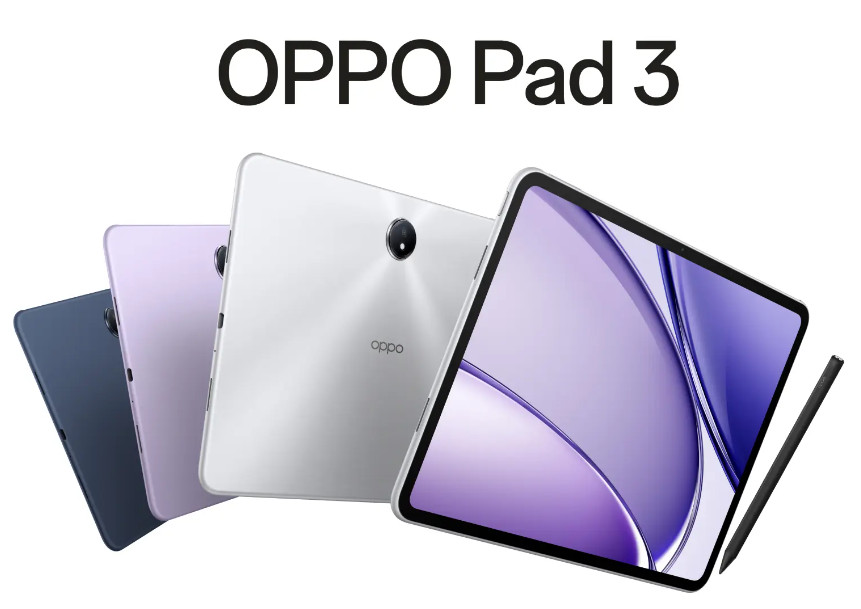
Oppo has long been rumored to be working on a new tablet model. The Oppo Pad 3 was spotted in recent leaks and reports, but now this tablet has officially been teased by the brand. We finally have a proper look at the Oppo Pad 3, so here’s what we know.
Oppo Pad 3 Teased in China
The Chinese tech giant shared a fresh teaser of the Oppo Pad 3 ahead of its November 25 launch. Looking at the fresh teaser image poster, the Oppo Pad 3 will arrive with a premium design thanks to an all-metal body. The rear also has an atmospheric color scheme. The brand has also confirmed that the tablet will come in three color options, namely Silver, Blue, and Purple. Notably, we can even see that the upcoming tablets will feature support for the stylus.
Oppo Pad 3
Oppo has even confirmed the storage configurations of the new tablets. It will be available in 8GB + 128GB, 8GB + 256GB, 12GB + 256GB, and 12GB + 512GB variants. Pre-orders for the Reno 13 series and Pad 3 are currently live in China. While this was all the information that was shared, more details of the Oppo Pad 3 have been confirmed by recent leaks. Based on what we know so far, the Oppo Pad 3 sports a tall 11.6-inch LCD display with a 2.8K resolution and a 144Hz refresh rate.
Under the hood, it might be equipped with the MediaTek Dimensity 8350 SoC. A large 9,510mAh battery pack powers this device, which supports 67W wired fast charging. This model has an ultra slim 6.29mm and weighs 533 grams. So this is a more affordable tablet compared to the higher end Oppo Pad 3 Pro, which launched with Snapdragon 8 Gen 3 Leading Version chipset. The device will be launching alongside the Reno 13 series, so stick around for more updates.
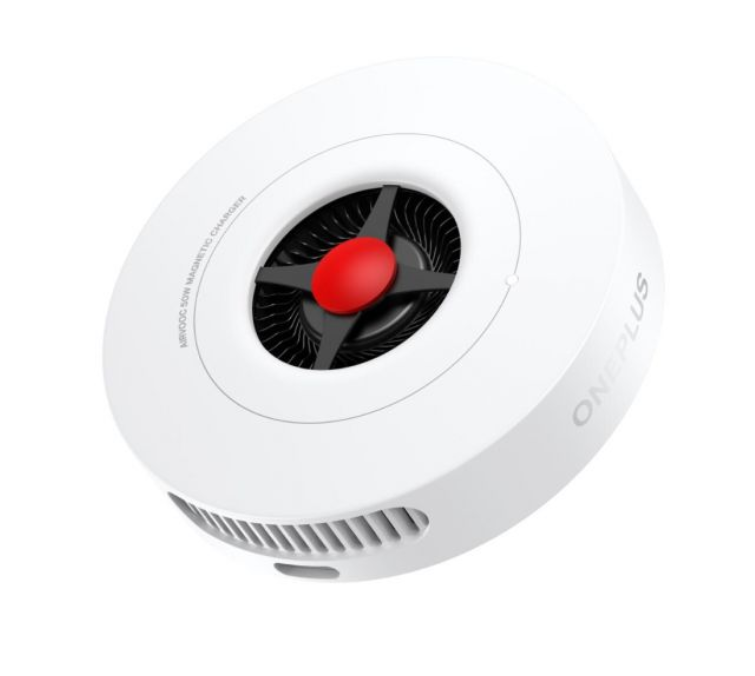
OnePlus 50W Magnetic Wireless Charger is designed to provide fast, efficient charging with a sleek, convenient design. Offering up to 50W of peak power, this charger is specifically optimized for the OnePlus 13, but it’s also compatible with other smartphones that support wireless charging, including iPhones. With its magnetic adsorption feature, this charger ensures your device stays securely in place while charging, even if you use a magnetic case. You can now get the OnePlus 50W Magnetic Wireless Charger for $69.99 at Geekwills.
Magnetic Adsorption for Secure Charging
One of the standout features of the OnePlus 50W Magnetic Wireless Charger is its automatic magnetic adsorption. Thanks to the strong suction power, your phone stays firmly attached to the charger, reducing the risk of disconnections or falls during charging. Whether you’re using your OnePlus 13 with a magnetic case or charging it without one, the charger holds your device securely in place.
Fast Charging with Up to 50W Output
With its maximum output of 50W, the OnePlus Magnetic Wireless Charger is designed to charge your OnePlus 13 from 1% to 100% in just 75 minutes. This is a significant improvement over standard wireless chargers, offering you a faster and more convenient charging experience. Additionally, it supports a wide range of fast-charging protocols, including SUPERVOOC, VOOC, PD, PPS, and QC, making it a versatile choice for Android and iOS devices alike.
Efficient Cooling System
To ensure safe and reliable charging, the OnePlus 50W Magnetic Wireless Charger features an advanced cooling system. This includes a centrifugal fan core, TEC cooling, heat-dissipating fins, a silicone pad, and an aluminum sheet. This comprehensive cooling solution helps manage the temperature of the charger and your device, ensuring that charging remains efficient and your phone stays cool, even during high-speed charging.
Compatibility with iPhones
While designed for OnePlus devices, the charger is also fully compatible with iPhones that support wireless charging. It even supports Apple’s Standby mode, providing a better and more stable wireless charging experience for iPhone users.
Key Specs:
Model: OnePlus Magnetic 50W Wireless Charger
Charging Port: Type-C
Charging Protocols: SUPERVOOC, VOOC, PD, PPS, QC
Product Size: Φ 65.5 x 20.96mm
Weight: 87g
Input: 5-11V⎓9.1A Max
Max Output: 50W
OnePlus 50W Magnetic Wireless Charger offers a fast, efficient, and reliable way to charge your devices, with advanced features like magnetic adsorption, fast charging, and enhanced cooling. Whether you use an Android or iOS phone, it provides a great charging experience.
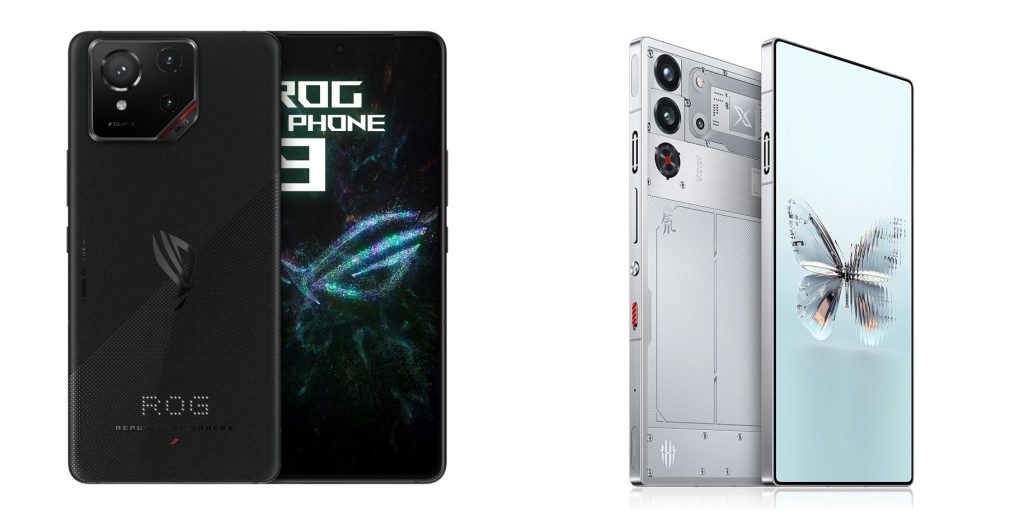
The gaming phone market is heating up with the imminent arrival of the Asus ROG Phone 9 series and the recent launch of the Nubia Red Magic 10 Pro and 10 Pro+ in China. The ROG Phone 9 series is scheduled to launch in multiple markets on Nov. 19, whereas the Red Magic 10 Pro series is currently limited to the Chinese market. Likely, only the Pro model may arrive in the global market in December like its previous generation.
Both brands are known for pushing the boundaries of mobile gaming, offering top-tier specs and innovative features. But how will the upcoming ROG Phone 9 stack up against the Red Magic 10 Pro? Let’s delve into the anticipated differences based on available information.
Asus ROG Phone 9 (left) and Red Magic 10 Pro (right)
The ASUS ROG Phone 9 and the Red Magic 10 Pro each offer impressive displays, but there are distinct differences. The Red Magic 10 Pro sports a 6.85-inch BOE Q9+ OLED display with a resolution of 2688 x 1216 pixels. It supports a 144Hz refresh rate, 2,000 nits peak brightness, and 2592Hz PWM dimming. The advantage with Red Magic 10 Pro series is that since it is equipped with an under-display selfie camera, there is no camera cutout on the screen, which allows it to offer truly full-screen experience for immersive gaming.
In contrast, the Aus ROG Phone 9 has a slightly smaller 6.78-inch FHD+ Flexible Samsung AMOLED display with a resolution of 2400 x 1080 pixels. It has a lower refresh rate of 120Hz but compensates with a higher peak brightness of 2,500 nits and HDR10 support. There’s a possibility that the Pro variant in the series may support a 185Hz refresh rate. The Corning Gorilla Glass Victus 2 protection on the ROG Phone 9 adds extra durability, making it resistant to scratches and drops.
2. Performance and Hardware
Under the hood, both devices feature the latest Snapdragon 8 Elite chipset. The Red Magic 10 Pro’s chip is paired with LPDDR5X RAM and UFS 4.1 storage. It also features a self-developed R3 chip that enhances gaming performance, particularly for 2K resolution at 120fps gaming. The Red Magic 10 Pro’s battery is substantial at 6,500mAh with 80W charging, ensuring long gaming sessions without frequent recharging. It also supports 50W wireless charging.
The Red Magic 10 Pro+ variant, which is likely to remain exclusive to the Chinese market, has 24GB of LPDDR5x RAM, 1TB of UFS 4.0 storage, and a 7,050mAh battery with 120W fast charging. The Red Magic 10 Pro series, running Android 15 with Red Magic OS 10 UI, introduces major improvements like the Red Magic AI Cube 2.0 for a smoother and smarter interface. Key features include the AI Game Model for game commentary, win rate prediction, and gameplay assistance. The Red Magic Assistant, Mora, offers conversational AI for chatting and smart responses. The X Gravity Platform 2.0 supports AR/VR devices, cloud gaming, console streaming, and various peripherals, enhancing the mobile gaming experience.
On the other hand, the Asus ROG Phone 9 is expected to have a powerful chipset that supports up to 24GB LPDDR5X RAM and 1TB UFS 4.0 storage. This extensive memory and storage configuration is ideal for gaming and multitasking. Its 5,800mAh battery supports 65W fast charging, slightly lower than the Red Magic 10 Pro, but still impressive for quick power-ups. It is also expected to support 15W wireless charging.
The ROG Phone 9 series will also run on Android 15 and the company teased some AI features, which might include gaming-related enhancements, adding another layer of sophistication to its gaming performance.
3. Camera Capabilities
Camera capabilities also show notable differences. The Red Magic 10 Pro features a triple rear camera setup: a 50-megapixel OmniVision OV50E40 main sensor with OIS, a 50-megapixel OV50D ultra-wide sensor, and a 2MP OV02F10 macro sensor. The front camera is a 16-megapixel under-display OmniVision OV16A1Q sensor, designed to be unobtrusive for a seamless display experience.
In contrast, the ASUS ROG Phone 9 has a 50-megapixel Sony Lytia 700 primary camera, a 13-megapixel ultra-wide camera, and a 32-megapixel telephoto camera with f/2.4 aperture, OIS, and 3X optical zoom. For selfies, it boasts a 32-megapixel front camera. The ROG Phone 9’s camera setup, particularly the telephoto lens with optical zoom, offers more versatility for photography enthusiasts.
4. Design and Other Features
In terms of design, the Red Magic 10 Pro maintains its gaming-centric aesthetics with an active cooling fan and a 10,000mm²-level VC for thermal management. It includes a 3.5mm audio jack, dual 0815 x-axis linear motors, and triple microphones, enhancing the gaming and multimedia experience. The phone is available in Dark Knight and Day Warrior colors, with Deuterium Front Transparent Black and Silver Wing options offering a premium look with transparent elements. Weighing 229g and measuring 8.9mm in thickness, it is designed to be robust yet ergonomic.
The Aus ROG Phone 9, revealed in Phantom Black with a textured back panel, sports a more subtle design compared to its predecessors. It includes a punch-hole display and a small rear camera island, housing a triple-camera setup. The AeroActive Cooler X accessory helps keep the phone cool during intense gaming sessions. The phone is also expected to come in White, offering a sleek alternative. It features an in-display fingerprint sensor, dual stereo speakers, Wi-Fi 7, Bluetooth 5.3, and a 3.5mm headphone jack. The inclusion of accessories like the Clear Case, Aero Case, and AeroActive Cooler X Pro in the box adds value and enhances the overall user experience.
5. Pricing and Availability
In terms of pricing, the Red Magic 10 Pro starts at around $690 for the 12GB+256GB variant, going up to $800 for the 12GB+512GB model. The Red Magic 10 Pro+ variant offers higher RAM and storage options, priced up to $1,040 for the top model with 24GB RAM and 1TB storage.
To recall, the 16GB+512GB edition of the Red Magic 9 Pro was priced at $799 globally. Likely, the same version of the Red Magic 10 Pro may arrive with a $50 to $100 price hike. A recent report revealed that the 12GB+512GB edition of the ROG Phone 9 will be priced at around €1,320 (~$1,390) in Denmark.
6. Final Thoughts
The Red Magic 10 Pro has a clear edge in terms of its hard-core gaming design, featuring a full-screen experience thanks to the under-display camera, and a larger battery with faster charging capabilities. It also retains the classic 3.5mm audio jack, a feature increasingly missing from other flagships, which will appeal to users who still value wired audio.
That said, the ROG Phone 9 is no slouch with its versatile camera and expected accessories, making it a strong contender. Ultimately, the best choice will depend on individual preferences and priorities. The Red Magic 10 Pro’s name also sounds more advanced, with “10” appearing a generation ahead of “ROG Phone 9,” and it’s likely to be more affordable globally.
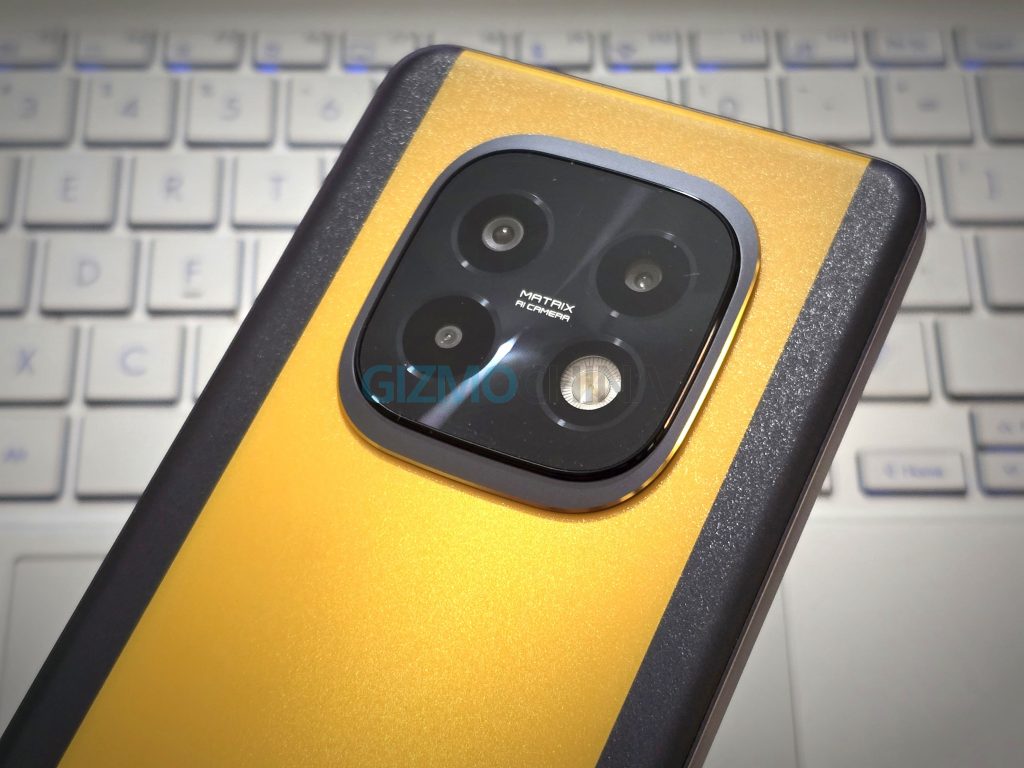
Earlier this week, iQOO began teasing the arrival of the iQOO Neo 10 series of smartphones in China. Today, the brand released the following image to confirm its design. At the same time, some tech bloggers from China have leaked key details about the Neo 10 series.
iQOO Neo 10 series design revealed
iQOO Neo 10 series
The orange-grey dual-tone finish of the iQOO Neo 10 series is undeniably stunning. The new generation clearly resembles the Neo 9 series from last year.
The Neo 10 lineup is now available for reservations in China through multiple platforms, such as Vivo’s online store, JD, Tmall, and Pinduoduo. However, none of these official listings have revealed anything significant about the Neo 10 series.
iQOO Neo 10 series’ details shared by DCS
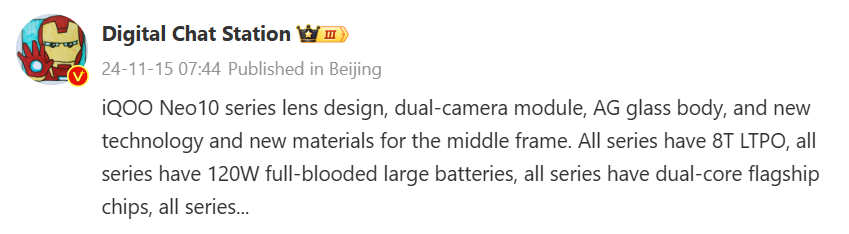
Tipster Digital Chat Station revealed that the iQOO Neo 10 series has an anti-glare glass back, with the mid-frame constructed using new technology and materials. Previously, the tipster claimed that the Neo 10 series has a plastic frame. However, as can be seen in the image, it has a brushed metal finish.
DCS added that the entire series will come with 8T LTPO displays, ensuring smoother performance and improved power efficiency. Additionally, all the models will feature a 6,100mAh battery with 120W fast-charging support. The Neo 10 series will have a dual-chip setup featuring the processor and a dedicated chip for graphics.
iQOO Neo 10 series’ camera details leaked
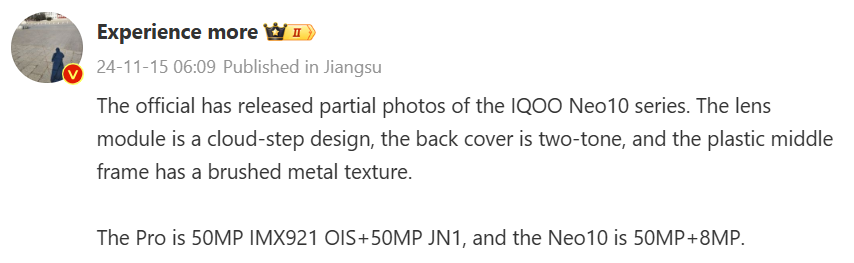
As per reports, the iQOO Neo 10 will have the Snapdragon 8 Gen 3 onboard. On the other hand, the Neo 10 Pro is expected to feature the latest Dimensity 9400 SoC. Another leaker revealed that the Neo 10 Pro will feature a 50-megapixel Sony IMX921 primary camera with OIS support and a 50-megapixel Samsung JN1 ultra-wide lens, whereas the Neo 10 will feature a 50-megapixel + 8-megapixel dual-camera setup. The leaker did not share camera sensor details about the standard model. As far as launch is concerned, the Neo 10 series is expected to launch by the end of this month.
Motorola has been consistently expanding its smartphone lineup, and recent certifications indicate the upcoming release of the Moto G Power 5G (2025). Building on the success of its predecessor, the Moto G Power 5G (2024), which launched exclusively in North America, this new model is expected to debut in the coming months with an extended regional rollout. Here’s what the certification listings and recent patents reveal about the future of Motorola’s smartphone releases.
Leaked renders from August have revealed a familiar design for the Moto G Power 5G (2025). The device is expected to sport a square camera module on the back with an LED flash and Motorola’s signature dimple. The right edge will house the volume rocker and power button. The front of the device will feature a centrally placed punch-hole cutout for the selfie camera, with flat edges and reasonably slim bezels. The renders have showcased the phone in an attractive purple color, which could appeal to users looking for a stylish option in the mid-range segment.
2. Certification Details
The Moto G Power 5G (2025) has surfaced on several certification platforms recently, including the FCC, TUV Rheinland, and UL Demko. According to the FCC listing, this device will carry the model number XT2515-1, with additional regional variants labeled XT2515-2, XT2515-3, and XT2515V. These models are likely tailored for different markets, though the certifications confirm no notable differences in specifications among them. While the Moto G Power 5G (2024) was limited to North American markets, the expanded model lineup suggests the 2025 version might target a broader global audience.
3. Battery
The Moto G Power 5G (2025) will feature a battery model labeled RW50 with a 4850mAh rated capacity (5000mAh typical), identical to its predecessor. While the capacity remains the same, Motorola might introduce a more efficient chipset to potentially enhance the overall battery performance. This improvement could extend usage time without the need for a larger battery.
4. Connectivity & Charging
The FCC listing confirms a comprehensive range of connectivity features, including 5G support, 4G LTE, dual-band Wi-Fi (2.4GHz and 5GHz), Bluetooth BR/EDR/LE, and NFC. The device is also expected to support GNSS, FM radio, and Wireless Power Transfer (WPT) capabilities.
Speaking of charging, UL Demko’s certification lists a 20W charger for the Moto G Power 5G (2025). Although slightly slower than the 30W wired charging supported by the 2024 model, the 2025 version retains wireless charging support. This makes the device versatile, offering both decent wired and wireless charging options, although users looking for ultra-fast charging might find the 20W speed modest.
5. Motorola’s Patent in Rollable Display
Beyond the Moto G series, Motorola is pushing boundaries with innovative technologies. A recent patent filing reveals a concept for a rollable display smartphone with an integrated full-screen fingerprint sensor. This new patent builds on the Moto Rizr rollable concept phone, showcased in 2023, which featured a flexible display that could extend from 5 inches to 6.5 inches. Now, Motorola aims to elevate the user experience with a full-screen fingerprint sensor, allowing users to unlock the device from any part of the display.
This patent showcases Motorola’s commitment to developing devices that merge convenience and flexibility. While there’s no guarantee this concept will hit the market soon, the possibility of a rollable phone with all-screen fingerprint sensing highlights Motorola’s dedication to innovative design.
6. The Road Ahead for Motorola
Looking forward, Motorola is expected to continue expanding its G series in 2025, with models like the Moto G 5G, Moto G Stylus 5G, Moto G45 5G, and Moto G64 5G.
If you’ve made it this far, you might also enjoy reading this article on why a Motorola gaming phone would be amazing.
Realme is scheduled to launch the Realme GT 7 Pro on November 26 in India. A recent report revealed that it will not be the company’s last phone for this year in the Indian market, as it is reportedly planning to announce the Realme 14 Pro Lite in December. Now, a new report claims that the brand is also working on a Narzo phone dubbed the Narzo 50 Curve, which is also expected to go official before the end of this year.
Publication 91mobiles has learned from industry sources that Realme will announce the Reale Narzo 70 Curve in December in India. If the information is true, it will be the fourth Narzo 70 series phone this year after the Narzo 70x, Narzo 70, and Narzo 70 Turbo.
The report further states that the Narzo 70 Curve will debut by the end of December in India. According to its moniker, the device will feature a curved-edge screen and bear a resemblance to other phones in the Naro 70 series. However, there is no clarity whether it will have a round camera module like the Narzo 70 and 70x or a square camera island like the Narzo 70 Turbo.
The Narzo 70 Curve is likely to retail for between Rs 15,000 and Rs 20,000. The report does not mention it, but like other Narzo models, Amazon is likely to sell the device.
In related news, as mentioned above, the Realme 14 Pro Lite is also in the works for India. The handset is expected to arrive in multiple configurations, such as 8GB+128GB, 8GB+256GB, 12GB+256GB, and 12GB+512GB. It may arrive in color options, such as Emerald Green, Monet Purple, and Monet Gold. Unfortunately, nothing else is known about the device.
Vivo has confirmed that it will announce the Vivo Y300 5G in India on Nov. 21. While the company already has the phone’s rear design and color options, it hasn’t revealed anything about its specifications. A new report by 91mobilesHindi has revealed the complete specifications of the phone, along with its expected price, just a week before the launch.
Vivo Y300 5G specifications (rumored)
Vivo Y300 5G
The Vivo Y300 5G will arrive as a successor to the Snapdragon 4 Gen 1-powered Vivo Y200 5G, which debuted in May 2024. The new leak reveals that the Y300 will have improvements in departments like battery, rapid charging, front and rear cameras, AI features, sound output, and IP rating.
According to the new report, the Snapdragon 4 Gen 2 chipset and a 5,000mAh battery with 80W fast charging will power the Y300. For photography, the Y300 will feature a 32-megapixel front-facing camera and a Sony IMX882 50-megapixel + 2-megapixel (bokeh) dual-camera system on the back.
The Y300 also features an AI Aura Light Ring LED flash with support for 3-level brightness as well as color and warm color adjustment. Vivo’s AI suite of AI-driven features, the details of which are not yet known, will also equip the device. For audiophiles, the Y300 will include a pair of speakers for stereo output. The report also reveals that the Y300 will feature a 6.7-inch AMOLED panel that offers a 120Hz refresh rate, a peak brightness of 1200 nits, and an in-screen fingerprint sensor.
In comparison, the Y200 packs a smaller 4,800mAh battery with 44W charging support, has a 16-megapixel front camera, lacks a Sony camera sensor, has a single speaker, and lacks an IP rating. The Y200 features a 6.67-inch AMOLED FHD+ 120Hz screen with 800 nits of peak brightness.
Vivo Y300 5G price in India (rumored)
According to the report, the Vivo Y300 5G will be available in two options, such as 8GB+128GB and 8GB+256GB. The base variant is likely to cost Rs 21,000 to Rs 22,000, whereas the higher model could be priced at Rs 24,000 to Rs 25,000. The phone will be available in three shades: Titanium Silver, Phantom Purple, and Emerald Green.
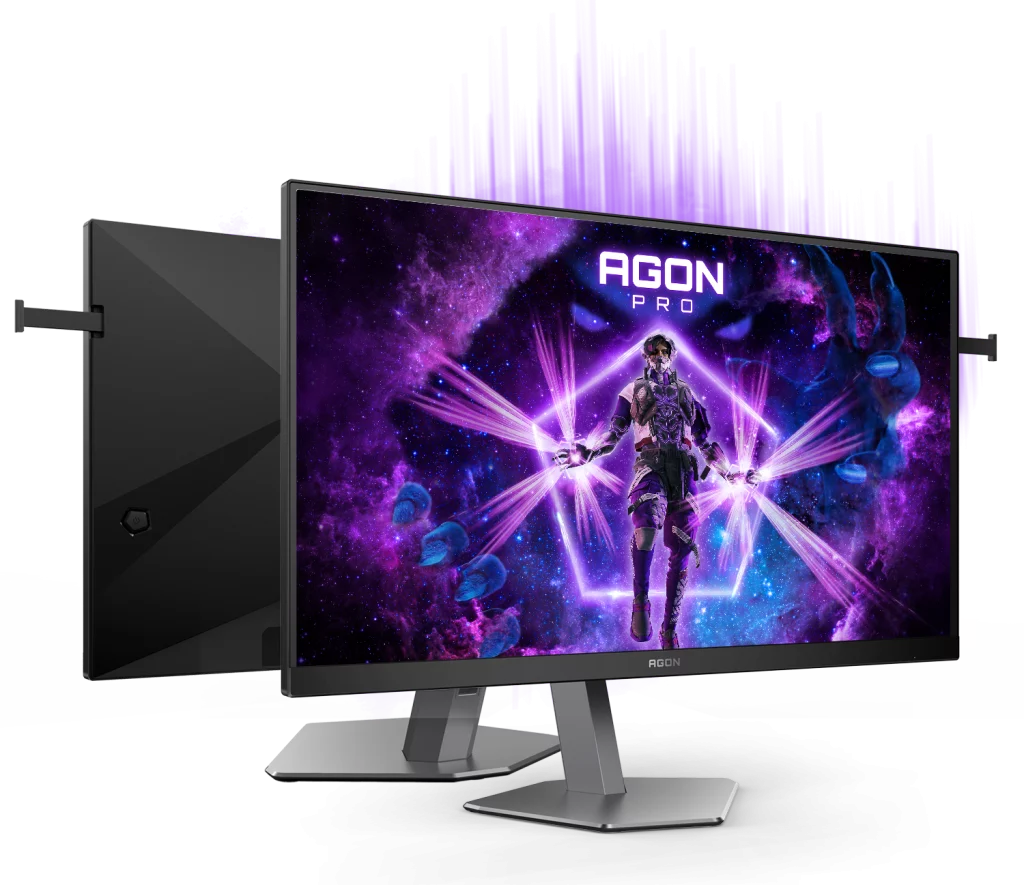
AOC has introduced its latest gaming monitor, the AGON AG276FK, designed to meet the needs of competitive eSports players seeking top-tier visual performance. Featuring a 520Hz refresh rate and ultra-low response times, this 27-inch monitor is likely among the most capable eSports monitors money can buy.
Key Features of the AGON AG276FK
The AG276FK’s 520Hz refresh rate is a standout feature, designed to appeal to pro gamers and enthusiasts looking to optimize their setups. Higher refresh rates contribute to smoother visuals, making fast-paced gameplay more fluid and responsive.
The monitor pairs this high refresh rate with a Fast IPS panel and a 1ms Grey-to-Grey (GtG) response time, minimizing motion blur and ghosting. This clarity is important for games that demand quick reactions and precise accuracy.
Features Built for Gamers
The AG276FK offers more than just speed, incorporating features that enhance both gaming performance and comfort:
Adaptive Sync: This technology synchronizes the monitor’s refresh rate with the frame rate output from the graphics card to reduce screen tearing and stuttering, providing a smoother gaming experience.
Low Input Lag: The monitor includes a low input lag mode, reducing visual processing to provide a more immediate connection between commands and on-screen action.
HDR 400 Certification: Equipped with VESA-Certified DisplayHDR 400, the AG276FK enhances color vibrancy and contrast, giving gamers an improved visual experience in high-contrast scenarios.
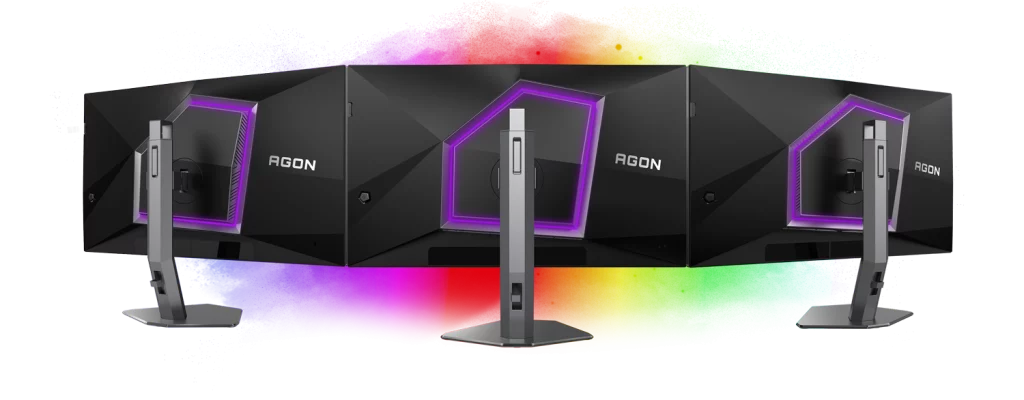
Ergonomic and Customizable Setup: The monitor includes an adjustable stand, enabling users to raise, lower, tilt, and swivel the screen to their preference. Customizable RGB lighting on the back also allows for personalizing the setup with various colors and lighting effects.
Convenient Design for Gamers
The AG276FK addresses practical needs with features like a USB hub for easy peripheral connections and a gamepad for straightforward on-screen display (OSD) navigation. AOC’s G-Menu software also allows users to fine-tune settings from their PC for added customization.
Pricing and Availability
The AGON AG276FK is set to launch in the Eurozone at €659 ($700) and in the UK for £499.99 ($530). U.S. pricing has not yet been confirmed, but AOC expects availability in the region later this month.
It’s been quite a while since Tecno launched the Spark 30 series smartphones. The line is home to five devices: Spark 30, Spark 30 Pro, Spark 30C, Spark 30C 5G, and Spark 30 5G.
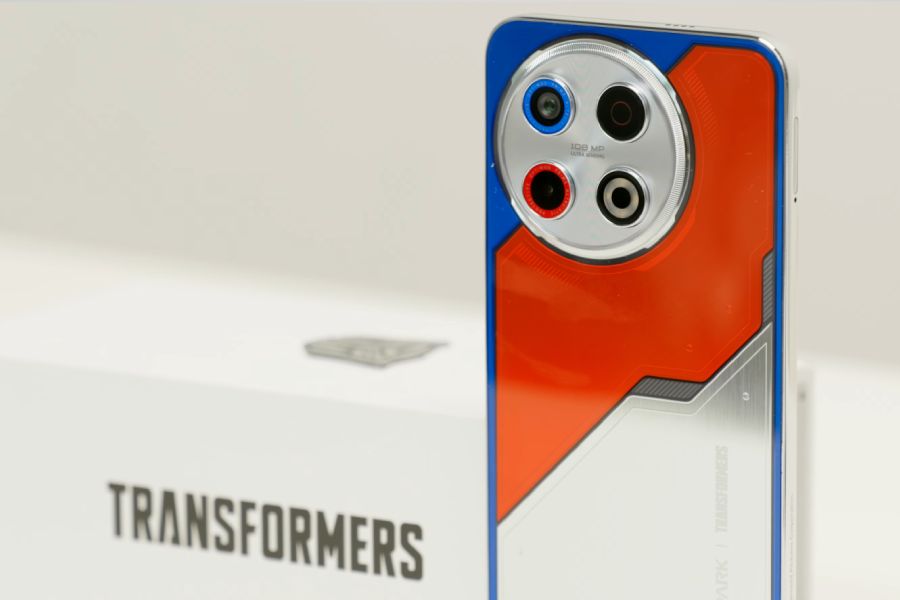
Though these devices are budget to low-mid-range successors to previous models, this year’s Spark series is a bit special as the company has collaborated with Hasbro’s Transformers for limited editions of the Spark 30 and Spark 30 Pro.
The Spark 30 features a Bumblebee-inspired design, while the Pro model takes Optimus Prime’s (my favorite) iconic colors — red, blue, and silver — in the hood. Fortunately, our review team got their hands on this exact model, and we now have a hands-on review and initial impressions video available on our YouTube channel.
Hands-on of a Optimus Prime phone
The phone’s box content isn’t anything to get excited about, as the company includes the standard white power adapter and USB-C cable. It does come with wired earphones (also in plain white), which is something you don’t often see included with other brands these days.
The phone itself, however, clearly reflects its Prime genes. The back design is painted in Optimus Prime’s red, blue, and silver colors, while the software features customized themed wallpaper and icons.
Its specs remain the same as the regular Spark 30 Pro, as expected. It features a 6.78-inch AMOLED display that refreshes at 120Hz and has 10-bit color depth. Running the mechanics underneath is a MediaTek Helio G100 processor paired with up to 8GB of RAM and 256GB of storage.
For the camera, the phone includes a 108MP primary sensor with support for 3x lossless zoom and up to 10x digital zoom. Tecno has also added its AI camera features, such as AIGC portrait, AI Eraser, and AI Artboard. The device starts at around $200 for the 8/128GB version and about $220 for the 8/256GB option.
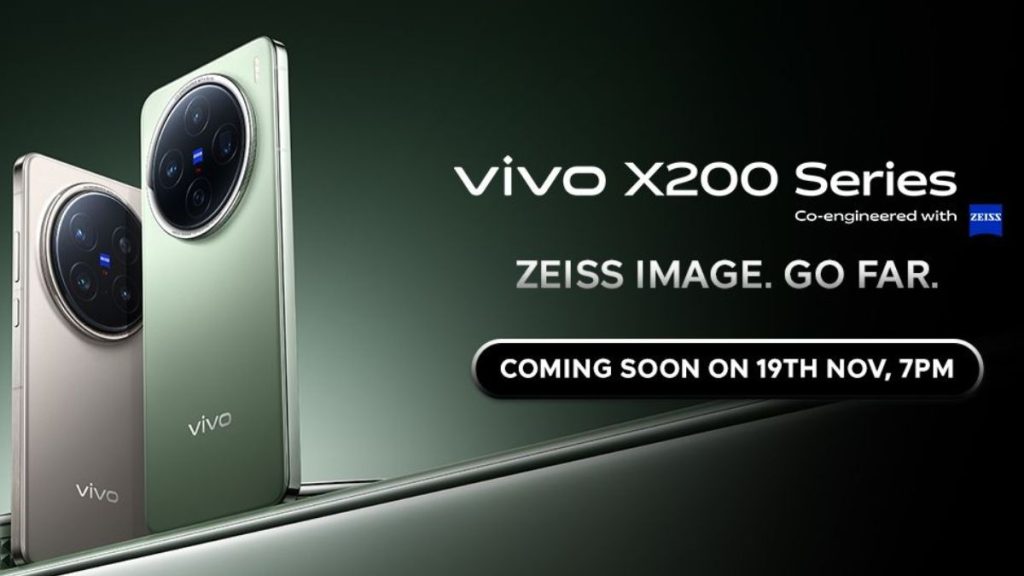
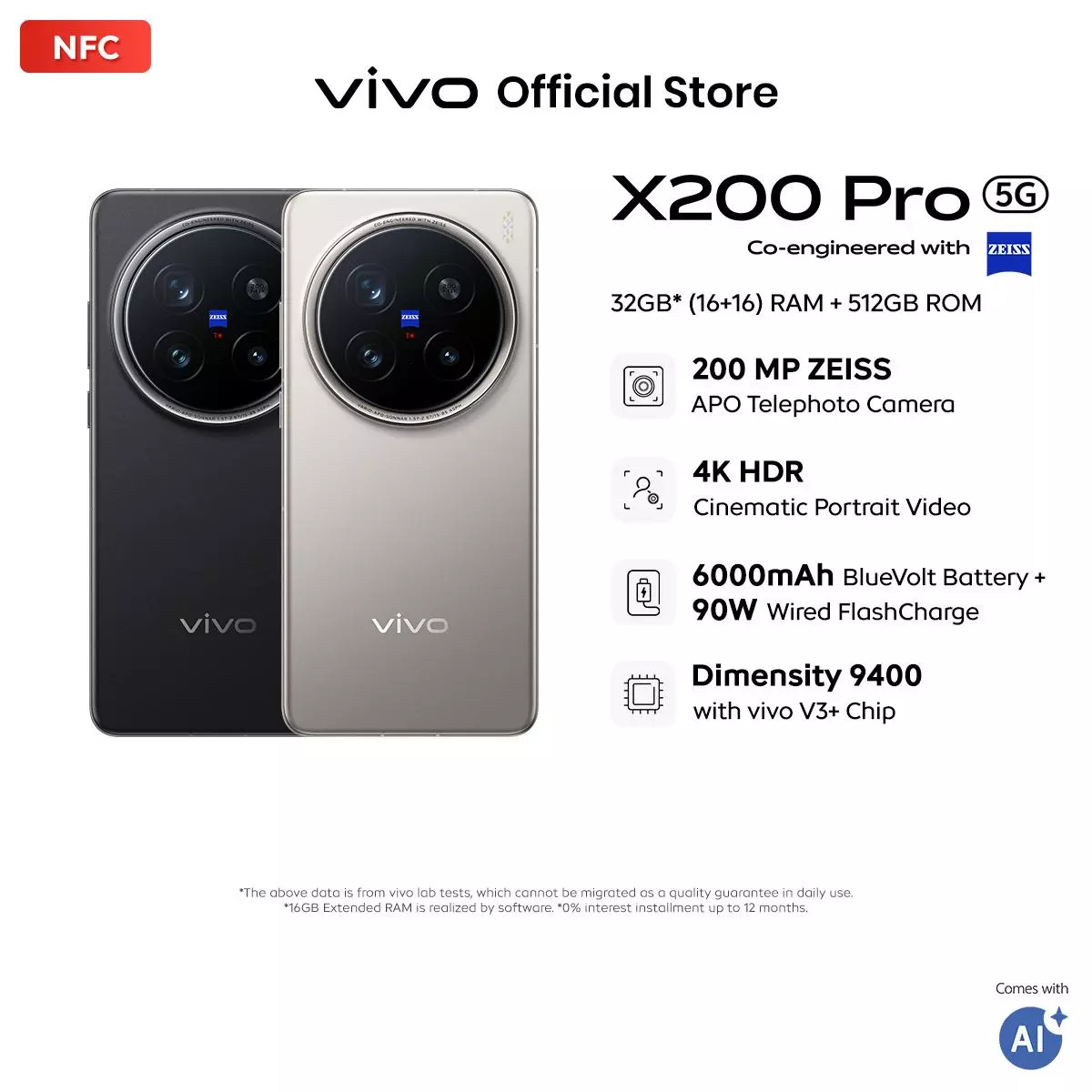
Vivo is gearing up to launch its highly anticipated X200 series in Malaysia on November 19th, 2024. This confirmation follows recent leaks suggesting a November 28th launch in Thailand and an Indian debut next month.
The series is expected to include two models: The Vivo X200 and the X200 Pro. In China, the brand has also launched a third model called the Vivo X200 Pro mini, however, it looks like the brand is not bringing that model over to the International market. As for specifications, the X200 and X200 Pro global models are expected to be identical to the Chinese models.
Vivo X200 series specifications (Chinese model)
The Vivo X200 features a 6.67-inch OLED display with a 120Hz refresh rate and a peak brightness of 4,500 nits. The Pro version has a slightly larger 6.78-inch display with similar specs, adding an ultrasonic fingerprint sensor under the screen for enhanced security.
Both models run on the MediaTek Dimensity 9400 chipset, with LPDDR5x RAM and UFS 4.0 storage. The X200 includes a triple-camera setup with three 50MP lenses for wide, ultrawide, and 3x zoom shots. The X200 Pro model upgrades the telephoto lens to a 200MP sensor, offering a 3.7x zoom for greater detail.
The X200 is powered by a 5,800mAh battery, while the Pro version has a 6,000mAh battery. Both support 90W wired charging, with the Pro model adding 30W wireless charging.
In related news, Vivo’s X200 Ultra smartphone, which is expected to debut next year is said to feature a 1-inch main sensor. Additionally, the X200 Ultra will reportedly feature a triple-camera setup with a 200MP telephoto lens with a 1.4” sensor and a 50MP ultrawide sensor. Vivo may also include the Snapdragon 8 Elite chip and satellite connectivity.
We use cookies on our website to give you the most relevant experience by remembering your preferences and repeat visits. By clicking “Accept”, you consent to the use of ALL the cookies.
This website uses cookies to improve your experience while you navigate through the website. Out of these, the cookies that are categorized as necessary are stored on your browser as they are essential for the working of basic functionalities of the website. We also use third-party cookies that help us analyze and understand how you use this website. These cookies will be stored in your browser only with your consent. You also have the option to opt-out of these cookies. But opting out of some of these cookies may affect your browsing experience.
Necessary cookies are absolutely essential for the website to function properly. This category only includes cookies that ensures basic functionalities and security features of the website. These cookies do not store any personal information.
Any cookies that may not be particularly necessary for the website to function and is used specifically to collect user personal data via analytics, ads, other embedded contents are termed as non-necessary cookies. It is mandatory to procure user consent prior to running these cookies on your website.