Huawei appears to be preparing for the launch of its Pura 80 Ultra, the successor to the Pura 70 Ultra released in April. Recent leaks from China have revealed key camera specifications, positioning the Pura 80 Ultra as a flagship device for photography enthusiasts.
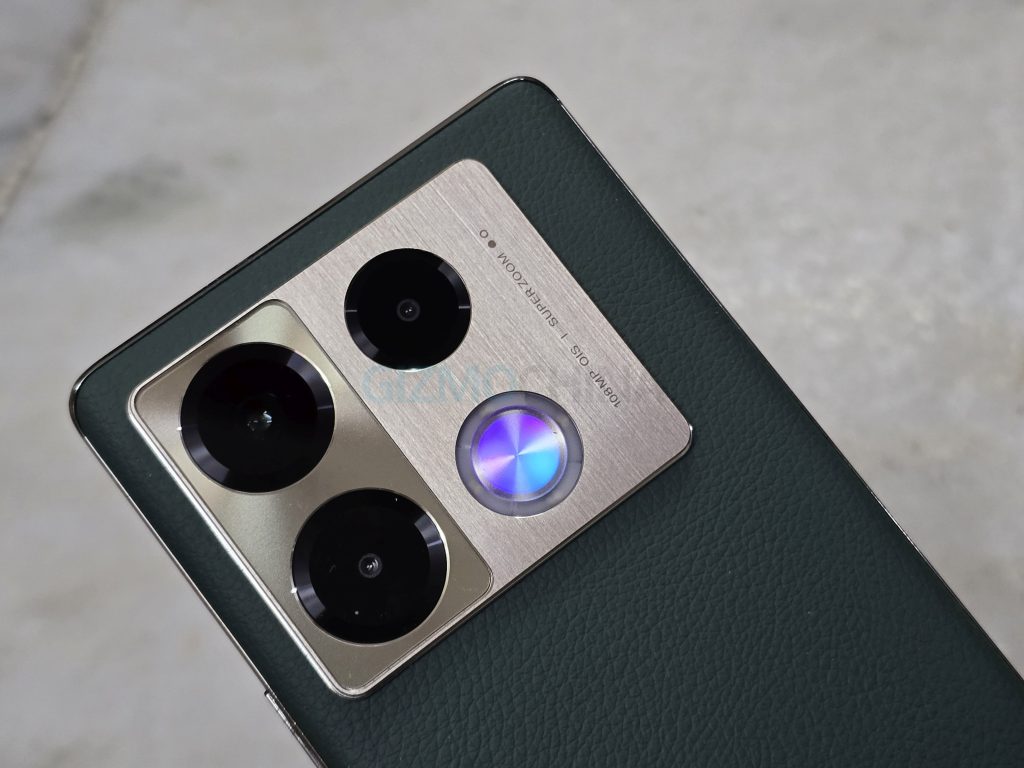
The Pura 80 Ultra is rumored to feature a 50 MP main camera with a 1-inch type sensor and variable aperture, a 50 MP ultrawide camera, and a “super large” periscope zoom lens equipped with a 1/1.3″ type sensor. While these specs suggest a significant focus on advanced imaging capabilities, it’s important to note that they are based on current prototypes. Adjustments could still occur before the phone enters mass production.
Huawei Pura 70 Ultra
Although the official launch is expected in Q2 2025, likely around April to align with the Pura 70 Ultra’s release schedule, these early details highlight Huawei’s ambition to make the Pura 80 Ultra a photography powerhouse.
Looking at its predecessor, the Pura 70 Ultra, provides additional context. That device featured a 6.8-inch OLED LTPO display with a 120Hz refresh rate and FHD+ resolution, combined with advanced color and dimming technologies. Its rear camera system included a 50 MP retractable lens, a 40 MP ultrawide lens, and a 50 MP macro telephoto camera. The front camera was a 13 MP ultrawide lens.
The Pura 70 Ultra also boasted a 5200mAh battery with 100W wired and 80W wireless fast charging, along with reverse charging capabilities. These specifications set a high bar for the upcoming model.
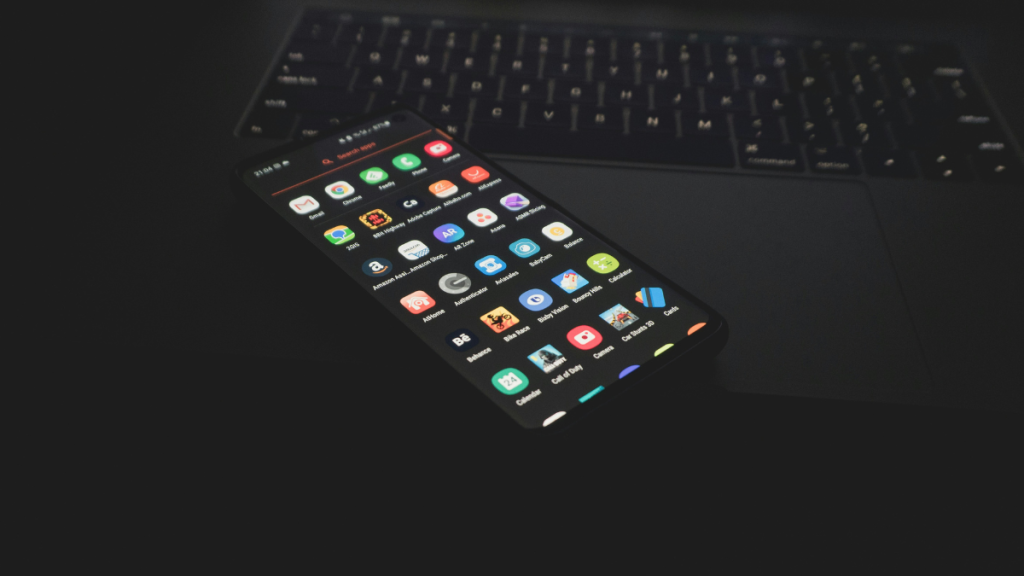
After unboxing and setting up your new Samsung phone, the first step, perhaps, is to delete all unnecessary preinstalled apps so that you don’t have to juggle between a lot of apps later on to quickly find your favorite ones. This also saves some storage space and CPU resources. Carriers may also contribute to bloatware on Samsung phones, but most of them can be removed, fortunately.
While One UI is still one of the most popular Android skins, bloatware is still a problem that’s been around for years. But, in 2021, Samsung made a significant step in that direction. It made Google Messages the default messaging app on all phones launched since 2021, but only for specific regions. Samsung phones still come with Samsung Messages, though.
Here, we’ve prepared a list of apps that Samsung should stop preinstalling on Galaxy phones, which will not only improve its reputation in bloatware but also the user experience.
1. Microsoft Office apps
Microsoft’s partnership with Samsung extends beyond Link to Windows, as Galaxy phones also come with a suite of Microsoft Office apps, such as Microsoft 365 and Outlook. While the auto-installation can be prevented when setting up your Samsung Galaxy, it’s easy to miss out when quickly setting things up.
Microsoft Office apps are useful, but they do not work on mobile phones as good as they do on computers. And the presence of Google alternatives, such as Google Drive and Gmail, further reduces the incentive.
2. Microsoft OneDrive and LinkedIn
Besides Microsoft Office apps, Samsung shouldn’t preinstall OneDrive and Linked as well. Samsung Galaxy phones already have Google Drive with 3x more free storage than OneDrive and better compatibility with most Android apps for backups.
LinkedIn isn’t for the general public but for professionals and businesses. The primary reason for preinstalling apps should be to target the majority, not a specific segment. Hence, LinkedIn shouldn’t be preinstalled on our phones.
3. Samsung Kids
Samsung Kids app helps parents create a safe and engaging digital environment for their children by allowing them to modify the app’s access, monitor app usage, add screen time limits, and restrict access to specific websites. However, more than being a useful app, it feels like bloatware, as the majority of Samsung users are adults.
Instead of preinstalling Samsung Kids, Samsung should make it available on the Google Play Store so that users searching for it can install it easily while reducing one bloatware for millions of Galaxy owners.
4. Samsung Calendar
Samsung Calendar is a useful app, but its non-compatibility with other devices always frustrates me. The app only works with Samsung devices, unfortunately.
I used the app for a few weeks only to get frustrated because of a lack of PC support. Every time I had to look at the calendar to see my upcoming meetings or set a task/reminder while using the PC, I had to grab my phone. I strongly felt the need for PC compatibility. Eventually, I switched to Google Calendar that works with any device and has an excellent integration with Gmail. Since then, I didn’t feel the need to make another switch.
Samsung should allow users to access Samsung Calendar through any other device or not install this app at all. That’s my strong advice to Samsung.
5. Samsung Keyboard
Samsung Keyboard works well with Samsung phones, but there are many great keyboard apps with extra features. Gboard is one of them, featuring better word prediction capabilities, more accurate glide typing, undo backspace feature, and a wide range of themes and customizations. Integrated Google Translate makes texting easier.
6. Samsung Free
Samsung Free lets users watch channels (limited), read news, and play games. It’s a completely free service but is limited to certain regions, including India.
In a world with so much free content on YouTube and premium services like Netflix and Amazon Prime Video, Samsung Free offers less incentive to drive people to the platform. For news, you can use the Google app, and the Play Store has an extensive collection of engaging games (free and paid).
There are better alternatives to Samsung Free. Therefore, Samsung shouldn’t preinstall this app on its phones, in my strongest opinion.
Did we miss something on the list? If so, mention them in the comments below.
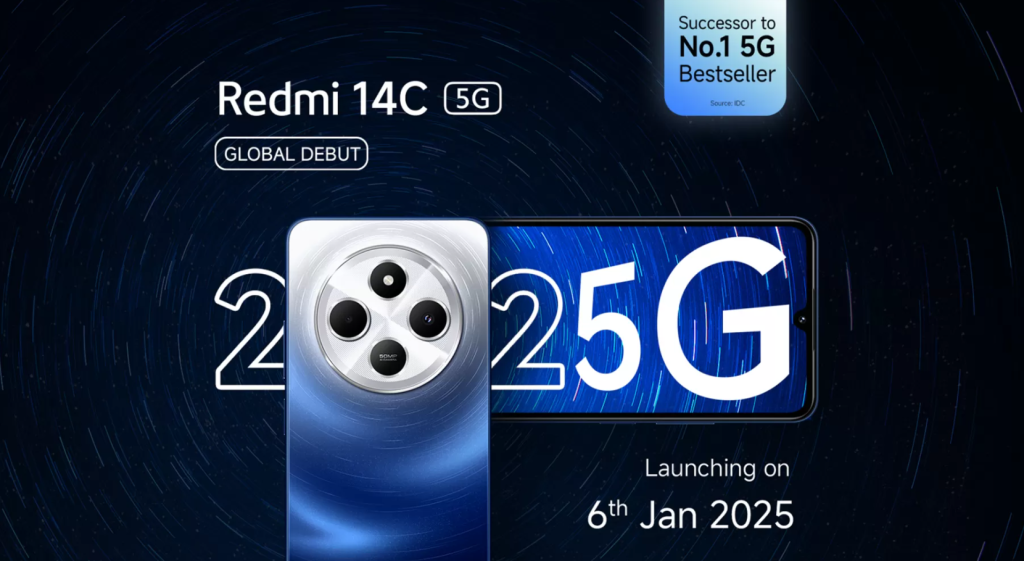
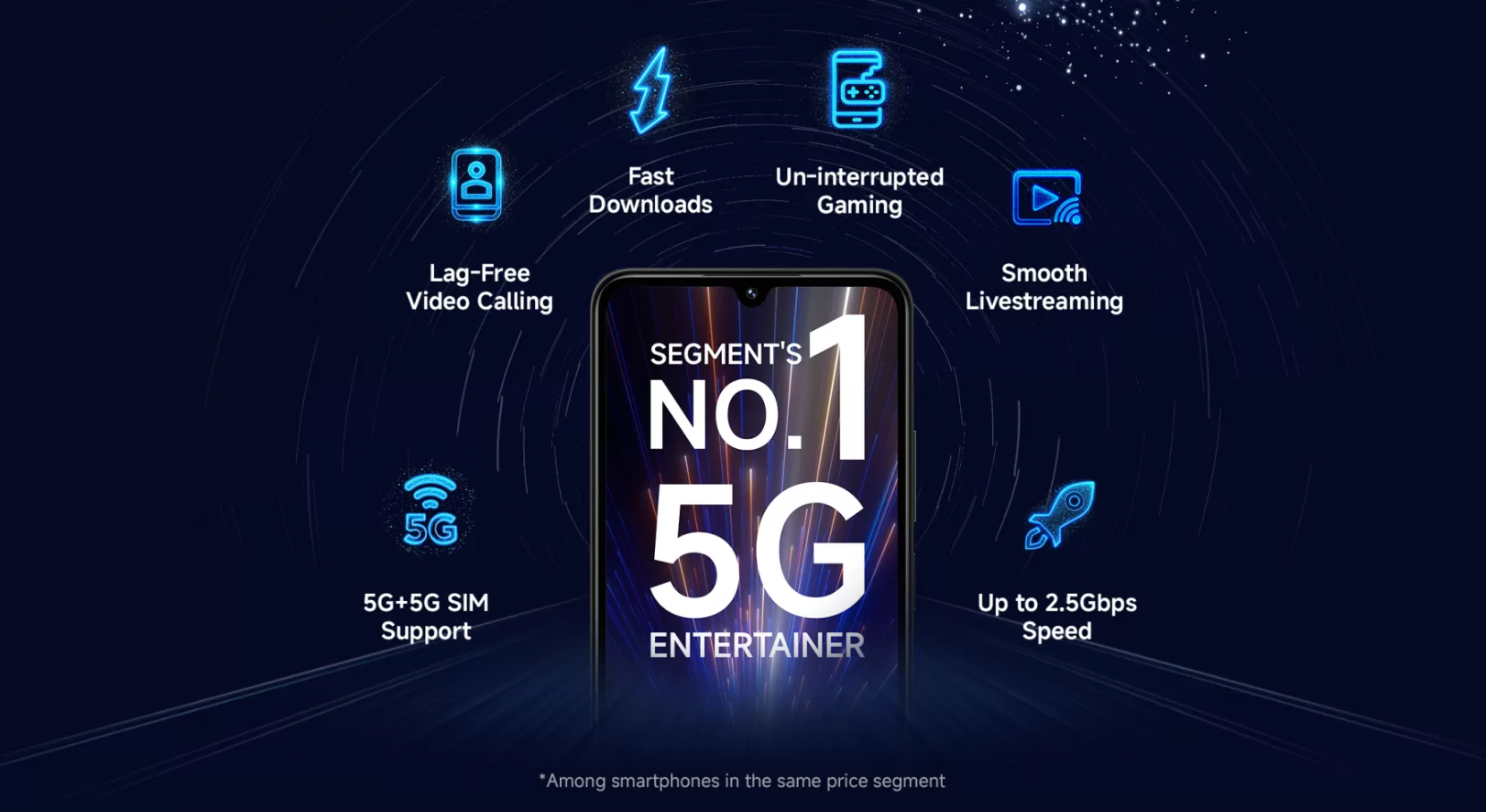
Xiaomi has announced the launch of its Redmi 14C 5G smartphone, scheduled for January 6, 2025, in both Indian and global markets. The device was initially teased as a “2025G” smartphone on the Redmi India X platform and later confirmed through a Flipkart landing page. It is expected to be a rebranded version of the Redmi 14R 5G.
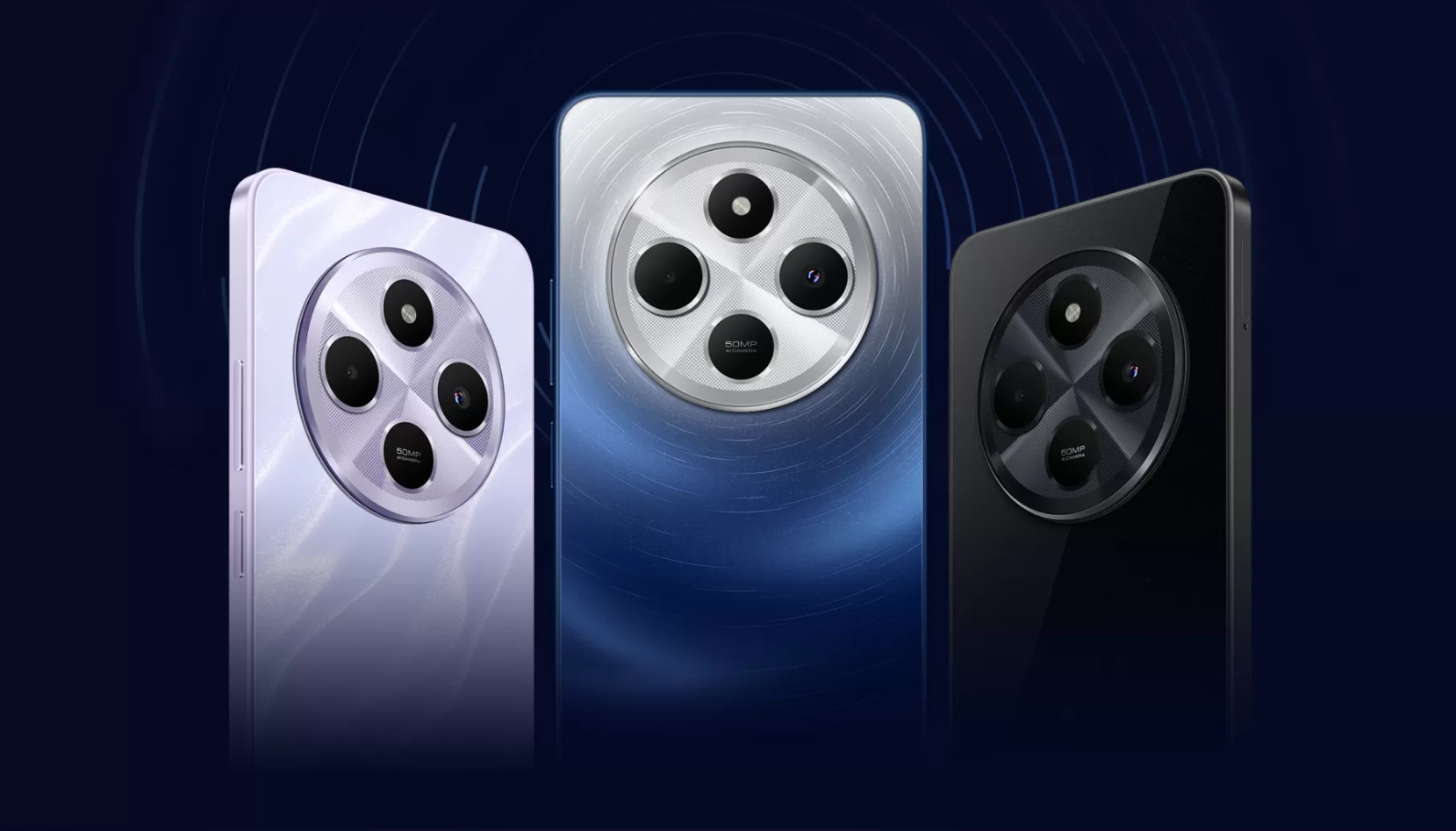
The Redmi 14C 5G is being promoted as a leading option in its segment, with features such as dual 5G SIM support, seamless video calling, smooth live-streaming, uninterrupted gaming, and download speeds of up to 2.5Gbps. It will be available in three colors—White, Blue, and Black—and features a “Premium Starlight Design.”
While detailed specifications specific to the Redmi 14C 5G are yet to be fully disclosed, the Redmi 14R 5G provides insight into what consumers might expect. This includes a 6.88-inch display with a resolution of 1640 × 720 pixels, a peak brightness of 600 nits, and a touch sampling rate of 240Hz.
The screen also supports DC dimming, eye protection, and functionality even when wet. The device is powered by the Snapdragon 4 Gen 2 chipset and offers up to 8GB of RAM along with 256GB of internal storage. It includes a 13MP rear camera, a 5MP front-facing camera, and a 5160mAh battery that supports 18W fast charging. Its dimensions are 171.88mm x 77.8mm x 8.22mm.
In other news, Xiaomi is gearing up to launch the Redmi Turbo 4 in its home market, powered by the recently announced Dimensity 8400 processor. The phone is rumored to include a 6.67-inch LTPS OLED display with 1.5K resolution, a large 6,550mAh battery, and a design featuring a plastic frame and glass back. Globally, the device is expected to be rebranded as the POCO F7.
Infinix is gearing up for the launch of its Note 50 series, with one of its models recently spotted in the FCC certification database. This certification not only confirms the imminent release of the device but also offers a glimpse into its body design and connectivity features.
Infinix Note 40 series’ Active Halo Light
While the Infinix Note 50 series has been making headlines since its GSMA database listing in October 2024, detailed information about the phones had remained under wraps—until now. With the FCC certification, key details about the smartphone’s design and connectivity have been unveiled.
Specifications revealed by the FCC certification:
The FCC listing identifies the Infinix Note 50 under the model number X6858, and two color configurations—green and pink—were observed. The phone’s rear panel sports a rectangular camera module with rounded corners, located in the upper-left corner.
This module houses four lenses arranged in two rows: two large lenses and one small lens on the left, alongside a small lens and an LED flash on the right. The camera module matches the rear body’s color, while the Infinix logo adorns the bottom-left corner of the device.
The Infinix Note 50 measures 163.2 mm in length, 74.4 mm in width, and 9 mm in thickness. The FCC listing reveals support for 2G, 3G, and 4G LTE connectivity across multiple bands, along with dual-band Wi-Fi, Bluetooth (likely version 5.0 or above), and NFC. The device will also support fast charging up to 45W. While the exact battery capacity remains undisclosed, the phone features a nominal voltage of 3.91V.
What else can you expect from the Infinix Note 50 series?
The Note 50 series is expected to include multiple models: the Note 50, Note 50X, Note 50 Pro, and Note 50 Pro Plus 5G, with corresponding model numbers X6858, X6857, X6855, and X6856, respectively. If the launch follows the timeline of its predecessor, the Infinix Note 40, the Note 50 series could debut in Indonesia and other markets by early 2025.
Infinix Note 40 Pro (4G) with MagPad
As for pricing, 91mobiles speculates that the Infinix Note 50 may launch at around IDR 2.8 million (~Rs 14,785) or even reach IDR 3 million, slightly higher than its predecessor. The Note 40, released in March 2024, had a starting price of IDR 2.7 million.
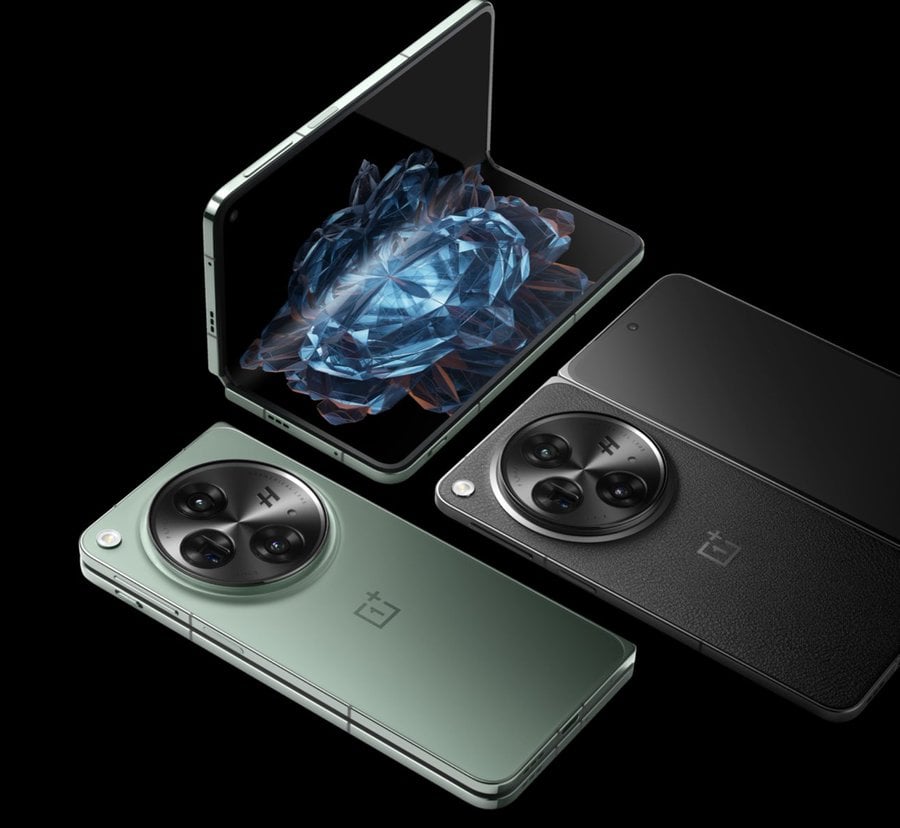
The OnePlus Open made its official debut back in October 2023. Now, over a year after its initial release, the company is offering a massive discount worth Rs 40,000 on its flagship foldable phone. This model is now available for purchase for under Rs 1 lakh. So here are all the details.
OnePlus Open Sells for Just Rs 99,999
The OnePlus Open is currently listed on Amazon for its lowest price ever. OnePlus is selling its first ever foldable phone for just 99,999 INR (roughly 1,169 US Dollars). To recall, the OnePlus Open had a 139,999 INR launch price in India. It is worth noting that this discount is only available on Amazon since the official OnePlus website in India still carries the original 139,999 INR price tag.
OnePlus Open
That’s not all, Amazon is even offering a Try and Buy option for the OnePlus Open. For those unaware, this is a trial order that lets users try the OnePlus Open at their home for just 149 INR. This helps them figure out whether they wish to buy the phone after using it at home for a bit. Similarly, the brand’s 2024 flagship, the OnePlus 12, also got a notable discount earlier this week. It got a 7,000 INR discount, bringing it down to its most affordable price.
The OnePlus Open has a 6.3-inch external screen and a 7.82-inch internal display. Both panels are an LTPO AMOLED with 2K resolution and a 120Hz refresh rate. Under the hood, it is equipped with the Snapdragon 8 Gen 2 SoC. For optics, the rear has a 48MP triple camera setup, while the external and internal screens have a 20MP and 32MP selfies camera respectively. A 4,800mAh battery pack powers this device, which supports 67W wired fast charging.
For years, Xiaomi’s Redmi line stood as the go-to option for budget-conscious consumers seeking the best possible specifications without breaking the bank.
The Redmi Note series, in particular, was hailed as a disruptor in the mid-range smartphone market, offering features that undercut competitors at the same price point. Fast forward to today, and that narrative is starting to shift. While Redmi smartphones remain popular, there’s a growing sentiment that their value proposition has diminished.
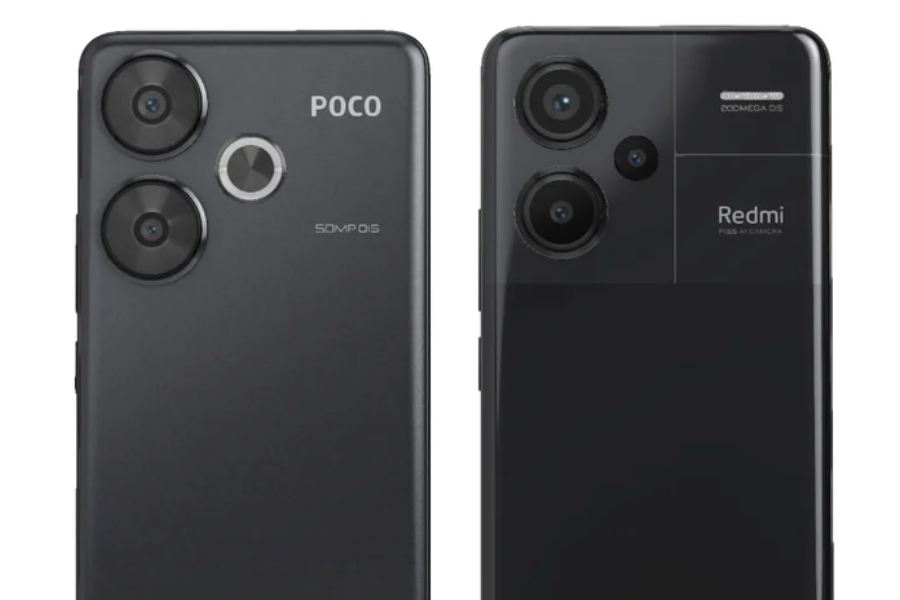
In contrast, Poco—a sub-brand of Xiaomi—appears to be quietly but steadily inheriting the mantle once held by Redmi. Poco phones now occupy the sweet spot where aggressive pricing meets high-end specifications, a position that Redmi used to dominate.
Ironically, Poco’s devices are often near replicas of their Redmi counterparts, differing primarily in branding and subtle design changes. Yet, the pricing disparity between the two lines leaves Poco looking like the better deal more often than not.
Redmi earned its reputation by redefining what consumers could expect from budget and mid-range phones. From the Redmi Note 5 Pro to the Redmi Note 10 series, each launch generated significant buzz, thanks to their high performance-to-price ratio.
A Redmi Note phone would typically boast capable processors, large batteries, and capable cameras—all for a fraction of the price competitors charged.
However, over the last couple of years, Redmi devices have gradually crept up in price. The once-affordable Redmi Note series now commands a price that puts it in competition with brands like Samsung.
And with increased competition and marginal improvements year-over-year, Redmi smartphones have lost some of their allure. What was once an easy recommendation for budget buyers is now seen by many as just another generic mid-ranger.
2. Enter Poco
Poco entered the market in 2018 with the launch of the Poco F1, a device that immediately garnered attention for packing a flagship Snapdragon processor into a body that cost less than many premium mid-range phones.
Poco’s strategy was simple: take Xiaomi’s supply chain, leverage its manufacturing, and strip away any unnecessary frills to deliver pure performance at a cutthroat price.
In the years since Poco has continued to embrace that ethos. The brand consistently undercuts Redmi on price while offering nearly identical specifications. For instance, the Poco X6, launched earlier this year, shares most of its hardware with the Redmi Note 13 Pro but arrives at a noticeably lower price point.
3. Similar Specs, Lower Prices
One of the key reasons behind Poco’s better value proposition lies in its pricing strategy. Despite often being rebranded Redmi devices, Poco phones are marketed at slightly more aggressive prices. A typical example is the Poco M6 Pro 5G, which mirrors the Redmi Note 14 5Gin design and specifications but comes in at a lower starting price.
From a hardware perspective, there’s little to differentiate the two brands. Both Poco and Redmi phones often feature the same MediaTek processors, AMOLED displays, and large-capacity batteries. The camera systems, too, are strikingly similar. But you can get the M6 Pro for Rs 12,999 in India while the Redmi Note 14 costs Rs 18,999.
4. Branding and Target Audience
Part of the reason Poco can afford to undercut Redmi may lie in its branding approach. Where Redmi aims to strike a balance between mass-market appeal and competitive pricing, Poco targets tech-savvy buyers who prioritize performance over aesthetics. Poco doesn’t shy away from cost-cutting measures, such as opting for slightly less premium finishes.
These design choices resonate with buyers looking for maximum performance without concern for luxury materials. By focusing on what matters most to this segment—speed, battery life, and display quality—Poco manages to stay competitive while keeping prices in check.
In contrast, Redmi appears to be pushing into more premium territory, especially with its latest Redmi Note 14 Pro series. This shift has made room for Poco to position itself as the new budget king. Where Redmi once cornered the sub-₹20,000 market in India or the sub-$300 category globally, Poco now steps in to fill that gap.
5. The Bottom Line
Poco’s value proposition lies in its ability to deliver nearly identical specifications to Redmi at a lower price point. While Redmi devices still offer solid performance and build quality, the gradual increase in pricing has lessened their appeal to budget-conscious consumers. Poco, with its aggressive pricing and no-frills approach, now stands as the better value-for-money option in Xiaomi’s portfolio.
As long as this pricing strategy continues, Poco is likely to keep winning over buyers who once flocked to Redmi for their smartphone needs. And while Redmi may be shifting toward premium aspirations, Poco seems content to stick with the formula that originally made Redmi a household name.
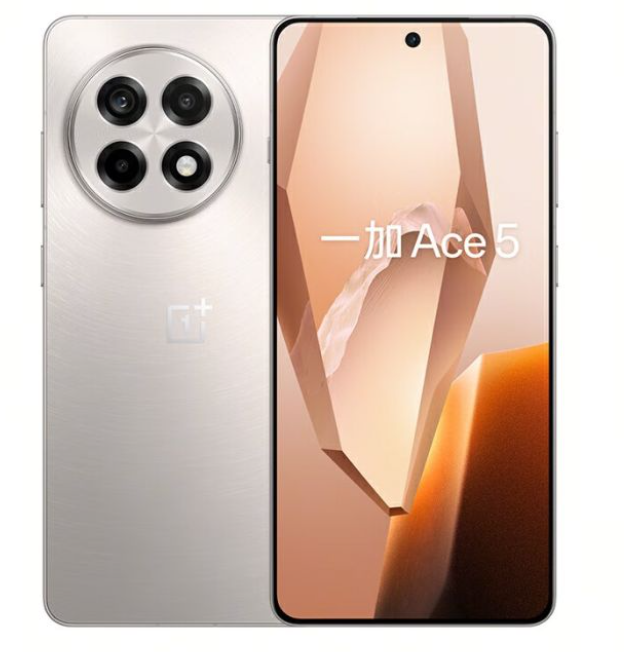
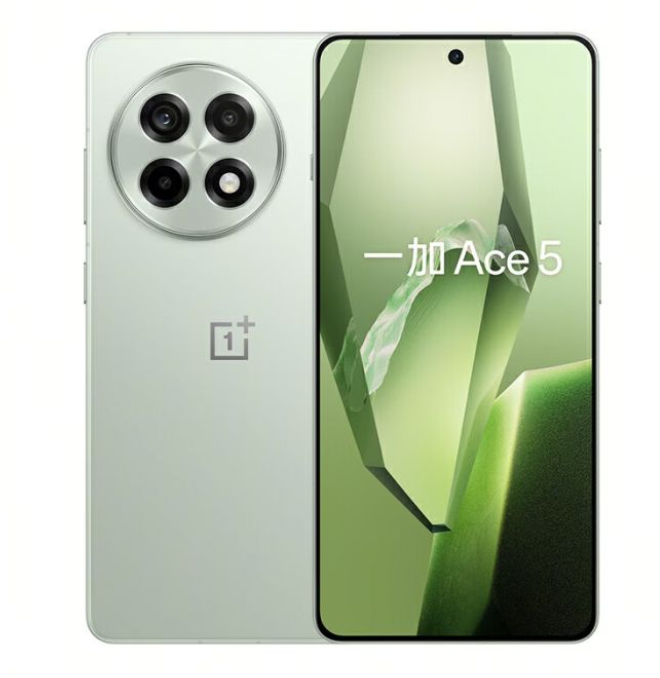
OnePlus Ace 5 is the latest innovation in smartphone technology, designed to deliver a powerful and seamless user experience. Combining cutting-edge hardware with elegant design, the ACE 5 sets a new performance, visuals, and functionality benchmark. Whether you’re a gamer, a photographer, or a multitasker, this device offers something extraordinary for everyone. You can get the OnePlus Ace 5 for a starting price of $399 at Geekwills.
Unmatched Performance with Snapdragon 8 Gen 3
At the heart of the ACE 5 lies the Qualcomm Snapdragon 8 Gen 3 chipset, a powerhouse designed to handle even the most demanding apps and games. This advanced processor ensures smooth multitasking, faster app launches, and a lag-free gaming experience, making it the perfect companion for tech enthusiasts and power users.
A Display That Dazzles
The ACE 5 boasts a stunning 6.78-inch display with 1.5K resolution, delivering crisp visuals and vibrant colors. Whether you’re watching movies, gaming, or browsing social media, the screen provides an immersive and lifelike experience. The larger display size and sharp resolution make it ideal for users who demand superior visuals in every interaction.
Exceptional Camera Capabilities
Capture your world in stunning detail with the 50-megapixel Sony IMX906 primary camera. This high-performance sensor is complemented by an ultra-wide-angle lens, enabling you to take expansive landscape shots and group photos with ease. With the ACE 5, your photography reaches professional levels, ensuring every moment is captured in its full glory.
All-Day Battery Life
Stay powered throughout the day with the ACE 5’s robust 6400mAh battery. Thanks to its 80W fast-charging support, you’ll spend less time tethered to a charger and more time enjoying your device. Whether you’re gaming, streaming, or working on the go, the ACE 5 keeps up with your busy lifestyle.
Sleek and Durable Design
The ONEPLUS ACE 5 combines a sleek, modern aesthetic with a durable build. Its ergonomic design ensures a comfortable grip, while the premium materials offer resilience against daily wear and tear. It’s a phone that looks as good as it performs.
Intuitive Software
Running on the latest OxygenOS, the ACE 5 offers a clean and intuitive user interface. The software is designed to enhance your experience, providing fast performance, smooth navigation, and customizable features tailored to your preferences.
Flexible Storage and RAM Options
The ACE 5 is available in multiple configurations, ensuring there’s a model to suit every user’s needs. From casual users to multitasking professionals, the ample storage and RAM options provide the flexibility and space you require for your apps, photos, and files.
Key Specs:
Processor: Qualcomm Snapdragon 8 Gen 3
Display: 6.78-inch 1.5K resolution
Primary Camera: 50MP Sony IMX906 with ultra-wide-angle lens
Battery: 6400mAh with 80W fast charging
Software: OxygenOS
Storage and RAM: Multiple configurations are available
OnePlus 13 is set to make its global debut soon, with its Indian release being highly anticipated as well. But ahead of the 7th January 2024 release, the OnePlus 13 had its Indian price range and storage options revealed in a new leak. There are also details regarding the OnePlus 13R, so let’s check it out.
OnePlus 13 India Price Range & Storage Variants
The news arrives from known tipster Yogesh Brar, who shared the information on X (formerly Twitter). It seems that OnePlus is bringing a slight price hike to its next gen flagship. The OnePlus 12 was announced in India for a starting price tag of 64,999 INR (roughly 758 USD). However, the OnePlus 13 is expected to release in the region for around 67,000 INR and 70,000 INR (roughly 817 USD).
OnePlus 13
OnePlus 13 is rumored to launch in two variants, namely a 12GB + 256GB option and a 16GB + 512GB variant, which is the same as its predecessor. Although there might be more options in the global variant. Yogesh Brar also revealed one key information regarding the OnePlus 13R. The price range for this model wasn’t tipped, but the OnePlus 13R might launch in just one variant in India, which might be the 12GB + 256GB model. This model is the successor to the OnePlus 12R.
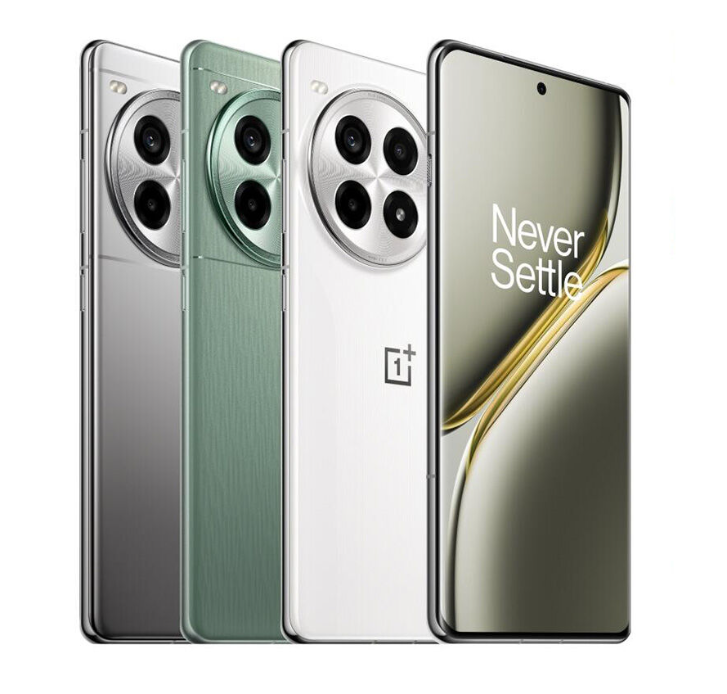
For those unaware, the OnePlus 13R is a rebranded Ace 5 series phone that was just unveiled in China. Brar claimed that the OnePlus 13 would arrive in multiple color options in the region, which includes a Black Eclipse, Arctic Dawn, and Midnight Ocean. On the other hand, the OnePlus 13R arrives in two colors Nebula Noir and Astrail Trail. This is all the information we have at the moment, so stick around for more updates.
OnePlus Ace 3 Pro is a feature-packed smartphone that combines style, performance, and cutting-edge technology. Whether you are a gaming enthusiast, a photography lover, or someone who needs a reliable device for everyday tasks, the OnePlus Ace 3 Pro has something to offer. You can now get $100 OFF on OnePlus Ace 3 Pro at Giztop.
Display and Design
The OnePlus Ace 3 Pro features a stunning 6.78-inch OLED display with a resolution of 2780×1264 pixels. The 120Hz refresh rate and 360Hz touch sampling rate make it perfect for smooth scrolling and immersive gaming experiences. The display supports HDR10+ and offers 100% DCI-P3 color gamut, ensuring vivid and lifelike visuals. With a peak brightness of 4500 nits, the screen remains sharp and clear even in bright sunlight.
Performance
Under the hood, the OnePlus Ace 3 Pro is powered by the Snapdragon 8 Gen 3 processor, delivering top-tier performance. The device comes with up to 16GB of LPDDR5X RAM, ensuring seamless multitasking and fast app launches. An independent graphics chip boosts in-game frame rates, making it a perfect companion for gaming enthusiasts. The HyperBoost Game Frame Stabilization Engine 2.0 further enhances gaming by minimizing frame drops and jittering.
Camera Capabilities
The OnePlus Ace 3 Pro boasts a triple rear camera setup, including a 50MP Sony IMX890 primary sensor with optical image stabilization (OIS) and 4K video recording. The 8MP ultra-wide-angle lens with a 120-degree field of view and the 2MP macro lens allow users to capture diverse and creative shots. For selfies and video calls, the device is equipped with a 16MP Samsung ISOCELL front camera.
Battery and Charging
With a massive 6100mAh battery, the OnePlus Ace 3 Pro ensures all-day usage on a single charge. The device supports 100W SuperVOOC fast charging, allowing you to quickly recharge and get back to your activities. The battery comes with TÜV Rheinland certification for safe and reliable fast charging.
Software and Connectivity
The OnePlus Ace 3 Pro runs on ColorOS 14, which offers a fresh, intuitive interface and features like Dark Mode 2.0. It supports dual SIM functionality, 5G connectivity, Wi-Fi 7, Bluetooth 5.4, and NFC. Additional features include dual stereo speakers, an x-axis linear motor, and the iconic OnePlus alert slider.
Storage Options
The device comes with UFS 4.0 storage options ranging from 256GB to 1TB. This ensures ample space for your apps, photos, music, and more. The fast storage standard also contributes to quicker read and write speeds, enhancing overall performance.
Lava has introduced the Yuva 2 5G, aiming to make 5G technology more accessible. The phone is positioned as a budget-friendly option in the 5G market, offering a balance of essential features at an affordable price.
Key Features of the Yuva 2 5G
The Yuva 2 5G features a 6.67-inch HD+ LCD display with a 90Hz refresh rate, ensuring smooth visuals. The screen also provides up to 700 nits peak brightness, making it suitable for bright environments.
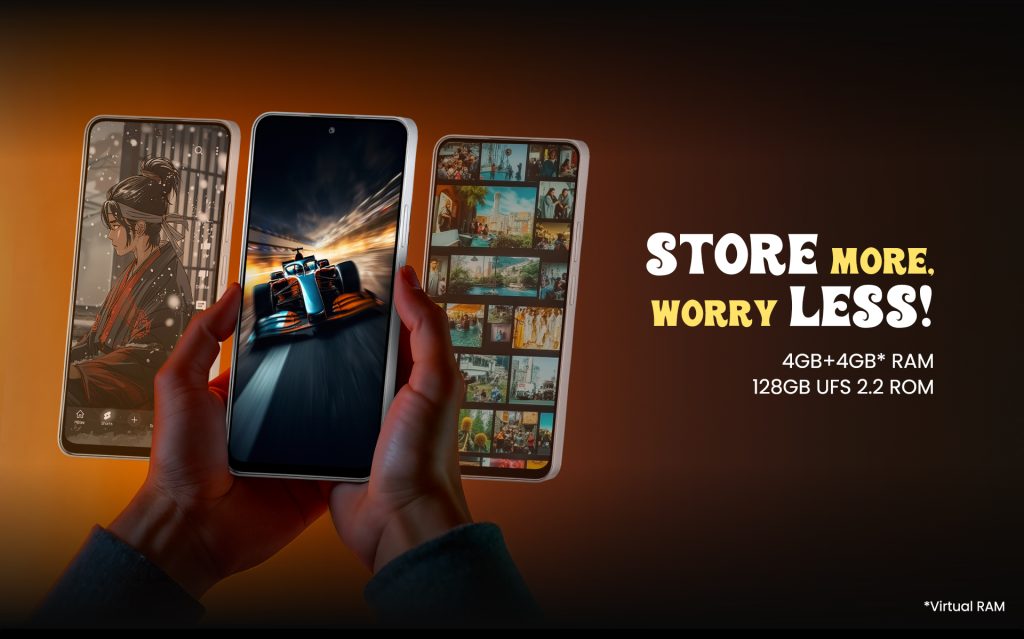
The phone is powered by the UNISOC T760 chipset, built on a 6nm process for energy efficiency. It comes with 4GB of RAM, and an additional 4GB of virtual RAM is available through RAM expansion. Lava has preloaded the device with Android 14, offering a simple interface without unnecessary pre-installed apps.
A unique design element is the rear notification light around the camera module. This light flashes for calls, app notifications, and system alerts, adding a practical feature to the phone.
The device also includes a side-mounted fingerprint scanner for easy and secure access. It comes with stereo speakers and a 3.5mm audio jack, catering to different audio preferences. With a weight of 190g and a thickness of 8.65mm, the phone is lightweight and easy to handle.
The phone has a dual rear camera setup with a 50MP main camera and a 2MP AI lens for additional functionality. On the front, an 8MP camera handles selfies and video calls.
The Yuva 2 5G has a 5000mAh battery, offering a full day of use on a single charge. It supports 18W fast charging, which helps users quickly recharge when needed.
Pricing and Availability
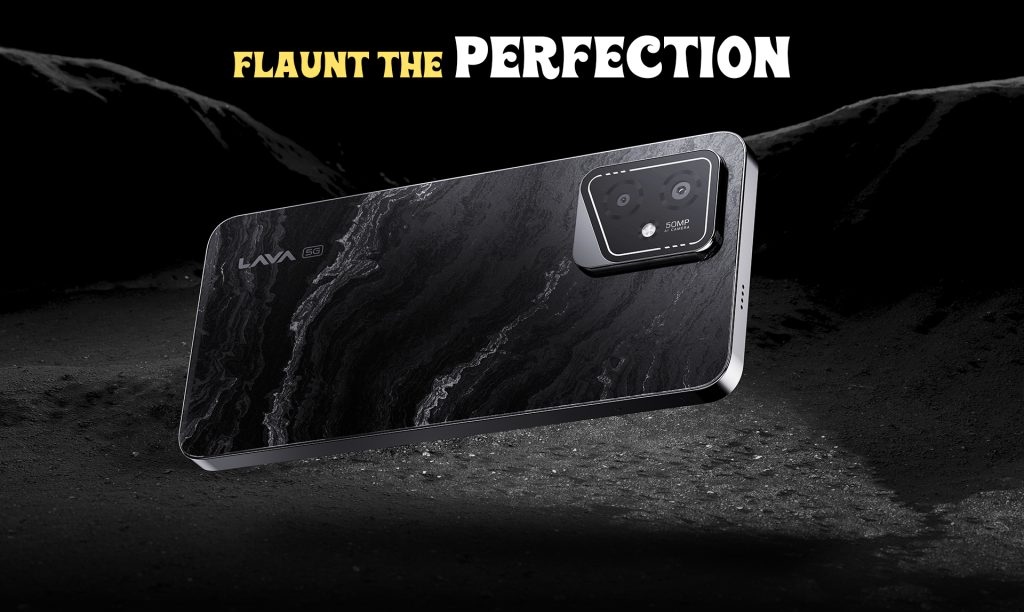
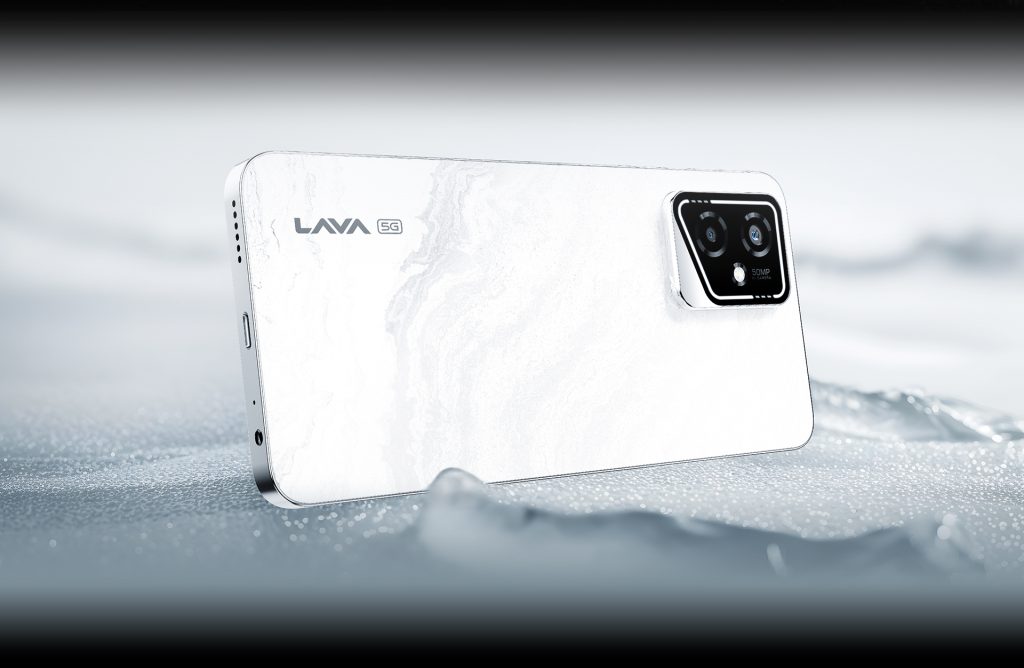
The Lava Yuva 2 5G is priced at ₹9,499, making it one of the more affordable 5G smartphones. It comes in two colors—Marble Black and Marble White—with a marble-textured finish. The phone is available in retail stores across India and includes a one-year warranty with free home service for added convenience.
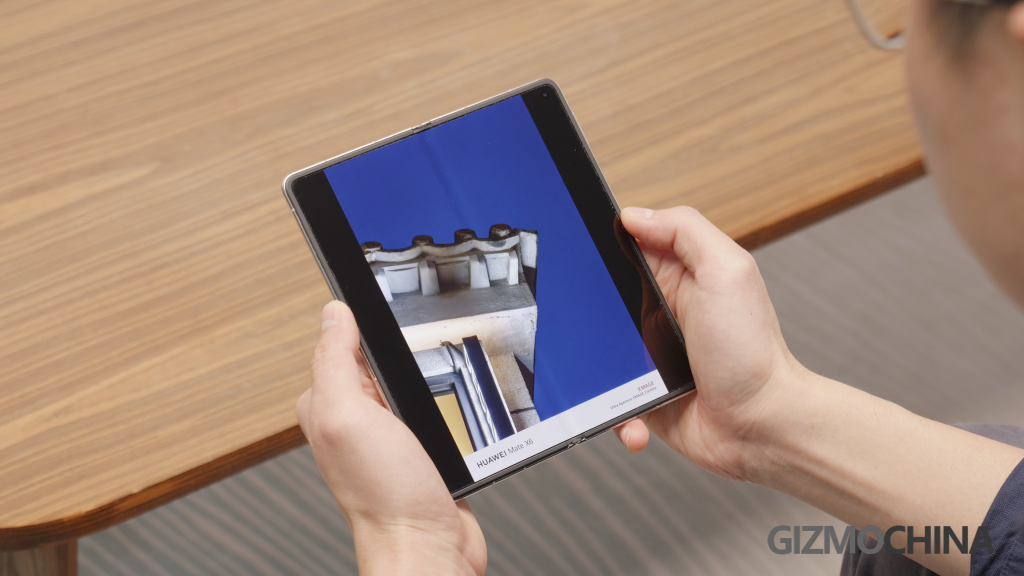
The HUAWEI Mate X6 has just been released, we are going to cover it in two articles. In this one, we will talk about the overall design, the performance, the imaging system, and some other system highlights. If you are into some of the hardware and technical stuff, there will also be another article, should be interesting also. Now Let’s get into the first half of the review for the HUAWEI Mate X6.
HUAWEI Mate X6 – Gizmochina Awards 2024 Best Foldable Phone
Processor: Kirin 9020: Octa-core (1x2.5 GHz Taishan Big & 3x2.15 GHz Taishan Mid & 4x1.53GHz Cortex-A510)
RAM: 12 GB, 16 GB
Storage: 256 GB, 512 GB, 1 TB
Display: 7.93 inches
Camera: Triple Camera
Battery: Li-Po 5110 mAh
Design
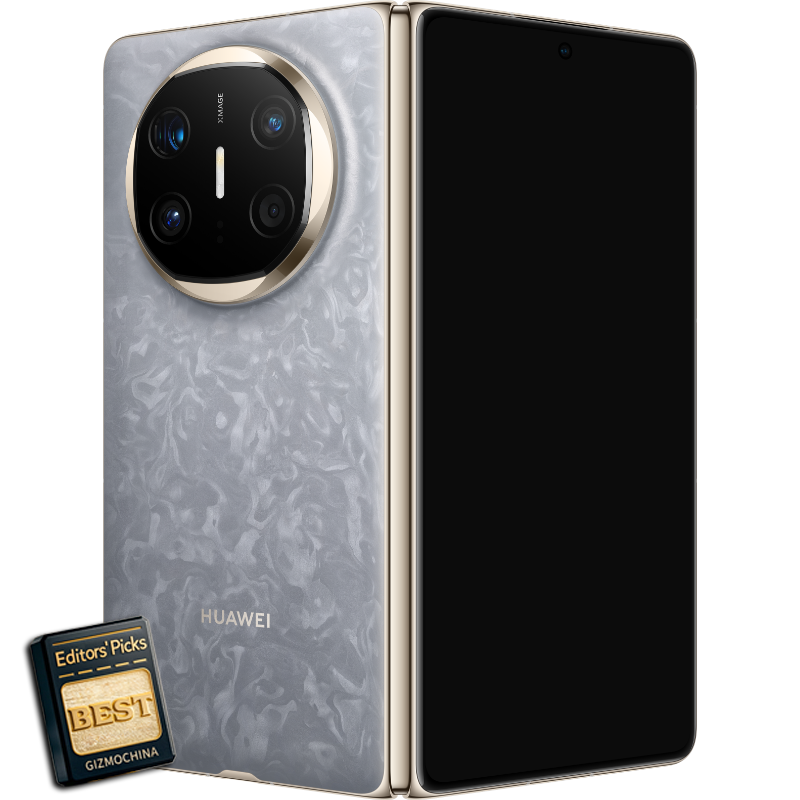
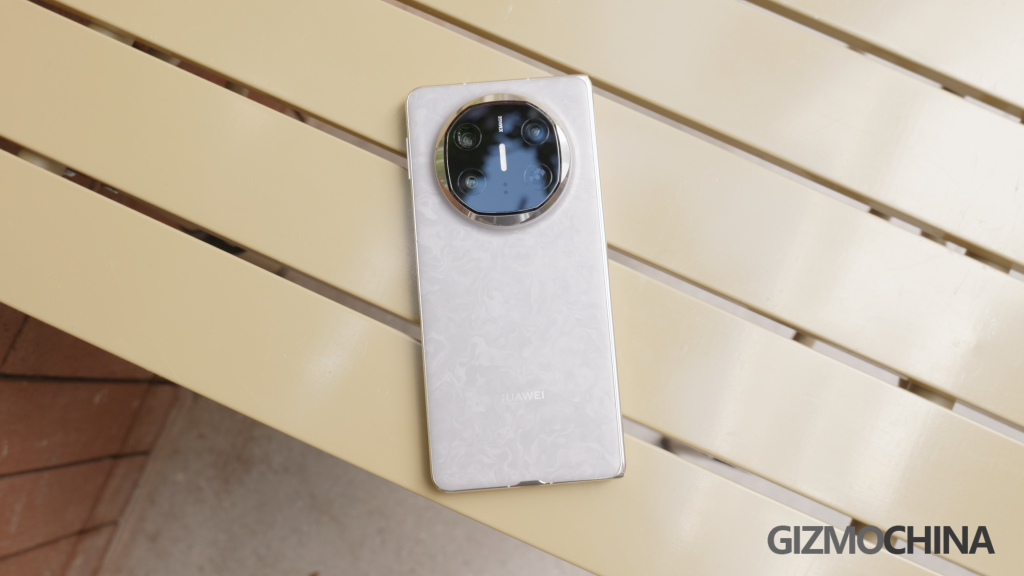
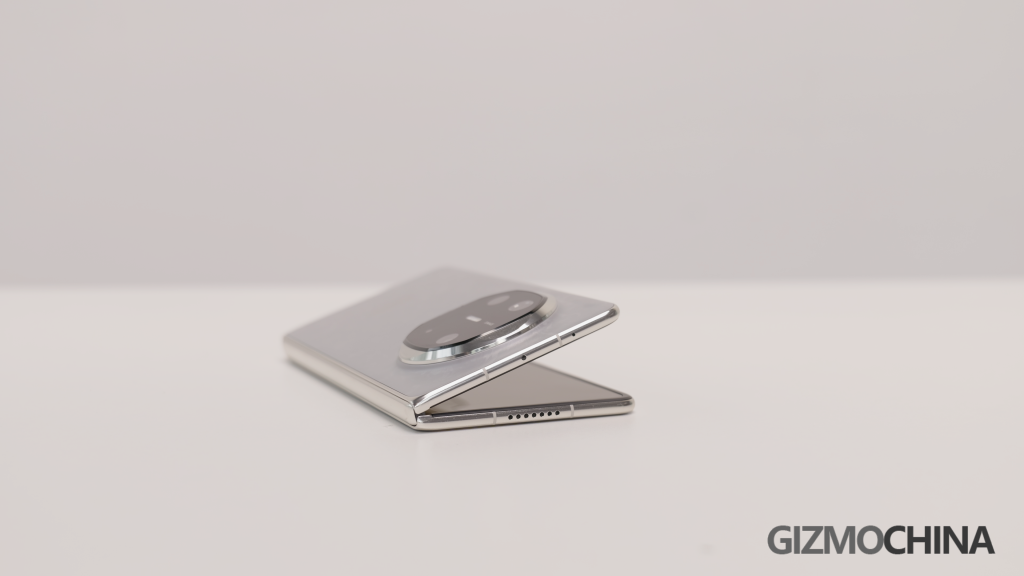
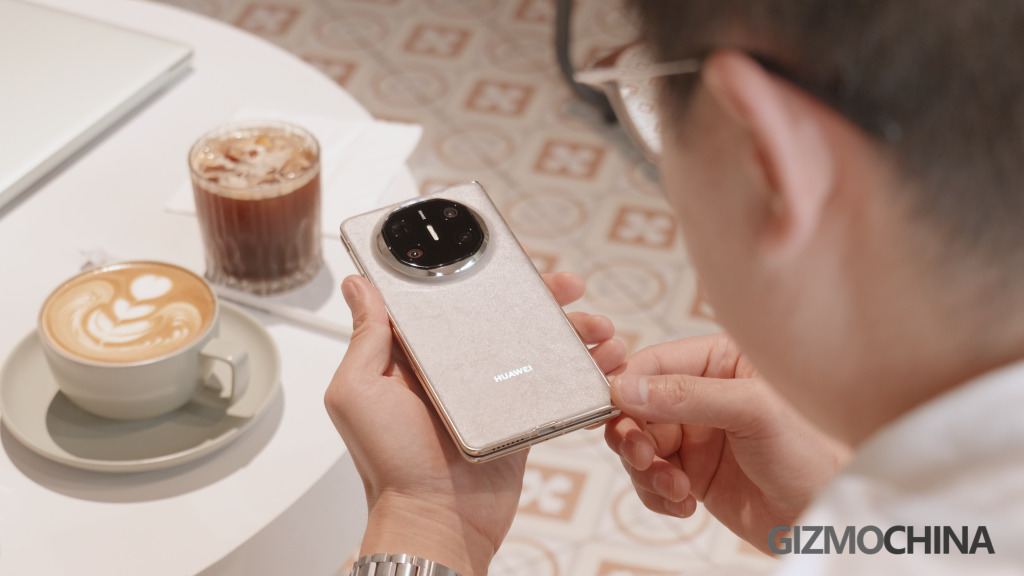
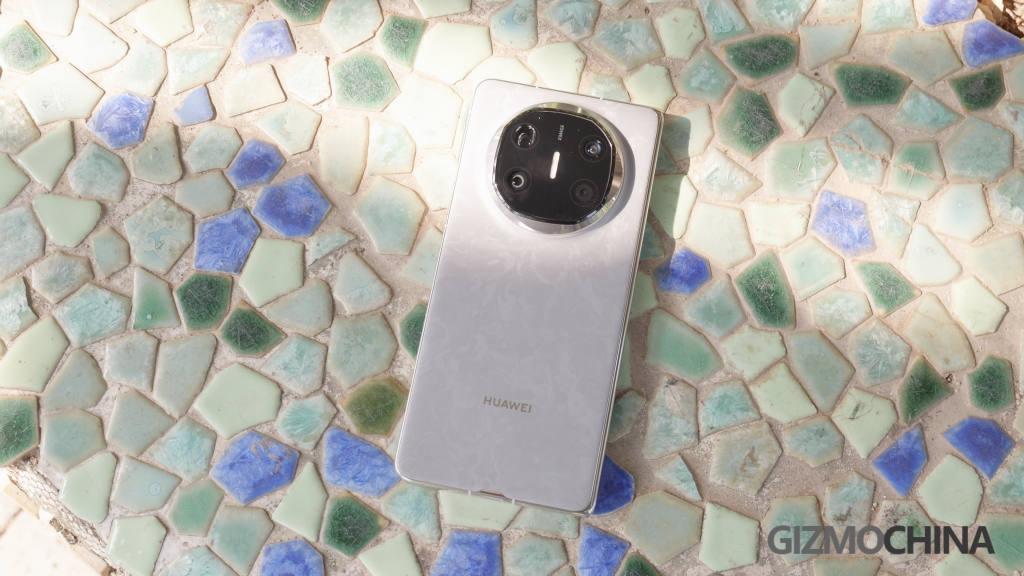
First of all, HUAWEI always puts some fine textures on the back of the phone, and also, the unique camera module design has been carried over gen after gen for the last couple of years. This variant we have here is called the Nebula Gray, it looks very sophisticated and opens up your imagination. The material at the back is reinforced fiber material, the touch is smooth, and it claims to be extra tough and durable. The camera bump is designed in a balanced way, when the phone is on the table folded, it does not wobble.
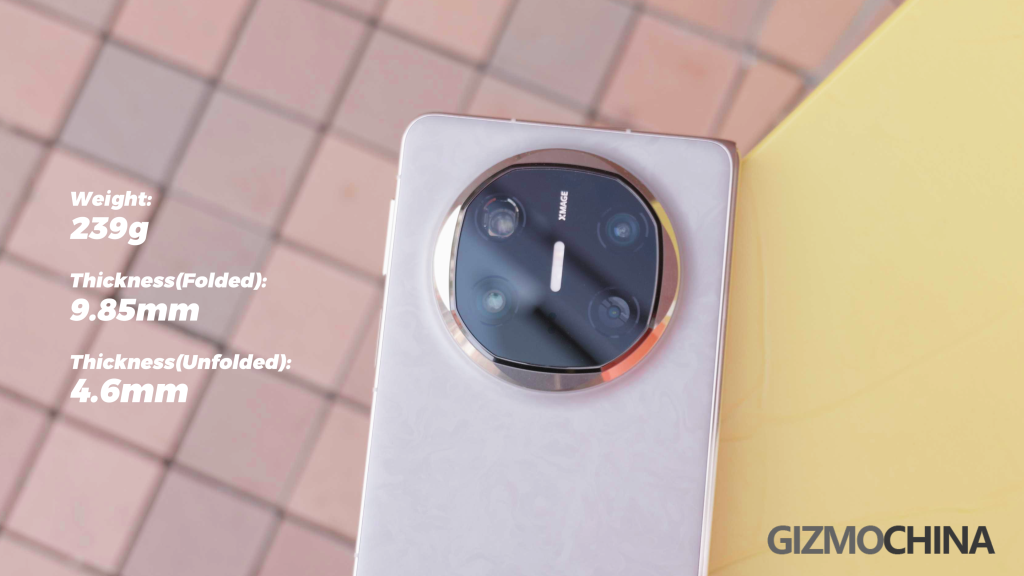
Overall, the phone weighs 239 grams, 9.85mm thick folded, and 4.6mm thick unfolded. The weight and size have not changed much I would say, but it still remains the top one when it comes to these specs.The hinge can hover at extreme angles, although nobody would use a foldable like that, but it certainly shows that the tech behind the hinge has again evolved.
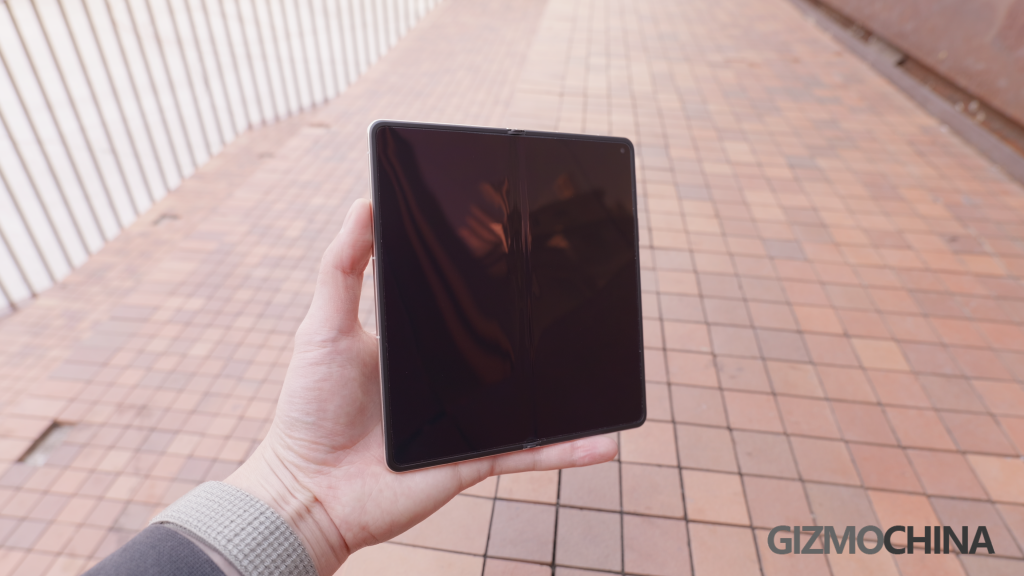
The screens are basically the same size as before, and the specs are the same, with no significant changes. But the inner screen is better anti-reflective, from certain angles, you can see the screen is darker, which means in some scenarios you can be more immersive in watching content. The crease is also very well controlled, you can’t really see it in everyday use. The protective glass and the structure however, have again been tougher, we will talk about it in the other article.
There are also another two colors to choose from, the Nebula Gray is new to the collection, which could be a bit better looking.
Performance
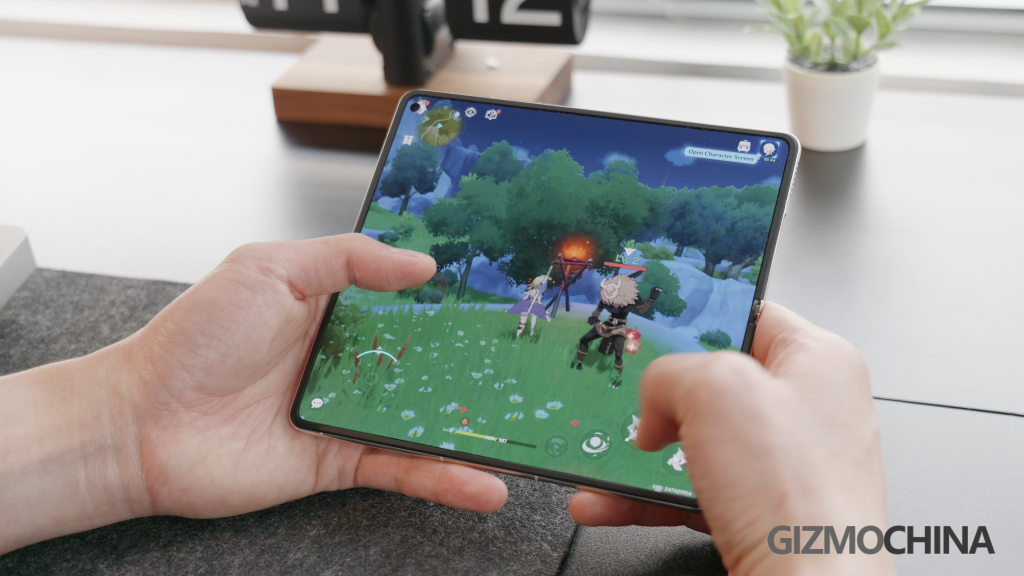
The performance of the Mate X6 has evolved a lot, you can get very good experience in day to day use. It can run some games well, but again, it’s not suitable for running big games. As a matter of fact, almost nobody would play big games on such a device. For some daily use scenarios, it still performs very well, which we will show you later in this article. Next let’s talk about the imaging system.
Imaging
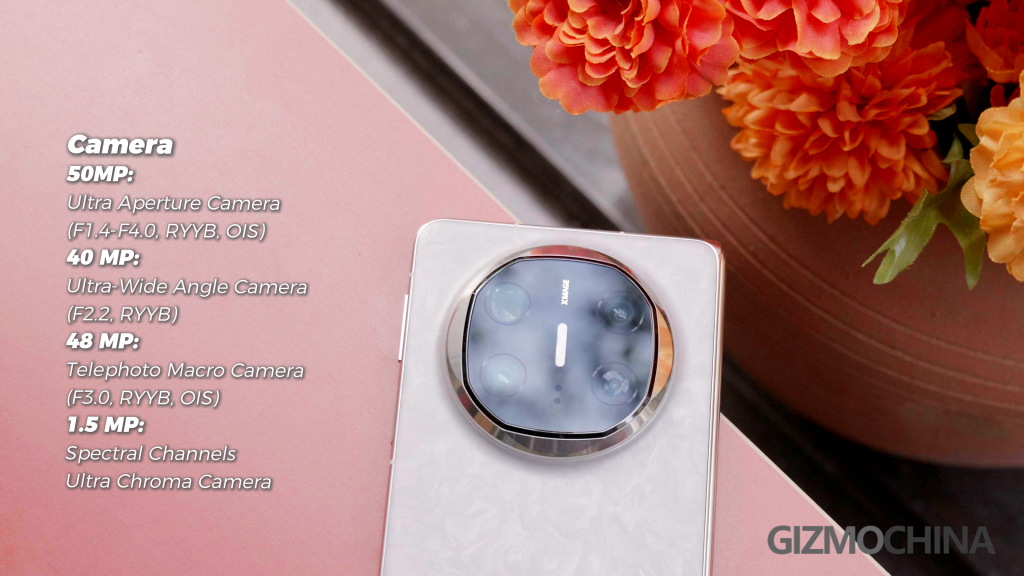
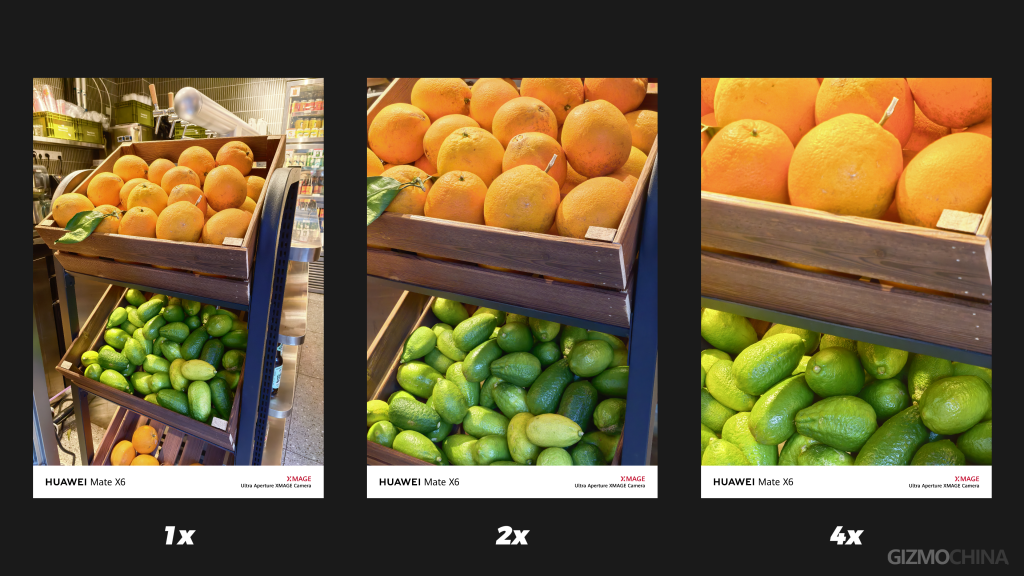
So this time, the camera system is better in many ways, and the new 1.5MP Ultra Chroma camera can help with capturing the real colors of everything, and then work with other cameras and algorithms, to produce the best photos with the most accurate colors.
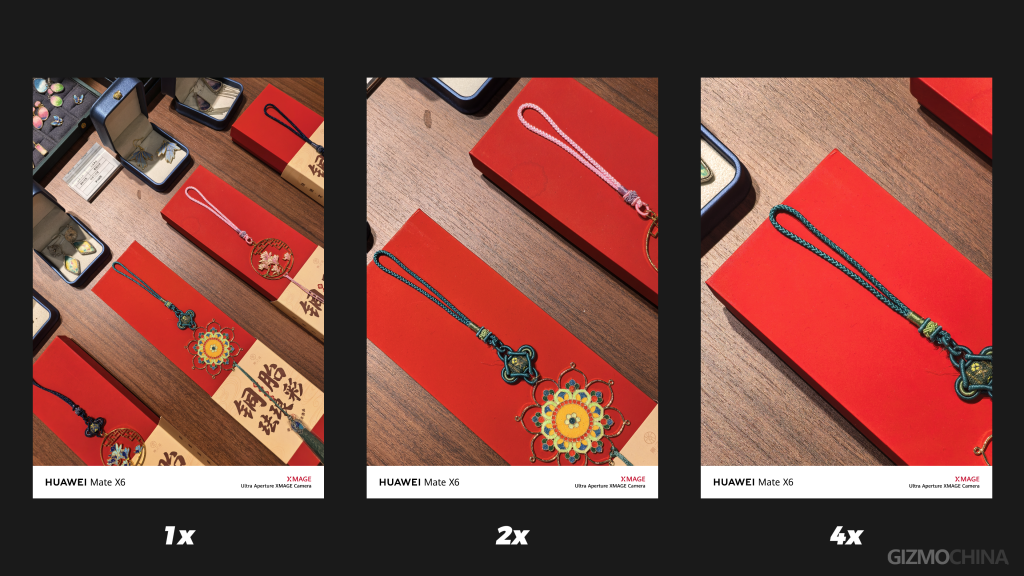
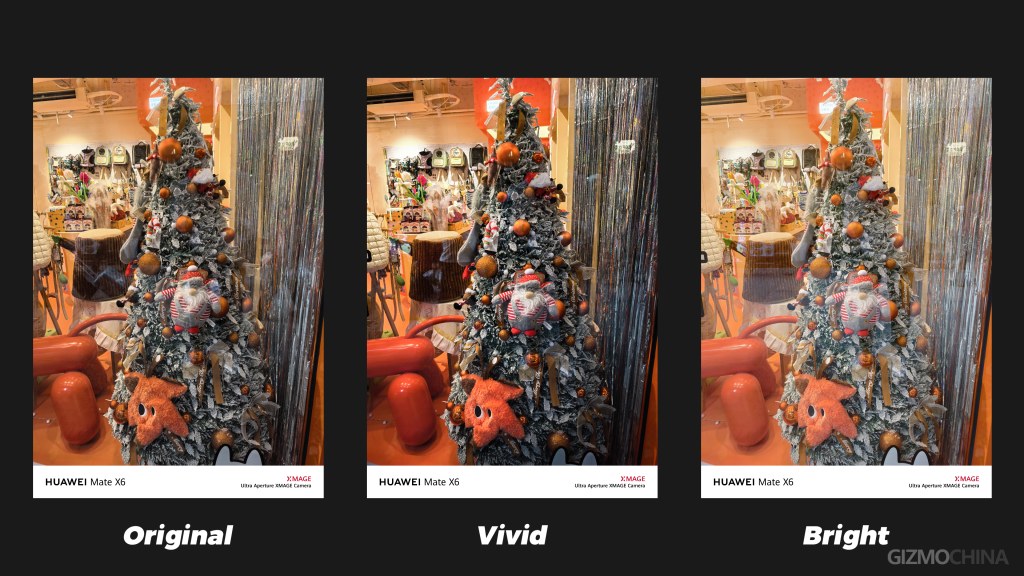
I did take some photos in a beautiful little town, to mainly test the color consistency in each focal length, where I found that everything looked and felt like Christmas, all these Santa and Christmas trees just remind you again and again that the happiest time of the year is around the corner.
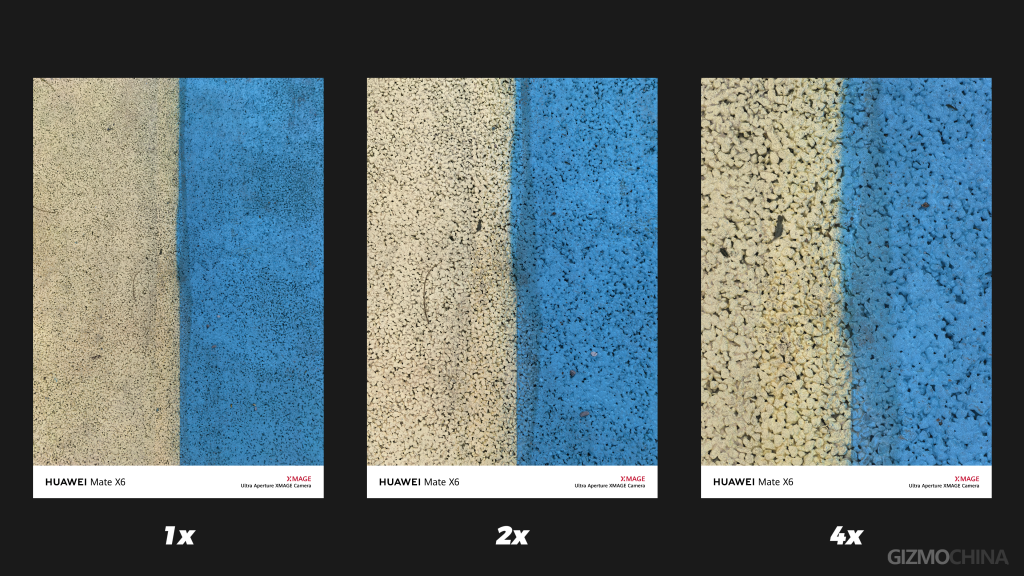
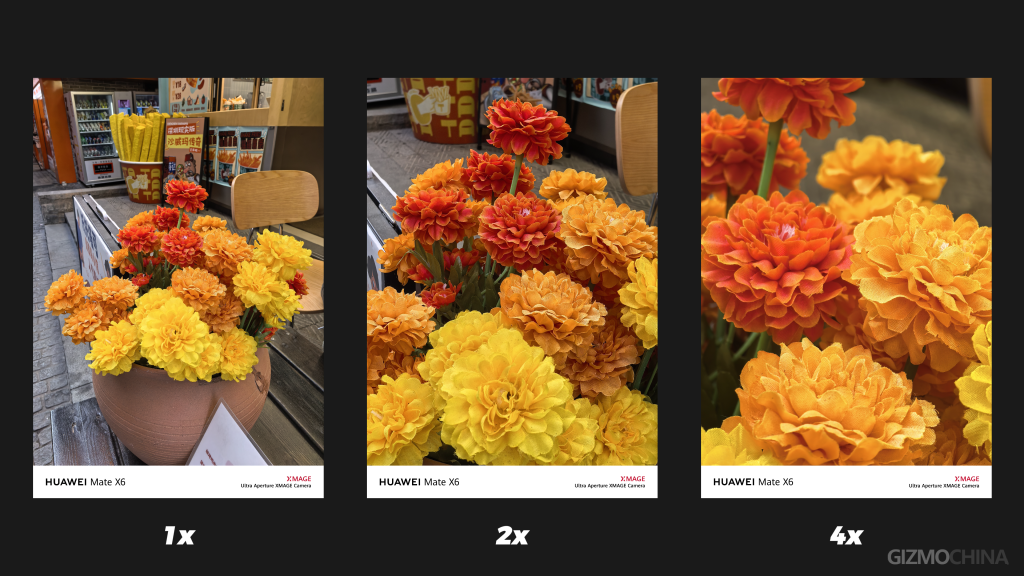
Then I move on to see the color consistency of all the cameras, mainly on the Original mode in the XMAGE system, For example, the red on the boxes, the beige and blue paint on the ground, the colors on these art followers, they all remain accurate and appealing to the eyes. Or the oranges and lemons in the basket, they looks all tasty in the shots under different focal lengths.
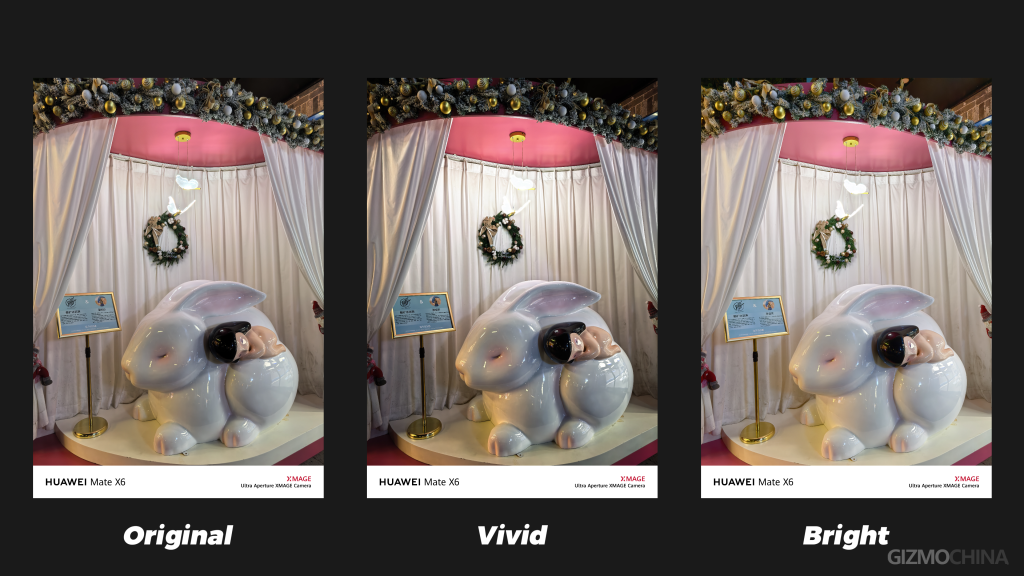
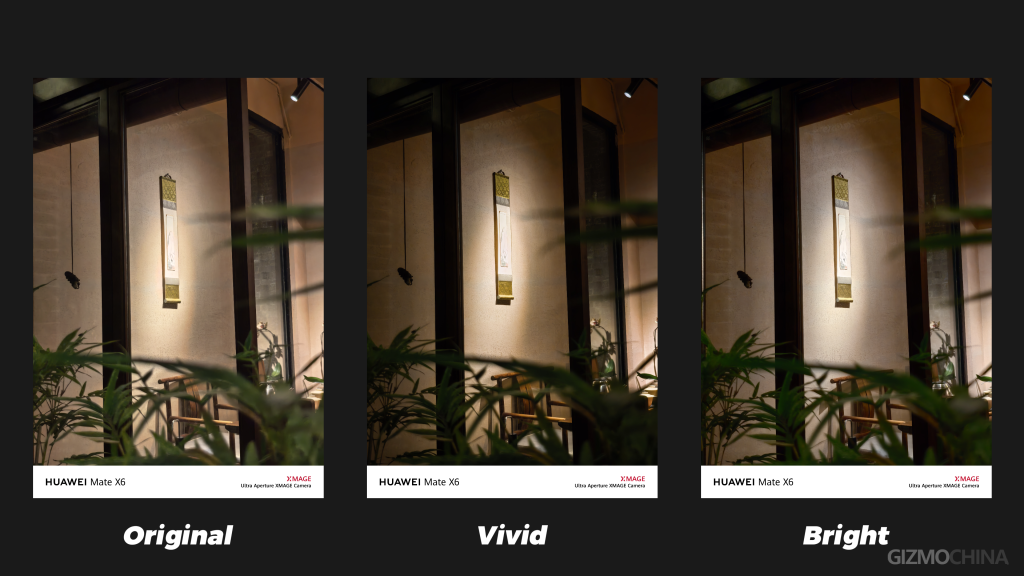
And we know that XMAGE has evolved a lot these years, and you can pretty much just press the shutter when you see something attractive. Most of the time, you can take a great photo in the Original mode, then the Vivid mode will add an extra bit of touch to it, to create some vintage feel, then the Bright mode will light up the subject, but be careful in situations like this, sometimes it will be a bit too much.
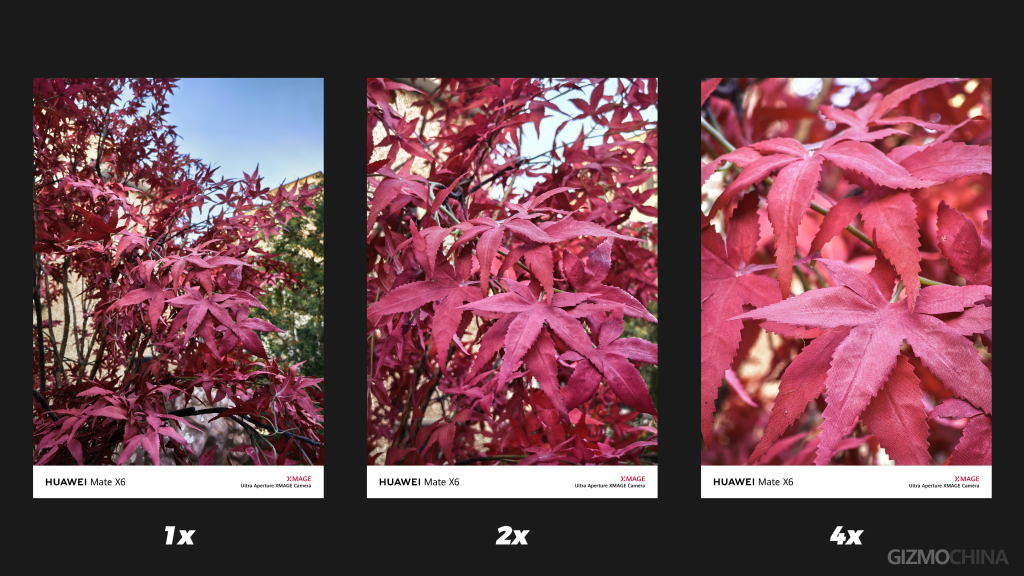
I was on a mission to see if I can find some red maple there, fortunately I found one, although it’s artificial, it still looks good. I am happy to take the Chinese painting at night, it stands out there quite, waiting for a camera to see it, and in the Vivid mode it looks the best. Overall, I prefer the photos produced in the original mode, you can also comment down below about which mode you would prefer.
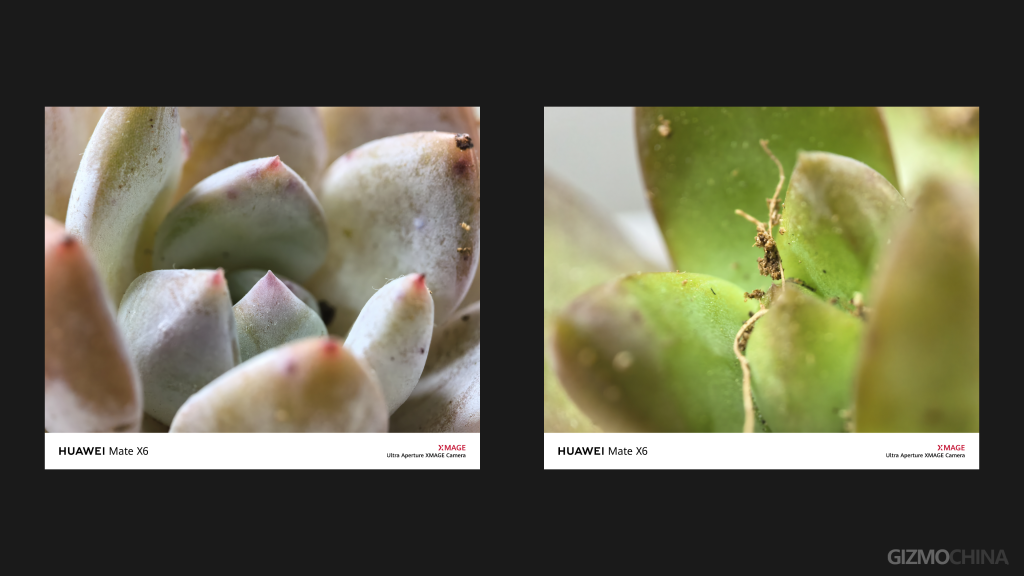
For the telephoto camera, the best feature that HUAWEI has a leg in front of others, which is that you can get really close to the subject, and still be able to take micro photos. You can also shoot subject in a good distance, the details are kept well.
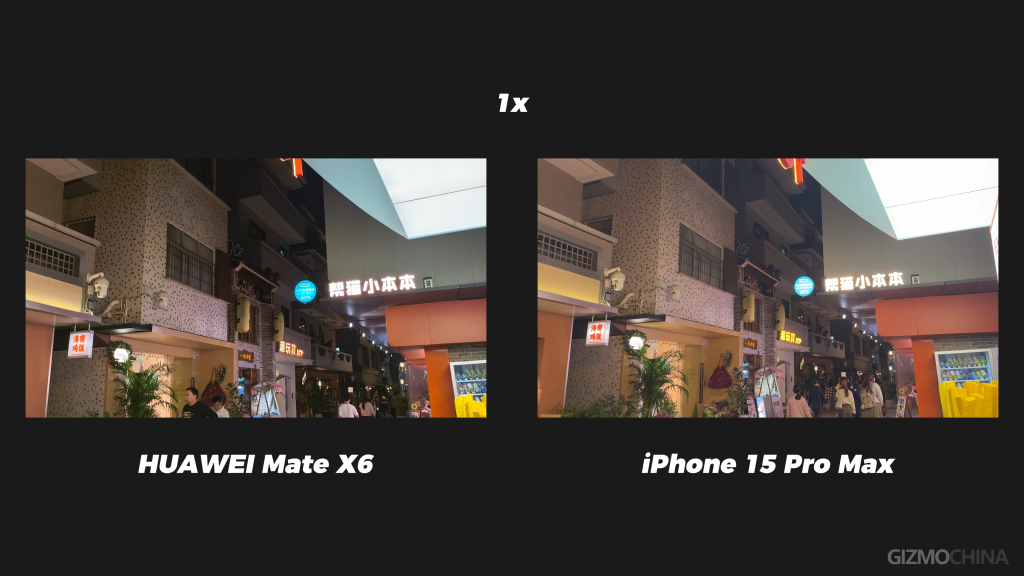
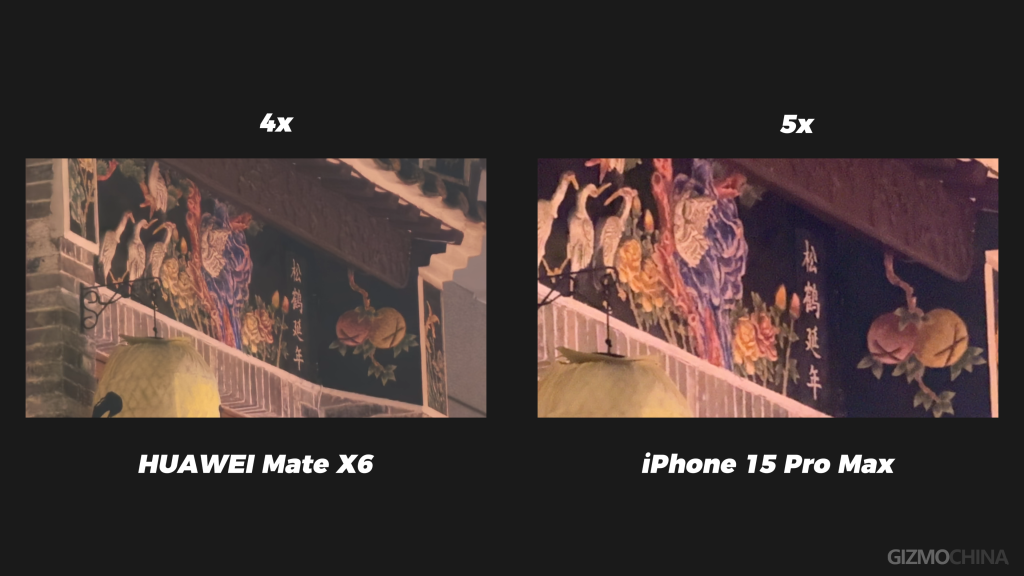
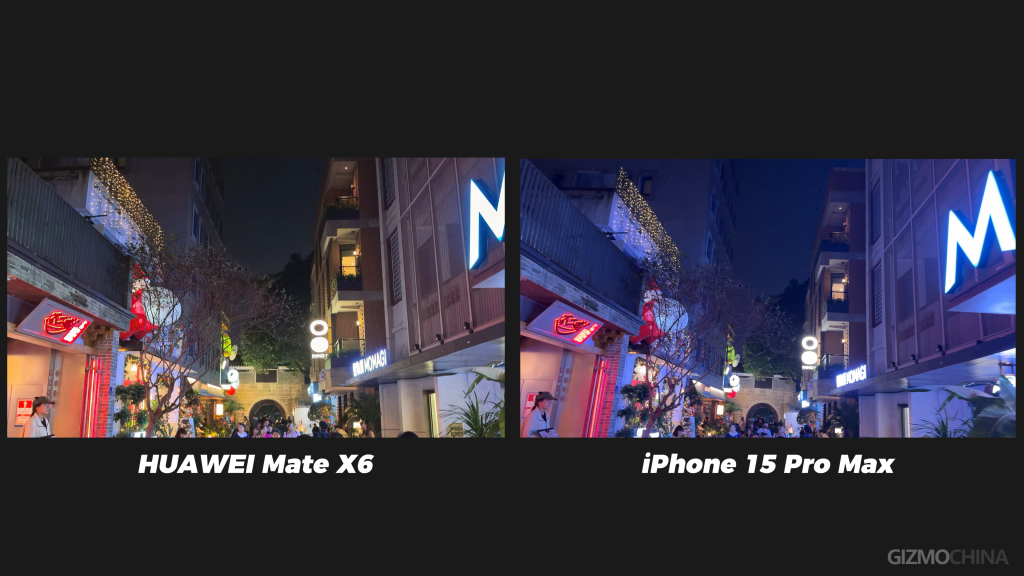
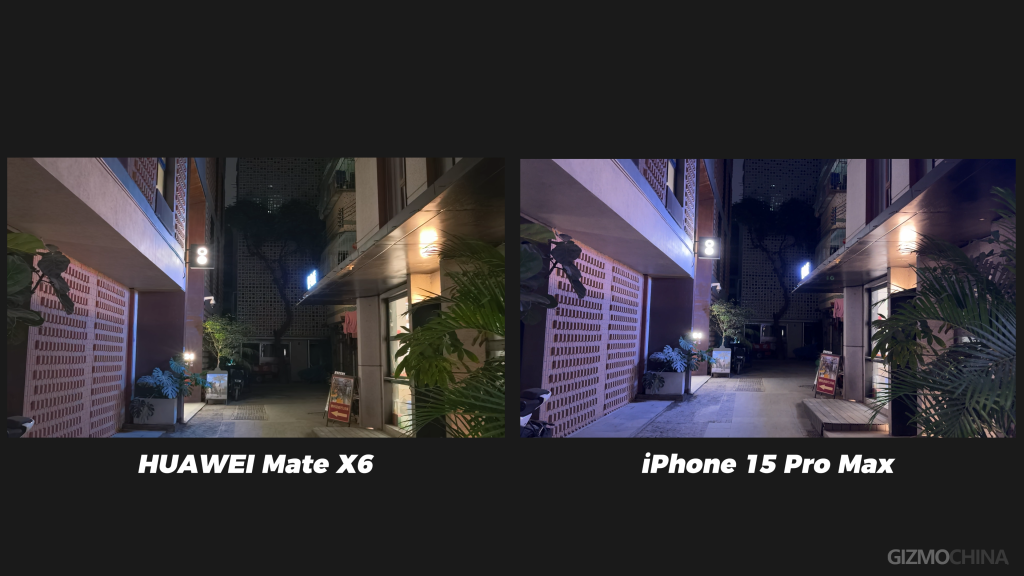
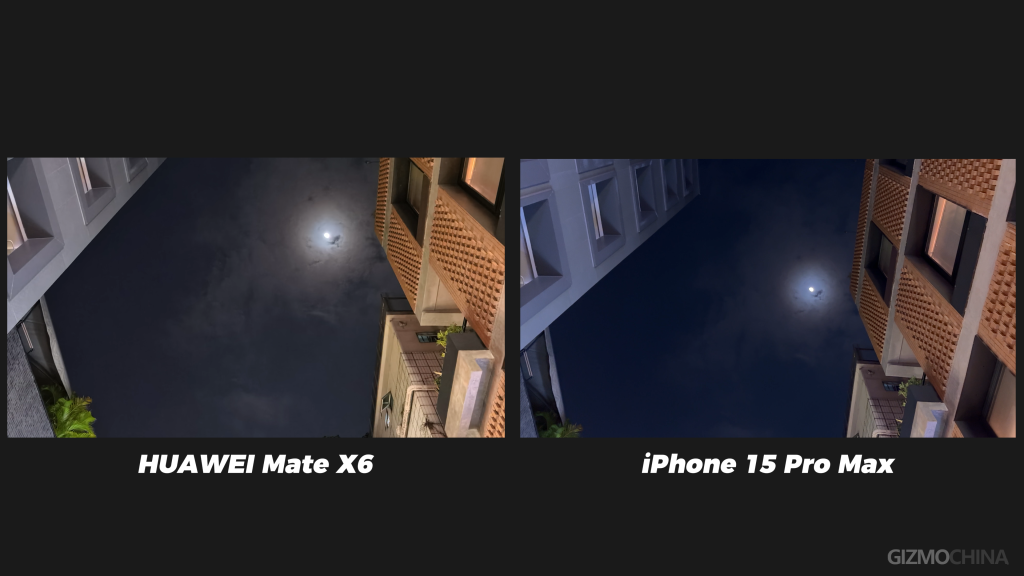
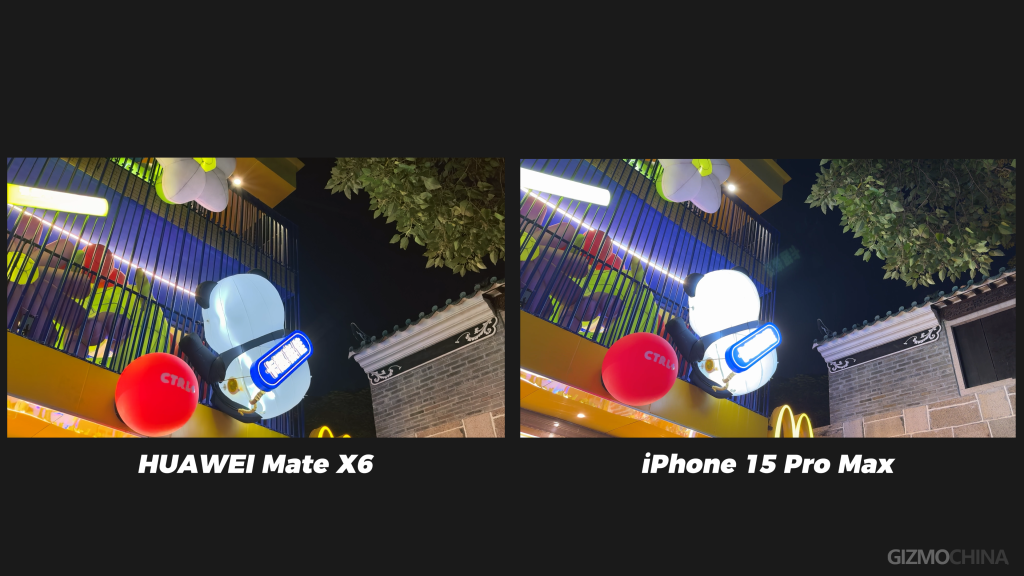
Lastly, the low light filming test between the X6 and the iPhone 15 Pro Max. First I found out that in extreme low light situations, the X6 has better control in 1x and 2x, but once we zoom in to 5x, 4x for the Mate X6 in this case, iPhone still has that edge.
Then the X6 just completely dusted the iPhone, it presented the night way better, and it has better dynamic range, whether in the dark areas like the corners and the sky. Then the light box really tells them apart, X6 really kick iPhone’s butt here, it just blew me away.
So while I was taking these photos and pictures, suddenly I understood why HUAWEI embodied the technical terms in an artistic way, and it is because you really need to get out there and take photos, which will definitely make you love life more.
Daily Experience
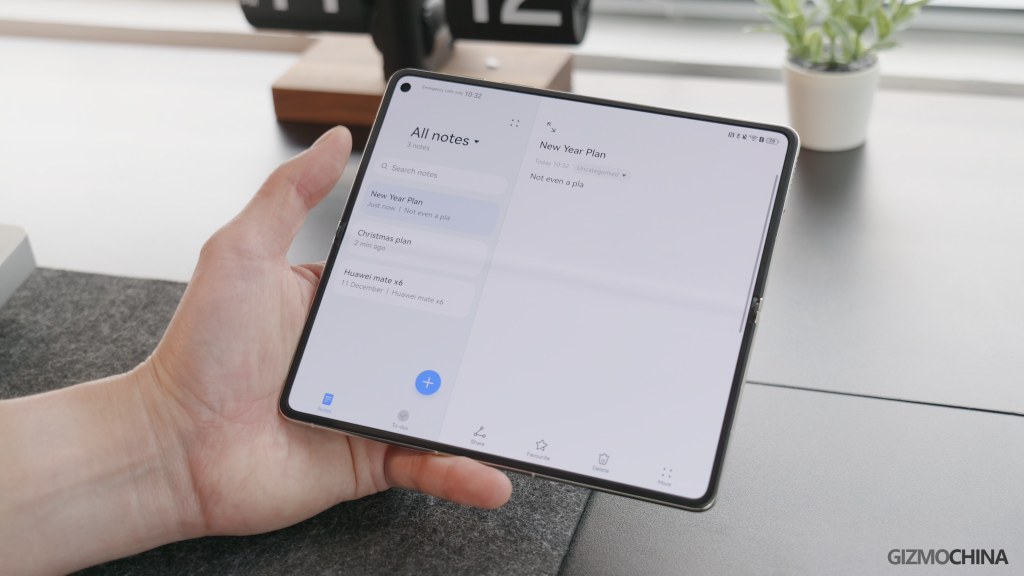
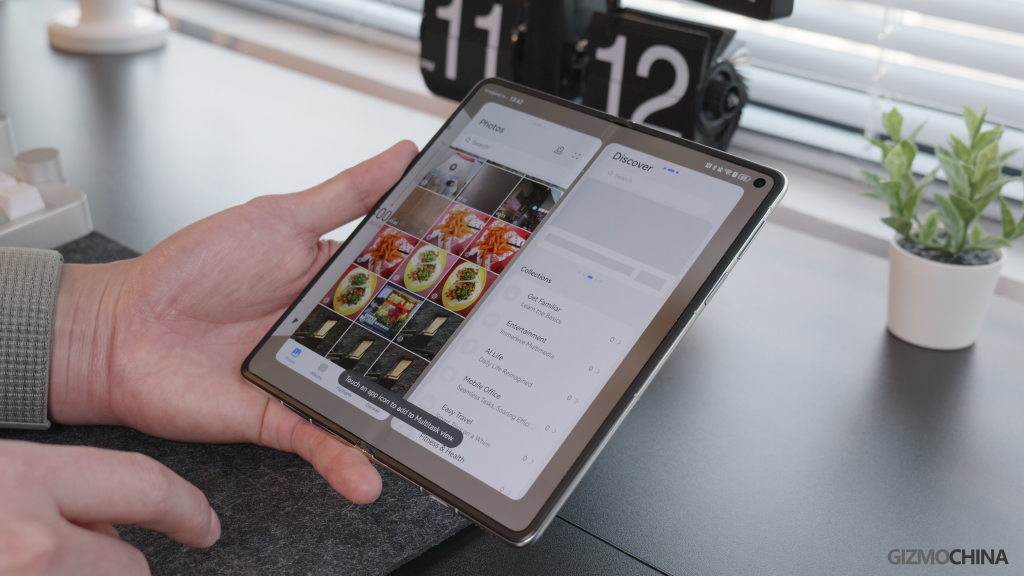
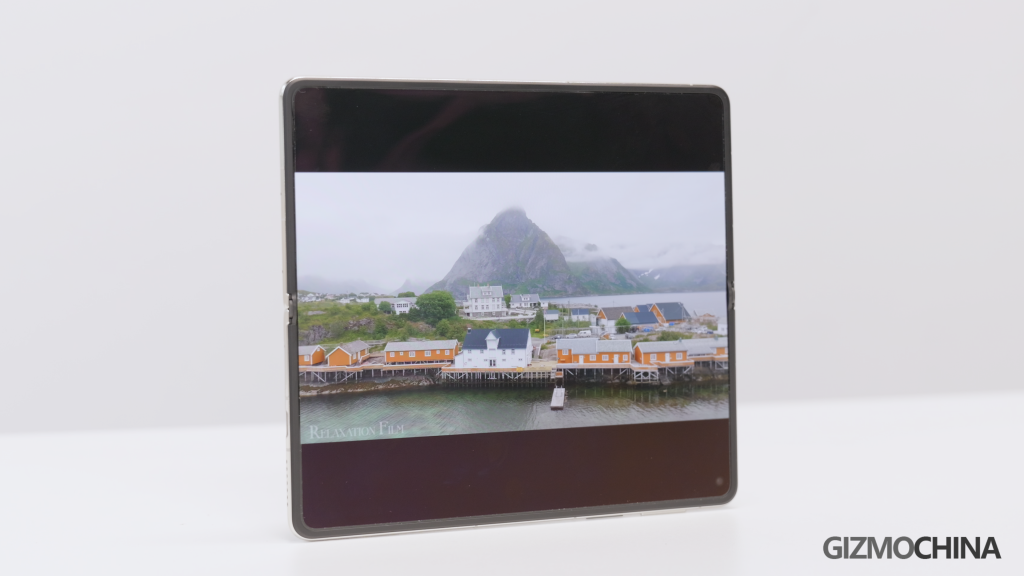
So the Mate X6 global version is still with EMUI, jumping in between apps is buttery smooth, and you can have that classic foldable experience in note-taking, dual section in the Apps. The new feature here is the three Apps multi-tasking, you can have one app running at the biggest size, then the other two just stand by at the side, a tap will bring one of them to the front, so this makes multi-tasking very easy. Watching content on this device is also an enjoyment, the 7.93-inch screen, like other foldables, is just really good for watching videos, especially on the go.
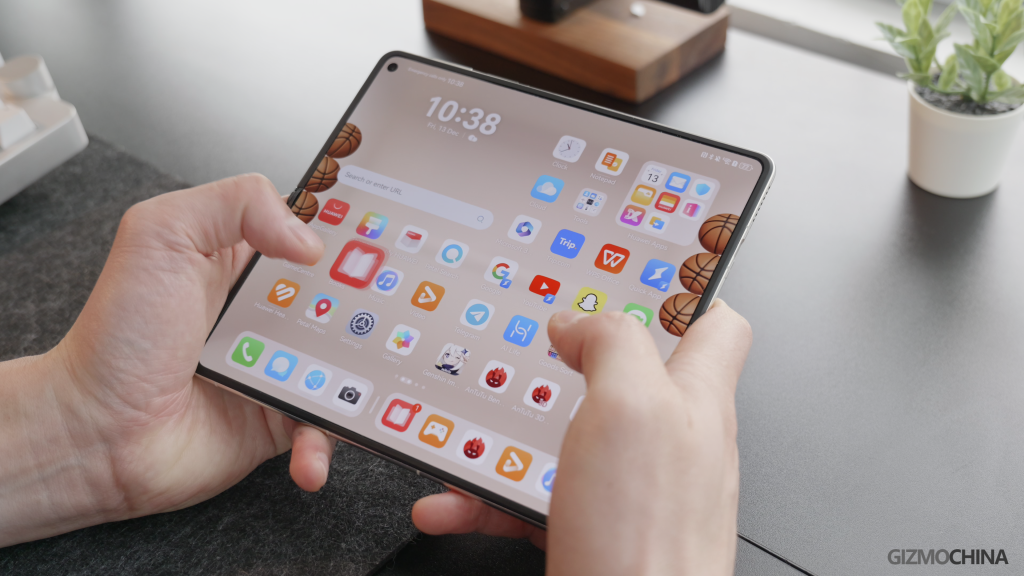
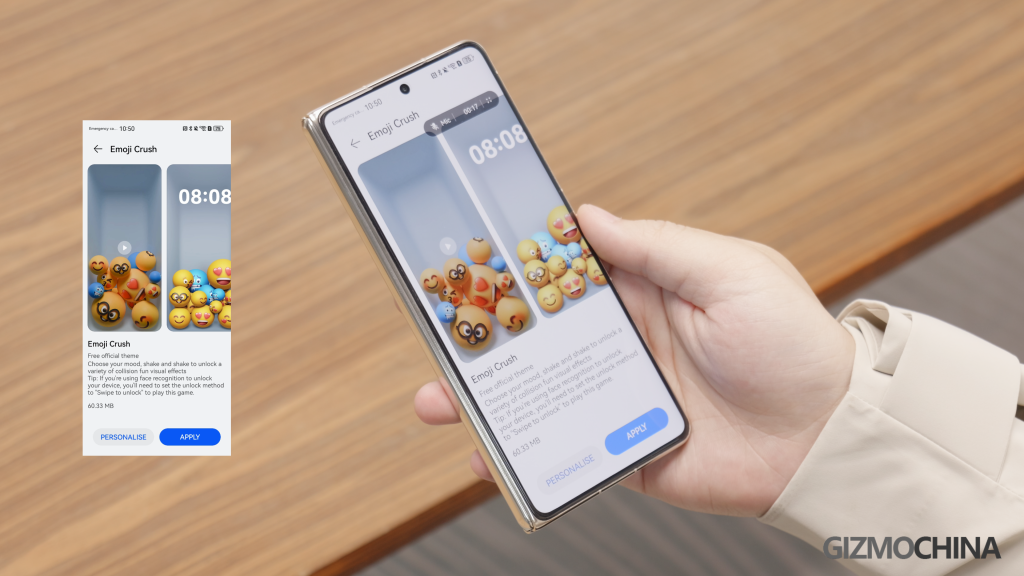
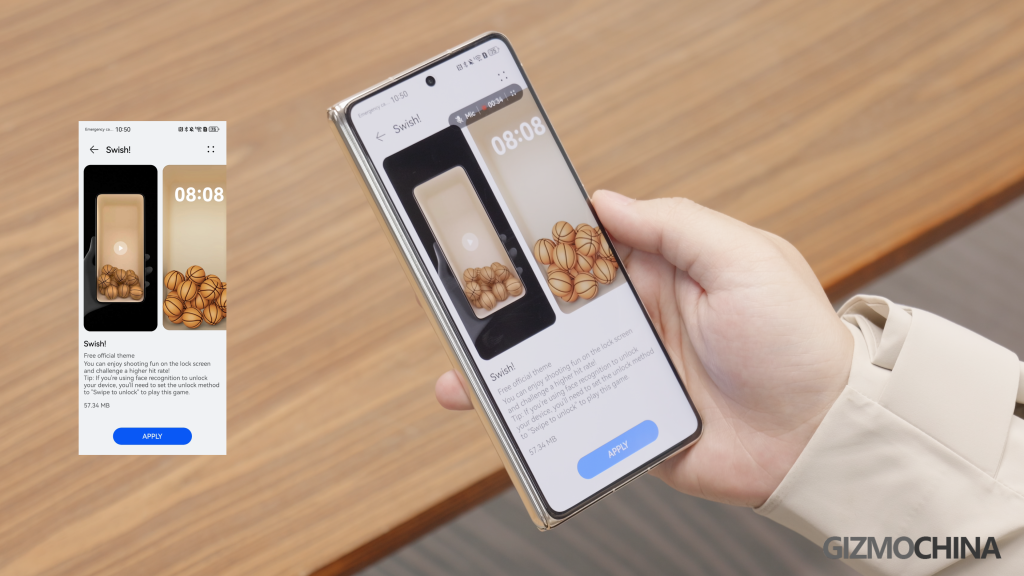
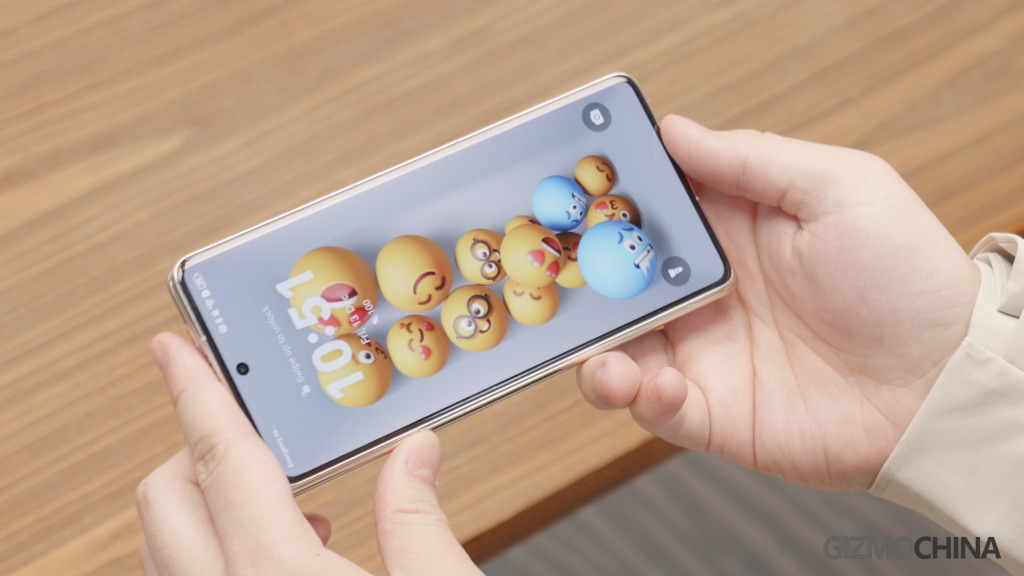
There are also two fun themes, one is the emoji crush, and the other is the air hoops. I will start with the air hoops, I love basketball as you may know. So while the phone is locked, you raise your hand, a ball will hover in the air, you shoot, then score, most of the time if you don’t do it too quickly, the ball always gets in, I mean of course. So this feature is actually utilizing the camera to do motion detection, you can do it both on the outer screen and the inner screen, which is fun. The other is the emoji crush, it’s like all the emojis are cramped into a box, once you move the phone, they will just roll and stake up differently, also an interesting experience.
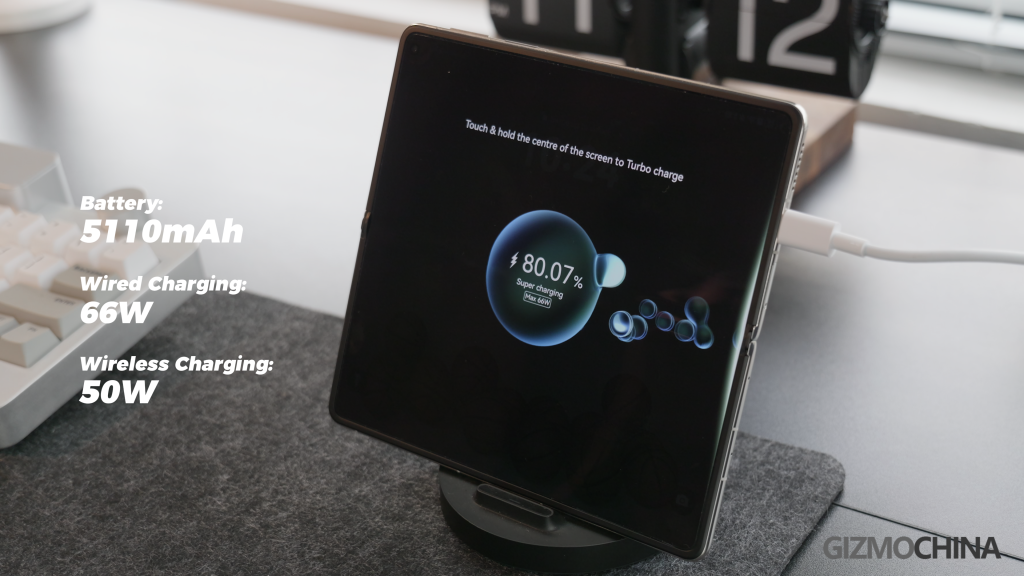
The battery capacity is 5110mAh, with 66W wired charging and 50W wireless charging, I can say that it can last for a day of use without any worry. The battery is actually bigger than last gen, while it’s slimmer both folded and unfolded, which makes me look at the hardware in a new way.
Verdict
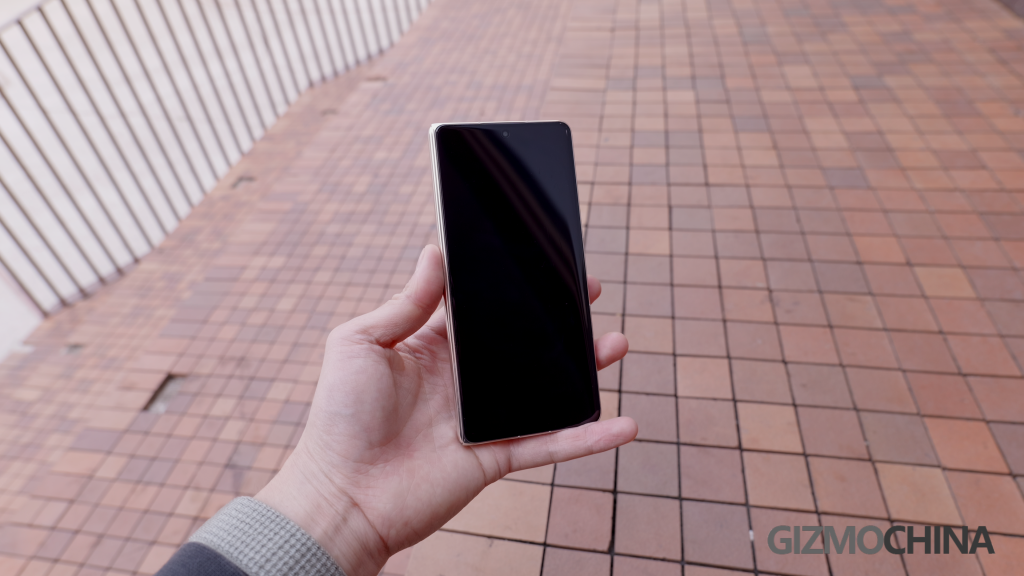
This is a true experience and review of the HUAWEI Mate X6 global version. We see the big leap in the overall hardware and design, as well as the huge improvements in the cameras, that’s why you can see that the X6 is confident in showing you the internals. As a matter of fact, you can just peel the film on the outer screen and use it in whatever way you want. Also, the photography system is really amazing, we had a lot of fun taking those photos outside. Well for the system experience, still very good.
Now we have covered a lot of devices from HUAWEI over the years, we are comfortable to say that if you really dive into the ecosystem, your life and work will be elevated a lot. Any thoughts about this Mate X6, leave them in the comment section.
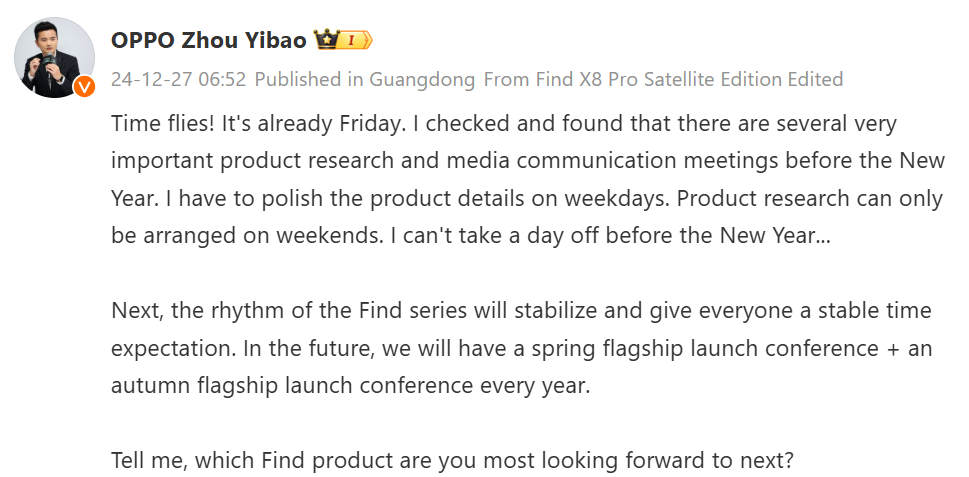
Reports have revealed that Oppo is planning to launch multiple flagship phones in the first half of 2025 in China. Today, Oppo Find-series Product Manager Zhou Yibao announced that the Find series will follow a more stable release schedule, with flagship launch events every spring and autumn.
Oppo to hold dual flagship launch events each year
While he did not specify the exact names of the upcoming Find-branded products, the spring event will feature the arrival of the Find N5 and Find X8 Ultra. In China, the spring season usually spans from March to May.
Yibao confirmed that the Find N5 will debut first and the Find X8 Ultra will be announced through a separate event. As per recent reports, the Find N5 will debut in March 2025, the Find X8 Ultra and X8 Mini will launch in April 2025, and the Find X8S will unveiled in April or May 2025.
The autumn event will introduce the next-generation Find X-series models. China’s autumn season, which spans from September to November, could potentially see the launch of the Find X9 and Find X9 Pro in 2025.
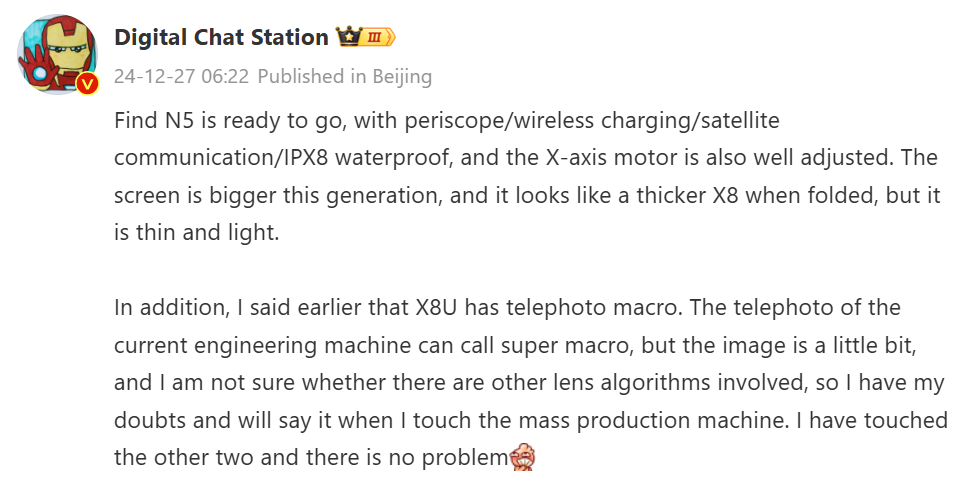
According to tipster Digital Chat Station, the Find N5 has completed its filing process and is gearing up for launch. It will come with key features, such as a periscope lens, wireless charging, satellite communication, and an IPX8 waterproof rating. The X-axis motor will be fine-tuned, and the screen size will be larger compared to the previous model, the Find N3. When folded, it will resemble a slightly thicker version of the Find X8, emphasizing a lightweight and slim design.
Additionally, he mentioned that the Find X8 Ultra will be equipped with telephoto macro capabilities. Currently, the engineering model’s camera interface can use the telephoto lens for super macro shots, but the image quality is somewhat lacking. DCS is uncertain if other lens algorithms will be involved, so he will reserve judgment until he gets his hands on the production model. The other two models have been tested and have no issues. He appears to be alluding to the Find X8 Mini and Find X8S.
In July, Xiaomi unveiled the Xiaomi Mix Flip as its first flip-style foldable phone. According to reports, the device has garnered positive feedback, prompting the brand to begin developing its successor edition. If a new leak is to be believed, the Mix Flip 2 will arrive earlier than expected in China.
Xiaomi Mix Flip 2 launch timeframe tipped
Digital Chat Station’s leak suggests that the Xiaomi Mix Flip 2 will debut in the first half of 2025. He added that the strong sales of the first-generation model have prompted a major upgrade for the next edition.
The Snapdragon 8 Gen 3 powers the first-generation Mix Flip. According to DCS, the second-generation model will feature the Snapdragon 8 Elite. It will arrive as a competitor to Samsung’s Galaxy Z Flip 7, which is likely to be the only other Snapdragon 8 Elite-powered flip-style foldable phone in the market.
The other Weibo post from DCS suggests that the Mix Flip 2 will be equipped with wireless charging, a feature unavailable in the first generation. While the original model did not have an IP rating, the Mix Flip 2 is expected to arrive with an IPX8 rating. Additionally, it will be thinner and more versatile than its predecessor.
Back in August, the Xiaomi Mix Flip 2 was reportedly spotted with model numbers 2505APX7BC and 2505APX7BG in the GSMA IMEI database. Despite the absence of the device’s name in the IMEI database, speculation suggests that these model numbers correspond to the Chinese and global versions of the Mix Flip 2, respectively.
The EEC authority recently approved the global variant of the Mix Flip 2, indicating its future release in European markets. Unfortunately, apart from the chipset, nothing else has been revealed about the Mix Flip 2 yet. In China, some flip-style foldable phones offer batteries of around 4,800mAh capacity. With the recent trend of increased battery size in flagship devices, it wouldn’t be surprising to see the Mix Flip 2 packing a 5,000mAh+ battery.
While brands like Xiaomi, Oppo, and Vivo often dominate headlines, the Chinese smartphone market is a hotbed of innovation, with several manufacturers producing compelling flagship devices that often fly under the radar.
These “underrated” flagships offer impressive specifications, unique features, and competitive pricing, making them worthy contenders for anyone seeking a premium smartphone experience. This article delves into three such devices released in 2024: the Nubia Z70 Ultra, the Meizu 21 Pro, and the Tecno Phantom V Fold 2.
The Nubia Z70 Ultra stands out with its focus on imaging and raw performance. Powered by the Snapdragon 8 Elite and offering up to a staggering 24GB of LPDDR5X RAM and 1TB of UFS 4.0 storage, this phone is a true performance beast. Its 6.85-inch 1.5K OLED display with a 144Hz refresh rate and 2000 nits peak brightness delivers a stunning visual experience.
The device also comes with a robust camera system. It boasts a triple rear camera setup comprising a 50MP Sony IMX906 main sensor with a variable aperture (f/1.59-f/4.0), a 50MP ultra-wide-angle lens with macro capabilities, and a 64MP periscope telephoto lens. The device also includes a more improved 16MP under-display front camera, maintaining a clean, uninterrupted display.
Beyond hardware, Nubia has incorporated AI features into its Nebula AIOS, including AI Translate for real-time multilingual communication. The phone also boasts IP68 and IP69 ratings for dust and water resistance, adding to its durability. Under the hood, it features a large 6150mAh battery and 80W fast charging, ensuring long-lasting performance. While the global availability might be limited, the Z70 Ultra offers a compelling alternative to mainstream flagships.
2. Meizu 21 Pro
The Meizu 21 Pro is another contender in this list. This device emphasizes a sleek, flat design with premium materials, including Meizu Titan Glass 2.0 and IP68 certification. Its 6.79-inch 2K+ LTPO display with a 120Hz refresh rate, 21:9 aspect ratio, and 1250 nits peak brightness provides a sharp and immersive viewing experience.
The camera system on the Meizu 21 Pro includes a 50MP main sensor with OIS and EIS, a 13MP ultra-wide-angle lens, and a 10MP optical telephoto lens. While not as groundbreaking as the Nubia’s camera system, it still offers a capable setup for everyday photography. The device also features an ultrasonic fingerprint scanner with heart rate detection.
Powered by the Snapdragon 8 Gen 3, up to 16GB of RAM, and 1TB of storage, the Meizu 21 Pro offers flagship-level performance. It also features a 5050mAh battery with 80W wired, 50W wireless, and 10W reverse wireless charging, providing versatile charging options. It runs on Flyme OS, built on Android 14, and offers a customized user experience with AI-assisted features.
3. Tecno Phantom V Fold 2
The Tecno Phantom V Fold 2 represents a significant step forward in foldable smartphone technology. Its book-style design features a 6.42-inch cover screen and a 7.85-inch inner foldable display, both with 120Hz refresh rates. The device is notably slimmer and lighter than its predecessor, making it more practical for daily use.
Tecno has focused on enhancing the user experience with features like a dock bar for improved multitasking and a stylus (Phantom V Pen) for added productivity. The device is powered by the MediaTek Dimensity 9000+ processor, coupled with 24GB of RAM and 512GB of storage. It has a large 5750mAh battery with 70W fast charging and 15W wireless charging, ensuring ample power.
The Phantom V Fold 2 also boasts a robust camera system, with three 50MP rear cameras (main, ultra-wide, and portrait with 2x optical zoom) and two 32MP front cameras. It runs on HiOS, based on Android 14, and incorporates a suite of AI features, including the Ella assistant powered by Google Gemini, AI-powered image editing tools, and AI-driven productivity features.
4. Conclusion
These three smartphones, while perhaps overshadowed by more widely known brands, offer compelling propositions for discerning consumers. The Nubia Z70 Ultra excels in imaging and performance, the Meizu 21 Pro showcases a refined design and premium build quality, and the Tecno Phantom V Fold 2 pushes the boundaries of foldable technology with its AI-driven features. These devices serve as a reminder that the Chinese smartphone market continues to innovate and offer unique and compelling options for users worldwide.
DOOGEE, a leading innovator in rugged smartphones and tablets, will showcase its groundbreaking innovations at CES 2025, from January 7th to January 10th, at the South Hall NO.1 in Las Vegas, United States. Visitors can explore the latest in mobile technology at DOOGEE Booth Number 31169, where cutting-edge designs and rugged technology take center stage. Let’s take a look at the product lineup by DOOGEE.
DOOGEE V Series
DOOGEE V Series
The DOOGEE V Series represents the pinnacle of rugged smartphones, combining advanced technology with exceptional durability. Leading the lineup is the V Max (2023), the first flagship rugged phone powered by the MediaTek Dimensity 1080 chipset. With a colossal 22,000mAh battery, 33W fast charging, and a 108MP primary camera, the V Max sets a new standard for outdoor devices.
Other notable models include the V30 and V30 Pro (2023). The V30 is the first rugged phone to support eSIM, while the V30 Pro boasts 12GB of RAM, 512GB of storage, and an industry-leading 200MP camera configuration. This model received the “Best Rugged Phone of 2023” award from Gizmochina.
DOOGEE V40 Pro
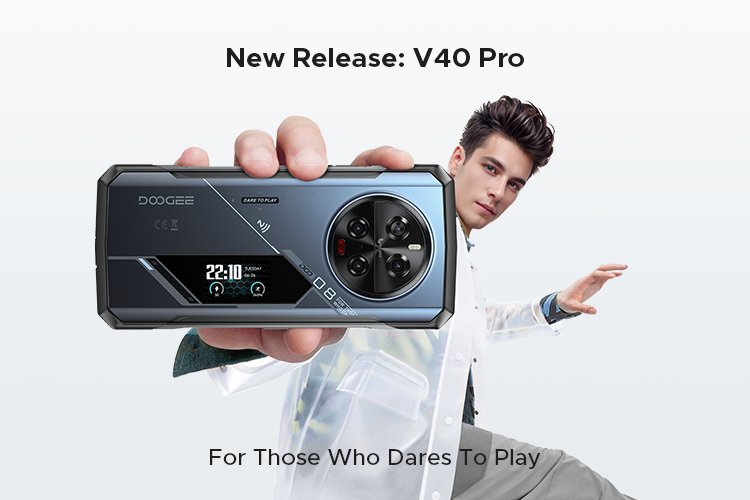
Looking ahead, DOOGEE plans to introduce the V Flip and V Flip Pro, its first rugged foldable phones. Additionally, the new V40 Pro will debut with a 4nm MediaTek 5G Octa-core Processor, 16GB RAM, 512GB ROM, and a 200MP main camera enhanced with Morpho technology. A 1.47″ multifunctional rear display adds a touch of innovation to the device.
DOOGEE V Max Series
DOOGEE V Max
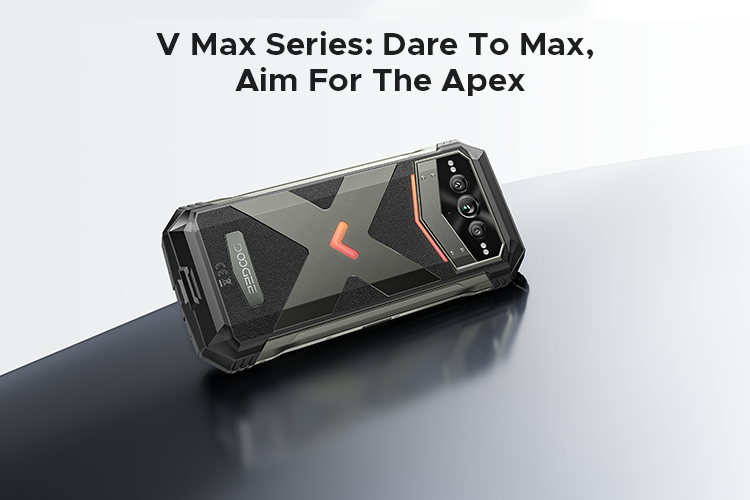
The V Max Series is designed for extreme environments, combining massive battery capacities with rugged performance. The V Max (2024) features a 22,000mAh battery, a Dimensity 5G chip, and Intelligent Interaction Lights, making it ideal for adventurers.
Enhanced versions, the V Max Plus and V Max Pro (2024), build on these features with improved ruggedness and durability. Upcoming models, including the V Max S and V Max 2 Play, promise to deliver even greater performance and reliability.
DOOGEE DK Series
DOOGEE DK Series
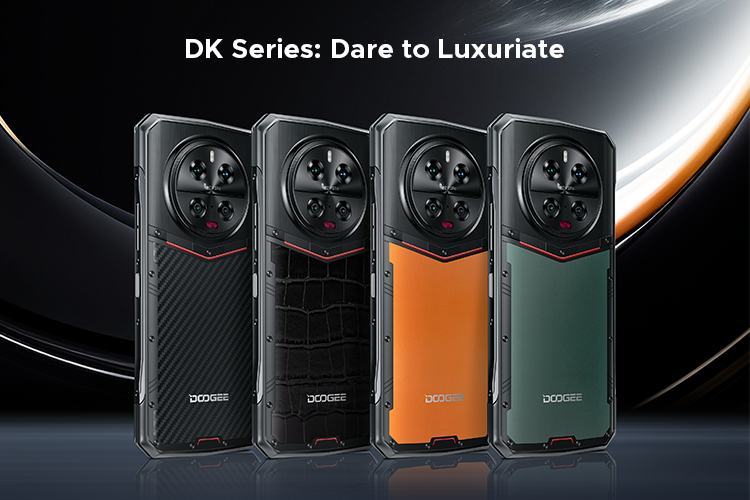
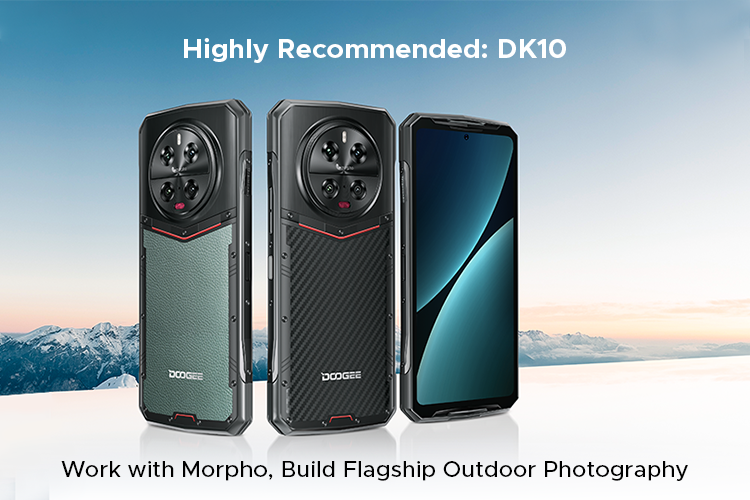
Targeting outdoor enthusiasts who value elegance and functionality, the DK Series offers luxurious designs paired with rugged capabilities. The DK10 stands out with its 1/1.31” Ultra-Sensitive Cinematic Main Camera, a 6.67″ 120Hz 2.5K AMOLED Blind Hole Display, and 512GB of storage. Fast charging capabilities, including 120W wired and 50W wireless, make this a powerhouse device.
DOOGEE DK10
DOOGEE S Series
DOOGEE S Series
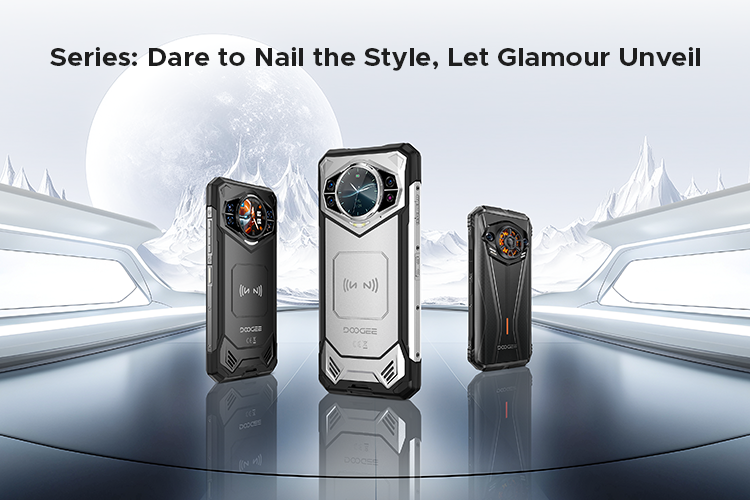
The S Series focuses on mid-to-high-end rugged phones that deliver superior performance. The S100 (2023) is equipped with a MediaTek G99 processor, a 100MP high-definition camera, and a leather-like back cover crafted with CMF technology. This model dominated its price range with monthly shipments of 20K units.
The S100 Pro enhances the experience with a 22,000mAh battery and a 900-lumen camping light, while the S110 introduces a multifunctional dual screen for increased versatility. The Smini, the first mini-sized rugged phone with a G99 chip, offers portability without sacrificing performance.
The S118 Series (2024) includes several models. The S118 features a 6.6-inch FHD+ screen, an AI triple-camera system, and a 10,800mAh battery, while the S118 Pro upgrades the processor to a Dimensity 7050 octa-core chip. The S119 adds a 1.32-inch secondary screen, a 10,200mAh battery, and 512GB of storage.
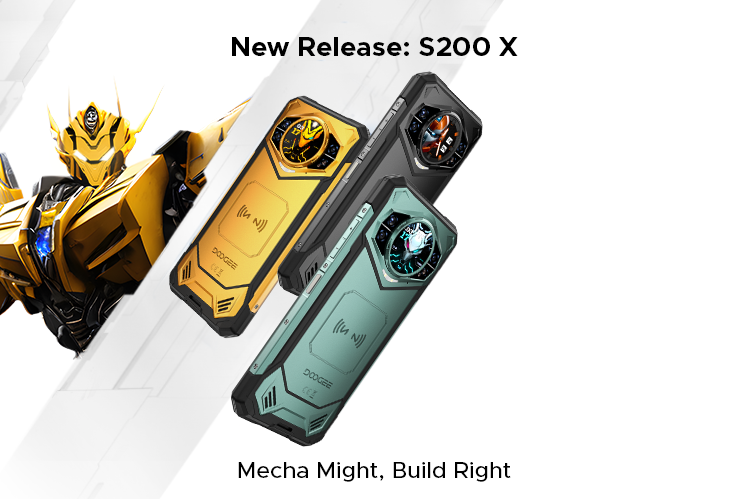
The newly released S200 X features a 1.32″ AMOLED rear display, a 10,100mAh battery, and a Dimensity 7050 6nm Octa-core Processor, supporting up to 32GB RAM and 512GB storage.
DOOGEE S200 X
DOOGEE Blade Series
DOOGEE Blade Series
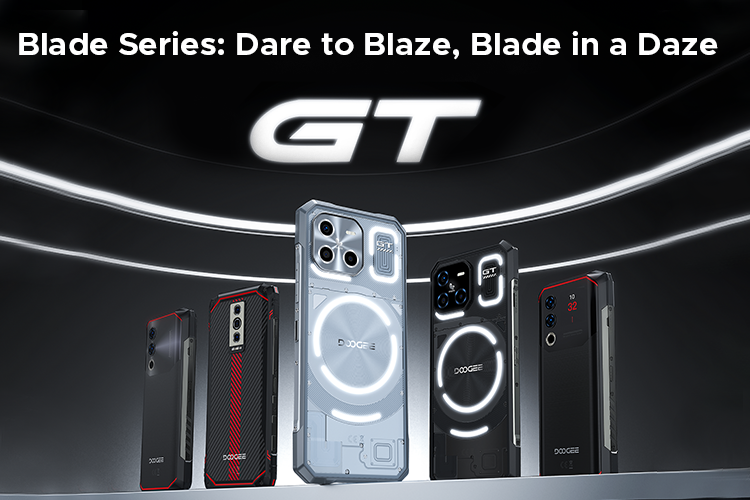
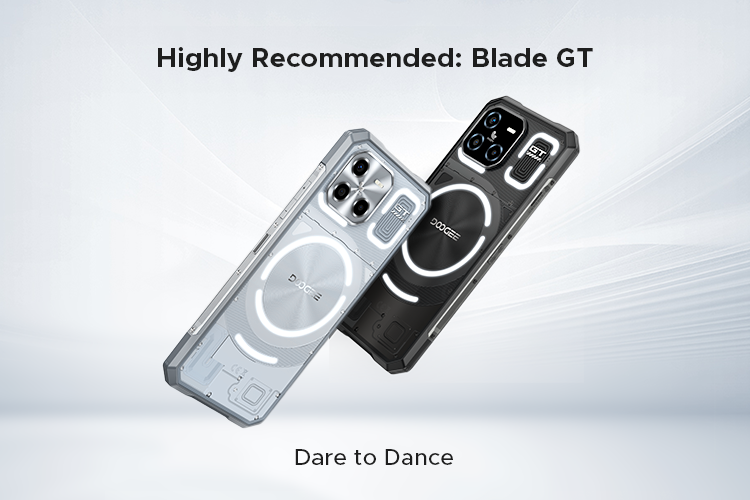
The Blade Series prioritizes slimness and portability while maintaining exceptional performance. The Blade GT exemplifies this ethos with its ultra-slim design, studio-quality Light Elf aesthetics, and MediaTek Dimensity 7050 6nm Processor. A 6.7″ 120Hz ultra-clear display and stereo speakers with Smart PA round out its features.
DOOGEE Blade GT
DOOGEE N Series
DOOGEE N Series
The N Series blends elegance and minimalist design with premium materials. The upcoming Note 59 Pro+ is expected to deliver sophistication and performance, appealing to users who value style and functionality.
DOOGEE Fire Series
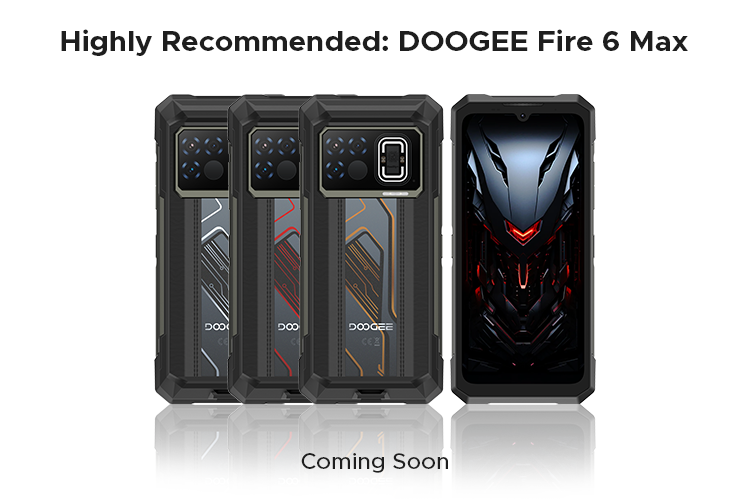
The Fire Series incorporates advanced thermal imaging technology, making it indispensable for exploration and safety. The highly anticipated Fire 6 Max will push boundaries with its state-of-the-art capabilities, empowering users to see beyond the visible spectrum.
DOOGEE Fire 6 Max
DOOGEE Flip Series
DOOGEE V Flip Series
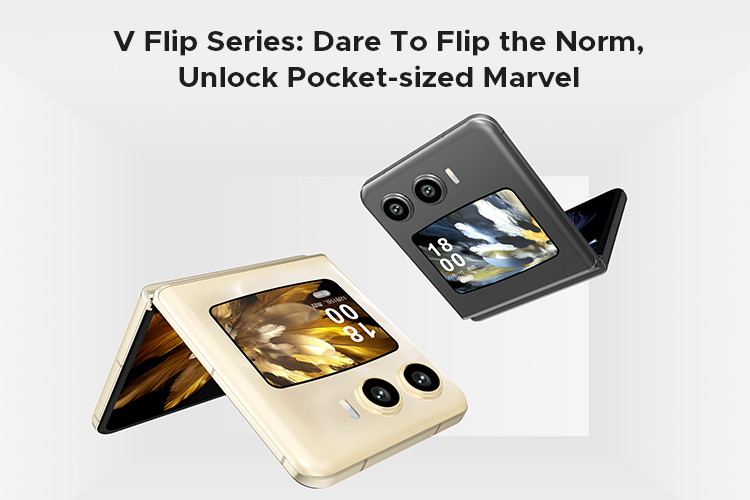
The Flip Series combines cutting-edge technology with an ultra-thin folding form. Precision-engineered hinges and flagship processors enhance portability and usability. The upcoming N90 will feature innovative folding-screen interactions for an intuitive user experience.
DOOGEE T Series
DOOGEE T36
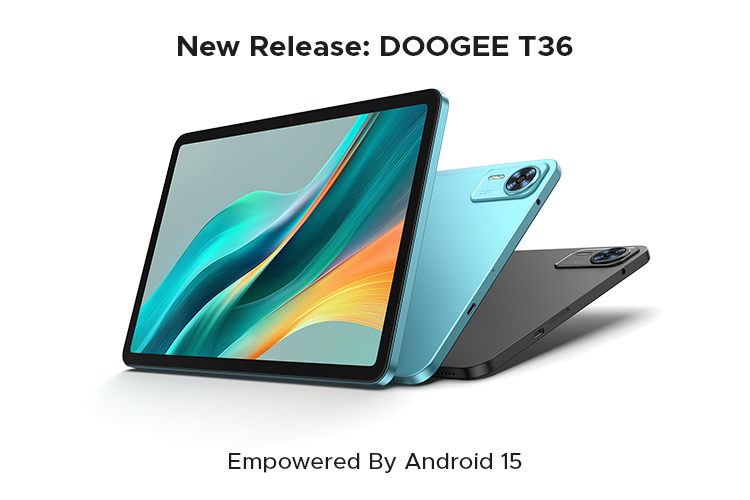
Designed for multitasking and productivity, the T Series offers powerful tools for professionals. The DOOGEE T36 features a Unisoc T620 Octa-Core Processor, a 12” FHD+ Eye Comfort Display, 8GB RAM, 256GB ROM, and an 8800mAh battery, making it ideal for business users.
DOOGEE U Series
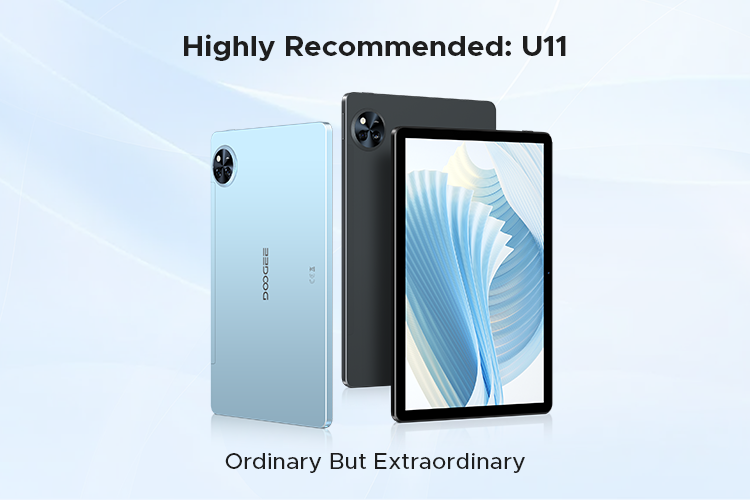
DOOGEE U11
The U Series combines play and learning in premium tablets for kids. The U11 stands out with an 11″ Ultra-high Definition IPS Screen, an elegant metal body, an 8580mAh battery, and a Unisoc T606 Octa-Core Processor, making it both fun and educational.
DOOGEE R Series
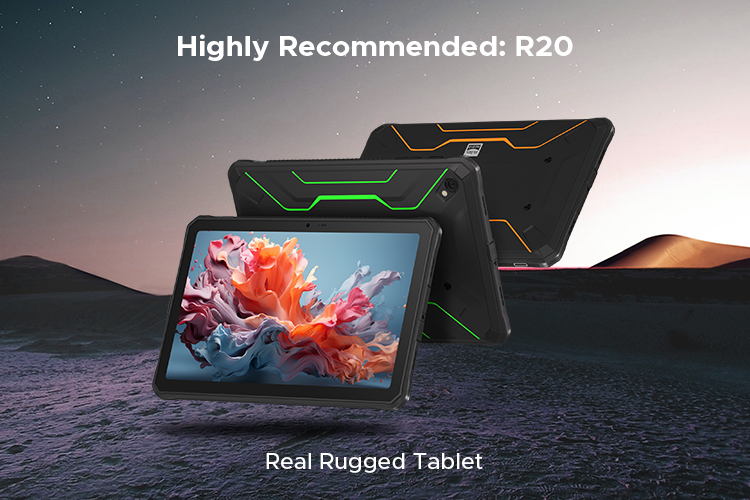
DOOGEE R20
The R Series offers unparalleled durability for outdoor professionals and enthusiasts. The R20 meets IP68, IP69K, and MIL-STD-810H standards, features a 10.36″ 2K Display, and is powered by a Helio G99 Octa-Core Processor. A 21,600mAh battery ensures extended use in challenging environments.
DOOGEE at CES 2025
DOOGEE’s presence at CES 2025 reaffirms its commitment to innovation and collaboration within the tech industry. Visitors to Booth No. 31169 can experience hands-on demonstrations of the latest devices, interact with experts, and explore future trends in mobile technology. For more details about DOOGEE’s products and special discounts, visit DOOGEE’s Official Website.
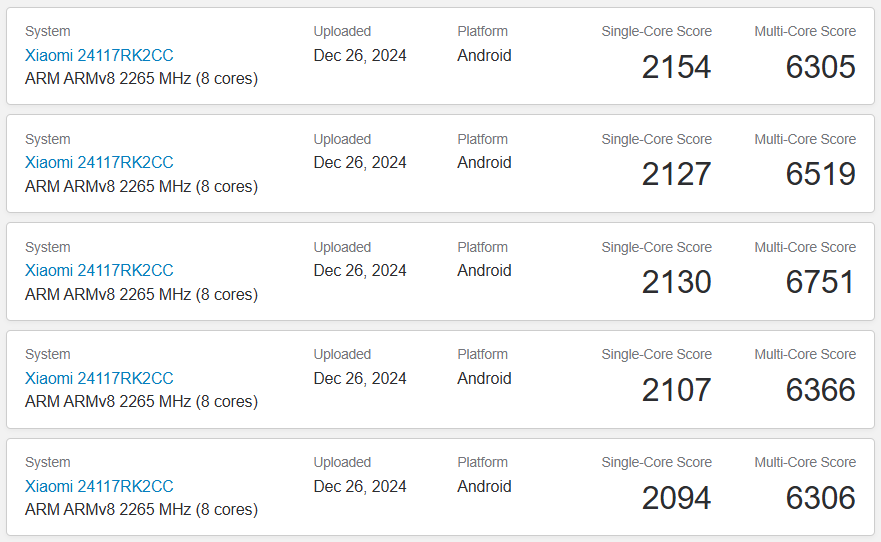
MediaTek recently unveiled the Dimensity 8400 chipset, which is the first-ever chip in its segment. The new chip will drive the Redmi Turbo 4 and Realme Neo 7 SE, which are expected to launch in January 2025 in China. The Poco X7 Pro heading to the global market will also have the new chip, as it is said to be a rebranded version of the Turbo 4. A Geekbench listing of the Turbo 4 has been spotted, revealing its performance for the first time.
Dimensity 8400’s performance revealed
Redmi Turbo 4 Geekbench listing
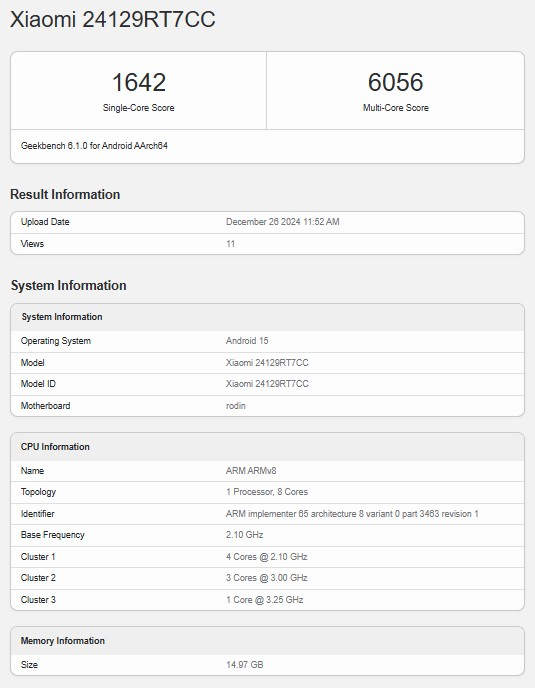
A Xiaomi phone with model number 24129RT7CC was recently approved by China’s 3C certification platform. The same device, which appears to be the upcoming Redmi Turbo 4, has now popped up in Geekbench’s database.
The Dimensity 8400-powered device has managed to score 1642 points in the single-core test and 6056 points in the multi-core test. The single-core and multi-core scores are higher than the Redmi K70e, which debuted last year as the world’s first Dimensity 8300 phone. Though the Dimensity 8400 delivers excellent multi-core results, its single-core performance is somewhat underwhelming.
Redmi K70e with Dimensity 8300Realme GT 6T with Snapdragon 7+ Gen 3
The Dimensity 8400 will rival the Snapdragon 7+ Gen 3 chip from the Qualcomm camp, which scores around 18XX in the single-core test and around 48XX in the multi-core test. In fact, the D8400 manages to slot itself between the Snapdragon 8 Gen 2 and Snapdragon 8 Gen 3 in terms of multi-core performance.
Redmi K70 with Snapdragon 8 Gen 2Redmi K80 with Snapdragon 8 Gen 3
The Geekbench listing of the Redmi Turbo 4 further reveals that the device will be equipped with 16 GB of RAM and Android 15. The OS is expected to have a layer of HyperOS 2.0 on top.
Redmi Turbo 4 specifications (rumored)
In terms of specifications, the Redmi Turbo 4 is expected to feature a 6.67-inch OLED screen that offers a 1.5K resolution and a 120Hz refresh rate. Under the hood, the Dimensity 8400-powered phone is expected to feature up to 16 GB of RAM, up to 512 GB of storage, and a 6,000mAh or 6,550mAh battery with 90W charging. It is expected to feature a 20-megapixel front camera and an OIS-assisted 50-megapixel + 8-megapixel dual-camera system. The handset is also expected to come with other features, such as an in-screen fingerprint scanner, an IR blaster, and dual speakers.
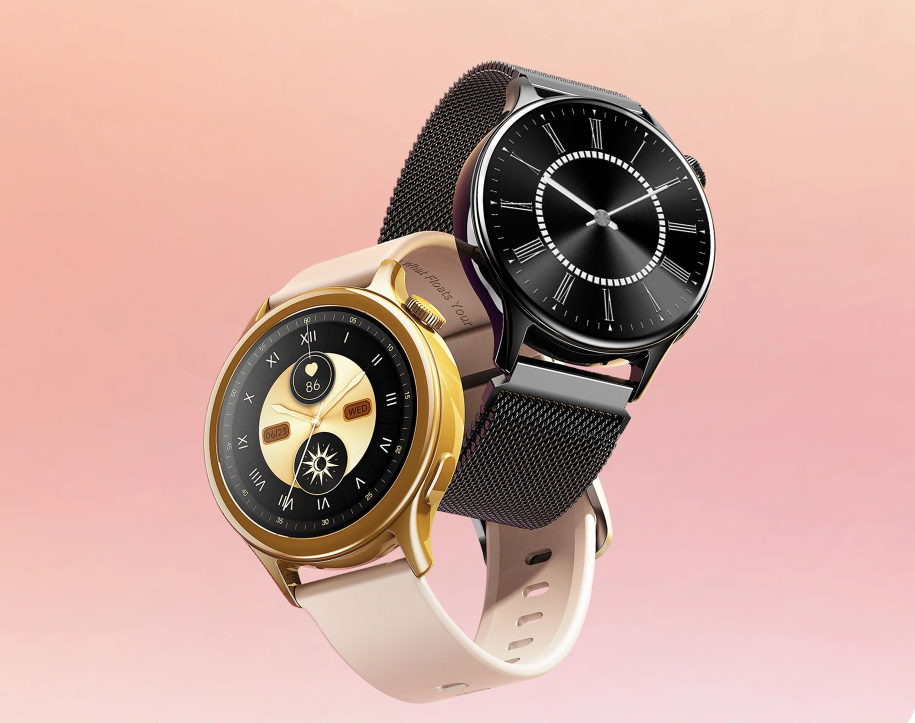
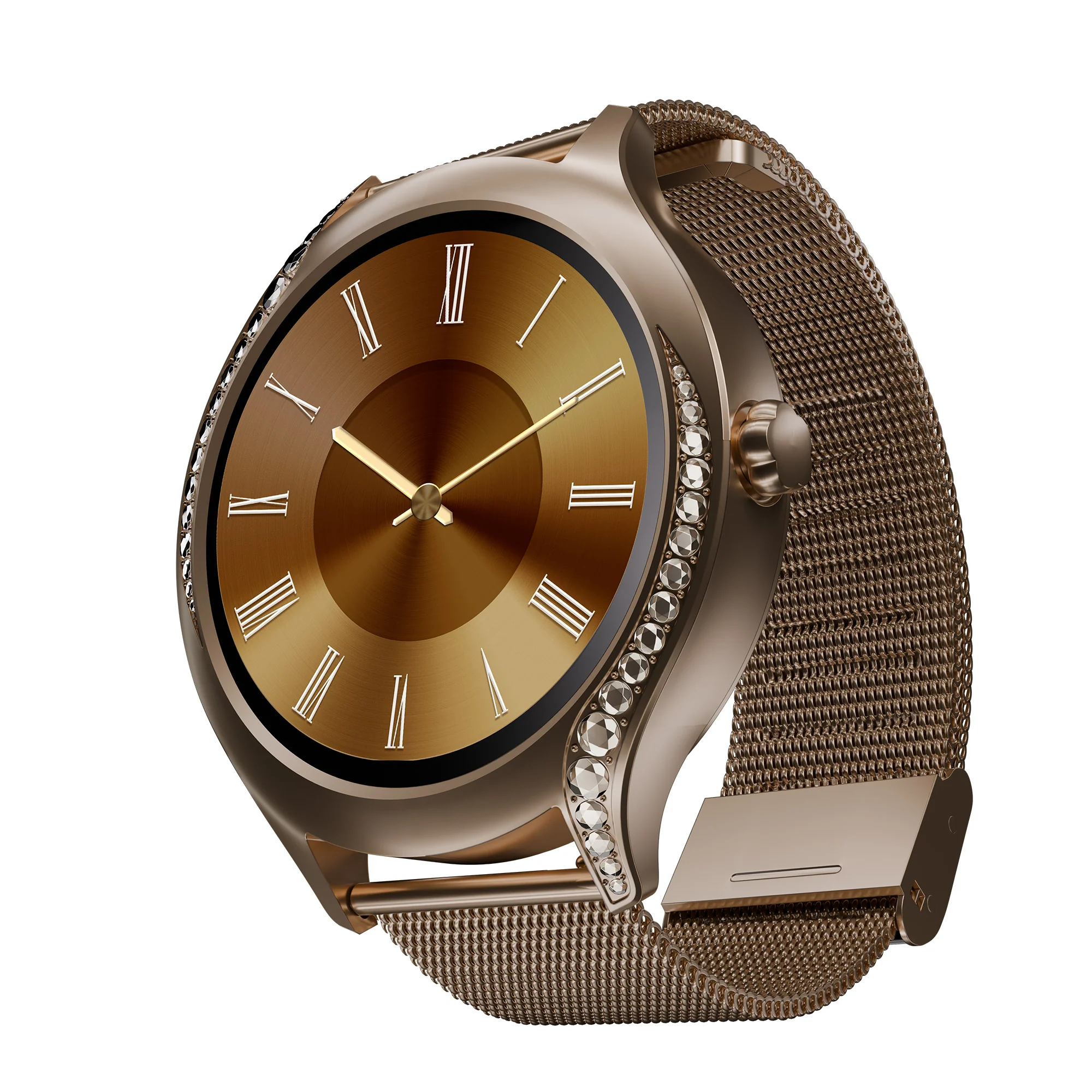
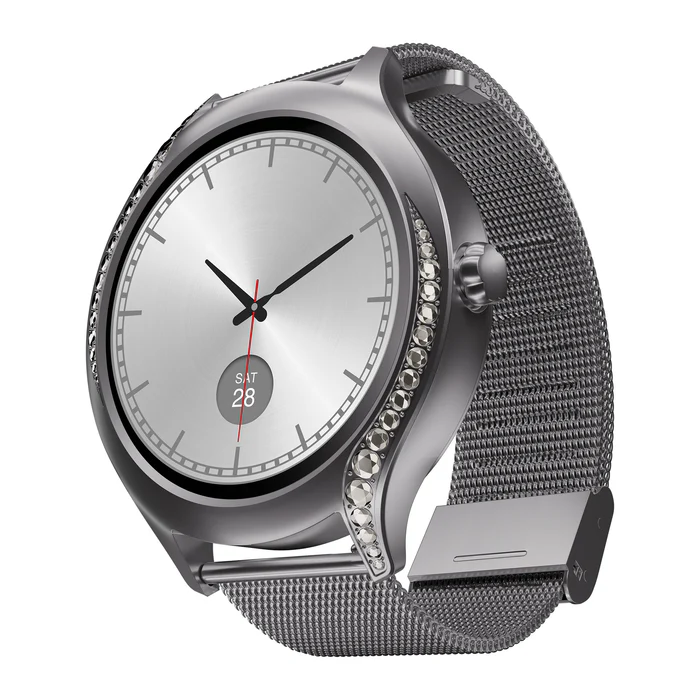
Boat has expanded its Enigma smartwatch lineup with the introduction of the Enigma Daze and Enigma Gem smartwatches, designed to combine style, functionality, and durability. Targeted at modern women, these wearables offer advanced features to complement daily life.
The Enigma Daze features a 1.3-inch display with a 360 x 360 resolution and a functional crown for easy navigation. The Enigma Gem, on the other hand, boasts a 1.19-inch AMOLED display with an Always-On Display mode, ensuring critical information remains accessible.
Both smartwatches prioritize safety with a discreet SOS function, allowing users to send emergency messages and location details. Health-focused features include menstrual cycle tracking, heart rate monitoring, SpO2 measurement, sleep tracking, stress management, and energy scores. They support over 700 active sports modes and integrate with the boAt Crest App Health Ecosystem, which includes tools like Wellness Crew and Fit Buddies.
The smartwatches also support Bluetooth calling, with the Daze storing up to 10 contacts and the Gem up to 20. Additional utility features include a DIY Watchface Studio for personalization, a flashlight, alarms, timers, camera, and music controls, and Find My Phone functionality. Both models are IP67-rated for dust, sweat, and splash resistance and offer up to five days of battery life.
Pricing & availability
The Enigma Daze is available in Metallic Gold for ₹2,199 and other colors for ₹1,999, including Metallic Silver, Metallic Black, and Cherry Blossom. The Enigma Gem is priced at ₹2,699 and comes in Rose Gold, Metallic Black, and Metallic Silver.
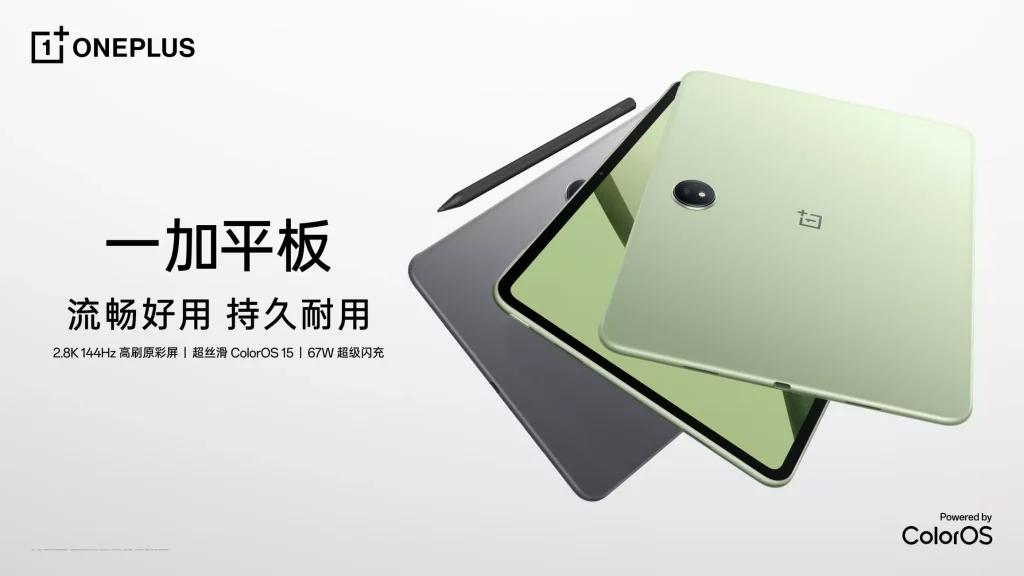
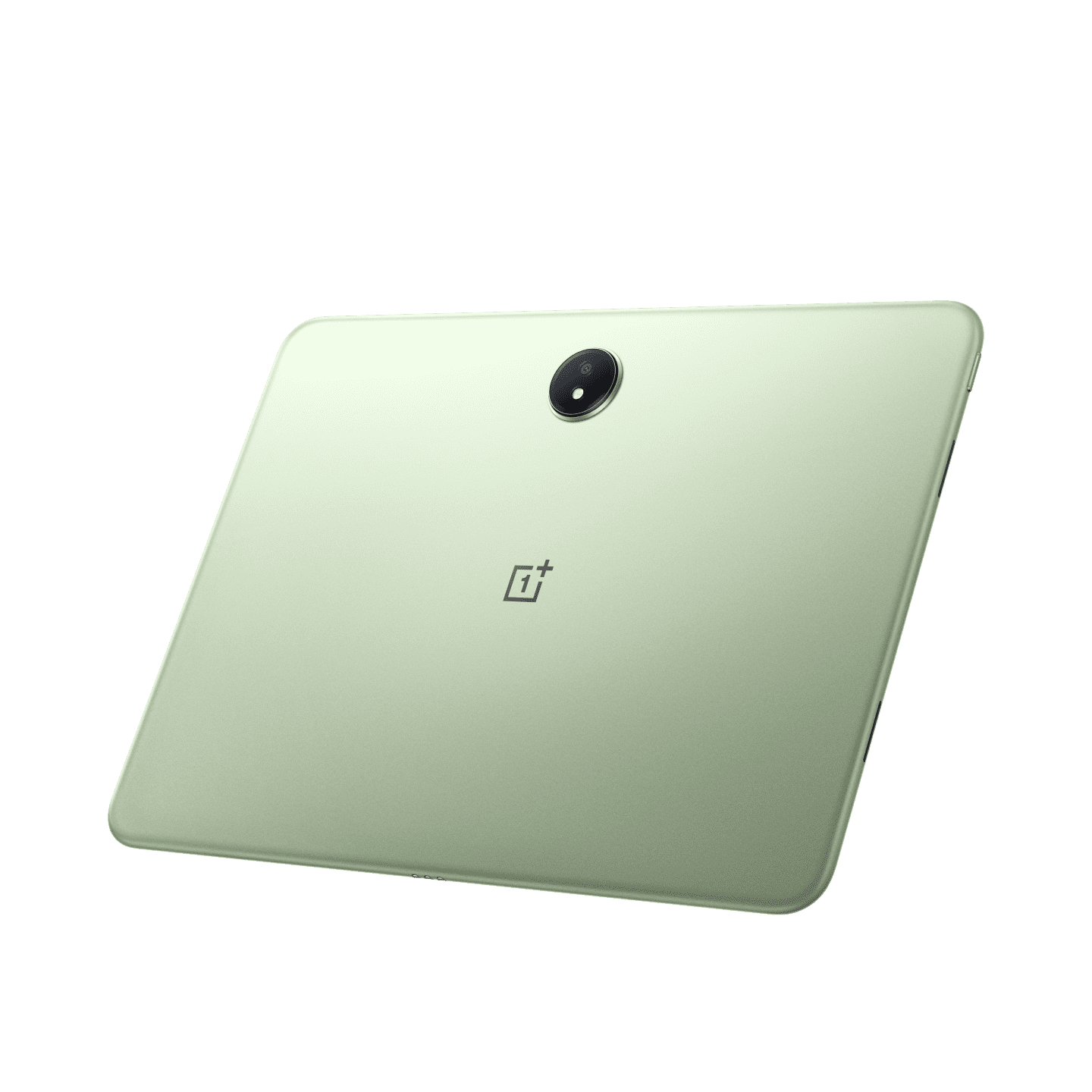
OnePlus has officially unveiled the OnePlus Pad in China during the Ace 5 series launch event. This budget-friendly tablet starts at an introductory price of 1999 yuan (approximately $274). Unlike last year’s global version powered by the MediaTek Dimensity 9000 chipset, this model offers a new configuration. Early buyers will also receive a complimentary stylus. Here’s a closer look at its features, specifications, and pricing.
OnePlus Pad features an 11.6-inch LCD display with a high refresh rate of 144Hz, ensuring smooth visuals for gaming, streaming, and productivity. It comes with a resolution of 2800×2000, a 7:5 aspect ratio, and a peak brightness of 700 nits, keeping the display vibrant and usable even in bright environments.
Under the hood, the device is powered by the MediaTek Dimensity 8350 chipset with a 4nm process, combining Cortex-A715 and Cortex-A510 cores for performance and efficiency. It features a Mali-G615 MC6 GPU for smooth graphics and a 34,615mm² graphene cooling area for sustained performance during extended gaming.
The tablet runs on ColorOS 15, designed to provide a seamless user experience. It supports features such as NFC-based quick connectivity and cross-ecosystem file sharing. Additionally, AI learning tools are integrated into the system, making it suitable for both productivity and educational purposes.
For photography and video calls, the OnePlus Pad features an 8MP front-facing camera and an 8MP rear camera. While the camera setup is modest, it is adequate for basic imaging needs, video conferences, and document scanning.
The device is powered by a large 9520mAh battery, ensuring all-day usage on a single charge. It supports 67W fast charging, allowing users to quickly top up the battery and resume their activities without long downtimes.
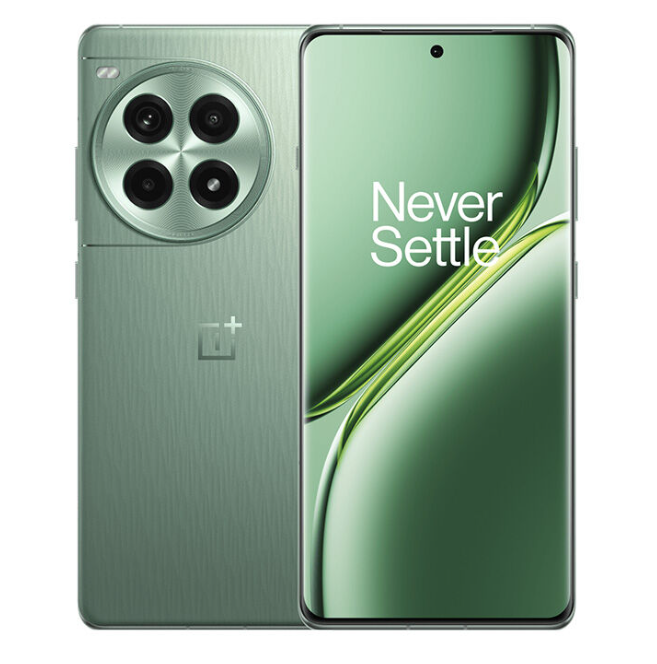
OnePlus Pad is designed for portability, measuring just 6.29mm in thickness and weighing 533g. It comes in two elegant color options: Tundra Green and Deep Space Grey.
2. Pricing and Availability
OnePlus Pad is available in four configurations, with introductory prices as follows:
8GB + 128GB: 1999 yuan ($274)
8GB + 256GB: 2299 yuan ($314)
12GB + 256GB: 2699 yuan ($369)
12GB + 512GB: 3099 yuan ($424)
OnePlus Pad also offers accessories like the Smart Stylus priced at 399 yuan ($54) and the Smart Keyboard at 499 yuan ($68), with early buyers receiving the stylus for free. It is expected to launch globally as the OnePlus Pad Go 2.
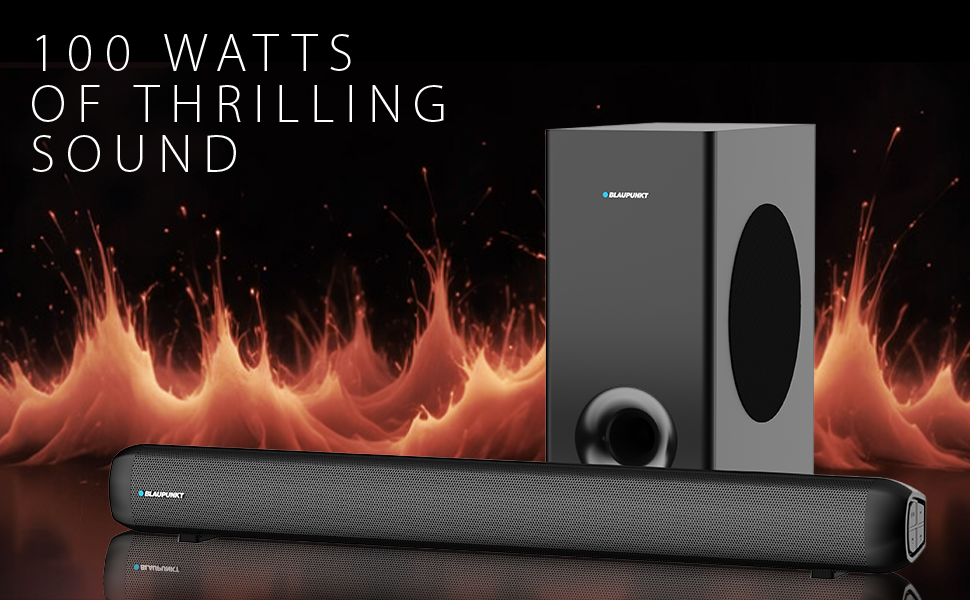
Blaupunkt has introduced a new soundbar, the SBW100 Pro+, in India. Designed with user feedback in mind, the soundbar boasts a stylish edgeless design with a high-grade grill.
Blaupunkt SBW100 Pro+ soundbar
Delivering a powerful 100W output, the SBW100 Pro+ uses dual high-definition drivers in a 2.1 channel configuration, paired with a wired subwoofer for enhanced bass. The soundbar includes a built-in equalizer offering three distinct sound modes. The Movies Mode enhances special effects and dialogue for a cinematic experience, while Music Mode provides deep bass and rich tones for music enthusiasts. For spoken content, News Mode ensures clear audio quality.
Connectivity options on the SBW100 Pro+ are extensive, with support for HDMI ARC, Bluetooth, USB, and AUX, allowing compatibility with a wide range of devices such as TVs, phones, and tablets. The soundbar also includes a full-function remote control for convenient operation from anywhere in the room. Additionally, the side control panel offers a tactile, user-friendly interface for hands-on adjustments.
Pricing & availability
The Blaupunkt SBW100 Pro+ is priced at ₹4,499 and is available on Amazon India and the Blaupunkt website. It also comes with a one-year warranty.
Blaupunkt has launched the SBA02, a 30W portable Bluetooth soundbar in India, priced at ₹2,499. Featuring a compact design with a honeycomb-patterned grille, it delivers clear audio through dual drivers and a passive radiator. The 3600mAh battery offers up to 8 hours of playback, while TurboVolt fast charging minimizes downtime.
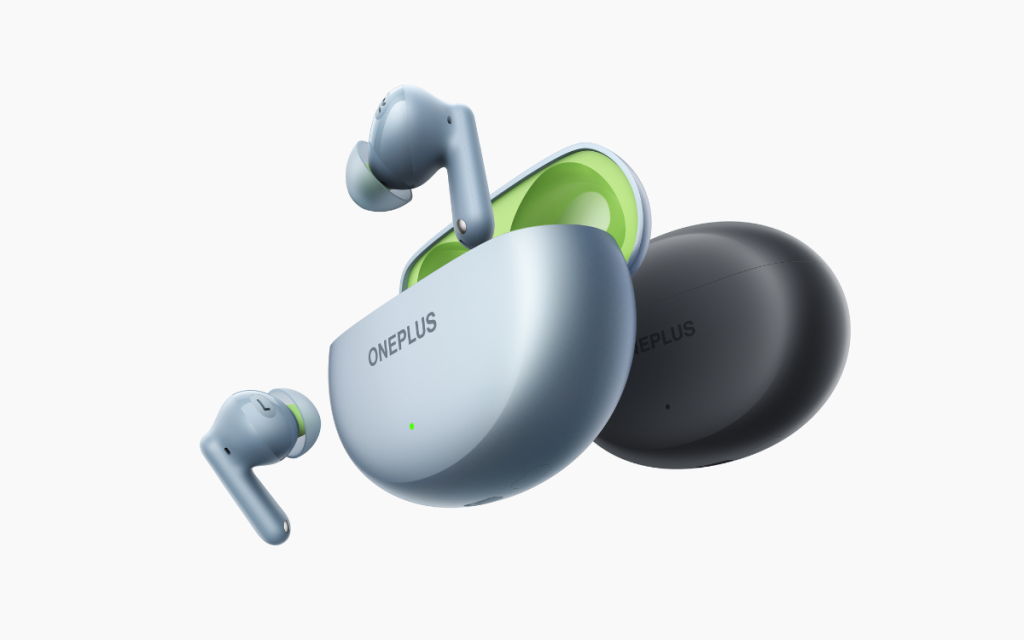
OnePlus has officially unveiled the Buds Ace 2, the successor to last year’s Buds Ace, in the Chinese market. Alongside the earbuds, the company also introduced the Ace 5 series. The Buds Ace 2 is priced at 169 yuan ($23) but is currently available at a discounted price of 159 yuan ($21.78). Let’s dive into the key specifications.
OnePlus Buds Ace 2 Specifications
The Buds Ace 2 offers an exceptional audio experience with a durable, lightweight (4.2g per earbud) design and advanced features. It is available in Submarine Black and Shadow Green and features a sleek, fingerprint-resistant finish with superior wear and scratch resistance, making it a versatile choice for audiophiles, gamers, and casual users.
The Buds Ace 2 boasts 12.4mm dynamic drivers, offering rich bass and detailed sound quality with support for the BassWave 2.0 technology, which intelligently analyzes and enhances bass tones for a more immersive experience.
Additionally, it supports 10 levels of bass adjustment, allowing users to fine-tune their listening preferences. For a lifelike experience, the 3D spatial audio system surrounds you in sound, perfect for gaming or movie-watching.
The earbuds support active noise cancellation (ANC) along with dual-microphone AI noise reduction to ensure clear calls even in noisy environments. It also includes an ambient transparency mode, which allows users to stay aware of their surroundings while enjoying their audio.
These earbuds are TÜV Rheinland-certified for durability, undergoing rigorous testing to ensure quality. This includes extreme temperature testing at 55°C, over 20,000 lid opening cycles, a 1.5-meter drop test for the charging case, and a 1.8-meter drop test for the earbuds. These certifications highlight its resilience for long-term use and varied environments.
The Buds Ace 2 excels in battery life, offering up to 43 hours of playback (with the charging case and noise cancellation off). With 10 minutes of fast charging, users can enjoy 11 hours of music playback. Each earbud is equipped with a 58mAh battery, and the charging case houses a 440mAh battery. The device is compatible with Bluetooth 5.4, ensuring a stable connection and ultra-low latency of just 47ms, making it ideal for gaming.
The OnePlus Buds Ace 2 is IP55-rated for water and dust resistance, making it suitable for workouts and outdoor activities. It supports dual-device connectivity, enabling seamless switching between devices without re-pairing. Additionally, users can customize controls and access extra features via the HeyMelody app.
We use cookies on our website to give you the most relevant experience by remembering your preferences and repeat visits. By clicking “Accept”, you consent to the use of ALL the cookies.
This website uses cookies to improve your experience while you navigate through the website. Out of these, the cookies that are categorized as necessary are stored on your browser as they are essential for the working of basic functionalities of the website. We also use third-party cookies that help us analyze and understand how you use this website. These cookies will be stored in your browser only with your consent. You also have the option to opt-out of these cookies. But opting out of some of these cookies may affect your browsing experience.
Necessary cookies are absolutely essential for the website to function properly. This category only includes cookies that ensures basic functionalities and security features of the website. These cookies do not store any personal information.
Any cookies that may not be particularly necessary for the website to function and is used specifically to collect user personal data via analytics, ads, other embedded contents are termed as non-necessary cookies. It is mandatory to procure user consent prior to running these cookies on your website.