Yesterday Realme announced the Realme 13 5G series phones in India. Now, the brand has introduced a new Note-series phone in the Indonesian market as expected. The Realme Note 60 arrives as the successor to the last year’s Note 50. It packs incremental upgrades over its predecessor at an affordable price tag. Read on to find out what the device has in store for us.
Realme Note 60 specs
The Realme Note 60 retains the 6.74-inch display with a waterdrop notch and a thick chin at the bottom. It bears an HD+ resolution, 90Hz refresh rate, and a 560 nits peak brightness. Design-wise, the phone features a flat frame with a side-mounted fingerprint scanner embedded in the power button and a small pattern on the back panel. It has an IP64 rating against dust and splash protection.
On the imaging front, the Realme Note 60 has a 32MP rear camera with a f/1.8 aperture. There is a 5MP front-facing selfie snapper.
Internally, the Realme Note 60 is equipped with the same Unisoc T612 octa-core processor that also powers the Note 50. It packs up to 8GB RAM and 256GB storage. There is also support for virtual RAM technology for seamless performance. The smartphone is backed by a 5,000mAh battery unit with support for 10W charging. Software-wise, it ships with Android 14 OS out of the box.
The Realme Note 60 starts at IDR 1,399,000 ($90) for the 4GB + 128GB base variant. The 6GB + 128GB and 8GB + 256GB configurations are priced at IDR 1,599,000 ($103) and IDR 1,999,000 ($129) respectively. It is offered in Marble Black and Voyager Blue colors. The device is already available for purchase in Indonesia and is expected to be released in more markets soon.
As someone who spends countless hours in front of a screen, the performance of my gaming peripherals is crucial. Recently, I got my hands on the Incott Ghero Pro, a mouse that’s been generating a lot of buzz in the gaming community. After spending some quality time with it, I can confidently say that this mouse is more than just hype, it’s a powerhouse designed for serious gamers.
When you first unbox the Incott Ghero Pro, you’ll notice that Incott has ensured that all essential accessories are included, making the setup process seamless.
Incott Ghero Pro Gaming Mouse
1K Receiver
USB-A to USB-C Cable
User Manual
8K Receiver (purchased separately)
2. Design and Build Quality
The design of the Incott Ghero Pro is both ergonomic and lightweight, weighing just 64g, making it an excellent choice for extended gaming sessions without causing fatigue. The mouse’s UV surface coating, unique to the Pro model, provides a superior grip, especially when your hands get warm during intense gaming sessions. This grip enhancement is crucial for maintaining control and precision in competitive environments.
Aesthetically, the Pro model is available in six vibrant color options: Red, Orange, White, Yellow, and Pink, catering to various style preferences.
However, the hump design, while comfortable for most users, might not be ideal for those who prefer fingertip grips, limiting its versatility. Additionally, some users might find the UV coating too tacky, preferring a matte or smoother finish instead. Despite these minor drawbacks, the design and build quality of the Incott Ghero Pro are top-notch, reflecting a product that is built to last.
3. Features and Performance
The Incott Ghero Pro comes equipped with a customized PAW3395 sensor, offering up to 32,000 DPI with precise adjustments in 50 DPI increments.
The Pro model also supports an ultra-fast 8,000 Hz polling rate, ensuring almost instantaneous response times, a feature that can make all the difference in high-stakes scenarios.
One of the first things I noticed was the clickiness of the mouse buttons. The Huano Transparent Blue Shell Pink-Dot switches used in the Ghero Pro provide a crisp and satisfying click, with a fine sound that adds to the tactile feedback during use. Whether I was in the heat of an intense gaming session or simply navigating daily tasks, the performance of the Ghero Pro was top-notch.
Its lightweight 64-gram design enhances precision and ease of maneuverability, contributing to an overall improved user experience. The mouse handled both 1K and 8K polling rates exceptionally well, providing smooth and responsive control in every scenario I tested.
However, I didn’t try the Bluetooth mode, so I can’t speak to its performance. Upgrading the mouse to support Bluetooth connectivity requires a firmware update, which might be a cumbersome process for some users. That said, the dual-mode connectivity (Wired USB and Wireless 2.4GHz) worked flawlessly.
The DPI settings are also flexible, with six stages that allow for quick adjustments depending on the situation.
The side buttons are well-placed, making them easily accessible during gameplay. I never found myself fumbling to reach them. Additionally, the scroll wheel is fantastic, smooth yet precise, making it easy to navigate through menus or switch weapons in-game.
In terms of overall performance, the Incott Ghero Pro leaves little to be desired. It delivers consistent, reliable results across various settings, from daily tasks to the most demanding games. This mouse truly stands out as a high-performance tool for any serious gamer.
4. Software and Battery Life
The Pro model comes equipped with onboard memory, allowing users to retain their customized settings even after uninstalling the software. This feature is particularly useful for gamers who frequently switch between different setups or who prefer not to rely on software to maintain their configurations.
The software itself offers detailed customization options, including DPI settings and polling rate adjustments. It also offers LOD, ripple control, angle snapping, motion sync, and macros.
However, the software interface could be improved. Additionally, the battery indicator in the software is a simple bar rather than a precise percentage, making it less informative and potentially frustrating for users who like to keep a close eye on their battery levels.
Battery life is generally exceptional, but it tends to drop rapidly once it falls below 20%, necessitating more frequent recharges. While the mouse performs well even with the demanding 8K polling rate enabled, this sudden drop in battery life can be inconvenient during extended gaming sessions. However, the mouse supports ultra-fast charging which can recharge it in just 50 minutes, reducing downtime significantly.
5. Verdict
The Incott Ghero Pro offers outstanding value for money, especially considering its high-end features like the 8,000 Hz polling rate and the customized PAW3395 sensor. The build quality is exceptional, with a robust design that feels both premium and durable.
The ergonomic design, lightweight construction, and responsive Huano Transparent Blue Shell Pink-Dot switches make it an excellent choice for serious gamers who need a reliable, high-performance mouse.
However, the gaming mouse is not without its flaws. Minor software issues, particularly with battery indicators and settings, detract from the overall experience. Additionally, the shape and design, while excellent for claw and palm grips, might not be ideal for fingertip grip users.
6. Pricing and Availability
Incott Ghero Pro gaming mouse is available for $59.99 and can be purchased from Mechkeys.
Back in July, Honor’s latest MagicPad 2 was launched in China as its latest high-end tablet. But ahead of its global debut, the company has teased the MagicPad 2. It is set to be unveiled at IFA 2024, with new AI functionality that can help it become your learning partner.
1. Honor MagicPad 2 AI Formula Recognition for Better Learning
The Honor MagicPad 2 was just teased with an AI Formula Recognition feature. This allows you to simply convert your handwritten equations into digital texts. So it’s a pretty nifty feature for students and educators. Honor demonstrated this in a video with PatrickJMT, who is a math video creator.
We can see the AI feature in action, recognizing complex mathematical formulas quickly and accurately. Honor even pays an homage to renowned scientist Albert Einstein. The video also confirms that the upcoming MagicPad 2 is set to be unveiled on 5th September 2024. Honor will announce the tablet during the IFA event. You can even see the full video by clicking here.
2. So what does it pack?
The Honor MagicPad 2 sports a tall 12.3-inch OLED display that offers 3000 x 1920 pixel resolution, up to 144Hz refresh rate, and 1600 nits of peak brightness. It is equipped with the Snapdragon 8s Gen 3 SoC, which is coupled with up to 16GB of RAM and 1TB of internal storage. A large 10,050mAh battery pack powers this device that supports 66W wired fast charging. The tablet runs on the Android 14 OS based MagicOS 8.0.1 custom skin out of the box.
It was announced with various other AI features like voiceprint noise reduction, Cloud AI Big Model, and multi-person conference voice-to-text conversion. For optics, the rear features a 13-megapixel camera, while the front houses a 9-megapixel selfie shooter. Other notable features include eight speaker crossover, Magic Pencil 3, Bluetooth 5.3, and three microphones.
Just a few months after launching the P1 and P1 Pro in India, Realme appears to be prepping for the release of their successor, the P2 Pro. The upcoming smartphone has been spotted on the Bureau of Indian Standards (BIS) website, hinting at an imminent launch in the Indian market.
The device appeared on the listing with model number RMX3987, but as expected, it doesn’t reveal any specifications of the phone. However, it’s almost confirmed now the device will debut soon in the Indian market.
As for the phone’s specification, a report by 91Mobiles reveals that the Realme P2 Pro might come in four storage configurations. These will include 8GB RAM with 128GB storage, 8GB RAM with 256GB storage, 12GB RAM with 256GB storage, and a top-tier model with 12GB RAM and 512GB storage. Color options are also rumored to be Chameleon Green and Eagle Grey.
Pricing remains unconfirmed as well. But based on the P1 Pro’s starting price of Rs 18,999, we can expect the P2 Pro to fall somewhere in the sub-Rs 20,000 range. The phone will likely go head-to-head with players like the POCO X6, iQOO Z9, and even the recently launched CMF Phone 1.
It’s worth noting that these details are based on leaks and reports. Until Realme officially confirms the P2 Pro’s existence and unveils its specifications, it’s best to approach this information cautiously.
We’ll be sure to keep a close eye on developments and share any official announcements from Realme as they become available.
As a gamer, I’ve tried a lot of things to improve my gaming performance, buying new mice, new monitors and more practice. But of course, the fatigue of my back and arms during gaming also bothers me, so today I want to try something new, which is the AutoFull M6 gaming chair.
The M6 gaming chair not only has the cool look of a racing car seat and a lot of adjustable mechanisms but, most surprisingly, has seat ventilation and heating. So let’s take a closer look at this chair designed particularly for gamers.
AutoFull is a professional gaming peripherals and equipment brand that has running for 10 years. It has become hot in the market for its outstanding line of gaming chairs, gaming tables and gaming cabins. It’s often seen at top e-sport events as one of the most relevant brand-partners. Growing up with the new favorite of the global youth generation, it extends the competitive spirit and professional gaming experience to the general player community – Brand’s slogan: Be your own hero.
The brand is good at getting players’ attention as it used to hire NBA All-star Gordon Haywards as a strategic brand partner in 2019-2020, and sponsor the top e-sport team Rogue in 2021-2022 as well. For recent years, the brand has begun to focus more on the area of gaming health, which is also the trend in the market. Apart from professional equipment to improve gaming performance, the industry is also seeking a healthy gaming environment for gamers, physically and mentally. The AutoFull M6 gaming chair is just an innovative product born in this context.
Unboxing
The AutoFull M6 gaming chair comes in a fairly large box, and is protected by a large amount of foams. Other than the chair, there is a very detailed installation manual. Getting the chair ready was not too difficult and took me about 40 minutes.
Design
The design is no doubt inspired by a racing car seat, the backrest and headrest are clearly made that way. I personally like this cool look, the whole chair, even the base part is painted in black. So, it goes perfect with most decos at your home.
Let’s talk about the details, this chair is undoubtedly the most exquisite gaming chair I’ve ever used, the decorative pattern of the backrest and some metal parts all show the excellent workmanship. Not only that, the surface of the chair is made of Ultra-soft Porous Leather, which provides a very delicate touch, even when wearing shorts, it doesn’t hurt the skin like mesh material.
The overall softness of the M6 is on the firmer side like most car seats, and it’s not overly flimsy like sofas and some chairs, which is exactly what we all need for gaming.
Ventilated and heated seat
So, let’s start by trying out my two favorite features.
First, the versatile seat, the seat can cool you down or heat up. The AutoFull M6 creates airflow from underneath, the cool air goes through the holes to bring your body temperature down. There are three levels of adjustments, to make sure everybody can get the best experience. The airflow is always very gentle. Combined with the soft material of the chair, it is very comfortable to sit on it for a long time.
Also the heat up feature, I measured the temperature at 3 different levels of it for your reference. And the chair is smart, it does not heat the whole seat up, it only works in the areas where your butt sit, avoiding the critical areas in the center, if you know what I mean.
Of course, I also tested the power of these two features, the Ventilated function has a maximum power of 5W and the Heat up function has a maximum power of 8.8W. It works fine when connected to a PC, power bank or charger. It would be much more convenient if it is connected with a portable power bank. And the good news is that it has wide supports with most power banks.
Dynamic Tracking Lumbar Support
The Dynamic tracking lumbar support also impressed me. Unlike most gaming chairs, the M6 has a huge upgrade in lumbar support with the huge ‘pillow’. It supports 10 centimeters of front-to-back and 5 centimeters of up-and-down infinite adjustment. No matter what kind of sitting posture I am in, it’s aways easy to achieve the comfortable positions.
If you look at it from the side, you can see that this lumbar support is designed with a special curvature, when I sit on the chair, it embraces my lumbar area perfectly and comfortably. It also uses the same leather and breathable holes design like the seat, so overall I would give this design a high score.
6D Mechanical Armrests
Another thing I have to mention is the Armrests, first of all, you can see that the 2nd Armrests are very wide and shaped like a bicycle saddle. It supports up and down, left and right as well as tilting angle adjustments, this is an outstanding design for gaming.
For example, when I’m playing games on the PC, I can adjust it to a similar height to the desk, which keeps my arms relaxed during long gaming sessions.
Previously when using a joystick or playing mobile games, I might put my arms on the desk, or simply lie on a couch. However, after one or two hours, my arms or lower back would get tired and need to adjust my sitting posture very often. But now I have this AutoFull M6, I’d like to adjust the armrests to an angle similar to this one, and it’s great to see my arms fully supported.
160° Recline
The AutoFull M6 also supports up to 160° infinite recline, which is close to a completely flat angle. So outside of gaming, I also adjust the chair to a suitable angle and recline it while watching a movie. The adjustive way is also a lot of fun – At the right side of the seat, there is a lever like a handbrake, and works just like one.
CS2 Gaming with M6
During the time I’ve been using this chair, I was playing Counter-Strike 2 (CS 2) on it almost every day, and I’ve found that this wide armrest has another advantage. It provides a wide range of freedom for me to swing the mouse with the arm. This is hard to find on other chairs.
Conclusion
The M6 chair caters well to the latest trend in the gaming industry: how to make gamers play in a more health and consistent way. But this is more than just a business consideration. When E-sports players start developing injuries from intense, long training and matches, it’s especially important to develop equipment like the M6 Gaming Chair as a player in the market.
If you want to know more about the versatile E-sport chair, you can click the official shop here, or just head to Amazon to check it out.
The Infinix Zero 40 4G and Zero 40 5G have officially launched in Malaysia. One of the major highlights of the Zero 40 series is that these phones support the GoPro mode. This allows users to pair the Zero 40 4G / 5G to a compatible GoPro camera and then use the phone as a viewfinder from Infinix’s camera app, which offers a dedicated “GoPro” mode. In addition, the phone comes preinstalled with the GoPro Quik app. The collaboration allows users to adjust parameters, preview and edit content in real-time, and capture richer materials with ease. Here’s a look at the specifications, features, and prices of both smartphones.
Infinix Zero 40 4G, Zero 40 5G specifications and features
Infinix Zero 40 5G
The Infinix Zero 40 series features a 6.74-inch curve-edge AMOLED panel that offers an FHD+ resolution, a 144Hz refresh rate, up to 1,300nits of peak brightness, Gorilla Glass 5 protection, and an in-screen fingerprint sensor. Both phones run on XOS 14.5-based Android 14 and are confirmed to receive two Android version upgrades. In addition, both phones will receive three years of security updates.
On the front, the Zero 40 series is equipped with a 50-megapixel Samsung JN1 front-facing camera. The rear camera system of the two phones features a 108-megapixel Samsung HM6 primary camera with OIS support, a 50-megapixel ultra-wide lens, and a 2-megapixel depth sensor. The 4G variant can shoot up to 2K 30fps videos, whereas the 5G edition can capture up to 4K 60fps videos.
Infinix Zero 40 4G
The 4G version has the MediaTek Helio G100 chip and 8 GB of RAM, whereas the 5G model packs the Dimensity 8200 SoC and 12 GB of RAM. Both phones offer 256 GB / 512 GB of internal storage and a 5,000mAh battery with 45W charging support. The 5G version also supports 20W wireless charging and 10W reverse wireless charging.
Infinix Zero 40 4G, Zero 5G price and availability
The 8GB+256GB variant of the Infinix Zero 40 4G costs MYR 1,199, or approximately $289. On the other hand, its 5G edition offering the same configuration costs MYR 1,699, or $399.
The Zero 40 4G’s color variants include Misty Aqua, Blossom Glow, and Rock Black. Its 5G version comes in shades, such as Violet Garden, Moving Titanium, and Rock Black. Both phones are scheduled to go on sale starting Sept. 8 in the Malaysian market.
Oppo has silently taken off covers from the Oppo Enco Air 4 in China. To recall, Oppo unveiled the Oppo Enco Air 4 Pro in markets like Ukraine and China a few months ago. The Enco Air 4 is listed with all its key features on Oppo China’s online store. While the price of the device is not mentioned, it is scheduled to go on sale starting Sept. 9 in the home market.
Oppo Enco Air 4 key features
Oppo Enco Air 4Oppo Enco Air 4
The Oppo Enco Air 4 earbuds are equipped with a 12.4mm dynamic driver unit, offering a frequency response range of 20-20KHz. They support Bluetooth 5.4, AAC/SBC codecs, dual-microphone AI noise reduction, and 32dB ANC active noise cancellation. Additionally, the earbuds come with self-developed spatial sound effects.
In terms of battery life, the earbuds have a battery capacity of 58mAh, while the charging case holds a 440mAh battery. Together, the earbuds and charging case provide a maximum battery life of up to 43 hours, and the battery is designed to endure thousands of charging cycles.
The Enco Air 4 earbuds also feature IP55 dust and water resistance, touch interaction support, and weigh just 4.2g per earbud. In terms of price, the Enco Air 4 is expected to cost around 179 Yuan. It will be available in two shades, such as Spring Green and Frost White.
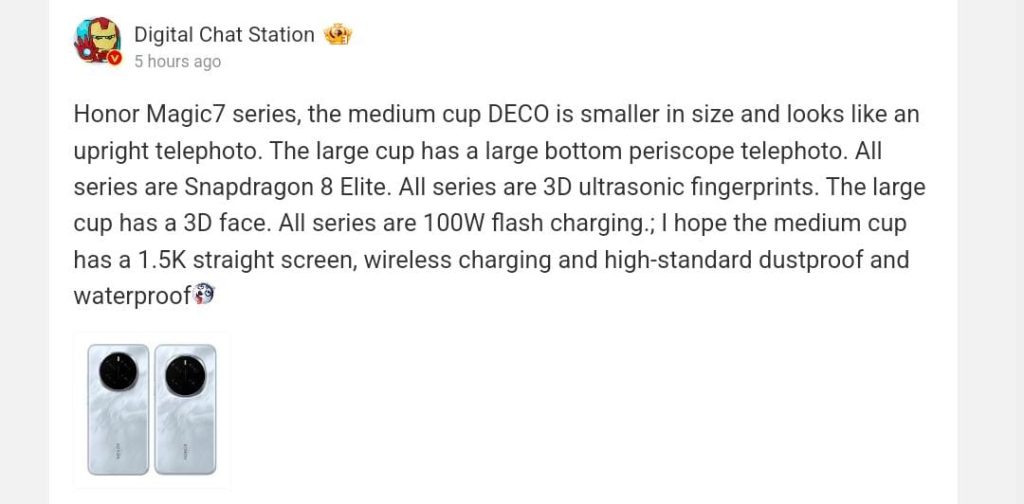
Several Chinese smartphone brands are gearing up to announce new flagship phones in China. OnePlus is expected to unveil three new phones in the home market by the end of this year. These include the OnePlus 13, the OnePlus Ace 5, and the OnePlus Ace 5 Pro. According to recent reports, the Ace 5 series will launch in November to compete with the Redmi K80 series. However, there is no clarity on whether it will launch in the first or second half of the month. What about the OnePlus 13, which is expected to launch before the Ace 5 series? A new leak, courtesy of tipster Digital Chat Station, provides information about its exact launch timeframe.
OnePlus 13 launch timeframe
The leak suggests that OnePlus aims to make the OnePlus 13 available for purchase before the Double 11 (Nov. 11 – Singles’ Day) shopping festival in China. He stated that OnePlus tentatively plans to launch the device by the end of October or early November.
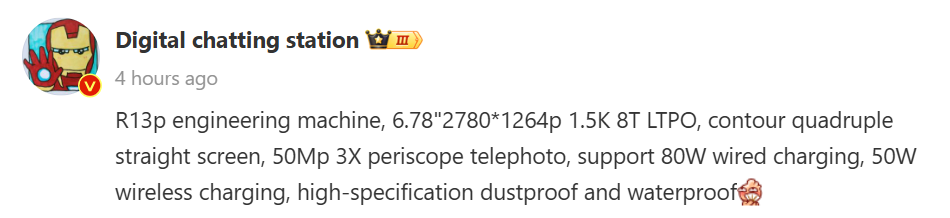
As per recent reports, the OnePlus 13 will arrive with a 6.8-inch OLED LTPO panel with a micro-quad-curved design. The screen will offer a 2K resolution of 3168 x 1440 pixels, a 120Hz refresh rate, and an ultrasonic in-screen fingerprint sensor. The device will run on Android 15, based on ColorOS 15.
On the front, the OnePlus 13 will have a 32-megapixel selfie camera. The rear camera setup will have an OIS-enabled 50-megapixel Sony LYT-808 primary camera, a 50-megapixel ultra-wide lens, and a 50-megapixel periscope telephoto camera with 3x optical zoom.
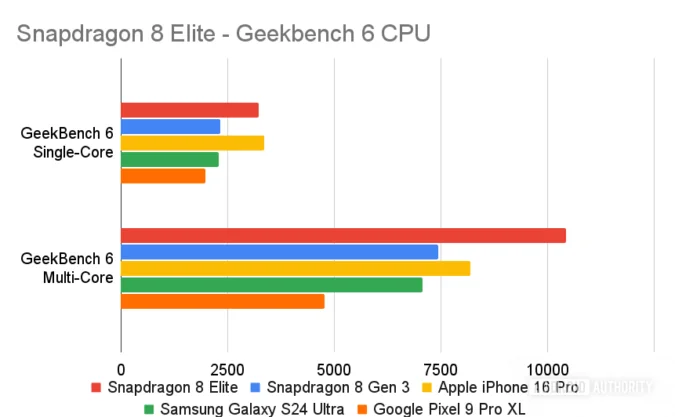
Under the hood, the OnePlus 13 will have the Snapdragon 8 Gen 4 chip onboard. The device is expected to ship with up to 24 GB of LPDDR5x RAM, up to 1 TB of UFS 4.0 storage, and a 6,000mAh battery with 100W wired and 50W wireless charging support. The device is also expected to sport a renewed rear design. Regarding durability, the OP13 is likely to arrive with an IP68/69-rated chassis.
In today’s roundup, we talk about Honor’s dig at Samsung, Galaxy S25 Ultra rumors, and OnePlus’ motherboard issues
Today’s Tech Highlights:
Honor’s Provocative Marketing: Dive into Honor’s latest marketing stunt for the Magic V3, featuring a cheeky “apology” to Samsung printed on the device’s hinge.
Samsung Galaxy S25 Ultra Rumors: Explore the latest leaks suggesting the S25 Ultra could be the thinnest and lightest in its line, potentially outpacing competitors.
OnePlus Addresses Motherboard Issues: Examine OnePlus’s long-awaited response to the motherboard crisis and what it means for customer trust.
Plus, don’t miss our roundup of other exciting stories, including why you should be cautious about first-generation gadgets, alternatives to the Xiaomi 14, Oppo’s upcoming flagship lineup, and Vivo’s latest budget offering!
Ahead of its September 5th launch, Honor‘s marketing campaign for the Magic V3 foldable phone has been nothing if not aggressive. From a Guinness World Record attempt to thinly veiled digs at Samsung’s Galaxy Z Fold 6, the company hasn’t shied away from a bit of controversy.
In their latest effort, Honor printed a message directly on the hinge of the Magic V3 as an “apology” to Samsung Galaxy Z Fold 6 owners. To add to the spectacle, they are calling it the “world’s smallest apology to Samsung owners on the world’s thinnest foldable phone.”
Samsung’s upcoming flagship, the Galaxy S25 Ultra, has been a hot topic in the rumor mill lately. Following earlier reports of a redesigned frame with rounded corners for improved ergonomics, a new leak now suggests the phone could be the thinnest and lightest Ultra model yet.
OnePlus has had its fair share of criticism for its products like any other major brand. However, in just a couple of years, the growing number of issues on its smartphones might be creating long term issues for the brand. OnePlus finally broke the silence regarding its latest motherboard failing issue, but is it enough? What more can the company do to retain customer trust?
Apple Intelligence was announced at this year’s WWDC in June. Although the exact release timeline for the public remains unclear, a host of AI features are expected to debut in the next year on the company’s iPhones, iPads, and Macs. The Cupertino-based tech giant has been releasing beta versions. The Developer Beta 3 of the latest iOS and iPadOS 18.1 and macOS 15.1 Sequoia bring an AI-powered ‘Clean Up’ tool in the Photos app. This is Apple’s answer to Google’s Magic Eraser and Samsung’s Object Eraser.
Motorola has silently unveiled two new G-series phones dubbed the Moto G55 5G and the Moto G35 5G for the global market. The G35 represents the brand’s entry-level 5G phone, while the G55 joins Motorola’s lineup of mid-range 5G phones. Here is a look at the specifications, features, and price of both smartphones.
Moto G55 5G specifications, price
Moto G55
The Moto G55 5G has a 6.5-inch IPS LCD panel that produces an FHD+ resolution and a 120Hz refresh rate. Under the hood is the Dimensity 7025, which the brand has previously used to power the Moto G64. It ships with 4 GB / 8 GB / 12 GB of RAM and 128 GB / 256 GB of built-in storage. It packs a 5,000mAh battery with 30W rapid charging support.
For selfies, the Moto G55 has a 16-megapixel front-facing camera. Its rear camera setup features an OIS-assisted 50-megapixel primary camera and an 8-megapixel ultra-wide lens. Available for €249 in Europe, the Moto G55 comes in shades, such as Twilight Purple (vegan leather), Smoky Green (vegan leather), and Forest Grey.
Moto G35 5G specifications, price
Moto G35
Priced at €199, the Moto G35 5G has a larger 6.72-inch LCD panel that offers an HD+ resolution and a 120Hz refresh rate. It draws power from the Unisoc T760 chipset, 4 GB of RAM, and 128 GB / 256 GB of internal storage. It features a 5,000mAh battery with 18W charging support.
The Moto G35 has a 16-megapixel selfie camera and a 50-megapixel (main) + 8-megapixel (ultrawide) dual-camera setup on the back. The G35 comes in colors like Leaf Green (vegan leather), Guava Red, and Midnight Black.
Both devices come preloaded with Hello UI flavored Android 14. These phones also have Dolby Atmos-powered dual speakers, a 3.5mm headphone jack, a microSD card slot, a side-facing fingerprint sensor, and an IP52-rated chassis.
The foldable smartphone market has seen significant advancements over the past few years, with manufacturers constantly pushing the boundaries of design and functionality.
Tecno, a brand known for its innovative approach to mobile technology, has now entered the tri-fold smartphone arena with its latest concept, the Tecno Phantom Ultimate 2. This device, with its ultra-thin profile and advanced features, has the potential to revolutionize the way we think about foldable smartphones.
According to the company, the Tecno Phantom Ultimate 2 stands out as the world’s thinnest tri-fold smartphone, with a folded thickness of just 11mm. This slim design is achieved through an advanced hinge mechanism and the use of Titan Advanced Fiber material for the battery cover, which is only 0.25mm thick, making it the thinnest in the industry.
When unfolded, the Phantom Ultimate 2 transforms into a 10-inch tablet with a 4:3 aspect ratio, offering a large, immersive display. This smooth transition from smartphone to tablet makes it a versatile device for both work and entertainment.
2. Advanced Display Technology
One of the standout features of the Phantom Ultimate 2 is its display technology. The device is equipped with a 3K LTPO screen that boasts a resolution of 392ppi, ensuring sharp and vibrant visuals.
The device also uses Touch and Display Driver Integration (TDDI) technology, which combines the touch sensor and display driver into a single chip. This results in a thinner, brighter screen with improved touch responsiveness.
Not only is the display impressive, but it’s also durable. The Phantom Ultimate 2’s hinge has a strength rating of 2100MPa and can withstand over 300,000 folds without affecting the display’s quality. This combination of durability and innovation ensures a crease-free, long-lasting screen.
3. Functionality
As per the company, they have optimized the software and user interface (UI) to fully utilize the tri-fold design. For example, the device supports a screen hovering feature, allowing users to type on a keyboard while the screen is upright, like a laptop.
The Phantom Ultimate 2 also offers a “tent mode,” which is perfect for face-to-face AI translation. The multi-window mode further enhances multitasking capabilities, allowing users to manage multiple applications simultaneously.
4. Tecno’s Vision
The Phantom Ultimate 2 demonstrates Tecno’s commitment to pushing the boundaries of foldable technology. This device follows the company’s previous concept, the Phantom Ultimate rolling screen phone, which also showcased Tecno’s innovative approach to mobile design. Although the Phantom Ultimate 2 is still a concept and has no release date, it signals Tecno’s ambition to be a major player in the foldable market.
5. Future of Foldable Tech
While Tecno’s Phantom Ultimate 2 is an impressive concept, it is important to note that Huawei is poised to make history as the first brand to launch a consumer-ready tri-fold smartphone. According to reports, the tri-fold device will be unveiled in September, and it is expected to feature cutting-edge technology and a design that could potentially surpass the Phantom Ultimate 2.
The competition between Tecno and Huawei in the tri-fold segment will likely drive further innovation in the foldable market. As consumers, we can expect to see more advanced, feature-rich foldable devices that cater to a wide range of needs and preferences. Tecno’s Phantom Ultimate 2 is a promising start, but the race to dominate the foldable market is far from over.
Moondrop UltraSonic earphones are designed with a dual-driver hybrid setup, that features an FRA Lithium-Magnesium Alloy Balanced Armature driver for crisp highs and a 13mm Sapphire Diaphragm Dynamic driver that delivers robust, full-frequency sound. This combination ensures that every note is reproduced with clarity and power, providing an immersive audio experience. You can now get the Moondrop UltraSonic earphones for $74.99 only at GeekWills.
Advanced Connectivity and Lossless Audio
With the support of LDAC lossless transmission protocol, the Moondrop UltraSonic allows for seamless streaming of 24-Bit/96kHz audio signals, ensuring you enjoy high-resolution sound without compromise. Paired with Bluetooth 5.3 technology, these earphones offer a stable, low-latency connection, making them ideal for listening to music, watching movies, or gaming. The low 55ms latency ensures that the audio syncs perfectly with the visuals, providing an immersive experience.
Active Noise Cancellation and Long Battery Life
The Moondrop UltraSonic is equipped with single-feedforward Active Noise Cancellation (ANC) technology, effectively reducing ambient noise and letting you focus on your music. The advanced SOC chipset and superior acoustic design ensure that even with ANC enabled, the sound quality remains pristine. Additionally, the earphones provide up to 6 hours of continuous playback, with the charging case extending the total battery life to 24 hours, making them perfect for long listening sessions.
Key Features:
Dual-driver hybrid setup with FRA Balanced Armature and 13mm Sapphire Diaphragm Dynamic driver.
LDAC lossless transmission for 24-bit/96kHz audio streaming.
Single-feedforward ANC technology with flagship SOC chipset.
Bluetooth 5.3 for stable, low-latency connectivity.
Up to 6 hours of battery life, with an additional 18 hours from the charging case.
The FiiO BTR13 Bluetooth DAC and Headphone Amplifier is a newly launched device that promises an exceptional audio experience with its advanced features and versatility. At the heart of the BTR13 is the CS43131 Dual DAC Chipset, a high-end Cirrus Logic DAC that minimizes crosstalk and delivers purer, high-quality sound. This makes the BTR13 an ideal choice for audiophiles looking for a premium audio experience. You can now buy FiiO BTR13 for $69.99 only on GeekWills.
Multi-Functional Modes for Various Uses
One of the standout features of the FiiO BTR13 is its ability to switch between different modes—PC, Bluetooth, and Phone—using a simple three-position toggle switch. In PC mode, the BTR13 functions as a USB DAC and headphone amplifier, powered entirely by your computer. In Bluetooth mode, it operates as a wireless Bluetooth decoder and headphone amplifier, utilizing an advanced QCC5125 Bluetooth 5.1 chip that supports various codecs including LDAC, aptX adaptive, and AAC. In Phone mode, it acts as a USB DAC audio dongle for your phone, powered by its internal battery.
High-Resolution Display and Powerful Output
The BTR13 is equipped with a 0.96-inch IPS Display with 80*160 pixels resolution, providing clear and concise information about your audio settings. The device also boasts a powerful 220mW output, thanks to its independent power supply system designed specifically for the built-in amplifier. This enhances the balanced output power by 282% compared to its predecessor, the BTR3K, making it suitable for driving a wide range of headphones.
Connectivity and Battery Life
For connectivity, the FiiO BTR13 features both 3.5mm single-ended and 4.4mm balanced headphone outputs, offering compatibility with various headphones. The device has a battery life of up to 8 hours and charges fully in just 2 hours. Whether you’re at home or on the go, the BTR13 is a versatile audio solution that meets all your portable audio needs.
Vivo has launched the Y36c smartphone in China for a starting price of 899 yuan (~$126). The phone comes in three different color options – Moon Shadow Black, Distant Mountain Green, and Diamond Purple.
Being an entry-level device, it packs a water drop notch on the front for the selfie camera and a thicker chin as compared to the side bezels. However, the phone adopts a modern design with a flat middle frame. The back of the phone houses a large rectangular camera island. The phone is 8.53mm thick and weighs only 185g.
Speaking of cameras, the phone packs a 50 MP main sensor (0.64μm single pixel size, f/1.8) on the back, which is paired with a 5 MP sensor on the front.
On the front, the phone packs a 6.56-inch 90Hz LCD screen which reaches a peak brightness of 840 nits in bright lighting conditions. It also comes with low blue light eye protection certification.
In terms of performance, this phone packs the MediaTek Dimensity 6300 processor which is built based on TSMC’s 6nm process. it adopts a “2+6” core architecture: 2×2.4GHz Cortex-A76 cores + 6×2.0GHz Cortex-A55 cores, and the GPU is Arm Mali-G57 MC2. This chipset scores around 800 and 2000 in Geekbench single and multi-core tests respectively.
To power the system, the phone packs a 5000 mAh battery. It also comes with an IP54 dust and water resistance rating, which means it should handle light splashes of fresh water and rain.
Pricing and availability:
This phone comes in four different storage and memory configurations: 6GB+128GB, 8GB+128GB, 8GB+256GB, and 12GB+256GB and is available for sale in the company’s website. The prices are listed below:
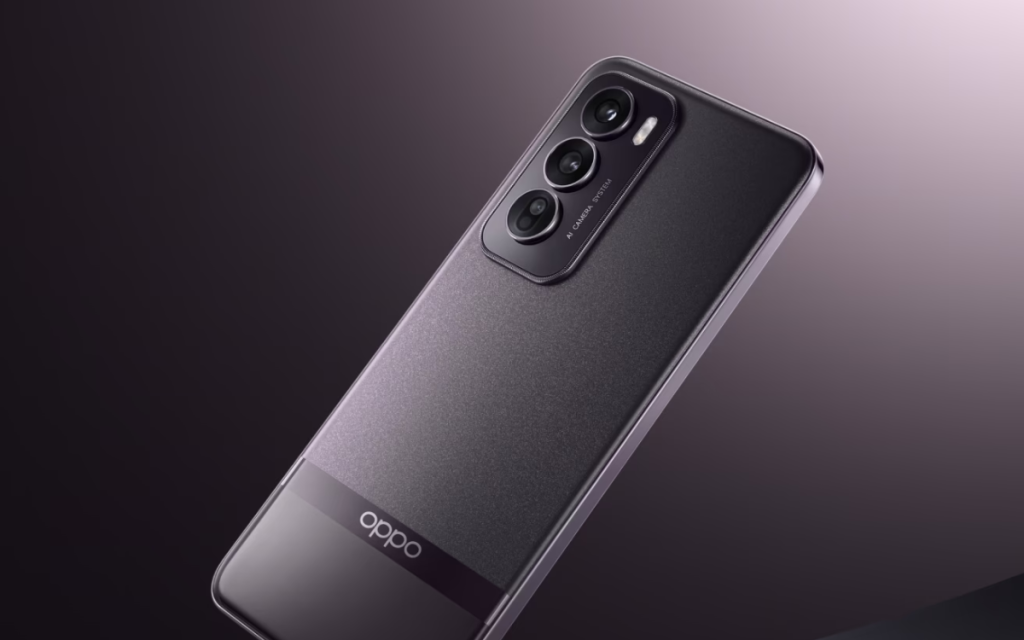
While the Oppo Find X7 series remained exclusive to China, the Find X8 and Find X8 Pro are expected to be launched globally sometime in October this year. In the latest news, tipster i冰宇宙 has shared a rendering of the Oppo Find X8.
As can be seen, the Find X8 is expected to come with flat sides, which is a major shift in design as compared to the curved design of the Oppo Find X7. In addition to the flat design, the render also shows an additional button at the bottom right of the device. It is reported to be a capacitive button called ‘Quick Button’ which will function similarly to the Capture button in the upcoming iPhone 16 lineup. Notably, this Quick Button doesn’t have any protrusion like the power and volume buttons.
The large camera island seems to have a similar protrusion as its predecessor. We have already seen the base model in real life, with the flat back panel and a rounded square camera island. Speaking of cameras, the Find X8 houses a 50 MP main sensor from Sony, a 50 MP ultrawide, and a 3x periscope telephoto. The Pro model is rumored to come with an additional 10x periscope telephoto lens, which makes it a quad-camera setup.
You can see a real-life image of the Find X8 and Find X8 Pro below, which reveals a redesigned camera island. As you can see, the “H” logo is now moved to the center, which makes the design more symmetrical. Notably, this change in camera placement is in line with the base model where we could see two lenses on both sides.
Find X8Find X8 Pro
While the Pro model still houses a circular camera, one or both of them could be prototype models where the company was experimenting with different designs, and both phones are expected to adopt the same camera island design.
It was previously rumored that the base model would switch to a flat design, while the Pro model would continue using a curved display like its predecessor. The recently revealed render reaffirms this.
Vivo has announced its latest addition to the wireless earbuds market, the Vivo TWS 3i, which is set to officially launch on September 5 in China, coinciding with the release of the Vivo Y300 Pro smartphone.
These TWS earbuds are already available for pre-order on Vivo’s official website, where potential buyers can choose from a “White” color option.
As per the official poster, the standout feature of the Vivo TWS 3i is its impressive battery life. The standard version offers up to 45 hours of continuous use, while a “Long Battery Life Version” pushes this to an even more substantial 50 hours, catering to those who require longer-lasting performance.
The earbuds are equipped with Bluetooth 5.3 for reliable connectivity and feature AI call noise reduction to enhance the clarity of phone calls by minimizing background interference.
In terms of design, the Vivo TWS 3i closely resembles the Vivo TWS 3e, which was launched last year in China. While the appearance may be familiar, the new model brings some improvements, particularly in battery life.
Further details about the earbuds’ specifications and features will be disclosed at the official launch event, providing a complete picture of what users can expect from this new offering.
If we look at the TWS 3e specs, it offers 11mm dynamic drivers with DeepX 3.0 and 3D Panoramic Audio, featuring Intelligent active noise cancellation and AI call noise reduction for clear sound and voice quality.
They support Bluetooth 5.3 with 55ms low latency, voice assistant connectivity, and a Find My Earbuds feature. The earbuds provide up to 9 hours of battery life with noise reduction on and 11 hours with it off, totaling 36 to 44 hours with the charging case. Weighing 4.4 grams each, they are available in blue and white.
Apple Intelligence was announced at this year’s WWDC in June. Although the exact release timeline for the public remains unclear, a host of AI features are expected to debut in the next year on the company’s iPhones, iPads, and Macs. The Cupertino-based tech giant has been releasing beta versions. The Developer Beta 3 of the latest iOS and iPadOS 18.1 and macOS 15.1 Sequoia bring an AI-powered ‘Clean Up’ tool in the Photos app. This is Apple’s answer to Google’s Magic Eraser and Samsung’s Object Eraser.
Apple’s ‘Clean Up’ AI feature takes on Magic and Object Eraser
Before we get into the details, It’s worth noting that the beta version is unstable. Hence, it is not recommended to download and install on a device device that is your daily driver. The feature is released only on devices that support Apple Intelligence. These include the iPhone 15 Pro models and the M-powered Macs and iPads.
The Clean Up tool as the name suggests can identify and remove distracting objects and strangers. It also comes with the ability to heal blemishes and pixelate people’s faces to conceal their identity. Although it intelligently detects and removes unwanted elements, users get the option to tap, brush, and circle if they don’t want something in the image. You can also zoom in to fix minute details. It is also capable of removing unwanted shadows and reflections.
The Clean Up feature is accessible when editing a picture in the Photos app. It appears as an eraser-style icon in the bottom toolbar. Images edited using the tool will be labelled as ‘Modified with Clean Up’ and added to the EXIF data. It works with all images even if they were captured by another phone or a DSLR.
The AI-powered Clean Up feature is not entirely flawless. We can expect it to be polished till the release of a stable version.
OnePlus has had its fair share of criticism for its products like any other major brand. However, in just a couple of years, the growing number of issues on its smartphones might be creating long term issues for the brand. OnePlus finally broke the silence regarding its latest motherboard failing issue, but is it enough? What more can the company do to retain customer trust?
Before we get into their recent fiasco, let’s first check out their entire track record. OnePlus users over the years have faced multiple problems with the brand’s products. These issues include chargers and smartphones. One of the company’s smartphones exploded a couple of years ago, while some of the newer models have also suffered from a green line issue as well. Now, the latest issue affects the motherboards of OnePlus smartphones.
2. OnePlus Motherboard Dying Crisis
OnePlus Nord 2 after exploding
Unlike some of the previous issues, the latest problems are plaguing various people. Users of the OnePlus 10 Pro 5G described their experience of facing lags and heating issues in their smartphones. Some models persisted with this issue, while others reported a completely dead motherboard to service centers. The motherboard is one of the key components of phones, housing the processor and memory chips. So these were quite an expensive repair (42,000 INR or 500 US Dollars for one affected user).
Some of these people were long standing loyal customers of the brand who expressed their disappointment and loss of faith. These cases aren’t isolated incidents and have raised questions regarding the build quality. Such problems could also hint at potential hardware issues.
3. OnePlus Responds
OnePlus reached out to us and finally addressed the motherboard issues affection its users. The company acknowledged the problem with their OnePlus 9 and OnePlus 10 Pro and has kicked off an investigation. They are working on resolving it as quickly as possible. The company also understood that motherboard repairs are costly and is working on making them cheaper as well. OnePlus urges that people facing this problem reach out to customer service to resolve the issue for the time being.
4. What more can OnePlus do?
Officially acknowledging the issue is a start but it’s just the first step. OnePlus can help reassure its customers, especially those who paid for their premium devices. Providing extended warranties and free repairs are a few good options if OnePlus finds critical issues with the hardware. A prompt software update if it could help would be a great start as well. Even if extending warranties and free repairs is not possible, making repairs more affordable can at least cushion the blow. Spending 500 US Dollars to repair a phone is harder to justify than buying a decent new phone.
Xiaomi 14 was released in India in March this year. It is one of the best compact flagship phones available on the market. The smartphone boasts a solid set of specifications. However, it lags behind its competitors in some key areas.
If you plan to upgrade to the Xiaomi 14 (full review), don’t forget to check out its best alternatives, which will help you make a better decision. Before we move on to the alternatives, let’s quickly recall the device via the spec sheet below.
5G/4G/3G/2G Wi-Fi 7/Wi-Fi 6 Bluetooth 5.4 NFC supported
Unlike Xiaomi 14, the Vivo X100 has a curved display that’s around 6.6% bigger in size. The Xiaomi 14 uses an OLED panel, while the rest of the display specifications are almost similar.
Both smartphones are IP68 certified for dust & water resistance. However, the Vivo X100 lacks protection, whereas the Xiaomi 14 uses Corning Gorilla Glass 5.
The Vivo X100 rocks a big circular camera module that’s easily distinguishable from the crowd, whereas the Xiaomi 14 features a rectangular camera module.
Both smartphones have a 50MP primary camera with OIS and a 50MP ultrawide camera (the Vivo X100 has a larger field of view). The periscope telephoto lens on the Vivo phone supports 3x optical zoom, while it is 3.2x on the Xiaomi 14).
Both smartphones take stunning photos and videos using the main camera in varying lighting conditions with fine details, sharpness, and colour accuracy. However, the dynamic range could have been better on the Vivo X100.
The Vivo phone takes good shots with its ultrawide cameras in various lighting conditions. It also takes good macro shots. However, the selfies and videos using the front camera are pretty decent, with some sort of skin smoothing.
Notably, the Vivo X100 supports up to 4K video recording using the rear camera, but only 1080p with its selfie camera. In contrast, the Xiaomi 14 can record up to 8K videos using its rear camera and 4K with its selfie camera.
Both smartphones take excellent photos and videos. However, in most cases, the Xiaomi 14 produces better shots, particularly with its rear camera setup. The Vivo X100 might have an edge when it comes to portrait selfies.
The Vivo X100 is powered by a Dimensity 9300 chip, whereas the Xiaomi 14 uses Snapdragon 8 Gen 3. Both are the fastest mobile CPUs from their respective manufacturers and have similar benchmark results. They deliver excellent performance, but the Snapdragon 8 Gen 3 has slightly better gaming stability. Check out the Snapdragon 8 Gen 3 vs. Dimensity 9300 for more details.
The Xiaomi 14 and Vivo X100 have similar connectivity features, except the former has a faster USB data transfer rate.
The Vivo X100 has a larger battery capacity and supports much faster wired charging compared to Xiaomi 14. This means you’ll benefit from more screen time and quicker battery filling on the Vivo phone. However, the Vivo phone lacks wireless and reverse wireless charging.
5G/4G/3G/2G Wi-Fi 6E Bluetooth 5.3 NFC (supported) USB Type-C 3.2 Gen 1
The Galaxy S24 (Snapdragon version) is another good alternative to the Xiaomi 14. It’s more compact and lightweight than the Xiaomi 14 and features a 6.2-inch Dynamic LTPO AMOLED 2X screen — the brightness peaks at 2600nits (slightly lower than Xiaomi 14).
The Galaxy S24 uses the second-generation Gorilla Glass Victus, while the Xiaomi 14 has the first-generation Gorilla Glass Victus protection. Both devices are powered by the same Snapdragon 8 Gen 3 chip. There’s also an Exynos version, but it’s difficult to recommend because of Exynos problems.
While the Xiaomi 14 features a rectangular camera module, the Galaxy S24 has a vertical camera arrangement that looks a lot cleaner. The two phones have similar performance in daylight, but Xiaomi 14 shots are usually more detailed and sharper. However, the opposite is true for the ultrawide camera, where the Galaxy S24 edges out the Xiaomi 14 in daylight shots.
The Xiaomi 14 takes better photos with its telephoto camera, and the low-light images are also better. The Galaxy S24 wins at selfies, while the Xiaomi 14 only manages to produce less contrasty selfies with pale colours.
It isn’t easy to pick one for video recording, as both do an excellent job. For regular videos using the primary camera, the Xiaomi 14 often performs better. However, it’s a different story when using a telephoto or ultrawide camera. In some aspects, the Xiaomi 14 videos look better, while in others, the Galaxy S24 videos look impressive.
The Galaxy S24 packs a lesser battery capacity than the Xiaomi 14, and as you may already know, Samsung is not a fan of superfast charging. Hence, you only get 25W charging support, while the Xiaomi 14 supports 90W fast charging. Both devices support wireless and reverse wireless charging, although they are faster on the Xiaomi phone.
Samsung phones are better known for software updates. The Galaxy S24 is promised seven years of Android and security updates, while the Xiaomi 14 will only get 4 Android updates and five years of security patches.
5G/4G/3G/2G Wi-Fi 7/Wi-Fi 6E Bluetooth 5.4 NFC (supported) USB Type-C 3.2 Gen 1
The OnePlus 12 (full review) is another solid alternative to the Xiaomi 14. It’s slightly bigger and bulkier and has an IP65 rating for dust and water resistance. Both smartphones have the same Snapdragon 8 Gen 3 chip, which delivers superior performance.
The OnePlus 12 has a 6.82-inch LTPO AMOLED screen with 120Hz refresh rate, Dolby Vision support, and 4500nits of peak brightness. Compared to Xiaomi 14, it has a bigger display with more pixels and higher peak brightness for better outdoor visibility. Also, it is protected by a Gorilla Glass Victus 2, while the Xiaomi 14 uses first-gen protection.
Both smartphones come with Android 14 out of the box and have been promised four years of Android updates from their respective brands.
The OnePlus 12 boasts a circular camera module featuring a 50MP primary sensor with OIS, a 64MP periscope telephoto lens with OIS, 3x optical zoom, and a 48MP ultrawide lens with 114-degree field of view (FOV). The camera setup is made in collaboration with Hasselblad to achieve better colour accuracy. There’s a 32MP camera for selfies.
Both smartphones capture stunning shots with their primary cameras. However, the Xiaomi 14 produces more natural shots, whereas the OnePlus 12 tends to be slightly more saturated. The Xiaomi 14 also does well with its ultrawide camera.
The OnePlus 12 offers up to 120x zoom, while the Xiaomi 14 only goes up to 60x. Due to high resolution, the OnePlus phone produces sharper images. However, as the zoom level increases, both phones output comparable shots with little to no difference.
When it comes to selfie images, the OnePlus 12 produces more natural shots, whereas Xiaomi 14 appears to enhance the exposure. The Xiaomi phone has skin smoothening turned on by default, which can be disabled for a more natural appearance.
The OnePlus 12 generally produces better videos, while Xiaomi 14 tends to display more contrast, making some videos look underexposed. However, in low-light conditions, Xiaomi does well. Overall, the OnePlus 12 produces better videos than the Xiaomi 14.
The OnePlus 12 has a larger battery capacity of 5,400mAh (vs. 4,610mAh on the Xiaomi 14) and supports faster charging over a USB cable. However, both support the same wireless and reverse wireless charging.
5G/4G/3G/2G Wi-Fi 7/Wi-Fi 6 Bluetooth 5.4 NFC (supported) USB Type-C 2.0
iQOO 12 was released last year with a strong spec sheet. It boasts a slightly larger LTPO AMOLED screen than the Xiaomi 14 with a higher refresh rate and a peak brightness of 3000nits.
The iQOO device is fueled by the Snapdragon 8 Gen 3, the same chip inside the Xiaomi 14. It’s the most powerful chip for Android phones, ensuring superior performance and efficiency.
Let’s get to the cameras. The iQOO 12’s main camera takes detailed, sharp daylight images with excellent dynamic range. The overall image processing is sound, but sometimes, you may observe various imperfections due to weak processing.
The telephoto cameras are excellent, offering great details, colours, right sharpness, and less noise. The dynamic range and overall contrast are also impressive. The 64MP high-res zoomed images are okay(ish) with a good amount of details, accurate colours and good dynamic range, but they are pretty noisy.
With iQOO 12, you can get as close as 5cm from a subject for macro shots, and the output is good. The macro shots from the telephoto camera at 3x zoom are also great. They have natural bokeh, better colour reproduction, and sharpness with a good amount of detail. The smartphone also takes excellent portrait and low-light photos.
All three rear cameras on the iQOO 12 can shoot up to 4K videos, while the main camera also supports 8K recording at 30fps. The 4K video recording using the main camera is average, as the picture looks washed out. Otherwise, it has good colours, contrast, and a wide dynamic range.
The low-light 4K footage is also mediocre. But the 4K 30fps Night Mode video is impressive – it’s bright and detailed with punchy colours and a wide dynamic range. Footage coming from the telephoto camera at 3x zoom is impressive – they have great details, sharpness, accurate colours, high contrast, and wide dynamic range. The device also takes good ultrawide videos in daylight.
The selfie camera isn’t impressive, though. It doesn’t support electronic stabilisation, although the colours are accurate, and the dynamic range is good. However, the end result is average.
The iQOO 12 packs a larger battery, and its charging speed is also better than that of the Xiaomi 14.
5G/4G/3G/2G Wi-Fi 6 Bluetooth 5.3 NFC (supported) USB Type-C 3.2
The Pixel 8 has similar pricing to the Xiaomi 14 and offers good value for money. Hence, it is an alternative to the Xiaomi 14 worth exploring.
The Pixel 8 is a compact flagship phone featuring a 6.2-inch OLED screen, although it’s not an LTPO panel and has a lower peak brightness than the Xiaomi 14.
The smartphone is powered by an in-house Tensor G3 chip, which isn’t as powerful as the Snapdragon 8 Gen 3 on the benchmarks. That doesn’t make it a bad choice for high-end phones. The chip can still deliver great performance.
The Pixel 8 has only two camera sensors on the back — a 50MP primary camera with OIS and a 12MP ultrawide camera with a 126-degree FOV. It is also equipped with a 10.5MP camera for selfies.
The smartphone takes good daylight shots with nicer details, consistent white balance, and good saturation. The ultrawide camera also shoots great images. It also has an autofocus that enables both general close-up shots and macro shots.
The Pixel 8 does an impressive job in low-light conditions, all thanks to good image processing. However, the portrait shots are just acceptable. The device takes nice selfies with good details. The video quality of the Pixel 8’s main camera is impressive. The ultrawide camera outputs an average video quality at night but does a fantastic job in daylight.
The Pixel 8 has a slightly lesser battery capacity than the Xiaomi 14, but the difference in changing speeds is big — 27W on the Pixel 8 and 90W on the Xiaomi 14.
The impressive software update policy is one aspect where the Pixel 8 leaves the Xiaomi 14 in the dust. The Pixel 8 will get seven years of Android updates, while the Xiaomi 14 will only get four.
Please Note: When you buy something using the links in our articles, we may earn a small commission at no cost to you.
The Xiaomi 14 is a solid flagship phone. However, these five phones are better than that in one or more key areas. Would you pick Xiaomi 14 or any of these alternatives? Share your thoughts in the comment section below.
Xiaomi has launched a new foot massager set called Mijia Smart Airbag Foot Bath Gift Set in the Chinese market. It is now available on Xiaomi Youpin through a crowdfunding campaign. The set is priced at 949 yuan ($134) for crowdfunding, which is lower than its retail price of 1299 yuan ($182). Let’s check out its key specs.
Xiaomi Mijia Smart Airbag Foot Bath Set Specifications:
This foot bath set is designed to provide an immersive massage experience, featuring an airbag wraparound massage system that mimics hand-push kneading. The system delivers a three-dimensional massage that targets acupoints on the instep and sole through cyclic kneading and pressing motions.
The device also includes a constant temperature foot bath function, with the water being heated using DPS water circulation technology. This ensures a stable, warm soak at a user-selected temperature range between 35°C and 48°C, with an adjustable timing range of 5 to 60 minutes. The bucket is designed with a height of 40.6 cm, allowing for deep soaking up to the calves.
For hygiene, the foot bath incorporates a UV sterilization feature, which claims a sterilization rate of up to 99.9% against common bacteria like E. coli, Candida albicans, and Staphylococcus aureus. This sterilization process occurs during the foot soak, ensuring that the water remains clean and safe for repeated use.
The foot bath can be used with or without water, offering versatility for different types of massages. It supports dry use for a foot massage and wet use for a full foot soak and massage experience. The device is equipped with multiple safety features, including over-temperature protection and a leakage protection switch that cuts off power within 0.1 seconds if a fault is detected.
The Mijia Smart Airbag Foot Bath is controlled via a smart panel and can also be connected to the Mijia app, allowing users to customize and control their foot bath settings remotely.
The device also comes with 60 packs of herbal foot bath packs, adding to the overall experience. It is designed to accommodate foot sizes ranging from 37 to 45, and the foot bath’s portable design includes a retractable handle and omnidirectional wheels for easy movement.
We use cookies on our website to give you the most relevant experience by remembering your preferences and repeat visits. By clicking “Accept”, you consent to the use of ALL the cookies.
This website uses cookies to improve your experience while you navigate through the website. Out of these, the cookies that are categorized as necessary are stored on your browser as they are essential for the working of basic functionalities of the website. We also use third-party cookies that help us analyze and understand how you use this website. These cookies will be stored in your browser only with your consent. You also have the option to opt-out of these cookies. But opting out of some of these cookies may affect your browsing experience.
Necessary cookies are absolutely essential for the website to function properly. This category only includes cookies that ensures basic functionalities and security features of the website. These cookies do not store any personal information.
Any cookies that may not be particularly necessary for the website to function and is used specifically to collect user personal data via analytics, ads, other embedded contents are termed as non-necessary cookies. It is mandatory to procure user consent prior to running these cookies on your website.