Advertisement

Anker Launches Prime 65W GaN Power Bank with 9600mAh Capacity, Priced at 499 yuan

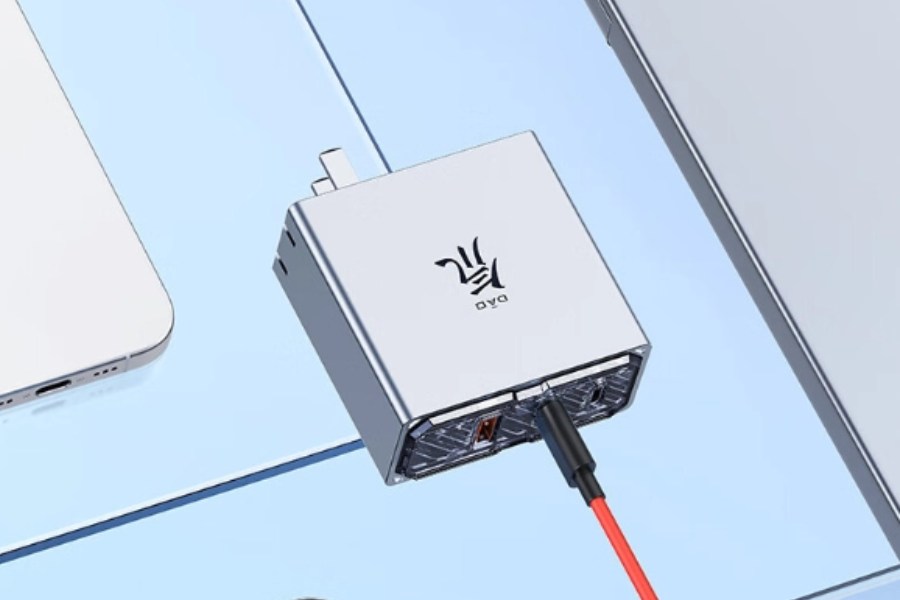
Anker has expanded its product lineup with the launch of the Prime 65W GaN power bank. This compact power bank offers a capacity of 9600mAh and is scheduled for release on JD.com on August 20th, priced at 499 yuan.

The device has two USB-C ports and one USB-A port

Featuring a 1.3-inch color screen for user convenience, the Prime 65W is designed for portability with dimensions of 114.6 x 42 x 43mm and a weight of 308 grams. While specific power output details are currently limited, the device includes two USB-C ports and one USB-A port for versatile charging options.

The integration of GaN technology into the Prime 65W is expected to enhance charging efficiency and power delivery, aligning with the industry trend towards smaller, more powerful charging solutions. As more information becomes available, the full capabilities of this new power bank will be revealed.

(Via)

HP Unveils Powerful “Star Studio X” All-in-One PC with a 27-inch 4K Display, Priced at 7,499 yuan

HP has unveiled a new powerhouse on JD.com: the Star Studio X all-in-one machine. This sleek and stylish computer boasts a powerful configuration, ideal for content creation, multitasking, and entertainment.

The PC is expected to go on sale on August 16th.

Key features include:

  • Processor: The Star Studio X packs a punch with a 14-core 18-thread Intel Core Ultra5-125H processor and integrated Arc core display.
  • Storage and Memory: The device comes equipped with 16GB of DDR5 5600MHz RAM and a 1TB PCIe 4.0 SSD, ensuring smooth operation and ample storage.
  • 4K Display: Users can immerse themselves in vibrant visuals with the included 27-inch 4K (3840 x 2160 resolution) display featuring 350 nits brightness, 99% sRGB coverage, and DC dimming for eye comfort.
  • Integrated Webcam: A 5MP pop-up camera with autofocus simplifies video conferencing and content creation.
  • Advanced Connectivity: The Star Studio X stays future-proof with Wi-Fi 7 and Bluetooth 5.4 technology.
  • Entertainment: Dual speakers with dual array microphones deliver high-quality audio, further enhanced by IMAX Enhanced certification and Poly Studio sound tuning.
  • Flexible Design: The adjustable stand allows for tilting and pivoting the display for optimal viewing angles.
  • Versatile Ports: The machine provides a comprehensive selection of ports, including 1 USB-C 10Gbps, 1 USB-C 20Gbps, 4 USB-A 10Gbps, 1 HDMI input, 1 HDMI output, 1 RJ45 (Ethernet), and a 3.5mm headphone jack.

Currently available for pre-order on JD.com, the HP Star Studio X is priced at 7,499 yuan and is expected to go on sale on August 16th.

(Via)

New Midrange Honor Smartphone Passes 3C Certification, Expected to be Honor X60

Honor is gearing up to launch a new smartphone model, codenamed BRC-AN00, as evidenced by its recent 3C certification. The device is expected to be part of the Honor X60 series, succeeding the popular X50 model.

The power adapter supports a maximum output of 35W

The 3C certification reveals that the accompanying power adapter, models HN-110320C00 and HN-110320C01, supports a maximum output of 35W. While specific details about the BRC-AN00 remain limited, it is anticipated to offer mid-range specifications, building upon the success of its predecessor, the Honor X50.

The Honor X50 featured a Snapdragon 6 Gen 1 processor, a 6.78-inch curved display with high refresh rate, and a distinctive circular camera module. It remains to be seen how the X60 series will evolve in terms of design, performance, and camera capabilities.

As more information becomes available, a clearer picture of the Honor X60 series will emerge.

(Via)

Vivo X100 Over Vivo V40 Pro: Should You Spend More?

The Vivo V40 Pro made its debut in India recently. It is the most expensive Vivo V series smartphone to date.

The device retails at ₹49,999 and ₹55,999 for 8GB + 256GB and 12GB + 512GB memory configurations, respectively. Its pricing, especially that of the top variant, places it in the vicinity of the flagship Vivo X100.

For the unaware, the X100’s base 12GB + 256GB variant costs ₹63,999, while the higher 16GB + 512GB is sold at ₹69,999.Vivo V40 Pro pricing starts at Rs. 49,999.

So, how much of an upgrade do you get by opting for the more premium handset? Let’s find out whether you should consider spending more in this article.

1. Faster Chipset

As a flagship smartphone, the Vivo X100 Pro houses a more powerful current-gen MediaTek Dimensity 9000 chip. This silicon is paired with LPDDR5x RAM and UFS 4.0 storage.

While the Vivo V40 Pro arrives with a last-gen MediaTek Dimensity 9200 Plus chipset. This SoC is again paired with slower UFS 3.1 storage but has the latest LPDDR5x RAM.

It is worth noting that both these chips are flagship-grade. They are merely a generation apart and should be fine for years to come. Nonetheless, the one inside the X100 Pro is better.

On the other hand, the software remains the same on both. They boot Funtouch OS 14 based on Android 14 and will receive up to 3 Android updates and 4 years of security updates.

2. Different Cameras

The Vivo X100 arrives with a conventional premium camera setup. Whereas the Vivo V40 Pro features a camera system designed for portraits and selfies.

The devices come with a 50MP primary camera but the sensors are different. The X100 has an IMX920 sensor paired with a faster aperture lens (f/1.57) as opposed to an IMX921 sensor on V40 Pro with an f/1.88 aperture lens. However, both sport an identical 50MP ultra-wide unit.

The biggest difference is their zoom and selfie cameras. The X100 has a longer zoom range (64MP 3x periscope) but a weaker front-facing shooter (32MP). While the V40 Pro has a shorter zoom range camera (50MP 2x)  suitable for portraits and a better selfie camera (50MP with autofocus).
3. Varying Display and Battery

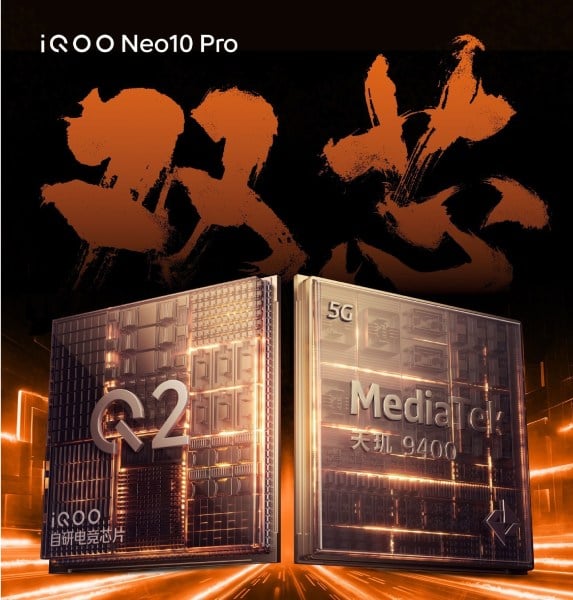
Both Vivo V40 Pro and Vivo X100 flaunt a 6.78-inch curved OLED display with a resolution of 2800 x 1260 pixels (1.5K) and a 120Hz refresh rate. However, the X100’s panel is more power efficient as it uses LTPO tech.

As for the battery, the X100 offers a 5,000mAh capacity and supports 120W charging. Whereas the V40 Pro nests a larger 5,500mAh battery but is limited to 80W charging.

4. Which one is for you?

The Vivo X100 and the Vivo V40 Pro are almost identical, except for a few notable differences discussed above.

It all boils down to what you want from your phone. In this case, it is mostly the type of photography you are into.

For one who shoots portraits and selfies a lot, the V40 Pro is a better option for them at a cheaper price. But if you want that extra performance and zoom camera, you should check out the X100.

Also Read:

Google Pixel 9 series may arrive in Turkey

Google has officially announced the Pixel 9 series. The Pixel 9 series consisting of Pixel 9, 9 Pro, 9 Pro XL and 9 Pro Fold has already attracted the attention of many users. Now, we are coming to you with an interesting news. Some of Google’s plans for the Pixel 9 series have been leaked. Pixel 9 series could be sold in Turkey. X user named Emir Bardakçı analyzed the software of Pixel 9 Pro (caiman) and found some config files.

These configs are prepared for the devices to work seamlessly in Turkey. While previously there were only some lines of code related to vodafone_tr (Vodafone Turkey), Google has made a surprising move. In order for users using Türk Telekom and Turkcell to have a smooth experience on the devices, Google has added some config for these operators.

Pixel 9 series may come to Turkey

Pixel 9 series is expected to come to Turkey. However, it’s expected that only Pixel 9 and the upcoming (unreleased) Pixel 9A models will be sold in Turkey. Emir Bardakçı shared some configures on his X account and this increased the expectations that the Pixel 9 series will be sold in Turkey.

Also, Emir Bardakçı sent me some config. These config’s contain specific codes needed for devices that will be sold in Turkey. Google’s addition of these codes indicates that the devices will be sold in Turkey in the near future.

Will the Pixel 9 series definitely come to Turkey? We are not completely sure about this, but there is a possibility that Google will introduce the Pixel 9 series to Turkey in 2025. Before that, we reviewed the ad for the Pixel 8A and there were some Turkish words in the ad.

In the ad, words are translated from Turkish to English. This video shows an example of the Live Translation feature on the Pixel 8A.

Anyway, coming to the end of the article, we can’t wait to see the Pixel 9 series in Turkey. Google’s launch of the Pixel 9 series in Turkey is highly requested by users in Turkey. We hope Google will officially announce the Pixel 9 series in Turkey.

Source: Emir Bardakçı

Vivo V40 Pro and Honor 200 Pro: Which is better?

When choosing between two flagship smartphones the Vivo V40 Pro and Honor 200 Pro, it’s crucial to look beyond the surface and understand how they differ across various parameters. This detailed comparison will explore key aspects such as design, display, performance, cameras, and battery life. We’ll break down each feature, highlighting similarities and differences, and determine which phone might be the best buy for you.

Design

Features:

  • Vivo V40 Pro: Glass front and back, IP68/IP69 dust/water resistance (up to 1.5m for 30 minutes), dual SIM.
  • Honor 200 Pro: Glass front, IP65/IP55 dust and water resistance, dual SIM.

Similarities:
Both smartphones boast premium designs with glass fronts and support dual SIM cards. They offer some level of protection against dust and water, catering to users who need a durable device.

Differences:
The Vivo V40 Pro’s design stands out with its higher IP68/IP69 rating, providing better protection against water and dust compared to the Honor 200 Pro’s IP65/IP55 rating. Additionally, the Vivo V40 Pro features a glass back, enhancing its premium feel, whereas the Honor 200 Pro’s design is more understated.

Advantages:

  • Vivo V40 Pro: Offers superior durability with its IP68/IP69 rating, making it more resilient to extreme conditions. The glass back adds a touch of luxury.
  • Honor 200 Pro: While less rugged, it still provides a decent level of protection, with a sleek and minimalist design.

Which Is Better?
If durability and a premium feel are high on your list, the Vivo V40 Pro is the clear winner in this category.


Display, Media, and Software

Features:

  • Vivo V40 Pro: 6.78-inch AMOLED, HDR10+, 120Hz, 1260 x 2800 pixels, 4500 nits peak brightness, Schott Xensation Alpha protection, Android 14 with Funtouch 14.
  • Honor 200 Pro: 6.78-inch OLED, HDR, 120Hz, 1224 x 2700 pixels, 4000 nits peak brightness, Android 14 with MagicOS 8.

Similarities:
Both devices feature 6.78-inch displays with 120Hz refresh rates, ensuring smooth visuals. They run on Android 14, with their respective custom skins (Funtouch 14 for Vivo and MagicOS 8 for Honor), offering a customizable and user-friendly experience.

Differences:
The Vivo V40 Pro offers a brighter display with 4500 nits peak brightness compared to the Honor 200 Pro’s 4000 nits. Additionally, the Vivo V40 Pro has a slightly higher resolution, providing crisper visuals. The Schott Xensation Alpha protection on the Vivo V40 Pro adds an extra layer of durability, which the Honor 200 Pro lacks.

Advantages:

  • Vivo V40 Pro: Higher brightness and sharper resolution make for an outstanding viewing experience, especially in bright outdoor conditions. The added screen protection is a bonus.
  • Honor 200 Pro: While slightly less bright, the OLED display still offers deep blacks and vibrant colors, delivering a solid media experience.

Which Is Better?
For users who prioritize display quality, the Vivo V40 Pro has the edge with its brighter and sharper screen, along with enhanced durability.


Performance and Battery

Features:

  • Vivo V40 Pro: MediaTek Dimensity 9200+ chipset, Octa-core CPU, 5500 mAh battery, 80W wired charging, reverse wired charging.
  • Honor 200 Pro: Qualcomm Snapdragon 8s Gen 3 chipset, Octa-core CPU, 5200 mAh battery, 100W wired charging, 66W wireless charging, reverse wireless charging.

Similarities:
Both phones are equipped with powerful octa-core processors, ensuring smooth multitasking and gaming performance. They offer substantial battery capacities that can last through a full day of use and support fast charging.

Differences:
The Vivo V40 Pro uses the MediaTek Dimensity 9200+ chipset, while the Honor 200 Pro runs on the Snapdragon 8s Gen 3. Although both chipsets are high-performing, the Honor 200 Pro excels in fast charging, offering 100W wired charging that can charge the battery to 100% in just 41 minutes, compared to the Vivo V40 Pro’s 80W. The Honor 200 Pro also supports wireless charging, which the Vivo V40 Pro lacks.

Advantages:

  • Vivo V40 Pro: Slightly larger battery capacity provides more extended usage on a single charge.
  • Honor 200 Pro: Faster charging times, wireless charging, and extensive RAM/storage options make it highly efficient for power users.

Which Is Better?
The Honor 200 Pro takes the lead in this category with its faster charging capabilities and wireless charging support, making it a more versatile choice for users who value speed and convenience.


Cameras

Features:

  • Vivo V40 Pro: Triple 50 MP cameras (wide, telephoto, ultrawide), Zeiss optics, 4K video recording, 50 MP selfie camera with autofocus.
  • Honor 200 Pro: Triple camera setup (50 MP wide, 50 MP telephoto, 12 MP ultrawide), dual selfie cameras (50 MP wide, 2 MP depth), 4K video recording with gyro-EIS.

Similarities:
Both smartphones offer high-resolution triple-camera systems with 50 MP main sensors, providing excellent photo quality. They support 4K video recording and advanced features like HDR and panorama.

Differences:
The Vivo V40 Pro’s camera system is slightly more advanced, with all three sensors at 50 MP, compared to the Honor 200 Pro’s 12 MP ultrawide camera. The Vivo V40 Pro also includes Zeiss optics, known for enhancing image clarity and color accuracy. In contrast, the Honor 200 Pro offers a dual selfie camera setup with a depth sensor for better portrait shots.

Advantages:

  • Vivo V40 Pro: Superior camera system with consistent 50 MP sensors across all lenses, making it ideal for photography enthusiasts.
  • Honor 200 Pro: Dual selfie cameras provide better depth and detail in self-portraits, appealing to users who enjoy taking selfies.

Which Is Better?
If photography is a priority, the Vivo V40 Pro is the better choice due to its more comprehensive camera system and Zeiss optics. However, if selfies are your focus, the Honor 200 Pro’s dual front cameras might be more appealing.


Our Opinion 

Both the Vivo V40 Pro and Honor 200 Pro are exceptional smartphones, each with its strengths. The Vivo V40 Pro excels in design, display quality, and camera performance, making it ideal for users who prioritize these features. On the other hand, the Honor 200 Pro stands out with its fast charging, wireless charging capabilities, and versatile performance, catering to power users who need efficiency and speed.

Which Should You Buy?

  • Choose the Vivo V40 Pro if you value a premium design, superior display brightness, and a versatile camera system.
  • Choose the Honor 200 Pro if you prefer faster charging, wireless capabilities, and a more balanced performance.

Ultimately, the decision depends on what you value most in a smartphone. Both devices offer excellent performance and features, but your specific needs will determine which is the better buy.

Please Note: When you buy something using the links in our articles, we may earn a small commission at no cost to you.

Please Note: When you buy something using the links in our articles, we may earn a small commission at no cost to you.

Google Pixel Watch 3 Announced With Life-Saving Pulse Detection, 60Hz Display, And UWB Support

Alongside the launch of Pixel 9 series, Pixel 9 Pro Fold, and a TWS earphone, Google also unveiled its third-generation smartwatch. The Pixel Watch 3 arrives as the successor to last year’s Pixel Watch 2. The latest offering largely remains unchanged from its predecessor with some incremental upgrades. As it was widely rumored, the Pixel Watch 3 comes in a new size option for those with bigger wrists. 

Google Pixel Watch 3 specs

The Google Pixel Watch 3 retains the same design as its predecessor i.e. a circular dial with a rotating crown on the right side. However, it now comes in 41mm and 45mm dial sizes. This makes it a versatile option for people with different wrist sizes and those who had to ditch buying earlier because of the smaller 41mm model. 

The Pixel Watch 3 now offers slimmer bezels surrounding the AMOLED displays on the 41 and 45mm models respectively. Both come with a 2,000 nits peak brightness for outdoor visibility and there is a 60Hz refresh rate for a smooth overall experience which are significant upgrades from last year’s offerings. 

On the health-centric front, the Pixel Watch 3 packs a vital feature that can detect loss of pulse and automatically call emergency services. This will potentially save lives. It works with the help of sensors, AI, and signal processing algorithms. The smartwatch retains the heart rate and SpO2 sensor along with a sleep and stress tracker. It is capable of detecting atrial fibrillation and delivering irregular heart-rate rhythm alerts. There is also a cEDA sensor that detects any signs of stress and a temperature sensor for measuring the skin temperature. The latest generation smartwatch supports advanced running metrics. It offers custom runs, audio and haptic cues, and improving form with various metrics. The wearable device features a readiness score that will determine if you are ready to take up a workout or need to rest. The cardio load measures your heart rate and determines if you are under or overtraining. Google is also introducing a new Morning Brief feature that will summarize each metric including sleep quality and readiness score. There’s a built-in car crash detection and also fall detection. 

The Google Pixel Watch 3 gains a new ability to view Nest Doorbells and Cameras on their wrists for added convenience. It can also control Google TV. Maps can be accessed offline and Google Wallet can be used for payments. Users can also control their Pixel phone’s camera from the smartwatch and also switch between photo and video modes. The smartwatch also comes with ultrawide-band connectivity for precise location tracking and unlocking compatible cars as well as smartphones. There’s also support for dual-band WiFi.

The core internals remain the same on the Pixel Watch 3 as the Pixel Watch 2. There is a Snapdragon Wear 5100 processor paired with 2GB RAM and 32GB eMMC storage. The 41mm variant is backed by a 310mAh cell which is slightly larger than its predecessor. Meanwhile, the 45mm model runs on a 420mAh unit. 

Pixel Watch 3 pricing and availability

The Pixel Watch 3 starts at $349 / EUR 399 for the 41mm WiFi version which is unchanged from its predecessor. The LTE model is costlier by $50 and retails at $449 / EUR 499. The larger 45mm model carries a price tag of $399 / EUR 449 and $499 / EUR 549 for the WiFi and LTE variants respectively. 

In India, the WiFi versions of the device cost Rs 39,990 and Rs 43,990 for the 41mm and 45mm models. The smartwatch comes in Matte Black, Polished Silver, and Champagne Gold cases. These are paired with Obsidian, Rose, Procelain, and Hazel Active bands respectively.

Get AUTO-VOX Solar Wireless Backup Camera at a discounted price on Amazon

Enhance your vehicle’s safety with the AUTO-VOX Solar Wireless Backup Camera featuring a 5″ HD Monitor, now available at a discounted price of $139.99, reduced from the original $159.99. This user-friendly, solar-powered camera boasts a long-lasting battery, robust wireless signal, adjustable parking guidelines, and waterproof resilience, making it ideal for any vehicle. Grab this deal now, exclusively on Amazon.com.

With a focus on convenience, the camera offers a 3-minute DIY installation process that requires no wiring, drilling, or connection to car lights. You only need a single screwdriver to secure the solar wireless backup camera to your license plate, making it accessible for anyone to set up. The anti-theft screw design ensures that the camera remains securely in place, offering peace of mind against theft. Additionally, if you ever need to remove the camera, it can be easily unscrewed.

One of the standout features of this backup camera is its extended battery life, powered by a combination of a high-capacity battery and a solar panel. This dual power source allows for longer usage, with a single charge providing up to 15 hours of operation. When sunlight is insufficient, such as during winter, the camera can be recharged using a USB port, ensuring it remains functional in all conditions.

The AUTO-VOX Solar Wireless Backup Camera is equipped with strong and stable wireless signal technology, utilizing 2.4G digital technology that operates without lag within a 40-foot range. This makes it suitable for various vehicles, including pickup trucks, cars, horse trailers, SUVs, vans, and boats. The 5″ HD monitor delivers clear, colorful, and detailed images during both daytime and nighttime, eliminating issues like blurry screens and discoloration.

Parking safely is made easier with the camera’s customizable guidelines. It features six adjustable parking guidelines that can be moved left, right, up, or down to suit your specific vehicle and parking conditions. These guidelines can also be turned off if not needed. The camera offers four working modes (45S, 60S, 90S, and 120S) to help conserve power, allowing you to select the mode that best fits your parking or driving needs.

Durability is another key advantage of the AUTO-VOX backup camera, which is built to withstand harsh weather conditions. It is equipped with IP69K waterproof standards, ensuring that it remains operational in the rain or during vehicle washes. The camera is designed to work in extreme temperatures, from -4°F to 149°F, and is resistant to fogging or blurring, maintaining a clear view at all times.

AUTO-VOX Solar Wireless Backup Camera with a 5″ HD Monitor is an excellent addition to any vehicle, offering ease of installation, long-lasting power, reliable performance, and enhanced safety features. Whether navigating tight parking spaces or driving in challenging weather, this backup camera provides the support and clarity you need to drive confidently.

Google Pixel 9 Pro Fold Launched With 16GB RAM, Emergency SOS, And 7 Years Software Updates

Google has unveiled its second-generation foldable phone today. It is called the Pixel 9 Pro Fold. The company had forayed in to the foldable segment back in 2022. Google has made quite a few changes to the latest offering. Specs-wise, it has many similarities compared to the latest-generation Pixel 9 series (standard, pro and pro XL) slab phones. The foldable phone goes up against the likes of the Samsung Galaxy Z Fold 6, OnePlus Open, Vivo X Fold 3, in the market. Let’s dive in to the technical details below. 

Google Pixel 9 Pro Fold specs

Google Pixel 9 Pro Fold

The Google Pixel 9 Pro Fold has a proper foldable phone-like looks compared to its predecessor that had a wider aspect ratio. In fact, the primary external screen is taller and looks similar to a slab phone. Similar to the Pixel 9 series, the foldable phone also has rounded corner offering a better grip in hands. The company says that the device’s boasts a multi-alloy steel with an aerospace-grade high-strength aluminium alloy cover. The back panel of the device sports a rectangular camera island with two pill-shaped cutouts accomodating sensors. The power and volume rocker keys are located on the right side. The former also doubles up as a fingerprint scanner. The Pixel 9 Pro Fold is said to fold flat completely unlike its predecessor. It can also be used in a tabletop mode.

The external display on the Pixel 9 Pro Fold measures 6.3-inches. It is surrounded by symmetrical bezels on all sides and has a centre-aligned punch-hole cutout. The AMOLED screen bears an FHD+ resolution and a 120Hz refresh rate. The foldable phone features a large 8-inch internal Super Actua Flex panel screen bringing it on par with the OnePlus Open. It has a resolution of 2,152 x 2,076 pixels with a 120Hz LTPO refresh rate and 2,700 nits peak brightness. 

On the optics front, the Google Pixel 9 Pro Fold has a 48MP main camera accompanied by a 10.5MP ultra-wide-angle lens, and a 10.8MP telephoto unit with 5x zoom and 20x super res zoom. Both the internal and external screens have a 10MP selfie camera sensors. Much like the Pixel bar phones, the foldable phone also comes with various camera features and also intelligent editing features.

Internally, the Google Pixel 9 Pro Fold is powered by a Tensor G4 chipset. There is a Titan M2 chipset for security purposes. The foldable phone packs up to 16GB RAM and 512GB storage. The device is backed by a 4,650mAh battery unit with support for 21W wired charging and wireless charging. It ships with Android 14 OS and is eligible for 7 years of OS updates just as the Pixel 9 series. The device comes with Gemini Nano baked in along with features like Magic Eraser, Pixel Screenshots, Add Me functionality, and more. It also packs safety features like Emergency SOS, crash detection, crisis alerts, and more.

The Google Pixel 9 Pro Fold is offered in Obsidian and Procelain colors. The second-generation foldable phone starts at $1,799 / €1,899 / Rs 1,72,999 for 256GB and $1,999 / €2,029 for the 512GB variant. Pre-orders start today with sales commencing from September 4.

Google Pixel 9 Pro, 9 Pro XL Debut With Periscope Camera, Tensor G4, Gemini AI, And More

Google‘s Pixel 9 series includes the standard, pro, and pro XL models. The search giant is reviving the XL moniker after 7 years which was found on the Pixel 4 Pro XL. While there’s a significant difference between the standard and pro variants, the Pixel 9 Pro and 9 Pro XL have only a few differences between them. Additionally, the Pixel 9 Pro is also significantly upgraded compared to its predecessor. Read on to learn everything about both devices below. 

Google Pixel 9 Pro, Pro XL specifications

The Google Pixel 9 Pro and Pro XL share the same boxier design with a flat frame and rounded corners. The back panel has a horizontal protruding camera bridge that does not stretch to the sides. It has a matte finish and so does the entire rear panel. The sensors are housed inside a pill-shaped cutout while the LED flash unit is on the outside. Both the Pro models come with a temperature sensor that debuted on last year’s Pixel 8 Pro. 

The main difference between the Pixel 9 Pro and 9 Pro XL is in the display department. The former comes with a 6.34-inch screen bearing an FHD+ resolution and a 2,050 nits peak brightness. Meanwhile, the XL model features a larger 6.8-inch display with a resolution of 2,992 x 1,344 pixels with a 3,000 nits max brightness. Both phones have an Actua OLED panel and feature a 120Hz LTPO refresh rate. It is also shielded by Gorilla Glass Victus 2. Google has switched to a faster ultrasonic fingerprint scanner.

In the photography department, the Google Pixel 9 Pro and 9 Pro XL sport triple rear cameras. The setup comprises a 50MP main sensor with f/1.68 for better performance in low light, a 48MP ultra-wide-angle lens, and a 48MP periscope telephoto unit with 5x optical zoom. Both phones have a 42MP selfie snapper on the front. There’s Magic Eraser for removing unwanted objects and the Best Take ensures that there are no awkward poses in group photos. There are plenty of camera features onboard.

The Google Pixel 9 Pro and Pro XL are equipped with a Tensor G4 chipset under the hood. There is also Titan M2 security chipset. Both devices pack 16GB RAM and up to 1TB storage. The Pixel 9 Pro is backed by a 4,700mAh battery unit whereas the Pro XL draws its power from a 5,060mAh cell with support for 45W fast charging. Software-wise, the smartphones are eligible for seven years of OS updates and ship with Android 14. They are compatible with Gemini AI and are loaded with features like Circle to Search, Pixel Screenshots, Reimagine etc. There’s also Emergency SOS onboard and an ultrawide-band chip.

Google Pixel 9 Pro, Pro XL pricing and availability

The Google Pixel 9 Pro costs $999 / €999, $1,099 /€1,099/Rs 1,09,999, $1,219 /€1,219 and $1,499 / €1,499 for the 128GB, 256GB, 512GB and 1TB variants respectively. Meanwhile, the Pixel 9 Pro XL costs $1,099 /€1,099, $1,199 / €1,199, $1,319 / €1 ,319, and $1,549/ €1,549 for the same aforementioned storage configurations respectively. In India, the Pixel 9 Pro XL’s 256GB and 512GB variants are priced at Rs 1,24,999 and Rs 1,39,999 respectively. The Pixel 9 Pro duo can be availed in Porcelain, Obsidian, Hazel, and Rose shades.

Google Pixel 9 Is Here With New Design, Ultrasonic Fingerprint Scanner, Emergency SOS, And More

Today, Google held its annual Made by Google event earlier than usual. As expected, the search giant has unveiled a host of devices including smartphones, a foldable phone, smartwatch, and TWS earphones. Leaks and rumors had revealed everything about the new devices leaving nothing to the imagination. The Google Pixel 9 arrives as the successor to last year’s Pixel 8. It packs an all-new design and some incremental upgrades. 

Google Pixel 9 specifications and features

The Google Pixel 9 comes with a boxy design and compact form factor with a flat frame compared to the slim profile on its predecessor. The horizontal camera bar on the back panel has also been trimmed and does not reach the edges. On the front, the smartphone has a centre-aligned punch-hole cutout with a 6.3-inch Actual Display. It offers a 120Hz refresh rate. Google has ditched the optical fingerprint scanner in favor of ultrasonic on the device.

In terms of optics, the Google Pixel 9 retains dual rear cameras with a 50MP primary sensor. The ultra-wide-angle lens has been massively upgraded from 12MP to 48MP on the latest offering. Up front, the device features a 10.5MP selfie snapper. As usual, the smartphone packs features like Magic Eraser, Best Take, and more. 

Under the hood, the Google Pixel 9 houses a Tensor G4 processor. It packs 12GB RAM and up to 256GB of internal storage. The smartphone draws its power from a 4,700mAh battery unit with support for 27W fast charging and also wireless charging. Software-wise, the Pixel 9 runs on Android 14 OS and is confirmed to get seven years of updates. There is an Emergency SOS feature that will alert you about any crisis and is also claimed to counter malware and phishing scams. It will help you stay connected without any network reception. The device also supports Gemini AI along with more features. 

The Google Pixel 9 comes in Obsidian, Porcelain, Rose, and Green colours. The smartphone starts at $800/EUR 899 for the 128GB variant whereas the 256GB option costs $900/EUR 999/Rs 79,999. 

Huawei Nova Flip sales exceeded 45,000 units in 72 hours of launch

Huawei launched its Nova Flip vertical folding smartphone last week, which comes in four colors: Green, Pink, White, and Black. The pricing for the Huawei Nova Flip is as follows: the 12GB+256GB model is priced at 5,288 Yuan (~ $740), the 12GB+512GB model at 5,688 Yuan (~$795), and the 12GB+1TB model at 6,488 Yuan (~$910).

Huawei Nova Flip
Huawei Nova Flip

45,000 units sold in 72 hours of launch

The company officially announced yesterday that the sales of Nova Flip exceeded 45,000 units in 72 hours after its launch. Notably, this is an 85% increase in sales of the company’s flip phones as compared to the same period last year.

Huawei Nova Flip is reportedly powered by the Kirin 8000 chipset and runs on HarmonyOS 4.2. The international variant of the phone comes with an optional 256GB, 512GB, or 1TB storage, which is paired with 12GB RAM. This phone packs a 4,400 mAh silicon anode battery and supports 66W Huawei Super Fast Charge Turbo 2.0 fast charging technology, which is advertised to charge the battery to 100% in 40 minutes.

The inner foldable display of the phone is measured at 6.94 inches, which offers a resolution of 1136 x 2690 pixels. This is an LTPO OLED panel which reaches a peak brightness of 1200 nits. The square-shaped outer display is measured at 2,14″ which offers a resolution of 480 x 480 pixels and also supports a 120Hz refresh rate.

Speaking of cameras, the phone offers a dual-lens setup on the back – a 50 MP main with a sensor size of 1/1.56″ that sits behind an f/1.9 aperture, and an 8 MP 112-degree ultrawide.

The phone measures 15.1mm in thickness when folded and 6.88mm (leather back) when unfolded. Notably, this is thinner than both the Xiaomi Mix Flip and Galaxy Z Flip 6. The leather back version weighs 195 grams.

Xiaomi 15 Ultra rumored to feature 200MP Samsung HP9 periscope telephoto sensor

Xiaomi is working on its upcoming iteration Xiaomi 15 series with base models Xiaomi 15 and 15 Pro is expected to launch later this year. Meanwhile, the Ultra model expected to launch early next year will feature an advanced camera system, as revealed by the popular tipster Digital Chat Station.

Xiaomi 14 Ultra

According to DCS, Xiaomi is testing two configurations for the 15 Ultra, with one setup featuring a quad-camera system that includes a 200MP periscope telephoto lens based on the Samsung ISOCELL HP9 sensor, launched in June. The Vivo X100 Ultra also uses this sensor.

Xiaomi 15 Ultra Camera Specs Leak

This aligns with last week’s leak from tipster Ice Universe, who also mentioned that the Ultra model will feature a 200MP sensor and a quad-camera setup.

1. Camera Specs

The HP9 sensor stands out for its 1/1.4-inch optical format and 200 million pixels, each measuring 0.56 micrometers. This high pixel density enables detailed image capture. It uses tetra-pixel technology and can merge pixels in a 4×4 configuration, converting into a 12MP sensor with larger 2.24-micrometer pixels, which enhances bokeh effect as well as low-light photography by capturing more light for clearer, brighter images.

The HP9 sensor includes a remosaic algorithm that provides 2x or 4x in-sensor zoom modes. When combined with the 3x optical zoom telephoto module, it can achieve up to 12x zoom while maintaining the image quality.

HP9 sensor also uses high-refractive-index micro-lenses, which focus light more precisely onto the RGB color filters. This improves light sensitivity by 12% and enhances autofocus accuracy by 10% compared to its predecessor, leading to better low-light performance and sharper, more vibrant photos.

2. Xiaomi 14 Ultra Sensors

The Xiaomi 14 Ultra (check out our full review of Xiaomi 14 Ultra), launched last year, featured a quad-camera setup with impressive specs, including a 50MP main camera with a 1″ Sony LYT-900 sensor, variable aperture, and Hyper OIS. It also had a 50MP ultra-wide-angle lens, two telephoto cameras all using IMX858 sensors, and supported 8K video recording.

3. Xiaomi 15 Ultra Specs (Rumored)

Recent leaks about the Xiaomi 15 Ultra reveal that it will feature a dual-layer OLED panel with 2K resolution and an ultrasonic on-screen fingerprint sensor. The device is expected to run on HyperOS 2.0-based Android 15, powered by the Snapdragon 8 Gen 4, and may offer up to 24 GB of RAM and a 6,200mAh battery. While the 15 Pro variant might not be released globally, the Xiaomi 15 and 15 Ultra are expected to be launched worldwide.

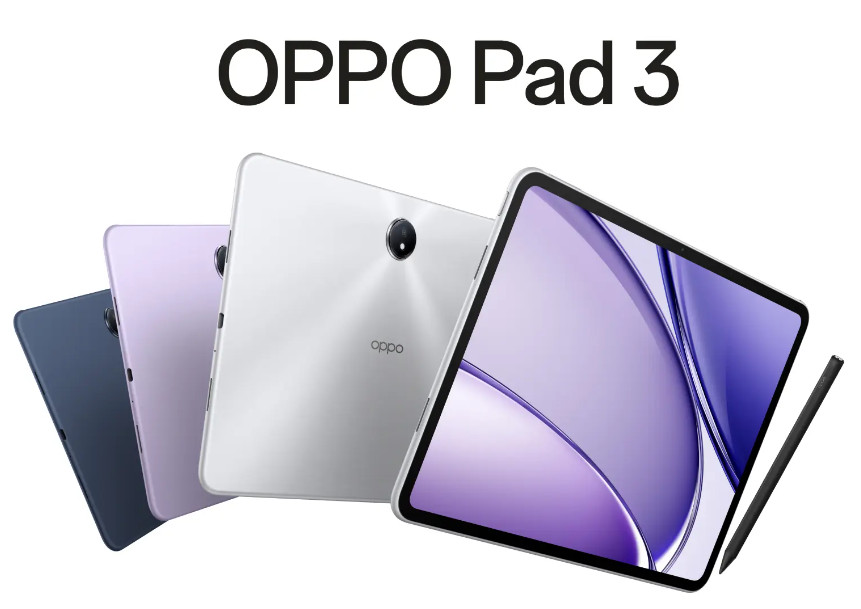
OPPO Pad 3 could be rebranded as Oppo Pad 3 Pro and come with a smart protective case and a Pencil 2 Pro stylus

We have already come across numerous leaks and rumors about the Oppo Pad 3. Now we are seeing rumors about the Oppo Pad 3 Pro. The latest of them claims that the tablet will come with a smart protective cover and OPPO Pencil 2 Pro stylus.

Oppo

The news comes from Weibo tipster @坏评帝 who also reveals that the protective cover will weigh 218g and will have a deep blue color. The Oppo Pencil 2 Pro will come in a black color and weighs 15.2g.

According to previous rumors, the company will launch a number of new products including the Oppo Enco X3 TWS earphone and the Oppo Pad 3 Pro. The latter one is expected to be powered by the Snapdragon 8 Gen 3 flagship chipset which will be paired with up to 16GB RAM and 1TB storage.

The previously speculated OPPO Pad 3 could be released as OPPO Pad 3 Pro

Notably the Oppo Pad 3 was expected to launch back in May the with the same basic specifications. However, the company is yet to announce the product. Now it is speculated that the product will be launched as Oppo Pad 3 Pro and will have major similarities with the OnePlus Pad Pro in appearance and specification. For those unaware, the OnePlus Pad Pro was launched towards the end of June.

If the rumor is true, we can get an idea of what to expect from the upcoming Oppo tablet by referring to the already-released OnePlus Pad Pro. The tablet comes with a dimension of 268.7 x 195.1 x 6.5 mm and weighs 584g, which is 32g heavier than the Oppo Pad 2. The tablet from OnePlus offers a glass front, aluminum back, and aluminum frame.

On the front, the OnePlus Pad Pro equips an IPS LCD (2120 x 3000 pixels) display that offers 600 nits in typical brightness and can reach a peak of 900 nits. It is measured at 12.1 inches, as opposed to 11.61 inches of the Oppo Pad 2. The OnePlus Pad 2 also packs the same 9510 mAh battery and supports 67W charging as the previously speculated Oppo Pad 3.

Moto Razr 50 Ultra OTA 3 update offers major improvements including 5G-A support

Motorola has officially confirmed that the Moto Razr 50 Ultra has started receiving the OTA 3 update, which adds support for 5G-A connectivity, offers updated Lenovo Xiaotian (which brings new AI experiences in many scenarios such as work, study, and life), Super Connect feature, and some other improvements.

Moto Razr 50 Ultra

The changes or improvements are noted below:

Improvements to the outer screen:

  • Added: Grab Mo Bean

Renewed

  • External screen clock
  • External screen settings

The update also reportedly optimizes the overall cover screen experience and fixes the issue where the wallpaper on the external screen would occasionally appear off-centered.

Improvements to different aspects of the UI that incorporate AI

  • Lenovo Xiaotian
  • AI Calling
  • AI Artist
  • Smart Scene
  • Moto Al Services

It’s also noted that Lenovo Xiaotian’s response time has been improved.

improvements to the system’s stability and functionality

  • July 2024 Android Security Patch
  • Moto Wallet
  • Moto Replacement
  • Moto Notes
  • Moto Personalization
  • clock
  • calendar
  • recorder
  • compass
  • Global Search
  • Dolby Atmos
  • Convenient sidebar

Other aspects of the phone that the company has worked on include:

  • Complex scene recording effect
  • Audio parameters
  • Third-party car Bluetooth experience system
  • Scheduling improves performance and balances power consumption

It also adds new ringtones which users can access from Settings>Sound and vibration>Incoming ringtone/Alarm tone.

Improved networking:

  • Added: 5G-Advanced support (depending on the network support of the local operator)

Renewed:

  • Baseband
  • Telephone
  • Information
  • Contacts

Optimization:

  • Network performance

Super Connectivity

Renewed

  • Super Connectivity
  • Super Connectivity Engine
  • Super Connected Video

Optimization

  • Authoring Toolbar Third-Party App Compatibility

Improvements to the camera system and related apps:

Renewed:

  • Moto Camera
  • Moto Photo Album
  • Camera Tuner

Optimization

  • Camera shooting performance
  • Front camera effect
  • Main camera shooting effect
  • Wide-angle shooting effect

The issue related to image quality compression after adding a watermark has also been fixed.

Third-party applications

Optimization: TikTok occasionally faced incomplete screen issues

Infinix Xpad vs Redmi Pad SE 4G: Battle of the Budget Tablets

Infinix finally ventured into the tablet market with its new Infinix Xpad. Recently, there have been several tablet launches and the Xpad is a budget model. But in this category, there is another worthy contender, which is the Redmi Pad SE 4G. So here’s a head-to-head comparison of these two tablets.

Infinity Xpad vs Redmi Pad SE 4G
Infinity Xpad (L) vs Redmi Pad SE 4G (R)

1. Infinix Xpad vs Redmi Pad SE 4G: Design & Display

Xiaomi unveiled the Redmi Pad SE 4G with a compact body that measures just 8.8 mm in thickness and weighs 370 grams. On the other hand, the Infinix Xpad was announced with a flat frame with a metal unibody. This adds to its premium feel. Both models have a flat panel that is surrounded by sizeable bezels, although these are uniform in size on the Xpad.

The Infinix Xpad was announced with a tall 11-inch LCD display that offers an FHD+ resolution, 440 nits of peak brightness, and a 90Hz refresh rate. This makes it have a significantly taller screen and higher resolution since the Redmi Pad SE 4G features an 8.7-inch LCD panel with HD+ resolution, a 90Hz refresh rate, Corning Gorilla Glass 3, and 600 nits of peak brightness. So it would seem that Infinix’s offering has a clear edge over the Redmi tablet.

2. Hardware

Under the hood, the first ever tablet from Infinix is equipped with the MediaTek Helio G99 Ultimate processor. The chipset is rumored to be coupled with up to 8GB of RAM and up to 256GB of internal storage. A large 7,000mAh battery pack powers this device, which supports 18W wired fast charging. On the software side, the tablet runs on the Android 14 OS based XOS custom skin out of the box. The company also offers the XArena Game Space, which brings three different power modes for improved gaming performance. Other notable features include ChatGPT powered ChatGPT voice assistant, USB-C port, 3.5mm headphone jack, quad speakers, and LTE connectivity.

In contrast to this, the Redmi Pad SE 4G was released with the Helio G85 processor that is paired with 4GB of RAM and up to 128GB of internal storage. Users can even expand storage by p to 2TB via a microSD card slot. A sizeable 6,650mAh battery pack runs this device, which only supports standard 10W charging. This model runs on the Android 14 OS based HyperOS custom skin. Redmi also offers Bluetooth 5.3, USB-C, dual SIM slots, stereo speakers with Dolby Atmos, and TUV Rheinland certification for low blue light.

For photography, the Redmi Pad SE 4G features an 8-megapixel rear camera and a 5-megapixel selfie shooter on the front. On the other hand, the Infinix Xpad houses an 8-megapixel primary camera at the back and an 8-megapixel shooter for selfies and video calls.

3. Pricing & Verdict

Xiaomi introduced the Redmi Pad SE 4G with a starting price tag of just 10,999 INR for the 4BG + 64GB option, while the higher end 4GB + 128GB version costs 11,999 INR. So it is clear that the Chinese tech giant released this tablet for budget centric users.

Infinix Xpad is clearly superior in most areas when comparing specs. Although, the brand has yet to officially confirm its pricing or storage configurations. In other words, we can speculate that it could also have a budget priced similarly but it will likely be more expensive than the Redmi Pad SE 4G.

Ulefone Launches Explorer Program: Seeks 20 Users for New Tablet Tab W10 Review

Ulefone, a prominent name in the smartphone industry, is set to revolutionize the way tech reviews are conducted with its innovative Explorer Program. Breaking away from the traditional focus on follower counts and social media influence, Ulefone is looking for real, everyday users to test and review their upcoming products, beginning with the highly anticipated Ulefone Tab W10.

The Tab W10, Ulefone’s latest entry into the tablet market, promises to be a stylish and versatile device that will cater to both tech enthusiasts and casual users. While the company has yet to reveal the full specifications and pricing details, the excitement surrounding the Tab W10 suggests that it could be a game-changer in its category.

As part of the Explorer Program, Ulefone will select 20 fans to receive a free Tab W10 in exchange for their honest and detailed reviews. Unlike traditional review programs, Ulefone is prioritizing creativity and insightful feedback over follower numbers, making this an excellent opportunity for genuine tech lovers to have their voices heard.

The application window for this unique review opportunity is open from August 6th to August 19th, 2024. Selected participants will be notified by September 3rd, 2024. Those interested in becoming one of the first to experience the Ulefone Tab W10 can apply directly on Ulefone’s official website.

This move by Ulefone not only showcases their commitment to product quality but also highlights their desire to connect with and understand the needs of their user base. By engaging with real users, Ulefone is setting a new standard for tech reviews, emphasizing authenticity and real-world feedback over influence and popularity.

Infinix XPad vs OnePlus Pad Go: the better choice on a budget

Earlier today, Infinix unveiled a new tablet called the Infinix XPad. Although the brand has not officially revealed the price of this tablet, its specifications indicate that it could land in the sub-$200 range. This will land it smack dab in the middle of tablets like the Redmi Pad SE and the OnePlus Pad Go. In this article, we will discuss how the Infinix XPad compares to the OnePlus Pad Go.

Infinity Xpad vs OnePlus Pad Go
Infinity Xpad (Left) vs OnePlus Pad Go (Right)

1. Design & display

Design-wise, there are some similarities between the two tablets. They both come with a boxy design with flat edges and feature a metal unibody design. The Infinix tablet has its camera island tucked away in the top corner, while the OnePlus Pad comes with a more centered rear camera.

Up-front, the Pad Go offers a slightly larger 11.35-inch LCD display, while the XPad has an 11-inch LCD screen. Both these displays have large bezels around them, however, their resolutions are a different story. The Infinix tablet offers a 1920 x 1200 pixels resolution with a 90Hz refresh rate of 206 ppi pixel density, while the OnePlus tablet has a higher 2408 x 1720 pixels resolution, with a 90Hz refresh rate and 260 ppi pixel density. The Infinix tablet is slightly brighter at 440 nits compared to the 400 nits peak brightness of the OnePlus tablet.

Please Note: When you buy something using the links in our articles, we may earn a small commission at no cost to you.

2. Performance

Since both the Infinix XPad and the OnePlus Pad Go use the MediaTek Helio G99, it would be easy to assume that they both offer similar performance. However, that is not the case since the OnePlus Pad Go uses UFS 2.2 storage, whereas the XPad uses eMMC storage. Due to this difference, the OnePlus Pad Go will be faster and smoother when opening apps, multitasking, gaming, and processing captured photos and videos.

Both tablets use LPDDR4X RAM and have storage expansion support via a microSD card slot. Infinix offers 4GB RAM + 128GB/8 GB RAM + 256GB storage models, while OnePlus offers 8GB RAM with both the 128GB and 256GB storage models.

3. Optics & audio

Both tablets are equipped with dual 8 MP cameras. The front cameras can record videos in 1080p at 30 FPS, making them suitable for video calls. However, the Infinix XPad stands out with its primary camera’s ability to record in 1440p, in addition to the 1080p at 30 FPS video recording available on the OnePlus Pad Go. In terms of audio, both devices offer a stereo setup with four speakers each.

4. Battery & fast charging

In the battery and fast charging department, OnePlus has a significant advantage as it ships the Pad Go with a large 8000mAh battery paired with 33W fast charging. On the other hand, the Infinix XPad comes with a 7000mAh battery supported by 18W fast charging. Infinix claims to refill 50% of the battery with 40 minutes of charging, while the OnePlus Pad Go generally takes about 100 minutes to go from 0-100%.

5. Verdict

In this comparison, the OnePlus Pad Go emerges as the better tablet across all key areas, boasting a higher-resolution display, superior performance due to faster storage, and a larger battery with quicker charging capabilities. However, Infinix has not yet disclosed the tablet’s price. If priced competitively, it could offer strong value, as it meets many criteria that make it an appealing option in the budget tablet segment.

Xiaomi 14 gets a new HyperOS update in China

Xiaomi has rolled out the HyperOS 1.0.45.0.UNCCNXM update for its Xiaomi 14 smartphone, bringing various improvements and new features. The update package is 389 MB in size and focuses on optimizing the system’s performance and enhancing user experience.

Xiaomi 14

1. What’s New In This Update?

The update includes several optimizations to improve the speed of application launches, including adjustments to the startup animation strategy and the application startup process.

Additionally, it addresses issues that caused some games to crash. Improvements have also been made to the Free Window feature, fixing problems related to abnormal display when switching between portrait and landscape modes in video apps and irregular mini window sizes during certain game scenarios.

Xiaomi has also optimized the stability of animations when swiping up to return to the desktop and fixed an issue where empty slots would appear in the split-space desktop layout under certain conditions. The Always-On Display (AOD) feature also received a fix for occasional crashes, enhancing its reliability.

The update introduces a new switch for the lock screen, allowing users to disable the long-press function that triggers lock screen editing. In the Clock application, an issue with the selection box appearing abnormally in dark mode when setting a repeat cycle for alarms has been fixed.

The Xiaomi 14’s CarWith feature has been updated with a visual refresh, new display styles, and redesigned interface elements. It now supports customization options and improved navigation features. Additionally, the update fixes issues with the natural disaster alert subscription option in the Security Center and the background turning black during long screenshots in global search.

Xiaomi is also working on HyperOS 2.0 and according to industry reports, the Xiaomi 14 series would be the first to get it.

2. Xiaomi 14 Quick Specifications

Xioami 14 launched last year in October, is equipped with a 6.36-inch 1.5K C8 12-bit OLED LTPO display that offers a variable refresh rate of 1-120Hz, HDR10+, Dolby Vision, and a peak brightness of up to 3000 nits.

It is powered by the Snapdragon 8 Gen 3 processor and the Adreno 750 GPU, with RAM options ranging from 8GB to 16GB, and storage options from 128GB to 1TB UFS 4.0.

The smartphone features a triple-camera setup with three 50MP sensors for the main, ultra-wide, and telephoto lenses, supporting 8K video recording. The front camera is a 32MP OmniVision sensor capable of 4K 60 fps video recording. The device is IP68 rated for dust and water resistance, and it includes a 4610mAh battery with 90W wired and 50W wireless fast charging.

(Via)

This Redmi monitor with 4K, HDR400, & 100% sRGB is nearly 50% off, Now costs $195

Xiaomi’s popular budget sub brand announced the Redmi G Pro 27 gaming monitor and the A27U budget 4K monitor earlier this month. But that’s not all, the company has just announced that one of its Redmi Monitor models with 4K resolution is getting nearly 50 percent off in China as well, making its monitor portfolio accessible.

Redmi 27NU 4K Monitor is now on sale for under $200

The Chinese tech giant had officially announced the Redmi RMMNT 27NU 4K Monitor for 2,299 Yuan or 320 US Dollars. But this model is currently on sale for just 1,399 Yuan, which is about 195 US Dollars. This deal is currently live on JD.com along with 3 year warranty and an instant discount of 6.99 Yuan. So here’s what you get for under 200 US Dollars:

Redmi Monitor 4K
Redmi 27NU 4K Monitor with 4K monitor

As the name suggests, the Redmi 27NU Monitor sports a 27-inch IPS LCD panel that offers 4K resolution, DisplayHDR 400 certification, ΔE < 2, low blue light certification by TÜV and SGS, global DC dimming, and a wide color gamut covering 100 percent sRGB and 95 percent DCI-P3. This panel offers a standard 60Hz refresh rate, a 16:9 aspect ratio, and minimal bezels that surround this screen. The base of the monitor supports rotating, offering vers\atile angles. It also comes with an adjustable stand that can support lifting, portrait orientation, wall mount support, and more.

Redmi’s discount 4K monitor comes with a multitude of ports. Users get access to dual USB 3.0, dual HDMI 2.1, DisplayPort 1.4, full function USB-C port that can deliver a 65W reverse power supply and a 3.5mm audio jack. Since the Redmi A27U was announced as a budget 4K monitor with a 1,199 Yuan price tag, the 27NU is also a great option that you can consider.