Advertisement

Redmi 14C India launch imminent, appears on BIS certification

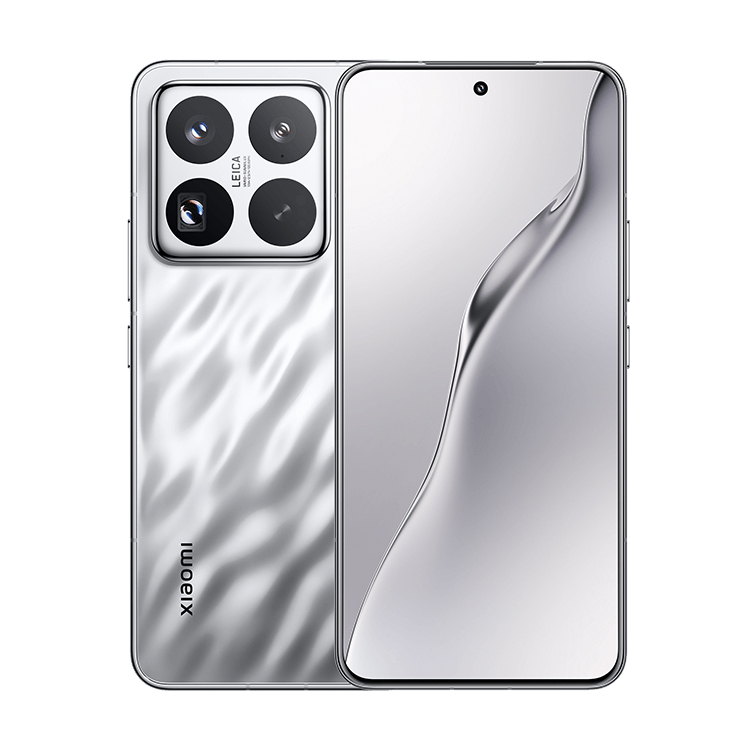
Following the December 2023 launch of the Redmi 13C 5G, Xiaomi appears to be prepping its successor, the Redmi 14C 5G. Now, MySmartPrice has spotted the phone’s model numbers, 24108PCE21 and 2411DRN47I, on the Bureau of Indian Standards (BIS) certification website.

The listing itself offers no concrete details about the phone’s specifications. However, it does raise an interesting possibility. The listing also includes the “POCO” brand name alongside Redmi.

So the Redmi 14C 5G might be rebranded as a POCO device in some markets, mirroring Xiaomi’s usual strategy of offering similar phones under different sub-brands.

This isn’t the first time the Redmi 14C 5G has piqued our curiosity. The phone has already been spotted in the IMEI database listings with four distinct model numbers: “2411DRN47G,” “2411DRN47R,” “2411DRN47I,” and “2411DRN47C.” 

The suffixes likely denote regional variations, with “G” possibly signifying a global model, “R” for Japan, “I” for India, and “C” for China. These listings hint at a widespread launch strategy for the Redmi 14C 5G.

Despite the mounting evidence, Xiaomi remains tight-lipped about the upcoming budget phone. While the BIS certification suggests an imminent launch, particularly in India, no official details regarding specifications, pricing, or release date have been revealed. 

However,  given the increased activity surrounding the phone, it’s reasonable to expect more information to emerge in the coming days. For budget-conscious smartphone buyers looking for a 5G option, the Redmi 14C 5G is shaping up to be a potential contender.  We’ll continue to monitor the situation and update you on it as new details become available. 

Pixel 9 Pro Fold New Leaked Renders Reveal Color Options And Symmetrical Bezels Around Display

Yesterday, the promotional material of the entire Pixel 9 series leaked out revealing key details. Now, the same source has dropped new renders of the Pixel 9 Pro Fold. It reveals the foldable phone’s color options and also gives us a clear look at the device. The Google Pixel 9 Pro Fold is set to arrive as the successor to the Pixel Fold that debuted in 2022. The search giant seems to have made plenty of changes to the upcoming offering.

Pixel 9 Pro Fold leaked renders reveal design and color options 

The Pixel 9 Pro Fold looks like a proper foldable device compared to its predecessor which had a wider aspect ratio. In fact, the external screen is taller and looks more like a slab phone. It has a centre-aligned punch-hole cutout and symmetrical bezels on all sides. The internal screen is also surrounded by symmetrical bezels. The punch-hole cutout for the selfie snapper is at the top right corner. 

The Pixel 9 Pro Fold has rounded corners that should offer a better grip in hands. The back panel is seen with a rectangular camera island that has two pill-shaped cutouts accommodating three sensors and an LED flash unit outside. The volume rocker and power buttons are located on the right edge. The leaked renders reveal the upcoming foldable in Obsidian and Porcelain colors. 

As per the leaked promo material, the Pixel 9 Pro Fold is expected to feature a 6.3-inch external and a large 8-inch internal Super Actua display. The camera setup will comprise a 48MP main, 10.5MP ultra-wide, and 10.8MP telephoto sensors. The device will be powered by a Tensor G4 chipset coupled with 16GB RAM and is confirmed to come with Gemini AI. 

Source

POCO F6 Deadpool & Wolverine Limited Edition smartphone launched in India

POCO has launched a new limited edition of its POCO F6 smartphone in India, just in time for the release of the Deadpool and Wolverine movie. The POCO F6 Deadpool Limited Edition features a bold red design with Deadpool and Wolverine images on the back, and the Deadpool logo on the flash area.

POCO F6 Deadpool Limited Edition

The phone comes in a special box with a premium feel and includes a charger with a Deadpool sticker and a SIM ejector tool shaped like Deadpool’s mask. The casing also has slogans that fans of Deadpool will recognize, though there are no custom themes or wallpapers.

POCO F6 Deadpool & Wolverine edition specs:

The POCO F6 Deadpool Edition shares the same specs as the original POCO F6 launched earlier this year. It has a 6.7-inch 1.5K OLED display with a 120Hz refresh rate and up to 2400 nits of brightness. The display supports HDR10+ and Dolby Vision and is protected by Corning Gorilla Glass Victus.

The phone is powered by the Snapdragon 8s Gen 3 processor with an Adreno 735 GPU and comes with 12GB of RAM and 256GB of storage. It has a 50MP rear camera with a Sony IMX882 sensor an 8MP ultra-wide lens, and a 20MP front camera.

Other features include an in-display fingerprint sensor, USB Type-C audio, stereo speakers, and Dolby Atmos. It supports 5G, Wi-Fi 6, and has a 5000mAh battery with 90W fast charging.

Pricing & availability

The POCO F6 Deadpool Edition will be available exclusively on Flipkart from August 7th, priced at ₹29,999. Please note that only 3000 units of this limited edition device will be sold.

(Source)
Honor X60i With Smart Capsule, Dimensity 6080 SoC Launched In China

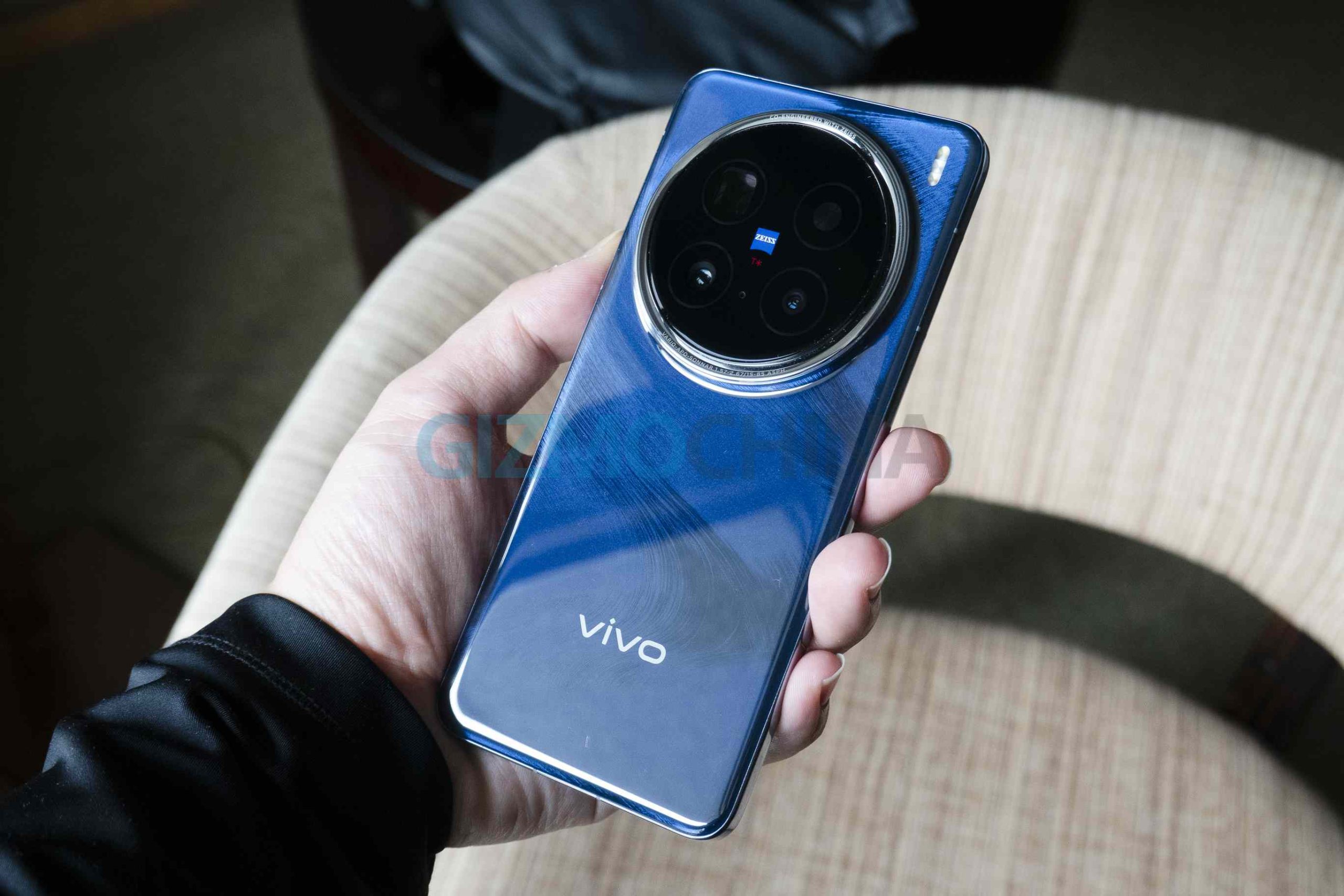
Honor has launched a new smartphone in China. It is the Honor X60i and arrives as the successor to last year’s Honor X50i. The latest offering packs incremental upgrades over its predecessors including a new design, larger battery, and a better display. Read on to know what the device offers out of the box. 

Honor X60i specifications and features 

The Honor X60i comes with an OLED display measuring 6.7-inches and bearing an FHD+ resolution. It features an integrated fingerprint scanner, 2,000 nits peak brightness, and a 90Hz refresh rate. There is a pill-shaped cutout with symmetrical bezels on all sides. It works similar to Dynamic Island by displaying notifications and more. The device has a square camera module on the back panel with a subtle Huawei Pura-series-like look. It is IP64-certified dust and water-resistant. 

On the imaging front, the Honor X60i has a 50MP main and 2MP macro rear camera setup. There is an 8MP front-facing selfie snapper.  There’s AI Elimination feature that removes any unwanted objects from the images.

Internally, a MediaTek Dimensity 6080 processor keeps the Honor X60i running. It packs up to 12GB RAM and 512GB internal storage. There is also virtual RAM for smooth performance. The device is draws its power from a 5,000mAh battert unit with support for 35W fast charging. 

The Honor X60i is offered in Coral Purple, Cloud Blue, Moon Shadow White, and Magic Night Black colors. As for pricing, it starts at CNY 1,399 for the base 8GB + 256GB variant. The 12GB + 256GB and 12GB + 512GB RAM and storage configurations cost CNY 1,599 and CNY 1,799 respectively. The smartphone will be available for purchase from the brand’s official website and JD.com starting August 2. 

Xiaomi MIX Fold 4 Review: Thinner Than Thinner

Xiaomi MIX Fold 4

To be honest, the Xiaomi MIX Fold 4 is a premium model, and expensive as well, so it must have something to convince users to buy it. So, does it? In short, I believe it does. It manages to cram a big battery, wireless charging, and four cameras into a body that is less than 5 mm thick (unfolded). There is no second foldable phone in the world that can do this. This is supposed to be the best phone that Xiaomi has ever made with its cutting-edge tech. Could it be the best foldable phone of 2024? Let’s check it out.

If you are reading this article or watching the review video to the end and really think the MIX Fold 4 is very much to your liking, then buying it from GEEKWILLS is your best option. Since MIX Fold 3 was not released globally, MIX Fold 4 may not either. So getting the Chinese version early is the right thing to do.

WHERE TO BUY
Buy on GEEKWILLS from $1,499

Design

Numbers always stay on the surface, maybe you don’t have a clear idea of how thin the less than 5mm MIX Fold 4 really is. Then I will put it this way: if you plug the charging cable into the USB-C port, you’ll realize that the plug is even thicker than the body.

Everyone should have some keys, right? Put one next to the MIX Fold 4 and you’ll realize they’re actually about the same in terms of thickness. So this is the MIX Fold 4, one of the thinnest foldable phones in the world. There shouldn’t be any phone much thinner than it in the future, after all, there’s no way to make the USB-C port any smaller.

It also manages to be extremely light. Anyway, when you use it folded, it’s really very close to the experience of a normal phone. The rest of the features are pretty much the same as most foldable phones, with IR emitter, NFC, and side fingerprint recognition. The USB specs are the same as the MIX Fold 3, which is 3.2 Gen 1.

Of course, there is nothing perfect in the world. The camera module bulges out quite a lot, as you have to cram in four cameras. The Fold 4’s two speakers are placed diagonally, meaning that no matter how you hold the phone, your hand will always block one of them, which is a bit annoying. The tightly shut hinge and rounded frame make it incredibly slippery. Plus, it’s just so thin. If you are not being careful when you unfold it, you may have to pay a heavy price.

Hinges

Because it got thinner, the hinges got smaller. And since the hinges have gotten smaller, the creases have gotten deeper. If you’re the type of person who cares a lot about creases, then the MIX Fold 4 might drive you crazy. The center area would be rarely touched in everyday use, and it’s only noticeable when you look at it sideways. So I personally don’t care much about that.

Thanks to the hinge material and craftsmanship upgrades, the MIX Fold 4 opens and closes much more smoothly. It’s also more stable when hovering at any angle. The carbon fiber version I have also has a certain textured finish on the hinge area. Here again, I recommend this colorway, it’s really nice and silky smooth, and I love it so much.

Display

There’s not much to say about the screen. No unacceptable drawbacks, except for the more noticeable creases we just mentioned. The specs are not much of an upgrade over the Fold 3, and all the features that should be there are there. The look and feel of the inner and outer screens are also in line, even if they come from different manufacturers.

The protective glass of the outer screen is made of Xiaomi’s latest Dragon Ceramic Guard glass, and the top and bottom are also curved. Overall, they are still two excellent screens, just not particularly impressive.

Performance & Gaming

The processor in the MIX Fold 4 is still the Snapdragon 8 Gen 3. Benchmark scores will be a little lower than a regular 8 Gen 3 phone. Considering how thin it is, it makes sense. Unsurprisingly, in the heavy gaming test MIX Fold 4 screwed up.

It’s clear that the gaming experience isn’t as good as the previous generation. The reason for this is also simple, just look at the power consumption and temperature, and you can see that the 8 Gen 3 wasn’t able to play at full strength because it was too hot.

But also for the same reason, the heat dissipates very quickly. Check out this curve bump, I just put it on my desk for a few seconds to measure the temperature, and its gaming frame rate recovers quickly. With the help of a phone cooler, maybe its gaming experience can reach the next level.

Anyway, if you often play big games on your phone, then MIX Fold 4 is not for you. Or maybe all foldable phones are not for you, so let’s not be too harsh on Xiaomi either.

Camera

Although the MIX Fold 4 has four cameras like the MIX Fold 3. Unfortunately, the 3.2x telephoto lens of the 3 has been replaced with a 2x standard lens. so the focal length coverage of the MIX Fold 4 is not as wide as its predecessor.

The good news is that the imaging quality of this lens is better, with a higher amount of pixels. Combined with the fact that this sensor supports In-Sensor Zoom, 4x zoom is actually not a problem for the Fold 4. There is no noticeable loss of clarity in good lighting conditions. Even with the help of AI, it will be clearer when zoomed in on some specific environments. And it’s the only lens that supports the macro zoom feature, which creates beautiful photos in the right scene. Overall this camera is great, but there is one big downside to this 2x camera: there is no Optical Image Stabilization.

when the light is bad, even photos taken at the 46mm native focal length can be blurry. Even an expert photographer can’t guarantee that every photo will be clear. So I still prefer the telephoto camera of MIX Fold 3, at least the night shooting experience will be much better.

The other three cameras are among the best in foldable phones. Pretty much the same as the previous generation, I’m very satisfied with every single photo. Because there is not much sharpening effect, the photos all look very natural. Unlike the 14 Ultra, the MIX Fold 4’s colors are a little less saturated in Leica AUTHENTIC mode. So whether to take photos with Leica AUTHENTIC or the VIBRANT, has to be decided by your own experience.

Battery & Charging

Because of the increased battery capacity, the battery life will be improved. You can’t avoid charging twice a day if you use the inner screen frequently. The wired charging power is still 67W, and since the battery has gotten a little bigger, the charging speed doesn’t look as good as the MIX Fold 3. The charging time is close to an hour, it is on the slow side nowadays, and it is something that the MIX Fold 5 will need to address.

Conclusion

So, it’s true that the MIX Fold 4 is a great foldable phone. It’s just that it’s not as much of an improvement over the MIX Fold 3 as I thought it would be. It has become lighter and thinner, and not much else has changed. A lot of the software has not been optimized for it either, and it’s exactly the same as last year.

Again, every phone has its target audience. I’m sure a lot of people who care about weight and thickness will like the MIX Fold 4 a lot. At least the price has not gone up, and it’s still one of the best options for most people.

WHERE TO BUY
Buy on GEEKWILLS from $1,499

Xiaomi Mix Fold 4: The Foldable Smartphone You’ll Really Want to Buy

Xiaomi continues to expand its foldable smartphone family. The latest additions to their lineup are Mix Fold 4 and Mix Flip, which stand out with their design, features, and performance.

Until now, we’ve seen numerous foldable smartphone models from Xiaomi as well as competitors like Samsung, OPPO, and Huawei. However, most of these have been bulky devices with usability issues.

Fortunately, Xiaomi is addressing this by introducing a foldable phone that you will genuinely want to use. So what makes Xiaomi Mix Fold 4 so special? Here are the details…

What Makes Xiaomi Mix Fold 4 Special?

If you’ve ever held a foldable smartphone, you already know the biggest issue with these devices. While they are engineering marvels and perform well in tablet mode, the situation changes when they are folded.

Most are thick, heavy, and not ergonomic. Additionally, when folded, the outer display frames make them resemble early Android smartphones from 2014.

As one of the world’s thinnest foldable smartphones, the Xiaomi Mix Fold 4, has a thickness of just 4.59 mm at its thinnest point when unfolded. When folded, this thickness increases to 9.47 mm.

To put this into perspective, the iPhone 15 Pro Max, which many find quite ergonomic despite its size, is 8.25 mm thick, and the Galaxy S24 Ultra is 8.6 mm thick. This means that even when folded, the Mix Fold 4 is nearly the same thickness as these two phones.

This makes it not just an intriguing model but also a truly usable product, unlike many of its competitors on the market.

Xiaomi Mix Fold 4

Moreover, this thickness, combined with a 6.56-inch AMOLED panel with a screen-to-body ratio of 86.07%, results in a smartphone that can be comfortably used with one hand even when folded, unlike many of its competitors. Additionally, weighing in at just 226 grams, it is also lighter than the S24 Ultra.

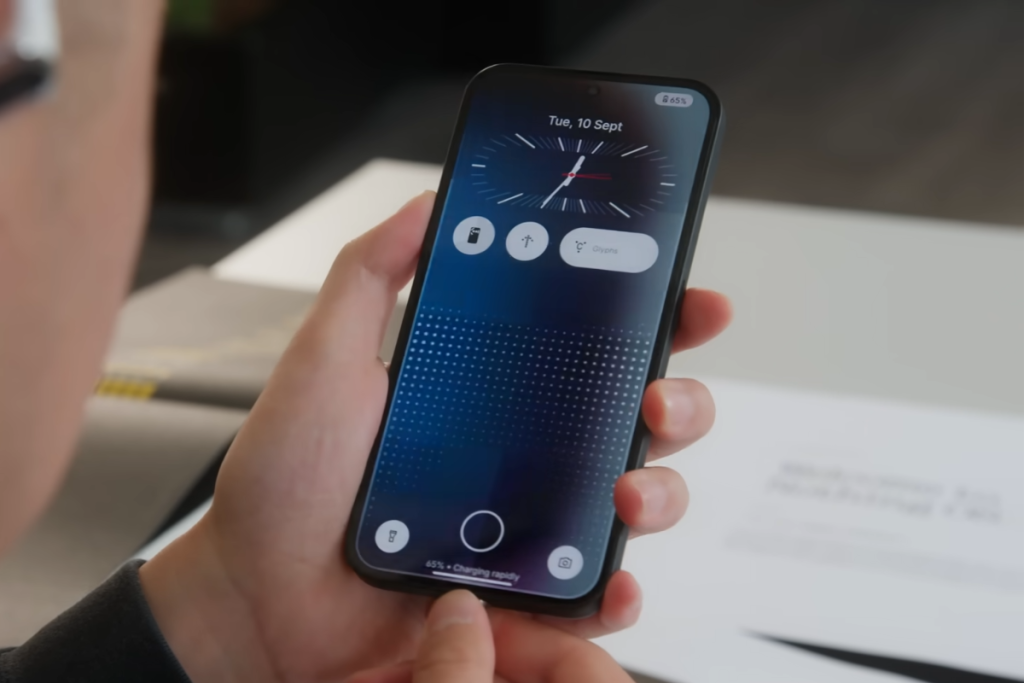
Xiaomi’s MIX Fold 4 has some design differences compared to the previous model. The most notable change is the more oval-shaped rear camera island. On the side, the power button, which also functions as a fingerprint scanner, stands out.

To maintain the aforementioned thinness, Xiaomi chose not to use an under-display fingerprint reader. Additionally, to reduce weight, the T800H high-strength carbon fiber architecture has been utilized. Xiaomi claims that the hinge can withstand 500,000 folds.

Despite this, the device is IPX8 certified. The external display of the Xiaomi MIX Fold 4 is 6.56 inches and features curved edges on all four sides. The internal display is 7.98 inches and offers 2K resolution. Both screens support a 120 Hz refresh rate, 3000 nits peak brightness level, and Dolby Vision.

Xiaomi Mix Fold 4

The Xiaomi MIX Fold 4 comes with a quad rear camera setup co-engineered with Leica. The 50 MP main camera is accompanied by a 12 MP ultra-wide camera, a 50 MP portrait telephoto camera with 2x zoom, and a 50 MP periscope camera with 5x zoom. The phone offers up to 16 GB of RAM (LPDDR5x) and up to 1 TB of storage (UFS 4.0).

Powered by the Qualcomm Snapdragon 8 Gen 3 processor, this foldable phone is equipped with a 5100 mAh battery, supporting 67W wired and 50W wireless charging. Lastly, it features an integrated ultra-thin VC system for heat dissipation. The Xiaomi MIX Fold 4 is available in black, white, and blue color options.

  • 12GB RAM + 256GB storage: CNY 8,999 (approximately USD 1237)
  • 16GB RAM + 512GB storage: CNY 9,999 (approximately USD 1375)
  • 16GB RAM + 1TB storage: CNY 10,999 (approximately USD 1512)
  • Outer display: 7.98 inches, 2224×2488, 3000 nits, 120Hz, LTPO AMOLED
  • Inner display: 6.56 inches, 1080×2520, 3000 nits, 120Hz, LTPO AMOLED
  • Processor: Qualcomm Snapdragon 8 Gen 3
  • Memory: 12GB, 16GB RAM
  • Storage: 256GB, 512GB, 1TB
  • Rear cameras: 50MP f/1.7 (primary) + 50MP f/2.0 (telephoto) + 10MP f/2.9 (periscope) + 12MP f/2.2 (ultra-wide)
  • Front camera: 16MP
  • Battery: 5100 mAh, 67W wired, 50W wireless charging
  • Software: Android 14, HyperOS
  • Dimensions: 159.4 x 143.3 x 4.6 mm (unfolded), 159.4 x 73.1 x 9.5 mm (folded)
  • Weight: 226 g

Exclusive: Galaxy W25’s (Z Fold 6 Slim) One UI Tests started!

Samsung has started One UI tests of the Galaxy W25, and this suggests that the foldable device will be unveiled in the near future. There are great expectations for the device spotted on Samsung OTA servers. The Galaxy W25 will only be available in the Chinese market, and that’s one of the things that makes it special. Gizmochina has spotted that Samsung has started One UI tests of the Galaxy W25.

Galaxy W25 One UI Test

Galaxy W25 (Z Fold6 Slim) has passed the One UI software test twice so far. The spotted software has the build number W9025ZCU0AXG7/W9025CHC0AXG7/W9025ZCU0AXG7. The fact that the device has only been tested twice shows that it is still under development.

The Z Fold 6 Slim will only be available in China and Korea. The device will have different names when sold in these regions. In the Chinese market, it will be sold under the model number “SM-W9025” and the name Galaxy W25. In the Korean market, it will have the model number “SM-F958N”. The foldable device will be called “Z Fold 6 Slim” or “Z Fold 6 Ultra” in Korea. Although the device has different names depending on the region, the common internal codename will be “Q6A”.

Z Fold 6 Slim will be even thinner than previous models, as the name suggests. Samsung’s thinnest foldable phone to date is the Z Fold 6. The Z Fold 6 has a thickness of 5.6 mm when unfolded. In folded form, it can reach 12.1 mm thick. Z Fold 6 Slim will be even thinner than this thickness.

The Z Fold 6 Slim’s external display may come with an aspect ratio of 19.5:9. This aspect ratio is the same as the last flagship Galaxy S24 Ultra. This suggests that it may have a different aspect ratio than previous Fold models. It is also among the leaks that the outer screen has a 6.5-inch size and the inner screen has an 8-inch size.

We don’t have clear information about when the Z Fold 6 Slim will be released. Z Fold 6 Slim may be introduced with the Galaxy Tab S10 series in October.

Xiaomi Mix Flip’s global price and sale date officially confirmed; it’s more expensive than the Z Flip 6

Xiaomi‘s first foray into vertical foldable, the Mix Flip, is officially crossing international waters. After years of the flagship Mix Fold remaining China-exclusive, the Mix Flip will be the company’s first foldable to debut in the European market.

Xiaomi Mix Flip Global Launch Price

This launch was confirmed by Nikolai Nankov, Xiaomi’s Bulgarian country manager, in an interview with Mobile Bulgaria magazine. Nankov announced that the Mix Flip would debut in Eastern Europe in the next few weeks, with sales starting after August 15, 2024. He also mentioned that the price would be around 2,600 Bulgarian Lev, or approximately €1,300.

Xiaomi Mix Flip Specifications

The Mix Flip boasts a 6.9-inch foldable OLED main display capable of reaching a peak brightness of 3000 nits and a refresh rate of 120 Hz. Its exterior features a smaller, four-inch cover display that integrates the dual rear cameras. Xiaomi says you can use the external display for various tasks without having to unfold the phone.  

Powering the device is Qualcomm’s Snapdragon 8 Gen 3 chipset, its current best SoC. The camera system comprises a 50-megapixel main sensor with phase detection autofocus and optical image stabilization, as well as a 50-megapixel telephoto lens with 2x optical zoom.  

To cater to users’ needs, Xiaomi has equipped the Mix Flip with a substantial 4,800mAh battery. While the company offers three storage configurations in China – 12GB or 16GB of RAM paired with 256GB, 512GB, or 1TB of internal storage – it remains unclear which options will be available in the European market.  

Xiaomi’s entry into the global foldable smartphone market with the Mix Flip offers an exciting alternative for consumers. However, with a price tag of €1,300, Xiaomi will face tough competition from established players like Samsung and Motorola, who have already secured a strong presence in the foldable market globally.

Oppo Find X8 series will bring Apple Airdrop support, claims tipster

Oppo is expected to launch the Find X8 line of smartphones in the fourth quarter of 2024. Although the company hasn’t officially disclosed details about the phones, rumors have been circulating. Adding to these speculations, reliable tipster Digital Chat Station (DCS) revealed some interesting features of the lineup today.

According to DCS’s post on Weibo, the Find X8 series will include Oppo’s Live Photos feature, which was first introduced with the Reno 12 series. 

It’s similar to Apple’s Live Photos, capturing a burst of moments just before and after the shutter is pressed, creating a short video clip within the still image. These Live Photos can then be shared directly on social media platforms, a feature not commonly available on most Android phones at the moment.

More intriguing, however, is DCS claim that the Find X8 lineup would even support Apple’s Airdrop. The tip suggests that the Find X8 series might enable seamless two-way file sharing between Oppo devices and iPhones. If Oppo successfully implements this feature, it could be a compelling reason for iPhone users to consider switching to Android.

Oppo Find X8 and X8 Pro Specifications

As for the specs of the phone, previous reports have revealed that the Find X8 and Pro will be powered by a Dimensity 9400 processor.

The display is rumored to be an OLED panel with 1.5K resolution and 120Hz refresh rate. But it could be a flat display for the Find X8 while the Pro variant may house a curved-edge screen.

For the cameras, we are expecting a triple unit on the rear including a 3X periscope telephoto lens and Hasselblad tuning. The main camera is likely to be a 50MP Sony sensor with a large 1/1.4″ size. Oppo may also introduce a new image-processing algorithm to improve camera performance.

Gizmochina Daily: Repairing Xiaomi Mix Flip and Mix Fold 4 is going to be pretty expensive

First up, Xiaomi’s foldables might make you unfold your wallet a bit wider than expected. The Mix Fold 4 and Mix Flip are turning heads, but their repair costs might make your head spin! We’ve got the breakdown on what it’ll cost to keep these cutting-edge devices in tip-top shape.

But wait, there’s more! Nothing’s cooking up something extra with their Phone (2a) Plus. They’re teaming up with MediaTek for a chip that’s anything but nothing.

Meanwhile, October’s looking spicy with the potential unveiling of the Snapdragon 8 Gen 4. And finally, Google’s not letting the foldable party pass them by. The Pixel 9 Pro Fold is flexing some serious screen muscle, catching up to the competition.

All the juicy details on these stories are in today’s roundup below.


Xiaomi reveals hefty repair costs for Mix Flip and Mix Fold 4

Xiaomi has unveiled the out-of-warranty repair costs for its recently launched foldable smartphones, the Mix Fold 4 and Mix Flip. While the devices have garnered significant attention for their innovative designs and cutting-edge technology, the price tags for replacing damaged components might give consumers pause.

Read more


Nothing Phone (2a) Plus confirmed to come with MediaTek Dimensity 7350 Pro

We shared with you the news about the upcoming Plus model of Nothing Phone (2a) back in April. Now, Nothing just posted a new teaser on Twitter. It has been confirmed that the upcoming Nothing Phone (2a) Plus will feature the MediaTek Dimensity 7350 Pro chip.

Read more


Qualcomm might launch Snapdragon 8 Gen 4 on this date

As leaks about the Snapdragon 8 Gen 4 keep rolling in, Qualcomm‘s date for their upcoming Snapdragon Summit might have just been revealed. A recent post on a Chinese tech blog revealed that Qualcomm’s next Snapdragon Summit will be held on October 21.

Read more


Pixel 9 Pro Fold finally catches up to OnePlus Open’s display game

The Google Pixel 9 series launches next month on August 13th, and alongside the standard models, Google will debut the Pixel 9 Pro Fold. Fresh new details about the foldable have now surfaced online.

Read more


🔥More Top Stories You Might Have Missed

MediaTek countersues Huawei in patent dispute after being sued in China

In a tit-for-tat move, Taiwanese chipmaker MediaTek and its subsidiaries HFI Innovation and MTK Wireless have filed a lawsuit against Huawei Technologies Co. Ltd. before the High Court of Justice for England and Wales. 

The lawsuit, which remains under seal, comes just days after MediaTek disclosed on the Taiwan Stock Exchange that it was the target of a patent infringement action by Huawei in China.

Details surrounding the specific technologies at stake in both lawsuits remain undisclosed. However, sources familiar with the matter confirmed to Intellectual Asset Management (IAM) that both cases involve patents related to cellular communication technologies. 

The dispute reportedly stems from failed negotiations over a component-level licensing agreement, which collapsed after three years of talks, according to Chinese media reports.

Huawei is reportedly pursuing a licensing approach that deviates from the standard licensing approach for cellular Standard Essential Patents (SEPs). 

Traditionally, SEP licensing focuses on end products like smartphones. However, Huawei appears to be pursuing a component-level licensing strategy, targeting chipsets directly.

The company’s rationale behind this shift remains unclear. But one anonymous lawyer told IAM that “given that both parties are 5G chip manufacturers there could be a business strategic reason behind this art of war”.

Meanwhile, a Chinese media outlet suggests that Huawei’s shift towards component-level licensing could be a strategy to shift royalty fee pressure from major phone manufacturers like itself and Samsung to chipmakers such as MediaTek and Qualcomm. This could potentially allow Huawei to offer more competitive device pricing.

An anonymous patent expert commented that the dispute might also be a “signal to Qualcomm that it is ready to collect royalties from it even if it may not do so immediately”. US sanctions currently restrict Qualcomm’s ability to sell advanced chips to Huawei, but the situation could change.

Chinese Scientists Discover Record-Breaking Gamma-Ray Burst Line

A research team led by the Institute of High Energy Physics of the Chinese Academy of Sciences has made a breakthrough discovery. They identified a gamma-ray spectrum line with an energy of up to 37 MeV, the highest ever observed from a celestial object. This finding, published in the journal “Science China: Physics, Mechanics and Astronomy,” sheds new light on the mysteries of gamma-ray bursts and relativistic jets.

Researchers identified a gamma-ray spectrum line with an energy of up to 37 MeV,

The groundbreaking discovery was made by analyzing data from the Polar Space Telescope and the Fermi satellite. The observed spectrum line not only boasts record-breaking energy but also exhibits a unique power-law evolution in both energy and luminosity.

This significant achievement offers crucial clues for scientists to unravel the secrets of gamma-ray bursts and the powerful jets associated with them. It marks a major milestone in the field of gamma-ray burst research and paves the way for further exploration of these celestial phenomena.

(Via)

TP-Link Unveils Archer BE3600 Wi-Fi 7 Router for $99, Featuring a Quad-core CPU

TP-Link has unveiled the Archer BE3600, its first Wi-Fi 7 router aimed at overseas markets. This router boasts a sleek design with four external antennas and efficient heat dissipation. Currently available only on Walmart for $99.99 (around ¥727), The Verge claims that the Archer BE3600 as the most affordable Wi-Fi 7 router in the US market.

The TP-Link router is also compatible with the EasyMesh networking standard

The Archer BE3600 features a powerful quad-core CPU for smooth operation. It boasts a 2.5Gbps WAN port, a 2.5Gbps LAN port for ultrafast wired connections, and three additional Gigabit LAN ports. A USB 3.0 port allows for easy connection of storage devices.

TP-Link Router

The Archer BE3600 offers dual-band Wi-Fi 7 with speeds of 688 Mbps on the 2.4GHz band and 2882 Mbps on the 5GHz band, reaching a total of 3570 Mbps. Additionally, it supports key Wi-Fi 7 features like MLO, 4K QAM, and Multi-RU, ensuring a future-proof experience. This router is also compatible with the EasyMesh networking standard for seamless mesh network integration.

Interface display

This router positions itself as an attractive option for users seeking to upgrade to Wi-Fi 7 technology at a competitive price point.

(Via)

Meta Likely to Receive First Antitrust Fine from EU Union

Meta Platforms, the parent company of Facebook, is facing its first antitrust fine from the European Union. The tech giant is accused of bundling its classified advertising service, Facebook Marketplace, with its main social network platform, giving Marketplace an unfair advantage.

The fine could be huge, up to $13.4 billion

The European Commission alleges that Meta abused its dominant market position by imposing unfavorable conditions on competing online classified ad services that advertise on Facebook or Instagram. This practice, according to the EU, stifled competition.

Meta ad-free Instagram and Facebook Europe

Meta could face a hefty fine of up to $13.4 billion, representing 10% of its 2023 global revenue. The company has denied the allegations, maintaining that its actions benefit consumers and promote competition.

The EU Commission is expected to make a final decision in the coming months, with a potential fine to be issued before the departure of EU antitrust chief Margrethe Vestager in November.

(Via)

Xiaomi’s Latest Mijia Air Conditioner ‘Natural Wind Pro’ now has a New White Color, Compressor and a Double-row Condensor

Xiaomi has unveiled its latest air conditioner, the Mijia Air Conditioner Natural Wind Pro, in a new simple white color. This model boasts a super-first-class energy efficiency rating, thanks to a new generation compressor and a double-row condenser.

The air conditioner will support Xiaomi’s Pengpai Zhilian ecosystem.

The air conditioner is equipped with Xiaomi’s Lingyun intelligent control engine, enabling features like ultra-fast temperature control and vibration suppression. Notably, it supports Xiaomi’s Pengpai Zhilian ecosystem, allowing for control via the Mi Home app and Xiao Ai voice assistant.

Xiaomi Mijia Air Conditioner

Priced at 2,999 yuan, the Mijia Air Conditioner Natural Wind Pro Simple White Edition is now available for purchase. While specific configurations mirror the previously released silver-gray model, the new white variant offers a fresh aesthetic while maintaining the product’s core features.

(Via)

Honor 200 Pro vs Xiaomi 14 Civi: Which phone offers better value?

Both Honor 200 Pro and Xiaomi 14 Civi are recent flagship offerings in the Indian market, vying for your attention. While they share some similarities, key differences exist in design, performance, camera systems, and battery life. Let’s delve deeper to see which phone might be the better fit for you.

Xiaomi 14 CIVI

1. Display

The Honor 200 Pro boasts a slightly larger 6.78-inch 1.5K OLED display compared to the Xiaomi 14 Civi’s 6.55-inch 1.5K AMOLED panel. Both offer a smooth 120Hz refresh rate for a seamless visual experience.

However, the Honor takes the edge in terms of peak brightness, reaching a staggering 4000 nits compared to the Civi’s 3000 nits. This could be beneficial for outdoor use under direct sunlight. Additionally, the Honor 200 Pro employs a 3840Hz high-frequency PWM dimming technology, potentially reducing eye strain during extended viewing sessions.

Please Note: When you buy something using the links in our articles, we may earn a small commission at no cost to you.

2. Design

The Honor 200 Pro features a premium design with a glass back and front, but the sides are plastic. Its dimensions are 163.3 x 75.2 x 8.2mm, and it weighs 199g. The phone comes in Ocean Cyan and Black colors.

The Xiaomi 14 Civi boasts a more luxurious design, incorporating a metal frame and a sleek four-sided micro-curved design on both the front and back. It’s slightly thinner and lighter than the Honor 200 Pro, measuring 157.2 x 72.77 x 7.45mm and weighing 179.3g. It is available in Cruise Blue, Matcha Green (with a vegan leather finish), and Shadow Black.

3. Performance

Both phones come equipped with the powerful Snapdragon 8s Gen 3 processor, ensuring smooth performance for heavy multitasking and demanding games. Both devices come with up to 12GB of LPDDR5X RAM and up to 512GB UFS 4.0 storage, promising smooth multitasking and app performance. However, The Honor 200 Pro boasts a larger stainless steel vapor chamber for heat dissipation, potentially leading to better thermal management during heavy usage compared to the Xiaomi 14 Civi’s cooling system.

4. Software

Both the Honor 200 Pro and Xiaomi 14 Civi come equipped with Android 14, but the software experience and update policies differ. The Honor 200 Pro runs on MagicOS 8.0 and is promised two Android OS updates and three years of security updates.

The Xiaomi 14 Civi features Xiaomi HyperOS and it will receive 3 Android upgrades along with 4 years of security updates. While both interfaces offer unique features and optimizations, ultimately the choice depends on personal preferences.

5. Camera

Both phones boast impressive camera setups but with some key differences. The Honor 200 Pro features a 50MP main sensor with a larger 1/1.3-inch size compared to the Civi’s 1/1.55-inch sensor. This potentially translates to better low-light performance on the Honor.

Both offer OIS (Optical Image Stabilization) for sharper photos and videos, and the Honor adds a dedicated 50MP telephoto lens with 2.5x optical zoom, whereas the Civi offers a 50MP sensor with 2x zoom. For ultra-wide shots, both phones come with 12MP sensors.

For selfie lovers, the Honor presents a single 50MP front camera, while the Civi offers a dual setup with a 32MP main sensor and a secondary ultra-wide sensor.

6. Battery Life and Charging

The Honor 200 Pro packs a larger 5200mAh battery compared to the Xiaomi 14 Civi’s 4700mAh. This could potentially translate to longer usage time on the Honor, especially for moderate to heavy users.

However, both phones support fast charging – the Honor boasts a blazing-fast 100W wired charging that can fully charge the phone in just 41 minutes, while the Civi offers a respectable 67W wired charging solution. The Honor goes a step further by including 66W wireless charging, a feature missing from the Civi.

7. Price

The Honor 200 Pro comes in a single 12GB + 512GB variant priced at Rs. 57,999. The Xiaomi 14 Civi offers two options – 8GB + 256GB for Rs. 42,999 and 12GB + 512GB for Rs. 47,999. So in terms of pricing, Xiaomi is a clear winner here.

8. Conclusion

Both phones boast impressive specifications, but considering the price point, the Xiaomi 14 Civi presents a compelling option. With comparable features to the Honor 200 Pro, the 14 Civi offers excellent value for money. However, the Honor 200 Pro does have a few advantages, such as a bigger & brighter display, wireless charging, a larger battery, and a larger vapor chamber for potentially better performance.

Ultimately, the choice boils down to individual priorities and budget. If maximizing value is a top concern, the Xiaomi 14 Civi might be the way to go. However, if top-tier performance and extra features are more important, the Honor 200 Pro could be the better choice, despite its higher price tag.

Poco M6 Plus 5G set to launch on August 1, design, camera details revealed

Today, Poco will announce the Poco F6 Deadpool Limited Edition phone in India. Recent reports claim that the company is planning to launch a budget-friendly 5G phone called the Poco M6 Plus 5G. The landing page of the phone, which has now surfaced on Flipkart, reveals that it will be announced on Aug. 1 in India.

Poco M6 Plus 5G design revealed

Poco M6 Plus 5G launch date

The Poco M6 Plus 5G’s landing page shows that it will have a dual-tone design on the back. The device has flat edges, and the front features a punch-hole screen.

The dual-camera setup on the back has a 108-megapixel primary camera with an f/1.75 aperture and a 3x in-sensor zoom support. A ring LED flash accompanies it. Unfortunately, the brand has not revealed anything else about this device.

As per reports, the Poco M6 Plus could be a tweaked version of the Redmi Note 13R, which debuted a couple of months ago in China. The Note 13R features a 6.7-inch IPS LCD FHD+ 120Hz screen, a Snapdragon 4 Gen 2 chip, up to 8 GB of RAM, up to 128 GB of storage, a 13-megapixel front camera, a 108-megapixel dual camera system, and a 5,030mAh battery with 33W fast charging. The M6 Plus could be priced between around Rs 13,000 to Rs 15,000.

In addition to the Poco M6 Plus 5G, the Indian market will soon see the release of a couple of new phones. These include the Oppo K12x on July 29, the Realme 13 Pro and 13 Pro+ on July 30, the Nothing Phone (2a) Plus on July 31, the Motorola Edge 50 on Aug. 1, the Infinix Note 40x 5G on Aug. 5, and the Vivo V40 and V40 Pro by early August. These devices will be sold through Flipkart. Furthermore, the iQOO Z9s series, which includes the iQOO Z9s and the iQOO Z9s Pro, will also launch in India in August. These phones will be sold through Amazon.

iOS Wins Over Android But Apple Still Isn’t Happy

The competition between Android and iOS continues to heat up. On one side, manufacturers like Samsung, Xiaomi, vivo, and OPPO, led by Google, strive to win users’ favor with dozens of models catering to every budget. On the other side, Apple stands alone, battling all its rivals. Sao, hve you ever wondered about the current state of this race? Let’s take a closer look together…

Users Don’t Want to Pay $1,000 for an iPhone

The latest report from CIRP shows that Apple is gaining the upper hand in the battle between Android and iOS. According to the report, 17% of users who purchased a new iPhone in June 2024 were former Android users. Moreover, considering that this number was 10% last year, this is quite a significant achievement for Apple. Therefore, the entire company, especially Tim Cook, should be happy, right? Not quite.

According to the report, the models preferred by users switching to iPhone are not the latest and most expensive iPhone 15s, but rather older iPhones released a few years ago that can be purchased at a more affordable price. This, of course, means a decrease in the company’s profitability. Moreover, this trend is not limited to those coming from Android.

Reports show that the number of existing users upgrading their iPhones is also decreasing. So, what is the reason for this situation? The answer actually lies in Apple’s success. Although it may sound cliche and subjective, the reason older iPhones are being preferred is because they are great.

Apple has long been at the top in terms of performance. Additionally, factors such as camera quality and extended update support contribute to iPhones having a significantly longer lifespan compared to Android devices. However, this doesn’t prevent the company from releasing new models every year and the “older” models on the market from becoming cheaper.

As a result, any user looking to buy a phone for under $500 is turning to affordable Apple products like the iPhone 13. The satisfaction among current users also reduces the need to buy a new one. For example, I use an iPhone 14 Pro Max and probably won’t be changing my phone anytime soon. Reports show that many users feel the same. So, what will Apple do about this?

In fact, there isn’t much Apple can do to resolve this issue. However, the company can capitalize on volume by making iPhones more accessible. To achieve this, Apple introduced the iPhone SE series a long time ago. Now, they are working on the iPhone SE 4, which is expected to be the most notable model in the series. This affordable phone is anticipated to attract significant interest from both Android users and those using older models like the iPhone 11-12, who find the newer models too expensive.

RELATED:

Anker MagGo Nano Power Bank 10K with a dedicated Apple Watch charger tipped to launch soon

The Anker MagGo Nano Power Bank 10K with support for Apple Watch charging is rumored to be close to its unveiling. The Anker MagGo Power Bank is a dedicated Apple Watch charger and will come with a built-in USB-C cable.

A Reddit user u/joshuadwx shared a sketch of the rumored Anker MagGo Nano Power Bank 10K with Apple Watch Charger on the social platform recently. The power bank has a model number of A1657 and its rated capacity is 10,000mAh. The power bank can charge devices via its built-in USB-C cable, a USB-C port, and a wireless charging pad. The USB-C charging delivers 30W charging while the charging pad offers 5W charging for the Apple Watch. When the ports are in operation simultaneously, the total output of the power bank is limited to 24W. The bi-directional USB-C port allows the accessory to be recharged at 30W. The Anker MagGo Nano Power Bank 10K supports pass-through charging and a trickle charging mode is also present.

The Anker MagGo Nano Power Bank 10K has a digital display that shows the remaining battery and charge status of the device. The dimensions of the power bank are 9.5 x 5.1 x 3.3 cm and it weighs about 2336g. There are no release or price details yet for the Anker MagGo Nano Power Bank 10K. It is however rumored that the product will be priced between $90 and $100. The Anker MagGo Nano Power Bank 10K with Apple Watch Charger and Built-in USB-C Cable could be available in several countries including the US.

(via)

Xiaomi launches the Pule smart ashtray with magnetic charging under crowdfunding

A crowdfunding campaign for the Pule smart ashtray has been launched on Xiaomi Youpin. The smart ashtray is claimed to be capable of removing odors and purifying second-hand smoke. The product supports magnetic charging.

Pule Smart Ashtray

The Pule smart ashtray is designed to reduce air pollution when a smoker is in the room. It will reduce the inhalation of secondhand smoke for non-smokers in the room. The smoke contains a mix of harmful substances including tar, nicotine, formaldehyde, and ammonium compounds. Traditional methods that diffuse in the air have proved ineffective. Secondhand smoke continues to harm people and it can cause various diseases. Even when the windows are opened, a large amount of harmful gases and pungent odor will still pervade the air.

Pule Smart Ashtray

The Pule smart ashtray has a four-layer purification system consisting of a plasma generator, composite water filter, H12 high-efficiency HEPA filter, and high-iodine activated carbon layer. The setup effectively takes care of air pollution in small enclosures. The smart ashtray utilizes hydrolysis technology and has a high solubility for nicotine and other harmful substances. The smart ashtray uses water as a filter layer while a special fiber mesh that absorbs tar in removing harmful substances in smoke.

Pule Smart Ashtray

The plasma released during the process helps to decompose and precipitate small molecular compounds which are responsible for odors while also killing germs. The accessories of the Pule smart ashtray can be cleaned and reused making extended use of the product possible. The extension of the replacement cycle of these components translates to money savings and extended durability. The smart ashtray has a built-in large-capacity battery that translates to a long battery life, as well as support for magnetic charging. The sliding cover of the smart ashtray has a hidden light strip and can provide low-power reminders and optimized lighting.

Pricing & Availability

The Pule smart ashtray is priced at 199 yuan ($27) and can be pledged via Xiaomi Youpin. More details about the smart ashtray can be obtained from Xiaomi Youpin.