Advertisement

Xiaomi Youpin crowdfunds the Linptech Human Presence Flat Panel Light with a perfectly hidden sensor starting at 129 yuan ($18)

The Linptech Human Presence Flat Panel Light LP1 has been launched on the crowdfunding platform Xiaomi Youpin. The flat panel light has a hidden sensor and comes in two sizes – 30 x 30 cm and 30 x 60 cm.

Linptech Human Presence Flat Panel Light

Features

The Xiaomi Youpin page for the Linpteh Human Presence Flat Panel Light LP1 indicates that the product has received pledges worth more than 700,000 yuan ($) from more than 5,000 persons within a few days of being launched. The panel light perfectly combines the lamp and the human presence sensor in a single device. This makes it well-suited for a variety of scenarios including ceiling areas, kitchens, bathrooms, and corridors. The human detection sensor in the lamp is connected to the light on the circuit board to make detection response faster. It does not rely on mobile or wireless connectivity and offers a stable and reliable experience. The light is always on when people are around and it switches off when the room becomes empty.

The Linptech flat panel light LP1 can cover a detection area with a diameter of 6 meters when the light is 2.8 meters above the ground. The range of coverage for the sensor is adjustable and the person detection sensor can be linked with other smart home devices like air conditioners and speakers. The pretty impressively cheap price tag of the Linptech Human Presence Light LP1 is bound to stimulate demand for the product.

Linptech Human Presence Flat Panel Light

The light of the new Linptech lamp has a high rendering index of Ra90 and supports night light mode. The fixed color temperature for the model is 6,000K white light. The Linptech flat panel light LP1 costs 129 yuan ($18) for the smaller version and 149 yuan ($21) for the bigger model.

Sharp M series Laser Projectors unveiled starting at $1,049

Japanese electronics giant Sharp has unveiled new M series projectors. The new projectors are based on the collaboration of Sharp with NEC and are designed as a budget-friendly option for buyers. The Sharp M series projectors have a laser light source and DLP technology for minimal maintenance and a longer life cycle.

Sharp M series Projectors

Sharp Imaging and Information Company of America (SIICA) unveiled the Shart XP-M421W-W and XP-M401H-W projectors. The models are coming on the heels of the earlier NC603L and NC1503L projectors jointly released by Sharp and NEC in 2023. The Sharp M series projector is a budget-friendly offering and uses a laser light source from Texas Instruments. The projectors eliminate the need for frequent lamp replacement and filters and thus significantly reduce maintenance costs.

The Sharp XP-M421W-W has a resolution of 1920 x 1080 pixels while the XP-M401H-W offers a native resolution of 1280 x 800 pixels. The M401H-W has an HDMI 1.4b and an HDCP 1.4 input terminals while the more powerful M421W-W has HDMI 2.0 and HDCP 2.2 ports. Otherwise, the two models are quite similar even in terms of their dimensions. The maximum brightness of the laser projectors is 4,000 lumens.

The new Sharp M series monitors are also designed with sustainability in mind. The external power supply architecture of the projectors makes them to be compact and lightweight. The design also means that the packaging of the model is smaller, reducing waste and improving logistic efficiency, according to Sharp. The Sharp M series projectors importantly feature an ECO Mode that minimizes power consumption and extends the lifetime of the projector (up to 20,000 hours).

Pricing & Availability

The projector is priced starting at $1,049 for the XP-M401H-W and $1,269 for the XP-M421W-W model. The new Sharp M series projectors can be purchased directly via the Sharp website. It is however expected to be available subsequently in retail channels like Amazon.

(source)

Huawei Watch GT 5 & GT 5 Pro spotted on IMDA certification ahead of launch

Huawei‘s upcoming smartwatches, the Watch GT 5 and Watch GT 5 Pro, are inching closer to release. Both models have secured certifications in multiple regions, indicating an imminent launch.

Identified by model numbers VLI-B19 and VLI-B29 respectively, the watches have been spotted in China, Indonesia, and now Singapore. These certifications confirm basic features like activity tracking, Bluetooth connectivity, and notification display.

Huawei Watch GT 4
Huawei Watch GT 4

A previous report has revealed that the Watch GT 5 will boast IP68 water resistance and support 18W charging. While specific details remain scarce, the consistent appearance in regulatory databases suggests a global rollout is in the pipeline. Meanwhile, here are the specifications of its predecessor.

Huawei Watch GT 4 specs:

The Watch GT 4 features a 1.32-inch AMOLED display with a 466 x 466 resolution and 352 PPI, supporting an always-on display and 5ATM water resistance. The smartwatch includes Bluetooth 5.2 connectivity. The 41mm model offers up to 7 days of battery life on a single charge, while the 46mm model can last up to 14 days.

It includes dual-band GNSS for precise location tracking and supports over 100 sports modes. Users can track sleep, physical activity, and the female menstrual cycle.

In other news, Xiaomi has recently unveiled the Watch S4 Sport during Lei Jun’s 2024 speech event. It features professional lactate threshold testing, supported by Suunto’s sports algorithms, to monitor and improve aerobic endurance. The smartwatch includes route navigation with tracking returns and deviation reminders, and it comes with a round dial available in black and orange with a rotating crown.

Priced at 2,000 Yuan ($275 or €250), the Watch S4 Sport boasts a titanium body, sapphire glass, and a choice of fluoroelastomer, silicone, braided, or titanium Milanese straps.

New One UI 7 leak reveals settings icon design similar to iOS

The steady stream of leaks for Samsung‘s upcoming One UI 7.0 update offers another peek into the potential redesign of the company’s Android skin. Previous rumors hinted at significant changes, including revamped UI elements, animations, menus, settings, and a refresh of Samsung’s first-party app icons.

Following earlier leaks of redesigned Camera and Gallery icons, a new set of screenshots from @chunvn8888 adds several more to the mix. Although the image quality isn’t perfect, they provide some insight into the possible direction of the icons in One UI 7.0.

The most notable change appears to be the Samsung Internet icon, which now features a 90-degree rotation and adopts a more vibrant color scheme with subtle blue gradients. The Phone app icon has also been updated which SamMobile says looks slightly fuller, almost like a pill. 

The leaks show mixed results for other icons. The Contacts icon remains largely the same, while the Settings icon undergoes a significant transformation, resembling the style of iOS. The Clock icon has also been revamped, now featuring a white background with clock hands pointing in almost opposite directions.

Overall, these leaks suggest a possible shift away from Google’s Material Design principles, at least for the app icons. This shift wouldn’t be entirely surprising, as One UI already allows users to convert most icons into flat, monochromatic versions.

The leaked designs emphasize color over monochrome and, in some cases, introduce subtle gradients that hint at a three-dimensional effect—a clear departure from Material Design’s flat aesthetic.

In addition to icons, rumors suggest other new features in One UI 7.0. This includes a revamped home screen menu with more customization options and a potential equivalent to iOS’s Live Activities. 

Specifically, @UniverseIce suggests Samsung might introduce functionality that displays additional information through the status bar’s pill-shaped area during phone calls.

As always, it’s important to remember that these are just leaks. Even if the leaked icons are accurate, there’s no guarantee they’ll make it to the final release of One UI 7.0. The beta program is expected to begin next month, and we’ll provide comprehensive coverage of the firmware and beta participation process.

Corsair launches K70 Core SE Sakura Edition mechanical keyboard with up to 80 million keystrokes

Corsair has introduced the K70 Core SE Sakura Edition mechanical keyboard in the Chinese market, equipped with linear red switches and a host of advanced features. Let’s check out its key specs.

Corsair K70 Core SE Sakura Edition

Corsair K70 Core SE Sakura Edition Specifications:

The keyboard comes in a full-size layout with dedicated media and volume controls. It operates at a report rate of 1,000Hz, ensuring fast and accurate input detection.

The keyboard boasts an aluminum panel, lending it a sturdy and premium feel. The keycaps are made from cherry blossom-colored PBT material, featuring dye-sublimated legends for long-lasting durability.

It also comes with a magnetic wrist rest, which provides additional comfort during extended gaming sessions and incorporates a double-layer noise reduction structure to minimize typing noise.

The keyboard utilizes Corsair’s second-generation MLX linear red switches. These switches are pre-lubricated at the factory, ensuring smoother keystrokes and quicker response times.

They have a pressure coefficient of 459, an actuation distance of 2mm, and a remarkable lifespan of up to 80 million keystrokes, making them highly reliable for extensive use.

The keyboard also comes with a multi-functional scroll wheel, which offers added versatility and control. The keyboard supports Corsair’s iCUE software, allowing users to customize the RGB lighting effects fully.

Corsair K70 Core SE Sakura Edition

It is compatible with both PC and Mac systems, requiring a USB 3.0 or 3.1 Type-A port for connectivity, and is supported on Windows 10 and macOS 10.15 or later.

The K70 Core SE Sakura Edition also features full key rollover with 100% anti-ghosting, ensuring every keypress is registered accurately. It has onboard memory to save custom profiles and settings, media keys accessible via FN shortcuts, and a WIN lock function.

Pricing

While the specific pricing for this new edition hasn’t been disclosed, it’s worth noting that the regular K70 Core Sakura Edition is available at 799 yuan ($110).

Red Magic Tablet 3D Explorer Edition unveiled in China; Features Snapdragon 8 Gen 2

Nubia‘s gaming-focused sub-brand Red Magic has introduced a new tablet with a twist. The Red Magic Tablet 3D Explorer Edition, showcased at the 2024 Snapdragon Game Technology Awards, offers a unique selling point: a 3D display that doesn’t require special glasses.

Red Magic Tablet 3D Explorer Edition

Powered by the Snapdragon 8 Gen 2 chip, the tablet utilizes “Super Perception AI 3D Display Technology” to create a three-dimensional viewing experience. It’s compatible with a wide range of apps and even allows users to convert 2D content into 3D with a single click.

Red Magic Tablet 3D Explorer Edition

Beyond the 3D capabilities, the tablet offers a suite of gaming-centric features including AI-powered tools for navigation, audio, and gameplay enhancement. There’s even a virtual assistant named Red Magic Princess Mora.

This is not the first 3D tablet coming out of the Nubia camp as the brand has already launched the Nubia Pad 3D II tablet earlier this year which also features a Snapdragon 8 Gen 2 chipset and AI features. It is currently unknown if the Red Magic Tablet 3D Explorer Edition is a unique device or a rebrand of the Nubia Pad 3D II. More details are expected to surface in the coming days.

In other news, Xiaomi has confirmed that the Redmi Pad Pro 5G will be launching in India on July 29. The Redmi Pad Pro 5G features a 12.1-inch 2.5K LCD screen with a 120Hz refresh rate and 600 nits brightness, powered by a Snapdragon 7s Gen 2 processor. It offers 6GB/8GB RAM and 128GB/256GB storage, expandable up to 1.5TB.

(Source 1, 2, via)

Galaxy S25 Ultra processor, battery, charging, and camera details tipped

A new leak from Digital Chat Station has revealed early details about Samsung‘s upcoming flagship, the Galaxy S25 Ultra. The leak suggests that the S25 Ultra will be the first Samsung device to feature the Snapdragon 8 Gen 4 chipset, unsurprisingly!

In terms of cameras, the device is expected to include a 200-megapixel main sensor, along with a 3x zoom lens and a 5x periscope telephoto lens. This setup is pretty much similar to the Galaxy S24 Ultra, although there is still uncertainty about the fourth lens and whether Samsung will increase the megapixel count for its zoom lenses compared to its predecessor. 

The leak also suggests that the battery and charging capabilities will remain the same. The S25 Ultra is rumored to have a battery capacity of 4855mAh minimum or 5000mAh typical, with a charging speed of 45W.

There are several reports suggesting that the phones with Snapdragon 8 Gen 4 will prioritize increasing battery capacity due to its high power consumption. For instance, the upcoming OPPO Find X7 Ultra is expected to feature a 6,000mAh battery. However, it seems that Samsung does not have plans for a similar upgrade at this time.

Nevertheless, we expect the Galaxy S25 Ultra to ship with a stable One UI 7 interface based on Android 15. Additionally, a leak from last month revealed that the S25 Ultra will be slimmer than its predecessor, measuring 8.4mm thick compared to the S24 Ultra’s 8.6mm.

While this difference in size is minor, the report assures that Samsung is not compromising on camera capabilities for the sake of slimness. The recent leak from Digital Chat Station largely supports this claim.

Moreover, the S25 Ultra is expected to move away from the sharp corners seen in the S24 Ultra, likely adopting a more curved design similar to the S23 Ultra and S22 Ultra.

As more information becomes available, we will continue to provide updates on the Samsung Galaxy S25 Ultra.

Google Pixel Watch 3 spotted on IMDA & FCC certification databases, UWB tech confirmed

Google‘s upcoming Pixel Watch 3 is shaping up with new details. After the European price leak last week, it has now appeared on Singapore’s IMDA certification website and the FCC certification database.

Google-Pixel-Watch-3-IMDA

The IMDA certification confirms the addition of Ultra-wideband (UWB) technology to the upcoming Pixel Watch 3. UWB tech in smartwatches offers improved navigation and better connectivity.

Multiple models are in development, with varying connectivity options. The cellular model, identified by the model number GBDU9, will support UWB, Wi-Fi 6, and Bluetooth. Additionally, three other models—GG3HH, GRY0E, and GGE4J—have been spotted on FCC filings. While GBDU9 and GRY0E will offer LTE connectivity, GG3HH and GGE4J will be limited to Wi-Fi and Bluetooth.

Recent leaks suggest the Pixel Watch 3 will be available in two sizes: 41mm and 45mm. As mentioned above, the European pricing of these smartwatches has already leaked, revealing that it will start at EUR 399 and will go up to EUR 549.

In other news, Motorola’s Edge 50 will launch in India on August 1st. It features a 6.67-inch curved OLED screen, Snapdragon 7 Gen 1 Accelerated Edition processor, and a 5,000mAh battery with 68W wired and 15W wireless charging. Running Android 14, it offers three years of OS upgrades and four years of security patches. The camera setup includes 50MP primary, 13MP ultra-wide, 10MP telephoto, and 32MP front cameras. The device has MIL-810H durability and IP68 water and dust resistance.

(via)
Samsung aims to supply iPhone camera sensors by 2026, challenging Sony’s dominance

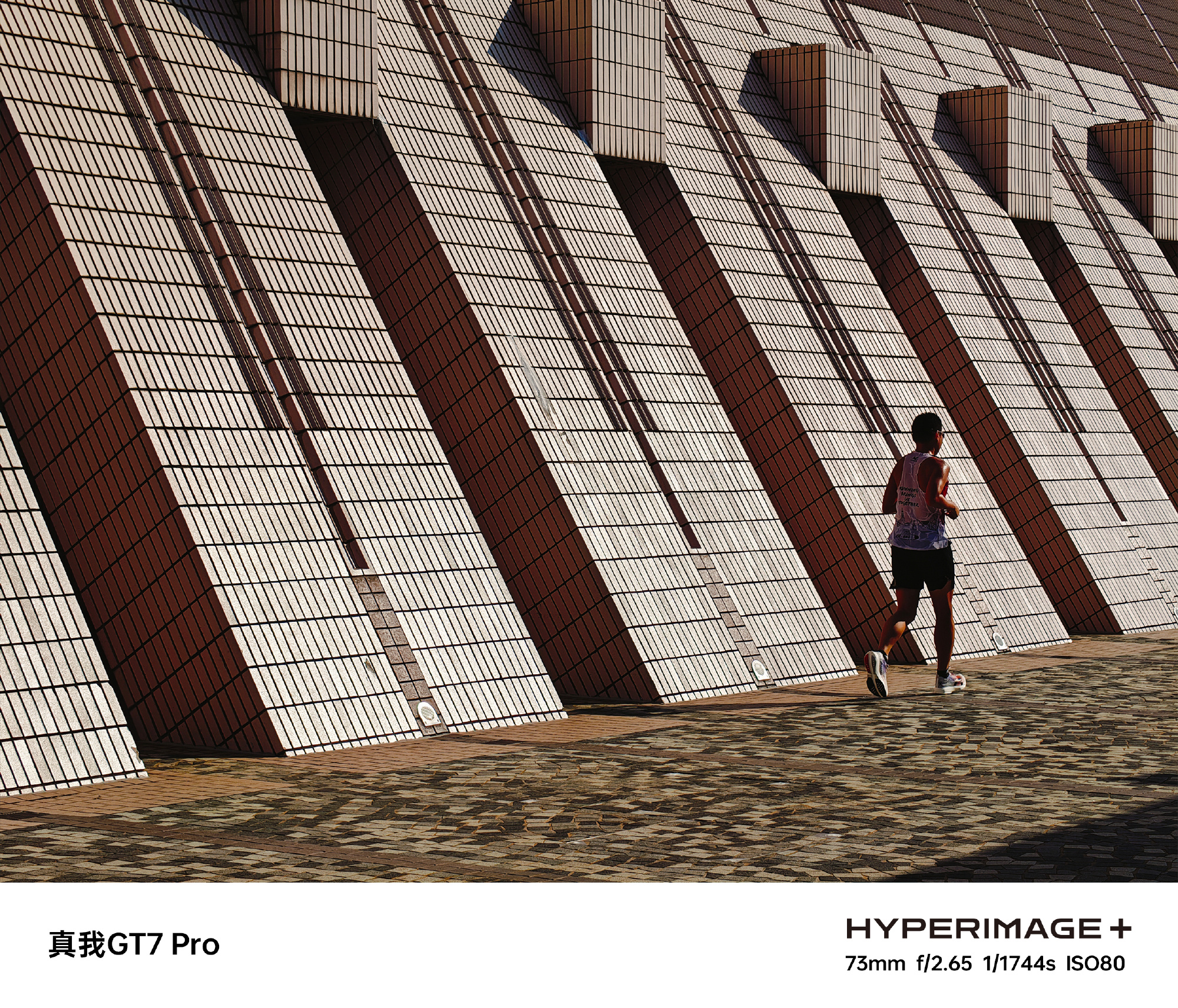
In a potential game-changer for the smartphone camera market, Samsung is reportedly gearing up to challenge Sony’s long-standing dominance as the exclusive supplier of image sensors for Apple’s iPhones.

According to renowned Apple analyst Ming-Chi Kuo, the South Korean tech giant is set to break into Apple’s coveted supply chain as early as 2026, with a 1/2.6-inch, 48-megapixel ultra-wide camera sensor slated for the iPhone 18 series.

iPhone 14 series camera

Samsung Forms Dedicated Team to Break into Apple’s iPhone Supply Chain

To achieve this ambitious goal, Samsung has established a dedicated team focused solely on meeting Apple’s stringent requirements. This strategic move signals a significant shift in the industry, as Samsung aims to diversify its camera sensor business and tap into the lucrative iPhone market.

The potential entry of Samsung into Apple’s supply chain is expected to have far-reaching implications. For one, it could intensify competition between the two tech giants, driving innovation and pushing the boundaries of smartphone camera technology. Moreover, Apple’s decision to diversify its suppliers could lead to potential cost reductions, allowing the company to offer more competitive pricing or invest in other areas of product development.

While Sony has been a reliable partner for Apple for years, concerns about supply chain stability and the integration of new camera technologies have reportedly prompted the iPhone maker to explore alternative options. Samsung’s advanced imaging capabilities and manufacturing prowess make it a strong contender to fill the void.

However, the road to becoming an iPhone supplier is fraught with challenges. Samsung will need to demonstrate its ability to meet Apple’s stringent quality standards, deliver consistent performance, and maintain tight production schedules. If successful, the partnership could solidify Samsung’s position as a global leader in image sensor technology.

As the competition heats up, consumers can expect to see even more impressive camera features and capabilities in future smartphones.

(Source)

Redmi K70 Ultra vs Redmi K70 Pro: Similar price but which should you buy?

Redmi has expanded its popular K series of smartphones with the new K70 Ultra (Check out our review). This is the latest high-end device from the lineup and sits right alongside the Redmi K70 Pro. But what’s the difference between the two? Which one is worth buying? Here’s a detailed breakdown.

The Redmi K70 Ultra is on sale for 429 US Dollars and the K70 Pro has a 439 US Dollar price tag on Giztop.

Redmi K70 Ultra vs Redmi K70 Pro

1. Redmi K70 Ultra vs Redmi K70 Pro: Higher Resolution or Faster Refresh Rate

The display on the Redmi K70 Ultra and K70 Pro are quite similar in many ways. Both of these phones sport a 6.67-inch OLED display that offers 4000 nits of peak brightness, 68 billion colors, and Dolby Vision support. However, the Redmi K70 Pro features a higher 2K resolution on its screen while the K70 Ultra has a 1.5K resolution panel.

This means that you can consume media content at a higher resolution. But the K70 Ultra swings back with a faster 144Hz refresh rate over the 120Hz on the Pro variant. In both regards, the trade offs aren’t notable enough to make a big difference. The 144Hz refresh rate isn’t that much higher, just like the 2K resolution. Although, I’d still prefer the higher resolution as a 6.67-inch display is still pretty tall.

2. MediaTek or Qualcomm

The Redmi K70 Pro is one of Xiaomi’s most powerful smartphones since it packs Qualcomm’s latest and greatest Snapdragon 8 Gen 3 SoC. This is the same chipset that powers most ultra high end Android devices. On the other hand, the K70 Ultra packs MediaTek’s flagship chipset, the Dimensity 9300+. These two chips are the fastest processors in the current market and can handle intensive tasks like gaming fairly easily. So you won’t go wrong with either.

3. Design

From a distance, it is hard to tell the difference between the duo. Only with closer inspection can the slight variations be noticed. They are identical from the front and have a similar camera module on the rear. However, the modules are circular on the K70 Pro and rounded squares on the K70 Ultra. The latter has an aluminum frame and a glass back. This metallic frame can also be found on the Pro model. But a major feature missing on the K70 Pro is the IP rating. It has no official rating, while the Ultra variant offers IP68 for water and dust resistance (up to 2m for 30 min).

4. Camera

Another area with a notable variance is the camera department. The Redmi K70 Pro has a versatile triple camera setup with a 50-megapixel main sensor, a 50-megapixel telephoto telephoto shooter (2x Optical Zoom), and a 12-megapixel ultra wide angle lens. Redmi’s K70 Ultra also features three cameras on the rear but skips the telephoto sensor in favor of a macro shooter. You still get a 50-megapixel primary sensor and an 8-megapixel ultra wide angle lens. The K70 Ultra and K70 Pro house a 20-megapixel and 16-megapixel selfie shooters respectively.

5. Pricing

As of right now, both phones are listed on Giztop with nearly identical price tags. The Redmi K70 Ultra is on sale for 429 US Dollars and the K70 Pro has a 439 US Dollar price tag. For this price, the K70 Pro is a slightly better deal. The camera, processors, design, and display are quite competitive. But the camera options are much better when compared to the K70 Ultra.

Xiaomi 14T Pro Surfaces On Geekbench With Dimensity 9300+ And 12GB RAM

The Xiaomi 13T is expected to get a successor soon as it was launched in September last year. The Xiaomi 14T has already bagged NBTC and IMEI certifications and was also spotted on HyperOS code and Camera FV-5 database. Now, the device has appeared on the Geekbench v 4.0 benchmarking platform. It reveals key hardware details about the upcoming offering. Read on to know below. 

Xiaomi 14T Pro Geekbench 

The Xiaomi 14T Pro has been listed on Geekbench with the model number 2407PFN8EG which is the same as other certification sites. The database mentions a motherboard codenamed ‘rothko’ that comprises of eight cores with a peak clock speed of 3.47GHz. There is a Mali-G720 GPU onboard. This suggests that the device would be powered by a MediaTek Dimensity 9300 Plus processor. The device is listed with 12GB RAM onboard and we can expect more options at launch. It will run on Android 14 OS out of the box. 

The Xiaomi 14T Pro scores 9,369 and 26,083 points in Geekbench’s single-core and multi-core test results. The benchmarking platform does not reveal any additional details about the smartphone. As per Camera FV-5 database, the upcoming offering is expected to feature a 50MP main sensor and a 32MP front-facing selfie snapper. 

The Xiaomi 14T Pro is expected to be a rebranded version of the Redmi K70 Ultra (review) that recently debuted in China. The later packs a 6.67-inch OLED display with 1.5K resolution, 4,000 nits peak brightness, and a 144Hz refresh rate. It is offered in up to 16GB RAM and 1TB storage configurations. The device is powered by a Dimensity 9300 Plus. A 5,500mAh battery cell powers the device with support for 120W charging. 

Source

Philips TAX2208 Bluetooth Party Speaker with 30W output launched in India

Philips has introduced the TAX2208 Bluetooth Party Speaker, targeting budget-conscious consumers looking for portable audio options. The speaker features a 30W output, dynamic bass boost, and party light modes for an enhanced audio experience. Its compact design includes a handle for easy portability.

One notable feature is the True Wireless technology, which allows users to pair two speakers for stereo sound. The speaker also has a built-in microphone and karaoke controls, making it suitable for at-home karaoke sessions. The TAX2208 offers up to 7 hours of playtime and supports both Bluetooth and wired connectivity.

Philips Audio TAX2208 Bluetooth Party Speaker

Pricing & availability

Priced at Rs. 5,490, the speaker is available for purchase across India. Sajeev Rajasekharan, Managing Director of Philips AVA & Soundbar Business at TPV Technology India, commented on the launch: “We are excited to introduce the TAX2208 Party Speaker, our latest addition to the Philips Audio lineup. This speaker reflects our commitment to delivering products that offer good audio quality with useful features. Whether hosting a gathering or enjoying music, the TAX2208 Speaker aims to enhance the listening experience.”

In other news, boAt has launched the Stone 352 Pro, a 600-gram Bluetooth speaker designed for group gatherings. It features a 14W RMS output with boAt’s Signature Sound technology and dynamic RGB lights. The speaker supports Bluetooth 5.3, TWS pairing, and includes USB, AUX, and TF card ports. It is IPX5 splash-resistant, offers up to 12 hours of playtime, and uses a Type-C charging interface.

Xiaomi reveals hefty repair costs for Mix Flip and Mix Fold 4

Xiaomi has unveiled the out-of-warranty repair costs for its recently launched foldable smartphones, the Mix Fold 4 and Mix Flip. While the devices have garnered significant attention for their innovative designs and cutting-edge technology, the price tags for replacing damaged components might give consumers pause.

Repair Costs High, Inner Screen Replacement Costs a Premium

The standout figure is the cost of the foldable inner screen. For the Mix Fold 4, replacing this crucial component will set users back a hefty 3,590 yuan ($497), while the Mix Flip’s inner screen is priced at 1,730 yuan ($240). These prices underscore the delicate nature of foldable displays and the potential expense associated with accidental damage.

Other costly components include the motherboards, whose prices fluctuate based on memory configurations. For instance, the top-tier Mix Fold 4 model with 16GB of RAM and 1TB of storage has a motherboard replacement cost of 2,880 yuan ($398). In comparison, the Mix Flip’s 12GB+256GB motherboard is priced at 2,370 yuan ($328).

While the costs of replacing individual components are high, it’s important to note that Xiaomi also charges labor fees for repairs. These fees are typically around 40 yuan ($5.54) per component.

Here are the complete charts detailing the repair costs for these smartphones:

Xiaomi Mix Flip (12GB+256GB) Spare Parts Prices

Part NameOut-of-Warranty Material Guidance Price (Yuan)
External Screen500
Front Camera60
Inner Screen (Foldable)1730
Rear Camera (Secondary)150
Rear Camera (Primary)220
Speaker20
Data Cable29
Motherboard2370
Charger100
Battery 1119
Sub-board85
Battery 259
Battery Cover120

Xiaomi Mix Fold 4 (12GB+256GB) Spare Parts Prices

Part NameOut-of-Warranty Material Guidance Price (Yuan)
Rear Camera (Ultra Wide Angle)30
External Screen750
Front Camera45
Inner Screen (Foldable)3590
Speaker40
Data Cable29
Motherboard2580
Charger100
Rear Camera (Wide Angle)200
Rear Camera (Floating Telephoto)120
Rear Camera (Close-up Telephoto)270
Battery 1199
Sub-board45
Battery 289
Battery Cover230

The release of these repair costs provides valuable insights into the potential expenses of owning a foldable phone. While these devices offer unique features and experiences, their fragility and complex design necessitate careful handling.

As the foldable phone market continues to grow, it will be interesting to see how repair costs evolve and whether companies will find ways to make these devices more affordable to maintain. For now, however, the high cost of replacing foldable screens remains a significant factor to consider for anyone looking to purchase these innovative yet delicate smartphones.

(Via)
Massive Leak Reveals Everything About The Pixel 9 Lineup

Up till now, details about the Pixel 9 series have leaked a lot. However, today’s leak is the biggest as reliable tipster Steve Hemmerstoffer (aka Onleaks) has shared the official promo material revealing everything from design to specs to AI features. The lineup includes the standard, pro, and fold devices which are already confirmed by the search giant. Google is slated to unveil its next-generation Pixel devices on August 13. 

Google Pixel 9 series surfaces in massive leak

The next-generation Pixel 9 lineup will include the Pixel 9, Pixel 9 Pro, and Pixel 9 Pro Fold. The report adds that the Pro variant will be available in two options with varied screen sizes. This suggests that the larger display could be dubbed the Pixel 9 Pro XL. The entire lineup is expected to be available in Dark Grey, Light Grey, Off-White (Procelain), and Pink. These are not the exact marketing names though. 

Beginning with the slab phones, the marketing material says polished edges meaning glossy flat frame and a soft matte back panel. Google has trimmed the horizontal camera bar on the back panel of the Pixel 9 series. It doesn’t span from one edge to the other although the protrusion is noticeable. The camera sensors are housed inside a pill-shaped cutout. The Pro models are also seen with a temperature sensor. 

As for the optics, the leaked material reveals that the Pixel 9 and 9 Pro will feature 50MP main and 48MP ultra-wide-angle lenses. The latter is upgraded from 12MP on the standard variant. The Pixel 9 Pro and 9 Pro XL are also set to get a 48MP periscope telephoto unit as previously rumoured. The standard model will retain the 10.5MP selfie snapper while the pro variants will have a 42MP sensor. 

The Pixel 9 will have a 6.3-inch Actua display whereas the Pixel 9 Pro will also come in the same screen size along with the additional 6.9-inch display variant. 

Coming to the Pixel 9 Pro Fold, it has a rectangular-shaped camera module with rounded corners. It is said to pack the same 6.3-inch Actua screen on the front as the non-fold Pixel 9. The inner screen will reportedly measure 8 inches with a Super Actua Flex panel. The triple rear camera setup is tipped to comprise a 48MP main camera, a 10.5MP ultrawide snapper and a 10.8MP telephoto sensor. There will be a 10MP selfie shooter.

On the hardware front, the entire Pixel 9 lineup is set to be powered by Tensor G4 chipset. The standard variant will pack 12GB RAM whereas the Pro, Pro XL, and Pro Fold will max out at 16GB. 

Pixel 9 AI features leaked

Similar to last year, Google will offer seven years of updates for the entire Pixel 9 series phones. They will come with Emergency SOS that will alert you about any crisis and are also claimed to counter malware and phishing scams. The search giant says that the devices are engineered and designed for AI. The upcoming offerings will of course come with Gemini AI and Circle to Search. The Pixel 9 series will also come with Pixel Screenshots that will save info for remembering later.

Source

Pixel Buds Pro 2 Leaked Case Reveals Minor Changes And Raspberry Color Option

Leaks and rumors are in full swing regarding Google’s upcoming Pixel devices. In the latest development, we get to learn about the Pixel Buds Pro 2’s details. It is expected to arrive as the successor to the original Pixel Buds Pro that debuted way back in 2022. A user on Reddit has shared images of the leaked Spigen case for the forthcoming TWS earphones from the search giant. Read on to learn the details. 

Pixel Buds Pro 2 leaked case reveals design and color option

The leaked images reveals that the Pixel Buds Pro 2 will have the same case design as its predecessor. It will retain the egg-shaped look. The key difference is the presence of a new cutout alongside the USB-C port at the bottom of the case. This could offer a wrist strap option or a speaker for Google’s Find My Device network. The earbuds also have a larger grille that are color-matched compared to Black on all variants of its predecessor.

The leak also reveals the TWS earphones in a Pink color much similar to what we saw on the Pixel 9. It confirms the previous report of the upcoming audio offering coming in Raspberry shade. The device is also expected to come in Mojito, Procelain, and Haze hues. The Pixel Buds Pro 2 are not expected to feature a major redesign but could be slightly tweaked to improve the fit of the earbuds. 

The leak does not reveal any additional details of the Pixel Buds Pro 2. As per a certification listing earlier in April this year, it is expected to pack an incrementally upgraded battery of 650mAh, up 30mAh from its predecessor. More information is expected to surface in the days leading up to the launch event. 

Since the original Pixel Buds Pro is getting a successor after two years, we can expect the Buds Pro 2 to pack significant upgrades in the audio department like sound quality and noise cancellation. 

HMD Crest, Crest Max Launched In India With OLED Display, Repairability, And More

HMD has finally made its entry into the Indian market with its smartphones. The Finnish brand has announced two new devices – the HMD Crest and HMD Crest Max. Both phones are affordable offerings under the Rs 17,000 price segment. They have identical designs and specifications apart from a few differences. Read on to know everything what the devices offer out of the box. 

HMD Crest, Crest Max specs

The HMD Crest and Crest Max come with a 6.67-inchOLED display bearing an FHD+ resolution, a 90Hz refresh rate, and a centre-aligned punch-hole cutout. Both phones feature a side-mounted fingerprint scanner embedded in the power button and a squarish camera module with a glossy finish on the rear. 

On the optics front, the HMD Crest has a 50MP main sensor along with a 2MP depth unit at the back. The HMD Crest Max features an upgraded triple camera setup comprising a 64MP main lens, 5MP ultra-wide-angle, and a 2MP depth unit. Both devices are fitted with a 50MP front-facing selfie snapper. There are various features onboard like night selfies, AI portraits, flash shots, and more. 

Under the hood, the HMD Crest and Crest Max are equipped with a Unisoc T760 chipset coupled with 6GB RAM on the former whereas the latter has 8GB RAM. The Crest packs 128GB storage whereas the Crest Max maxes out at 256GB. The smartphones draw their power from a 5,000mAh battery cell with support for 33W fast charging. The brand says that the latest devices come with Repairability 1.0 which makes it easier to replace the back panel, battery, display, and charging port thereby extending the lifespan. Software-wise, the phones run on Android 14 and are promised to receive 2 years of OS updates.

The HMD Crest costs Rs 14,999 whereas the Crest Max is priced at Rs 16,499. Both phones come in Purple and Red colors. The Crest and Crest Max are also offered in Blue and Green colors respectively. As a part of the launch offer, the former will be available at Rs 12,999 whereas the latter can be grabbed at Rs 14,999. The smartphones will go on sale during Amazon’s Great India Freedom sale next month.

Nothing Phone (2a) Plus confirmed to come with MediaTek Dimensity 7350 Pro

We shared with you that the news about the upcoming Plus model of Nothing Phone (2a) back in April. At that time, even the marketing name was still under wraps, but a couple months later, Nothing officially announced the arrival of Nothing Phone (2a) Plus. The phone will debut on July 21st in India.

Nothing just posted a new teaser on Twitter. It has been confirmed that the upcoming Nothing Phone (2a) Plus will feature the MediaTek Dimensity 7350 Pro chip. This chip is exclusive to the Nothing Phone (2a) Plus, so it’s unlikely we’ll see it in other smartphones.

Thanks to this new chipset, the Phone (2a) Plus will be 10% faster than the regular Phone (2a). The Mali-G610 MC4 GPU in the Dimensity 7350 Pro is also 30% faster. Nothing Phone (2a) Plus will debut with 12 GB of RAM and can expand up to 8 GB more. You can check out Nothing’s official Twitter post through the provided link.

Motorola Edge 50 August 1 Indian launch confirmed along with key specs

Motorola has announced the launch details of its new smartphone, the Edge 50, in India. Known for its sleek design and durability, the Edge 50 is set to hit stores on August 1st. This new device will be the fourth addition to the Motorola Edge 2024 lineup after the Edge 50 Pro, Edge 50 Ultra, and Edge 50 Fusion.

Motorola Edge 50

As per the official details revealed through its Flipkart microsite, the Edge 50 will launch with a vibrant 6.67-inch curved OLED screen with 10-bit color support, full coverage of the DCI-P3 color gamut and a peak brightness of 1,900 nits.

Motorola Edge 50

It will be powered by a Snapdragon 7 Gen 1 Accelerated Edition processor, paired with a Vapor Chamber Cooling System to keep the device cool during intense use. Despite its slim profile, Motorola has managed to fit a 5,000mAh battery inside the Edge 50, pairing it with 68W wired charging and 15W wireless charging.

It will run on an Android 14-based operating system and is confirmed to receive three years of OS upgrades and four years of security patches. For security, the device will feature an in-display fingerprint sensor.

Motorola Edge 50

As for optics, the brand has confirmed a 50 MP Sony LYT-700C primary sensor, paired with a 13MP ultra-wide camera with a macro option, and a 10MP telephoto camera with up to 30x digital zoom. The front camera will have a 32MP sensor.

Additionally, the device will feature military-grade durability with a MIL-810H certification, as well as an IP68 rating for dust and water resistance.

In other news, Oppo has finally started selling the vanilla Reno 12 model in India, a week after the Reno 12 Pro. The device is powered by a Dimensity 7300 processor and has a starting price of Rs 32,999. However, with bank discounts, it can be bought for as low as Rs 29,999.

(Source)

Apple Maps is now available for Windows and Linux

Apple is a company that usually keeps its glorious software exclusive to its own Apple devices. However, Apple Music is available on both Android and Windows, and the client for both platforms has a quite sleek design. Apple’s video call app, FaceTime was also exclusive to Apple devices in the past. And then Apple let people to make a call with Android users with the introduction of iOS 15. After a long wait, Apple Maps is finally available on non-Apple devices. Apple Maps Beta has been released platform-independently for everyone, it’s a website for now.

You can now use Apple Maps on your computer with a Windows or Linux operating system. We specify Windows or Linux because Apple Maps is not yet active for Android. In fact, Apple has not released a client for Windows or Linux. You can access Apple Maps through the Beta website. We also tried using it on an Android device, but unfortunately, Apple set the Maps to be only available for desktop web browsers.

The newly released website is not working smoothly as it does on Apple devices, but it is still worth to try. You can visit Apple Maps Beta from the given link.

Qualcomm announces launch date of Snapdragon 8 Gen 4, arriving on October 21st

As leaks about the Snapdragon 8 Gen 4 keep rolling in, Qualcomm has just announced the date for their upcoming Snapdragon Summit. A recent post on a Chinese tech blog revealed that Qualcomm’s next Snapdragon Summit will be held on October 21.

Snapdragon Summit on October 21, Snapdragon 8 Gen 4 is underway

Newly surfaced images show that Qualcomm hasn’t directly announced the launch date of Snapdragon 8 Gen 4 actually. However, the next Snapdragon Summit will take place in Hawaii from October 21 to October 23, and we believe Snapdragon 8 Gen 4 will be unveiled during this event. This new chipset is highly anticipated since it will be manufactured using TSMC’s 3nm process. Previous leaks suggest that the Snapdragon 8 Gen 4 scores around 10,000 in Geekbench multi-core CPU performance test, putting it kind of on par with the Apple M3 processor.

Snapdragon 8 Gen 4 will feature Qualcomm’s Oryon CPU, which promises to greatly enhance the mobile gaming experience. Another thing we know is Snapdragon 8 Gen 4’s prime core will run at 4.2 GHz. Xiaomi 15 series might be the first smartphone lineup to feature Snapdragon 8 Gen 4.