Advertisement

Vivo to launch its first mixed reality headset in 2025

Vivo recently hosted an Imaging Festival event in China, where it detailed its vision for the future of mobile imaging. We have a separate story covering those details.

During the event, the company also confirmed its upcoming venture into the realm of mixed reality (MR). Vivo officially announced that it will launch an MR wearable headset in 2025.

Vivo’s executive vice president, Hu Baishan, hinted at the company’s interest in MR technology during the Boao Forum for Asia earlier this year. There, Baishan said MR is the next major advancement in mobile technology. And now we have official confirmation of Vivo’s plans in this area.

Extended Reality (XR) isn’t entirely new territory for Vivo. The company launched its first AR smart glasses in 2019. But it was not a standalone device, rather required pairing with their 5G smartphones to work.

We hope the upcoming MR device will offer a more immersive and standalone experience, similar to Apple’s Vision Pro, but nothing is confirmed yet. 

Vivo’s commitment to innovation comes amidst its strong market performance. According to Canalys, Vivo currently holds the top spot in the Chinese smartphone market with a 19% market share. The company’s high-end Vivo X series has also seen continued growth, further strengthening its position in the competitive and premium consumer device segment.

Competitors like Huawei and Oppo are also rumored to be developing similar MR products, but there has been no official confirmation from these brands yet.

The Imaging Festival served as a platform for Vivo to showcase its innovations. The company confirmed that its next flagship smartphones, likely the Vivo X200 series, will feature an in-house Blueprint image sensor, Blueprint Algorithm Matrix, and Blueprint Imaging chip.

Vivo’s entry into the mixed reality (MR) space is a significant development in the wearable device market. The company’s success in the smartphone sector will undoubtedly influence its approach to this new frontier.

Apple stumbles in China, falls out of top five smartphone vendors

Apple has fallen out of the top five smartphone vendors in China for the first time since its rapid rise in the market. According to market research firm Canalys, iPhone shipments in China declined by 6.7% year-on-year in the second quarter of 2024. 

Analysts attribute this drop to the resurgence of domestic brands. Fueled by advanced, locally produced components, Chinese companies like Huawei, Vivo, Oppo, Honor, and Xiaomi have seen significant growth. Huawei, in particular, has made a strong comeback in the high-end market, challenging Apple’s premium status.

The Chinese smartphone market as a whole grew by 10% year-on-year, with over 70 million units shipped in Q2. Vivo led the market with a 19% share (13.1 million units shipped), followed by Oppo, Honor, and Huawei, each shipping around 10 million units. Xiaomi, which had been struggling, saw a 17% year-on-year increase, re-entering the top five with 10 million units shipped.`

In contrast, Apple’s shipments fell to 9.7 million units, giving it a reduced market share of 14%. Despite offering discounts of up to 23%, the company struggled to maintain its position. Domestic competitors benefited from localized supply chains and strong brand loyalty among Chinese consumers.

In response to this decline, Apple’s Chief Operating Officer Jeff Williams recently visited China to meet with officials and reaffirm the company’s commitment to the market. Analysts like Lucas Zhong of Canalys suggest that Apple needs to localize its “Apple Intelligence” platform for China within the next year to regain lost ground. The upcoming iPhone 16 lineup also presents a chance to boost demand and improve Apple’s market position.

However, the competition is fierce. Domestic brands offer attractive features at competitive prices, and it remains to be seen whether Apple can adapt and reclaim its former dominance in China.

(Source)

ASUS Launches ProArt 16 2024 Laptop with AMD Ryzen AI Processor, RTX 4060/4070 Graphics and a 15,999 Yuan Price tag

ASUS has launched its ProArt 16 2024 laptop, featuring the new AMD Ryzen AI 9 HX370 processor and NVIDIA RTX 4060 or 4070 graphics. Designed for creative professionals, the laptop boasts a 4K OLED display with 100% P3 color gamut and a peak brightness of 600 nits.

The laptop has a slim 14.9mm profile and 1.8 kg weight

The ProArt 16 2024 incorporates ASUS’ iconic virtual knob function, enhancing user experience for creative software. The laptop’s slim 14.9mm profile and lightweight 1.8kg design prioritize portability, while the inclusion of a 90Wh battery ensures sufficient power.

With a focus on performance, the laptop features a three-fan cooling system, liquid gold thermal conductivity, and up to 120W TDP. Additional features include a 10-point touchscreen, Wi-Fi 7 connectivity, and a versatile port selection.

Starting at 15,999 yuan, the ProArt 16 2024 offers various configurations to cater to different user needs and budgets. This new laptop is a testament to ASUS’ commitment to providing powerful and efficient tools for creative professionals.

(Via)

Tesla Begins Rolling Out FSD v12.5.1 Update

Tesla has commenced the rollout of its FSD (Full Self-Driving) v12.5.1 update to select vehicles. This latest iteration promises big improvements, including the integration of urban and highway driving capabilities, previously separate functions.

Tesla’s Cybertruck will be the first model to receive the new update.

The update, bundled with software version 2024.20.15, marks a milestone in Tesla’s autonomous driving development. Key features of the v12.5.1 update include earlier and more natural lane changes, enhanced driver monitoring, and expanded compatibility, with the Cybertruck being the first model to receive the FSD feature.

Tesla China

Elon Musk has previously expressed optimism about the v12.5.x updates, highlighting expected reductions in driver interventions per mile. Additionally, the upcoming “Actual Smart Summon” feature will be introduced in this version, operating independently of the core FSD system.

While the initial rollout is focused on Model Y vehicles equipped with HW4 hardware, Tesla plans to expand FSD v12.5 compatibility to other models in the future.

(Via)

Ryzen AI 9 365-powered 13.9mm ASUS Fearless Pro16 2024 laptop on sale in China

ASUS announced the Fearless Pro16 2024 laptop just a couple of days ago. Now the laptop is on sale in China and is priced at 7999 Yuan (around $1100) for the 32GB + 1TB configuration. This laptop is equipped with a Ryzen AI 9 365 processor and a 16″ 3.2K OLED display.

You get an all-metal body design, which is only 13.9mm thick and weighs only 1.5kg. This lid supports 180-degree opening and closing. Upon opening up the lid you will be looking at a 120Hz OLED screen that covers 100% P3 wide color gamut, supports 10-bit color depth, and reaches a peak brightness of 600 nits. You can get an idea of the bezels from the image above. There is a 1080p IR camera on top of the display panel.

The AMD Ryzen AI 9 365 processor is built on TSMC’s 4nm FinFet process and is equipped with a 10C20T Zen 5 core and a Radeon 880M integrated GPU. This iGPU comes with 12 Compute Units (768 unified shaders) running at up to 2,900 MHz. It supports up to 4 monitors with resolutions as high as SUHD 4320p60. The processor also equips an XDNA 2 NPU with 50 TOPS computing power. You can get an idea of the GPU performance of the laptop from the image below.

It is reported that the performance of the Radeon 880M iGPU is 15% higher than that of the previous generation Radeon 780M, which is close to the level of 40W RTX 3050. Also, this machine comes with a dual-fan dual-heat pipe cooling system, which can release 50W of performance in full-speed mode.

The Fearless Pro16 2024 packs a 75Wh battery. All the ports are listed below:

  • Fully functional USB4 40Gbps
  • Fully functional USB C 5Gbps
  • HDMI 2.1 TMDS (supports 4K 60Hz)
  • 2 x USB-A 3.2 5Gbps
  • audio jack
  • MicroSD card reader

Xiaomi 15 Ultra will have dual-layer OLED display and 24GB RAM, claims tipster

Another leak regarding the upcoming Xiaomi 15 series has surfaced, this time focusing on the top-tier Xiaomi 15 Ultra. 

While the standard and Pro models are expected to launch shortly after Qualcomm’s Snapdragon 8 Gen 4 release, making them the first to feature this new SoC, the Ultra variant is rumored to be released sometime in Q1 2025. But leaks have been trickling out, revealing details about the phone. 

Now, tipster Smart Pikachu suggests the phone will feature a 2K dual-layer OLED display. This technology, recently dubbed “Tandem OLED” by Apple in their latest iPad, offers improved brightness and HDR performance compared to single-layer OLED panels. 

While Apple may have brought the term to the mainstream, Honor actually debuted it earlier with the Magic 6 Ultimate. Nonetheless, Xiaomi seems ready to embrace the stacked OLED trend.

The Xiaomi 15 Ultra is expected to be powered by the Snapdragon 8 Gen 4 processor, like its siblings. The leak also hints at an impressive 24GB of RAM and a battery capacity of over 6000mAh.

However, this might come at a cost — both in terms of weight and size. Smart Pikachu suggests that the 15 Ultra won’t be light or thin. Xiaomi’s current flagship, the 14 Ultra, is already quite hefty at 9.2mm thick and weighing 229.5 grams. The 15 Ultra could be a real hand-filler if the leak holds true.

Xiaomi 14 Ultra
Xiaomi 14 Ultra

It’s important to remember that these are just leaks, and Xiaomi’s final design choices could differ. However, they do offer a glimpse into the potential direction the company might be taking with its upcoming flagship. 

A previous report also indicated that Xiaomi has plans to launch both the vanilla model and the Xiaomi 15 Ultra globally, while the Xiaomi 14 Pro may remain exclusive to the Chinese market.

Asus launches Zenbook 16 Air AI-powered laptop with Ryzen AI 9 HX370 in China

Asus has launched the Zenbook 16 Air laptop in China, equipped with the latest AMD Ryzen AI 9 HX370 processor. The variant with 32GB of LPDDR5X RAM and a 1TB PCle 4.0 SSD is priced at 12,999 yuan ($1,792) and is now available for purchase on JD.com. Let’s check out its key specs.

Asus Zenbook 16 Air

Asus Zenbook 16 Air Specifications:

The laptop boasts a 2.8K (2880×1800 pixels) 120Hz OLED display that comes with HDR 500 certification, 10-bit color depth, and a peak brightness of 550 nits. The display covers 100% of the P3 wide color gamut and is factory-calibrated to ensure a Delta E<1 color accuracy.

The laptop is powered by AMD Ryzen AI 9 HX370 processor built with 12C24T Zen 5 cores and integrates Radeon 890M graphics based on RDNA 3.5 architecture. It also includes an NPU with a computing power of 50 TOPS.

The laptop is designed with Ceraluminum, a high-tech ceramic aluminum material, and CNC technology, available in Snowfield White and Mountain Mist Grey. It has a thickness of approximately 1.1 cm and weighs 1.49 kg.

The cooling system of the Zenbook 16 Air includes a dual-fan VC uniform heat plate capable of providing 28W of cooling power. The C-side of the laptop features 3,522 CNC machined cooling holes, enhancing airflow efficiency by 50%.

Asus Zenbook 16 Air

The Zenbook 16 Air is powered by a 78Wh battery, offering up to 20 hours of local video playback. The laptop also includes a 6-speaker sound system, a 240Hz refresh rate touchpad, a Wi-Fi 7 card, and 1080p AI dual cameras.

Despite its slim profile, the Zenbook 16 Air is equipped with a full set of high-speed interfaces, including two USB4 ports, USB-A, HDMI, a standard SD card slot, and an audio interface. These ports support quick charging, 4K external displays, and high-speed data transfer up to 40Gbps, ensuring seamless connectivity for all your peripherals.

Asus has equipped the laptop with several intelligent features, including an ambient light sensor, hardware-level blue light protection, and MyAsus software for custom settings and performance optimization. The laptop also supports GlideX for multi-screen collaboration and Asus Flash Transfer for seamless file transfers between devices.

AOC launches 27G10ZE gaming monitor with 27″ FHD Fast IPS 260Hz panel & 1ms response time

AOC has launched a new high refresh rate gaming monitor called 27G10ZE in the Chinese market. The monitor is now up for sale on JD.com with an introductory price of 999 Yuan ($138). Let’s check out its key specs.

AOC 27G10ZE Monitor

AOC 27G10ZE Monitor Specifications:

The “27G10ZE” features a 27-inch Fast IPS panel with 1920×1080 resolution. The monitor boasts an overclocked 260Hz refresh rate along with a 1ms response time for minimal input lag and blur during fast-paced action.

The monitor comes with 300 nits brightness and supports 8-bit color. It covers 96% of the DCI-P3 and 129% of the sRGB color gamut, ensuring vibrant and accurate color reproduction suitable for both gaming and graphic design.

AOC has equipped this model with a range of features to enhance the gaming experience. It supports Adaptive Sync technology, reducing screen tearing and stuttering for smoother gameplay. The monitor also features HDR10 decoding, offering a high dynamic range for more detailed and realistic images, especially in darker or brighter scenes.

The monitor boasts a Low Input Lag mode that minimizes the time it takes for the monitor to display on-screen actions after you input a command through your mouse or keyboard. Additionally, the monitor includes a Low Blue Light mode and Flicker-Free technology to help reduce eye strain during long gaming sessions.

For further customization, the G10ZE comes with G-Menu adjustment software, allowing users to tailor color and brightness settings to their preferences for different games. The software also enables setting macros and quick switching to game mode with a single button press.

The design of the monitor includes practical features like a cable management hole to keep the setup tidy and a quick-release button for easy installation and dismantling. The stand is finished in space gray with a decorative red strip, adding a touch of style to its functional design.

The monitor’s connectivity options include two HDMI 2.0 ports, one DP 1.2 port, and a 3.5mm audio jack for connecting headphones or speakers. The stand allows for tilting and rotation for ergonomic positioning, and VESA wall mounting is also supported for a cleaner setup.

Huawei’s first gaming laptop leaks in real-life image

The 2024 ChinaJoy expo is currently in full swing with various brands announcing several new products — Lenovo Xiaoxin 12.5 tablet for instance. 

Huawei is one of the participants who made a surprise reveal of a new, yet-to-be-announced notebook at the event. Although the company hasn’t shared any details yet, the laptop features a “GT” logo on both the chassis and packaging. 

Historically, Huawei has reserved the “GT” designation for high-performance products, such as the outdoors-oriented WATCH GT smartwatch and the feature-rich MateView GT monitor. Given this pattern, it is rumored that this “GT” branded laptop might be Huawei’s first gaming laptop.

Visually, the leaked images reveal a couple of interesting details. The notebook sports a glowing Huawei logo on the lid and a rear-mounted air vent design for efficient heat dissipation. These gaming-centric design choices further support the theory of a Huawei gaming laptop in the works.

As expected, the specifications haven’t been revealed yet. However, a Chinese media report suggests that Huawei’s gaming laptop might be equipped with an Intel Core Ultra processor and 140W charging support, similar to the Huawei MateBook X Pro.

Currently, Huawei’s laptop portfolio includes the sleek MateBook X series, the versatile MateBook series, the budget-friendly MateBook D series, and the business-oriented MateBook E series. 

However, the company has yet to launch a dedicated gaming laptop. The recent reveal suggests Huawei is finally entering the gaming market. And according to several Chinese tech publications, the device will be possibly named “MateBook GT.”

The launch date remains a mystery. Based on Huawei’s previous launch cycles, we might expect to see the “MateBook GT” unveiled at their upcoming autumn product launch event. Until then, we can only speculate and keep an eye out for further developments.

HMD 225 4G renders and specs leak hints at another Nokia phone rebrand

A leak from tipster HMD Meme on X (formerly Twitter) suggests that HMD Global might be preparing for another Nokia phone rebrand soon. The leak details the specifications of an upcoming HMD 225 4G, which appear to be identical to the existing Nokia 225 4G launched earlier this year.

The HMD 225 4G, if real, would sport a small 2.4-inch IPS LCD with 400 nits of peak brightness. Under the hood, the leak suggests a Unisoc T107 SoC, a modest chipset commonly found in entry-level feature phones.

The camera department appears equally basic, with a single 2-megapixel sensor capable of capturing HD videos. Storage capacity and RAM details remain unknown, though considering the phone’s target audience, they’re likely to be on the lower end. 

Connectivity options include Bluetooth 5.0, 4G LTE for basic internet access, a dual SIM slot for juggling phone numbers, and a beloved classic – a 3.5mm headphone jack.  The leak also mentions an FM radio and an IP52 rating for basic dust and water resistance.

The leaked specifications of the HMD 225 4G are almost identical to those of the Nokia 225 4G, suggesting that this could be merely a rebranding. The tipster also shared renders of the HMD 225 4G, which closely resembles its Nokia counterpart.

HMD has yet to officially comment on the leak or the existence of the HMD 225 4G. The company recently launched a trio of feature phones under the Nokia brand – the 215 4G, 225 4G, and 235 4G – all sharing similar specifications, including the Unisoc T107 chipset and the S30+ operating system. 

Given the striking similarities between the leaked HMD 225 4G and the Nokia 225 4G, it is possible that the HMD 225 4G is a strategic rebrand for specific markets. 

This wouldn’t be the first time HMD has taken this approach. The company has previously released certain Nokia phones under its own branding in select regions, such as the HMD 105 and Nokia 105 (2024).

Oppo’s new affordable smartphone equals Galaxy S24 Ultra charging speed

Oppo has introduced its latest budget-friendly smartphone, the A3 Energy Edition, in China. The device focuses on offering durability, battery life, and performance, all at an affordable price. Let’s delve into the details.

Oppo A3 Energy Edition Specifications

The A3 Energy Edition is available in three colors: Purple Crescent, Bamboo Forest Green, and Fog Sea Black. It features a sleek design, with a lightweight build that is 7.68mm thick and weighs around 186g, making it easy to handle.

Designed for everyday use, the smartphone has an IP54 rating for dust and water resistance, making it capable of withstanding brief exposure to rain. Oppo claims it has passed a 10-minute simulated rain test and the phone also promises reliable touch functionality even with wet or oily fingers.

Oppo A3 Energy Edition Specs Price Launch

To further enhance its resilience, Oppo is shipping the smartphone with an anti-fall protective case with raised corners and an anti-slip vertical stripe design for a better grip.

The display, while decent, is not particularly outstanding. It features a 6.67-inch LCD panel with HD+ resolution, a 120Hz refresh rate, and a peak brightness of 1000 nits.

Oppo A3 Energy Edition Specs Launch Price

Under the hood, the phone is powered by a MediaTek Dimensity 6300 processor, a mid-range chipset capable of handling everyday tasks. It comes with a 5100mAh battery that supports 45W fast charging, comparable to flagship models like the Galaxy S24 Ultra. The device offers 12GB of RAM and 256GB of storage, with an option to upgrade to 512GB.

Oppo A3 Energy Edition Display

The camera system includes a dual rear setup, with a primary 50-megapixel sensor and a secondary 2-megapixel sensor. The front-facing camera is 8-megapixels. The phone also includes AI features such as object removal, cutout, and document scanning for added convenience. It has a single speaker for audio output.

Price and Availability

The Oppo A3 Energy Edition is priced at 1,799 yuan (approximately USD 248) for the 12GB + 256GB variant. The 12GB + 512GB model is available for 2,399 yuan (approximately USD 350). You can purchase it from the company’s official store in China

(Source)

Vivo Launches Y37 5G in China, Powered by the MediaTek Dimensity 6300, 5000 mAh Battery, Starting at 1,199 Yuan

Vivo has launched its latest budget-friendly smartphone, the Y37 5G. The device boasts a sleek design with a flat frame and a 6.56-inch LCD waterdrop notch display. Powered by the MediaTek Dimensity 6300 processor, the Y37 5G offers a balance of performance and efficiency. The device comes equipped with up to 8GB of RAM and 256GB of storage, expandable via a dedicated microSD card slot.

The Vivo Y37 5G will run on Origin OS based on Android 14

Photography enthusiasts will appreciate the 13-megapixel main camera, capable of 10x digital zoom. A 5-megapixel front camera handles selfies and video calls. The Y37 5G houses a substantial 5000mAh battery with support for 15W charging. Additional features include a side-mounted fingerprint scanner, dual-mode 5G connectivity, and OriginOS 4 based on Android 14.

Vivo Y37 5G

The Vivo Y37 5G is offered in multiple configurations to cater to different user needs and budgets. Here’s a breakdown of the pricing:

4GB RAM + 128GB storage: 1,199 yuan
6GB RAM + 128GB storage: 1,499 yuan
8GB RAM + 128GB storage: 1,799 yuan
8GB RAM + 256GB storage: 1,999 yuan
12GB RAM + 256GB storage: 2,099 yuan

(Via)

ViewSonic Unveils New 27-inch 4K Monitor with 400 Nits Brightness, Priced at 1429 Yuan ($197)

ViewSonic has launched a new 27-inch monitor, the VX2730-4K-HDU, featuring a 4K resolution (3840 x 2160) and a 73Hz refresh rate (overclocked). The IPS panel offers a brightness of 400 nits, 10-bit color depth, and 100% sRGB color gamut, making it suitable for various tasks, including content creation.

The monitor is suitable for creators, owing to its 100% sRGB color gamut

The ergonomic stand allows for tilting, lifting, and pivoting the display for comfortable viewing positions. It also supports VESA wall mounting for versatile placement options. In terms of connectivity, the VX2730-4K-HDU includes HDMI, DP, and USB-C (with 65W Power Delivery) ports.

While the monitor isn’t available on JD.com yet, third-party sellers on Taobao are offering it for around 1429 yuan (US$218).

(Via)

Maximize savings on Galaxy S24 and Galaxy S24 Ultra with these Trade-In deals in the US

It’s been a few months since we got the latest Galaxy S24 series, featuring the powerful Snapdragon 8 Gen 3 SoC. The launch offers may have expired, but, there are new special deals on all three smartphones, including the Galaxy S24, Galaxy S24+, and Galaxy S24 Ultra. There’s a big chance to save the most if you consider the new deals on the Galaxy S24 series. You may be able to save up to $1000 if you trade in your old smartphone.

Apart from the direct discount on the Galaxy S24 series if you buy the smartphone outright, there are some massive discounts on the trade-in deals. That’s where you can unlock maximum savings. You may get the Galaxy S24 and Galaxy S24+ for free from three different US-based carriers if opt for 24-month lock-in deals. Let’s dive into deals, so you can save the most:

Explained: Deals on Samsung Galaxy S24, Galaxy S24 Plus and Galaxy S24 Ultra in the US

AT&T

Get Galaxy S24 for $11/m

There’s an offer from AT&T where users can get a Galaxy S24 for the price of $11/month without any extra. Additionally, if you wish to add another line, you can get it for a mere $6 per month. In total, you are getting two Galaxy S24s for $17/month.

AT&T is offering the Galaxy S24+ fora free if you trade in your old device and upgrade to an eligible plan.

The Samsung Galaxy S24 Ultra is available with an over $1000 discount with an eligible trade-in.

Verizon

Get Free Galaxy S24

Verizon is offering three different deals on the Galaxy S24: get it for free if you add in a new line, trade in on a new line, or trade in on an upgrade.

For the Galaxy S24+, the user can get it for $5.55/month for 36 months if they get a new line or upgrade to a compatible plan.

Best Buy

Best Buy is offering a $100 discount on the Galaxy S24 if you grab it for $700 and use Activate Today.

Amazon

Amazon is offering the Galaxy S24, and the user can get the $800 device for five payments of $160 and 24 payments of $33.33.

The shopping giant is currently offering $100 off on the Galaxy S24+ on all storage models.

Samsung.com

Samsung seems to be offering $600 in credit by trading in an old smartphone. Moreover, the discounts can increase if you buy select accessories with your purchase.

Meanwhile, the Galaxy S24 Ultra is available for $1300, with a 512 GB model and 1 TB for $1420.

VXE launches MAD R ultra-lightweight gaming mouse with PAW 3395/3950 sensors, triple connectivity & more

VXE has launched a new gaming mouse called MAD R in the Chinese market. The mouse is priced at 199 Yuan ($27) and its first sale is scheduled at 8 PM (CST) on July 30. Let’s check out its key specs.

VXE MAD R Mouse

VXE MAD R Mouse Specifications:

The MAD R’s key feature is its incredibly light weight of only 36 grams. VXE touts this design as “Seamless with the user—hard to go back,” suggesting a comfortable and effortless control experience for gamers.

The mouse is equipped with PAW 3395/PAW 3950 sensors, providing precise accuracy ideal for gaming. The mouse also uses a Nordic nRF52840 main controller, which is complemented by Smaer Speed X Wireless transmission technology. This combination ensures low latency and extended battery life.

The MAD R utilizes Omron optical micro-motion switches, promising a lifespan of over 60 million clicks and a three times faster response compared to traditional mechanical switches. Additionally, the mouse supports ATK VHUB for efficient and quick control.

The mouse supports both wired and wireless connectivity. In wired mode, it offers a 1KHz report rate, while in wireless mode, it supports an 8KHz report rate. Under the hood, the mouse comes with a 200mAh battery.

The gaming mouse is available in black and white colors and boasts a 120mm hand-fit design, ensuring a comfortable grip for users. The dimensions of the mouse are 120.1 x 63.2 x 38.1 mm. It also features an ice-feel coating, enhancing the tactile experience by providing a cool and delicate surface.

The recommended minimum hardware configuration for using the MAD R mouse includes an Intel i7-9700k or AMD Ryzen 3600x CPU, an NVIDIA RTX 2060 or AMD RX5700 XT GPU, 16GB of RAM, and a monitor with a 240Hz refresh rate.

Huawei’s upcoming Kirin chip to feature 5nm process and frame interpolation tech

Prolific tipster Digital Chat Station (DCS) took to Weibo to reveal there is a new “5nm” processor with frame interpolation technology is in development. Although the tipster did not mention the name of the SoC, it is likely the upcoming Kirin 9-series chip from Huawei, since it has long been rumored to be manufactured on a 5nm process.

Frame interpolation isn’t entirely a new concept; it’s already used in TVs and some smartphones to create smoother motion by adding extra frames between the original ones. The leak also mentions “buffer compensation,” likely referring to techniques that counteract the delay caused by interpolation.

If implemented, frame interpolation could offer several benefits. Gamers might experience a more fluid gameplay experience, especially in demanding titles that push the graphics hardware. Additionally, DCS suggests that this technology could reduce power consumption, leading to better battery life during long gaming sessions.

Huawei 5nm Kirin chip frame interpolation

However, Huawei wouldn’t be the first smartphone manufacturer to implement frame interpolation tech, if the leak proves true. OnePlus 12, for instance, has a feature called HyperRendering, which is essentially a fancier name for frame interpolation. And it does the exact same thing — adds artificial frames between the original ones.

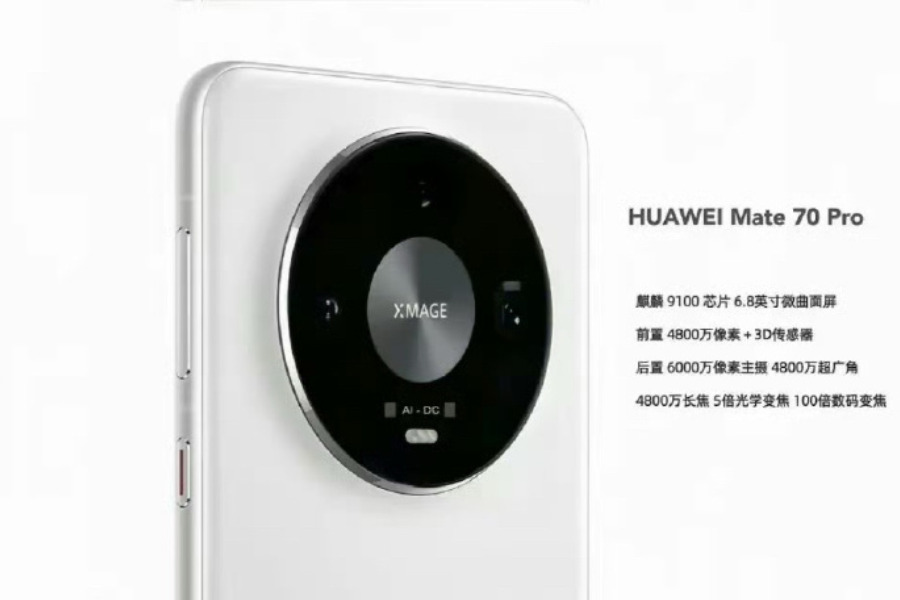
The new 5nm Kirin processor is expected to debut in the Huawei Mate 70 series. The line will also be the first to come with HarmonyOS NEXT software pre-installed. 

According to earlier reports, the Mate 70 series will feature a 1.5K LTPO display, an Omnivision OV50K main camera with an ultra-large variable aperture, and a large battery possibly using silicon negative electrode technology for better efficiency. For added security, Huawei may include 3D face scanning.

Additional features may include 3D spatial zoom in the cameras and satellite communication support for emergencies. The Mate 70 series is expected to launch in the middle to late fourth quarter, potentially in December or later.

(Source)

Russia to Slow YouTube Speeds Amidst Ongoing Conflict

Russia is set to significantly reduce YouTube speeds on desktop computers in response to Google’s refusal to unblock channels affiliated with Russian media. The decision comes amid ongoing tensions between the two countries.

Senior Russian Lawmaker claims that YouTube speeds will drop by up to 70% next week

According to a senior Russian lawmaker, Alexander Khinshtein, the speed reduction is a direct consequence of Google‘s failure to upgrade its equipment in Russia and its refusal to comply with Russian content moderation demands. Khinshtein claims YouTube speeds will drop by up to 70% next week.

YouTube Ad Blocker Detection Scripts

Russia’s communications regulator, Roskomnadzor, has also accused Google of neglecting its Russian infrastructure, allowing its local subsidiary to go bankrupt. This, in turn, has hindered the company’s ability to pay for local data center services.

Google’s decision to block channels associated with Russian state-funded media in March 2022, citing its policy on violent events, has further exacerbated tensions between the two countries. Russia has responded with various measures, including blocking and slowing down other social media platforms.

Despite these actions, many Russians continue to access blocked content through virtual private networks (VPNs).

(Via)
Pixel 9 Pro XL leaks yet again, in a long 19-minute video this time

With Google’s Pixel 9 launch event still three weeks away on August 13th, a video of one of the devices in the lineup, the Pixel 9 Pro XL, has already surfaced on YouTube.

Google Pixel 9 Pro XL Video Review leak

The video gives us a good peek at the Pixel 9 Pro XL’s design, though it appears to be a non-functional prototype, according to Android Authority. It can be identified by the geometric design carved below the “G” logo on the back. Additionally, the YouTuber doesn’t power on the device, further suggesting it may not even boot into Android.

However, the video offers a good view of the device’s physical design. But the rest of the video mainly discusses already-known rumors. For instance, the Pixel 9 Pro XL has already been seen in hand and compared to current flagship models like the Pixel 8 Pro and the Galaxy S24 Ultra.

As for the rumored specifications, the Pixel 9 Pro XL is expected to feature Google’s next-generation Tensor G4 chipset. It may come with a 6.8-inch display boasting a smooth 120Hz refresh rate and a sharp QuadHD+ resolution. Leaks suggest it could start with a base configuration of 16GB of RAM and 128GB of storage.

On the camera front, the Pixel series has consistently delivered impressive image processing capabilities, and the Pixel 9 Pro XL is rumored to continue this trend. It may include a 50MP main sensor, a 48MP ultrawide lens, and a 48MP periscope telephoto lens for advanced zoom capabilities. Additionally, a 42MP front-facing camera is expected for selfies and video calls.

While this leak offers a look at the Pixel 9 Pro XL’s design, it’s important to note that these details are not confirmed by Google. We will have to wait until the official event on August 13th for a complete picture of the Pixel 9 series, including pricing and availability information.

AYANEO announces release dates for Pocket DMG and Pocket Micro retro gaming handhelds

Gaming handheld maker AYANEO has confirmed the global release dates for the Pocket DMG and Pocket Micro retro gaming handhelds. The two handhelds will be unveiled simultaneously on July 31.

AYANEO

The two upcoming AYANEO retro gaming handhelds resemble classic Nintendo systems like the GameBoy and GameBoy Micro. They however have the complement of modern features like an OLED display and chipsets powerful enough to emulate games from most of the popular game consoles.

AYANEO still has a few unreleased gaming handhelds whose launch dates are still unknown. Models such as the Pocket EVO, AM01S mini-PC, and AG01 eGPU are believed to be in line for the subsequent AYANEO product launch. The route of release and specs of the AYANEO upcoming products are still uo

The AYANEO Pocket DMG and AYANEO Pocket Micro come with different chipsets and will target different user experiences. The Pocket DMG is equipped with the Qualcomm Snapdragon G3x Gen 2, which is also featured in the Pocket S. The Snapdragon G3x Gen 2 is currently among the most powerful SoCs deployed in Android gaming handhelds, The AYANEO Pocket Micro is powered by the MediaTek Helio G99 chipset. This restricts the Pocket Micro to games from GameCube, PlayStation 2 or PlayStation Portable.

Both the AYANEO Pocket S and Pocket Micro are preparing to launch globally via the Indiegogo crowdfunding platform. The brand has however not released any pricing information for the two models.

Google is Redesigning Chrome’s Downloads using AI-powered Google Safe Browsing Tech

Google is bolstering Chrome‘s security features with a redesigned download experience. The browser will now differentiate between “suspicious files” and “dangerous documents” using AI-powered Google Safe Browsing technology. This categorization, indicated by distinct icons, colors, and text, aims to empower users to make informed decisions about downloaded files.

Chrome users with enhanced protection mode enabled can automatically scan downloads

To further strengthen protection, Chrome users with Enhanced Protection mode enabled will benefit from automatic deep scanning of downloaded files, eliminating the need for manual security checks. This proactive approach aims to prevent malicious downloads.

Google Chrome

By improving clarity and consistency in download warnings, Google hopes to reduce the likelihood of users bypassing security measures and increase overall online safety.

(Via)