Advertisement

Insta360’s New AI Phone Stabilizer will Integrate with Apple’s DockKit, Launch Slated for July 9th

Apple‘s WWDC 2024 introduced DockKit, a game-changing protocol that seamlessly integrates mobile phone stabilizers with the iPhone’s native camera app. Say goodbye to app-switching hassles – DockKit lets you control the camera directly through the stabilizer.

For precise adjustments, users can utilize the stabilizer’s zoom dial

With iOS 18, intelligent subject tracking takes center stage. Lock onto your target and capture smooth, professional-looking videos without camera shake or joystick manipulation. Effortlessly switch between front and rear lenses with a simple button press, perfect for capturing all angles of the story. And for precise framing adjustments, utilize the stabilizer’s zoom dial.

The first to leverage this exciting technology is Insta360. Their upcoming AI mobile phone stabilizer, part of the Flow series, promises to revolutionize mobile filmmaking. This stabilizer seamlessly integrates with DockKit, unlocking all the features mentioned above. With iOS 18’s enhanced DockKit capabilities, the Insta360 Flow series utilizes machine-learning models for even more sophisticated subject selection and tracking.

The upcoming iOS 18 upgrade brings the ability to control the camera and gimbal using your Apple Watch for further optimization. The future holds exciting possibilities with additional shooting modes, including automatic tracking in both photo and movie modes (available with the iOS 18 upgrade). While specific features and pricing remain under wraps, Insta360 is officially teasing the launch of their new Flow series AI mobile stabilizer on July 9th at 9:00 PM PST. Mark your calendars for the official reveal!

(Via)

Is the OnePlus Nord 4 launch near in India? Here’s what we know

The Nord CE 4 Lite was OnePlus’ latest entry in the popular Nord lineup, although a newer and higher end Nord 4 model is also in the works. This upcoming phone is a mid-range offering and would likely offer capable specs at an affordable price tag.

OnePlus Nord 3

1. OnePlus Nord 4: When can we expect the launch?

According to known tipster Yogesh Brar, the Chinese brand is planning on launching the Nord 4 in the third week of July 2024. This isn’t too far fetched as the last gen OnePlus Nord 3 model was released in early July. An Indian announcement is likely imminent, with its first sale following soon after. The tipster shared in the tweet that the Nord will go on sale during the Amazon Prime Day sale, which is on July 20.

2. What about its specs?

The OnePlus Nord 4 is rumored to be a rebranded Ace 3V, which was released in China. If this is true, the Nord 4 could ship with a glass front and back for a premium feel. For protection, OnePlus offered an IP65 rating for water and dust resistance. Ace 3V was announced with a tall 6.74-inch AMOLED display with a 1.5K resolution and a 120Hz refresh rate.

Under the hood, the Nord 4 is expected to be equipped with the Snapdragon 7+ Gen 3 SoC, shifting away from MediaTek to Qualcomm in the next-gen model. Looking at the back, a dual camera setup may return with a 50-megapixel primary sensor and an 8-megapixel ultra wide angle lens.

A large 5,500mAh battery pack is rumored to power the Nord 4, which may support 100W wired fast charging like the Ace 3V. OnePlus claimed that you could charge the Ace 3V to full in just 30 minutes. If the upcoming device features the same capable specs as the Ace 3V, then it probably has similar drawbacks. So you could miss out on the microSD card for storage expansion and skip a 3.5mm headphone jack, which is often preferred by audiophiles who use wired headphones.

3. Pricing expectations

OnePlus unveiled the Nord 3 for a starting price tag of 33,999 INR (roughly 407 US Dollars) for the base 8GB + 128GB variant. It isn’t confirmed whether there will be a price hike between the generations. Although the base version of the Nord 4 should cost around or under the 35,000 INR mark.

Similar to the Nord 3, there should also be a more expensive variant with a higher storage configuration. OnePlus hasn’t made any official announcement for this phone, however, we expect more details to surface in the next few days. Till then, you can see if it’s worth waiting for by clicking here.

Red Magic Realm 32-inch curved monitor launched, features 4K 240 Hz QD-OLED panel

Red Magic unveiled a couple devices today including Gaming Laptop 16 Pro and Red Magic Realm 32-inch QD-OLED curved monitor. The monitor comes with 4K 240 Hz Samsung QD-OLED panel with 1700R curvature.

Red Magic’s 32-inch new monitor just launched today, July 3. This monitor is currently available for sale in China, at 7499 CNY, which is around 1000 USD. We know it’s a lot for a monitor but Red Magic’s new monitor comes with crazy specs.

New Red Magic 32-inch monitor is equipped with a next-generation QD-OLED panel, offering 4K resolution and a 240Hz refresh rate, alongside native 10-bit color depth and 99% DCI-P3 color gamut. It achieves a peak brightness of 1000 nits, meeting DisplayHDR True Black 400 standards. The monitor boasts a GtG response time of 0.03ms and supports both NVIDIA G-SYNC and AMD FreeSync technologies.

At the back of the monitor, it features HDMI 2.1 and DP 1.4 ports. There is also a USB Type-C that supports 65W reverse charging, which is perfect way to charge your mobile devices while you’re doing your work on the PC. It also has a burn-in prevention system and offered with 3 years of warranty in China. The sales begin on July 9.

OnePlus Summer Launch Event Set For July 16: Nord 4 And More Expected

OnePlus has announced its next product event. The OnePlus Summer launch event is set to take place later this month. The details about the upcoming devices remain a mystery at the moment but the brand will eventually reveal in the coming days. To recall, last year’s Summer launch event was about Nord-branded devices including smartphones and TWS earphones. 

OnePlus Summer launch event set for this month

The OnePlus Summer launch event is set to take place on July 16, 3 pm CEST (6:30 pm IST) in Milan, Italy. The microsite of the upcoming event on the company’s official website displays an invitation metal card that reads ‘Some say it’s impossible in the 5G era to make a smartphone with the strength, sophistication and enduring quality of metal. We say…Never Settle.’ It also says that with the rise of 5G, metal, the symbol of design excellence was abandoned.  

Another teaser posted by OnePlus shows Nord in silver color. This hints at the OnePlus Nord 4’s arrival with a metal design. It is in line with the previous report that suggested the launch timeline. The Nord CE 4 Lite 5G and Nord CE 4 (review) are already available globally. Additionally, the upcoming offering’s predecessor debuted last July. The brand will officially reveal details leading up to the launch event. The Summer launch event is also expected to see the launch of the OnePlus Buds 3 Pro TWS earphone and OnePlus Watch 2R. 

The OnePlus Nord 4 is expected to be the rebranded version of the Ace 3V that is available in China. The latter features a 1.5K curved AMOLED display with a 120Hz refresh rate, a 50MP main camera, a Snapdragon 7+ Gen 3 chipset, and a 5,500mAh battery unit with 100W charging. 

Asus Vivobook S 15 (2024): Is it a worthy contender to the MacBook Air M3 in India?

Asus recently opened pre-bookings for its latest Vivobook S 15 (2024), the first AI-powered PC in India featuring Snapdragon X Elite and innovative Copilot+ AI features. This launch has sparked significant interest, positioning the Vivobook S 15 as a potential rival to Apple’s popular MacBook Air M3. But does it truly measure up? Let’s delve into its features, performance, and pricing to assess its worthiness.

ASUS Vivobook S 15 2024

1. Basic Specifications

The Vivobook S 15 OLED features a Snapdragon X Elite X1E 78 100 processor along with an Adreno GPU, Qualcomm Hexagon NPU 45TOPS, and 16GB LPDDR5X RAM. It has a 15.6″ 3K OLED display with a 120Hz refresh rate, and 1TB M.2 NVMe PCIe 4.0 SSD.

It’s impressively thin and light at just 1.42kg and 1.47cm. It offers a single-zone RGB keyboard and a dedicated Copilot key. In terms of connectivity, the laptop includes two USB4 ports, two USB 3.2 Type-A, HDMI 2.1, a MicroSD card reader, and an audio jack. It comes with a 70Wh battery providing up to 18 hours of use and runs on Windows 11 Home.

2. Copilot+ AI Features

One of the standout features of the Vivobook S 15 is its integration of Copilot+ PC, a set of AI-powered tools designed to enhance productivity and user experience. While the headline feature, Recall, has been delayed due to security concerns, the laptop still boasts several other AI capabilities. These include presence monitoring, which dims the display when the user isn’t looking to conserve battery life, and improved Windows Studio effects for video calls. The dedicated AI chip also offloads intensive processes from the CPU, contributing to the laptop’s impressive battery life.

3. Comparison with MacBook Air M3

While the Vivobook S 15 aims to compete with the MacBook Air M3, there are key differences to consider. The Vivobook S 15 offers a larger 15.6-inch display compared to the MacBook Air M3’s 15-inch display. In terms of processing power, initial reviews suggest that the Vivobook S 15’s Snapdragon X Elite processor performs well in multi-core tasks and rendering processes, even outperforming the M3 MacBook Air in certain scenarios.

Battery life is another area where the Vivobook S 15 shines. Tests have shown impressive battery longevity, surpassing many competitors. However, it falls slightly short of the larger 15-inch M3 MacBook Air, which boasts an even longer battery life.

4. Drawbacks and App Compatibility Concerns

One of the main concerns with the Vivobook S 15 lies in app compatibility. The number of native ARM Windows apps is currently limited, leading to reliance on emulation for many applications. While some apps perform well under emulation, others may encounter issues. Furthermore, certain app developers have blocked emulation, resulting in the unavailability of some popular apps on this PC, although they are expected to be released later.

While Microsoft’s Prism translation layer aims to improve compatibility, it doesn’t solve all issues. The lack of a touchscreen makes using features like Cocreator in Microsoft Paint less intuitive, according to Wired. Additionally, the Live Captions feature struggles to keep up with fast-paced audio. Overall, the Vivobook might not be suitable for those seeking high graphics performance or needing specific apps that are not widely used.

According to reviews, the gaming performance of this laptop is also inconsistent. Emulation and overall performance are less than ideal, primarily due to Qualcomm’s weaker GPU, which lags behind competitors. This may be disappointing for users who prioritize gaming on their laptops.

5. Pricing and Value Proposition

The Asus Vivobook S 15 (2024) starts at ₹124,990 for the 16GB + 1TB model. This makes it slightly more affordable than the 13″ MacBook Air M3, which starts at ₹134,900 in India.

The Vivobook S 15 (2024) offers a compelling value compared to the MacBook Air M3, especially when considering storage options. The base model of the MacBook Air M3 starts with 8GB RAM and 512GB storage, which may not be sufficient for power users. The same 16GB + 1TB variant of the MacBook Air M3 comes at a significantly higher price point.

Asus is also offering attractive pre-order benefits, including a 2-year warranty extension, 3 years of damage protection, and branded earbuds, all for just ₹1. This adds significant value to the package and makes the Vivobook S 15 an even more tempting option.

Therefore, if you prioritize a powerful Windows laptop with innovative AI features, competitive performance, and a vivid display, the ASUS Vivobook S 15 (2024) presents an attractive option. However, if you rely on specific apps that are not yet optimized for ARM or are a hardcore gamer, you might want to consider alternatives or wait for further app compatibility improvements.

Red Magic Gaming Laptop 16 Pro With 240Hz Display, Intel Core i9 SoC Launched In China

Red Magic is known for its gaming smartphones and accessories. The brand held an event in China today where it unveiled various devices. Among them, the company announced its entry into the laptop segment with its first-ever offering called the Red Magic Gaming Laptop 16 Pro. It packs powerful specifications and features making it ideal for serious gamers. Read on to learn what the device offers out of the box. 

Red Magic Gaming Laptop 16 Pro specifications and features

The Red Magic Gaming Laptop 16 Pro boasts a series 6 aviation-grade aluminium alloy chassis. The lid of the device has a minimal design with the brand’s RGB logo. It features a customizable RGB backlit keyboard that also has a dedicated number pad. The power button doubles up as a fingerprint scanner. The back of the machine is home to a number of ports including power input, USB-C, USB-A, HDMI, and an Ethernet port. There are also USB 3.2 Gen1 and Gen2 ports on both sides. The laptop is just 13mm thin and weighs 2.4 kg.

On the display front, the Red Magic Gaming laptop features a large 16-inch display surrounded by thin bezels. It bears a 2.5K resolution, a 240Hz refresh rate, 500 nits peak brightness, and a 100 percent DCI-P3 colour gamut for an immersive visual experience. There are Harman Kardon-powered speakers with Dolby Atmos. The laptop has a 1080p IR webcam with a privacy shutter. 

Underneath the hood, the Red Magic Gaming Laptop 16 Pro houses up to 14th generation Intel Core i9 processor. It is offered in NVIDIA GeForce RTX 4060 and 4070 8GB GDDR6 GPU options with support for ray tracing. The machine packs up to 32GB LPDDR5x RAM and 1TB SSD storage. The laptop has a robust heat dissipation system comprising a 3D ice-sealed heat pipe and dual fans. It draws its power from an 80Wh battery unit with support for 100W fast charging. 

The Red Magic Gaming Laptop 16 Pro starts at CNY 10,999 (~$1,512) for the base 16GB + 1TB variant. Meanwhile, the 32GB + 1TB configuration carries a price tag of CNY 13,299 (~$1,828). The device is offered in Dark Knight and Glacier Silver color options.  

realme 13 Pro+’s TENAA certificate reveals real-life images, launch very soon

realme 13 Pro+ just popped up on TENAA website! The TENAA certification listing reveals the device’s design through detailed photos. We already know that realme 13 Pro+ might feature a circular camera array, and now the TENAA certificate actually confirmed this.

realme 13 Pro+ appears on the TENAA website under the model number RMX3920. The phone features a curved OLED display and a triple camera setup on the back as seen on the images. As previously revealed, Realme 13 Pro+ indeed comes with a circular camera array, and Realme has already teased the AI camera features of Realme 13 Pro.

The images shared on TENAA show that the camera bump is quite thick. While thick phones are generally not loved by everyone, large sensors are essential for good camera performance to capture more light.

realme 13 Pro+ might offer a quite powerful camera setup. Previous rumors have also hinted at the specs of the realme 13 Pro+.

realme 13 Pro+ is expected to be powered by Snapdragon 7s Gen 3 chipset, and it is likely to come with a 5,050mAh battery and 80W fast charging. In terms of cameras, it could feature a telephoto lens with a Sony IMX 882 sensor and 3x optical zoom. You can read more details on camera specs of realme 13 Pro+ from the given link.

From Drones to Bikes: DJI unveils Amflow mountain e-bike with its Avinox drive system

DJI is diversifying from its popular drones with the introduction of its new Avinox drive system for e-bikes. This new tech is debuting on the Amflow, which is the brand’s first e-bike that is built using carbon fiber. The venture into the e-bike market arrives amid the US crackdown against Chinese made drones.

DJI Amflow Mountain e-bike: What makes it special?

DJI Amflow Mountain e-bike
Amflow PL

The Chinese drone maker’s Avinox drive system arrives in a light 2.52 kilogram package (not including the batteries) and promises to offer 850W of peak power (250W nominal power). This system is packed in the bike’s lightweight 19.2 kilogram frame. These two aspects help the Amflow to outperform other full power bikes in power output and range. The Avinox features an IP66 rating as well for water and dust resistance.

The battery on the Avinox supports GaN 3x fast charging technology, which can hit 0 to 75 percent charge in just 1.5 hours. Its drive system arrives with a planetary gearset and polymer gears that bring a balance between size, weight, and power output. DJI promises a quiet ride and four standard riding assist modes, namely Auto, Eco Trail, Turbo, and Boost mode. The auto mode offers automatic power adjustment using a “multi-sensor fusion”. Avinox sports a 2-inch OLED touchscreen panel that lets you change the assist modes and display other key details.

DJI Amflow Mountain e-bike
Avinox Drive system

DJI Amflow can even be connected to your smartphone, bringing access to various other features like data recording, sharing, security, real time bike status, and location tracking. Avinox Drive system will only be sold to manufacturers, while the Amflow’s price tag has yet to be announced. There are reports point to a 7,000 EUR to 12,000 EUR price range, but this is still unconfirmed. So take this with a grain of salt and stick around for more updates.

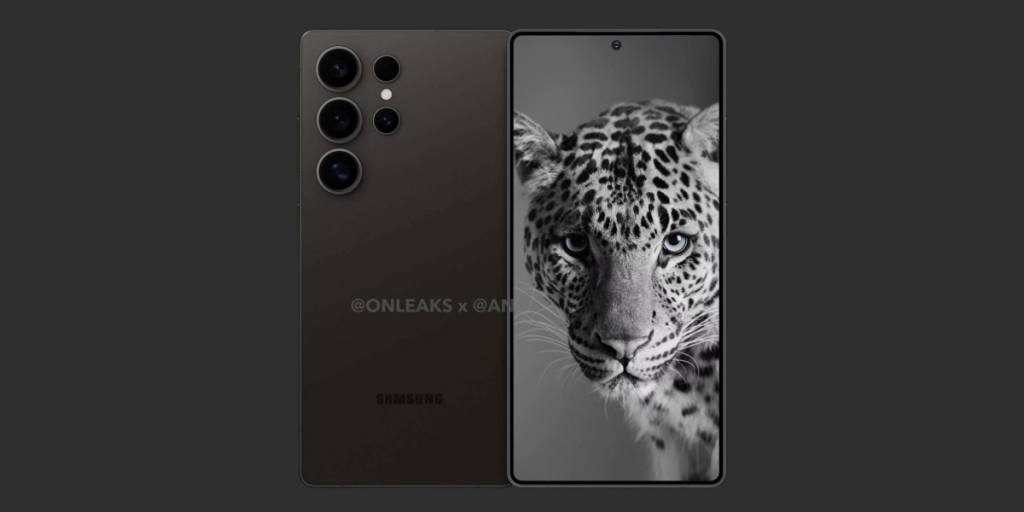
Samsung skips the Plus model in the future Galaxy S25 series

Samsung is making a major change to its Galaxy S lineup! Recently, the team at Android Headlines has been sharing new details about Samsung’s future devices. It seems that Samsung might ditch the Plus model from the Galaxy S25 series.

While leaks have confirmed the existence of a regular Galaxy S25 and a Galaxy S25 Ultra, Galaxy S25 Plus did not make an appearance. The model numbers of the upcoming Samsung phones are: SM-S931B/DS, SM-S938B, SM-S938U, SM-S938N, and SM-S9380. Regular Galaxy S25 and the S25 Ultra are here but unfortunately the S25 Plus is missing.

Initial leaks for Galaxy S24 series, back in July 2023, pointed towards a traditional three-model lineup with the S24, S24+, and S24 Ultra. However, recent leaks suggest a potential shift in Samsung’s tradition, with only two models coming up in the S25 lineup. The company seems dissatisfied with the sales rates of the S24 Plus, leading to the decision to drop the S25 Plus model.

Earlier, Samsung used a better display in the S24+ compared to the regular S24. While both the S23 and S23+ featured 1080 x 2340 resolution screens, this year, the Plus model boasted a higher resolution display (1440 x 3120). Despite this, it appears users still are not convinced enough to go for the Plus model.

Samsung Galaxy Book4 Ultra Goes On Sale In India: Check Bank Discount And Exchange Offer

Samsung quietly released the Galaxy Book4 Ultra in India recently. However, the exact availability and discounts were not revealed at that time. That changes now, as the laptop is now available for purchase along with bank and exchange offers. The latest offering joins the Galaxy Book4 series that debuted earlier in March this year in the country. Read on to know the details below. 

Samsung Galaxy Book4 Ultra goes on sale

Samsung Galaxy Book 4 Ultra

The Samsung Galaxy Book4 Ultra can be purchased from the brand’s official website and select offline retail stores like Croma. The laptop comes in two configurations – Core Ultra 7 with 16GB RAM and RTX 4050 and Core Ultra 9 with 32GB RAM and RTX 4070. These are priced at Rs 2,33,990 and Rs 2,81,990. It comes in Moonstone Grey colors. 

HDFC Bank credit and debit cardholders can avail discounts up to Rs 12,000. This will make the laptop’s base and top configurations available for Rs 2,21,990 and Rs 2,69,990. Additionally, Samsung is also offering an exchange bonus of Rs 10,000 depending on the condition and base value of the trade-in model. 

The Samsung Galaxy Book4 Ultra sports a 16-inch dynamic AMOLED touchscreen display bearing a WQXGA+ resolution and a 120Hz refresh rate. It is equipped with AKG-tuned quad-speakers and Dolby Atmos. The hardware details of the device are mentioned above. Both models come with 1TB SSD storage. The laptop also features a heat dissipation system. There is a backlit keyboard and a fingerprint scanner. The laptop is backed by a 76Wh battery cell that is claimed to last 21 hours and supports fast charging. The Galaxy Book4 Ultra runs on Windows 11 OS with various AI features. It seamlessly connects with other Galaxy devices. 

Redmi 13 5G: What to expect from Xiaomi’s next budget offering?

Redmi’s number series has established itself in the budget smartphone market by offering essential features at affordable prices. The next model in the line is the Redmi 13 5G which is set to launch in India on July 9th at noon.

Like its predecessors, it promises to offer 5G connectivity for a budget-conscious audience. But what can you expect from this phone? Let’s take a closer look at the specifications and features we know so far of the Redmi 13 5G.

Design and Display

So the company has revealed the design of the Redmi 13 5G in its launch announcement teaser. The device closely follows its predecessor with a clean, flat back design and flat edges. It features three protrusions on the back: two for camera sensors and one for a ring light. The Redmi 13 5G will be available in two color options: Light Blue and Light Pink, both with a glass back finish.

Redmi 13 5G

The Redmi 13 5G is expected to have a large IPS LCD display, likely around 6.7 inches. While the screen size will offer enough room for watching videos or playing games, it won’t offer the same level of contrast, color accuracy, or viewing angles as the AMOLED displays. But that is to be expected from a budget offering. Fortunately, the device will come with Corning Gorilla Glass 3 protection to guard against accidental drops.

Processor

The Redmi Note 13 5G is confirmed to be powered by the Qualcomm Snapdragon 4 Gen 2 processor, the same one used in its predecessor, the Redmi 12 5G. 

Snapdragon 4 Gen 2 is designed to be affordable while providing basic 5G capabilities. So don’t expect it to deliver blazing-fast performance, but it can handle your everyday tasks, light gaming, and social media browsing adequately.

In terms of software, unlike the Redmi 12 5G, which ran on MIUI 14, the new Redmi 13 5G will come with the company’s new HyperOS skin. RAM options will probably be 6GB or 8GB, with 128GB or 256GB of storage.

Camera

The camera system on the Redmi 13 5G is likely to be a dual-lens setup. The main sensor will probably be around 50MP, accompanied by a macro or depth sensor. While it might capture decent photos in good lighting conditions, don’t expect exceptional image quality or low-light performance. The front-facing camera will probably be around 8MP, sufficient for basic selfies and video calls.

Battery and Charging

Redmi 13 5G

The company has confirmed that the Redmi 13 5G will feature a 5030mAh battery, similar to last year’s model, which had a 5000mAh battery. This should provide a full day’s use on a single charge for most users, with moderate usage possibly stretching the battery life to two days. However, the fast charging capability will see a small improvement, increasing from 18W to 33W.

Price and Availability

Specific pricing details for the Redmi 13 5G haven’t been revealed yet. However, considering its expected specifications and Redmi’s budget focus, it should be priced competitively in the budget 5G smartphone segment. We are expecting it to launch in the sub-12K price range in India. 

However, unlike its predecessor, the upcoming Redmi 13 5G is said to only launch in China and India. POCO, another sub-brand of Xiaomi, is also expected to rebrand the Redmi 13 5G as the POCO M7 5G in the Indian market. 

All in all, the Redmi 13 5G is a smartphone focused on delivering 5G connectivity at an affordable price. It features a large display, a capable processor for everyday use, and a basic camera system. However, those looking forward to its launch should also be aware of its limitations — the display might not be the sharpest, the camera system may struggle in low light, and the performance won’t be top-notch.

Panasonic releases 60x super-zoom Lumix FZ80D camera with 20-1200mm lens

Panasonic has introduced the new Lumix FZ80D camera, featuring an impressive 60x superzoom capability. This bridge-type camera (DSLR-like) offers several upgrades over the 2017 Lumix FZ80, including an electronic viewfinder, touchscreen, and USB-C port.

Lumix FZ80D comes with an 18 MP sensor, sized at 1/2.3 inches (6.2 x 4.6mm). It features a 3.58-215mm F/2.8-5.9 zoom lens, providing a focal view equivalent to 20-1200mm.

Panasonic Lumix FZ80D is priced at $478. It features a maximum resolution of 4896 x 3672 with an image ratio of 4:3. The camera boasts 18 effective megapixels out of its 19-megapixel sensor photo detectors. The ISO range is auto-adjustable from 80 to 3200, expandable up to 6400. For focusing, it has a normal range starting at 30 cm (11.81 inches) and a macro focus range of 1 cm (0.39 inches).

Lumix FZ80D includes a 3-inch screen and an electronic viewfinder with a resolution of 2,360,000 dots. It supports video recording at 3840 x 2160 resolution at 30p with 100 Mbps, and 1920 x 1080 resolution at 60p with 28 Mbps. You can visit Panasonic’s official website here.

Apple could again start powering non-pro iPhones with the latest chip

Apple is set to launch the iPhone 16 series in September. Now a rumor says that the non-Pro iPhone 16 models will also get the latest and most capable A series chip, the Apple A18 Pro.

For those unfamiliar, Apple started using generation-old Bionic chips on non-Pro iPhones starting with the iPhone 14 series. With the iPhone 15 series, Apple also added a ‘Pro’ branding to the chipset for the Pro models.

However, the latest rumor says that even the non-Pro iPhones will use the latest A-series chip (possibly named A18 Pro). The news comes from @Nicolás Alvarez on X who discovered relevant codes in Apple’s backend. The codes reveal that all four iPhone 16 models will be powered by an A18 Pro chip.

Apple Intelligence could be the reason behind the decision

The A15 Bionic was capable enough to run the basic features in iOS without an issue. However, this isn’t the case anymore. iOS 18 integrates Apple Intelligence, which requires the phone to run some AI features natively on the device. While these features are also noted as basic AI features, the NPUs in the older chips aren’t capable enough to accomplish the tasks. As a result, only the Pro models of the iPhone 15 series (with the A17 Pro chip) support Apple Intelligence.

The A18 Pro chip will reportedly come with a more capable NPU as compared to the A17 Pro from last year. It could result in a noticeable difference in AI performance between the two chips. It could also repeat what we are seeing with the iPhone 15 series when it comes to the implementation of Apple Intelligence in the future. This could be the reason why Apple has decided to power all the iPhone 16 models with the new chip.

Galaxy Watch 7 series’ Exynos W1000 chip will launch apps 2.7x faster

Samsung is about to announce several new products including the Galaxy Watch 7 series, sixth generation foldable, and redesigned Galaxy Buds 3 series. Ahead of the Galaxy Unpacked event, Samsung has announced a new Exynos chip, that is expected to power the Galaxy Watch 7 series.

The Exynos W1000 chip is much more capable than the predecessor

The Exynos W1000 is built on Samsung’s 3nm GAA process and the chipset brings a 3.7x faster multi-core performance and 3.4x faster single-core performance. The company claims that the new chip will launch apps 2.7x faster and will also switch between them smoothly as compared to the predecessor.

It is also reported that the Exynos W1000 will be more power efficient as compared to the Galaxy Watch 6 series’ 5nm-based Exynos W930 chipset. According to the company, “the Exynos W1000 redefines expectations of how often you have to charge your smartwatch.”

The newly announced Exynos W1000 equips a total of 5 CPU cores – 1 x Cortex-A78 clocked at 1.6GHz and 4 x Cortex-A55 clocked at 1.5GHz. This is paired with Mali-G68 MP2 GPU, which supports up to qHD (960×540) and 640×640 resolution displays. This chipset can utilize up to 32GB of eMMC storage and LPDDR5 memory. The chip uses the Fan-Out Panel Level Packaging (FO-PLP) for better heat dissipation and smaller size. For reference, the Exynos W930 chip comes with a dual-core 1.4GHz Cortex-A55 CPU.

Besides getting more capable, the new chipset is also smaller in size, which allows the Watch 7 series to secure more space for your battery. The higher battery capacity paired with the lower power consumption should result in a longer battery life for the upcoming Galaxy Watch 7 series. The new chip also packs a 2.5D always-on display (AOD) engine, that enables “an enhanced display and watch faces with rich details.” Elements of the AOD user interface become clearer and easier to grasp at a glance with this development.

Honor MagicPad 2 debuts in July 12, comes with gorgeous 3K 144 Hz OLED display

Honor has officially announced the upcoming release of the Honor MagicPad 2! Previously, we shared the news about Honor’s new MagicPad tablet. Now, Honor has confirmed that the MagicPad 2 will debut on July 12.

While the full spec sheet isn’t available yet, Honor has revealed some key display features of the MagicPad 2. The tablet will boast a 12.3-inch OLED display with a 3K resolution and a 144 Hz refresh rate. A teaser image shared by Honor shows the tablet’s sleek and thin design.

The 3K resolution on a 12.3-inch screen promises an incredibly sharp viewing experience. Additionally, the Honor MagicPad 2 is expected to feature 4320 Hz PWM dimming. High-frequency dimming, which was first introduced in the Honor Magic 6 series, ensures a flicker-free like display, making it healthier for your eyes.

The Honor MagicPad 2 is expected to be unveiled alongside Honor Magic V3. Honor also released teaser images for the Magic V3 today. Both devices are anticipated to be highly premium offerings. Honor Magic V3 is a foldable phone that will feature Snapdragon 8 Gen 3 chipset. The upcoming phone will feature a 50 MP main camera and a 3.5x zoom telephoto camera. Additionally, it has been previously revealed that the phone will have satellite connectivity. While details about the MagicPad 2 are still limited, we now know that the tablet will be officially unveiled on July 12.

Portronics Iron Beats II launched in India: Massive party speakers with built-in karaoke

Portronics is the latest brand in India to hop on the party speaker bandwagon in India. The company is no stranger to audio products with a wide portfolio ranging from TWS to speakers. But its newest announcement takes it up a notch with a big 250W wireless party speaker that is dubbed the Iron Beats II.

Portronics Iron Beats II Specs

The Iron Beats II isn’t as portable as your usual Bluetooth speakers but it was designed to be wheeled around. The trolly handle and wheels make it easy to move around. Adding to its “party” aesthetics is the large circular RGB LED lighting on the front. It has a massive 250W output that promises deep bass from its 8-inch subwoofer along with 3-inch and 2-inch mid-speakers.

Portronics Iron Beats II

You also get to tweak the audio with bass and treble controls on the integrated control panel on the top of the Iron Beats II, but you also get a handy IR remote control. Connecting to Portronics’ new wireless party speakers is made easy with Bluetooth 5.3, Aux, and USB. TWS connectivity is also supported on these speakers, which allows you to pair two speakers together for a more immersive experience. Buyers can personalize their audio experience with built-in EQ modes. A wireless karaoke mic is bundled with the Iron Beats II, allowing you to host karaoke sessions at your parties.

On a single full charge, Portronics claims that the party speakers offer up to 6 hours of playtime. The new Iron Beats II is currently on sale for an introductory price tag of 15,999 INR (roughly 1,868 US Dollars) from the brand’s official website with a 1 year warranty. It can even be bought from Amazon India, Flipkart, and leading retail stores starting today (3rd July 2024).

Galaxy Buds 3 Pro real-life image revealed thanks to a new leak

Previously there were rumors that Samsung has opted for an “AirPods-like” design language for its upcoming Galaxy Buds 3 series TWS earphones. Samsung is about to launch the new product at the Galaxy Unpacked event next week. However, real-life images of the Galaxy Buds 3 Pro have already been revealed thanks to X tipster Roland Quandt. You can check out the design from the images below.

Galaxy Buds 3 Pro comes with a stem that is longer than the AirPods

As you can see, the new earphone from Samsung has ditched its traditional bean-shaped design for one with a long stem. The stem seems to be considerably longer than that of the AirPods Pro 2.

A Korean source speculated that this design change is due to the need for more internal volume, which lets the company increase the battery capacity and even fit more components inside. Previous reports also hint that the Galaxy Buds 3 series will be able to utilize some of the capabilities of Galaxy AI. The addition of new features could be a reason behind the design change that possibly allows the company to fit more or more capable components inside the earbuds.

An image of the base Galaxy Buds 3 (along with the charging case) leaked last month. These buds feature a stem-like design, but the stem appears slightly shorter than that of the Pro model. The standard version was shown in silver, revealing a unique angular design for the stem. For the Pro model, only parts of the design are visible, and upon closer inspection, it doesn’t seem like the stem is rounded either.

Nonetheless, these are leaked images and could represent one of the designs Samsung experimented with. Therefore, we may or may not see this exact design when Samsung officially reveals the product next week.

OnePlus 12R Levels Up Gaming & Animations with Latest OxygenOS Update

The OnePlus 12R is now receiving a major update to OxygenOS 14.0.0.810 in India. The new update for the OnePlus 12R will expand to other regions soon.

OnePlus 12R

The firmware version for this update is IN: CPH2585_14.0.0.810(EX01), and it is being released in small batches initially, with a broader rollout expected soon. Users can report any issues via the OnePlus Community Thread.

OnePlus 12R OxygenOS 14.0.0.810 update changelog

Animations:

  • Smoother Animations: Improved animations for opening and closing apps. New transition animation when pulling down Quick Settings and dragging app icons on the Home screen.
  • Blur Effects: Added Gaussian blur effects for opening and closing app icons. New transition animations for Home screen and clock widgets.

Gaming:

  • Stability: Improved gaming stability.
  • Bug Fix: Fixed issue where the screen might turn black during gameplay.

System:

  • Music Controls: Music controls can now be displayed in Fluid Cloud.
  • Storage Management: Fixed issue where system data used too much storage space.
  • Security: Integrated June 2024 Android security patch.
  • NFC Payments: Fixed issue preventing NFC-enabled payments.
  • Volume Control: Fixed issue with volume sliders appearing simultaneously.
  • Icon Overlap: Fixed issue with overlapping icons on the Home screen and Recent tasks screen.

Touch Control:

  • Faster Response: Improved response time for app icons on the Home screen.
  • Enhanced Responsiveness: Better touch control responsiveness when opening and closing apps.

The update is being released in small batches to ensure stability. Users can manually check for the update by going to the settings page, selecting “About This Phone,” and clicking the blue ribbon at the top. To report bugs, users can dial *#800# and choose the bug submission option.

(Source)

Moto G85: Upcoming mid-range phone with curved pOLED display drops in India on July 10

Motorola is bringing a new mid-range smartphone in India from its popular G series. The Moto G85 debuted in Europe last week as a rebranded Moto S50 Neo, and it’s now arriving in the Indian market as well. We have an official release date for this device and hints at its key specs and features.

Moto G85 India launch set for July 10

On its official website and Flipkart, the company shared teasers of the upcoming device showcasing its July 10 launch date. Those teaser posters confirmed a bunch of its features, confirming that it is identical to the European version of Moto G85. You get a tall 6.67-inch curved pOLED display on the front that offers FHD+ resolution, a 120Hz refresh rate, 360Hz touch sampling rate, and up to 1600 nits of peak brightness.

Moto G85 5G

Keeping up with most smartphones in this price segment, the rear features a 50-megapixel primary camera (Sony LYT-600 sensor), along with an 8-megapixel ultra wide angle lens. For selfies and video calls, there is a 32-megapixel shooter on the front. The Moto G85 packs the new Snapdragon 6s Gen 3 SoC, which is paired with 8GB or 12GB of RAM and 128GB or 256GB of internal storage. Motorola promises two years of Android updates and three years of security updates (Android 14 OS out of the box).

Sticking with the trend, the Moto G85 is also wrapped in a vegan leather finish at the back. Its body is rated with an IP52 for water and dust resistance. There are three color options to choose from, namely Cobalt Blue, Urban Grey, and Olive Green. A sizeable 5,000mAh battery pack powers this device, which supports 30W wired fast charging. Moto G85 drops on July 10 in India with offline availability confirmed via retail stores apart from Flipkart and Motorola India website.

Galaxy Z Flip 6 detailed images & specs tipped ahead of launch

Samsung will launch the Galaxy Z Fold 6 and Flip 6 along with the Galaxy Ring and Galaxy Watch 7 series in the upcoming Galaxy Unpacked event that is scheduled for July 10. However, we already know some of the details about the new products thanks to numerous leaks and rumors. The latest one is about the Galaxy Z Flip 6 specifications.

Galaxy Z Flip 6 images (leaked)

On the other hand, tipster Evan Blass has revealed detailed images of the Galaxy Z Flip 6. As you can see, the design is very similar to its predecessor. The ring around the rear camera modules on the Flip 6 appears thicker and more pronounced. The display borders also seem to have the same thickness.

An upgraded main sensor and a new chip

While the Galaxy Z Flip 6 looks similar to the predecessor from the outside, the internals reportedly offer some upgrades. The news comes from Ishan Agarwal who claims that the Z Flip 6 will be equipped with a 6.7-inch screen, same as the predecessor. It could be the same Dynamic AMOLED 2X panel. Not to mention, it will offer a FHD+ resolution (1080 x 2640) and a 120Hz refresh rate.

Speaking of the cameras, the rear setup will likely include a 50MP main camera with an aperture of F1.8 and a 12MP ultrawide with an aperture of F2.2. The predecessor comes with a 12MP main sensor, so you can expect some improvements here. The front camera could also be upgraded from 10MP to 32MP this time for more detailed shots.

When it comes to performance, the phone will be powered by the Snapdragon 8 Gen 3 chipset, the same as the Galaxy S24 Ultra. The chipset will be paired with 12GB of RAM and 256GB/512GB of UFS 4.0 storage. For reference, the Z Flip 5 comes with 8GB of RAM and the same storage type and options.

Surprisingly, the source claims that the phone could get slightly thicker at 7.4mm. For context, the Galaxy Z Flip 5 is measured at 6.9mm. This could be due to the larger sensor or the slightly bigger battery. The phone will pack a 4000mAh battery, which is 300mAh higher than the predecessor’s. The phone will reportedly offer the same 25W charging speed as the predecessor.