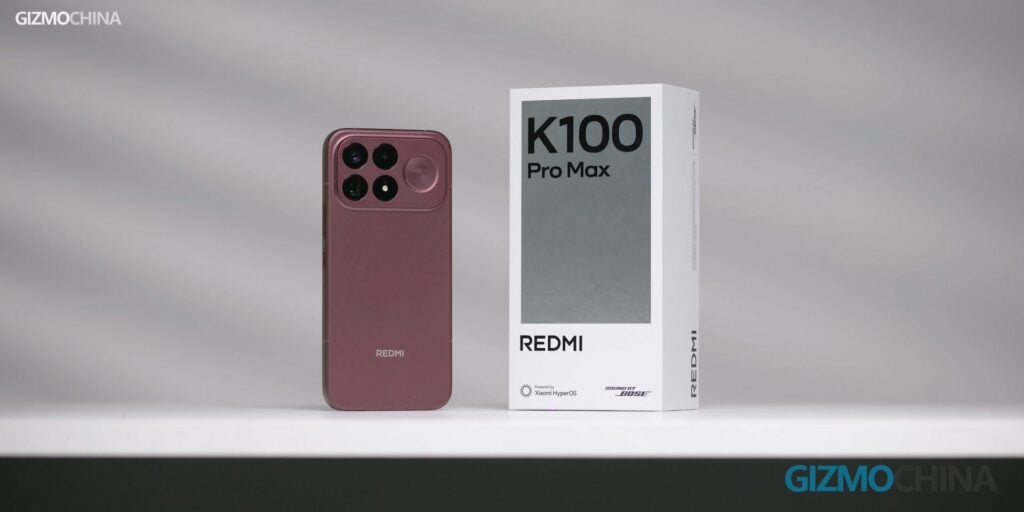
A new Xiaomi 5G phone with the model number M786BC has passed 3C certification in China, and the listing shows support for 100W fast charging. The certification was issued on October 12, and tipster Digital Chat Station says the phone is the standard Redmi K100.
A 3C listing covers charging and model details, so you still don’t know anything about the chip, display, or cameras.
Where the standard Redmi K100 fits
At the Redmi K100 Pro series launch event on August 11, Wei Siqi, general manager of Xiaomi’s China marketing department, laid out the full product portfolio. Besides the Redmi K100 Pro Max and Redmi K100 Pro, Wei said the series will include a standard version and a gaming flagship. The M786BC listing is the first sign the standard model is nearing launch.
Lu Weibing, Xiaomi Group partner and president, who also runs the mobile phone division and the Xiaomi brand, said on Weibo that many flagship phones this year use chips from the previous generation, such as the Snapdragon 8 Elite Gen 5 and the Dimensity 9500. He added that the Redmi K100 series will definitely be “the best value.” We hope that stays true for the vanilla K100.
Xiaomi hasn’t shared a launch date, price, or full specs for the standard Redmi K100. There’s no word yet on the gaming flagship either, so watch for more certifications and leaks.
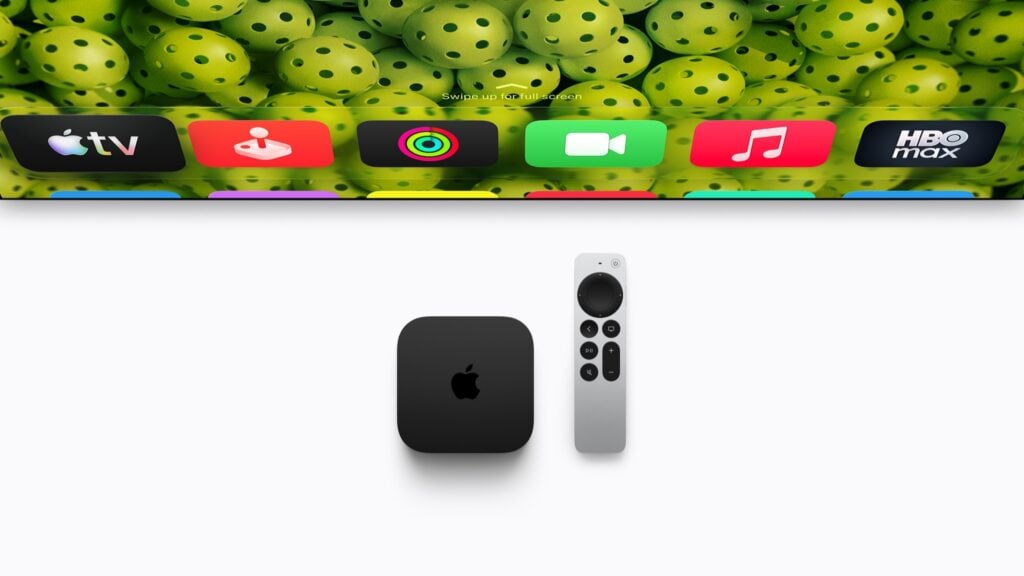
Apple has unveiled its fourth-generation Apple TV 4K, bringing several upgrades to its streaming device. It is priced at $299 and features a faster processor with AV1 support, hands-free voice controls, and an updated remote with Find My integration. Preorders are now open, with shipping scheduled to begin on November 13.
Apple TV 4K Specifications
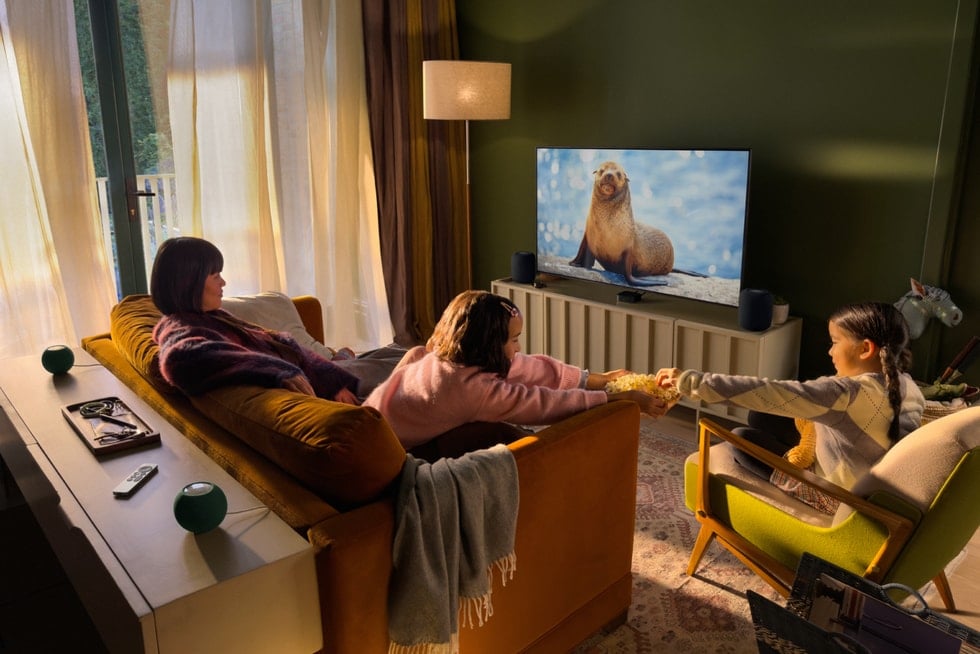
The hardware features three built-in far-field microphones for hands-free voice control without using the remote. Apple has also integrated its new Siri AI assistant, powered by Apple Intelligence, which can answer questions about currently playing content, including cast details, age ratings, and awards. Responses appear in a small on-screen overlay without interrupting playback.
Because the device is actively listening for wake words in the living room, Apple said that microphone data is processed in a Secure Exclave separated from the main tvOS system. Any queries that require cloud processing are routed through Apple’s Private Cloud Compute, which the company says does not store user data.
Internally, the Apple TV 4K runs on the new A19 chip. This provides a 50% increase in CPU performance and doubles the GPU performance compared to the prior generation. For video streaming, the most relevant hardware addition is a dedicated AV1 decoder. AV1 is a video codec that allows for high-quality streaming at lower bitrates, which helps maintain image quality on slower internet connections.
The Siri Remote retains its standard aluminum design but now includes a built-in speaker and an ultra-wideband chip. This brings it into the Find My network, allowing users to track it down using Precision Finding on an iPhone or make it play a sound when it gets lost in the couch.
For audio, the new box supports a four-speaker surround sound configuration if paired with matching sets of Apple’s HomePod (2nd gen) or the newly mentioned HomePod Mini 2.
For more daily updates, please visit our News Section.
After years of steady, incremental changes, it looks like the company is planning something more ambitious. Recent reports suggest Samsung is working on a pretty substantial overhaul of its software experience.
The project is reportedly being talked about internally as either One UI 10 or Galaxy OS, and it’s expected to show up with the Galaxy S28 series. The timing makes sense too: One UI will be hitting its tenth anniversary around then, and Samsung doesn’t usually let milestones like that go by without making some kind of statement.
According to leaker phonefuturist, Samsung is working closely with Google on deeper AI integration. The idea isn’t just to bolt on more AI tools, but to weave intelligence more deeply into the operating system itself. At the same time, the plans apparently include paid third-party integrations. So it sounds like a two-track approach: solid system-level AI features that come with the phone, plus optional partner services that might cost extra.
One UI has come a long way over the past 7 years. It’s polished and packed with features, but a lot of longtime users have also pointed out that it’s gotten denser and more crowded. A real rethink could be exactly what some people have been hoping for.
Samsung isn’t backing away from AI, even with all the talk of AI fatigue and pushback. Galaxy AI features keep expanding: writing help, photo editing, translation, contextual assistance – and the big question that’s been hanging around is which of these will stay free and which might eventually move behind a subscription or paid partnership.
Nothing is official yet, of course, and plans can still change a lot before the Galaxy S28 arrives. For now, these reports just give us an early look at the direction Samsung seems to be heading: a version of One UI that digs deeper into AI than anything before it, right as the interface itself turns ten.
The term panda dial is commonly used in the watch industry to describe chronographs with a white dial and contrasting black sub-dials. Seiko has taken this concept quite literally with its latest Power Design Project, introducing chronographs inspired by the animal itself. Following their global debut, the company has now launched the Panda Chronograph HHK001P1 and HHK002P1 in India.
Design Details & Pricing
The watches are priced at ₹58,000 and feature a distinctive dial design inspired by a panda’s face. The HHK001P1 comes in a classic black-and-white color scheme, with an embossed radial pattern that adds texture to the dial.
The sub-dials resemble the panda’s eyes, while the nose and mouth are positioned at the 6 o’clock marker. Seiko has also designed the hour and minute hands to resemble bamboo leaves, while the chronograph pushers are recessed into the upper part of the case to mimic panda ears.
Seiko has replaced the traditional tachymeter scale with a custom SASAMETER, named after sasa, the Japanese word for bamboo leaves. The scale is designed to indicate a speed of 30 km/h, the theoretical maximum running speed of a panda, over a two-minute period.
The case back features an engraving of a panda viewed from behind, complete with a white tail to reflect the animal’s actual appearance. It also carries a Limited Edition inscription.
Alongside the standard model, Seiko released the HHK002P1, a pink variant intended to reference a newborn panda. It shares the exact same hardware and dial layout but swaps the black and white colorway for a pink dial and a matching pink leather strap.
Both watches are powered by Seiko’s Calibre 8T61 quartz chronograph movement, offering an accuracy of ±15 seconds per month and a three-year battery life. They feature a 43mm stainless steel case, Hardlex crystal, and 3 bar water resistance.
The chronograph measures up to 60 minutes in 1/5-second increments, with a small seconds hand and date display. Both models come in custom packaging, with a grass-themed box for the standard version and a soft-lined box for the pink variant. The watches are now listed on Seiko’s official India website.
For more daily updates, please visit our News Section.
Apple is officially getting into the smart home hardware business. Today, the company announced the Apple Home Collection, a new line of accessories developed alongside LG Electronics and Schneider Electric. The lineup covers the standard basics of home automation: security cameras, a video doorbell, a smart lock, and smart thermostats.
Specifications & Pricing
These devices offer a simpler setup process compared to existing third-party alternatives, eliminating the need to download manufacturer-specific apps or create separate accounts. They can be paired directly with an iPhone using a single tap, with all settings and controls accessible through the Apple Home app. Apple also confirms that all device data is protected by end-to-end encryption, preventing Apple, LG, and Schneider Electric from accessing camera feeds or usage information.
For security, the collection relies on hardware built by LG. The $249.95 Video Doorbell uses a dual-camera system: a 2.5K lens for the main view and a 1080p lens pointed downward at packages. The camera lineup also includes a $399.95 Floodlight Cam, a $299.95 Outdoor Cam, and a $199.95 Indoor Cam. The indoor model includes a physical privacy mechanism that automatically tilts the lens down and away when the first person in the household arrives home. Video storage is tied to iCloud+, so there is no separate camera subscription required.
On the access front, the $349.95 LG Smart Deadbolt Lock uses Ultra Wideband (UWB) technology. This allows the door to unlock automatically as a user approaches with a compatible iPhone or Apple Watch. Because it supports the Aliro standard, the core unlocking functions process locally and will still work if the home’s internet goes down.
For climate control, Apple is offering two $199.95 thermostats, one made by LG and the other by Schneider Electric. Rather than relying on manual schedules, they use an Adaptive Temperature feature that adjusts based on the location data and usage habits of the household’s iPhones. In the US, the thermostats can also sync with compatible utility plans to shift heavy heating or cooling to off-peak hours.
Under the hood, all of the new devices support Thread and Matter. They also include a quality-of-life update for smart home users: if you change your router’s Wi-Fi password, the accessories will automatically update their network credentials. For users who don’t want to wire a doorbell or thermostat themselves, Apple is partnering with ADT to offer paid professional installation.
Availability
The Apple Home Collection will start rolling out in December, with some accessories arriving in early 2027. However, the ecosystem’s central hub, the newly announced HomeView display, will not be sold in the European Union at launch due to ongoing regulatory issues regarding Apple’s AI features.
For more daily updates, please visit our News Section.
Honor has dropped official renders of the new WIN Pad. The company’s President of All-Scenario Product Line basically bragged that it can fit everything in a small handbag, which is a pretty clear signal that this thing is aimed at people who travel light, whether on business trips, weekends away, or just to avoid carrying a giant slab in their bag.
We’ll see the full thing on October 21 at the Honor WIN Esports Universe Carnival, where the company is also launching the WIN 2 series smartphones. Pre-orders in China are expected to open around mid-October.
From what’s leaked and confirmed so far, the tablet packs Qualcomm’s Snapdragon 8 Elite Gen 5 chip, an 8.4″ OLED screen that can hit 240Hz, and an active cooling fan to keep it from throttling during long sessions. Screenshots and hands-on shots show the usual refresh rate options (60Hz, 120Hz, 240Hz), plus fan controls and ambient lighting customization. It’s coming in black and silver, and it’s Wi-Fi only, no cellular version planned.
The whole point of the WIN brand is building a proper gaming ecosystem. Fang Fei, President of the Product Line at Honor Terminal, said the suite will cover smartphones, this tablet, gaming laptops, headphones, and gamepads. They’re also planning accessories like cooling back clips, mice, adapters, and backpacks so players can build out a full setup.
That 8.4″ size is the interesting bit. Most tablets are bigger and bulkier. This one is trying to feel more handheld while still offering flagship-level power and active cooling.
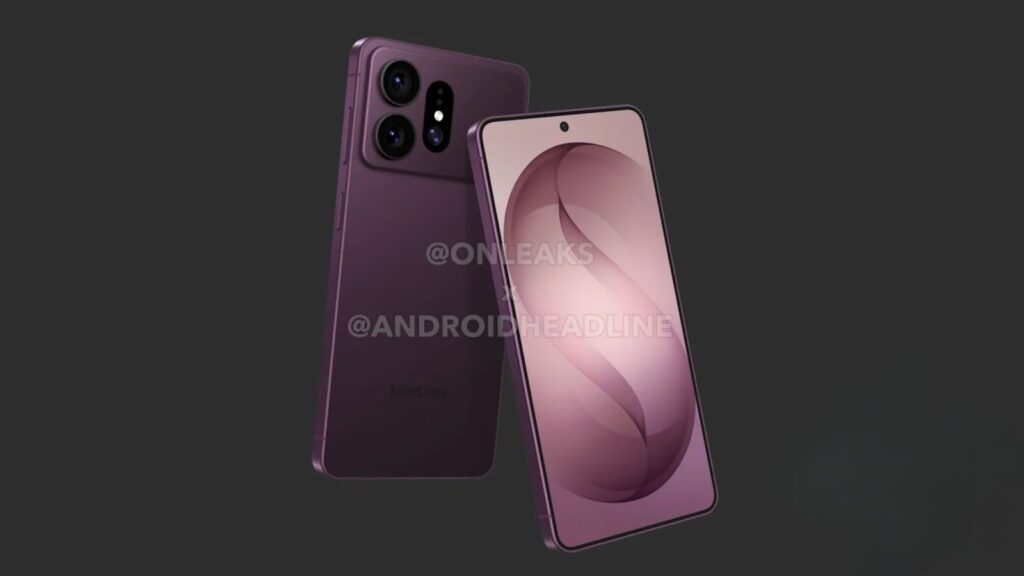
The Galaxy S27 Ultra could get a smarter version of one of Samsung’s coolest privacy tricks. Early word is that the phone will come with “Privacy Display v2”.
For anyone who missed it: the original Privacy Display uses Samsung Display’s Flex Magic Pixel tech to shrink the viewing angles. Look at the screen straight on and everything’s clear. Peek from the side and the display dims so bystanders can’t easily read what’s on it. You can turn it on for the whole screen or just for notifications and sensitive apps.
According to tipster Sawyergalox, the upgraded version is coming to both the Galaxy S27 Ultra and the new Galaxy S27 Pro. That’s a bigger rollout than the first generation got.
The big reason for the upgrade? Turning Privacy Display on makes the screen look softer, less sharp, and generally lower-quality even when you’re looking at it head-on. The privacy part works great, but the picture quality takes a hit.
The new version is supposed to fix that with three main improvements:
Better viewing angles
Higher resolution while the feature is on
Clearer, sharper image quality overall
If it delivers, you’ll be able to leave Privacy Display switched on without feeling like you’re sacrificing everyday screen performance.
The same tipster also floated a price estimate. They’re guessing a US starting price somewhere in the $1,400–$1,500 range. The launch window is looking like February 2027, running One UI 9.5 based on Android 17. Expanding and refining Privacy Display would be a nice step forward for a feature that’s already pretty unique.
Timex has released the 1978 Day Date Fumé Reissue in the US. The watch is available now on the company’s website for $219. It is a battery-powered quartz watch that uses the case design and dial styling of a late-70s model from the Timex archives.
Design Details
The watch features a brown fumé dial with a gradient finish that transitions from a lighter shade at the center to darker tones around the edges. It also includes gold-tone hour markers, matching hands, and a day-date display positioned at 3 o’clock.
The case is made of polished stainless steel with a gold-tone finish. It measures 37mm in diameter, which is smaller than many modern men’s watches but accurate to the sizing trends of the 1970s. The watch has a 42mm lug-to-lug measurement and is 13.5mm thick. It weighs about 52 grams, making it relatively light on the wrist.
For the crystal, Timex used acrylic instead of the mineral glass or sapphire that you usually find on modern watches. Acrylic scratches more easily than glass, but it is period-accurate for a 1970s watch. If you do get light scratches on it, you can usually buff them out at home with a polishing paste.
Inside, the watch runs on a standard analog quartz movement powered by an SR626SW battery. It comes with a 20mm brown leather strap that has a crocodile pattern pressed into it. The strap also has quick-release spring bars, so you can swap it out for a different band without needing a watchmaker’s tool.
For water resistance, the watch is rated to 50 meters. That is enough to handle washing your hands, getting caught in the rain, or light swimming, but Timex says it is not meant for diving or snorkeling.
In related news, Timex has recently launched the Pan Am Waterbury GMT with a striking two-tone dial and quartz movement, alongside the Pan Am Automatic GMT featuring a Seiko movement and dual-time tracking.
For more daily updates, please visit our News Section.
Something big is shifting in one of the most important tech markets on the planet. New numbers show Nvidia is no longer the runaway leader in China’s data-center AI chips the way it used to be. Domestic players are catching up quickly, and the gap is getting uncomfortably narrow.
According to an IDC report that Reuters got a look at, Nvidia’s share of China’s data-center AI chip market dropped to 34% in the first half of 2026. The company shipped 678,000 AI accelerators (those specialized chips used to train and run AI models) between January and June, a 44% drop from the same period a year earlier.
Huawei is the clearest winner so far. It shipped 572,000 AI accelerators in the first half, up from just over 300,000 the year before. That put Huawei at 28% market share, only six points behind Nvidia. Nine out of the 11 Chinese chipmakers that IDC tracked saw year-on-year growth. Other local names also moved up: Alibaba’s T-Head took 7%, Cambricon 5%, Baidu’s Kunlunxin 4%, and Hygon 3%.
This isn’t just about one company’s numbers. It’s the combined effect of US restrictions and Beijing’s push for tech self-reliance. Chinese companies now need approval before they can import certain compliant Nvidia chips, and the government is actively encouraging them to use home-grown alternatives.
Nvidia CEO Jensen Huang has been pretty vocal about this, saying the export controls have basically handed a chunk of China’s roughly $50 billion AI chip market over to rivals like Huawei. As of the latest reports, Nvidia itself hadn’t commented on the IDC figures.
The bottom line: Nvidia is still the biggest single supplier by unit volume, but Chinese firms are expanding fast, especially in the specialized accelerators that sit outside the traditional GPU world. How much further this goes will depend on export rules and how quickly domestic production scales up.
The OnePlus 16 brings a 9,000mAh battery, a 200MP main camera, and a display that can reach 185Hz in supported games. But the iQOO 16 has a few reasons to make OnePlus work for its place in the flagship race. It pairs the same generation of Snapdragon flagship processor with a dedicated Q4 gaming chip, a sharper 2K 165Hz display, and three 50MP rear cameras, including a periscope telephoto lens.
The differences aren’t just in the spec sheet. OnePlus has a bigger battery and a higher-resolution main camera, while iQOO, as usual, places more emphasis on gaming hardware and display resolution. Both phones also support 100W wired charging, so neither has an obvious advantage there. Here’s how the iQOO 16 and OnePlus 16 compare in performance, display, battery life, cameras, and gaming features.
You get the same processor in both phones. It’s a 2nm Snapdragon 8 Elite Extreme Gen 6 with two prime cores at up to 5GHz. The difference is in what each brand adds around it.
The iQOO 16 pairs the chip with iQOO’s Q4 gaming chip and a self-developed scheduler it calls the Monster Super Core Engine. iQOO says the Q4 improves performance by 15% over the Q3 chip in the iQOO 15.
The Q4 powers features such as real-time ray tracing in 10 popular games, plus super-resolution and frame generation. iQOO says hundreds of games support 165fps through frame generation, and a few titles, including Delta Force and Dark Zone, run at native 165fps.
The OnePlus 16 relies on a different setup. OnePlus has a gaming layer in the chip called the Wind Chaser Game Core. It also adds its three-chip esports system: a G3 network chip, a Lingxi T3 touch chip, and a P4 display chip. OnePlus targets 185fps in supported games, which is 20fps above the iQOO 16’s 165fps target. OnePlus says Delta Force held an average of 185fps for three hours in its lab.
As for cooling, the iQOO 16 has an 8,500mm² vapor chamber, three layers of graphite covering 29,453mm² and a large thermal gel layer. The OnePlus 16 uses a new-generation Glacier vapor chamber with a graphite layer rated at 2,100 W/m·K. OnePlus says its vapor chamber is 40% better and its thermal gel is 50% better than before. Both brands test in their own labs, so wait for independent thermal tests before you pick a side.
2. Display
The iQOO 16 has a 6.85-inch Samsung M16 AMOLED panel at 2K resolution (3168 x 1440), with a refresh rate of up to 165Hz. It reaches 10,000 nits of local peak brightness and about 2,800 nits full-screen, according to iQOO.
iQOO says more than 50 popular games run natively at 165Hz, and that the 165Hz mode works in more than 100 everyday apps once you turn it on in Developer Mode.
The OnePlus 16 has a smaller 6.78-inch BOE panel at 1.5K resolution. It supports 165Hz across the whole system, and up to 185Hz in supported games. OnePlus lists 2,000 nits of peak brightness, PWM dimming at 3,840Hz, and a minimum brightness of 1 nit. The screen carries TÜV Rheinland Eye Comfort 6.0 certification.
3. Battery and charging
The OnePlus 16 has a 9,000mAh battery, which is 600mAh larger than the iQOO 16’s 8,400mAh cell. We covered the OnePlus 16 battery details when OnePlus confirmed the figure.
The iQOO 16 uses fifth-generation silicon-anode technology, which iQOO claims offers 8.6 hours of 165fps gaming. Meanwhile, OnePlus 16 is rated for 8.1 hours of a MOBA game at 120fps and above, 23.8 hours of video playback, and 13.6 hours of navigation. The two brands use different games and test conditions, so you can’t compare those run times directly.
Charging favors the OnePlus 16 on the wireless side:
Wired charging: Both phones support 100W. OnePlus rates a full charge from 1% at 52 minutes.
Wireless charging: 50W on the OnePlus 16, 40W on the iQOO 16.
Reverse charging: The OnePlus 16 supports 27W wired reverse charging for earbuds and watches.
Bypass charging: Both phones can power the device directly from a charger during gaming. The iQOO 16 needs you to turn it on manually.
4. Cameras
The OnePlus 16 has the higher-resolution main sensor, and the iQOO 16 has the lower-resolution one with a slightly larger sensor than you might expect. Here’s a side-by-side comparison:
Main camera: The iQOO 16 uses a 50MP sensor measuring 1/1.3 inches with an f/1.68 lens and CIPA 5.5 stabilization. iQOO says it gathers 79% more light than the iQOO 15 Ultra. The OnePlus 16 uses a 200MP sensor measuring 1/1.4 inches with optical stabilization, and lets you shoot at the full 200MP and crop afterward.
Telephoto: Both phones have a 50MP periscope lens with 3x optical zoom and a 1/1.95-inch sensor. The iQOO 16 uses a Sony sensor with an f/2.65 lens. Both list 6x as lossless zoom, and iQOO adds 100x digital zoom.
Ultra-wide: Both have a 50MP lens. The iQOO 16 uses a 1/2.75-inch sensor, and the OnePlus 16 lists a 116-degree field of view.
Front camera: The OnePlus 16 has a 50MP autofocus camera, and the iQOO 16 has a 32MP camera.
On the software side, the iQOO 16 uses Vivo’s imaging tools, including the NICE 3.0 optical engine and a Humanistic Mode for street and portrait shots. The OnePlus 16 uses Oppo’s imaging system with a Master Mode for film-style tones and a text-prompt AI retouching tool. Both record 4K video, and the OnePlus 16 supports 4K at 120fps with Dolby Vision.
5. Gaming controls and connectivity
Both phones add custom hardware for touch, motion, and network.
Touch: The iQOO 16 samples touch at up to 5,000Hz instantaneously and 500Hz for multiple fingers. The OnePlus 16 samples multi-finger touch at up to 520Hz. These apply only in select games.
Gyroscope: The OnePlus 16 samples at 800Hz, against 500Hz on the iQOO 16.
Network: The iQOO 16 uses a Wi-Fi enhancement chip with a side cellular antenna and a ring Wi-Fi antenna. iQOO claims 34% better Wi-Fi performance and 17% better cellular gaming antenna performance than the iQOO 15. The OnePlus 16 uses the G3 chip, which OnePlus says cuts cellular gaming latency by 42.1%.
Haptics and audio: The iQOO 16 has a dual-axis vibration motor and symmetrical dual speakers. The OnePlus 16 has an X-axis linear motor and stereo speakers.
Extras: The iQOO 16 supports a PC game emulator, a large-screen game mode, and an iQOO G1 gamepad, which is sold separately. The OnePlus 16 has a one-tap Gun God Mode for several shooters, and an optional gamepad.
6. Software and design
The iQOO 16 runs OriginOS 7, and the OnePlus 16 runs ColorOS 17. Both are based on Android 17, and both have ultrasonic fingerprint sensors.
The designs differ more than the spec sheets suggest. The iQOO 16 has a transparent camera window with a robotic-arm look, and a laser-holographic finish on the Chasing Light color. It comes in Chasing Light, Track, and Legend.
The OnePlus 16 keeps the flat frame and square camera island of the OnePlus 15, and comes in Tomorrow Starlight, Mars Red, and a deep black. Only Tomorrow Starlight has the interstellar lighting effect. The OnePlus 16 has a stronger dust and water rating, with IP66, IP68, IP69, and IP69K, while the iQOO 16 has IP68 and IP69.
7. Price and availability
Both phones start at 5,999 yuan (about $896) for the 12GB+256GB model and top out at 8,499 yuan (about $1,270) for the 16GB+1TB configuration. By comparison, the OnePlus 16 is 2,000 yuan more expensive than the OnePlus 15’s 3,999 yuan starting price. The iQOO 16 has also seen a steep price increase, launching at 1,800 yuan more than its predecessor.
Neither phone has a confirmed global launch. OnePlus has stopped launching new phones in North America and Europe. The iQOO 16 has appeared at Europe’s EEC certification and on Geekbench, which suggests a wider release, but iQOO has not announced a date.
8. iQOO 16 vs OnePlus 16: Specs comparison
Specification
iQOO 16
OnePlus 16
Processor
Snapdragon 8 Elite Extreme Gen 6
Snapdragon 8 Elite Extreme Gen 6
Display
6.85-inch 2K AMOLED, 165Hz
6.78-inch OLED, 1.5K resolution, up to 185Hz in supported games
Gaming chip
Dedicated Q4 gaming chip
No separate gaming chip specified
RAM and storage
Up to 16GB RAM, 1TB storage
Up to 16GB RAM, 1TB storage
Main camera
50MP, 1/1.3-inch sensor
200MP, 1/1.4-inch sensor
Telephoto camera
50MP Sony periscope, 3x optical zoom
50MP telephoto, 3x optical zoom
Ultrawide camera
50MP
50MP
Front camera
32MP
50MP
Battery
8,400mAh
9,000mAh
Wired charging
100W
100W
Wireless charging
40W
50W
Software
OriginOS 7
Android 17 with ColorOS 17 in China
For more daily updates, please visit our News Section.
Apple has introduced the HomePod Mini 2. It keeps the spherical design of the original but updates the internal hardware, adds a new lighting effect on the top panel, and integrates Apple’s upcoming Siri AI features. It also costs $149, a $50 increase over the previous model.
Apple HomePod Mini 2 Specifications
The device will support an upgraded Siri AI, although the feature won’t be available at launch. Apple says it will arrive through a future software update, bringing more natural conversations and support for complex requests.
The HomePod Mini 2 will also be able to access personal information from compatible iPhones and iPads that support Apple Intelligence. For example, you can ask Siri to find a recipe shared through email or play a song received in a text message.
Apple says personal data will be handled securely through on-device processing or its Private Cloud Compute system. Those without an Apple Intelligence-compatible iPhone or iPad will still benefit from improved conversational capabilities, but won’t have access to personal context features.
Inside, the speaker runs on the S10 chip. Apple says this processor manages real-time audio adjustments for volume and dynamic range. The speaker still works alone or in a stereo pair, but Apple is adding a new home theater configuration.
If you own the new 4th-generation Apple TV 4K, you can link four HomePod speakers together. The system automatically calibrates the audio based on where each speaker is placed in the room. You can also now set the HomePod Mini 2 as the default audio output for a Mac.
On the outside, the top touch surface has been redesigned with a feature Apple calls Sound Glow. Instead of just showing the standard Siri animation, the top panel now changes color to match the album art of the music you are playing and pulses along with the audio.
For smart home use, the device continues to function as a home hub. It includes sound recognition to listen for smoke or carbon monoxide alarms and send alerts to your phone. It also supports face recognition for Apple’s newly announced Home Collection video doorbells, allowing the speaker to announce who is outside.
Availability
The HomePod Mini 2 comes in pink, green, blue, white, and midnight. Pre-orders are open now, and it will be available in stores on October 30th.
For more daily updates, please visit our News Section.
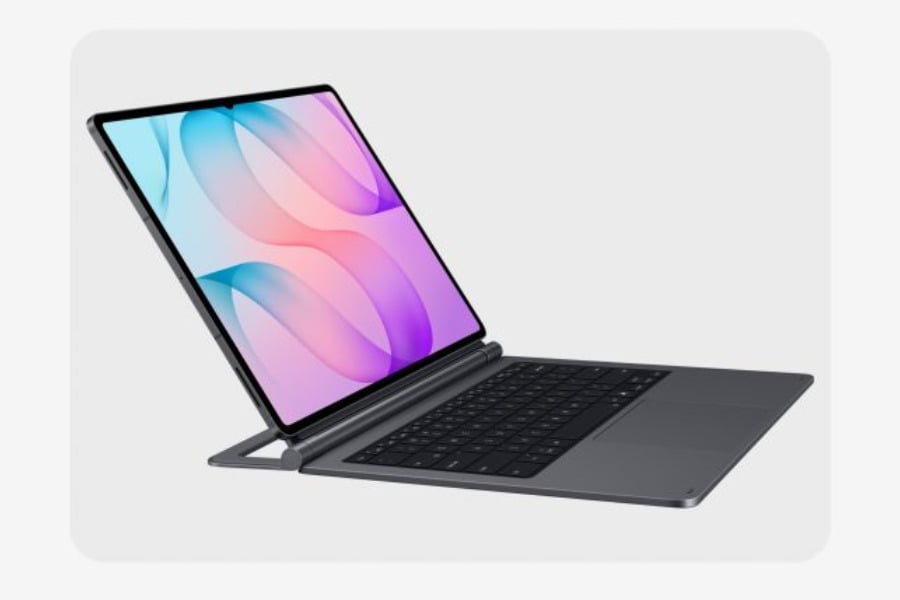
Samsung’s Galaxy Tab S12+ is $1,199.99 on Amazon right now, and Amazon throws in a free $200 Amazon gift card. That is the 256GB WiFi model in Gray, sold and shipped by Amazon. The tablet went on sale on 7 October, so it is six days old, and $1,199.99 is its launch price. The price has not moved. The deal is the gift card on top. You also get 30% off the keyboard if you bundle it with the tablet as of October 21.
Amazon calls it a “Launch bundle” and a “Limited Prime deal”, and the listing says the gift card offer runs until 21 October. You will also see a “bundle list price” of $1,399.99. That figure is the tablet and the gift card added together. Here’s the thing: if you shop on Amazon anyway, that $200 comes back to you, so the Tab S12+ bundle works out to $999.99 in practice.
The 512GB WiFi model is $1,399, also its launch price, and it gets the same $200 gift card. The listing also offers the tablet alone, or a bundle that adds 30% off the Samsung Pro keyboard.
Variant
Price
Gift card
Effective cost if you shop on Amazon
Offer ends
256GB WiFi
$1,199.99
$200
$999.99
21 October
512GB WiFi
$1,399.99
$200
$1,199.99
21 October
Should you buy the Tab S12+ now?
If you shop on Amazon, then yes. A six-day-old flagship tablet at launch price with $200 back is the best way to buy a Tab S12+ before Black Friday. Launch bundles like this usually end on the stated date. After 21 October, expect a plain $1,199.99 again. Buy the 256GB with the gift card. Skip the keyboard bundle unless you already wanted the Pro keyboard.
What you get
The Plus has a 12.6-inch Dynamic AMOLED 2X screen at 2800 x 1752 and 120Hz. Inside is the MediaTek Dimensity 9500, the chip that appeared in a Tab S12 Ultra Geekbench listing in August, with 12GB of RAM. The battery is 10,600mAh, a bigger cell than the Tab S11’s. It is IP68 rated, and the S Pen comes in the box.
Now the downsides. The design is carried over from the Tab S11 series, and when the tablets leaked in August we said they looked very familiar. They still do. And 45W wired charging is slow for a 10,600mAh cell.
The 14.6-inch Tab S12 Ultra launched at $1,399.99 and gets four speakers, an 11,600mAh battery and 13MP plus 8MP rear cameras, where the Plus has two speakers and a single 13MP camera. The Amazon gift card bundle is for the Plus, not the Ultra.
Other Samsung and Google deals on Amazon
Galaxy S26 Ultra 256GB, Black is $1,049.99. Its list price is $1,399.99 after Samsung’s 1 October US price hike, and it launched at $1,299.99.
Google Pixel Watch 3 is $199.99, down from a $399.99 list price, if you are not tied to Samsung.
Xiaomi has added a new bag to its Mijia lineup on the Youpin platform. The Mijia Lightweight Mini Backpack is a basic, packable daypack that costs 69.9 yuan, which converts to roughly $10. As the name suggests, its main specification is its weight: at 140 grams, it is currently the lightest backpack in the Mijia series.
Mijia Lightweight Mini Backpack Specifications
The backpack is designed for short trips, daily commuting, and everyday use. It features a foldable design that lets you store the entire bag inside its own top pocket without needing a separate pouch. You can simply open the top zipper, turn the backpack inside out, fold the shoulder straps inward, and roll the bottom section upward to pack it away. Once folded, it becomes compact enough to fit inside your luggage or another backpack.
For storage, the backpack has a standard main compartment that is rated to hold up to 4kg of gear. The exterior includes a front zippered pocket for smaller items like cables, transit cards, or a power bank, along with two elastic side pockets sized for 500ml water bottles or an umbrella. There are also small attachment loops on the sides for clipping on extra accessories.
Xiaomi is using a high-density nylon fabric for the bag’s construction. According to the company, the material has a Level 4 water-repellent rating, which is sufficient for light rain or accidental spills, allowing water to be wiped off with a cloth. The fabric has also been tested to withstand 30,000 abrasion cycles without showing signs of pilling or tearing.
For the straps, Xiaomi went with a wide, S-shaped design. This is intended to follow the natural curve of the shoulders to distribute the 4kg maximum load more evenly and allow for some breathability. There is also a standard high-density top handle for carrying the bag by hand.
The Mijia Lightweight Mini Backpack is available in three colors: gray, green, and black.
In related news, Xiaomi has recently launched a new robot vacuum and mop with three edge-cleaning arms, along with a titanium thermos that can brew tea simply by turning it upside down.
For more daily updates, please visit our News Section.
Apple has announced its new smart home display, the Apple HomeView, revealing its price, features, and release date. The device was announced at the company’s Welcome Home event. It costs $299, comes with a 7-inch display, and will begin shipping on November 13.
The Apple HomeView has a domed speaker base with the display attached by a stainless steel hinge, allowing you to tilt the screen to get a better viewing angle. It comes in four colors: silver, starlight, rose pink, and space gray.
Apple is also selling a wall-mounted version in silver and space gray for the same $299 price. It uses the same 7-inch display but requires a separate Schneider Home mount. The Power Mount USB-C Wall Connector costs $59.95, while the Power Mount AC Wired is priced at $79.95.
Siri AI and face recognition
The Apple HomeView runs Siri AI, the updated version of Apple’s assistant that arrived on iPhones with iOS 27 on September 14. The feature is still in beta on the HomeView and currently supports English only.
Pairing the display with an Apple Intelligence-enabled iPhone or iPad lets Siri AI retrieve information from apps such as Messages and Calendar. If you don’t have a compatible device, you can still use Siri AI for general knowledge questions and conversational replies.
The HomeView can recognize up to six people by face, so each person gets a separate Home Screen with their own apps and widgets. Shared photo albums and music, though, remain accessible to everyone in the house, including guests.
Meanwhile, Messages and Calendar content appear only when the HomeView recognizes your face and your paired iPhone or iPad is nearby and has been unlocked recently. Apple also says camera and microphone data is processed in Secure Enclave on the A18 chip, keeping it inaccessible to software, apps, users, and Apple itself.
Display, audio, and smart home features
The 7-inch display can adjust its brightness from 500 nits down to 0.3 nits. Its interface also adapts to your distance from the screen, showing basic information when you’re across the room and more details when you move closer.
As for audio, you get two full-range drivers in the display and a down-firing woofer with two passive radiators in the base. The system supports Spatial Audio, and you can group the HomeView with HomePod, HomePod mini, and AirPlay-compatible speakers for music throughout your home. There’s also a way to transfer music from your iPhone by holding the phone near the display.
Other features include FaceTime calls with Center Stage, Intercom messages for individual rooms or the entire house, and Find My support. The display can also turn web recipes into step-by-step instructions, complete with hands-free timers, so you don’t have to keep reaching for your phone while cooking.
The HomeView also serves as a control panel for compatible smart home devices. You can check camera feeds, adjust lights and thermostats, lock doors, and close blinds using the touchscreen or Siri. Its Home Camera face can show up to nine camera feeds simultaneously.
With an iCloud+ subscription and compatible cameras, the HomeView can identify activity involving people, pets, packages, and vehicles. It can also describe HomeKit Secure Video clips, letting you get an idea of what happened without watching each recording. If it detects a smoke or carbon monoxide alarm, it sends an alert to your iPhone, iPad, or Apple Watch.
The device works with Apple’s new Home Collection accessories developed with LG Electronics and Schneider Electric, along with Matter-compatible accessories.
Apple HomeView Price and Availability
Apple HomeView is available to pre-order today in Australia, Canada, India, New Zealand, the UK, and the US, with a starting price of $299. Pre-orders in Singapore open on Thursday, October 15, at 9 a.m. SGT, while customers in South Africa can buy the device through Apple Authorized Resellers. Shipments begin on November 13.
The European Union is missing from the initial launch markets because Siri AI is not yet available in iOS there. Apple says it is working with the EU to find a way forward.
If you’ve got a Galaxy A57 and the One UI 9.0 update is sitting there waiting to be installed, maybe give it a miss for now.
Early reports are coming in that the new update (the big Android 17-based one) is leaving some phones struggling to start up properly. What should have been a normal upgrade is turning into a headache for a chunk of owners.
The problem started showing up once Samsung began rolling out the stable One UI 9.0 version outside South Korea. Over there the phone is called the Galaxy Quantum 7 and it got the update earlier without the same wave of complaints. The European and other international versions have been a different story.
According to people on Reddit and X, the issue seems tied to an XML file error. Affected phones can get stuck showing an error screen, sometimes “Access Denied”, sometimes just a raw XML document tree, and they won’t get past the One UI 9 intro or setup screens.
The good news is it’s not happening to everyone. Plenty of A57 owners have updated with no issue at all. The bad news is there’s no way of knowing in advance whether your phone will be one of the unlucky ones.
Samsung hasn’t put out any detailed statement yet about what’s causing it or when a proper fix is coming. Until they do, the general advice from the community is pretty simple: if you haven’t updated yet, wait.
If you’re already stuck, a few people have found a temporary workaround that got their phones working again:
Hold the Power and Volume Down buttons together until the power menu appears.
Long-press the Power Off option until the Safe Mode prompt shows up.
Choose Safe Mode and let the phone restart.
Once you’re in Safe Mode, just restart the phone normally.
A number of users say doing this once was enough to get past the error and back to normal use. It’s completely unofficial though, so results can vary. Right now, the new features probably aren’t worth the risk of ending up with a phone that won’t boot properly.
If you’ve been eyeing a mid-range Samsung phone in India, the prices just went up again. The company has quietly raised the official rates on three popular models this month, continuing a trend of upward revisions across its budget and mid-tier lineup.
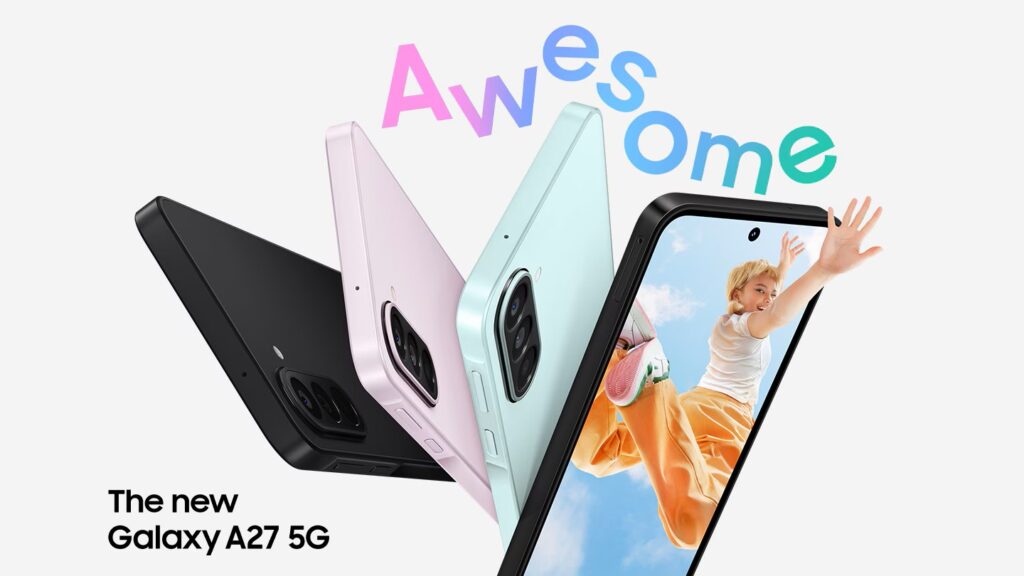
Starting mid-October 2026, Samsung increased the prices of the Galaxy A27, Galaxy M47, and Galaxy F70 Pro by Rs 2,000 across all variants. Tipster Sanju Choudhary first spotted the change through internal retail communications.
The Galaxy M47 and F70 Pro (which share a lot of the specifications) now start at Rs 37,999 for the 6GB/128GB version, up from Rs 35,999. The 8GB/128GB jumps from Rs 39,999 to Rs 41,999, and the 8GB/256GB goes from Rs 44,999 to Rs 46,999.
The Galaxy A27, the more lifestyle-focused A-series option with the same Snapdragon 6 Gen 3 chip, follows the exact same pattern. Its 6GB/128GB model rises from Rs 33,999 to Rs 35,999, the 8GB/128GB from Rs 40,999 to Rs 42,999, and the 8GB/256GB from Rs 45,499 to Rs 47,499.
That said, interested buyers still have a short window. The prices are already updated on the official Samsung India website, which confirms this isn’t a false alarm. Flipkart and Amazon are still showing the older rates for now, but it’s only a matter of time before they follow suit, likely once existing stock sells out.
Some physical retailers may also be clearing older inventory during festive sales, and bank offers or extra discounts can still bring the effective cost down. If you’re planning to buy one of these Snapdragon 6 Gen 3 models, it’s worth checking the current prices soon before the older rates disappear.
This isn’t a one-off. Over the past few weeks and months, Samsung has already hiked prices on several other Galaxy A and M series phones, including models in the A17 and M17 ranges. The M47 and F70 Pro themselves saw a Rs 3,000 increase back in September, so the cumulative rise is now well above their original launch prices. Other brands like OPPO and Vivo have made similar moves, pointing to wider pressure from rising component and manufacturing costs.
Anker’s new Nano Charger Neo is $19.99 on Amazon as of Tuesday morning US time. That is 23% off its $25.99 list price, sold by AnkerDirect with free Prime delivery. It only launched in the US in late September at $25.99, so this is $6 off a three-week-old product. During Prime Big Deal Days (6 to 8 October), it dipped to $18.19, $1.80 below today’s price.
The Neo is a single USB-C charger with one trick. It is rated 45W for normal use but uses AVS (Adjustable Voltage Supply) to push up to 65W to devices that ask for it, such as iPhone 18 Pro models and MacBooks.
Anker claims the Nano Charger Neo takes an iPhone 18 Pro Max to 80% in 32 minutes and an iPhone 17 Pro Max to 60% in 30 minutes. In Anker’s tests, the 18 Pro Max hit a peak of 47C (117F). You also get ActiveShield 4.0 temperature monitoring, a 180-degree foldable plug tested to four folds a day for eight years, and an 18-month warranty.
Yes, if you charge one device at a time. At $19.99 this is the charger to buy for one iPhone 18 Pro, a Pixel, a Galaxy phone or a small laptop. Apple’s 40W Dynamic Power Adapter does the same trick for $15 more and stops at 60W.
Two catches. It has one port, so it will not charge a phone and a watch together. And the 65W is a burst, not a sustained rating. Anker says power drops gradually after about 20 minutes at 65W, and it does not say where it settles.
Need two ports? The Anker Nano 65W 3-port at $29.99 is the better buy. If not, buy the Neo. All colors are $19.99 today.
The Honor Win 2 series of performance-driven flagship phones is set to go official on Oct. 21 in China. Ahead of the launch, the Win 2, Win RT 2, and Win Turbo 2 are all listed on Honor’s online store in China, revealing their official images and configurations. At the same time, a leak from reliable tipster DCS has revealed key details about the Win RT 2, which packs the largest battery seen on a smartphone from a mainstream brand. Here’s a look at what to expect from these phones.
Honor Win RT 2 and Win Turbo 2 variants, color options
The official images showcase the Win RT 2 and Win Turbo 2 in color options such as Red and Blue Buff, Quickly Star Black, and Designated Win.
According to a Weibo post by tipster Digital Chat Station, the Win RT 2 will arrive with a 185Hz 2K AMOLED panel with ultra-thin bezels, a Snapdragon 8 Elite Gen 5 chip, a built-in cooling fan, and dual 1216 symmetrical speakers. However, the phone’s major highlight is its huge 12,070mAh battery. As per the 3C certification of the device, it may support 90W fast charging.
The Win RT 2 will be available in multiple configurations, including 12GB+256GB, 16GB+256GB, 12GB+512GB, and 16GB+512GB. The Win Turbo 2 will be sold in the same configurations, along with a base model offering 8GB+256GB. There is no information about the device’s specifications, but some vague reports suggest that it may also pack a 12,070mAh battery. However, there is a possibility that it may ship with a Dimensity chipset.
As far as the Honor Win 2 is concerned, it is expected to feature the same 2K 185Hz AMOLED panel as the Win RT 2. The screens on both phones could measure 6.89 inches. Under the hood, the Win 2 may feature the latest Snapdragon 8 Elite Extreme Gen 6 chip and a 10,000mAh battery with 100W charging. It will have the configuration as the Win RT 2 but will come in an additional 16GB+1TB option. It will be available in colors like Red and Blue buff, Quick Black, and Guaranteed Win.
The Redmi K100 Pro and K100 Pro Max debuted in China in August, but the standard Redmi K100 was missing from the lineup. Earlier reports suggested that the phone would arrive before the end of the year. A new leak now hints that its debut could be just days away.
Redmi K100 launch timeframe tipped
According to tipster Smart Pikachu, Redmi is tentatively planning to launch the standard K100 toward the end of October. The tipster says the phone will focus on a combination of Snapdragon dual-chip performance, a massive battery, an ultra-high-refresh-rate display and Bose-tuned audio. Redmi has yet to confirm the launch date or these details, so the timeline remains unofficial.
Redmi K100 specifications (rumored)
Redmi K100 Pro Max
The Redmi K100v has already appeared in an earlier leak from tipster Digital Chat Station who shared details about an engineering prototype in August. According to the tipster, the handset could feature a large, flat display measuring between 6.8 and 6.9 inches, with an ultra-high refresh rate, which could be 185Hz. The phone is also tipped to include a battery approaching 10,000mAh, potentially making endurance one of its biggest selling points.
The K100 may draw power from 2024’s Snapdragon 8 Elite chip and it may also feature a dedicated display chip for an enhanced gaming experience. Other reported features include symmetrical dual speakers, a relatively large linear vibration motor, a 3D ultrasonic fingerprint scanner and an IP68 rating for dust and water resistance.
As for pricing, the Redmi K100 is expected to sit below the K100 Pro, which reportedly starts at 3,699 yuan (approximately $550) in China. If Redmi follows that positioning, the standard model could start at around $450, although its actual price and memory configurations are still unknown.
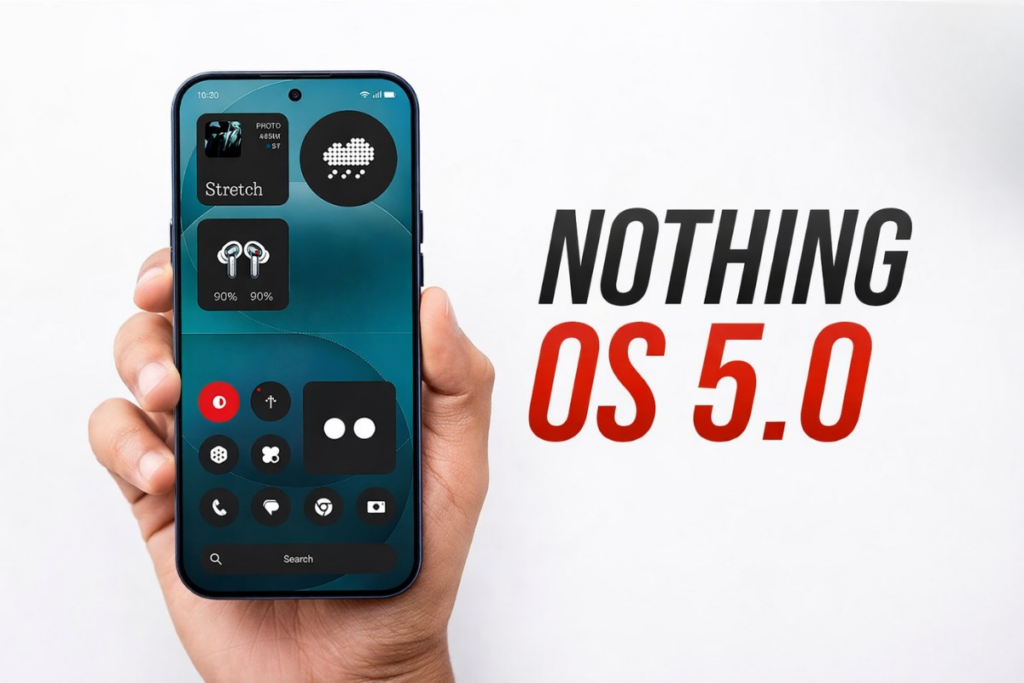
Nothing OS 5.0 is a pretty significant upgrade for Nothing smartphones in recent years. Besides Android 17’s core features, this major upgrade packs a bunch of really useful features, new widgets, and a redesigned Control Center. It brings a more capable AI experience that also allows users to build custom apps and a dedicated Glyph app for easier customization.
The brand has already announced which devices will be upgraded to Nothing OS 5.0, and when. However, that’s a vague timeline without exact rollout dates. So, we’ve created a dedicated section on this page that tracks the rollout progress. If you have yet to receive the update on your Nothing phone, this tracker is only what you need.
Nothing OS 5.0 eligible devices and rollout schedule
Model
Open Beta
General Release
Phone (3)
August 26
Mid October
Phone (4a) Pro
Early September
Early November
Phone (4a)
Late September
Early November
Phone (3a) Pro
Late September
Early November
Phone (3a)
Late September
Early November
Phone (2a)
Mid October
Mid November
Phone (2a) Plus
Mid October
Mid November
Phone (3a) Lite
–
Late December
Phone (4b)
Mid December
Mid January
CMF Phone 2 Pro
–
Mid January
Three phones are not eligible for the update: Nothing Phone (1), Nothing Phone (2), and CMF Phone 1. They have already received the number of OS upgrades promised by the brand, and so won’t receive Android 17 and future upgrades.
As planned, the Nothing Phone (3) received the Nothing OS 5.0 Open Beta in August, followed by other eligible devices. As of writing this post, most devices have received the open beta builds.
The brand has also started rolling out the stable update, with the Nothing Phone (3) being the first recipient. It should gradually expand to the rest of the eligible devices as per the schedule. Review the progress tracker below to learn more about the rollout.
Nothing OS 5.0 update progress tracker
[Note: This section is being regularly updated with the latest information.]
[update as on Oct 12, 2026] The first stable release is here, and it’s rolling out to Nothing Phone (3) users.
[update as on Sep 22, 2026] Nothing OS 5.0 Open Beta is now expanding Phone (4a), Phone (3a), and Phone (3a) Pro.
[update as on Sep 11, 2026] The open beta is now available for Nothing Phone (4a) Pro.
[update as on Aug 26, 2026] Nothing OS 5.0 Open Beta goes live for the high-end Nothing Phone (3).
[update as on Aug 25, 2026] Nothing announces which devices will receive the Nothing OS 5.0 update, along with a rollout timeline for Open Beta and general release.
We use cookies on our website to give you the most relevant experience by remembering your preferences and repeat visits. By clicking “Accept”, you consent to the use of ALL the cookies.
This website uses cookies to improve your experience while you navigate through the website. Out of these, the cookies that are categorized as necessary are stored on your browser as they are essential for the working of basic functionalities of the website. We also use third-party cookies that help us analyze and understand how you use this website. These cookies will be stored in your browser only with your consent. You also have the option to opt-out of these cookies. But opting out of some of these cookies may affect your browsing experience.
Necessary cookies are absolutely essential for the website to function properly. This category only includes cookies that ensures basic functionalities and security features of the website. These cookies do not store any personal information.
Any cookies that may not be particularly necessary for the website to function and is used specifically to collect user personal data via analytics, ads, other embedded contents are termed as non-necessary cookies. It is mandatory to procure user consent prior to running these cookies on your website.