HMD has finally made its entry into the Indian market with its smartphones. The Finnish brand has announced two new devices – the HMD Crest and HMD Crest Max. Both phones are affordable offerings under the Rs 17,000 price segment. They have identical designs and specifications apart from a few differences. Read on to know everything what the devices offer out of the box.
HMD Crest, Crest Max specs
The HMD Crest and Crest Max come with a 6.67-inchOLED display bearing an FHD+ resolution, a 90Hz refresh rate, and a centre-aligned punch-hole cutout. Both phones feature a side-mounted fingerprint scanner embedded in the power button and a squarish camera module with a glossy finish on the rear.
On the optics front, the HMD Crest has a 50MP main sensor along with a 2MP depth unit at the back. The HMD Crest Max features an upgraded triple camera setup comprising a 64MP main lens, 5MP ultra-wide-angle, and a 2MP depth unit. Both devices are fitted with a 50MP front-facing selfie snapper. There are various features onboard like night selfies, AI portraits, flash shots, and more.
Under the hood, the HMD Crest and Crest Max are equipped with a Unisoc T760 chipset coupled with 6GB RAM on the former whereas the latter has 8GB RAM. The Crest packs 128GB storage whereas the Crest Max maxes out at 256GB. The smartphones draw their power from a 5,000mAh battery cell with support for 33W fast charging. The brand says that the latest devices come with Repairability 1.0 which makes it easier to replace the back panel, battery, display, and charging port thereby extending the lifespan. Software-wise, the phones run on Android 14 and are promised to receive 2 years of OS updates.
The HMD Crest costs Rs 14,999 whereas the Crest Max is priced at Rs 16,499. Both phones come in Purple and Red colors. The Crest and Crest Max are also offered in Blue and Green colors respectively. As a part of the launch offer, the former will be available at Rs 12,999 whereas the latter can be grabbed at Rs 14,999. The smartphones will go on sale during Amazon’s Great India Freedom sale next month.
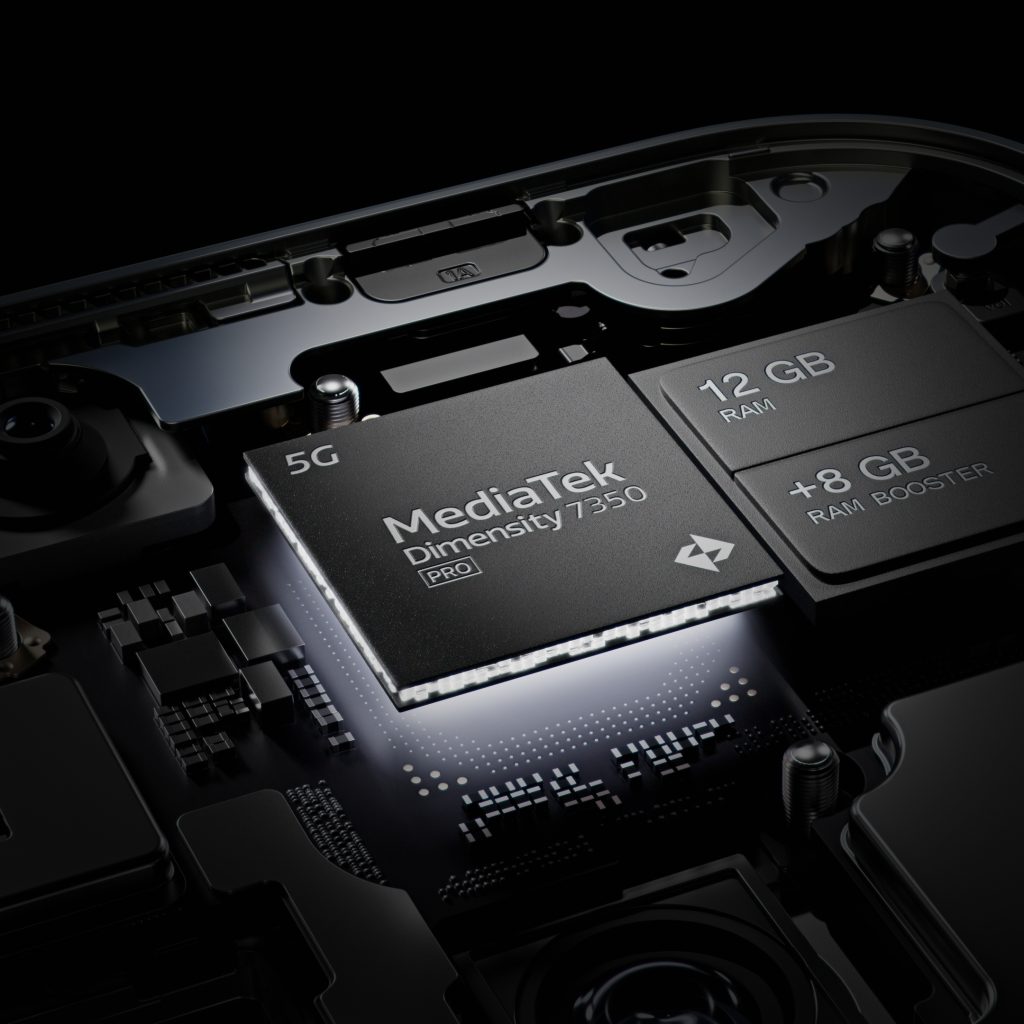
Nothing just posted a new teaser on Twitter. It has been confirmed that the upcoming Nothing Phone (2a) Plus will feature the MediaTek Dimensity 7350 Pro chip. This chip is exclusive to the Nothing Phone (2a) Plus, so it’s unlikely we’ll see it in other smartphones.
Nothing Phone (2a) Plus with Dimensity 7350 Pro
Thanks to this new chipset, the Phone (2a) Plus will be 10% faster than the regular Phone (2a). The Mali-G610 MC4 GPU in the Dimensity 7350 Pro is also 30% faster. Nothing Phone (2a) Plus will debut with 12 GB of RAM and can expand up to 8 GB more. You can check out Nothing’s official Twitter post through the provided link.
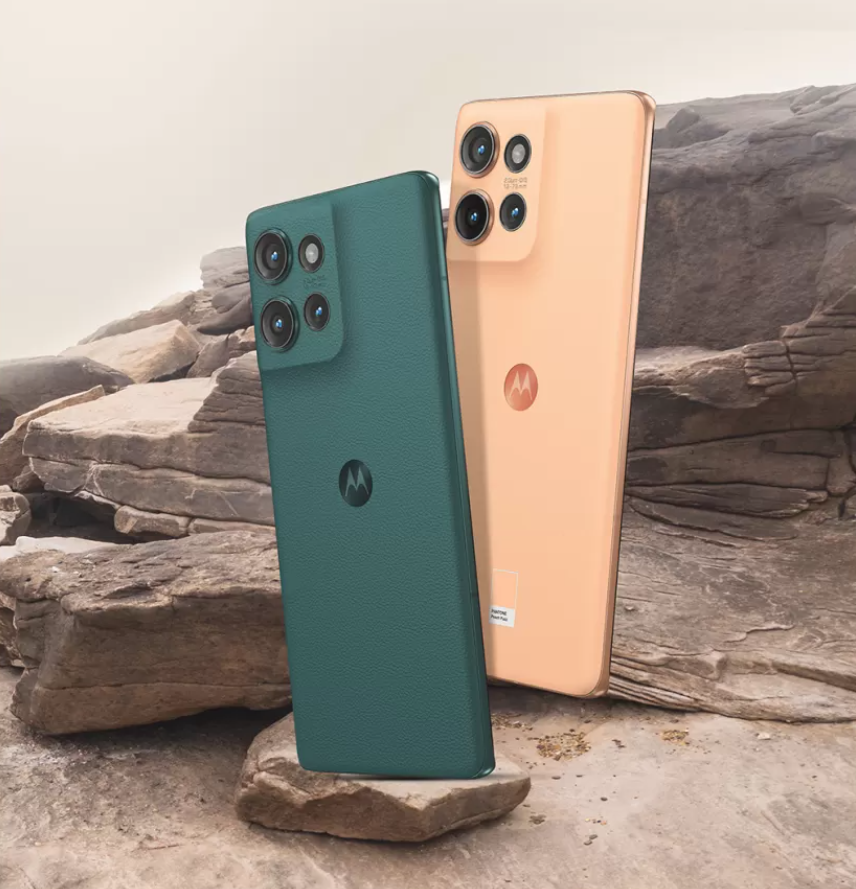
Motorola has announced the launch details of its new smartphone, the Edge 50, in India. Known for its sleek design and durability, the Edge 50 is set to hit stores on August 1st. This new device will be the fourth addition to the Motorola Edge 2024 lineup after the Edge 50 Pro, Edge 50 Ultra, and Edge 50 Fusion.
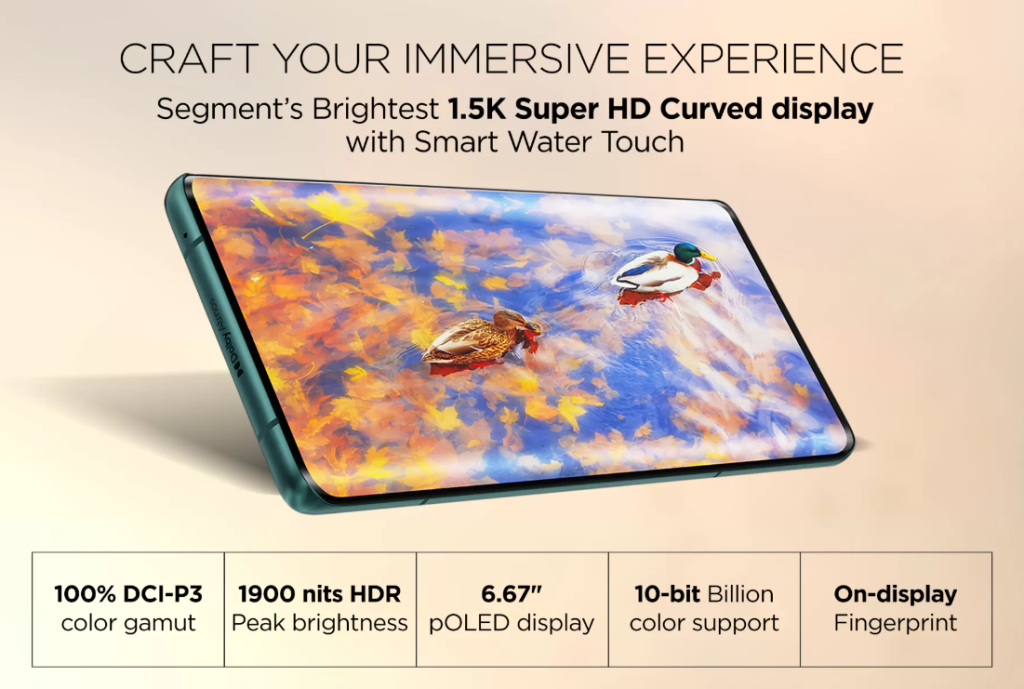
As per the official details revealed through its Flipkart microsite, the Edge 50 will launch with a vibrant 6.67-inch curved OLED screen with 10-bit color support, full coverage of the DCI-P3 color gamut and a peak brightness of 1,900 nits.
It will be powered by a Snapdragon 7 Gen 1 Accelerated Edition processor, paired with a Vapor Chamber Cooling System to keep the device cool during intense use. Despite its slim profile, Motorola has managed to fit a 5,000mAh battery inside the Edge 50, pairing it with 68W wired charging and 15W wireless charging.
It will run on an Android 14-based operating system and is confirmed to receive three years of OS upgrades and four years of security patches. For security, the device will feature an in-display fingerprint sensor.
As for optics, the brand has confirmed a 50 MP Sony LYT-700C primary sensor, paired with a 13MP ultra-wide camera with a macro option, and a 10MP telephoto camera with up to 30x digital zoom. The front camera will have a 32MP sensor.
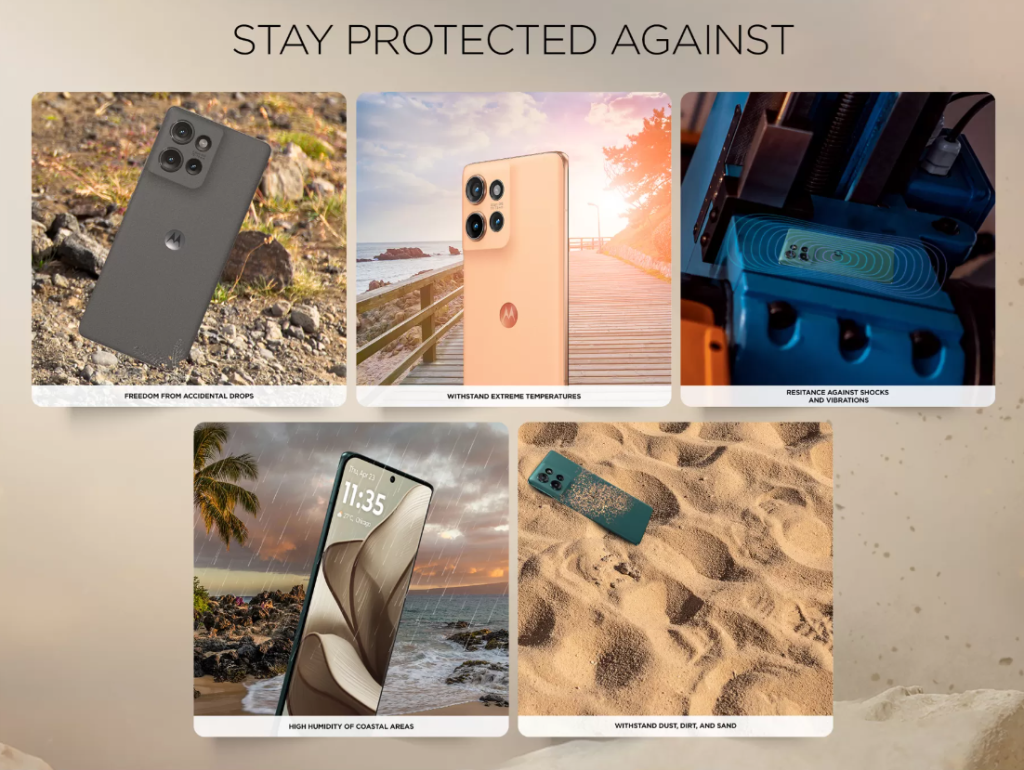
Additionally, the device will feature military-grade durability with a MIL-810H certification, as well as an IP68 rating for dust and water resistance.
In other news, Oppo has finally started selling the vanilla Reno 12 model in India, a week after the Reno 12 Pro. The device is powered by a Dimensity 7300 processor and has a starting price of Rs 32,999. However, with bank discounts, it can be bought for as low as Rs 29,999.
Apple is a company that usually keeps its glorious software exclusive to its own Apple devices. However, Apple Music is available on both Android and Windows, and the client for both platforms has a quite sleek design. Apple’s video call app, FaceTime was also exclusive to Apple devices in the past. And then Apple let people to make a call with Android users with the introduction of iOS 15. After a long wait, Apple Maps is finally available on non-Apple devices. Apple Maps Beta has been released platform-independently for everyone, it’s a website for now.
Apple Maps Beta interface
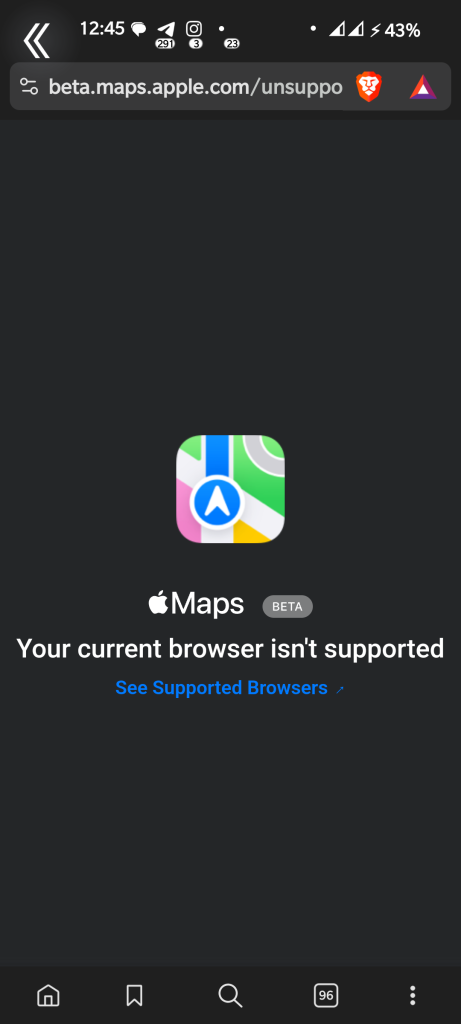
You can now use Apple Maps on your computer with a Windows or Linux operating system. We specify Windows or Linux because Apple Maps is not yet active for Android. In fact, Apple has not released a client for Windows or Linux. You can access Apple Maps through the Beta website. We also tried using it on an Android device, but unfortunately, Apple set the Maps to be only available for desktop web browsers.
Apple Maps doesn’t work on Android smartphones
The newly released website is not working smoothly as it does on Apple devices, but it is still worth to try. You can visit Apple Maps Beta from the given link.
As leaks about the Snapdragon 8 Gen 4 keep rolling in, Qualcomm has just announced the date for their upcoming Snapdragon Summit. A recent post on a Chinese tech blog revealed that Qualcomm’s next Snapdragon Summit will be held on October 21.
Snapdragon Summit on October 21, Snapdragon 8 Gen 4 is underway
Newly surfaced images show that Qualcomm hasn’t directly announced the launch date of Snapdragon 8 Gen 4 actually. However, the next Snapdragon Summit will take place in Hawaii from October 21 to October 23, and we believe Snapdragon 8 Gen 4 will be unveiled during this event. This new chipset is highly anticipated since it will be manufactured using TSMC’s 3nm process. Previous leaks suggest that the Snapdragon 8 Gen 4 scores around 10,000 in Geekbench multi-core CPU performance test, putting it kind of on par with the Apple M3 processor.
Snapdragon Summit – October 21st
Snapdragon 8 Gen 4 will feature Qualcomm’s Oryon CPU, which promises to greatly enhance the mobile gaming experience. Another thing we know is Snapdragon 8 Gen 4’s prime core will run at 4.2 GHz. Xiaomi 15 series might be the first smartphone lineup to feature Snapdragon 8 Gen 4.
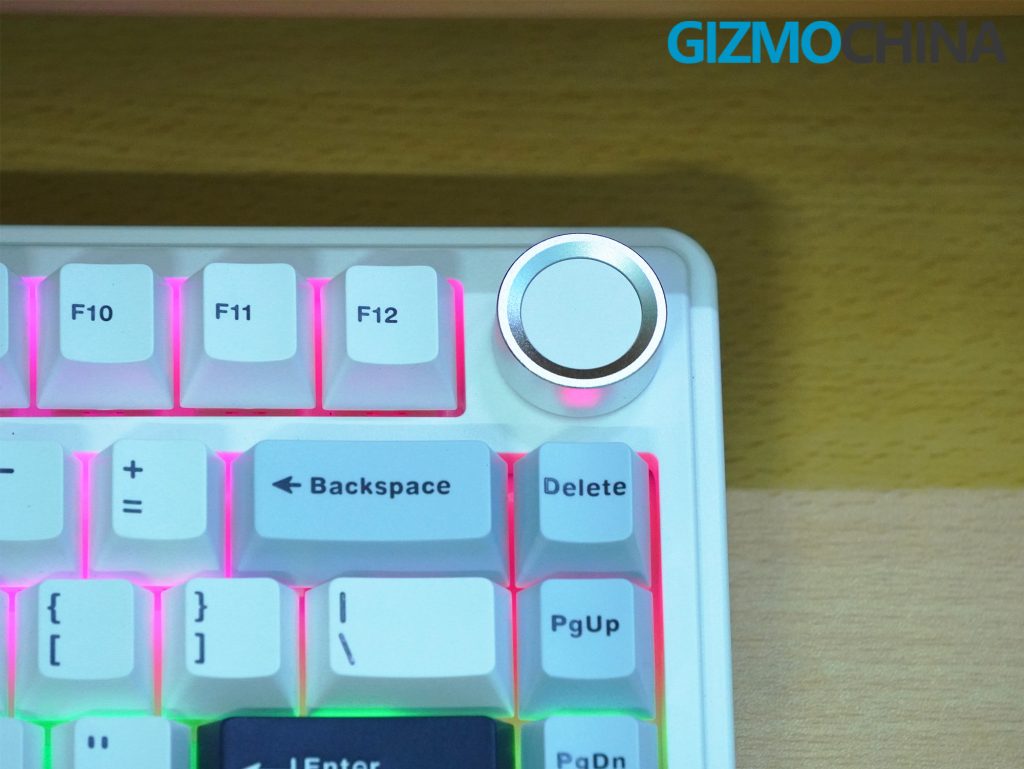
I recently got my hands on the Aula F75 keyboard, a standout contender in the saturated mechanical keyboard market. Launched last year, the Aula F75 strikes an impressive balance between performance, features, and value.
In this comprehensive review, we’ll explore its design, build quality, connectivity, features, performance, and pricing to provide you with the insights needed to make an informed decision.
What’s in the Box?
Inside the Aula F75 box, you’ll find everything you need to get started: the F75 keyboard itself, a 2.4G dongle for wireless connection, a Type-C cable for charging and wired use, two extra switches, a 2-in-1 keycap and switch puller for customization, and a user manual to guide you through the keyboard’s features and functionality.
Design and Build Quality
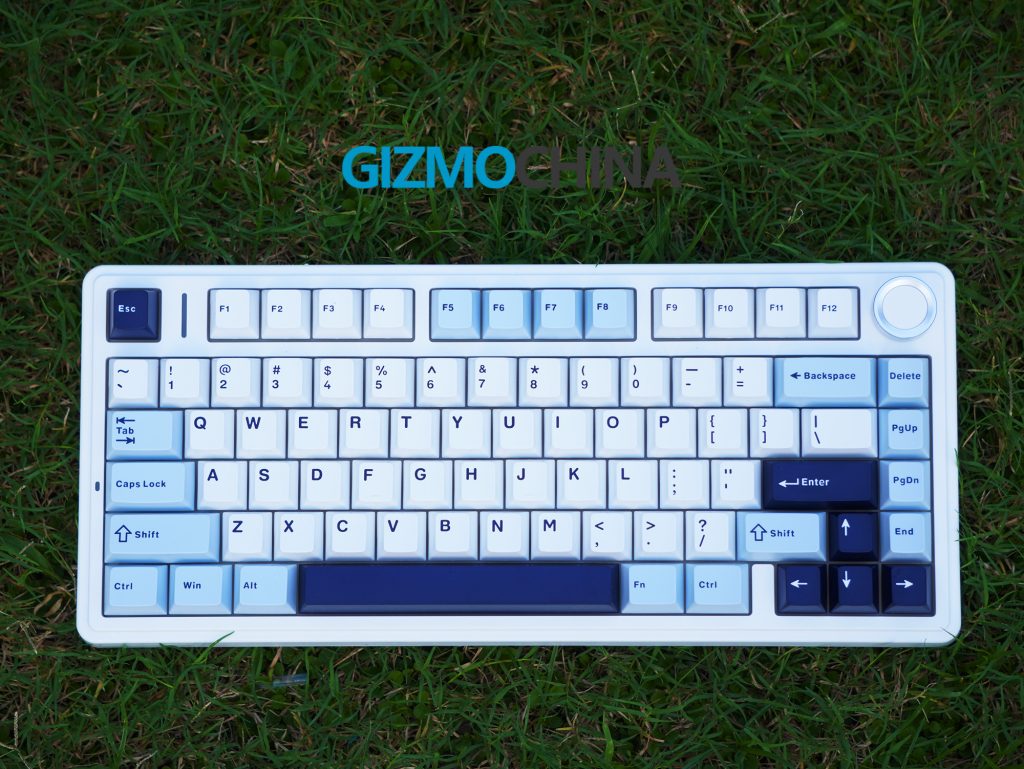
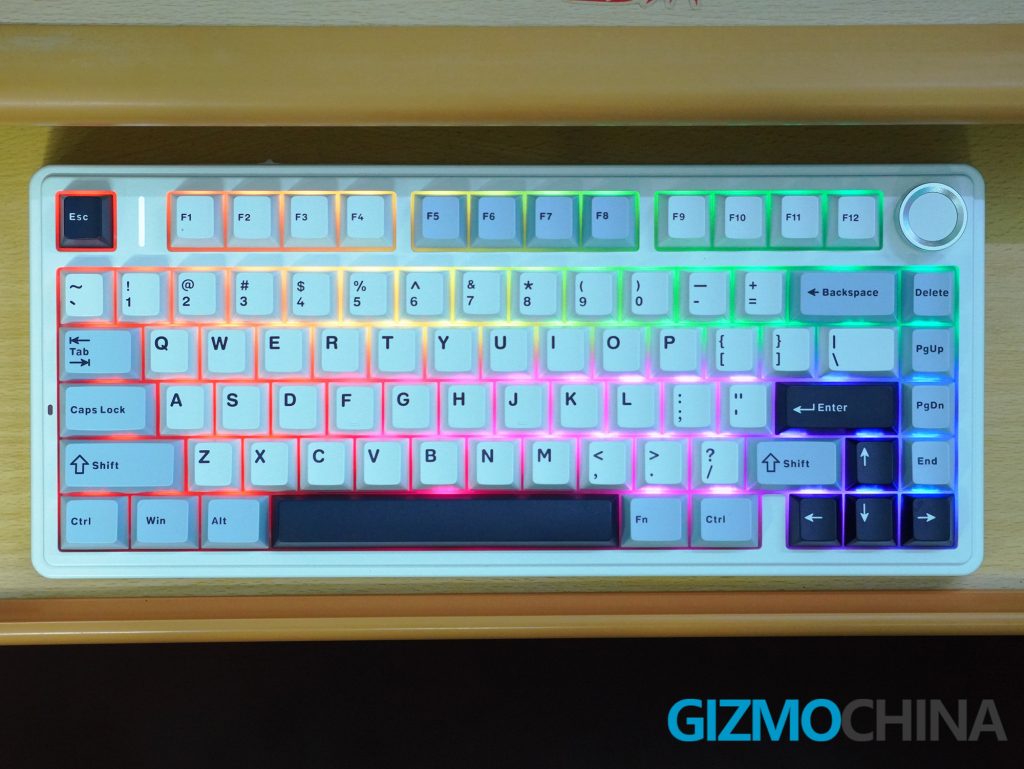
The Aula F75 boasts a clean and minimalist aesthetic with a 75% compact layout. This layout retains all the essential keys while shedding the less frequently used numpad and function keys, making it ideal for space-saving setups.
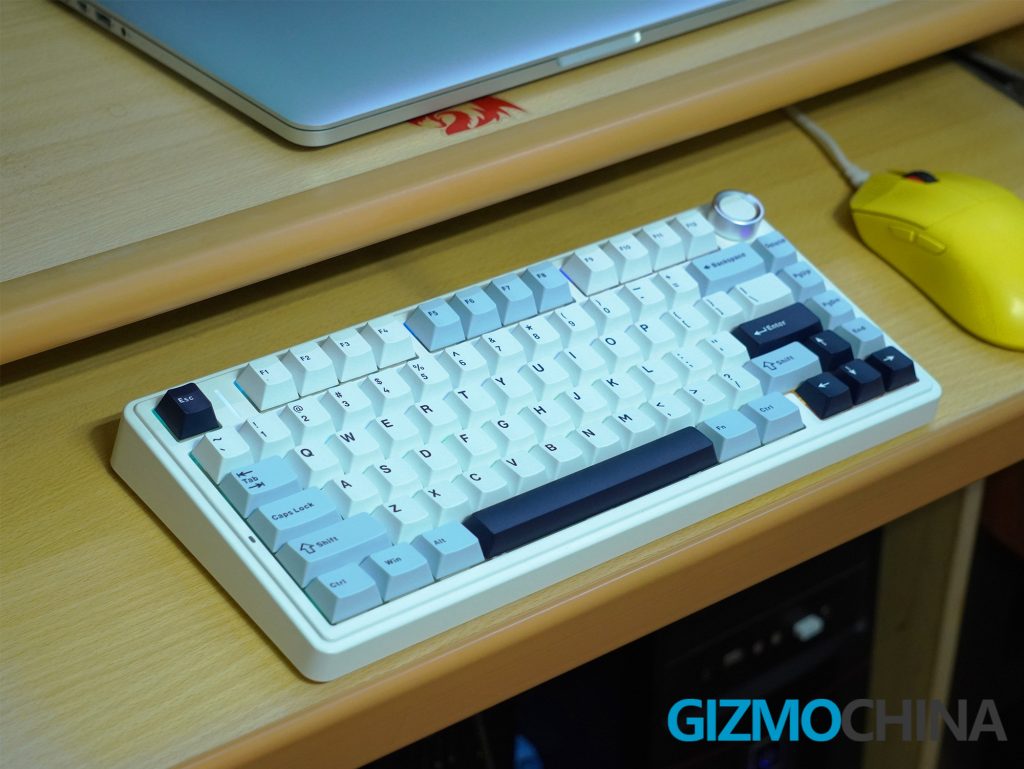
The keyboard comes in a variety of colors, including Glacier Blue, Black, and Sea Salt Blue. The Glacier Blue variant we’re reviewing features a white base with black, white, and blue keycaps, offering a refreshing and modern look.
While the chassis is entirely plastic, it feels sturdy and well-built. There’s no flex in the base, and the keycaps don’t exhibit any wobble. The keyboard has a decent weight to it, thanks in part to the five-layer sound-dampening system incorporated within. This dampening system effectively reduces typing noise, making the F75 a good choice for those who prefer a quieter typing experience.
One minor design gripe is the lack of dedicated multimedia keys. While there’s a multi-function control knob for volume control, additional media keys would have been a welcome convenience.
Connectivity
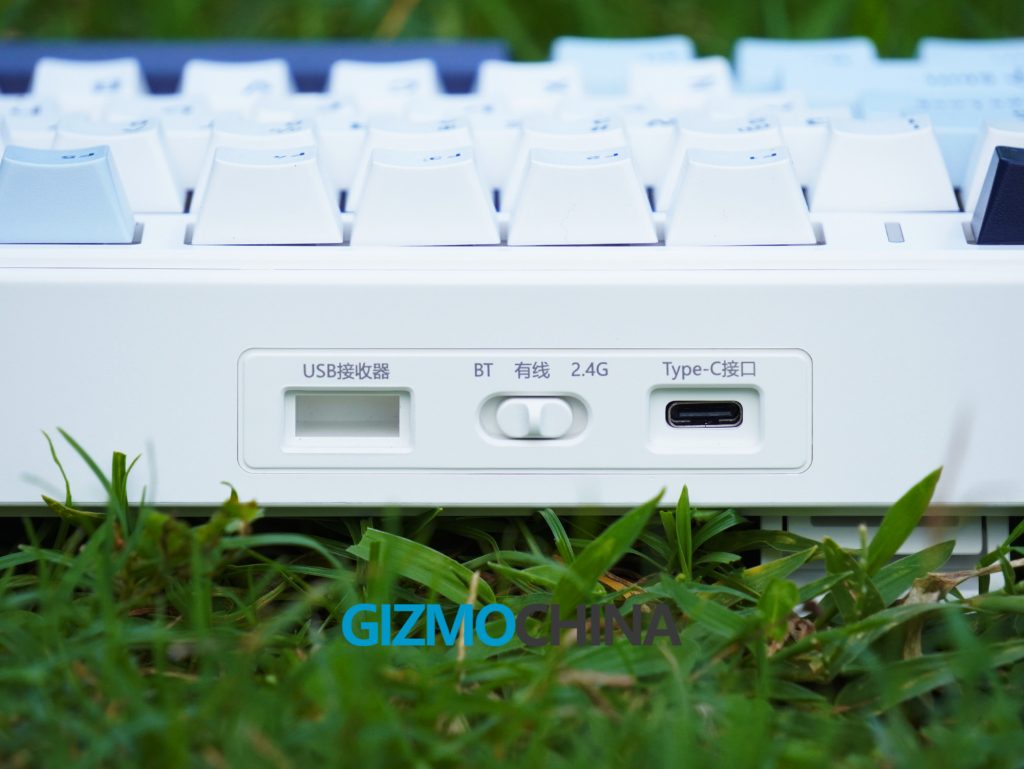
The Aula F75 offers triple-mode connectivity, catering to wired and wireless setups. You can connect via Bluetooth 5.0, 2.4 GHz wireless using the included USB dongle, or the standard wired USB-C connection. The Bluetooth and wireless connections offer a low-latency experience, making the F75 suitable for gaming. The keyboard also comes with a braided USB-C cable, a plus for wired users.
Features
The Aula F75 packs a surprising amount of features for its price range. Here are some of the highlights:
Hot-swappable switches: The F75 features a hot-swappable PCB, allowing you to easily customize the typing experience by swapping in your preferred switches. This opens up a world of possibilities for finding the perfect switch type for your needs, whether you prefer clicky, tactile, or linear switches.
Gasket Mount: The Aula F75 utilizes a gasket mount design, which positions the plate on a layer of silicone gaskets. This mounting style helps to absorb sound and vibrations, contributing to the overall quiet typing experience.
Pre-lubricated switches: In my case, the keyboard comes with pre-lubricated TTC Crescent switches, which are linear switches known for their smooth operation. While some users might prefer to install their own switches, pre-lubrication is a welcome feature for those who want a smooth typing experience right out of the box.
Double-shot PBT keycaps: The keycaps are constructed from double-shot PBT, a high-quality and durable material. PBT is resistant to shine and wear, ensuring your keycaps will look sharp for years to come.
Vibrant RGB lighting: The Aula F75 boasts 16.8 million color RGB backlighting with a variety of lighting effects. You can adjust the lighting to suit your preference using function key combinations, and by turning the knob, you can modify the brightness.
Multi-function control knob: A convenient addition, the multi-function control knob allows you to easily adjust volume and other media settings without interrupting your workflow.
Performance
Firstly, I absolutely love the sound it makes while typing.
Secondly, the typing experience on the Aula F75 is comfortable and quiet thanks to the combination of the leaf-spring gasket mount, sound dampening, and pre-lubricated switches.
The keyboard offers a nice amount of key travel and a satisfying bottom-out feeling. The pre-lubricated switches feel smooth and responsive.
The Aula F75’s performance holds up well in both productivity and gaming scenarios. The low-latency wireless connections ensure a responsive typing experience, and the anti-ghosting technology prevents missed keystrokes during intense gaming sessions.
The keyboard also comes with software where you can customize the RGB lighting effects and create macros. You can also remap any or all of the keys.
The keyboard features a 4000mAh battery that keeps the F75 powered up during wireless use. It can last up to a week on a single charge with moderate use and backlighting off.
Pricing and Verdict
The Aula F75 boasts a very attractive price tag, typically retailing for around $69.99. Considering the features it offers, including hot-swappable switches, pre-lubricated switches, PBT keycaps, and versatile connectivity options, the price makes it a compelling choice for budget-conscious mechanical keyboard enthusiasts. You can purchase it from Mechkeys.
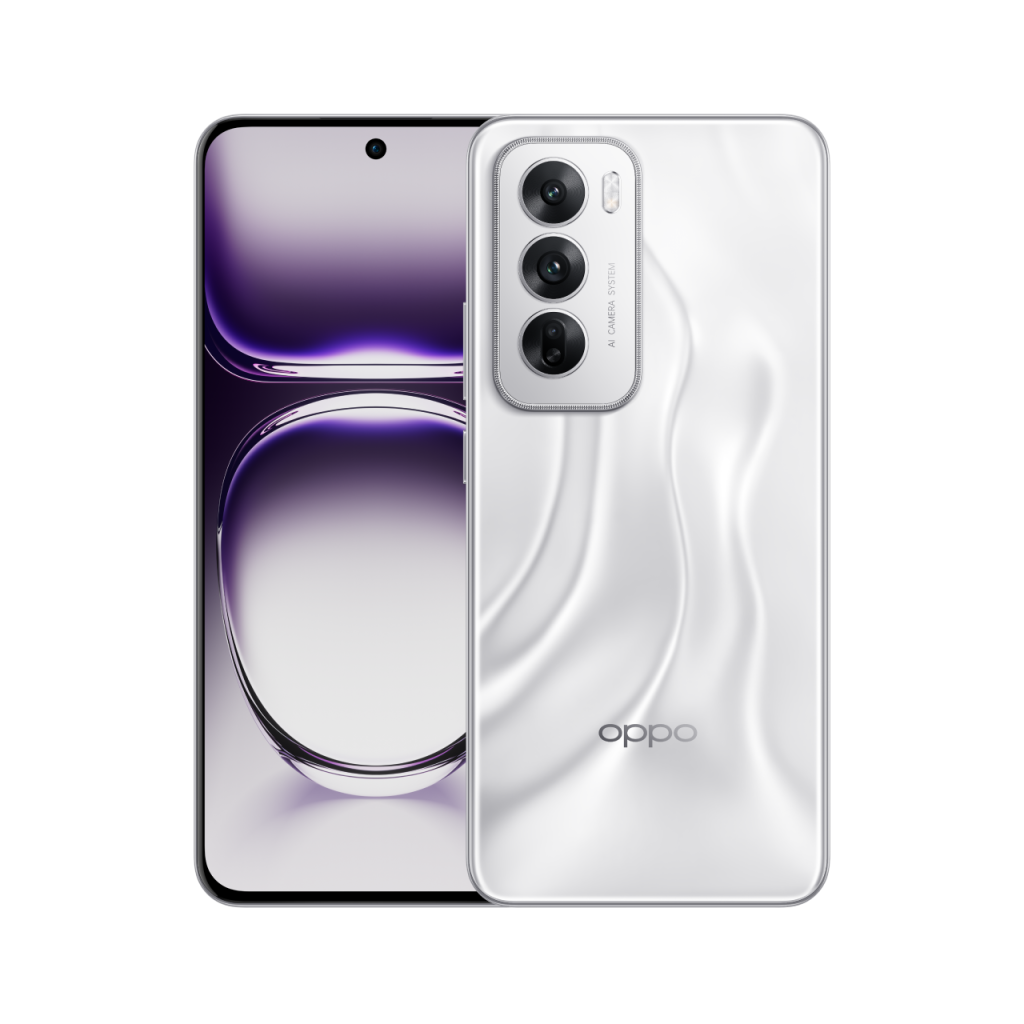
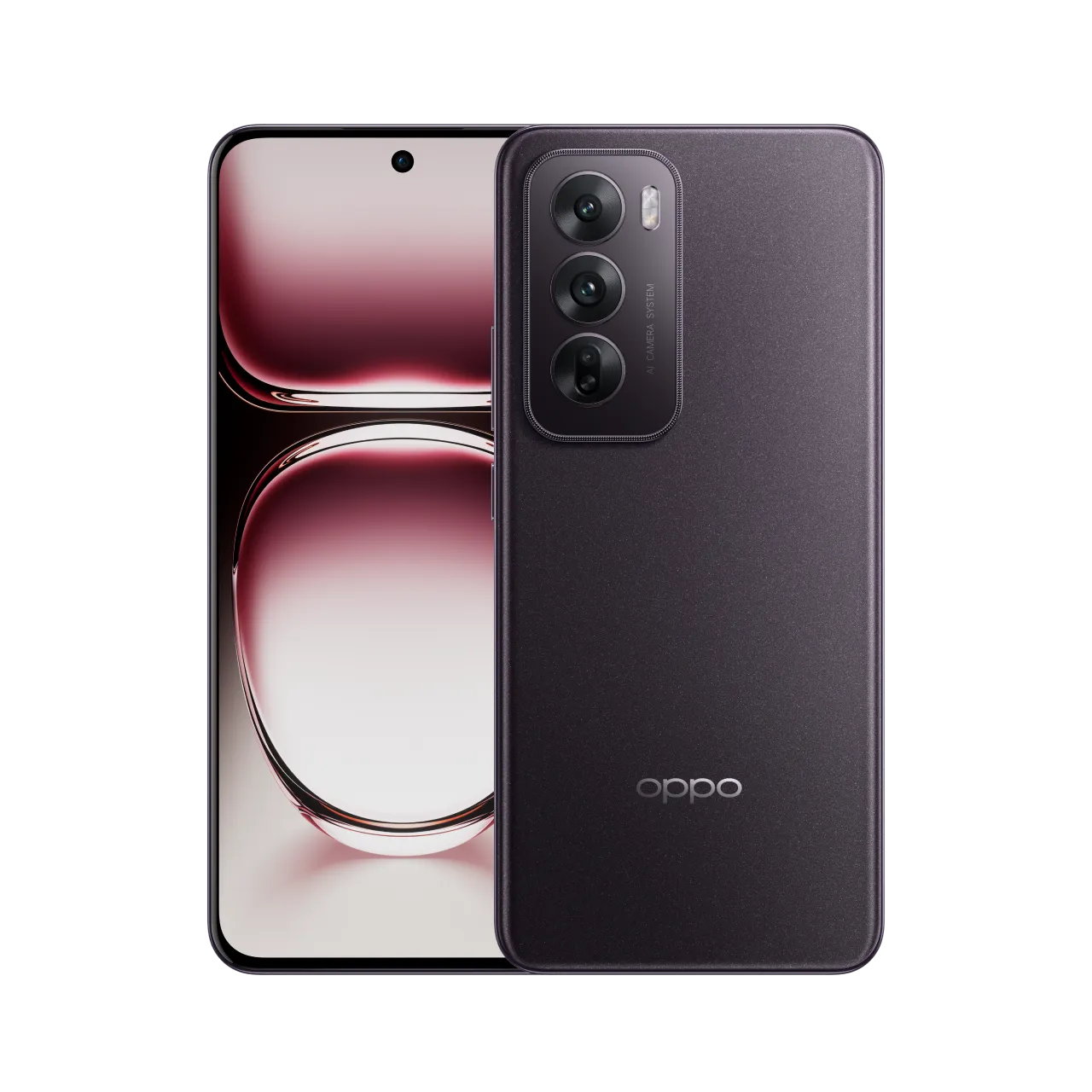
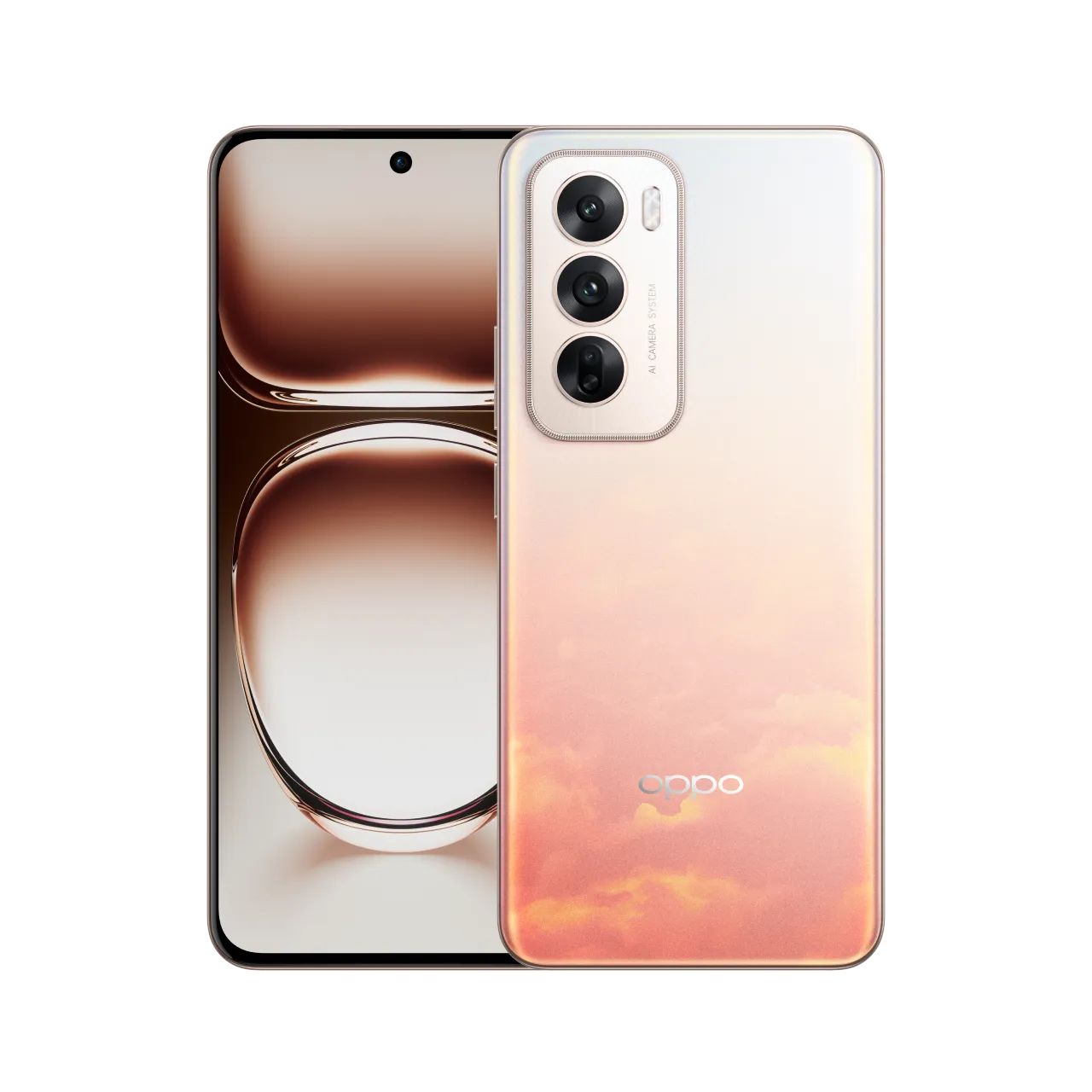
Priced at Rs. 32,999, the phone comes with 8GB of RAM and 256GB storage. It’s available in three colors: Sunset Peach, Matte Brown, and Astro Silver. You can buy it from Flipkart, OPPO’s online store, or physical retail outlets.
Launch offers include a Rs. 3,000 instant cashback with bank cards from SBI, HDFC, ICICI, One Card, Kotak, Bank of Baroda, and DBS. No-cost EMI options for up to 9 months, zero down payment, and low-down payment schemes are available through Bajaj Finserv, TVS Credit, HDB Financial Services, IDFC First Bank, and Home Credit. Buyers also get 3 months of YouTube Premium and Google One for free.
Customers activating the My OPPO app by July 26, 2024, can win prizes like international holidays, Reno12 devices, family dining vouchers, and OPPO Enco Buds 2.
Oppo Reno 12 specs:
The OPPO Reno12 5G features a 6.7-inch FHD+ OLED dual curved display with a 120Hz refresh rate and up to 1200 nits peak brightness, protected by Corning Gorilla Glass 7i. It is powered by an octa-core MediaTek Dimensity 7300 processor with Mali-G615 MC2 GPU, 8GB LPDDR4X RAM, and 256GB UFS 3.1 storage, expandable up to 1TB via microSD. The phone runs on Android 14 with ColorOS 14.1.
The camera setup includes a 50MP main camera with a Sony LYT-600 sensor, an 8MP ultra-wide camera, and a 2MP macro camera. The front camera is 32MP, capable of 4K video recording. The phone also features a 5000mAh battery with 80W SuperVOOC fast charging, an in-display fingerprint sensor, an infrared sensor, USB Type-C audio, stereo speakers, and dust and splash resistance (IP65). Connectivity options include 5G, dual 4G VoLTE, Wi-Fi 6, Bluetooth 5.4, and various satellite navigation systems.
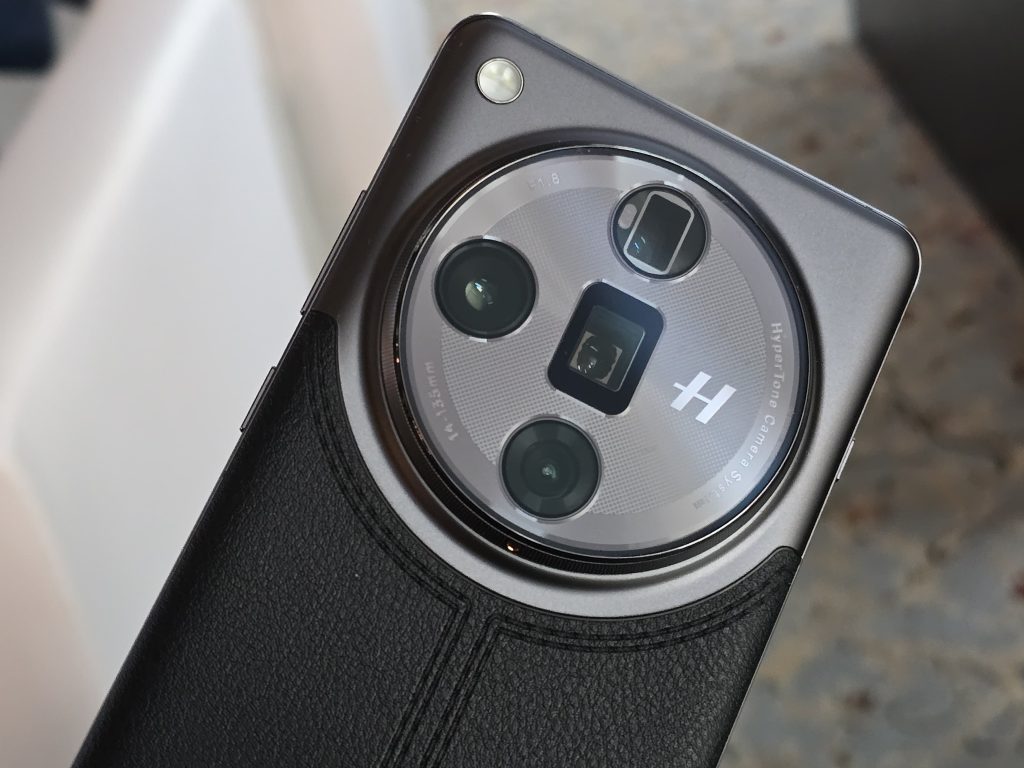
Oppo‘s official video reveals a sneak peek at the Find X8 Ultra, hinting at a slimmer design with a smaller camera bump. Despite the slimmer profile, the phone is expected to pack a bigger battery than its predecessor. A switch to a glass back and upgrades like a Snapdragon 8 Gen 4 processor and a high-quality display are also rumored.
While a 6,000mAh battery is ideal, leaks suggest a 5,500 mAh battery
The official tease keeps technical specs under wraps, but highlights exciting design improvements. The Find X8 Ultra is expected to be noticeably thinner and potentially sport a larger battery compared to the Find X7 Ultra. While a 6,000mAh battery is ideal, leaks suggest a 5,500mAh unit is more likely.
Oppo Find X7 Ultra
The Oppo phone is expected to maintain its IP68 water resistance rating, but with a glass back replacing the leather finish of the Find X7 Ultra. Previous leaks point to a powerful Snapdragon 8 Gen 4 processor, a stunning quad-curved OLED display, and a quad-camera setup.
Oppo’s official preview has generated excitement for the Find X8 Ultra, a potential frontrunner in the 2025 flagship market with a launch expected as early as January.
Between the new Realme P1 and the Realme P1 Pro, which will be a better buy for you? This article will put these devices up against each other to aid you in making the right purchase choice when shopping for a new device. At the end of this article, you’ll be able to determine which of these devices is the better buy for you.
Considering that this is a new series from Realme, some might find it hard understanding who it’s made for. Already, the Realme number series is the brand’s flagship entry and the C-series is the budget entry. Let’s now see how these new devices stack up against one another.
Please Note: When you buy something using the links in our articles, we may earn a small commission at no cost to you.
Realme P1 vs Realme P1 Pro: Design and colours
Realme P1 and Realme P1 Pro:
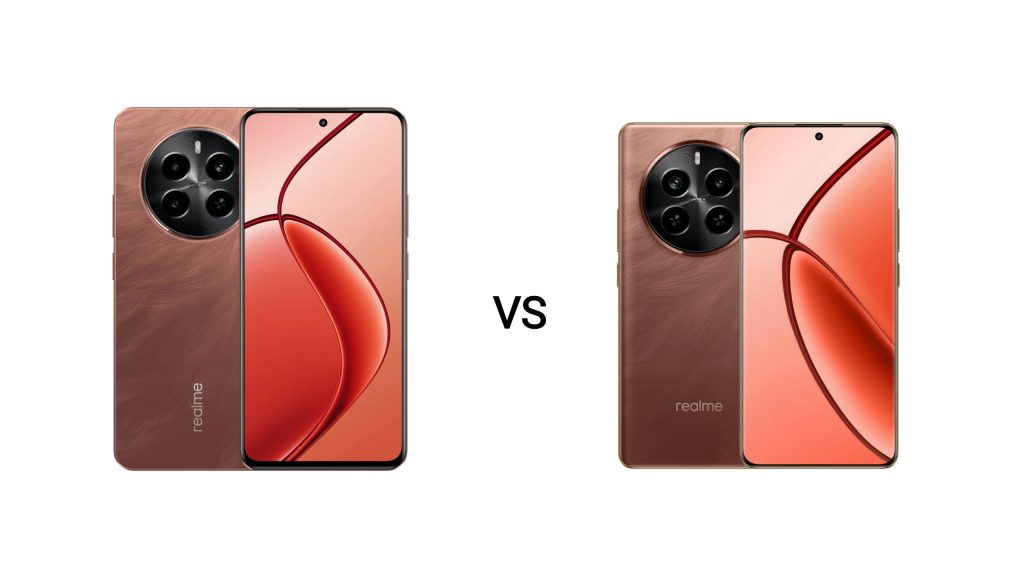
These new devices follow the design language of the Realme 12 series with their circular camera cutout. On the cutout there sits five cutouts: two hold the cameras, one holds the flash, and the remaining two hold nothing at all. The main difference between these devices is that the P1 comes with a flat screen and the P1 Pro comes with a curved screen. Available colours in this series are Phoenix Red, Peacock Green, and Parrot Blue, all of which feature a brushed finish that’s impressive to look at.
Major differences:
Flat screen on the Realme P1.
Curved screen on the Realme P1 Pro.
Realme P1 vs Realme P1 Pro: Display
Realme P1 and Realme P1 Pro:
Both devices come with AMOLED screens that support 120Hz refresh rate. For the Realme P1 it offers up to 1200 nits peak brightness while the Realme P1 Pro offers 950 nits peak brightness. While the Realme P1 is the brighter device, it isn’t the more stylish option, as the Realme P1 Pro comes with a curved screen that many will love. Additionally, the screen-to-body ratio on the Realme P1 Pro is higher than that on the Realme P1 thanks to its narrow bezels.
Major differences:
Different screen form factors.
Realme P1 vs Realme P1 Pro: Cameras
Realme P1:
When it comes to cameras, the Realme P1 comes with a dual camera setup, housing a 50MP main camera and a 2MP front facing camera. Up front, we find a 16MP selfie camera that sits in the punch hole on this device’s screen. Both the front and rear facing cameras on this device don’t support 4K video recording.
Realme P1 Pro:
As for the Realme P1 Pro, this device also comes with a dual rear camera setup. This setup houses a 50MP main camera and an 8MP ultrawide lens. For its selfie camera, this device comes with a 16MP sensor that sits in the punch-hole cutout on this device’s screen. Just like the Realme P1, this Pro variant doesn’t support 4K video recording on the front facing camera but supports 4K recording on the rear cameras.
Major differences:
8MP ultrawide camera on the Realme P1 Pro.
Realme P1 vs Realme P1 Pro: Performance
Realme P1:
Powering this device is the MediaTek Dimensity 7050 processor. Joining this processor is up to 8GB RAM and 256GB worth of storage capacity.
Realme P1 Pro:
As for the Realme P1 Pro, under its hood is the Snapdragon 6 Gen 1 processor. Supporting this processor is 8GB worth of RAM as standard. For storage, buyers of this device get to choose between either 128GB and 256GB storage capacity.
Major upgrades & differences:
A better processor on the Realme P1 Pro.
Realme P1 vs Realme P1 Pro: Software
Realme P1 and Realme P1 Pro:
Both devices currently run on Android 14 and the Realme UI 5.0 software, and they both support up to three years OS update.
Major differences:
Nil.
Realme P1 vs Realme P1 Pro: Battery life and charging
Realme P1 and Realme P1 Pro:
Both devices launch with 45W fast charging support and, 5000mAh battery capacity.
Major differences:
nil.
Realme P1 vs Realme P1 Pro: Final Verdict
If you’re shopping on a budget, then the Realme P1 is a great choice for you as it has a ton of similarities with the more expensive Pro model. For style and performance, we’ll recommend the Realme P1 Pro in all its glory and glam. While both devices are amazing entries, the Realme P1 Pro is the better choice.
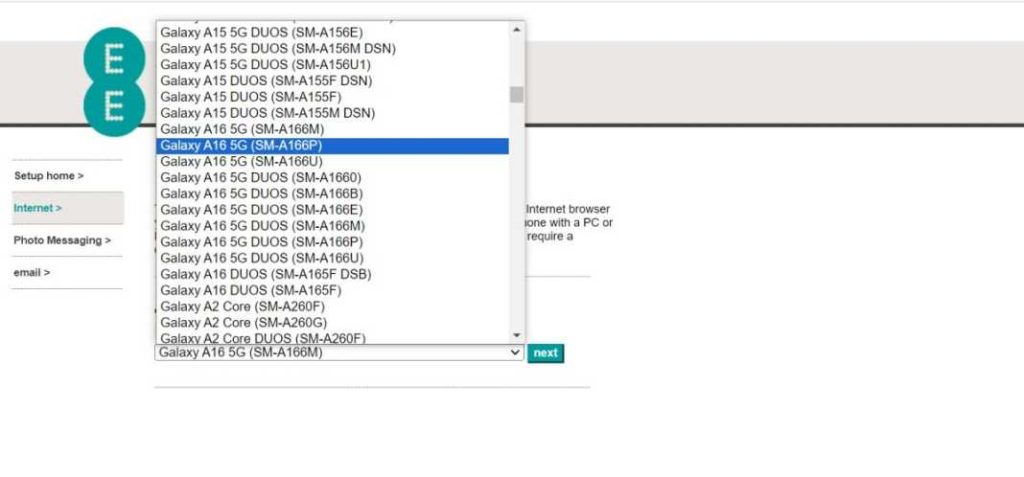
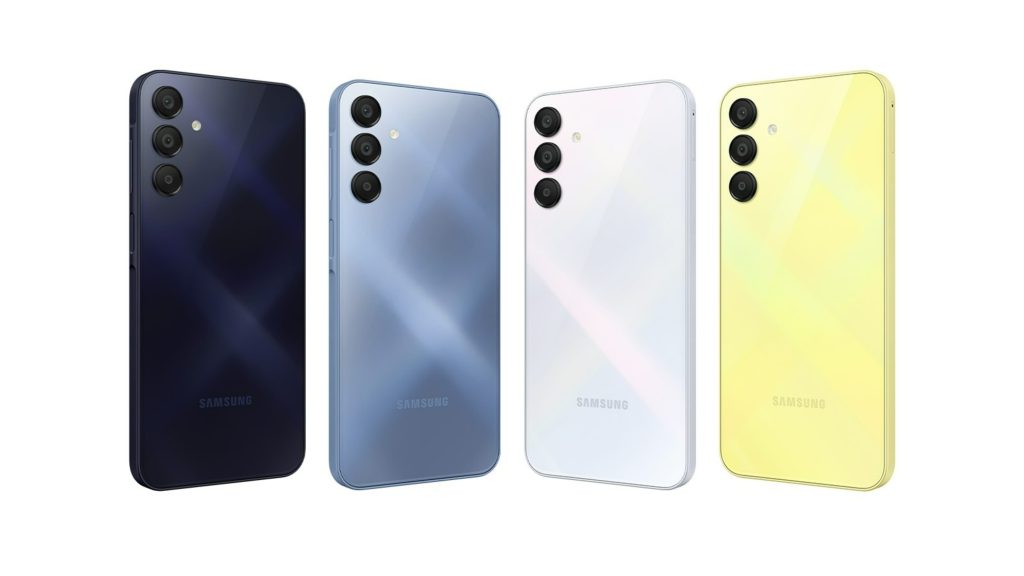
Samsung is reportedly working on a successor to its Galaxy A15 lineup. The South Korean tech giant’s upcoming smartphone, tentatively dubbed the Galaxy A16, has made an appearance in the database of UK carrier EE.
The listing reveals multiple model numbers associated with the device, likely for the different variants of the device. These include: SM-A1660: Galaxy A16 5G DUOS SM-A166U: Galaxy A16 5G SM-A166M: Galaxy A16 5G SM-A166B: Galaxy A16 5G DUOS SM-A166E: Galaxy A16 5G DUOS SM-A166M: Galaxy A16 5G DUOS SM-A166P: Galaxy A16 5G DUOS SM-A165F DSB: Galaxy A16 DUOS SM-A165F: Galaxy A16 DUOS
While specifics are scarce at this stage, the “DUOS” suffix in some model numbers indicates dual SIM capability. The Galaxy A16 name without the 5G tag are believed to be the 4G model.
It’s worth noting that a separate listing for the model number SM-A165F has been also spotted on the IMEI database, but it doesn’t reveal anything about its specifications.
However, we now know that Samsung is working on both 4G and 5G model for the Galaxy A16 like its predecessor.
While details about the Galaxy A16 are currently limited, it’s reasonable to speculate based on its predecessor. The Galaxy A15 featured a 6.5-inch Super AMOLED display with a 90Hz refresh rate.
Powering the device were either the MediaTek Dimensity 6100+ chipset for the 5G model or the Helio G99 for the 4G variant. Key camera specifications included a 50MP primary sensor, and the battery capacity was set at 5000mAh with 25W charging support.
It’s plausible that the Galaxy A16 series will build upon this foundation, introducing refinements or upgrades to various components. However, concrete information regarding the new models remains elusive at this point.
Samsung has yet to officially acknowledge the existence of the Galaxy A16. Further details about the device’s specifications, release date, and pricing are expected to emerge in the coming months.
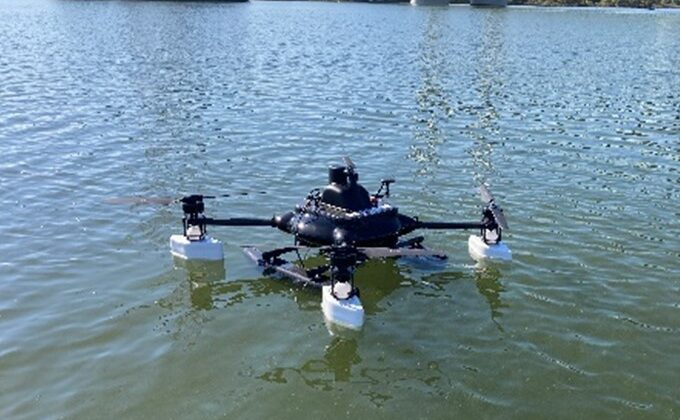
Two Japanese companies have collaborated to develop a new drone that can take off, land, and sail on water. The new oceanographic survey drone is the product of a joint engagement between Penta Ocean Construction and Prodrone Co., Ltd. The drone is called the Penta-Ocean Vanguard-DroneAqua (POV-DA).
The POV-DA is an innovative oceanographic survey drone with great capabilities and versatility. It is designed for seamless water operations and is equipped with a high-precision GNSS satellite system, a depth-measuring sonar, and thrusters. The drone can transmit and display real-time data on its current location and water depth to operators on land via a remote control console. The advanced tech features in the drone mean that it can navigate to specific monitoring points using its thrusters. The drone can maintain its position even when the sea is turbulent.
The excellent sea-going capabilities of the POV-DA drone mean that the drone is a great tool for carrying out efficient and automatic bathymetric surveys and wave observations. In construction projects that require the building of breakwaters, quay walls, and similar structures, the POV-DA provides an alternative to the traditional depth-sounding using dedicated boats or lead-sounding methods. The time required for depth surveys is significantly reduced when using the new drone. Operators can better monitor underwater construction progress with the real-time data transmission available with the drone.
The POV-DA has a depth survey accuracy within +/- 10cm of the current methods and is a great tool for effective underwater construction management. The POV-DA provides real-time wave height and period data obtained from GNSS readings. The accuracy of the drone’s measurement is also impressive around +/- 10% or less compared to the conventional wave meters. Additionally, the POV-DA can take aerial shots during disasters and provide real-time updates on land and underwater.
The potentials of the POV-DA in ocean operations and disaster management are quite extensive. It could be integrated with additional equipment such as multi-parameter water quality meters, water sampling devices, and such, to broaden its capabilities. It is not clear how much the drone will cost and when it becomes a production model.
Google‘s upcoming hardware event in August is expected to focus heavily on its Pixel lineup, including the Pixel 9 series, a new Pixel Watch, and Pixel Buds. However, new leaks and reports suggest that Google might also be refreshing its smart home products.
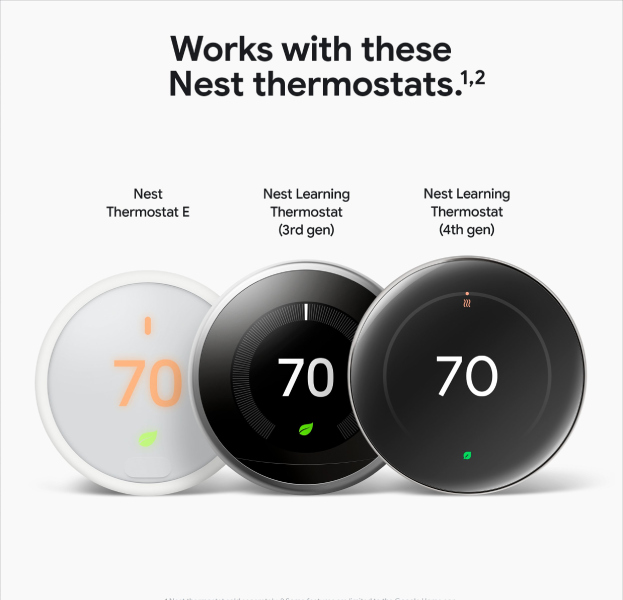
There have been rumors about a new Chromecast and updated Nest Audio speakers. Now, reliable tipster Arsène Lupin has revealed details about what appears to be a refreshed version of the Nest Learning Thermostat.
The last major update to the Learning Thermostat was the 3rd generation in 2015. Since then, Google has released the Thermostat E (now discontinued) and the more affordable Nest Thermostat (without the “learning” capabilities).
The tipster shared renders of the upcoming Thermostat which reveals a larger display with curved glass edges. Google also seems to be updating the user interface, and there’s a physical ring, which is much thinner than the one on the 3rd-gen model.
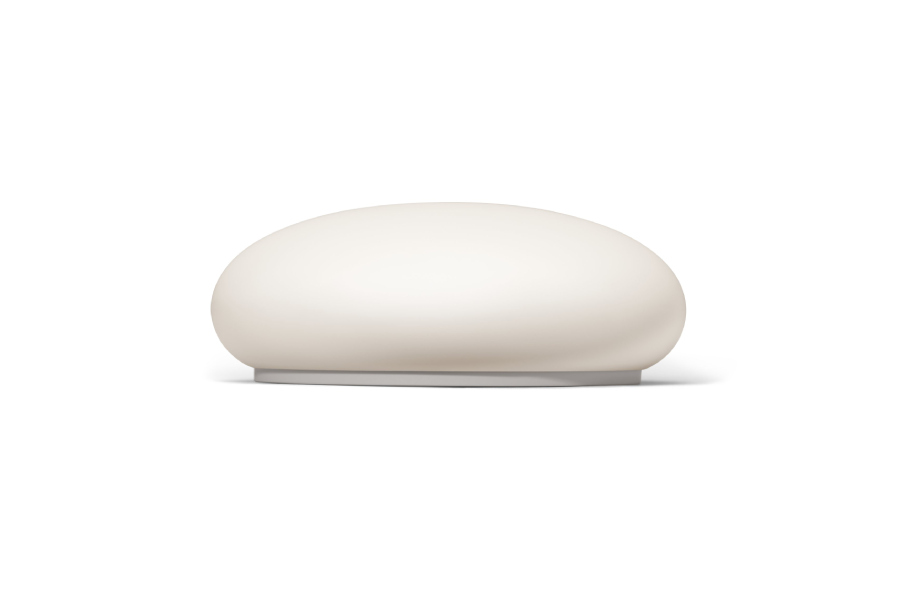
The leak also reveals details of a redesigned Nest Temperature Sensor. The current $40 temperature sensor works with the 3rd-gen Learning Thermostat and the discontinued Thermostat E as a battery-powered wireless extension to monitor temperatures in another room.
The core functionality of the upgraded temperature sensor will also remain the same along with the price at $40 for a single unit and the three for $100.
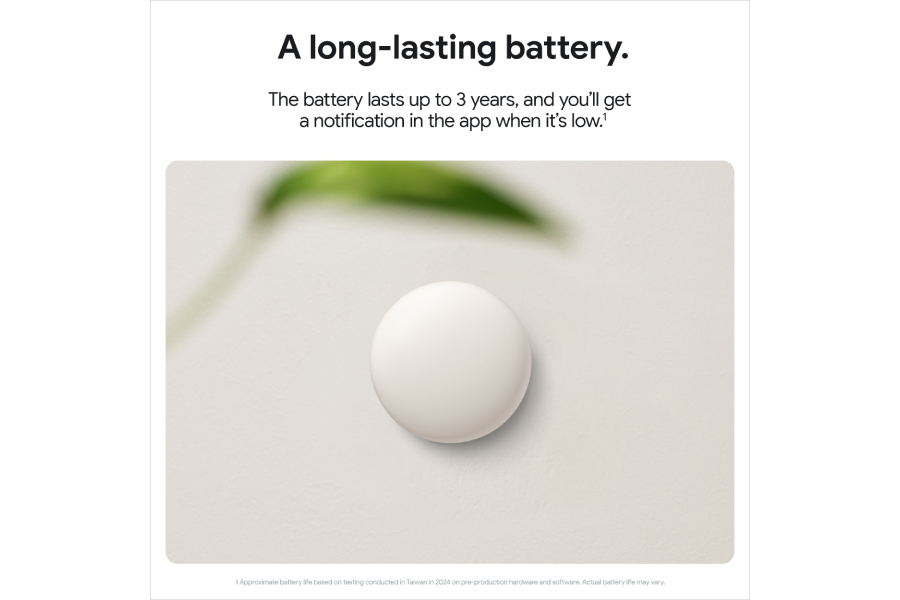
The most noticeable change is in the design though. The new sensor has a smoother, egg-shaped form, which kind of resembles a steamed bun. It’s more minimalistic in look compared to the previous model’s utilitarian appearance.
One significant improvement mentioned in the leak is the battery life. The new sensor is expected to last three years, compared to the current model’s two-year lifespan. It’s unclear if this change involves a different battery type (the current sensor uses CR2 3V lithium), but a longer battery life is always a welcome upgrade.
With Google’s Pixel event scheduled for August 13th, the wait for official confirmation regarding the new Nest Learning Thermostat shouldn’t be long.
The Google Pixel 9 series launches next month on August 13th, and alongside the standard models, Google will debut the Pixel 9 Pro Fold. Fresh new details about the foldable have now surfaced online, thanks to a report by Android Authority.
The report reveals that the upcoming foldable will ditch the original Pixel Fold’s unique, wide form factor for a more conventional approach. The original Pixel Fold stood out (or some might say, stuck out) from the competition with its short and wide foldable display.
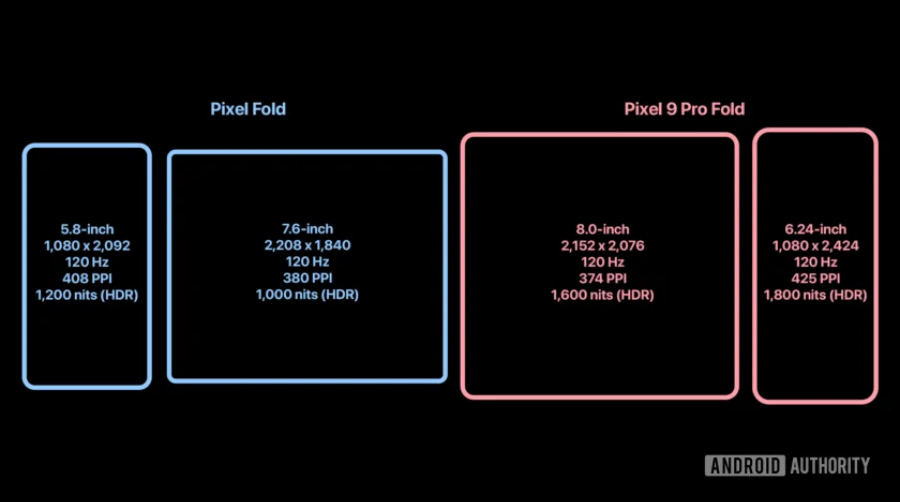
The Pixel 9 Pro Fold, however, will embrace a more standard square-ish aspect ratio, with a reported resolution of 2,152 x 2,076. This suggests that while the “tallness” issue that plagued some apps on the original Fold might not be completely eradicated, it’s certainly on the way out.
The new design aligns the Pixel 9 Pro Fold more closely with competitors like the OnePlus Open, offering a familiar book-style foldable experience.
Another significant change is size. The Pixel 9 Pro Fold will sport an 8-inch inner display, a noticeable jump from the 7.6 inches of its predecessor. The increase in real estate is accompanied by a bump in display quality.
The inner panel now features 1,600 nits of full-screen HDR brightness, a welcome improvement over the original Pixel Fold’s 1,000 nits. The resolution also sees a slight increase, though the larger size keeps the pixel density roughly on par with the original Fold.
The outer display isn’t left out either. This time around, we’re looking at a 6.24-inch panel with 1,800 nits of HDR brightness. The table below, courtesy of Android Authority, compares the display specs of the Pixel 9 Pro Fold to its predecessor:
Oppo is reportedly working on the Find X8 series of smartphones for the Chinese market. The Find X8 and X8 Pro, which are said to be equipped with the Dimensity 9400, may debut in October. On the other hand, the Find X8 Ultra, which may feature the Snapdragon 8 Gen 4 chip and two-way satellite communication support, may break cover in Q1 2025. The rumor mill has been gradually leaking details about the Find X8 series. Today, Oppo Find series product manager, Zhou Yibao, released a Weibo video in which he said he spoke with both the product manager and the structural engineer of the Find X8 Ultra to get answers to many interesting questions he had asked.
Oppo Find X8 Ultra first details out
Oppo Find X7 Ultra
The structural engineers revealed that the Find X8 Ultra will be thinner than the Find X7 Ultra, which has a thickness of 9.5mm. Additionally, the camera module protrusion will be smaller compared to the Find X7 Ultra.
The battery capacity is set to be larger than the 5,000mAh battery of the Find X7 Ultra, although it will likely be less than 6,000mAh. Furthermore, the Find X8 series will feature an IP68 rating and a pure glass body, likely with AG matte glass, providing a premium texture and feel.
Oppo Find X8 Ultra specifications (rumored)
As per other reports, the Oppo Find X8 Ultra will feature an OLED panel with micro-curvature on all four sides. It is expected to offer a 2K resolution, a 120Hz refresh rate, and an ultrasonic in-screen fingerprint sensor. The Snapdragon 8 Gen 4-powered phone is expected to support two-way satellite connectivity.
The back panel of the Find X8 Ultra will have a quad-camera setup consisting of four 50-megapixel cameras. Like its predecessor, the X8 Ultra will continue to feature dual periscope telephoto cameras. The IMX858 camera from the predecessor model may not be available on the X8 Ultra.
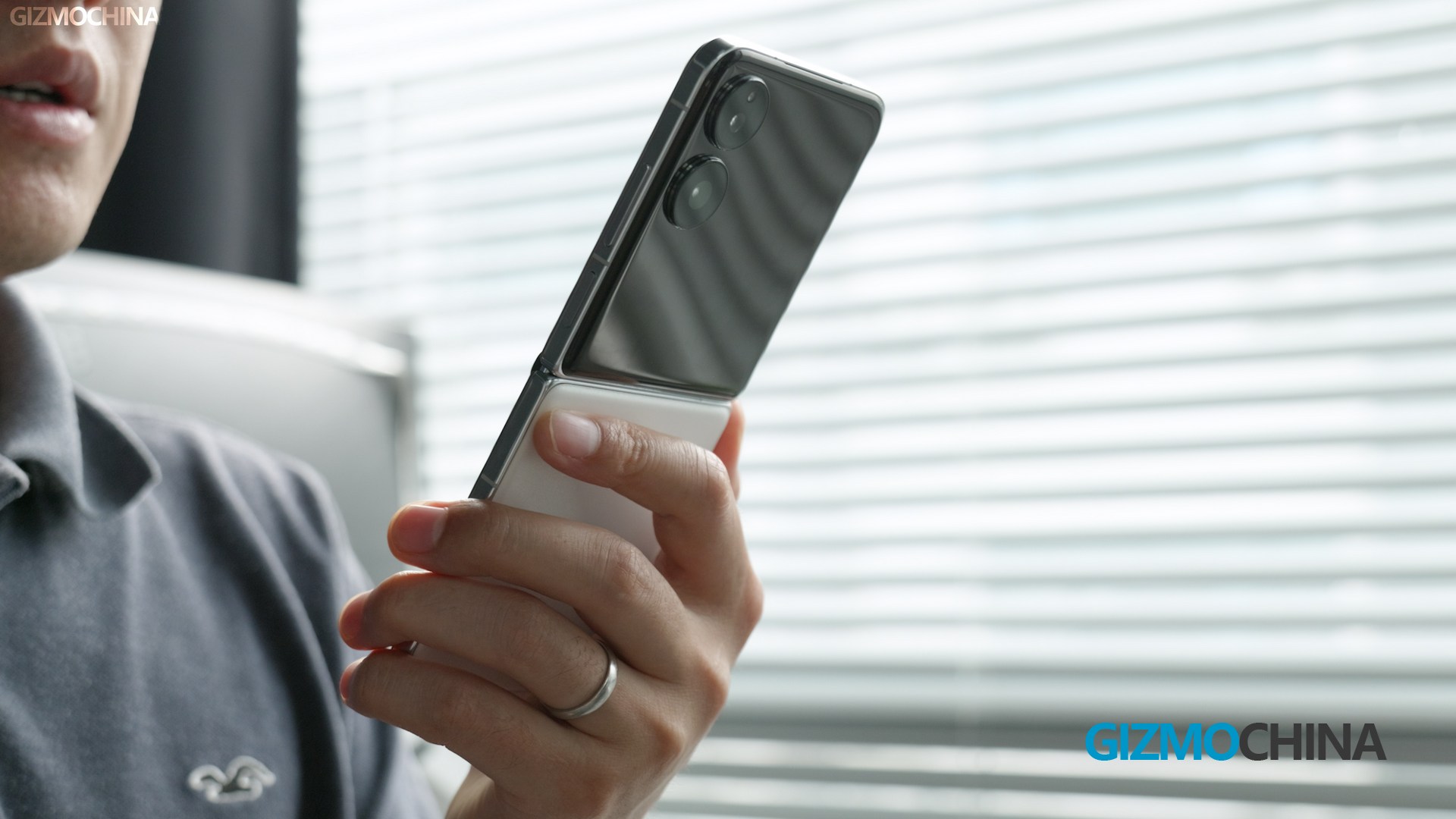
In the unboxing video, I said that this Mix Filp made a very good first impression on me, with its strong 8 Gen3, nice appearance, and a very good feel in the hand, as well as the lovely outside screen. So, in this video, we will take a close look at Xiaomi’s first filp phone.
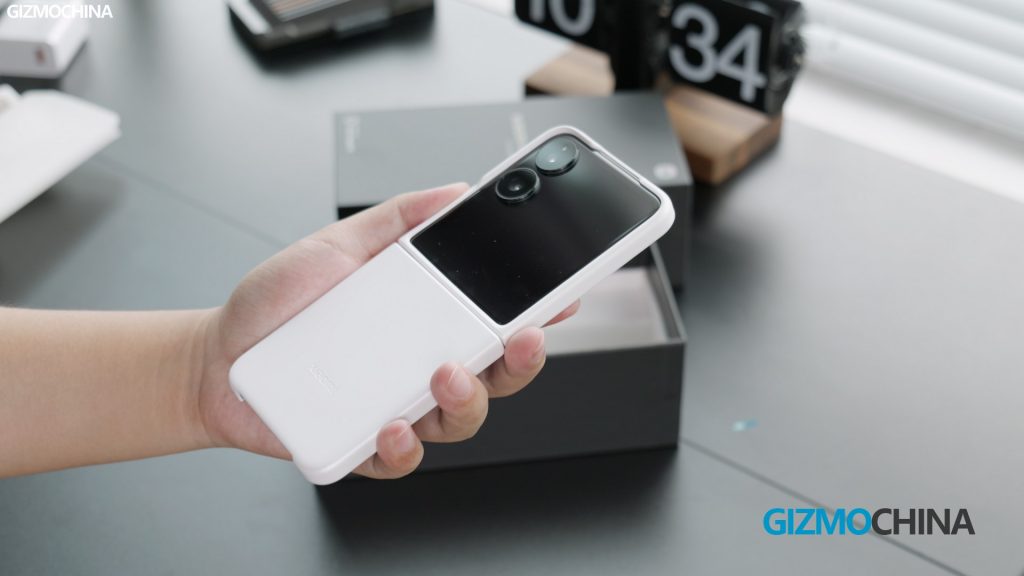
Okay, so this phone still comes in the original black package, with the Leica brand prominently displayed. The package includes the phone, a standard 67W charger, and an A to C cable. Finally, a hard plastic white casing; do you think it looks good?
Desgin
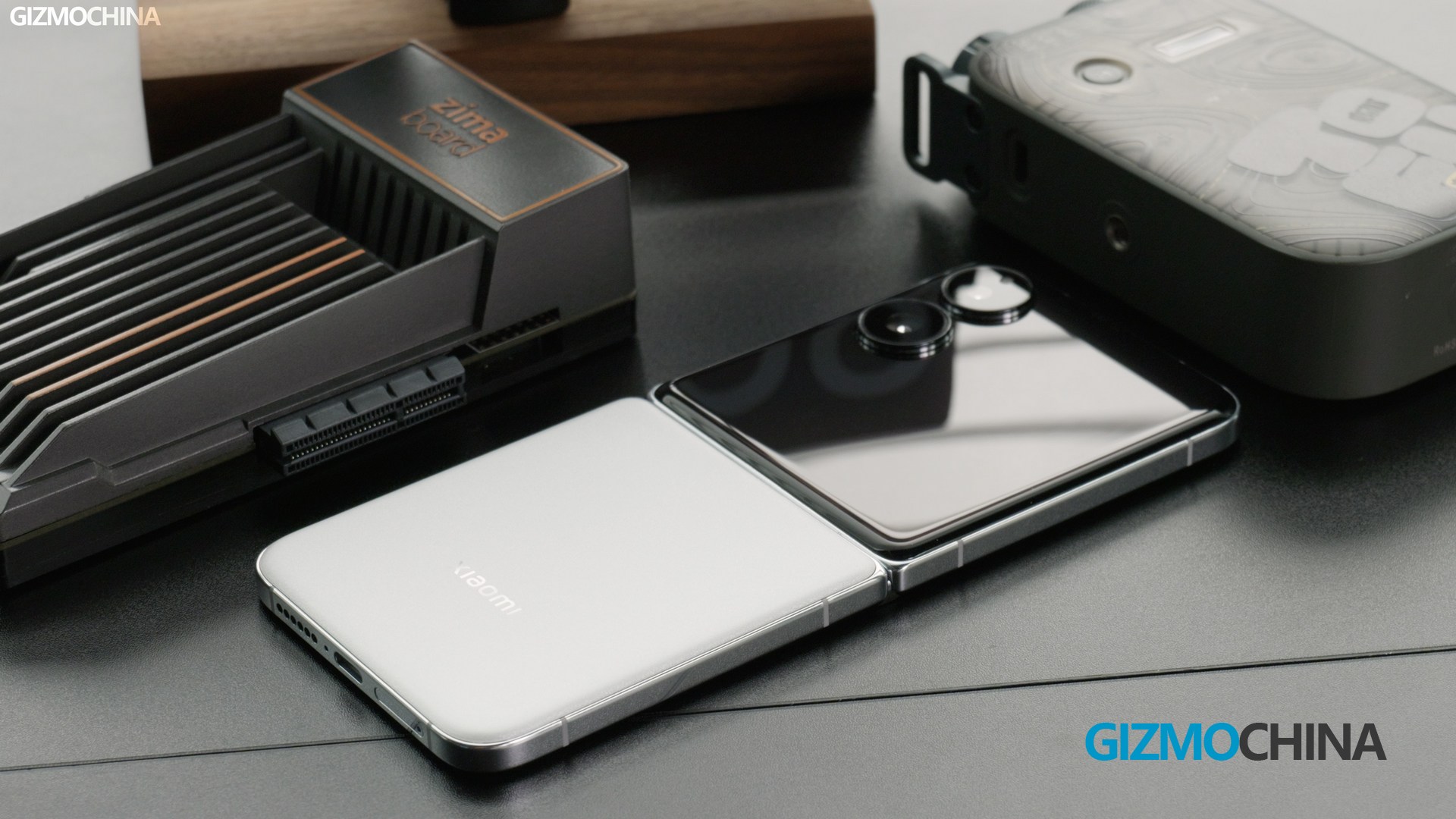
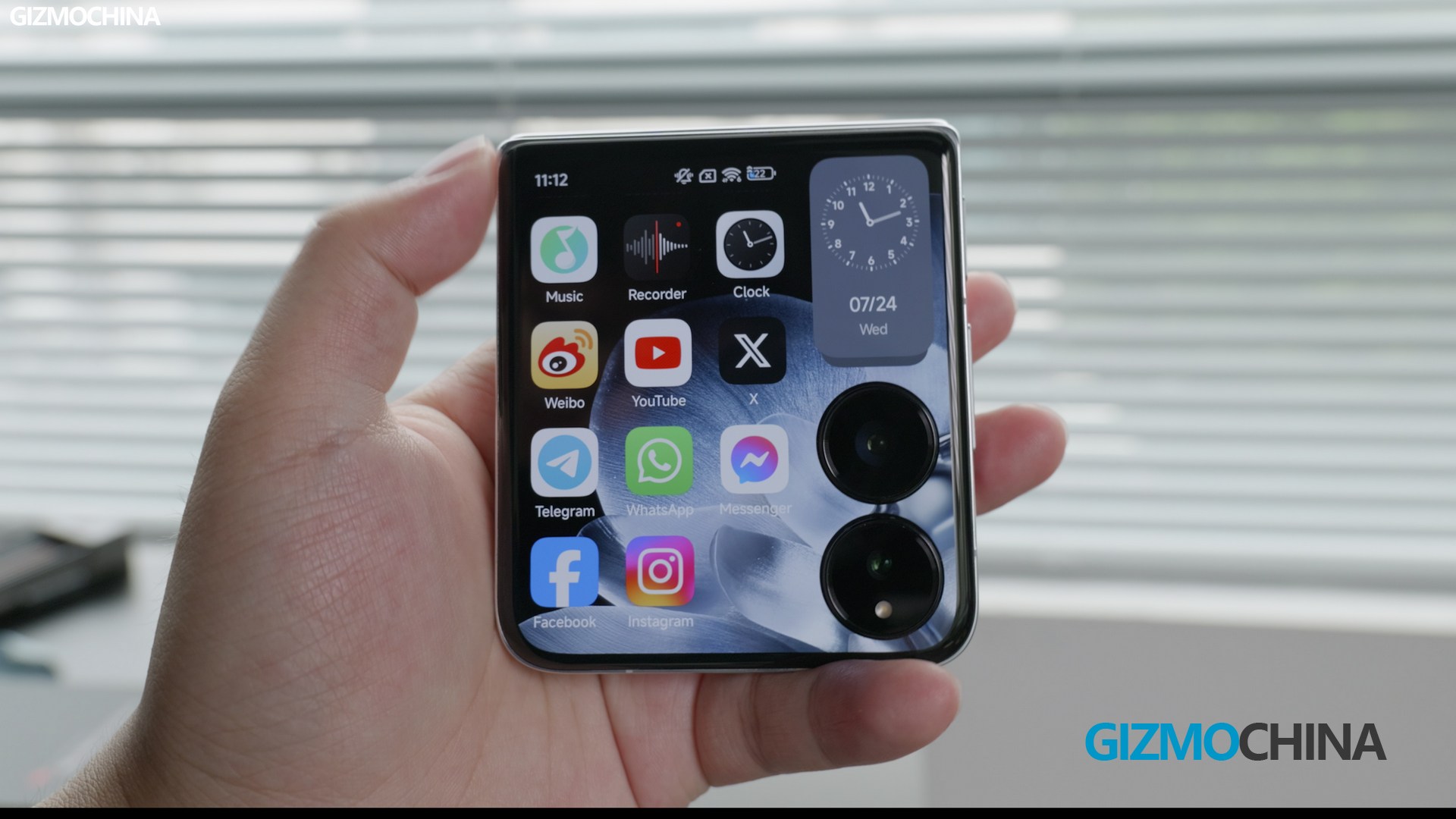
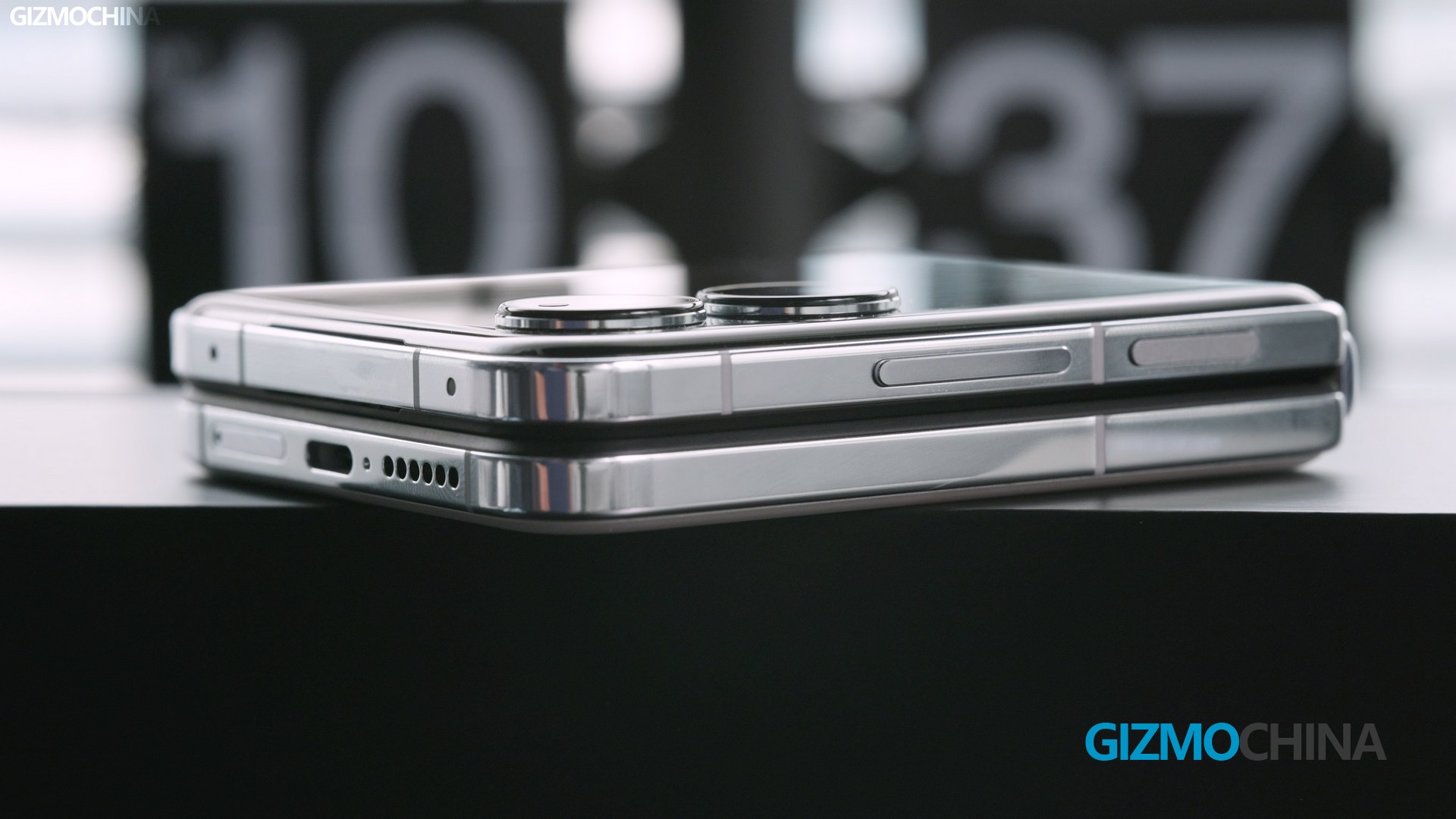
First and foremost, the whole vibe of this Mix Filp is exceptional. We just examined the foldables from Motorola and Honor, and the Mix Filp is without a doubt the finest in terms of overall feel. If you look closely, you will see that the Mix Filp’s outer screen glass and back cover have tiny curves, giving it an extremely smooth and comfortable feel.
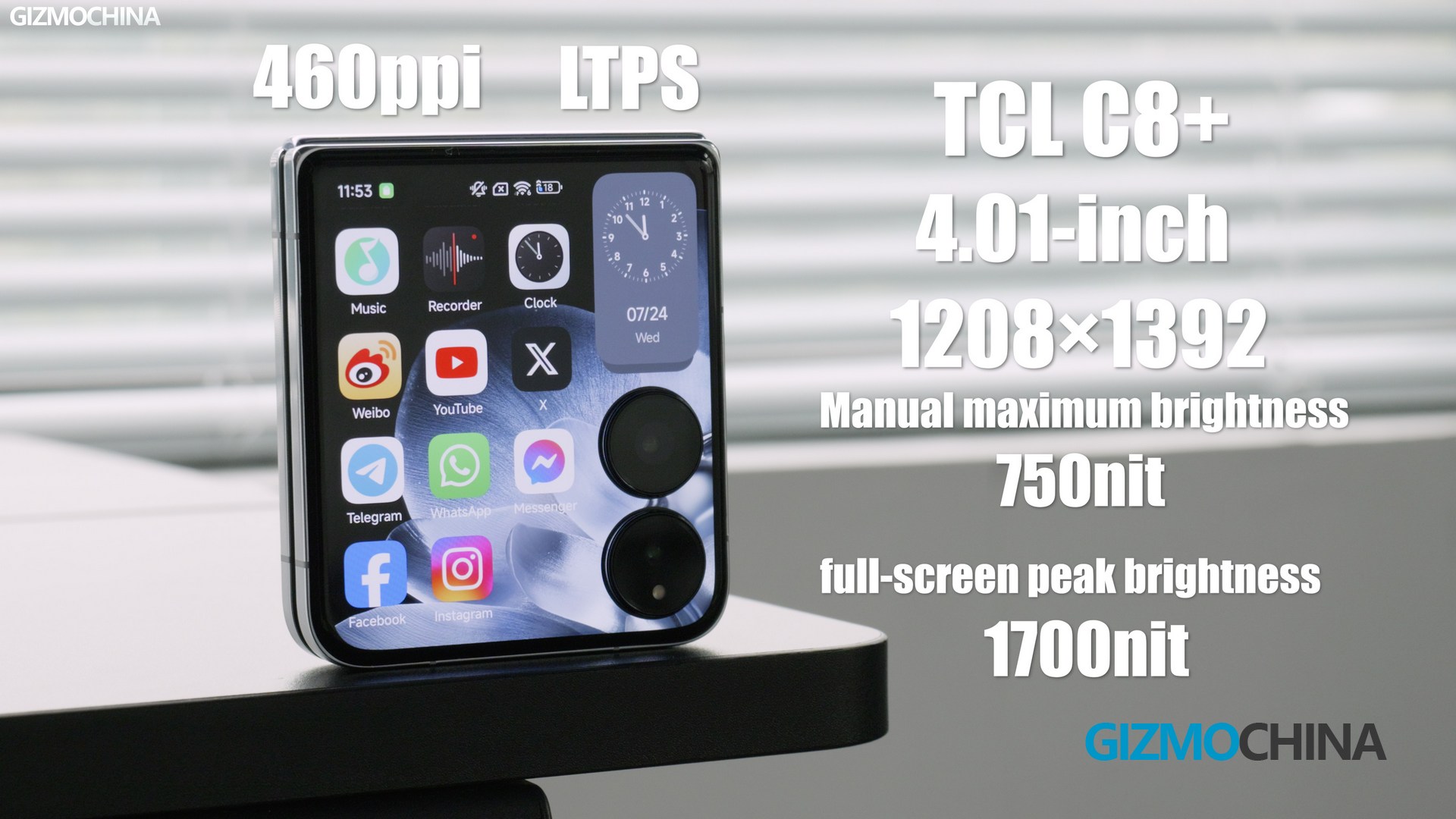
This outside screen measures 4.01 inches, making it the largest on the market and 0.01 inches larger than Honor and Moto. Of course, in practice, no one will notice the difference.
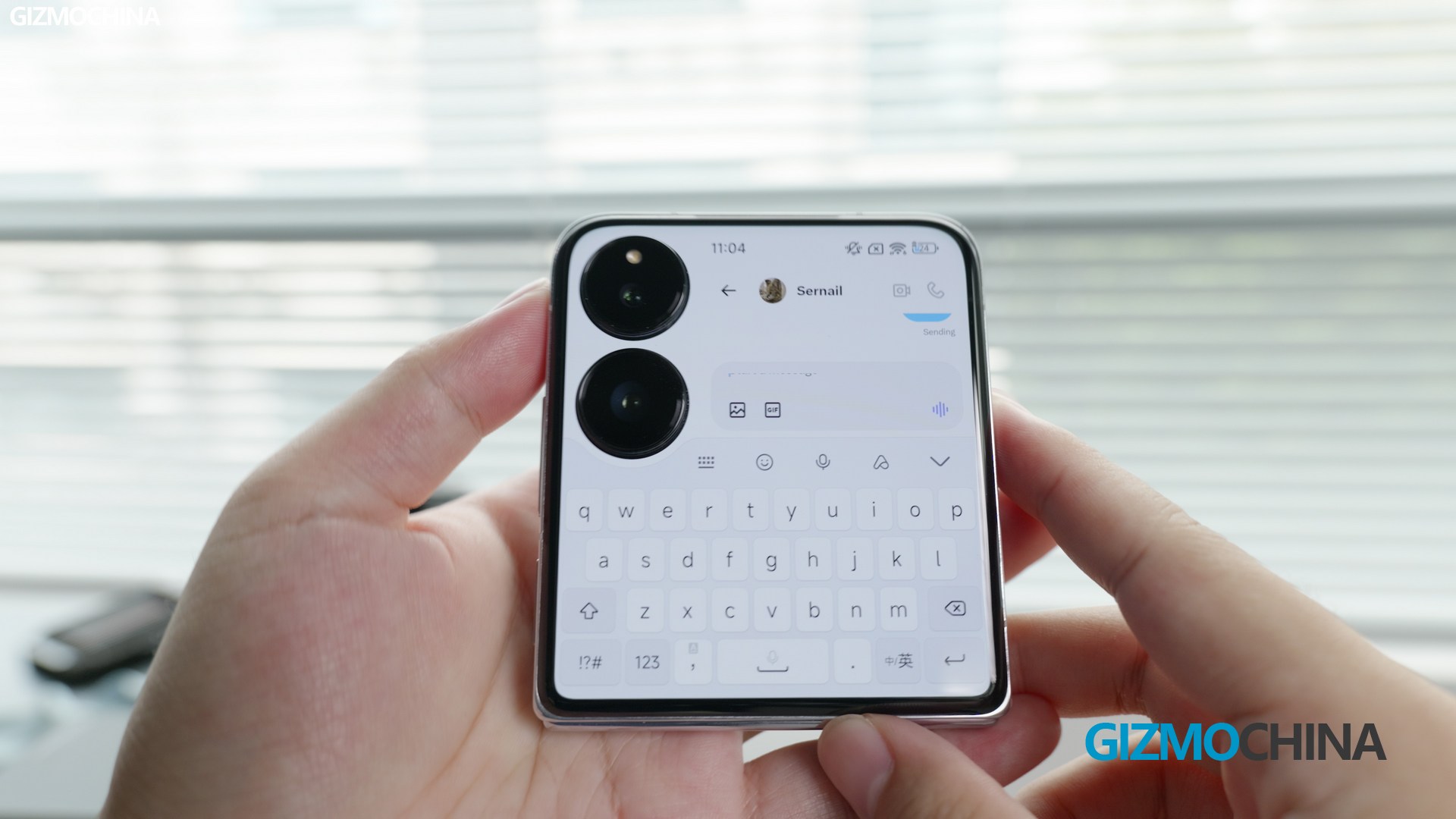
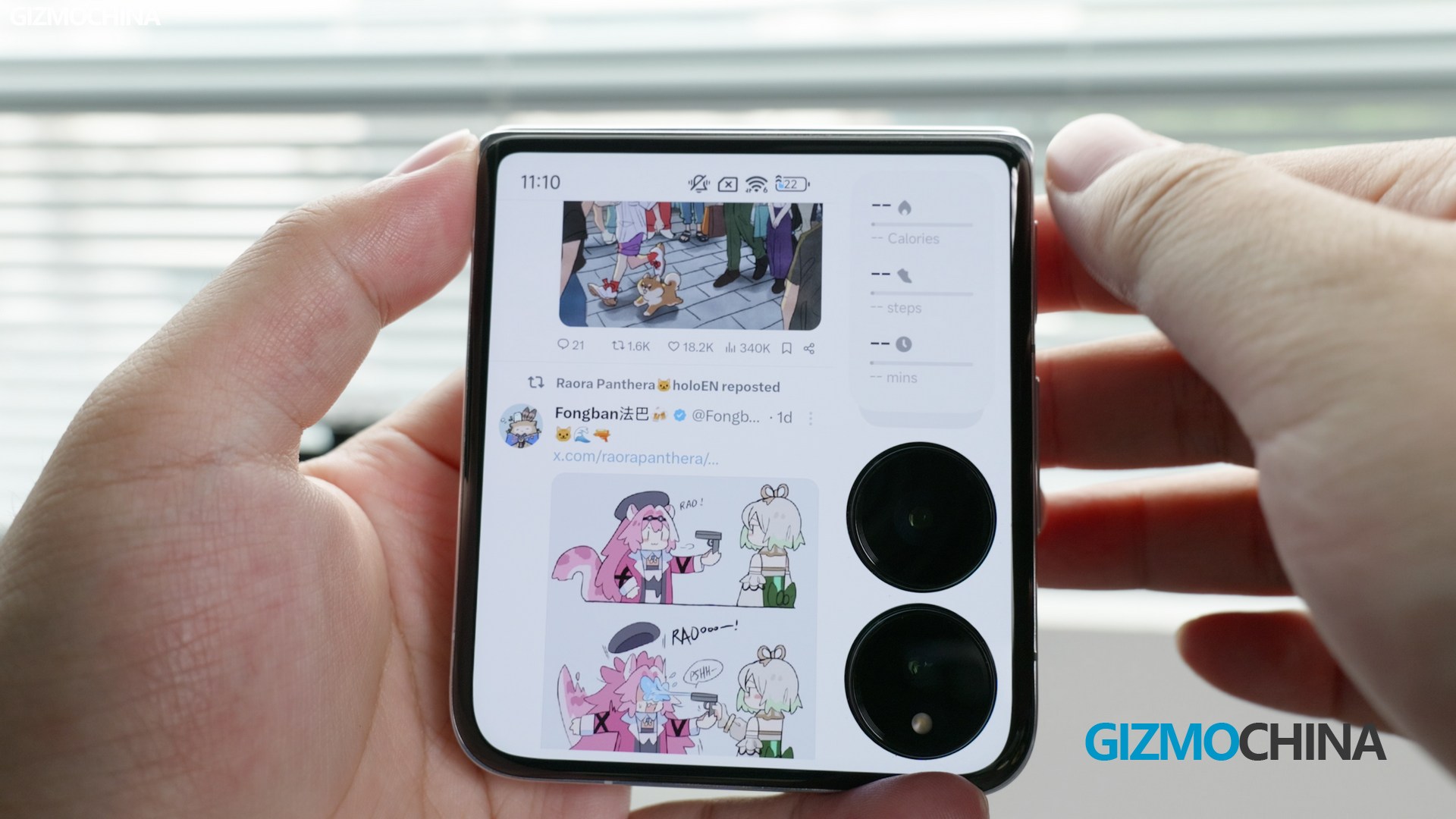
The idea for employing this outer screen is considerably closer to Honor’s; it can currently run over 200 apps. And, while I received the Chinese version, many major global apps have been optimized; when I use these apps, I can simply access all of their functionalities. It is more than just downsizing the screen; when I flip it, I can use a full-size keyboard and have the same typing experience as on the big screen, which is fantastic.
Have you noticed that when used vertically, there are a number of cards here that can display a music player, step counter, clock, and so on. When the screen is horizontally oriented, the calendar becomes fully dimmed.
For me, the music player is the most useful one, but not so much for other cards. I hope xiaomi can optimize it in future updates.
One thing to note is that there is a speaker on the outside screen’s side, which, when combined with an additional microphone at the pivot location, may be the only Filp phone capable of taking phone calls like this.
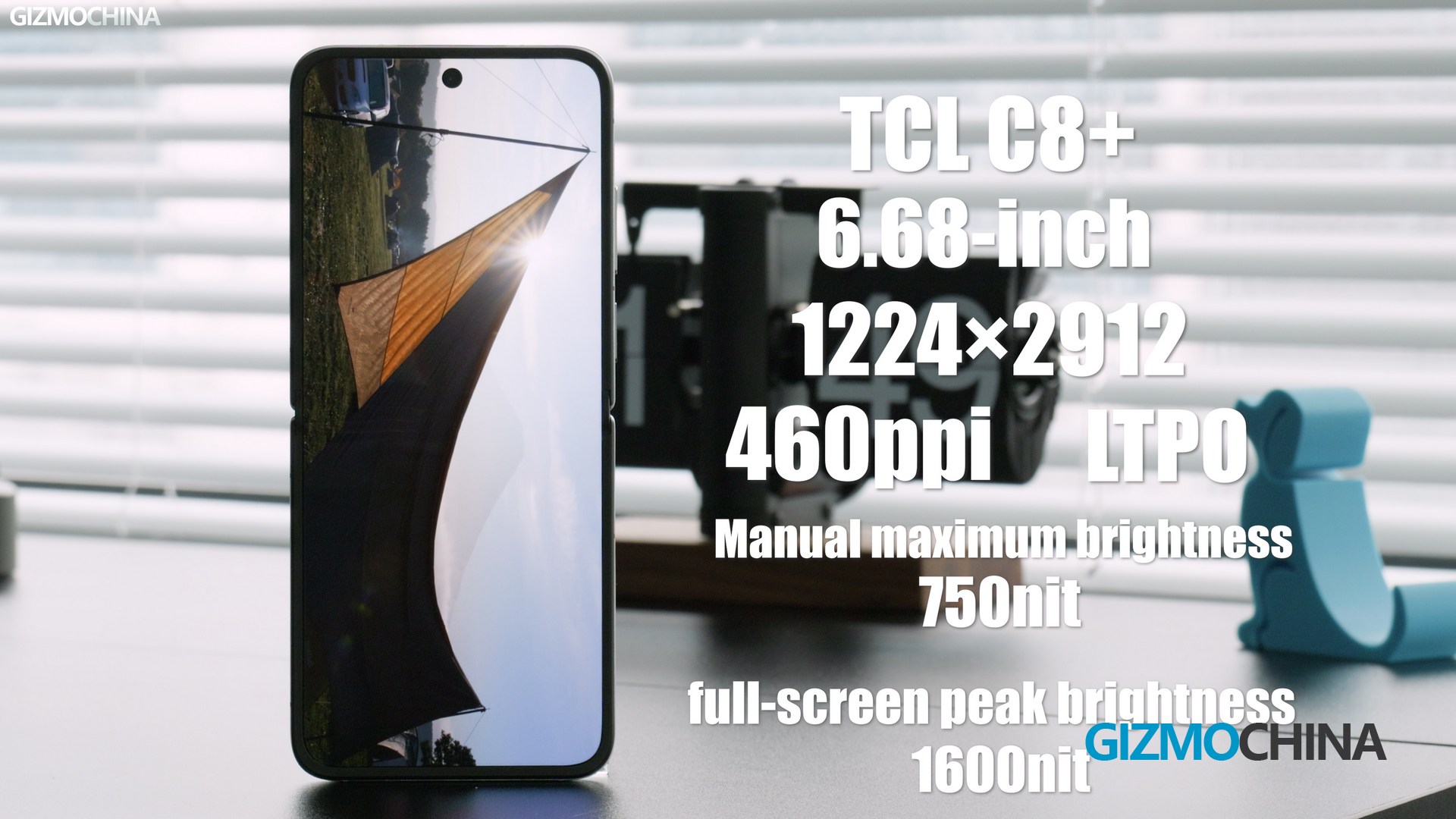
Coming back to the big screen, this is a 6.86-inch OLED screen with the same 1.5k level of resolution as the outer screen. The screen also has a 21.4:9 ratio, which makes it look slimmer. Ladies might like this design.
The crease that you are most concerned about is less obvious and does not differ significantly from the Honor and Moto. The one criticism I have about the device’s appearance is that it is the thickest among its competitors, both unfolded and folded.
Performance
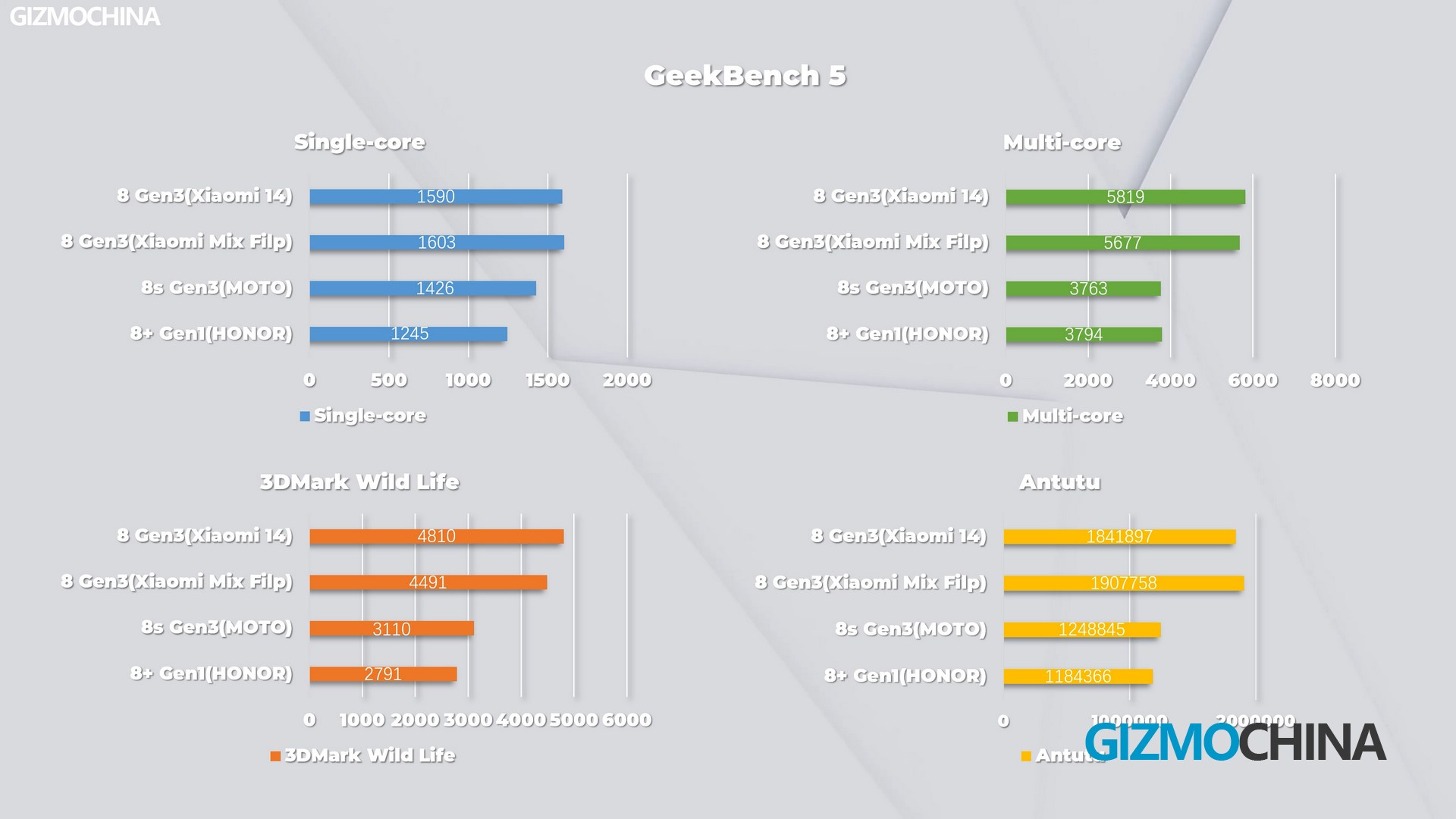
The 8 Gen3 is without a doubt the most powerful chip filp phone can get, and in benchmarks it’s a big step up from the previous filp phones we’ve tested, so you don’t have to worry about its performance in everyday use.
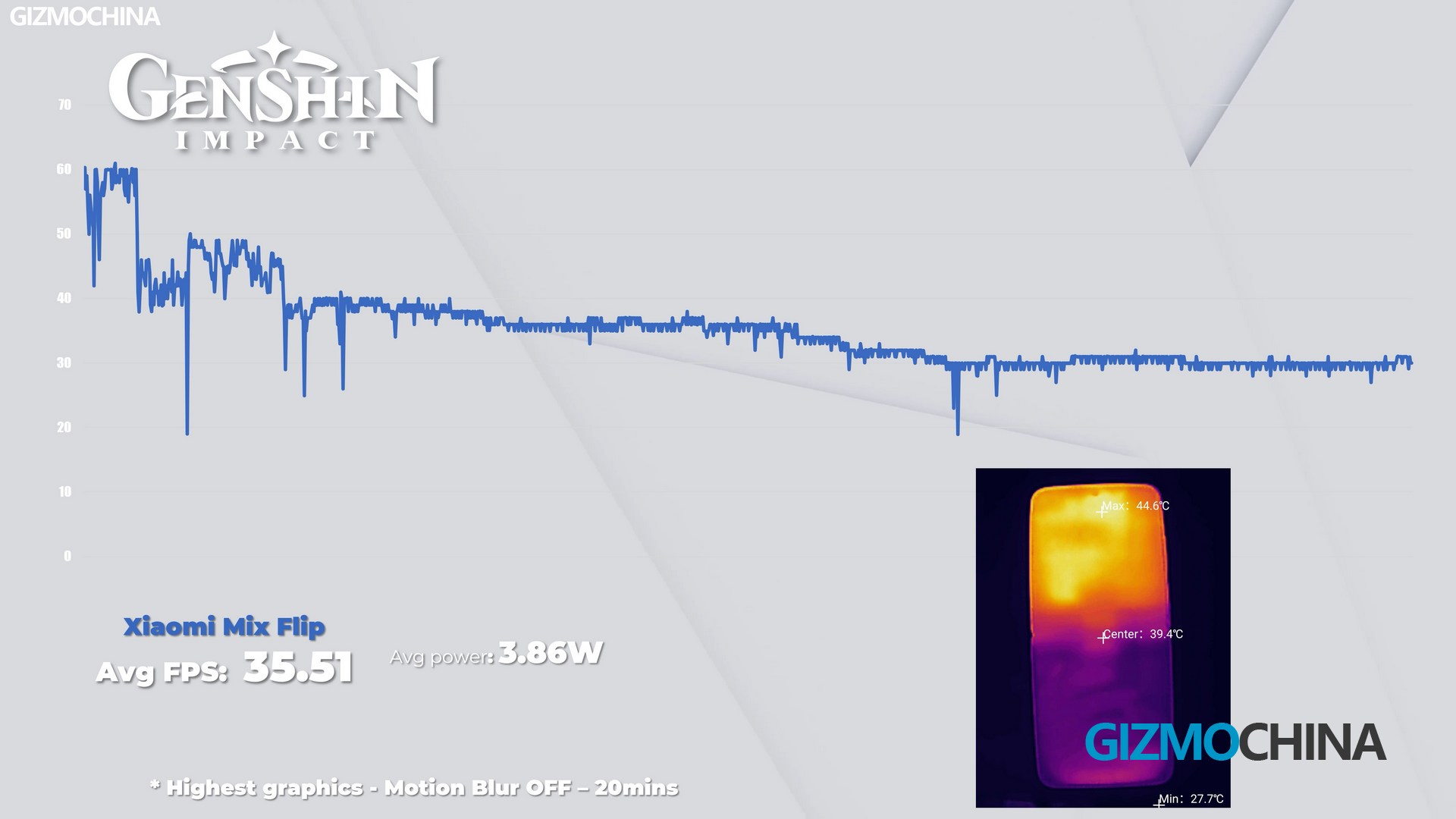
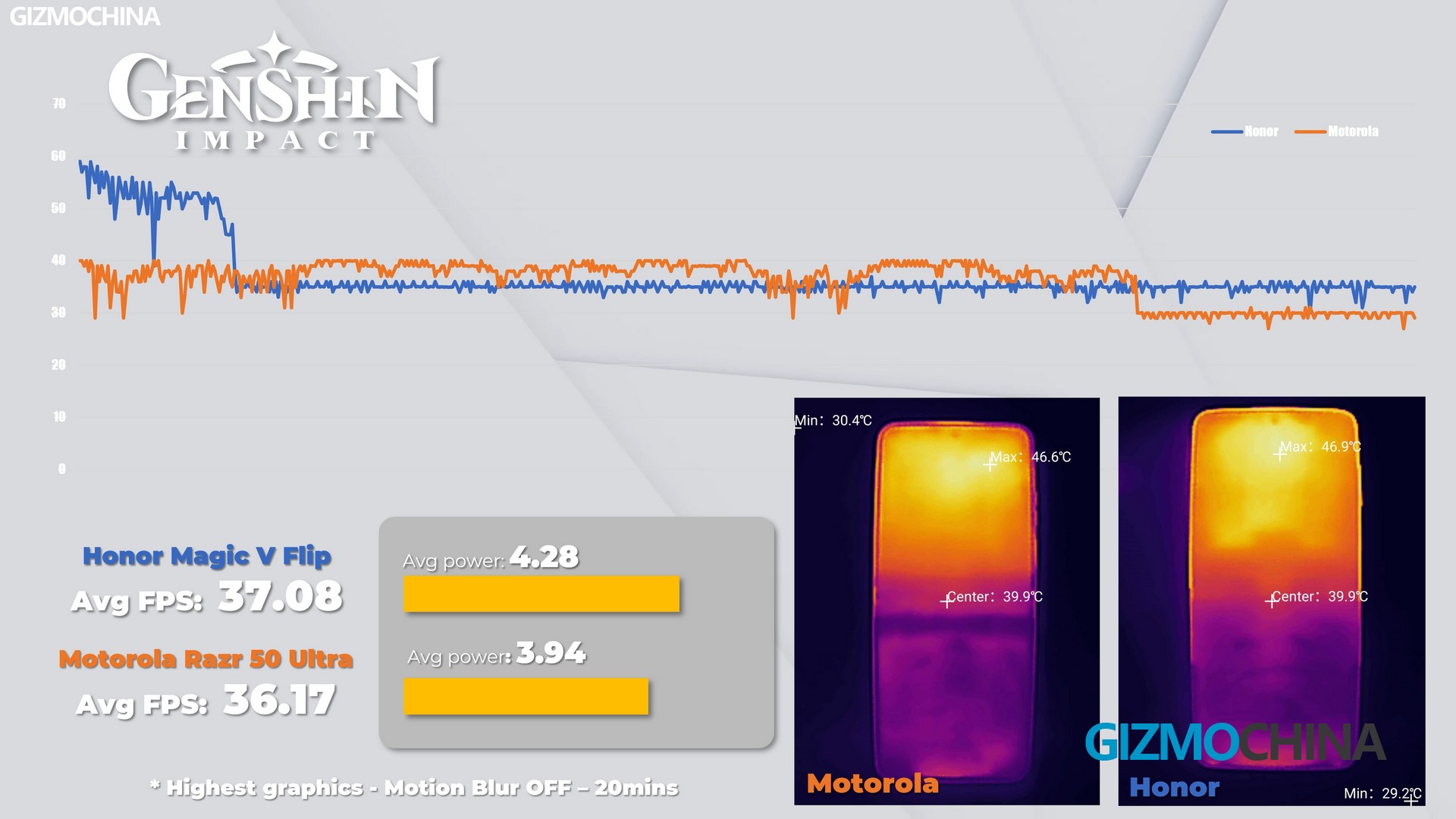
I was more curious to see how it would perform in games, in the Genshin Impact test, it performed within my expectations. The poor cooling performance of the filp phone obviously doesn’t allow the 8Gen3 to run at high loads for long periods of time, and the game drops to 30fps after about 13 minutes.
In terms of temperature control and power consumption, the Mix Filp with 8Gen3 has some advantages, but the gaming experience is not much different from other filp phones, they are all very conservative. For light gaming these phones are more than capable.
Screen
The screen is the highlight of this phone, while other filp phones generally use a 1080p screen, the Mix Filp uses a 1.5k screen from TCL, which is nice and bright, with good dimming strategy, So I’m giving both screens a high score.
Camera
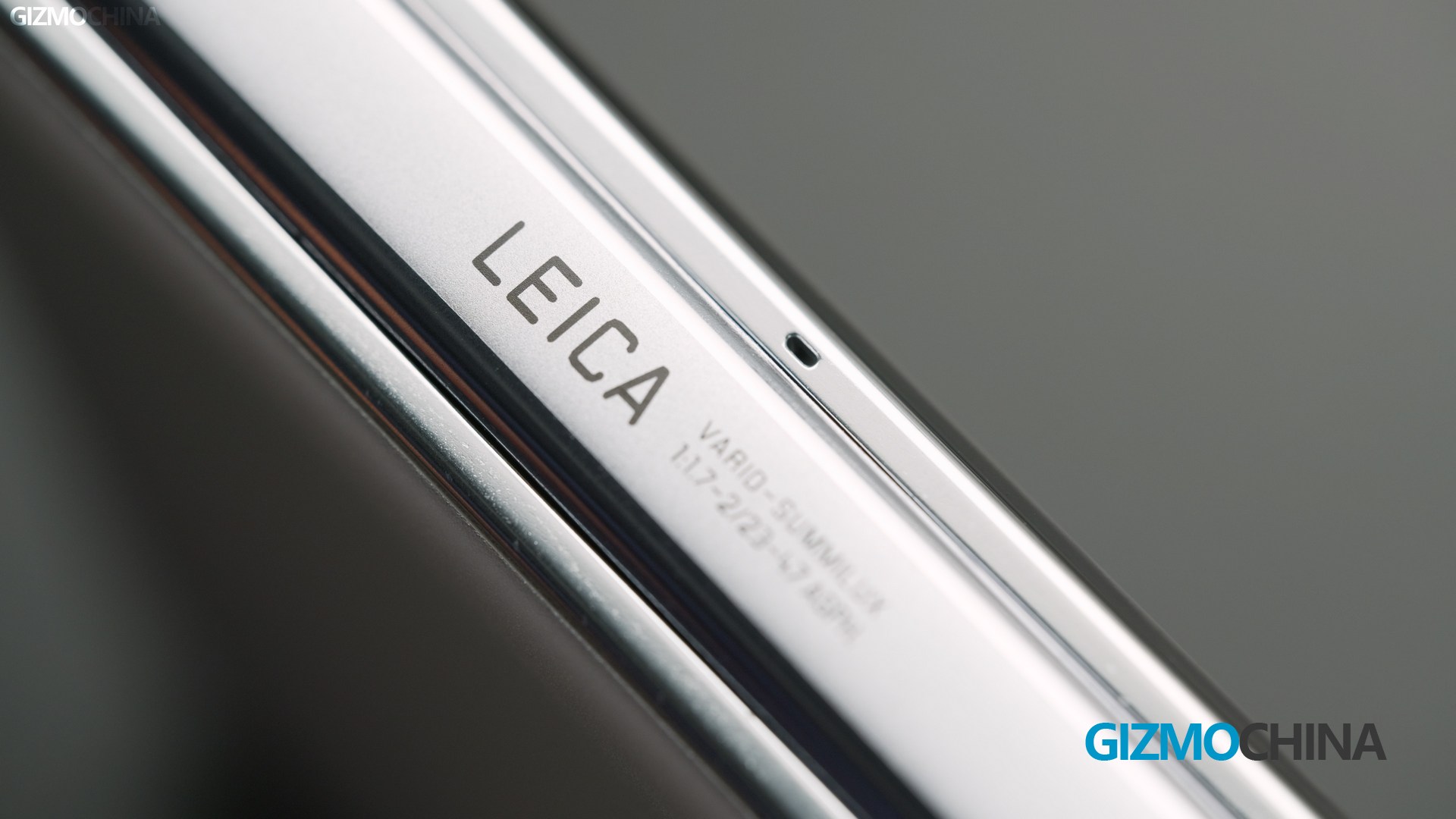
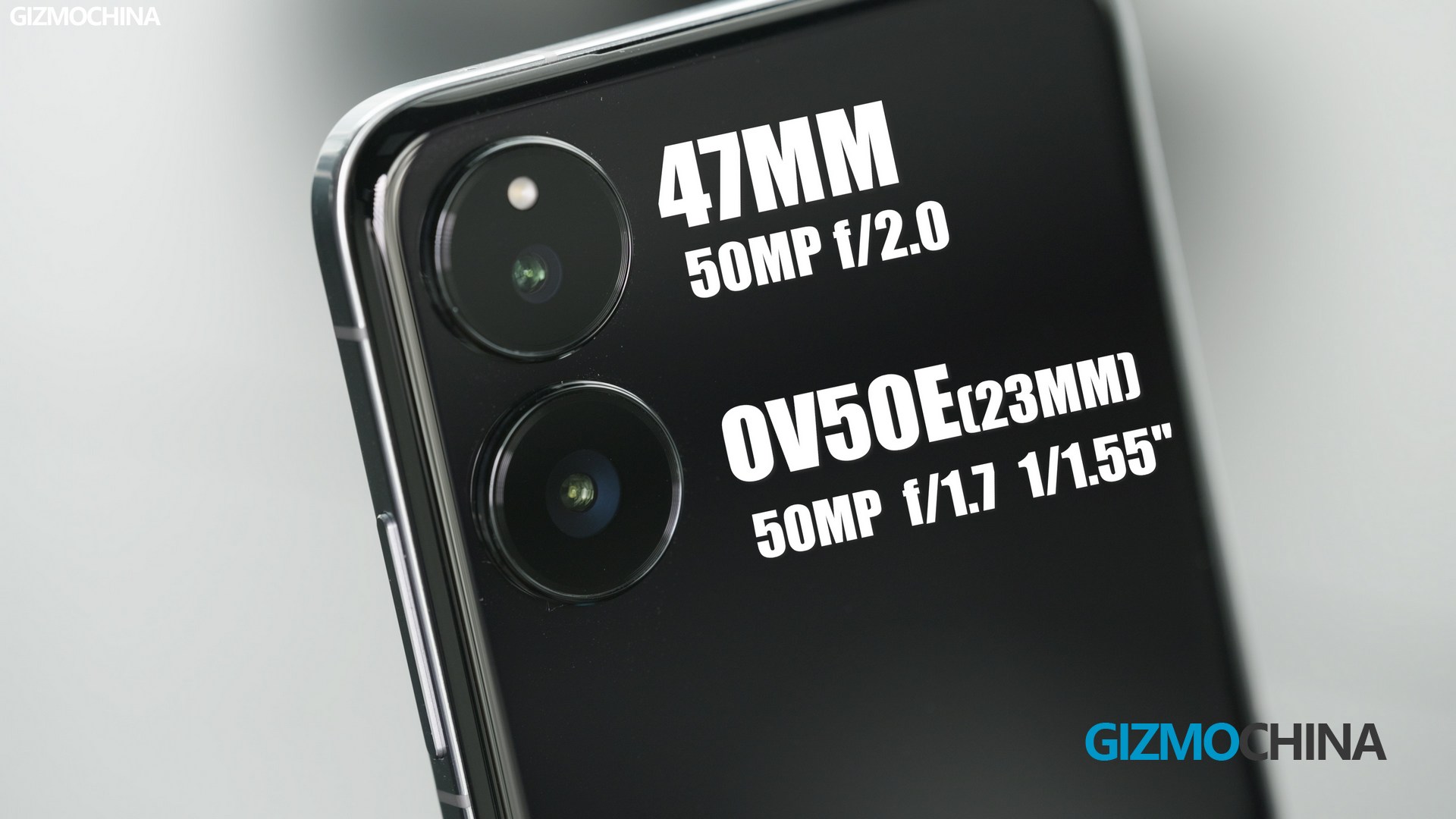
The Mix Filp uses a combination of a 23mm main camera plus a 47mm telephoto camera, and there is Leica support.
I took some sample shots, you can take a closer look here. After viewing these photos on my computer, I feel like it has a strong Leica style, somewhat close to the xiaomi 13 ultra and 14 ultra . Even after removing the watermark, I can tell that these photos were taken by a Xiaomi phone.
Battery&changring
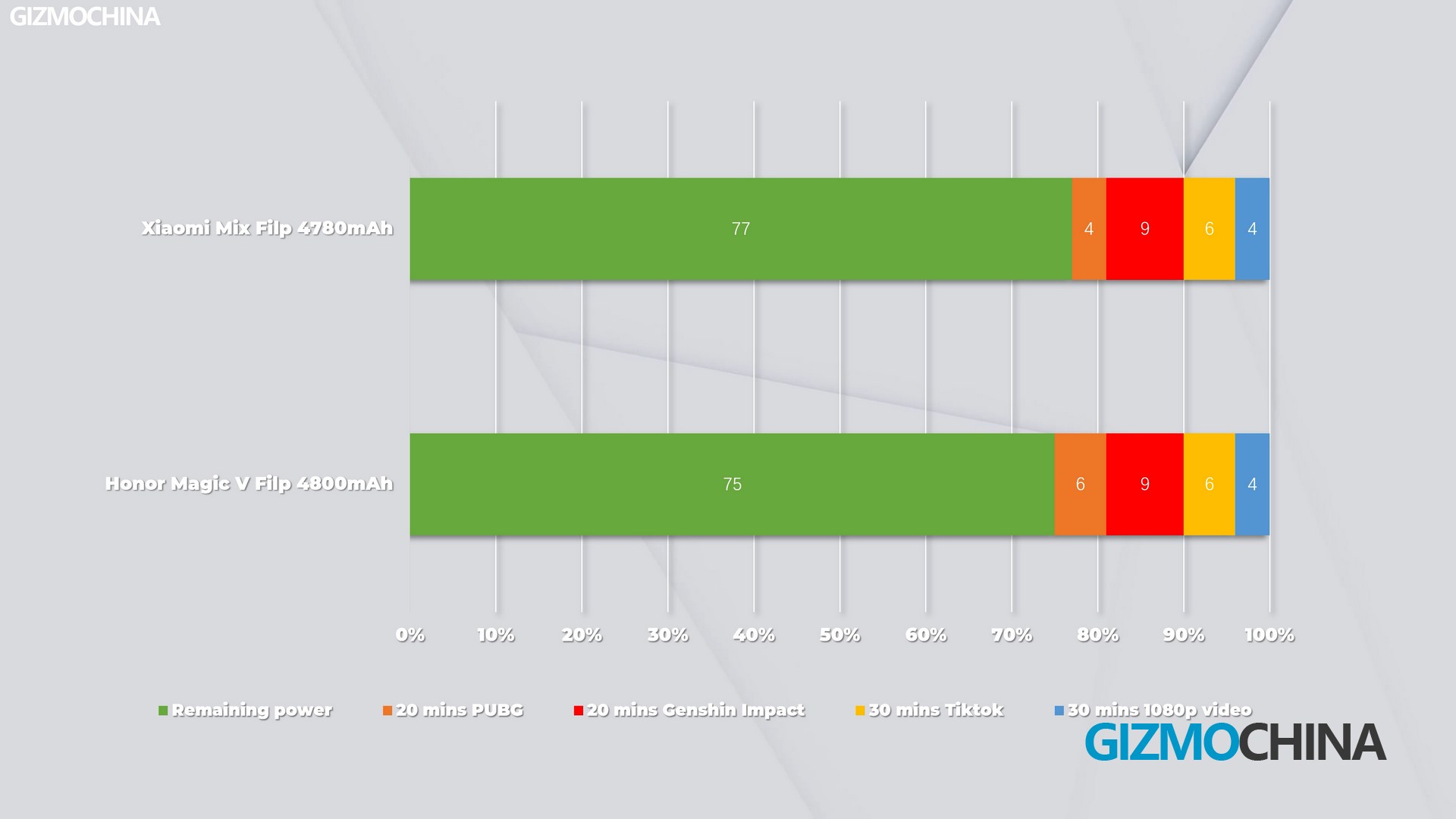
The Mix Filp has a 4780mAh battery, which is definitely a big battery for a filp phone, and it’s not bad in real life use.
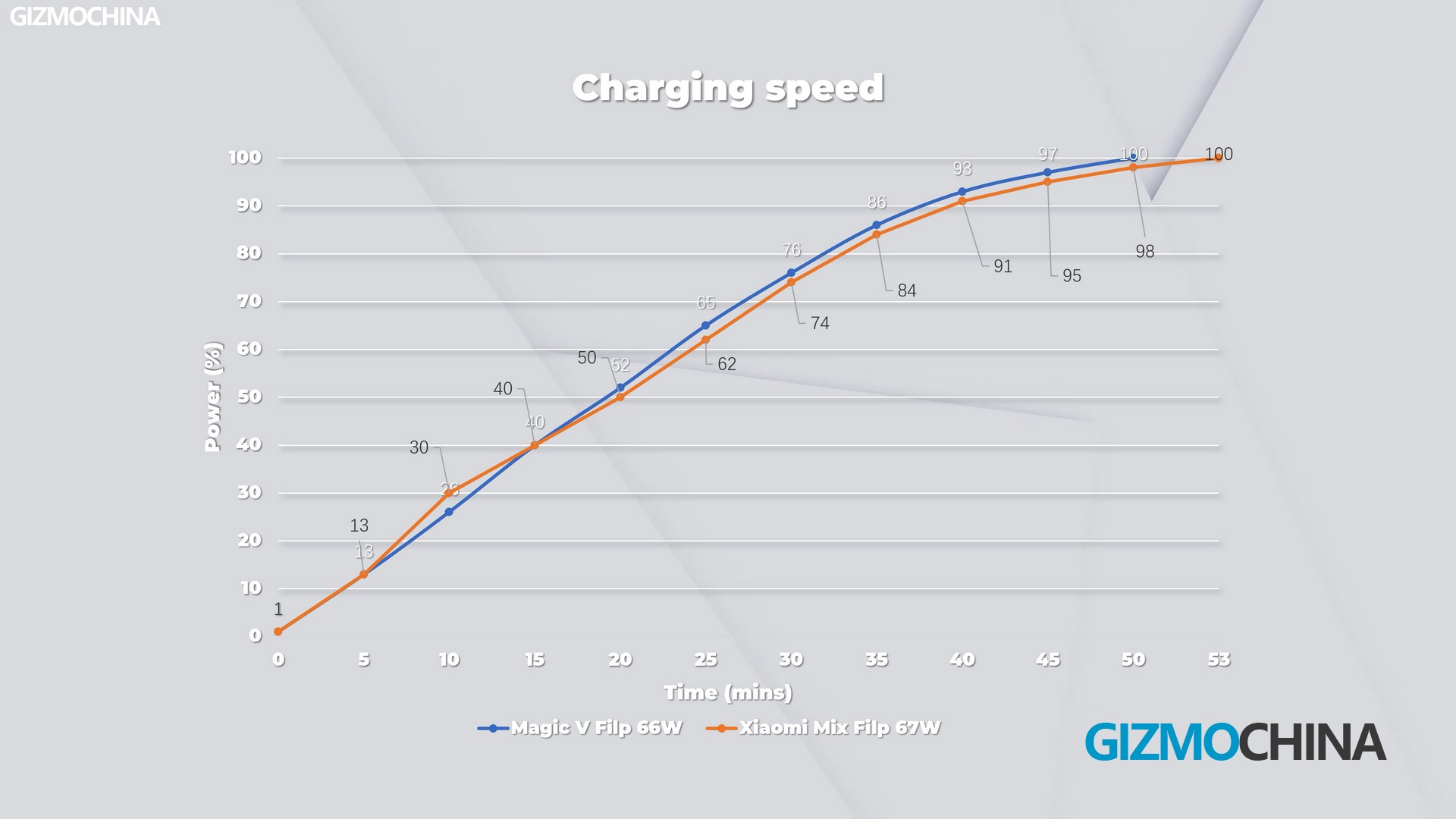
With 67W fast charging, it takes about 53 minutes to fully charge the battery, which unfortunately is much slower than a regular Xiaomi phone that also uses 67W fast charging.
Conclusion
Okay, Xiaomi has included some classic Xiaomi features in this Mix Filp – powerful hardware. If you want to buy the most powerful filp phone with the least amount of flaws, the Mix Filp is a fantastic option.
So, this concludes my quick review of Mix Filp, I hope you enjoyed it.
Earlier this week, a report revealed that Apple is working on a slim model for the iPhone 17 series that will replace the Plus variant. While the report outlined many possible specifications of this new phone, it left out details about the camera system. Now, renowned Apple analyst Ming-Chi Kuo has shed some light on this.
According to Kuo, the iPhone 17 Slim will feature just a single rear camera. If this pans out, it would be the first single-camera iPhone in the mainline series since the iPhone 8.
Kuo says Apple will “emphasize innovative form factor design” with the iPhone 17 Slim “rather than competing on hardware specifications.” In simple words, the clear focus seems to be on aesthetics and portability, compared to the standard and Pro models.
Image: Rajesh / Gizmochina
The rest of the leak largely confirms previous rumors. The iPhone 17 Slim is expected to have a 6.6-inch display with a 1260×2740 resolution. Under the hood, it will likely house the A19 chip, a step down from the A19 Pro expected in the Pro models. And the notch replacement, the Dynamic Island, will carry over from current iPhones.
However, there are some conflicting details. While earlier reports suggested that the iPhone 17 Slim would have an aluminum frame, Kuo says it will actually use titanium, though with a lower titanium content than that of the iPhone 17 Pro and Pro Max models.
Kuo leak also diverges regarding the modem. The 17 Slim is rumored to use Qualcomm modems, but he now suggests it will feature Apple’s own in-house 5G chip. If true, we could see it in other iPhone 17 models as well.
Even though we are getting these details from reliable sources, it’s essential to treat them with caution, as details about devices this far out from release are subject to change.
Kuo also shared insights into why Apple is discontinuing the iPhone Plus model. He notes that the iPhone Plus currently accounts for only about 5% to 10% of iPhone shipments, which likely influenced the decision. This move could be a risky gamble for Apple, but it might also prove successful.
First up, Samsung’s joining the app lockdown party! Their new Auto Blocker feature is playing bouncer to unauthorized apps. But is this added security worth the trade-off in freedom?
Meanwhile, Xiaomi’s turning heads with their 14 Civi Limited Edition. Spoiler alert: it’s panda-themed! But is this black-and-white beauty more than just a pretty face? We’ve got the scoop on this limited drop.
Speaking of Xiaomi, they’re also reaching for the stars – or at least the sun. Their latest patent hints at solar-powered wearables. Could this be the end of nightly charging rituals?
And for those who like their phones thin and tough, Motorola’s got you covered. The Edge 50 is claiming the title of world’s slimmest MIL-810-certified phone. But can it survive your pocket and a war zone?All the juicy details on these stories are in today’s roundup below.
Samsung shared a post earlier this month saying “Protect your Galaxy device with the Auto Blocker feature”. Samsung’s OneUI 6 based on Android 14 comes with a security feature called Auto Blocker, which is located in the Security and Privacy settings. It reportedly protects your Galaxy device by preventing the installation of applications from unauthorized sources The Auto Blocker feature is enabled by default, however, you can disable it during the setup process.
The Xiaomi 14 Civi was announced in India back in June. Now, the company has announced that this device is arriving in a Limited Edition variant in the region. Xiaomi has revealed that the Xiaomi 14 Civi Limited Edition with the Panda Design is dropping in India next week.
Xiaomi has recently submitted a patent application about the use of solar energy to charge wearable devices. According to the records of the Tianyancha Intellectual Property Information Platform, the patent application has been approved.
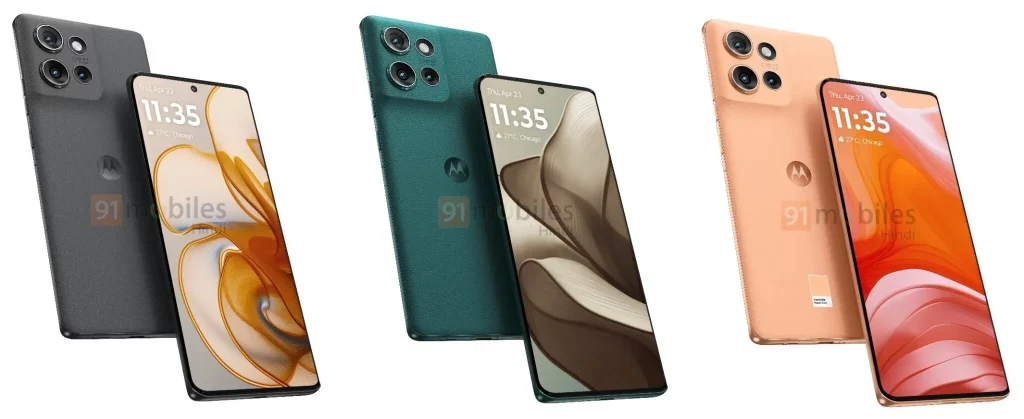
Motorola is expanding its Edge 50 series in India. New renders of the Edge 50 have appeared via 91mobiles, following leaks of the Edge 50 Neo. Described as the world’s slimmest MIL-810-certified phone, the device is expected to launch soon via Flipkart.
Recently, Realme launched the performance-focused Realme GT 6 with the Snapdragon 8 Gen 3 chip in China. The brand will unveil the Realme 13 Pro and 13 Pro+ on July 30 in the global market, including India. Both devices are expected to launch in China in the coming weeks. By the end of this year, the brand will announce the Realme GT 7 Pro equipped with the Snapdragon 8 Gen 4 chipset in China. The rumor mill has already leaked a lot of details about the device. A new leak, courtesy of tipster Digital Chat Station that has emerged today, has revealed more details about the GT 7 Pro.
Realme GT 7 Pro key specifications (rumored)
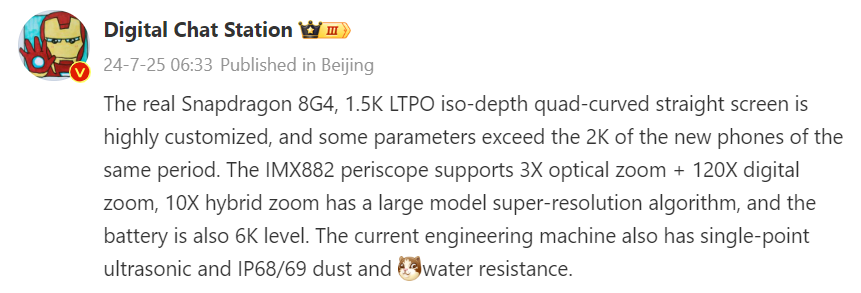
The new leak suggests that the Realme GT 7 Pro’s flat OLED panel will have micro-curvature on all four sides. The screen will support a 1.5K resolution and LTPO technology. However, some parameters of the screen will allow it to outperform even the latest phones equipped with 2K displays.
Under the hood, the Realme GT 7 Pro will have the Snapdragon 8 Gen 4 chipset. It will have a substantial battery capacity in the 6,000mAh range. In a previous leak, the tipster mentioned that the device would support 100W rapid charging. It also mentioned that despite having a larger battery inside, the device will have a slim profile of approximately 8.7mm.
The camera setup of the GT 7 Pro will feature a Sony IMX882 periscope telephoto camera, which will support a 3x optical zoom. It will also offer 120x digital zoom and 10x hybrid zoom capabilities enhanced by a large model super-resolution algorithm.
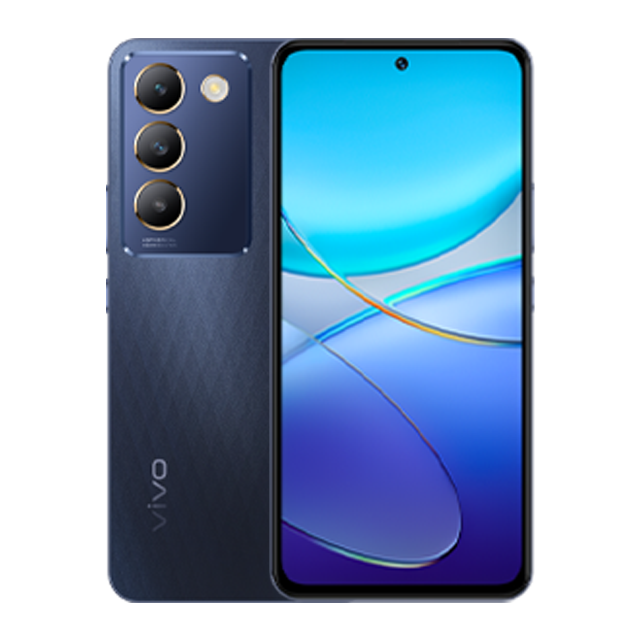
Vivo has unveiled the Vivo V40 SE 4G in the Czech Republic. So far, it is the fifth phone in the V40 series, which includes the Vivo V40 5G, the Vivo V40 Lite 5G, the Vivo V40 SE 5G and the upcoming Vivo V40 Pro 5G. As the moniker goes, the new phone has no support for 5G connectivity. It comes with key features such as a 120Hz AMOLED screen, 50-megapixel dual cameras, and 80W rapid charging. Here is a look at the specifications, features, and price of the device.
Vivo V40 SE 4G specifications and features
Vivo V40 SE 4G
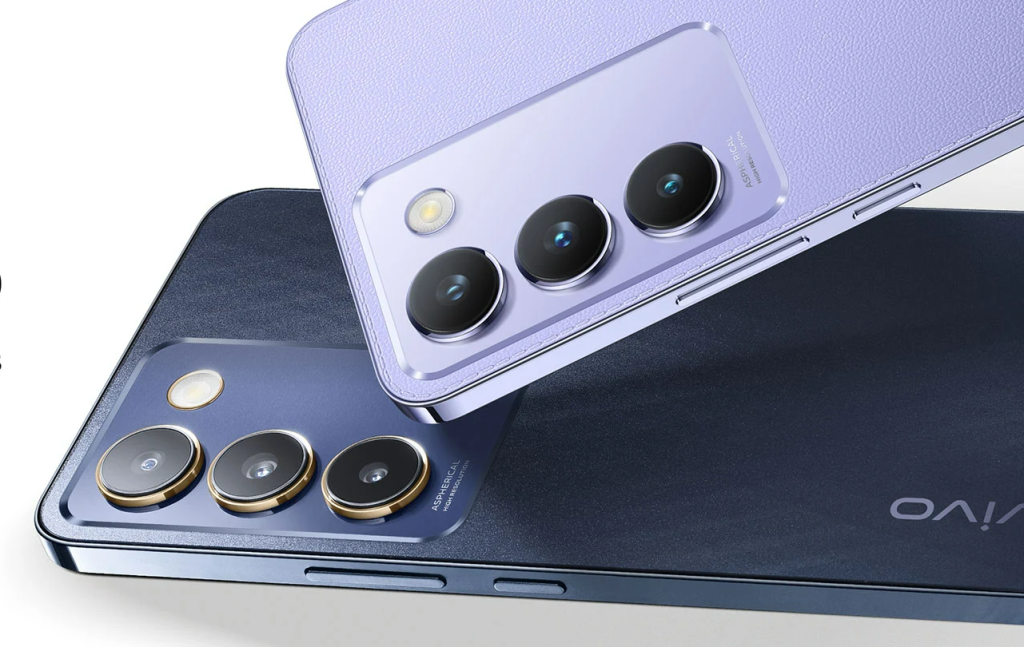
The Vivo V40 SE 4G measures 163.17 x 75.81 x 7.79mm and weighs 186 grams. The purple edition of the device, which features a vegan leather back has a thickness of 7.99mm and weighs 191 grams. The device flaunts a 6.67-inch E4 AMOLED display on the front, offering Full HD+ resolution, a 120Hz refresh rate, and a peak brightness of 1800 nits. It has an in-screen fingerprint sensor for added security.
Under the hood, the Vivo V40 SE 4G features the Snapdragon 685 chipset, 8 GB of LPDDR4x RAM, 128 GB / 256 GB of UFS 2.2 storage, a 5,000mAh battery with 80W rapid charging support, up to 8 GB of virtual RAM, and a microSD card slot. The device runs on FunTouch OS 14-based Android 14.
Vivo V40 SE 4G – Crystal BlackVivo V40 SE 4G – Leathre Purple
For selfies, the Vivo V40 SE 4G has an 8-megapixel front camera. On the back, it has a 50-megapixel main camera, a 2-megapixel bokeh camera, and a flicker sensor. The device offers other features, such as dual SIM, 4G VoLTE, 2.4GHz–5GHz Wi-Fi, Bluetooth 5.0, GPS, NFC, and a USB-C port. Lastly, it offers IP54-rated water resistance.
Vivo V40 SE 4G price
The Vivo V40 SE 4G has landed in the Czech Republic for 4,999 CZK (~$215). It ships in Crystal Black and Leather Purple colors. At present, there is no clarity on whether it will be released in Asian markets.3
BYD Yangwang Auto is treating U8 owners to a software upgrade with new features and optimizations. This update (version V1.6.0) focuses on enhancing control, convenience, and overall user experience.
The new update brings a new range of remote features.
Authorized Yangwang Auto app users gain access to a wider arsenal of remote features, including remote driving, parking, and mobile Bluetooth car keys. Inside the car, a new map desktop mode offers immediate navigation access. The system even learns user behavior, recommending frequently used functions for a personalized one-touch experience.
Passengers in the back can now take control of their entertainment with the ability to disable the rear screen via its central control. Off-road enthusiasts will appreciate the optimized creep function for more precise maneuvers. Additionally, voice-activated power mode switching between EV and HEV prioritizes safety by keeping drivers focused on the road.
The update doesn’t stop there. BYD Yangwang has streamlined the name of the car’s intelligent driving function (DiPilot) and refined the user interface with optimized instrument prompts, air conditioning settings, and a more responsive meditation mode. Climate control efficiency and charging pile adaptability have also been improved.
The update extends to additional refinements, including smoother extension and retraction of the four-door handles, disabling automatic sunroof closing during internal air circulation, and increased stability of the in-car camera lifting function.
This software update exemplifies BYD Yangwang’s commitment to continuous improvement. The U8, packed with new features and optimizations, offers an even more feature-rich and user-friendly driving experience.
We use cookies on our website to give you the most relevant experience by remembering your preferences and repeat visits. By clicking “Accept”, you consent to the use of ALL the cookies.
This website uses cookies to improve your experience while you navigate through the website. Out of these, the cookies that are categorized as necessary are stored on your browser as they are essential for the working of basic functionalities of the website. We also use third-party cookies that help us analyze and understand how you use this website. These cookies will be stored in your browser only with your consent. You also have the option to opt-out of these cookies. But opting out of some of these cookies may affect your browsing experience.
Necessary cookies are absolutely essential for the website to function properly. This category only includes cookies that ensures basic functionalities and security features of the website. These cookies do not store any personal information.
Any cookies that may not be particularly necessary for the website to function and is used specifically to collect user personal data via analytics, ads, other embedded contents are termed as non-necessary cookies. It is mandatory to procure user consent prior to running these cookies on your website.