The upcoming Ryzen 9 9900X processor has just been spotted in the Geekbench database, showcasing some impressive performance gains. This 12-core, 24-thread CPU based on the Zen 5 architecture achieved a single-core score of 3401 and a multi-core score of 19756 in Geekbench 6.2.1. Compared to the official results for the previous generation Ryzen 7900X (single-core 2925, multi-core 17849), the 9900X boasts a significant performance jump of 16.3% in single-core and 10.7% in multi-core performance.
The CPU reached a maximum frequency of 5664 MHz during the test
The benchmark was conducted on a system equipped with the ASUS ROG CROSSHAIR X670E GENE motherboard. During the test, the CPU reached a maximum frequency of 5664 MHz and maintained an average frequency of 5654 MHz.
The leaked benchmark results come from a Ryzen 9 9900X processor built on the Zen 5 architecture. This 12-core, 24-thread CPU boasts 64MB of L3 cache, offering a base clock speed of 4.4 GHz and the ability to boost up to 5.6 GHz. The processor maintains a 120W TDP.
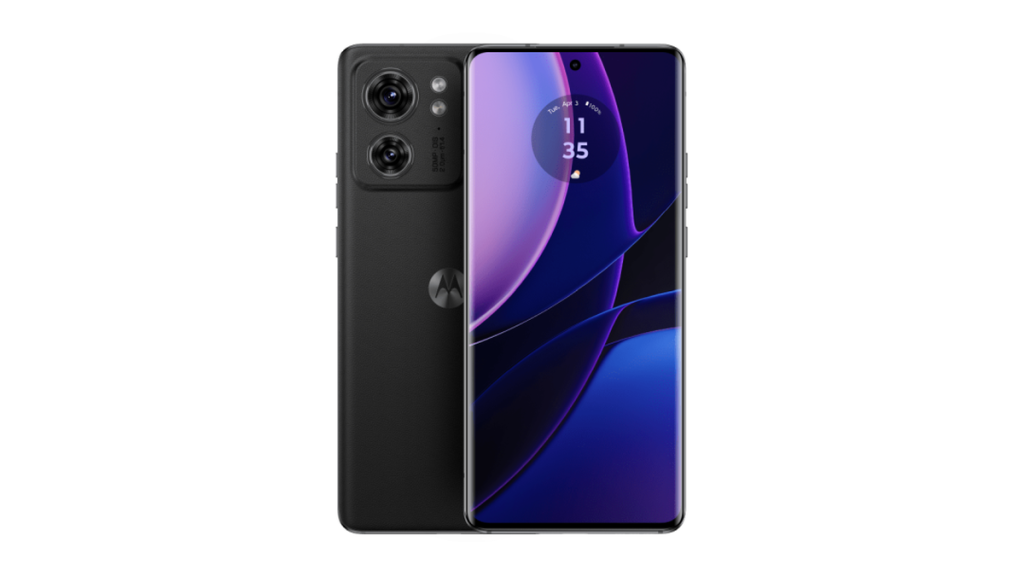
Motorola‘s Edge lineup appears to be getting a new member – the vanilla Edge 50. This phone is expected to be the successor to the Edge 40 launched in May 2023. The upcoming device was recently spotted on the Bureau of Indian Standards (BIS) certification website, hinting at an imminent launch in India.
While the BIS listing reveals the model number (XT2407-3) for the Edge 50, it offers no details regarding the phone’s specifications. Nonetheless, its presence on the BIS website suggests that a launch in the Indian market could be on the horizon.
This isn’t the first time the Edge 50 has been spotted online. The phone has previously appeared on certification websites like TDRA (UAE), FCC (US), and EEC (Russia). The UAE’s TDRA website confirmed the device’s moniker, while the FCC listing has revealed some specifications of the phone.
Based on the data available on the FCC website, the Edge 50 is expected to feature a 5,000mAh battery and will support 68W fast charging. It’s a significant upgrade from the Edge 40, which had a 4,400mAh battery.
The FCC listing also suggests that the Edge 50 will include NFC, Bluetooth, Wi-Fi 6, GPS, and 5G connectivity. However, the EEC website listing for the Edge 50 currently lacks any detailed specifications.
Motorola Edge 40
While specific details about the phone’s specifications are limited, a report earlier this week revealed that it will be priced at 599 EUR in Europe. For this price, buyers can expect 12GB of RAM and 512GB of storage. Additionally, the phone will be available in green, peach, and grey color options.
With its increasing presence in certifications, it seems likely that the Motorola Edge 50 will launch soon. We will continue to provide updates on any new developments regarding this smartphone.
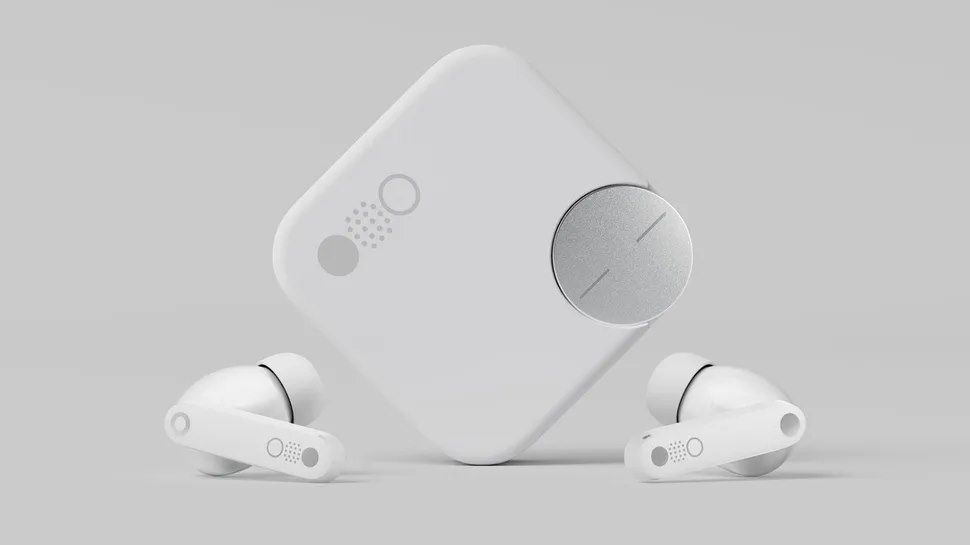
Nothing‘s sub-brand CMF has also unveiled new true wireless noise-cancelling headphones, the CMF Buds Pro 2. This time around, they’re launching globally, targeting the United States, United Kingdom, India, and Europe. The design retains the color options of orange, dark gray, and light gray from the first generation, but adds a new vibrant blue option. More importantly, the Pro version finally gets the smart knob charging case that the standard CMF Buds had last year.
Users have the option of disabling the knob controls if they want
The lightweight case features a rotating knob for volume control, with the ability to customize functions like noise cancellation mode, music playback, and song navigation. It can also activate the voice assistant, answer/end calls, mute the microphone, and toggle low latency mode. Users have the option to permanently disable the knob to prevent accidental touches, and all settings can be managed through the Nothing X app.
The CMF Buds Pro 2 boasts a dual-unit system with an 11mm woofer and a 6mm tweeter. These headphones support hybrid active noise cancellation and transparency mode, and are Hi-Res Audio certified with spatial audio capabilities. Bass performance can be further personalized through the Nothing X app. For crystal-clear calls, each earbud comes equipped with three microphones and Nothing’s Clear Voice Technology 2.0 for call noise reduction.
Battery life is impressive, with 60mAh batteries in each earbud and a 460mAh battery in the charging case. Official figures show talk time ranging from 18.6 hours to 25 hours (with charging case) depending on noise cancellation settings and audio encoding. Playback time varies as well, offering up to 43 hours (with charging case) with noise cancellation off and AAC encoding. Fast charging provides 3 hours of listening time (noise cancellation off) with just a 10-minute charge, extending to 7 hours with the charging case. With noise cancellation on, those numbers drop to 1.8 hours and 6 hours respectively.
The CMF Buds Pro 2 are positioned as a cost-effective option in the true wireless noise-cancelling headphone market. They’ll be available later this month through the official website (cmf.tech) and other retailers, with a price tag of US$59 (around 430 Yuan) in the US market.
Oppo has launched a significant software update for its Find X6 Pro smartphone to improve system performance, improve AI features, update animations, improve touch controls, and more. This update is based on Android 14 and comes with firmware versionPGEM10_14.0.0.810 (CN01U100P02).
Oppo Find X6 Pro ColorOS 14.0.0.801 update
AI-powered features
Upgrades AI Eraser, which allows you to erase unwanted objects from your photos.
You can now cut out part of a photo and save it as a sticker for greater creativity.
Animation upgrade
Adds a transition animation when opening and closing Home screen widgets.
Adds a transition animation for clock widgets when the screen is turned off.
Adds Gaussian blur effects when opening and closing app icons on the Home screen.
Improves how Home screen widgets are displayed.
Touch control
Adds a transition animation when pulling down Quick Settings.
Optimizes animations when opening and closing multiple apps.
App icons on the Home screen now respond faster to your taps.
Improves touch control responsiveness when opening and closing apps.
Optimizes animations when dragging app icons on the Home screen.
System
Music controls can now be displayed in Live Alerts.
You can now choose not to show the track when drawing the Lock screen pattern to unlock your device.
System
Music controls can now be displayed in Live Alerts.
You can now choose not to show the track when drawing the Lock screen pattern to unlock your device.
Integrates the June 2024 Android security patch to enhance system security.
Fixes an issue where the volume slider in Quick Settings and the one triggered by pressing the physical volume button might appear at the same time.
Games
Improves gaming stability.
Fixes an issue where the screen might turn black while playing a game.
Security
The permissions for Calendar are now granted at a minimum level to provide the maximum security for your information.
Improves the Clipboard privacy info protection function, which automatically detects privacy information on the clipboard and prevents unauthorized access by apps without your consent to minimize the risk of privacy leaks.
In related news, Oppo has announced the arrival date of the Reno 12 series smartphones in India. Both the Reno 12 and the Reno 12 Pro, which are already available in some global markets will be launching in India on July 12th. They are expected to be powered by the MediaTek Dimensity 7300 Energy SoC, paired with an OIS-assisted 50MP Sony LYT-600 primary sensor, and a bunch of AI features.
We’ve all heard the rumors – Huawei‘s working on a triple-folding phone. Now, thanks to prolific industry tipsters Digital Chat Station and Ice Universe, we have some fresh details about the device.
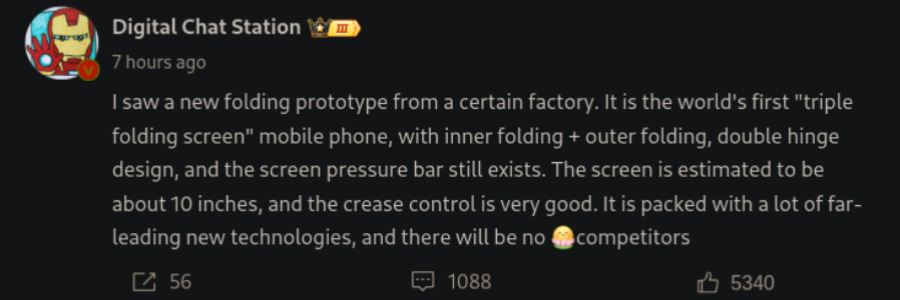
Digital Chat Station in a recent Weibo post revealed that Huawei’s triple-folding phone — reportedly the world’s first — has an innovative “inner folding + outer folding” design with a double hinge.
Such a design would not allow you to fold the phone inwards (like the current foldable) but also outwards. The combined screen size is estimated to be around 10 inches, and the leak suggests that crease control—a major issue with foldables—might be well-controlled on this device.
The post further says the phone has “far-leading new technologies” and mentions there is a lack of “competitors,” a bold statement considering Samsung’s dominance in the foldable market.
Another tipster, Ice Universe, corroborates this claim and says Huawei will be the first to launch a triple-folding phone. The tipster specifically targets Samsung suggesting their technology “has fallen far behind” and they are still struggling with basic foldable designs.
One of the prerequisites for triple folding is that it must be thin enough, which is Huawei's strength. This is also the weakness of Samsung. After several years of complacency and continuous laziness, when Samsung wakes up again, the world has changed. When its market share was…
“One of the prerequisites for triple folding is that it must be thin enough, which is Huawei’s strength,” Ice Universe says and adds “This is also the weakness of Samsung.”
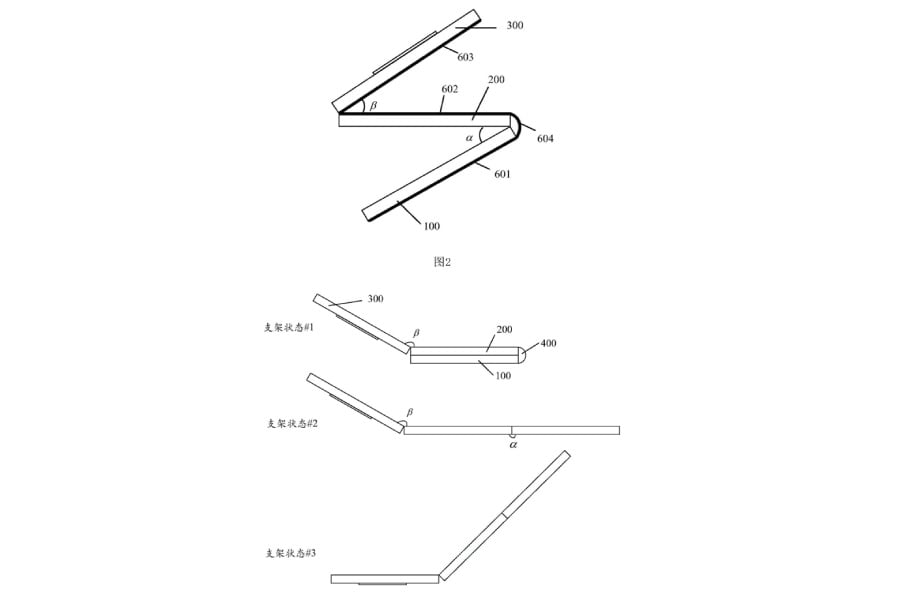
Huawei’s pursuit of a triple-folding phone has been a long one. They started filing patents for this tech back in 2021, with more filings in 2022. Another patent filed in February 2023 shows a triple-folding phone with two hinges and a flexible screen that folds outwards — like the one mentioned by Digital Chat Station.
It’s important to note that this information comes from unofficial sources, and Huawei has yet to confirm these developments. However, considering Huawei’s patent filing and the credibility of these tech insiders, the rumors carry substantial weight. We will keep you in the loop on any new developments about Huaewi’s tri-folding phone.
Google launched the Pixel Watch 2 back in October last year and the Pixel Watch 3 will launch on August 13th.
Ahead of the launch, the upcoming watch from Google has now been spotted on the FCC listing, which reveals some key information about the product.
Unlike the predecessors, the Pixel Watch 3 series will come with two different models – the Pixel Watch 3 and a Pixel Watch 3 XL.
FCC listing reveals a total of four Pixel Watch 3 models
The FCC listing reveals a total of four model numbers – GBDU9, GGE4J, GG3HH, and GRY0E. These could represent the 41mm and 45mm variants of the Watch 3. According to the following, the GBDU9 and GRY0E model numbers will offer LTE and UWB connectivity. The watches will also offer Bluetooth, NFC, and dual-band Wi-Fi connectivity. The other two variants of the Pixel Watch 3 will only offer UWB, dual-band Wi-Fi, Bluetooth, and NFC, but no LTE connectivity. According to a report, all four models will offer GPS support.
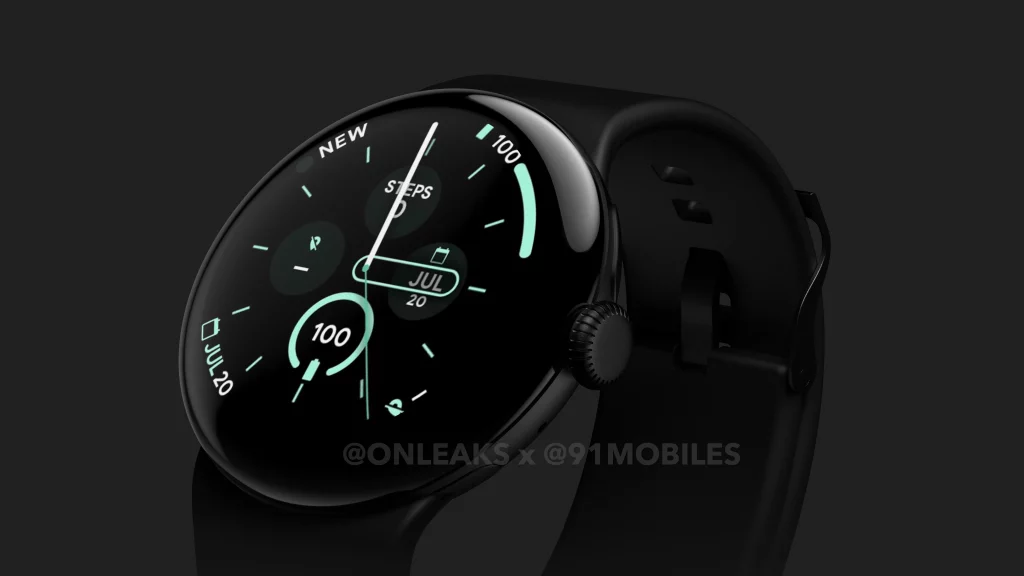
OnLeaks has previously shared the renders of the Watch 3 revealing its design. The render shows a design that is very similar to the predecessor. The watch 3 will offer the same circular bezel-less display with a rotating crown on the side. The device is expected to equip a 1.2-inch AMOLED display, which is also the same as its predecessor. The device will likely be available in Black color with a matching strap. However, there could be additional color options.
According to previous leaks, the Watch 3 will be slightly thicker than the Pixel Watch 2. Notably, the battery capacity is expected to be 307 mAh, which is only slightly larger than the 304 mAh capacity of the Pixel Watch 2.
Apple is expected to launch the iPhone 16 series in September this year. However, the successor of the series has already entered the rumor mill. The rumor claims that Apple will ditch the ‘Plus’ model for a ‘Slim’ one starting with the iPhone 17 series.
The ‘Slim’ model is expected to reduce the gap between the non-Pro and Pro models
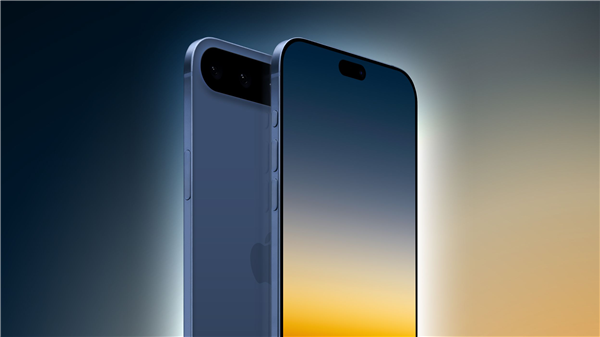
According to a report, Apple has introduced some ‘bold innovations’ when it comes to the appearance of the iPhone 17 Slim. The model will reportedly be thinner and lighter as compared to the current models. Apple will use aluminum for the chassis. The camera island will be placed horizontally, reportedly resembling the design of the Pixel 8 series. However, Apple has recently reverted to vertical camera placement to support Spatial Video, and it is unclear if this feature can still function with a horizontal camera layout.
On the front, the device will include a narrower Dynamic Island, possibly due to the company’s adoption of a more compact “metalens” for the Face ID sensor. The design of the iPhone 17 Slim has reportedly been described to be similar to the iPhone X.
The ‘Slim’ model will adopt a 6.55-inch screen on the front. It is expected to fill the gap between the non-Pro and Pro models. For comparison, the iPhone 15 Plus has a 6.7-inch display. In addition, it was revealed that the iPhone 17 Slim will also support 120Hz high refresh rate. Notably, this will be the first non-Pro model in the history of the iPhone to support a high refresh rate. The base model of the iPhone 17 series could also get a 120Hz refresh rate.
While the models will be able to offer a higher refresh rate, it will also be adaptive like the Pro models, meaning the phone will automatically adjust the refresh rate based on the content displayed on the screen.
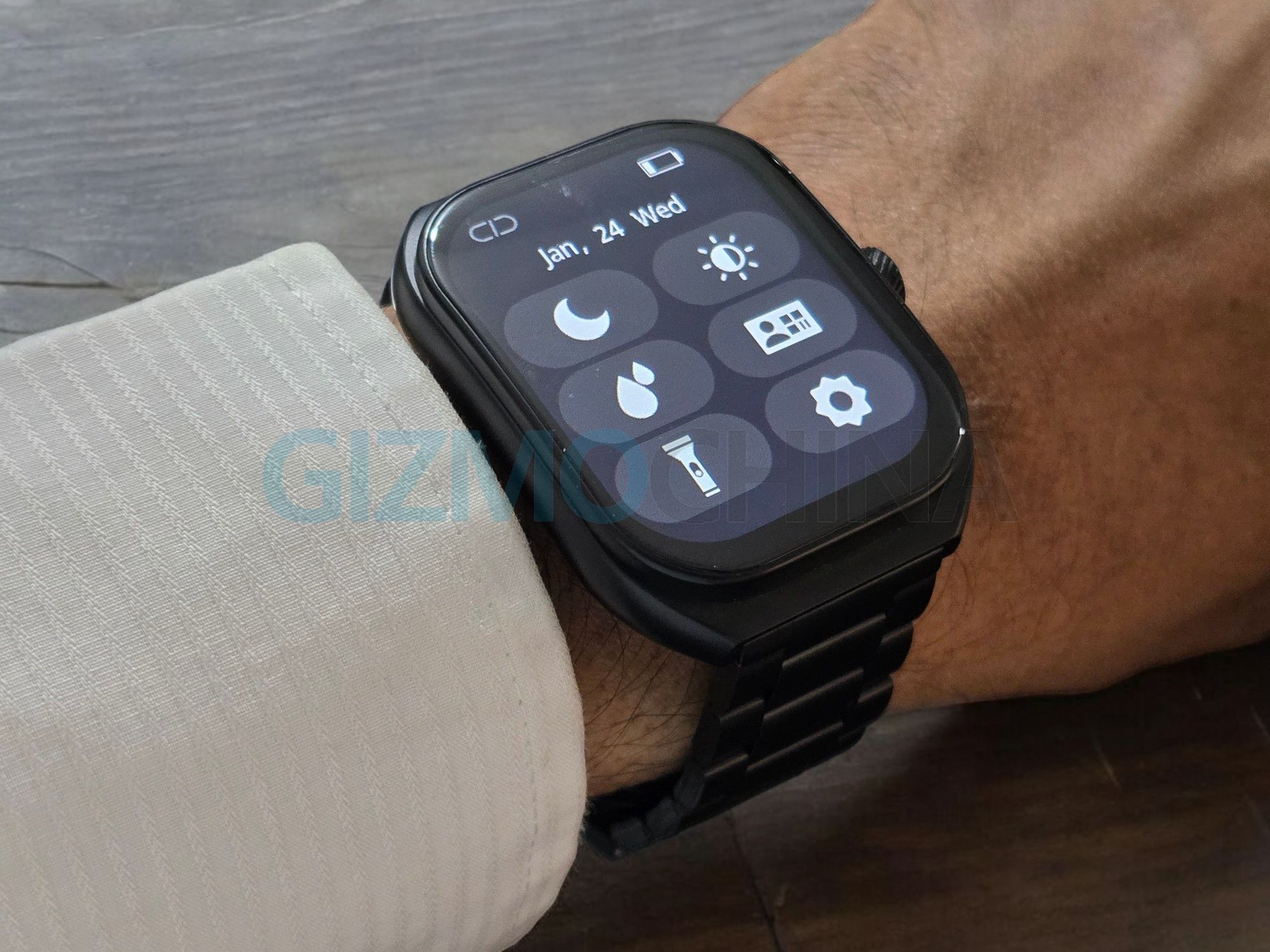
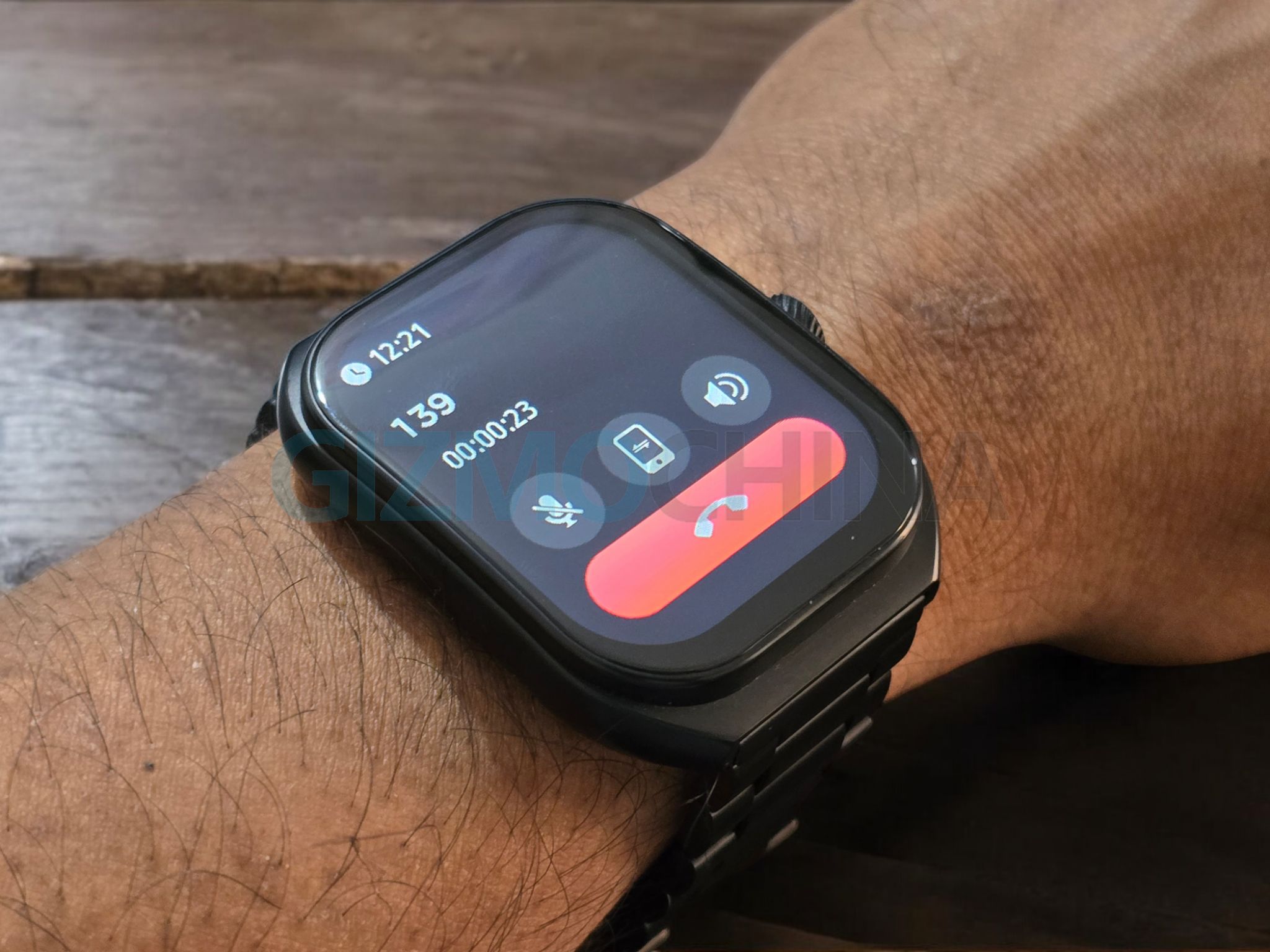
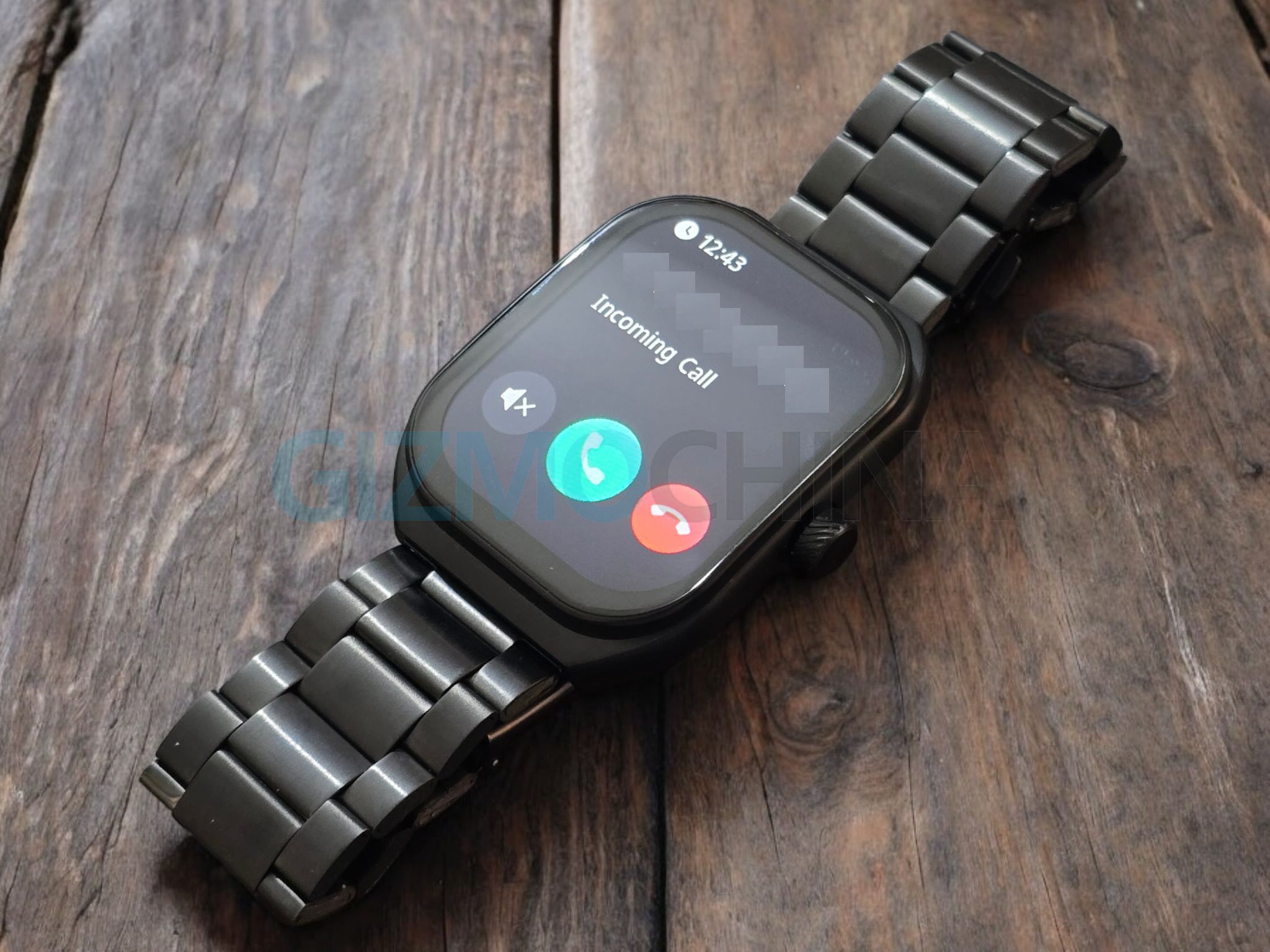
Boult sent us the Trail smartwatch to test and share our thoughts on this product. After using the Trail smartwatch for a few weeks, I’ve gathered some insights that might help others considering this device.
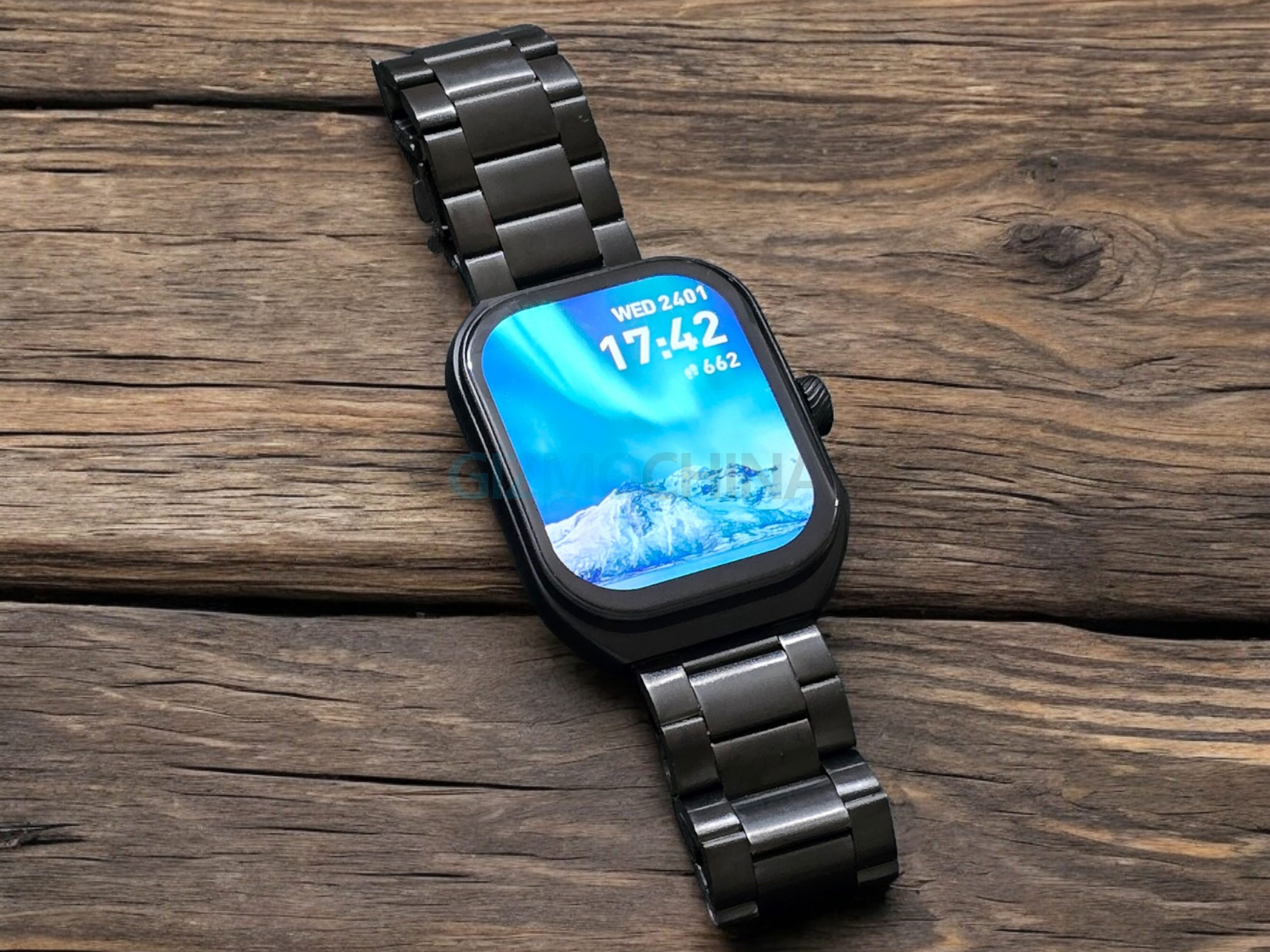
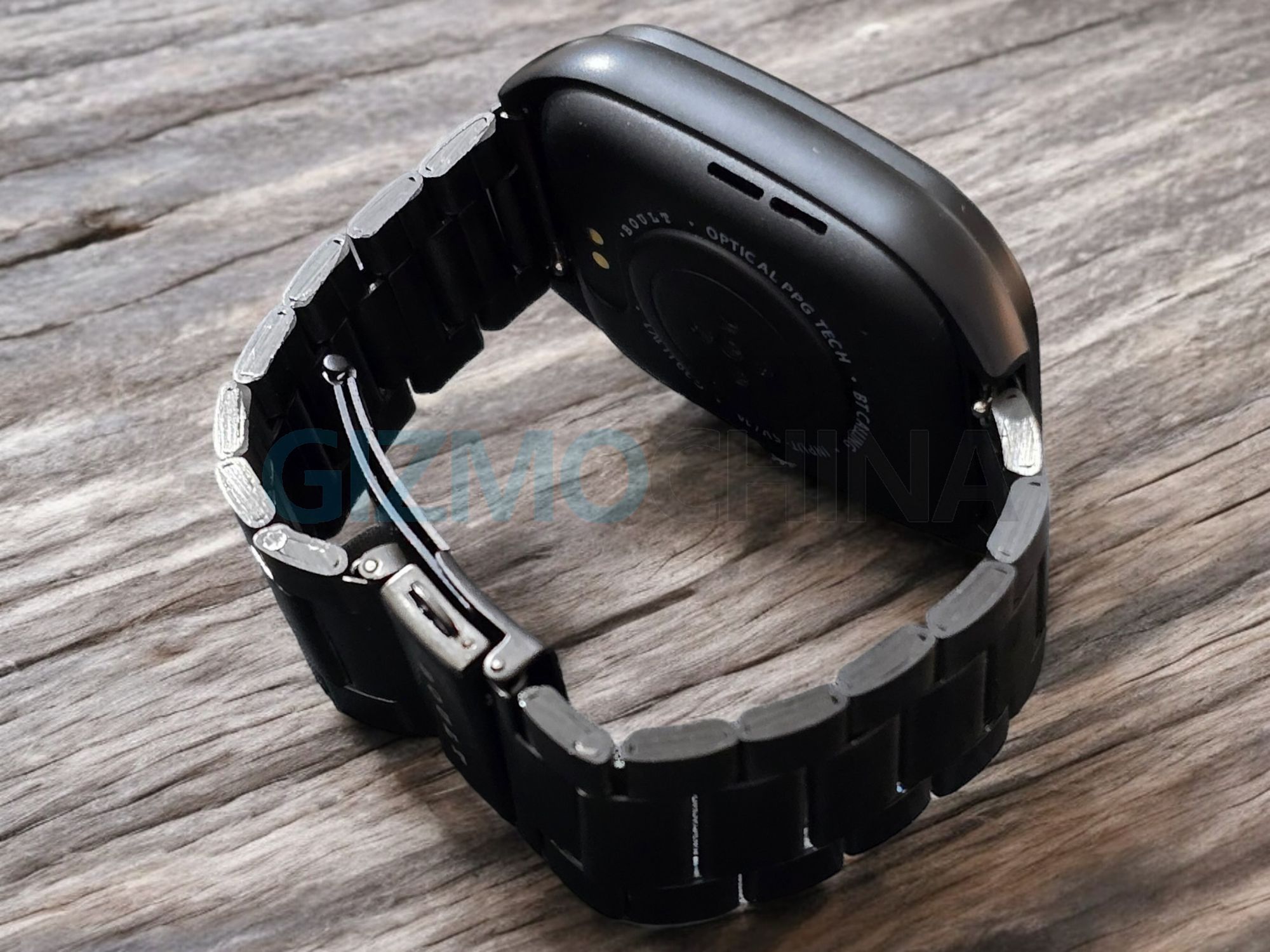
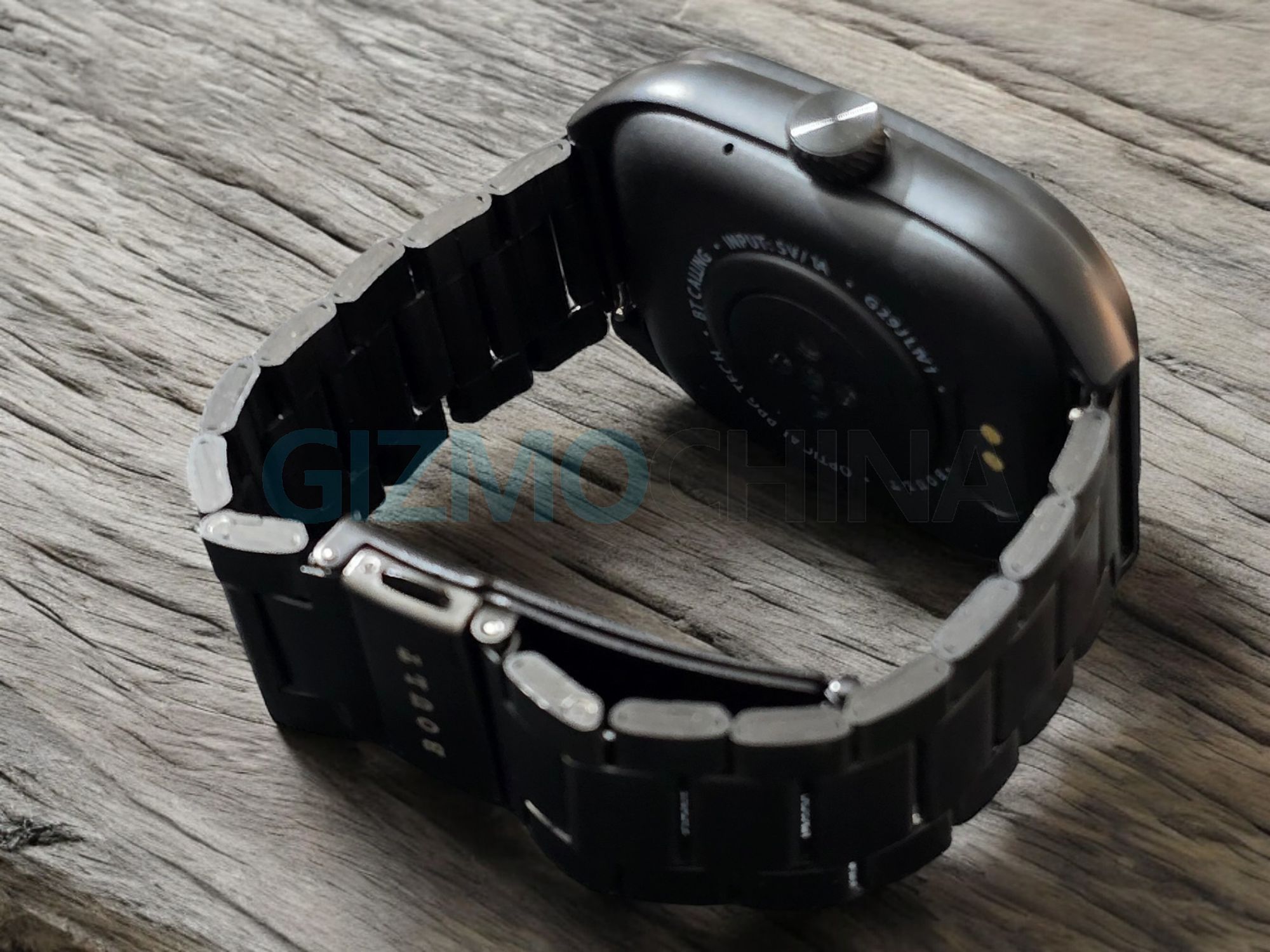
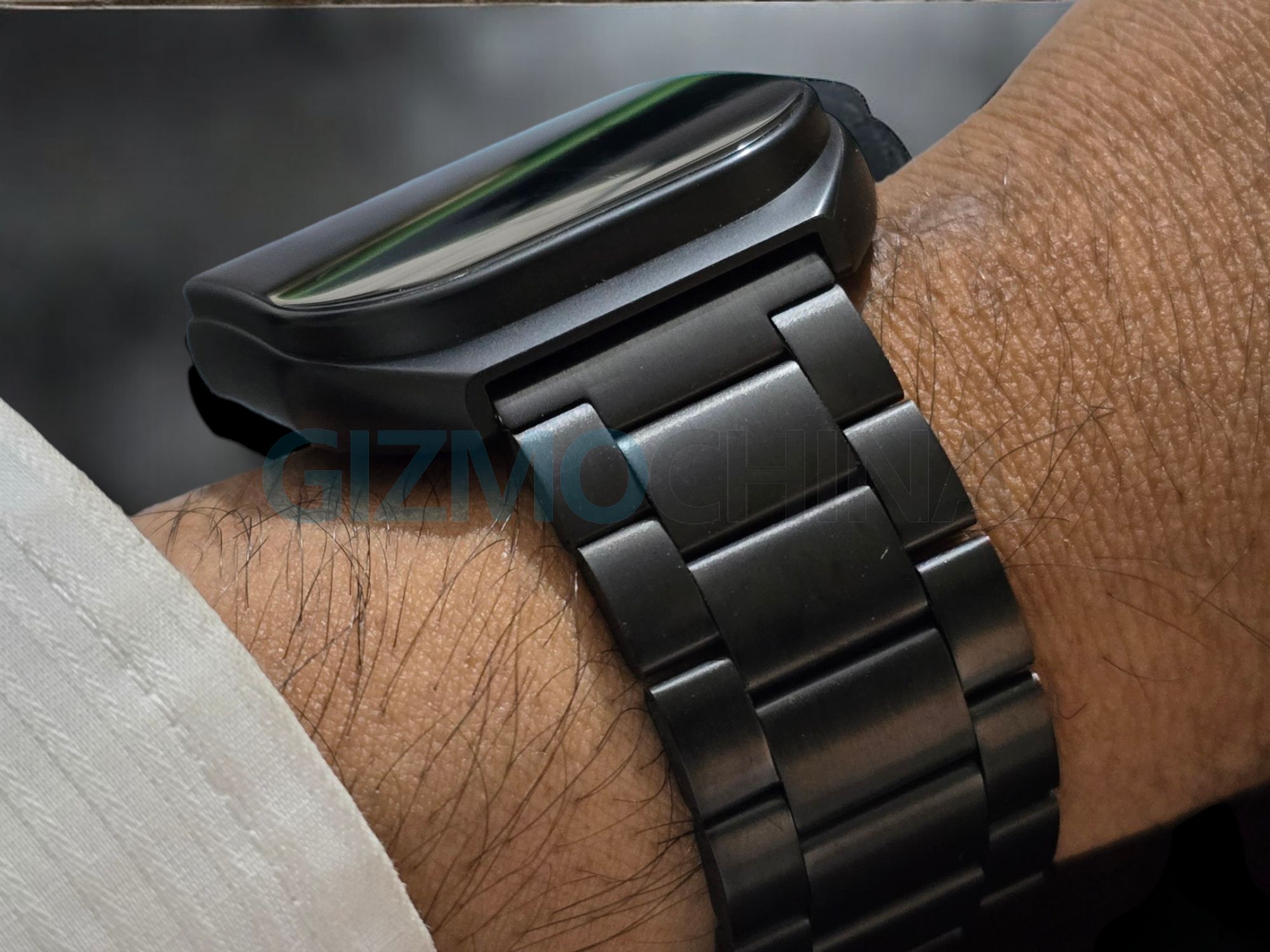
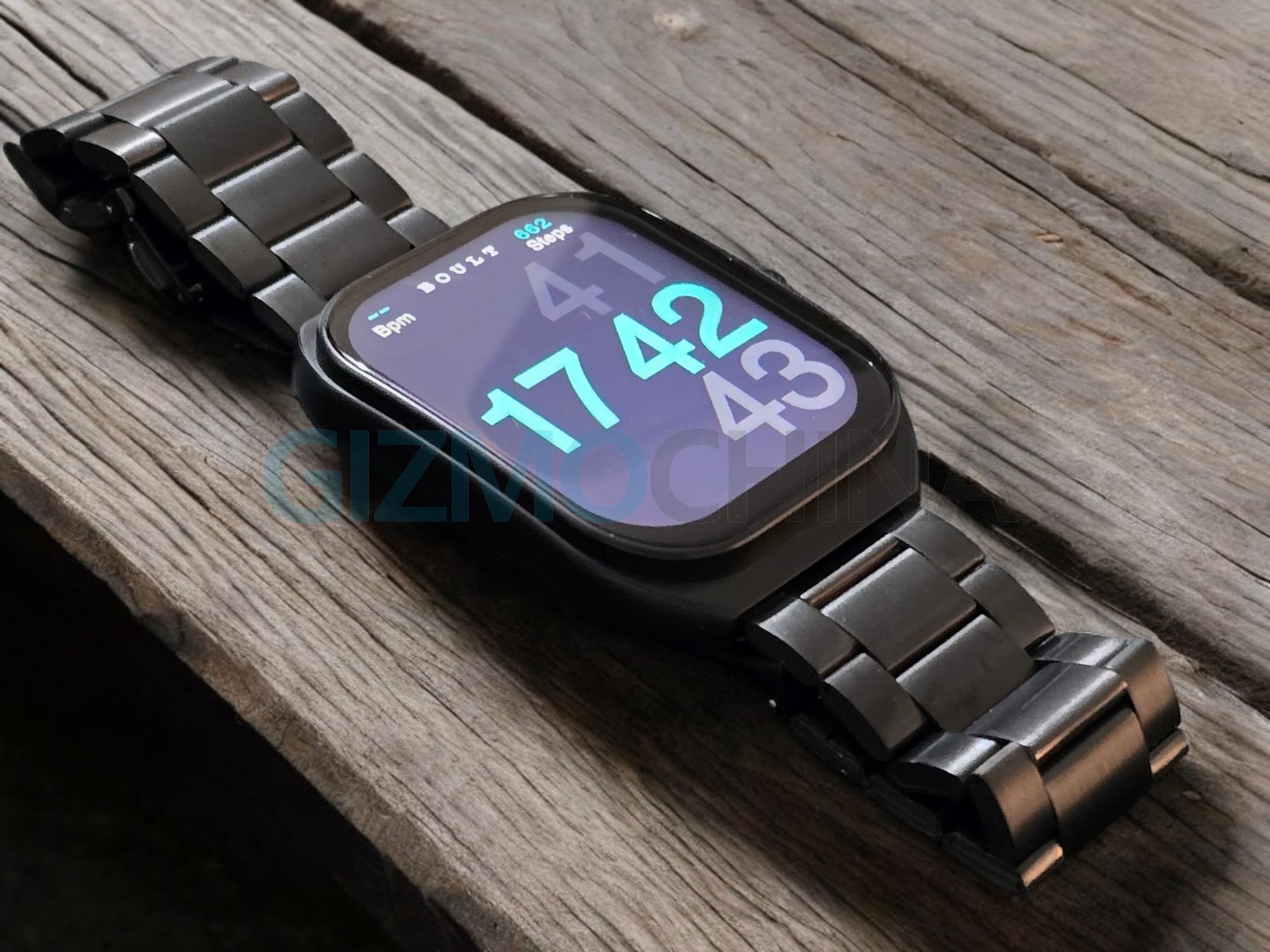
The Boult Trail boasts an impressive design with a curved display and stainless-steel strap. Users can adjust the strap’s size using a tool present in the box. The variant featured in the images is the Metal Black edition. The Metal Blue edition of the Boult Trail also features a stainless-steel strap. On the other hand, the Raven Black and Jade Green variants feature a silicon strap.
Overall, the Boult Trail has a sleek, minimalist design that complements both casual and semi-formal attire. The watch face is slightly larger than I expected, but it provides ample screen space for displaying notifications and fitness data. The strap is comfortable and feels durable, though it might be a bit stiff at first. The crown on the right edge can be used to change watch faces and navigate the device’s features. Additionally, the Trail offers IP68-rated dust and water resistance.
2. Display
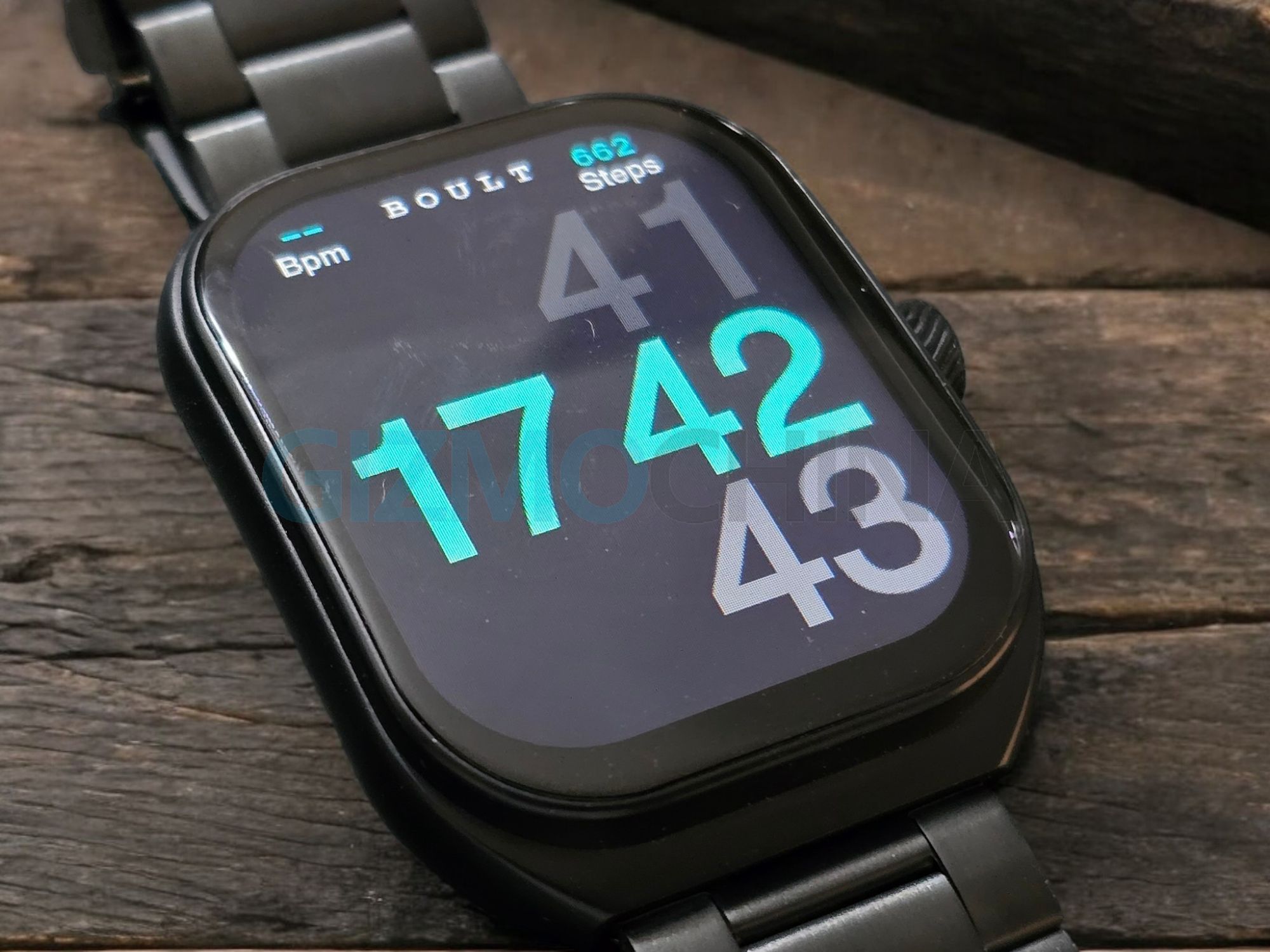
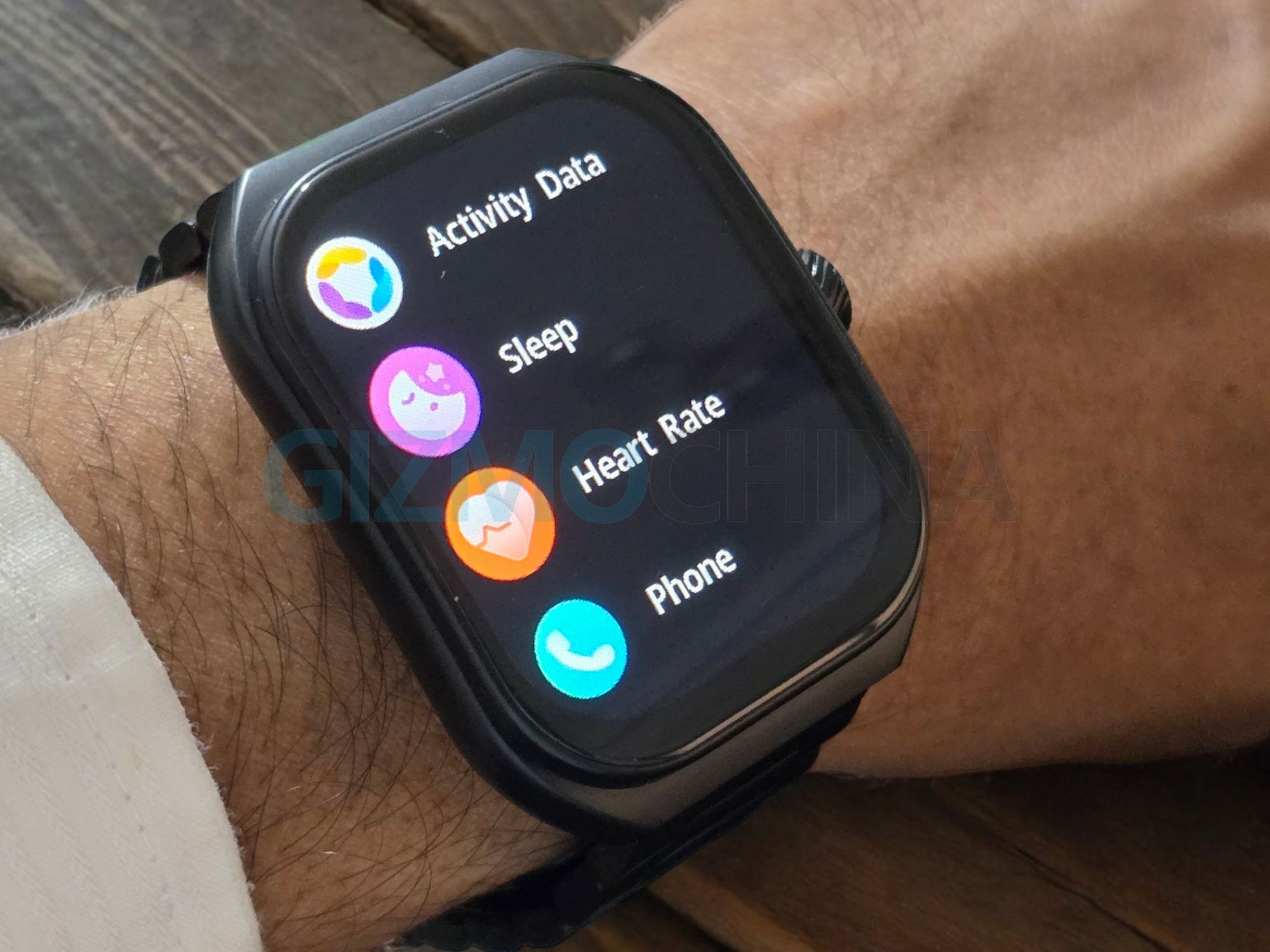
The 2.01-inch curved display is bright and clear, even outdoors. It offers a resolution of 240 x 296 pixels. I found the touchscreen responsive, making navigation through menus smooth. Customizing the watch face was straightforward, and there are a good number of options to cater to different preferences.
3. Features and Performance
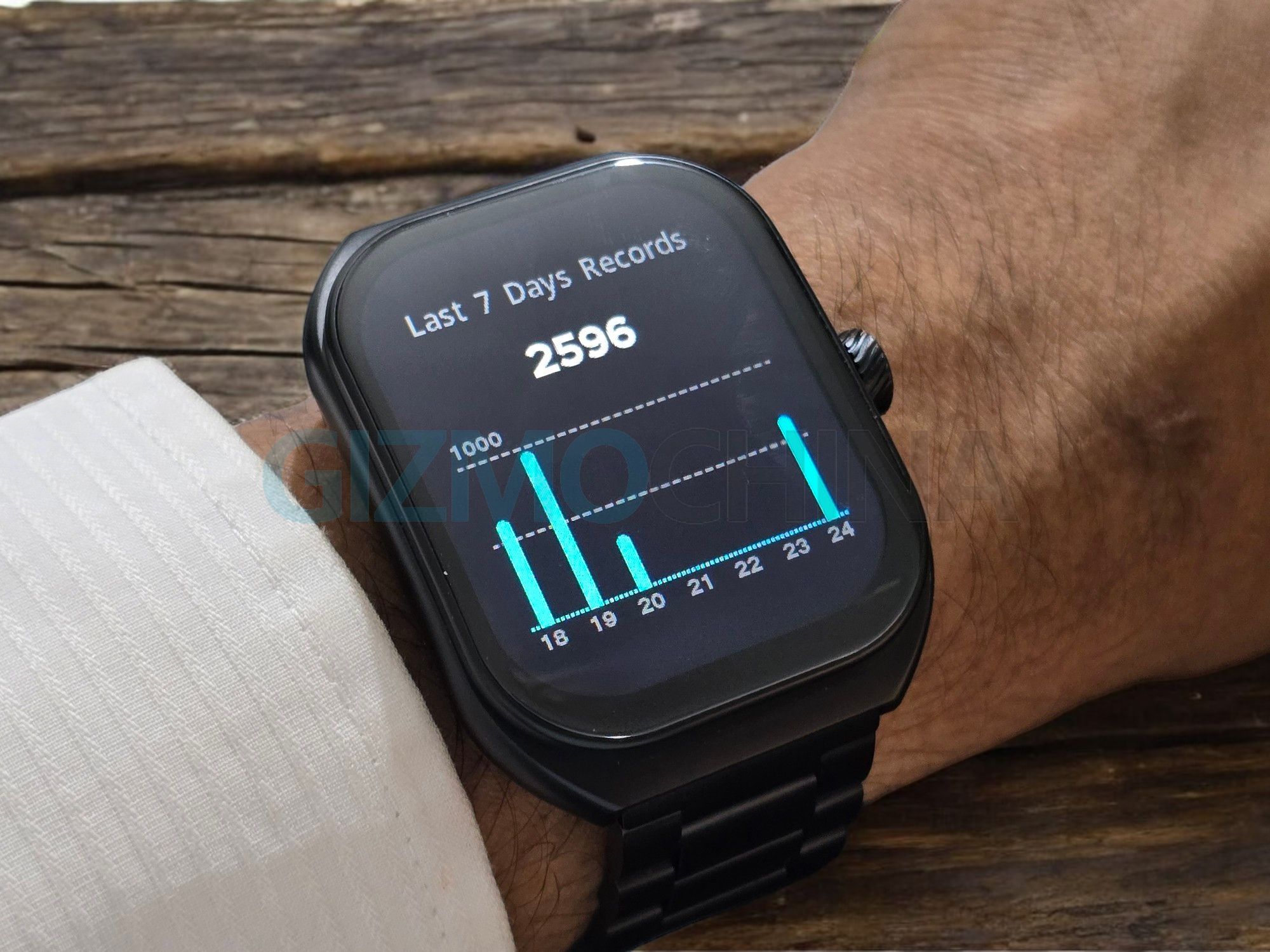
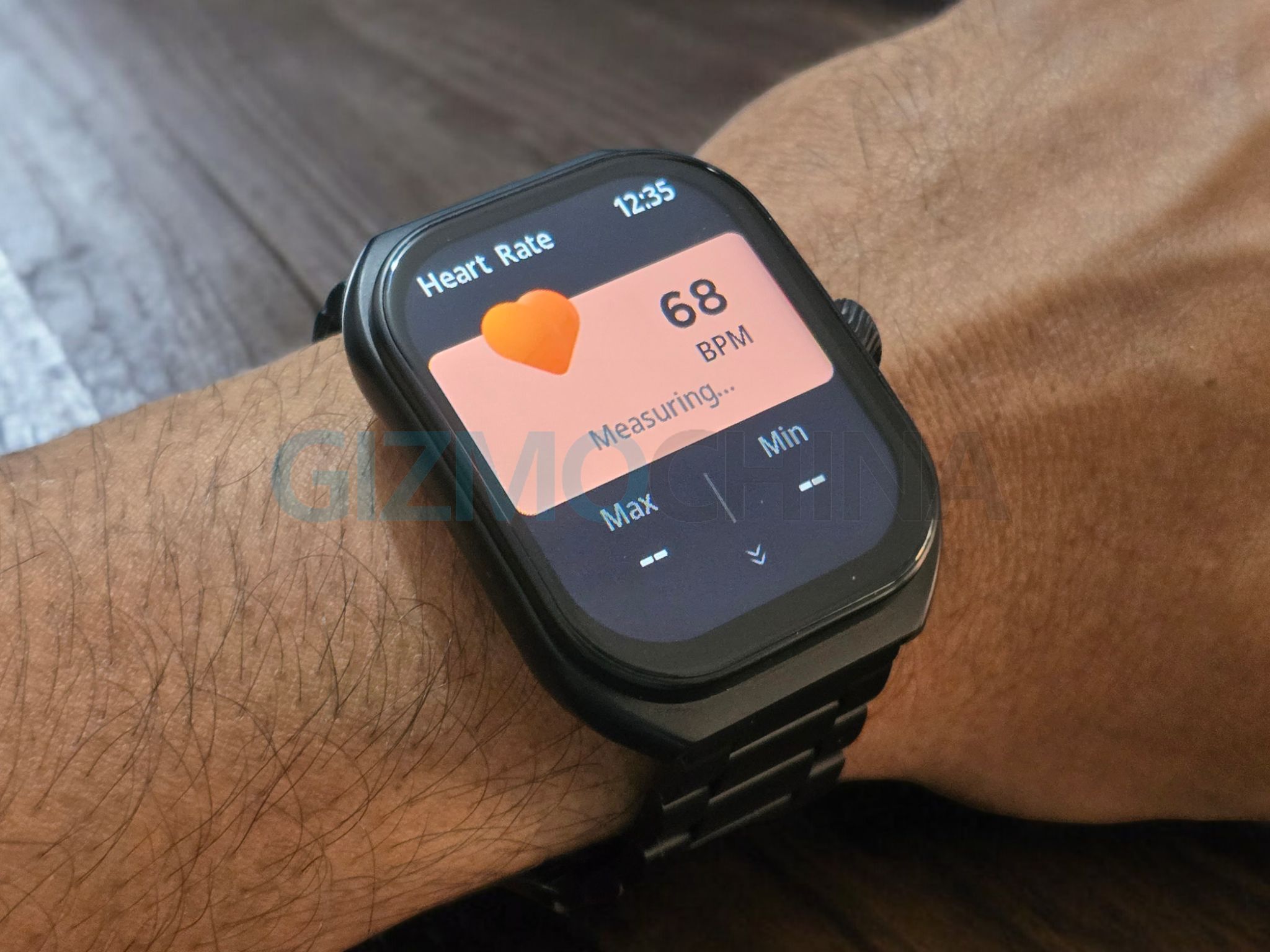
One of the highlights of the Boult Trail is its fitness-tracking capabilities. The heart rate monitor and step counter are reasonably accurate. The sleep monitoring feature provided insights into my sleep patterns, although I noticed it sometimes misinterpreted periods of restlessness as wakefulness.
The Trail supports other health-tracking features, such as stress monitoring, SpO2 tracking, and menstrual tracking. The smartwatch also supports multiple sports modes. I primarily used it for running and cycling, and it provided useful metrics like distance, pace, and calories burned.
4. Bluetooth Calling and Battery Life
Syncing the Boult Trail with my smartphone was simple. The companion app, available for both Android and iOS, is user-friendly and offers a comprehensive overview of all tracked data. With Bluetooth 5.3 connectivity, answering calls directly from the watch is possible, but I found the call quality to be inferior compared to using a phone or dedicated Bluetooth headset. Receiving notifications on the watch is convenient, although the text can sometimes be truncated, requiring me to check my phone for the full message.
Battery life is another strong point. With regular use, including fitness tracking, notifications, and occasional GPS use, I managed to get about five days on a single charge. Charging is relatively quick, taking around two hours to go from empty to full.
5. Final Thoughts
The Boult Trail smartwatch offers a balanced mix of style, functionality, and affordability. What I personally like about this smartwatch is its design with stainless steel and a curved screen, which stands out from most watches available in its price range. For anyone seeking a reliable, budget-friendly smartwatch, the Boult Trail is worth considering.
Let’s quickly go through what happened in the tech world over the weekend.
First up, remember Google’s mysterious Fuchsia OS? Well, it’s back in the spotlight, and this time it’s eyeing your Android device. But not in the way you might think—we’re talking virtual cohabitation here.
And if you’ve been holding your breath for OnePlus’s next move, exhale slowly. We’ve got the inside scoop on their upcoming gadget bonanza, including the much-anticipated Pad 2.
But that’s not all. We’re also diving into how Huawei is thumbing its nose at U.S. sanctions (spoiler: it involves AI), and why your next flagship phone might come with a heftier price tag thanks to Qualcomm’s ambitious plans.
More details on the above stories in today’s newsletter below
In a surprising turn of events, Google‘s enigmatic Fuchsia operating system might be making its way onto Android devices, not as a full-fledged replacement, but as a virtualized inhabitant.
Fuchsia OS was first introduced in 2016 and appeared on its first commercial device in 2021 with the launch of the first-generation Nest Hub. But its reach hasn’t extended beyond the Nest Hub so far. However, a recent report suggests Fuchsia OS might run as a virtual machine on Android devices.
OnePlus has confirmed the lineup for its upcoming launch event in Milan, Italy, on July 16th. The event will introduce the OnePlus Nord 4, OnePlus Pad 2, OnePlus Watch 2R, and OnePlus Nord Buds 3. These products will also be available in India, as confirmed by a new microsite on Amazon India.
At the World AI Conference in Shanghai, Zhang Ping’an, CEO of Huawei Cloud, delivered a compelling message regarding China’s AI progress amidst U.S. sanctions on advanced GPUs and chipmaking technology. Despite the constraints imposed by limited access to top-tier processors, Zhang emphasized that China can continue to lead in AI without relying solely on high-end chips.
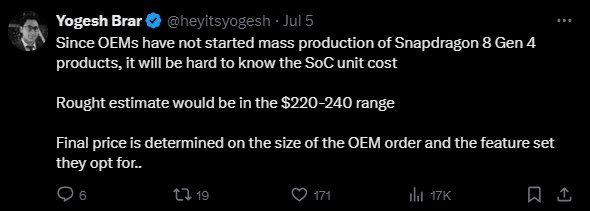
The next iteration of Qualcomm‘s Snapdragon 8 Gen 3 processor – the Snapdragon 8 Gen 4 Soc has been the subject of speculation and rumors for a while now, especially concerning its price. Tipster Yogesh Brar is the latest to speculate that the new chipset will be priced higher than its predecessor.
OnePlusSummer Launch Event is set to take place on July 16 where the company will unveil the Nord 4 smartphone globally. Ahead of this, the device has now appeared on the Geekbench benchmarking site showing its performance prowess.
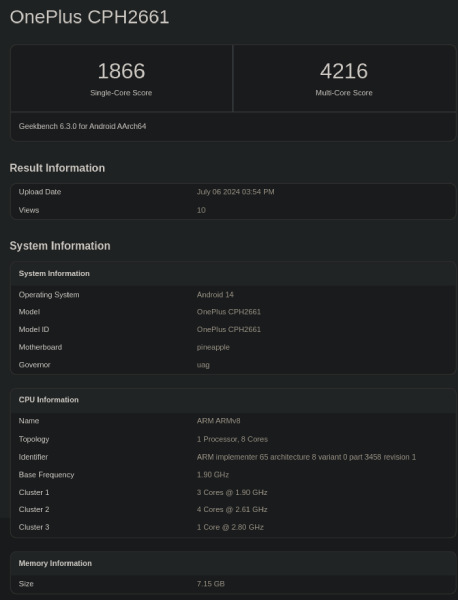
The Nord 4 appeared on the benchmark with model number CPH2661, which as per X tipster Sanju Choudhary is the Indian variant of the phone. It scored 1866 points in single-core and 4216 points in multi-core tests. The listing reveals the phone will have an octa-core processor with a prime core clocked at 2.80GHz, two mid-cores at 2.61GHz, and three efficiency cores at 1.90GHz.
The setup confirms this is the Snapdragon 7+ Gen 3 SoC which is further confirmed by the motherboard id “pineapple.” The Geekbench listing also shows 8GB of RAM and Android 14 OS pre-installed on the device.
We’ve already seen the Nord 4’s design. It has flat frames and a dual-tone finish on the back. The upper section housing the vertical camera rings has a glass finish, while the lower back is metallic.
Speaking of cameras, the rear setup is said to have a combo of a Sony IMX882 50MP primary sensor and a Sony IMX335 8MP ultra-wide lens.
The front of the phone has narrow bezels with a punch-hole cutout in the center that will likely house a 16MP sensor. The display is said to be a 6.74-inch OLED display with a 1.5K resolution, a 120Hz refresh rate, and 2150nits peak brightness.
The Snapdragon 7+ Gen 3-powered phone may ship with up to 16 GB of LPDDR5x RAM, and up to 512 GB of UFS 4.0 storage. The battery is said to be a substantial 5500mAh cell which will support 100W fast charging.
Additional features of the Nord 4 might include dual speakers for audio, an IR blaster to control home appliances, and an alert slider to quickly turn notifications on and off.
Later this month, in China, Redmi will announce the Redmi K70 Ultra as the last Redmi K70 series device. After the K70 Ultra, the company is expected to unveil the Redmi Note 14 series of smartphones in August or September, followed by the Redmi K80 lineup in November. A recent report revealed the model numbers of the Redmi K80 and K80 Pro. Tipster Smart Pikachu’s recent Weibo post has shed information about the K80 series.
Redmi K80 series design details (rumored)
According to the tipster, the design of the Redmi K80 Pro, powered by the Snapdragon 8 Gen 4, has been significantly improved. He added that the K80 series will likely include a new glossy material and composite glass, with ceramic under evaluation. It appears that one of the design options the company is reportedly considering is to relocate the camera module to the upper left corner. The same leaker previously claimed that the K80 series would have a Champion Edition like the K70 series.
The IMEI database listings of the Redmi K80 and K80 Pro have revealed that these devices have 24122RKC7C and 24127RK2CC model numbers, respectively. The two phones are expected to feature the Snapdragon 8 Gen 3 and the Snapdragon 8 Gen 4 chipsets, respectively. At present, there is no clarity about the existence of the Redmi K80e.
At present, there are no concrete leaks about the Redmi K80’s specifications. It is speculated that the K80 and K80 Pro may get rebranded as the Poco F7 and F7 Pro in the global market in 2025.
Redmi is expected to unveil the Redmi K70 Ultra, a performance-focused flagship phone, later this month in China. Today, Wang Teng Thomas, who is the Deputy General Manager of the Xiaomi China Marketing Department and the General Manager of the Redmi brand, released a Weibo post to confirm the display of the K70 Ultra.
Redmi K70 Ultra will feature C8+ screen
In his Weibo post, Wang Teng Thomas mentioned that he recently attended the launch ceremony of the C8+ luminous display panel in Wuhan, a collaborative effort between Xiaomi and TCL Huaxing. He emphasized two major improvements in the C8+ material: the pixel life has experienced an extraordinary breakthrough, increasing by over 100%, and the luminous efficiency has reached the highest level in the industry.
The Redmi K70 Ultra will debut this new C8+ display, which offers a 1.5K resolution. Reports have claimed that it will be a flat screen that supports up to a 144Hz refresh rate. It is expected to be powered by the PixelWorks X7 display chip for an enhanced gaming experience. For security, it will feature an in-screen fingerprint sensor.
The K70 Ultra will have a 20-megapixel front camera and an OIS-enabled 50-megapixel (main) + 8-megapixel (ultrawide) + 2-megapixel (macro) triple camera unit. Other anticipated features include a metal frame, a capable VC heat dissipation unit, and an IP68-rated chassis.
Honor Magic Vs 3 is all set to debut with other Honor devices, such as the Magic V3, the MagicPad 2, and the MagicBook Art 14, on July 12 in China. Ahead of the launch, the company has started receiving reservations for the Magic Vs3. The official listing of the device revealed its design, color options, and storage variants before the official announcement.
Honor Magic Vs3 design
The official images of the Honor Magic Vs3 show that it will have a different design for its camera module as compared to the Magic V3. The V3 has an octagonal camera module placed at the centre of the top half. It will be available in four shades, such as brown, black, green, and white.
On the other hand, the Magic Vs3 has a rectangular camera module positioned at the top-left corner. The device seems to have a side-facing fingerprint scanner and a metal frame. It will be available in three colors, such as black, white, and green.
Honor Magic Vs3 key specifications (rumored)
Unfortunately, there is not much known about the specifications of the Honor Magic Vs3. The official listing confirms that it will be available in 256 GB, 512 GB, and 1 TB storage editions.
There is a possibility that the Magic Vs3 may arrive with the Snapdragon 8s Gen 3 or 8 Gen 2 chipset onboard. A closer look at the device’s camera module reveals that it has a periscope telephoto camera. However, there is no information about the camera configuration of the device.
The Snapdragon 8 Gen 3 chipset will power the Magic V3, according to reports. Other expected features include an IPX8 rating, a 50-megapixel main camera with OIS support, a 3.5x periscope telephoto camera, a 5,200mAh battery, 66W fast charging, and wireless charging. It will have a slim profile of 9.7mm and weigh only 226 grams.
Amazon India is finally ready for Prime Day 2024, which is scheduled for July 20 and 21. The deals and discounts are already live on Amazon.in for Prime users and will commence on July 20 at midnight and last until 11:59 PM on July 21. This time, the shopping giant has announced some exciting deals on its entire inventory and special discounts on the Fire and either self-owned brand. There will be additional offers on consumer electronics, clothes, home appliances, and other items.
What is Amazon Prime Day?
Starting in 2015, Amazon started the Prime Day extravaganza, where they partnered with major manufacturers and small retailers to offer extraordinary discounts and deals. It’s been eight years, and this year will be the ninth iteration of Amazon Prime Day. In the previous iterations, we have already seen the scale of deals, and Amazon is going to repeat the same success this year, as they have dropped the curtains on Amazon Prime Day 2024 deals and other details. Let’s see what items we can expect discounts on this year:
Amazon Prime Day 2024 India Deals
New Product Launches
Along with the discounts on the popular items, there will be over 450 new product launches on the eve of Amazon Prime Day 2024. Several new smartphones from major OEMs like Samsung, OnePlus, Honor, iQOO, Sony, ITC, and Motorola are scheduled to launch on July 20. Precisely, the new Samsung Galaxy M35, Motorola Razr 50 Ultra, OnePlus Nord CE 4 Lite (Ultra Orange), Redmi 13 5G, Honor 200 Series, Lava Blaze X, Realme GT 6T, and a new variant of the OnePlus 12R 5G are making their debuts. Moreover, there will be continuous product launches from small businesses.
Bank Discounts:
To further enrich the ongoing discounts, several Indian banks, like ICICI and SBI, have partnered with Amazon to offer additional discounts like instant cashback. Details below:
ICICI Bank
Upto 10% cashback with ICICI Bank credit or debit cards
EMI Transactions on ICICI Bank Cards
Amazon ICICI Cards will get 5% cashback
SBI Bank
Upto 10% instant cashback with SBI Cards
EMI transactions
Amazon is also offering 5% additional instant cashback, which will be 4% Uber credit and 1% Amazon Pay cashback.
Moreover, there will be additional discounts for the new Amazon Pay and ICICI Bank Credit Card users. The new users will get welcome rewards up to Rs 2500.
Major discounts unveiled:
Several major items will retail at their lowest price. Some of the deals are listed below:
There are over 14 new shows and movies across 5 languages that will be available during the Prime Video sale this season. At the same time, music lovers will also get certain hits from their favorite artists in India. There will be exciting new additions to the Amazon Music library, which already has over 100 million songs in 20 languages.
Favorite items are already live, and users can add those to their wishlists. There’s also an option to start shopping for items where you left them last evening.
You can stay connected with us for more deals and details in the coming days. However, if you’re residing in the US, then make sure to check our Prime Day Deals 2024 deals and other information.
Several reports have claimed that the Redmi K70 Ultra equipped with the Dimensity 9300 Plus chipset, will debut this month (July) in China. Today, the brand officially confirmed that Xiaomi’s new foldable phones, such as the Mix Fold 4 and Mix Flip, will also launch this month. It appears that these devices will break cover during the same launch event later this month.
Xiaomi Mix Fold 4, Mix Flip July launch confirmed
Xiaomi MIx Fold 4, MIx Flip July launch confirmed
Xiaomi’s Weibo post released today states that its new factory has officially commenced full-scale production. This industry-leading, fully digitalized smart factory achieves 100% automation of critical processes through in-depth self-research and development of manufacturing equipment. By establishing an industry-leading “full-chain industrial big data” foundation, the factory attains 100% digitalization of industrial production. This new facility will manufacture the upcoming Xiaomi Mix Fold 4 and Mix Flip foldables.
Reports have revealed that the Xiaomi Mix Fold 4 and Mix Flip will feature the Snapdragon 8 Gen 3 chipset. For those who don’t know, the Mix Flip will be Xiaomi’s first flip-style foldable phone.
Recent reports have revealed that the Xiaomi Mix Flip will be available in four options, such as 12GB+256GB, 12GB+512GB, 16GB+512GB, and 16GB+1TB. It is expected to feature a 4-inch outer display and an OIS-enabled 50-megapixel + 60-megapixel (2x telephoto) dual camera setup. The device is expected to support 67W rapid charging.
Xiaomi Mix Fold 4 leaked image by Evan Blass
On the other hand, the Xiaomi Mix Fold 4 (shown in the leaked render above) will have a 50-megapixel main camera with OIS support, a 12-megapixel ultrawide lens, a 60-megapixel telephoto camera with 2x optical zoom, and a 10-megapixel periscope telephoto camera with 5x optical zoom. The battery size of the Mix Fold 4 will exceed 5,000mAh battery and it is expected to support 67W fast charging and wireless charging.
Realme will unveil the Realme GT 6 tomorrow (July 9) in China. Ahead of the launch, the company seems to have confirmed the starting price of the phone. A screengrab of Taobao (e-commerce platform) listing of the phone that is now doing the rounds on Weibo reveals that it will start at 3,199 Yuan (~$440).
Realme GT 6 price
The Realme GT 6’s starting price suggests that it will compete with the OnePlus Ace 3 Pro, which debuted last month for the same price. The Ace 3 Pro is available in three configurations, such as 12GB+256GB, 16GB+256GB, and 24GB+1TB in China.
At present, there is no information about the configuration of the base variant of the GT 6. However, rumors have claimed that the GT 6 will come equipped with 24 GB of RAM and 1 TB of storage. There is currently no word on the release of the GT 6 and Ace 3 Pro in markets outside of China.
Realme GT 6 specifications (rumored)
Recent reports have revealed that the Realme GT 6 will have a 6.78-inch BOE S1+ screen that offers a 1.5K resolution, a 144Hz refresh rate, and up to 6,000 nits of brightness. Under the hood, the device will have the Snapdragon 8 Gen 3 chipset and a 5,800mAh battery with 120W fast charging support.
The rear camera setup of the Realme GT 6 will have an OIS-assisted 50-megapixel Sony IMX890 primary camera and an 8-megapixel ultrawide lens. For selfies, the device will have a 16-megapixel selfie camera. The GT 6 also supports the new Sky communication system, which comprises support for 5.5G networks and Wi-Fi 7 protocols. In terms of design, the GT 6 will have a glass back and a metal frame. It will be available in three shades, black, green, and purple.
Mechrevo has announced a new configuration for its Yilong 15 Pro gaming laptop. Earlier this year the laptop was launched with RTX 4060 graphics card, now the upgrade features an improved GeForce RTX 4070 graphics card, a larger 99Wh battery, and an IR face recognition camera. The laptop is now available for pre-sale on Tmall starting at 8499 Yuan (around $1,169).
Mechrevo Yilong 15 Pro Specifications:
The new generation Yilong 15 Pro features a 15.3-inch 16:10 aspect ratio wide-angle LCD panel with a 2560×1600 QHD resolution, 91.8% screen-to-body ratio, 100% sRGB color gamut coverage, and a 240Hz high refresh rate. The display is claimed to have a brightness of 500 nits (typical).
Under the hood, the Mechrevo Yilong 15 Pro is powered by the latest AMD Ryzen 7 8845H processor along with the RTX 4070 GPU that supports up to 140W power. The GPU utilizes Ada Lovelace architecture for robust gaming and creative work, supporting features like DLSS 3 for improved frame rates and visual fidelity.
For cooling, Mechrevo equips the Yilong 15 Pro with an upgraded cooling system that includes 5 pure copper heat pipes, four pure copper fins, dual fans with four air outlets, and upgraded thermal grease. This setup promises effective cooling while keeping noise levels to a manageable 46dB, ensuring the laptop performs optimally without disruptive noise, even under load.
The Yilong 15 Pro comes standard with 32GB of dual-channel DDR5 memory clocked at 5600MHz and a 1TB PCIe 4.0 solid-state drive. The laptop retains the one-key flip screen function, and the webcam above the screen supports both physical and software-based shut-off methods. The new addition is the IR face recognition camera, which supports Windows Hello for quick password-free system login.
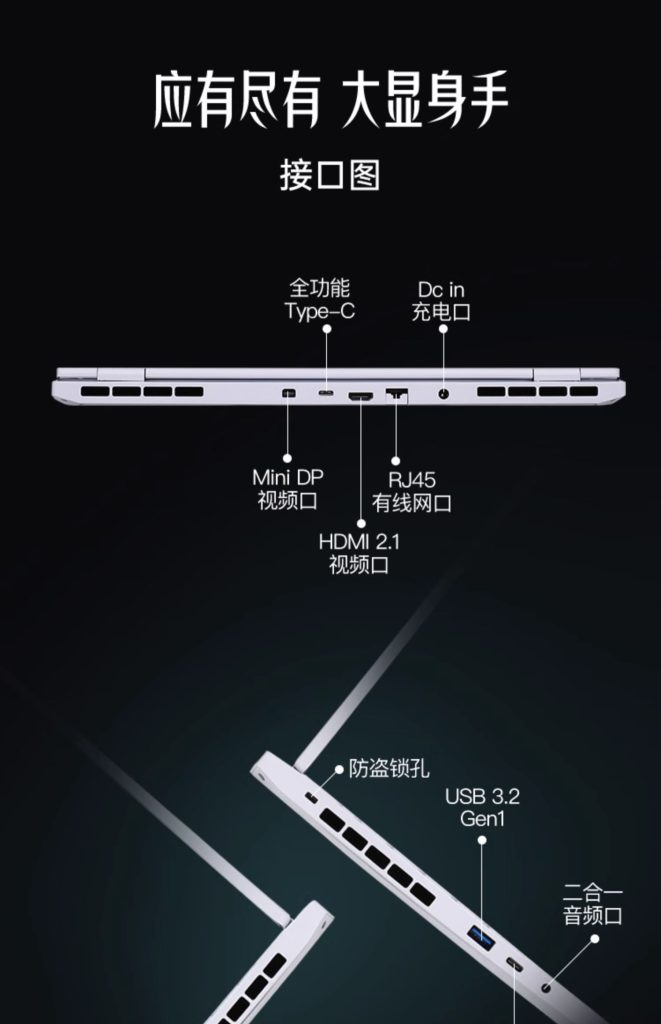
For connectivity, the laptop supports 100W PD charging and includes a slim mobile adapter that has been redesigned for better portability. It also boasts a full array of ports including HDMI 2.1, USB 3.2, and a Type-C charging port among others. Battery life is a significant upgrade, with a 99Wh battery providing up to 18 hours of usage.
In a surprising turn of events, Google‘s enigmatic Fuchsia operating system might be making its way onto Android devices, not as a full-fledged replacement, but as a virtualized inhabitant.
Fuchsia OS was first introduced in 2016 and appeared on its first commercial device in 2021 with the launch of the first-generation Nest Hub. But its reach hasn’t extended beyond the Nest Hub so far. However, a recent report suggests Fuchsia OS might run as a virtual machine on Android devices.
What Fuchsia does offer is a distinct foundation compared to Android and ChromeOS. It ditches the modified Linux kernel approach and is built from the ground up using a microkernel named Zircon. This microkernel architecture promises benefits in efficiency, flexibility, and security by minimizing the amount of trusted code in the system.
The new twist comes in the form of a project dubbed “microfuchsjia.” This project is reportedly aimed to enable Fuchsia to run on existing devices through virtualization.
Virtualization creates a software-based replica of a physical device, allowing it to operate in a separate computing environment. This isolation ensures that programs running on the primary OS and within the virtual machine do not interfere with each other.
Reports from the Fuchsia Gerrit code repository suggest that microfuchsia will use virtualization software like QEMU and pKVM. The latter, developed by Google, focuses on layered security for isolated workload execution. Interestingly, Google also created a lightweight Android variant called “microdroid” for this purpose.
The potential functionality of microfuchsia on Android devices remains unclear at the moment. However, similarities to microdroid suggest it might be used for running tasks that demand heightened security.
Also, the reason for a separate Fuchsia solution, given microdroid’s existence, is yet to be revealed. It is possible that Google views Fuchsia as a more secure and performant option for virtualized workloads within the Android ecosystem.
Chinese electric vehicle (EV) manufacturer Nio is reportedly exploring the potential of humanoid robots in its production lines. A recent report by China Star Market revealed that Nio is testing the Kuavo robot, developed by Leju Robotics, at its factories.
What’s particularly noteworthy is that Kuavo is the first HarmonyOS-powered robot unveiled by Huawei at the HDC 2024 developer conference in June.
Nio is not the only car manufacturer exploring the use of humanoid robots in assembly lines. However, it appears to be at the forefront of this development.
Prior to the testing of Kuavo, another humanoid robot, the Walker S from UBTech Robotics, underwent training at a Nio factory in February 2024. This marked the first instance of real-world training for the Walker S robot within a new energy vehicle (NEV) factory setting.
During the training, the Walker S utilized its image capture and transmission capabilities for quality control tasks like inspecting door locks, seat belts, and headlight covers. Additionally, the robot was able to affix vehicle logos as shown in a video shared by UBTech Robotics.
Nio’s interest in humanoid robotics extends beyond individual robots. In April 2024, Yi Peng, Nio’s head of humanoid robots for intellectual engineering, revealed the formation of a “squad” of humanoid robots at the China Humanoid Robot Ecology Conference. Yi also outlined two key areas of focus for Nio’s humanoid robotics endeavors:
Nio itself established a dedicated “squad” of humanoid robots in 2023, focusing on two key areas:
Fixing humanoid robotic arms in tight spaces and multitasking with 5G and vision algorithms.
Using humanoid robots in some quality control processes.
While the extent of Nio’s collaboration with Huawei and Leju Robotics remains unclear, the testing of the HarmonyOS-powered Kuavo robot is a significant step in the company’s efforts to incorporate humanoid robots into its manufacturing processes.
The next iteration of Qualcomm‘s Snapdragon 8 Gen 3 processor – the Snapdragon 8 Gen 4 Soc has been the subject of speculations and rumors for a while now, especially concerning its price. Tipster Yogesh Brar is the latest to speculate that the new chipset will be priced higher than its predecessor. It is reported that the new chipset will be priced between $220 and $240, indicating a price increase between 25% and 30% above the Snapdragon 8 Gen 3. The Snapdragon 8 Gen 4 is scheduled for its official unveiling at the Snapdragon Summit later this year in October. The chipset is however expected to be released in models in 2025.
Qualcomm will use the TSMC 3nm N3E process in the Snapdragon 8 Gen 4, as per rumors. The ARM core from the Snapdragon 8 Gen 3 will be replaced by the Oryon self-developed core. It is believed that the switch to the Oryon core is a major factor in the significantly higher price of the chipset. The third-generation Snapdragon 8 chipset is currently priced between $190 and $200. It has been previously rumored that Qualcomm is redesigning the Snapdragon 8 Gen 4 processor with a new target frequency of 4.26GHz. This improvement was allegedly designed to cope with Apple’s M4/ A18/ Pro processors and also seems to support the rumored price increase.
There is no official Qualcomm statement to ascertain the quality of the rumored changes and pricing of the next-gen Snapdragon 8 chipset. The missing details about the upcoming Qualcomm Snapdragon 8 Gen 4 processor will be revealed as we inch towards the October unveiling of the chipset.
We use cookies on our website to give you the most relevant experience by remembering your preferences and repeat visits. By clicking “Accept”, you consent to the use of ALL the cookies.
This website uses cookies to improve your experience while you navigate through the website. Out of these, the cookies that are categorized as necessary are stored on your browser as they are essential for the working of basic functionalities of the website. We also use third-party cookies that help us analyze and understand how you use this website. These cookies will be stored in your browser only with your consent. You also have the option to opt-out of these cookies. But opting out of some of these cookies may affect your browsing experience.
Necessary cookies are absolutely essential for the website to function properly. This category only includes cookies that ensures basic functionalities and security features of the website. These cookies do not store any personal information.
Any cookies that may not be particularly necessary for the website to function and is used specifically to collect user personal data via analytics, ads, other embedded contents are termed as non-necessary cookies. It is mandatory to procure user consent prior to running these cookies on your website.