
Add GIZMOCHINA as Preferred Source on Google
Google recently launched its new generation of Pixel smartphones — Pixel 3 and Pixel 3 XL. Yesterday, it was revealed that the Pixel 3 XL comes with a display panel from Samsung.
Given that both the devices are almost same, it seemed that the Google could have used the same panel for the non-XL model as well. However, that is not the case. A teardown of the Pixel 3 reveals that it comes with an OLED display panel from LG.
This is the same panel that was used in last year’s Pixel 2 XL. For those who are unaware, the Pixel 2 XL was widely criticized because of the issues pertaining to temporary image retention, smearing of black colors at low brightnesses, and graininess.
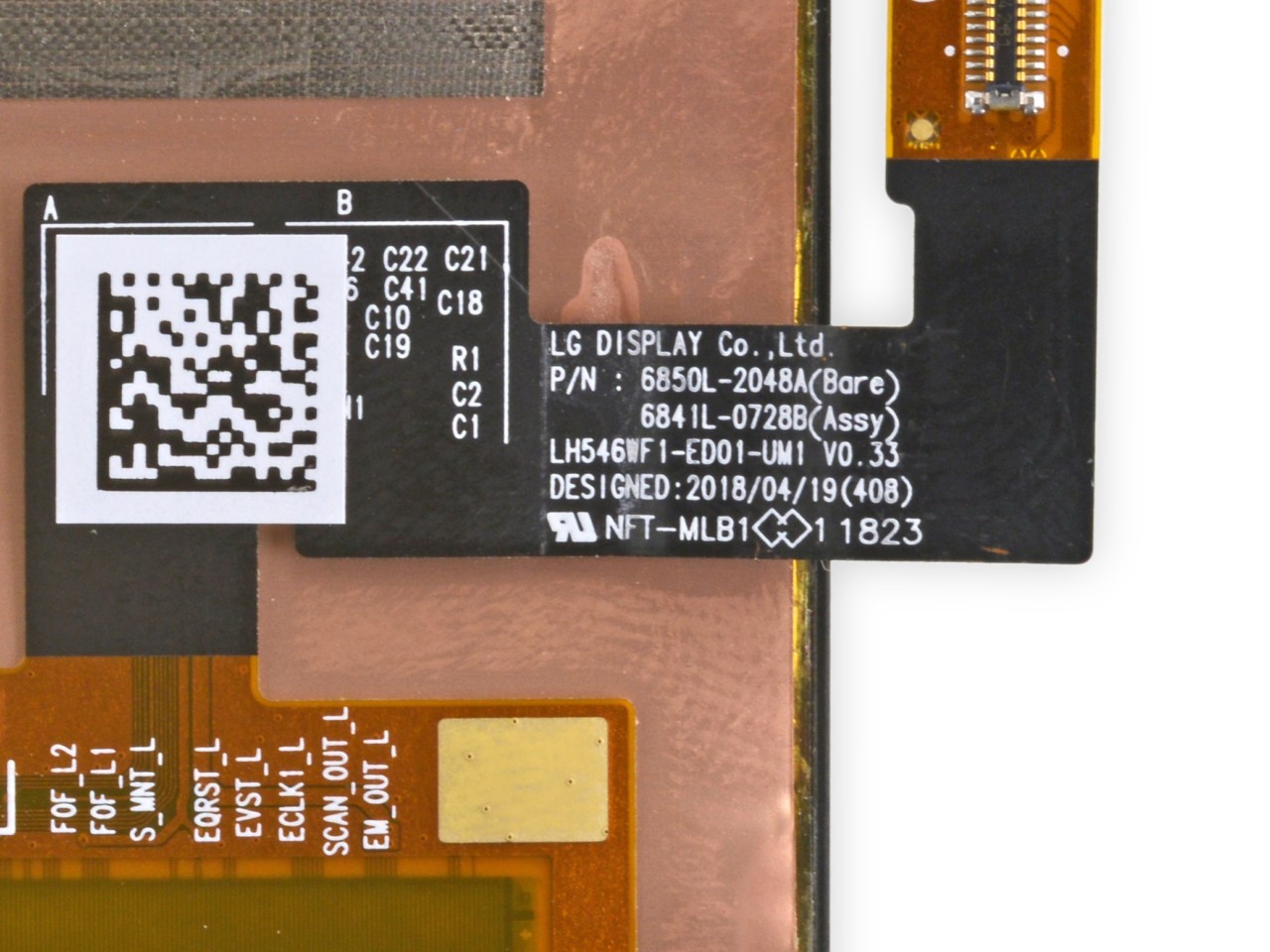
The year’s display panel of Pixel smartphones is completely opposite than the last year’s. Last year’s Pixel 2 used a display panel from Samsung while the Pixel 2 XL featured a display panel from LG’s display division. Samsung’s experience with notched display could be the reason for this flip.
Last year, it was reported that Google is planning to invest around $880 million in South Korea-based LG Display as it plans to secure a stable supply of flexible OLED panels for the Pixel 3-series smartphones. The investment from Google was reported to help the facility of LG boost display production.
Many reviewers have suggested that the 5.5-inch 18:9 display panel of the Pixel 3 is almost same as the 6.3-inch 18.5:9 display of Pixel 3 XL. Google notes identical 100,000:1 super contrast ratio, full 24-bits depth, and true black levels on the specifications page for each phone.
As far the phone’s specs are concerned, the Pixel 3 comes with a 5.5-inch 18:9 display with 2160 x 1080 pixels screen resolution. The front and rear of the phone is protected by Corning’s Gorilla Glass 5.
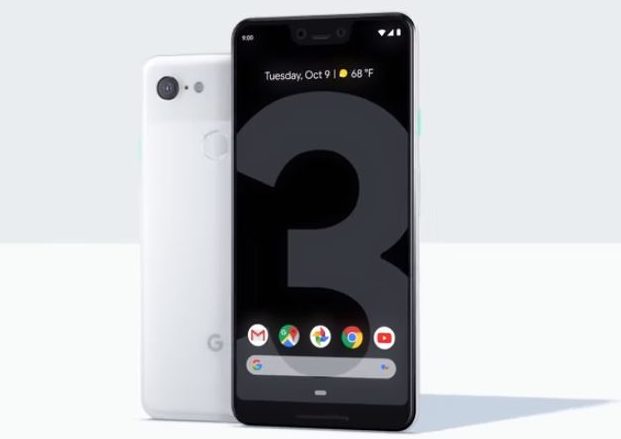
There’s a Qualcomm Snapdragon 845 chipset under the hood, but it’s under-clocked at 2.5GHz which the company justifies as a step to save battery power. It also comes with a dedicated security chip – the Titan M, which keeps the OS and your passwords secure.
It packs 4GB of RAM and comes in two storage options — 64GB and 128GB and as usual, it lacks support for storage expansion. It has IP68 ratings, a rear-mounted fingerprint sensor, and a USB Type-C port for charging.
The phone still comes with a single rear camera of 12.2-megapixel with f/1.8 aperture and a 1.4um pixel size. On the front side, there’s a dual 8-megapixel sensors — one with 97-degree wide-angle lens and another is a standard sensor with f/1.8 aperture. The camera comes with bunch of features, including Top Shot and Super Res Zoom.
Read More: Google registers a new type of independent Stylus patent for cross platform data portability
It runs Android 9.0 Pie operating system out-of-the-box and is powered by a 2,915mAh battery with 18W fast charging support. The 64GB model is priced at $799 while the 128GB storage model costs $800.
(Source)


Comments