Advertisement

Oppo Find X7, Find X7 Ultra launch date, configurations, color options officially confirmed

Oppo has officially confirmed that it will unveil the Find X7 series of smartphones at 2:30 pm (local time) on Jan. 8, 2024, in China. In addition, the Find X7 and Find X7 Ultra smartphones are now listed on Oppo China’s online store for reservations. The official listings have confirmed the configurations and color options of both smartphones well ahead of the official announcement.
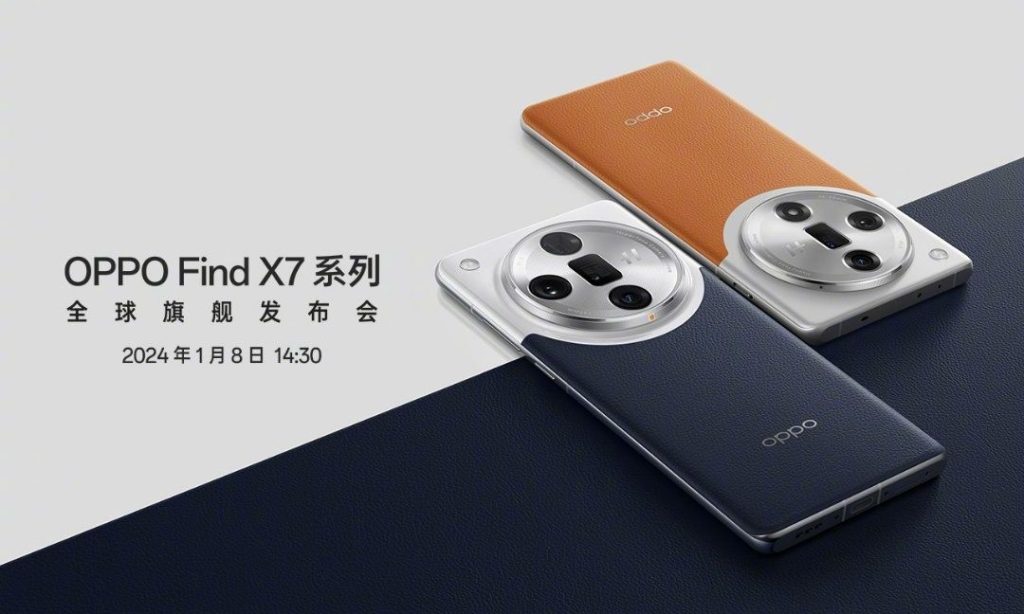
Oppo Find X7 series launch date-
Oppo Find X7 series launch date

Oppo Find X7

Reports have revealed that the Find X7 will come equipped with the Dimensity 9300 chipset. The official listing reveals that it will come in four configurations, such as 12 GB RAM + 256 GB storage, 16 GB RAM + 256 GB storage, 16 GB RAM + 512 GB storage, and 16 GB RAM + 1 TB storage.


The Find X7 will be available in four shades, such as Starry Sky Black, Sea and Sky, Desert Moon Silver, and Smokey Purple.

Oppo Find X7 Ultra

The Find X7 Ultra is expected to come equipped with the Snapdragon 8 Gen 3 SoC. It will be available in three variants, such as 12 GB RAM + 256 GB storage, 16 GB RAM + 256 GB storage, and 16 GB RAM + 512 GB storage.


When it comes to color options, the Find X7 Ultra will come in choices such as Pine Shadow Ink, Sea and Sky, and Desert Moon Silver.

The Find X7 and Find X7 Ultra have a similar design, with the front featuring a punch-hole display with curved edges and a dual-tone back panel with a massive camera module. The Find X7 has a triple-camera unit, whereas the Find X7 Ultra has a quad-camera system. The Ultra variant will be the world’s first smartphone to feature dual periscope telephoto cameras. In addition, it will also be the first-ever phone to feature the one-inch Sony LYT-900 50-megapixel camera sensor as the primary snapper.

It is said that there will be a third device called the Oppo Find X7 Ultra Satellite Communication Version, which will come with support for two-way satellite communication. The rest of its specs will be identical to the Find X7 Ultra.

RELATED:

Upcoming Vivo X500E bags important certification, here’s what to expect

Vivo has just launched the Vivo X500, X500 Pro, and X500 Pro Max in China. These phones are expected to hit the global market by the end of the month. There have been reports that the global X500 lineup will include a few more devices, which may launch a bit later. These include the Vivo X500 FE and X500E. In the latest development, the X500E has bagged an important certification, indicating that it is inching closer to launch.

Vivo X500E Bluetooth SIG certified

Vivo X500e Bluetooth SIG listing

As can be seen above, the Vivo X500E, with model number V2656, has been approved by the Bluetooth SIG authority. Devices that receive Bluetooth certification are often expected to go official within around a month. As usual, the listing has not revealed anything about its specifications.

Vivo X500E specifications (rumored)

Recent reports have revealed that the Vivo X500E will arrive with a 6.59-inch OLED panel that offers 1.5K resolution. Under the hood, it will feature a Snapdragon 8-series chip and possibly a 7,500mAh battery.

Like the X500, the X500E may feature a camera module positioned in the top-left corner. While the X500 has a circular setup, the X500E will reportedly have a square camera module housing a 50-megapixel 1/1.28-inch main sensor, an ultra-wide sensor, and a Sony IMX8-series periscope telephoto camera.

The X500E is unlikely to launch alongside the X500 trio, which is scheduled to launch globally on October 27. However, there is a possibility that its launch could be scheduled for next month or before the end of the year.

For daily updates, please visit our News Section.

Stay ahead in tech! Join our Telegram community and sign up for our daily newsletter of top stories!

(via)

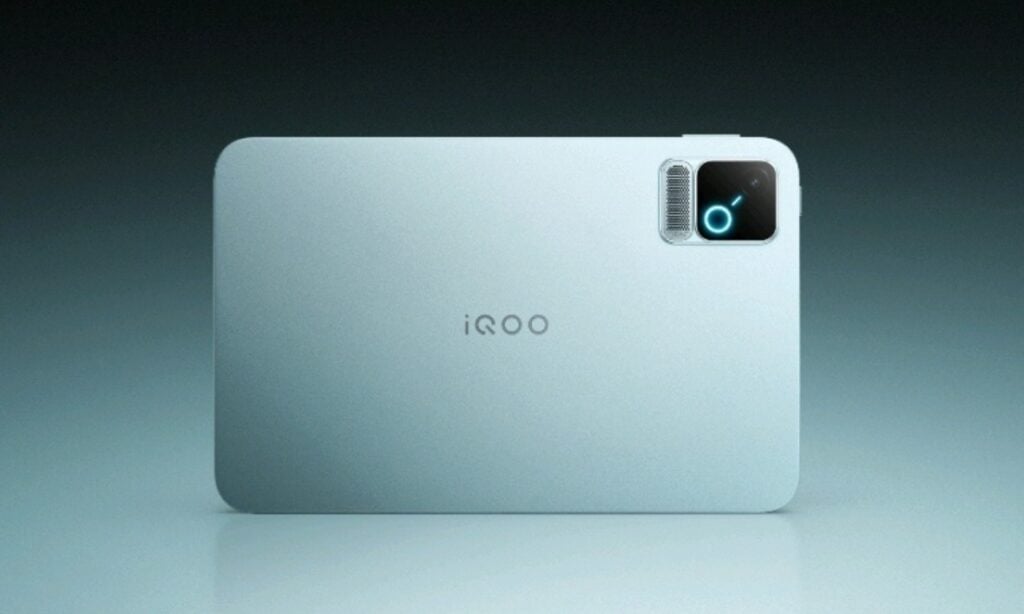
iQOO Pad Pro compact tablet’s design revealed, packs 8.8-inch display, Snapdragon 8 Elite Gen 5 and more

Last month, iQOO unveiled the Pad Ultra, a compact tablet equipped with the Snapdragon 8 Elite Extreme Gen 6 chipset. Now, the brand is preparing another performance-focused compact tablet dubbed the iQOO Pad Pro. Before the official announcement, the company has begun highlighting its design, cooling system and performance-focused hardware ahead of its launch.

iQOO Pad Pro’s key specifications confirmed

IQOO Pad Pro
IQOO Pad Pro

The iQOO Pad Pro features an 8.8-inch display and weighs just 298 grams, according to the company’s latest promotional material on Weibo. Its compact dimensions are intended to make the tablet easier to hold during extended gaming sessions, while its lightweight construction should improve portability. The company describes the device as a dedicated gaming machine designed around the idea that powerful hardware does not necessarily require a large body.

Qualcomm’s Snapdragon 8 Elite Gen 5 processor will work alongside iQOO’s proprietary Q3 gaming chip. The combination is designed to support demanding games, improve graphics processing and deliver smoother frame rates. iQOO also highlights precise touch controls and optimised audio as important parts of the experience, suggesting that the tablet is being developed primarily for competitive gaming rather than general-purpose entertainment.

A major highlight is the inclusion of a large active cooling fan alongside a passive cooling system. iQOO says the combination is designed to control temperatures during intensive gaming sessions, helping the processor maintain performance over longer periods. The cooling hardware, compact form factor and dedicated gaming chip are central to the tablet’s positioning. The 3C certification of the device has revealed that it will have support for 66W fast charging.

The iQOO Pad Pro 8.8-inch is now available for reservations in China and is expected to launch alongside the iQOO Neo 12 later this month. The latter has been officially confirmed to feature a 2K display with a 185Hz refresh rate, Qualcomm’s Snapdragon 8 Elite Gen 5 processor, a dedicated Q3 gaming chip, a 9,000mAh battery and an integrated active cooling fan. For heat dissipation, it will also feature iQOO’s new Ice Dome cooling system.

For daily updates, please visit our News Section.

Stay ahead in tech! Join our Telegram community and sign up for our daily newsletter of top stories!

iQOO Neo 12’s officially confirmed specs include 2K 185Hz display, 9,000mAh battery, Q3 gaming chip, and more

iQOO has started revealing details about its next performance-focused smartphone, the iQOO Neo 12. The company is positioning the upcoming device as a dual-chip performance flagship aimed at demanding users. Its latest teasers highlight upgrades to the display, cooling system and battery.

iQOO Neo 12 key specifications

iQOO Neo 12 teaser
iQOO Neo 12 teaser

According to iQOO’s official Weibo teasers, the iQOO Neo 12 will feature a 2K display with a 185Hz refresh rate. The panel uses Visionox’s fourth-generation pTSF light-emitting technology, which is designed to improve efficiency alongside visual performance. This combination could deliver smoother gameplay and sharper visuals without the usual power demands associated with high-resolution, high-refresh-rate screens.

The phone will use the Snapdragon 8 Elite Gen 5 processor alongside iQOO’s proprietary Q3 gaming chip. This dual-chip arrangement is intended to improve gaming performance and support features such as enhanced graphics processing and smoother frame rates. The recently seen Geekbench listing of the device has revealed that it may ship with 16GB of RAM and Android 17, which will possibly have the OriginOS 7 skin on top.

A built-in cooling fan is another major addition. iQOO has introduced a new Ice Dome active cooling system with a redesigned airflow channel, which should help dissipate heat during demanding games and extended workloads. The teaser images show a circular ventilation grille on the rear, integrated into the phone’s distinctive design.

Battery capacity is listed at 9,000mAh in the promotional material, suggesting endurance will be a major selling point. However, charging speed and other battery-related details require further confirmation. The 3C certification of the device has revealed that it may support 100W fast charging.

Camera specifications, memory configurations and availability outside China also remain undisclosed. It is scheduled to launch this month in China, but the exact date is yet to be confirmed.   

For daily updates, please visit our News Section.

Stay ahead in tech! Join our Telegram community and sign up for our daily newsletter of top stories!

Fresh Oppo Find N7 leak reveals specs, 200MP quad camera setup, Samsung screen in cards

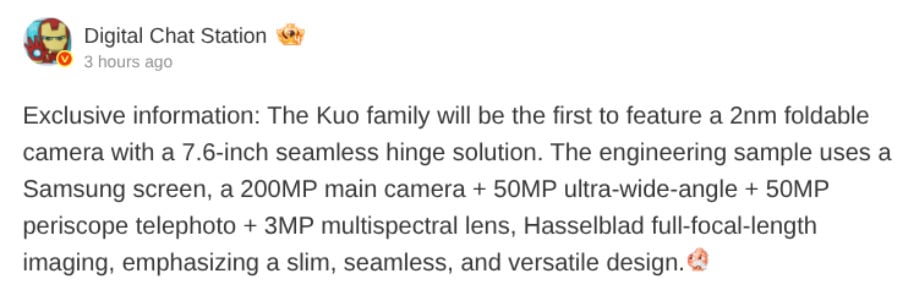
Prolific industry insider Digital Chat Station has shared fresh details about the Oppo Find N7, revealing its camera setup, inner display, and chipset. The new leak adds to earlier reports that suggest a wide design with a Q1 2027 launch and a 6,500mAh battery.

According to the tipster, the Find N7 will have four rear cameras: a 200MP main camera, a 50MP ultra-wide camera, a 50MP periscope telephoto camera, and a 3MP multispectral lens. Oppo calls the latter the Danxia Color Restoration Lens, and Hasselblad camera tuning is also reportedly part of the package.

The camera setup has some similarities to the current model. The Oppo Find N6 has a 200MP main camera along with Hasselblad support. The latest leak doesn’t reveal whether the Find N7 will use new sensors or retain some of the existing hardware, so it’s too early to tell how much the cameras have changed.

Oppo Find N7 Leak

Moreover, the engineering sample is said to have a 7.6-inch inner display supplied by Samsung. The tipster also mentions a seamless hinge and a slim, lightweight body, although no measurements are available yet. 

Oppo has already worked on reducing the visible crease in its foldables, introducing its crease-free display technology with the Find N6. The Find N7 is expected to build on that while adopting a wider form factor.

Another claim in the post is that the Find N7 will be the first foldable to combine a 2nm chipset with a 7.6-inch display and seamless hinge design. The tipster hasn’t named the processor, but earlier reports pointed to the Snapdragon 8 Elite Gen 6. The chipset’s 2nm manufacturing process fits the description.

What we still don’t know

The latest leak doesn’t mention the Find N7’s price, launch date, or battery capacity. Per previous reports, the device could launch in Q1 2027 with a 6,500mAh battery, but Oppo hasn’t confirmed either detail.

For now, all these specifications should be treated as unconfirmed. The phone is still at the engineering sample stage, meaning its hardware and design could change before launch.

Don’t miss a thing! Join our Telegram community for instant updates and grab our free daily newsletter for the best tech stories!

For more daily updates, please visit our News Section.

CMF Speaker S and CMF Speaker M design, features, and price leaks before launch

CMF has confirmed that the CMF Speaker S and CMF Speaker M will launch on Monday, October 12. The brand has shared very little about the two speakers so far, but a Sri Lankan retailer may have revealed most of them early. Both product pages are now live on the retailer’s website, showing the speakers’ designs and key specifications.

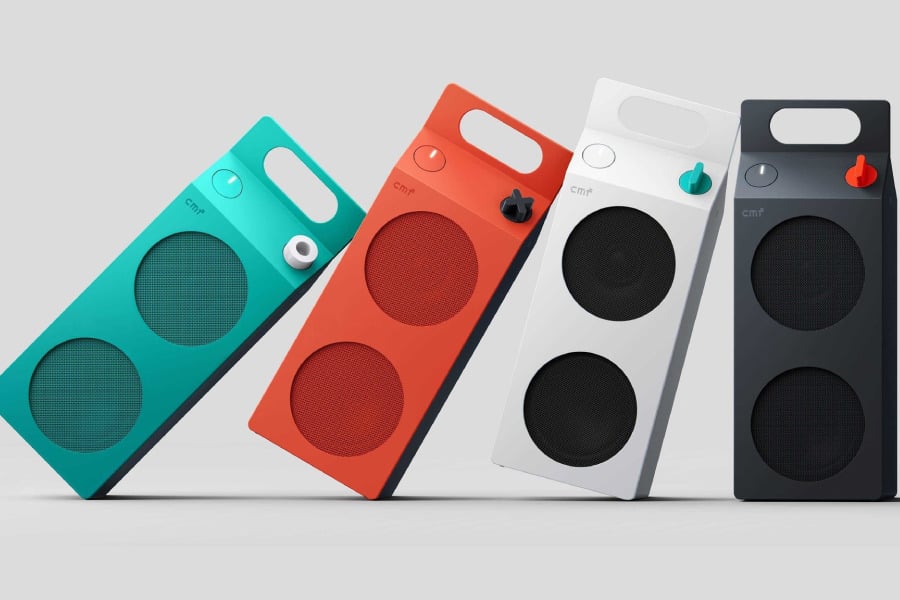
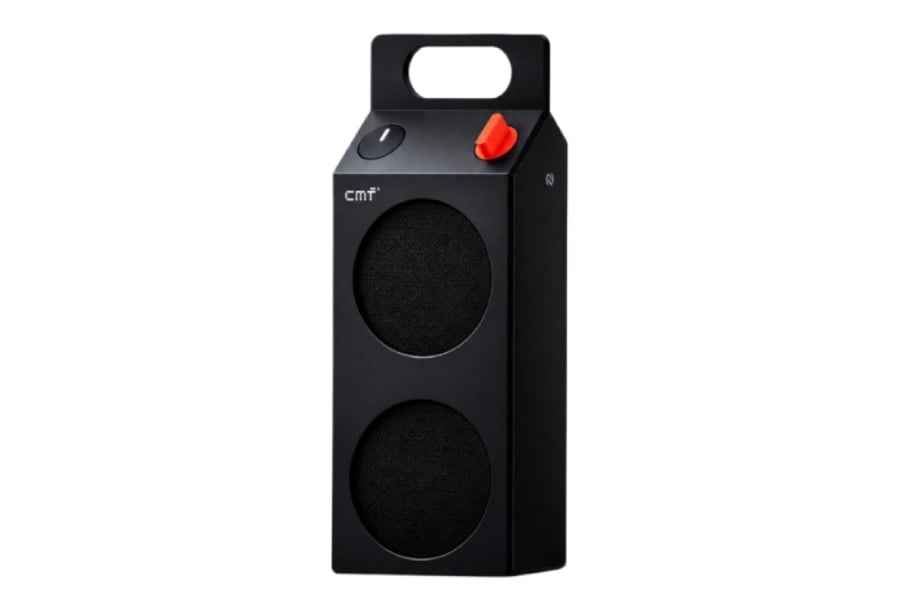
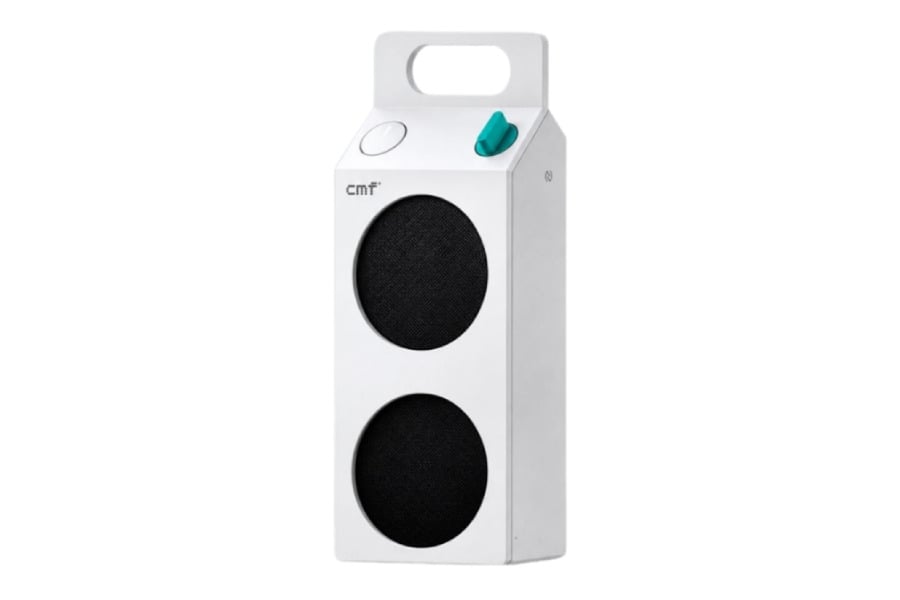
Both speakers copy the shape of a milk carton, with a gabled top and a carry handle built into it. The images show a matte black body, a CMF logo on the front, a small round button on top, and an orange knob beside the handle. 

The smaller CMF Speaker S has a single large round grille on the front. The CMF Speaker M is taller and has two grilles stacked on top of each other.

The retail listing confirms the CMF Speaker S comes in matte Carbon Black shade, while the CMF Speaker M is shown in Carbon Black and White. However, these may not be the only colors at launch. An X account shows the Speaker M in additional Blue and Orange shades too. 

The knob at the top looks like a relative of the rotating dial CMF has on its phones. The teaser also suggests the knob may be swappable, the way CMF Phone covers are, but none of the listings confirm that.

CMF Speaker S features

CMF Speaker S

You get Bluetooth 5.4, a 2,500mAh battery rated for up to 18 hours of playback, and a USB-C port for charging. The listing puts the weight at 580g. For audio, CMF uses a 40mm full-range driver together with a 50mm passive bass radiator, and the retailer quotes 12W RMS output with 360-degree sound. The CMF Speaker S also carries an IP54 rating, which covers splashes.

CMF Speaker M features

The CMF Speaker M is a 12W portable Bluetooth speaker with dual drivers and a bass boost. You get Bluetooth 5.4, 18 hours of battery life, IP54 splash resistance, and USB-C charging. The handle lets you carry it with one hand or hang it from a bag or hook. The orange volume knob works without an app, and the listing also mentions a low battery indicator. It doesn’t give the battery capacity or the weight.

Price and availability

Life Mobile lists both speakers as available for pre-order and delivery in three to five working days. The CMF Speaker S starts at LKR 26,500 (~ $80)and the CMF Speaker M at LKR 39,500 (~ $120). CMF will share the official details on Monday, and we’ll cover both speakers once they go official.

Don’t miss a thing! Join our Telegram community for instant updates and grab our free daily newsletter for the best tech stories!

For more daily updates, please visit our News Section.

(Sources 1, 2 | Via)

Huawei might be ready to give compact phones another chance

Compact phones like the iPhone mini series and Asus Zenfone 10 haven’t really worked out commercially, even though what they offered was flagship-level hardware. The Vivo X500 Pro is now closer to what passes for a compact phone, but it’s still a far cry from the smaller devices some buyers want.

Huawei, however, seems interested in giving the category another shot. According to tipster Digital Chat Station (DCS), the company is working on a smartphone with a 6.17-inch, 1.5K display. It won’t be as small as what the iPhone mini used to be, but it would still be smaller than most phones available today. The leak doesn’t name the device, and DCS notes that the details remain unconfirmed.

What the leak says

There isn’t much to go on yet. DCS says the information comes from early splash screen data, and Huawei’s product line for this phone is still unclear. Nothing in the leak points to a Nova, Pura, Mate, or an entirely new series.

DCS did give a rough timeline in the comments. If development goes well, he expects the phone to show up next year.

Huawei compact phone leak

The screen size is the main detail. At 6.17 inches, this panel is much smaller than what Huawei uses on its recent flagships. 

Why Huawei could be the one to try

Huawei has spent the last couple of years trying unusual form factors. The Pura X is a wide foldable that opens to a 6.3-inch, 16:10 screen, and you can read more about it in our Pura X coverage. It later followed up with the Pura X Max, a wider foldable with an inner screen of around 7.6 to 7.69 inches.

A 6.17-inch flat phone is a different product, but it points the same way. Huawei seems willing to build phones that don’t simply get bigger every year.

You shouldn’t read too much into this yet. The leak says nothing about the chipset, battery, cameras, or price, and those details decide whether a small phone works as a main device. We’ll update you more on this as more details come out.

Don’t miss a thing! Join our Telegram community for instant updates and grab our free daily newsletter for the best tech stories!

For more daily updates, please visit our News Section.

OnePlus 16 gets a “Mortal” animation gift box ahead of its October 12 launch

OnePlus confirmed last month that the OnePlus 16 will launch in China on October 12. The company has now announced a co-branded gift box for the phone, built around the animated series A Record of a Mortal’s Journey to Immortality. 

OnePlus 16 Mortal Animation Gift pack Announced

What’s in the gift box

The OnePlus 16 Mortal Animation co-branded gift box has five items, and all of them draw on the sword imagery from the series:

  • A rotatable metal sword array stand that holds your phone magnetically
  • A metal SIM card ejector tool styled as the “Green Bamboo Bee Cloud Sword”
  • A “Green Bamboo Bee Cloud Sword” magnetic protective case
  • A transparent postcard
  • A sliding fridge magnet

OnePlus 16 specs shared so far

The gift box is a side story to the phone itself. Here is what OnePlus has said about the OnePlus 16 so far. 

For performance, OnePlus is using the Snapdragon 8 Elite Extreme Gen 6 chip along with a new-generation Fengchi Gaming Kernel, which the company tuned for sustained gaming performance.

You get a fourth-generation Oriental display that OnePlus developed with BOE. It runs at up to 185Hz in supported games, and OnePlus says it holds 165Hz across the whole system for daily use.

The battery is a 9,000mAh Glacier Battery with 100W wired and 50W wireless charging.

On the camera side, you get a 200MP main camera with a 1/1.4-inch sensor, backed by OnePlus’ next-generation LUMO light-condensing imaging system. The telephoto lens moves to a Sony IMX882 sensor with 3x optical zoom, and OnePlus has already confirmed the camera hardware.

The phone also adds tri-frequency GPS and quad-frequency BeiDou for the first time.

OnePlus has already shown the OnePlus 16’s design, colors, and memory options. Pricing is still missing, and OnePlus has only confirmed the launch in China so far.

Don’t miss a thing! Join our Telegram community for instant updates and grab our free daily newsletter for the best tech stories!

For more daily updates, please visit our News Section.

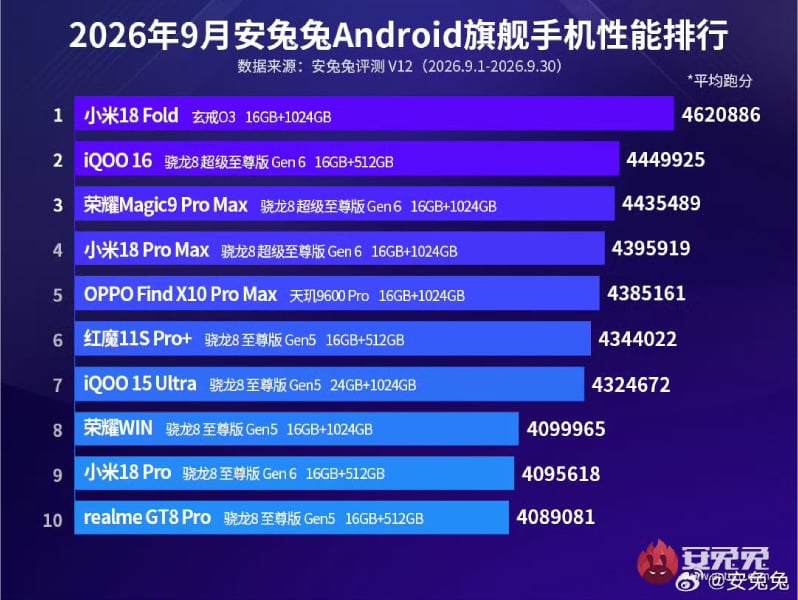
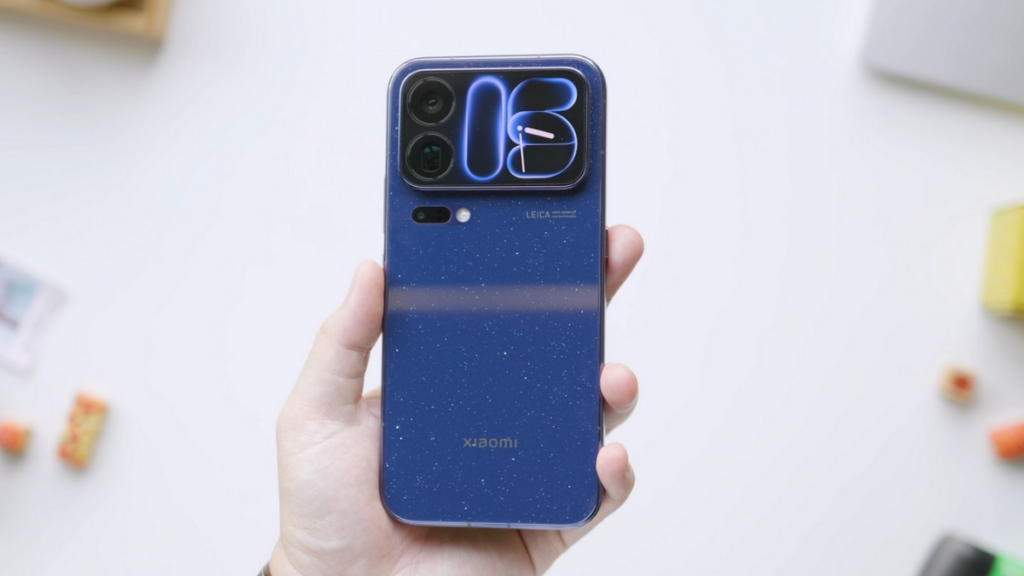
Xiaomi 18 Fold tops AnTuTu’s September Android flagship chart with XRING O3

AnTuTu has published its September 2026 Android flagship performance ranking, and to everyone’s surprise, the Xiaomi 18 Fold took first place with an average score of 4,620,886 points. It finishes ahead of every phone running Qualcomm’s new Snapdragon 8 Elite Extreme Gen 6 chip, as well as the one Dimensity 9600 Pro phone on the list.

The scores are averages collected between September 1 and September 30 using AnTuTu V12. The Xiaomi 18 Fold in the ranking is the 16GB RAM, 1TB storage model, and it runs Xiaomi’s XRING O3 chip.

The September top 10

The iQOO 16 comes second with 4,449,925 points. It uses the Snapdragon 8 Elite Extreme Gen 6 with 16GB of RAM and 512GB of storage, and it trails the Xiaomi 18 Fold by 170,961 points (about 3.7%).

The Honor Magic9 Pro Max follows in third with 4,435,489 points, and the Xiaomi 18 Pro Max takes fourth with 4,395,919 points. Both use the same Extreme Gen 6 chip with 16GB of RAM and 1TB of storage. The Oppo Find X10 Pro Max is fifth at 4,385,161 points, and it is the only MediaTek phone in the top 10 with its Dimensity 9600 Pro.

Xiaomi 18 Fold tops AnTuTu September Ranking 2026

Sixth place goes to the RedMagic 11S Pro+ at 4,344,022 points, which topped AnTuTu’s August flagship chart. The iQOO 15 Ultra is seventh with 4,324,672 points and the 24GB RAM and 1TB storage configuration. Both phones still run the Snapdragon 8 Elite Gen 5.

The chart drops off after that. The Honor WIN scores 4,099,965 points in eighth, the Xiaomi 18 Pro scores 4,095,618 points in ninth, and the Realme GT8 Pro closes out the list at 4,089,081 points.

The Xiaomi 18 Pro is the one phone here that uses the standard Snapdragon 8 Elite Gen 6 rather than the Extreme version. It scores about 300,000 points (roughly 7%) below the Xiaomi 18 Pro Max, which gives you a rough idea of what the Extreme variant adds in this benchmark.

What the Xiaomi 18 Fold offers

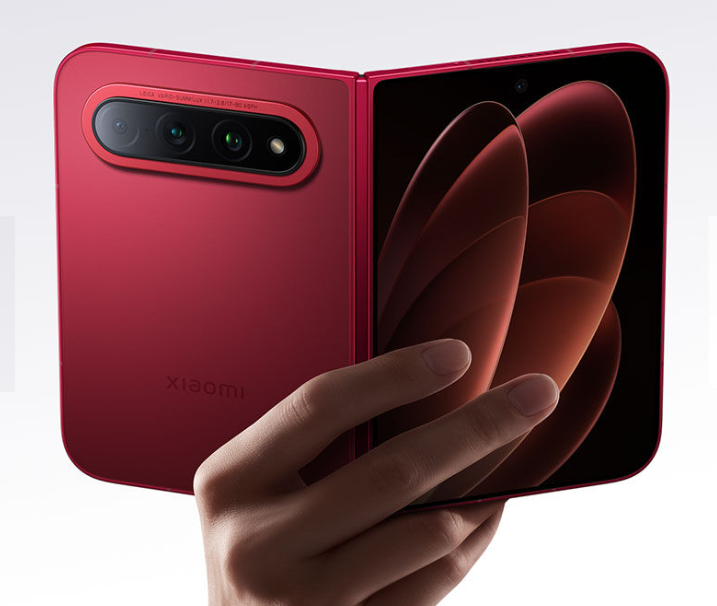
Xiaomi launched the Xiaomi 18 Fold on September 7 as the first phone to use the XRING O3. It is a mid-fold design with a 5.38-inch outer screen, a 7.58-inch inner screen, and a Leica triple rear camera.

The starting price is 10,999 yuan, which converts to roughly $1,639. The price covers the 12GB RAM and 256GB storage model, though. The 16GB and 1TB version that AnTuTu tested costs 14,999 yuan, or about $2,235, so you pay a lot more for the score you see on this chart.

Xiaomi 18 Fold
Xiaomi 18 Fold

The result also lands below the number Xiaomi quoted for the chip itself. The company claimed 5.22 million AnTuTu points for the XRING O3 when it announced the processor, while the Xiaomi 18 Fold averages 4.62 million across a full month of real-world runs.

Sales of the Xiaomi 18 Fold started in China on September 10, and Xiaomi appears to have no plans to sell it outside China for now. If you were hoping to buy one internationally, you will probably need to import it.

Don’t miss a thing! Join our Telegram community for instant updates and grab our free daily newsletter for the best tech stories!

For more daily updates, please visit our News Section.

Samsung could flip its advice on overheating Galaxy Buds

Samsung might be about to flip its long-standing advice on what to do when your Galaxy Buds get too hot, and it’s probably worth more attention than it first sounds. There was a widely reported case involving a Galaxy Buds FE that allegedly exploded while being worn, with the user claiming it caused permanent hearing loss. So changing the official advice on what to do when they heat up isn’t just a small software detail.

Black Samsung Galaxy Buds floating above their charging case against a gray background.

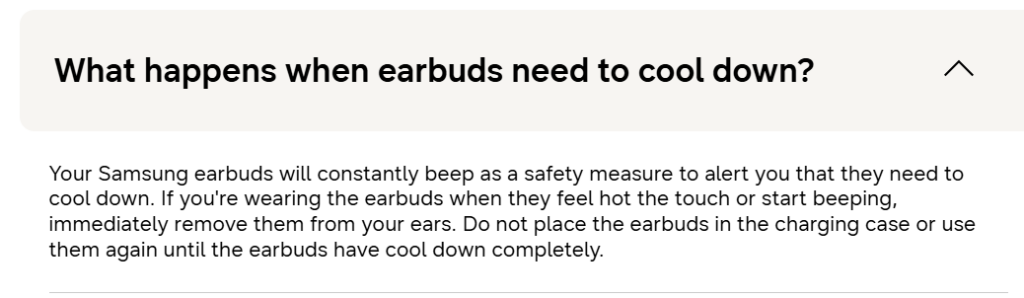
For years, Samsung’s official guidance has been: if the earbuds start overheating, take them out of your ears and let them cool down in an open space. Support pages specifically warn against putting hot buds back into the charging case, because the enclosed space can trap heat around the batteries and make things worse. While they’re overheating, the buds usually keep beeping as a warning and stay powered on.

Samsung support text explaining safety procedures for overheating Galaxy Buds earbuds.

But new code spotted in Galaxy Buds app version 9.0.10.1724 suggests a different approach. One of the messages says: “Your earbuds will be turned off for your safety. Put both earbuds in the case and wait. You can use your earbuds again when they cool down.”

That points to two possible changes. First, the buds may automatically shut themselves off when they get too hot instead of just beeping. Second, Samsung would actually tell users to put them back in the case while they cool down.

Some analysts think newer Galaxy Buds models might have better battery management that can cut off charging current during thermal events. If that’s the case, putting them in the case could become the safer option because it wouldn’t keep feeding power to overheated batteries.

Samsung hasn’t confirmed anything or updated its support pages yet. Until they do, the old advice is still the safest bet. If your Galaxy Buds feel unusually hot or start beeping, take them out right away and let them cool completely in an open area before using them again or putting them back in the case.

Don’t miss a thing! Join our Telegram community for instant updates and grab our free daily newsletter for the best tech stories!

For more daily updates, please visit our News Section.

(Source)

Samsung’s making no profit from its smartphone business despite strong sales, may cut production by up to 30%

Samsung smartphone business yields no profits

Samsung has posted strong smartphone sales numbers in the last few quarters, even beating Apple in the Q2 2026 to regain the top position, per data from Counterpoint research. That should mean strong profits, right? Well, not in this case, as it turns out the South Korean giant is reportedly making no profits from its smartphone business.

Even worse is that the current scenario is reportedly forcing Samsung to cut smartphone production by as much as 30%, and what’s to blame here: soaring prices of RAM and storage. The entire smartphone industry is feeling the pain because of the increasingly rising cost of components, and finding it difficult to maintain profitability.

According to a Money Today report, citing industry sources, the South Korean giant has asked its suppliers to reduce smartphone production by as much as 20–30% in Q4 of this year. According to the latest estimates, Samsung has had to pay around $145 per 12GB LPDDR5X RAM chip this year, which is nearly a 175% increase for that specific component compared to a year ago.

Prior to the cut in production, Samsung was planning to manufacture around 270 million smartphones this year, but now that figure could drop to somewhere around 200 million.

Samsung launched the Galaxy S26 series and Galaxy Z8 foldables with a higher price tag. Even after that, it increased the price of its latest flagships by up to $100. Older flagships and mid-range phones didn’t remain protected either. They have also faced sharp price rises in the recent past. Despite such price hikes, Samsung’s mobile division is struggling to make any profit.

Where to buySamsung Galaxy phonesBrowse the range on AmazonShop now →

Unfortunately, the struggle won’t end pretty soon, as DRAM prices for the third quarter are expected to rise another 20 percent and reach $180. This sharp rise in the component cost may be actually hurting the brand more to make more devices.

Samsung’s memory chip business is making record profits

Samsung’s mobile division reported the first-ever quarterly loss in its history in Q2 2026. The Device eXperience (DX) division reported a loss of around $544 million, with the mobile division alone accounting for about $476 million of that. Current market conditions suggest the mobile division will report even bigger losses in Q3 and Q4.

On the bright side, Samsung is generating record profits from its memory chip business. The DS Division, which is responsible for memory chips and semiconductors, delivered its biggest quarterly operating profit of KRW 53.7 trillion in Q1 2026.

In Q2 2026, the operating profit from the DS division rose sharply to a staggering KRW 89.2 trillion, surpassing NVIDIA to become the most profitable technology company in that quarter. For the third quarter, Samsung’s DS division is estimated to have exceeded an operating profit of over KRW 100 trillion.

We will keep you updated as new details emerge through our News section. Check back regularly for updates, or subscribe to our Telegram channel to get real-time alerts.

Xiaomi Smart Door Lock 5C (Cat Eye Edition) launches with 160° ultra-wide camera, 3.5-inch screen, 11 ways to unlock

Xiaomi just launched its newest smart door lock, the 5C Cat Eye Edition. It packs automatic locking, better security monitoring, and a bunch of unlocking options, and it’s landing at a pretty friendly price.

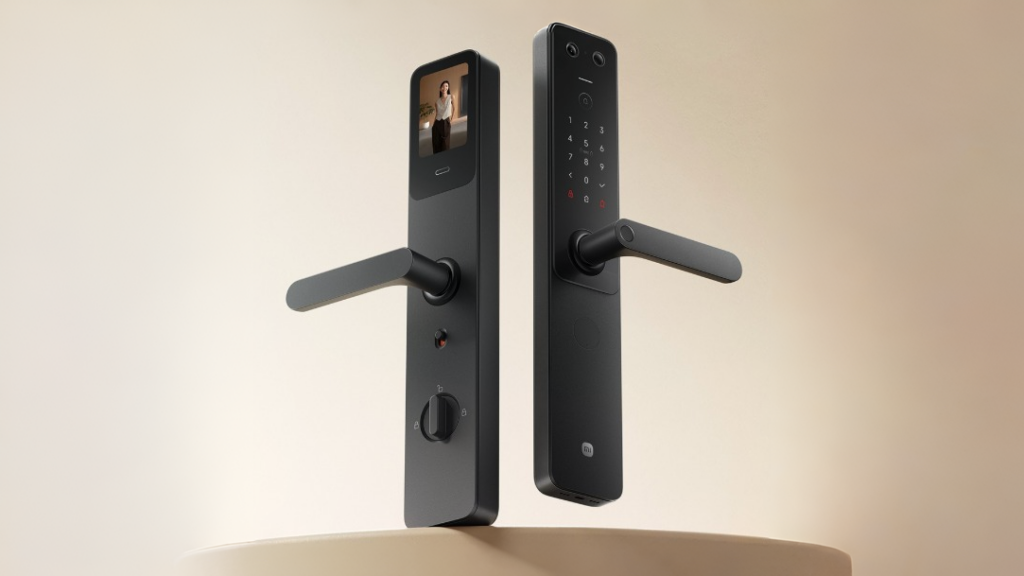
The Xiaomi Smart Door Lock 5C Cat Eye Edition features a sleek black design.

The biggest upgrade is the self-locking body. The moment the door closes, it locks itself automatically, with no need to lift the handle. It uses a built-in clutch and a through-type C-grade lock cylinder that’s designed to resist forced entry, like someone trying to remove the front panel or force the outer handle down. Sensors also watch for anything unusual and will sound an alarm if the door is left partly open.

Up front, there’s an AI smart peephole that actually does some of the watching for you. It can take snapshots or start real-time video when someone walks by or hangs around, and you can tweak the settings to cut down on false alerts.

Where to buyXiaomi smart door locksBrowse the range on AmazonShop now →

If someone covers the camera, it now detects that and triggers an alarm. The 1MP camera has a 160° ultra-wide lens, full-color night vision in low light, and switches to black-and-white when it’s completely dark. You also get three days of rolling cloud storage and can check the feed across multiple devices.

The Xiaomi Smart Door Lock 5C screen displays a person standing outside the door.

Inside, a 3.5-inch screen lets you see who’s outside without opening the door. When the doorbell rings, the screen turns on automatically, which is handy for older family members or kids. There’s also a voice-changing video intercom and remote unlocking through the Mi Home app, which is useful if you live alone or just want to keep an eye on things from anywhere.

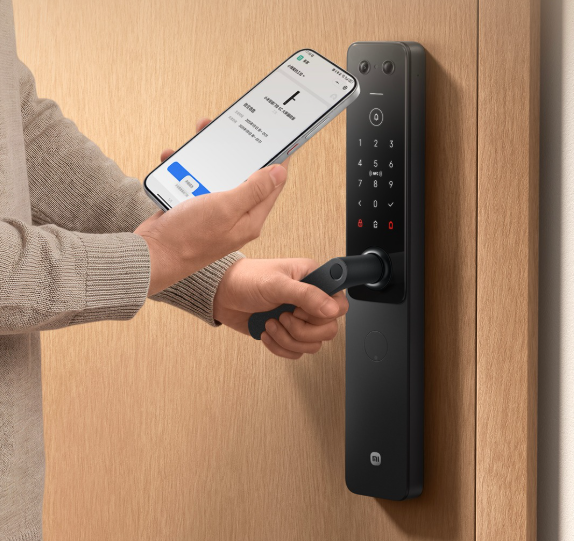
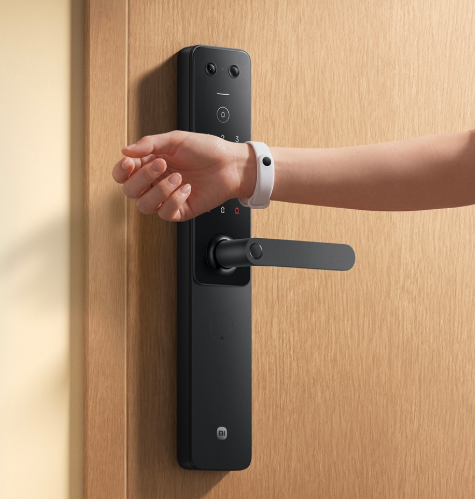
All in, there are up to 11 ways to unlock it: AI fingerprint, fixed or visitor passwords, WeChat mini program, Mi Home app (Bluetooth or remote), and a traditional mechanical key. You can also add Xiaomi phones, watches, bands, and NFC cards if you want. Power-wise, it runs on a dual system: a 5,000 mAh lithium-ion battery that lasts up to five months, plus four AA alkaline batteries that can last six months. It switches between them automatically, and there’s a Type-C port for emergency power from a power bank if needed.

It also works with Xiaomi’s ecosystem for deeper smart home automation.

Price and availability:

After national subsidies, the Xiaomi Smart Door Lock 5C (Cat Eye Edition) starts at 999.6 yuan (roughly $149) on JD.com, down from the regular 1,176 yuan (about $175). There is no official word or announcement from Xiaomi regarding the global availability as of writing.

Don’t miss a thing! Join our Telegram community for instant updates and grab our free daily newsletter for the best tech stories!

For more daily updates, please visit our News Section.

(Source: Xiaomi Youpin)

Samsung Galaxy Studio could be the name of it’s upcoming over-ear headphones

Samsung looks like it’s finally ready to jump back into the over-ear headphone market after more than a decade away. A fresh leak points to a new product called Galaxy Studio that’s expected to go head-to-head with Apple’s AirPods Max when it eventually shows up.

Two stylized icons of over-ear headphones displayed against a light blue background.

The name dropped on X on October 8 from tipster @evowizz. This isn’t one of the biggest names in the leak world, but the account did correctly call Samsung’s first clip-on earbuds as the Galaxy Buds On before they were officially announced.

Social media post from a tipster mentioning the upcoming Samsung Galaxy Studio headphones.

Samsung’s last real shot at mainstream over-ear headphones was the Level Over and Level On back in 2015. If Galaxy Studio is real, it’ll be the company’s first serious return to the category since then. Hints of the project actually started floating around in August 2026 through software code strings, internal codenames (including Galaxy H1), and graphics buried inside Samsung’s companion apps. Those early clues already pointed to a wireless over-ear design.

We still don’t have many solid details. What we do know is that these are expected to sit at the top of Samsung’s Galaxy audio lineup, which has mostly focused on in-ear and open-ear Buds so far. The “Studio” name suggests they’re aiming for higher-end sound and features to compete with the likes of Apple’s AirPods Max, Sony’s WH-1000XM series, and Bose’s QuietComfort line.

Some reports are floating the idea of an early 2027 debut, possibly alongside the Galaxy S27 series. One thing that feels pretty safe to expect is tight integration with the rest of the Galaxy ecosystem, including seamless pairing with phones, tablets, and other Samsung devices.

If the leak holds up, Galaxy Studio would give Samsung a proper full-size wireless option for longer listening sessions and expand its audio lineup beyond just earbuds.

Don’t miss a thing! Join our Telegram community for instant updates and grab our free daily newsletter for the best tech stories!

For more daily updates, please visit our News Section.

(Source)

Motorola Signature 27 showcased at India Mobile Congress with flagship upgrades

Motorola has offered a glimpse of its next-generation flagship smartphone at India Mobile Congress 2026. The device brings together premium hardware, advanced imaging, and a focus on long-term software support. It also highlights the company’s ambitions in the ultra-premium smartphone segment.

Motorola Signature 27’s key specifications

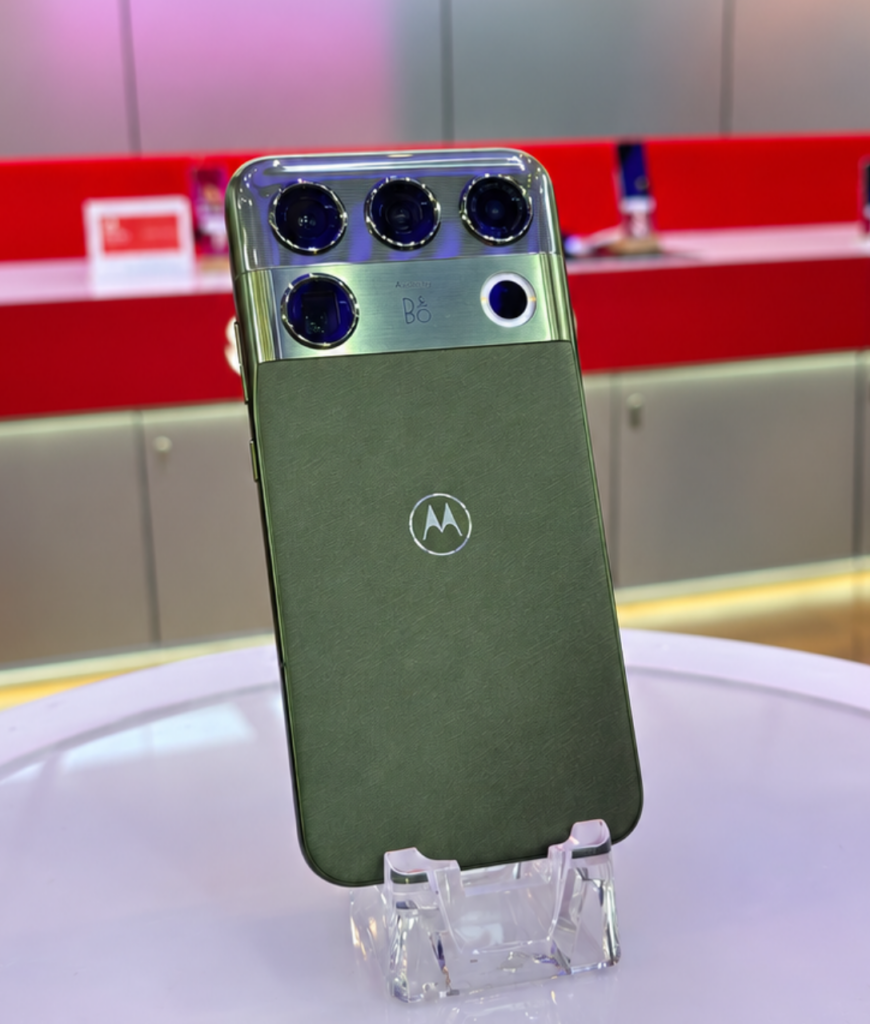
Motorola Signature 27 in real

The Signature 27 is among the world’s first smartphones powered by Qualcomm’s Snapdragon 8 Elite Extreme Gen 6 chip. Motorola has paired the chipset with its ArcticMesh Cooling System and a six-antenna setup designed to improve connectivity and network reception. These features aim to support demanding workloads, gaming, and multitasking while maintaining reliable wireless performance.

Imaging is another key focus, with a 50MP Sony LYTIA 910 main camera and a 200MP periscope telephoto lens. The camera system combines 3.5-axis optical image stabilisation, Qualcomm Electronic Image Stabilisation, and Motorola’s Video Enhancement Engine to improve image clarity, zoom photography, and video stability. The setup is designed to deliver consistent results across different shooting conditions.

Audio receives a premium treatment through a partnership with Bang & Olufsen, marking the first smartphone to feature Audio by Bang & Olufsen. The collaboration aims to deliver immersive sound for music, gaming, and video playback. On the software front, the phone runs Android 17 and integrates Google Gemini for AI-powered assistance. Motorola has also committed to seven years of operating system upgrades and seven years of Security Maintenance Release updates.

The Signature 27 will be available in PANTONE Coal Smoke and PANTONE Capulet Olive. Motorola showcased the device at India Mobile Congress 2026 in New Delhi on October 9, but has not yet announced its pricing, full specifications, or retail availability. The company says further details will be shared in the coming period.

For daily updates, please visit our News Section.

Stay ahead in tech! Join our Telegram community and sign up for our daily newsletter of top stories!

iQOO 16 could be first Snapdragon 8 Elite Extreme Gen 6 to launch outside China

iQOO has confirmed plans to bring its next flagship smartphone to India. The announcement was made at a major mobile technology event in New Delhi. It signals the brand’s next step in the premium smartphone segment.

iQOO 16 announced in India with Snapdragon 8 Elite Extreme Gen 6

iQOO 16 coming soon to India

At India Mobile Congress (IMC) 2026, iQOO confirmed that the iQOO 16 is headed to the Indian market. The phone will run on Qualcomm’s new Snapdragon 8 Elite Extreme Gen 6 Mobile Platform, which is built using a 2nm manufacturing process.

If it launches in India before the chipset-powered phone arrives in other international markets, the iQOO 16 could become the first device with this processor to debut outside China. Recently, the global / Indian version of the device was spotted on Geekbench with the said chipset.

The move also extends iQOO’s collaboration with Qualcomm, with the two companies focusing on bringing newer mobile technologies to consumers. The 2nm process is designed to improve processing performance and power efficiency, potentially helping the phone handle demanding workloads while managing energy consumption more effectively. However, iQOO has not shared benchmark figures or detailed performance comparisons yet.

The iQOO 16 will ship with OriginOS 7 out of the box. The software is expected to deliver a smoother and more intuitive experience, although iQOO has yet to detail its specific features for the upcoming phone.

The Snapdragon platform also includes Qualcomm’s next-generation Hexagon NPU, which is designed to accelerate on-device AI tasks. This could support smarter software features, alongside improvements in imaging and connectivity. iQOO has not yet revealed the phone’s camera hardware, display specifications, battery capacity, and charging speeds. But these specs should be identical to the iQOO 16, which debuted last month in China.

For daily updates, please visit our News Section.

Stay ahead in tech! Join our Telegram community and sign up for our daily newsletter of top stories!

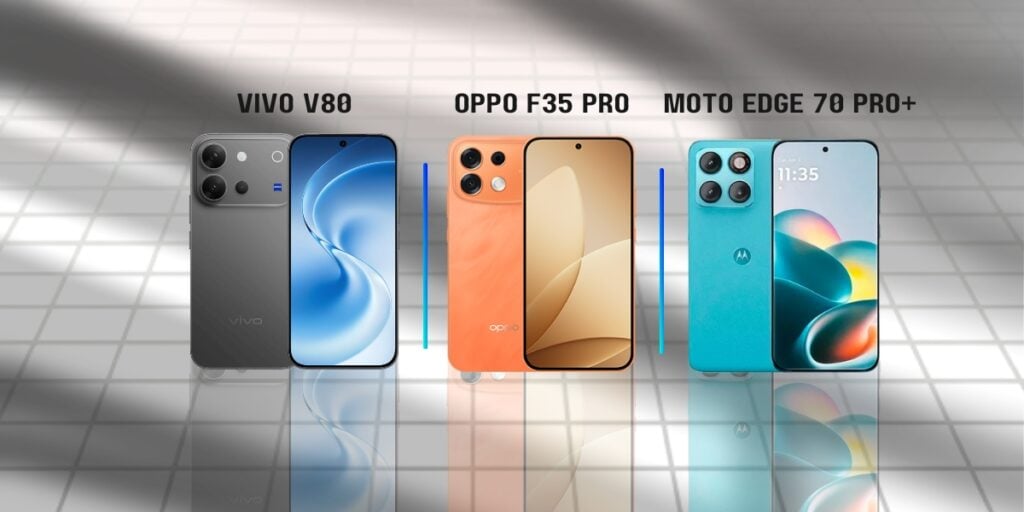
Vivo V80 vs Oppo F35 Pro 5G vs Motorola Edge 70 Pro+: Which phone offers better value?

Vivo raised the price of its V-series phones with the launch of the Vivo V80 in India. The phone starts at Rs 62,999 for the 8GB + 128GB model, while the 8GB + 256GB variant costs Rs 69,999. For comparison, the Vivo V70 launched at Rs 45,999 for the same 8GB + 256GB configuration, making the new model Rs 24,000 more expensive.

The price gap also changes where the V-series sits in the market. Vivo’s V-series has traditionally competed with Oppo’s F-series, but the V80’s pricing puts it closer to Oppo’s Reno lineup, as we discussed in our Oppo Reno 16 vs Vivo V70 comparison.

So, what does the extra money get you, and if we were to compare, how does the V80 compete with its old rival, Oppo F-series? To find out, we’re comparing it with the recently launched Oppo F35 Pro while also bringing the Motorola Edge 70 Pro+ into the mix. The latter two sit in a similar price segment.

Vivo V80 vs Oppo F35 Pro vs Motorola Edge 70 Pro Plus

1. Price in India

PhoneVariantLaunch price
Vivo V808GB + 128GBRs 62,999
Vivo V808GB + 256GBRs 69,999
Vivo V808GB + 512GBRs 79,999
Oppo F35 Pro 5G6GB + 128GBRs 45,999
Oppo F35 Pro 5G8GB + 128GBRs 49,999
Oppo F35 Pro 5G8GB + 256GBRs 54,999
Motorola Edge 70 Pro+12GB + 256GBRs 47,999

Vivo is offering up to 10% instant cashback or an exchange bonus, depending on the retailer and payment method. Buyers also get Google One cloud storage at no extra cost, along with discounted V-Shield protection and extended warranty plans. Even with the full 10% discount, the base V80 costs around Rs 56,700.

Motorola lists an effective price of Rs 44,999 for the Edge 70 Pro+ after applicable offers. The Oppo F35 Pro 5G goes on sale on October 11 through Oppo’s stores, Flipkart, and Amazon. The Vivo V80 follows on October 13 through Vivo’s online store, Amazon, Flipkart, and retail outlets. Motorola’s phone has been available since June 11.

2. Design and display

The Motorola Edge 70 Pro+ is the thinnest and lightest of the three at 7.19mm thickness and 190g weight. It has a 6.8-inch AMOLED display with a 2772 x 1272 resolution, a 144Hz refresh rate and up to 5,200 nits of peak brightness. Its screen also supports HDR10+, 10-bit colour and 100% DCI-P3 coverage.

The Vivo V80 uses a smaller 6.59-inch AMOLED panel with a 2750 x 1260 resolution and a 144Hz refresh rate. It reaches 5,000 nits of local peak brightness and supports HDR10+, 4320Hz PWM dimming, and up to 1 nit of minimum brightness. However, the 144Hz refresh rate is available only in selected apps.

Oppo’s F35 Pro 5G sits between the other two in screen size, with a 6.77-inch AMOLED panel offering a 2772 x 1272 resolution and a maximum 144Hz refresh rate. Its peak brightness is rated at 3,600 nits, below the other two phones, but you’re unlikely to see a difference. 

As for the build, the Edge 70 Pro Plus has a plastic frame, a Gorilla Glass 7i front, and three back finishes inspired by silk, twill and wood. The Vivo V80 has a glass back and includes a charger, case, and pre-applied screen protector in the box. Meanwhile, Oppo uses an aluminium alloy frame and a thicker body, measuring 8.4mm and weighing 210g.

Where to buyOppo F35 Pro 5GLatest price on AmazonCheck price →

3. Cameras

The camera is probably where the three phones differ the most. The Vivo V80 has three ZEISS-tuned rear cameras, including a 50MP Sony LYTIA 700V main sensor with optical image stabilisation (OIS) and a 50MP Sony IMX882 telephoto camera with 3x optical zoom. An 8MP ultrawide camera completes the setup. The telephoto camera also supports portrait photography with 85mm and 100mm framing options.

Its front camera is a 50MP unit with autofocus and a 92-degree field of view. The phone records 4K video at 60fps and includes cinematic colour styles, AI lighting effects, and portrait tools.

The Motorola Edge 70 Pro+ also has three 50MP rear cameras, but its telephoto camera offers 3.5x optical zoom through a periscope lens. Its 50MP ultrawide camera has a 122-degree field of view, compared with the 8MP ultrawide sensors on the Vivo and Oppo. Motorola also supports 4K video recording at 60fps with HDR10+, along with slow-motion recording at 4K and 120fps.

Where to buyVivo V80Latest price on AmazonCheck price →

The Oppo F35 Pro hones a 50MP main camera with OIS and an 8MP ultrawide camera. It has no telephoto lens, although its 50MP front camera offers a wider 100-degree field of view than the Vivo’s selfie camera. Both front and rear cameras support 4K recording at 30fps.

So in the end, Vivo and Motorola have the advantage in zoom photography and higher-frame-rate 4K video. 

4. Performance and battery life

Now, when it comes to raw power, Motorola has the strongest hardware on paper. The Edge 70 Pro+ runs on the MediaTek Dimensity 8500 Extreme, paired with 12GB of LPDDR5X RAM and UFS 4.1 storage. It also has a 4,600 mm² vapour chamber for cooling.

The Vivo V80 uses Qualcomm’s Snapdragon 7 Gen 4 with 8GB of LPDDR4X RAM and UFS 3.1 storage. Oppo’s F35 Pro 5G runs on the Dimensity 7360 Max, also with LPDDR4X RAM and UFS 3.1 storage. Both phones lack a memory card slot.

Battery capacity favours Oppo, whose phone packs an 8,000mAh battery and supports 80W wired charging. Vivo has a 7,200mAh battery with 90W charging, while Motorola uses a smaller 6,500mAh silicon-carbon battery with 90W wired and 15W wireless charging. Motorola also supports reverse wireless charging.

The three manufacturers use different testing methods for their battery-life claims, so their advertised endurance figures are not directly comparable. Still, Oppo has the largest battery, while Motorola is the only one here with wireless charging.

5. Software, durability and connectivity

The Vivo V80 ships with OriginOS 7 based on Android 17, and Vivo promises up to six years of security updates. Oppo’s F35 Pro 5G runs ColorOS 16.5, with three Android version upgrades and four years of security patches. Motorola ships the Edge 70 Pro+ with Android 16, three OS upgrades and five years of security updates.

All three phones have extensive water and dust resistance ratings. The Oppo carries IP66, IP68, IP69, and IP69K ratings, while Vivo has IP68 and IP69 protection. Motorola combines IP68 and IP69 ratings with MIL-STD-810H certification. These ratings do not make the phones immune to water damage, and none of the three warranties covers liquid damage.

Connectivity gives Motorola another advantage, with NFC, Wi-Fi 6E support listed on its specifications sheet, Bluetooth 5.4, and wireless audio support. Vivo also includes NFC, an infrared blaster, and stereo speakers. Oppo supports Wi-Fi 6 and an infrared remote but lacks NFC, which may matter to people who use contactless payments.

6. Which phone should you buy?

The Motorola Edge 70 Pro+ looks like the strongest overall value at Rs 47,999, or Rs 44,999 with offers. It combines the fastest chipset, 12GB of faster RAM, UFS 4.1 storage, a periscope telephoto camera, a 50MP ultrawide sensor, and wireless charging. Its smaller battery and plastic frame are the main trade-offs.

The Oppo F35 Pro 5G is the more affordable choice, starting at Rs 45,999. Its 8,000mAh battery, wide selfie camera, and extensive durability ratings make it worth considering, although the lack of a telephoto camera and NFC limits its appeal.

The Vivo V80 has a capable ZEISS-tuned camera system, a bright 144Hz display, 4K recording at 60fps, and a longer promised security-support period. However, its starting price of Rs 62,999 and top price of Rs 79,999 put it well above the other two. 

Based on the specifications alone, the Motorola offers more hardware for the money, while the Oppo is a better fit for buyers who want a large battery without spending as much. The Vivo’s higher price is harder to justify unless its camera experience and software features prove worth the extra cost in real-world use.

For more daily updates, please visit our News Section.

Stay ahead in tech! Join our Telegram community and sign up for our daily newsletter of top stories!

Alleged OnePlus Ace 7 spotted for the first time, chipset, RAM, and OS revealed

In the coming week, OnePlus will unveil the OnePlus 16, equipped with the Snapdragon 8 Elite Extreme Gen 6 chip, in China. Apart from the OP16, the brand is also said to be working on the Ace 7 series, which may include multiple models, such as the Ace 7, Ace 7T, and Ace 7 Ultra. Now, a mysterious OnePlus flagship phone has surfaced on the Geekbench benchmarking platform. In all likelihood, it could be the forthcoming Ace 7.

Purported OnePlus Ace 7 Geekbench listing

OnePlus PMS110 Geekbench
OnePlus PMS110 Geekbench listing

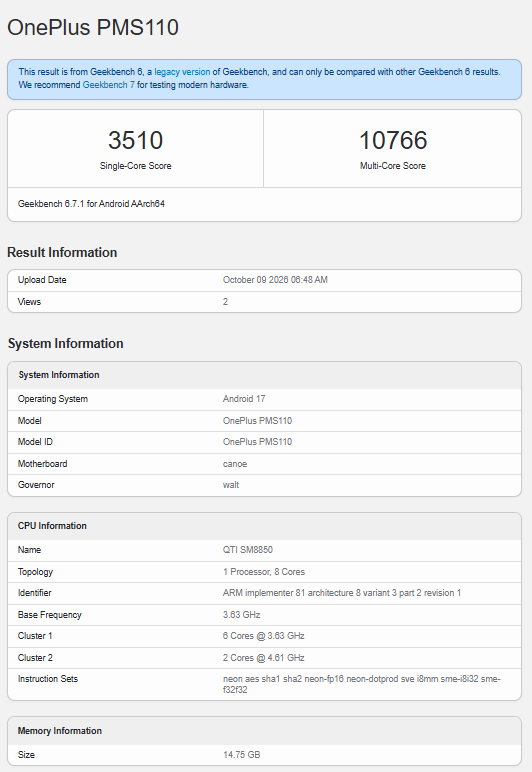
As can be seen above, a forthcoming OnePlus phone bearing the model number PMS110 has surfaced on Geekbench. The device is powered by Qualcomm’s SM8850 chip, which is none other than the existing Snapdragon 8 Elite Gen 5 chipset.

Recent reports have claimed that the upcoming OnePlus Ace 7 may feature the Snapdragon 8 Elite Gen 5. Hence, it appears that the new Geekbench listing may belong to the Ace 7.

Coming back to the Geekbench listing, it further reveals that the device could be equipped with 16GB of RAM. It runs Android 17, which is very likely to have the latest ColorOS 17 skin on top. The device scored 3,510 points in the single-core test and 10,766 points in the multi-core test of Geekbench 6.

OnePlus Ace 7 specifications (rumored)

A recent leak by tipster Digital Chat Station revealed that the device could feature a 6.78-inch OLED panel offering a 1.5K resolution and a 185Hz refresh rate. The device may ship with up to 16GB of RAM and 1TB of storage. There’s a possibility that it may house a 9,000mAh battery with 100W or 120W fast charging support.

On the front, it may feature a 16-megapixel selfie camera, while the back panel may house a 200-megapixel + 50-megapixel dual-camera setup. The device is also expected to feature a built-in cooling fan.

For daily updates, please visit our News Section.

Stay ahead in tech! Join our Telegram community and sign up for our daily newsletter of top stories!

OnePlus 16 teaser reveals list of games with native 185fps support

OnePlus is going all-in on high-frame-rate gaming with the upcoming OnePlus 16. The company just confirmed that the phone will support native 185FPS in a bunch of popular mobile titles, which should make it an appealing option for competitive players when it drops on October 12.

OnePlus 16

According to OnePlus, you’ll get that 185FPS mode right away in games like Peacekeeper Elite (the Chinese version of PUBG Mobile), Delta Force, Dark Zone (Arena Breakout), CrossFire: Mobile, Counter-Strike Online: Future, and Lost Light (international version of Firefly Assault).

OnePlus promotional graphic showcasing six mobile games that support native 185FPS high frame rates.

They’re also planning to roll it out later to a longer list that includes Naruto, Hearthstone, Minecraft, Plants vs. Zombies 2, Carrot Fantasy, Clash of Clans, Hatsune Miku: Colorful Stage, Rhythm Master, Temple Run, Legends of the Three Kingdoms, and Subway Surfers.

OnePlus 16 promotional graphic showcasing various mobile games supporting native 185fps high frame rates.

Under the hood, the OnePlus 16 is set to be one of the first phones with Qualcomm’s Snapdragon 8 Elite Extreme Gen 6 chip. It’ll come in three colors: Starlight, Dark Forest, and Martian Masterpiece. Design-wise, it’s going for that ultra-narrow equal bezel look on all four sides with big rounded corners, so it should feel like a proper flat-screen phone that’s still comfortable to hold.

One of the cooler extras is the “Interstellar Light Effect.” It lights up for incoming calls, notifications, music, charging, and gaming.

The phone has already cleared China’s 3C certification under the model number PYB110, which confirms 100W wired charging. It’ll also be the first OnePlus phone to ship with ColorOS 17, bringing a system-wide 165Hz refresh rate for the first time (which goes up to 185Hz in gaming mode).

All of this continues OnePlus’s recent push toward sustained high frame rates and smarter resource management. From what’s out so far, it’s pretty clear the OnePlus 16 is aimed at people who care most about smooth competitive gameplay.

(Source: OnePlus on Weibo)

32 new HyperOS builds rolls out to Xiaomi devices after a week of pause

Xiaomi 18 Pro Max running HyperOS 4 software

There was very little HyperOS activity last week as the core team in China was on leave to celebrate the annual National Day holiday, commonly known as Golden Week. Although time off was limited to the domestic team, it temporarily stalled the global rollout pipeline as well. Now that Xiaomi has resumed HyperOS update activity, dozens of new HyperOS builds have started to appear online.

The team at Ximitime have spotted 32 new HyperOS builds rolling out to Xiaomi devices, with 26 of them targeting the September 2026 security patch, while the remaining six builds carry an older August security patch.

These new builds are based on HyperOS 3, which is rolling out to a range of devices, including the Xiaomi 14 Ultra, POCO F6 Pro, Xiaomi 12T Pro, Redmi K60 Ultra, and more.

New HyperOS builds with the September 2026 security patch:

  • Redmi K50 Ultra / Xiaomi 12T Pro (EEA) — OS3.0.6.0.VLFEUXM
  • Redmi K50 Ultra / Xiaomi 12T Pro (Global) — OS3.0.7.0.VLFMIXM
  • Redmi Note 14 Pro 4G (Russia) — OS3.0.303.0.WOFRUXM
  • Redmi Note 14 Pro 4G (Turkey) — OS3.0.303.0.WOFTRXM
  • Redmi Note 14 Pro 4G (Global) — OS3.0.305.0.WOFMIXM
  • POCO M7 4G / REDMI 15 4G — OS3.0.303.0.WBORUXM
  • REDMI Note 15 Pro 4G — OS3.0.304.0.WPFMIXM
  • POCO C65 / REDMI 13C — OS2.0.212.0.VGPEUXM
  • Redmi Pad Pro 5G — OS3.0.303.0.WFSEUXM
  • POCO C81 / REDMI A7 Pro — OS3.0.13.0.WBVMIXM
  • POCO Pad / Redmi Pad Pro — OS3.0.304.0.WNSTRXM
  • POCO F7 Ultra / REDMI K80 Pro — OS3.0.305.0.WOMCNXM
  • Redmi Note 12 NFC 4G — OS2.0.215.0.VMGEUXM
  • POCO F6 Pro / Redmi K70 — OS3.0.303.0.WNKEUXM
  • POCO F7 Pro / REDMI K80 — OS3.0.303.0.WOKIDXM
  • POCO F7 Pro / REDMI K80 — OS3.0.303.0.WOKRUXM
  • POCO F7 Pro / REDMI K80 — OS3.0.303.0.WOKTWXM
  • POCO F7 Pro / REDMI K80 — OS3.0.303.0.WOKEUXM
  • POCO C85 4G / REDMI 15C 4G — OS3.0.302.0.WBNIDXM
  • Redmi K60 Ultra / Xiaomi 13T Pro — OS3.0.302.0.WMLMIXM
  • Redmi Pad SE 8.7 Wi-Fi — OS3.0.303.0.WHXEUXM
  • POCO X7 / Redmi Note 14 Pro — OS3.0.303.0.WOOEUXM
  • POCO M8 5G / REDMI Note 15 5G — OS3.0.304.0.WPQMIXM
  • Redmi Pad SE 8.7 Wi-Fi — OS3.0.303.0.WHXMIXM
  • Redmi K60 Ultra / Xiaomi 13T Pro — OS3.0.305.0.WMLCNXM
  • Redmi Note 14 4G — OS3.0.305.0.WOGMIXM

Several devices are getting the older August 2026 security patch, including the POCO X7, Redmi 14R 5G, Xiaomi 13 Ultra, and more. Here’s a list of such devices along with the new build version:

  • POCO X7 / Redmi Note 14 Pro — OS3.0.308.0.WOOCNXM
  • POCO M7 5G / Redmi 14R 5G — OS3.0.303.0.WGUCNXM
  • POCO C95 Pro / REDMI 17 4G — OS3.0.303.0.WDTTWXM
  • POCO C95 Pro / REDMI 17 4G — OS3.0.305.0.WDTRUXM
  • Xiaomi 14 Ultra — OS3.0.308.0.WNACNXM
  • Xiaomi 13 Ultra — OS3.0.308.0.WMACNXM

Unfortunately, we don’t have a changelog for any of these devices, but users shouldn’t expect much beyond standard security patches, minor bug fixes, and general stability improvements.

While it’s a small security update, it addresses dozens of security vulnerabilities that could otherwise be harmful for your data saved on the device. Check manually for the latest updates by going to Settings > About phone and tap the HyperOS logo if you haven’t received an update notification yet.

On the more brighter side, Xiaomi has already begun rolling out a major HyperOS 4 update, based on Android 17. The software introduces plenty of visual upgrades, new features, and a more powerful AI experience. The stable rollout is currently limited to China, but expect to see it expanding to global markets pretty soon.

We’ll continue tracking all upcoming HyperOS builds right here in our News section. Be sure to check back regularly, or join our Telegram channel for instant alerts.

iPhone Air 2 tipped to get thinner while packing a bigger battery

A new supply-chain leak suggests Apple is tweaking its ultra-thin iPhone Air for a second generation that aims to look even sleeker while fixing one of the first model’s biggest complaints.

Close-up view of the dual camera module on a purple iPhone Air 2.

According to Korean tipster yeux1122 on the Naver forum, the iPhone Air 2 is expected to come in at around 5.2 mm thick. That’s 0.4 mm thinner than the original’s 5.6 mm.

Normally you’d expect a thinner body to mean a smaller battery, but Apple is reportedly working on higher-energy-density cells that could actually push capacity past the first Air’s 3,149 mAh. Some earlier rumors floated a number closer to 3,500 mAh, which would hopefully translate to better real-world battery life.

The titanium frame that made the first Air feel so light is expected to stick around. The phone is also said to pick up the smaller Dynamic Island matching the iPhone 18 Pro models, which would free up a little more screen space.

The original Air’s single rear lens got a lot of flak. Leaks now point to a dual setup: a 48MP ultra-wide sitting next to a 48MP main sensor. That should give people more options for landscapes, group shots, and general creative shots.

Inside, the Air 2 is expected to pack the same A20 Pro chip that’s lined up for the iPhone 18 Pro models, plus an upgraded N2 wireless chip and Apple’s custom C2 baseband. Those pieces are supposed to work together to keep power consumption and heat under control.

All of this is still just rumor territory, so things could change. The iPhone Air 2 is widely expected to land in spring 2027 alongside the regular iPhone 18 and the more affordable iPhone 18e. It looks like Apple is focused on polishing the ultra-thin idea rather than just repeating the first generation’s compromises.

Don’t miss a thing! Join our Telegram community for instant updates and grab our free daily newsletter for the best tech stories!

For more daily updates, please visit our News Section.

(Source: yeux1122)

OnePlus 16 confirmed with a 9,000mAh battery, the largest on a OnePlus flagship

OnePlus is all set to launch the OnePlus 16 on Monday, October 12, in China. Ahead of the launch, the brand has shared several details about its display and performance. However, one key detail that remained unconfirmed was the battery capacity, which OnePlus has now officially revealed.

OnePlus 16: 9,000mAh battery and charging technology

OnePlus 16 to pack 9,000mAh battery

The OnePlus 16 will feature a 9,000mAh Glacier Battery, making it the largest battery fitted to a OnePlus flagship to date. The company has also confirmed that the phone uses Oppo’s proprietary Glacier Battery Power Chip, designed to improve energy management and extend battery life.

OnePlus claims the combination delivers longer endurance than other batteries of the same capacity, maintains stable performance even at low charge levels and keeps the battery healthy for up to five years. The 3C certification has already revealed support for 100W fast charging, and it is also expected to support 50W wireless charging.

Earlier today, OnePlus confirmed that the OnePlus 16 will feature a fourth-generation BOE Oriental Screen using custom X4 luminescent material. The display supports a system-wide refresh rate of 165Hz and up to 185Hz in compatible games. It also offers hardware-level brightness as low as 1 nit, an updated P4 display processor and Ultra-Dynamic Clarity Technology for sharper motion. The phone is expected to feature symmetrical 1.15mm bezels on all four sides.

Performance is another key focus, with the OnePlus 16 tipped to use Qualcomm’s Snapdragon 8 Elite Extreme Gen 6 chipset. The brand has confirmed that the device will ship with up to 16GB of LPDDR5X RAM and 1TB of UFS 4.1 storage, while the phone is expected to run Android 17-based ColorOS 17.

On the photography front, the OnePlus 16 will have a 200-megapixel main camera with OIS, accompanied by a 50-megapixel ultra-wide sensor and a 50-megapixel periscope telephoto camera with 3x optical zoom.

For daily updates, please visit our News Section.

Stay ahead in tech! Join our Telegram community and sign up for our daily newsletter of top stories!