Advertisement

Oppo Find X7, Find X7 Ultra launch date, configurations, color options officially confirmed

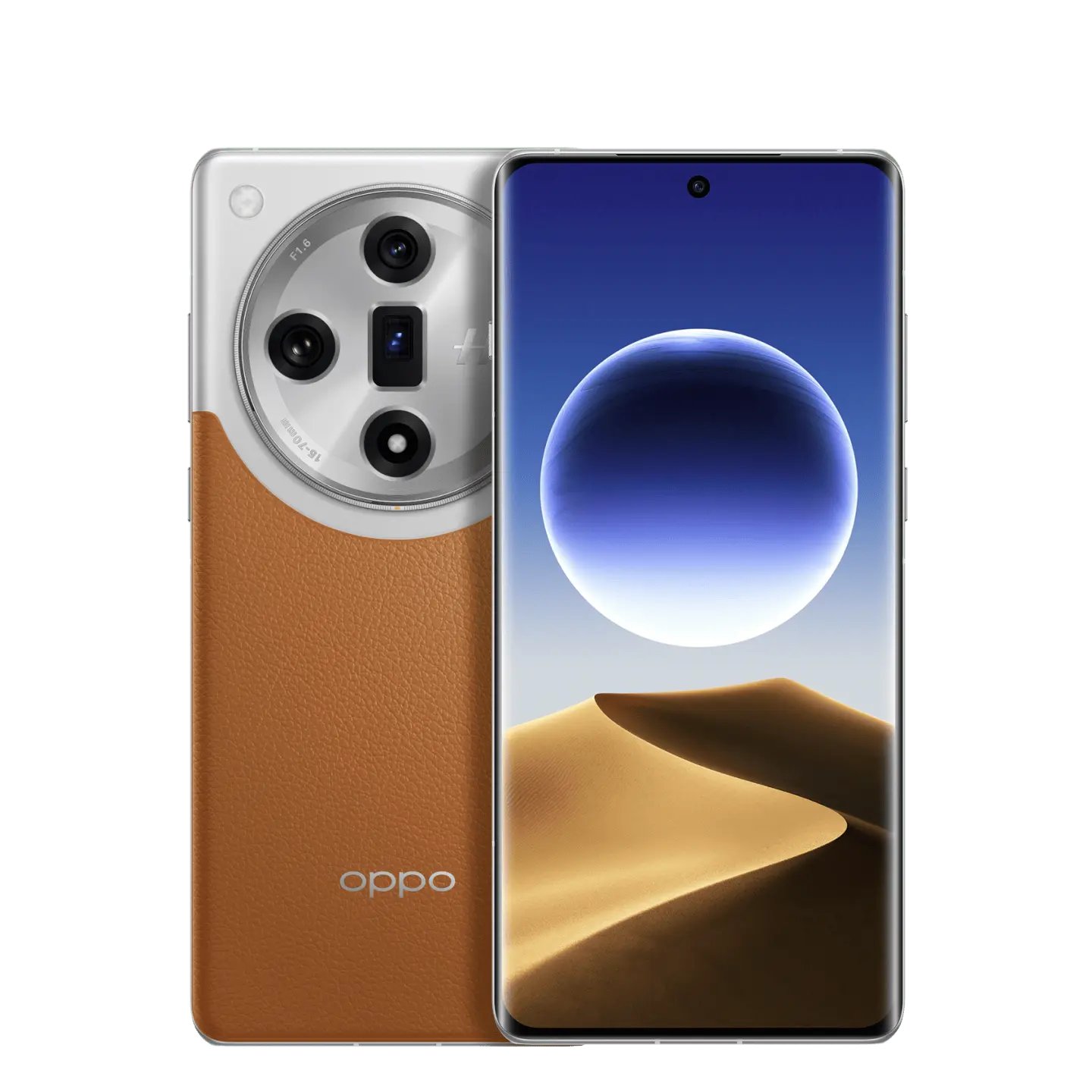
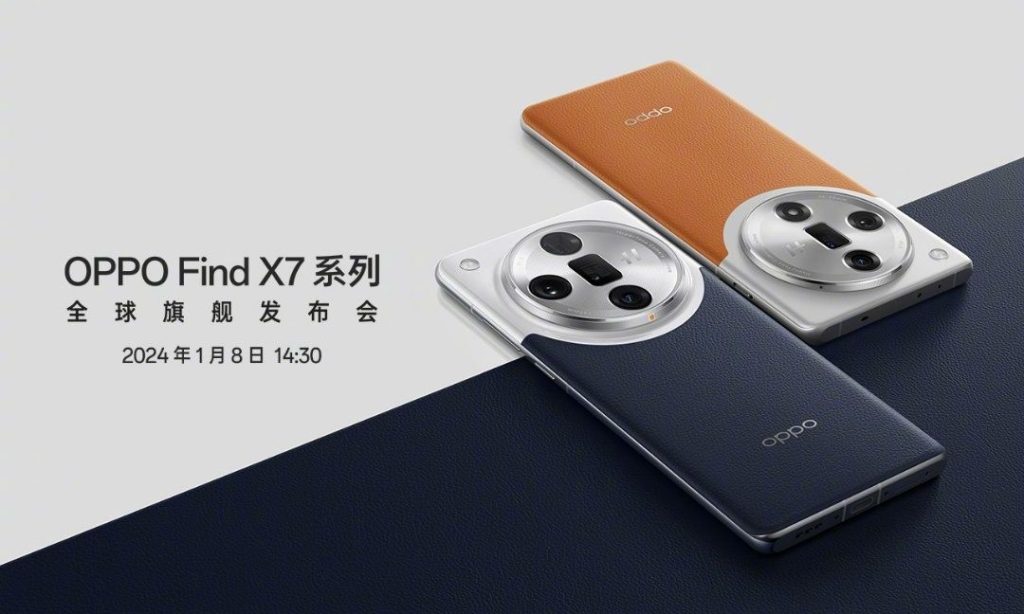
Oppo has officially confirmed that it will unveil the Find X7 series of smartphones at 2:30 pm (local time) on Jan. 8, 2024, in China. In addition, the Find X7 and Find X7 Ultra smartphones are now listed on Oppo China’s online store for reservations. The official listings have confirmed the configurations and color options of both smartphones well ahead of the official announcement.
Oppo Find X7 series launch date-
Oppo Find X7 series launch date

Oppo Find X7

Reports have revealed that the Find X7 will come equipped with the Dimensity 9300 chipset. The official listing reveals that it will come in four configurations, such as 12 GB RAM + 256 GB storage, 16 GB RAM + 256 GB storage, 16 GB RAM + 512 GB storage, and 16 GB RAM + 1 TB storage.
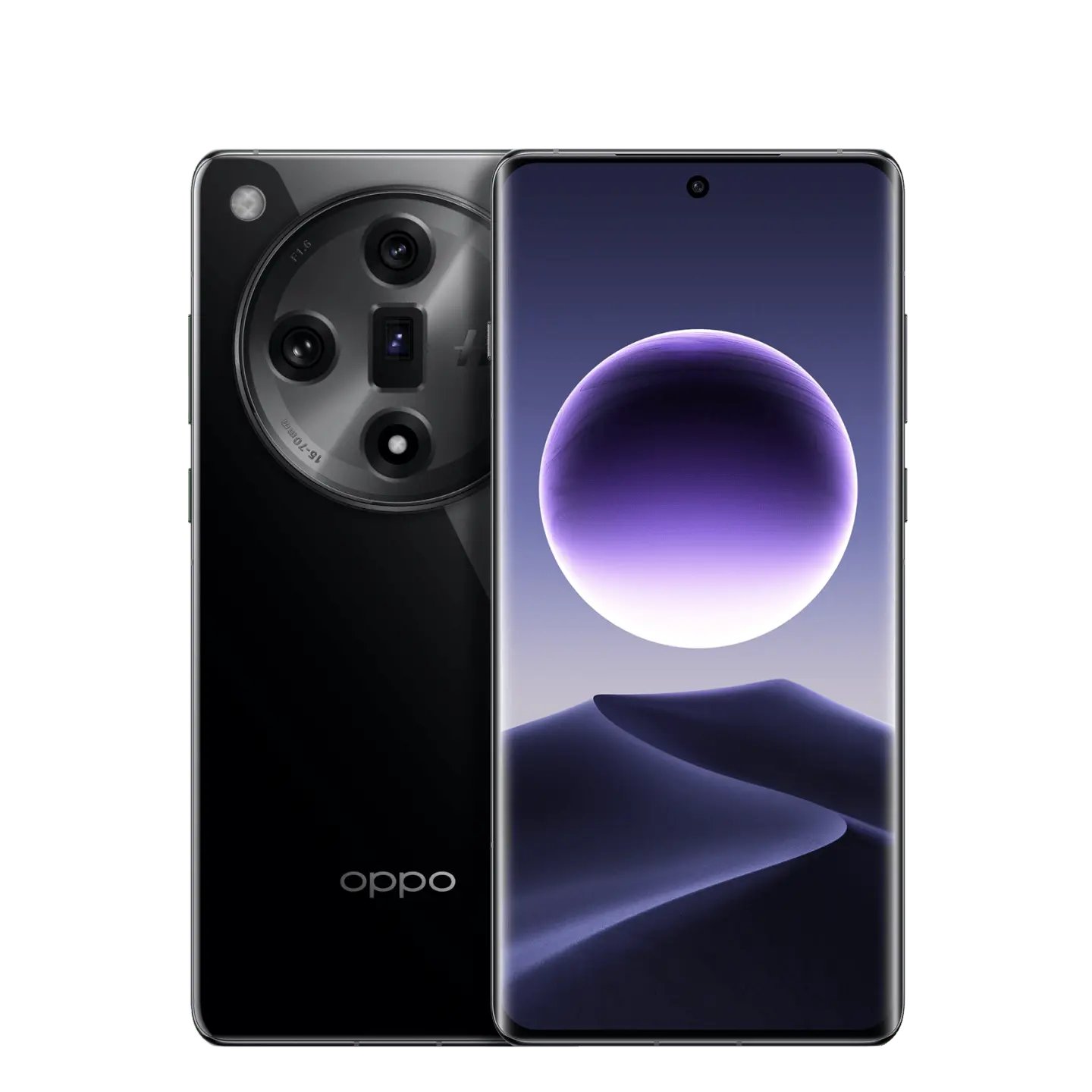
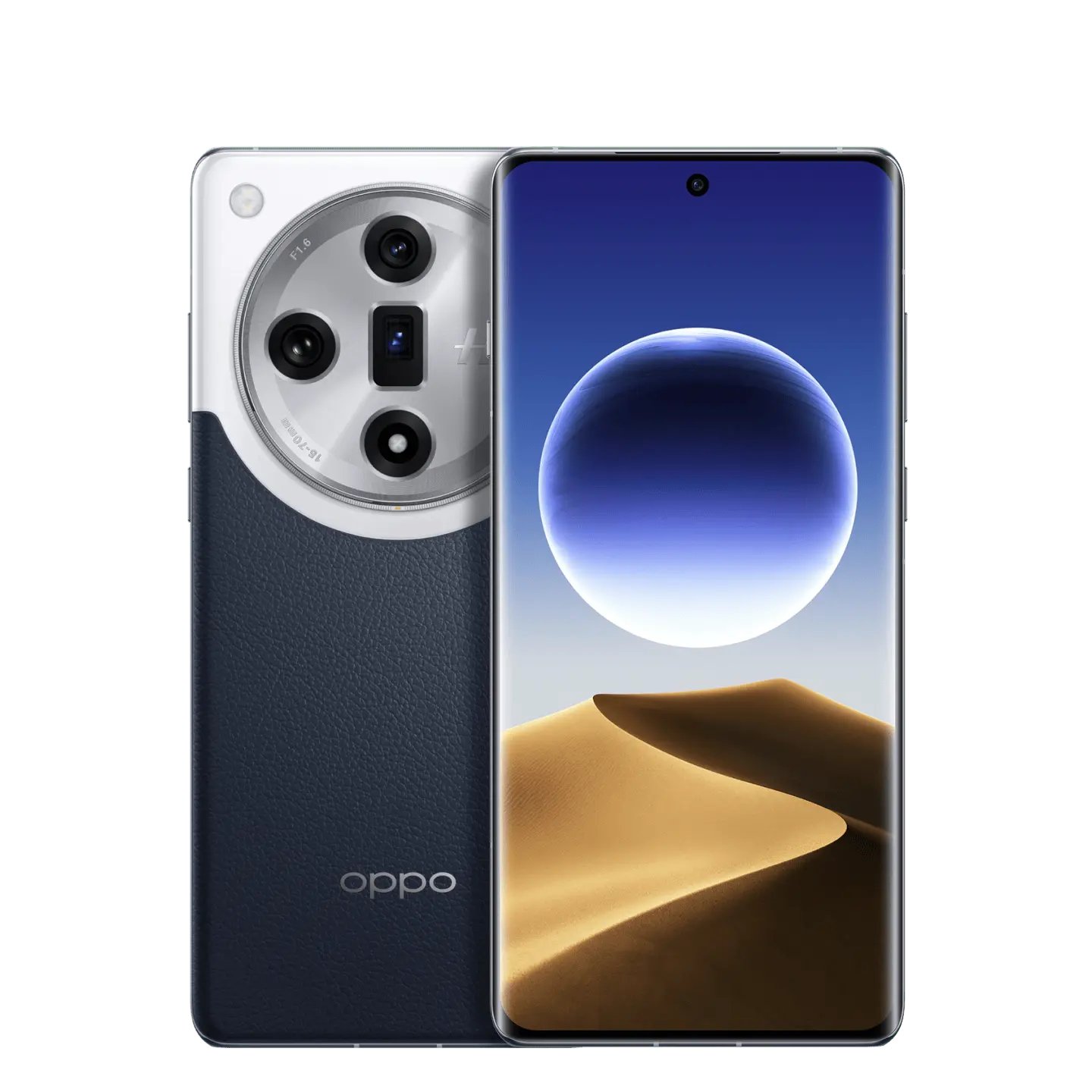
The Find X7 will be available in four shades, such as Starry Sky Black, Sea and Sky, Desert Moon Silver, and Smokey Purple.

Oppo Find X7 Ultra

The Find X7 Ultra is expected to come equipped with the Snapdragon 8 Gen 3 SoC. It will be available in three variants, such as 12 GB RAM + 256 GB storage, 16 GB RAM + 256 GB storage, and 16 GB RAM + 512 GB storage.

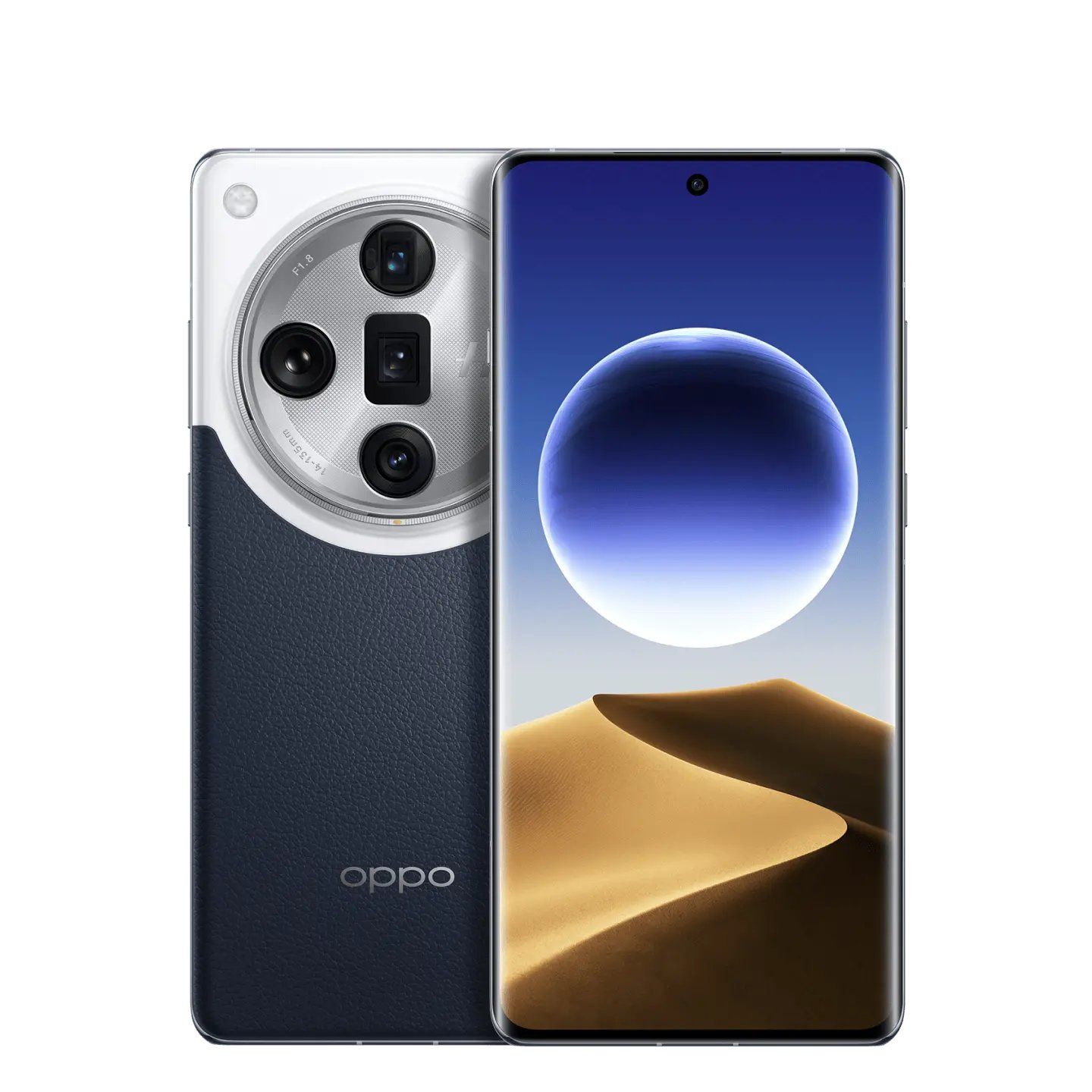
When it comes to color options, the Find X7 Ultra will come in choices such as Pine Shadow Ink, Sea and Sky, and Desert Moon Silver.

The Find X7 and Find X7 Ultra have a similar design, with the front featuring a punch-hole display with curved edges and a dual-tone back panel with a massive camera module. The Find X7 has a triple-camera unit, whereas the Find X7 Ultra has a quad-camera system. The Ultra variant will be the world’s first smartphone to feature dual periscope telephoto cameras. In addition, it will also be the first-ever phone to feature the one-inch Sony LYT-900 50-megapixel camera sensor as the primary snapper.

It is said that there will be a third device called the Oppo Find X7 Ultra Satellite Communication Version, which will come with support for two-way satellite communication. The rest of its specs will be identical to the Find X7 Ultra.

RELATED:

Anker launches 160W smart charger with Huawei 66W and Xiaomi 120W fast charging

Anker has introduced a new charger in China, the 160W Smart Display Charger Pro+, which addresses a common issue with third-party power bricks: compatibility with proprietary fast-charging standards. Priced at 699 yuan (about $103) during its launch window on JD.com, the new model updates Anker’s existing lineup by adding direct support for Xiaomi’s 120W MiPPS and Huawei’s 66W SCP protocols.

Anker 160W Smart Display Charger Pro Plus

Anker 160W Smart Display Charger Pro+ Specs

For users with devices from these brands, this means the charger can deliver full-speed power without relying on the original brick that came in the box. Alongside these specific protocols, the charger includes three USB-C ports and supports standard formats like 140W USB Power Delivery 3.1, 100W PPS, QC 3.0, FCP, AFC, and the unified UFCS standard. This covers most modern hardware, allowing it to charge laptops, tablets, handheld gaming consoles, and phones from Apple, Samsung, Lenovo, and others. The maximum combined output across all ports is capped at 160W.

Anker 160W Smart Display Charger Pro Plus

On the front of the device, there is a built-in color display. Its primary function is to show real-time power output and details about connected devices, including identifying specific Apple hardware by name. The charger also includes Bluetooth, connecting to an Anker companion app. Through the app, users can change the display’s screensaver, monitor power draw, and manually turn individual ports on or off. The software also provides options for scheduled charging and manual power allocation down to 1W increments.

Internally, the charger uses a system Anker calls PowerIQ 5.0 to manage power distribution. The system checks the power requirements of connected devices every two minutes and redirects unused wattage to where it is needed most.

Anker 160W Smart Display Charger Pro Plus

The hardware itself is relatively dense, measuring 65 x 52 x 35 mm. To handle the heat of a 160W output in a small form factor, it relies on three internal temperature sensors. Anker says the charger can sustain a 140W draw from a single port for 24 hours without dropping performance, a metric that has been certified by TÜV Rheinland. Additionally, the device supports over-the-air firmware updates, meaning Anker can add new charging protocols or adjust software features in the future.

In related news, Anker has recently unveiled a new air-cooled 3-in-1 wireless charger featuring an integrated touchscreen display.

For more daily updates, please visit our News Section.

Stay ahead in tech! Join our Telegram community and sign up for our daily newsletter of top stories! 💡

(JD)

Asus launches its 34-inch 360Hz Tandem QD-OLED gaming monitor in the US

Asus has released the ROG Swift OLED PG34WCDN, a 34-inch curved gaming monitor that updates its ultrawide lineup for 2026. First shown at CES earlier this year, the monitor is now available in the US for $1,299.

Asus ROG Swift OLED PG34WCDN

ROG Swift OLED PG34WCDN Specifications

The monitor comes with the latest Tandem RGB QD-OLED panel from Samsung. Instead of the triangular sub-pixel layout found on older QD-OLED displays, this monitor uses a standard RGB stripe arrangement.

This is a practical update because it helps fix the text fringing issues that often make OLEDs frustrating to use for regular desktop work and reading. The screen features a standard 1800R curve, a 3440 x 1440 resolution, a 360Hz refresh rate, and a 0.03ms response time.

Asus is also using a new anti-reflective coating it calls BlackShield film. The company says this makes the screen more resistant to scratches, but more importantly for daily use, it is designed to keep black levels looking dark in bright rooms. Older QD-OLED panels tend to look slightly purple when ambient light hits the screen, so this coating aims to reduce that effect. For HDR content, the monitor reaches a peak brightness of 1,300 nits and covers 99% of the DCI-P3 color space.

Asus ROG Swift OLED PG34WCDN

To help prevent OLED burn-in, Asus included a custom heatsink and a proximity sensor built into the monitor. If you get up and walk away from your desk, the sensor notices and turns the screen black to protect the panel, waking the display back up when you return.

The port selection covers the bases for a modern high-end setup. It includes DisplayPort 2.1a with 80Gbps of bandwidth, meaning it can run the full 1440p resolution at 360Hz without needing display stream compression.

You also get two HDMI 2.1 ports, a USB-A hub, and a USB-C port that handles video while providing 90W of power to charge a laptop. There is a built-in KVM switch as well, allowing you to share one keyboard and mouse between two computers.

In related news, AOC has recently unveiled a new 2K 425Hz Fast IPS gaming monitor, while LG has introduced an affordable 23.8-inch FHD monitor with a 144Hz refresh rate.

For more daily updates, please visit our News Section.

Stay ahead in tech! Join our Telegram community and sign up for our daily newsletter of top stories! 💡

(Asus)

AOC launches new 2K 425Hz Fast IPS gaming monitor

AOC has launched the AGP277QKP, a new 27-inch gaming monitor in China. The display is currently available for an introductory price of 2,699 yuan ($398), with a regular retail price of 3,099 yuan ($457).

AOC AGP277QKP gaming monitor

AOC AGP277QKP Specifications

The monitor uses a Fast IPS panel with a 2560 x 1440 (QHD) resolution. The panel runs natively at 400Hz refresh rate and can be overclocked to 425Hz. AOC lists the response times at 1ms gray-to-gray (GtG) and 0.3ms MPRT. To handle screen tearing and stuttering, the display supports Adaptive-Sync and is Nvidia G-Sync Compatible.

On the image quality side, the display provides a 2000:1 static contrast ratio. It covers 100% of the sRGB color space and 95% of the DCI-P3 color space. The panel comes factory-calibrated with an average Delta E of less than 2. The monitor is also VESA DisplayHDR 400 certified, with a peak HDR brightness of 450 nits and a standard SDR brightness of 400 nits.

AOC has included a few features to address eye strain. The monitor uses a circular polarization lighting system intended to mimic natural light. It also features TÜV-certified hardware low blue light protection and a flicker-free backlight using DC dimming.

AOC AGP277QKP gaming monitor

For competitive gaming, the monitor includes a setting that shrinks the active screen area to 24.5 inches, as well as a 4:3 aspect ratio mode for older esports titles.

Connectivity includes one DisplayPort 2.1 port (supporting UHBR13.5 bandwidth up to 54Gbps) and two HDMI 2.1 ports. There is also a built-in KVM switch that allows users to control two connected devices using one keyboard and mouse. This is supported by a USB hub with one USB-B upstream port, three USB-A 3.2 Gen 1 downstream ports and a standard 3.5mm audio jack.

The monitor comes with a fully adjustable stand that supports height, tilt, swivel, and pivot adjustments. The back of the display features AOC’s Light FX RGB lighting, and the frame includes a retractable headphone hanger.

In related news, LG recently launched an affordable 23.8-inch FHD 144Hz monitor, while Skyworth unveiled a new 27-inch 2K 275Hz Fast IPS gaming display.

For more daily updates, please visit our News Section.

Stay ahead in tech! Join our Telegram community and sign up for our daily newsletter of top stories! 💡

(JD)

Baseus launches 20,800mAh powerbank with 145W output

Baseus has added a new portable charger to its portfolio. Called the EnerGeek GP12, it has a massive 20,800mAh battery and can output up to 145 watts across four ports at once. It can completely charge your laptop, phone, and tablet while you’re away from a wall outlet.

Baseus EnerGeek GP12 Specifications 

According to Baseus, the powerbank’s USB-C ports deliver up to 100 watts to a single device. At that rate, a 14-inch MacBook Pro can reach 55% charge in 30 minutes. And an iPhone 16 Pro can reach 57% in the same amount of time.

When you connect two devices simultaneously, the total output is shared between the two ports, reaching a combined 145 watts. The power bank can handle the split automatically.

Baseus EnerGeek GR12 20,800mAh Specs Launch Price

Baseus claims the 20,800mAh capacity on EnerGeek GP12 can recharge an iPhone 16 Pro about 3.6 times before the power bank itself needs charging. The unit stores 77Wh of energy, which keeps it within the limit allowed for carry-on luggage on commercial flights.

The power bank also has a digital screen that shows the current battery level, charging speed, and an estimate of how long the battery will last or how long it will take to fully recharge. This works both when charging devices and when the power bank itself is being topped up.

As for I/O, you get two USB-C and two USB-A ports. That means you can connect up to four devices to charge at the same time. The power bank itself takes input at up to 65 watts and hits the charge ceiling in around 90 minutes.

Moreover, the product carries certifications including FCC, UL, TÜV, and RoHS. It is approved for carry-on use on most commercial airlines due to its 77Wh rating, which falls within standard airline battery limits.

Baseus EnerGeek GR12 Charging

Baseus says it holds over 2,100 patents, and its products are sold in more than 180 countries.

The Baseus EnerGeek GP12 20,800mAh 145W Power Bank is now available on Amazon. You can get it for $99.99.

For more daily updates, please visit our News Section.

Stay ahead in tech! Join our Telegram community and sign up for our daily newsletter of top stories! 💡

(Via)

Anker CEO says power banks will “die in a few years”

Power banks are one of the most common tech accessories in modern tech, but Anker’s founder and CEO believes their time may eventually run out.

According to a report from China, Anker founder and CEO, Meng Yang, recently said in an interview that power banks are unlikely to grow into a product category worth hundreds of billions of yuan. In fact, he suggested that they could even “die in a few years.”

Anker powerbank die down

Yang compared power banks to older consumer electronics products such as MP3 players, cassette players, and CD players. He argued that many gadgets have a relatively short life cycle before they are replaced by newer technologies.

“Consumer electronics are actually products that come and go quickly,” Yang said. “If you have bought an MP3 player, you have most likely also bought a cassette player or a CD player. The time span between when you first buy these products and when you stop buying them is only about 10 years.”

Anker is known for power banks

The comments are notable because Anker built its reputation on portable chargers. Founded in 2011, the company expanded rapidly in overseas markets with its power bank business. However, the company’s business has changed significantly over the years.

Public financial data shows that Anker generated 30.514 billion yuan in revenue in 2025, up 23.49% year over year. Charging and energy storage products brought in 15.402 billion yuan, accounting for around half of the company’s total revenue. But traditional power banks are no longer the main driver of the business as Anker now offers a wider range of charging accessories, smart devices, and energy storage products.

Anker 335 Power Bank

The company continues to grow in 2026. In the first quarter, Anker reported revenue of 7.608 billion yuan, an increase of 26.93% from the same period last year. However, net profit attributable to shareholders fell 4.87% year over year to 472 million yuan.

Yang’s remarks also come after Anker acknowledged that it had expanded its power bank lineup too aggressively. At the 2025 annual shareholders’ meeting, Anker reportedly admitted it once had too many charging product models on the market. In 2024 alone, the company reportedly sold around 100 different power bank models.

The company admitted that such a large lineup created quality control challenges. “There should never be 100 models,” Anker reportedly told shareholders, adding that no company could realistically maintain the quality of 100 different power bank products.

While the need for powerbanks hasn’t shrunk in this day and age, Yang believes they could eventually follow the same path as other once-essential gadgets that slowly disappeared as technology evolved.

For more daily updates, please visit our News Section.

Stay ahead in tech! Join our Telegram community and sign up for our daily newsletter of top stories! 💡

(Via)

Lenovo launches Yoga earbuds with 40dB ANC and 36h battery life

Lenovo is adding to its Yoga lineup with a new pair of true wireless earbuds. Launched this week in China, the Lenovo Yoga True Wireless Noise Cancelling Earbuds are a budget-friendly audio option priced at 599 yuan ($88), with a temporary launch discount bringing them down to 509 yuan ($75).

Lenovo Yoga Earbuds

Lenovo Yoga Earbuds Specifications

The earbuds feature 12.2mm dynamic drivers and offer active noise cancellation (ANC) up to 40dB. For voice and video calls, each bud is equipped with three microphones. Lenovo says it is using voiceprint recognition and environmental noise cancellation (ENC) to isolate the user’s voice from background room noise during meetings.

The design is straightforward. The earbuds come in a pale off-white color, weigh 4.7 grams each, and have an IPX4 water resistance rating, so they can handle light rain or sweat. The charging case is a basic rounded pebble shape.

Lenovo has added deeper integration with its existing hardware to differentiate these earbuds. Opening the case triggers instant pairing, and connecting them to a Lenovo Yoga PC brings up a dedicated pop-up notification, mirroring the ecosystem features typically seen from Apple or Samsung.

Lenovo Yoga Earbuds

They also support dual-device connectivity across different operating systems, allowing users to switch between a laptop and a smartphone with a triple-tap on the earbud. Settings, ANC modes, and touch controls can be customized directly via the Lenovo PC Manager software.

Coming to the battery life, the earbuds provide up to seven hours of playback on a single charge with ANC turned off, stretching to 36 hours with the charging case. If you keep ANC enabled, those numbers drop to 4.5 hours per charge and 24 hours total. Fast charging is supported, providing roughly two hours of playback from a 10-minute top-up, with a full charge taking about an hour.

In related news, Edifier has recently unveiled the FitBuds Turbo earbuds with LDAC support, 49dB ANC, and up to 40 hours of battery life, while Dangbei introduced the Air 1S clip-on earbuds featuring a 2.04-inch touchscreen charging case, AI-powered translation, and LHDC 5.0 audio.

For more daily updates, please visit our News Section.

Stay ahead in tech! Join our Telegram community and sign up for our daily newsletter of top stories! 💡

(JD)

2026 budget phones to bring back the waterdrop notch, and that’s not the only downgrade

The budget smartphone market may be heading in an unexpected (or expected?) direction this year. According to a recent post from a reliable industry insider, several sub-brands of major smartphone makers are preparing to launch new devices in the sub-1,000 yuan (around $140) segment.

The surprising part is that many of these phones will scale back hardware instead of improving it.

Samsung-Galaxy-A07-5G-Launch-specs-price
Samsung never retired the waterdrop notch in the Galaxy A0X series. In Image: Galaxy A07 5G

The report claims that the upcoming budget phones will continue to use 1080p LCD panels and bring back the waterdrop notch. The entry-level memory configurations are also reportedly reverting to 6GB of RAM and 128GB of storage.

This isn’t the first time we’ve heard such news. A report late last year suggested that 16GB of RAM could become rare in flagship phones by 2026, while 4GB of RAM could become far more common in budget devices.

Blame the memory crisis, folks

You probably already know who is to blame. The biggest reason is the sharp increase in memory chip prices.

According to market research firm TrendForce, global DRAM contract prices rose by more than 40% for two consecutive quarters, from the fourth quarter of 2025 through the first quarter of 2026.

Another report from Counterpoint suggests the situation may be even more difficult. It says prices across the memory market increased by 80–90% quarter-over-quarter during the first quarter of 2026, with DRAM, NAND, and HBM chips all reaching record highs.

Budget smartphones

Xiaomi founder Lei Jun also said that the ongoing surge in memory prices has been “extremely aggressive” and predicted that prices across the memory industry could continue climbing over the next two years. He also suggested that users planning to upgrade their phones may want to do so sooner rather than later.

Not long ago, many affordable smartphones launched with 8GB of RAM and 256GB of storage as standard. However, as component costs continue to rise, manufacturers are rethinking their entry-level strategies.

If memory prices remain high, higher-capacity variants could become increasingly expensive, while budget phones may continue making compromises that many buyers thought were a thing of the past.

For more daily updates, please visit our News Section.

Stay ahead in tech! Join our Telegram community and sign up for our daily newsletter of top stories! 💡

(Source)

Pova 8 5G packs an 8,000mAh battery, 144Hz display and military-grade durability

A new smartphone focused on battery life and gaming performance has entered the market. The Pova 8 5G combines a high-refresh-rate display, a large battery and AI-powered features in a durable design. It also brings support for 20 5G bands, making it suitable for users looking for long-term connectivity and performance.

Pova 8 5G specifications and features

The Pova 8 5G features a 6.76-inch FHD+ IPS display with a 144Hz refresh rate, 1500Hz instantaneous touch sampling rate and up to 950 nits of peak brightness in High Brightness Mode. The panel offers a screen-to-body ratio of 91.29 percent and a resolution of 1080 x 2344 pixels. The phone measures 165.66 x 78.46 x 8.8mm and weighs 225g.

Under the hood, the Pova 8 5G is powered by the Dimensity 7100 chip built on a 6nm process. The phone is offered with 6GB / 8GB of RAM, up to 8GB of virtual RAM, and up to 256GB of storage.

For photography, the device is equipped with a 50-megapixel Sony LYTIA 600 main camera alongside a light sensor, while the front houses a 13-megapixel selfie camera. Video recording is supported at up to 2K resolution at 30fps from both the front and rear cameras.

It goes without saying that the Pova 8 5G’s major highlight is the 8,000mAh battery, which supports 45W fast charging. Another highlight of the device is the rear-facing round-shaped Alive Matrix Display, which transforms the rear panel into an interactive visual interface. Rather than functioning as a simple lighting feature, it reacts in real time to music playback, notifications and user interactions. It also comes with support for around 30 widgets.

Additional features include IP64 dust and water resistance, MIL-STD-810H certification, a 14,689mm² cooling system, AI noise reduction and HiOS 16 based on Android 16.

Pova 8 5G price and availability

The Pova 8 5G is available in 16 Bit White and Terminal Green color options. Pricing starts at Rs 29,999 for the 6GB + 128GB variant, while the 8GB + 128GB model is priced at Rs 31,999. The phone is scheduled to go on sale starting June 18 through Flipkart.

For more daily updates, please visit our News Section.

Stay ahead in tech! Join our Telegram community and sign up for our daily newsletter of top stories!

Xiaomi debuts a hands-free robotic arm that charges your electric vehicle automatically

Xiaomi wants to make EV ownership a bit more convenient for its customers. The company recently shared a demonstration video of a home charging robotic arm that can autonomously plug and unplug a charging gun, meaning EV owners may never have to bend down and fiddle with a cable again.

The good thing is the robotic arm can fit into tight home parking spaces, thanks to a slim 152mm body width. You can then control it remotely through a smartphone.

The robotic arm is a part of Xiaomi’s growing portfolio

The robotic arms join the growing portfolio of home charging products from Xiaomi. The company offers home charging piles in 7kW and 11kW models. 

The 7kW home charging station is compact at 400mm x 180mm x 120mm, runs on 220V single-phase power, and comes with a lightweight 640g charging gun. Its bigger sibling, the 11kW model, shares the same physical dimensions but steps up to 380V three-phase power input and carries a slightly heavier 770g charging gun. 

For those who need something more portable, Xiaomi also offers the Mijia Car Portable Charger and Discharge Gun. It doubles as both a charger and a discharger with a charging output of 2.8kW and a discharge output of 3.5kW, all running off standard 220V household power.

Xiaomi’s interest in automated EV charging isn’t new. When the company unveiled its Xiaomi Pilot Technology autonomous driving solution, automatic robotic arm charging was already listed as one of its planned features alongside autonomous valet parking. The new home charging arm looks like that vision finally taking physical form for everyday home use. 

Xiaomi Auto Technology also previously received approval for an EV charging system patent from the Chinese Intellectual Property Organization (CNIPO). And in a separate direction, the company filed a patent for a wireless EV charging system involving an autonomous cargo vehicle that would drive up to an EV needing a charge and connect automatically. 

No pricing or availability details for the robotic arm have been announced yet, but given Xiaomi’s track record of competitive pricing on its EV accessories, it will be worth watching when the product moves from demo to market.

For more daily updates, please visit our News Section.

Don’t miss a thing! Join our Telegram community for instant updates and grab our free daily newsletter for the best tech stories!

Xiaomi launches a portable coffee machine that can brew up to 400 cups on a charge

Xiaomi has introduced its first portable coffee maker under the Mijia brand. The Mijia Portable Coffee Machine is a battery-powered espresso device designed for travel, camping, or office use. It functions similarly to a standard espresso machine but is condensed into a form factor that resembles a typical vacuum flask.

Xiaomi portable coffee machine

Mijia Portable Coffee Machine Specifications

Measuring 24.5cm in height and 7.15cm in width, the device is built to fit into a backpack or a car cup holder. Inside, it uses a 20-bar electromagnetic pump to extract coffee. Xiaomi designed the machine with a dual-compatible brewing chamber, meaning you can swap between using standard coffee capsules and freshly ground coffee depending on what they have available.

For temperature control, the machine relies on a ceramic heating element and a PID algorithm to maintain a steady water temperature of 92°C (197°F). It supports both hot and cold extraction, and a standard brew cycle takes roughly 45 seconds to complete.

The device is powered by three 2,500mAh batteries, giving it a total capacity of 7,500mAh. It charges via a 45W USB-C port, which can bring the battery from 20 to 80 percent in about 30 minutes, or to a full charge in 80 minutes. It can also be powered directly using a standard portable power bank.

Battery life depends entirely on how you use the heating element. If you pour pre-heated water into the chamber, the machine only uses its battery to run the extraction pump. In this mode, Xiaomi says it can produce up to 400 cups on a single charge. However, if you use room-temperature water and rely on the internal ceramic heater to warm it up, the battery drains much faster, yielding just over three cups per charge.

The exterior has an IP55 rating for dust and water resistance, providing some protection against outdoor elements like light rain or splashes. The brewing chamber is fully detachable so it can be rinsed out after use. Xiaomi includes several accessories in the box, such as a carrying case, an aluminum alloy stand, a metal coffee basket, a scoop, and a double-wall stainless steel cup.

Pricing and Availability

The Mijia Portable Coffee Machine has a standard retail price of 799 yuan (about $118). It will be available first in China through a crowdfunding campaign on Xiaomi Mall and Xiaomi Youpin starting June 17, with a discounted early-bird price of 559 yuan (about $82).

In related news, Xiaomi has recently unveiled a new cordless vacuum featuring 230AW suction power and a self-emptying dock, alongside the Mijia Instant Hot Water Dispenser with 3-second heating and 10-minute ice-making capabilities.

For more daily updates, please visit our News Section.

Stay ahead in tech! Join our Telegram community and sign up for our daily newsletter of top stories! 💡

(Xiaomi Youpin)

Samsung Galaxy Z Fold 8 Wide, Fold 8 Ultra, Flip 8 bag BIS certification

Samsung is expected to hold its next Galaxy Unpacked event on July 22, where the company is likely to unveil its next generation of foldable smartphones. Ahead of the anticipated launch, three upcoming Samsung foldables have appeared on the Bureau of Indian Standards (BIS) certification platform, suggesting that their India debut may not be far away.

Samsung’s next foldables receive BIS certification

Samsung's upcoming foldables bag BIS certification
Samsung’s upcoming foldables bag BIS certification

According to the BIS database, Samsung devices bearing the model numbers SM-A857B / SM-F776B, SM-D642B / SM-F971B, and SM-D647B / SM-F976B have been certified in India. These model numbers are believed to correspond to the Galaxy Z Flip 8, Galaxy Z Fold 8 Wide, and Galaxy Z Fold 8 Ultra, respectively.

The certifications were granted between June 4 and June 9, indicating that Samsung is actively preparing the devices for launch in key markets, including India. While BIS listings do not reveal any hardware specifications, they often serve as a strong indicator that an official announcement is approaching.

The Galaxy Z Fold 8 Ultra moniker has already been confirmed through a recent Bluetooth SIG sighting, and the company is likely to use the Galaxy Z Flip 8 name for the successor to last year’s Galaxy Z Flip 7. However, the exact moniker of the wider foldable phone is yet to be confirmed, though the rumor mill has been referring to it as the Galaxy Z Fold 8 Wide and Galaxy Z Fold Wide. There is a possibility that this device could be simply called the Galaxy Z Fold 8.

Alongside the new foldables, the July 22 Galaxy Unpacked event is also expected to introduce updated smartwatches and other Galaxy ecosystem products.

Rumors suggest that the Galaxy Z Flip 8 could be the final flip-style foldable from Samsung. As a result, it is being speculated that Samsung’s 2027 foldable lineup may include two book-style models: the Galaxy Z Fold 9 Ultra and Galaxy Z Fold 9 Wide.

For more daily updates, please visit our News Section.

Stay ahead in tech! Join our Telegram community and sign up for our daily newsletter of top stories!

(via)

Realme UI 8.0 (Android 17) eligible devices list

Realme UI 8.0 (Android 17) update eligible devices list

With Google inching closer to a stable Android 17 release, third-party brands, including Realme, are also preparing for the rollout with a new custom skin on top. In Realme’s case, the new OS will ship with the Realme UI 8.0 skin, which should bring an additional set of features and upgrades, in addition to those coming directly from the development team at Google.

If you’re rocking a Realme phone or tablet, you may be wondering whether it will get the Realme UI 8.0 update based on Android 17. To help you with that, we’ve prepared a list of eligible devices below.

Review the list below to see if your Realme device is eligible for the next major OS upgrade.

Note that Realme has yet to announce the list of eligible devices. So, our team reviewed the update policy for every single Realme device to prepare the list, which should be mostly accurate.

Realme UI 8.0 (Android 17) update: List of eligible devices

Realme GT series

  • Realme GT 8 Pro
  • Realme GT 7
  • Realme GT 7 Pro
  • Realme GT 7 Pro Racing
  • Realme GT 7T
  • Realme GT 6
  • Realme GT 6T
  • Realme GT 5 Pro

Realme number series

  • Realme 16
  • Realme 16 Pro
  • Realme 16 Pro+
  • Realme 16T
  • Realme 15
  • Realme 15 Pro
  • Realme 15 Lite
  • Realme 15T
  • Realme 15x
  • Realme 14
  • Realme 14 Pro
  • Realme 14 Pro+
  • Realme 14T

Realme P series

  • Realme P4
  • Realme P4 Pro
  • Realme P4 Lite
  • Realme P4 Lite 4G
  • Realme P4 Power 5G
  • Realme P4R
  • Realme P4x
  • Realme P3
  • Realme P3 Pro
  • Realme P3 Ultra
  • Realme P3x

Realme C series

  • Realme C85
  • Realme C85 4G
  • Realme 85 Pro
  • Realme C83
  • Realme C75
  • Realme C75x
  • Realme C73
  • Realme C71

Realme Narzo series

  • Realme Narzo Power 5G
  • Realme Narzo 100 Lite
  • Realme Narzo 90
  • Realme Narzo 90X
  • Realme Narzo 80 Lite
  • Realme Narzo 80 Lite 4G
  • Realme Narzo 80 Pro
  • Realme Narzo 80x

Realme Note series

  • Realme Note 80
  • Realme Note 70
  • Realme Note 70T

Realme Pad series

  • Realme Pad 3

If your device is on the list, it’s almost guaranteed to receive the Android 17 update once the rollout begins later this year.

The official list could be longer as Realme hasn’t announced the update policy for every device. So, we only included the devices that we were confident about just to keep the list as accurate as possible.

As for the stable release, no official announcement has been made yet. However, given that Android 17’s timeline is largely similar to last year’s, we can expect Realme UI 8.0 to drop around the same time, in November.

While the stable release is still a few months away, users can apply for the Android 17 beta program to get an early taste of the new features and upgrades. Since its official announcement in late March, the beta program has remained limited to the Realme GT 8 Pro, with no official announcement about its expansion to other devices. We’ll let you know if and when that happens.

You can regularly visit the Realme section on this website to stay updated. Or, join our Telegram channel to receive instant alerts when we publish new stories.

Oppo Find N7’s wide foldable version tipped to launch in Q1 2027, key specifications emerge

While Huawei recently unveiled the Huawei Pura X Max with a wide foldable design, many brands are expected to launch foldable phones with a similar form factor in the coming years. Samsung is expected to unveil the Galaxy Z Fold 8 Wide in July, while Apple’s foldable iPhone, which could be called the iPhone Ultra, is likely to break cover in September. Now, according to tipster Digital Chat Station, Oppo is currently testing a new book-style wide foldable phone, and he has also shared some of its key details, including its launch timeframe.

Oppo Find N7’s wide foldable version in the works

As can be seen above, DCS has now revealed details about Oppo’s own wide foldable phone, although its final moniker remains unknown. While the name is still under wraps, it remains to be seen whether it could be called the Oppo Find N7 or something else.

The tipster claims that the engineering prototype is equipped with a foldable inner display measuring around 7.6 inches and a cover screen of roughly 5.5 inches. Both Samsung Display (SDC) and BOE are reportedly involved in supplying the panels. The device is also said to feature Qualcomm’s next-generation 2nm Snapdragon 8 Elite Gen 6 chipset and is currently in the prototype testing stage.

The foldable is further said to adopt a design approach similar to Apple’s products and will feature Oppo’s latest-generation crease-minimizing hinge technology. DCS also hinted that the new hinge could outperform competing foldable solutions currently available on the market.

The tipster revealed in the comments section that the Find N7 is expected to debut in the first quarter of 2027. Apart from Oppo, Honor, Xiaomi, and Vivo are also expected to introduce wide foldable phones next year.

For more daily updates, please visit our News Section.

Stay ahead in tech! Join our Telegram community and sign up for our daily newsletter of top stories!

Xiaomi Mix Fold 5 price leaks, and it’s more expensive than you think

The Xiaomi Mix Fold 5 has been in the rumor mill for a while now. Chinese tipster Digital Chat Station has now shared fresh details about the upcoming foldable, confirming that several specs from the prototype remain unchanged.

As we covered earlier, the Xiaomi Mix Fold 5 is expected to come with Xiaomi’s in-house Xring O3 chipset and is targeting a Q3 2026 launch. The new leak from Digital Chat Station adds more detail to what the device could look like at launch. 

Xiaomi Mix Fold 5 packs flagship specs, but you’ll likely pay more for them

According to the tipster, the prototype still features a 7.5–7.6-inch folding display with seamless crease technology. The design is described as minimalist and runway-inspired. Xiaomi seems to be going for a cleaner, more refined look with this one.

On cameras, the leak reconfirms a 200MP main shooter. This lines up with earlier database entries that pointed to a 200MP Samsung S5KHP5 main sensor for Xiaomi’s upcoming foldable.

Moreover, the tipster says the foldable will carry a 6000mAh (give or take) battery, with wireless charging also confirmed. The phone is also said to feature full water resistance and a side-mounted fingerprint sensor. 

While this leak doesn’t say it, a previous report hints that the foldable will be powered by Xiaomi’s next-generation in-house SoC, currently referred to as Xring O3. It is still unclear what specific improvements the O3 will bring over last year’s Xring O1.

Fortunately, the tipster also reveals the tentative price range of the Xiaomi Mix Fold 5, and it’s not good news. The foldable is expected to cost around 10,000 yuan (roughly $1,380), a 1/10th increase in price compared to Mix Fold 4, which launched at 8,999 yuan (around $1,240).

No official launch date has been announced. With the prototype seemingly stable in its design and specs, more details should surface in the coming weeks.

For more daily updates, please visit our News Section.

Don’t miss a thing! Join our Telegram community for instant updates and grab our free daily newsletter for the best tech stories!

This rugged Lenovo tablet with a removable battery is finally available for purchase

Modern tablets rarely offer user-replaceable batteries, making Lenovo’s latest Android device stand out from the crowd. The Lenovo ThinkTab X11, first showcased at MWC 2026, has now gone on sale in the US, bringing a combination of durability-focused features and business-oriented capabilities to the mid-range tablet segment.

Lenovo ThinkTab X11 specifications and price

Lenovo ThinkTab X11
Lenovo ThinkTab X11

The Lenovo ThinkTab X11 features a 10.95-inch WQXGA display with a resolution of 2560 x 1600 pixels, a 90Hz refresh rate and up to 600 nits of brightness. Powering the tablet is Qualcomm’s Snapdragon 7s Gen 3 processor, paired with up to 8GB of LPDDR5 RAM and up to 256GB of UFS 3.1 storage. The device runs Android 16 out of the box, and Lenovo has committed to at least four years of security updates.

What makes the ThinkTab X11 different from many Android tablets is its focus on serviceability and durability. The 10,200mAh battery can be removed and replaced without requiring a screwdriver, and Lenovo also offers a battery-less operation mode for specialised use cases. The tablet carries an IP68 rating for dust and water resistance, while an optional rugged case adds MIL-STD-810H durability certification for protection against harsher environments.

The tablet comes equipped with dual USB 3.2 Gen 1 Type-C ports, with one supporting display output. Lenovo has also retained a 3.5mm headphone jack and a microSD card slot, features that are becoming increasingly uncommon in premium tablets. Other specifications include Wi-Fi 6E, Bluetooth 5.4, GPS, NFC support, stereo speakers, dual microphones, a 13-megapixel rear camera with autofocus and an 8-megapixel front camera.

Lenovo is offering the ThinkTab X11 in Eclipse Black. In the US, the Wi-Fi model with 8GB RAM and 128GB storage is priced at $499, while the 5G variant with 8GB RAM and 256GB storage costs $579. The tablet also supports the Lenovo Tab Pen XE stylus, which can be stored inside the optional rugged case.

Official: ColorOS 17 may skip major UI changes as Oppo focuses on user experience refinements

Not every smartphone brand appears convinced that a dramatic visual overhaul is the next step for Android software. As reports point to some manufacturers embracing glass-inspired interface designs, Oppo has indicated that its upcoming ColorOS 17 update could place greater emphasis on refining the overall user experience.

ColorOS design chief shares sets expectations about ColorOS 17

On June 2, Digital Chat Station claimed that an upcoming Android interface, referred to as “C17”, would introduce several visual refinements. According to the tipster, the software could feature a stronger liquid glass-inspired appearance, more consistent rounded corners across the interface, enhanced light-field rendering effects and dynamic lighting animations in areas such as notifications, music playback controls and the Dynamic Island-style interface.

The tipster has now shared additional details, stating that the software may include a completely new light-field interaction system, AI-powered adaptive colour matching and glass-like interface materials. While the overall layout may not appear dramatically different at first glance, the finer visual details are said to deliver a significantly more polished look and feel.

Following the latest leak, some users speculated that the information was related to ColorOS 17. Responding to these claims, ColorOS Design Director Chen Xi clarified that the leaked description likely does not refer to Oppo’s software. He suggested that the confusion may have stemmed from the mention of light-field design, a term already associated with Oppo’s design language.

Chen added that another smartphone brand is reportedly taking a far more aggressive approach towards liquid glass-style visuals. In contrast, ColorOS 17 is expected to focus on core user experience improvements rather than major interface redesigns. He also noted that the summer development period is generally dedicated to optimising system performance and refining everyday usability, while larger feature additions are usually introduced later.

ColorOS 17 is expected to make its debut on the Oppo Find X10 series in China this September, with a wider rollout roadmap likely to follow.

For more daily updates, please visit our News Section.

Stay ahead in tech! Join our Telegram community and sign up for our daily newsletter of top stories!

Xiaomi announces new AI coding agent that actually remembers what it was doing

Xiaomi just open-sourced MiMo Code V0.1.0, its new terminal-based AI coding assistant that is trying to solve one of the biggest frustrations with AI-powered programming tools: they tend to lose track of what they’re doing the longer you work with them.

We’ve been covering Xiaomi’s MiMo journey from the very beginning. The MiMo-7B is the company’s first open-source reasoning and coding model, announced back in 2025. MiMo Code builds on that same foundation, but instead of being just a model, it’s a complete coding agent designed to help with long-running software projects directly from the terminal.

Xiaomi MiMo Code Launch

The tool is based on the open-source OpenCode project and is released under the MIT license, meaning developers are free to use, modify, and build on it. Out of the box, it includes free access to MiMo-V2.5, Xiaomi’s latest multimodal AI model, but users can also connect it to third-party services such as DeepSeek, Kimi, and GLM if they prefer a different backend.

Tackling AI’s memory problem

One of MiMo Code’s highlight features is its persistent memory system. Most AI coding assistants depend entirely on the model’s context window, and once that fills up, they start forgetting earlier decisions or conversations.

Meanwhile, MiMo code has a dedicated background subagent that continuously manages and stores context while you work. When the active conversation gets close to its limit, the subagent automatically condenses everything into a structured summary, allowing the main agent to continue without losing its place. 

Xiaomi MiMo Code Checkpoint

Xiaomi has also included a feature called /dream, which runs automatically every seven days. This launches a separate maintenance agent that reviews old sessions and memory files, removes duplicates, verifies file paths, and compresses everything into an updated long-term memory store.

Compose mode and the MiMo Harness

MiMo Code also introduces a dedicated Harness system built specifically for MiMo models. Rather than treating the AI as a generic API endpoint, the framework is designed to take advantage of the model’s underlying capabilities more directly.

That works alongside a feature called Compose mode, activated by pressing the Tab key. Instead of asking the AI to complete one step at a time, you can provide a rough idea or goal, and the agent will attempt to handle the entire workflow—from planning and design to coding, testing, and review.

Xiaomi says this approach can produce what it describes as an “industrial-grade finished product.” That’s a bold claim, but the company points to benchmark results to back it up. According to Xiaomi, MiMo Code achieved scores of 62% on SWE-Bench Pro and 73% on Terminal Bench 2, outperforming Claude Code by around five percentage points while using the same underlying base model.

The assistant also comes with built-in voice input powered by MiMo-V2.5-ASR. Users can dictate commands, fix typos, or trigger actions such as “send” and “execute” without touching the keyboard.

Getting started

You can set up MiMo Code very simply. On macOS and Linux, installation requires a single terminal command, while Windows users can install it through npm. Once it’s installed, launching the tool is as simple as typing mimo in the terminal.

The initial setup automatically guides users through model configuration, and Xiaomi says the free MiMo-V2.5 channel can be used without creating an account or going through a registration process.

For more daily updates, please visit our News Section.

Stay ahead in tech! Join our Telegram community and sign up for our daily newsletter of top stories! 💡

OnePlus 15 joins list of AirDrop supported Android phone, here are the details

OnePlus 15 users can now share files with iPhones, iPads, and Macs through Android’s Quick Share. The feature, which taps into Apple’s AirDrop protocol, started rolling out on June 9 and has been confirmed by users on OnePlus community forums.

No system update is needed. The change arrives through the Quick Share app itself, so updating it via the Play Store is enough to get started.

How AirDrop works in OnePlus 15

To use it, the OnePlus 15 user sets Quick Share visibility to “Everyone,” while the iPhone user sets AirDrop to “Everyone for 10 minutes” from the Control Center. After that, the two devices see each other, and the transfer works much like a standard AirDrop exchange. Files go through at full quality, with no cloud intermediary involved.

As we covered recently, the OnePlus 15 joins a list that has been building since Google first launched AirDrop interoperability on the Pixel 10 in November 2025. Since then, the Pixel 9 series, Samsung Galaxy S24, S25, and S26, OPPO Find X8 and X9 series, Vivo X300 Ultra, HONOR Magic V6, and Xiaomi 17T Pro have all received the feature.

OnePlus 15

OnePlus was already named by Google earlier this year as one of the brands set to receive support in 2026, so this rollout was expected.

The OnePlus 15, launched globally in November 2025, runs OxygenOS 16 on Android 16 and is powered by the Snapdragon 8 Elite Gen 5 chip. Google has not publicly explained what hardware criteria determine AirDrop eligibility, but chipset compatibility is widely believed to play a role, which may explain why the update is not extending to older OnePlus models for now.

For now, the OnePlus 15 is the only OnePlus device on the list. Older models like the OnePlus 13 are not included, and the company has not said whether support will extend to them.

For more daily updates, please visit our News Section.

Stay ahead in tech! Join our Telegram community and sign up for our daily newsletter of top stories! 💡

(Via)

Edifier launches FitBuds Turbo earbuds with LDAC, 49dB ANC & 40h battery life

Edifier has launched the FitBuds Turbo, a new pair of budget wireless earbuds launching in China. These are priced at 259 yuan ($38) and now available on JD.com.

Edifier FitBuds Turbo

Edifier FitBuds Turbo Specifications

The earbuds use a standard short-stem design, with each bud weighing 4.4 grams. They carry an IP54 rating, meaning they can handle light splashes and dust, which is adequate for everyday commuting or exercise. Edifier is also using antibacterial silicone ear tips, which the company claims can block 99.9% of bacteria.

Rather than the usual glossy plastic, the charging case has a textured, faux-leather finish with metallic accents, which should make it a bit easier to grip. The earbuds are available in three colors: Dawn White, Mystery Blue, and Sakura Pink.

For audio, the FitBuds Turbo rely on 10mm dynamic drivers with a PU and PEEK composite diaphragm. They are Hi-Res Audio Wireless certified and support the LDAC codec.

Edifier FitBuds Turbo

The active noise cancellation system is rated to reduce background noise by up to 49dB. For phone calls, the earbuds use a six-microphone array, three on each side, paired with AI filtering to isolate the speaker’s voice from background environments.

For battery life, the FitBuds Turbo delivers up to 9 hours of playback on a single charge, while the included charging case extends total usage time to 40 hours. It also supports fast charging via USB-C, with a quick 15-minute charge providing up to 2 hours of listening time.

The earbuds connect via Bluetooth 6.0 and support multipoint pairing, allowing them to connect to two devices at once. There is also a 45ms low-latency mode for gaming. The companion app includes a few extra software additions, like spatial audio, real-time translation for 21 languages, and voice assistant integration using DeepSeek and Doubao.

In related news, Dangbei has recently launched the Air 1S clip-on earbuds with a 2.04-inch touchscreen case, AI translation, and LHDC 5.0, while Edifier unveiled the LolliClip SE with Dolby Spatial Audio, AI transcription, and a 40-hour battery life.

For more daily updates, please visit our News Section.

Stay ahead in tech! Join our Telegram community and sign up for our daily newsletter of top stories! 💡

(JD)

Samsung is testing One UI 9 for these Galaxy devices

One UI 9 testing devices

While the One UI 9 beta program is currently restricted to the Galaxy S26 phones, Samsung is internally testing the Android 17-based build on many other Galaxy devices, including some mid-range phones. This could mean the company might soon allow them to take part in the beta program.

Here’s a list of Galaxy devices that have been spotted on Samsung’s servers with a One UI 9.0 test firmware:

  • Galaxy S25
  • Galaxy S25+
  • Galaxy S25 Ultra
  • Galaxy A57
  • Galaxy A34
  • Galaxy A17 5G
  • Galaxy Z Fold 8 (unreleased)
  • Galaxy Z Flip 8 (unreleased)
  • Galaxy Z Fold 8 Ultra (unreleased)
  • Galaxy Z Fold 7

Well, this doesn’t guarantee a quicker One UI 9 release for these devices, but it could mean Samsung may be looking to expand the ongoing beta program to them. We’ll let you know when that happens.

The One UI 9 beta program is currently available for the Galaxy S26, S26+, and S26 Ultra, with no official announcement regarding its expansion. However, based on past releases, we can confidently say the beta expansion to other Galaxy devices should be around the corner.

The stable One UI 9 software, based on Android 17, is expected to debut with the upcoming foldable phones – the Galaxy Z Fold 8, Galaxy Z Flip 8, and Galaxy Z Fold 8 Ultra. Rumors say these devices will be unveiled on July 22.

Don’t miss out on the latest One UI news. Check back on our Samsung section regularly, or follow us on Telegram to get notified the second a new story drops.