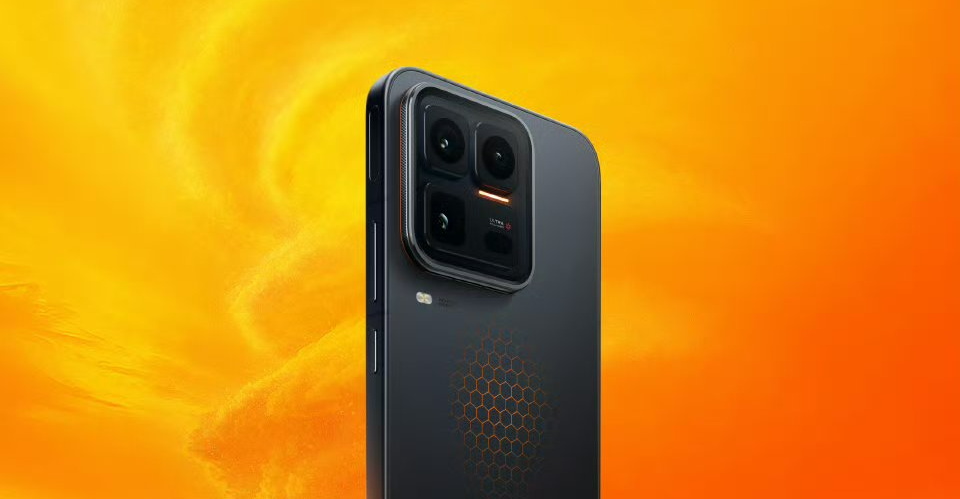
After unveiling the iQOO 15 in October last year, the brand followed it up with other models, such as the iQOO 15 Ultra and iQOO 15T in China this year. Several reports have revealed the iQOO 16’s key specifications, and a recent report also revealed the existence of the iQOO 16T. While a leak from April this year claimed that the iQOO 16 Ultra with a built-in cooling fan was in the works, a newer leak from tipster Digital Chat Station suggests otherwise. Here’s what the tipster revealed.
iQOO may skip a generation
According to DCS, the iQOO 16 Ultra may not launch as expected, with the company reportedly planning to skip the Ultra model for one generation. The claim comes shortly after the tipster hinted at the possibility in the comments section of an earlier post.
Responding to a user, the tipster said the decision is likely linked to rising memory prices. However, Digital Chat Station added that iQOO had previously indicated its Ultra lineup would not follow a fixed annual release cycle. Instead, new Ultra models are expected to arrive only when the company has a significant technological breakthrough to introduce.
If accurate, the iQOO 16 series could launch without an Ultra variant, with the next Ultra model arriving at a later stage when iQOO is ready with more substantial upgrades. It remains to be seen whether the iQOO 17 Ultra will debut as part of the iQOO 17 series or if the company will extend the gap between Ultra models even further.
As far as the global market is concerned, iQOO reportedly has no plans to launch any Neo-branded phones this year. Therefore, among its flagship lineup, the iQOO 16 may be the only model to launch in multiple markets outside China.
For more daily updates, please visit our News Section.
The AI boom is bringing some unexpected side effects, and one of the world’s biggest PC makers just delivered a pretty sobering warning about it.
At the ISC 2026 conference in Germany, Lenovo dropped a reality check on the industry: the sharp rise in prices for essential memory components like DRAM and NAND flash might not be a temporary spike. According to them, these higher prices could become the “new normal” that sticks around well into 2030 and beyond.
The numbers Lenovo shared were striking. Prices surged dramatically from late Q3 into early Q4 2025, hitting levels almost no one saw coming. While the comment started with a bit of light-hearted tone, the message was serious: thanks to massive AI demand, we’re unlikely to go back to the cheaper memory prices we saw at the beginning of 2025.
The core problem is simple: demand is growing much faster than supply. Even though manufacturers are rushing to build new wafer fabs, it’s going to take years before that extra capacity makes a real dent. Lenovo isn’t alone in this view. Micron has already admitted that even its most important customers can’t get everything they need, and Samsung and SK Hynix have echoed similar concerns.
SK Hynix, a major player in high-bandwidth memory (HBM) for AI, is speeding up its expansion plans. The company now wants to nearly double its DRAM wafer capacity by 2030–2031 and triple overall production by around 2034. That’s faster than they originally planned, but many observers still wonder if it will be enough to keep up with the hunger for AI chips.
This shift has been great for memory makers’ profits, but it’s tightening supply for regular consumer-grade DRAM and NAND. That means higher costs are trickling down to everyday products: PCs, laptops, smartphones, SSDs, and cloud services.
For regular people and businesses, the takeaway is pretty clear: upgrading your computer or buying a new device could stay more expensive than we’ve been used to. Lenovo’s outlook suggests we’re moving away from the old boom-and-bust cycle of memory pricing into a new era where prices sit at a permanently higher baseline, all driven by AI.
Of course, innovation in efficiency and new technologies might help soften the blow eventually. But for the next several years at least, it looks like elevated memory prices are here to stay.
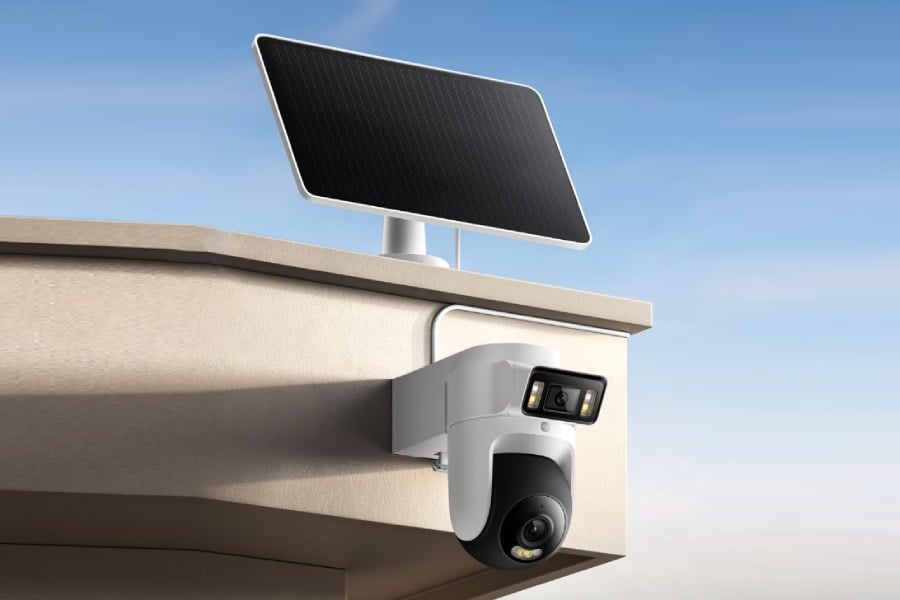
Continuing the momentum, Xiaomi has launched a brand new solar-powered variant, called the Xiaomi Smart Solar Camera 4 Pro 4G Dual-Camera Edition.
The camera is now live on Xiaomi Youpin for crowdfunding, with an early-bird price starting at 579 yuan (roughly $80). Crowdfunding kicks off at 10:00 AM on July 6.
Xiaomi Smart Solar Camera 4 Pro 4G Specifications
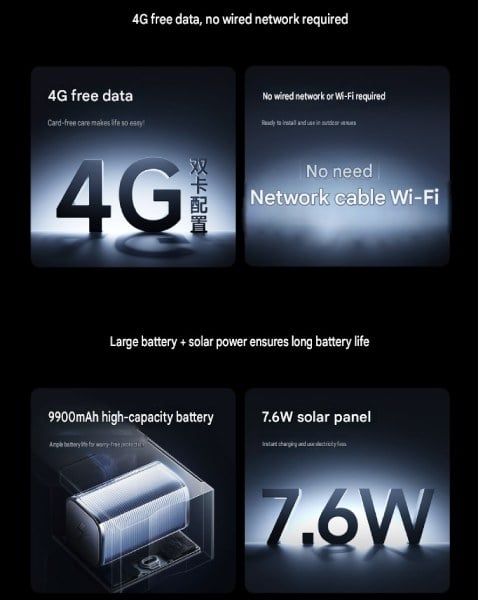
The biggest selling point of this camera is its complete independence from traditional infrastructure. It packs dual 4G SIM card support for connectivity, so that you don’t need to rely on WiFi for video streaming. And power isn’t a concern either.
The camera comes with a built-in 9,900mAh battery that Xiaomi says can last more than a week on a single charge. On top of that, it is paired with a 7.6W solar panel, meaning it can sustain itself indefinitely under normal sunlight conditions. You install it once and largely forget about it.
On the imaging side, the Solar Camera 4 Pro carries two 5-megapixel cameras, each capable of recording at 3K resolution. Both lenses also feature a large f/1.6 aperture, each with a “white light + infrared light” combination that turns on the appropriate fill light when a person is detected.
The camera also has AOV (Always-On Video) intelligent recording. Rather than recording at full frame rate all the time, the camera dynamically adjusts based on activity. When no one is around, it drops to 1 frame every 2 seconds, saving over 90% of storage space.
Security and Alerts
When something suspicious is detected, the camera plays an audible alarm and activates a flashing light to ward off intruders. It also sends a notification to the user’s phone through the Mi Home App. It supports two-way voice communication, letting you speak directly to whoever is near the camera.
The device also supports Xiaomi’s HyperConnect for integration with other Xiaomi smart home devices and carries an IP66 rating for dust and water resistance.
Pricing and Availability
The Xiaomi Smart Solar Camera 4 Pro 4G Dual-Camera Edition is available on Xiaomi Youpin starting at 579 yuan during the crowdfunding phase beginning July 6. There’s no word yet on broader retail availability or international pricing.
For more daily updates, please visit our News Section.
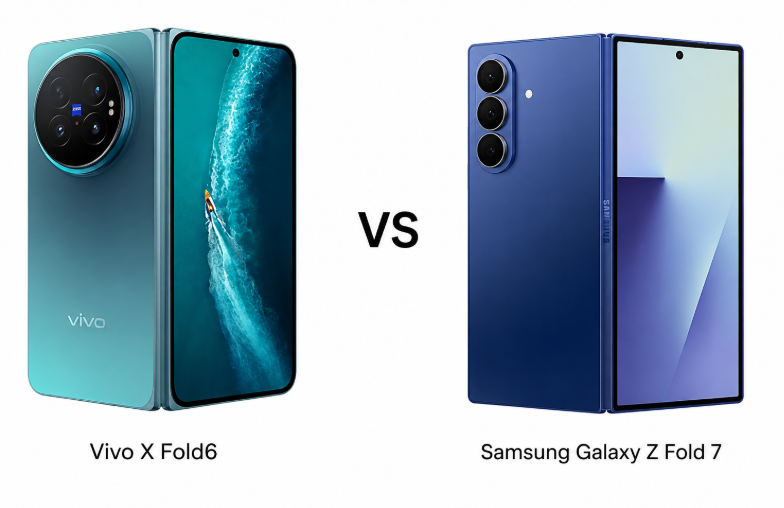
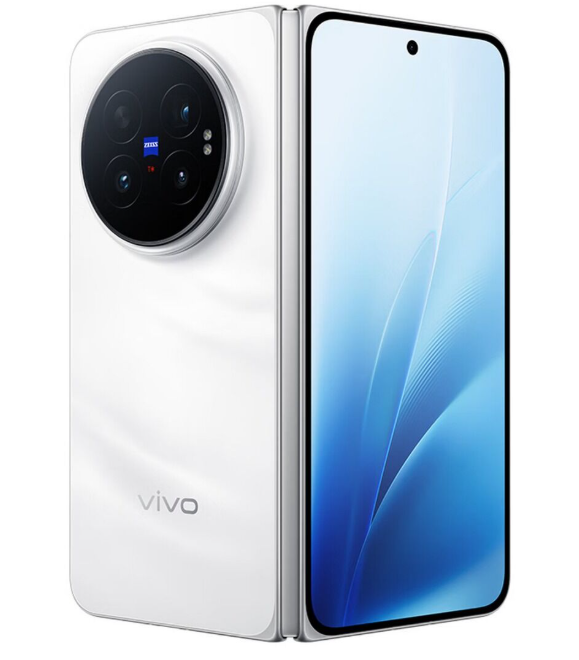
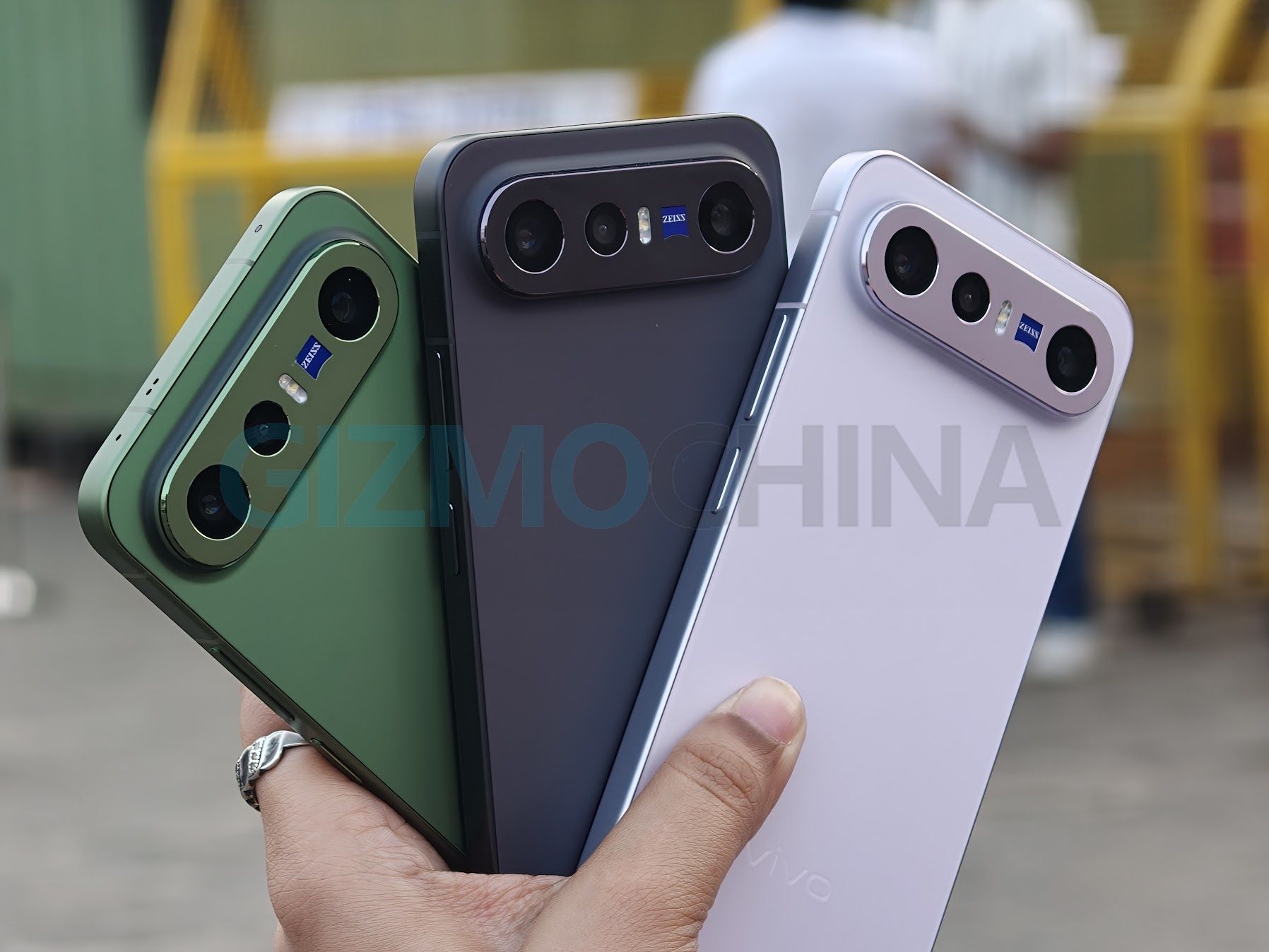
The premium foldable smartphone market is more competitive than ever, and the Vivo X Fold6 is taking on Samsung’s latest Galaxy Z Fold 7 with flagship hardware at a much lower price. While Samsung focuses on software refinement and long-term support, Vivo counters with a larger battery, faster charging, brighter displays, and an upgraded camera system. Here’s a detailed comparison to see which foldable delivers the better overall experience and value for your money.
The Vivo X Fold6 and Samsung Galaxy Z Fold 7 both represent the latest generation of premium foldable smartphones with refined designs and flagship materials. Vivo uses an aluminum frame paired with a glass front and a glass-fiber reinforced plastic rear panel while offering IP58/IP59 protection against dust and water. Samsung counters with Gorilla Glass Victus Ceramic 2 on the cover display, Gorilla Glass Victus 2 on the back, an Advanced Armor aluminum frame, and IP48 certification. Samsung also includes eSIM support and Ultra Wideband compatibility, making it more versatile for business users. Vivo, however, feels more practical with its higher durability rating and infrared blaster, giving it a few everyday advantages that many users may appreciate.
Display Quality
Both phones feature immersive 120Hz LTPO AMOLED foldable displays with HDR support, but Vivo delivers a sharper 8.02-inch panel with Dolby Vision, HDR Vivid, and an impressive 5,000-nit peak brightness on the cover display. Samsung’s Dynamic AMOLED 2X panel offers excellent color accuracy and One UI optimization, although its peak brightness tops out at 2,600 nits. Samsung’s software refinement makes animations exceptionally smooth, while Vivo’s brighter and higher-resolution displays provide a more striking visual experience, especially outdoors.
Verdict
Samsung offers premium materials and polished software, but Vivo delivers brighter displays, better durability certification, and a more impressive viewing experience. Overall, Vivo takes a slight lead in design and display.
2. Specifications Including Battery
Performance
The Vivo X Fold6 is powered by the MediaTek Dimensity 9500 Super chipset with UFS 4.1 storage, while the Galaxy Z Fold 7 runs Qualcomm’s Snapdragon 8 Elite paired with UFS 4.0 storage. Both deliver flagship-level performance capable of handling demanding games, multitasking, AI workloads, and productivity apps without difficulty. Samsung benefits from One UI 8 and promises seven major Android upgrades, making it a stronger long-term software investment. Vivo’s newer storage standard and powerful processor, however, provide excellent speed and responsiveness in everyday use. Both devices remain among the fastest foldables currently available.
Battery and Charging
Battery life is where the difference becomes significant. Vivo packs a massive 7,000mAh silicon-carbon battery supported by 80W wired, 40W wireless, reverse wired, and 5W reverse wireless charging. Samsung relies on a much smaller 4,400mAh battery with 25W wired and 15W wireless charging. Vivo is clearly built for heavy users who spend long hours away from a charger, while Samsung prioritizes efficiency over battery capacity.
Verdict
Samsung excels in software longevity, but Vivo delivers better battery endurance, faster charging, newer storage technology, and equally powerful performance. Vivo offers a stronger overall hardware package.
3. Camera
Main and Secondary Lenses
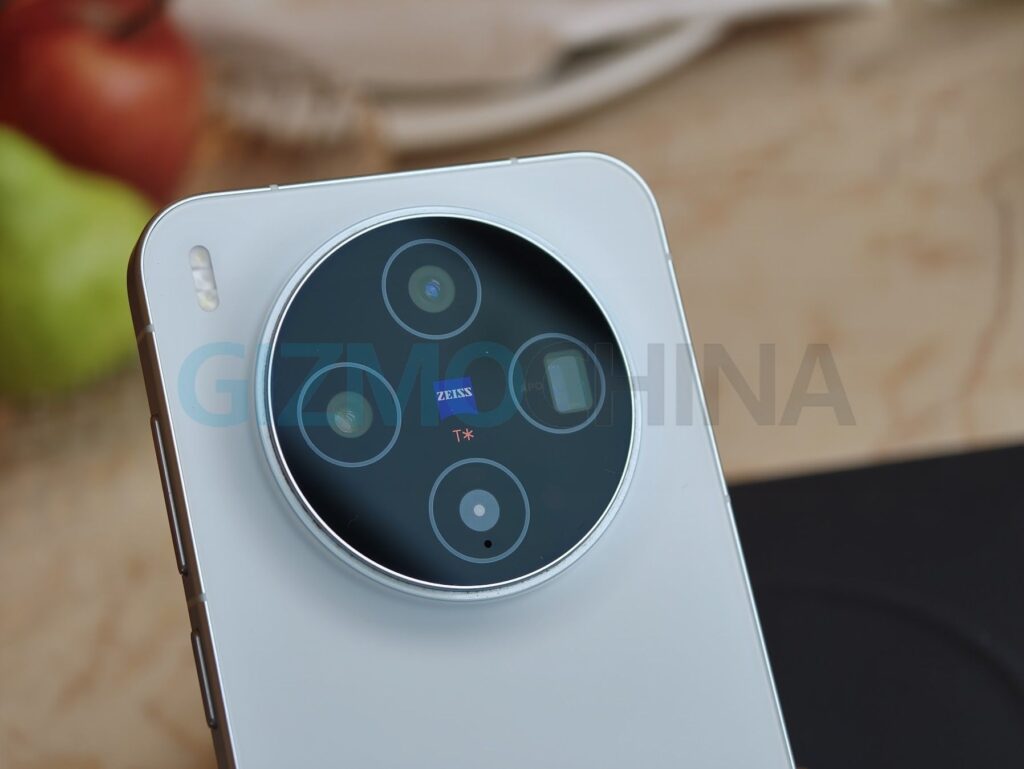
Both foldables feature impressive triple-camera systems led by 200MP primary sensors with optical image stabilization. Vivo complements its main sensor with a 50MP periscope telephoto camera offering 3x optical zoom and a 50MP ultrawide lens enhanced by Zeiss optics, Zeiss T* coating, laser autofocus, and a color spectrum sensor. Samsung uses a 10MP telephoto and a 12MP ultrawide camera while relying heavily on advanced computational photography. Samsung produces consistently balanced images with reliable color science, but Vivo’s superior hardware captures more detail, offers better zoom quality, and delivers greater flexibility in varied lighting conditions.
Selfie Camera
Vivo includes dual 20MP selfie cameras on both the cover and inner displays, while Samsung equips both positions with 10MP sensors capable of recording up to 4K video. Samsung offers better video recording options for selfie creators, but Vivo captures noticeably sharper still images with greater detail. Users focused primarily on photography are likely to appreciate Vivo’s approach.
Verdict
Samsung continues to impress with software processing and video capabilities, but Vivo’s stronger camera hardware, superior ultrawide and telephoto sensors, and higher-resolution selfie cameras make it the better photography-focused foldable.
4. Pricing
The Vivo X Fold6 is priced around $1,200 (₹111,000), while the Samsung Galaxy Z Fold 7 is priced around $1,600 (₹175,000). That creates a substantial difference of roughly $400 (₹64,000) between the two flagship foldables. Despite costing significantly less, Vivo includes a larger battery, dramatically faster charging, brighter displays, higher-resolution secondary cameras, UFS 4.1 storage, and a more capable camera system. Samsung justifies its premium through seven years of Android updates, One UI optimization, Samsung DeX, stronger ecosystem integration, and broader global software support. Buyers already invested in Samsung’s ecosystem may find the extra cost worthwhile, but the hardware advantage remains firmly with Vivo.
Verdict
Samsung commands a premium for software, ecosystem, and long-term support. Vivo delivers considerably more flagship hardware for a much lower asking price, making it the stronger value-for-money option for most buyers.
Disclaimer: Prices are approximate and may vary based on country, region, launch timing, and applicable taxes. Always check whether the listed price is for a China unit or a global/international variant when purchasing.
5. Conclusion
Vivo X Fold6 stands out with its enormous 7,000mAh silicon-carbon battery, 80W wired and 40W wireless charging, Zeiss-enhanced triple-camera system, brighter dual displays, infrared blaster, and higher durability certification. Samsung Galaxy Z Fold 7 answers with seven years of Android upgrades, Samsung DeX desktop mode, Ultra Wideband support, polished One UI 8 software, and one of the most mature foldable ecosystems available today. Samsung remains an excellent productivity companion, particularly for users already using Galaxy tablets, watches, or laptops. Vivo, however, focuses on delivering flagship hardware without demanding the highest premium.
Verdict
For buyers seeking maximum hardware, longer battery life, faster charging, and better camera versatility, the Vivo X Fold6 is the stronger overall choice. Those prioritizing software support, productivity features, and seamless ecosystem integration will still appreciate the Galaxy Z Fold 7.
Considering performance, features, and pricing together, Vivo offers the more compelling flagship foldable experience and delivers exceptional value against one of Samsung’s most premium devices.
Disclaimer: This comparison is based on the specifications provided and is intended for general informational purposes. Actual performance, camera results, battery life, and overall experience may vary depending on real-world usage, software updates, and individual preferences.
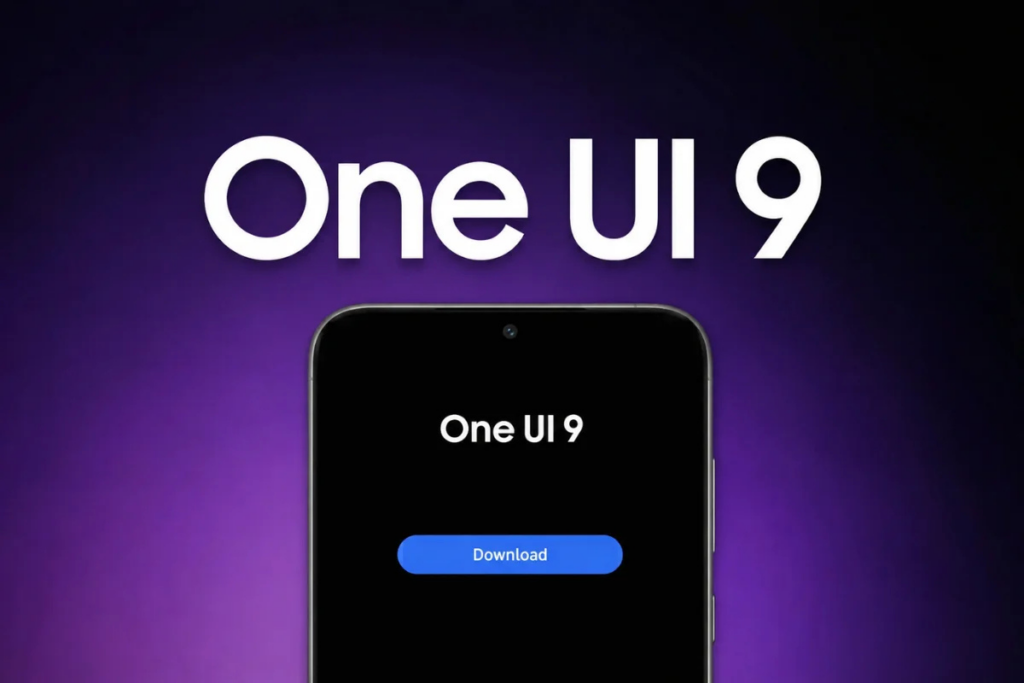
Stable Android 17 is out for Google Pixels, and Samsung is next in line. For Galaxy devices, the update arrives as One UI 9.0, which will debut pre-installed on the Galaxy Z Fold 8 and Z Flip 8 at Samsung’s Unpacked event on July 22, before rolling out to older Galaxy devices in the weeks that follow.
Unfortunately, many Galaxy devices will miss out on this major upgrade, as they have already received all the OS upgrades promised at their launch. The list includes many Galaxy A-series mid-range phones, as well as some highend phones such as the Galaxy S21 FE, Galaxy S22, and Galaxy Z Fold 4.
Review the complete list below to find out if you’ll need a hardware upgrade soon.
These Galaxy devices are not eligible for the One UI 9.0 (Android 17) update
Note: Samsung doesn’t reveal which devices won’t receive the next major upgrade. This list is based on the current software update policy, and so it should be completely accurate.
Samsung’s beta program is in its final stretch. One UI 9.0 Beta 4 is now rolling out to the Galaxy S26 series with the July 2026 security patch, and testing has quietly expanded to more than two dozen devices, including budget models like the Galaxy A07, A17, and A16 5G. Early testing doesn’t mean an early release for those phones, but it does suggest Samsung wants a faster, less buggy rollout than last year.
After the Z Fold 8 and Z Flip 8 launch with One UI 9.0 on board, expect the stable update to reach the Galaxy S25 series first, then the S24 and S23 generations through late 2026. Worth knowing if you’re holding a Galaxy S23: One UI 9.0 is expected to be the final major Android upgrade that generation receives.
What if your Galaxy ended support at One UI 7 or One UI 8?
If you landed here looking for an older update list: devices from the 2021 generation, the Galaxy S21, S21+, S21 Ultra, and the Z Fold 3 and Z Flip 3, received their final major upgrade with One UI 7 (Android 15). The 2022 generation listed above (Galaxy S22 series, S21 FE, Z Fold 4, Z Flip 4, Tab S8 series) ends the road at One UI 8.x.
All of these phones will keep getting security patches for a while, but no new Android versions. If yours is on either list, it’s a good time to start thinking about an upgrade — every Galaxy launched since the S24 gets seven years of OS updates, so your next phone will age far better than your current one.
And if your phone is on the ineligible list above, it may still have one update left in it, check whether it’s in line for Samsung’s One UI 8.5 update.
To keep the list short and relevant, we only included devices that received the One UI 8.0 update but won’t receive One UI 9.0. That’s why you don’t see the Galaxy S21 on the list.
If your Samsung device is on the list, it’s unlikely to receive the Android 17 update. The device may still receive security updates for a while, but it’s best to upgrade to a newer model to keep receiving the newest features and upgrades.
Don’t miss out on the latest One UI news. Check back on our Samsung section regularly, or follow us on Telegram to get notified the second a new story drops.
Last week, iQOO started teasing the iQOO Z11i in China. This will be the fourth Z11-series phone to hit the home market after the iQOO Z11x, Z11, and Z11 Turbo. The company has now confirmed when the new handset will go on sale, while leaks have also given a fair idea of what buyers can expect from the device.
iQOO Z11i launch date
iQOO Z11i launch date
iQOO has announced that the Z11i is now available for reservations in China and will officially go on sale at 10 am local time on July 3. The company has also confirmed that the smartphone will be offered in Qingfeng Green, Desert Gold, and Ink Shadow color options.
Official images reveal a dual rear camera setup housed in a rectangular camera island, while the front features a waterdrop notch display. Apart from these details, iQOO has not officially disclosed the handset’s hardware specifications.
iQOO Z11i specifications (expected)
According to information shared by tipsters, the iQOO Z11i could be a rebranded version of the Vivo Y60, which debuted in April this year in China. If that turns out to be accurate, the smartphone may feature a 6.74-inch LCD screen with HD+ resolution and a 120Hz refresh rate. It is also expected to be powered by the Snapdragon 4 Gen 2 chipset, paired with LPDDR4X RAM and UFS 3.1 storage.
The handset is tipped to pack a 6,500mAh battery with support for 15W charging. For photography, it may include a 5-megapixel front camera and a 13-megapixel rear camera.
Other expected features include a side-mounted fingerprint scanner, a 3.5mm headphone jack, an IR blaster, IP65 dust and water resistance, a notification light, single-band GPS, and dual-band BeiDou support.
For more daily updates, please visit our News Section.
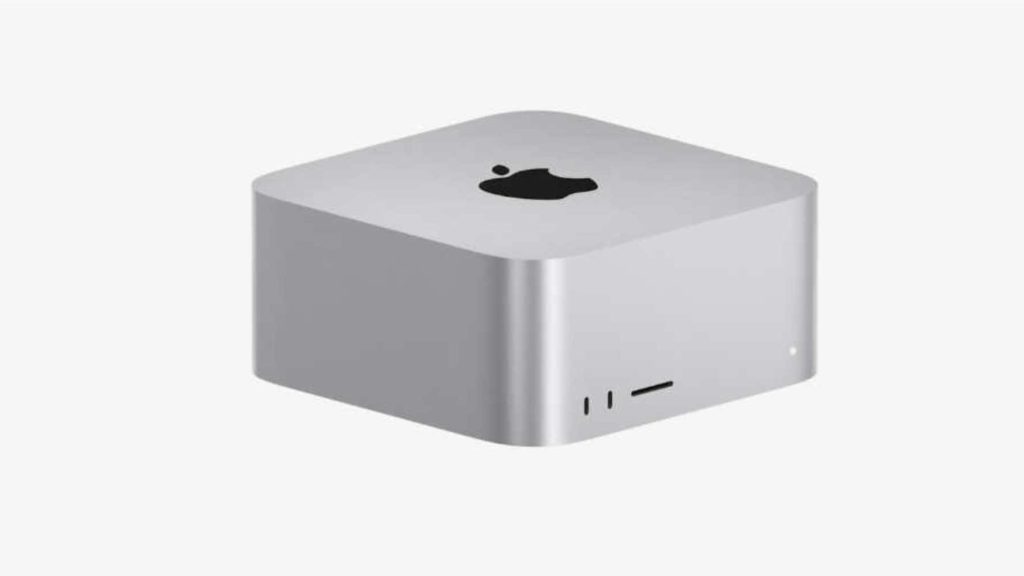
Apple’s Mac Studio lineup may have a clear roadmap over the next few years, according to Bloomberg’s Mark Gurman. While the next update is expected to focus mainly on new Apple Silicon, a future version could introduce internal improvements aimed at handling more demanding AI workloads.
M5 Ultra Mac Studio expected later this year
According to Gurman, Apple is still preparing to launch a Mac Studio powered by the M5 Ultra chip later in 2026. The upcoming model is expected to be a straightforward hardware refresh rather than a complete redesign. It is likely to retain the current chassis while delivering the performance gains that come with the new processor. This follows the existing Mac Studio lineup, which pairs the M4 Max with the older M3 Ultra chip, leaving the high-end variant due for an update.
Interestingly, Gurman’s latest report focuses only on the M5 Ultra version and does not mention an M5 Max variant. While that does not necessarily mean Apple has cancelled it, there is currently no fresh information on when or if it will arrive alongside the Ultra model.
Looking further ahead, Gurman claims Apple is already planning another Mac Studio refresh for 2028 with the M7 Ultra chip. Earlier reports have suggested Apple may skip M6 Pro, Max and Ultra processors altogether, reserving more advanced AI-focused silicon for the M7 generation.
The report also points to internal hardware changes, including a redesigned heatsink that could improve thermal performance during intensive professional workloads and on-device AI processing. While there is some possibility of a refreshed exterior with the M7 Ultra, Gurman notes that Apple traditionally keeps desktop designs unchanged for several years. For now, users should expect performance and cooling improvements to take priority over cosmetic changes.
What do you think about Apple focusing on better cooling instead of redesigning the Mac Studio? Share your thoughts in the comments.
For more daily updates, please visit our News Section.
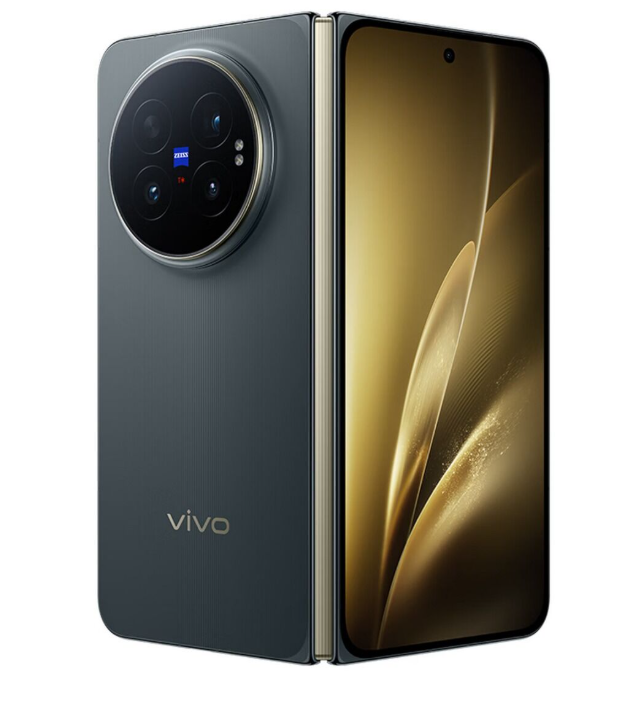
Vivo X Fold 6 is now available at Giztop with a starting price of $1,499, making it easier for global buyers to get Vivo’s latest flagship foldable smartphone. The device combines a large foldable display, flagship MediaTek performance, powerful ZEISS cameras, and a massive battery, making it an attractive option for users looking for a premium foldable experience.
Large Foldable Display
The Vivo X Fold 6 features an 8.02-inch LTPO AMOLED inner display built with Samsung’s advanced M14 emissive material. It offers a sharp 2K+ resolution, a 1-120Hz adaptive refresh rate, HDR10+ support, and up to 4,500 nits of peak brightness for excellent visibility. The outer 6.51-inch FHD+ LTPO AMOLED display uses second-generation Armor Glass, supports a 120Hz refresh rate, and features a 21:9 aspect ratio for comfortable everyday use. Security is handled by a fast 3D ultrasonic fingerprint scanner built into the display.
Flagship Performance
Powering the Vivo X Fold 6 is the custom MediaTek Dimensity 9500 Super Edition processor built on an efficient 3nm process. Paired with 12GB LPDDR5X Ultra RAM and up to 1TB UFS 4.1 storage, the phone is designed to deliver fast app launches, smooth multitasking, and reliable gaming performance.
ZEISS Camera System
The phone comes equipped with a premium triple rear camera setup led by a 200MP Samsung HPB main sensor with optical image stabilization. It is joined by a 50MP ultra-wide camera and a 50MP ZEISS APO periscope telephoto camera using Sony’s LYT602 sensor for detailed zoom shots. Vivo also includes its dedicated V2 imaging chip to improve image quality. Both the inner and outer displays feature 20MP punch-hole selfie cameras for clear video calls and selfies.
Battery and Software
A large 7,000mAh battery powers the Vivo X Fold 6 and supports 80W FlashCharge wired charging, along with 40W wireless charging. The phone runs Android 16 with OriginOS 6, offering a smooth software experience with Google Play Store support. Additional features include 5G connectivity, NFC, Wi-Fi, Bluetooth, USB Type-C, dual Nano SIM support, and a premium foldable design that completes the flagship package.
LG has introduced its new HomeBot AI Objet Collection RONi robot vacuum, bringing a fresh approach to premium home cleaning. The company has announced two versions that cater to different home layouts while introducing a new steam-based cleaning system, AI-powered navigation and a design that keeps the robot hidden when not in use.
LG RONi brings hidden installation and dual steam cleaning
LG Roni
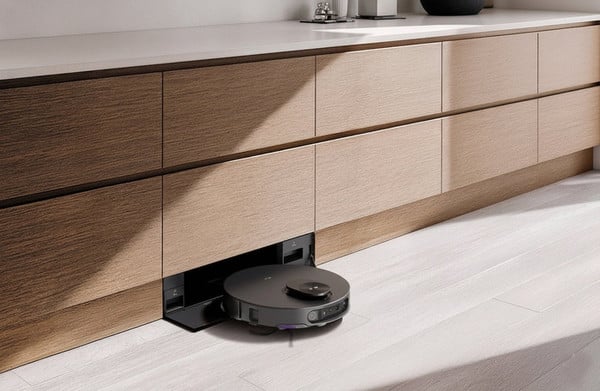
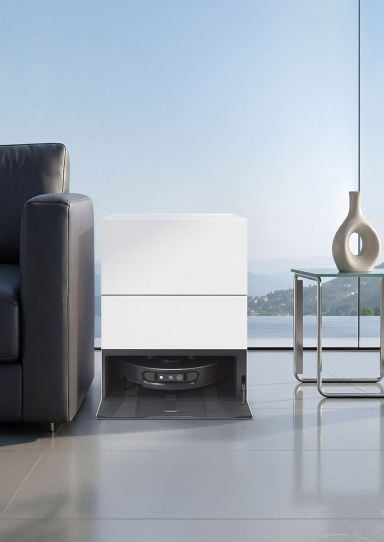
The LG HomeBot AI Objet Collection RONi is available in two variants. The Hidden Station is designed to fit beneath the kitchen sink kickboard with a 15cm-high docking station that supports automatic water supply and drainage without requiring additional cabinet modifications.
Meanwhile, the Objet Station is a standalone version with a side-table-inspired design that can be placed anywhere in the house. Both models feature an automatic front door that opens when the robot enters or exits the station and remains closed the rest of the time to keep the unit out of sight.
LG Roni
One of the biggest highlights is the world’s first system that applies 100°C steam to both the robot and its docking station. During mopping, steam is sprayed onto the mop to loosen stubborn stains. Once cleaning is complete, the station washes the mop with 100°C steam and hot water, removing up to 99.99 percent of four common harmful bacteria. Warm air drying helps reduce odor-causing substances, while a station conditioning system expels moisture to keep the dock clean.
RONi packs 30W suction power and spinning mop pads that rotate at 180rpm. An extendable side brush reaches around 46mm into corners, while a dual-brush design helps reduce hair tangles. LG’s AI object recognition technology works with eight onboard sensors to identify more than 120 types of objects, including cables, flower pots and pet waste.
The robot can notify users about obstacles through the LG ThinQ app and automatically revisit missed areas after obstructions are removed. It also adjusts suction power and cleaning patterns depending on the room, such as increasing cleaning intensity in kitchens.
The robot vacuum also features LG Shield security, which encrypts collected data and stores encryption keys separately. The camera remains hidden behind the closed station door after cleaning, helping address privacy concerns. Sales begin on July 2 through LG Best Shop, LG’s online store and Coupang.
Price and availability
Both the Hidden Station and Objet Station are priced KRW 2.19 million. Early buyers purchasing between July 2 and July 15 will receive a welcome kit, while selected photo review participants will get additional gifts. There’s no confirmation whether this device will be released in other markets outside of South Korea.
For more daily updates, please visit our News Section.
Tipster Digital Chat Station has shared that the Xiaomi 18 engineering prototype is running a 7,200mAh battery. That’s a slight increase from the Xiaomi 17‘s 7,000mAh cell. For a compact phone, this is still a strong spec, even as other phones in the market are now offering 8,000mAh and 10,000mAh batteries in larger bodies.
Earlier leaks had already pointed to the Xiaomi 18 having a bigger battery than its predecessor, and this latest update puts a number to it.
Xiaomi 18 Specs: What We Know So Far
The Xiaomi 18 is expected to come with a 6.4-inch 2K display and ultra-narrow symmetrical bezels. It is also rumored to use SuperPixel display technology. The overall design keeps the phone compact and easy to handle.
The Xiaomi 18 will feature a 200MP rear camera setup with large sensors. It will also be the first standard Xiaomi model to include a 3X periscope telephoto lens, which had previously been reserved for Pro versions. The phone also supports ultrasonic fingerprint recognition and full waterproofing.
No changes on the charging front. The Xiaomi 18 will support 100W wired charging and wireless charging, the same as before.
The back screen design seen on the Pro models will not be coming to the standard Xiaomi 18. That feature stays exclusive to the Pro lineup, as reported in our earlier Xiaomi 18 Pro Max coverage.
The Xiaomi 18 series is expected to launch in September, possibly a little earlier than last year. It will go up against the iPhone 18 Pro series around the same time.
More details are expected to surface in the weeks ahead.
For more daily updates, please visit our News Section.
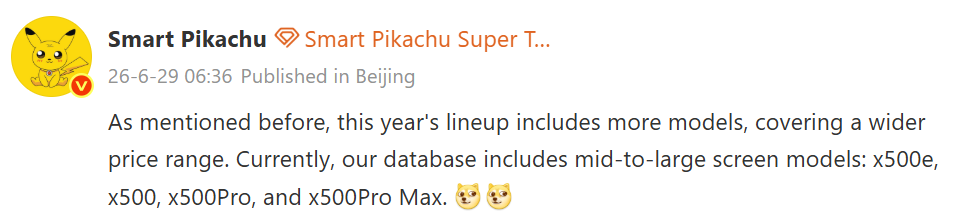
Over the weekend, tipster Digital Chat Station revealed key details about the upcoming Vivo X500e. Now, a new leak courtesy of tipster Smart Pikachu suggests that the lineup will include as many as four models. At the same time, Digital Chat Station is back with another leak revealing more details about the Vivo X500 Pro Max.
Vivo X500 series variants revealed
As seen in the latest leak, tipster Smart Pikachu claims that the Vivo X500 series will include four models: the Vivo X500e, X500, X500 Pro, and X500 Pro Max. While the leak does not mention them, the brand may also introduce two additional models, namely the X500s and X500 Ultra, in the first half of 2027.
Vivo X500 Pro Max key details tipped
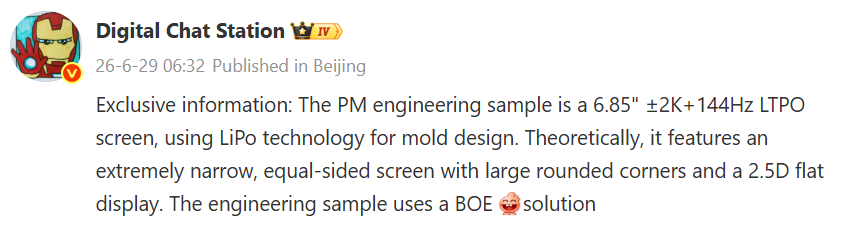
According to Digital Chat Station, the current Vivo X500 Pro Max engineering prototype is said to feature a 6.85-inch 2K LTPO display with a 144Hz refresh rate. The panel is reportedly manufactured using LIPO packaging technology, allowing for ultra-slim, symmetrical bezels on all four sides. It is also tipped to feature large, rounded corners and a 2.5D flat display, with BOE expected to supply the panel.
The leak further claims that the engineering prototype is equipped with LPDDR6 RAM, indicating that Vivo could be among the first smartphone brands to adopt the next-generation memory standard. This also suggests that the device may be powered by the upcoming Dimensity 9600 Pro chipset.
On the camera front, the X500 Pro Max is tipped to retain a 200-megapixel periscope telephoto camera with a large 1/1.4-inch sensor. According to previous reports, it will also feature a Sony LYT-838 50-megapixel primary camera with LOFIC technology, a 50-megapixel IMX8-series ultra-wide camera.
As for the battery, Digital Chat Station says Vivo is targeting a capacity beginning with the number “8,” suggesting that the phone could pack an 8,000mAh-class battery. However, the battery design has reportedly not been finalized yet.
As always, these details are based on an early engineering prototype, so the final specifications could change before launch.
For more daily updates, please visit our News Section.
Chinese audio brand Moondrop has launched the new Moondrop Edge 2 wireless headphones. Open for pre-order in its home country, the Edge 2 are 499 yuan (~ $70) over-ear wireless headphones that improve noise cancellation by 24.4% over the original Edge.
According to Moondrop, the headphones block out 95.5% of ambient noise below 1kHz and use AI-powered ENC (environmental noise cancellation) with beamforming microphones and a built-in NPU chip, so your voice stays clear even in loud, busy places.
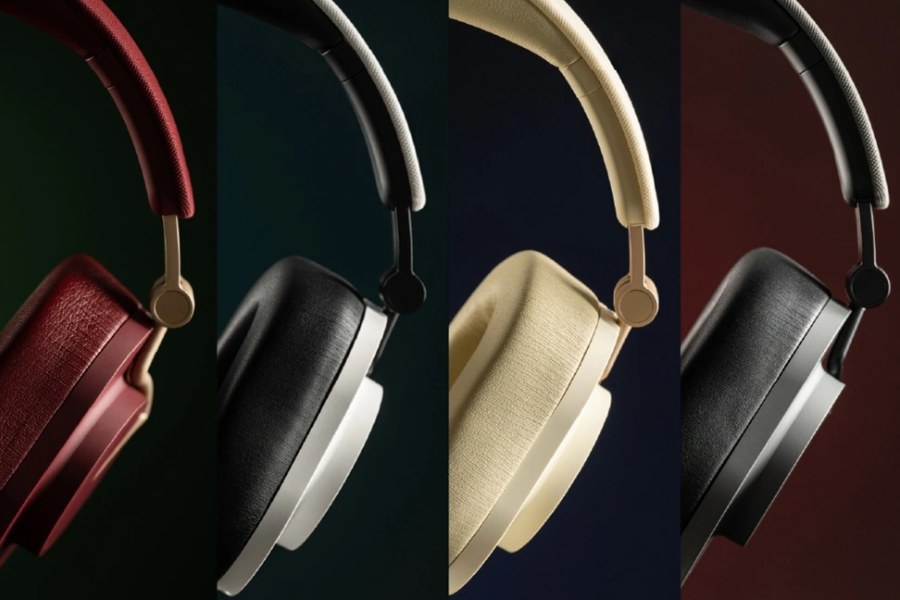
The headphones are available in two color options — black and white, and black and gray — and can be ordered now through JD.com.
Moondrop Edge 2 Specifications
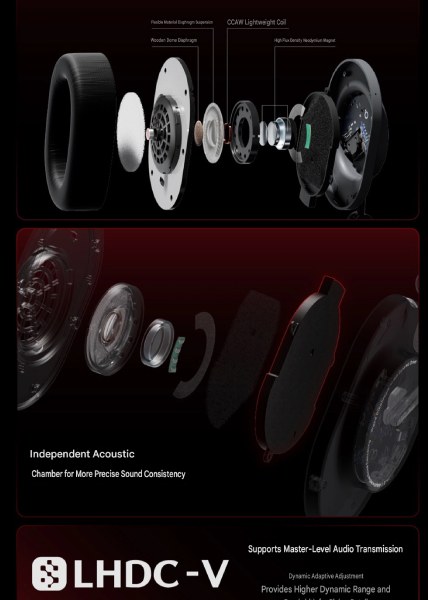
Under the hood, the Edge 2 uses a 40mm dynamic driver with a composite diaphragm, which is a wooden dome paired with a flexible suspension edge. Moondrop says this combination, along with a high-flux neodymium magnet and an ultra-lightweight CCAW voice coil, keeps distortion low while delivering a full, rich sound.
On the wireless side, the headphones support LHDC V5 for high-resolution audio streaming. They are also compatible with LDAC, both of which offer significantly better audio quality than standard Bluetooth codecs.
Moondrop promises up to 50 hours of battery life when paired over Bluetooth. And for situations where you’d rather skip wireless entirely, the Edge 2 supports USB wired audio with what the company calls a “zero-latency” mode, useful for gaming or video editing where audio sync matters.
The Edge 2 includes capacitive wear detection, meaning the headphones can automatically pause playback when you take them off and resume when you put them back on. Users can turn this on or off through the Moondrop app.
Speaking of the app, it offers a full DSP (digital signal processing) interface with a professional-grade graphical equalizer. There’s also an online tuning community built right in, where users can download preset tuning configurations from others or upload their own.
The headband uses a stainless steel telescopic hinge made with MIM powder metallurgy and CNC engraving. The ear pads are non-parallel, filled with memory foam, and are user-replaceable.
For more daily updates, please visit our News Section.
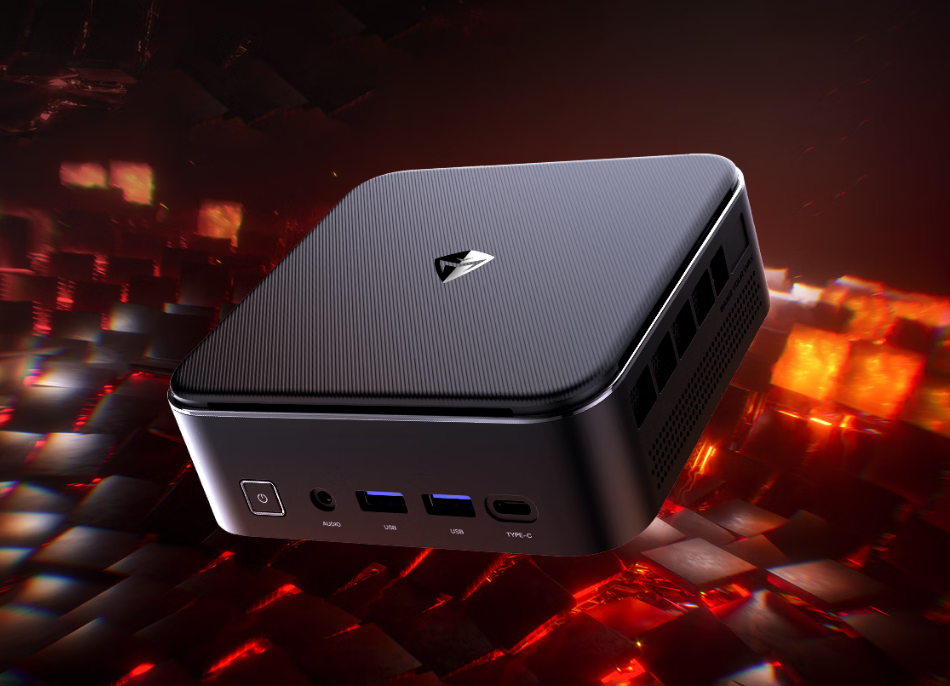
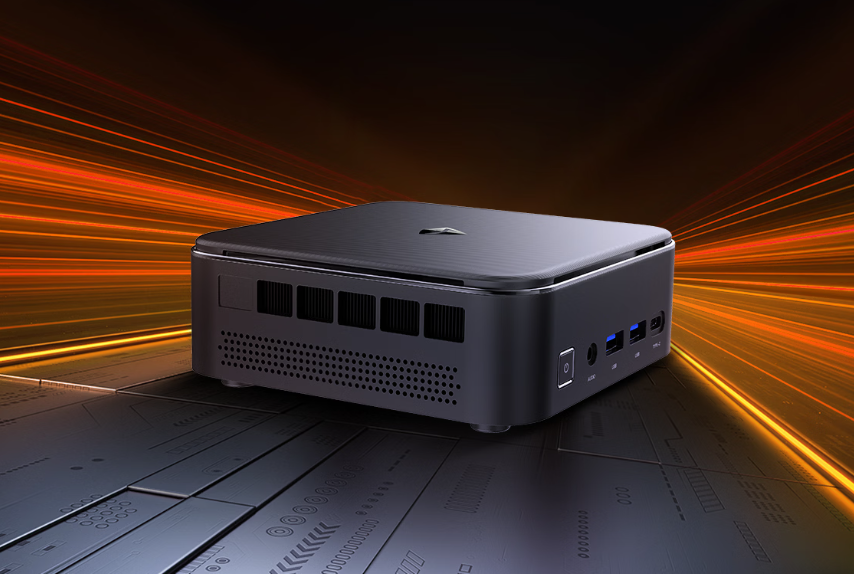
Machenike has updated its GTR mini PC lineup with a new configuration, introducing an AMD Ryzen 7 255H processor, 16GB of DDR5 memory, and a 1TB PCIe 4.0 SSD. The new model is currently available in China for 4,699 yuan ($690).
Machenike GTR Mini PC Specifications
The mini PC features a compact 0.74-liter chassis measuring 128 x 128 x 45.1 mm and weighing approximately 650g. It sports a clean, minimalist design with a diagonal woven metal-inspired texture on the top panel that not only enhances its appearance but also helps reduce fingerprint smudges.
Internally, the system is powered by the AMD Ryzen 7 255H processor with 8 cores, 16 threads, a boost clock of up to 4.9GHz, and 24MB of cache. It pairs the chip with AMD Radeon 780M integrated graphics, which the company says is capable of delivering playable frame rates in games including CS:GO, GTA V, Forza Horizon 5, Genshin Impact, Call of Duty: Modern Warfare II, Fortnite, and Cyberpunk 2077.
Machenike has built the system with future upgradeability in mind. The 16GB of DDR5 memory is installed in a dual SO-DIMM configuration, and the 1TB PCIe 4.0 NVMe SSD is paired with a second M.2 slot for additional storage expansion.
Thermal management is handled by the company’s MER 1.0 cooling system, which utilizes a single fan and a dual heat pipe design. According to the manufacturer, this setup maintains a stable 65W output and can handle peak power draws of up to 70W under heavy workloads.
The port selection is dense for a compact machine. The front panel includes two USB 3.2 Gen 2 Type-A ports, a 3.5mm audio jack, and a USB4 port capable of 40Gbps bandwidth.
The back of the device features four USB 3.2 Gen 1 Type-A ports, an HDMI 2.0 output, a DisplayPort 1.4, a 2.5GbE RJ45 Ethernet port, and a Kensington lock slot. Wireless connectivity includes Wi-Fi 6 and Bluetooth 5.3, supported by an optimized antenna structure for signal stability.
In related news, GMKtec has recently launched the Evo-X3 mini PC, featuring the Ryzen AI Max+ 395, paired with up to 128GB of LPDDR5X memory and support for OCuLink connectivity.
For more daily updates, please visit our News Section.
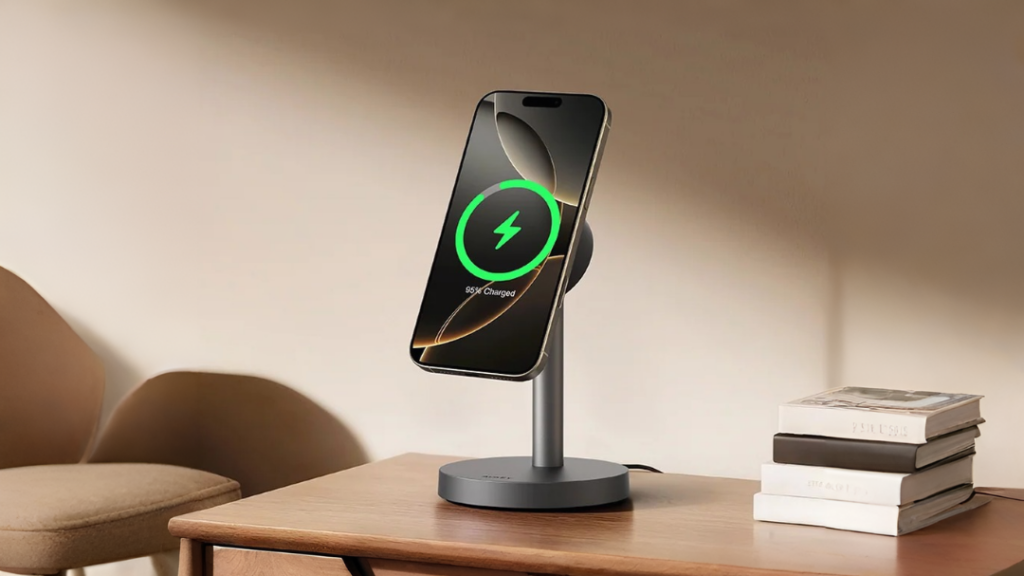
The Wireless Power Consortium (WPC) recently concluded a technical conference at Xiaomi’s Beijing headquarters to develop the upcoming Qi 50W wireless charging standard. The event, which ran from June 22nd to June 25th, brought together engineers from across the consumer electronics industry, including representatives from Apple, Google, Huawei, Honor, Oppo, and Vivo.
The primary objective of the meeting was to address the technical specifications, prototype testing, and interoperability requirements for 50W wireless charging. The WPC, which oversees the Qi standard, has been incrementally increasing power limits over the past few years. Following the adoption of the 15W magnetic Qi2 standard as an IEC international standard in late 2024, the consortium introduced a 25W specification in 2025. The 50W standard is the next target, with an expected release date in 2028.
Much of the discussion at the Beijing conference centered on Xiaomi’s proposed hardware architecture for the upcoming Qi 50W standard. According to Xiaomi, the existing coil design requirements for the Qi2 standard are restrictive and present thermal management challenges, particularly for foldable phones and automotive charging pads. To address this, Xiaomi spent two years developing a low-inductance, low-voltage charging architecture.
This alternative design is intended to reduce coil loss and improve heat dissipation while making the charging modules easier to integrate into modern devices. Xiaomi submitted the proposal to the WPC in late 2024 and completed cross-vendor testing with 25W and 50W prototypes throughout 2025. In the first quarter of 2026, the WPC officially incorporated this architecture into the drafting process for the Qi 50W standard.
During the recent four-day event, more than 20 companies participated in a Plugfest. This standard industry testing process involves checking different chips, coils, and devices against one another to identify compatibility issues. Companies like Anker, NXP, and Southchip tested their prototype hardware to ensure that future 50W chargers will work safely and reliably across different device brands.
For Chinese hardware manufacturers, getting their low-inductance charging technology integrated into the global Qi standard is a practical business requirement. It ensures their domestic supply chains remain compatible with international markets, preventing regional fragmentation in wireless charging standards.
For more daily updates, please visit our News Section.
For years, compact smartphones have come with compromises. If you wanted a phone that was genuinely comfortable to use with one hand, you usually had to settle for a smaller battery, fewer cameras, slower charging, or hardware that wasn’t quite flagship-grade. Meanwhile, phones with the best specifications kept getting larger, making one-handed use increasingly difficult.
The Vivo X300 FE takes a different approach. Instead of asking users to choose between portability and performance, it combines flagship hardware with a compact form factor. It packs Qualcomm’s Snapdragon 8 Gen 5 chipset, a 6,500mAh battery, ZEISS-backed cameras, wireless charging, and a premium build into a body that’s noticeably smaller than most flagship smartphones.
There’s one catch, though. The Vivo X300 FE starts at Rs. 79,999 (~$850), while the regular Vivo X300 is available for Rs. 75,999 (~$800). That naturally raises the question: why would anyone pay more for the FE model?
After spending time with the phone, the answer becomes clearer. The X300 FE isn’t positioned as a cheaper alternative to the X300. Instead, it’s designed for users who value comfort, battery life, and everyday usability just as much as camera hardware. Whether that strategy works is what this review aims to find out.
8Verdict: A Compact Flagship That Stands on Its Own
The Vivo X300 FE is a phone that makes more sense the longer you use it.
Yes, its pricing initially feels confusing. At Rs. 79,999, it’s actually more expensive than the regular Vivo X300, which offers a stronger overall camera system. If camera performance is your only priority, the X300 remains the more sensible purchase.
However, that’s also missing the point of the X300 FE.
This isn’t designed to be a cheaper flagship. Instead, Vivo has built a premium smartphone for people who value comfort as much as specifications. It combines flagship performance, exceptional battery life, dependable ZEISS cameras, wireless charging, premium build quality, and long software support in a form factor that’s genuinely comfortable to use every day.
It’s not without flaws. The 8MP ultrawide camera feels underwhelming at this price, and the optional ZEISS Telephoto Extender is aimed at a niche audience rather than everyday users.
Vivo X300
Even so, the overall package is difficult to fault. There simply aren’t many compact Android flagships that offer this combination of portability, battery life, performance, and camera quality.
If you’ve been waiting for a flagship that fits comfortably in one hand without sacrificing the features that matter most, the Vivo X300 FE stands in a category of its own. It may not have the absolute best camera hardware in Vivo’s lineup, but as an everyday flagship that’s a pleasure to carry and use, it succeeds remarkably well.
Overall verdict
The Vivo X300 FE proves that compact smartphones no longer have to feel like compromises. It delivers flagship performance, outstanding battery life, a refined software experience, and cameras that are among the best in its class, all in a size that’s genuinely practical. While the pricing and ultrawide camera leave room for debate, neither is enough to overshadow what Vivo has achieved. For anyone looking for a premium Android flagship that prioritises everyday usability over sheer size, the X300 FE is arguably the most complete option currently available.
For more daily updates, please visit our News Section.
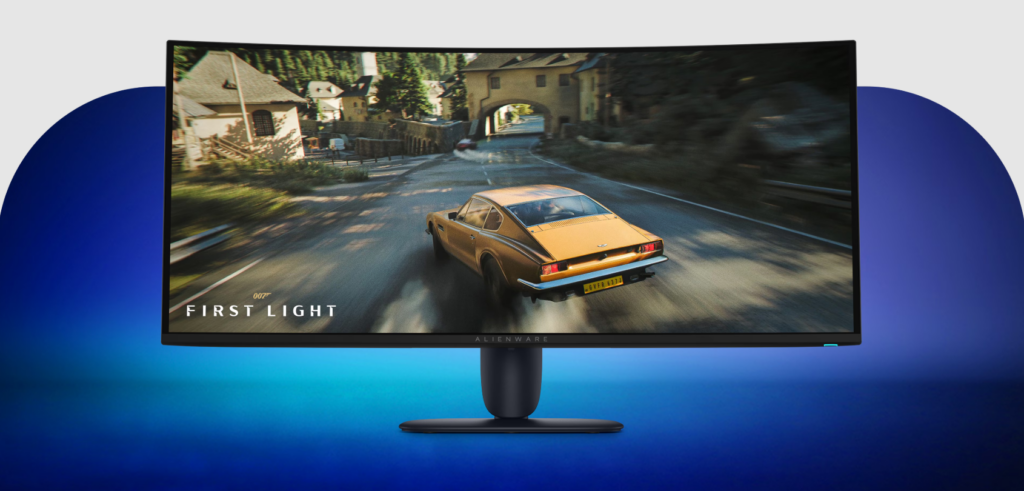
Dell has introduced a new ultrawide monitor to its Alienware brand. The AW3426DW is a 34-inch curved gaming monitor equipped with a dual-layer QD-OLED panel. It is currently available to order in European markets, priced at €809 in Germany and £709 in the UK (both inclusive of VAT), with shipments scheduled to begin on July 2nd.
Dell Alienware AW3426DW Specifications
The monitor features a 21:9 aspect ratio with a UW-QHD resolution of 3440 × 1440, resulting in a pixel density of roughly 110 PPI. It has a moderate 1800R curve and uses a 3H hard-coated anti-glare surface to manage ambient room reflections.
Dell is sourcing the panel from Samsung, utilizing a V-Stripe RGB subpixel layout. This improves text clarity and minimizes the color fringing artifacts that were common on earlier QD-OLED displays.
In terms of performance, the AW3426DW offers a 280Hz maximum refresh rate and a 0.03ms gray-to-gray response time in its Extreme Mode. It supports standard variable refresh rate technologies, including AMD FreeSync Premium Pro, VESA AdaptiveSync, and Nvidia G-Sync compatibility.
The 10-bit panel covers 99% of the DCI-P3 color space and is factory-calibrated to a Delta E average of less than 2. Typical SDR brightness is rated at 300 nits, while HDR content can peak at 1,300 nits. The monitor supports Dolby Vision HDR and holds a VESA DisplayHDR True Black 500 certification.
For connectivity, the back panel houses two HDMI 2.1 ports, which support 48Gbps bandwidth and Fixed Rate Link (FRL), and one DisplayPort 1.4 connection. There is also a built-in USB 3.2 Gen 1 hub that includes a Type-B upstream port, a Type-A downstream port, and a USB-C port limited to 15W of power delivery.
Physically, the monitor weighs 4.88kg on its own, and roughly 7.91kg when attached to the included stand, which allows for height, tilt, and swivel adjustments. Typical power consumption sits at 31W.
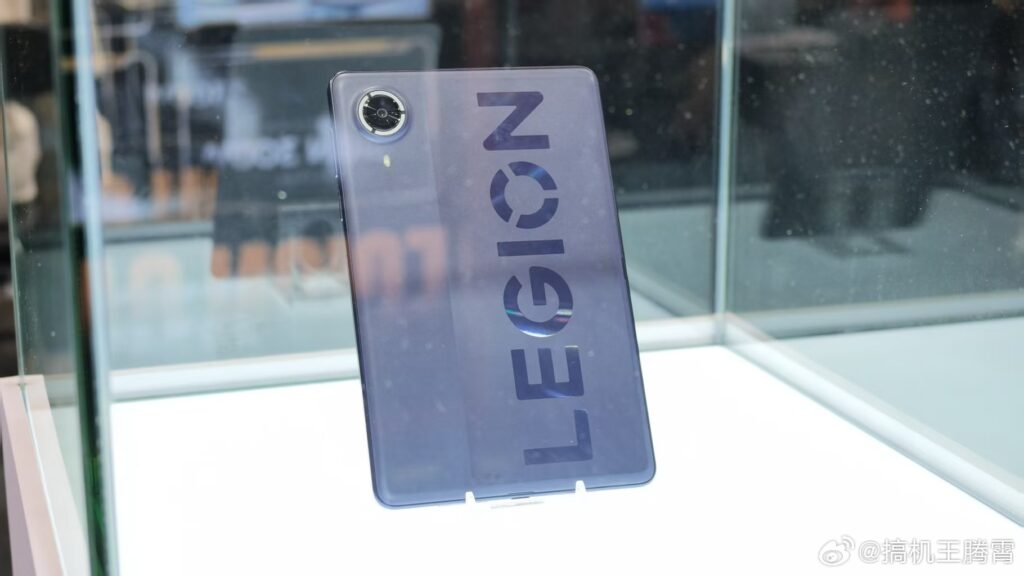
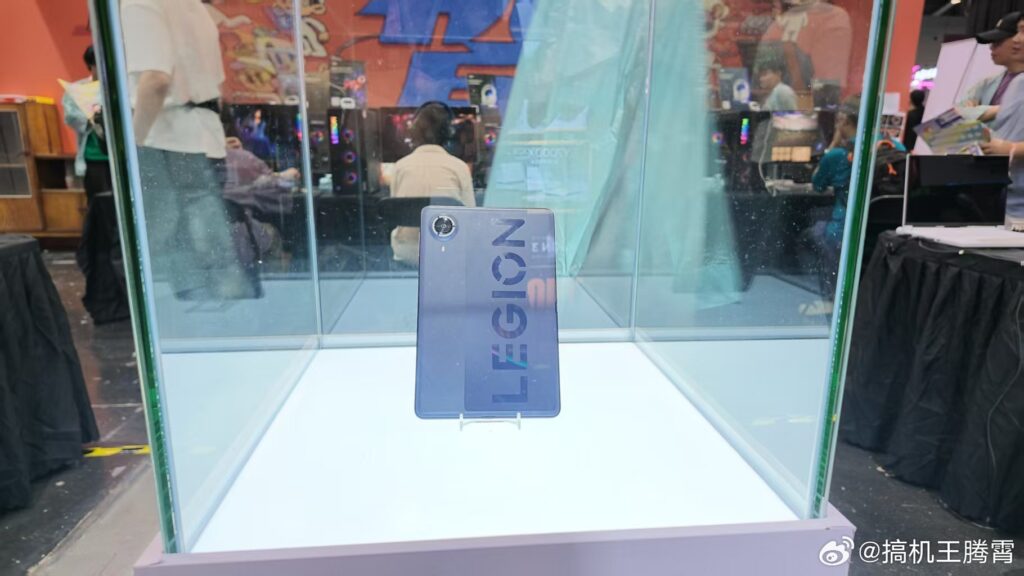
Lenovo is keeping gaming fans excited with a fresh tease for its Legion series. A mysterious new tablet just showed up at the “Nuclear Fusion Game Carnival 2026 Shenzhen Station,” one of China’s largest gaming events, and it looks like a stylish upgrade to their popular compact gaming tablets.
Photos shared by several bloggers reveal the new Legion tablet sporting a big 50MP rear camera. What visually stands out is the ring of customizable RGB lighting that can light up during games or notifications. The back also features the iconic Savi logo along with Legion branding, giving it a bold, gamer-focused look.
This new model appears to be a refreshed version of the Legion Y700 5th Generation (known globally as the Legion Tab Gen 5), which launched back in March 2026. That tablet is powered by the flagship Qualcomm Snapdragon 8 Elite Gen 5 processor and delivers excellent gaming performance. It has an 8.8-inch 3K display (3040 x 1904) with a 165Hz refresh rate. Other highlights include a huge 9000mAh battery with 68W fast charging and bypass charging to keep things cooler during long sessions.
It also plays really well with other devices thanks to Super Connect 3.0, letting you easily connect with Lenovo PCs, Motorola phones, and even view iPhone messages or transfer files across devices. You can get it with up to 24GB RAM and 1TB of storage, so it handles heavy games and multitasking without breaking a sweat. In China, it starts around 3999 yuan, which feels like a strong value in the premium compact tablet space.
The version spotted at the event seems to focus mainly on aesthetics, probably a special edition. The new RGB lighting ring and updated design give it extra flair while likely keeping the same powerful internals that people already love for emulation and competitive mobile titles.
We’ll have to wait for official details to see if this new model brings any small hardware upgrades or if it’s mostly about the fresh look and lighting customization. Either way, with mobile gaming still growing strong, Lenovo looks determined to stay one of the top choices for serious gamers.
If you work from home, you probably know how quickly a desk can get cluttered. Between monitors, keyboards, mice, external drives, and the cables needed to power them all, keeping a workspace tidy is an ongoing chore.
Priced at $299.99, it’s marketed as a premium, central hub for Windows users who need a lot of ports and reliable power. During my testing period, my main desktop PC actually crashed, and I had to send it in for repairs.
I had to switch entirely to my laptop to get my work done. That ended up being a great test for this dock, as it allowed me to connect my laptop to my dual monitors and all my peripherals with just one USB-C cable. It made a frustrating situation much easier to manage.
Design and Build Quality
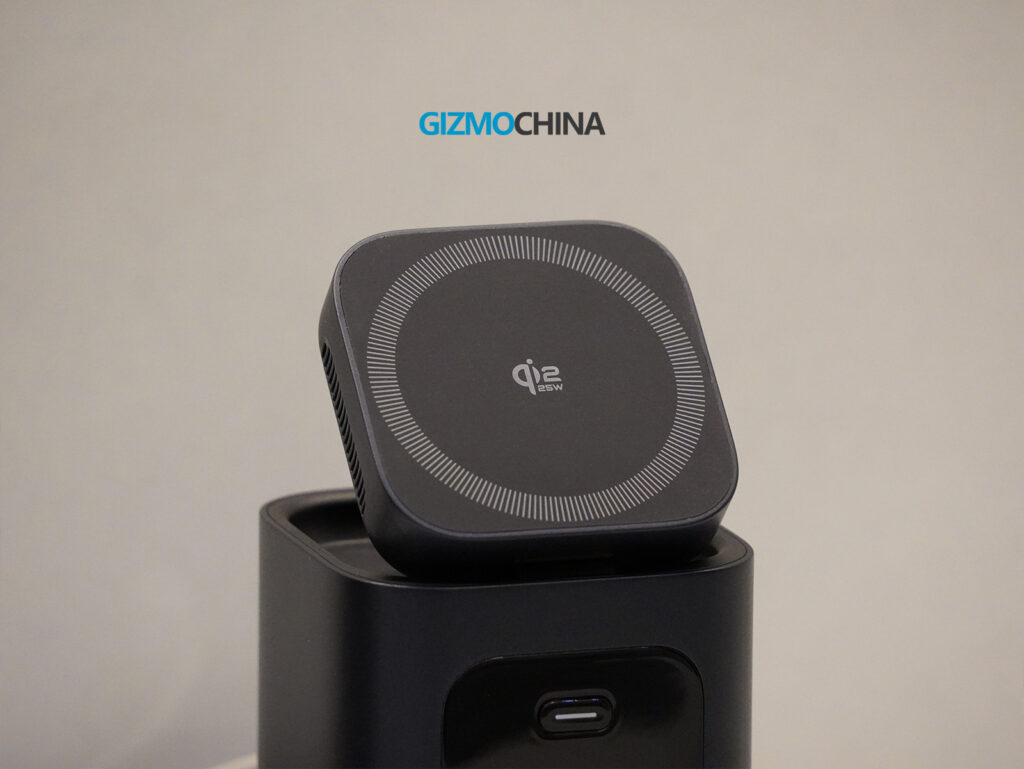
The first thing you’ll notice about the Spacemate RD1 Pro is its vertical design. Instead of lying flat on the desk like many traditional docks, it stands upright. Baseus calls this a Space Simplified approach, and it does save a good amount of horizontal desk space.
The build quality is solid, which is something I’ve come to expect from Baseus. There are no sharp edges; the corners are rounded, and the Cosmic Black finish gives it a subtle, professional look that blends in well with most desk setups.
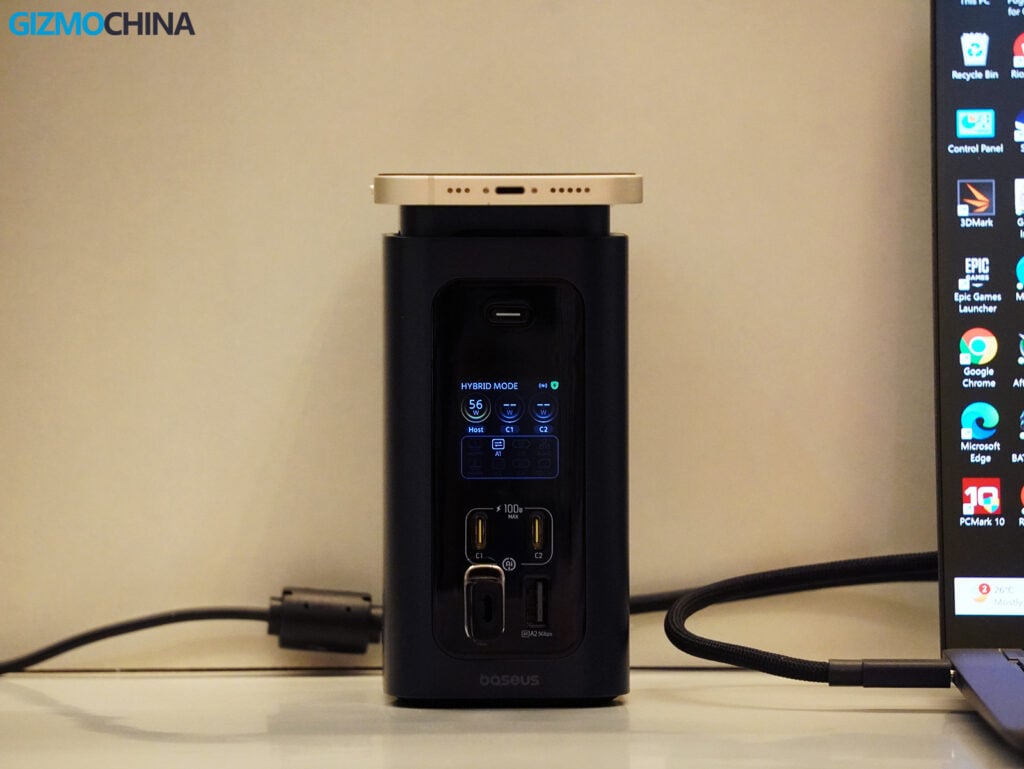
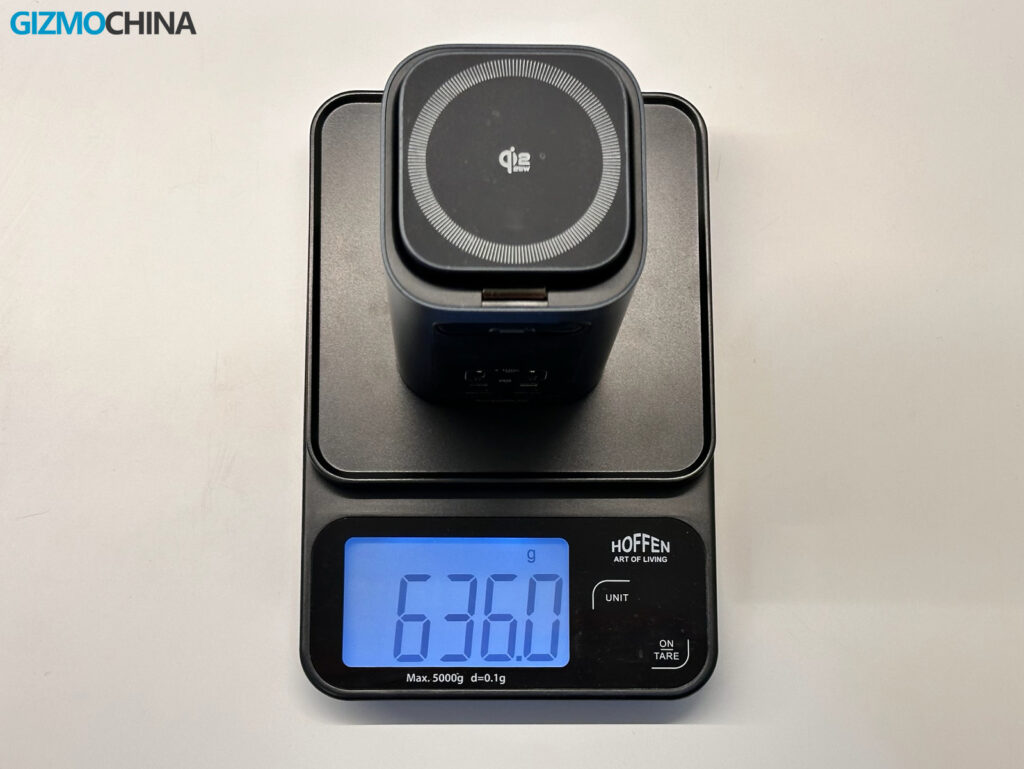
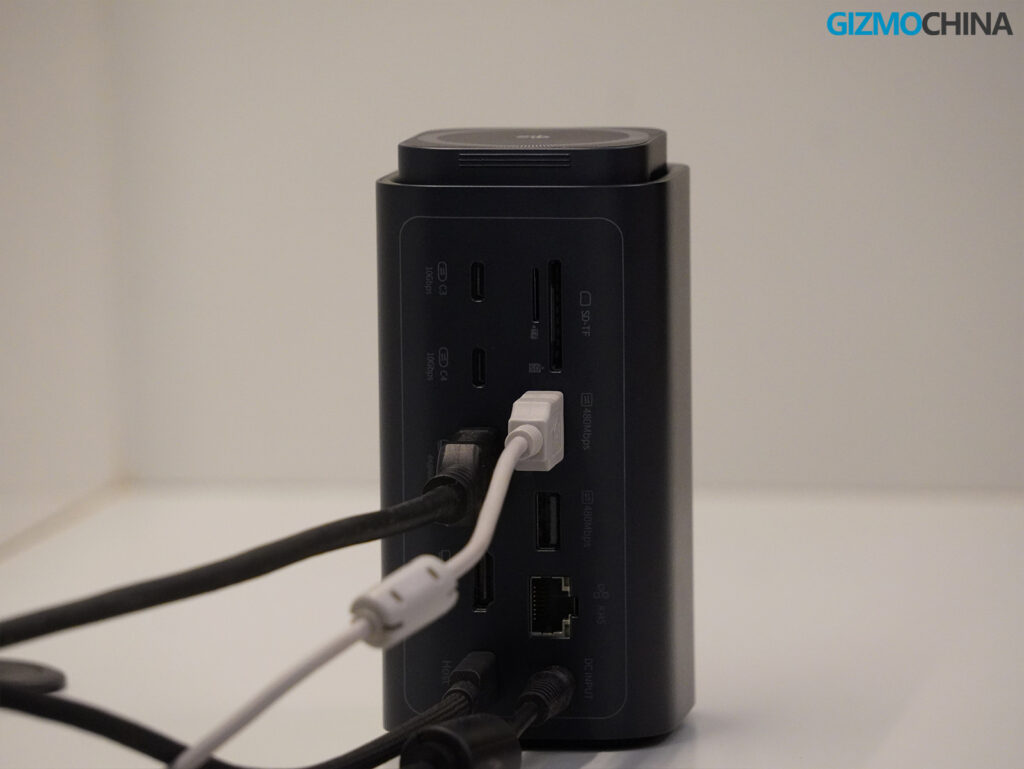
Before I set it up, I was a little concerned that a vertical dock might easily tip over, especially since it has a magnetic charging pad for a phone on the very top. However, the unit weighs 636 grams on its own. Even with several stiff cables plugged into the back and my phone resting on top, it remained stable on my desk.
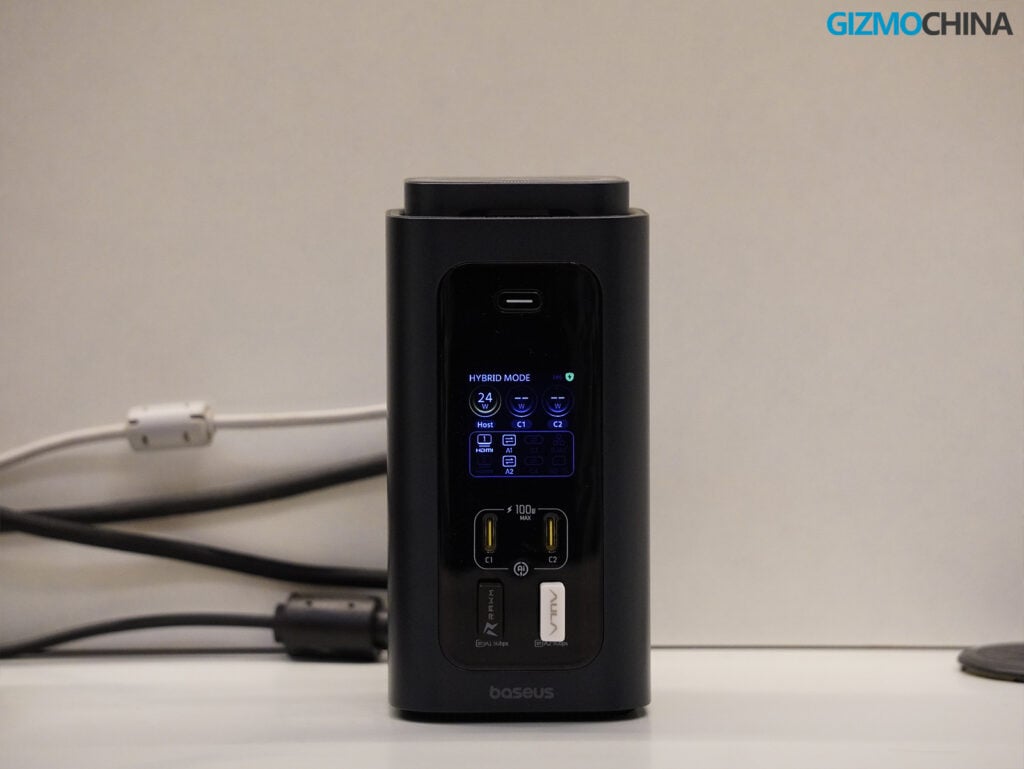
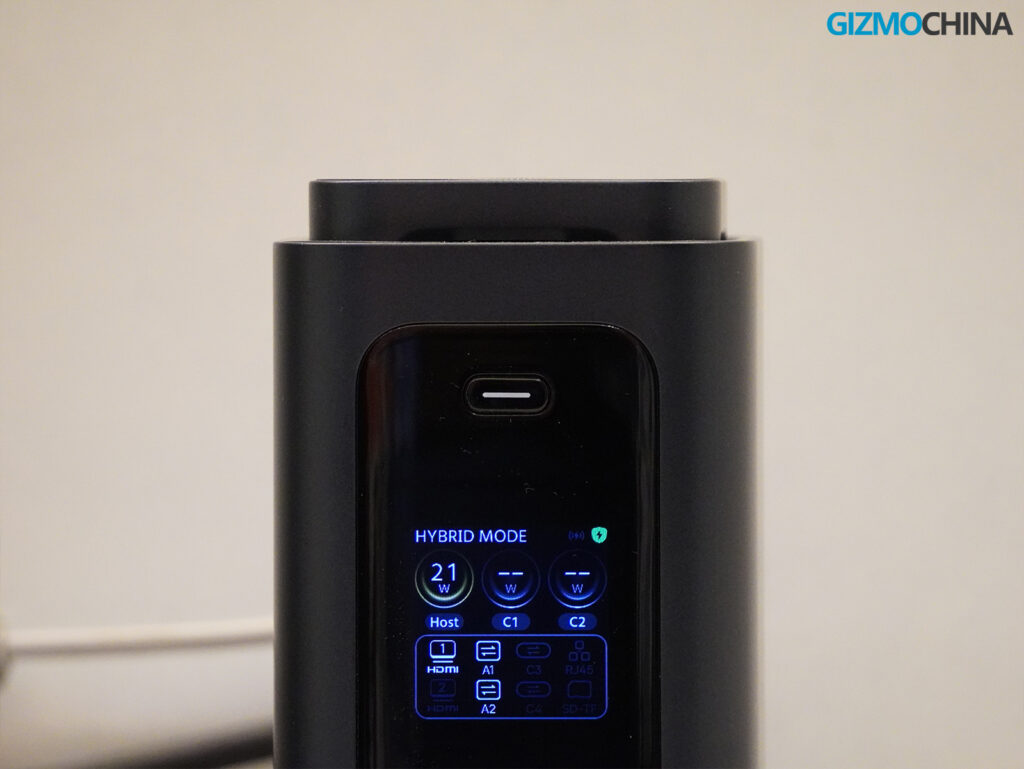
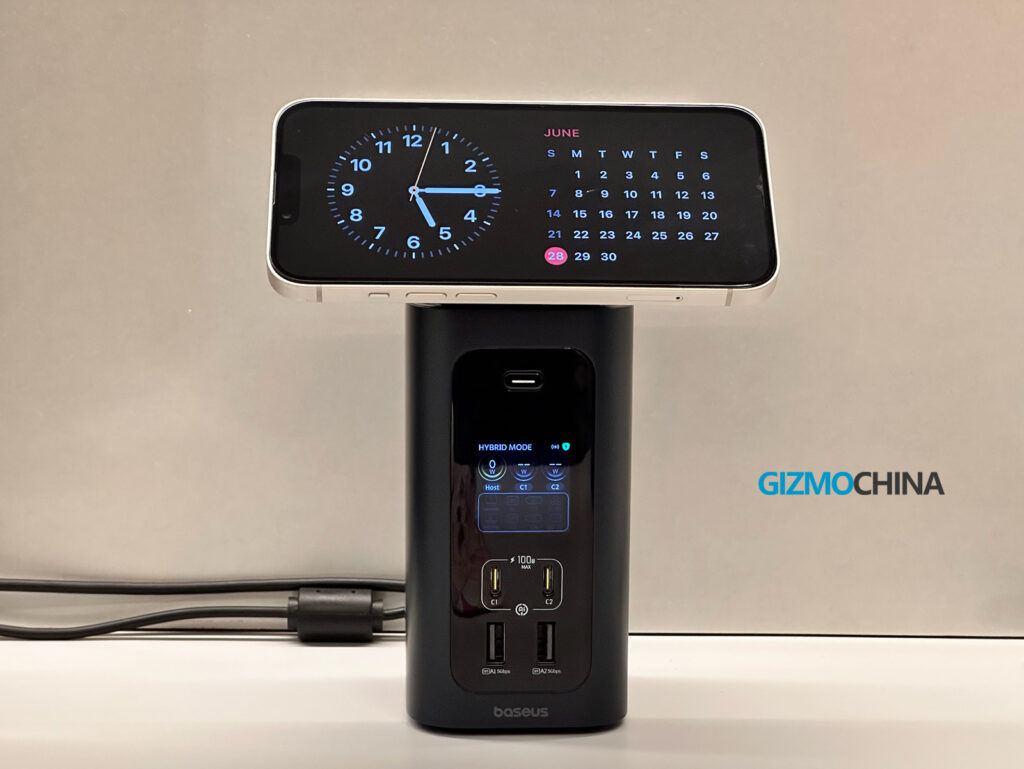
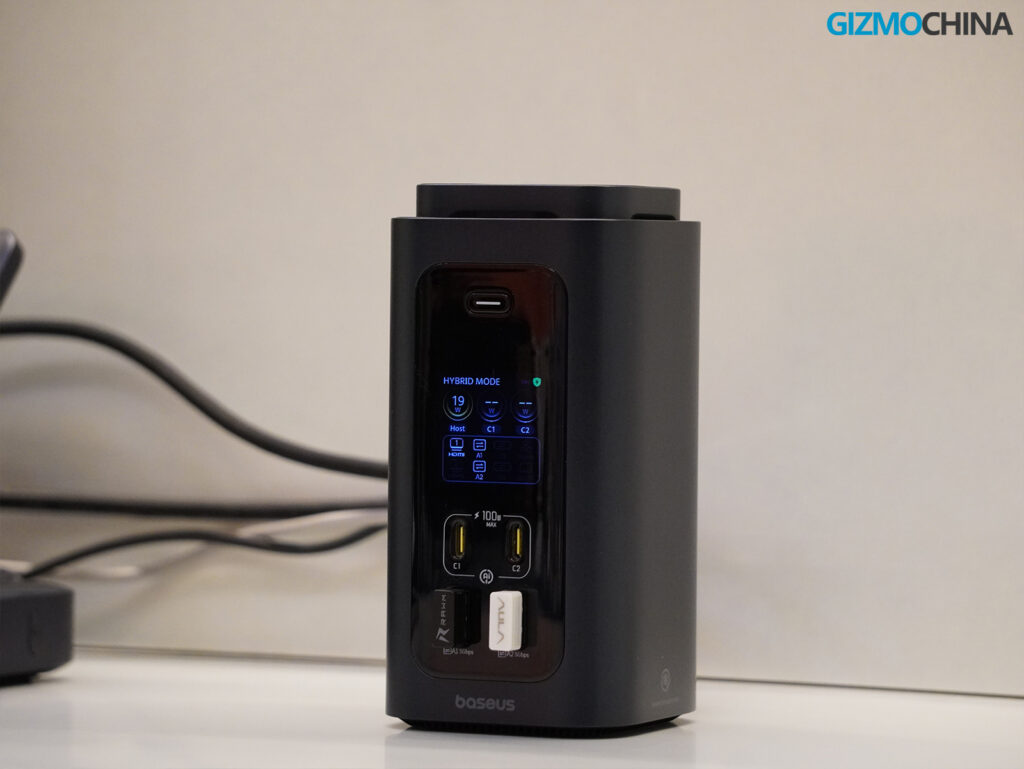
On the front of the dock, there’s a small digital display. It provides basic real-time information, like which ports are in use and the current charging status. Right above the screen is a physical button.
Pressing and holding it for two seconds switches the dock between two modes: Hybrid Mode and Charging Mode. Hybrid Mode enables all the data, video, and charging functions. Charging Mode turns off the data and display outputs to prioritize maximum charging speed for your connected devices. It’s a practical feature if you just need to charge your laptop and phone quickly without waking up your external monitors.
I do need to mention the power adapter, though. To support 15 different functions and provide up to 160W of total output, the dock comes with a 180W GaN power brick. The adapter is quite large and heavy. While the dock itself saves space on your desk, you will need to figure out a way to manage or hide this bulky power brick underneath your desk or behind a monitor.
I generally prefer flat docking stations that can be tucked under a monitor stand, sometimes with the power supply built-in, but the vertical design here works well enough if you don’t mind the external brick.
Ports and Connectivity
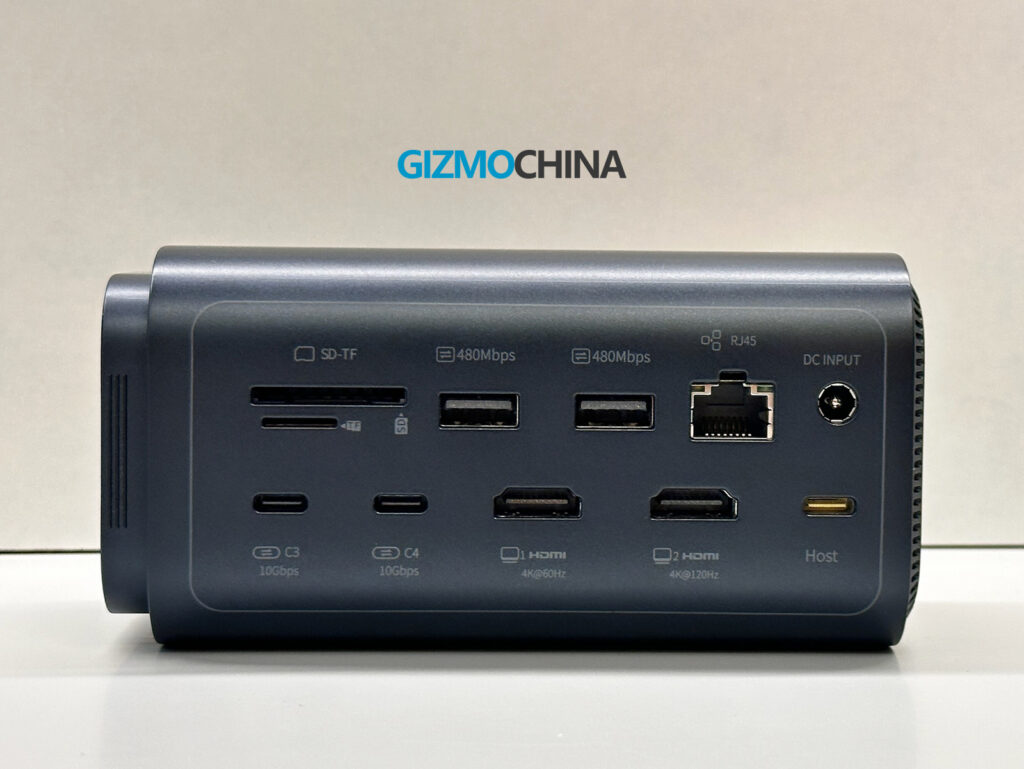
The Spacemate RD1 Pro is equipped with 14 wired ports, plus the wireless charging pad on top.
The front layout is designed for things you need to plug and unplug frequently. You get two USB-C ports capable of 100W fast charging, along with two 5Gbps USB-A ports.
The back is meant for your permanent connections. It features two 10Gbps USB-C ports, an SD and TF card slot (version 3.0), two 480Mbps USB-A ports (which are fine for a mouse or keyboard), a Gigabit Ethernet port, and two HDMI ports.
Because this dock is optimized for Windows, it supports extended dual-monitor setups (unlike macOS, which often limits you to mirrored displays through a single USB-C connection). One HDMI port supports 4K resolution at up to 120Hz, while the other supports 4K at 60Hz.
During my time using it as my main workstation, the dual-screen extension worked well. I did experience a brief loss of connection over HDMI on two occasions. I checked the cables to see if anything was loose, but everything was secure. The screen just flickered and came back. It only happened twice over two weeks, so it wasn’t a major issue, but it’s something I noticed.
Data transfer speeds were consistently reliable during my testing. Moving large files through the 10Gbps USB-C ports was fast, and the built-in SD and TF card readers are a very welcome addition. Since I take a lot of photos for reviews and need to transfer them frequently, having this port readily accessible is incredibly useful for my daily workflow.
While the port selection is extensive, I feel a few things could have been added to make it truly comprehensive. For instance, there is no DisplayPort, which remains a very common standard for PC monitors. It also lacks a 3.5mm audio jack for wired headphones or speakers. And the Ethernet port is standard Gigabit (1Gbps), upgrading to a 2.5GbE port would have been great. These are relatively minor omissions, but I would love to see them included in future iterations from Baseus.
Power and Wireless Charging
Power management is one of the dock’s strong points. Even with multiple devices plugged in, the unit didn’t get noticeably hot. Baseus uses a dynamic power distribution system to manage the 160W total output safely.
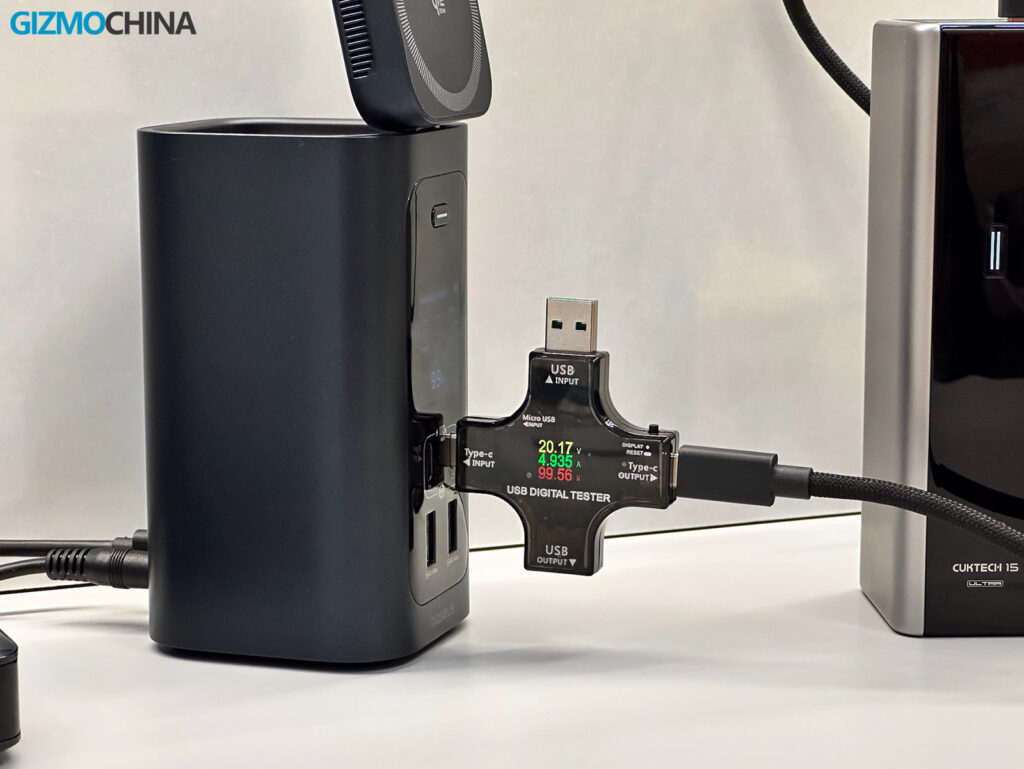
I tested the front USB-C ports by charging a high-capacity power bank that supports 100W input. Using an inline power meter, I confirmed that the port was delivering a steady 100W. It’s convenient to know you can charge a laptop and a power bank at full speed simultaneously.
The top of the dock features a Qi2.2 adjustable magnetic charging pad. It can be tilted up, which is nice if you want to see your phone notifications or use face unlock while working. It supports up to 25W charging for compatible devices. I tested it with an iPhone 13 and an iPhone 14 Pro. Since these are older models, they maxed out at 15W, but they charged consistently.
I think the strength of the magnets could have been a bit better. Because the dock is tall, you want a very secure hold on your phone. If you use your phone without a case, it attaches fine. But if you use a case, the grip might feel a bit weaker, although it depends on the material of the case. I also own the Baseus Nomos 245W charging station, and the magnetic hold on that model is significantly stronger. Anyway, it’s not a dealbreaker.
Final Thoughts
Overall, the Baseus Spacemate RD1 Pro is a very capable machine with solid build quality. It is incredibly flexible, to be honest. For instance, having the magnetic charging pad built right into the top completely solves the issue of needing a separate phone charger taking up space on your desk. Of course, there will always be a few drawbacks, like the bulky power adapter and the lack of a DisplayPort or audio jack, but those are very nitpicky details.
Given the standard retail price, I was initially expecting a little more. But I think Baseus is going to sell it under $200 mostly with their coupon codes and massive discounts, so that makes it a steal deal, to be honest. You can purchase this model directly from Amazon or through the official Baseus website.
If you are interested in picking one up, we have some discount details for our readers that you can use until July 15. The standard retail price is $299.99, but if you use the promo code BASEUSPR at checkout, it brings the promotional price down to $189.99. That gives you a full 37% off, and this specific promotion period runs from June 23 through July 15.
For more daily updates, please visit our News Section.
Samsung is reportedly speeding up development of a rollable smartphone, aiming to create a device that smoothly expands from compact to almost tablet-sized whenever you need it.
According to a recent report from South Korean outlet Maeil Business, Samsung Display is pushing hard on this technology. Their goal is to launch the first real commercial rollable phone in the first half of 2028, possibly alongside or as part of the Galaxy S28 series. It’s expected to be called the Galaxy Z Slide. Rumors also suggest it could feature a big 10-inch 16:9 display with around 440 pixels per inch. There’s even talk of a second model coming in 2030.
This move makes a lot of sense for Samsung. While they still dominate foldables, their share of foldable display panels has dropped noticeably, from about 41.8% in Q4 2025 to 27% in Q1 2026, according to Omdia. With more competition heating up, a rollable phone could be their way to reclaim the innovation spotlight and raise the technical bar.
Rollable screens are much trickier than foldables. The biggest challenge is making the display “roll” reliably hundreds or thousands of times without getting wavy, creased, or uneven. Everything, including the rollers, the layers inside the screen, and the supporting structure, has to be incredibly precise while staying thin and light enough for everyday use.
Samsung has been experimenting with this for years. Back at CES 2023, they showed off the Flex Hybrid (which combined folding and sliding), and later that year at SID Display Week, they wowed people with the Rollable Flex prototype, stretching a tiny 49mm screen all the way out to over 254mm. That’s more than five times bigger. Impressive stuff.
If it works well, a rollable phone could be a game-changer: small enough to slip in your pocket, but capable of turning into a near-tablet experience for watching videos, multitasking, or getting real work done, and hopefully without the visible crease you get on current foldables.
If Samsung can deliver a premium feel that justifies the expected high price, this could be the next big evolution in smartphone design. It’ll be really interesting to watch how this develops. The Galaxy Z Slide (or whatever they end up calling it) has the potential to change how we think about phone screens.
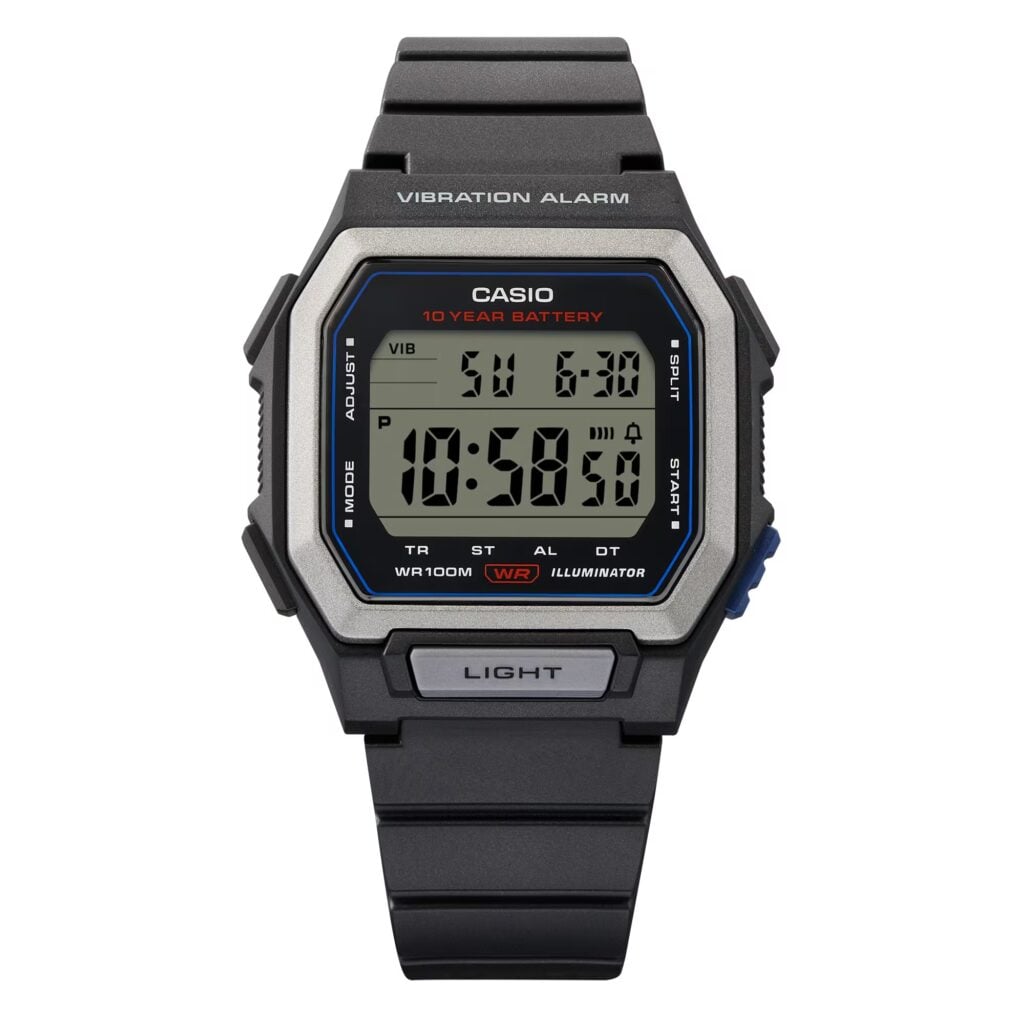
Casio is bringing a new line of digital watches to the US market. The W738H series, which originally launched in Japan last month, is now available stateside for $54.95. It is a basic, functional digital watch, focusing on a built-in vibration alarm and a battery designed to last a decade.
Design Details
The vibration motor is the primary draw for this model. Instead of relying solely on audible beeps, the watch can be set to vibrate for its daily alarms, hourly time signals, countdown timer, and stopwatch auto-start.
To support this feature, Casio adjusted the resin watch band to include a shorter hole pitch. This allows for more precise sizing adjustments on the wrist, which the company says is necessary to ensure the vibration alerts are actually felt by the wearer against their skin.
From a design standpoint, the W738H uses a standard square resin case measuring 47.0 mm by 42.8 mm, with a thickness of 13.5 mm. It weighs 43 grams.
To make navigation straightforward, the button that controls the vibration settings is color-coded and shaped differently from the standard mode buttons. There is also a dedicated front button to trigger the amber LED backlight.
Internally, the watch runs on a standard CR2032 coin battery. Because it lacks power-heavy features like Bluetooth, step tracking, or a touchscreen, Casio estimates the battery will last around 10 years before it needs to be replaced. It also includes 100 meters of water resistance, making it suitable for swimming.
The rest of the spec sheet is standard for Casio: dual time zones, a stopwatch, a 24-hour countdown timer, and an auto-calendar. If you want a completely silent experience, the standard button-press sounds can be muted.
We use cookies on our website to give you the most relevant experience by remembering your preferences and repeat visits. By clicking “Accept”, you consent to the use of ALL the cookies.
This website uses cookies to improve your experience while you navigate through the website. Out of these, the cookies that are categorized as necessary are stored on your browser as they are essential for the working of basic functionalities of the website. We also use third-party cookies that help us analyze and understand how you use this website. These cookies will be stored in your browser only with your consent. You also have the option to opt-out of these cookies. But opting out of some of these cookies may affect your browsing experience.
Necessary cookies are absolutely essential for the website to function properly. This category only includes cookies that ensures basic functionalities and security features of the website. These cookies do not store any personal information.
Any cookies that may not be particularly necessary for the website to function and is used specifically to collect user personal data via analytics, ads, other embedded contents are termed as non-necessary cookies. It is mandatory to procure user consent prior to running these cookies on your website.