GameSir has launched the X2s, an affordable mobile game controller priced at 199 yuan ($28), to enhance smartphone gaming. The controller boasts various features designed to improve the gaming experience, making it an attractive option for mobile gamers. This addition follows last year’s launch of the X2 Pro.
Gamesir X2s Specifications:
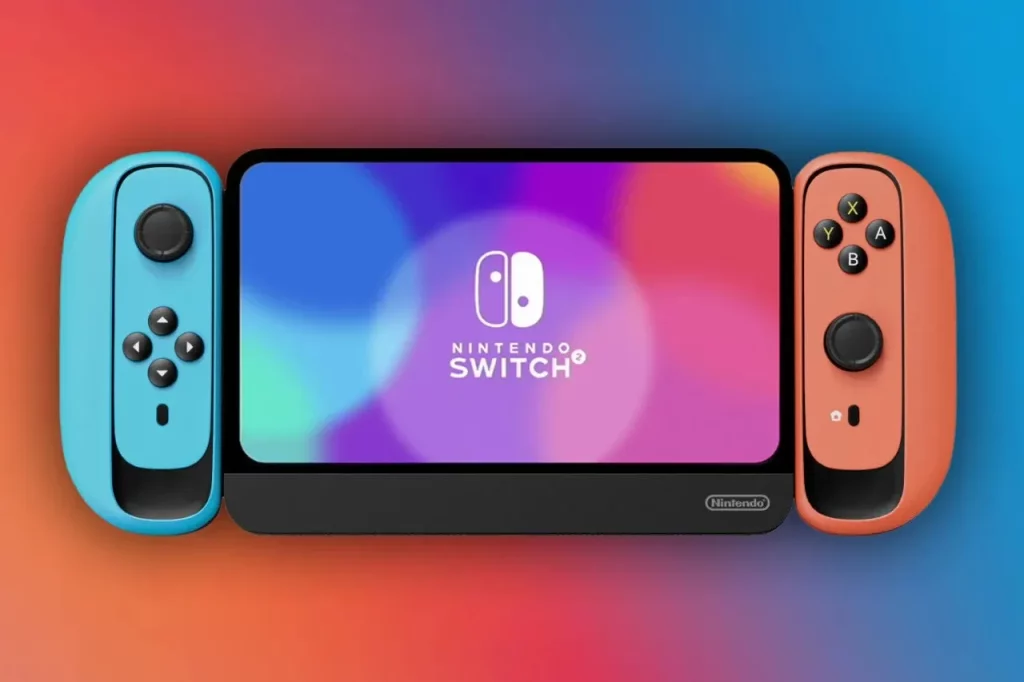
The design of the Gamesir X2s mirrors the tactile feel of handheldgamingconsoles, particularly the Nintendo Switch. It features Switch-like tactile switches for the ABXY and directional buttons.
Additionally, it is equipped with 256-level hall trigger buttons for precise control and a custom JH16 hall joystick with POM material provided by Gamesir, which uses electromagnetic induction to prevent joystick drift. The joystick has a life span of 5 million cycles. The controller comes with two pairs of high-elasticity silicone joystick caps, enhancing durability and comfort.
The controller connects to smartphones via a Type-C interface, compatible with devices ranging from 110 to 168mm in length, including Android, HarmonyOS, and the iPhone 15 series. The controller is designed to accommodate foldable screen devices with its Type-C interface strategically placed on the left side. This interface also supports wired transmission for low-latency connections.
For customization, the Gamesir X2s allows players to adjust various parameters through an app, including dead zone adjustments for the joystick and enabling quick triggers. This feature is particularly useful for gamers seeking personalized control setups.
In terms of game support, the controller is versatile. It supports native mobile games on both Android and Apple platforms, as well as streaming and cloud gaming services. The controller is also compatible with the Egg NS emulator, granting access to a wide range of games.
Physically, the Gamesir X2s boasts a robust build with a purple-grey color scheme, paying homage to the 3DS handheld console. The grips are made of dual-color rubber, ensuring a firm and comfortable hold. The device is designed to switch quickly between Xbox and Switch key mappings, adding to its versatility.
The Huawei Nova 12 series was finally unveiled in China following weeks of leaks and teasers. We have already covered the launch of the Nova 12 Ultra and the Nova 12 Pro, so let’s have a look at the base model of the new lineup.
Huawei Nova 12: Specs
The Huawei Nova 12 sports a tall 6.7-inch flat OLED display that offers Full HD+ resolution (2412 x 1080) and 120Hz refresh rate. Under the hood, the mid range smartphone is equipped with the Kirin 8000 SoC, although this version of the chip only supports 4G connectivity. This is paired with up to 512GB of internal storage. A large 4,600mAh battery pack powers this device, which supports an impressive 100W wired fast charging.
The rear features a triple camera setup with a 50-megapixel primary sensor, an 8-megapixel ultra wide angle lens, and a macro sensor. The base model doesn’t feature the variable aperture of the Pro and Ultra variants, and comes with a fixed f/1.9 aperture. On the other hand, the front houses a lone 60-megapixel ultra wide angle selfie camera. Other notable features include an in-display fingerprint scanner, face unlock, NFC, dual SIM, laser autofocus, Bluetooth 5.2, Gesture navigation, and more.
Huawei Nova 12: Pricing and Availability
The Chinese tech giant has released the base Nova 12 in multiple color options, which include Blue, Gray, and Black. It is also listed in two storage variants, namely 256GB and 512GB options. The Nova 12 starts from 2,999 Yuan (roughly 420 US Dollars) for the 256GB model, while the 512GB version costs 3,399 Yuan (roughly 560 US Dollars). The pre-orders for the device is currently live, with first sales kicking off on 5th January 2024.
SuperGaming’s upcoming battle royale title, Indus, has entered the closed beta testing phase. The studio is inviting players to join its Tech Fest 01 program, providing an opportunity to experience the game firsthand and contribute to its development.
How to join Indus closed beta
This initial beta phase gathers players alongside Indus developers and community members for focused testing. Interested players can participate in the closed beta of Indus by filling out a form where you must enter your email address which is linked to your Google Play ID or Apple ID.
Besides this, the form asks for basic details such as your name, Discord ID, your mobile’s OS (Android or iOS), phone manufacturer, phone model, RAM, and mobile number. Not to forget, you will also need to join SuperGaming’s discord channel.
Mythwalkers!
We’ve begun Indus Test-Fest.
Jump into Discord to get access to Indus on your devices📱.
The company also recently released a closed beta trailer of the game that shows the game’s Virlok map and various characters. The trailer ends with a character saying “We need more Mythwalkers”, which is apparently the name of the players.
What is Indus?
For those unaware, Indus is a made-in-India battle royale game that aims to showcase Indian culture with a futuristic twist for gamers all around the world.
While it’s a battle royale game, Indus takes a unique approach to this genre. While traditional features like combat and looting remain, the main objective revolves around acquiring Cosmium, described as the galaxy’s most valuable resource. Successfully gathering enough Cosmium instantly secures victory, regardless of the player count remaining.
Although the company is currently testing the game on mobile, SuperGaming plans to launch Indus for PC and consoles too. The studio has stated that the decision to make a battle royale game was due to the success of their previous games like MaskGun and Silly Royale which focus on social and multiplayer interactions.
At the Redmi K70 series launch event, the brand also unveiled its latest laptop dubbed Redmi Book 2024. This notebook comes in 14-inch and 16-inch variants powered by 13th Gen Intel H series processors
The smaller version has been on sale since it went official. However, the larger model went up for sale a few days later.
Now, weeks later, the company has quietly released a new version of the 16-inch laptop with a different chip. Let’s go through its features.
Redmi Book 16 2024 is now more affordable with watered-down features
Redmi has launched yet another 16-inch notebook in China. The new product is also called ‘Redmi Book 16 2024’ like the recently released model.
However, the newer variant is cheaper as it is powered by a 12th Gen Intel Core i5-12450H processor instead of a 13th Gen Intel Core i5-13500H chipset found inside the prior variant. The less powerful chip is paired with a slower LPDDR5 5200MT/s RAM as opposed to a 6400MT/s unit.
The 12th gen model also has a lower-resolution display with a standard refresh rate and lower brightness level. Its panel offers a resolution of 1920 x 1200 pixels, a 60Hz refresh rate, and 300 nits brightness level. Whereas, the 13th gen variant’s display has a 2.5K resolution (2560 x 1600 pixels), a 120Hz refresh rate, and 400 nits brightness level.
Anyways, the display’s size remains the same at 16-inch. It can cover 100% of the sRGB color gamut and supports DC dimming as well as Dolby Vision. Even the charging speed is identical at 100W, however, it lacks the Thunderbolt 4 port and the battery capacity is 56Wh as compared to a 72Wh unit inside the more powerful version.
Apart from the aforementioned differences, the other remaining features are common across both models. The laptop features a metal body with a 180° hinge. It is equipped with a full-size backlit keyboard (1.5mm key travel) and arrives in a single Stary Gray color option.
Wireless connectivity options include WiFi 6 and Bluetooth 5.2. It comes with multiple ports, such as 1 x USB 2.0 (type-A), 2 x USB 3.2 Gen 1 (type-A), 1 x USB 3.2 Gen 2 (type-C), 1 x HDMI 2.1, and a 3.5mm headphone jack.
Last but not least, it boots Microsoft Windows 11 Home Chinese Edition with support HyperOS Connect which enables ecosystem features across Xiaomi devices.
Redmi Book 16 2024 12th Gen Intel processor variant carries the following price tags in China and is now up for pre-order.
Huawei has just announced the latest Nova series of smartphones in its home market of China. The lineup consists of the Nova 12, Nova 12 Lite, Nova 12 Pro, and Nova 12 Ultra. Now, here’s a detailed breakdown of the higher end Pro and Ultra models of the series. So let’s have a look at their specs, design, pricing, and more.
Huawei Nova 12 Ultra & Nova 12 Pro: Design & Display
The Nova 12 Ultra and the Nova 12 Pro feature a curved display on the front, while the rear features the familiar pill shaped camera island. The front and back have rounded corners and curved edges. The Nova 12 Ultra weighs 198 grams, while the Nova 12 Pro weighs 201 grams. Although, the two devices measure equal in width at just 7.68mm.
Huawei Nova 12 ultra front, rear
On the front, Huawei outfits the Nova 12 Pro and Nova 12 Ultra with a tall 6.76-inch OLED display that offers a 120Hz refresh rate and Full HD+ resolution (2776 x 1224). The screen also has a pill shaped camera cutout that houses the two front facing image sensors. Notably, the Ultra model comes with Kunlus glass, which it claims to be “unbreakable“.
Specifications
The Nova 12 Ultra and 12 Pro are quite similar but some of their differences include the chipsets. The former is equipped with the Kirin 9000SL while the latter houses a Kirin 8000. These chipsets support 5G networking and are paired with 12GB of RAM. The Pro model offers up to 512GB of RAM and the Ultra tops out at a sizeable 1TB. The lineup runs on HarmonyOS 4.0 (HongMengOS in China) out of the box.
The two phones are powered by a 4,600mAh battery pack that supports 100W wired fast charging. A notable feature that arrives in the Nova 12 Pro and Nova 12 Ultra is the support for satellite connectivity, which is a common feature for newer high end devices. Other notable features include an in-display fingerprint scanner, dual SIM support, Gesture navigation, face unlock, Bluetooth 5.2, AAC, SBC, and LDAC audio codec.
Camera
The camera system is practically identical on both smartphones. On the rear, the Nova 12 Pro and Nova 12 Ultra has a 50-megapixel primary camera, which is paired with an 8-megapixel ultra wide angle lens and a macro shooter. The primary camera has a variable aperture that can change from f/1.4 to f/4.0. This enables a 2x optical zoom and 5x digital zoom. Meanwhile, the front houses a 60-megapixel main ultra wide angle selfie shooter and an 8-megapixel portrait camera. The wide angle sensor has an f/2.4 aperture and auto focus support and the portrait sensor has an f/2.2 aperture and also supports auto focus.
Pricing and Availability
The Huawei Nova 12 Ultra and Nova 12 Pro were announced in multiple color options, namely White, Black, Pink, and Blue for the Pro and Black, Blue, and Gray for the Ultra. They were also announced in two storage configurations each. The Nova 12 Ultra has a starting price tag of 4,699 Yuan (roughly 658 US Dollars) for the 512GB model, while the 1TB variant costs 5,499 Yuan (roughly 769 US Dollars).
The Nova 12 Pro has a 3,999 Yuan (roughly 560 US Dollars) price tag for the 256GB model, while the 512GB option costs 4,399 Yuan (roughly 615 US Dollars). Both models are currently listed for pre-orders, with the first sale of both devices set to go live on the morning of 12th January 2024.
Huawei launched the Enjoy 70 smartphone in China earlier this month. But its Pro sibling, the successor to the Enjoy 60 Pro, remains curiously absent at the launch event. However, a new leak suggests its Enjoy 70 Pro launch could be on the horizon.
Shared by WhyLab on Weibo, the leak offers a first glimpse of the Enjoy 70 Pro, showcasing both its front and back in a bunch of hands-on photos, along with most of its specs.
Huawei Enjoy 70 Pro hands-on image, specs leaked
The device comes with a circular camera module on the back that will house a 108MP main sensor and a 2MP depth-of-field lens. The image shows the sleek Obsidian Black finish while the phone will also be available in Snowy White and Emerald Green shades.
On the front, the Enjoy 70 Pro will sport a 6.7-inch FHD+ LCD, seemingly sticking to the standard 60Hz refresh rate. Under the hood, the phone is tipped to pack the Snapdragon 680 4G processor, just like the Enjoy 60 Pro. It will be paired with 8GB of RAM and 128/256GB of storage.
On the software front, the device will boot on HarmonyOS 4. Keeping things powered is a 5000mAh battery with support for 40W fast charging.
Dimension-wise, the Enjoy 70 Pro is expected to be a slim and lightweight device, measuring just 8.4mm thick and weighing 199 grams.
As for the launch, the tipster suggests that the device is likely to be launched today (December 26) alongside the Huawei Nova 12 series smartphones. However, Huawei didn’t make any announcement regarding it at the event.
Based on the leaked specs and design, the Enjoy 70 Pro could position itself as a mid-range offering. We’ll keep an eye out for further updates as they become available.
Tesla has confirmed its participation in TSMC’s (Taiwan Semiconductor Manufacturing Company) 3nm NTO chip design finals for the upcoming year. This surge in TSMC’s 3nm chip production, scheduled for 2024, reflects the growing demand for advanced semiconductor solutions. Notably, Tesla’s inclusion as an N3P customer signals its intent to leverage TSMC’s cutting-edge technology for the production of next-generation Full Self-Driving (FSD) smart driving chips.
About TSMC’s N3P process
TSMC‘s ambitious plan for the N3P process involves commencing production in 2024. Compared to the N3E process, N3P aims to deliver a 5% improvement in performance, a 5% to 10% reduction in power consumption, and a remarkable 1.04 times increase in chip density. TSMC has emphasized that N3P’s performance, power, and area (PPA) metrics, along with technology maturity, outpace Intel’s 18A process.
Tesla’s collaboration with TSMC is not new, with the electric vehicle manufacturer having placed multiple orders in the past. Previous ventures include the Dojo D1 chip utilizing the 7nm process and the HW 4.0 chip featuring the 5nm process. The addition of Tesla to the N3P customer list marks a strategic move for both companies.
Analysts foresee this partnership propelling Tesla to the status of TSMC’s seventh-largest customer, injecting fresh momentum into TSMC’s revenue growth trajectory. As Tesla continues to lead the automotive industry in innovative technologies, the collaboration with TSMC underscores the pivotal role semiconductor advancements play in shaping the future of electric and autonomous vehicles.
Back in September, boAt announced the Enigma series of smartwatches with a premium metal design in India. The company is expanding this lineup with a brand-new model dubbed the Enigma Switch, which features a similar metal design but with a swappable strap body. So let’s have a look.
boAt Enigma Switch Specs
The brand’s Enigma Switch sports a circular 1.39-inch HD display that is surrounded by a premium metal body design. This features a functional crown but the highlighting aspect of this wearable is the switchable cases. In other words, you can take out the primary watch module. So you can swap between the steel body for a more elegant look or switch to silicon straps for a more sporty and functional use.
The boAt Enigma Switch features Bluetooth Calling as well, which supports a built-in Dialpad and Save Contacts. It comes with support for more than 100 sports modes and offers IP68 water and dust resistance rating. The device features various health related sensors as well, which include a heart rate sensor, SpO2 blood oxygen mapping, Sleep monitoring, Daily Activity tracker, and Guided breathing. Other notable features include, voice assistant, Find My Phone, smart notifications, music and camera controls, alarms, and more.
boAt Enigma Switch Pricing & Availability
boAt’s latest smartwatch model is currently listed on Flipkart for 14,999 INR MRP. However, it will sell it for a lot cheaper in the region. One of its promotional images states that the upcoming smartwatch has a price tag of 3,799 INR (roughly 45 US Dollars). As of right now, the wearable is listed as Coming Soon, so stick around for more updates.
Mercedes-Benz has officially launched the new EQE SUV, presenting consumers with an upgraded model that retains its predecessor’s price range, ranging from 486,000 to 630,600 yuan (~$68,000 – $88250). The latest iteration introduces various improvements, including 5G communication modules and plush velvet floor mats, while preserving the base Pioneer version’s affordability.
Details about the new EQE fully electric SUV
The exterior design maintains the EQE’s distinctive language, featuring a closed grille, a through-type LED light strip, and innovative “Meteor Shower” intelligent digital headlights with 2.6 million illumination pixels. The front bumper’s enhanced sporty aesthetics, coupled with a 98% ultra-high screen-to-body ratio, contribute to the SUV‘s captivating appearance.
The EQE SUV offers a seamless driving experience with optional air suspension (AIRMATIC) and adaptive damping system plus (ADS+), enhancing the vehicle’s height for increased passability. Multiple driving modes, such as “Energy Saving,” “Comfort,” “Sport,” “Personalized,” and “Off-Road,” cater to diverse preferences.
Inside, the car boasts an oversized triple screen, multi-function steering wheel, and multi-color ambient lighting, creating a harmonious blend of technology and luxury. The MBUX Hyperscreen in-car system, spanning 141 cm in width, introduces a zero-level interface that prioritizes key applications, providing an intuitive and distraction-free driving environment.
Enhanced configurations and safety features for the Chinese market
Mercedes-Benz has tailored the EQE SUV for the Chinese market by introducing ten exclusive configurations, including a “boss button” and comfortable rear headrests. Notably, the vehicle focuses on improving noise, vibration, and harshness (NVH) levels through features like double-layer silent glass in the front row and a comprehensive vehicle acoustic package.
For power, the EQE SUV houses a dual-motor, four-wheel-drive system with a 96.1 kWh battery pack. The 350 model delivers a maximum output power of 215 kW, while the 500 model offers an impressive 300 kW. With a maximum cruising range of 613 kilometers under CLTC operating conditions and a 128-kilowatt charging power, the EQE SUV prioritizes performance and efficiency.
In terms of safety, the EQE SUV includes active and passive features such as the attention assist system, active braking assist system, and active lane-keeping assist system. Furthermore, the vehicle can be equipped with an enhanced driving assistance package featuring an intersection start and stop function.
With ongoing efforts to optimize safety, performance, and user experience, the new EQE SUV positions itself as a formidable player in the electric SUV market.
Just last week, the POCO M6 5G was announced for the Indian market. Now, the budget grade smartphone is finally going on sale in the region. So here’s everything you need to know about its pricing, specs, and special launch offers.
POCO M6 5G Pricing, Availability, and Offers
The Chinese smartphone maker has unveiled the new M6 5G model in two storage configurations. The 4GB + 128GB variant costs 10,499 INR (roughly 126 US Dollars), the 6GB + 128GB model has a price tag of 11,499 INR (roughly 138 US Dollars), while the 8GB + 256GB model is listed for 13,499 INR (roughly 162 US Dollars). POCO M6 is available for purchase as of 12 PM IST today (26th December 2023) and is exclusively listed on Flipkart. The brand is offering a flat 1,000 INR discount to ICICI Bank Credit and Debit card holders who purchase the device today.
POCO M6 5G Specs
The budget phone sports a tall 6.74-inch display that has a 90Hz refresh rate and HD+ resolution. The panel offers 600 nits of peak brightness and a 180Hz touch sampling rate. Under the hood, it is equipped with the MediaTek Dimensity 6100+ SoC and is powered by a large 5,000mAh battery pack that supports 18W fast charging. The front houses a 5-megapixel selfie shooter and the front features a 50-megapixel dual camera setup.
The POCO M6 5G runs on the Android 13 OS based MIUI 14 custom skin out of the box. It can be purchase in two color options, namely Orion Blue and Galactic Black. Other notable features include a 3.5mm headphone jack, side mounted fingerprint scanner, AI face unlock, up to 8GB of virtual RAM expansion support, Splash and Dust resistance, and Bluetooth 5.3.
These two are the company’s latest budget 5G smartphones. They succeed the Galaxy A14 5G and Galaxy A24 5G.
Let’s check out what the A25 has to offer in this article. We have covered the A15 separately which you can find here.
Samsung Galaxy A25 5G Specifications
The Galaxy A25 5G looks like any other Samsung phone with a flat frame and vertically aligned cameras. But additionally, it comes with a new raised platform for the buttons on the side called ‘key island’.
The device sports a 6.5-inch AMOLED display with a dewdrop notch. The screen has a resolution of 2340 x 1080 pixels (FHD+), a 120Hz refresh rate, and 1000 nits of peak brightness level.
As for optics, there’s a triple camera system on the back and a 13MP front-facing shooter. The rear setup comprises an OIS-assisted 50MP primary sensor, an 8MP ultrawide unit, and a 2MP macro snapper.
The connectivity options offered by the smartphone include dual SIM, 5G, dual-band WiFi, Bluetooth 5.3, GNSS, and USB Type-C. It also arrives with dual stereo speakers, a side-mounted fingerprint sensor, a MicroSD card slot, and a 3.5mm headphone jack.
Last but not least, the product is backed by a 5,000mAh battery with support for 25W charging.
Samsung Galaxy A25 5G Price in India
The Galaxy A25 5G carries the following price tags in India.
Earlier this month, Samsung launched the Galaxy A15 5G in Southeast Asia. It was accompanied by Galaxy A25 5G.
Since then, the company has been slowly rolling out the duo to more regions. As scheduled, the company has announced these phones for India today.
As their names suggest, they are budget 5G smartphones. Let’s take a look at the A15 in this article. To learn about A25, check out our coverage on the same.
Samsung Galaxy A15 5G Specifications
The Galaxy A15 5G has Samsung’s signature design. It has vertically aligned cameras and a flat frame along with a new ‘key island’ for buttons on the side.
It is built around a 6.5-inch AMOLED display with a dewdrop notch. This screen offers a resolution of 2340 x 1080 pixels (FHD+), a 90Hz refresh rate, and 800 nits of peak brightness level.
It is equipped with a 13MP selfie camera and a triple camera system on the back. The rear setup consists of a 50MP primary sensor, a 5MP ultrawide unit, and a 5MP macro snapper.
The connectivity options on the handset include dual SIM, 5G, dual-band WiFi, Bluetooth 5.3, GNSS, and USB Type-C. It also comes with a 3.5mm headphone jack, a MicroSD card slot, and a side-mounted fingerprint sensor.
Lastly, the phone draws power from a 5,000mAh battery and supports 25W charging.
Samsung Galaxy A15 5G Price in India
The Galaxy A15 5G carries the following price tags in India.
Honor today officially confirmed the launch date for their upcoming Magic 6 series smartphones. The lineup will be unveiled during a two-day event on January 10th and 11th, alongside the debut of their new custom user interface, Magic OS 8.0.
Ahead of the big reveal, the Honor Magic 6 series is now available for pre-reservations in China. Customers can visit Honor’s official website and make a 100 yuan deposit to secure their phone in advance. This deposit not only reserves the phone but also comes with six additional benefits:
24 months of interest-free payments
A free Honor body fat scale
One year of free cracked screen replacement
180 days of hassle-free phone replacement if anything goes wrong
50 yuan cashback reward for leaving a post-order review
Free shipping for returns and exchanges
As reports have revealed, we expect three devices in the lineup — the standard Magic 6, the Magic 6 Pro, and a possible collaboration with Porsche Design for a premium variant.
Honor has already revealed their partnership with Porsche Design, hinting at the possibility of a special edition “Magic 6 Porsche Design” model with unique features and design elements.
Regardless, all the devices are expected to be powered by the latest Snapdragon 8 Gen 3 chipset and will run on the brand-new Magic OS 8.0.
While Honor remains tight-lipped about the exact specifications, leaks indicate the Magic 6 series might boast a powerful camera system featuring a one-inch, 50-megapixel OmniVision OV50K sensor.
Charging speeds are also rumored to be impressive, with the Magic 6 and 6 Pro potentially offering 66W and 100W wired charging, respectively. The Pro variant might even offer 50W wireless charging for added convenience.
With the official launch date set, Honor is sure to start dropping hints about the smartphone’s features in the days leading up to it. So, stay tuned for it.
Sony announced the Inzone series of gaming headsets for PC and PlayStations gamers, offering headphones across multiple price points. The company recently sent us the Inzone H5 for review which promises to offer some great features at a mid-range cost.
The H5 is the latest headset that joins the existing H3, H7, and H9 models. It is wireless like the H7 and H9 and is quite capable for its sub-20,000 INR price tag. I have a lot to say about the Inzone H5, so let’s get right into it.
Note: My review comprises of my experience on a Windows PC.
What’s in the Box?
Sony Inzone H5 Gaming Headset
1x USB Type-C cable
1x USB Transceiver
1x 3.5mm headphone cable
Reference Guide
Sony Inzone H5: Design
As per official notes, the Sony Inzone H5 headset weighs just 260 grams. The left earcup features a USB-Type C port for charging with an LED indicator as well as a flip up microphone (non-detachable) and a volume slider. Meanwhile, the right side has the power button and the Game/Chat mix button. I have used wired headphones for gaming primarily and the shift to this wireless has been a solid experience so far.
The H5 is light and comfortable on the head. This is thanks to its plastic body that has a minimalistic design. Although the body doesn’t feel premium, it is robust and doesn’t seem flimsy at all. It also comes with a matte finish and I reviewed the black color option (I highly recommend the White variant). Often I found myself getting up to get something, without taking off my headphones since they felt so seamless. I’d walk out of the room while on Discord, still talking to my friends as I grab a quick bite or get some water.
Going back to my wired headphones is going to be difficult since the H5 has spoiled me now. A thick and comfortable padding can be found on the headband while the earmuffs are made from a soft fabric material. I did not experience any kind of discomfort even after wearing these for hours on end. Gaming sessions can be long and I usually wear headphones for music while working, meaning this comfy design was highly appreciated. You can even adjust the headband to fit any head size and a quick tap on the power button tells you the remaining battery life.
Sound Quality & Gaming Experience
Being a gaming headset, the primary focus is on the gameplay experience. Sony is a veteran in the audio segment and their expertise is hinted at in uses outside of just video games. I will admit it’s not the best for audiophiles, but there’s decent and balanced bass with clear mids and trebles. Sony Inzone H5 features 40mm drivers with a frequency response ranging from 5Hz to 20kHz. Listening to music was surprisingly a pleasant experience but I recommend getting the Inzone Hub app.
If you’re looking to personalize the experience, this app lets you tweak the sound profile and I suggest you download it with any Inzone headphones. It offers a Flat, Bass Boost, and Music/Video presets along with a Spatial Sound toggle, Dynamic Range Control, and Microphone settings. This app isn’t required but does get you access to a bunch of key features of the headphones. With this out of the way, we can finally talk about gaming.
In tactical shooters like Tom Clancy’s Rainbow Six Siege, this gaming headset came in clutch! Crisp sound paired with spatial audio support had me being accused of wallhacking. I could hear the sounds of enemy footsteps down a hallway with ease, getting a general idea of their location. Sound design in modern video games is a work of art but not all gaming headphones let you properly experience them.
This is where the Inzone H5 comes in. It had me return to some beloved franchises to relive the experience with better sound quality. The high dynamic range elevated the audio experience on titles like Metro Exodus, Hogwarts Legacy, Ready or Not, and many more.
Having the Game/Chat mix on the headset lets you quickly switch focus between the game or the voice chat when you’re playing multiplayer games and the ease of volume controls helps for quick audio level adjustments. Low latency is a must with wireless gaming headsets and I never faced any delays or lag between the audio and visuals during gameplay.
Setting up the headphones was also a breeze with its plug-and-play experience letting you instantly jump into a game on any Windows laptop or desktop. Its wireless range is also commendable as I found myself doing random chores around the house or getting some fresh air while wearing these without any issues.
Battery Life, Mic Quality, & Connectivity Options
Sony promises up to 28 hours of battery life on the Inzone H5 headset and I easily managed to get over a day’s worth of playback. Thankfully, the USB Type-C charger offers fast charging with just 10 minutes of charge enabling another 3 hours of playback. I couldn’t confirm this claim outright, although the quick charge was pretty handy.
The wireless headphones checks just about every box but there is always an Achilles heel. For the Inzone H5, the microphone is the only area that I felt could be improved. To be fair, the mic is decent and clear with AI noise suppression being a bonus. However, the audio quality is a bit lacking for this price. My voice appeared muffled at times and cheaper headphones in India have outclassed the microphone quality.
For connectivity, you can connect the headphones to a 2.4GHz USB Type-A dongle that also has a slider that lets it connect to both PC and PS5/PS4. Unfortunately, Bluetooth connectivity is missing on the H5. It would’ve made the headset more versatile and we can only hope that its future generation ships with it. Users can connect it to the PC through a 3.5mm audio jack for the wired mode.
Conclusion
To sum things up, Sony’s Inzone H5 is a great wireless headset for gamers. Its build quality ensures a light, seamless, and comfortable experience. Overall audio quality was decent and gaming with these was great. Bringing Bluetooth support and a better microphone could greatly improve the experience for future generations as well.
The official Sony India website lists this model for 19,990 INR MRP, but it can be found on Amazon for around 15,000 INR. I can easily recommend this to gamers who are looking for a wireless headset. At this price range, it isn’t exactly affordable. However, the H5 is a great buy for the specs and features it brings. I already use a wireless gaming mouse and the Sony Inzone’s offering has me considering a wireless upgrade for headphones as well.
Royole, known for making the world’s first foldable smartphone, does not seem to be in the best financial condition. The company has defaulted on its employee wages for a year. The leading innovative company in China, whose primary business is focused on flexible display technology, has been in crisis for over a year.
As per China’s News Daily, around 50 Royole employees resorted to protest demonstrations with banners and slogans at the company’s Display Headquarters entrance in Shenzhen. After not adhering to the verbal promises made by Liu Zihong, Royole’s CEO, the employees had no option but to protest against the company. The employees have not received their areas and wages since November 2022 and are now demanding to resolve the issue and credit their wages as soon as possible.
The Employee Rights Protection Committee signed an application for the settlement of the remaining claims by Shenzhen Royole Technology Co., Ltd. as a demand. The Royole workers have not received the wage for the past 8 months, while the employees haven’t seen it for the past 12 months. Due to the ongoing financial crisis, thousands of company employees have already left the company over the past couple of years.
In response, the company said the business has significantly suffered losses and is only able to pay social security deposits. Only 200–300 employees are now left with the company, consisting of engineers who maintain the production line.
Royole’s move to seek help from the government and investors went in vain, as employees are saying the production line never started in 2022. However, the government is helping the company to restructure its debt, but there has been no significant change.
Royole’s Past Glory
The company’s last smartphone launched was the Royole FlexPai 2 in 2020, with up to 12GB of RAM and 512GB of storage. Even though the company’s maiden smartphone, Royole FlexPai, was sold out within a few minutes after going on sale in 2019,. In the last decade, it has been considered a primary competitor to Samsung Display’s monopoly as it has developed ultra-low-temperature non-silicon process integration technology to create flexible displays.
OnePlus Ace 3 is set to debut in China on January 4th, while the global market will receive the same phone under the name OnePlus 12R, launching on January 23rd. To get things buzzing, OnePlus has already started teasing the Ace 3 in China with the latest revealing phone’s design and a new Sand Gold color option. However, this option may not be available globally.
OnePlus 12R color options
Meanwhile, the global OnePlus team has been keeping quiet. But a recent leak by tipster Ishan Agarwal sheds light on the possible color options for the international OnePlus 12R. The tipster shared what seems like official promo materials showcasing the OnePlus 12R in Blue and classic Black shades.
In terms of design, the OnePlus 12R appears virtually identical to its Chinese counterpart, and its specifications will likely follow suit.
As a result, we can expect the OnePlus 12R to come with a 6.78-inch curved OLED display. A previous report suggests that this will be a 1.5K resolution screen with a 120Hz refresh rate leveraging LTPO 4.0 technology and Gorilla Glass Victus 2 protection.
The device will be powered by a Snapdragon 8 Gen 2 chip, paired with 8 GB / 16 GB LPDDR5x RAM and 128 GB (UFS 3.1) / 256 GB (UFS 4.0) storage options.
As for the camera, the OnePlus 12R is said to feature a triple camera setup on the back headline by a 50MP Sony IMX890 sensor with OIS support. It will be accompanied by an 8MP ultrawide and a 2MP macro lens. A 16MP camera on the punch-hole cutout in the front will take care of selfies.
The device is expected to come with a 5,500mAh battery and 100W charging support.
It’s the month for the OnePlus 9 Series, as it seems from the frequent updates that these devices received in the past few days. After a couple of regular updates based on OxygenOS 13 in December, the global version of the smartphone received OxygenOS 14 Update yesterday. Meanwhile, the OnePlus 9RT, along with the OnePlus 9 and the OnePlus 9 Pro, are receiving the Android 14-based ColorOS 14 update in China.
The new update bundles all the new features of Android 14, along with the new additions from OnePlus’s ColorOS 14 skin. The new Aquamorphic design, with referred animations and ringtones, along with other performance and security improvements, is set to elevate the user experience.
ColorOS 14 Stable Update
The OnePlus 9 is receiving firmware 14.0.0.201, and the OnePlus 9 Pro and OnePlus 9RT are getting firmware 14.0.0.211 updates. It is rolling out to both normal and beta users in China. Before updating, users should keep a backup of their important personal data, as the new build may affect the data on their smartphones. Moreover, a few of the third-party applications may not work effectively and may result in odd experiences for the users.
OnePlus also advises users to give at least a couple of days to a smartphone for auto-optimization on the new system. Until then, it may overheat, which may lead to excessive battery drain. Also, keep at least 60% of the battery and up to 15GB of storage free before installing the update.
Steps to get the ColorOS 14 update on OnePlus 9/ OnePlus 9 Pro and OnePlus 9RT
The user should head over to Settings > About this machine > Version information > Version number to check for the current version. The smartphone should be running on this firmware: OnePlus 9/OnePlus 9 Pro – 13.1.0.192, 13.1.0.191 OnePlus 9RT — 13.1.0.195, 13.1.0.192
Then head over to Settings > About this machine > Top version information (above the phone name) > Update Now.
For more instructions, the user should head over to the ColorOS 14 announcement thread. Most of the smartphones have already received the ColorOS 14.0 update, and the remaining ones will get it soon.
The Xiaomi Mijia 39-inch LCD blackboard officially hit the market earlier this month, offering a sleek solution for digital writing and display needs. Now this product goes on sale on Xiaomi Youpin with a competitive starting price of 249 Yuan ($35). This digital blackboard boasts an impressive ultra-high screen-to-body ratio of 98%. The 6mm narrow bezel design reduces frame interference, ensuring an immersive and distraction-free writing experience.
Powered by two AA batteries, it can last as long as 280 days with clearing the screen 100 times a day
One of the standout features of this custom LCD screen blackboard is its support for flexible splicing, allowing users to combine multiple units horizontally or vertically seamlessly. With two pieces, users can achieve a 57-inch display, while three pieces can be spliced to create a large 78-inch screen. Notably, the splicing process does not rely on physical methods like buckles or magnetic attraction, providing a clean and modern aesthetic.
The product also caters to user convenience with a one-click screen clearing function. Utilizing a custom-made LCD film, the screen requires no backlight and instead leverages natural light reflection for clear handwriting presentation. This not only makes the process energy efficient but also does not emit any harmful blue light that would otherwise cause eye strain over longer usage. Additionally, the “pressure-sensitive writing” feature provides a natural brushstroke feel and eliminates concerns about dust pollution and ink stains.
The LCD blackboard consumes minimal energy during screen clearing. Remarkably, with an estimated usage of clearing the screen 100 times a day, a pair of AA batteries can last an impressive 280 days, ensuring long-lasting functionality without frequent battery replacements.
Overall, the Mijia 39-inch LCD blackboard emerges as a versatile and energy-efficient solution for users seeking a digital writing and display platform with advanced features and a sleek design. Earlier this month, Xiaomi unveiled its Mijia label printer with an ink-free operation for your everyday labeling needs. It offers custom label lengths, some fun-to-use functions, and Mi Home app integration for convenience for only 119 yuan ($16) in China.
Following earlier teasers, Vivo has officially confirmed the India launch date for its X100 series of flagship smartphones. The Vivo X100 series will be launched in India on January 4, 2024. The company shared this news on its social media handles, revealing that the launch event is scheduled for 12 PM Indian Standard Time (IST).
Notably, Malaysia will be the first market outside China to receive the X100 series, with its launch scheduled for a day earlier on January 3rd. Since the phones have already debuted in China, we’re pretty familiar with their specs and features. Here’s a quick rundown of it.
Both the Vivo X100 and X100 Pro boast a 6.78-inch curved OLED display with a 1.5K resolution, a 120Hz refresh rate, and peak brightness reaching 3000 nits. There’s also a 32-megapixel selfie camera on the punch-hole cutout on the front.
Powering the smartphones is a Dimensity 9300 chip, alongside LPDDR5x RAM, and UFS 4.0 storage. Software-wise, you get Android 14 out-of-the-box.
Vivo X100 and Vivo X100 Pro.
The camera and battery are the major things that differentiate the two models. The vanilla X100 features a triple-rear camera setup with a 50-megapixel main sensor (OIS), a 50-megapixel ultra-wide lens (150° FOV), and a 50-megapixel periscope telephoto lens (OIS). A 5,000mAh battery with 120W fast charging keeps the phone powered.
The X100 Pro takes things further with a larger 1-inch 50-megapixel main sensor, a customized 64-megapixel periscope telephoto lens, and the same 50-megapixel ultra-wide lens. It also boasts Vivo’s V3 chip for enhanced imaging and a slightly larger 5,400mAh battery supporting 100W wired and 50W wireless charging.
Moving on, the X100 and X100 Pro also get an IP68 rating for protection against dust and water and you get support for WiFi 7, Bluetooth 5.4, USB-C (USB 3.2), NFC, an IR blaster, and an X-axis linear motor on both the devices.
Apple will begin mass shipments of Vision Pro headsets in the first week of January, according to supply chain analyst Ming-Chi Kuo. Initially announced for an “early 2024” release, there was speculation that the headsets might hit the market in March 2024. But if we go by Kuo’s prediction, Apple is now eyeing an earlier-than-expected launch for Vision Pro.
Apple Vision Pro.
The headsets are expected to hit stores either at the end of January or in early February. This aligns with Gurman’s report of “ramping up production” and “setting the stage for a launch by February.” Kuo added that Apple is planning to ship “approximately 500,000” Vision Pro headsets in 2024.
Apple’s pre-launch efforts also include developer outreach. The company has reportedly emailed software developers, urging them to test their apps and prepare for the Vision Pro’s arrival. Additionally, Apple Store employees are undergoing training to showcase and demonstrate the headset to potential buyers.
Still, there’s no official announcement from Apple about the Vision Pro’s release date.
As for the headset itself, it features two high-resolution OLED displays with a total of 23 million pixels. It is powered by the Apple M2 and Apple R1 chips that will help it with real-time processing capabilities for seamless performance. The device also includes 12 cameras and six microphones and runs on a new operating system, VisionOS.
However, the $3,499 price tag might make some potential buyers hesitate. While rumors of a cheaper version exist, it’s unclear when it might arrive.
Only time will tell if the Vision Pro will be a success, but with heightened production and developer preparation, Apple seems confident in its early 2024 launch. We will keep you posted on any new developments.
We use cookies on our website to give you the most relevant experience by remembering your preferences and repeat visits. By clicking “Accept”, you consent to the use of ALL the cookies.
This website uses cookies to improve your experience while you navigate through the website. Out of these, the cookies that are categorized as necessary are stored on your browser as they are essential for the working of basic functionalities of the website. We also use third-party cookies that help us analyze and understand how you use this website. These cookies will be stored in your browser only with your consent. You also have the option to opt-out of these cookies. But opting out of some of these cookies may affect your browsing experience.
Necessary cookies are absolutely essential for the website to function properly. This category only includes cookies that ensures basic functionalities and security features of the website. These cookies do not store any personal information.
Any cookies that may not be particularly necessary for the website to function and is used specifically to collect user personal data via analytics, ads, other embedded contents are termed as non-necessary cookies. It is mandatory to procure user consent prior to running these cookies on your website.