Advertisement

Lenovo introduces pocket-sized Chromebox Micro: turns your display into a Chromebook for $219

Lenovo has introduced the Chromebox Micro, a device that’s smaller than most in its category. With dimensions measuring a mere 163 x 79 x 20mm (6.4″ x 3.1″ x 0.8″), this ultra-compact ChromeOS running device offers a form factor resembling two smartphones stacked on top of each other. Set to hit the market in the first quarter of 2024, the Lenovo Chromebox Micro is priced at an attractive $219 and up.

The Chromebox Micro offers an Intel Celeron N4500 processor, 8 GB RAM, 32 GB eMMC storage
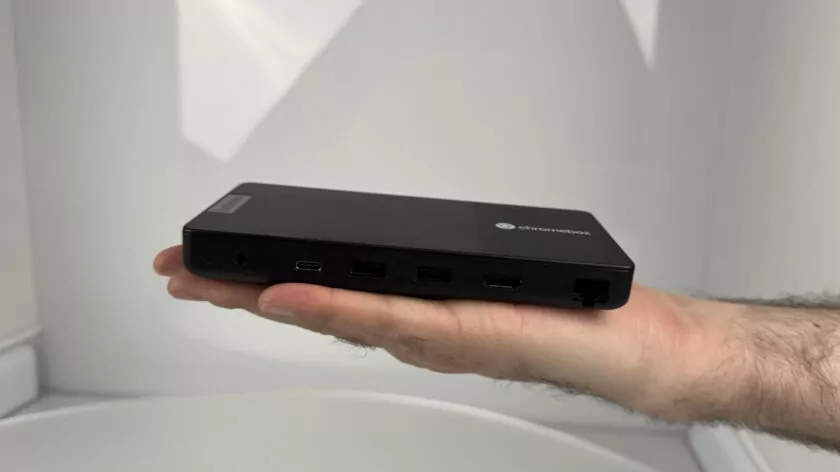
Lenovo showcased this mini device positioned as an “ultra-thin and affordable media player” at the Digital Signage Experience show. The Chromebox Micro runs on an Intel Celeron N4500 processor, boasting a 6-watt, 2-core, 2-thread configuration based on the Intel Jasper Lake Architecture. It comes with 8GB of RAM and 32GB of eMMC storage. Encased in a fanless metal chassis, the Chromebox Micro promises silent 24/7 operation. The ventless encasing makes it resistant to dust.
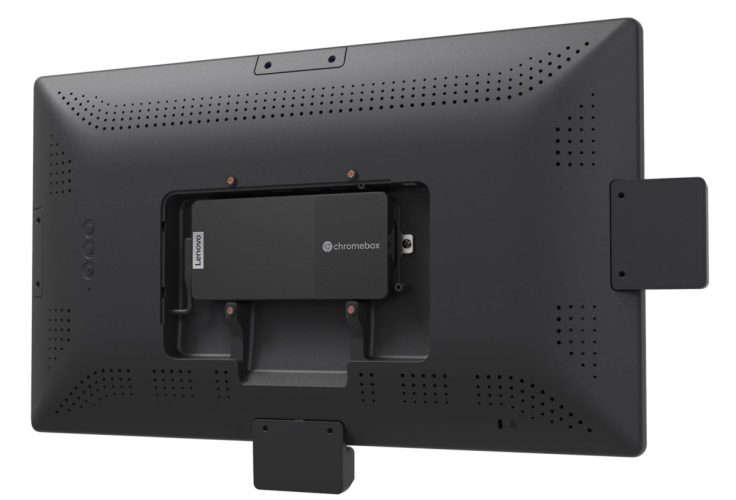
The device is equipped with a thoughtful array of ports, including 2 x USB Type-C, 2 x USB Type-A, 1 x HDMI, 1 x Ethernet, and 1 x 3.5mm audio. Weighing a mere 450 grams (~1 pound), it’s designed for flexibility, with the option to mount it to the back of a display. Lenovo has further collaborated with a display maker to offer 15.6″ and 21.5″ displays tailored for use with the Chromebox Micro, featuring cut-outs in the back for easier mounting.

Although the Chromebox Micro stands out with its combination of compact size and functionality, it’s worth noting that the Asus Chromebit still holds the title of the smallest ChromeOS computer. Launched in 2015 as a $100 Chromebox-on-a-stick, the Chromebit was designed to plug directly into the HDMI port of a display. Google also reveals plans to collaborate with additional manufacturers to bring more affordable, compact, enterprise-grade Chromeboxes to the market.

Related:

Realme hits 200 million sales globally in just 5 years

Realme, a rapidly growing smartphone brand, celebrated a milestone at the recent launch event for their Realme GT5 Pro smartphone. In just five years since its launch, Realme has sold over 200 million units globally. This impressive growth trajectory saw the company move from zero to 100 million units in just three years and from 100 to 200 million units in a further two years. This achievement is particularly noteworthy considering the competitive nature of the smartphone market.

Realme

Realme’s Rapid Rise: Celebrating 200 Million Sales

Realme‘s success can be attributed to its focused product strategy and rapid market expansion. The brand has streamlined its product lineup, concentrating on two flagship series. The GT series is designed to be the “performance champion,” targeting users who prioritize high-performance devices. On the other hand, the number series aims to disrupt the mid-range market by offering flagship-level features at competitive prices. This dual-series approach caters to a broad spectrum of customers, from performance enthusiasts to value-conscious buyers.

In addition to its market strategy, Realme’s strong performance in the Chinese market has played a significant role in its growth. The brand has positioned itself as a price-performance leader in this market, offering high-quality products at affordable prices. Last month, Xiaomi’s Redmi also announced that they have achieved 1 billion sales in 10 years.

Realme GT 5 Pro Launch

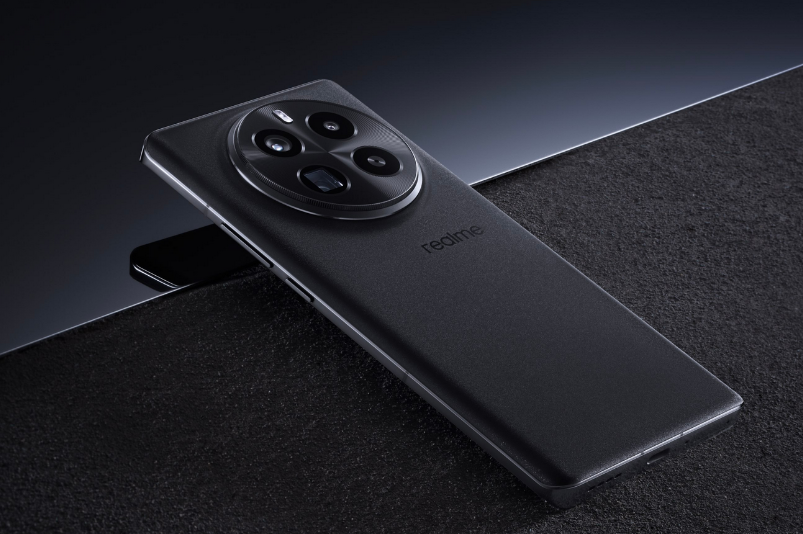
The Realme GT5 Pro, announced at the event features a 6.78-inch 1.5K OLED display with a 144Hz refresh rate. It is powered by the Snapdragon 8 Gen 3 SoC and offers up to 16GB of RAM and 1TB of storage. The device also boasts a large 5,400mAh battery, supporting 100W wired and 50W wireless charging.

For photography, the GT5 Pro includes a 50MP primary camera with OIS, a 50MP periscopic telephoto lens with 3x optical zoom, and an 8MP ultra-wide-angle camera. There’s a 32MP front camera that ensures high-quality selfies.

The Realme GT5 Pro is priced between 3,999 Yuan ($563) and 4,299 Yuan ($605). It will hit the market on December 14, 2023.

RELATED:

OnePlus 12 teardown shows off huge 9,140mm² vapor chamber cooling

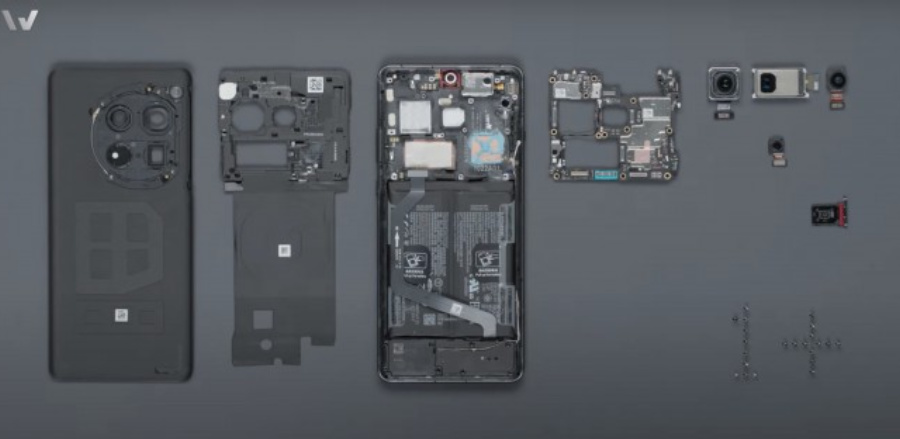
Fresh off its Chinese launch, the OnePlus 12 has already been taken apart by tech experts at WekiHome. The teardown itself follows a standard procedure, but it offers a fascinating look at the phone’s well-organized internals and its impressive cooling system. 

While the video covers all the small details, we will cover the main highlights in this story. 

OnePlus 12 teardown

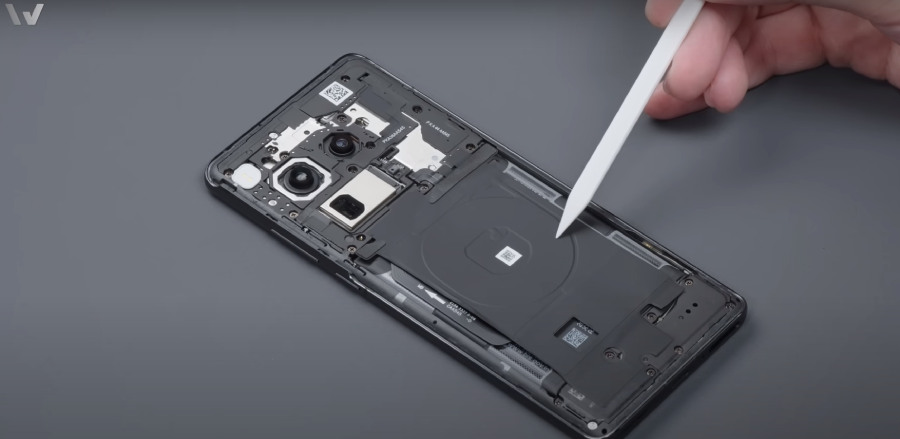
The first thing that strikes you is the clean layout of the internal components. The motherboard and other crucial parts are neatly tucked under a three-piece plastic cover. The cover holds the wireless charging pad, NFC antenna, LED flash, and ambient light sensor.

After it’s removed, we get a clear view of the phone’s impressive camera sensors. The OnePlus 12 boasts a powerful 50MP Sony LYT-808 primary sensor with OIS, a 64MP OmniVision OV64B sensor with an OIS-assisted 3x periscope zoom lens, and a 48MP Sony IMX581 ultrawide unit with autofocus. 

The teardown also shed light on the smartphone’s upgraded haptics motor, which OnePlus claims is 18% more powerful and 60% faster than previous iterations.

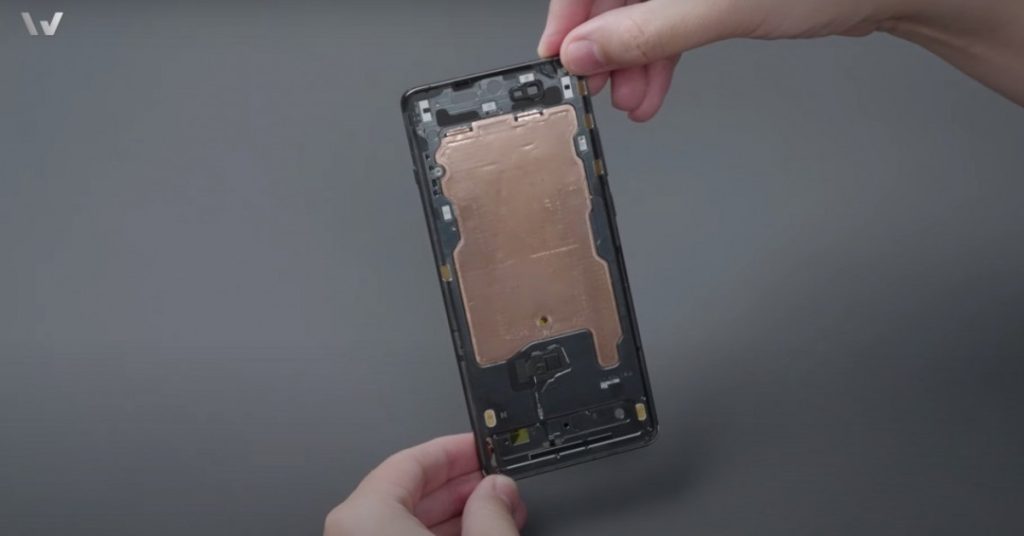
The teardown goes further, meticulously removing layers to expose the massive vapor chamber nestled beneath the screen. Particularly, OnePlus has opted for a substantial 9,140mm² VC (Vapor Chamber) cooling system, which covers an impressive area of 38,547mm². 

This behemoth of a cooling system should allow the Snapdragon 8 Gen 3 processor to sustain peak performance even during demanding tasks.

The teardown also reveals several rubber gaskets, which contribute to the phone’s IP65 water resistance rating. This means the OnePlus 12 can withstand splashes and light rain, making it suitable for everyday use.

The OnePlus 12 teardown paints a picture of a meticulously designed flagship. The impressive camera system, powerful cooling solution, and water resistance highlight OnePlus’ commitment to delivering a truly high-end experience.

Related:

Samsung Galaxy S24 Plus & Galaxy S23 Ultra Again Arrive on Geekbench with Snapdragon 8 Gen 3 at 3.3GHz

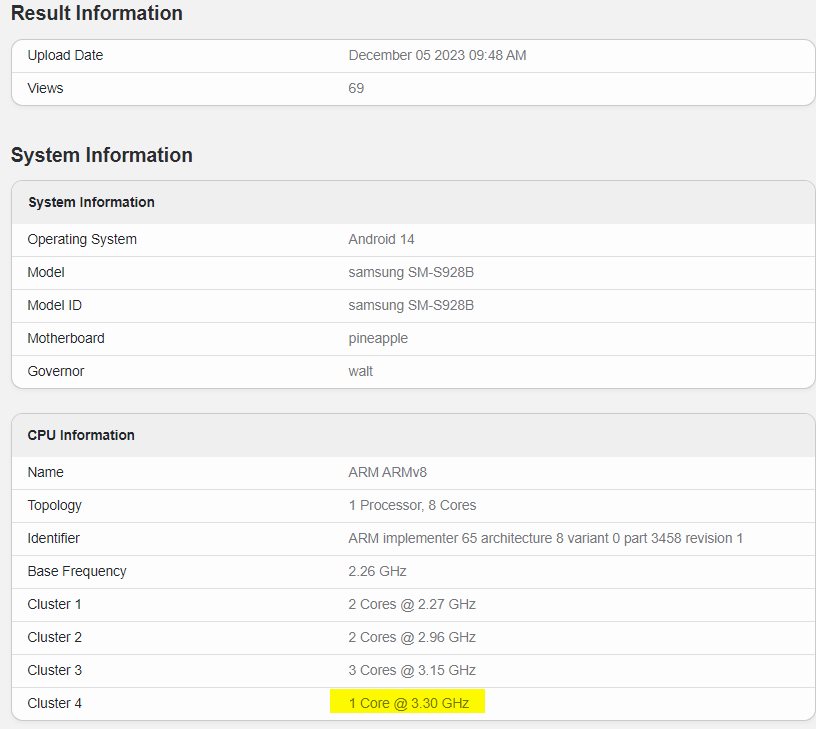
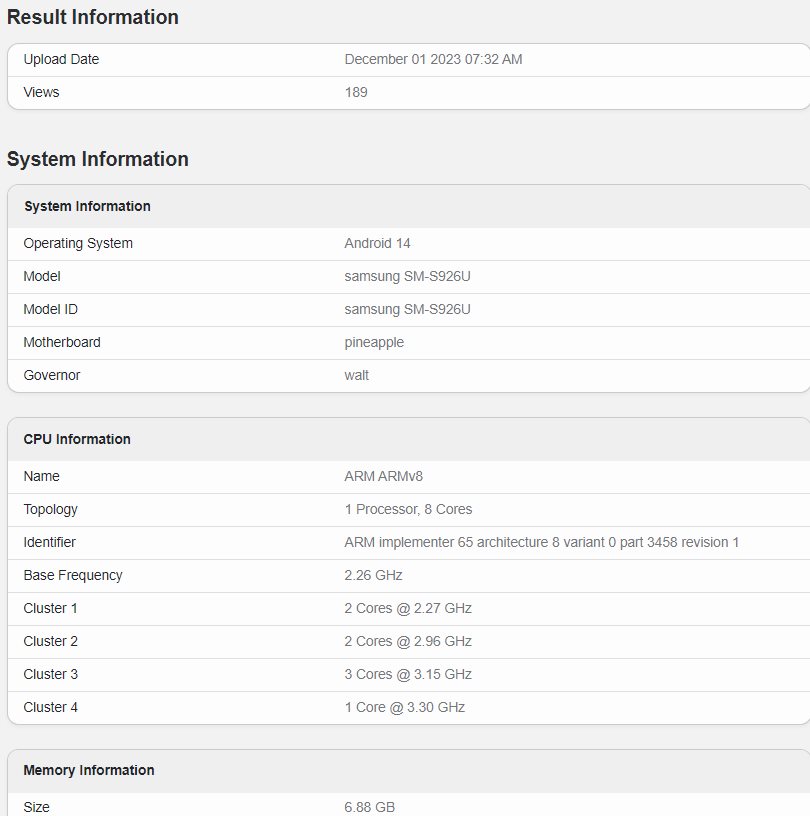
As the Samsung Galaxy S24 series launch is nearing, information about its features via leaks is getting more frequent. The US versions of the Galaxy S24 Plus and the Galaxy S24 Ultra are once again spotted on Geekbench. This time, both smartphones are running the Snapdragon 8 Gen 3 at a normal 3.3 GHz clock speed. Earlier, a benchmark appeared with an overclocked core running at 3.4 GHz on the Korean Galaxy S24 Ultra. Surprisingly, the Korean Galaxy S24 standard variant was spotted running Exynos 2400 on Geekbench a while ago.

Running Android 14, both the Galaxy S24 Plus and Galaxy S24 Ultra seem to feature the same SoC aka Snapdragon 8 Gen 3 at normal clock speeds. It appears to feature a core structure of 2x cores @2.27GHz, 2x Cores @2.96GHz, 3x Cores @3.15GHz, and 1x Core @3.30Ghz. The Samsung Galaxy S24 Plus 8GB RAM variant made its appearance, while the Ultra model packs 12GB RAM. The Samsung Galaxy S24 Ultra scored 2117 points in the single-core test while garnering 6720 on the Multicore test; meanwhile, the Galaxy S24 Plus scored 1902 in the single-core test and 3439 in the multi-core test.

Samsung Galaxy S24 Plus and Galaxy S24 Ultra Specs (Expected)

However, the details about the Galaxy S24 Series are not official, but we expect its launch by Early next year.

Concluding from different leaks, and rumors, the Galaxy S24 Ultra is expected to feature a 6.7-inch Dynamic AMOLED 2x LTPO screen with a 144Hz refresh rate. It will feature Qualcomm Snapdragon 8 Gen 3 across all regions and will have 8/12/16GB RAM and 256/512/1TB storage options. It will run Android 14 and OneUI 6 on the newest software. A 200 MP primary lens, 12MP ultra-wide-angle lens, 50MP periscope lens with 5x optical zoom, and 10MP telephoto lens with 3x optical zoom make up the camera module. It could come with a 5000 mAh battery with up to 45W fast charging and 15W wireless charging.

On the other hand, the Galaxy S24 Plus is believed to come in Exynos 2400 SoC in South Korea and some other regions, while the Snapdragon 8 Gen 3 will power it in the remaining regions. The smartphone will launch with 8/12GB RAM and 256/512GB Storage options. It will have a better display and more RAM in comparison with its predecessor. There will be a slight decrease in display size, and other specifications will remain the same as those of the Galaxy S24 Ultra.

RELATED:

Apple M3 MacBook Air and new iPad models may launch in March 2024: Gurman

Apple is working on launching its next generation of M3 MacBook Air with more powerful specs alongside refreshed iPad models. Now, a new report has hinted at the possible launch timeline of the two product lines. So let’s have a look.

Apple M3 MacBook Air & Refreshed iPads Early 2024 Launch

The news arrives from Bloomberg’s Mark Gurman, who claims that the Cupertino based giant is planning on releasing the new MacBooks and iPads around the same time. Apple is currently seeing a decline in its Mac and iPad sales, so the fresh announcements would likely help raise demand. Apart from the new gadgets, the brand is also working on the macOS 14.3, which is expected to be released along with the new MacBooks. The new iPad launch timeline is in line with our previous report.

The report adds that Apple will launch a new 13-inch and 15-inch MacBook Air as well as two size variants of the iPad Air for the first time ever. Notably, the OLED iPad Pro is another major announcement that is expected to launch next year. Apple’s new MacBook Air models will be powered by its latest M3 series processors, which include the M3, M3 Pro, and M3 Max. These are the same chips that powered the recent MacBook Pro lineup that launched a while back.

For those unaware, the M3 series was unveiled during the scary fast event back in October. While the iPhone maker did overhaul the design of the MacBook Air back in 2022, no drastic change is planned for next year’s M3 MacBook Air. Although, these newer models will come with improved hardware. Gurman cited industry sources regarding the early 2024 launch timeframe. This is all the information we have at the moment, so stick around for more updates regarding this matter.

RELATED:

Samsung Galaxy S24 Ultra live images confirm minute design changes

Samsung is expected to hold its first ‘Galaxy Unpacked’ event of 2024 in mid-January. The star of this conference will be the Galaxy S24 series.

Lately, we have been hearing a lot about the company’s next-gen flagships. Hence, we know how they will look and almost almost all the features they will offer. But new leaks keep pouring in revealing minute details.

Today’s leak showcases the Galaxy S24 Ultra in the flesh and compares its design with the Galaxy S23 Ultra. Let’s go through the details.

Samsung Galaxy S24 Ultra

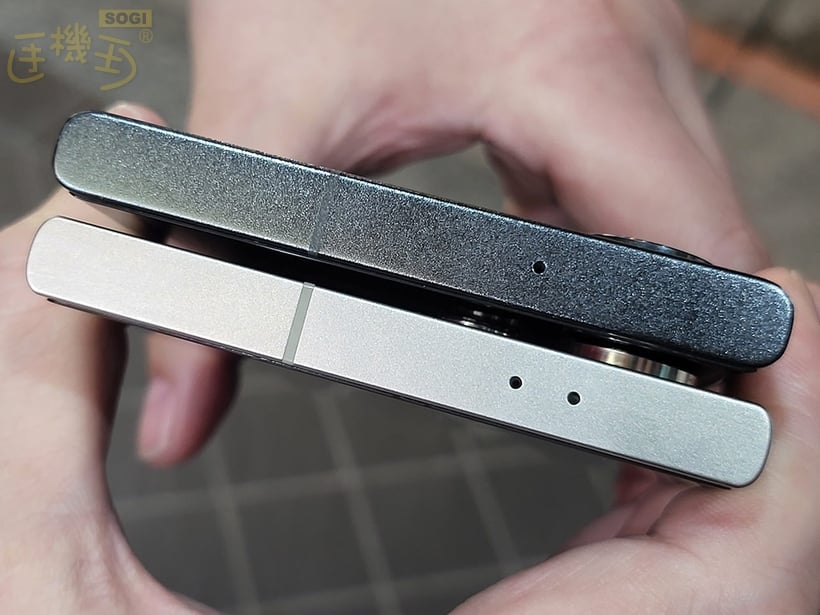
Earlier today, Sogi published a story with side-by-side live images of the Galaxy S24 Ultra and the Galaxy S23 Ultra. The article, which has been now taken down, described the design changes and specs of Samsung’s upcoming premium slab smartphone.

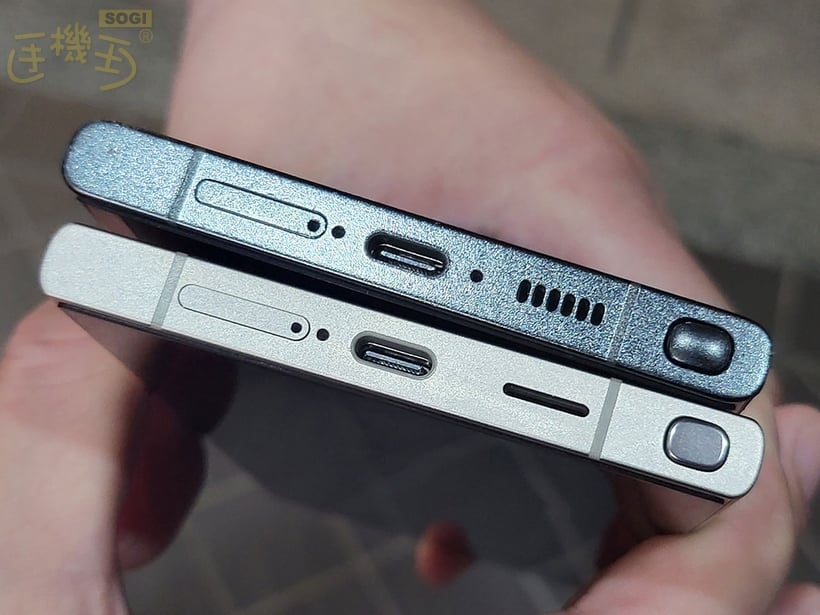
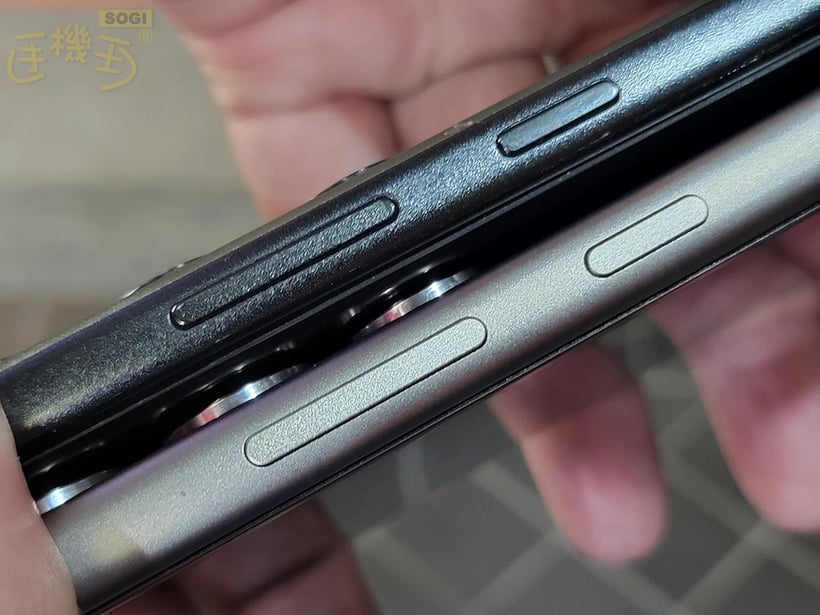
As per the pictures, the Galaxy S24 Ultra will come with design changes despite looking identical to the Galaxy S23 Ultra at first sight. The placement of buttons and holes will be the same but with some differences.

The speaker grille at the bottom will be a long single cutout instead of multiple holes. Further, there will be two microphone holes at the top compared to one on the previous gen model.

The power and volume keys will be slightly bigger. Overall, the phone’s structure, which uses a titanium alloy frame, will be more boxy (including S Pen’s bottom) with fewer curves than before. Even the display itself will be more flatter.

As far as specs are concerned, the Galaxy S24 Ultra will be powered by a Qualcomm Snapdragon 8 Gen 3 chipset paired with 12GB RAM and up to 1TB of storage. It will be backed by a 5,000mAh battery with support for 45W wired charging, 15W wireless charging, and 4.5W reverse wireless charging.

It will house a quad camera system on the rear comprising a 200MP primary sensor, a 12MP ultrawide unit, a 10MP 3x telephoto shooter, and a 50MP 5x periscope zoom unit. On the front, it will have a 12MP shooter.

The device will be built around a 6.8-inch QHD+ LTPO (1-120Hz) AMOLED display. It will be available in Titanium Black, Titanium Gray, Titanium Violet, and Titanium Yellow color options.

RELATED:

(Via)

Experience Fast Charging: Get OnePlus AIRVOOC 50W Wireless Charger A1 at Giztop

The OnePlus AIRVOOC 50W Wireless Charger A1 is now on Giztop for $59.99. The wireless charger features a minimalist design and is available for customers worldwide.

WHERE TO BUY
OnePlus AIRVOOC 50W Wireless Charger A1 at $59.99@Giztop

OnePlus AIRVOOC 50W Wireless Charger A1 is a versatile and efficient charging solution designed to integrate seamlessly into your daily routine. The dual-coil charging system allows for both vertical and horizontal charging, adapting to your preferences for a convenient experience.

The 50W Wireless Warp Charge delivers a rapid and efficient charging process. In just 23 minutes, charge your OnePlus 12 from 1% to 50%, ensuring your device stays ready for action without prolonged interruptions. The charger accommodates cases with a thickness of up to 2mm, providing added convenience without compromising speed.

Silent Mode ensures a quiet charging environment, reducing power and fan speed to keep emitted noise below 23dB. The indicator light’s brightness is dimmed for a discreet and peaceful charging experience, particularly useful during nighttime use.

The OnePlus AIRVOOC 50W Wireless Charger prioritizes your device’s safety with comprehensive protection against overheating, overcurrent, and overvoltage. Charge your device with confidence, knowing that it’s safe.

This sleek charger is constructed from durable PC material. The input supports a range of voltages from 5V to 20V, with a maximum input power of 20V⎓3.25A. The impressive 50W Max output ensures a quick and efficient charging experience for your OnePlus 12 and OPPO Find X6 Pro.

OnePlus AIRVOOC 50W Wireless Charger A1 is a blend of versatility, speed, and security. Elevate your charging experience with a device that seamlessly integrates into your lifestyle, ensuring your smartphone is always ready for whatever the day brings.

Flipkart’s Modiface AI Advanced Skin Analyser Improves Online Skincare Shopping

Being among the top online retailers in India, Flipkart inched towards AI-driven beauty shopping with the Modiface AI Advanced Skin Analyser, a while ago. The new tool allows shoppers to get personalized skincare routines and ultimately enhance online skincare shopping. It has led to a 21% increase in conversions on products enabled by the Skin Analyser. With better adoption of the Analyser tool, the conversions can further scale heights.

In collaboration with ModiFace, which is an AR technology company in the beauty industry, India’s major Online Retailer is in line with its commitment to moving towards next-gen AI-driven technology. The overall aim is to enhance customer experience. Such tools bolster customer’s confidence in a specific product, and even save time by tailoring the skincare product recommendations.

Flipkart’s Modiface AI Advanced Skin Analyser Increases Sales

The user can also try the Advanced Skin Analyser Feature and can select between skin types like Oily, Normal, Combination, and Dry Skin. With just a selfie, the user can get personalized recommendations. It can recognize – Pores, Wrinkles Pigmentation, Radiance, Fine Lines, Acne, and Firmness. Upon analyzing, the feature offers a specific care routine which even includes recommendations across 7 stages – Cleanse, Prepare, Treat, Moisturize, Care, Targeted, and Protect, based on the customer’s chosen focus area(s).

Speaking on the occasion, Ravi Kishnan, Head of Flipkart Labs said, “Skin Care has evolved immensely over the past few years and it has led to a growing demand for personalized solutions. Customers now expect tailored recommendations to address their specific skin needs. However, often the recommendations they find online are not suitable for their skin type.” He further adds, “This tool helps users identify the most suitable skincare products, providing them with a rationale for the choices. The tool creates a personalized skincare regimen covering seven different stages, from an extensive range of top-rated skincare products listed on Flipkart.”

The Advanced Skin Analyser uses an AI algorithm that is validated with over 10000 images for better accuracy in recommendations. On average the user spends 7 minutes with the tool. Jennifer Tidy, EVP of Partnerships at Modiface, said, “We are thrilled to partner with Flipkart to make this tool available to consumers in India.

Interested users can try the tool after looking at the demo video for better accuracy.

Related:

Black Shark Black Magic wireless game controller with hall effect triggers, gyroscope & vast compatibility launched

Black Shark has recently unveiled its latest gaming accessory – the Black Magic wireless game controller. This controller offers compatibility with various platforms and has hall effect triggers.

Black Shark Black Magic wireless game controller

Black Shark Black Magic wireless controller specs:

Featuring an Xbox-like button layout, the controller offers a Hall effect linear trigger, a 6-axis gyroscope, and four back buttons. It supports a 1000Hz wired return rate and offers a joystick resolution of 2000 levels.

One standout feature is the adjustable zero-deadzone rockers, providing precise and lag-free control for competitive gaming. The Hall effect vibrating triggers deliver realistic feedback, enhancing the gaming experience. And since they are magnetic and don’t have any point of physical contact underneath, the trigger won’t be wearing out even with regular use. Additionally, the controller includes 4 back keys, allowing users to map in-game actions for added convenience.

Black Shark Black Magic wireless game controller

The Black Magic wireless game controller is equipped with a 1000mAh battery, claiming a 10-hour battery life. It supports three connection modes – wireless 2.4G, Bluetooth, and wired. The laser-engraved anti-slip pattern ensures a secure grip during intense gaming sessions.

One of its notable features is the support for mapping keyboard key values, making it versatile across multiple platforms, including PC, NS, iOS, and Android. The inclusion of a contact charging base, automatic activation upon pickup, and multi-platform connectivity further enhance its appeal.

Pricing & availability

Priced at 259 yuan ($36), the controller is currently available for pre-order in China. During its first sale held between December 9 and December 15, the controller will be selling for 199 yuan ($28).

In related news, Red Magic recently launched the Red Magic Shadow Blade 2 Gamepad, which can turn your smartphone into a handheld gaming console. Like the Black Magic controller, the Shadow Blade 2 also comes with Hall linear triggers and customizable back buttons. In addition to that, the controller also comes with a USB Type-C port and supports a 3.5mm audio jack.

RELATED:

Oppo Reno 11 5G surfaces in NBTC certification, global launch likely soon

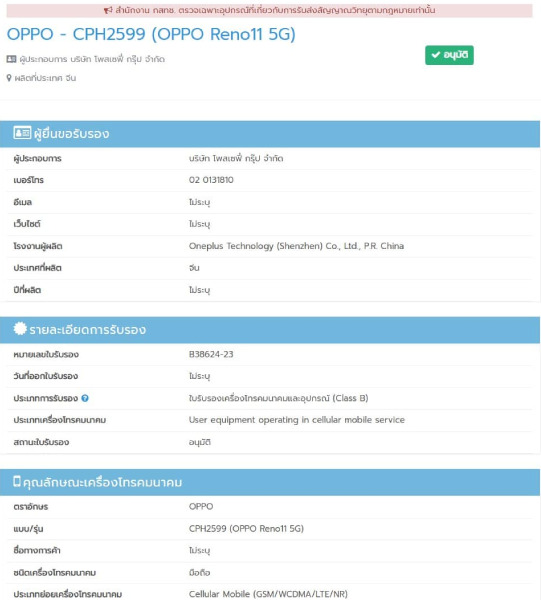
Oppo‘s recently launched Reno 11 series in China might soon be heading to a global audience. The standard Reno 11 5G has been spotted on the National Broadcasting and Telecommunications Commission (NBTC) database in Thailand, hinting at an imminent launch.

Oppo Reno 11 5G NBTC certification

The smartphone appeared with the model number CPH2599, just after the NBTC approval of the Reno 11 Pro 5G (model number CPH2607). Unfortunately, the certification doesn’t reveal any further details about the device’s specs or features.

Oppo Reno 11 NBTC

However, the exact specifications of the global Reno 11 models remain unclear. While the Chinese versions boast a MediaTek Dimensity 8200 chipset, a recent Geekbench listing for the global Reno 11 5G suggests that the smartphone may opt for a mid-range MediaTek Dimensity 1080 SoC. 

In other words, it’s unclear if the global Reno 11 will be the same as the Reno 11 in China, or whether a cutdown version of the same. But this difference isn’t surprising, as last year’s Reno 10 also had differing specifications between its global and Chinese versions. However, the Pro models maintained similar specs across regions.

To recap Chinese Reno 11’s specifications, it comes with a 6.7-inch curved-edge OLED display with a 120Hz refresh rate and impressive 950 nits of brightness. The screen is also home to a 32MP selfie shooter.

Around the back, it comes with a 50MP Sony LYT-600 primary sensor with OIS, an 8MP ultra-wide lens, and a 32MP IMX709 telephoto sensor for 2x zoomed-in shots. 

Likewise, fueling the device is a 4800mAh battery with 67W fast charging support, while the latest ColorOS 14 based on Android 14 handles the software side of things. 

While the official launch date for the global Reno 11 series remains unknown, we can expect the devices to arrive sometime in the first quarter of 2024.

Related:

Sony & Mercedes-Benz launch a custom PS5-themed SUV fitted with a PS5 console and GT Racing 7

Sony and Mercedes-Benz have jointly launched a PS5-inspired A-Class Vibes SUV. The new SUV comes with a game console and the Grand Turismo Racing 7 game. The announcement was made by Sony SIE Italy on December 6 to launch the A-Class Vibes SUV with PS5 as the design inspiration. The model is a limited-quantity one as only 50 units will be produced.

Mercedes-Benz Classe A Vibes SUV

The new PS5-themed Mercedes-Benz SUV adopts an angular intake grille on the exterior and white exterior color as well as blue ambient lighting. It is similar to the style of the PS5 console and handle. The car has a black leather interior and a blue-themed central control theme. The slogan for the Classe A Vibes SUV is “different fields, same vibes”. The concept is aimed at conveying the best of both the exquisite worlds of Sony and Mercedes-Benz.

https://youtu.be/R3vvHBohBko

Sony has had several concept cars unveiled, the same as Mercedes-Benz. The new Classe A Vibes SUV is a major leap in the relations between the electronics giant and automobile powerhouse. The interior of the car bears semblance with the PS5 and the inclusion of a PS5 console in the mix is also exciting.

Pricing & Availability

The limited-edition Mercedes-Benz SUV is priced at 55,677 euros ($60,357). A PlayStation 5 (PS5) gaming console and the GT Racing 7 game are offered with the car. The finer details and specs of the new PS5-inspired Mercedes-Benz EV are not available yet, but it will be expectedly premium in outlook. The limited number of units to be produced adds another layer of uniqueness to the new car.

RELATED:

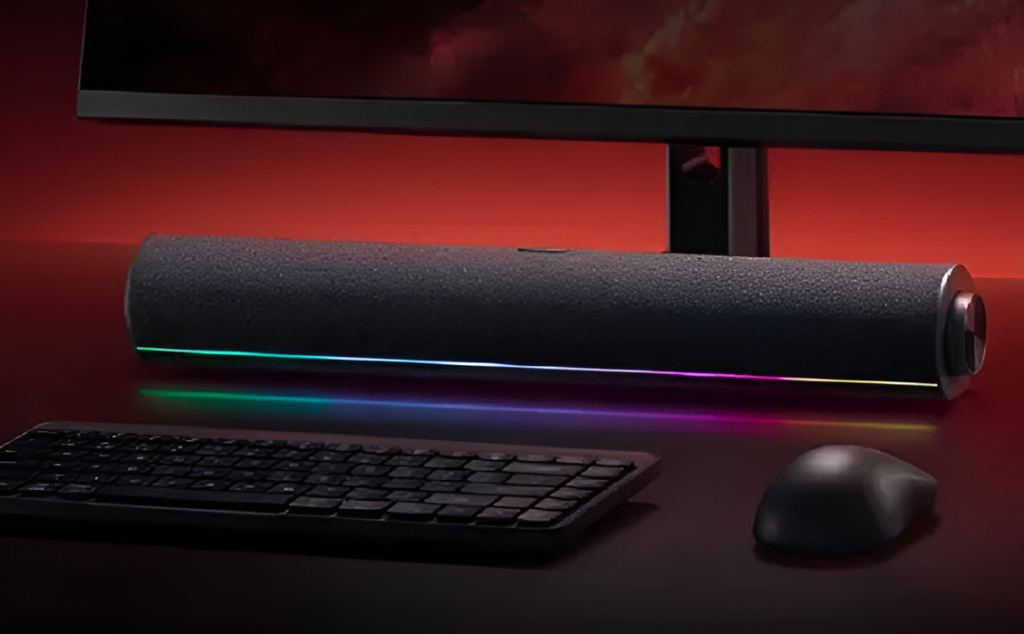
Redmi Desktop Speaker with RGB lights, available for Pre-Order in China at 199 Yuan ($27)

Xiaomi‘s sub-brand, Redmi, has unveiled its first audio peripheral dedicated to desktop devices — which is now available for pre-order through all channels in China starting today, December 7. This Redmi Desktop Speaker is certified by Golden Ear and is priced at a competitive 199 yuan (~$27).

Design and distinctive features of Redmi’s desktop speaker

In terms of design, the Redmi computer speaker showcases a sleek cylindrical one-piece design, adorned with exquisite mesh fabric and a vibrant, fashionable RGB light strip.

In terms of sound quality, the speakers feature a balanced performance across high, medium, and low frequencies. With a 53° tilt angle architecture designed for desktop scenes, the Redmi computer speakers ensure optimal sound projection. Notably, they secured high scores in a double-blind test conducted by the Golden Ear Laboratory, earning the “CGEC Golden Ear Preferred Product” honorary certificate.

The light strip provides five styles of lighting effects. In the pickup rhythm mode, the DSP intelligently analyzes the music spectrum, allowing the light strip to respond in real-time, creating a dynamic visual experience.

The Redmi computer speakers also feature built-in hidden microphones, making them versatile for voice calls, online classes, remote meetings, and online gaming. The speakers truly cater to the diverse needs of users, combining aesthetics with functionality and promising an immersive audiovisual experience for desktop users.

Advanced connectivity

These computer speakers from Redmi support USB one-line connection, combining USB-A and Type-C interfaces into one. Additionally, they support low-latency Bluetooth 5.0 and come equipped with a 3.5mm audio output interface.

Related:

(Source)

iPhone SE 4 battery size could be significantly larger than iPhone SE 3, claims report

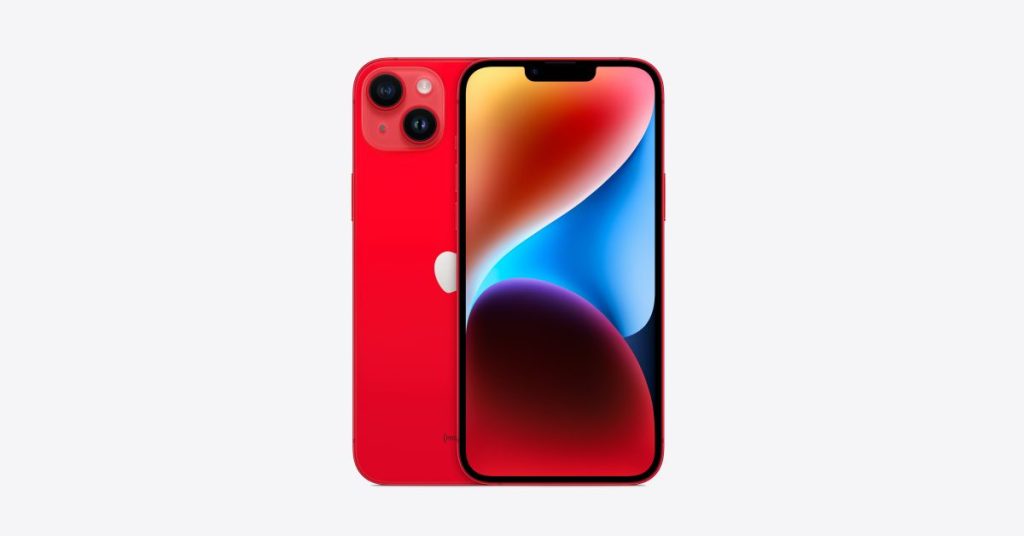
Apple is expected to announce its next iPhone SE model in 2024. A report from last month claimed that the iPhone SE 4 (or the iPhone SE 2024) will be similar to the iPhone 14 in many aspects. A new leak claims that the iPhone SE 4 will pack the same battery life that’s packed inside the iPhone 14. This indicates that the 2024 variant will offer a significant improvement in battery life as compared to the iPhone SE (2022) from last year.

iPhone SE 2024 battery size tipped

Apple iPhone 4
Apple iPhone 4

According to a report by Macrumors, the partially assembled prototypes of the iPhone SE 4 have been found to be equipped with a battery that bears the A2863 model number. Apple has previously used the same battery to power the iPhone 14.

As a reminder, the iPhone SE 3 (or the iPhone SE 2022) packs a 2018mAh battery. It can be said based on the new leak that the iPhone SE 4 may arrive with a significantly larger 3279mAh battery. It is worth noting that the leaked information provided is based on the iPhone SE 4’s prototype units and is subject to change as it is still under development.

Developing new components for the iPhone SE may not be feasible for Apple. Hence, it appears that the company would rather use existing components to build the fourth-generation iPhone SE. This makes sense since the iPhone SE 2 packs the same 1821mAh battery that was available inside the iPhone 8.

As per reports, the iPhone SE (2024) will be equipped with a USB-C port and an Action button. It is also expected to feature a 6.1-inch OLED display with a notch for the TrueDepth camera system, which suggests that it will have support for Face ID. It will have a single 48-megapixel rear camera. It is said to measure 138.4 x 67.3 x 7.3mm and weigh 144 grams.

RELATED:

(source)

Realme GT 5 Pro launched with SD8Gen3, 50MP Sony LYT-808 main camera, curved OLED display, & more

Following months of rumors and leaks, Realme finally unveiled its highly anticipated Realme GT 5 Pro. The company’s latest GT series smartphone is a flagship grade model and offers top notch specs and features. So here’s everything you need to know.

Realme GT 5 Pro: Design and Display

With the Realme GT 5 Pro, the company has placed a heavy focus on the design of the device from the inside out. On the inside, it features one of the largest heat dissipation units that has a 12,000mm2 surface area. This is quite handy considering the beefy specs it packs on the inside. The rear panel features a glass panel cover (vegan leather for the orange and white variants) that adds to its premium appeal along with a large circular camera island that houses the image sensor.

Realme GT 5 Pro Launch

Meanwhile, the front of the smartphone sports a tall 6.78-inch 8T LTPO 1.5K OLED display that offers an adaptive 144Hz refresh rate, 2160Hz PWM dimming, 2160Hz touch sampling rate, DC dimming, 20,000 level dimming, Pro-XDR technology, 1600 nits of global max brightness, and an impressive 4,500 nits of peak brightness. The screen is curved from the side edges and even houses a punch-hole cutout for the selfie camera.

Specifications

Under the hood, the Realme GT 5 Pro is equipped with Qualcomm’s latest and greatest Snapdragon 8 Gen 3 SoC. This is a top end processor so we can expect great performance in daily use and gaming in particular. This chip is paired with up to 16GB of LPDDR5X RAM and up to 1TB of UFS 4.0 storage. A massive 5,400mAh battery pack powers this device, which also supports 100W wired fast charging and 50W wireless fast charging.

Realme GT 5 Pro Launch

The brand has promised to offer three years of major Android OS updates along with four years of security updates. It will also run on the Android 14 OS based Realme UI 5.0 custom skin out of the box. Other notable features include an in-display fingerprint scanner, VC cooling system, USB 3.2 enabled USB-C port, and an AI super assistant onboard that supports intelligent speech generation and leverages an AI model with 7 billion parameters.

A major new feature that is making its way to the Realme GT 5 Pro is the support for several hand gestures. Pinch gestures can toggle the recent app list while holding your index finger up can toggle the cursor control. A three-finger palm gesture is basically the home button and pointing the thumb to the left means back. You can even turn the screen off by moving your hand towards the screen. However, the coolest one is the palm unlock, which Realme claims is faster than facial recognition. This technology was employed with machine learning using 10,000 models.

Camera

Realme GT 5 Pro Launch

The specs sheet for the camera department is equally as impressive as the internal hardware. On the rear, the Realme GT 5 Pro features a 50-megapixel primary camera, which is Sony’s LYT-808 sensor (also featured on the new OnePlus 12). This supports OIS (Optical Image Stabilization) and is paired with another 50-megapixel Sony IMX890 periscopic telephoto shooter that offers 3x optical zoom and up to 120x hybrid zoom. Lastly, an 8-megapixel Sony IMX355 is also featured on the back for ultra wide angle shots. On the other hand, the front houses a 32-megapixel selfie camera.

Pricing and Availability

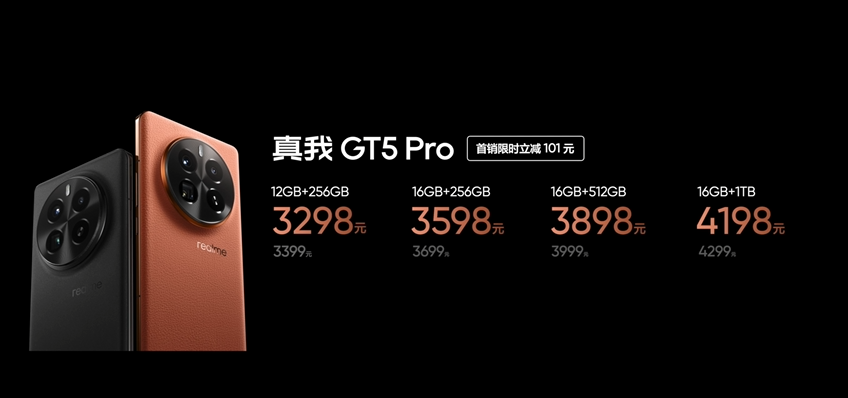
The Realme GT 5 Pro has been announced in multiple storage configurations as well as three color options, namely Black, White, and Orange. It has a starting price tag of 3,399 Yuan (roughly 479 US Dollars) for its 12GB + 256GB configuration. Although, it will be offered for an introductory price tag of 3,298 Yuan (roughly 465 US Dollars). Similarly, the 16GB + 256GB model costs 3,699 Yuan (roughly 520 US Dollars), but will go on sale for a special launch price of 3,598 Yuan (roughly 506 US Dollars).

Realme GT 5 Pro Launch

The 16GB + 512GB was announced for 3,999 Yuan (roughly 563 US Dollars) but will go on sale for 3,898 Yuan (roughly 548 US Dollars). Lastly, the top end 16GB + 1TB variant is priced at 4,299 Yuan (roughly 605 US Dollars) but will cost 4,198 Yuan (roughly 590 US Dollars) at its first launch. Pre-orders for the device are already live in China, while its first sale is set to kick off on 14th December 2023.

RELATED:

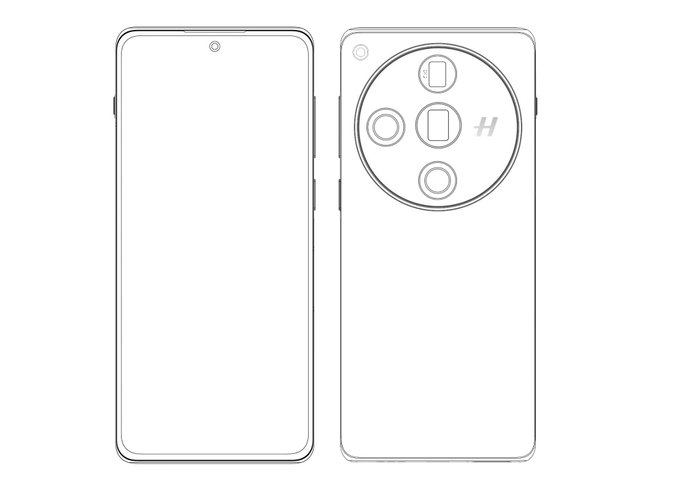
Oppo Find X7 Pro tipped to feature alert slider, quad-curved display, and more

Now that the OnePlus 12 is official, the next major release from the Oppo group will be the Find X7 series. The company is expected to debut these smartphones sometime early next year.

As usual, two main devices are expected, namely Oppo Find X7 and Oppo Find X7 Pro. The ‘pro’ model might come in two variants featuring different chipsets.

We have been hearing about these products for quite a while now. A lot has been revealed about them over the last few months through multiple sources and details keep pouring in. Let’s check out what today’s leak has to say.

Oppo Find X7 Pro
Oppo Find X7 Pro

Earlier today, Digital Chat Station disclosed a few tidbits regarding the upcoming Oppo Find X7 Pro. He says that there will be two variants of this phone bearing model numbers PHZ110 and PHY110.

Going by other reports, PHZ110 will be powered by a Qualcomm Snapdragon 8 Gen 3 chipset. On the other hand, PHY110, which was previously thought to be Oppo Find X7, will house a MediaTek Dimensity 9300 SoC underneath it.

Further, DCS mentions that the Find X7 Pro will feature an alert slider. This will make it the first Find X smartphone to have the iconic three-stage button for sound profiles.

Lastly, the tipster says that the handset will retain the display from its predecessor along with an ultra-thin optical fingerprint sensor. This means it will flaunt a 6.82-inch QHD+ OLED display with support for 1-120Hz refresh rate (LTPO) and micro curves on all four sides.

Recently, the device leaked in live images revealing an octagonal camera module. However, DCS soon clarified that the Find X7 Pro will have a circular camera module like its forerunner Find X6 Pro.

The phone is expected to come with two 50MP periscope cameras, one with a 3x magnification lens and the other with a 6x zooming capability lens. These zoom cameras will be paired with a 1-inch 50MP Sony LYT-900 primary sensor and a 50MP ultra-wide unit.

RELATED:

LG Innotek’s Under-Panel Camera Development Reaches Advanced Levels

Following the footsteps of Samsung, the LG Innotek has started the development of the Under Panel Camera (UPC). According to industry sources, LG is working at advanced stages to eliminate the issue of low light in under-display cameras. They have even applied for several patents to resolve the issues. LG seems to be preparing the UPC for Apple iPhones, which are slated to launch in 2026.

UPC refers to the Under display Camera, which is not visible to the users normally, allowing users to enjoy the full display view without any distraction. It elevates the immersive display experience, as the punch hole is only visible when using the front camera, otherwise, it remains invisible. However, there are certain disadvantages too, including less light reaching the camera lens which may deteriorate the overall captured image quality. The Under Display camera fails to impress advanced photography users who often tend to shoot high-resolution photos.

LG FreeForm Optic Lens to Compensate Light Loss in UPC

LG is working on these bottlenecks and is preparing a special lens called the “Freeform Optic” lens which will overcome the insufficient light limitation. The new module has multiple lenses including a “free curve” shape lens which brings in more light suitable for quality photography. LG Innotek applied for a similar patent in 2021 describing the Optical module and other aspects of the new Freeform lens technique. As per patent specifications, “As the front (full) display of smartphones is required, we are applying a UPC that hides the front camera under the display (omitted),” but also added, “If the camera is placed under the display, there is a loss of light due to the display panel. There are problems such as deterioration in camera module image quality, reduction in brightness, and occurrence of ghosts and flares. As the brightness drops to 20% of the existing level, a new structural optical system is required that compensates for the brightness or supports improved resolution and illuminance regardless of the camera position.”  (Translated)

The patent details a solution for the problem, and describes, “By applying a freeform lens, the thickness of the peripheral lens can be controlled, thereby reducing the aberration of the optical system and optical module (a phenomenon in which images are blurred due to the shape of the lens, etc.), and increasing the light ratio around the optical system and optical module. The image quality of the area can be improved.” (Translated)

LG Display started the UPC development and will further improve the light transmission through the lens by 20% by 2023 and by 40% in 2024. The company will use a transparent PI substrate instead of the normal PI substrate for UPC.

Such advancements are required as Apple plans to bring its Face ID to Under Panel Cameras by 2026. LG is diligently working to improve the UPC quality that will improve its competition with Samsung Display which already developed such modules. Samsung Galaxy Z Fold 4 and Galaxy Z Fold 5 are using the Under Panel Cameras.

Related:

(source)

December Pixel Feature drop brings Video Boost, Night Sight & AI features to Pixel 8 Pro

Google recently released Gemini Nano, an efficient version of its new AI module for the Pixel 8 Pro as part of the December Pixel feature update. The integration of Gemini brings several innovative features, including Summarize in Recorder and Smart Reply in Gboard, adding a host of AI-powered capabilities to the smartphone. Apart from these AI enhancements, the December feature drop offers a variety of additional features for Pixel users.

Pixel December Feature Drop

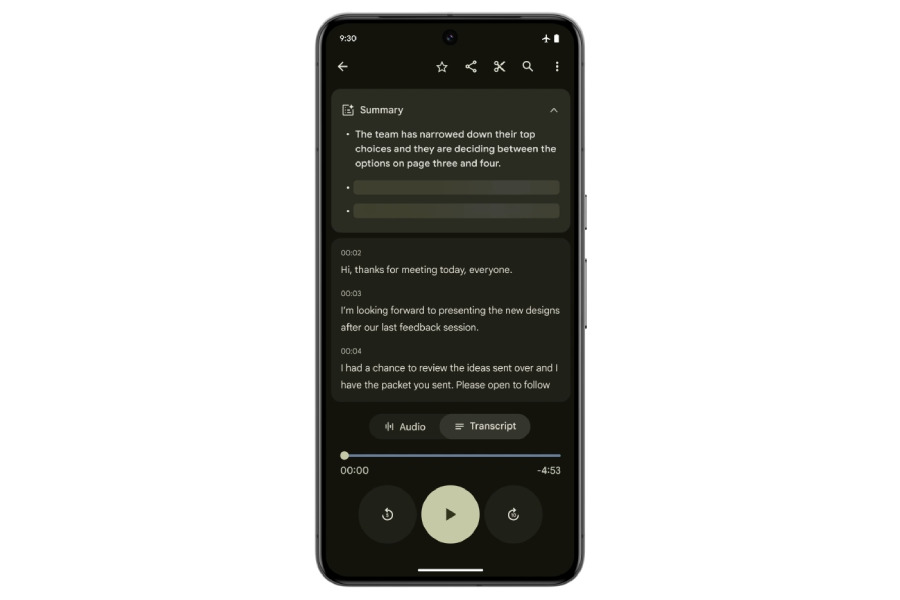
Summarize in Recorder lets you get summaries of your recordings offline – be it conversations, interviews, or presentations. Plus, Smart Reply in Gboard, powered by Gemini Nano, offers up high-quality responses with an understanding of the conversation context, saving you time.

Video Boost

Beyond this, Google is enhancing visual content with Pixel 8 Pro’s Video Boost, utilizing Google Tensor G3. This feature adjusts color, lighting, stabilization, and graininess in videos through cloud adjustments. Night Sight video ensures detailed and colorful recordings even in low-light conditions.

Night Sight

Photography on Pixel 8 and Pixel 8 Pro receives AI-powered enhancements. Improved Portrait light in Google Photos handles shadows better, while Photo Unblur sharpens images of people and pets with a single tap.

Pixel Fold, as well as Pixel 6 and newer devices, can now be used as a webcam for your laptop/desktop PC by connecting the device via USB.

Similar to Samsung’s repair mode, Pixel devices are now also getting a Repair Mode that will ensure the safety of personal data during device repairs. Google Password Manager is also coming to Pixel devices, simplifying adding passkeys for a smoother login experience.

The recorder app now includes transcription support for 28 additional languages and is equipped to accurately transcribe English speech while accommodating various unique accents during recording. Additionally, Pixel’s Direct My Call and Hold for Me features are now available in the UK.

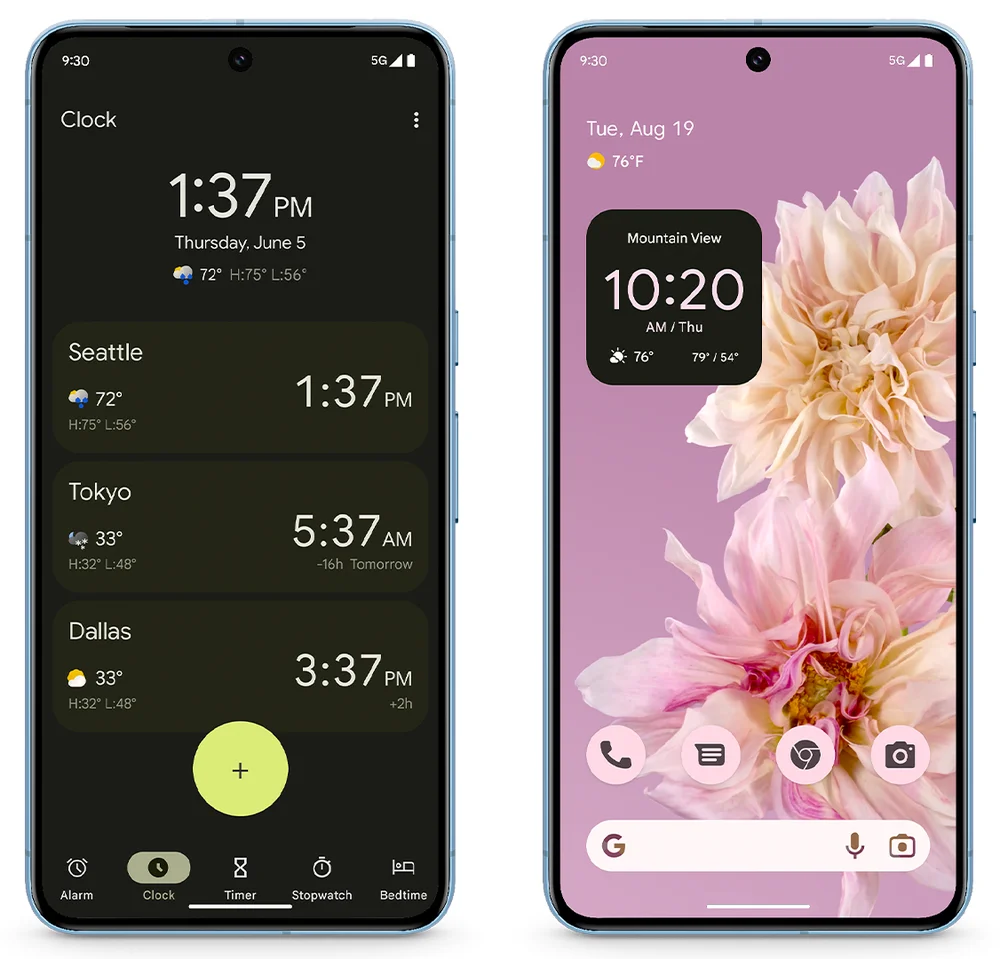
Customization options are also growing, with weather conditions and daily forecasts integrated into the World Clock tab in the Clock app. First-gen Pixel Watch users benefit from improved synchronization with Pixel Phones, accompanied by new watch face designs and updated complication styles.

RELATED:

Honor 90 GT, X50 GT with Snapdragon 8 Gen 2, 8+ Gen 1 chip to rival Redmi K70, K70e

Last month, Honor introduced the Honor 100 and Honor 100 Pro smartphones in China. While the standard model is powered by the Snapdragon 7 Gen 3 chip, the Pro variant boasts the Snapdragon 8 Gen 2 chipset. The 100 series focuses primarily on enhancing the photography experience and design while maintaining an affordable price point. Now, the brand is rumored to unveil two new GT-series phones, the X50 GT and 90 GT smartphones, which will be performance-driven devices equipped with flagship-level chipsets catering to budget-conscious users. Here’s all the new information about the two devices.

Honor X50 GT, Honor 90 GT chipsets leaked

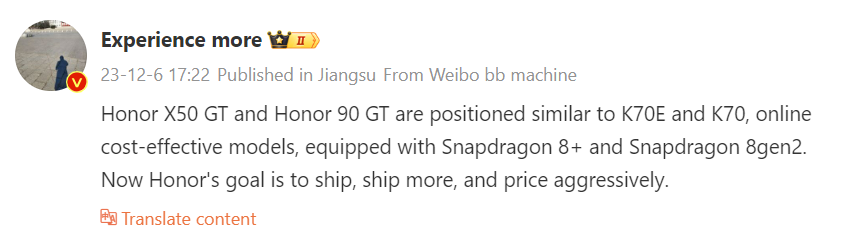
According to recent leaks, the Honor X50 GT will come equipped with the Snapdragon 8 Plus Gen 1 chipset, whereas the Honor 90 GT will have the Snapdragon 8 Gen 2 onboard. It is speculated that the X50 GT and 90 GT will rival the Redmi K70e and Redmi K70, which feature the Dimensity 8300-Ultra and Snapdragon 8 Gen 2 chipsets, respectively.

A recent leak suggests that there could be a higher variant dubbed the Honor 90 GT+, which may feature 24 GB of RAM. It is speculated that both of the upcoming GT series will be priced aggressively. Hence, it is likely that the Honor 90 GT may undercut the Redmi K70, which has a starting price of 2,499 Yuan (~$351).

Honor 90 GT 3C certification
Honor 90 GT 3C certified

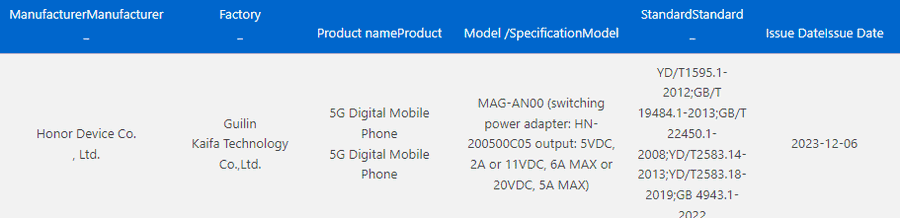
In addition, the Honor 90 GT, which is said to have the MAG-AN00 model number, has appeared in the database of the 3C certification platform. The listing reveals that the device may arrive with support for 100W charging. Unfortunately, the other specifications of the Honor 90 GT are still under wraps. As far as launch is concerned, the Honor X50 GT and the Honor 90 GT will debut in the last week of this year.

RELATED:

Google’s Gemini AI is coming to Android, starting with Pixel 8 Pro

Google has unveiled its latest innovation in large language model (LLM), Gemini with three distinct versions — Nano, Pro, and Ultra. Each of them has its own unique capabilities, and if you’re curious, you can read all about them in our separate story.

Google Pixel 8 Pro with Gemini Nano AI model

Gemini Nano is the smallest and most efficient AI model from Google. This model is designed to run locally on your phone and Pixel 8 Pro is the first smartphone to use it. And, since Gemini Nano runs locally on the smartphone, users need not be connected to the internet. 

Pixel 8 Pro features powered by Gemini Nano

This local processing (currently) powers two new features for the Pixel 8 Pro:

  • Summarize in Recorder: This feature lets you automatically generate bullet-point summaries of audio recordings, enhancing productivity and information absorption.
  • Smart Reply in Gboard: This upgrade suggests contextually relevant replies within messaging apps, but currently is only limited to WhatsApp. However, Google plans to expand this feature to other apps soon. As Google says, Smart Reply saves you time by offering high-quality responses that are both conversational and contextually aware.

These features are part of the December Feature Drop, which also includes many other new additions (we’ll cover them in a separate article).

While the Tensor G3 chip currently has the exclusive power to run these AI features, it’s currently limited to the Pixel 8 Pro. However, we expect it to become available on the standard Pixel 8 soon, too.

Likewise, Google is also working to bring Gemini Nano ability to the entire Android system. They have launched a new system called AICore to help developers integrate Gemini-powered features into their apps.

While your phone will still need a powerful processor, Google confirms compatibility with processors from Qualcomm, Samsung, and MediaTek. Developers can already join Google’s early access program.

Related:

(Source: 1, 2)

[Update] iQOO 12 5G debuts as the first Snapdragon 8 Gen 3 phone for global market, costs ~$790

Update: It has also launched in Malaysia with RM 3,999 (~$730) price tag.

Original story continues…

In November, iQOO announced the iQOO 12 and iQOO 12 Pro in the Chinese market. While reports claim that the Pro variant will remain confined to the Chinese market, the iQOO 12 has gone official in Thailand today. The iQOO 12 has arrived as the world’s first Snapdragon 8 Gen 3 phone on the global market. Here is a look at the specifications, features, and price of the iQOO 12 5G for the Thailand market.

iQOO 12 5G specifications

The iQOO 12 5G comes equipped with a 6.78-inch flat OLED display, offering a 1.5K resolution of 2800 x 1260 pixels, a 144Hz refresh rate, 2160PHz PWM dimming, maximum brightness of 3000 nits, and 452 ppi pixel density. For higher resolution and inserting frames while gaming, the device ships with the company’s self-developed Q1 graphics chip. The Snapdragon 8 Gen 3-powered smartphone features LPDDR5x RAM and UFS 4.0 storage.

The iQOO 12 houses a 5,000mAh battery with the capability of 120W fast charging. It runs on Android 14 with a layer of FunTouch OS 14. The Indian wing of the brand recently confirmed that iQOO 12 will get three major OS upgrades and four years of security updates and will come without bloatware. We hope the same applies to other markets, including Thailand.

iQOO 12 5G featured
iQOO 12 5G

Its camera setup comprises a 16-megapixel front camera and a versatile rear configuration, including a 50-megapixel main sensor with OIS, a 50-megapixel ultrawide lens, and a 64-megapixel telephoto lens with 3x optical zoom. The phone further includes an optical in-display fingerprint sensor, dual stereo speakers, a VC cooling system, a large X-axis linear motor, and an aluminium alloy frame.

Connectivity features consist of Wi-Fi 7, Bluetooth 5.4, dual-frequency GPS, NFC, and an IR blaster. The phone measures 163.22 x 75.88 x 8.1mm and weighs 203.7 grams. While the iQOO 12’s Chinese variant offers an IP64 rating, there is no word about the IP rating of its global variant.

iQOO 12 5G price in Thailand

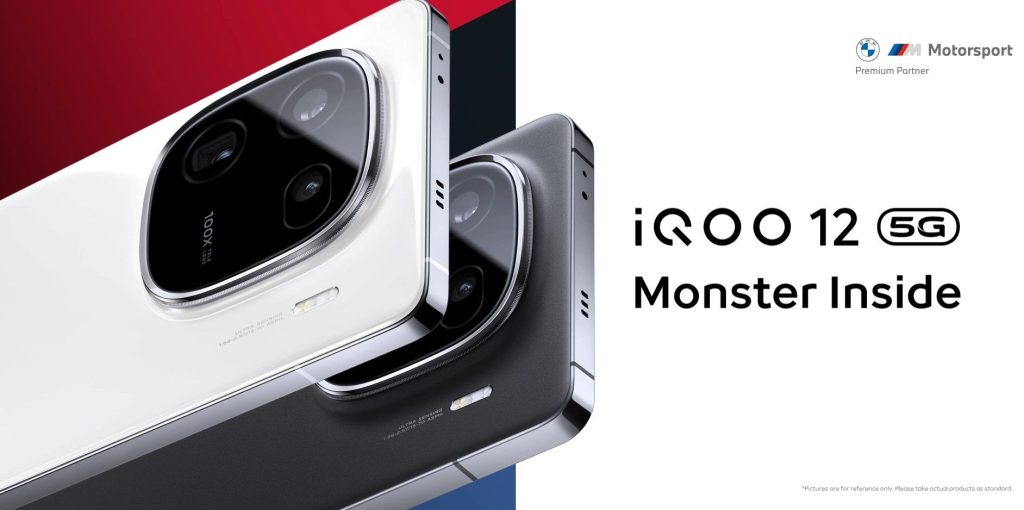
The pricing details for the iQOO 12 in Thailand reveal a cost of THB 27,900 (~$790; ~Rs 65,800) for the sole 16GB+512GB variant. It comes in two color options, such as Legend (white) and Alpha (black).

In related news, the iQOO 12 5G will launch on Dec. 12 in India. A recent report revealed that in India, the device will be priced at Rs 52,999 (~$635) for the 12GB+256GB variant and Rs 57,999 (~$695) for the 16GB+512GB variant.

RELATED: