Advertisement

Huawei Band 11 vs Xiaomi Smart Band 11: Which Smart Band Should You Buy?

Huawei Band 11 and Xiaomi Smart Band 11 are affordable fitness trackers designed for users who want everyday health monitoring, activity tracking and smart features without investing in a full-fledged smartwatch. Both offer AMOLED displays, 5ATM water resistance, heart rate monitoring and blood oxygen tracking. However, they differ in display size, connectivity, battery specifications and additional health features. With prices starting at approximately $43, the two bands are closely matched in affordability. Here’s how they compare across their key features and which one offers better value.

Huawei Band 11 vs Xiaomi Smart Band 11

Main Features:

CategoryHuawei Band 11Xiaomi Smart Band 11Winner
DesignAluminium alloy / polymerAluminium alloyXiaomi – Lighter body
Weight16–17g15.58gXiaomi – Slightly lighter
Water Resistance5ATM5ATMTie – Equal rating
Display1.62-inch AMOLED1.72-inch AMOLEDXiaomi – Larger display
Resolution286 × 482 pixels212 × 520 pixelsHuawei – Higher pixel density
Peak BrightnessNot specified1,500 nitsXiaomi – Higher specified brightness
Heart Rate MonitoringYesYesTie – Both supported
SpO₂ MonitoringYesYesTie – Both supported
Sleep TrackingTruSleepYesHuawei – Named tracking technology
Stress MonitoringYesNot specifiedHuawei – Additional wellness feature
Emotion TrackingYesNot specifiedHuawei – Additional tracking feature
Motion Sensors9-axis IMUAccelerometer, gyroscope, compassTie – Different configurations
Bluetooth6.05.4Huawei – Newer version
Battery CapacityNot specified233mAhXiaomi – Capacity specified
Battery LifeUp to 14 daysNot specifiedHuawei – Longer documented endurance
ChargingMagneticMagneticTie – Same charging method
Charging TimeNot specifiedApproximately 90 minutesXiaomi – Charging time specified
Android CompatibilityAndroid 9.0+Android 8.0+Xiaomi – Older Android support
iOS CompatibilityiOS 13.0+iOS 14.0+Huawei – Older iOS support
Price$45 / ₹4,000$43 / ₹3,600Xiaomi – More affordable
Disclaimer: Specs are based on available data. Actual performance may vary. Verify details from official sources before buying.

Design and Build

The Huawei Band 11 features an aluminium alloy or durable polymer case, depending on the variant, paired with a fluoroelastomer strap. It weighs approximately 16g to 17g without the strap, making it a lightweight option for continuous wear. The Xiaomi Smart Band 11 also uses an aluminium alloy frame but weighs slightly less at 15.58g without the strap. It supports TPU and nylon strap options, giving users more flexibility in styling and comfort.

Both fitness trackers offer 5ATM water resistance, making them suitable for swimming and everyday water exposure. Huawei has a slightly more compact design, while Xiaomi offers multiple colour choices and strap options.

Winner: Xiaomi – Lighter construction and more strap choices.

Display

The Xiaomi Smart Band 11 has a larger 1.72-inch AMOLED display with a resolution of 212 × 520 pixels and peak brightness of 1,500 nits. Its automatic brightness adjustment also helps improve visibility across different lighting conditions. The Huawei Band 11 features a smaller 1.62-inch AMOLED panel with a sharper 286 × 482 resolution and a pixel density of 347 PPI.

Although Xiaomi offers more screen space and higher specified peak brightness, Huawei provides greater pixel density, which can benefit text clarity and interface details. Both use touchscreen displays, making everyday navigation straightforward.

Winner: Xiaomi – Larger display and higher peak brightness for outdoor visibility.

Health Tracking

Both bands provide essential health monitoring through optical heart rate sensors and blood oxygen tracking. They also include sleep monitoring, making them useful for users interested in understanding their daily health patterns. Huawei uses its TruSleep technology and additionally supports stress and emotion tracking, offering a broader set of explicitly listed wellness features.

Xiaomi includes an optical heart rate sensor, pulse oximeter and ambient light sensor, alongside its sleep-tracking capabilities. However, its specifications do not explicitly list emotion tracking or stress monitoring. Huawei therefore has an advantage in the range of documented wellness features, although neither band should replace medical monitoring equipment.

Winner: Huawei – Additional stress and emotion tracking features.

Fitness and Sports Tracking

Both fitness bands include motion-sensing hardware to support activity and movement tracking. Huawei uses a 9-axis IMU sensor, which combines motion-sensing capabilities into a single sensor system. Xiaomi lists an accelerometer, gyroscope and electronic compass, providing several dedicated sensors for movement and orientation tracking.

These components support the underlying activity-monitoring experience, although the specifications do not confirm the exact number of workout modes or advanced training metrics available on either device. Xiaomi’s electronic compass is an additional hardware feature, while Huawei’s integrated 9-axis sensor offers a consolidated motion-sensing solution.

Winner: Tie – Both offer capable motion-sensing hardware, with different sensor configurations.

Battery Life and Charging

Huawei provides clearer battery endurance figures, claiming up to 14 days of maximum usage, eight days under typical usage and approximately three days with Always-On Display enabled. These figures give buyers a better understanding of what to expect under different usage conditions.

Xiaomi equips the Smart Band 11 with a 233mAh lithium-polymer battery and claims an approximately 90-minute charging time. However, an official battery-life figure has not been provided in the available specification sheet, making a direct endurance comparison difficult.

Both devices support magnetic charging, offering a convenient way to recharge without traditional charging ports.

Winner: Huawei – Clearly specified battery endurance of up to 14 days.

Connectivity and Compatibility

The Huawei Band 11 supports Bluetooth 6.0 with BR/BLE protocols, while the Xiaomi Smart Band 11 uses Bluetooth 5.4. Huawei therefore has the advantage in Bluetooth version, although the practical difference in everyday fitness-band connectivity cannot be established from these specifications alone.

Compatibility is another area where both devices offer broad smartphone support. Huawei works with Android 9.0 or later and iOS 13.0 or later. Xiaomi supports Android 8.0 and above and iOS 14.0 and above. Both require their respective companion applications, with Huawei using its supported Huawei Health ecosystem and Xiaomi relying on Mi Fitness.

Winner: Huawei – Newer Bluetooth version and broader iOS compatibility.

Everyday Features and Usability

Both bands are designed around touchscreen interaction, with AMOLED displays providing a clear interface for everyday use. Huawei includes a physical side button, giving users an additional way to interact with the device. Its ambient light sensor also supports automatic adjustment of display brightness.

Xiaomi includes a linear haptic motor, which can provide more refined vibration feedback during interactions and notifications. It also features an ambient light sensor for automatic brightness adjustment. These additions make both devices practical for everyday use, although their overall smart features cannot be fully compared without confirmed details about notification handling, call support and other software capabilities.

Winner: Tie – Huawei offers a physical button, while Xiaomi includes a linear haptic motor.

Pricing and Value for Money

The Huawei Band 11 is priced around $45 (₹4,000), while the Xiaomi Smart Band 11 costs approximately $43 (₹3,600). The difference is relatively small, placing both fitness trackers in a similar affordable category.

Huawei justifies its slightly higher price with additional stress and emotion tracking, a newer Bluetooth version and clearly specified battery endurance. Xiaomi, meanwhile, offers a larger and brighter display, a lighter body and additional strap options. Its lower price also makes it appealing to buyers who prioritise screen quality and everyday fitness tracking over additional wellness features.

Winner: Xiaomi – Lower price, larger display and flexible strap options.

Which One Should You Buy?

The Huawei Band 11 is a better choice for users who prioritise health monitoring, battery endurance and additional wellness features. Its stress and emotion tracking capabilities, combined with clearly stated battery-life figures, make it an appealing option for users who want a more comprehensive daily health companion.

The Xiaomi Smart Band 11 is better suited to users who prefer a larger, brighter display, a lighter design and more customisation through different strap options. It also costs slightly less, making it attractive for budget-conscious buyers.

Both offer essential fitness-band functionality, so the decision largely depends on whether health features or display quality matter more.

Final Verdict

The Huawei Band 11 and Xiaomi Smart Band 11 offer competitive packages at nearly identical prices, but each has a different strength. Huawei stands out with its additional wellness tracking features, Bluetooth 6.0 connectivity and clearly specified battery endurance. Xiaomi counters with a larger AMOLED display, higher peak brightness, lighter construction and a more affordable price.

Neither fitness band is an outright winner across every category. Huawei is the more appealing option for users focused on health monitoring and battery endurance, while Xiaomi makes more sense for those who value display quality, comfort and customisation. Ultimately, both are capable affordable fitness trackers, with the better choice depending on individual priorities.


FAQs:

1. Which is better, Huawei Band 11 or Xiaomi Smart Band 11?

Huawei offers more wellness features and documented battery life, while Xiaomi provides a larger display and lower price.

2. Does Huawei Band 11 have better health tracking?

Huawei additionally supports stress and emotion tracking alongside heart rate, SpO₂ and sleep monitoring.

3. Which fitness band has a better display?

Xiaomi Smart Band 11 has a larger 1.72-inch AMOLED display with 1,500-nit peak brightness.

4. How long does Huawei Band 11 battery last?

Huawei claims up to 14 days maximum, eight days typical usage and three days with Always-On Display.

5. Is Xiaomi Smart Band 11 worth buying?

Yes. It offers a larger AMOLED display, lightweight construction and 5ATM water resistance at a lower price.

Disclaimer: Prices, specifications, and availability may vary by region and retailer. Recommendations in this article are based on editorial opinion, feature-based value, and market positioning at the time of writing. Readers are advised to do their own research before making a purchase.

Read More:

Casio launches new G-Shock GBM-2100LXB-1A2 watch with blacked-out steel bezel & solar charging

Casio is adding a new model to its 2100 series of watches in Japan. The GBM-2100LXB-1A2, scheduled for release later this November, is currently available for pre-order at ¥42,900 ($270). The watch maintains the familiar octagonal shape of the 2100 line but incorporates a metal bezel, solar charging, and Bluetooth connectivity.

Casio G-Shock GBM-2100LXB-1A2

Design Details

For the exterior, Casio is using a combination of stainless steel and bio-based resin. The bezel is made of steel with a black ion-plated finish, giving the watch a uniform, dark appearance. This is paired with a bio-based resin band that features a square-dot texture.

On the dial, there is a grid pattern designed to visually match the band. To add some contrast to the all-black design, Casio applied a blue vapor deposition to the outer edge of the mineral glass, while the dial indexes are colored in gunmetal-gray. The watch measures 49.3 x 44.4 x 11.9 mm and weighs 72 grams.

On the technology side, the GBM-2100LXB-1A2 runs on Casio’s Tough Solar system, which charges the internal battery using both sunlight and artificial indoor lighting. On a full charge, the watch operates for about seven months under normal conditions, or up to 18 months if left in the dark with the power-saving mode turned on.

It also includes Bluetooth to connect with the Casio Watches smartphone app. This connection automatically corrects the time, lets users select from 300 world time cities, and provides a basic phone finder tool.

Beyond the solar and Bluetooth additions, it functions like a standard G-Shock. It has 200 meters of water resistance, standard shock resistance, a 1/100-second stopwatch, a countdown timer, and five daily alarms.

The display uses a double LED system to light up both the analog hands and the digital LCD screen in low light. It also includes a hand-shift feature that temporarily moves the analog hands out of the way if they are blocking the digital readout.

In related news, Casio has recently launched two new Baby-G BGA-10 watches featuring a clever color-changing dial mechanism, alongside the G-Shock DW-5600RBG-1 Union collaboration watch with bold Pan-African colors.

For the latest stories, visit our News section.

New: Gizmochina is now on WhatsApp. Follow our WhatsApp Channel for the day’s top stories.

You can also join our Telegram community or get Gizmochina Daily, our morning newsletter with our take on the day’s news.

(Casio)

OnePlus Ace 7 Pro vs Realme GT 8 Pro: Which Snapdragon 8 Elite Gen 5 Flagship Is Better?

OnePlus Ace 7 Pro and Realme GT 8 Pro take different approaches to flagship performance. Both feature Qualcomm’s latest Snapdragon 8 Elite Gen 5 chipset, but their priorities differ. OnePlus focuses on gaming endurance with an integrated cooling fan and a massive battery, while Realme offers a more versatile camera system, a sharper display, and wireless charging. The comparison comes down to whether raw gaming capabilities or a more complete flagship experience matters more.

OnePlus Ace 7 Pro vs Realme GT 8 Pro

1. Major Features:

CategoryOnePlus Ace 7 ProRealme GT 8 ProWinner
BuildGlass back, aluminum frameGlass or eco-leather back, aluminum frameRealme – More back-panel options
DurabilityIP68/IP69KIP68/IP69OnePlus – Higher water-resistance certification
Display6.78-inch LTPO AMOLED, 185Hz6.79-inch AMOLED, 144HzOnePlus – Higher refresh rate and LTPO technology
Resolution1.5K, 450 ppi2K, 508 ppiRealme – Sharper resolution and higher pixel density
Peak Brightness2,000 nits7,000 nitsRealme – Higher peak brightness
ProcessorSnapdragon 8 Elite Gen 5Snapdragon 8 Elite Gen 5Tie – Same flagship chipset
GPUAdreno 840Adreno 840Tie – Same graphics processor
CoolingBuilt-in bi-directional cooling fanConventional cooling systemOnePlus – Active cooling fan for sustained gaming
RAMUp to 16GBUp to 16GBTie – Same maximum RAM
StorageUp to 1TB UFS 4.1Up to 1TB UFS 4.1Tie – Same storage technology and capacity
Main Camera200MP with OIS50MP with OISOnePlus – Higher-resolution primary sensor
Periscope Camera50MP, 3.5x optical zoom200MP, 3x optical zoomRealme – Higher-resolution periscope sensor
Ultrawide CameraNot available50MP ultrawideRealme – Dedicated ultrawide photography
Selfie Camera16MP32MPRealme – Higher-resolution front camera
Rear VideoUp to 8K at 30fps, 4K at 120fpsUp to 8K at 30fps, 4K at 120fpsRealme – Dolby Vision and 10-bit LOG recording
Front Video1080p at 30fps4K at 60fpsRealme – Higher-resolution selfie video
Battery9000mAh7000mAhOnePlus – Larger battery capacity
Wired Charging100W120WRealme – Faster wired charging
Wireless ChargingNot available50WRealme – Supports wireless charging
Reverse ChargingNot specified10W wireless, 5W wiredRealme – More charging flexibility
Special FeaturesCooling fan, bypass chargingRicoh lens collaboration, switchable camera bumpTie – Distinctive features for different users
Operating SystemAndroid 17, ColorOS 17Android 16, Realme UI 7.0OnePlus – Newer Android version
Bluetooth5.46.0Realme – Newer Bluetooth standard
Price/Value$720 / ₹69,000$700 / ₹73,000Realme – More versatile flagship features
Disclaimer: Specs are based on available data. Actual performance may vary. Verify details from official sources before buying.

2. Design and Display

Build and Feel

The OnePlus Ace 7 Pro features a glass front, aluminum frame, and a choice of glass or glass-fiber reinforced plastic back. Its IP68/IP69K rating provides strong protection against dust and water. The Realme GT 8 Pro also offers a premium construction, combining Gorilla Glass 7i protection with an aluminum frame and glass-fiber or eco-leather back options. It carries an IP68/IP69 rating and supports eSIM internationally. Both phones feel like durable flagship devices, although Realme offers more flexibility in materials and connectivity. OnePlus, however, has a distinctive gaming-oriented identity thanks to its integrated cooling fan.

Display Quality

The OnePlus Ace 7 Pro features a 6.78-inch LTPO AMOLED display with a 185Hz refresh rate, HDR10+, and HDR Vivid support. Its 2000-nit peak brightness and 3840Hz PWM dimming make it particularly appealing for gaming and comfortable viewing. The Realme GT 8 Pro counters with a 6.79-inch AMOLED panel, 144Hz refresh rate, Dolby Vision, and a sharper 2K resolution. Its 7000-nit peak brightness is another major highlight, although typical brightness figures are more relevant to everyday use. Realme delivers better visual detail, while OnePlus prioritizes smoother gaming.

Verdict

Realme GT 8 Pro wins for its sharper resolution, Dolby Vision support, and premium display experience. OnePlus Ace 7 Pro remains the better choice for high-refresh-rate gaming.

3. Specifications Including Battery

Performance

Both smartphones use the Snapdragon 8 Elite Gen 5 processor, paired with Adreno 840 graphics and UFS 4.1 storage. Available configurations extend up to 16GB RAM and 1TB storage, giving both devices plenty of room for demanding applications and multitasking. However, the OnePlus Ace 7 Pro has an important advantage: its built-in bi-directional cooling fan, which should help manage heat during extended gaming sessions. The Realme GT 8 Pro relies on conventional cooling, but its flagship chipset still makes it a powerful gaming and productivity device. OnePlus has the more specialised performance setup, particularly for sustained gaming.

Battery and Charging

The OnePlus Ace 7 Pro packs a massive 9000mAh silicon-carbon battery with 100W wired charging. It also supports bypass charging, which is particularly useful during gaming because it reduces battery stress while plugged in. The Realme GT 8 Pro features a smaller 7000mAh battery but compensates with 120W wired charging, 50W wireless charging, and reverse wireless charging. Its wireless charging support makes everyday use more convenient, while OnePlus offers considerably more battery capacity. For users who prioritise extended gaming sessions and fewer charging breaks, the OnePlus has a clear practical advantage.

Verdict

OnePlus Ace 7 Pro wins for battery capacity, cooling, and bypass charging. Realme GT 8 Pro is more versatile with faster wired charging and wireless charging support.

4. Camera

Main and Secondary Lenses

The OnePlus Ace 7 Pro features a 200MP main camera with OIS and a 50MP periscope telephoto camera offering 3.5x optical zoom. This combination is particularly appealing for detailed photography and long-range shots. However, the absence of a dedicated ultrawide camera limits its versatility. The Realme GT 8 Pro takes a more comprehensive approach with a 50MP main camera, 200MP periscope telephoto camera offering 3x optical zoom, and a 50MP ultrawide lens. Its Ricoh lens collaboration and Dolby Vision video support further strengthen its photography credentials. Realme offers a more flexible camera system, especially for landscape and group photography.

Selfie Camera

The OnePlus Ace 7 Pro uses a 16MP front camera capable of recording 1080p video at 30fps. It covers basic selfie photography and video calls, but its capabilities are relatively modest for a premium smartphone. The Realme GT 8 Pro features a 32MP selfie camera with 4K video recording at up to 60fps, alongside HDR and Dolby Vision support. This gives Realme a considerable advantage for content creators, video calls, and social media recordings. Its higher-resolution front camera also provides more flexibility when capturing detailed selfies. OnePlus is adequate for everyday use, but Realme is clearly better equipped for front-camera photography and video.

Verdict

Realme GT 8 Pro is the clear camera winner, offering a dedicated ultrawide lens, a 200MP periscope camera, and substantially better selfie and video recording capabilities.

5. Pricing

The OnePlus Ace 7 Pro is priced around $720 (₹69,000), while the Realme GT 8 Pro is priced around $700 (₹73,000). The difference is relatively small, although the currency conversions suggest slightly different regional pricing. 

OnePlus positions itself as a gaming-focused flagship with a larger battery and integrated cooling fan. Realme offers a more balanced package with a versatile triple-camera system, higher-resolution display, and wireless charging. Both devices target premium buyers, but their feature priorities make the purchasing decision more dependent on individual usage than their headline prices.

Verdict

Realme GT 8 Pro offers better overall value, while OnePlus Ace 7 Pro is worth considering for buyers who prioritise gaming performance and battery endurance.

Disclaimer:
Prices are approximate and may vary based on country, region, launch timing, and applicable taxes. Always check whether the listed price is for a China unit or a global/international variant when purchasing.

6. Conclusion

The OnePlus Ace 7 Pro stands out with its integrated bi-directional cooling fan, 9000mAh battery, 185Hz display, and bypass charging. These features make it an interesting alternative to conventional flagship smartphones, particularly for mobile gaming enthusiasts. 

The Realme GT 8 Pro counters with a more complete flagship experience, combining a 2K display, 200MP periscope camera, dedicated ultrawide lens, 32MP selfie camera, and 50W wireless charging. Its Ricoh camera collaboration and Dolby Vision recording also add value for photography and video enthusiasts.

Both phones share the same flagship chipset, so the biggest differences come down to their supporting hardware. Realme feels more versatile for everyday users, while OnePlus is clearly designed around gaming endurance.

Verdict

The Realme GT 8 Pro is the overall winner for its superior camera versatility, sharper display, wireless charging, and more balanced flagship experience. Choose the OnePlus Ace 7 Pro if gaming and battery endurance are your priorities.


FAQs:

1. Which phone is better for gaming, OnePlus Ace 7 Pro or Realme GT 8 Pro?

Both deliver flagship gaming performance, but the OnePlus Ace 7 Pro has an edge with its built-in cooling fan, 185Hz display, larger battery, and bypass charging.

2. Which phone takes better photos?

The Realme GT 8 Pro offers more camera versatility with its triple-camera setup, 200MP periscope lens, and dedicated ultrawide camera.

3. Which phone has better battery life?

The OnePlus Ace 7 Pro should deliver longer endurance with its 9000mAh battery compared to Realme’s 7000mAh battery.

4. Is the Realme GT 8 Pro worth buying over OnePlus Ace 7 Pro?

Yes, for buyers prioritising photography, display quality, wireless charging, and a more versatile everyday flagship experience.

5. Which phone offers better value for money?

The Realme GT 8 Pro offers better overall value with its more comprehensive camera system and premium features.

Disclaimer: Prices, specifications, and availability may vary by region and retailer. Recommendations in this article are based on editorial opinion, feature-based value, and market positioning at the time of writing. Readers are advised to do their own research before making a purchase.

Read More:

Apple’s split launch strategy may have driven record revenues

iPhone 18 Pro

This week, Apple announced financial results for its fiscal Q4 2026 ended on September 26, 2026, and the results were surprising. The company reported a total revenue of $114.5 billion for a September quarter — up 12% year on year despite persistent supply constraints.

iPhone revenue accounted for $57.58 billion during the period — the best September quarter in iPhone sales ever. That figure becomes even more striking when you look at how few new devices were actually on sale compared to last year’s launch cycle.

During fiscal Q4 2025, four new iPhones went up for sale: iPhone 17, iPhone 17 Pro, iPhone 17 Pro Max, and iPhone Air. However, 2026’s September quarter had just two new iPhones: iPhone 18 Pro and iPhone 18 Pro Max. The iPhone Duo was also announced at the same time, but pre-order wasn’t live until October, so none of this revenue was included in the September 2026 quarter.

This year, Apple took a different approach by not launching the base iPhone 18. That will likely happen early next year. The company hasn’t stated why, but it doesn’t take a lot to guess the culprit: component shortages. Apple likely wanted to ensure that it had enough of the Pro units to fulfill the demand.

Even without the base model, the revenue from iPhones actually went up strongly. As 9to5Mac’s Ben Lovejoy pointed out, this unusual release timing likely steered buyer behavior in Apple’s favor.

Most iPhone buyers typically upgrade to a new model every one, two, or three years, and that phase begins with September. Without a base model on shelves, many prospective buyers may have simply upsold themselves to the Pro tier rather than waiting months for the base iPhone 18.

Of course, there were other factors at play in driving September 2026 quarterly revenue to an all-time-high. The incredibly popular iPhone 17 continued to move in volume, and the $100 price hike for the iPhone 18 Pro models has also played a key role.

Overall, the split launch strategy for the iPhone 18 lineup has proved to be successful so far. It may soften some demand for the base iPhone 18 when it arrives next year, but Apple won’t lose sleep over more customers switching to the Pro model.

Will Apple continue with the same split launch strategy for the iPhone 19 series next year? Let us know what you think in the comments below.

For the latest stories, visit our News section.

New: Gizmochina is now on WhatsApp. Follow our WhatsApp Channel for the day’s top stories.

You can also join our Telegram community or get Gizmochina Daily, our morning newsletter with our take on the day’s news.

Xgimi Aura 3 Max vs Aura 3 Pro: What’s the Difference Between These UST Projectors?

Ultra-short-throw (UST) projectors have become a practical alternative to massive televisions over the last few years. Instead of dealing with ceiling mounts, running cables through drywall, or worrying about someone walking in front of the projection beam, you can just place a console-sized box on your media cabinet. Push it a few inches from the wall, and you get a 120-inch display.

Xgimi has been a consistent presence in this category, and their latest lineup, the Aura 3 series, updates their offerings with some modern hardware. The company is releasing two versions: the Aura 3 Max and the Aura 3 Pro.

At first glance, these two projectors look identical. They share the same physical design, the same underlying processing technology, and the same goal of replacing a standard living room TV. However, if you look at the specification sheet and the pricing, there is a clear distinction between the two.

Here is a breakdown of how the Xgimi Aura 3 Max compares to the Aura 3 Pro, and how to decide which one makes sense for your space.

Xgimi Aura 3 Max and Aura 3 Pro

1. What Both Projectors Offer

Before getting into the differences, it is helpful to look at what both of these projectors have in common, as Xgimi has kept the core feature set largely the same across both models.

First is the light engine. Both the Max and the Pro use an RGB Triple Laser setup. This means they rely on dedicated red, green, and blue lasers, which allows them to cover 110% of the BT.2020 color space. In practical terms, this translates to accurate and saturated colors for movies and games.

Speaking of gaming, the Aura 3 series includes support for 4K resolution at a 120Hz refresh rate. Powered by dual Texas Instruments DLPC controllers, this feature is particularly relevant if you own a PlayStation 5 or an Xbox Series X.

Alongside the higher refresh rate, both models support Variable Refresh Rate (VRR), Auto Low Latency Mode (ALLM), and AMD FreeSync Premium, while offering a 1ms response time. This makes either projector a viable option for playing fast-paced games on a large screen.

On the optical side, both projectors feature a dual-iris system. An iris physically adjusts the amount of light passing through the lens frame by frame. This helps improve black levels and shadow detail in darker scenes without relying entirely on digital processing, which can sometimes wash out the image.

They also share a 19-element optical glass system with a 0.163:1 throw ratio, meaning you only need to place the projector about eight inches away from the wall to achieve a 120-inch image.

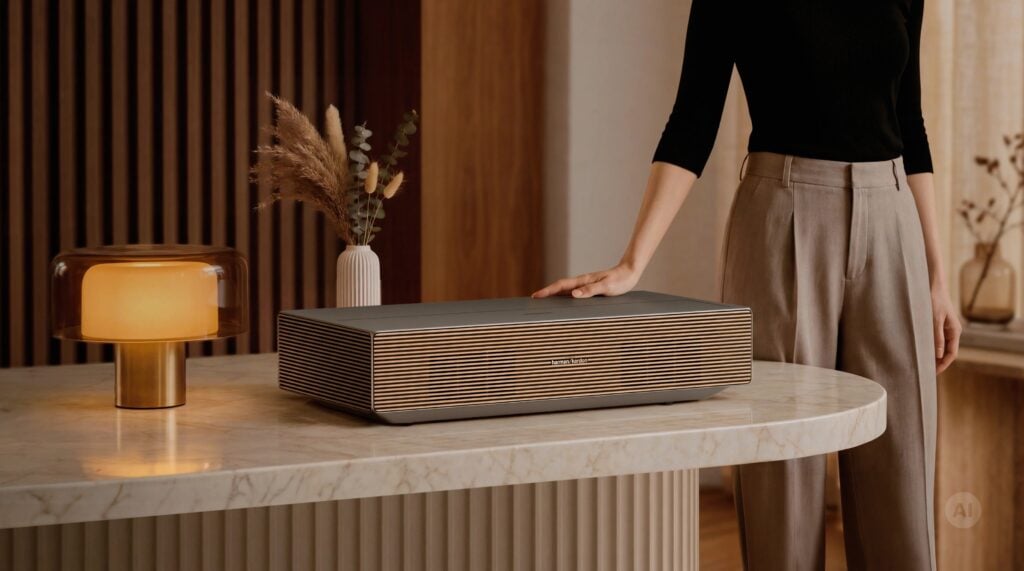
The everyday usability features are also identical. Both come with an 80W Harman Kardon 2.0 channel sound system that supports Dolby Atmos. They also have Google TV built-in, which includes native support for apps like Netflix, YouTube, and Prime Video, so you don’t necessarily need to plug in a separate streaming stick. Setup is handled by Xgimi’s automated tools, including auto keystone, auto focus, and wall color adaptation.

2. Main Differences: Brightness, Contrast and Price

If the two models share so many features, the decision really comes down to how much ambient light you have in your viewing room.

The Aura 3 Max is the higher-end model designed for bright living rooms and larger screen sizes. It outputs 5,700 ISO lumens. If you have a living room with large windows and you want to watch TV during the day without drawing the curtains, this model is built to handle that environment. It also has a higher native contrast ratio of 8,000:1, which helps maintain deeper black levels even with the higher brightness output.

The Aura 3 Pro is designed for more typical viewing environments. It has a lower light output of 4,100 ISO lumens and a native contrast ratio of 7,000:1. To be clear, 4,100 ISO lumens is still quite bright for a home projector and will comfortably handle a moderately lit room. However, if you are projecting onto a wall that gets direct, harsh sunlight, the Pro will show more image washout than the Max.

Then there is the pricing structure. The Aura 3 Max has an MSRP of $4,999 (with an early Kickstarter price of $2,199). The Aura 3 Pro is priced lower, with an MSRP of $3,999 (and an early Kickstarter price of $1,999).

3. Specs Comparison

FeatureXgimi Aura 3 MaxXgimi Aura 3 Pro
Brightness5,700 ISO Lumens4,100 ISO Lumens
Native Contrast8,000:17,000:1
Light SourceRGB Triple LaserRGB Triple Laser
Resolution & Refresh Rate4K UHD @ 120Hz4K UHD @ 120Hz
Throw Ratio0.163:10.163:1
HDR SupportDolby Vision, IMAX Enhanced, HDR10, HLGDolby Vision, IMAX Enhanced, HDR10, HLG
Audio80W Harman Kardon (Dolby Atmos)80W Harman Kardon (Dolby Atmos)
Smart OSGoogle TV (Native Netflix)Google TV (Native Netflix)
Gaming FeaturesVRR, ALLM, 1ms Input Lag, FreeSyncVRR, ALLM, 1ms Input Lag, FreeSync
Weight9.4 kg8.9 kg
MSRP$4,999$3,999
Super Early Bird Price$2,199$1,999

4. Making Your Decision

Choosing between the Aura 3 Max and the Aura 3 Pro is fairly straightforward because Xgimi didn’t restrict software or processing features to the more expensive model. You get the same 4K 120Hz gaming support, the same Google TV interface, and the same audio system regardless of which one you pick.

Your choice should be based on your room’s lighting and your budget. If you are setting up the projector in a basement, a dedicated media room, or a living room where you can easily close the blinds to control ambient light, the Aura 3 Pro is a very practical choice. It saves you money while delivering the same core features.

On the other hand, if you are replacing a TV in a bright, open-concept space and want the best possible daytime visibility, the Aura 3 Max is the better fit. The additional 1,600 ISO lumens will make a noticeable difference in keeping the image clear and visible during the day.

For more daily updates, please visit our News Section.

Stay ahead in tech! Join our Telegram community and sign up for our daily newsletter of top stories!

Stable HyperOS 4 rollout begins: 33 out of 82 devices scheduled for early November

After the first smaller announcement that only covered a handful of flagships, the company has now confirmed it’s aiming to push the stable HyperOS 4 update to 33 devices starting in early November 2026.

Xiaomi HyperOS 4

That first wave includes the Xiaomi 17 Ultra and the rest of the Xiaomi 17 series, the Xiaomi 15 and 15 Ultra, a bunch of Redmi Note 15 and Note 17 models, several POCO F8 and X8 variants, the Leica Leitzphone, and the Xiaomi Pad 8 series.

List of devices scheduled for early November 2026

A second batch of 16 devices is lined up to start getting the update from mid-November. This group covers the Xiaomi 15T and 15T Pro, the POCO F7 and F9 series, some POCO X7 Pro models, the Xiaomi Pad 7 series, the Xiaomi Pad Mini, and the Redmi Pad 2 Pro.

List of devices scheduled for mid-November 2026

Then in December, a final wave of another 33 devices is scheduled. This one brings older flagships into the mix: the Xiaomi MIX Flip, Xiaomi 14 and 13 series, Xiaomi 14T and 13T models, Redmi Note 14 series, various POCO F6, X6, X7 and M-series phones, plus tablets like the Xiaomi Pad 6S Pro 12.4 and more Redmi Pad 2 variants.

List of devices scheduled for December 2026

All in, Xiaomi is talking about 82 devices (67 phones and 15 tablets) across Xiaomi, Redmi and POCO. The company has been careful to note that these are estimated timelines and can shift depending on region, carrier, specific model and how development progresses. Exact dates for individual devices still haven’t been locked in, and the order listed inside each wave doesn’t mean that’s the exact sequence they’ll roll out.

One practical detail that early reports are already mentioning: the update package itself can be over 8 GB if you’re coming from a stable HyperOS 3 build. Xiaomi hasn’t said anything yet about plans after December.

If your phone or tablet is on the list, the best thing to do is just keep an eye on the system update section. The phased rollout is already starting to move.

(Source: Xiaomi HyperOS)

Read more

For the latest stories, visit our News section.

New: Gizmochina is now on WhatsApp. Follow our WhatsApp Channel for the day’s top stories.

You can also join our Telegram community or get Gizmochina Daily, our morning newsletter with our take on the day’s news.

Redmi Turbo 6 Max tipped to pack massive 11,000mAh battery, largest ever on a Xiaomi phone

Redmi’s upcoming Redmi Turbo 6 Max is expected to bring a major upgrade over its predecessor, particularly in the battery department. Reliable tipster Digital Chat Station has now shared another exclusive detail about the upcoming performance-focused smartphone. It could feature an enormous battery that would set a new record for Xiaomi phones.

Redmi Turbo 6 Max battery details emerge

Digital Chat Station Weibo post detailing the Redmi Turbo 6 Max battery specifications.

According to Digital Chat Station’s latest Weibo post, the upcoming Dimensity-powered performance phone with a 7-inch 2K ultra-high-refresh-rate display will feature an 11,000mAh battery rated at 40.72Wh. Although the tipster did not explicitly mention the phone’s commercial name in this particular post, the description matches the previously leaked specifications of the Redmi Turbo 6 Max.

If accurate, this would make it the largest battery ever fitted to a Xiaomi smartphone, surpassing the 10,000mAh capacities previously tipped for some upcoming devices. The substantial battery could make the Turbo 6 Max particularly appealing to users who prioritise extended gaming sessions and longer usage between charges.

This is not the first time the phone has appeared with an unusually large battery. Earlier, Digital Chat Station suggested that the device would feature a battery exceeding 10,000mAh alongside MediaTek’s Dimensity 9500s chipset. The latest information now points to a more specific 11,000mAh capacity.

Previous leaks have also suggested that the Redmi Turbo 6 Max will feature an approximately 7-inch flat OLED display with 2K resolution and an estimated 185Hz refresh rate. The panel is tipped to use LIPO packaging, allowing extremely narrow bezels of around 1mm on all four sides. Other reported features include a metal middle frame, IP68 and IP69 ratings, an ultrasonic in-display fingerprint sensor and a dual-camera rear setup.

For comparison, the Redmi Turbo 5 Max launched with a 6.83-inch 1.5K 120Hz AMOLED display, a 9,000mAh battery and 100W wired charging. Its successor could bring considerable improvements in both display technology and battery capacity. The Turbo 6 Max is also expected to arrive as the Poco X9 Pro Max in global markets.

Redmi has yet to confirm the device or its specifications. A China launch around January 2027 is possible, following the previous generation’s launch schedule, but more details are needed. Would an 11,000mAh battery make the Redmi Turbo 6 Max your next performance phone? Share your thoughts in the comments.

For daily updates, please visit our News Section.

Stay ahead in tech! Join our Telegram community and sign up for our daily newsletter of top stories!

LG Channels adds more Bollywood content to its 170+ free streaming channels in India

LG is strengthening its free streaming platform, LG Channels, with a broader Bollywood entertainment offering for Indian audiences. The service now provides more than 170 free channels covering movies, music, news, lifestyle and regional programming. Available on LG Smart TVs, the platform aims to offer viewers more entertainment options without requiring a paid subscription.

LG Channels expands Bollywood and regional content offerings

LG 170+ free channels

The expanded content lineup positions LG Channels as a destination for Bollywood movie enthusiasts, with programming available across several Indian languages, including Hindi, Punjabi, Bengali, Marathi, Tamil and Telugu.

Beyond movies, the platform offers channels covering entertainment, music, news, lifestyle, children’s programming, sports highlights and devotional content. LG is also continuing to add localized programming and premium content partnerships to cater to India’s diverse viewing preferences.

The latest additions include curated movie and music FAST channels from NH Studioz, Eros Universe and PEN Music’s ALL TIME MOVIES. These partnerships bring more Indian entertainment content to Connected TV audiences through an advertising-supported streaming model.

Brian Jung, Director of Media Entertainment Solution at LG Electronics India, said the expanded Bollywood offering reflects the company’s commitment to making quality entertainment accessible to households across the country. He added that LG Channels aims to strengthen its position as a major FAST destination through its growing collection of free content.

The latest collaborations also highlight the growing role of advertising-supported streaming in India’s Connected TV market. NH Studioz Director Shreyans Hirawat said the partnership would help bring its curated movie and music channels to more Connected TV viewers.

Kumar Ahuja, Group COO at Eros Innovation, noted that the collaboration would make Eros Universe content available on LG’s smart TV platform, while creating additional opportunities for content distribution and monetization.

Meanwhile, PEN Music COO Siddharth Chopra highlighted the partnership’s potential to increase the reach of ALL TIME MOVIES among Hindi film audiences and provide advertisers with another platform to connect with Connected TV viewers.

LG Channels is available at no additional cost on compatible LG Smart TVs. Its expanding library of more than 170 channels reflects the company’s focus on making free, ad-supported entertainment more accessible to Indian households.

For daily updates, please visit our News Section.

Stay ahead in tech! Join our Telegram community and sign up for our daily newsletter of top stories!

Dell 14S launches in India with 21-hour battery life and four colour options

Dell has launched the new Dell 14S laptop in India, targeting students and young professionals looking for a lightweight everyday machine. The laptop features an aluminium chassis in four colour options and comes with Intel’s latest Series 3 processors. It also promises up to 21 hours of battery life on a single charge.

Dell 14S specifications and features

Dell 14S
Dell 14S

The Dell 14S features a three-piece, durability-tested aluminium chassis measuring 13.5mm in thickness and weighing 1.15kg. Buyers can choose from Linen, Dusty Rose, Washed Denim and Velvet Green finishes.

It is powered by Intel Core 5 and Core 7 Series 3 processors, featuring an integrated NPU capable of delivering up to 17 TOPS for local AI processing. Memory configurations go up to 16GB LPDDR5x RAM, while storage options include up to 1TB PCIe NVMe SSD. The laptop also features a backlit, spill-resistant keyboard.

Dell 14S
Dell 14S

Dell offers two 14-inch, 16:10 display options. The higher-end variant features a 2.8K resolution, 120Hz refresh rate and 450 nits brightness, while the other option has a 2K resolution, 60Hz refresh rate and 300 nits brightness. Both configurations support Dolby Atmos audio.

A 750ED PNCM battery provides up to 21 hours of Netflix streaming, according to Dell. Other features include a 1080p webcam, dual-array microphones, Wi-Fi 6E, Bluetooth 5.4, Windows Hello and Microsoft Pluton security. Connectivity options include two USB-C 3.2 Gen 2 ports with DisplayPort and power delivery, HDMI and a universal audio jack. For comparison, Dell’s XPS 14 offers a more premium display and processor configuration.

Dell 14S price and availability

Dell 14S

The Dell 14S starts at Rs 79,990 in India. The laptop is available through Dell’s online store, with all four color options listed. The Linen finish is also available through Dell Exclusive Stores and major retail channels, while the remaining colours will reach these outlets by the end of November.

Introductory offers include zero-down-payment and zero-interest financing, instant credit card discounts of up to Rs 10,000 and one-year Accidental Damage Protection for Rs 499. The laptop also carries ENERGY STAR 9.0 certification and EPEAT Silver with Climate+ registration.

For daily updates, please visit our News Section.

Stay ahead in tech! Join our Telegram community and sign up for our daily newsletter of top stories!

Xiaomi announces new electric toothbrush with a color screen and 190-day battery

Xiaomi has launched the Mijia Electric Toothbrush 2 Pro in China with a color screen, an upgraded brush head, and a new sonic vibration motor.

The handle has a color display, similar to the one on Xiaomi’s Mijia Sonic Vibration Electric Toothbrush Pro, which was the company’s first Mijia toothbrush with a color screen. Both models have the same suggested retail price of 249 yuan, although the newer model comes with several upgrades, including two-way pressure alerts.

Xiaomi Mijia Electric Toothbrush 2 Pro Launch Specs Price

What the Mijia Electric Toothbrush 2 Pro offers

The new toothbrush runs on Xiaomi’s sonic vibration motor 2.0, which the company says can remove plaque efficiently. It also supports multiple vibration patterns, with each one matched to a different brushing mode.

Xiaomi has upgraded the brush head with an all-around shock-absorbing structure. The soft rubber material is gentler on teeth, while the more flexible design helps the bristles follow the contours of your mouth.

Xiaomi Mijia Electric Toothbrush 2 Pro Design

The color screen displays brushing time and coverage in real time. It can also show prompts when you miss an area or spend too little time brushing. Xiaomi’s product images show messages such as asking users to brush the lower right area again, warning when brushing time is too short, and confirming when coverage is excellent. The default brushing session lasts four minutes.

Another addition is two-way pressure monitoring. There are indicator lights to alert you when you’re pressing either too hard or too lightly. If you apply too much pressure, the toothbrush automatically lowers its vibration frequency to reduce the force on your teeth. 

The Mijia Electric Toothbrush 2 Pro charges through a USB Type-C port and takes around six hours to reach a full charge. Xiaomi claims up to 190 days of battery life. It also has an IPX8 waterproof rating, so you can rinse it under running water.

The toothbrush has a retail price of 249 yuan (around $35), while the crowdfunding price is 179 yuan (around $25).

For daily updates, please visit our News Section.

Stay ahead in tech! Join our Telegram community and sign up for our daily newsletter of top stories.

Oppo Find X10 Ultra again tipped with Dimensity 9600 Pro, may pack ~8,000mAh battery

Oppo’s latest flagship lineup, comprising the Find X10 and Find X10 Pro Max, is now widely available in several countries. Looking ahead to 2027, the brand is expected to introduce a more powerful model called the Find X10 Ultra. One of the biggest changes could be the inclusion of a MediaTek Dimensity chipset instead of Snapdragon, which has traditionally powered the company’s Ultra-branded phones.

Oppo Find X10 Ultra’s key details revealed

Social media post from Digital Chat Station detailing Oppo Find X10 Ultra specifications.

According to tipster Digital Chat Station, the Find X10 Ultra carries the internal codename Xingyun (Nebula) and is being tested with MediaTek’s 2nm Dimensity 9600 Pro chipset. If the information holds, it could become the first Ultra-class smartphone to feature this platform.

The tipster also mentions a native 10x optical zoom periscope telephoto camera and a 200-megapixel high-dynamic-range multi-camera imaging system. The phone is said to feature a 6.89-inch BOE display with 2K resolution and a 144Hz refresh rate. The panel reportedly has rounded corners and extremely narrow, symmetrical bezels on all four sides.

Social media post by Smart Pikachu discussing Oppo Find X10 Ultra battery and stabilization.

Adding to these details, tipster Smart Pikachu claims that the super-sized model, referring to the Find X10 Ultra, will offer improved image stabilisation across all focal lengths. The tipster also mentions an 8,000mAh-class battery and a premium version, although further details about the latter remain unclear.

Previous leaks have pointed to a 200-megapixel primary camera featuring LOFIC technology, another 200-megapixel periscope telephoto camera and a dedicated 50-megapixel 10x periscope unit. A 200-megapixel ultrawide camera and a 100-megapixel front camera have also been mentioned in earlier reports.

There is still some uncertainty surrounding the phone’s processor. Oppo has confirmed that it will launch a smartphone powered by Qualcomm’s Snapdragon 8 Elite Extreme Gen 6, meaning a Find X10 Ultra with the same chip cannot be ruled out.

However, there is another possibility worth considering. Following the recent restructuring and deeper integration of OnePlus into Oppo’s operations, the recently unveiled OnePlus 16 could serve as the group’s Snapdragon 8 Elite Extreme Gen 6-powered flagship offering.

Therefore, it would be advisable to wait for further reports before drawing conclusions about the Find X10 Ultra’s final chipset. Which processor would you prefer in Oppo’s next Ultra flagship, Dimensity 9600 Pro or Snapdragon 8 Elite Extreme Gen 6? Share your thoughts in the comments.

For daily updates, please visit our News Section.

Stay ahead in tech! Join our Telegram community and sign up for our daily newsletter of top stories.

Realme 17T 5G surfaces in real life with a redesigned camera island

Realme’s upcoming T-series phone has surfaced in a leaked photo with a different rear camera layout than its predecessor. The Realme 17T 5G retains the boxy camera island, but the lenses and flash are arranged slightly differently.

Compared to the Realme 16T, which has three separate elements in the camera island, the Realme 17T 5G groups the lenses and flash into two long, rounded strips arranged horizontally.

The camera module still has that squircle shape, but the new arrangement gives the back a noticeably different look. It also brings to mind Google’s Pixel 9 Pro Fold, which uses a similar horizontal camera bar. However, there’s no indication that Realme borrowed Google’s design, and the two phones otherwise have little in common.

The Realme 17T 5G shown from the back and front with a new camera layout.

The leaked image shows the Realme 17T 5G in black. Realme may introduce additional colour options, but the photo does not provide any clues about other finishes.

What we know about the Realme 17T 5G so far

Beyond the rear design, there is little information about the phone. The leak does not mention its chipset, battery capacity, display, or camera specifications. Pricing and launch details are also unknown, and Realme has yet to confirm the device.

More information could emerge through certification listings and benchmark databases in the coming weeks. The Realme 16T, for example, appeared on Geekbench before its launch, revealing its processor and memory configuration. A similar listing for the Realme 17T 5G would give us a better idea of what to expect from the new model.

Its predecessor has a 6.81-inch HD+ IPS LCD screen with a 144Hz refresh rate, a Dimensity 6300 processor, a 50MP main and 16MP selfie camera, and an 8000mAh battery with 45W charging. Expect the Realme 17T to follow a similar budget lineage.

Read more

For the latest stories, visit our News section.

New: Gizmochina is now on WhatsApp. Follow our WhatsApp Channel for the day’s top stories.

You can also join our Telegram community or get Gizmochina Daily, our morning newsletter with our take on the day’s news.

SanDisk launches two new portable SSDs in India with 2,000MB/s speeds and up to 4TB storage

SanDisk has updated its portable storage lineup in India with two new solid-state drives: the SanDisk Extreme Portable SSD and the standard SanDisk Portable SSD. The new drives are positioned to provide faster transfer rates for modern workflows, offering updated read speeds and storage capacities that max out at 4TB.

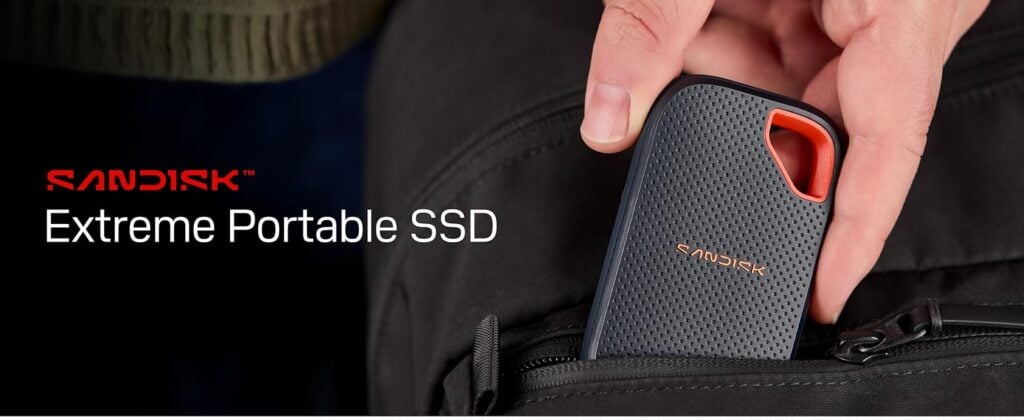
SanDisk Extreme Portable SSD Specifications

SanDisk Extreme Portable SSD

The higher-end model in the lineup, the SanDisk Extreme Portable SSD, is built for users who regularly transfer large files, such as video editors and photographers. It supports read speeds of up to 2,000MB/s. According to SanDisk, this bandwidth allows users to move 1,000 high-resolution photos in under a minute.

For physical protection, the Extreme model features a ruggedized exterior that provides up to three meters of drop protection alongside an IP65 rating for water and dust resistance.

It also supports 256-bit AES hardware encryption for password-protecting sensitive files. The drive is available in 500GB, 1TB, 2TB, and 4TB capacities. The 1TB version is priced at Rs. 29,599, the 2TB at Rs. 52,999, and the 4TB at Rs. 99,999. It comes with a five-year limited warranty.

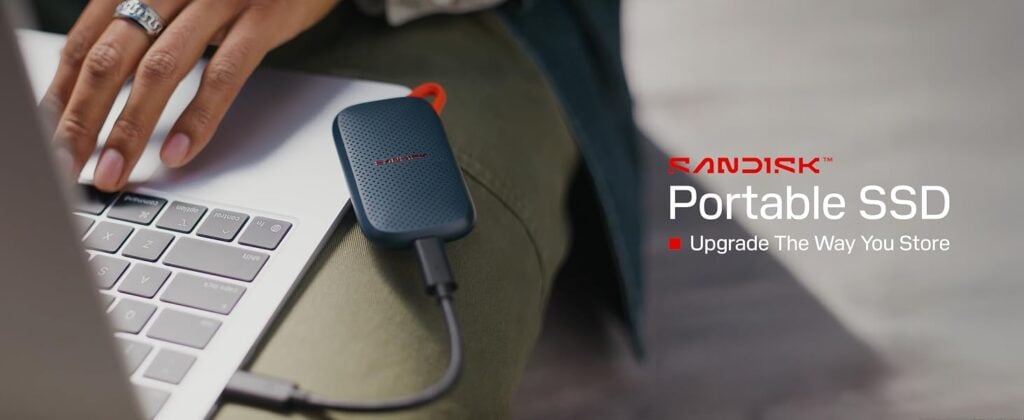
SanDisk Portable SSD Specifications

SanDisk Portable SSD

The standard SanDisk Portable SSD is a step down in both price and specifications, targeted at students and office workers for general file backup and media storage. It halves the read speed of the Extreme model, capping out at 1,000MB/s, which remains a standard benchmark for modern USB-C drives.

This base model lacks the IP65 rating of the Extreme version but retains a baseline level of durability with up to two meters of drop protection. Storage options for the standard model are limited to 500GB, 1TB, and 2TB.

The 1TB model costs Rs. 18,999, and the 2TB variant is priced at Rs. 33,999. It includes a three-year limited warranty.

Both the SanDisk Extreme Portable SSD and the standard Portable SSD are available for purchase now across major e-commerce platforms, including Amazon India, as well as through various offline retail stores across the country.

In related news, Samsung has recently launched its P9 and P7 USB4 portable SSDs, offering transfer speeds of up to 4,000 MB/s and storage capacities of up to 8TB.

For more daily updates, please visit our News Section.

Stay ahead in tech! Join our Telegram community and sign up for our daily newsletter of top stories!

Lenovo launches an ultra-affordable 280Hz 1080p gaming monitor for just $90

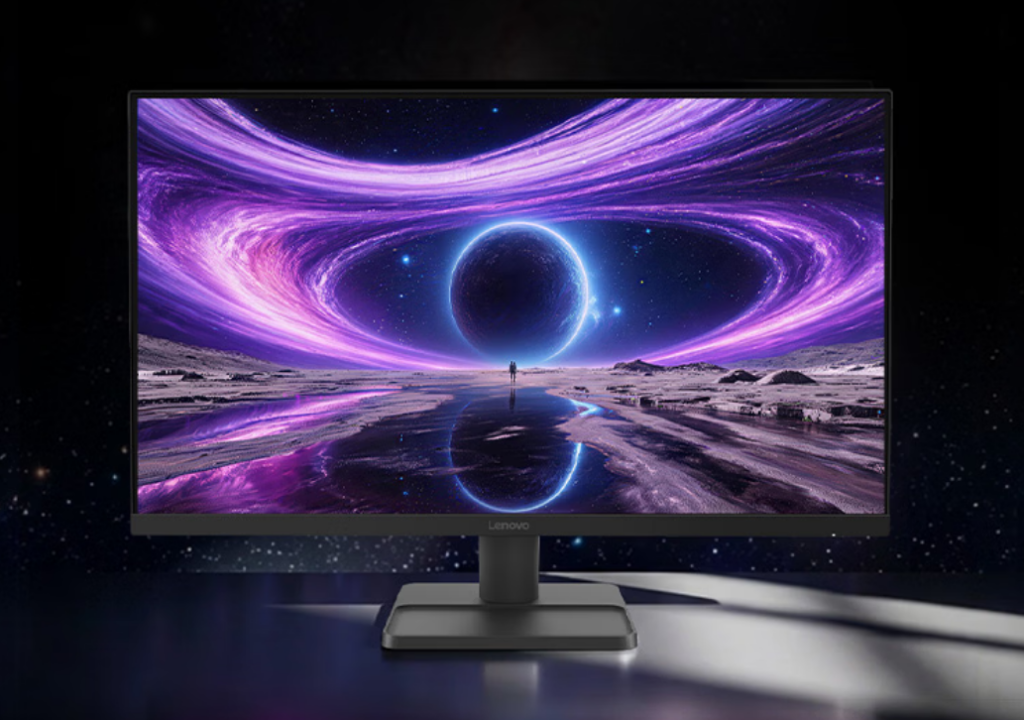
Lenovo has quietly released a new budget gaming monitor in China, the LOQ 25-10, which pairs a standard 1080p resolution with a very high 280Hz refresh rate. It is currently listed on JD.com for 599 yuan, which converts to roughly $90.

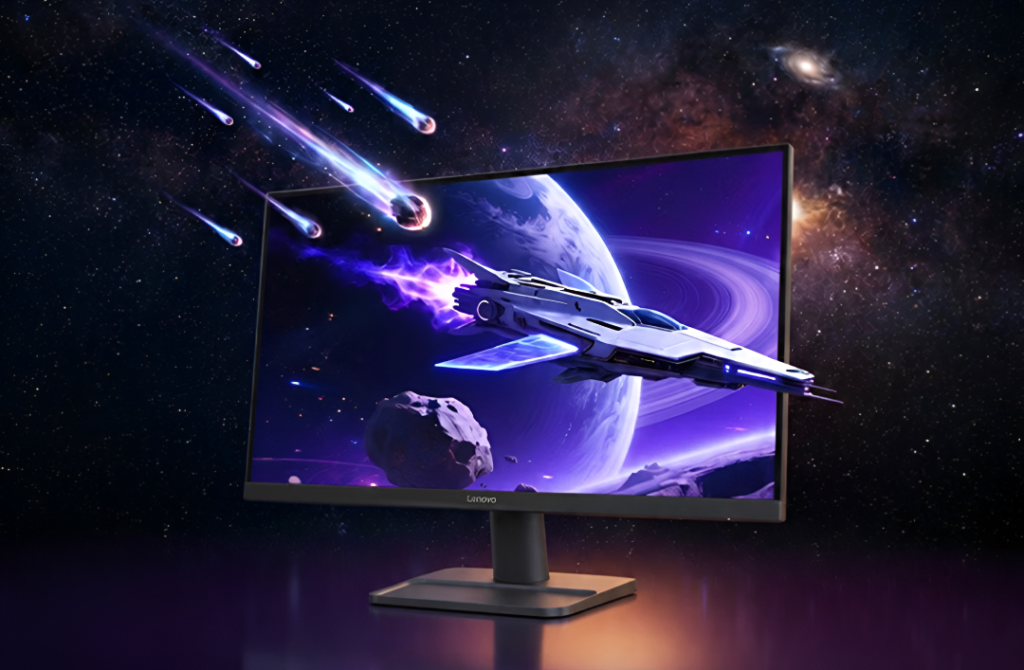
Lenovo LOQ 25-10 gaming monitor displaying a vibrant space scene with a flying spaceship.

Lenovo LOQ 25-10 Specifications

The monitor features a 24.5-inch Full HD (1920 × 1080) IPS panel with an anti-glare coating and a standard 16:9 aspect ratio. It also sports a native 280Hz refresh rate, delivering smoother motion and more fluid visuals during fast-paced gaming.

To complement the high refresh rate, the monitor offers a 1ms gray-to-gray (GtG) response time at its highest overdrive setting. It also features a dedicated esports mode that enables a 0.5ms MPRT response time to reduce motion blur during fast-paced gameplay and rapid camera movements.

Lenovo LOQ 25-10

In terms of image quality, the LOQ 25-10 covers 99% of the sRGB color gamut and uses 8-bit + FRC technology to simulate a 10-bit color depth. Brightness is rated at a typical 300 nits, and it has a static contrast ratio of 1100:1. The monitor can technically accept an HDR10 signal, but given the 300-nit peak brightness and lack of local dimming hardware, it won’t provide a noticeable high dynamic range experience.

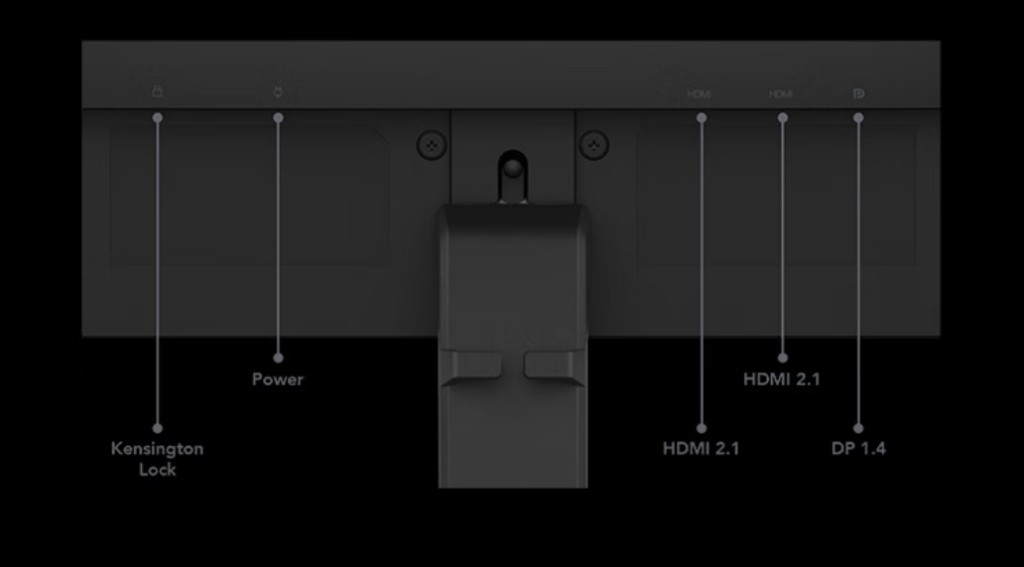
For connectivity, the monitor includes one DisplayPort 1.4 connection and two HDMI 2.1 TMDS ports. The monitor also supports AMD FreeSync Premium and VESA Adaptive-Sync to prevent screen tearing when frame rates fluctuate.

Lenovo LOQ 25-10

The physical hardware is straightforward. The monitor has thin bezels on three sides and comes with a basic stand that only supports tilt adjustments from -5 to 22 degrees. It lacks height, pivot, or swivel adjustments, and there are no built-in speakers. If you want better ergonomics, the back of the monitor includes standard 100 x 100mm VESA mounting holes for use with a third-party monitor arm.

Relatedly, Lenovo recently introduced the Xiaoxin Pro 27 Vitality Edition, featuring a slim 13mm body and a 120Hz QHD screen. The company has also started selling its Snapdragon X2 Plus-powered ThinkBook 14 Gen 9, with prices beginning at $1,289.

For more daily updates, please visit our News Section.

Stay ahead in tech! Join our Telegram community and sign up for our daily newsletter of top stories!

(JD)

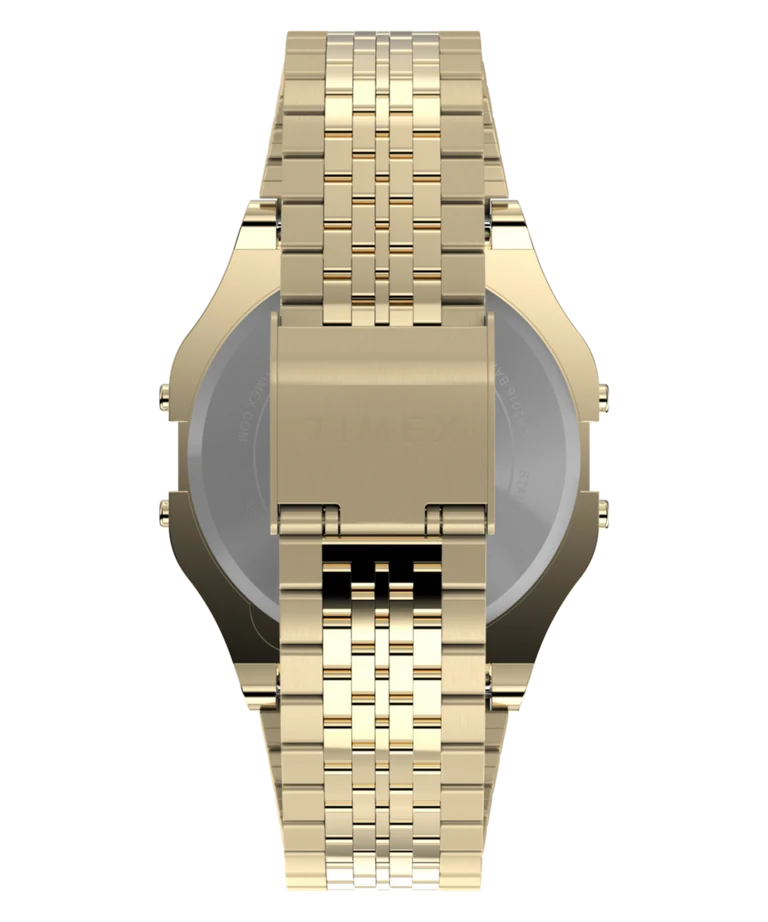
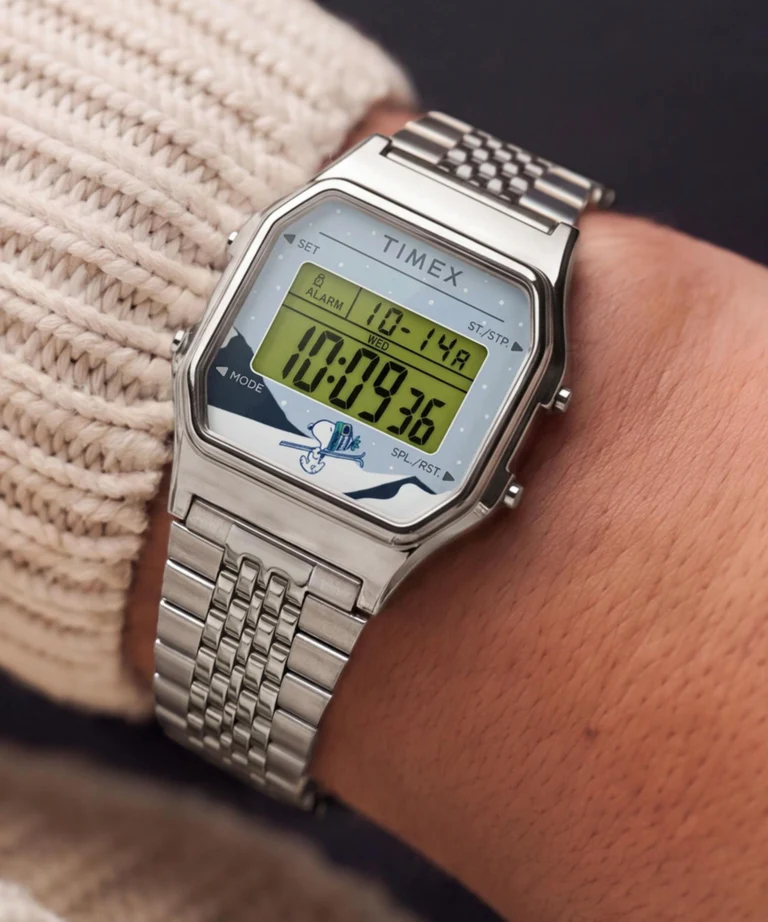
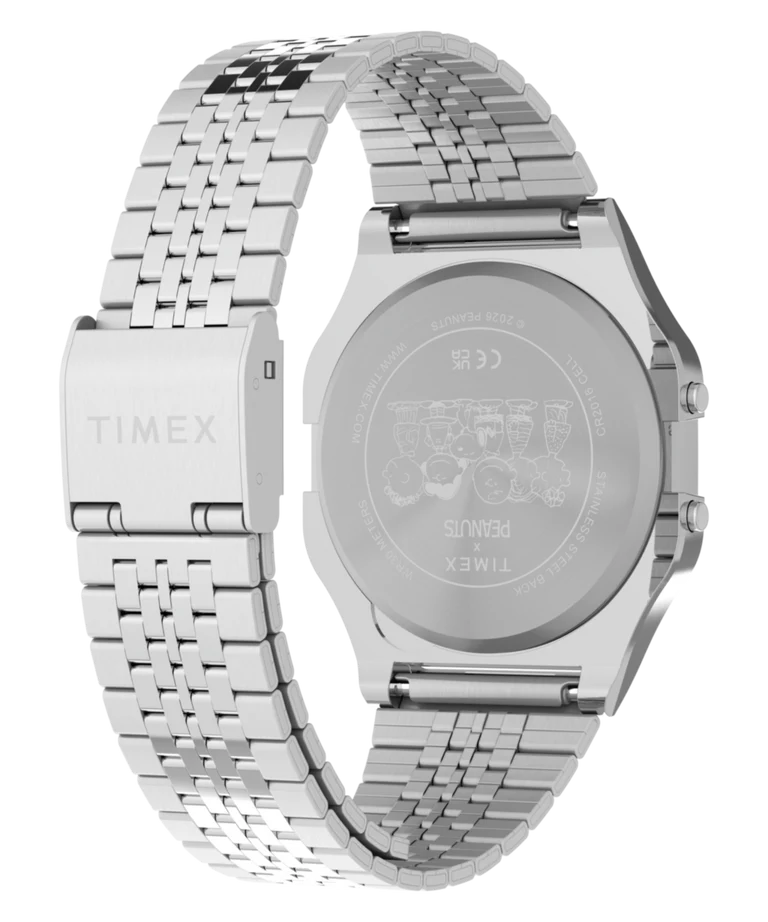
Timex launches two Peanuts Snoopy Ski T80 digital watches featuring winter-themed artwork

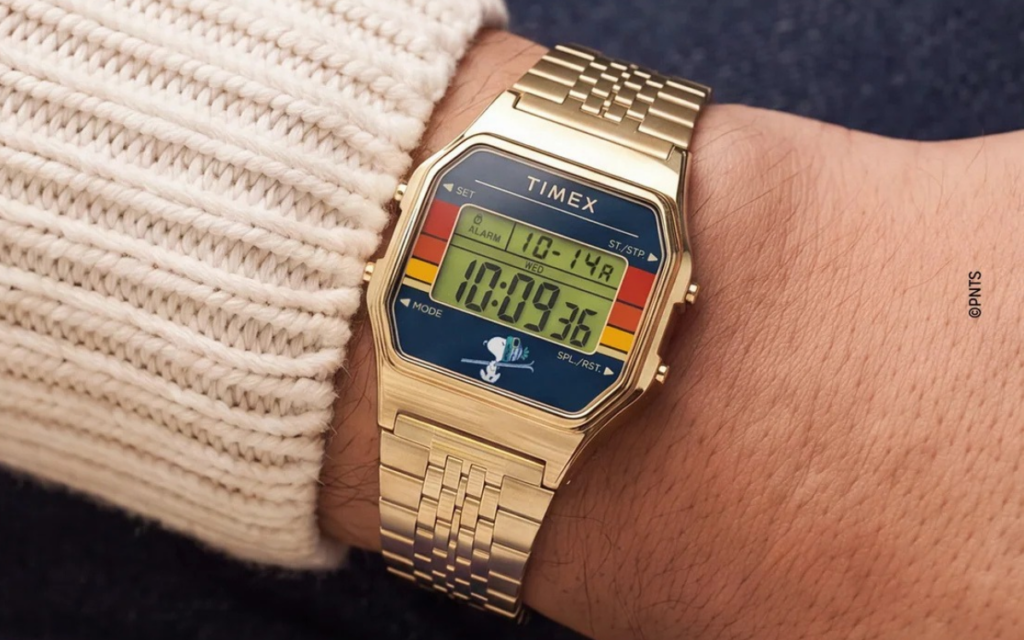
Timex has released two new Peanuts-branded versions of its T80 digital watch in the US. The new Snoopy Ski collection is available now on the company’s website. These releases are straightforward cosmetic updates to the existing T80 hardware, featuring winter-themed dial artwork and stainless steel bracelets.

Timex Peanuts Snoopy Ski T80 digital watches

Pricing and Design Details

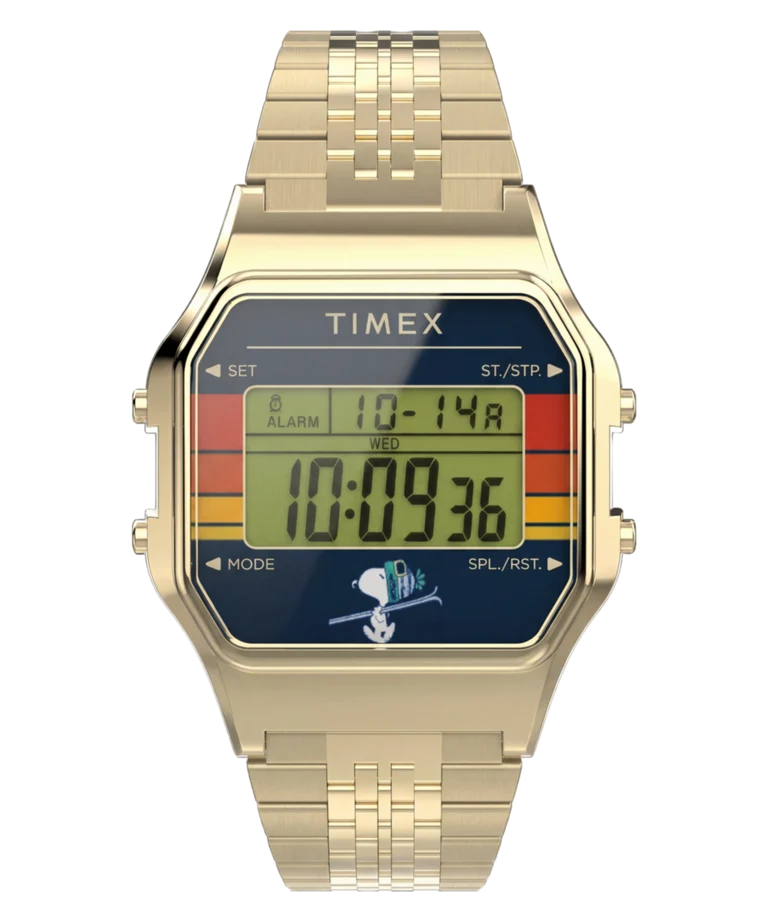
There are two variants in this release. The first is a gold-tone model (TW2Y76800) priced at $169. It features a polished low-lead brass case, a matching gold-tone stainless steel bracelet, and a navy face decorated with retro stripes and a graphic of Snoopy.

The second is a silver-tone version (TW2Y76700) that costs $149. This model has a silver-tone finish and a lighter dial graphic showing Snoopy carrying skis alongside snowflake details. Both watches use an 18mm bracelet with a self-adjusting clasp.

Internally, the hardware remains identical to standard T80 models. The watches run on a basic battery-powered quartz digital movement using a CR2016 coin cell. The feature set includes standard digital watch functions: a chronograph for timing, a daily alarm, and a date display.

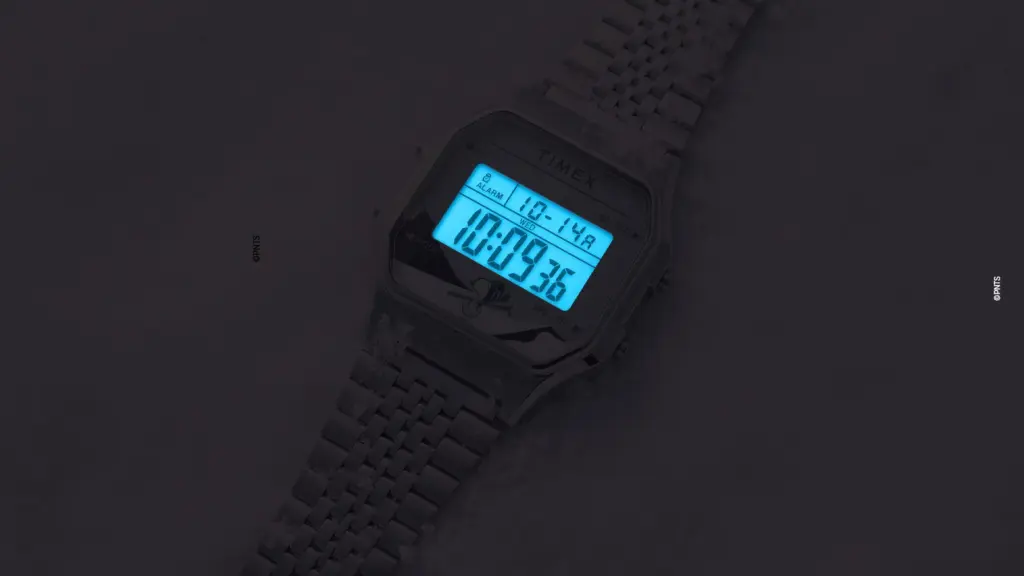
They also feature Timex’s Indiglo backlight, which lights up the LCD panel for visibility in low-light conditions when the user presses a dedicated side button.

Timex Peanuts Snoopy Ski T80 digital watches

The physical dimensions are relatively compact. Both cases measure 34.5mm in diameter, 10.5mm thick, and have a 43mm lug-to-lug distance. They weigh roughly 77 grams.

Regarding durability, these are casual everyday watches rather than actual outdoor sports gear. The display is covered by an acrylic crystal. Additionally, the watches have a water resistance rating of 30 meters. This rating is only sufficient for accidental splashes or hand-washing; the watches are not sealed for showering, swimming, or prolonged exposure to moisture in the snow.

In related news, Timex has recently launched the Pop & Miffy collaboration watch with an unconventional dial layout, alongside two new Ironman 8-Lap watches that celebrate the original 1986 design.

For more daily updates, please visit our News Section.

Stay ahead in tech! Join our Telegram community and sign up for our daily newsletter of top stories!

(Timex 1,2)

Timex launches a Miffy and Pop collab watch featuring an unconventional dial layout

Timex has introduced a new collaborative watch to its US lineup: the Pop & Miffy by Timex MK1. It is priced at $129 and is currently available on the Timex US website. The release takes the standard 36mm MK1 model and updates the dial with a modified layout and character branding.

Timex Miffy and Pop collaboration watch

Design Details

The biggest change comes in the form of the dial design. Timex and Pop have moved the Arabic hour markers away from their usual positions, creating an intentionally unconventional layout.

The navy blue dial features an illustration of the Dutch character Miffy wearing an orange shirt, alongside white POP lettering. Both the hands and hour markers feature luminous material for improved visibility in low-light conditions.

Timex Miffy and Pop collaboration watch

Regarding hardware, the MK1 retains its standard lightweight specifications. The case measures 36mm in diameter and 10.5mm in height. It is made from a single piece of glossy blue resin, bringing the total weight of the watch to 15.5 grams. The dial is covered by a domed acrylic crystal.

Timex Miffy and Pop collaboration watch

The watch is powered by a standard quartz analog movement, which runs on a replaceable SR626SW battery. It comes equipped with an 18mm blue fabric slip-thru strap. The slip-thru design allows the strap to be removed and replaced without the need for spring bar tools. The band fastens with a standard buckle and is adjustable for wrist circumferences ranging from 5.6 to 8.1 inches.

Timex Miffy and Pop collaboration watch

For durability, it carries a 30-meter water resistance rating, which means it is protected against accidental splashes and hand-washing. The manufacturer explicitly says it is not suitable for showering, swimming, or diving, and buttons should not be pressed while the watch is wet.

In related news, Casio has recently launched two new Baby-G BGA-10 watches featuring a clever color-changing dial mechanism, alongside the G-Shock DW-5600RBG-1 Union collaboration watch with bold Pan-African colors.

For more daily updates, please visit our News Section.

Stay ahead in tech! Join our Telegram community and sign up for our daily newsletter of top stories!

(Timex)

Xiaomi’s new smart lock has a fingerprint reader, a USB-C port, and eight AA batteries

Xiaomi has launched the Smart Lock 5 in China with a new push-pull design that lets users unlock the door by placing a finger on the handle. Unlike the Smart Door Lock 5C, which Xiaomi recently released with a manually operated handle, the new model automatically locks the door again once it closes.

The Smart Lock 5 comes in a starry black finish with a wear-resistant panel. Its front panel measures 400 x 76 x 21 mm, while the rear panel measures 400 x 76 x 26 mm. The complete unit weighs 3.37 kg. Xiaomi has also added an anti-pinch baffle to the inside of the front panel to protect fingers when opening or closing the door. There is a separate deadbolt button on the interior panel for manually locking the door from inside.

Xiaomi Smart Door Lock 5 Launch Specs Price

What you get inside

Inside, the lock uses a fully automatic lock body that Xiaomi says is quieter than its first-generation model. According to the company, closing the door produces 12 dB less noise, while unlocking it is 13 dB quieter. The lock also uses a direct-insertion C-grade cylinder.

For unlocking, the fingerprint reader can recognize a print in 0.7 seconds or less. There are several alternatives if you don’t want to use your fingerprint, including a fixed password, virtual password, one-time password, NFC card, Bluetooth, and a mechanical key.

Xiaomi Smart Door Lock 5 Design

The Smart Lock 5 supports Wi-Fi and Bluetooth 5.3, allowing users to check the lock’s status remotely through the Xiaomi Home app. You can also share temporary access with visitors through a WeChat mini-program. The lock sends alerts if the door is left ajar, someone attempts to pry open the panel, or multiple incorrect unlocking attempts are detected. It also supports a duress fingerprint, which can be used to alert others if someone is forcing you to unlock the door.

It gets its power from eight AA batteries, which is good for around 12 months of typical use. If the batteries become too weak to operate the lock, users can press the emergency start button before entering a fingerprint or password. If the batteries are completely drained, you can connect a power source through the USB-C port at the bottom of the panel to unlock the door.

Price and Availability

The Xiaomi Smart Lock 5 is priced at 1,176 yuan (around $175) in China; however, with national subsidy, buyers in China can get it for 999.6 yuan (around $149) in eligible regions.

Interestingly, the subsidized price is the same as that of the Smart Door Lock 5C Cat Eye Edition, meaning buyers pay no more for the new push-pull model than for the camera-equipped version. Pre-orders will open on JD.com tomorrow, with the first sale scheduled for November 10.

For the latest stories, visit our News section.

New: Gizmochina is now on WhatsApp. Follow our WhatsApp Channel for the day’s top stories.

You can also join our Telegram community or get Gizmochina Daily, our morning newsletter with our take on the day’s news.

Casio launches two new Baby-G BGA-10 watches with a clever color-changing dial mechanism

Casio is set to launch two new Baby-G watches in Japan this November under the BGA-10 series. The lineup includes the black BGA-10-1AJF and white BGA-10-7A1JF, both featuring a unique rotating color wheel beneath the dial.

Casio Baby-G BGA-10 watches

Design Details

Instead of a digital display, Casio is using a physical white-to-black gradient wheel to change how the watch looks. The dial has four heart-shaped cutouts of different sizes. The gradient wheel sits right below these cutouts and is mechanically linked to the watch’s date function.

Casio Baby-G BGA-10 watches

Every time the date rolls over at midnight, the wheel rotates a bit, changing the shades that show through the holes. If you want a specific color combination, you can also use the crown to turn the wheel manually. Casio does note that you have to be careful when setting this up, as the date and color alignment can get out of sync if adjusted incorrectly.

To actually use the crown, you have to interact with another specific hardware feature: a removable bezel. The resin bezel acts as a bumper to protect the mineral glass and covers the crown during normal wear.

Casio Baby-G BGA-10 watches

When you need to set the time, change the date, or adjust the color wheel, you have to physically pop the bezel off the case. It is designed to be removed by hand without any special tools.

The rest of the watch design is very straightforward. Both models stick to a monochrome color scheme with a few silver accents. The hour and minute hands are rounded, the seconds hand has an arrow shape, and the Arabic numerals are made of raised silicone to add some depth to the dial.

Casio Baby-G BGA-10 watches

As for the basic specifications, these are standard Baby-G watches. They are shock-resistant and water-resistant up to 100 meters (10 bar). The case measures 46.6 x 42.1 x 11.4 mm.

Because the case, band, and bezel are all made of resin, the watch is very light, weighing just 34 grams. It runs on a standard SR920SW battery, which Casio says should last for about three years before needing a replacement. The timekeeping accuracy is rated at ±20 seconds per month.

Casio Baby-G BGA-10 watches

Pricing and Availability

Both the BGA-10-1AJF and BGA-10-7A1JF are currently available for pre-order in Japan. They are scheduled to ship in November 2026 and are priced at ¥10,450 ($66).

In related news, Casio has recently launched the G-Shock DW-5600RBG-1 Union collaboration watch with bold Pan-African colors and introduced two new G-Shock GM-S2110NS watches featuring textured starry dials.

For more daily updates, please visit our News Section.

Stay ahead in tech! Join our Telegram community and sign up for our daily newsletter of top stories!

(Casio 1,2)

13000 Entries, 40 Countries and 16 Winners: TECNO Reveals Shot On CAMON Photography Contest Result

TECNO has announced the winners of its 2026 Shot On CAMON Global Photography Contest, celebrating creativity and storytelling through smartphone photography. Co-hosted with Lonely Planet, the third edition attracted more than 13,000 entries from over 40 countries. A total of 16 photographers were recognised for their work, sharing a combined prize pool of $38,000.

TECNO Shot On CAMON 2026 winners

The winners were announced on November 2, 2026, under the theme “Seeing is Believing.” The contest brought together photographs capturing everyday life, cultural traditions, emotional portraits, nighttime scenes and creative AI photography.

Nigerian Photographer Wins the Grand Prize

TECNO Shot On CAMON 2026 winners

The biggest award of the competition, the TECNO Photography Master title, went to Nigerian photographer @dominic_films for the photograph Weightless Voyager.

Captured in Lagos using the TECNO CAMON 50 Pro, the photograph shows a carefully timed moment against the warm light of sunset. The image represents freedom, movement and the feeling of leaving behind fears and expectations.

The photograph earned the photographer the grand prize of $8,000, making it the top-winning entry of this year’s competition.

Winners Across Five Photography Categories

The competition featured five categories, each recognising Gold, Silver and Bronze winners.

TECNO Shot On CAMON 2026 winners

In the Faces · Unfiltered category, Unvarnished, a portrait taken at home in Nigeria, won Gold for its creative exploration of identity. The Silver award went to A Glimpse of Joy, capturing a child’s happiness after rainfall in the Philippines, while The Horse Guard, featuring an elderly woman taking part in an Indonesian cultural ceremony, received Bronze.

TECNO Shot On CAMON 2026 winners

The Culture · Unscripted category celebrated traditions and communities. A Dance of Faith, photographed during a festival in Cebu, Philippines, won Gold. India’s Harvesting the Lilies, showing a worker collecting water lilies in West Bengal, secured Silver. Threads of a Master, documenting a traditional Ilocano weaver working on a 120-year-old loom, received Bronze.

TECNO Shot On CAMON 2026 winners

In Night · Unveiled, Painting Night took Gold for its creative use of long-exposure photography. Light Beyond Darkness, captured in Bangladesh, won Silver, while Malaysia’s traditional shadow puppetry photograph, Theater of Shadows, earned Bronze.

TECNO Shot On CAMON 2026 winners

The Snapshot · Unspotted category focused on unexpected moments. The Courage to Let Go, featuring a skateboarder mid-jump in Jakarta, won Gold. A Playful Moment, showing a boy and a goose on a seesaw, received Silver, while Childhoods, capturing children playing with motorcycle tires, won Bronze.

TECNO Shot On CAMON 2026 winners

Meanwhile, AI · Unimagined recognised creative photography and AI-assisted artwork. Where Hope Still Perches won Gold, followed by The Spiral Within with Silver and Onward, created using TECNO’s AI Art Gallery, with Bronze.

Cash Prizes and Special Rewards

Along with the $8,000 grand prize, Gold winners received $3,000 each, Silver winners earned $2,000 and Bronze winners took home $1,000.

TECNO also rewarded ten participants with CAMON 50 Series smartphones through its TECNO Friend Award. Selected winners received a bespoke travel experience from Lonely Planet.

TECNO Highlights Creativity Through Mobile Photography

TECNO Shot On CAMON 2026 winners

Representatives from Lonely Planet praised the quality and creativity of the submissions, particularly how photographers captured the emotions and atmosphere of different places.

TECNO imaging expert Zhang Liankai also highlighted the company’s focus on developing camera technology that helps users express their creativity and capture meaningful moments.

With more than 13,000 entries from around the world, the 2026 Shot On CAMON contest showcased how smartphones can be used for much more than everyday pictures. From cultural celebrations to artistic AI creations, the winning photographs demonstrated how creativity, timing and technology can come together to tell powerful stories.

Google releases a fix for Pixel Watch battery drain issue

Google has started pushing out a software fix after some Pixel Watch owners noticed their batteries draining way faster than usual over the past week.

Google Pixel Watch 5

According to Android Authority, a bunch of users reported that their watches were dying much quicker than normal. In some cases, devices that usually last a full day (or more) were dropping to around 12 hours even when barely used. The issue showed up across multiple Pixel Watch generations, which points to a software problem rather than a hardware one.

Google has confirmed a fix is rolling out. In a statement, the company said:

“The fix for the battery drain issue, affecting a small number of Pixel Watch users has begun rolling-out and will be complete over the next couple of days. To implement the fix, please update your Pixel Watch apps by pressing the crown on your Pixel Watch, opening the Play Store app, and tapping Manage apps > Update all.“

The update is coming through regular app updates instead of a full system firmware patch, which lines up with it being a software issue. Google hasn’t publicly explained exactly what was causing the drain.

If you’re seeing the problem, just check for updates on your watch the way Google described. Restarting the watch after the updates install can also help make sure everything takes effect. Because the rollout is phased, the updates might not show up right away for everyone, so it’s worth checking again later in the day or the next day if nothing appears at first.

The issue only seems to have hit a relatively small number of users, but Google’s quick response should get battery life back to normal for those affected. If you’re still seeing heavy drain after updating, you can reach out to Google support for more help.

(Source)

Read more

For the latest stories, visit our News section.

New: Gizmochina is now on WhatsApp. Follow our WhatsApp Channel for the day’s top stories.

You can also join our Telegram community or get Gizmochina Daily, our morning newsletter with our take on the day’s news.