Advertisement

Nubia’s 4-port Red Magic 165W (Max) GaN charger is available for 349 yuan ($48) in China

Nubia has recently introduced its Red Magic 165W four-port transparent exploration version GaN charger, revolutionizing the world of fast charging. Priced at 349 yuan, it promises a slew of advantages that set it apart from the competition.

165W for your Red Magic device, 20% power efficient that it’s predecessor

At the heart of this innovation is the fifth-generation GaN charger technology embedded within the charger. Nubia claims that this technology reduces heat by an impressive 17%, slashes energy consumption by 20%, and enhances response speed by 19%. Specifically designed for Red Devil mobile phones, the charger supports an astounding 165W fast charging capability, ensuring lightning-fast replenishment.

The charger’s design boasts three Type-C ports and one USB-A port, providing a power output of up to 100W for the C port and 120W for dual or triple ports. This means users can simultaneously fast-charge two laptops, making it a versatile solution for those with multiple devices. The power output combination of the ports are shown below.

Nubia’s proprietary NeoCharger3.0 fast charging technology is at the core of this charger, supporting mainstream fast charging protocols such as PD3.0, PD2.0, PPS, QC3.0, QC2.0, FCP, SCP, AFC, PE, and APPLE2.4/BC1.2. It also supports 165W charging for capable Red Magic devices.

The charger’s thoughtful design includes 90° folding pins, measuring 87x58x31mm and weighing 240g, ensuring both compactness and portability. Additionally, it comes with a 6A cable for added convenience.

Nubia’s commitment to compatibility is evident in the charger’s support for a USB-C output interface, sparking curiosity about its potential to charge laptops and other devices seamlessly. The included data cable, adhering to the classic Red Magic brand color scheme, supports 9A charging.

In compatibility testing, the Nubia 165W GaN charger demonstrated excellent charging performance for various devices. From the Red Magic 7 Pro to iPads and MacBook Pro 16, the charger showcased its prowess, providing ample power for diverse gadgets.

With the promise of 135W fast charging for smartphones and 65W PD fast charging, the Nubia 165W GaN charger emerges as a versatile and efficient charging solution.

Related:

(Via)

Interested in tech gadgets’ deals? Just check out Amazon’s Early Black Friday Deals.

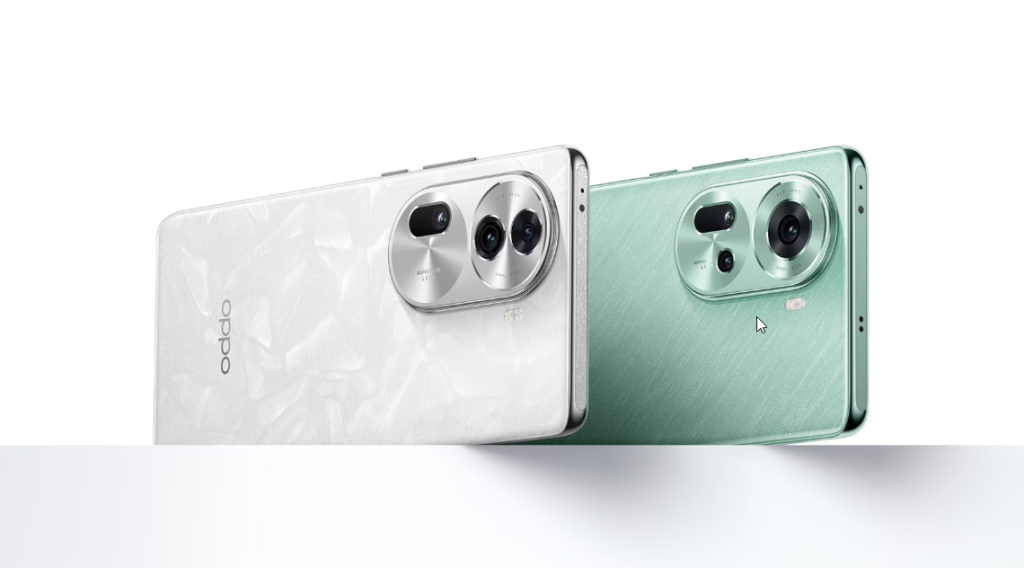
Oppo Reno 11 series reservations exceed 100,000 within a day

As expected, Oppo revealed the launch date for the Reno 11 series earlier today. However, the smartphones went up for reservations yesterday itself.

Within a day, the devices are already popular among consumers. A huge number of people have reserved the phones. Let’s go through the details.

Oppo Reno 11 Pro
Oppo Reno 11 Pro

More than three hours ago, MyDrivers reported that over 82,000 people have reserved the Oppo Reno 11 series across Oppo Mall and JD. 

The number stood at over 52,000 for the former and close to 32,000 for the latter. The total count has breached 100,000 now.

Since JD.com requires login to check the latest figure, we couldn’t get the data. However, on Oppo Mall, the number stands at nearly 68,000 as of writing this article.

It is worth noting that these handsets are also available for reservations on TMall and Pinduoduo. We don’t have data for these platforms

Thus, the actual reservation figure could be way more than 100,000. The popularity of these products is attributed to its ambassador Chinese actor Zhu Yilong.

According to leaks, the Oppo Reno 11 series will comprise vanilla and pro models. They will be powered by MediaTek Dimensity 8200 and Qualcomm Snapdragon 8 Plus Gen 1 chipsets, respectively.

They will arrive with a 32MP selfie camera, an 8MP Sony IMX355 ultrawide unit, and a 32MP Sony IMX709 2x telephoto shooter. But their primary cameras will be different. The pro model will be equipped with a 50MP Sony IMX890 sensor compared to a Sony LYT-600 sensor on the latter.

The duo will boot ColorOS 14 but their charging speeds will be different. The Reno 11 will charge slightly slower at 67W as opposed to 80W charging capability on the Reno 11 Pro.

RELATED:

Hogwarts Legacy finally rolls out for the Nintendo Switch

Hogwarts Legacy was released across the globe back in February 2023. The game is set in the popular fantasy universe of the Harry Potter franchise and was initially launched for the PC and console platforms. Now, the title has finally been rolling out for the Nintendo Switch.

Hogwarts Legacy Nintendo Switch Release

For those unaware, Hogwarts Legacy was intended to launch on the Switch handheld gaming console earlier, but it faced a delay. The game was first released on the PC, PS5, Xbox Series X, and Series S in February, while the PS4 and Xbox One release followed in May. The Switch port was initially scheduled for July but was postponed to November.

According to the developers, Hogwarts Legacy was optimized to offer gamers the “best possible experience”. The game running on this portable console is quite a task considering the Switch’s hardware. This means that there would likely be compromises with visual fidelity like lowered resolution and texture quality to maintain a playable framerate during intense gameplay. The Hogwarts Legacy is set around 100 years before the Harry Potter series and allows players to create their very own wizarding character.

So expect to learn and use various magic spells to get ahead in class and also in combat. Hogwarts Legacy is currently available for purchase on the Nintendo Store for a 60 US Dollars price tag. Meanwhile, the Digital Deluxe Edition offers a Dark Arts Pack, Dark Arts cosmetics, and a new battle arena that will cost 70 US Dollars.

RELATED:

(Via)

New Apple iPhones may offer longer battery life thanks to improved Samsung OLED displays

The future generation of Apple iPhones may soon offer improved battery life. Samsung Display is apparently planning on using new materials on its OLED panels, which should make the screens more energy efficient. So here are all the details.

Apple iPhones may last for longer soon

According to a new report from The Elec, Samsung Display plans to include blue phosphorescent material in its OLED displays. This new material will basically reduce the power consumption of the panels, so next generation iPhones could have a longer battery life. Unfortunately, this new screen might not be featured on devices until 2026. In other words, the new display technology shouldn’t be featured till the iPhone 18 lineup.

iPhone SE 4 rumors

For those unaware, The red and green phosphorescent materials in OLED panels have a 100 percent internal luminous efficiency. However, blue has fluorescent materials that have an efficiency of just 25 percent. So switching it with phosphorescent material could help lower the power usage of the new OLED screens. Samsung is currently at work in creating this blue phosphorescent material.

Notably, the new materials under development by Samsung has a lifespan of around 55 percent of the lifespan of the blue fluorescent material that was employed on the M11 OLED material. This is the same screen featured on the iPhone 13 series. This means that the technology is still not ready, with UBI analyst Yoon noting that development “does not seem to be going smoothly”. Keep in mind that this is still just an unconfirmed report, so take this news with a pinch of salt.

RELATED:

(Via)

Red Magic 9 Pro gets RGB lights-equipped cooling fan and shoulder buttons

Earlier this week, Red Magic confirmed that it will launch its next-gen gaming smartphone Red Magic 9 Pro on November 23. Since this announcement, the brand has been teasing the features of the said device.

Just a few hours ago, the company revealed the design of the phone and all the color options. Following that, now it has disclosed the RGB features.

Red Magic 9 Pro RGB Cooling Fan Shoulder Buttons

Gaming smartphones are known to have RGB lights. But it is only Red Magic that has been offering built-in cooling fans with its handsets for multiple generations.

The brand is further enhancing this experience by fitting RGB lights for the cooling fan inside the Red Magic 9 Pro. That’s not all, even the shoulder buttons get the RGB lights.

These lights are customizable but we don’t know to what extent. Anyways, this should bring joy to RGB light enthusiasts.

As per previous teasers, the phone is getting a design makeover with no bumps whatsoever. It is completely flat on all sides and will be available in three colors (Deuterium Transparent Silver Wings, Deuterium Transparent Dark Night, and  Dark Night Knight).

Leaks say that the Red Magic 9 Pro will be powered by a Qualcomm Snapdragon 8 Gen 3 chipset. It will sport a 50MP Samsung GN5 main camera paired with a 50MP Samsung JN1 ultra-wide unit on the rear and an under-display front camera. Finally, it will draw energy from a 6,000mAh battery and carry support for 100W wired charging.

RELATED:

Toyota shatters norms: No.1 US Sedan goes green with All-Hybrid 2025 Camry

In a groundbreaking move, Toyota has announced that the next generation of its best-selling sedan in the US, the 2025 Toyota Camry, will exclusively feature a hybrid electric powertrain. The decision aligns with Toyota’s ambitious electrification initiative, showcasing a commitment to reduce carbon emissions and comply with stricter U.S. fuel economy regulations.

Under the hood, the 2025 Camry boasts a 2.5-liter, 4-cylinder engine coupled with the fifth-generation Toyota Hybrid System (THS 5). Front-wheel drive models offer a standard 225 net combined horsepower, while the Electronic On-Demand All-Wheel Drive (AWD) models impress with 232HP. The AWD system integrates a dedicated rear electric drive motor, enhancing traction and providing a reliable performance on various terrains.

source: global.toyota

The exterior has undergone a sleek redesign courtesy of CALTY’s Newport Beach and Ann Arbor studios. The hammerhead front fascia gives the Camry a distinct, athletic appearance, complemented by slim LED headlights and taillights. Sport grades, including SE and XSE, feature aerodynamic elements and unique styling, with a palette of vibrant exterior colors like Ocean Gem and Supersonic Red.

Inside, the open-concept cockpit welcomes drivers with refined materials. Sport grades stand out with unique interior elements, while the XLE grade introduces leather and Dinamica® microfiber-trimmed seats. Enhanced seat comfort, available front heated and ventilated seats, and a power tilt and slide panoramic roof for XLE and XSE grades contribute to an elevated driving experience.

Technology takes center stage with a standard 7-inch digital gauge cluster (12.3-inch on XLE and XSE), an available 10-inch Head-Up Display, and Toyota Audio Multimedia System with wireless Apple CarPlay® and Android Auto™ compatibility. Connectivity features include dual Bluetooth® phone connectivity, Wi-Fi Connect, and an Intelligent Assistant through Drive Connect for voice-activated commands. Over-the-air updates keep the technology cutting-edge.

Safety remains a top priority with a Blind Spot Monitor, Rear Cross-Traffic Alert, and Toyota Safety Sense 3.0 (TSS 3.0), incorporating Pre-Collision System, Dynamic Radar Cruise Control, Lane Departure Alert, Lane Tracing Assist, Road Sign Assist, Automatic High Beams, and Proactive Driving Assist.

The move to an all-hybrid approach signals a departure from traditional combustion models, emphasizing Toyota’s confidence in the growing demand for hybrid and plug-in hybrid technology. The Camry’s transition follows the success of the Sienna minivan’s all-hybrid powertrain, and Toyota anticipates the 2025 Camry to fill a void left by competitors in the sedan segment.

While specific pricing and fuel efficiency details remain undisclosed, Toyota asserts that the hybrid powertrain’s added value justifies any premium. The 2025 Toyota Camry is expected to hit showrooms in the spring, offering consumers a greener and more powerful driving experience.

Related:

(via)

Oppo Pad Air 2 is up for pre-order in China, launching on November 23

Oppo is set to hold a launch conference where the company will announce the Oppo Reno 11 Series and Oppo Pad Air 2. Now, the tablet is up for pre-order on multiple platforms in China. The Oppo Pad Air 2 is said to be a rebadged version of the OnePlus Go Tablet.

Consequently, it indicates that the Oppo Pad Air 2 will have very similar specifications and features to the OnePlus Go Tablet. A new Oppo Pad has surfaced online and the reports have claimed that it could be the Oppo Pad Air 2.

Oppo Pad Air 2 - Gizmochina
Oppo Pad Air 2

OPPO Pad Air 2 specifications (rumored)

As the Oppo Pad Air 2 is a rebadged version of the OnePlus Pad Go, the specifications of both tablets may be very similar. OPPO Pad Air 2 will feature an 11.35-inch display with 2.4K resolution and a 90Hz refresh rate.

The Pad Air2 will have Dolby Vision and HDR10+, quad stereo speakers, and Dolby Atmos support. Furthermore, OPPO Pad Air2 is expected to feature the MediaTek Helio G99 octa-core chipset. The Pad Air 2 may have 2 storage variants and a single RAM variant: 8GB RAM with 128GB and 256GB storage.

Moving to the power section, it is anticipated to be bundled with an 8000mAh battery with 33W SuperVOOC charging technology. Both the front and back are equipped with an 8MP camera which can record videos at 30 frames per second in 1080p. OPPO is all set to hold a launch conference on November 23rd where the company will launch the OPPO Reno 11 Series 5G and OPPO Pad Air 2.

RELATED:

Huawei and China Mobile Break Records with the World’s Fastest Internet With 1.2 Terabit-Per-Second

Are you curious about how fast your internet is? It’s easy to find out. You can either call your internet company and ask them, or you can use a website like “Fast” to check your internet speed. But even though we still have problems with internet speed, infrastructure, and ports in 2023, the world is moving towards a much faster internet. For example, Huawei has already made the fastest internet connection in the world, which is 1.2 Terabits per second in China. Here are the details…

Huawei and China Mobile Break Records with the World’s Fastest Internet Connection!

Huawei is known for its consumer electronics, but it also makes equipment for the telecommunication industry. Huawei’s internet equipment is used in many countries, including China. The company even, Huawei has had problems with the United States over its 5G internet equipment. Despite these problems, Huawei has set a new record for the fastest internet connection in the world.

Huawei, in collaboration with China Mobile, China’s largest telecom operator, has built a 3,000-kilometer internet network that can transmit data at speeds of up to 1.2 terabits per second. This is a significant achievement, as it represents one of the fastest internet networks in the world.

Limited areas in countries like the United States and Japan have access to high-speed internet speeds of up to 10 gigabits. However, the most common high-speed internet speed globally is 1 gigabit, which is not available in many countries and regions. 1.2 Terabits is 1,200 times faster than the 1 gigabit internet speed that most people desire.

With this new internet connection, you can download games that are 100 GB in size in just a few seconds. This means you will no longer have to experience problems like freezing and lag. However, there is no information yet about when this new connection will be available to regular users. So, for now, we will have to be content with our current speeds.

RELATED:

(via)

Xiaomi teases HyperConnect cross-device framework ahead of developer conference

At the end of last month, Xiaomi unveiled HyperOS as its new unified operating system. The software made its debut on the Xiaomi 14 series, the company’s latest flagship smartphones.

While announcing HyperOS, Xiaomi revealed that it will be holding a developer conference on November 16 (tomorrow). The company will be disclosing more details for third-party manufacturers.

Just a few hours ahead of the conference, the firm is teasing some of the features.

Xiaomi HyperOS Logo

The Xiaomi HyperOS consists of five layers. The fourth layer is HyperConnect, which comes ahead of the fifth layer which includes applications.

HyperConnect is what makes interconnectivity possible across devices. It is an open interconnection framework for third-party manufacturers. It enables ‘cross-device capabilities.’.

As per the teaser shared by Xiaomi, HyperConnect includes the following five subsystems.

  • Distributed subsystem
  • Cross-end service framework subsystem
  • Cross-end public capability subsystem
  • Cross-end application framework subsystem
  • Cross-end security subsystem

In a nutshell, Xiaomi’s HyperConnect is similar to Huawei’s Super Device. In fact, the whole HyperOS thing mimics Huawei’s HarmonyOS ecosystem.

As an end user, all you need to know is that third-party products compatible with HyperConnect can be seamlessly managed on devices running HyperOS. It is an improved version of Mi Magic Center that was introduced with MIUI 13.

Although Xiaomi has confirmed to bring HyperOS to global markets, it is not known if all the features, including HyperConnect, will be available outside mainland China. Anyways, since Xiaomi has a huge IoT ecosystem across the globe, this feature may hit international markets.

RELATED:

Apple’s M3 Ultra to boast 32 CPU cores, 80 GPU cores with 256 GB RAM

Apple’s M3 Ultra is speculated to reach new heights with the pursuit of cutting-edge technology. Following the recent introduction of the M3 family of processors in the MacBook Pro lineup, a buzz surrounds the speculated M3 Ultra chip, promising unparalleled power with a jaw-dropping configuration.

Double the resource than the M3 Max

The M3 Ultra, as teased in the latest “Power On” newsletter by Mark Gurman for Bloomberg, could boast a monstrous 32-core CPU and 80 core GPU consisting of 184 billion transistors in total. The staggering figures represent a significant leap from the already formidable M3 Max, which features a 16-core CPU and 40-core GPU. If the rumor proves to be true, the M3 Ultra would essentially be two M3 Max chips interconnected, leveraging Apple’s UltraFusion process to share resources seamlessly.

Comparatively, the M3 Max, currently Apple’s top-tier processor, has 16 CPU cores, 40 GPU cores, and 92 billion transistors. The M3 Ultra’s potential specifications signify a doubling of both CPU and GPU cores, suggesting an unprecedented level of processing power.

The M3 series processors follow Apple’s tradition of innovation, with each iteration pushing the boundaries of what’s possible. The M3 Ultra, if unveiled, could redefine high-performance computing with its configuration. Notably, the M3 Ultra is anticipated to support up to a staggering 256GB of unified RAM.

While the M3 Max already powers Apple’s flagship 16-inch MacBook Pro, the M3 Ultra could take performance to new heights. Gurman speculates that if Apple continues its pattern of doubling both CPU and GPU configurations, the M3 Ultra could become an absolute powerhouse.

As the tech world eagerly anticipates Apple’s next move, the M3 Ultra, if released, could set a new standard for high-end computing. With its potential to redefine the limits of processing power, the M3 Ultra might become the go-to choice for professionals with the need and affordability for 2024.

Related:

(Via)

Apple iPhone SE 4 envisioned in new concept renders

Apple has been rumored to be working on a new iPhone SE model for some time now. The company has yet to reveal any official details regarding the upcoming iPhone SE 4, but the smartphone was recently imagined in new concept renders.

Apple iPhone SE 4

Apple iPhone SE 4 resembles the iPhone 14

The concept renders were shared by a collaboration of AppleTrack and @concept_central. In a recent report, we covered a rumor regarding the iPhone SE 4 featuring a design similar to the iPhone 14. The device would include a large notch for Face ID tech and feature a USB Type-C port. Now, the latest iPhone SE 4 concept render showcases these design elements as well.

Apple iPhone SE 4

Looking at the images, the front of the iPhone SE 4 appears identical to the iPhone 14 with flat edges and rounded corners. This model will reportedly sport a 6.1-inch OLED display, although it is unclear if it supports the 120Hz ProMotion technology. While the Cupertino based giant is moving away from the large notch from its recent iPhones, the SE models are expected to retain this design for now since these are a more affordable offering from the brand.

Apple iPhone SE 4

Meanwhile, the rear appears to have a single camera sensor. The iPhone SE 4 could feature a 48-megapixel primary camera on the back. Another notable design element is the USB Type-C port on the bottom, bringing it in line with the recent iPhone 15 lineup. The iPhone SE 4 is rumored to launch by late 2024 or early 2025. So stick around for more updates.

RELATED:

(Via)

Samsung Galaxy S24 series design revealed via leaked dummy units

The Samsung Galaxy S24 series is the company’s upcoming flagship smartphone lineup. While the new devices are expected to launch in early 2024, a new dummy unit leak has revealed the possible design of the Galaxy S24, Galaxy S24+, and Galaxy S24 Ultra.

Samsung Galaxy S24 series

Samsung Galaxy S24 Series Dummy Units

The images of the dummy units were shared by tipster Sonny Dickinson on X (formerly Twitter). It is unclear if these are official dummy units of the Galaxy S24 smartphones. But these alleged dummy pictures hint at the design of the Galaxy S24, Galaxy S24+, and Galaxy S24 Ultra. The Galaxy S24 and S24+ retain the flat back and rounded corners, while the top end Ultra model retains a more boxy design.

Samsung Galaxy S24 series

Simply put, the design of the upcoming Samsung flagship phones is quite similar to its predecessor, the Galaxy S23 lineup. There are some slight design element changes, which include flatter sides. Previous rumors had hinted at the various new colors of the Galaxy S24 lineup. The devices are expected to arrive in multiple variants like Black, Purple, and Gold color options. But the dummy units can be seen in a white color hue only.

Samsung Galaxy S24 series

Keep in mind that this is still just an unconfirmed leak so take this report with a pinch of salt for now. In related news, the Galaxy S24+ is expected to feature an improved display and higher RAM offering while the lineup was teased to feature a new AI feature that helps in real time language translation.

RELATED:

Red Magic 9 Pro design & colors confirmed via official renders

Nubia is gearing up to launch its next generation of flagship Red Magic 9 series smartphones soon. While the announcement is set for later this month, the company has shared official renders for the upcoming Red Magic 9 Pro. So let’s have a look.

Red Magic 9 Pro Design

Red Magic 9 Pro Design & Colors

For those unaware, the Red Magic 9 series is set to be unveiled on 23rd November 2023. Now, Nubia shared renders of the device ahead of the launch date through its official Weibo account (a Chinese microblogging website). Looking at the post, we can see that the Red Magic 9 Pro will be available in three color options. this includes a Deuterium Transparent Silver Wings, a Deuterium Transparent Dark Night, and a Dark Night Knight variant.

Red Magic 9 Pro Design

As the name suggests the Deuterium Transparent Silver Wings and Deuterium Transparent Dark Night versions feature a transparent rear panel that offers us a look at some of the phone’s inner workings. Meanwhile, the front will offer a full screen experience since the selfie shooter is housed in an under-display camera module. Just recently, the brand also shared another teaser image which revealed that the back panel won’t have any bumps for the rear cameras.

Red Magic 9 Pro Design

The Red Magic 9 Pro is expected to be equipped with the Qualcomm Snapdragon 8 Gen 3 SoC. It is rumored to feature a 50-megapixel Samsung GN5 primary sensor on the back that supports OIS (Optical Image Stabilization), which is paired with a 50-megapixel Samsung JN1 ultra wide angle lens.

RELATED:

Nvidia, world’s premier AI chip maker, skyrockets to global dominance and record-breaking heights

Nvidia’s shares soared 2.1% on Tuesday, capping a historic 10-session winning streak and reaching an all-time high, closing at $496.56. This surge, which mirrors Nvidia’s longest-ever streak of advances, is fueled by the unveiling of their latest artificial intelligence processor, the H200.

The H200 Breakthrough

The H200 update is a game-changer for Nvidia, enhancing its AI capabilities by incorporating high-bandwidth memory (HBM3e). This advancement significantly bolsters the processor’s capacity to manage vast datasets, positioning Nvidia at the forefront of the rapidly growing AI market. The company’s shares have skyrocketed 22% during this winning streak, propelling its market value by a staggering $219 billion.

A Year of Phenomenal Growth and Global Dominance

Nvidia’s great performance in the stock market is not a recent phenomenon. Over the past year, the chip giant has witnessed a meteoric rise of over 240%, securing its position as the top performer on both the Nasdaq 100 and S&P 500 indexes. This remarkable ascent is credited to the company’s agility in responding to market demands and the latest surge in technology stocks.

Analysts, eager to decipher the driving forces behind Nvidia’s success, point to the company’s strategic move of refreshing its AI processors. The H200 update, a manifestation of Nvidia’s accelerated product cadence, is seen as a crucial response to the escalating demands of the AI market and evolving performance requirements. Chris Caso, an analyst at Wolfe Research, notes that this refresh signals an expansion of Nvidia’s competitive moat, especially as the current version of their AI accelerator is already in high demand.

The global context of Nvidia’s triumph is further underscored by its status as the world’s most valuable chip maker. The company’s stellar year has not gone unnoticed, with its shares contributing to a remarkable climb of 22% during the recent rally. Investors and analysts alike are eagerly awaiting Nvidia’s earnings report scheduled for November 21, expecting the company to maintain its winning streak.

The buoyant sentiment surrounding Nvidia is also intertwined with broader market dynamics. A rebound in technology stocks and optimism regarding Federal Reserve interest rates reaching a peak have created a favorable environment for Nvidia’s continued success. This resilience is particularly evident given the company’s ability to thrive despite facing challenges, such as new US rules restricting the sale of its cutting-edge AI chips to China.

Anticipation for Earnings Report and Bullish Projections

As the world eagerly awaits Nvidia’s third-quarter earnings results, analysts express bullish sentiment, projecting another “very strong” quarter. Morgan Stanley, in particular, anticipates an impressive performance, citing the ongoing uptake of AI as a key driver. Deutsche Bank analysts echo the optimism, expecting a ‘beat and raise’ quarter from Nvidia. 

The collective optimism from major financial institutions underscores the global impact of Nvidia’s success, solidifying its position as a tech powerhouse with a trajectory that continues to defy expectations.

Related:

(via)

Garmin Descent Mk3 watch-style dive computers let you explore the depths safely

Garmin has introduced the Descent Mk3 series, the latest in its line of dive computers and smartwatches tailored for divers seeking a safer underwater experience. The series, available in 43mm and 51mm sizes, builds on the success of its predecessor, the Descent Mk2, with an array of new features and improvements.

The Descent Mk3 series brings some helpful features to the dive computers

Image source: Garmin

Designed with a dive-first approach, the Descent Mk3 wearables offer various diving modes, including single-gas, multi-gas, gauge, and apnea. Among the standout features are DiveView color maps, Dive Readiness tools, and a maximum operating depth of 200m (~656 ft). The series comprises three models: Descent Mk3 – 43 mm, Descent Mk3i – 43 mm, and Descent Mk3i – 51 mm.

The 43mm models feature a 1.2-inch display with a 390 x 390 px resolution, while the larger 51mm variant boasts a 1.4-inch screen with a 454 x 454 px resolution. The 43mm models offer up to 10 days of battery life, whereas the 51mm Descent Mk3i can last an impressive 25 days on a single charge. The Mk3i models stand out with a diamond-like carbon (DLC)-coated titanium or bronze PVD-coated titanium bezel and rear cover, providing enhanced durability compared to the standard model’s stainless steel components.

A notable addition to the Mk3i devices is SubWave sonar technology, enabling underwater communication for divers. Additionally, users can purchase the Descent T2 Transceiver to monitor gas consumption, tank pressure, and remaining air time.

Beyond diving functionalities, these smartwatches offer versatile features, including biometric tracking, running, music playback, smart notifications, and contactless payments. Prices for the Garmin Descent Mk3 series start from US$1,199.99/£1,099.99/€1,249.99.

In a further update, Garmin revealed upcoming features that include Diver Assistance and Diver-to-diver messaging. These enhancements, coupled with air integration, DiveView maps, and dive readiness tools, reinforce the Descent Mk3 series as essential tools for both recreational and technical divers.

Garmin’s efforts in underwater technology positions the Descent Mk3 series as a valuable addition to the world of dive computers, offering helpful features to explore deeper waters confidently and safely.

Related:

(Source)

Realme GT 5 Pro confirmed to feature Sony Lytia camera

Realme GT 5 Pro is yet another Snapdragon 8 Gen 3-powered flagship waiting in the pipeline to go official this month. While the company has confirmed that it will debut in November, the launch date has been elusive. Meanwhile, the branding has been confirming the key features of the GT 5 Pro. Today, it revealed that the phone will come equipped with a Sony Lytia camera sensor.

Realme GT 5 Pro may feature LYT-808 primary camera

Realme GT 5 Pro Lytia camera sensor

Rumors are rife that the Realme GT 5 Pro and the OnePlus 12 will have the same primary camera. The OP12 is confirmed to feature the LYT-808 50-megapixel primary camera. While the GT 5 Pro is confirmed to arrive with a Lytia sensor, the specific camera sensor is yet to be revealed.

Even if the Realme carries the same primary camera sensor as the OnePlus 12, the latter will offer a better photography experience as it is expected to feature an IMX581 48-megapixel ultra-wide lens and an OmniVision OV64B 64-megapixel periscope telephoto camera with 3x optical zoom.

On the other hand, the Realme GT 5 Pro’s rear camera setup is expected to feature an IMX355 8-megapixel ultra-wide lens and an IMX890 50-megapixel periscope telephoto camera with 2.7x optical zoom. Both phones are expected to feature a 32-megapixel front-facing camera.

Some of its other specs include a 6.78-inch curved-edge OLED 1.5K 144Hz display, up to 16 GB of LPDDR5x RAM, up to 1 TB of UFS 4.0 storage, one of the largest heat dissipation units, and a 5,400mAh battery with 100W wired and 50W wireless charging. It will run on Realme UI 5-based Android 14.

Realme GT 5 Pro launch timeframe

The Honor 100 series, the Oppo Reno 11 lineup, and the Red Magic 9 Pro series are all scheduled to launch on November 23. Consequently, it is plausible that the GT 5 Pro might make its debut following the release of these smartphones, with its announcement expected in the last week of November.

RELATED:

Samsung confirms to have no plans for a mid-range foldable device

In the world of foldable smartphones, Samsung’s pricing strategies have been under scrutiny. Earlier reports hinted at the tech giant’s intention to introduce a more affordable foldable device, possibly in the midrange segment. However, a recent update from Samsung refutes these claims.

Samsung will maintain the premium appearance of their foldables

Samsung’s journey into foldable smartphones began with the Galaxy Fold, and the company has since expanded its portfolio with models like the Z Fold and Z Flip series. Despite the initial high prices – the original Galaxy Fold launched at $1,980—subsequent models have seen some price reduction. The Galaxy Z Fold 3, for instance, starts at $1,799, and the Galaxy Z Flip 3 comes in at $999. However, both the Galaxy Z Fold 5 and Galaxy Z Flip 5 maintains the same price tag of their predecessors.

Reports emerged earlier suggesting Samsung’s plans to launch an “entry-level foldable smartphone under 1 million won” (around $800 USD) by 2024. This strategy aimed at making foldable technology more accessible by excluding premium features and focusing on core functions. However, the latest statement from a Samsung Electronics spokesperson contradicts these reports.

“We don’t plan to manufacture foldable smartphones that are priced in the midrange, and the latest rumors are groundless,” he said.

This statement clarifies Samsung’s stance on keeping its foldable devices in the premium segment, maintaining a balance between cutting-edge technology and pricing.

The rumors hinted at a potential reduction in features to achieve a lower price point, including the exclusion of premium elements such as water resistance, wireless charging, and possibly a downgrade in processing power. However, the official statement suggests that Samsung is not currently pursuing a mid-range foldable device.

While the possibility of Samsung expanding its foldable portfolio with new models remains uncertain, the company emphasizes that no decisions have been made on introducing a mid-range foldable phone. The spokesperson stated, “There’s nothing decided on the matter,” leaving room for speculation about potential future developments.

The competitive foldable market has recently witnessed Google’s entry with the Pixel Fold, adding to the pressure on established players like Samsung. With Apple rumored to be preparing its foray into foldables, the landscape is evolving rapidly.

In conclusion, Samsung’s latest statement underscores its commitment to the premium segment for foldable smartphones. While the idea of a more affordable foldable stirred interest, Samsung appears focused on maintaining the premium appearance of their foldable devices in the current market scenario.

Related:

(Source)

Ulefone Power Armor 18T Ultra: Redefining Photography for Outdoor Enthusiasts

In a world dominated by sleek smartphones, the Ulefone Power Armor 18T Ultra Version emerges as a rugged powerhouse tailored for a specific audience, photography enthusiasts who crave both durability and cutting-edge camera capabilities. This 5G-enabled rugged smartphone is not just useful in harsh environments but a must-have for those passionate about capturing moments in the most challenging conditions.

WHERE TO BUY
Ulefone Power Armor 18T Ultra @AliExpress

Unveiling the Photography Arsenal:

At the heart of the Ulefone Power Armor 18T Ultra Version lies a state-of-the-art camera system, designed to elevate the photography experience to unprecedented heights. Anchored by a new generation 108MP camera powered by Samsung’s ISOCELL HM2, this device ensures clarity and vibrancy in every shot.

The 1/1.52″ sensor, coupled with ISOCELL Plus and Smart-ISO technology, empowers the camera to absorb ample light, resulting in reduced noise and enhanced image quality. With 9-in-1 pixel binning technology, the pixel size magnifies from 0.7µm to 2.1µm, delivering clear photos regardless of the lighting conditions.

The 8MP ultra-wide camera expands the creative possibilities, precisely capturing architectural, landscape, and cityscape scenes. Furthermore, the 60X magnification capability provides a detailed examination of outdoor and indoor subjects, making this smartphone an indispensable tool for photography enthusiasts with a keen eye for detail.

For those who enjoy capturing self-portraits, the 32MP HD front camera with Samsung’s S5KGD1 sensor guarantees clear selfies, even in low-light settings. The portrait enhancement features add a touch of radiance to every shot, ensuring that users can express themselves creatively.

Under the Hood:

Powering this photography-centric device is the MediaTek Dimensity 7050 processor, delivering octa-core performance at 2.6GHz. The 6nm process not only ensures extended battery life but also contributes to the device’s overall efficiency. With 12GB RAM, smooth multitasking is a given, while the expansive 512GB internal storage (expandable up to 2TB) accommodates the vast libraries of high-resolution images that photography enthusiasts accumulate.

Running on the updated Android 13, the Ulefone Power Armor 18T Ultra Version prioritizes advancements in privacy and security, ensuring that users can focus on their passion without compromise.

Built to Endure:

Beyond its photographic prowess, the Ulefone Power Armor 18T Ultra Version embraces a rugged design, adhering to MIL-STD-810H specifications. With IP68 and IP96K ratings, this smartphone stands resilient against drops, dust, and water, capable of withstanding submersion at depths of up to 1.5 meters.

Acknowledged by users for its ability to withstand the elements without compromising on photographic capabilities, Ulefone Power Armor 18T Ultra has carved a niche for itself among outdoor enthusiasts and photography lovers alike. It is a tool crafted for those seeking adventure, demanding durability, and refusing to compromise on their passion for photography. For more information check out Ulefone’s official website.

Nubia Z60 Ultra camera samples released, launch could be imminent

Nubia is working on at least three Snapdragon 8 Gen 3-powered smartphones, such as the Red Magic 9 Pro series, the Nubia Z60 Ultra, and the Nubia Z60 Fold, which is said to be the company’s first foldable phone. The Red Magic 9 Pro series will debut first on Nov. 23, whereas the Nubia Z60 Fold is expected to break cover in Q1 2024. As for the Z60 Ultra, its debut is expected in December of this year. Ahead of the rumored launches, camera samples captured using the devices have surfaced on Weibo.

Nubia Z60 Ultra camera samples

Nubia Z60 Ultra camera sample 1
Nubia Z60 Ultra camera sample

It seems that Nubia President Ni Fei initially shared camera samples of the Nubia Z60 Ultra, and these images were subsequently reshared by tipster WHY LAB. The samples highlight impressive color reproduction and dynamic range. However, the specific details of the camera configuration have not been officially confirmed by Nubia.

Nubia Z60 Ultra camera sample

A leaked image (shown below) that surfaced in August revealed two smartphones with circular camera modules. Positioned on the left is the Nubia Z50s Pro, while the one on the right, characterized by a more prominent camera module, is rumored to be the Nubia Z60 Ultra. Speculation suggests that the Z60 Ultra may incorporate a 1-inch, 35mm Sony IMX989 primary camera sensor. Reports have claimed that the device will also feature an under-display front camera.

The Nubia NX721J device, which was recently spotted on Geekbench, could be the upcoming Nubia Z60 Ultra. The listing revealed that the device has a Snapdragon 8 Gen 3 chip, 12 GB of RAM, and Android 14.

Nubia 1-inch 35mm Camera Phone Leaked
Alleged Nubia Z60 Ultra (right) with 1-inch 35mm camera leaked

In related news, Nubia is also working on another model, which is dubbed the Nubia Z50 SE. The device that is said to be equipped with the Snapdragon 8 Gen 2 may debut alongside the Z60 Ultra in December.

RELATED:

(via)

Meizu 21 front design revealed, key specifications leaked

Starting today, the Meizu 21 is available for pre-orders in China. However, the brand has not confirmed its launch date. Today, it released a new poster to showcase the amazing front design of the smartphone.

Meizu 21 display has symmetrical bezels around it

Meizu 21 front design
Meizu 21 front design revealed

Meizu has officially announced that the Meizu 21 features a custom-made 6.55-inch Samsung AMOLED display with symmetrical bezels measuring 1.74mm on all four sides. Notably, the iPhone 15 Pro boasts similar 1.75mm symmetrical bezels, while the Xiaomi 14 has a slightly slimmer bottom bezel at 1.71mm. However, the Xiaomi 14’s top and side bezels, although thinner at 1.61mm, do not maintain symmetry.

As per previous reports, the Meizu 21 will have a 4,800mAh battery with 80W charging. The exact size of the Meizu 21 Pro’s display is not known yet. However, it should be a larger device with a screen size measuring around 6.7 inches.

The Snapdragon 8 Gen 3 will power the Meizu 21 and 21 Pro. The Pro variant is expected to house a 5,020mAh battery with 80W charging support. It is unclear whether the Pro model will also offer wireless charging. 

The Meizu 21 and 21 Pro are both expected to feature an OIS-enabled 50-megapixel primary camera. The standard model is expected to feature an ultra-wide camera and a telephoto camera, whereas the Pro edition may have an ultra-wide camera and a periscope telephoto camera. Both phones are also expected to feature an RGB ring LED flash on the back. Both phones are likely to come preloaded with Flyme 10-based Android 14.

The other specifications of the Meizu 21 series are yet to be revealed. The lineup will replace the Meizu 20 and Meizu 20 Pro flagship phones, which debuted with Snapdragon 8 Gen 2 chip earlier this year.

RELATED: