Advertisement

Vivo’s BlueOS and BlueLM trademarks are listed on EUIPO

At the 2023 Vivo Developer Conference, the company introduced a self-developed Operating System – BlueOS. Primarily meant for smart wearables and smart home devices, the OS uses Rust programming language. It supports multiple Posix standard kernels, Linux Kernels, and a special AI service engine for compatibility with large AI models. The Vivo BlueOS trademarks have just surfaced on EUIPO which confirms its global launch in the coming days.

Must See: After Huawei and Xiaomi, Vivo is here with its self-developed operating system, BlueOS

There are a total of four trademark listings that appeared on EUIPO, including Vivo BlueOS, BlueOS, Vivo BlueLM, and BlueLM. All these are trademarks for the name or “Word”. The BlueOS and Vivo BlueOS are described as “Operating systems for mobile phones, smartphones, smart watches, smart glasses, tablet computers, notebook computers and smart televisions.

Meanwhile, the BlueLM seems like an AI assistant that will allow the system to generate text, and video, understand text, organize and collect data, and simulate conversations. Further, the trademark description describes it as
downloadable computer programs and downloadable computer software for creating and generating text; artificial production of human speech and text; machine-learning-based language and speech processing software; natural language processing, generation, understanding, and analysis; collecting, analyzing, and organizing data in the field of deep learning; simulating conversations.”

Vivo’s BlueOS Features

  1. Multi-Device Support: BlueOS supports a variety of devices, ranging from 200Mhz processors with 32MB RAM to 4GHz processors with 24MB RAM.
  2. Enhanced Rendering Efficiency: The OS offers a 48% improvement in rendering efficiency, ensuring smoother and faster display performance.
  3. Memory Consumption Optimization: BlueOS consumes 67% less memory compared to other operating systems, resulting in better overall device performance.
  4. Security and Privacy Focus: BlueOS prioritizes user privacy and security, with the system framework built using the Rust language, known for its resistance to security vulnerabilities.
  5. AI Integration: The operating system integrates AI-based capabilities, supporting functions such as code generation, as well as image and text generation.
  6. Voice-Activated Watch Faces: BlueOS introduces a new smart interaction experience for smartwatches, enabling users to change watch faces using voice commands.
  7. BlueXLink Connectivity: The OS facilitates seamless data transfer between multiple devices through BlueXLink, enabling efficient connectivity and data sharing between various devices.
  8. NFC Support: BlueOS supports various functionalities, including transportation cards, access cards, and NFC car keys, making it a versatile operating system for different applications.

Vivo will launch Vivo Watch 3 based on BlueOS on November 13 in China.

Related:

(via)

Samsung Galaxy S24 series rumored to launch on January 17

Samsung is expected to launch the Galaxy S24 series early next year. While an official launch date is still unclear, a new leak has claimed that the new flagship smartphones could be announced in mid January 2024. So here are all the details.

Samsung Galaxy S24 Series Rumored Launch Date

According to a new report from SBS Biz, the South Korean tech giant will announce the Galaxy S24, Galaxy S24+, and Galaxy S24 Ultra models on January 17. The launch event is expected to be hosted in San Francisco, US. The company is apparently already getting ready for this conference. If this report is true, then Samsung will release its latest generation of flagship devices a month earlier than their predecessors. The Galaxy S23 lineup was launched on 17th February 2023.

Samsung Galaxy S24 AI features

Notably, this rumor is in line with our previous report. The Galaxy S24 series is already expected to be at the production stage with a rumored January release. Furthermore, the report adds that the Galaxy S23 FE will be launched in South Korea on December 1. This model could launch in the company’s home market for 800,000 South Korean Won (roughly 606 US Dollars). Just recently, we also covered a leak regarding the Galaxy S24 series color variants.

For those unaware, the Fan Edition models feature top notch specs with at a relatively affordable price tag. The lower price tag is typically due to the company skipping some high end features or cutting corners with some design elements. Keep in mind that this is still just an unconfirmed report, so take this news with a pinch of salt for now.

RELATED:

(Via)

Samsung Galaxy S24 series to get overclocked Snapdragon 8 Gen 3 for Galaxy with 1 GHz GPU

Samsung is reportedly working on a custom version of the Snapdragon 8 Gen 3 SoC for its upcoming Galaxy S24 series. This custom chip, likely to be called the “Snapdragon 8 Gen 3 SoC for Galaxy,” is expected to feature an overclocked GPU, according to a reliable tipster.

Words come from Ice Universe who shared on X (formerly Twitter) that the 8 Gen 3 for Galaxy will have a clock speed of 1GHz or 1,000MHz. This would represent a 28% increase in clock speed over the Snapdragon 8 Gen 2 for the Galaxy SoC used in the Galaxy S23 series.

In addition to the overclocked GPU, the Snapdragon 8 Gen 3 SoC for Galaxy is also rumored to have an improved CPU clock speed. 

In fact, rhe latest Geekbench result shows the prime core on the Galaxy S24 Ultra running at a top speed of 3.4 GHz, which is higher than the regular Snapdragon 8 Gen 3 SoC. However, the other Cortex-A720 and Cortex-A520 cores run at the same clock speeds.

It is unclear how much of a performance improvement the overclocked GPU and CPU will provide in real-life. The Galaxy S24 series is expected to be released in January 2024, so we will learn more about the devices and their custom Snapdragon 8 Gen 3 SoC in the coming months.

Related:

(Source)

Xiaomi 14 Full Review: When the youth grows up…

If you’re our fan, you’ll notice that this Xiaomi 13 has been shown in so many of our videos. yes, I’m really in love with this phone, and I’ve been using it since it went on sale until now. I can be sure of one thing: Nobody knows Xiaomi 13 better than I do. As a REVIEWER and a deep user of the Xiaomi 13, I’m pretty sure the Xiaomi 14 is the best choice for small phone lovers if you can live with its design.

WHERE TO BUY
Buy Xiaomi 14 Phone @Giztop

Size

I’ve always been a firm believer in the idea – if something needs to be carried around, then it should be as small as possible. My EDCs are all gadgets. For example, the iPad mini 6, 33W Pocket Power Bank, 65W PD charger, and even the cables I use are 50cm in length. They are not only small but also very powerful, ditto I love the Xiaomi 14 very much.

I’m pretty sure some of you will leave a message in the comments section – the Xiaomi 14 is not a small phone. But of the 200 new phones released last year, less than five were smaller than the Xiaomi 13. So it makes sense to say that the 6.3-inch Xiaomi 14 is a small phone.

Although I said it in the Unboxing video, here it goes again: the IR emitter at the top of the Xiaomi 14 wasn’t removed, it was moved into the camera module. When you first enter the Mi Remote App, it will suggest a really stupid position to control the device. What a weird pose. The good news is that it’s actually possible to control it in a normal position, so you don’t have to learn that strange pose.

The 14’s vibration motor has also been enlarged for a crisper feel when typing. And yes, even the 14 Standard now uses USB 3.0. R.I.P USB 2.0.

Design

The biggest regret of this phone is its looks. Look at the camera module, if Xiaomi 12 and 13 were a step backward, then 14 is a run backward. If you’ve ever seen or used a super cheap budget phone, you’ll be familiar with the design: the flash pretends to be a camera and stays where it shouldn’t be, and the LEICA logo looks like the guy on the subway, suffocated by the three cameras. Come on, it’s really ugly. If it were not that its specs were really a big improvement, I would never, ever buy this phone.

UltraSpace

There is an interesting bonus feature called “UltraSpace”. It’s actually a technique that reduces the amount of Over-Provisioning space and increases the storage space available to the user. While this theoretically reduces the life of UFS, Xiaomi’s software director is saying that even if you copy 40 gigabytes of data a day, it’ll last for 10 years or more. Xiaomi is betting that no one will be able to use a phone for more than 10 years, so that’s what they’re going to do.

When I say it’s interesting I don’t mean how innovative the technology is, but the fact that you need to buy a specific version of it to get this feature. If you’re like me who by accident bought the 256G storage version of the Xiaomi 14, then this bonus feature is not yours for the taking.

Display

The Xiaomi 14 Standard Edition still uses the same flat screen that everyone loves. The panel comes from TCL’s latest model, the C8. Specs here for your reference. The most obvious thing to notice would be the increase in resolution, and the improved clarity that comes with 1200P is good news for literature lovers.

Something you need to know, if you want to use DC dimming at any brightness level, it will require you to turn on the Anti-flicker mode to activate it. If you don’t turn it on, it defaults to DC at high brightness, and 480Hz PWM dimming at low brightness, just like the Xiaomi 13.

There are also some software improvements in brightness. For example, the manual maximum brightness used to be only 500nit, this time the new Sunlight mode allows you to manually max out at 670nit, which can be close to 1000nit under bright light stimulation. As for the 3000nit they say, it’s only achievable with a 10% window of HDR video under bright light stimulation. So the peak brightness of 3000nit is more of a gimmick unless you watch HDR videos under the sun often.

There are no obvious flaws in the screen. It would be nice to be able to move the fingerprint recognition area upward a little bit.

Benchmark & Gaming

Snapdragon 8 Gen 3 is by far the best phone chip. I didn’t expect 8 Gen 3 to be improved so much when last year’s 8 Gen 2 was already so strong. You can clearly see that 8 Gen 3 scored the best in several categories. The Xiaomi 14 also excelled in stability tests. I’m pretty sure it’s the most powerful processor I’ve ever seen on a phone.

Now let’s see how it performs in the games. Since PUBG Mobile doesn’t require a high load, even the Xiaomi 13 is capable of running 90fps easily. Do you think that’s the upper limit? No. Take a look at the graph of the Xiaomi 14. I admit, the straightest line I’ve ever seen in my life is this Xiaomi 14 PUBG frame rate graph, It’s really awesome. The power consumption and temperatures are lower, suggesting that the new Snapdragon chip is coping with light-load apps much more easily.

The Genshin Impact’s results aren’t as impressive as PUBG Mobile’s, but they’re still much better than other 8 Gen 2 phones. At the same 720p resolution, it only started downclocking after 15 minutes of diving in Fontaine, and the frame rate didn’t drop much after the downclocking. And when you look at its power consumption, it’s again the lowest one. With such an excellent gaming experience actually realized on a smaller phone, I’m already looking forward to seeing if the gaming experience on the bigger Xiaomi 14 Pro will be better or not.

Previous Xiaomi phones could run Genshin at 864P resolution, but this time, the Xiaomi 14 can even run at 1200P resolution. Look at the characters, and how clear they are. Unfortunately, the frame rate is limited to 30 at this resolution, so when is Xiaomi going to open up the 60fps option? I think the 8 Gen 3 can afford to go even higher.

32-bit

By the way, this year’s 8 Gen 3 no longer supports 32-bit software at all on the hardware side. While I agree that 32-bit apps should really be phased out, it’s inevitable that some people still need to use them. Xiaomi helps you convert 32-bit APP to 64-bit by software side so that you can continue to use these old apps.

If you get a Xiaomi 14 and still can’t install some old apps, it’s mostly caused by Android 14 and HyperOS not supporting targetSdkVersion below 23 apps. It has nothing to do with 8 Gen 3. Because of time constraints, we didn’t talk too much about Snapdragon 8 Gen 3.

Camera

There’s a trivia about Leica mode on Xiaomi phones: the Leica colors are actually different for each model. In the Xiaomi 13 series, the 13 Ultra has the most attractive Leica Authentic colors, while the 13 Standard is the worst one. Xiaomi 14 isn’t as Leica as the 13 Ultra, but it’s still much better than the 13. Colors are much more intense, contrast is higher, and there are more options to choose from in Pro mode.

Being able to freely adjust the tones makes it more cinematic. What’s more, all the drawbacks I mentioned in the 13 Ultra camera test have actually been fixed in the 14’s standard version. For example, the metering preference can be adjusted to Average, that way you won’t suddenly increase the exposure because a face is detected. That makes photographers like me very happy.

The Light Hunter 900 is a new sensor customized by Xiaomi and OmniVision, with the main selling point being the excellent single-frame dynamic range. Unfortunately, it’s not very noticeable and only looks a bit better than other phones at night in auto mode. Over the dynamic range, I love the performance of its 2x zoom. Thanks to the increased size of single pixels, you can get sharper photos in low light. After testing hundreds of photos, I realized that the main camera’s improvement wasn’t that big. The other two camera boosts are much more impressive.

Thanks to the better sensor, the image quality has been improved all around. Whether it’s sharpness, noise, or color accuracy, it’s much better than the 13. I don’t need to tell you much, just look at the sample photos to see the difference between them.

The telephoto camera on the Xiaomi 14 is the same as the one on the 13 Pro, with the closest focus distance of only 10cm. You can take macro photos with it, and the background bokeh will be even better than photos taken with the ultra-wide camera. If you are fed up with the rear camera of the Xiaomi 13 like me, then switching to the 14 would be a good option.

Front Camera

I usually don’t talk much about the front camera of the Xiaomi phone because they never pay much attention to the front camera. But this time, they have changed. the Xiaomi 14 has tweaked the portraits and the changes are mainly in the skin tones. Skin tones will look healthier than the Xiaomi 13’s and there’s an improvement in clarity.

Most importantly, the front-facing camera will finally be able to record videos at 4K 60fps and with EIS support.

The video recording from the rear camera is also good. It is stable, clear, and works well like many flagship phones. This time in the 4K 30fps video recording, you will also be able to freely switch between the three cameras.

Battery & Charging

The wired charging power of the Xiaomi 14 is 90W. While it looks like a big upgrade, but actually it’s not significant. The charging protocol hasn’t changed much either and it’s still a USB-A port. Since the front-facing camera, USB transfer speed, and ultra-wide camera have all gotten better, I mean why not make a USB-C port on the charger in the next step?

Battery life has also been improved a little. Since the battery capacity is bigger and the processor is more power efficient, it makes sense that the battery life will get better. Please don’t expect too much though, after all, it’s just a 6.3-inch phone.

Here’s my phone usage on the day I did the camera test, which lasted 11 hours on 90% power. Because using the camera is very power-hungry, it doesn’t look as power-efficient as I thought it would be. But trust me, it has enough battery to last a day if it’s in daily use.

HyperOS

As we mentioned before, I should talk to you guys about HyperOS right now, but in order to post this video as soon as possible, there’s not a lot of time to really dive deep into it. So I’m not going to talk too much about the new system right now.

The only thing I’m going to say is that GMS works fine on the Xiaomi 14 and Telegram installs without any problems, so there is no need to worry about some software being banned yet. More on the differences between HyperOS and MIUI, we’re going to do another video for it.
Conclusion

To me, Xiaomi 14 feels like a young man growing up, no longer handsome but becoming more mature. The screen, camera, and processor have been upgraded, and the problems we used to complain about have been fixed. Plus the tiny size gives it an unbeatable advantage. The only cost is that you have to live with the not-so-pretty design.

Anyway, I should plug my SIM Card into this phone. I compromised, the Xiaomi 14 is just too powerful.

WHERE TO BUY
Buy Xiaomi 14 @Giztop
WHERE TO BUY
Buy Xiaomi 14 Pro @Giztop

Vivo S18 series color options leaked ahead of launch

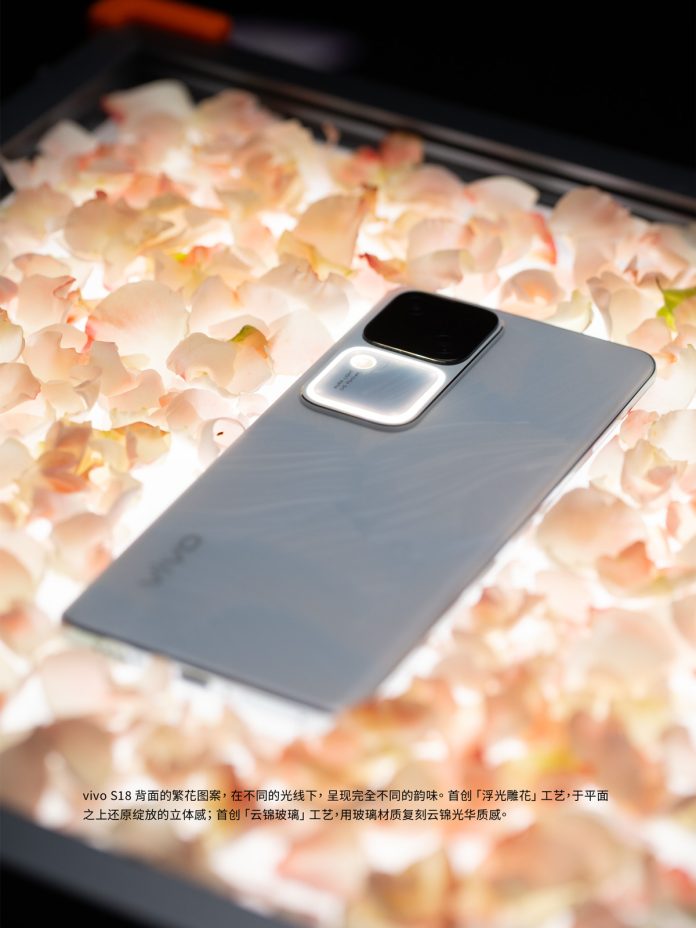
Vivo is reportedly planning on launching the S18 series of smartphones in China soon. But prior to any official announcement, a fresh leak has revealed the possible color variants of the upcoming devices. So let’s have a look.

Vivo S18 Series Color Options

The news arrives from known tipster Digital Chat Station who shared the information on Weibo (a Chinese microblogging website). Earlier this week, we had reported on the device surfacing on the Chinese certification 3C authority. Now, the latest leak hints at the color options that will be offered on the Vivo S18e, S18, and S18 Pro models.

According to the tipster, the Chinese tech giant will launch the S18 series of smartphones three color variants, namely black, green, and a multi color hue version. For those unaware, the company has release devices with rear panels that feature a rainbow like design that showcase different colors. Digital Chat Station adds that the Vivo S18 lineup will support 80W fast charging.

Vivo S17t
Vivo S17t

Previously, the tipster claimed that the brand is working on new smartphones that feature the Qualcomm Snapdragon 7 Gen 3 SoC and Dimensity 9200+ chipset. Although, it is unclear if these devicse in question are the S18 and S18 Pro or the iQOO Neo 9 and Neo 9 Pro. The previous generaton S17 series featured the Snapdragon 778+ and Dimensity 8200 SoCs.

In other words, the base S18 might be equipped with the Snapdragon 7 Gen 3, while the higher end Pro model could release with the Dimensity 9200+ processor. With the Vivo X100 series set to launch on 13th November 2023, the brand may launch the S18 lineup sometime next month. Keep in mind that this is still just an unconfirmed report at the moment, so take this news with a pinch of salt for now.

RELATED:

(Source)

Lenovo Tab M11 launch nearing as it appears on UAE’s TDRA

Lenovo Tab M11 is all set to take the place of the Lenovo Tab M10 which was launched a few years ago. The new tablet has already leaked multiple times, and a lot of details are already public. Following last week’s FCC listing of the tablet, it has now surfaced on the United Arab Emirates’s TDRA certification website with model code TB330XU.

Must See: Fashion Meets Function: Lenovo’s Tab Wear Collection Unveiled

There’s no information about the tablet specifications via the listing, but indirectly confirms the nearing launch.

Lenovo Tab M11 Specifications (Rumored)

Previous leaks and certifications suggest that the new tablet will debut in three storage configurations 4GB RAM + 64GB storage, 4GB RAM + 128GB storage, and 8GB RAM + 128GB Storage. It will have expandable SD card storage support of up to 1TB. There will be a 6820 mAh battery which will support dual-band WiFi connectivity. However, the model that appeared on the FCC and TUV Rheinland lacks LTE connectivity. Meanwhile, the tablet will run the Android 13-based ZUI 15.1.028 UI. The company plans to upgrade it to Android 15 along with regular Security patch upgrades.

Lenovo Tab M11
Lenovo Tab M11

It is suggested to launch with an 11-inch LCD display having 1920 x 1200 pixels resolution. The chipset appears to house Helio G88 SoC, 8GB RAM, 128GB storage, and a microSD card slot. Furthermore, there will be an 8MP front camera and a 13MP rear camera.

Apart from hardware upgrades, Lenovo will push tablets with pre-installed apps like YouTUbe Music, GBoard, Google News, Pay (Wallet), Lenovo Vantage, and others.

Lenovo Tab M11 is expected to launch in two different color choices Luna Grey and Seafoam Green colors. It could come with a price tag of $330.

Related:

Redmi 13C 5G’s appearance on 3C Certification Confirms its Charging Capability

Redmi is all set to unleash the new Redmi 13C smartphone globally. It has already been part of several leaks in the past and is even listed on some certifications like India’s BIS, NBTC Thailand, and IMEI. The 5G variant of Redmi 13C has appeared on the 3C certification with model code 23124RN87C.

Must See: Redmi 13C unboxing video reveals full specs and design

It is the China variant of the smartphone, and the listing unfurls some information about charging capacity. It supports up to 10W fast charging with an MDY-09-EK power adapter. Further, the listing confirms the 5G connectivity on the smartphone.

Apart from 3C, the India variant bearing model code 23124RN87I appeared on the BIS certification website a couple of days ago. There is also a Global variant with model code 23124RN87G which appeared on the IMEI database a while ago.

Redmi 13C Specifications (Rumored)

As per reports, the Redmi 13C will have a rebranded version with the name Poco C65. Both these smartphones are set to launch in the coming some time. Further, there will also be a Redmi 13C 4G variant with model codes 23100RN82L, 23108RN04Y, and 23106RN0DA. These models are slated for launch in China.

Redmi 13C 5G is expected to bundle MediaTek’s Dimensity 6100 Plus chipset while the 4G variant and Poco C65 could debut with Helio G85 SoC. Some design renders reveal that Redmi 13C could feature a teardrop notch, a 50MP primary camera, and a USB Type-C port. Meanwhile, the Redmi 13C 4G could feature a 6.74-inch LCD display having a refresh rate of 90Hz. The smartphone appears to feature 18W charging support.

We expect more information about the Redmi 13C to surface in the coming few days.

Related:

(via)

Samsung Galaxy S24 series colors leaked, Snapdragon & Exynos variants confirmed

While there is still time before Samsung unveils the Galaxy S24 series, various rumors and reports have already surfaced about the next gen flagship smartphone. Now, the latest leak has hinted at some of their color options and Qualcomm has confirmed chip details of the upcoming Galaxy S24 lineup.

Samsung Galaxy S24 Series Color Options Tipped

Samsung Galaxy S24 Ultra HDR

The latest leak arrives from known tipster Ice Universe, who shared the information on X (formerly Twitter). We recently covered a leak regarding the leaked TPU protective covers for the Galaxy S24 series. This showcased that there were no major design changes planned for the new devices. However, the color options for the entire lineup is apparently getting some new additions. Ice Universe claims that the Galaxy S24 series will arrive in six color options, namely Black, Gray, Violet, Yellow, Green, Blue and Orange

Notably, the South Korean tech giant typically reserves a couple of colors exclusively for the top end Galaxy S24 Ultra model. This time around, it seems like the S24 Ultra’s exclusive option will include a golden variant that comes with a golden middle frame. The tipster further adds that the Galaxy S24 Ultra will feature thinner and symmetrical bezels.

Samsung Galaxy S24 Series Snapdragon and Exynos Variants

Apart from the color leak, we finally have confirmation that the Galaxy S24 phones will come in two variants, namely Snapdragon and Exynos versions. Qualcomm CEO Cristiano Amon confirmed that the Galaxy S24 series will launch in a Snapdragon and Exynos variant during the chipmaker’s Q4 earnings report.

RELATED:

(Via: 1, 2)

OnePlus 12 camera samples released, compared with flagship phone from another brand

OnePlus hasn’t yet confirmed the launch date of the OnePlus 12 for the Chinese market. However, rumours claim that the OP12 will be unveiled this month. Ahead of the expected launch, OnePlus China President Li Jie Louis rolled out some camera samples of the OP12 to reveal its photography capabilities.

OnePlus 12 camera samples vs camera shots from a competitor phone

The machine translation of Li Jie’s Weibo post reveals that he shared images for a camera performance comparison. The images in question seem to be a side-by-side evaluation of camera shots taken with the OnePlus 12 and another “Pro” branded flagship smartphone, likely the Xiaomi 14 Pro. Although it’s not explicitly stated which camera sample corresponds to which phone, it’s clear that the ones displaying superior results are likely the samples from the OnePlus 12’s camera.

OnePlus recently confirmed that the OnePlus 12 will be equipped with Sony’s latest Lytia camera sensor. Rumors surrounding it have claimed that it could be equipped with the same LYT-T808 primary camera, which is also available on the OnePlus Open.

The main snapper is likely to be joined by a 48-megapixel IMX581 lens for ultra-wide shots and a 64-megapixel OmniVision OV64B periscope telephoto camera, which may bring support for up to 5x optical zoom.

The OnePlus 12 is confirmed to feature the Snapdragon 8 Gen 3 chipset. It is expected to draw power from a 5,400mAh battery that supports 100W wired and 50W wireless charging. On the front, the OP12 will feature the BOE X1 curved-edge display, which will offer a 2K resolution, a 120Hz refresh rate, and around 3,000 nits of brightness. It will come preloaded with ColorOS 14 (China) / OxygenOS 14 (global) based Android 14. While it is expected to launch in November in China, its global launch may take place in January 2024.

RELATED:

(Source)

Upcoming Smartphones: iQOO 12, Poco C65, and More
Four brands are expected to unveil five new smartphones next week. Three of them will debut their products in China. The remaining brand will announce its device for the global markets.

The companies that will launch new phones are Poco, iQOO, Honor, and Oppo. These handsets will range from budget to premium. 

Two of these devices will be powered by the newly announced Qualcomm Snapdragon 8 Gen 3 SoC. This chip just recently made its debut inside the Xiaomi 14 series.

The aforementioned flagship phones and two other budget models will be part of the Singles’ Day sale promotions in China. Let’s take a look at these handsets one by one.

Upcoming Smartphones Next Week

1. Poco C65

Poco C65

The Poco C65 has been confirmed to launch on November 5 (Sunday). Based on certifications, it will be an off-shoot of Redmi 13C.

The device will arrive with a 6.74-inch FHD+ 90Hz dewdrop notched display, a MediaTek Helio G85 chipset, a 50MP rear camera, a 5,000mAh battery, and 18W charging support. It will be available in black, blue, and violet color options.

The Poco C65 will carry an early bird pricing of $109 and $129 for 6GB + 128GB and 8GB + 256GB memory configurations, respectively.

2. iQOO 12 Series

iQOO 12 Live Shot

The iQOO 12 series is scheduled to launch in China on November 7 (Tuesday). It will be announced at a conference that will begin at 7 PM GMT+8.

The lineup will include two phones, namely iQOO 12 and iQOO 12 Pro. Both of them will come with a Qualcomm Snapdragon 8 Gen 3 SoC, LPDDR5x RAM, UFS 4.0 storage, 50MP ( OmniVision OV50H, wide)+ 50MP (Samsung JN1, ultrawide) + 64MP (OminiVision OV64B, 3x periscope) triple camera system, and 120W wired charging support.

The pro variant will differ by offering a curved display, an ultrasonic fingerprint sensor, an IP68 rating, and 50W wireless charging support.

3. Honor X50i Plus

Honor X50i Plus

The Honor X50i Plus is anticipated to go official by November 10 (Friday), a day ahead of ‘Singles’ Day’, in China. The phone will come with a flat frame design and a unique take on an iPhone-like camera island.

It is said to arrive with a 6.7-inch FHD+ display (LCD), a 2.4GHz unknown chip, 5G connectivity, a 108MP + 2MP rear camera setup, an 8MP selfie camera, a 4,500mAh battery, and 35W charging support. It will be sold in multiple memory configurations.

Lastly, the handset will be available in at least two colors, such as pink and blue.

4. Oppo A2

Oppo A2

The Oppo A2 is set to launch in China on November 11 (Saturday). It is expected to be the same as the recently released Oppo A79 in India.

The device will come with a 6.72-inch FHD+ 90Hz display (LCD), a MediaTek Dimensity 6020 chip, a 50MP + 2MP dual camera setup, an 8MP selfie camera, a side-mounted fingerprint sensor, and dual stereo speakers.

The handset will be thin at 7.99mm and weigh 193g. It will be backed by a 5,000mAh battery with support for 33W charging.

RELATED:

Vivo Watch 3 design teaser reveals a round dial, crown, and two color options

Vivo is preparing to launch its Vivo Watch 3 smartwatch on November 17, 2023. Ahead of the launch, the company has released a design teaser for the upcoming smartwatch.

Vivo Watch 3 Official Render

The teaser reveals a round dial for the Watch 3 with a crown on the right frame. It also confirms two color options for the watch—Black and White with the latter laced in a leather band and the former sporting a silicone band.

Vivo Watch 3 Design Revealed

Vivo has also confirmed that the Vivo Watch 3 will ship with BlueOS, the company’s new self-developed operating system. 

BlueOS is the world’s first OS to be written in Rust programming language and features generative AI capabilities. As a result, Vivo claims that BlueOS will offer unlimited watch face support and it will also have its app store.

As for the specs, the Vivo Watch 3 is expected to feature an OLED display. More details about the smartwatch will be revealed at its launch event.
Related:

(Via)

OnePlus Nord CE 3 5G starts receiving OxygenOS 13.1.1.402 Update

Following the ongoing OxygenOS 14 testing and Beta programs for multiple devices, OnePlus is gradually pushing regular updates on the other hand. Similarly, the company is pushing a new firmware update for the OnePlus Nord CE 3 5G carrying some bug fixes.


OnePlus Nord CE 3

Must See: OnePlus Nord CE 3 OxygenOS 13.1.1.227 update is here with camera & battery improvements

The OxygenOS 13.1.1.402 update for the OnePlus Nord CE 3 5G optimizes the photo output for the front camera. Slight changes in the skin tone during post-processing are part of the update. The update is currently available only for the India Variant of the device.

It is an incremental update and may take some time to reach each unit. However, the users can manually check for the update by heading to Settings > About > Software Updates > Check for Updates.

The users can file feedback or any information about bugs via Google Dialer or OnePlus Community.

OnePlus Nord CE 3 5G is on the list to get the OxygenOS 14 beta this month. We hope in the coming few weeks, the users will be able to enjoy the latest features of OxygenOS 14. There are plenty of new features and enhancements that will surely uplift the user experience and performance of the device.

Related:

(source)

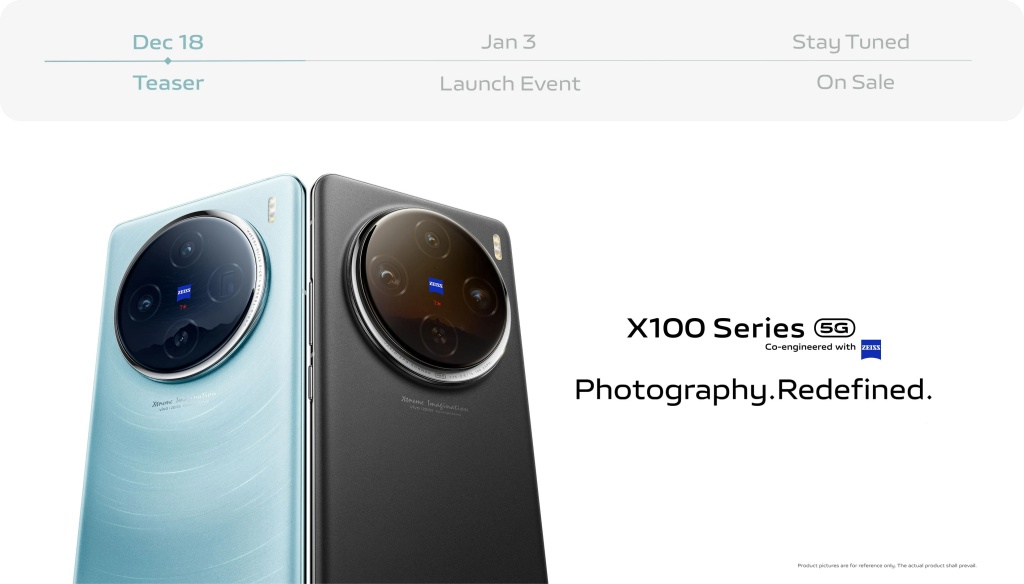
Vivo teases new color variant, camera samples of X100 series

Vivo is gearing up to launch its flagship X100 series smartphone in China on November 13. The company has already begun teasing the launch on Weibo, and has now shared a new teaser and camera samples of the X100 series.

The new teaser shows the X100 Pro in a Sunset Orange Peel color variant with a leather back and a golden hue frame. This is in addition to the Starry Blue variant teased earlier with a glass back.

Vivo X100 Pro Design Official Render

The company also shared a set of camera samples from the X100 and X100 Pro smartphones. The samples show the phones’ optical zoom and their telephoto macro camera capabilities. 

According to reports, the Vivo X100 and X100 Pro will be equipped with a 64-megapixel OmniVision OV64B telephoto camera, a 50-megapixel Samsung JN1 ultra-wide lens, and either a Sony IMX920 primary camera (X100) or a Sony IMX989 main camera (X100 Pro).

Both phones will also be powered by the Dimensity 9300 chipset and LPDDR5T RAM. They are expected to offer up to 16 GB of RAM and up to 1 TB of storage.

The Vivo X100 and X100 Pro are expected to feature a 6.78-inch OLED panel with a 1.5K resolution and a 120Hz refresh rate. The X100 will pack a 5,100mAh battery with 120W fast charging, whereas the X100 Pro will have a larger 5,400mAh battery with 120W wired and 50W wireless charging support.

The Vivo X100 series is expected to start at 3,999 Yuan (~$546).

Related:

(Via)

Pre-order AOOSTAR WTR R1 N100 Mini PC for $219 at GeekWills

AOOSTAR WTR R1 N100 Mini PC is a compact powerhouse designed to enhance your computing experience without unnecessary frills. The device is now available for Pre-order on Geekwills for $219. Please note that this is a pre-order and the shipping and delivery will start at the end of November. 

WHERE TO BUY
AOOSTAR WTR R1 N100 Mini PC at $219 @GeekWills

Powered by the Intel N100 processor, this 12th generation successor to the Pentium/Celeron line offers reliable performance with a clock speed of up to 3.40 GHz and is complemented by Intel UHD graphics for smooth visuals.

In terms of memory, the mini PC supports DD R4-3200 (single) and offers versatile storage options with M.2 2280-NVMe x1 and 3.5 SATA x 2 slots. This ensures seamless multitasking and ample space for your files and applications.

Connectivity is a breeze with the AOOSTAR WTR R1 N100 Mini PC, featuring support for WiFi 6 and Bluetooth 5.2. These advanced wireless technologies guarantee high-speed internet connectivity and seamless pairing with compatible devices, making it a versatile choice for various setups.

One of the standout features of this mini PC is its compact design, measuring just 16.2cm x 16.2cm x 19.8cm and weighing a mere 1kg. Its portability makes it suitable for both office and home use, allowing you to set up a powerful workstation in limited spaces.

In terms of input/output options, the mini PC offers a 19v/5.12A, 100W Type-C input for efficient power supply. The output options include HDMI, DP, and Type-C ports, ensuring compatibility with a wide range of displays and peripherals. Whether you’re connecting to a monitor, TV, or other devices, the AOOSTAR WTR R1 N100 Mini PC has you covered.

AOOSTAR WTR R1 N100 Mini PC combines reliable performance, versatile storage, and advanced connectivity in a compact and lightweight package. With its thoughtful design and array of features, this mini PC is a practical choice for users seeking a streamlined computing solution without unnecessary embellishments.

Oppo A2 5G priced at 1,699 Yuan (~$232) is the most affordable 512GB storage phone

Last week, Oppo confirmed that it will soon be launching the OPPO A2 5G. Today, the company listed it on Oppo Mall, the official online store of Oppo in China. The company has also confirmed that it will be available for purchase starting Nov. 11. As per the brand, the A2 is one of the most cost-effective phones with 512 GB internal storage in the market. Here is a look at the price and specifications of the device.

OPPO A2 5G price

OPPO A2 5G
OPPO A2 5G

The OPPO A2 is available in two configurations: one with 12 GB of RAM and 256 GB of storage, priced at 1699 Yuan (~$232) and the other with 12 GB of RAM and 512 GB of storage, offered at a slightly higher price of 1799 Yuan (~$246). It will be available in three shades, such as Jinghai Black, Qingbo Cui, and Ice Crystal Purple.

OPPO A2 5G specifications

The OPPO A2 5G features a 6.72-inch LCD punch-hole screen with a resolution of 2400×1080. It offers a 90Hz refresh rate and a high 180Hz touch sampling rate. The display can reach a maximum brightness of 680 nits and is protected by Panda Glass for added durability.

Under the hood, the Oppo A2 5G is powered by the MediaTek Dimensity 6020 mobile platform, with LPDDRx memory and UFS 2.2 flash memory. For heat dissipation, the phone incorporates a superconducting thermal graphite plate.

In the camera department, the Oppo A2 5G sports an 8-megapixel front camera and a dual rear camera setup. The latter includes a 50-megapixel camera, featuring the Samsung S5KJN1 sensor, and a 2-megapixel B/W lens.

To keep the OPPO A2 5G powered throughout the day, it houses a 5,000mAh battery and supports 33W fast charging. It comes preinstalled with ColorOS 13.2-based Android 13. It offers other features, such as a side-facing fingerprint scanner, support for Wi-Fi 5, a USB-C port, stereo dual speakers, and a 3.5mm headphone jack. In addition, it also offers IP54-rated dustproof and waterproof protection. The A2 measures 7.99/8.04mm in thickness and has a weight of 193 grams. The A2 is nothing but a rebranded version of the OPPO A79 5G available in the Indian market.

RELATED:

Get the Xiaomi 13 smartphone for as low as $499 only at Giztop

The Xiaomi 13 comes with a 6.36-inch 120Hz AMOLED FHD display, offering clear visuals and smooth interactions for various tasks such as gaming and browsing. You can now buy the Xiaomi 13 smartphone for as low as $499 only at Giztop. 

WHERE TO BUY
Xiaomi 13 at $499 @Giztop

Powered by the Qualcomm Snapdragon 8 Gen 2 processor, this smartphone provides seamless performance. It is available in multiple memory variants: 8GB or 12GB LPDDR5X RAM and 128GB, 256GB, or 512GB UFS 4.0 internal storage, ensuring fast app loading and ample storage space for files.

Regarding battery life, the Xiaomi 13 is equipped with a 4500mAh battery. It supports 67W wired charging and 50W wireless charging, allowing for quick recharges on the go.

The camera setup includes a 50MP main camera, along with 10MP and 12MP secondary sensors at the back, catering to various photography needs. For selfies, there is a 32MP front sensor.

On Android 13-based MIUI 14, the Xiaomi 13 offers a user-friendly interface with customization options and smooth multitasking capabilities. The phone also features an in-display optical fingerprint sensor for convenient and secure unlocking. Additionally, it supports NFC and Wi-Fi 6 for advanced connectivity options.

Xiaomi 13 provides a solid combination of features including a high-quality display, powerful processor, versatile camera setup, and convenient charging options, making it a practical choice for everyday smartphone users.

WHERE TO BUY
Buy Xiaomi 13 at $499 @Giztop
WHERE TO BUY
Buy Xiaomi 13 Pro at $599 @Giztop
WHERE TO BUY
Redmi K60 Ultra/Xiaomi 13T Pro at $399 @Giztop

Alibaba’s New Zhenyue 510 Chip is a Big Step Towards Technological Independence for China

The need for efficient and powerful computing systems will never change, since technology drives so many aspects of our life now. Recently, Alibaba Group Holding’s chip design subsidiary, T-Head, launched the Zhenyue 510, a controller integrated circuit (IC) for enterprise solid-state drives (SSDs). This new chip marks a significant step forward in Alibaba’s pursuit of technological independence.

RISC-V lets chip developers to customize their designs

The Zhenyue 510 is based on the RISC-V architecture, an open-standard instruction set architecture that allows chip developers to configure and customize their designs. This is a crucial factor for China as it seeks to reduce its dependence on foreign intellectual property (IP) providers amid an ongoing tech war with the US. In fact, US lawmakers are currently pushing for action on RISC-V on national security grounds, highlighting the importance of this technology standard.

Alibaba

The Zhenyue 510 will initially be deployed in Alibaba Cloud’s data centers, providing support for applications such as artificial intelligence (AI) training, online transactions, and big data analysis. According to Alibaba Cloud, the chip provides a 30% lower latency for input and output operations compared to other ICs on the market. This means that the chip will allow for faster data processing, ultimately leading to improved performance for the end user.

The launch of the Zhenyue 510 follows in the footsteps of other proprietary silicon designs by T-Head, including the Hanguang 800 neural processing unit and the Yitian 710, an Arm-based central processing unit for cloud servers. These chips, along with the Zhenyue 510, are primarily used in-house, highlighting Alibaba’s commitment to developing its own technology solutions.

RELATED:

(Via)

Polestar 4 Sets a New Record in the Fight Against Automotive Carbon Emissions

Automobile manufacturers are actively searching for ways to decrease pollution at every stage, from manufacturing processes to material choices and beyond. Leading the charge is Volvo‘s electric performance brand, Polestar, which claims its new Polestar 4 crossover coupe is a champion in the fight against carbon emissions.

The EV is manufactured at Geely Holdings’ SEA factory in China

The first Life Cycle Assessment (LCA) of the Polestar 4 reveals that this electric vehicle (EV) boasts the lowest carbon footprint of all Polestar’s cars to date, measuring in at just 19.4 tonnes of CO2 equivalent emissions at the time of its launch. But what exactly does this mean, and how did Polestar pull it off?

Polestar

A car’s carbon footprint is determined by factors such as its energy consumption and CO2 emissions, which includes emissions from the extraction of gas, minerals, and other raw materials, as well as the production of the car’s various parts, assembly, logistics, recycling, and end-of-life processes. For the Polestar 4, these figures reflect the vehicle’s “cradle-to-gate” carbon footprint, which includes material acquisition through production, but excludes usage and end-of-life stages.

The Polestar 4’s low carbon footprint is the result of meticulous planning and strategic choices. The EV is manufactured at Geely Holdings’ SEA factory in Hangzhou Bay, China, which uses a combination of hydropower and photovoltaic electricity generated from the plant’s roof. Additionally, the factory utilizes low-carbon aluminum produced with hydropower electricity, further reducing the car’s climate impact.

Polestar’s commitment to sustainability doesn’t end there. The company claims that aluminium constitutes 23-24 percent of the car’s carbon footprint, while steel and iron represent 20 percent. Battery modules are the biggest contributor to the car’s carbon footprint, accounting for 36-40 percent of materials production and refining emissions.

Despite the challenges, Polestar remains dedicated to achieving its net zero goal. As Fredrika Klarén, Head of Sustainability at Polestar, puts it, “Throughout the product development of Polestar 4, its carbon budget has influenced everything from material choices to factory energy sources.” The LCA is just one way the automaker is demonstrating its commitment to transparency and sustainability in the shift to sustainable mobility.

RELATED:

(Via)

Toyota to Trial Innovative EV Pickup Taxis in Thailand

Toyota has been showcasing various electric vehicle (EV) concepts in recent years, but it’s clear that their showrooms could benefit from an expanded range of electric cars. Currently, Toyota’s global EV lineup consists of the bZ4X SUV, the China-exclusive bZ3 sedan, and the Lexus RZ and UX 300e. However, a new addition to this lineup is in the works – an all-electric pickup truck that will be available in Thailand in limited numbers.

Toyota is also considering EV pickups for last-mile deliveries

The decision to trial the new EV pickup in Thailand is a strategic one, as pickup trucks account for nearly half of all vehicle sales in the country. Pras Ganesh, executive vice president of Toyota Daihatsu Engineering & Manufacturing, revealed that engineers are busy adapting Toyota’s electric pickups to suit local conditions. The first batch of these pickups will be deployed as taxis in Pattaya city in early 2024.

Toyota

Toyota is also considering testing other EV pickups for last-mile delivery services. Furthermore, the company is enhancing its EV research and development capabilities in Thailand, one of its five global R&D centers.

While Ganesh didn’t specify which EV pickup will be tested in Thailand, there are two likely candidates. The first is the Hilux Revo BEV Concept, unveiled in Thailand last year, with no commercial sales date announced yet. The second option could be the IMV 0 concept, a new modular light commercial pickup that was described as “truly affordable and truly innovative.”

Launching an electric Hilux or IMV in Thailand would also help Toyota to compete with Chinese rivals such as BYD and Great Wall Motor. Furthermore, Toyota is considering Australia as another potential market for the electric Hilux.

As for the U.S. market, the Hilux Revo is unlikely to be available there since the ICE-powered Hilux is not sold in North America. However, Toyota recently revealed the production-ready EPU Concept at the Japan Mobility Show, which could potentially rival the Ford Maverick if it were to be launched in the U.S.

RELATED:

(Via)

Realme GT 5 Pro likely to launch after OnePlus 12, Redmi K70 series

The upcoming Realme GT 5 Pro has made appearances on both AnTuTu and China’s TENAA certification databases. These developments hint at an imminent launch of the GT 5 Pro in the Chinese market. However, a recent leak suggests that it might launch towards the end of this year.

Realme GT 5 Pro launch timeframe (rumored)

Realme GT 5 Pro
Realme GT 5 Pro TENAA images

In a Weibo post, tipster Digital Chat Station appears to have disclosed the order in which Snapdragon 8 Gen 3-powered smartphones will arrive. The iQOO 12 series will launch first on Nov. 7, followed by the OnePlus 12. A previous post by the same tipster suggested that the OP12 would debut this month, in November.

Following the OP12, it is likely that the Chinese market will see the arrival of the Redmi K70 series. It is speculated that both the K70 and K70 Pro will make their debut in China in December of this year. Subsequently, Realme is expected to unveil the Realme GT 5 Pro by the end of 2023. Here is a look at the rumored specifications of the device.

Realme GT 5 Pro specifications (rumored)

The Realme GT 5 Pro is likely to arrive with a 6.78-inch OLED screen that offers a 1.5K resolution, a 144Hz refresh rate, and an in-screen fingerprint scanner. It will run on Realme UI 5-based Android 14, the Snapdragon 8 Gen 3 chipset, and a 5,400mAh battery that supports 100W wired and 50W wireless charging.

The GT 5 Pro may arrive in multiple configurations, with the highest model offering 24 GB of LPDDR5x RAM and 1 TB of UFS 4.0 storage. For selfies, it will feature a 32-megapixel front camera, and its rear shell will have the new Sony LYT-T808 main camera with OIS support, an 8-megapixel OmniVision OV08D10 ultra-wide lens, and a 50-megapixel IMX890 periscope telephoto camera.

RELATED:

(source)