Advertisement

No HyperOS 3.1 update for these Xiaomi devices: Here’s the complete list

HyperOS 3.1 update

Xiaomi is progressing toward wrapping up the HyperOS 3 rollout, but the company may already be working on its next iteration, HyperOS 3.1. It will also be based on Android 16, but unfortunately, dozens of smartphones will miss out on this essential upgrade.

According to Xiaomi Time, the HyperOS 3.1 software makes heavy use of NPU capabilities and the new Android 16 architecture for HyperOS features like Live Updates and pre-compilation of apps. All these factors make many Xiaomi smartphones incapable of running HyperOS 3.1. Below is the list of those devices, as shared by Xiaomi Time.

These Xiaomi devices won’t receive the HyperOS 3.1 update

Xiaomi’s high-end devices

  • Xiaomi 12
  • Xiaomi 12 Pro
  • Xiaomi 12S
  • Xiaomi 12S Pro
  • Xiaomi 12S Ultra
  • Xiaomi 12T Pro
  • Xiaomi MIX FOLD 2
  • Xiaomi Pad 6 Max 14
  • Xiaomi Civi 2 / Civi 3
  • Xiaomi 13 Lite

Poco’s high-performance devices

  • POCO F5 5G
  • POCO F5 Pro
  • POCO M6 Pro
  • POCO X6 Neo
  • POCO C65

Redmi K and Note lineup

  • Redmi K60 / K60 Pro
  • Redmi K50 Ultra
  • Redmi Note 12 Turbo
  • Redmi Note 12T Pro
  • Redmi Note 13 5G
  • Redmi Note 13R Pro

In addition to these devices, those who aren’t eligible for HyperOS 3 will also miss out on the HyperOS 3.1 update.

Now, if your Xiaomi device is on the list, you may be wondering about its future OS eligibility. Well, the device should receive security patches for a while, but it’s unlikely to receive major HyperOS upgrades going forward.

If your Xiaomi device is reaching the end of its life, it’s best to upgrade to a newer model to ensure it has the latest features and fixes for the recently discovered vulnerabilities. Check out the list of Xiaomi devices that promise up to six years of software support to find an upgrade that’s going to be relevant for years to come.

We’ll keep posting the latest developments around HyperOS in our Xiaomi section. Remember to visit this section regularly for the latest updates. Alternatively, you can join our Telegram channel to get instant alerts about the latest happenings in tech.
OriginOS 6 update now rolling out to Vivo V40e and iQOO Z9s

Vivo OriginOS 6 (Android 16) update

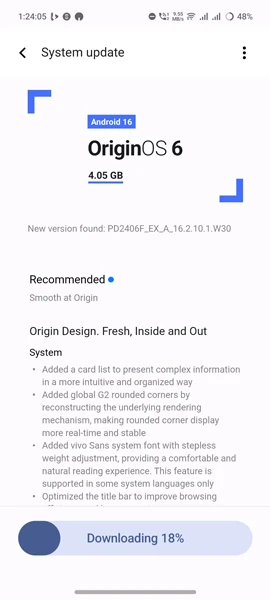
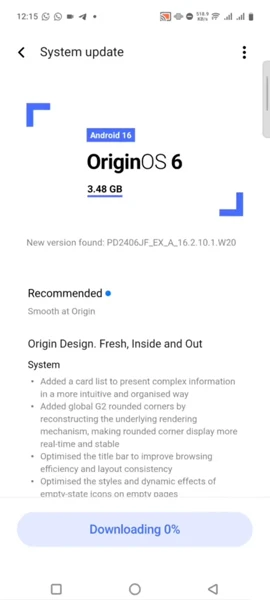
Vivo is gradually pushing the OriginOS 6 update to the final phase of eligible devices. The Vivo V40e and iQOO Z9s also belong to this phase and have now started receiving the Android 16-based major upgrade.

Those with the Vivo V40e are getting the latest update with the firmware version PD2406JF_EX_A_16.2.10.1.W20, while the iQOO Z9s are receiving the update tagged with version PD2406F_EX_A_16.2.10.1.W30, as spotted by Ytechb. While the firmware versions differ, the updates mainly introduce the same set of new features and upgrades on both smartphones. (We’ll talk more about it in a bit.)

Please Note: When you buy something using the links in our articles, we may earn a small commission at no cost to you.

As the rollout has just gone live, it’s currently limited to users who have participated in the trial program. To get the OriginOS 6 update without further wait, you must sign up for this program by navigating to Settings > About Phone > System updates > version Trial > Trial version > download and install.

Now, coming to the changes, there are plenty of visual changes and new features to be excited about, including a new Origin Island for real-time updates and improved multitasking. The improved Control Center now features an enhanced notification center, improved lighting effects, and new system fonts.

The lock screen has also removed numerous upgrades, including new clock styles, enhanced layout controls, and more widgets. The OriginOS 6 also includes improvements to security and privacy, battery efficiency, and multitasking capabilities. You can read the complete changelog on this page.

Please Note: When you buy something using the links in our articles, we may earn a small commission at no cost to you.

Be sure to regularly visit the Vivo section on Gizmochina to get the latest updates. Or, if you prefer your news instant and on-the-go, hop into our Telegram channel for rapid-fire software updates and all the biggest tech headlines.

Apple bends as Samsung and SK Hynix hike LPDDR prices by up to 100%

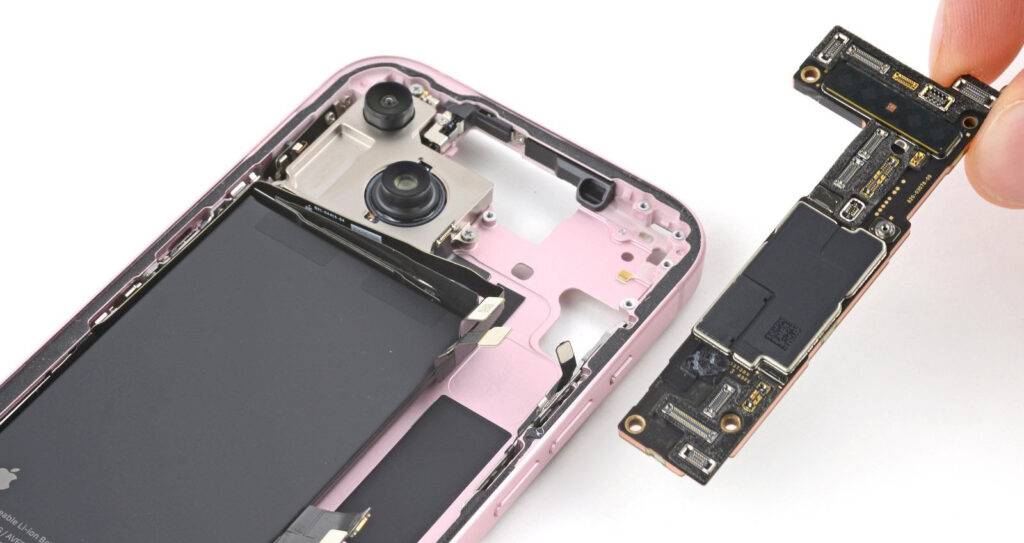
For years, Apple used its position as the memory industry’s biggest customer to secure lower prices on key parts like LPDDR. That balance has now shifted. In an unusual change, Samsung Electronics and SK hynix have successfully pushed through major price increases on low-power DRAM used in iPhones, forcing Apple to accept hikes of up to 100% for the first quarter of 2026.

iPhone RAM
Image Credit: iFixit

Supply crunch shifts leverage to memory makers

According to a report from ZDNet Korea, Samsung proposed an 80% price increase, while SK Hynix asked for nearly 100%. Apple reportedly agreed to both due to a tight supply situation caused by rising demand for memory used in AI applications. As suppliers move production toward more profitable HBM (high bandwidth memory) chips, supplies of standard LPDDR have dropped, putting pressure even on the industry’s largest buyer.

Apple usually signs long-term annual contracts for memory supply, but this year, agreements were reportedly finalized only for the first half. This leaves room for more price increases later, especially ahead of the iPhone 18 Pro series launch, which could further raise Apple’s memory costs in the second half of the year.

Despite these increases, sources say Apple is still paying less for LPDDR than most competitors. However, the price gap between Apple and other buyers has narrowed. Samsung and SK hynix are clearly gaining more control over pricing, and early market reaction suggests investors approve. SK Hynix shares jumped more than 8%, while Samsung’s stock rose nearly 4% after the news.

TrendForce expects DRAM prices to rise by as much as 60% this quarter, showing how quickly the market is changing. Even Apple is no longer fully protected. The long period where buyers held the upper hand may be coming to an end, as memory suppliers begin setting the terms.

For more daily updates, please visit our News Section.

Stay ahead in tech! Join our Telegram community and sign up for our daily newsletter of top stories! 💡

(Source)

Nothing Phone (4a) Pro battery and charging specs revealed in global certification

It looks like Nothing is gearing up to launch its next midrange smartphones soon. The Nothing Phone (4a) was certified by the UAE’s TDRA earlier this week, and now the Phone (4a) Pro has surfaced in the EU with key battery and charging details.

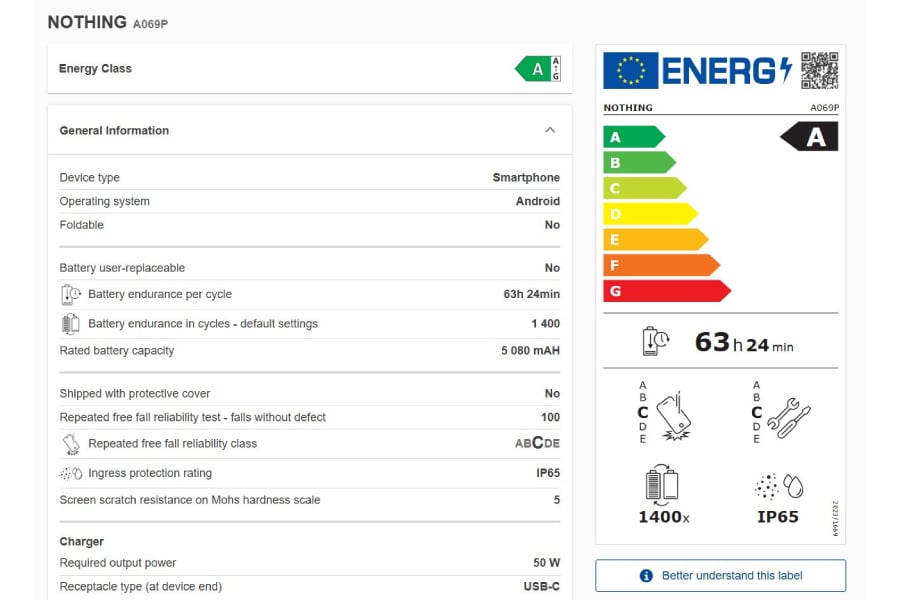
According to the EU’s EPREL database, the Phone (4a) Pro carries the model number A069P and packs a 5,080mAh battery with 50W fast charging. That’s not much of an upgrade, considering its predecessor offered the same battery and charging setup. Still, the phone earns an “A” energy efficiency rating from the EU.

Nothing Phone (4a) Pro EU EPREL certification

On paper, that translates to a battery endurance rating of 63 hours and 24 minutes per charge cycle. The listing also claims the battery can handle up to 1,400 charge cycles before dropping 80 percent of its original capacity. 

EPREL further confirms its IP65 rating, meaning the device should be resistant to dust and low-pressure water jets.

Beyond Europe, the Nothing Phone (4a) Pro has also appeared on India’s BIS certification database, once again under the same model number.

Nothing Phone (4a) Pro: expected specs

There’s still plenty we don’t know about the Phone (4a) Pro, but rumors suggest it will be powered by a Snapdragon 7-series chipset, paired with 12GB of RAM and 256GB of storage. Connectivity is expected to include eSIM support, which Nothing already offers on the current generation.

As for colors, the Phone (4a) Pro is rumored to launch in black, white, pink, and blue.

For now, that’s all the official information available, but with certifications stacking up, a full announcement may not be far off.

For more daily updates, please visit our News Section.

Tech enthusiast? Get the latest news first! Follow our Telegram channel and subscribe to our free newsletter for your daily tech fix! ⚡

Why Motorola Signature is the Flagship Killer to Beat in 2026

The flagship smartphone segment is as crowded as ever in 2026. Samsung, Apple, and others vie for top spot with cutting-edge hardware, premium designs, and extensive feature sets. Enter Motorola Signature, a device that aims to shift that balance by delivering flagship-level performance, standout cameras, a top-tier display, and long-term software support at a price that undercuts many traditional premium rivals. With specs and features that punch well above its asking price in markets like India, the Signatur might just be the flagship killer to beat.

1. Design That Doesn’t Compromise

motorola signature
Motorola Signature

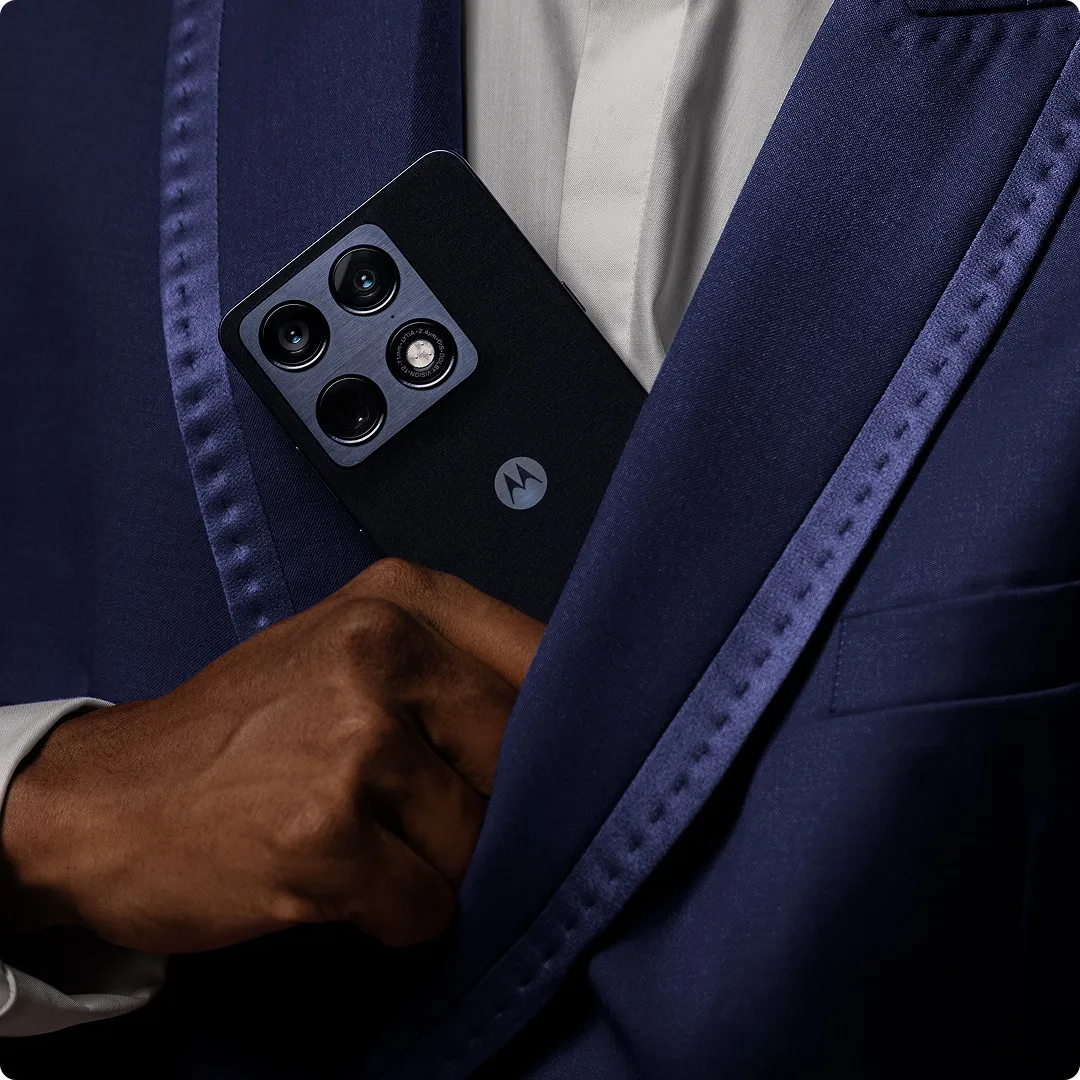
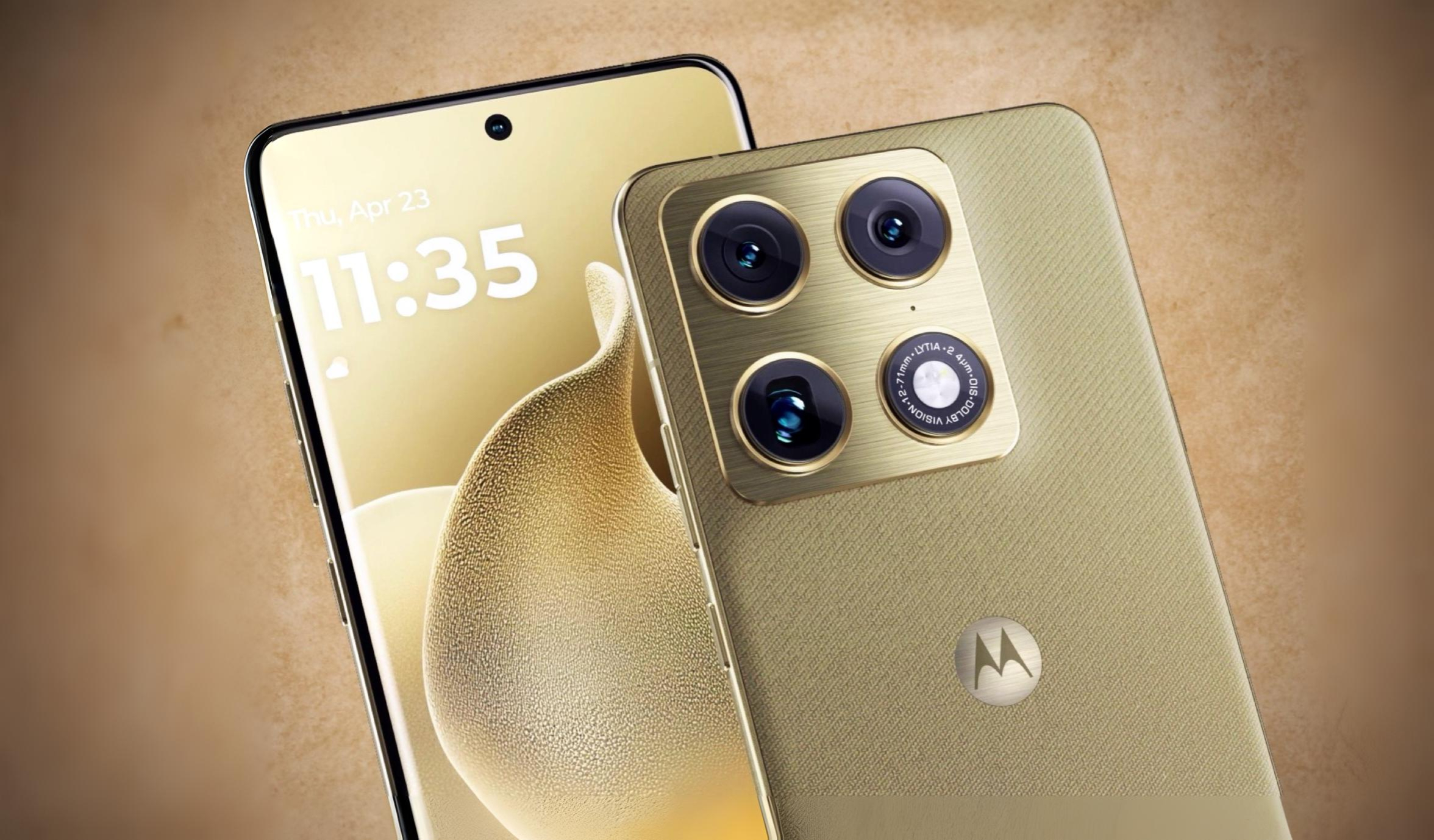
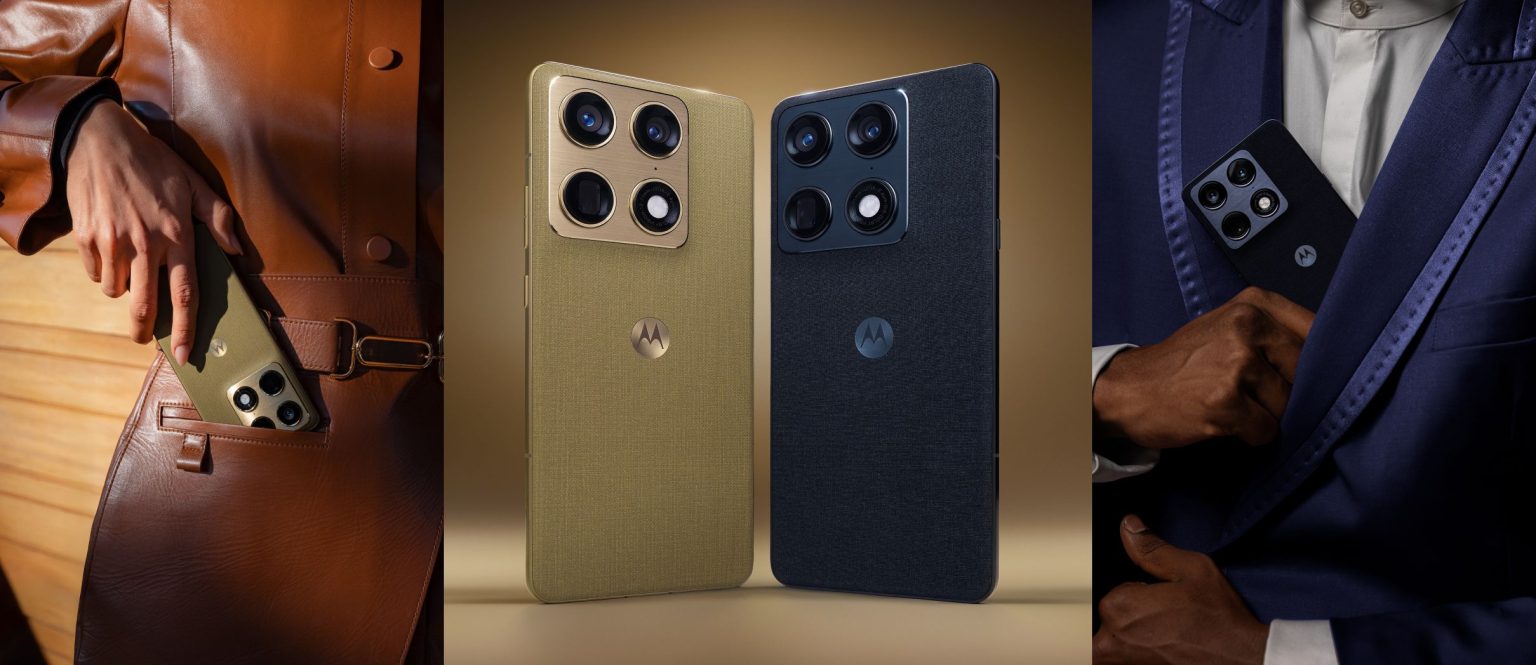
What hits you first about the Motorola Signature is its premium design language. Motorola didn’t just chase specs, it crafted a device that feels special in the hand. While most brands offer cutting edge hardware and advanced camera systems, the brand didn’t skip out on its design elements. With a sleek new body that measures just 6.99mm thick and weighs around 16 grams, the Signature is a perfect blend of premium thinness and power.

Most slim flagships cutdown on battery capacity or cameras, but Motorola’s latest flagship suffers from neither of these issues. You also have no worries with its durability as it arrives with a Gorilla Glass Victus 2 protection on the front, military-grade durability (MIL-STD 810H), and an IP68 + IP69 rating for water and dust resistance. The Martini Olive and Carbon also offer an elegant look with a twill and linen inspired finish, respectively.

2. Premium Hardware

motorola signature

Under the hood, the Motorola Signature is equipped with the Snapdragon 8 Gen 5 chipset, coupled with up to 16GB of LPDDR5X RAM and 1TB of UFS 4.1 storage. The high end hardware on offer handles gaming, multitasking, and demanding apps with ease, and Motorola pairs it with an efficient silicon-carbon 5,200mAh battery that supports both 90W wired fast charging and 50W wireless fast charging.

Premium Chinese devices have surpassed the 7,000mAh mark in 2026, but none of these models are as sleek as the Motorola Signature. Moving to the front, it sports a tall 6.8-inch LTPO AMOLED display with a 165Hz variable refresh rate, Dolby Vision, and a peak brightness of 6,200 nits.

3. Advanced Camera System with Quad 50MP Shooters

Despite its slim form factor, Motorola packs four 50MP cameras on the Signature. The primary shooter is a Sony LYT828, which is the same large 1/1.28-inch sensor that is found on more expensive models like the Oppo Find X9 Pro and Vivo X300 Pro. A recent camera comparison against the Vivo X300 Pro and iPhone 17 Pro also revealed surprisingly competent photography performance. DxOMark has even ranked it amongst the top 10 camera smartphones.

Alongside this powerful main camera, you get a Sony LYT600 (1/1.95-inch) periscope telephoto shooter with 3x optical zoom and an ultra wide angle lens with a 122° field of view that supports macro shooting and auto focus. For selfies and video calls, the device features a 50MP Sony LYT500 camera with autofocus support. Pantone tuning on these cameras also promise accurant skin tones on this model.

4. Extended Software Support

Motorola Signature
Motorola Signature

One of the most compelling non-hardware advantages of the Motorola Signature is its software commitment. Motorola promises up to seven years of OS and security updates, matching the update policies from rivals like Samsung, Apple, and Google. This long-term support boosts the phone’s value proposition. Out of the box, this model runs on the Android 16 OS based Hello UI custom skin, which brings a bunch of useful AI tools AI Notification Summaries. Motorola is also offering the Moto Elite Care and the Signature Club that offers various useful benefits.

5. No Ultra Premium Price

In markets like India, the Signature starts at around Rs 59,999 for the base 12GB + 256GB variant, with higher configurations costing Rs 69,999. Additional bank discounts and the aggressive price tag for a device with top tier specs make the deal even sweeter. The Motorola Signature isn’t percent, its battery capacity is respectable but not class-leading, and some competitors may still edge it slightly in raw performance or ecosystem polish. However, the Signature combines flagship grade hardware and standout camera systems in a premium design with great software longevity. This makes it a powerful case as one of 2026’s most compelling flagship killers.

For more daily updates, please visit our News Section.

Don’t miss a thing! Join our Telegram community for instant updates and grab our free daily newsletter for the best tech stories!

Casio’s G-Shock GA-2100 series gets a military makeover in latest leak

A fresh leak has revealed that two Casio G-Shock watches are getting a new military-inspired look. The new models are a part of the brand’s popular GA-2100 series, bringing a tactical design to the rugged watches. So let’s check it out.

Casio’s G-Shock With New Military Camouflage Look

The leak arrives from Casioblog, which revealed two new G-Shock GA-2100 models, namely GA-2100CM-8A and GA-2100CM-5A. This report also shared images of the two G-Shocks that are draped in utilitarian camouflage patterns that feel right at home in rugged outdoor settings or tactical gear. These render teasers show watches with inverted (negative) displays paired with earthy, muted camo schemes.

Casio G-Shock GA-2100 Military Watches
Casio G-Shock GA-2100 Series Military Watches

The GA-2100CM-8A appears in a gray-heavy, taupe-leaning pattern, while the GA-2100CM-5A opts for a more desert-sand hue. Both models are clearly designed to blend into the natural surroundings rather than stand out. Although Casio hasn’t officially confirmed specs yet, the leaked models are expected to carry forward the core strengths of the existing GA-2100 series. So we can expect the Carbon Core Guard structure, which uses a touch carbon reinforced case for improved drop and shock resistance, along with 200 meters of water resistance as well.

You’ll likely still find other essential functions like world time spanning multiple time zones, multiple daily alarms, a countdown timer, an LED backlight for low-light legibility, and the trademark G-Shock durability that made the GA-2100 lineup one of Casio’s most popular in recent years. In related news, the company recently announced a new nightclub themed collection from the GA-2100K lineup and collaborated with beautiful people for a new premium G-Shock with a leather-like finish.

Please Note: When you buy something using the links in our articles, we may earn a small commission at no cost to you.

Please Note: When you buy something using the links in our articles, we may earn a small commission at no cost to you.

For more daily updates, please visit our News Section.

Tech enthusiast? Get the latest news first! Follow our Telegram channel and subscribe to our free newsletter for your daily tech fix! ⚡

iQOO 15R set to launch in India on February 24 with Snapdragon 8 Gen 5

iQOO has confirmed that the iQOO 15R will launch in India on February 24, 2026. The company calls it a “power flagship in the perfect fit,” hinting at a compact yet high-performance device designed for daily usability without compromising on raw specs.

iQOO 15R

Ahead of the official unveiling, several key details have already surfaced through teasers, benchmarks, and leaks. The iQOO 15R is powered by Qualcomm’s Snapdragon 8 Gen 5 processor, a 3nm flagship chip that powers many premium Android smartphones in 2026.

According to iQOO’s Amazon listing, the device has achieved an AnTuTu score of over 3.5 million, outperforming most Snapdragon 8 Gen 5 phones, which average around 3.3 million. The company claims a 36% improvement in CPU performance and a 46% boost in NPU performance over the previous generation.

And as per a recent Geekbench listing, the device has appeared under the model number Vivo I2508, revealing additional performance details. The iQOO 15R scored 2,590 in single-core and 8,423 in multi-core tests. The listing also confirms Android 16 out of the box and 8GB of RAM, with higher RAM and storage variants expected.

The phone is rumored to be a rebranded version of the iQOO Z11 Turbo. If the reports are accurate, the iQOO 15R will feature a 6.59-inch AMOLED display with a 1.5K resolution and a 144Hz refresh rate. The phone may also support IP68 and IP69 ratings for water and dust resistance.

Leaked specifications suggest up to 16GB of LPDDR5X RAM, up to 1TB of UFS 4.1 storage, and a triple camera setup. The primary rear sensor could be a 200-megapixel camera, accompanied by an 8-megapixel ultrawide. On the front, the phone may use a 32-megapixel camera for selfies and video calls.

The company has not yet confirmed pricing, but it is expected to launch under Rs. 55,000 ($600). If accurate, the device may challenge other budget flagships like the Motorola Signature and Vivo X200T by offering stronger performance at a more aggressive price point.

For more daily updates, please visit our News Section.

Stay ahead in tech! Join our Telegram community and sign up for our daily newsletter of top stories! 💡

Xiaomi 17 Max camera setup revealed, pairs a 200MP sensor with a periscope telephoto unit

Xiaomi 17 Max is the upcoming member of the company’s current flagship lineup. It is expected to feature an 8,000mAh battery and a camera setup similar to that of the Xiaomi 17. However, a new leak out of China now suggests that the Xiaomi 17 Max will have an even more capable camera system.

Xiaomi 17 Max camera setup

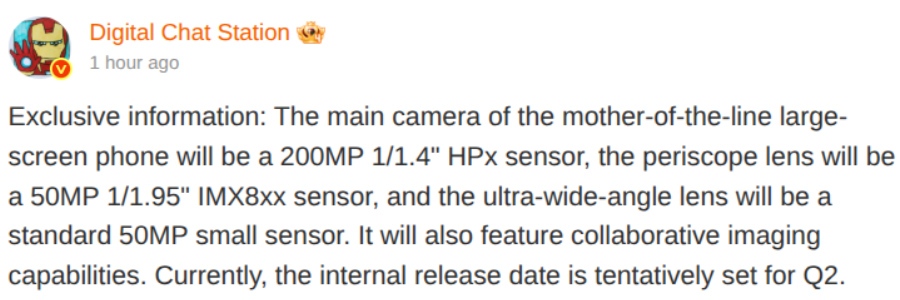
According to Digital Chat Station on Weibo, the Xiaomi 17 Max will feature a 200MP Samsung ISOCELL HPE main sensor measuring 1/1.4 inches, paired with a 50MP Sony IMX8-series periscope telephoto sensor of 1/1.953 inches. It will also include a 50MP ultrawide lens.

In comparison, the vanilla Xiaomi 17 features a trio of 50MP sensors for main, telephoto, and ultrawide shots. The leak adds that the phone will continue Xiaomi’s partnership with Leica for imaging.

Aside from this, the tipster did not share details about other hardware specifications. However, a previous report claims the 17 Max will feature a roughly 6.8-inch display and a Snapdragon 8 Elite Gen 5 chip under the hood. The 8,000mAh battery is also expected to support 100W wired and 50W wireless charging.

Xiaomi 17 color options
Xiaomi 17

Since it is a non-Pro model, the Xiaomi 17 Max is not expected to feature a secondary rear display, which is currently available on the Xiaomi 17 Pro and 17 Pro Max. Instead, its rear design is said to be similar to that of the standard Xiaomi 17.

Finally, Digital Chat Station claims the phone will launch in China in Q2 2026. Unfortunately, there are slim chances of it making its way to the global market, as Xiaomi is likely to only launch the Xiaomi 17 and Xiaomi 17 Ultra internationally.

For more daily updates, please visit our News Section.

Stay ahead in tech! Join our Telegram community and sign up for our daily newsletter of top stories.

(Source)

Baseus launches 245W Nomos NH21 6-in-1 GaN charging station with retractable cables & Qi2 support

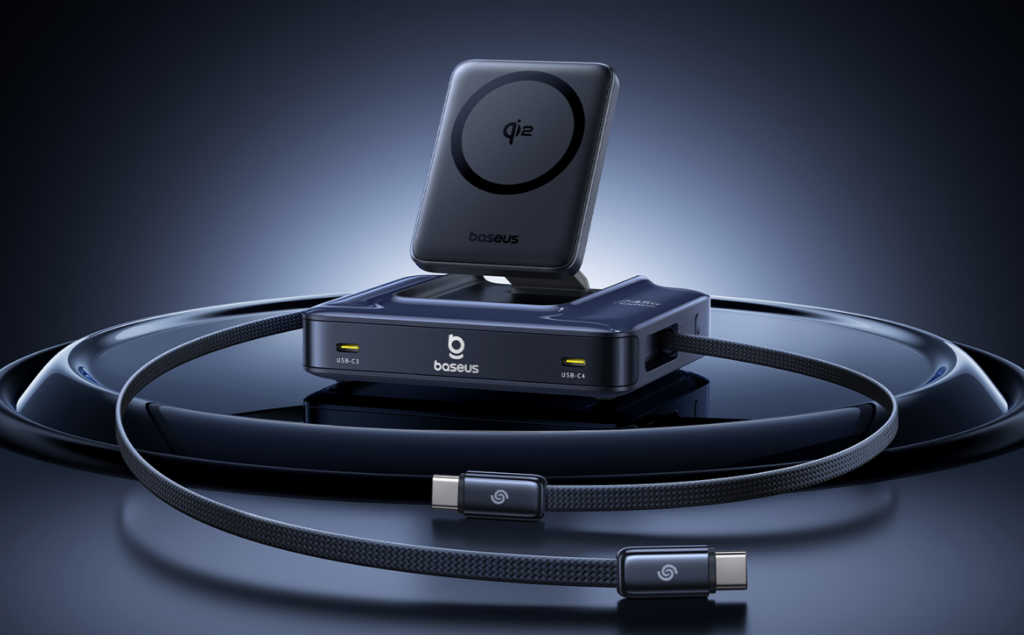
After the initial announcement earlier this year, Baseus has finally launched the Nomos NH21, a 6-in-1 desktop charging station designed for users managing multiple devices on a single workspace. The charging station features two built-in retractable USB-C cables, a total power output of 245W, and support for Qi2 magnetic wireless charging.

Baseus Nomos NH21

Baseus Nomos NH21 Specifications

We already have the review unit, and testing is currently underway, with the full review coming soon. The standout feature is the dual retractable cable system. Each cable extends up to 0.8 meters and uses braided fabric for added durability. The cables lock securely during use and retract automatically when unplugged. Baseus claims the mechanism is rated for more than 35,000 pulls. This design is intended to reduce desk clutter caused by traditional loose charging cables.

Baseus Nomos NH21

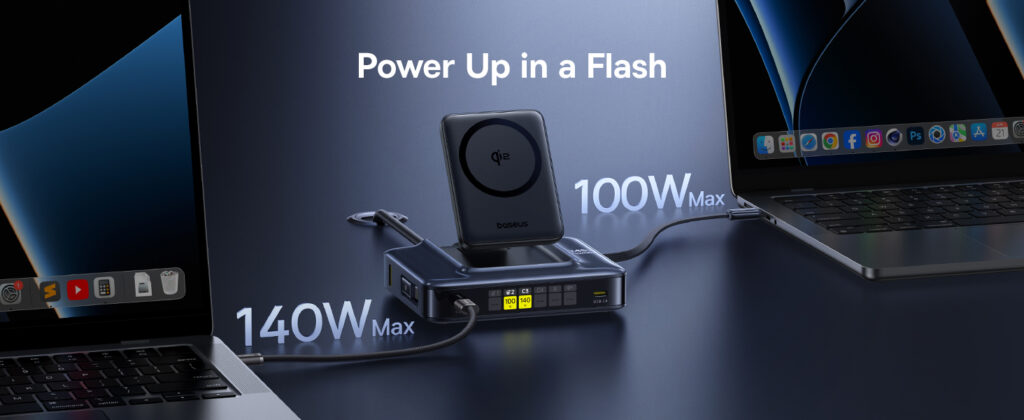
The Nomos NH21 supports simultaneous charging of up to six devices. It includes two USB-C ports capable of 140W each, two retractable USB-C cables, one USB-A port, and a Qi2 wireless charging pad rated at 15W. The total output across all ports reaches 245W. The station supports major charging protocols such as PD 3.1, PPS, QC, SCP, FCP, and AFC.

Baseus Nomos NH21

The NH21 charger uses GaN gallium nitride technology to keep it compact and efficient, while a split structure shifts heat to the external power adapter to maintain lower internal temperatures and stable high power charging over time.

It includes a digital display that shows real-time power and current status. The display provides users with live feedback on charging activity and helps monitor energy usage.

Baseus Nomos NH21

The Nomos NH21 works with a wide range of devices. It supports iPhone 12 to 17, MacBook Pro, Galaxy phones, iPads, Switch, DJI drones, GoPro cameras, and other USB-C or Qi2-compatible electronics.

Pricing and Availability

Baseus has priced the Nomos NH21 at $179.99 in the United States and €129.99 in Europe. It is available now on Amazon in both markets.

In related news, Baseus has recently announced the Spacemate RD1 Pro docking station with support for up to 4K at 120Hz and 100W power delivery, and also introduced an AirPods sized power bank featuring a 10,000mAh battery and 45W fast charging.

Please Note: When you buy something using the links in our articles, we may earn a small commission at no cost to you.

For more daily updates, please visit our News Section.

Stay ahead in tech! Join our Telegram community and sign up for our daily newsletter of top stories! 💡

Red Magic 11 Air vs iQOO 13: Same Snapdragon 8 Elite Chip, But Totally Different Phones

Red Magic 11 Air isn’t just competing with new phones, it’s challenging a proven flagship from last year. Launched in 2024, the iQOO 13 has already established itself as a well-rounded performance phone, while the Red Magic 11 Air arrives with a far more aggressive goal: to dominate gaming and sustained power. Both share the same elite chipset, yet their priorities couldn’t be more different. This comparison explores whether a newer, gaming-first challenger can outshine a refined flagship that’s had time to prove its strengths.

1. Design and Display 

Build and Feel

Red Magic 11 Air leans heavily into its gaming identity with visible RGB lighting, a built-in cooling fan, pressure-sensitive zones, and an industrial aesthetic that feels purpose-built rather than decorative. Its aviation-grade aluminum frame and gamer-centric accents make it feel like a performance machine first and a lifestyle phone second. The iQOO 13 takes the opposite route, opting for a cleaner, more premium look with subtle RGB lighting and significantly stronger water and dust resistance. It feels more refined and versatile, fitting just as naturally into a work environment as it does in casual use.

Display Quality

Both phones offer fast 144Hz AMOLED panels with excellent brightness, but the iQOO 13’s LTPO AMOLED display stands out with a sharper QHD+ resolution and superior peak brightness. HDR content looks more detailed and cinematic on the iQOO, while the Red Magic prioritizes smoothness and touch responsiveness, which gamers will instantly appreciate.

Verdict

Red Magic 11 Air feels more exciting and purpose-driven, while the iQOO 13 feels more polished and universally appealing.

2. Specifications

Performance

Both devices are powered by the Snapdragon 8 Elite chipset with the same CPU and GPU configuration, delivering top-tier performance across gaming, multitasking, and sustained workloads. The Red Magic 11 Air gains an edge in extended gaming sessions thanks to its active cooling fan and gaming-focused software optimizations, allowing it to maintain higher performance for longer. The iQOO 13 is no slouch, but it prioritizes balance and efficiency over aggressive thermal management.

Battery and Charging

Battery strategy is where the phones clearly diverge. The Red Magic 11 Air packs a larger battery and supports bypass charging, making it ideal for long gaming sessions without stressing the battery. The iQOO 13 counters with ultra-fast 120W charging, reaching a full charge in around 30 minutes, which feels liberating for daily use and travel.

Verdict

Red Magic 11 Air is built for endurance under load, while the iQOO 13 is designed for speed and convenience in everyday life.

3. Camera 

Main and Secondary Lenses

iQOO 13 clearly dominates on the camera front with a versatile triple-camera system, including a dedicated telephoto lens and a high-quality ultrawide sensor. Photos are more flexible, sharper across focal lengths, and better suited for portraits and zoom shots. The Red Magic 11 Air keeps things simpler with a dual-camera setup that performs well in good lighting but lacks the creative flexibility offered by a telephoto lens.

Selfie Camera

Selfie performance also favors the iQOO 13, thanks to its higher-resolution front camera with 4K video support. The Red Magic 11 Air’s under-display camera prioritizes an uninterrupted screen experience, but image quality takes a noticeable hit compared to conventional punch-hole designs.

Verdict

iQOO 13 feels like a proper all-round camera phone, while the Red Magic 11 Air treats cameras as secondary to performance and immersion.

4. Pricing 

Price plays a major role in defining the appeal of these two phones. The Red Magic 11 Air is priced at approximately $500, positioning it as one of the most affordable Snapdragon 8 Elite devices on the market. For that price, it delivers exceptional gaming hardware, advanced cooling, and a massive battery, making it feel like a performance bargain. The compromises in camera versatility and durability feel intentional rather than cost-cutting.

iQOO 13, priced at around $600, justifies its premium with a sharper display, superior cameras, faster charging, stronger water resistance, and a more refined software experience. It feels like a phone designed to excel across every category rather than dominate a single one.

For budget-conscious power users, the Red Magic 11 Air offers outstanding value. For buyers seeking balance and polish, the iQOO 13 earns its higher price.

5. Conclusion

Red Magic 11 Air stands out with features rarely seen in mainstream smartphones, such as a built-in cooling fan, pressure-sensitive gaming zones, bypass charging, and aggressive thermal control. These elements make it feel tailored for gamers who demand consistent performance and immersion. The iQOO 13 counters with a stronger focus on refinement, offering a brighter LTPO display, better camera versatility, faster wired charging, ultrasonic fingerprint security, and flagship-grade water resistance.

Verdict

Red Magic 11 Air is the obvious pick for hardcore gamers, offering superior sustained performance, active cooling, and features that feel purpose-built for long gaming sessions. The iQOO 13 takes the lead as a more balanced flagship, with a sharper display, noticeably better cameras, faster charging, and stronger durability that make it easier to rely on every day. In short, the iQOO 13 is the smarter all-round choice, while the Red Magic 11 Air remains the more thrilling option for performance-first users.

Read More:

iQOO 15R teased with Snapdragon 8 Gen 5, Scores 3.5 million+ in AnTuTu

iQOO is gearing up to launch a powerful new budget flagship soon. But ahead of its Indian release, its Amazon microsite has confirmed some performance details of the iQOO 15R, with a high end chipset that manages to get an impressive score on AnTuTu as well. So let’s check it out.

iQOO 15R Specifications

At the heart of the iQOO 15R is Qualcomm’s Snapdragon 8 Gen 5 chipset, a flagship-level processor built on an advanced 3nm process. Snapdragon’s latest silicon also powers some of the most powerful Android phones this year, and other similar value flagships like the Motorola Signature. One of the biggest highlights from the teaser is the 3.5 million+ score on AnTuTu, showcasing the flagship level power under the hood.

iQOO 15R teaser
iQOO 15R

To put that in context, the teaser also compares it to other Snapdragon 8 Gen 5-powered phones, which score around 3.3 million on AnTuTu, while devices with chips like the Dimensity 9400+ hover nearer to 2.9 million. This performance jump suggests a notable boost, especially in raw throughput and responsiveness. iQOO also claims that this chip offers a 36 percent upgrade in CPU performance and a 46 percent improvement in NPU performance.

Furthermore, the teaser from the Chinese brands hints at its price range as well. The iQOO 15R could be priced under Rs 55,000. So it could shake up the performance segment. Competing models with flagship silicon, high-refresh displays, and robust cooling often cost well above this tier, meaning the 15R could offer rare value for power users and gamers alike. But there are some new rivals in this range, namely the Motorola Signature and Vivo X200T.

For more daily updates, please visit our News Section.

Don’t miss a thing! Join our Telegram community for instant updates and grab our free daily newsletter for the best tech stories!

Honor Magic V6 leaked launch timeline reveals its not far off

Honor recently wrapped up the launch of the Honor Magic 8 RSR and Magic 8 Air in China. The next flagship phone from the brand will be the Honor Magic V6 foldable, which will go up against the likes of the Samsung Galaxy Z Fold 8 and Oppo Find N6.

Honor-Magic-V5

According to a new report, the Magic V6 is already ready for launch. Tipster Digital Chat Station claims the device is internally codenamed Phenom and is tentatively scheduled to debut around March. It’s said to arrive in several color options, including Snow White, Velvet Black, Sunrise Gold, and Red Rabbit.


Honor Magic V6 Specifications

On the hardware side, Honor has reportedly managed to fit a 7,000mAh battery into the Magic V6’s ultra-thin fiberglass body. This has also been confirmed via a recent 3C certification in China.

Powering the foldable will be the latest Snapdragon 8 Elite Gen 5 chipset. Not surprisingly, Honor’s foldables typically use the latest Qualcomm silicon. As for the cameras, the device is tipped to feature a 200MP rear camera setup paired with a periscope telephoto lens.

Other flagship features reportedly include wireless charging, full-level water resistance, and BeiDou satellite communication.

Honor launched the Magic V5 in July last year with a starting price of 8,999 yuan. That device features a Snapdragon 8 Elite chipset, a slim 8.8mm body, a weight of 219 grams, and a 6,100mAh Qinghai Lake blade battery. 

It also supports 50W wireless charging, a periscope telephoto camera, and BeiDou satellite communication across all variants.

If Honor decides to launch Magic V6 in March, we can expect the official teasers to go live by mid to late February. We will keep you posted on any new updates.

For more daily updates, please visit our News Section.

Stay ahead in tech! Join our Telegram community and sign up for our daily newsletter of top stories.

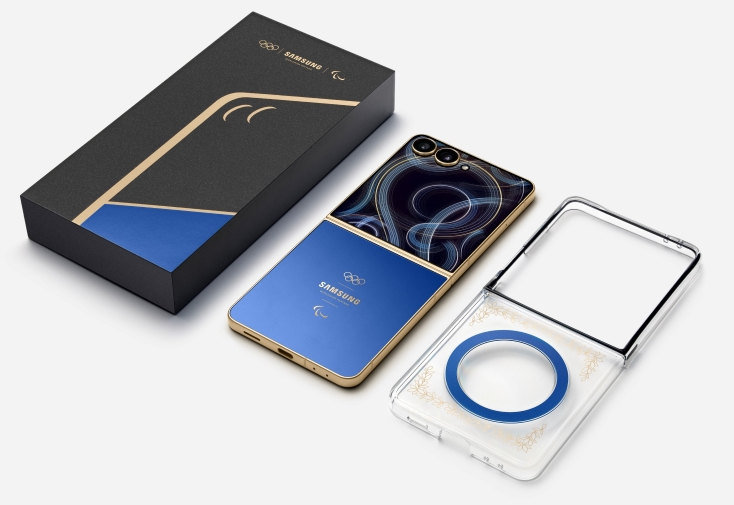
Samsung launches Galaxy Z Flip 7 2026 Olympic Edition

Samsung has introduced a special Galaxy Z Flip 7 Olympic Edition ahead of the Milano Cortina 2026 Winter Games, designed specifically for the athletes competing at the event. The brand has been a long time worldwide partner of the Olympics, and is gifting the device to thousands of Olympiansand Paralympians. So here’s everything you need to know.

Samsung Galaxy Z Flip 7 2026 Olympic Special Edition: What’s New?

While the core hardware mirrors the regular Galaxy Z Flip 7, this edition stands out with a bold new look and athlete-centric additions. Expect a signature blue back glass that matches the host nation’s aesthetic, a gold frame symbolizing excellence, and special Olympic wallpapers that bring the spirit of the Games to life. On the hardware side, the Olympic Edition shares the same foldable design as its standard counterpart, featuring a flexible display and a dual-camera setup with a 50MP main camera and a 12MP ultra wide angle lens. Athletes will also find a custom clear case with magnetic accents and laurel motifs

Samsung Galaxy Z Flip 7 2026 Olympic Edition Launch
Samsung Galaxy Z Flip 7 2026 Olympic Edition

This edition isn’t just about looks. Samsung has packed it with tailored software features powered by Galaxy AI, aimed at making athletes’ lives easier during competition. This includes features like:

  • Interpreter: Real-time on-device translation without internet.
  • Now Brief: Daily summary of schedules, reminders and fitness stats.
  • Photo Assist: AI-enhanced image editing.
  • Dual Recording: Capture both surroundings and athlete reactions at once.

Additionally, the phone plays a key role in the new “Victory Selfie” initiative, allowing medalists to take celebratory podium photos, a feature debuting at the Winter Games. To keep athletes connected, Samsung is including 100GB 5G eSIM data and useful pre-loaded services like the official Olympic Games app, Athlete365, and digital passes via Samsung Wallet.

For more daily updates, please visit our News Section.

Tech enthusiast? Get the latest news first! Follow our Telegram channel and subscribe to our free newsletter for your daily tech fix! ⚡

Screen Addiction Is Hurting Your Eyes ?: AI-Powered Vision Training Glasses Can Help You

Smartphone use now exceeds three hours a day on average, while total daily screen time for many adults crosses six hours. This constant close-up focus has made eye fatigue, dryness, blurred vision, and headaches a common part of modern life. As screens become unavoidable, interest is growing in technologies that don’t just relieve symptoms but train the eyes to cope better with digital habits.

AI Generated image for representation only

Eyeary and the Technology Behind It

South Korea–based Edenlux is preparing to launch Eyeary, a lightweight, glasses-style vision training device, in the U.S. later this year. Unlike software-only eye exercises or blue-light filters, Eyeary works directly on the ciliary muscle, which controls how the eye focuses. Heavy screen use keeps this muscle locked in a contracted state. Eyeary repeatedly guides the eyes through controlled focus changes using 144 focal points, training the muscle to relax and contract more naturally.

Is This Technology Truly New?

Eye training tools are not new, but most existing solutions are either clinical devices, simple exercise apps, or bulky headsets. Eyeary stands out by combining hardware-based visual training, AI-driven personalization, and everyday wearability. Few consumer devices currently offer this level of precision in focus training outside clinical environments.

Current Technology:

Blue-Light and Anti-Glare Glasses

Most products on the market today are blue-light filtering or anti-glare glasses. These are designed to reduce screen glare and improve viewing comfort during long hours of phone or computer use. While they are widely adopted, scientific evidence on their ability to reduce digital eye strain remains mixed.

Basic Eye Exercise Tools

Some products focus on simple eye exercises, including pinhole glasses and manual vision training tools. These aim to encourage eye movement and focus changes but lack precision. They do not use sensors, software, or personalization, and results often depend heavily on user consistency.

Clinical and Experimental Solutions

More advanced vision training exists mainly in clinical or research environments. These include VR-based vision therapy systems and adjustable-focus lenses. However, such solutions are usually bulky, expensive, or designed for supervised use rather than everyday consumers.

Market Gap in Active Vision Training

Overall, most current solutions are passive and symptom-focused. Consumer-ready, wearable devices that actively train eye-focusing muscles using data and AI are still rare, leaving this segment largely unexplored in the mainstream market.

Potential Impact on Eye Health

If effective at scale, Eyeary could shift eye care from treatment to daily prevention and recovery, especially for heavy screen users. It signals a future where vision health becomes part of consumer technology, much like fitness tracking, potentially influencing how smartphones, wearables, and displays are designed to protect long-term eye function.

Please Note: When you buy something using the links in our articles, we may earn a small commission at no cost to you.

Read More:

(via)

Redmi Turbo 5 Max display and key specs officially confirmed

Redmi has already confirmed that the Redmi Turbo 5 series will be officially announced on January 29 in China. Ahead of the launch, the company has now released fresh teasers that shed more light on the Turbo 5 Max variant. While the brand is still holding back on a full reveal, these new details help paint a clearer picture of what the Max model is shaping up to offer.

Redmi Turbo 5 Max’s new teasers released

The latest teasers confirm that the Redmi Turbo 5 Max will feature a large 6.83-inch LTPS OLED display with 1.5K resolution. The panel is said to deliver a peak brightness of up to 3,500 nits, making it suitable for outdoor use, and it supports 3,840Hz PWM dimming for improved eye comfort during low-light viewing. Redmi has also confirmed that the phone will include an ultrasonic in-display fingerprint sensor.

When it comes to durability, the Turbo 5 Max will feature a metal middle frame along with IP68 and IP69 rating, offering protection against dust and high-pressure water exposure. Audio duties will be handled by dual 1115F symmetric stereo speakers, while connectivity enhancements include Redmi’s T1S signal enhancement chip and support for kilometre-level network-free communication, allowing long-range off-grid communication.

On the imaging front, the phone will rely on an OmniVision Light Fusion 600 primary camera with high dynamic range. The brand has also confirmed blue, white, and orange color options for the Max variant.

Redmi had previously confirmed that the Turbo 5 Max will be powered by the Dimensity 9500s chipset. The device is also set to pack a massive 9,000mAh battery, paired with 100W fast charging and 27W reverse charging support.

The lineup will also include the standard Redmi Turbo 5, which sits slightly lower in the range. This model is confirmed to feature a smaller 6.59-inch display and will be powered by the Dimensity 8500 chipset. Its battery capacity is expected to be around 8,000mAh with 100W charging. Redmi has officially confirmed the white colour option for the standard Turbo 5, while details about other colour variants remain unclear. The Max variant is expected to be priced at around ~$360 in China, which suggests that the standard model may cost around ~$300.

For more daily updates, please visit our News Section.

Stay ahead in tech! Join our Telegram community and sign up for our daily newsletter of top stories.

Bill Gates Backed Startup Creates Light-Powered AI Chip That Can Beat Nvidia

A US startup called Neurophos has announced a new kind of AI chip that uses light instead of electricity to process data. Backed by Bill Gates’ Gates Frontier Fund, the company says its optical processor could deliver dramatically higher AI performance while avoiding the power and scaling limits faced by today’s silicon chips.

The announcement, reported by Tom’s Hardware, has drawn attention across the semiconductor industry, which is increasingly searching for alternatives to traditional computing.

nvidia blackwell architecture

How Optical Computing Changes the Equation

Unlike conventional GPUs that move electrons through silicon, Neurophos uses photons to perform calculations. Light can switch much faster and generate less heat, allowing more work to be done in the same amount of time. Neurophos says it has overcome a long-standing barrier in optical computing by shrinking optical components enough to fit densely on a chip made with existing manufacturing technology.

This allows the company to rely on a single, very large optical compute matrix running at extremely high speeds, rather than hundreds of smaller compute cores.

How This Compares With Nvidia’s Approach

Nvidia remains the dominant force in AI hardware, and its latest platforms still rely on traditional silicon GPUs. While Nvidia is adopting photonics for faster data transfer between chips, the actual AI computation remains electronic. Neurophos, by contrast, is attempting true optical computation, representing a more radical shift in chip design.

Is Nvidia’s Dominance at Risk?

For now, Nvidia is safe. Neurophos is still years away from mass production and faces major engineering and software challenges. However, the project signals a possible future where optical computing complements or even replaces parts of today’s AI hardware, potentially reshaping the tech and AI industries over the next decade.

Read More:

(via)

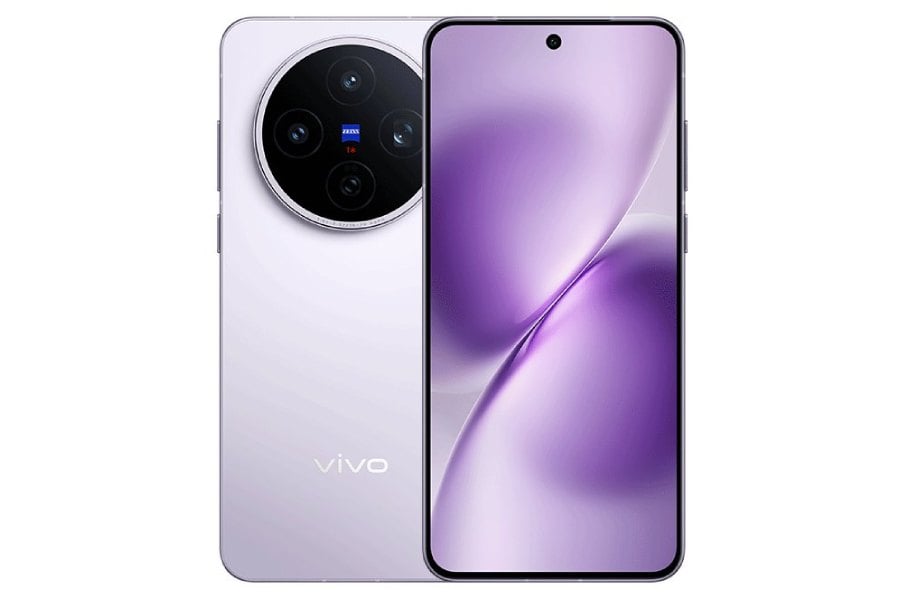
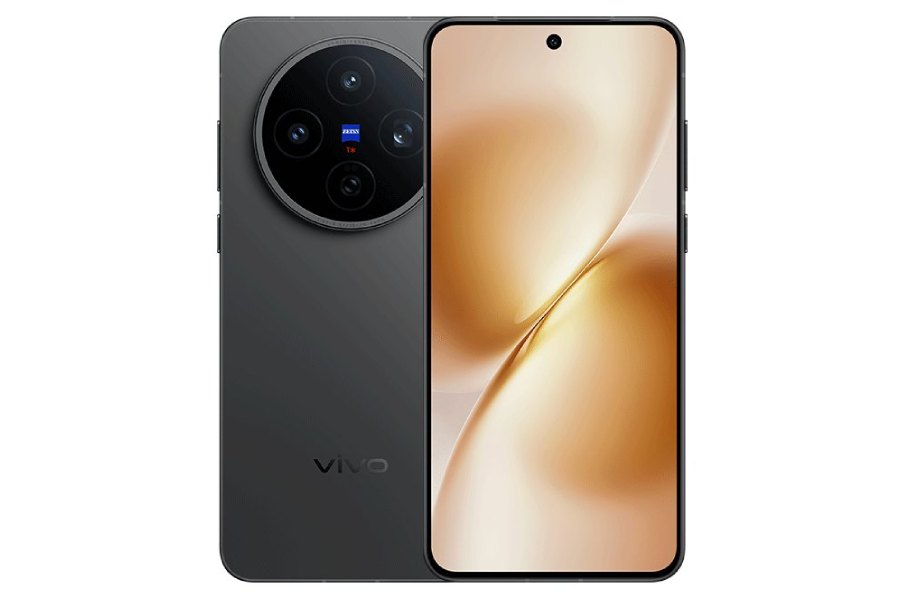
Vivo X200T launches in India: Here’s how it’s different from X200 FE

As scheduled, Vivo has officially launched the Vivo X200T in India today. The phone is built with a flagship Dimensity 9400+ chip, Zeiss camera, and is promised to receive a long term software support. 

On the front, the Vivo X200T features a 6.67-inch flat AMOLED display with a 1.5K resolution (2800 × 1260). The panel uses BOE’s Q10 AMOLED tech and reaches up to 1600 nits in high brightness mode. Vivo has also opted for SCHOTT Xensation Core protection. 

At 7.9mm thick and weighing just over 200 grams, it’s not a small phone, but it stays within typical flagship territory.

Vivo X200T Purple
Vivo X200T in Purple

Powering the device is MediaTek’s Dimensity 9400+ chipset, paired with LPDDR5X Ultra RAM and UFS 4.1 storage. It boots on Android 16-based Origin OS 6 and is promised five Android OS updates and seven years of security patches. 

The X200T comes with a triple rear camera setup, all tuned with Zeiss optics. The main camera uses a 50MP Sony IMX921 sensor with optical image stabilization. It’s joined by a 50MP Samsung JN1 ultra-wide camera and a 50MP Sony IMX882 periscope lens for longer zoom shots. On the front, there’s a 32MP selfie camera.

Vivo is using a 6,200mAh battery to keep the lights on, and it supports both 90W wired and 40W wireless charging. Connectivity features include Wi-Fi 7, Bluetooth 5.4, NFC, eSIM support, and an IR blaster. There’s also a 3D ultrasonic in-display fingerprint scanner, stereo speakers, and an X-axis linear motor for haptics.

Vivo X200T in Black
Vivo X200T in Black

The phone is rated IP68 and IP69 for water and dust resistance and uses a 4.5K nanofluid vapor chamber system to manage heat during sustained performance.

In India, the Vivo X200T is priced at Rs 59,999 for the 12GB RAM and 256GB storage variant, while the 12GB + 512GB model costs Rs 69,999.

Vivo X200T vs Vivo X200 FE: what’s different 

Now that the X200T is official, let’s also compare it with the X200 FE, as it might be a little confusing as to how the phones differ.

The Vivo X200T is noticeably larger and heavier than the Vivo X200 FE. It features a 6.67-inch display compared to the FE’s more compact 6.31-inch LTPO AMOLED panel.

Vivo X200 FE
Vivo X200 FE

Performance-wise, the X200T uses the newer Dimensity 9400+ chip, while the X200 FE runs on the Dimensity 9300+. Storage is also faster on the X200T thanks to UFS 4.1, compared to UFS 3.1 on the FE.

There’s also a notable difference in camera setup. The X200T offers three 50MP sensors, including a periscope camera. Meanwhile, the X200 FE mixes a 50MP main and telephoto camera with a smaller 8MP ultra-wide lens. The FE, however, has a higher-resolution 50MP selfie camera.

In short, the X200T is a more specs and price-heavy model than the X200 FE in many ways.

For more daily updates, please visit our News Section.

Don’t miss a thing! Join our Telegram community for instant updates and grab our free daily newsletter for the best tech stories!

Oppo Find X9s images emerge to reveal first look at the rear design

A new set of leaked images has brought the Oppo Find X9s back into focus ahead of its expected debut in China. While Oppo has not officially confirmed the device yet, the visuals give an early glimpse of what appears to be its overall design direction, especially around the rear camera area. These leaks add to the growing list of details already circulating about the Find X9s.

Oppo Find X9s images appear

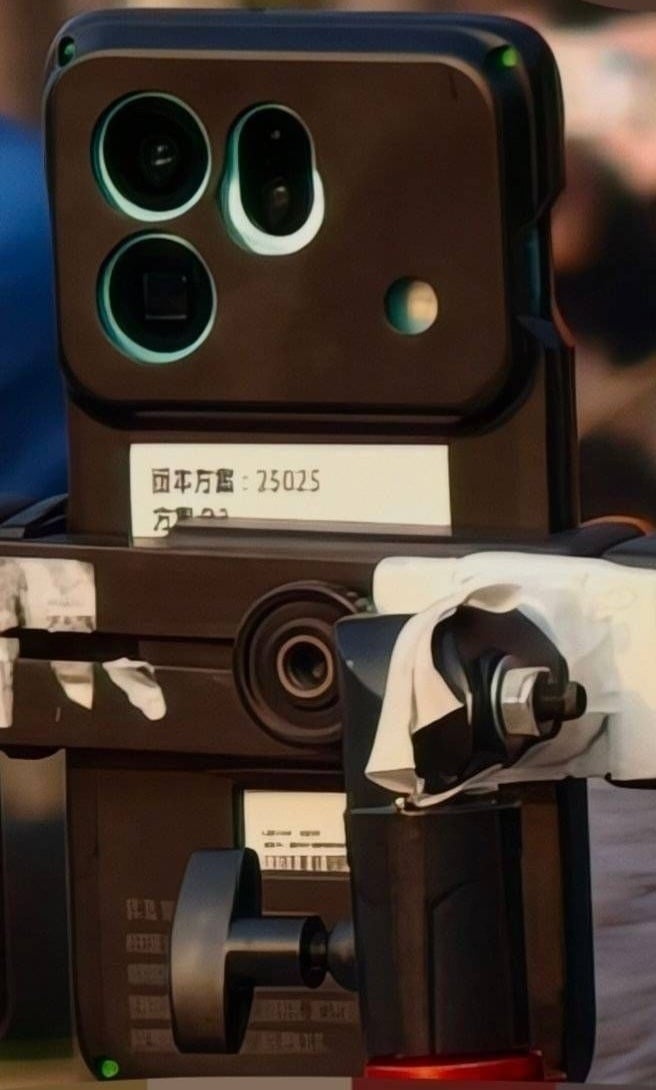
The first image, shared by tipster Bald Panda, shows the Oppo Find X9s inside a thick protective case, clearly meant to hide finer details. Even so, the phone appears to feature a large rectangular camera module with rounded corners, making the rear design look camera-centric. The housing is visibly prominent and sits flush across the top portion of the back panel.

Within this module, two large circular lenses are stacked vertically, accompanied by another sizeable circular element positioned below them. This third cutout could be reserved for an additional sensor or a periscope-style telephoto camera. A smaller circular opening placed towards the right side of the module is likely for the LED flash. Despite the concealment, the layout suggests a deliberate focus on imaging hardware.

Another image that surfaced on Weibo appears to align with the earlier leak and offers a slightly clearer look at the design. Although its authenticity cannot be independently verified, it reinforces the same rectangular camera island and triple-camera arrangement. If accurate, the Find X9s will visually sit close to other Find X9 series devices while maintaining its own identity.

Oppo Find X9s specifications (rumored)

On the specifications front, rumours indicate that the Oppo Find X9s may feature a dual 200-megapixel Samsung HP5 setup, covering both the primary and periscope telephoto cameras. This could be paired with a 50-megapixel ultra-wide camera and a multispectral sensor aimed at improving colour accuracy. A 50-megapixel front camera is also being tipped.

The phone is expected to sport a 6.32-inch Tianma LTPS OLED display with 1.5K resolution and an ultrasonic in-display fingerprint sensor. Powering the device could be the Dimensity 9500 chipset, supported by a battery around 7,000mAh with 80W wired and 50W wireless charging support.

For more daily updates, please visit our News Section.

Stay ahead in tech! Join our Telegram community and sign up for our daily newsletter of top stories.

Apple updates iPhone 5s and iPhone 6 in 2026 with new iOS update

Apple has quietly released a new software update for its 13-year-old iPhones. The iPhone 5s and iPhone 6, released in 2013 and 2014, respectively, are receiving iOS 12.5.8 in 2026, more than a decade after they first went on sale.

By smartphone standards, that’s an exceptionally long lifespan. The iPhone 5s is now roughly 13 years old, while the iPhone 6 is about 12. Most phones from that era haven’t just stopped getting updates; many stopped functioning properly years ago due to expired services, broken apps, or outdated security components. Apple, at least for now, is keeping these devices operational.

What iOS 12.5.8 actually does

According to Apple’s changelog, iOS 12.5.8 mainly updates internal security certificates. These certificates are essential for basic system functions, including device activation and Apple’s core services like iMessage and FaceTime.

If users don’t install this update, those certificates will expire in January 2027. Once that happens, affected devices could face what is essentially functional paralysis. Users may be unable to activate the phone, send iMessages, or place FaceTime video calls. In other words, the phone might still turn on, but many of its core features would quietly stop working.

This makes the update less optional than it might appear at first glance. It’s not about performance improvements or bug fixes; it’s about preventing the phone from slowly becoming unusable.

The previous update for both the iPhone 5s and iPhone 6 arrived back in January 2023, and that one also focused on security fixes. Since then, these phones have largely been left alone, which is typical for hardware this old.

The iPhone 6s is included too

Apple didn’t stop with the 5s and 6. The iPhone 6s, released in 2015, also received an update simultaneously. The device is getting iOS 15.8.6, which includes the same type of certificate extensions.

Why this matters, even if you don’t own these phones

Very few people are using an iPhone 5s or iPhone 6 as their primary device in 2026. But Apple’s decision still says something about how the company views long-term device support.

Many older smartphones fail not because the hardware stops working, but because essential services quietly break. Certificates expire. Secure connections fail. App servers stop recognizing the device as valid. At that point, even a perfectly functioning phone becomes frustrating or useless.

By pushing out updates like iOS 12.5.8, Apple is preventing that slow decay, at least for a little longer.

For more daily updates, please visit our News Section.

Stay ahead in tech! Join our Telegram community and sign up for our daily newsletter of top stories.

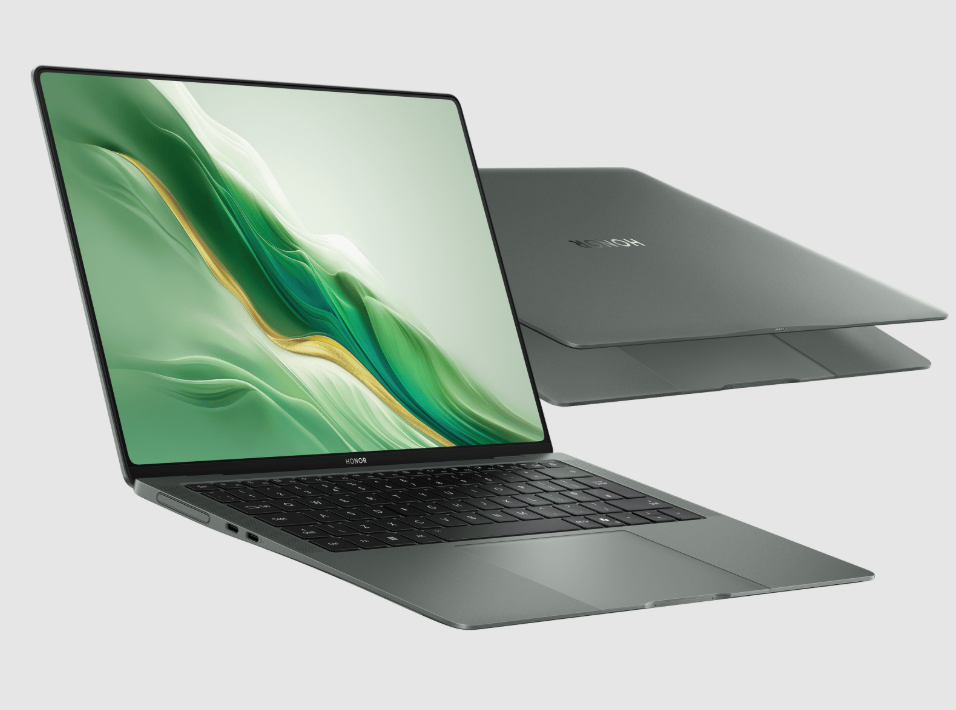
Honor Is Going All-In on Laptops in 2026: Massive PC Lineup Leak Reveals Big Plans

Honor is preparing for a major expansion of its laptop business in 2026, according to a new leak from Chinese tech blogger @WangzaiBaiShiTong. While Honor has not officially announced all details, multiple signs point to an aggressive rollout across its entire PC lineup.

As per the leak, 2026 is expected to be a “big year” for Honor laptops. The company reportedly plans to launch products across several categories, including lightweight everyday laptops and performance-focused machines. More announcements are expected after the Chinese New Year.

According to ithome.com, several upcoming Honor laptops have already passed China’s 3C quality certification between December 2025 and January 2026. These certifications reveal support for 65W, 100W, and even 260W power adapters, hinting at both thin-and-light models and powerful performance laptops.

Honor PC Product General Manager Zhu Chencai has also publicly stated that the brand will launch a “full-scale attack” across all Honor PC series. He emphasized competition in performance, battery life, audio-visual experience, portability, and AI features, while noting that true leadership depends on deep system optimization, not just high-end hardware.

One confirmed model is the Honor MagicBook Pro 16 (2026), already teased and described as a “high-performance muscle car,” targeting the premium performance laptop segment.

For now, most details remain based on leaks, but signs suggest Honor is serious about reshaping its PC lineup in 2026.

Honor 2026 Laptop Lineup: Expected Models and Rumored Features

Series / Model (Expected 2026)Target SegmentKey Features / Specs (Expected)Key Highlight
Honor MagicBook Pro 16 (2026)High-Performance LaptopLarge 16″ screen; strong CPU/GPU for creators & power users; 260W class performance expectedPositioned as “performance muscle car” in the lineup (3C hints high power)
Honor MagicBook X14 2026Thin & Light Everyday14″ 2.8K high-refresh protective display; Intel Core Ultra CPUs; lightweight metal bodyBalanced daily productivity + mobility
Honor MagicBook X16 2026 (Intel)Thin & Light Productivity16″ 2.5K high-refresh protective display; Intel® Core Ultra; slim metal chassisLarger screen with premium visuals
Honor MagicBook X14 Ryzen Edition 2026Mid-Range Performance14″ protective IPS display; AMD Ryzen™ 7 7735HS; good for office / entertainmentStrong AMD CPU for performance on a budget
Honor MagicBook X16 Ryzen Edition 2026Mid-Range Productivity16″ protective IPS display; AMD Ryzen™ 7 7735HS; balanced performanceBigger display for creative workflows
Honor MagicBook Pro 14 / Other Pro VariantsPerformance UltraportableLikely compact pro-grade configs with Intel Ultra or AMD CPUsSmaller sibling to Pro 16 with premium tuning
Honor MagicBook X Series (Other)Everyday / ValueContinued thin, light designs with efficient performanceTypical daily use laptops upgraded to 2026 silicon

Read More:

(via)