The next smartphone from Xiaomi is expected to be Civi 3. This handset is tipped to launch by the end of May. Further, the company is also anticipated to release Mix 5, Redmi K60 Ultra, and Mix Fold 3 in the coming months.
Amidst this, a mysterious Xiaomi phone gets certified by 3C. The listing only reveals the model number and hints at the charging speed.
This upcoming Xiaomi smartphone bears model number 23054RA19C. This is the first time we are hearing about this device.
The 3C regulatory authority says that the handset will ship with a 67W charger bearing model numbers either MDY-14-EV or MDY15-EQ. Thus, it may have support for 67W wired charging or less.
Unfortunately, that’s all the information we have on this unknown product. It is definitely not the forthcoming Civi 3 and Redmi K60 Ultra since these phones sport model numbers 23046PNC9C and 23078PND5C, respectively.
So could it be Mix 5? We don’t think so as the Mix 4 itself had 120W charging support. Why would the successor be limited to 67W charging?
Whatever it is, we are looking forward to learning more about this product in the coming days. Because it has been also listed on MIIT, and so, it should pop up on other certification websites, and benchmarking platforms revealing more details about it.
What are your thoughts on this mysterious Xiaomi smartphone? Will it be released under Xiaomi or Redmi brand? Most importantly, will it make its way to global markets? Do let us know in the comment section below.
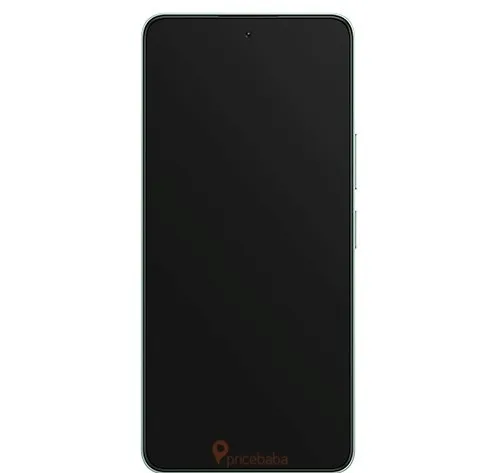
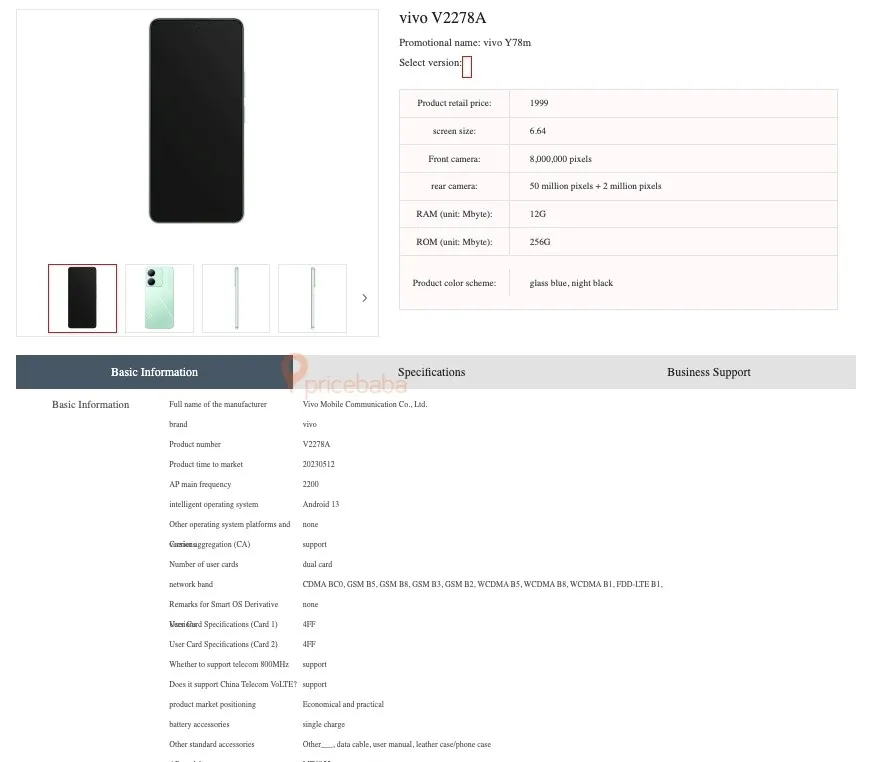
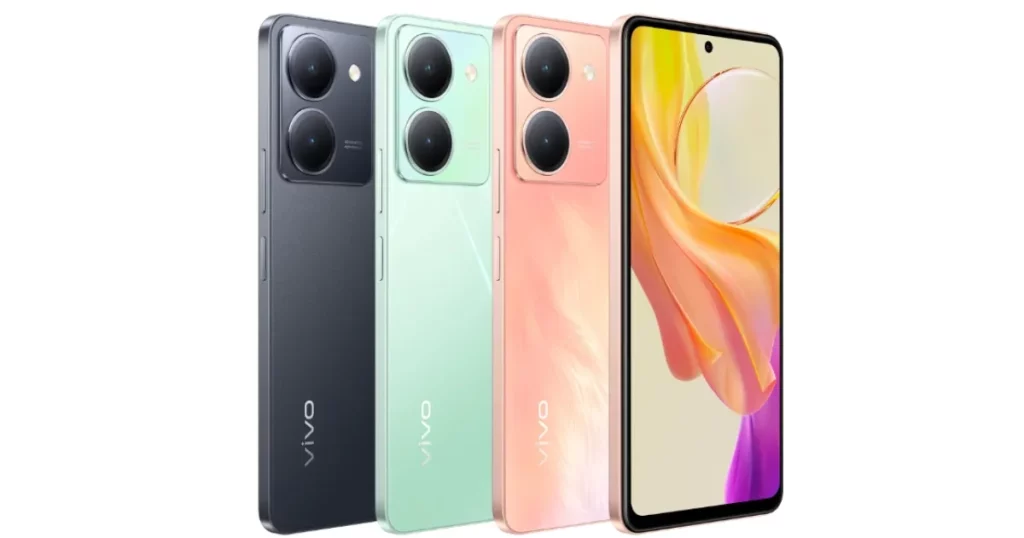
The Vivo Y78m has been listed on the China Telecom website, indicating that Vivo may soon introduce another Y-series smartphone in the Chinese market. This comes shortly after the company unveiled the Vivo Y78 5G smartphone.
Vivo Y78m specs
The listing was spotted by Pricebaba on the Chinese e-commerce website China Telecom. The listing confirms that the device will feature a 6.4-inch display with Full HD+ resolution. Furthermore, the upcoming Vivo Y78m will come with a 5000mAh battery and a 50MP camera system.
Previously, the Y78m was spotted on Geekbench, which indicated that it could be powered by a MediaTek Dimensity 7020 (aka Dimensity 930) chipset. Moreover, the device will support 44W fast charging, as per the 3C listing.
The Vivo Y78m is expected to feature a triple-camera setup on the back, with a 50MP main sensor, a 2MP secondary lens, and an LED flash. It will come with 12GB of RAM and 256GB of internal storage. The device will run on FunTouch OS, which is based on Android 13, and will support USB 2.0 Type-C charging port and a 3.5mm audio jack.
It’s important to note that the specifications listed for the Vivo Y78m are identical to those of the recently launched Vivo Y78. It remains to be seen if there are any features that set the Y78m apart from its counterpart. Previous reports suggested that the two devices might be rebranded versions of each other for different markets. However, since both devices will be available in China, it’s possible that there may be some differences between them.
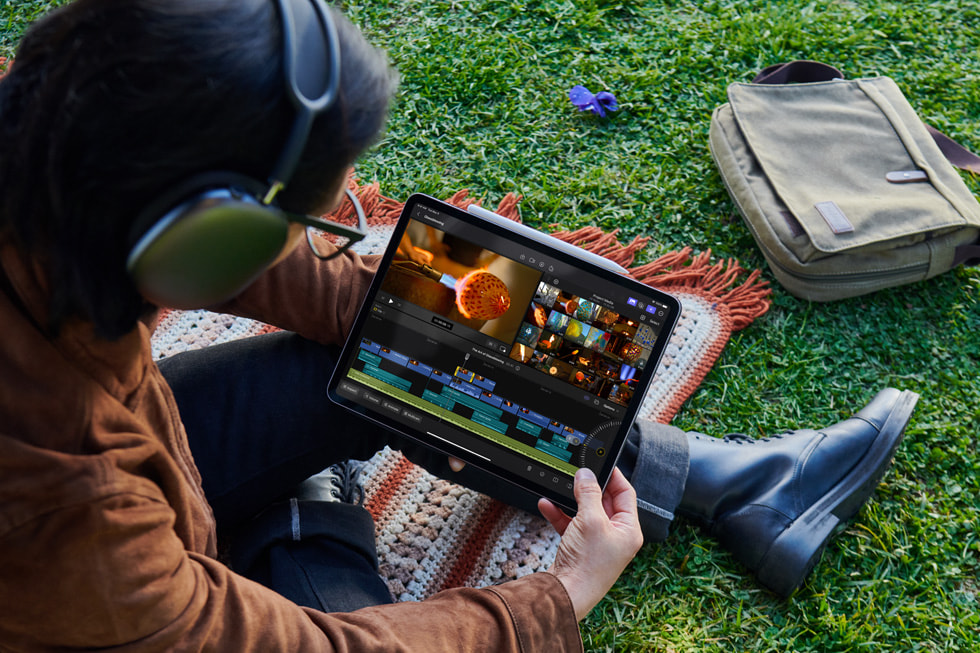
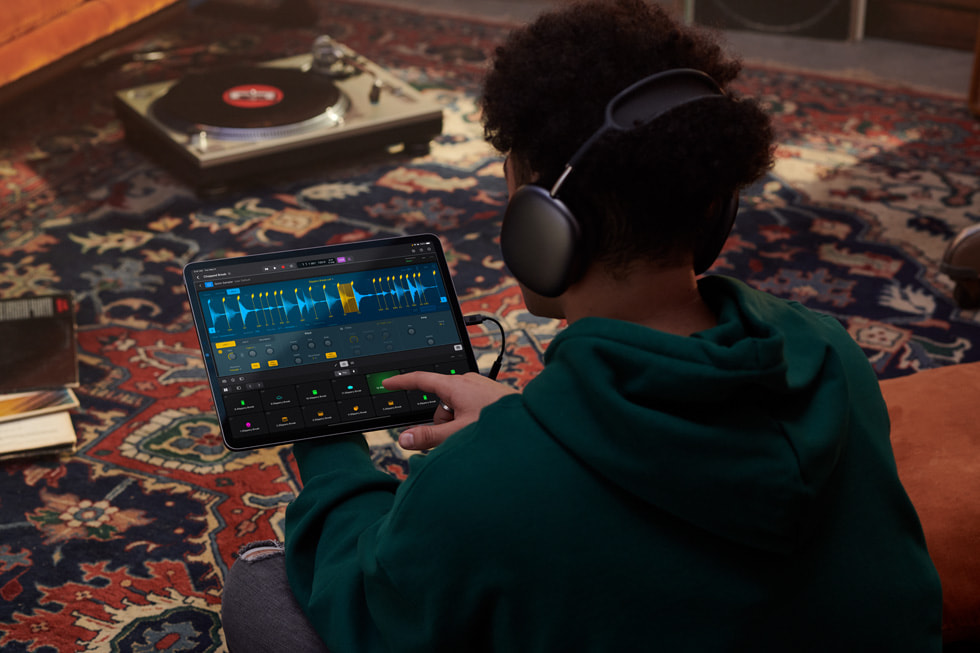
Apple recently announced the introduction of two of its flagship software applications – Final Cut Pro and Logic Pro – to the iPad. The company claims that the new iPad versions of the apps will come with all-new touch interfaces that will allow users to enhance their workflows with Multi-Touch.
Unleash Your Creativity Anywhere
The soon-to-be-launched Final Cut Pro for iPad will be a game-changer for video creators, providing a comprehensive suite of tools for recording, editing, finalizing, and sharing creative content, all from a single, portable device. The standout feature of the iPad version is the innovative job wheel, enabling users to navigate the Magnetic Timeline, swiftly move clips and make precise frame-accurate edits with a simple tap.
Additionally, there’s a Line Drawing feature, which allows users to draw and annotate directly on the video content using the Apple Pencil, adding another layer of creativity and customization to the process.
On the other hand, Logic Pro for iPad is set to revolutionize the music creation process with its Multi-Touch Gestures. These allow music creators to play software instruments, interact with controls naturally, and maneuver through intricate projects with pinch-to-zoom and swipe-to-scroll functionality. To aid music creators in discovering the perfect sound, the app includes a dynamic sound browser that houses all available instrument patches, audio patches, plugin presets, samples, and loops in one place. Users can quickly audition any sound before incorporating it into their project, ensuring uninterrupted creative flow.
Both Final Cut Pro and Logic Pro for iPad are designed to fully utilize the Apple Pencil, opening up possibilities for detailed track automation and the use of hover technology for quick skimming and previewing of footage without touching the screen. In addition to this, both apps can be paired with a Magic Keyboard or Smart Keyboard Folio for users who prefer keyboard commands.
The apps will be available on the App Store for $4.99 per month or $49 per year with a one-month free trial later this month.
Apple’s decision to extend Final Cut Pro and Logic Pro to the iPad marks a significant milestone in mobile content creation. By combining intuitive touch interfaces with powerful creative tools, Apple is paving the way for video creators and music producers to explore their creativity in new and exciting ways. With the portability, superior performance, and touch-first interface of the iPad, the Final Cut Pro and Logic Pro apps will offer an unparalleled mobile studio experience for content creators.
Realme has finally announced the highly anticipated Realme 11 series of smartphone in its home market of China. The company had been teasing its latest entries in its popular numbered series for a while, and now, the Realme 11, Realme 11 Pro, and Realme 11 Pro+ models have been officially launched. So let’s have a look.
Realme 11 series: Design & Display
With the new 11 series, the Chinese smartphone maker has made a major redesign compared to its predecessor. Unlike the more boxier look on the last gen models, the Realme 11 series features a more curvier design on the corners and edges. Furthermore, one of the biggest changes is undoubtedly on the back, with the 11, 11 Pro, and 11 Pro+ model featuring a large circular camera island. It also arrives in brand new color options with one of the more notable ones being Sunrise Beige.
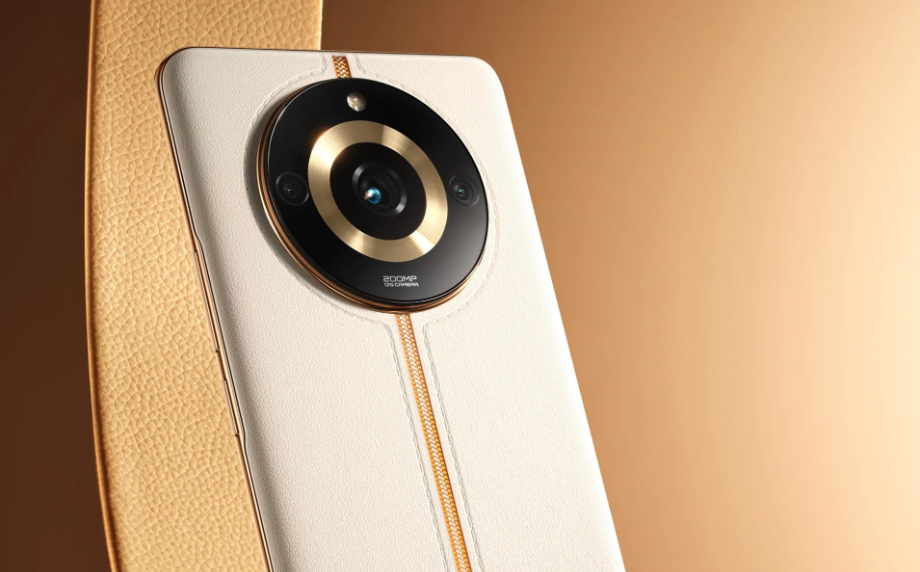
Realme 11 Pro+
This version is available for the top end model and includes a faux leather and a vertical gold and silver stitching along with a golden frame for the camera module. This aesthetic was co designed with Matteo Menotto, who is a former designer for the popular luxury brand Gucci. The Realme 11 Pro series sports a tall 6.7 inch AMOLED display that offers Full HD+ resolution and 120Hz refresh rate. The flagship 11 Pro+ model even comes with 2160 PWM dimming, 100 percent DCI P3 color gamut support, and a curved panel on the front. Meanwhile, the vanilla 11 model sports a shorted 6.43 inch display, which is also an AMOLED panel with Full HD+ resolution, 430 nits of brightness, and a lower 90Hz refresh rate.
Specifications
The Realme 11 Pro series are quite similar in many ways and this includes most of their internal specifications as well. The two models are equipped with MediaTek’s newly unveiled Dimensity 7050 SoC. This is basically a rebranded version of the existing Dimensity 1080 SoC. On the other hand, the base variant will be powered by a Dimensity 6020 chipset. The higher end Pro models will feature up to 12GB of LPDDR4X RAM and up to 1TB of internal storage, while the base version features up to 12GB of RAM and 256GB of internal storage.
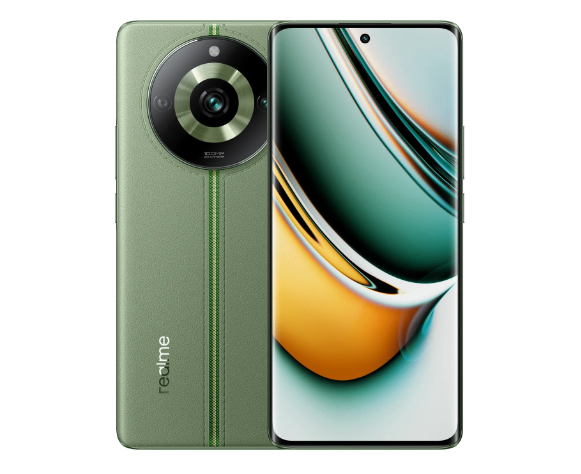
Realme 11 Pro
Notably, the Pro series offers up to 8GB of virtual memory expansion as well. The Realme 11 Pro and Pro will be powered by a large 5,000mAh battery pack. Although, the 11 Pro will support 67W fast charging, while the 11 Pro+ model will support an impressive 100W fast charging. Meanwhile, the vanilla 11 will feature just 33W fast charging. All three models will run on Android 13 OS based Realme UI 4.0 out of the box. Other notable features include, 3.5mm headphone jack and microSD card slot for the base model, while the Pro series features Dolby Atmos enabled dual speakers and Hi Res audio certification. The Realme 11 Pro+ even offers NFC functionality.
Camera
Talking about the cameras, the Realme 11 Pro features a dual camera setup that consists of a 108 megapixel primary sensor and a 2 megapixel portrait shooter. It houses a 16 megapixel selfie camera on the front. On the other hand, the 11 Pro+ model features a triple camera setup on the rear, which consists of a 200 megapixel primary sensor (Samsung ISOCELL HM3) that has a 2.24μm large pixel size.
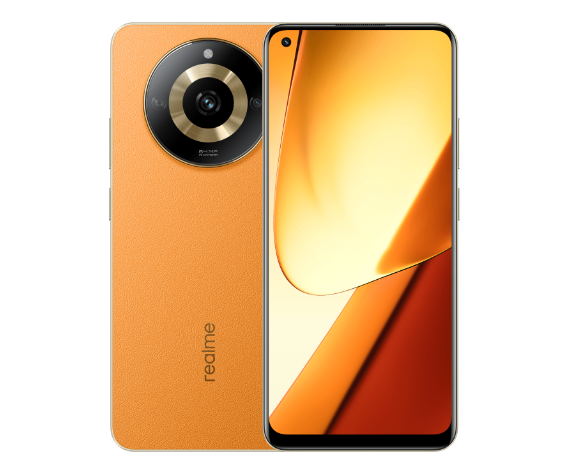
Realme 11
This sensor also supports OIS and supports with an 8 megapixel ultra wide angle lens, and a 2 megapixel macro shooter. Meanwhile, the front packs a 32 megapixel selfie camera. The Realme 11 features a dual camera setup as well, with a 64 megapixel primary sensor and a 2 megapixel portrait shooter. The front houses an 8 megapixel selfie camera.
Pricing, Colors, & Availability
The base model is available in two color options, namely orange and black. Meanwhile the Pro series arrive in three options, including the Astral Black, Sunrise Beige, and Oasis Green. The latter two options feature the faux leather and strip design. Realme has just unveiled the three smartphones during a live conference and have even revealed their pricing. So here are all the details:
Realme 11
8GB + 256GB – 1,599 Yuan (roughly 230 US Dollars)
12GB + 256GB – 1,799 Yuan (roughly 259 US Dollars)
Realme 11 Pro
8GB + 256GB – 1,699 Yuan (roughly 245 US Dollars)
12GB + 256GB – 1,999 Yuan (roughly 289 US Dollars)
12GB + 512GB – 2,199 Yuan (roughly 318 US Dollars)
Realme 11 Pro+
12GB + 256GB – 2,099 Yuan (roughly 303 US Dollars)
12GB + 512GB – 2,399 Yuan (roughly 346 US Dollars)
12GB + 1TB – 2,799 Yuan (roughly 404 US Dollars)
The pre-orders for the device is currently open, with the official sale set to begin on 15th May 2023 for the Pro series models. The brand is also bringing introductory offers during the pre-order period with various models seeing over 100 Yuan discounts.
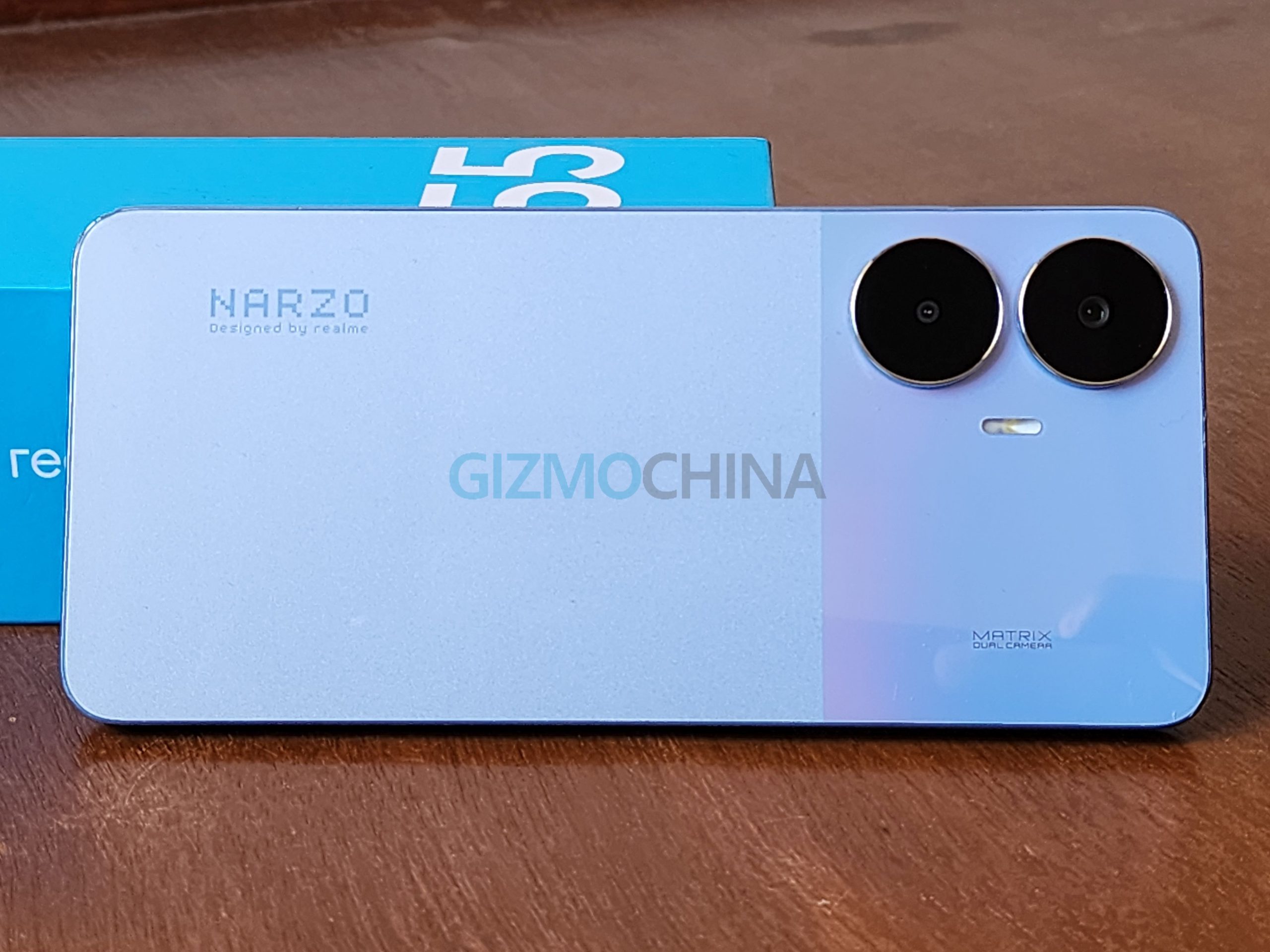
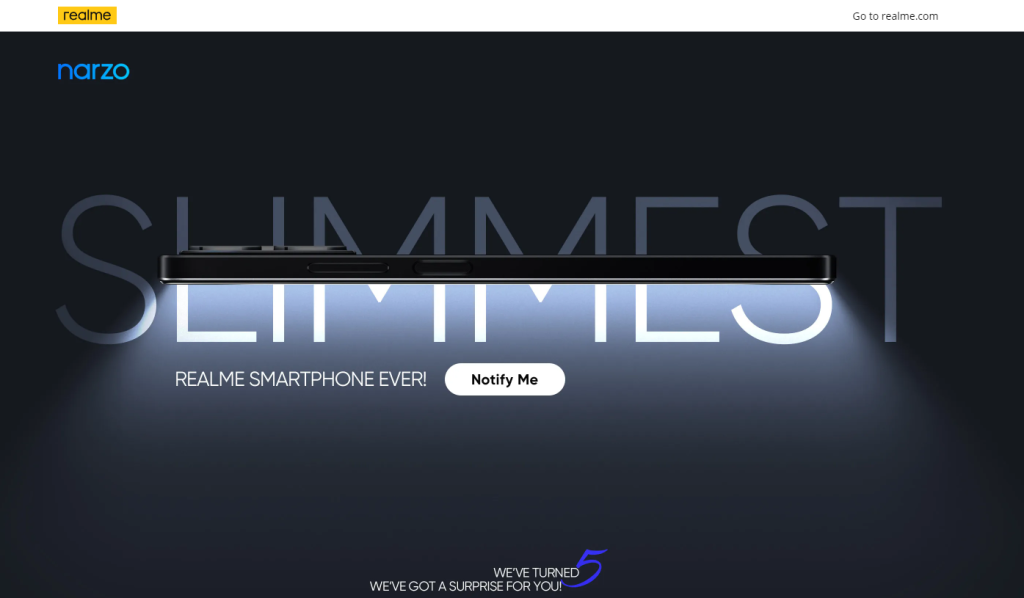
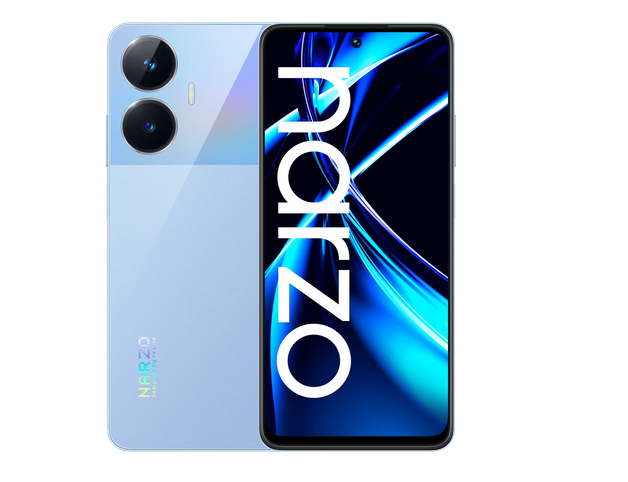
After the launch of the Realme Narzo N55 in India, the brand is now planning to introduce the Narzo N53 in the sub-continent. Realme has teased an upcoming Narzo smartphone without revealing the exact model. However, the website’s metadata has confirmed that it is indeed the Realme Narzo N53.
Realme Narzo N55
Realme Narzo N53 specs leaked
As per the metadata on the official website, the phone will support up to 16GB of Dynamic RAM and 33W fast charging. Additionally, Realme has teased its slimmest smartphone on its website, and the source code has revealed that it is the Narzo N53. We can safely assume the 16GB Dynamic RAM, will be a combination of 8GB physical RAM and 8GB virtual RAM.
Earlier reports suggest that the Realme Narzo N53 will come with 5G connectivity and will be available in Feather Black and Feather Gold color options. The device is also expected to come in two storage variants, namely 4GB + 64GB and 6GB + 128GB. Additionally, it is rumored to be priced below Rs. 13,000. To get an idea of what to expect from the upcoming Narzo N53, we can look at the specifications of its predecessor, the Narzo N55. It is possible that the N53 may be a slightly toned-down version of the N55.
Realme Narzo N55 specs
Equipped with a large 6.72-inch IPS LCD panel, the Realme Narzo N55 features a high refresh rate of 90Hz and an HD+ resolution. The device boasts a dual-camera system at the back, with a 64-megapixel primary sensor and a 2-megapixel depth sensor. Meanwhile, the front camera is an 8-megapixel shooter.
Powering the Narzo N55 is a Helio G88 chipset paired with 4 GB or 6 GB of LPDDR4x RAM and 64 GB or 128 GB of eMMC 5.1 storage. The device packs a 5,000mAh battery with support for 33W fast charging and has a side-mounted fingerprint scanner for biometric authentication. It runs on the Android 13-based Realme UI 4.0 operating system out of the box and has a microSD card slot for additional storage. To know more about the device, you can read our comprehensive Realme Narzo N55 review.
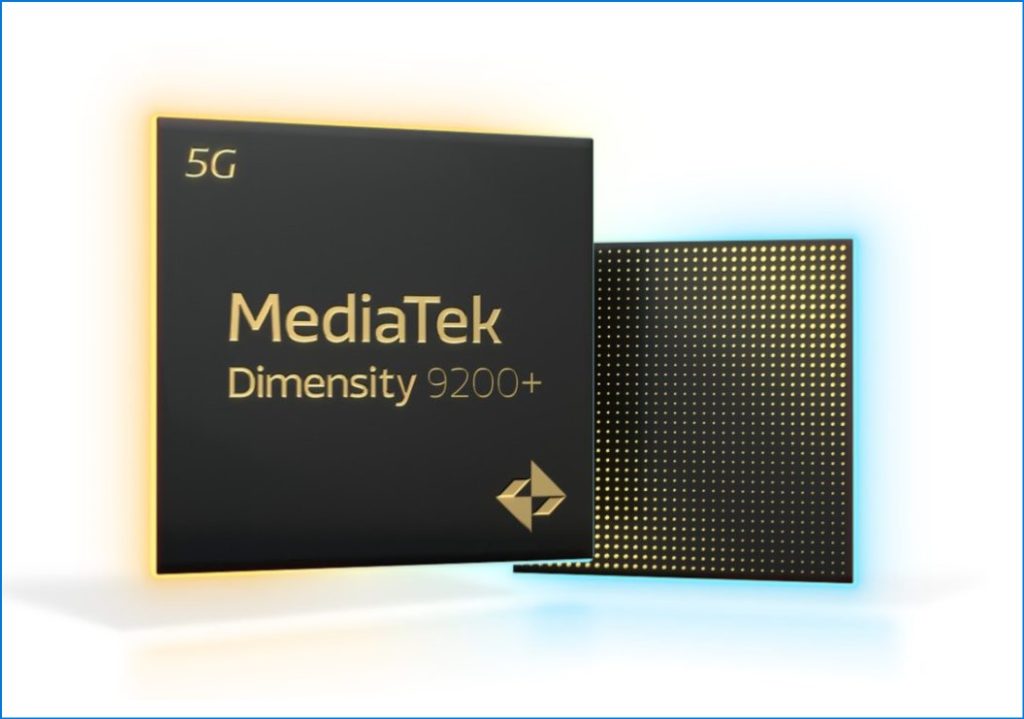
MediaTek’s flagship chipset offerings have been gaining recognition for their impressive hardware, and the recently launched MediaTekDimensity 9200 was no exception. Now, the company has announced an upgraded version of this chipset, the MediaTek Dimensity 9200+, which boasts improved CPU and GPU performance. With this new offering, MediaTek continues to position itself as a major player in the competitive world of flagship chipsets.
The Dimensity 9200+ boasts an impressive octa-core configuration, with the Cortex-X3 serving as the primary core, 3 x Cortex-A715 performance cores, and 4 x Cortex A-510 power-saving cores. The clock speed of all cores has been increased to 3.35 GHz, 3 GHz, and 2 GHz, respectively.
This represents a noticeable jump over the previous Dimensity 9200 chipset, which had clock speeds of 3.05 GHz, 2.85 GHz, and 1.8 GHz, respectively. The Dimensity 9200+ is built on TSMC’s 4 nm fabrication node, which contributes to its more power-efficient performance.
Regarding gaming performance, the chipset boasts an ARM Immortalis G715 GPU with a peak frequency increase of 15%. Additionally, it comes equipped with MediaTek‘s HyperEngine 6.0 technology, which promises to provide a smoother and more stable gaming experience. The MediaTek Game Adaptive Control Technology (MAGT) ensures that it doesn’t consume excessive power, and the brand claims that it can reduce overall power consumption by up to 12%.
It is equipped with a sixth-generation AI Processing Unit (APU 690), a MediaTek Imagiq 890 image signal processor, MediaTek MiraVision 890, and MediaTek 5G UltraSave 3.0.
The chipset supports a 4CC-CA 5G Release-16 modem that can switch between sub-6GHz and mmWave connections. There is support for Wi-Fi 7 22 + 22 with a data throughput of up to 6.5Gbps, as well as Bluetooth 5.3. The chipset scores 1.36 million points on AnTuTu benchmarking platform, surpassing all Android flagships. It also supports up to two 5K resolution displays at 60Hz, WHQD at 144Hz, and FHD at 240Hz.
The brand has officially confirmed that iQOO will be the first to launch a smartphone powered by the MediaTek Dimensity 9200+ chipset. The upcoming iQOO Neo 8 Pro could very well be the first smartphone to feature this powerful chipset. However, there has been no official confirmation on the exact model that will include this chipset yet.
Our smartphones are likely our biggest helpers. We handle various tasks with these devices, from our daily communication needs to our general financial transactions. Manufacturers and developers, aware of this situation, continue to enhance functionality with new features and functions.
For example, Apple informs iPhone, iPad, and Mac users about the weather with its Weather App. However, this app has recently been plagued by ongoing issues. Today, many users experienced problems with the Weather App, but the company quickly intervened and resolved the issue. Here are the details…
Reliability Concerns Raised After Apple Weather App Experiences Issues”
Apple’s Weather app experienced issues earlier today, leaving some users without access to the service. The outage reportedly began at 7:00 a.m. Eastern Time, with users noticing the app’s sluggishness or complete unavailability. Not all users were impacted by this issue, but those who were experienced significant inconvenience due to the lack of weather updates.
Fortunately, Apple acted swiftly to fix the issue, and as of now, the Weather app is back to normal functionality for all users. While the reason behind the outage remains unclear, it serves as a reminder of the importance of having reliable weather services in our daily lives. In the meantime, users affected by the outage might consider turning to alternative weather apps, such as The Weather Channel, AccuWeather, or Weather Underground, in case of similar issues in the future.
This isn’t the first time Apple’s Weather app has faced such problems. In April, there was a major outage that weather the app incapable of displaying any data. Apple promptly addressed the issue and restored the service, but today’s problem has raised concerns about the app’s reliability.
LG Electronics has just launched a brand new monitor from its popular UltraGear gaming series. The new model is the 49GR85DC, which is an ultrawide curved gaming monitor model. So here are all the details.
LG launches new ultrawide curved monitor for gamers with a 49 inch 240Hz display
As the model number suggests, the new UltraGear monitor sports a tall 49 inch display that has a 32:9 aspect ratio. The panel offers a Dual QHD resolution, 3000:1 contrast ratio, 240Hz refresh rate, and 1000nits of peak brightness. This screen also comes with VESA DisplayHDR 1000 certification and 1000R curvature. For ports, it houses a DisplayPort 1.4 and HDMI 2.1 ports for connectivity. The rear also features LED Hexagon backlighting, which adds to its gaming aesthetic.
Being a gaming monitor, response times are a crucial aspect and the new 49GR85DC model offers 1ms response time. It even offers 95 percent DCI P3 color gamut support and is based on a VA panel. According to Seo Young-jae, Senior VP and Head of the IT Business Unit of LG Electronics Business Solutions Company, “With the gaming monitor market expanding, the demand for larger displays with exceptional picture quality and high refresh rates is on the rise. The new LG UltraGear is a versatile and premium display solution that caters to the diverse needs of modern day consumers.”
The LG UltraGear gaming monitor is now available for purchase in the US for a price start of 1,299 US Dollars via the company’s official stores. It will also be available in launched in other regions including Europe later this month, with an Asia launch slated to follow soon after. Notably, this launch also arrives mere days after the brand announced the new UltraGear 27GR75Q earlier this month.
Vivo has released its latest mid-range smartphone, the Vivo Y78 5G, in China. This new device follows the launch of the Vivo Y78+ just last month. Boasting a MediaTek Dimensity 7020 SoC, which is essentially a rebranded version of the Dimensity 930 chipset (Check out our coverage about the MediaTek Dimensity SoC rebrand), the Y78 5G also offers a sizable battery and fast charging capabilities. Check out the other details below.
Vivo Y78 5G specs
Vivo has recently launched the Y78 5G in China, which is a mid-range smartphone that features a MediaTek Dimensity 7020 SoC. The SoC is an octa-core processor based on a 6nm process and has a maximum clock speed of 2.2GHz. The device comes with LPDDR4x RAM and UFS 2.2 storage, with support for expandable storage via a microSD card slot.
The device sports a 6.64-inch IPS LCD display with a Full HD+ resolution of 2388×1080 pixels, a 120Hz refresh rate, and a hole-punch cutout for the front camera. The screen has a pixel density of 394PPI and a 91.06 percent screen-to-body ratio.
Under the hood, the Y78 5G packs a powerful 5000mAh battery that supports 44W fast charging. It also has a USB Type-C port, a 3.5mm headphone jack, and dual-band Wi-Fi support, among other connectivity features. For biometrics, the Y78 5G has a side-mounted fingerprint scanner and support for AI face unlock. The phone runs on Android 13 with Origin OS 3 on top.
The phone has a dual-camera setup on the back, which includes a 50MP primary camera sensor with an f/1.8 aperture and a 2MP bokeh sensor with an f/2.4 aperture. On the front, there is an 8MP selfie camera.
Pricing, configurations & color options
Vivo has unveiled the Y78 5G in China, featuring multiple storage configurations. The phone comes with 8GB of RAM and 128GB of internal storage and is priced at CNY 1399. It is also offered in 8GB + 256GB and 12GB + 256GB storage variants, but their pricing details have not been disclosed. The device is available in Black, Jade Porcelain Blue, and Phoenix Feather Gold color variants.
At the end of 2022, Vivo launched the S16 series of premium mid-range smartphones in its domestic market. Now, around 5 months after the launch, it looks like the brand is getting ready to launch the next iteration of its S series devices. Like last year, the lineup is expected to feature three devices: Vivo S17e, S17, and S17 Pro. Ahead of the launch, we have seen the S17e appear on Geekbench. Now, the Vivo S17 has visited 3C certification with its fast charging specifications.
Vivo S17 gets improved charging
The model number V2283A for the Vivo S17 was spotted on the 3C certification website, along with its charger model numbers V8037L0A0-CN, V8037L0B0-CN, or V8037L0D0-CN. The listing confirms that the charger is capable of providing power output at 10W (5V/2A), 18W (9V/2A), and 80W (11V/7.3A), indicating that the Vivo S17 will likely support 80W fast charging technology. For those unaware, the Vivo S16 offers 66W fast charging.
Vivo S17 specs (rumored)
According to previous leaks, the Vivo S17 will be powered by the Snapdragon SM7325, which is expected to be either the Snapdragon 778G or Snapdragon 782G chipset.
The device will feature a 1.5K OLED 120Hz display manufactured by BOE and with curved edges. The rear camera setup for the device will include a 50-megapixel Sony IMX766V primary camera with optical image stabilization (OIS) and a 12-megapixel IMX663 telephoto camera.
Other details are currently unavailable, but the smartphone could debut in 8GB + 128GB, 8GB + 256GB, and 12GB + 256GB configuration options.
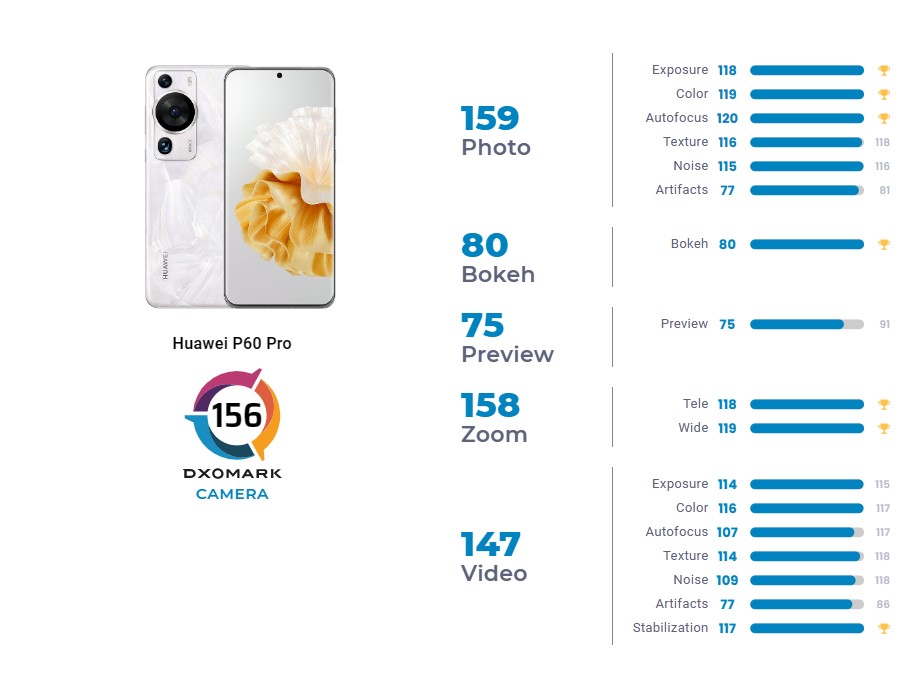
The globally launched Huawei P60 Pro, with its unprecedented camera performance, has surpassed all expectations. The smartphone outshone its closest competitors, the Oppo Find X6 Pro and the Honor Magic 5 Pro, and clinched the top spot on the DxOMark camera benchmark.
A Deep Dive into the Superior Camera Capabilities of the Huawei P60 Pro
On the DxOMark scoring system, the Huawei P60 Pro achieved a remarkable score of 159 points for photos, 80 for bokeh shots, and 75 for preview. In addition, it garnered 158 points for zoom and 147 for video, showcasing its superb versatility as a camera phone.
The Huawei P60 Pro underwent rigorous testing in a multitude of scenarios, including outdoor and indoor settings, low-light conditions, and casual friends-and-family photography. It attained an impressive score of 171 in outdoor shots, 159 for indoor photography, 132 in low-light situations, and an exceptional 146 for friends-and-family photography.
The Huawei P60 Pro is equipped with a triple camera setup, which includes a 48 MP ultra lighting camera with a variable aperture of f1.4 to f4.0 and OIS, a 13 MP ultra-wide angle camera with an f2.2 aperture, and a 48 MP ultra lighting telephoto camera with an f2.1 aperture and OIS. The camera setup employs an XMAGE-based imaging system and algorithm to enhance color accuracy and deliver brighter images.
There are numerous advantages to the Huawei P60 Pro’s camera. It performs excellently under all lighting conditions, particularly excelling in low-light situations. The camera also shines in capturing friends-and-family photographs, rendering accurate skin tones, and capturing candid moments. The variable aperture ensures that everyone in a group shot remains in focus due to a large depth of field. The camera also provides a high level of detail across all zoom ranges and performs exceptionally in macro mode, especially with the telephoto lens.
However, there are a few minor drawbacks to the camera system. These include inconsistencies in depth estimation between the preview of the image and the final capture. There can also be occasional unnatural detail rendering in challenging shooting conditions, and noticeable focusing transitions when shooting videos.
In conclusion, the camera of the Huawei P60 Pro is a standout feature of this flagship phone, making it the perfect choice for those seeking top-tier camera performance in all shooting scenarios. The Huawei P60 Pro reaffirms Huawei’s position as a front-runner in the smartphone market.
In a recent press release, Microsoft announced an exciting update for members of the Microsoft 365 Insider program. The company has introduced a new feature in the Microsoft 365 app, enabling users to sign PDF files directly from their mobile devices. This convenient addition aims to address the productivity needs of mobile users.
This new feature is available on both iOS and Android
In today’s fast-paced world, mobile devices have become indispensable tools for productivity on the go. Acknowledging the increasing demand for convenient solutions, Microsoft has responded by incorporating a PDF signing feature in their popular Microsoft 365 app. Now, users can effortlessly sign important PDF documents from both iOS and Android devices, eliminating the need for desktop access or external tools.
The process of signing PDFs through the Microsoft 365 app is remarkably straightforward. After opening a PDF file, users can navigate to the More section and select the Sign PDF option. This action leads them to the desired location within the document where the signature is required. By clicking on Create, users can generate their unique signature and apply it seamlessly to the PDF file. This streamlined approach ensures a hassle-free experience, empowering users to complete vital tasks while on the move.
Microsoft’s commitment to enhancing productivity shines through this addition to their mobile app. Whether it’s tax documents, lease agreements, contracts, or any other essential PDF file, users can confidently rely on the Microsoft 365 app to meet their signing needs. By eliminating the need for paper-based signatures or the use of separate signing tools, Microsoft has made it easier for professionals and individuals alike to keep up with their workflow.
Furthermore, the integration of this feature into the Microsoft 365 app underscores the company’s dedication to ensuring a cohesive experience across platforms. By providing consistent functionality on iOS and Android, Microsoft emphasizes its commitment to inclusivity and user convenience.
With the introduction of the PDF signing feature in the Microsoft 365 app for iOS and Android, Microsoft has empowered mobile users to stay productive while on the move. This user-friendly addition streamlines the signing process, making it simpler than ever to sign PDF documents directly from mobile devices.
In an exciting development for the electric vehicle (EV) industry, Baojun Automobile has officially unveiled its first large five-seater pure electric family car, named the “Baojun Yunduo.” This announcement was made through the official WeChat account of Baojun Automobile, creating a wave of anticipation among EV enthusiasts and potential buyers.
The Baojun Yunduo has two rim sizes, 17 inches & 18 inches
The Baojun Yunduo boasts impressive dimensions, measuring 4295mm, 1850mm, and 1652mm in length, width, and height, with a wheelbase of 2700mm. These specifications position it as a spacious and comfortable family car, accommodating passengers and their belongings with ease.
The Ministry of Industry and Information Technology previously reported that the Baojun Yunduo will be available with two different rim sizes: 17 inches and 18 inches. The corresponding tire sizes are 215/60 R17 and 215/55 R18 respectively, ensuring a smooth and stable driving experience. The vehicle’s lithium iron phosphate battery is sourced from Liuzhou Huating New Energy Technologies Ltd., a renowned name in the EV battery industry.
As the demand for electric vehicles continues to grow, manufacturers are constantly striving to introduce innovative and practical models to the market. The Baojun Yunduo aims to capture the attention of eco-conscious families seeking a reliable and environmentally friendly transportation option. With its sleek design and impressive specifications, it is poised to make a strong impact in the EV segment.
Notably, Baojun Automobile has a reputation for producing affordable vehicles without compromising quality. This commitment to affordability, coupled with the benefits of electric mobility, could make the Baojun Yunduo an attractive choice for budget-conscious families looking to make the switch to electric vehicles.
With the official unveiling of the Baojun Yunduo, Baojun Automobile has taken a significant step forward in establishing its presence in the competitive electric family car market. As EV technology continues to advance and consumers increasingly embrace sustainable transportation options, the Baojun Yunduo may just be the catalyst that accelerates the adoption of electric vehicles among families worldwide.
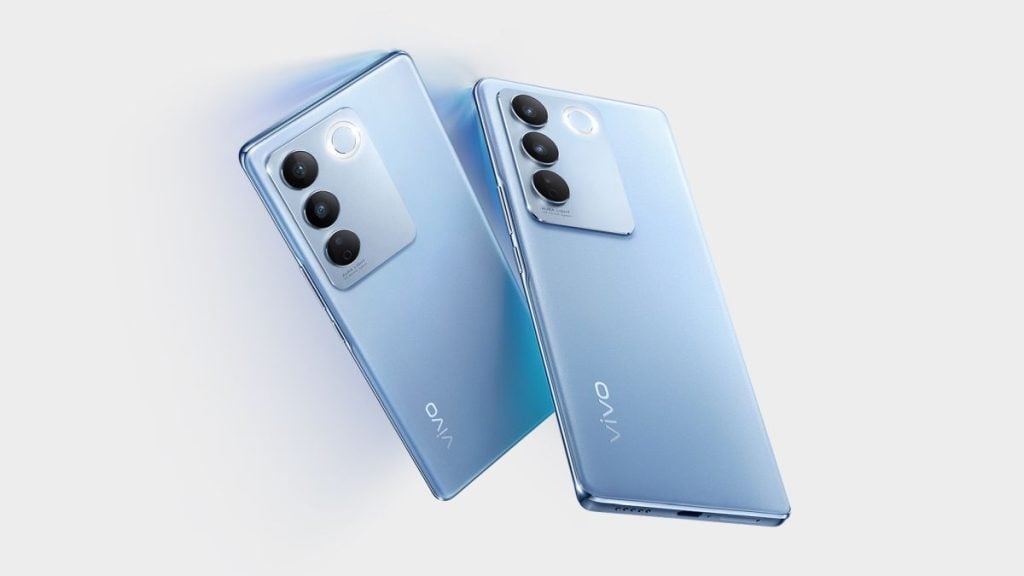
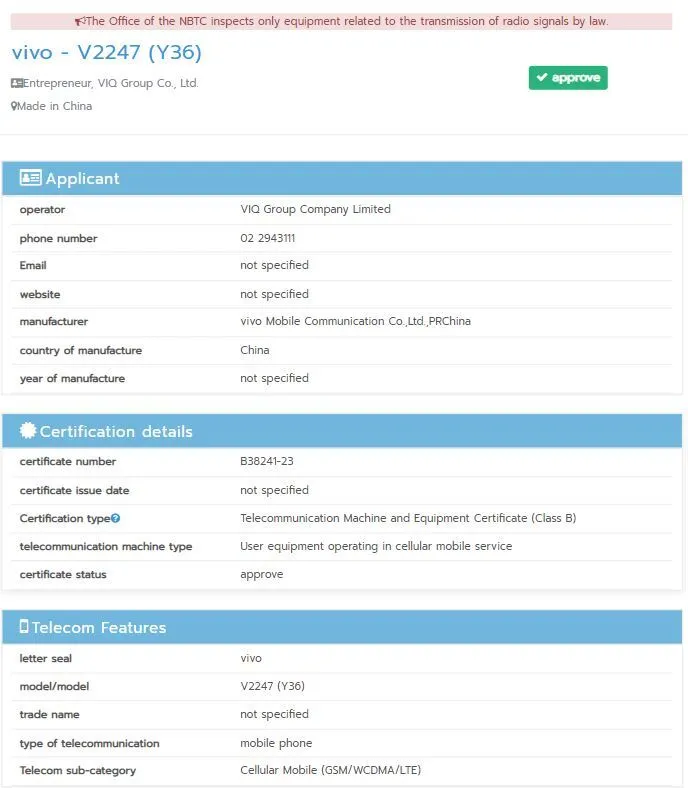
Vivo is working on a new mid-range 4G smartphone called the Vivo Y36 4G. This device has already emerged on Geekbench and Bluetooth SIG confirming some of the key specifications. Now, it has also emerged on NBTC & Google Play Certification listing hinting at an imminent launch.
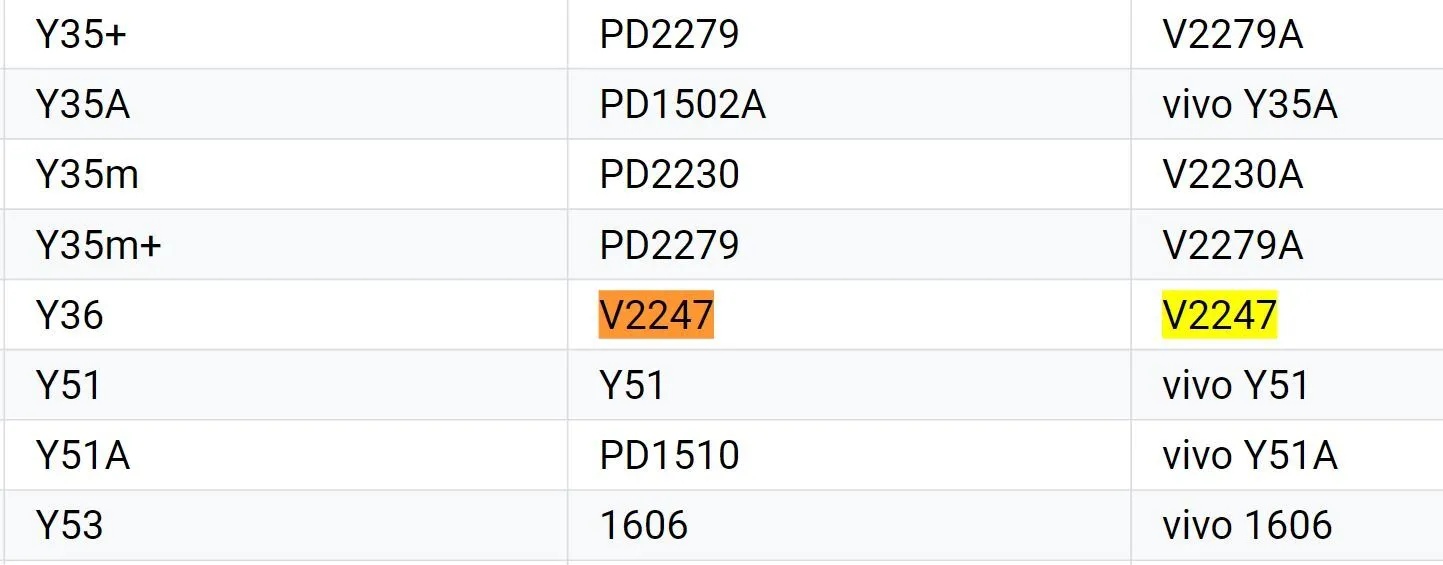
As per the listing on the NBTC certification website, the Y36 4G smartphone has been assigned the model number V2247. The listing further confirms the official name of the device, which has also been verified by the Google Play Certification listing. This is the same model previously spotted on Geekbench and Bluetooth SIG. Let’s look at all the information available on the Vivo Y36 4G so far.
Vivo Y36 4G specs
Rumors surrounding the Vivo Y36 4G suggest that the phone will come with a sizable 6.8-inch LCD display, although there is no confirmation yet on whether it will feature a high refresh rate. Under the hood, the device is expected to run on the MediaTek Helio G99 chipset and offer 8GB of RAM. An interesting feature of the phone is its rumored additional 8GB of expandable RAM.
Vivo Y35
According to the Geekbench listing, the Vivo Y36 4G smartphone is powered by the Qualcomm Snapdragon 680 SoC, which is an older and comparatively inferior chipset as compared to the newer Helio G99. The smartphone managed to score 410 and 1,343 points in the single-core and multi-core test results, respectively, which is a satisfactory performance for a lower-midrange device.
As for camera capabilities, the upcoming Vivo Y36 4G is expected to come equipped with a 50MP primary camera on the rear, although details about the other camera sensors are yet to be disclosed. The device is anticipated to be powered by a 5,000mAh battery that supports 44W fast charging, ensuring that users can stay connected throughout the day.
In a groundbreaking development, Meta has unveiled ImageBind, an innovative AI model that bridges the gap between machines and humans in terms of holistic learning from multiple modalities. Unlike traditional AI systems that rely on specific embeddings for each modality, ImageBind creates a shared representation space, enabling machines to learn simultaneously from text, image/video, audio, depth, thermal, and inertial measurement units (IMU). This article explores the immense potential of ImageBind and its implications for the future of artificial intelligence.
ImageBind incorporates Multiple Sensory Inputs to Generate Media
ImageBind represents a significant leap forward in AI capabilities, transcending the limitations of previous specialist models trained on individual modalities. By incorporating multiple sensory inputs, ImageBind offers machines a comprehensive understanding that connects various aspects of information together. For instance, Meta’s Make-A-Scene can utilize ImageBind to generate images based on audio, enabling the creation of immersive experiences such as rainforests or bustling markets. Additionally, ImageBind opens doors for more accurate content recognition, moderation, and creative design, including seamless media generation and enhanced multimodal search functionalities.
As part of Meta’s broader efforts to develop multimodal AI systems, ImageBind lays the foundation for researchers to explore new frontiers. The model’s ability to combine 3D and IMU sensors could revolutionize the design and experience of immersive virtual worlds. Furthermore, ImageBind offers a rich avenue for exploring memories by enabling searches across various modalities, such as text, audio, images, and videos.
The creation of a joint embedding space for multiple modalities has long posed a challenge in AI research. ImageBind circumvents this issue by leveraging large-scale vision-language models and utilizing natural pairings with images. By aligning modalities that co-occur with images, ImageBind seamlessly connects diverse forms of data. The model demonstrates the potential to interpret content holistically, enabling various modalities to interact and establish meaningful connections without prior exposure to joint training.
ImageBind’s unique scaling behaviour reveals that its performance improves with larger vision models. Through self-supervised learning and utilizing minimal training examples, the model showcases new capabilities, such as associating audio and text or predicting depth from images. Moreover, ImageBind outperforms prior methods in audio and depth classification tasks, achieving remarkable accuracy gains and even surpassing specialized models trained solely on those modalities.
With ImageBind, Meta paves the way for machines to learn from diverse modalities, propelling AI into a new era of holistic understanding and multimodal analysis. The company has been making significant strides in the field of AI, with the company launching its own AI model some time back.
Twitter CEO Elon Musk has announced that the social media platform will be “purging” accounts that have been inactive for several years. If you haven’t logged into your Twitter account in a while, you could be at risk of losing your handle. On the other hand, if you’ve been waiting for a specific handle to become available, you might be in luck soon.
Follower Count may drop sharply after the Twitter Account Purge
Musk did not provide a timeline for when the account deletions would take place, but he did caution that people should expect their follower count to drop after the purge.
This announcement follows Musk’s previous statement in December 2022 that Twitter would start “freeing the name space of 1.5 billion accounts,” which he clarified would include obvious account deletions with no tweets or logins for years.
We’re purging accounts that have had no activity at all for several years, so you will probably see follower count drop
However, Musk did not provide any clarification regarding what will happen to accounts belonging to deceased individuals or offer a way to memorialize those accounts. Additionally, if inactive accounts are opened up for claiming, this could lead to another impersonation problem for Twitter, which has already been plagued by the issue, as blue checkmarks are now available for purchase.
John Carmack, the founder of ID Software, replied to Musk’s tweet, warning that deleting inactive accounts could make it more challenging to source historic tweets. This could result in Twitter threads from years ago being fragmented with gaps of unavailable tweets.
Twitter has not yet responded to a request for comment on the matter.
It’s worth noting that Musk purchased Twitter in late 2022 for $44 billion, and since then, the platform has undergone significant changes. The site has seen an 80% reduction in its workforce, leaving around 1,500 employees. Twitter has also been embroiled in numerous controversies, including a rise in hate speech, account impersonations, and verification checkmarks being taken away from legacy accounts and major publications. Very recently, a bug allowed private tweets from Twitter Circle to be visible outside the Circle itself.
In light of Twitter’s takeover by Musk, several alternative social media platforms have emerged, hoping to attract disaffected users. These include Bluesky Social, founded by Twitter co-founder Jack Dorsey, Hiveetc.
It remains to be seen what impact this account purge will have on Twitter and its users. While it may help to free up usernames and prevent account squatting, it could also result in the loss of valuable historical tweets and cause further impersonation issues.
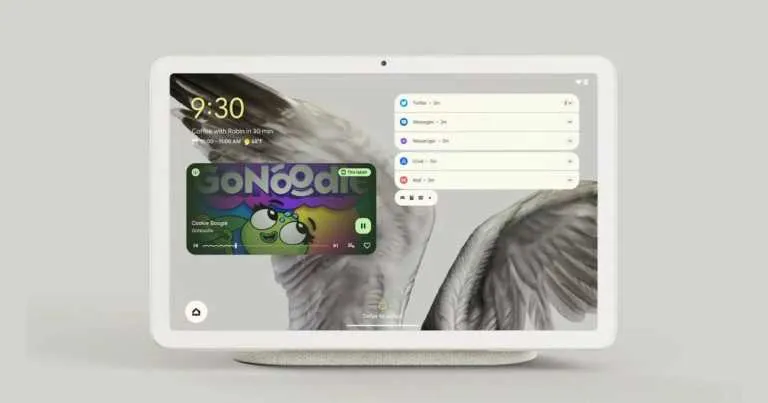
At last year’s I/O 2022 event, Google hinted at the release of its forthcoming Pixel Tablet. Recent rumors suggest that the launch of the device is imminent and could be announced at this year’s I/O event. Nevertheless, it is expected that customers will have to wait for another month before the Pixel Tablet hits the market.
The news comes from known tipster SnooppyTech who shared an image of the tablet with its docking station on Twitter. The tipster claims that the actual launch will take place on June 20, while the unveiling will most likely happen later today (May 10).
Other than that, we recently reported on the leaked pricing of the 128 GB and 256 GB storage versions of the tablet as well as the entire spec sheet that leaked through a fumble by Amazon. Let’s take a look at what’s known so far.
Google Pixel Tablet specs
The Google Pixel Tablet is set to arrive with a tall 10.95-inch LCD panel that boasts a 2560 x 1600px resolution and a 16:10 aspect ratio. The screen will have a peak brightness of 500 nits and will be compatible with the USI 2.0 touch pen, providing users with a seamless drawing and writing experience.
Under the hood, the Pixel Tablet will house the powerful Google Tensor G2 processor that is paired with a Titan M2 security coprocessor, ensuring optimal performance and top-notch security. The device will also come with 8GB of LPDDR5 RAM and either 128GB or 256GB of UFS 3.1 storage, providing ample space to store all your favorite apps, files, and media.
The Pixel Tablet will also feature an 8-megapixel camera on both the front and back, with a 1.12 μm pixel width, f/2.0 aperture, fixed focus, and an 84-degree field of view. This setup will allow users to capture stunning photos and videos, making the Pixel Tablet a perfect device for content creators.
Other notable features include WiFi 6 support, Bluetooth 5.2, a USB Type-C port, a quad-speaker setup, and three microphones, providing users with an immersive audio experience during video calls or while streaming media. Additionally, the rear pogo pins will allow for dock functionality, providing users with a versatile tablet experience. The Pixel Tablet can also be used as a smart home center, as it can connect to a speaker dock and function as a larger Google Nest Hub.
WhatsApp is a popular messaging application owned by Meta that has been in the spotlight for various security concerns in the past. The app has over two billion active users and is widely used around the world.
A Twitter Engineer found the bug on his Pixel 7 Pro
Recently, several users reported a bug in the app that allowed it to access the microphone even after the app had been closed. The issue was brought to the spotlight by a Twitter engineer who noticed it happening on his Pixel 7 Pro. The bug appears to be affecting several Android devices, including different Samsung and Pixel models, as well as several different versions of the Android app.
This bug is concerning for users who are worried about their privacy and security. In several of these reports, microphone activity from the app has been spotted in Android’s Privacy Dashboard as well as through the visible green dot notification on the Android status bar. This means that even when the user thinks that they have closed the app, it is still accessing their microphone, potentially recording their conversations without their knowledge or consent.
Over the last 24 hours we’ve been in touch with a Twitter engineer who posted an issue with his Pixel phone and WhatsApp.
We believe this is a bug on Android that mis-attributes information in their Privacy Dashboard and have asked Google to investigate and remediate. https://t.co/MnBi3qE6Gp
WhatsApp has responded to these reports by claiming that the issue lies with Android and not the app itself. They state that this seems to be a bug on Android that misattributed information in the privacy dashboard and have asked Google to investigate further. Unfortunately, WhatsApp’s response came after Elon Musk took to his Twitter account to share his opinion on the matter, accusing the company of not being trustworthy.
This latest bug has raised concerns about the app’s security and privacy features, further eroding users’ trust in the app. It is crucial that Google investigate the issue and address it as soon as possible to ensure users’ privacy and security are protected.
While WhatsApp is a popular messaging app, it is important to stay vigilant and aware of any potential security issues. Users should regularly check their app permissions and settings to ensure that their data is being protected.
Samsung is known for its impressive Android devices and software, and the company has been making headlines lately for its work on Android 14. While the latest version of Android hasn’t even been officially released yet, Samsung is already testing early internal builds of the update on its Galaxy S23 devices, as well as the Galaxy Z Fold 4 and Flip 4. This is quite early, about two months ahead of schedule, and suggests that Samsung is moving quickly to prepare for the new update. The update, which is expected to be called “One UI 6.0” for Samsung devices, is confirmed to address longstanding issues with background apps on Galaxy devices, but it’s unclear what else Samsung has in store.
@tarunvats33 noticed the first One UI 6.0 Test Build on Samsung Servers
The evidence of Samsung’s testing was first spotted by multiple Twitter users, including @tarunvats33, who noticed the first One UI 6 test build on Samsung’s servers. The firmware is meant for internal testing on the Galaxy S23 Ultra and carries the identification S918BXXU1BWE2. The Galaxy Z Fold 4 test firmware has the F936BXXU2DWE1 identification, while the Galaxy Z Flip 4 test update carries firmware version F721BXXU2DWD7. The fact that these firmware versions are believed to be associated with One UI 6.0 lies in the fourth to last digit, which represents a new big One UI update.
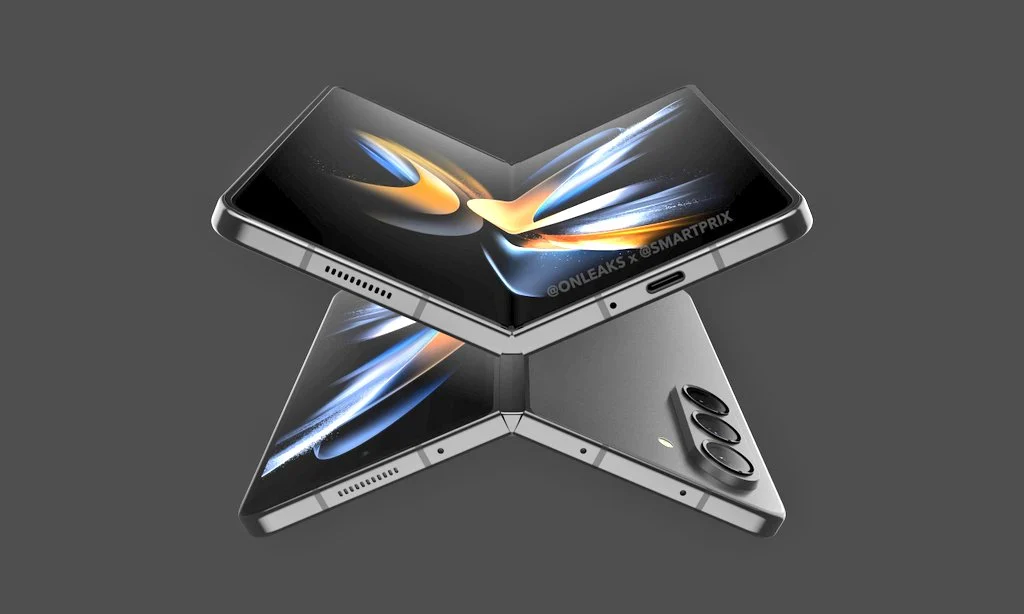
The Galaxy S23 series and the 2022 foldable flagship phones are expected to be the first to enter the Android 14 beta testing program later this year and could also be the first to receive the stable One UI 6.0 update. While it’s not entirely clear what One UI 6.0 will bring to Samsung devices, it’s expected to borrow some features from the Android 14 update that Google unveiled at its I/O conference. Samsung’s work on the update is an exciting development for Android fans who are eager to see what the new version of the operating system will bring. Samsung’s early testing suggests that the company is working hard to ensure that its devices are ready for Android 14 as soon as it’s released. The company is already working on its upcoming smartphones, such as the Galaxy Z Fold 5, which appeared in recent leaks.
Apple, under its Beats brand of audio products, has a top-end headphones named Beats Studio, but the company hasn’t updated it for almost half a decade now. However, the device is now all set to get refreshed and will come with some new and premium features.
According to the latest report from 9to5Mac, the Cupertino-based technology giant is about to launch new Beats Studio Pro headphones but the timeline for the launch of this product is not yet confirmed.
It is also being claimed that the headphones will be powered by a custom Beats chip, which is also promised to come with improved support for Active Noise Cancellation and improved performance for the Transparency Mode.
Another update in the device will be the addition of a USB Type-C port for charging the headphones, that too with a faster speed. It is said to have support for features like audio sharing, automatic device switching, and Siri integration, among others. It is also claimed to feature personalized spatial audio.
As for the design, the Beats Studio Pro appears similar to the Studio3, but the company seems to have gotten rid of the Studio branding from the side of the headphones. If the reports are to be believed, then Apple partnered with fashion designer Samuel Ross for the Beats Studio Pro.
There are reports claiming that the Beats Studio Pro will be offered in four color options — Blue, Black, Brown, and White. It is not yet known what will be the price point of the headphones but given that it will be a premium offering, it will be priced on the higher side.
We use cookies on our website to give you the most relevant experience by remembering your preferences and repeat visits. By clicking “Accept”, you consent to the use of ALL the cookies.
This website uses cookies to improve your experience while you navigate through the website. Out of these, the cookies that are categorized as necessary are stored on your browser as they are essential for the working of basic functionalities of the website. We also use third-party cookies that help us analyze and understand how you use this website. These cookies will be stored in your browser only with your consent. You also have the option to opt-out of these cookies. But opting out of some of these cookies may affect your browsing experience.
Necessary cookies are absolutely essential for the website to function properly. This category only includes cookies that ensures basic functionalities and security features of the website. These cookies do not store any personal information.
Any cookies that may not be particularly necessary for the website to function and is used specifically to collect user personal data via analytics, ads, other embedded contents are termed as non-necessary cookies. It is mandatory to procure user consent prior to running these cookies on your website.