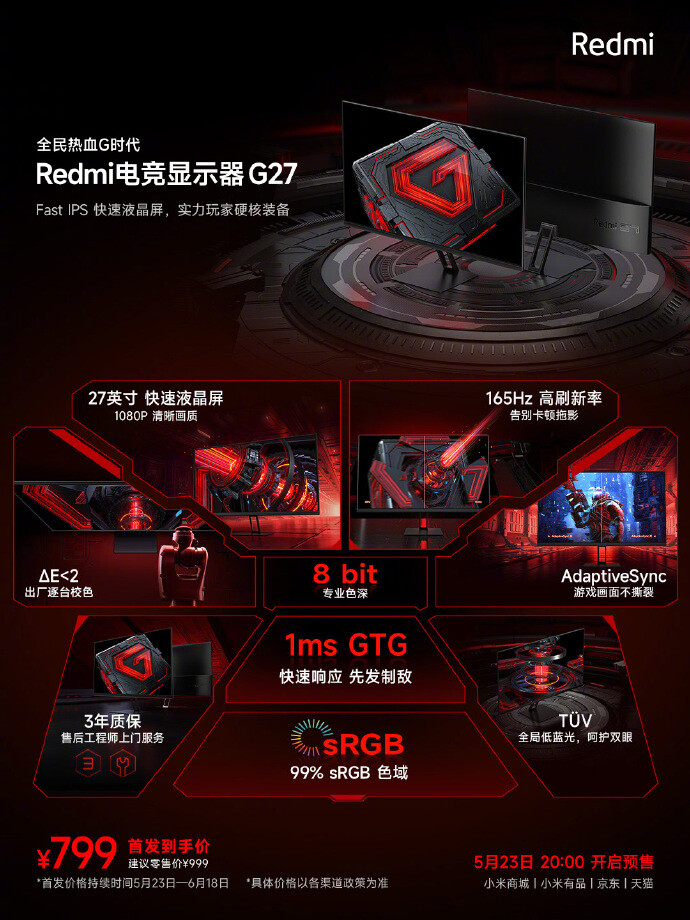
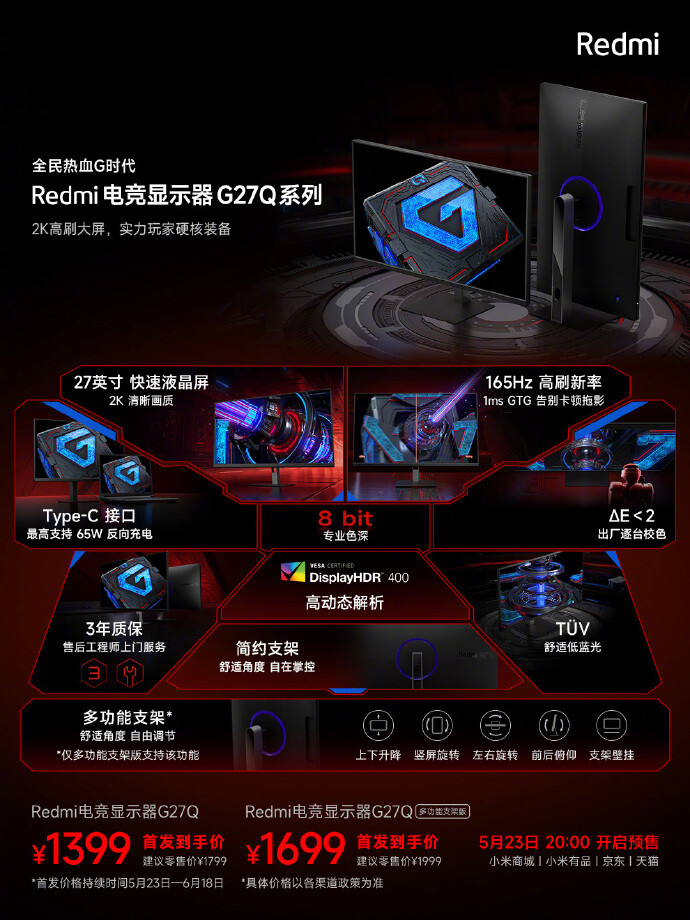
Xiaomi has announced the Redmi G27 series of new gaming monitors in China. The new Xiaomi Redmi G27 monitors offer either 1080p or 1440p resolution and a 27-inch display with a 165Hz refresh rate. The two new models are the G27 and G27Q and differ in a few areas.
Xiaomi Redmi G27 gaming monitor
The Xiaomi Redmi G27 and Redmi G27Q both offer 1ms GtG response times and below 2 Delta E color space coverage. Both models also come with IPS panels and are sized 27 inches. The Redmi G27Q has a higher resolution than the Redmi G27. While the G27 has a native 1080p panel, the Redmi G27Q comes with a 2K panel with a resolution of 2560 x 1440 pixels (2.5K/ 1440p). Both monitors deliver 8-bit color depth and the higher models come additionally with VESA DisplayHDR400 certification.
The Xiaomi Redmi G27 comes with a simple stand while the G27Q has a fully adjustable stand that supports tilting, rotating, and pivoting. In terms of I/O connections, both models come with HDMI and DisplayPort ports. The Redmi G27Q has a USB-C port which is absent in the lower model. This means that only the Redmi G27Q supports 65W charging via the USB Power Delivery protocol.
Xiaomi Redmi G27 and G27Q gaming monitors prices & availability
The Xiaomi Redmi G27 and G27Q gaming monitors are designed to catch the fancy of gaming buffs with their impressive properties. Both monitors will launch in the local market first and are priced at 799 yuan (~$113) and 1,399 (~$198) respectively. Xiaomi has not released any official details about the global availability and pricing of the Xiaomi G27 series of gaming monitors are lacking at this time.
Earlier today, Xiaomi announced the Redmi Note 12T Pro for the Chinese market, revealing its design and some key specifications. While there’s no official launch date yet, the company has now released new teasers, confirming the complete specifications of the upcoming Note 12T Pro. The device is expected to launch in the global market with a different name, likely as Redmi K60i. Let’s have a look at its specs.
Redmi Note 12T Pro Specifications
Redmi Note 12T Pro is going to be the latest mid-ranger from the brand. It will succeed the Note 11T Pro (review), which debuted last year in China and was rebranded as Redmi K50i for the global market. According to the company, the new smartphone will be powered by the Dimensity 8200 Ultra chipset which is also found on the latest Xiaomi Civi 3.
Redmi Note 12T ProRedmi Note 12T ProRedmi Note 12T Pro
The smartphone will be equipped with a 6.51-inch IPS LCD panel with FHD+ resolution and an impressive 144Hz refresh rate. For photography, the Redmi Note 12T Pro gets a 64MP primary camera alongside an 8MP ultrawide unit and a 2MP macro camera. You may get a 12MP selfie shooter on the front.
In the memory department, the Note 12T Pro comes with up to 12GB LPDDR5 RAM and 512GB UFS 3.1 storage. The device is fueled by a 5,080mAh battery with 67W fast charging. It boots Android 13 with MIUI 14 out of the box.
Xiaomi says the Redmi Note 12T Pro will be available for purchase in black, white, and blue colors. With all these details confirmed, only pricing and availability are left to be revealed. We can expect the company to disclose them in the coming days. Stay tuned for the updates.
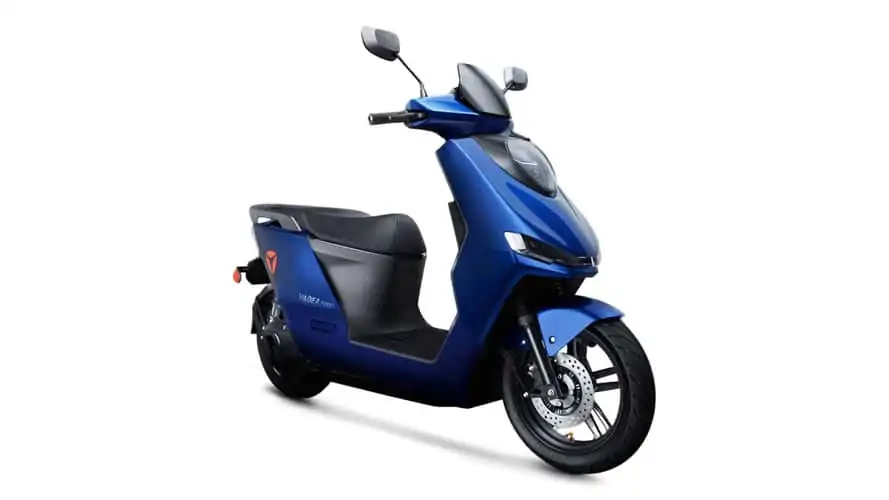
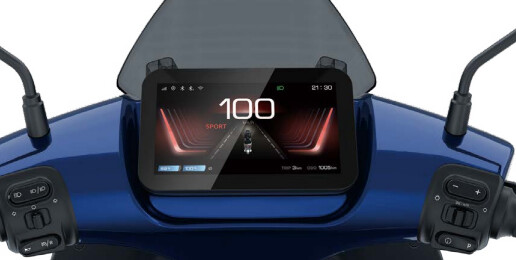
Yadea has announced the VF F200 electric scooter designed for the European market. The Yadea VF F200 was jointly developed by Yadea and Porsche. The unveiling of the VF F200 electric scooter follows Yadea’s showcase of some electric two-wheelers at CES.
The Yadea VF F200 e-scooter bears the imprimatur of the Porsche design philosophy. It looks sleek and streamlined in an exciting manner. The bike was inspired by the sculptural and elegant forms of sports cars.
The electric two-wheeler market continues to expand in several markets including Europe. It is populated by utility-focused scooters with a little sprinkling of enthusiast-driven machines. The Yadea VF F200 comes with an impressive spec sheet and Yadea says it is the most powerful e-scooter in the L3e category. It squares up in power with a 125cc gas-powered motorcycle but regulatory constraints mean its power is capped.
The F200 e-scooter is rated with a peak output of 11kW but it makes this power across its rev range, unlike gas-powered motorcycles. The F200 could well have up to twice its stated power output. The e-scooter has a torque of 236Nm which is available across the entire rev range. This gives the VF F200 the power to go from 0 to 30mph in just 2.5 seconds. The bike has a top speed of 62mph, as per the regulatory cap and it can reach a distance of 80 miles on a single charge.
The pricing and release date for the Yadea F200 electric scooter is lacking at this moment. It is however expected that Yadea will release such details soon.
In the past few years, many companies have committed to manufacturing their electronics in India, with Apple being in the spotlight recently. Xiaomi is one of the largest smartphone manufacturers in India, and it has been making its phones in the country since 2014 with manufacturing plants spread across 6 locations. The Chinese company is now reported to start making wireless audio products in the country through a partnership with electronics manufacturer Optiemus.
Xiaomi expands its manufacturing footprints in India
In a statement to Reuters, Xiaomi revealed that its Indian arm would manufacture its first local audio gadget at Optiemus Electronics’ factory in the northern state of Uttar Pradesh. The company reiterated its commitment to increasing the production of locally sourced components by 50% by 2025.
Xiaomi did not reveal what kind of audio product it will make in the Indian factory. However, it is “committed to forging more such collaborations for a wider range of categories, across our product line-up,” reports Reuters. Xiaomi sells a variety of audio products in the country, including speakers, earphones, and headphones.
As mentioned, Xiaomi has already established a large manufacturing presence for its smartphones in India. The company employs over 60,000 people in the country and collaborates with various partners such as Foxconn, Flex, DBG, and BYD. The brand’s decision to make phones in India has proven beneficial for customers, as it has enabled Xiaomi to maintain competitive pricing for its devices.
However, Xiaomi has faced challenges in maintaining its dominance in the Indian smartphone market. The brand has notably lost its position as the country’s top smartphone company to its South Korean rival, Samsung. Much of this could be because of the brand’s puzzling portfolio and misunderstanding of consumer taste in the country. Read more about it in our post here.
Smartphones typically come with a defined warranty period, usually lasting 1-2 years, during which repairs for both hardware and software issues are covered at no extra cost. Some brands offer the option to purchase extended warranties for their devices, but it is rare to find a company that provides extended warranties for free. Xiaomi has chosen to be the exception by announcing a two-year warranty extension for select phones in India. But there are VERY specific conditions for you to avail of this.
Here are the devices getting this extension and the reason behind it
Xiaomi quietly announced on Discord (you read that right) that select older phones will have an extended warranty of two years. These devices are the Redmi Note 10 Pro, Redmi Note 10 Pro Max, Mi 11 Ultra, and Poco X3 Pro. But we hate to break it to you that not all units will get the extension. If you’re currently experiencing a selfie camera issue or a motherboard failure, then only Xiaomi will take care of it under warranty. The company is being very specific with the extension.
This decision was publicly announced during a fans’ meet organized by Xiaomi India’s feedback team. Senior executives, including Murlikrishnan B (President of Xiaomi India), Anuj Sharma (Chief Marketing Officer), and Alvin Tse (Vice President of Xiaomi Global), attended the event. The meet took place on the Xiaomi Insiders Discord server, providing users with an opportunity to share their feedback on Xiaomi devices.
As GSMArena rightly points out Xiaomi may have identified some potential issues with certain phones and parts and is now working to address these issues. However, the company has not mentioned these conditions on the warranty information pages, yet.
The automobile industry is rapidly becoming more integrated with modern technology. Once a sector rooted in motor engineering, it is now gradually digitalizing with the spread of technologies such as electric vehicles and autonomous driving. This is creating new opportunities for companies of all sizes. However, it is not easy to break into a market dominated by century-old manufacturers. To succeed, many companies are finding that collaboration is essential. For example, Nvidia and MediaTek have recently partnered to develop connected car technology. Here are the details…
Nvidia and MediaTek Collaborate on Next-Generation Vehicle Systems
Nvidia and MediaTek have announced a partnership to develop advanced vehicle infotainment systems. The partnership will see MediaTek integrate Nvidia’s GPU chiplet and software into its system-on-chips (SoC), which it provides to automakers for infotainment displays. The partnership will enable automakers to develop more sophisticated and immersive in-vehicle experiences.
The systems will be capable of streaming video, running games, and AI tasks to interact with drivers. Dashboard displays will provide an external view of the vehicle’s environment, while cameras will monitor the driver. “The automotive industry needs strong companies that can work with the industry for decades at a time,” Nvidia Chief Executive Jensen Huang told a news conference in Taipei, pointing to a long product cycle for car makers.
The partnership is a major coup for Nvidia, which has been looking to expand its reach into the automotive market. MediaTek is a leading supplier of semiconductors to the automotive industry, and its partnership with Nvidia will give the company a major advantage in the development of advanced infotainment systems.
Infotainment systems are the in-car computers that control things like the radio, navigation, and climate control. They are becoming increasingly sophisticated, with features like voice recognition, streaming video, and gaming. Nvidia and MediaTek’s partnership will allow them to develop infotainment systems that are even more advanced and user-friendly. The partnership is also a sign of the growing importance of AI in the automotive industry.
Smartphones are an integral aspect of modern day life, but the question stands. How far will you go to save your device if you’ve dropped it somewhere hard to reach. This Indian government official answers the question with a very questionable rescue operation for his Samsung Galaxy S23 Ultra.
Indian Govt official suspended for his attempts to save his Samsung Galaxy S23 Ultra
According to an Indian Express report, the government official had dropped his Samsung Galaxy S23 Ultra while taking a selfie in a reservoir in the Chattisgarh State in India. The official decided to take extreme steps to retrieve the smartphone since it cost over 1,200 US Dollars. Initially, he decided to have some known villagers dive into the dam to find the handset, but when this failed, some extreme measures were taken.
The food inspector rented a pump and drained about three feet of water over the course of the next two days. This finally helped him retrieve his Samsung Galaxy S23 Ultra, but the victory lap was only short lived as the move was received extremely negatively, to no one’s surprise. As per reports, the water that was drained amounted to 2,100,000 liters was meant to be used to irrigate the fields of at least 1,500 acres.
Following this incident, the government sub divisional officer (SDO) was promptly suspended. The official claimed that the water was unusable for irrigation and that he had received proper permission for this action. Despite such drastic actions, the retrieved Galaxy S23 Ultra did not survive incident.
A new leak has just revealed some crucial information regarding the upcoming OnePlus Ace 2 Pro model. The launch timeline for this device as well as some of its display related specifications have been revealed. So let’s have a look.
OnePlus Ace 2 Pro may feature a near identical display as the Oppo Reno 10 Pro+
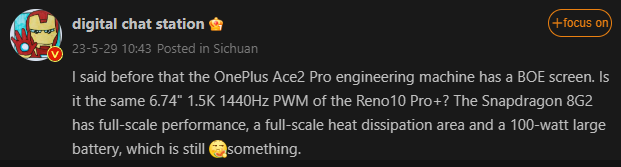
The latest leaks arrives from a known tipster Digital Chat Station who shared the details on Weibo (a Chinese microblogging website). On the platform, the tipster revealed the launch timeline of the upcoming smartphone. Apparently, the OnePlus Ace 2 Pro will be announced sometime between July or August of this year. He further adds that this move from the brand will also have it compete with the Redmi K60 Ultra model from Xiaomi.
The OnePlus Ace 2 Pro also arrives after the Ace 2 model that was launched back in February 2023. Additionally, Digital Chat Station revealed that the smartphone will sport a tall 6.74 inch OLED panel that has curved edges and narrow bezels. This screen will be supplied by BOE and will have a 1.5K resolution and a 120Hz refresh rate. Apparently, this display will basically be similar to the one offered on the Oppo Reno 10 Pro+ model and will also feature 1440Hz PWM dimming as well.
As per previous reports, the device will be equipped with with an overclocked version of the Qualcomm Snapdragon 8 Gen 2 SoC that will likely be paired with up to 16GB of LPDDR5X RAM and 512GB of UFS 4.0 storage. Other notable features, 50 megapixel primary camera on the rear, which supports OIS and 5000mAh battery pack that supports 100W fast charging.
UGREEN, in collaboration with BYD Electronics, has recently unveiled the Star Outdoor Power Supply GS2200. This cutting-edge device is priced at 6,899 yuan and has a power specification of 2200W and 2kWh. It joins the existing lineup of the Star series, which includes the 600W 0.68kWh and 1200W 1kWh models.
The GS2200 has a sleek and sophisticated dark gray design. It has a range of DC output interfaces, including 4 Type-C interfaces, 2 USB-A interfaces, 2 DC5521 interfaces, 1 cigarette lighter port, and 1 Anderson interface specifically tailored for RV power supply. On the side, there are 6 AC ports that deliver a seamless 220V sine wave AC output.
The Lulian Xingchen outdoor power supplies use BYD’s lithium iron phosphate battery, the same high-quality material employed in their new energy vehicles. These batteries are not only safe and stable but also exceptionally resistant to high temperatures. Even after 3000 charge and discharge cycles, the battery’s capacity remains above 80%, granting it a lifespan nearly six times longer than traditional alternatives.
The GS2200 comes equipped with the remarkable PowerZip flash charging technology, enabling an impressive full charge time of just 1.5 hours. It can also be charged through solar panels, supporting up to 1200 watts of solar panel input. This means that it can be fully charged in as little as 2.5 hours, ensuring an efficient and reliable power supply even in remote outdoor locations.
Earlier today, Honor unveiled Honor 90 and Honor 90 Pro affordable premium smartphones in China. Alongside these handsets, the brand also announced a new pair of truly wireless earphones.
Officially called Honor Earbuds X5, the budget TWS is similar to the recently launched Oppo Enco R2. In other words, the product only comes with basic features and lacks ANC (Active Noise Cancellation).
The Honor Earbuds X5 are half-in-ear (aka open ear) wireless earbuds. The charging case resembles a pebble, while the buds look like Apple AirPods.
The accessory arrives in Glaze White and Coral Pink color options. It is priced at ¥299 ($40) and will go on sale from June 7.
The buds feature 13.4mm drivers and connect via Bluetooth. They support multipoint connection, and therefore, they can remain connected to two devices at a time and switch between them.
The earbuds can be seamlessly paired with Honor smartphones. They are compatible with Honor AI Space app for management.
Using the application, users can play with equalizer and other options. They can even locate the buds via the app.
The buds support touch controls and ENC (Environmental Noise Cancellation) for calls. Last but not least, they are rated to last for 27 hours on a full charge (with charging case).
Currently, it is not known if and when the Honor Earbuds X5 will be released in global markets.
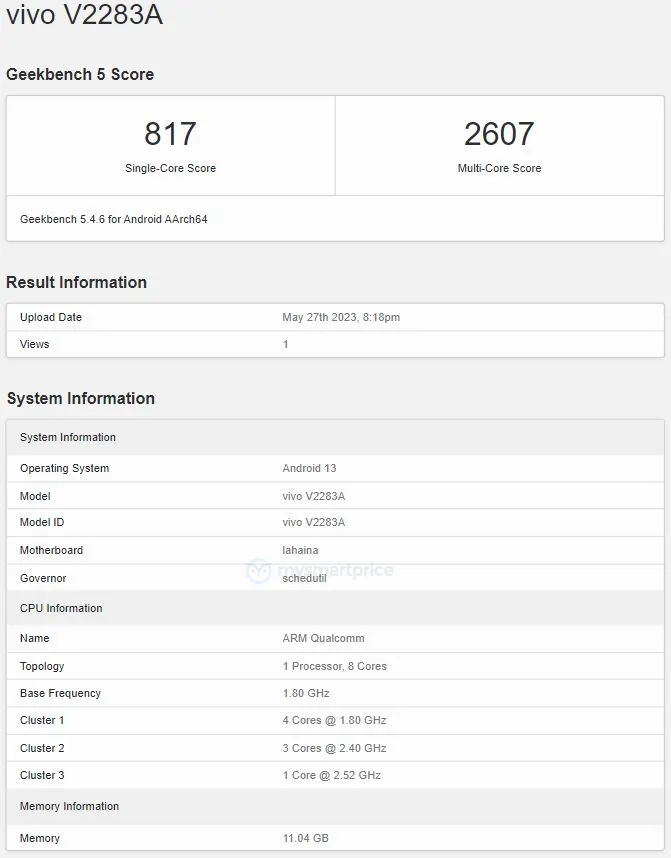
Vivo is set to launch the Vivo S17 series in China on May 31. The lineup will consist of a standard and pro variant. The latter was spotted on Geekbench last week. Now the Vivo S17 has made its appearance on the benchmarking platform. The phone is listed with model number V2283A and it reveals some key specifications.
Vivo S17 spotted on Geekbench
The Vivo S17’s Geekbench listing reveals a motherboard codenamed ‘lahana’ and it comprises four cores at 1.8GHz, three cores at 2.4GHz, and a primary core ticking at 2.52GHz. This corresponds to Qualcomm’s Snapdragon 778G+ chipset. As per the benchmarking platform, the smartphone will pack 12GB RAM onboard. We can expect more configurations at launch. The upcoming offering will run on Android 13 OS out of the box.
In the Geekbench’s single-core and multi-core test results, the Vivo S17 scores 817 and 2,607 points respectively. Apart from this, the benchmarking database does not reveal any additional details.
The Vivo S17 is expected to come with a 6.78-inch AMOLED display bearing a 1.5K resolution and a 120Hz refresh rate. The smartphone is tipped to feature a 50MP OIS-enabled primary sensor and an 8MP ultra-wide-angle lens. The upcoming offering will reportedly support 66W or 80W fast charging. Meanwhile, the Vivo S17 Pro is confirmed to come with a 50MP selfie camera with dual soft LEDs and a 2x portrait lens on the rear.
We will learn official details about the Vivo S17 series on Wednesday.
Acer has launched a new laptop in India. It falls under the brand’s Aspire lineup. The latest offering is the Acer Aspire 5. It comes with the latest generation Intel core processor. Read on to know what the laptop offers out of the box.
Acer Aspire 5 specifications and features
The Acer Aspire 5 packs a 14-inch display bearing a WUXGA resolution. It has a 170-degree viewing angle and a 60Hz refresh rate. The laptop features an environmental-friendly design with a mercury-free display and a metal chassis. It weighs 1.57 kg. The device comes with a backlit keyboard and a touchpad that has an integrated fingerprint scanner.
Under the hood, the Acer Aspire 5 can be availed in either a 13th-generation Core i5 or i7 processor. It is equipped with an NVIDIA GeForce RTX 2050 GPU onboard along with NVIDIA Optimus technology that optimizes performance while maintaining battery life. The device packs 8GB DDR4 RAM and 512GB NVMe SSD storage.
The Acer Aspire 5 is backed by a 50Wh battery unit with support for 65W charging. It runs on Windows 11 Home OS. The laptop comes with connectivity options like 3 USB Type-A ports, Type-C ports, WiFi-6E, Bluetooth, and MU-MIMO technology.
The Acer Aspire 5 Core i5 variant is priced at Rs 78,788 whereas the Core i7 option costs Rs 89,995. The laptop can be purchased from Acer Exclusive Stores, Acer E-store, Croma, Vijay Sales, and Amazon.
The Xiaomi 14 series is the next generation of flagship smartphones that will likely launch around the end of this year. But ahead of any official announcement, a new leak has hinted at the higher end Xiaomi 14 Pro model arriving in two different versions.
Xiaomi 14 Pro could launch in a flat & curved display variant
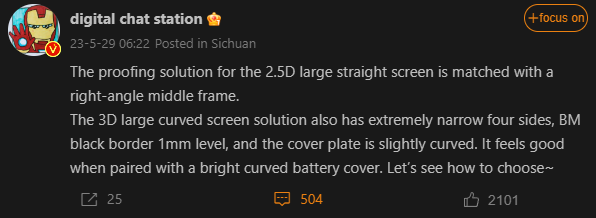
For those unaware, the Chinese tech giant is expected to launch the Xiaomi 14 series sometime between November and December this year and will likely include a base Xiaomi 14 and a Xiaomi 14 Pro model. While there have been rumors regarding their specifications, the latest information arrives from known tipster Digital Chat Station that shared that the details regarding this higher end Pro model’s design. Apparently, the company’s upcoming premium phone will feature a 2.5D large flat display.
This panel will also feature a middle frame that has a right angle shape. In other words, the 14 Pro will arrive in at least one variant that has a flat display. The tipster further added that there will also be one variant that has a 3D curved panel and slim bezels on all four sides. The leak states that the chin on the bottom will also measure just 1mm in thickness. Meaning, we can expect to see a near all display design on the next gen flagship.
Based on what we know so far, the smartphone will likely be equipped with the Qualcomm Snapdragon 8 Gen 3 SoC. A previous leak had also hinted that a large 5,000mAh battery pack that will support 50W wireless charging. It was even claimed that the device will offer two different wired fast charging rates, which includes a 90W and 120W version. So, the flat and curved models might have a varied charging speeds as well.
Ambrane has expanded its range of smartwatches in India. The latest offering from the brand is a rugged smartwatch and it is dubbed the Ambrane Crest Pro. It packs a host of health and convenient features. Read on to know what it offers out of the box.
Ambrane Crest Pro specifications and features
The Ambrane Crest Pro sports a round dial with a rotating crown and three physical buttons for navigation. It is equipped with a metal case and toughened glass. The device is designed to withstand tough conditions making it suitable for outdoor activities. It is also IP68-certified water-resistant. The Crest Pro features a 1.56-inch display bearing a resolution of 360 x 360 pixels and 600 nits peak brightness.
On the health-centric front, the Ambrane Crest Pro is equipped with a heart-rate monitor, SpO2 sensor, and menstrual cycle tracker. It is also capable of measuring sleep patterns and stress levels. There is a breathing training feature and a sedentary reminder. The wearable device packs support for more than 100 sports modes.
The Ambrane Crest Pro is equipped with a built-in mic, speaker, and dialler for Bluetooth calling. Convenient features on the smartwatch include a remote camera and music control, weather updates, find my phone, and more. The wearable device is powered by a 400mAh battery unit that is claimed to last up to 7 days.
The Ambrane Crest Pro is priced at Rs 2,499 and is offered in Black, Green, Camouflage Green, Camouflage Brown, and Camouflage Black colors. The smartwatch can be purchased from the brand’s official website and Flipkart.
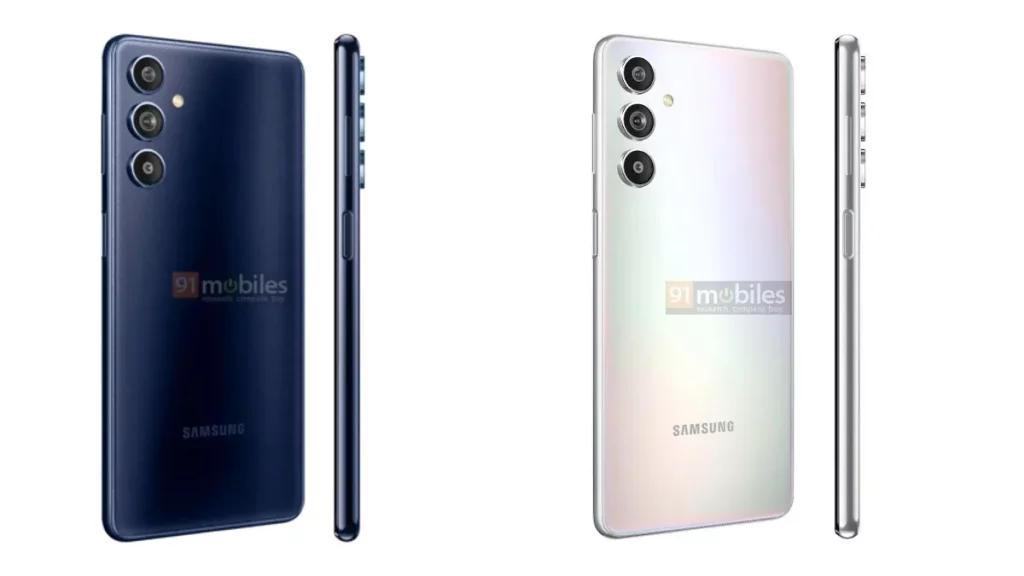
The Samsung Galaxy F54 was initially tipped to launch in April. Later, it was rumored to release in May.
Now, it is being said that the smartphone is once again delayed. At the same time, the device is expected to cost a bit more than the previous leaked price.
According to Debayan Roy (@Gadgetsdata), Samsung has delayed the launch of Galaxy F54 in India. The phone will now release in the first or second week of June instead of May which ends in two days.
He also reveals that the handset will not be priced at ₹27,000. It may cost around ₹29,000-₹30,000.
We are not sure how accurate these details are. Therefore, we urge you to consider this with a pinch of salt.
As per earlier leaks, the upcoming Galaxy F54 will be built around a 6.7-inch 120Hz Super AMOLED display. It will be powered by an Exynos 1380 SoC, the chipset found inside the Galaxy A54.
The device is tipped to sport a triple camera system on the rear headed by an OIS-assisted 108MP primary sensor. The other two modules will be an 8MP ultra-wide unit and a 2 macro snapper.
For biometrics, the phone is expected to use a side-mounted fingerprint sensor. Finally, it is said to draw energy from a 6,000mAh battery with support for 25W charging.
What are your thoughts on the forthcoming Samsung Galaxy F54? Do let us know in the comment section below.
Vivo, the popular smartphone brand, is gearing up to unveil its next series, the Vivo V29 series, in global markets. Reports suggest that the series will also make its way to the Indian market. Recently, an online teaser image of the Vivo V29 Pro hinted at an imminent launch, and now the smartphone has been listed on the official Vivo Philippine website. The listing has provided users with a glimpse of the key specifications to expect from the successor to the Vivo V27 Pro.
Vivo V29 Pro specifications (leaked)
According to the official website, the Vivo V29 Pro will boast a 6.7-inch OLED curved display with a resolution of 1080 pixels and a refresh rate of 120Hz. The brand claims that this display will offer users a more enjoyable visual experience. The smartphone will feature a 64MP triple rear camera setup, along with a powerful 50MP front-facing camera for stunning selfies.
Under the hood, the Vivo V29 Pro will house a substantial 5000mAh battery that supports 66W fast charging. This means users can expect quick and convenient charging times. Additionally, the device will come equipped with 12GB of RAM and 256GB of internal storage, ensuring a smooth and seamless user experience.
According to past reports, the device is expected to feature MediaTek Dimensity 8000 series 5G chipset. The primary rear camera is also rumored to come with OIS. The device is said to sport a color-changing rear panel and an under-display fingerprint scanner.
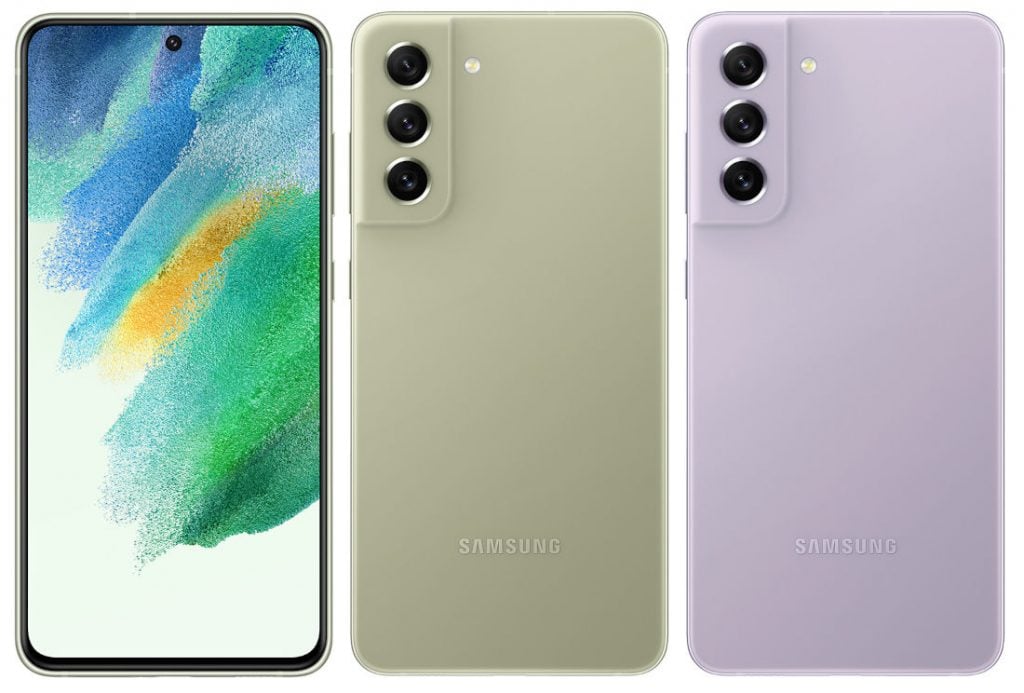
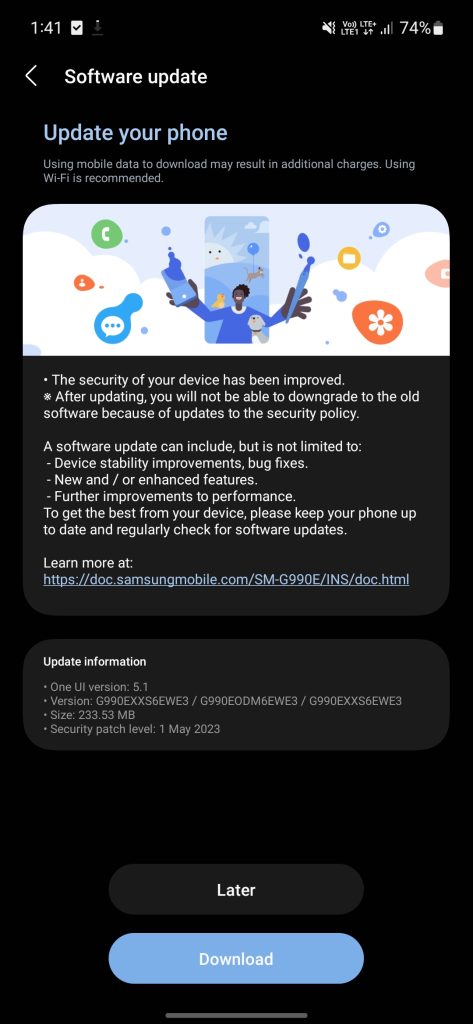
Samsung has recently released the May 2023 security update for the Galaxy S21 FE 5G in India. The latest firmware version, G990EXXS6EWE3, is being rolled out to users, who can easily install the update by downloading a 233.53 MB package. It is worth noting that the update has already been made available in various countries, including Brazil and Europe.
What’s new in this update for Samsung Galaxy S21 FE?
With the May 2023 security patch, Samsung addresses a total of 72 security vulnerabilities found across their smartphones and tablets. Among these, six fixes are critical, four of which pertain to all Android devices, and two are specific to Samsung phones. Additionally, 56 fixes are classified as High severity, and 10 fixes are labeled as Moderate. Notably, Samsung has already addressed two of the vulnerabilities before in the April 2023 security patch, while one fix suggested by Google is not applicable to Samsung devices.
The security flaws that were identified encompassed areas such as the FactoryTest function, ActivityManagerService, kernel pointers exposure in the log file, Theme Manager, GearManagerStub, and the Tips app. Furthermore, vulnerabilities were discovered in the Shannon modem present in Exynos processors, bootloader, Telephony framework, call settings components, and AppLock access control. Samsung has diligently resolved these issues in addition to fixing 58 security flaws addressed by Google.
Users of the Samsung Galaxy S21 FE will receive a notification to download and install the update once it becomes available. Alternatively, users can manually initiate the installation process by navigating to Settings, selecting Software Update, and then opting for Download and Install.
The Galaxy S21 FE was launched last year and came with Android 12 out of the box. It has since received the Android 13 (One UI 5.0) update towards the end of 2023 and the One UI 5.1 update a few months ago. Samsung has committed to providing three more major Android OS updates, including Android 14, Android 15, and Android 16, making the Galaxy S21 FE a viable long-term investment for users.
The smartphone boasts notable features, such as a 6.4-inch FHD+ Infinity-O Dynamic AMOLED display, a 32MP front-facing camera, and a triple camera setup on the back, comprising a 12MP primary sensor with OIS, a 12MP ultra-wide lens, and an 8MP telephoto lens. The device is powered by an octa-core Samsung Exynos 2100 processor and offers up to 8GB of RAM and 128/256GB of internal storage. It is equipped with a 4500mAh battery that supports 25W wired fast charging and 15W wireless charging.
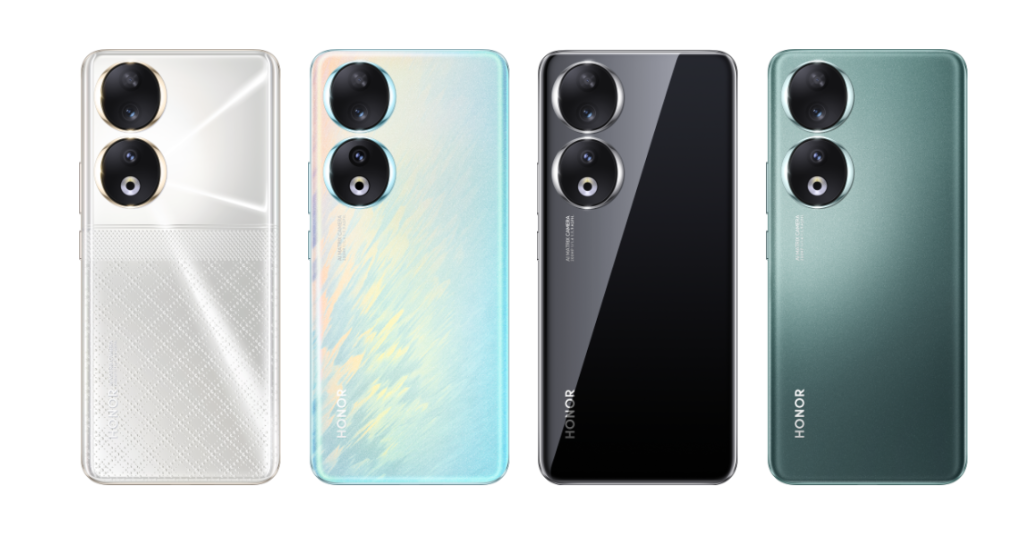
In China, Honor has recently unveiled its 90 series smartphones, consisting of the Honor 90 and the Honor 90 Pro models. While we have previously discussed the details of the Pro variant, this report will focus on highlighting the features and specifications of the Honor 90.
Design & display
Design-wise, not much has changed compared to the previous generation. The back has a triple camera module housed on two circular camera islands. With dimensions measuring 161.9mm in length, 74.1mm in width, and a sleek 7.8mm thickness, the Honor 90 strikes a balance between a compact design and a comfortable grip. It weighs approximately 183 grams, ensuring portability without compromising on durability.
The device boasts a captivating 6.7-inch OLED display, delivering stunning visuals with a Full HD resolution of 2664×1200 pixels. With a screen aspect ratio of 19.98:9 and support for a true 1.07 billion colors and DCI-P3 wide color gamut, the Honor 90 provides an immersive and vibrant viewing experience. The screen is designed with rounded corners, and although the actual viewing area is slightly smaller, it doesn’t diminish the visual appeal.
Performance
Under the hood, the Honor 90 houses the Snapdragon 7 Gen 1 octa-core processor, offering powerful performance for smooth multitasking and efficient operations. The CPU comprises a combination of Cortex-A710 cores, with frequencies of 2.5GHz, 2.36GHz, and 1.8GHz, intelligently adjusting the operating frequency based on the application load. The device is equipped with an Adreno 644 GPU, ensuring smooth graphics rendering for gaming and multimedia experiences.
The Honor 90 runs on MagicOS 7.1, based on the latest Android 13, providing a user-friendly interface and access to a wide range of apps and features. It comes with generous storage options, including 16GB+256GB, 12GB+256GB, or 16GB+512GB, enabling users to store their files, apps, and media without limitations.
Powering the Honor 90 is a 5000mAh Li-ion polymer battery, providing long-lasting usage throughout the day. The device supports wired fast charging, with a maximum super-fast charge of 11V/6A using the included Honor 66W Super Fast Charge Charger. The battery capacity is rated at 4900mAh, and the actual charging power adjusts intelligently based on different scenarios.
Camera
In terms of photography capabilities, the Honor 90 boasts a rear triple camera setup. The main camera features an impressive 200-megapixel ultra-clear outsole lens with an f/1.9 aperture, accompanied by a 12-megapixel ultra-wide-angle macro lens (f/2.2 aperture) and a 2-megapixel depth-of-field lens (f/2.4 aperture). The rear camera supports a maximum of 4K (3840×2160) video recording with EIS video stabilization, and a variety of shooting modes such as AI photography, night scene mode, and professional photo and video options.
For selfie enthusiasts, the device offers a front-facing 50-megapixel portrait lens (f/2.4 aperture) capable of capturing stunning self-portraits with exceptional detail. The front camera also supports 4K video recording with EIS anti-shake and various shooting modes including dynamic photo, portrait mode, and time-lapse photography.
Pricing
The Honor 90 Standard Edition is available in three different configurations with varying storage options. The 12GB+256GB variant is priced at 2499 yuan, while the 16GB+256GB variant comes at a price of 2799 yuan. For those in need of even more storage space, the 16GB+512GB variant is available at a price of 2999 yuan.
Xiaomi ended software support for Mi 10 Lite Zoom, a China-exclusive smartphone in late April. Back then, we suggested that the global Mi 10 Lite 5G may get a similar treatment in a month. This has happened now as the device has been listed on Xiaomi’s official EOS (End of Support) list.
At the same time, the company has dropped software support for three of the Redmi Note 9 series handsets, such as Redmi Note 9S, Redmi Note 9 Pro, and Redmi Note 9 Pro Max. Let’s go through the details.
According to Xiaomiui, Xiaomi has added the Mi 10 Lite 5G to its EOS list. This confirms the termination of software support for this phone.
On the other hand, the aforementioned Redmi Note 9 models are yet to be included in the said list. But as per the security bulletin, they are supposed to receive security updates only until May 2023.
As these phones just received a security update in April and May is about to end, there may not be a new software build hereafter. The EOS list will likely be updated in a while with these handsets.
All these smartphones were released in early 2020. So Xiaomi ended their software support 3 years after their release.
For comparison, similarly priced Samsung devices from the same period will continue to receive software support till next year (4 years). But Oppo, Vivo, and Realme have the same policy as Xiaomi.
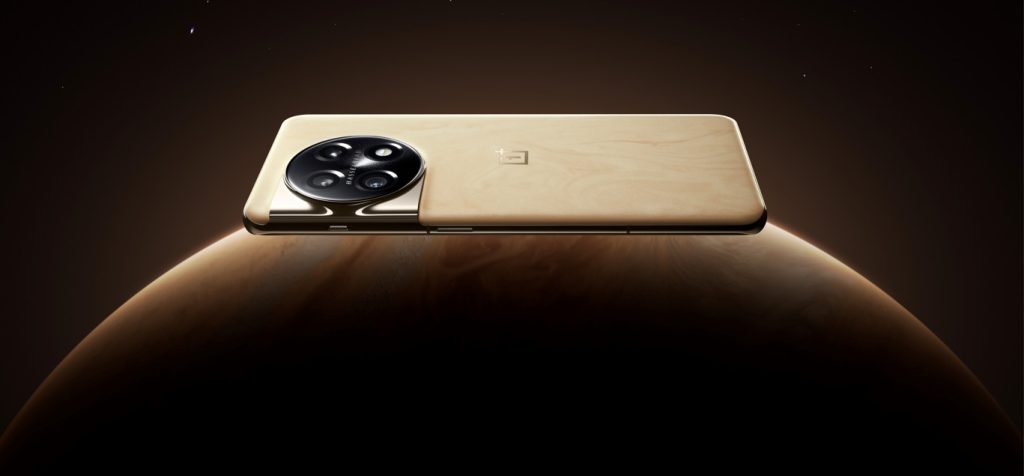
OnePlus has unveiled its latest smartphone, the OnePlus 11 5G Marble Odyssey Limited Edition, in India. This special edition device showcases a distinctive microcrystalline rock material that provides a unique marble-like finish, creating a visually appealing and tactile experience that varies from one phone to another.
The OnePlus 11 5G Marble Odyssey is exclusively designed, ensuring that each device is truly one-of-a-kind, with no two phones being identical. Embracing the concept of individuality, OnePlus has utilized a raw “visual texture” derived from microcrystalline rock material, resulting in an enchanting rear panel that cannot be replicated. This exquisite design embodies the elegance of natural marble, with every device possessing its own distinct characteristics.
The development process for this special edition smartphone took over a year to achieve the level of quality required for mass production. OnePlus encountered unique challenges and adopted an innovative approach, pushing the boundaries of smartphone industry standards.
Initially, the yield rate for the marble-like rear panel was only 25% of the original glass back. However, through meticulous refinement, OnePlus was able to achieve an impressive 50% yield rate for the final limited edition units.
Crafting a single piece of this extraordinary material involves a meticulous nine-step production process, guaranteeing that every panel meets the highest standards of quality and aesthetics. Each piece is carefully selected or discarded by hand, ensuring that only flawless examples are chosen for the final application.
The OnePlus 11 5G Marble Odyssey offers a special tactile experience, with its ultra-smooth and cool-to-the-touch texture reminiscent of polished marble or refined pebbles.
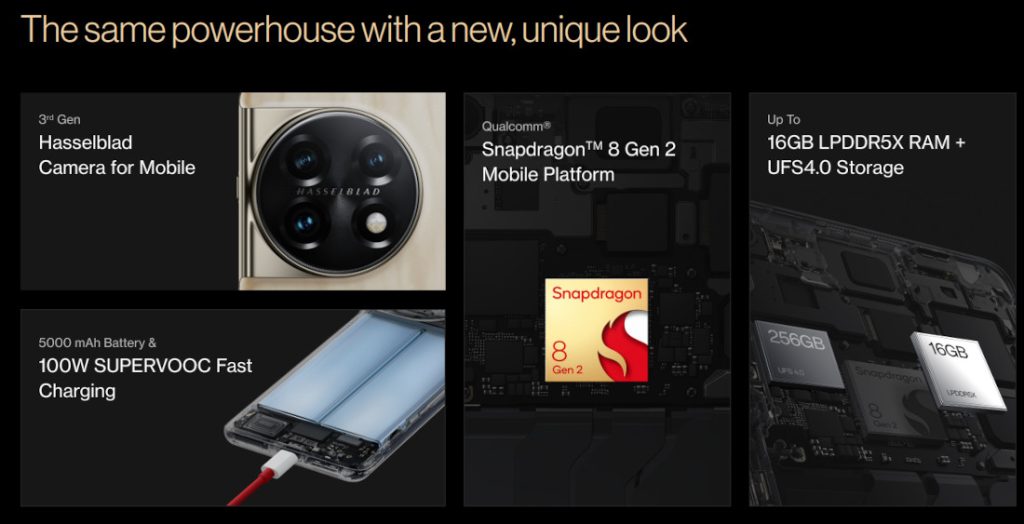
In terms of specifications, the OnePlus 11 5G Marble Odyssey retains the same features as the original OnePlus 11 5G model.
OnePlus 11 5G Marble Odyssey Specifications
The OnePlus 11 5G (check out our full review of OnePlus 11) features a 6.7-inch Quad HD+ flexible curved AMOLED display with a resolution of 3216 x 1440 pixels, HDR 10+, and Dolby Vision support. It is protected by Corning Gorilla Glass Victus and offers a refresh rate ranging from 1Hz to 120Hz.
Powering the OnePlus 11 5G is the octa-core Snapdragon 8 Gen 2 4nm chipset, accompanied by the Adreno 740 GPU and 16GB LPDDR5X RAM. The phone runs on Android 13 with OxygenOS 13 on the top.
The OnePlus 11 5G supports dual SIM functionality and sports a rear camera setup comprising a 50MP primary camera (Sony IMX890 sensor, f/1.8 aperture, OIS), a 48MP ultra-wide camera (Sony IMX581 sensor, f/2.2 aperture, 3.5cm macro), and a 32MP telephoto lens (RGBW, 2x optical zoom, Sony IMX709 sensor). It also features a Hasselblad camera system for enhanced photography.
For selfies and video calls, the phone offers a 16MP front-facing camera with an f/2.4 aperture. Security is provided by an in-display fingerprint sensor. Connectivity options on the OnePlus 11 include USB Type-C, 5G SA/NSA, dual 4G VoLTE, Wi-Fi 6 802.11 ax 2X2 MIMO, Bluetooth 5.3, GPS (L1+L5 Dual Band) + GLONASS, and NFC.
With a dimension of 163.1×74.1×8.53mm and weighing 205g, the OnePlus 11 houses a 5000mAh battery with support for 100W SuperVOOC fast charging.
Pricing and Availability
The OnePlus 11 5G Marble Odyssey will be available for purchase from June 6th on Amazon.in and OnePlus.in. The pricing details will be revealed closer to the launch date.
We use cookies on our website to give you the most relevant experience by remembering your preferences and repeat visits. By clicking “Accept”, you consent to the use of ALL the cookies.
This website uses cookies to improve your experience while you navigate through the website. Out of these, the cookies that are categorized as necessary are stored on your browser as they are essential for the working of basic functionalities of the website. We also use third-party cookies that help us analyze and understand how you use this website. These cookies will be stored in your browser only with your consent. You also have the option to opt-out of these cookies. But opting out of some of these cookies may affect your browsing experience.
Necessary cookies are absolutely essential for the website to function properly. This category only includes cookies that ensures basic functionalities and security features of the website. These cookies do not store any personal information.
Any cookies that may not be particularly necessary for the website to function and is used specifically to collect user personal data via analytics, ads, other embedded contents are termed as non-necessary cookies. It is mandatory to procure user consent prior to running these cookies on your website.