Advertisement

Samsung Galaxy A24 official Indian support page goes live, Could launch soon

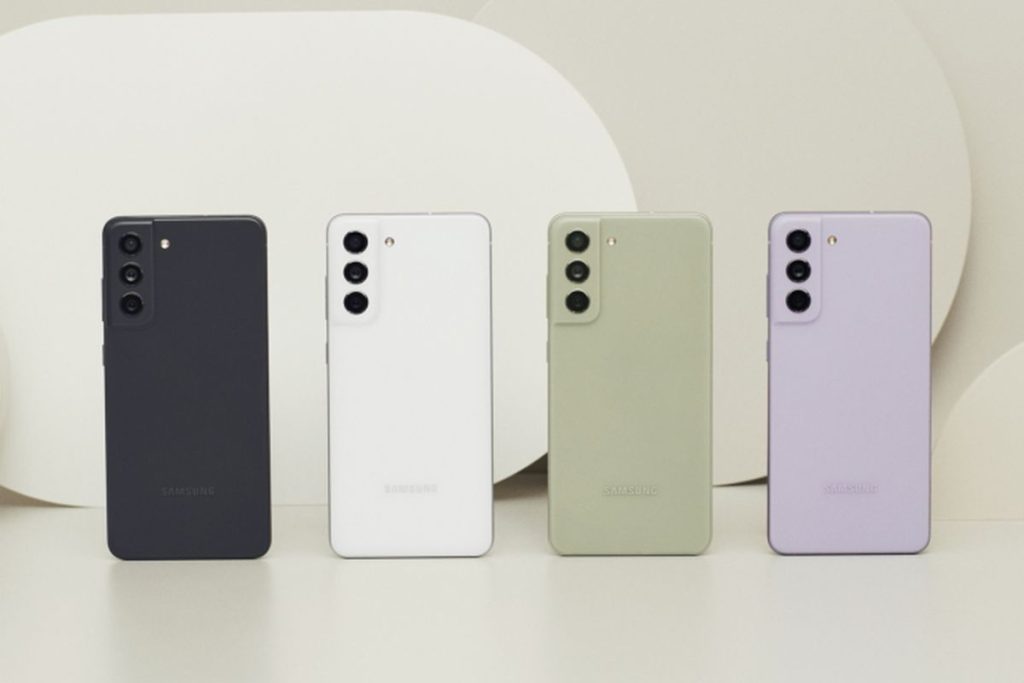
It appears that Samsung is gearing up to launch its Galaxy A24 model in India, as its support page has recently surfaced on the Samsung India website. Although the device’s name is not explicitly mentioned on the page, it does confirm the model number as SM-A245F/DS, which is associated with the A24.

Samsung

Interestingly, the support page for the Galaxy A14 has also been active on the Samsung India website since February. This suggests that both the A14 and A24 may be unveiled together in the near future. Check out the specs and features of the Samsung Galaxy A24 below.

Samsung Galaxy A24 specs

Galaxy-A24-renders

Recent reports suggest that the Samsung Galaxy A24 is set to feature impressive specifications, including a 6.5-inch FHD+ Super AMOLED Infinity-V display with a 90Hz refresh rate. The phone will be powered by an Octa-Core Snapdragon 680 6nm Mobile Platform, which is paired with an Adreno 610 GPU for smooth performance.

The device will come with 4GB of RAM and 128GB of storage, with the option to expand storage up to 1TB using a microSD card. Running on Android 13 with Samsung One UI 5.0, the Galaxy A24 will offer users the latest software technology.

The Galaxy A24 will also feature a side-mounted fingerprint sensor and support dual SIM cards. Its camera setup will include a 50MP rear camera with an f/1.8 aperture, OIS, and LED flash, accompanied by a 5MP ultra-wide-angle camera with an f/2.2 aperture, and a 2MP macro camera with an f/2.4 aperture. The front-facing camera will be a 13MP sensor with an f/2.0 aperture, allowing for great selfies.

Other features of the Galaxy A24 include a 3.5mm audio jack, Dolby Atmos, and dual 4G VoLTE. It will also come equipped with Wi-Fi 802.11 b/g/n, Bluetooth 5, GPS + GLONASS, and a powerful 5,000mAh battery that supports 25W fast charging. The device will weigh in at 195g and measure 162.1 x 77.6 x 8.3mm.

RELATED:

Realme GT Neo 5 SE launched with 144Hz OLED display, Snapdragon 7+ Gen 2, 5,500mAh battery, 100W charging, & more

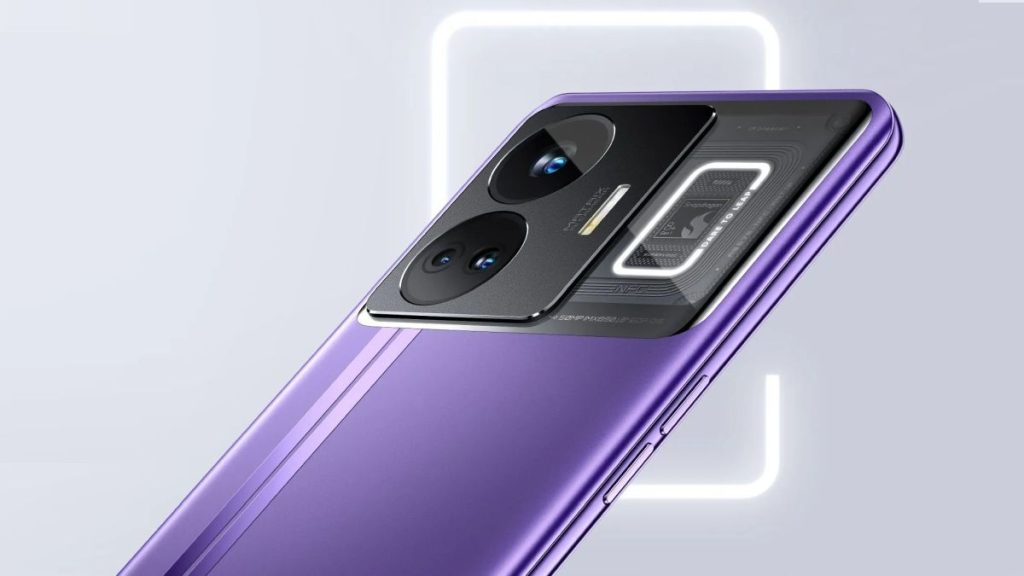
In February, Realme unveiled the Realme GT Neo 5 as the world’s first phone with 240W charging. The smartphone came equipped with an impressive C-shaped RGB light unit on the back, which glows when there is a notification. It debuted as an affordable flagship phone powered by the Snapdragon 8 Plus Gen 1 chipset. Today, the brand unveiled the Realme GT Neo 5 SE as a toned-down version of the GT Neo 5. It is the second phone after the Redmi Note 12 Turbo to feature the Snapdragon 7 Plus Gen 2 chipset. Here is all the information on the specifications, features, and price of the device.

Realme GT Neo 5 SE specifications and features

Realme GT Neo 5 SE
Realme GT Neo 5 SE

The Realme GT Neo 5 SE has a 6.74-inch flat OLED panel with a centrally aligned punch-hole. The screen offers a 1.5K resolution of 1240 x 2772 pixels, a refresh rate of 144Hz, a 2160Hz high-frequency dimming, and a peak brightness of 1,400 nits. It is actually the same display that’s available on the GT Neo 5.

Realme GT Neo 5 SE
Realme GT Neo 5 SE

The Snapdragon 7 Plus Gen 2, which offers flagship-level performance, powers the Realme GT Neo 5 SE along with LPDDR5x RAM and UFS 3.1 storage. The topmost model of the device offers 16GB of RAM and 1TB of storage. There is no microSD card slot on the device. It ships with the Realme UI 4.0-based Android 13 OS.

The Realme GT Neo 5 SE has a 16-megapixel camera on the front for shooting selfies and making video calls. The camera setup on the back is headlined by a 64-megapixel primary snapper. It is coupled with an 8-megapixel ultra-wide lens and a 2-megapixel macro camera.

Realme GT Neo 5 SE
Realme GT Neo 5 SE

To keep the lights on, the Realme GT Neo 5 features a 5,500mAh battery that supports 100W charging, a first on a mid-range phone. The company claims that it can easily last for up to two days on a single charge. The handset offers other features, such as dual SIM, 5G, Wi-Fi 6, Bluetooth 5.2, GPS, NFC, an IR blaster, a USB-C port, dual stereo speakers, and a 3.5mm audio jack.

Realme GT Neo 5 SE price and availability

The Realme GT Neo 5 SE has arrived in multiple configurations in China, as follows:

  • 8 GB RAM + 256 GB storage – 2,099 Yuan
  • 12 GB RAM + 256 GB storage – 2,299 Yuan
  • 12 GB RAM + 512 GB storage – 2,399 Yuan
  • 16 GB RAM + 1 TB storage – 2,599 Yuan

The GT Neo 5 comes in Final Fantasy and Black shades. Realme will start receiving its pre-orders from today in the home market and it will go on sale on April 10. During the pre-sale period, all the variants will be available with 100 Yuan discount. The device is expected to release in other markets, but it is unclear whether it will carry the same name.

RELATED:

(source)

Huawei leads the charge in 5G technology outpacing Ericsson, Nokia, Qualcomm, Samsung

In the race towards the development of 5G technology, Chinese tech giant Huawei has emerged as a clear leader, outpacing its rivals including Ericsson, Nokia, Qualcomm, and Samsung. According to a new report by ABI Research, Huawei has made the most significant contribution to 5G technical innovations and 3GPP standard essential patents globally.

Huawei Logo

The report lists 20 top firms in the 5G contributor market, with Huawei leading the pack with 15,266 approved contributions and 43,753 total contributions. Ericson follows with 11,601 approved contributions and 36,375 total contributions, while Nokia comes third with 7,553 approved contributions and 23,112 total contributions.

However, it is worth noting that there are over 400 companies and entities contributing to the 3GPP standard, with network equipment makers being the most active among them. Additionally, there are currently over 210,000 5G standard essential patents announced globally, with China accounting for 40% of them, making it the world leader in 5G patent development.

Huawei’s strong position in the 5G contributor market can be attributed to its significant investment in R&D. In 2022, the company spent 61.5 billion yuan, which accounted for 25.1% of its total revenue in the previous year. As a result of this investment, Huawei has been able to promote new standards of network infrastructure development, providing better assistance to its global customers.

With this technological advancement, Huawei is now looking beyond 5G towards 5.5G, a technology that is yet to be adopted by its top rivals, Ericsson and Nokia. The future of the 5G contributor market is certainly exciting, and it remains to be seen how Huawei and its competitors will continue to push the boundaries of network infrastructure development.

RELATED:

(Via)

Chuwi CoreBook X refreshed with Intel Core i3-1215U, costs US$470

Chuwi, a Chinese computer manufacturer that specializes in producing affordable laptops, has recently updated its CoreBook X series with Intel’s Core i3-1215U processor. This latest version of the CoreBook X boasts a significant performance boost compared to its predecessor, thanks to the i3-1215U’s capacity to deliver double the processing power while remaining within the same 15W TDP limit as the previous i3-10110U model.

The Core i3-1215U processor has two P cores, four E cores, and eight threads. It can ramp up its P cores to 4.4 GHz as needed and comes equipped with a UHD Graphics iGPU that has 64 Execution Units. Being based on 10nm rather than 14nm also plays to its advantage when it comes to efficiency. Additionally, it the processor is also compatible with LPDDR5 RAM.

Despite the updated processor, many of the features on the new Chuwi Corebook X remain unchanged from its previous iteration. This includes the 14-inch, 2160 x 1440 pixel IPS LCD display, which maintains a 3:2 aspect ratio. The laptop also retains the same aluminum body, weighing approximately 3 pounds and measuring 0.8 inches at its thickest point, but a slim 0.4 inches at its thinnest.

Chuwi

In terms of connectivity, the Corebook X offers a microSD card reader, USB 3.0 Type-C and Type-A ports, a 3.5mm audio jack, and a DC charging port. The laptop supports WiFi 6 and Bluetooth 5, features a 1MP webcam, and comes equipped with a backlit keyboard.

Currently, Chuwi’s most recent CoreBook X model is priced at US$469.99, which includes 8 GB of RAM and a 512 GB SSD. If preferred, the laptop is also available with a storage capacity of 512 GB and a larger RAM capacity of 16 GB, at a slightly higher price point of US$499.99. Moreover, Chuwi is currently offering a promotional discount of US$30 for orders over US$300, which reduces the cost of the 8 GB and 16 GB RAM variants to US$439.99 and US$469.99, respectively. Additional details can be found on Chuwi’s AliExpress store.

RELATED:

Google releases Android’s Nearby Share Beta for Windows

Google has just released the beta for the Android Nearby Share app for the Windows PC platform. The app was introduced as a means to offer a simpler method of quickly sharing files between your own devices, and is finally making its way to Windows.

The Search Engine giant had first launched the Nearby Share app back in 2020 for easier and faster file sharing and is now expanding to include the PC platform. According to Google, nearly 3 billion active Android devices can use Nearby Share to swiftly send and receive files between Android phones, tablets, and Chromebooks. And now, the new Nearby Share Beta offers users a way to send and receive files from their Windows PC.

Google

This is made possible thanks to the beta app to make the transfer of files easier. To work seamlessly, the beta app runs in the background so you don’t need to manually run the app every time for transfer files. The data transfer includes files like photos, videos, and documents that can simply be dragged and dropped into the app. Users can also click on the “Send with Nearby Share” in the right click menu. Following this, one will see a list of all nearby Android devices and can select the one they wish to transfer the files to.

As of right now, Google has just announced the Nearby Share beta for Windows in the US and certain other regions across the globe. Also keep in mind that ARM powered devices are not supported at the moment. But for those interested, you can try out the beta on your Windows PC by click on the link here.

RELATED:

Elon Musk Lashes Out at New York Times for not Paying for Twitter Blue Verification

Twitter Blue is a premium subscription service offered by the social media giant, Twitter. The service offers a range of exclusive features to its subscribers, such as the ability to edit tweets and the ability to write 4000-character-long tweets in addition to a blue tick right next to the Twitter username. It comes with a monthly subscription fee of $8, with the prices being adjusted accordingly worldwide. The service is aimed at Twitter’s most dedicated users, who are willing to pay for additional functionality and a more enhanced experience on the platform. Twitter Blue is just one example of how social media platforms are exploring new revenue streams beyond traditional advertising models. Well, it seems like some organizations do not want to pay the extra monthly fee to be verified on the platform, and the popular news publication New York Times is one of them.

Recently, Twitter announced that they will start removing verification badges, starting April 1. The New York Times, along with other celebrities and organizations, has refused to pay for the subscription service. Elon Musk, the owner of Twitter, took to the platform to criticize the newspaper, calling their feed “the Twitter equivalent of diarrhea.” The subscription service is generating revenue for Twitter, but some are concerned about the impact on identifying genuine accounts from impersonators.

The New York Times has also refused to pay for the verification of its journalists’ Twitter accounts, losing its verification badge as a result. While 10,000 of the most-followed organizations on Twitter will be exempt from the rules, it is unclear whether all organizations must sign up for the subscription service to remain verified. The removal of blue ticks is happening gradually and appears to be a manual process since a lot of accounts have to be checked for credibility and status. Some celebrities, such as LeBron James and Ice-T, have criticized the fee-paying system but still retain their blue ticks (for now).

RELATED:

(Via)

Realme 11 Pro+ reportedly spotted on BIS, hints at an imminent launch

Realme is gearing up to launch the Realme 11 Pro series of smartphones in the market soon. We have already covered various rumors and reports regarding the upcoming devices, and the latest one is an alleged sighting on the BIS (Bureau of Indian Standards).

Realme

For those unaware, we had previously reported on the Realme 11 Pro and 11 Pro+ having their specs revealed via a TENAA listing and a leak that revealed their chipset. The new devices are also expected to launch sometime next month. However, its exact region availability and pricing were still at large. However, it appears that an Indian market launch is just around the corner, if the sighting on BIS is true.

Talking about the smartphone itself, the TENAA certification revealed that it sports a tall 6.7 inch FHD+ AMOLED display that may have a 120Hz refresh rate. Under the hood, it will be equipped with a MediaTek Dimensity 1080 processor that can be paired with up to 16GB of RAM and up to a massive 1TB of internal storage. The rear features a 200 megapixel triple camera setup, while the front has a 16 megapixel selfie shooter. A large 5,000mAh battery pack will power the device with possibly a 100W fast charging support.

Looking at the listing, we can see that the Chinese smartphone maker’s 11 Pro+ 5G model carries the number number Realme RMX3741. In other words, the launch of the device is imminent in the market. Since we had reported on a possible May 2023 launch timeline in the Chinese market, it is likely that the device will be released in India around the same time. Keep in mind that this is still just an unconfirmed report, so take this news with a pinch of salt.

RELATED:

Meet the Oldest Black Hole Ever with 10 Million Times More Mass Than Our Sun

Black holes are one of the most fascinating and mysterious objects in the universe. They are regions of space where gravity is so strong that nothing, not even light, can escape from their grasp. Black holes are formed from the remnants of massive stars that have exhausted their fuel and collapsed under the force of their own gravity. As they collapse, their density and gravitational pull become so strong that they create a singularity, a point of infinite density and zero volume. Around the singularity, there is a boundary called the event horizon, beyond which anything that crosses can never return. Black holes come in different sizes, ranging from tiny ones with the mass of a few suns to supermassive ones at the center of galaxies with the mass of billions of suns. Despite their elusive nature, scientists have been studying black holes for decades to understand their properties and role in the cosmos.

Black Hole

A groundbreaking discovery was made by American scientists who used the powerful Webb Space Telescope to unveil the oldest black hole known to date, formed just 570 million years after the universe’s birth. With a mass equivalent to 10 million suns, this colossal black hole offers important insights into how these enigmatic cosmic entities originate and evolve. Despite their mysterious nature, scientists believe that supermassive black holes located at the center of galaxies may have formed from the merger of small black holes or from the direct collapse of a large amount of gas in the early universe.

Dr. Larsen and her team used the Webb Space Telescope to observe the brightest galaxy in the early universe, which Hubble had previously identified. By analyzing the different wavelengths of light emitted by galaxies, the team was able to discover the black hole hidden at the center of the galaxy. The research has been submitted to the paper preprint website for further review.

RELATED:

(Via)

Hisense unveils new 85 inch ULED X QLED TV as the Official TV of the NBA

Earlier this week, Hisense had announced during an event held in New York city that it is partnering up with the NBA (National Basketball Association). The new collaboration also had the company announce a new high end 85 inch ULED X QLED TV model, so let’s have a look.

The company also took the event as a platform to announce that they are the number two brand in the North American market. Furthermore, the new partnership will include all Hisense TV and other products, but new the flagship ULED X model is ‘The Official Television of the NBA’. THe limited edition ULED X sports a massive 85 inch display that has a backlight consisting of over 20,000 mini LEDs that are controlled by more than 5,000 local dimming zones.

Hisense

The big display can even offer up to 2,500 nits of peak brightness and a contrast ratio range that is twice as high as its OLED TV counterparts. For audio, the ULED X also features built in 4.1.1 DOlby Atmos and 80W DTS:X speaker systems. Apart from this flagship model, the brand has also announced new mini LED models from its lineup that include the Hisense U8K, U7K, and the U6K series, which are all available in a 55 inch, 65 inch, 75 inch, and 85 inch variants.

Notably, the the U8K and U7K also offer 144Hz high refresh rate, which makes them great for gaming when paired with a console like the PlayStation 5 or Xbox Series X. Alongside the new TVs, the company also announced the new L9H Laser TV, which is an ultra short throw projector. This is its new top model and will offer either a 100 inch or 120 inch ambient light rejecting screen along with support for Dolby Vision HDR.

RELATED:

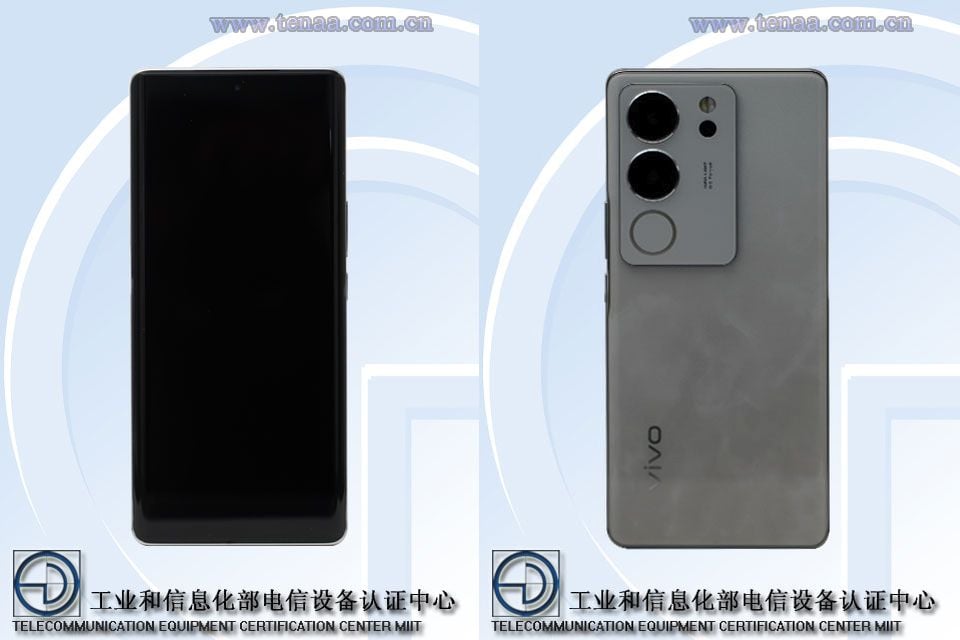
Vivo X100 Pro Plus first leaks: Camera features revealed

Back in November 2022, Vivo launched the X90 series of flagship smartphones in China. These devices were unveiled globally in February 2023. Equipped with the latest hardware and software, the X90 series is the current pinnacle of Vivo’s smartphone offerings. Now, we have the first details about what’s to come next (via. TechGoing).

Vivo

According to a recent report, Vivo is already working on the Vivo X100 series. The series is expected to include a total of three models, Vivo X100, X100 Pro, and X100 Pro+. Panda is Bald, a well-known tipster, has recently shared some exciting details regarding the upcoming Vivo X100 Pro+. According to the leak, one of the most impressive features of the phone’s camera system is its variable aperture. This will allow users to manually adjust the aperture size, enabling them to capture high-quality images even in tricky lighting conditions.

Another standout aspect of the X100 Pro+ is its ultra-wide free-form surface lens. Thanks to this advanced lens technology, users will be able to capture wider and clearer shots, making it perfect for landscape and group photography. Furthermore, the phone will boast a portrait micro-cloud platform, which utilizes cutting-edge algorithms to produce stunning portrait shots with incredible detail and clarity.

The X100 Pro+’s camera system will also be equipped with a periscope telephoto lens, which enables continuous light change. This means that users can zoom in on subjects and objects with exceptional detail, even in low-light environments. Finally, the V3 image signal processor will further enhance the phone’s photography and graphics capabilities, promising an even better user experience.

RELATED:

(source)

Here’s the Rover that will Accompany SpaceX’s Starship to the Moon

Rovers play a crucial role in future missions to the Moon for several reasons. Firstly, rovers can travel farther and faster than humans and can carry out tasks that would be difficult or impossible for astronauts to perform. This includes exploring rugged and inhospitable terrains, collecting and analyzing samples, and conducting experiments. Secondly, rovers can work autonomously (if required) for extended periods, enabling scientists to gather data and conduct research over a longer duration. Thirdly, rovers can be equipped with sophisticated instruments and sensors to detect and analyze the lunar environment, providing valuable insights into the Moon’s geology, chemistry, and other aspects. Rovers are clearly very essential tools for exploring the Moon and expanding our understanding of our nearest celestial neighbour. Astrolab recently announced that their FLEX Rover will be launched on SpaceX‘s upcoming moon mission.

Moon

This mission will transport Astrolab’s FLEX rover using SpaceX’s Starship launch and landing system as early as mid-2026. FLEX is not just a rover, but a logistics system for Moon and Mars missions. It will be the largest and most capable rover to travel to the Moon with a combined mass of over two tons. Astrolab designed FLEX to transport and deploy payloads in a modular system, making it highly versatile and capable of conducting scientific experiments, commercial endeavours, and deploying technology demos on the lunar surface.

The rover can be controlled remotely from the surface of the earth, however, it serves as a hybrid model for astronauts on the surface of the moon. The FLEX Rover can also serve as an unpressurized rover for a crew of two astronauts. The company plans to establish a permanent human presence on the Moon and eventually Mars by creating a fleet of FLEX rovers. Jaret Matthews, Founder and CEO of Astrolab, expressed his excitement for the contract with SpaceX, which will allow Astrolab to demonstrate the advantages of FLEX and its modular payload system. SpaceX’s Senior Vice President, Tom Ochinero, said Starship is designed to transport large amounts of cargo, including rovers, to the Moon and Mars for research and exploration.

RELATED:

(Source)

Vivo Pad 2 live images & specs emerge in recent leak

According to reports, Vivo is set to release a new tablet named the Vivo Pad 2 this month, which will serve as a follow-up to the original Vivo Pad launched in April 2022. However, it appears that the device may only be available in China at first. Recently, live photos of the Vivo Pad 2 have surfaced on the internet alongside some specifications of the tablet.

Vivo

Live images of the upcoming Vivo Pad 2, sourced from Digital Chat Station, indicate that the tablet will have a dual rear camera setup with an LED flash, as well as the Vivo logo situated in the middle of the back panel. The display is surrounded by substantial bezels. Additionally, Vivo will be releasing official accessories, such as the Vivo Pencil and Vivo Keyboard, to go with the tablet. The photos also disclose the primary specifications of the device.

The recently leaked image has effectively confirmed the presence of MediaTek’s Dimensity 9000 chipset within the upcoming Vivo Pad 2. With a cutting-edge 4nm process, this octa-core chipset incorporates an ultra-core Arm Cortex-X2, clocked at 3.05GHz, three super-cores Arm Cortex-A710 at 2.85GHz, four efficiency cores Arm Cortex-A510, and a Mali-G710 MC10 GPU. For memory, the device is equipped with up to 8GB of LPDDR5 RAM and 128GB of UFS 3.1 storage, which can be virtually expanded to an additional 8GB. In addition, it has been disclosed that the tablet will run OriginOS 3, based on Android 13, straight out of the box.

Previous leaks have revealed that the tablet will feature a 12-inch IPS LCD display with 144Hz refresh rate and 2.5K resolution. The tablet is said to have a larger battery than its predecessor. For those unaware, the Vivo Pad features an 8040 mAh battery with support for 44W fast charging.

RELATED:

(Source)

Leaks Hint Towards AMOLED iPad Pro Prototypes for 2024 Release

AMOLED (Active Matrix Organic Light Emitting Diode) displays are known for their vivid and bright colors, deep blacks, and energy efficiency. However, Apple has yet to incorporate this type of display technology into their iPad lineup, as they have opted for their proprietary Retina Display instead. While the Retina Display has a high pixel density and offers excellent color reproduction, some users may prefer the enhanced color and contrast offered by AMOLED displays. However, it seems that Apple might be onto something here. A recent leak from a tipster has suggested that the company has AMOLED prototypes of the iPad Pro, hinting towards a possible 2024 release.

As per said leak, Apple is reportedly deviating from their standard use of flexible OLED technology on their iPhones, opting instead for rigid OLED screens. Although the latter is used by other high-end smartphones, such as Google’s Pixel 6 and Pixel 7 lineups, users have reported poor viewing angles. To avoid the ‘wrinkled’ appearance associated with some OLED displays, Apple is rumoured to incorporate hybrid OLED technology on the iPad Pro models. This technology will be mass-produced by Samsung and will consist of two-stack tandem OLED panels that will make the devices more expensive but offer a longer lifespan and better viewing angles.

There is some confusion around ShrimpApplePro’s tweet (since the tweet was originally posted on April Fools Day), but it is clear that the next iPad Pro releases will see a significant price increase of 80% compared to the latest flagship tablets. Additionally, the ongoing global chip shortage has resulted in increased component costs for many electronic devices, including iPads. Apple’s choice of display technology remains to be seen, and we can expect further details to emerge in the coming year.

RELATED:

(Via)

Upcoming WatchOS 10 Update to Spell Big Changes for Apple Watch

WatchOS is a specialized operating system developed by Apple Inc. specifically for their smartwatch line, the Apple Watch. The operating system offers a variety of features that allow users to stay connected, track fitness activities, and control other Apple devices. WatchOS supports a wide range of apps, including social media, productivity tools, and health and wellness applications. Additionally, it features the company’s digital assistant, Siri, and provides notifications for incoming calls, texts, and emails.

Apple Watch

Apple’s highly anticipated WWDC Developers Conference is just around the corner, scheduled to commence on June 5th at Apple Park. Aside from showcasing their much-anticipated mixed reality headset “Reality Pro“, Apple is also expected to provide a sneak peek into the upcoming updates of their operating systems, including iOS 17 and watchOS 10. Notably, according to Bloomberg’s Mark Gurman, watchOS 10 is expected to feature significant UI changes. These changes may include an interface overhaul, new watch faces, gesture control, an array of new shortcuts or even new applications that may contribute to the user experience of the Apple Watch user overall.

Despite no significant hardware changes being expected following the launch of the Apple Watch Ultra, Gurman predicts larger displays for the Apple Watch Series 10 models to be launched next year. Watch enthusiasts can expect a more significant watchOS 10 upgrade compared to iOS 17, which will be coordinated with the release of the latest Apple Watch models in September. Being the best-selling smartwatches in the world, it is apparent that the company has to go above and beyond with its R&D for new features and integrations for the same. Who knows, Apple might introduce another big health-tracking feature with the new update that is purely software oriented. Regardless, fans of the product will have to wait just a couple of more months to see what Apple has in store for them.

RELATED:

(Via)

Meizu 20 and 20 Pro now available for purchase in China; pricing starts at 2,999 yuan ($435)

A few days ago, Chinese smartphone manufacturer Meizu launched its latest flagship smartphones — Meizu 20 and Meizu 20 Pro. Now, starting today, both smartphones are available for purchase in the Chinese market.

The Meizu 20 starts at 2,999 yuan (~$435) for the base model with 12GB RAM and 128GB storage, while the 12GB + 256GB model is priced at 3,399 yuan (~$494). There’s also a 12GB + 512GB model which is available for 3,799 yuan (~$552).

Meizu 20 Series

On the other hand, the Meizu 20 Pro starts at 3,999 yuan (~$581) for the 12GB + 128GB model, and the 12GB + 256GB model costs 4,399 yuan (~$639). The top-end model in the lineup with 12GB RAM and 512GB storage is priced at 4,799 yuan (~$697).

Coming to the specifications, the standard model features a 6.5-inch display with a 144Hz refresh rate, whereas the Pro model boasts a 6.81-inch display with 2K resolution, 120Hz adaptive refresh rate, 100 percent DCI-P3 color gamut, up to 1,800 nits peak brightness, and HDR10 support. There is an in-screen fingerprint scanner and Gorilla Glass Victus protection on both devices.

Under the hood, the devices come powered by the Qualcomm Snapdragon 8 Gen 2 processor, coupled with LPDDR5 RAM and UFS 4.0 storage. The smartphones also come with a vapor cooling chamber for heat dissipation. 

In the camera department, the Meizu 20 has a 50MP primary sensor, 5MP macro unit, and a 16MP ultra-wide-angle lens, while the Meizu 20 Pro features a 50MP primary sensor, a 50MP ultra-wide-angle lens, and a 50MP telephoto unit. There’s a 32MP front-facing camera on both devices.

Both the phones run the Android 13 operating system out-of-the-box with Flyme OS on top. The Meizu 20 is powered by a 4,700mAh battery with support for 67W fast charging, while the Pro model is powered by a 5,000mAh cell with support for 80W fast charging and 50W wireless charging.

RELATED:

Western Digital to soon launch cheaper Xbox storage expansion cards

Microsoft’s Xbox gaming consoles support expandable storage and right now, if you are in the market for expandable storage, then the only option available is from Seagate.

But that is about to change soon as Microsoft appears to be ready to offer expandable storage options for the Xbox lineup from other manufacturers or at least one other company — Western Digital.

Western Digital Xbox Storage Expansion Card

A new 1TB expansion card for the Xbox Series X and Series S consoles, manufactured by Western Digital, has been spotted on the website of online retailer Best Buy, carrying a price tag of $179.99.

The company hasn’t officially announced the product yet, meaning that it is not yet available for purchase. Soon after the reports started surfacing online about the listing on Best Buy, the online retailer took the listing offline.

Microsoft first launched the Xbox expandable storage cards about three years ago in multiple storage capacities, ranging from 512GB to 2TB, exclusively from Seagate. The pricing for the product didn’t go down even after these many years, while pricing for similar products for Sony PS5 dropped significantly.

With the new options coming from Western Digital, there will finally be an expandable storage card for the Xbox Series X/S that is not manufactured by Seagate, and that too at a lower cost than what they are currently selling for. Given that it was listed on Best Buy with a price tag, we expect them to get launched soon, within a few days, if not weeks.

RELATED:

Via

Realme 11 Pro, 11 Pro+ chipset tipped, likely to launch in May

The upcoming Realme 11 Pro series of smartphones have appeared on TENAA recently. It is believed the Realme smartphone with model number RMX3770 will debut as the Realme 11 Pro, whereas the RMX3740 smartphone will be called the Realme 11 Pro+ when it arrives in the Chinese market. The TENAA certification of both smartphones has revealed that these phones have identical specs and mainly differ in the camera department.

The TENAA certification of the Realme 11 Pro and 11 Pro+ has revealed that they are powered by a 2.6GHz octa-core processor. According to tipster Abhishek Yadav, both smartphones are equipped with the Dimensity 1080 chipset. He added that both smartphones will debut in the Chinese market in May.

Realme 11 Pro
Realme 11 Pro

The Realme 11 Pro will arrive with a 100-megapixel + 2-megapixel dual-camera system, whereas the 11 Pro+ will come with a 200-megapixel + 8-megapixel + 2-megapixel triple camera unit. The vanilla model will have a 16-megapixel camera on the front for selfies, whereas the 11 Pro+ will have a 32-megapixel front-facing camera.

Both smartphones will arrive with a 6.7-inch AMOLED display with curved edges. The 11 Pro duo is expected to support a Full HD+ resolution and a high refresh rate. Both smartphones will arrive with up to 16 GB of RAM and up to 1 TB of storage.

The Realme 11 Pro and 11 Pro+ will lack support for external storage. On the security front, they will feature an under-display fingerprint scanner. The 11 Pro will house a 4,870mAh (rated value) battery, whereas the 11 Pro+ has a 2,340mAh dual-cell battery, which may offer a combined typical value of 5,000mAh.

In related news, Realme will launch the Snapdragon 7 Gen 2-powered Realme GT Neo 5 SE in the Chinese market. It will arrive as a toned-down version of the Realme GT Neo 5.

RELATED:

(source)

Gogoro unveils a slew of electric bikes at the 2023 Seoul Mobility Show

Taiwanese electric bike brand Gogoro has been making waves in the electric mobility sector since it was founded in 2011. One of the brand’s biggest innovations is its battery-swapping system, which allows users to easily swap out their depleted battery for a fully charged one at a network of convenient stations. This system has helped to address the issue of limited range that often plagues electric vehicles, and has helped to make Gogoro’s scooters a popular choice for commuters in Taiwan and other Asian markets.

Gogoro Electric Bikes

At the 2023 Seoul Mobility Show, Gogoro showcased some of its most popular models, as well as a few new ones that are worth mentioning. The EV-C1, in particular, stood out due to its maxi-scooter styling and longer range. This model is likely to appeal to Korean consumers who are looking for a more powerful and capable electric scooter, and could help to further expand Gogoro’s presence in the country.

In recent years, Gogoro has been expanding its reach outside of Taiwan, with a particular focus on other Asian markets. The brand’s strategy has been to partner with local companies in each market, in order to better understand the needs and preferences of consumers in each country. This approach has proven successful so far, with partnerships formed in Singapore, India, the Philippines, and now, Korea.

Gogoro Electric Bikes

One of the advantages of Gogoro’s battery-swapping system is that it can be easily adapted for use in different types of vehicles, including motorcycles and cars. This opens up a range of possibilities for the brand, and could help it to further differentiate itself from other players in the electric mobility sector.

Related:

(source)

iQOO 11s key specifications, variants, launch timeline tipped

iQOO unveiled the iQOO 11 and 11 Pro flagship phones in China in December 2022. While the Pro model has remained exclusive to the Chinese market, the vanilla model has been released in several markets outside of China. Now tipster Paras Guglani has teamed up with a publication to leak the key specifications of the iQOO 11s.

As per the leak, the iQOO 11s will have the model number V2304 for China. The smartphone will release in the global market, but its international variant will have a different model number. The device is expected to be released in the third quarter of 2023. There is a possibility that it may debut around July or August this year.

iQOO 11s specifications (rumored)

iQOO 11 5G
iQOO 11 5G

According to the report, the iQOO 11s will be powered by the world’s first Dimensity 9300 chipset, or the Dimensity 9000-series chipset. The device is expected to arrive in two variants, such as 8 GB RAM + 256 GB storage and 12 GB RAM + 256 GB storage.

The iQOO 11s will come equipped with a 6.78-inch E6 AMOLED display that offers a Quad HD+ resolution of 1440 x 3200 pixels. The leak has no information on the cameras, battery, or fast charging capabilities of the iQOO 11s.

In related news, iQOO has recently launched the iQOO Z7, iQOO Z7x, and iQOO Z7i smartphones in the Chinese market. Reports have revealed that iQOO will unveil the iQOO Neo 8 and Neo 8 Pro smartphones in May for the home market. The vanilla model is likely to feature the Snapdragon 8 Plus Gen 1 chipset, whereas the Pro variant will be powered by the upcoming Dimensity 9200 Plus chipset.

RELATED:

(source)

Redmi Note 12 Pro 4G specifications officially confirmed; 120Hz AMOLED display, Snapdragon 732G, 108MP camera, & more

Xiaomi Indonesia has confirmed the key specifications of the Redmi Note 12 Pro 4G. It will be the fifth smartphone in the Note 12 series after the Note 12 4G, Note 12 5G, Note 12 Pro 5G, Note 12 Pro+ 5G. The new smartphone bears similarities with the global version of the Redmi Note 10 Pro, which debuted in March 2021. It appears that the device will be soon available for purchase in the Indonesian market.

Redmi Note 12 Pro 4G specifications and features

The Redmi Note 12 Pro 4G has a 6.67-inch AMOLED display with a centred punch-hole. The screen produces a Full HD+ resolution of 1080 x 2400 pixels and a refresh rate of 120Hz like other Note 12 series smartphones.

Redmi Note 12 Pro 4G key specs

The Snapdragon 732G is the chipset that powers the Redmi Note 12 Pro 4G. The SoC is equipped with 8 GB of RAM and 256 GB of storage. For additional storage, the device is equipped with a microSD card slot. The smartphone runs on MIUI 13-based Android 12 OS.  

On the front, the Redmi Note 12 Pro has a 16-megapixel selfie camera. The back panel of the device has a 108-megapixel primary camera, an 8-megapixel ultra-wide lens, a 5-megapixel macro, and a 2-megapixel depth sensor. The phone carries support for 4K video recording.

The Redmi Note 12 Pro has a 5,000mAh battery with 67W fast charging support. The device comes with other features, such as dual SIM, 4G VoLTE, Wi-Fi 802.11ac, Bluetooth 5.1, GPS, NFC, an IR blaster, a side-facing fingerprint scanner, Dolby Atmos-powered stereo speakers, and a 3.5mm audio jack.

Redmi Note 12 Pro price and availability

While the Redmi Note 12 Pro has been announced in Indonesia, there is no word on its price or availability yet. The above poster suggests that it will be available for purchase in May.

RELATED:

(source)