Advertisement

Xiaomi 13 Lite Roundup: Launch Date, Specs, and Expected Price

Xiaomi has scheduled to unveil the Xiaomi 13 series for global markets at Mobile World Congress (MWC) 2023. The company’s keynote is set to take a place a day earlier than the conference.

The firm is expected to introduce three models, namely Xiaomi 13, Xiaomi 13 Pro, and Xiaomi 13 Lite. The last device is different from its predecessors since it is not an original phone.

Here in this article, let’s check out everything that’s known about the upcoming Xiaomi 13 Lite.

Xiaomi 13 Lite

Xiaomi 13 Lite Launch Date

The Xiaomi 13 Lite will be officially launched on February 26 (Sunday). It will be announced at an event, which is planned to start at 4 PM GMT+1.

The conference will be live-streamed on YouTube and other platforms.

Xiaomi 13 Lite Specifications

As mentioned in the beginning, the Xiaomi 13 Lite is not an original smartphone. What we mean by this statement is that it is a rebranded device, unlike its predecessors.

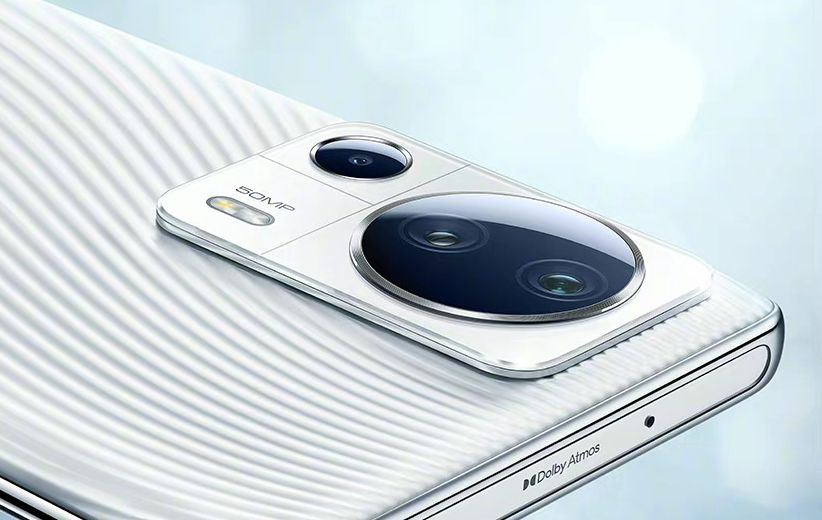
The forthcoming Xiaomi 13 Lite is actually a rebadged version of Xiaomi Civi 2 from China. For the unaware, this handset went official in the company’s home country in late September.

Since the phone is on the market for months, we know everything about it. Additionally, leaks have also disclosed its features along with pricing.

The Xiaomi 13 Lite will be built around a 6.55-inch 10-bit curved AMOLED display with a resolution of 2400 x 1080 pixels and up to a 120Hz refresh rate. The main highlight of this screen is that it will sport an iPhone 14 Pro-like pill-shaped (dynamic island) cutout at the top center.

The device will be powered by a Qualcomm Snapdragon 7 Gen 1 chipset paired with LPDDR4x RAM, UFS 2.2 storage, and a liquid cooling system. It will draw energy from a 4,500mAh battery and offer support for 67W fast wired charging.

The smartphone will house a triple camera setup on the rear comprising a 50MP Sony IMX766 primary sensor, a 20MP ultra-wide unit, and a 2MP macro snapper. On the front, it will sport two 32MP shooters with a wide and an ultra-wide lens.

Other features of the handset will include dual stereo speakers, an IR blaster, and an in-screen optical fingerprint sensor.

Xiaomi 13 Lite Expected Price

The Xiaomi 13 Lite is tipped to arrive in 128GB and 256GB storage variants in Europe. They are said to cost €499 and €549, respectively.

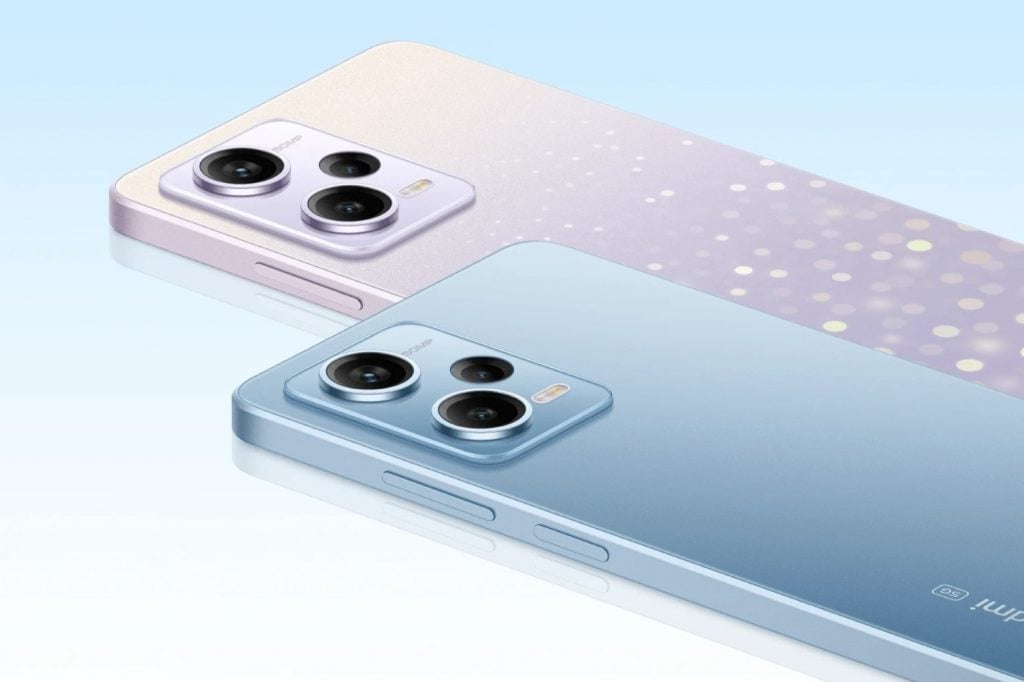
The smartphone is expected to come in black, blue, and pink color options.

RELATED:

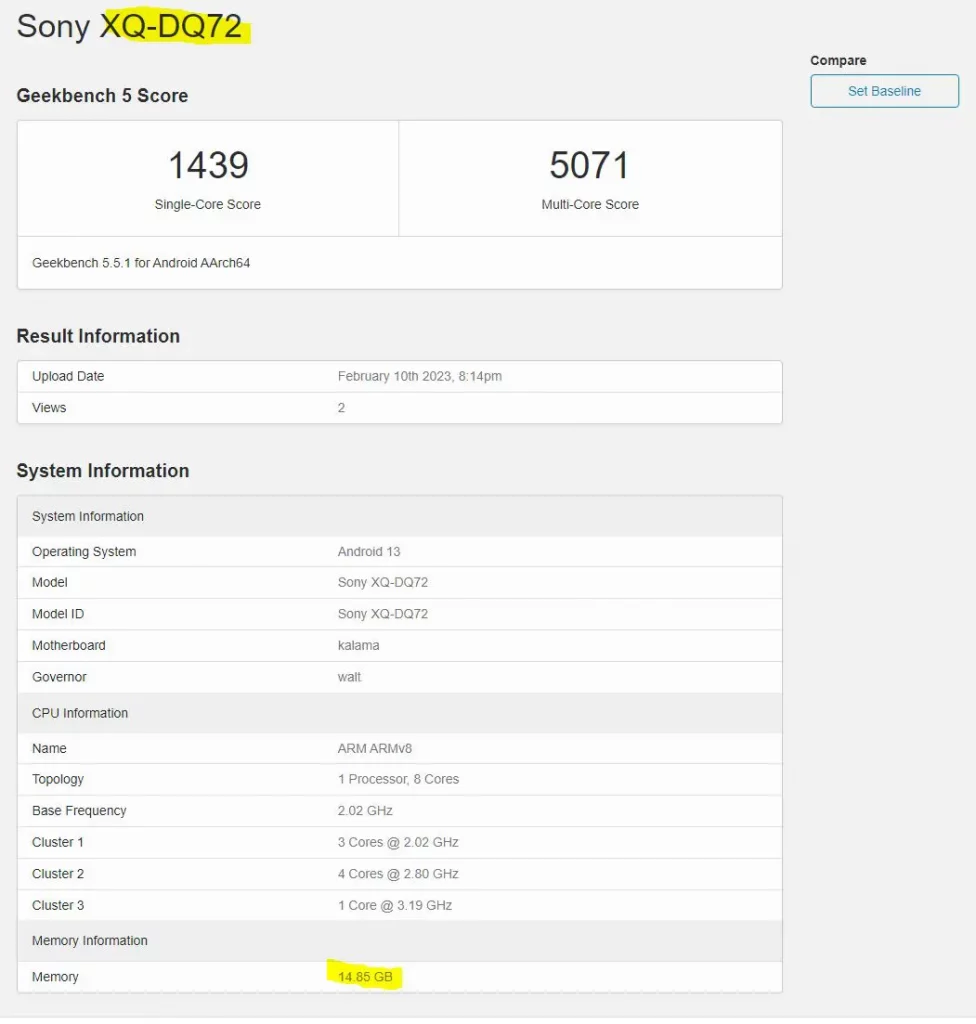
Possible Sony Xperia 1 V With Model Number “XQ-DQ72” Spotted on Geekbench

Rumors about Sony Xperia 1 V have been circulating, and a mysterious model was identified by model number XQ-DQ72 on Geekbench. Last month, there was another model surfaced on Geekbench with the model number XQ-DT72 which showed 12GB RAM. According to reports from Sumahodigest and Reddit, this new model XQ-DQ72 is likely to be a high-end model, equipped with a Snapdragon 8 Gen2 chipset and 16GB of RAM.

If the leaked benchmark scores are accurate, the XQ-DQ72 could be a significant improvement over its predecessor, the Xperia 5 IV, which only had 8GB of RAM. However, there is some confusion over which Xperia model this new device belongs to, as the memory upgrade seems too significant to be simply a successor to the Xperia 5 IV.

Some experts speculate that the XQ-DQ72 could be the Xperia 1 V while others believe it may be a special edition or gaming edition of the Xperia 1 V or even a completely new device altogether. Last month an alleged live shot of Xperia 1 V was leaked which revealed the rear panel and the Periscope Zoom camera.

Xperia 1 IV was launched in China in June and became available in the US market in September. Similarly, the Xperia 1 III also took over two-and-a-half months to make its way from China to the US and UK. However, an insider reports that Sony is making progress with the Xperia 1 V’s testing phase and is currently two months ahead of schedule compared to its predecessor in 2022. If everything goes according to plan, the phone’s launch might occur as early as April 2023. This development could mean that fans of the Xperia line outside of China may see the release of the Xperia 1 V in the US, UK, and other countries as soon as June, pending favorable circumstances.

RELATED:

(Source, Via)

Samsung Unveils New 5nm Exynos 1380 & 1330 Chips with Faster CPUs & GPUs

Samsung has just announced two new chipsets for its mobile devices. The new SoCs are built for mid range smartphones and are dubbed the Exynos 1380 and Exynos 1330, which features various improvements in their performance.

Exynos 1380

Talking about the higher end model first, the Exynos 1380 SoC is a 5nm based processor that has four ARM Cortex A78 cores clocked at 2.4GHz, paired with four ARM Cortex A55 cores that are clocked at 2GHz. This chipset also features the Mali G68 GPU and can run devices with Full HD+ resolution and up to 144Hz refresh rate. The new chipset is compatible with LPDDR4x and even LPDDR5 RAM and UFS 3.1 storage as well. It also houses an NPU that can compute 4.9TOPS (Trillion Operations Per Second).

Samsung

The Exynos 1380 SoC houses a Triple ISP that supports up to 200 megapixel cameras with 64 megapixel resolution and zero shutter lag. The chip also supports 4K recording at 30fps with EIS, HDR, and support for real time object recognition for improved camera performance. Notably, the processor is 5G enabled and supports mmWave and sub 6GHz networks that can reach peach download speeds for 3.67Gbps and 1.28Gbps upload speeds. Other features include, support for BeiDou, Galileo, GLONASS, GPS, Wi-Fi 6, Bluetooth 5.2, NFC, and more. Interestingly enough, various leaks and certification have hinted at the Galaxy A54 5G featuring this chipset.

Exynos 1330

The Exynos 1330 is another new 5nm chipset that is geared more towards entry level smartphones. It offers two Cortex A78 CPU cores clocked at 2.4GHz, six Cortex A55 CPU cores clocked at 2GHz, and the Mali G68 MP2 GPU. This processor also supports Full HD resolution but it only supports up to 120Hz refresh rate. Although, it is still compatible with LPDDR4X and LPDDR5 RAM chips and UFS 3.1 and even UFS 2.2 storage.

Samsung

The Exynos 1330’s ISP supports up to 108 megapixel cameras that can capture images at 32 megapixel resolution with zero shutter lag. It can even support a twin 16 megapixel camera setup with zero shutter lag as well. The MFC (Multi Format Codec) can even capture video footage at 4K resolution at 30 fps in HEVC, H.264, and VP8 codecs. The South Korean tech giant’s first entry level chips comes with a built-in 5G modem capable of sub 6GHz 5G networks.

Thanks to this, it can hit speeds download speeds up to 2.55Gbps and upload speeds of up to 1.28Gbps. Other notable features includes, support for BeiDou, Galileo, GLONASS, GPS, Wi-Fi 5, Bluetooth 5.2, NFC, and more. Based on recent rumors and sightings on certification sites, the Galaxy A14 5G will likely be the first model to debut with this chipset.

RELATED:

Oppo Find X6 Series Confirmed to Launch this March in China As Official Launch Event Invitations Sent

After launching the brand’s flagship foldable, the Oppo Find N2 Flip at MWC Barcelona last week, Oppo is set to release the company’s flagship bar-type smartphones as well this season, namely the Oppo Find X6 series of flagship smartphones this March in China.

For Illustration Purposes only

The launch window was indirectly confirmed by Oppo through the company launch event invitations it blasted to several Chinese tech influencers via in-app notifications and SMSes in the country. Said tech influencers then posted the launch invite on Weibo, revealing some details of where and when the Oppo Find X6 will be launched.

The launch invite specifies that for the year 2023, Oppo will be holding a physical launch event in Shenzhen, China to announce the Oppo Find X6 flagship series in the country. The launch event is currently scheduled to be held on the 3rd week of March 2023 on a business day. 

Although no specific date was mentioned by Oppo in the invitation, it is assumed that the Oppo Find X6 series has been finalised for sale in the country and that Oppo not mentioning a specific date could be due to scheduling conflicts it would want to avoid against other competing smartphone launches in March as well.

Otherwise, Oppo fans online seem to be excited for the launch of the Oppo Find X6 series, as some internal sources told fans that the Oppo Find X6 flagships are said to be a significant upgrade over the Oppo Find X5 series, some even dubbing the upcoming series as the next miracle smartphone to save Oppo’s deteriorating reputation in the country.

For more technology news and updates from China, stay tuned to our coverage here at Gizmochina.

RELATED:

(Source)

ASUS Announces New ROG Strix Gaming Monitor, Esports Ready with 300hz Refresh Rate

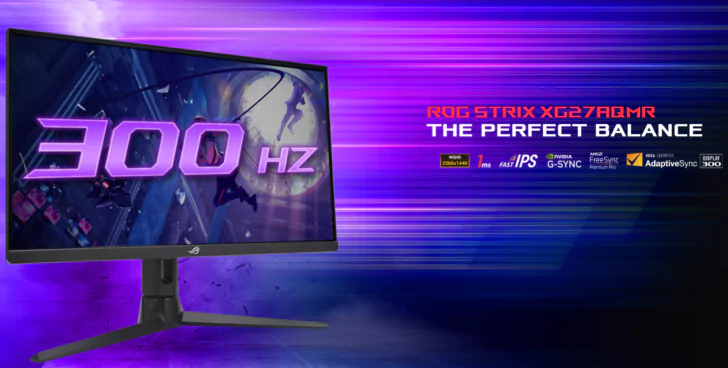
ASUS has just unveiled a new gaming related product from its ROG (Republic of Gamers) sub brand. The company’s latest announcement is for the ROG Strix XG27AQMR, which is a new gaming monitor that is esports ready.

ASUS

The Taiwanese tech giant’s new ROG Strix XG27AQMR, which sports a 27 inch display that has a WQHD resolution (2560x1440px). This panel comes with DisplayHDR 600 certification and support for an impressive 300Hz refresh rate. In other words, the monitor is esports ready, which means that it is a great product for competitive gamers that often play esports title like CS:GO. Other gaming related features include IPS technology that offers 1ms response time, NVIDIA G0Sync and AMD FreeSync support for a tear free experience.

ASUS has also included the new ELMB SYNC technology with this gaming monitor. It has a low motion blur technology that cooperates with VESA Adaptive Sync to remove ghosting at higher refresh rates. The ROG Strix XG27AQMR also has a 97 percent DCI-P3 and 120 percent sRGB color gamut. In other words, despite being a gaming display, it still offers accurate colors for users that is great for creative professionals. It has a 600 nits of peak brightness and two HDR modes, Cinema HDR and ASUS Gaming HDR.

ASUS

For connectivity, the known PC maker offers two HDMI 2.0 ports, a 3.5mm audio jack, two USB 3.2 Gen 1 ports, and a lone DisplayPort 1.4 port. The gaming monitor is also built on a stand that can have its height adjusted, support swivel, pivot, and even tilt as well. Unfortunately, the pricing and availability have yet to be announced. Although, we can expect the brand to reveal this information soon.

RELATED:

Vivo TWS A1 to Launch on February 25

Almost all smartphone brands sell truly wireless earphones. Vivo is no exception, however, the company releases new models less frequently than others. Also, its earbuds rarely make their way to global markets.

The company offers two lineups of wireless earbuds, namely Vivo TWS and Vivo TWS Air. Earlier today, the firm revealed that it will be introducing a new series called Vivo TWS A.

Vivo TWS A1

Vivo is set to launch a new pair of truly wireless earphones in China on February 25 (Saturday). These earbuds are officially called Vivo TWS A1. This product will be the first model under the new Vivo TWS A family.

As of now, the brand has only revealed the design of the product. The teaser image shows that the case will be ovular in shape. It will arrive in white and black color options.

Whereas, the buds will resemble the AirPods. They will be semi-in-ear type and therefore, they won’t feature silicone ear tips.

All in all, the Vivo TWS A1 looks identical to the Vivo TWS Air from last year. Perhaps, the new model may replace the old one or it may have slightly better specs and carry a costlier price tag.

The Vivo TWS Air debuted at ¥199 (~$30). Hence, the upcoming Vivo TWS A1 could cost about the same or a bit more expensive. Either 1way, it should be more affordable than the premium Vivo TWS 3 series.

Since we are still two days away from the launch, there’s a chance that the firm may reveal more details about this product in the next few hours. We will be updating our readers as soon as that happens.

RELATED:

Samsung Galaxy Z Fold 5, Z Flip 5 Storage Options Revealed Months Before Launch

Samsung has recently launched the Galaxy S23 series in different markets. In the second half of the year, the company is expected to announce its next-generation foldable phones, such as the Galaxy Z Fold 5 and the Galaxy Z Flip 5. In a new report, Sammobile has shown what kinds of storage options buyers of the upcoming Z-series foldables will have.

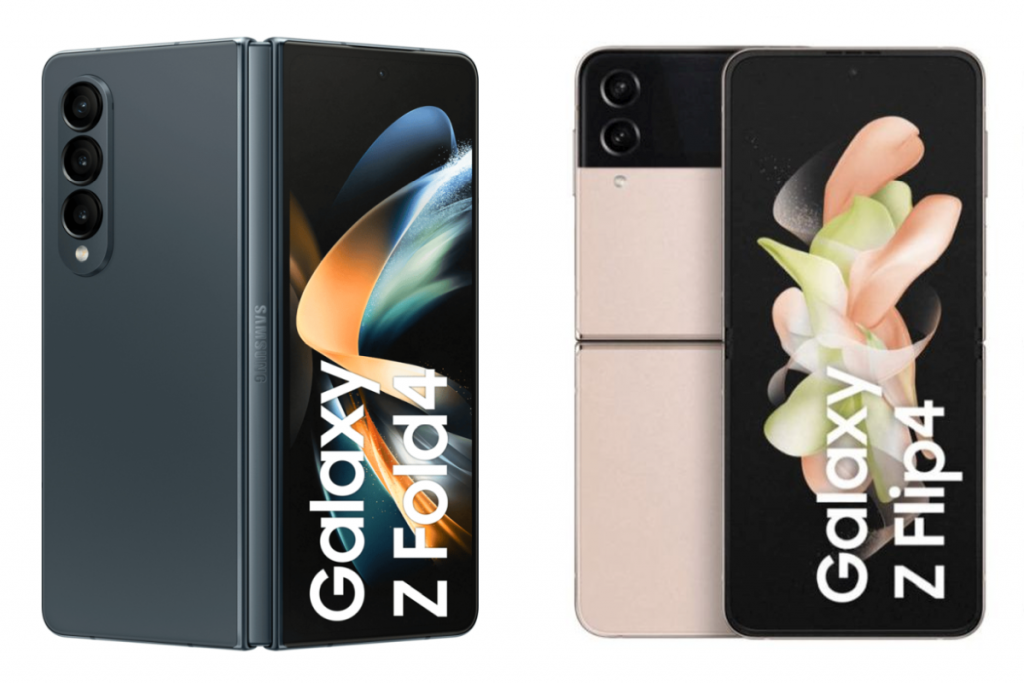
The report states that the Galaxy Z Fold 5 will be arriving in 256 GB, 512 GB, and 1 TB storage variants. The Galaxy Z Flip 5, on the other hand, will be coming in 128 GB, 256 GB, and 512 GB storage choices. Interestingly, these storage variants are the same as the Galaxy Z Fold 4 and Z Flip 4 from last year.

The 128 GB variant will be equipped with a UFS 3.1 storage chip. The rest of the storage options on both models will be UFS 4.0. The report has no other information on the other specs of both models.

Samsung Galaxy Z Fold 4 and Galaxy Z Flip 4

Reports say that the Galaxy Z Fold 5 will have a new hinge design that will help get rid of the crease in the screen. While some rumours suggested that it would have an S Pen slot, a recent report stated that it would not have a dedicated storage slot.

When it comes to the Galaxy Z Flip 5, the device is likely to have a bigger screen on the outside than the 3.26-inch screen on the Oppo Find N2 Flip. The Snapdragon 8 Gen 2 is most likely going to power the Z Fold 5 and Z Flip 5. However, it may not be the regular SD8G2, which powers flagship phones from other brands, but the 3.36GHz custom version that can be found inside the Galaxy S23 series.

RELATED:

(source)

DxOMark Says Samsung Galaxy S23 Ultra Camera Falls Short in Low-light Situations

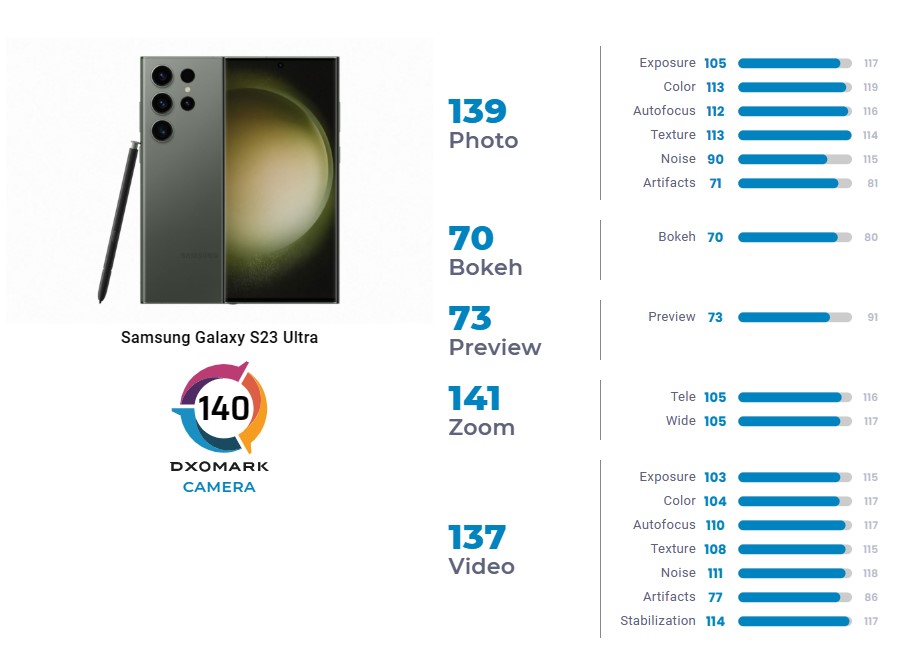
Galaxy S23 Ultra boasts an impressive camera system. However, according to a recent review by DxOMark, a trusted source for camera and audio quality assessments, the S23 Ultra has fallen short of expectations and was ranked only 10th in the list of best smartphone cameras, trailing behind phones from Huawei, Google, Honor, Apple, and Xiaomi.

Despite this setback, the Galaxy S23 Ultra’s camera system still has several strengths. It performs consistently across the board and is a great all-around camera phone, according to DxOMark. The reviewers also praised its photo rendering, good autofocus in photo and video recording, and strong telephoto capabilities at long range.

However, the Galaxy S23 Ultra’s camera system reportedly falls short in low-light conditions, losing image detail and shutter lag. Additionally, there are instabilities with focus and exposure in backlit scenes. These issues could potentially affect the phone’s overall camera experience.

Samsung-Galaxy-S23-Ultra-DxOMark

In terms of ranking, the Galaxy S23 Ultra tied with the Google Pixel 7 and the Vivo X90 Pro+ for 10th place, with each phone scoring 140 points for the rear-facing camera. The S23 Ultra’s selfie camera also tied with the Asus ZenFone 7 Pro with a score of 137, and both phones tied for 10th place in this category.

Devices that scored higher in DxOMark’s ranking include the Huawei Mate 50 Pro, Google Pixel 7 Pro, Honor Magic4 Ultimate, iPhone 14 Pro and Pro Max, Huawei P50 Pro, iPhone 13 Pro, iPhone 13 Pro Max, and the Xiaomi Mi 11 Ultra.

Overall, while the Galaxy S23 Ultra’s camera system may not be the best among its competitors, it still has several strengths that make it a solid choice for a camera phone. Samsung’s latest flagship phone provides a great overall experience, from hardware to software, which is consistent with the company’s brand. It remains to be seen whether Samsung will address the reported issues in future updates to further improve the S23 Ultra’s camera system.

RELATED:

(Source)

Tesla Model X / S seen with New Cameras and Hardware Upgrades

Tesla Model X and Model S have been spotted with new cameras. Social media influencer ‘The Kilowatts’ who regularly spies on upcoming Electric Vehicles including Tesla Models, has captured images of the Models S and X with the latest upgrades. 

He found the new cameras and upgraded hardware on Fremont, California-made Tesla Model S, and Model X units. The new Hardware 4 is speculated to come with a total of 11 cameras. This is way higher than the current 8 cameras carried by Model S and X. Though they have not confirmed the total number of cameras yet, the images show that there are several new cameras added to the vehicle with some of the old ones being changed or updated in some way. 

Design-wise, people are expecting an update to the vehicle’s rear badging and as per the spotted images, we can see that the steering wheel has also been changed. The images show a new round steering wheel instead of the standard yoke available in the previous models.

Last week Tesla got the European certificate for its latest Hardware 4.0 which apparently will make Tesla cars the most technologically advanced vehicles in the world. To date, Tesla has not made any official announcement regarding Hardware 4.0. The details of the new hardware have been speculated based on the changes and permissions, that the company applied for with the regulators.

Experts are speculating that the Hardware 4.0 upgrades may include a generation 4 complex vehicle control system (Autopilot), a new computer that is going to be 4 times more powerful than the one available in FSD 3, and a new GNSS antenna for navigation. Speculations are also being made on the speed limit, which may be increased to 174 MPH (280 km/h). 

Tesla was supposed to launch the new Hardware 4.0 with its most awaited vehicle, the Cybertruck. However, the images of Models S and X confirm that these EVs are getting the upgrades even before the launch of the Cybertruck. 

Though Tesla has not officially made any announcements for Hardware 4.0, people are expecting the official announcement with details on March 1, 2023, Investor Day when the company has promised to unveil its Master Plan for the future

RELATED:

(via)

Huawei Mate X3 Render, Specifications Leaked, Design, Chipset, Cameras, and More Revealed

Huawei is reportedly working on its next foldable phone, the Huawei Mate X3, for the Chinese market. Today, tipster Digital Chat Station shared what appears to be the key specifications of the device.

According to the tipster, the Huawei Mate X3 will be a foldable phone with an inward-folding design. The outer screen will have a single punch-hole placed at the top-centre position.

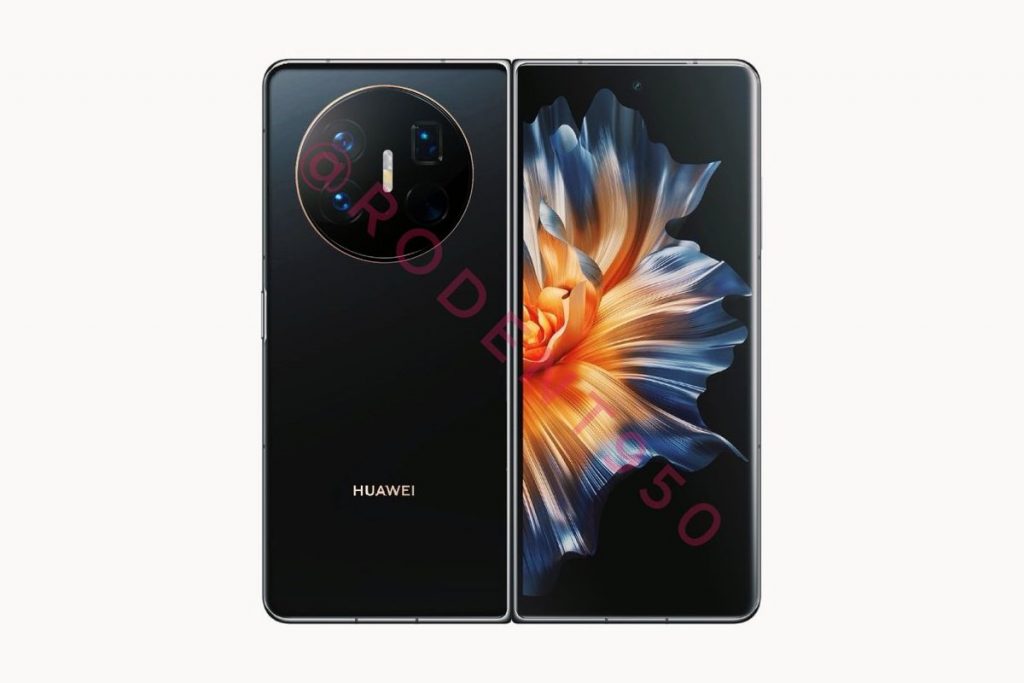
On the inside, the Mate X3 will have a large foldable screen without any punch-hole. He added that it will be a thin and lightweight foldable phone. Here is a look at the first-ever render of the Mate X3 shared by tipster Rodent. The tipster revealed that there will be no camera on the inside.

Huawei Mate X3 render
Huawei Mate X3 render by tipster Rodent

Huawei Mate X3 specifications (rumoured)

DCS hasn’t said how big the outer and inner displays are on the Mate X3, but he has said that the inner one will have a 2K resolution. Under the hood, it will feature the Snapdragon 8 Plus Gen 1. It appears that the device may not carry support for 5G connectivity due to the ongoing US sanctions.

The leak further mentions that the Mate X3 will pack a 4,800mAh battery with 66W fast charging support. The rear camera island of the device will be headlined by a 50-megapixel Sony IMX766 camera. It will be assisted by a Sony IMX688 ultra-wide lens, and a IMX351 periscope zoom camera.

The Huawei Mate X3 is likely to run on the latest version of HarmonyOS. As per a previous report, the Mate X3 may arrive with support for satellite connectivity. A recent report revealed that the mass production of the Mate X3 will start in March, which indicates that it may debut in the second quarter of this year.

RELATED:

(source)

These Samsung Galaxy S23 Features Were Developed in India

Samsung has just revealed some very interesting details regarding the features that it offers on its latest generation of flagship smartphones, the Galaxy S23 series. Some of the features were apparently developed in India, so here are all the details.

As per official notes, the South Korean tech giant’s Research and Development Institute Noida (SRI-N) is a global R&D Center that has been working on making advanced solutions for the company. Thus, SRI-N has made major contributions towards the development of smartphones and other innovations from the brand. Furthermore, this team in India has also worked closely with other teams in South Korea to help develop innovative features in the latest Galaxy S23 lineup.

Samsung

Some of the features made by SRI-N engineers are in the fields of user experience, health features, performance improvements, and user safety as well. To elaborate, user experience is a crucial part in the digital work and the SRI-N team has worked hard on building an intuitive experience. The Galaxy to Share app is one such example as its lets users to share all customization and own personalization settings across different Galaxy devices. There are even various widgets and clock related features that were developed in India as well.

For health, the SRI-N engineers focused on improving health features in Samsung’s latest flagship phones. The new Galaxy S23 series devices come with a new Sleep tracker widget on the home screen and even a new track for water intake that can even setup up reminders for you to drink water. Samsung Health trackers also help in mapping the water, body composition, cycle tracking, and heart rate of the users. Lastly, the new phones’ Emergency SOS and Emergency Sharing feature was also developed by SRI-N team as well.

RELATED:

Nokia Adds G10 to the List of Official Android 13 Compatible Phones

After Nokia X30 5G and Nokia G60 5G, Nokia G10 smartphone is now officially compatible with the latest Android 13 update. The confirmation means that Nokia G10 owners can look forward to receiving the update in the near future. Nokia Mobile has already begun the Android 13 update rollout to four of the eight smartphones for which Android 13 compatibility has been confirmed: Nokia XR20 5G, Nokia G50 5G, Nokia X20 5G, and Nokia X10 5G.

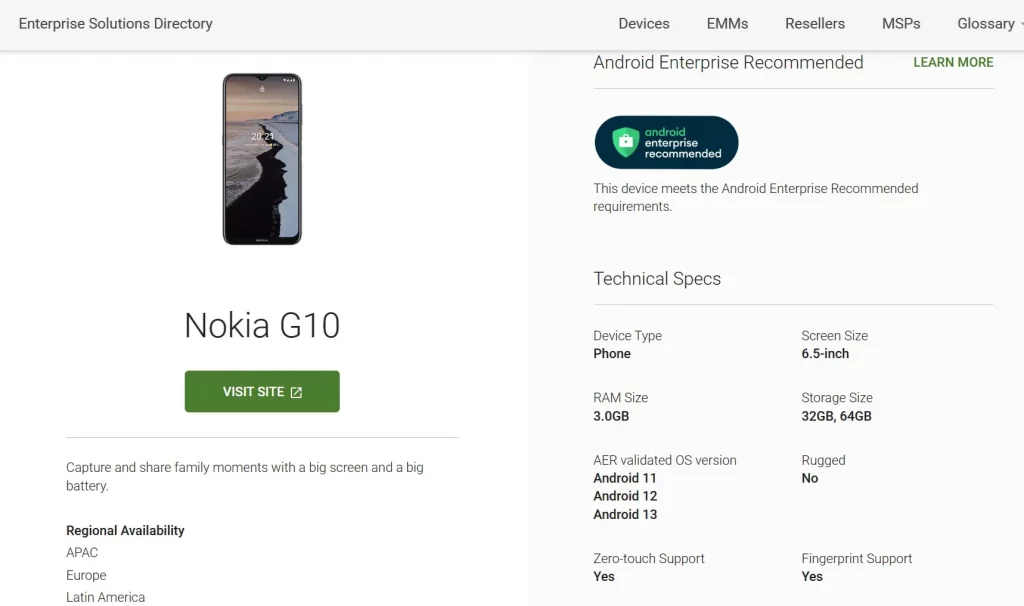
Nokia G10’s Android 13 compatibility has been validated through the Google Android Enterprise Recommended program, which means it meets strict security standards to use in business environments. Check the screenshot of the Nokia G10 listing from Google’s AER directory.

Nokia-G10-Android-13-compatibility

The Nokia G10 joins the other Nokia devices originally listed in the AER directory, including Nokia XR20 5G, Nokia X10 5G, Nokia X20 5G, Nokia G50 5G, and Nokia G11 Plus, which have all been officially confirmed to receive the Android 13 update.

While Nokia G11 Plus is also confirmed to be Android 13 compatible, it has yet to receive the update. This leaves Nokia X30 5G, Nokia G60 5G, Nokia G11 Plus, and Nokia G10 eligible to receive the Android 13 update in the near future.

Nokia recently launched X30 5G in India which features a 6.43-inch FHD+ 90Hz AMOLED display, Snapdragon 695 processor with 8GB RAM, and 256GB storage. The device is backed up by a 4,200mAh battery with 33W fast charging. Nokia X30 5G features a dual rear camera setup with a 50MP primary OIS sensor and a 13MP ultra-wide-angle lens. There is a 16MP front-facing selfie snapper. The device will also get three years of OS upgrades as well as monthly security updates.

RELATED:

(Via)

Redmi Note 12 & 12 Pro European Variants To Come With Android 12 Pre-installed, html5test Reveals

Redmi is expected to launch its Redmi 12 series of smartphones for the European market at the MWC 2023 event, which is set to take place next week. Like India, two devices are expected to debut in the lineup for Europe. These will be the Note 12 5G, and the Note 12 Pro 5G.

Ahead of the launch, both of these smartphones have been spotted on the HTML5test database. The Redmi Note 12 5G and the Note 12 Pro 5G scored 520 and 472 points on the test, respectively. However, the test reveals a disappointing fact. Apparently, both of these devices will launch with Android 12-based operating systems rather than the latest Android 13 OS.

Redmi Note 12 Pro 5G

With the standard promise of 3 years of major updates, these phones will make it to Android 15. They will be supported for an additional year when it comes to security updates. Let’s take a look at the features of these devices.

Redmi Note 12 Pro Series Specifications

The Redmi Note 12 and Note 12 Pro have a 6.67-inch OLED display with FHD+ resolution, a 120Hz refresh rate, and 240Hz touch sampling rate. It also features a 10-bit color depth, HDR10+, and Dolby Vision.

Both phones are powered by a MediaTek Dimensity 1080 SoC with LPDDR4x RAM and UFS 2.2 storage. They also come with an IR blaster, dual stereo speakers, and a 3.5mm headphone jack. The devices support dual SIM, 5G, WiFi 6, GNSS, NFC, and USB Type-C. The Pro and Pro Plus run on MIUI 13 based on Android 12 and have a 5,000mAh battery. The Pro offers 67W fast charging, while the Pro Plus has 120W fast charging and a larger cooling system.

The Pro has a 50MP Sony IMX766 primary camera, while the Pro Plus features a 200MP Samsung ISOCELL HPX primary camera. Both phones have an 8MP ultra-wide camera, a 2MP macro camera, and a 16MP front camera.

RELATED:

(via)

OnePlus Ace 2 Dimensity Edition First Teaser Released, Certification Reveals 80W charging

OnePlus seems to have started teasing the arrival of the Ace 2 Dimensity Edition. Today, OnePlus China President Li Jie took to Weibo to release a teaser image, that hints at the arrival of the next Ace-branded smartphone. In addition, the said device, which has the model number PHP110, has been approved by the National Compulsory Product Certification in China. This indicates the Ace 2 Dimensity Edition will debut in the next few weeks.

Oneplus Ace 2 Dimensity Edition teaser

Last month, the OnePlus Ace 2 Dimensity Edition was spotted at the MIIT certification, and now it has bagged yet another certification in the home market. Previous leaks have claimed that the OnePlus Ace 2 Dimensity Edition has a 5,000mAh battery with 100W charging support. However, the Chinese certification has revealed that the device may offer 80W fast charging. Hence, it appears that it will be the first time a OnePlus device will support 80W charging.

OnePlus Ace 2 Dimensity Edition certification

OnePlus Ace 2 Dimensity Edition specifications (rumoured)

In terms of other specs, previous leaks have shown that the OnePlus Ace 2 Dimensity Edition will have a 6.74-inch OLED screen with a Full HD+ resolution of 2772 x 1240 pixels. The punch-hole screen will be integrated with a fingerprint sensor.

The Dimensity 9000 chipset and 16 GB of RAM will power the OnePlus Ace 2 Dimensity Edition. The rear camera setup of the device will have a 64-megapixel OmniVision OV64M main camera with an f/1.79 aperture, an 8-megapixel Sony IMX355 ultra-wide lens, and a 2-megapixel GalaxyCore GC02M macro camera.

With some important certifications under its belt, it appears that the OnePlus Ace 2 Dimensity Edition will break cover in March in China. The device’s official launch date may be announced in the first week of March. 

RELATED:

(source|via)

MIUI 14 Indian Launch Confirmed for Feb 27, Check All Eligible Devices

Xiaomi will be launching the Xiaomi 13 series smartphones globally on February 27. The brand has confirmed the launch of the Xiaomi 13 Pro in India on the same date. Now, the company has announced that it will also unveil MIUI 14 during the same event.

MIUI 14

While MIUI 14 has already been rolled out for eligible smartphones, the Xiaomi 13 Pro will be the first device to come pre-installed with MIUI 14 on top of Android 13. Xiaomi plans to showcase the features of MIUI 14, which have not been available on smartphones updated with the software yet. Muralikrishnan B, President of Xiaomi India, made the announcement regarding the launch of MIUI 14.

Currently, Xiaomi has not yet enabled all the features of MIUI 14 on smartphones running in India. One of the main changes coming with MIUI 14 is the revamped user interface design, along with new features such as icon resizing and various widgets. Animations will be faster and more crips and the in-built apps like recorder, compass, and app vault will be revamped. To find out which phones qualify for the Android 13-based MIUI 14 update, you can check the list below.

Xiaomi

  • Xiaomi 12 Pro
  • Mi 11 Ultra
  • Xiaomi 11T Pro
  • Xiaomi 11i Hypercharge
  • Xiaomi 11i
  • Xiaomi 11 Lite NE 5G
  • Mi 11 Lite
  • Mi 11X Pro
  • Mi 11X
  • Xiaomi Pad 5

Redmi

  • Redmi Note 12 Pro+
  • Redmi Note 12 Pro
  • Redmi Note 12
  • Redmi K50i
  • Redmi Note 11 Pro+
  • Redmi Note 11 Pro
  • Redmi Note 11S
  • Redmi Note 11
  • Redmi Note 11T
  • Redmi Note 10 Pro Max
  • Redmi 10
  • Redmi Note 10 Pro
  • Redmi Note 10T
  • Redmi Note 10S
  • Redmi Note 10 Lite
  • Redmi 10A
  • Redmi 10 Power
  • Redmi 10 Prime (2022)
  • Redmi 10 Prime
  • Redmi 9T

POCO

  • Poco F4
  • Poco F3 GT
  • Poco X4 Pro 5G
  • Poco M4 Pro 5G
  • Poco M4 Pro
  • Poco M4
  • Poco M3 Pro 5G

RELATED:

(via MySmartPrice)

Artifact, Instagram Co-Founder’s App Provides AI-Powered News & is Open To The Public

Artifact, a personalized news reader developed by Instagram co-founders, Kevin Systrom and Mike Krieger, has now launched and is open to the public without any sign-up required. The app originally required a phone number and an invitation to try it out, which attracted initial demand but kept it out of reach for many potential users. The company received approximately 160,000 sign-ups while on the waitlist, and users outside the U.S. were unable to try Artifact, as a U.S. phone number was necessary for sign-up. With the removal of the waitlist and phone number requirement, users will now have instant access to Artifact upon its first launch. The app’s first social feature has been introduced, and feedback controls have been added to improve the news reading experience. 

Artifact

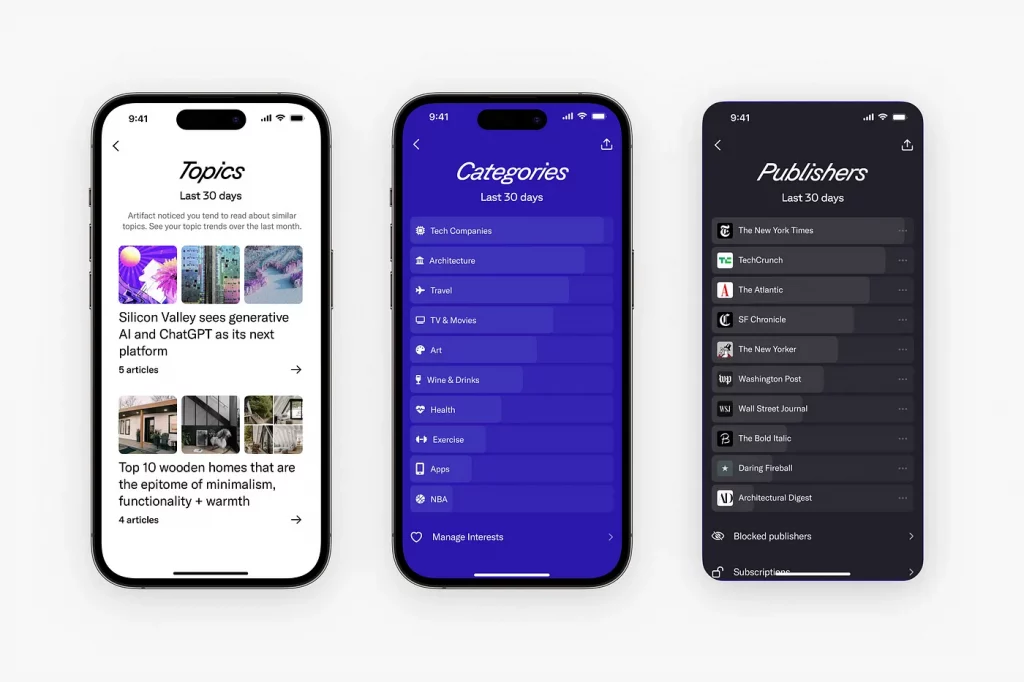
Artifact’s goal is to provide tools to allow readers to personalize and expand their feed. Users can manage their interests by blocking or pausing publishers, or selecting and unselecting general interest categories. In addition, a new feature allows users to upload their contacts to see a signal that a particular article is popular within their network. This feature is different from Twitter‘s Top Articles feature, which shows articles popular with the people you follow, as Artifact’s feature is more privacy-focused. It does not tell you who read it or how many of them read it, so it keeps privacy. 

Systrom stated that the underlying technology requires a certain amount of data and a number of people using it to offer the best experience. The company believes the app is now ready for a larger audience. The newly added stats feature shows users the categories they have read, recent articles they have read within those categories, and the publishers they have been reading the most. Very few news publishing apps follow this approach. The reading is grouped more narrowly by specific topics rather than general categories. The broader goal is to expand the social experience to include a way to discuss news articles within Artifact itself. 

Artifact is a U.S.-based version of China‘s Toutiao or Japan‘s SmartNews. Apps like these utilize algorithms and machine learning to form a curated set of news articles for each user based on how they engage with the app’s content. Systrom claims that while Artifact is similar to these other personalized news readers, the “devil is in the details”. The machine learning used in Artifact is based on the transformer, which was invented in 2017 at Google. It’s interesting to note that the ‘T’ in ChatGPT stands for Transformer as well. 

Systrom compares the emergence of Artifact with the founding of Instagram when there were already other image-sharing apps available. There has to be something that distinguishes new technology from existing technology in order to create a niche in the market. In this case, that would be machine learning and other similar algorithms.

RELATED:

(Source, Via)

Xiaomi Civi 3 Key Specifications Leak Reveals Chipset, Cameras

Last year in September, Xiaomi launched the Xiaomi Civi 2 smartphone. Like the original Civi and Civi 1S phones that have launched in the past, the Civi 2 was made available as a female-focused phone. Now, a new leak has revealed the key specifications of the upcoming Civi 3.

Xiaomi Civi 3 specifications (rumoured)

According to tipster Digital Chat Station, the Xiaomi Civi 3 will have a Full HD+ display that offers a 120Hz refresh rate. In all likelihood, it could be equipped with an AMOLED screen with curved edges and a pill-shaped cutout for the two front-facing cameras.

The leak further states that the Civi 3 has two 32-megapixel cameras on the front. The Civi 2 has dual front-firing LED flash units for brighter selfies in low-light conditions. It is likely that the Civi 3 may also have dual LEDs on the front.

Xiaomi Civi 2

The rear camera setup of the device will have a Sony IMX800 primary camera. He also stated that there will be no overhaul improvements to auxiliary cameras. To recall, the Civi 2 features a 50-megapixel Sony IMX766 main camera, a 20-megapixel ultra-wide lens, and a 2-megapixel macro camera.

The Snapdragon 7-series chipset was used in all previous Civi models. However, it appears that Xiaomi may offer a MediaTek SoC on the Civi 3. Last month, DCS claimed that the Civi 3 will use the Dimensity 8200 SoC. He has once more stated in the new leak that the D8200 will power the device.

The rest of the specifications of the Xiaomi Civi 3 are under wraps. The Civi 2 was priced at 2,399 Yuan (~$348) at launch. Hence, it is likely that the successor may arrive with a similar price tag.

RELATED:


(source)

Mercedes-Benz to Integrate TikTok for the First Time Ever

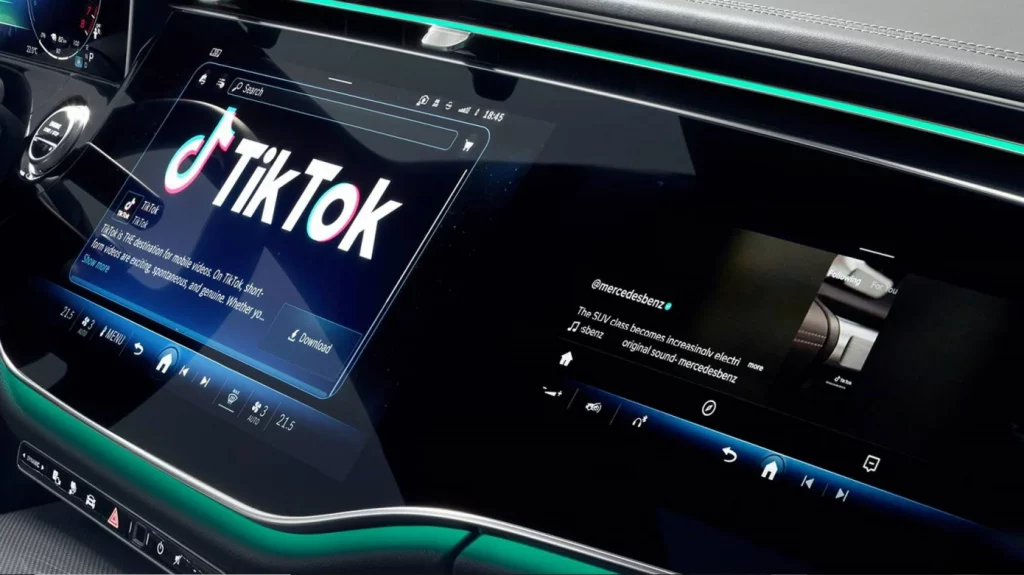
After recent speculation that Tesla will integrate ChatGPT into its EV fleet, this shouldn’t come as a surprise that TikTok, the viral social media app, is set to make its way into cars. As per the latest reports, the upcoming release of the new Mercedes-Benz E-Class in the fall of 2023 will feature TikTok. The updated version of the MBUX infotainment system in the vehicle will boast a “superscreen” that spans the entire dashboard and will allow drivers and passengers to access a variety of apps, including TikTok, Zoom video conferencing, Angry Birds, Vivaldi web browser, and Webex by Cisco.

TikTok Mercedes

Mercedes-Benz CEO Ola Källenius stated that the company selected these apps based on what is most popular in each market or region. With the inclusion of TikTok, it highlights Mercedes’ interest in the Chinese market, where the app is particularly popular.

Passengers will have access to a portion of the screen located directly in front of them, allowing them to enjoy the content on TikTok. The driver monitoring system will track where the driver is looking, ensuring that they do not become distracted while driving.

Mercedes-Benz has created a new software architecture that allows for easier integration of third-party apps into the infotainment system. The automaker has also developed a new app store that is accessible through the Mercedes me app. Over-the-air software updates will enable more apps to be added to the vehicle in the future.

In addition to the inclusion of TikTok and other apps, Mercedes-Benz announced a long-term partnership with Google that will provide drivers with navigation, maps, and YouTube. The automaker also revealed details about its own operating system, MB.OS, which is expected to debut in its next generation of vehicles around 2025, and an expanded partnership with lidar company Luminar. 

All of these new features and partnerships were announced and debuted at the automaker’s research and development center in Sunnyvale, California.

RELATED:

(Via)

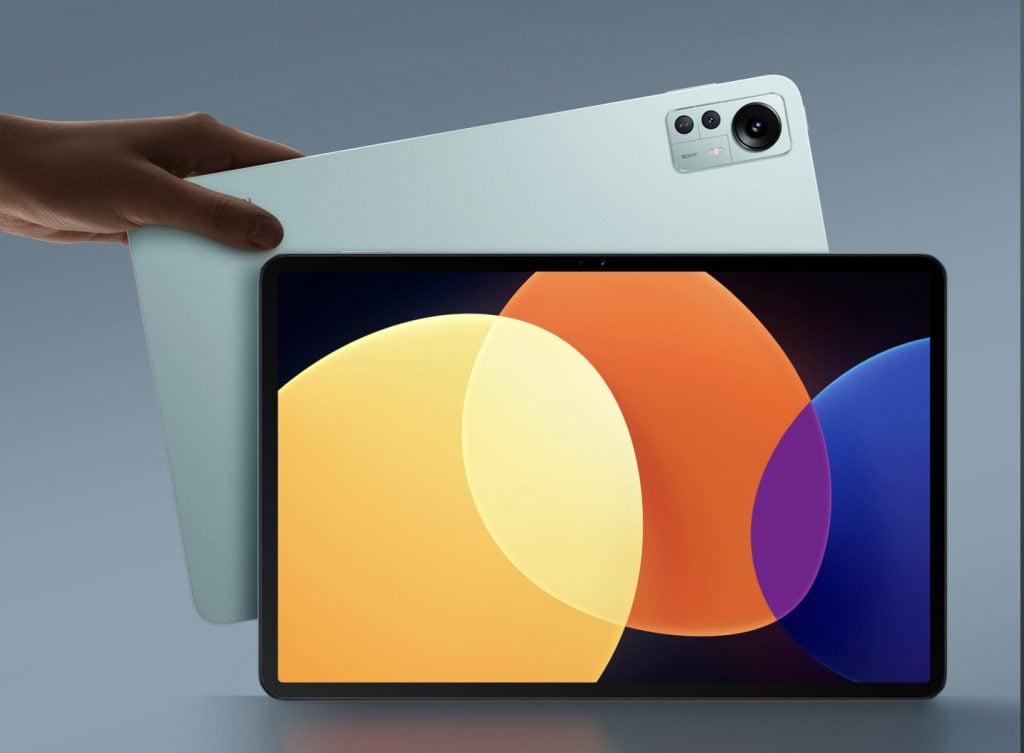
Xiaomi Pad 6 Series Launch Timeline & Key Specs Tipped

Following the resounding success of the Xiaomi Pad 5 range of tablets, both in the local and international markets, the company seems to be getting ready for the imminent release of the Xiaomi Pad 6 series. Several leaks concerning the specifications and design of the tablet have surfaced in recent weeks. Now, a new report has emerged, providing us with information about the display and chipset specifications, as well as the expected launch window.

Xiaomi

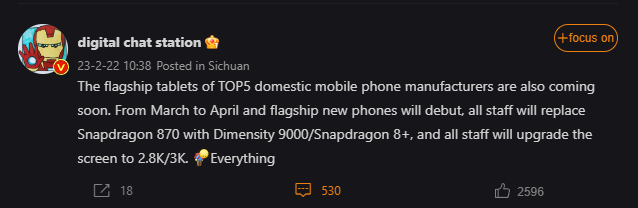
The report comes from popular Weibo tipster DCS who informs that the Xiaomi Pad 6 series tablets could launch in March or April. Some previous reports have claimed an April launch window for the tablets, alongside the Xiaomi 13 Ultra and Xiaomi Band 8.

Xiaomi

According to Digital Chat Station, the forthcoming flagship tablets from Xiaomi will be powered by either MediaTek’s Dimensity 9000 or Snapdragon 8+ Gen 1 chipset. However, the base model of the Xiaomi Pad 6 is expected to feature a Snapdragon 870, in contrast to the Snapdragon 860 used in the vanilla Xiaomi Pad 5. Based on past models, the Xiaomi Pad 6 Pro could potentially come with the Snapdragon 8+ Gen 1. Additionally, the Xiaomi Pad 6 series may receive upgraded displays with resolutions of up to 2.8K or 3K, surpassing the 2.5K screens of the Pad 5 series.

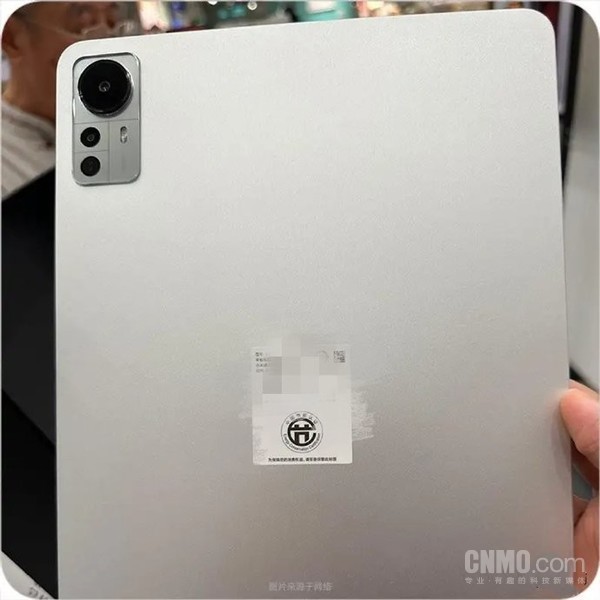
Previous design leaks have revealed that the Xiaomi Pad 6’s camera module will look a lot like the one present on the Xiaomi 12 smartphone. The display could have a 120Hz/144Hz refresh rate and offer support for Dolby Vision and HDR10+. The battery is expected to be a dual-cell unit with a 10,000mAh capacity, and offer 67W fast charging.

RELATED:

(Source, via)

Xiaomi 13 Ultra Case Images Reveal Huge Camera Island with Multiple Sensors

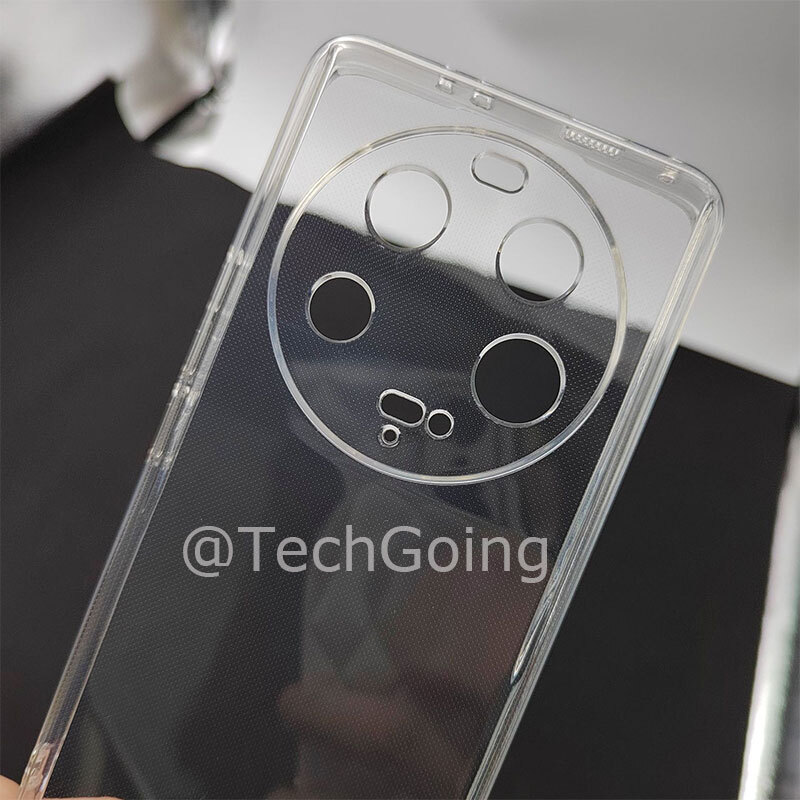
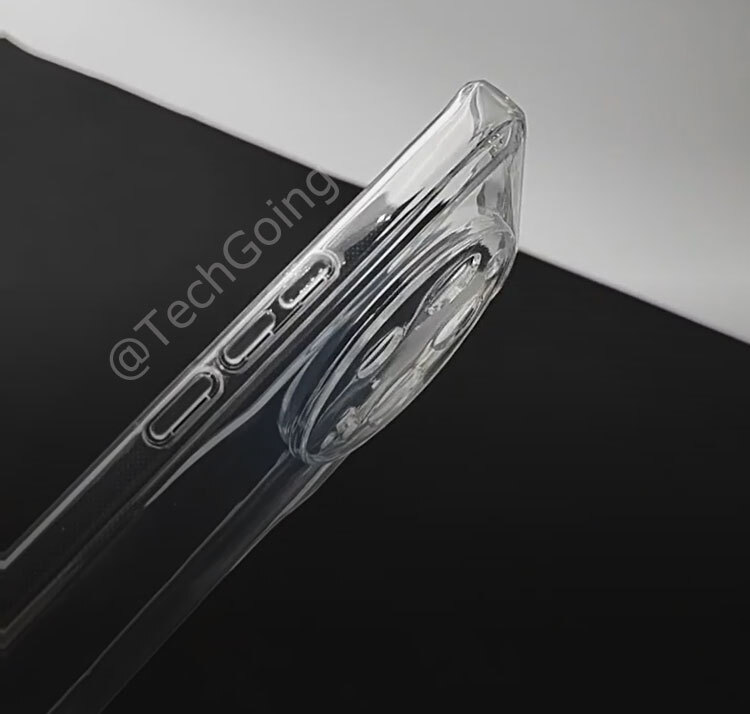
Xiaomi is gearing up to launch the Xiaomi 13, 13 Pro, and 13 Lite on Feb. 26 for the global market. Once the global launch is done, the Chinese wing of the brand is likely to gradually shift its focus to the Xiaomi 13 Ultra, which will be the company’s most powerful flagship phone. Rumors are rife that it may break cover in April this year. Well before the launch, the publication TechGoing shared case images of the Xiaomi 13 Ultra, revealing its rear design.

As can be seen, the alleged case for the Xiaomi 13 Ultra reveals that its design will not be too different from the China-exclusive Xiaomi 12S Ultra, which debuted last year. The leaked images show that the 13 Ultra has a humongous round-shaped camera module like its predecessor. A side view of the case reveals how much the camera island will protrude from the rest of the back.

The case images show four round-shaped cutouts at the centre. Rumors have claimed that the Xiaomi 13 Ultra will have a quad-camera setup, which will be headlined by a 1-inch, 50-megapixel Sony IMX989 primary camera. The main snapper is said to be equipped with gimbal optimization.

There is a pill-shaped cutout at the top inside the camera module. The remaining cutouts available inside the camera island could be for the LED flash and microphone. Coming to the edges of the phone, its right side has cutouts for volume up/down buttons and a power button. At the top, there are some cutouts, which could be for the speaker, a microphone, and an IR blaster. 

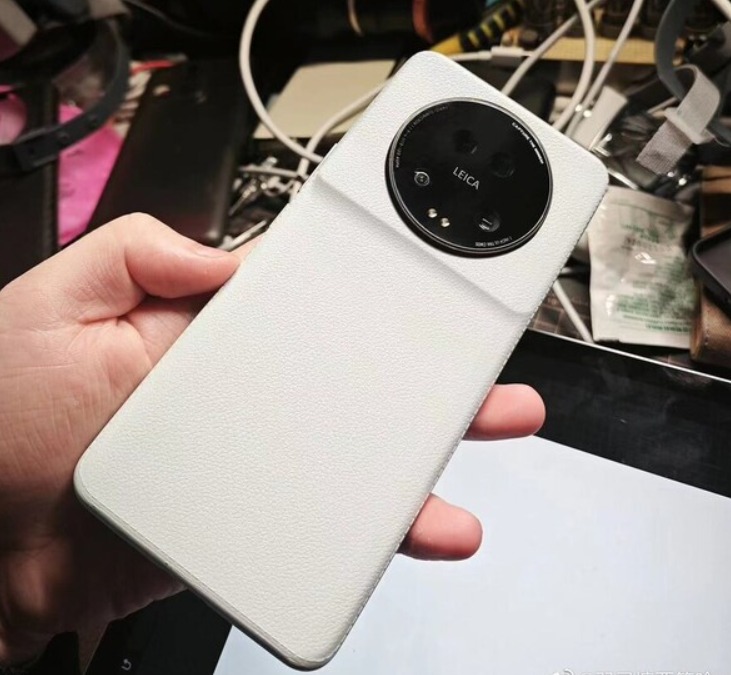
Xiaomi-13-Ultra-leaked-image
Xiaomi 13 Ultra leaked image

Shown above is a leaked image of the Xiaomi 13 Ultra that emerged last week. As can be seen, the case images are almost in line with the leaked image of the device.

RELATED: