Advertisement

Pixel 7 Users Complain of Google Refusing To Acknowledge the Camera Glass Cracking Issue

We have already reported on the Pixel 7 series suffering from an odd issue that causes the phone’s rear camera glass to shatter. However, the number of the people that have been facing this issue is growing but it seems that Google is refusing to acknowledge this issue under warranty claims.

In our previous report, it was found that the Pixel 7 and the Pixel 7 Pro users were suffering from an odd issue that caused the glass on the rear camera to crack and shatter. Back then, there was no official statement from the Search Engine giant regarding this matter. Now, it appears that the number of Pixel 7 users that have been facing this issue has grown but it seems that Google is refusing to take responsibility for it.

Google

Some Redditors took their complaints to the company but to no avail. According to rsaxena699, they fought with Google over this issue. The Redditor added that they “have been struggling to get them to cover this spontaneous shattering under warranty despite sharing countless Reddit articles, google support case IDs, etc. proving that they have covered it under warranty for some customers who have faced the exact same issue. They keep saying they don’t cover “physical damage.”

As of right now, it is still officially unclear what causes the rear camera glass to crack and shatter on the Pixel 7 series. Although there have been reports going around that claim that the issue is caused by the metal camera module frame that surrounds the Pixel 7 series’ cameras. This would explain why last year’s Pixel 6 lineup does not suffer from the same issue. So stick around for more updates regarding this matter.

RELATED:

(Via, Source)

Europe Warns TikTok of Potential Ban in 27 Countries of the Union

TikTok CEO Shou Zi Chew was warned by the EU commissioner Thierry Breton over a video call recently. The commissioner clearly stated that the EU will use all possible means to safeguard the privacy of its citizen and, if needed, will ban the app from the European Union.  EU wants TikTok to step up its act and comply with all the rules and regulations outlined in the Digital Services Act (DSA). 

DSA which came into force in November 2022, is considered a Gold Standard for content and internet platform governance. It provides for multiple deterring sanctions, including a ban in the EU for repeated breaches of the Act that can be a threat to the life and safety of EU citizens. Non-compliance with the DSA may lead to hefty fines of up to 6% of the annual global turnover of companies. 

Many provisions of the DSA only apply to platforms that have more than 45 million users in the EU. However, this threshold brings famous platforms like YouTube, Twitter, Facebook, and TikTok under the purview of the Act.

TikTok was already discussing the policies on data safety, misinformation, and DSA compliance with the EU. Multiple meetings with the top brass of the company included topics like Child safety, Russian disinformation, transparency of paid political content, and GDPR (General Data Protection Regulation).

In the latest video call, commissioner Breton told CEO Chew “We will not hesitate to adopt the full scope of sanctions to protect our citizens if audits do not show full compliance,”. He further said that “With younger audiences comes greater responsibility. It is not acceptable that behind seemingly fun and harmless features, it takes users seconds to access harmful and sometimes even life-threatening content”

With more than 3 billion downloads, TikTok is the number one app in the world and the most famous among youngsters. But its Chinese origin brings a lot of concerns, especially in privacy and data safety. TikTok which is owned by the Chinese company ByteDance has been accused of data harvesting and reporting it back to Chinese authorities through its parent company. Other issues include addiction concerns, misinformation, content censorship, spying, cyberbullying, etc. 

The App is already banned in Asian countries like India, Pakistan, Bangladesh, and Azerbaijan. In the US, more than 20 states, the military, and congress have banned TikTok from government-issued devices.  A potential ban in the EU could be catastrophic for the app. 

TikTok Brussels director of public policy and government relations, Caroline Greer recently tweeted that it was a good exchange (of dialogue) between CEO Chew and Eu Commissioner. She said that the safety of users is paramount for TikTok.

RELATED:

(Source)

This Ad Scam Affected Over 11 Million Devices Worldwide

When you visit a website, there is a chance that you are greeted with an advertisement (or multiple ads). What’s actually happening is that a number of advertising companies are competing for that particular ad slot on the website. All of this happens instantaneously, so the advertisement you see is a result of a contest that happens right there and then. What if there are multiple winners for that particular contest, and all of them are getting paid for it? 

Scam attack

The Ad Scam, now known as Vastflux, was revealed by security researchers on January 19, 2023. Marion Habiby, a data scientist (and also the lead researcher on the case), states that this is the biggest and the most complex attack ever seen. The organization behind these attacks ran the scam for a considerable amount of time and made copious amounts of money while doing so. Billions of advertisements are displayed across websites and applications every single day, which is how ad networks make money – by getting people to click on them. This generates hundreds of billions of dollars in revenue per year.

The fraud involved multiple steps, as per reports. The fraudulent organization, upon winning the auction for an advertisement slot, used to maliciously stack multiple video advertisements on top of each other. They weren’t trying to hack or hijack a device or network, they were simply inserting JavaScript code into that ad to take control of that particular slot. By the time the ad disappears, the attack is terminated – leaving practically no trace. 

Habiby further states that at the peak of the attacks, 12 billion requests were made per day. 11 million devices were affected by the attack. Whereas iOS devices were the ones primarily affected, Android phones were also a victim of the attack. Unfortunately, users couldn’t possibly notice if their device was being affected. But there was an after-effect of the attack – the stacked advertisements were causing phone batteries to drain significantly faster.

In light of ongoing investigations, the name of the organization behind these attacks hasn’t been revealed. Vastflux has undoubtedly created ripples in the world of cybersecurity. 

RELATED:


(Source, Via)
Password Crackdown Limit to be Soon Expanded by Netflix

Netflix is one of the most popular OTT streaming platforms out there. Netflix has now confirmed that they are planning to expand the limit of password crackdown by the year 2023. The brand had recently mentioned the changes in the Q4 shareholder letter. In that particular statement, Netflix claims that widespread account sharing undermines their ability to invest and improve their services. Here is the detailed statement shared by the brand;

“Today’s widespread account sharing (100M+ homes) jeopardises our capacity to develop our company and invest in Netflix in the long run. Even though our terms of service only permit one family to use Netflix at a time, we acknowledge that some members may find this to be a change. Therefore, we’ve put a lot of effort into developing new features that enhance the Netflix experience, such as the capability for subscribers to see which devices are using their accounts and transfer a profile to a new account. Members will have the choice to pay more to share Netflix with people they don’t live within various countries as we roll out paid sharing,” claims Netlfix.

Netflix

Netflix says it expects “some cancel reaction” in each region where paid sharing is launched based on studies in Latin America, but an overall increase in revenue is predicted as “borrower households” activate independent accounts and as more member accounts are added. According to Netflix, 100 million new households that have the potential to be profitable share passwords with an estimated 222 million paying households.

Persons who share accounts with people outside of their household will need to pay Netflix. Some Latin American nations have already implemented add-on charges, with Netflix charging an additional $3 for each non-household user. According to a December Wall Street Journal article, Netflix might charge American customers slightly under $6.99 for account sharing.

Netflix intends to use IP addresses, device IDs, and account activity to enforce its password-sharing policies. Although multi-household sharing has never been permitted by Netflix’s terms of service, it has been permitted for so long that charging for account access to friends and family could annoy some subscribers.

RELATED

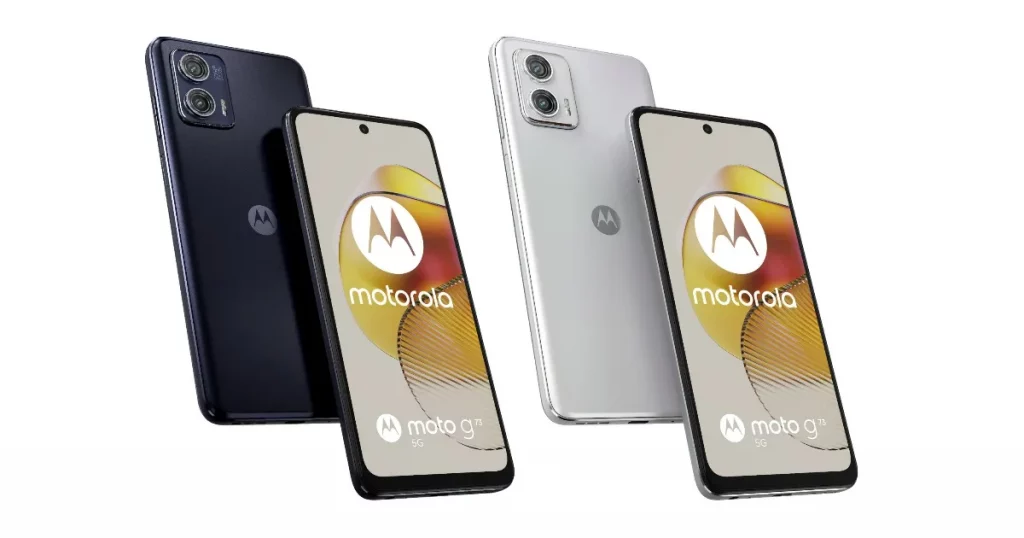
Moto G23 & Moto G13 Prices, Storage & Color Options Leak Ahead of Launch

Motorola has many devices in the pipeline which are expected to debut in the coming months. The brand recently launched the Moto G53 5G in China and also unveiled the Lenovo ThinkPhone at CES 2023. The Moto Edge 40 Pro will also be coming to the European market soon with a price tag of around EUR 850.

Along with these flagship models, Motorola will also introduce fresh models in its entry-level E Series and midrange G Series. Recently, the Moto G13 and Moto G23 have been discovered on a number of certification websites. A recent Moto G13 render confirmed the phone’s design.

Motorola G13 leaked image

Now, a new report from Appuals has revealed the price range, storage configurations, and color options of the Moto G13 and Moto G23.

Moto G13 and Moto G23 Prices, Storage, and Colour options

According to the report, only one storage option with 4GB of RAM and 128GB of internal storage will be available for the Moto G13 and Moto G23 phones. There will be three color choices for both devices: Blue, Grey, and White. The Moto G13 will be available for EUR 159, while the Moto G23 will set you back EUR 199.

Moto G13 and Moto G23 specs (expected)

The 6.5-inch HD display and Octa Core processor for both phones are confirmed. Though we do not yet know the exact specifications of the handsets, the certification listings have disclosed critical details about the phones.

Recently, the Moto G13 and Moto G23, with model numbers XT2331-1 and XT2333-3, respectively, were discovered on the FCC website. According to the listing, the Moto G13 will have a 5000mAh battery and support 20W fast charging, while the Moto G23 will support 33W fast charging, which is even faster, although its battery size is unknown. It is anticipated that both phones would support two SIM cards.

The Moto G13’s design has been confirmed by a recently leaked render. On the rear of the Moto G13, there will be a rectangular camera module with an LED flash within, as well as two sizable circular slots for the twin cameras.

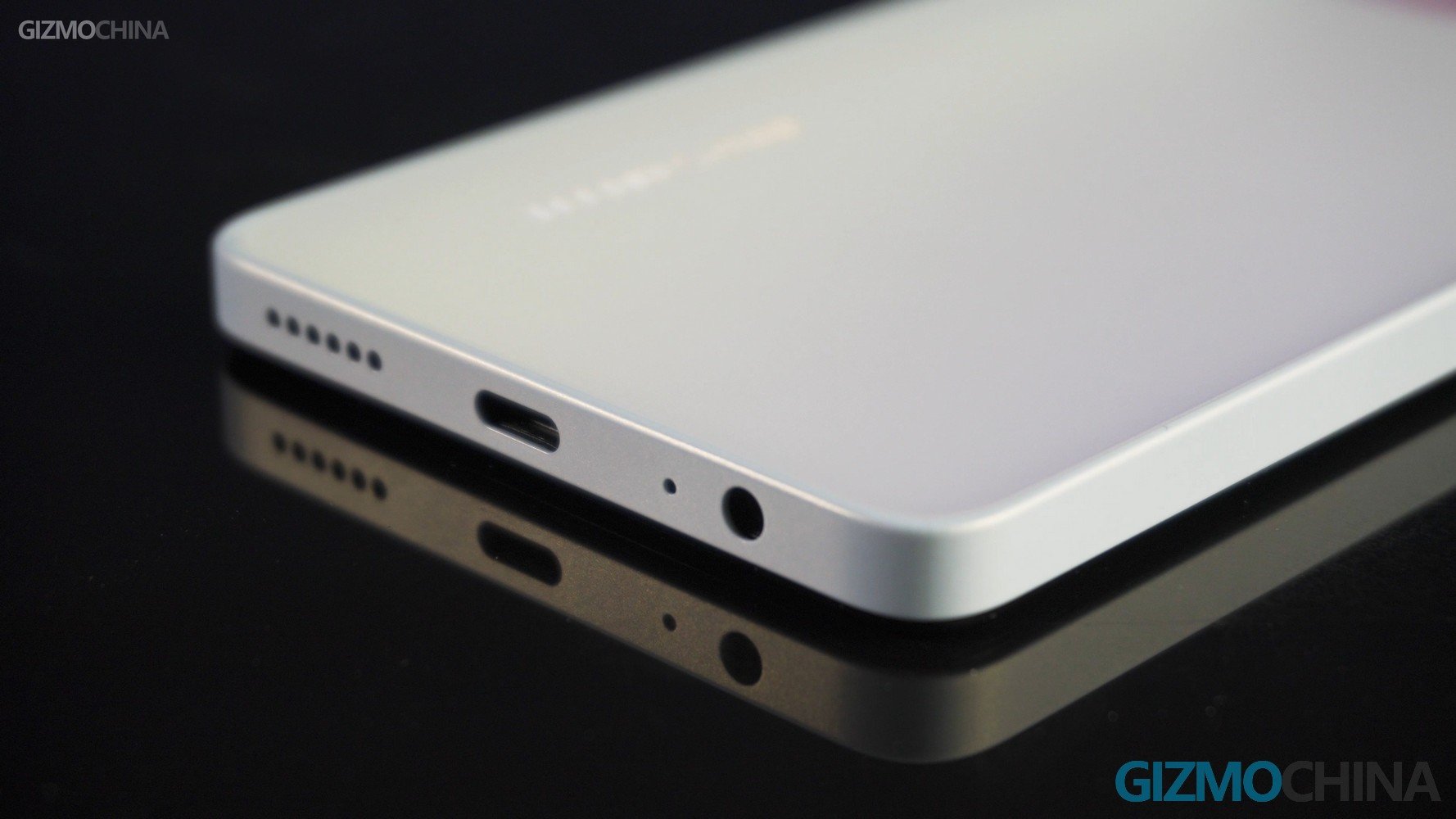
The camera module’s wording verifies that the primary camera sensor will be a 50MP sensor. It will sport a selfie camera punch-hole panel in the center. The device’s flat frame has buttons for power and volume on the right edge. The speaker grille, 3.5mm headphone connector, and USB Type-C port are all located on the device’s bottom.

RELATED:

MIUI 14 Build Ready for Xiaomi 12 Pro & POCO F4 in India; Rollout Soon

Xiaomi just unveiled the MIUI 14 user interface, which is based on the most recent Android 13 operating system. The company’s most recent UI, which is based on Android 13, was released with a small launch delay. However, immediately after the launch, the brand began quickly covering as much of the device as it could. In mainland China, a number of smartphones have already received the MIUI 14 upgrade. It is now time for MIUI 14 to launch in international markets.

Users throughout the world highly awaited the release of MIUI 14 for their smartphones. Now, a new piece of information hovering on the internet claims that MIUI 14 global build is ready for selected smartphones in the Indian market. The MIUI 14 build is ready for the Xiaomi 12 Pro and POCO F4 devices in India, claims Xiaomiui. Since both devices are the brands’ flagship smartphones, they are expected to receive the upgrade before any other models.

MIUI 14

According to the source, MIUI 14’s official build is ready for these smartphones, and after final testing is complete, the update will be sent to beta testers. Shortly thereafter, the stable users will receive the official build. Although there isn’t any precise information available regarding the update’s rollout, we anticipate that it will launch in the following weeks or perhaps months. We may assume that the other markers throughout the world will also receive the upgrade after the Indian variants do.

Anyway, there is no official information regarding the launch and rollout timeline of the MIUI 14 in India. We will update you if there’s any official update regarding the MIUI 14 in India. So, that was all we had to discuss regarding the MIUI 14 build for Xiaomi 12 Pro and POCO F4. What are your thoughts on this? Do let us know by dropping a comment in your words down below. Thanks a lot for reading the post till the end.

RELATED

Samsung Display’s New Prototype Folding Phone Hinge Can Rotate 360 Degrees

Just when you think that Samsung’s folding phones have reached a pinnacle, their new innovations raise expectations for future launches. The company’s flagship folding device, the Galaxy Z Fold 4, was released in August 2022. It showcases an improved version of their folding screen technology. At CES 2023, Samsung Display showed off a new prototype display and hinge that can rotate 360 degrees.

The ‘Flex In & Out’ display will allow the user to fold the display both inward and outward, which implies that the hinge will have an entirely different design. As per reports, the crease created by such a display will be subtler as compared to the current folding screen technology. The hinge design, also referred to as a ‘water-drop hinge’, will allow the display to form a looser shape while folded inward. It’s worth noting that this isn’t the first time Samsung has unveiled a ‘Flex In & Out’ display at an event. The company previously showcased a similar display in Korea in the year 2021. Where the new display can fold both inward and outward, the older display can only be folded like an “S” with segments. 

The new 360-degree folding display could make its way onto the next iteration of Galaxy Fold devices, the Galaxy Z Fold 5, which is expected to launch later this year alongside the Galaxy Z Flip 5. The incorporation of the new hinge would also mean that the fold crease would be subtle as compared to the Galaxy Z Fold 4. Only time will tell if Samsung can maintain its grip in the future, since the company’s Z series smartphones are practically leading the folding device market worldwide. 

RELATED:

(Source)

Galaxy Watch 5, Watch 4 Get Doorbell Cameras and Thermostat Support With Latest Update

Samsung recently released an update to the Galaxy Watch 5 duo, adding a new functionality, called connected device diagnostics that allows users to check the performance of the Galaxy Watch’s battery status, touch screen function, and other components on a connected smartphone. Now, the brand has rolled out another update but this time to both Galaxy Watch 5 and Watch 4 series. The new update gives the wearables control over more smart home gadgets. Here are the details.

A firmware update is being seeded to the Galaxy Watch 5 and Watch 5 Pro as well as the Galaxy Watch 4 and Watch 4 Classic with build number v1.1.08. The new update will allow the mentioned Galaxy Watch users to control their thermostats by setting the heating or cooling set point temperature. They will also be able to open and close motorized smart blinds and even adjust the level manually.

Galaxy Watch 5

In addition, users will be able to control the fan speed of air purifiers in the house from their wrists. The SmartTag can also be controlled from the watch itself, making it easier to find lost stuff.

Another interesting feature can livestream video from home and doorbell cameras to your smartwatch. It is said to be compatible with Ring and Nest cameras that support WebRTC. So now you can check who’s at your door right from your smartwatch without having to open your smartphone. The update also allows Galaxy Watches to control Samsung smart TVs that support Bluetooth.

It is worth mentioning that Samsung recently partnered with other makers using the Matter protocol, expanding the number of devices under the SmartThings network. The brand also announced the new SmartThings Station and a multi-function hub for people who are just starting their smart home journey.


RELATED
:
(Source)

Apple AR Glasses Reportedly Put On Hold Due To Technical Issues

Apple has been working on expanding its lineup of hardware portfolio with the launch of a couple of new devices aiming to make the company future-proof. The technology giant has been working on VR/AR headsets and AR Glasses.

Apple AR Glasses, which is a different product from the mixed reality or AR/VR headset that the company is planning to launch later this year, has reportedly been delayed for launch yet again.

Apple AR Glasses

As per the latest report, the Apple AR Glasses have been put on hold or postponed indefinitely due to technical issues. Earlier, the device was set to debut this year but was postponed to 2024 or 2025, and now it appears to have been put on hold without any release timeline.

Apple isn’t the only one working on AR Glasses or similar hardware. Google, which started all these with Google Glasses, is working on a new device under Project Iris, while Meta is working on Nazare, both of which are expected to debut in 2024.

While the AR Glasses-type products won’t be ready to wear full-time for users, companies like Google and Meta have taken an alternate approach. Google says that it would begin testing prototypes while Meta‘s Nazare, Artemis, and Hypernova products will initially be given only to developers. This buys the company enough time to work on the device that users can use for an extended period of time without any side effects.

Apple’s AR/VR or Mixed Reality Headset is set to debut with a price tag of around $3,000 and packing desktop-like M2 chip. However, the company is expected to launch a relatively cheaper model in 2024 or 2025 with a starting price closer to around $1,500, which will compete against the products like Meta Quest Pro.

RELATED:

AYANEO AIR Plus AMD Ryzen 5 7520U & Ryzen 7 6800U handheld consoles unveiled, Pentium Gold 8505 edition cancelled

AYANEO has provided further information about the AIR Plus gaming portable series, which is less expensive than the NEXT II or the SLIDE. Recall that in June 2022, AYANEO unveiled the AIR Plus with the Intel Pentium Gold 8505, Intel Core i3-1215U, and an unidentified AMD Mendocino APU. The AIR Plus was initially scheduled to ship in Intel versions on December 28 and AMD Mendocino variants two months later.

AYANEO

While the latter may still be on schedule, AYANEO fell short of its December forecast for variants with Intel processors. The Pentium Gold 8505 model, which would have retailed for US$30 cheaper than the Core i3-1215U, appears to have been abandoned by AYANEO. The Ryzen 7 6800U fills the void left by the AIR Plus series and bridges the gap with other contemporary gaming handhelds from AYANEO, such as the AYANEO 2.

AYANEO

This model is said to include a 46.2 Wh battery, which is a bigger capacity than those found in other AIR Plus models, and an exclusive Classic Grey color scheme. Although AYANEO has stated that the model will include 3.5 mm audio, a MicroSD card, and USB 4 connectivity, it’s possible that these features will be found on other AIR Plus models. The AMD Mendocino APU will be the Ryzen 5 7520U, not the less potent Ryzen 3 7320U, according to AYANEO.

For those unaware, the Ryzen 5 7520U includes four Zen 2 CPU cores and two RDNA 2 Compute Units (CUs) marketed by AMD as the Radeon 610M. Currently, AYANEO anticipates starting the AIR Plus series’ mass production the following month. However, the price of the new Ryzen 7 6800U version has not yet been disclosed by the manufacturer, and it is also unknown whether the prices of the Core i3-1215U and Ryzen 5 7520U variants have altered.

RELATED:

(Source, Via)

Users Can Now Message Themselves On WhatsApp

Messaging yourself on social media isn’t as crazy as it sounds. Applications like Messenger, Instagram and Slack have had this functionality for quite some time now. In the latest WhatsApp update, users can send messages to themselves within the application.

Since Meta also owns WhatsApp, the ‘message yourself’ feature was bound to make its way to the application sooner or later. A lot of people use this feature to add information that they have to memorize, for instance, a shopping list or a to-do list for the day. You can also pin your location within the chat for future reference. Since users open their messaging applications multiple times in a day, there is a much higher chance of people revisiting their notes and lists. Additionally, users can easily search through their messages to find any saved messages – or in this case, notes to self.

For users who use WhatsApp on their computers via WhatsApp Web, their messages (or notes) will get synced across all their devices, adding an extra layer of convenience to the instant messaging platform. Furthermore, time-sensitive reminders can be added through Disappearing Messages, which allows users to send messages that vanish after a specific amount of time. The time can vary between 24 hours and 90 days, making it ideal for adding reminders that become obsolete after a certain time span. Users won’t have to go through the hassle of deleting their messages/reminders one by one. 
Whether you are using the new Message Yourself feature to leave yourself affirming messages or memorize important information, Meta is definitely bringing WhatsApp’s messaging capabilities up to the level of its other platforms. Try out the new WhatsApp feature on your smartphone, or head over to https://web.whatsapp.com/ to do so. The feature should be rolling out to all users in the latest update.

RELATED:

(Via)

Honor Magic V 14 Series Laptops Start Receiving MagicOS 7 Update With Support For More Features

Honor has a lineup of laptops under the Magic branding, and the company also has an operating system named MagicOS. Today, the company has announced that the Honor MagicBook V 14 is receiving the MagicOS 7.0 update.

The newly released update for the notebook supports the online upgrades of keyboard and mouse sharing, call and notifications sharing, and a few more features.

Honor MagicBook V 14 Series MagicOS 7

It enables users with Honor smartphones or tablets and laptops to share the keyboard and mouse as well as receive notifications related to calls. It also has support for notification sharing, enabling users to get the latest information no matter which Honor device they are using.

The list of devices getting the new update over the air (OTA) includes MagicBook V 14 and MagicBook V 14 2022 models, and the Honor MagicBook V 14 series also upgrades the Computer Manager to version 17.0.0.111 in batches.

Those who have an eligible device should be receiving a system upgrade prompt shortly to download and install the update. If not, then the users can also manually try to install the update by downloading the latest version of PC Manager from Honor’s official website.

The Honor MagicOS 7.0 comes with an upgraded software system architecture that creates a fusion ecological experience with an aim for seamless collaboration across the company’s devices and seamless flow across applications.

This new version of the MagicOS was released a couple of months back, in November 2022. There are four platform-level root technologies and system core services — Magic Ring trust ring, Magic Live Smart Engine, Turbo X System Engine, and MagicGuard Honor Secure.

RELATED:

Honor Magic 5 series MWC teaser takes aim at Samsung’s Galaxy series

Honor is gearing up to launch the Magic 5 series of smartphones soon. The launch will likely happen at this year’s MWC event in Barcelona.

Honor

A well-known tipper just tweeted what appears to be a teaser image. “Go beyond the Galaxy to witness the real Magic” is written on the image, and the capitalization of Galaxy is obviously a jab at Samsung’s flagship line. So it’s evident that Honor has big goals for its forthcoming top dog. The current speculated specifications also seem extremely promising.

The first black hole ever photographed by the Event Horizon Telescope appears in the teaser’s background, which is an interesting reference to the Galaxy series.

More information about Honor’s MWC plans is still awaited, and we’ll keep you informed as soon as it is released. For now, let’s take a look at what’s known about the device so far.

Honor Magic 5 series specs

Leaks indicate that the 6.8-inch OLED LPTO panel used in the Magic 5, Magic 5 Pro, and Magic 5 Prestige Edition will have the following features: 1Hz-120Hz refresh rate; 2160Hz PWM dimming; 480Hz touch sampling rate; HDR10+; and up to 1100nits of brightness. The series will function on Android 13 OS with Magic UI 7.0.

Honor

The Snapdragon 8 Gen 2 processor, LPDDR5x RAM, and UFS 5.0 storage are all included in the Magic 5 trio. The Magic 5’s battery will have a 5,000mAh capacity and 66W fast charging, while the batteries in the other two models will have a 4,800mAh capacity and 50W each of wired and wireless charging. The 40W UFCS charging standard will also be supported by the series.

There will be a fingerprint scanner embedded in the display of all three gadgets. While the other models will offer 3D facial recognition, the Magic 5 will only enable 2D face unlock. Additionally, the series will include 5G, Wi-Fi 7, Bluetooth 5.2, NFC, USB 3.1, dual speakers powered by Dolby, an X-axis linear motor, and USB 3.1.

The Prestige Edition will have a nano-ceramic build, in contrast to the metal-glass hybrid chassis used by the Magic 5 and Magic 5 Pro. The Magic 5 will have an IP54-rated chassis while the Pro and Prestige variants will have IP68 protection against water and dust.

RELATED:

Xiaomi CIVI 3 Tipped to Feature Dimensity 8200 Chip

Xiaomi unveiled the female-focused Xiaomi CIVI 2 in September 2022. The company may launch the CIVI 2s in Q2 this year and it may announce the CIVI 3 in the second half of 2023. Chinese tipster Wisdom Pikachu has leaked key details about the CIVI 3.

According to the tipster, the Xiaomi CIVI 3 will not feature a Snapdragon SoC. Instead, it will come equipped with the Dimensity 8200 chipset. He said that its display will not support 2K resolution, meaning it will continue to support Full HD+ resolution like the current generation. The tipster did not share any information on the other specs of the CIVI 3.

Xiaomi CIVI 2
Xiaomi CIVI 2

The CIVI series by Xiaomi is known for its attractive design. The CIVI 2 is equipped with a curved-edge AMOLED display with a pill-shaped cutout for dual front-facing cameras. It is unclear whether the CIVI 3 will sport the same design, but the tipster claims that it will offer symmetrical aesthetics.

In related news, Xiaomi is reportedly working on the Xiaomi 13 Lite for the global market. Its arrival of the 13 Lite seems to be close at hand as it has been spotted at the IMEI database and Google Play Console. It seems that the 13 Lite will be a tweaked version of the CIVI 2.

The Xiaomi 13 lite is likely to arrive with a 6.55-inch AMOLED panel that offers an FHD+ resolution and a 120Hz refresh rate. Unlike the CIVI 2, the 13 Lite is expected to feature a single front-facing camera. Its back panel may feature a 50-megapixel triple camera unit. The Snapdragon 7 Gen 1 chip may power the device with 8 GB of RAM. It may offer up to 256 GB of internal storage and a 4,500mAh battery that supports 67W fast charging. The phone will run on Android 13 OS and MIUI 13.

RELATED:

(source)

Upcoming Redmi Note Series to Feature OLED Display, In-Screen Fingerprint Sensor

The Redmi Note 12 series of smartphones are now available in China and India. The lineup is expected to arrive in other markets in the next few weeks. The company is also said to be working on new Redmi Note models that may debut a few months later in China. A tipster from China has tipped key details of the upcoming Redmi Note models.

In May 2022, Redmi unveiled the Redmi Note 11T Pro and Note 11T Pro+ smartphones in China. These powerful mid-range phones featured an LCD panel and a side-mounted fingerprint scanner. For the Note 11T series, the company offered a custom-made LCD panel and obtained DisplayMate A+ certification. At that time, the company claimed that the Note 11T series feature the best LCD screen so far.

Redmi note 12 series-
Redmi Note 12 series-

As per the new leak, the upcoming Redmi Note series phone will have an OLED panel, which will be integrated with a fingerprint sensor. In another Weibo post, the same tipster claimed that the device will be equipped with the Snapdragon 7-series chipset.

There is a possibility that the tipster could be talking about the rumored Redmi Note 12 Turbo. As per a recent report, it will arrive with a 6.67-inch OLED panel that offers a Full HD+ resolution and a 120Hz refresh rate. It is expected to feature the Snapdragon 7 Gen 2 chipset, which is yet to go official.

The device will offer 12 GB of RAM and 512 GB of built-in storage. It will pack a 5,500mAh battery that offers 67W fast charging. The device will be equipped with a 50-megapixel + 8-megapixel + 2-megapixel triple camera unit. While the report did not mention anything about its fingerprint scanner, is likely that this device may come equipped with an under-screen fingerprint sensor.

RELATED:

(source 1, 2)

Xiaomi 13 Pro India Launch Imminent as it Appears in BIS Database

In December 2022, Xiaomi unveiled Xiaomi 13 and 13 Pro flagship phones in China. Both phones haven’t release in markets outs of China. Earlier this month, the company sent out the MWC 2023 media invite earlier this month. It appears that the company may use the platform to showcase the Xiaomi 13 series. Ahead of the expected global launch, the Xiaomi 13 and 13 Pro have received some important certifications.

The NBTC authority of Thailand has certified the Xiaomi 13 (model number 2211133G) and Xiaomi 13 Pro (2210132G), according to reliable tipster Mukul Sharma. At the same time, the Indian BIS regulatory body has also approved the Xiaomi 13 Pro.

To recall, Xiaomi did not release the vanilla Xiaomi 12 in India, but only the Pro model was made available. Hence, it appears that this time around too, the company may skip the Xiaomi 13 and only release its Pro version in the Indian market.

None of the certification listings has revealed signification information about the 13 and 13 Pro. However, the global editions are likely to pack the same specs as their Chinese variants. The vanilla model has a 6.36-inch FHD+ 120Hz AMOLED panel, whereas the Pro model features a 6.73-inch QHD+ 120Hz AMOLED display with curved edges. The Snapdragon 8 Gen 2, LPDDR5 RAM, and UFS 4.0 storage power both phones.

The Xiaomi 13 has a 4,500mAh battery, while the Pro model has a 4,820mAh battery. Both phones support 67W and 120W wired charging, respectively. The Pro model also supports 50W wireless charging. Both devices run on Android 13 OS and MIUI 14.

The Xiaomi 13 series has a 32-megapixel front camera. On the back, the vanilla model features a 50-mgeapixel (main, with OIS) + 12-megapixel (ultra-wide) + 10-megapixel (telephoto) triple camera system, whereas the Xiaomi 13 Pro is fitted with a 50-megapixel (main, with OIS) + 50-mgeapixel (ultra-wide) + 50-megapixel (telephoto) triple camera unit.

RELATED:

Xiaomi 12T Pro Sales Target Achieved Ahead of Schedule, Says Xiaomi CEO

Xiaomi 12T series went official in the global market in October 2022. The lineup has two models, the Xiaomi 12T and Xiaomi 12T Pro. In December, the company introduced Xiaomi 12T Pro Daniel Arsham Edition, a limited-edition phone in Europe. It appears that the 12T series has achieved impressive sales result, as Xiaomi founder and CEO Lei Jun took to Twitter to say, “We hit our annual Xiaomi 12T Pro sales target ahead of schedule!”

Since the Xiaomi 12T Pro sold faster than expected, Jun thanked the people for a giving a positive reception to the Xiaomi 12T Pro. The 12T and 12T Pro are affordable flagship phones that are priced at 599 euros and 749 euros, respectively, in Europe.

Like other smartphone brands, India is one of the major markets for Xiaomi. Last year, the company had released the Xiaomi 11T Pro in January in India. However, a recent report revealed that the company may not have plans to release the Xiaomi 12T and Xiaomi 12T Pro in the Indian market.

Xiaomi 12T, 12T Pro specifications

Xiaomi 12T Pro
Xiaomi 12T Pro

The Snapdragon 8 Plus Gen 1 and Dimensity 8100-Ultra chipsets, respectively, power the Xiaomi 12T and 12T Pro. The former comes with 8 GB of LPDDR5 RAM and 128 GB / 256 GB of UFS 3.1 storage, whereas the Pro edition offers 8 GB / 12 GB of LPDDR5 RAM and 128 GB / 256 GB of UFS 3.1 storage.

The 12T has a 108-megapixel (main) + 8-megapixel (ultra-wide) + 2-megapixel (macro) triple camera unit. The 12T Pro has a 200-megapixel primary camera and the same auxiliary cameras. The other specs are same on both models.

The Xiaomi 12T series has a 6.67-inch AMOLED 120Hz display that offers a resolution of 1220 x 2712 pixels. Both devices have a 16-megapixel front and pack a 5,000mAh battery with 120W fast charging. The 12T series runs on MIUI 13-based Android 12 OS and comes with an under-display fingerprint scanner for security.

RELATED:

Vivo Y55s 5G Launched with Dimensity 700, 50MP Dual Cameras, 5,000mAh Battery

The Vivo Y55s 5G has gone official in Taiwan. This device is slightly different from the handset with the same name that was released in December 2021. Some of its key highlights include an FHD+ display, a 5G-enabled chip, a big battery, and 50-megapixel dual rear cameras. Here is all the information on the specifications, features, and price of the device.

Vivo Y55s 5G specifications and features

The Vivo Y55s 5G has a 6.55-inch IPS LCD panel with a teardrop notch. It offers a Full HD+ resolution of 1080 x 2408 pixels, an aspect ratio of 20:9, a refresh rate of 60Hz, 96 percent NTSC color gamut, and a screen-to-body ratio of 90.6 percent. The power button located on the right side of the device is integrated with a fingerprint sensor.

Vivo Y55s 5G
Vivo Y55s 5G

Under the hood, the Vivo Y55s 5G has the Dimensity 700 chipset It comes with 4 GB and 6 GB RAM variants, both of which offer 128 GB of native storage. It houses a 5,000mAh battery with 18W charging support.

The FunTouch OS 12-based Android 12 OS comes preinstalled on the Vivo Y55s 5G. On the front, it has an 8-megapixel selfie snapper. The back panel features a 50-megapixel primary camera, a 2-megapixel portrait lens, and an LED flash. The phone supports 1080p video recording at 30fps (front camera) / 60fps (rear camera). The Y55s 5G offers other features like dual SIM support, 5G, dual SIM, dual-band Wi-Fi, Bluetooth 5.1, GPS, NFC, a USB-C port, and a 3.5mm audio jack.

The specs of the Vivo Y55s 5G are almost identical to its Chinese counterpart. The Chinese Y55s is Vivo’s first phone with a 6,000mAh battery. The rest of the specs are the same on both models.

Vivo Y55s 5G price and availability

In Taiwan, the Vivo Y55s 5G variants, such as 4 GB RAM + 128 GB storage is priced at NTD 7,990 and 6 GB RAM + 128 GB storage costs NTD 8,490. It comes in Galaxy Blue and Star Black colors.

RELATED:

Vivo X90 Series Retail Box Surfaces Online Ahead of Global Launch

The Vivo X90 series debuted in China recently and has been up for purchase in the country for quite some time now. Vivo’s premium lineup includes X90, X90 Pro, and X90 Pro Plus. The Plus model will remain in its home country but the rest two devices are expected to make it to the global market as well. Reports suggest the flagships will debut internationally on February 2. While we wait for an official confirmation, a tipster has leaked the retail box images of the upcoming lineup.

Tipster Paras Guglani recently shared the retail box images of the upcoming Vivo X90 and X90 Pro. The images reveal a similar packaging as the previous gen series. The box has a minimalist design with black color and “X90” branding on the center.

Guglani also corroborated previous rumors that claim the X90 series will be up for pre-orders between January 27 and February 2 and would be launched on February 3. However, there’s no official confirmation from the brand yet.

Vivo X90, X90 Pro specifications

The Vivo X90 and X90 Pro feature a 6.78-inch flat AMOLED panel with an FHD+ resolution, a 120Hz refresh rate, and up to 1300 nits of brightness. The screen also houses a fingerprint scanner and a 32-megapixel front-facing camera. Both handsets run the FunTouch OS 13-based Android 13 out of the box.

Under the hood, both devices get a Dimensity 9200 processor that is paired with LPDDR5 RAM and UFS 4.0 storage. The vanilla model features a 50MP main camera, 12MP ultra-wide, and a 12-megapixel telephoto lens on the rear. The Pro phone takes things to a different level with its 50MP main cam, 13MP ultra-wide, and 50MP telephoto lens. The X90 Pro is backed by a 4,870mAh battery while the X90 packs a 4,810mAh unit. They both carry 120W fast charging support.

RELATED:

ESR Halolock Mini Wireless Charger With Magsafe and iPhone 14 Series Compatibility Launched

ESR has launched the HaloLock Mini wireless charger with MagSafe capability and compatibility with the iPhone 14 series. The new MagSafe-ready ESR charger has a compact design and can snap to the back of an iPhone.

ESR Halolock Mini Wireless Charger

The HaloLock Mini has a reinforced braided cable that can take in more weight. ESR says the HaloLock Mini is up to 30 minutes faster in charging a variety of smartphones including the iPhone 14 series. It has an advanced cooling mechanism that puts it in a better position than other MagSafe chargers on the market. The new braided nylon cable has been tested to stay afresh even after 6,000 bends. The powerful magnets in the HaloLock Mini can hang on to 1.2kg of weight.

ESR is also offering the HaloLock Universal MagSafe Ring 360 adhesive adapter. This thin adhesive adapter can be attached to a phone’s case to give it wireless charging compatibility. There is no fear of misalignment, as it comes with plastic guides to ensure proper alignment. It is compatible with iPhone X up to iPhone 14 models. The system is also compatible with the Samsung Galaxy S10, S20, S21, and S22 series.

The HaloLock Mini comes in green, black, and blue color options. The device is also compatible with the AirPods Pro 2 new Cyber Armor Tough and Orbit Hybrid cases. It allows the charging case of the AirPods Pro 2 to charge wirelessly. It also protects the device from drops and shocks. There are no pricing details for the new EST offerings at this time. However, they have already been listed on Amazon. Pricing details may pop up anytime soon.

RELATED:

(source)