Advertisement

Oppo Watch 3 Could Take on Galaxy Watch 5 in Global Markets

The Oppo Watch 3 series made its debut in China in August. It has been more than four months, however, the brand is yet to make an official announcement regarding the availability of its latest wearables in international markets.

But a report recently suggested that the Oppo Watch 3 will make its way to India by the end of March or early April.  Unfortunately, the report did not reveal anything more about the product.

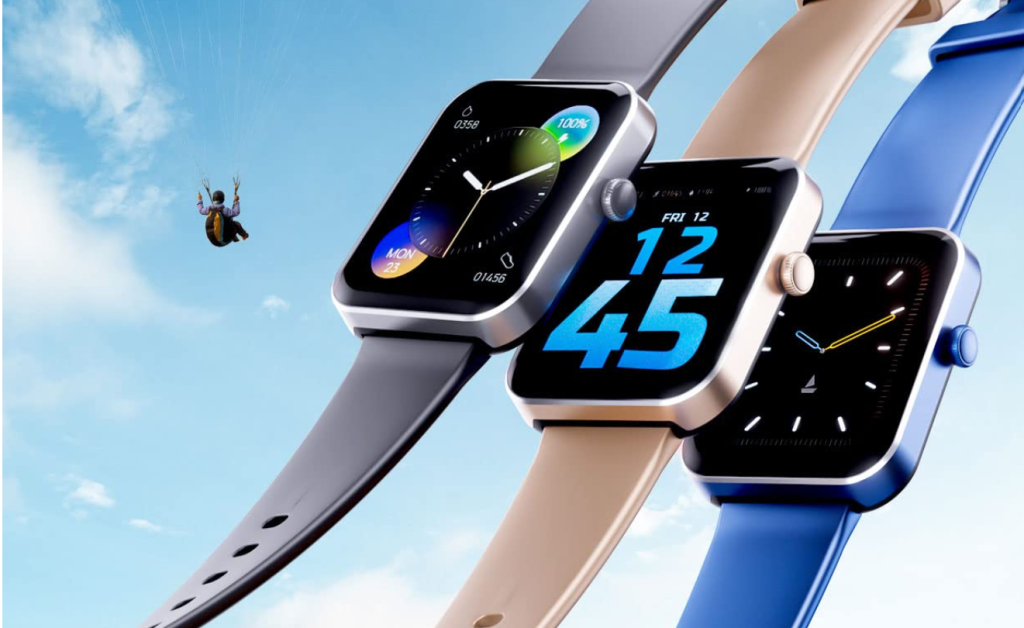
Oppo Watch 3
Oppo Watch 3

In 2020, Oppo debuted the first-generation Oppo Watch in international markets. That wearable featured different chipsets in mainland China and other regions.

The Oppo Watch 2 series remained exclusive to China. Now, if the report is to be believed, the Oppo Watch 3 will be released in international markets.

Since the first-gen model had different specs across regions, there’s a chance that the Oppo Watch 3 for global markets could be different from the original sold in China.

We wouldn’t be surprised if Oppo launches the recently debuted Oppo Watch SE as Oppo Watch 3 outside mainland China. Because this particular wearable could help the company maintain competitive pricing.

Either way, we hope that Oppo brings any of these smartwatches to global markets. Because the options for watches with Wear OS are way more limited than in previous years.

Samsung’s Galaxy Watch 4 and Galaxy Watch 5 series of wearables are currently the default choice for anyone looking for a proper smartwatch on the Android platform. The only other options are Fosill Gen 6 Wellness Edition and Google Pixel Watch. But these two are only sold in select countries, unlike Galaxy Watches which are available in almost all regions.

Oppo Watch SE

Both Oppo Watch 3 and Oppo Watch SE feature great hardware. The former is powered by a Snapdragon W5 chip, while the latter houses a Snapdragon 4100 Plus SoC. They also come with co-processors, namely Apollo 4 Plus (Watch 3)  and Apollo 4s (Watch SE).

The aforementioned hardware is enough to run the latest Wear OS 3.0 smoothly. Thus, if Oppo brings either of these watches to global markets, they can take on Samsung.

These wearables also offer features, such as eSIM, Bluetooth calling, multiple sports modes, heart rate monitoring, blood oxygen level monitoring, sleep tracking, 5ATM water resistance, and more. But they lack ECG and blood pressure monitoring, which are offered on Galaxy Watch 4/5.

That being said, we are looking forward to learning more details about the Oppo Watch 3 global variant in the coming days. Do let us know your expectations of this upcoming wearable in the comment section below.

RELATED:

Upcoming Samsung Galaxy S23 Series Colour Variant Revealed

Samsung is all set to launch the Samsung Galaxy S23 lineup of smartphones. The lineup will include three smartphones; Samsung Galaxy S23, Galaxy S23+ and Galaxy S23 Ultra. There are strong rumours on the internet that Samsung will launch these products along with the OneUI 5.1 and the next generation of Samsung Galaxy Book on February 1st, 2023. However, there is no official confirmation of the launch date yet.

In a tweet, well-known tipster Ahmed Qwaider asserted that the White versions of the Galaxy S23, Galaxy S23+, and Galaxy S23 Ultra won’t be offered this year. According to reports, the Galaxy S23 and Galaxy S23+ will be offered in Phantom Black, Green, Lavender, and Cream. Presumably, Samsung might continue to sell the products exclusively on Samsung.com in various colour variants, as it did with the Galaxy S22.

Samsung

It is important to point out that promotional images for the Galaxy S23 Ultra have already been leaked. The item may be seen in the leaked photo in all its beauty.  Images demonstrate that Samsung’s top-tier flagship phone hasn’t undergone any significant changes to its design or physical factor. The camera module of the Galaxy S23, however, saw some notable changes. The camera module of the Galaxy S23 and S23+ will reportedly be modified.

Smartphone features and specifications may be officially announced when the device’s release date gets closer. The company might officially reveal the device’s launch date in January. Around the same time, we can also expect some teases.

RELATED

Source

POCO C50 To Launch In India Tomorrow, Flipkart Availability Confirmed

POCO C50 launch date has been revealed in India. It is set to debut in the country on January 3rd. The device is confirmed to be available from Flipkart. The e-commerce platform has put up a microsite of the upcoming offering revealing its key specifications. 

The POCO C50 will be an entry-level smartphone. As per the Flipkart microsite, it appears to be similar to the Redmi A1+. The upcoming offering will feature a 6.52-inch display bearing an HD+ resolution and a waterdrop notch. It will have a 120Hz touch sampling rate. The device has a leather texture back panel with a squarish camera module and a conventional fingerprint scanner. 

The POCO C50 will have a dual rear camera setup of an 8MP main sensor. It has a 5MP front-facing selfie snapper. 

Under the hood, the POCO C50 will be powered by a MediaTek Helio A22 processor. It will be backed by a 5,000mAh battery unit with support for 10W charging. The smartphone will run on Android 12 Go Edition out of the box. It is listed in Blue colour on the Flipkart microsite, but we can expect more options at the launch. 

The Flipkart microsite does not reveal any details about the RAM capacity of the POCO C50. However, the phone’s Geekbench listing revealed 3GB RAM onboard. We will learn more details about the POCO C50’s pricing and availability tomorrow. 

Related:

OnePlus 11 Real-Life Images Appear Before January 4 Launch

The OnePlus 11 flagship phone is scheduled to launch on Wednesday (Jan. 4) in China. Several Weibo users have shared real-life shots of the OP11 before its official announcement. What’s shown below are not leaked shots, but real-life images of the device kept on display in offline stores in China.

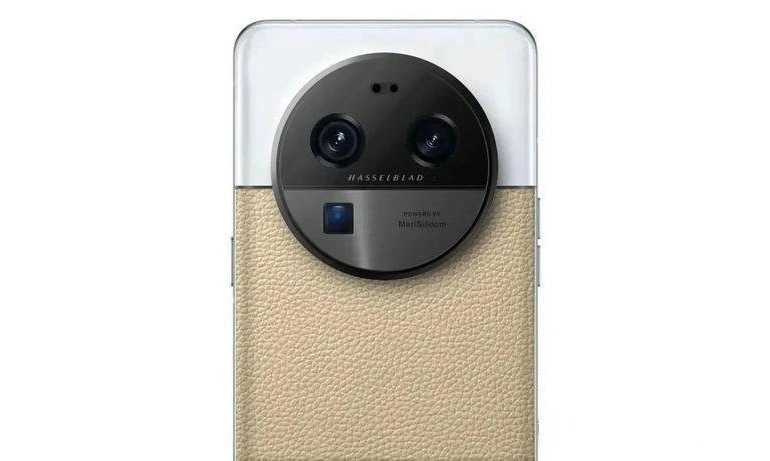
In the new images, the OnePlus 11 can be seen flaunting a punch-hole display with curved edges on the front. The circular camera module on the back fuses with the right side of the device. The Hasselblad branding is available on the middle camera module.

The top edge of the device has two holes, one of which is a microphone. The other hole could be for the speaker. On the bottom, there is a SIM slot, a microphone, a USB-C port, and a speaker grille. As far as specs are concerned, the rumor mill has already leaked almost everything about it.

OnePlus 11 specifications (rumored)

The OnePlus 11 will have a 6.7-inch E4 AMOLED display with a Quad HD+ resolution of 3216 x 1440 pixels and a 120Hz refresh rate. It will include the Snapdragon 8 Gen 2 chipset and a 5000mAh battery, which will support 100W rapid charging. The SoC will be paired with LPDDR5X RAM and UFS 4.0 storage. The phone will be available in three configurations, such as 12GB + 256GB, 16GB + 256GB, and 16GB + 512GB.

The OnePlus 11 will be equipped with a Hasselblad-optimized triple camera unit, featuring a 50-megapixel Sony IMX890 primary camera, a 48-megapixel ultra-wide-angle lens, and a 32-megapixel telephoto lens. On the front, it will feature a 16-megapixel selfie camera. Some of the other features that will be available on the device include an alert slider, an under-display fingerprint scanner, the world’s first bionic motor, ColorOS 13-flavored Android 13 OS, an IP54-rated chassis, and Gorilla Glass 5, The OP11 will come in Volcanic Black and Emerald Green shades.

RELATED:

(source)

EarSpy let’s you eavesdrop on phone conversations via motion sensors

Researchers have just developed an interesting new technology for side channel attacks on smartphones. It is called EarSpy and it is capable of eavesdropping on your phone conversations through the handset’s built in motion sensors.

This tech was developed by a group of researchers from the University of Dayton, New Jersey Institute of Technology, Rutgers University, Texas A&M University, and Temple University. As per their report, the researchers had managed to record vibrations from a phone’s loudspeaker in the past. But now, the new method of attack can even map the vibrations coming from the smartphone’s earpiece. So your conversations can be caught even when you’re talking with the phone on your ear.

EarSpy

The findings were shared on SecurityWeek and EarSpy was tested on the OnePlus 7T and the OnePlus 9 models. Interestingly enough, the results were surprisingly accurate and were made through data that was taken from nothing but the earpiece and the built in accelerometer. Fortunately, older OnePlus models were safe in this regard, but this was due to their lack of stereo speakers as per the research paper. The group recorded and analyzed the reverberations from ear speaker with the help of spectrograms and time-frequency domain feature extraction.

Apart from just capturing the words, the team also worked on identifying gender of the speaker as well. To take things further, there is also a potential risk of this technology being able to determine the identity of the speaker. While new Android versions have a strong security measures against malware, EarSpy is able to bypass all of these security features since the raw data from a smartphone’s motion sensors is a lot more easily accessible. The researchers have noted that smartphone brands should position the motion sensors away from any source of vibrations to reduce the risk of this vulnerability.

RELATED:

(Via, Source)

Compatible OnePlus 5G Phones Launched Since 2020 Now Support Jio and Airtel’s 5G Network

OnePlus smartphones launched after 2020 now support 5G connectivity in India. The latest generation cellular network was launched in the country in October last year. Telecom operators Jio and Airtel are already offering the network in some parts as well as expanding its availability. Smartphone OEMs have also been pushing 5G support software updates for their devices. 

Now, OnePlus has announced that users who brought a compatible 5G OnePlus smartphone since 2020 can experience the latest generation cellular network provided by Airtel and Jio. The brand added that it has worked with telecom operators to provide support and unlock 5G on its devices. It’s worth noting that Vodafone Idea hasn’t rolled out its 5G network, hence it is not yet available on OnePlus phones. 

There are a host of 5G phones from OnePlus as well as under the Nord branding that have been launched since 2020. These include the flagship OnePlus 10 Pro, 10T, 10R, OnePlus 9 Pro, 9, 9 RT, 9R, OnePlus 8 Pro, 8T, and 8. Under the Nord lineup, the devices include OnePlus Nord, Nord 2T, Nord CE, Nord 2, Nord CE2, and Nord CE 2 Lite. 

As per Counterpoint Research’s smartphone shipments tracker in the third quarter of 2022, OnePlus led the 5G smartphone market in the affordable premium segment (Rs 35,000 – Rs 40,000) as well as in the Rs 20,000 – Rs 30,000 price bracket. 

In other news, OnePlus is gearing up to launch the OnePlus 11 and Buds Pro 2 in China on January 4th. Both devices are also set to debut globally on February 7th. 

Related:

Redmi K60 Series Receives First System Update That Improves Performance

The Redmi K60 series has received its first system update, which optimizes system stability and fixes a display issue with the status bar. It runs on the MIUI 14 operating system, which aims to improve simplicity and smoothness. This update includes the MIUI photon engine and an improved Android kernel, allowing third-party app developers to create power-saving apps that use less energy. These apps may see a reduction in energy consumption of up to 22%.

MIUI 14 improves system performance and storage space usage on devices. It reduces the amount of storage space taken up by the system and allows for the deletion of some pre-installed apps, including some of its own system apps. There are eight basic apps that cannot be deleted: telephone, SMS, contacts, file management, system settings, app store, browser, and camera. Users can hide the desktop icons for contacts and file management for a more streamlined system.

Redmi-K60-pro

MIUI 14 has an improved interconnection experience with faster speeds thanks to the optimization of its full-link algorithm. The transmission speed increase is 77%. The update brings a more stable and streamlined experience to users of the Redmi K60 series.

Redmi K60 Specs

  • Display: 6.67 inch OLED, 120Hz refresh rate, 1400 nits, 526 ppi density
  • Processor: Qualcomm SM8475 Snapdragon 8+ Gen 1 (4 nm)
  • Storage: 128GB/256GB/512GB (UFS 3.1), 8GB/12GB/16GB RAM
  • Rear camera: Triple camera, 64 MP main sensor (f/1.8), 8 MP ultrawide sensor (f/2.4), 2 MP macro sensor (f/2.4)
  • Front camera: 16 MP (f/2.0), 1080p video at 30/60/120 fps
  • USB: USB Type-C 2.0, OTG
  • Sensors: Fingerprint (under display, optical)
  • Battery: 5500 mAh, 67W wired charging (PD3.0, QC3+), 30W wireless charging
  • Operating system: Android 13 with MIUI 14
  • Colors: Black, white, blue, green
  • Price: 350 EUR

Redmi K60 Pro Specs

  • Display: 6.67 inch OLED, 120Hz, 1400 nits, 1440 x 3200 pixel resolution, 526 ppi density
  • Processor: Qualcomm SM8475 Snapdragon 8+ Gen 1 (4 nm)
  • Storage: 128GB/256GB/512GB (UFS 3.1 or UFS 4.0), 8GB/12GB/16GB RAM
  • Rear camera: Triple camera, 54 MP main sensor (f/1.9), 8 MP ultrawide sensor (f/2.4), 2 MP macro sensor (f/2.4)
  • Front camera: 16 MP (f/2.0), 1080p video at 30/60/120 fps
  • USB: USB Type-C 2.0, OTG
  • Sensors: Fingerprint (under display, optical)
  • Battery: 5000 mAh, 120W wired charging (PD3.0, QC3+), 30W wireless charging
  • Operating system: Android 13 with MIUI 14
  • Colors: Black, white, mint, champion black
  • Price: 460 EUR

RELATED: 

(source)

Realme GT Neo5 Will Take Mobile Charging Speeds to Next Level; Launching Soon

The Realme GT Neo lineup has got some breakthrough innovations in charging speeds. The Realme GT Neo2 brought a 5000mAh + 65W charging combination which was pretty decent enough, its successor GT Neo3 brings the support for whopping 150W fast charging and now there have been some online reports which claim that the successor of GT Neo3, the Realme GT Neo5, will bring the record-breaking 240W fast wired charging support. The three generations of the device have really got some great innovations, at least in the terms of charging.

The next Realme GT Neo5 smartphone will reportedly offer 240W cable charging, making it the fastest-charging smartphone to date. The USB Type-C connection on the gadget will handle charging at up to 240W. The gadget gets charged more quickly and efficiently using the dual battery packs already in place. A new generation of charging technology supports a larger multiplier charge, and the single-core current can exceed 12A. Electricity is turned into a charge pump to execute high-voltage direct charge.

In order to pass the current without any problems, the company will also use a sturdy charging cable. High-power transmission of the greater current will be possible thanks to the thicker wires. Additionally, a USB Type-C connector with lower resistance will be added to the smartphone to facilitate faster charging. In the end, an E-Marker encryption chip is also installed, and the encryption technique gets rid of any potential hidden security risks.

A five-layer security protection system is offered for the 240W super flash filling, starting at the power adapter, wire, and battery pack. The mobile phone features 13 temperature sensors and a specifically designed smart control chip that can fully control pressure, flow, and temperature to offer a wide spectrum of security. This probably gives us the reassurance that the charging technology will be secure. We are eager to put it to the test in the real world, though.

RELATED

Huawei to launch 12nm & 14nm chips this year: Report

There have been a number of rumors regarding Huawei preparing to manufacture its very own chipsets again. The company is apparently planning to make new chips that are based on the 12nm and 14nm process.

The news arrives from known tipster on Weibo (a Chinese microblogging website). As per the new leak, the company is making preparations to begin the first mass production of 12nm and 14nm based chipsets. The tipster further added that Huawei will be releasing these chipsets under its own name. Furthermore, the Chinese tech giant isn’t new to semiconductors since its HiSilicon subsidiary has made advanced chipsets that rivaled Qualcomm and MediaTek for years in mobile devices market.

Huawei

However, since the company lost its primary supplier TSMC, these new chipsets are being developed and produced on process nodes that aren’t as advanced as current gen mobile chips. For those unaware, TSMC has already moved on towards 4nm and even 3nm process technology. But regardless, these chips might still be viable for other devices like smart wearable products or possibly even IoT based gadgets. As per the tipster, certain chip models are already in use internally, ahead of a commercial release.

This leak hints that Huawei is working on non advanced design chips that will be more efficient. It would even help the brand establish its revived semiconductor presence in the industry. However, this does not mean that the company has no plans to eventually move on to advanced processors. Reportedly, the company will not be releasing such chips till 2024 for the mobile application processor nodes.

RELATED:

(Source, Via)

Samsung Galaxy S23 series to feature improved cooling to reduce CPU throttling

The Samsung Galaxy S23 series is set to launch soon with various improvements over its predecessor. But now, a new report has suggested that the next gen flagship will also arrive with a new and improved cooling system as well.

Just a while ago, the GeekBench listing for the entire Samsung Galaxy S23 series was leaked, which showcased the performance of the overclocked Snapdragon 8 Gen 2 chipset. However, there were some discrepancies in this listing. While the single core tests were in line with other Snapdragon 8 Gen 2 processors, the multi core tests were lower than the norm. This is odd considering the Snapdragon 8 Gen 2 on the Galaxy S23 lineup is expected to be an overclock variant and hinted at CPU throttling issues on the S23.

Samsung

Although a new report from AndroidHeadlines found that the latest GeekBench test for the Galaxy S23 Ultra managed to reach a score of 5,179 points. This meant that the South Korean tech giant managed to fix whatever issue that caused the performance to throttle. For those unaware, throttling basically implies fall in CPU performance when the chip gets too hot. According to tipster @AhmedQwaider888 on Twitter, the Samsung Galaxy S23 series will actually feature a more robust thermal management system.

Reportedly, the Galaxy S23 will feature a cooling system that is 1.6 times better than the one housed in the Galaxy S22. Similarly, the Galaxy S23+ will have a 2.8 times better cooling system than the Galaxy S22+. Lastly, the Galaxy S23 Ultra will also feature a cooling system that is 2.3 times better than the Galaxy S22 Ultra. Thanks to this, the company will be able to reduce thermal throttling issues for longer sustained performance.

RELATED:

(Via, Source: 1, 2)

Apple Patents Bimodal Reverse Recharging System for Future iPhones

A new Apple patent filing has revealed the use of a bimodal reverse recharging system on a future iPhone, which could potentially enable the phone to wirelessly recharge accessories. This news follows rumors and reports that have circulated in recent years about the possibility of reverse charging on an iPhone. In October 2020, MacRumors reported on an FCC filing that supported the idea of reverse charging on an iPhone, but in February 2021, Mark Gurman claimed that wirelessly recharging accessories was unlikely in the near term.

The new patent filing, which was published by the US Patent & Trademark Office last Thursday, relates to a wireless charging system using bimodal magnetic alignment components for alignment of devices. Currently, the wireless recharging system on the back of an iPhone is limited to a large coil that cannot support charging smaller devices like an Apple Watch.

Apple’s patent FIGS. 22A and 22B above show simplified cross-section views of a bimodal alignment component in two different attachment positions. Source: Patently Apple

Apple‘s patent background notes that wireless charging technologies have been developed that exploit electromagnetic induction to charge portable electronic devices without the need for a charging cord. For example, some portable electronic devices can be recharged by merely resting the device on a charging surface of a wireless charger device. A transmitter coil disposed below the charging surface is driven with an alternating current that produces a time-varying magnetic flux that induces a current in a corresponding receiver coil in the portable electronic device.

However, sometimes the alignment of the magnets can be difficult to set correctly, which can affect the efficiency of power transfer. To solve this problem, Apple‘s new patent introduces bimodal magnetic alignment components, which can attract and hold a pair of devices in the desired alignment. These alignment components can include primary and secondary components, each of which has an annular arrangement of magnets with a fixed arrangement of magnetic polarities. When the primary and secondary components are brought into proximity with each other, they will attract and hold the devices in the desired alignment.

In summary, the bimodal reverse recharging system on a future iPhone could potentially enable the phone to wirelessly recharge accessories, thanks to the use of bimodal magnetic alignment components. While it is not yet clear when this technology will be implemented, it shows that Apple is exploring ways to improve the wireless charging capabilities of its devices.

Related:

(source)

Honor 80 Pro Flat Display Version appears on Geekbench with Snapdragon 8 Gen 1 SoC

Recent leaks and reports have revealed that Honor is working on a new Honor 80 Pro smartphone. So far, the only difference between this upcoming device and the Honor 80 Pro, which launched a couple of months ago, is the display type.

Now, the Honor 8 Pro flat-screen variant has appeared on Geekbench, revealing its performance while also confirming some of its specifications.

Honor

Going by the details provided by the listing, the Honor 80 Pro Flat-screen bears the model number ANB-AN00. It has an octa-core SoC with 4 Cores at 1.80 GHz, 3 Cores @ 2.50 GHz, and one core at 3.00 GHz. This combined with the motherboard codename “taro”, it is pretty clear that this chipset is the Snapdragon 8 Gen 1 4nm chipset manufactured by Samsung foundries.

The listing also reveals that the device has 12GB of RAM and runs an Android 12-based operating system. Coming to the benchmark results, the phone has scored 1215 points in the single-core test and 3960 in the multi-core test of Geekbench 5.

Honor 80 Pro Flat Display Version specs

Honor 80 Pro Flat Display Version

The smartphone will include a 6.67-inch OLED-centered punch-hole flexible flat display with a refresh rate of 120Hz and a screen resolution of 2400 x 1080 pixels. The Qualcomm Snapdragon 8 Plus Gen 1 processor will be the engine for the device.

The phone contains three cameras: a primary 160-megapixel sensor with an f/1.8 aperture, a secondary 8-megapixel sensor, and a third 2-megapixel sensor. A 32-megapixel camera for selfies and video calls will be located on the front of the device.

A 4,800mAh battery is said to power the Honor 80 Pro Flat Display variant, which will also support 66W rapid charging.

RELATED:

Hisense Hi Reader Pro launched in China with E-Ink Display

Hisense has just launched a new smartphone model in the Chinese market. The device in question is the Hi Reader Pro, which features an E-Ink display and some other notable features. So here are all the details.

Interestingly enough, the Hi Reader Pro smartphone is also known as the Hisense A9 Reading Edition smartphone. The device is equipped with a Qualcomm Snapdragon 662 SoC and sports a 6.1 inch E-Ink display that has a 300ppi pixel density, dual color temperature with manual and automatic adjustments. Furthermore, it also supports dual band WiFi, 4G cellular networking, and Bluetooth 5.0. The Hi Reader Pro weighs 183 grams and is powered by a 4,000mAh battery pack.

Hisense

The device runs on Android 11 OS and even features ultra linear speakers with dual microphones as well as support for AptX, AAC, SBS, and even LDAC formats. Hisense offers the Hi Reader Pro with 4GB of RAM and 128GB of internal storage. The Hi Reader Pro is currently being offered with a special gift box, which is going on sale for 1,699 Yuan (roughly 262 US Dollars) and is currently available for purchase.

For those unaware, an E-Ink display basically offers a paper like experience to the users. This type of screens have become increasingly popular since users with the habit of reading have a better viewing experience since it mimics the look of paper. So for those interested, you can check out this model on JD.com, a popular Chinese e-retailer website.

RELATED:

Foldable Phone Market Set to Grow by 30% in 2023, Reaching 17 Million Units

Foldable phones are becoming more popular, and brands like Samsung, Oppo, Xiaomi, and Huawei are developing new models and features to meet this demand. It looks like we can expect to see more foldable phones in the near future. According to recent reports, Foldable phone market set to frow by 30% in 2023, reaching 17 million units

DSCC Report Predicts Increase in Foldable Phone Shipments

Foldable mobile phone shipments are expected to increase by 30% in 2023, according to a report from DSCC. The report also predicts that the foldable smartphone market will reach 85% and 5.2 million units in department sales in the third quarter of 2022, and that Samsung’s foldable smartphone shipments in that quarter will be in line with expectations.

OPPO Find N2 Flip

According to a report from DSCC, Samsung’s foldable smartphone shipments are expected to decline by 50% month-on-month and 36% year-on-year to 2.6 million units in the fourth quarter of 2022. This decline is predicted to cause Samsung’s market share to drop to 82% in the fourth quarter, marking the company’s first year-on-year decline.

The report also predicts that Samsung‘s market share will continue to decline in the first and second quarters of 2023, falling below 50% in the second quarter due to increased competition from new entrants such as Google and existing mobile phone brands. The North American market, specifically the US, will contribute to Samsung’s expected decline in foldable smartphone production during the fourth quarter of 2022. In that quarter, the US is expected to make up only 7% of Samsung’s foldable smartphone production, compared to 29% in 2021.

However, DSCC still predicts that the foldable market will remain strong, with the introduction of new products like the OPPO Find N2 and Find N2 Flip expected to increase competition and provide consumers with more options. In total, foldable mobile phone shipments are predicted to reach 17 million units in 2023, a 33% increase.

RELATED: 

(source)

Duoqin Qin 3 series Pre-Order live in China, with 3rd Gen Anti Smartphone Addiction system

Duoqin has just launched its latest Qin 3 series of smartphones. The latest Qin models are the successor the the Qin 2 series, with the entire family of devices being built to combat smartphone addiction.

Duoqin
Qin 3 and Qin 3 Pro

For those unaware, Duoqin is a Xiaomi ecologibal brand, which means it is backed by the Chinese tech giant. The company launched this lineup of phones to tackle the growing issue of smartphone addiction in China, with the latest Qin 3 series also featuring anti addiction systems as well. The Qin 3 lineup consists of the base Qin 3, the Qin 3 Pro, and the top end model Qin 3 Ultra. Now, the company has began pre-orders for the Duoqin Qin 3 series in China. The Qin 3 comes in a 4GB + 64GB configuration, Qin 3 Pro has a 6GB + 128GB variant, while the Qin 3 Ultra is offered with the largest 8GB + 256GB variant.

Duoqin
Qin 3 Ultra

The Qin 3 starts from 999 Yuan (roughly 145 US Dollars), while the Qin 3 Pro and Qin 3 Ultra have a price tag of 1,399 Yuan (roughly 202 US Dollars) and 1,599 Yuan (roughly 232 US Dollars) respectively. As per official note, the devices sport a 5.5 inch display (although the Ultra model sports a smaller 5.05 inch screen) and also feature the third generation anti addiction system for parents to help set a healthy boundary with technology for their children. Unfortunately, finer details regarding these devices are still at large, but we can expect more information to surface soon.

RELATED:

(Via)
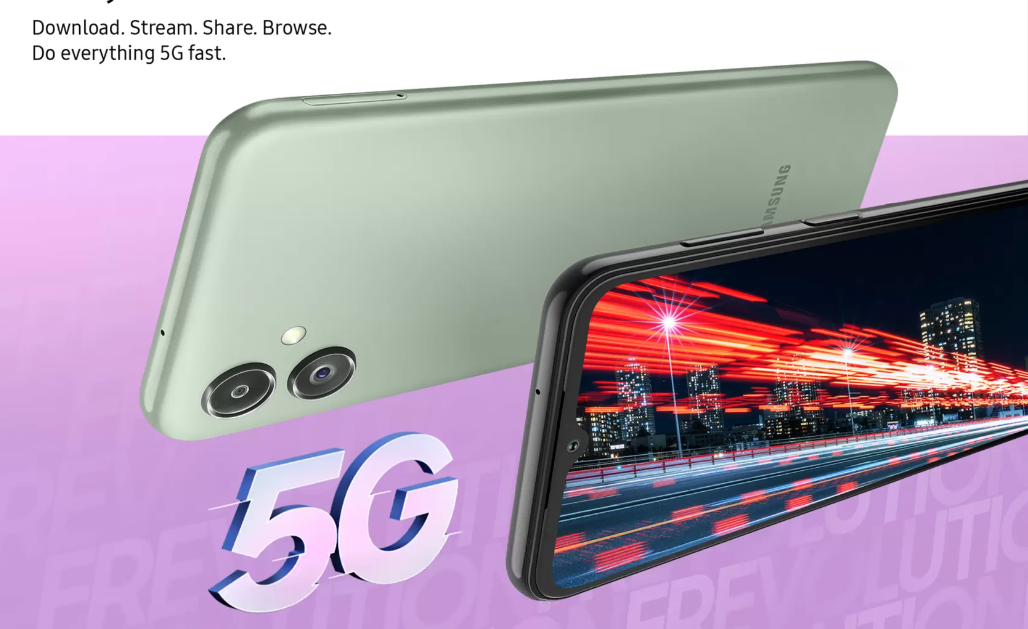
Google Home App Now Allows Control of Fans, Air Purifiers, and TVs

The Google Home app has gained a new feature that allows users to control a variety of smart devices. This incluedes TVs, fans, air purifiers, and vacuum cleaners. This is a welcome development for users of these devices, as it allows them to easily control and manage their smart home using the app. Here are the details…

The Google Home allow users to control compatible TVs running Android TV or Google TV, as well as devices connected to Nest Hub. These controls include the ability to adjust volume, mute, power on and off, play and pause, change channels, and select a source. These features were previously available for Nest Hub devices, and are now being rolled out for the Google Home app via a server-side update. According to user reports, the changes can be seen in the Google Home app (version 2.62.1.9).

However, it should be noted that these controls are currently only available for a limited number of users, and are not yet widely rolled out. Additionally, the controls on the Google Home app differ from those on Google Cast-enabled TVs and Android TVs, which are controlled through the media controls. Reports indicate that LG and Samsung TV owners are seeing changes in the Google Home app, but it is unclear when this feature will be widely available to all users.

The new Google Home feature makes it easier to use and manage these devices trough their smartphone or tablet. It is unclear when the full roll-out of these controls will take place, but it is likely to happen in the near future.

RELATED

(via)
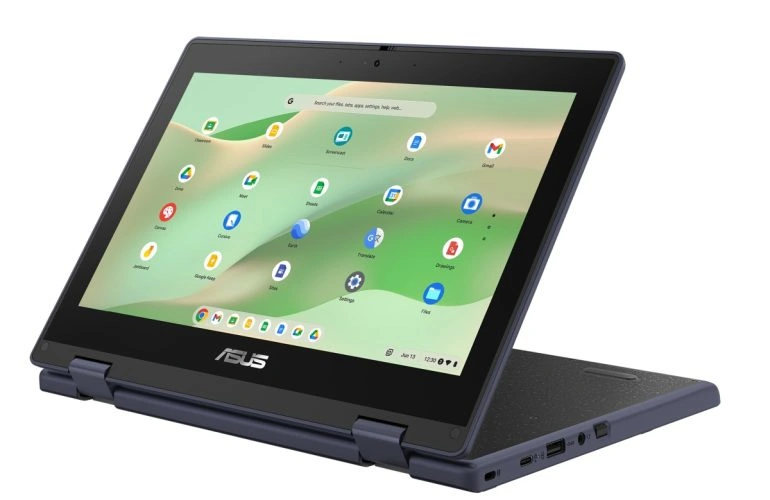
Samsung Galaxy Book 2 Go launched with Snapdragon 7c+ Gen 3 SoC

Samsung has just launched another new notebook model in the market, following the release of the Galaxy Book 2 Pro 360. The company’s newest addition is the Galaxy Book 2 Go that features Qualcomm’s new laptop processor, so here are all the details.

The South Korean tech giant’s Galaxy Book 2 Go is its latest thin and light laptop that offers a compact design with capable performance. Under the hood, the laptop features Qualcomm’s new Snapdragon 7c+ Gen 3 chipset, which offers a sizeable 40 percent improvement in CPU performance and a 35 percent boost in GPU power when compared to the Snapdragon 7c Gen 2 processor that powered the original Galaxy Book Go model. Furthermore, the new chipset also brings a slew of other features like faster wireless connectivity with WiFi 6E and Bluetooth 5.2.

Samsung

It also supports LPDDR4X RAM that clock at 3,200MHz and NVMe SSD storage. Qualcomm is also claiming that the new chip brings upgrades in its AI processing as well. This chip was fabricated by TSMC on its 6nm node, which makes it more power efficient. While the chipset is 5G enabled, Samsung has locked the modem for the WiFi only model and the Galaxy Book 2 Go 5G will likely be released later this year. Other notable features include Galaxy Buds Auto Switch, Link To Windows, Multi Control, Quick Share, Samsung Notes, and Second Screen.

The Galaxy Book 2 Go sports a 14 inch IPS LCD panel with a Full HD resolution and 180 degree hinge. It also offers a tenkeyless keyboard design, along with a large trackpad and a webcam. The brand has yet to reveal the storage configurations like RAM and storage, or even its battery capacity. Although, it is built with MIL-STD-810G spec that makes it quite durable. The device weighs just 1.44 kilograms and 15.5mm in thickness. The Galaxy Book 2 Go will be available for purchase in France through Samsung’s official website on January 20.

RELATED:

(Via, Source)

LG Announces Breeze Smart Sleep Care Solution for Improved Sleep Experience

LG Electronics has introduced a new smart sleep care solution called Breeze, which aims to improve the sleep experience for users. Developed by SleepWave Company and launched by LG’s CIC (Company in Company) unit, Breeze consists of a wireless earphone and an accompanying app. The earphone is designed to be worn while sleeping and uses brainwave detection technology to play sleep sounds that are specifically tailored to the user’s brainwave activity. This is intended to help users fall asleep more easily and improve the quality of their sleep. The earphone also has an ergonomic design for a comfortable fit and is equipped with UV nanotechnology to keep it clean.

LG

In addition to a range of built-in sounds, including brain wave-tuned sounds, lullabies, and nature sounds, Breeze can also sync with music or YouTube videos. The accompanying app analyzes the user’s sleep data and provides personalized sleep care recommendations, including improved sleep routines and appropriate sleep schedules. It can also track the user’s daily steps and record sleep and wake times, sleeping posture, and tossing.

LG Breeze

By continuously monitoring brainwaves in real-time, Breeze is able to accurately determine the hypnosis phase (a state of consciousness shortly before falling asleep) and the REM (rapid eye movement) sleep phase, as well as light sleep and deep sleep stages. This allows it to provide more tailored sleep care recommendations based on the user’s specific sleep patterns and needs.

Overall, the goal of Breeze is to help users sleep more easily and wake up feeling refreshed, using a combination of brainwave-tuned sounds and personalized sleep care recommendations. By evaluating and controlling sleep conditions in real-time, it aims to assist users in falling asleep more quickly and improving the quality of their sleep. In addition to the Breeze smart sleep care solution, LG also unveiled the SC9 and SE6 Dolby Atmos soundbar line-ups for 2023 at the CES conference.

RELATED:

Nintendo Switch OLED Legend of Zelda: Tears of the Kingdom Edition retail packaging reveals the look of the new console

As we already know, Nintendo‘s plans for a Switch Pro have already been scrapped, and the company is not planning to launch the Nintendo Switch 2 anytime soon. However, Nintendo fans do have to look forward to the upcoming Legend of Zelda game, called Tears of the Kingdom.

Now, it has been revealed that the company plans to commemorate the launch of the new game with a special edition console. On internet discussion boards like Reddit, ResetEra, and Famiboards, live images of the portable device called the Nintendo Switch OLED The Legend of Zelda: Tears of the Kingdom Edition have surfaced.

It displays the console’s retail packaging as well as the actual device, which, as can be expected, includes game-related goodies. A Zelda-themed dock and Joy-cons are included, although the console itself is not clearly visible. Furthermore, Nintendo might even include some extras in the box.

A close examination of the retail box for the Nintendo Switch OLED: The Legend of Zelda: Tears of the Kingdom Edition reveals that the game will not come with the console. While it might seem strange, especially because Sony and Microsoft include one with their themed consoles, Nintendo’s general ethos is in keeping with that behavior. Although the bespoke console’s potential cost is unknown, a price tag of around $400 USD appears reasonable.

A close examination of the retail box for the Nintendo Switch OLED: The Legend of Zelda: Tears of the Kingdom Edition reveals that the game will not come with the console. Although the bespoke console’s potential cost is unknown, a price tag of around $400 USD appears reasonable.

RELATED:

(Via Wccftech, Source – 1, 2, 3)

Konka Launches Affordable Konka X20 with Dimensity 700, and 4GB RAM

The competition in the smartphone market continues at full speed. Although companies such as Samsung, Apple and Xiaomi lead the race, consumers are also open to trying out new brands, especially when it comes to affordable products. One of these brands Konka has recently released the X20 model, which is drawing attention due to its attractive price.

The Chinese company KONKA just released a budget smartphone the Konka X20. The phone has a very sleek and lightweight design, with a plastic back that weighs only 193g and measures 8.44mm in thickness. The front of the device features a waterdrop display, with a resolution of 1600X720 and a refresh rate of 60Hz, while the fingerprint sensor is located on the side of the phone. The back of the phone houses a dual camera setup, with the primary lens being larger.

The Konka X20 is equipped with the MediaTek Dimensity 700 processor, which is based on a 7nm process and features two 2.2GHz A76 large cores and six 2.0GHz A55 small cores, as well as a Mali-G57 MC2 950MHz GPU. It is powered by a 4500mAh battery that supports 10W charging and is equipped with side fingerprint recognition.

One notable feature of the Konka X20 is the inclusion of a 3.5mm headphone jack, which is becoming increasingly rare on modern smartphones. The Konka X20 runs on the Dido operating system, which is based on Android 11. In terms of camera, the Konka X20 is equipped with a 13MP rear dual camera and a 5MP front-facing selfie lens.

The Konka X20 is priced at 1399 yuan ($203) for the 4GB+128GB model and 1599 yuan ($231) for the 6GB+128GB model. Overall, it is a budget-friendly device that offers a solid set of features for its price point.

  • Processor: MediaTek Dimensity 700
  • Display: 6.51-inch, 1600X720 resolution, 60Hz refresh rate
  • Storage: 4GB+128GB or 6GB+128GB
  • Battery: 4500mAh, 10W charging
  • Fingerprint: Side-mounted
  • Headphone jack: 3.5mm
  • Operating system: dido OS (based on Android 11)
  • Cameras: 13MP rear, 5MP front
  • Price: 1399 yuan ($203) for 4GB+128GB model, 1599 yuan ($231) for 6GB+128GB model

RELATED:

(source)