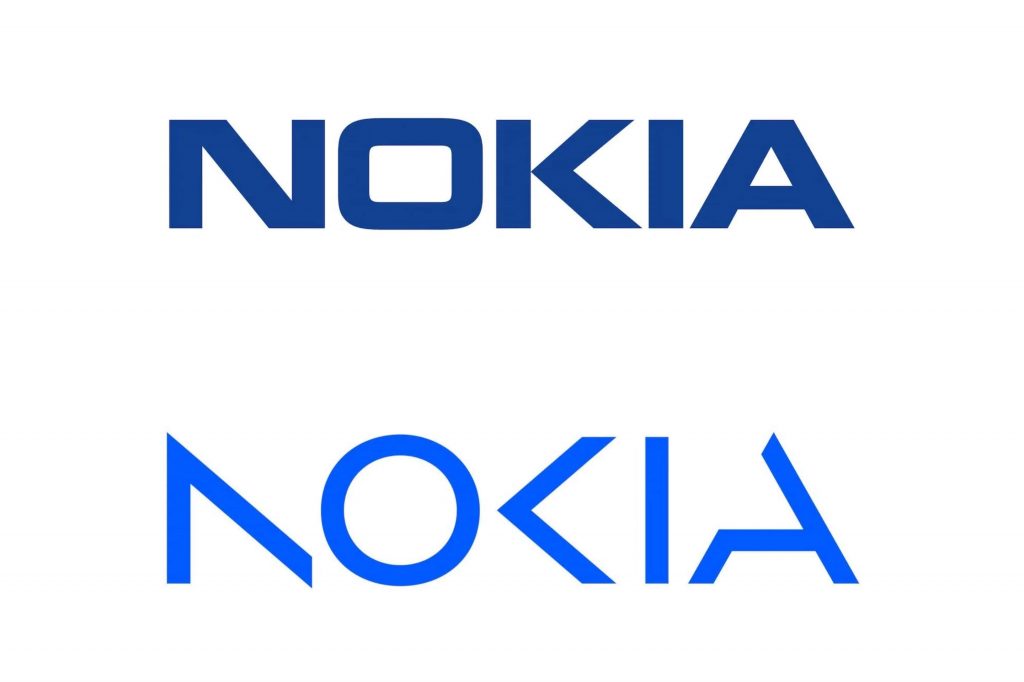
Yesterday, ahead of MWC 2023, Nokia announced its new brand identity. The Finnish company not only revealed its new logo but also its revamped business strategy.
This announcement came as a surprise to everyone. The company’s previous logo was in use for about 45 years. It became an iconic symbol around the globe as Nokia was the world’s largest phone maker for years.
For those die-hard fans who could not digest the change, we have good news for you. The firm has confirmed that its brand licensees who deal with consumer products will continue to carry the old beloved logo.
Nokia Logos: 1978 (Top) and 2023 (Bottom)
For the unaware, though there are smartphones and feature phones on the market carrying the ‘Nokia’ brand, they are not made by the Finnish firm. These consumer devices are sold by HMD Global, which is one of the many Nokia brand licensees.
The other Nokia-brand licensees are RichGo (earphones), Flipkart (smart TVs), StreamView GmbH (streaming devices), and Off Global (laptops). Products from these companies will continue to use the old Nokia logo.
Though Nokia stopped selling phones years ago, it is still associated with the product category due to its immense popularity more than a decade ago. The firm now considers itself a ‘business technology company.’
The new identity is a move to change its perception among the general public. But unfortunately, we don’t think it is enough for a layman to understand, however, it makes sense for shareholders and partners.
Augmented Reality (AR) technology has made significant strides over the past few years, and it’s only going to get better from here. AR has applications across a broad range of industries, from healthcare and education to gaming and entertainment. AR technology overlays digital images, sounds, or video onto the real world in real time, creating a mixed-reality experience for users. Massive tech companies such as Google have already tried, with Google Glass making waves in the tech news arena in the past. The Mobile World Congress trade show (MWC 2023) has become a platform where top tech brands showcase their prototypes or ideas for future products. Xiaomi, a leading Chinese consumer electronics company, unveiled a prototype of its AR glasses called the Xiaomi Wireless AR Smart Glass Explorer Edition at the event.
These AR glasses feature a pair of Micro-OLED screens and three forward-facing cameras. To ensure that the glasses can be worn for a longer duration, they clock in at 126g, which is quite lightweight. They run on Qualcomm‘s Snapdragon XR2 Gen 1 chip and have no onboard storage.
What sets these AR glasses apart is that they are entirely wireless, and the glasses connect to a smartphone via the company’s proprietary low-latency communication link. Xiaomi’s AR applications are already far more advanced, with the ability to run interactive virtual desktops, shooting games, virtual Xiaomi Home UI, and much more. The reason why Xiaomi may not be releasing these AR glasses to the public is probably that the company still has to perfect particular aspects of the glasses. That could be the battery life or the wireless connection. Nonetheless, the company hasn’t commented on the same.
Despite being in its prototype stage, the glasses worked as advertised during a demo session, with the visuals floating in front of the user’s face, and the sensors picking up the user’s hand/arm gestures. Xiaomi is yet to announce when these glasses will be officially launched, but the prototype has generated a lot of excitement among tech enthusiasts.
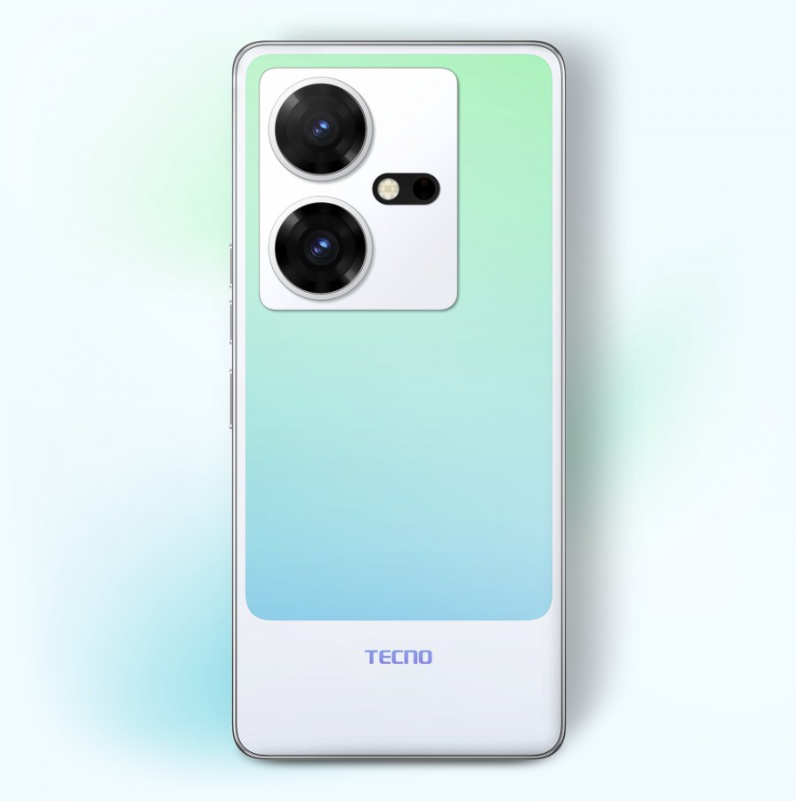
Finally, MWC Barcelona 2023 has begun. We had already witnessed a number of new, cutting-edge gadgets and smartphone debuts on the first day. At the event, Motorola also showcased its brand-new Motorola Rizr rolling smartphone. Nonetheless, MWC 2023 was particularly important for Tecno and its fans as it marked the first time Tecno has been to the show. During the Mobile World Congress, Tecno has just unveiled its brand-new Chameleon changing colour technology. It’s interesting to see the new technology that the company has on exhibit.
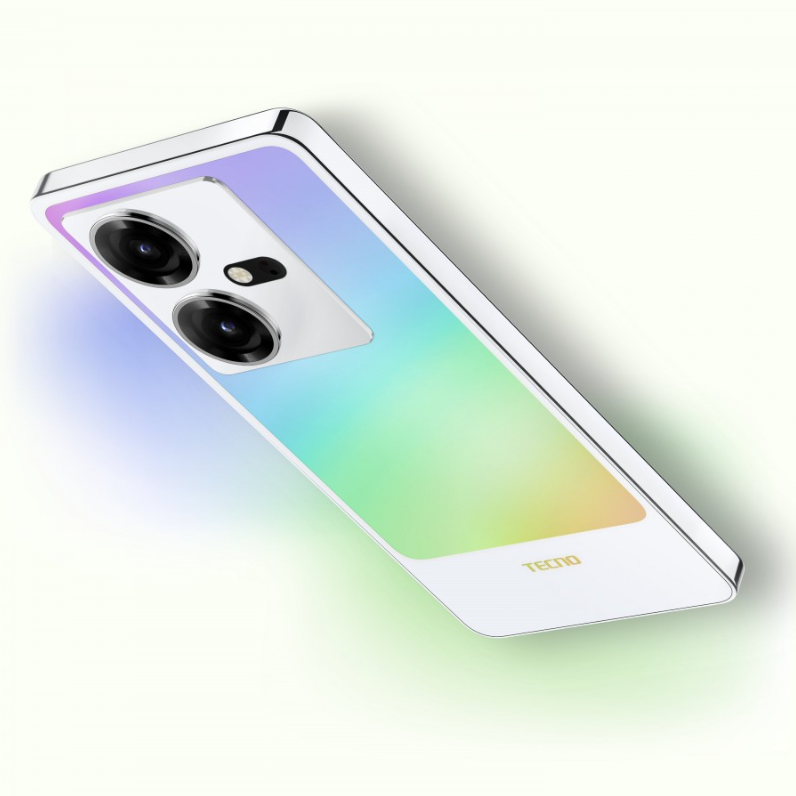
There’s little science behind how the Chameleon colour-changing technology works. A grid of sub-micron prism material is used in the Chameleon Coloring Technology, a full-spectrum electrically-controller prism colouring technique, and it changes direction when an electric field is applied. The substance may refract light in a variety of wavelengths by carefully adjusting the prism’s direction, producing an array of iridescent colours. The substance does not produce any light and is not a display. Rather, it scatters light off of its surface, colouring it as a result.
You can manually select from a total of 1600 different colours using the device software to manipulate the sub-micron prism arrangement, or it may vary automatically based on the battery level, music, or notifications. Up to 2 million times can be done in this manner, making it highly durable even with several adjustments made throughout the course of a day. The material has a 0.03-second colour change time, which is quite quick! It also uses very little energy; 100 changes throughout the course of a day use as much energy as watching a 5-minute video.
Colour-changing technology is not a new concept on the market. Many smartphones currently exist with colour-changing backs. Even Tecno has a special version of the Tecno Camon 19 Pro Mondrian Edition that changes colour when exposed to sunlight. The drawback of these panels is that there are very few colour options and they cannot be manually modified. With the recently unveiled Tecno Chameleon colour-changing technology, however, it appears that this is not the case because we can manually alter the colour using more than 1000 different colour schemes available.
So that was all we had to say about the Chameleon colour-changing technology from Tecno. There is currently no official confirmation that this technology will be included in commercially available smartphones, but it may happen soon. What do you think about this? Please let us know by leaving a comment below in your own words. Many thanks for reading this post all the way through.
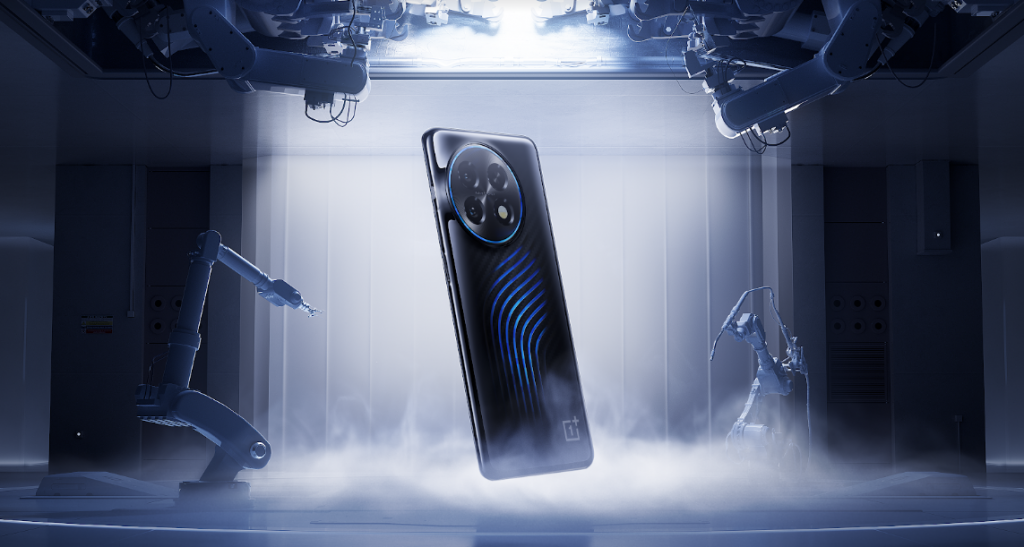
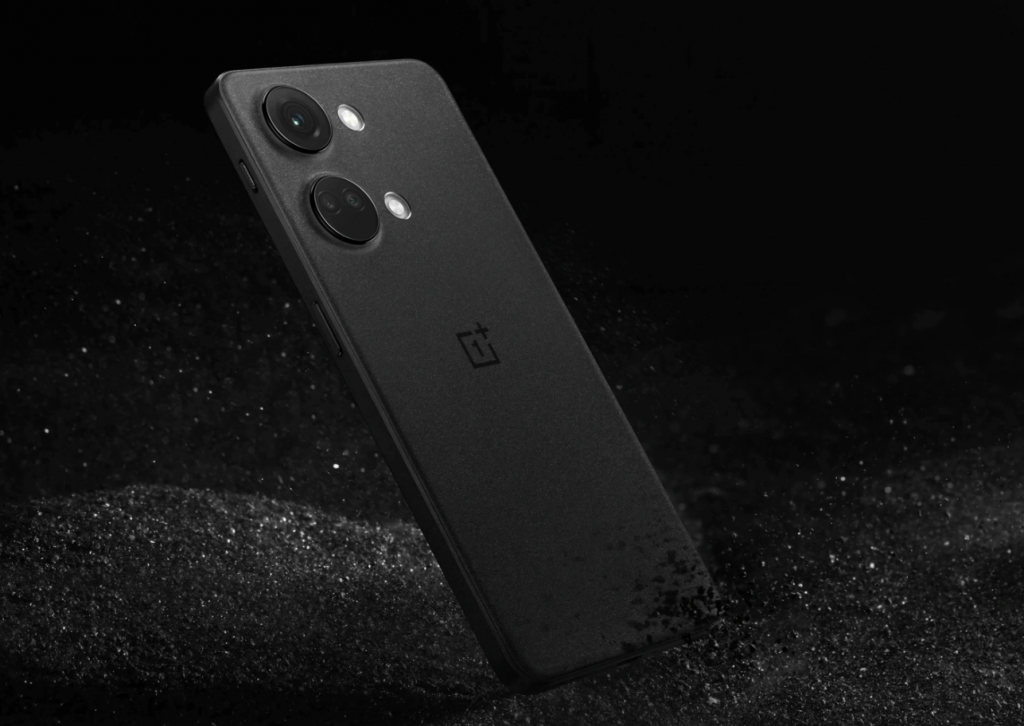
With the MWC 2023 (Mobile World Congress) kicking off, various tech giants will be hosting major announcements for the global market. One of these brands includes OnePlus which has just unveiled the new OnePlus 11 Concept model of its flagship smartphone that features some innovative technology. So let’s have a look.
For those unaware, Chinese smartphone maker had recently announced the OnePlus 11, which is its flagship smartphone model for 2023. This high end phone arrived with top notch specs and features, and now, the company has unveiled the OnePlus 11 Concept. The new version of the flagship features what the company refers to as forward thinking technology. It is equipped with an innovative Active Cryoflux feature, which is a “game changer” in cooling technology in mobile devices.
As per official notes, it can reduce the temperature of the device by up to 2.1℃. This can even translate to better performance in gaming, with an increase in frame rate by around 3 to 4 fps. The Active CryoFlux is also capable of bringing the thermals down during charging by around 1.6℃ and reduce the charging time by around 30 to 45 seconds. To put things simply, the OnePlus 11 Concept with this new feature represents the brand’s effort in pushing the boundaries of technology by bringing in industry grade cooling capabilities of gaming PC to smartphones.
This is particularly highlighted with the industrial grade ceramic piezoelectric micropumps at the center that are connected to pipelines that are housed between the upper and lower halves of the phone. The micropump only take up an area less than 0.2 square centimeters and doesn’t make the phone heavier by a large margin. With the new technology on the inside, the company also decided to offer a more futuristic look on the OnePlus 11 Concept. This includes a new glass unibody with deep curves for thinner bezels and a side pull up height of just 5.04mm.
Furthermore, the futuristic design elements also offers a look at the unique view at the micro liquid flowing through the pipelines. This aesthetic even blends into the camera lens since the cooling liquid of the active Cryoflux technology also flows through the camera in a halo like manner. Notably, the module is also surrounded by Guilloché etching, which is a precise decorative technique for engraving intricate patterns and can be found in traditional craftsmanship of a watch.
Earlier today (27th February 2023), Razer has just launched a new special edition version of one of its gaming mouse models. The mouse in question is the Orochi V2 model, which is now available Pokémon limited edition. So let’s have a look.
For those unaware, the company is a known gaming accessories maker with its gaming mouse and keyboards being popular options for gamers across the globe. Now, the brand has launched new limited edition versions of this mouse in multiple variants. Razer has released four variants of the special Pokémon edition in China, which includes iconic Pokémons like Charizard, Jigglypuff, Sylveon, and even Gengar. These are some of the most popular Pocket Monster characters that is based on the massively popular anime series.
Apart from the external design and aesthetic, the special edition of the Orochi V2 gaming mouse is identical to the regular model. It still retains its lightweight design and weighs around 60 grams. The mouse also houses a slider that lets users choose between 2.4Ghz wireless connection or Bluetooth. This model also comes with a native 5G optical sensor that provides pixel level precision, which is great for gamers that play competitive shooter titles.
The gaming mouse is powered by a battery cell that enables it to offer an ultra long standby time of up to 950 hours. The Orochi V2 is the second generation model and even promises a lifespan of about 60 million clicks as well as Razer Hyperspeed wireless technology. The new special Pokémon edition gaming mouse will be available for purchase in China for 459 Yuan (roughly 66 US Dollars), with an introductory price tag of just 399 Yuan (roughly 57 US Dollars).
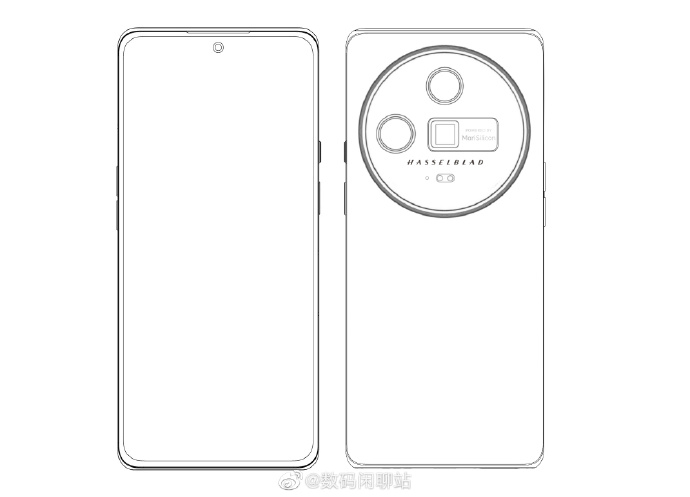
Chinese smartphone manufacturer OPPO is reportedly set to launch its new Find X6 series of smartphones in March this year. As anticipation builds for this upcoming release, recent reports have revealed details about the design and features of the new lineup. Today, tech tipster Digital Chat Station shared a schematic of an unannounced OPPO phone with model number CPH2377, giving us an exciting first look at its design.
The OPPO CPH2377 is set to feature a flat display with a punch-hole design on the front. The bottom bezel of the device is slightly thicker than the other bezels, while the top bezel houses an earpiece that doubles up as a speaker. The left edge of the device has volume up and down buttons, while the right side features an alert slider-like button and a power key.
But it’s the back panel of the phone that really catches the eye, with a massive round camera module housing three cameras, including a periscope zoom camera placed in the center. The camera island also includes a microphone and a pill-shaped dual-LED flash unit.
What’s interesting about the camera module is the text imprinted inside it, which reads “Powered by MariSilicon” and “Hasselblad,” indicating that this is an OPPO phone. However, Digital Chat Station suggests that the presence of the alert slider on the device suggests that it may debut as a OnePlus device in the global market. As of now, we can only speculate as to what this means, but it’s certain to generate plenty of excitement in the tech world.
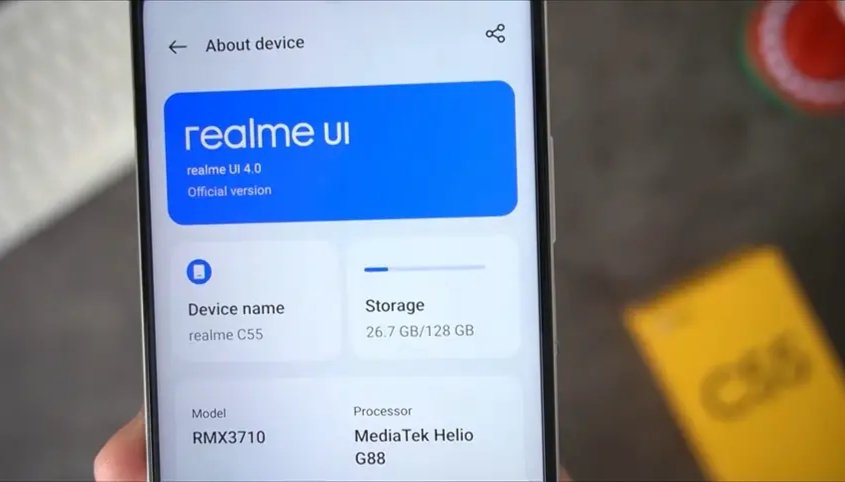
Realme has a new budget-mid-range device in the making called the Realme C55. The brand has already started teasing the smartphone and has revealed that it will come with an Apple Dynamic Island-like feature called the Realme Mini Capsule.
Ahead of the launch, the promo video as well as live images of the device have emerged alongside the complete spec sheet of the Realme C55. Let’s take a look.
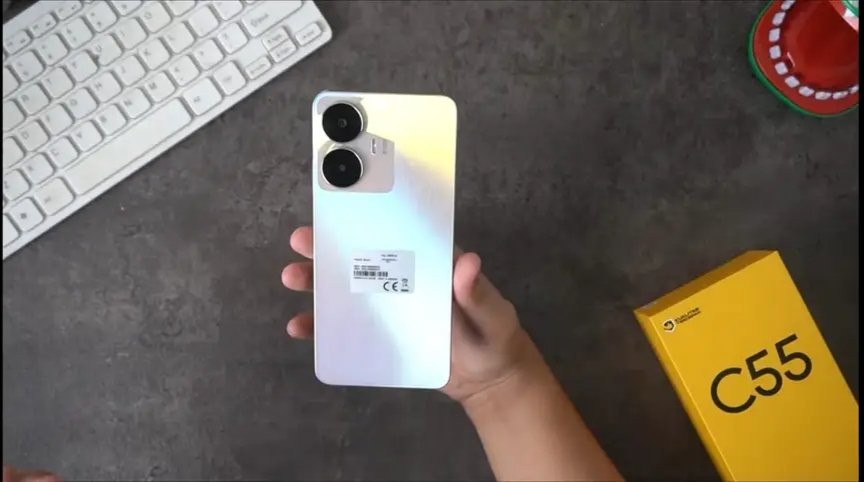
Starting off, tipster Paras Guglani has shared the promo video of the upcoming C55 smartphone. It reveals that the smartphone has a similar design to the Realme 10 4G. It has a flat back panel with two separate camera modules. The sides are flat and it appears that the power button has a fingerprint scanner. The video confirms that the phone will come in Sunshower Color.
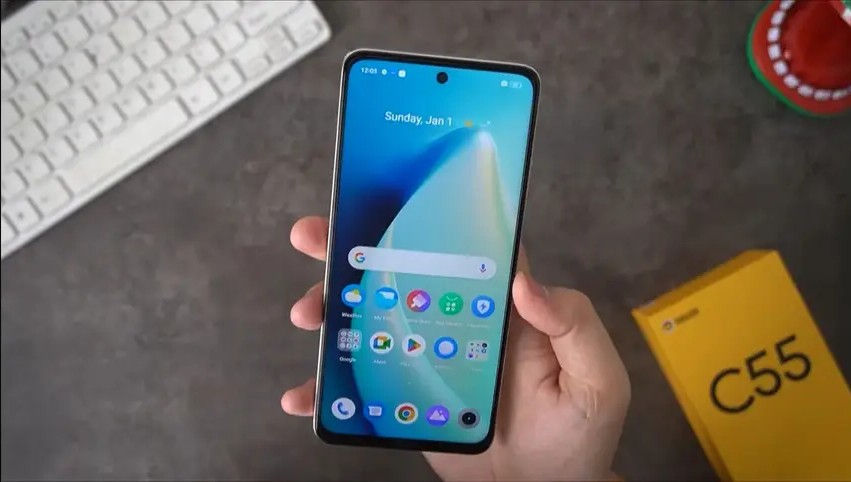
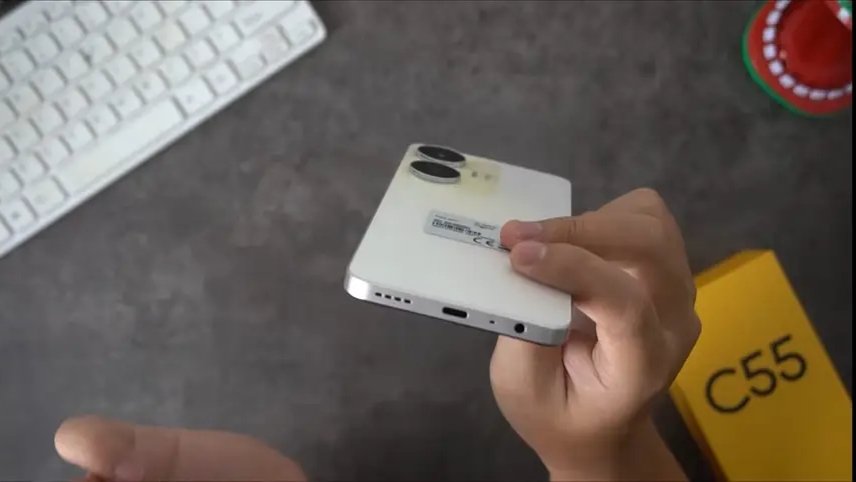
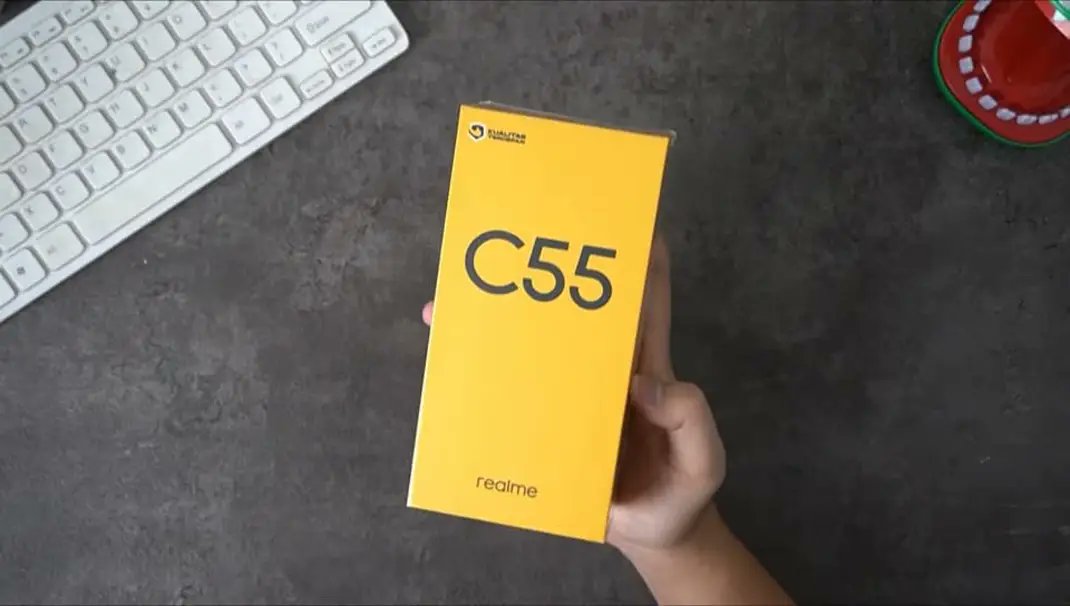
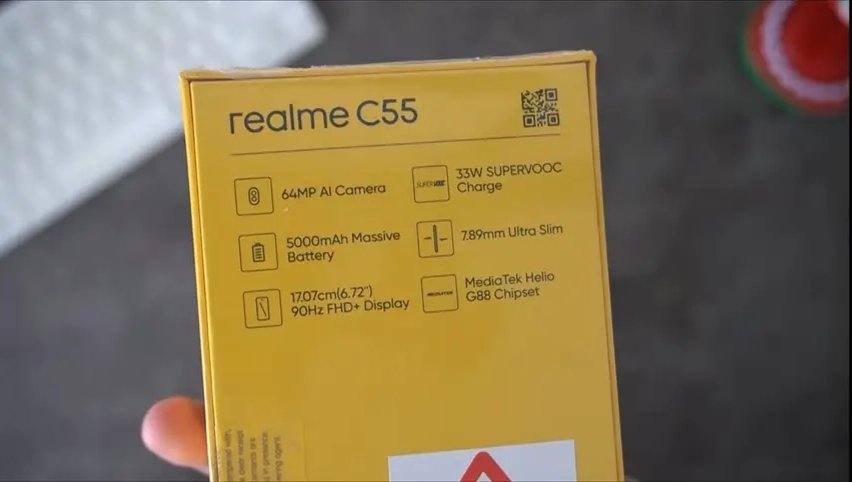
The other leak comes from YouTuber Official Complete Selular which features multiple images of the Realme C55 along with the spec sheet. The images reveal that the phone will have thick top and bottom bezels. There is a punch-hole cutout for the front camera and there is a USB-C port at the bottom with a 3.5mm audio jack and speaker grille. The packaging box confirms many other specifications.
Realme C55 specs
The packaging box of the Realme C55 confirms that it has a 6.52-inch LCD display with Full HD+ resolution and a 90Hz refresh rate. It will be powered by an octa-core MediaTek Helio G88 processor and may come with 6GB of LPDDR4X RAM and 128GB emmc 5.1 storage.
The smartphone will have a dual-rear camera setup consisting of a 64MP primary shooter and a 2MP auxiliary sensor. On the front, there will be an 8MP camera for selfies and video calls. It is speculated that the phone will run on Realme UI 4.0 based on Android 13 and will feature a 5000mAh battery with 33W SuperVOOC fast charging support.
The Realme C55 will offer a side-mounted fingerprint scanner for security and will also come with a dedicated micro-SD card slot and a 3.5mm audio jack. The phone will have a thickness of 7.89mm and will charge via a USB 2.0 Type-C port.
Chinese smartphone manufacturer Nubia has launched the “Performance Rush Edition” of its Nubia Z50 smartphone. This new version is very similar to the Nubia Z50 Standard Edition, which was released at the end of last year. The focus of this update is on the storage configuration, as the Nubia Z50 Performance Rush Edition comes with a massive 16GB RAM and 256GB of internal storage.
Nubia Z50 boasts impressive features, including a 6.67-inch Full HD+ AMOLED 20:9 aspect ratio flexible curved screen with a 144Hz refresh rate and 360Hz touch sampling rate. It has a powerful Octa Core Snapdragon 8 Gen 2 4nm Mobile Platform with Adreno 740 GPU.
The device runs on the latest Android 13 operating system with MyOS 13, providing a smooth and seamless user experience. Coming to the camera specs Nubia Z50 features a 64MP primary camera with custom Sony IMX787 flagship sensor, LED flash and f/1.6 aperture, and a 50MP 116° ultrawide camera with Samsung JN1 sensor, f/2.2 aperture, and 2cm macro. The smartphone also supports 8K video recording and has a 16MP front-facing camera with f/2.45 aperture.
Other features include an in-display fingerprint sensor, USB Type-C audio, dual smart PA, stereo dual speakers, and DTS: X Ultra. Nubia Z50 is also equipped with 5G SA/NSA, Dual 4G VoLTE, Wi-Fi 802.11 ac (2.4GHz + 5GHz), Bluetooth 5.2, GPS/GLONASS, and USB Type-C.
The smartphone is powered by a 5000mAh battery with 80W fast charging, which can provide up to 100% charge in just 45 minutes. Nubia Z50 Performance Rush Edition is an excellent option for users who prioritize high performance, speed, and storage capacity.
Nubia Z50 Performance Rush Edition comes in Black Reef color and is priced at 3999 yuan (approximately $574). However, there is currently a direct discount of 300 yuan (approximately $43), bringing the starting price down to 3699 yuan (approximately $531).
Electric scooters have become increasingly popular in recent years, and for good reason. They provide a convenient, eco-friendly, and cost-effective mode of transportation that can benefit both individuals and the environment. The Xiaomi Electric Scooter 4 Ultra, which was unveiled at the MWC 2023 recently, is a prime example of this trend, offering riders an array of benefits that make it an ideal choice for anyone looking for a reliable and efficient means of transportation.
One of the standout features of the Xiaomi Electric Scooter 4 Ultra is its dual suspension system, which ensures a smooth and safe ride, even on rough or uneven terrain. This innovative system increases the height of the chassis, providing riders with better visibility and stability. Additionally, the puncture-proof and self-sealing 10-inch Xiaomi DuraGel Tires minimize the risk of tire blowouts, ensuring maximum safety and an improved riding experience.
The Xiaomi Electric Scooter 4 Ultra also boasts impressive specs that allow it to reach speeds of up to 25km/h and climb slopes with inclines up to 25% easily. Its powerful 940W motor and long-lasting battery give riders the freedom to travel up to 70km on a single charge, making it an excellent option for commuters or those who simply enjoy exploring their surroundings.
Xiaomi Electric Scooter 4 Ultra
The Xiaomi Electric Scooter 4 Ultra’s sturdy yet lightweight aluminum body can support a maximum load of up to 120kg, and its widened handle grip and spacious deck provide a comfortable and stable riding experience. The scooter has a futuristic yet minimalist design, which adds to the aesthetic. It is also rated with IP55 resistance, ensuring it can withstand various weather conditions and environments.
In addition to the convenience and performance benefits of electric scooters like the Xiaomi Electric Scooter 4 Ultra, they also have a positive impact on the environment. Electric scooters produce zero emissions, making them a greener alternative to gas-powered vehicles. This means that by choosing to ride an electric scooter, you are not only benefiting yourself, but you are also contributing to a cleaner and healthier planet. The Xiaomi Electric Scooter 4 Ultra is priced at €999 (~$1052), and it will be available via official Xiaomi channels.
Honor will soon introduce the Honor Magic 5 series smartphones at the ongoing Mobile World Congress 2023 event. The new flagship series from the brand will have three models – Honor Magic 5, Honor Magic 5 Pro, and Honor Magic Ultimate.
Earlier leaks have revealed the design of the vanilla Magic 5 model. Now, tipster Evan Blass has shared renders of the Honor Magic 5 Pro completely revealing its front and rear design.
Starting with the rear panel, the renders reveal that the Magic 5 Pro features a circular camera island with three camera lenses placed in a triangular setup. This camera array resembles the official teaser images published by the brand. Additionally, the camera module has 100X etched on it, which confirms its 100X zoom capability.
What’s interesting is that the camera island and the back panel appear to be constructed as a uni-body. This isn’t that uncommon since Oppo did something similar with the Find X5 Pro. The back also appears to be curved, however, it is unclear if the material used on it is glass or something else. Up-front, the device has a curved display with super thin top and bottom bezels. The pill-shaped cutout on the top left will hold a selfie camera and face recognition hardware. The renders reveal Green and Black color options, tho it is unclear if these will be the only color options the device will be launching with.
Honor Magic 5 Pro specs
The Honor Magic 5 Pro is said to feature a 6.81-inch OLED LPTO display with 120Hz variable refresh rate. It will also have 2160Hz PWM dimming, a touch sampling rate of 480Hz, HDR10+ support, and a maximum brightness of up to 1100nits.
Under the hood, the device will feature a Snapdragon 8 Gen 2 processor complemented by LPDDR5x RAM and UFS 4.0 storage. The hardware will be powered by a 4,800mAh battery with support for 100W wired and 50W wireless fast charging. As for software, the device will come pre-loaded with Magic UI 7.0, which is based on the Android 13 operating system.
Coming to optics, there will be a Sony IMX878 primary camera sensor with OIS onboard. It will be paired with a 64MP OmniVision OV64B sensor and a Sony IMX516 sensor. Up front, the device will feature a 13-megapixel Sony IMX688 camera. It will be rated IP68 protection against water and dust and will offer an in-display fingerprint scanner along with 3D facial recognition.
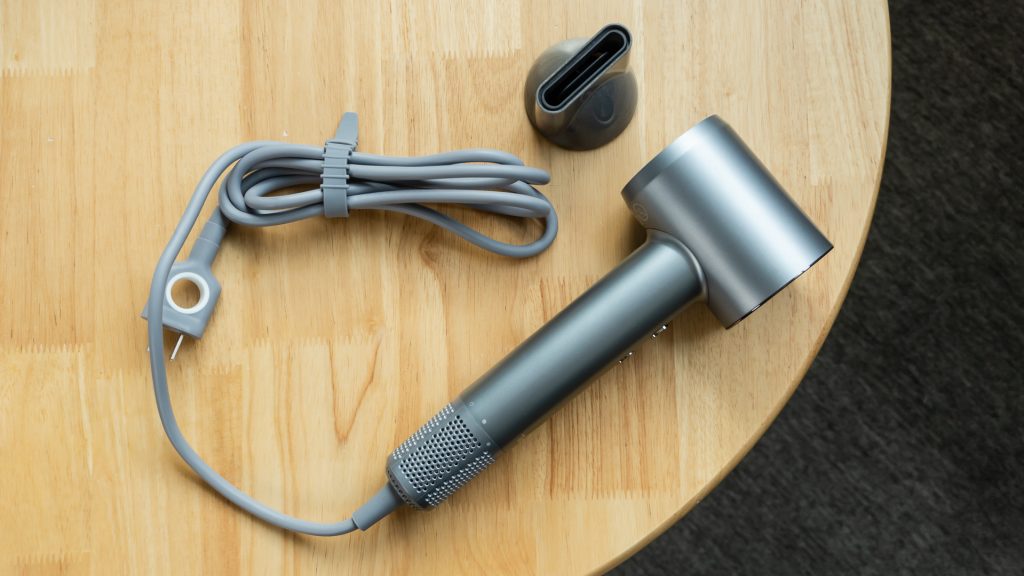
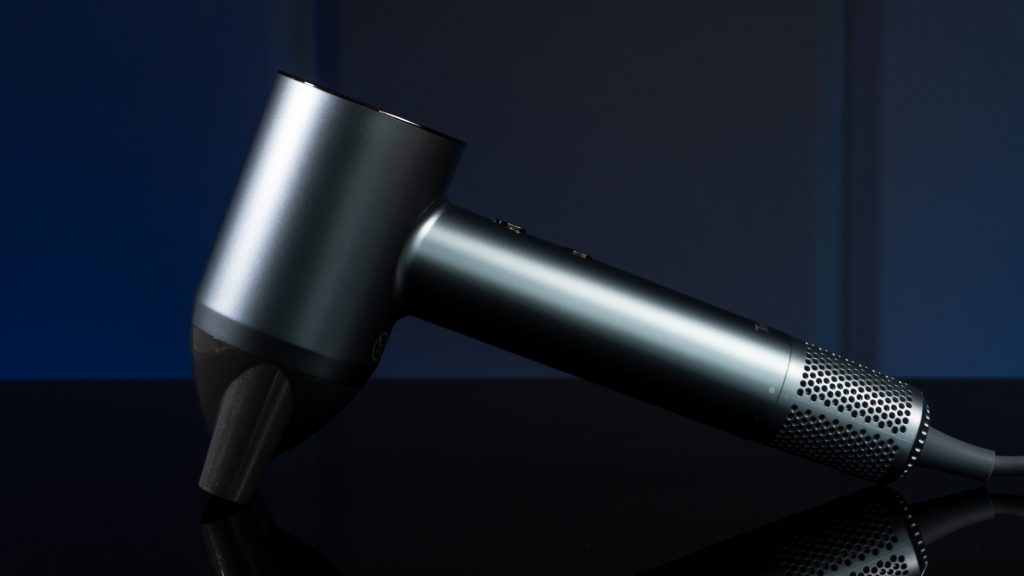
In the past 10 years, how to choose a hair dryer has always bothered me. I have to battle with frizz while most hair dryers blow hot air for 15+ minutes to dry my hair, and, damaged my hair as well. But if not went for the cheap options, $400+ is quite a bit of money for me to consider for a while. I did finally put my money on an expensive Dyson hair dryer, for which I was sad for a long period until I tested the Tensky SKY-M200 High-Speed Hair Dryer. Less than half the price of Dyson and unbelievably close quality made me regret my previous choice.
Design
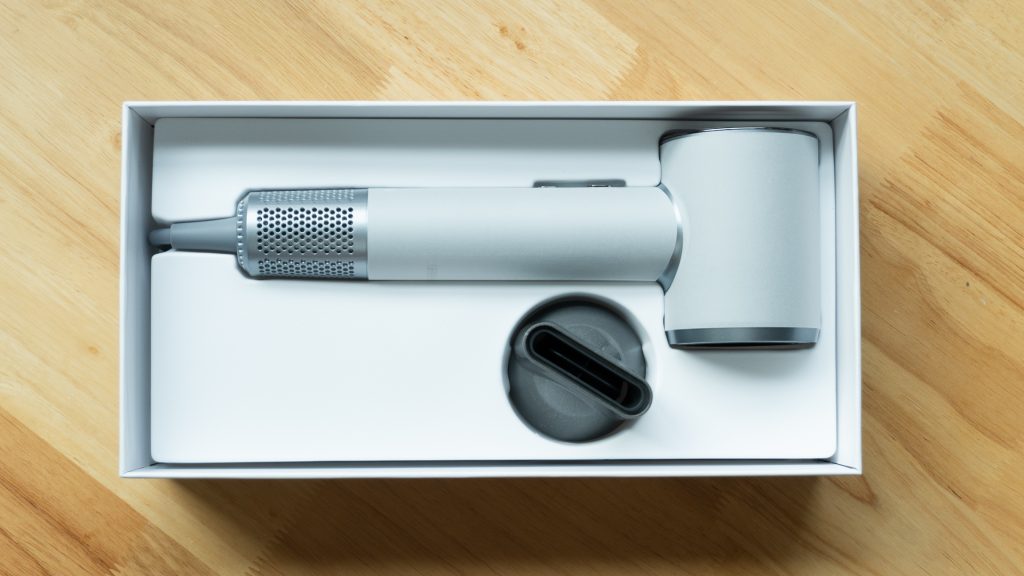
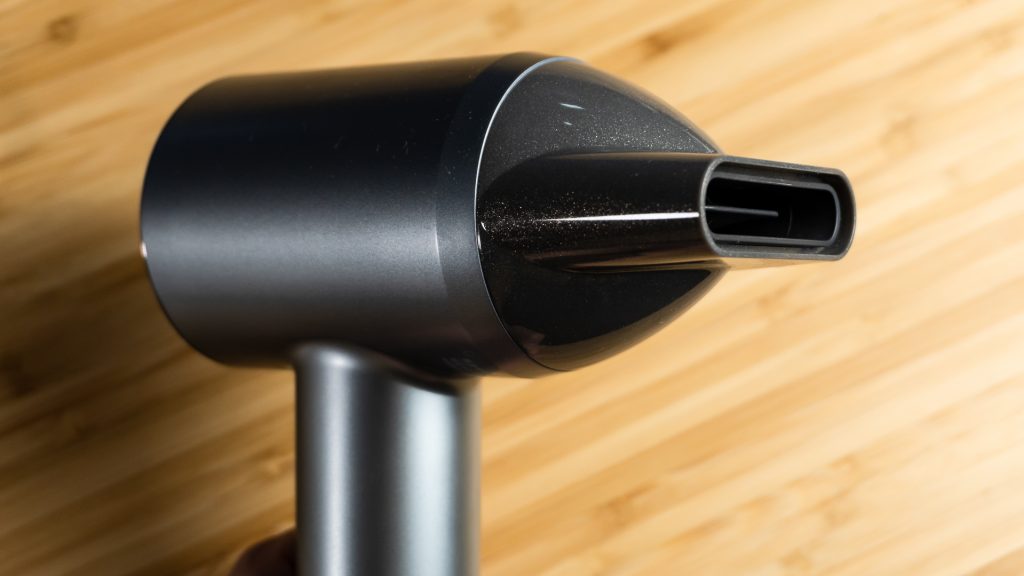
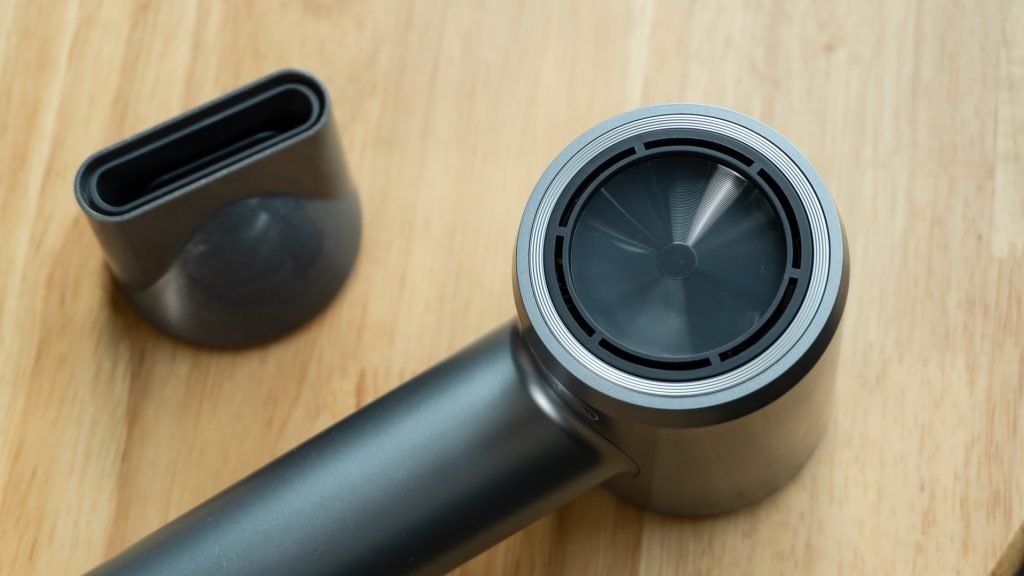
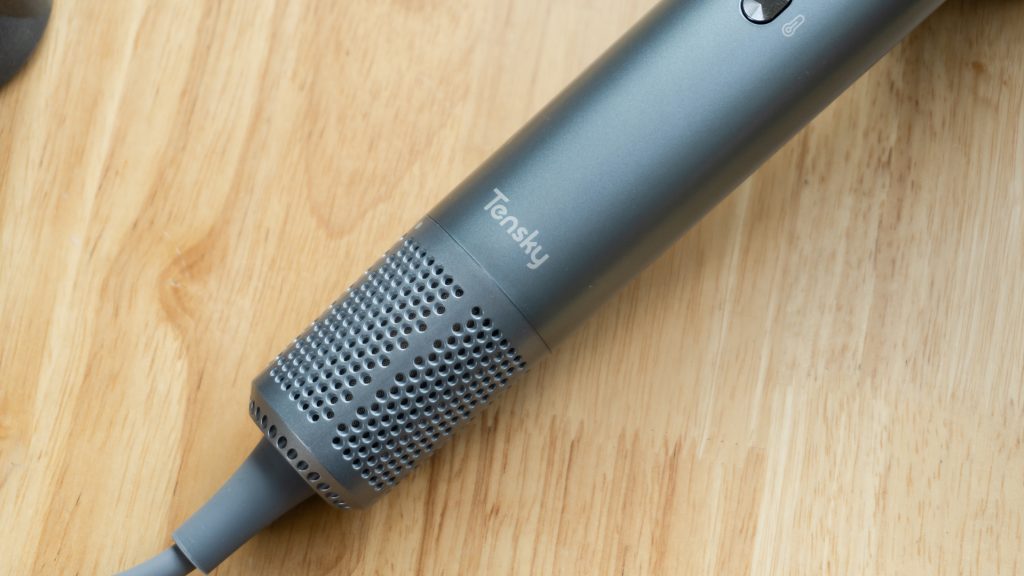
The new Tensky hair dryer also uses a much more compact and unique design instead of the classic L-shape bulky design. And it is equipped with a tiny but powerful 110,000 RPM high-speed brushless motor, which is the same technology as Dyson’s machine. It’s also placed inside the handle to make the nozzle shorter and easier to carry on the go. The hot air coming out of the Tensky hair dryer is smooth and comfortable, which also keeps reminding me of the luxury one. They feel almost the same.
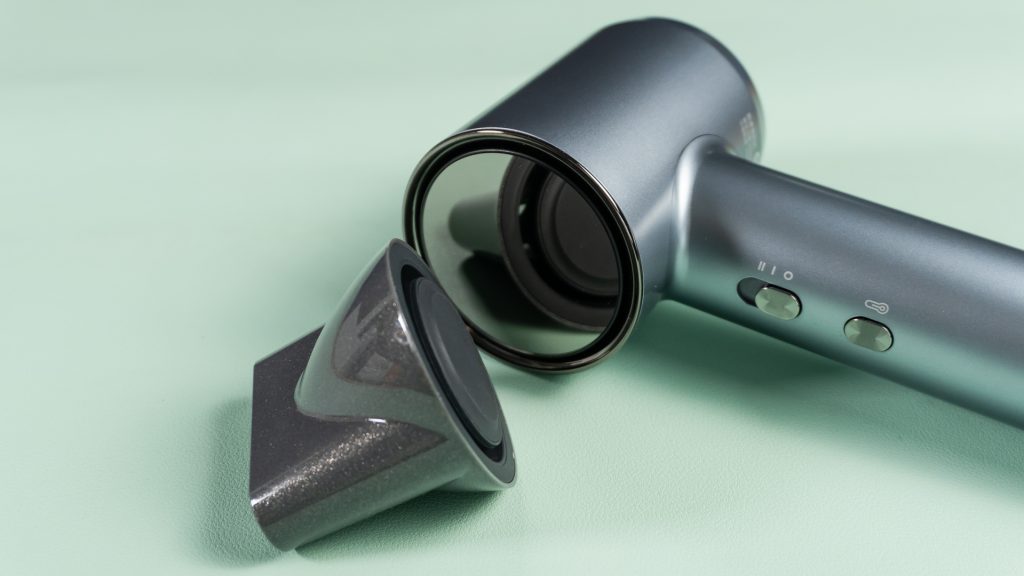
The hairdryer kit comes with a magnetic-attached styling concentrator. With this nozzle, the air gets focused and users can style one section at a time without disturbing the rest, which is great for styling.
Hair drying & styling
The Tensky hair dryer is crazy fast with a high-pressure and high-velocity air vacuum. It can completely dry my short hair for 5 minutes and my wife’s for 8 minutes, which incredibly shortens the time I spend drying and styling my hair before I leave the house every day. My wife comments that it made her not miss the salons since having DIY style at home is so convenient. And the SKY-M200 hair dryer can blow air with 200 million negative ions to prevent frizz and increase the hair’s shine and smoothness.
And if you struggle with styling your hard curly and thick hair, the SKY-M200 is almost the best budget option for you. It doesn’t just benefit from shaving minutes off of your hair drying, but also keeping your curls intact and reducing frizz and flyaways in a consistent way.
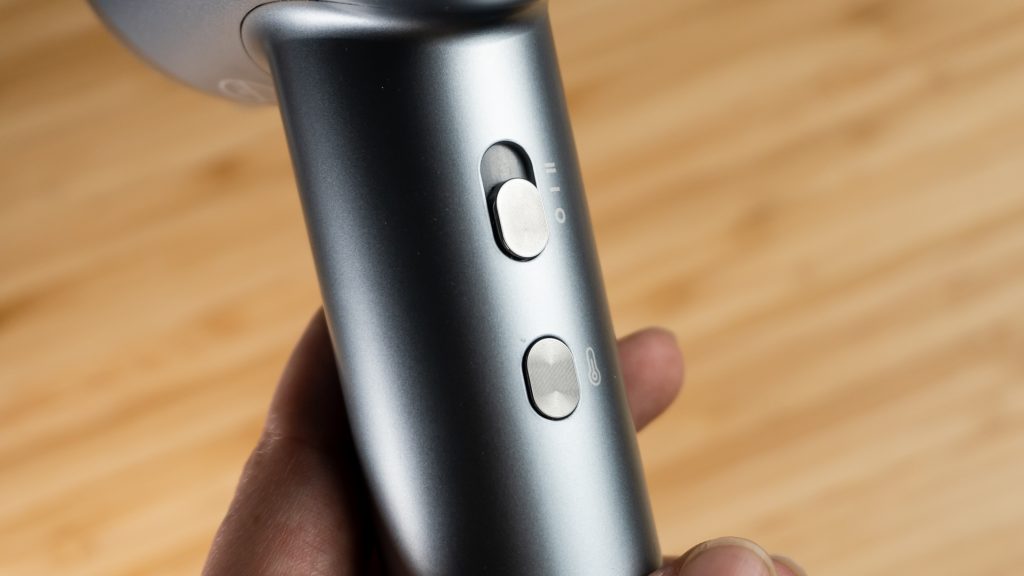
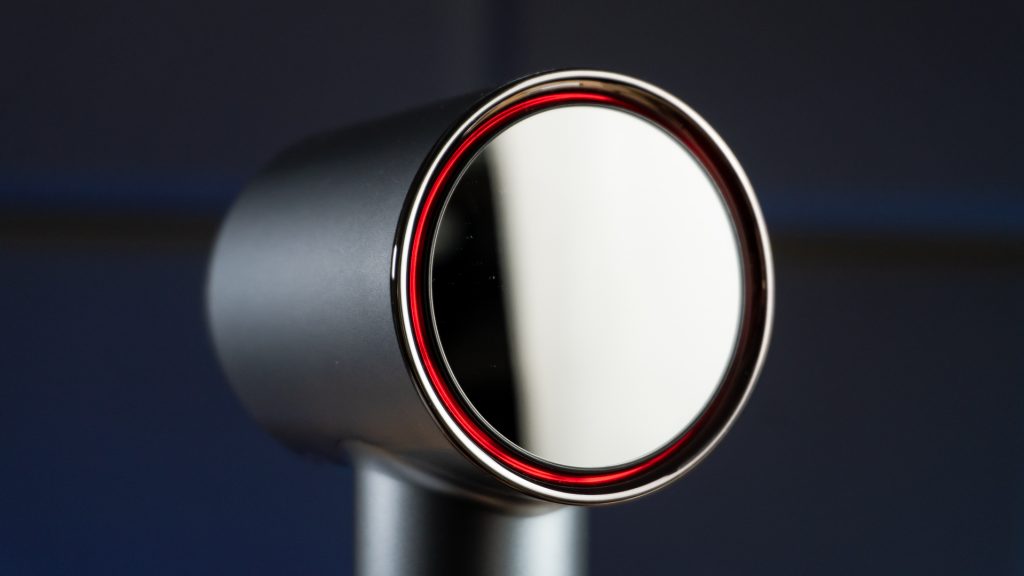
Another great experience is that the body and air it blows always remain cool to touch. Users can have 2 speeds (strong/soft) and 4 temperature settings. Even at the hottest option, it never burns my scalp, which is also thanks to the built-in Thermo-control microprocessor. It can enable real-time temperature monitoring at 100 times per second to prevent heat damage. And you can easily check the temperature setting through the RGB lighting indicator on the back.
Red: Gear-4 hottest option
Additional features
In addition to its powerful drying and styling performance, the Tensky hair dryer also has several nice features that ensure safety and convenience.
Another safety guarantee is the anti-leakage plug design. It ensures the safety of users whose hands are wet while hair drying. This heart-warming design is even rarely seen on other luxury models.
Another proven advertising feature is its low noise performance. During operation at Strong Speed, the noise level generally remains at around 60dB, which is much quieter than most traditional hairdryers.
There’s another impressive detail during my experience, which is the sleek design with a mirror on the back. Although we usually dry our hair with a bigger mirror in the bathroom, if you are in a hurry to do a quick hair styling and can’t find a mirror, then this little round mirror will be a lifesaver. Trust me, it’s my true experience.
Verdict
The final reason, as I mentioned, the Tensky hairdryer is much cheaper than those luxury models. Its performance made us start to wonder if getting a quality hair-drying and styling experience really requires investing that much money. The Tensky hair dryer works well for my family. And I can’t even figure out why I need to spend more money to get an experience that doesn’t make a difference. If you are interested in the $189 SKY-M200 hair dryer, you can click here to visit their official store and get more information.
WHERE TO BUY
Tensky SKY-M200 Hair Dryer Website: Official shop Available in grey and pink colors; 50%off with code: TENSKY50OFF
On Saturday, United States Treasury Secretary Janet Yellen spoke at a roundtable with US and Indian tech business leaders in Bengaluru, stating her eagerness to deepen ties in the technology sector. Yellen highlighted the US approach called “friendshoring” which seeks to bolster the resilience of supply chains by strengthening integration with trusted trading partners, including India. She noted that progress has been made, with technology giants Apple and Google expanding phone production in India.
Yellen went on to explain that the US is investing in digital technologies that will drive inclusive and resilient growth in India through the Partnership for Global Infrastructure and Investment (PGII). Specifically, investments in agri-tech for climate-smart agricultural production and digital payment systems for micro-entrepreneurs have been announced under the PGII, in addition to investments in renewable energy, health, and other infrastructure sectors in India.
The US aims to mobilize $200 billion through 2027 for the PGII, and Yellen expressed the country’s commitment to partnering with India to continue investing in the future. The roundtable was attended by top chief executives, including Sandip Patel from IBM, Nandan Nilekani from Infosys, and Nivruti Rai from Intel.
Yellen also highlighted the importance of the US-India relationship, noting that the US is India’s biggest trading partner, with bilateral trade totaling over $150 billion in 2021. She emphasized the close people-to-people ties between the two nations, with 2 lakh Indians studying in American schools and universities. Yellen noted that daily dependence on each other is evident, with Indians using WhatsApp to communicate and many American companies relying on Infosys to operate.
Nilekani from Infosys shared the company’s commitment to expanding its education institutes with 1,200 teachers in the US, working with all US universities, and recruiting 7,000 fresh graduates this year. He also stated that Infosys runs India’s completely digital tax system at the backend.
Patel from IBM expressed his enthusiasm for strengthening the US-India trusted technology partnership through proactive policy measures on critical and emerging tech, stating that it would benefit the economies and people of both countries immensely.
At MWC 2023, Xiaomi unveiled the Xiaomi 13, 13 Pro, and 13 Lite for the global market. The event ended with the company confirming the names of the smartphones that will receive the MIUI 14 upgrade. Here is a look at the list of smartphones that will be treated with MIUI 14.
MIUI 14
Here is the list of the Xiaomi / Mi devices that will get the MIUI 14 upgrade starting in the first quarter of 2023:
Xiaomi 12T
Xiaomi 12T Pro
Xiaomi 12 Pro
Xiaomi 12X
Xiaomi 12 Lite
Xiaomi 11T Pro
Xiaomi 11T
Xiaomi Mi 11 Ultra
Xiaomi Mi 11i
Xiaomi Mi 11
Xiaomi 11 Lite 5G NE
Xiaomi Mi 11 Lite 5G
Xiaomi Mi 11 Lite
Redmi Note 11 Pro+ 5G
Redmi Note 10
Redmi 10 5G
The company hasn’t confirmed the proper timeline as to when each of these phones will be receiving the MIUI 14 update. Moreover, newer models like the Redmi Note 12 series and the Redmi Note 11 series are also expected to receive the upgrade, but their names are not mentioned in the list.
Hence, the list is not final. The company is expected to confirm the detailed MIUI 14 rollout schedule in the coming weeks. Readers should note that some devices may get the MIUI 14 and Android 13 upgrades together. Some devices may only get the MIUI 14 update without the latest Android version.
In related news, the Xiaomi 13 series comes preloaded with the Android 13 OS and MIUI 14 preinstalled. The lineup is confirmed to receive three years of Android OS upgrades and five years of security updates.
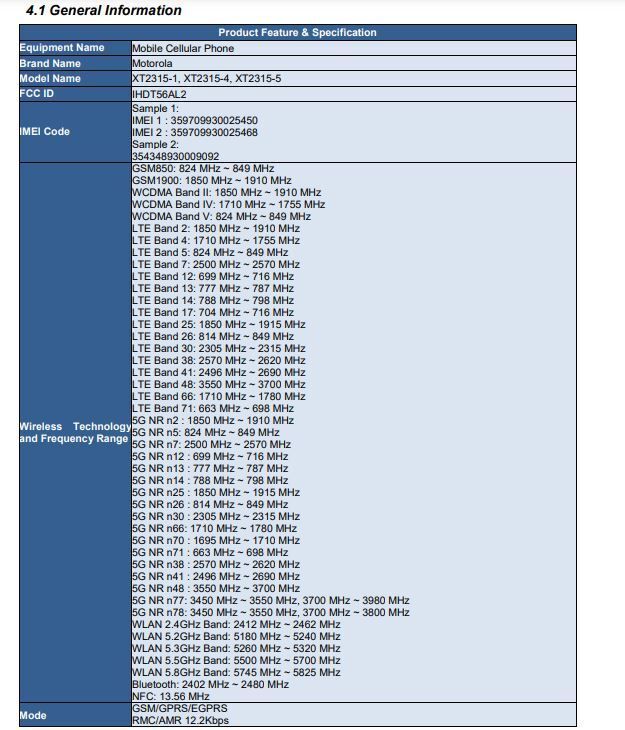
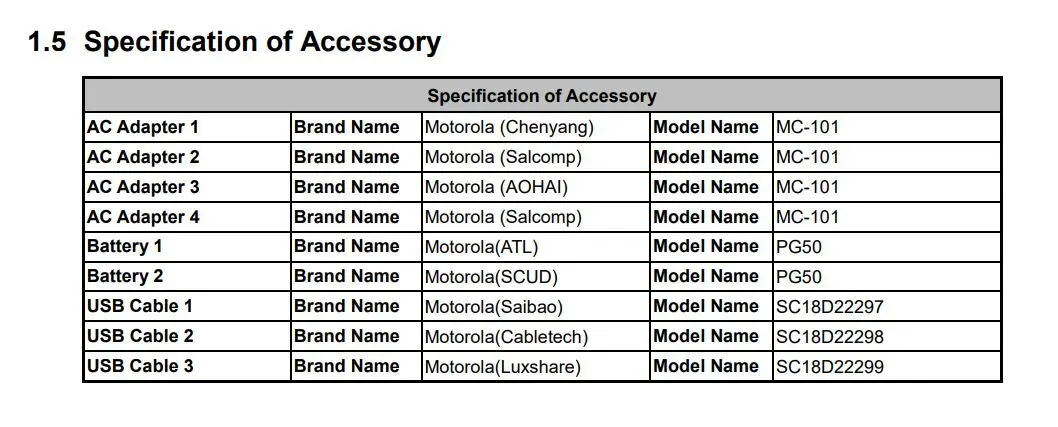
The stylus-toting Motorola Moto G Stylus 5G 2023 is expected to launch soon. Earlier this month, reliable tipster OnLeaks released the first render of the device to reveal its design. Now, the said device has received approval from the Federal Communications Commission (FCC) in the US. The FCC listing is a good hint that its launch could be imminent.
The FCC documents show that model numbers XT2315-1, XT2315-4, and XT2315-5 are all associated with the Moto G Stylus 5G 2023. The listing confirms that it is a 5G-ready device. In October 2022, well-known tipster Evan Blass claimed that the Motorola phone with XT2395 is codenamed Geneva.
The listing also shows that the device is backed by a 5,000mAh battery with 10W charging. Unfortunately, it has no information on the other specifications of the device.
The leaked render that came up earlier this month revealed that the Moto G Stylus 2023 will have a punch-hole display on the front. The device has a 50-megapixel dual camera unit with an LED flash on the back. While its left side is barren, it has volume buttons and a power key, which is integrated with a fingerprint scanner on the right edge.
The leaked details that came up in October 2022 revealed that the device will come in 4G and 5G versions. It is expected to feature 6 GB of RAM and 256 GB of built-in storage. It is likely to come in two colours: Black Beauty and Crystal Grey. Also, the device is expected to remain exclusive to the US market.
To recall, the Moto G Stylus 2022 from last year featured a 6.8-inch IPS LCD FHD+ 120Hz display, a Snapdragon 695 chipset, up to 8 GB of RAM, up to 256 GB of storage, and a 5,000mAh battery with 10W charging. For photography, it offered a 16-megapixel front camera and a 50-megapixel + 8-megapixel + 2-megapixel triple camera unit.
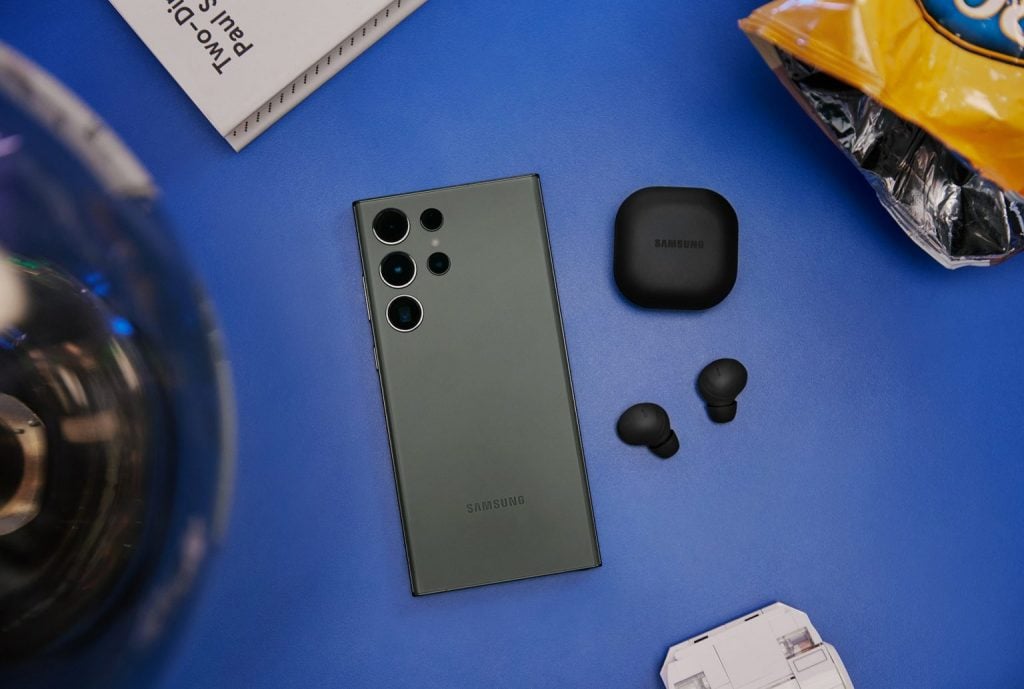
The Samsung Galaxy S23 Ultra is the latest flagship device from the tech giant. While some may be disappointed with the similarity in design to its predecessor, the Galaxy S22 Ultra, Samsung has made some noteworthy refinements that are truly impressive. Whilst the camera setup and the design are the major overhauls this year, one of the major changes is the seamless process of removing the battery, a feature that many tech enthusiasts have been waiting for.
YouTuber Zach from JerryRigEverything put the Galaxy S23 Ultra to the test and was pleasantly surprised by how easy it was to dismantle the device with just one hand. In the past, removing the battery from a smartphone was a difficult task, with manufacturers using a lot of adhesive to hold the battery in place. This meant that professionals and novices alike had to use various tools and alcohol to soften the adhesive and carefully remove the battery without rupturing it.
However, with the Galaxy S23 Ultra, Samsung has made this process much simpler. By only requiring the removal of the front glass assembly, wireless charging coil, screws, and ribbon cables, the 5,000mAh battery can be easily accessed and removed in just seconds. Even non-professionals can remove the battery with ease, Zach stated in his video.
While there was a small hiccup during the teardown process where Zach almost tore off the ribbon cable, he claimed that Samsung’s implementation of this change was worth the wait. He even stated that he had been waiting for eight long years for Samsung to make this small but significant improvement.
Nonetheless, the presence of pull-out tabs in the less expensive Galaxy S23 and S23 Plus models gives hope that Samsung will make this feature standard in all of their smartphones, including the highly anticipated Galaxy Z Fold 5 and Galaxy Z Flip 5 set to launch later this year.
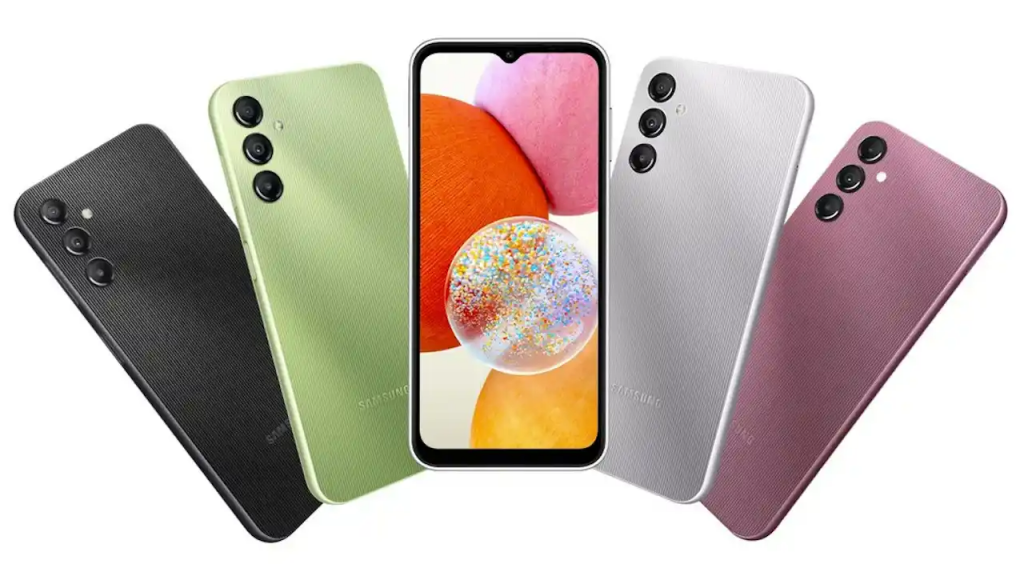
Last month, Samsung unveiled the Galaxy A14 5G in multiple markets. Its variant released in the US has the Dimensity 700, while other markets have received its Exynos 1330 chip variant. Now, the South Korean tech giant has removed the covers from the 4G version of the Galaxy A14 in Malaysia. Here is a look at its specifications, features, and price.
Samsung Galaxy A14 specifications and features
Samsung Galaxy A14 4G
Starting from the front, the Galaxy A14 4G has a 6.6-inch IPS LCD display that produces a Full HD+ resolution of 1080 x 2408 pixels and a 20:9 aspect ratio. For security, it features a side-facing fingerprint scanner.
Housed inside the display notch is a 13-megapixel selfie camera. The back panel of the device features a 50-megapixel main camera with an f/1.8 aperture. It is accompanied by a 5-megapixel ultra-wide lens and a 2-megapixel macro camera.
According to Samsung Malaysia, the Galaxy A14 4G is powered by a 2.0GHz octa-core chipset. However, reports have revealed that it features the Helio G80 chipset. The handset offers 6 GB of RAM, 128 GB of storage, a microSD card slot, and Android 13 OS with One UI 5 on top.
The A14 is powered by a 5,000mAh battery that supports 15W charging. Lastly, the device weighs 201 grams and measures 167.7 x 78 x 9.1mm.
Samsung Galaxy A14 4G price
The Galaxy A14 4G’s price for the Malaysian market is yet to be confirmed. The handset comes in four shades, such as Black, Silver, Green, and Dark Red. It is likely that the device will also be available in more countries in the coming days.
OnePlus recently launched its Ace 2 smartphone in China which was rebranded as the OnePlus 11R for the global market. This device could be called a proper flagship killer as it comes with high-end specs at mid-range prices.
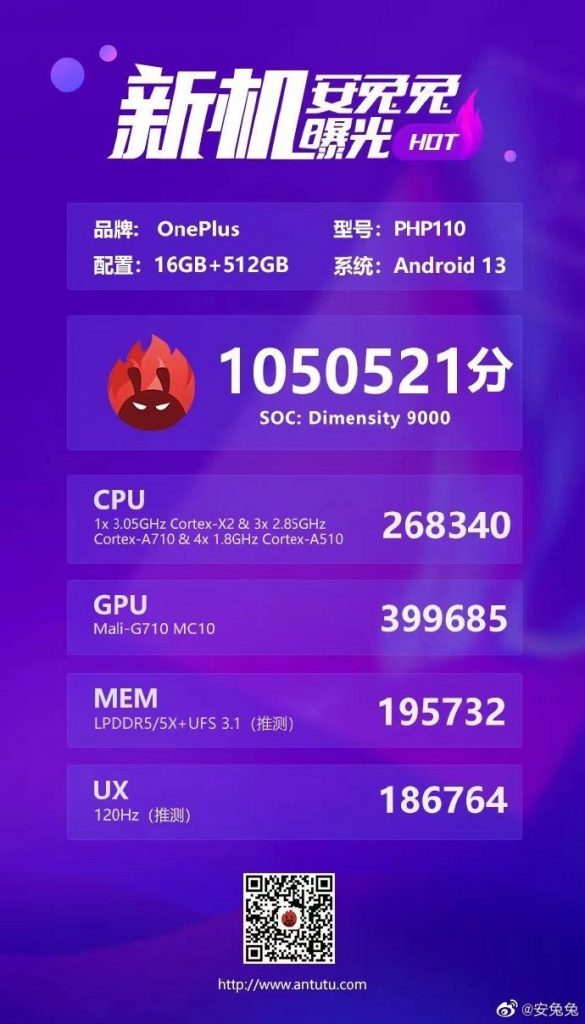
As we know, the brand is also working on a Dimensity edition of the OnePlus Ace 2 which will feature the MediaTek Dimensity 9000 chipset, a triple camera setup, and an alert slider. It is rumored to be priced below the OnePlus Ace 2/11R. The performance of this device has now been revealed through an AnTuTu benchmark listing.
The OnePlus Ace 2 Dimensity Edition bearing model number PHP110 has scored 1,050,521 points on the AnTuTu. The listing has verified that the device will be equipped with the Dimensity 9000 chipset, which incorporates the Mali-G710 MC10 GPU. In the CPU and GPU tests, the device obtained scores of 268,340 and 399,685 points, respectively.
Furthermore, we can see that the has LPDDR5 memory and UFS 3.1 RAM. The tested unit has 16GB RAM and 512GB storage. This is most likely the highest configuration if this upcoming device.The UX score comes out at 186,764 points and confirms that the phone features a 120Hz refresh rate display.
When compared to the AnTuTu score of the OnePlus Ace 2, the Dimensity edition falls behind by approximately 9% overall. While the CPU performance is quite similar, differing by only about 1.5%, the Ace 2 equipped with Snapdragon 8+ Gen 1 has a more potent GPU, as evidenced by a 12% disparity in AnTuTu scores.
Other than this gap in performance, the Ace 2 Dimensity Edition will come with a downgraded primary camera. Its design will be close to the OnePlus Nord 2. Rumors also suggest that it could be called the OnePlus Ace 2V.
Vivo’s next foldable phone for the Chinese market will be called the Vivo X Fold 2, as per the rumors surrounding it. Last week, tipster Digital Chat Station leaked information on its battery and charging capabilities. Today, the tipper revealed some more details about the device.
According to the tipster, the Vivo X Fold 2’s foldable screen will offer a 2K resolution and a refresh rate of 120Hz. There is a possibility that the screen may measure around 8 inches. The cover display as well as the inner screen are expected to come equipped with ultrasonic in-screen fingerprint scanners.
Vivo X Fold Plus
The Vivo X Fold 2 is expected to debut as the world’s first Snapdragon 8 Gen 2 chipset-powered foldable smartphone. The SoC will be coupled with 16 GB of RAM. The leak has no information on the storage options of the X Fold 2. It is likely that the highest variant of the device may offer 512 GB or 1 TB of native storage.
To keep the lights on, the Vivo X Fold 2 will have a 4,800mAh dual-cell battery. It will carry support for 120W fast charging. Like the predecessor model, the device may offer 50W wireless charging. It may come preloaded with Android 13 OS and OriginOS 3.0.
The Vivo X Fold 2’s rear camera setup will be headlined by a 50-megapixel Sony IMX866 primary camera with OIS support. It will be coupled with a pair of 12-megapixel Sony IMX663 sensors for ultra-wide and telephoto shots.
The Vivo X Fold 2 is likely to launch in April this year. The device could be accompanied by the Snapdragon 8 Plus Gen 1-powered Vivo X Flip. It is likely to feature a 50-megapixel Sony IMX766 primary camera and a 12-megapixel Sony IMX663 ultra-wide lens.
Whenever a new smartphone drops in the market, there are bound to be bugs that show up with daily usage of those devices. The Samsung Galaxy S23 series is no exception, with the device making the news for a few bugs and a screen issue reported by users. Recently, several Galaxy S23 Ultra owners reported that their units have no internet when their WiFi is connected.
According to numerous threads on Reddit and Samsung Community forums, the Galaxy S23 Ultra appears to have WiFi connectivity issues. The phone connects to WiFi but without internet access. Even when connected, the connection doesn’t last long. Most users have confirmed that this issue only occurs on the Galaxy S23 Ultra and not on other devices in their homes.
One Reddit user, an IT professional, reported experiencing the “connected but no Internet” issue daily since the purchase of the device earlier this February. Despite trying all the fixes and workarounds, the issue persisted on his phone while his wife’s S23 Ultra remained unaffected. Upon swapping to his old WiFi 5 router, the issue disappeared. Several other users have also found success in disabling WiFi 6 and encryption protocol WPA3 or performing a factory reset. One user even suggested disabling the random MAC address and switching to the default phone MAC address.
Although Samsung is aware of the issue and reportedly working on a fix, the next update may not arrive before the return window for the device expires. As a result, affected users may need to rely on mobile data until the issue is resolved, which will definitely bother a fair amount of users. It’s unclear how many units are affected by this issue, but reports indicate that the number is definitely not small, with some users experiencing the problem on multiple units.
While it’s not unusual for new phones to have bugs, the Galaxy S23 Ultra is unlikely to be derailed as one of the top phones of the year. Even so, Samsung must address this issue promptly to ensure customer satisfaction.
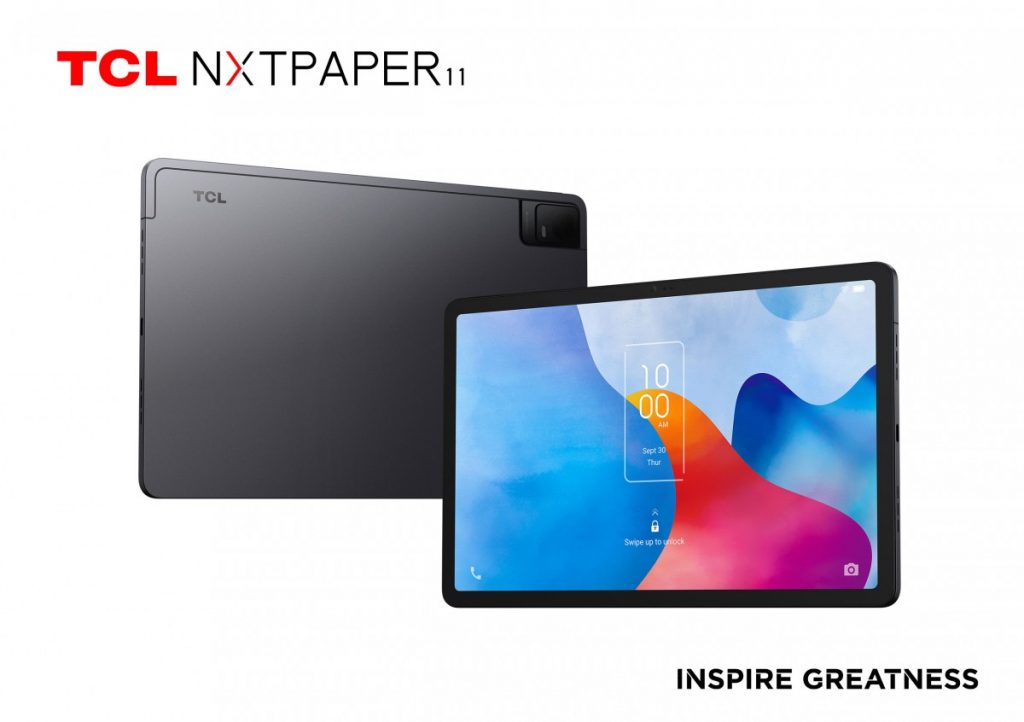
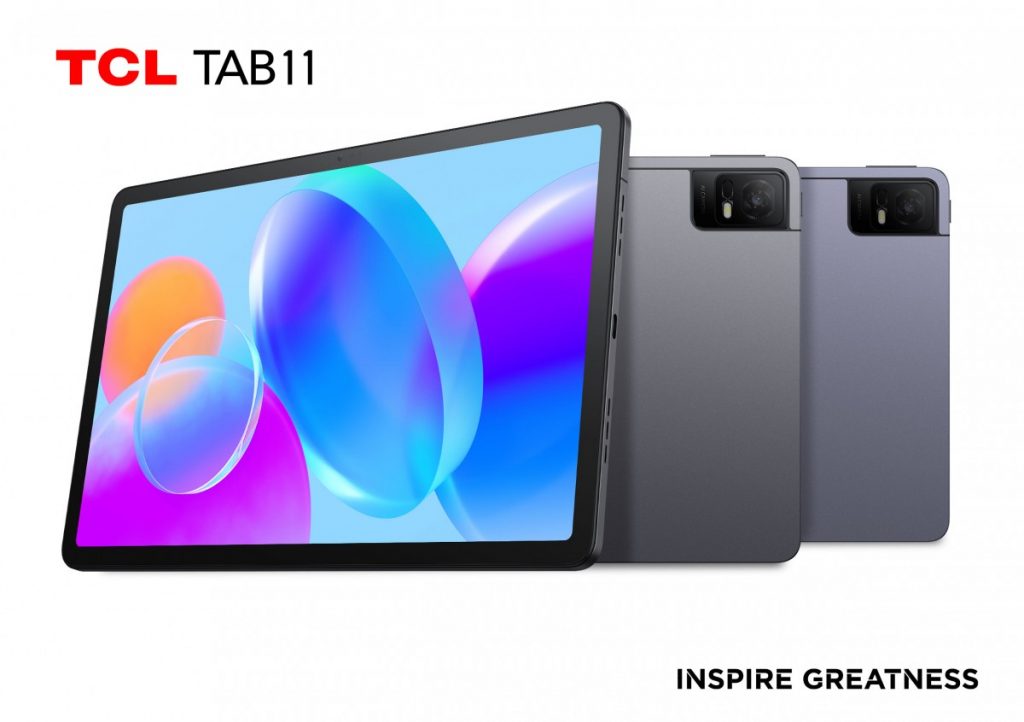
TCL NXTPAPER 11 and Tab 11 are the two tablets from TCL that have gone official at MWC 2023. The company also used the same event to announce other products, such as the TCL 40 XL, TCL 40 XE 5G, TCL 40 X 5G, and TCL 406 smartphones. Here is a look at the specifications, features, and price of the new TCL tablets.
TCL NXTPAPER 11
TCL NXTPAPER 11
The TCL NXTPAPER 11 is a smaller version of the 12-inch TCL NXTPAPER Pro, which was announced at CES 2023 last month. The 11-inch version has a 10.95-inch IPS LCD display that offers a 2K resolution and a paper-like feel thanks to a special coating. The NXTPAPER 2.0 technology makes the screen brighter, with a peak brightness of 500 nits. The tablet comes with support for optional T-Pen stylus.
The Helio P60T and an 8,000mAh battery with 18W charging support power the TCL NXTPAPER 11. The tablet runs on Android 13 OS and comes with a microSD card slot for more storage. It has an 8-megapixel front camera with a 100-degree FOV and an 8-megapixel rear camera. It also comes with quad speakers and two microphones. The tablet has a thickness of 6.9mm and weighs around 462 grams.
TCL Tab 11
TCL Tab 11
The TCL Tab 11 has the same display, chipset, battery, and cameras as the NXTPAPER 11. The device comes with 4 GB of RAM and 128 GB of storage.
The TCL NXPAPER 11 is priced at $249. The Wi-Fi only version of the Tab 11 is priced at $179, while its 4G edition costs $219. Buyers of both tablets will be able to choose from a couple of optional accessories, such as the T-Pen, a Bluetooth keyboard, and a screen protector.
We use cookies on our website to give you the most relevant experience by remembering your preferences and repeat visits. By clicking “Accept”, you consent to the use of ALL the cookies.
This website uses cookies to improve your experience while you navigate through the website. Out of these, the cookies that are categorized as necessary are stored on your browser as they are essential for the working of basic functionalities of the website. We also use third-party cookies that help us analyze and understand how you use this website. These cookies will be stored in your browser only with your consent. You also have the option to opt-out of these cookies. But opting out of some of these cookies may affect your browsing experience.
Necessary cookies are absolutely essential for the website to function properly. This category only includes cookies that ensures basic functionalities and security features of the website. These cookies do not store any personal information.
Any cookies that may not be particularly necessary for the website to function and is used specifically to collect user personal data via analytics, ads, other embedded contents are termed as non-necessary cookies. It is mandatory to procure user consent prior to running these cookies on your website.