Advertisement

Sony Rolls Out Android 13 Update to Xperia 1 III, 5 III, and Pro-I

The professional-level camera capabilities of Sony Xperia smartphones have gained considerable popularity. Since it’s obviously coming from a well-known photography expert’s home, the smartphone’s professionalism in this area is nothing new. Well, according to the latest news, the most recent Android 13 update has finally begun to roll out to three of the tech giant’s Xperia smartphones.

The Sony Xperia 1 III, Xperia 5 III and Xperia Pro-I have started receiving the Android 13 update. The Xperia 1 III and 5 III were launched with the Android 11-based operating system right out of the box. They later grabbed the support for Android 12 through an OTA update later this year. The Xperia Pro-I was also launched with Android 11 out of the box. The Android 13 is the second major update for all three devices.

Sony Xperia

As of right now, the brand has not made clear which regions will receive the update; it is still being rolled out in a gradual manner. So, if you still haven’t received the most recent update for your smartphone, we advise you to wait a few more days. If you still do not receive the OTA update notification, you can manually check the settings and software update area to see if it has been released. In the next few days, the OTA will be accessible to a larger audience.

Regarding the time frame for software support for these devices, there are no official statements. We expect Sony to release at least three major Android updates for its smartphones, with Android 13 arriving as the second major update for these devices. Many other OEMs, including Samsung and OnePlus, have already begun to provide 5 years of security updates and 4 significant Android upgrades. However, this comparison is meaningless because both of these companies are primarily focused on their flagship products, whereas Sony is designed for camera enthusiasts who may be less concerned with the most latest software.

Related

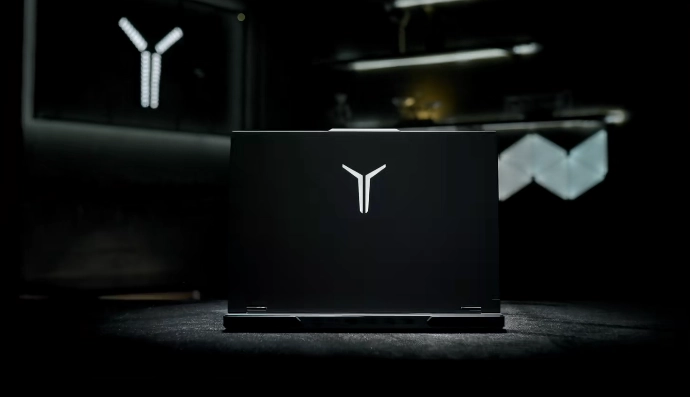
MSI Titan GT77 with 4K 144 Hz mini-LED display, 1,008 dimming zones & 1,000 nits peak brightness could debut at CES 2023

With CES 2023 just around the corner, leaks regarding upcoming laptops and hardware from OEMs have started pouring in. One such leak mentions that MSI is planning on introducing a new Titan GT77 laptop in the market with a 4K 144Hz mini-LED display.

MSI Titan

The report comes from Notebookcheck, which cites industry sources as the provider of this leak. According to the report, the upcoming Titan GT77 HX will have a 17.3-inch 4K 144 Hz AmLED mini-LED panel with 1,008 dimming zones and 100% DCI-P3 color gamut coverage. The display has a peak brightness of 1,000 nits and is DisplayHDR 1000-certified. The leaked product slides also appear to show a 3 ms response time when panel overdrive is enabled.

MSI
MSI Titan GT77 leaked spec sheet

It appears that the mini-LED display on the Titan GT77 will support MSI’s True Color feature, which ensures that each panel is uniquely color-calibrated. The upcoming Titan GT77 appears to be receiving a number of improvements in several crucial areas in addition to the new display technology. The Titan GT77 will likely feature variations of Raptor Lake-HX CPUs and Nvidia’s RTX 40-series mobile GPUs.

The speaker system, MUX switch, Cherry MX SteelSeries mechanical keyboard, and 99.99 WH battery appear to have been carried over from the Titan GT77 12UHS. However, there are a few upgrades that stand out, including an updated Killer Wi-Fi 6E AX1690 WLAN card and a new 8-heatpipe cooling system.

RELATED:

Apple To Reportedly Allow Third-Party App Stores On iPhones And iPads

Apple has been pretty restrictive when it comes to allowing users to install applications on their smartphones or tablets. The apps on the iPhones and iPads need to be installed only through the company’s App Store, and for every transaction through those apps, the tech giant charges a commission.

Now, it appears that users will have more choices when it comes to installing applications. As per the report from Bloomberg, Apple is preparing to add support for third-party app stores for the iPhones and iPads in the European Union.

Apple App Store Featured

The development comes as the Cupertino-based technology giant works to comply with new competition law in the European Union. The Digital Markets Act has a set of rules designed to create fair and open competition in the digital world, and large companies that fail to comply with the rules could face fines of up to 10% of their global revenue.

Apple is now working to comply with the relies and would allow users to install third-party apps without going through the company’s own App Store, essentially bypassing the tech giant’s restrictions and up to 30% commission that Apple charges on App Store purchases.

Google and Samsung already have their own app stores, but they already allow sideloading of applications, which means that users can download applications from anywhere and are not restricted to their own app stores. On the other hand, Apple has been restrictive, allowing users to only download apps from its App Store, citing security reasons, but it’s most likely to keep the 30% commission.

Apple has been in the hot waters for a couple of years now because of its restrictive policies when it comes to downloading and installing applications on iPhones. While app makers like Epic Games and Spotify have filed lawsuits against Apple because of the App Store restrictions, other giants like Facebook, Twitter, and others have publicly criticized the company.

RELATED:

Source

HP Omen 17 online listing reveals Core i7-13700HX and up to RTX 4090 mobile GPU with 16 GB VRAM

Earlier this year, HP launched the Omen 17 premium gaming laptop with an Intel Core i7-12700H and an Nvidia GeForce RTX 3070 Ti Laptop GPU. Now, HP is gearing up to introduce a refresh of the Omen 17 laptop, possibly at CES 2023 with up to an Nvidia RTX 4090 Laptop GPU under the hood.

HP gaming laptop

A Romanian store listing of the upcoming Omen 17 laptop has been spotted by Twitter user @momomo_us. The listing reveals that all the upcoming Omen 17 machines will have the Core i7-13700HX Raptor Lake-HX CPUs and RTX 40 series mobile GPUs. These will include the RTX 4060 8 GB, RTX 4070 8 GB, RTX 4080 12 GB, and RTX 4090 16 GB Laptop GPUs. SKUs with the RTX 4080 and higher have a QHD display, while the rest have an FHD panel.

Prices start at 10,298.60 Lei (US$2225) for the base model with a Core i7-13700HX and RTX 4060, while the top-end Omen 17 with the RTX 4090 is priced at 18,881 Lei (US$4,079).

According to rumors, the Core i7-13700HX has eight P-cores and eight E-cores with boost speeds of up to 5 GHz. Aside from the sporadic leaks we’ve already seen, there is still little information available about the RTX 40 Series mobile GPUs.

It is important to keep in mind that the mobile versions of the GPUs will probably have significant performance differences from their larger desktop relatives. The 450 W TGP of the desktop RTX 4090 card can be boosted to 600 W. However, Ada Lovelace mobile GPUs are probably limited to a 175 W TGP due to the thermal and power restrictions that laptops must deal with.

RELATED:

(Source, Via)

Get up to $50 Discount on Xiaomi 13 and 13Pro at Giztop (Coupon)

Giztop is giving discount coupons for the latest Xiaomi 13 and 13 Pro smartphones. You can get a $50 discount on Xiaomi 13 Pro by using the coupon code: M13P50 and a $30 discount on Xiaomi 13 via coupon code: M1350. Please note that the coupons expire on December 15, 2022. 

XIAOMI 13

Xiaomi 13 features a 6.36-inch 120Hz AMOLED FHD display. Powered by the latest Qualcomm Snapdragon 8 Gen 2 processor the smartphone comes in multiple memory variants viz. 8GB/12GB LPDDR5X RAM and 128GB/256GB/512GB UFS 4.0 internal storage. 

Xiaomi 13  is fueled with a 4500mAh battery and supports 67W wired charging and 50W wireless charging. It features a triple rear camera setup with a 50MP main camera and 10MP + 12MP secondary sensors. For your selfies, you have a 32MP sensor in the front. Other interesting features include Android 13-based MIUI 14, in-display optical fingerprint sensor, NFC, Wi-Fi 6, etc. 

XIAOMI 13 PRO

Xiaomi 13 Pro features a larger and better 6.73-inch QHD+ LTPO AMOLED display. It is powered by the latest Qualcomm Snapdragon 8 Gen 2 processor and offers multiple memory options similar to Xiaomi 13. 

Xiaomi 13 Pro is fueled with a larger 4820mAh battery and supports 120W wired charging and 50W wireless charging. It features triple 50MP rear cameras, a Sony IMX989 50MP primary lens, a 50MP ultra-wide lens, and a 50MP telephoto lens. The camera comes with advanced tracking tech that helps you to take better snaps of fast-moving objects. For your selfies, you have a 32MP sensor in the front. Other interesting features include Android 13-based MIUI 14, in-display optical fingerprint sensor, NFC, Wi-Fi 6, etc. 

Both Xiaomi 13 and 13 Pro smartphones support Google mobile services, and OTA updates, and come with a pre-installed Google play store. 

DISCOUNT COUPONS

Xiaomi 13 Pro:

Coupon code: M13P50

Discount: $50 Off

Expiry date: December 15

Xiaomi 13:

Coupon code: M1350

Discount: $30 Off

Expiry date: December 15

For more information on such exciting deals and offers check out our deals hub.

North Edge ECG smartwatch with claimed blood pressure monitoring launched for $39

Ever since the launch of the Huawei Watch D, many China-based manufacturers have launched their own versions of smartwatches capable of blood pressure and ECG monitoring. They cost a fraction of the price of the Watch D, but in turn, their accuracy cannot be taken as gospel when it comes to features like blood pressure monitoring.

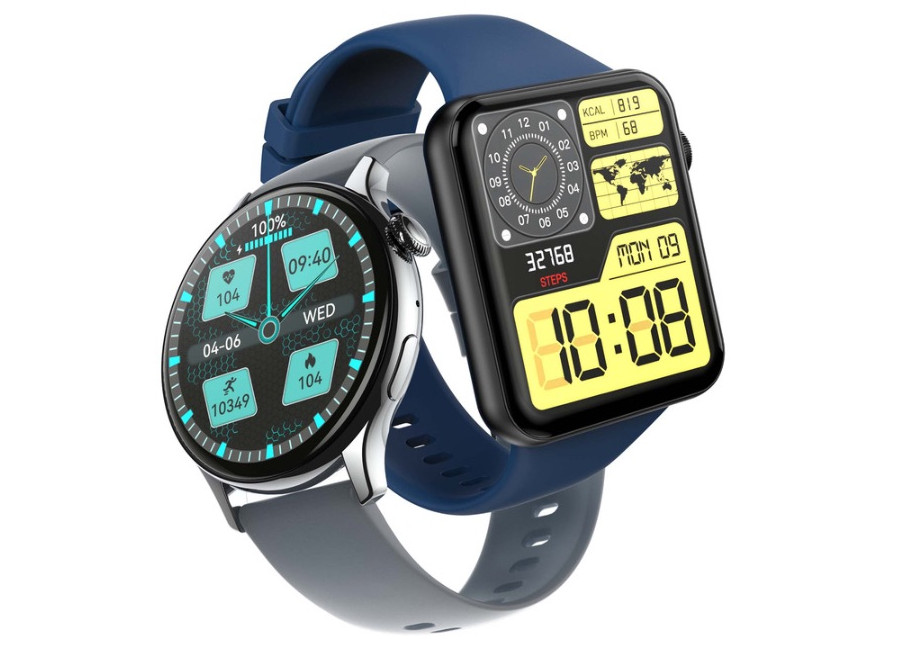
North Edge has launched one such smartwatch called the North Edge ECG smartwatch. It claims to have a built-in ECG heart rate monitor, which can be used to measure heart rate, blood pressure, and blood oxygen levels. The company also claims that there is a body temperature sensor onboard. Other than these features, the device has sleep tracking and 11 sports modes available.

Bluetooth 5.0 connectivity allows you to use the watch’s calling feature as well as message notifications, a remote camera, and music controls on your smartphone. The watch also has a timer, an alarm, and reminders to stand up. A 1.65-inch display with a 240 x 280-pixel resolution is included on the ECG smartwatch. The watch body is 40 g and 10.7 mm (0.4 in) thick. Given that the device is rated as IP65 waterproof, it should be able to survive perspiration and light rain.

With a two-hour charge time, a 170 mAh lithium polymer battery can last up to seven days. The device is available in black or pink and includes a variety of watch faces. The North Edge ECG smartwatch is currently 50% off at US$39; the MSRP of the wearable is US$78. The device ships from China, with delivery to the United States scheduled for mid-January.

RELATED:

(Source, Via)

LG UltraGear 27GR95QE-B 27-Inch OLED Gaming Monitor Launches Next Month For $1,000

LG is one of the leading makers of OLED panels and the company has a new product with an OLED screen. LG has added a new product page on its website for 27-inch OLED Gaming Monitor which carries model name LG UltraGear 27GR95QE-B.

The highlight of this new monitor from the company is that it is the brand’s first OLED panel of this size and will offer a QHD or 1440p screen resolution. The company has listed the product but as of now, there’s no specific launch date known.

LG UltraGear 27GR95QE-B 27-Inch OLED Gaming Monitor
LG UltraGear 27GR95QE-B Monitor

The display panel doesn’t offer 4K resolution but the 1440p resolution should be enough to product stunning image quality. There’s also anti-glare coating, which could provide a different look than the glossy TV screen. Listing of this product on the company’s website reveals that it offers a 110.8 pixels per inch display.

It has super fast 0.03 ms gray-to-gray response time and supports a high refresh rate of 240Hz. It also has Nvidia G-Sync Compatibility and AMD FreeSync Premium for fighting screen tears. The company is also claiming a 98.5 percent DCI-P3 coverage for the display.

The device features two HDMI ports, one DisplayPort, a 3.5mm headphone jack, digital optical audio port, and two USB 3.0 downstream ports. As of now, there’s no clarification on which version of the HDMI and DisplayPort are available on LG UltraGear 27GR95QE-B.

Although this LG monitor has a minimalist design, it still has some elements that are typical for a gaming device. It has an angular stand and features built-in RGB LEDs on the back.

LG UltraGear 27GR95QE-B 27-inch OLED Gaming Monitor is priced at $999.99 which may seem high but it’s a good price compared to the 4K OLED monitors from the company which are made for creators. We expect the company to make a formal announcement of this new monitor in the coming weeks.

RELATED:

Motorola unveils revised list of devices getting the Android 13 update

In August, Motorola unveiled a list of smartphones that will be getting the Android 13. The brand will layer the Android 13 operating system with My UX skin, which is known to be free of bloatware and offers a near-stock Android experience. The first list released by the company was quite short, and we were pretty sure that it will be adding more devices to this list soon.

Now, an extended list has been shared by Motorola in a community post reply, confirming 10 new additions to the previous list, making a total of 20 smartphones that will be receiving the Android 13 update soon.

  • Motorola razr (2022)
  • Motorola Edge 30 Ultra
  • Motorola Edge 30 Pro
  • Motorola Edge+ (2022)
  • Motorola Edge 30 Fusion
  • Motorola Edge 30 Neo
  • Motorola Edge 30
  • Motorola Edge (2022)
  • Motorola Edge 20 Pro
  • Motorola Edge 20
  • Motorola Edge (2021)
  • Motorola Edge 20 Lite
  • Moto G Stylus 5G (2022)
  • Moto G 5G
  • Moto G82 5G
  • Moto G72
  • Moto G62 5G
  • Moto G52
  • Moto G42
  • Moto G32

The brand also stated that “Android 13 rollout on select Motorola devices will begin in early 2023, with all models expected to be updated following appropriate testing and approvals.” So we can assume that the high-end Motorola smartphones released in 2022 will likely be among the first badge of devices getting the update in the first couple months of 2023, with midrangers and budget range devices following suit in later months.

RELATED:

(Via: GSMArena, Source)

Apple Rolls-out Support For 5G Network in its iPhones in India with iOS 16.2 Update

Soon after the official launch of India’s 5G network, smartphone OEMs began putting out an OTA update that allows their device to use the 5G network in accordance with the telecom network’s compatibility in India. The Cupertino technology giant has now begun pushing out 5G support for its iPhones in India via the most recent iOS 16.2 updates. Not only that, but the company has also made various improvements and optimizations to the operating system by releasing the current update.

For the iPhone 13 series, which includes the iPhone 13, iPhone 13 Mini, iPhone 13 Pro, and Pro Max, as well as the iPhone 14 series, which includes the iPhone 14, iPhone 14 Plus, iPhone 14 Pro, and iPhone 14 Pro Max, the most recent iOS 16.2 update provides compatibility for the 5G network in India. Additionally, the iPhone 12 series, which includes the iPhone 12, iPhone 12 Mini, iPhone 12 Pro, and Pro Max as well as the iPhone SE 2022, has begun grabbing support for the 5G network.

Apple

The brand’s new Freeform app, which is useful for collaborative creative work with friends or coworkers on Mac, iPad, and iPhone, is included in the most recent iOS 16.2 update. In addition, Apple Music Sing, a feature that lets you sing along to millions of songs on Apple Music, is included with the update. Advanced data protection for iCloud, including the backup, Notes, and Photos, is also included in the update.

Anyhow, if you’ve already upgraded your iPhone and are curious about the next steps you need to do to gain 5G support, the answer is that if you are already inside a Jio or Airtel-covered 5G area, you will instantly get 5G support. To access 5G in the initial stages, however, in the case of Jio, a user must receive an invitation from Jio. Using the MyJio app, you can see if you have received this invitation. Airtel customers can instantly benefit from 5G by entering places that support it with a 5 G-compatible smartphone.

Related

Apple Uses Sony’s Camera Sensor for its iPhones; Confirmed Officially

We are all aware that when Apple launches a new iPhone, not all of its specifications are made public. The business chose not to disclose the RAM specifications, whose hardware manufacturer’s products were utilised, or which camera sensors are present in the iPhones. Even if a third party usually reveals this specification, there are situations when we are in the dark about it. We all have a lot of unanswered questions about the iPhones, one of which is what kind of camera sensor they utilise. We now have official confirmation of it, so read this till the end to find out.

Apple’s CEO, Tim Cook, on its social media handles has posted a photo of him roaming around with a team of Sony cameras. He further reveals that Apple and Sony have been working on the cameras for over a decade. He posted an image which shows that the CEO of Sony, Kenichiro Yoshida, is making him explore the camera department of Sony. This confirms many users’ doubts, we can now finally say that – Yes, Sony’s camera sensors are used on iPhones.

Additionally, the manufacturer also makes the decision to withhold information on a variety of other parameters, including battery and chipset information. Fortunately, a supply chain expert has discovered that Corning manufactures the glass sheets that go on the front and back of iPhones. The majority of the time, Apple employs OLED panels from Samsung and LG displays. Furthermore, chips are undoubtedly based on the fabrication node of TSMC. One should not even question if it is Samsung’s node or TSMC’s based on the power consumption of their chipset.

The Sony-Apple agreement for camera hardware was, however, still largely unverified, and it appears that it won’t be ending anytime soon. According to some rumours, Sony is developing a new sensor that lets in more light while lowering the likelihood of under or overexposing the image. Of course, that sensor will be used in iPhone models in the future.

Related

Realme 10 Pro+ 5G Goes on Sale in India Today, Checkout Price, Specifications

On Dec. 8, Realme unveiled the Realme 10 Pro 5G and Realme 10 Pro+ 5G in India. The Pro model is scheduled to go on sale on Friday (Dec. 16) in India, but the Pro+ variant is available for purchase starting today. Here is a look at the price and specifications of the Realme 10 Pro+.

Realme 10 Pro+ 5G price in India

The Realme 10 Pro+ 5G has arrived in three variants: 6 GB RAM + 128 GB storage, 8 GB RAM + 128 GB storage, and 8 GB RAM + 256 GB storage. These models are priced at Rs 24,999 (~$303), Rs 25,999 (~$315), and RS 27,999 (~$339), respectively. It is available for purchase through Flipkart and Realme India’s website in colors like Hyperspace Gold, Dark Matter, and Nebula Blue. It can also be purchased through offline stores.

Realme 10 Pro+ 5G
Realme 10 Pro+ 5G

Realme 10 Pro+ 5G specifications

The Realme 10 Pro+ 5G has a 6.7-inch AMOLED display that offers a Full HD+ resolution of 1080 x 2412 pixels, a 120Hz refresh rate, 10-bit colors, 800 nits of brightness, and an under-display fingerprint scanner. As can be seen, the display has curved edges and a centrally positioned punch-hole.

For selfies, the Realme 10 Pro+ has a 16-megapixel front camera. Its rear shell has a 108-megapixel primary camera, an 8-megapixel ultra-wide lens, a 2-megapixel macro camera, and an LED flash. The phone runs on Realme UI 4.0-based Android 13 OS.

The Realme 10 Pro+ is India’s first phone to feature the Dimensity 1080 chipset. It is accompanied by up to 12 GB of RAM and up to 256 GB of storage. It houses a 5,000mAh battery with 67W fast charging support.

RELATED:

[Update] OPPO Find X6 Render Leaked, Design Revealed

Update: The post has been updated based on Evan Blass’ tweet.

Oppo is scheduled to announce the Find N2 and Find N2 Flip flagship phones on Dec. 15 in China. After the launch of the Find N-series, the company will shift its focus to the Find X6 and X6 Pro models, which are likely to launch in Q1 2023. Reputable tipster Evan Blass has shared a leaked render of the upcoming OPPO Find X6.

The render showcases a premium-looking Find X6 smartphone with a white back, which appears to be made out of glass or ceramic. The large, rectangular camera island has three cameras inside, along with a pill-shaped dual-LED flash.

Upcoming OPPO flagship
Upcoming OPPO flagship render | Source: Evan Blass

The third camera in the setup is a periscope zoom lens. One can also see “Powered by MariSilicon” engraved text between the periscope lens and an LED flash. Below it is a rectangle-shaped plate, which houses the Hasselblad branding.

To recall, the Find X3 and X3 Pro featured a square-shaped camera module. The Find X5 and X5 Pro came with a trapezoid camera island. Hence, it appears that the Find X6 Pro will also sport a design similar to the Find X6.

Rumors surrounding the Find X6 have claimed that its OLED display will offer a 1.5K resolution. The device is said to be powered by the Snapdragon 8 Plus Gen 1 chipset.

It may feature a 32-megapixel Sony IMX709 front camera. On the back, it may house a 50-megapixel primary snapper with OIS support. It may pack a 4,800mAh battery with 80W charging support.

RELATED:

(source)

Oppo Find N2 Flip’s Purple Variant Appears in Live Shot Before Launch

Oppo Find N2 Flip, the company’s first clamshell phone with a foldable display, will be unveiled on Dec. 15. The company released a poster to showcase the big external display of the Find N2 Flip. A live shot of the device has surfaced on Weibo. It gives a good look at its cover display as well as the rear cameras.

The leaked image showcases the rear view of the Find N2 Flip’s purple variant. As can be seen, it features a large cover display, and alongside it is a dual camera setup with a dual-LED flash and a microphone. The external display can be shown, displaying the time and date as well as the battery capacity.

OPPO Find N2 Flip live shot

It is likely that the cover display may offer other features like showing notifications and having a viewfinder for shooting selfies using the rear cameras. Reports say it has a 3.26-inch cover display, which is bigger than the Motorola Razr 2022 and Samsung Galaxy Z Flip 4.

Reports have claimed that the Find N2 Flip has a 6.8-inch E6 AMOLED foldable screen that offers a Full HD+ resolution of 2520 x 1080 pixels and a 120Hz refresh rate. It is said to feature a 32-megapixel Sony iMX709 front-facing camera.

The dual-camera setup on the Find N2 Flip’s back is likely to feature a 50-megapixel Sony IMX890 primary camera with OIS support and an 8-megapixel Sony IMX355 ultra-wide camera. It will run on ColorOS 13-based Android 13 and feature a side-facing fingerprint scanner.

The Dimensity 9000+ chip is likely to power the Find N2 Flip. It may come with up to 12 GB of RAM, up to 512 GB of storage, and a 4,300mAh battery with 44W fast charging. Apart from purple, it may also come in black and white colors.

RELATED:

(source)

Oppo A58x 5G Launched with 90Hz Display, Dimensity 700, 13MP Dual Cameras

Last month, Oppo unveiled the Oppo A58 5G smartphone in China. The affordable 5G phone came equipped with an HD+ display, a Dimensity 700 chipset, and 50-megapixel dual cameras. The company has announced a new device called the Oppo A58x in the home market, which is positioned under the A58. Here is all the information on the specifications, features, and price of the Oppo A58x 5G.

Oppo A58x 5G specifications and features

OPPO A58x 5G
OPPO A58x 5G

The Oppo A58x 5G features a 6.56-inch LCD display with a waterdrop notch. It offers an HD+ resolution of 720 x 1612 pixels, 269 ppi pixel density, up to 600 nits of brightness, up to 90Hz refresh rate, a touch sampling rate of 90Hz, and Panda Glass protection. The phone runs on Android 12 OS and ColorOS 12.1.

The Dimensity 700 chipset powers the Oppo A58x 5G. It comes with 6 GB and 8 GB of LPDDR4x RAM. Both models come equipped with 128 GB of UFS 2.2 storage. There is a microSD card slot on the device for more storage. The 5,000mAh battery of the A58x supports 10W charging.

OPPO A58x 5G
OPPO A58x 5G

The A58x has an 8-megapixel camera for shooting selfies and making video calls. The back panel of the device features a 13-megapixel primary camera, a 2-megapixel portrait lens, and an LED flash. The power button located on the right edge is integrated with a fingerprint scanner. The A58x offers other features like dual SIM, 5G, Wi-Fi 802.11ac, Bluetooth 5.3, GPS, a USB-C port, dual stereo speakers, and a 3.5mm audio jack. It measures 163.8 x 75.1 x 7.99mm and weighs around 186 grams.

In comparison, the Oppo A58 5G offers a 50-megapixel primary camera and, 33W charging. The rest of the spec are identical on both phones.

Oppo A58x 5G price and availability

The Oppo A58x 5G’s variant that offers 6 GB of RAM and 128 GB of storage is priced at 1,200 Yuan (~$173). It comes in three colors: Breeze Purple, Tranquil Blue, and Star Black.

RELATED:

Minisforum MC560 Mini PC Unveiled Packing a 2.5K Camera, Stereo Speakers & Dual Mics

The MINISFORUM MC560 mini-PC could be launched very soon. The upcoming and yet-to-be-released mini PC is equipped with a 2.5K camera and speakers. The MINISFORUM lineup of compact computers provides a variety of options for home, office, and gaming applications.

Minisforum MC560 Mini PC

The MINISFORUM Mars MC560 is a unique mini PC on its own. It packs all the needed functionality of a laptop and desktop PC combined. It is also well-primed for video conferencing with its built-in 2.5K camera. It also offers stereo speakers and dual microphones for a great video conferencing experience.

The mini PC has dimensions of 4.2 inches by 2.7 inches across and 6 inches high. The MC560 is taller than most of the current mini PCs. The extra height provides room for many of the features of the device. The integrated stereo speakers and the webcam are some of these features that stand the product out.

The new MINISFORUM computer is powered by the AMD Ryzen 5 5600U 6-core, 12-thread processor. The processor combines with Radeon RX Vega 7 graphics.

Minisforum MC560 Mini PC

The company says up to two 4K displays could be connected to the MC560. It offers up to 64GB of DDR4-3200 memory, Wi-Fi 6E, and Bluetooth 5.2 connectivity. There is an assortment of ports at the sides and back of the mini PC including HDMI, USB 3.2, Gigabit Ethernet, and a 3.5mm audio jack, among others.

The 2.5K webcam supports HDR capture and it has a 94-degree field of view. Likely, the model will also feature some form of tilting but details are lacking at this time. However, the webcam is not able to capture 4K HDR videos. It can only deliver 2.5K at 30 frames per second. A third-party webcam with 4K, 60 fps support could, however, be added to the mini PC to serve such a purpose.

Minisforum MC560 Mini PC

The MINISFORUM MC560 supports beam-forming technology for efficient noise modulation. The beam-forming technology also enhances noise reduction for clarity of speech. Although no specifics have been provided, the product could be unveiled soon. Pricing and global availability details are also lacking for the device.

RELATED:

(via)

Nothing Unveils Its First-ever Physical Store; Plans Partnership With US Carriers

Nothing says it has opened its physical store to retail its products including smartphones and TWS earbuds. It is also in talks with some US carriers to sell new smartphones through their stores. The Nothing identity has been accentuated with the transparent design of the Nothing phone. The Nothing physical store has opened in London and with 7 days a week operation.

Nothing

The Nothing Phone(1) remains an iconic and innovative Android smartphone that propelled Nothing to greater prominence. Nothing’s CEO Carl Pei says the company is making concrete moves to enter the lucrative United States market.

The Phone(1) has been unable to tickle the imagination of US consumers and Nothing wants to change that narrative. The London-based OEM says it has made significant progress in talks with US carriers to potentially launch a future product. These engagements between OEMs and network carriers tend to favor the bigger companies. These companies can develop obligatory and carrier-specific software updates, as well as manufacture new products with a discount regime.

Nothing’s new physical store is an investment not common with rising OEMs, thus it is a decent achievement. It is expected that more stores will join the current one located on more than two floors in its London facility. There is a great collection of audio products together with the Nothing Phone(1) in the store.

The store is expected to be open from 10 am to 7 pm on Mondays to Saturdays, as well as 12-6 pm on Sundays. There are no fine details on the stage of talks between Nothing and carrier networks in the US. It is also not known what specific US carriers are being engaged by the company. An entry into the US could transform the fortunes of the Nothing brand. We expect the OEM to pursue the talks with energy and commitment.

RELATED:

(source)

2024 Honda N-van EV With a 200KM Range Announced With a $7,300 Price Tag

Honda has announced the 2024 N-Van EV with a range of 200km and a pint-size design. The new vehicle is the electric version of the 2018 gas-powered version of the car. It is a commercial vehicle developed to meet the Kei car requirements. It is a workhorse with a length of about 134 inches and can seat up to four people. The 2024 Honda N-Van EV will be available in Japan.

2024 Honda N-van EV

Honda hopes to debut the N-Van EV in spring 2024 and its compact space is maximized for its battery. The new EV, according to Honda, is versatile and could be deployed for either commercial or personal use.

The pricing of the N-Van also seems highly competitive at 1 million yen (~$7,300). Some of the popular EV minivans like the Mitsubishi eK X and Nissan Sakura are priced from $14,000 up to $17,700.

The 2018 N-Van is powered by a three-cylinder turbocharged engine with up to 64hp power (47kW) and 104Nm torque. Manual and CVT gearboxes are also available for the car, as well as front-wheel or all-wheel drive options.

2024 Honda N-van EV

The N-Van is also a great car that can be used as a camper or a purpose-built hill-climb vehicle. The gas-powered model offers extra cargo space by folding the front passenger seat. The Honda N-Van EV will bear a great semblance to its ICE sibling even in terms of its versatility.

While we expect further developments before 2024, the N-Van EV could also enter overseas markets. These details will become known as the scheduled launch gets closer. Several other specs are lacking for the N-Van EV including its top speed, electric motor, and interior setup.

RELATED:

(via)

OPPO Reno9 Pro vs Xiaomi 12T: Specs Comparison

The OPPO Reno9 Pro hitten the shelves a few days ago with three different variants: along the vanilla version with midrange-class specifications and the Pro+ flagship variant, there is the intermediate version OPPO Reno9 Pro with high-end specifications offered at an interesting price. Despite coming with a more affordable price than the Pro Plus variant, it still provides flagship-class performance and an amazing design. In the same price range, one of the best device out there is the Xiaomi 12T, the latest Xiaomi upper-midrange phone launched in the global market. A lot of people are wondering which of these phone is actually the best and we decided to help you find out through this article. So, if interested, you can go ahead and read this comparison between the main specifications of the OPPO Reno9 Pro and the Xiaomi 12T.

OPPO Reno9 Pro vs Xiaomi 12T

OPPO Reno9 Pro Xiaomi 12T
DIMENSIONS AND WEIGHT 162.3 x 74.2 x 7.2 mm,
174 g
163.1 x 75.9 x 8.6 mm,
202 g
DISPLAY 6.7 inches, 1080 x 2412 pixels (Full HD+), AMOLED 6.67 inches, 1220 x 2712 pixels (Full HD+), AMOLED
PROCESSOR Mediatek Dimensity 8100 Max, octa-core 2.85 GHz Mediatek Dimensity 8100 Ultra, octa-core 2.85 GHz
MEMORY 16 GB RAM, 256 GB – 16 GB RAM, 512 GB 8 GB RAM, 128 GB – 8 GB RAM, 256 GB
SOFTWARE Android 13, ColorOS Android 12, MIUI
CONNECTIVITY Wi-Fi 802.11 a/b/g/n/ac/6, Bluetooth 5.3, GPS Wi-Fi 802.11 a/b/g/n/ac/6, Bluetooth 5.3, GPS
CAMERA Dual 50 + 8 MP, f/1.8 + f/2.2
32 MP f/2.4 front camera
Triple 108 + 8 + 2 MP, f/1.7 + f/2.2 + f/2.4
20 MP f/2.2 front camera
BATTERY 4500 mAh, fast charging 67W 5000 mAh, Fast Charging 120W
ADDITIONAL FEATURES 5G, dual SIM, reverse charging 5G, dual SIM

Design

The most impressive design here belongs to the OPPO Reno9 Pro. First of all, it is one of the thinnest phones in the world, with a thickness of just 7.2 mm. It is also very lightweight as it weighs just 174 grams. Further, its rear side is very elegant with its refined color options and a minimalistic camera module including sensors placed directly on the rear cover. Last but not least, on the front, it has a curved screen at the sides, just like the most expensive Android phones out there. The Xiaomi 12T is not much attractive in terms of design: it has a thicker and heavier body, a flat display, it is not the most beautiful phone you can get. So, if you mind about the design, you know what to choose.

Display

Even though they are not flagship displays, the panels of these phones are pretty impressive. But the one found on the Xiaomi 12T is a bit more interesting. It is one of the first displays with a 1.5K resolution of 1220 x 2712 pixels and it is an AMOLED panel able to show up to 68 billion colors. It comes with a diagonal of 6.67 inches, a 120 Hz refresh rate, HDR10+ certification, and an in-display fingerprint reader. With the OPPO Reno9 Pro, you get an AMOLED display able to show up to one billion colors with a diagonal of 6.7 inches, a Full HD+ resolution of 1080 x 2412 pixels, a 120 Hz refresh rate, HDR10+ certification, and an in-display fingerprint scanner. Note that only the Xiaomi 12T comes with stereo speakers, while the Reno 9 Pro has a mono speaker.

Specs & Software

The processor found on the Xiaomi 12T is slightly better than the one found on the OPPO Reno9 Pro, but the difference is just marginal. On the other hand, the OPPO Reno9 Pro has a higher quantity of RAM: 16 GB instead of just 8 GB, and it is a lot more important than the difference between the two chipsets. Anyway, the OPPO Reno9 Pro is powered by the Dimensity 8100 Max mobile platform by MediaTek sporting an octa-core architecture and built with a 5 nm production process. The chipset is composed of four Cortex A78 performance cores running at a max frequency of 2.85 GHz, four Cortex A55 CPUs running at 2 GHz, and a Mali G610 MC6 GPU: the same configuration as the Dimensity 8100 Ultra found on the Xiaomi 12T. As we said, the RAM is different, and we add that the internal storage is different too: the Reno 9 Pro gets up to 512 GB, while the Xiaomi 12T stops at 256 GB.

Camera

The Xiaomi 12T has a more interesting rear camera department because it sports OIS on its 108 MP main camera, but the OPPO Reno9 Pro has a better 50 MP main sensor, as well as a better 32 MP selfie shooter.

Battery

With the Xiaomi 12T, you can get a bigger battery and a longer battery life: the capacity of the battery is 5000 mAh instead of just 4500 mAh found on the Reno 9 Pro. Further, it is able to charge quicker thanks to 120W fast charging, while the OPPO Reno9 Pro supports 67W fast charging.

Price

You need at least $500/€470 in order to purchase the OPPO Reno9 Pro, while the Xiaomi 12T starts from about $552/€520 at the actual change. Which one would you pick?

OPPO Reno9 Pro vs Xiaomi 12T: PRO and CONS

OPPO Reno9 Pro

PRO

  • Great design
  • Thinner and lighter
  • 16 GB of RAM
  • Android 13 out of the box
  • Better front camera

CONS

  • No OIS
  • Smaller battery

Xiaomi 12T

PRO

  • OIS
  • Faster charging
  • Bigger battery
  • Stereo speakers
  • Wider availability

CONS

  • Thicker and heavier

RELATED

Check the latest videos from our YouTube channel and subscribe:

iPhone 14’s Emergency SOS Feature Now Live For Some Selected European Countries

Emergency SOS through Satellite Mode is a brand-new function available on the recently released Apple iPhone 14 range. The SOS mode is a standard feature on almost all smartphones on the market, but the one found in the new iPhone 14 series is more advanced. The new iPhones’ satellite-based SOS capability had previously gone live in the US and Canada. The feature is currently accessible in a few chosen countries in Europe, the brand has now been publicly announced.

When cellular or Wi-Fi access is unavailable, the function enables iPhone owners to send messages—rather than traditional phone calls—to emergency services in order to assist them. The iPhone 14 will urge you to “Report Emergency” and will present you with a questionnaire to gather information about your condition after you attempt to call emergency services the conventional method but are unsuccessful. Your location, altitude, iPhone battery life, and your Medical ID will be submitted together with your responses to the questionnaire (if available). Notifying your emergency contacts is another possibility.

The ground stations and satellite network of Globalstar received significant enhancements thanks to the Cupertino company. As a result, the new iPhone 14 Emergency SOS service will be supported by nearly 300 Globalstar employees. According to Apple, Emergency SOS uses a band designated for mobile satellite services. The total amount Apple spent on the Emergency SOS programme was $450 million. The majority of such money was used to build the feature’s infrastructure in association with satellite service provider Globalstar.

Next year, more countries will receive Emergency SOS through satellite, according to Apple. With the purchase of a compatible iPhone 14 (including the 14, 14 Plus, 14 Pro, and 14 Pro Max), two years of the service are free. It is not yet known how much the service will cost once those two years have passed. There is a demo mode you may utilise to become accustomed to the feature if you want to test it out but aren’t currently in an emergency.

Related

Audi Taps into the Power of AI for Revolutionary Auto Design

Artificial intelligence (AI) technology is constantly developing and advancing. It is used in a wide range of fields, including healthcare, finance, and customer service. In the near future, it will also be used in the design of Audi cars. Audi, like many other car manufacturers, is exploring the potential of AI to improve the design and functionality of its vehicles.

Audi Leverages AI to Enhance the Creative Process in its Rim Design with In-house Developed Software FelGAN

Audi has revealed that it is using artificial intelligence (AI) for the first time in its design process, with the development of an AI-based software called FelGAN. The software uses generative adversarial networks (GANs) to provide designers with new sources of inspiration and ideas for their work.

Audi AI Design wheels
Source: Audi

FelGAN acts as a kind of idea hub for Audi’s rim design team, allowing designers to exchange new versions and variations of their designs. The AI is able to create photo-realistic designs itself, or recombine existing designs in a targeted way. This allows designers to discover new motifs and perspectives, and to use the AI’s suggestions to further develop and refine their own creations.

The AI’s user interface, which is based on Streamlit technology, allows for quick feedback and short development cycles between the design and IT teams. The components of the AI application, which require significant processing power, are run in the cloud, so designers do not have to rely on local hardware when using the software.

In addition to providing inspiration, FelGAN also assigns a mathematical value, known as “DNA”, to each design it creates. This allows designers to reproduce the designs at any time. Designers can also feed the program with their own designs and photos, adding them to the virtual experimental surface. Special algorithms are used to determine the appropriate DNA values for these inputs.

Overall, FelGAN is helping Audi’s designers to think outside the box and experiment with new ideas and approaches. By developing the AI software in-house, Audi is also demonstrating its competence in an important and emerging field. The company has stated that it aims to use AI in all departments, as part of its goal to become a data-driven company.

RELATED: 

(Source)