Advertisement

Message Yourself Feature Goes Live on WhatsApp Messaging Platform

Message yourself, a new feature on WhatsApp where one can message themselves without creating any group or using a second WhatsApp account, was previously introduced in the beta version of WhatsApp. It was a quite handy and useful feature for any users out there. We have good news regarding that, the Message yourself feature has finally started rolling out to stable users. All the users, after updating their application to the latest version, can get access to the feature.

Talking more about the newest feature, it’s an end-to-end encrypted feature which means no one apart from yourself will be able to see the chats, not even WhatsApp. You can use this feature to save important notes, documents, texts and links for yourself. Well, almost all smartphones have a Notes app for that, but WhatsApp has now merged the feature into their application. One good thing is, if you later want to share the saved texts or notes with someone in WhatsApp, you can just swipe and forward them directly without any hassles.

Whatsapp

The main rival of WhatsApp, Telegram, previously had a feature like this as well. It is important to note that WhatsApp began testing this functionality in October, while Telegram had it from the release of its own app. And now, some one and a half to two months after testing began, the stable rollout is beginning.

To see if the new feature is available, search for the most latest version of WhatsApp in the Google Play Store or Apple App Store. But if you haven’t received the update yet, we advise you to hold off for a few more days. The feature will soon be made available to more people. What do you think of the recently added feature? Please let us know by leaving a comment below in your own words.

Related

Microsoft Surface Laptop 5, Surface Pro 9 Now Available for Purchase in India

Microsoft launched the Surface Laptop 5 and Surface Pro 9 in multiple markets last month. The devices went up for pre-orders in India earlier this month with sales commencing today. Now, both laptops are also available for purchase in the country from multiple online and offline channels including Amazon, Reliance Digital, Croma, Vijay Sales, and select multi-brand retail stores. 

The Surface Laptop 5 carries a starting price tag of Rs 1,07,999 for the base variant and goes up to Rs 1,88,999 for the top-end model. Meanwhile, the Surface Pro 9 starts at Rs 1,05,999 with the top-end configuration costing Rs 2,69,999. The Redmondo-based company is offering a complimentary Surface Pro Keyboard (black) worth Rs. 14,999 on the Surface Pro 9 whereas the Surface Laptop 5 owners will receive a Surface Pop red Arc Mouse worth Rs. 7,499 each.

The Microsoft Surface Laptop 5 comes in 13.5 and 15-inch display options. It offers a resolution of 2,256 x 1,504 pixels, touch support, Surface Pen compatibility, and Dolby Vision IQ. The laptop features an HD front camera and support for Windows Hello. It is equipped with Omnisonic speakers with Dolby Atmos support and dual far-field microphones. Internally, the Surface Laptop 5 is powered by the 12th generation Core i7 processor paired with Intel Iris X graphics. It packs up to 16GB LPDDR5x RAM and 512GB storage.

As for the Microsoft Surface 9 Pro, it is a 2-in-1 convertible machine with a 13-inch touchscreen with a pixel resolution of 2,880 x 1,920 pixels and a 120Hz refresh rate. It is available in 12th generation Core i5 and Core i7 chipset options. The machine packs up to 32GB RAM and 1TB SSD. Other features of the Surface 9 Pro remain the same as the Surface Laptop 5. 

Related:

LeEco Y1 Pro+ goes on sale in China with Huawei HMS & iPhone 14-like design, starts from $69

LeEco has just launched a new smartphone in the Chinese market. The company has just announced the new Y1 Pro+ model, which is an entry level handset that comes at a very lucrative price point. So let’s have a look.

LeEco

The Chinese consumer electronics maker has announced the Y1 Pro+ device that features a design that looks heavily inspired by the recently released Apple iPhone 14. We can see the iconic notch on the front, while the rear has the diagonally aligned camera sensorson a square module. Interestingly enough, the design is actually quite attractive for a entry level handset, with the front having minimal bezels as well.

Talking about the specs, the device sports a 6.5 inch LCD screen that has a HD+ resolution. Under the hood, the LeEco Y1 Pro+ is equipped with the UNISOC T610 processor and is powered by a 4,000mAh battery pack that supports standard 10W charging from a USB Type C port. The front also houses a 5 megapixel selfie shooter, while the rear packs an 8 megapixel primary rear camera and a secondary lens.

LeEco

Other features include, Android 11 out of the box, 3.5mm headphone jack, and even the Huawei Mobile Services as well. The device is available in multiple color options, namely Starlight White, Midnight Black, and Starry Sky Blue. LeEco Y1 Pro+ starts from just 499 Yuan (roughly 69 US Dollars) for its base 4GB + 64GB model, while the 4GB + 128GB variant costs 599 Yuan (roughly 84 US Dollars), and the 4GB + 256GB version has a 799 Yuan (roughly 111 US Dollars) price tag.

RELATED:

Oppo Find X6 Pro May Come in Glass, Leather Back Variants

Oppo is expected to announce the Find N2 and Find N2 Flip foldable phones in December at the INNO Day 2022 event. Speculations are rife that the company may share some details about the Find X6 through the same platform. A new leak that has surfaced today reveals that the Find X6 Pro will be arriving in glass and leather back options.

According to tipster DCS, the Find X6 Pro will arrive in glass and leather back options. The prototype of the device, which has a leather back, measures 9.5mm in thickness and weighs around 217 grams. With the camera bump, the thickness increases to around 14mm.

OPPO Find X5 Pro
OPPO Find X5 Pro

The glass back edition of the Find X6 Pro has a thickness of 9.3mm. Its thickness is also going to be around 14mm at the camera bump. While it will have a glossy appearance, the tipster has speculated that it will not have a ceramic back.

Rumors surrounding the Find X6 Pro have claimed that it will be equipped with a 6.7-inch E6 AMOLED display that offers a 2K resolution and a 120Hz refresh rate. On the front, it may feature a 32-megapixel front-facing camera.

Its rear camera setup is likely to feature a 50-megapixel Sony IMX989, which is a 1-inch camera sensor. It is likely to be paired with a 50-megapixel (Sony IMX890) ultra-wide lens and a 50-megapixel (Sony IMX890) periscope zoom camera.

The Find X6 Pro will be powered by the Snapdragon 8 Gen 2 chipset. However, there is a possibility that it will also come in a Dimensity 9200 SoC variant. The device will arrive with up to 12 GB of RAM and up to 512 G of storage. It may house a 5,000mAh battery with 100W charging and 50W wireless charging support.

RELATED:

iQOO 11 Live Shots Emerge to Showcase Front, Rear Design & Key Specs

iQOO 11 is all set to get unveiled along with the iQOO 11 Pro on Dec. 2 in China. Today, iQOO released a poster to confirm the key features of the vanilla model. A few hours later, a Weibo user released real-life images of the iQOO 11 to showcase its design and key specifications. Continue reading to find out all the details of the iQOO 11 that have surfaced today.

The images, which were shared again on Twitter by Mayank Kumar, give a good look at the dark grey edition of the iQOO 11. This color variant is likely to be marketed as the Isle of Man Edition in China. Its white variant, featuring BMW M Motorsport-inspired tricolor stripes, could be called Track Edition when it arrives in the Chinese market.

The image of the retail box confirms that the iQOO 11’s model number is V2243A. On the front, the device features a flat display with a centrally aligned punch-hole. The camera module on the back houses a triple camera unit, an LED flash, and V2 branding for the company’s Vivo V2 ISP.

The iQOO 11 will come preloaded with Android 13 OS and OriginOS 3. The Snapdragon 8 Gen 2 chipset will be present under the hood of the device. The variant that can be seen in the leaked images has 12 GB of RAM, 8 GB of virtual RAM, and 256 GB of storage.

iQOO 11 key features poster

The above poster released by the brand confirms that the iQOO 11 has an E6 AMOLED 144Hz 2K display, SD8G2 chip, V2 ISP, LPDDR5 RAM, UFS 4.0 storage, and a 5,000mAh battery with 120W fast charging support. The 8GB+128GB base model of the device will have UFS 3.1 storage. According to a recent report, the iQOO 11 is likely to arrive in as many as five variants, such as 8GB+128GB, 8GB+256GB, 12GB+256GB, 12GB+512GB, and 16GB+512GB. For photography, it could have a 16-megapixel front camera and a 50-megapixel (main) + 8-megapixel (ultra-wide) + 13-megapixel (portrait) triple camera unit. 

RELATED:

Massive Twitter breach leaks data of millions of users

Twitter has been seeing some rocky roads in recent times. However, it seems that its troubles haven’t ended yet, with a massive data breach causing the private user data for millions of users being leaked.

The popular microblogging website had faced a data dump of sensitive identity information for over 5 million Twitter users. This sensitive information was later reportedly sold on the dark web. Now, another new report has revealed that the latest data dump is being offered for free, but this data breach is potentially more damaging than the last. The news arrives from a BleepingComputer report. This data leak contains “tens of millions of Twitter records.”

Twitter

As per the report, the leak shares the user’s phone numbers, verified status, account names, Twitter IDs, biographies, and even their screen names. The original findings were first published by security researcher Chad Loder on Twitter. Although he was banned soon after on the platform for allegedly revealing this information. However, he has since migrated to Mastodon and shared his report there. 

On his initial tweet, Loder stated that “I have just received evidence of a massive Twitter data breach affecting millions of Twitter accounts in EU and US. I have contacted a sample of the affected accounts and they confirmed that the breached data is accurate. This breach occurred no earlier than 2021.” BleepingComputer analyzed a sample of the break for more than 1.3 million phone numbers of Twitter users from France, which revealed that this breach is accurate. So it remains to be seen how the company responds to this data breach.

RELATED:

Huawei Enjoy 50z to Launch on December 2

Earlier today, Huawei revealed that it will hold a launch event in China on December 2. The company also confirmed that it will announce the Huawei Nova 10 SE smartphone at this conference.

A few hours later, the brand now discloses that it will also debut yet another handset at this event. This device is officially called Huawei Enjoy 50z.

Huawei Enjoy 50z
Huawei Enjoy 50z

According to the teaser render shared by Huawei, the upcoming Huawei Enjoy 50z for China is likely a rebranded Huawei Nova Y61. The latter phone went official in global markets at the end of October.

Similarly, the Huawei Nova 10 SE is also available in international markets. In other words, the company will be merely debuting already official smartphones in its home country,

However, as per rumors, three more products could get announced at this conference. They are Huawei Watch Buds (a smartwatch with built-in TWS), Huawei Children’s Watch 5X, and Huawei FreeBuds 5i.

Coming back to Huawei Enjoy 50z, it should arrive with a 6.52-inch HD+ display sporting a dewdrop notch, an unnamed chipset comprising an octa-core CPU, a 50MP (wide) + 2MP (macro) + 2MP (depth) triple camera system, a 5MP front-facing camera, 5,000mAh battery, and 22.5W fast wired charging support.

The specs mentioned above are based on the pretext that Enjoy 50z is a rebranded Nova Y61. There’s a chance that the device could vary slightly in terms of features.

RELATED:

Huawei, BAIC to launch smart cars and sell it in former Huawei stores

A new report has revealed that BAIC is working on a smart car that is being co-developed with Huawei. Two companies have partnered up for sometime now and it appears that the collaboration will bring another new smart car in the automobile market.

For those unaware, the two companies had jointly developed cars in the past, with the car maker building the actual car while the Chinese tech giant developed the supporting technology and networking infrastructure. Now, a new report has revealed that the upcoming smart car model from this joint venture will be launching sometime in the year of 2024 and will be sold in select former Huawei stores.

Huawei

The news arrives from sources close to the matter (Via ITHome) that claimed that the car is based on BAIC’s existing platform but with a different brand name. Similar to last time, the smartphone maker will provide technical solutions such as smart driving thanks to the HarmonyOS for the vehicles cockpit. This will likely also include smart car control for the upcoming car.

For those unaware, Huawei had launched the BAIC Group’s Arcfox Alpha S EV that had also featured the HarmonyOS platform. The Arcfox Alpha S was announced back in 2021 and featured autonomous driving as well. So, we can also expect the upcoming smart car model to also feature self driving technology too.

RELATED:

Realme GT Neo 3T Android 13 Open Beta rollout begins

Realme has already updated the GT 2 Pro and vanilla GT 2 to stable Android 13-based Realme UI 3.0. The brand has now commenced the Open Beta testing for the Realme GT Neo 3T, which got the early access update last month.

Realme has announced the Realme GT Neo 3T Android 13 Open Beta program on the Realme Community Forum. At this time, only Indian users can access the Realme GT Neo 3T’s Android 13 Open Beta program. Users of the Realme GT Neo 3T running firmware version RMX3371 11.A.08 may apply for the program.

Such users can apply for the Realme GT Neo 3T Android 13 Open Beta program by going to Settings > Software Update > Tapping on the settings button in the upper right corner > Trial Version > Submitting your information > Apply Now. The Realme GT Neo 3T Android 13 Open Beta program participants who were chosen will get the firmware upgrade on their devices soon.

Users are recommended by Realme to make a backup of their personal data before beginning the installation process. Additionally, the company advises customers to make sure their devices have at least 60% battery life before clicking the “install now” option. Users who have rooted their handsets are not permitted to apply for the program.

According to the manufacturer, after installing the Android 13 update, users will notice longer startup times; the boot time will vary depending on how many third-party applications are loaded on the device. Battery life may suffer for the first few cycles when the system runs program adaptations, security scans, and background optimizations.

RELATED:

Xiaomi 13 battery life will outclass Apple iPhone 14 Pro Max: Lei Jun

Xiaomi is gearing up to host a product launch conference that will kick off on 1st December 2022. But prior to this event, a company official has revealed some interesting details regarding the upcoming flagship Xiaomi 13 series.

The CEO and Founder of the Chinese tech giant shared a lengthy message regarding the upcoming high end smartphones. On Weibo (a Chinese microblogging website), Lei Jun addressed concerns regarding the 13 series battery life. He said that he was more concerned about the thickness of the phones and the grip of the handset rather than the battery life. Based on what we know already, the Xiaomi 13 model will be equipped with a 4,500mAh battery pack.

Xiaomi

Although it will still be able to ensure width, thickness, and grip while also offering excellent battery life. The company’s CEO actually backed up this claim by showing the battery life DOU test. Looking at this image, we can see the battery COU score of the Xiaomi 13 during a normal use in a single day. We can clearly see that the new base model of the flagship series achieves a score of 1.37, which is higher than even the Apple iPhone 14 Pro Max that has a 1.28 score and has been widely praised for its battery life. The founded also added that the brand had been working on a smartphone that can last for up to 2 days, with the research and development unit finally seeing a breakthrough.

RELATED:

ZTE Axon 40 Ultra Aerospace Edition Launched With up to 18GB RAM, 1TB Storage, and Independent Security Chip

As expected, ZTE launched the ZTE Axon 40 Ultra Aerospace Edition today. The latest smartphone from the company celebrates China’s manned spaceflight. For the unaware, China is the only third country to achieve this feat other than Russia and the United States of America.

Talking about the phone, it is almost the same as the standard version. Just like the ZTE Yuanhang 40 Pro Plus Starry Sky Edition, it differs in terms of rear design. Additionally, it houses a secondary chip and comes in only two memory configurations instead of four.

ZTE Axon 40 Ultra Aerospace Edition

The ZTE Axon 40 Ultra Aerospace Edition features a ceramic rear panel. This panel is manufactured using an integrated nano-casting molding process.

Two ridgelines pass on either side of the cameras on the handset’s back. They mimic the sharp edges of a space shuttle. ZTE says that the entire design is inspired by light and shadow traveling through time and space.

Further, the device comes with an independent security chip. Not much information is available about it. The chipset is likely similar to Titan M series security chips found inside Google Pixels.

ZTE Axon 40 Ultra Aerospace Edition

ZTE Axon 40 Ultra Aerospace Edition arrives in two memory variants, such as 12GB + 512GB and 18GB  + 1TB. They are priced at ¥5,898 ($824) and ¥7,698 ($1,075), respectively.

The regular version of the smartphone can also be availed with 1TB storage. However, that model is limited to 16GB RAM.

The special edition ZTE premium smartphone is now up for pre-order in China. It will go on sale from December 6.

RELATED:

Xiaomi 13 Pro’s New Render Leaked, Company Confirms Chipset, RAM, & Storage Details

Xiaomi will unveil the Xiaomi 13 and Xiaomi 13 Pro on Dec. 1 in China. The vanilla model will be a compact flagship, and the Pro version will be its larger edition. Renders that have been leaked so far show that both devices will have the same design. Before the Redmi Note 12 series came out, tipster Fenibook shared important information about it. Now, he has shared a leaked render of what looks like the Xiaomi 13 Pro.

The Xiaomi 13 Pro can be seen in an attractive green color in the leaked render. It features a square-shaped camera module, which houses a triple camera unit and an LED flash unit placed under the Leica branding. Xiaomi released some Xiaomi 13 series teasers yesterday, which showed that the Xiaomi 13 Pro has a punch-hole display with curved edges. 

The Xiaomi 13 is likely to sport the same rear design. However, it will sport a flat display on the front. Both devices are expected to ship with the Android 13 OS, which could be overlaid with MIUI 14.

As can be seen in the second image, the Xiaomi 13 duo will come equipped with the latest Snapdragon 8 Gen 2 mobile platform. The company claims that the LPDDR5X RAM will bring 33 percent increased performance, and the UFS 4.0 will offer 100 percent increased speed on the Xiaomi 13 duo.

The exact battery capacities of the Xiaomi 13 duo are not known. However, the vanilla model is expected to feature 67W charging, while the Pro edition may offer 120W charging. Both phones are expected to feature a 50-megapixel triple camera unit. Speculation is rife that the Xiaomi 13 Pro will sport a 1-inch Sony IMX989 lens.

The Xiaomi 13 series launch event will also see the arrival of a couple of other products, such as MIUI 14, Xiaomi Buds 4 TWS earbuds, and the Xiaomi Watch S2 smartwatch.

RELATED:

Apple sees 6 million iPhone 14 Pro shortfall over China factory disruption

Apple has been facing disruption in its iPhone production site in China. Now, a new report has revealed that this has led to the company seeing a production shortfall for some of its iPhone Pro units this year.

For those unaware, the iPhone production site in China is situated in Zhengzhou and was the largest iPhone manufacturing factory in the world and was run by Foxconn. Recently, we had reported on various issues faced by this hub, including local COVID-19 lockdown and even a violent riot. Now, according to a Bloomberg report, it seems that the situation in the iPhone plant has yet to be completely ironed out, which will likely lead to lost production and fall in unit production estimation.

Apple

So the improvement of this situation will also depend on the Taiwanese supplier getting its assembly line back on track and bringing people back for production following the violent protest. However, if the lockdown caused by COVID persists, then we can expect the production impacts to be even more severe. As of right now, the report claims that the company is seeing around a 6 million unit shortfall for its iPhone 14 Pro series models alone.

To recall, Foxconn’s largest factory faced those violent riots following the new hiring after the COVID-19 lockdown. This lockdown led to stricter restrictions on the site and tighter work regulations. Thus, some workers began protesting since they claimed that they had no knowledge of such restrictions during the hiring process, with the process soon turning violent.

RELATED:

Meta faces €265 million fine by Irish data privacy watchdog

Meta’s trouble doesn’t show any signs of ending anytime soon. The tech giant recently lost 25% of its market valuation which lead the company to lay off 11,000 of its employees. It has also had many run-ins with Europe’s General Data Protection Regulation, the latest of which comes from Ireland’s Data Protection Commission (DPC), which has imposed a €265 million fine against the social media giant.

Via Unsplash

Based on the conclusions of an investigation into Meta’s Irish branch, Meta Platforms Ireland Limited, the penalties and a “range of corrective measures” were imposed (MPIL). To determine the cause of a major data breach that affected more than 530 million Facebook users, an investigation was launched in April 2021.

Utilizing flaws in Instagram Contact Importer and Facebook Messenger Contact Importer, the user data was collected throughout 2019. According to Facebook, these flaws were closed in September 2019. However, the DPC’s investigation discovered that the tools did not adhere to the GDPR’s “obligation for data protection by design and default,” as stated in Article 25 of the legislation, at the time the data was scraped.

The DPC decided to fine Meta on Friday, November 25, after finding that the social media company had breached Article 25 on two occasions (paragraphs 1 and 2).

Since the fall of 2021, Meta has been penalized by the Irish DPC four times for GDPR violations totaling €265 million. Including this decision, the DPC has fined Meta and its affiliates a total of €912 million (about US$942 million) over the previous 14 months. Other penalties include a €405 million ($418 million) fine for Instagram’s improper management of minors’ data.

RELATED:

Google Sued in Seven States for Misleading Ads in Pixel Series

Google’s Pixel series continues to cause trouble. Smartphones, which are constantly on the agenda with a bug, have been a nightmare for the company so far. But it seems this is just the beginning. The FTC and seven states sue Google over deceptive Pixel radio ads. The company faces a $9.4 million penalty if found guilty.

The FTC and seven states sue Google over deceptive Pixel 4 series ads

At the beginning of this year, the state of Texas was suing Google over radio ads broadcast in 2019 and 2020 promoting the Pixel 4 and Pixel 4 XL. Before the launch of the Pixel 4 series, Google had signed deals with media companies. One of the companies, iHeartMedia, recorded an ad to be broadcast in the Texas radio region. However, the company wanted radio personnel to give their first-hand experience with the Pixel 4 models even though the phones had yet to be released.

Because of Google’s request, iHeartMedia requested a Pixel 4 for each on-air staff involved in the promotion but was denied. The company did write scripts that required the DJs to say that they used the devices and that they loved the Night Sight feature that allows users to take photos in low-light environments without flash.

The scripts included dialogue like this: “The only thing I love more than taking the perfect photo? Taking the perfect photo at night. With Google Pixel 4, both are a cinch. It’s my favorite phone camera out there, especially in low light, thanks to Night Sight Mode.” Another script had the DJs say, “I’ve been taking studio-like photos of everything…my son’s football game… a meteor shower… a rare spotted owl that landed in my backyard. Pics or it didn’t happen, am I right?”

And the ads also promoted Google Assistant: “Pixel 4 is more than just great pics. It’s also great at helping me get stuff done, thanks to the new voice-activated Google Assistant that can handle multiple tasks at once. I can read up on the latest health fads, ask for directions to the nearest goat yoga class (yes, that’s a thing), and text the location to mom hands-free.” Remember, iHeartMedia staff had never actually held a Pixel 4 in their hands.

This misleading advertising campaign has given the company a lot of trouble. After the state of Texas, the Federal Trade Commission (FTC) has taken action against Google and iHeartMedia. FTC announced today that it and the attorneys general from seven states are commencing a lawsuit against both Google and iHeartMedia.

The states involved in legal action were Arizona, California, Georgia, Illinois, Massachusetts, New York and Texas. The states in question have issued demanding $9.4 million in penalties. Besides iHeartMedia, the FTC says that 11 other broadcast networks in ten states were paid by Google to promote the Pixel 4 series.

Bureau of Consumer Protection Director Samuel Levine said, “Google and iHeartMedia paid influencers to promote products they never used, showing a blatant disrespect for truth-in-advertising rules. The FTC will not stop working with our partners in the states to crack down on deceptive ads and ensure firms that break the rules pay a price.”

Massachusetts Attorney General Maura Healey added that “It is common sense that people put more stock in first-hand experiences. Consumers expect radio advertisements to be truthful and transparent about products, not misleading with fake endorsements. Today’s settlement holds Google and iHeart accountable for this deceptive ad campaign and ensures compliance with state and federal law moving forward.”

(via)

ZTE Yuanhang 40 Pro Plus Starry Sky Edition Launched With Van Gogh-inspired Design

As scheduled, ZTE launched the ZTE Axon 40 Ultra Aerospace Edition in China today. Though the device was the star of the event, it wasn’t the only phone that got announced. The company also unveiled a new color variant of an existing handset.

Just as the brand had disclosed, it also launched the ZTE Yuanhang 40 Pro Plus Starry Sky Edition at this conference. Let’s take a look at this product.

ZTE Yuanhang 40 Pro Plus Starry Sky Edition

The ZTE Yuanhang 40 Pro Plus Starry Sky Edition is nothing but a new color version of the original phone from last month. The new variant is identical to the regular model in terms of features. It only differs by its rear design.

As the name suggests, the rear AG glass panel of this handset mimics a light blue sky with a spiral of stars. The design is inspired by Van Gogh’s sky painting. The color scheme is lighter than the one found on the Nubia Z40S Pro Starry Night Edition.

Despite coming with a new rear design, ZTE is not charging more for the ZTE Yuanhang 40 Pro Plus Starry Sky Edition. It costs the same ¥2,198 ($307) for 8GB RAM and 256GB storage.

The smartphone is currently up for pre-order. It will hit the shelves on December 6.

The key specs of the product include a 6.67-inch FHD+ AMOLED display, MediaTek Dimensity 810 chipset, 64MP main camera, 16MP selfie camera, side-mounted fingerprint sensor, NFC, 4,510mAh battery, and 66W fast wired charging support.

RELATED:

Realme GT 2 Android 13 x Realme UI 3.0 stable update now available in India

Last month, Realme started seeding the Android 13-based Realme UI 3.0 for its flagship Realme GT 2 Pro. And now, the brand has started the rollout of Android 13 on Realme GT 2.

The update is currently seeding to the Indian variants of the device. To receive this update, users need to make sure that their devices are on the required version: RMX3312_11.A.20, RMX3312_11.A.21. The brand says that the update is rolling out in a staged manner, and 15% of users will receive the update at random. After ensuring there are no serious flaws, it will be released to a wider audience by the end of November. The full roll-out will be finished in the following days if no serious bugs are discovered.

The update has version number RMX3312_11.C.05. You can check out all of the changes coming to the device in the complete changelog below.

Aquamorphic Design

  • Adds Aquamorphic Design theme colors for enhanced visual comfort.
  • Applies the Aquamorphic Design philosophy to animations to make them natural and vivid.
  • Adds Shadow-Reflective Clock, with shadows to simulate the orientation of the sun and moon.
  • Adds a Home screen world clock widget to show the time in different time zones.
  • Upgrades to Quantum Animation Engine 4.0, with a new behavior recognition feature, which recognizes complex gestures and provides optimized interactions.
  • Optimizes UI layers for a clearer and neater visual experience.
  • Applies real-world physics to animations to make them look more natural and intuitive.
  • Optimizes the widget design to make information easier and quicker to find.
  • Optimizes fonts for better readability.
  • Optimizes system icons by using the latest color scheme to make the icons easier to recognize.
  • Enriches and optimizes illustrations for features by incorporating multicultural and inclusive

Efficiency

  • Adds large folders to the Home screen. You can now open an app in an enlarged folder with just one tap and turn pages in the folder with a swipe.
  • Adds media playback control, and optimizes the Quick Settings experience.
  • Adds more markup tools for screenshot editing.
  • Adds support for adding widgets to the Home screen, making information display more personalized.
  • Optimizes Shelf. Swiping down on the Home screen will bring up the Shelf by default. You can search content online and on your device.

Security & privacy

  • Optimizes Private Safe. The Advanced Encryption Standard (AES) is used to encrypt all files for enhanced security of private files.

Health & Digital wellbeing

  • Adds Eye comfort in Kid Space to protect children’s vision.

Health & Digital wellbeing

  • Add Eye comfort in KidSpace to protect children’s vision

Gaming experience

  • Upgrades to HyperBoost GPA 4.0 to stabilize the frame rate and balance the performance and power consumption in key scenarios.

RELATED:

iQOO Neo 7 SE spotted on China Telecom revealing Specs, Variants & Pricing

iQOO is gearing up to launch the iQOO 11 series in China on December 2. The brand will also debut the iQOO Neo 7 SE on this date, which will be the first smartphone to feature the new Dimensity 8200 chipset. Ahead of the official launch, the iQOO Neo 7 SE has surfaced on China Telecom revealing some details of the device.

IQOO Neo 7 SE

iQOO Neo 7 SE specs

Spotted by TechGoing, the China Telecom listing reveals that the iQOO Neo 7 SE has dimensions of 164.81 x 76.9 x 8.58mm and a weight of roughly 193 grams. A 6.78-inch AMOLED screen with a Full HD+ (1080p x 2400p) resolution is featured on the device.

The listing also reveals various RAM and storage options for the device. It will be offered with 8GB, 12GB, or 16GB of RAM and 128GB, 256GB, and 512GB of storage. There is also Android 13 preinstalled on the device layered with OriginOS 3.0.

iQOO

As for optics, the iQOO Neo 7 SE will sport a 64MP primary camera paired with a couple of 2MP cameras on the back. On the front, the iQOO Neo 7 SE will feature a 16MP selfie camera. There is a fingerprint sensor under the screen for security and the phone offers NFC support.

The device also has a 5000mAh battery powering the Dimensity 8200 chipset. It has support for 120W fast charging, and there is also an IR blaster included on the smartphone which can be used for many purposes such as turning the phone into a remote for home appliances, TV, etc.

iQOO Neo 7 pricing & color options

Variants of the iQOO Neo 7 SE could include 8GB+128GB, 8GB+256GB, 12GB+256GB, 12GB+512GB, and 16GB+256GB. Price estimates for these models range from CNY 2,399 ($335) to CNY 2,599 ($363) to CNY 2,799 ($391) to CNY 3,099 (433), respectively. There will be a range of colors, including Galaxy, Electric Blue, and Interstellar Black.

RELATED:

(Source)

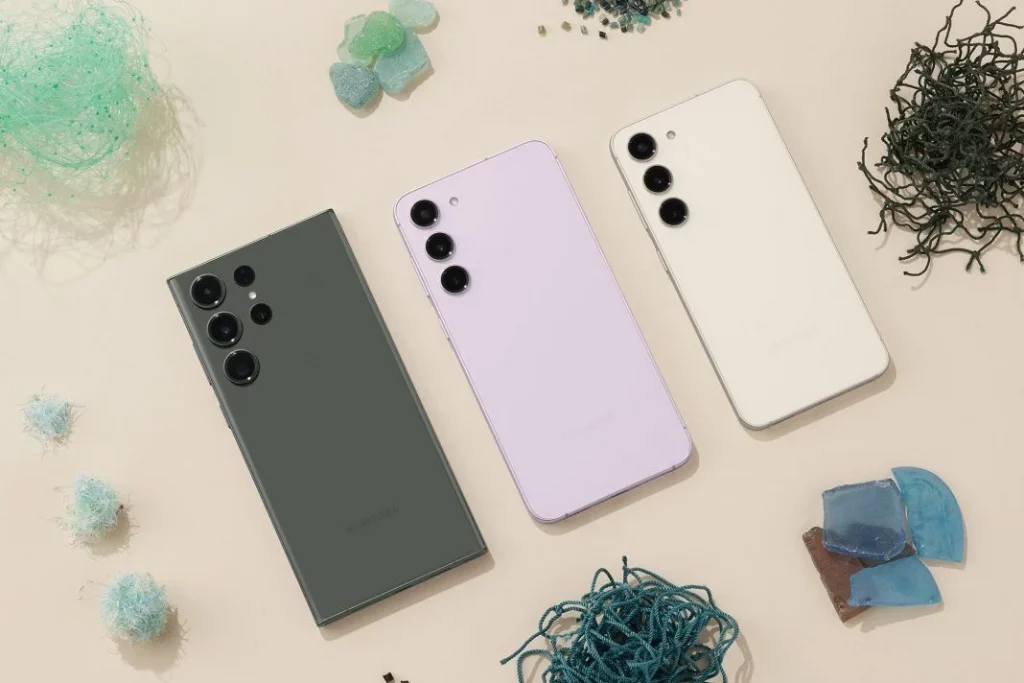
Samsung Galaxy S23, Galaxy S23 Plus appear on FCC ahead of expected February launch

A recent report emerged stating that Samsung will hold the Galaxy S23 series global launch event in early February. The event is said to be Samsung’s first in-person Galaxy Unpacked event since the pandemic.

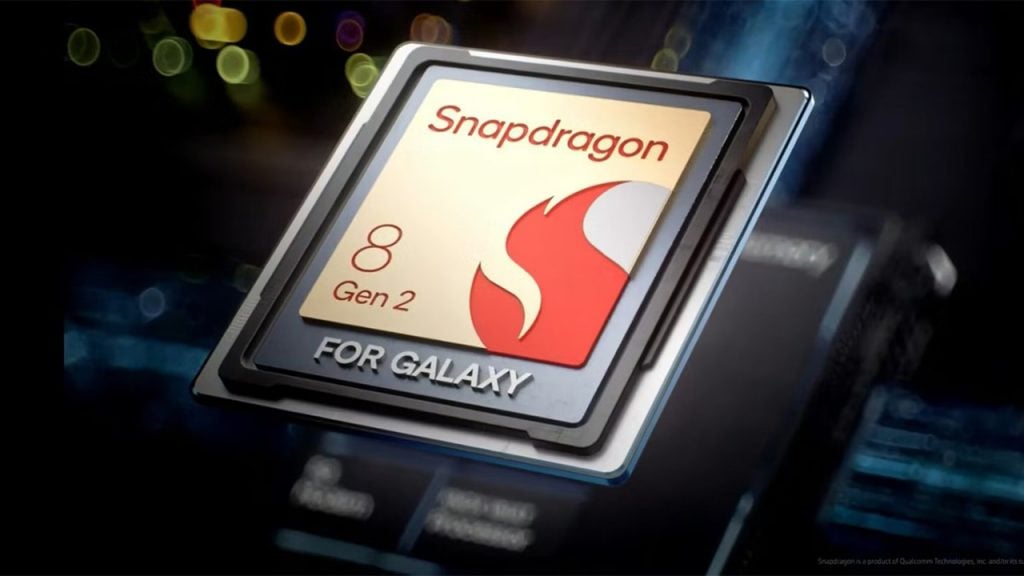
So far, the Galaxy S23 series is turning out to be quite interesting as rumors state that the top-end device will feature a 200-megapixel sensor primary camera sensor, and all of the devices in the lineup will have overclocked Snapdragon 8 Gen 2 chipsets.

Samsung Galaxy S23 render

Now, ahead of the launch, the Galaxy S23 and the S23 Plus have appeared on the FCC certification database. The Galaxy S23 has the model number SM-S911B, while the S23 Plus has the model number SM-S916B. According to the listings, both phones will support 25W fast charging. The Galaxy S23 comes with a battery with the model number EB-BS912ABY and a capacity of 3785mAh. It will have a standard capacity of 3900mAh.

The EB-BS916ABY battery in the Galaxy S23 Plus has a rated capacity of 4565mAh and is expected to have a typical capacity of 4700mAh. The FCC listing also reveals that both phones will use a Qualcomm SoC, which will be the Snapdragon 8 Gen 2.

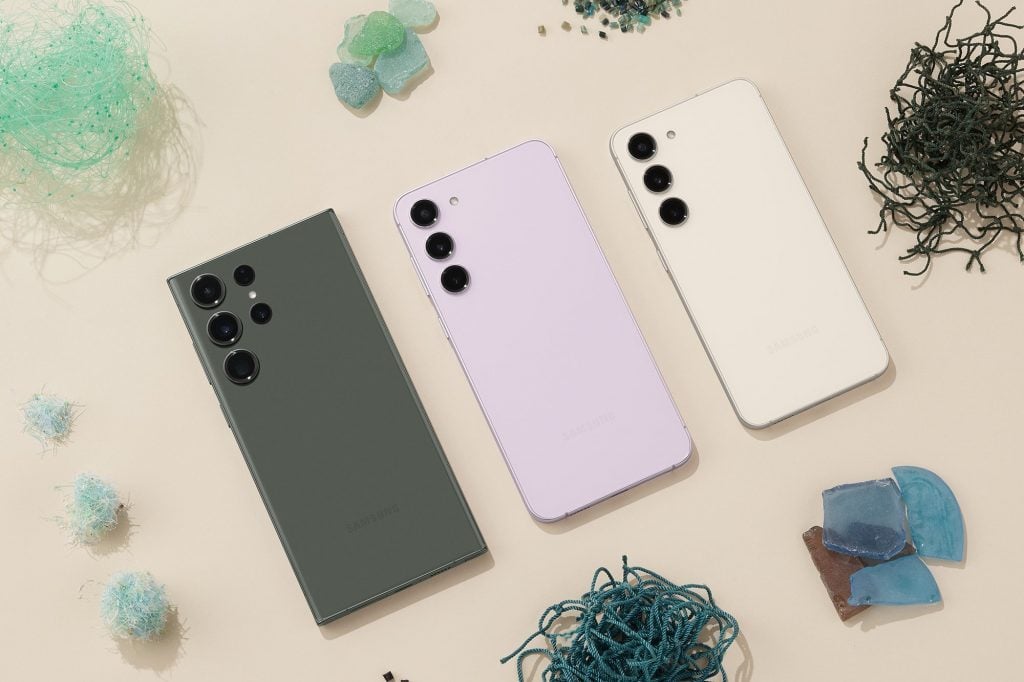
According to leaked renders, we won’t see much change in the design of these devices compared to their predecessor, however, the fear panel is said to curve slightly to provide a better grip and in-hand feel.

The flat, narrow bezel-enclosed screen has a hole-punch cutout at the top of it. The S23 Plus will have a 6.6-inch screen, while the base model will have a 6.1-inch Full HD+ display with support for a 120Hz refresh rate. The phones are anticipated to come with a 50MP primary camera, a 12MP ultrawide camera, and a 10MP telephoto camera from Samsung. Up to 3x optical zoom is probably supported by the telephoto camera.

A 32MP front camera will be available for taking selfies. A maximum of 256GB of internal storage and 8GB/12GB of RAM could be found in the devices. They will come pre-installed with Android 13-based One UI 5.0.

RELATED:

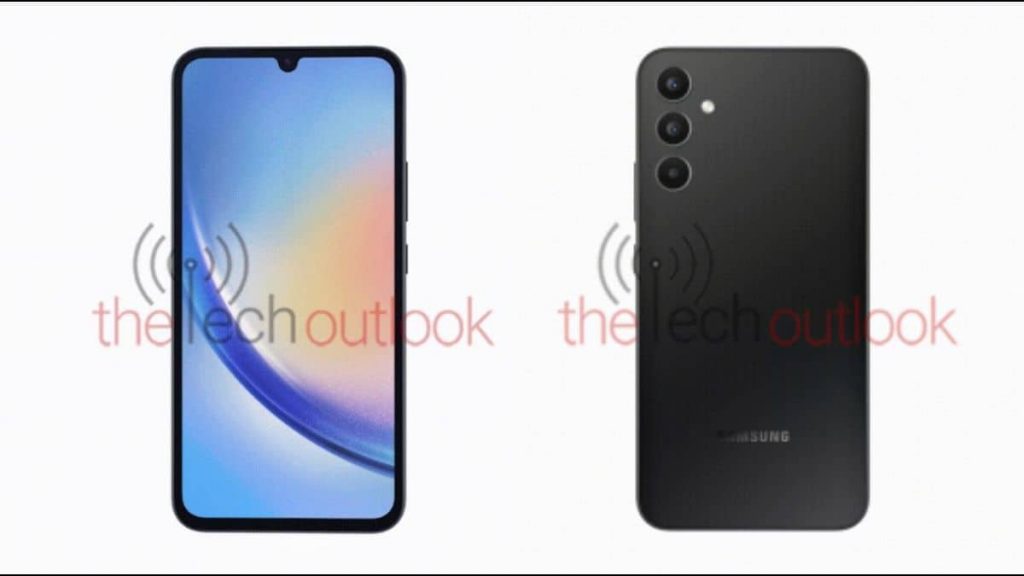
Samsung Galaxy A14 5G Press Image leaks ahead of launch

Samsung is expected to soon launch the Galaxy A14 5G smartphone in the global market. The device has already been leaked extensively with renders and Geekbench results showing up online.

The device is said to come in two SoC versions, one of which is a new mid-range Exynos chip, while the other version features the entry-level Dimensity 700 chipset. Now, known leaker Evan Blass has revealed a press image of the Galaxy A14 5G via a GadgetsGang report.

Samsung

The supposed press images of the Galaxy A14 5G reveal the same design that was leaked previously. Its back features three vertically aligned camera lenses with an LED flash on the side. The edges are curved and feature a volume rocker and a power button + fingerprint scanner on the right side. Up front, the device has thick bezels going around the alleged 6.8-inch Full HD+ display, which has a due-drop notch for the front camera.

The device is expected to feature a 5000mAh battery unit which will power the mysterious Exynos chipset. So far, rumors have claimed that this will be the Exynos 1330. On the other hand, the Dimensity 700 variant of the device, which will be much weaker than the Exynos 1330 variant is said to be headed to the US market.

The triple camera setup on the device is expected to be headlined by a 50MP primary sensor, while the front notch is said to hold a 13MP snapper. Samsung is expected to price the Galaxy A14 5G quite aggressively in markets around the globe.

RELATED: