The Giant Stormguard E+ SUV e-bike has been announced. The new e-bike comes with a RideDash Evo display, with heart rate monitoring also featured. The e-bike’s display also shows ride information like the speed, battery status, etc, as well as receiving emails on the go.
The Stormguard E+ SUV e-bike is well-suited for difficult terrains and has a full front and rear suspension system. It is fitted with Shimano M6120 or Shimano MT420 brakes for shorter stopping times when braking. The e-bike has a payload of about 156kg which translates to a carrying capacity of 20kg of luggage together with the rider.
The bicycle’s EnergyPak 800 battery with a capacity of 800Wh delivers an assistance range under 200km. The range can be further extended to 200km with an optional 250Wh range extender battery. The e-bike is equipped with a SyncDrive Pro 2 electric motor jointly developed by Giant and Yamaha. The motor delivers a maximum torque of 85Nm, while Giant says the bike’s carbon belt drive can last up to 10,000km.
The Giant Stormguard E+ is equipped with six smart sensors which monitor the pedaling power and adjust the assistance as appropriate. The RideDash Evo display also enables the rider to view fitness data like heart rate, as well as connect to a smartphone to receive emails. The Giant Stormguard E+ SUV e-bike is available for purchase in parts of Europe like the Netherlands, France, and Sweden. It is priced at €6,499 (~$6,716) and different sizes from S to XL are available. There are no details yet on the global availability of the e-bike.
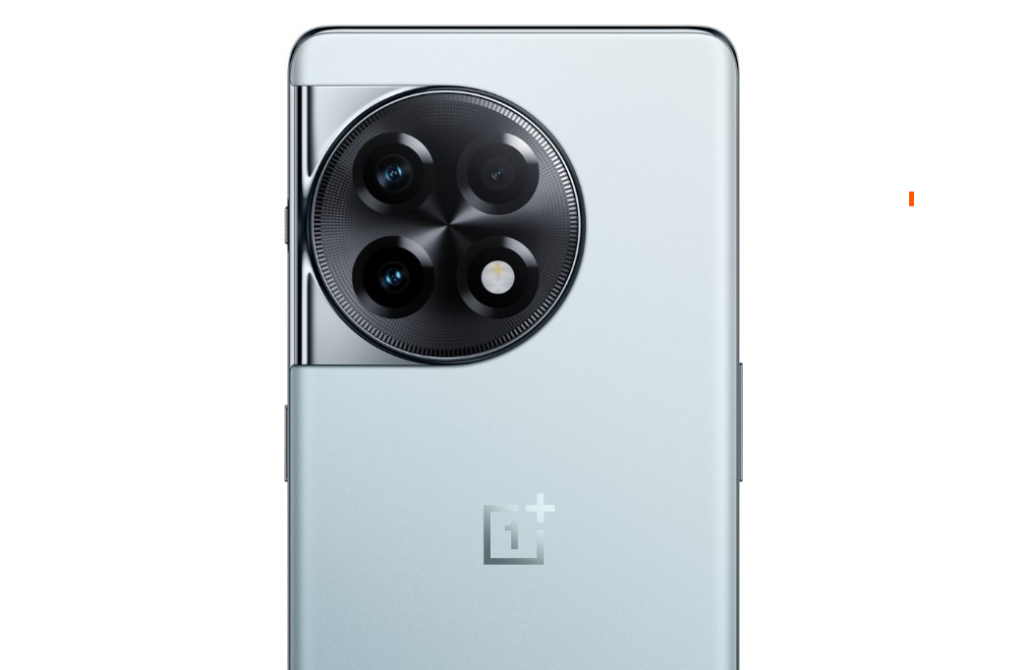
After rolling out the stable OxygenOS 13 update to the flagship OnePlus 10, 9, and 9 Pro, the Chinese OEM is now moving towards its mid-range devices. It has been reported that the OnePlus 9R and OnePlus 10R are now getting a stable build of the OxygenOS 13, based on Android 13. The update is currently rolling out in India and China. Here are the details.
Users have reported that the OnePlus 9R and 10R are receiving the latest Android 13 update with firmware versions LE2101_11_F.16 and CPH2423_11_C.14. The update reportedly comes with a size of 4GB and brings new features and improvements. The software is currently being rolled out in China and India, but we can expect it to reach other regions soon.
Users should be getting an OTA notification for the update. If you have not received it already, you can head to Settings > System > System Updates to manually check whether the update is available for your device.
To recall, the OxygenOS 13 was introduced back in August alongside the OnePlus 10T. The custom skin comes with an updated design, which the company calls “Aquamorphic Design.” It looks very similar to Oppo’s ColorOS 13 and adds water-inspired theme colors for enhanced visual comfort.
OnePlus also added some additional features to the software to improve multitasking effectiveness. The UI brings spatial audio, Dolby Atmos support for selected devices, and improved app streaming. Version 2.0 of Private Safe 2.0 is also available, which allows users to store files and media outside the reach of regular apps.
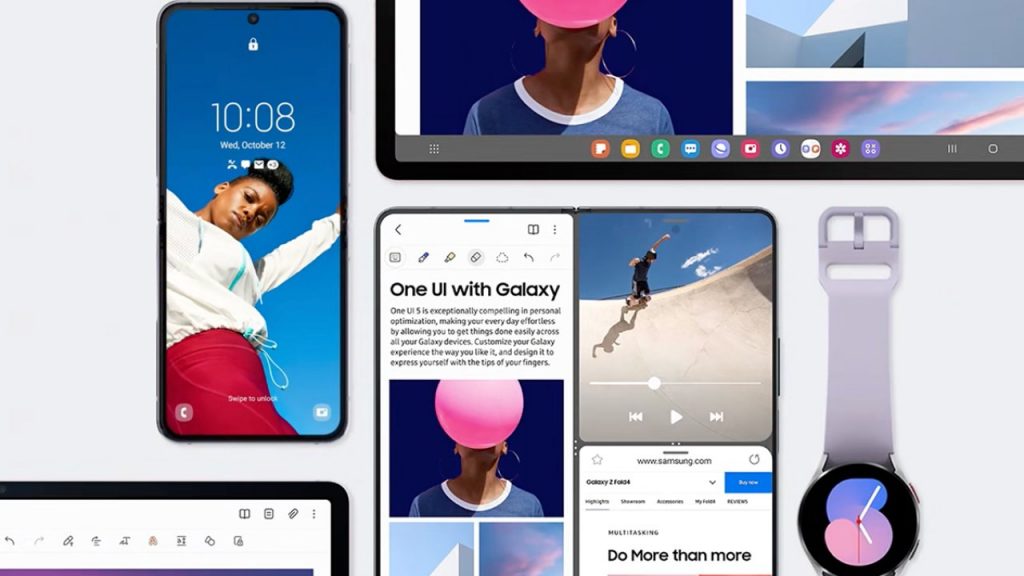
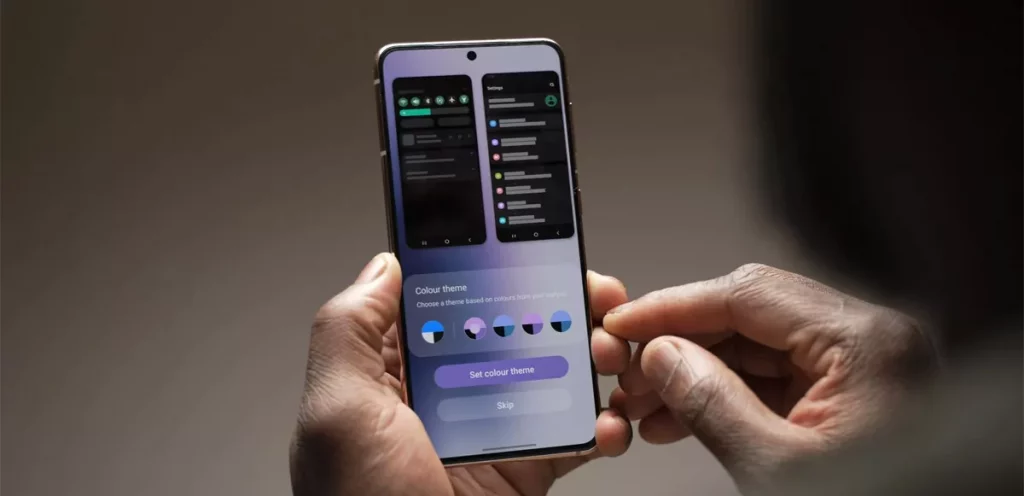
Samsung is quickly extending its latest custom skin— One UI 5— to its smartphones. The OEM recently rolled out the Android 13-based software to the Galaxy Xcover 6 Pro, the Tab 8 series, and a few A-series smartphones. Now, the firm has released the stable One UI 5 update for the mid-range Galaxy M52 and Galaxy M32 5G. Here are the details.
The One UI 5.0 stable update for the Galaxy M52 5G comes with the firmware version M526BRXXU1CVJ7. In addition to the new Android 13 features, the update also brings the November 2022 Android security patch. The software is currently being rolled out to the M52 5G with model number SM-M526BR in Europe, with a wider rollout projected in the coming days.
The One UI 5.0 stable update for the Galaxy M32 5G is rolling out in India with a firmware version M326BDDU4CVK1. The update also brings along November 2022 security patches. There is no word yet on when the release will be made available in other countries, but we can expect it to spread very soon.
If you own the above two devices and haven’t received the One UI 5.0 stable update yet, proceed to check for it manually by going to the phone’s Settings and tapping on the Software update menu.
To recall, Galaxy M52 5G debuted in September with a 6.7-inch FHD+ AMOLED display with a 120Hz refresh rate. It packs a Qualcomm Snapdragon 778G SoC, triple cameras, up to 8GB of RAM, and a 5,000 mAh battery with 25W wired fast charging. On the other hand, Galaxy M32 5G comes powered by the MediaTek Dimensity 720 SoC and features a quad camera setup and an LCD panel.
Vivo recently launched the Vivo Y01A in Thailand, and now it seems that the company has another Y-series handset in the works. The smartphone in question is called the Vivo Y76s (t1 Version), and it recently appeared on the China Telecom website with its specs, memory variants, and renders confirming the design. Here are all the details.
Vivo Y76s (t1 version) has been spotted on the China Telecom website (via MySmartPrice). As per the listing, the device will come with a 6.58-inch display with a Full HD+ resolution, and a waterdrop notch. The handset has a curved back and frame, and the bezels on the display are thin, except on the chin. It likely has a polycarbonate back.
The handset will draw power from a MediaTek Dimensity 700 SoC (MT6833) and will run Android 11 out of the box. It will pack a 4100mAh battery, which is a bit too less considering an average mid-ranger comes with at least a 4500mAh battery. The charging speed is yet to be revealed, but don’t expect anything more than 30W.
For photography, the handset has dual rear cameras aligned in a rectangular camera module. It has a 50MP primary camera sensor along with a 2MP secondary sensor and an LED flash. The Y76s (t1 version) has an 8MP selfie shooter on the front.
China Telecom reveals the Vivo smartphone will be offered in three colors— Star Diamond White, Galaxy White, and Starry Night Black. The handset has a lovely 3.5mm headphone jack and a USB Type-C port for charging. It weighs about 175 grams and measures 163.84 x 75.00 x 7.79 mm.
The listing suggests Vivo Y76s (t1 version) will debut with at least 12GB of RAM and 256GB of internal storage. It could cost 2199 Yuan (around $312/Rs 25,400).
Motorola Moto Watch 70 is in the works, and it seems the wearable may launch very soon. We are saying this because the smartwatch is already listed on Best Buy Canada with its key specs and pricing. The Watch 70 comes with 23 sports modes and has up to 14 days of battery life. It features a 1.69-inch color display offering a 240 x 280-pixel resolution. Here are all the details.
Best Buy Canada listed Motorola’s yet-to-be-announced Moto Watch 70 was announced yesterday, and the product pages are still live, so this is likely no accident. The smartwatch is not available for purchase, but it is priced at CAD 99.99 (around $75). It has the model number MOSWZ70-PB and comes in a single black color option.
The listing reveals the Moto Watch 70 comes with a 1.69-inch color screen with 240×280 pixel resolution. It’s not confirmed whether the watch uses an LCD or AMOLED panel. The case of the wearable is made from zinc alloy, whereas the watch strap is made from silicone.
The smartwatch performs “dynamic health tracking” using an accelerometer, gyroscope, heart-rate monitor, and SpO2 sensor. It comes with support for up to 23 sports modes and uses Bluetooth 5.0 for connectivity. The wearable’s battery life is rated to last 14 hours of continuous usage, and it charges via a proprietary magnetic charging cradle. The watch is also IP-67 rated, making it ideal for swimming and showering.
The Motorola Moto Watch 70 has a single physical button. There is a minimum circumference of 158 mm (6.22 inches) and a maximum circumference of 239 mm (9.41 inches). Motorola is yet to formally announce the smartwatch. We should be getting an official announcement soon.
Huawei continues to offer new products and services for its users. However, the company increases the quality by adding new features to its existing services. The last example of this happened recently. The Chinese tech giant has started working on bringing new spatial audio content based on Audio Vivid technology for Huawei Music.
Huawei Music will soon release spatial audio content
‘Audio Vivid’ is the world’s first AI technology-based audio codec standard that supports mainstream 3D sound encoding. This technology co-formulated and published by the World Ultra HD Video Industry Alliance (UWA) and the Digital Audio and Video Codec Standard Working Group (AVS). Audio Vivid can create a three-dimensional environment for sound and make a 3D sound effect like spatial audio.
The way spatial audio works
The company hopes to provide the effect of “being in the song” for the audience. When artists use Audio Vivid-based spatial audio technology to make music, they can customize the position, movement trajectory, sound volume, distance, and other factors. This creates a unique listening experience.
Huawei has made an important partnership agreement for this. The company signed a deal with Universal Music China in July 2021, one of the biggest music companies in Asia. Huawei Music and Universal Music China will join hands to produce new spatial audio content. In addition, Universal Music’s extensive music library will be added to the platform. Unfortunately, there is no further information on the details of the deal at this point.
Huawei Music
In September, we saw some songs being added to Huawei’s platform as the first step of this deal. However, more content is expected to be available soon.
Last month, Microsoft debuted the new Surface Laptop 5 and the Surface Pro 9 2-in-1 tablets in multiple markets. The devices are soon to be made available in India as the company has opened pre-orders for them. Let’s take a look at the pricing and availability details along with the deals offered by the brand on these devices.
Microsoft Surface Laptop 5 and Surface Pro 9 Pricing and availability
Starting today, both the Surface Laptop 5 and Surface Pro 9 are available for pre-order in India via authorized retailers such as Amazon.in, Reliance Digital, Croma, Vijay Sales, and select multi-brand stores.
The Surface Laptop 5 has a starting price of Rs 1,07,999 and goes all the way up to Rs 1,90,699 for the top configuration. On the other hand, the Surface Pro 9 has a starting price of Rs 1,05,999 and goes up to 2,69,599 for the top-end configuration. You can checkout the detailed pricing of the various configurations in the image given below.
Customers who purchase a Surface Pro 9 will receive a complimentary Surface Pro Keyboard (black) worth Rs. 14,999, while those who purchase a Surface Laptop 5 will receive a complimentary Surface Pop red Arc Mouse valued at Rs. 7,499 each. The devices will start retailing from November 29 in the country.
Microsoft Surface Laptop 5 specifications and features
A 13.5-inch and 15-inch screen size are available for the Microsoft Surface Laptop 5. The PixelSense display on the device has a resolution of 2256 x 1504 pixels, a 3:2 aspect ratio, a contrast ratio of 1300:1, and Dolby Vision IQ compatibility. The machine has Windows 11 preinstalled.
The Intel Core i5-1235U/i7-1255U processor is included in the 13.5-inch Surface Laptop, while the Core i7-1255U chip is included in the 15-inch model. All models have 256 GB, 512 GB, or 1 TB of SSD storage and 8 GB, 16 GB, or 32 GB of LPDDR5x RAM.
Battery life for the 13.5-inch model is up to 18 hours, while that for the bigger variant is up to 17 hours. It has one USB-C Thunderbolt 4 port, one USB-A port, one Surface Connect port, a 3.5mm audio jack, Wi-Fi 802.11ax, and Bluetooth 5.0 for connectivity. Other features include support for the Surface Pen, Windows Hello facial sign-in, Omnisonic speakers with Dolby Atmos, and dual far-field microphones. The 13.5-inch model also has a keyboard finish made of Alcantara.
Microsoft Surface Pro 9 specifications and features
The Surface Pro 9 features a 13-inch display with 2,880 x 1,920 pixels resolution, 120Hz refresh rate and 3:2 aspect ratio. Under the hood, the device features the Intel Alder Lake-U processor, nemely the Core i5-1235U or the Core i7-1255U. The company offers 28 GB, 256 GB, 512 GB, and 1 TB storage options in addition to 8 GB, 16 GB, and 32 GB of LPDDR5 RAM for the device.
The Surface Pro 9 supports both Windows Hello facial authentication and Microsoft’s Surface Connect port. Despite the Surface Pro 9 having two USB Type-C ports (USB 4.0/Thunderbolt 4), there is no 3.5 mm headphone jack.
According to Microsoft, The 47.7 Wh battery on the Surface Pro 9 should last up to 15:30 hours with typical usage. The device comes in the typical Platinum, Sapphire, Forest, and Graphite colours.
The VLC Media Player was included in the Government of India’s round of blocking apps throughout the nation. For more than six months, the media player was blocked in India. The country’s government was sued by VideoLAN, the company that owns VLC Media Player, and ultimately, after a protracted legal battle, the country’s official ban on the application has been lifted. Additionally, according to reports, MeitY (Ministry of Electronics and Information Technology) and the DoT (Department of Telecommunication) has received legal notification from VideoLAN.
It has been previously reported that VideoLAN filed a right-to-information (RTI) application with the DoT of India in order to gain more information about why the application was banned in the country. Now, Internet Freedom Foundation (IFF) has shared a new tweet on Twitter which confirms that the ban on VLC media player has been lifted up officially. According to reports, MeitY was given the RTI but claimed to be unable to provide any information regarding the restriction on the VideoLAN website. In a legal letter sent to the DoT and MeitY, the creator of the open-source media player claimed that it had not been informed of the restriction in advance.
Additionally, even after the ban, users could still download the application from the Google Play Store and the Apple App Store. So it might be a ban that only applies to the VideoLAN website? About that, we’re unsure. After six months of requests, the owner then sent MeitY a legal notification alleging that no information had been provided regarding the ban on the media player.
Additionally, VideoLAN claimed that the site’s blocking violated both Article 19 of the International Covenant on Civil and Political Rights and international commitments related to freedom of speech. The organisation also declared that it will seek legal redress for the violation of its rights. Anyway, the player is currently fully accessible in the country and the government is yet to release an official statement regarding it.
Elon Musk had numerous changes in mind for Twitter’s social media platform as soon as he purchased it. Perhaps Twitter won’t be the same kind of social media site it once was. After all, Twitter is now officially owned and run by Elon Musk, who also serves as its CEO. He has now officially stated that he aims to remove the label indicating the platform from which a tweet was sent. For example, previously, tweets had labels like Twitter for the iPhone, Twitter for Android, and Twitter Web App.
Elon Musk recently tweeted that the “Twitter for iPhone” or “Twitter for Android” badge will soon be removed by the Twitter team since it is a “waste of screen space” and no one even knows why the feature was initially added. He did not specify a timeframe for when the changes will happen, though. As of writing this article, the label is still present.
And we will finally stop adding what device a tweet was written on (waste of screen space & compute) below every tweet. Literally no one even knows why we did that …
Furthermore, he claims that less than 20% of the specified microservices bloatware is actually required for Twitter to work and that he has directed the Twitter staff to disable all of it. We’re not sure exactly sure of what he considers as “microservices”. But in addition to the device label being removed from social media platforms, several other changes are expected.
Twitter has recently undergone a lot of changes. Recently, an $8 monthly official Twitter Blue subscription that includes a Blue tick was made public. Another tag that distinguishes between official and non-official accounts was soon introduced. However, due to widespread misuse, Twitter had to temporarily halt its Twitter Blue membership services.
Ever since Elon Musk took over the reins at Twitter, there have been a host of changes. These include paid verification, mass layoffs, suspension of accounts that engage in impersonation, and more. Now the new Twitter CEO has revealed a new change coming to the microblogging platform.
And we will finally stop adding what device a tweet was written on (waste of screen space & compute) below every tweet. Literally no one even knows why we did that …
Musk claims that Twitter will get rid of the feature that displays device details like ‘Twitter for iPhone’ and ‘Twitter for Android’. The label is shown on the user’s tweet just beside the date and time information. Musk adds that it is a waste of screen space. Twitter’s help centre says that the source labels help the user understand how a tweet was posted.
The new feature should come as a sigh of relief for users. There have been numerous instances where brands especially from Android and ambassadors promoting products have been caught red-handed. Huawei, Samsung, Google to name a few, have been caught on multiple occasions marketing their devices from their iPhones through the “Twitter for iPhone” label. Readers are quick to notice this thereby resulting in embarrassing moments. In 2018, Hollywood actress Gal Gadot was caught promoting the Huawei Mate 10 Pro on Twitter using an iPhone. In the same year, Anushka Sharma promoted the Google Pixel phones by using an iPhone. In 2021, Samsung Mobile US released a tweet to advertise the Galaxy Unpacked event using an iPhone.
Musk killing the ‘Twitter for iPhone’ label will spoil a lot of fun among tech enthusiasts and observers. But on the bright side, the proposed change will also save brands from awkward moments. It remains to be seen when Twitter plans to remove the labels.
Google Health Connect app has been launched for Android. It is currently in Beta version and can be downloaded from the Google Play Store. In simpler terms, Google Health Connect integrates more than ten health, fitness, and wellness apps including Fitbit, Samsung Health, MyFitnessPal, Peloton, Oura, Flo, Lifesum etc. Health Connect has been co-developed by Google and Samsung to simplify app integration and centralised privacy control.
The Google Health Connect app weighs only 3MB in beta version. Smartwatch and fitness tracker users have to rely on various apps for monitoring various health-related metrics. This is where the Health Connect app comes in place. It aims to reduce users’ dependency on different apps to manage their health data. It allows users to share health and fitness data across Android devices with user consent. The app shows the permissions that are granted to each health and fitness app on the device. Any single permission, including those for heart rate, sleep, steps, calories burned, etc., can be granted or revoked through it. The health data stored via Health Connect can be deleted at any time.
The Google Health Connect app supports more than 40 data types spanning six categories. It aims to give users more in-depth health insights and keep track of things like workout, sleep patterns, and other vital signs.
Google hasn’t revealed when it plans to roll out a stable version of the Health Connect app. The search giant is currently working on adding more partners and new features to the app.
Honor 80 series is confirmed to debut on November 23rd in China. The lineup is expected to comprise three devices. The brand will also announce the Honor Magic Vs foldable phone at the same event. Yesterday, Honor teased the front and rear design of the upcoming 80 series. The smartphone’s key specifications have surfaced in leaks and rumours in the past. The Honor 80 series will arrive as the successor to the Honor 70 series that debuted earlier this year.
Now in a new poster, Honor has confirmed the processor details of the Honor 80 and 80 Pro. The information is quite different compared to the past leaks. The regular model is teased to feature a new unannounced Snapdragon 782G processor. It is likely to go official at Qualcomm’s Snapdragon Summit. Meanwhile, the Honor 80 Pro is confirmed to be powered by a Snapdragon 8+ Gen 1 SoC under the hood. It’s speculated that Honor will also announce the Honor 80 SE powered by Dimensity 1080 chipset.
The Honor 80 series is teased to come with a curved display featuring a pill-shaped camera cutout in the centre. The smartphones will retain the same pill-like camera module on the back panel along with water ripples pattern.
The Honor 80 series is tipped to feature 160MP primary camera on the back and 50MP dual front-facing snappers. It remains to be seen which among the three devices in the lineup will come with the rumoured lenses. The regular and SE models are expected to feature 66W charging whereas the Pro model will reportedly support 100W speed.
Indonesia’s smartphone market is going through a very interesting period. According to Counterpoint’s Monthly Indonesia Smartphone Channel Share Tracker, smartphone shipments in the country decreased by 21% year-on-year in the third quarter of 2022. However, despite the 21% decline, OPPO retains its leadership and growth rate in Indonesia’s smartphone market.
Chinese smartphone manufacturers continue their growth in Indonesia
The disappointing results in Indonesia are due to macroeconomic conditions and currency problems. The impact of these economic conditions had lessened during the COVID-19 lockdowns last year, and the market experienced significant growth. However, as the restrictions were lifted, shipments fell again.
Source: Counterpoint Monthly Indonesia Channel Share Tracker, Q3 2022
When we look at the report, we see a decrease in the shipments, especially affordable models. There is a 38 percent decrease in the shipment of phones with a price of $150 and below. The situation is not much different when we look at the $150-$249 band. There is a rise only in the premium phone segment
In Q3 2022, Samsung and OPPO led the $500-$699 segment with a share of 63%. And finally, Apple and Samsung are the leaders of the phone market with a price of $700 and above at 19%. Commenting on the price range dynamics, Senior Analyst Febriman Abdillah said:
“The $500-$699 price segment can be an attractive market given its high growth in economically turbulent times. In Indonesia, OEMs offer specifications like 8-12GB RAM, 256 ROM, 4000-6000mAh battery capacity and 5G capability. These in-demand specs can help in better targeting of consumers.”
5G continues to rise
The 5G smartphone market in Indonesia reached 25% in the third quarter of 2022. 5G smartphone shipments increased 42% year-on-year. The growth was mostly driven by models for $250-349. Especially models such as Galaxy A33 series, M33 series and vivo Y75 have a great impact on this rise.
iQOO Neo 7S and Neo 7SE live images have surfaced online. The key specifications of both smartphones have also been leaked. The information has been spotted first by Anvin (via. TechGoing). The iQOO Neo 7S and 7SE are tipped to debut in China next month. They will be announced alongside the iQOO 11 series. The upcoming offerings will join the Neo 7 that is already available in China.
The iQOO Neo 7S has a model number V2232A whereas the Neo 7SE carries a model number V2238A. The former has already been certified by China’s 3C authority. The latest leak further reveals that the Neo 7s will feature the Snapdragon 8+ Gen 1 mobile platform, whereas the Neo 7 SE will be equipped with the Dimensity 8200, which is yet to go official.
The leaked image reveals the iQOO Neo 7S and 7SE with a centre-aligned punch-hole camera. The settings page on the former shows 16GB RAM onboard along with 8GB virtual RAM, 512GB storage and OriginOS 3.
Apart from the aforementioned information, the report does not reveal any additional details about the iQOO Neo 7S and 7SE. Both the upcoming offerings are tipped pack identical specifications apart from different chipsets. These include a 120Hz FHD+ AMOLED display, an under-screen fingerprint scanner, and a 5,000mAh battery unit with support for 120W fast charging.
We expect more details about the iQOO Neo 7 and Neo 7SE to surface online in the coming weeks.
Google had launched its first ever smartwatch, the Pixel Watch, over a month. Now, the company is rolling our the first ever update for its companion app to offer fixes and upgrades to the new wearable product. So here are all the details.
The new Pixel Watch app update from the Search Engine giant is called the November 2022 Pixel Watch app update and brings bug fixes and various improvements. The changes are primarily focused on three areas for improved “Fitbit experiences and integration.” First, it has added the Fitbit integration setting on the App’s home screen itself. Furthermore, it has also made it easier to setup through single tap from within the Pixel Watch app. The Fitbit sync information has also been made accessible via the home screen.
The latest update for the Pixel Watch app also brings bug fixes to the eSIM setup process as well. Lastly, Google is also bringing new additions to Tips and Support section within the Pixel Watch app. So now, users can watch a 3D tutorial of the Watch right after the OOBE. Notably, the change that is more immediately visible is the Fitbit section, which is being moved to the home screen. This makes sense since one had to open the Fitbit app or tile on your smartwatch to open the application on their paired smartphones.
One could even go to the Fitbit app and swim through settings to sync health information. But all of these were quite tedious. So the new update brings some much welcomed changes. The current app build is version 1.0.0.477318422, which the company stated will start rolling out via Play Store and “continue over the next few weeks.”
Last month, OnePlus kicked off the Android 13-based OxygenOS 13 open beta testing for the OnePlus 9RT. Now, the device is receiving a stable update for Android 13. Along with the OxygenOS 13 update, the company has also released the stable ColorOS 13 update for the device in China. For those unaware, the OnePlus 9RT was launched earlier this year and it came pre-loaded with Android 11. This is the second major Android update for the device.
The OnePlus 9RT Android 13 Stable update is approximately 5.0GBs in size and has the firmware version MT2111 11.F.11. The update also includes an Android security patch for October 2022. Let’s take a look at all the changes that are coming with this update.
OnePlus 9RT Android 13 x OxygenOS 13 changelog
Aquamorphic Design ● Adds Aquamorphic Design theme colors for enhanced visual comfort. ● Applies the Aquamorphic Design philosophy to animations to make them natural and vivid. ● Upgrades to Quantum Animation Engine 4.0, with a new behavior recognition feature, which recognizes complex gestures and provides optimized interactions. ● Optimizes UI layers for a clearer and neater visual experience. ● Applies real-world physical motions to animations to make them look more natural and intuitive. ● Adapts responsive layouts to accommodate different screen sizes to improve readability. ● Optimizes fonts for better readability. ● Enriches and optimizes illustrations for features by incorporating multicultural and inclusive elements.
Efficiency ● Adds Meeting Assistant to enhance the meeting connecting and note-taking experience and introduces an option to make notifications more subtle and less distracting. ● Adds large folders to the Home screen. You can now open an app in an enlarged folder with just one tap and turn pages in the folder with a swipe. ● Adds a new type of Always-On Display that shows live information about music, ride-hailing, and food delivery. (Supports only some apps). ● Adds media playback control, and optimizes the Quick Settings experience. ● Adds more markup tools for screenshot editing. ● Optimizes Shelf. Swiping down on the Home screen will bring up Shelf by default. You can search content online and on your device.
Seamless interconnection ● Optimizes Screencast, with cast content automatically adapting to the target screen. ● Optimizes earphone connectivity to deliver a more seamless experience.
Personalization ● Optimizes Bitmoji to offer more Always-On Display animations. ● Optimizes Insight Always-On Display, with more personalized Always-On Display settings available. ● Optimizes Canvas Always-On Display, with more drawing tools and line colors available.
Security & Privacy ● Adds an automatic pixelation feature for chat screenshots. The system can identify and automatically pixelate profile pictures and display names in a chat screenshot to protect your privacy. ● Adds regular clearing of clipboard data for privacy protection. ● Optimizes Private Safe. The Advanced Encryption Standard (AES) is used to encrypt all files for enhanced security of private files.
Health & Digital Wellbeing ● Adds Kid Space, providing screen time limit, ambient light reminders, and Eye-protecting display features.
As usual, the update will be rolled out in phases, so users can expect the OTA notifications to arrive on their devices in the coming days.
In China, any specific market segment related to electronics is very competitive. The highly mature and clustered industrial system has forced manufacturers to be more creative in order to stand out in the market. And admittedly, Chinese consumers are very lucky to be the first to have access to mass-produced products with new stuff. The mechanical keyboard scene in China is a very good example.
There are dozens of stylish mechanical keyboard brand in China right now with refreshing designs and creative features. And we want to share these keyboards and smart products with you to show you how things are progressing in the tech sector. So starting today, we will be picking keyboards from the market that caught our eyes but were not commonly seen before.
If you happen to be interested in the same models as us, then you may want to hear our thoughts before making a decision. So let’s start this series with a very special keyboard, the Machenike KT68 Smart Screen.
And if you guys want to see more innovative keyboards or other gadgets review, please subscribe to our channel! We are working on bringing very interesting products from China! Or if you want us to review any gadgets from the internet, you can also share them in the comments down below.
This is the package of the Ice-Age variant we received, and now it’s been two weeks after we ordered it online. At less than $150, it made it onto our wish list early on. It provides a fully assembled model in a transparent plastic shield with matt finish. And you can also have a set of Cherry-type PC transparent keycaps and a set of TTC Silent Ice hot-swap switches.
Almost all the components over the white positioning plate are transparent, and you can easily find the RGB backlighting through all the materials and just dance at your fingertips. Well, I really like the portfolio of the Ice Age variant. But if that’s all, it would no more than be a good-looking mechanical keyboard. The smart screen over the layout makes it more fun. Actually, the screen is a 5×65 pixel RGB LED matrix.
In addition to the smart screen version, there’s another cheaper version of the KT68 available without the LED matrix. While for the special variant, it’s this small additional screen that makes the whole keyboard looks much more cyber-futuristic. Later we will show you what it can do.
If you know anything about custom keyboards, the KT68 smart screen might remind you of another niche brand called Angry Miao and their first custom keyboard model launched in 2020, the Cyberboard R1. I’m not sure whether the KT68 was inspired by Angry Miao’s CyberBoard series. The latter also has a LED matrix, but the starting price of $370 is much more expensive. But customizing a screen module on the keyboard is not really a new technology. So probably in the near future, we will see more and more modular assembly kits for enriching the keyboard’s functions. But now, I have to say the KT68 is one of the few models that are ahead of the trend with a reasonable price.
The volume knob on the left side is really a better design, since I’ve seen quite a lot of keyboards designed with the knob on the right side. My right hand had to leave the mouse for turning the knob. But on the KT68, the left Knob obviously is more intuitive with using my free hand and without moving the busy hand from the mouse.
But there’s still a small informative panel in the upper right corner. The column slider’s default setting is to switch between the desktop and the recent tasks. And you can also add custom macro shortcuts for it in the exclusive driver.
The KT68 is a 75% keyboard that supports both cable connection and wireless connections. It supports Bluetooth connections to up to three different devices, and also includes a 2.4GHz wireless USB dongle if you don’t want to mess around with unstable Bluetooth pairing. And you can also switch between Mac and Windows layouts with a simple combination of shortcuts. Another satisfying experience is the KT68’s exclusive controller software, which can be downloaded from the official website and supports English. You can customize all the functions via the program, such as lighting effects control and wide shortcuts customization. The KT68 currently supports 19 built-in lighting effects and offers great flexibility for custom effects. The keyboard backlighting even supports showing the rhythm with RGB effects when playing audio on the connected device. But there’s only one downside here for the backlights: the spacebar here is only offered with a single backlight, which makes it look like something is missing here.
But there’s a downside here. The KT68 with the program isn’t compatible with other lighting-sync systems like Razer Synapse and Asus Aura Sync. You may not be able to match your PC’s lighting exactly, but because it supports quite a lot of lighting effects, finding similar effects should be no problem.
As for the pixel screen, you can choose to load one of the dynamic light effects in the software or just edit a new pattern for yourself. Meanwhile, you can import a proper GIF image or LED effect files on the editing page and recreate it on the keyboard. But please note that it does not always display the GIF content properly due to the fixed matrix ratio.
The editing is pretty much like a pixel-filling game, which is quite interesting.
And there’re several informative patterns in the software showing your PC’s running state in real time like CPU Usage, GPU usage, connection speed, or date & time with the battery icon. Or just visualize the musical rhythm here, but it won’t be able to compatible with the musical-rhythm effect of the keyboard’s backlighting.
Although its pixel effect is not particularly refined, I couldn’t help but get caught up in the creation of these pixels, which is a feeling very similar to the one we had on another pixel gadget, the Divoom’s Pixoo 64.
The typing experience of the KT68 is quite a surprise. The variant we had only offers a new version of the TTC Silent Ice switches. The trigger of 39g feels pretty light at the fingertips. It has 2mm trigger stroke and 3mm total stroke. The use of new transparent materials has increased its light transmission, and the backlighting looks much brighter than the other transparent switches we used before. The silencing effect is really good. There’s only a kind of subtle sound I can hear even in a quiet environment. The route is stable without obvious wobble, and the rebound is also smooth and crisp. Although it’s pretty quiet, the feedback at the fingertips when struck is still very clear.
The keyboard features a 4000mAh built-in battery, which actually is quite a big capacity for a wireless keyboard. But due to the additional pixel screen, when the keyboard is fully lit up, the battery can only last less than two days of work.
So that’s all about the Mechenike KT68 Smart screen keyboard. It’s undoubtedly the most impressive product we’ve seen recently. It’s quite interesting to deliver new thinking over design and aesthetics. Meanwhile, the additional LED screen also makes it a decorative item on your desktop to help build your own style. It also allows us to see these PC accessories become potential on the trend of more individualization.
We hope you like the new series. We are hoping to keep searching for new gadgets to share with you guys. Or if you have any great candidates, just tell us down below.
The full design of the Samsung Galaxy A54 5G model has just been revealed. New renders have surfaced online and offer us a look at the smartphone from all sides. So let’s have a look at the device.
The leaked renders were shared by 91Mobiles who partnered up with known tipster Steve Hemmerstoffer aka OnLeaks. The Galaxy A54 5G will be the successor to the Galaxy A53 model. Now, the new 5K renders offer us a 360 degree view of the upcoming mid range model. We can clearly see that the Galaxy A54 will have a center aligned punch hole camera on the front display. The screen is also flanked by noticeable bezels on all sides as well.
On the rear, we can see that the Galaxy A54 5G feature a triple camera setup on the top left corner in a vertically stacked manner. As per OnLeaks, this device will have a 6.4 inch display on the front. The new Samsung Galaxy A54 5G model is expected to launch sometime in early 2023. The company’s Galaxy A series has been popular in various markets for its budget to mid range offerings, and we had also just reported on the Galaxy A14 5G being spotted on Bluetooth SIG.
Other design aspects that were revealed include a USB Type C port on the bottom, along with the speaker grille, and microphone. Furthermore, the volume rocker and power button are on the right side, while the SIM ejector tray and secondary microphone can be found on the top. The rear will also feature Samsung’s branding on the bottom half of the back panel. The tipster also shared that the display will have a FHD+ resolution and 120Hz refresh rate as well.
Based on previous reports, the device is rumored to be powered by a large 5,000mAh battery pack. The primary camera on the rear is expected to be a 50 megapixel shooter. Under the hood, this model may be equipped with an Exynos 7904 SoC that could be paired with 6GB of RAM and 128GB of internal storage. Keep in mind that this is still just an unconfirmed report so take this news with a pinch of salt for now.
Samsung is gearing up to launch a new model from its A series of smartphones. The device in question is the Galaxy A14 5G, which was just recently spotted on a certification website that hinted at its imminent launch.
The new Galaxy A14 5G was just spotted on the Bluetooth Special Interest Group website (Bluetooth SIG). This implies that the South Korean tech giant’s upcoming mid range handset might be launching soon in various markets since the database also reveals model numbers for different regions. Looking at the online listing, the Galaxy A14 5G carries the model numbers, SM-A146U, SM-A146VL, SM-A146W, SM-A146U, SM-A146U1/DS, SM-A146P, SM-A146P/N, and SM-A146P/DSN.
Furthermore, the Bluetooth SIG sighting also confirms its official moniker of Galaxy A14 5G. Unfortunately, except for the name and availability in multiple markets, this listing does not reveal any other details regarding the smartphone itself. But we do know that it will support Bluetooth 5.2 connectivity and some previous reports have hinted at some of its features. It will run on Android 13 OS based One UI 5.0 out of the box.
The device will reportedly sport an Infinity U display on the front. On the other hand, the rear is rumored to feature a triple camera setup. Other features include a USB Type C port for charging and data transfer and a 3.5mm headphone jack as well. The device is expected to launch soon, so stick around for more updates regarding this matter.
Vivo is confirmed to launch its next generation of flagship smartphones called the Vivo X90 series on November 22. The series is said to have three devices in the lineup which are – the Vivo X90, the Vivo X90 Pro, and the Vivo X90 Pro+. The vanilla and Pro models are expected to feature the Dimensity 9200 chipset while the Pro+ model is rumored to feature the upcoming Snapdragon 8 Gen 2 chip.
Out of these models, the Vivo X90 has appeared on Geekbench (via) revealing some key information about the device. The listing is marked with the model number V2243A, which we already know is corresponding to the Vivo X90. The MediaTek MT6985 octa-core chipset drives it. It consists of a single 3.05GHz CPU core, three 2.85GHz CPU cores, and four 1.80GHz CPU cores. This is almost certainly the Dimensity 9200.
Vivo X90 Geekbench
The Vivo X90’s listing on Geekbench reveals that it has 12GB of RAM. The device’s operating system is Android 13, which will probably be covered by OriginOS 3. The computer received 1353 points on Geekbench 5’s single-core test. It scored 4055 points on the multi-core test. The listing does not reveal any further specifications, so let’s take a look at what’s known so far about the X90.
Vivo X90 Specifications
According to reports, the Vivo X90 will sport an under-display fingerprint scanner and a flat OLED display with a 1.5K resolution and 120Hz refresh rate. A 4,700mAh battery with 120W fast charging capabilities will power it.
It is anticipated that the device will be available in a variety of configurations, including 8GB RAM + 128GB storage, 8GB RAM + 256GB storage, 12GB RAM + 256GB storage, and 12GB RAM + 512GB storage. Black, blue, and red are the three colorways that will be offered.
As mentioned above, the device will feature a Dimsnsity 9200 chipset which is also expected to be available on the X90 Pro. It will launch on November 22 in China, along with the Vivo TWS 3 and TWS 3 Pro.
We use cookies on our website to give you the most relevant experience by remembering your preferences and repeat visits. By clicking “Accept”, you consent to the use of ALL the cookies.
This website uses cookies to improve your experience while you navigate through the website. Out of these, the cookies that are categorized as necessary are stored on your browser as they are essential for the working of basic functionalities of the website. We also use third-party cookies that help us analyze and understand how you use this website. These cookies will be stored in your browser only with your consent. You also have the option to opt-out of these cookies. But opting out of some of these cookies may affect your browsing experience.
Necessary cookies are absolutely essential for the website to function properly. This category only includes cookies that ensures basic functionalities and security features of the website. These cookies do not store any personal information.
Any cookies that may not be particularly necessary for the website to function and is used specifically to collect user personal data via analytics, ads, other embedded contents are termed as non-necessary cookies. It is mandatory to procure user consent prior to running these cookies on your website.