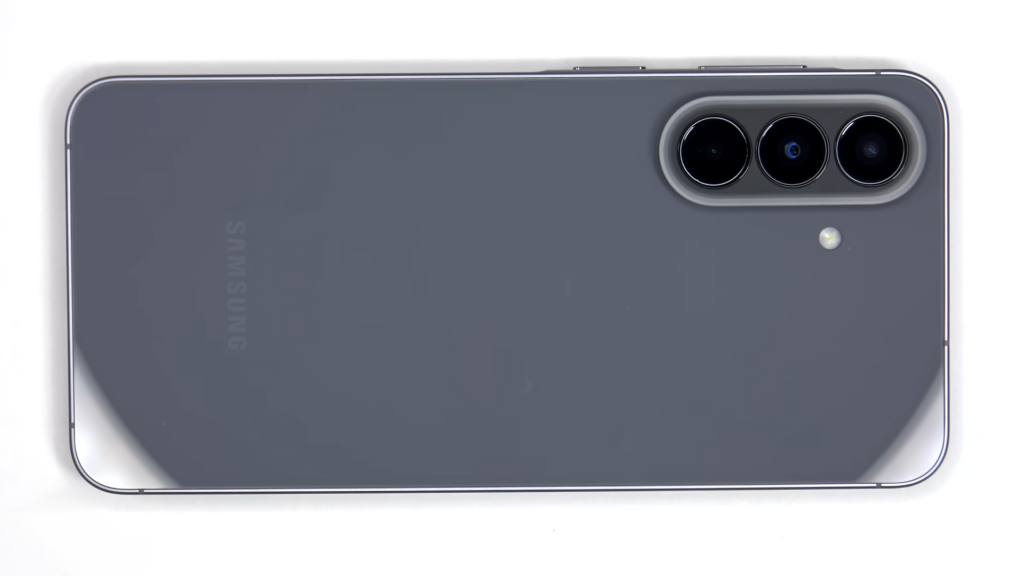
Samsung has just taken the wraps off the Galaxy A57 5G and Galaxy A37 5G, and we already had a look under the hood of one of them. A teardown of the Galaxy A57 by PBKreviews went live hours before the announcement, giving a fairly clear idea of what Samsung has changed this time.
The teardown itself is pretty standard. The back panel comes off with some heat, followed by a bunch of Phillips screws holding the internal frame together. Once that’s out of the way, the layout looks familiar, with the mainboard at the top and the battery taking up most of the space below.
Camera hardware is largely unchanged. You still get a 50MP main sensor with OIS, a 12MP ultrawide, and a 5MP macro, along with a 12MP front camera. The bigger change sits on the mainboard, where Samsung has placed the new Exynos 1680 chip. It’s built on a 4nm process and should handle daily tasks a bit more smoothly, though real-world performance will tell the full story.
One small but meaningful change is the battery setup. The 5,000mAh unit is held in place with pull-tab adhesive, which makes it easier to remove. It’s not something you notice as a user day to day, but it does make repairs less of a headache later on.
There’s also a larger vapor chamber this time. It sits under the battery and looks noticeably bigger than what we’ve seen in earlier models. That should help with heat management, especially during longer gaming sessions or heavy multitasking.
Overall, the inside of the phone feels clean and fairly easy to work with. The teardown gives it a 9 out of 10 for repairability, which is quite good for a modern smartphone.
From the outside, not much has changed. But internally, Samsung seems to have made a few practical improvements that might actually matter over time.
The smartwatch market in 2026 shows a clear divide. Some devices focus on advanced apps, bright AMOLED screens, and tight ecosystem integration. Others focus on one core goal: lasting as long as possible on a single charge. Battery life has become a defining factor for many buyers, especially for athletes, hikers, and users who do not want to charge a watch every day.
Manufacturers now approach endurance in different ways. Some rely on solar charging and low-power displays. Others use dual-chip systems or hybrid display technologies. The result is a wide range of smartwatches that can last anywhere from a few days to several weeks. Here are the best smartwatches with the longest battery life in March 2026.
Garmin positions the Enduro 3 as a watch built for extreme endurance. The device uses solar charging and a highly efficient display to deliver exceptional battery life.
The watch can last up to 80 days in smartwatch mode with solar support, and even longer under ideal sunlight conditions. GPS usage also stretches far beyond typical smartwatches, making it suitable for ultra-distance events and long expeditions.
Garmin includes advanced tools such as endurance score, stamina tracking, and detailed navigation features. The Enduro 3 focuses on reliability and long-term performance rather than smart features.
Please Note: When you buy something using the links in our articles, we may earn a small commission at no cost to you.
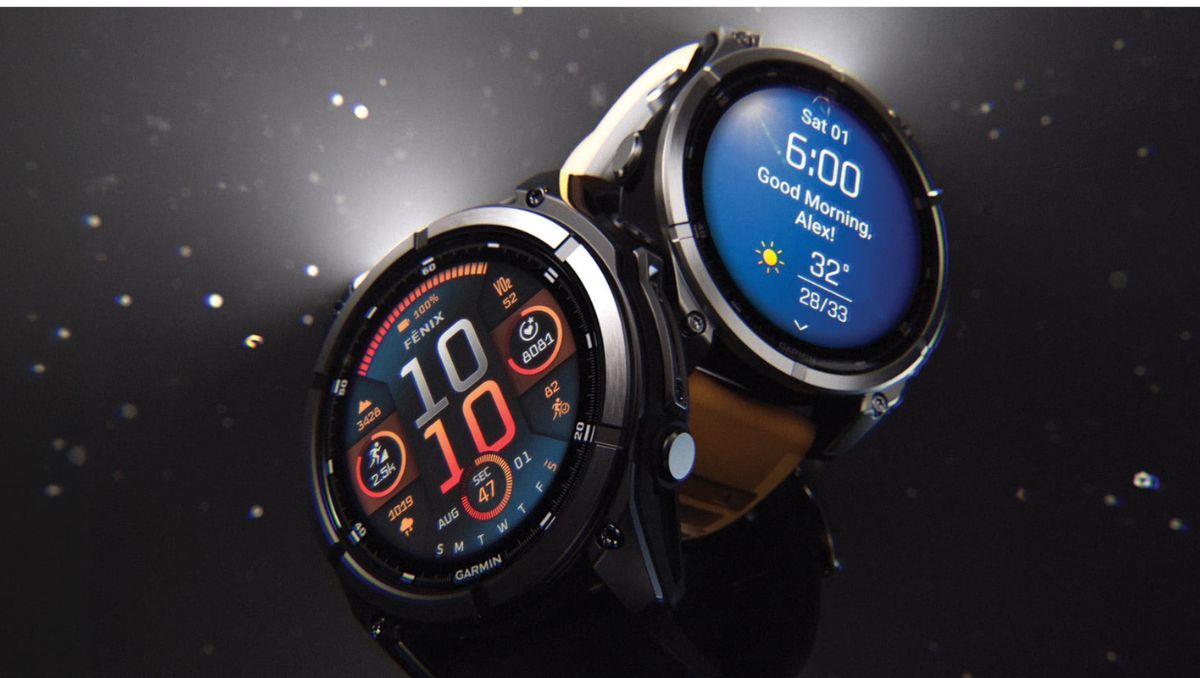
2. Garmin Fenix 8 Solar
The Fenix 8 Solar builds on Garmin’s flagship platform with a balance of endurance and features. It targets users who want strong battery life without sacrificing functionality.
The watch delivers up to 30 days of battery life in standard mode, which extends to around 48 days with solar charging on larger models. It also supports AMOLED variants, which trade some battery life for improved visuals.
Garmin equips the Fenix 8 with features like training readiness, ClimbPro, PacePro, and multi-band GNSS. It supports a wide range of activities and works well for both training and outdoor navigation.
Please Note: When you buy something using the links in our articles, we may earn a small commission at no cost to you.
3. Coros Vertix 2S
Coros takes a different approach with the Vertix 2S. The company focuses on system-level efficiency instead of solar charging.
The watch offers up to 36 days of battery life in regular use and more than 118 hours in GPS mode.
This watch offers advanced offline mapping, dual-frequency GPS, and EvoLab analytics for training optimization.
Coros has built this device for endurance, incorporating a titanium bezel and sapphire glass for rugged durability. It functions exceptionally well in outdoor environments and is a reliable companion for mountaineers, runners, and explorers.
Please Note: When you buy something using the links in our articles, we may earn a small commission at no cost to you.
4. Amazfit T-Rex Ultra 2
Amazfit positions the T-Rex Ultra 2 as a rugged smartwatch with strong endurance at a lower price point. The device combines durability with a feature-rich platform.
The watch can last up to 30 days in standard use. It includes offline maps, multi-satellite positioning, and a bright AMOLED display. That combination stands out in this segment, where long battery life often comes with simpler displays.
The device also includes features such as a built-in flashlight and climbing tools. It works well for outdoor users who want a capable watch without spending too much.
Please Note: When you buy something using the links in our articles, we may earn a small commission at no cost to you.
5. Huawei Watch GT Runner 2
Huawei positions the Watch GT Runner 2 (full review) as a running-focused smartwatch with a lightweight titanium build and breathable strap design. It delivers up to 14 days of battery life under light use and around 7 days with typical usage.
The watch focuses on running performance with advanced metrics such as running power, training intensity, and race prediction tools. It also supports multi-satellite GPS tracking, over 100 sports modes, and a full suite of health monitoring features.
6. TicWatch Pro 5 Enduro
Mobvoi uses a dual-display system to extend battery life on the TicWatch Pro 5 Enduro. The watch includes an AMOLED screen and a secondary ultra-low-power display.
The watch delivers up to 90 hours in Smart Mode and up to 45 days in Essential Mode. The secondary display handles basic information while reducing power consumption.
The device runs on Wear OS, which supports apps, notifications, and Google services. This approach allows the watch to maintain smart features while improving endurance.
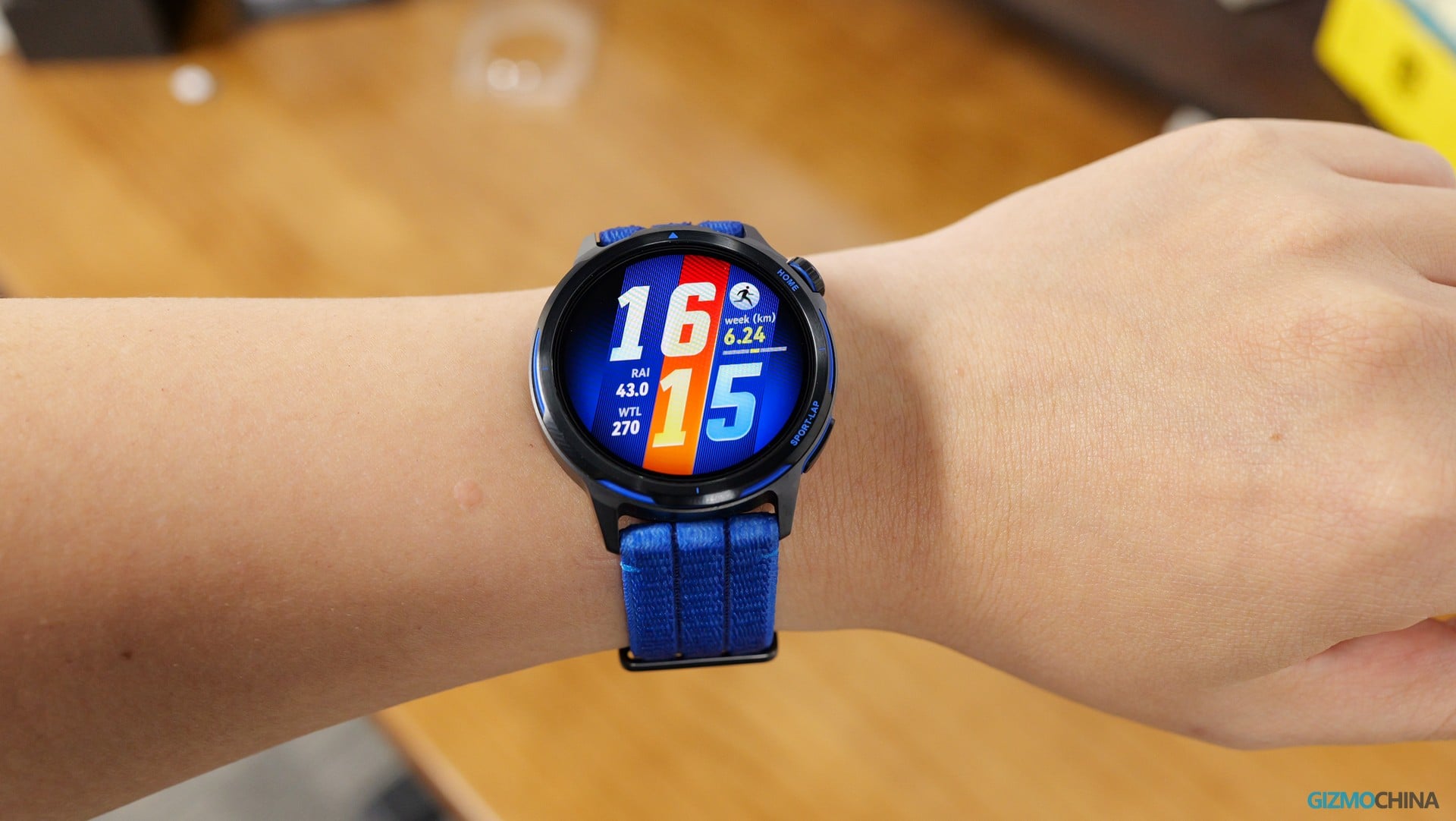
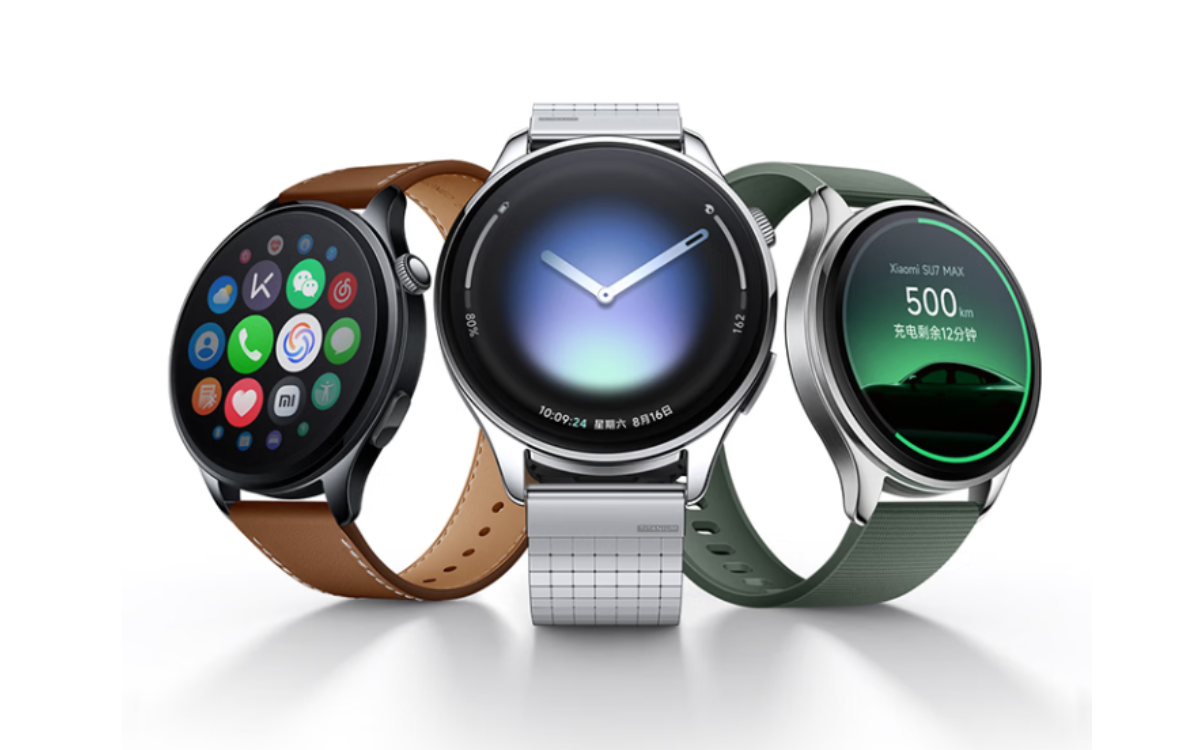
7. Xiaomi Watch 5
Xiaomi introduces new battery technology with the Watch 5. The device uses a silicon-carbon battery along with a dual-chip system to improve efficiency.
The watch lasts up to 6 days in standard smart mode and up to 18 days in power-saving mode. These numbers are significant for a Wear OS smartwatch with deep Google integration.
The Watch 5 also supports gesture controls and advanced sensors. It focuses on balancing modern smartwatch features with improved battery life.
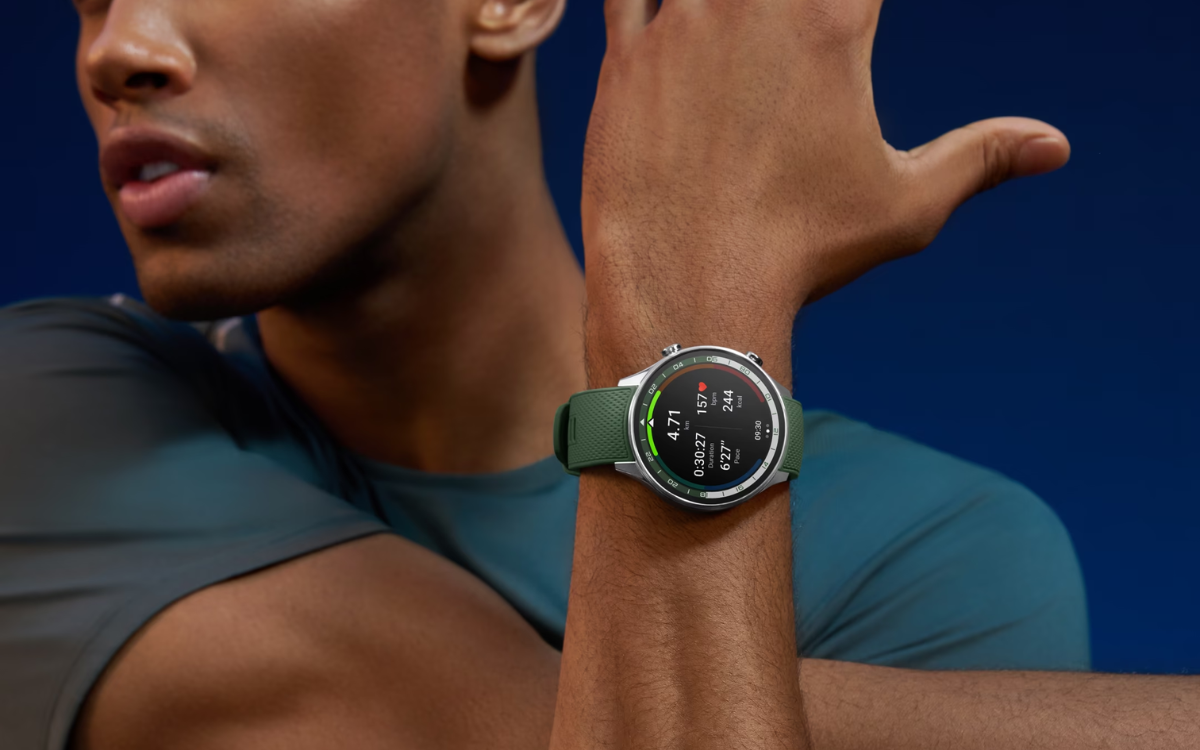
8. OnePlus Watch 3
OnePlus improves battery life on the Watch 3 compared to previous models. The smartwatch delivers up to 120 hours of battery life in smart mode and up to 16 days in power saver mode.
It includes a large AMOLED display, improved health tracking, and fast charging support. The watch also supports over 100 sports modes and dual-band GPS tracking.
Please Note: When you buy something using the links in our articles, we may earn a small commission at no cost to you.
9. Samsung Galaxy Watch Ultra
Samsung positions the Galaxy Watch Ultra as a premium smartwatch with strong performance and ecosystem integration. The device delivers up to 48 hours of battery life in standard use and 100 hours in low power mode.
It includes a titanium build, advanced sensors, and multi-sport tracking features. The smartwatch also supports LTE connectivity and integrates deeply with Samsung devices.
Please Note: When you buy something using the links in our articles, we may earn a small commission at no cost to you.
10. Apple Watch Ultra 3
Apple focuses on performance and ecosystem features with the Watch Ultra 3. The device delivers up to 42 hours of battery life and up to 72 hours in low power mode.
It includes features such as satellite communication, advanced health tracking, and improved fitness tools. The smartwatch integrates tightly with the Apple ecosystem and supports a wide range of third-party apps.
Samsung has refreshed its Galaxy A-series lineup with the launch of the Galaxy A57 5G and Galaxy A37 5G. Both phones bring a mix of practical upgrades, focusing on performance, durability, and camera improvements, while keeping things familiar overall.
The Galaxy A57 5G is clearly the more polished of the two. It runs on Samsung’s new Exynos 1680 chip, built on a 4nm process, and is expected to offer better efficiency and smoother day-to-day performance. A small improvement this year in terms of build and durability is the IP68 rating, up from A56’s IP67.
Samsung has trimmed the design a bit as well. The A57 is now thinner and lighter, with slimmer bezels around its 6.7-inch Super AMOLED display. The panel still sticks to FHD+ resolution with a 120Hz refresh rate, and peaks at 1,900 nits. It’s the same as last year’s A56.
The camera setup doesn’t change much either. You still get a 50MP main sensor with OIS, along with a 12MP ultrawide and a 5MP macro, plus a 12MP front camera. The difference this time reportedly comes from improved image processing, which should help with low-light shots and overall detail.
The more affordable option, the Galaxy A37, follows a similar approach. It uses the Exynos 1480 chip and also gets the new IP68 rating. The display is the same size and brightness as the A57, and camera hardware remains unchanged, though Samsung is relying on better processing here as well.
Design-wise, the A37 doesn’t get the same slimming treatment. It’s a bit heavier and keeps the thicker bezels from before. Both phones run One UI 8.5 based on Android 16 and pack a 5,000mAh battery with 45W charging.
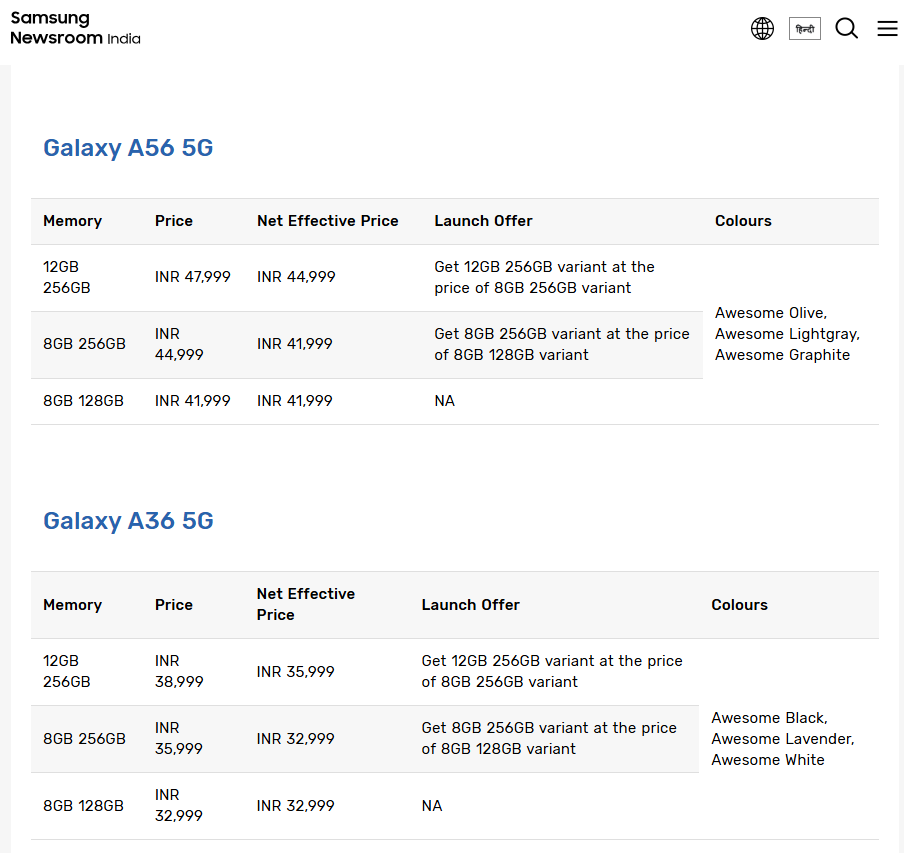
Pricing and availability
Galaxy A37 5G
6GB + 128GB: ₹41999 (or €429)
8GB + 256GB: ₹47499 (or €519)
12GB+256GB ₹52999
Galaxy A57 5G
8GB + 256GB: ₹58999 (€529)
12GB + 256GB: ₹62999 (or €589)
Sales begin April 10, with pre-order offers including a free storage upgrade. Overall, this feels like a steady update. Samsung isn’t changing too much, but it’s refining a few key areas to remain a go-to option for Galaxy fans in the highly competitive mid-range smartphone market.
Vivo is getting ready to unveil its next camera-focused flagship, the X300 Ultra, and most of the details are already starting to fall into place. The phone is set to launch on March 30 alongside the more compact X300s, and going by the latest leaks, Vivo is clearly doubling down on photography this year.
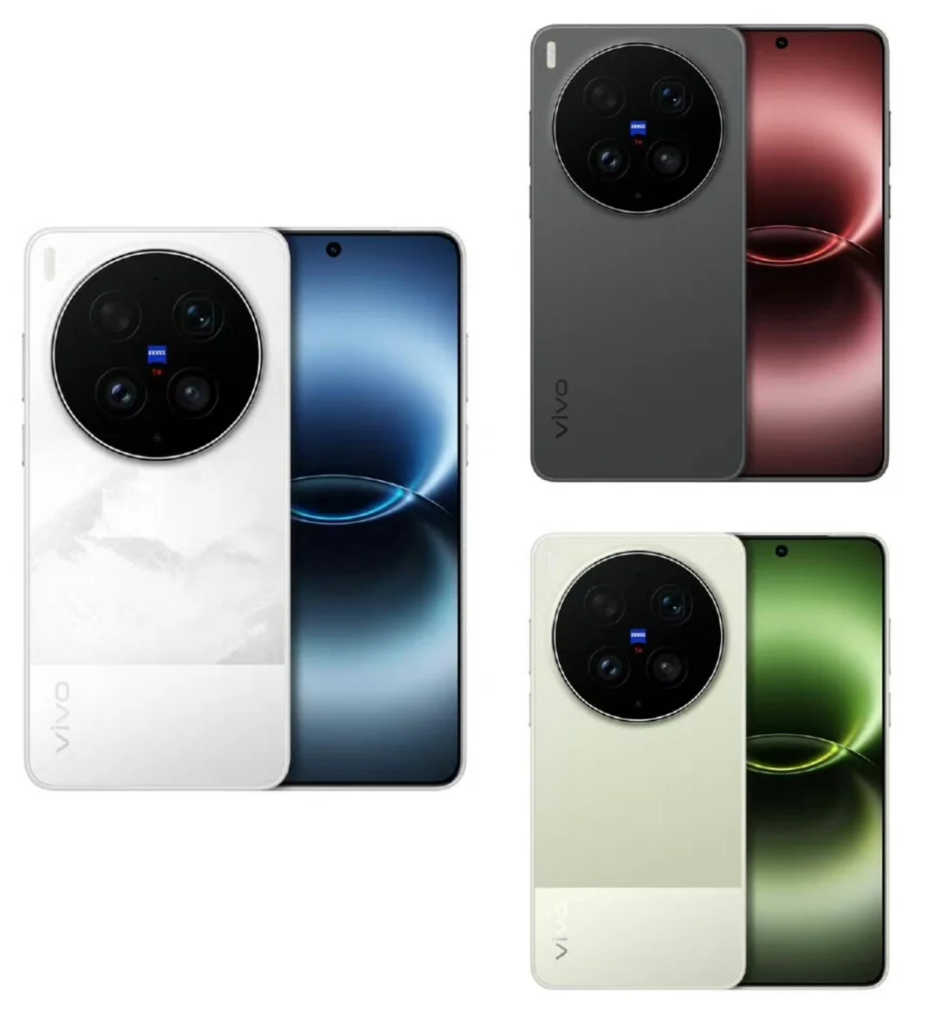
Vivo X300 Ultra renders
Design-wise, the X300 Ultra doesn’t look like a major departure from previous X-series models, but the color options, based on leaked renders, help it stand out. The three variants include a soft green with a dual-tone finish, a clean matte black, and a white option with a similar two-tone look. The design still leans heavily on that large circular camera module at the back, which has pretty much become a signature for Vivo’s flagship line.
The camera setup is where things get interesting. The phone is expected to feature two 200MP sensors, which is unusual even by current flagship standards. The main camera uses Sony’s LYT901 sensor with a 35mm focal length, while the periscope telephoto relies on Samsung’s HP0 sensor with an 85mm focal length. There’s also a 50MP ultrawide camera based on Sony’s LYT818. On paper, it’s a very flexible setup, covering everything from standard shots to longer zoom ranges.
Vivo is also said to be introducing optional ZEISS teleconverter attachments, extending zoom to 200mm and even 400mm. It’s a niche feature, sure, but it shows how far the company is pushing the camera angle here. There’s even talk of a bundled kit with a grip and extra accessories for users who want a more camera-like experience.
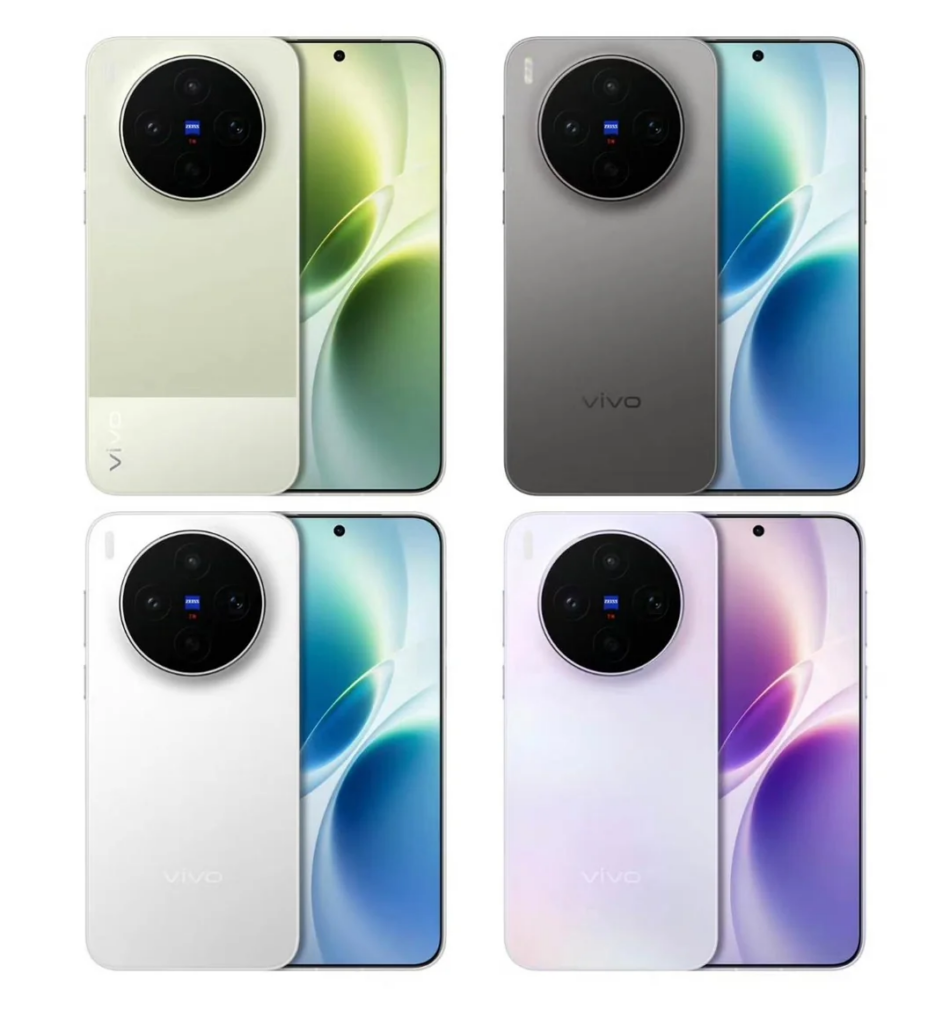
Vivo X300s renders
Performance shouldn’t be a concern either. A prototype has already shown up on Geekbench with scores that line up with the Snapdragon 8 Elite Gen 5 chip. The phone is expected to come with up to 16GB RAM and run Android 16 with OriginOS 6.
With the launch just around the corner, the X300 Ultra looks less like a typical upgrade and more like a focused attempt to stand out through imaging.
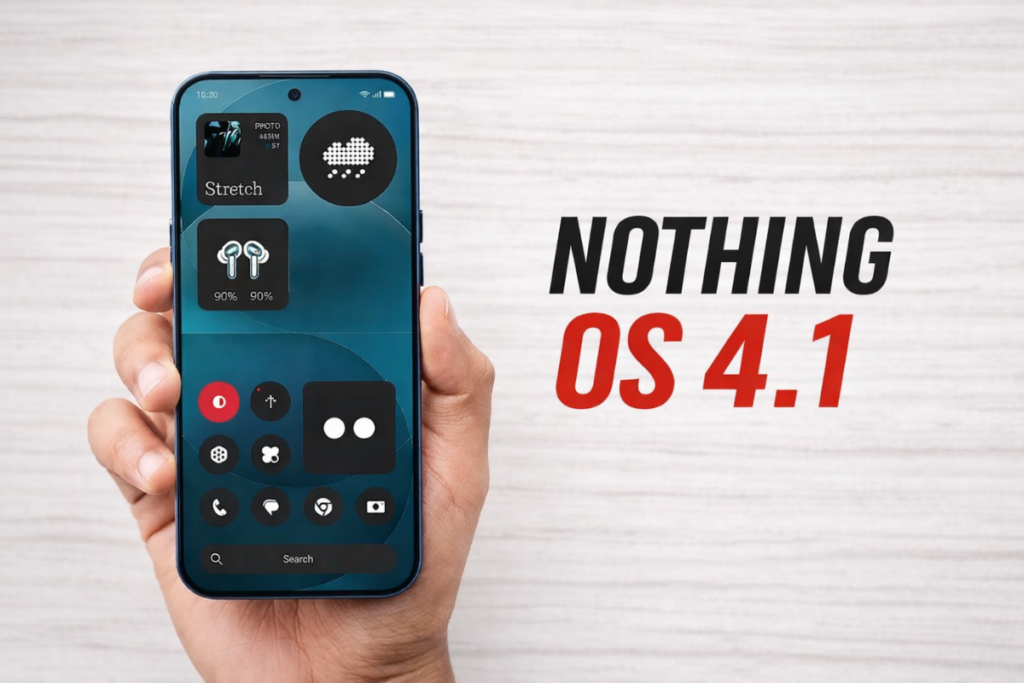
While Nothing OS 3.1 remained exclusive to the Phone (3a) series, Nothing OS 4.1 is officially confirmed to reach older smartphones. It’s an incremental upgrade built on Android 16, but it does include some significant upgrades focusing on AI, wellness, and real-time information.
If you own a Nothing phone, here’s the full picture on Nothing OS 4.1, the eligible devices, the rollout status (now essentially complete), and the major changes it brings.
The Nothing Phone (4a), Phone (4a) Pro, and the newer Phone (4b) ship with Nothing OS 4.1 out of the box. For older devices, Nothing rolled the update out in stages between April and June 2026 rather than publishing a formal eligibility list, every phone still on Android 16 was covered:
The device below it stays as-is (Phone (3), (3a), (3a) Lite, (3a) Pro, Phone (2), (2a), (2a) Plus, CMF Phone 2 Pro, CMF Phone 1, all confirmed received).
Nothing Phone (3)
Nothing Phone (3a)
Nothing Phone (3a) Lite
Nothing Phone (3a) Pro
Nothing Phone (2)
Nothing Phone (2a)
Nothing Phone (2a) Plus
CMF Phone 2 Pro
CMF Phone 1
Nothing never published an official eligibility list, it simply pushed the update to every device on Android 16. All the models above have now received it.
Nothing OS 4.1 rollout status
Nothing didn’t publish a formal schedule, it shipped Nothing OS 4.1 in batches, and the rollout is now effectively finished.
Here’s how it landed:
March 2026: debuted on the Nothing Phone (4a) and Phone (4a) Pro out of the box.
Late April 2026: rolled out to the Phone (3), Phone (3a), Phone (3a) Pro, Phone (2), Phone (2a), Phone (2a) Plus, CMF Phone 2 Pro, and CMF Phone 1.
May 2026: the Phone (3a) Lite followed, completing the eligible lineup.
Late June 2026: Nothing pushed a further OS 4.1 update carrying the June 2026 security patch and a new depth-effect lock screen to all supported models; everything except the Phone (1), which has reached the end of its update life.
The July 2026 Nothing Phone (4b) also arrived with Nothing OS 4.1 pre-installed.
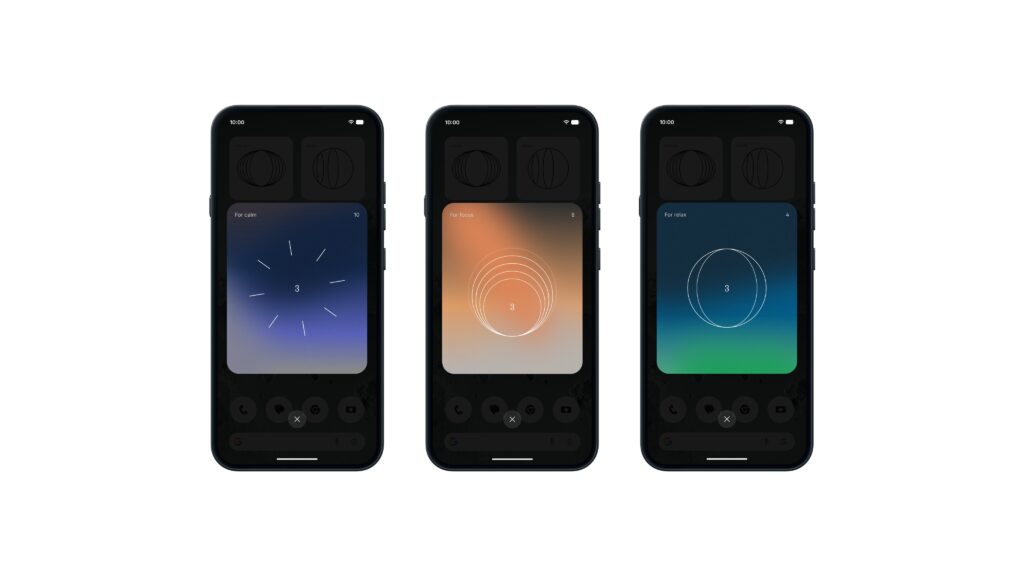
Nothing OS 4.1 adds three new widgets, officially termed Breathing Break widgets. They offer simple breathing exercises, designed to help you reset during the day.
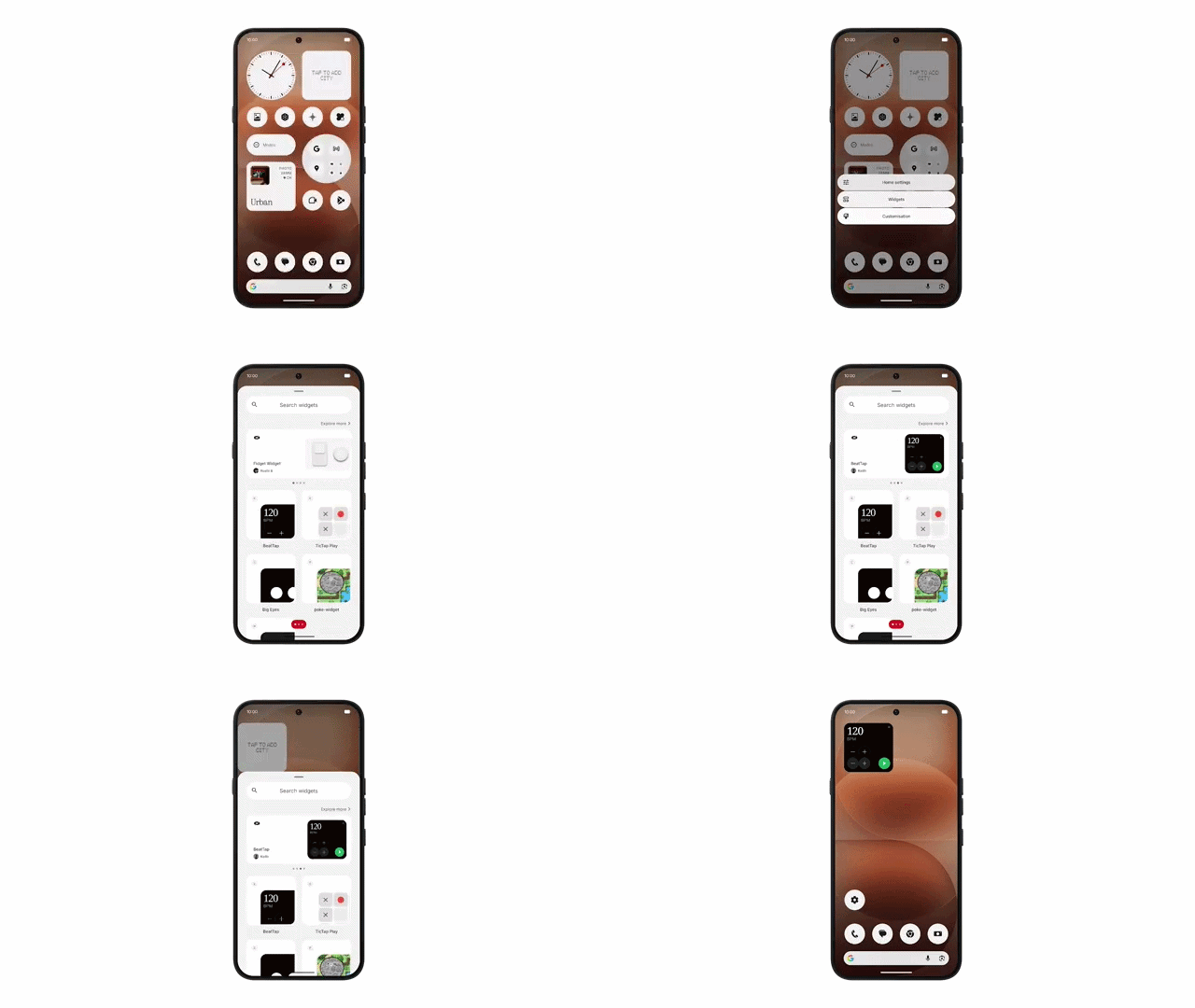
The new widgets are available in the widget library and can be easily added to the home screen. When you tap a widget, it starts a timer and asks you to perform inhaling and exhaling exercises.
Another meaningful change is that the Essential Apps section in the widget drawer now highlights recommended apps, which you can add to your home screen instantly.
2. Lock screen becomes more customizable
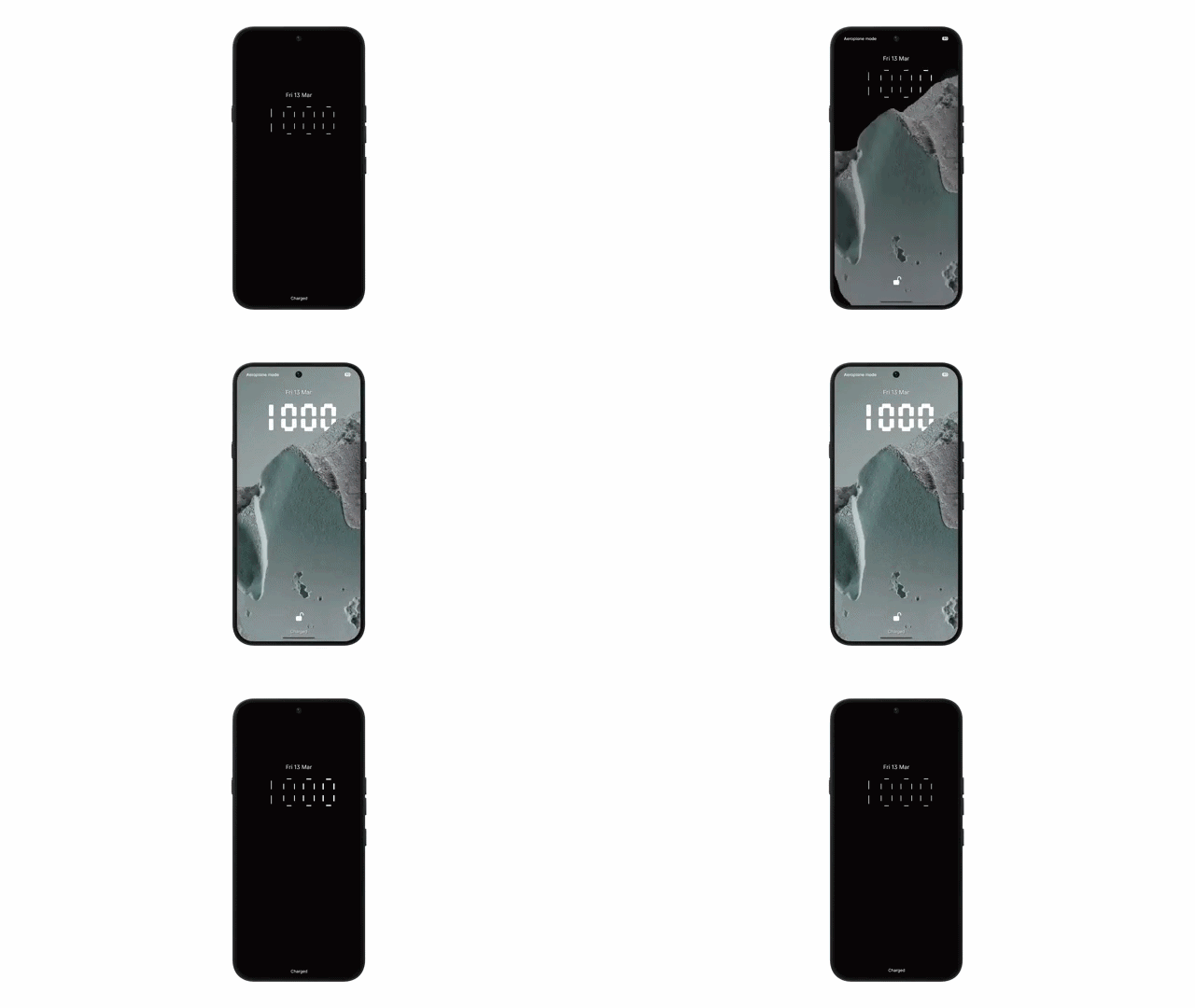
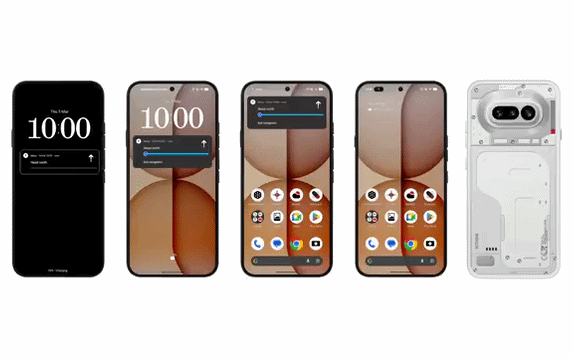
Nothing OS 4.1 introduces a new clock face from Phone (3a) Community Edition. It features an exclusive typeface style and a unique waking-up animation.
The update also adds Depth Effect, which layers the lock screen clock behind the main subject of your wallpaper, creating a 3D depth effect. Furthermore, you can adjust the clock size and alignment to create a more personalised layout.
3. AI Eraser
Nothing finally adds the “AI Eraser” feature in the native Gallery app. The feature intelligently detects bystanders and reflections, and also lets you manually select areas to remove.
Nothing says users’ data stays private with no cloud processing, though this feature removes the Ultra XDR effect. That also means you don’t need an active internet connection to use AI Eraser.
4. Live Updates with Glyph Bar
Live Updates in Nothing OS 4.1 keep real-time updates visible across the Always-On Display, Status Bar, Lock Screen, and Notifications. This is a small but useful change that further reduces the time to check the progress of an ongoing activity. The Live Updates feature now also works with Glyph Bar.
5. Camera and other changes
Nothing OS 4.1 adds a new Cricket preset for RCB fans, which shows a Nothing x RCB watermark. The brand is also the title sponsor of the IPL team.
The update also adds support for Playground Sync, allowing users to import photo presets from Nothing Playground in just a few taps. There’s also a new power-saving recording feature, which automatically lowers the screen brightness during video recording to save battery.
We’ll keep an eye on the latest developments around Nothing OS 4.1 and post them in the Nothing section. You can visit the page regularly to get the latest updates. Or, join our Telegram channel to get notified whenever we post such stories.
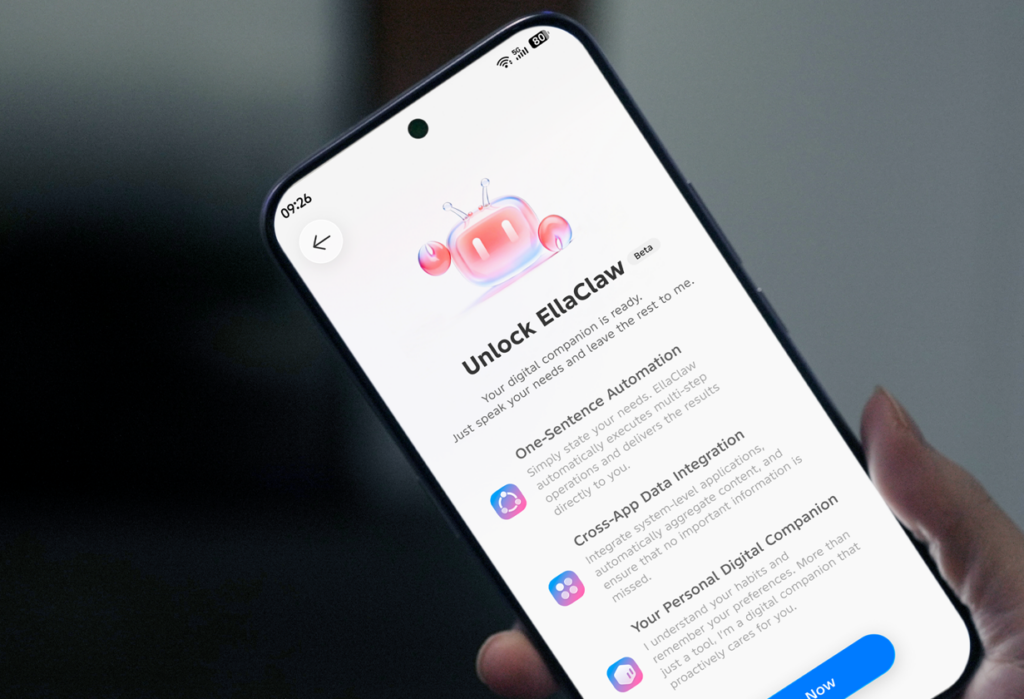
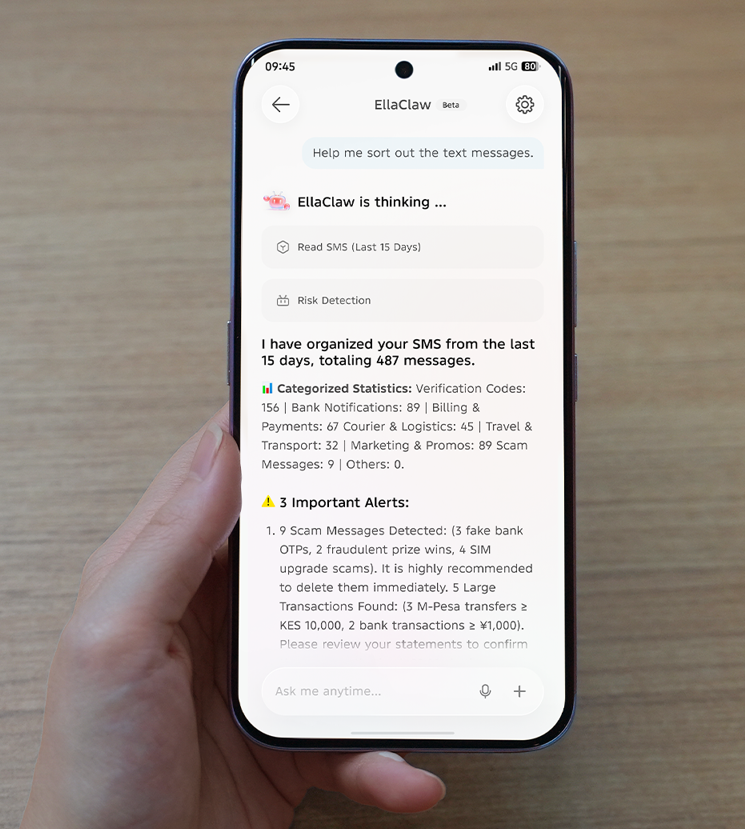
TECNO has announced the upcoming beta testing of EllaClaw, a new mobile AI agent built to simplify everyday smartphone tasks. The company positions it as the first OpenClaw-powered AI agent designed specifically for emerging markets. While the exact rollout date is not confirmed, users will soon be able to apply for beta access through official online channels, with more details expected shortly.
What is EllaClaw?
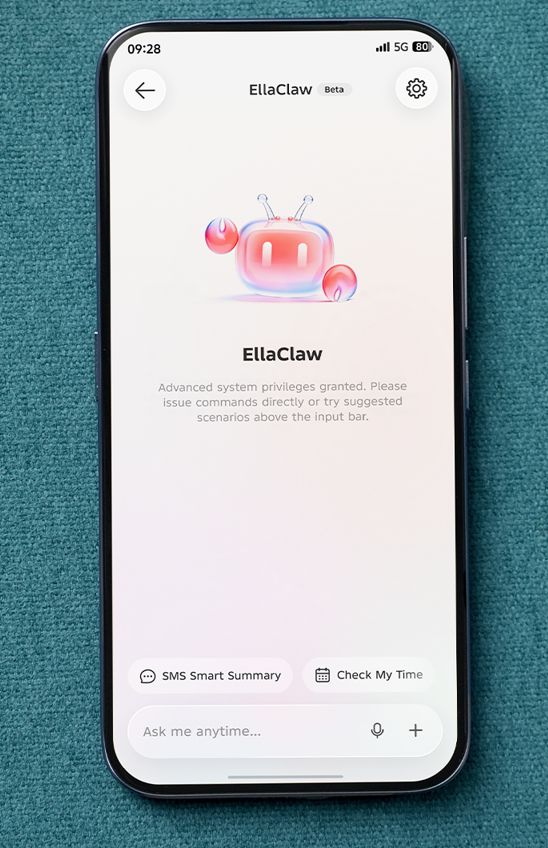
EllaClaw is built using the OpenClaw agentic framework, deeply integrated with TECNO’s own Ella AI assistant. Unlike many AI tools that work as separate apps, EllaClaw operates at the system level, allowing it to interact directly with different parts of the phone.
This setup enables it to handle complex tasks, multi-step workflows, and long-duration processes more efficiently. TECNO is also focusing on making it user-friendly, turning advanced AI technology into something that everyday users can easily understand and use.
Seamless and Easy to Use
One of EllaClaw’s biggest advantages is its simplicity. Users do not need to install or switch between apps. Instead, it works directly within the Ella assistant, offering a smooth and intuitive experience.
The AI is designed to understand natural language, meaning users can give simple or even slightly unclear commands, and the system will still figure out what needs to be done.
Key Features in Beta
EllaClaw introduces several powerful features in its beta version. One of the highlights is one-sentence automation, where users can complete tasks like scheduling, managing files, or performing system actions with just a single instruction.
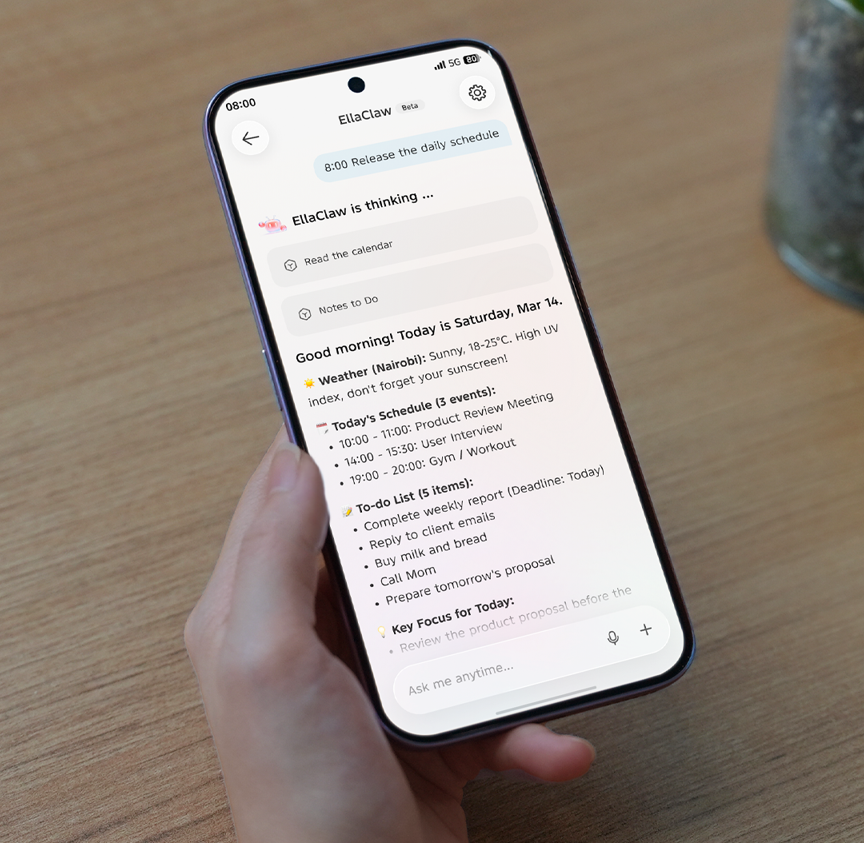
Another important feature is cross-app data integration. The AI can pull information from apps like SMS, Calendar, and Notes, combining them to provide useful insights. For example, it can summarize messages, highlight important alerts like bank updates or bills, and even suggest deleting unnecessary messages.
It also works as a daily schedule assistant, combining calendar events, notes, weather updates, and news into a simple daily plan that users can follow.
Smarter Over Time with Strong Privacy
EllaClaw includes a persistent memory system, which learns from user behavior over time. This allows it to offer smarter suggestions and become more personalized with regular use.
TECNO has also emphasized privacy and security, stating that user data remains isolated, protected, and not shared with third parties.
Future Plans
Looking ahead, TECNO plans to expand EllaClaw with more localized features tailored for emerging markets. The company also aims to let users build custom AI agents, further boosting productivity.
With its focus on simplicity, automation, and personalization, EllaClaw could become a major step forward in making AI more practical for everyday smartphone users.
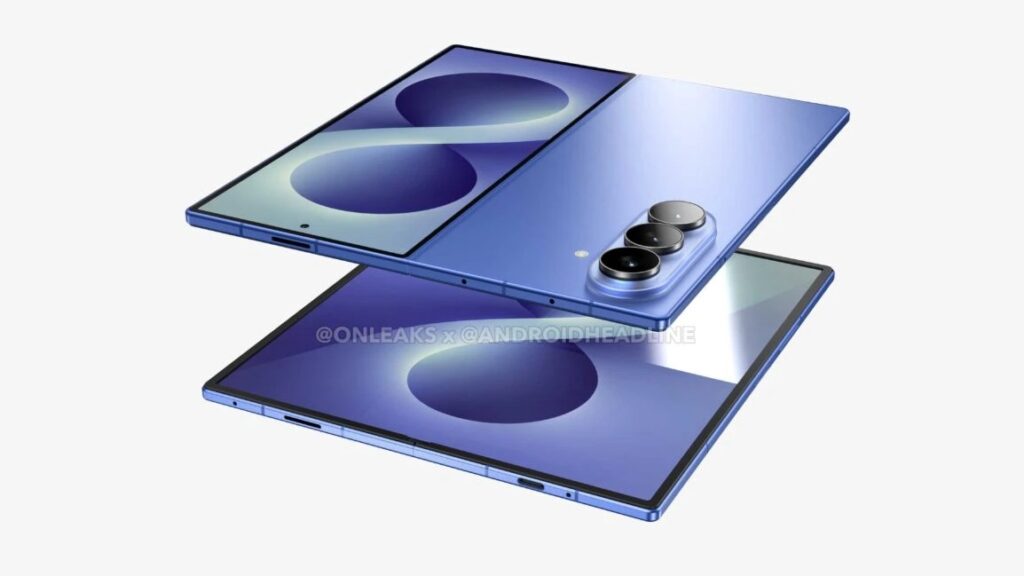
Samsung’s next book-style foldable has started showing up in leaks, and the Galaxy Z Fold 8 doesn’t seem to be chasing a big redesign this year. Fresh CAD renders give a fairly detailed look at the device ahead of its expected July 2026 launch.
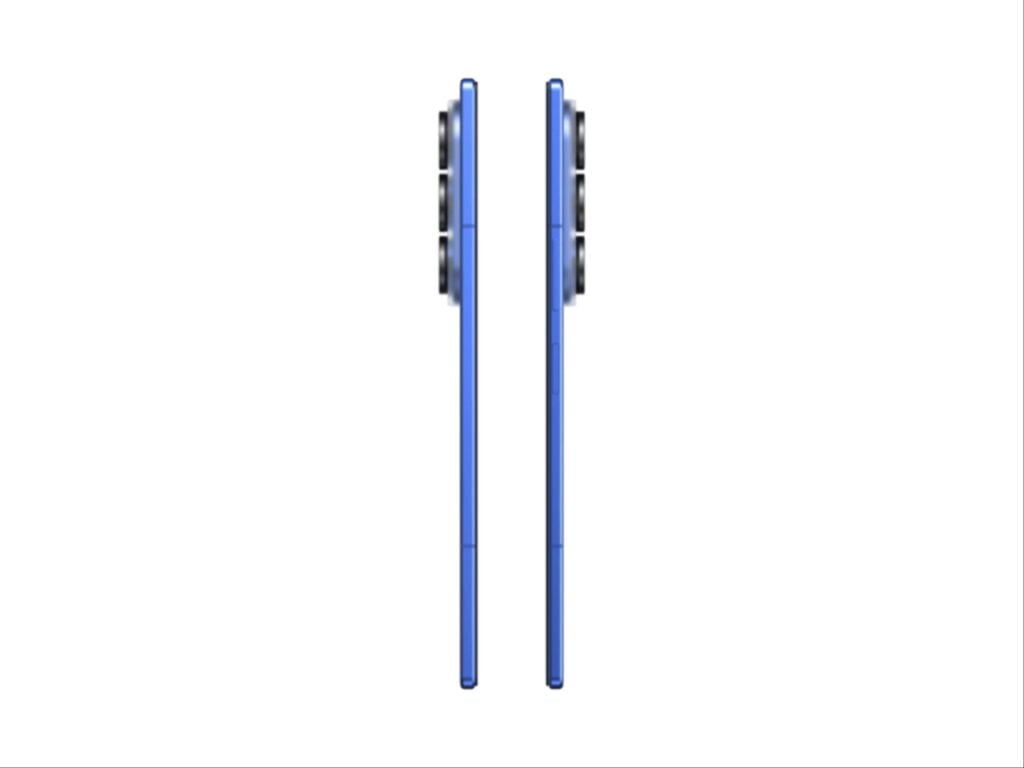
The renders, shared by OnLeaks in collaboration with Android Headlines, show a design that’s very close to the Galaxy Z Fold 7. You still get the flat edges, the centered hole-punch on the cover display, and a vertically aligned triple-camera setup at the back. The camera module itself remains quite prominent, with a noticeable raised bump.
In terms of size, the Fold 8 is said to measure 158.4 x 143.2 x 4.5 mm when unfolded and 158.4 x 72.8 x 9 mm when folded. That’s slightly thicker than the official numbers for the Fold 7, though in practice, the difference might not be all that noticeable. Real-world measurements of the older model often end up in a similar range anyway, so this could just be a minor adjustment rather than a step back.
The bigger changes seem to be on the inside. Samsung is reportedly working on a new dual-layer ultra-thin glass setup for the main display, along with a revised support structure. The idea is to improve durability and help reduce how noticeable the crease becomes with use. Display sizes are expected to stay roughly the same, around 8 inches for the inner screen and 6.5 inches for the cover.
There are also signs of a battery upgrade. The Fold 8 could move up to a 5,000mAh unit, paired with 45W charging. That alone would be a welcome change, considering battery life has been one of the weaker points on earlier Fold models.
All of this points to a fairly iterative update by Samsung’s standards. The design isn’t changing much, but the company seems to be focusing on the areas that matter in daily use. Not the most exciting upgrade on paper, maybe, but potentially a more practical one.
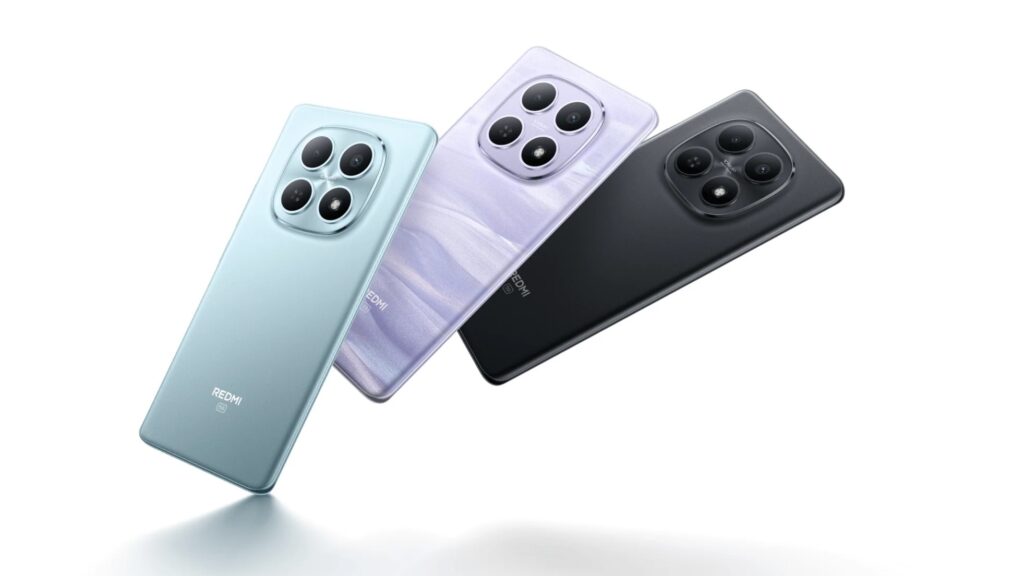
Redmi is about to expand its Note 15 lineup in India, and the next addition looks like it’s aimed at keeping things simple and affordable. The company has confirmed that the Redmi Note 15 SE will launch on April 2, 2026, joining the rest of the Note 15 series already on sale.
The announcement was made through Redmi India’s X account, with Flipkart listed as the exclusive platform. As expected, the teaser itself doesn’t go into specifics, but the messaging suggests a focus on everyday usability rather than pushing high-end features.
If this sounds familiar, that’s because Redmi has done something similar before. The Note 14 SE last year was essentially a rebrand of the standard model, keeping most of the core experience intact while adjusting a few things to hit a lower price. The Note 15 SE is likely to follow that same route.
Looking at the regular Redmi Note 15 5G gives a rough idea of what to expect. It offers a 6.77-inch curved AMOLED display with a 120Hz refresh rate, runs on the Snapdragon 6 Gen 3, and includes a 108MP main camera along with a 5,520mAh battery and 45W charging. The SE version will probably keep most of this, but with a few practical compromises, maybe in the camera setup or what’s included in the box.
Pricing will obviously play a big role. The 8GB+128GB variant of the Note 15 5G is currently listed at ₹21,499 on Flipkart and ₹22,998 on Amazon, so the SE variant could land closer to ₹20,000 or even slightly below. That’s a pretty competitive spot, especially for buyers who just want a reliable phone for daily use without spending too much. There’s also a fair chance Redmi might skip the charger in the box again. It’s not ideal, but at this point, it’s also not unexpected.
With the launch just around the corner, the full details should be out soon. If Redmi keeps the balance right, the Note 15 SE could end up being one of those easy recommendations in its price range.
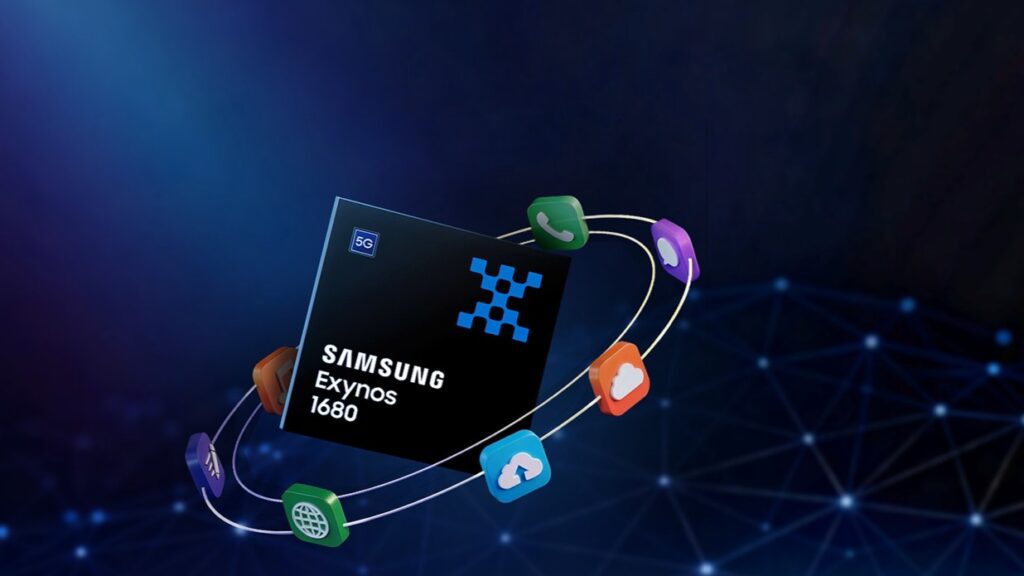
Samsung has taken the wraps off its new Exynos 1680 chipset, and it looks like a fairly important upgrade for its mid-range lineup. This is the chip that’s expected to power the Galaxy A57, and the focus seems to be on making everyday performance feel a bit more polished rather than chasing headline numbers.
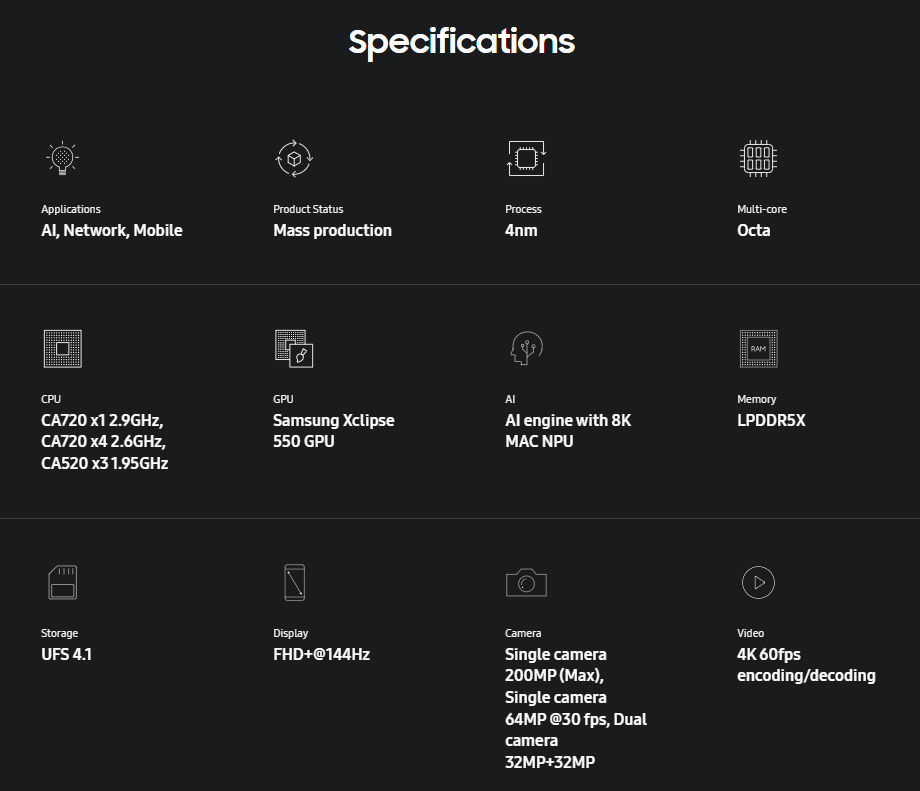
It’s built on Samsung’s updated 4nm process, and the CPU setup is what you’d expect in this category. You get one Cortex-A720 core going up to 2.9GHz, along with four more A720 cores and three efficiency-focused A520 cores. Nothing unusual on paper, but the newer cores should help with smoother app switching and better consistency over longer use.
Graphics have been improved too. The Xclipse 550 GPU, based on AMD’s RDNA 3 architecture, is said to deliver around 15% better performance. That’s not a massive jump, but it should be enough to make games feel a bit more stable and animations slightly smoother. It also supports Full HD+ displays at up to 144Hz, which is becoming more common even outside flagship devices.
Exynos 1680 is also leaning into AI: the NPU can handle up to 19.6 TOPS, which is about a third higher than before. In real terms, that should help with things like camera processing and the AI features baked into One UI.
Another interesting bit is memory and storage support. The chip works with LPDDR5X RAM and UFS 4.1, which you’d usually see on more expensive devices. That could make a noticeable difference in how quickly apps open and how the phone feels overall.
Camera support goes up to 200MP, with 4K video at 60fps and 10-bit HDR. Connectivity is also well covered, with 5G, Wi-Fi 6E, and even Bluetooth 6.1 making an appearance.
Taken together, the Exynos 1680 doesn’t try to reinvent anything, but it does seem like a well-rounded step forward. If Samsung gets the tuning right, the Galaxy A57 could end up feeling faster and more refined in day-to-day use.
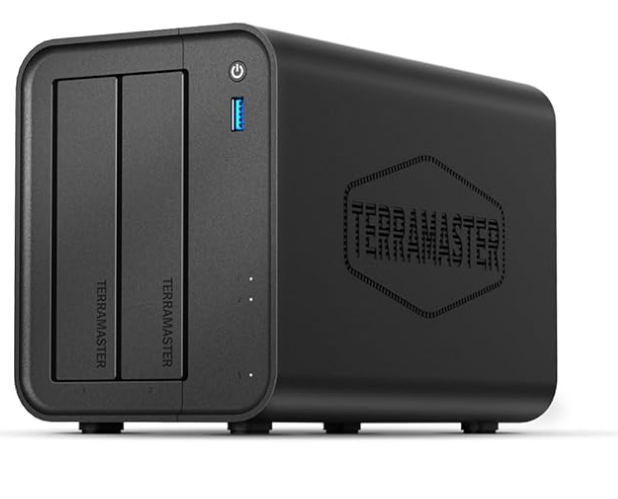
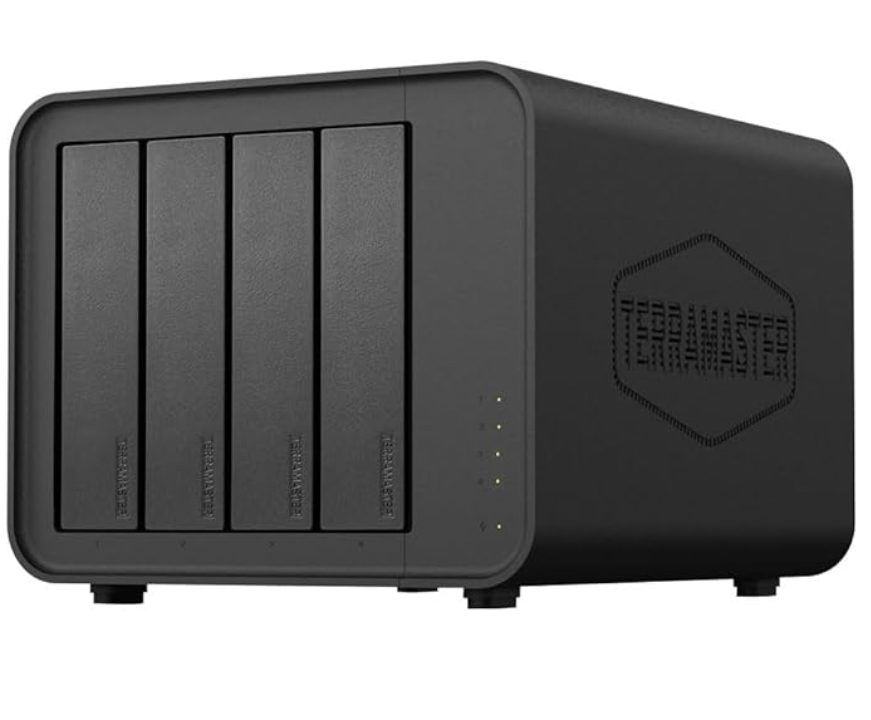
If you’re looking to upgrade your storage setup, these limited-time TerraMaster deals offer solid value for both home users and professionals. The TerraMaster F2-425 NAS is a powerful all-in-one network storage solution designed for backups, media streaming, and cloud-like access, while the TerraMaster D4-320 DAS enclosure focuses on high-speed direct storage with simple plug-and-play use. Together, they cover both network-based and direct-attached storage needs, making this deal period a great opportunity to upgrade your data setup at a lower price.
TerraMaster F2-425 2-Bay NAS:
Performance & Speed
The TerraMaster F2-425 is built for smooth and reliable performance. It comes with an Intel x86 quad-core processor and 4GB RAM, making it capable of handling multiple tasks at once. Whether you’re streaming videos or transferring files, the 2.5GbE LAN ensures fast speeds and stable connections. It can even handle 4K video transcoding without lag, making it ideal for modern home use.
Multimedia & Entertainment
This NAS works as a complete home media hub. It supports 4K H.265 decoding and works well with popular apps like Plex, Emby, and Jellyfin. You can stream content across multiple devices using DLNA. The built-in Photos app also helps organize large photo collections using AI-based smart albums.
Easy Setup & Mobile Control
Setting up the F2-425 is simple and doesn’t require a computer. You can use the TNAS Mobile app to get started and manage everything. The app allows automatic backup of photos and videos, along with real-time sync between devices, both locally and remotely.
Quiet Design & Storage Capacity
The device runs quietly at just 19dB, making it suitable for bedrooms or offices. It features a tool-free design, so installing hard drives takes only seconds. With support for up to 60TB storage and flexible TRAID system, it offers efficient storage and data safety.
Security & Data Protection
The F2-425 includes advanced security features like SPC protection and cloud sync support for Google Drive, OneDrive, and Dropbox. It also supports TerraSync for easy file syncing across devices, ensuring your data stays safe and accessible.
Deal & Availability
The TerraMaster F2-425 NAS is currently available at a discounted price of $239.99, down from its original price of $299.99, offering a solid 20% discount. This limited-time deal is live from March 25 to March 31, making it a great opportunity for buyers looking to upgrade their home storage setup at a lower cost. You can grab the offer directly from Amazon using this link.
The TerraMaster D4-320 is a powerful external storage enclosure designed for fast data transfers. It uses USB 3.2 Gen2 with speeds up to 10Gbps. With four hard drives installed, it can reach combined speeds of up to 1,016 MB/s. Even with a single SSD, you can get read speeds of around 510 MB/s. It supports up to 30TB per drive, giving a total capacity of 120TB, making it ideal for large data storage.
Compatibility & Ease of Use
This device is a DAS (Direct Attached Storage), not a NAS, meaning it connects directly to your computer. It supports plug-and-play, so no drivers are needed. The D4-320 works with Windows, macOS, and Linux. It also supports multiple interfaces like USB 3.0, 3.1, 3.2, and even Thunderbolt 3 and 4, making it highly versatile.
Flexible Storage & Hot Swapping
The D4-320 supports four separate drives with no RAID function, giving you full control over each disk. It also supports hot swapping, so you can replace or add drives without turning off the device. This makes managing storage quick and efficient.
Design & Cooling
The enclosure features a tool-free design, allowing you to install drives easily. Its push-lock system keeps drives secure. It also includes an intelligent cooling fan and sound-dampening design, reducing noise by up to 50%. In standby mode, it runs at less than 21dB, ensuring a quiet working environment.
Deal & Availability
The TerraMaster D4-320 DAS enclosure is currently available at a discounted price of $151.99, down from its original price of $189.99, offering a solid 20% discount. This deal is valid from March 25 to March 31, making it a limited-time offer for users looking for high-speed external storage. The device supports 4 individual disks and works as a direct-attached storage (DAS) solution. You can purchase it directly from Amazon here.
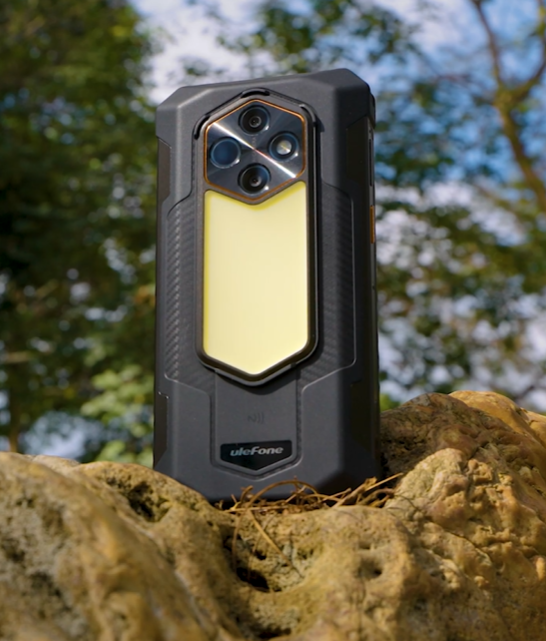
Launch Offer Ends Today: Ulefone is offering the RugKing 5 Pro at an early bird price of $269.99, with the deal valid until March 25.
Focus on Professional Use: The device is designed for emergency responders and outdoor professionals, featuring a powerful 976-lumen floodlight for real-world field operations.
Built for Extreme Conditions: With a 20,000mAh battery, rugged design, and night vision camera, the phone is positioned for extended use in off-grid and low-light environments.
Ulefone has officially introduced the RugKing 5 Pro, a rugged smartphone designed for professionals who work in extreme conditions. Positioned as a more affordable successor to the Armor 24, the device targets emergency responders, outdoor workers, and industrial users. As part of its global launch, the company is offering an early bird price of $269.99, valid until March 25.
Powerful Lighting for Real-World Use
One of the standout features of the RugKing 5 Pro is its professional lighting system. It comes with a rear-mounted 976-lumen floodlight that uses 1,202 LED beads, making it significantly brighter than a typical smartphone flash. This makes it ideal for search and rescue operations, emergency repairs, and outdoor work at night. The lighting can be controlled through a dedicated Camping Light app, which allows users to adjust brightness, set timers, and activate SOS or emergency modes.
Massive Battery and Outdoor-Friendly Display
The smartphone is powered by a huge 20,000mAh battery, built for long usage in off-grid environments. It also supports 33W fast charging and reverse charging, allowing it to function as a power bank. On the front, the device features a 6.78-inch FHD+ display with up to 910 nits brightness, ensuring good visibility even under direct sunlight.
Camera and Software Features
The RugKing 5 Pro includes a 64MP main camera and a 20MP Sony Night Vision camera, enabling clear photography in low-light and even total darkness. It runs on Android 16 and comes with 8GB RAM and 256GB storage. The phone also introduces a Water-Lock Mode, which disables the touchscreen in wet conditions to prevent accidental inputs.
Availability and Giveaway
The device is available through Ulefone’s official online stores. Alongside the launch, the company is hosting a global giveaway event where users can win the RugKing 5 Pro and accessories.
Xiaomi has officially pulled the plug on MIUI, which was the company’s starting point and later became one of the most popular Android skins in the world, with more than 500 million monthly active users at its peak. Following the HyperOS release, Xiaomi upgraded millions of its devices to the new OS, while many were added to the end-of-life (EOL) list.
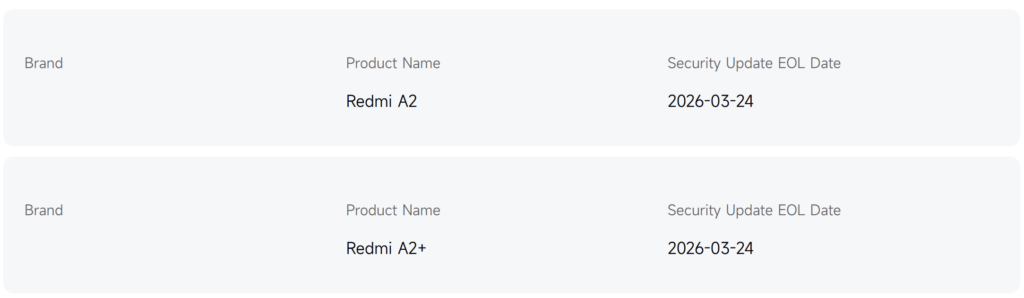
However, two devices continued to receive MIUI updates even in 2026. We’re talking about the Redmi A2 and Redmi A2+. Both devices received Android 13 as their major OS upgrade, but continued to receive security patches and minor updates. The last update for them arrived in December with the firmware version V14.0.44.0.TGOMIXM, although the official website mentions EOL on March 24, 2026.
That day has arrived for the last MIUI-running devices, and they’re now officially retiring from all kinds of software updates. That also leads to a complete discontinuation of the MIUI legacy, which initially began as a custom ROM project for third‑party Android phones.
How MIUI became one of Android’s most popular skins
MIUI was actually Xiaomi’s first product, released before the company launched any hardware. It was introduced in August 2010 and was based on Android 2.2 Froyo. Early MIUI builds were distributed as a custom ROM for third-party Android phones.
MIUI quickly attracted an enthusiastic community because it offered weekly beta updates, aggressive feature additions, and ports to non-Xiaomi devices. This community-first origin story helped MIUI gain a reputation as a “tinker-friendly” skin, with robust rooting and modding support compared to other OEM UIs of the time.
MIUI focused on user-visible customization rather than stock Android minimalism. Soon, MIUI started bundling its own apps for core functions such as phone, messaging, notes, music, and gallery. Xiaomi also brought in a powerful theme engine that could change icons, fonts, sounds, lock screens, and system UI elements, well before most of its competitors.
Some of the notable features that later became part of MIUI’s identity include Second Space, Dual Apps, App Lock, hidden apps, and built-in call recording. Doubling down on MIUI’s popularity, Xiaomi entered the hardware market by launching Mi-branded phones in China, and later expanded to India and other global markets.
MIUI crossed 100 million global monthly active users in 2015, 200 million in 2018, 300 million in 2019, 400 million in early 2021, and surpassed 500 million monthly active users worldwide by November 2021. At its peak, roughly 15% of the world’s population was using a Xiaomi/Redmi/Poco phone running MIUI.
Why did Xiaomi shut down MIUI?
In October 2023, Xiaomi officially announced that a new operating system, Xiaomi HyperOS, would replace MIUI. Just a few days later, Xiaomi launched the Xiaomi 14 as the company’s first phone preloaded with HyperOS. But why did Xiaomi feel the need to ditch MIUI and move to HyperOS?
Well, the decision was made for good reasons. Despite MIUI’s success, Xiaomi was finding it challenging to connect hundreds of millions of devices across 200 product categories, from smart speakers to air conditioners, and eventually cars. Back then, Xiaomi had a mix of firmware stacks, making unified development and cross-device experience difficult to implement.
The decision to switch to HyperOS wasn’t made out of the blue. The company began exploratory development in 2014 and R&D in 2017, with the aim of supporting all ecological devices and applications through an integrated system framework.
Xiaomi HyperOS is described as a human-centric operating system built on an integration of a deeply evolved Android base and Xiaomi’s in-house Vela IoT system, running atop a Linux kernel. It takes less space than MIUI and delivers better performance and a more consistent experience.
HyperOS is the pillar of Xiaomi’s “Human x Car x Home” strategy, designed to connect personal devices, smart home products, and EVs into a coordinated platform, enabling them to share context and services. One of the key elements of this new OS is “HyperConnect,” which enables real-time networking and device discovery. So, a phone can, for example, act as a key for a car, mirror its camera to a TV, or manage smart home devices without relying on a traditional setup that requires Android-plus-vendor apps.
While Xiaomi HyperOS focuses primarily on a unified OS with deeper integration among Xiaomi devices, it also offers better resource utilization, tighter security, and a consistent experience while preserving much of MIUI’s interface language.
To ensure you do not miss out on the latest HyperOS news, visit the Xiaomi section on this website regularly. Alternatively, you can join us on Telegram to get instant notifications about the latest HyperOS updates, along with the biggest tech headlines.
Back in October 2025, iQOO unveiled the iQOO 15 and Neo 11 in China. Unlike the previous Neo 10 generation, the Neo 11 wasn’t accompanied by a Pro variant. A recent leak by tipster Smart Pikachu revealed that the Neo 11 Pro could be in the works. Now, a new leak suggests that the brand could be gearing up to launch not one but two Neo 11 series devices for China.
iQOO Neo 11 Pro, Neo 11 Pro+ could be in the works
iQOO Neo 11 series phones’ specs leaked
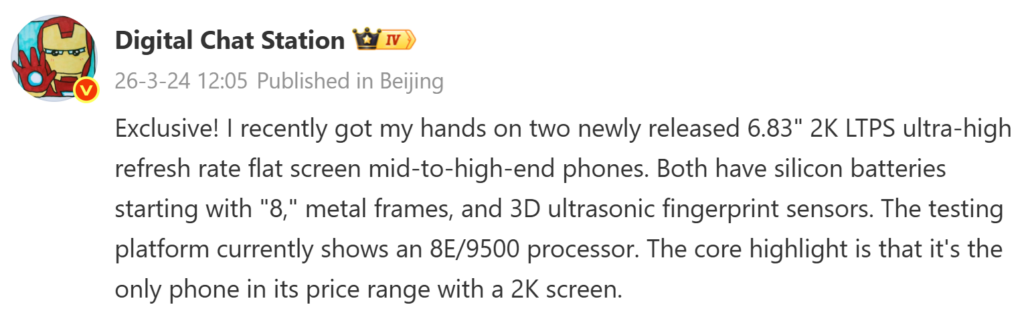
As per the leak, the two upcoming iQOO flagships will feature 6.83-inch 2K LTPS flat displays with ultra-high refresh rates, which, according to other reports, may reach 165Hz. The phones are also tipped to feature metal middle frames and 3D ultrasonic fingerprint sensors.
Both devices are said to pack silicon batteries starting with an “8” capacity figure, likely indicating large 8,000mAh+ battery sizes. In terms of performance, the prototypes are currently being tested with Snapdragon 8 Elite and Dimensity 9500 chipsets.
The exact monikers of these devices have not been revealed in the leak. It remains to be seen whether the Snapdragon variant could be called the Neo 11 Pro, while the Dimensity version could be dubbed the Neo 11 Pro+.
iQOO Neo 11
DCS added that the major highlight of this series is the inclusion of a 2K resolution display, which could be a rare offering in this segment. To recall, the existing iQOO Neo 11 has a 6.82-inch OLED 2K 144Hz screen, a Snapdragon 8 Elite chip, and a 7,500mAh battery with 100W fast charging. It is speculated that the brand may discontinue the Neo 11 after the arrival of the new Neo 11 series phones.
There’s a possibility that these Neo 11 series devices may remain exclusive to the Chinese market. The reason behind this is that a recent report claimed the company has no plans to launch a Neo-branded phone in India in 2026.
For more daily updates, please visit our News Section.
Honor unveiled the Honor 600 Lite earlier this month. A recent report revealed that the brand may soon announce the Honor 600 and 600 Pro in the coming weeks. With the launch drawing near, the standard model has surfaced on Geekbench, revealing key hardware details.
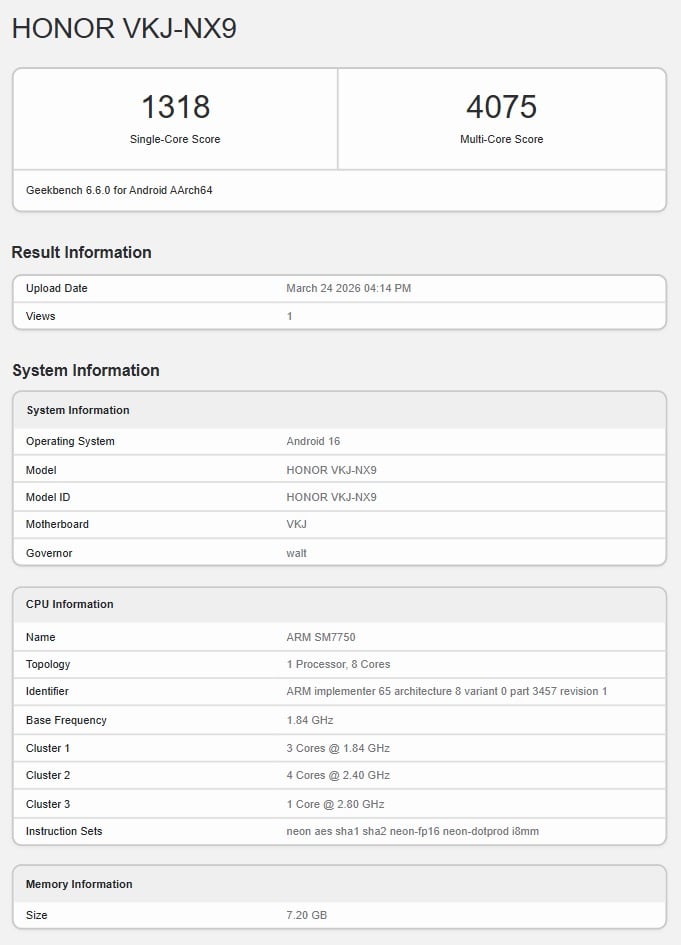
Honor 600 Geekbench listing
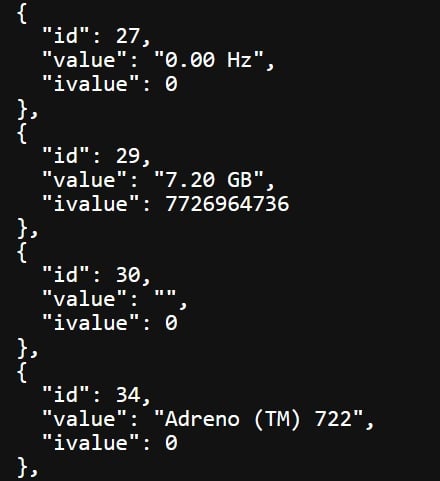
The Honor 600 and 600 Pro carry the model numbers VKJ-NX9 and VKP-NX9, respectively. The VKJ-NX9 variant, which is the standard model, has now appeared on Geekbench. The listing confirms that the device is powered by a chipset with model number SM7750, indicating the presence of the Snapdragon 7 Gen 4. It also shows 8GB of RAM and Android 16, likely layered with MagicOS 10. In benchmark tests, the device scored 1318 in single-core and 4075 in multi-core performance.
The chipset marks an upgrade for the Honor 600, as the Honor 400 featured the Snapdragon 7 Gen 3. Other reports suggest that the Honor 600 may feature a 6.57-inch OLED display with a 1.5K resolution and a 120Hz refresh rate. It is also expected to include a 200-megapixel primary camera and a large 9,000mAh battery.
Honor 400 specifications
To recall, the Honor 400 features a 6.55-inch AMOLED display with a 120Hz refresh rate and 1.5K resolution. It comes with a 50-megapixel front camera for selfies, while the rear setup includes a 200-megapixel primary sensor along with an additional 12-megapixel sensor for ultra-wide shots.
Under the hood, the Honor 400 is powered by the Snapdragon 7 Gen 3 chipset, paired with up to 12GB RAM and ample storage options. The device houses a battery of around 6,000mAh capacity with 80W wired charging. Its European edition has aa 5,300mAh battery with 66W charging.
Honor is also working on the Honor 600 series for China. Speculations are rife that the Honor 600 and 600 Pro’s China editions could be powered by a Snapdragon 8-series chipset, offering a more premium experience compared to the global variants.
For more daily updates, please visit ourNews Section.
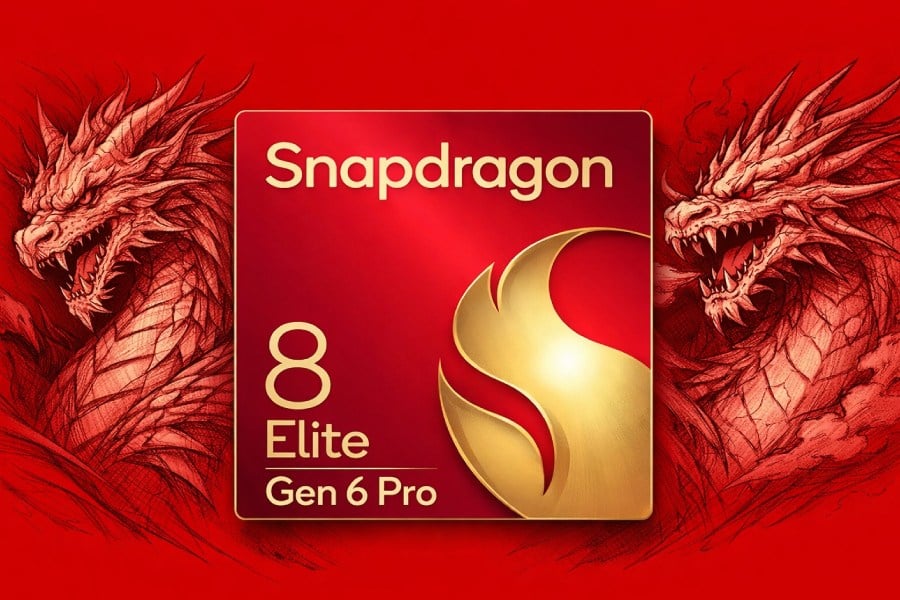
Qualcomm is expected to unveil its next-generation flagship chipset, widely expected to be part of the Snapdragon 8 Elite Gen 6 series, in September this year. So far, reports have revealed that it could comprise of two chips, which are tentatively dubbed the Snapdragon 8 Elite Gen 6 and 8 Elite Gen 6 Pro. In a new leak, reliable tipster Digital Chat Station has revealed key specifications of both variants, hinting at a notable shift in the company’s strategy for premium mobile processors.
Snapdragon 8 Elite Gen 6, Gen 6 Pro key details leaked
Snapdragon 8 Elite Gen 6 series specs leak
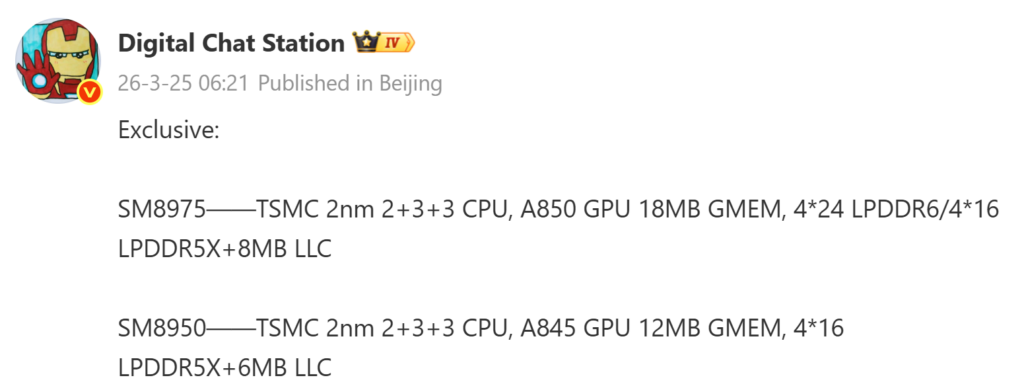
According to the leak, Qualcomm is working on two models, identified as SM8950 and SM8975, both reportedly built on TSMC’s advanced 2nm process. As mentioned above, these chips are expected to be called the Snapdragon 8 Elite Gen 6 and 8 Elite Gen 6 Pro, respectively.
Each version is said to feature a 2+3+3 CPU architecture, indicating a balanced approach between performance and efficiency cores. However, there are clear differences between the two chips in terms of graphics and memory capabilities.
The SM8975 appears to be the more powerful option, featuring an Adreno 850 GPU paired with 18MB GMEM. It is also tipped to support LPDDR6 memory in a 4×24 configuration, alongside LPDDR5X support and an additional 8MB LLC cache.
In comparison, the SM8950 is expected to come with a slightly toned-down Adreno 845 GPU, 12MB GMEM, LPDDR5X memory in a 4×16 setup, and 6MB LLC.
Snapdragon 8 Elite Gen 6 Pro (AI-generated image)
The leak also suggests that the SM8975 could be positioned as a top-tier variant, possibly arriving with a “Pro” branding, while the SM8950 may serve as the standard flagship offering.
Interestingly, the tipster claims that MediaTek’s upcoming Dimensity 9600 may sit between these two chips in terms of performance, indicating tighter competition in the flagship segment. At the same time, a separate Snapdragon 8 Gen 6 is also expected, though early indications suggest it may not be as impressive in terms of specifications.
Snapdragon 8 Gen 6 in works
The report further notes that the higher-end SM8975 could come with significantly higher production costs, which may limit its adoption to select premium devices. Meanwhile, the SM8950 is said to be the more likely candidate for wider use, with a possibility of Qualcomm even considering a fallback option depending on development progress.
For more daily updates, please visit ourNews Section.
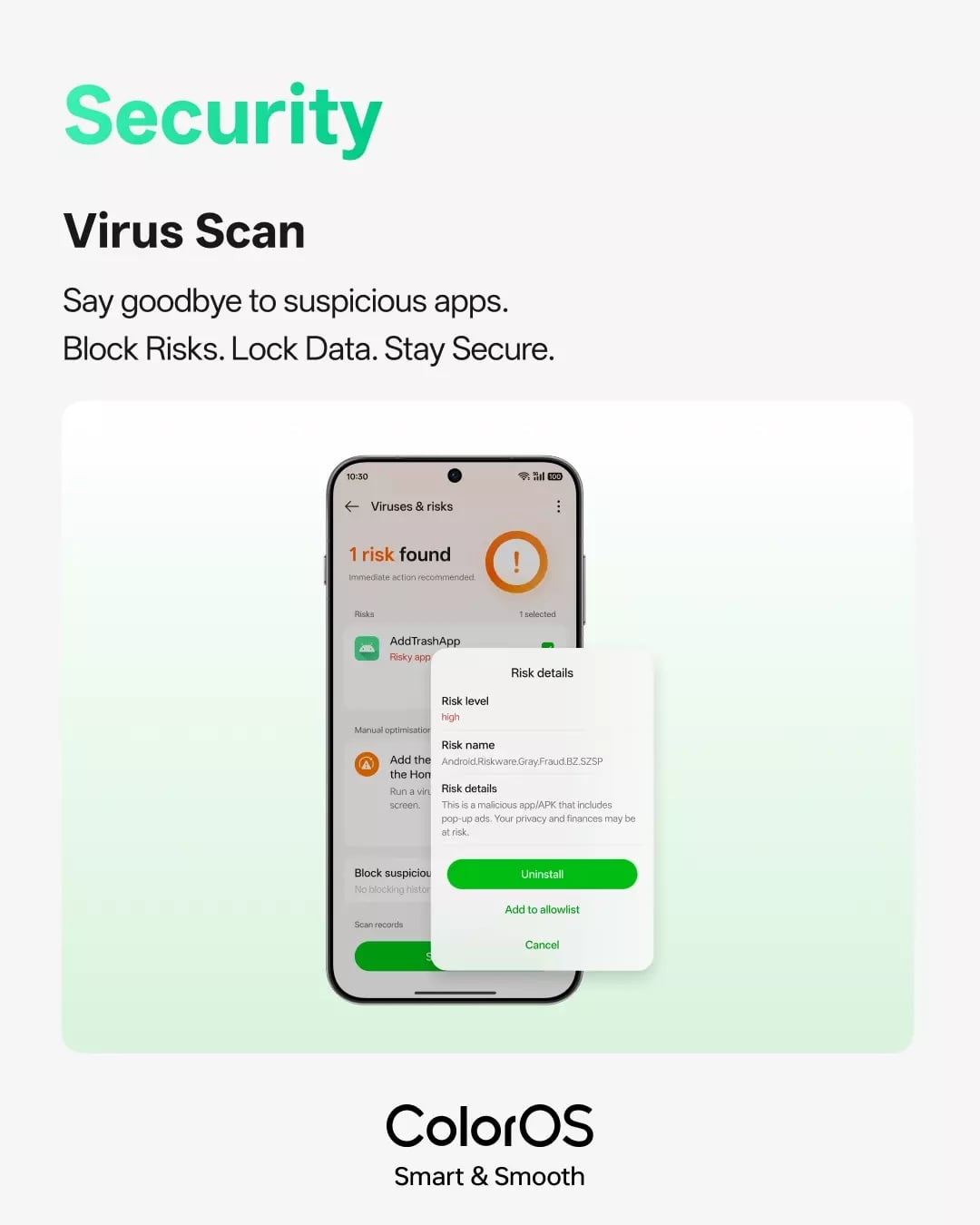
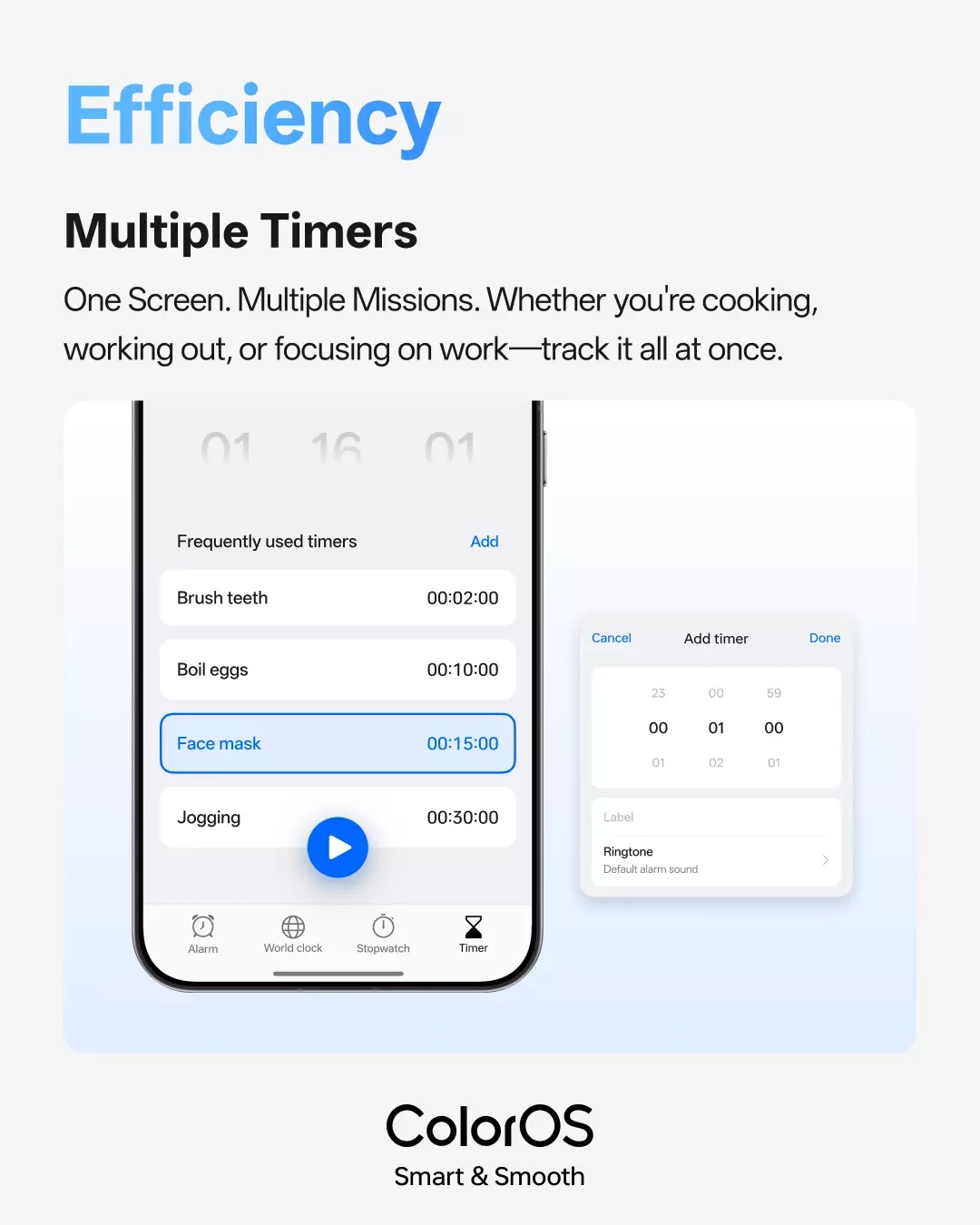
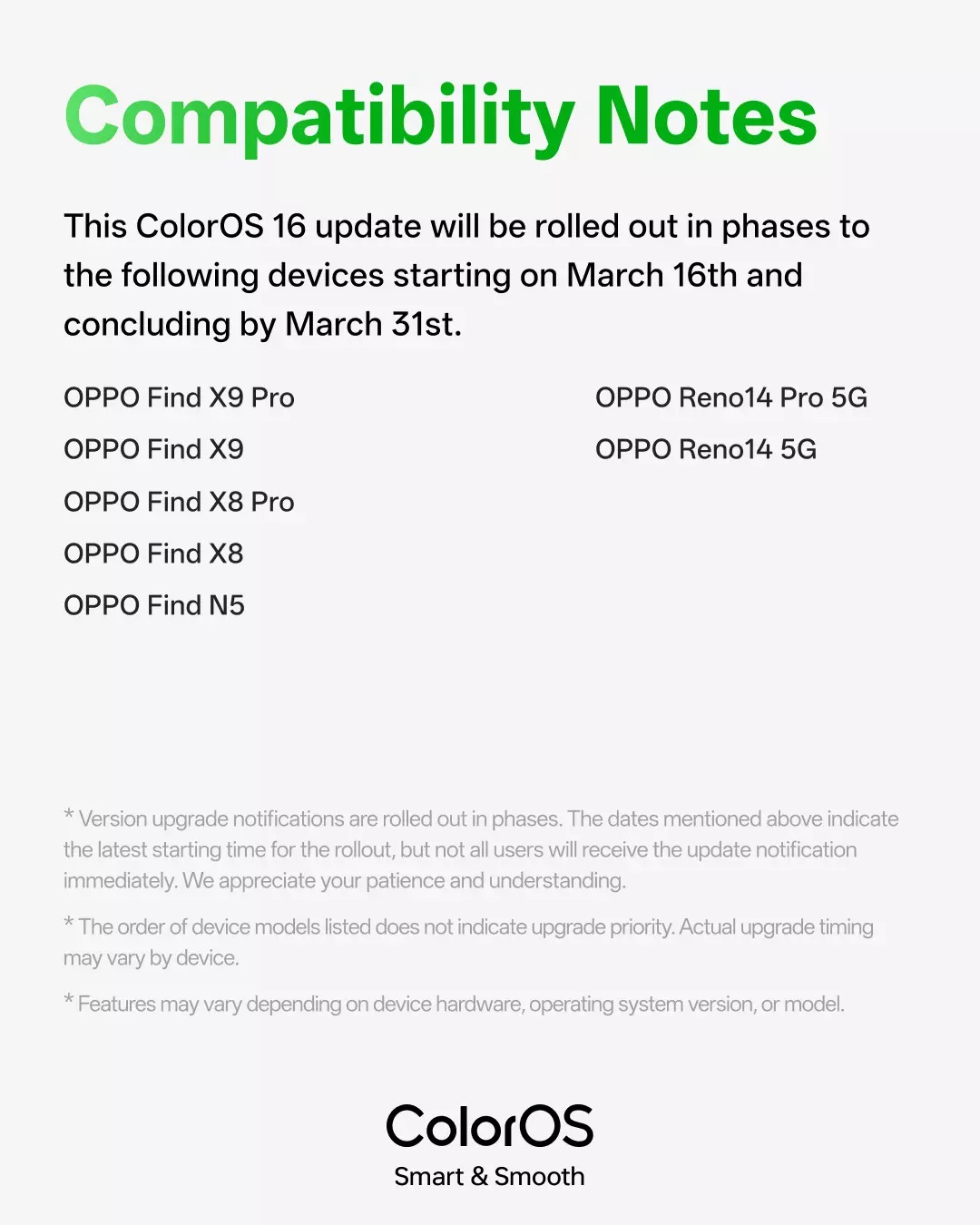
OPPO has started rolling out a new set of updates under ColorOS 16, bringing incremental but practical changes focused on security, usability, and everyday convenience. The rollout began on March 16 and is expected to continue in phases through March 31, depending on device and region.
A key addition is an upgraded Virus Scan feature. It identifies potentially harmful apps, explains the associated risk level, and allows users to remove them directly from the scan screen. The system highlights issues such as malicious APKs or apps with intrusive ads, reducing the need to manually search through settings for removal. The feature is positioned as a built-in safeguard aimed at improving device-level security without requiring third-party tools.
ColorOS 16 also introduces support for running multiple timers simultaneously. Users can manage different activities on a single screen, whether it is cooking, workouts, or task tracking. Each timer can be labeled and monitored together, and the interface now shows estimated stop times, making it easier to plan around ongoing tasks.
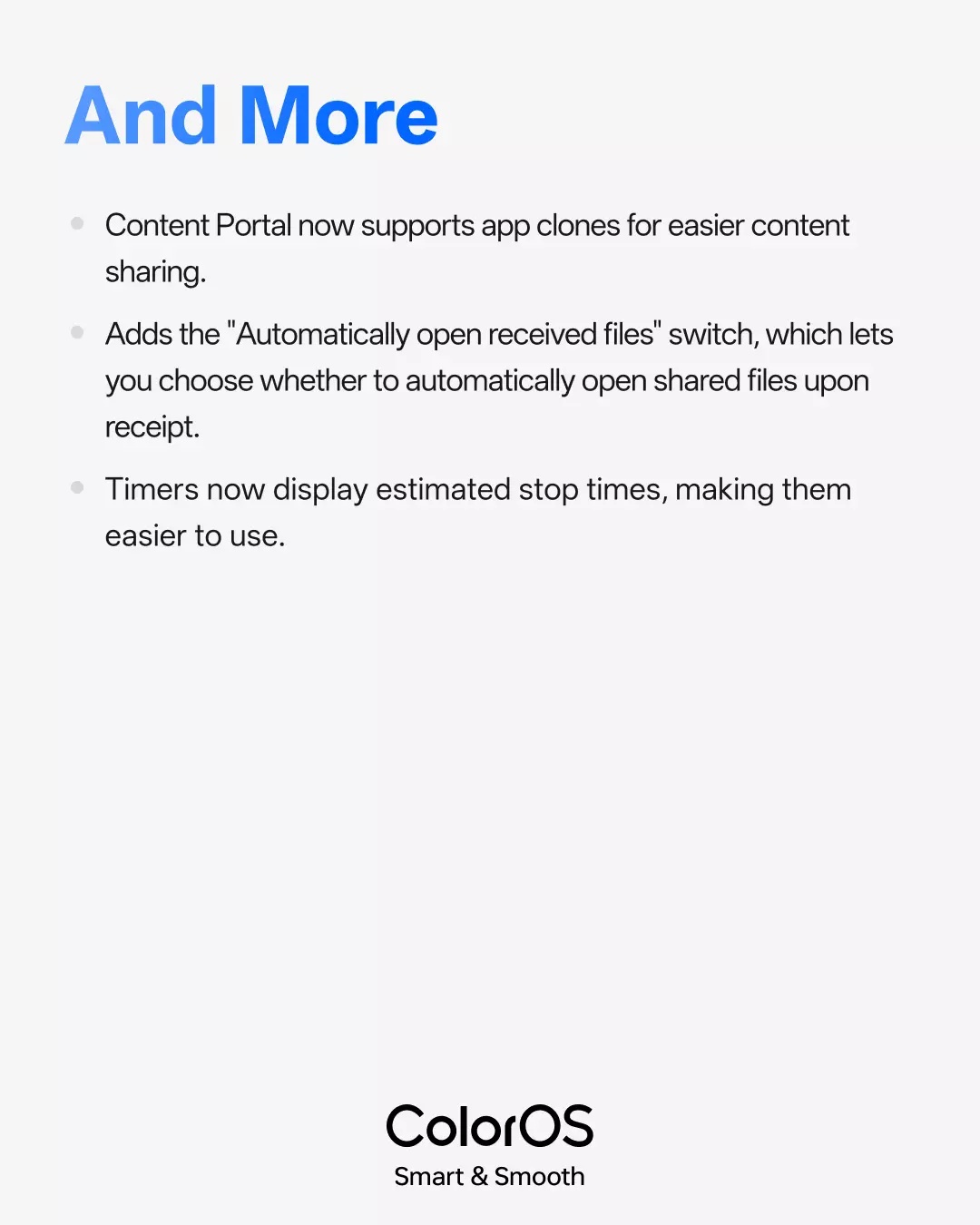
Additional updates focus on small but useful changes. Content Portal now supports app clones, allowing smoother content sharing between duplicate apps used for multiple accounts. A new toggle lets users decide whether received files should open automatically, adding a layer of control over incoming content. These changes are designed to reduce friction in daily use rather than introduce major interface overhauls.
The update is rolling out to several OPPO devices, including the Find X9 Pro, Find X9, Find X8 Pro, Find X8, Find N5, Reno 14 Pro 5G, and Reno 14 5G. As with most staged rollouts, availability may vary, and not all users will receive the update at the same time.
For more daily updates, please visit ourNews Section.
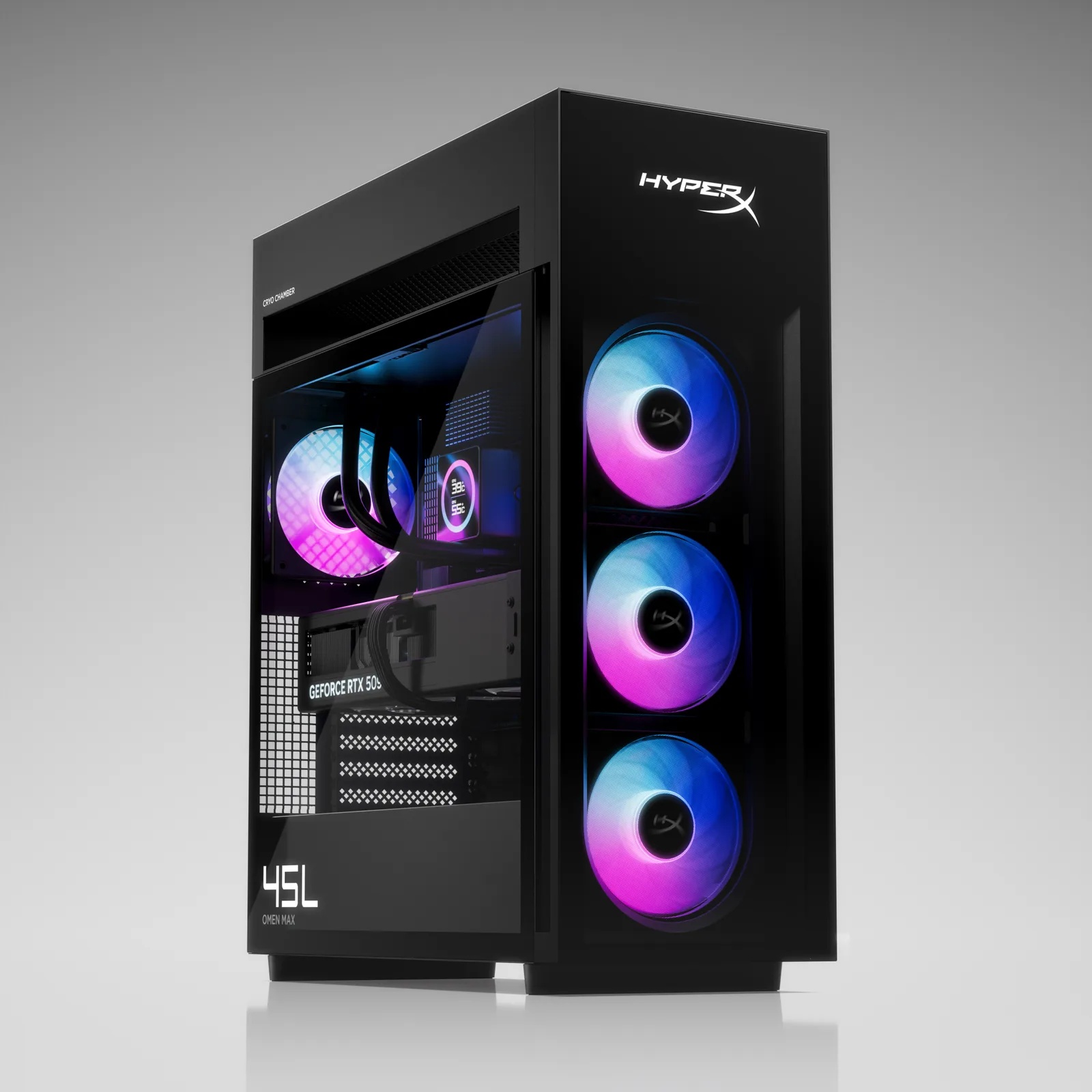
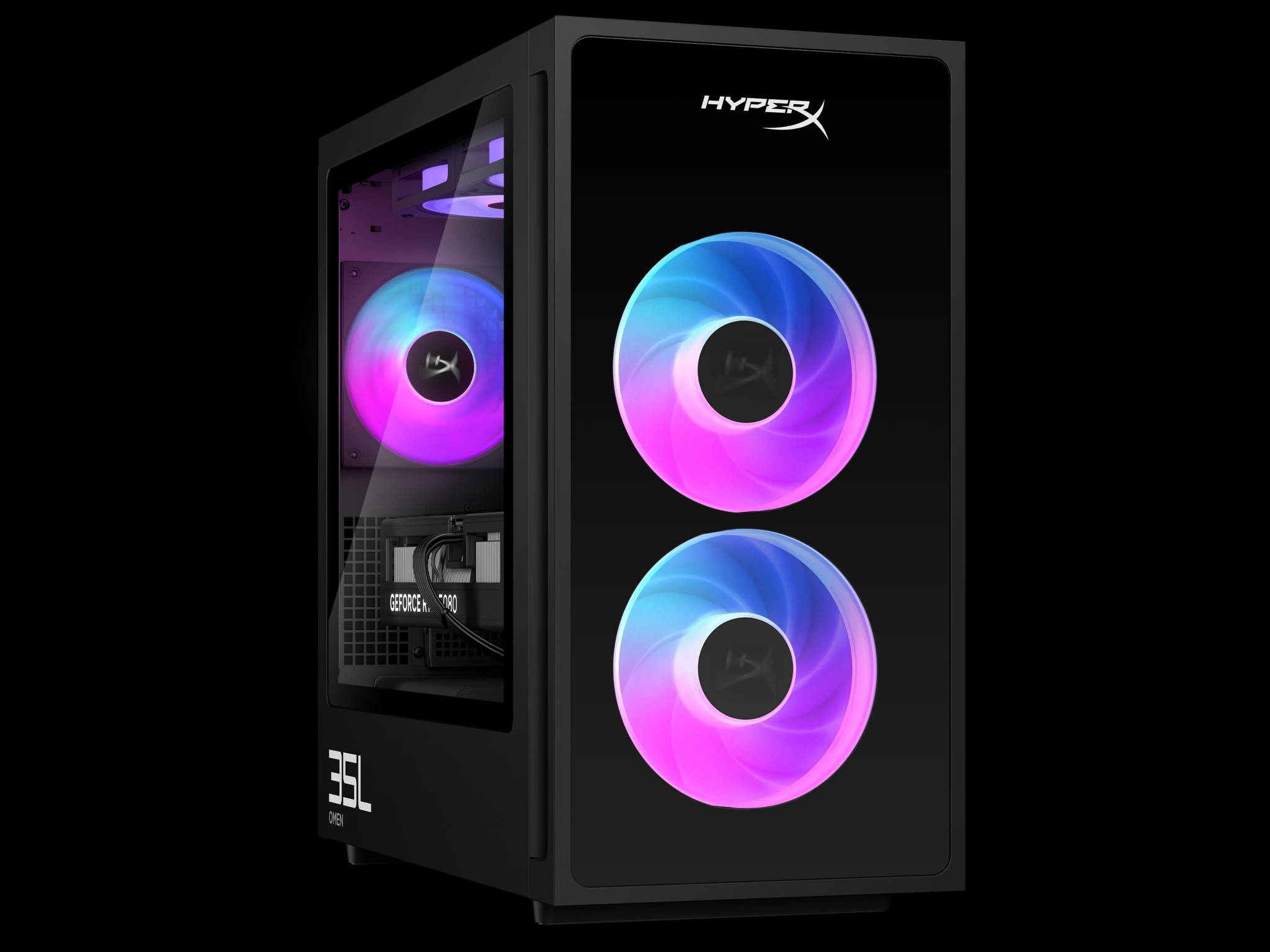
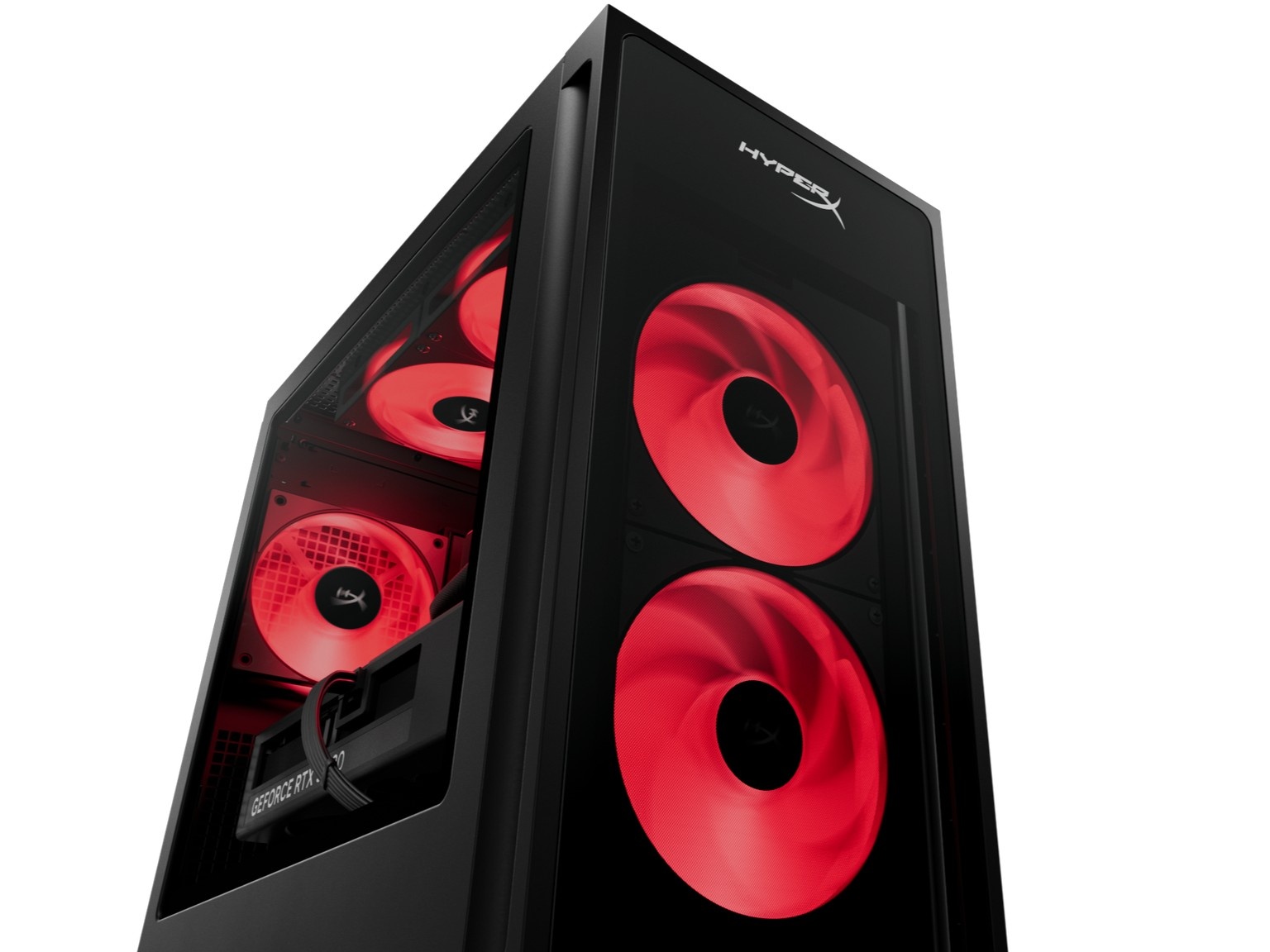
HP has announced new gaming hardware updates at its HP Imagine 2026 event. The lineup includes the HyperX OMEN MAX 45L and HyperX OMEN 35L.
HyperX OMEN MAX 45L
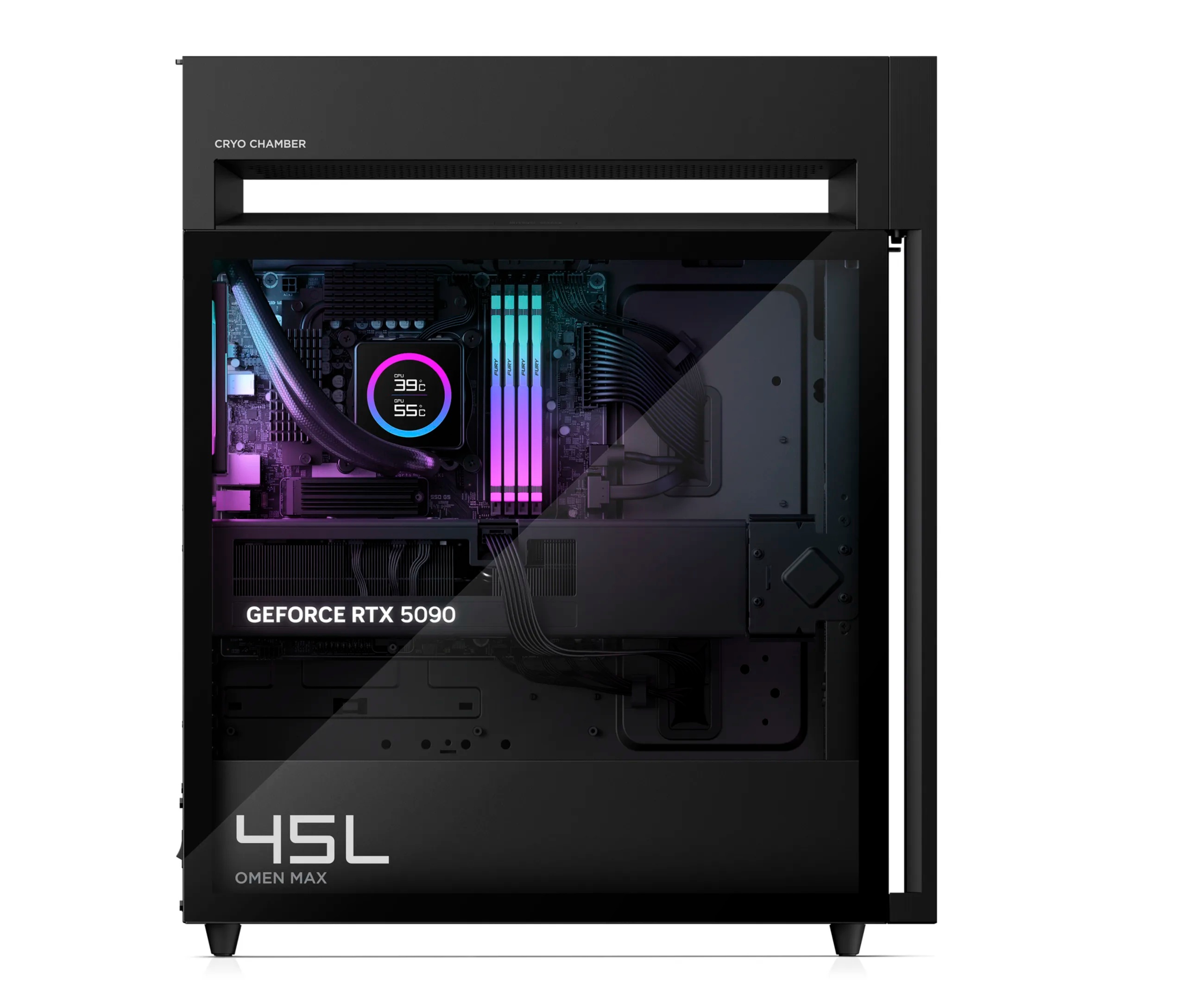
The HyperX OMEN MAX 45L is built for high-end gaming and heavy workloads. It runs on an Intel Core Ultra 7 270K Plus processor, which HP says offers up to 10 percent better gaming performance compared to the previous generation. The system can be configured with an NVIDIA GeForce RTX 5090 GPU and supports up to 128 GB of DDR5 RAM. It also includes a fully modular 1200W power supply for stable performance and future upgrades.
HP Omen Max 35L
Cooling is handled by the second-generation Cryo Chamber system, along with support for up to a 360 mm LCD liquid cooler. The desktop uses a tool-less design with improved cable management, making it easier to upgrade components. It also supports standard HyperX parts for easier customization.
The HyperX OMEN 35L is positioned as a more accessible option. It uses the same Intel Core Ultra 7 270K Plus processor but comes with an NVIDIA GeForce RTX 5080 GPU. The system is designed to deliver steady performance for gaming while keeping noise levels low. It uses an optimized thermal design for consistent cooling during long sessions. Like the 45L, it includes a tool-less chassis and supports future upgrades using standard components.
HP also shared updates to its software. OMEN AI is being expanded to support more games and improve system performance through automatic tuning. The OMEN Gaming Hub is getting updates that give users more control over performance settings and system management.
HP said the OMEN MAX 45L will be available starting in May. Pricing details have not been announced yet.
For more daily updates, please visit ourNews Section.
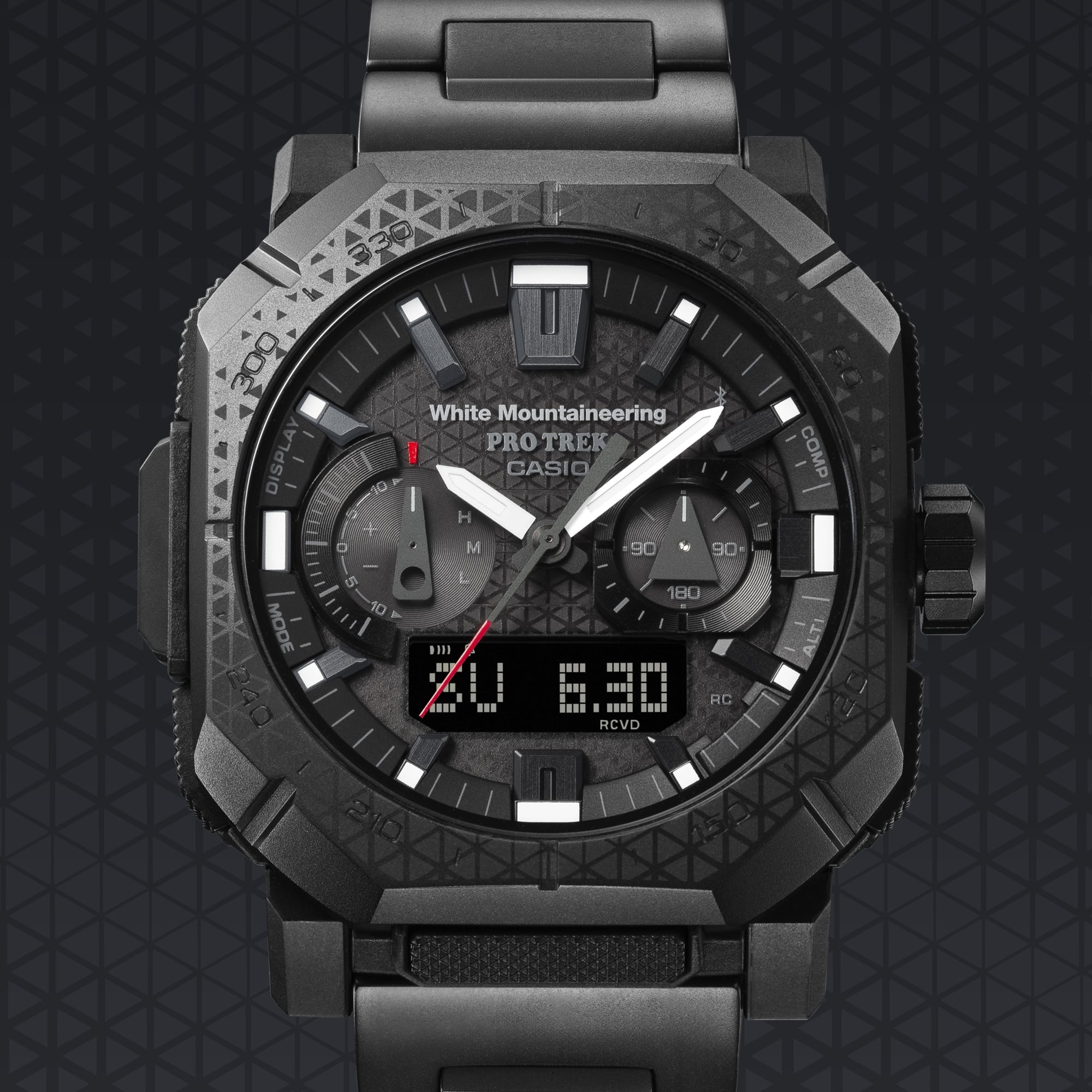
Casio’s Pro Trek lineup has received a new collaboration model with Tokyo-based label White Mountaineering, with the PRW-B1000WM-1 now appearing on US retail listings. The watch, which was introduced earlier this year, is currently marked with limited stock availability and carries a price tag of $990.
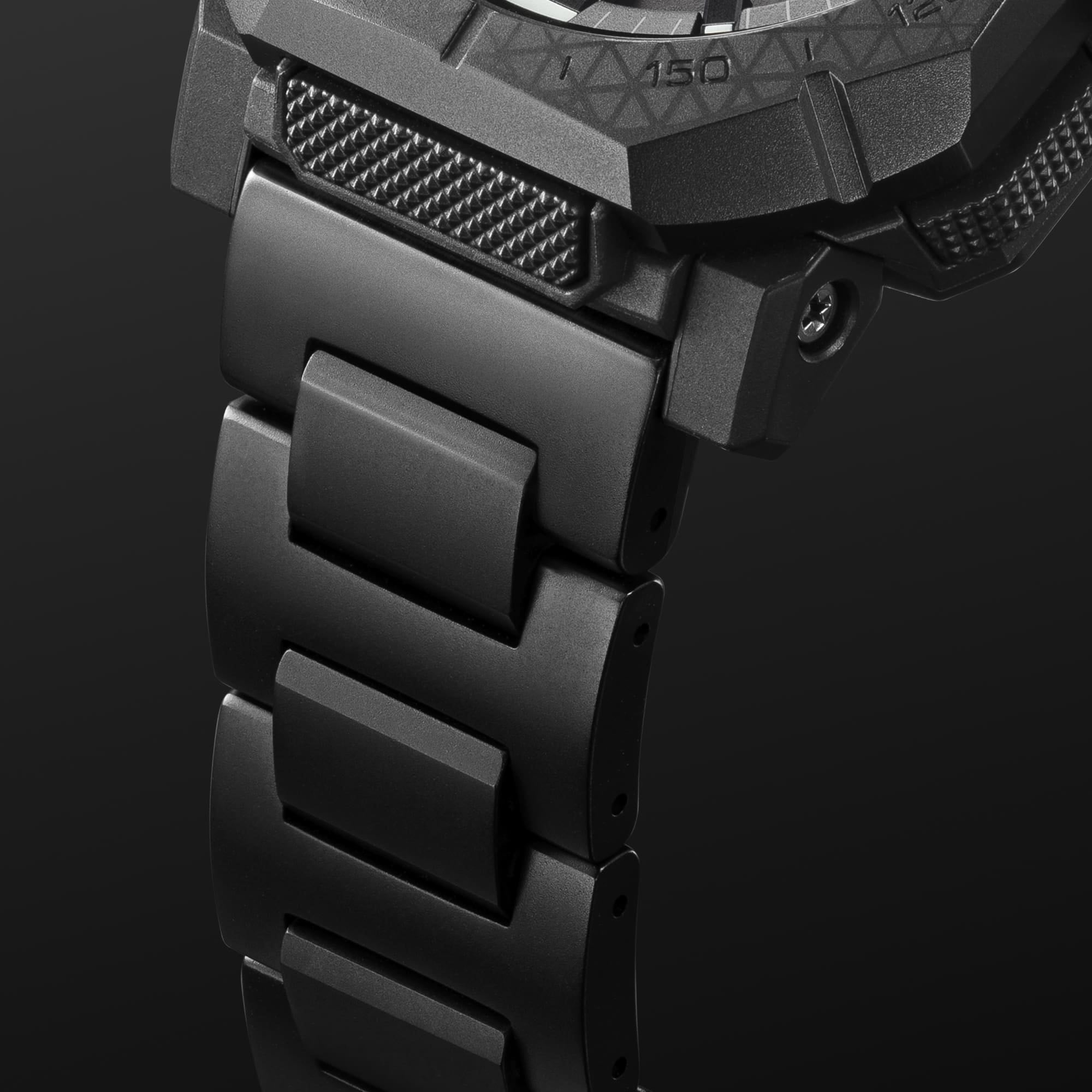
The model is based on the PRW-B1000 platform but shifts toward a full-metal build. It uses a matte black case paired with a solid titanium bracelet, replacing the standard resin construction seen in other variants. The bracelet follows an H-link design and includes a three-fold clasp with a double-lock mechanism. Titanium helps reduce overall weight while maintaining durability.
Visually, the watch keeps a low-contrast, utility-focused design. The dial uses a matte black base with white hour markers and hands, along with a red seconds hand for contrast. A triangular pattern, associated with White Mountaineering, is applied across the dial and bezel using translucent printing and ion plating. The detailing is subtle, relying more on texture than color.
The watch features an analog-digital layout, with a small digital display positioned in the lower section. A subdial at the 9 o’clock position functions as a location indicator when connected to the Casio Watches app.
In terms of functionality, the PRW-B1000WM-1 includes Casio’s Triple Sensor system, offering compass, altitude, barometric pressure, and temperature readings. It also supports Tough Solar charging and combines Multi Band 6 radio signal reception with Bluetooth connectivity for automatic time adjustment.
Other hardware elements include a sapphire crystal with anti-reflective coating and a case structure that incorporates flame-resistant bio-based resin. A dual LED backlight is included for visibility in low-light conditions.
The model sits at the higher end of the Pro Trek range. Retail listings indicating limited stock suggest that availability may be restricted.
For more daily updates, please visit ourNews Section.
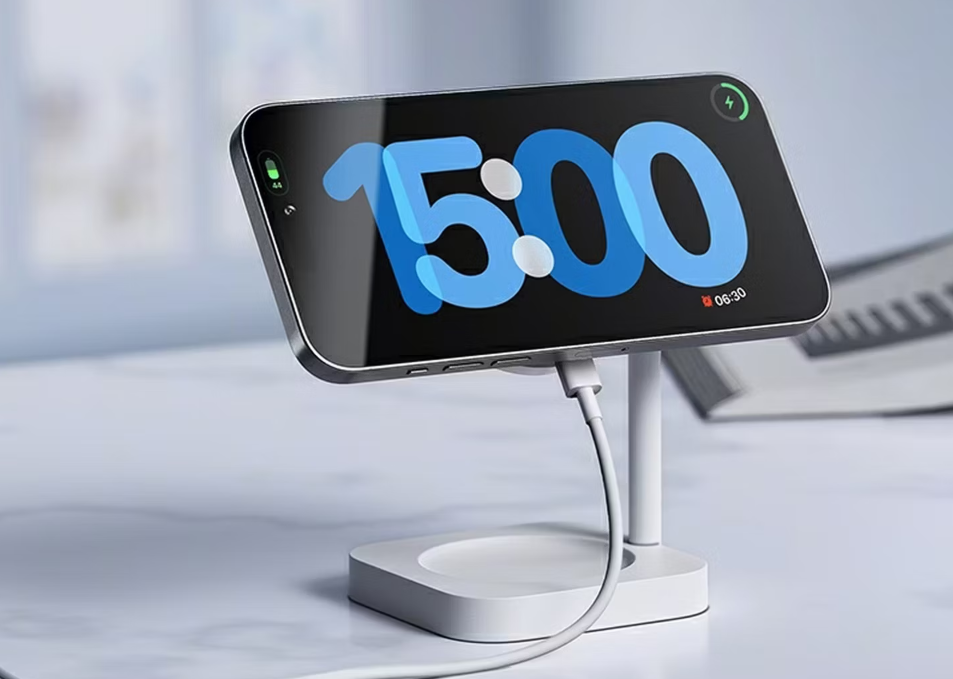
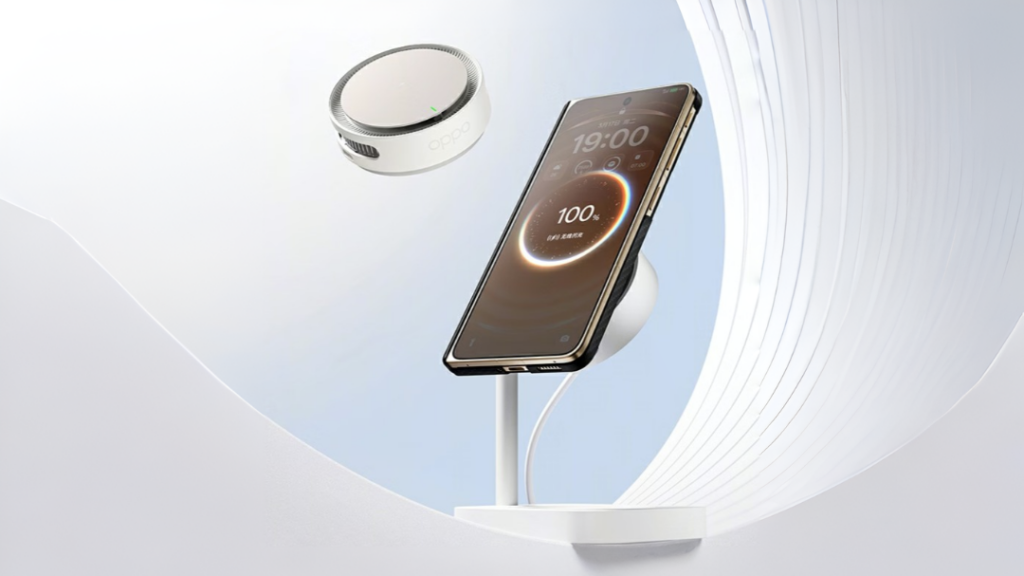
OnePlus has launched the Magnetic Turbo 2 AirVOOC 50W Wireless Charger. The new charger delivers 50W fast wireless charging, active cooling, and a built-in stand. It supports both Android devices and iPhones and is priced at 349 yuan (~$50).
OnePlus Magnetic Turbo 2 Specifications
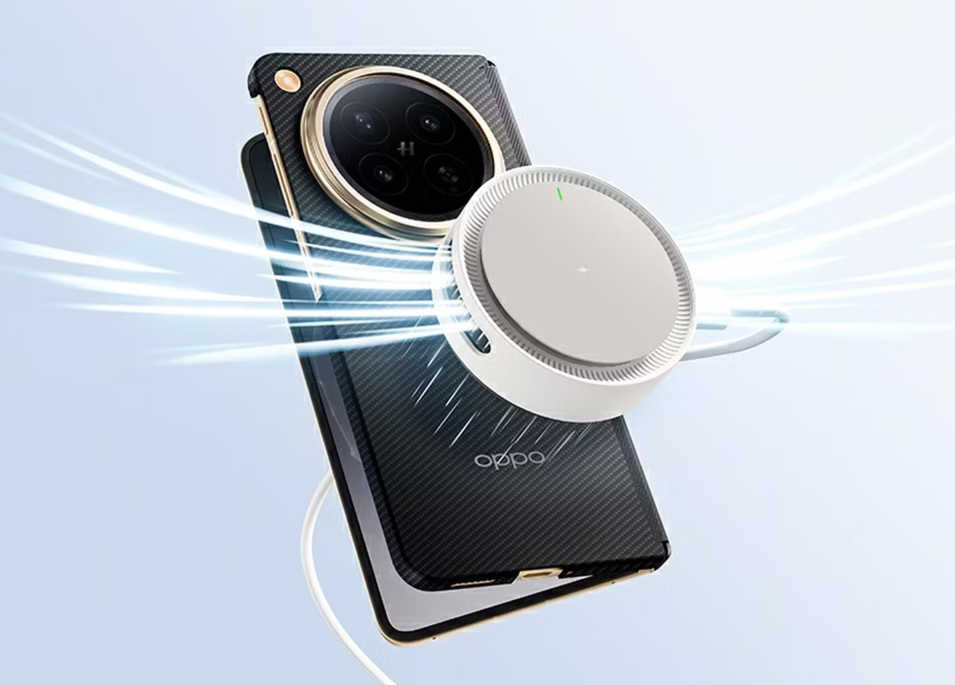
The charger offers high-speed wireless charging through the AirVOOC protocol. It provides up to 50W output for compatible Oppo and OnePlus devices when paired with an 80W or higher SuperVOOC power adapter. It includes magnetic alignment for seamless attachment and supports Apple’s magnetic wireless charging for iPhones. However, it does not support the standard Qi wireless protocol.
The Magnetic Turbo 2 uses a TEC cooling system to control temperature during charging. This system includes a semiconductor cooling plate, a centrifugal fan, and heat dissipation fins to manage airflow and reduce overheating. OnePlus has added multiple cooling modes, allowing users to switch between high-power charging, low-noise charging, and cooling-only modes with a double-tap on the charger.
The charger features a 360-degree adjustable stand that supports both vertical and horizontal orientations, making it ideal for video calls or watching content. It can also be detached for standalone use.
The device features a compact design with a diameter of 63mm and a height of 22.27mm. It weighs 265 grams, including the stand, and comes in a Cloud White finish.
OnePlus claims the device can charge the OnePlus 15T to 50% in around 40 minutes. The Magnetic Turbo 2 supports Apple’s StandBy mode when used with iPhones, further enhancing its functionality.
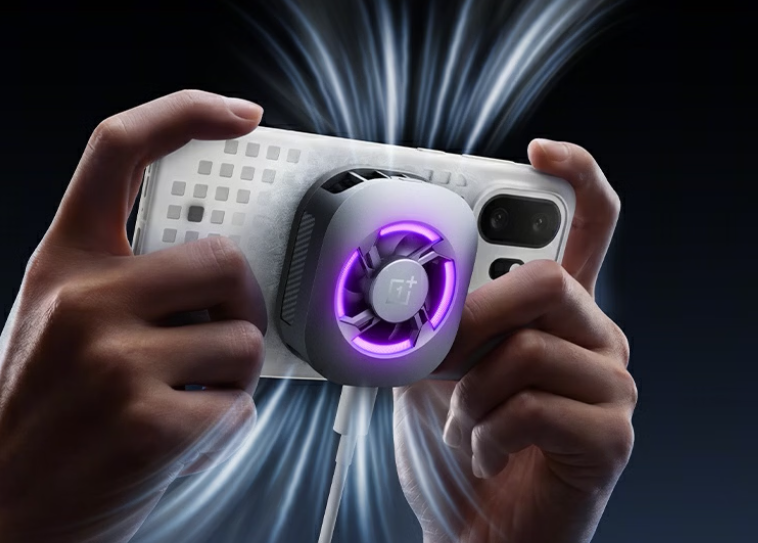
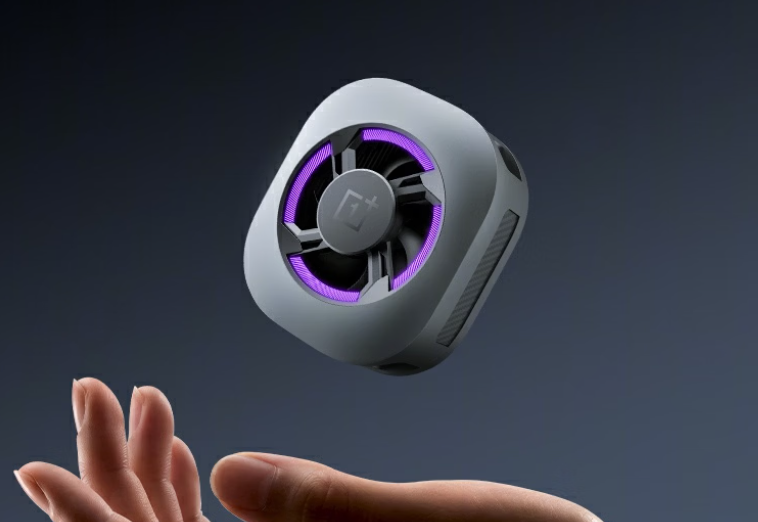
OnePlus has launched its new 40W Super Ice Magnetic Cooler, a high-performance cooling accessory designed for gaming and demanding smartphone tasks. The cooler is priced at 229 yuan (approx $33) and offers significant upgrades over earlier models, including powerful cooling capabilities and a compact design.
OnePlus Super Ice Magnetic Cooler Specs
OnePlus designed the cooler with a high-performance cooling system centered around a 1600mm² custom TEC cooling plate. The device can drop temperatures to 0°C in 18 seconds and as low as −1.41°C in 20 seconds under controlled conditions. The TEC cold surface can reach a minimum temperature of −22°C. The cooler delivers a maximum power output of 40W, a significant improvement over its predecessor’s 27W cooling capacity.
The cooler requires a PD 45W or higher fast charger to achieve optimal performance. OnePlus recommends pairing it with the company’s own 100W GaN SuperVOOC charger for the best results. It supports ColorOS X Mode, allowing automatic Bluetooth pairing and system performance optimization when used with compatible OnePlus devices.
The cooler features a dual airflow channel to keep hot air away from users’ hands, improving comfort during long use. It incorporates an axial fan, fin-based heat dissipation, and layered materials like copper foil and thermal silicone pads for enhanced heat conduction.
OnePlus included four adjustable cooling modes on the device: high, medium, low, and auto. The cooler connects magnetically to Android and iPhones, providing up to 10N of magnetic force for a secure attachment.
The magnetic cooler weighs 103 grams and measures 68.5 x 59 x 29 mm. It operates at noise levels of 39dB in performance mode and 28dB in low-power mode. It features RGB lighting with blue and purple effects for a gaming aesthetic and is built with durable PC and aluminum alloy in a Deep Space Silver finish.
Alongside this model, the company has also introduced an ultra-thin magnetic cooler, which it claims is the world’s thinnest magnetic smartphone cooler.
For more daily updates, please visit our News Section.
We use cookies on our website to give you the most relevant experience by remembering your preferences and repeat visits. By clicking “Accept”, you consent to the use of ALL the cookies.
This website uses cookies to improve your experience while you navigate through the website. Out of these, the cookies that are categorized as necessary are stored on your browser as they are essential for the working of basic functionalities of the website. We also use third-party cookies that help us analyze and understand how you use this website. These cookies will be stored in your browser only with your consent. You also have the option to opt-out of these cookies. But opting out of some of these cookies may affect your browsing experience.
Necessary cookies are absolutely essential for the website to function properly. This category only includes cookies that ensures basic functionalities and security features of the website. These cookies do not store any personal information.
Any cookies that may not be particularly necessary for the website to function and is used specifically to collect user personal data via analytics, ads, other embedded contents are termed as non-necessary cookies. It is mandatory to procure user consent prior to running these cookies on your website.