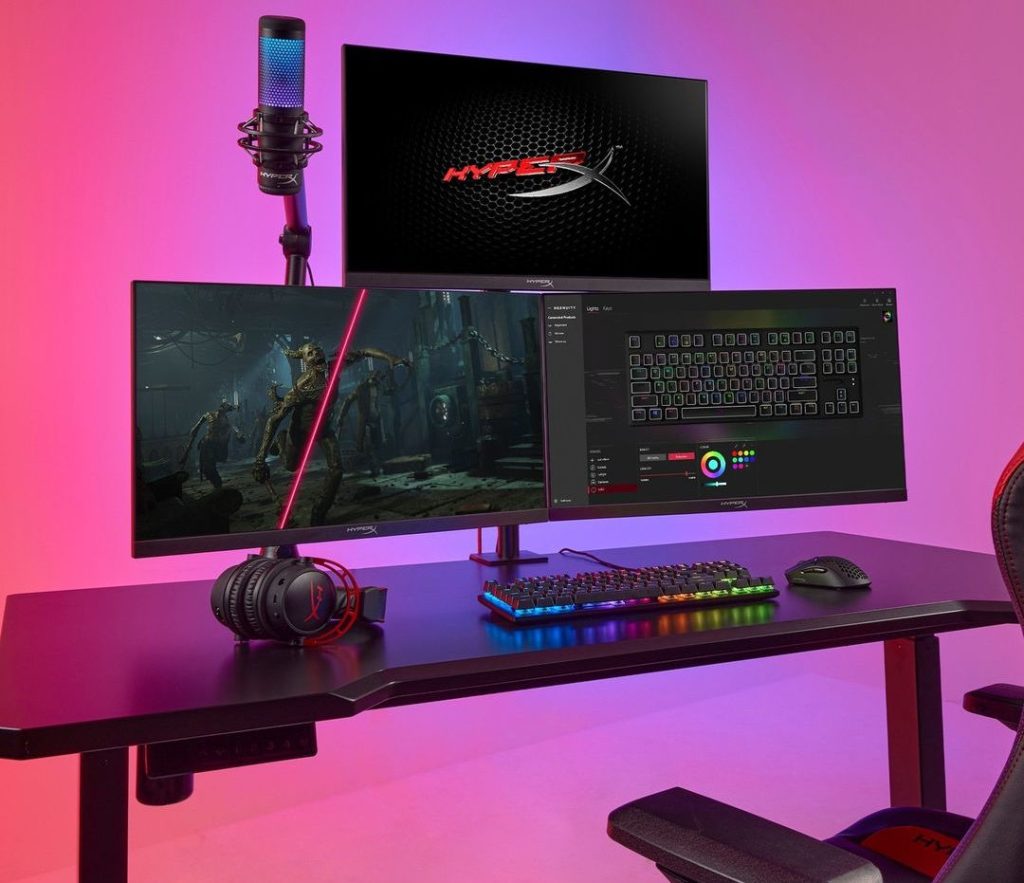
HyperX – a gaming brand owned by HP, recently entered the gaming monitor space with the new Armada series of monitors. As part of the debut, the company introduced the Armada 25 and Armada 27 monitors in the West back in August. Now that gaming monitors have entered the Indian market, let’s take a look at their specs and pricing.
The HyperX Armada 25, as the name suggests, is a 24.5-inch monitor. It offers a Full HD resolution of 1920 x 1080 pixels and supports a 240Hz refresh rate, making it ideal for e-sports gaming. The monitor offers outstanding images and rich colors. With its IPS panel and Nvidia G-Sync compatibility, the Armada 25 offers 1ms response times with overdrive in addition to variable refresh rates. The display offers a peak brightness of 400 nits and covers 99% of sRGB.
On the other hand, HyperX Armada 27 comes with higher-end specs and better performance. It is a larger 27-inch monitor that offers a Quad HD 2560 x 1440 pixel resolution. It comes with a refresh rate of 165Hz for smoother graphics.
The Nvidia G-Sync compatibility on the monitor lets it support variable refresh rates, and the IPS panel allows for 1ms response times. This monitor covers 95% of the DCI-P3 color gamut, and its 400 nits of brightness allow it to achieve DisplayHDR 400 certification, which means it can display HDR at an entry level.
The two HyperX Armada monitors come with an ergonomic arm and desk mount. The arm extends or retracts, allowing ergonomic viewing. They are also comparatively easier to setup since they come with two mounting options (C-clamp or grommet) and a quick-release system.
The HyperX Armada 25 gaming monitor’s price in India is set at Rs. 42,590. While the Armada 27 gaming monitor comes with a price tag of Rs. 46,290.
Xiaomi launched the Mi 10 series back in 2020. The lineup included premium but value-for-money handsets like Mi 10 and Mi 10 Ultra. Both handsets gained huge popularity among users thanks to their high-end imaging capabilities, good performance, and excellent battery life. Now, it has been reported that the two OG handsets are being sold on TikTok at a discounted price. Let’s look at the details.
Xiaomi Mi 10 and Mi 10 Ultra are being sold in China through TikTok (via ITHome). The standard Mi 10, which debuted with a price tag of $563, is now available on the video-sharing app for 2299 yuan ($323). While the higher-end Mi 10 Ultra is being sold at $492 (launch price $745).
To recall, the Mi 10 Ultra was launched back in 2020 with serious internals. It came with a truly impressive camera system consisting of an OmniVision 48MP sensor with an OIS lens, a 48MP Sony sensor with a 5x zoom lens, a 12MP portrait shooter, and a 20MP camera with a 12mm ultra-wide lens.
It has a 6.67-inch Super AMOLED display that offers 1080x2340px resolution, a 19.5:9 aspect ratio, 386ppi; 120Hz refresh rate, HDR10+ support, 800nits brightness, and 1B colors. It was powered by a Snapdragon 865 processor paired with up to 16GB RAM. The device packs a 4,500mAh battery that supports 120W fast charging, 50W wireless charging, and 10W reverse wireless charging.
The standard Mi 10 also comes with a 6.67-inch Super AMOLED display like the Ultra model but offers only a 90Hz refresh rate. The handset featured a 108MP main camera that was accompanied by a 13MP ultra wide angle unit, a 2MP macro, and a 2MP depth sensor. It is backed by a 4,780mAh battery that supports 30W wired charging and 30W wireless charging.
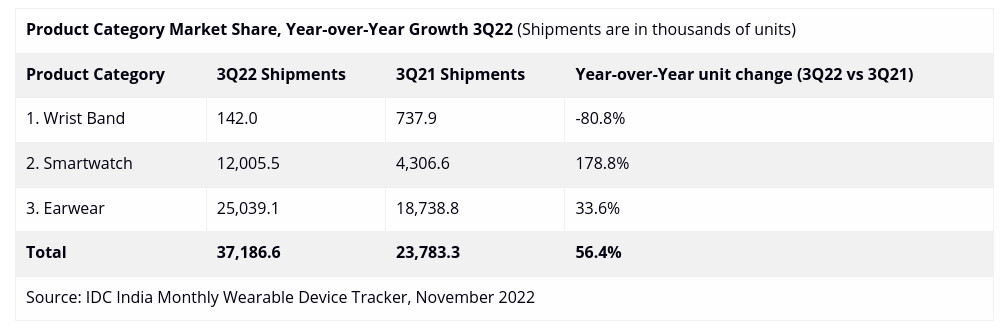
The wearables segment comprises of fitness trackers, smartwatches and audio devices. As per International Data Corporation (IDC), the wearable market in India grew 56.4 percent year-on-year in the third quarter of 2022 i.e. the period from July to September. All three product categories contributed to 37.2 million shipments compared to 23.7 million units in the same period last year.
As per the IDC report, smartwatches registered a massive 178 percent YoY growth. Brands sold 12 million smartwatches in the Q3 2022 compared to 4.3 million in Q3 2021. Meanwhile, shipments of fitness trackers declined 80 percent. Earwear category recorded 33 percent change with 25 million units sold compared to 18 million during the corresponding year.
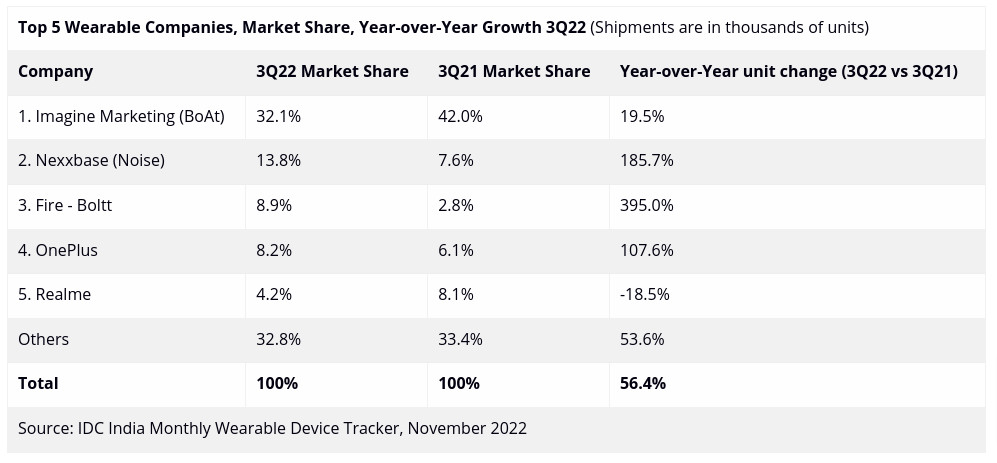
boAt led the overall wearable market with 32.1 percent share whereas Noise came second with 13.8 percent share. Fire Boltt sits at the third spot with 8.9 percent share. OnePlus and Realme bagged the fourth and fifth spots respectively with 8.2 and 4.2 percent share in the market respectively. Realme was the only brand that recorded a negative 18.5 percent year-on-year market share decline.
Now coming to the smartwatch category, Noise led the market with 216.5 percent YoY growth. The brand’s ColorFit Caliber and ColorFit Icon Buzz accounted for more than 30 percent of shipments. Fire Boltt’s Ninja Pro Max, Ring 3 & Ninja Bell smartwatches pushed the brand to the second spot. boAt came in third place thanks to Xtend and Wave Call smartwatches.
In the truly wireless segment, boAt had 41.1 percent share courtesy of Airdopes 141 and 131 which were top sellers. Noise maintained the second position whereas OnePlus bagged the third spot with 6.8 percent share due the contribution of Bullets Wireless Z2. Mivi grew by 1921.1% YoY in the earwear category and is in fourth place in the TWS headset category.
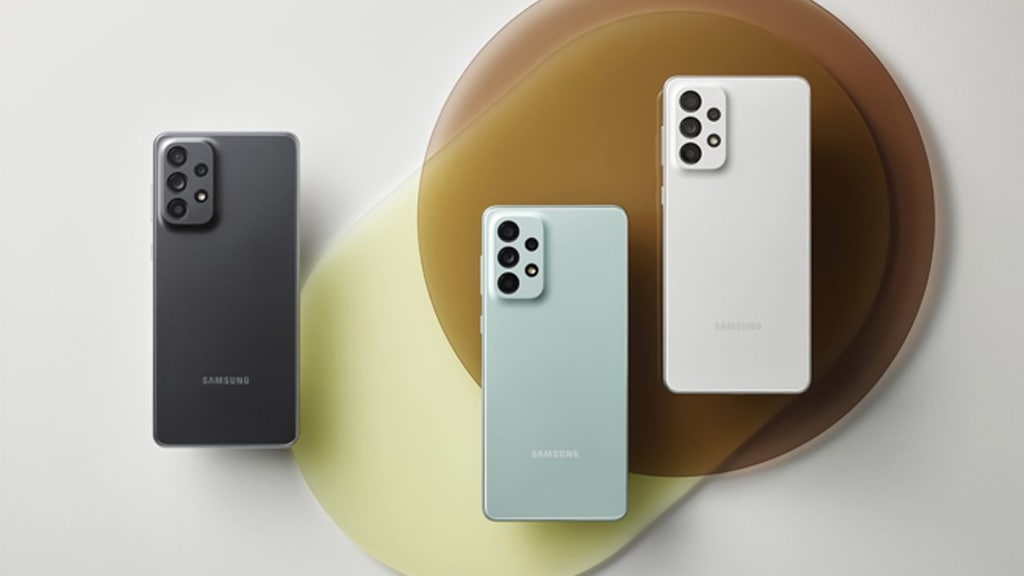
Samsung has picked up the pace with its One UI 5 update program. The firm recently released stable updates to its older flagship smartphones and even to the mid-range Galaxy A33. Now, it has begun rolling out stable One UI 5 based Android 13 build to two new mid-rangers— Galaxy A33 and Galaxy A73. The update is currently being seeded in select regions, with a wider rollout expected in a few weeks.
The stable One UI 5 update for the Galaxy A73 5G is currently being released in Malaysia with firmware version A736BXXU2BVK2. The update doesn’t bring the November 2022 security update, though. While the Android 13 update for the Galaxy A33 5G is rolling out in Europe with firmware version A336BXXU4BVJG.
The new update is reported to bring all the new features Google introduced with the latest version of Android and also some Samsung-exclusive features. However, the new software still features the October 2022 security patch and not the November 2022 security patch. It has a download size of around 2GB, so it’s better to use Wi-Fi if your carrier deal is not data heavy.
If you are a Galaxy A33 or Galaxy A73 user living in Europe or Malaysia, you can download and install the Android 13 update by going to Settings, tapping on the Software update, and selecting “Download and install.” Other regions will likely receive the update in a few days, so keep an eye out for an OTA notification.
Talking about the update itself, One UI 5 comes with a slew of changes and improvements. It has a better Material You implementation, stacked widget support, a built-in OCR feature to extract text from images, Bixby Text Call, One UI Modes, and much more. The software also introduces a new Maintenance Mode feature that will allow users to hide their data from service technicians when the device is under repair.
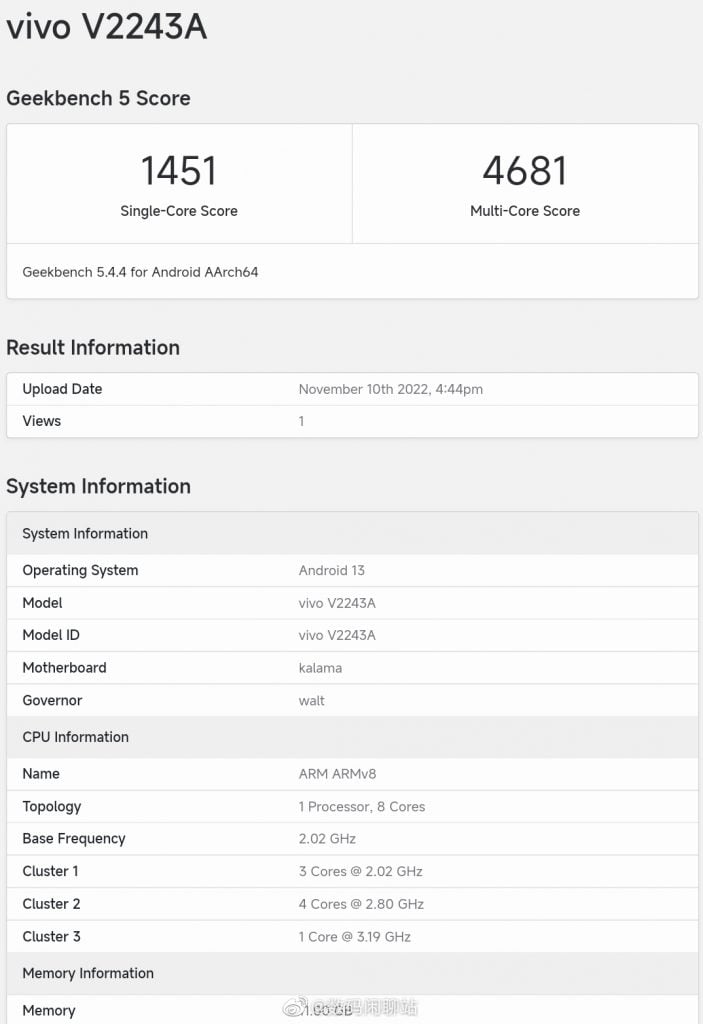
A Vivo model said to be the iQOO 11 has appeared on GeekBench. The smartphone is listed on the benchmarking platform with model number V2243A. It was revealed by a recent report that the iQOO 11 and 11 Pro heading to the Chinese market have V2243A and V2254A model numbers. The iQOO 11 also appeared on the IMEI database with the same model number.
The Geekbench listing shows that the device will run on the unannounced Qualcomm Snapdragon 8 Gen 2 processor codenamed Kalama. The processor is paired with 11GB RAM, which isn’t likely the topmost model. The device also runs on the latest Android 13 operating system out of the box.
On the benchmark score, the Vivo V2243A smartphone has a single-core running score of 1451 points while on the multi-core test, it pooled a total score of 4681. The chipset is shown to have a super core with a frequency of 3.19GHz.
The iQOO 11 had earlier been certified by China’s 3C showing that the device will be equipped with a powerful 120W charger. Previous reports also show that the device will pack a flat Samsung E6 AMOLED display with 2K resolution and 120Hz refresh rate support. The device will also feature PWM dimming. The topmost model is tipped to have a 16GB and 512GB memory combination.
There is no word yet on the launch date for the iQOO 11 but it is expected to launch alongside the iQOO 11 Pro.
OPPO is expected to debut the Find N2 next month in China. It will be the second-generation foldable smartphone from the brand and the successor to the last year’s model. Rumours also suggest that OPPO will announce the Find N Flip alongside the N2. Key specifications of the OPPO Find N2 have leaked online in the past.
Breaking! The new OPPO folding phone OPPO Find N2 is lighter than the iPhone 14 Pro Max, less than 240g,which is a great progress of folding phones. I think It uses new materials. pic.twitter.com/zSUQ4ZTrdL
Now in a new development, popular tipster Ice Universe reveals that the OPPO Find N2 will be the lightest horizontal folding phone yet. The device is said to weigh under 240 grams which is 15 percent lesser than its predecessor that weighs 275 grams. The upcoming Find N2 is also touted to be significantly lighter than other foldables like Samsung Galaxy Z Fold 4, Huawei Mate X2, Xiaomi Mix Fold 2, and Vivo X Fold+. If the upcoming OPPO foldable phone indeed weighs less than 240 grams, then it will also be lighter than some classic bar phones including the iPhone 13/14 Pro Max, ASUS ROG 6D Ultimate, and more.
Ice Universe says that OPPO might be using new materials that could potentially reduce the weight of the upcoming Find N2. Horizontal foldable phones have been suffering from bulkiness and form factor problems resulting into lesser adoption.
As for the core specifications, the OPPO Find N2 is tipped to come with a 5.5-inch primary OLED display with 120Hz refresh rate and a 7.1-inch interior screen. The device will reportedly be powered by a Snapdragon 8+ Gen 1 SoC and be backed by a 4,750mAh battery unit with support for 67W wired and wireless charging. The foldable phone is expected to feature a 50MP Sony IMX890 main camera, a 48MP Sony IMX581 ultra-wide lens, and a 13MP telephoto camera.
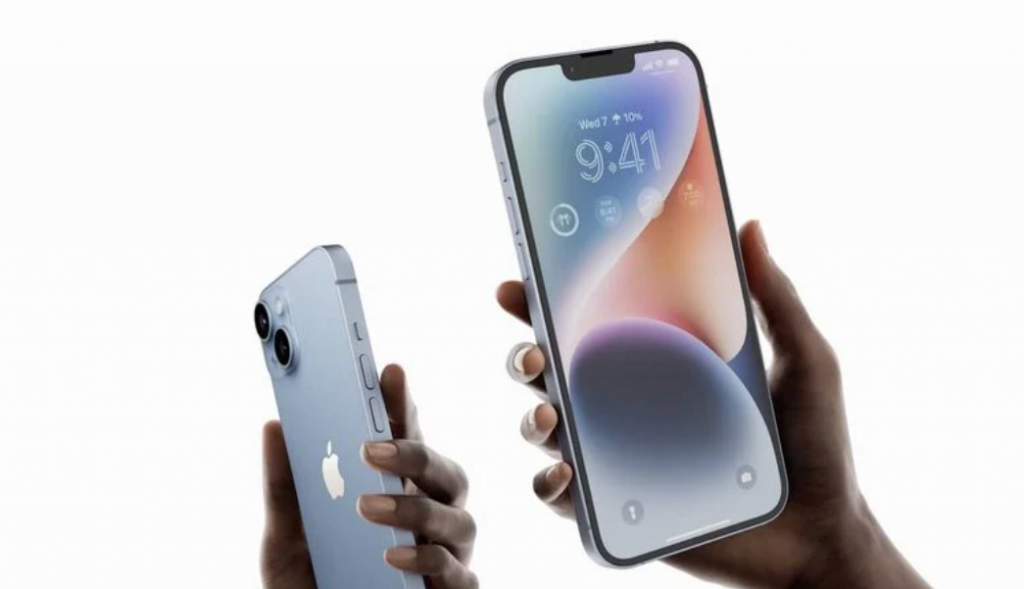
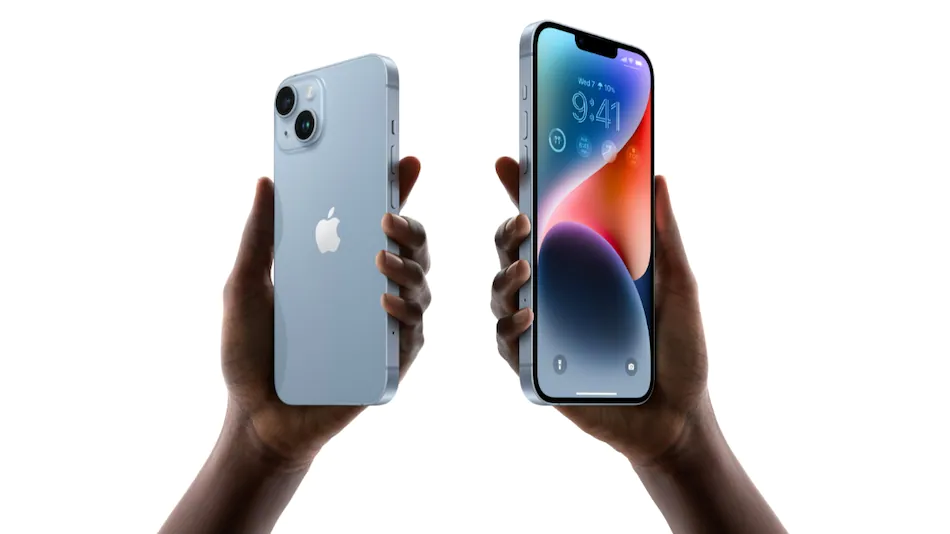
The newly launched AppleiPhone 14 lineup has an all-new feature called Emergency SOS via Satellite Mode. Almost all the smartphones in the market come with the SOS mode, but the one found on the new iPhone 14 lineup is an advanced feature. The Satellite-based SOS mode on the new iPhones wil go live for the US and Canada later this month. Now, the brand has officially disclosed how much effort was put into developing this new system.
According to the company, “When an iPhone user sends an Emergency SOS message, it is received by one of Globalstar’s 24 low-Earth orbit satellites, which move at speeds of around 25,749 km/h. The message is subsequently transmitted by satellite to custom ground stations situated at strategic spots around the world.”
Cobham Satcom in Concord, California, designed and constructed new high-power antennas exclusively for Apple. Each ground station has numerous antennas that communicate with the satellites. When the message is received by the ground station, it is forwarded to either emergency services or a relay center staffed by Apple-trained emergency professionals.
The Cupertino firm paid for key upgrades to Globalstar’s satellite network and ground stations. As a result, over 300 Globalstar personnel will support the new iPhone 14 Emergency SOS service. Apple added that Emergency SOS via satellite makes use of a band reserved for mobile satellite services.
Apple spent $450 million on the entire Emergency SOS initiative. The majority of that money was spent on developing infrastructure for the feature in collaboration with satellite provider Globalstar. The feature is currently limited to US and Canadian markets, and the brand may expand the availability of the feature in the future. But as of now, the brand does not have any plan to expand outside the US markets.
Fire Boltt Ring Plus smartwatch has launched in India. It is the latest addition from the homegrown brand under its Ring series smartwatches. The device is said to feature the biggest display. The Fire Boltt Ring Plus is a budget offering and competes against other smartwatches from brands like Noise, boAt, Realme, DIZO, Redmi and others under the Rs 3,000 price segment.
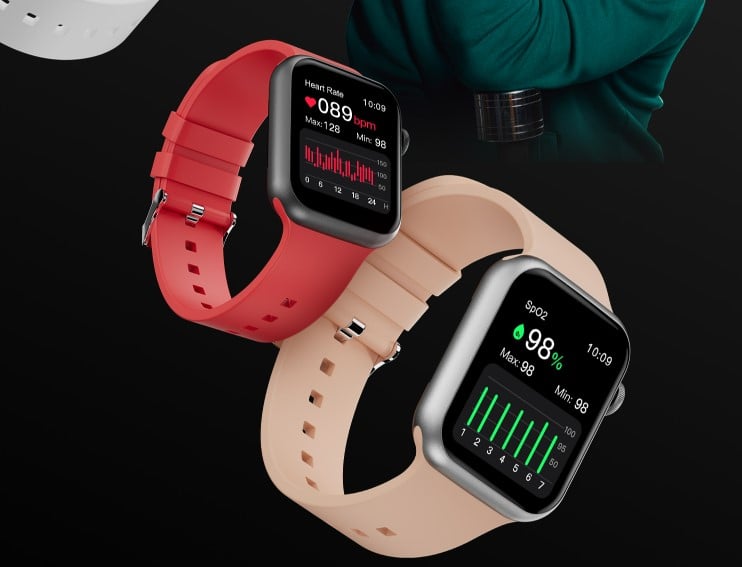
The Fire Boltt Ring Plus sports a square dial and it looks identical to the Apple Watch with a traditional crown button on the top right side. The device features a large 1.91-inch screen bearing a resolution of 240 x 280 pixels. It comes with a textured strap and is water resistant up to 5 meters.
On the health-centric front, the Fire Boltt Ring Plus is equipped with a heart-rate monitor, SpO2 sensor, sleep tracker, and female health care. It comes with sedentary and hydration reminders. The wearable device packs support for more than 100 sports modes including basketball, football, climbing, tennis, and more.
The Fire Boltt Ring Plus features a built-in mic and speaker that offers Bluetooth calling support with access to a quick dialpad, call history, and contacts syncing features. There is also a voice assistant for hands-free controls. The smartwatch features Thunder Battleship and Young Bird built-in games and packs convenient features like notifications display, weather updates, camera and music control, and more.
The Fire Boltt Ring Plus carries a price tag of Rs 2,499 and it comes in Navy Blue, Red, White, Pink, and Black colours. The smartwatch will officially go on sale from Amazon starting November 12th.
Apple and Amazon are facing legal actions in the US for allegedly hiking prices for the former’s consumer electronic product by driving out resellers on the latter’s e-commerce platform. Here are all the details.
The two tech giants are facing a class action antitrust lawsuit in the US for conspiring with one another to drive up the prices of iPhones and iPads. Both companies did this by removing nearly every other resellers of the new Apple product like the latest iPhones and iPads from the Amazon online store website. Notably, the proposed class action in the Seattle federal court objected to an agreement that came into effect on January 2019 (Via Gadgets360).
This lawsuit claims that Apple gave Amazon a 10 percent discount on all of its products in exchange for letting just 7 out of its 600 resellers stay on the e-retailer’s platform. In other words, this basically made Amazon the largest reseller of new iPhones and iPads on its website. The complaint claimed that after the two companies made this move, the prices for certain Apple products rose as much as 10 percent while the iPhone maker focused on stabilizing prices for its retail stores.
The complaint added that “Erecting barriers to entry to keep competitors out and raising prices in the wake of their elimination is precisely the kind of conduct that Congress enacted antitrust laws to prevent. The case is open and shut.” Both firms have yet to give out a statement regarding this matter. But the combined product revenue of the two companies are expected to have topped 125 billion US Dollars in just the third quarter of this year alone. So its clear to say that this alleged collusion if true, had both brands generate billions of dollars.
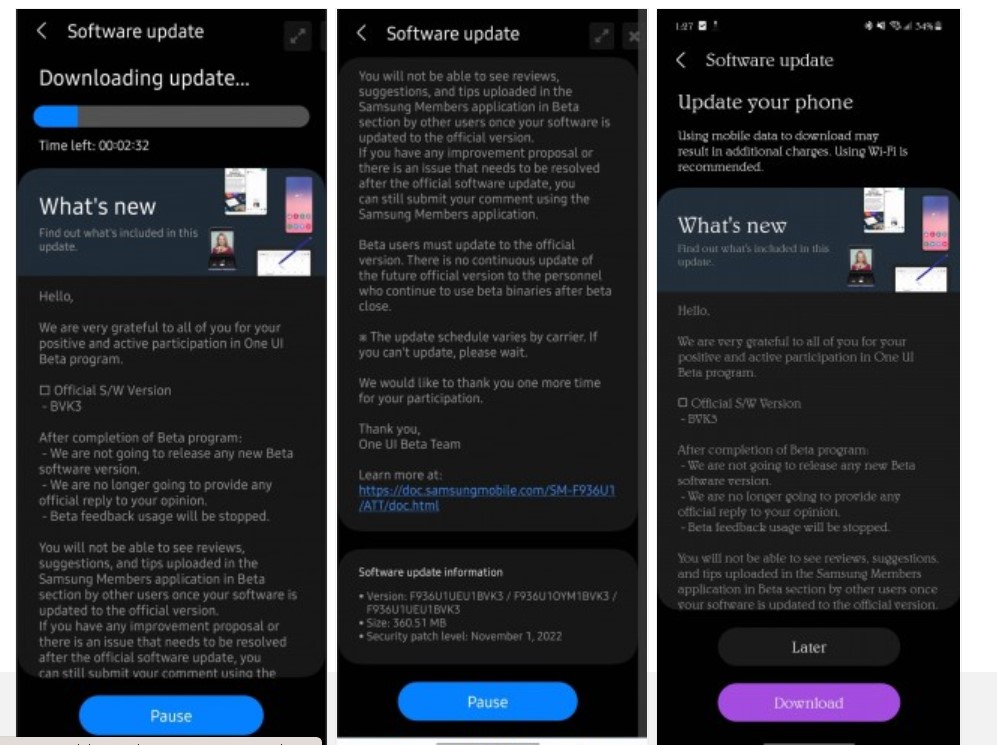
Samsung Galaxy Z Fold 4 and Z Flip 4 are now receiving OneUI 5.0 stable update in the US. The software update version is based on the latest Android 13. The South Korean brand has been busy rolling out the Android 13 stable update to the Galaxy S22 series last month and recently it was released for the S21, S20, and Note 20 lineup. The latest OS version also arrived on the Galaxy A53 and A33 5G.
Now, the list of Samsung Galaxy smartphones getting the OneUI 5.0-based Android 13 has expanded with the fourth-generation foldables. It’s worth noting that the update is only limited to the US market for users who have carrier-unlocked models of the Galaxy Z Fold 4 and Flip 4. It is also only for users who have enrolled in the One UI 5.0 beta program. The update for the Fold 4 comes with firmware version F936U1UEU1BVK3 whereas the Flip 4 has a firmware version ending with BVK3. The software version brings November 2022 security patch to both foldable phones.
Users who own the Galaxy Z Fold 4 or Flip 4 in the US running OneUI 5.0 Beta can download and install the Android 13 stable update by navigating to Settings > Software update > and tapping Download and Install. Samsung says that it has ended the OneUI 5.0 beta program in the US which means that smartphones that received the update in the country will soon start receiving a stable build of Android 13. The software version brings slight UI design changes and improvements.
As we edge closer to the Samsung Galaxy S23 series launch, there have been a number of rumors and leaks surfacing regarding the new flagship devices. Now, the latest report has revealed interesting details regarding the Galaxy S23 Ultra‘s cameras.
Sources close to the South Korean tech giant’ supply chain have tipped TheElec regarding a shift in suppliers for some of the image sensors for the Galaxy S23 Ultra. Apparently, Sunny Optical will be the supplier for the upcoming smartphone’s ultra wide angle lens and its 10x zoom camera. As per the report, the Galaxy S23 Ultra will have a folded 10 megapixel 10x zoom sensor and a 12 megapixel ultra wide angle lens, both of which would be supplied by Sunny Opticals.
While these sensors will be an improvement over the previous generation Galaxy S22 Ultra, it appears that the selfie camera on the Galaxy S23 Ultra will have a smaller resolution sensor. For those unaware, the company is planning on making major improvements to its camera setup on the upcoming flagship, with the primary sensor being a massive 200 megapixel sensor. However, the front will have either a 10 megapixel or a 12 megapixel selfie shooter.
This is quite a bit lower than the 40 megapixel image sensor that was shipped in the Ultra models since the Galaxy S21 Ultra. If this news is true, Samsung Electronic is apparently looking to phase out the use of any Sony made image sensors on its latest generation of flagship smartphone. But keep in mind that this is still just an unconfirmed report, so take this news with a pinch of salt for now and stick around for more updates.
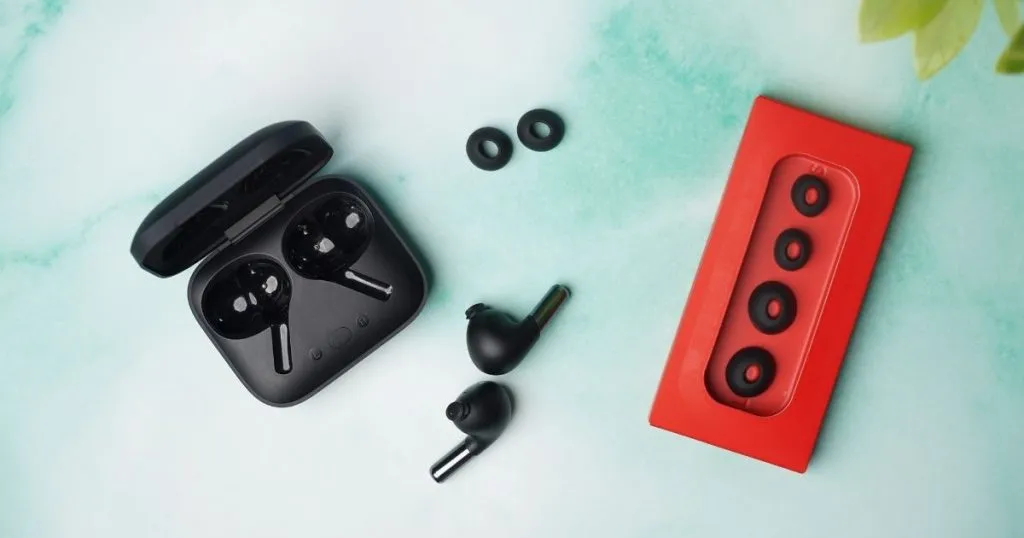
The original OnePlus Buds Pro TWS earbuds was first launched back in July 2021 and was the company’s first ever flagship grade TWS models. Now, the successor to these earphones are set to launch soon. So here’s all that we know about it.
The Chinese smartphone maker is expected to launch the Buds Pro 2 TWS models sometime in the first quarter of next year. This information arrives from a MySmartPrice report, which claimed that the upcoming premium earbuds will be launching in Q1 2023. Furthermore, the report also claimed that the OnePlus Buds Pro 2 TWS models has also already entered the production phase. Although, the production is currently limited to certain Asian and European regions as per known tipster Mukul Sharma.
Mukul stated that the Buds Pro 2 will be officially launching alongside the company’s next gen flagship, the OnePlus 11. The brand typically launches its premium grade handset during the early months of the year, so the earbuds launch is also in line with the smartphone’s expected launch timeline. Unfortunately, this was all the information shared by the tipster. Although based on what we know so far, the new OnePlus Buds Pro 2 TW model will retain the in ear design with stem and silicon tips.
It is also rumored to offer 11mm and 6mm dual audio drivers as well. Since it is a high end model, the Buds Pro 2 will likely come with ANC support (Active Noise Cancellation) that offer noise reduction by up to 45db. Similar to other top end TWS models, it is also expected to offer varying modes of AND like adaptive noise cancellation, ambient mode, and others. Previous rumors have also stated that the Buds Pro 2 will house three microphones to enable calling and ANC.
It is believed to come with support for spatial audio with LHDC 4.0 audio codec. The latest leak claims that the OnePlus Buds Pro 2 will arrive with 38 hours of battery life when paired with the charging case. However, turning on ANC will have the total battery life fall to just 22 hours. Other features would likely include USB Type C port for fast charging and wireless charging as well.
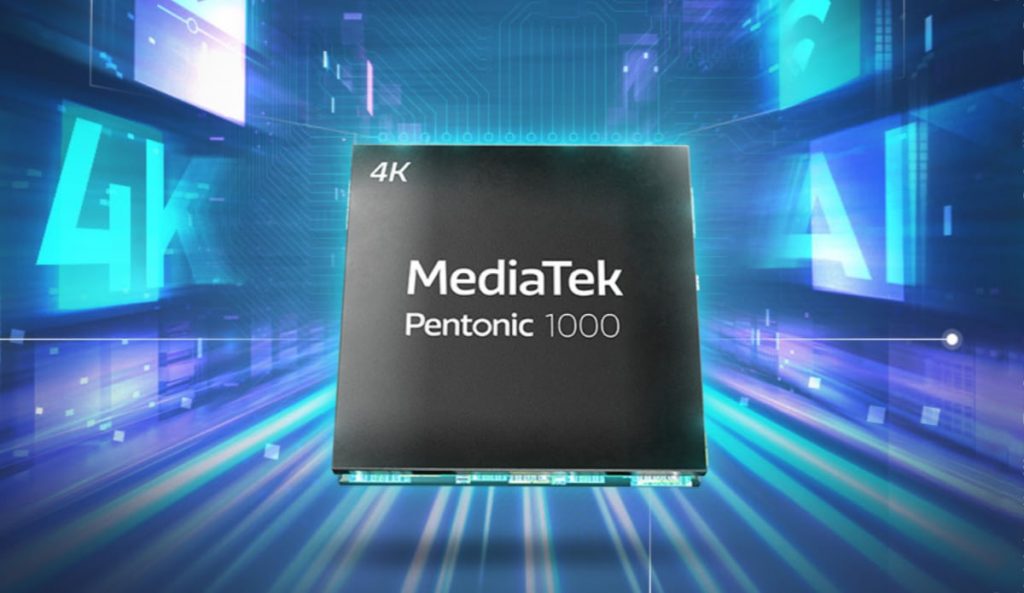
MediaTek has just announced a series of new chipsets that serve different purposes in the market. One of these includes the new Pentonic 1000 chipset, which brings support for Ultra High Definition resolutions and high refresh rates for TVs.
For those unaware, the chipmaking giant is one of the largest producers of processors for TVs and every smart TV carries a capable chip that enable it to offer more functionality over a regular TV model. Now, the company has launched the new Pentonic 1000 chip and it is the latest flagship TV SoC that will offer high end features. This includes support for 4K resolution at 120Hz refresh rate. Furthermore, it will also offer WiFi 6/6E, MEMC technology for smoother video, Dolby Vision IQ with Precesision Detail, and 8 screen Intelligent View that lets users watch or preview multiple streams at once.
As per official notes, MediaTek Pentonic 1000 SoC will offer a “multicore CPU” along with a dual core GPU, an APU, and video decoding engines as well. TVs equipped with this chipset will also be capable of supporting VRR up to 4K 144Hz for gaming. Although, it will typically default to 4K 120Hz. The new chipset also offers an Auto Low Latency Mode or ALLM, which should also improve the gaming experience. Notably, playback options in the new chipset includes AV1, HEVC, VP9, and even VVC or H.266.
According to Alex Chen, GM of MediaTek TV Business Unit, “We designed the MediaTek Pentonic 1000 specifically to accommodate today’s smart TV trends, including 4K streaming, cloud gaming, video conferencing and watch parties. With support for 4K HDR content, 120Hz frame rates, MEMC, AI enhancements, Wi-Fi 6/6E connectivity and cutting-edge codecs like VVC, Pentonic 1000 will deliver the ultimate 4K viewing experience.”
Audio-Technica has been a known brand in the audio industry for some time now. However, it only recently began expanding into the truly wireless earbuds category. Now, it has launched a new TWS model with an interesting feature, which is UV lights to help sterilize the earphones.
The new model in question is the Audio-Technica ATH-TWX9 TWS. Its unique selling point is undoubtedly its UV sterilization feature, which is made to be anti-bacterial for better hygiene. While this feature is clearly uncommon and quite interesting in terms of practicality, it isn’t exactly ground breaking or innovative. LG already has a TWS earbuds model series that offers this feature, with the Tone Free earbuds offering UV sterilization for sometime now.
Although the LG models also offer UV lights to kill off bacteria, there are still differences in functionality in the new Audio-Technica ATH-TWX9 model. The former only focuses sterilization on the speaker grills itself and requires around 10 minutes of charging time. On the other hand, the ATH-TWX9 TWS earbuds increases the steriized area beyond just the speaker grills and even reduces the process to just 70 seconds. Apart from this key feature, the brand is already known for its capable hearable offerings and the new TWS model isn’t any different.
It also comes with a premium look with a stylish finish with minimal bronze trim as well. The earphones features 360 Reality Audio and Snapdragon Sound to help improve the listening experience and the body of the earbuds is also IPX4 protected. A single full charge will have it last around 6 hours, with the charging case enabling a total of 18.5 hours of playback. The new ATH-TWX9 earbuds are currently available for a price tag of 329 US Dollars and is only available in the Japanese Black color option.
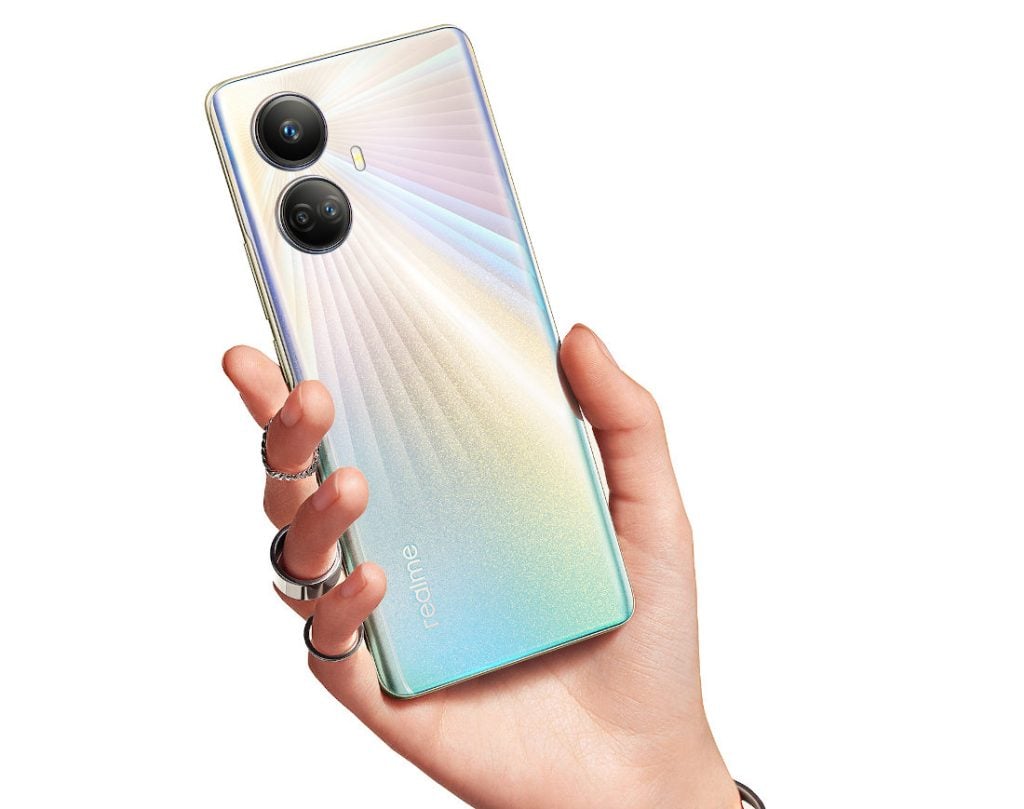
Realme is gearing up to launch the Realme 10 Pro+ on November 17th in China. A majority of the specifications of the smartphone have already been revealed through teasers and leaks. Some of the key specs that make this device exciting are the Dimensity 1080 chip, the 108MP camera, and the curved display that has already been confirmed.
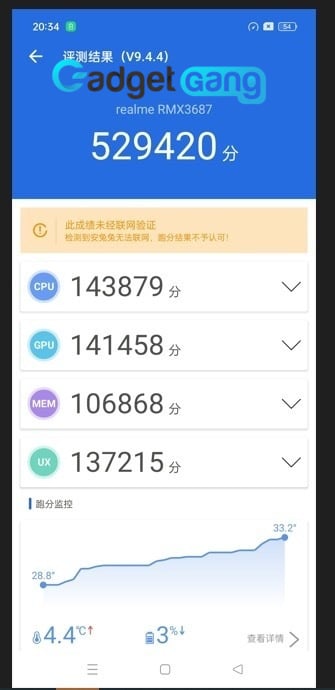
Now, a new report from GadgetsGang has revealed the performance of the smartphone through an AnTuTu benchmark listing. The listing reveals that the device manages to score 529,420 points overall. For comparison, Its predecessor, the Realme 9 Pro+ had an average score of around 505,000 points on AnTuTu. The GPU score has remained mostly the same, while the CPU score has seen a slight uptick of around 6,000 points.
Realme 10 Pro+ AnTuTu benchmark
Going by that, it is likely that we will be getting similar performance from this device as the previous gen Dimensity 920 powered 9 Pro+. However, as we know, the chipset is not the only thing that makes the phone attractive, and with the upgraded camera and new display, Realme has shown a strong generational improvement in its numbered series. All that remains to be seen is what the price tag of the device will be.
Realme 10 Pro+ specs
The device is said to have a 6.7-inch FHD+ curved screen with a high refresh rate of 90Hz or 120Hz and an in-display fingerprint sensor. Under the hood, the device will be powered by a MediaTek Dimensity 1080 processor, which will be paired with up to 12GB of RAM and up to 256GB of internal storage. The front includes a 16-megapixel selfie camera, while the back has a triple camera system with 108 megapixels of resolution. The 10 Pro+ 5G will be powered by a huge 5,000mAh battery, and it will launch Realme UI based on Android 13 OS right out of the box.
There are not going to be many smartphone launches next week. Only one brand has scheduled an event and that is Realme.
Realme is set to introduce the Realme 10 series in China on November 17 (Thursday). The conference will begin at 2 PM GMT+8 and will be live-streamed on Weibo and other leading Chinese video streaming platforms.
The brand was expected to debut three models, namely Realme 10, Realme 10 Pro, and Realme 10 Pro+. However, it has already announced the vanilla model earlier today.
Hence, let’s take a look at the remaining two phones.
The Realme 10 Pro carries model number RMX3663. It is expected to come in three memory configurations, such as 8GB + 128GB, 8GB + 256GB, and 12GB + 256GB.
It will sport a 6.78-inch FHD+ display. The type of panel is not known. Interestingly, the handset is said to house a 16MP main camera accompanied by two 2MP sensors(likely for macro and depth). Even the selfie camera will have 16 megapixels.
The device will be likely powered by a Qualcomm Snapdragon 695 SoC and will boot Android 13. Finally, it will be backed by a 5,000mAh battery.
2. Realme 10 Pro Plus
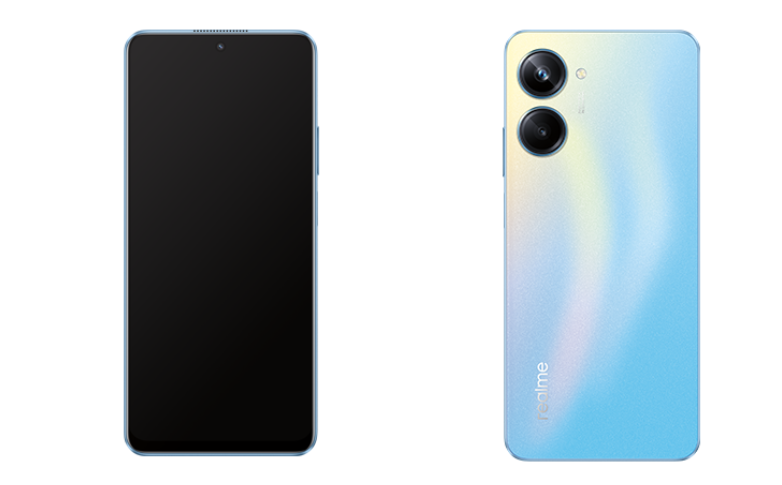
Realme 10 Pro Plus | Source: Realme
The model number of Realme 10 Pro Plus is RMX3687. It will release as the brand’s first curved display smartphone.
The phone will sport a 6.7-inch FHD+ curved display with a 120Hz refresh rate and a 2160Hz PWM dimming. It will be powered by a MediaTek Dimensity 1080 SoC and will boot Android 13.
The device will arrive with a 108MP main camera, an 8MP secondary camera, and a 2MP tertiary camera. On the front, it will have a 16MP snapper for selfies and video calls.
It will be available in three memory variants, like 8GB + 128GB, 8GB + 256GB, and 12GB + 256GB. Last but not least, the handset will draw power from a 5,000mAh battery.
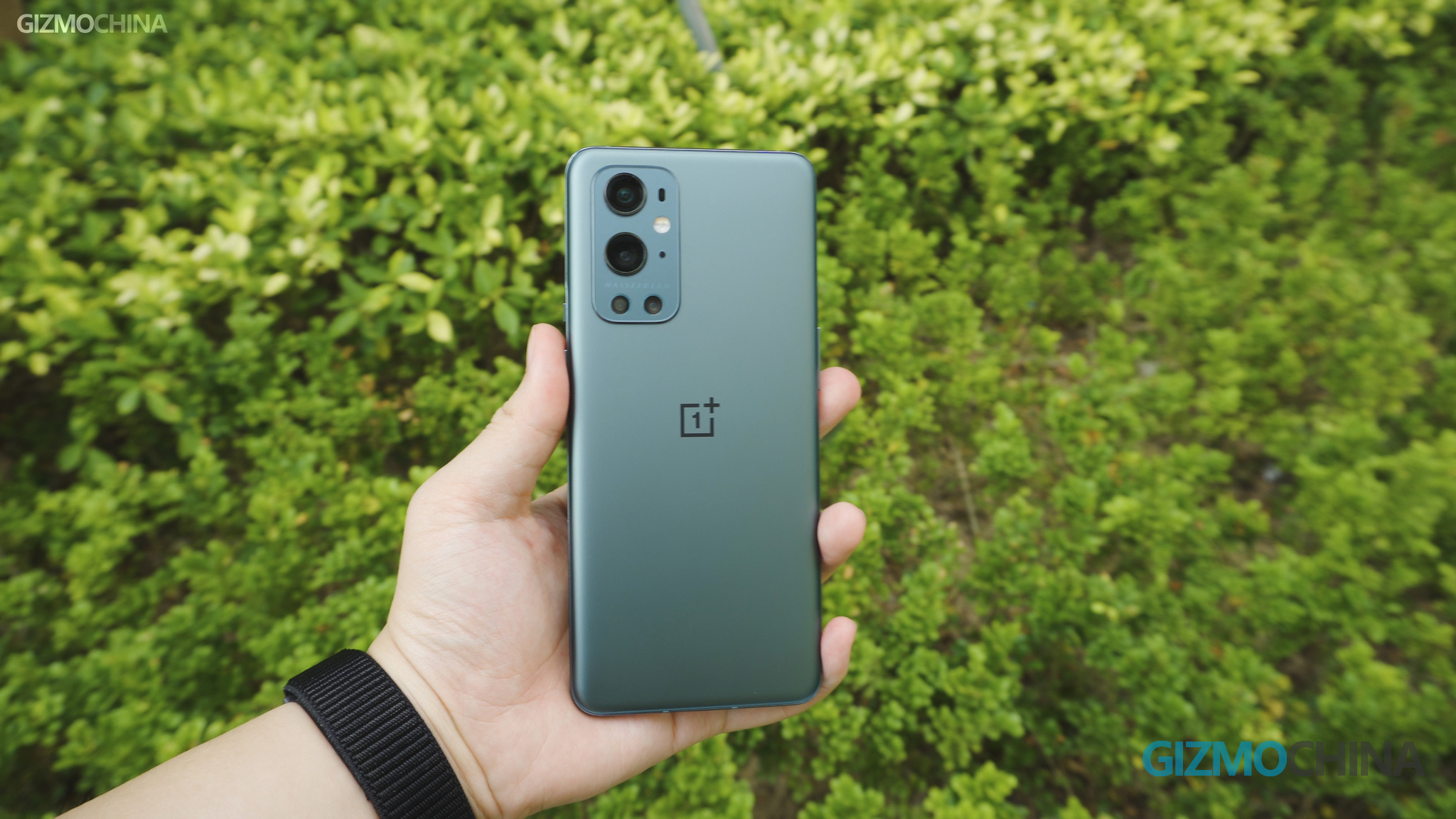
After rolling out the OxygenOS 13 stable update for the OnePlus 10 Pro, the OEM has now started seeding the stable Android 13 update for its last-gen flagships, namely the OnePlus 9 and OnePlus 9 Pro. The OxygenOS 13 update for these devices is rolling out in India, Europe, as well as North America.
OnePlus made a public announcement about it on the OnePlus Community Forum. Indian Users of the OnePlus 9 Pro are receiving firmware updates with version LE2121 11.F.16. On the other hand, Europe and North American users are receiving software updates with firmware LE2123 11.F.16 and LE2125 11.F.16, respectively.
Indian customers of the OnePlus 9 are currently getting firmware updates with version LE2111 11.F.16. The same device is being updated with firmware versions LE2113 11.F.16 and NE2215 11.F.16, respectively, for users in Europe and North America. Let’s take a look at the official changelog to find out what’s new with the update.
The all-new aquamorphic design included in the OxygenOS 13 update improves visual comfort and makes the UI more pleasing to look at. A few additional features have also been implemented to improve multitasking effectiveness. Users must guarantee at least 30% battery, according to OnePlus. Before beginning the installation, the devices must have at least 5GB of internal storage available.
Changelog:
Aquamorphic Design ● Adds Aquamorphic Design theme colors for enhanced visual comfort. ● Applies the Aquamorphic Design philosophy to animations to make them natural and vivid. ● Adds Shadow-Reflective Clock, with shadow simulating the orientation of the sun and moon. ● Adds a Home screen world clock widget to show the time in different time zones. ● Upgrades to Quantum Animation Engine 4.0, with a new behavior recognition feature, which recognizes complex gestures and provides optimized interactions. ● Optimizes UI layers for a clearer and neater visual experience. ● Applies real-world physical motions to animations to make them look more natural and intuitive. ● Optimizes the widget design to make information easier and quicker to find. ● Optimizes fonts for better readability. ● Optimizes system icons by using the latest color scheme to make the icons easier to recognize. ● Enriches and optimizes illustrations for features by incorporating multicultural and inclusive elements.
Efficiency ● Adds Meeting Assistant to enhance the meeting connecting and note-taking experience, and introduces an option to make notifications more subtle and less distracting. ● Adds large folders to the Home screen. You can now open an app in an enlarged folder with just one tap and turn pages in the folder with a swipe. ● Adds a new type of Always-On Display that shows live information about music, ride-hailing, and food delivery (Supports only some apps). ● Adds media playback control, and optimizes the Quick Settings experience. ● Adds more markup tools for screenshot editing. ● Adds support for adding widgets to the Home screen, making information display more personalized. ● Adds Sidebar Toolbox. You can open a floating window inside apps for smooth operation. Upgrades Doodle in Notes. You can now draw on graphics to take notes more efficiently. ● Optimizes Shelf. Swiping down on the Home screen will bring up Shelf by default. You can search content online and on your device.
Seamless interconnection ● Optimizes cross-device file transfer, with more file formats and device models supported. ● Optimizes Screencast, with cast content automatically adapting to the target screen. ● Optimizes earphone connectivity to deliver a more seamless experience.
Personalization ● Optimizes Bitmoji to offer more Always-On Display animations. ● Optimizes Insight Always-On Display, with more personalized Always-On Display settings available. ● Optimizes Portrait Silhouette Always-On Display, with more drawing tools and line colors available.
Security & Privacy ● Adds an automatic pixelation feature for chat screenshots The system can identify and automatically pixelate profile pictures and display names in a chat screenshot to protect your privacy. ● Adds regular clearing of clipboard data for privacy protection. ● Optimizes Private Safe. The Advanced Encryption Standard (AES) is used to encrypt all files for enhanced security of private files.
Health & Digital wellbeing ● Adds Kid Space. When in Kid Space, your browser app automatically switches to Kids mode to create a child-friendly space. ● Adds Eye comfort in Kid Space to protect children’s vision.
Performance optimization ● Adds Dynamic Computing Engine to improve the system speed, stability, battery life, and app experience
Gaming experience ● Upgrades to HyperBoost GPA 4.0 to stabilize the frame rate and balance the performance and power consumption in key scenarios.
The OxygenOS 13 upgrade for the aforementioned devices is now being rolled out by OnePlus in phases, so not all units may have it yet. However, we can expect a broader deployment in the coming days.
MediaTek has become one of the leading chipset makers for a wide range of devices, including smartphones, Chromebooks, Smart TVs, IoT devices, and more. The company also has a lineup of 5G modems to offer an alternative to leading modems like Qualcomm and Samsung’s offerings.
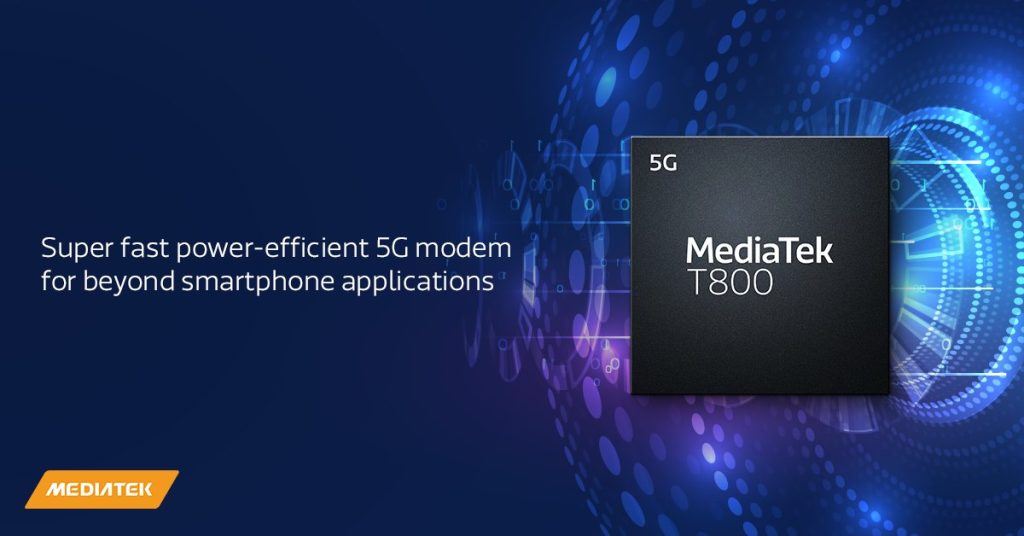
Now, along with a few new chips, MediaTek T800 5G modem has also been launched, which promises a speed of up to 7.9Gbps. It is a part of the newly announced MediaTek Dimensity 9200 SoC, but the company says that it can also be used for industrial IoT, M2M, and always-connected PCs.
As the name itself indicates, the newly launched MediaTek T800 is a successor to the T700. It is a fast and efficient modem with support for sub-6GHz and mmWave brands on StandAlone (SA) and Non-StandAlone (NSA) networks.
It also has support for the Dual SIM Dual Standby feature. The modem can deliver download speeds of up to 7.9Gbps and upload speeds of up to 4.2Gbps. The modem fully supports 4GPP Release-16 specification for 5G along with 4CC carrier aggregation. In comparison, Qualcomm’s Snapdragon X70 modem peaks at 10 Gbps download speeds and 3.5 Gbps upload speeds.
The MediaTek T800 5G modem is built on a power-efficient 4nm node and packs 5G UltraSave technology for optimized power consumption. It comes with support for PCIe and USB host interfaces but can be connected to the rest of the machine through other means as well. It offers a fully integrated 3GPP Release-16 5G cellular modem, FR1 Transceivers, an Envelope Tracking (ET) chip, an MLNA (Monolithic Low Noise Amplifier), a GNSS receiver, and associated PMICs.
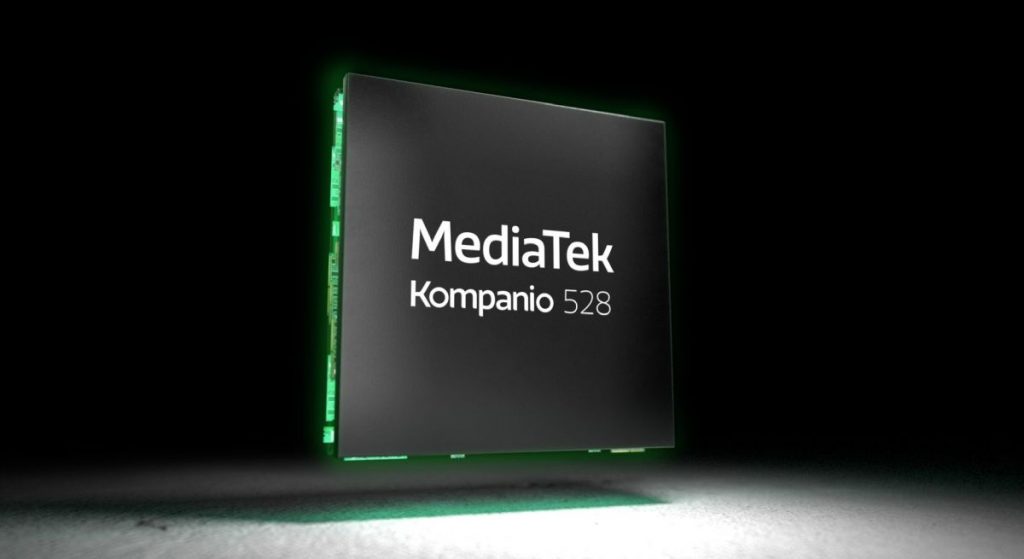
MediaTek is one of the leading players when it comes to the choice of processors for entry-level Chromebooks. Now, the company is doubling down in this segment with the launch of two new chips — MediaTek Kompanio 520 and MediaTek Kompanio 528.
Both these new chipsets come with improved support for the display, better power management, upgraded imaging capabilities, and a few other things for the Chromebooks.
MediaTek’s Kompanio 520 and 528 chips use two ARM Cortex-A76 cores from eight total cores. The 520 has a clock speed of 2.0GHz, while the 528 has a clock speed of 2.2GHz. Along with that, the chips also come with an upgraded dual-core GPU and integrated APU for improving AI-powered performance.
Coming to the improved display support, the new MediaTek Kompanio 520 and Kompanio 528 have support for Full HD+ display with 2520 x 1080 pixels screen resolution and support to add a secondary Full HD display with 1920 x 1080 pixels screen resolution.
Both processors come with support for LPDDR4x RAM and eMMC 5.1 storage. In the camera department, there’s support for camera sensors up to 32-megapixel with 60fps FHD video recording. It also packs HiFi-5 DSP for improved microphone processing. For connectivity, there’s support for Wi-Fi 6 on both chips.
As for availability, the company has said that the first Chromebooks powered by the Kompanio 520 and 528 will start appearing from the first quarter of the year 2023.
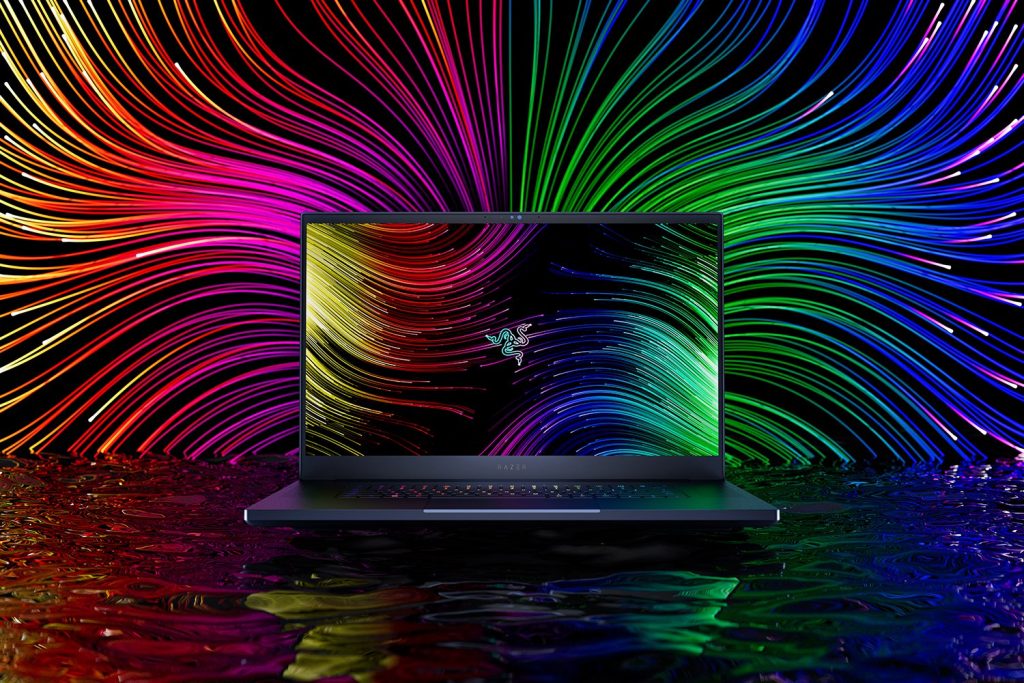
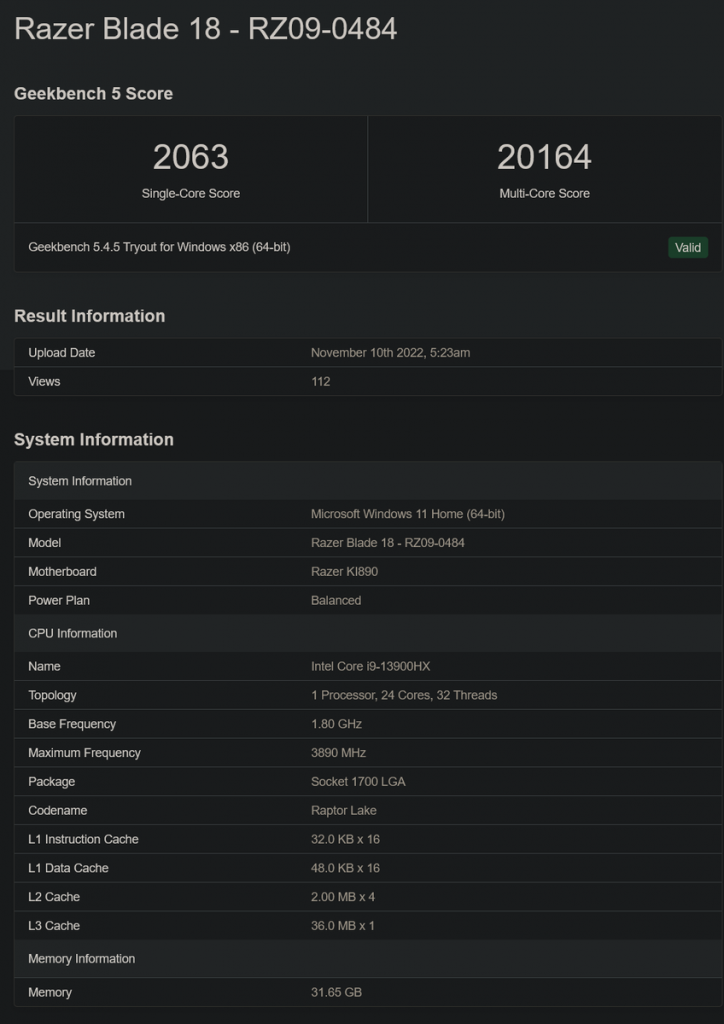
According to the BenchLeaks Twitter account, specifications for Razer’s upcoming flagship gaming laptop, along with some excellent test results, appear to have been leaked on Geekbench. The Razer Blade 18 (RX09-0484) with an upcoming i9-13900HX Raptor Lake mobile processor and 32 GB of RAM is mentioned in the Geekbench test entry.
Razer Blade 17
According to Videocardz, this would be Razer’s first laptop to ever include a HX-series processor. For the HX CPU, which is effectively a BGA version of the desktop SKU with the exact same 24-core and 32-thread architecture, Razer has apparently chosen an 18-inch chassis, which hasn’t appeared in almost ten years. BenchLeaks claims that the i9-13900HX operates at a minimum frequency of 3.5 GHz and a maximum boost clock of 5.38 GHz, around 400 MHz less than the desktop model.
Even when compared to the i9-12950HX from the current generation, the i9-13900HX seems like a beast with 2063 points for single-core testing and 20164 points for multi-core testing. According to research done by Videocardz, the i9-13900HX would perform 14% faster under single-core load and 45% faster under multi-core load than the i9-12950HX. BenchLeaks also compares the desktop-grade Ryzen 7 5800X from AMD, which it claims is 19.4% slower under single-core loads and at least 87.7% slower under multi-core loads.
The launch date for the Raptor Lake mobile CPU series is yet unknown. Intel CEO Pat Gelsinger hinted at a late 2022 release date, however, considering that Intel usually launched the HX versions after the H models, we can expect the i9-13900HX to debut around Q1 2023.
We use cookies on our website to give you the most relevant experience by remembering your preferences and repeat visits. By clicking “Accept”, you consent to the use of ALL the cookies.
This website uses cookies to improve your experience while you navigate through the website. Out of these, the cookies that are categorized as necessary are stored on your browser as they are essential for the working of basic functionalities of the website. We also use third-party cookies that help us analyze and understand how you use this website. These cookies will be stored in your browser only with your consent. You also have the option to opt-out of these cookies. But opting out of some of these cookies may affect your browsing experience.
Necessary cookies are absolutely essential for the website to function properly. This category only includes cookies that ensures basic functionalities and security features of the website. These cookies do not store any personal information.
Any cookies that may not be particularly necessary for the website to function and is used specifically to collect user personal data via analytics, ads, other embedded contents are termed as non-necessary cookies. It is mandatory to procure user consent prior to running these cookies on your website.