Advertisement

Vivo TWS 3 series earbuds officially teased, with Spatial Audio & True Hi-Fi audio

Last week, it was revealed that Vivo will soon be launching the world’s first Hi-Fi headset at the tenth anniversary of Vivo Hi-Fi. A leak from earlier this week claimed the technology will come included in the upcoming Vivo TWS 3 series which is expected to debut alongside the Vivo X90 series on November 22. For those unaware, Hi-Fi is an acronym for high fidelity, which in this context claims to provide an improved listening experience thanks to the high accuracy of audio reproduction.


Now, the brand has officially teased the TWS 3 series and also confirmed that it will indeed launch on November 22 launch date. The teaser image (via) matches the renders revealed in the earlier reports. In addition to the Hi-Fi technology, the teaser also claims that the Vivo TWS 3 series will also feature 360° spatial audio. The series is expected to comprise two models – the Vivo TWS 3 and the Vivo TFS 3 Pro.

The earbuds are anticipated to have the latest LE Audio Bluetooth audio technology, support Bluetooth 5.3, the first full-link wireless true Hi-Fi in the industry, as well as intelligent ultra-wideband noise reduction, non-sensing body temperature monitoring, LC3 game low Latency, multi-device dual connection, etc.

Other than high-fidelity audio, the earbuds are expected to offer Bluetooth 5.3 connectivity with support for next-generation Bluetooth LE audio technology, wireless karaoke, slide-to-adjust volume, smart wear detection, smart voice control, pressure-sensitive control, and dual-device connection. It is anticipated to provide intelligent ultra-wideband noise reduction, Vlog 3D binaural recording, and non-sensing body temperature monitoring.

The TWS 3 is said to feature a Qualcomm S5 QCC5171 chip, 12.2mm dynamic drivers, an independent DAC chip, a DSP module, and an adaptive equalizer. It is said to come with a transmission rate of up to 1.2Mbps. More information on the Vivo TWS 3 series is expected to surface as we get closer to the official launch, so stay tuned.

RELATED:

iQOO 11 Launch Soon, Official Teaser Released

Vivo announced the iQOO sub-brand in 2019. iQOO arrived in India in February 2020. Since then, the brand has focused on these two markets only. Through its official Facebook and Instagram accounts, iQOO has been hinting about the launch of a new smartphone in Malaysia for a few weeks. Today, iQOO Malaysia took to its Facebook and Instagram handles to confirm that it will be soon launching the iQOO 11 5G.

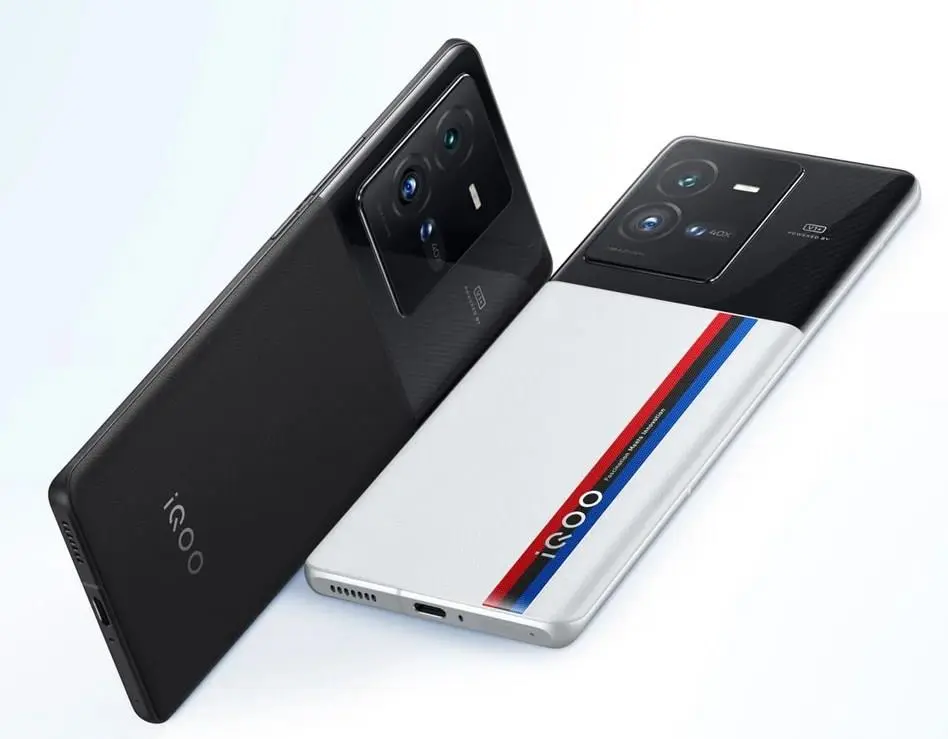
The iQOO 11 5G teaser does not reveal anything about its specifications. However, it does hint that there will be a BMW M Motorsport-inspired model with red, black, and blue stripes, which will probably be called the iQOO 11 Legend. A new report reveals that the Legend model could be equipped with 16 GB of RAM and 256 GB of storage. Unfortunately, it did not reveal anything about the device.

iQOO 11 official teaser by iQOO Malaysia

iQOO is expected to launch the iQOO 11 and iQOO 11 Pro by the end of this month or early December in China. Now that the brand has started teasing the iQOO 11 in Malaysia, it appears that it may debut around the same time in the country. Reports have claimed that the iQOO 11 lineup is also heading to India. The Indian market is likely to receive it in December or January.

According to reports, the iQOO 11 will feature an E6 AMOLED display of 6.78-inches. It will be a flat panel with a centrally positioned punch-hole. The screen is expected to offer an FHD+ resolution, up to 144hz refresh rate, and an in-screen fingerprint scanner. The Snapdragon 8 Gen 2 chip is expected to power the device with LPDDR5 RAM and UFS 3.1 storage.

The iQOO 11 may arrive with a 16-megapixel selfie camera and a 50-megapixel (main) + 13-megapixel (ultra-wide) + 12-megapixel (telephoto) camera coupled with the Vivo V2 ISP. The device may run on the OriginOS 3-based Android 13. It may feature a 5,000mAh battery with 120W fast charging support.

RELATED:

India’s Smartphone Market Is Declining but 5G and Premium Segments Are Growing

The Indian smartphone market witnessed yet another quarter of decline in Q3 2022, reports IDC. The number of shipments reduced by 10% YoY. Brands managed to ship 43 million units from July to September.

This was the lowest third-quarter shipment since 2019. Weakening demand and increasing device prices affected sales despite an earlier onset of the Diwali festive season offers and deals.

Smartphone in Dark | Source: Akshar Dave on Unsplash

Talking about brands, Xiaomi managed to cling to the first position. Samsung regained the second slot as Realme dropped to fourth. Vivo and Oppo rounded off the top five with third and fifth places, respectively.

All the aforementioned companies, except Oppo, saw a drop in shipments. Oppo even had a lead in the offline segment.

More than 70% of Xiaomi’s shipments came from the online channel. Vivo saw its highest-ever online shipments of 35%.

Samsung led the 5G category with a 27% share, while Vivo was second with a 15% share. Around 53% of Samsung’s portfolio was 5G-enabled.

Overall, companies shipped 16 million 5G smartphones in Q3. It accounted for 36% of total shipments. The ASP of 5G smartphones stood at $393.

Smartphones powered by MediaTek led the market with a 47% share. Whereas, the market shares of Qualcomm and UNISOC were at 25% and 15%, respectively.

The premium segment ($500+) registered a growth of 64% YoY with an 8% market share. Apple led this category with a 63% share, followed by Samsung and OnePlus at 22% and 9%, respectively.

The sub-$300 segment, which is known for driving sales in India, declined by 15% YoY. Hence, the performance of the entire market dwindled.

RELATED:

Apple Eyes Chip Orders From US & European Fabs To Diversify Out of Taiwan

We already know that Apple has been looking to diversify its supply chain and production operations outside of China for some time now. Although it appears that the company is apparently also planning to diversify its chip source as well, moving away from Taiwan.

According to a Bloomberg report, the Cupertino based giant is seeking to diversify its chip chip production out of Taiwan. Reportedly, Tim Cook, CEO of Apple has stated in an internal meeting that the brand has “already made a decision to be buying out of a plant in Arizona.” In other words, its looking to even acquire chips from US based fabs, which are set to begin production sometime in 2024. This means that the iPhone maker will have a new chip source in just around 2 years.

Apple

Apart from the Arizona based fab, the company is supposedly eyeing semiconductor manufacturers that are based in Europe as well. For those unaware, Apple has its proprietary M series of PC chips for MacBooks and iPhone’s A series of mobile processors produced by the Taiwan Semiconductor Manufacturing Company, which is the world’s largest contract chipmaker. As the name suggests, this means that most of its fabs are located in Taiwan, although it even has an advanced facility being built in Arizona.

So it appears that TSMC might be the supplier from Arizona. However, the firm isn’t the only company setting up a fab plant in Arizona. The US government recently passed a legislation to invest over 50 billion US Dollars in domestic semiconductor production. Intel has also stated that it has plans on making chips for other companies from its semiconductor manufacturing sites. Keep in mind that this is still an unconfirmed report so take this news with a pinch of salt for now.

RELATED:

iQOO 11 Legend RAM & storage options tipped, could launch soon

The iQOO 11 and iQOO 11 Pro are planned to be released in China this year. According to a recent leak, the devices could be released in India in January 2023. Along with the vanilla and Pro models, the iQOO 11 Legend is also said to be in the works.

iQOO

Now, a new report has emerged revealing the RAM and storage capacity of the iQOO 11 legend. The report comes from 91mobiles citing tipster Sudhanshu Ambhore and claims that iQOO 11 Legend will ship with 16GB RAM and 256GB. It is unclear whether alternative RAM options will be offered or if this would be the only option available. It is also unclear whether the iQOO 11 Legend will debut with the rest of the lineup, or it will be launched later.

Details like specifications and design of the device are still under wraps. However, it is certain that the iQOO 11 Legend will be the top-end offering of the iQOO 11 series. Check out the specs and features of the iQOO 11 series below.

iQOO 11 series specs (rumored)

According to reports, the new Qualcomm Snapdragon 8 Gen 2 SoC will power the iQOO 11 Pro together with up to 12GB of RAM and a 256GB storage option. The phone will use an in-house V2 image processing chip, which made its debut recently. According to reports, the phone has a 6.78-inch E6 AMOLED screen with a 144Hz refresh rate.

The iQOO 11 Pro is expected to have a design influenced by BMW M Motorsport and run Android 13 OS out of the box. Regarding the cameras, the iQOO 11 Pro is claimed to include a quad-rear camera configuration with a 50MP primary sensor, coupled with a 50MP secondary lens, a 48MP sensor, and a 64MP camera. For selfies and video chats, the front camera has a 32MP sensor. The phone reportedly has a 4,700mAh battery with 200W charging capabilities.

The vanilla iQOO 11 on the other hand will feature the same Snapdragon 8 Gen2 SoC and a 6.78-inch FHD+ 144Hz display. In terms of optics, the base model will feature a 50MP primary camera with 13MP ultra-wide lens, a 12MP telephoto camera, and a 16MP selfie shooter. It will most likely run Android 13 out of the box and include a 5000mAh battery with 125W fast charging capabilities.

RELATED:

Amazfit Pop 2 With 1.78-Inch AMOLED Display, 100 Sports Modes Launched in India

Amazfit launched the Band 7 in India earlier this month. Now the brand has announced the POP 2 in the country. The device was listed on Flipkart since the last week. The latest offering is a budget smartwatch. It falls under the Rs 4,000 price bracket and competes against the likes of the Noise ColorFit Pro 4, Realme Watch 3 Pro, OnePlus Nord Watch, and more in the market. Read on to know what the Amazfit POP 2 offers out of the box. 

The Amazfit POP 2 features a square dial with a 1.78-inch AMOLED display bearing an HD resolution. It offers an always-on display and 150+ customisable watch faces. The smartwatch sports an aluminium alloy body with a button on the right side and it is water-resistant up to 5 meters. 

On the health-centric front, the Amazfit POP 2 is equipped with a heart rate monitor, SpO2 sensor, sleep tracker, and sedentary reminder. The device is capable of tracking more than 100 sports modes. 

The Amazfit POP 2 features a built-in speaker and microphone for Bluetooth phone calls. It also comes with an integrated voice assistant. Users can control music playback and camera shutter. The smartwatch also offers social media notifications, weather updates, calendar reminders, and more. The wearable device is powered by a 270mAh battery unit that is claimed to last 10 days on full charge. It supports Bluetooth 5.2 and runs on Zepp OS out of the box.

The Amazfit POP 2 costs Rs 3,999 but can be purchased at an introductory price of Rs 3,299 on November 22nd from Flipkart and the brand’s official website. The smartwatch is offered in Black and Pink colours. 

Related:

Oppo Unveils New Ray Tracing Tech for Snapdragon 8 Gen 2 Powered Phones

Earlier today, Qualcomm announced its latest and greatest Snapdragon 8 Gen 2 SoC during its Snapdragon Summit 2022 conference. In the same event, Oppo also took the stage to announce its new Ray Tracing solution, which will be offered to smartphone powered by the new flagship grade processor. So here are all the details.

The Chinese smartphone maker has already announced ray tracing for smartphones last year, but it was limited to MediaTek Dimensity powered devices. Now, the brand has unveiled its latest ray tracing tech, but this time, it is supported on the latest Snapdragon platform. Previously, we have also seen Samsung debut its Exynos chips with hardware accelerated ray tracing support. Now, Oppo has demoed its latest open ray tracing solution that will allow developers and creators to offer improved ray tracing experiences on smartphones with Qualcomm’s latest chipset.

Oppo

The company’s new ray tracing technique uses a modified version of its proprietary PhysRay SDK that enables ray tracing to be applied to complex, large scale game scenes on mobile devices.” Furthermore, Oppo also demoed this technology using a first-person shooter game called “Camp Guard,” that had more than 2000 physical models, 800,000 triangles, and close to 100 textures at Snapdragon Summit 2022. This was an interactive demonstration that showcased the improved shadows, reflections, and lightings thanks to the new technology.

Oppo claimed that the first person game can run at 720p resolution at 60fps for half an hour on a smartphone that is equipped with the Snapdragon 8 Gen 2 SoC. The new ray tracing tech was developed by the smartphone maker in partnership with Qualcomm for “driver testing, shader optimization, and compiler tool development over the game scene.” Interestingly, this announcement also arrives a few days after the company unveiled its partnership with Unity, the company behind the popular Unity game engine to offer better gaming performance.

RELATED:

Upcoming Poco Phone for India Could Be a Better Version of Redmi Note 12

Poco may release a new smartphone in India very soon. The company is recruiting reviewers on social media.

The brand is yet to reveal anything about this phone. But thanks to the MIUI codebase, we can speculate on it.

Redmi Note 12 5G
Redmi Note 12

Earlier this month, BIS certification suggested that the newly launched Redmi Note 12 could arrive as a Poco-branded smartphone in India. However, the brand’s Indian head denied this claim.

Now, days later, the India variant of this Poco device has been spotted in the MIUI codebase as well. The code clearly says that the device is codenamed ‘Sunstone’, which is the same as the Redmi Note 12 available in China.

Perhaps, like in usual Poco fashion, the Poco version of Redmi Note 12 could have slightly different specs. This is probably why the exec said that “something better” has been planned.

The Redmi Note 12 is already a good device for its asking price. The only major con we could think of is its cameras. The device has one usable 48MP main shooter, a 2MP depth sensor, and a lower 8MP front-facing snapper.

Therefore, we think that the Poco variant might have a better camera system while retaining the rest of the specs like Qualcomm Snapdragon 4 Gen 1 SoC, 6.67-inch FHD+ 120Hz AMOLED display, 5,000mAh battery, and more.

What are your thoughts on the upcoming Poco smartphone for India? Do let us know in the comment section below.

RELATED:

Honor 80 Series Confirmed to Feature 160MP Camera

Honor is all set to announce the Honor 80 series on Nov. 23 in China. Recently, the company confirmed the names of the chipset that will power the Honor 80 and the Honor 80 Pro. Today, it released a new poster to confirm the camera capabilities of what appears to be the Honor 80 Pro.

The below-shown poster confirms that the Honor 80 series will be equipped with a 160-megapixel primary camera. It will be a customized version of a 200-megapixel camera sensor, according to a previous leak by tipster Digital Chat Station. There is a possibility that it is a custom edition of the Samsung ISOCELL HPX 200-megapixel camera.

honor 80 series 160MP camera

The poster also reveals that the Honor 80 series’ display will have a pill-shaped camera cutout. It is expected to house a pair of 50-megapixel selfie cameras. While there is no official confirmation yet, it appears that the Honor 80 Pro will have a 50-megapixel dual selfie camera setup and a 160-megapixel primary camera on the back.

The Honor 80 series is expected to feature three models: the Honor 80 SE, the Honor 80, and the Honor 80 Pro. The Chinese manufacturer has confirmed that the Honor 80 and its Pro variant will be powered by the Snapdragon 782G (unannounced) and the Snapdragon 8 Plus Gen 1 chipsets, respectively. The SE model could be equipped with the Dimensity 1080 SoC.

The Honor 80 SE and Honor 80 are expected to support 66W fast charging. The Pro model is likely to offer 100W charging. The entire series is likely to run on the Android 13 OS with the latest Magic UI 7.0 on top. The Nov. 23 launch event will also see the arrival of the Honor Magic Vs, the company’s second foldable smartphone.

RELATED:

Realme GT Neo 3 gets Stable Android 13 x Realme UI 3.0 update

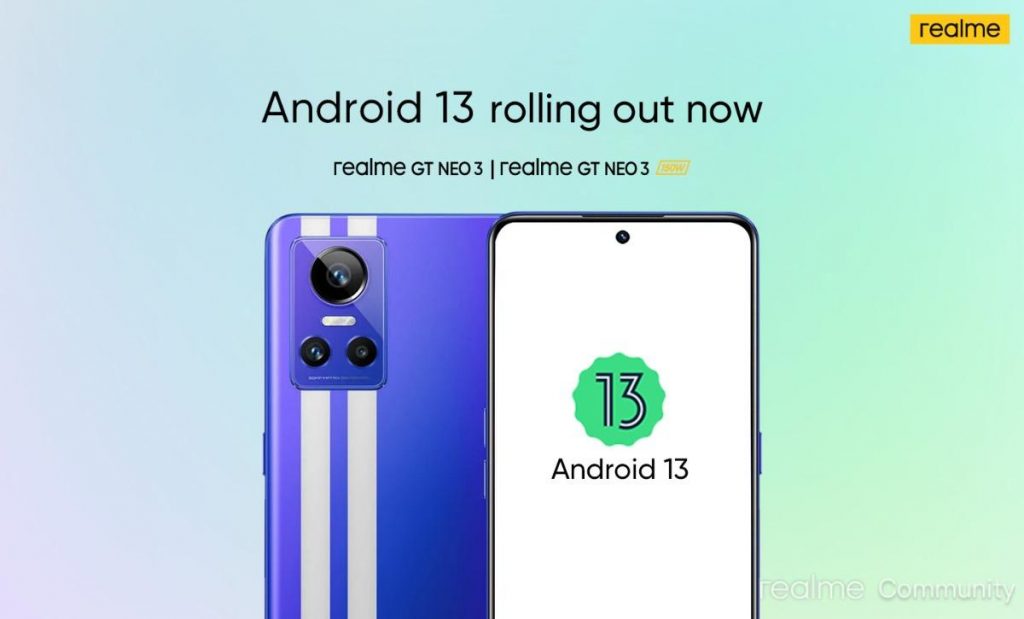
Last month, Realme kicked off the Android 13-based Realme UI 3.0 open beta program for the Realme GT Neo 3 and GT Neo 3 150W. The brand has now launched the stable Android 13 update for these devices.

Realme officially announced the update rollout on the Realme Community Forum. The Realme GT Neo 3 Android 13 stable upgrade has firmware version RMX3561 11.C.12, while the RMX3563 11.C.12 firmware for the Realme GT Neo 3 150W Android 13 Stable upgrade is now being distributed.

According to Realme, customers of the Realme GT Neo 3 running firmware versions RMX3561 11.A.15 or RMX3561 11.A.16 will be able to update their smartphones to Android 13 Stable. In contrast, Realme GT Neo 3 150W owners who want Android 13 Stable firmware must update their devices to RMX3563 11.A.15 or RMX3563 11.A.16 versions.

The brand is offering a new Aquamorphic design with Android 13 that is comparable to that of its sister brands OnePlus and Oppo. The Aquamorphic design makes for more comfortable viewing. The company also says that it altered the animations that use the Aquamorphic design principle. The font has also been enhanced by the company for easier reading. You can check out the other changes in the official changelog listed below.

Realme GT Neo 3 Android 13 x Realme UI 3.0 changelog

Aquamorphic Design
• Adds Aquamorphic Design theme colors for enhanced visual comfort.

• Applies the Aquamorphic Design philosophy to animations to make them natural and vivid.
• Adds Shadow-Reflective Clock, with shadow simulating the orientation of the sun and moon.
• Adds a Home screen world clock widget to show the time in different time zones.
• Upgrades to Quantum Animation Engine 4.0, with a new behavior recognition feature, which recognizes complex gestures and provides optimized interactions.
• Optimizes UI layers for clearer and neater visual experience.
• Applies real-world physical motions to animations to make them look more natural and intuitive.
• Adapts responsive layouts to accommodate different screen sizes to improve readability.
• Optimizes the widget design to make information easier and quicker to find.
• Optimizes fonts for better readability.
• Optimizes system icons by using the latest color scheme to make the icons easier to recognize.
• Enriches and optimizes illustrations for features by incorporating multicultural and inclusive elements.

Efficiency
• Adds large folders to the Home screen. You can now open an app in an enlarged folder with just one tap and turn pages in the folder with a swipe.

• Adds media playback control, and optimizes the Quick Settings experience.
• Adds more markup tools for screenshot editing.
• Adds support for adding widgets to the Home screen, making information display more personalized.
• Optimizes Shelf. Swiping down on the Home screen will bring up Shelf by default. You can search content online and on your device.

Seamless interconnection
• Optimizes Multi-Screen Connect. You can open multiple mobile apps on a connected PC for efficient multitasking.

Personalization
• Adds Bitmoji to offer more Always-On Display animations.

• Adds Omoji to let you fully express yourself with customized avatars.
• Optimizes Insight Always-On Display, with more personalized Always-On Display settings available.
• Optimizes Portrait Silhouette Always-On Display, with more drawing tools and line colors available.

Security & privacy
• Adds an automatic pixelation feature for chat screenshots. The system can identify and automatically pixelate profile pictures and display names in a chat screenshot to protect your privacy.

• Optimizes Private Safe- The Advanced Encryption Standard (AES) is used to encrypt all files for enhanced security of private files.

Health & Digital wellbeing
• Adds Eye comfort in Kid Space to protect children’s vision.

Performance optimization
• Adds Dynamic Computing Engine to improve the system speed, stability, battery life, and app experience.

Gaming experience
• Upgrades to HyperBoost GPA 4.0 to stabilize the frame rate and balance the performance and power consumption in key scenarios.

According to Realme, this is a phased deployment and will be shortly made available to all Realme GT Neo 3 users.

RELATED:

OnePlus 11 will be among the first smartphones to be powered by Snapdragon 8 Gen 2 SoC

Qualcomm has today officially announced its next-generation flagship chipset named Qualcomm Snapdragon 8 Gen 2. The newly released chip will be powering the upcoming flagship smartphones.

As the name indicates, it is a successor to the Snapdragon 8 Gen 1 processor released last year. This time, the launch of the chipset happened a few weeks earlier, which means that we will start seeing phones powered by the new chip by the end of this year.

OnePlus 11 Snapdragon 8 Gen 2 Teaser

Qualcomm has already revealed a list of manufacturers onboard to use the new Snapdragon 8 Gen 2 processor, and now OnePlus has confirmed that it will be among the first to launch a device powered by this new chipset.

In a teaser poster, OnePlus has confirmed that the upcoming flagship named OnePlus 11 will be the first smartphone from the brand and among the first batch of devices to come powered by the Qualcomm Snapdragon 8 Gen 2 SoC. Further, it adds that the company will also launch the first mobile optical tracking open platform.

Previously, an engineering model of the OnePlus 11 with the codename OnePlus 11-PBH110 was leaked, revealing that the phone features a 6.7-inch LTPO single punch-hole curved display. It has an optical fingerprint sensor and packs a 5,000mAh battery with support for 100W fast charging technology. In the camera department, the phone has a 50MP + 48MP + 32MP triple-camera setup on the back.

The newly announced Qualcomm Snapdragon 8 Gen 2 includes one prime core based on the ARM Cortex-X3 clocked at 3.2GHz, four performance cores at 2.8GHz, and three efficiency cores at 2.0GHz. The company says the CPU is 35 percent faster than the previous generation and 40 percent more power efficient.

It comes with the latest Qualcomm AI Engine and upgraded Hexagon processor, which the company claims can offer faster natural language processing with multi-language translation and advanced AI camera features. There’s support for real-time hardware-accelerated ray tracing and will offer mobile-optimized support for the Unreal Engine 5 Metahumans Framework.

RELATED:

BYD Atto 3 Electric SUV Launched in India With 521km Range

BYD has just launched a new electric car model in the Indian market. The new EV is the Atto 3, which is an electric SUV that was teased by the company a couple of months back and is finally announced in the region. So let’s have a look.

The new Atto 3 SUV is powered by a permanent magnet synchronous electric motor that produces 201hp and 310Nm of torque. This engine is powered by a 60.48kWh Blade battery pack. With this, the electric SUV can even hit 0 to 100kmph is just 7.3 seconds. The new Atto 3 model also offers an ARAI certified maximum range of 521 kilometers. It takes around 10 hours to fully charge via a Type 2 (7kW) AC charger or just 50 minutes to power up to 80 percent with an 80kW DC fast charger. The company will also be providing a 7kW home charger and a 3kW portable charging box. 

BYD

For the interiors, the Chinese automobile maker is offering a 12.8 inch rotating central screen with Android Auto and Apple CarPlay. It also comes with a panoramic sunroof, a powered tailgate, a wireless phone charger, a powered front driver and passenger seats, multi coloured ambient lighting, and much more. The electric SUV also arrives with a number of safety features as well like the ADAS tech, a 360 degree camera, ABS, ESC, traction control, hill descent control and seven airbags. 

The BYD Atto 3 has been launched in India for a price tag of 33.99 lakh INR (ex-showroom) or roughly around 41,825 US Dollars. It will also be offered with 3 year free 4G data subscription, 6 year roadside assistance, and 6 free maintenance services to its customers. The new electric SUV is offered in multiple color options, namely Boulder Grey, Parkour Red, Ski White, and Surf Blue. Notably, the Atto 3 SUV is currently being assembled in BYD’s Sriperumbudur facility, with deliveries expected to begin sometime in January 2023.

RELATED:

Vivo X90 series confirmed to feature Sony IMX758 sensor, Dimensity 9200 chipset

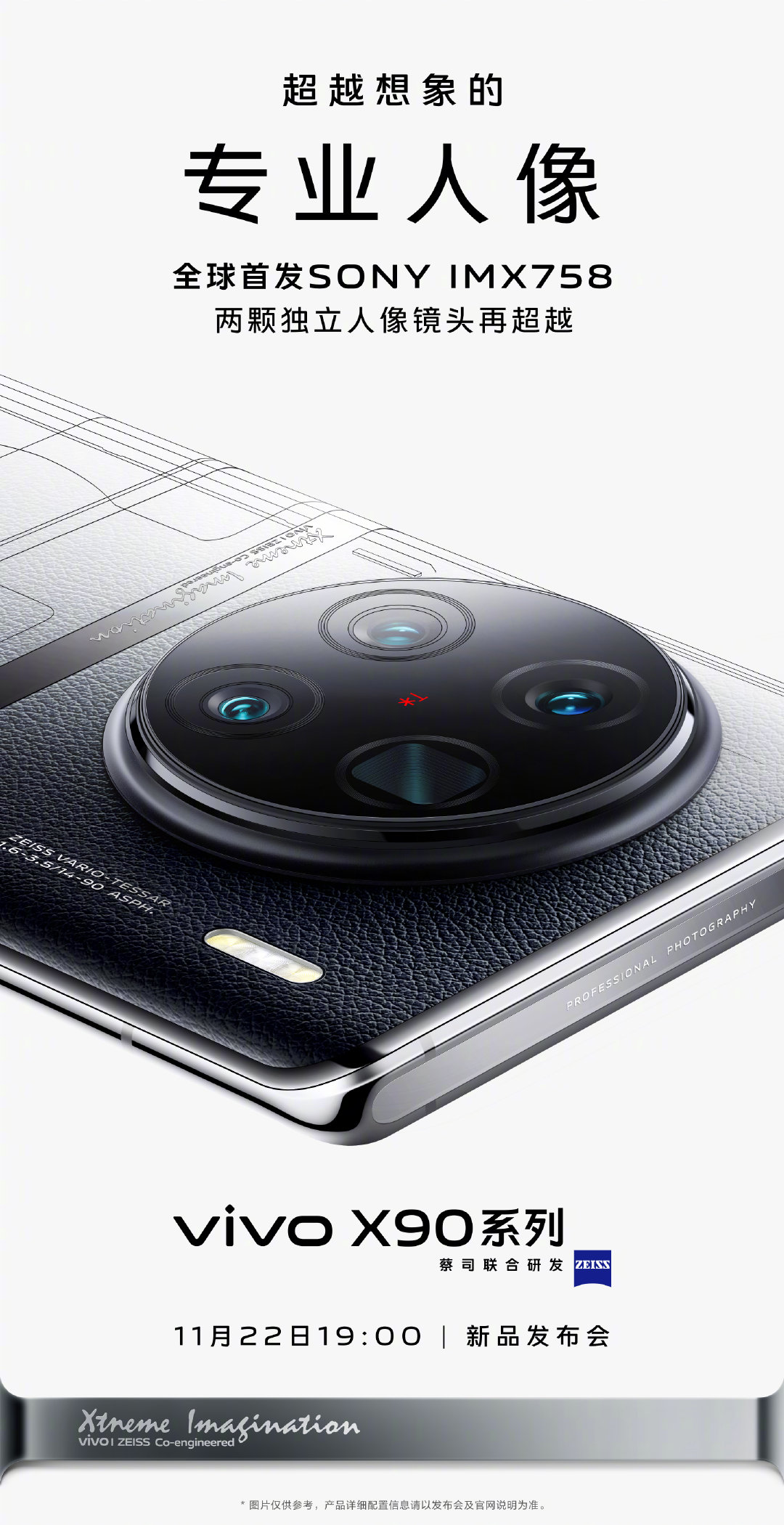
On November 22, Vivo will launch the X90 series in China, which is anticipated to include three models: vanilla, Pro, and Pro+. While the vanilla and Pro variants are officially confirmed to be powered by the Dimensity 9200 SoC, the Vivo X90 Pro+ is expected to use the recently unveiled Snapdragon 8 Gen 2 SoC.

The brand also confirms that a 50MP Sony IMX758 camera will also be included in the X90 series. Furthermore, the image posted by Vivo, which bears the caption “two independent portrait lenses go beyond,” depicts the back of an X90 smartphone with four cameras, the top-right camera likely being a periscope unit. The smartphone’s name has not been revealed, but it is most likely the X90 Pro+. Some camera specs are printed on the right side of the camera island below the LED flash.

Having said that, all the devices in the series will include T* coating and the ZEISS algorithm. The X90 series will include the V2 chip, according to Vivo. So far, rumors suggest that the Vivo X90 series will feature a 50MP Sony IMX989 Wide-Angle lens, a 48MP Sony IMX598 Ultra Wide-Angle lens, a 50MP IMX758 Depth lens, and a 64MP OmniVision OV64B Telephoto lens.

The display is expected to be a 6.78-inch Samsung AMOLED E6 curved panel that will support a 2K resolution, 120Hz refresh rate, and 1440Hz high-frequency dimming. The device might feature up to 512GB of UFS 4.0 storage and up to 12GB of LPDDR5x RAM. A 4,700mAh battery that supports 80W fast charging could be included in the device.

RELATED:

Here’s How To Watch Realme 10 Series Launch Event

Realme is all set to officially launch its new smartphones under the Realme 10 series. The company is expected to launch two smartphones — Realme 10 Pro and Realme 10 Pro Plus.

The launch event for the Realme 10 series smartphones is scheduled to take place in China on 17th November, i.e., tomorrow. The company will live-stream the event on Chinese streaming platforms and social media websites.
Currently, there’s no live-streaming link available for the launch event to embed here, but we will update this post once that is available. For now, you can follow the company’s own landing page for the event by clicking here.

Although the launch event is set for tomorrow, the company has revealed some of the key features and specifications through teaser posters shared on social media. The smartphones will feature a flat frame design with curved displays.

The Realme 10 Pro will feature a 6.7-inch Full HD+ display with a punch-hole cutout for housing the front-facing camera. On the other hand, the Pro Plus model will have a 6.7-inch Full HD+ curved OLED display with a 120Hz refresh rate and 2160Hz PWM dimming.

Under the hood, Qualcomm Snapdragon 695 processor will power by Realme 10 Pro smartphone, while the Pro Plus model will be powered by the MediaTek Dimensity 1080 chipset. The top-end memory configuration is expected to reach 12GB of RAM and 128GB of internal storage.

In the camera department, the Realme 10 Pro Plus will have a triple-camera setup, including 108MP primary sensor, an 8MP secondary lens, and a 2MP tertiary sensor. On the other hand, the Pro model will have a 16MP primary and 2MP secondary sensor. Both smartphones will have a 16MP snapper on the front for taking selfies and video calling.

Both phones are expected to run the Android 13 operating system out-of-the-box with the company’s own custom user interface on top. As for the pricing, the Realme 10 Pro is expected to start at around 1,500 yuan (~$215), while the Pro Plus model could have a starting price of around 2,000 yuan (~$285). To know for sure, we will have to wait for the official launch event tomorrow.

RELATED:

Garmin Bounce kids’ smartwatch launched with built-in LTE & GPS

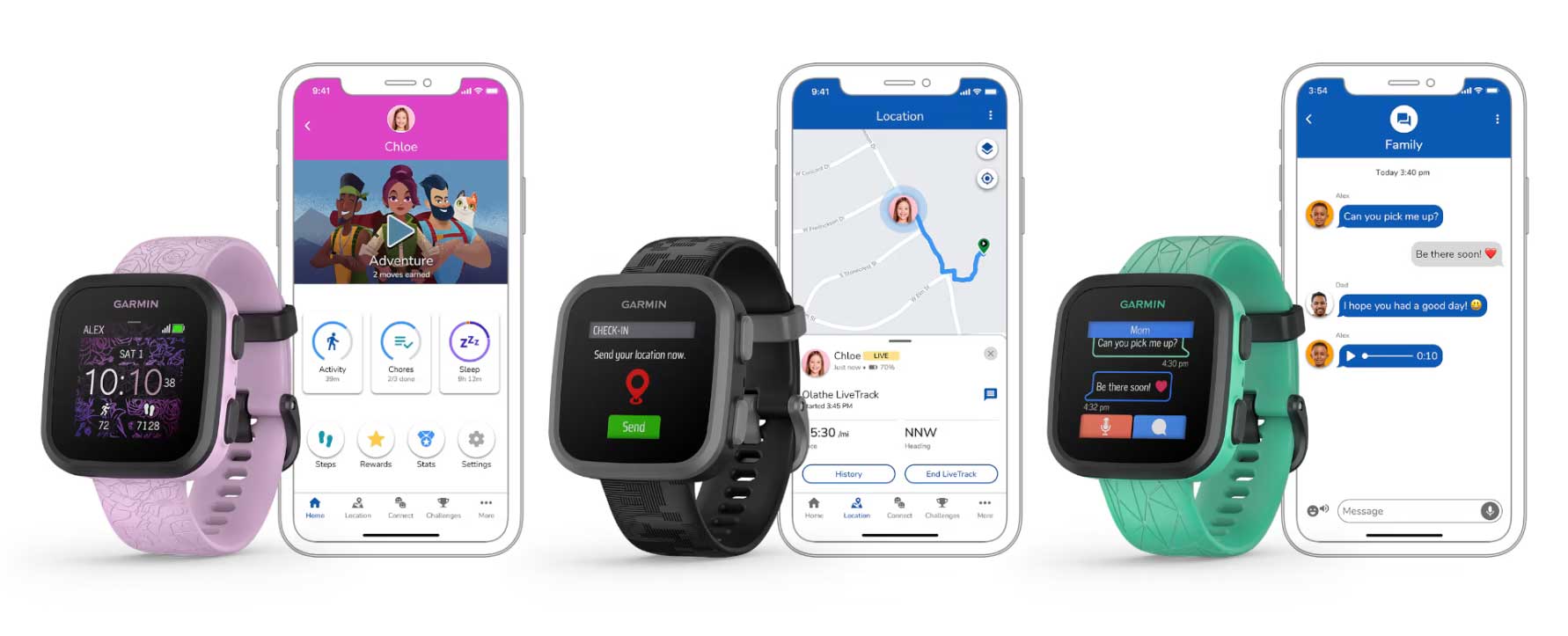
Garmin has launched a new kids-focused smartwatch called the Garmin Bounce. The main highlight of this new smartwatch is that it comes with built-in GPS and 4G LTE connectivity.

Garmin Bounce smartwatch

Parents can actively track their children’s whereabouts using the built-in GPS and communicate with them via text and voice messaging. The smartwatch is controlled by parents using the Garmin Jr. app, which requires an active Garmin Connect account. A monthly subscription to the LTE features costs $10/€11.

The GPS also enables activity tracking and the brand also has a reward system for achieving various daily activity goals by giving out “collectible gems.” The smartwatch also has games and quizzes onboard which can be played during “parent-approved” time. To reduce distractions, parents can also choose to effectively disable the gadget during school hours or at night. This has no effect on the Bounce’s ability to count steps and track sleep.

Coming to the hardware, the Garmin Bounce has a durable plastic body, a silicone watch band, and a 1.3-inch color LCD display with 240 x 240-pixel resolution. With the default settings, the battery life is rated to last up to two days on a single charge. The watch can track swim sessions and has a 5 ATM water resistance certification.

Garmin Bounce is available in black, green, and lilac and costs $150/€180. It is available for purchase via the Garmin online store.

RELATED:

DIZO Watch D Plus can now be purchased in India – Check specs, pricing & more

The Realme TechLife brand DIZO recently launched the DIZO Watch D Plus. This is the successor of the Watch D, which the brand launched back in January. Now, the DIZO Watch D Plus is finally available to purchase in India.

DIZO Watch D Plus pricing & availability

The Watch D Plus has a price tag of Rs 1,999 and is available to purchase on Flipkart. It comes in three color options – Classic Black, Silver Grey, and Deep Blue. Customers buying the smartwatch with the Flipkart Axis Bank Card will get 5% cash back on the purchase.

DIZO Watch D specs & features

The DIZO Watch D Plus has a rectangular dial with a 1.85-inch-wide display. It boasts a 240 x 280-pixel resolution and a maximum brightness of 550 nits. The smartwatch has an automatic screen brightness adjustment feature and more than 150 interchangeable watch faces. It is water-resistant up to 30 meters and boasts a superior metal frame. On the right side of the gadget, there is a button to aid UI navigation.

A heart rate monitor, SpO2 sensor, and sleep tracker are included with the DIZO Watch D Plus. Additionally, it can track menstrual cycles and remind users to drink water and do breathing exercises. There are more than 110 indoor and outdoor sports modes supported by the wearable.

With a 300mAh battery, the DIZO Watch D Plus is said to have a 14-day battery life. It includes several practical functions, such as a notification display, weather updates, music and camera control, and more.

RELATED:

OPPO A1 Pro Official Renders Emerge to Reveal Design, Color Variants from All Angles

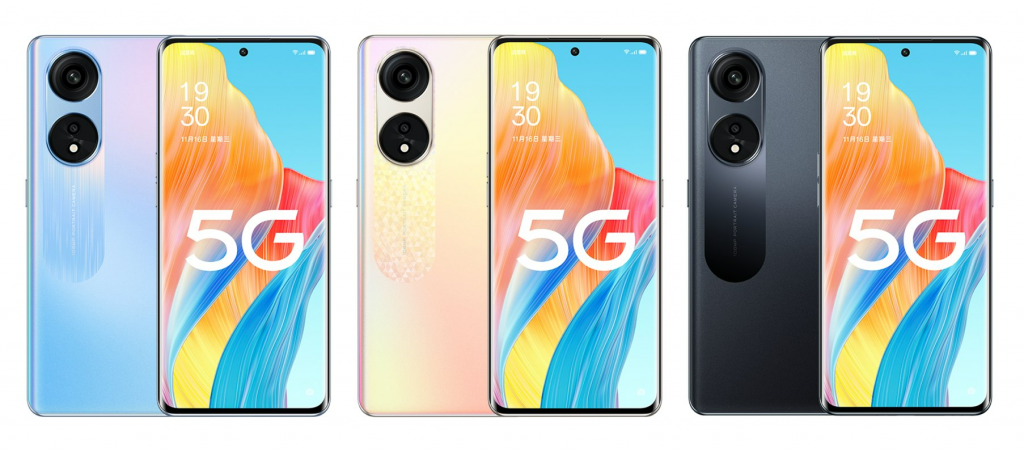
At 6 pm (local time) today, OPPO will announce the OPPO A1 Pro 5G smartphone in China. Rumors surrounding it have claimed that it will be the most advanced A-series phone from the company. Several hours before the launch, the official renders were shared by tipster Sudhanshu Ambhore. The images give a good look at its design from all angles.

OPPPO-A1-Pro-5G

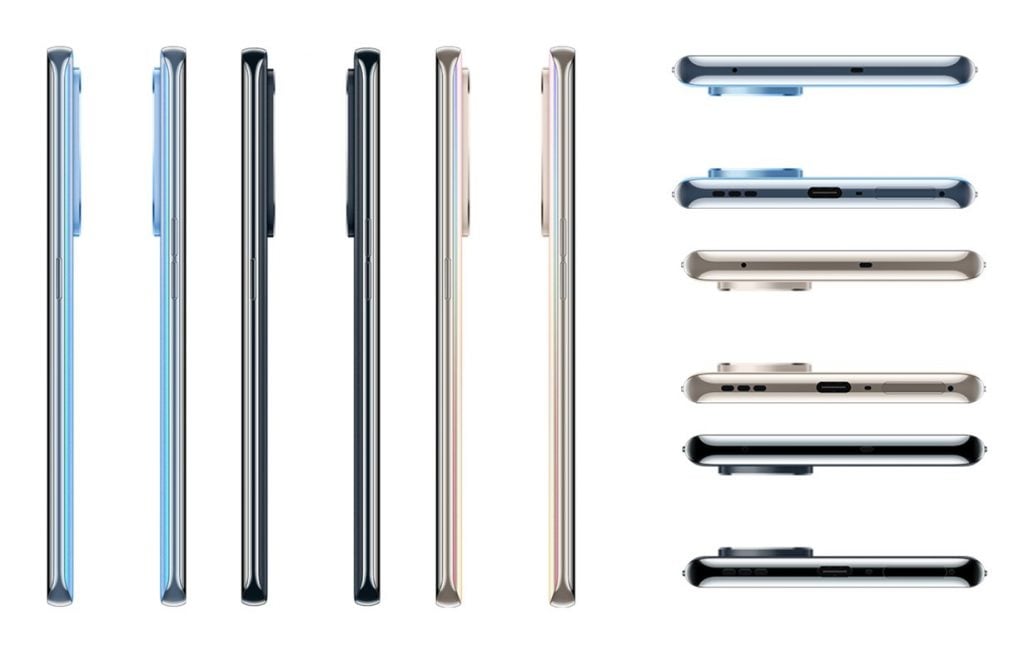
As can be seen, the OPPO A1 Pro will arrive in three colors: blue, gold, and black. On the front, it has a curved-edge display with a centrally positioned punch-hole. An oval camera module housing two camera rings can be seen on the back. The text below the camera module says that the main camera on the OPPO A1 Pro will have a 108-megapixel primary camera.

OPPPO-A1-Pro-5G

The top edge of the OPPO A1 Pro has a microphone and an unknown hole. On the opposite side, it has a SIM slot, a microphone, a USB-C port, and a speaker grille. Like other OPPO phones, the A1 Pro has a volume rocker on the left and a power key on the right.

OPPO A1 Pro specifications (rumored)

OPPPO-A1-Pro-5G

Reports have revealed that the OPPO A1 Pro will have a 6.7-inch AMOLED display that offers a Full HD+ resolution, a 120Hz refresh rate, 2160Hz PWM dimming, and an in-screen fingerprint scanner. It is expected to run on the Android 13 OS, which will be skinned with ColorOS 13. It will feature the Snapdragon 695 chipset, up to 12 GB of LPDDR4x RAM, and up to 256 GB of UFS 2.2 storage.

OPPPO-A1-Pro-5G

The device will house a 5,000mAh battery with 67W fast charging support. For selfies, it will feature a 16-megapixel front-facing camera, and its back will have a 108-megapixel (main) + 2-megapixel dual-camera setup.

RELATED:

Letv Y1 Pro+ With an iPhone 13-Styled Design Launched Starting at 499 Yuan ($70)

LeTV has launched a new budget smartphone in China. The new smartphone is dubbed LeTV Y1 Pro+ and is presently up for pre-order with the first shipment scheduled to roll out of the factory on November 24.

LeTV Y1 Pro+

The LeTV Y1 Pro+ is basically a budget phone but the design could pass another message. It actually features a design style that looks like that of Apple’s iPhone 13. The camera lens has the same symmetrical scheme as the iPhone 13. At first glance, the phone may even be confused for an iPhone.

In terms of specs, LeTV Y1 Pro+ sports a 6.5-inch LCD screen with a resolution of 1560 x 720 pixels. The phone is powered by a UNISOC Tiger T610 octa-core processor. The processor uses 12nm process technology. The CPU is made up of a 2.18GHz Cortex-A75 core and six 1.8GHz Cortex-A55 cores. The graphics are powered by a Mali-G52 GPU. The device is available in three memory configurations of 6GB+64GB, 4GB+128GB, and 4GB+256GB.

Letv Y1 Pro+

There is nothing spectacular about the camera aspect. The Y1 Pro+ packs a single 8-megapixel camera with a second dummy sensor just there for decoration. Apparently, the dummy sensor is meant to make it look like an iPhone. At the front, there is a 5-megapixel front camera.

Letv Y1 Pro+

Under the hood, there is a 4000mAh battery with 10W charging support. The phone comes in three colors – Starlight White, Midnight Black, and Starry Blue.

The LeTV Y1 Pro+ starts at 499 yuan ($70) for the 4GB + 64GB variant. The 4GB + 128GB variant is priced at 599 yuan ($85) while there 4GB + 256GB option comes in at 699 yuan ($99).

RELATED: 

(source)

Higole Gole 1 R mini-PC With a Built-in Display, Multiple Ports Launched on Kickstarter

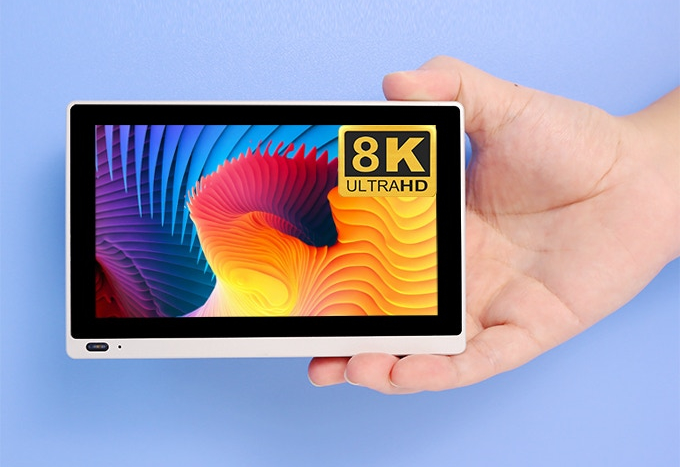
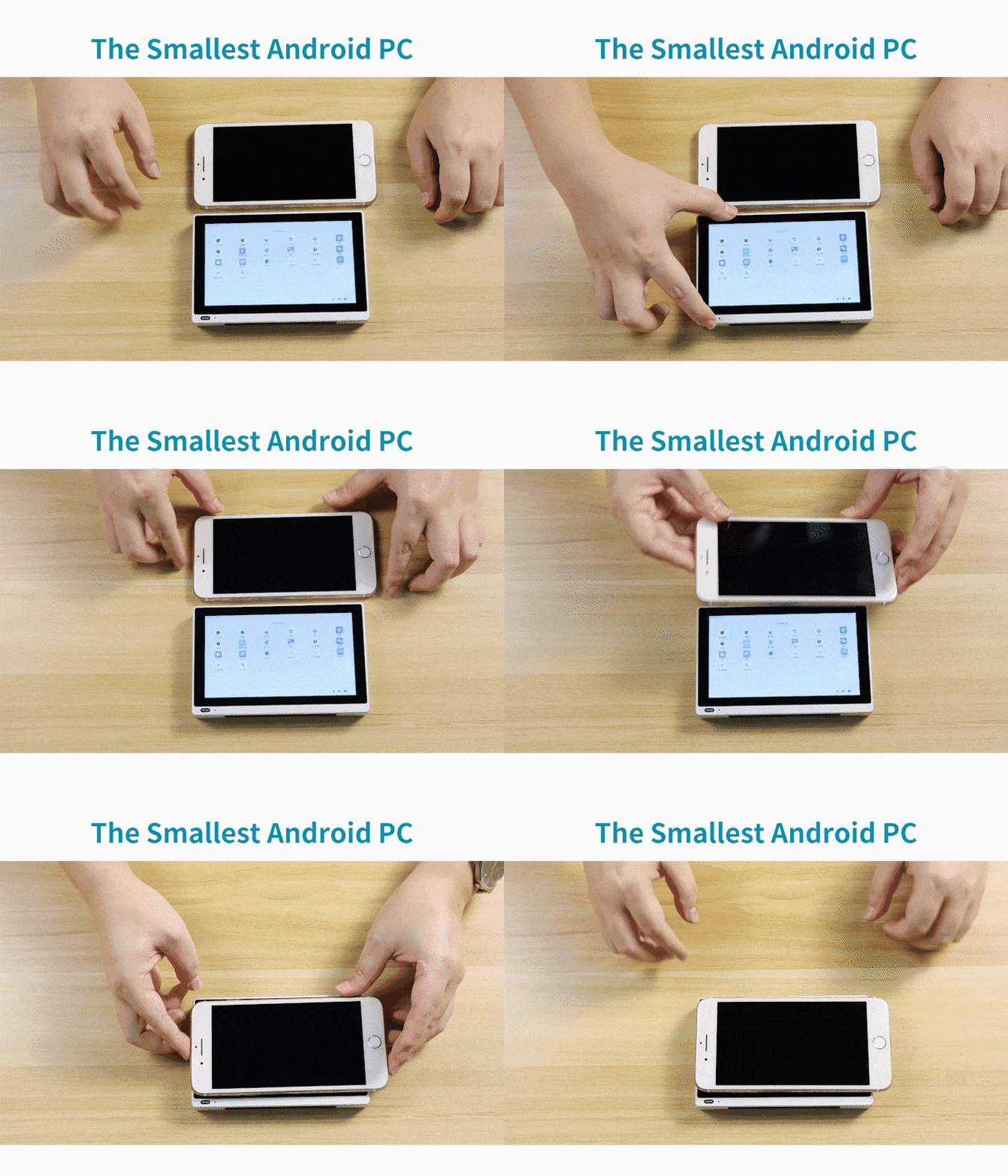
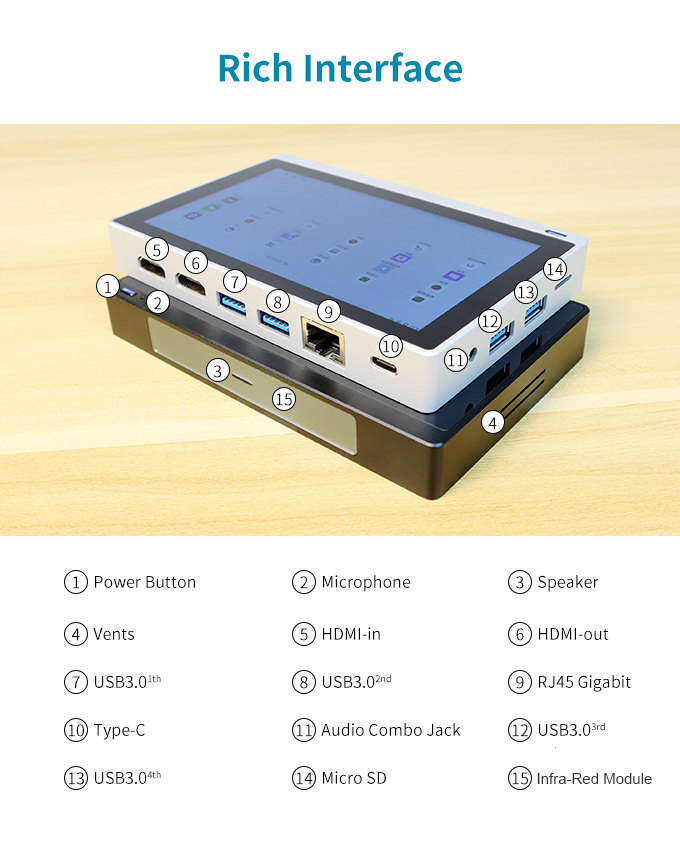
Higole has unveiled the Gole 1 R mini-PC with a built-in 5.5-inch display. It is powered by the Rockchip RK3588 chip with compatibility with Android 12, Linux, or Ubuntu operating systems. The new product is a hybrid of a tablet and a mini-PC. It can be operated without an external monitor but requires an external keyboard or mouse.

Higole Gole 1 R mini-PC

The compact credentials of the Gole 1 are being expanded with its small battery. Its 19Wh provides power for the chipset while the RAM/ storage configuration is 8GB/ 128GB. The Rockchip RK3588 can only decode 8K content via the gadget’s HDMI 2.1 port. It is noted that the Rockchip RK3588 is a low-powered solution found in lots of mini PCs.

Higole Gole 1 R mini-PC

Apart from the HDMI 2.1 port, the Gole 1 R has a 3.5mm audio jack, a MicroSD card reader, 4 USB-A ports, and a USB-C port. In terms of wireless connectivity, the device supports Bluetooth 5.2 and Wi-Fi 6.

Higole Gole 1 R mini-PC

Higole has commenced a Kickstarter campaign for the new device at $353. Higole also retails a version of the Gole 1 R without a battery or display but with M.2 expansion at $300. The early backers of the Kickstarter campaign for the Gole 1 R are expected to get their devices in December 2023. As of this moment, the target for the Gole 1 R has not been reached.

RELATED:

Qualcomm Snapdragon 8 Gen 2 flagship smartphone chipset goes official

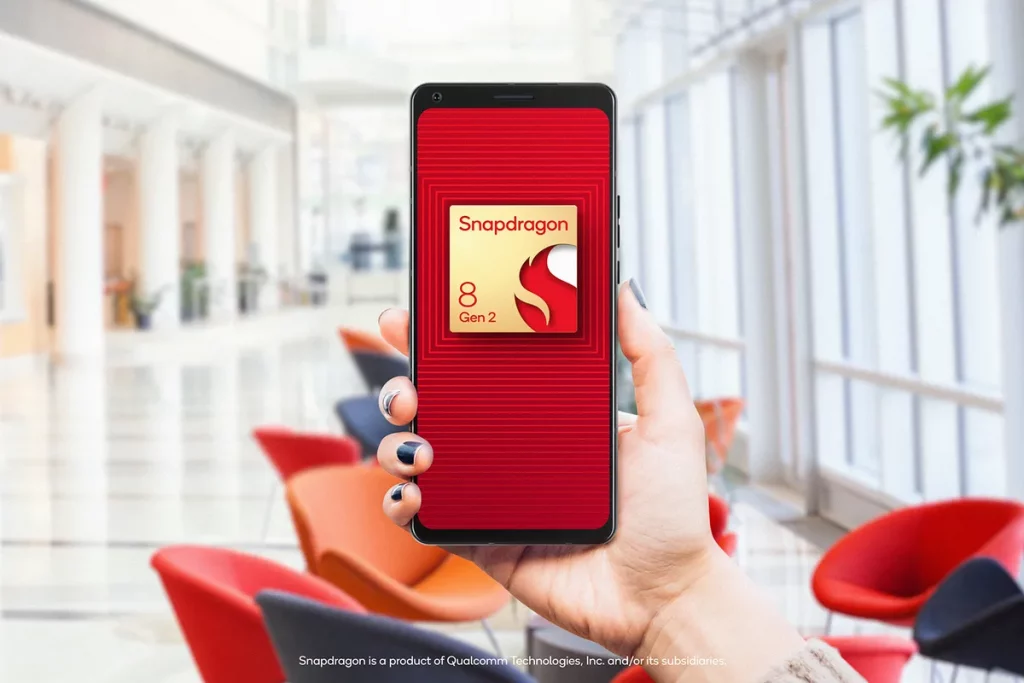
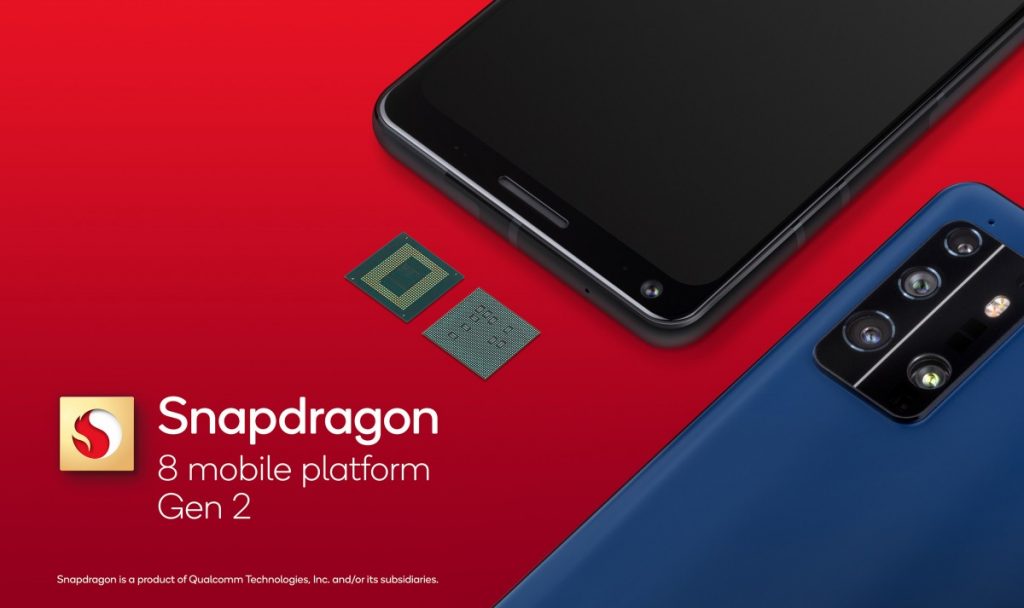
Qualcomm, one of the leading smartphone chipset makers, has today officially announced its next-generation Snapdragon series flagship processor for high-end smartphones — Qualcomm Snapdragon 8 Gen 2.

As the name itself indicates, the newly announced Qualcomm Snapdragon 8 Gen 2 is a successor to the last year’s Snapdragon 8 Gen 1 processor, and it comes with a focus on better and more efficient performance, especially when it comes to AI-related tasks.

Qualcomm Snapdragon 8 Gen 2 Flagship Smartphone Processor

The Kryo CPU on the Snapdragon 8 Gen 2 includes one prime core based on the ARM Cortex-X3 clocked at 3.2GHz, as well as four performance cores at 2.8GHz and three efficiency cores at 2.0GHz. Compared to last year’s chipset, these are 200MHz to 300MHz faster. The company says the CPU is 35 percent faster than the previous generation and 40 percent more power efficient.

Its latest Adreno GPU is claimed to offer 25 percent higher performance while being 45 percent more power efficient. It also brings support for hardware-accelerated ray tracing to the Snapdragon platform. There’s support for faster memory technologies, including LP-DDR5X RAM at up to 4,200MHz and new UFS 4.0 storage.

Qualcomm Snapdragon 8 Gen 2 Flagship Smartphone Processor

Similar to the SD8 Gen 1, the newly announced Qualcomm Snapdragon 8 Gen 2 is built using a 4nm process. As for the display, the chipset comes with support for QHD+ resolution at up to 144Hz or 4K resolution at 60Hz. It also supports external displays up to 4K resolution at 60Hz with a 10-bit Rec. 2020 color gamut, HDR10+, and Dolby Vision.

Coming to the camera department, it has a triple 18-bit ISP that supports up to three 36MP cameras simultaneously or up to 200MP for a single-camera configuration. It also supports 108MP camera sensors with zero shutter lag. The company has also improved support for the latest Sony and Samsung sensors as Sony sensors with DOL-HDR and Samsung’s 200MP HP3 sensors are optimized to work with the ISP on the Snapdragon 8 Gen 2.

Qualcomm Snapdragon 8 Gen 2 Flagship Smartphone Processor

Qualcomm says it has made improvements throughout the Hexagon processor for up to 4.35x faster Artificial Intelligence (AI) performance and claims that the chip can handle more complex tasks, like translating a language into multiple languages in real time. It is also the world’s first chip to have support for Wi-Fi 7 technology.

It packs a Qualcomm Snapdragon X70 modem, which was announced earlier this year at the Mobile World Congress. It has its own AI processor for boosting 5G performance and comes with support for dual active 5G SIMs, which means that users can use two different 5G networks simultaneously.

Qualcomm revealed a list of partners for the Snapdragon 8 Gen 2 processor, which includes Motorola, OPPO, and ASUS ROG, among others. However, Samsung is missing from the list, but we are pretty sure the upcoming Samsung Galaxy S23 series flagship smartphones will come powered by the Snapdragon 8 Gen 2 SoC. The company says that smartphones powered by the Snapdragon 8 Gen 2 will start getting launched by the end of this year.

RELATED: